The Catinaccio massif in the Dolomites, Italy is packed with jaw-dropping spots that hit you the moment you step out of the car. Lukáš and I are head over heels for these Italian mountains and come back regularly, yet a few iconic places are still waiting for us to explore them properly. The area of Catinaccio / Rosengarten and the Vajolet Towers is exactly one of those cases.
So far we’ve only admired these majestic peaks from a distance as we drove past the famous Lago di Carezza, but given how much they tempt us, we did some serious research for our next trip. And because it’s an absolute classic that no mountain and photography lover should skip, I decided to write up all this carefully gathered info and these tips into this guide.
Turning up here unprepared is a bit like showing up at the best restaurant without a reservation. Technically possible, but needlessly stressful. So I’ve written down everything I found out: where to start, where to sleep and how to reach those legendary towers. Be warned that these rocks have one magical quality that draws people from all over the world. ☺️
The full destination guide: Dolomites — guide and what to see
TL;DR
If you’re packing your backpack right now and just need the essentials in a nutshell, here are the key points you should know before heading into the Catinaccio massif:
- Two names for one place: Catinaccio in Italian, Rosengarten (Rose Garden) in German. It’s the same massif lying between Val di Fassa and Bolzano.
- The magical enrosadira: The rocks are famous for turning an incredibly intense pink to red colour at sunset.
- Vajolet Towers: The most famous rock formation in the whole area. Three sharp towers that look like they belong to another world.
- Three main starting points: The Carezza pass (Paolina cable car), the town of Vigo di Fassa (Catinaccio cable car) and the village of Tires al Catinaccio.
- Best time to visit: For hiking, from mid-June to the end of September. In August, expect huge crowds.
- Drone ban: Flying drones is strictly forbidden across the whole nature park, with fines of up to €3,000.
What exactly is the Catinaccio / Rosengarten?
These mountains in Italy are vast and split into many smaller groups, and the Catinaccio is one of the most beautiful of them all. Its UNESCO World Heritage listing is proof enough. This limestone massif forms a natural border between the Italian-speaking Val di Fassa and German-speaking South Tyrol, so you’ll find everything written twice on the signs.
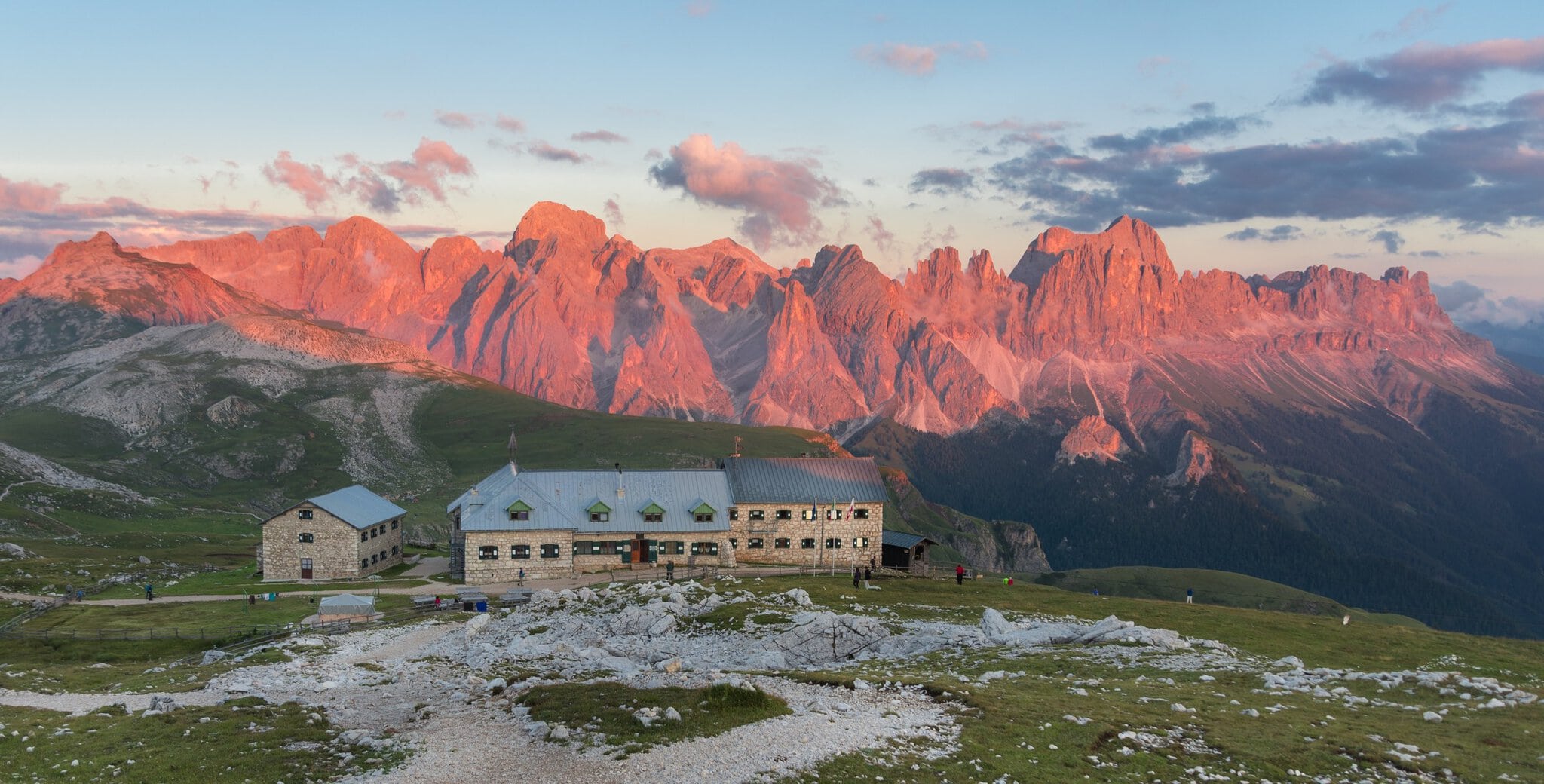
The biggest draw of the area is the so-called enrosadira. It’s an optical phenomenon where, at sunset (and sometimes at sunrise), the sun’s rays light up the specific composition of the Dolomite rock at such an angle that the whole mountains glow intense pink, orange and gradually a blood red. The Catinaccio massif is supposedly the very best place to see this in the entire Dolomites.
An old medieval legend about the dwarf king Laurin is tied to this colouring. He supposedly planted a beautiful rose garden in the mountains (hence the German name Rosengarten). But when his beloved princess was stolen from him, he cursed the garden so that no one would ever see it again, by day or by night. He forgot about dusk, though, which is why, according to the legend, the roses glow only in those few moments between day and night. It’s just a fairy tale, but when you see that pink glow with your own eyes, it’s easy to believe there’s something to it. ☺️
When to visit the Catinaccio massif and how to get your bearings
We arrived once in June and half the cable cars still weren’t running because of the snow. Ever since then we plan our timing in advance, because the Dolomites won’t cut you any slack on that front. The Catinaccio offers things to do all year round, but each month has its own quirks and pitfalls worth preparing for.
For classic summer hiking and walks up to the mountain huts (rifugio), the best window is from mid-June to the end of September. Most cable cars and huts open during June, once the snow melts at higher altitudes. July and especially August are the peak of the season, which in Italy means huge crowds, full car parks and higher prices. From our experience with the main spots in the Dolomites we know that autumn (late September and October) tends to be far calmer, and thanks to stable weather it’s an absolute paradise for photographers. In winter, the area turns into a great ski resort, especially around the Carezza pass and Vigo di Fassa.
How to get to the Catinaccio and the starting points
Getting beneath the peaks themselves isn’t as complicated as it might first look on the map. It all depends on which side you’re coming from and which specific route you have planned. Below you’ll find the three main gateways most people use to head into the mountains.
If you’re coming from the south via Trento and Bolzano, the most scenic approach leads over the Carezza pass (Passo Costalunga). Here you can hop on the Paolina cable car, which takes you straight up to over 2,100 metres above sea level. From there it’s just under half an hour along an easy path to the iconic Rifugio Roda di Vael hut, a great starting point for further treks.
The second popular option is the picturesque Ladin town of Vigo di Fassa, which sits right in the valley. From the town centre the Catinaccio gondola whisks you up to the Ciampedie plateau. From there a classic route leads towards the Vajolet Towers. The third option is the quieter village of Tires al Catinaccio (Tiers), from which you’ll have to walk a fair bit longer (roughly 2 hours to the first big huts), but you’ll also dodge the biggest crowds and enjoy total peace away from mass tourism. Lukáš and I have long had good experiences with DiscoverCars, which we use all over the world, and a car is an absolute must for exploring side valleys like these. For readers coming from the UK, the easiest way in is to fly to Venice, Verona or Bergamo and pick up a hire car there.
Where to stay and how much it costs
Choosing the right accommodation affects how long your morning drive to the cable car is and how close you’ll be to the best views of the enrosadira. As a rule, the Val di Fassa valley is a bit pricier, but it offers an amazing Italian-Ladin atmosphere and perfect access to the whole Dolomites. Expect the average price for a quality room for two in summer to land around €150 to €250 per night.
Vigo di Fassa is a lovely Ladin town where in the evening people sit outside the restaurants and you can hear three languages at once on the street. If you want to be near the cable car, Hotel Olympic (book on Booking.com) is a reliable choice, and for those who like to treat themselves, the Ciampedie Luxury Resort. They really look after you there. If you prefer the German-speaking side and want to be close to Lake Carezza, head for Nova Levante (Welschnofen). The absolute classic here is the Romantik Hotel Post.
For those after total peace, old little churches and meadows where cows graze with bells around their necks, Tires al Catinaccio is a slightly cut-off paradise with some of the best views of the whole massif. The luxurious Cyprianerhof, with its wellness spa, is by all accounts a place you simply won’t want to leave.
Catinaccio / Rosengarten: 10 Things to See and Do
Let’s finally take a look at the very best this mountain group has to offer. We gathered information from local mountain guides, read through forums and pieced together an itinerary of what we’d like to see here. The Catinaccio isn’t just about one viewpoint; it’s a complex network of trails, huts and peaks where you could easily spend a whole week.
We’ve put together a mix: from things you can manage even after an opulent Italian lunch (we know what we’re talking about 😅) all the way to climbs where you’ll need real fitness and nerves of steel.
1. The enrosadira at sunset (the main reason to visit)
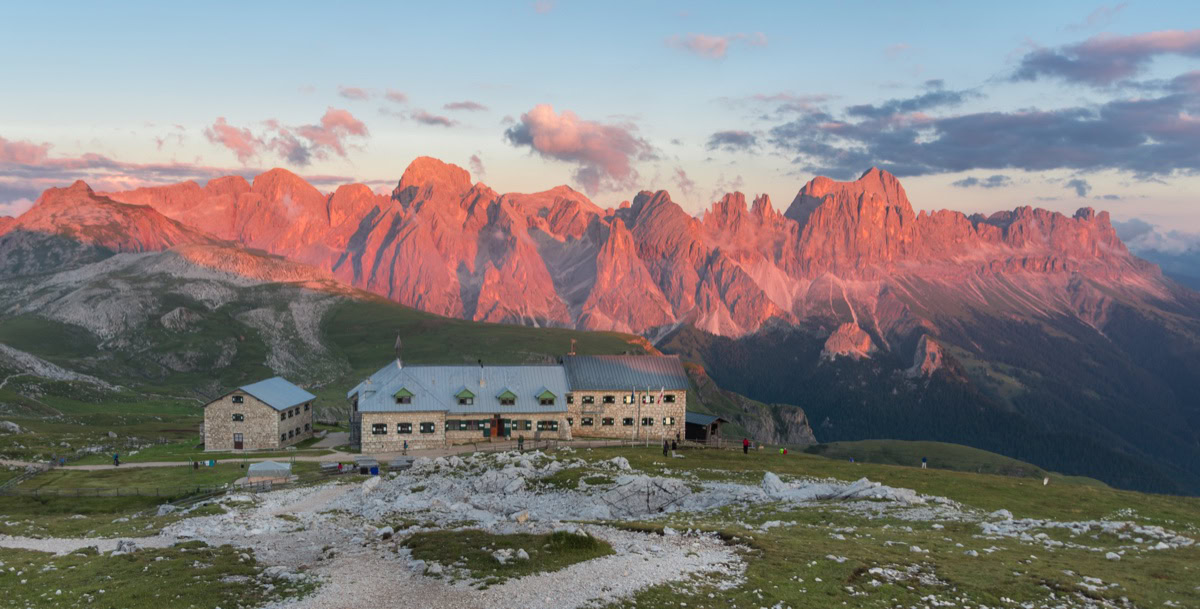
This is exactly the thing everyone comes here for. Sunset, when the grey limestone walls suddenly burst into intense pink and orange out of nowhere. It’s a phenomenon that lasts only a moment but leaves an impression for life. Locals love telling tales of King Laurin and his roses, but the scientific explanation is that dolomite contains calcium magnesium carbonate, which reacts exactly like this to the slanting rays of the sun.
The best spots to watch the spectacle are on the western side of the massif, ideally from the village of Tires or the meadows around Nova Levante. Many photographers prefer to get up early for sunrise, though, because the rocks then glow in softer pastel tones, and you stand a good chance of avoiding the clouds that often gather over the peaks in the afternoon in the Dolomites.
2. The Vajolet Towers and the hike to Rifugio Vajolet
The Vajolet Towers are an absolute icon, not just of the Catinaccio group but of the entire Dolomites. You’ll spot these three slim, incredibly steep stone fingers jabbing at the sky on every other postcard from the region. The best way to reach them is a classic trek that a moderately fit hiker can handle. The route usually starts after the cable car ride up from Vigo di Fassa and heads deeper into the mountains.
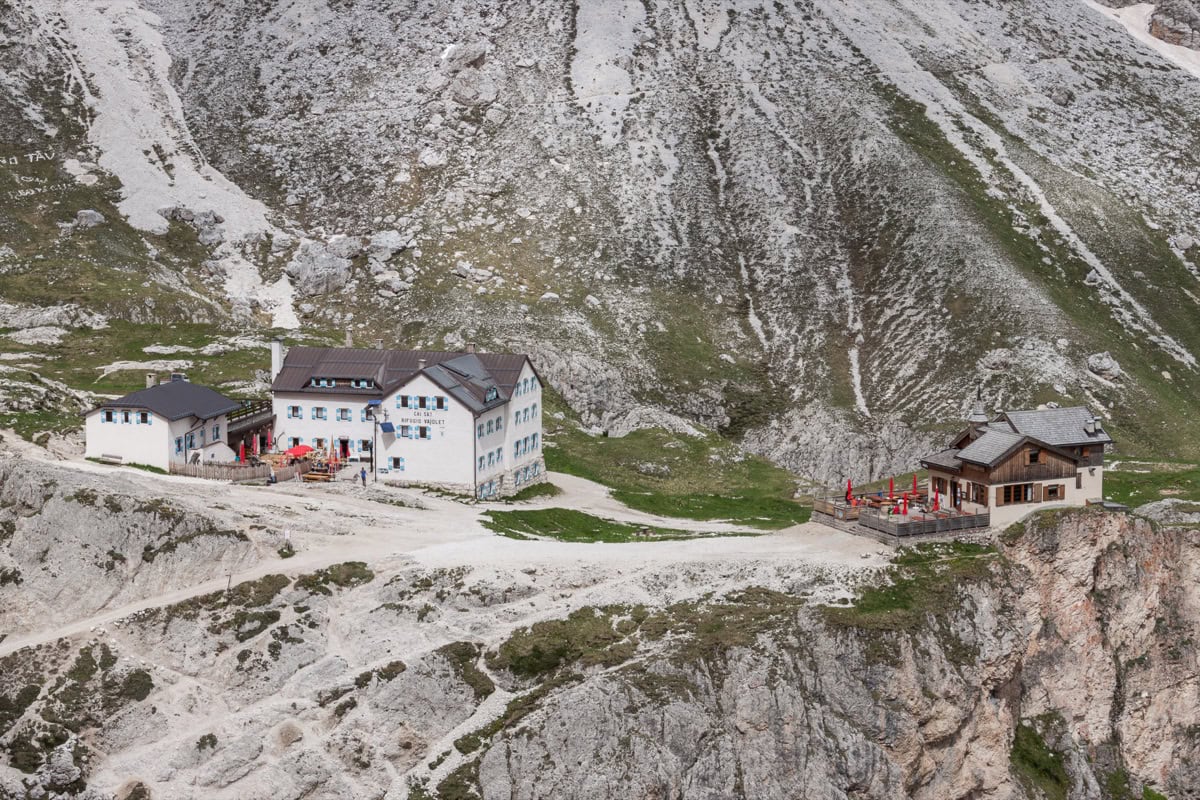
The walk to Rifugio Vajolet, which sits at 2,243 metres, takes roughly 3 to 4 hours depending on your pace. The hut itself perches like an eagle’s nest right beneath the giant rock walls and is a great spot for lunch. You’ll already have a lovely view of the towers from here, even though this still isn’t the most famous photo point. For that you’ll have to push a little harder, which brings us to the next tip.
3. Rifugio Re Alberto right beneath the towers
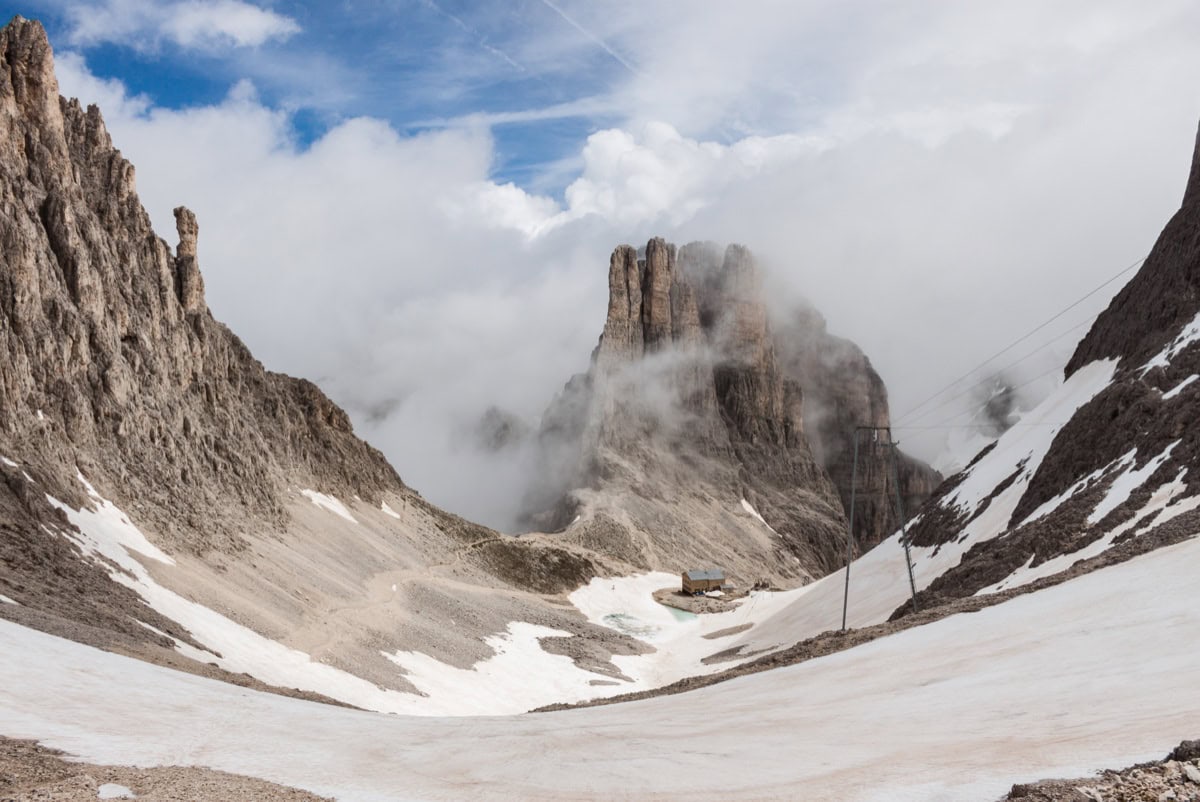
If the view from a distance isn’t enough and you want to feel those enormous towers right above you, you’ll have to keep climbing higher from Rifugio Vajolet. The path rises fairly steeply through scree fields and stone gullies up to 2,620 metres, where Rifugio Re Alberto (Gartlhütte in German) stands. This is where the truly rugged mountain atmosphere hits you.
The climb to this hut already calls for sturdy footwear, a sure step and no fear of heights, even though it’s not yet a via ferrata. It’s precisely from Rifugio Re Alberto, or from the little lake nearby, that you get the most iconic view of the Vajolet Towers from below. This is where the best photos of the whole massif are born. Just be ready for the trail to get really crowded here in August.
4. An easy ride on the Catinaccio cable car from Vigo di Fassa
Sometimes you’re simply not in the mood to climb hundreds of metres with a backpack, or after three days in the mountains your legs hurt so much you can barely walk. We know these rest days all too well 😅. For days like that, the Catinaccio cable car is ideal: it starts right in the town of Vigo di Fassa and takes you up to 2,000 metres into the Ciampedie area in just a few minutes.
The ride alone is an experience, but the main event comes at the top. A wide and very welcoming plateau opens up, with playgrounds, plenty of benches and, above all, the terraces of mountain huts where you can have an excellent coffee and strudel and just gaze at the mountains. From here you can take completely easy walks across the flat, ideal for prams or older people.
5. The classic trek from the Carezza pass to Roda di Vael
By every guide’s account, this is one of the most popular half-day hikes in the whole area. The route starts at the Carezza pass (or from Lago di Carezza, which we cover in a separate article), from where you ride up on the Paolina chairlift. From the top station you continue on foot along a beautiful, scenic trail.
The path traverses beneath the rock walls and offers fantastic views down the valley and across to the opposite Latemar mountain the whole way. It’s a classic balcony trail that doesn’t climb or descend much, so it’s a fairly relaxed walk. The destination is a big junction of hiking paths and the hut of the same name, which we’ll talk about in the next point.
6. Rifugio Roda di Vael and its panoramic views
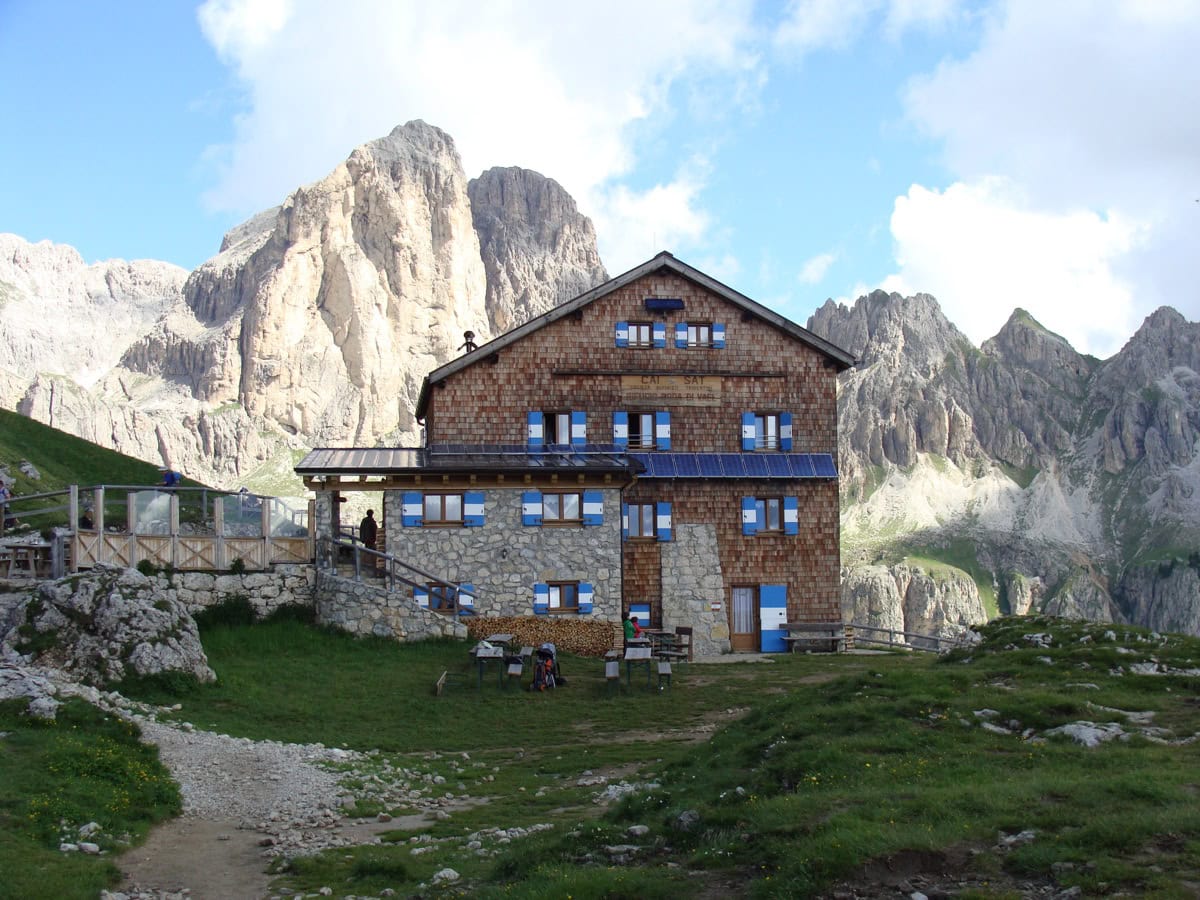
Rifugio Roda di Vael (Rotwandhütte) is a perfect place to rest if you’ve set out on the trek from the Paolina cable car. It sits at 2,283 metres and offers some of the best 360-degree panoramic views in the entire Dolomites. From here you can see not only the neighbouring Marmolada massif, to which we’ve dedicated a huge guide by the way, but on a clear day you can even spot the Austrian Alps.
We recommend having lunch here, sitting on the sunny terrace and just soaking up that high-mountain atmosphere. If you have enough energy, you can continue on more demanding trails deeper into the mountains, or do a loop and head back down to the valley a different way.
7. Climbing Cima Catinaccio (experienced climbers with a guide only!)
Cima Catinaccio (Rosengartenspitze) is the highest peak of the central part of the massif at 2,937 metres. But beware, this is no tourist stroll. The climb to this summit is a mountaineering experience that requires climbing skills, protection and, ideally, hiring a local mountain guide unless you’re a seasoned climber.
The ascent itself leads up steep gullies and exposed sections where you can’t afford a single mistake. The way up rewards the bravest with an incredible sense of conquering one of the mightiest peaks in the Dolomites and a view that takes in roughly half of northern Italy. If you don’t have the gear or the experience, it’s better to simply admire this mountain from the safety of the valley huts. There’s no shame in admitting something is beyond you. 😉
8. The Santner via ferrata for advanced iron lovers
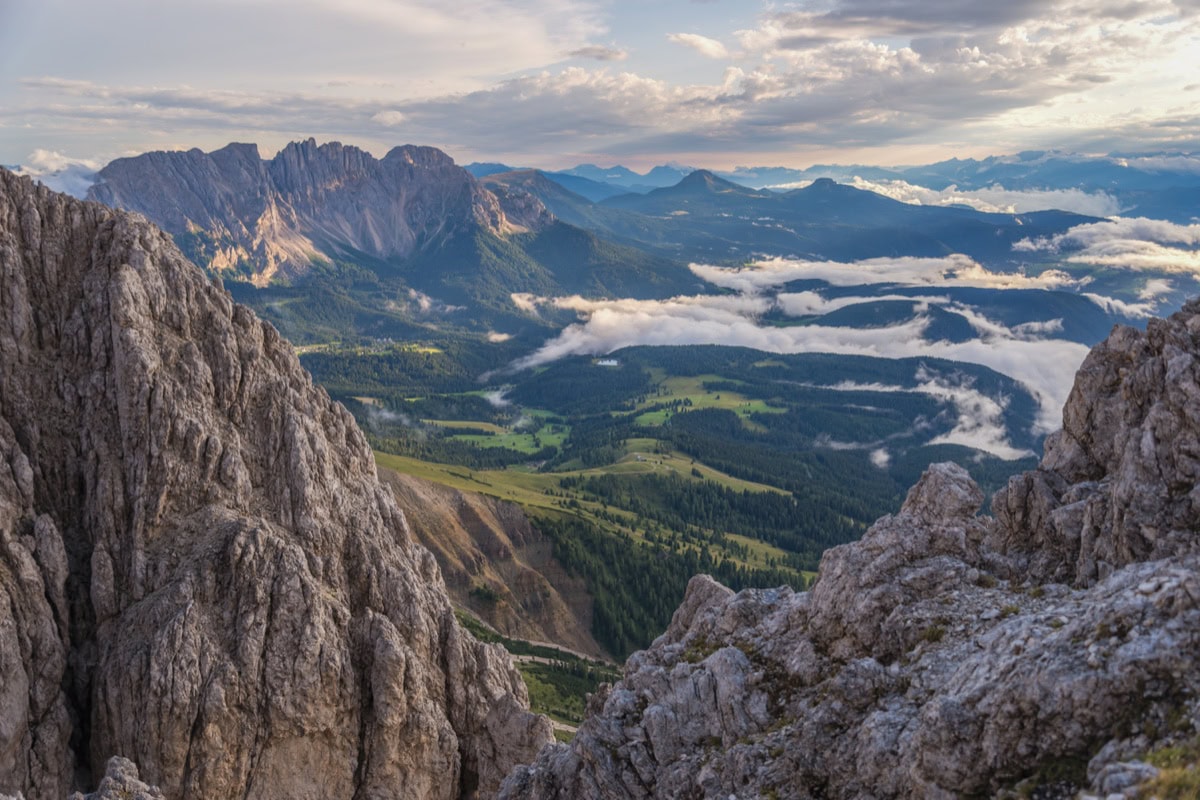
The Dolomites are the cradle of via ferratas (protected climbing routes), and the Catinaccio massif hides several of them. One of the most famous and most beautiful is the Passo Santner via ferrata (Santnerpass-Klettersteig). It’s a route that leads you through stunning scenery of ravines, sheer walls and old smugglers’ paths up to the Santner pass.
The B/C grading sounds innocent, but this environment will teach you respect: ice, falling rocks and the fact that rescue takes hours. A helmet, a via ferrata set and boots with a proper sole are a necessity, not a recommendation. And it’s definitely not a route to take a mate who’s putting on a harness for the first time in their life. But if you know what you’re doing, it’s a fantastic adventure.
9. Culture and Ladin cuisine in Val di Fassa
When visiting the Catinaccio massif and the Val di Fassa valley, you mustn’t miss the most important thing: the local culture. This area is home to the Ladins, an ethnic and linguistic minority that has lived here for over two thousand years. Ladin is the region’s third official language (alongside Italian and German) and it’s a fascinating Romance language with roots in Latin.
And then there’s the food. The Ladins may be a small people, but their cuisine will feed you well. Forget about light pizza for a moment and try the traditional canederli (giant dumplings with cheese or spinach served in a broth), polenta with mushrooms and melted cheeses, or cheeses made right on the mountain pastures beneath the rocks.
10. Following the legend of King Laurin
If the story of King Laurin’s Rose Garden caught your imagination, you can set off along special educational trails dedicated to the legend. It’s a great activity especially for families, because the paths are often lined with information boards (mostly in Italian, German and sometimes English) telling fragments of the fairy tale.
There are also roughly two-hour guided walks with local teachers or guides who’ll tell you the story right in front of the glowing rocks. You’ll understand why the locals don’t talk about these mountains just as a place for outings, but almost as living beings.

Map of points of interest for your phone
Rosengarten with kids and dogs
When you head into the mountains, you often wonder whether a place is suitable for the smallest members of the family too. Luckily, the Catinaccio thinks of them as well. The ride up on the Paolina or Catinaccio cable car is an absolute hit with kids and they’ll manage it without a hitch. From the top stations, a number of paved, flat trails set off that even three-year-olds can walk, and there are often benches and playgrounds too.
💡 Tip: Nearly all the cable cars and buses require dogs to wear a muzzle (you can buy one practically everywhere, even right at the bottom stations). Honestly, it annoyed us quite a bit, they wanted it even when we were riding alone in the cabin. When several cable cars were lined up back to back, we’d rather leave Kája and Baby resting at the campsite.
On the other hand, we definitely wouldn’t recommend the long treks to the Vajolet Towers or the more demanding scrambles up the scree with smaller children. The paths there are rocky, can be slippery, and an all-day hike would more likely just put them off.
And what if you’re travelling with a furry companion? Dogs are allowed into the mountains and the Catinaccio nature park, but a strict rule applies: they must be on a lead at all times. You’re moving through a protected area where marmots and chamois live, and cows graze in many places. Most cable cars will let you on with a dog for a small surcharge or free of charge, but the dog often has to wear a muzzle, so don’t forget it.
Where to eat
Once you’ve scrambled up to one of the mountain huts (rifugio), it would be a sin not to taste some of the local treats. Lukáš and I can’t imagine a hike in the Dolomites without a proper reward at the end. The restaurants high up in the mountains often have a surprisingly high standard of gastronomy.
The staple is, of course, Apfelstrudel (apple strudel), which retains its strong Tyrolean influence here, full of apples, nuts and raisins, and often served drenched in warm vanilla sauce. Excellent strudel is made, for example, at Rifugio Vajolet, where you can eat it right in view of those majestic towers.
If you’re really hungry after a hike, stop at the restaurant of Tirler Alm and order the Tirler, a traditional hearty mountain dish with potatoes and egg (the original version comes with meat too). We go for polenta with mushrooms and melted mountain cheeses at Rifugio Roda di Vael. And don’t forget to wash it all down with a strong espresso, because the café culture, especially if you set off from Italian Vigo di Fassa, reaches all the way up to the mountain tops.
Practical information and a budget for the Catinaccio area
The Dolomites are beautiful, but the prices here can also surprise you. A few figures up front so the sticker shock doesn’t hit you only on the spot:
Prices in the Dolomites rise every year, so it’s good to have a rough idea of your budget. A return cable car ticket (for example on the Paolina cable car) costs around €35 per adult. Children from 6 to about 16 tend to get discounts, kids under 6 usually ride free unless they need their own seat. At the huts, expect a main course to cost between €15 and €22, while a beer or Aperol Spritz will set you back €5 to €8.
WATCH OUT for the drone ban! The entire massif falls under a protected nature park (Parco Naturale Sciliar-Catinaccio). Flying drones is strictly forbidden here to avoid disturbing wildlife and other visitors. The local park rangers are absolutely uncompromising. If they catch you, you face an immediate fine of up to €3,000, so think hard about whether that one aerial shot is worth the stress and the money.
If you’re heading for the via ferratas, remember that the villages down in the valley (Vigo di Fassa, Nova Levante) have great sports rental shops where, for a few tens of euros, they’ll lend you a complete via ferrata set and a helmet for the whole day, so you don’t have to lug it all the way from home in your suitcase.
Where to go next in the Dolomites
The Dolomites are vast and one massif isn’t enough, we know that very well, because every time we leave with an even longer list of places we didn’t manage to see.
We recommend exploring our big base around Cortina d’Ampezzo, which offers access to a completely different type of rocky peaks. Then there’s the monumental Marmolada glacier, the highest mountain in the Dolomites, which is practically just over the hill from the Catinaccio massif. And finally, you mustn’t skip a stop at the already-mentioned and incredibly turquoise Lago di Carezza, which lies just a few minutes’ drive from the bottom cable car stations in this area.
Our practical travel tips and tricks
When you ask how Lukáš and I plan and arrange our trips around Europe and beyond, here’s the list of services and apps we’ve sworn by for years and that have saved us heaps of time and nerves.
Where to find cheap flights
We look for cheap flights to Italy (for example to Venice, Treviso or Bergamo) almost exclusively on Kiwi. It’s our favourite portal, with great options for searching and combining flights from all corners of Europe. From the UK there are plenty of direct routes to northern Italy with the likes of easyJet, Ryanair and British Airways.
When we have flexible dates, we browse the calendar and pick the flights that work out cheapest. Then all that’s left is to pack hand luggage and spend the money we saved straight away on an Aperol or a delicious Italian pizza.
Hiring a car abroad
When we need to reach those out-of-the-way cable cars in the Dolomites, a car is essential. Lukáš and I have long had good experiences with DiscoverCars, which we use all over the world. They have a huge selection of cars and you can always clearly see what’s included in the price and what isn’t.
The key is always to study the insurance terms carefully and take a car with full coverage. Mountain roads can sometimes throw up flying stones, so those few extra euros for peace of mind are definitely worth it.
Where to book accommodation
Booking.com is our favourite search engine for hotels and apartments. We like the easy cancellation option and the Genius programme, which often lands us some genuinely interesting discounts at fancier hotels.
We also like to read reviews from previous guests, especially for mountain guesthouses or apartments. Thanks to that, we’ve several times managed to find incredible places with the very best hosts that we’d otherwise have probably missed entirely.
Don’t forget insurance and connectivity
Even if you’re only heading a short way across the border, insurance is essential. We’ve had great results with SafetyWing insurance (read the review), which you can arrange even after you’ve already left home. For shorter trips or winter skiing in Italy we often go for a classic UK travel insurance policy with good winter sports cover.
If your European data isn’t enough in Italy or you work on the road, check out our review of Holafly eSIM cards, with which you buy unlimited data straight to your phone without having to hunt down local operators. Although sometimes going offline up in the mountains is the best thing you can do.
 🚗 Car rental on the roadVerified rental cars in the Dolomites
Search with the DiscoverCars comparison engine — it compares prices from dozens of local and international rental companies, and most bookings come with free cancellation.
Compare car prices in the Dolomites →Frequently asked questions (FAQ)
Why is Catinaccio also called Rosengarten?
The name Rosengarten (Rose Garden) comes from the German, or rather Tyrolean tradition and refers to an old legend about the dwarf king Laurin. This name became widely used precisely because of the typical pink color of the rocks (enrosadira), which the entire massif turns at sunset. The area lies on the border between German-speaking and Italian-speaking provinces, which is why both names are commonly used.
How long does the hike to Vajolet Towers take?
It depends on your starting point, but the most common route from the upper station of the Catinaccio cable car (from Vigo di Fassa) takes about 3 to 4 hours at a brisk pace to reach Rifugio Vajolet. If you want to continue all the way up to Rifugio Re Alberto, from where there’s an iconic view of the towers from below, count on an additional challenging hour of climbing.
Can Catinaccio be done with children?
Yes, some parts are absolutely ideal for children. The best option is to take the Paolina or Catinaccio cable car up to the high plateaus, where there are relatively flat, well-maintained trails, plenty of benches, and even playgrounds at the mountain huts. However, the more challenging treks below the rock walls and scree fields are definitely not suitable for small children.
Where is the best place to observe the enrosadira?
The pink coloring of the rocks at sunset is best seen from the western and southwestern side of the massif. Excellent viewpoints include the meadows and villages in the valley around Nova Levante, from Lago di Carezza lake, or directly from the windows of accommodations in the Tires al Catinaccio area, where the rocks glow incredibly above the green landscape.
Do I need to book mountain hut accommodation in advance?
If you’re planning a multi-day trek and want to sleep high in the mountains (for example at Rifugio Vajolet or Roda di Vael) during the summer season in July and August, booking several weeks to months in advance is absolutely essential. Hut capacity is limited and there’s huge demand for these spots from all over the world.
Can I fly a drone over Vajolet Towers?
No, a strict and uncompromising ban on flying drones applies throughout the Sciliar-Catinaccio Nature Park to protect wildlife. Local rangers strictly enforce this rule and violations carry a massive fine of up to €3,000.
What equipment do I need for regular trails in the Catinaccio area?
For basic hikes to the main huts, quality hiking boots with a solid sole, sports clothing, a windbreaker (weather in the mountains changes extremely quickly), sunscreen, and plenty of water are sufficient. However, if you’re planning to tackle via ferratas like Ferrata Santner, you must also have a certified via ferrata set, harness, and climbing helmet.
Tips and Tricks for Your Vacation
Don’t Overpay for Flights
Search for flights on Kayak. It’s our favorite search engine because it scans the websites of all airlines and always finds the cheapest connection.
Book Your Accommodation Smartly
The best experiences we’ve had when looking for accommodation (from Alaska to Morocco) are with Booking.com, where hotels, apartments, and entire houses are usually the cheapest and most widely available.
Don’t Forget Travel Insurance
Good travel insurance will protect you against illness, accidents, theft, or flight cancellations. We’ve had a few hospital visits abroad, so we know how important it is to have proper insurance arranged.
Where we insure ourselves: SafetyWing (simple monthly subscription) and TrueTraveller (for extra-long trips).
Find the Best Experiences
Get Your Guide is a huge online marketplace where you can book guided walks, trips, skip-the-line tickets, tours, and much more. We always find some extra fun there!