If you’re toying with the idea of a summer beach holiday but the thought of overcrowded resorts in southern Dalmatia fills you with dread, Pula on the very southern tip of the Istrian peninsula will feel like a revelation. This charismatic port town in Croatia blends breathtaking Roman monuments with a laid-back atmosphere that, thanks to its deep historical ties, feels remarkably close in spirit to neighbouring Italy. You’ll find not only gorgeous beaches and wild scenery nearby, but also superb Istrian cuisine that will delight even the most demanding foodies.
While Dubrovnik and Split are practically overrun with tourists in peak season, Pula still holds on to its authentic character — working shipyards and all, with a calmer pace of life. The town makes an ideal base for families, lovers of ancient history, and couples who want to combine swimming in turquoise water with a bit of sightseeing. What’s more, you can comfortably walk between all the main landmarks in a single day, leaving plenty of time for trips inland or out to the nearby islands.
One of Pula’s big advantages is how easy it is to reach from the UK, whether you fancy flying in directly or combining a flight with a hire car to explore at your own pace. Let’s take a closer look at everything there is to see in Pula and the surrounding area, where to base yourself, and which day trips you really shouldn’t miss.
TL;DR
- The historic heart of Istria: Pula boasts the sixth-largest Roman amphitheatre in the world, along with a whole host of other ancient monuments you can explore on foot.
- A quieter alternative: Compared with southern Dalmatia, the vibe here is more Italian and relaxed, and the town isn’t quite so jammed with tourists.
- Beaches for everyone: The Verudela peninsula has gorgeous pebble beaches with gentle entry into the water — perfect for families with kids.
- Easy to reach: Several airlines fly to Pula’s airport just outside town, and from there it’s only a short ride into the centre.
- Trips into nature: Just outside Pula lies Brijuni National Park with its unique safari, plus the wild Cape Kamenjak nature park, home to the prettiest swimming coves around.
- A paradise for vegetarians: Istrian cuisine serves up fantastic meat-free specialities, above all homemade fuži pasta with fresh truffles and top-notch olive oil.
- The best time to visit: For sightseeing and day trips, May, June and September are ideal — pleasantly warm and free of the biggest crowds.
The full destination guide: Istria & Kvarner — guide and what to see
When to Visit Pula
If you want to combine sightseeing with swimming in the sea, the ideal time to visit is June and September. By then the Adriatic is beautifully warm, but air temperatures haven’t yet hit those sweltering extremes. You won’t be drenched in sweat as you wander the town, and you’ll dodge the biggest crowds that traditionally flood Croatia during the summer holidays. Weather in Pula during these shoulder months is just about perfect for exploring. Getting here from the UK is straightforward, too: direct seasonal flights operate from several British airports, and you can also fly via Venice or Trieste and pick up a hire car. From Pula Airport you can reach the centre on the airport bus for around six euros in about twenty minutes.
Peak season falls in July and August, when Pula truly comes alive and becomes the cultural hub of all Istria. Huge summer concerts take over the arena, and from mid-July the famous Pula Film Festival — Croatia’s oldest — kicks off. If you love a buzzing nightlife and don’t mind paying a little extra, this is the time for you. Just bear in mind that accommodation prices shoot up sharply in these months, and the pebble beaches get pretty packed. For pure sightseeing with no swimming ambitions, April and October are absolutely fantastic, when you often have the ancient monuments practically to yourself and temperatures are ideal for long walks.
Where to Stay in Pula
💡 Tip for accommodation and experiences: We like to look for places to stay on Booking.com, which usually has the best cancellation terms. For tickets, tours and activities, it pays to compare and book through GetYourGuide.
When choosing where to stay in Pula, the first thing to settle is whether you want to be in the thick of things among the monuments, or prefer to be close to the beaches. If you’re coming mainly for the history and culture on a long weekend, look for a place right in the old town. A great choice is, for example, Hotel Amfiteatar, just a few steps from the famous arena and a perfect base for exploring the city. Do bear in mind, though, that parking in the historic centre can be a real headache in season. Most zones are paid and spaces fill up fast, so check the options with your hotel in advance, or leave the car in one of the park-and-ride lots on the edge of town.
For a classic summer beach holiday, the most sought-after spot is the Verudela peninsula, just a few kilometres from the centre. Here you’ll find beautiful beaches, pine groves and sprawling resorts such as the hugely popular Park Plaza Histria Pula. This hotel offers stunning sea views and excellent facilities for families who like a calmer pace and being close to nature. Another great beachside alternative is the quieter resort of Pješčana uvala, where you could stay, for instance, at the luxurious Boutique Hotel Valsabbion. If you’re planning frequent trips to Brijuni National Park, it makes huge sense to stay in the picturesque fishing village of Fažana, from where the excursion boats set off. You can easily book accommodation in these areas via Booking — but in the summer months, definitely don’t leave it to the last minute.
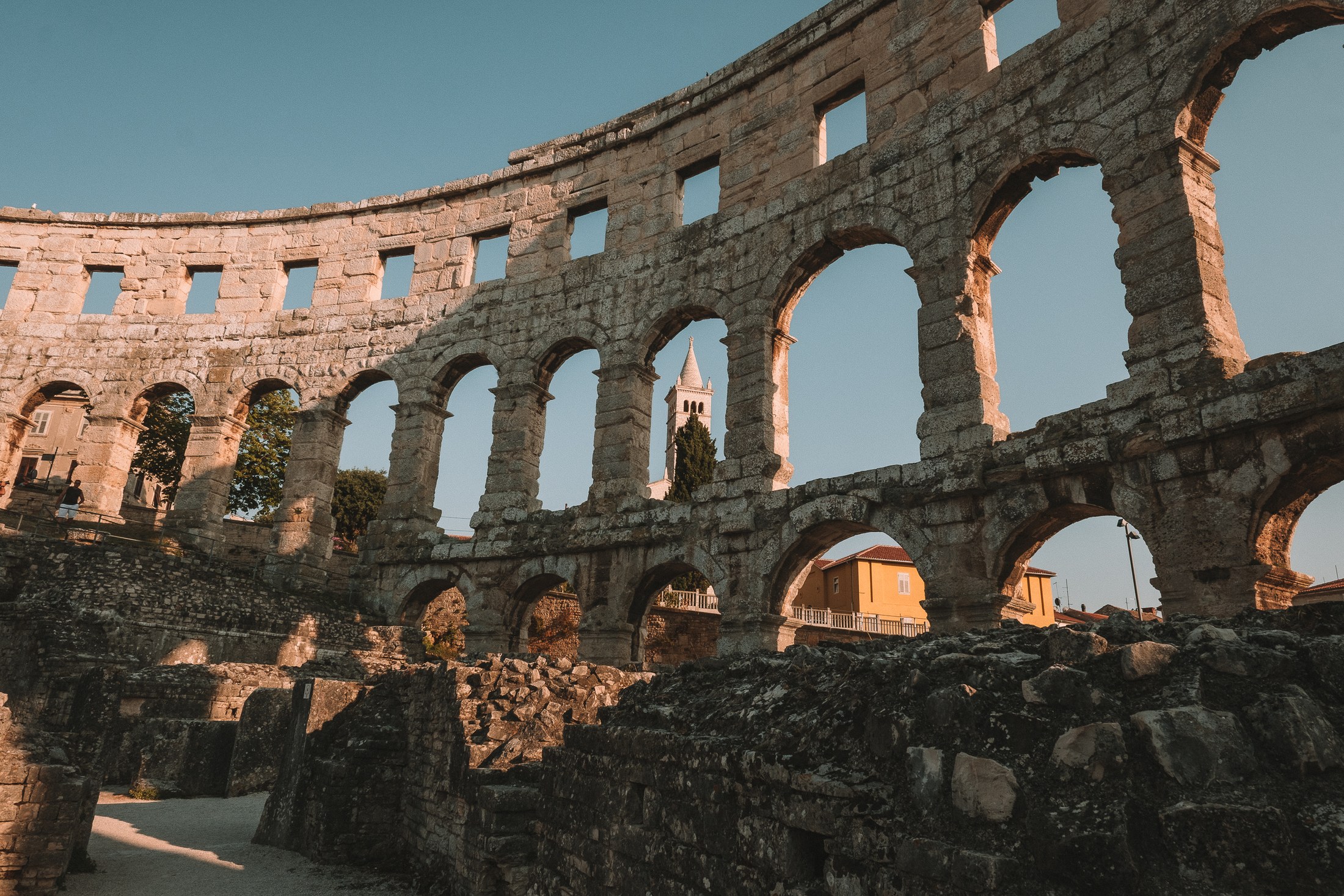
14 Things to Do in Pula
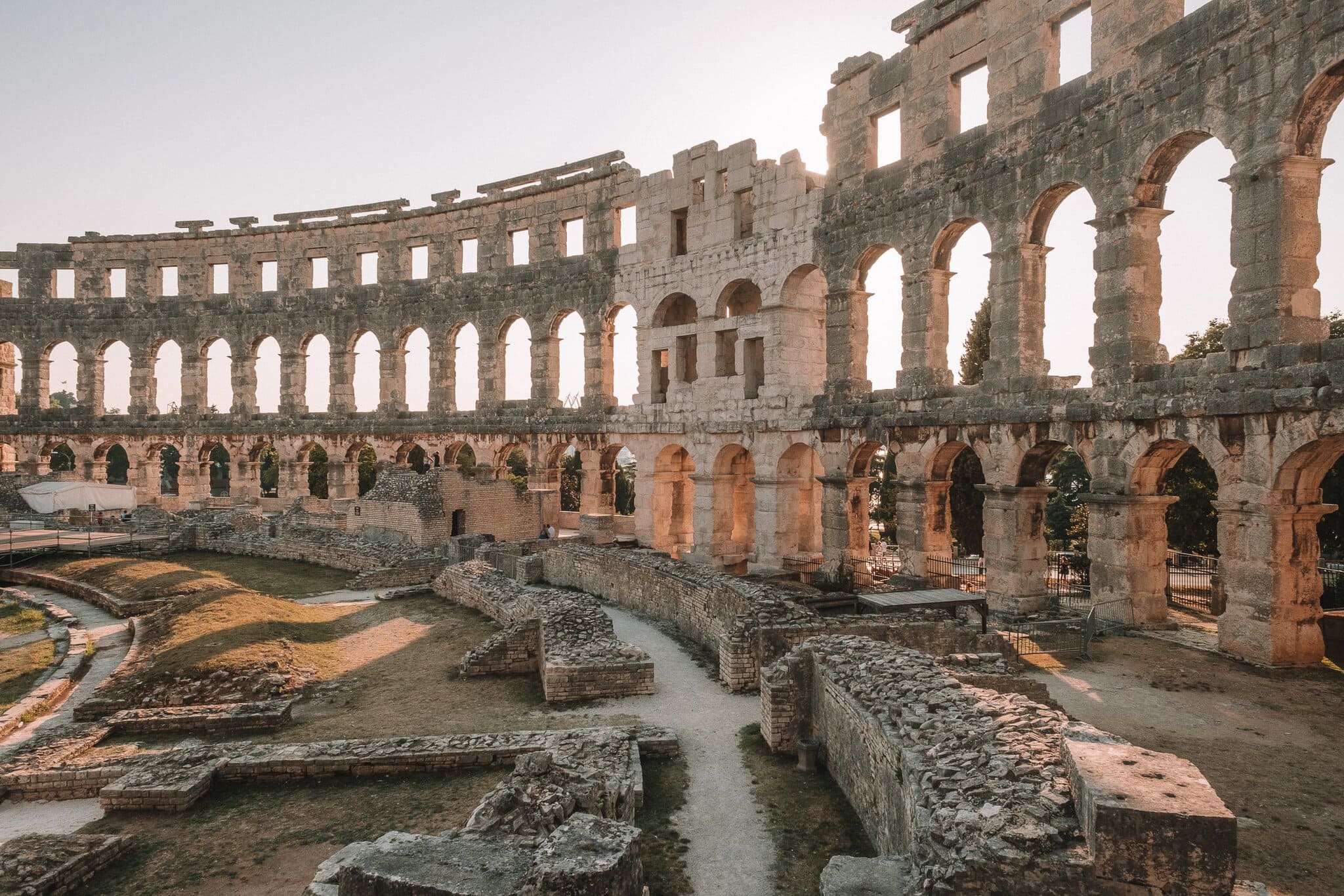
1. Pula Arena (the amphitheatre)
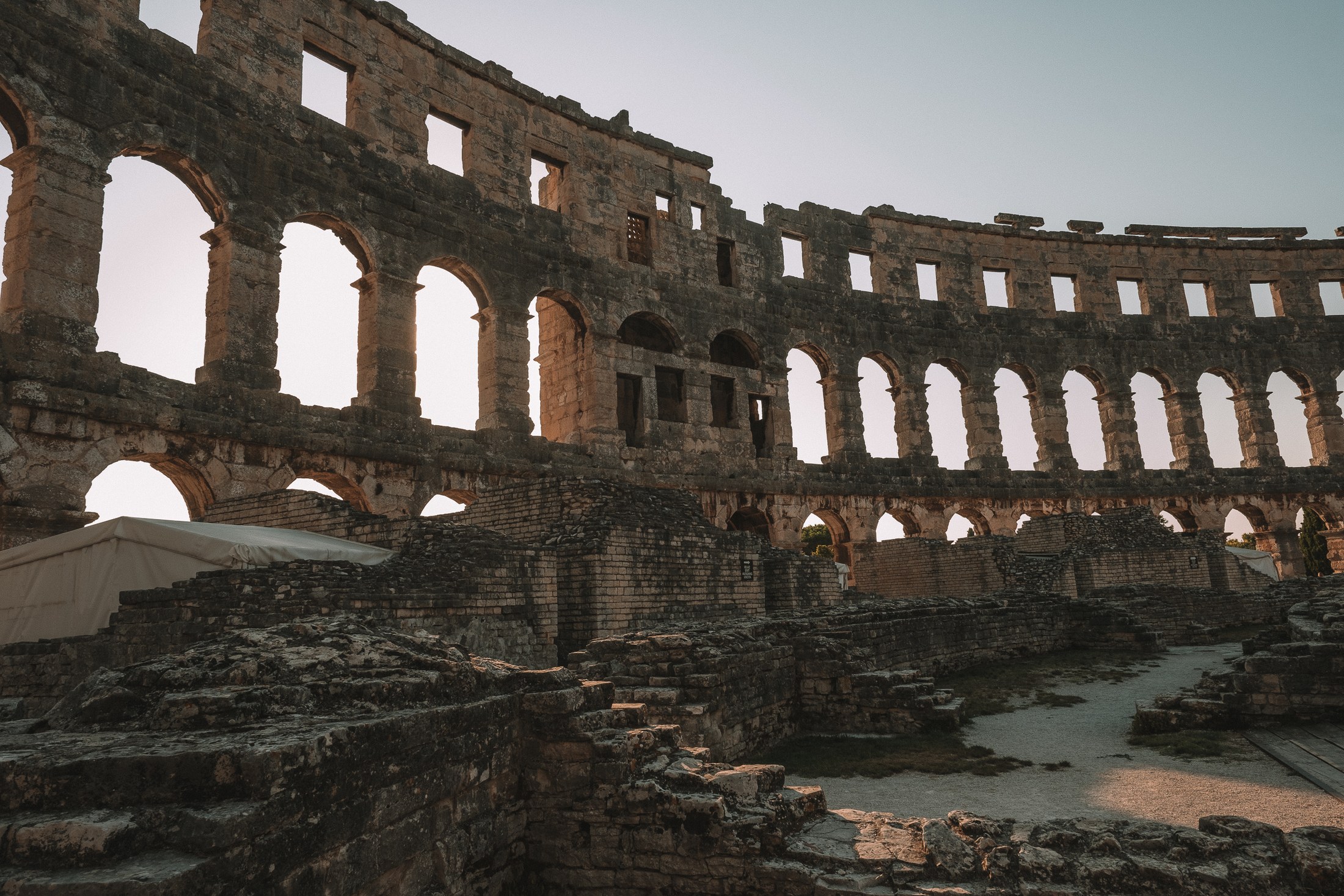
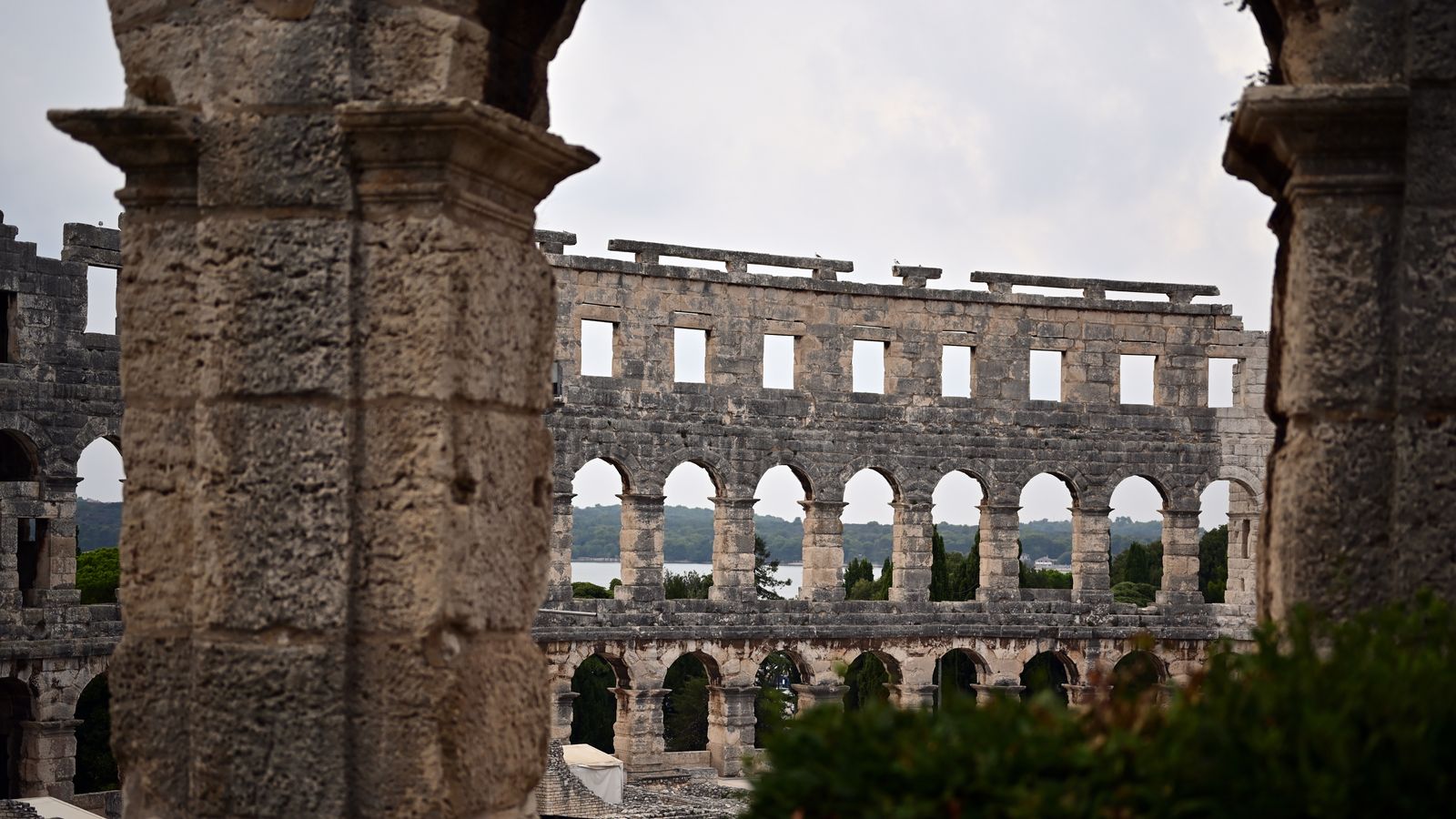
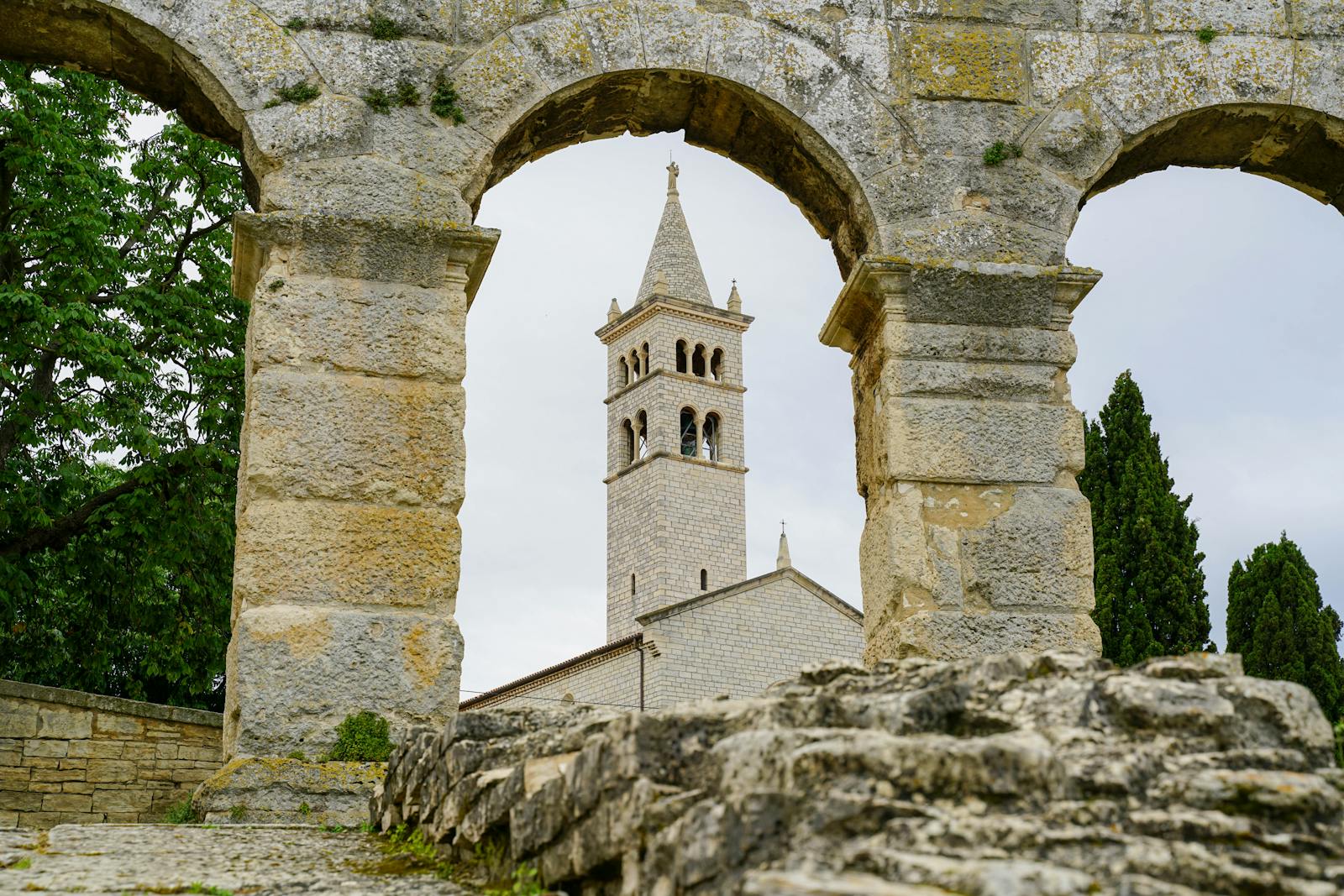
This is, without question, the biggest draw in the whole city and a landmark you simply cannot miss. The Pula Arena is the sixth-largest surviving Roman amphitheatre in the world, but it’s the only one that can boast having all four side towers and the complete outer ring still intact. It was built in the first century AD during the reign of Emperor Vespasian, and in its heyday it held an astonishing twenty-three thousand spectators who came to watch the bloody gladiatorial contests.
Today the arena hosts far more peaceful events and in summer it transforms into the most beautiful open-air concert venue imaginable. In 2025, the likes of Tom Jones and Bryan Adams are due to perform here, and the prestigious Pula Film Festival takes place every July. Standard adult admission costs around ten euros, while children and students pay half. Don’t skip the sprawling underground chambers, where you’ll find a fascinating permanent exhibition on ancient olive growing and winemaking in Istria. You can see old presses and enormous ceramic amphorae once used to transport these precious liquids all around the Mediterranean.
💡 Tip: During peak summer season the arena is open from eight in the morning until ten at night, so I’d recommend timing your visit for late afternoon. You’ll avoid the worst of the heat and soak up the magical atmosphere as the setting sun turns the ancient stones golden.
2. Temple of Augustus and the Forum
As you wander the historic centre, sooner or later your feet will carry you to the Forum, the main square that has been the heart of the city since antiquity. This is where three important temples once stood, of which only the Temple of Augustus has survived to this day in its full glory. This breathtaking structure dates from around the turn of the era, was originally dedicated to the goddess Roma and Emperor Augustus, and will impress you with its slender Corinthian columns. They lend it an incredible elegance and grandeur. Although the temple was badly damaged during the Second World War by an unfortunate bombing raid, Italian archaeologists managed to masterfully restore it to its original form.
Right next to the temple stands Pula’s town hall, the so-called Komunalna palača, which was cleverly built directly on the foundations of another ancient temple dedicated to the goddess Diana. The whole square is now lined with cosy little cafés and restaurants where you can sit down, order an excellent coffee and simply soak up that one-of-a-kind historic atmosphere. It’s the perfect starting point for further exploration of the old town’s alleys.
💡 Tip: Inside the Temple of Augustus there’s now a small but very interesting collection of ancient sculptures and minor artefacts, which you can see for a symbolic entry fee. If you’re keen on history, definitely pop inside — the visit only takes a few minutes.
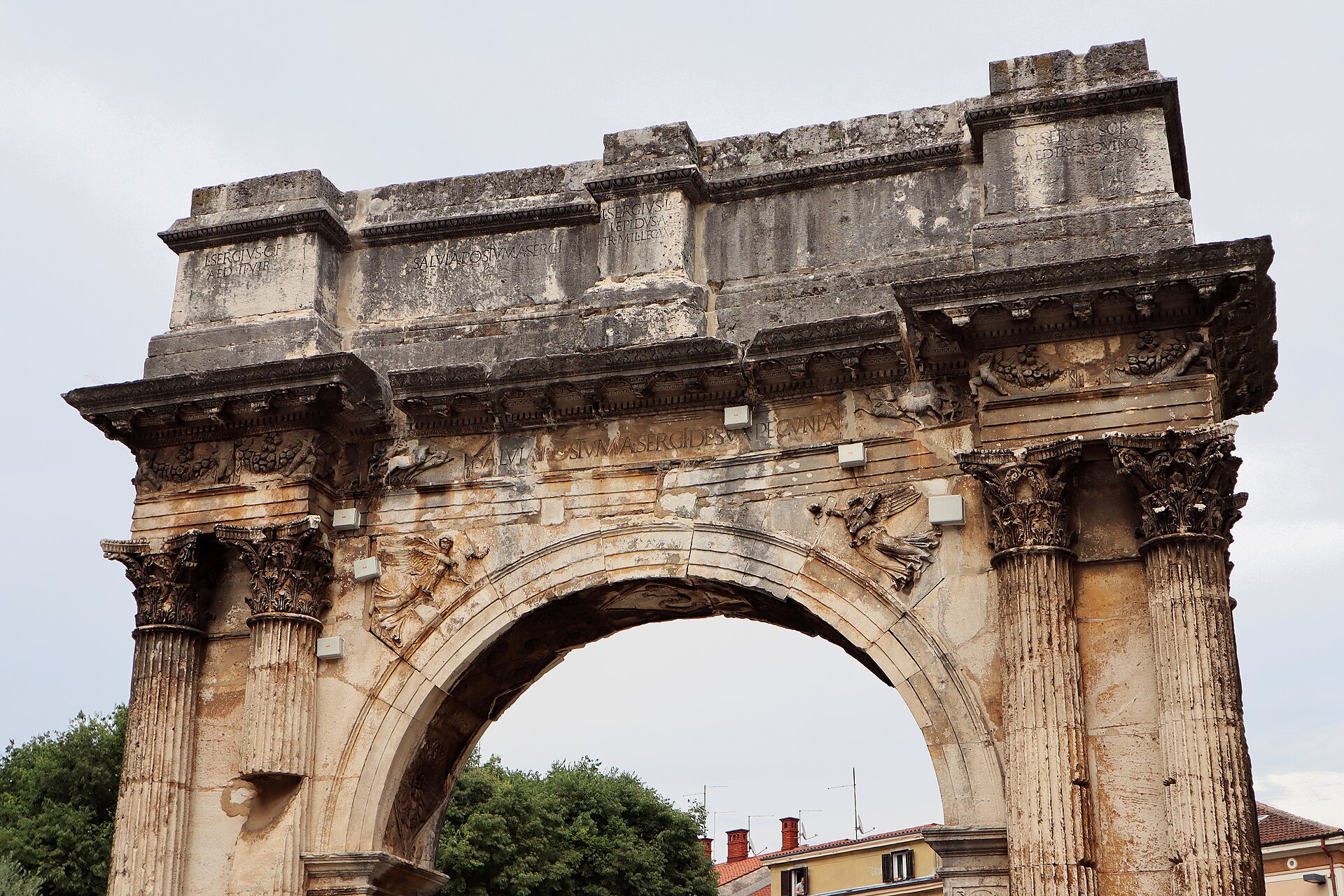
3. Triumphal Arch of the Sergii (Golden Gate)
At the very end of the bustling pedestrian street lined with shops, known as Sergijevaca, the magnificent Triumphal Arch of the Sergii — often called the Golden Gate — suddenly appears before you. This late-Hellenistic gem was commissioned and paid for by the influential Sergii family around 27 BC. They built it to honour the memory of three of their prominent members who held high civic offices. The arch originally adjoined the mighty city walls on one side, which were demolished in the nineteenth century to make way for the expanding city. Today it stands proudly alone in the middle of the picturesque Portarata square.
An interesting detail is that the rich decoration with winged victories and finely detailed weaponry appears only on the western side of the arch, which faced into the city. The eastern side, originally hidden from view behind the walls, was left completely unworked. These days there’s always something going on around the arch — it’s a popular meeting spot for locals and you’ll often come across talented street musicians who give the whole square a wonderful atmosphere.
💡 Tip: Directly opposite the arch you’ll find the famous Café Uliks, in front of which a bronze statue of the writer James Joyce sits comfortably. Joyce actually lived in Pula for a while in the early twentieth century, teaching English to naval officers — so you can snap a stylish photo with him as a keepsake.
4. Hercules Gate and the Twin Gate
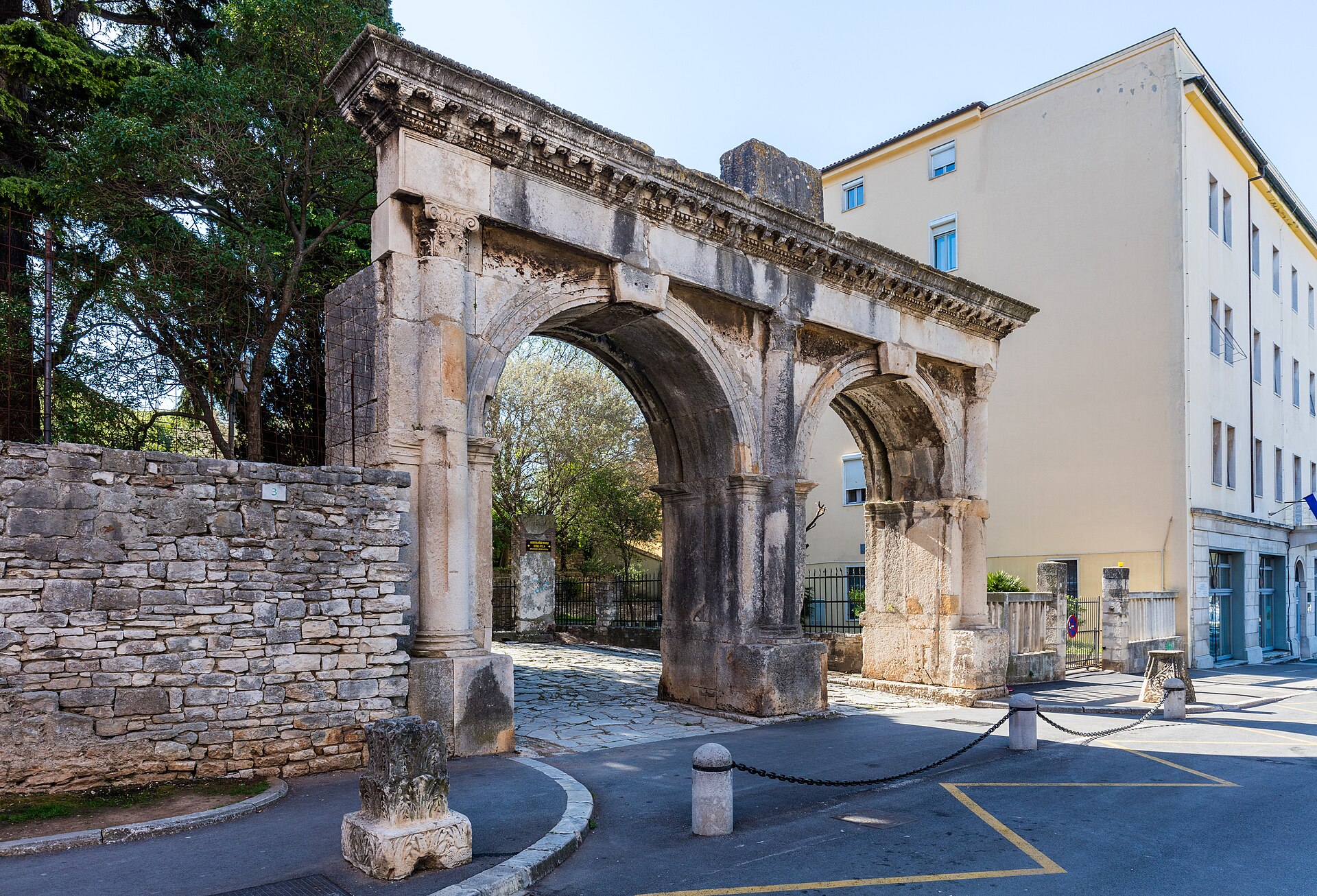
If you head from the Golden Gate along the remains of the old city walls, you’ll soon come to the Hercules Gate, which is the oldest surviving Roman monument in all of Pula. It dates from the mid-first century BC and gets its name from the discreet relief of the legendary hero Hercules’ head with his club, which you can study carefully right at the top of the stone arch. From a historical standpoint, this spot is enormously valuable, because the wall bears an inscription carved with the very first documented mention of the city’s founding, then known as Colonia Pietas Iulia Pola.
A little further along stands the majestic Twin Gate, or Porta Gemina, built around the second century AD. As the name suggests, it consists of two symmetrical arches, and in the past it served as one of the main entrances to the huge ancient theatre that once stood on the hill above it. Today it’s the best preserved of the original ten city gates, and you’ll pass through it if you set off to explore the Archaeological Museum or climb up to the Kaštel fortress.
💡 Tip: If you love photography and want the best shots, I’d recommend passing through these gates in the early morning hours. There aren’t as many tourists about yet, and the sun hits the old stones from a wonderfully photogenic angle that brings out all the historic detail.
5. Kaštel and the Archaeological Museum of Istria
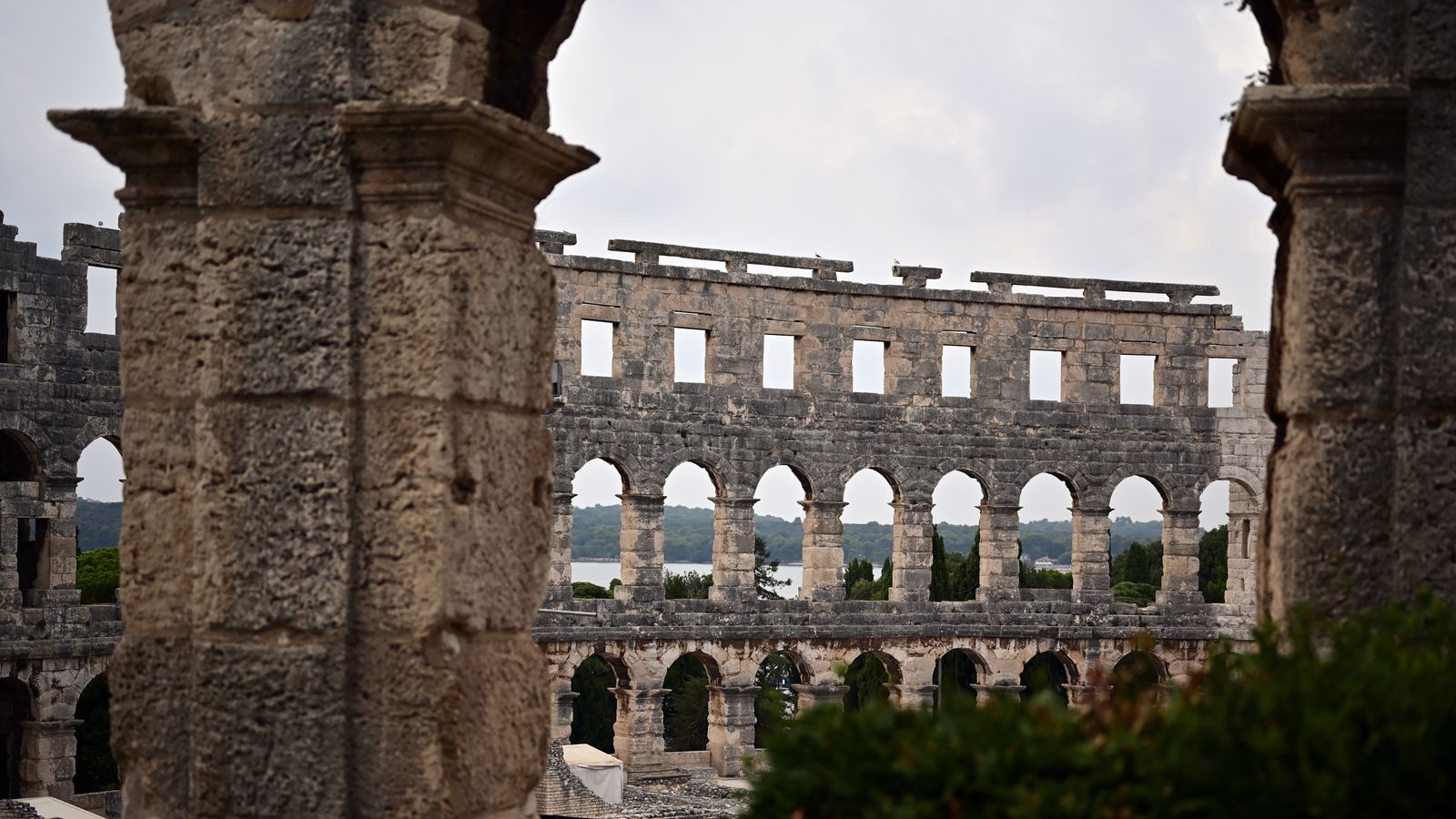
Rising directly above the old town is the imposing Venetian star-shaped Kaštel fortress, which you simply can’t miss as you stroll through the centre. It was built in the seventeenth century to the ingenious design of the French military engineer Antoine de Ville, on the exact spot where the ancient capitolium once stood. The climb up will cost you a bit of sweat in the summer heat, but your reward will be the absolute best panoramic views over the whole of Pula. From up here you’ll see the bustling harbour with its working shipyards, and the roof of the nearby amphitheatre laid out below you.
Inside the fortress itself is the Historical and Maritime Museum of Istria, but for lovers of the most ancient history, the Archaeological Museum of Istria is far more interesting. You’ll find it a little further down the hill, right next to the Twin Gate, with an extensive outdoor lapidarium attached. The museum houses fascinating collections spanning prehistory, the celebrated Roman era and the early Middle Ages. Do check the current opening hours and admission on their official website, though, as the whole institution has been undergoing extensive and demanding renovation in recent years.
💡 Tip: Even if you decide not to visit the paid indoor exhibitions of either museum, the walk along the outer walls of the Kaštel itself is completely free. That breathtaking view over the city’s orange rooftops and the blue sea is something you simply can’t miss.
6. Zerostrasse (the underground tunnels)
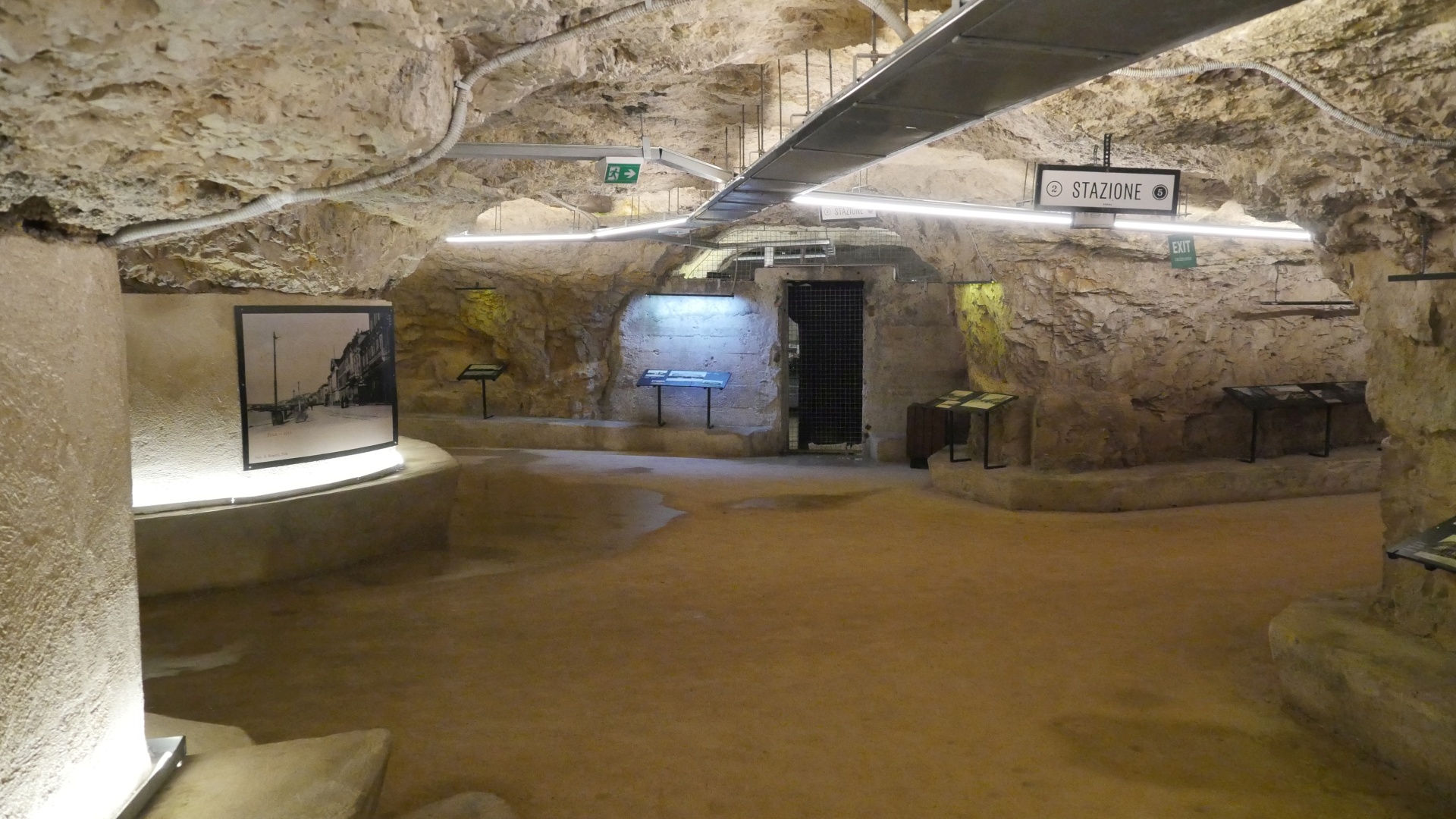
If the heat of a summer’s day gets too much for you, I have the perfect tip for cooling off — one that also hides a chunk of darker history. Right beneath the hill on which the Kaštel fortress stands lies Zerostrasse, an intricate system of underground tunnels built during the First World War. Originally these concrete corridors served as safe air-raid shelters and enormous ammunition stores for the Austro-Hungarian army. They could supposedly hold up to fifty thousand people, which back then was almost the entire population of Pula.
Today part of these mysterious corridors is open to the public, and they maintain a constant, pleasantly cool temperature of around fourteen degrees Celsius, so do bring a light jumper for your visit. Adult admission is roughly seven euros, while children, students and seniors pay just three. Take note that they very often accept cash only, so come prepared and you won’t have to go hunting for a cash machine. The corridors are sometimes used for various art exhibitions and social events, too.
💡 Tip: Down in the tunnels there’s also a very modern lift, which for a small fee will whisk you comfortably straight up to the courtyard of the Kaštel fortress. You’ll definitely appreciate this shortcut if your legs are already tired from a full day of sightseeing and you don’t fancy the uphill climb.
7. The Mosaic of the Punishment of Dirce
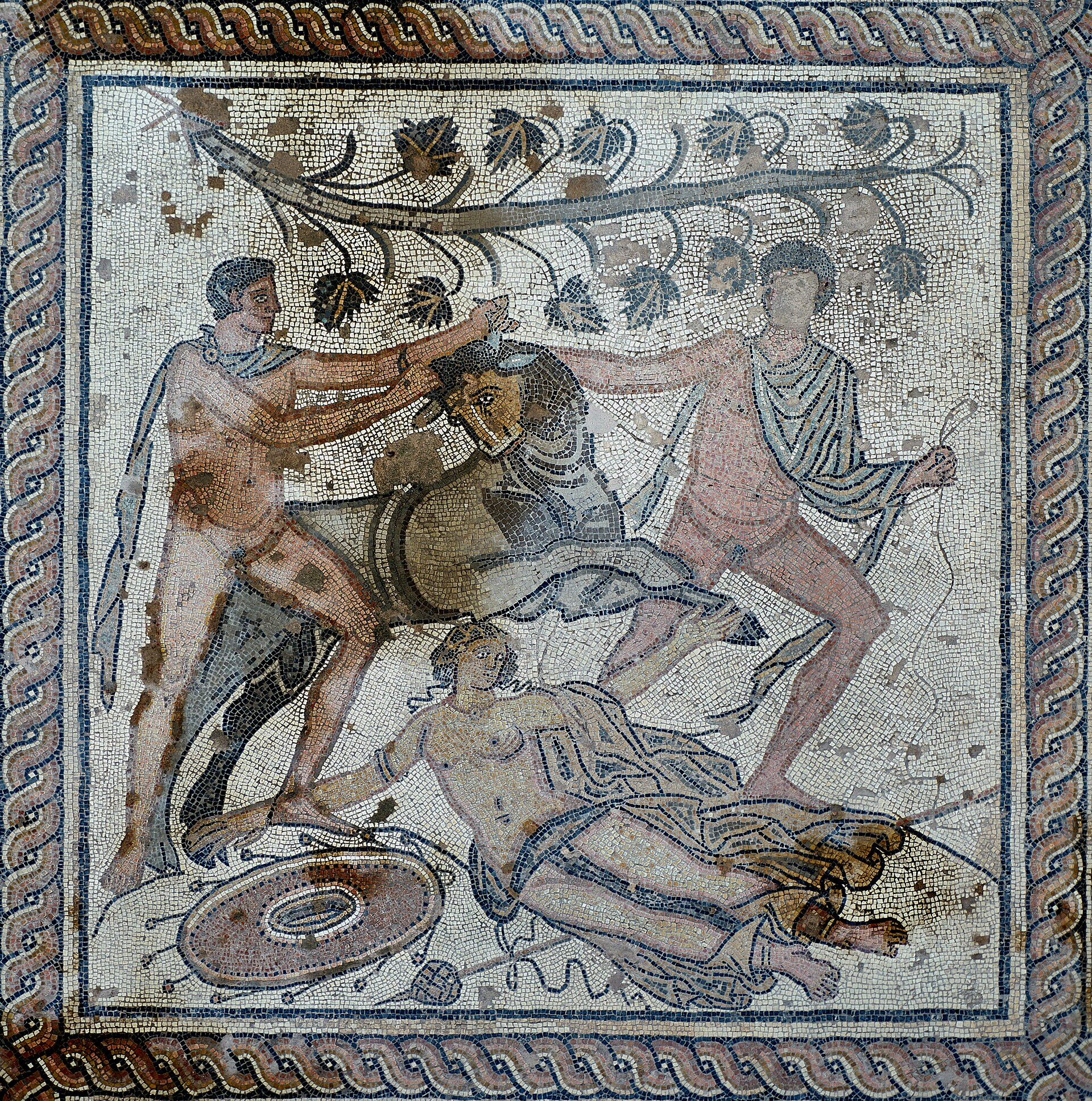
This is one of Pula’s greatest hidden treasures, one that plenty of ordinary tourists have no idea exists, because there are no flashy signposts or big billboards leading to it. In the middle of perfectly ordinary buildings, almost tucked away among residential houses near the Chapel of St Mary Formosa, lies an incredibly well-preserved Roman floor mosaic from the second to third century AD. It depicts the highly dramatic mythological scene of the Punishment of Dirce, who is being mercilessly tied to an enraged bull by the brothers Amphion and Zethus.
Interestingly, the whole mosaic was discovered entirely by chance after the Second World War, when workers were clearing the rubble of buildings destroyed by the devastating Allied bombing. It sits roughly two metres below the current ground level and is protected from the elements by a simple glass shelter. The great thing is that access is completely free and the site is open all day. So you can take your time admiring it without any queues, pricey tickets or the crush of crowds you know from the big museums.
💡 Tip: On the way to the mosaic you might feel a little confused, because the map will lead you across an ordinary car park and between old blocks of flats. Don’t let that first impression put you off — this unique spot is well worth the little bit of searching, and it’ll give you a real taste of antiquity.
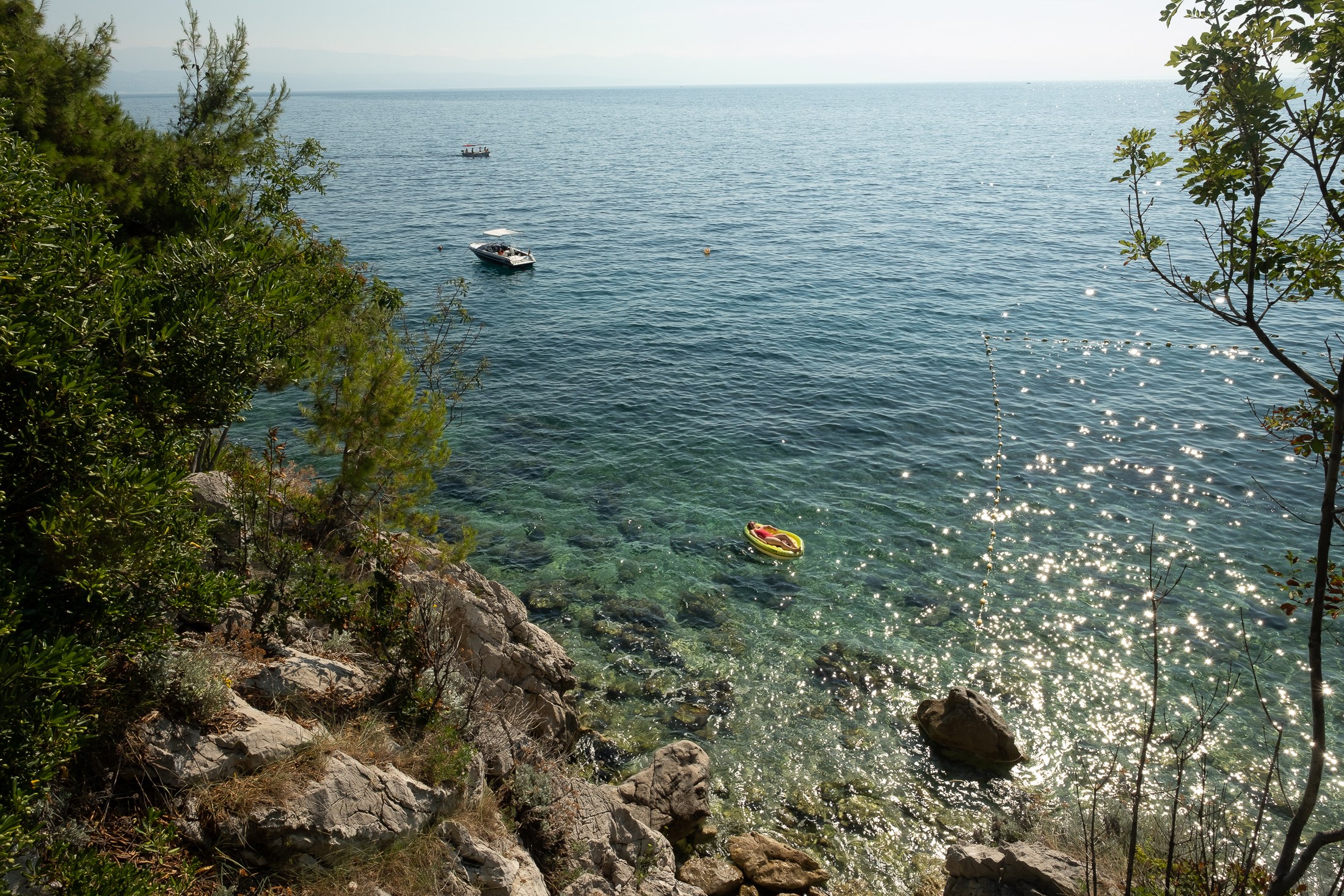

8. The beaches on the Verudela peninsula
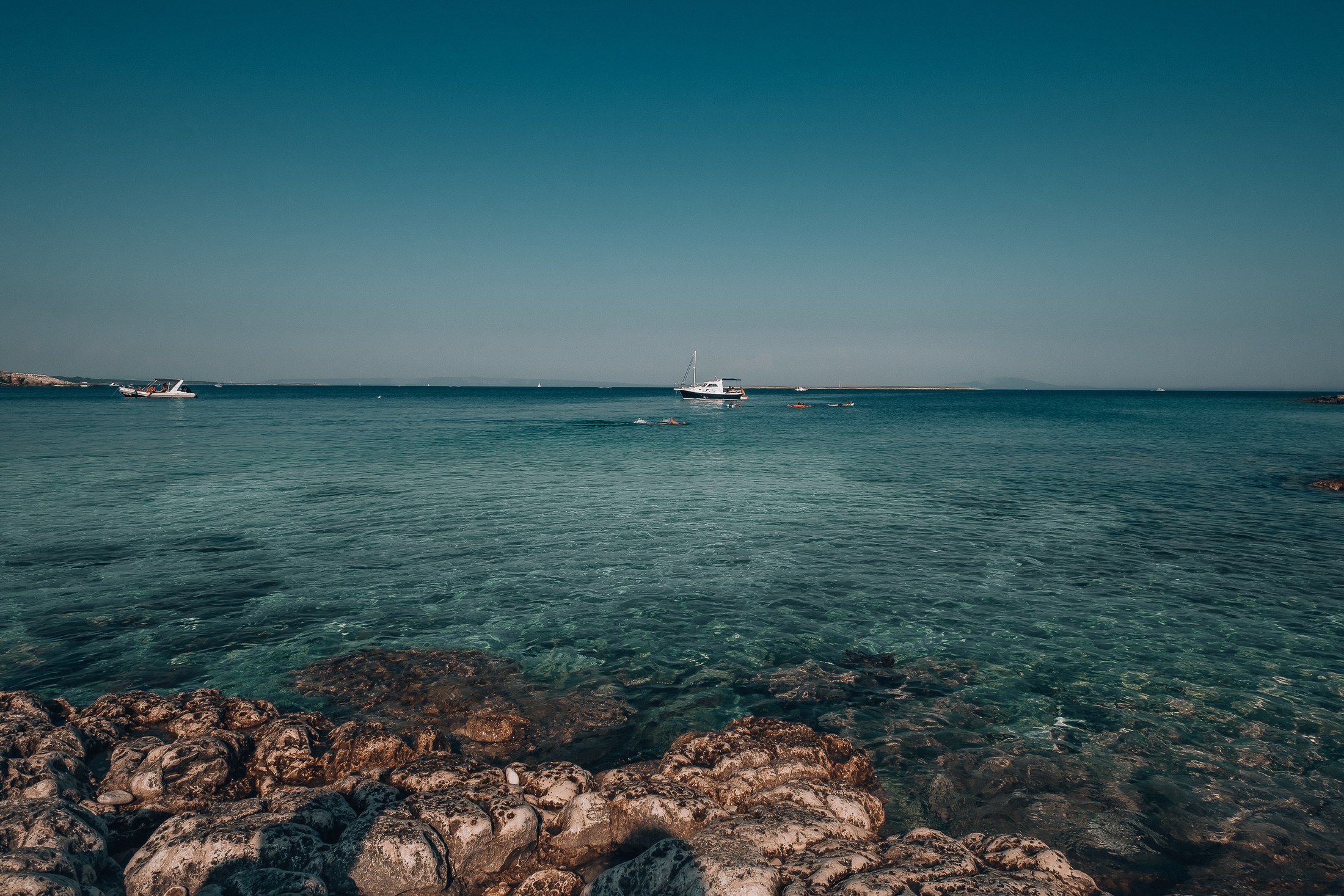
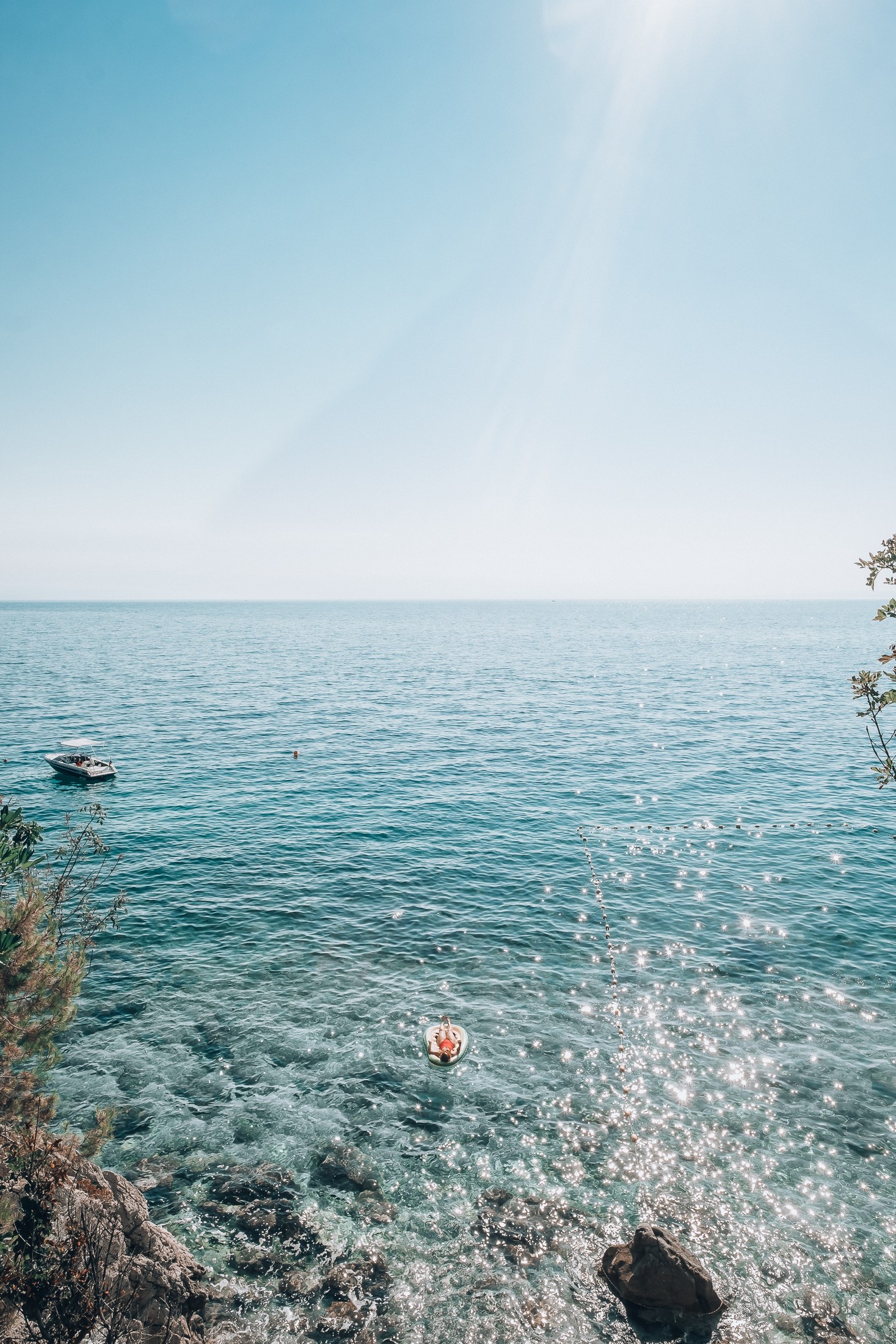
Once you’ve had your fill of ancient history, you’re bound to feel a serious urge to jump into the sea — and for that, the suburban Verudela peninsula is the absolute ideal destination. On a fairly small stretch of rugged coastline you’ll find a whole range of varied beaches, tastefully surrounded by shady pines. The absolute star, the one you’ll see on every other postcard from Pula, is the little cove of Hawaii Beach, or Havajka. As the name suggests, the water here is a gorgeous turquoise, the entry into the sea is gentle and made up of small pebbles, while the surrounding white cliffs tempt the brave into diving straight into the waves.
Another great choice, especially if you’re travelling with younger children, is Ambrela Beach, which has even earned the prestigious international Blue Flag award for outstanding water quality and excellent facilities. It’s a classic pebble beach with all the comforts — handy showers, sunbeds to rent, an attentive lifeguard and a few pleasant beach bars for refreshment. From the centre of Pula you can reach Verudela very easily on city buses number 2a or 3a, and the journey takes just a little over ten minutes.
💡 Tip: These beaches are genuinely beautiful, but in July and August they get rather crowded thanks to how easy they are to reach. So I’d recommend heading out early in the morning to grab a good spot in the natural shade under the trees.
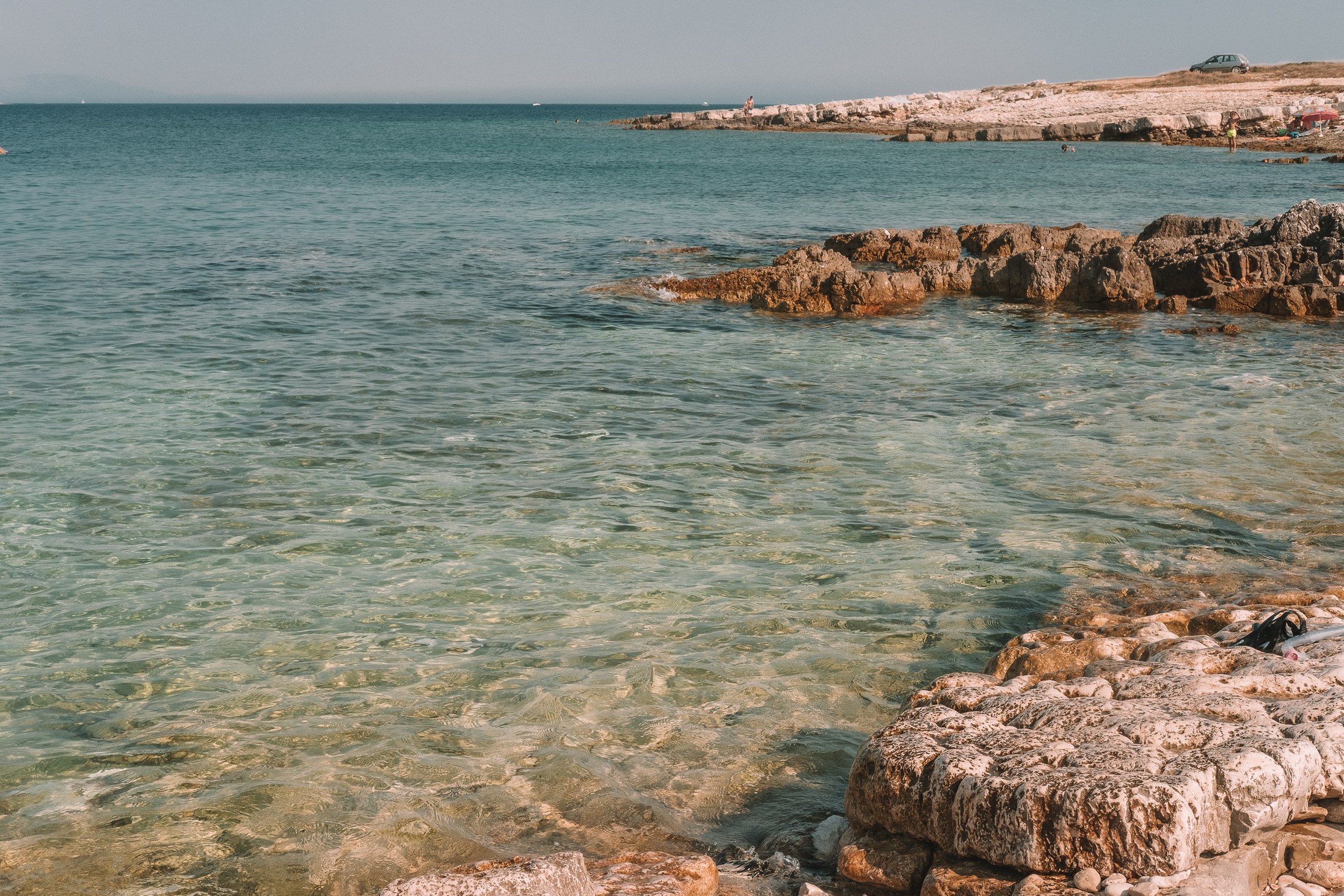
9. Pješčana uvala
Don’t be misled by the Croatian name, which literally translates as Sandy Cove. While you won’t find Caribbean-style fine sand here, Pješčana uvala is made up of very small pebbles that are much friendlier on the feet than the sharp limestone rocks found in so many other parts of Istria. This fairly modern residential and tourist district lies close to Verudela and offers a much calmer, more intimate atmosphere than the huge hotel resorts nearby.
The beach itself slopes very gently into the sea, making it another absolutely brilliant and safe spot for families with little ones who can’t swim yet. A pleasant shaded promenade runs along the shore, where you’ll come across plenty of excellent cafés, restaurants and little souvenir shops. The local yachting marina lends the whole bay a slightly luxurious feel, and there are lots of options for sport, from beach volleyball to the ever-popular paddleboard rental. From the city centre you can get here very easily on city lines 27 and 28, if you don’t happen to have your own car.
💡 Tip: If you like a lie-in on holiday and only reach the beach around midday, it’s best to pack your own beach tent or parasol. There’s a little less natural shade under the trees here than on the neighbouring Verudela peninsula, and the sun can be deceptively strong.
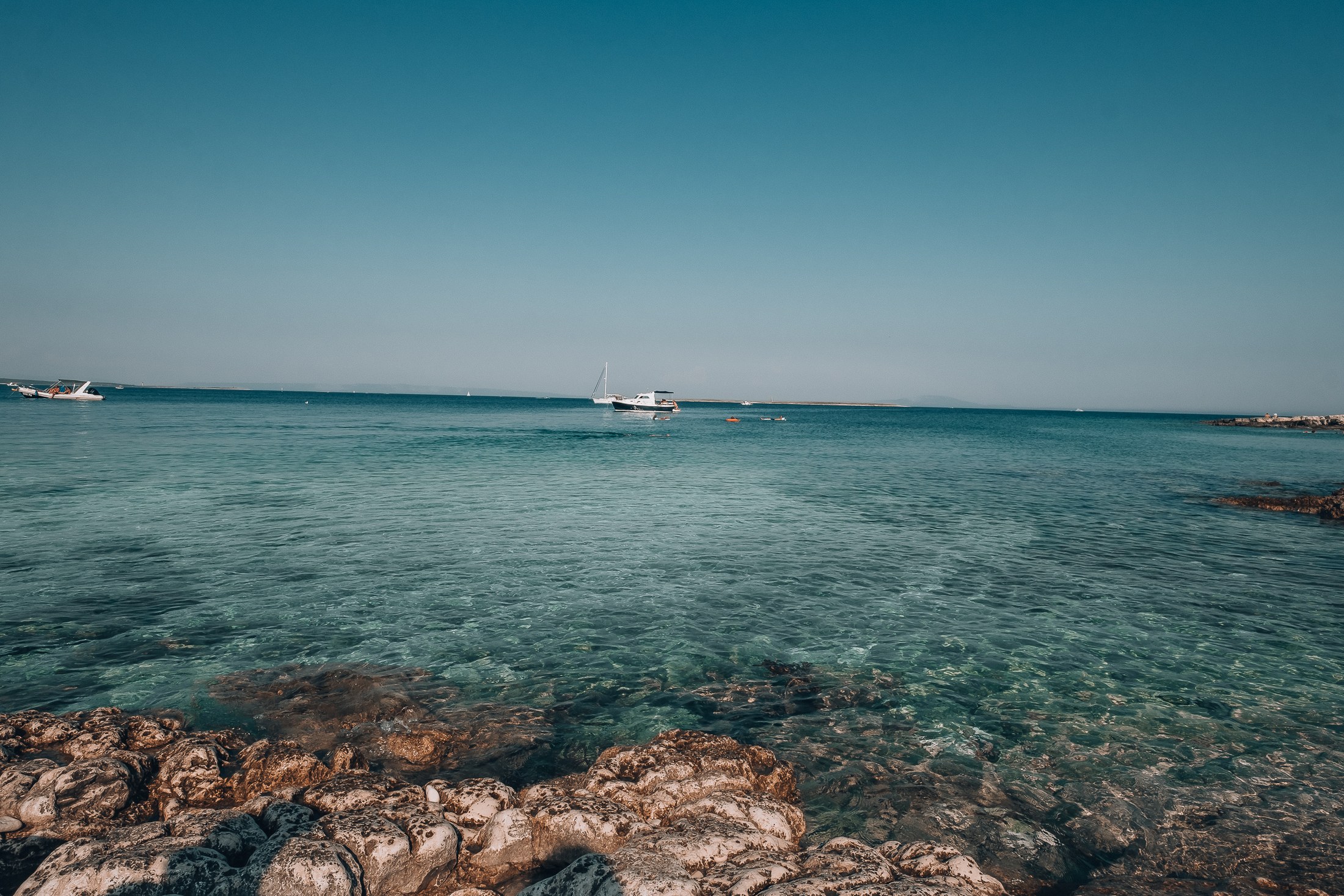
10. Cape Kamenjak Nature Park
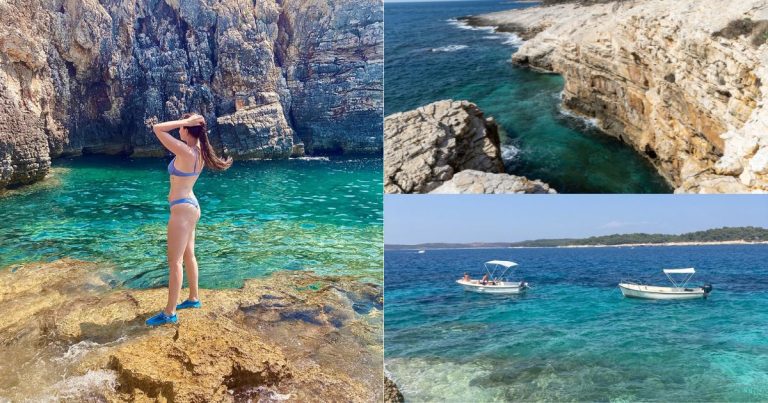
This is, without exaggeration, one of the most beautiful places in all of Istria and a trip you simply have to plan. Cape Kamenjak is a vast protected nature park at the very southern tip of the peninsula, just ten to fifteen kilometres from the city centre, beyond the village of Premantura. Don’t expect any fancy concreted promenades or five-star hotels, though — Kamenjak offers above all utterly wild nature, the heady scent of herbs and kilometres of rocky coastline dotted with hidden pebble coves. It’s an absolute paradise for lovers of snorkelling in crystal-clear water, sea kayaking, or adrenaline-fuelled cliff jumps straight into the waves.
The prettiest swimming coves, well worth exploring, are called Mala Kolombarica, Debeljak and Pinižule. Admission is only charged for bringing in motor vehicles, so hikers and cyclists always enter the entire park completely free. In peak summer season, from mid-June to mid-September, driving in by car costs around twenty euros, while out of season you’ll pay just ten. The park also has a strict daily limit on the number of cars, so it’s best to buy your ticket online in advance — you’ll get a small ten-percent discount and save yourself the stress of waiting at the barriers.
💡 Tip: At the very end of the peninsula hides the legendary Safari Bar, which looks as though Robinson Crusoe himself built it out of reeds and driftwood. It’s an absolutely unique spot for a refreshing drink after a full day of swimming. You’ll find more detailed information in our separate guide to Kamenjak Nature Park.
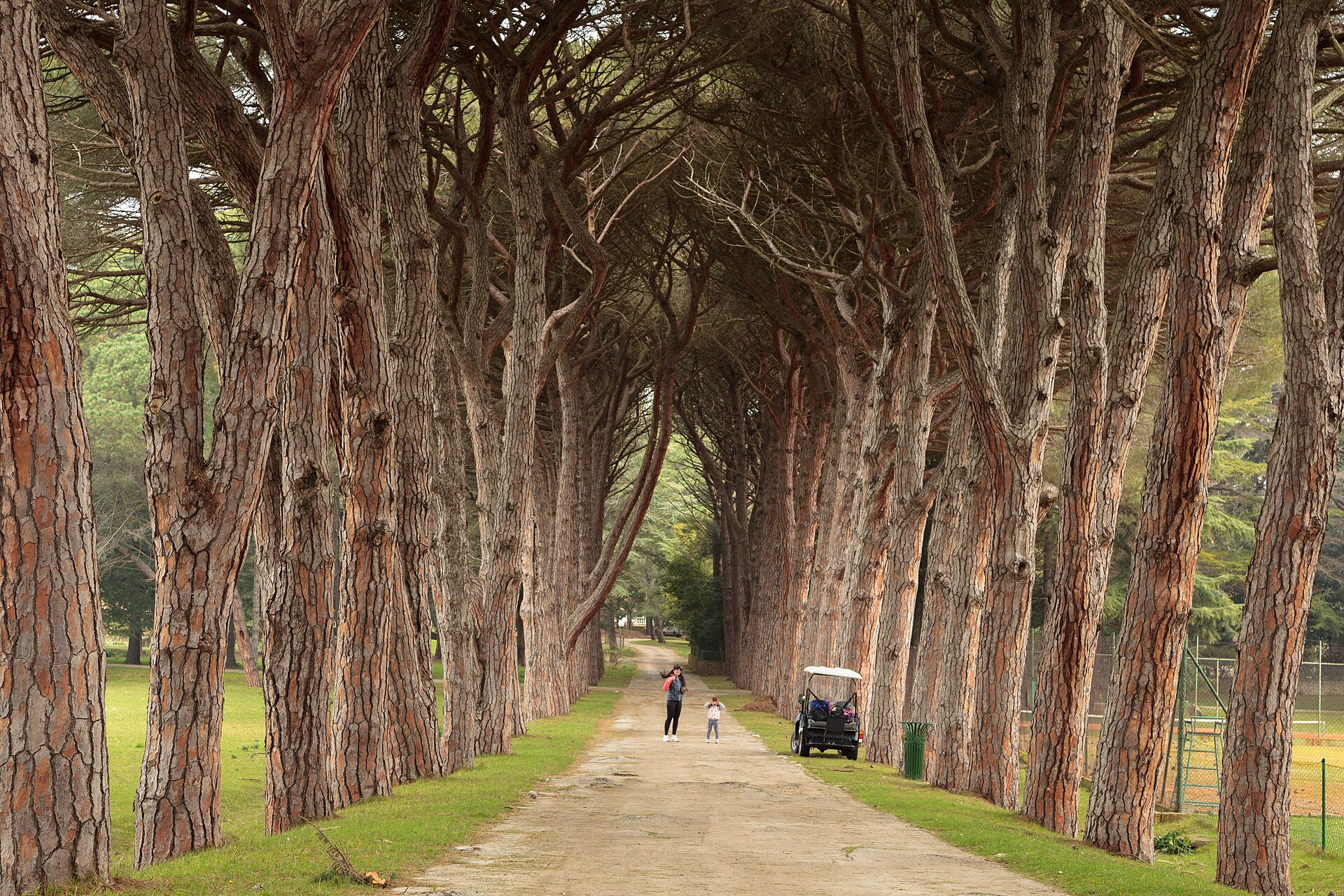
11. A trip to the Brijuni islands
Brijuni National Park is a cluster of fourteen wonderfully picturesque islands northwest of Pula, with an incredibly rich and slightly curious history. In the days of the former Yugoslavia, the main island of Veliki Brijun served as the strictly guarded, exclusive summer residence of President Josip Broz Tito, who loved to host the world’s most influential statesmen and famous Hollywood stars here. Today the whole island is thankfully fully open to the public, and you can get here very easily on the official ferry from the nearby port town of Fažana, with the comfortable crossing taking just twenty minutes.
The basic admission, which in summer costs around thirty to thirty-five euros, includes a guided tour of the island aboard a sightseeing train accompanied by a guide. During the roughly four-hour tour you’ll visit, among other things, the unique Safari Park, where the descendants of exotic animals gifted to Tito by leading statesmen from around the world still live today. You’ll see Lanka the elephant with your own eyes, plus grazing zebras, llamas, sacred cows and ostriches. The island is also dotted with ancient Roman excavations and old olive trees that have witnessed entire centuries.
💡 Tip: Cars with combustion engines are strictly banned from the island, but you can comfortably hire a regular bike or an electric golf buggy here. That way you can explore the prettiest, most remote coves entirely on your own, at your own pace and away from the crowds.
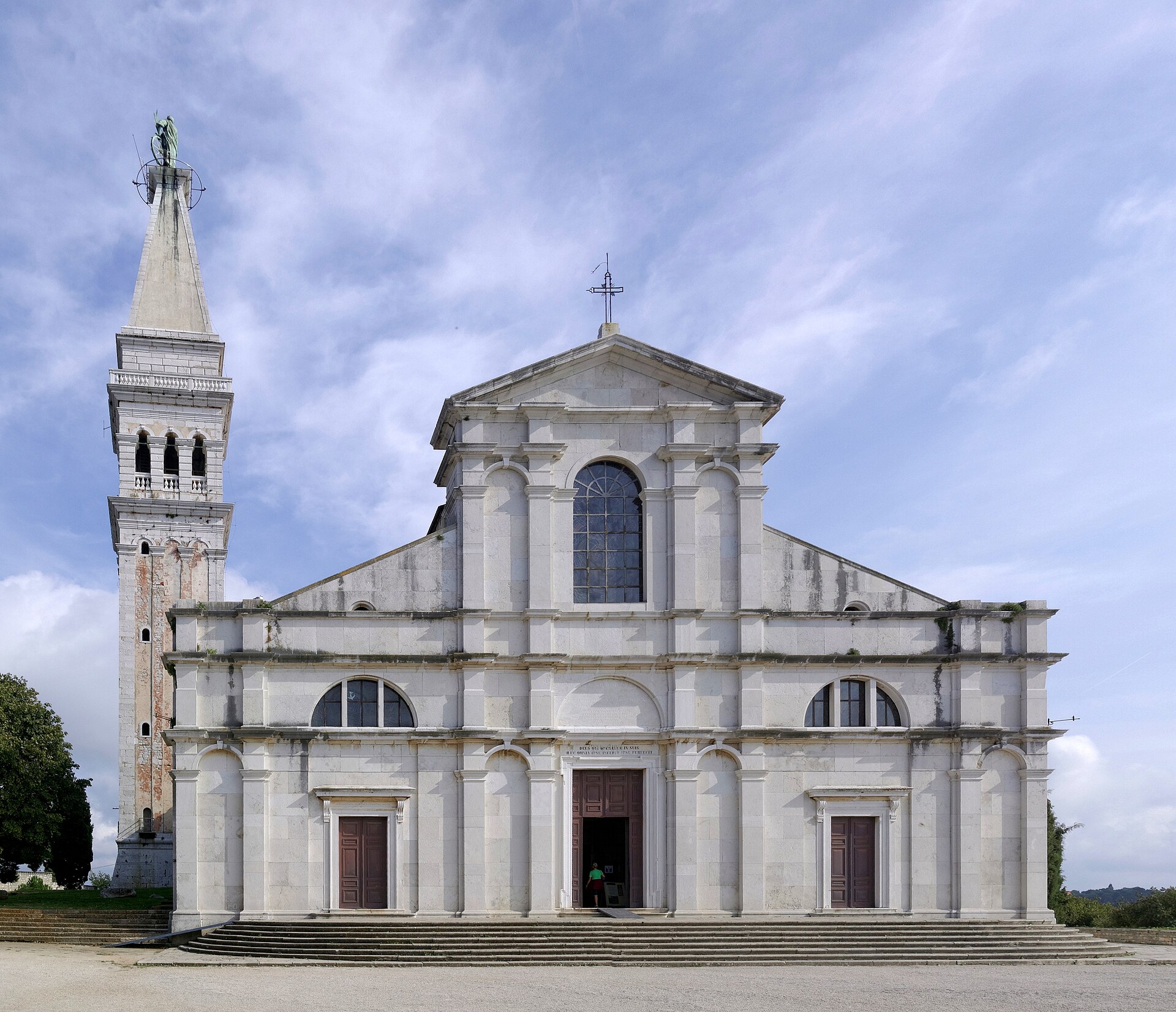
12. Romantic Rovinj and the Lim Fjord
If you have a hire car in Pula or arrive in your own vehicle, treat yourself to a wonderful day trip about forty kilometres north to the town of Rovinj. The drive takes just over half an hour, and your reward will be the most photogenic town in all of Istria. With its narrow cobbled lanes and colourful houses rising straight out of the sea, Rovinj makes no attempt to hide the strong influence of Venetian architecture. The town is crowned by the beautiful Church of St Euphemia at the very top of the hill, from where a gorgeous view opens up over the nearby islands and sailing boats.
On the way from Rovinj, be sure to stop at the Lim Fjord, which the locals call Limski kanal. This nine-kilometre-long sea inlet cutting deep into the mainland is in fact a flooded karst canyon surrounded by steep green slopes. The waters of the bay are absolutely ideal for farming mussels and oysters, which the local konobas serve up wonderfully fresh to seafood lovers. You can take in the bay either from one of the viewpoints right by the road or by paying for a cruise aboard an excursion boat. Read more in our article about Rovinj.
💡 Tip: Parking in Rovinj is an absolute nightmare in peak summer season and the prices climb to astronomical heights. So I’d recommend using the large park-and-ride lots on the very edge of town and walking into the centre — you’ll save yourself a lot of stress and money.
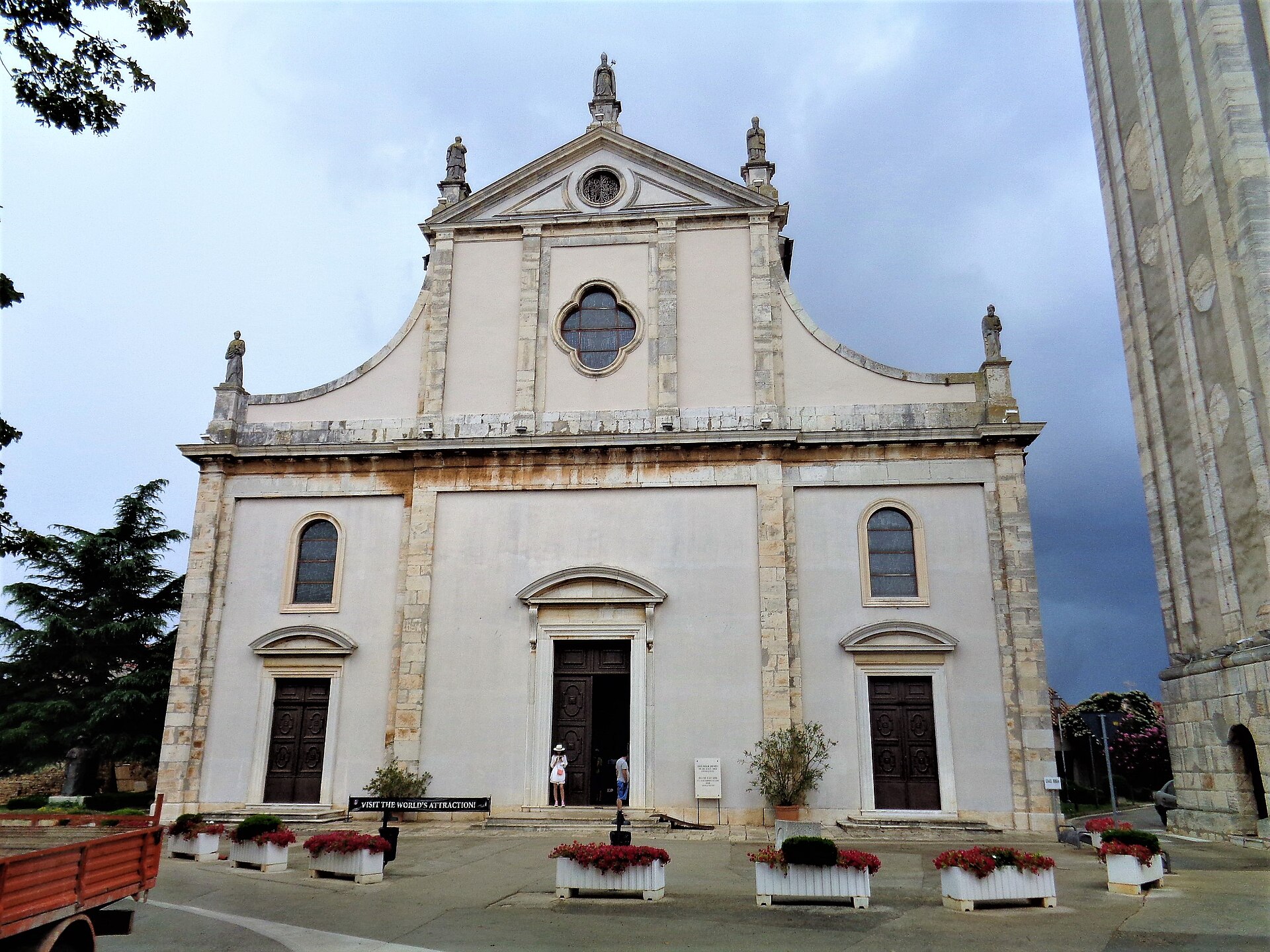
13. Vodnjan and its mysterious mummies
Just some ten kilometres north of Pula lies the quiet, unassuming town of Vodnjan, which hides one of the most bizarre and intriguing secrets in all of Croatia. From far away you’ll be drawn to the tallest church bell tower in all of Istria, belonging to the central Church of St Blaise. Entry to the main nave of the church is completely free, but the real attraction hides at the back, where a small admission is charged. For here lies an astonishing collection of more than three hundred Christian relics and, above all, six naturally mummified bodies of saints.
It remains an utter mystery to scientists that these bodies, including the very famous mummy of St Nicolosa Bursa, were never embalmed, yet they have survived in incredibly good condition and no one knows exactly how it’s even possible. Beyond this slightly mystical spectacle, Vodnjan is also renowned around the world as a major centre for producing the very finest olive oil. So definitely stop by one of the local family-run mills for a proper tasting, because Istrian oils regularly win prestigious global competitions.
💡 Tip: From Pula you can reach Vodnjan very easily on an ordinary suburban bus — the journey really only takes a moment, and it’s an absolutely ideal trip for a cloudy afternoon when you don’t fancy lying on the beach.
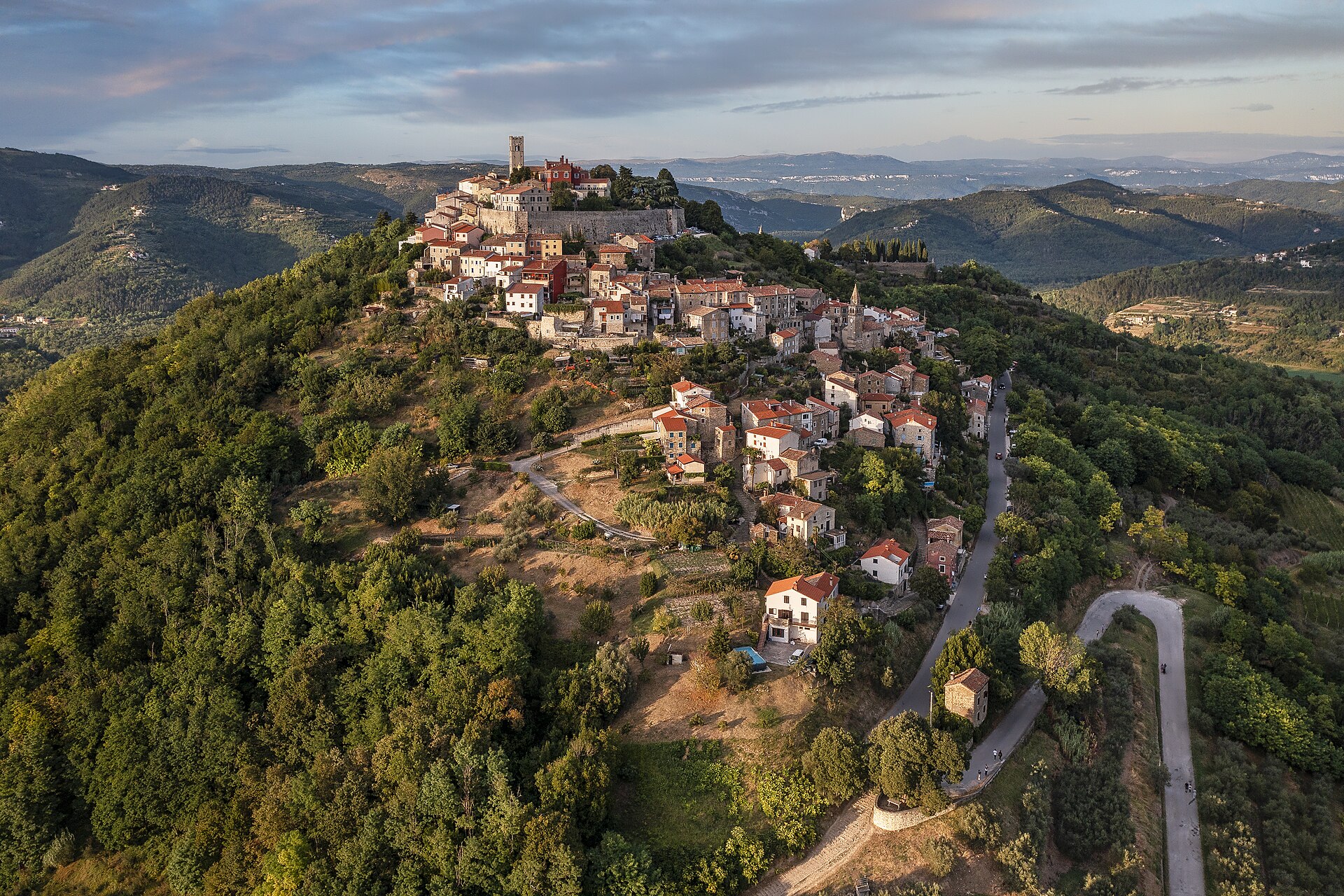
14. Inland Istria in search of truffles
While the coast buzzes with typical beach life all summer long, inland Istria is a completely different world full of green hills, picturesque vineyards and medieval towns, and it’s very often — and rightly — nicknamed the Croatian Tuscany. About an hour’s drive from Pula, perched on a steep hill, lies the fortified town of Motovun, hemmed in by deep oak forests in the valley of the river Mirna. And it’s precisely these damp forests that are one of the richest sources of precious truffles in the entire world, both the exclusive white ones and the year-round black variety.
Istrian gastronomy is an absolute promised land for us vegetarians, and this is exactly where you’ll be spoilt for choice. You absolutely must try the traditional homemade fuži pasta or potato gnocchi generously showered with fresh truffles. It’s a culinary experience you won’t forget in a hurry, especially when you wash it down with an excellent local white wine of the Malvazija variety. A short distance from Motovun lies another enchanting town, Grožnjan, known far and wide as the town of artists, whose narrow lanes are literally crammed with small galleries and studios. Istrian meat specialities like cured istarski pršut or beef from the local boškarin cattle are also highly regarded here, but throughout our trip we happily made do with that brilliant truffle glory.
💡 Tip: If the mysterious world of truffles fascinates you, you can book an experiential truffle hunt around Motovun, heading deep into the forest with a professional hunter and his specially trained dogs.
Map of points of interest for your phone
Where to Go Next from Pula
Pula is an absolutely brilliant springboard for exploring all of northern Croatia. If you fell for the Italian atmosphere of the Istrian peninsula, be sure to read our comprehensive guide to Istria, where you’ll find another helping of inspiration for your trips. Well worth a visit too is the town of Umag in the far north, famous for its prestigious tennis tournaments and beautiful coastline with crystal-clear water. If you have a car and fancy crossing over into neighbouring Dalmatia, the journey south will lead you to more gorgeous historic towns. Roughly four hours’ drive away is the port city of Zadar, where you can listen to the unique sea organ, and a little further on stands the majestic Split with its breathtaking Diocletian’s Palace. For an overall overview and to plan a longer trip, our complete guide to Croatia will come in handy.
Frequently Asked Questions
How many days do I need to visit Pula?
For the historic center of Pula itself and a comfortable tour of the main ancient monuments, one to two days is more than enough. However, if you want to relax on the beaches of the Verudela peninsula, head out to wild Kamenjak, and take a trip to the Brijuni Islands or inland for truffles, the ideal length of stay is four to seven days. This way, you can use the city as a great base for exploring all of southern Istria.
Is it difficult to park in Pula?
During the peak summer season, parking in Pula’s historic center is a real challenge and requires a good dose of patience. Most parking zones are paid, and spaces disappear lightning fast. I therefore recommend parking at larger parking lots further from the center and walking to the monuments, or choosing accommodation that offers a guaranteed parking space included in the room rate.
Where can I find good vegetarian food in Pula?
Istria is incredibly welcoming to vegetarians, and you definitely won’t go hungry here. Apart from the ubiquitous truffle pasta, you can head to Vegan House right by the arena, which was historically the first purely vegan restaurant in all of Istria. Great meat-free alternatives are also offered at the popular Bookeria restaurant in the old town or at Extravaganza, where you can stop by for a perfect breakfast.
Is Pula suitable for families with children?
Absolutely. While the historic center offers an educational and interesting look at ancient monuments, the resorts on the Verudela peninsula have beautiful pebble beaches with very gentle entry into the water, where children can play safely. Plus, a trip to see exotic animals on safari at the nearby Brijuni Islands is an absolutely ideal addition to a summer vacation for younger children.
Do they accept euros in Pula?
Yes, as of January 1, 2023, Croatia fully switched to the single European currency, the euro, which definitively replaced the former Croatian kuna. In most restaurants, shops, and for monument tickets, you can pay without any problem with a regular payment card. For smaller purchases at the market or tickets to the underground Zerostrasse tunnels, however, keep some smaller cash on hand.
Can I swim right in the center of Pula?
Swimming right in the historic center and adjacent harbor is really not possible, as regular boat traffic operates here and there’s also a large functioning shipyard. For the nearest swimming in clean sea water, you need to head either by city bus or by car a short distance out of town. The best choices are the beaches on the Verudela peninsula or the popular resort of Pješčana Uvala.
Do I need to buy monument tickets in advance?
Tickets to the majestic Pula Arena or other historic monuments can be bought without major problems right on-site, as lines here aren’t too bad even during the season. However, if you’re planning to drive into Kamenjak Nature Park, definitely buy your ticket online in advance. You’ll avoid long waits at the barriers and ensure you’ll even be let in due to strict daily limits.
Do I need a passport to travel to Pula?
No, EU citizens only need a valid ID card to travel to Croatia. Croatia has also been a full member of the Schengen Area since the beginning of 2023, so the annoying passport checks at the Slovenia-Croatia border have been definitively eliminated, which significantly speeds up and improves the journey by car for your summer vacation.
Tips and Tricks for Your Vacation
Don’t Overpay for Flights
Search for flights on Kayak. It’s our favorite search engine because it scans the websites of all airlines and always finds the cheapest connection.
Book Your Accommodation Smartly
The best experiences we’ve had when looking for accommodation (from Alaska to Morocco) are with Booking.com, where hotels, apartments, and entire houses are usually the cheapest and most widely available.
 🚗 Car rental on the roadVerified rental cars in Istria and Kvarner
Search with the DiscoverCars comparison engine — it compares prices from dozens of local and international rental companies, and most bookings come with free cancellation.
Compare car prices in Istria and Kvarner →Don’t Forget Travel Insurance
Good travel insurance will protect you against illness, accidents, theft, or flight cancellations. We’ve had a few hospital visits abroad, so we know how important it is to have proper insurance arranged.
Where we insure ourselves: SafetyWing (simple monthly subscription) and TrueTraveller (for extra-long trips).
Find the Best Experiences
Get Your Guide is a huge online marketplace where you can book guided walks, trips, skip-the-line tickets, tours, and much more. We always find some extra fun there!