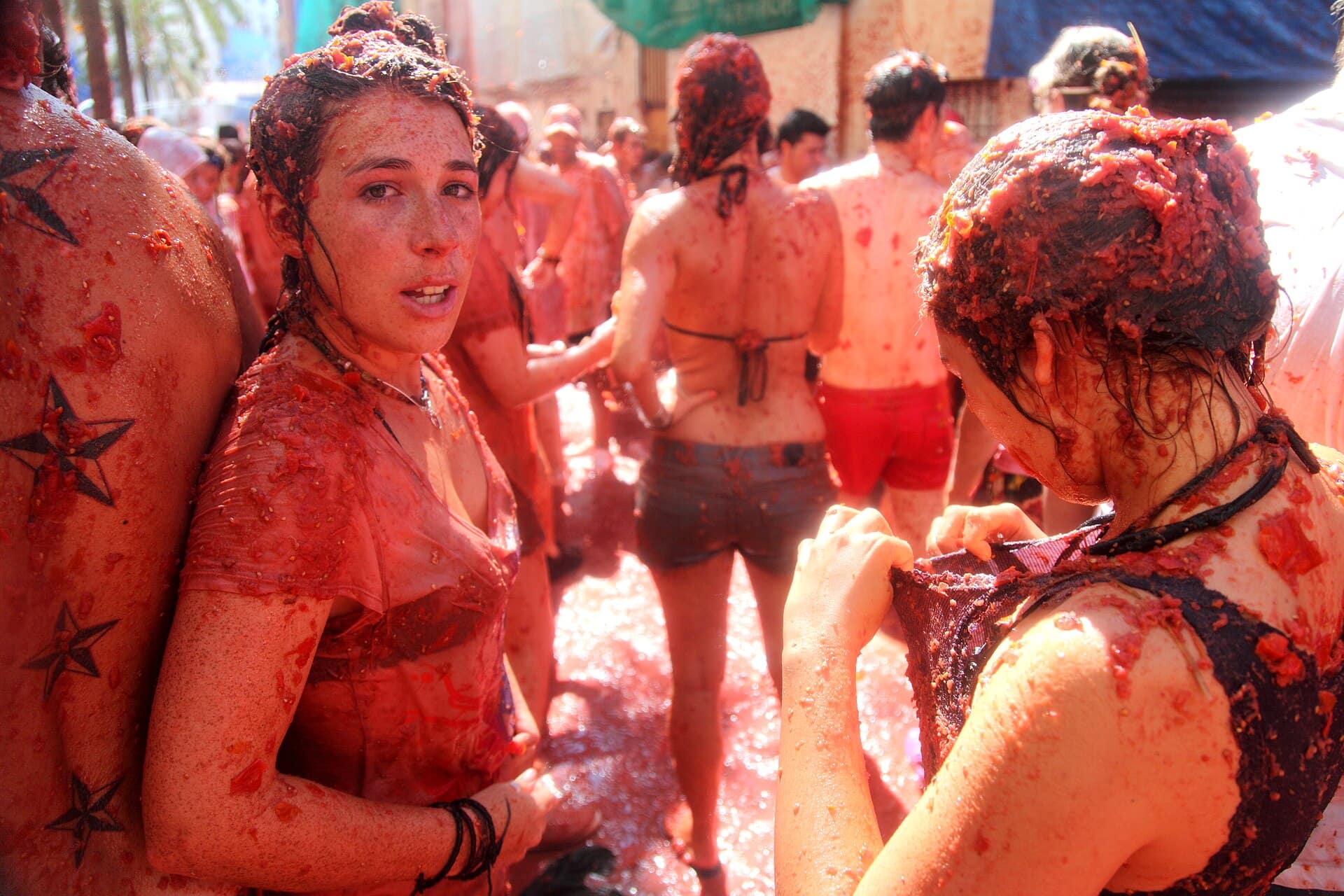
Spain never celebrates quietly — local fiestas always come drenched in the colour of fire, the smell of gunpowder, or the rhythm of hooves. The culture of unforgettable experiences here knows no half measures, and simply watching from the sidelines is rarely an option. Whether you find yourself in the middle of a fireworks display or inside a roaring football stadium, the streets pull you straight into the action and you become part of something extraordinary. One of the wildest and most immersive experiences of them all is undoubtedly the legendary La Tomatina, which takes place every year in the small town of Buñol, just outside Valencia.
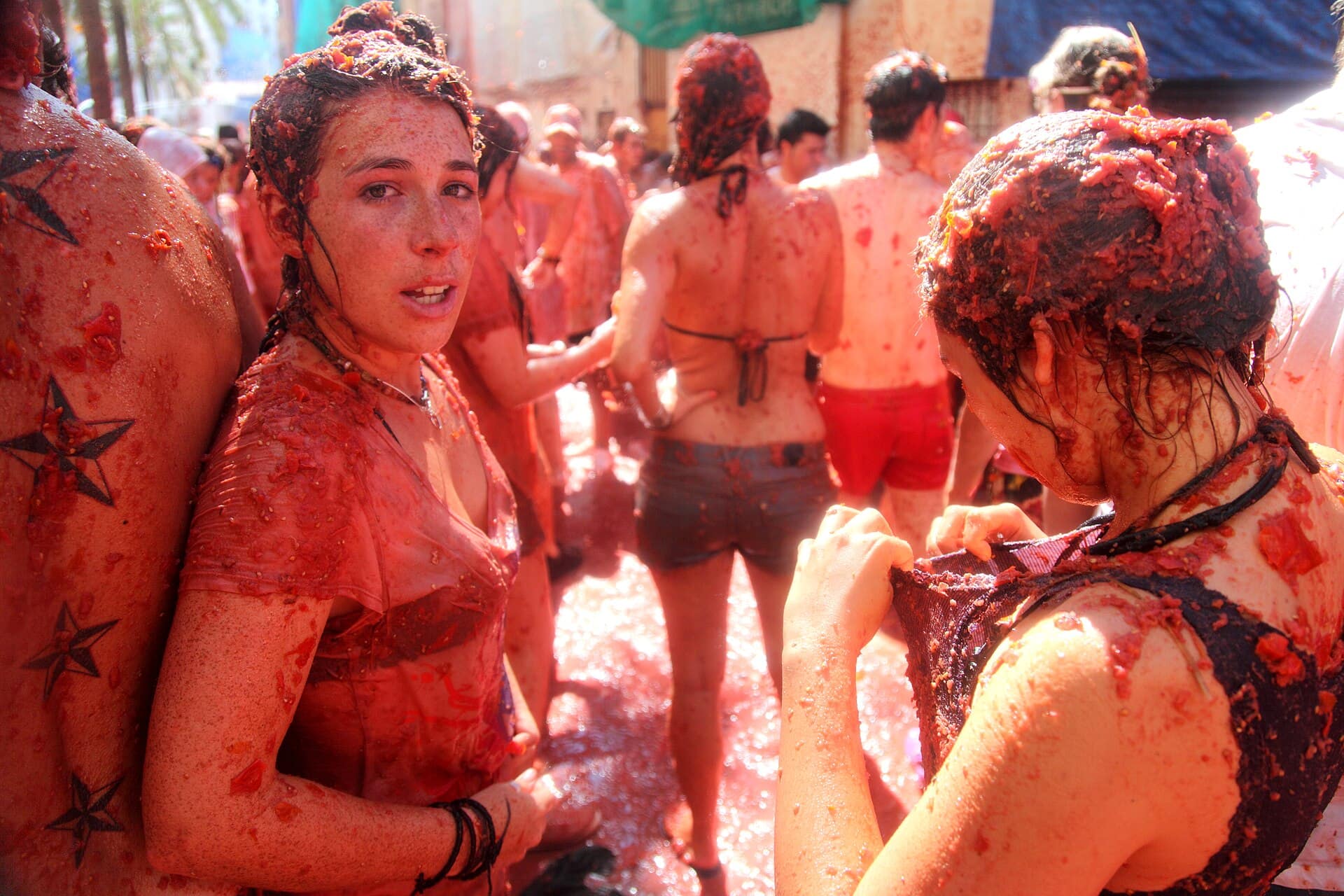
Picture narrow cobblestone streets crammed with thousands of people from around the world, all waiting for the clock to strike noon so they can surrender to absolute madness. Over the course of a single hour, these enthusiasts hurl tens of tonnes of overripe tomatoes at each other until the entire town is literally dyed deep red and a thick tomato river flows through the streets. If you’re looking for a truly one-of-a-kind experience that’ll leave you laughing, covered head to toe in pulp, and buzzing with genuine Spanish energy, this is one event you simply can’t miss. I’ve put together a complete guide packed with practical tips so you know exactly what to expect and how to prepare for this epic tomato battle.
TL;DR
- When does the festival take place: La Tomatina is held every last Wednesday in August — the battle itself lasts exactly one hour, from 12:00 to 13:00.
- Tickets are mandatory: Since 2013, capacity has been strictly capped at twenty thousand people and you need to buy your tickets well in advance through the official website.
- The golden rule: You must lightly squash every tomato in your hand before throwing it to soften the impact and avoid injuring anyone in the crowd.
- Eye protection is essential: Tomato juice is highly acidic and stings like mad, so a well-fitting pair of swimming goggles will literally save your eyes and your mood.
- Old clothes only: Wear clothes and closed-toe shoes you won’t mind tossing in the bin after the battle.
- Getting there from Valencia: The best way to travel is on the morning C3 commuter train, which runs directly from Valencia to Buñol.
The full destination guide: Spain — guide and what to see
When to Visit Buñol for La Tomatina
Planning a trip around Spanish fiestas always requires a bit of strategic thinking, and La Tomatina is no exception. This tomato festival has a fixed spot in the calendar — it always takes place on the last Wednesday in August, which for 2026 falls on 26 August. August in eastern Spain is typically scorching, with temperatures regularly climbing well above 30°C, so keep that in mind when packing your bags.
Given the enormous worldwide interest in the festival, flight and accommodation prices in the area skyrocket months in advance. I’d recommend arriving in nearby Valencia at least two or three days before the battle itself so you can acclimatise, explore the city, and avoid the stress of a last-minute delayed flight. From the UK, you can find direct flights to Valencia from London, Manchester, and other major airports with airlines like easyJet, Ryanair, and British Airways. Many travellers combine La Tomatina with a longer summer holiday, as late August offers perfect conditions for unwinding on the long sandy beaches of the Mediterranean coast.
If you want to soak up the full atmosphere without rushing, set aside an entire day just for the festival. Although the tomato battle itself lasts only sixty minutes, the journey on a packed train, the morning wait in the streets of Buñol, the post-battle clean-up in the river, and the afternoon celebrations will easily fill your whole day. By the evening, you’ll most likely be so exhausted that all you’ll want is a quiet dinner at a relaxed restaurant and a long, uninterrupted sleep.
Where to Stay in Buñol and the Surrounding Area
💡 Accommodation & experiences tip: We usually search for accommodation on Booking.com, which tends to have the best cancellation policies. For tickets, tours, and activities, it’s worth comparing options on GetYourGuide.
Buñol itself is a fairly small, quiet town with just over nine thousand permanent residents, so finding accommodation right in the heart of the action is virtually impossible. Most local guesthouses are booked up years in advance by the organisers themselves, journalists, or die-hard festival fans. The far more sensible option is to base yourself in nearby Valencia, which sits less than forty kilometres away and offers excellent transport connections along with countless quality hotels across every price range.
In Valencia, I’d recommend looking for accommodation near the Estación del Norte railway station, where special morning services depart directly for the festival. A great choice is the lovely Melia Plaza Valencia, just a few steps from the station, offering perfect comfort for recovering after an intense day. If you prefer a more modern design and a youthful vibe, try the stylish Only YOU Hotel Valencia, from where you can easily reach both the train and the best evening spots in the historic city centre.
While hunting for the perfect room, definitely check out the Ruzafa neighbourhood, which is packed with brilliant cafés and vegetarian bistros — ideal for winding down after all the tomato chaos. You can confidently use Booking.com to reserve your hotel, where you’ll find hundreds of verified options, but don’t forget that for August dates you should ideally book by early spring. The closer the end of August gets, the faster the best and most affordable options will disappear.
10 Tips for Attending La Tomatina in Buñol
Although the whole event might look like total uncontrolled chaos at first glance, the festival has clear rules and a specific flow that’s well worth knowing beforehand. Let’s take a detailed look at ten key tips that’ll help you enjoy the tomato battle safely, comfortably, and with nothing but the best possible memories to take home.
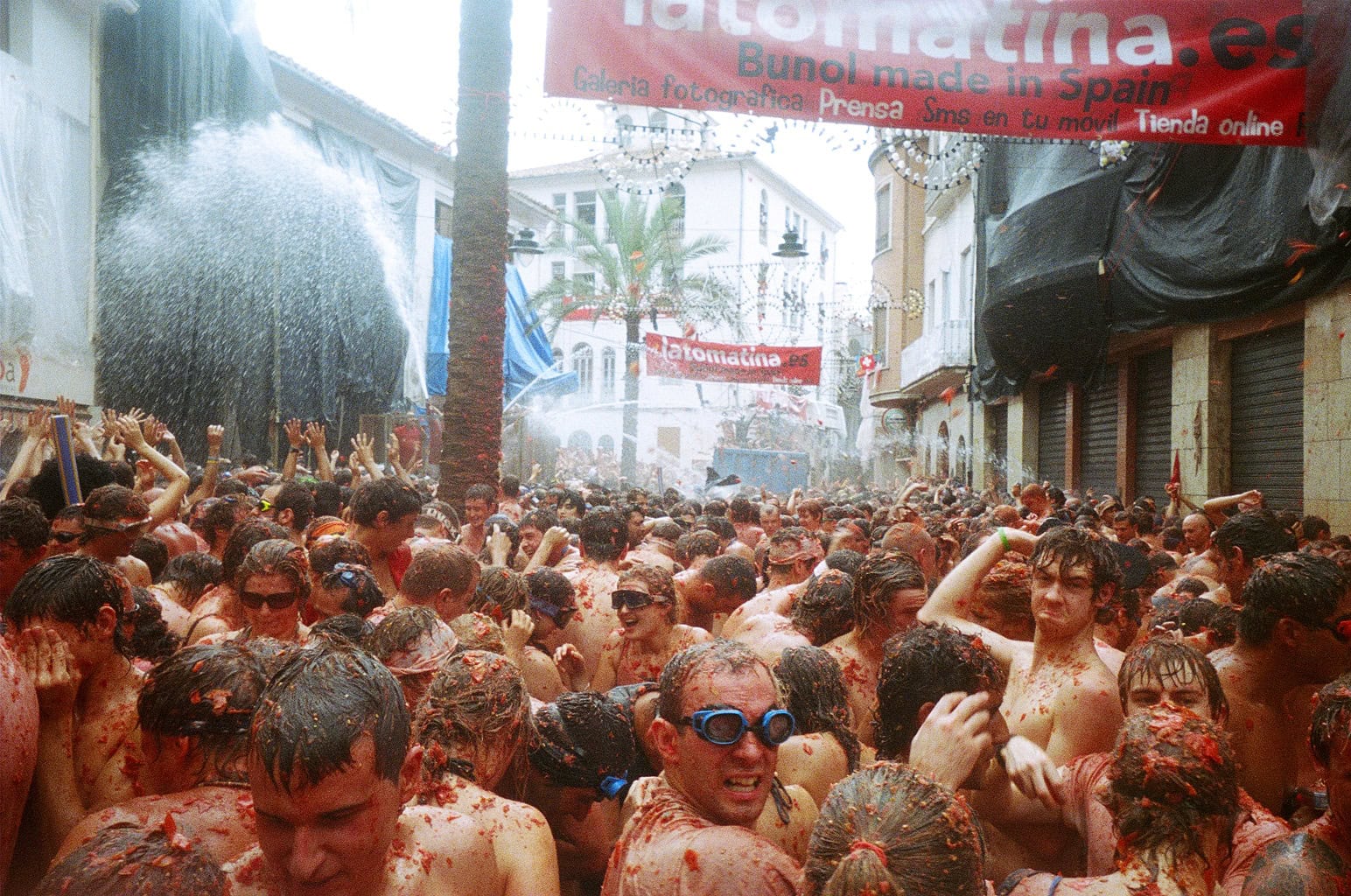
1. The Origin Story — Why Do People Throw Tomatoes?
It all started completely by accident in August 1945, when a traditional parade of giant figures known as gigantes y cabezudos was taking place on the main square in Buñol. A group of local lads tried to push their way to the front of the procession, accidentally knocking over one of the participants, who flew into a rage and started swinging his arms wildly. Unfortunately, the whole incident happened right next to a vegetable stall, so it wasn’t long before flying tomatoes became the weapon of choice in this unplanned street brawl.
Although the police broke up the trouble and made the culprits pay for the damage, the young locals enjoyed it so much that they returned to the same spot the following year — this time bringing their own tomatoes from home. In the 1950s, the tradition was actually banned for a while, but the townspeople fought back by staging an enormous “tomato funeral”, carrying a large coffin with a giant tomato through the streets accompanied by a mourning band. Today, La Tomatina is an officially recognised festival of international tourist interest and an inseparable part of Spanish culture.
💡 Top tip: If you head to Buñol on the Tuesday evening before the battle, you’ll experience a wonderful pre-festival atmosphere full of live music and great food, with locals cooking enormous pans of fragrant vegetable paella right in the streets.
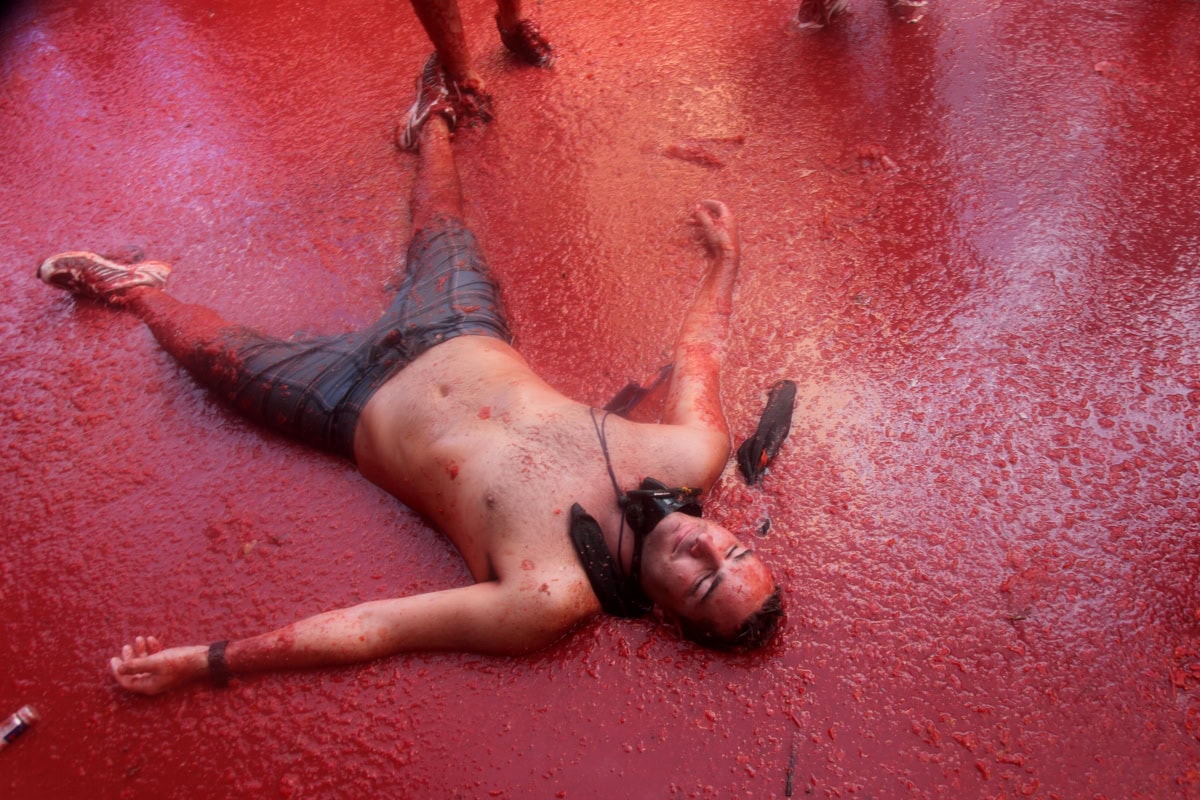
2. La Tomatina Tickets Are an Absolute Must
Before 2013, there was absolutely no limit on attendance, which in practice meant that more than fifty thousand frenzied visitors regularly crammed into the narrow streets of this tiny town. For safety reasons, the town council decided to step in, and today capacity is strictly capped at just twenty thousand participants — without an official ticket, there’s simply no way you’re getting into the action zone. Roughly five thousand tickets are reserved for Buñol locals, while the remaining fifteen thousand are sold to visitors from around the world.
You need to purchase official La Tomatina tickets well in advance online, and prices typically range from around twelve to fifteen euros for basic entry. A very popular and practical option is buying organised packages through platforms like GetYourGuide, which often include not only the ticket itself but also return bus transport from Valencia or Madrid, a guide, and even entry to the official afterparty. When you arrive in town, you’ll need to exchange your printed ticket for a special wristband, which security will then check before letting you into the fenced-off festival zone.
💡 Top tip: Don’t count on buying a ticket from touts on the day — security checks are genuinely strict and the wristband is tied to a specific name and ID.
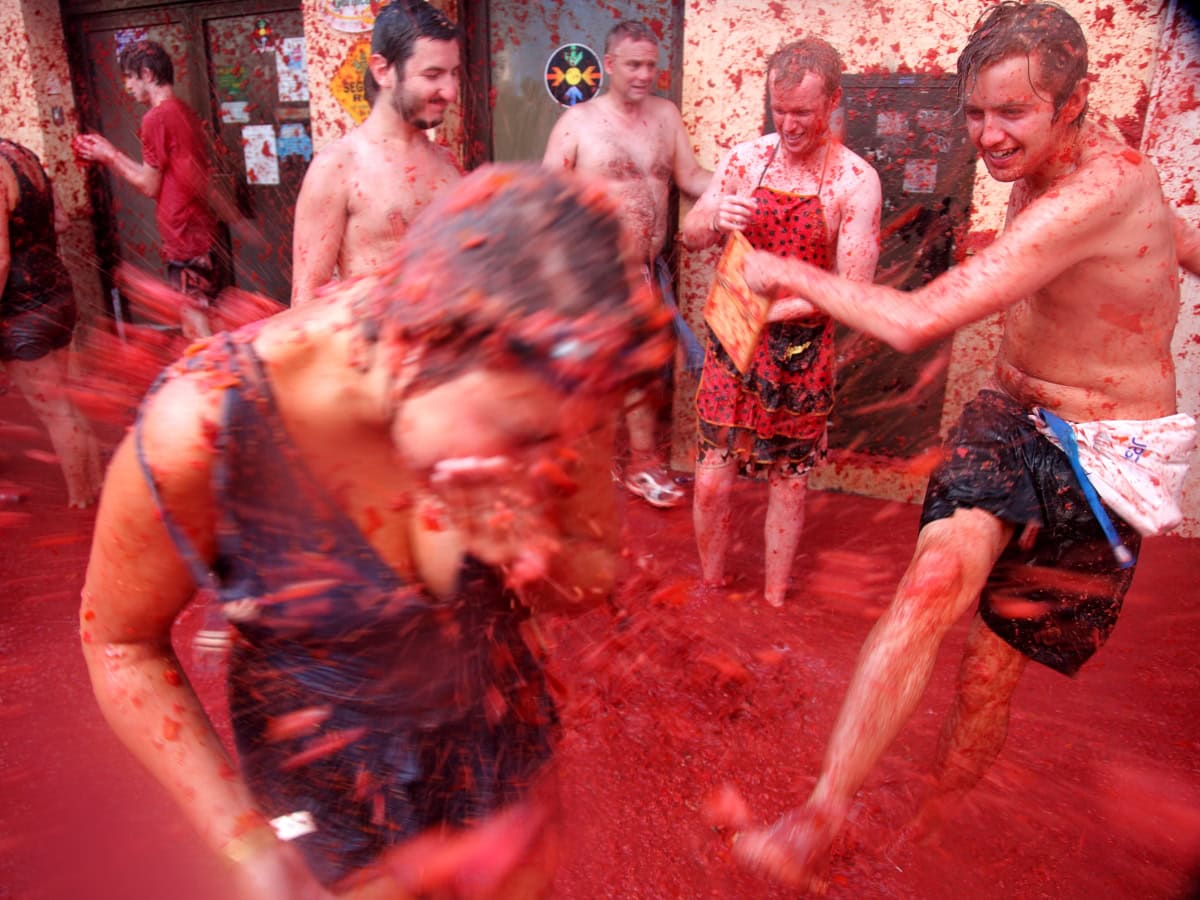
3. La Tomatina Rules: Always Squash the Tomato First
Although it’s called a battle, the primary goal is to have a brilliant time without hurting anyone, which is why there’s one absolutely non-negotiable rule. Before you throw any tomato at someone in the crowd, you must always squash it slightly in your palm first so it loses its firmness and the impact on someone’s body or face is as soft as possible. The tomatoes supplied for the festival are deliberately overripe and mushy, but an unsquashed tomato flying at speed could easily cause nasty bruises or other injuries.
During the hour-long frenzy, participants hurl an incredible one hundred and fifty tonnes of tomatoes at each other, delivered into the streets on large lorries. You must never throw anything other than tomatoes, and tearing other participants’ clothing is also strictly forbidden, even though it does occasionally happen by accident in the enormous crush. Respecting these simple rules ensures the whole event stays friendly and everyone goes home with nothing but hilarious memories of the red carnage.
💡 Top tip: If you see a huge truck rolling past with a fresh load of tomatoes, immediately press yourself as close to the building walls as possible to give the vehicle enough room and avoid a dangerous accident.
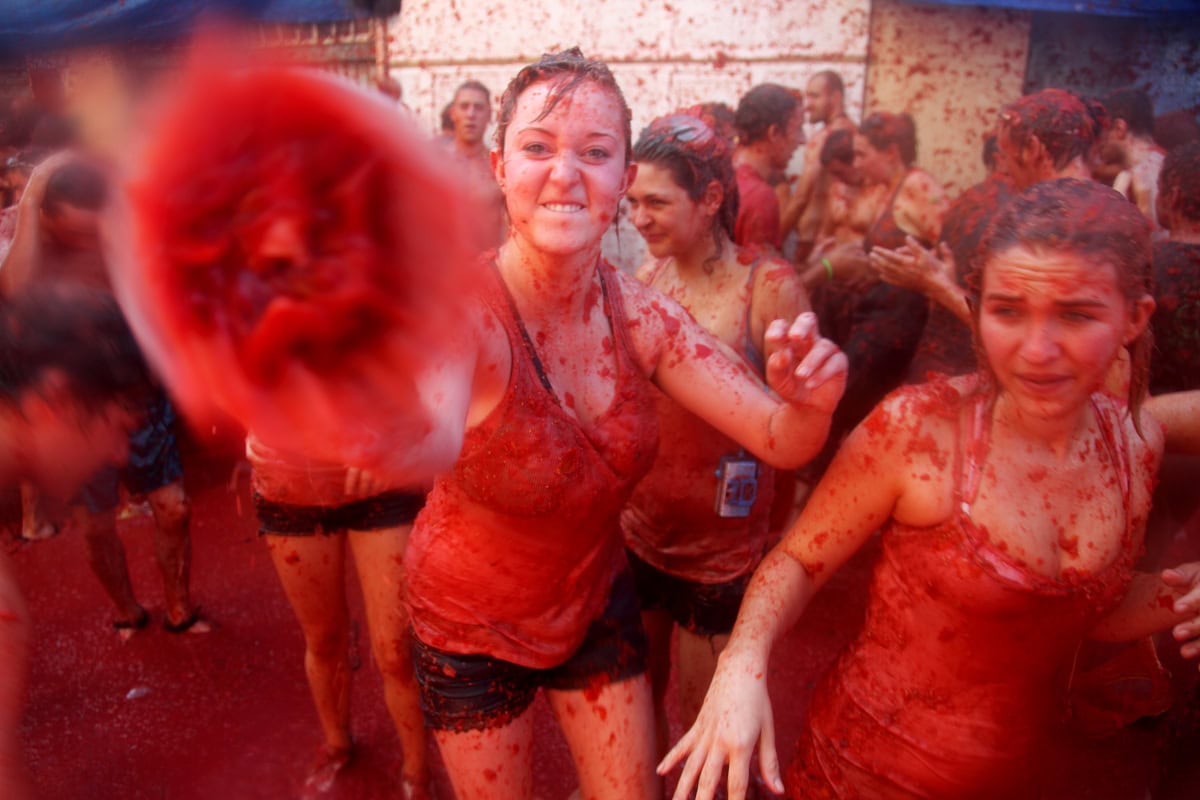
4. Clothes You’ll Never Want to Wear Again
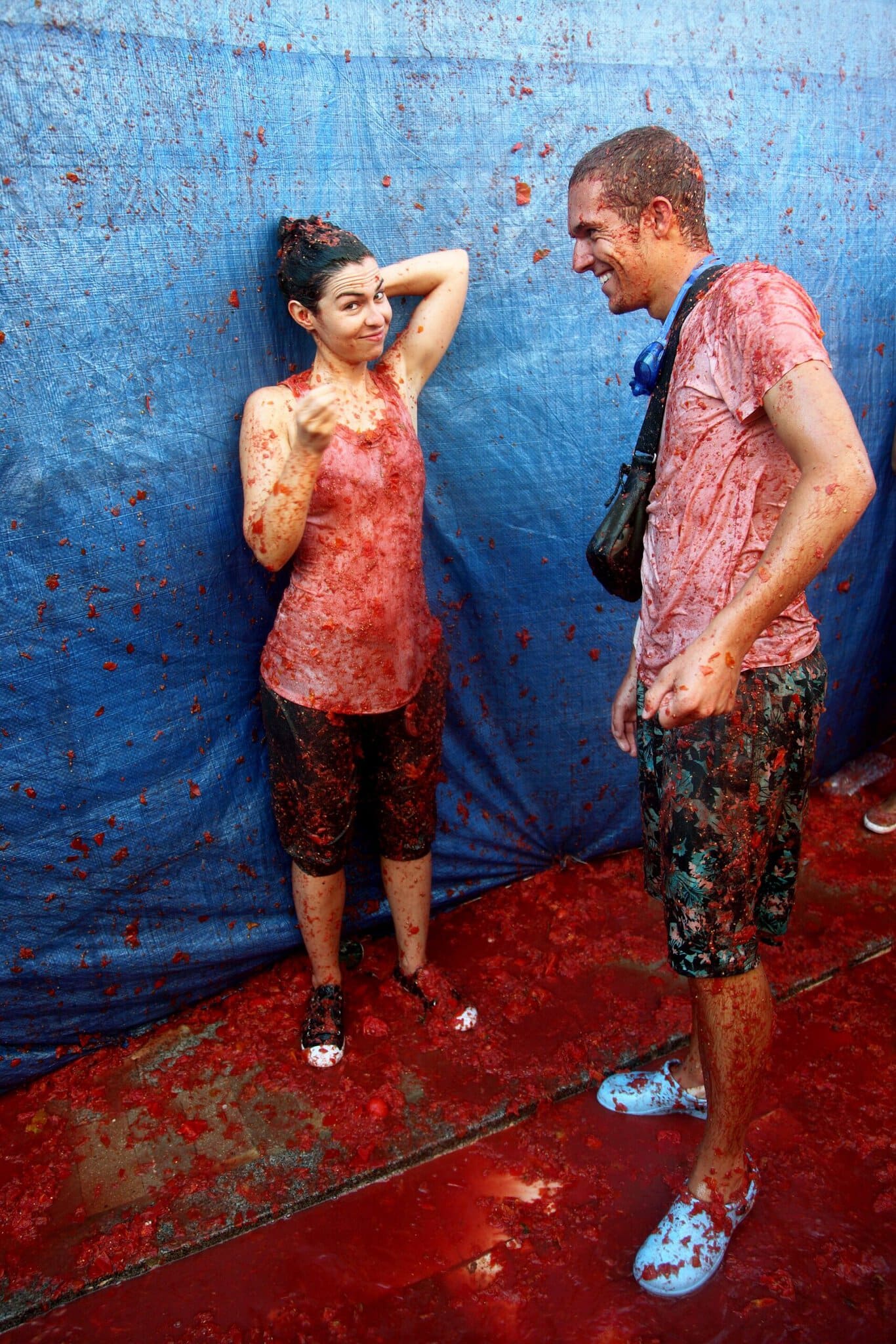
When it comes to choosing your festival outfit, there’s only one rule: wear things you’re fully prepared to say goodbye to forever. Tomato juice acts as an incredibly powerful and aggressive dye that works its way deep into fabric fibres and will never, ever wash out, so leave your favourite t-shirts and best shorts safely back at the hotel. The traditional — and very photogenic — choice is a cheap white t-shirt from a bargain shop, which looks fantastic once the red splatters start flying.
Pay close attention to your footwear as well, because the cobblestone streets very quickly turn into a slippery river of tomato pulp. Closed-toe, firmly laced old trainers are an absolute necessity, while flip-flops, sandals, or any loose shoes will be lost in the deep red sludge within the first few minutes. Many seasoned participants even wrap their shoes in duct tape for extra security, so they don’t get pulled off when someone inevitably steps on their foot in the crowd.
💡 Top tip: Wear a comfortable, well-fitting pair of swimming trunks or a bikini underneath your old clothes, because right after the battle you’ll be heading for a group clean-up with cold water from hoses or a dip in the nearby river.

5. Swimming Goggles — Your Best Weapon Against the Acid
You might think walking around in swimming goggles looks a bit daft, but trust me — the moment the first red projectiles start flying, you’ll be incredibly grateful for this little bit of kit. Tomatoes contain high levels of natural acid, and when the juice gets directly into your eyes, the stinging is instant and unbearable, leaving you completely disorientated for several minutes. Ordinary sunglasses won’t help much, unfortunately, as the juice easily trickles in from your cheeks or drips down from your hair.
The best and most reliable protection is a pair of classic swimming goggles with a good rubber seal, or larger dive masks that also cover part of your nose. If you wear contact lenses, a mask is absolutely indispensable — tomato pulp could easily get under the lenses and cause a very painful infection. Tighten the goggles securely before the battle begins so they don’t get knocked off in the wild crowd, and give them a quick wipe with a cleaner bit of fabric now and then so you can at least see where you’re going.
💡 Top tip: Bring a small pack of wet wipes from the hotel sealed in a waterproof bag — they’ll be a lifesaver for quickly wiping your face and eyes as soon as the final siren sounds.
6. What to Bring (and What to Leave Behind) — Safety Tips
In the middle of a crowd of twenty thousand people packed into the narrow lanes of a small Spanish town, chaos is inevitable — and unfortunately, it’s also an ideal environment for pickpockets. Leave your passport, expensive jewellery, watches, and all valuables safely locked in the hotel safe, and take only the bare minimum of cash for food and transport. Instead of your actual passport, a good-quality colour photocopy in a waterproof pouch, along with your train ticket, will be more than enough for identification.
If you want to document the tomato carnage, forget about expensive DSLRs or unprotected smartphones — the acidic juice would irreparably destroy them within minutes. A much better option is a quality waterproof phone pouch worn around your neck with a reliable seal, or a rugged action camera like a GoPro firmly strapped to a chest harness. Bear in mind that the crush around the main square, Plaza del Pueblo, can be truly extreme, so if you suffer from claustrophobia, it’s better to stick to the slightly quieter side streets.
💡 Top tip: Split your small change (ideally coins and small notes) into a little zip-lock plastic bag and tuck it safely under your clothes or in a tight inner pocket.
7. How to Get from Valencia to the Heart of the Action
The most convenient and popular way to travel from Valencia to Buñol is by rail, specifically the Renfe Cercanías commuter trains. Look for the yellow C3 line, which departs from the beautiful historic Estación del Norte right in Valencia’s city centre. The journey takes just under an hour, and trains run fairly frequently on festival day — but be prepared for the morning services to be absolutely rammed, and you’ll likely spend the entire ride standing in the aisle surrounded by excited fellow festival-goers.
The golden rule is to leave your hotel very early in the morning, ideally around seven o’clock, so you have plenty of time to collect your festival wristband and find a good spot in the streets before the main event kicks off. Buy your train tickets the day before from the machines at the station, because on the morning itself, the queues are endless and decidedly tense. From the train stop in Buñol, it’s roughly a fifteen-minute pleasant downhill walk to the main battle zone — you definitely can’t miss it, just follow the crowds in white t-shirts.
💡 Top tip: For the return journey in the afternoon, arm yourself with a hefty dose of patience — the station is packed to the rafters and you might be waiting over an hour in the heat for a space on a train.
8. From the Greased Pole with Ham to a River of Red
The battle itself doesn’t officially start until high noon, but the real entertainment in the town centre kicks off around ten in the morning with a brilliantly quirky tradition. In the middle of the square, locals erect a tall wooden pole thoroughly coated in slippery soap, with a whole cured ham leg (jamón) tantalisingly dangled from the very top. Dozens of daredevils then scramble to climb over each other to reach the prize, cheered on by the roaring crowd — the slippery surface makes for plenty of hilariously comical tumbles and falls.
Once someone manages to grab the trophy, or when the clock strikes twelve, a loud blast from a water cannon rings out and the first heavy lorries slowly begin rolling into the narrow streets. The crews on the flatbeds start by tossing tomatoes into the sea of outstretched hands, but before long they simply tip the entire load and dump a massive red mountain straight onto the road. That’s when absolute — but joyful — pandemonium erupts. Hundreds of tomatoes fly through the air every second and the entire town is engulfed in red within moments.
💡 Top tip: Try not to stand right on the front line at the main square, where the crowd pressure is greatest as the trucks arrive — you’ll have a much better experience and far more room to throw in the slightly quieter side streets.
9. Cleaning Up in the River and Help from Friendly Locals
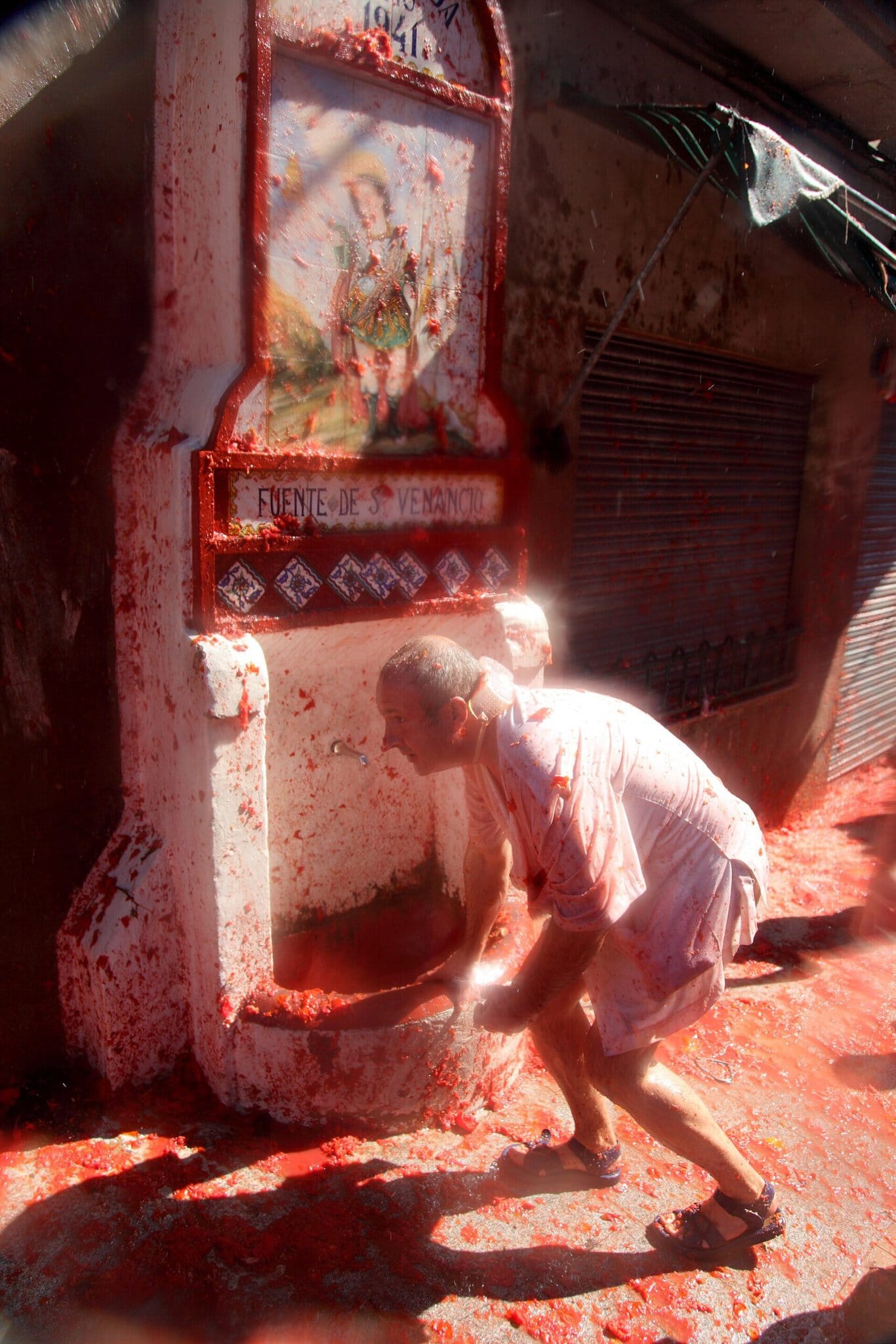
After exactly sixty minutes of relentless throwing, a second loud blast signals the absolute and immediate end of the tomato battle. At that moment, everyone must stop throwing instantly — even if their hands are full of perfectly ripe ammunition — and heavy machinery and fire engines with enormous hoses move into the streets. The incredibly fast clean-up of the town begins, with powerful jets of water washing away every trace of vegetable matter. Thanks to the natural acid in the tomatoes, the town’s paving stones are left gleaming and cleaner than at any other time of the year.
The question, of course, is how you wash off that mountain of red pulp yourself. Visitors traditionally head to the nearby Buñol river to rinse off the worst of the mess, or take advantage of the generosity of local residents, who happily spray passers-by from their balconies and doorways with long garden hoses. Don’t be shy about asking a friendly local for a quick hose-down — they do it with genuine pleasure and see it as an essential part of this wonderfully mad tradition.
💡 Top tip: Whatever you do, don’t try to board the return train to Valencia still covered in tomato — the conductors and police are very strict about this and simply won’t let you on.
10. Afternoon Celebrations and Brilliant Spanish Atmosphere
Once you’ve washed off the worst of the red pulp and changed into dry, clean spare clothes, the festival is far from over — it seamlessly transitions into a relaxed afternoon fiesta. The streets are cleaned up in no time and locals start setting up little improvised stalls outside their homes, serving refreshing sangria, ice-cold beer, and traditional Spanish tapas. Even if you’re exhausted, I’d recommend sticking around for a while to soak up the incredibly warm and community-spirited atmosphere that fills the town all afternoon.
If the battle has left you ravenous, don’t miss trying some local specialities from the Valencia region. As Lukáš and I are vegetarian, we always seek out stalls serving delicious paella de verduras (vegetable paella) or brilliant patatas bravas with spicy tomato sauce, which are guaranteed to get you back on your feet. The celebrations continue with music and dancing in the streets well into the late evening, when the last tired but happy visitors finally make their way back to the train station.
💡 Top tip: Seek out the smaller squares off the main battle route, where live bands often play and local retirees dance and chat with tourists in a wonderfully relaxed mood.
Map of points of interest for your phone
Where to Go Next from Buñol and Valencia
If you’ve made it all the way to this beautiful part of the Iberian Peninsula, it would be a real shame to limit your trip to a single wild fiesta and head straight home afterwards. Just an hour’s train ride from Buñol lies the stunning city of Valencia, which will enchant you with its futuristic City of Arts and Sciences and vast beaches. If you have a few more days and fancy a big city buzz, the AVE high-speed train can whisk you in a couple of hours to the pulsing capital of Madrid or the cosmopolitan gem of Barcelona.
For those who want to discover the real, authentic Spanish soul, the hot south is the perfect choice. You can plan a gorgeous route and follow our itinerary and map for a holiday visiting 20 of the most beautiful places in Andalusia. Be sure to stop in places brimming with history and flamenco, such as breathtaking Seville, Moorish Granada, and ancient Córdoba. Along the way, don’t miss the coastal city of Málaga, the romantic clifftop town of Ronda, or the adrenaline rush of the famous Caminito del Rey walkway.
If you’re more drawn to wilder nature and the gastronomy of the north, head off to discover the Basque Country, where elegant San Sebastián and modern Bilbao await. And for lovers of endless parties and crystal-clear seas, a short flight to sunny Ibiza is always a brilliant shout. Wherever you end up, you’ll find the very best traditional Spanish food waiting for you — the kind you’ll fall in love with from the very first bite.
Frequently Asked Questions
Is participating in La Tomatina safe?
Yes, the festival is generally very safe, but you must follow basic rules like squashing tomatoes before throwing them and wearing appropriate closed clothing. There’s a huge number of police officers, paramedics, and firefighters on site who constantly monitor order and ensure the smooth running of the entire event.
Can small children participate in the tomato fight?
While the official rules don’t explicitly ban children from participating, most organizers and locals strongly advise against it. The crowd pressure is really intense, heavy tomatoes are flying everywhere, and there’s tremendous noise, which can be very stressful and physically dangerous for younger children.
Where exactly do all the tomatoes for the battle come from?
The enormous quantity of tomatoes used during the hour-long event is grown mainly in the Extremadura region in western Spain. The produce is deliberately selected from overripe, low-quality pieces that don’t meet strict standards for regular sale, so they’re not at all suitable for normal consumption.
Does getting hit by a tomato hurt?
If everyone follows the main rule and squashes the tomato in their hand before throwing it, you’ll only feel a soft, cold splat that doesn’t hurt at all. However, if you unexpectedly get hit by an unsquashed, hard tomato flying from a distance, it can sting and occasionally leave a small bruise.
What happens to the town immediately after the festival ends?
As soon as the battle ends at exactly 1:00 PM, large fire trucks immediately roll into the streets and begin a massive cleanup. Thanks to the acidity of the tomatoes and the strong water pressure from the hoses, Buñol’s cobblestone streets are completely clean, disinfected, and shinier than they are for the rest of the year after roughly two hours of cleaning.
How can I best protect myself from acidic juice in my eyes?
The only truly reliable and effective protection is using well-fitting swimming goggles or a small diving mask with a tight seal. Regular sunglasses won’t protect you from juice running down from your hair, and the acid from tomatoes can irritate your eyes very unpleasantly and painfully for several hours.
Can I bring my own backpack with belongings to the festival?
While you can bring a backpack, I strongly recommend not taking it into the actual battle center, as it will immediately get ruined and covered in tomato pulp. Leave all valuables at your hotel in Valencia and only bring your ticket, a bit of cash, and possibly dry clothes in a waterproof bag that you can leave in lockers at the train station.
Tips and Tricks for Your Vacation
Don’t Overpay for Flights
Search for flights on Kayak. It’s our favorite search engine because it scans the websites of all airlines and always finds the cheapest connection.
Book Your Accommodation Smartly
The best experiences we’ve had when looking for accommodation (from Alaska to Morocco) are with Booking.com, where hotels, apartments, and entire houses are usually the cheapest and most widely available.
 🚗 Car rental on the roadVerified rental cars in Spain
Search with the DiscoverCars comparison engine — it compares prices from dozens of local and international rental companies, and most bookings come with free cancellation.
Compare car prices in Spain →Don’t Forget Travel Insurance
Good travel insurance will protect you against illness, accidents, theft, or flight cancellations. We’ve had a few hospital visits abroad, so we know how important it is to have proper insurance arranged.
Where we insure ourselves: SafetyWing (simple monthly subscription) and TrueTraveller (for extra-long trips).
Find the Best Experiences
Get Your Guide is a huge online marketplace where you can book guided walks, trips, skip-the-line tickets, tours, and much more. We always find some extra fun there!