If you love the musical film Mamma Mia!, packed with iconic ABBA songs, you may have wondered what it would be like to pack your bags and go in search of the fictional island of Kalokairi. But let me surprise you with one important fact right from the start—one that many fans have no idea about. The first and second films were not even shot in the same country, so Kalokairi does not exist as one specific place on a map.
While the original 2008 Mamma Mia! is unmistakably Greek, the much-loved sequel, Mamma Mia! Here We Go Again (2018), moved hundreds of kilometres away. The filmmakers chose the Croatian island of Vis for the second film, with its excellent production conditions and stunning, unspoilt nature. So if you head to Greece expecting to find locations from both films, you may be very disappointed.
I’ve put together an overview of all the key locations from both films—Greek and Croatian—so you can plan a trip that makes sense. We’ll explore the Greek islands of Skopelos and Skiathos, take a look at the mainland Pelion peninsula, and then head to Croatia’s Dalmatian coast. Get your summer dresses ready, cue up “Dancing Queen” in your head, and let’s go.
A quick summary if you don’t have time to read the whole article
- Where the first film was shot: Mostly on the Greek island of Skopelos, with a smaller part on nearby Skiathos and key scenes on the mainland Pelion peninsula, specifically in Damouchari.
- Where the sequel was shot: The sequel was filmed exclusively on the Croatian island of Vis in Dalmatia, with additional filming in studios in England and France.
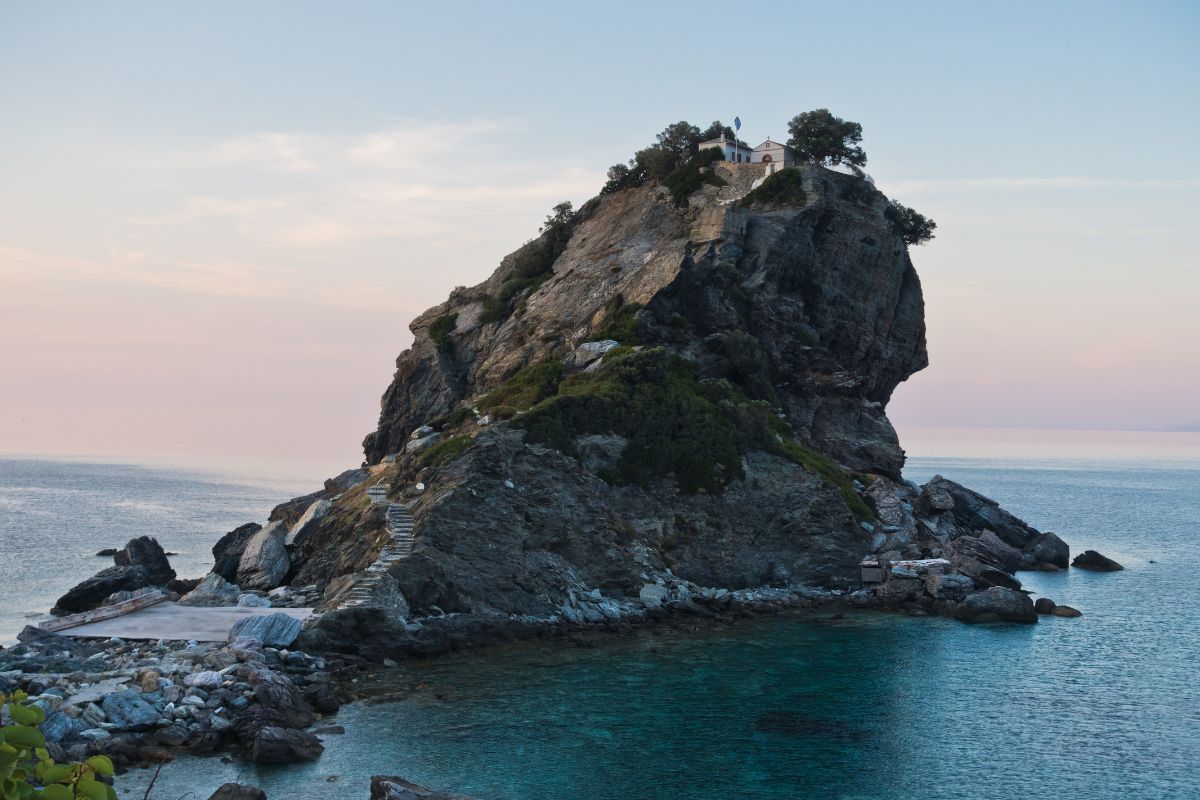
- The wedding chapel: The famous chapel perched on a rock is called Agios Ioannis Kastri and is on the north of Skopelos.
- How many steps to the chapel: Sources differ considerably, but the most commonly quoted number is between 106 and 198 steep steps.
- How to get there: Fly to Skopelos via Skiathos Airport (or travel from the mainland), then take a ferry. You can reach the Croatian island of Vis by ferry from Split.
- When to go: Late May, June or September are ideal, so you can avoid the biggest crowds of fans and the summer heat.
- The biggest tourist trap: Neither Donna’s villa from the first film nor the Bella Donna Hotel from the second film really exists; they were film sets and digital effects.
- Top tip: Make sure you rent a car or scooter on Skopelos. The island is very hilly, and public transport to the film locations is not ideal.
The full destination guide: Greece — guide and what to see
Where was Mamma Mia filmed?
Finding the right island was no easy task for the filmmakers. They reportedly considered more than 21 Greek islands before finding a place that matched their vision of the fictional island of Kalokairi. The main requirement was lush green scenery that would contrast with the turquoise sea.
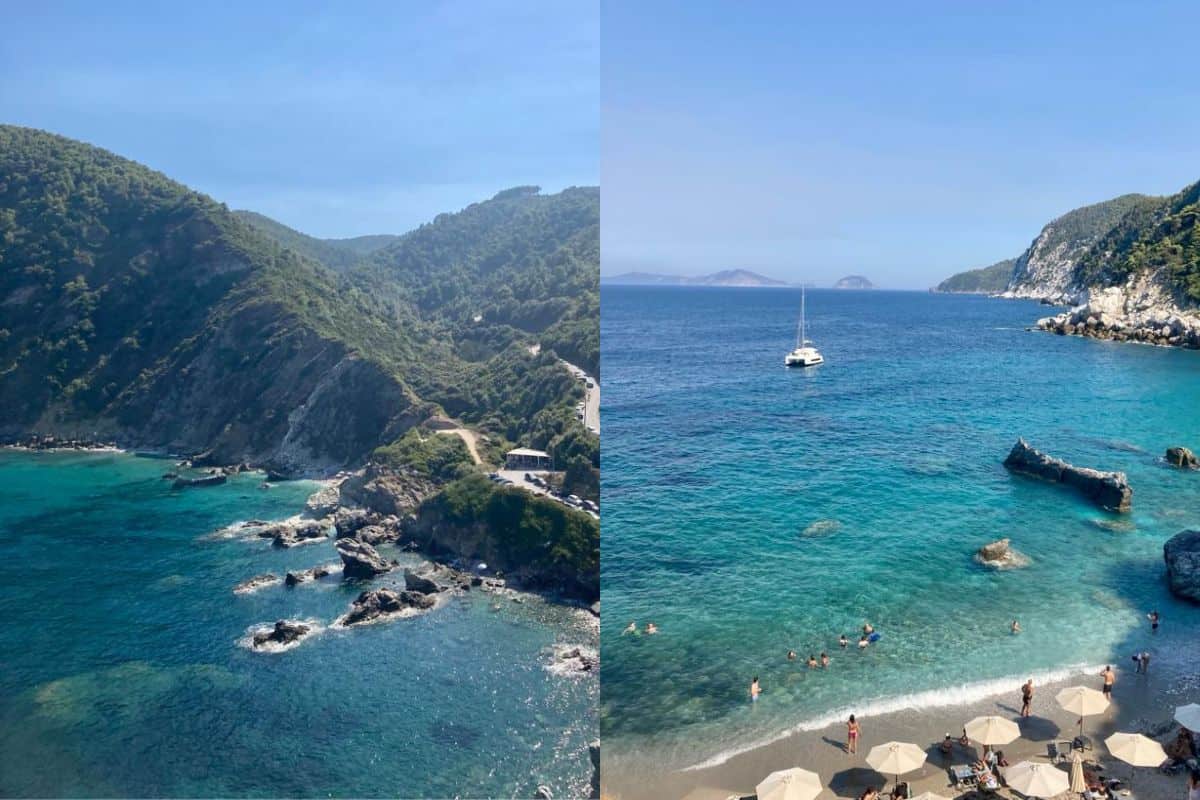
Mamma Mia! (2008): Skopelos, Skiathos and Pelion
The filmmakers eventually chose the Greek island of Skopelos in the Sporades, still considered one of the greenest islands in the entire Aegean Sea. Pine forests stretch right down to the water, creating just the right romantic atmosphere for the film. Most of its iconic scenes, including the famous wedding, were shot here.
A smaller part of the filming took place on nearby Skiathos, chosen mainly for its airport and picturesque old harbour. But what many people don’t realise is that the production also filmed on the Greek mainland. Some musical and dance scenes were shot in the small coastal village of Damouchari on the Pelion peninsula, a location that many visitors following the film’s trail never get to see.
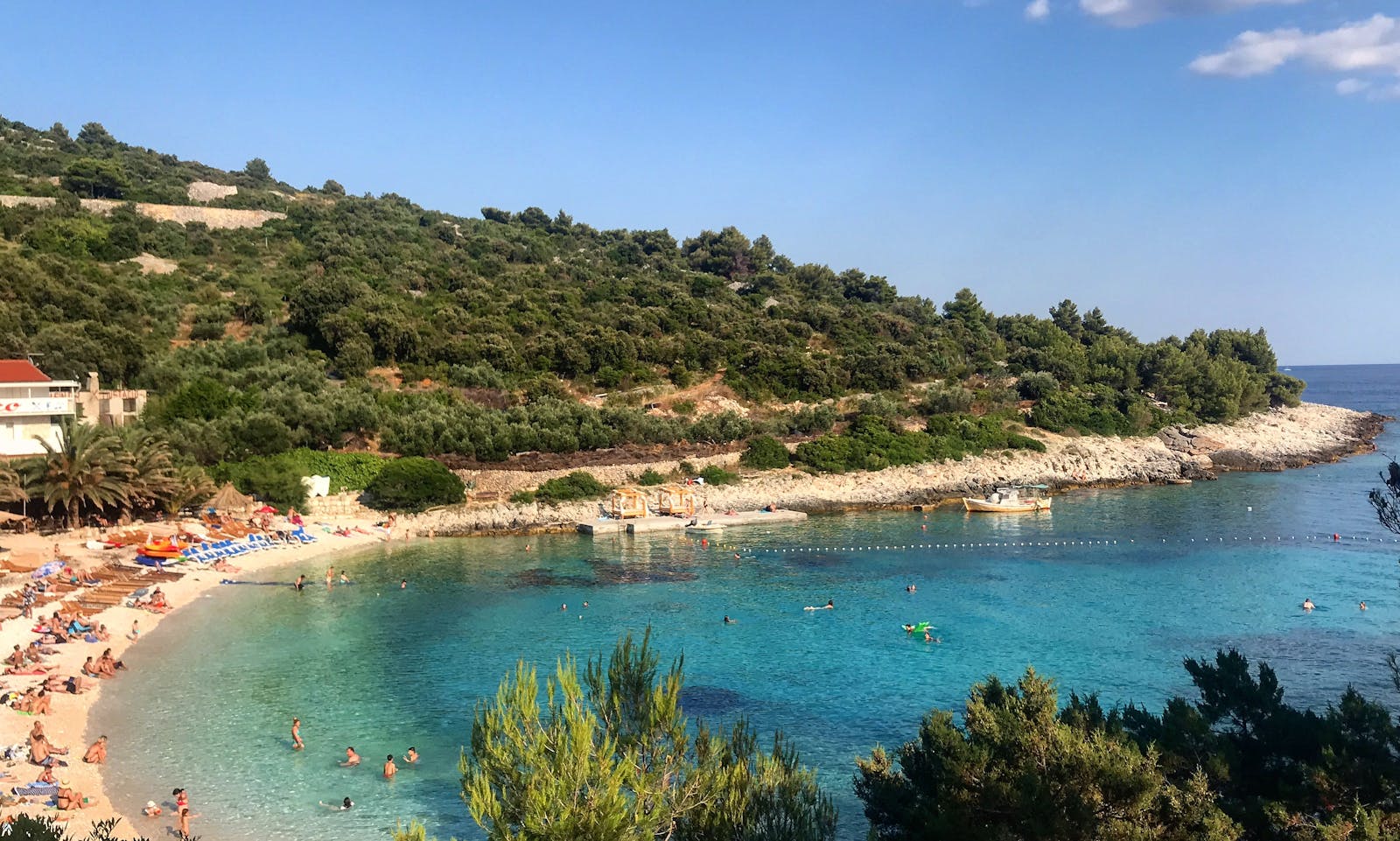
Mamma Mia! Here We Go Again (2018): the Croatian island of Vis
When plans for a sequel began a decade later, the production decided to leave Greece altogether. There were several reasons: better filming conditions, lower production costs and, apparently, a fantastic local crew. The new Kalokairi was created on the Croatian island of Vis, which lies some distance from the mainland in Dalmatia.
The island was closed off for decades as a Yugoslav military base, which protected it from large-scale tourist development. It has retained a remarkable degree of authenticity, with picturesque coves and the tranquillity the filmmakers were looking for. It’s a beautiful place, but don’t expect to find Greek architecture with blue roofs here.
8 Mamma Mia filming locations you can visit
Let’s take a look at the real places where the actors sang and danced. The filmmakers were pretty good at creating illusions, so it’s worth knowing what you’ll actually find when you get there.
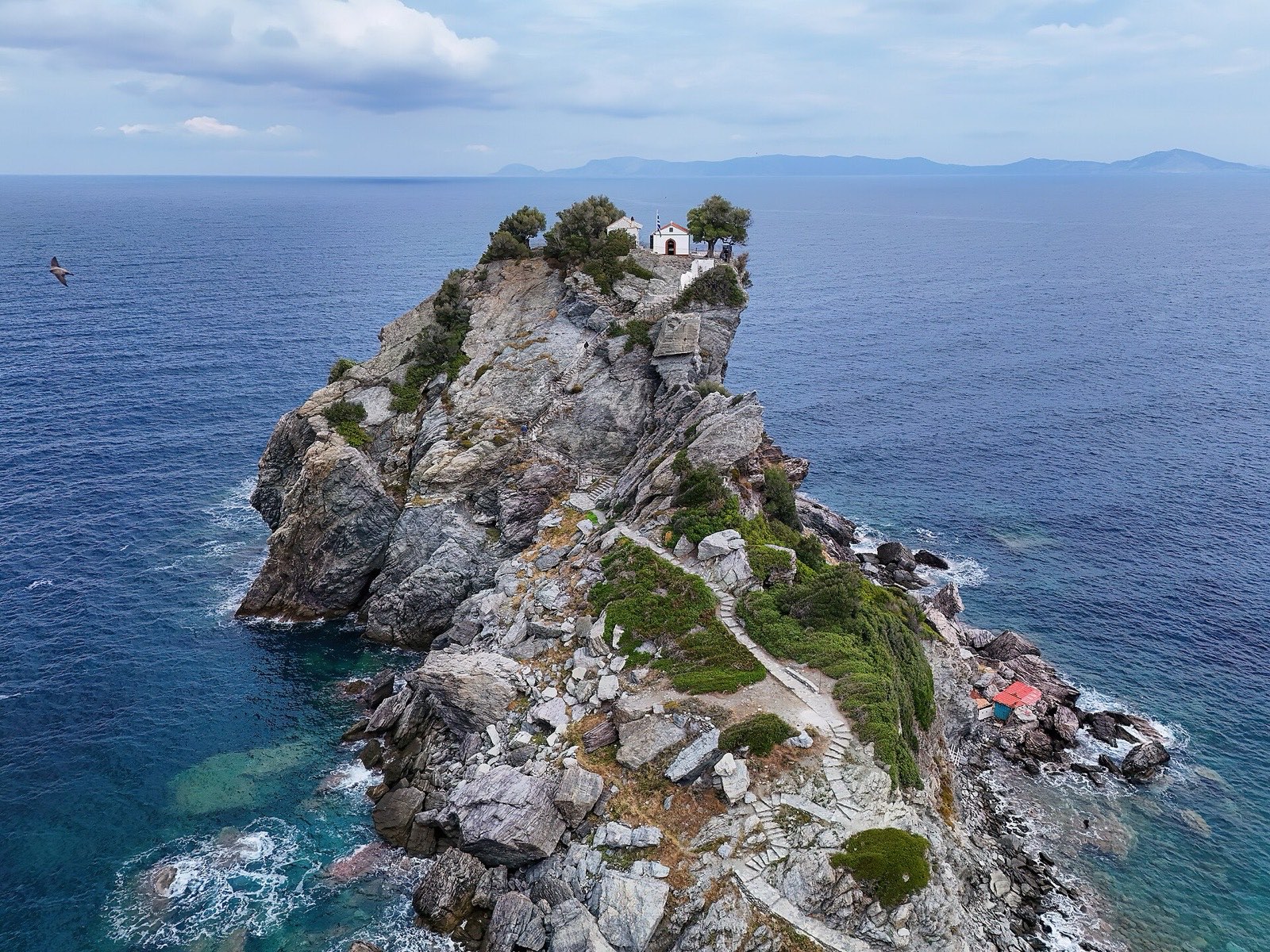
1. Agios Ioannis Kastri chapel on Skopelos
This is a true classic and the most iconic location in the entire first film. A lone rock rises from the sea, topped by a little white chapel, a short distance from the village of Glossa in northern Skopelos. This is where the famous wedding took place, and where Meryl Streep ran up the steps to the sound of “The Winner Takes It All”.
Be prepared for a fairly strenuous climb. The steep staircase is carved straight into the rock, and the midday summer sun can make it a real challenge. How many steps are there? Sources put the number anywhere between 106 and 198, so you can always try counting them yourself. There’s very little shade, so I recommend setting off early in the morning.
There’s one important detail I should mention: the real chapel is quite different from the one in the film. Its interior is tiny and bare, with room for only a handful of people. The richly decorated interior you see on screen was built in a studio in England. Remember, too, that this is an active place of worship, so cover your shoulders and keep things peaceful and respectful.
💡 Tip: You can’t drive all the way to the rock; you’ll have to walk the last stretch. Stop at a nearby taverna for an iced frappe on the way—you’ll be glad of it after the climb. If you don’t want to drive, you can easily book a boat trip to the chapel through GetYourGuide.
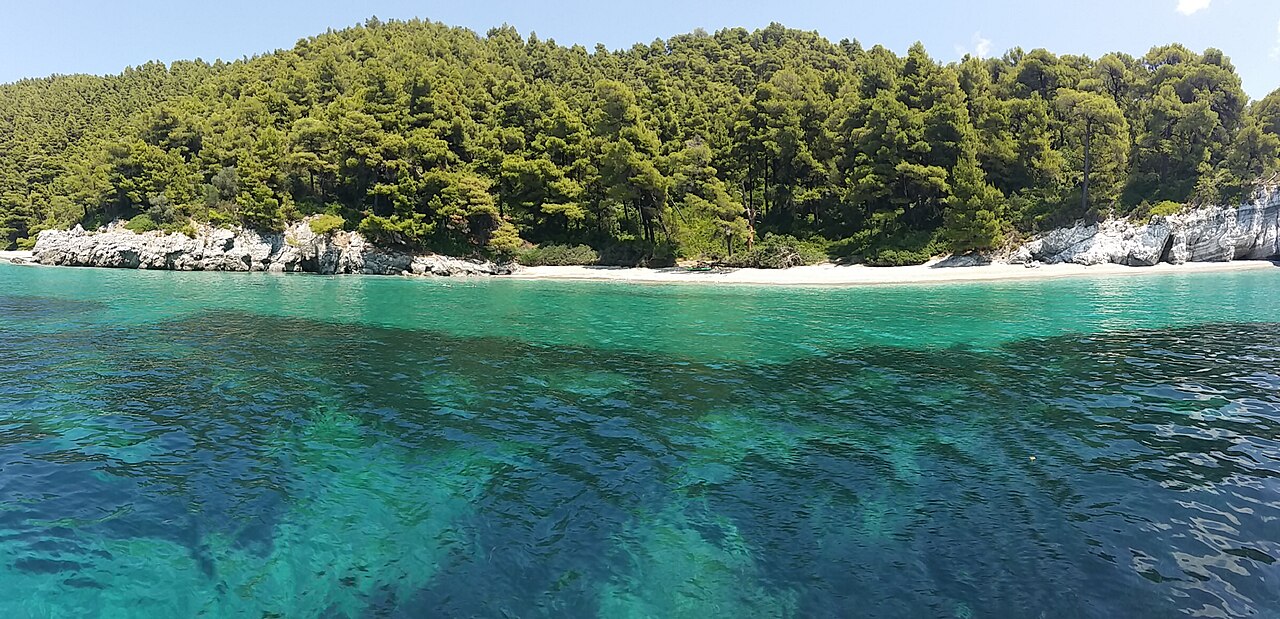
2. Kastani Beach on Skopelos
If you remember the scene where Tanya sings “Does Your Mother Know”, or Sophie and Sky’s passionate declaration in “Lay All Your Love on Me”, you’ll recognise Kastani Beach. It’s one of the most beautiful beaches on Skopelos, with white pebbles, clear turquoise water and trees that provide lovely shade almost down to the water’s edge.
But there’s one big surprise waiting for you compared with the film. In real life, the beach is much smaller and more enclosed than it looks on screen. The wooden jetty and beach bar that play an important role in the film were just sets, dismantled by the production after filming wrapped.
You’ll find a modern beach bar with sun loungers and umbrellas here today, but it looks completely different. It gets very busy in high season, and ABBA hits often play over the speakers. The water gets deep quite quickly, so it’s not ideal for very young children.
💡 Tip: The beach car park fills up quickly in July and August. Come at around 9 a.m. or later in the afternoon, when most day-trippers are already heading back to their hotels.
3. Glysteri Beach and Donna’s villa on Skopelos
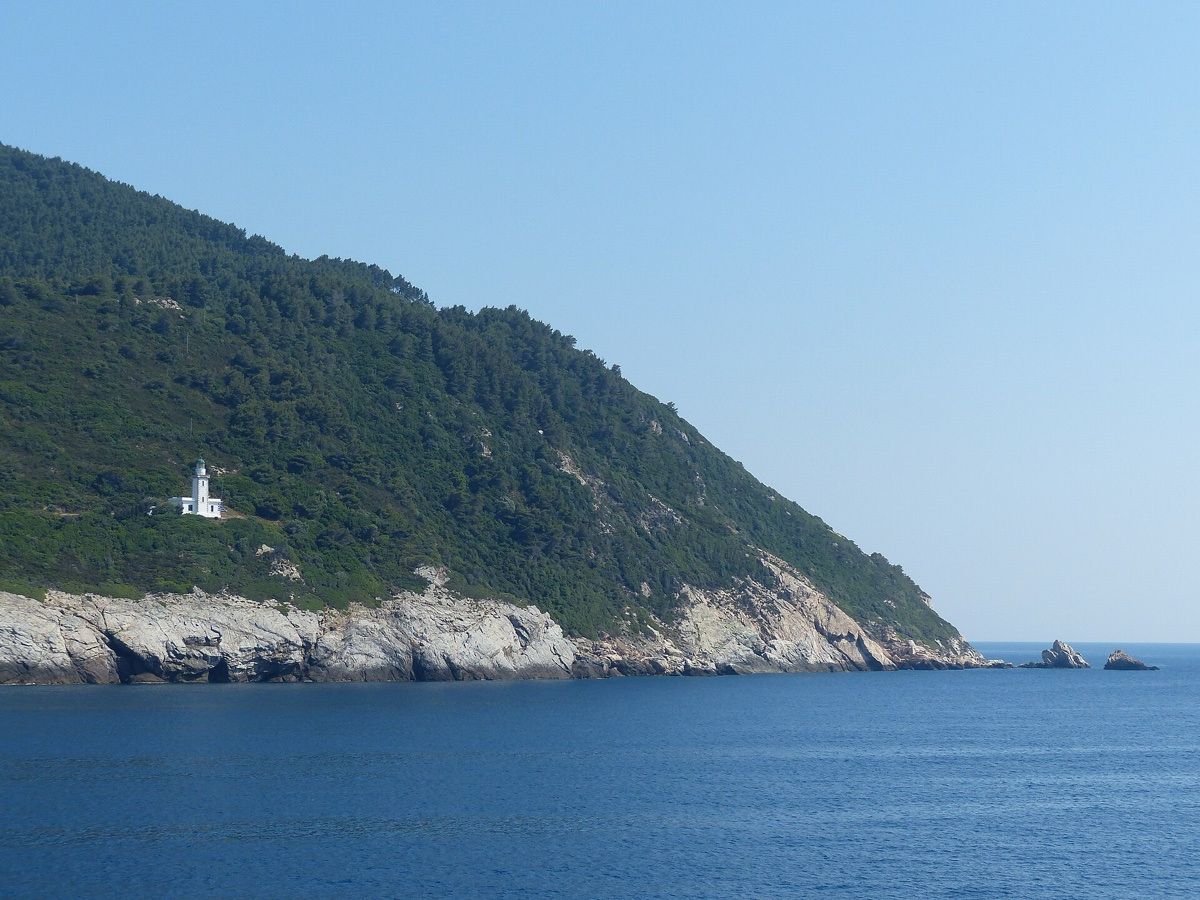
Glysteri Bay is about 5 kilometres north of Skopelos Town. In the film, this was the main setting for Donna’s villa, with its beautiful view of the sea. Several scenes were also filmed on the cliffs, where the actors jumped into the water, and the location appears early in the film.
I’m afraid I have to disappoint you about the accommodation itself. Donna’s villa does not actually exist; it was an elaborate set built on the hillside above the beach. There’s no trace of it left today, so don’t go looking for it on the cliffs.
Glysteri Beach itself is still well worth a visit. It’s a pebbly beach, sheltered from strong winds, and the water is an incredibly rich colour. A fairly upmarket beach club has opened here in recent years, where you can rent comfortable sun loungers and enjoy a great lunch.
💡 Tip: The road to Glysteri winds through old olive groves, making the drive an experience in itself. Watch out for oncoming traffic, though—the road is quite narrow in places.
4. Skopelos Town (Chora)
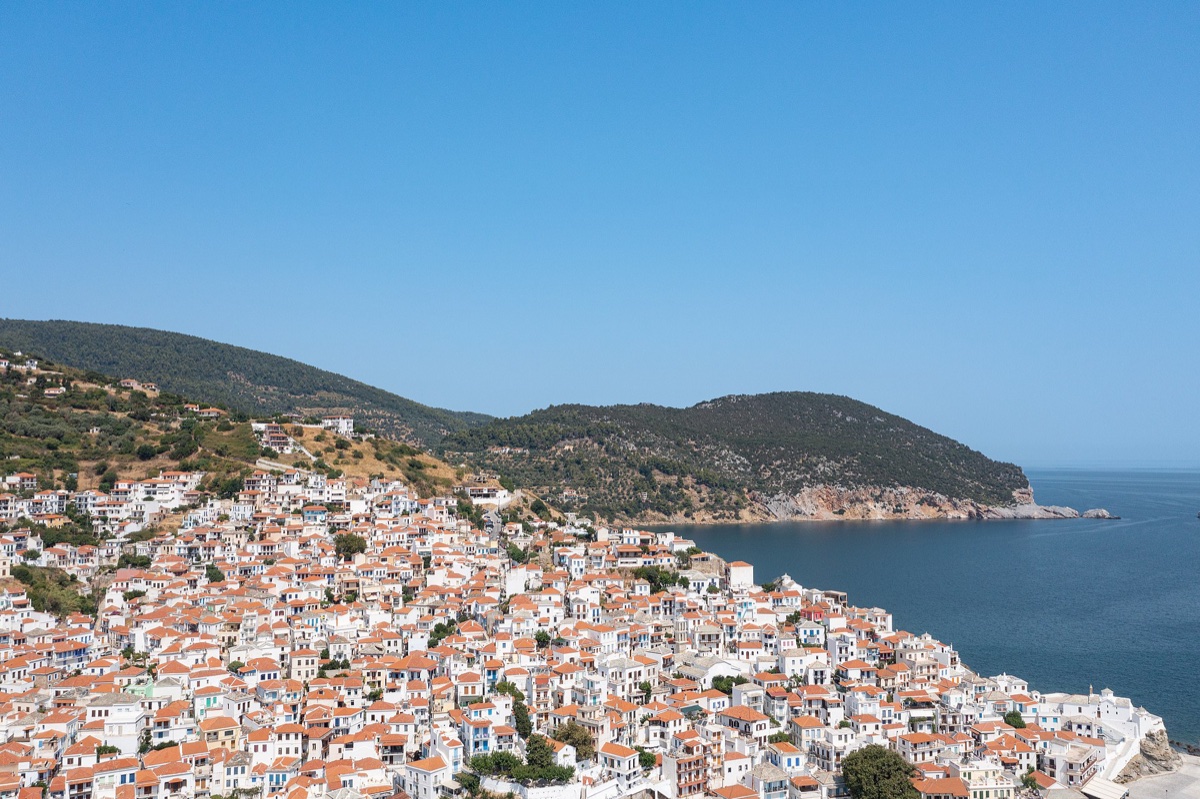
The island’s capital, also known as Chora, is a maze of white houses built amphitheatre-style above the harbour. It doesn’t appear as often in the film as the beaches, but some alleyway scenes and the wedding procession were filmed here.
The town is an ideal base and a lovely place for evening strolls. You’ll find dozens of little churches, narrow cobbled lanes with flower-filled balconies and plenty of traditional tavernas. The film’s atmosphere is everywhere, especially after sunset when the harbour lights up.
You won’t find the wild dancing parties in the squares that the film’s extras put on; the town is actually much quieter and wonderfully romantic. It’s also one of the best places on the island for souvenirs: local olive oil, hand-painted ceramics and plenty of things you never planned to buy but will end up taking home anyway.
💡 Tip: Walk up to the remains of the old Venetian fortress, Kastro. The view over the whole town and bay is fantastic, making it the perfect spot for evening photos.
5. Agnontas harbour on Skopelos
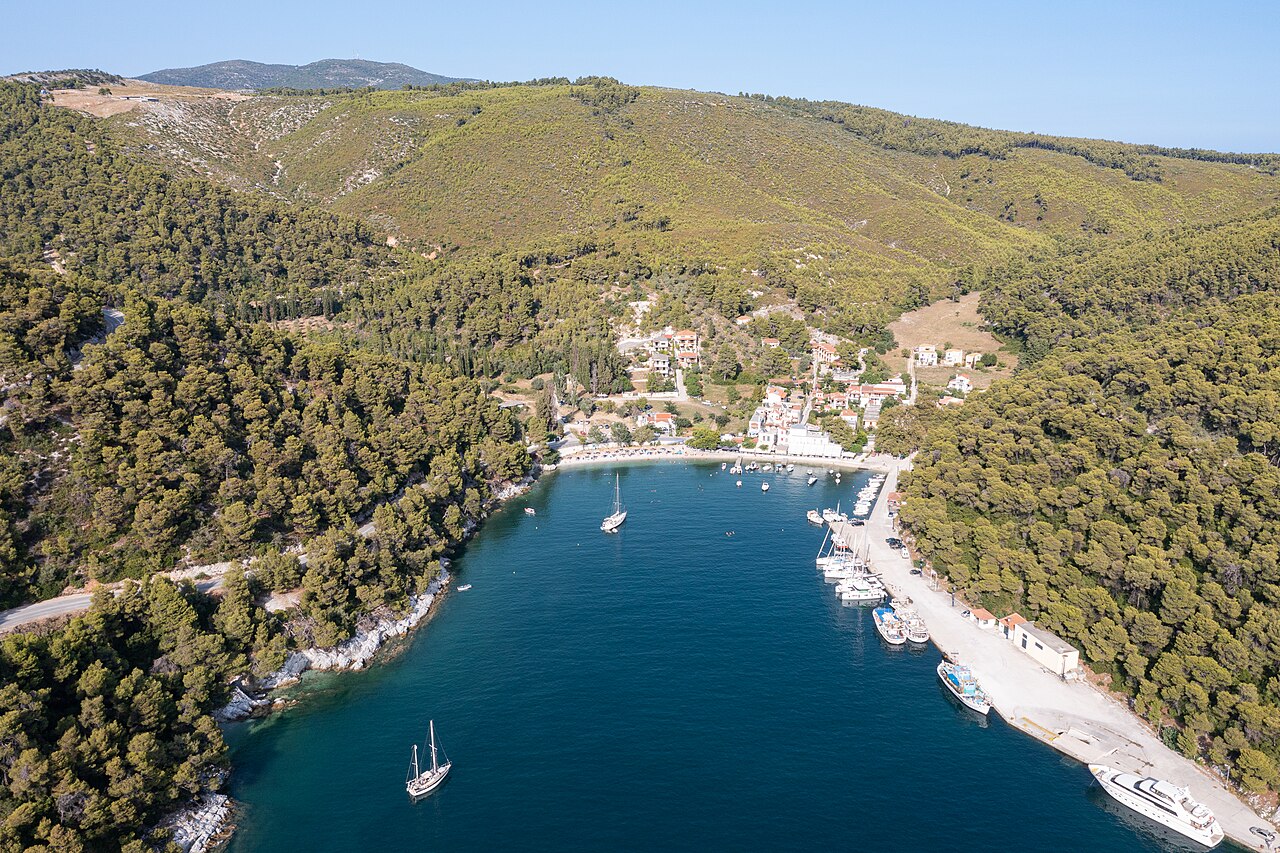
Agnontas is a small, wonderfully peaceful bay on the island’s west coast. It appears in the “Money, Money, Money” scene, as well as when the characters set off on a boat trip. It is one of the island’s three official ports, alongside Skopelos Town and the village of Glossa.
This spot is surrounded by dense pine forest, with trees growing right down to the beach. It’s an ideal stop if you’re after some peace and quiet away from the crowds, as far fewer film fans make it here than to Kastani or the chapel.
💡 Tip: Agnontas is a wonderful place to watch the sunset. If you’re coming in the evening, book a table at a taverna in advance, as they’re often full.
6. Skiathos and its old harbour
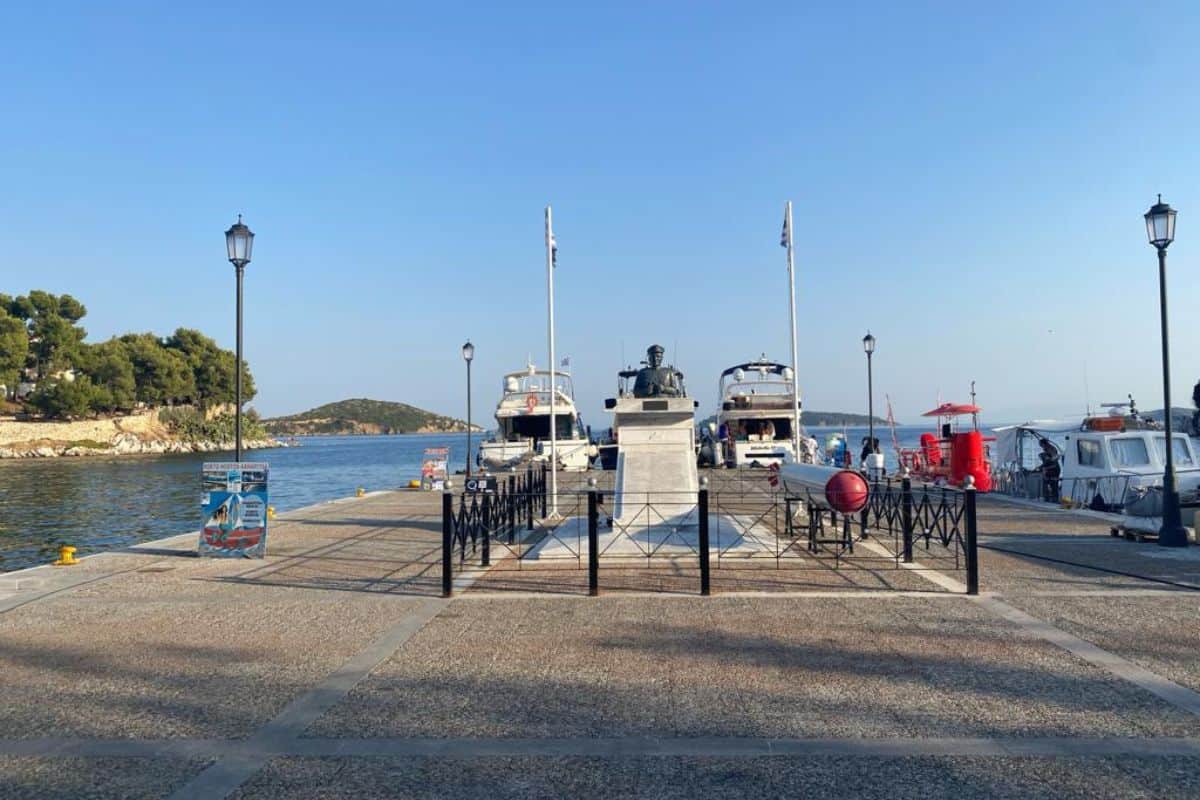
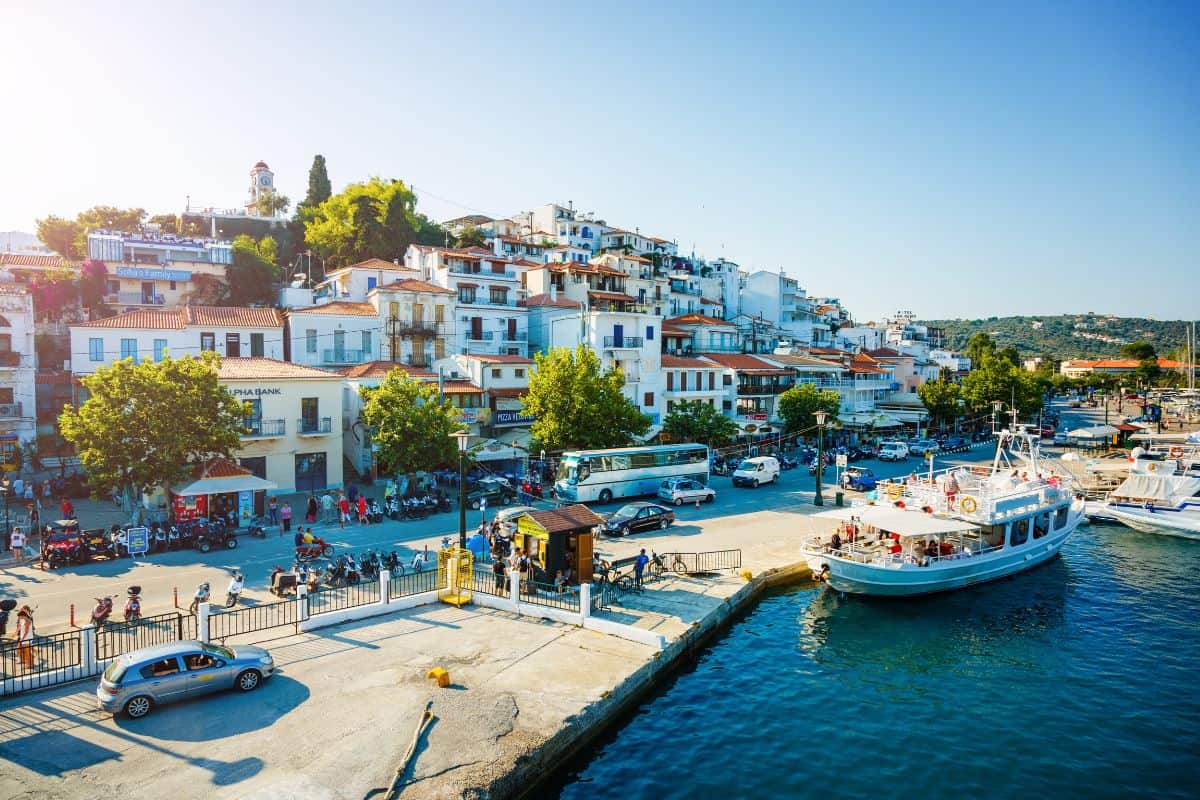
Skiathos plays more of a supporting role in the first film, but it means a lot to fans. The area around the old harbour and the bell tower of St Nicholas Church is where the scene was filmed in which all three “potential fathers” first meet and try to catch a boat to Kalokairi.
Unlike in the film, there are no old fishing boats sailing from here to Skopelos; you’ll find large modern ferries instead. The area around the bell tower, with its harbour views, looks just as it does on screen, and you can take the same photo as Pierce Brosnan and Colin Firth.
Skiathos is the only island in the area with an international airport, so most travellers heading to Skopelos pass through here anyway. Stay for at least a day if you can: the old town is charming, and Koukounaries Beach is one of the prettiest in the entire Aegean Sea.
💡 Tip: You’ll find the clock tower and St Nicholas Church a short uphill walk from the harbour. The path is well signposted, and the view from above over the boats in the harbour is well worth the effort.
7. Damouchari on the Pelion peninsula
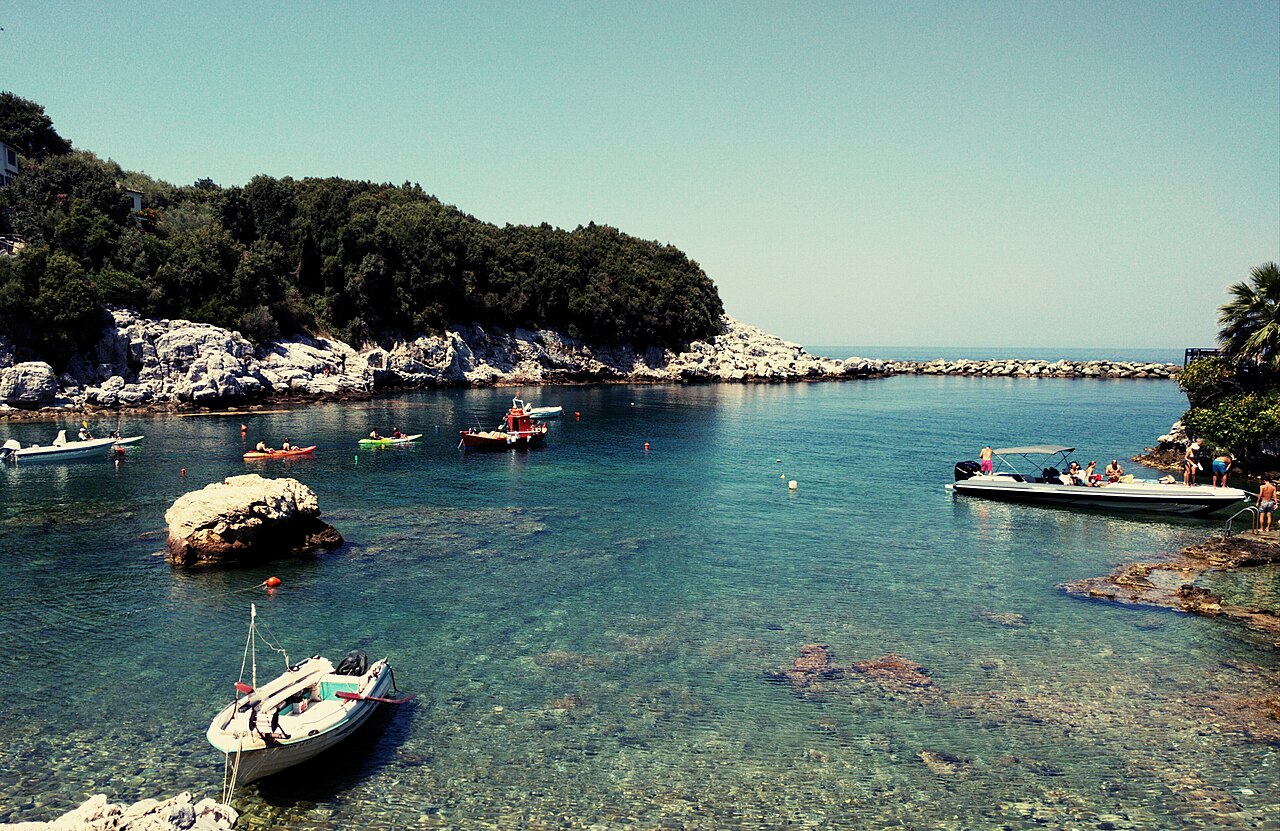
This is probably the film’s best-kept secret. The small harbour in Damouchari is not on one of the islands at all; it lies on the eastern coast of the mainland Pelion peninsula, around 40 kilometres from the Sporades.
This is where Donna, in her famous overalls, welcomes her friends Rosie and Tanya on the jetty. A large part of the “Dancing Queen” ensemble number was also filmed here, as a procession of women winds through narrow lanes and jumps into the sea.
Most visitors have no idea this location exists. That’s a real shame, because Pelion is a beautiful part of Greece, full of greenery, waterfalls and traditional stone villages. It’s also far less crowded than the islands, even in the middle of summer.
💡 Tip: If you’re travelling around mainland Greece by car or bus, take a detour to Pelion. The village is tiny but incredibly charming, with a wonderfully peaceful atmosphere.
8. Vis and Komiža, Croatia
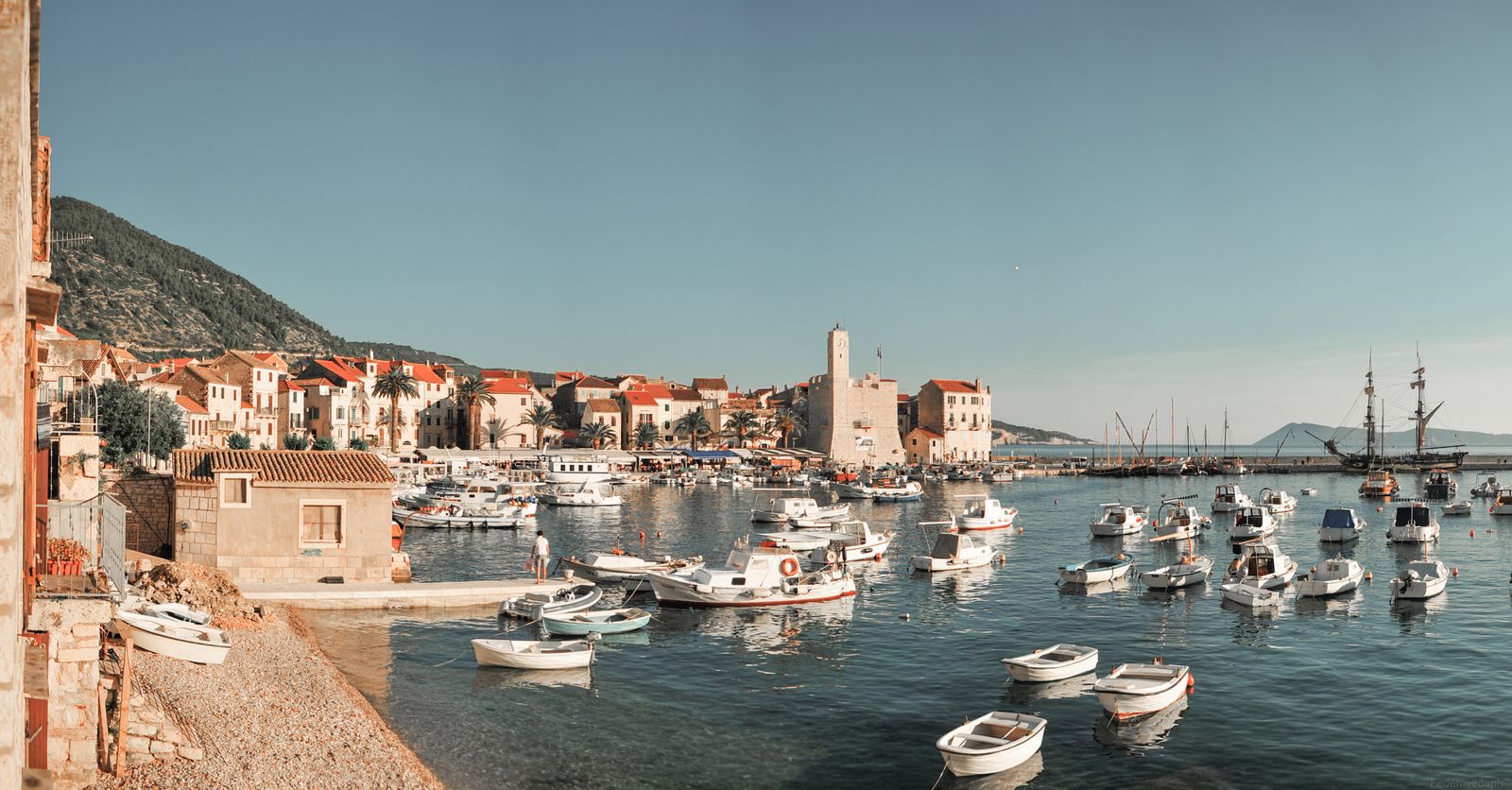
Now let’s move on to the second film. The Croatian island of Vis became the new Kalokairi in Here We Go Again. Most of the action centred around Barjoška Bay in the west of the island, where the filmmakers even had to build a new access road for the crew.
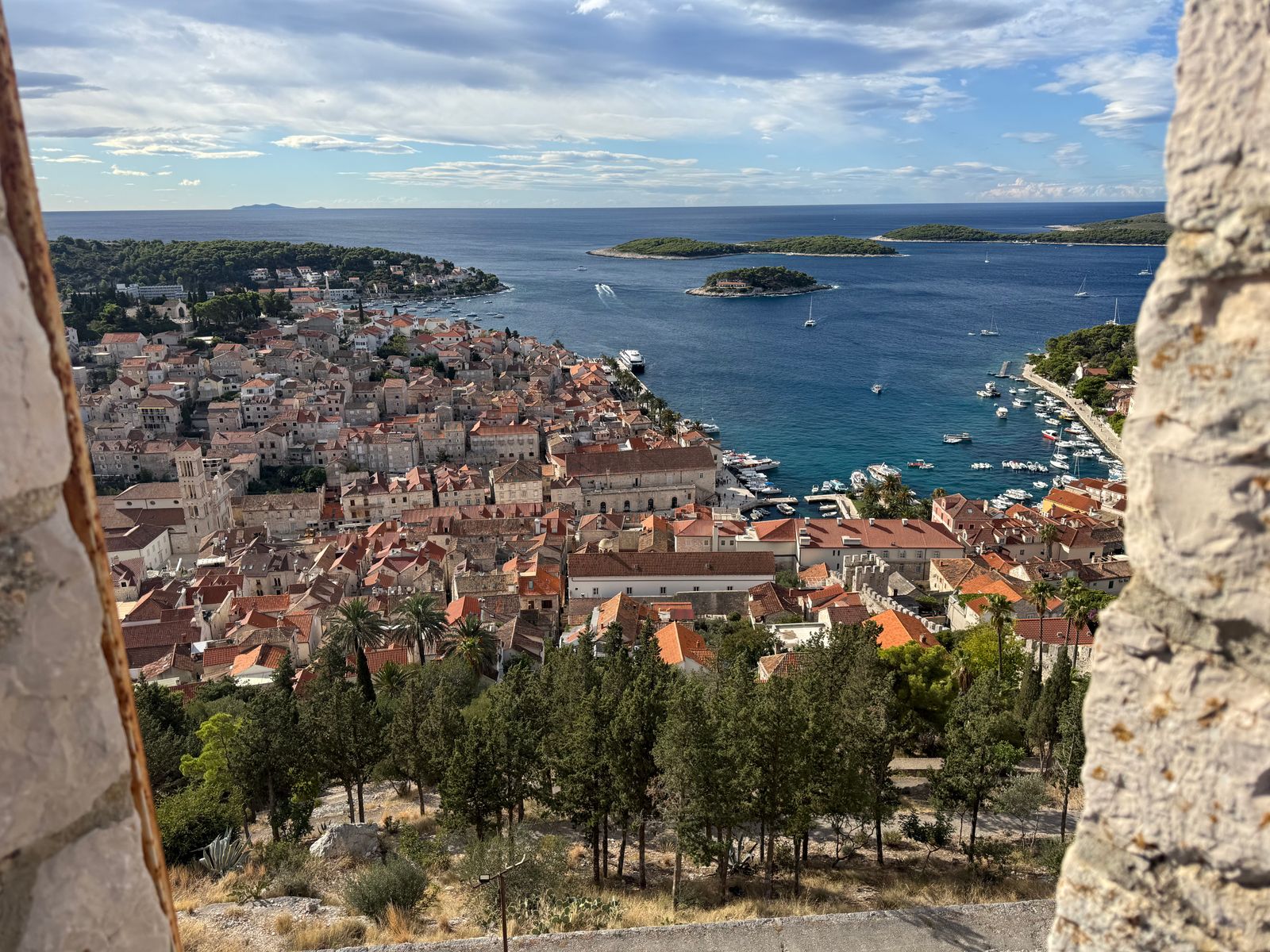
Probably the best-known real filming location on the island is the village of Komiža. In the town of Vis, the filmmakers built an elaborate market set in the square to give the place the right Mediterranean bustle.
Here, too, you should be aware of the movie magic. The grand Bella Donna Hotel on the cliff, which the characters ceremonially open in the second film, was entirely created with digital effects. There’s nothing there in the real landscape of Vis, let alone a luxury resort with a huge terrace.
💡 Tip: Visit the famous Stiniva Beach. It doesn’t actually appear in the film, but the actors used to come here to relax. Hidden between towering cliffs, it’s one of the most beautiful places in Croatia.
Where to eat
Greek and Croatian cuisine are reason enough to visit these places. Food plays a huge role in both cultures, and you’ll find plenty of great places to eat near the filming locations.
Prices vary depending on how close you are to a filming location. A taverna two streets back from the beach is often a third cheaper than one with a view of the chapel.
The best film-location tavernas
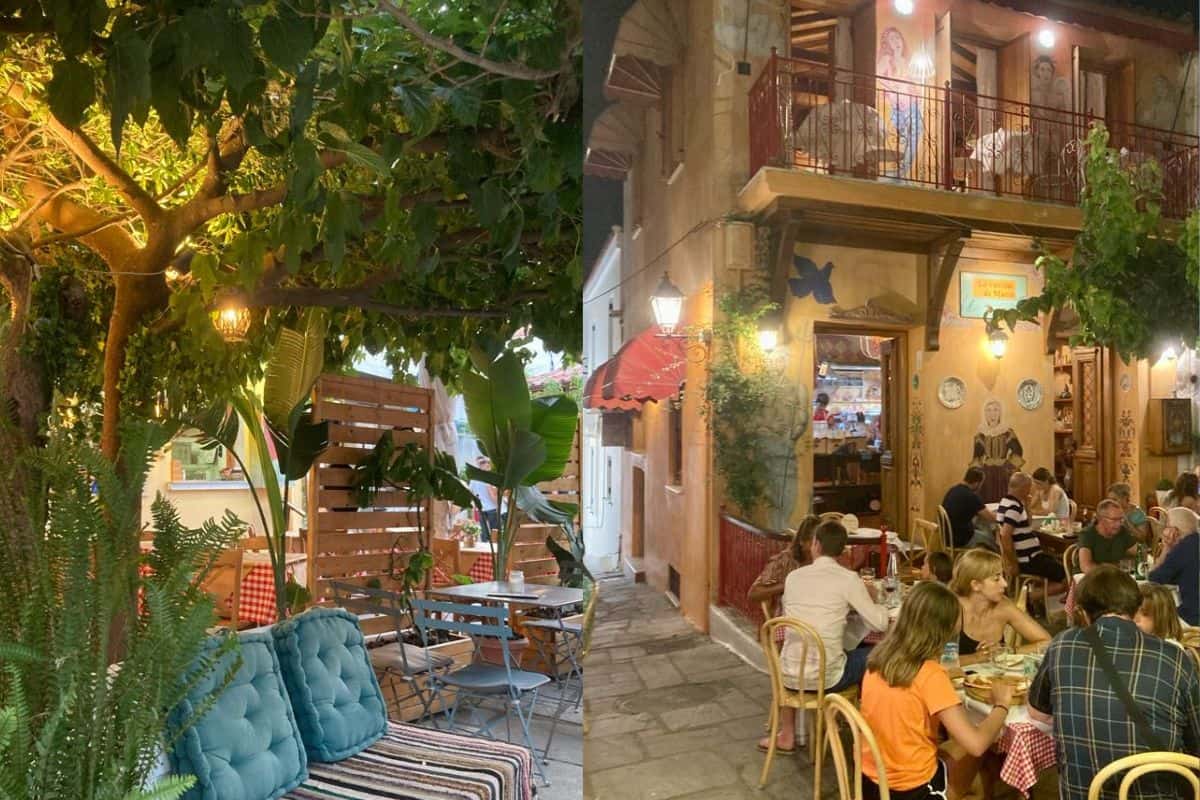
If you visit Agnontas harbour on Skopelos, you’ll find several excellent tavernas right by the water where you can feast to your heart’s content. Try saganaki, courgette fritters or fava, a yellow split-pea purée that’s smoother than you might expect. Fresh fish and seafood are local specialities, brought straight off the boats by the fishermen.
On Vis, the film’s taverna is easy to find: it’s Jastožera in Komiža (I’ll tell you more about it in the day-seven itinerary). For meat-free options, I recommend grilled vegetables, Croatian blitva with potatoes, or homemade pasta. Komiža has always been a fishing village, and you can tell from the menus at a glance.
Itinerary: 8 days in Mamma Mia’s footsteps
Planning a trip that takes in locations from both films is a bit of a challenge, because there’s no direct ferry between the Greek islands and Croatia’s Dalmatian coast. But if you have the time, budget for flights and a taste for the ultimate movie adventure, I’ve put together an action-packed eight-day plan combining the best of both countries. You can also split it into two separate holidays.

Day 1: Arrive in Skiathos and take your first steps in the film’s footsteps
Your trip will probably begin at Skiathos Airport. Planes land so low over the beach that watching them is an experience in itself. Spend the afternoon around the old harbour. Head to the bell tower of St Nicholas, stand in the very spot where the film’s dads stood, and take in the lovely view.
In the evening, settle into one of the many tavernas by the water. I recommend trying a traditional Greek salad with a generous chunk of feta, along with delicious tzatziki and fresh pita bread. The town stays lively late into the night, so you can wander through narrow lanes lined with pottery shops. You could stay in a hotel near the harbour to be close to the boat in the morning.
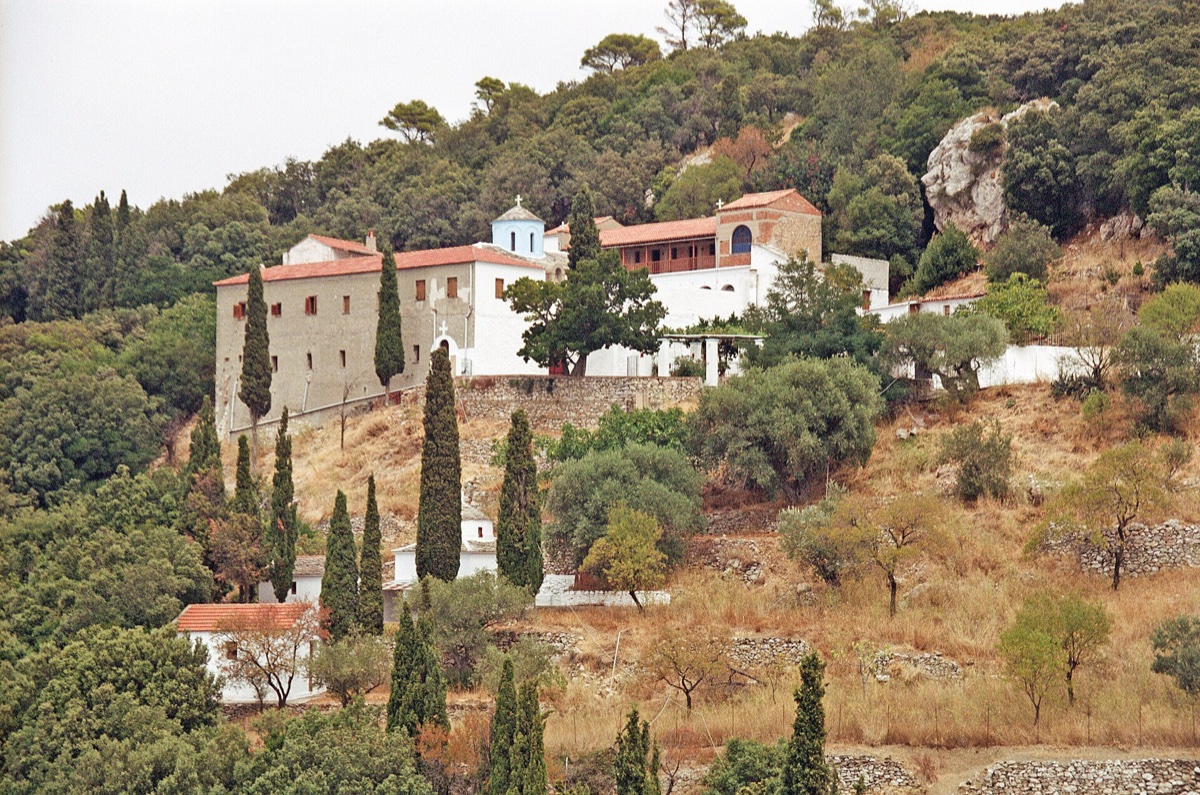
Day 2: Travel to Skopelos and explore Chora
After breakfast, catch the morning ferry to Skopelos. The fast ferry takes about an hour, while the larger ferry takes around an hour and a half. You’ll arrive in Skopelos Town, which will charm you straight away with its white houses and blue shutters. Stop by a rental agency to pick up the car you booked.
Spend the afternoon exploring the town. Follow the route of the wedding procession, then walk up to the castle ruins. For dinner, order briam, a baked vegetable dish, or a delicious spinach pie called spanakopita. It’s a wonderful herb-filled meal that will keep you going after a long day on your feet.
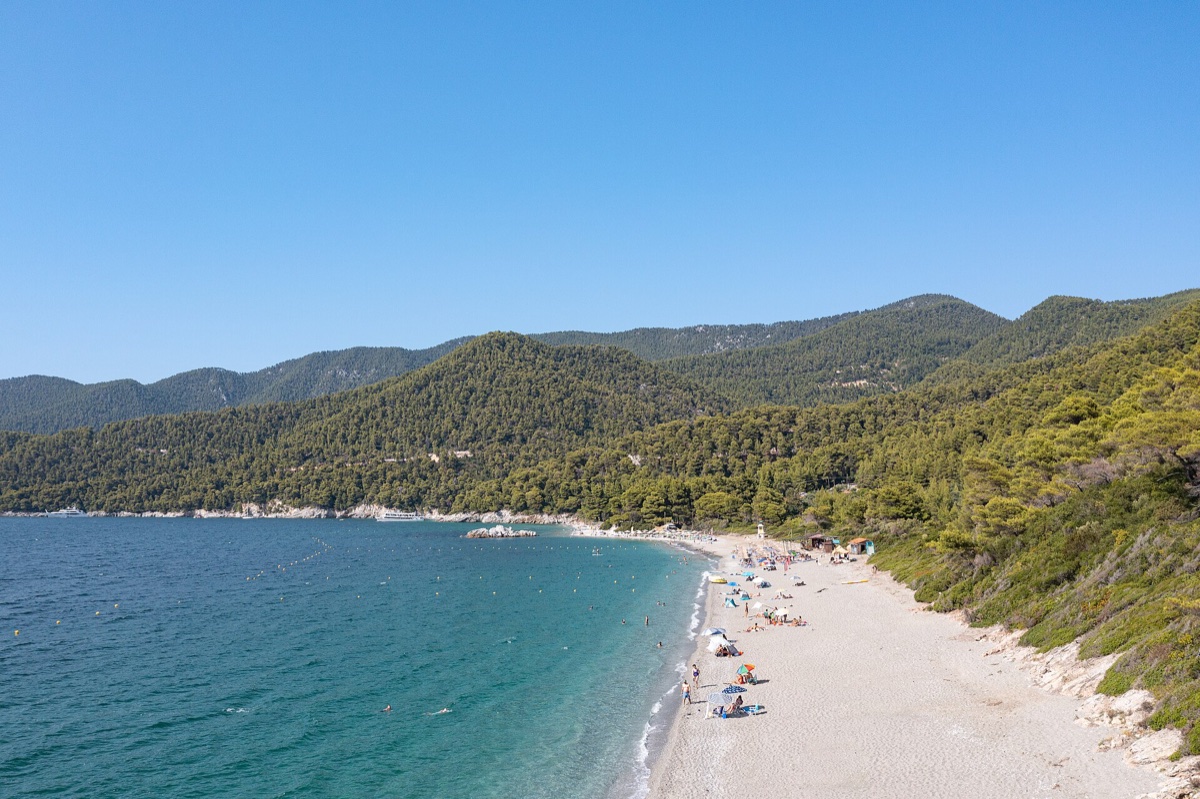
Day 3: Hike up to the chapel and explore the north of the island
This will be a challenging but unforgettable day. Set off early for Glossa in the north of the island, before the heat sets in. You’ll climb the iconic rock to Agios Ioannis Kastri chapel. The walk from the car park takes about 20 minutes, and the views from the steps are priceless.
After climbing back down, reward yourself with a swim at the small pebble beach right below the rock. In the afternoon, head to Glossa itself, perched high on the hillside and offering beautiful views. Stop at a local bakery for sweet baklava and strong Greek coffee.
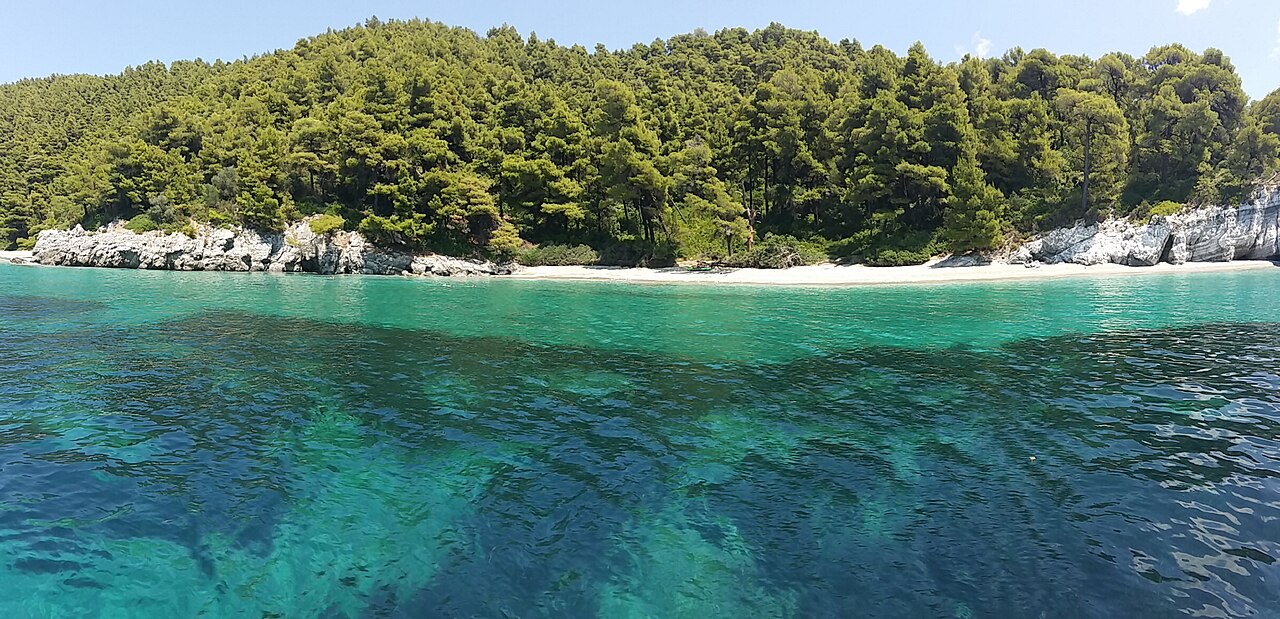
Day 4: A day at Kastani Beach and the west coast
Today is all about relaxing and swimming. Pack your towels and head to Kastani Beach. Don’t forget to listen to “Lay All Your Love on Me” through your headphones. The water is beautifully clear and ideal for snorkelling, although you won’t be able to lean against the film’s jetty—it’s no longer there.
If you get tired of Kastani, drive a short distance to neighbouring Milia Beach. It’s much more spacious, looks out towards the small island of Dassia and offers more room to relax. You can have lunch at the local beach bar, where they make great salads and pasta with fresh tomato sauce.
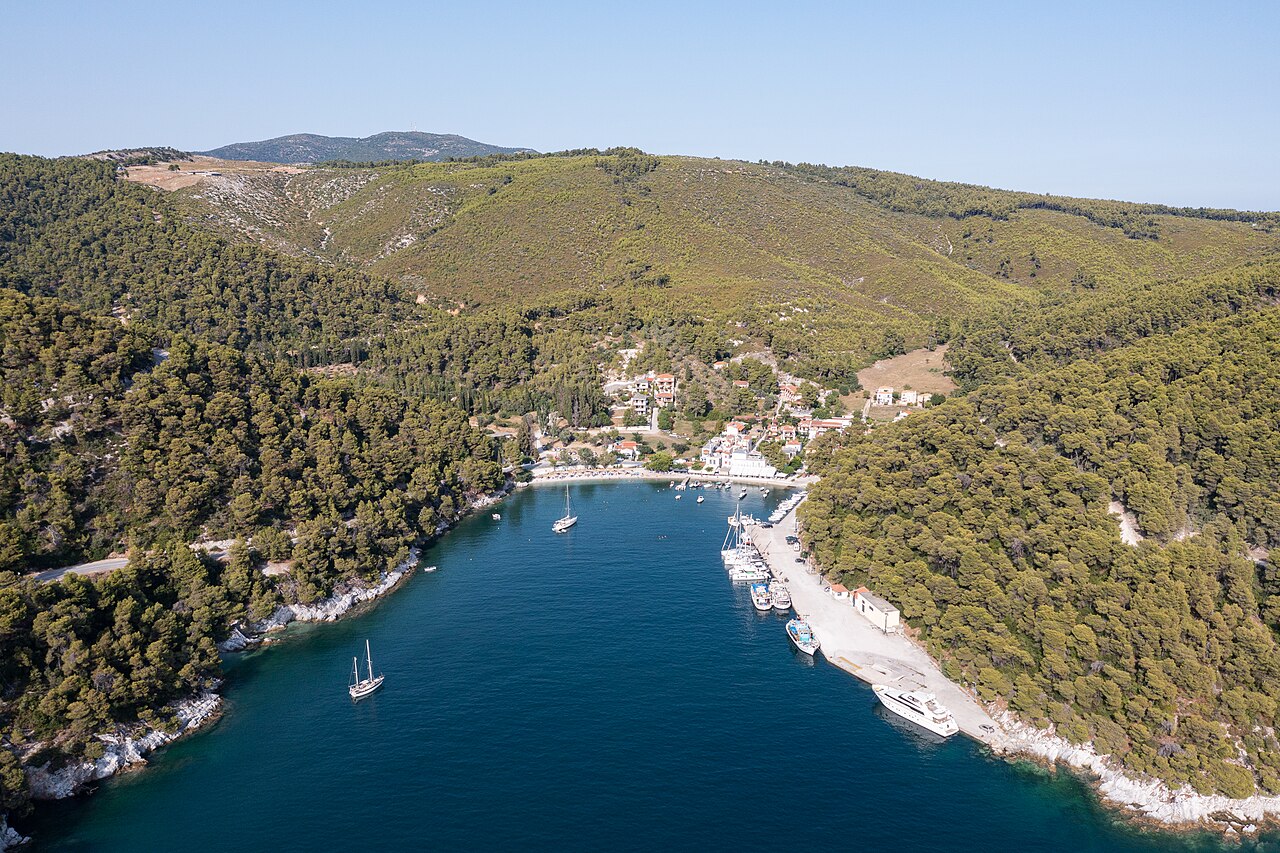
Day 5: Glysteri, Agnontas and back to the mainland
Head out in the morning to explore the northeast coast. Make your way to the coves around Glysteri Beach. You won’t find Donna’s villa, but you can swim in the places where the actors jumped from the cliffs. In the afternoon, continue to Agnontas harbour for a late lunch.
The local tavernas have tables just centimetres from the water, making it feel as though you’re dining on a boat. As well as the fish locals love, try the excellent stuffed vine leaves, dolmadakia, or giant beans, gigantes, in tomato sauce. In the evening, board the ferry to Volos on the mainland. The trip takes around three hours.
Day 6: Pelion’s secret and the journey to Croatia
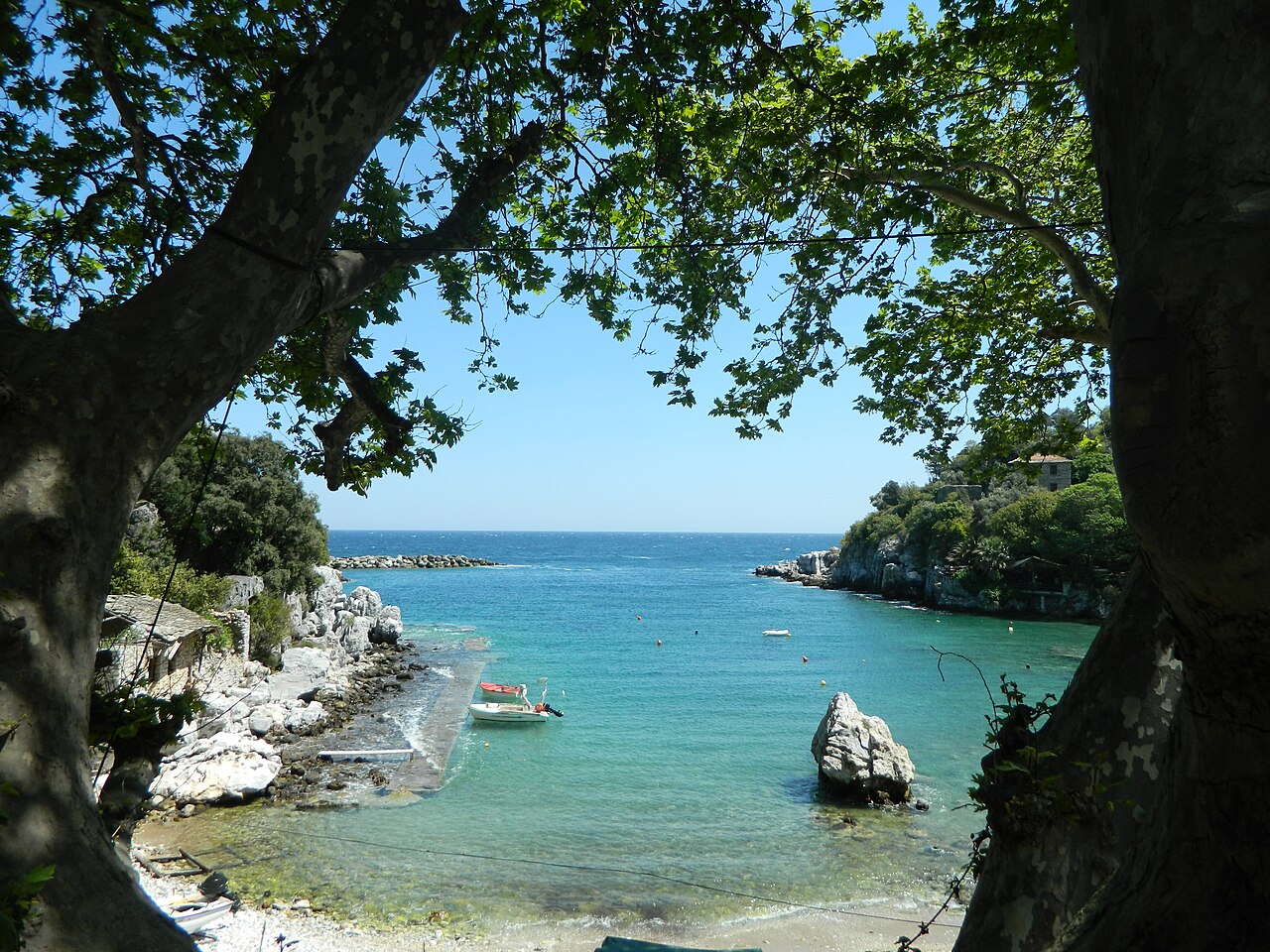
From Volos, it’s only a short trip to the beautiful Pelion peninsula. In the morning, follow the winding roads to Damouchari. Walk along the stone jetty where Donna welcomed her friends and soak up the wonderfully peaceful atmosphere of this tucked-away corner of the mainland.
The afternoon brings the trickiest part of the logistics. You’ll need to travel from Greece to Split in Croatia. The best option is to head to nearby Thessaloniki or Athens and fly from there to Croatia (you may need to connect). In the evening, you can enjoy the atmosphere along Split’s beautiful Riva promenade.
Day 7: Sail to Vis and visit film-famous Komiža
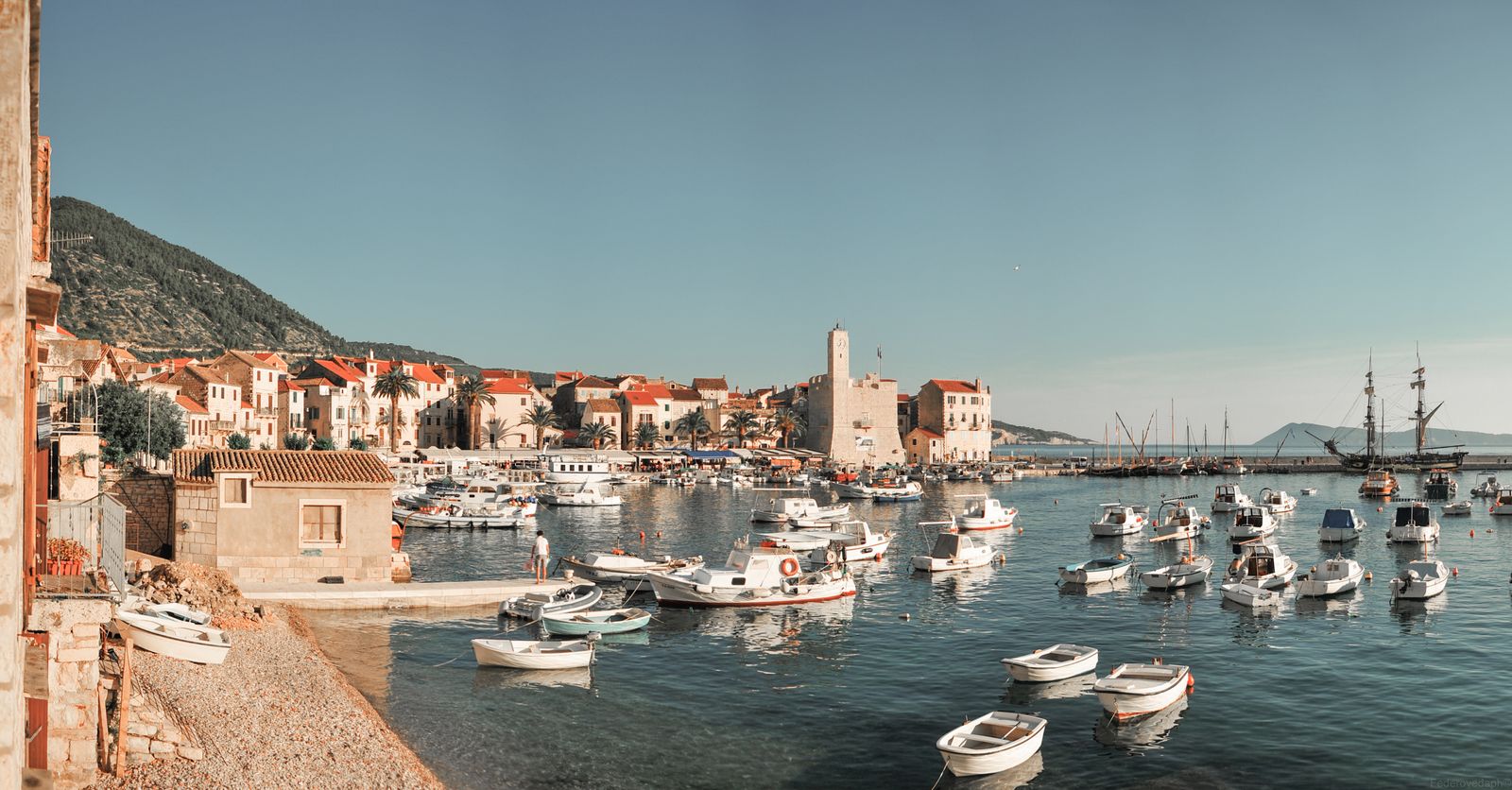
Ferries leave Split for the remote island of Vis. The crossing takes just under two and a half hours and is a lovely way to relax. As soon as you arrive in Vis Town, rent a scooter so you can explore the island at your own pace. The island is small but very hilly, making a scooter a great way to get around.
Head to the west side of the island and the picturesque fishing village of Komiža. Visit the famous Jastožera restaurant, which served as a taverna in the film. Komiža is known as a fishing village where locals prepare fresh fish, but you can also easily find delicious grilled vegetables or traditional Croatian blitva (chard with potatoes).
Day 8: Barjoška Bay and farewell to Kalokairi
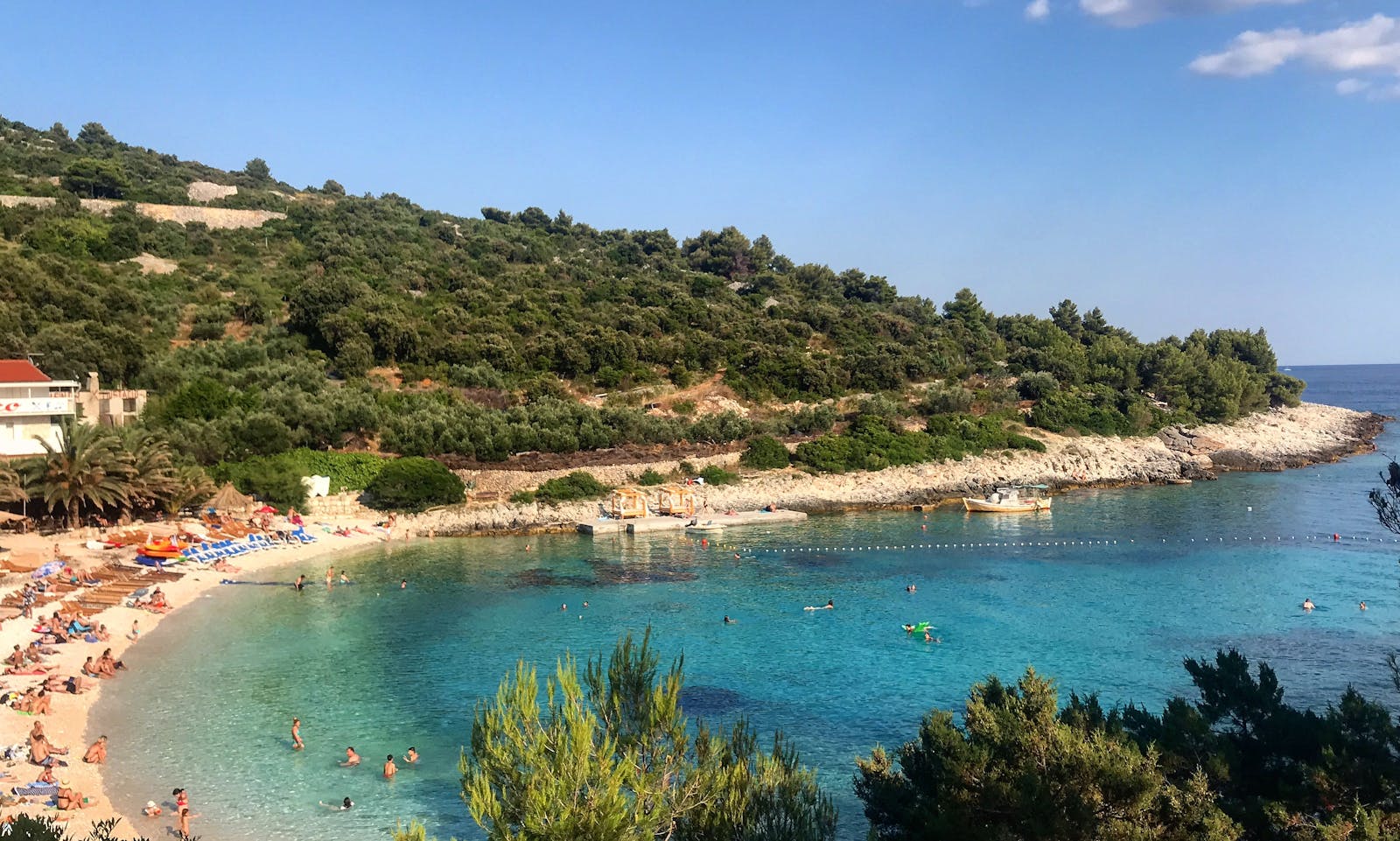
Spend your final day exploring locations from the second film. Head to Barjoška Bay, where most of the beach scenes were shot. You can get there by scooter along bumpy roads or rent a small boat from the harbour, which is a much more comfortable option.
In the afternoon, return to Vis Town and explore the market square and narrow lanes where young Donna cycled in the film. In the evening, board the ferry back to Split, bringing your epic Mamma Mia journey to an end.
How to get there and when to go
The logistics take a little planning, but it’s nothing you can’t manage with a bit of patience. The key is to book flights and ferries in good time, especially if you’re travelling during the main summer holiday period.
Getting to Greece (Skopelos and Skiathos)
The easiest way to reach the Greek locations is to book a flight to Skiathos Airport (JSI). From there, travel about 2 kilometres to the harbour and catch a ferry. You can also check the official Skiathos Airport website. In summer, Seajets and Hellenic Seaways run five or six sailings a day. A ferry ticket costs around €15–€35 per person, depending on the type of boat.
Another option is to fly to Athens or Thessaloniki, take a bus to a mainland port (Volos, Agios Konstantinos or Mantoudi on the island of Evia), and catch a ferry from there. The Greek mainland bus timetables may come in handy. Keep in mind that Skopelos has three different ports: Skopelos Town, Glossa and Agnontas. Always check exactly where your ferry is going, so you don’t end up far from your hotel by surprise. You can find timetables and book easily through a reliable site such as Ferryhopper.
Getting to Croatia (Vis)
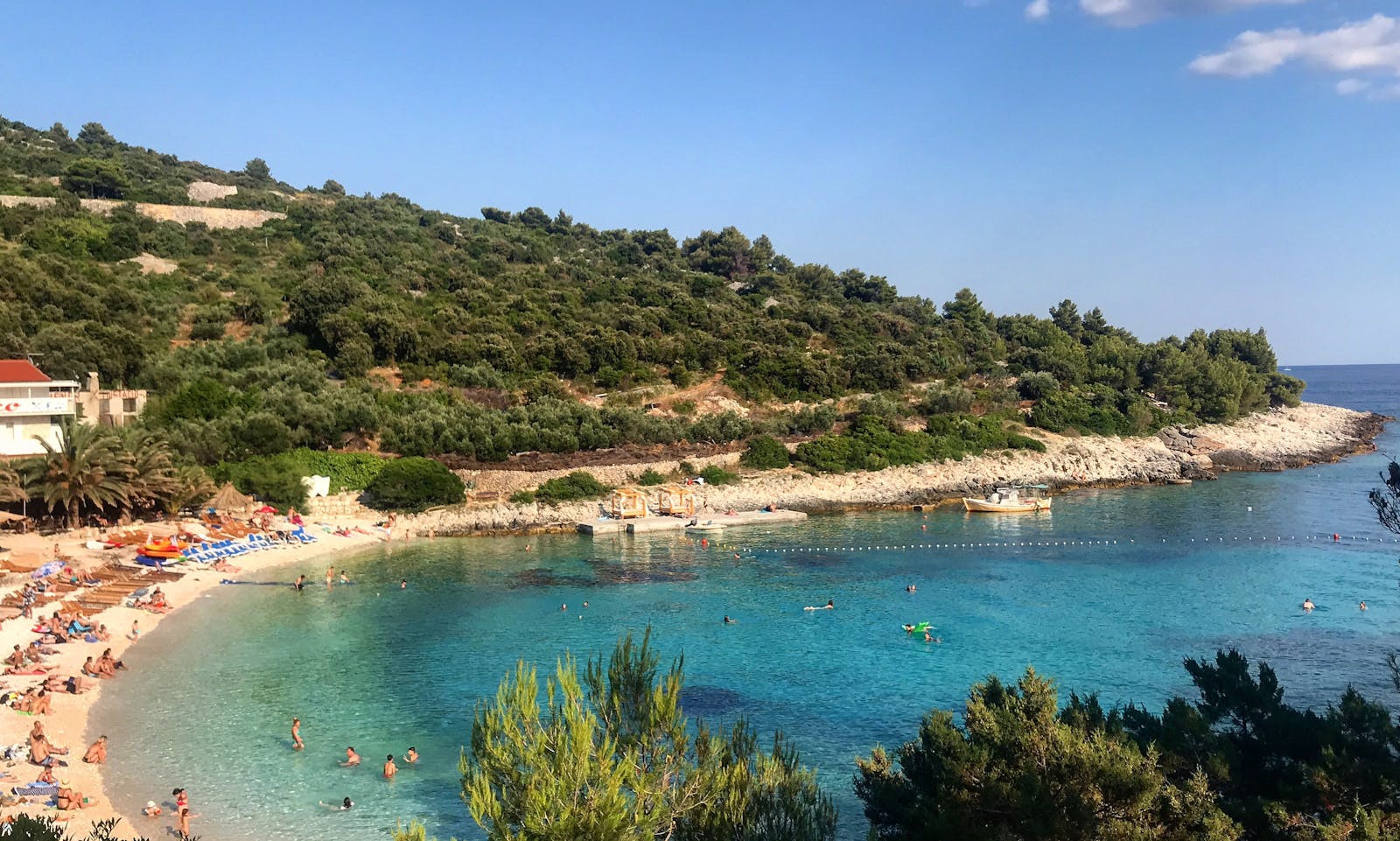
You can reach the island of Vis only by boat. The port of Split is your starting point, and you can get there easily by air or by car from other parts of Europe. For more inspiration, check out the Vis Island Tourist Board website. Ferries and catamarans are operated by the state-owned company Jadrolinija, and the trip takes over two hours. Boats get very busy in summer, so it’s best to book vehicle tickets well in advance on the Jadrolinija website.
When is the best time to go?
If you have a choice, definitely avoid July and August. During these months, all the locations are packed with tourists, temperatures soar well above 30°C, and accommodation prices peak. Climbing to the chapel at midday in August is more of an ordeal than a pleasure.
Late May to June, and the first half of September, are ideal compromises. The sea is already warm (or still lovely and warm), the crowds of fans are more manageable and the scenery is still full of colour. Travelling off-season (from November to April) gets quite complicated: many hotels and tavernas close, and ferry services become much less frequent.
Where to stay
Where you stay will have a big impact on how easily you can get around the island. In high season, a double room costs roughly €80–€200 per night, depending on location and level of luxury. You can find most accommodation on Booking.com. Here are a few excellent options with great reviews.
Where to stay on Skopelos (town and surrounding area):
- Skopelos Village Hotel: A true legend. Meryl Streep, Pierce Brosnan and other stars stayed here during filming. It has a beautiful pool, excellent breakfasts and is just a 10-minute walk from the town centre.
- Rigas Hotel Skopelos: A great hotel at a reasonable price in Skopelos Town. Guests particularly praise the beautiful garden full of lemon trees, where breakfast is served, and the very helpful staff.
- Adrina Beach Hotel: If you want to stay by the beach and closer to the filming locations on the west coast, this is a great choice. The hotel has a private beach and wonderful sea views right from the rooms.
Where to stay in northern Skopelos (Glossa village):
- Natura Luxury Boutique Hotel: A beautiful, peaceful place to stay near Glossa, with the famous chapel close by. The hotel has a lovely panoramic view and stylish, modern rooms with a strong focus on cleanliness.
Where to stay on Skiathos:
- Bourtzi Hotel: A wonderful design hotel right in the centre of Skiathos, a short walk from the harbour. It’s a convenient base if you arrive by ferry, with a lovely courtyard pool and a fantastic breakfast buffet.
- La Piscine Art Hotel: This is an adults-only hotel, so you can enjoy complete peace and quiet. Guests rave about the luxurious restaurant and large pool surrounded by greenery.
Where to stay on Vis:
- Hotel San Giorgio: A lovely family-run boutique hotel tucked into the lanes of Vis Town. It has an incredibly friendly atmosphere and a beautiful courtyard; reviews say the breakfasts are the best on the island.
- Hotel Biševo: Located right by the beach in the fishing village of Komiža. It’s fairly simple accommodation, but offers wonderful sea views and a great base for exploring the west side of the island.
Quick guide: which scene was filmed where
To help you keep all the movie details straight, I’ve put together a handy table of the most important scenes and their real-life locations. Feel free to save a photo of it on your phone so you know exactly what to look for at each spot.
| Scene or song | Film | Real location | Access |
|---|---|---|---|
| Wedding and “The Winner Takes It All” | Mamma Mia! (1) | Agios Ioannis Kastri chapel, Skopelos | By car + around 200 steps on foot |
| “Lay All Your Love on Me” (Sophie and Sky) | Mamma Mia! (1) | Kastani Beach, Skopelos | Right by the car park; busy in high season |
| “Does Your Mother Know” (Tanya) | Mamma Mia! (1) | Kastani Beach, Skopelos | Right by the car park |
| The fathers meet and miss the boat | Mamma Mia! (1) | Old harbour and bell tower, Skiathos | Short uphill walk from the town centre |
| Rosie and Tanya arrive (“Dancing Queen”) | Mamma Mia! (1) | Damouchari harbour, Pelion | Mainland, 40 km by car from Volos |
| “Money, Money, Money” | Mamma Mia! (1) | Agnontas harbour, Skopelos | Easily reached by car |
| Cliff jumping and villa exteriors | Mamma Mia! (1) | Glysteri Bay and Beach, Skopelos | By car along a winding road |
| Market square and main activity | Here We Go Again (2) | Vis Town, Croatia | In the town centre, easy to reach on foot |
| Greek taverna (dialogue scenes) | Here We Go Again (2) | Jastožera restaurant, Komiža, Vis | In the centre of Komiža |
| Beach scenes from the second film | Here We Go Again (2) | Barjoška Bay, Vis | More difficult to reach, best by boat |
Where to go next
If you’ve been inspired by movie-location travel, don’t miss our detailed guides to each island. They’re full of ideas for what to do even when you’re not looking for traces of the film crew.
Take a look at our article on Skopelos, the Mamma Mia island, where I cover the coves and hidden beaches in detail. If you’re planning to visit the neighbouring island too, our guide to holidays in Skiathos will come in handy. And if the Dalmatian coast is more your style, find out what Vis, Croatia has to offer.
If you’d like to combine film locations with other destinations, we also have a comprehensive guide to where to go on holiday in Greece, as well as a similar article on where to go on holiday in Croatia. And if you’re interested in film-inspired travel in general, take a look at our article on set-jetting and the White Lotus effect.
For more movie-inspired trips, check out our itinerary for Game of Thrones filming locations or our guide to hotels from films and TV series.
Frequently asked questions
Here are answers to the questions people most often have about these filming locations. You’ll find all the essential details here, so you know what to expect when you arrive.
Where is the island of Kalokairi located?
The fictional island of Kalokairi doesn’t actually exist. Its name means “summer” in Greek. The film’s Kalokairi was created by combining footage from the Greek islands of Skopelos and Skiathos (first film) and the Croatian island of Vis (second film).
Were both Mamma Mia films shot in the same location?
No, they weren’t, and this is a common mistake many fans make. The first film from 2008 was shot in Greece (mainly Skopelos and Skiathos). The second film from 2018 was shot on the Croatian island of Vis, partly due to better film incentives.
Can I stay at the Hotel Bella Donna?
Unfortunately, you can’t. Donna’s villa from the first film was just a set built above Glysteri beach on Skopelos and was dismantled after filming. The impressive Hotel Bella Donna from the second film on the Croatian cliff was created using computer effects and doesn’t exist at all.
How many steps lead to the Agios Ioannis Kastri chapel?
Sources vary widely and the exact number is hard to count due to the uneven terrain. Reports range from 106 to as many as 198 steep steps. The climb is quite challenging, but the view from the rock is definitely worth the effort.
Can I have a wedding inside the chapel on Skopelos?
Weddings are regularly held at the chapel and are very popular. However, you need to keep in mind that the actual interior of the chapel is incredibly small. Ceremonies therefore usually take place on the small outdoor area in front of the chapel.
Do I need a car on Skopelos island?
Yes, I definitely recommend one. The island is heavily forested, very hilly, and the distances between the various filming locations are quite large. Buses do run here, but with a car or powerful scooter you’ll save an enormous amount of time.
Where can I find the pier from the song Lay All Your Love on Me?
You won’t find the wooden pier where Sky danced with flippers on Kastani beach anymore. It was just a film prop built purely for filming purposes. However, you can freely visit the beach itself – there’s a beach bar operating there.
Is it expensive to go on a Mamma Mia vacation?
Prices on Skopelos are somewhat higher than in less well-known parts of Greece, but still very reasonable. A ferry ticket costs around €15–30. A visit to Croatian Vis will be noticeably more expensive, as it’s one of the more exclusive Dalmatian islands.
Tips and Tricks for Your Vacation
Don’t Overpay for Flights
Search for flights on Kayak. It’s our favorite search engine because it scans the websites of all airlines and always finds the cheapest connection.
Book Your Accommodation Smartly
The best experiences we’ve had when looking for accommodation (from Alaska to Morocco) are with Booking.com, where hotels, apartments, and entire houses are usually the cheapest and most widely available.
 🚗 Car rental on the roadVerified rental cars in Greece
Search with the DiscoverCars comparison engine — it compares prices from dozens of local and international rental companies, and most bookings come with free cancellation.
Compare car prices in Greece →Don’t Forget Travel Insurance
Good travel insurance will protect you against illness, accidents, theft, or flight cancellations. We’ve had a few hospital visits abroad, so we know how important it is to have proper insurance arranged.
Where we insure ourselves: SafetyWing (simple monthly subscription) and TrueTraveller (for extra-long trips).
Find the Best Experiences
Get Your Guide is a huge online marketplace where you can book guided walks, trips, skip-the-line tickets, tours, and much more. We always find some extra fun there!