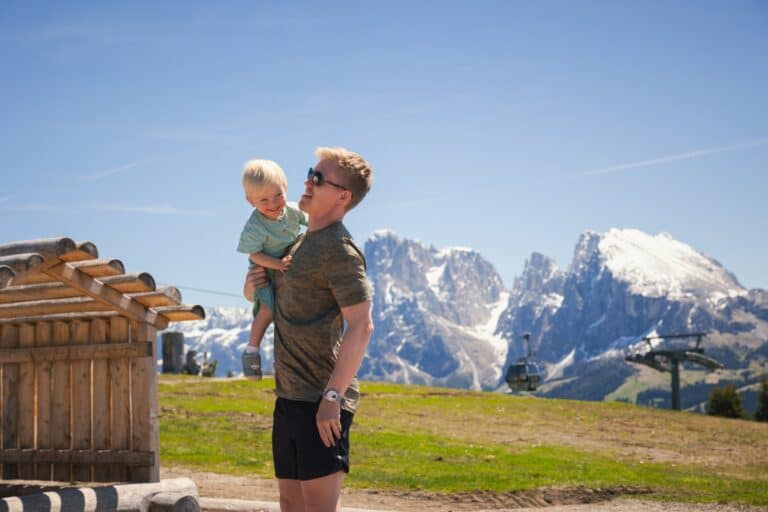
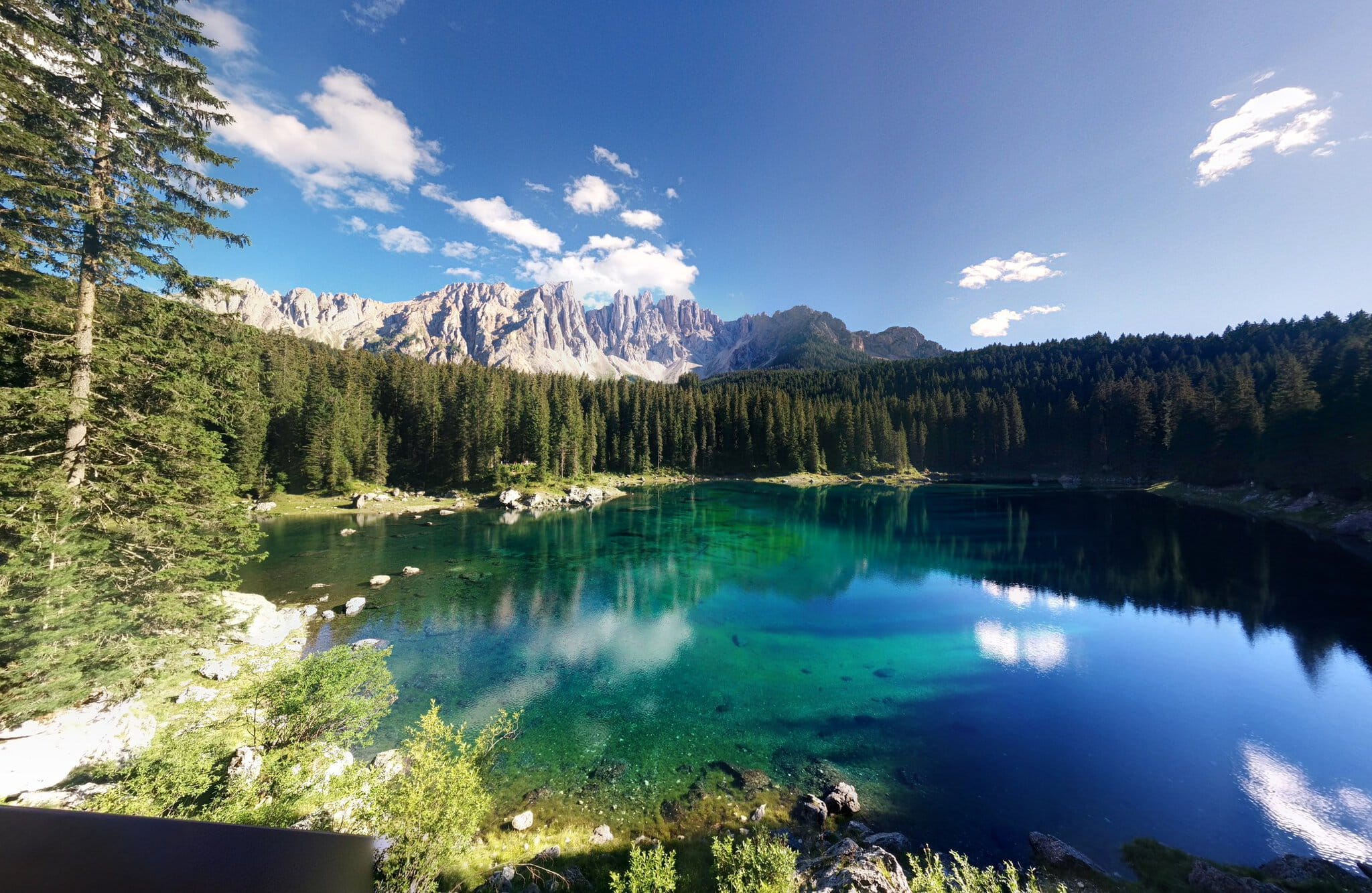
You’ve almost certainly stumbled across a photo of Lago di Carezza on social media at some point. Its impossibly vivid turquoise-emerald colour looks so unreal that you’d swear someone went overboard in Photoshop. But they didn’t. Karersee, as it’s called in German, is one of those rare gems in the Dolomites Italy that actually looks even more magical in real life than it does on screen.
In this article, I’ll share where to stay strategically and what to expect. You can’t drive directly to the lake, but there’s a brilliantly designed, flat five-minute tunnel walkway from the car park that’s completely pushchair-friendly.
The full destination guide: Dolomites — guide and what to see
TL;DR
If you’re already in the car heading for the Italian Dolomites, here are the key things I wish someone had told me before we went:
- Major parking update: A reservation system for cars has been introduced — similar to the one at the legendary Tre Cime — so book your spot at car parks P1 or P2 online in advance, or you risk being turned away at the barrier.
- Pushchairs and kids: The entire loop around the lake and the access path from the car park are fully accessible and perfect for families with young children.
- Dogs: Our pups loved the outing, but remember that dogs must be kept on a lead at all times.
- Swimming: The crystal-clear water might tempt you, but the answer to the common question “can you swim in Lago di Carezza?” is a firm no — the lake is strictly protected.
- Best time to visit: The water is at its most vibrant early in the morning or in autumn, when the surrounding larches turn golden. Expect crowds during summer daytime hours.
What is Lago di Carezza and its Rainbow Lake legend
But first, a bit of context that makes this place truly special: why on earth does the lake have such an extraordinary colour, and where does the name “Rainbow Lake” come from? Lago di Carezza is a relatively small alpine lake sitting at an elevation of 1,520 metres in the province of South Tyrol (Trentino-Alto Adige). What makes it so remarkable is its colour and the dramatic backdrop of the jagged limestone peaks of the Latemar massif towering behind it.
The water shifts in the most mesmerising way from pale green through deep emerald to rich turquoise. The explanation is wonderfully prosaic: limestone bedrock plus the right angle of sunlight equals a natural emerald. Science is all well and good, but the local legend is far more romantic, if you ask me.
The story goes that a beautiful water nymph called Ondina once lived in the lake. A sorcerer from the nearby Masarè range fell hopelessly in love with her. To lure her out of the water and win her heart, he conjured a spectacular rainbow over Mount Latemar. But he forgot one small detail — he hadn’t disguised himself as a witch from another mountain had advised. When Ondina spotted the hideous sorcerer, she was so frightened that she vanished into the depths for good. The sorcerer flew into such a rage that he tore the rainbow apart and hurled the pieces into the water. And that, so locals say, is why Lago di Carezza is still known as the “Rainbow Lake” (Lec de Ergobando in the local Ladin dialect). ☺️
Best time to visit and Dolomites Italy weather
Planning a trip to the Dolomites always revolves around picking the right season. If you’re wondering when to visit Lago di Carezza, it largely depends on what you’re after and whether crowds bother you more than cooler temperatures. From our experience, every season here has something going for it.
The most popular window is, unsurprisingly, summer — roughly July to September. The lake is beautifully full from melting spring snow and the whole area bursts with lush colours. The catch? Thousands of tourists. If you’re visiting in summer, I strongly recommend arriving early in the morning — ideally by seven or eight o’clock. Not only will you dodge the crowds and have the viewing platforms to yourselves, but the morning light creates perfect photography conditions and the surface is mirror-still.
Autumn in the Dolomites is a personal favourite for me and Lukáš. Around October, the larches surrounding the lake transform into incredible shades of gold and orange. If you check the Lago di Carezza weather forecast before setting out and hit a sunny autumn day, you’ll witness a total visual explosion. Just bear in mind that the water level tends to be noticeably lower by autumn.
And what about winter? Searching for “Lago di Carezza winter” is absolutely worth it. In the colder months, the lake often freezes solid and disappears under a thick blanket of snow — you won’t see the famous turquoise, but the fairy-tale winter landscape more than makes up for it. If you’re into skiing, there’s a popular ski resort just a stone’s throw from the lake, making a visit to the frozen Carezza an ideal afternoon stop after a day on the slopes.
How to get to Lago di Carezza and new parking rules
Transport and parking are probably the single most important topic to cover for Lago di Carezza, because the rules have tightened considerably in recent years to protect the area from overtourism. Most visitors drive here from larger hubs like Cortina d’Ampezzo, nearby Bolzano, or from the Val di Fassa valley via the town of Canazei. The route typically winds through the scenic Passo di Costalunga pass and is an experience in itself, with jaw-dropping views the whole way.
If you’re travelling from the UK, the easiest option is to fly into Venice, Treviso, Verona, or Milan — you’ll find plenty of direct flights from London, Manchester, and other major UK airports with carriers like easyJet, Ryanair, and British Airways. From there, it’s roughly a two-to-three-hour drive north into the Dolomites. Search for cheap flights on Kiwi, which is our go-to flight comparison tool.
Right by the lake there are large paid car parks labelled P1 and P2 — and this is where it gets important. Since spring 2024, the system works much like the one at the famous Tre Cime: capacity is capped and during peak season you must reserve your spot online in advance. Imagine the nightmare of driving all the way into the mountains with your family, only to be told at the barrier that it’s full and there’s nothing they can do. Sort it out a few days ahead. Parking costs roughly 5–7 € for the first two hours, which is plenty of time for a relaxed visit and a walk around the lake. For car hire on mountain trips, we often use DiscoverCars.com, which we’ve had consistently good experiences with.
If you’d rather skip the parking hassle entirely, the Italian public transport network serves this area well. From Bolzano, direct bus line 180 runs here — the ride takes just under an hour and drops you practically at the visitor centre. If you’re staying on the other side of the mountains in Canazei, hop on bus number 480, which crosses the Passo di Costalunga.
Once you’ve parked or stepped off the bus, you’ll find a surprisingly modern gateway to nature. A safe pedestrian tunnel has been built under the road, leading you straight from the car park to the main viewing platform at the lake. It’s a five-minute stroll, completely flat, so when we unloaded Jonášek’s pushchair and set off with our dogs this year, there were no rocks or roots to wrestle with.
Where to stay near the lake + how much it costs
If you want to properly explore the Latemar area rather than just popping by the lake for an hour, it’s well worth finding accommodation nearby. Let’s be honest — the Dolomites aren’t a budget destination, and prices in August or February make that abundantly clear. A week for two including food and fuel can easily run to 1,200–1,800 €, which Lukáš and I offset by packing our own lunches like true mountain folk and not splurging on fancy hotels. We usually search for accommodation on Booking.com, where we often grab good deals through the loyalty programme.
The closest and most iconic option is to stay right above the lake. Just across the road from the car park sits the renowned Carezza Hotel Latemar, which offers lovely wellness facilities and jaw-dropping mountain views. It’s on the pricier side (expect from around 160 € per night upwards), but the sheer bliss of wandering down to the lake at sunrise with a coffee in hand, before the first cars even arrive, is sometimes worth every penny.
Another excellent strategic base is the nearby village of Nova Levante (Welschnofen), just a few kilometres below the lake in the valley. You’ll find classic Tyrolean charm, plenty of small family-run guesthouses (garni), and traditional restaurants serving the best dumplings you’ll ever taste. Prices tend to be a little gentler on the wallet, and you’re still just minutes from the mountains.
If you prefer a bit of urban buzz or want to combine nature with some history and shopping, consider staying in Bolzano. It’s only about a 30-minute drive from the lake, and in the evening you can stroll under the arcades of the old town with a gelato in hand. For serious hikers and high-mountain enthusiasts, Canazei in the Val di Fassa valley is a superb choice — you can reach the lake via the pass in about 20 minutes, and from Canazei you can also ride cable cars up to the Sella massif or the Marmolada glacier.
Lago di Carezza: 10 best things to see and do
Lago di Carezza isn’t just about snapping one photo from the viewpoint and rushing back to the car. The whole Latemar area offers loads of ways to fill an entire day or a long weekend. Here are the things that have genuinely impressed us at Carezza over the years — plus a few that took a bit of effort before we fell in love with them. 😅
1. First impressions from the main viewing platform
When you emerge from the tunnel on the car-park side, you step straight onto a large wooden viewing platform. This is exactly where 99% of those picture-perfect shots are taken — and you’ll instantly understand why. Arrive in the morning or early evening when the surface is mirror-still, and the reflection of Latemar’s jagged peaks in the turquoise water will genuinely stop you in your tracks. Don’t forget the obligatory family photo, but be considerate of other visitors — in summer it gets quite cramped and everyone wants their own slice of the view.
2. Take the easy loop walk around the lake
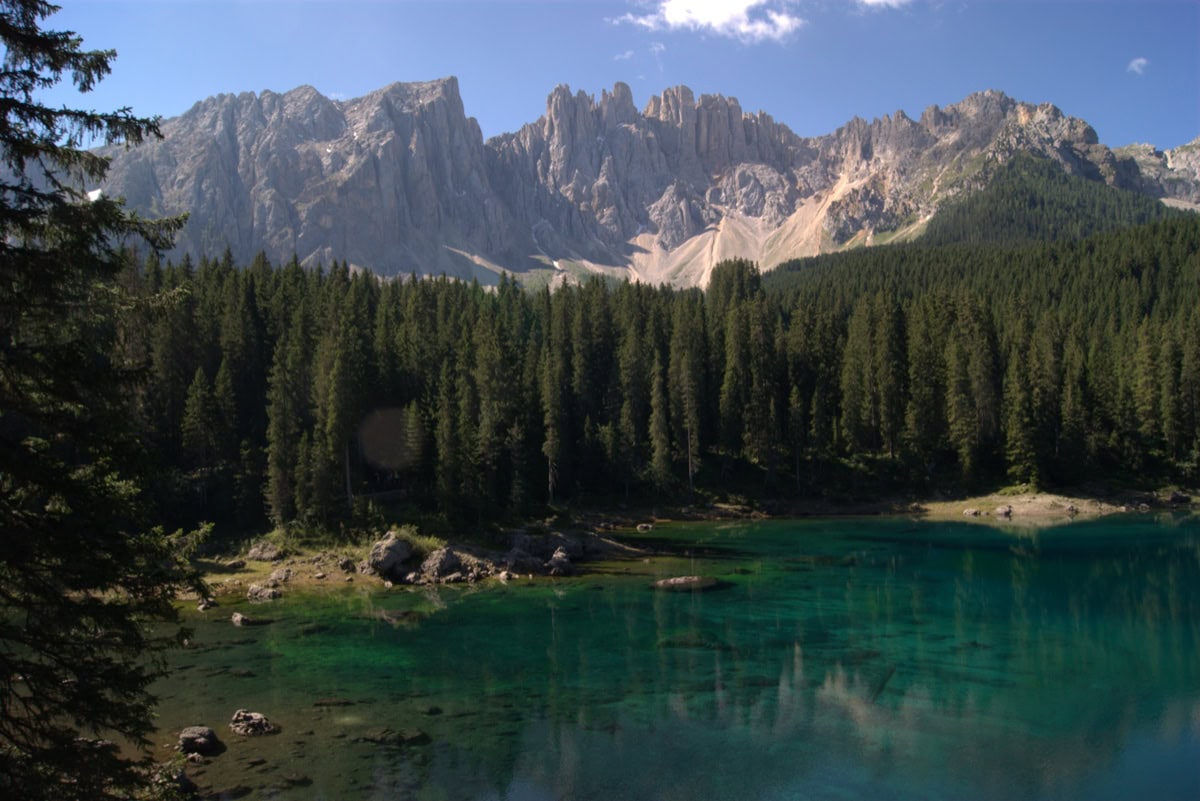
A trail starts right at the main viewpoint and circles the entire lake. Although people often ask about a complicated Lago di Carezza route, this particular loop is as easy as it gets — anyone can manage it. It’s roughly one kilometre long and takes a leisurely 20 to 30 minutes, even with frequent photo stops.
The path winds through an enchanting coniferous forest, occasionally drawing closer to the water’s edge (though you’re not allowed past the wooden fence). You’ll discover completely different angles of the lake along the way. The surface is compacted gravel, so pushchairs won’t be a problem.
3. Stop at the Latemar mountain viewpoints
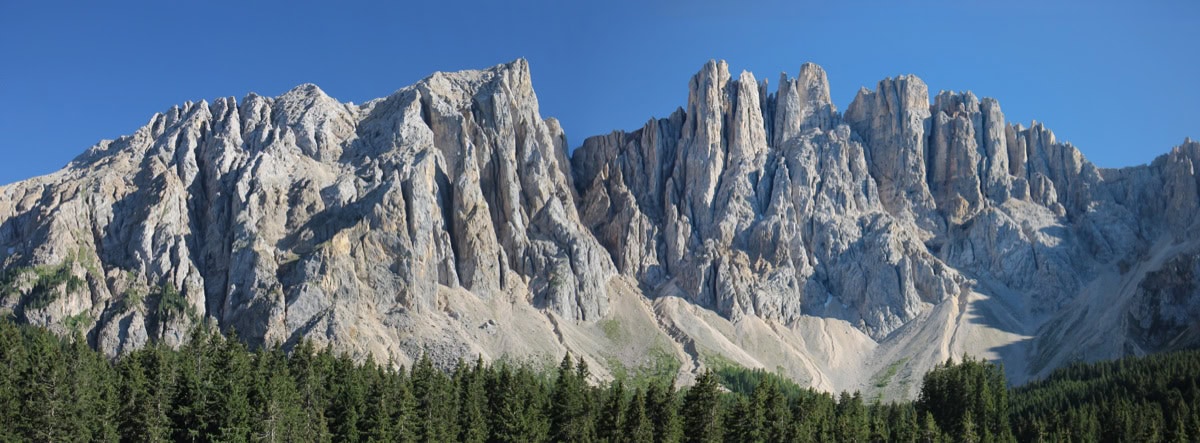
As you walk around the lake, you’ll come across several additional wooden platforms and benches strategically positioned to face the Latemar range. This mountain chain forms a natural wall between South Tyrol and the province of Trentino, and its limestone towers are utterly fascinating.
4. Tackle the more challenging Hirzelweg hike
If a one-kilometre lakeside stroll doesn’t satisfy your appetite for adventure, look up “Lago di Carezza hike.” One of the more beautiful and moderately challenging trails in the area is the Hirzelweg (Hirzel Path). You can join it near the lake — many people take the Paolina cable car (more on that shortly) to reach the starting point.
This trail leads directly beneath the colossal rock walls of the Latemar massif, partly heading towards the Catinaccio (Rosengarten) group. Along the way you’ll encounter a completely different landscape of scree fields, alpine flora, and the occasional marmot. This route is definitely not pushchair-friendly — you’ll need proper hiking boots and a reasonable level of fitness, as you’ll be walking at altitudes above 2,000 metres.
5. Relax at the modern Carezza Center
Right by the car park you’ll find the recently renovated Carezza Center visitor hub. Don’t expect just a ticket booth — it’s a surprisingly handsome timber building that blends beautifully into the landscape. Inside, you’ll find everything you need for a comfortable return to civilisation.
Beyond the clean public toilets (something you appreciate immensely when travelling with a small child), there are souvenir shops, a deli selling local cheeses and speck, and several small bistros. We love stopping here for an afternoon bombardino or Aperol Spritz while the dogs rest in the shade on the terrace. The upper floor even houses a small wellness area and an exhibition on the history and geology of this unique spot.
6. Enjoy winter fun and skiing
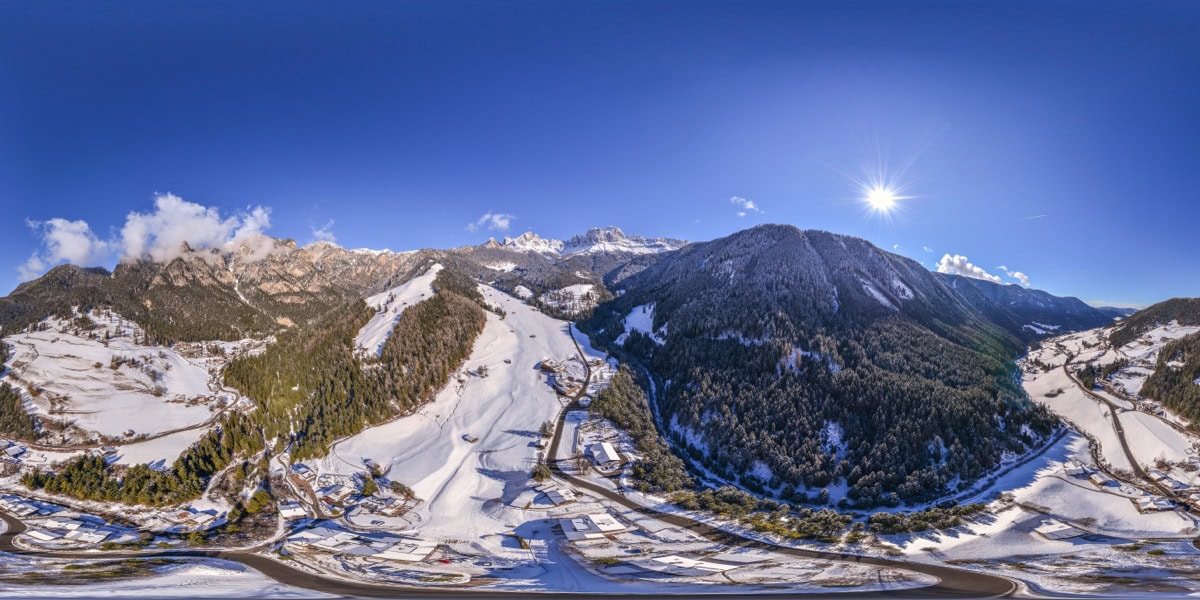
Although most people know this spot from summer photos, don’t overlook the fact that the Lago di Carezza winter season is a huge draw for snow lovers. Just above the lake and the village of Nova Levante lies the family-friendly Carezza Dolomites ski resort (often linked with the Latemar / Cinquantore area). It boasts over 40 kilometres of beautifully groomed pistes that are far less crowded than the more famous Sella Ronda circuit.
A massive bonus is that the slopes sit right at the foot of the Latemar and Catinaccio mountains, so you carve your way downhill with these limestone giants constantly in front of you.
7. Wait for the best photography light
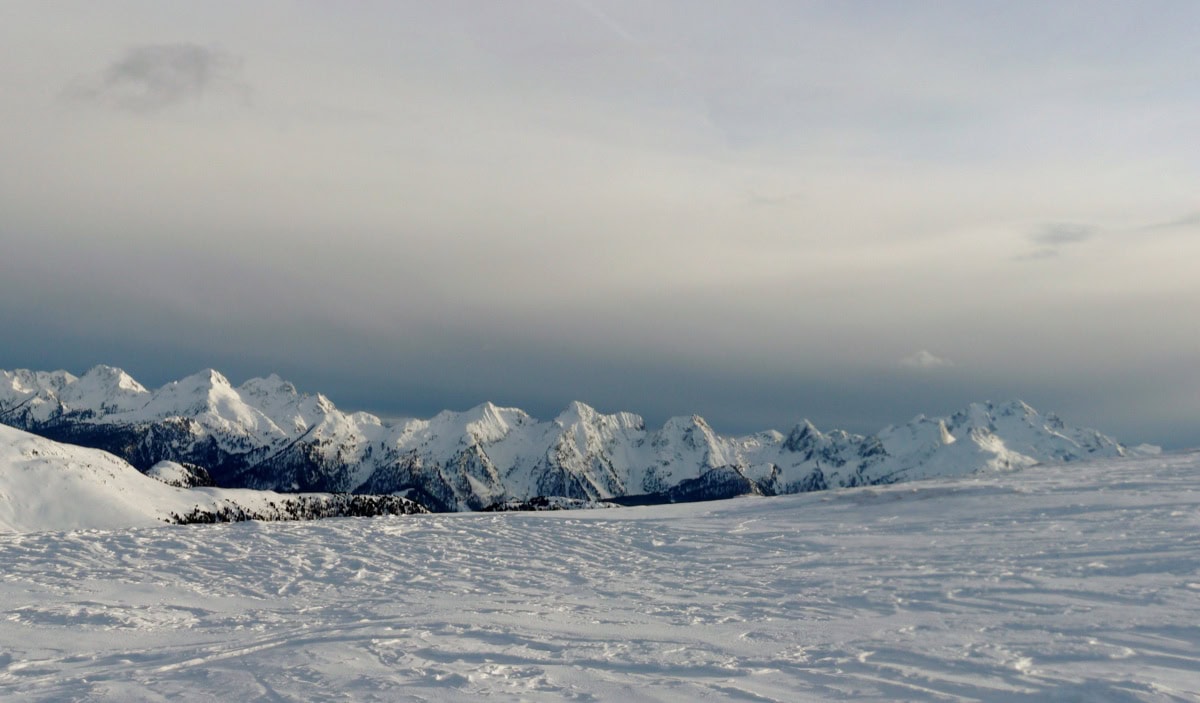
Photographers already know this, but it’s worth stressing: light makes the photo, and at Lago di Carezza that’s doubly true. Around midday, when the sun blazes straight down, the lake may look pretty enough, but it loses that magical depth — you’ll get glare bouncing off the surface rather than mountain reflections.
Evening light in the Dolomites is famous for a phenomenon called “Enrosadira” (Alpenglow), when the limestone cliffs catch an incredibly intense pink to fiery red glow. It’s in the evening, after the tour buses leave, or right after dawn that you’ll capture the most iconic shots. Morning mist lingering over the water adds a mysterious air straight out of the Ondina legend.
8. Walk the themed Sentiero del Latemar trails
If you’re travelling with slightly older kids and looking for something more engaging than “just walking through the forest,” definitely try the Sentiero del Latemar. It’s a network of themed and educational trails (such as Latemar.Natura, Latemar.Panorama, and Latemar.Art) scattered across the slopes above the lake.
The trails are packed with wooden sculptures, interactive stations, and information boards that draw children (and, let’s be honest, adults too) into the world of alpine nature in a way that’s far more fun than simply trudging from A to B. The routes typically start at the upper stations of the cable cars, so you skip the toughest uphill and enjoy a gentle, rolling terrain with gorgeous valley views.

9. Ride the Paolina cable car into the sky
This is our absolute favourite tip for anyone who wants to experience the high mountains without a full day’s slog from the valley. A short way from Lago di Carezza you’ll find the lower station of the Paolina cable car (used by skiers in winter, hikers in summer). The open chairlift whisks you from roughly 1,600 metres up to 2,125 metres, right to the Rifugio Paolina mountain hut.
The ride up is an experience in itself — your legs dangle in the air and with every metre the panorama widens across valleys and ridgelines in the distance. From the hut at the top, you can set off on shorter one-to-two-hour trails along the mountainside. Incidentally, you’ll get a superb bird’s-eye view of Lago di Carezza itself, which from up here looks like a tiny blue jewel dropped in the forest.
10. Trek to the Rifugio Roda di Vael mountain hut
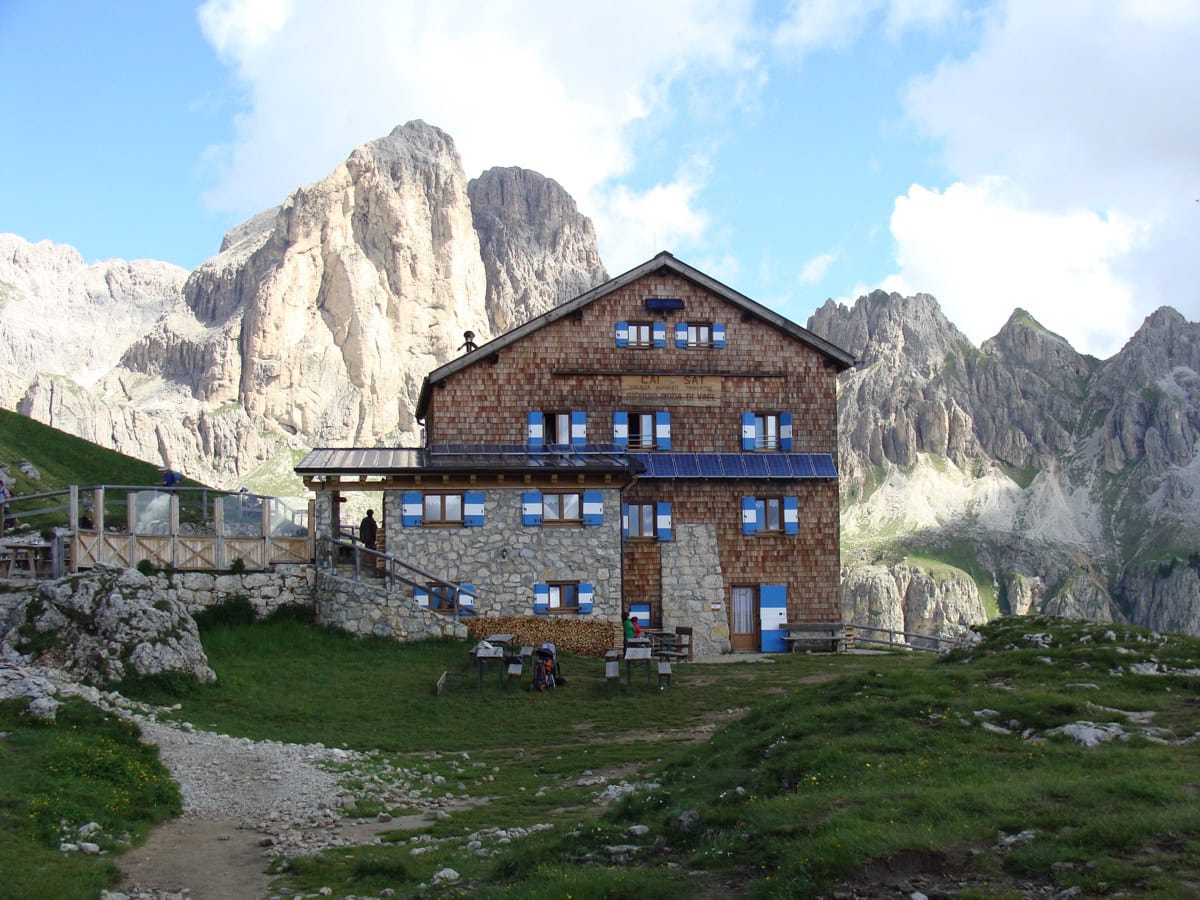
Our final tip is for the serious mountain lovers out there. From the upper station of the Paolina cable car, you can set off on a fantastic trek to the Rifugio Roda di Vael (Rotwandhütte), which perches at 2,283 metres directly beneath the dramatic rock face of the Catinaccio massif.
The path leads through the so-called “Eagle’s Pass” (Passo dell’Aquila) and includes some fairly exposed sections. It’s not quite a via ferrata, but there are stretches where you’ll need to watch your step carefully. Your reward is phenomenal food at the hut (their Kaiserschmarrn is legendary) and the satisfaction of ticking off a proper high-mountain achievement. If you’d rather not retrace your steps, you can complete a loop via other trails back down into the Carezza valley.
Map of points of interest for your phone
Visiting the lake with kids and dogs (our experience with baby Jonášek)
As I’ve mentioned a few times, the Dolomites can be pretty unforgiving terrain — sharp rocks and steep drop-offs everywhere. That’s precisely why we were so pleasantly surprised by how family-friendly Lago di Carezza turned out to be in 2024. When you’re planning an outing with a toddler and two curious dogs, your priorities shift dramatically.
💡 Local tip: On virtually every cable car and bus, dogs are required to wear a muzzle (you can buy one almost anywhere, including at the lower stations). It was honestly a bit annoying — they insisted even when we had the cabin entirely to ourselves. On days with multiple cable-car rides planned, we ended up leaving our two dogs resting back at the campsite.
With Jonášek, everything went smoothly. The entire loop around the lake is properly surfaced with fine gravel — no steps or tree roots to snag the pushchair wheels. Dogs are allowed at the lake but must stay on a lead at all times, which makes perfect sense given the sheer number of people passing through daily. One extra thing to watch: dogs must not drink from the lake, and letting them swim is strictly forbidden — it’s a protected natural monument. Bring drinking water for your four-legged friends in a bottle from the car park.
What to eat in the Latemar region
Travel for me is never just about sights and scenery — food plays an enormous part. South Tyrol (Alto Adige) has a fascinating cuisine that blends classic Italian cooking with the heavier, heartier tradition of Austrian-Tyrolean mountain fare. What should you absolutely not miss?
The absolute staple that we order at every mountain hut — including our favourite Rifugio Paolina — is homemade Apfelstrudel. Forget dry puff pastry: this is a proper, generous roll packed with apples, raisins, and pine nuts, drenched in warm vanilla sauce. I always pair it with a strong Italian espresso, because otherwise the sweetness would simply floor me. ☺️
For a post-hike lunch, we go straight for the local Knödel — dumplings prepared a thousand different ways (cheese, spinach, speck) — served either in a rich broth or simply with melted butter and grated local cheese. And if you’re really ravenous, go for polenta. The local polenta con grigliata (creamy cornmeal porridge served with porcini mushrooms and mountain cheese — or with grilled meat if you prefer) will keep you fuelled for the rest of the day. Before you leave, pop into the shop at the Carezza Center and pick up some superb local sheep’s or cow’s cheese from Latemar-area farms — absolutely divine with a glass of wine in the evening.
Practical tips to finish
So nothing catches you off guard on the day, here’s a quick roundup of rules and practical info to keep in mind:
- No swimming: One of the most common questions online is “can you swim in Lago di Carezza?” Unfortunately (or rather fortunately for nature), swimming is strictly prohibited year-round. The water is ice-cold even in mid-August, so you probably wouldn’t enjoy it much anyway. Wooden fences protect the shoreline and crossing them has carried a hefty fine since 2019.
- Water isn’t drinkable: The lake water is not safe for drinking — not for you, and not for your dogs.
- Leave the drone at home: As with most high-profile spots in the Dolomites, drone flying is strictly banned here — for wildlife protection and fellow visitors’ privacy. Those breathtaking aerial shots will have to stay in your memory (or be captured from a cable car).
- Getting there from the UK: Fly into Venice, Treviso, Verona, or Milan — all well-served by airlines like easyJet, Ryanair, and British Airways from major UK airports. Compare flights on Kiwi, our go-to search tool.
- Don’t forget travel insurance: Mountains can be unpredictable. For shorter European trips, a good option is True Traveller, which offers excellent cover for hiking and adventure sports.
- Mobile data: If you need reliable connectivity in remote mountain areas or want to avoid roaming issues, try an eSIM from Holafly — we’ve had great results with them all over the world.
Where else to go in the Dolomites Italy
Lago di Carezza should be just one stop on your broader journey through this stunning part of the Dolomites in Italy. If you’re looking for further inspiration, I highly recommend visiting the breathtaking Alpe di Siusi (Seiser Alm) plateau, which is just a short drive to the north. For a completely different, far more dramatic feel, check out the ridge hike at Seceda, which I personally consider the most photogenic peak in the entire Dolomites.
You’ll find loads more specific trails and tips on places that even less experienced hikers can tackle in our comprehensive guide to things to do in the Dolomites.
Frequently Asked Questions (FAQ)
Whenever readers message me about trips to the Dolomites, the same questions about Carezza come up again and again. So I’ve gathered the most common ones in one place, so you can plan with confidence and without any unnecessary surprises.
Can you swim in Lago di Carezza?
No, swimming, bathing, and even crossing the wooden fence barriers near the water are strictly prohibited to protect the lake’s fragile ecosystem.
What’s the entrance fee and how much does parking cost?
Entry to the lake itself is free. You only pay for parking at the official P1 and P2 lots, where the first two hours cost roughly 5 to 7 EUR. During peak season, you’ll need to book your parking spot online in advance.
Can we do the lake loop with a stroller?
Yes, the path around the lake is absolutely perfect for families with children. Both the tunnel from the parking lot and the loop itself (about 1 km) have a fully accessible, paved surface that works great with any type of stroller.
Can we bring our dog to the lake?
Dogs are welcome at Lago di Carezza, but due to nature protection and the high concentration of visitors, they must be kept on a leash at all times. They’re also strictly forbidden from going into the lake for a dip or drinking from it.
Can you fly a drone at Lago di Carezza?
No, there’s a strict ban on flying drones here, just like at many other protected sites in the Dolomites. Please respect this for the sake of wildlife and other visitors’ privacy.
Are there any refreshments available at the lake?
Yes, right by the parking lot you’ll find the modern Carezza Center, which has pleasant bistros, restrooms, and even a shop selling local cheeses and cured meats.
Is it worth visiting the lake in winter?
Absolutely, but keep in mind you won’t see its famous emerald color. In winter, the lake typically freezes solid and gets covered with a layer of snow, creating a romantic winter atmosphere near the popular ski slopes.
Tips and Tricks for Your Vacation
Don’t Overpay for Flights
Search for flights on Kayak. It’s our favorite search engine because it scans the websites of all airlines and always finds the cheapest connection.
Book Your Accommodation Smartly
The best experiences we’ve had when looking for accommodation (from Alaska to Morocco) are with Booking.com, where hotels, apartments, and entire houses are usually the cheapest and most widely available.
 🚗 Car rental on the roadVerified rental cars in the Dolomites
Search with the DiscoverCars comparison engine — it compares prices from dozens of local and international rental companies, and most bookings come with free cancellation.
Compare car prices in the Dolomites →Don’t Forget Travel Insurance
Good travel insurance will protect you against illness, accidents, theft, or flight cancellations. We’ve had a few hospital visits abroad, so we know how important it is to have proper insurance arranged.
Where we insure ourselves: SafetyWing (simple monthly subscription) and TrueTraveller (for extra-long trips).
Find the Best Experiences
Get Your Guide is a huge online marketplace where you can book guided walks, trips, skip-the-line tickets, tours, and much more. We always find some extra fun there!