Say the word Málaga and plenty of people still picture nothing more than a busy airport terminal, where they grab their bags after landing, jump into a rental car and instantly vanish somewhere to the west into the giant beach resorts. For years that’s exactly what most tourists thought too, but I’m thrilled to tell you that Málaga, Spain has undergone an absolutely incredible transformation over the past decade. This once dull transit stop has blossomed into a confident cultural metropolis that wins you over instantly with its shady marble lanes, fantastic museums and laid-back Andalusian vibe.
Lukáš and I absolutely love coming here, especially in autumn or spring, when back home people are already pulling on their winter coats while here you can happily stroll along the beach in nothing but a sweater. Málaga has a truly wonderful mix of ancient history — it was founded way back by the Phoenicians — and buzzing modern life, all underscored by the ever-present legacy of its most famous son, Pablo Picasso. I’ve put together a genuinely detailed guide full of personal experiences that’ll show you why this city deserves far more than a single afternoon before your flight home.
Summary
- Best time to visit: Spring and autumn are absolutely ideal; in summer, expect extreme heat and huge crowds of tourists.
- Getting from the airport: The most convenient option is the Cercanías suburban train, which whisks you to the historic centre in just twelve minutes.
- Main sights: Don’t miss the Moorish Alcazaba fortress, the unfinished cathedral, and the famous Picasso Museum.
- Where to swim: La Malagueta beach is right in the centre, but for nicer, quieter swimming head a short way along the Costa del Sol.
- Buying tickets: Book tickets for the main attractions and popular trips well in advance online — you’ll usually be out of luck at the door.
- Food: Dinner is served very late here; there’s no point turning up at an authentic Andalusian restaurant before 8 p.m.
The full destination guide: Andalusia — guide and what to see
When to visit Málaga: weather guide
Picking the right dates is absolutely key for a visit to southern Andalusia, and Lukáš and I are very clear on this. Unless you genuinely dream of spending your entire holiday soaking in the water, definitely avoid the peak summer season. The summer months bring extreme temperatures to the whole region, which regularly climb over thirty-five degrees and can shoot well past forty in the interior.
The year 2025 brought truly massive heatwaves, and wandering the city’s baking streets in July or August is more of a punishment than a pleasure. The coast is a little more bearable thanks to the cooling sea breeze, but you’ll have to contend with huge air humidity and the fact that both the beaches and the sights will be bursting at the seams. The sun here beats down incredibly hard, so you simply can’t function outdoors without a hat and strong sunscreen.
The ideal time to visit, whether you’re planning a city-hopping loop or a relaxing beach break, is May and June, and then September and October. During this period the Mediterranean is already very pleasant for swimming (or still beautifully warm after summer) and temperatures hover around an ideal twenty-five to twenty-eight degrees. The city enjoys a wonderful three hundred sunny days a year, so even in autumn you’ll most likely have a gorgeous cloudless blue sky.
Winter — January and February — is hugely popular in Málaga among digital nomads and people from northern Europe who flock here in droves to escape the frost and snow. Winter temperatures sit around a pleasant fifteen to eighteen degrees, which is absolutely perfect weather for a full day of sightseeing, lounging in cafés and taking long walks along the seafront promenade. It’s certainly not swimming weather, but if you’re looking to escape the grey central-European winter, sun-drenched Andalusia will recharge your lost energy for sure.
Where to stay in Málaga
Choosing accommodation in Málaga depends a lot on your goal and how much you want to be in the thick of the evening buzz. If you’re visiting for the very first time and want all the main sights within easy walking distance, I’d recommend looking for a place right in the historic centre (Centro Histórico). It’s incredibly romantic here, the narrow cobbled lanes are full of life, and everything is literally a few steps away. Just bear in mind that Spaniards live mainly at night, so the streets can be very noisy until the early hours.
If you’re after a slightly quieter but still very central location, definitely check out the modern Soho district. This area lies right next to the port and the historic centre, is known for its amazing street art and plenty of specialty cafés, and has a lovely relaxed, hipster atmosphere. For those of you coming primarily for the beach, it makes sense to stay in the La Malagueta district near the city beach of the same name, where you get sea views yet can stroll into the centre in a leisurely quarter of an hour.
As for specific tips, one place with excellent reviews is ESTUDIO EN TORREMOLINOS CENTRO — it’s a short way west along the coast in the resort of Torremolinos, but thanks to the excellent train connection you’re in the centre of Málaga in no time at all. It’s the ideal compromise if you want to combine the city with a full day of lazing on the beach.
If you’d rather stay right in the city, a very cosy and popular choice is B&B Casa Rubí, where you’ll find the peace and quiet you crave along with a great base for your daily sightseeing trips. We recommend sorting out reservations the usual way through Booking.com, where you can easily filter for places with air conditioning. From May to October, air con is an absolute non-negotiable necessity — without it you simply won’t sleep at night.

18 best things to see and do in Málaga, Spain
Málaga has so many interesting spots that you definitely won’t be bored for a single minute, whether you come for a long weekend or a full two weeks. I’ve put together eighteen specific tips on sights, culinary experiences and hidden corners that you really shouldn’t miss during your visit.
1. The Moorish Alcazaba fortress
The Alcazaba is without a doubt one of the most important and visually stunning landmarks in the entire city, which you can see towering over the centre from afar. This gorgeous eleventh-century Arab fortress served as both a luxurious royal palace and a military citadel, so it combines impregnable ramparts with delicate Andalusian architecture.
It’s often compared to Granada’s famous Alhambra, and although it’s noticeably smaller, in my opinion that gives it an even more intimate, more enclosed atmosphere. As you wander its carefully tended courtyards, you can hear water trickling from little fountains everywhere, smell the intoxicating scent of blooming jasmine, and admire the intricate geometric patterns on the walls.
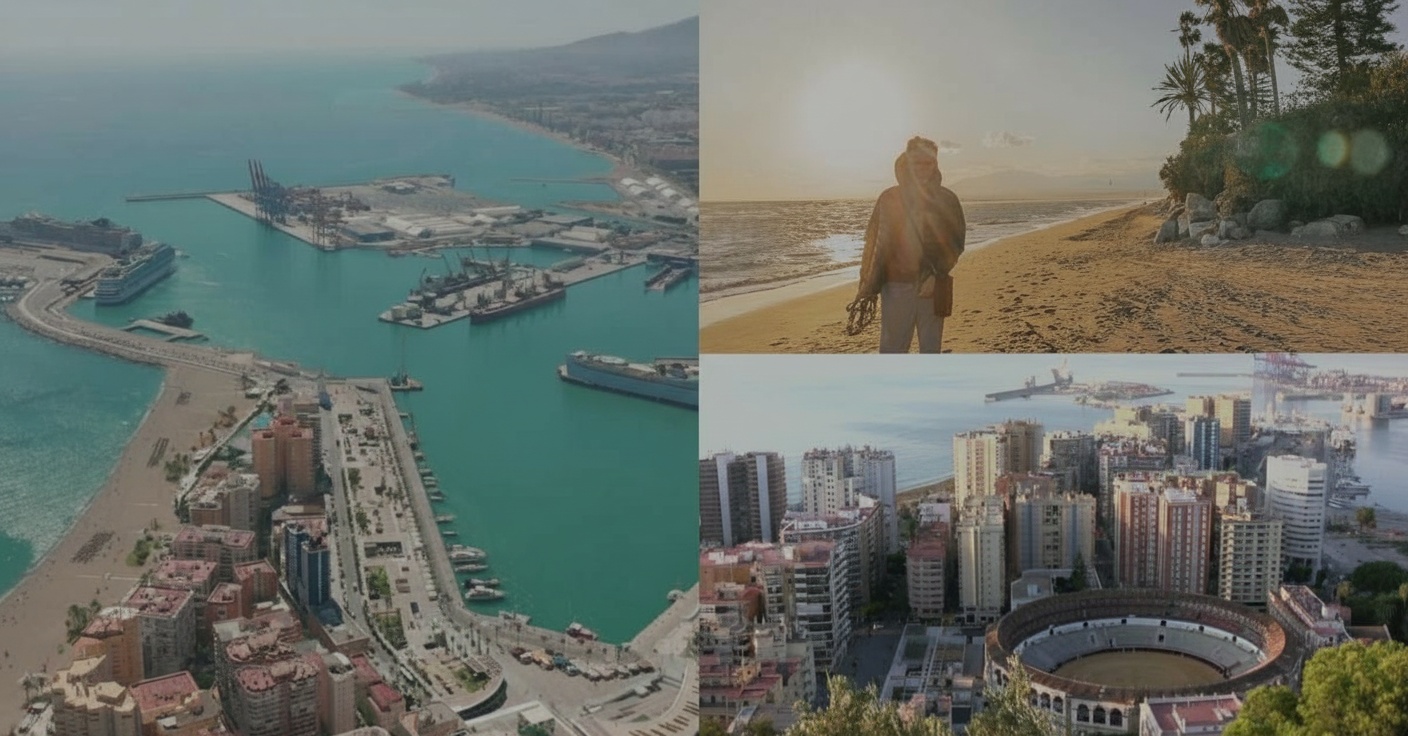
The climb up is lined with beautiful terraced gardens, and from the mighty ramparts you get absolutely fantastic views of the modern port, the open sea and the nearby bullring. The complex is surprisingly extensive and hides plenty of picturesque nooks, shady arcades and ornate arches typical of Moorish architecture, so set aside a good two hours for your visit.
💡 Tip: You can buy tickets in a very good-value combination with entry to the nearby Gibralfaro Castle. What’s more, on Sunday afternoons entry to the fortress is completely free for all visitors — but naturally you’ll have to reckon with much longer queues and bigger crowds.
2. Castillo de Gibralfaro
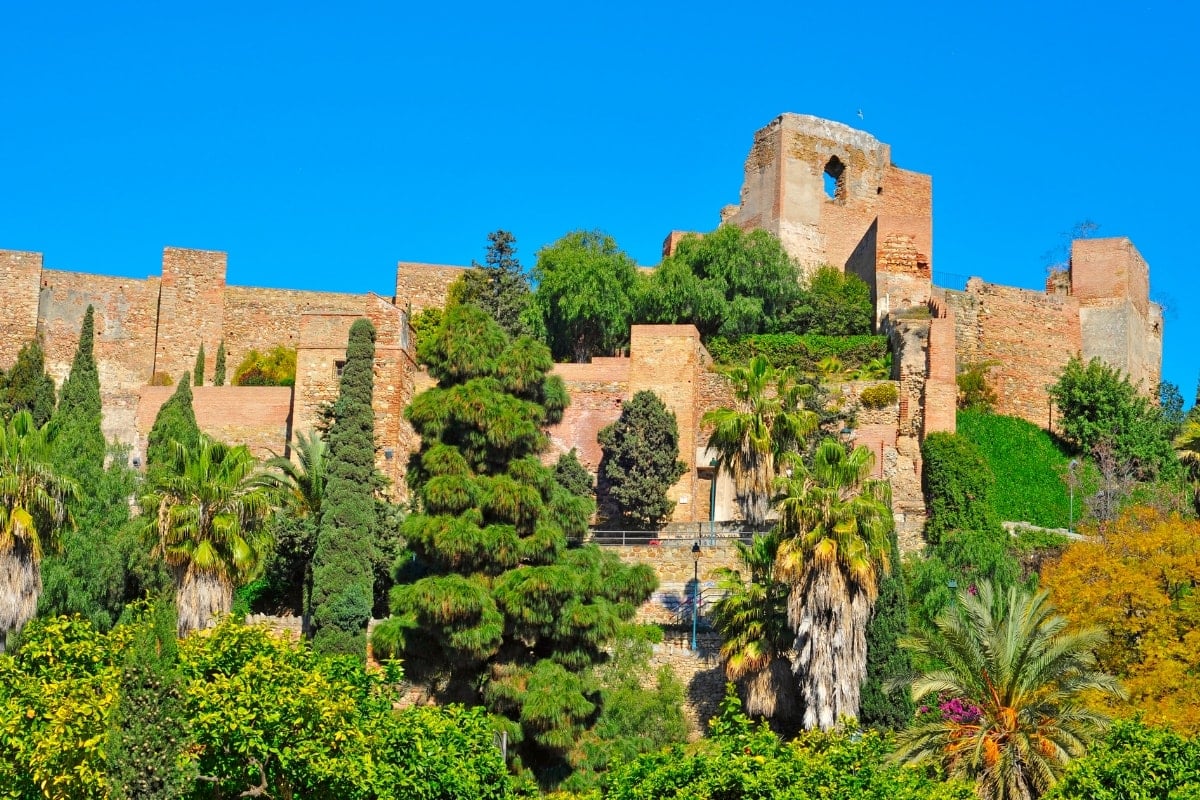
Right above the Alcazaba, on a steep wooded hill, rises another impressive structure — the ancient fourteenth-century Gibralfaro Castle. This castle was built by a powerful Nasrid caliph primarily to protect the lower-lying Alcazaba, to which it’s still connected by a long fortified corridor running along the hillside.
Unlike the palatial Alcazaba, the castle itself is a purely military fortress, so don’t expect any ornate tiled halls inside — but your reward for the climb is the very best panoramic views of the whole of Málaga and the endless Costa del Sol coastline. Getting up there takes a bit of fitness, as the path from the historic centre is fairly steep and takes roughly twenty to thirty minutes of brisk walking.
On hot summer days it can be quite a demanding hike, so don’t forget to bring plenty of water and a hat, because there isn’t much shade along the way. If you don’t fancy walking and sweating, you can hop on local bus number 35, which comfortably takes you right up to the main entrance.
A walk along the mighty stone ramparts under the fragrant pines is especially magical just before sunset, when the whole city below turns beautiful golden hues. Inside the castle you’ll also find a small military museum charting the tangled history of the local garrison, but honestly, those incredible views over the surroundings are the main reason everyone heads up here.
3. La Manquita Cathedral
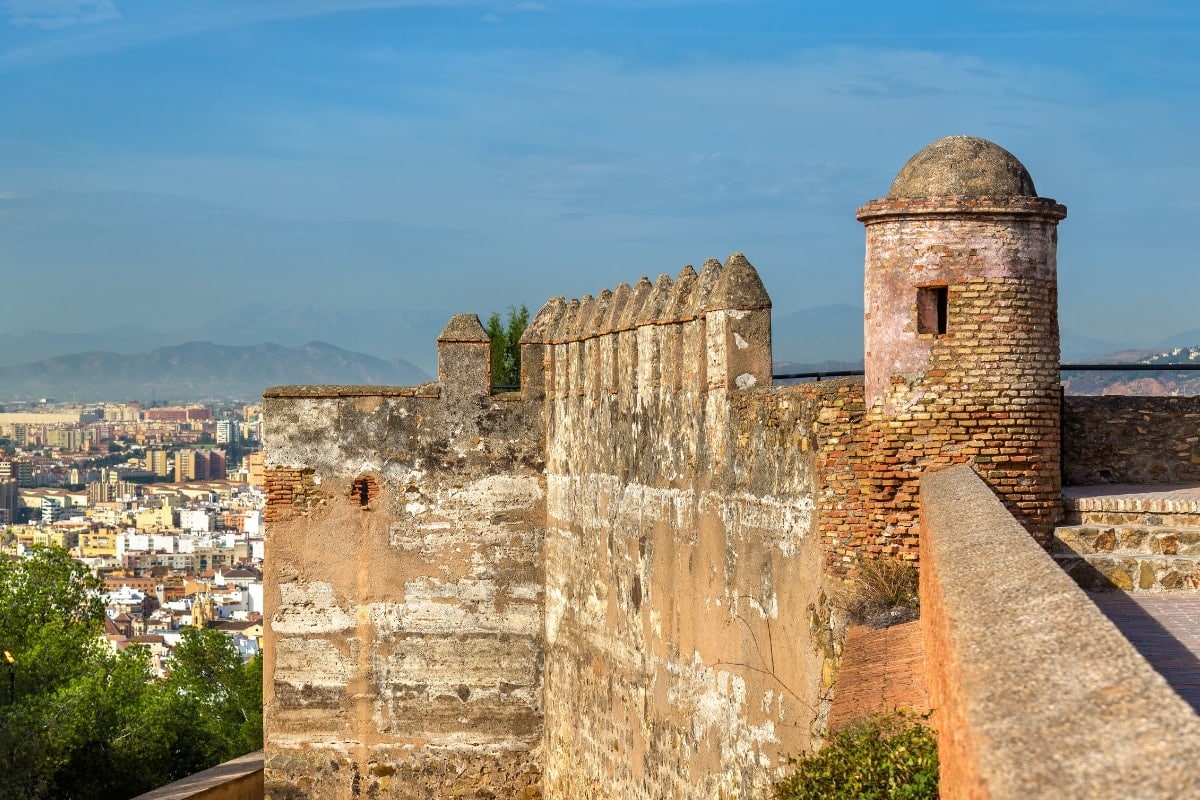
The Cathedral of Nuestra Señora de la Encarnación is one of the city’s best-known symbols, and once you see it with your own eyes you’ll understand why. Construction began in the sixteenth century on the site of the former main mosque, and its complicated build lasted more than two hundred years, which understandably left its mark in a fascinating mix of Gothic, Renaissance and Baroque styles.
Locals affectionately nickname it La Manquita, which literally means the One-Armed Lady. This witty nickname came about because the cathedral’s south tower was never completed due to a critical lack of funds at the end of the eighteenth century, so from afar the building looks slightly asymmetrical.
The money originally meant for finishing it was reportedly sent to America to support the American War of Independence, a story locals still love to tell. From the outside the building looks incredibly majestic, and its interior is no less stunning, with enormous stone columns and a beautifully carved wooden choir that’s a true masterpiece.
I’d definitely recommend paying extra for the exclusive chance to climb up to the cathedral roof with a guide. There are roughly two hundred spiral steps, but the experience is absolutely worth it, because walking directly across the roof vaults and looking at the city from this unusual perspective is something you’ll remember about Málaga for a long time.
4. Teatro Romano (the ancient Roman theatre)
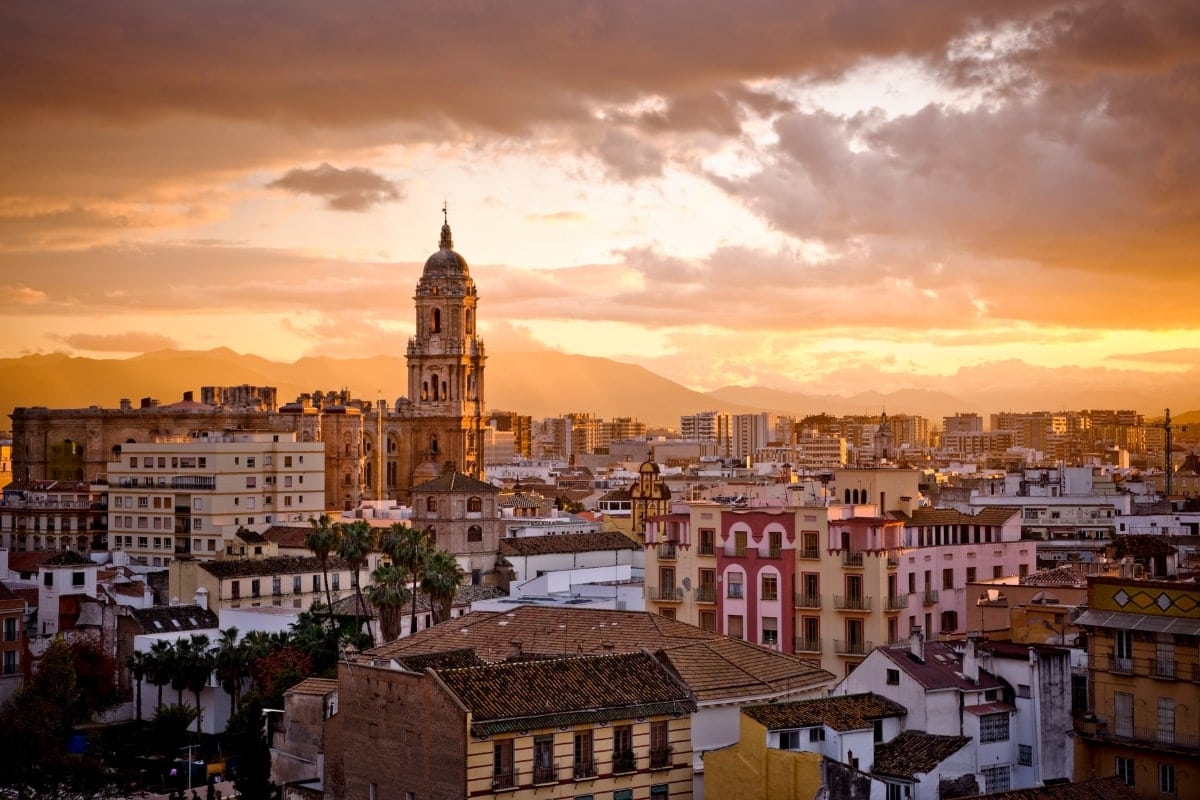
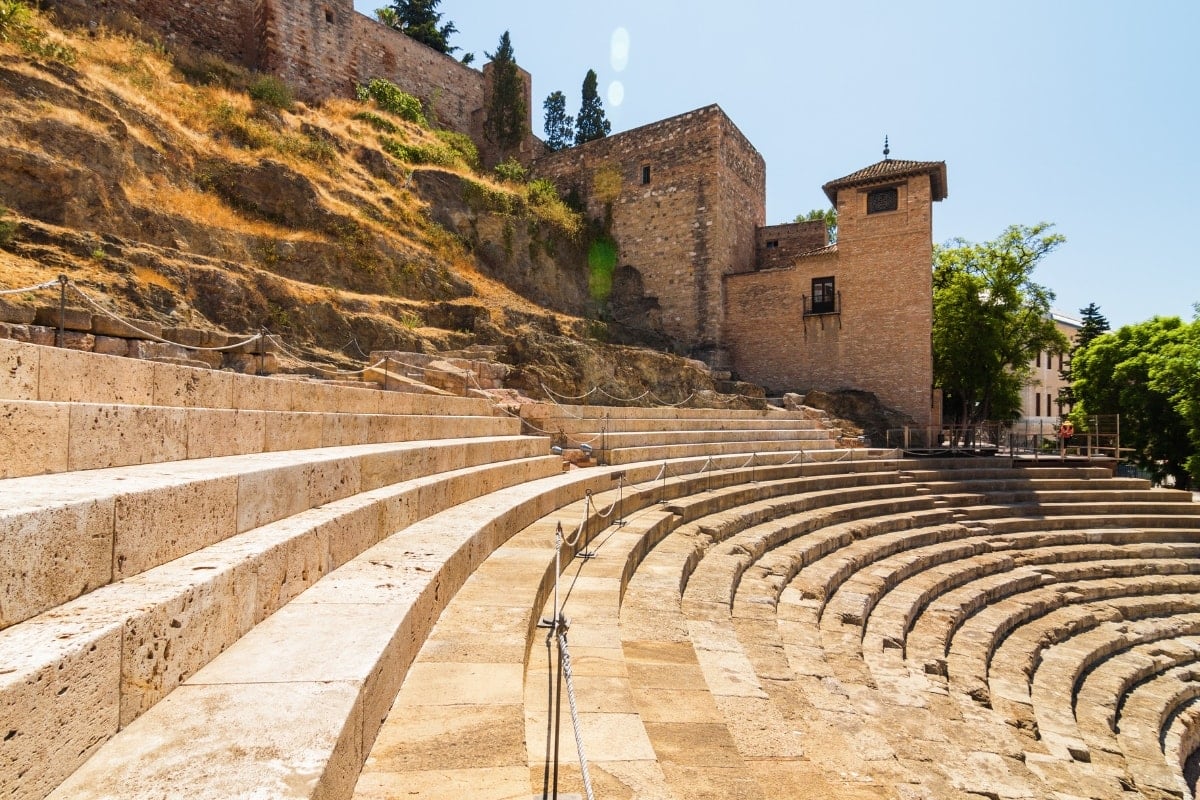
Right at the foot of the hill below the Alcazaba fortress you’ll come across an incredible historical treasure — the ancient Roman theatre from the first century AD. It was built during the golden era of Emperor Augustus and is today considered one of the oldest and best-preserved Roman theatres in all of sunny Andalusia.
What’s fascinating about it is above all its modern story, because the theatre lay buried under layers of earth and hidden beneath the city for centuries, so construction workers discovered it completely by accident only in the 1950s. Until then, no one had any idea what treasure lay hidden beneath the streets.
Visiting this unique archaeological site is completely free for all visitors, which these days is a very welcome bonus. You can take your time exploring the modern, renovated visitor centre, where you’ll learn the details of the excavation history, and then walk right across the ancient stone steps.
The atmosphere of this place is absolutely unique, as the theatre sits literally in the very beating heart of the modern city, surrounded by restaurants and bars. In the warm summer months evening theatre performances and concerts are often held here under the open sky, giving these ancient stones a whole new life and magically connecting distant history with the present.
5. Museo Picasso Málaga
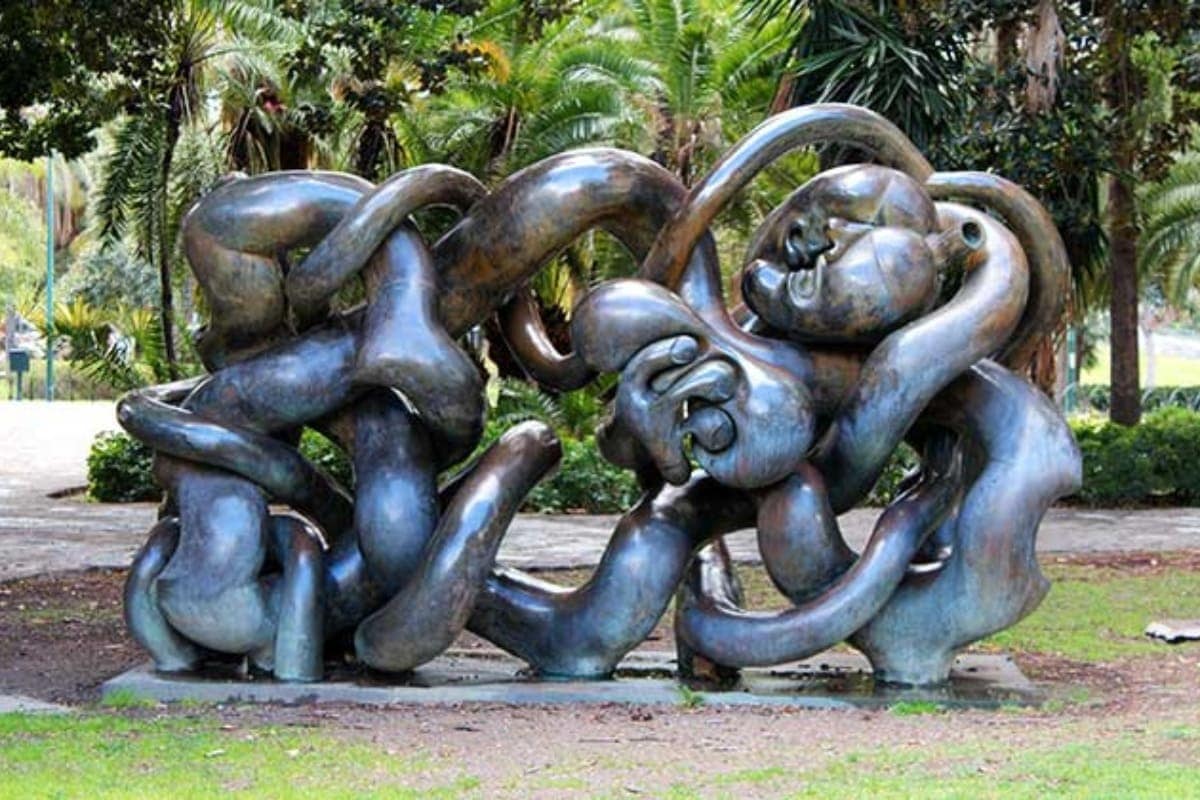
Málaga is the proud birthplace of one of the greatest and most influential artists of the twentieth century, Pablo Picasso, and you’ll encounter his unmistakable legacy quite literally at every turn. The main cultural draw is without a doubt the magnificent Museo Picasso, housed in the beautifully renovated Renaissance Palacio de Buenavista right in the centre.
Even if you’re not the biggest fan of Cubism and modern art, this is one museum you really shouldn’t leave off your plan, because it has an incredibly personal and intimate atmosphere. It’s not just a cold gallery full of famous paintings, but rather a cross-section of the artist’s entire fascinating life.
The collection of over two hundred works was donated to the museum directly by members of Picasso’s closest family, specifically his daughter-in-law and grandson. Thanks to this you’ll see not just the most famous commercial paintings, but a huge number of personal drawings, quick sketches, ceramics and early works that span his entire career and brilliantly reveal his gradual artistic development.
💡 Tip: Absolutely buy your tickets online a few days in advance. The queues outside the museum can be truly endless, especially in high season, and it would be a huge shame to lose an hour of precious time waiting in the scorching sun.
6. Picasso’s birthplace on Plaza de la Merced

If you’re fascinated by Pablo Picasso’s life and want to go even deeper, your next steps should take you to the nearby spacious Plaza de la Merced. It was in one of the townhouses with typical green shutters on this sunny square that the famous painter was born in 1881.
Today these rooms house the Museo Casa Natal de Picasso, which works as a small but very engaging museum bringing his early childhood and complex family background to life. It’s a great complement to the main museum, as it focuses more on the man himself than just his art.
Inside you can take your time browsing period black-and-white photographs, personal belongings of the Ruiz Picasso family, and everyday objects that surrounded and artistically shaped young Pablo from childhood. It’s incredibly interesting to see the authentic environment that produced the man who later completely rewrote the history of world painting.
Plaza de la Merced itself is a gorgeous shady spot to rest after a long day. All around the square you’ll find plenty of pleasant cafés with outdoor seating where you can grab a coffee and, most importantly, snap a memento photo with the bronze statue of Picasso, who sits inconspicuously on one of the benches with a sketchpad.
7. The Muelle Uno waterfront promenade
Málaga’s transformation from a dull industrial port into a dazzling modern metropolis is by far most visible in the area around the central harbour. Muelle Uno is a luxurious shopping and leisure promenade that elegantly lines the calm water and offers an absolutely perfect spot for an evening stroll with sea views.
Here you’ll find dozens of upscale shops, local design boutiques and excellent restaurants with direct views of the millionaires’ yachts moored nearby. It’s a huge contrast to the narrow historic lanes in the centre, and it perfectly shows just how beautifully varied Málaga is.
Strolling here in the early evening, as the sun slowly sets behind the tall hill with Gibralfaro Castle and gently lights up the white boats in the harbour, is a truly deeply romantic experience. The promenade is very wide, tastefully lined with tall palm trees, and dotted with plenty of comfortable benches and shady spots to rest.
Lukáš and I love coming here — we often buy a big scoop of Italian ice cream and just quietly watch the colourful bustle around us. At the very end of the promenade you’ll reach the iconic snow-white La Farola lighthouse, one of the few working lighthouses in Spain to bear a traditional female name.
8. The colourful Centre Pompidou cube
On a leisurely walk around the Muelle Uno harbour you definitely won’t miss the huge, multi-coloured glass cube that seems to sprout right out of the concrete paving. This eye-catching visual feature has become a favourite photo spot for all tourists and makes an interesting contrast against the blue sky.
It’s a prestigious branch of the famous Paris museum of modern art, the Centre Pompidou — the very first institution of its kind outside France. This bold architectural landmark became, within a few years, a new proud symbol of modern, cultural Málaga.
While the colourful cube itself serves mainly as a giant entrance skylight, the sprawling underground spaces hold fantastic exhibitions of contemporary world art. The displays here are very interactive, provocative, playful and often change, so even if you were here years ago, your next visit is guaranteed to have something completely new to discover.
If you love modern art, spatial installations and unconventional artistic approaches, you’ll be absolutely in your element here and could easily spend a whole morning. The museum is also excellently and powerfully air-conditioned, which makes it a perfect refuge from the relentless hot midday sun in the summer months.
9. The Mercado de Atarazanas market
Visiting a bustling local market is always an absolute must for me in any foreign city I visit, and Málaga’s Mercado de Atarazanas is definitely one of the most beautiful in all of Spain. Just approaching the building is an experience that engages all your senses.
The market building catches your eye from the outside with its enormous colourful stained-glass window depicting historic ships in detail, and its gorgeous stone Moorish gateway. Originally this strategic spot was home to a medieval shipyard, which architects sensitively rebuilt into a magnificent central market at the end of the nineteenth century.
Inside there’s absolutely incredible bustle, rich colours and strong aromas mingle together, and the lively local vendors loudly extol their fresh produce. The market is logically divided into several sections, and you’ll find huge piles of sweet fruit, crisp vegetables, fragrant spices, roasted nuts and local cheeses.
Lukáš and I regularly come here to buy the best marinated olives and cheeses, which we then take on an afternoon picnic, while the locals stock up on fresh seafood. Among the stalls there are several small bars where you can eat standing at the counter and soak up the truly authentic Spanish atmosphere.
10. The hipster Soho district and street art
Right next to the historic centre and the luxury port lies the Soho district, which just a few years ago was among the fairly neglected and uninteresting parts of the city that tourists never visited. Today it’s completely the opposite, and Soho is one of the trendiest districts.
Thanks to a brilliant initiative by local young artists and financial support from the city, the whole of Soho has been transformed into a huge free open-air gallery of street art, familiarly known as Barrio de las Artes. It feels a little like Berlin or London’s Shoreditch here.
As you wander the local lanes you’ll come across huge murals covering entire building façades by world-renowned street artists such as the legendary Obey or D*Face. The visual side of this district is absolutely breathtaking, and on quite literally every corner you’ll discover some new colourful and photogenic detail.
Besides the fantastic graffiti, you’ll find plenty of great specialty cafés, independent little galleries, vintage clothing shops and craft breweries. It’s an absolutely ideal place to head for an afternoon coffee or an evening drink if you want to escape the main tourist crowds in the historic centre for a while.
11. The Carmen Thyssen Museum
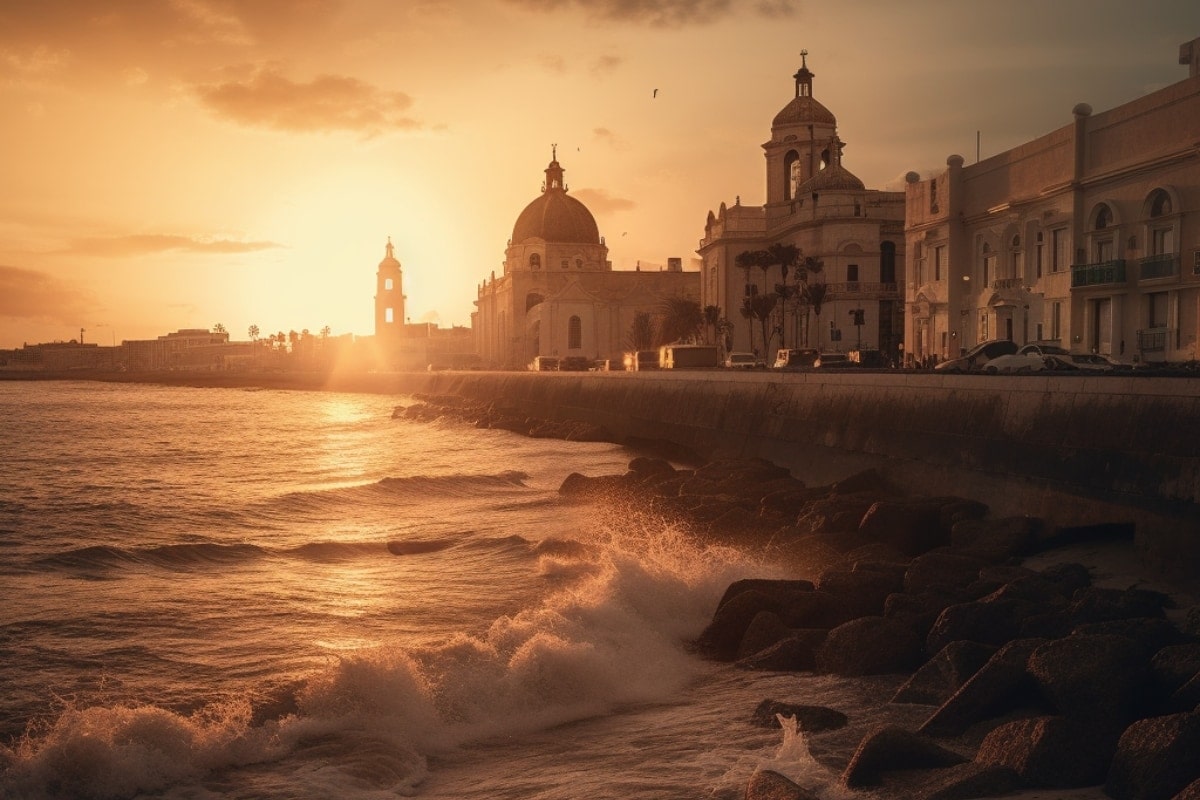
If you’re more interested in classic Spanish and traditional Andalusian art, definitely add the Museo Carmen Thyssen to your programme. This prestigious museum sits in the beautifully renovated sixteenth-century Renaissance Palacio de Villalón, right in the heart of the historic centre, and hides an absolutely exquisite collection of paintings.
This entire private collection focuses mainly on the nineteenth century and presents, in a cohesive form, the very best of Andalusian painting. It’s a very different experience from the modern Picasso or the abstract Pompidou — here, old romantic Andalusia breathes from every frame.
You’ll see incredibly detailed canvases depicting traditional village festivals, dramatic bullfights, passionate flamenco dancers in colourful dresses and romantic rural landscapes. It’s like peering through an imaginary window deep into the region’s history and seeing how people really lived here a hundred and fifty years ago.
Unlike the Picasso Museum, it tends to be noticeably calmer here, so you can view all the exhibited works in complete peace and quiet. The palace courtyard itself is also a gorgeous example of traditional Andalusian architecture with richly decorated columns and a pleasantly serene atmosphere.
12. The Jardines de Picasso and Parque de Málaga gardens
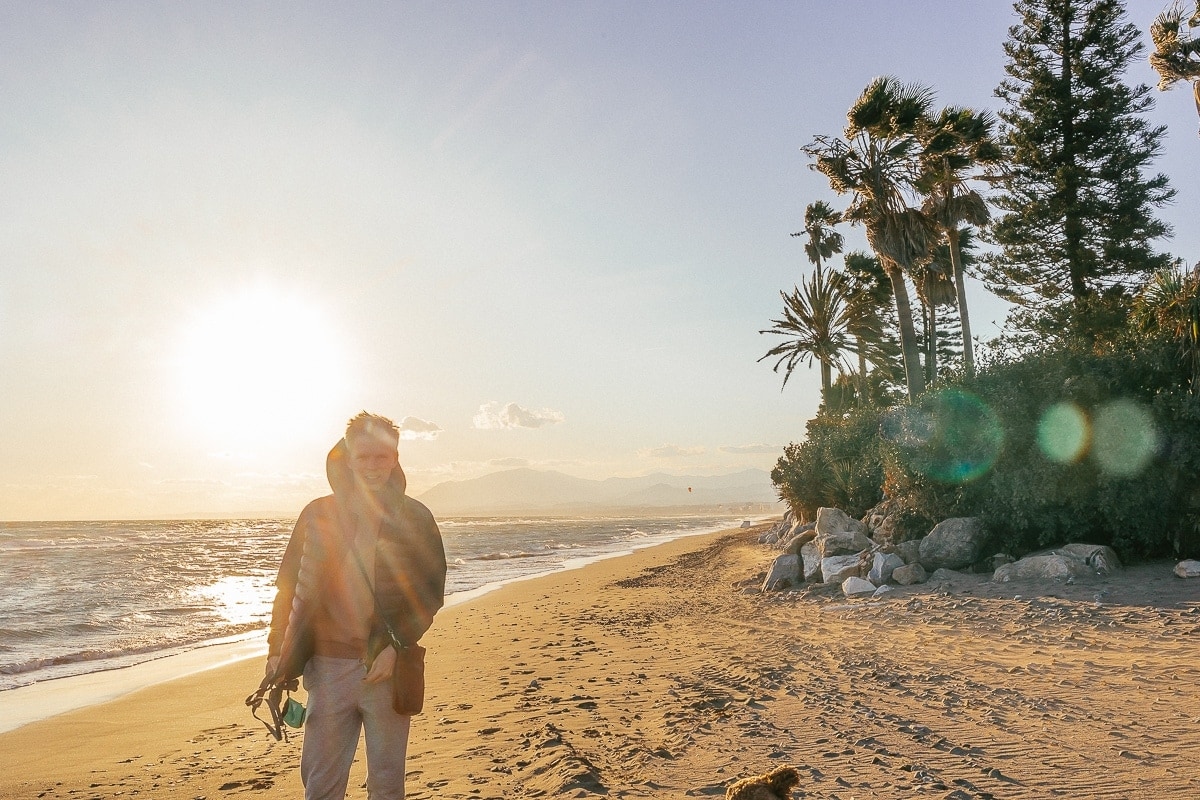
At a quick first glance Málaga might come across as a rather concrete, densely built-up city, but if you know where to go, you’ll find its gorgeous green oases here too. One of them is the Jardines de Picasso, smaller quiet gardens dedicated to the famous painter, where you can rest beneath the crowns of enormous old ficus trees.
The city’s real green heart, though, is the huge Parque de Málaga, which stretches in a long strip right along the main harbour. This sprawling, carefully tended park feels more like an exotic botanical garden than an ordinary city park, and it’s an absolute feast for the eyes.
Here you stroll beneath towering date palms, enormous broad banana trees and hundreds of species of tropical plants that were brought in by sailors from all over the world. The branches of the mighty trees weave together so densely that they form perfect cooling shade, which in the summer months you’ll appreciate more than anything else.
The park is full of beautiful marble statues, small trickling fountains and romantic benches lined with traditional colourful azulejo ceramic tiles. It’s a perfect spot for an afternoon walk, small flea markets are held here from time to time, and you’ll meet plenty of green parrots flitting freely — and quite loudly — through the treetops.
13. La Malagueta city beach

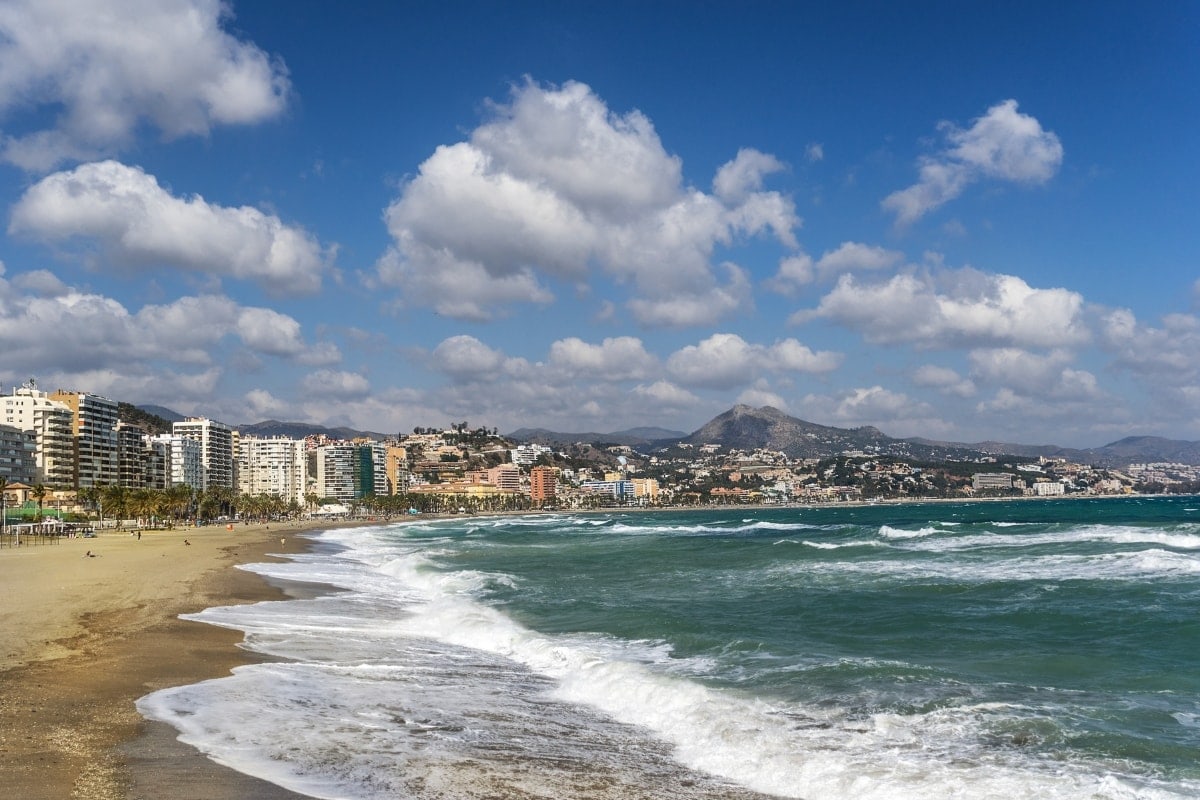
Although you’ll find the best and cleanest swimming a little further out of town, right in Málaga you’ll find the iconic La Malagueta city beach, which you simply mustn’t miss during your visit. This beach over a kilometre long, with fine, darker sand, begins right behind the Muelle Uno harbour and is hugely popular.
Here you’ll find absolutely everything you need for a comfortable beach day, from clean showers to affordable sunbed and parasol rentals and lovely children’s playgrounds. The atmosphere here is very lively from morning to evening, with athletes jogging along the water, playing beach volleyball, and kids building giant sandcastles.
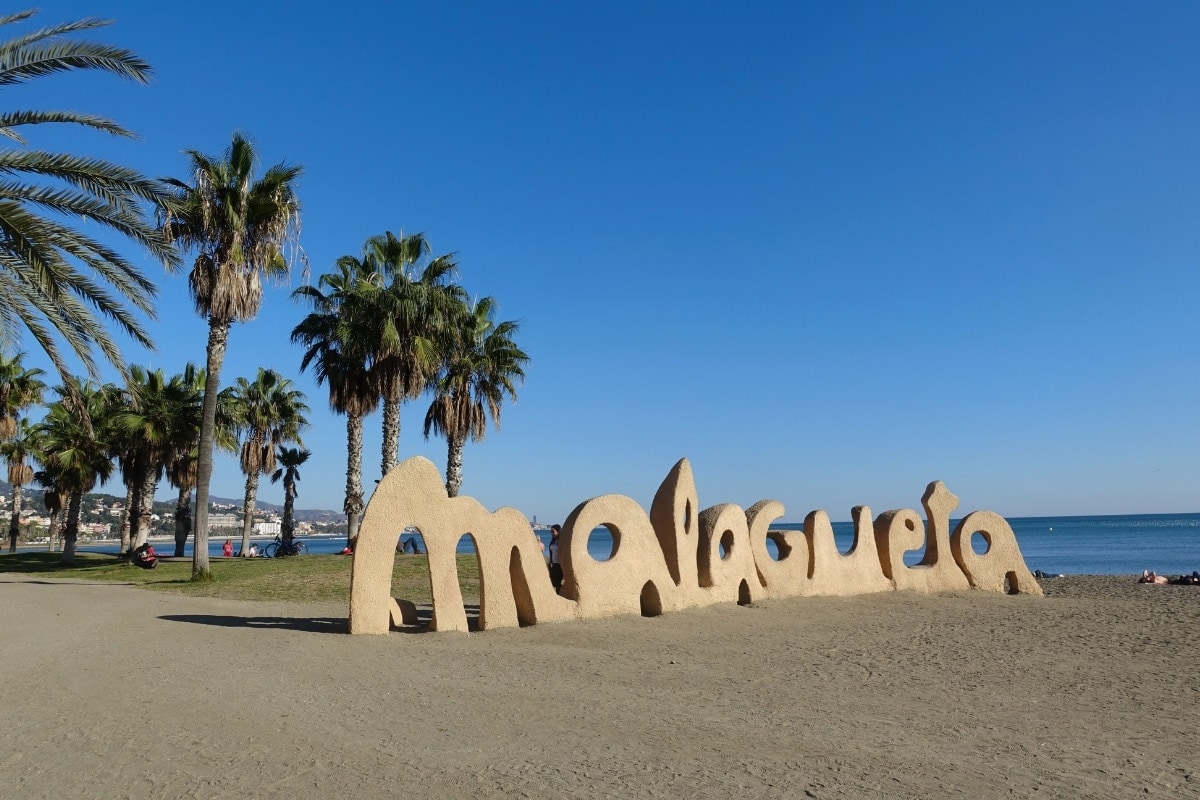
Naturally, a huge draw for tourists is the enormous iconic Malagueta sign carved from sand and concrete, in front of which just about every visitor to the city has to get their photo taken — otherwise it’s as if they were never here.
Along the full length of the beach runs a wide paved promenade lined with plenty of small traditional beach bars and restaurants called chiringuitos. In these you can easily hide from the midday sun, order an ice-cold drink, listen to the murmur of the waves and simply gaze contentedly out to sea.
14. The view from the AC Malaga Rooftop Bar
Seeing a foreign city from a bird’s-eye view is always an absolutely wonderful experience, and in Málaga you have a perfect and very stylish chance to do just that. If you’re longing for a luxurious view of the city centre, the illuminated cathedral and the buzzing harbour in the background, head to the top of the AC Malaga Palacio hotel.
You’ll find this elegant tall hotel just a short walk from the main harbour on Calle Cortina del Muelle. On its rooftop terrace on the fifteenth floor there’s a wonderful open-air bar with a restaurant and a small pool that looks like something out of a lifestyle magazine.
You don’t need to be staying here at all — just confidently walk into the lobby, pay a small entry fee (which is often then deducted from the price of your drink) and let the fast lift take you all the way up. The panoramic view in every direction over the whole city will quite literally take your breath away as you step out of the lift.
The best time for this visit is just before sunset, when the sky turns orange and the city below slowly begins to light up. Lukáš and I love having a non-alcoholic cocktail here and just quietly soaking up the incredible calm high above the evening noise of the streets.
15. Relaxing at the Hammam Al Ándalus Arab baths
Andalusia is historically hugely influenced by its long Moorish past, and one of the most beautiful ways to experience this oriental history first-hand is a visit to the traditional Arab baths. Hammam Al Ándalus in Málaga is an architectural gem full of horseshoe arches and beautiful tiles.
Inside, a wonderful sensory experience awaits, full of dim candlelight and the strong scent of oriental essential oils that calm you instantly. There are several pools at different water temperatures, from hot through pleasantly warm to refreshingly icy, a steam bath and a relaxation room where you’re served sweet mint tea.
You can also add on a traditional massage with essential oils, which after several days of clocking up the kilometres on hard pavements is an absolute lifesaver for your feet and back.
It’s also an absolutely ideal activity for the rare days when it happens to rain, or conversely for the peak midday heat in summer when you simply need to escape somewhere cool. The baths require an online booking in advance without exception, as capacity is very strictly limited to preserve the intimate, calm atmosphere.
16. Evening tapas and local churros
Food culture is absolutely sacred across all of Spain, and Málaga is certainly no exception. Lukáš and I savour the local cuisine to the fullest, but we did have to get used to the basic rule that people eat really very late here.
Don’t try to find a good, authentic dinner at six in the evening, because the real restaurants open no earlier than eight and only truly start filling up with locals after nine. Dinner here is most often done in the form of tapas — small portions of varied dishes that are shared liberally in the middle of the table with friends.
As vegetarians, we always order with great delight patatas bravas (fried potatoes with a spicy sauce), mature manchego cheese, classic tortilla de patatas (potato omelette) or the absolutely delicious fried aubergine with cane honey. It’s common here to go from bar to bar, having something small to drink and a bite to eat at each, and carrying on into the night.
And what would a trip to Spain be without a proper taste of churros? These long fried doughnut sticks are traditionally dipped into a cup of incredibly thick, hot chocolate so dense the spoon almost stands up in it. In Málaga the most famous spot is Casa Aranda, which is buzzing from early morning, as locals commonly have churros even for a sweet breakfast.
17. Beaches and resorts on the Costa del Sol
While the city beach right in Málaga is fine for a quick afternoon refresh after sightseeing, the real sprawling beach paradise begins to the west of the city, in the iconic stretch known as the Costa del Sol. The individual resorts here blend seamlessly one into the next, forming essentially a giant seventy-kilometre-long conurbation dedicated to summer holidaymaking.
To move quickly and comfortably between them you can use the excellent Cercanías suburban train, which runs really often, is cheap and reliably air-conditioned. Closest to Málaga is Torremolinos, a very lively resort with kilometres of well-kept sandy beaches and a shallow entry into the sea, which families with small children especially appreciate.
Right next door you’ll find Benalmádena, which offers a slightly more rugged coastline and the huge Puerto Marina yacht harbour, whose distinctive architecture resembles a mix of an Arab palace and a modern shopping mall. It’s a very popular spot for evening strolls and shopping.
Go a bit further and you’ll reach Fuengirola, with its long beaches and the medieval Sohail Castle. Whichever resort you pick along this coast, you can count on perfect tourist infrastructure, hundreds of beach bars, sunbed rentals and guaranteed sunshine for most of the year.
18. A taste of coastal culture: espeto de sardinas
On long walks along the beaches, especially in the originally fishing district of Pedregalejo or in the surrounding resorts, you’re sure to catch the strong smell of smoke and grilling in the air. Locals absolutely love the traditional treat known as espeto de sardinas, an outright symbol of the whole region’s coastal cuisine.
These are fresh sardines (usually five or six), which skilled fishermen skewer onto a long reed cane and roast at an angle right on the beach over hot embers. To build the fire, old wooden fishing boats filled with sand are often used on the beaches, which looks incredibly photogenic.
Another fish specialty you’ll see at every turn is pescaíto frito, a mix of small fish and calamari flash-fried in olive oil. Lukáš and I don’t eat seafood or meat at all, but even so we have to admit that watching the local fishermen at work and seeing how this tradition brings whole families together is simply a beautiful cultural experience that’s inseparable from the Costa del Sol.
It’s simple, quick, and for locals it’s just a ritual they can’t imagine a weekend at the beach without. If you’re travelling with someone who eats fish, definitely take them to one of the beach chiringuitos — apparently it tastes exactly as amazing as it smells.
Map of points of interest for your phone
Where to go next from Málaga
Thanks to its strategic location and excellent airport, Málaga is an absolutely perfect base for exploring the rest of fascinating Andalusia. If you have a car, I’d recommend heading east to the town of Nerja, where you’ll find an impressive cave system with enormous stalactites (buy tickets online, or you won’t get in) and the gorgeous Balcón de Europa viewing terrace, which towers right above the cliffs and the sea.
In the opposite direction, to the west, lies luxurious Marbella and its famous Puerto Banús marina. People come here to gaze at the world’s most luxurious superyachts, shop in Dior and Gucci boutiques and watch the latest Ferrari models slowly cruise the streets. This whole western coast is also known as the “Costa del Golf”, as you’ll find more than seventy top golf courses here.
A very popular but specific trip is British Gibraltar with its giant limestone rock and free-roaming, cheeky macaques. ⚠️ But here I have to add a huge warning: Gibraltar is not part of the Schengen area, and after Brexit the rules have tightened considerably, so without a valid passport you won’t be let across the border, and the car queues here can last for many hours in summer (it’s better to park on the Spanish side in La Línea and walk across). If you love history and don’t mind a longer drive to the ocean, head to Cádiz, the oldest continuously inhabited city in Europe, with an absolutely fantastic February carnival.
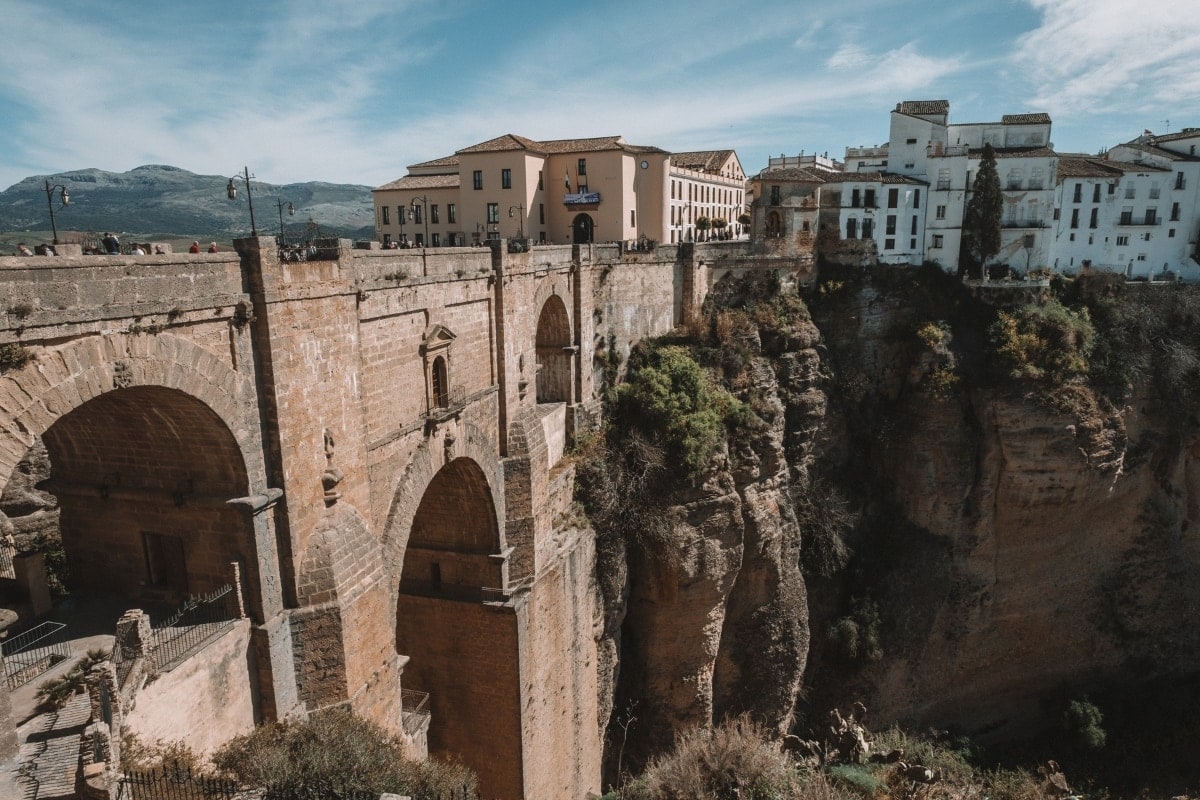
For lovers of adrenaline and nature, it’s an absolute must to book a trip to the famous Caminito del Rey trail, which runs along wooden walkways suspended high on sheer cliffs above a deep gorge. And if you’re longing for more Andalusian gems, just a few hours by train or car separate you from passionate Seville, historic Córdoba with its stunning mosque, fairy-tale Granada or romantic Ronda, perched on the very edge of a deep gorge. If you want to see the best of the whole region, take inspiration from our article 20 most beautiful places in Andalusia + itinerary.
Frequently asked questions
When is the best time to visit Málaga?
From our experience, the best time to go is in spring (May, June) or autumn (September, October), when temperatures are very pleasant around twenty-five degrees and the sea is perfect for swimming. In summer, the heat can be extreme, well over thirty degrees.
What’s the fastest way to get from the airport to the city centre?
Use the Cercanías commuter train (line C1), whose station is located directly opposite the arrivals hall. The train runs roughly every twenty minutes, tickets cost a few euros, and you’ll be in the city centre at Málaga Centro-Alameda station in just twelve minutes.
Is Málaga safe?
Málaga is generally a very safe tourist city and even evening walks through the centre are completely problem-free. However, as everywhere in Spain, be extremely careful of pickpockets, especially in crowds at markets, on the beach, and around the main sights.
Do I need to rent a car in Málaga?
If you’re planning to stay only in Málaga and the resorts along the Costa del Sol, you don’t need a car at all, because trains and buses work perfectly here. A car only makes sense if you want to take trips deep into the interior or to more remote villages.
Can you drink tap water in Málaga?
Yes, tap water throughout Málaga is safe and drinkable. However, many people still buy bottled water because the local tap water can sometimes have a slightly chlorinated or saltier taste, which international visitors may not be entirely used to.
Where can I park if I arrive by car?
Parking in the historic centre is literally a nightmare. I definitely recommend using the large underground paid car parks, for example under Plaza de la Marina square or at the Muelle Uno port. Finding a free spot on the street is very rare.
When do shops in Spain have siesta?
Smaller shops and services are usually closed between two and five in the afternoon, when the heat outside is at its peak. However, large supermarkets and international brand stores on the main shopping streets (like Calle Larios) usually operate without a break throughout the day.
Do I need to buy tickets to attractions in advance?
For the biggest attractions such as the Picasso Museum, the Alcazaba, or trips to the nearby caves in Nerja or the Caminito del Rey trail, you should definitely buy tickets online in advance. During peak season, capacity is often completely sold out and you’ll save yourself hours of queuing.
Tips and Tricks for Your Vacation
Don’t Overpay for Flights
Search for flights on Kayak. It’s our favorite search engine because it scans the websites of all airlines and always finds the cheapest connection.
Book Your Accommodation Smartly
The best experiences we’ve had when looking for accommodation (from Alaska to Morocco) are with Booking.com, where hotels, apartments, and entire houses are usually the cheapest and most widely available.
 🚗 Car rental on the roadVerified rental cars in Andalusia
Search with the DiscoverCars comparison engine — it compares prices from dozens of local and international rental companies, and most bookings come with free cancellation.
Compare car prices in Andalusia →Don’t Forget Travel Insurance
Good travel insurance will protect you against illness, accidents, theft, or flight cancellations. We’ve had a few hospital visits abroad, so we know how important it is to have proper insurance arranged.
Where we insure ourselves: SafetyWing (simple monthly subscription) and TrueTraveller (for extra-long trips).
Find the Best Experiences
Get Your Guide is a huge online marketplace where you can book guided walks, trips, skip-the-line tickets, tours, and much more. We always find some extra fun there!