

Brisbane in Australia often gets a reputation as the duller sibling standing in the shadow of glamorous Sydney and cultured Melbourne. Yet this is exactly where Australians have been flocking in recent years — drawn by the relaxed pace, more affordable living and, above all, the sunshine that shines here around three hundred days a year. The city is also changing incredibly fast and getting ready to host the Summer Olympic Games in 2032.
If you’re planning a trip Down Under, don’t skip this subtropical metropolis while it still holds onto its reputation as that calm place on the river. Locals say it’s an absolutely ideal base for exploring the whole state of Queensland. You’ll find a unique man-made beach right in the middle of the skyscrapers, wonderful botanic gardens, and buzzing night markets packed with great food.
Brisbane offers more than you’d expect — from an artificial beach among the skyscrapers to koalas at a wildlife sanctuary and a scenic river cruise for less than 50 cents. In this guide we’ll help you decide which neighbourhood to stay in, how to get around the city as cheaply as possible, and when to arrive so you don’t get soaked to the bone.
TL;DR
- How many days you’ll need: Two to three days are enough for the city itself, but if you want to head out to the islands or see the wildlife, set aside at least four or five days.
- When to go: The best weather comes in autumn (March to May) and spring (September to November). Winter in July and August, with pleasant 22 degrees, is absolutely ideal for walking tours.
- Where to stay: For the best access, choose the city centre (CBD); South Bank is great for families and park lovers, while nightlife fans should head to Fortitude Valley.
- Transport for pennies: All public transport in the city (trains, buses and ferries) permanently costs just 50 cents per trip.
- Swimming: Don’t swim in the Brisbane River due to the murky water and bull sharks. Use the free man-made Streets Beach right in the centre instead.
- What you definitely shouldn’t miss: A ride on the CityCat ferry, feeding kangaroos at Lone Pine Koala Sanctuary, and the views from the new Sky Deck platform.
When to visit Brisbane in Queensland, Australia
Brisbane lies in the subtropical zone, which means the classic four seasons work a little differently here than we’re used to in Europe. From December to March there’s a humid summer, bringing temperatures around 30 degrees and huge air humidity. Locals honestly warn that this period can be pretty exhausting, and on top of that it’s the main season for tropical storms and heavy rain. I’d recommend avoiding this time unless you want to spend your days hiding in air-conditioned shopping centres and galleries.
A much better choice are the so-called shoulder seasons, that is from March to May and from September to November. Temperatures are very pleasant, the humidity drops, and the days are full of sunshine. And if you go in October or November, the whole city turns purple thanks to the blooming jacaranda trees that line the streets and parks.
An absolutely brilliant time to visit is also the Australian winter in July and August. While southern Australia can be chilly, Brisbane holds a lovely 22 to 23 degrees during the day. It’s reportedly the very best time for a full day of exploring the city on foot, though you’ll want a light jacket or jumper for the evenings.
How to get around Brisbane (and from the airport)
Transport in Brisbane recently went through a huge revolution that other world cities can only quietly envy. The government here introduced a permanent fare of just 50 cents on absolutely all trains, buses and ferries across the entire Translink network. Whether you ride one stop or an hour out to the suburbs, you always pay just this symbolic fee. To pay, you simply tap on with a regular bank card when you board and get off. It’s an incredible relief for your travel budget and makes the city one of the most affordable metropolises far and wide.
Thanks to this change, the free CityHopper ferry was permanently discontinued in January 2025. But don’t feel bad about it at all, because for just 50 cents you can now ride the much faster and more modern CityCat catamarans. They criss-cross the river from morning until night and locals happily use them as the cheapest scenic cruise in all of Australia.
The one big exception to the cheap fare is the private Airtrain running from the airport to the centre. The journey takes a little over twenty minutes and costs roughly 20 AUD per person, in stark contrast to the rest of the city. But if you’re travelling as two or more, it’s worth buying tickets in advance online at a reduced price of around 17 AUD, or you might consider a regular taxi or services like Uber, which often work out cheaper with a larger group.
Where to stay in Brisbane
💡 Accommodation tip and experiences: We prefer to look for accommodation on Booking.com, where the cancellation terms tend to be best. Tickets, tours and activities are then worth comparing and booking through GetYourGuide.
Where to stay in Brisbane? It mainly depends on whether you want everything right on your doorstep, or prefer peace and greenery. The most practical choice is the centre itself, known as the CBD (Central Business District). You’ll be close to all the main connections, shopping streets and restaurants. The apartment hotel Capri by Fraser Brisbane is very popular here, with well-equipped rooms with a kitchenette, and travellers praise its absolutely perfect location. You’ll appreciate this option especially if you only have limited time to explore and need to save every minute.
If you prefer greenery and a quieter atmosphere, stay in the South Bank neighbourhood across the river. It’s a real paradise for families with kids, because you’ll find parks, galleries and the man-made beach here. For lovers of luxury there’s the fantastic Emporium Hotel South Bank, which boasts a stunning rooftop pool on the 22nd floor with breathtaking views over the whole city.
The third favourite area is Fortitude Valley, the main hub of nightlife. You’ll find the best clubs, bars and plenty of great boutiques here, but bear in mind that on weekends it gets really busy and noisy. For budget travellers, a great choice is YHA Brisbane City near the centre, with clean rooms, newer facilities and even a rooftop pool. Be sure to book your accommodation via Booking well in advance, because spots in the good hotels disappear fast.
Brisbane, or straight to the Gold Coast?
Many travellers face the dilemma of whether to head straight to the famous Gold Coast and just commute into Brisbane for day trips. But locals advise splitting your stay, ideally three to four nights in Brisbane and then the same amount of time by the ocean. The two places have a completely different atmosphere, and constant commuting would needlessly rob you of time. A smartly planned itinerary is key here, so you don’t tire out your feet — or your wallet — with endless back-and-forth trains.
Thanks to the incredibly cheap transport, you can get from central Brisbane to the Gold Coast by train in roughly an hour, again for just 50 cents. So you can leisurely enjoy the cultural metropolis with its excellent coffee and parks, then simply move on to surfing and endless beaches.
20 things to see and do in Brisbane
Let’s take a look at the best this sun-soaked Australian city has to offer. From iconic parks to unique wildlife sanctuaries and great island trips.
1. South Bank Parklands and Streets Beach
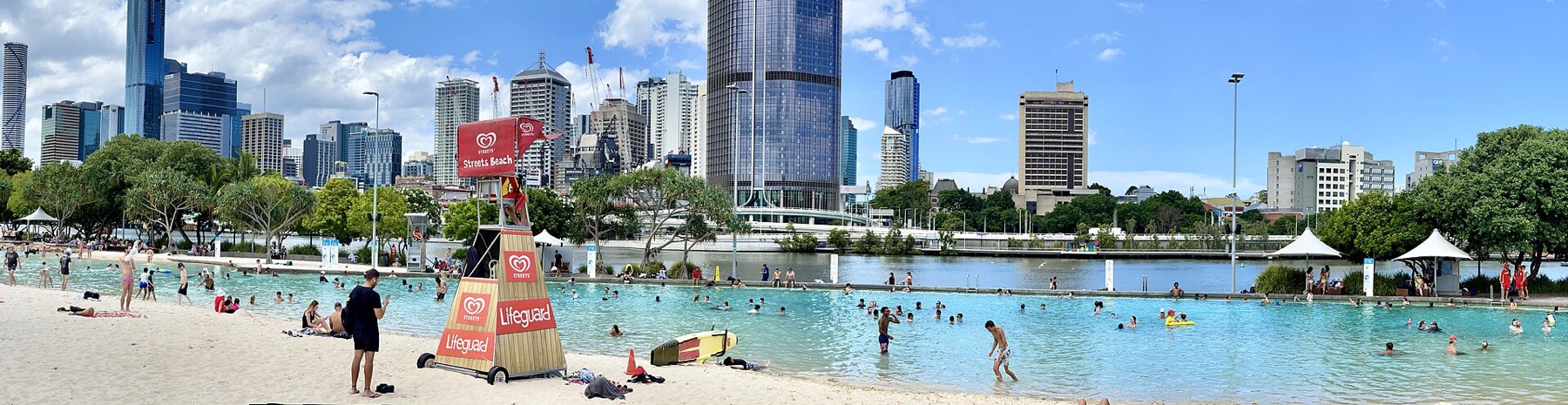
When Brisbane hosted the World Expo in 1988, nobody probably guessed it would leave behind the most beautiful leisure area in the country. South Bank Parklands is today the cultural and social heart of the city, drawing an incredible 16 million visitors a year. You’ll find seventeen hectares of lush greenery here, free BBQ picnic spots and plenty of shady nooks for hot summer days.
But the main draw is undoubtedly Streets Beach, the very first man-made city-centre beach in all of Australia. It’s made of bright white sand, the lagoon water is filtered every six hours, and professional lifeguards keep watch year-round. Swimming here is completely free and it’s the best and safest escape from the subtropical heat, because for safety reasons you definitely shouldn’t get into the river itself.
Besides swimming, don’t forget to stroll under the famous Grand Arbour pergola. This kilometre-long walkway is made of more than four hundred steel columns densely overgrown with beautifully flowering bougainvillea. Especially in spring it’s an incredible sight and one of the most photographed spots in the city.
💡 Tip: The area is open daily from 5 a.m. to midnight. It has the loveliest atmosphere just before sunset, when the surrounding skyscrapers light up and reflect on the surface of the lagoon.
2. GOMA and the cultural precinct by the river
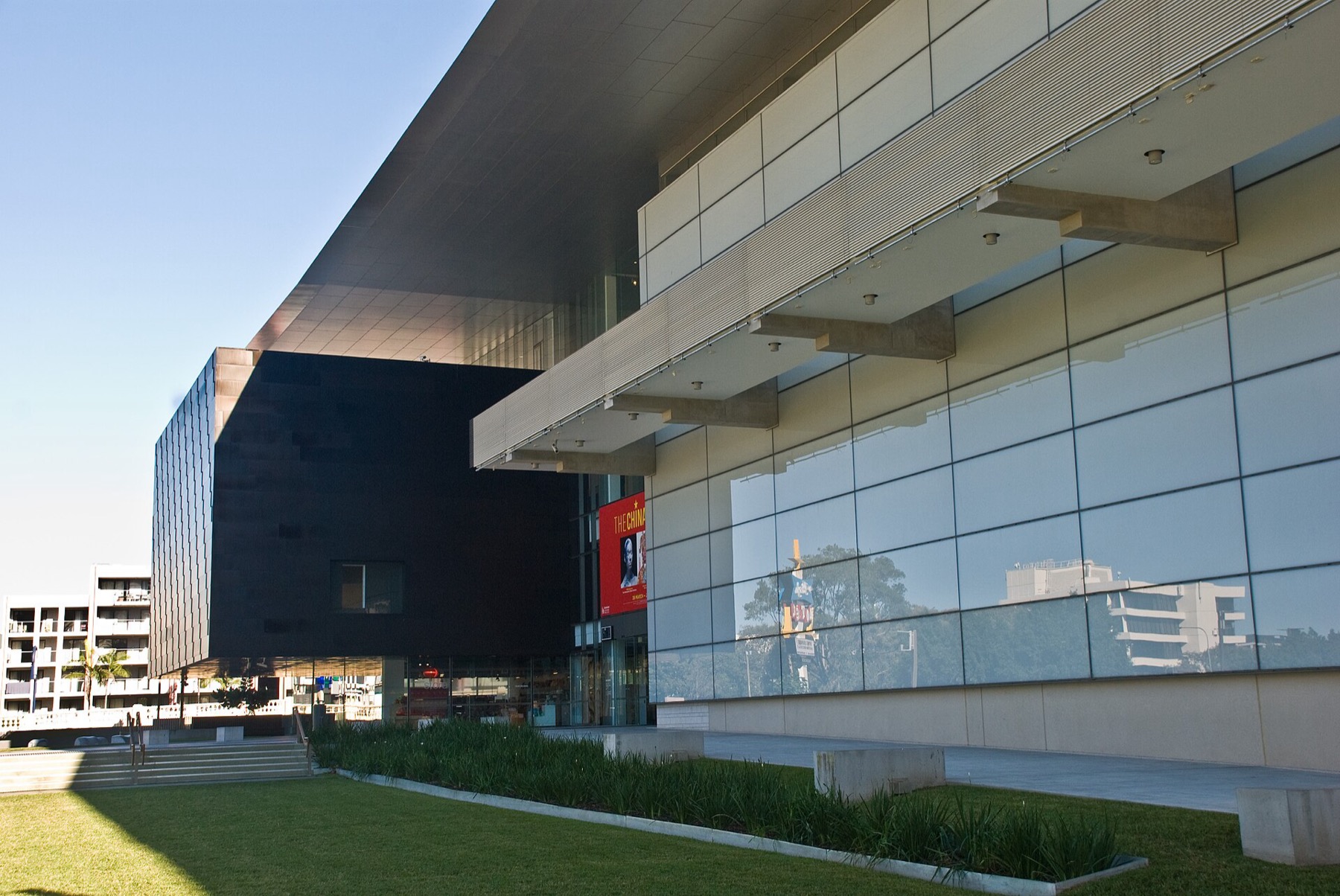
Right next to the parklands lies an extensive cultural precinct that will thrill any lover of art and history. The greatest gem is GOMA (Gallery of Modern Art), the largest institution focused on modern and contemporary art in the country. Its exhibits are incredibly imaginative, often interactive, and it regularly hosts major world exhibitions.
Right next door sits the classic Queensland Art Gallery and also the Queensland Museum, which is absolutely fantastic for families with kids. You’ll find giant dinosaur skeletons, fascinating exhibits on Australian nature and the history of the Indigenous people. The whole complex is linked by terraces with river views, and honestly, even if art isn’t really your thing, the architecture and views are worth the visit.
A huge plus is that entry to the permanent collections of both galleries is completely free, making them an ideal spot for an afternoon programme or as shelter from the occasional rain shower. They’re usually open every day from 10 a.m. to 5 p.m.
💡 Tip: If you get hungry while browsing the art, head straight to GOMA Bistro. They serve excellent modern brunches using local ingredients, and you can enjoy the outdoor view through the glass walls.
3. Wheel of Brisbane
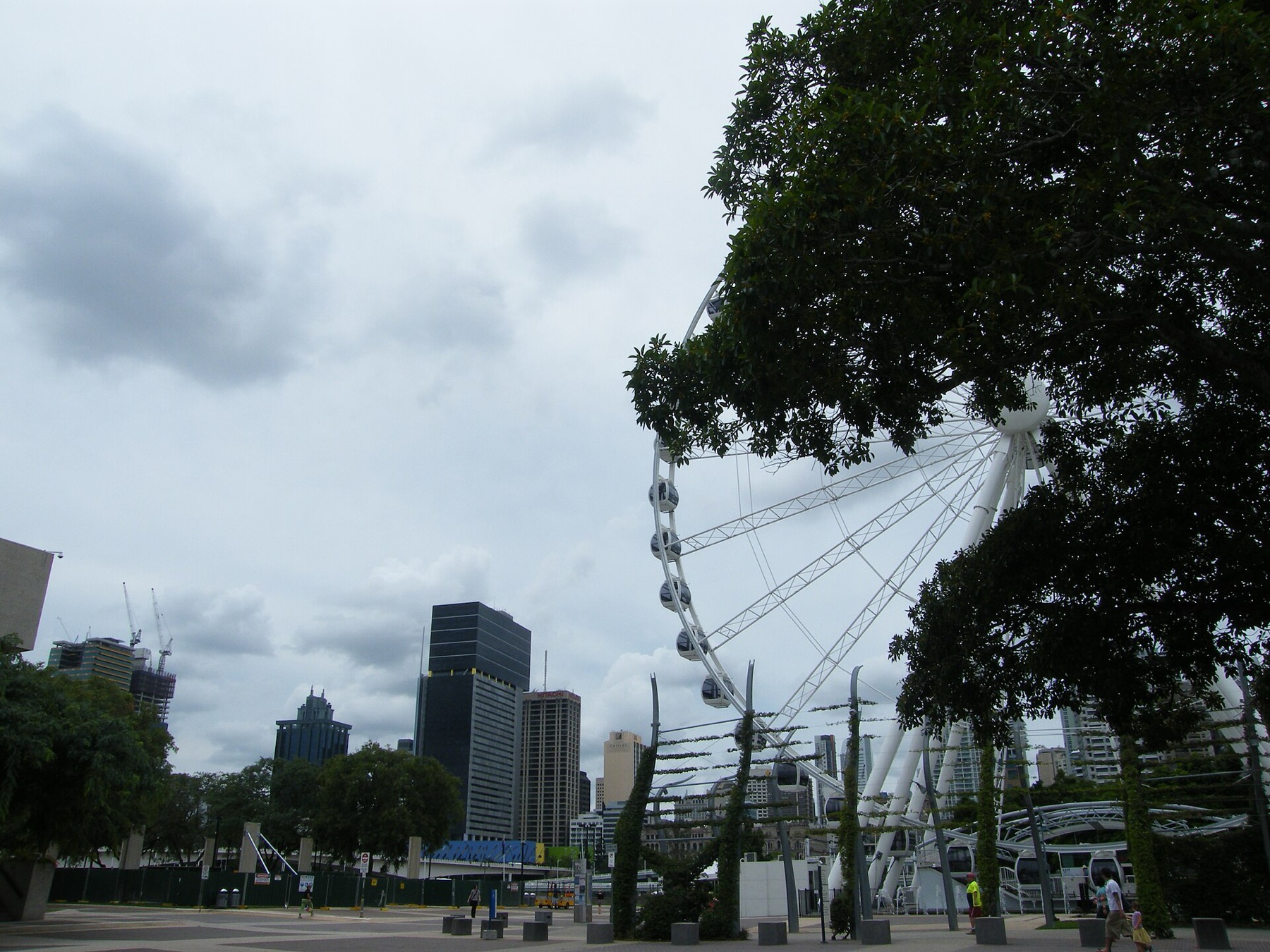
Almost every modern city these days has its own observation wheel, and Brisbane is certainly no exception. The Wheel of Brisbane rises to sixty metres right in the heart of South Bank and offers a breathtaking panoramic view over the whole metropolis, the river and the distant mountains.
The ride lasts around twelve minutes, during which you’ll complete four full rotations. All cabins are fully air-conditioned, so you needn’t fear the heat even in the height of summer. On top of that you get an audio guide describing exactly what unfolds beneath you with each rotation, so you never have to wonder what’s what.
The wheel runs from Monday to Thursday until 10 p.m., and on Friday and Saturday even until 11. Always check current ticket prices on the official website, as they can change throughout the season. Many travellers recommend riding after dark, when the city is beautifully lit up.
💡 Tip: The observation wheel makes a great landmark. No matter where you get lost in the parks on the south bank, just look around and you’ll instantly know which way to go.
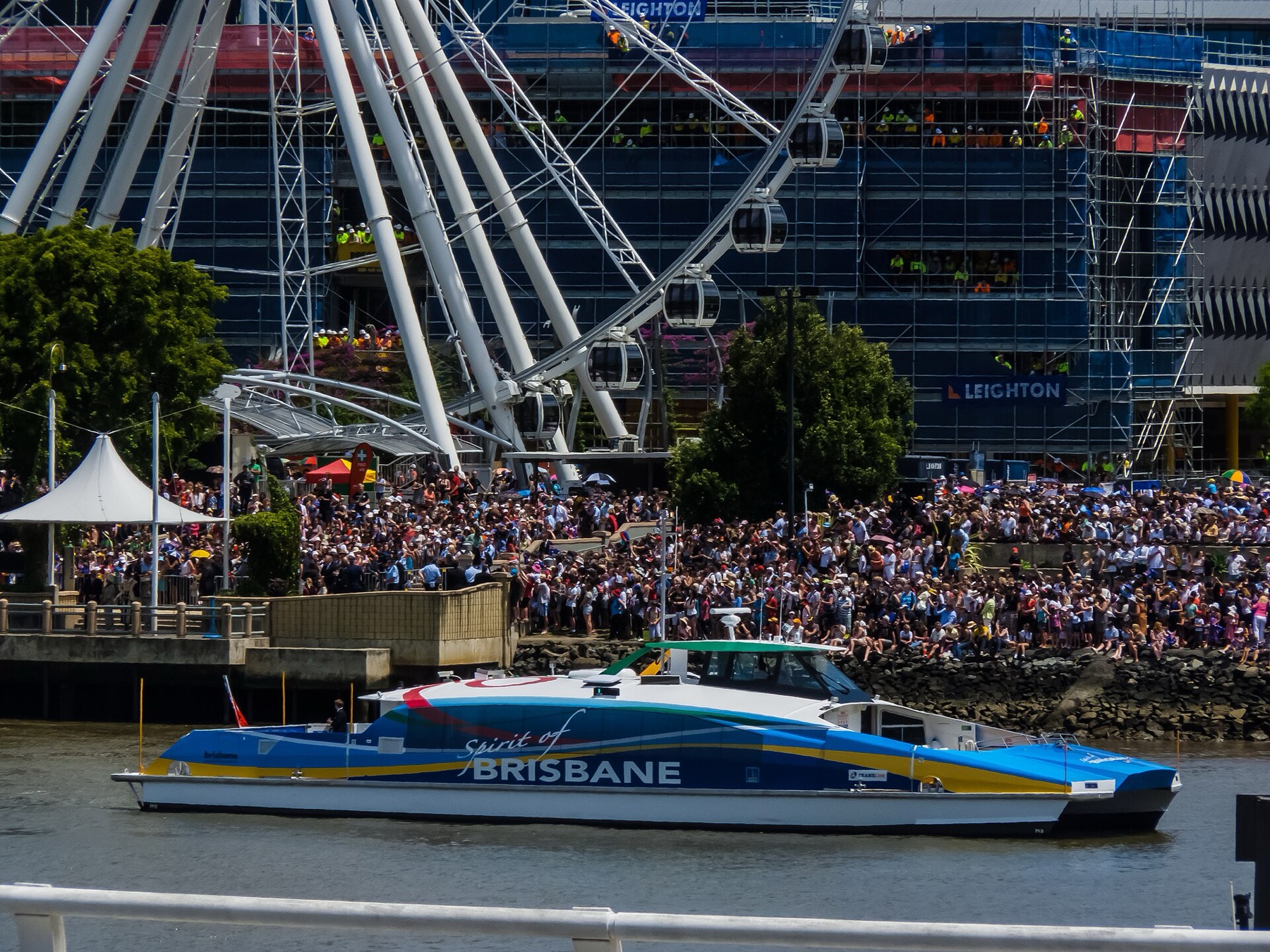
4. A CityCat cruise for 50 cents
As I mentioned in the intro, the river is the city’s main artery and cruising along it is an absolute must. The modern CityCat catamarans are the best way to see the city from a completely different perspective. And this whole scenic cruise will cost you that magical 50 cents.
The most popular is the backbone F1 line, which criss-crosses the river at regular intervals of roughly every ten minutes. You can board, say, by the university, glide right under the downtown skyscrapers, pass beneath the famous Story Bridge and get off in the wealthier Teneriffe neighbourhood. The boats have spacious outdoor decks, perfect for photos.
Remember that the free red CityHopper boats have not run since January 2025, so you’ll need a bank card to tap on for every ride. The catamarans run until late at night, roughly until midnight, so you can safely get back even from an evening dinner.
💡 Tip: Hop on a boat just before sunset and let it carry you to the last stop and back. For the price of a bread roll you get a two-hour evening cruise past the illuminated city.
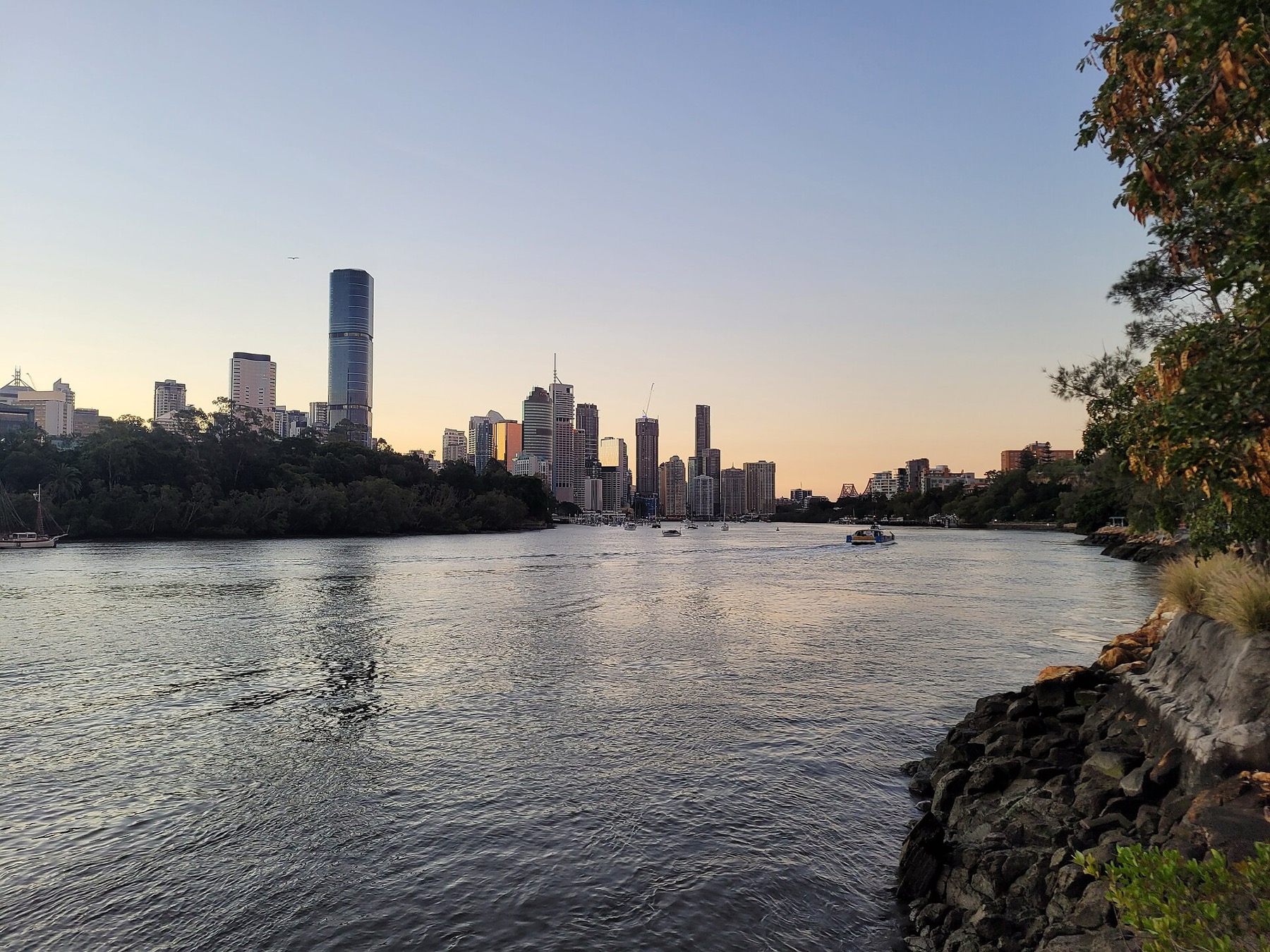
5. Story Bridge and Kangaroo Point Cliffs
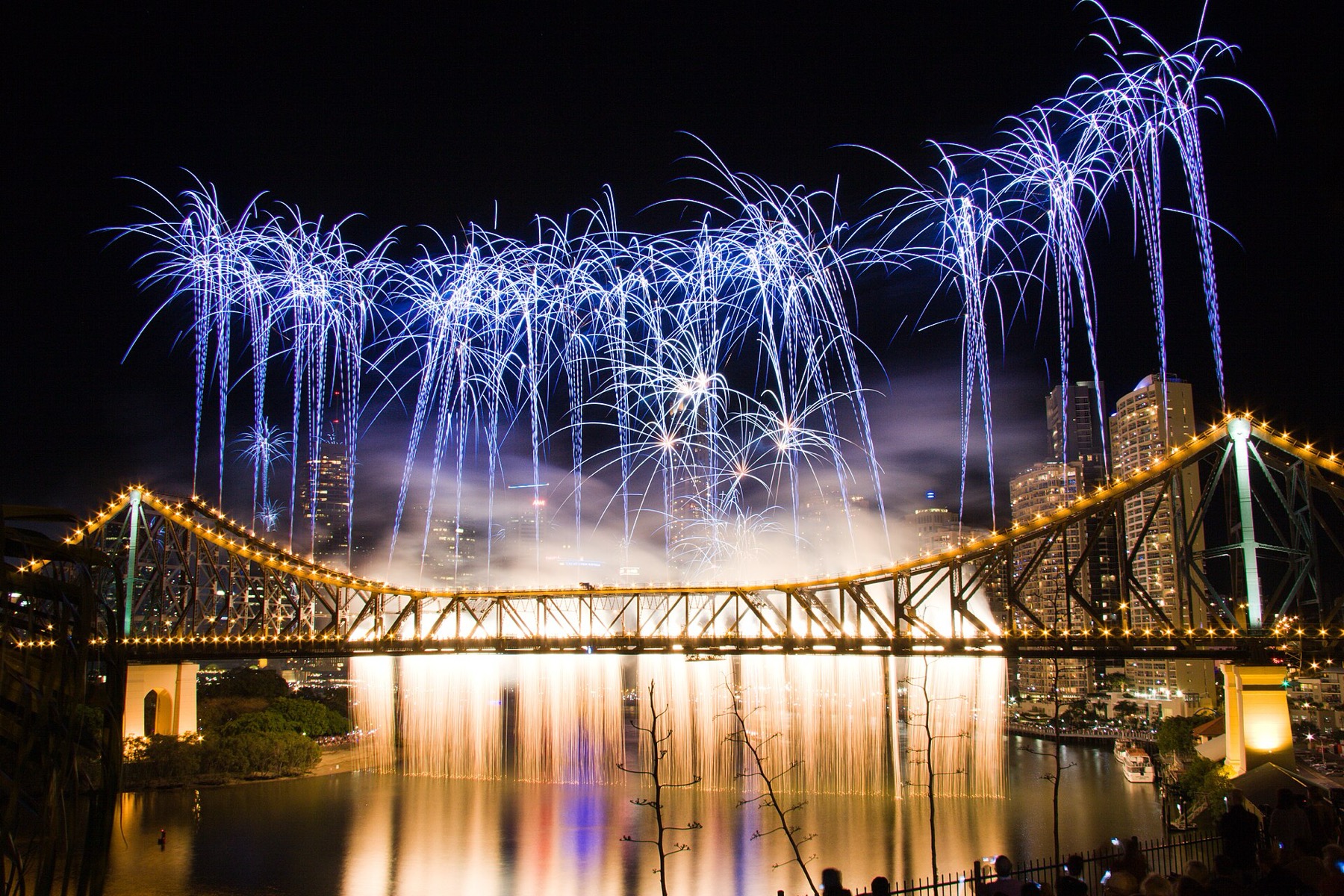
The iconic steel Story Bridge is to Brisbane what the Harbour Bridge is to Sydney. It was ceremonially opened in July 1940 and remains one of the city’s most striking landmarks to this day. After dark the bridge is beautifully lit up, and the colours often change depending on whatever major event is being celebrated at the time.
Until recently, walking across the bridge on foot was very popular, but in 2025 the pedestrian and cycle paths underwent a partial reconstruction and some sections may still be restricted. If you’re thinking about the adrenaline-filled climb right onto the bridge structure as part of the so-called Adventure Climb, be sure to check the current status and conditions in advance on their official website.
A great alternative for breathtaking views are the nearby Kangaroo Point Cliffs. These natural walls rise right above the river and offer an incredible 408 climbing routes right in the city. At night the cliffs are lit up, and at the top you’ll find a landscaped park with benches and BBQs.
💡 Tip: The Kangaroo Point cliffs are reportedly the very best spot in the city for watching the sunset. Watch the sun sink behind the glass skyscrapers downtown while you sit on the grass with a good coffee in hand.
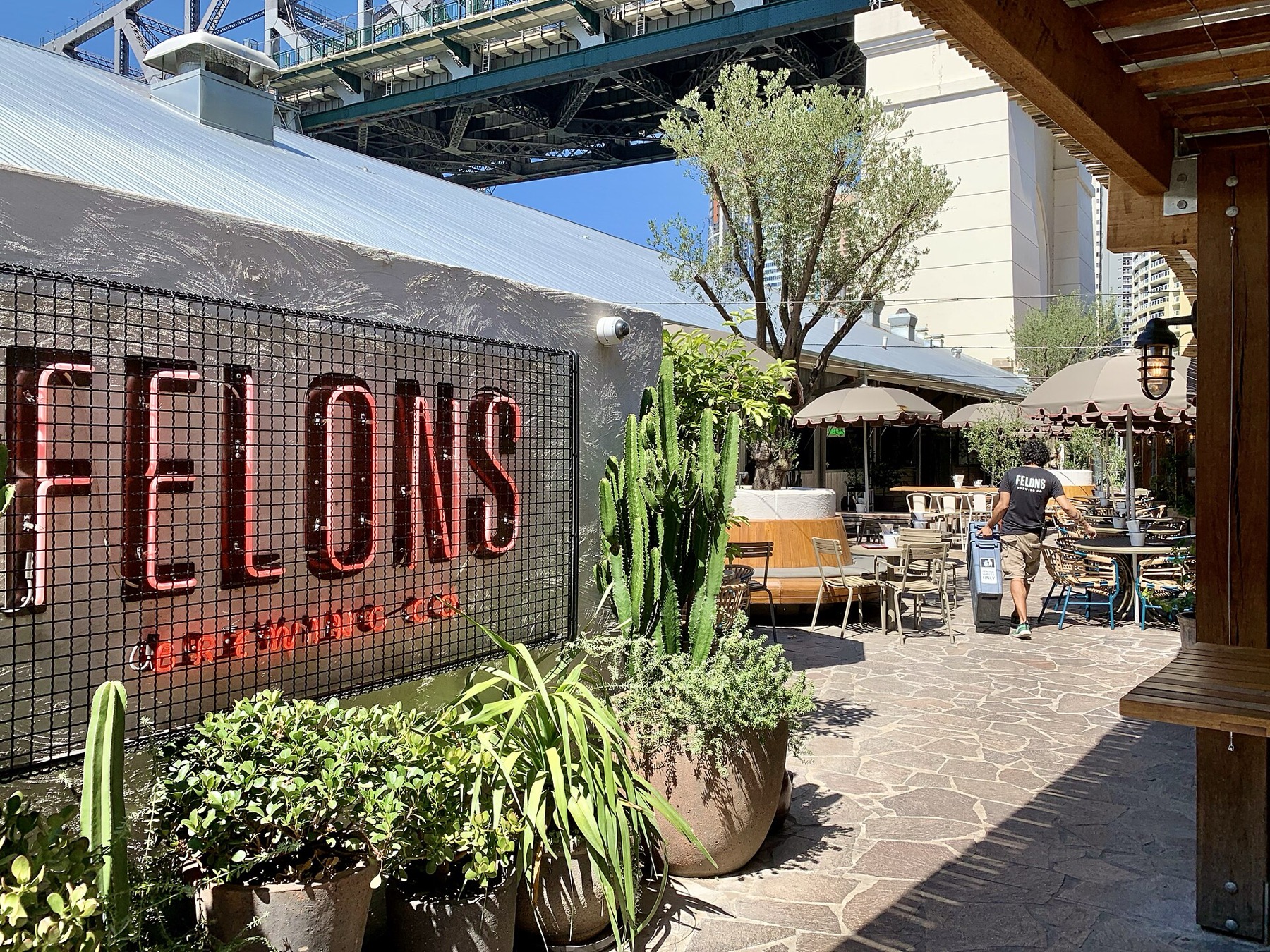
6. Howard Smith Wharves and the Felons brewery
Right beneath the massive structure of the Story Bridge lies a place that went through one of the most amazing transformations in the city’s recent history. The former abandoned Howard Smith Wharves docks were transformed in 2018 into the liveliest gastronomic hub far and wide. The old wooden halls were carefully restored and today house some of the best restaurants and bars.
The heart of the whole area is a real working brewery, Felons Brewing Co, which brews beer right on site. They have a huge outdoor terrace called the Chipper Deck, where you can sit just a few metres from the river and soak up the relaxed Australian atmosphere. To eat, they offer great vegetarian pizzas and small nibbles.
Getting to the wharves is very easy — they have their own CityCat catamaran stop. Alternatively you can use the public lift that takes you straight down from the cliffs above the river to the promenade. The area comes alive especially on weekends, when there’s live music and people lounge on the beautifully kept lawns all around.
💡 Tip: The brewery thinks of early birds too. A little café operates here from 6 a.m., so you can pop in for a morning espresso right after waking up.
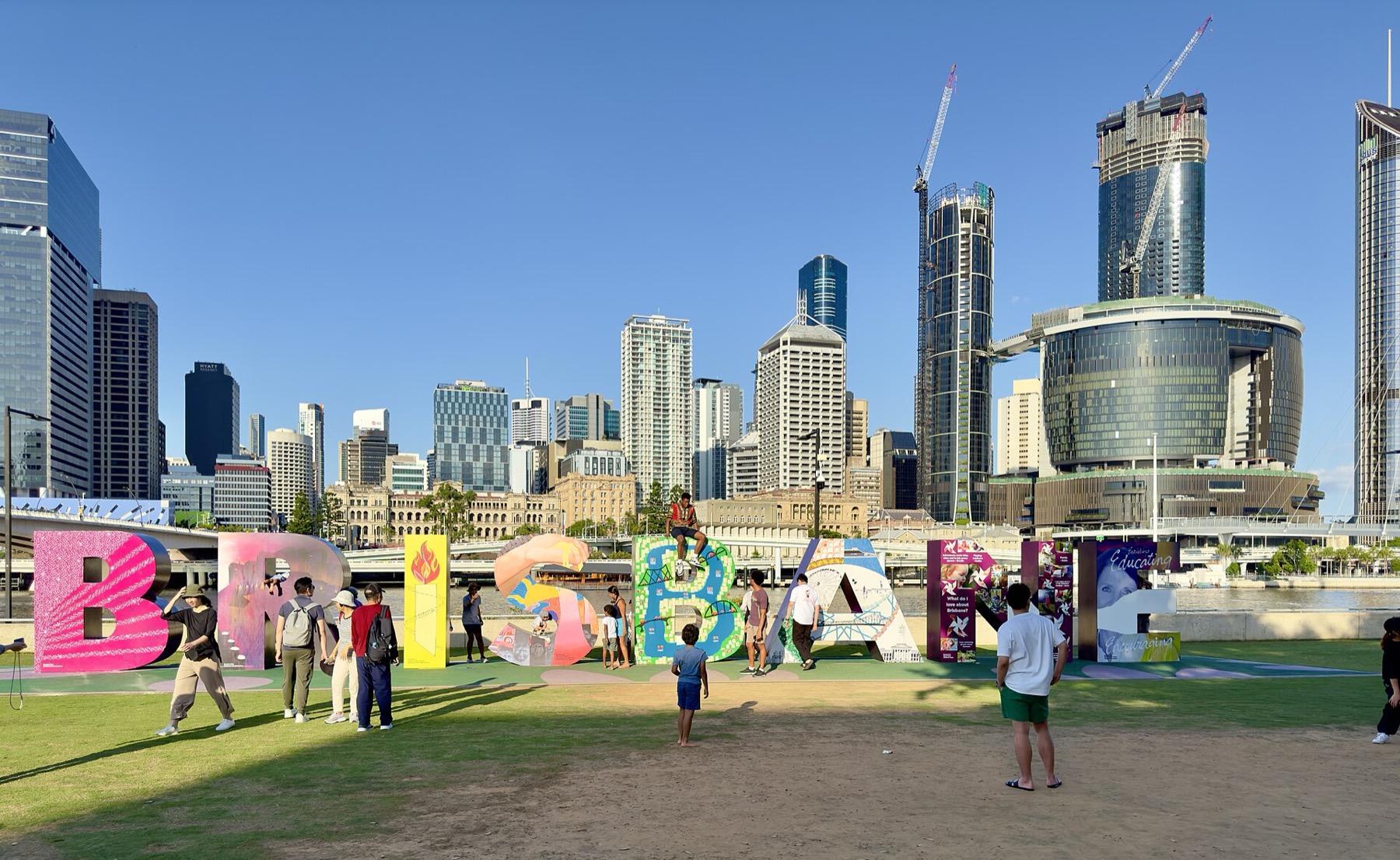
7. Queen’s Wharf and the free Sky Deck
The biggest and most talked-about project of recent years is the huge Queen’s Wharf complex, whose construction swallowed an incredible 3.6 billion Australian dollars. This futuristic area came to life in August 2024 and radically changed the skyline of the whole city. Besides luxury hotels and more than fifteen new restaurants, it also brought a beautiful Riverline promenade along the water.
The main reason to head here is the incredible Sky Deck viewing platform. It sits a full hundred metres above the river and forms a 250-metre-long link between the individual skyscrapers. The views from here are absolutely unbeatable, and you can see the city laid out like a map.
The best part of it all is that entry to the Sky Deck is completely free for the public and open 24 hours a day. You don’t have to reserve anything or pay expensive admission — just show up and take the lift to the top. By the end of 2026, more super-luxury hotels are also due to open in the complex, including Australia’s first six-star hotel.
💡 Tip: If you’re looking for a spot for a special dinner with a view, you’ll find several truly top-notch restaurants up here. They’re pricier, but locals rave about them for special occasions. (They also have steaks and fresh seafood, if you’re into the classics.)
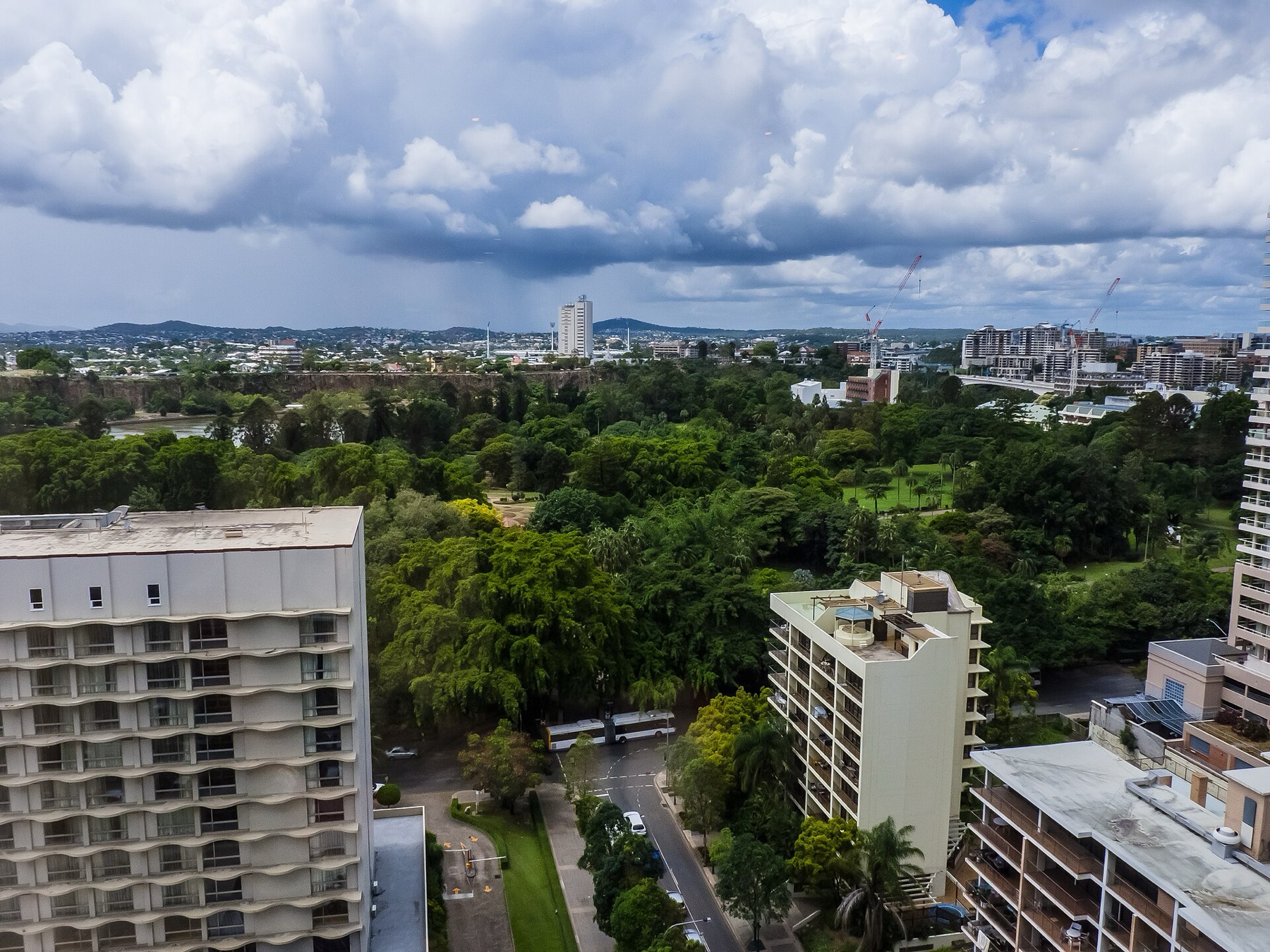
8. City Botanic Gardens and Riverwalk
While most tourists automatically head for South Bank, locals swear by the quieter City Botanic Gardens right in the centre. This wonderful eighteen-hectare oasis of greenery is a perfect escape from the noise of the city. The gardens are open non-stop, 24 hours a day, and entry is of course free.
The park boasts ancient trees, beautiful ponds and plenty of shady nooks for reading or resting. The gardens are lined by the 1.2-kilometre Riverwalk promenade, perfect for a walk or a bike ride. At the southern end, the park seamlessly connects to the Goodwill Bridge footbridge, which easily takes you back to South Bank.
The gardens have huge historical significance, because this is where the first crops were tested after the European settlers arrived. Today it’s a popular spot for a morning run and weekend picnics, when people bring blankets and baskets of food and enjoy a free afternoon.
💡 Tip: In the gardens you’ll come across plenty of local birds, from cheeky ibises to gorgeously coloured parrots. But watch your snack — the birds here aren’t afraid of people at all!
9. Roma Street Parkland
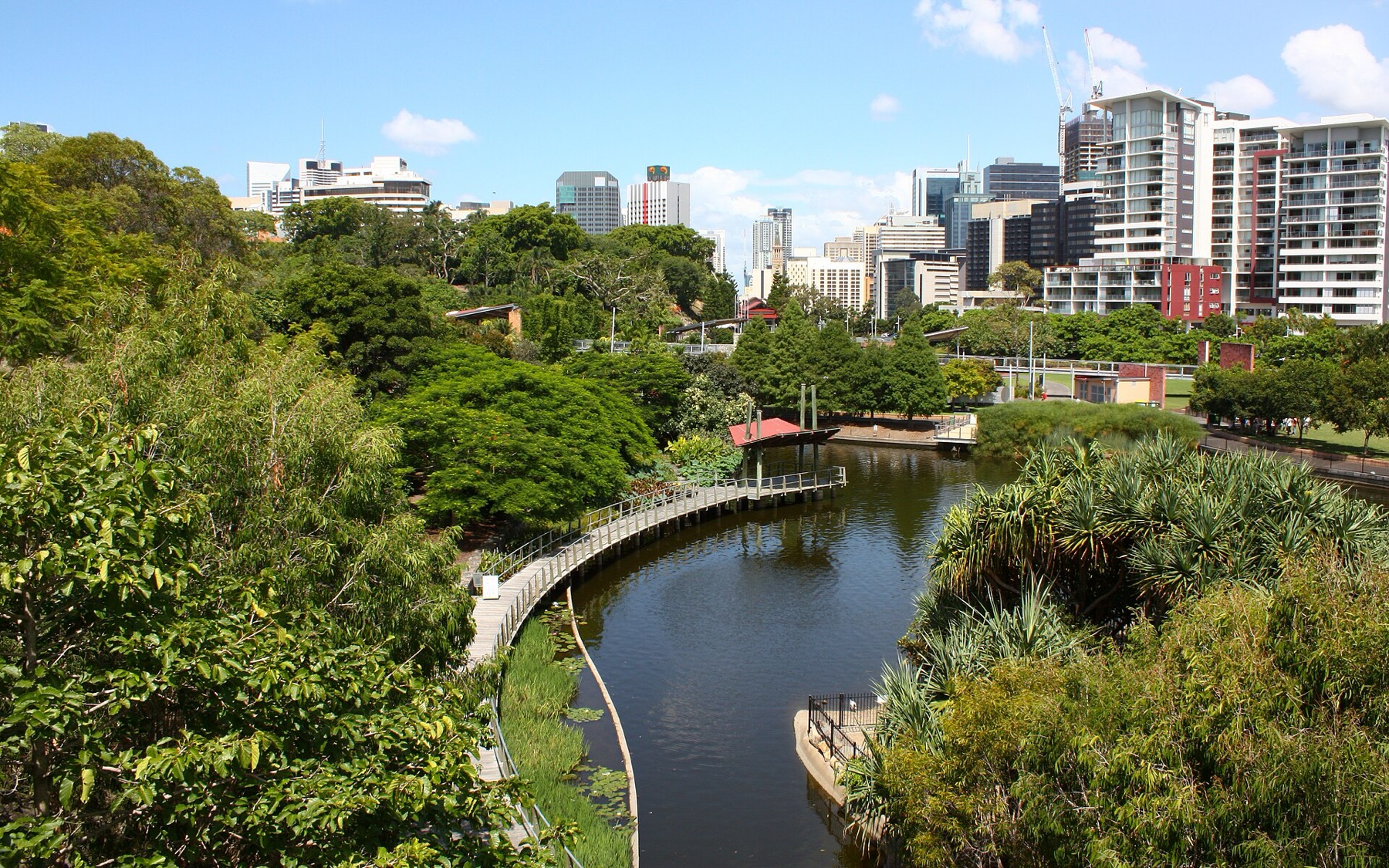
If you love nature and flowers, you can’t miss Roma Street Parkland, located on the northern edge of the centre, right on the site of a former railway yard. This incredible eleven-hectare park is often described as the largest subtropical garden in a city centre anywhere in the world.
The park is a masterpiece of garden architecture. You’ll find cascading waterfalls, a rainforest with ferns, and carefully tended flower beds that bloom in every season. The garden is cleverly divided into several themed zones, so each part looks completely different and offers different kinds of plants.
This park is also free to enter and open 24 hours a day. It’s a favourite spot for families with kids, because a little sightseeing train runs here and on every corner you’ll meet sunbathing lizards called water dragons, which are completely harmless and photogenic.
💡 Tip: If you want to learn more about the plants, check the official website for the times of free tours with local volunteers. They’re full of knowledge and enthusiasm.
10. Mt Coot-tha Lookout and the planetarium
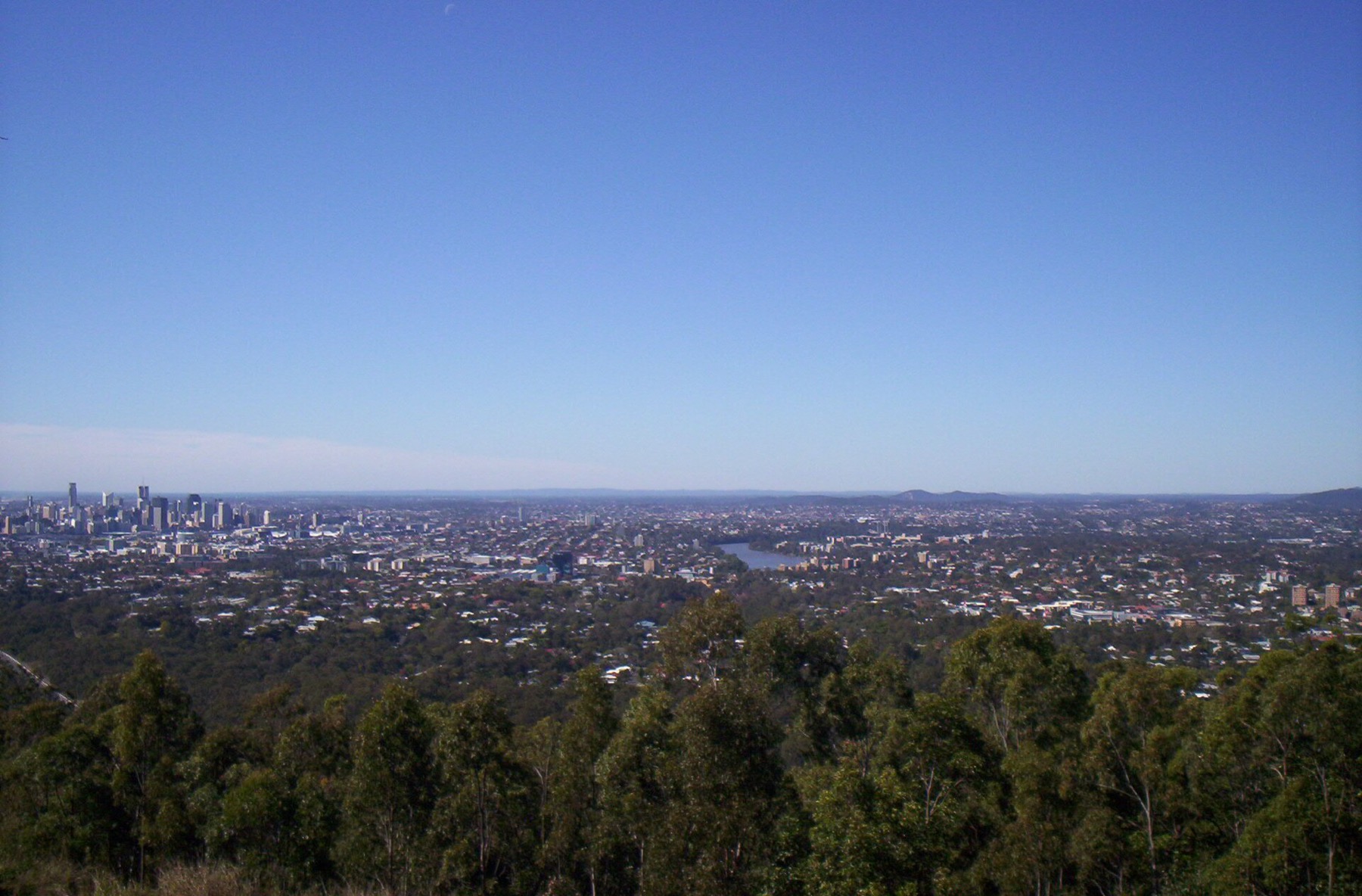
For the very best overall view of the whole metropolis, you have to head a short drive out of the city to Mt Coot-tha. This legendary lookout offers an unobstructed panorama from the downtown skyscrapers across the meandering river to the islands of Moreton Bay in the distance. Especially in the morning at sunrise, the atmosphere here is said to be absolutely magical.
Right at the foot of the hill there’s also an extensive botanic garden, likewise free to enter (open from 8 a.m. to 6 p.m., until 5 p.m. in winter). It includes an enormous tropical glasshouse and a beautiful Japanese garden. Right next door you’ll also find the popular planetarium, where adults pay just under 18 AUD and children around 11 AUD (open Tuesday to Sunday).
Getting here from the centre is fairly easy — just hop on a bus that takes you all the way up for 50 cents. The journey takes about twenty minutes and saves you a tough hike in the subtropical heat. At the top there’s also a pleasant café where you can grab an ice cream or an iced coffee.
💡 Tip: Combine the visit to the lookout with a tour of the botanic garden below. You can take the bus up, enjoy the view, and then walk back down to the gardens along the marked trails.
11. Lone Pine Koala Sanctuary
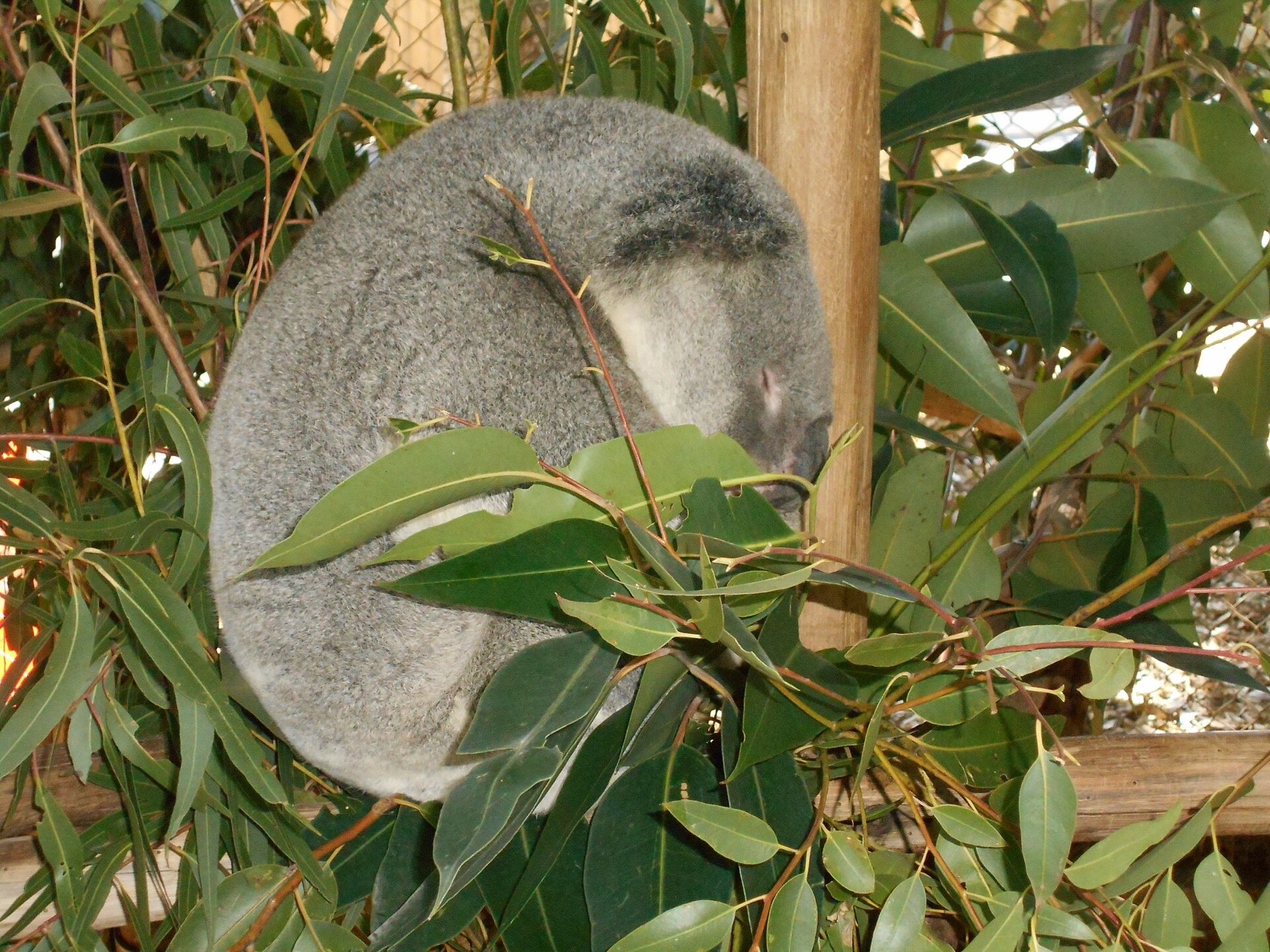
Seeing koalas and kangaroos is the main reason most travellers come to Australia, and in Brisbane you have the best chance in the world to do it. Lone Pine is the oldest and largest koala sanctuary on the planet, founded back in 1927. Across eighteen hectares, more than 130 koalas and over 80 other species of Australian animals live here.
But watch out for one crucial and recent change. Since 1 July 2024, holding koalas has been permanently banned across the whole facility. The sanctuary switched to a much more ethical approach and introduced the so-called “Koala Moment”. During it, you can gently pet the animal and have your photo taken beside it, but you won’t stress it by picking it up. These moments must be booked in advance and aren’t guaranteed, for the animals’ wellbeing.
Admission for an adult comes to around 63 AUD, and 45 AUD for a child. I recommend getting here by the scenic Koala & River Cruises boat, which departs from the centre (a return ticket including entry costs around 138 AUD). The boat journey takes a little over an hour and it’s a lovely bit of relaxation. The sanctuary is open daily from 9 a.m. to 5 p.m.
💡 Tip: There’s a huge enclosure in the grounds where a giant mob of kangaroos roams free. You can buy special feed and the kangaroos will eat right out of your hand. It’s a fantastic, unforgettable experience!

12. New Farm Park and Brisbane Powerhouse
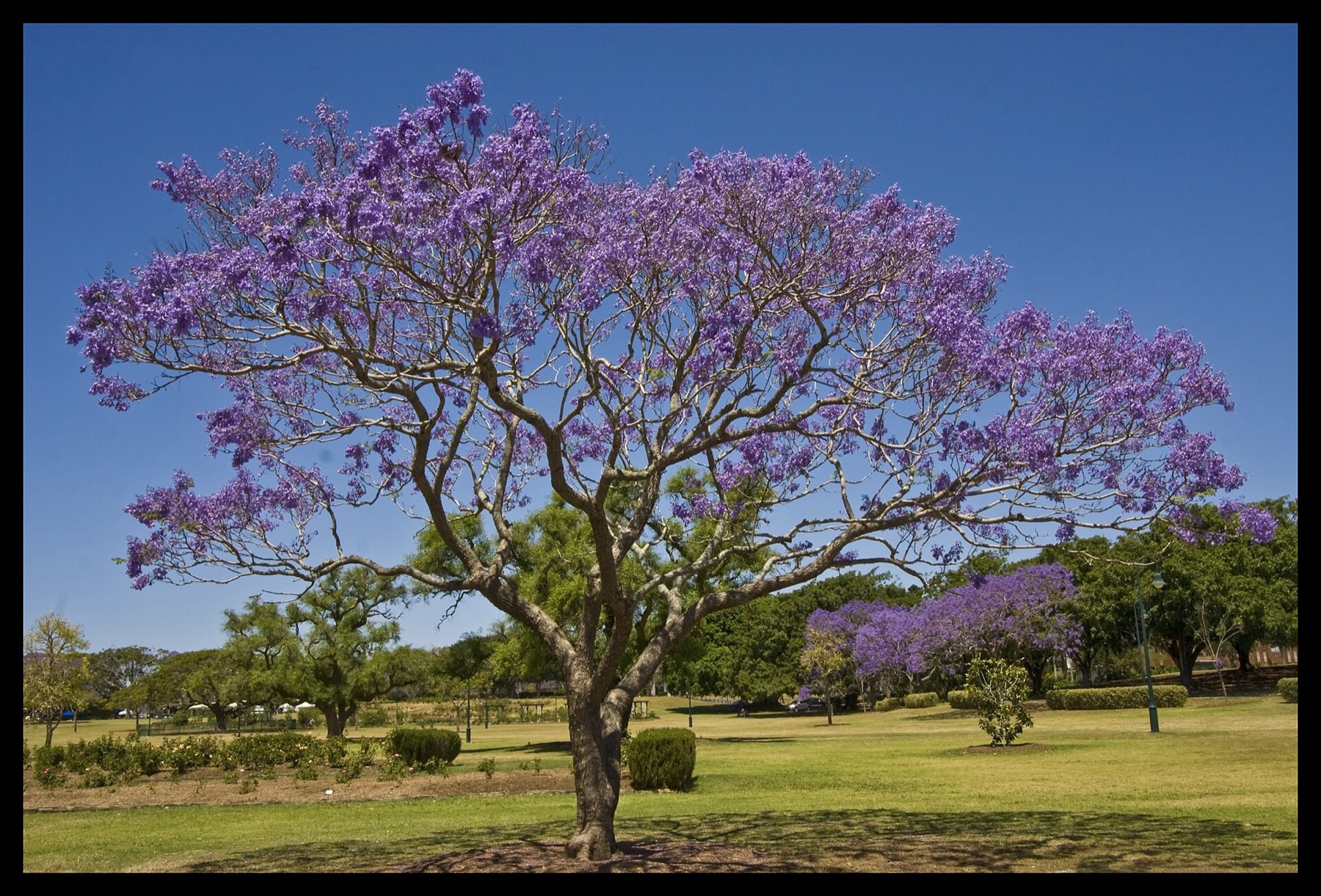
If you visit the city in October or November, you simply have to add this spot to your itinerary. New Farm Park is a huge fifteen-hectare area home to more than a hundred jacaranda trees. When these trees burst into their purple blooms, the park looks like something out of a fairy tale and locals flock here in droves for picnics. Besides that, you’ll also find a stunning rose garden with seven thousand bushes.
At the very edge of the park, right by the river, stands the massive brick building of Brisbane Powerhouse. This former power station from 1928 operated until the 1970s, and after a long period of decay it was transformed in 2000 into an absolutely amazing centre for independent art. Today you’ll find a theatre seating more than five hundred, exhibition spaces and great industrial restaurants with water views.
But the best thing here happens on weekends. Every Saturday from 6 a.m. to noon, the renowned Farmers Markets take place here, with free entry. You can buy the freshest local produce, excellent cheeses, artisan bread, and above all there’s an incredibly friendly, relaxed neighbourhood atmosphere.
💡 Tip: The best way to reach the park is again our favourite CityCat ferry for 50 cents. The stop is just a few steps from the power station and the journey from the centre takes about fifteen minutes.
13. Fortitude Valley and Chinatown
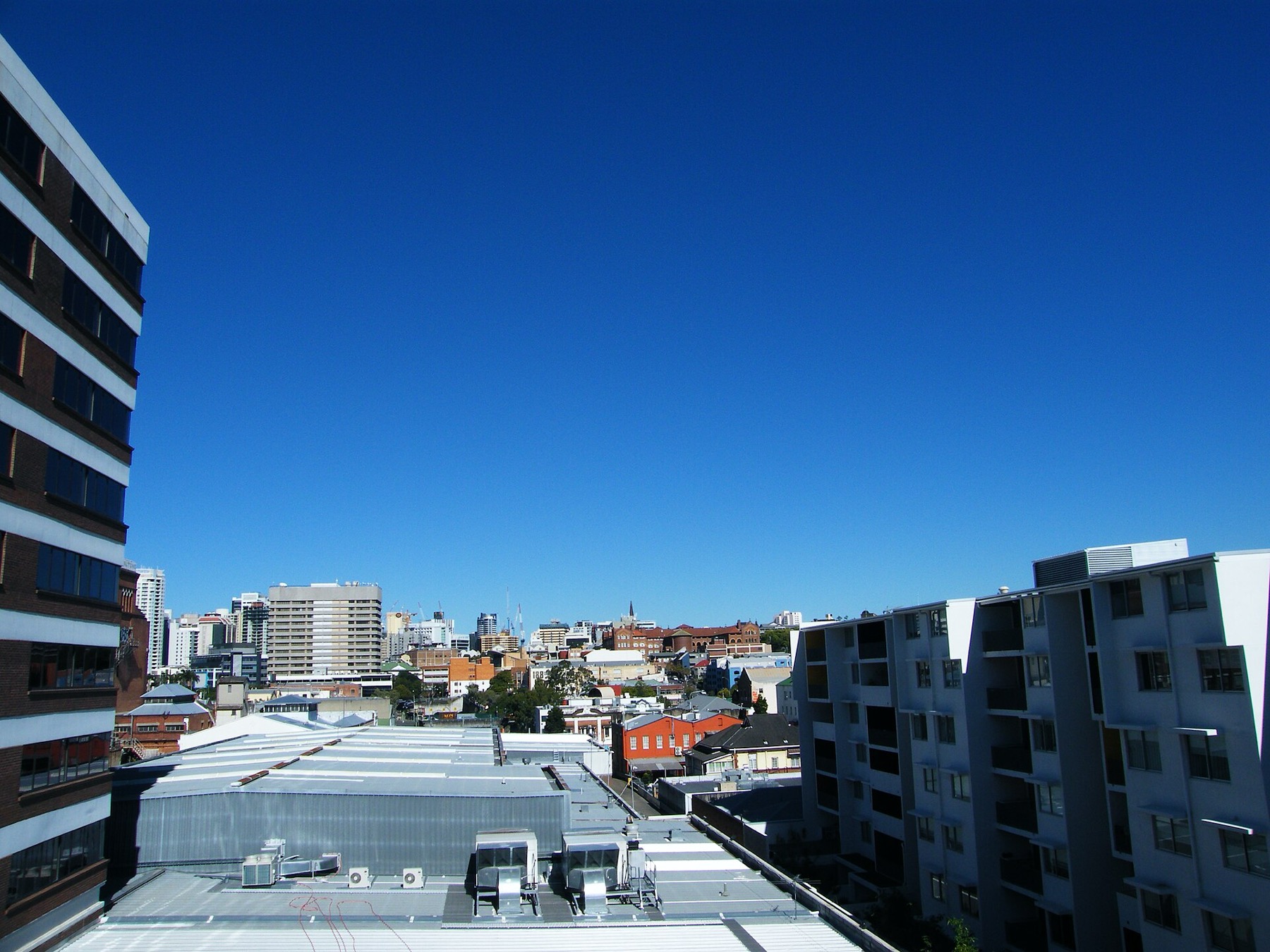
While by day Brisbane is a fairly calm and orderly city, after dark all the energy shifts to the Fortitude Valley neighbourhood. It’s the main nightlife hub, and the first in Australia to gain the status of a special entertainment zone. On Friday and Saturday evenings, easily fifty thousand people arrive here for a good time, and more than thirty clubs play until three in the morning.
But the neighbourhood isn’t just about wild parties. It’s also home to the historic Chinatown Mall from 1987, where you can get authentic Asian ingredients and find plenty of great, affordable eateries. Especially during the Lunar New Year celebrations, it’s ablaze with colours, lion dances and the scents of exotic spices.
By day, on the other hand, the luxurious James Street beckons. This boulevard is lined with more than a hundred designer boutiques, top-notch cafés and art galleries. Fortitude Valley is simply a neighbourhood full of contrasts, where by day you shop for expensive fashion and by night people dance in the streets. With normal caution it’s safe here, it just gets a bit wilder after midnight.
💡 Tip: If you’re after a bit of a bird’s-eye view, head to the popular Iris Rooftop bar. It offers a beautiful 360-degree view over the whole neighbourhood and a wonderful Mediterranean atmosphere with a selection of great tapas.
14. West End and the Saturday markets
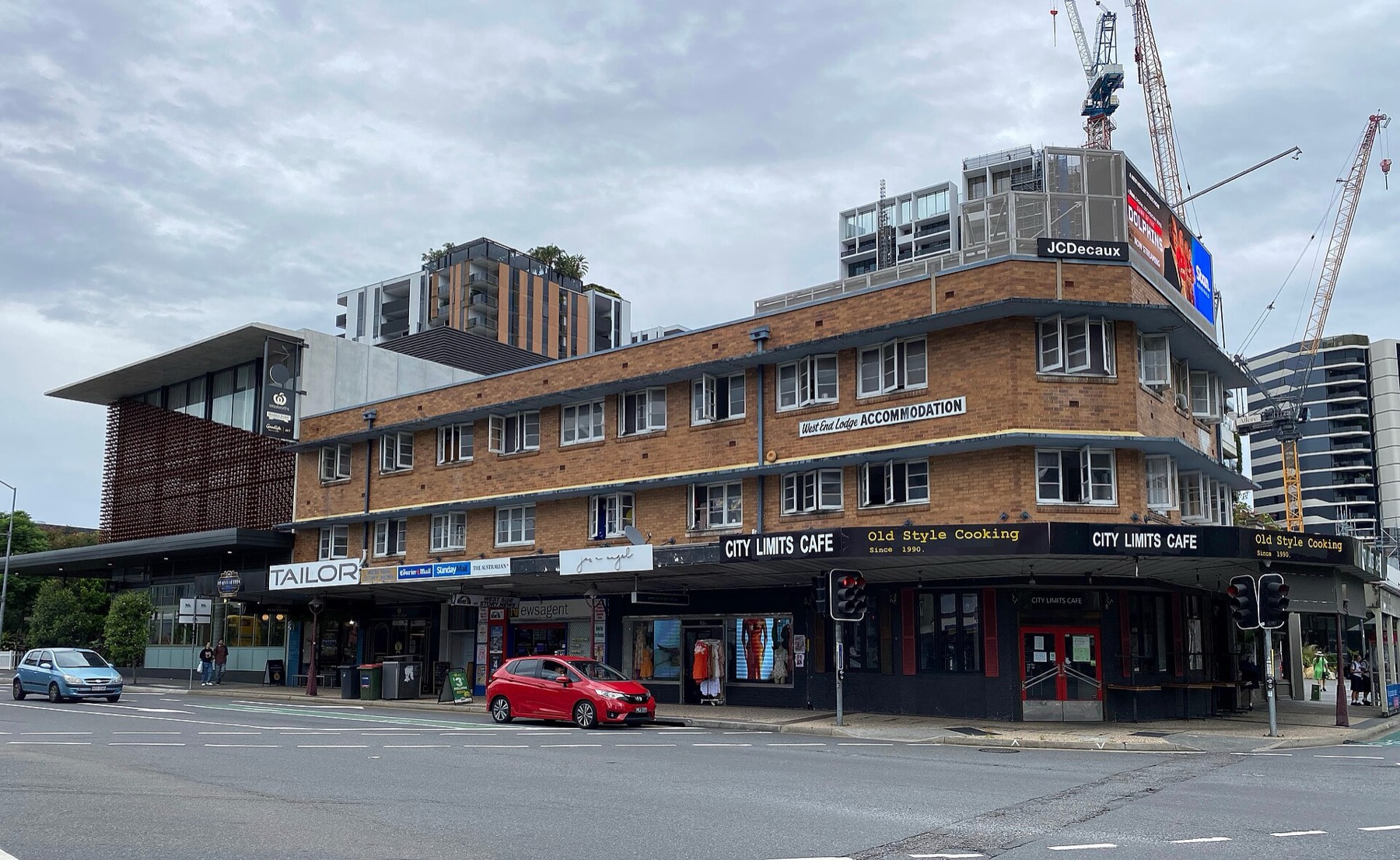
A completely different atmosphere from the polished centre or the wild Valley is offered by the West End neighbourhood, lying on the Kurilpa peninsula. It’s the traditional alternative and multicultural heart of the city, where the influences of Greek immigrants mix with modern hipster culture. The main artery is Boundary Street, full of independent bookshops, vintage stores and street art.
The neighbourhood comes most alive on weekends thanks to the markets. But watch out for older guides — the famous Davies Park Market was recently renamed West End Markets. They take place every Saturday from 6 a.m. to 2 p.m. (in the height of summer they finish at 1 p.m.) and you’ll find over 150 stalls with organic vegetables, handmade jewellery and great street food.
If you’re heading here, definitely don’t drive, parking in the narrow streets is quite limited. Use the buses from the centre instead, which bring you here for the usual 50 cents. The neighbourhood has a slower pace and it’s an ideal place to spend a lazy Saturday morning watching the colourful crowd.
💡 Tip: The West End is also home to the amazing all-vegan restaurant Vegeme (you’ll find it on Melbourne Street). They make absolutely fantastic, honest Asian soups and desserts that people reportedly drive across the whole city for.
15. Eat Street Northshore: where to eat in Brisbane
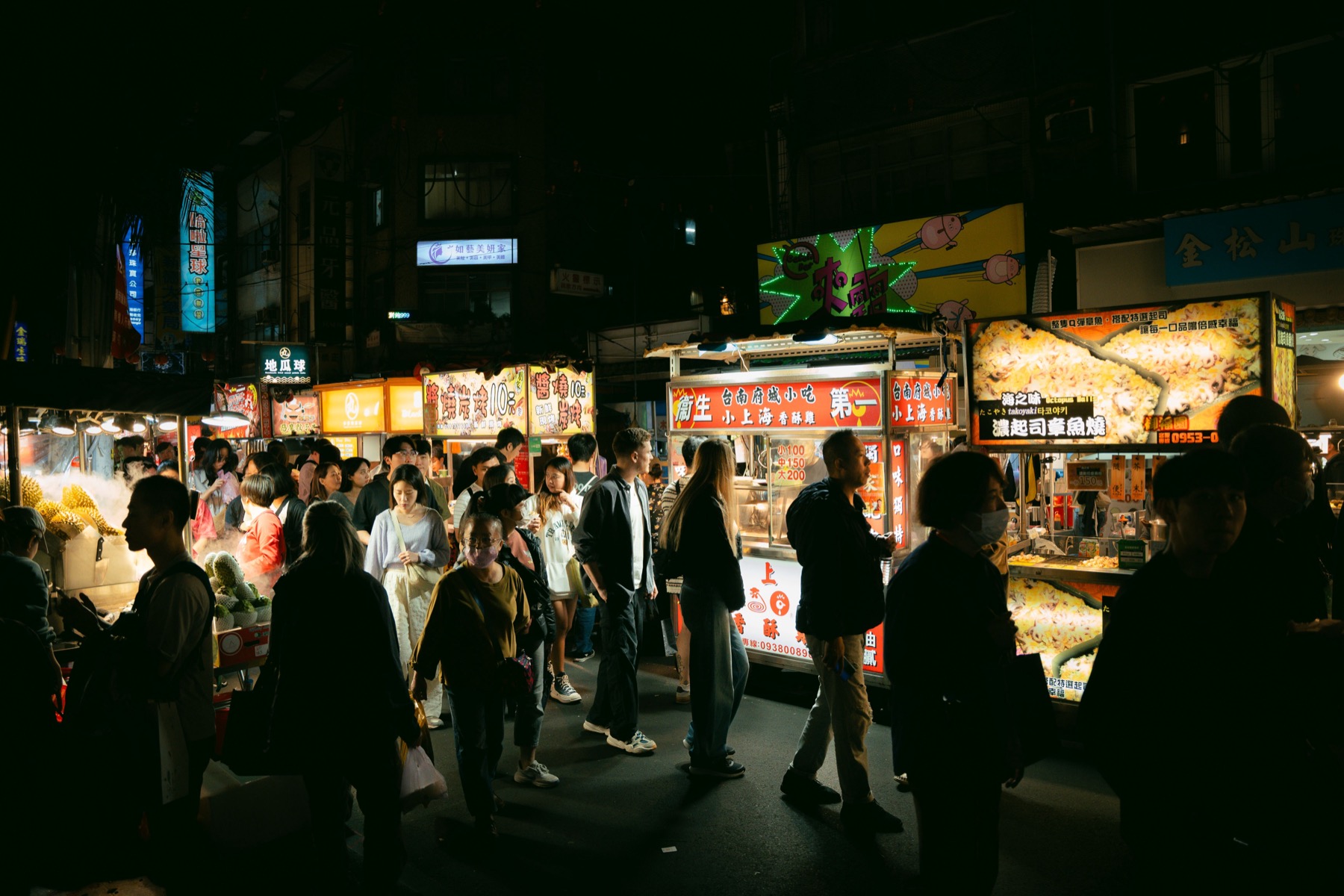
When someone in Brisbane asks you where to go for food in the evening, the suggestion of Eat Street is almost certain to come up. This unique night food market is built from old shipping containers in the Hamilton neighbourhood and forms a huge, colourful maze full of the best world flavours, lights and live music.
The market only operates on weekends, specifically Friday and Saturday from 4 p.m. to 10 p.m., and on Sunday it finishes an hour earlier. You’ll find everything here from fresh Mexican tacos to Japanese specialities to absolutely crazy multi-storey desserts full of candy floss and chocolate. The atmosphere resembles a huge festival more than a classic market.
Admission to the area is around 6 AUD, with children under thirteen entering free. The best way to get here is again by CityCat boat — just get off at the Northshore Hamilton stop and walk a short distance. It’s a great experience and an ideal spot for a group of friends, because everyone will find their own favourite food here.
💡 Tip: Be prepared for it to get really packed here on weekends after sunset. If you don’t like crowds, arrive right at opening at 4 p.m., when you can shop for your food in peace without long queues.
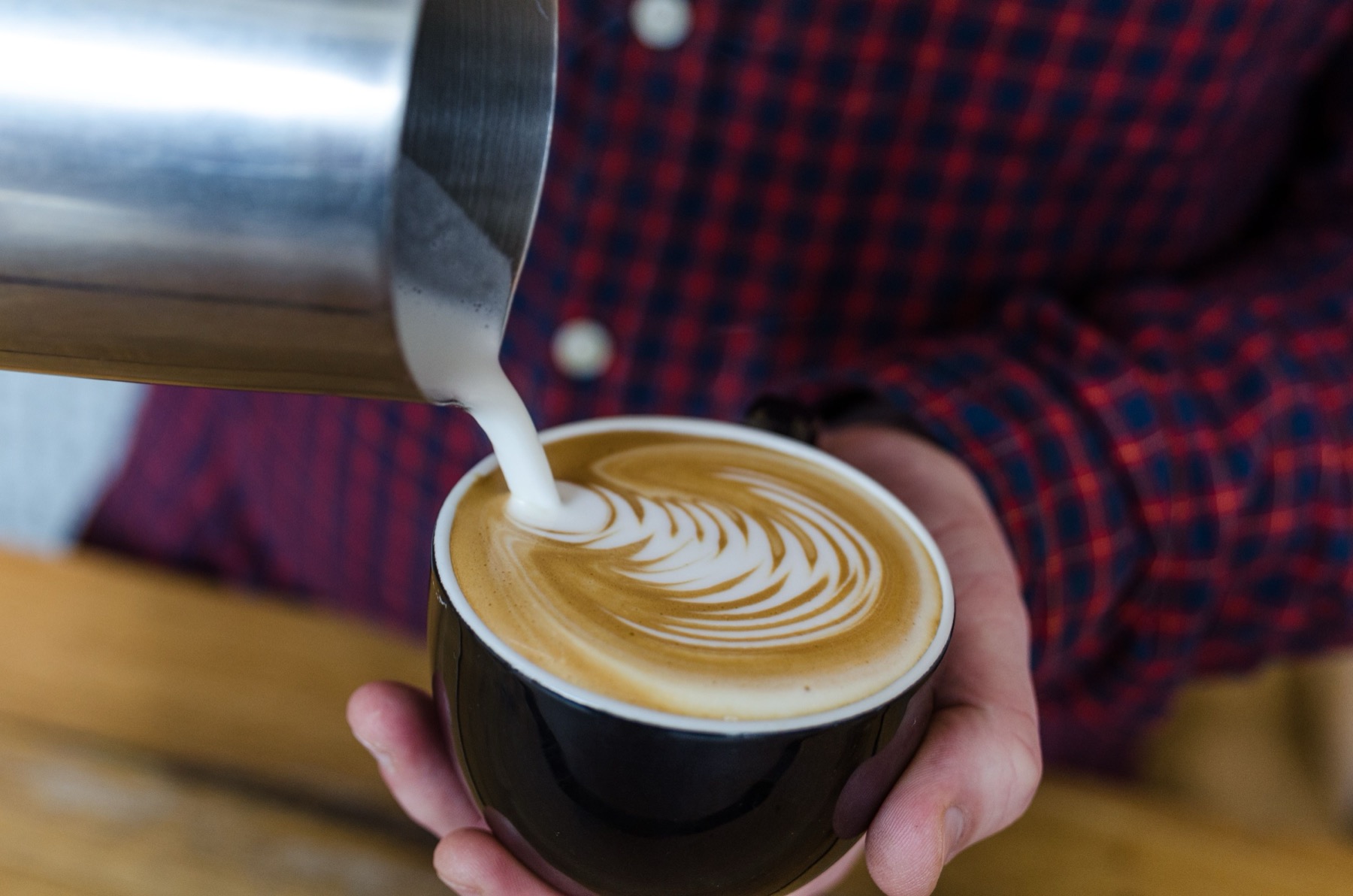
16. Cafés and brunch in Brisbane
Australians take their coffee deadly seriously, and Brisbane is right at the top in this respect: you can get a quality espresso or a perfect flat white on absolutely every corner. Among the biggest legends is the John Mills Himself café, housed right in the centre in a gorgeous brick building from 1917, which turns into a cosy bar in the evening.
For lovers of precise latte art, locals recommend The Hideout Specialty Coffee, which has two locations in the centre. The Coffee Anthology café is also wonderful, as is the innovative Single O in the Newstead neighbourhood, where a unique self-service filter coffee bar operates. And of course, good coffee goes hand in hand with a proper Australian brunch.
An absolute classic in this respect is Mi Casa Cafè near South Bank, where they make the best morning toasts and great pancakes. For lovers of plant-based food, Brisbane is a real paradise. Well worth a try is the bustling Mexican restaurant El Planta in South Brisbane, or the excellent Vega Cafe in Spring Hill, where you get genuinely huge portions of healthy food.
💡 Tip: Cafés in Australia open very early, easily by 6 a.m., but on the other hand many of them close as early as 2 or 3 p.m. So you have to carefully plan your afternoon coffee!
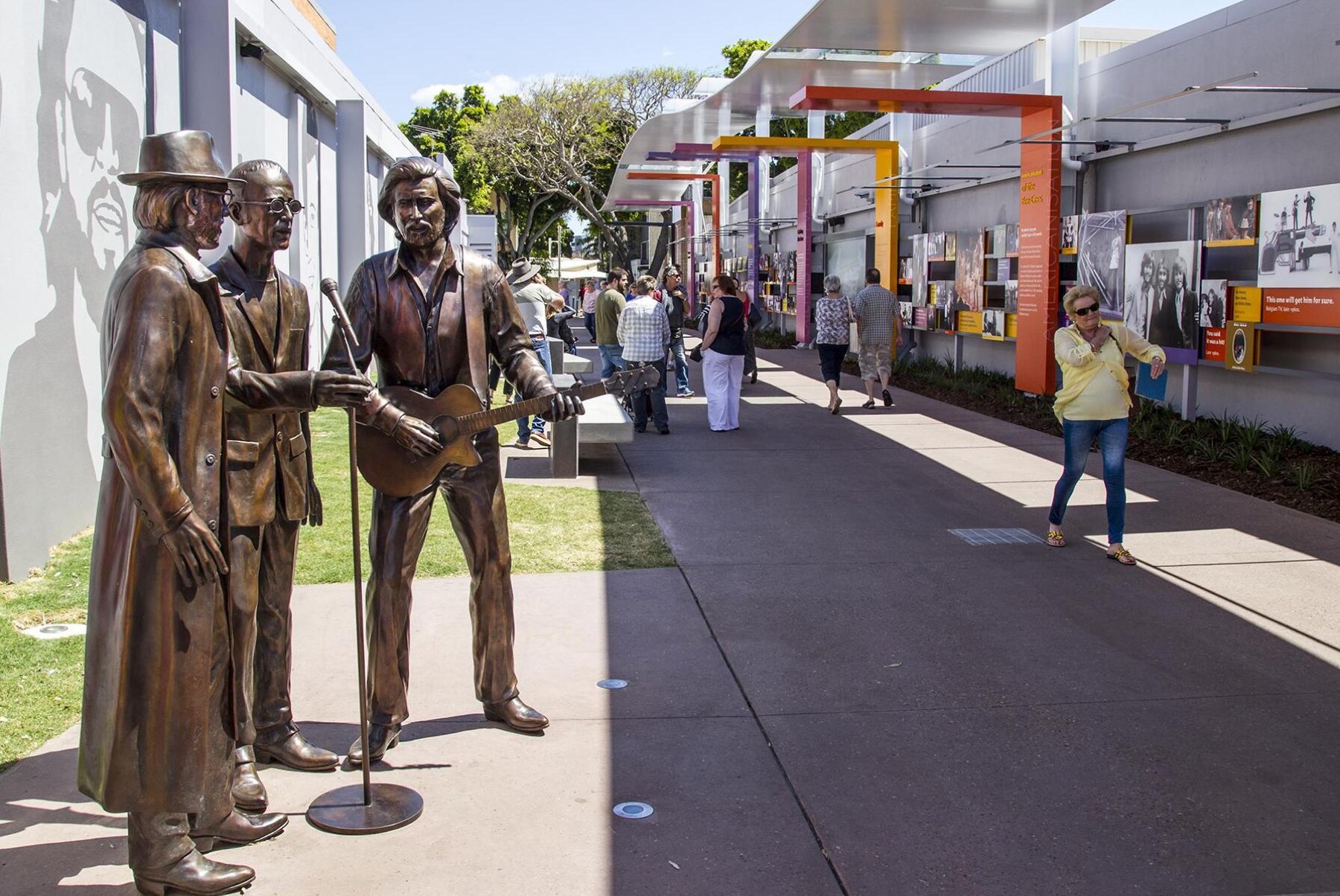
17. Redcliffe and Bee Gees Way
If you’re after an unusual half-day trip from the city, head about 28 kilometres north to the suburb of Redcliffe. This sleepy seaside area hides one huge musical surprise. This is exactly where the famous Gibb brothers grew up, and in 1959 they gave their very first public performance here on the local speedway, from which the legendary band Bee Gees was later born.
The town built a fantastic lane in their honour called Bee Gees Way, a 70-metre-long multimedia promenade that maps out their entire dazzling career. You’ll find life-sized statues of the brothers, more than seventy of their famous album covers, and their greatest hits playing constantly from the speakers. Entry to the promenade is also completely free all day long.
The journey from central Brisbane is very simple. Just hop on the suburban train towards Kippa-Ring and then transfer to a local bus, which thanks to the flat fare costs you again just an incredible 50 cents. You can combine the experience with lunch by the water and a walk along the local long jetty.
💡 Tip: The promenade is beautiful after dark too, when a special light and music show takes place here every evening, radiating that true 1970s atmosphere.
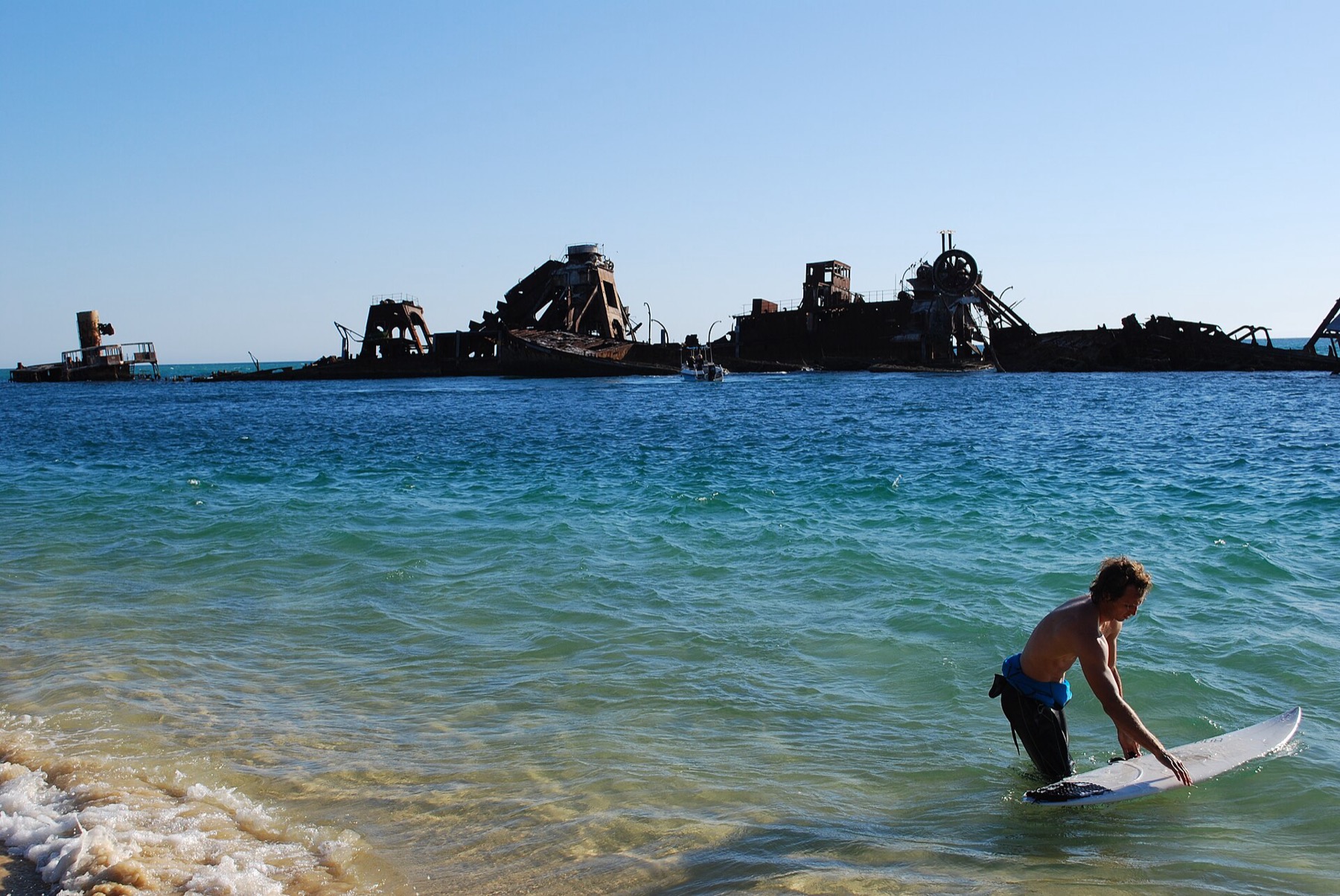
18. Day trip: Moreton Island and the Tangalooma Wrecks
Right across from the mouth of the Brisbane River lies the third-largest sand island in the world, a perfect escape into wild nature. Moreton Island is just a 75-minute ferry ride away and offers absolutely pristine beaches and crystal-clear water. The main attraction here are the Tangalooma Wrecks, fifteen deliberately sunken ships off the coast that today form an artificial reef teeming with colourful fish and corals.
It’s one of the best snorkelling spots in all of Queensland. Day trips by boat from Brisbane start at around 109 AUD for a beach day and around 179 AUD for a package with snorkelling gear. The island is also home to Mount Tempest, reportedly the very highest coastal sand dune in the whole world.
But be very careful about one thing that often disappoints travellers. The famous evening feeding of wild dolphins on the beach is unfortunately reserved exclusively for guests who stay overnight at the resort. Regular day trips return to the city as early as around 4 p.m., while the feeding takes place at sunset. So if you want to see the dolphins, you have to book a hotel on the island.
💡 Tip: Most of the island has no paved roads at all. If you want to explore it on your own beyond the main resort, you’ll absolutely need a reliable 4×4 vehicle and experience driving in deep sand.
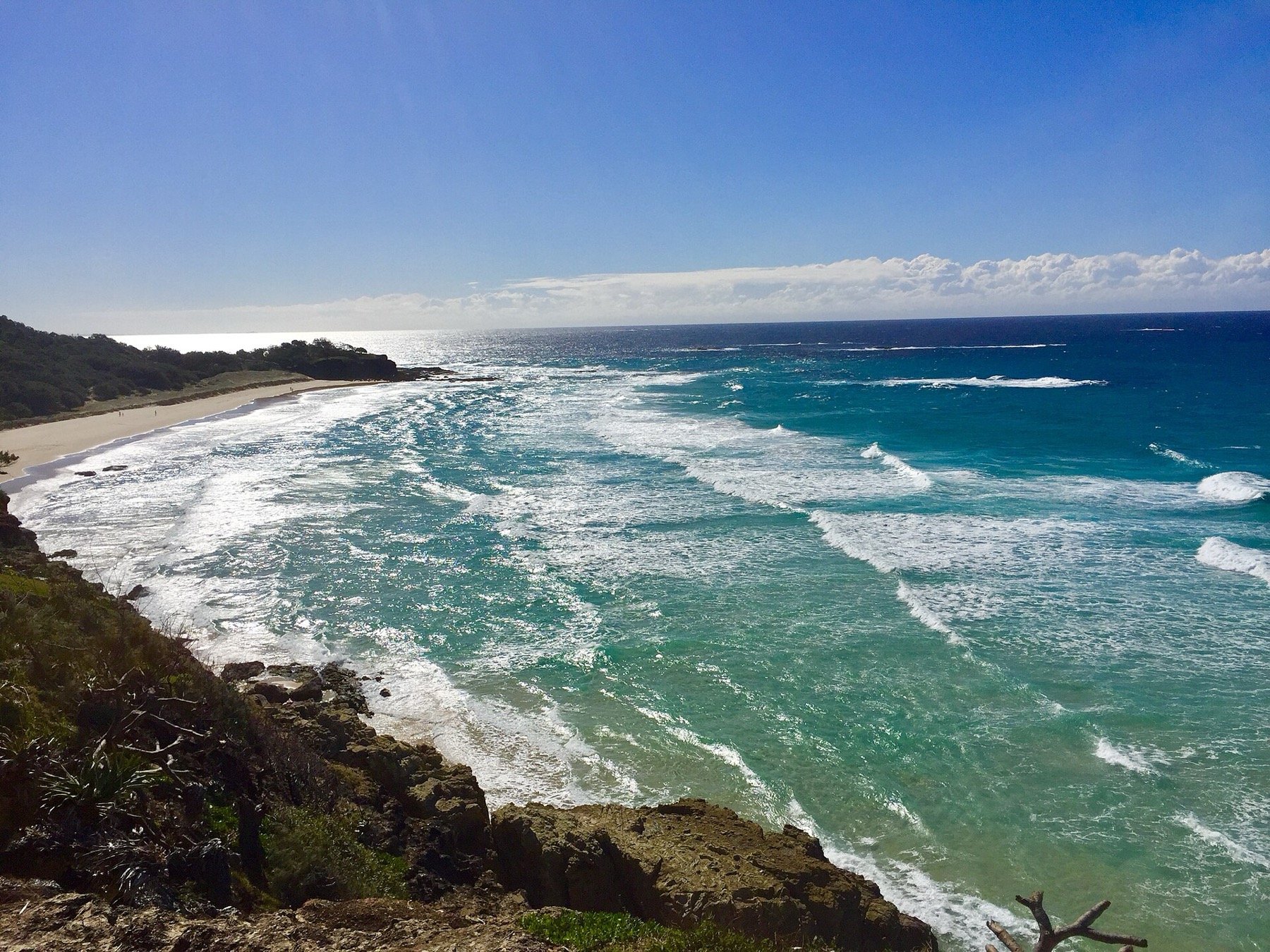
19. Day trip: North Stradbroke Island and whales from the shore
Right next to Moreton lies the world’s second-largest sand island, called Minjerribah, or North Stradbroke Island. Locals affectionately call it simply “Straddie” and it’s reportedly the very best spot for a day-long escape from the bustle of the big city. Getting here is very easy — just take the train to the port of Cleveland and from there catch a water taxi, which runs up to fourteen times a day and the journey takes just 25 minutes (a ticket costs around 13 AUD).
The island’s main magnet is the gorgeous clifftop North Gorge Walk, which is 1.2 kilometres long and offers the most stunning views of the wild ocean. In the period from roughly June to November, it’s an absolutely premium spot for whale watching. Curious humpback whales pass so incredibly close to the coast that you can watch them right from the shore at the Point Lookout viewpoint, without having to pay for an expensive boat cruise.
Besides whales, you’ll come across wild kangaroos on the island, who commonly graze just off the beaches, and divers come here to the Manta Ray Bommie reef to see giant manta rays. It’s a magical place where time has stopped and nature rules at every step.
💡 Tip: A local bus service runs reliably around the island, timed to the ferry arrivals. So you don’t necessarily need to rent a car — the bus will comfortably take you to the main viewpoints and beaches.
20. Day trip: Australia Zoo and the Glass House Mountains
For families with kids and animal lovers, there’s one more must-do trip, roughly an hour’s drive to the north. This is home to the legendary Australia Zoo, made famous by the crocodile hunter Steve Irwin. Today this giant zoo is lovingly run by his family, wife Terri and daughter Bindi, and it’s genuinely one of the best institutions of its kind in the world.
The zoo is renowned for its amazing enclosures and rescue programmes, and the highlight of each day is the thrilling crocodile show in the huge arena. Admission is fairly high — in 2026 an adult pays around 77 AUD, a child 52 AUD, and a family ticket comes to 229 AUD — but the whole area is so vast and packed with programme that you’ll easily spend a whole day here. It’s open daily from 9 a.m. to 5 p.m.
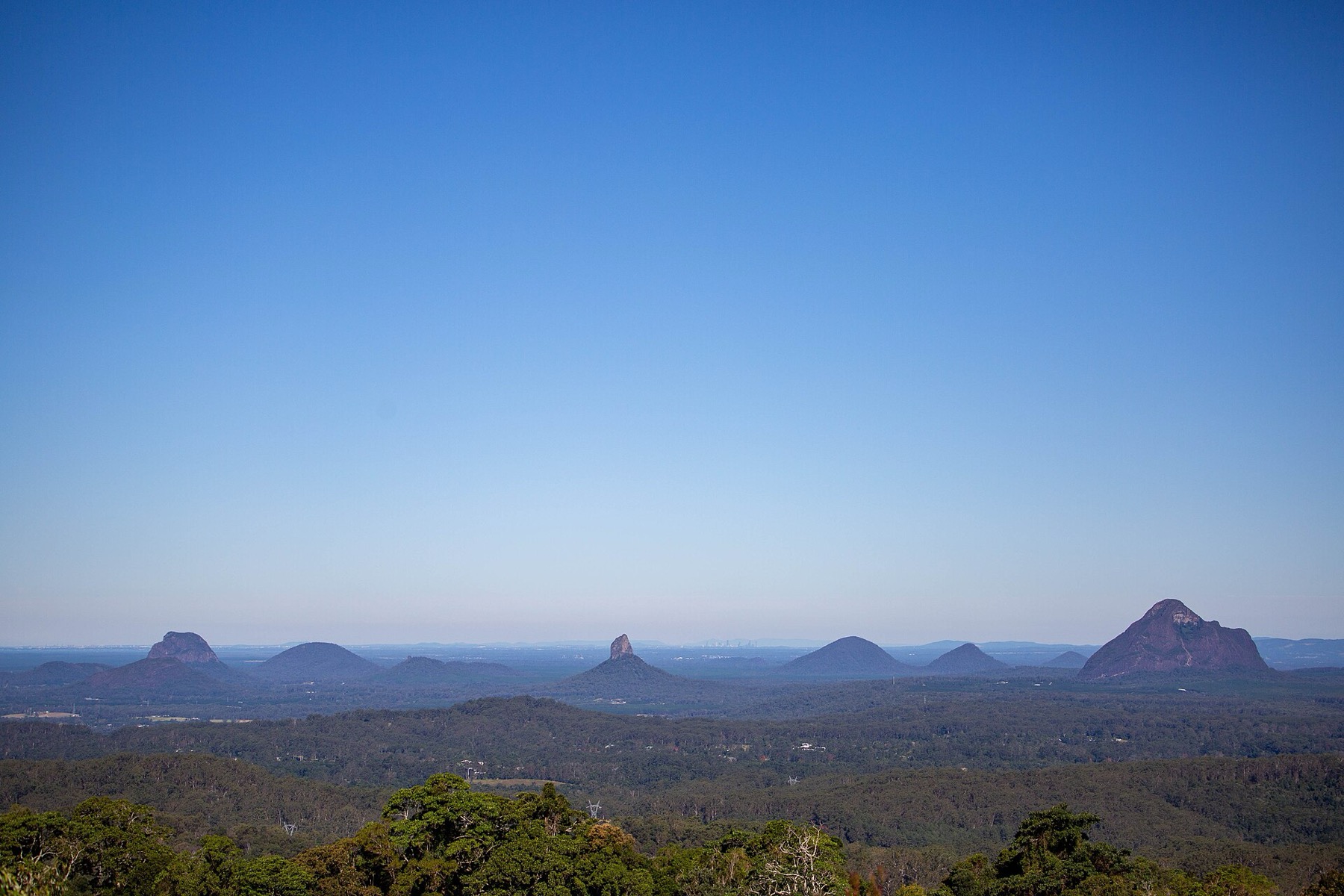
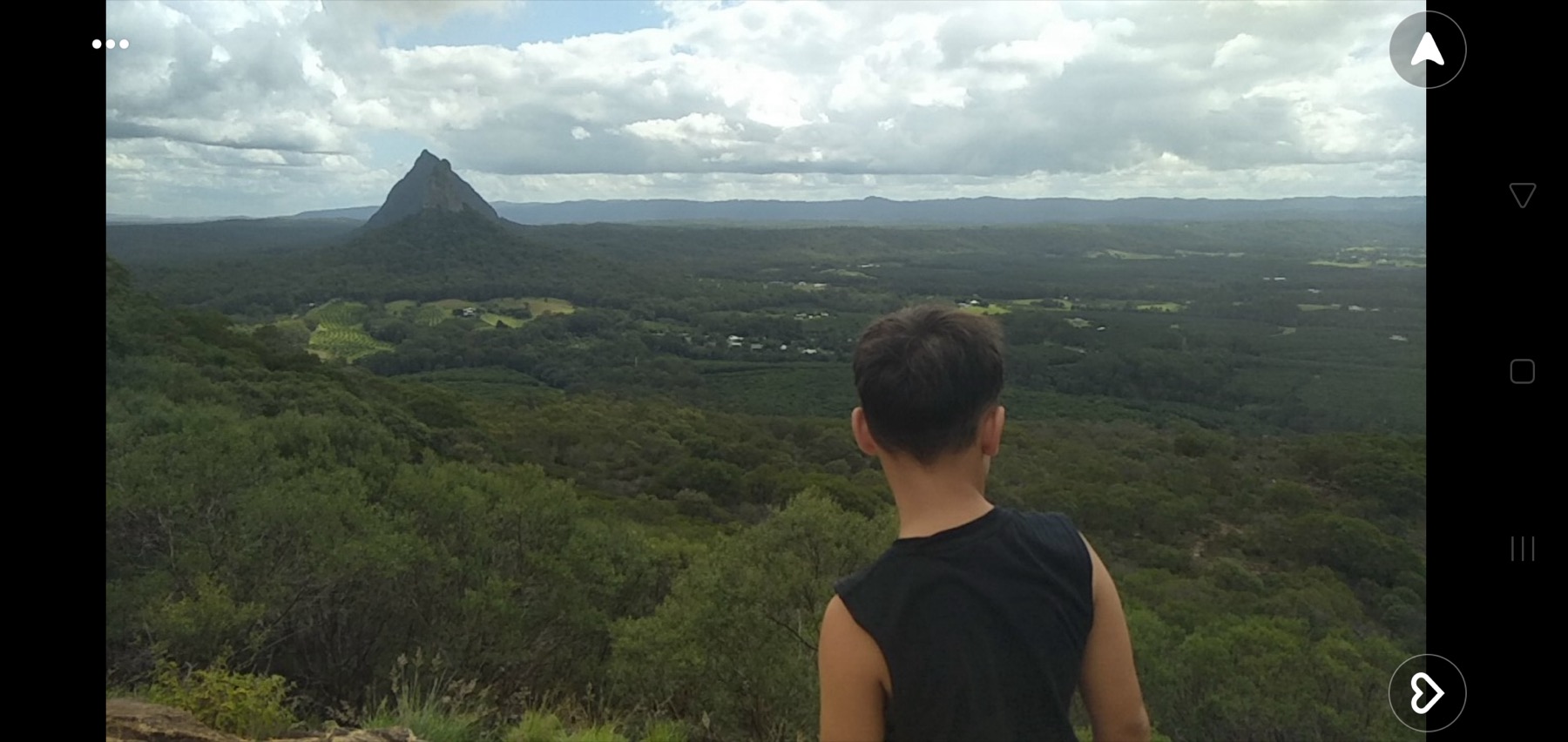
On the way back to Brisbane, be sure to stop at the mystical volcanic plugs called the Glass House Mountains. These peculiar mountains were named back in 1770 by Captain James Cook, because they reminded him of the glass furnaces in his native Yorkshire. Entry to the national park is free, and the shorter climb up Mount Ngungun is manageable even for a moderately fit traveller, rewarding you with fantastic views over the countryside.
💡 Tip: If you drive to the zoo, set off really early in the morning so you catch the morning feedings and avoid the worst of the heat. Download the map with the show times in advance so you don’t miss anything.
Where to go next from Brisbane
Thanks to its location and excellent airport, Brisbane is an absolutely fantastic springboard for the rest of the continent. If you’ve already covered the beaches around the Gold Coast, you can head north to the calmer Sunshine Coast and the beautiful surfing area of Noosa, where koalas live free in the national park. For a relaxed hippie atmosphere, then head just across the state border to the famous Byron Bay.
If you’re planning a longer journey across Australia, people often continue on from Brisbane by domestic flights to other cities. The west coast has a completely different, much rawer and more remote atmosphere, for which you can prepare thanks to our guide: Perth, Australia: 18 things to see and do. If you’re considering exploring the most beautiful beaches of the west, get inspired in the article Western Australia: a road trip itinerary.
Australia is simply enormous, and to explore it, it pays to have a car or a campervan. You’ll find plenty of practical information on visas and prices here: Road trip around Australia: visas, routes, prices. And if you’d like to experience a completely different kind of big city after Brisbane, read the article Sydney, Australia: 31 things to see and do. And don’t forget that flights from Europe often go via an amazing Asian metropolis, see Singapore holiday: 21 things to see and do.
And if you’re only just putting together your whole route around Australia, start with our big overview Holiday in Australia: 30 most beautiful places + practical tips. Lovers of coffee and culture then shouldn’t miss the guide Melbourne, Australia: 23 things to see and do.
Frequently asked questions
Before you start packing your bags and buying plane tickets, let’s quickly sum up the most important things. We’ve picked the very most common questions you ask before a trip to subtropical Brisbane, so you have all the practical tips neatly together and nothing catches you off guard on the spot.
How many days do I need for Brisbane?
For the city centre itself and the main sights, two days will be plenty. Three days is the ideal sweet spot, giving you time to enjoy the city at a relaxed pace and visit the koalas at Lone Pine. However, if you’re planning trips to Moreton Island or Australia Zoo, set aside at least four to five days.
Is Brisbane an expensive city?
Australia in general isn’t a budget destination, but Brisbane is significantly better value than its more famous neighbours. The cost of living here is on average 15 to 19% lower than in Sydney. Your travel budget also benefits massively from the permanent 50-cent fare on all public transport and free entry to the main galleries and botanical gardens. Interestingly, dining at traditional restaurants here is comparable to, or even slightly more expensive than, Sydney.
When is the best time to visit?
The most ideal weather is during the so-called shoulder seasons, from March to May and from September to November. Days are bathed in sunshine and humidity drops. Winter in July and August is also excellent, when daytime temperatures hover around a lovely 22 degrees, which is absolutely perfect for walking tours. Summer (December to February) is completely unsuitable due to extreme humidity and frequent tropical storms.
Can you swim directly in the Brisbane River?
Absolutely do not try it and I wouldn’t recommend it! The river has very murky water and is home to over five hundred dangerous bull sharks, which during floods sometimes even make their way into flooded streets. For safe swimming, use exclusively the free artificial beach Streets Beach right in the centre on South Bank, which is supervised by lifeguards.
What’s the best way to get from the airport to the city centre?
The fastest connection is the private Airtrain, which takes you to the centre in about 22 minutes. A one-way ticket costs around 20 AUD (when purchased online for two or more people, the price drops to 17 AUD per person). The cheap city fare does not apply to this train. If you’re travelling as a family or larger group, a regular taxi or services like Uber may already work out better value.
What exactly is the 50-cent fare?
It’s a permanent government measure that introduced a flat fare of 50 cents (approximately €0.30) for absolutely all trips on public transport in the Translink network. Whether you’re travelling on the modern CityCat catamaran on the river, the metro in the centre, or a suburban train to a distant suburb, you always pay just this token amount. You simply need a regular payment card and tap on when boarding and tap off when alighting.
Should I stay in Brisbane or go straight to the Gold Coast?
If you want to experience both places, I recommend splitting your stay. Commuting daily from Brisbane to the coast and back (even though the train costs only 50 cents and takes about an hour) will cost you a lot of precious time and energy. Stay three to four nights in the city, enjoy the culture and cafés, and then move for the next few days directly to the ocean.
What can you do in Brisbane with children?
The city is made for families. The absolute must is the artificial beach Streets Beach and the huge free children’s playgrounds in the parklands on South Bank. The Queensland Museum with its dinosaur exhibitions is also excellent, as is a ride on the CityCat ferry on the river. For excursions, the clear winner is the Lone Pine sanctuary or a full-day trip to the famous Australia Zoo.
Is the Lone Pine sanctuary worth it?
Absolutely yes, it’s the oldest and largest koala sanctuary in the world. Just be aware that from July 2024, you can no longer cuddle a koala in your arms for animal welfare reasons. Instead, they’ve introduced so-called “Koala Moments,” where you can gently stroke the animal and take a photo with it. Besides that, there’s also a giant mob of kangaroos roaming freely that you can hand-feed, which is a fantastic experience in itself.
How will the 2032 Olympics affect the city?
The city is undergoing massive construction transformation. New metro lines are being built (Cross River Rail) and major stadium redevelopments are planned. Currently generating the most emotion and protests is the planned Olympic stadium at Victoria Park, which is set to be built in the historic 160-year-old park, which is also a sacred site for the Indigenous Turrbal people. If you want to see Brisbane in its current laid-back form, now is the perfect time to go, before the city changes beyond recognition.
Tips and Tricks for Your Vacation
Don’t Overpay for Flights
Search for flights on Kayak. It’s our favorite search engine because it scans the websites of all airlines and always finds the cheapest connection.
Book Your Accommodation Smartly
The best experiences we’ve had when looking for accommodation (from Alaska to Morocco) are with Booking.com, where hotels, apartments, and entire houses are usually the cheapest and most widely available.
Don’t Forget Travel Insurance
Good travel insurance will protect you against illness, accidents, theft, or flight cancellations. We’ve had a few hospital visits abroad, so we know how important it is to have proper insurance arranged.
Where we insure ourselves: SafetyWing (simple monthly subscription) and TrueTraveller (for extra-long trips).
Find the Best Experiences
Get Your Guide is a huge online marketplace where you can book guided walks, trips, skip-the-line tickets, tours, and much more. We always find some extra fun there!


