

It often isn’t a child’s behaviour at the airport that ruins a long-awaited family holiday, but missing documents. Every child needs their own travel document from birth, and having them listed on a parent’s identity card is no longer enough for international travel.
Different surnames for the mother and child are particularly likely to cause problems at the border. Although written consent from the other parent is not universally mandatory within the European Union, individual countries and airlines may still request it at random.
In this article, I’ll explain exactly when you need child travel consent and how to write it correctly, including having the signature certified. You’ll also find the rules for selected countries, as well as information about the validity of children’s passports and identity cards.
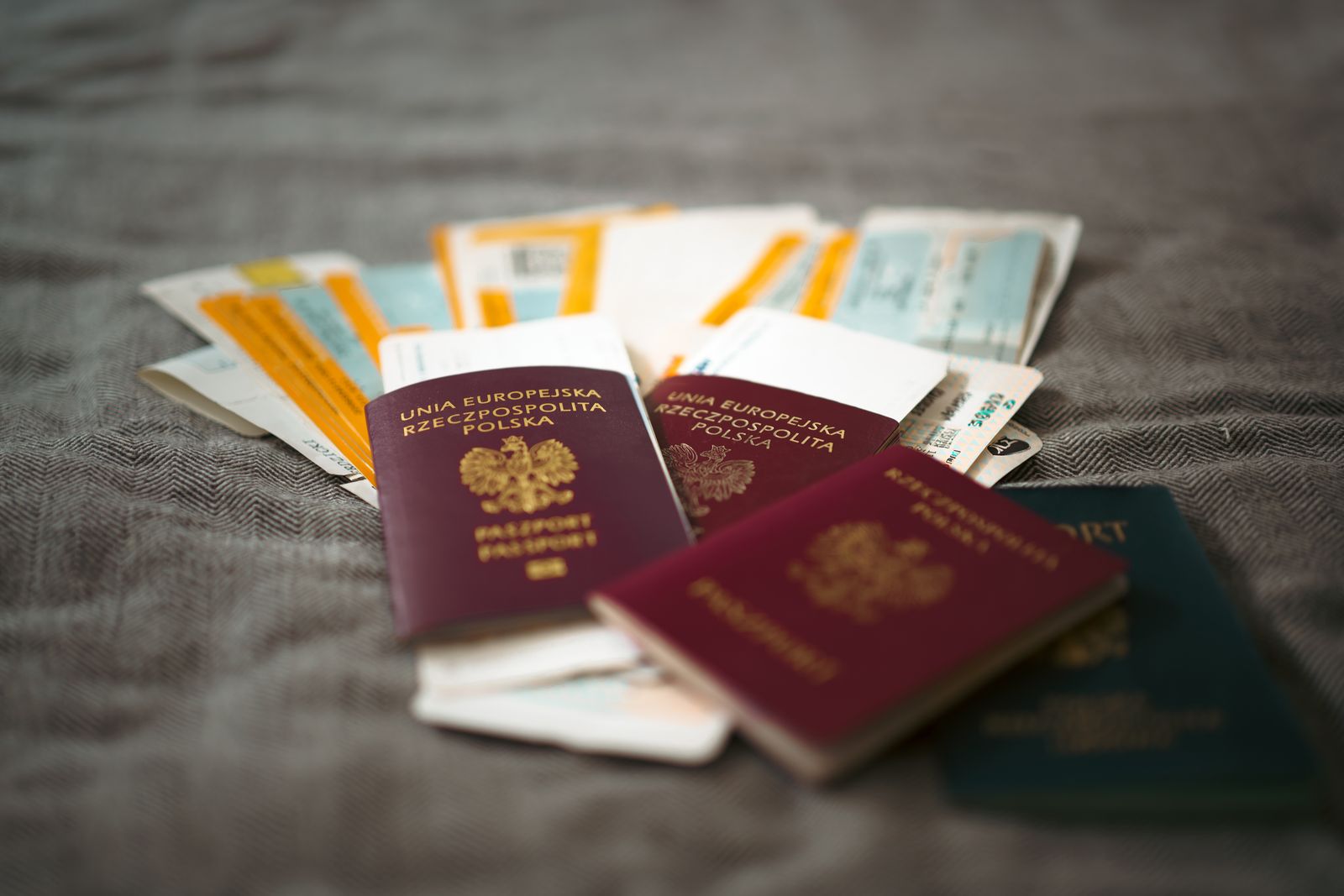
TL;DR
- Every child must have their own document, including a newborn who was born just a week ago. Adding children to their parents’ passports has not been valid for a long time.
- Your child should still look like their photo, otherwise passport control can become a major problem. A significant change in a toddler’s appearance is a legitimate reason to replace the document.
- Child travel consent is not universally mandatory throughout Europe, but authorities and airlines strongly recommend it when a child is travelling with only one parent or with grandparents.
- If the mother and child have different surnames, it is worth carrying a copy of the birth certificate just in case.
- The EES starts on 10 April 2026, and children under 12 will not have their fingerprints taken; only a photograph will be recorded.
- ETIAS is expected in the fourth quarter of 2026. It will be free for children under 18, but each child must have their own application.
- Always check passport validity for exotic destinations and countries such as Egypt. It is often required that the passport remain valid for six months after your return.
10 Things You Need to Know About Child Travel Consent and Documents
Now let’s look at what you shouldn’t forget.
1. When an Identity Card Is Enough and When You Need a Passport
💡 Tip: There is now one completely non-negotiable rule: every child crossing an international border must have their own travel document. The options then depend entirely on where you are flying with your family.
For travel within the European Union and the Schengen Area, a child’s identity card is usually all you need. It is considerably cheaper and quicker to arrange. It’s an ideal solution if you’re flying with a toddler to a beach in Greece or Spain, or taking a long weekend in Italy.
As soon as you leave the Schengen Area, however, your child needs a full passport. This is where many parents fall into their first administrative trap. People often forget that children’s documents are valid for much less time than adults’ documents because children’s appearance changes so quickly.
When travelling to more exotic destinations or popular resorts in Turkey, you’ll come up against strict validity requirements. If you’re travelling with a preschooler whose passport expires in two months, airline staff may not let you board at all. Airlines check document validity during check-in.
2. Beware of Your Child’s Changing Appearance in the Photo
💡 Tip: This is one of those details that can cause completely unexpected complications. The law is clear: the document holder must look recognisable in their document photo, which can be a real challenge with fast-growing children.
Imagine taking your first flight with a tiny baby and getting their passport when they are two months old. In the photo, they are a sleeping, bald bundle who looks like practically every other baby in the world. The passport may technically remain valid for several years, but reality can be very different.
When you fly with the same child at two and a half, they are a curly-haired, energetic toddler with completely different features. Sometimes a family is simply refused boarding because the child no longer resembles the photo. The border officer has no way to verify that it is the same child.
A significant change in appearance is an entirely legitimate legal reason to replace a document, even if the old one is still technically valid. If you tell the authorities that you want a new passport because your child’s appearance has changed, they are familiar with the situation and should process the request without a problem. Don’t leave it until the last minute, though—the old passport becomes invalid when you apply for the new one.
3. Getting a Passport for a Baby and Expedited Processing

💡 Tip: Many parents only start arranging a baby’s passport after they have bought their flights and there are just a few weeks left before departure. This is definitely something you shouldn’t put off—go to the relevant authority as soon as you have the birth certificate.
If you discover at the last minute that a passport has expired or a document is missing, there is an emergency option in the form of expedited processing. A passport can be issued within five working days, or even urgently within 24 hours.
Be prepared, however, that an urgent passport comes with a fairly substantial additional fee. Administrative details and fees may also change, so always check the current information and exact deadlines directly on the official government website.
Passports issued within 24 hours may also only be collected from the central government office in the capital, which can create another logistical and financial nightmare for a family from the other side of the country. Try to avoid this stress by planning well in advance.
4. When Is Child Travel Consent Really Necessary?
💡 Tip: We’ve reached the topic that raises by far the most questions and panic. General guidance from the authorities indicates that child travel consent is not always universally mandatory, but it is very strongly recommended.
Whether you’re flying alone with your child for a weekend or the father is taking the children to the seaside while you stay at work, border officials may actively ask where the other parent is. This is a precaution designed to prevent international child abduction.
If your children are travelling on holiday with grandparents or another accompanying adult, written consent from both legal guardians is the best protection against a ruined holiday. It always depends on the specific country and on what the border official requires.
Search data shows that around 1,410 parents search for child travel consent every month in the Czech market. This is not unique to one country—parents in Poland and the Netherlands deal with similar questions too. It is better to carry one extra piece of paper than to end up arguing with border guards.
5. A Consent Form Template and Certified Signatures
💡 Tip: If you decide to prepare child travel consent, it needs to include the right details; otherwise, it may be useless. You can download a suitable template directly from your foreign ministry’s website, where it is often available in two languages.
The document must clearly and accurately identify everyone involved. Include the child’s first name, surname and date of birth, and especially the number of the current travel document they will actually use for the journey.
You should carefully include the same details for the accompanying adult—their name, date of birth and document number—whether that person is you, your partner or the child’s grandmother. The form should also state the exact destination and specific travel dates.
Always deal with the document’s language and whether the signature must be certified according to the destination country’s requirements. As a general precaution, however, it is strongly recommended to have the absent parent’s signature officially certified, for example by a notary or another authorised certification service. This gives the document the necessary official weight.
6. Divorced Parents and Different Surnames

💡 Tip: This is an extremely sensitive area and one that causes some of the most difficult situations at airports. Unless you have sole custody of the child under a court order, it is strongly recommended that you carry written consent from the other parent.
It is also very common for a parent and child to have completely different surnames. The mother may keep her maiden name, or the parents may not be married and the little traveller may have the father’s surname.
At the airport, a woman named Nováková may then present the passport of a small child named Dvořák. At first glance, the border officer has no obvious proof that the two are related, which can lead to a series of uncomfortable questions.
In this situation, in addition to the father’s consent, it is strongly recommended that you carry an ordinary copy of the child’s birth certificate, clearly showing you as the mother. It is the simplest way to prove the family relationship to an official within a few seconds.
7. Document Validity and the Six-Month Rule
💡 Tip: Many parents assume that as long as the date on their passport has not passed, they can fly anywhere without worrying. Some countries require what is known as extended remaining passport validity, which can catch you unpleasantly off guard.
Typical examples include popular holiday destinations such as Egypt and Turkey. It is often required that the passport remain valid for at least six months after your planned return home from your holiday.
Always check this specific requirement well in advance for your particular destination, ideally on an official government website. Airlines are strict about this and may not even let you reach the gate if their system decides that the passport is not valid for long enough.
For children, this rule is trickier because their passports are issued for a considerably shorter period than adult passports. The validity period passes in no time, and suddenly you may find that although the passport is technically valid, you still won’t be allowed to board a flight to Hurghada.
8. New Bureaucracy: The EES from April 2026

💡 Tip: 2026 brings major changes to international travel, so if you’ve been flying for years, pay close attention. On 10 April 2026, the European Union is launching the fully operational EES (Entry/Exit System), a biometric registration system for border crossings.
According to the available information, the EES primarily affects non-EU nationals, so nothing major changes for ordinary EU families travelling within the Schengen Area. The main impact will be on families whose members include people from outside the EU.
The good news for parents affected by the system is that registration is completely free and does not require an application in advance. Everything takes place physically at the border desk during passport control.
The reassuring rule is that children under 12 will not have their fingerprints taken in the EES. While adults must provide fingerprints at the border, younger children will only have a facial photograph taken and their passport details scanned.
9. The ETIAS Electronic Travel Authorisation at the End of 2026
💡 Tip: Another major administrative change is the ETIAS system, whose full launch is expected in the fourth quarter of 2026. It is essentially similar to the US ESTA system: an electronic travel authorisation for travelling to Europe.
Here too, the system primarily targets travellers from non-EU countries, so its effect on EU citizens will be indirect. If someone in your family holds citizenship outside the European Union, however, you will need to deal with it.
One very important ETIAS rule is that every child must have their own completed application, even a newborn who is only a few days old. Children cannot simply be added to a parent’s application as an extra.
The fact that ETIAS is completely free for children under 18 does not mean that they are exempt from the bureaucracy. The form must be completed carefully for every member of the family in advance, otherwise problems may begin when you board the plane.
10. Unaccompanied Children and Flying Alone with Grandma
💡 Tip: When you send your child to the seaside with their grandmother or aunt, the logistics change slightly. Airlines themselves usually have no problem with children travelling with another accompanying adult, but they always refer passengers to the destination country’s requirements.
The key is to give the accompanying adult the right paperwork: written consent from both legal guardians for the child to travel. Once again, it is recommended that you have the signatures officially certified and ideally prepare the document in two languages.
If the child is flying completely alone, an Unaccompanied Minor service may be available. Smartwings allows children aged 6 to 11 to fly alone, but you must book the service 48 hours in advance, pay the adult fare and bring five copies of a special form.
Popular low-cost airlines have different rules. Airlines such as Ryanair, Wizz Air and easyJet do not offer an unaccompanied-minor service at all. With these airlines, a child may only fly alone without an adult once they have turned 16.
Practical Summary and Indicative Costs
To make everything as clear as possible, I’ve prepared tables showing how the rules change according to age and destination. Authorities update the rules frequently, so use this as a basic guide and check the details on the relevant ministry’s website before departure.
Which Document Does Your Child Need for Each Destination?
| Type of journey and destination | Document your child needs | Is consent from the other parent recommended? |
|---|---|---|
| :— | :— | :— |
| Schengen Area (Spain, Greece, Italy…) | Child’s identity card (or passport) | Yes, if only one parent is travelling |
| Outside Schengen in Europe (United Kingdom…) | Passport | Yes, very strongly recommended |
| Exotic destinations and selected countries (Egypt, Turkey) | Passport often valid for six months after return | Yes, absolutely essential, plus a copy of the birth certificate |
| Child travelling with grandparents / aunt | According to the destination (identity card or passport) | Yes, consent from both parents |
Key Ages for Travel Bureaucracy and Documents
| Child’s age | What changes bureaucratically and what to watch out for |
|---|---|
| :— | :— |
| 2 years | The child is no longer an infant, must have their own seat and pays for a ticket. |
| 6–11 years | The age range when the paid Unaccompanied Minor service can be used with Smartwings. |
| 12 years | From this age, the new EES system will require fingerprints from April 2026. |
| 16 years | The key age for low-cost airlines (Ryanair, Wizz Air)—the child may now fly completely alone without an adult. |
| 18 years | Free ETIAS authorisation ends (from the end of 2026). |
What to Read Next
If you’re preparing for your first flight with little travel companions, take a look at our other practical guides. They’ll save you plenty of stress:
- Flying with children: a complete guide
- Where to sit with a child on a plane
- Taking a pushchair on a plane
- What you can and cannot take on a plane
- Croatia with children
- Rome with children
Frequently Asked Questions
Can my child have their details entered in my passport?
Absolutely not. This practice was discontinued many years ago. Today, every child, including newborns, must have their own travel document (ID card for Schengen or passport for the rest of the world). At the border, you’d be turned back without compromise if your child doesn’t have their own document.
How much does a passport for a baby cost and how long does it take to process?
Prices and processing times vary by country, so always check with your national authority. Standard processing typically takes up to 30 days, and fees for children under 15 are usually lower than for adults. Expedited processing (around 5 business days) or express (24 hours) may be available, but you’ll pay significantly more for the speed.
Do I need a travel consent form if I’m flying alone with my child for a weekend?
It’s not universally mandatory within the EU, but authorities strongly recommend it. It depends on the specific border officer you encounter. To avoid unpleasant questioning and having to prove you’re not abducting the child, it’s much safer to have that one piece of paper with the notarized signature of the other parent with you.
What should I do if my surname is different from my child’s?
This is a completely normal situation, but it can raise suspicion at passport control. The best solution is to carry a simple copy of your child’s birth certificate, which clearly lists you as the mother. It’s quick and indisputable proof of your family relationship that will immediately reassure the border officer.
Does the new EES system from April 2026 affect us when traveling around Europe?
If you’re an EU citizen traveling within the Schengen area (for example to Spain, Greece, or Italy), the EES system won’t affect you at all. It’s primarily intended for third-country nationals. The change would only apply if you had a family member with citizenship outside the European Union.
Can I fly alone with two children under two years old?
This is a very strict safety rule: only one infant on lap is allowed per adult. The reason is the number of oxygen masks above the seats. If you’re a solo parent with two children under two, you must either bring another adult (usually over 16), or purchase a separate seat for the second child and bring a certified car seat. ⚠️ Always sort this out directly with the airline before booking!
Will they accept a photo of the travel consent form on my phone at the airport?
Relying on a photo on your phone is a huge risk and officially not recognized by authorities. Border guards often require the original document with a notarized signature (for example from a notary public or authorized office). Always get the physical paper and keep it with you in your hand luggage along with your passports.
Tips and Tricks for Your Vacation
Don’t Overpay for Flights
Search for flights on Kayak. It’s our favorite search engine because it scans the websites of all airlines and always finds the cheapest connection.
Book Your Accommodation Smartly
The best experiences we’ve had when looking for accommodation (from Alaska to Morocco) are with Booking.com, where hotels, apartments, and entire houses are usually the cheapest and most widely available.
Don’t Forget Travel Insurance
Good travel insurance will protect you against illness, accidents, theft, or flight cancellations. We’ve had a few hospital visits abroad, so we know how important it is to have proper insurance arranged.
Where we insure ourselves: SafetyWing (best for everyone) and TrueTraveller (for extra-long trips).
Why don’t we recommend any Czech insurance company? Because they have too many restrictions. They set limits on the number of days abroad, travel insurance via a credit card often requires you to pay medical expenses only with that card, and they frequently limit the number of returns to the Czech Republic.
Find the Best Experiences
Get Your Guide is a huge online marketplace where you can book guided walks, trips, skip-the-line tickets, tours, and much more. We always find some extra fun there!


