

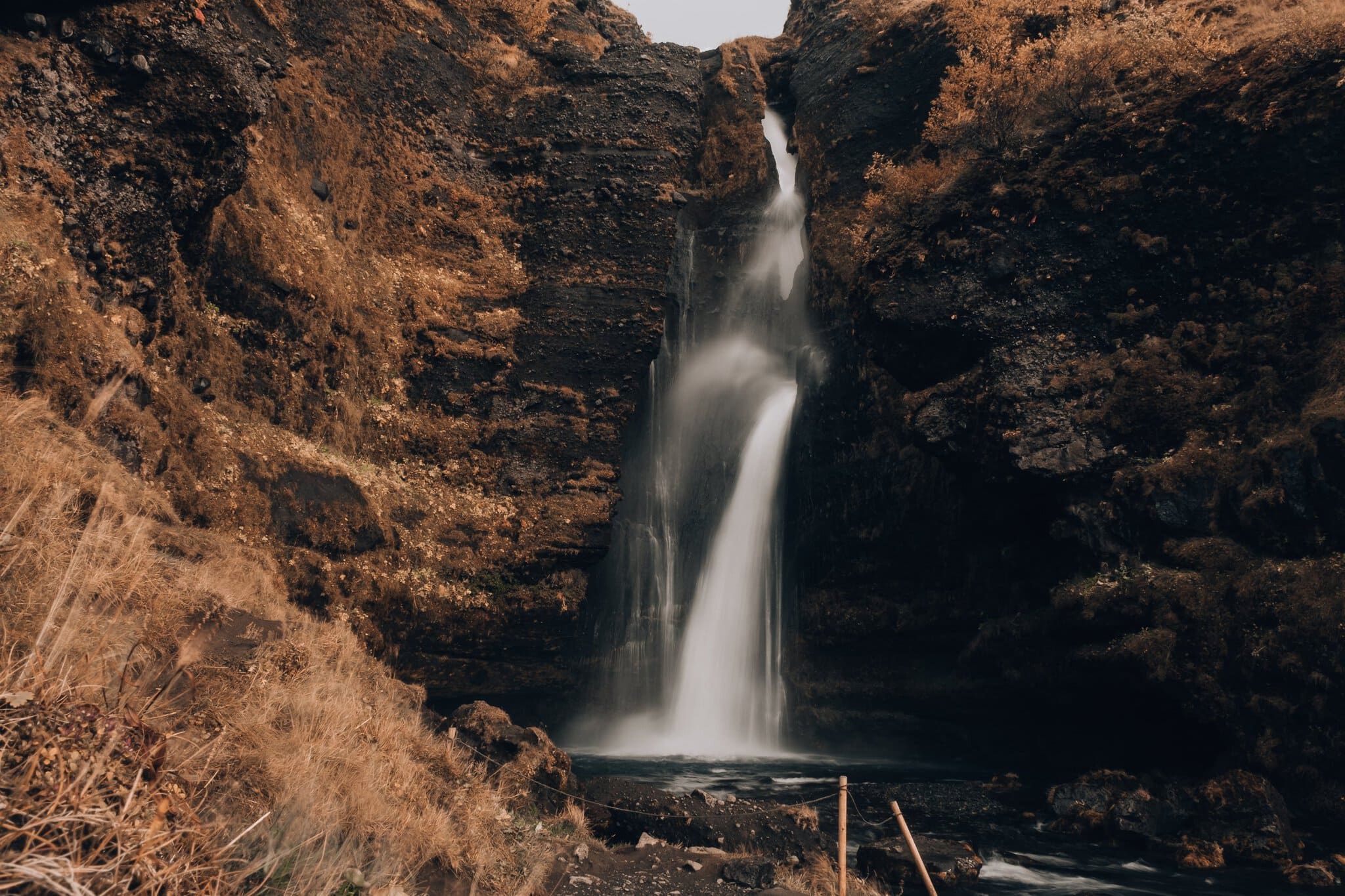
The first time Luke and I stood behind the roaring water curtain of Iceland’s Seljalandsfoss, it completely floored me. The air was utterly saturated with icy spray, we couldn’t hear a word over that incredible thunder, and within seconds we were soaked to the bone. But that feeling of pure connection with untamed nature was worth every drop running down our necks. It’s exactly why the world’s most beautiful waterfalls hold such a powerful grip on travellers.
Waterfalls simply have an enormous power to grab our attention and command our respect. It’s no wonder that millions of travellers from all over the world set out every year to see the tallest, mightiest and most photogenic cascades on the planet.
I’ve put together the ultimate list of the most beautiful waterfalls on our planet that, in my opinion, you simply have to see. Some of them we’ve visited in person and they left a deep mark on us, while others are the stuff of pure legend among travellers, so I’ll give you detailed advice on when to go and what to watch out for.
TL;DR
Among the most beautiful waterfalls in the world are the majestic Iguazú on the border of Argentina and Brazil, the deafening Victoria Falls in Africa, the towering Angel Falls in Venezuela, and European icons like Iceland’s Seljalandsfoss and the cascades of Plitvice Lakes. The fascinating turquoise pools of Kuang Si in Laos are irresistible, while the famous Niagara Falls remains North America’s king of volume and flow.
Summary
- Tallest in the world: Salto Ángel (Angel Falls) in Venezuela, with an incredible total height of 979 metres.
- Largest sheet of water: Victoria Falls on the Zambia–Zimbabwe border, where the water plunges in an unbroken width of 1,708 metres.
- Most extensive system: South America’s Iguazú, made up of as many as 275 separate falls scattered over 2.7 kilometres.
- European record holder: Norway’s Vinnufossen holds the crown on our continent with a total height of 860 metres.
- Best for swimming: The turquoise lower pools of Laos’s Kuang Si waterfall offer the perfect refreshment.
- Most unusual experience: At Iceland’s Seljalandsfoss you can walk right behind the water curtain along a narrow path.
- Biggest summer disappointment: California’s Yosemite Falls often dries up completely in August, leaving nothing but bare rock.
16 Most Beautiful Waterfalls in the World
Let’s take a look together at 16 absolute natural gems that boast world records or a truly unique atmosphere. I’ll tell you the best time to visit, so you don’t end up staring at a dry rock face, and how to actually get there, because some of them don’t even have a road leading to them.
1. Angel Falls (Salto Ángel), Venezuela
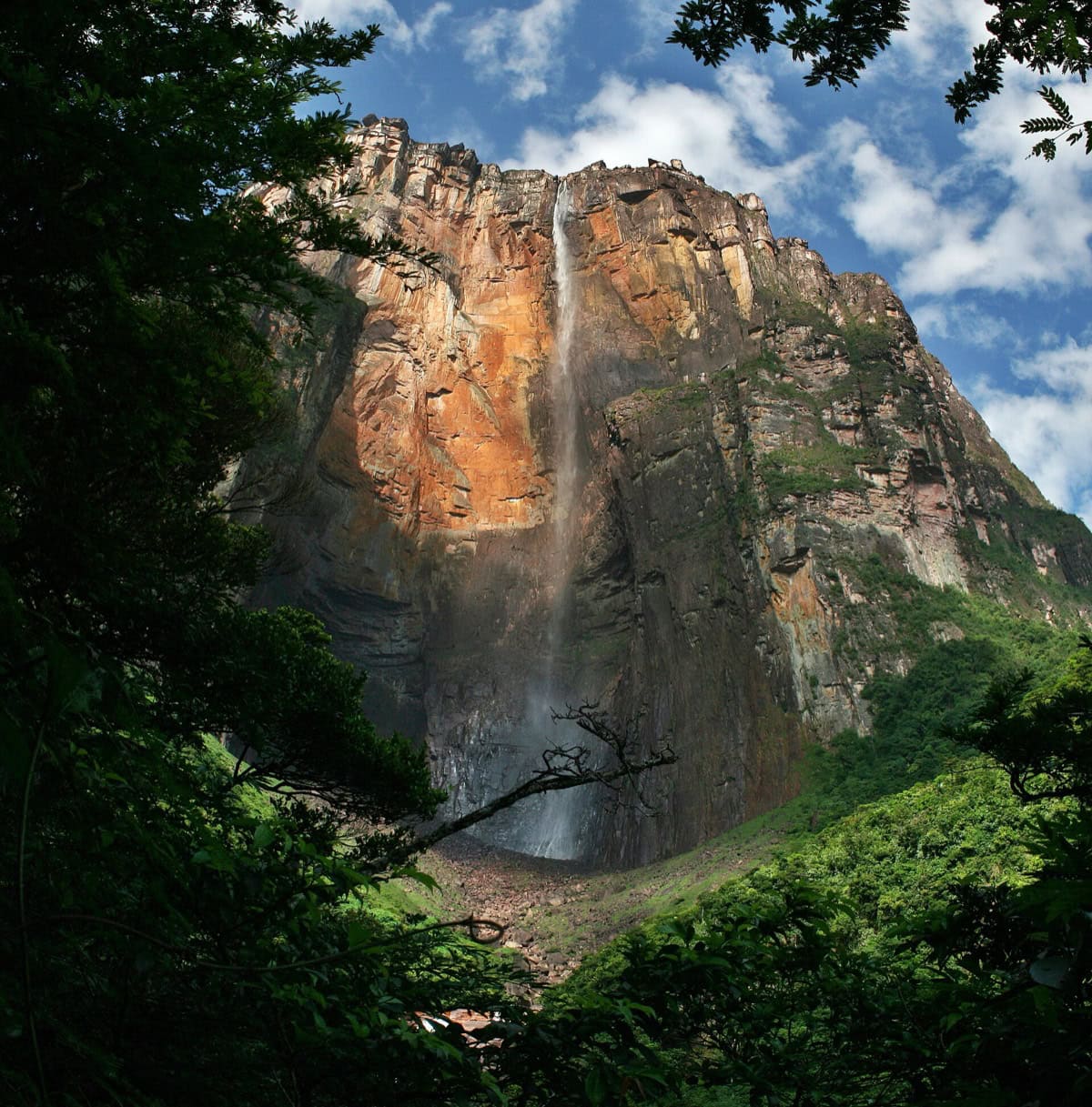
Deep in the impenetrable Venezuelan jungle hides the absolute king of all waterfalls, which holds the title of the tallest waterfall in the world at a total height of 979 metres. It plunges from the Auyán-tepui table mountain in Canaima National Park, and its uninterrupted free fall measures an astonishing 807 metres. The water falls from such a great height that much of the stream evaporates and disperses into a fine mist before it even reaches the ground.
Getting here is a huge adventure, because there’s absolutely no road to the waterfall. Travellers first have to fly in a small plane to the village of Canaima, from where a several-hour journey in a traditional dugout canoe called a curiara awaits. After landing, there’s still a roughly hour-and-a-half steep climb through the jungle right to the base, where you can swim in an ice-cold pool.
If you’re planning to come here, timing is absolutely crucial. During the dry season from December to April the enormous waterfall can shrink to a mere trickle, and the rivers aren’t navigable enough for canoes anyway. Travellers therefore recommend going exclusively during the rainy season from June to November.
💡 Tip: The view of the waterfall is often shrouded in thick clouds. It takes a good dose of luck or patience to catch a clear view of the entire majestic wall.
2. Iguazú, Argentina and Brazil
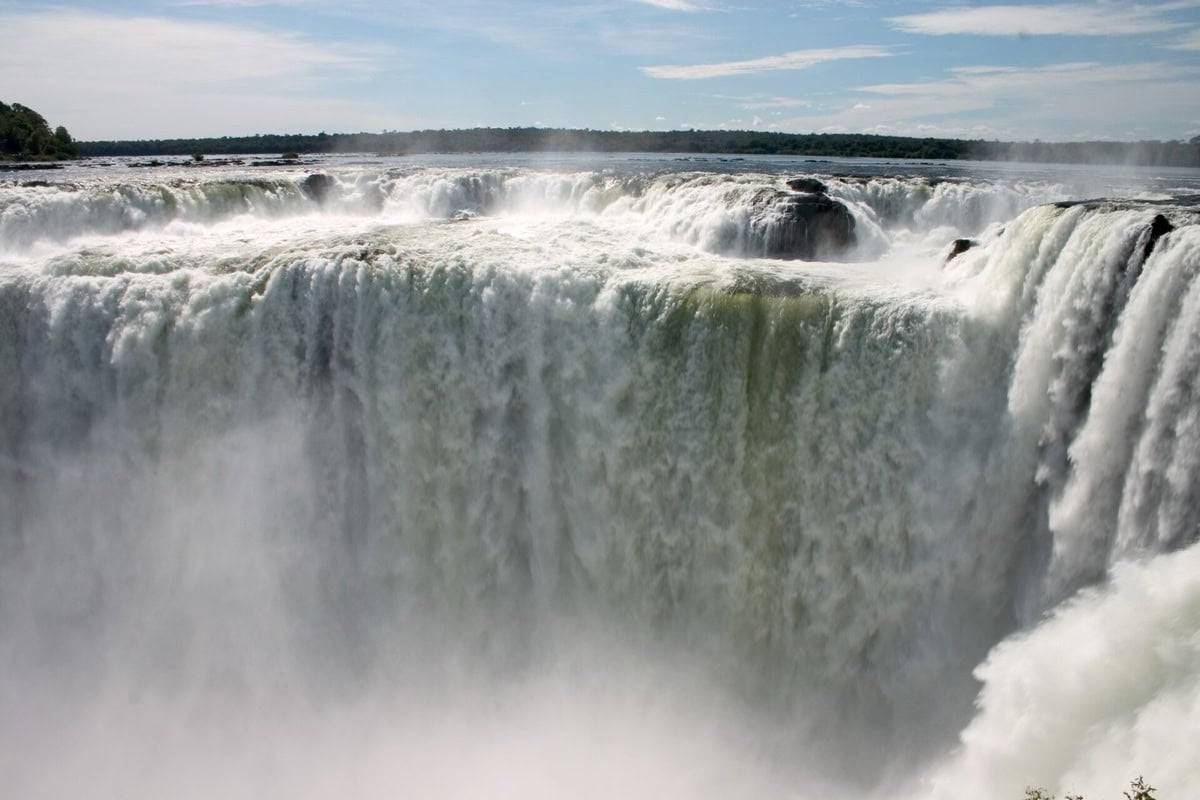
On the border of two South American giants roars a natural wonder that many consider the most beautiful in the world. Iguazú isn’t just one waterfall, but an incredible system of roughly 275 cascades stretching over 2.7 kilometres. The individual falls measure between 64 and 82 metres in height, and the most impressive spot of all is the so-called Devil’s Throat (Garganta del Diablo), where the vast majority of the water thunders down.
You can view the park from two sides, and each offers a completely different experience. The Argentine side covers about 80 percent of the area and, thanks to a maze of walkways and footbridges, drops you right into the middle of that deafening spectacle. You can even take a boat directly beneath the falls. The Brazilian side is smaller, but offers the best panoramic view of the whole complex, like watching from the seats of a giant theatre.
The average flow is around 1,756 cubic metres per second, but during the huge floods in 2014 it reached an incredible 45,700 cubic metres. The water flows here year-round, but the flow tends to be strongest during the rainy months from November to March. The downside is that some walkways occasionally close for safety reasons.
💡 Tip: If you make the trip here, set aside at least two days for your visit and walk both sides. It would be a huge shame to see this gigantic system from only one angle.
3. Victoria Falls, Zambia and Zimbabwe
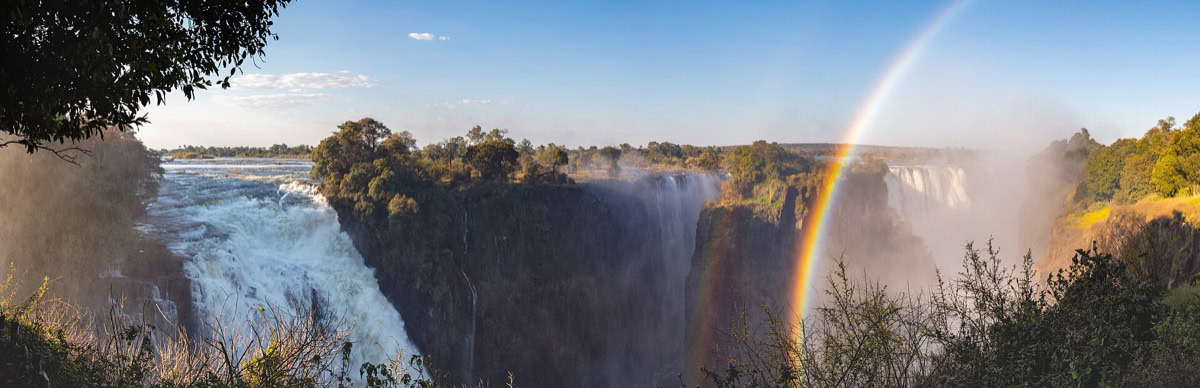
Local tribes call this African wonder Mosi-oa-Tunya, which translates as “The Smoke That Thunders.” As soon as you get close, you’ll instantly understand why. Victoria Falls forms the largest continuous sheet of falling water in the world, as the Zambezi River plunges into a deep chasm across an impressive width of 1,708 metres and a height of up to 108 metres.
The Zimbabwean side offers you a view of about 75 percent of the entire panorama, while from the Zambian side you can get much closer to the falling water. It’s in Zambia, on Livingstone Island, that you’ll find the famous Devil’s Pool, a natural pool right on the very edge of the drop, where daredevils bathe just centimetres from the deadly abyss.
When should you go? That’s the hardest question of all. From February to May the river is at its peak and the falls are incredibly powerful, but the spray often obscures the entire view and you’ll get soaked to the bone even at the most distant viewpoints. From September to January, on the other hand, the water drops significantly, dramatic black rocks are revealed, and only then does access to the aforementioned Devil’s Pool open up.
💡 Tip: Swimming in Devil’s Pool is possible roughly from mid-August to mid-January, with the best conditions in October and November. Local guides here are extremely strict about safety.
4. Niagara Falls, USA and Canada

Probably no waterfall in the world is as famous and celebrated as Niagara. Surprisingly, though, it isn’t tall at all — the Canadian part known as Horseshoe Falls measures just around 51 to 57 metres in height. Its huge fame and power lie in something else entirely: the incredible volume and width of the falling water.
The system consists of three separate waterfalls, with the mightiest being the Canadian Horseshoe, over which up to 90 percent of all the water pours. The average flow reaches 2,400 cubic metres per second, making Niagara the waterfall with the highest flow in all of North America. You’ll best appreciate that deafening roar right from the deck of a tour boat, which takes you into the immediate vicinity of the plunging masses of water.
You’ll get the more iconic and complete view of the whole Horseshoe from the Canadian side. People also rave about walking attractions like Journey Behind the Falls in Canada or Cave of the Winds on the American side, where you get onto wooden walkways right beneath the roaring streams.
💡 Tip: A visit to Niagara without a boat ride is supposedly only half the experience. Just be prepared that on the upper deck you’ll get wet despite the ponchos provided, because the spray really is everywhere.
5. Seljalandsfoss, Iceland
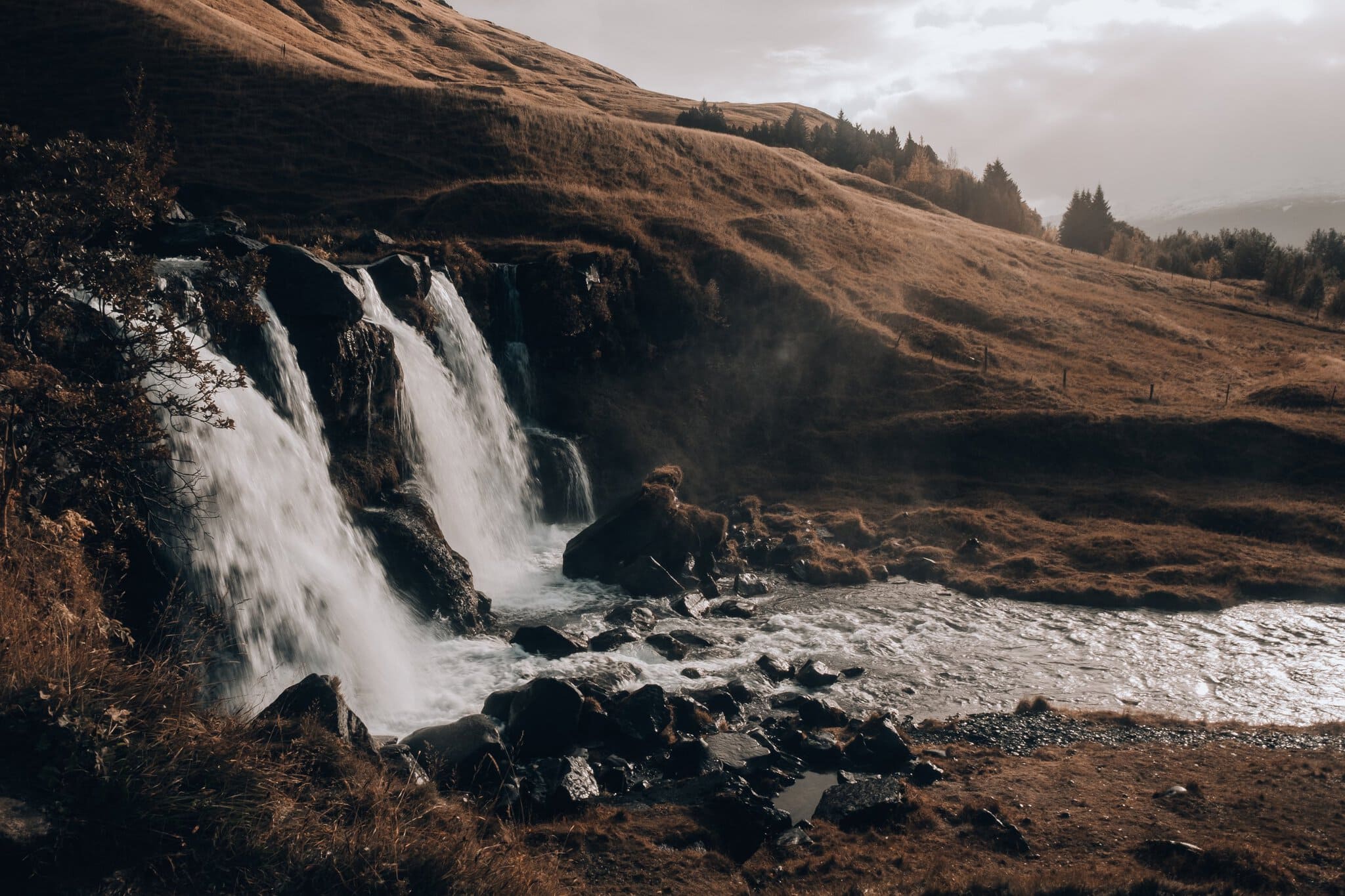
This sixty-metre Icelandic beauty may not break records for volume or height, but it offers something truly unique. Luke and I have it etched into our memory as one of our most powerful experiences, because here you can walk right behind the water curtain. A path leads you into a small rock cave directly behind the plunging Seljalandsá river.
It’s very strategically located right beside the main Route 1 on Iceland’s south coast, so you can’t miss it. Parking here costs around 1,000 Icelandic krónur (about 7 €) and you can leave your car all day. From the car park it’s just a few dozen metres to the waterfall, making it a very easily accessible stop.
If you decide to walk behind the waterfall, I have to strongly warn you. The air here is so full of flying droplets that the spray will reliably soak you within seconds. In the winter months the path behind the water is often closed for safety reasons, because the surrounding rocks become coated in dangerously slippery ice.
💡 Tip: Seljalandsfoss has its most magical atmosphere in summer at sunset, when golden rays shine right through the falling water curtain. Just don’t forget to bring a good waterproof jacket and trousers.
6. Skógafoss, Iceland
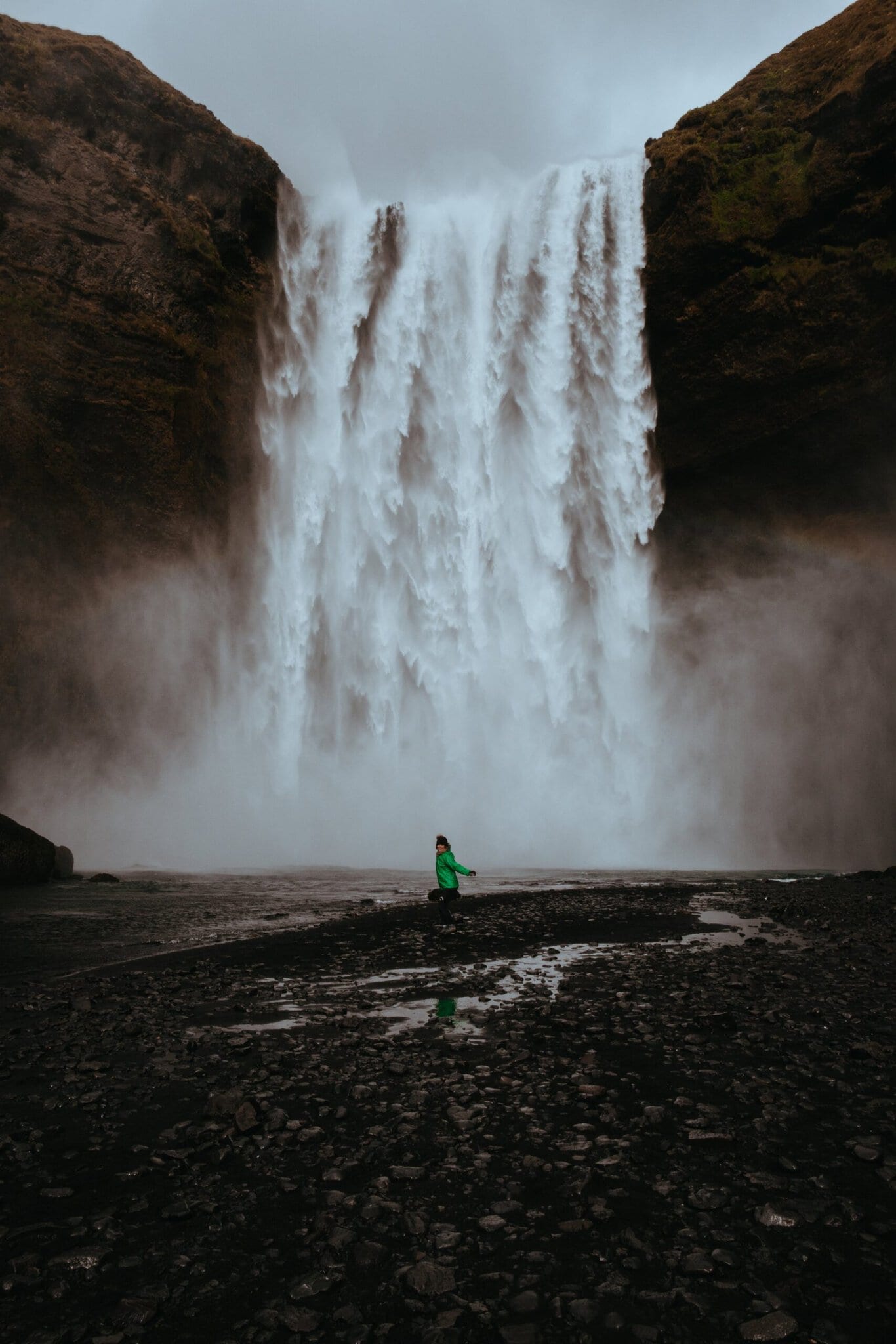
Just a little further along the south coast you’ll come across another Icelandic legend. Skógafoss is an enormous rectangular wall of water that plunges from a height of 60 metres and is an impressive 25 metres wide. When we arrived, we were greeted by a beautiful double rainbow, which forms here almost constantly in sunny weather thanks to the huge amount of spray.
You can walk across the flat ground right up to the very foot of the waterfall, but be prepared for the wind and falling water to give you a proper shower. If you’ve got the energy, I recommend climbing the 527 steps to the viewing platform right above the waterfall’s edge. The view from the top over the landscape is incredible, though in our opinion the lower view from the front is still a touch more impressive.
According to an old Viking legend, the first settler in these parts hid a chest full of golden treasure in a cave right behind the waterfall. Parking here is very easy and you simply pay through the Parka mobile app.
💡 Tip: If you want to avoid the huge crowds of tourists, come early in the morning. Around midday it gets really busy here and it spoils a bit of the site’s mystical atmosphere.
7. Gullfoss, Iceland
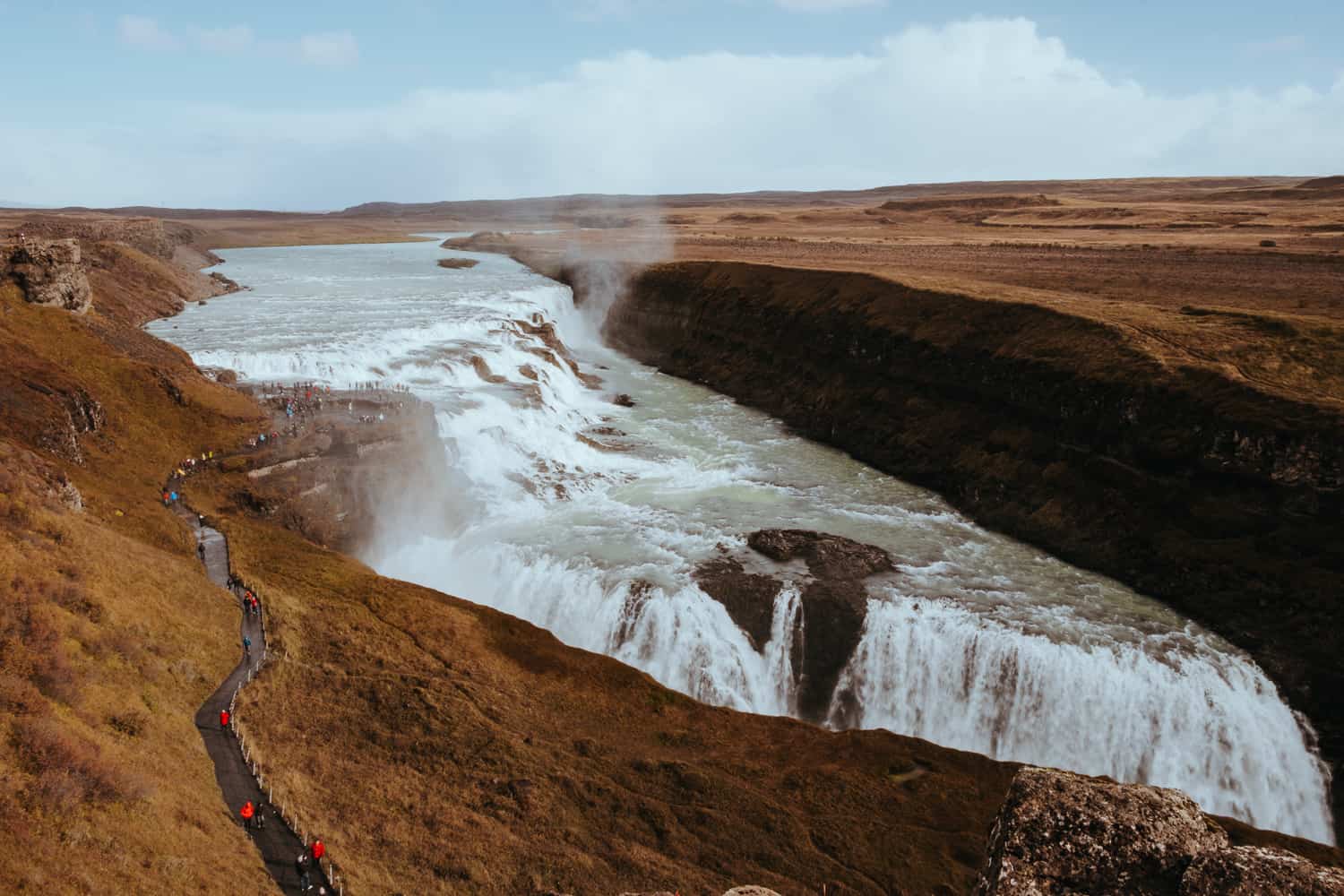
The Golden Waterfall, or Gullfoss, is an absolute star of the popular Golden Circle route, and we stood before it in utter awe. The mighty glacial Hvítá river tumbles here in two steps into a 32-metre-deep and incredibly narrow gorge. The whole thing looks as though the water is plunging straight into the very heart of the earth.
This natural gem also has an incredibly powerful story. At the start of the twentieth century, investors wanted to turn it into a giant hydroelectric power plant. But the local farmer Sigríður Tómasdóttir fought so fiercely for its survival that she even threatened to throw herself into the roaring waters. Her efforts paid off, and today the waterfall is strictly protected.
In practical terms, it’s a very pleasant stop. Parking here, both up top and down below, is completely free, which is a rarity in Iceland. In summer the flow reaches up to 141 cubic metres per second, while in winter the water partially freezes and creates fascinating ice sculptures.
💡 Tip: In the winter months the lower path that descends right to the edge of the waterfall is often closed due to heavy and dangerous ice. On the upper viewpoints, don’t forget to bring crampons for your shoes — it’s incredibly slippery up there.
8. Veliki Slap (Plitvice Lakes), Croatia
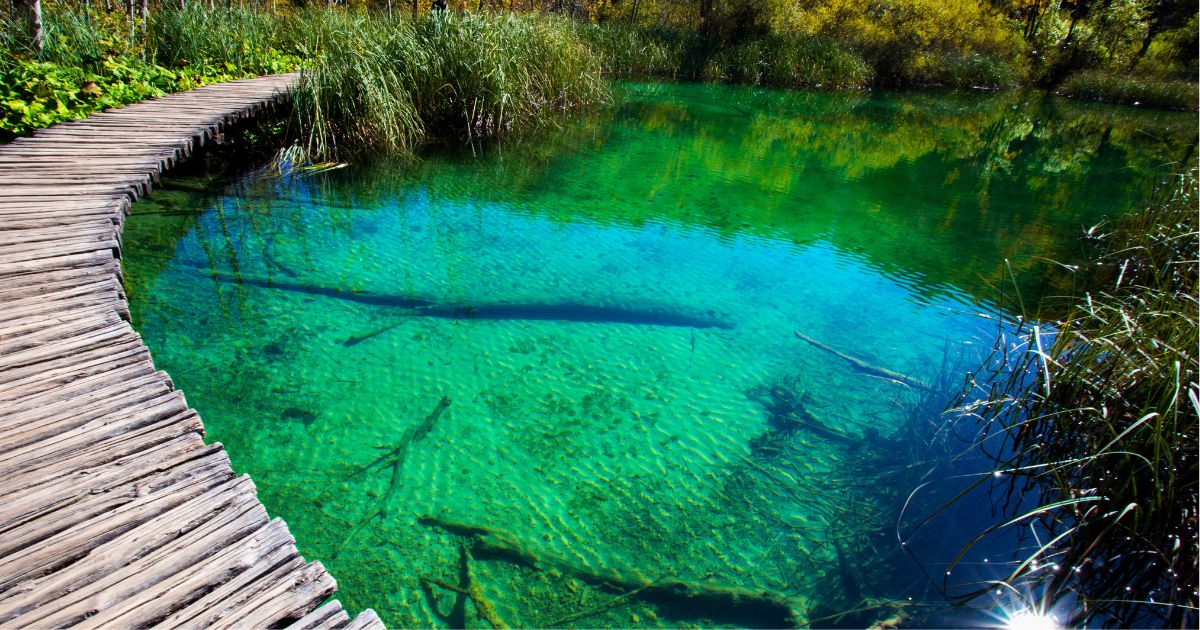
Croatia’s Plitvice Lakes are a European original, and their greatest pride is Veliki Slap, or the Great Waterfall. At 78 metres tall, it’s the highest waterfall in all of Croatia. We spent whole hours here watching the water plunge over the steep edge of the canyon into incredibly clear turquoise pools.
Interestingly, Veliki Slap isn’t fed by the lakes themselves but by a separate stream called Plitvica, so it flows powerfully even when the lakes are at a lower water level. The entire national park works on the principle of travertine barriers, where calcium carbonate precipitates from the water and forms dams that grow by about one centimetre a year.
You can reach the Great Waterfall very easily on foot in 10 to 15 minutes from Entrance 1. You can choose from several routes, and the ticket price also includes a ride on a quiet electric boat and a panoramic train. Just be prepared that in summer it’s absolutely heaving here.
💡 Tip: If you’re longing for empty wooden walkways, you have to arrive right at opening time, which in summer is as early as seven in the morning. Around midday the narrow paths turn into a literally endless human snake.
9. Vinnufossen, Norway
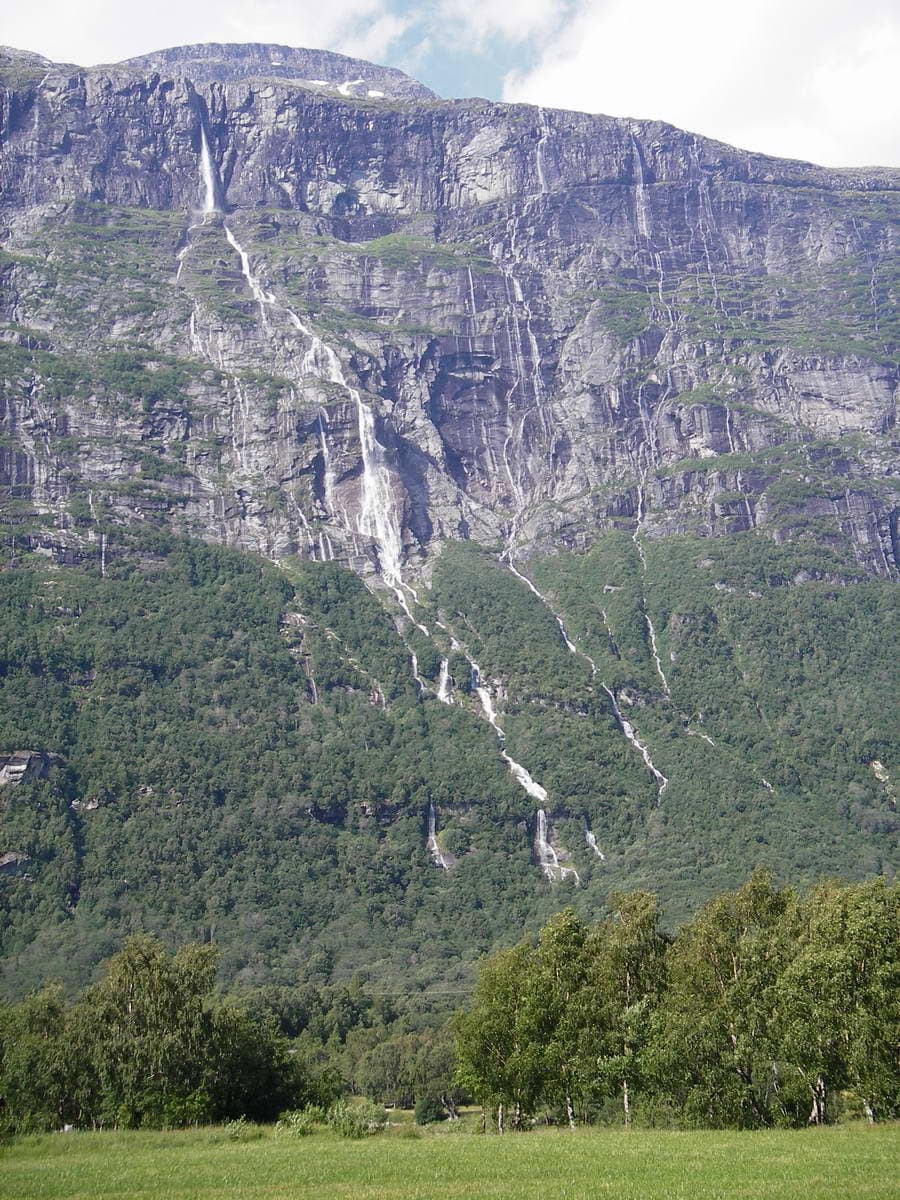
When people talk about the highest waterfall in Europe, many mistakenly name Austria’s Krimml. But the true European record holder is Norway’s Vinnufossen. This staggering tiered giant reaches a total height of an incredible 860 metres, with its longest uninterrupted drop measuring around 575 metres.
The waterfall is fed by the high-lying Vinnufonna glacier in the Møre og Romsdal county. As the water falls over the steep rock face, it splits into several veils and creates what’s known in English as a horsetail effect. It ranks among the sixth to eighth tallest waterfalls in the entire world.
Travellers love that this European gem is very easily visible right from the main road near the small town of Sunndalsøra. But if you’re craving a closer encounter, a fairly demanding and steep climb through dense forest right to its base awaits you.
💡 Tip: Because the waterfall depends on the melting of glaciers and snow, it’s most impressive in early summer. Later in autumn its flow can drop significantly.
10. Kuang Si, Laos
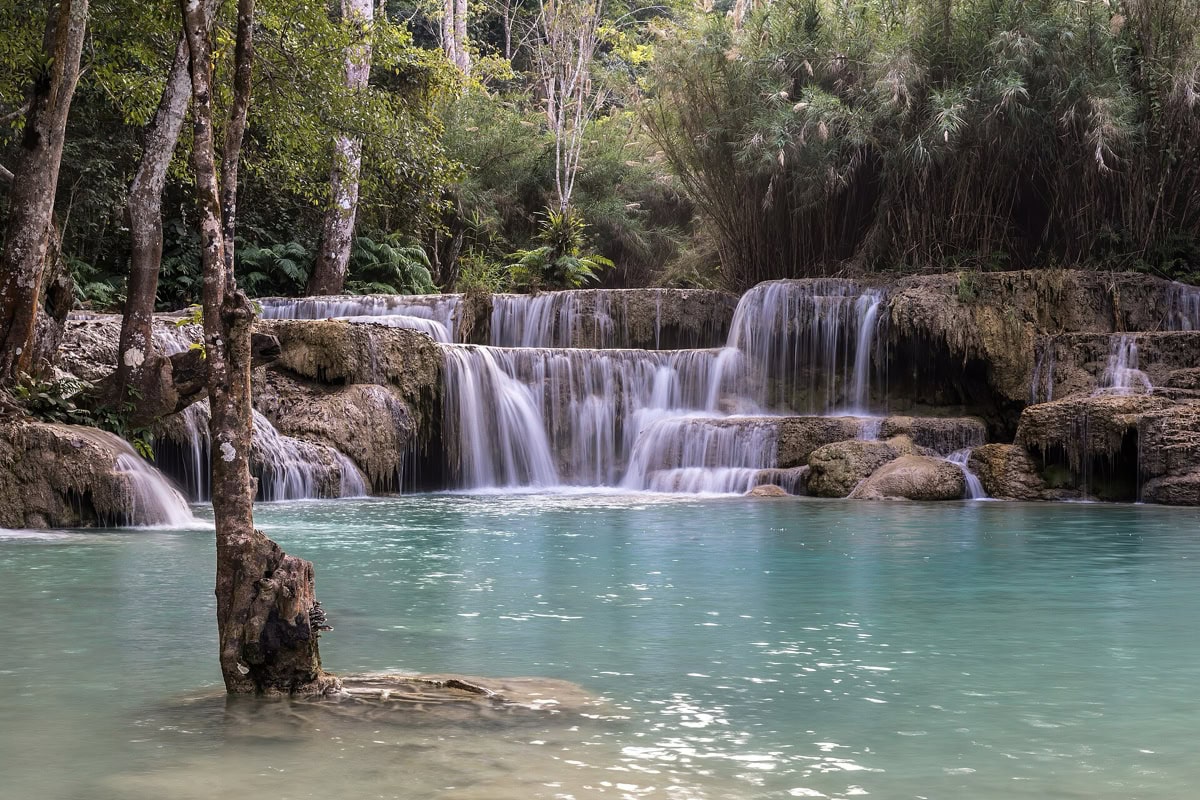
If you’re looking for a waterfall straight out of a fairy tale, Laos’s Kuang Si, located near the city of Luang Prabang, will absolutely amaze you. The main cascade falls from a height of about 60 metres, but what makes this place so magical are the gorgeous cascading pools with a neon-turquoise colour that form beneath it.
The colour is caused by dissolved calcium carbonate, which precipitates in the water and perfectly scatters the sunlight. And the best part? Swimming is allowed in the lower pools. It’s an utterly refreshing experience in the sticky Asian heat. On the way up to the higher viewpoints you’ll also pass a sun bear rescue centre, which is a great bonus to the trip.
But getting the timing of your visit right is absolutely essential. You’ll only see that beautiful turquoise shade during the dry season from November to April. During the summer monsoons the water turns into a brown muddy mass and swimming becomes very dangerous due to the strong current.
💡 Tip: Be careful where you change into your swimwear. The pools lying closest to the main waterfall are considered sacred, and swimming in them is strictly forbidden. Always follow the local signs.
11. Detian / Ban Gioc, China and Vietnam
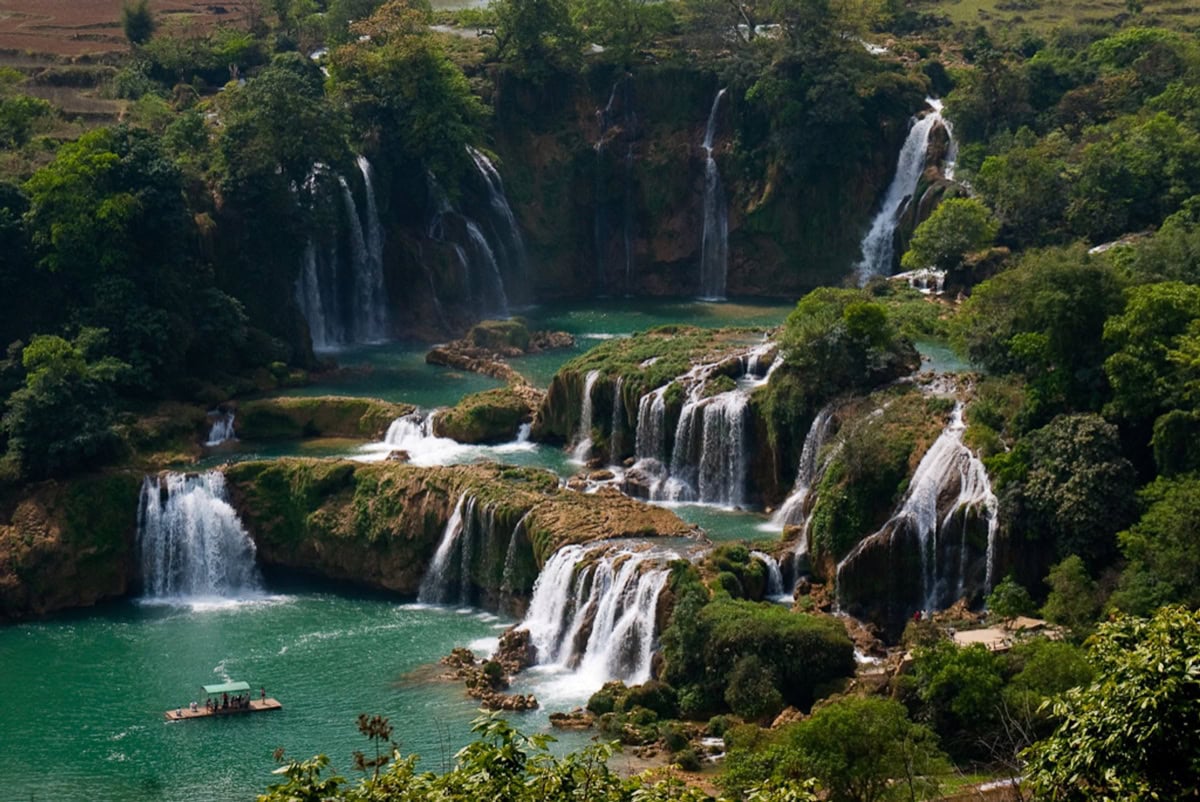
On the Quây Sơn River, which forms a natural border between China and Vietnam, you’ll find the largest transnational waterfall in all of Asia. On the Chinese side it’s called Detian, on the Vietnamese side Ban Gioc. The water here falls from a height of only around 30 metres, but the system spreads out to an impressive width of two hundred to three hundred metres.
The experience isn’t so much about the height as about the scenery, with karst hills in the background and vivid green rice paddies. A very popular attraction here are the traditional bamboo rafts, which for a small fee take you almost right up to the roaring face of the waterfall, where you’ll reliably get a refreshing shower. Swimming as such is forbidden here due to strong currents and the border zone.
If you want to see the waterfall at its most powerful, travellers recommend the end of the rainy season in September or October. About two to four days after heavy rain the water takes on the most beautiful turquoise colour, whereas immediately after a downpour it’s often murky.
💡 Tip: During periods of heavy rain, the separate Chinese and Vietnamese cascades can merge into one enormous massive wall of water. In the dry season, on the other hand, the system feels much gentler and calmer.
12. Sutherland Falls, New Zealand
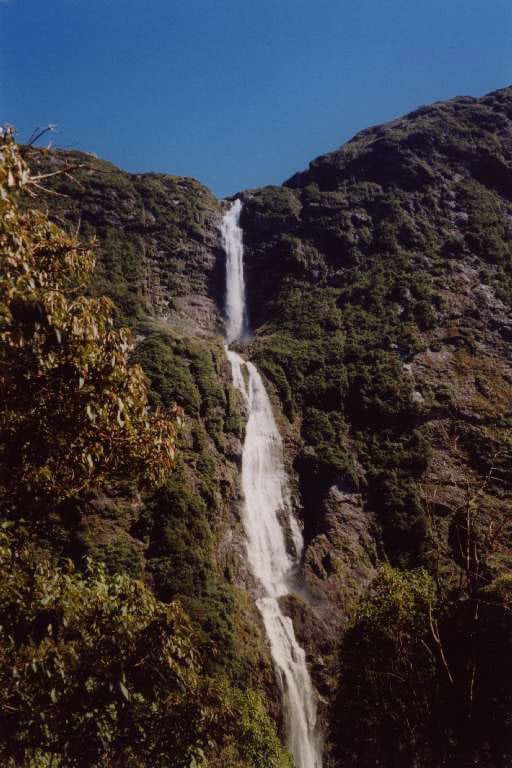
Deep in New Zealand’s Fiordland National Park hides one of the least accessible yet most beautiful waterfalls on the planet. Sutherland Falls plunges from the high-lying glacial Lake Quill and, at a total height of 580 metres, it’s the tallest waterfall in New Zealand. The water tumbles down in three enormous cascading steps.
Getting to it requires genuinely decent physical fitness. There’s no road leading here, and the only route to the base of the waterfall goes via the famous multi-day Milford Track. From the Quintin Shelter hut, it’s roughly a one-and-a-half-hour round-trip detour up dozens of steps, but all the trekkers agree that the deafening experience is one hundred percent worth the effort.
If you’re not among the keen long-distance walkers, there’s one more, considerably more expensive option. You can pay for a scenic helicopter flight from nearby Milford Sound, which takes you right over the upper lake and offers you an utterly bird’s-eye perspective on the falling water.
💡 Tip: The season for hiking the Milford Track lasts roughly from late October to April, which corresponds to the summer season in the southern hemisphere. After heavy rain the waterfall is absolutely deafening and massive.
13. Yosemite Falls, USA
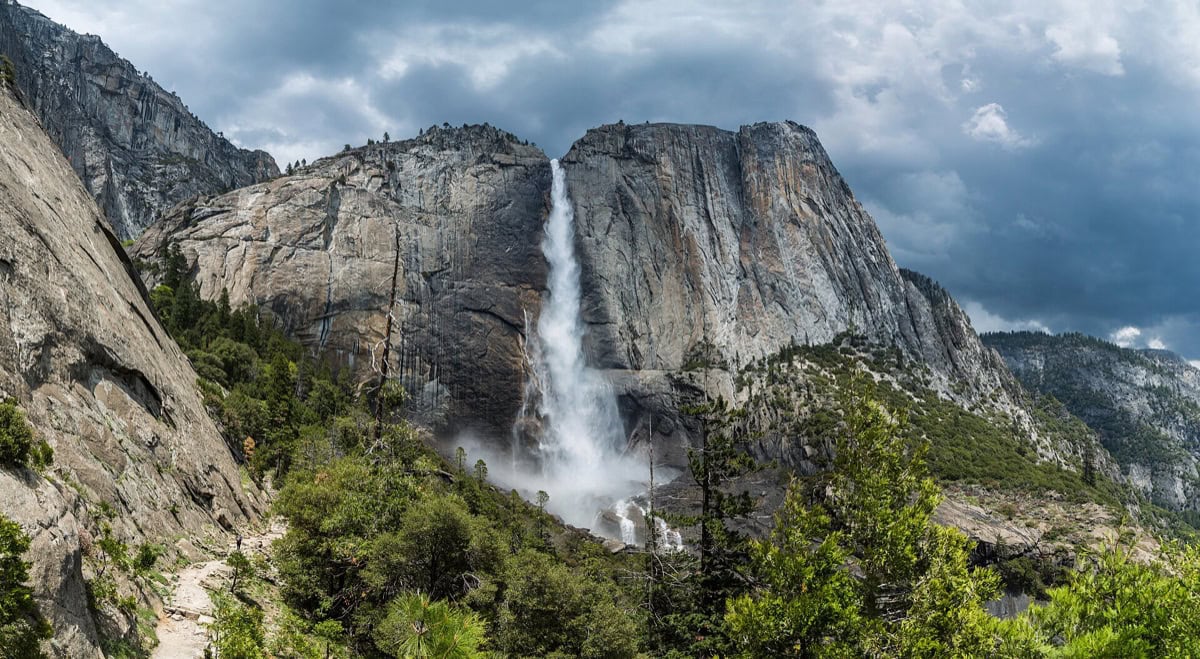
This triple Californian giant, at a total height of 739 metres, is the tallest waterfall in all of North America and an absolute icon of Yosemite National Park. It consists of three sections, and just to reach the lower waterfall there’s a very easy 1.5-kilometre walk that absolutely anyone can manage. Reaching the upper edge, however, requires a proper full-day mountain hike with an enormous elevation gain.
But this waterfall hides one huge secret that many tourists pay the price for. It’s fed exclusively by snowmelt in the high mountains. While in May and June it’s a roaring monster full of power, in August and September it often dries up completely, leaving only a sad damp patch or total dryness on the rock.
So if you’re planning a road trip around the western USA, you need to think carefully about your timing. Anyone who wants to see Yosemite Falls in full force, when the roar echoes through the whole valley, needs to arrive ideally during late spring.
💡 Tip: If you head to the waterfall in spring, be prepared that on the trail to the lower step (Lower Fall) the falling spray will guaranteed refresh you and maybe even soak you a little.
14. Gocta (Catarata Gocta), Peru
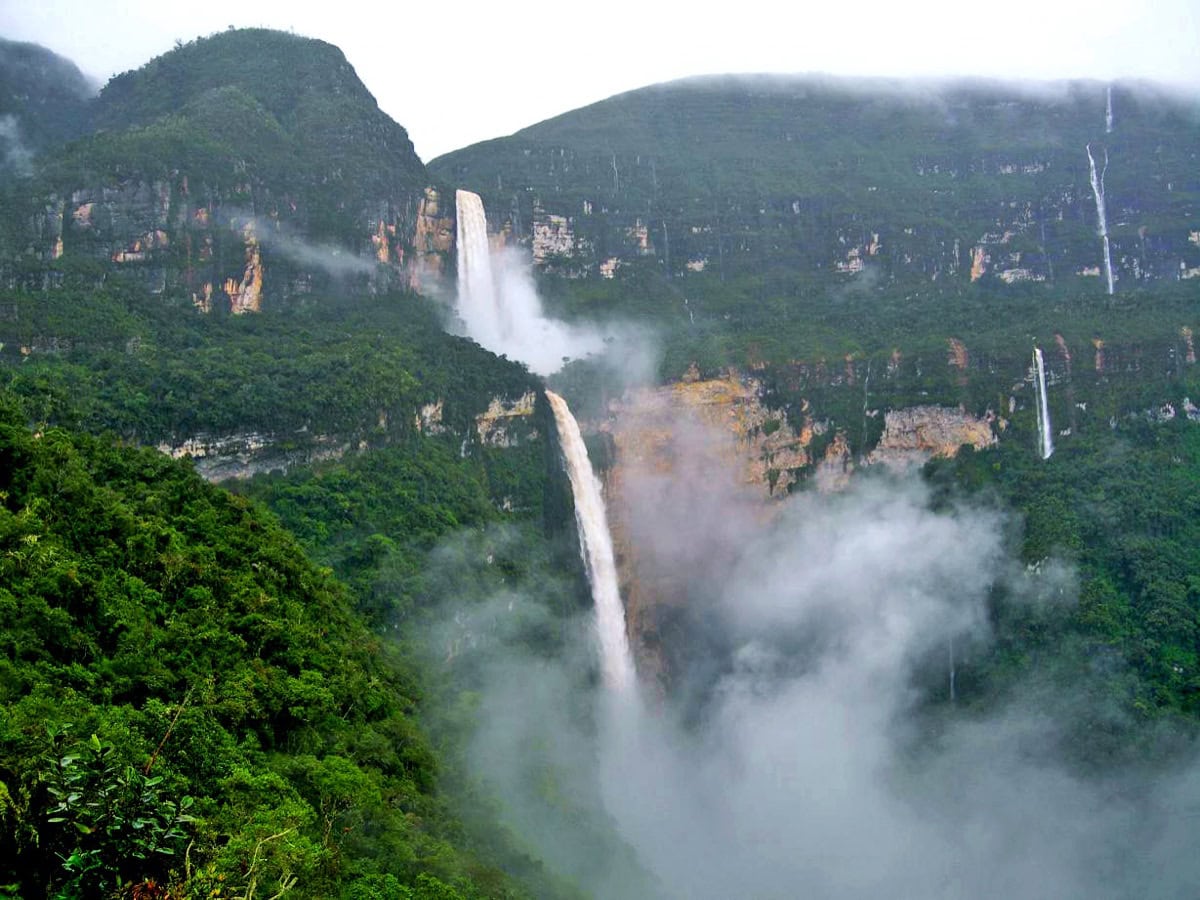
In the rugged Peruvian mountains hides a waterfall that the outside world knew nothing about for decades, even though the local inhabitants knew it well. It was introduced to the world only in 2002 by the German explorer Stefan Ziemendorff. Today it’s known that Gocta falls in two breathtaking steps and its total height reaches 771 metres.
You’ll often read about it as the third-tallest waterfall in the world, but this is a claim that stirs plenty of dispute, and in various rankings it tends to land somewhere between fifth and eighteenth place. Regardless of the tables, though, it’s one of the tallest and most impressive waterfalls in Peru and the world.
To reach the waterfall you have to set out on foot from the villages of Cocachimba or San Pablo. The hike is moderately demanding, takes five to six hours round trip, and involves plenty of climbing and descending in both directions. You only truly appreciate the scale of the five-hundred-metre lower step, they say, once you’re standing utterly tiny right at its foot.
💡 Tip: The best time to visit is from April to June, when the rainy season is slowly ending. The flow is at its strongest and the sky tends to be clearer, though clouds shroud the valley here fairly often.
15. Krimml Waterfalls, Austria
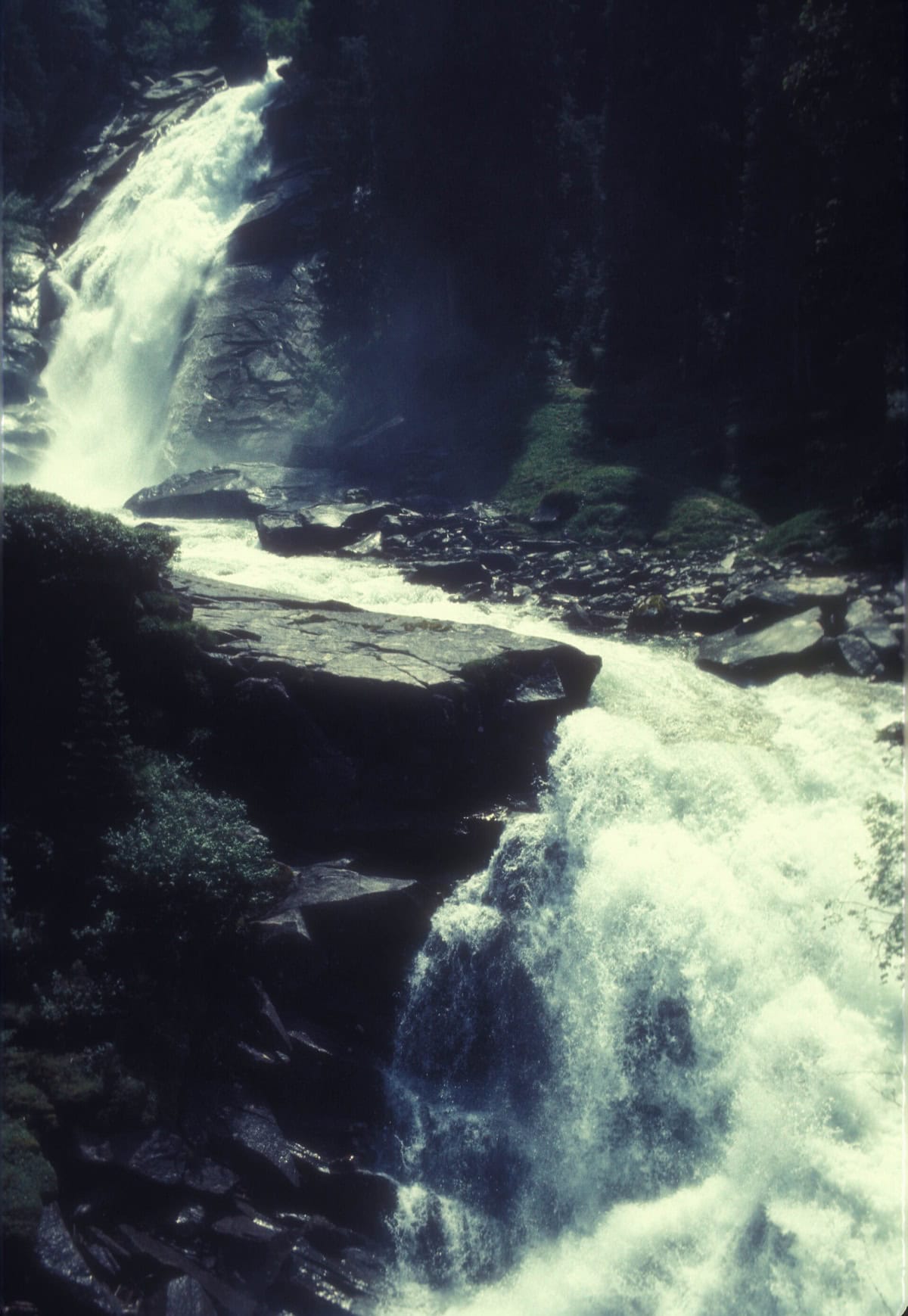
Just a short flight or drive away in the High Tauern National Park lies a cascade that’s often mistakenly claimed to be the highest in Europe. At a height of 380 metres, the Krimml Waterfalls are the highest waterfall in Austria and the entire Alps, but they don’t hold the European crown. That certainly doesn’t take away from their beauty, though — it’s a fascinating sight.
The Krimmler Ache river tumbles into the valley here in three mighty steps. A four-kilometre scenic trail called the Wasserfallweg winds around them, guiding you from the lowest point all the way to the very top. While you can reach the lower waterfall from the car park in fifteen minutes on flat ground, the climb to the highest step takes you roughly an hour and a quarter of steep ascent.
The waterfall is glacier-fed, so its flow fluctuates enormously throughout the year. While in February only a fraction of the water flows through, in June and July it’s a deafening mass. Access to the trail is chargeable and it officially opens from mid-April.
💡 Tip: Travellers advise arriving at the car park as early in the morning as possible, ideally right after eight o’clock, before the huge coach tours from nearby Zell am See start rolling in.
16. Khone Phapheng, Laos
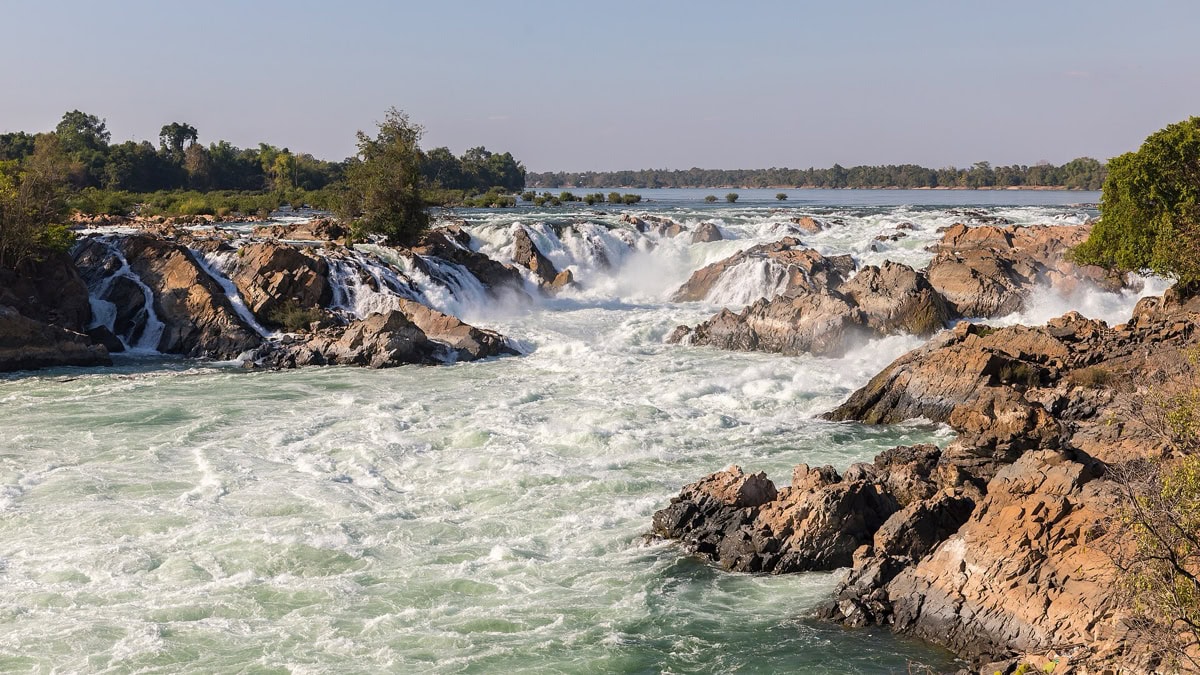
We close our list with a Laotian giant that shatters every notion of what a waterfall should look like. Khone Phapheng, on the Mekong River in southern Laos, isn’t tall at all, measuring only around 21 metres. Its sheer exceptionalism lies in its width and volume, because it forms an incredibly massive system of channels weaving between islands.
If you measure this whole system, it reaches a width of nearly 10.8 kilometres, which theoretically makes it the widest waterfall in the world. The average flow here reaches 11,000 cubic metres per second, which by volume is roughly double that of the famous Niagara. It’s the largest waterfall in Southeast Asia and the place where, historically, all boat navigation of the Mekong to the north came to an end.
Unlike the turquoise Kuang Si waterfall, here you must under no circumstances swim. The extreme currents and enormous masses of the brown Mekong water are lethally dangerous. The site is very easily accessible, though — you can drive right up to it comfortably by car.
💡 Tip: The experience at Khone Phapheng is above all about the enormous roar and staggering volume of water, not about aesthetic height. It’s at its mightiest at the end of the rainy season, from August to November.
A Handy Comparison Table
To help you find your way through all those superlatives and records, I’ve put together a summary table of all the waterfalls mentioned. You’ll quickly discover exactly what makes each one stand out and when to plan your trip to get the best possible experience.
| Waterfall name | Country | What makes it special | Best time |
|---|---|---|---|
| Angel Falls | Venezuela | Tallest waterfall in the world (979 m) | June–November (rainy season) |
| Iguazú | Argentina / Brazil | Most extensive system (275 cascades) | November–March (highest flow) |
| Victoria Falls | Zambia / Zimbabwe | Largest sheet of water (width 1,708 m) | Feb–May (peak), October (Devil’s Pool) |
| Niagara Falls | USA / Canada | Enormous volume and easy access | Year-round (summer = peak, winter = ice) |
| Seljalandsfoss | Iceland | Narrow path leads right behind the water | Summer months (sunset) |
| Skógafoss | Iceland | Almost constant double rainbow and 527 steps | Summer (ideally full sun) |
| Gullfoss | Iceland | The Golden Waterfall with a rescue story | Year-round (crampons in winter) |
| Veliki Slap | Croatia | Highest in Croatia in a UNESCO park | May, early June, autumn |
| Vinnufossen | Norway | Highest waterfall in Europe (860 m) | Early summer (glacier melt) |
| Kuang Si | Laos | Swimming in turquoise pools | November–April (dry, clear water) |
| Detian / Ban Gioc | China / Vietnam | Largest transnational cascade in Asia | September–October (end of rains) |
| Sutherland Falls | New Zealand | Tallest in NZ, along the Milford Track | Late Oct–April (NZ summer season) |
| Yosemite Falls | USA | Tallest in N. America, dries up in summer! | May–June (peak snowmelt) |
| Gocta | Peru | Hidden giant (771 m) amid the mountains | April–June (end of rains) |
| Krimml Waterfalls | Austria | Highest in Austria and the entire Alps | June–July (glacier melt) |
| Khone Phapheng | Laos | Widest system (10.8 km) and huge flow | August–November (maximum power) |
How Waterfalls Form
This might surprise you, but from a geological standpoint waterfalls are no permanent formations. Nature is constantly changing, shaping and shifting them, so what we see today is just a fleeting moment in the history of our planet. Waterfall formation happens through several completely different mechanisms.
1. Rocks of varying hardness and undercutting
This is by far the most common process. A river simply flows from a layer of very hard, resistant rock onto a layer that’s much softer and erodes faster. The hard rock slab on top acts as a protective shield, while the soft bedrock beneath it wears away and a overhang forms. When the overhang gets too large, the hard rock collapses under its own weight, and so the waterfall slowly retreats upstream. This is exactly how the famous Niagara works.
2. Hanging glacial valleys
If you look at the Norwegian fjords or Yosemite National Park, you’ll see waterfalls that plunge from enormous vertical walls. These formed thanks to giant glaciers. The main massive glacier was able to carve a valley much deeper than the smaller side glaciers. When the ice later melted, the side valleys were left hanging high above the floor of the main one, and the water had no choice but to fall hundreds of metres straight down.
3. Tectonic faults and fractures
Sometimes a huge vertical drop caused by an earthquake or tectonic movement gets in the river’s way. A specific case is the giant fracture zones in hardened lava. A beautiful example is Africa’s Victoria Falls, where the Zambezi River plunges into a deep chasm carved along a system of fractures across its entire course.
Waterfall Records
There are plenty of myths and marketing tricks surrounding the various waterfall “biggest and best” claims. Travel agencies often like to embellish reality to lure tourists. So let’s set the record straight on who really holds the world records.
Tallest waterfall
The official king remains Venezuela’s Angel Falls at a height of 979 metres. This title comes with a small catch, though, because according to some methodologies the crown could belong to South Africa’s Tugela Falls. However, the Guinness Book of Records recognises Angel Falls as the waterfall with the longest uninterrupted drop.
Widest waterfall
Here it really depends on how you define width. If you count the entire branching system of river channels separated by islands, then the winner is Laos’s Khone Phapheng, at a width of nearly 10.8 kilometres. But if you’re looking for the widest continuous cascade of water, then the crown goes to South America’s Iguazú, with its 2.7 kilometres. Africa’s Victoria Falls (1,708 m), meanwhile, holds the title for the largest continuous sheet of falling water.
The biggest European myth
If you travel to Austria, you’re bound to see billboards touting the Krimml Waterfalls as the highest in Europe. But it’s just a marketing trick. At a height of 380 metres they are indeed the highest in the Alps, but the European record is held comfortably by Norway — specifically the tiered Vinnufossen at an impressive 860 metres.
Where to Next
If you’re fascinated by the power of wild water and Nordic nature, you definitely shouldn’t miss our detailed guides to the most beautiful countries in Europe. In them we’ve focused on practical tips, itineraries and places that literally took our breath away.
- Iceland: the complete guide — everything you need to know before travelling to the island of fire and ice.
- Iceland’s south coast — a detailed guide to the places where you’ll find the famous Seljalandsfoss and Skógafoss.
- 20 most beautiful places in Iceland — a selection of the best we experienced there.
- Plitvice Lakes, Croatia — how to plan a visit to the Great Waterfall without the crowds.
- What to see in Norway — a guide to the country with the greatest concentration of giant waterfalls in Europe.
- Niagara Falls — practical tips for visiting North America’s most famous icon.
Frequently Asked Questions
When planning trips to these enormous masses of water, people keep looking for answers to the same things. So we’ve put together answers to the very most common questions, which will help you make sense of it all.
Which is the highest waterfall in the world?
The highest waterfall in the world is Salto Ángel (Angel Falls) in Venezuela with a total height of approximately 979 meters, of which the uninterrupted free fall measures 807 meters. It drops from the massive table mountain Auyán-tepui in Canaima National Park and is so high that a large portion of the water evaporates before it even reaches the bottom.
Are Niagara Falls the highest?
Not at all, that’s a very common misconception. The Canadian part of Niagara is only 51 to 57 meters high. Its enormous worldwide fame doesn’t rest on height, but on its absolutely gigantic volume. On average, about 2,400 cubic meters of water flow through here per second, creating a deafening roar.
Which is the widest waterfall in the world?
According to the definition, the widest waterfall system is considered to be the Laotian Khone Phapheng on the Mekong River, which measures almost 10.8 kilometers across islands. However, if you’re looking for the widest waterfall cascade falling over a single edge, the title usually goes to South America’s Iguazu with an impressive length of 2.7 kilometers.
Can you walk behind Seljalandsfoss waterfall?
Yes, Iceland’s Seljalandsfoss is one of the few major waterfalls in the world where an official trail leads directly into the cave behind the water curtain. Just be prepared that the ever-present spray will thoroughly soak you. In winter, the trail behind the waterfall is also often closed for safety reasons due to heavy ice buildup.
Where are the most beautiful and highest waterfalls in Europe?
The highest waterfalls can be found in Norway thanks to the enormous glacial valleys and fjords. This includes the overall highest Vinnufossen at 860 metres. Among the most beautiful and most photogenic are undoubtedly the Croatian cascades at Plitvice Lakes or the Icelandic icons Seljalandsfoss and Skógafoss.
Which waterfall has the greatest flow?
Technically, the highest flow rate is found at the so-called Inga Falls on the African Congo River, with a median of around 42,000 cubic meters per second, but it’s more of a giant rapids than a classic vertical waterfall. Among the well-known classic waterfalls for tourists, South America’s Iguazu dominates, where during the wet season up to 13,000 cubic meters per second flow through.
When is the best time to visit the waterfalls?
It depends heavily on the specific location. For African Victoria Falls or Yosemite in the USA, head out in spring or after the rainy season for maximum power. On the other hand, for turquoise karst waterfalls like Laos’s Kuang Si, you must travel exclusively during the dry season, otherwise the water turns brown and becomes dangerous.
Can you swim directly under the waterfalls?
It depends on the park’s rules. In the turquoise pools below Laos’s Kuang Si, swimming is allowed and it’s an amazing experience. At Africa’s Victoria Falls, there’s the adrenaline-pumping Devil’s Pool right on the edge of the precipice. But at most giants like Niagara or Iguazú, it’s life-threatening and strictly forbidden.
Why do some waterfalls have a turquoise color?
The brilliantly turquoise color, which you might know from Plitvice Lakes or Laos’s Kuang Si, is caused by limestone bedrock. The water carries tiny particles of dissolved calcium carbonate, which scatter sunlight in a very specific way and give the water that gorgeous milky blue-green hue.
Tips and Tricks for Your Vacation
Don’t Overpay for Flights
Search for flights on Kayak. It’s our favorite search engine because it scans the websites of all airlines and always finds the cheapest connection.
Book Your Accommodation Smartly
The best experiences we’ve had when looking for accommodation (from Alaska to Morocco) are with Booking.com, where hotels, apartments, and entire houses are usually the cheapest and most widely available.
Don’t Forget Travel Insurance
Good travel insurance will protect you against illness, accidents, theft, or flight cancellations. We’ve had a few hospital visits abroad, so we know how important it is to have proper insurance arranged.
Where we insure ourselves: SafetyWing (best for everyone) and TrueTraveller (for extra-long trips).
Why don’t we recommend any Czech insurance company? Because they have too many restrictions. They set limits on the number of days abroad, travel insurance via a credit card often requires you to pay medical expenses only with that card, and they frequently limit the number of returns to the Czech Republic.
Find the Best Experiences
Get Your Guide is a huge online marketplace where you can book guided walks, trips, skip-the-line tickets, tours, and much more. We always find some extra fun there!


