If you’re looking for a place that defines flawless Nordic nature, Geirangerfjord in Norway will absolutely take your breath away. This fifteen-kilometre arm of the Storfjord is rightly listed as a UNESCO World Heritage Site and forms the most iconic Norwegian scenery, drawing travellers from every corner of the planet.
Steep green slopes plunging straight into dark water and mighty waterfalls crashing against the rocks look even more dramatic in person than on any postcard. The moment you first peer over the edge of a cliff down onto the winding surface below, you’ll understand why this place is nicknamed the king of all Norwegian fjords.
I’ve put together eight specific tips on what to see and do in the area so you can get the absolute most out of your visit. I’ll tell you which viewpoints give you the best photos, how to avoid the biggest crowds, and how much to budget for boat tickets.
TL;DR
- Bird’s-eye viewpoints: Don’t miss the Dalsnibba and Flydalsjuvet viewpoints and the Ørnesvingen hairpin bends, where the valley spreads out below you.
- The view from the water: The best way to appreciate the majesty of the cliffs is a classic boat trip or a more adventurous kayak rental.
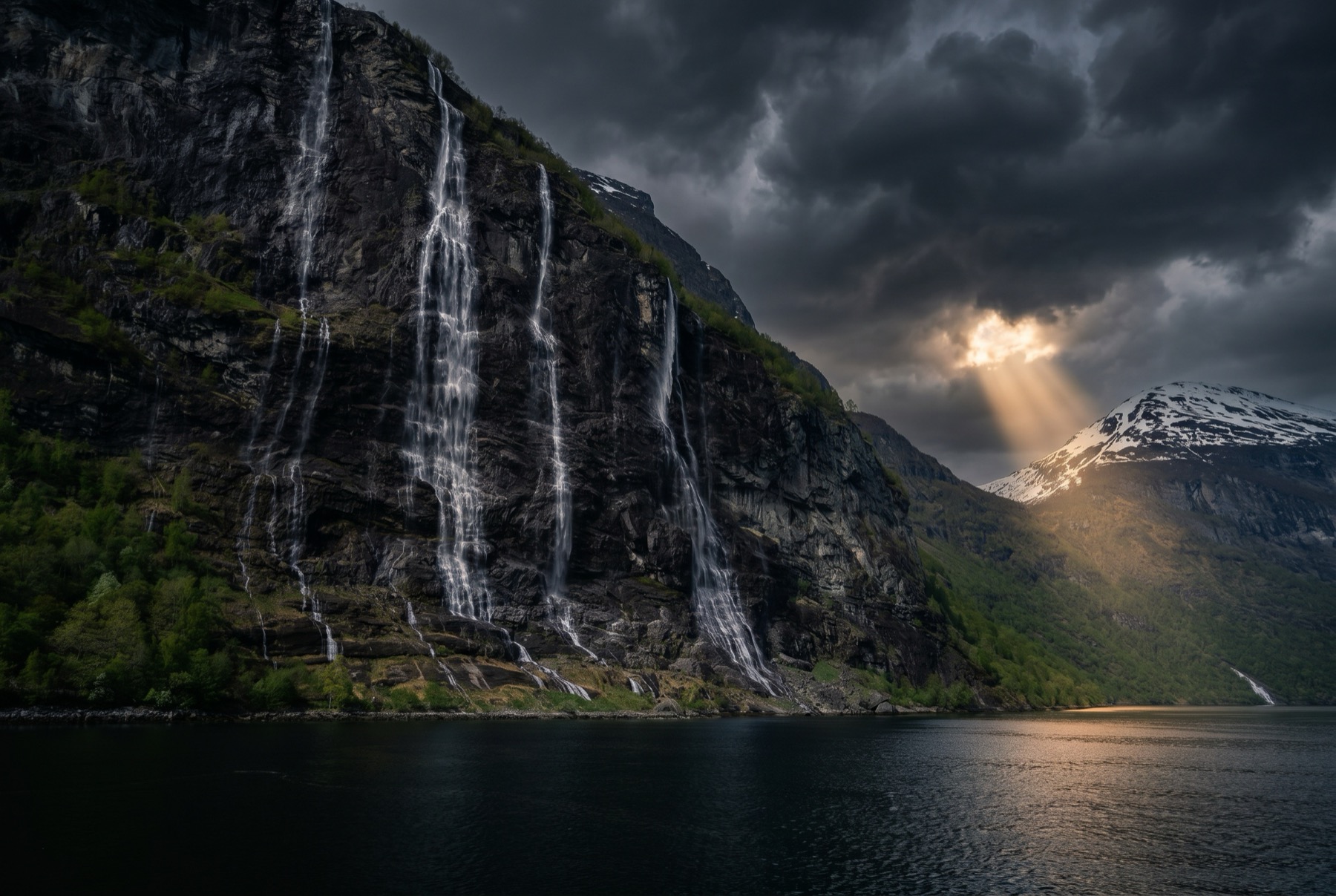
- Famous waterfalls: From the deck of the boat you’ll see the famous Seven Sisters and the Suitor waterfalls, which shine brightest during the spring melt.
- Hiking to the old farms: Set off on the trek to the abandoned Skageflå farm, which offers quite possibly the finest view of the surrounding mountains.
- When to go: The best weather is in summer, but for a calmer experience get up early or head to the viewpoints in the late evening.
- Where to stay: Book hotels around Geiranger well in advance — accommodation here disappears at lightning speed.
The full destination guide: Norway — guide and what to see
When to visit Geiranger
The Norwegian winter is long and harsh, which is why the main tourist season has shrunk to the period from June to August. During these months you have the best chance of pleasant weather and, crucially, all the mountain roads in the area are fully open.
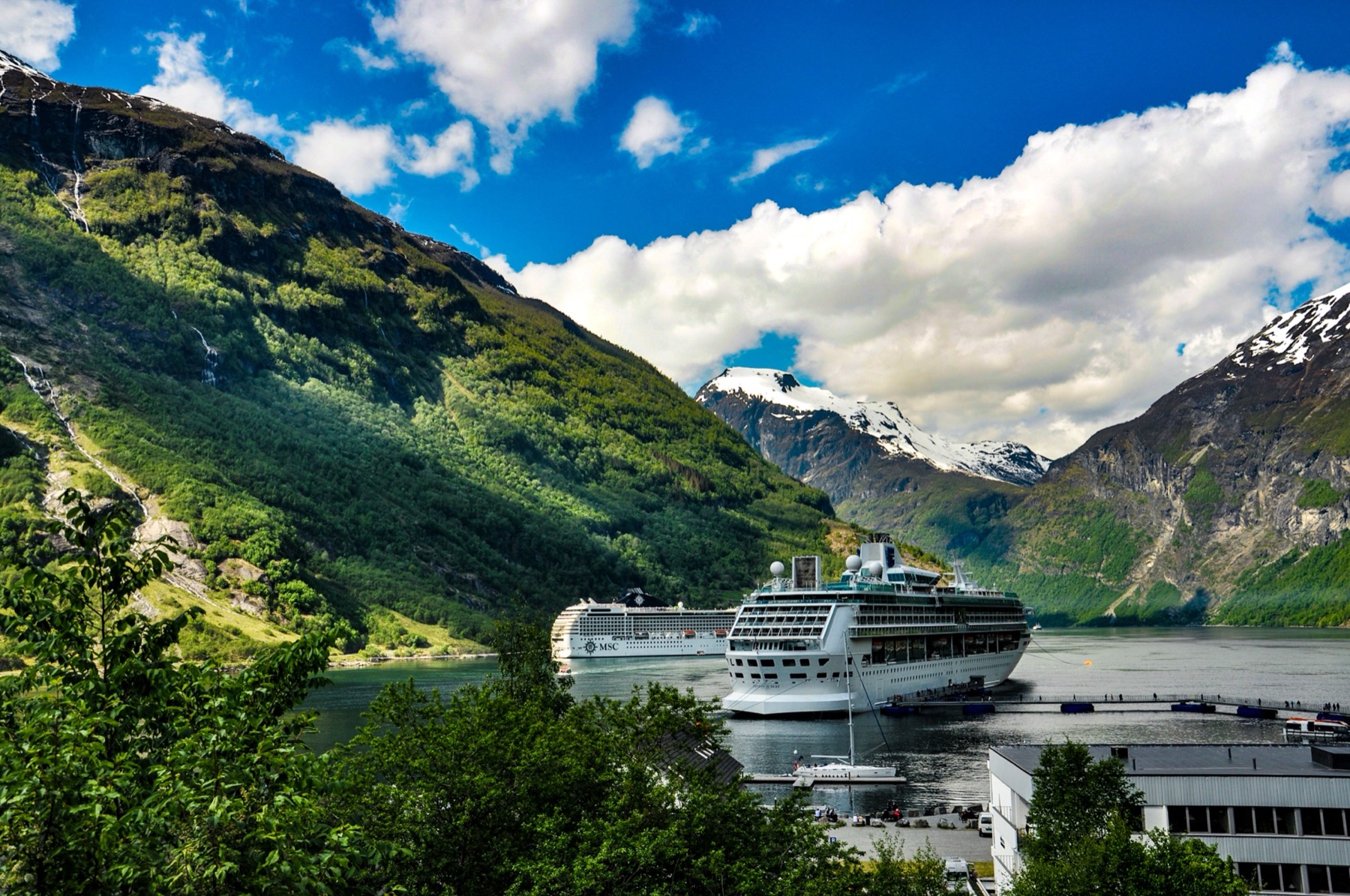
The summer months do come with one huge drawback, though: the enormous cruise ships docking right in Geiranger. As many as five can arrive in a single day, and the tiny village then has to cope with a massive influx of thousands of tourists who clog up the local cafés and the paths to the waterfalls.
If you want to enjoy nature in peace, I’d recommend planning your visit to the popular viewpoints for the early morning, before ten o’clock, or for the late evening. Travelling at the edge of the season in May or September will also reward you with far emptier roads, although there’s a risk of colder weather and snow showers on the peaks.
Where to stay in Geiranger
💡 Tip for accommodation and experiences: We like to look for accommodation on Booking.com, where the cancellation policies tend to be the best. For tickets, tours and activities, it pays to compare and book through GetYourGuide.
The little village at the very end of the fjord may be small, but it caters to every type of traveller. Given the extreme popularity of the spot, I’d recommend booking your accommodation through Booking up to six months ahead, because the best places sell out unbelievably fast.
For ultimate comfort and a touch of luxury, choose the iconic Hotel Union Geiranger, which offers a fantastic view over the water and a lovely spa centre with pools. A night in a double room here costs roughly 2,500 to 3,500 NOK (around €215 to €300) in season — which is well worth it for the comfort after a full day of hiking.
Right by the harbour, in the very heart of the action, you’ll find the hugely popular Hotel Geiranger, from which the boat trips are just a few steps away. It’s a little more wallet-friendly, and the water-facing rooms offer a wonderful morning wake-up with a view of the docked ships.
If you prefer to be closer to nature and you’re travelling on a smaller budget, head to the Geirangerfjorden Feriesenter campsite. They have very cosy cabins right by the water, where in the evening you can cook dinner, sit out on the terrace and watch the calm surface of the fjord as the sun goes down.
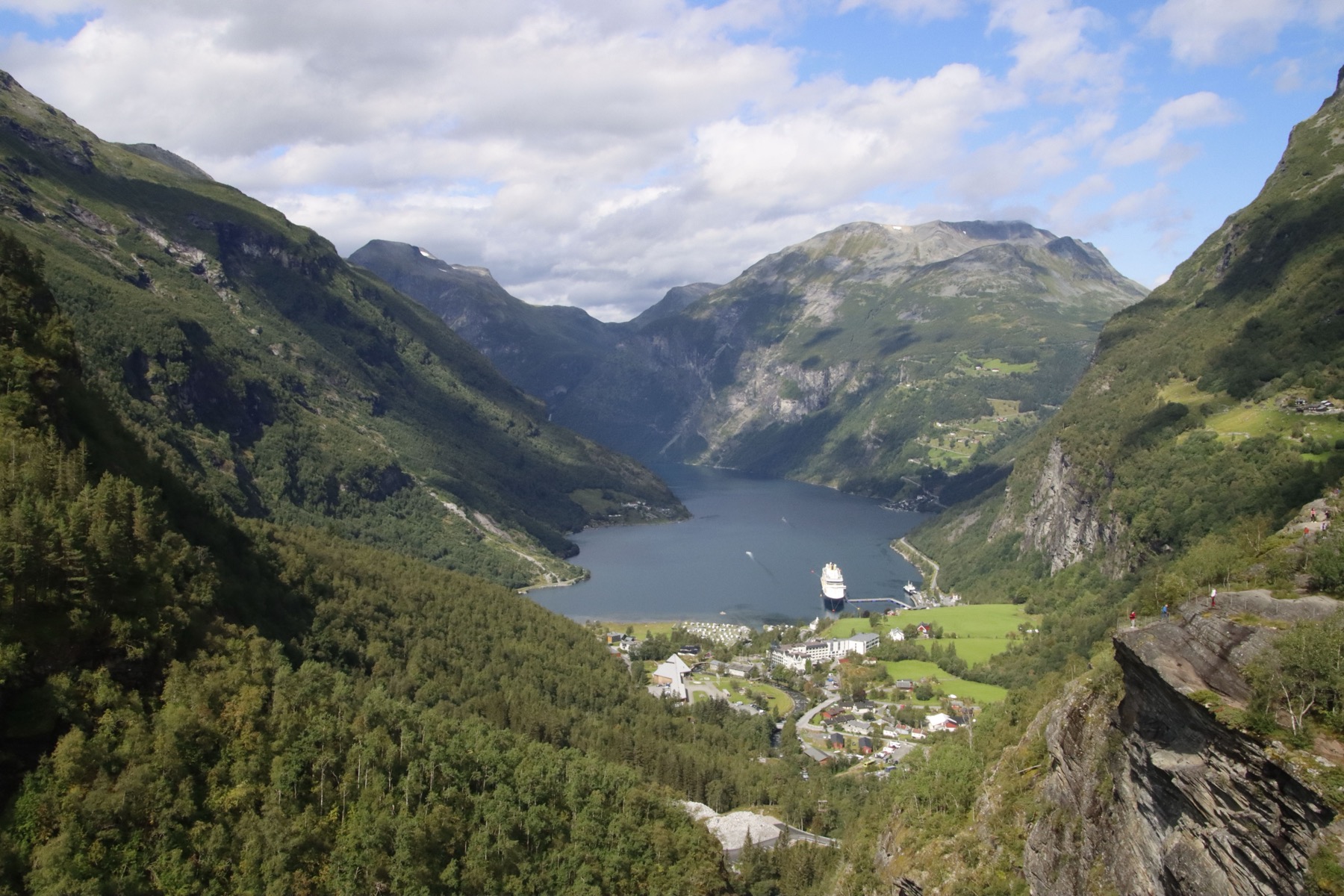
The best viewpoints and waterfalls
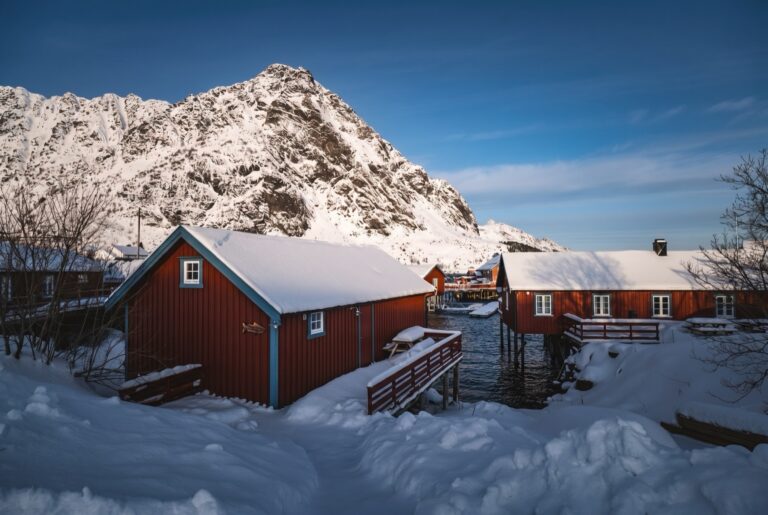
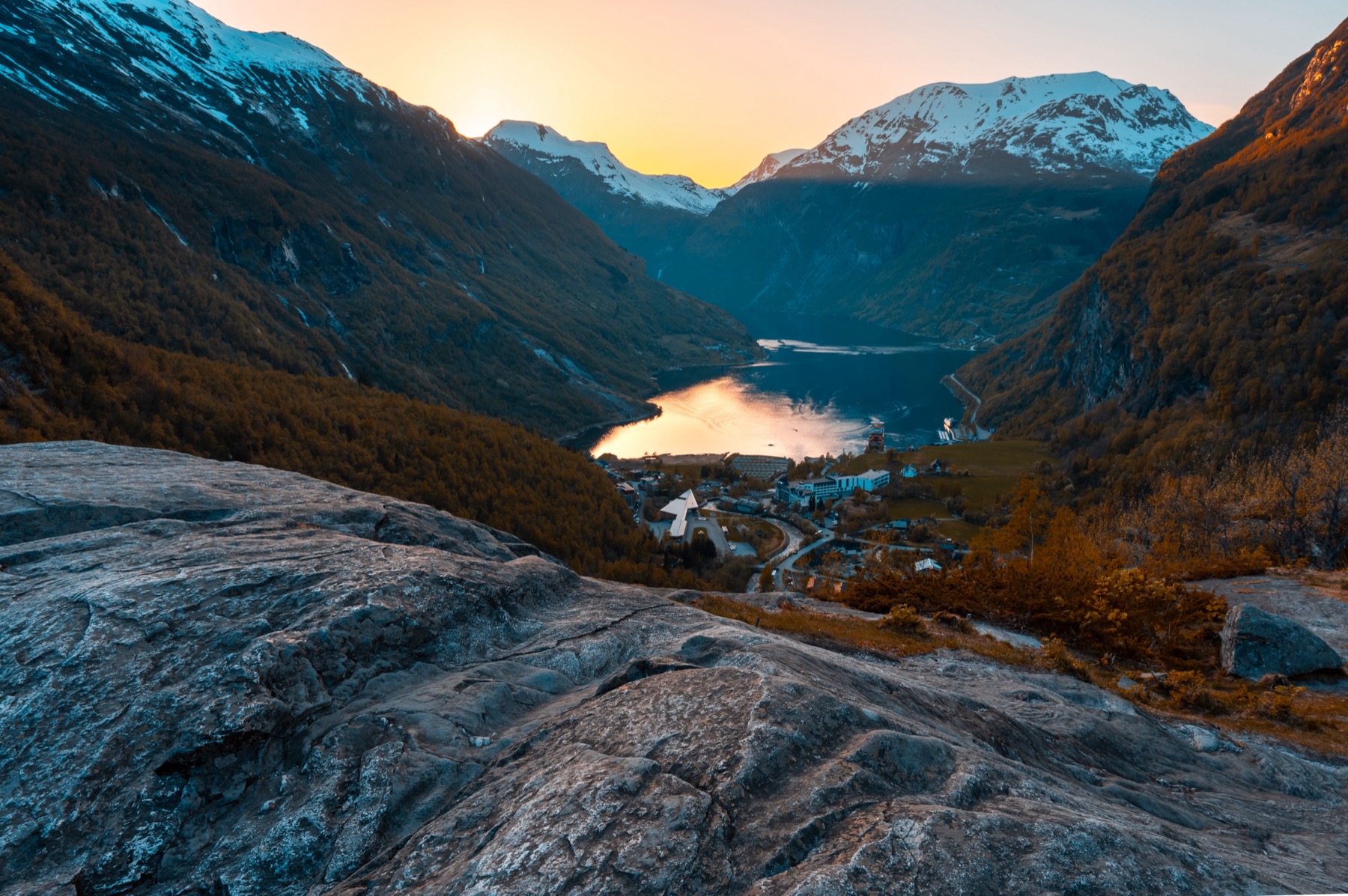
The surrounding mountains rise to staggering heights and offer dozens of kilometres of hiking trails and lookout points. It’s from a bird’s-eye perspective that the dramatic contrast between the deep blue water and the sheer cliffs — with old wooden cabins balanced on them — really comes into its own.
Some spots are easy to reach straight from the comfort of your car, while others require a proper, lung-busting Norwegian climb. Either way, both options guarantee gorgeous panoramas and scenery you simply have to photograph.
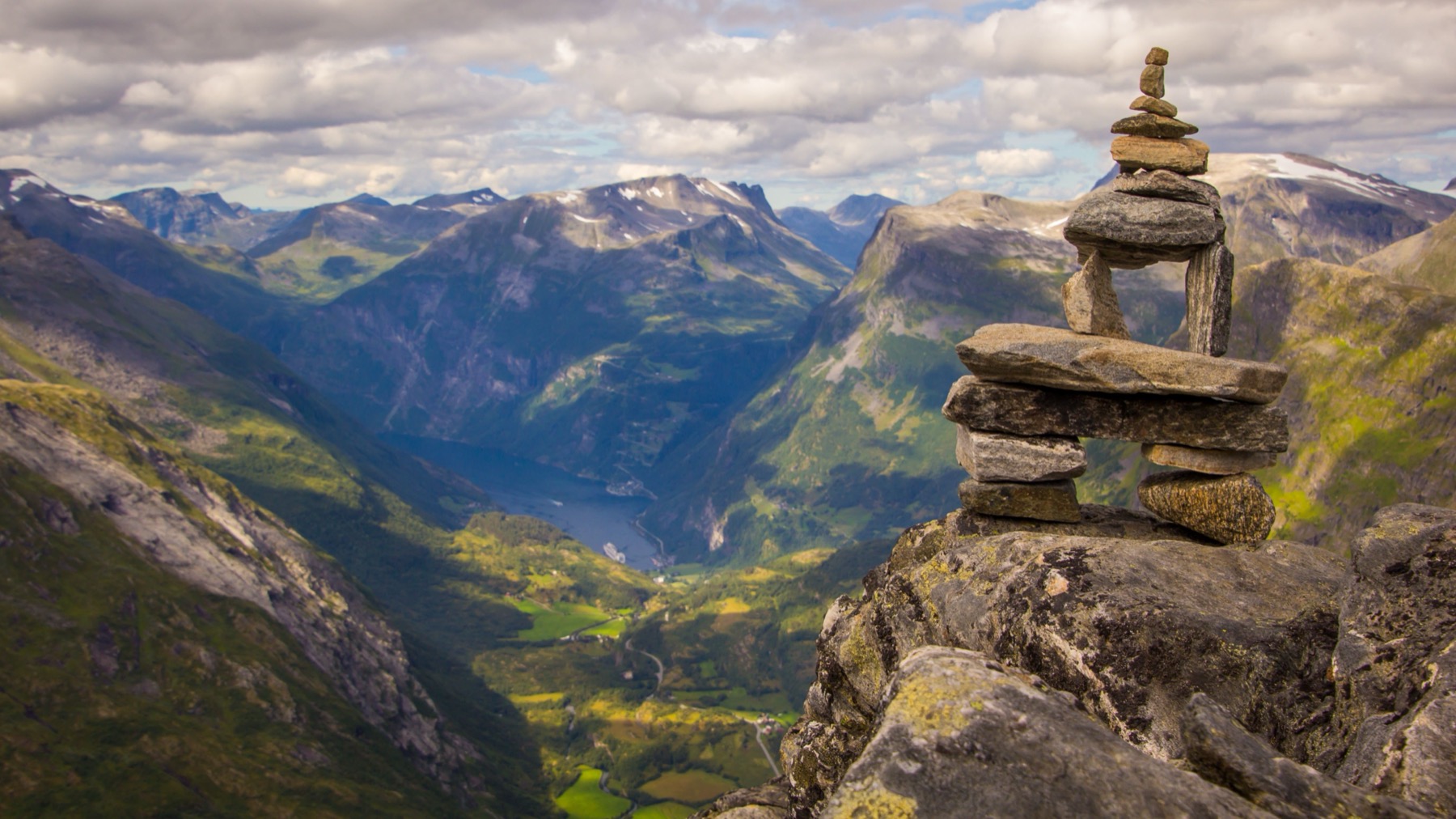
1. Dalsnibba viewpoint (Geiranger Skywalk)
If you want to see the whole valley from the highest possible vantage point, definitely make your way up Mount Dalsnibba. The viewing platform sits at an impressive 1,500 metres above sea level and offers an uninterrupted view of the fjord and the surrounding snow-capped peaks.
The viewpoint is reached via the toll mountain road Nibbevegen, which is a driving experience in its own right. Entry by car costs roughly 160 NOK (about €14), which is absolutely worth the investment for that breathtaking spectacle.
💡 Tip: The road up to Dalsnibba is usually only open during the summer season from June to October, and the wind at the top is very strong. Even when it’s hot down in the village, be sure to pack a warm jacket and a hat, because the temperature difference can be dramatic.
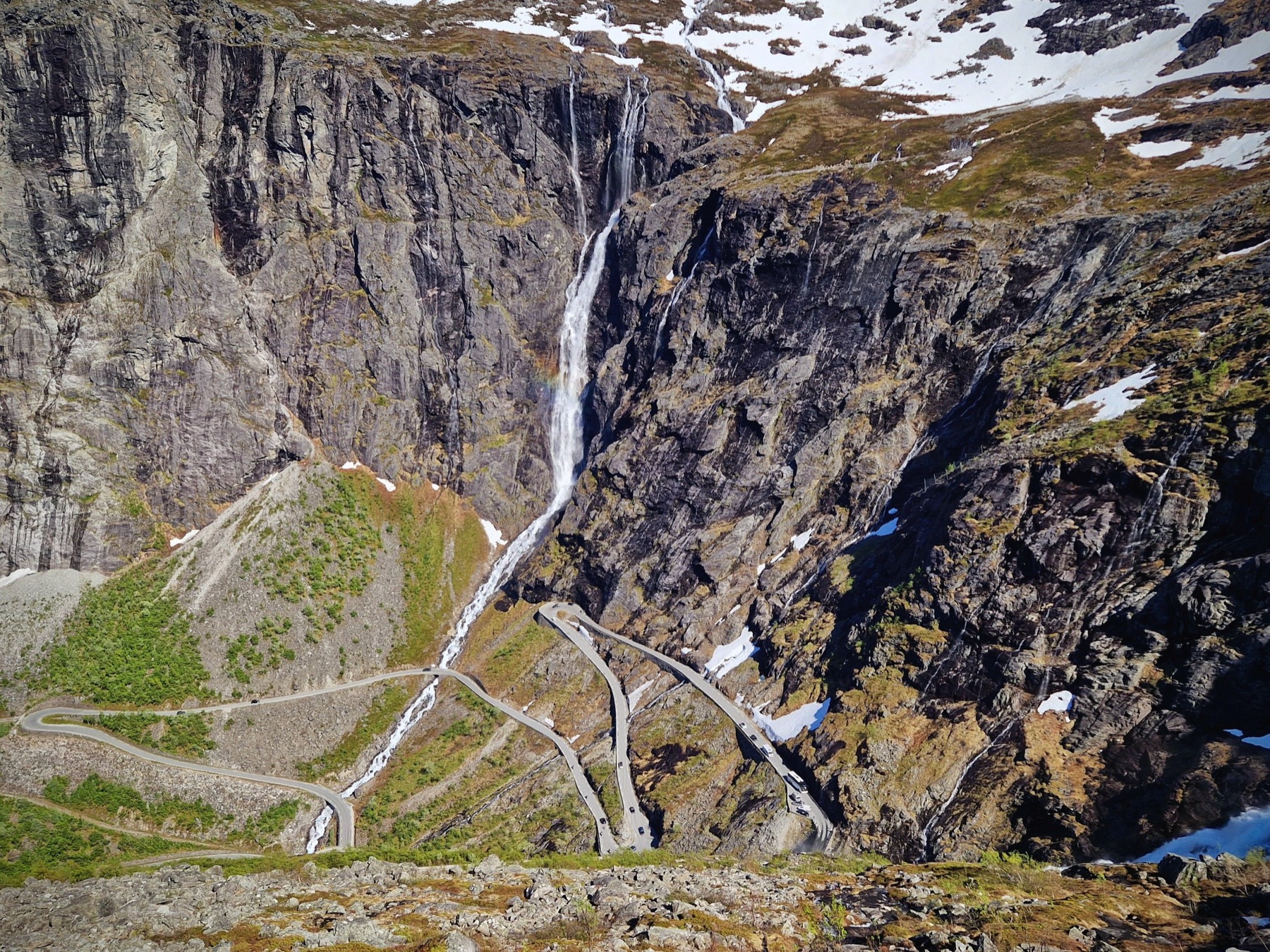
2. The Ørnesvingen hairpins (the Eagle Road)
Driving into the village from the north, you’ll meet the legendary Eagle Road, known locally as Ørnevegen. This engineering marvel is made up of 11 sharp hairpin bends that drop down the steep cliff face straight to the water’s edge.
At the highest bend you’ll find the beautifully landscaped Ørnesvingen viewpoint, which offers a fantastic view of the Seven Sisters waterfall. There’s a small car park at the platform, but in the height of the summer rush it can be tricky to find a free space.
I’d recommend stopping here either very early in the morning or in the late evening, when the light is much softer and there are no coach crowds jostling for space. The bends are fairly narrow, so while driving, keep a close eye out for oncoming campervans and cyclists.
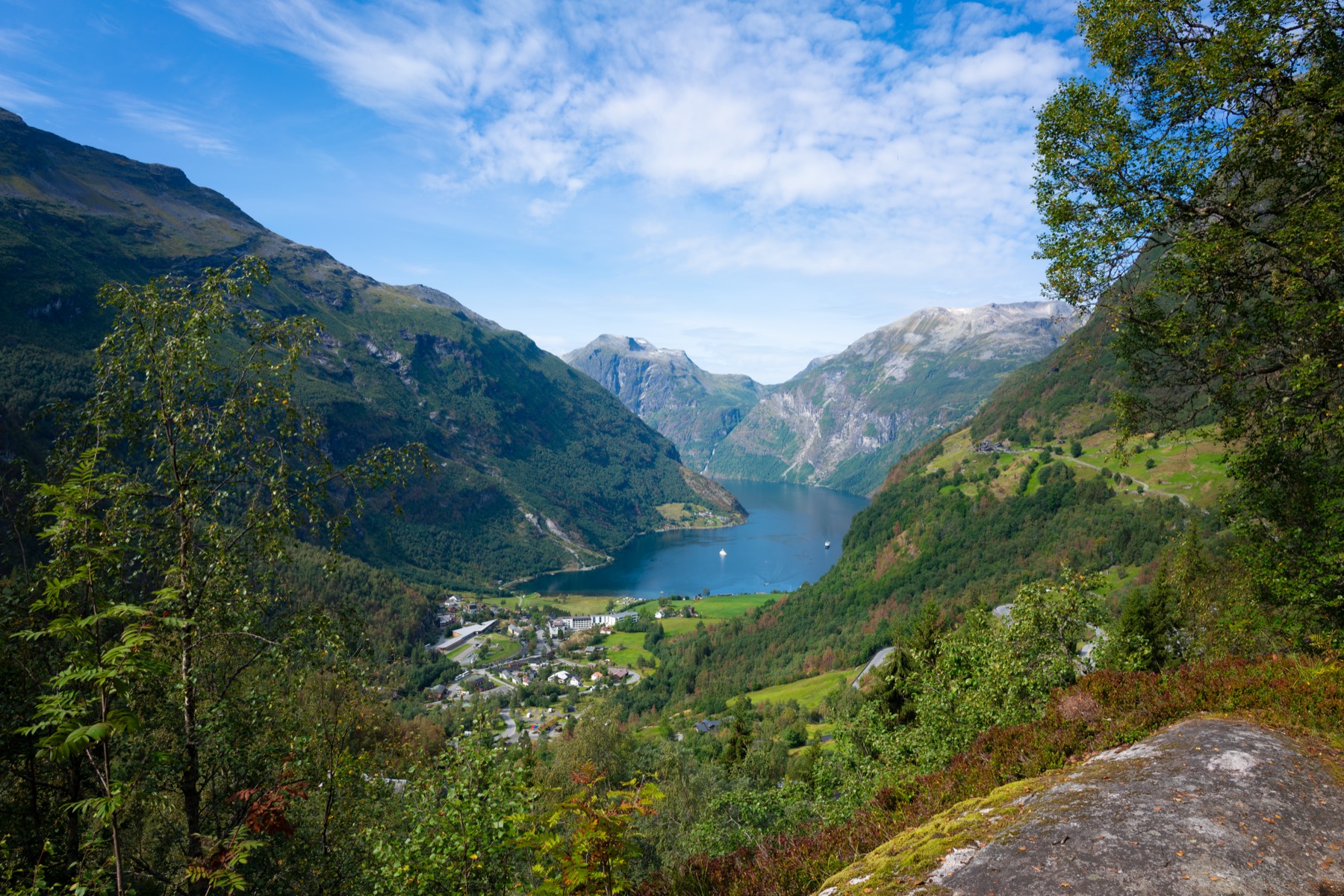
3. Flydalsjuvet viewpoint
This is exactly the spot where all those classic postcard photos of Geirangerfjord come from. Flydalsjuvet is just a few minutes’ drive above the village and splits into two separate viewing platforms connected by a short path.
From the upper platform you get a stunning view over the edge of the abyss, where the world’s largest cruise ships often dock. It’s here that the sheer scale of the surrounding nature really stands out, when a giant ocean liner looks like a tiny plastic toy on the water far below.
The spot is hugely popular and every single tour coach stops here. If you want a photo on the famous overhanging rock (be aware that, for safety reasons, stepping onto it is officially forbidden), you’ll need to get here right at sunrise.
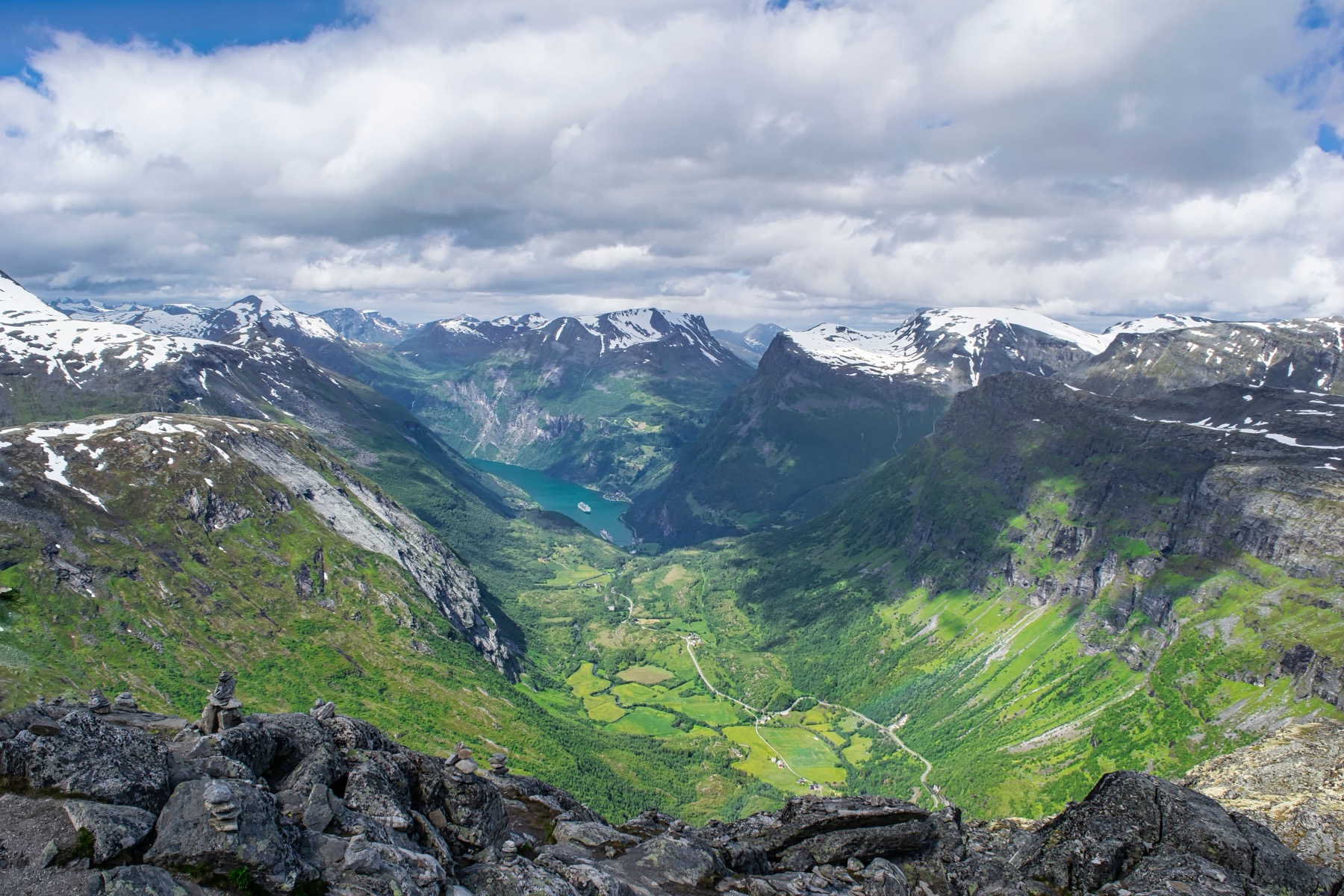
4. The abandoned Skageflå mountain farm
If you’re after a more active experience, lace up some sturdy boots and head for the historic Skageflå farm. This wooden farmstead clings to a steep cliff some 250 metres above the water and, according to many travellers, offers quite simply the most beautiful view of the entire fjord.
There are two ways to get here. You can either tackle the steep trail from Geiranger over the mountain, which takes roughly two to three hours one way, or you can use a clever little shortcut. You can buy a boat ticket (a so-called boat drop-off), get dropped at a small jetty directly below the cliff, and climb the steep path up to the farm from there.
You then return to the village on foot along the contour of the hillside. The path is fairly exposed in places and requires a sure footing, but the views of the waterfalls across the way are absolutely fantastic — and crowd-free.
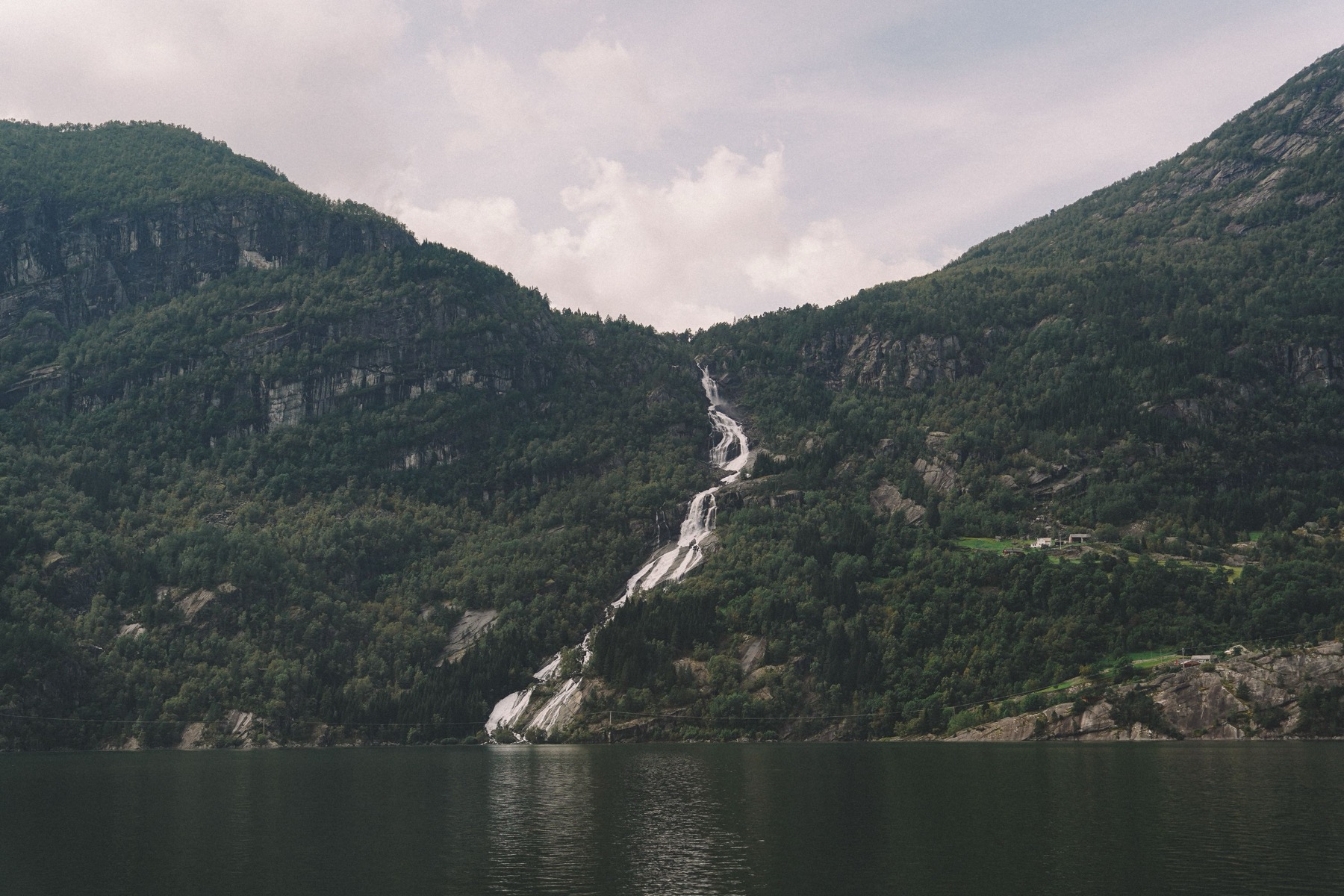

5. Storseterfossen waterfall
There are thousands of waterfalls in Norway, but only a handful you can safely walk behind. Storseterfossen is a wonderful natural phenomenon, reached by a very pleasant and undemanding trail from the Vesterås farm above Geiranger.
The climb up takes roughly 45 minutes and is manageable even with older children, as the path is well maintained and partly paved with stone steps. After a while of climbing through the forest, you’ll hear the powerful roar of the water and arrive right at a narrow ledge.
The trail is secured with a railing and leads right behind the falling curtain of water, which is an incredibly refreshing and noisy experience. Be sure to wear a waterproof jacket for this hike, because the spray flies everywhere and you won’t stay completely dry.
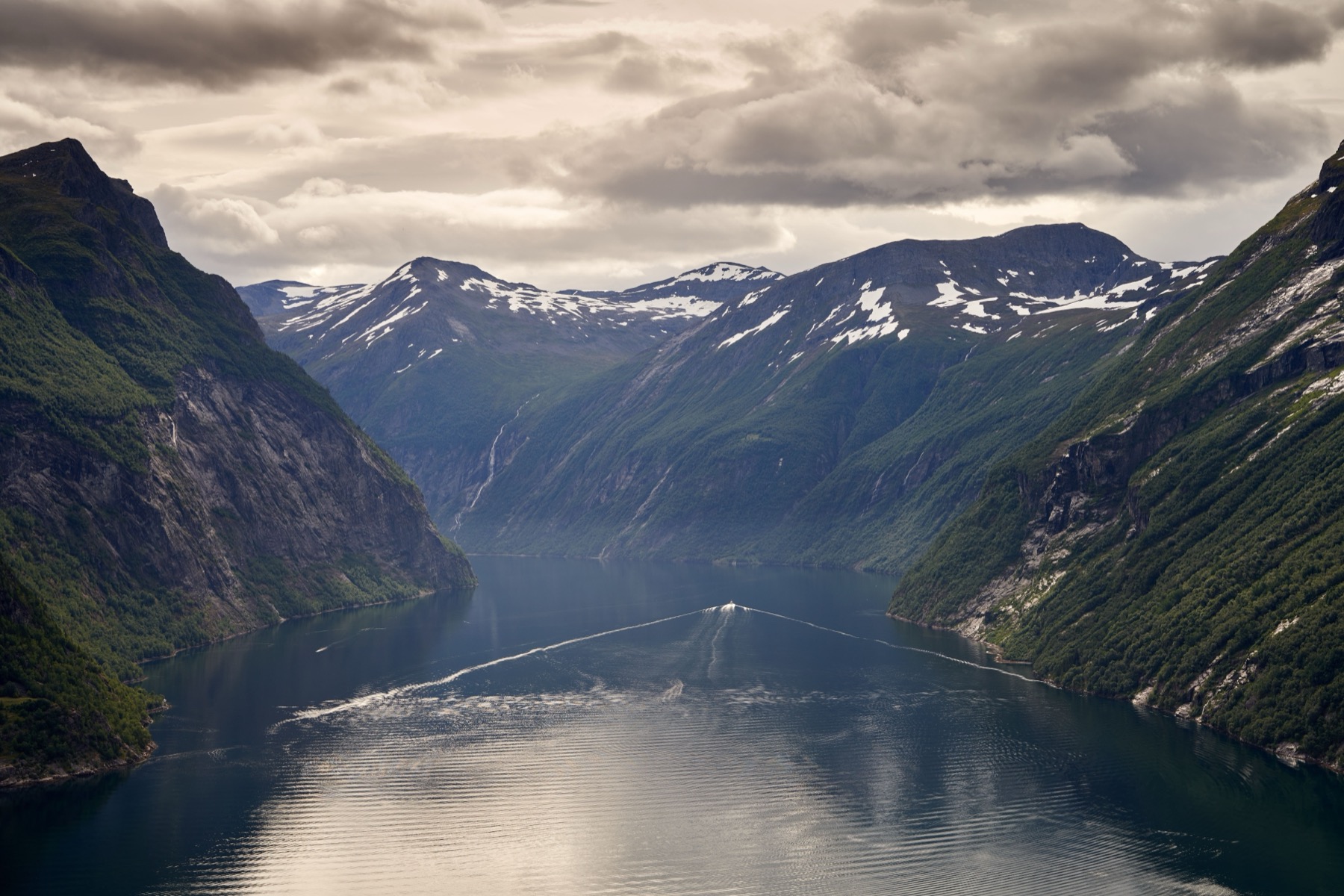
Experiences on the water
While the valley looks majestic from the shore and the viewpoints, it’s only from the water that you truly feel the immense power and energy of nature. When hundreds of metres of sheer vertical walls tower over you and you hear the waterfalls thundering down, it’s a completely different dimension of experience.
You can choose between a comfortable sightseeing ferry or a more adventurous kayak trip. Each has its own appeal, and the ideal approach is to combine the classic view from above with a trip out on the water, so you get the full picture.
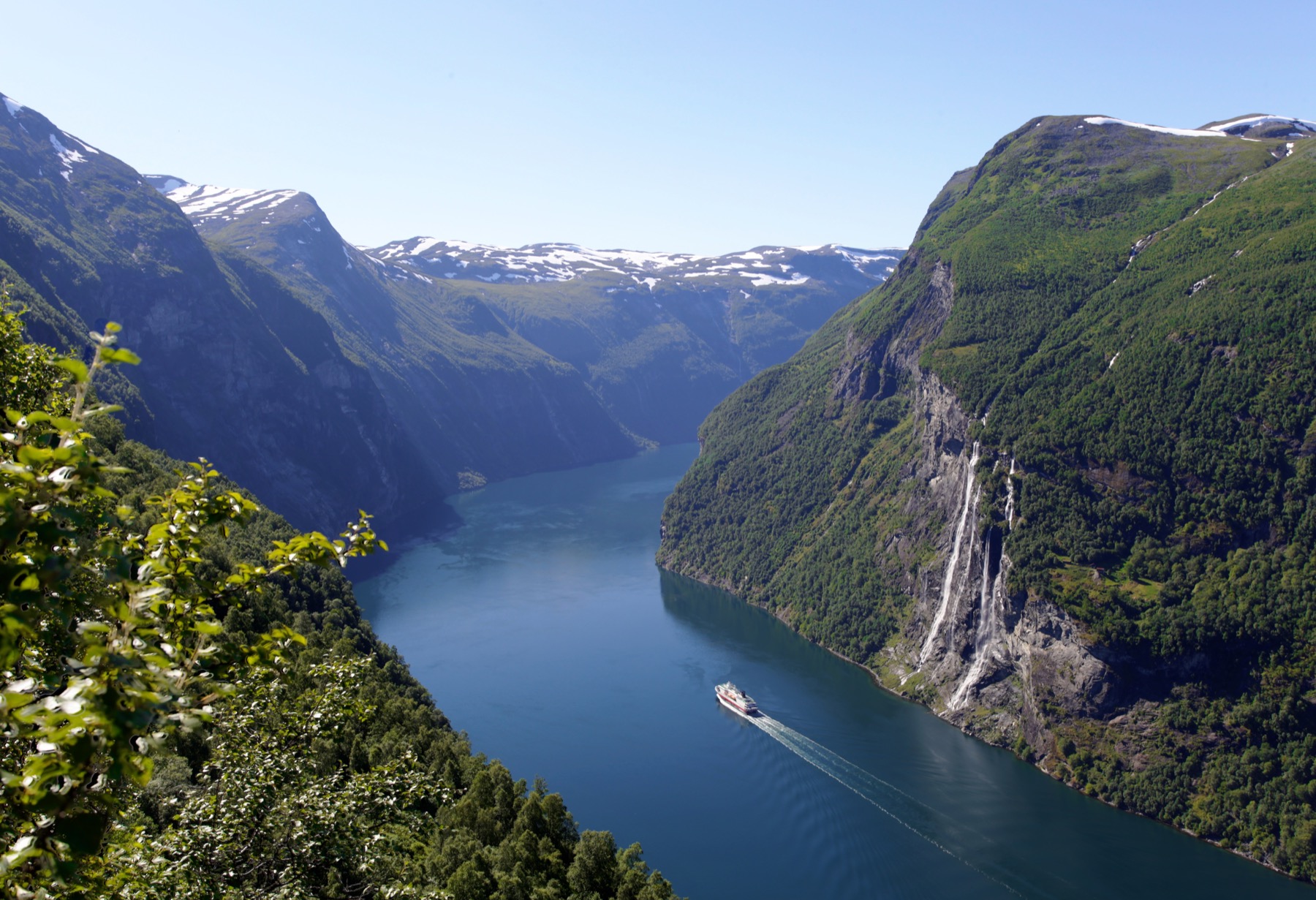
6. A Geirangerfjord cruise from Geiranger
The most accessible way to explore the area is to hop aboard one of the many tourist boats. Sightseeing cruises depart from the harbour several times a day, last around 90 minutes, and take you to the most famous waterfalls and old farms.
Tickets for a classic boat cost roughly 300 to 400 NOK (around €26 to €35), and you can easily book them in advance through platforms like GetYourGuide or buy them directly at the kiosk by the harbour. There’s usually a snack bar on board, so you can enjoy a warm coffee and Norwegian waffles while you snap photos.
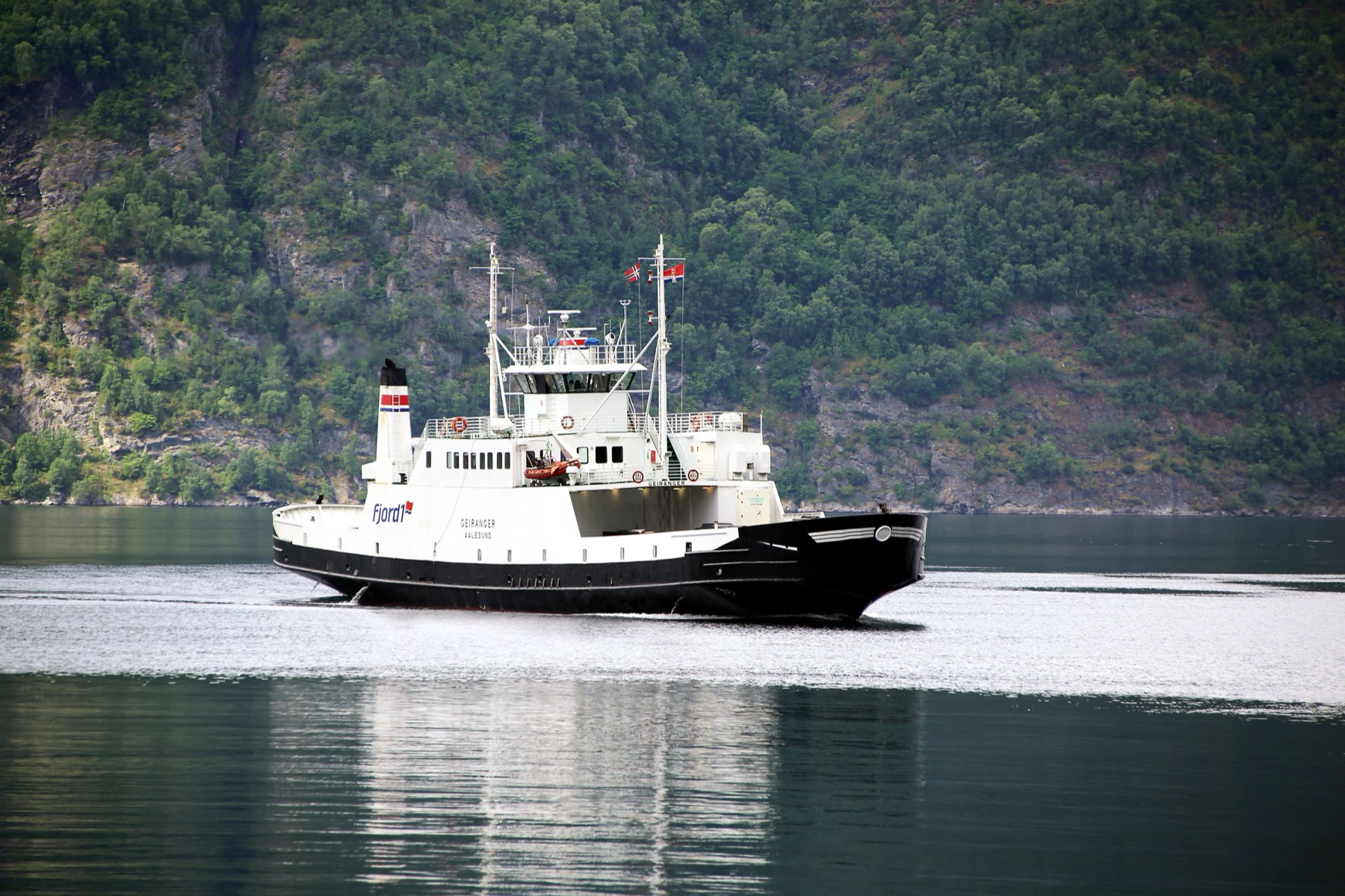
An alternative to the tourist boats is the regular scheduled ferry, which runs the route between Geiranger and the little village of Hellesylt. This roughly hour-long crossing is a fully worthwhile experience in its own right, and the boat even broadcasts information about the surrounding landscape over the loudspeakers in several languages.
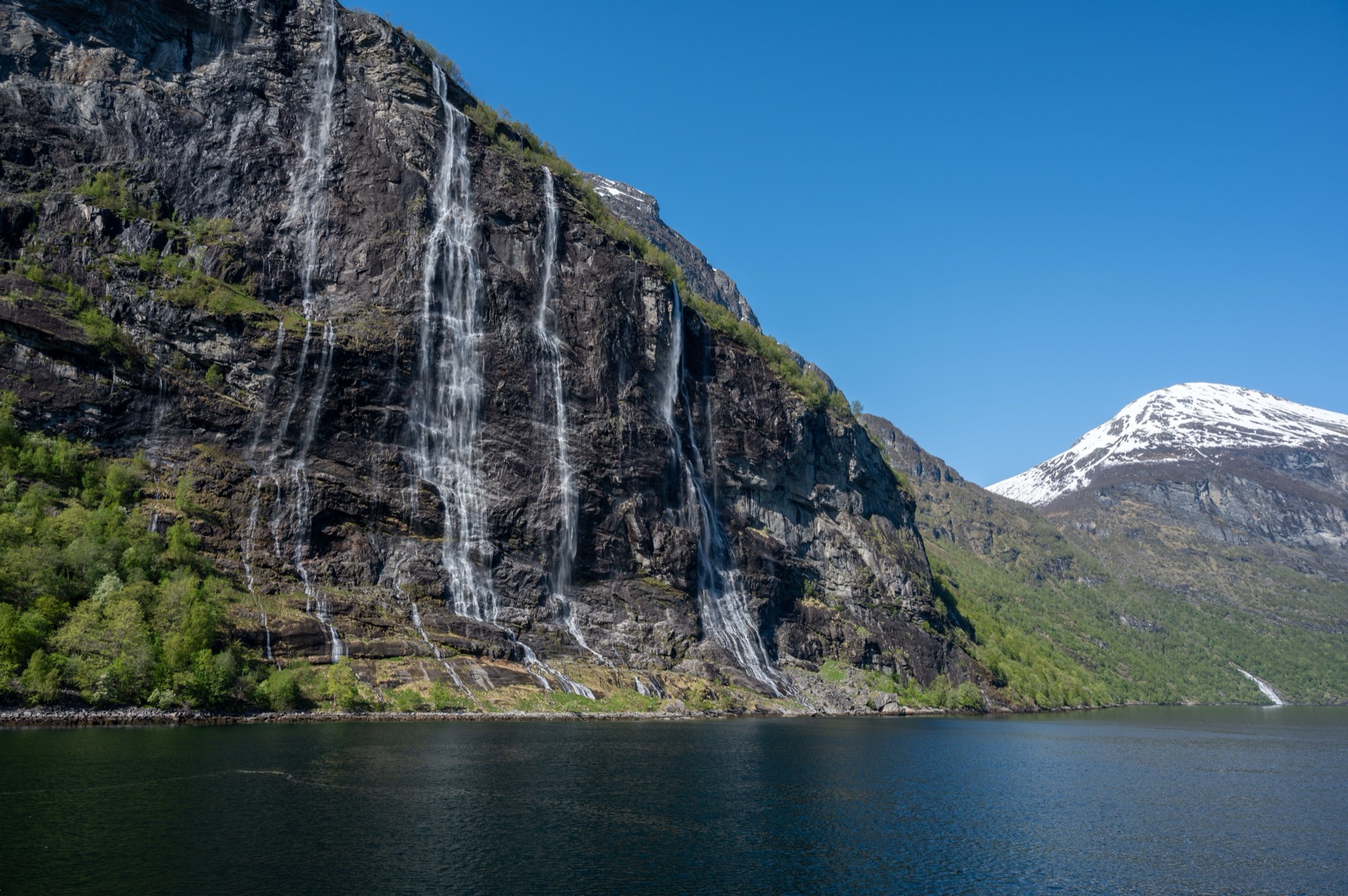
7. The Seven Sisters and the Suitor waterfalls
During the cruise you’ll come across the main stars of the whole fjord — its iconic waterfalls. The Seven Sisters waterfall (De syv søstre) is made up of seven separate streams that cascade elegantly down the dark rock straight into the salt water.
Directly opposite, on the other bank, roars the broader and more powerful waterfall known as the Suitor (Friaren). An old Norwegian legend tells how the Suitor is forever trying to charm the sisters across the water, but they keep rejecting him — and out of heartbreak he took to drink, which is supposedly why the waterfall’s shape resembles a bottle.
💡 Tip: For the waterfalls to show their full force, the best time to see them is early summer, in June, when huge amounts of snow are melting in the mountains. By late August, after a dry summer, some of the sisters can run dry, leaving just damp streaks on the rock.
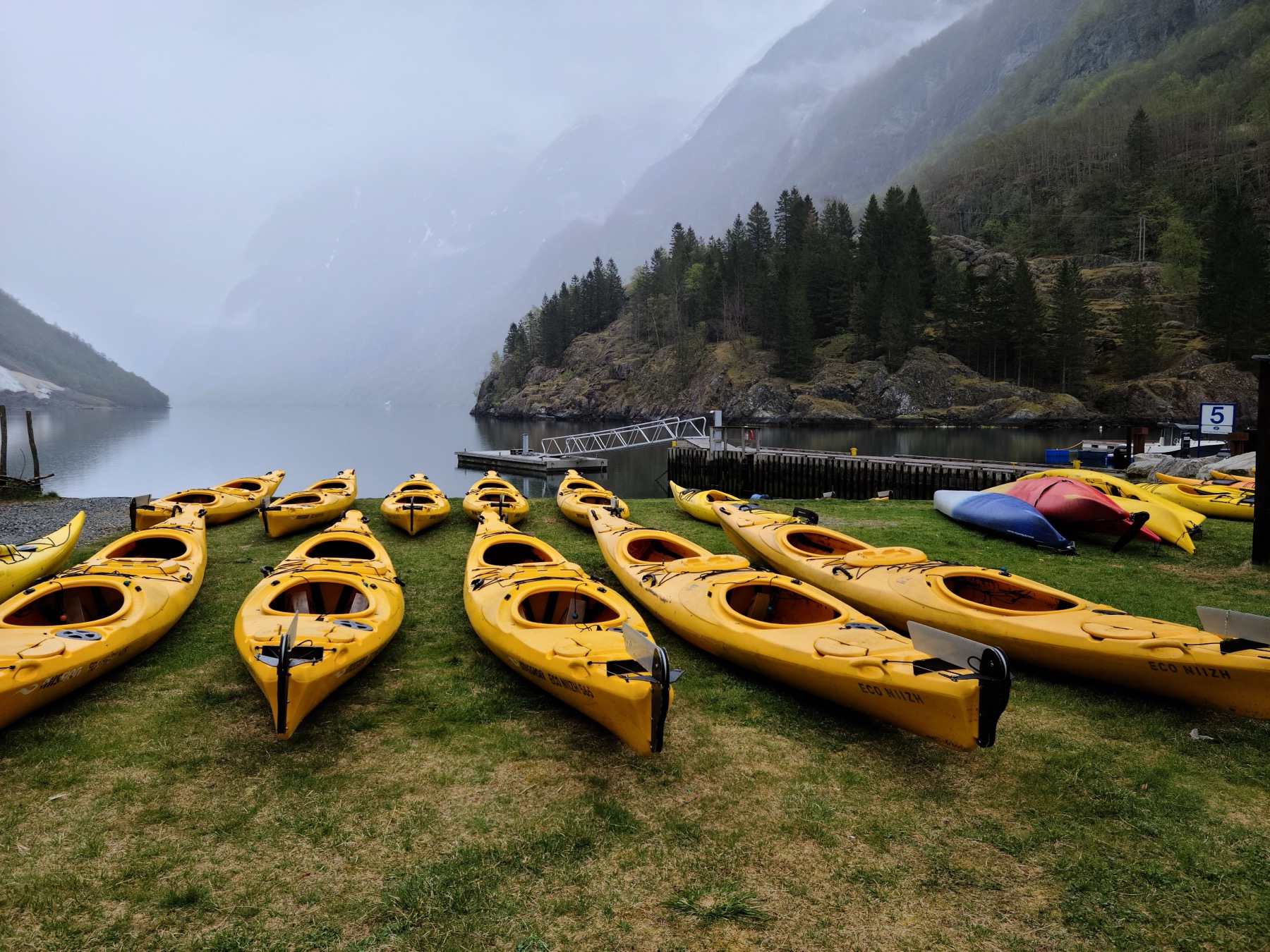
8. Kayaking right under the waterfalls
If you prefer silence to the hum of boat engines, rent a sea kayak. There are several rental places right in the village, where you can hire equipment for a few hours or for the whole day.
Paddling across the calm surface of the fjord is the most intimate way to become one with Norwegian nature. As you glide beneath the enormous rock walls in a tiny kayak and draw closer to the falling water of the Seven Sisters, you feel a profound respect for the landscape around you.
And there’s no need to worry if you don’t have much paddling experience. You can book a trip with a local instructor who will teach you the basics, show you a safe route, and share fascinating facts about the history of the local farms that you’d never spot from a large boat.
How to get to Geiranger
Most travellers head here by car, and the journey itself is one of the greatest driving experiences in the Nordics. If you’re coming from the north-west, from the beautiful Art Nouveau town of Ålesund, the trip takes roughly two hours of driving through picturesque countryside. From the UK, the simplest approach is to fly to Ålesund (with connections via Oslo) and pick up a hire car there, or to bring your own vehicle over on a North Sea ferry if you fancy a full road trip.
Far more popular, though, is arriving from the north, combining the famous Trollstigen mountain road with the subsequent descent down the Ørnevegen hairpins straight into the centre of the village. This breathtaking route is only open in the summer months and demands nerves of steel as you squeeze past wide motorhomes.
A fantastic alternative when coming from the south is to take the public ferry from the town of Hellesylt, which functions as an ordinary part of the Norwegian road network. During the hour-long crossing, with your car safely parked below deck, you essentially get a full sightseeing trip without having to buy any extra pricey tourist tickets.
Where to go next from Geiranger
Once you’ve explored all the waterfalls and viewpoints, definitely don’t stop there — carry on discovering more pristine nature. Norway is enormously varied, and every new bend in the road hides fresh surprises, lakes and mountain peaks.
Take a look at our comprehensive article Norway: 50 Tips on What to See, where you’ll find plenty of inspiration for planning your whole itinerary. If you want to focus more on similar watery scenery and mountain valleys, read our detailed Norwegian Fjords — Guide.
We describe a beautiful architectural gem and the ideal starting point for further travels in our guide Ålesund — Gateway to Geiranger. And if you love driving and winding roads, don’t miss the article The Atlantic Road and Trollstigen, which will safely guide you along the most iconic Nordic roads.
Frequently asked questions
When is the best time to visit Geirangerfjord?
The best conditions are in summer from June to August, when the Dalsnibba viewpoint is open and all boat routes are operating. However, due to huge crowds from large cruise ships, I recommend heading to the viewpoints early in the morning or later in the evening, when the valley is beautifully quiet.
How to best get to Geiranger?
You can arrive by car from the northwest from the town of Ålesund via the Eagle Road, or combine the journey with the famous Trollstigen road. From the south, an amazing experience is to take the ferry from the town of Hellesylt, which sails through the entire fjord.
Is a boat trip worth it, or is a car enough?
Definitely I recommend doing both, as you’ll get a completely different perspective. From the car you’ll enjoy dramatic views from above and the overall panorama, while from the boat deck you’ll see the waterfalls up close and fully experience the height of the surrounding rock walls.
How much does a boat trip on the fjord cost?
A classic tourist cruise lasting about an hour and a half costs approximately 300 to 400 NOK (roughly 27 to 37 EUR). Tickets can be purchased directly at the harbor, but during peak season it’s wiser to book them a few days in advance online.
Where is the best view from?
For the view from the highest point, head to the toll road to Mount Dalsnibba, from where you can see the wide surroundings. Classic postcard photos with the excursion boat in the valley can be taken from the Flydalsjuvet viewpoint, while the Ørnesvingen hairpin bends offer a beautiful view of the waterfalls.
Can you kayak Geirangerfjord?
Yes, there are several good rental shops right in the village where you can rent stable sea kayaks and life jackets. You can set off on your own, or pay for a trip with a local guide, which is a much safer option for complete beginners.
Is Geiranger very overcrowded with tourists?
Unfortunately yes, in the summer season it’s one of the most visited places in the country, mainly due to the giant cruise ships. If you want to avoid the crowds, get up before ten in the morning, or head out on more challenging hikes where most cruise ship passengers don’t go.
Tips and Tricks for Your Vacation
Don’t Overpay for Flights
Search for flights on Kayak. It’s our favorite search engine because it scans the websites of all airlines and always finds the cheapest connection.
Book Your Accommodation Smartly
The best experiences we’ve had when looking for accommodation (from Alaska to Morocco) are with Booking.com, where hotels, apartments, and entire houses are usually the cheapest and most widely available.
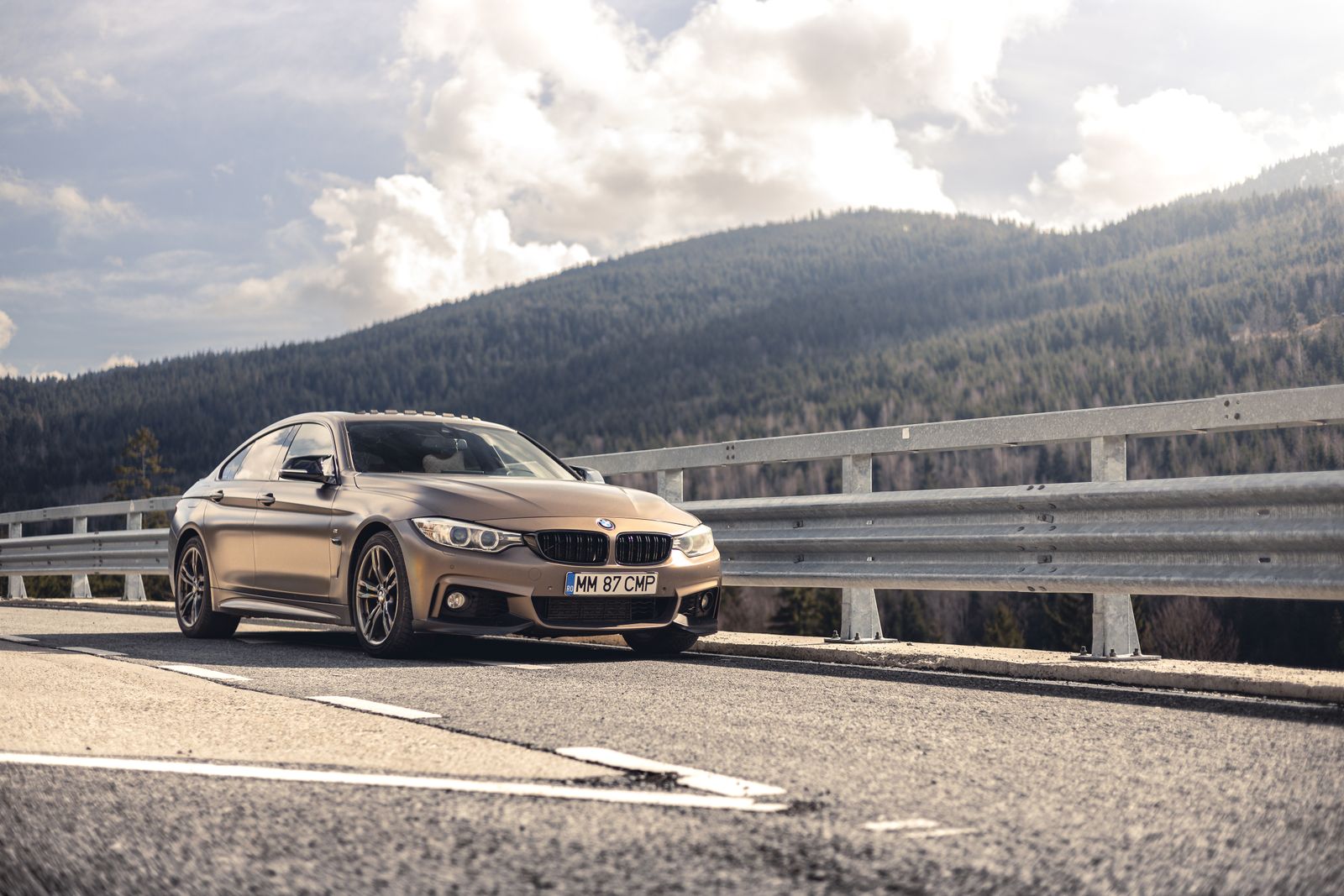 🚗 Car rental on the roadVerified rental cars in Norway
Search with the DiscoverCars comparison engine — it compares prices from dozens of local and international rental companies, and most bookings come with free cancellation.
Compare car prices in Norway →Don’t Forget Travel Insurance
Good travel insurance will protect you against illness, accidents, theft, or flight cancellations. We’ve had a few hospital visits abroad, so we know how important it is to have proper insurance arranged.
Where we insure ourselves: SafetyWing (simple monthly subscription) and TrueTraveller (for extra-long trips).
Find the Best Experiences
Get Your Guide is a huge online marketplace where you can book guided walks, trips, skip-the-line tickets, tours, and much more. We always find some extra fun there!