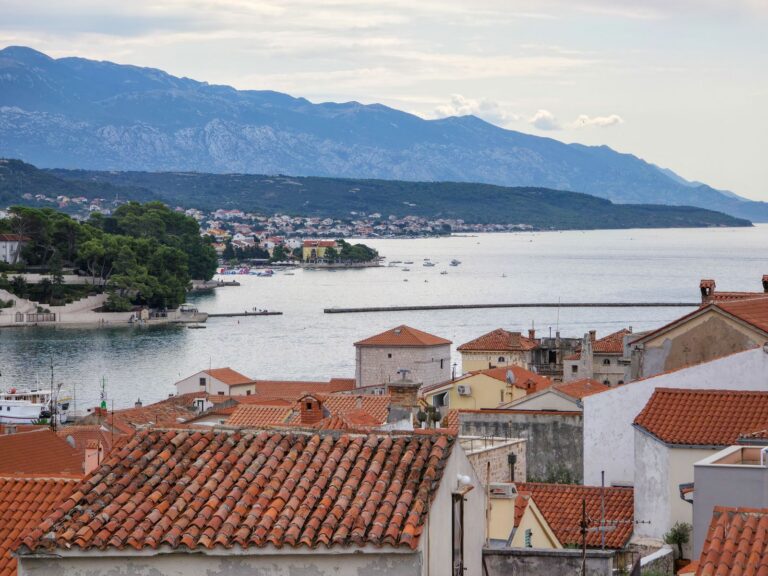
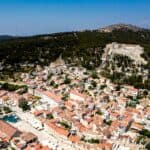
If you’re looking for the perfect Croatian town that has held onto its authentic historic character, Trogir in Croatia will win you over in an instant. This remarkably compact centre sits on a tiny islet linked by bridges to both the mainland and a neighbouring island, and it’s rightly listed in its entirety as a UNESCO World Heritage Site.
Its huge strategic advantage is the fact that it lies just five kilometres from Split International Airport. That makes it an absolutely ideal stop for your first day after landing, or for that very last holiday afternoon before heading home.
I’ve put together a detailed guide with 12 specific tips on sights and trips to help you get the most out of your visit. I’ll also walk you through the logistics — where best to park and how to cleverly dodge the biggest crowds of day-trippers who pour in from far and wide.
TL;DR
- Transport and parking: From the airport or from Split you can easily get here on local bus number 37. If you’re driving, park only on the mainland side before the bridge — cars aren’t allowed into the historic core.
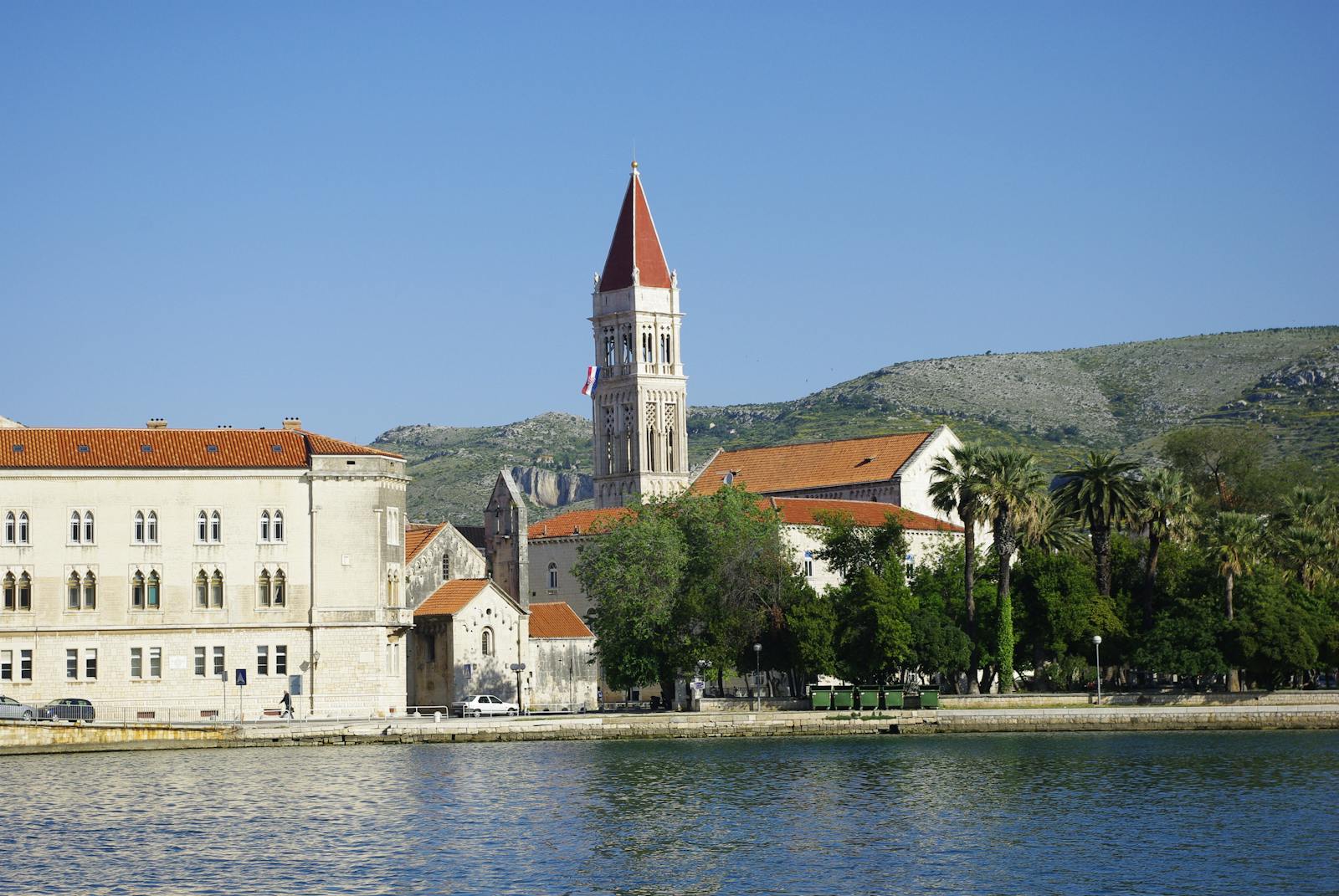
- Main sights: Don’t miss the magnificent Cathedral of St Lawrence with its famous Radovan Portal, and the Venetian Kamerlengo fortress at the end of the promenade.
- When to come: The town has its best atmosphere early in the morning or in the late afternoon, when the big organised tours from Split leave and the lanes empty out pleasantly.
- Swimming and beaches: You can’t swim in the historic centre itself, but just cross the bridge to the island of Čiovo, where the popular Okrug Gornji beach awaits.
- Boat trips: Trogir is a perfect launch point for popular snorkelling trips to the nearby Blue Lagoon off the island of Drvenik Veli.
- How long to stay: Two to three hours are enough for the sights themselves, but add lunch and a swim and you’ll easily spend a whole wonderful day here.
The full destination guide: Dalmatia — guide and what to see
When to Visit Trogir: Weather in Trogir, Croatia
If you want to enjoy the most pleasant atmosphere and avoid the punishing heat, the best months to visit are May, June and September. The weather in Trogir, Croatia, is beautifully summery by then (or still is), the sea is comfortably warm, and you can stroll the old town’s lanes without constantly hunting for shade. In these shoulder months you’ll also find accommodation at far friendlier prices and enjoy plenty of personal space on the beaches.
During the peak summer season in July and August, be prepared for temperatures that regularly climb well above thirty degrees, with the stone town heating up considerably. On top of that, between ten in the morning and three in the afternoon, crowds of day-trippers and organised tours stream in from neighbouring Split, so the narrow lanes get truly packed. For that reason I recommend planning your visit to the best-known sights for eight in the morning, when the town is just waking up and you’ll have the loveliest views all to yourself.
Whatever month you arrive, Trogir is at its most magical at dusk and after dark. As the sun sets, the centuries-old stone paving takes on a gorgeous golden glow, restaurant lights flicker on beneath the tall palms along the promenade, and you can soak up genuine Dalmatian romance without the crush. By then most day visitors have long since driven back to their mainland hotels. An evening stroll along the waterfront with an excellent Italian gelato in hand, watching the luxury yachts moored in the local marina, is one of the most beautiful experiences a summer holiday in Croatia can offer.
Where to Stay in Trogir
💡 Tip for accommodation and experiences: We like to look for places to stay on Booking.com, which usually has the best cancellation terms. For tickets, tours and activities, it pays to compare and book through GetYourGuide.
Choosing where to stay depends mostly on whether you’re after evening romance right in the heart of the action, or you’d rather have peace and quiet and be a stone’s throw from the beaches. The historic core on the islet itself offers gorgeous boutique hotels in authentic stone houses, but bear in mind you can’t drive there and the evenings can get fairly lively thanks to the bars and restaurants.
If you fancy old-world luxury and don’t mind a slightly higher price point, a fantastic choice is the Boutique Hotel Monika, set right in the labyrinth of ancient lanes with fantastic breakfasts and a beautiful terrace. Another popular spot right in the centre is the traditional Hotel Tragos, housed in a carefully restored eighteenth-century baroque palace, from which all the sights are literally just a few steps away. Staying in the heart of town is absolutely ideal for your first or last night in Croatia, since you can reach Split International Airport by car or bus in just ten minutes.
For families with children or travellers who mainly want to enjoy the sea and save a chunk of the budget, I recommend looking for accommodation on the neighbouring island of Čiovo, specifically in the resorts of Okrug Gornji or Slatine, where you’ll find a wide range of affordable apartments and smaller guesthouses. A lovely compromise between the beach and easy access to the historic centre is the quieter mainland district of Seget Donji. Here you’ll find, for example, the fantastic design-led Brown Beach House, which sits on the mainland just by the bridge and boasts an absolutely iconic pool with sea views. I always recommend booking your accommodation well in advance through Booking, because capacity in this hugely popular region disappears in a flash over summer, and only the priciest options are left at the last minute.
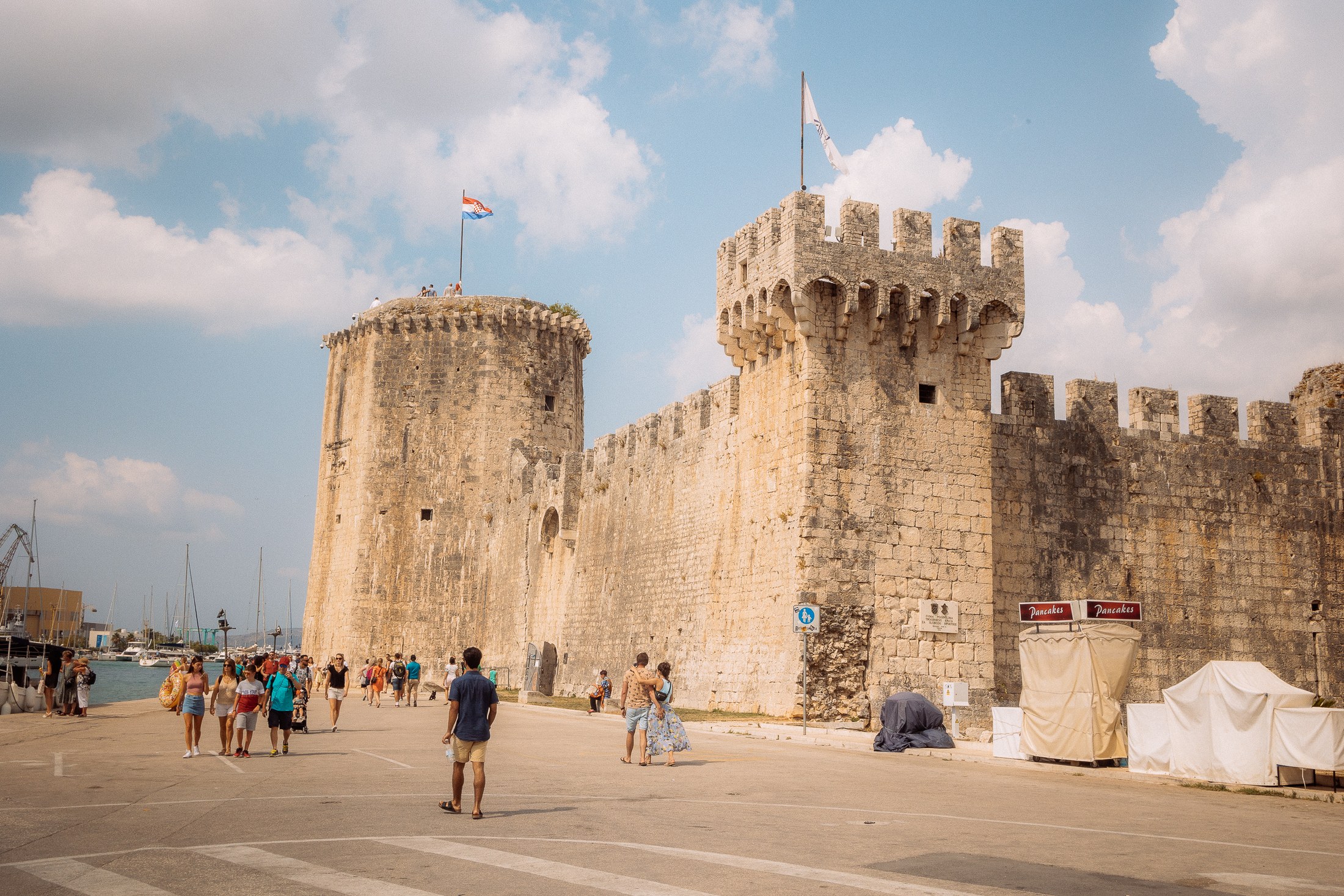
12 Best Things to See and Do in Trogir, Croatia
Let’s take a look together at the most interesting things this unique Dalmatian town has to offer. The historic centre is so compact that you can easily walk the whole thing, and getting your bearings is a breeze thanks to the regular grid of lanes that has survived here since the days of the ancient Greeks.
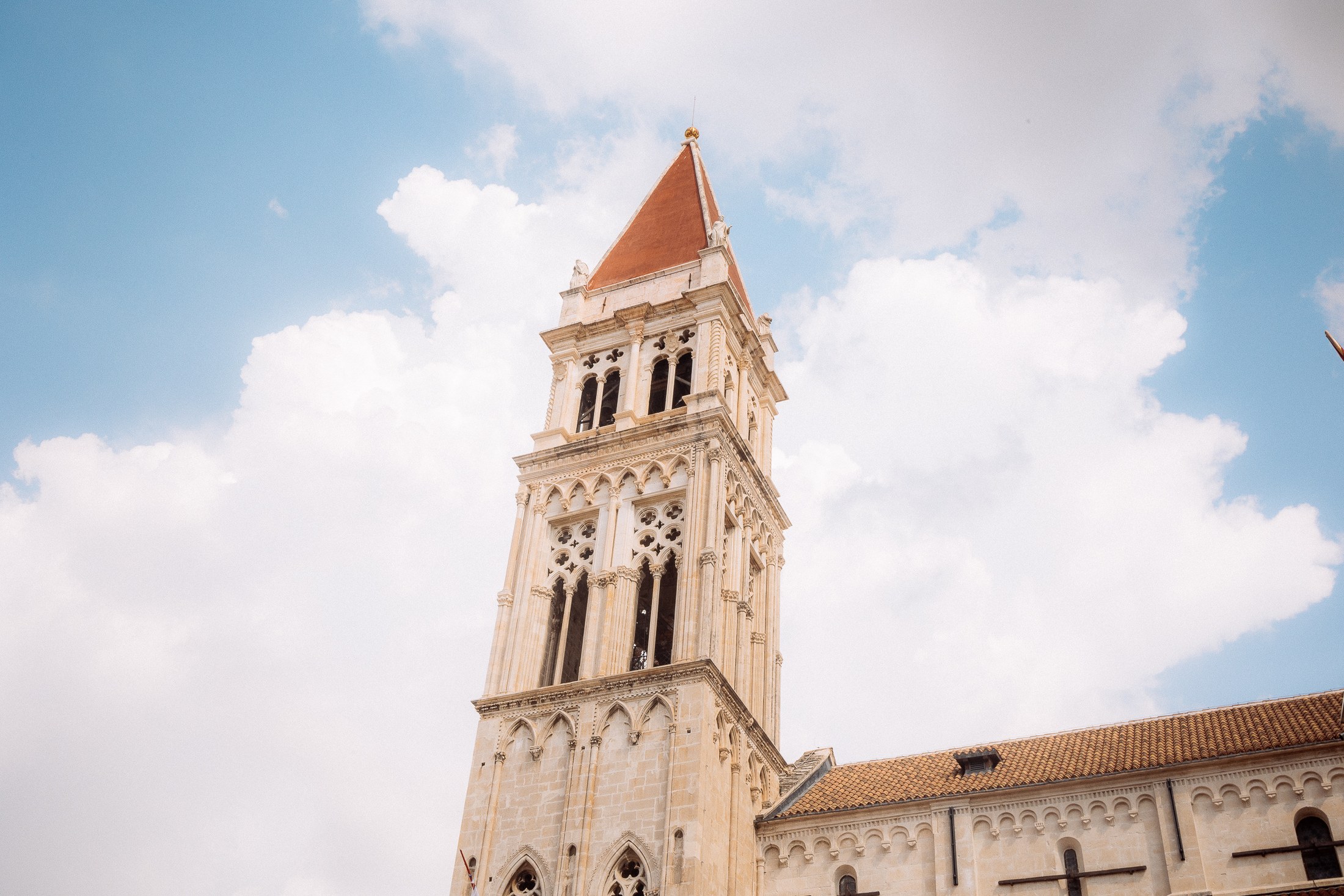
1. Cathedral of St Lawrence and the Radovan Portal
The most important building in the whole town is undoubtedly the monumental Cathedral of St Lawrence, which locals call Sveti Lovre. Its construction spanned an impressive 370 years, from the thirteenth to the sixteenth century, and it rose on the foundations of a destroyed ancient temple. Thanks to this long build, you can admire a fascinating blend of Romanesque, Gothic and Renaissance styles that harmoniously merge into one stunning architectural whole.
An absolute artistic gem is the main entrance gate, the so-called Radovan Portal from 1240, one of the most significant Romanesque sculptural works in Central Europe. On it, Master Radovan carved in incredible detail not only biblical scenes — led by Adam and Eve standing on lions — but also the motifs of the individual months of the year and the traditional farming tasks tied to each one.
Inside the cathedral itself, your attention will certainly be drawn to the masterful Renaissance Chapel of St John of Trogir, the work of the finest sculptors of their time, as well as the nearby fifteenth-century baptistery by the builder Andrija Aleši. Basic admission to the cathedral is around €5, but I warmly recommend paying a little extra for the combined ticket at €10, which opens the doors to every part of the complex, including the baptistery and bell tower. During the season it’s usually open Monday to Saturday from eight to six, and from noon on Sundays.
💡 Tip: If you want to study the portal’s details in peace and without shadows, come first thing at eight when the cathedral opens and the sun hits it at the best possible angle.
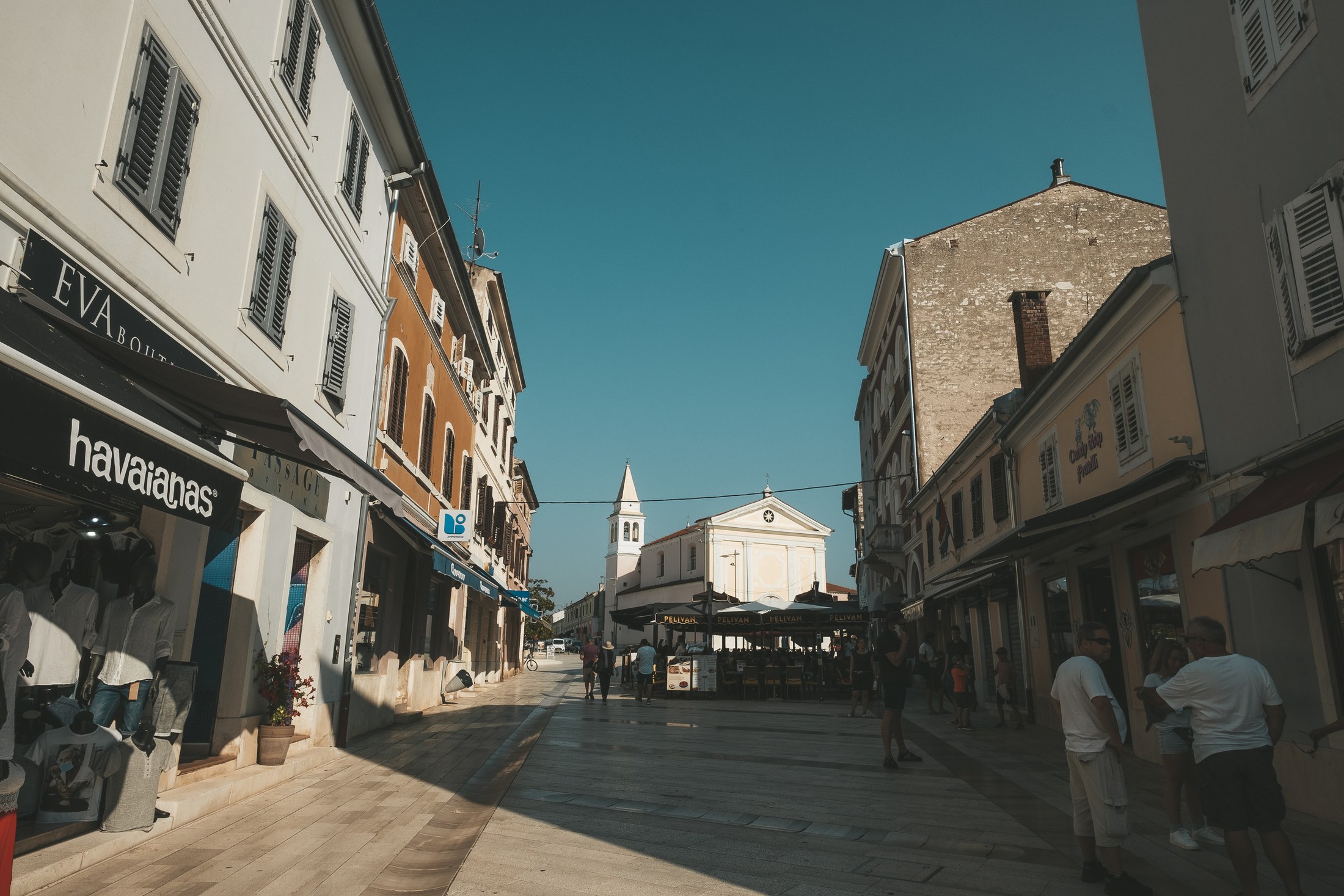
2. Climbing the Bell Tower for a Breathtaking View
An integral part of the cathedral is its forty-seven-metre bell tower, dating from the fourteenth to sixteenth century, which forms the town’s main and far-visible landmark. Interestingly, two towers were originally meant to stand by the cathedral, but due to a lack of funds and constant historical upheavals only the southern one was ever finished — which gives the whole structure its characteristic asymmetric look.
If you don’t suffer from vertigo and don’t mind a bit of physical effort, definitely don’t miss the climb of roughly a hundred steps to the very top of this historic tower. The way up the stone — and later metal — staircase is rather narrow and steep in places, but once you reach the upper gallery beneath the four statues by the famous Venetian sculptor Alessandro Vittoria, all your tiredness vanishes at once.
From up high you’ll be treated to an unbeatable panoramic view of the old town’s red roofs, the crystal-clear channel, the moored luxury yachts and the green island of Čiovo opposite. It’s from this bird’s-eye perspective that you’ll best understand how cleverly the entire historic settlement is laid out on its little islet, and just how close the open sea really is.
💡 Tip: The combined ticket for the cathedral and bell tower costs around €10. The staircase is genuinely very narrow and passing people coming the other way is tricky, so if you can, avoid the climb around midday when the cruise-ship crowds pack in.
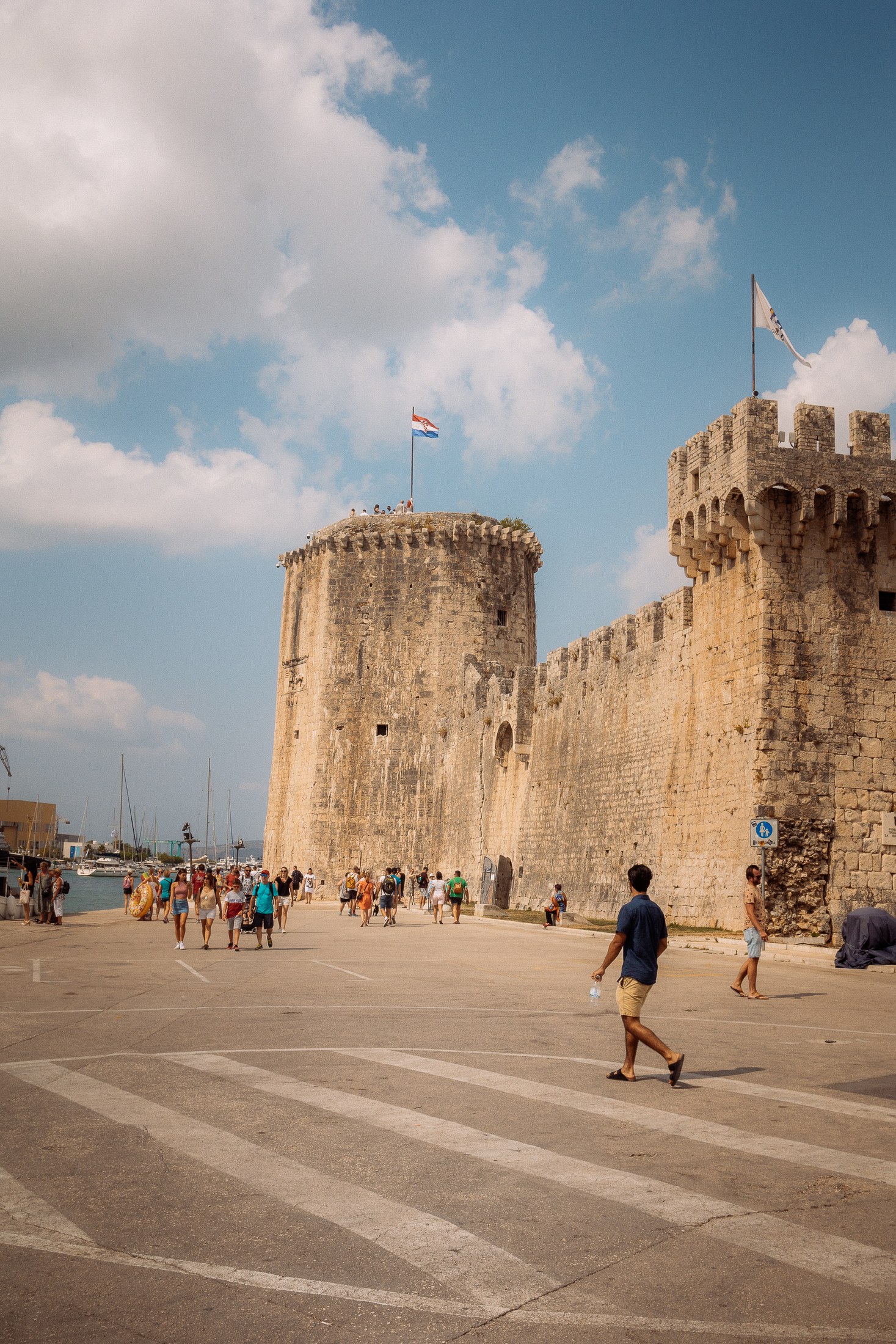
3. The Venetian Kamerlengo Fortress
When you head through the labyrinth of lanes towards the very western tip of the island, you’ll come to a massive stone structure that once protected the town from surprise attacks by sea. The Kamerlengo fortress dates from the fifteenth century, specifically around 1420, and was built by the mighty Venetian Republic shortly after it took its long-lasting control over all of Dalmatia.
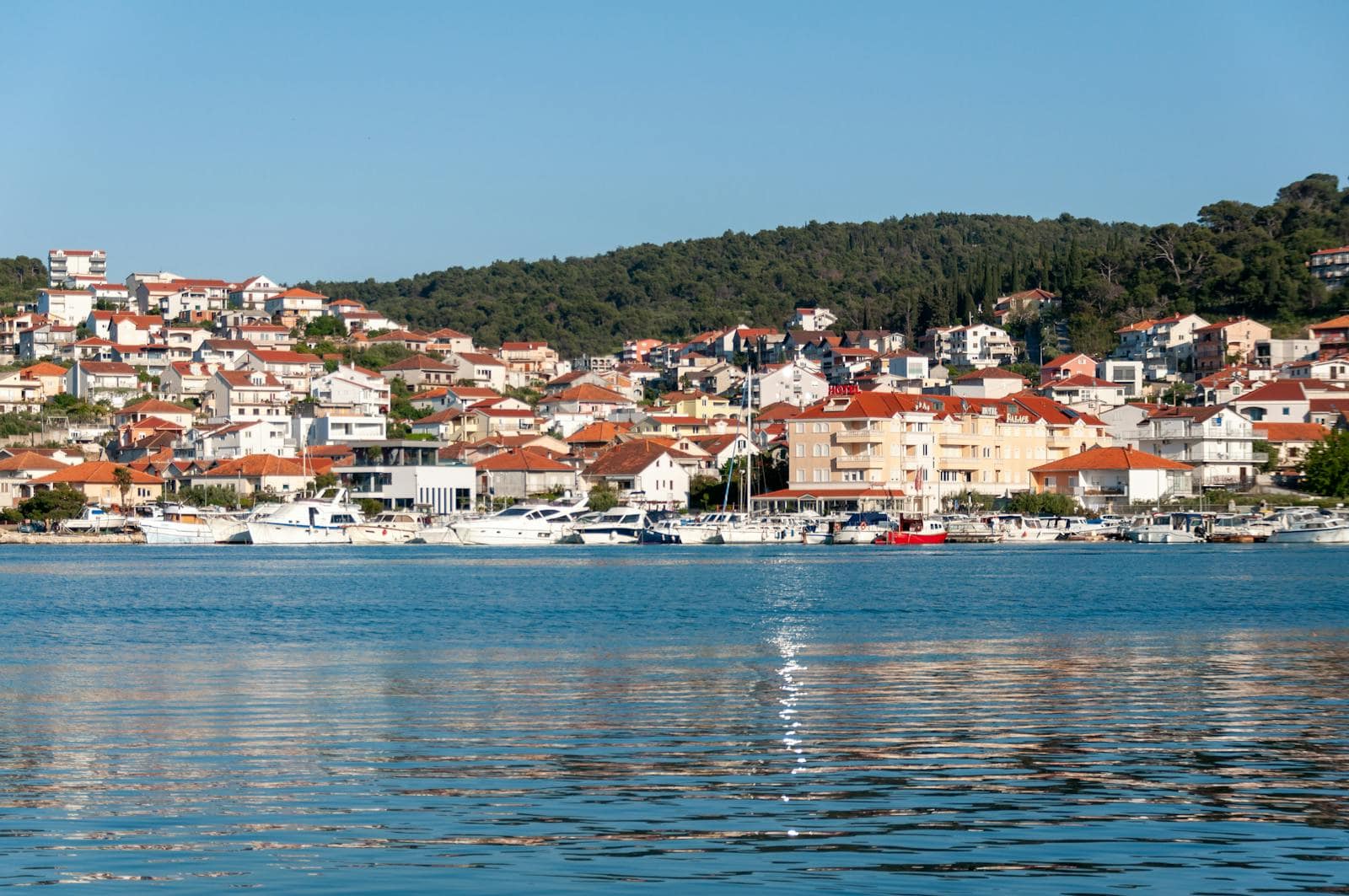
Within the walls themselves there are no extensive historical exhibitions or period furniture, but a walk along the mighty fortifications is a huge experience all the same. From the top of the main polygonal tower a beautiful view opens over the promenade, and from this bird’s-eye perspective you can study in detail the photogenic bay full of luxury cruise boats and small fishing vessels that give the town its unmistakable maritime character.
During the warm summer months, the fortress’s empty central courtyard transforms into an amazing open-air cultural venue. Evening concerts by local bands are held here regularly, along with theatre performances and summer cinema screenings, lending the ancient historic walls a unique and very relaxed evening atmosphere.
💡 Tip: Admission to the fortress costs around €5 in season. Right next to it you can also take in the circular St Mark’s Tower during your walk — it was once firmly joined to the fortress by walls and together they formed the town’s impenetrable defensive shield.
4. A Stroll Along the Charming Riva Promenade
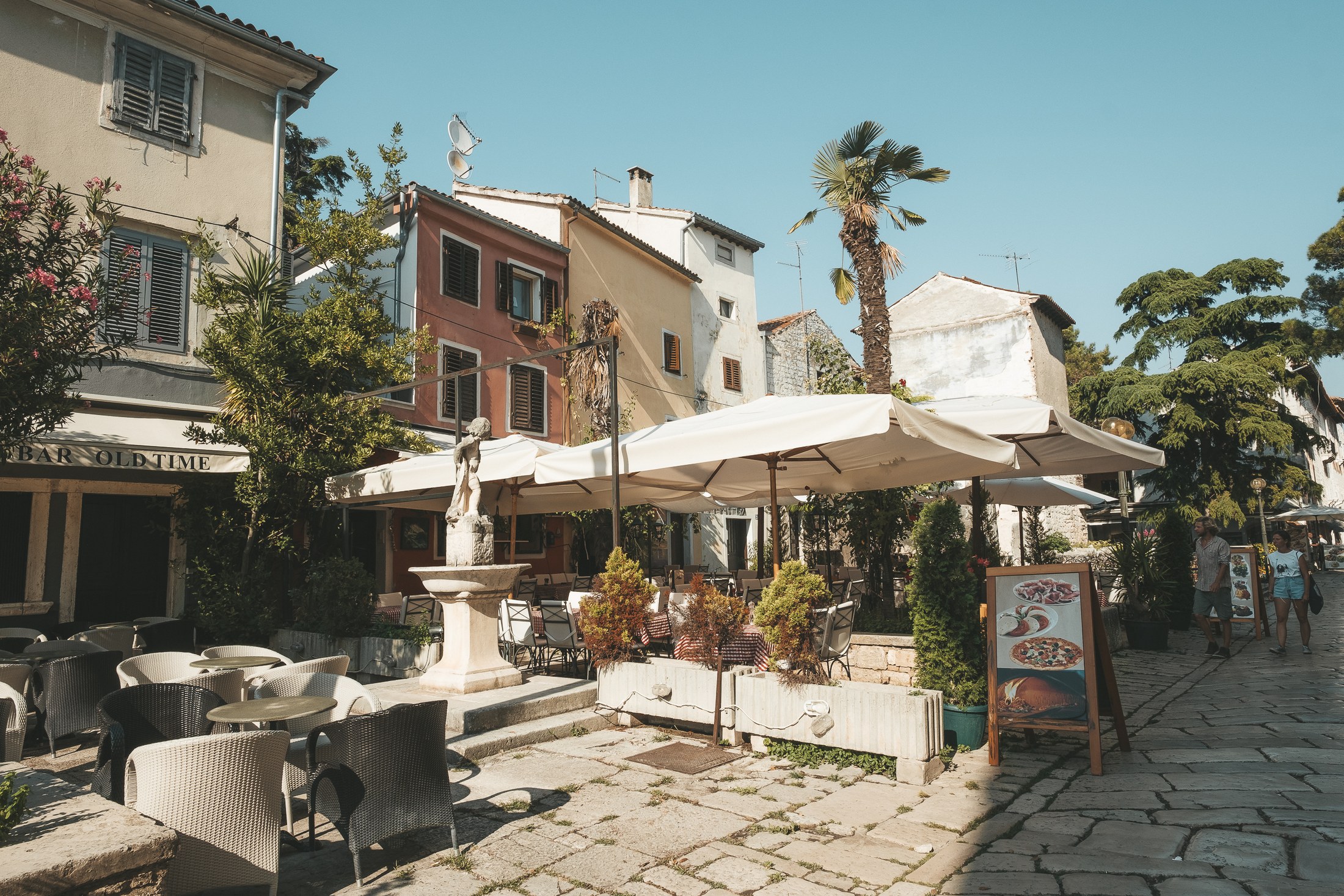
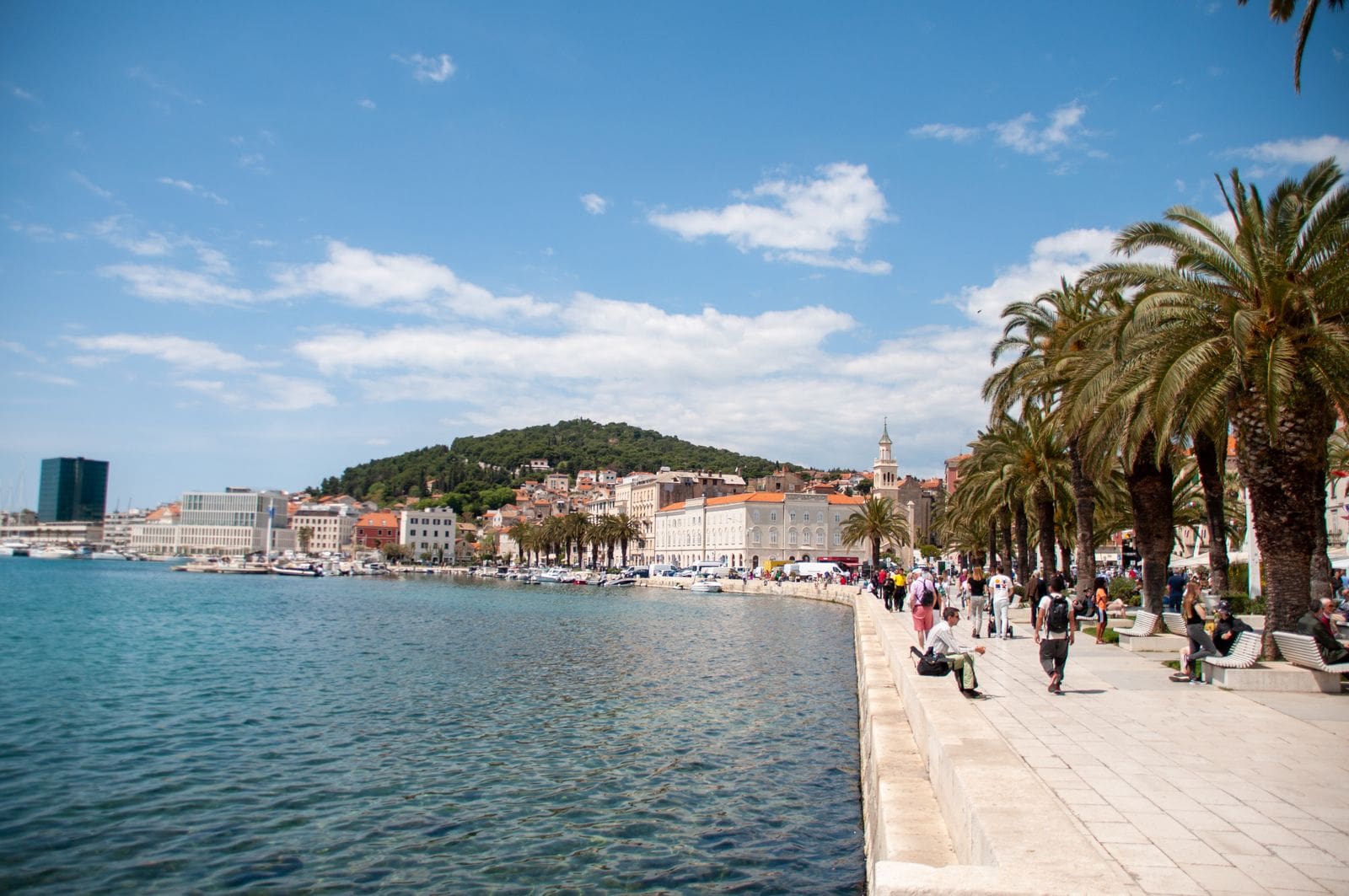
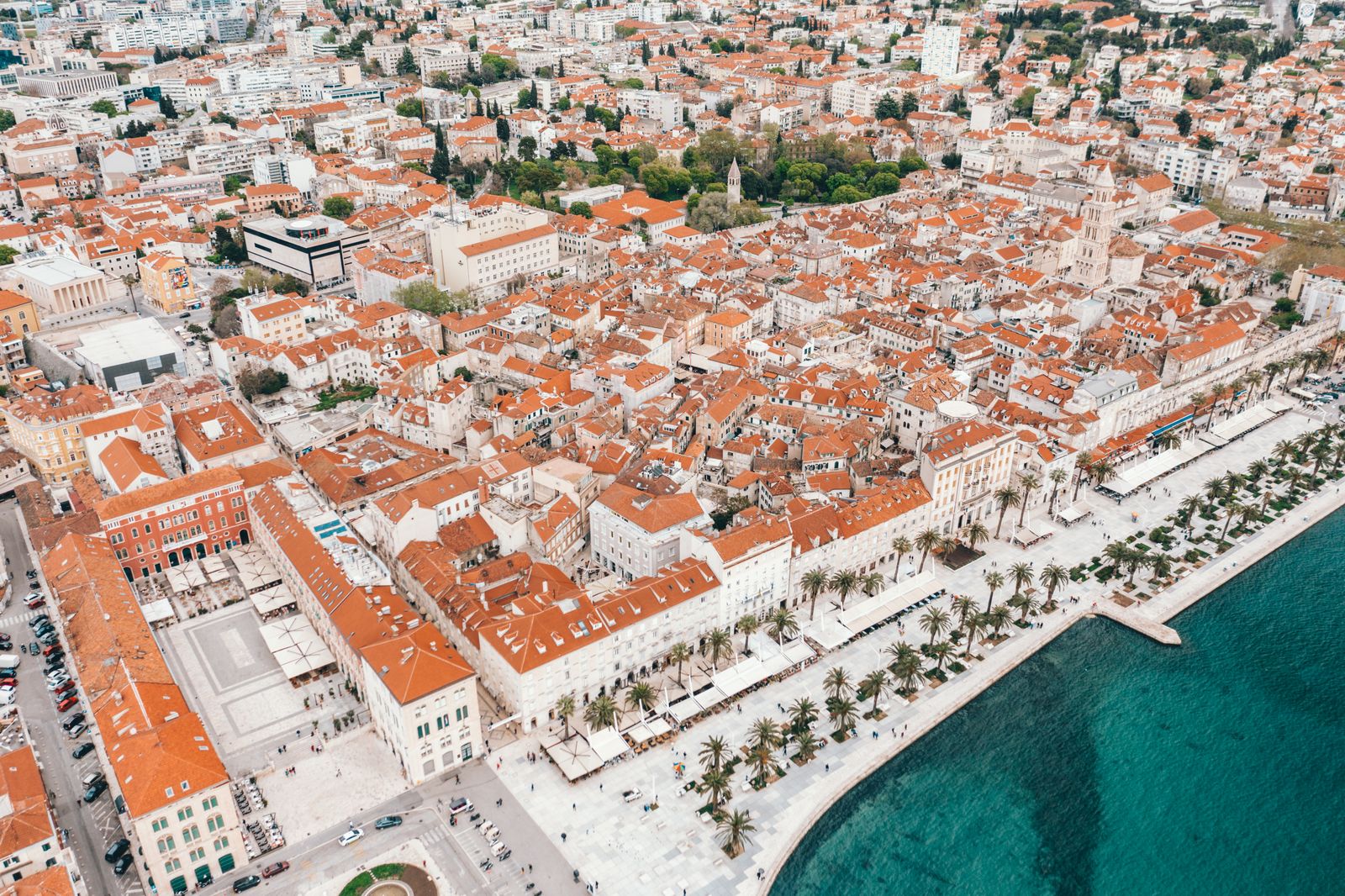
The southern shore of the town’s islet is lined by a wide promenade called the Riva, which runs along the entire sea channel and forms the social heart of the whole town. This broad boulevard, shaded by dozens of tall palms, offers a perfect visual contrast to the narrow, shady lanes of the historic core and exudes that quintessential Mediterranean ease all day long.
On a leisurely walk along the waterfront, you’ll have the tempting summer terraces of local cafés and restaurants on one side, while on the other, boats of every kind bob on the water’s surface. A major draw is the neighbouring ACI Marina Trogir on the far bank, where the world’s most luxurious yachts and sailing boats moor in summer, contrasting sharply with the thousand-year-old stone walls of the old town.
The Riva comes alive above all at sunset, when locals and tourists alike head out for the traditional evening corso. It’s absolutely the best spot to grab a delicious gelato, settle onto one of the benches and simply watch the lively bustle on the water and the colourful mix of passers-by enjoying the balmy summer evening.
💡 Tip: Small water taxis set off regularly from the waterfront and will whisk you, for a small fee, reliably and very quickly to the popular beaches of the neighbouring island of Čiovo — without having to wrestle with tricky parking in the summer heat or queue in traffic on the bridge.
5. The Cipiko Palace and Venetian Gothic
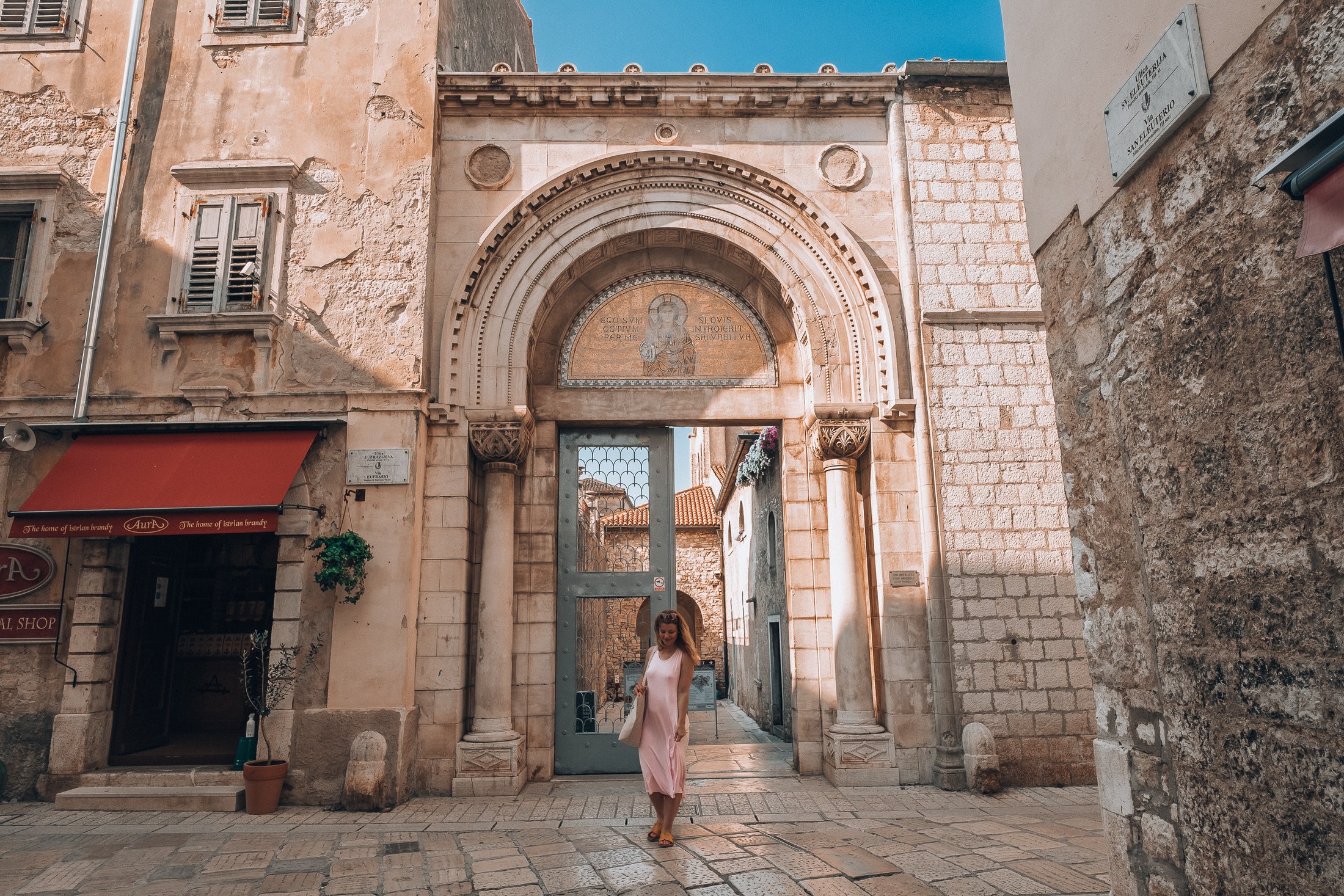
Directly opposite the cathedral’s main entrance stands a beautiful complex of historic buildings that once belonged to one of the most influential noble families in the whole Dalmatian region. The Large and Small Cipiko Palaces are an absolutely masterful example of Venetian Gothic and early Renaissance from the mid-fifteenth century, and form an inseparable part of the main town square.
The Cipiko family were extremely wealthy and hired the finest available artists of their time to decorate their residence, as the stunning stone façade clearly attests. You’ll be most captivated by the richly decorated grouped Gothic windows, the so-called triforia, the work of the famous builder Nikola Firentinac, who also played a major part in many other architectural treasures around the town.
Although the palace’s lavish interior is sadly off-limits to the general public, viewing it from the outside is one of the absolute highlights of a visit to the historic centre. The palace’s private courtyard also holds an intriguing wooden statue of a rooster, which family members supposedly brought back as celebrated war booty from one of their successful naval battles against the powerful Turks.
💡 Tip: Try photographing the palace from beneath the arcade of the Town Loggia opposite, which gives you a wonderful angle and lets you frame the most beautiful architectural details of those richly decorated windows without distracting elements or passing tourists.
6. The Town Loggia and the Clock Tower
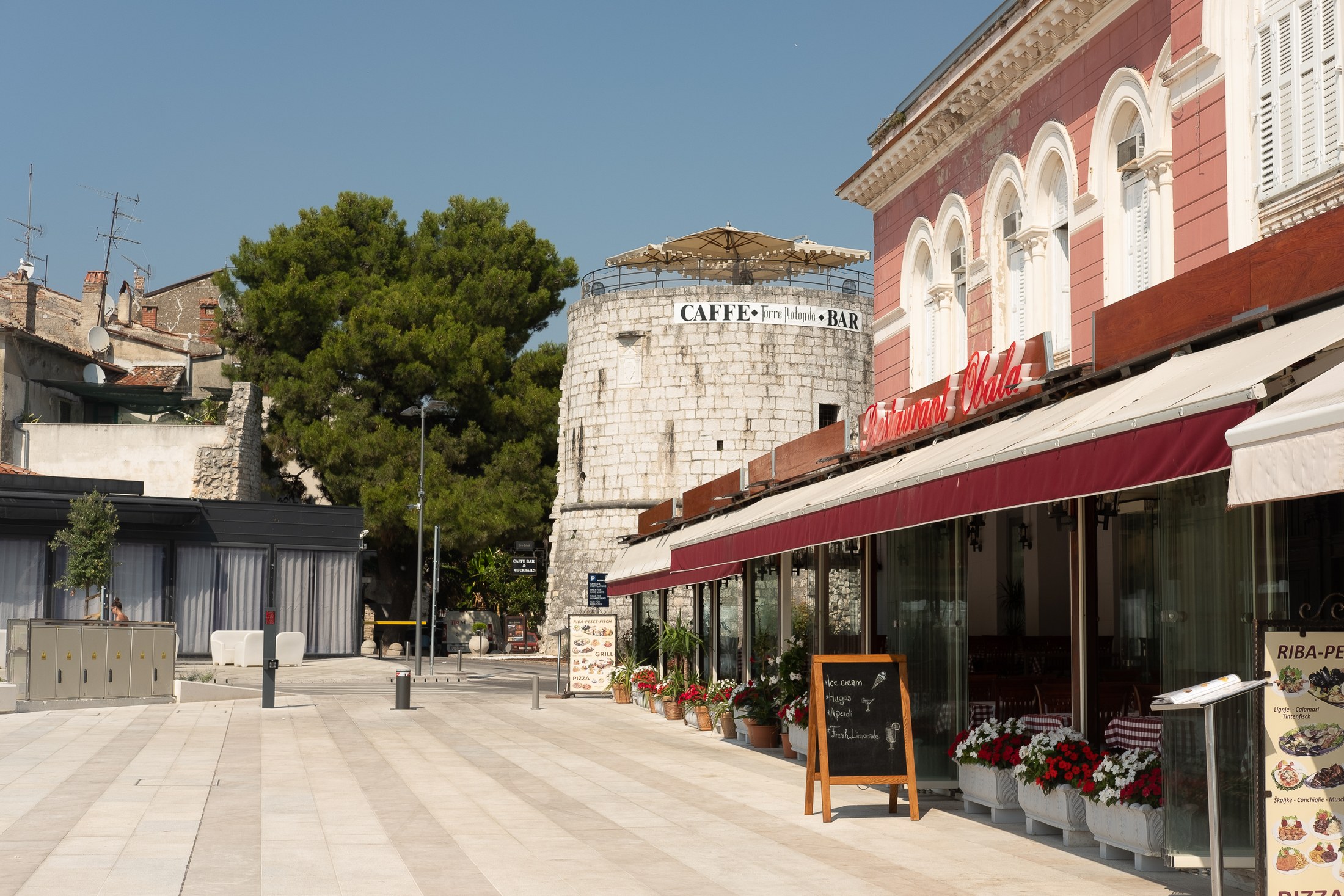
Right next to the cathedral on the main square of Pope John Paul II stands an unmissable structure with an open colonnade, which once played an enormously important role in the life of every resident. This Town Loggia, dating from the thirteenth to fifteenth century, served in the Middle Ages as a court of law and the place where important laws were publicly announced, major trade contracts were signed and all manner of public disputes were settled.
If you look carefully inside the loggia, you’ll spot beautiful stone reliefs on the rear wall, dominated by the typical winged lion of St Mark — the ever-present symbol of Venice’s long rule over the town. You’ll also find an interesting statue of Justice by Nikola Firentinac, firmly holding the scales in her hands and symbolically reminding every visitor of the original strict judicial purpose of this open space.
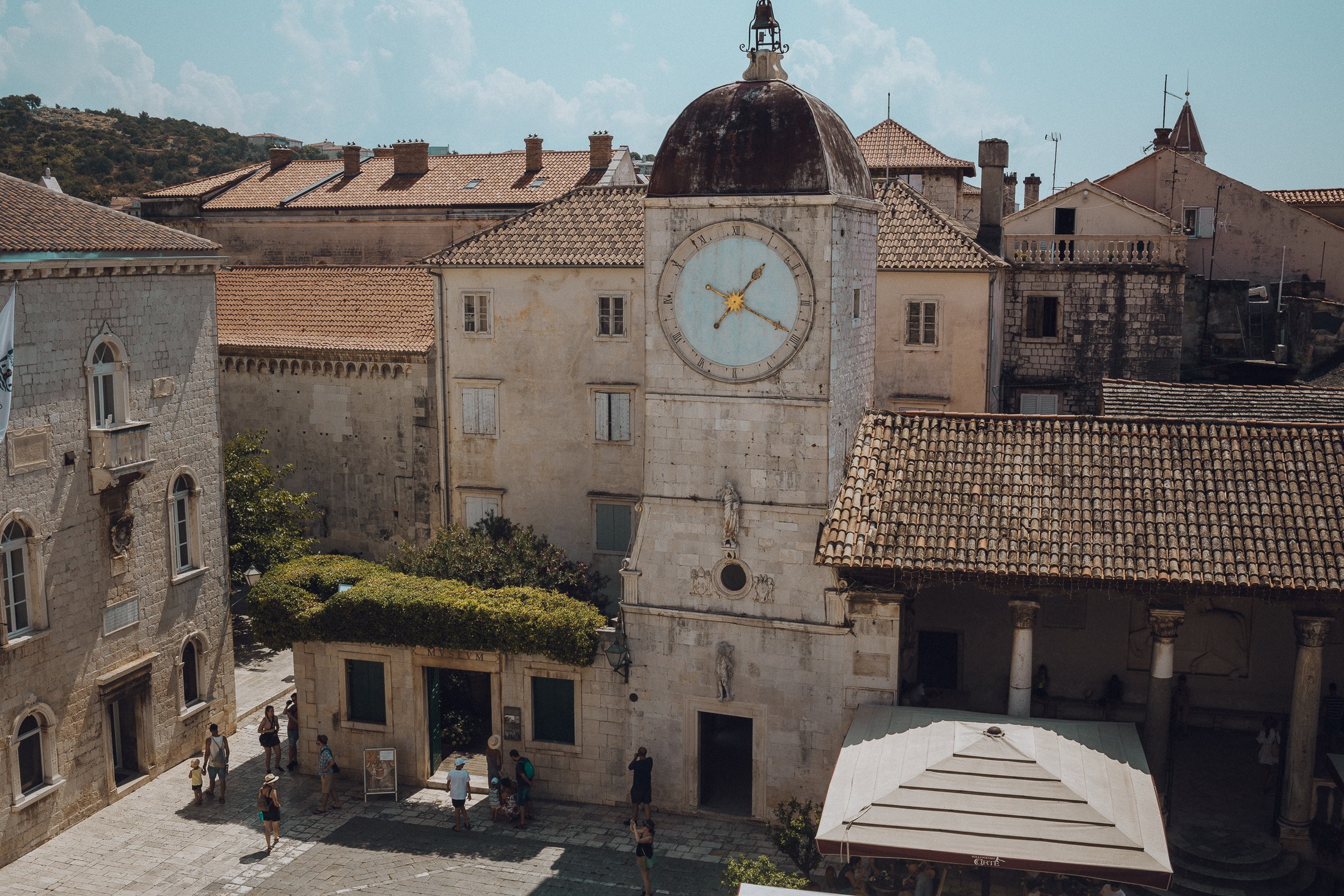
Right next to the loggia rises the photogenic clock tower, which is actually the only remnant of the former Church of St Sebastian. This church was built in the fifteenth century as a thanksgiving for the town’s miraculous deliverance from the plague, its greatest architectural quirk being that, instead of a classic bell tower, it was endowed with a striking blue clock.
💡 Tip: On hot summer days the stone Town Loggia provides wonderful, much-sought-after shade. It’s a perfect spot to sit down for a moment, rest and soak up the magical atmosphere of this unique historic square.
7. The North and South Town Gates
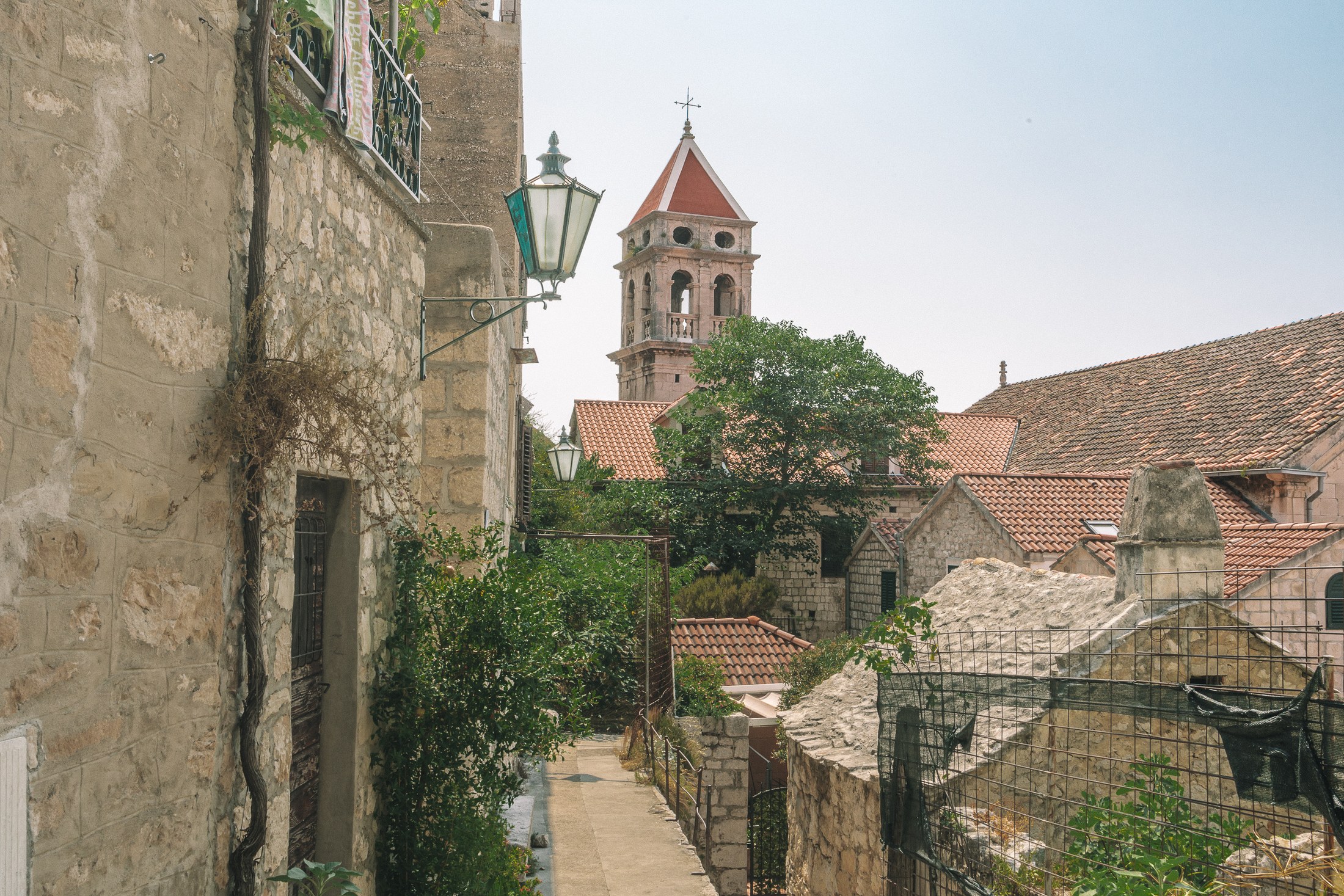
Originally the entire town was tightly enclosed within massive defensive walls, which could be entered only through two strictly guarded gateways. From the north, on the mainland side, you’re greeted by the beautiful Land Gate, which in its current form dates from the seventeenth century and above whose stone arch watches a statue of St John of Trogir, the town’s main patron and protector.
When you cross the town through its narrow lanes to the waterfront, you’ll come to the second, slightly older Sea Gate from the end of the sixteenth century. Its massive wooden doors finished with iron fittings survive to this day in their original state, and right beside it you can see a small loggia that once served as a safe refuge for travellers who arrived after the gates closed for the evening and had to wait here until dawn.
Remnants of the walls themselves are today visible above all in the western and southern parts of the islet, where they seamlessly connect with the Kamerlengo fortress. A walk between these two historic gateways takes barely ten minutes at a normal pace, which just goes to show how incredibly tiny and compact this UNESCO-listed historic centre really is.
💡 Tip: At the Land Gate, don’t forget to notice the original architectural details, where you can still clearly see the deep grooves in the masonry for lowering the heavy portcullis that uncompromisingly protected the town from unwelcome guests and raiders.
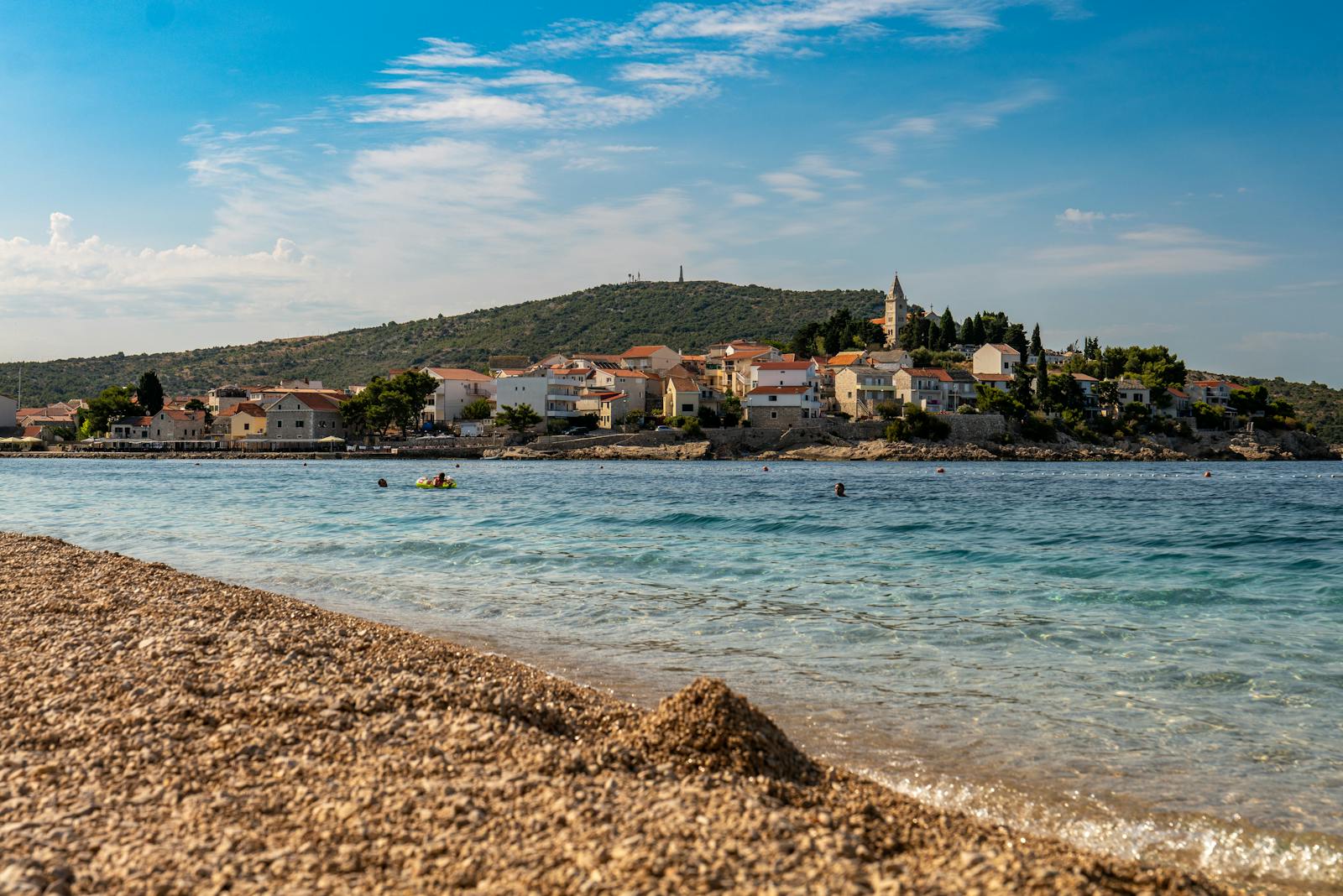

8. Relaxing on the Beaches in Trogir, Croatia (Čiovo Island)
Since you can’t swim in the historic centre ringed by stone walls, you’ll need to head just beyond the town gates for some time in the water. The most accessible and liveliest of the beaches in Trogir, Croatia, is the so-called Trogir Copacabana — the more than two-kilometre-long pebble beach of Okrug Gornji on the neighbouring island of Čiovo, around three kilometres from the core and lined with dozens of beach bars and restaurants.
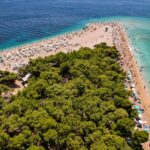
If you prefer a quieter setting and the natural shade of trees over pulsing music, head instead to the opposite side, to Medena beach in the Seget area. This three-kilometre pebble beach on the mainland side is fringed by a fragrant pine forest, with a huge range of water sports, inflatable attractions and pleasantly calm corners that are absolutely ideal for families with smaller children.
For lovers of pure nature and crystal-clear Adriatic water, I recommend going deeper onto Čiovo to the smaller hidden coves. Duga beach, for example, offers gorgeous natural scenery and is home to renowned local taverns where you can refuel beautifully and at reasonable prices during a full day of basking in the sun.
💡 Tip: In peak summer season the bridges linking the mainland to Čiovo are often clogged with cars. The most comfortable way to reach Okrug Gornji beach is therefore to use the regular boat lines that depart straight from the Riva promenade and work as reliable water taxis.
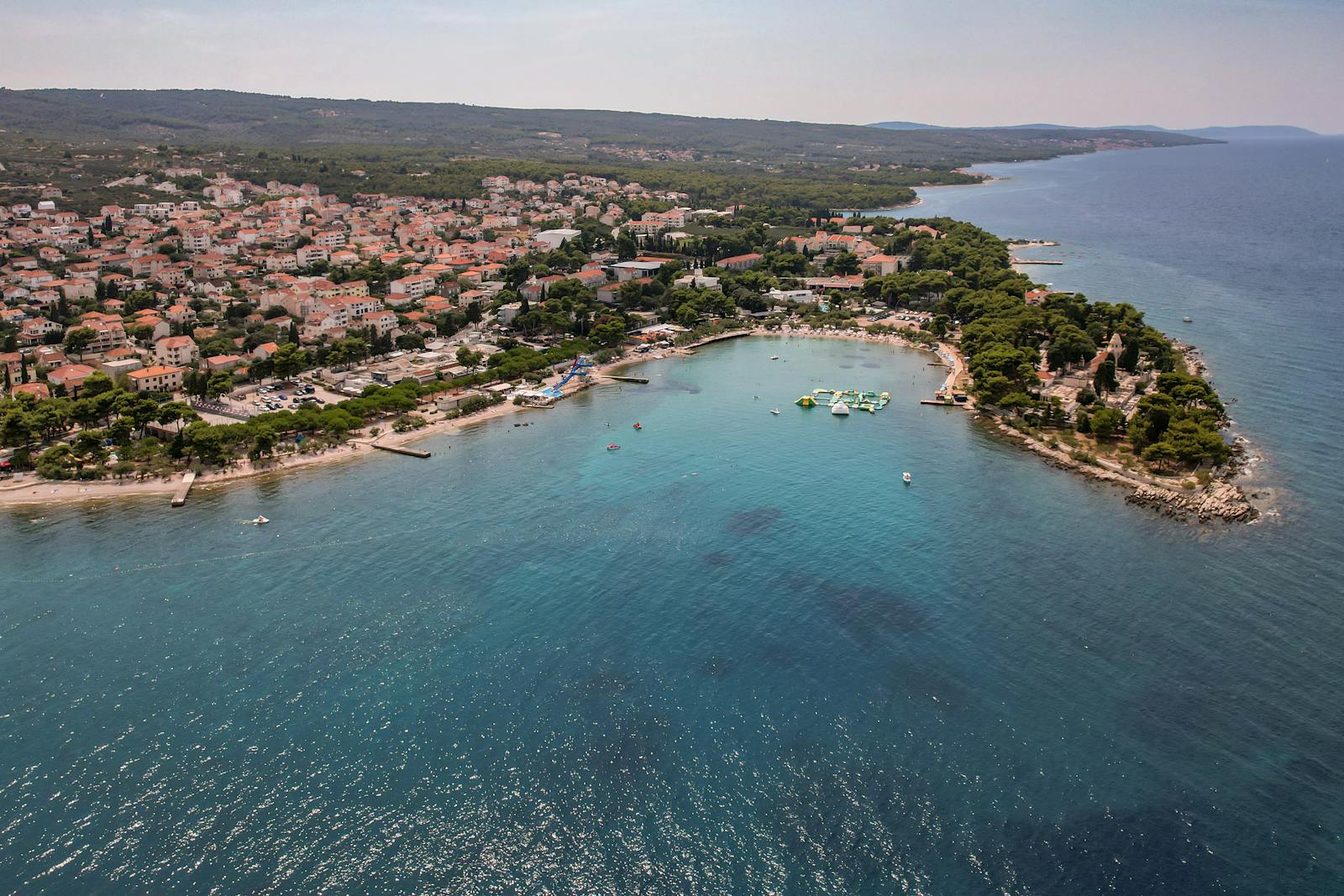
9. A Boat Trip to the Turquoise Blue Lagoon
One of the absolute most popular experiences in the whole Dalmatian region is a boat visit to the nearby Blue Lagoon, also known by its local name Krknjaši. This incredibly shallow bay with turquoise water and a light sandy bottom lies just about six nautical miles off the coast near the island of Drvenik Veli and is a genuine paradise for snorkelling and carefree swimming.
Thanks to its strategic location, Trogir is the best possible starting point for this boat trip. Along the entire promenade and by the Kamerlengo fortress you’ll find dozens of moored boats offering half- and full-day cruises, which very often include a so-called three-island circuit, with a stop in the picturesque fishing village of Maslinica on the neighbouring island of Šolta.
Thanks to the white seabed, the water in the lagoon is unbelievably transparent and its vivid colours bring to mind the exotic Caribbean rather than the classic Adriatic coast. Don’t forget to pack quality snorkelling gear — beneath the surface you can watch shoals of tiny fish, crabs and varied marine life in its completely natural environment.
💡 Tip: Trips to the Blue Lagoon can — and very sensibly should — be booked online in advance, for example through the trusted GetYourGuide portal. In the busy summer months this secures your spot on the boat and often a better price than haggling on the scorching pier.
10. Tasting Dalmatian Cuisine
It would be a huge shame not to visit at least one of the traditional Dalmatian konobas tucked away in the narrow, romantically lit stone lanes. Dalmatian cuisine is built primarily on exceptionally good olive oil, fresh vegetables and fragrant herbs, so you’ll find plenty of excellent options even if you’re after lighter fare and aren’t much of a meat-eater.
While the classic local specialities for meat lovers are aged pršut (prosciutto), traditional beef pašticada and freshly grilled fish, vegetarians are in for a real culinary heaven here. I recommend trying the fantastic creamy risottos, homemade pasta with fresh black truffles imported from nearby Istria, the famous cheeses from the island of Pag, or simply but perfectly prepared grilled vegetables, which taste utterly divine thanks to the local sun.
Among the very best-rated establishments in town is the renowned Konoba TRS, which has even featured in the famous Michelin guide and will gladly and professionally prepare excellent meat-free and gluten-free dishes on request. You’ll also find a very pleasant atmosphere and a shady outdoor terrace with a rich choice of excellent dishes at the reliable and well-frequented restaurant Konoba Fortin.
💡 Tip: Restaurants located right on the main Riva promenade by the sea tend to be noticeably pricier and often more focused on quickly turning over tourists. If you want a more authentic atmosphere, better service and friendlier prices, wander deeper into the side lanes near the historic walls.
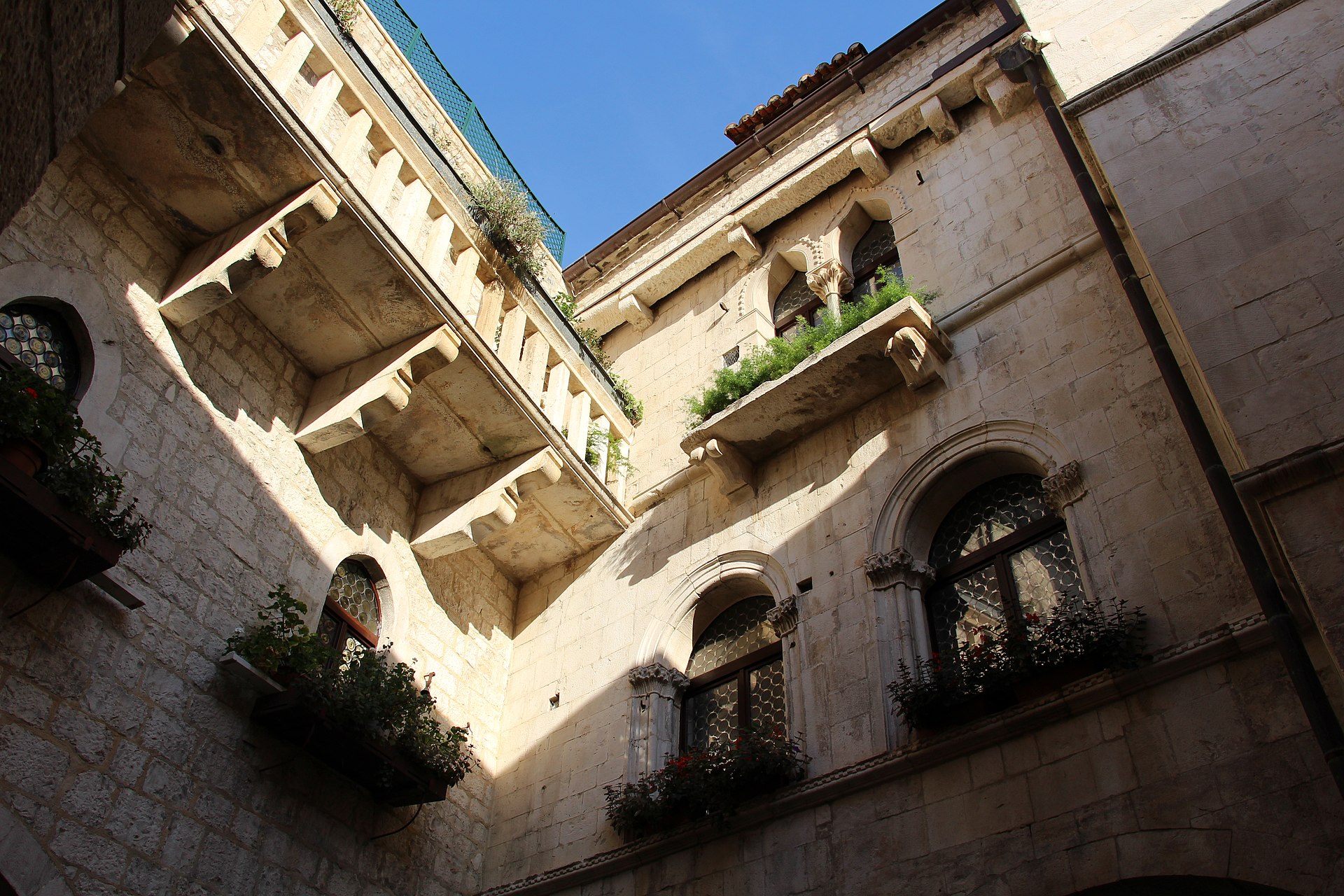
11. The Monasteries of St Dominic and St Nicholas
If you love quiet, peaceful places that breathe centuries of history and offer an escape from the busy streets, be sure to give the local sacred buildings some attention. On the waterfront just by the fortress stands the fourteenth-century Monastery of St Dominic, which will capture you with its plain yet very striking interior and beautiful painted wooden ceiling. The real historic treasure, though, lies a little further on in the lanes — in the women’s Benedictine Monastery of St Nicholas.
The nuns here carefully guard a precious marble relief of the god Kairos, the ancient Greek god of the fleeting opportune moment. This stunning work dates all the way back to the third century BC and is one of the very most valuable relics from the era of the original Greek settlement, when the town bore the name Tragurion.
Legend has it that the god Kairos has wings on his feet and flies incredibly fast. To catch him by his lock of hair means to seize your life’s opportunity, which is why this unique ancient symbol is today considered the unofficial mascot of the whole town. While strolling the old centre you’re sure to spot him depicted on many local souvenirs, from small jewellery to hand-painted ceramics.
💡 Tip: The collection at the Monastery of St Nicholas is fairly small, but for lovers of ancient history it’s an absolute must. Entry to the small exhibition hall costs just a symbolic few euros, and you’ll also cool off nicely here on hot days.
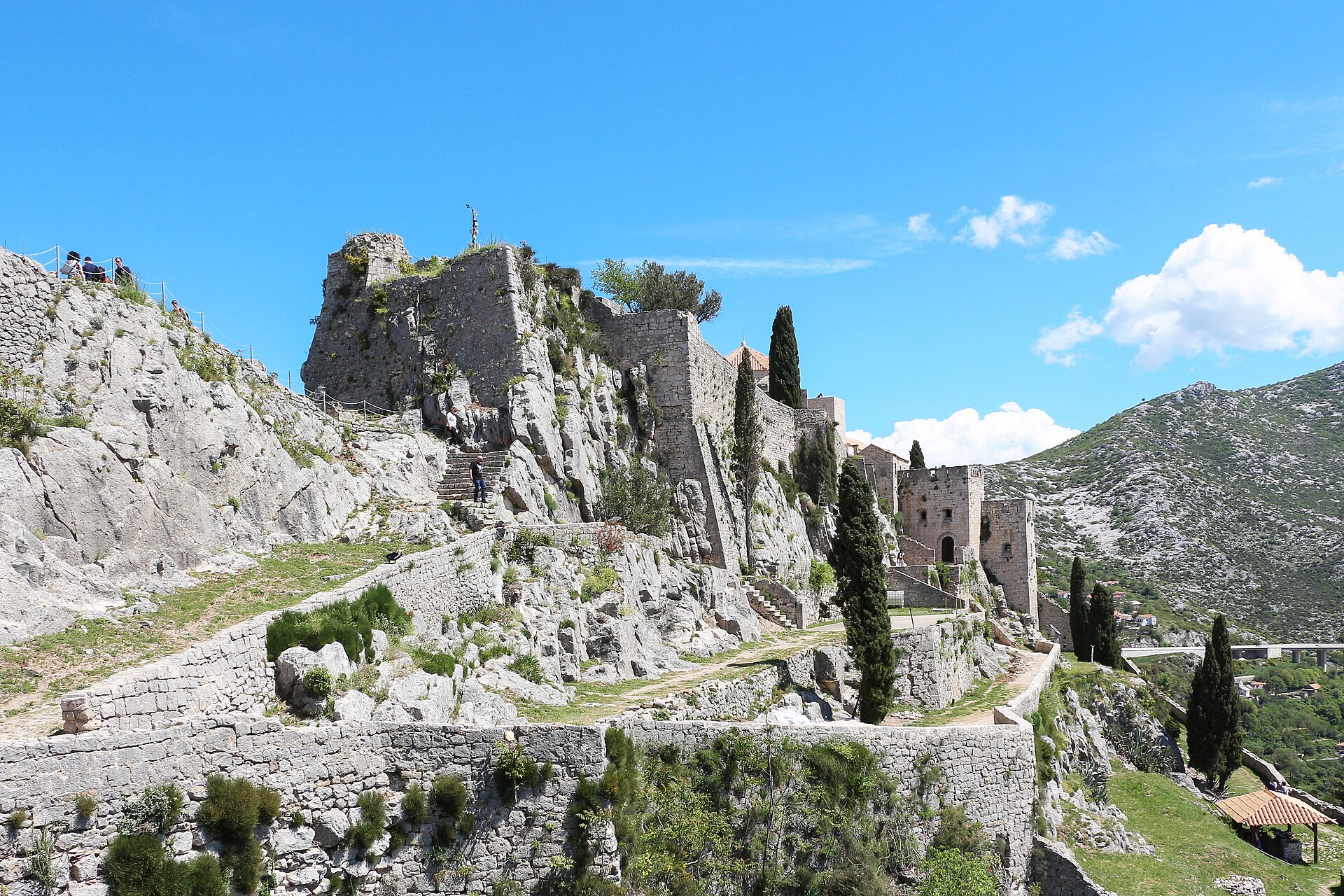
12. Ancient Salona and Klis Fortress (Game of Thrones)
Once you’ve thoroughly explored the town itself, consider a shorter half-day trip into the immediate surroundings, which are literally dotted with further historic gems. Just about twenty minutes’ drive away lie the stunning ruins of ancient Salona near the present-day town of Solin. This place was once the capital of the Roman province of Dalmatia and could boast a huge amphitheatre seating a staggering fifteen thousand spectators. A walk among the remains of ancient temples, age-old baths and early Christian basilicas is a fascinating journey back in time.
Thanks to the far smaller number of tourists, you’ll enjoy the sights in complete peace here, without the usual crowds you know from the big Croatian resorts. Admission to this remarkably sprawling archaeological park is around €10, and the whole visit takes roughly two hours.
You can very easily combine this trip to Salona with a visit to the nearby hilltop Klis fortress, which rises majestically on a steep rocky crag above Split. This striking medieval structure shot to enormous worldwide fame thanks to the series Game of Thrones, where on screen it played the fictional city of Meereen. Admission to the fortress is likewise around €10, and as a bonus you’ll get probably the very most beautiful views over the entire Dalmatian coast and its islands.
💡 Tip: The Salona site is genuinely vast and offers almost no natural shade. If you visit in the hot summer months, don’t forget to bring plenty of drinking water and a hat, and ideally arrive first thing after opening.
Map of points of interest for your phone
Where to Go Next from Trogir
Thanks to its strategic location halfway along the coast, this place is a perfect springboard for exploring more of Croatia’s beauty. If you’re looking for inspiration for further travels, be sure to check out our big overview article packed with tips on where to go on holiday in Croatia.
Just around the corner awaits the buzzing Split with its unique Diocletian’s Palace, connected to Trogir by convenient bus and boat services. If you prefer nature, I recommend heading northwest to the gorgeous Krka National Park, where you can stroll along wooden boardwalks past the thundering Skradinski Buk waterfalls.
On the way north it’s well worth stopping in the ancient town of Šibenik with its stunning stone cathedral, or you can travel a little further to hear the famous Sea Organ in enchanting Zadar. And if you still haven’t sorted your accommodation, take a look at our tips for trusted accommodation in Croatia.
 🚗 Car rental on the road
Verified rental cars in Croatia
🚗 Car rental on the road
Verified rental cars in Croatia
Search with the DiscoverCars comparison engine — it compares prices from dozens of local and international rental companies, and most bookings come with free cancellation.
Compare car prices in Croatia →Trogir also appeared in Game of Thrones as the trading city of Qarth. If you’re drawn to filming locations, check out our Game of Thrones locations itinerary.
Frequently Asked Questions
Where is the best place to park?
Driving into the historic center on the island is strictly prohibited for all cars. It’s best to use the large paid parking lots on the mainland side, right across from the wooden bridge, such as the popular Travarica parking lot. Prices during the peak summer season range from around 3.5 to 4 euros per hour, with all-day parking costing you approximately 35 to 40 euros. You can conveniently pay in cash or by card at the parking machines.
How do I get from Split Airport to Trogir?
Transport from the airport is absolutely hassle-free, cheap and very fast. Local bus number 37 operated by Promet Split departs right from the airport terminal and takes you to the bus station in Trogir in about ten minutes. A one-way ticket costs 2.50 euros and during peak times the buses run every twenty minutes, from early morning right up until a quarter past eleven at night.
How much time do I need to explore the city?
The UNESCO-protected historic centre itself is truly tiny and very compact. A leisurely stroll through all the streets and viewing the main sights from the outside will take you two to three hours. However, if you’re planning to tour the cathedral interior, climb the bell tower, have lunch at one of the local traditional taverns and enjoy an afternoon coffee on the promenade, it’s better to set aside a relaxed half-day for your visit.
Can you pay by card in the center?
Most decent restaurants, hotels and larger souvenir shops nowadays commonly accept standard payment cards. However, for buying small souvenirs at markets, ice cream on the promenade or tickets for smaller water taxis, always carry cash in euros. Smaller local vendors very often don’t have payment terminals and rely exclusively on cash transactions.
Where are the nearest nice beaches?
You unfortunately can’t swim right at the historic walls of the old town. The most popular choice is the over two-kilometer-long pebble beach Okrug Gornji on the neighboring island of Čiovo, which you can easily reach on foot from the center or even better by quick water taxi. Another great beach alternative is the expansive Medena beach on the mainland side towards Seget, which offers pleasant natural shade from pine trees.
Is the tap water drinkable?
Yes, water from regular tap water here, just like in the rest of Croatia, is completely safe and drinkable without any problems. During your vacation, you don’t need to waste money buying heavy bottled water in plastic. It’s more than enough to bring a reusable bottle with you and simply refill it with fresh water at your accommodation.
When is the best time to visit the monuments?
If you want to reliably avoid long queues at the cathedral and unpleasant crowding in the narrow streets, head out to explore the city early in the morning between eight and ten o’clock. At the stroke of ten, large tour buses and excursion boats with groups from neighboring Split start arriving en masse, and the city fills up heavily until late afternoon.
Tips and Tricks for Your Vacation
Don’t Overpay for Flights
Search for flights on Kayak. It’s our favorite search engine because it scans the websites of all airlines and always finds the cheapest connection.
Book Your Accommodation Smartly
The best experiences we’ve had when looking for accommodation (from Alaska to Morocco) are with Booking.com, where hotels, apartments, and entire houses are usually the cheapest and most widely available.
Don’t Forget Travel Insurance
Good travel insurance will protect you against illness, accidents, theft, or flight cancellations. We’ve had a few hospital visits abroad, so we know how important it is to have proper insurance arranged.
Where we insure ourselves: SafetyWing (simple monthly subscription) and TrueTraveller (for extra-long trips).
Find the Best Experiences
Get Your Guide is a huge online marketplace where you can book guided walks, trips, skip-the-line tickets, tours, and much more. We always find some extra fun there!