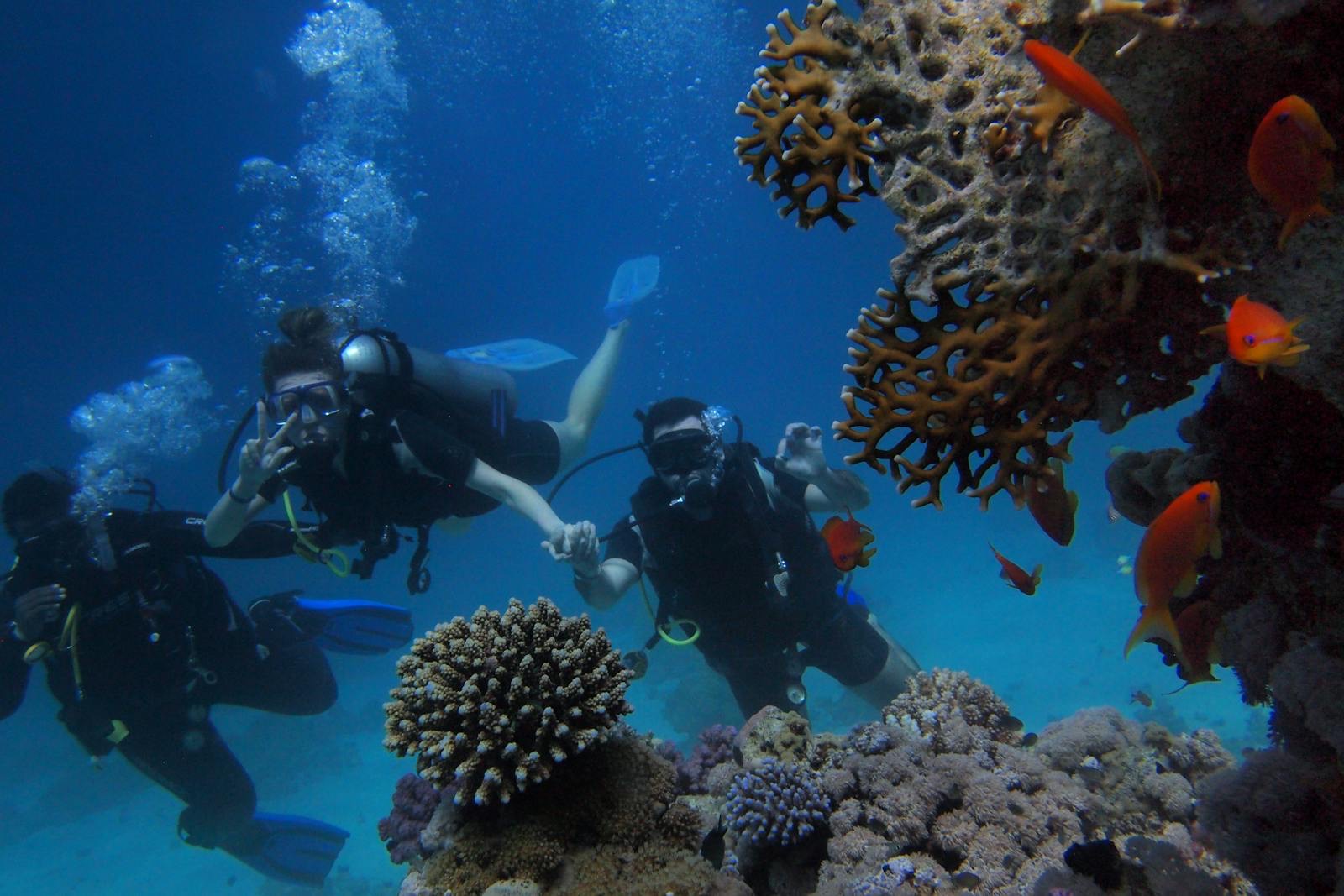
Trust me, if what tempts you most on holiday is exploring the fascinating world beneath the surface, then Sharm el-Sheikh in Egypt is probably exactly the destination you’re looking for. Picture a resort on the very southern tip of the Sinai Peninsula that ranks among the absolute best diving spots in the world — and entirely deservedly so, because the most beautiful coral reefs here often begin just a few metres from the shore, while the dramatic, arid mountains of Sinai rise up right behind your back.
Sharm el-Sheikh is a slightly different Egypt from the one I remember seeing in classic holiday brochures as a child, because instead of endless shallow beaches with soft sand perfect for toddlers, here it’s all about steep reefs, wooden pontoons and an underwater world bursting with incredible colour. In short, it’s best suited to keen divers and snorkellers, romantic couples, and also families who cleverly pick a resort with a sheltered lagoon.
In this extensive guide you’ll find 13 specific tips on what to see and do in Sharm el-Sheikh so you can squeeze the absolute most out of your holiday. We’ll explore the famous Ras Mohammed National Park, I’ll help you choose the best house reefs, and I’ll throw in a very honest warning about the local touts — so settle in comfortably, we’re flying to Sinai! ✈️
TL;DR
- A diver’s paradise: Sharm el-Sheikh is a world-class diving destination with coral reefs accessible straight from the hotel beaches via piers.
- The visa is a science: If you stay only on Sinai, you’ll get a free Sinai-only stamp, but for trips to Cairo or Ras Mohammed National Park you’ll definitely need the full visa for USD 25 (around £20).
- Best dives: Ras Mohammed National Park and the reefs off Tiran Island are among the very best underwater sites on the planet.
- A wreck for the advanced: The WWII wreck of the SS Thistlegorm is an absolute dream for all experienced divers.
- Mind the beaches: Entry to the water is mostly via pontoons to protect the coral, so non-swimmers and small children should look for hotels with an artificial lagoon.
- Nightlife: Naama Bay is the throbbing — and honestly slightly worn — heart full of touts, while Soho Square offers modern entertainment without the hassle.
- Mountain trips: The night-time climb up Mount Moses and a visit to St Catherine’s Monastery is an amazing experience, but it gets seriously cold up at the top.
The full destination guide: Egypt — guide and what to see
When to Visit Sharm el-Sheikh
Sharm el-Sheikh is a classic year-round destination where you have sunshine and dry weather essentially guaranteed, but if you want to enjoy the most pleasant possible time by the sea, it’s best to head here in spring or autumn. Months like March, April, May and then October and November offer absolutely ideal temperatures, holding between 25 and 32 degrees during the day, the sea is just right, and underwater visibility tends to be top-notch for both snorkelling and diving.
Summer on Sinai is really only for the biggest heat lovers, because from June to August temperatures regularly climb past 35 degrees, and even though the sea is incredibly warm, spending time in direct sun can be quite exhausting. If you head out on desert trips or to St Catherine’s Monastery in summer, expect tremendous heat and pack litres of bottled water — on the upside, the summer evenings at the resort are wonderfully warm and long.
Winter in Sharm is a hugely popular escape from the British cold, because during the day temperatures usually hover around a pleasant 25 degrees, so you’ll warm up beautifully, and a huge advantage of Sharm el-Sheikh over Marsa Alam is its position in a sheltered bay, which means there’s far less of a cold wind in winter. The water in the Red Sea does drop to around 21 degrees in January and February, which may call for a wetsuit on long hour-long snorkelling sessions, but for ordinary swimming it’s plenty for most people. You’ll find detailed information about temperatures in individual months in our article on when to go to Egypt.
💡 Flight tip: If you decide not to travel with a tour operator but to go it alone, definitely keep an eye on flight prices to Egypt. Our system updates them every 20 minutes across all airlines, so you have a chance to snag the best charter or scheduled connections at a great price.
Where to Stay in Sharm el-Sheikh
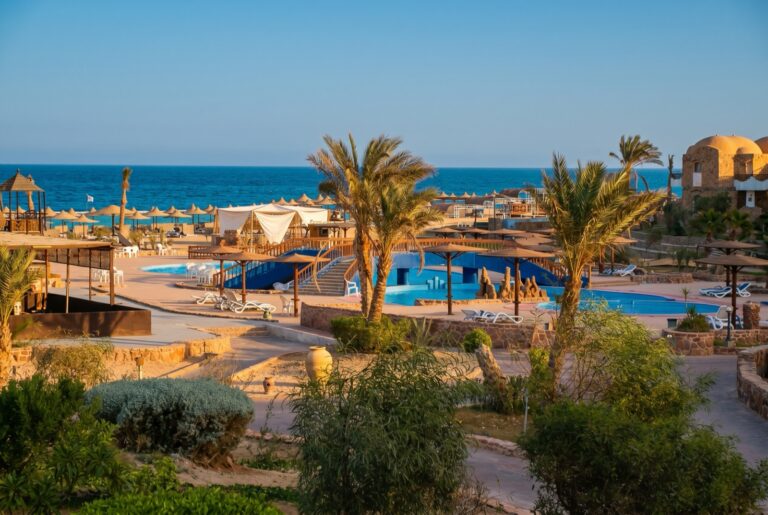
Choosing the right location is absolutely crucial in Sharm el-Sheikh, because every bay offers a completely different atmosphere and, above all, quite different access to the sea — the city stretches along the coast for tens of kilometres and getting around by taxi can be rather annoying. If you’re after bustle, little shops and don’t mind the occasional tout, choose accommodation around Naama Bay, one of the few areas offering a sandy entry into the water.
For passionate snorkellers, though, the clear choice is probably the Sharks Bay or Ras Um Sid (Hadaba) area, where you’ll find the most beautiful house reefs, reachable incredibly conveniently straight off the hotel pier. If, on the other hand, you long for absolute luxury and don’t mind being a little isolated, take a look at the Nabq Bay area in the north, which is close to the airport and home to the largest premium resorts.
Here are four specific hotels across the categories that have excellent ratings and a great location:
- Reef Oasis Beach Resort is a wonderful spot in the El Fanar area with a reputation for having the absolute best house reef in all of Sharm, and the cove is also superbly sheltered from the wind, so even in winter you’ll enjoy fantastic snorkelling straight from the shore.
- Grand Rotana Resort & Spa is a beautiful, sprawling and very calm resort in the Sharks Bay area, where a palm-filled garden descends in terraces to the sea and rich coral gardens await beneath the surface, absolutely ideal for morning explorations.
- Novotel Sharm El Sheikh will win you over the moment you need a sandy beach suitable for children while still being within walking distance of the Naama Bay promenade, because this hotel has a lovely beach section as well as a quieter zone behind the road.
- Rixos Sharm El Sheikh works as the absolute premium choice in the Nabq Bay area with luxurious ultra all-inclusive service, enormous pools and top-notch facilities, so even though it’s a slightly more isolated resort, trust me, you won’t be missing a single thing here.
💡 Tip: Before you start booking accommodation directly, check out our comparison of holidays to Egypt. Our smart AI compares offers from different tour operators every day on exactly the same hotels and dates, so it clearly shows you where you can get the same stay for hundreds of pounds less.
13 Things to See and Do in Sharm el-Sheikh
Whether you’re coming for the incredible riches beneath the surface of the Red Sea, or whether you’re more drawn to the rugged mountains and desert life of Sinai, you certainly won’t be bored here. So let’s take a look at the 13 biggest attractions you definitely shouldn’t miss.
1. Ras Mohammed National Park
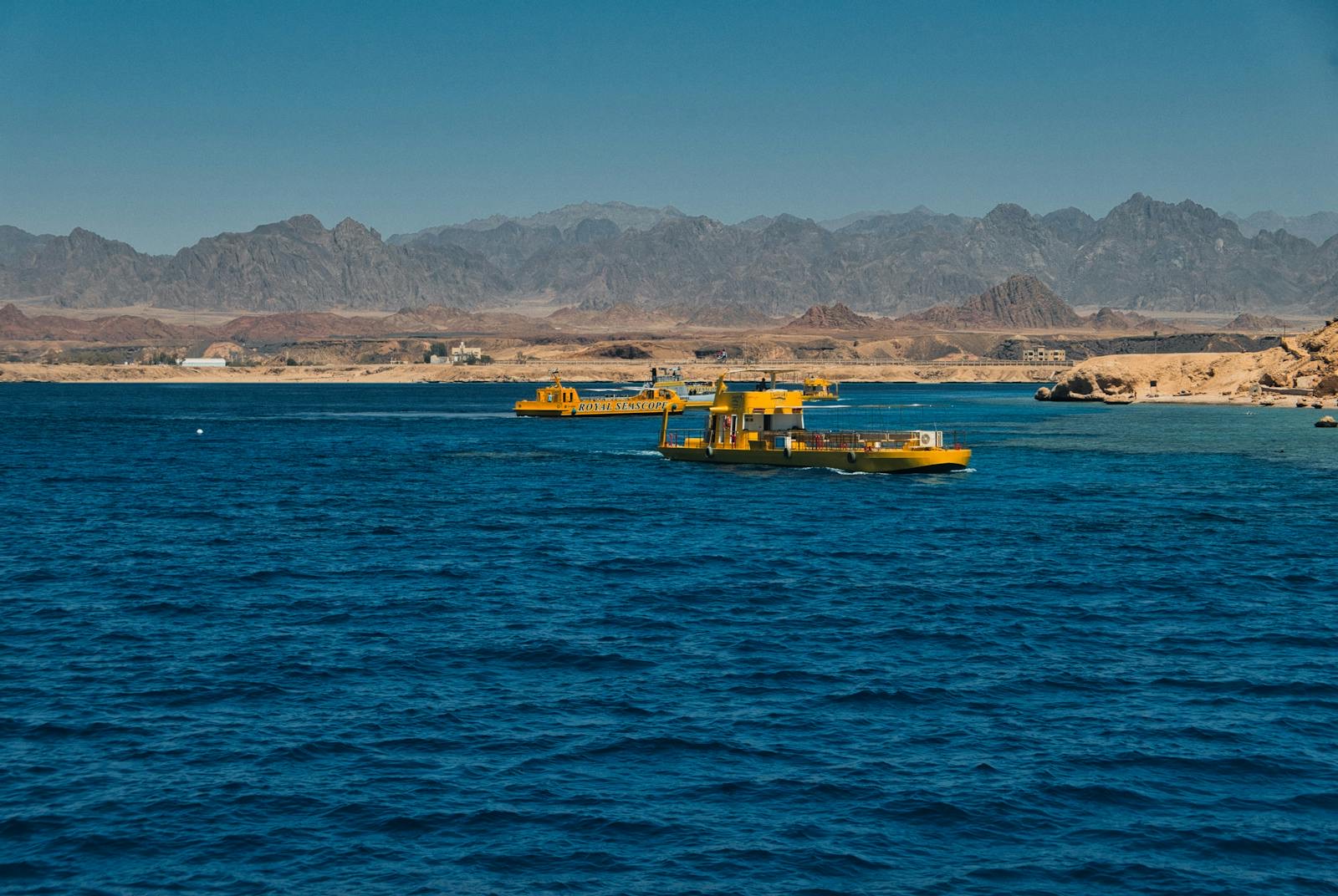
Ras Mohammed National Park sits on the very southern tip of the Sinai Peninsula and is the undisputed flagship of Egyptian diving, because the whole area resembles one enormous, endlessly alive aquarium, where coral walls plunge to depths of hundreds of metres. The two most famous reefs, Shark Reef and Yolanda Reef, rank among the absolute best dives in the world, and at Yolanda Reef the rather curious cargo of a sunken Cypriot ship still lies to this day — including hundreds of toilet bowls scattered across the seabed.
There are two ways to visit: the boat option offers access to the best reefs out on the open sea, where you’ll see the most marine life, but you’ll need to reckon with very strong sea currents that are better suited to more experienced swimmers. The overland option in jeeps, on the other hand, is great for families and keen photographers, because along the way you’ll also see mangrove groves, salt lagoons and the magical Magic Lake, from which you can snorkel absolutely brilliantly straight off the shore.
⚠️ Important warning: Ras Mohammed formally lies outside the free Sinai zone, so to visit it you absolutely need the so-called full Egyptian visa for USD 25 (around £20), because the standard free “Sinai Only” stamp from the airport won’t be enough, and the soldiers at the checkpoint would turn you back without mercy.
2. The Reefs of Tiran Island
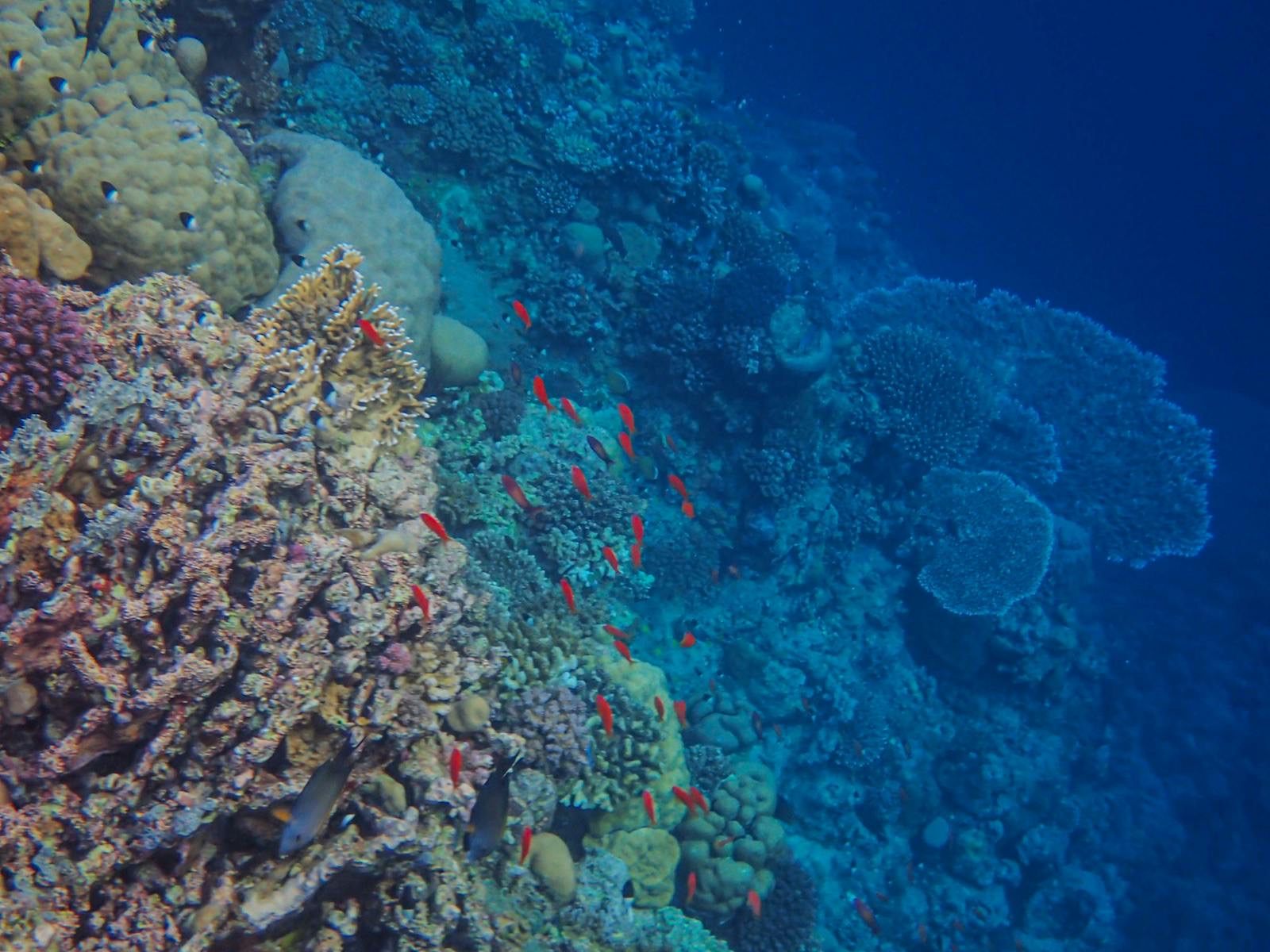
In the narrow strait between the Sinai Peninsula and the coast of Saudi Arabia lie four legendary reefs: Jackson, Woodhouse, Thomas and Gordon Reef. The strong sea currents that race through this strait bring in an immense amount of nutrients, which means just one thing — you’ll see incredibly rich soft corals and, above all, huge schools of pelagic fish, so the reefs off Tiran Island are an absolute must for anyone who takes diving even a little seriously.
Unlike Ras Mohammed, you don’t need the full visa here — the basic Sinai stamp is enough — and the trips are organised exclusively on boats that depart from the ports in Sharm, with a full-day cruise costing you roughly USD 20 to 22 (around £16 to £18). For very experienced divers, the drift dive along the outer side of Jackson Reef is one of the most dramatic experiences going, because in the summer months majestic schools of hammerhead sharks regularly appear here.
If you’re only planning to snorkel here, trust me, it’s hugely worth it anyway, because the boats anchor in the more sheltered parts of the reefs above shallower coral gardens where the water is calmer, and you’ll often encounter enormous rays, moray eels, and with a bit of luck a playful pod of dolphins will even accompany you along the way. ☺️
3. The Wreck of the SS Thistlegorm
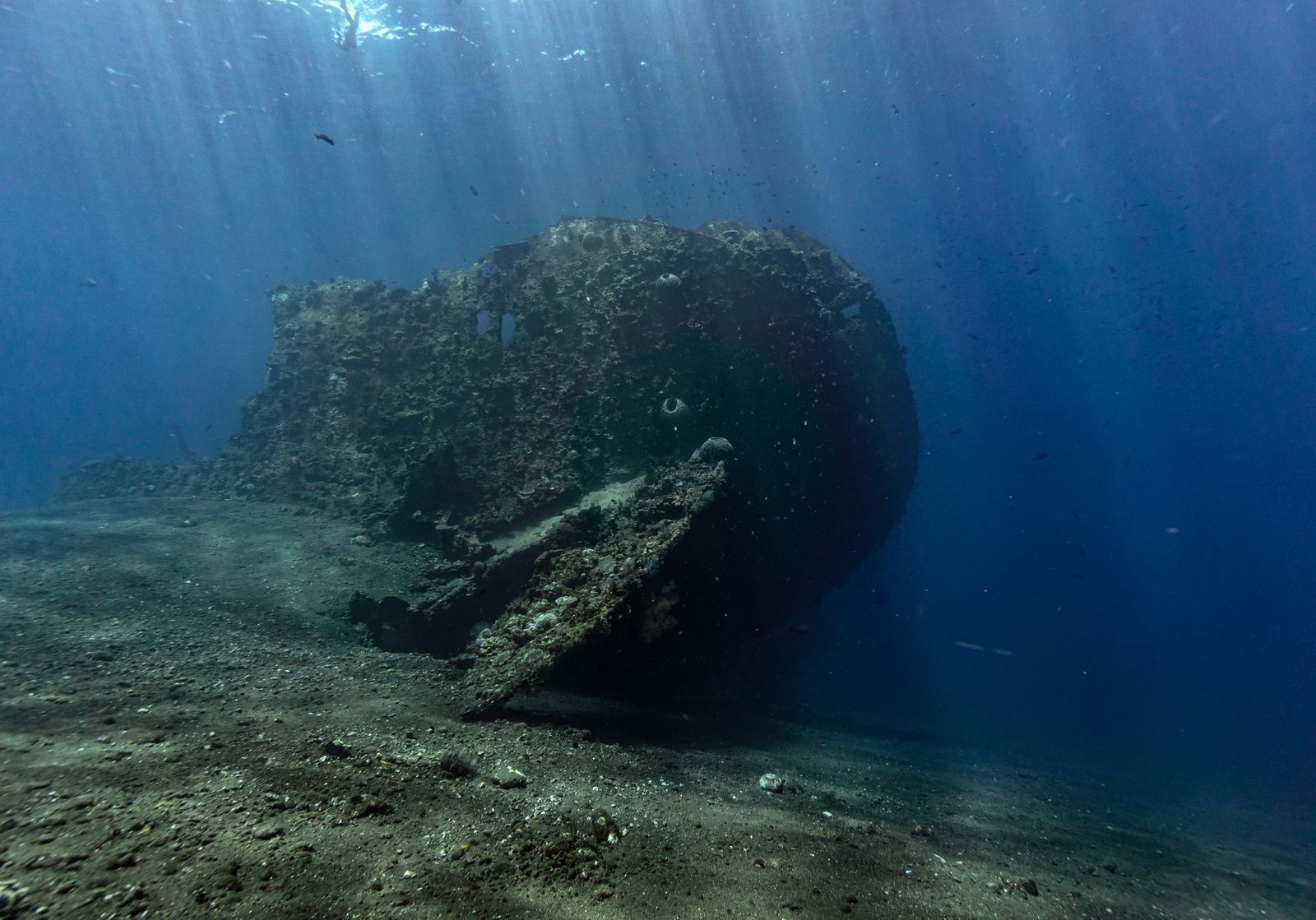
Picture this: for advanced divers, the wreck of the British cargo ship SS Thistlegorm is about as exciting as a visit to the Louvre in Paris is for art lovers. This 125-metre-long ship was sunk by German bombers in the autumn of 1941 and today lies on the sandy bed of the Red Sea like a literal sunken military museum, because in its enormous cargo holds the BSA and Norton military motorbikes, Bedford lorries, jeeps, rifles and old railway wagons still rest, neatly lined up to this day.
Honestly, this dive is definitely not for beginners, because the main deck lies at a depth of around thirty metres and visibility is often hampered by strong currents, so to visit you really need the Advanced Open Water Diver certification. Two dives are usually done here, one of which is an orientation dive from the outside, where you swim around the enormous propeller and the anti-aircraft guns, and the other is a penetration dive, where you swim through the dark cargo holds among the rusting vehicles — a positively chilling and deeply emotional experience.
The trip to the Thistlegorm is quite time-consuming; the boat usually departs very early in the morning, or it’s done as part of multi-day liveaboard safaris, and because the wreck lies in the Gulf of Suez west of Sinai, you’re once again outside the free zone and you’ll definitely need the full Egyptian visa.
4. House Reefs in the Bays
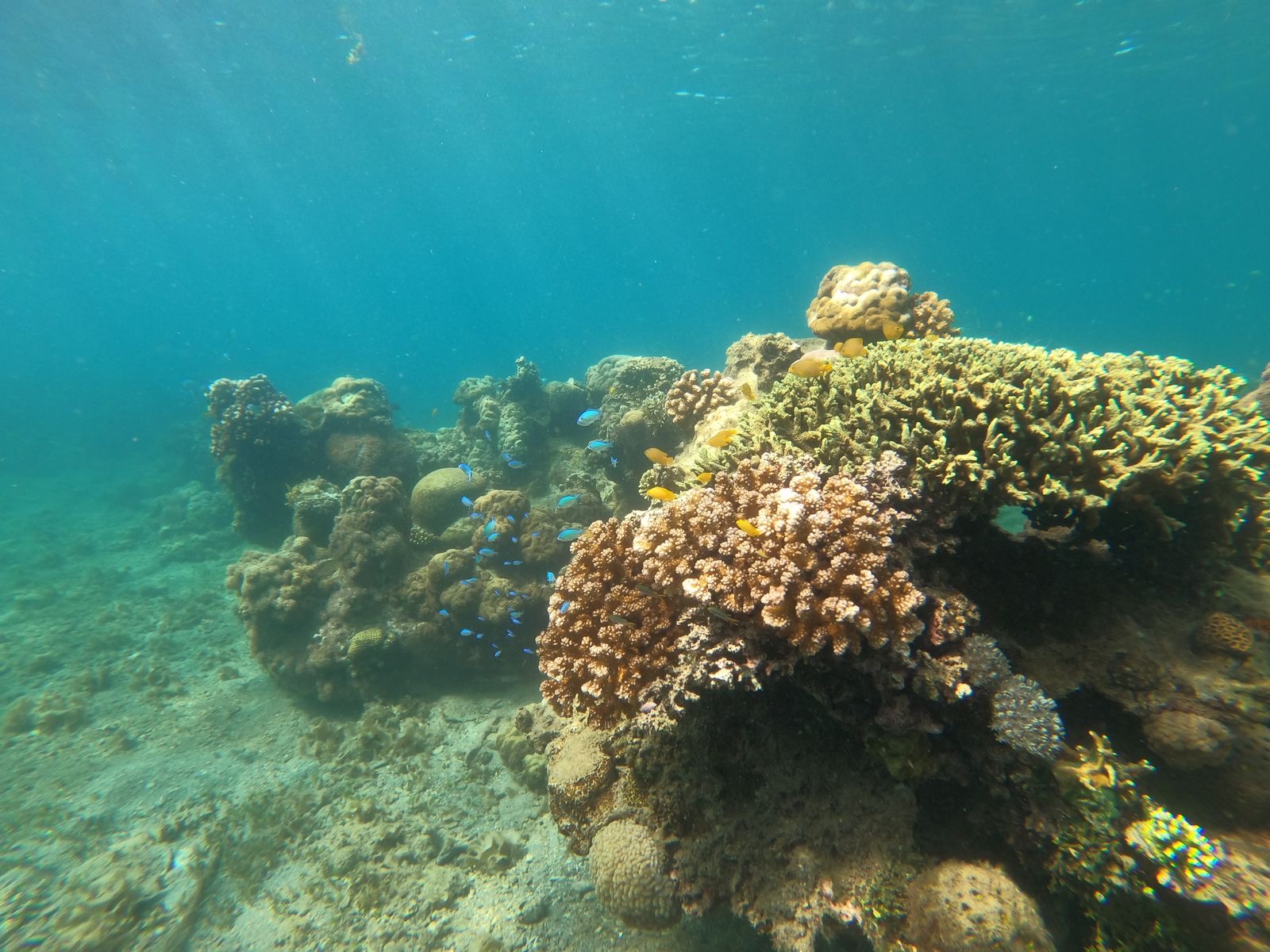
While in Hurghada you often have to travel quite a long way by boat to reach pretty corals, Sharm el-Sheikh has the huge advantage that its coral reefs accessible straight from the beach are among the very best in all of Egypt. That way you save a fortune on organised boat trips, because you can enjoy the most beautiful underwater world even three times a day — all you have to do is put on your fins and walk down the steps from the wooden hotel pier.
The absolute top-rated house reef is found in the El Fanar area by the Reef Oasis hotel, which is also beautifully sheltered from the unpleasant wind, so big waves don’t form and swimming here is a real treat. More fantastic snorkelling is offered by the reefs in the Sharks Bay area or by the lighthouse at Ras Um Sid, where the moment you dip your head below the surface, an incredibly colourful world opens up full of butterflyfish, surgeonfish and the occasional sea turtle.
💡 Tip for snorkellers: Experienced travellers agree that the best time to snorkel is early in the morning (around 7:00 to 8:00), when the sea is calmest, visibility is absolutely crystal clear thanks to the sun being at the right angle, and above all the fish are most active first thing — so you won’t be crammed onto the pier with dozens of other tourists. And please, remember the golden rule: you never step on coral and you never touch anything underwater!
5. Beaches and Sheltered Bays
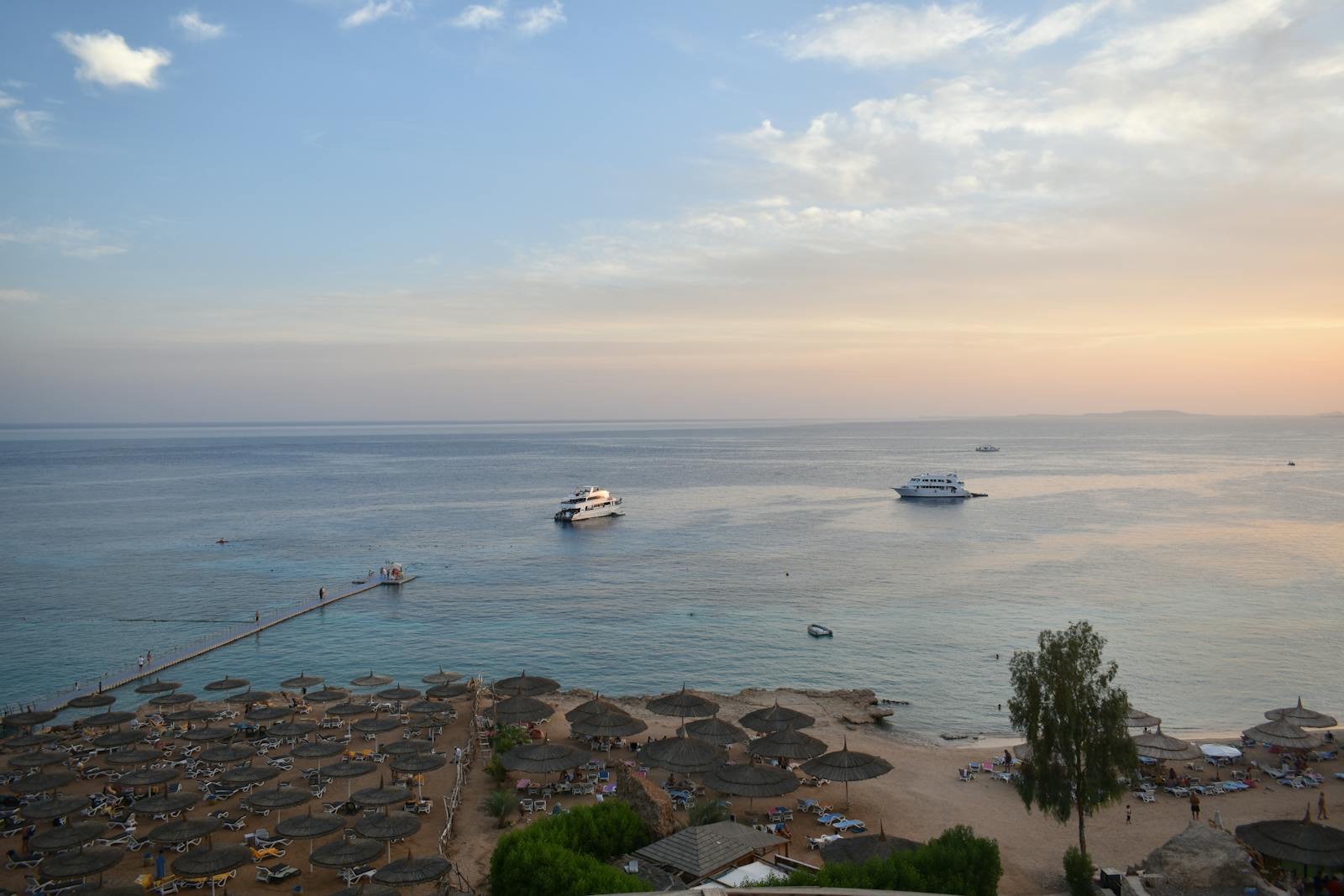
When choosing accommodation in Sharm el-Sheikh you have to understand one fairly fundamental thing that unpleasantly surprises a lot of unprepared tourists, namely the fact that most of the beaches here aren’t sandy with a gentle slope into the sea. Because the coral reefs begin literally a few inches from the shore, the resorts build long wooden piers and floating pontoons, along which you cross the shallows and only enter deep water beyond the edge of the reef, so as not to destroy those gorgeous corals.
For divers and capable swimmers this is an absolute jackpot, but if you’re travelling with small children, toddlers or you’re non-swimmers, entering via a pier straight into several metres of water can be very unpleasant. In that case my advice is to choose very carefully a resort that has built a sheltered sandy lagoon, or to look for accommodation right in Naama Bay.
💡 Gear tip: Wherever you stay, bring a quality pair of water shoes, because in the shallows close to shore people sometimes wander about despite the ban on entry, and there’s a real danger of stepping on sea urchins, venomous fire coral, or the masterfully camouflaged and very dangerous stonefish.
6. The Naama Bay Promenade
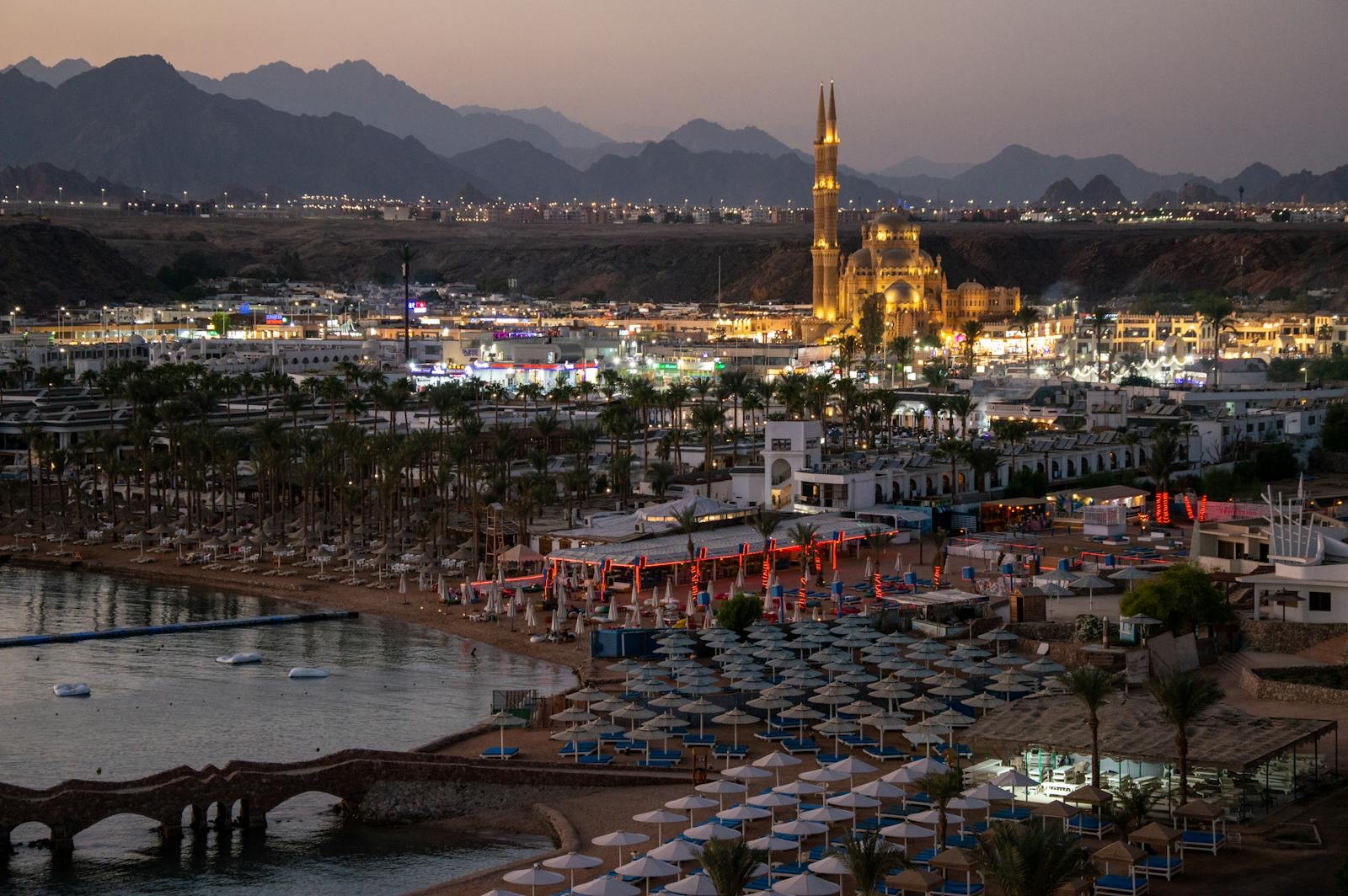
Naama Bay is historically the oldest and still probably the busiest, throbbing heart of the entire resort, where a pedestrian promenade crammed with little cafés, restaurants, shisha bars and souvenir shops stretches around a long bay with a classic sandy beach. After dark it comes fully to life, neon lights blaze and music plays from every venue, so if you’re after nightlife and the true big-city buzz by the sea, you’ll be in the right place.
But I have to be completely honest with you, because the experiences of many travellers in recent years clearly show that Naama Bay’s glory has faded a little and the place feels rather worn in places, while by far the biggest problem is the local touts outside the restaurants and shops, who can be very persistent. This simply isn’t a place for the faint-hearted.
If you do head out for an evening stroll, be prepared that prices in the restaurants along the promenade are inflated and often have a hidden service charge added on, plus extra money for the bread and salad brought to your table without asking. So always check the price in advance, and remember that a smiling but very firm “La, shukran” (No, thank you) will probably be your very best weapon against all the street vendors.
7. The Old Market and Al Sahaba Mosque
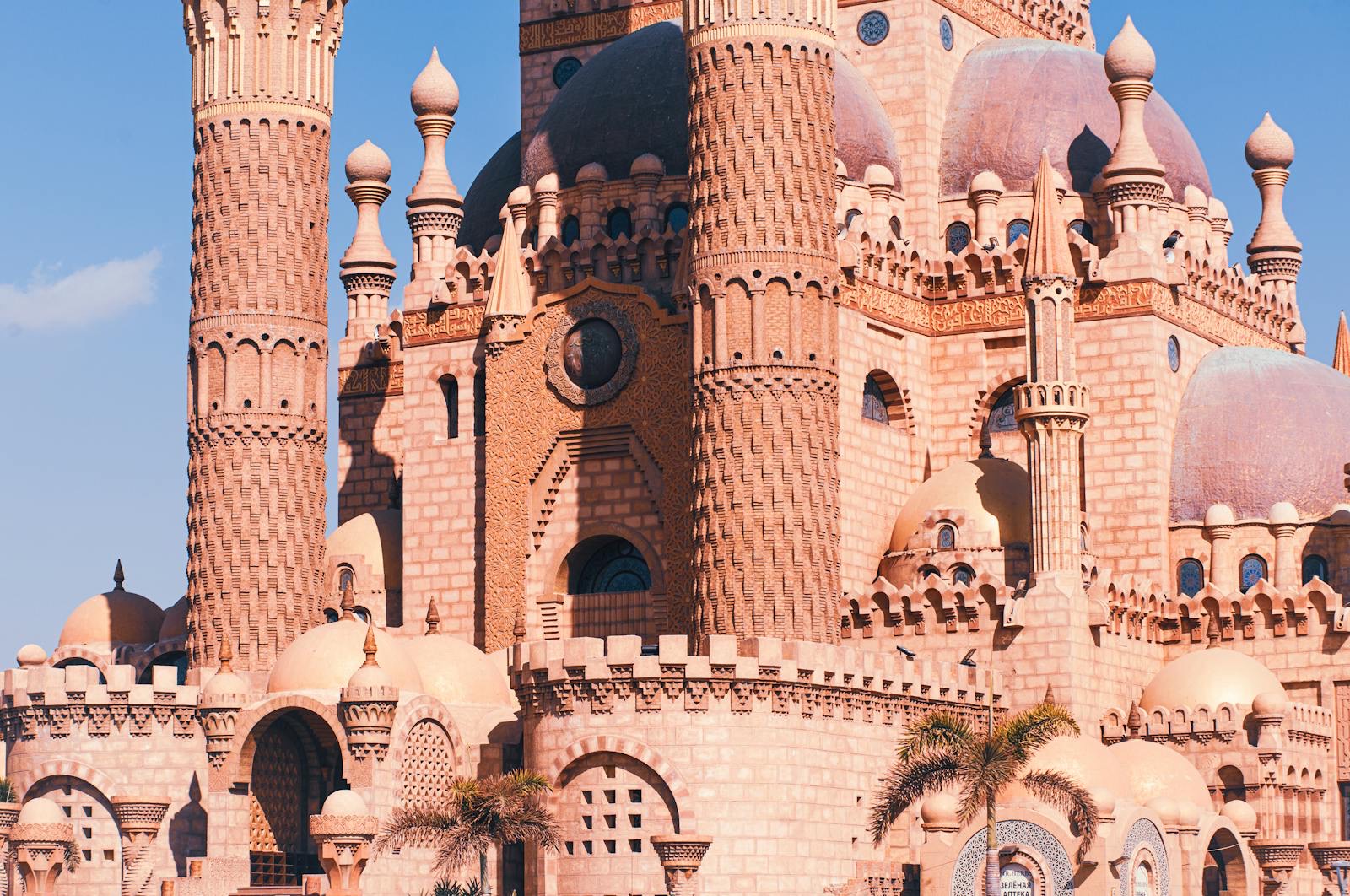
If you want to experience at least a glimpse of the truly authentic Egypt on Sinai, head one evening to the Sharm El Maya district, home to the so-called Old Market, in whose winding alleys you’ll find a traditional oriental bazaar that smells wonderfully of spices, hibiscus tea and freshly mixed shisha tobaccos. You can buy absolutely everything here, from alabaster figurines and leather bags to spices and teas — just please watch out for fakes, because a lot of so-called papyrus is actually just ordinary pressed banana leaf.
Haggling here is an absolute must and a firm part of the local culture, so if a seller gives you a price, feel free to start with a counter-offer at half or a third of the amount, and slowly work your way towards a compromise with a smile — but never haggle over things you don’t actually want to buy. If you don’t like the price, simply say thank you and walk away with a smile, because very often the seller will call out a better offer to you from the very door of their shop. 😉
The absolute centrepiece of the whole market is the beautiful Al Sahaba Mosque, which was only recently completed and whose stunning Ottoman architecture and two 76-metre-high minarets make it probably the most photogenic building in the city. Entry inside is free, but only possible outside the main prayer times and it strictly requires suitable, conservative clothing (covered knees and shoulders for everyone, and hair for women), while even the evening view of the illuminated mosque from outside is hugely worth the trip.
8. Soho Square
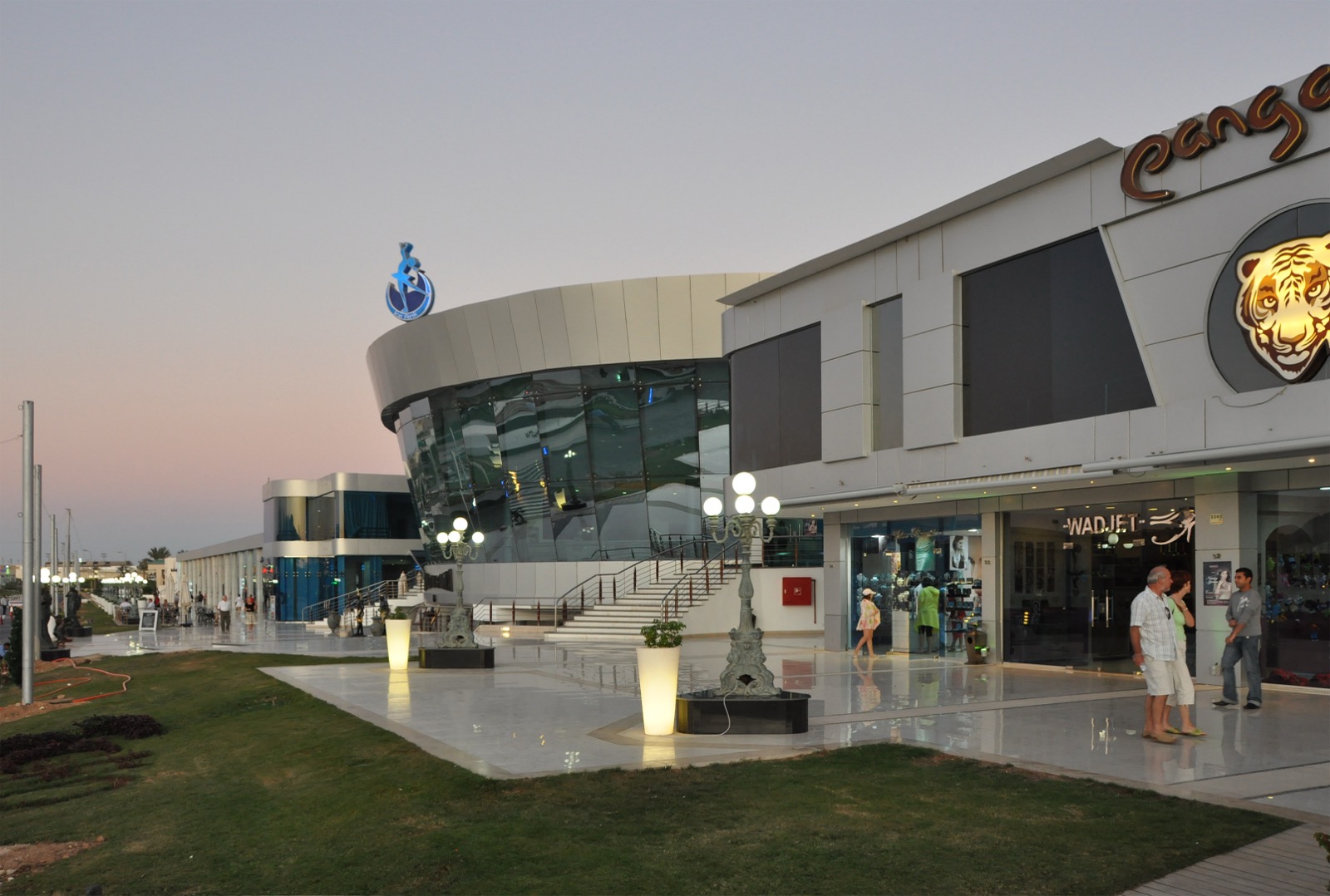
While Naama Bay represents the older, freewheeling and, honestly, sometimes very annoying Egypt, Soho Square is its absolute opposite, because it’s a modern, gleaming and meticulously maintained entertainment centre that resembles a more upmarket European shopping mall. You’ll find top restaurants, stylish cafés, designer boutiques, and for the children even a huge covered ice rink with real ice and a freezing Ice Bar, where you get your drink in a glass made of ice — a rather bizarre experience in the middle of the desert.
The square’s main draw is the beautiful dancing fountain, which comes alive after 7pm with a regular light and music show, so it’s an absolutely ideal outing for families with children when, after a few days, the hotel evening entertainment has started to bore you and you want to stroll in a pleasant, clean environment.
The single biggest reason why many people prefer Soho Square over the older centre, though, is the total absence of street touts, because the rules here are very strict and the traders let you stroll and peer into shop windows in peace, without anyone tugging at your sleeve and pushing trinkets on you. There’s a genuinely very safe and relaxed atmosphere here, although you do have to be prepared for slightly higher European prices.

9. Desert Safari
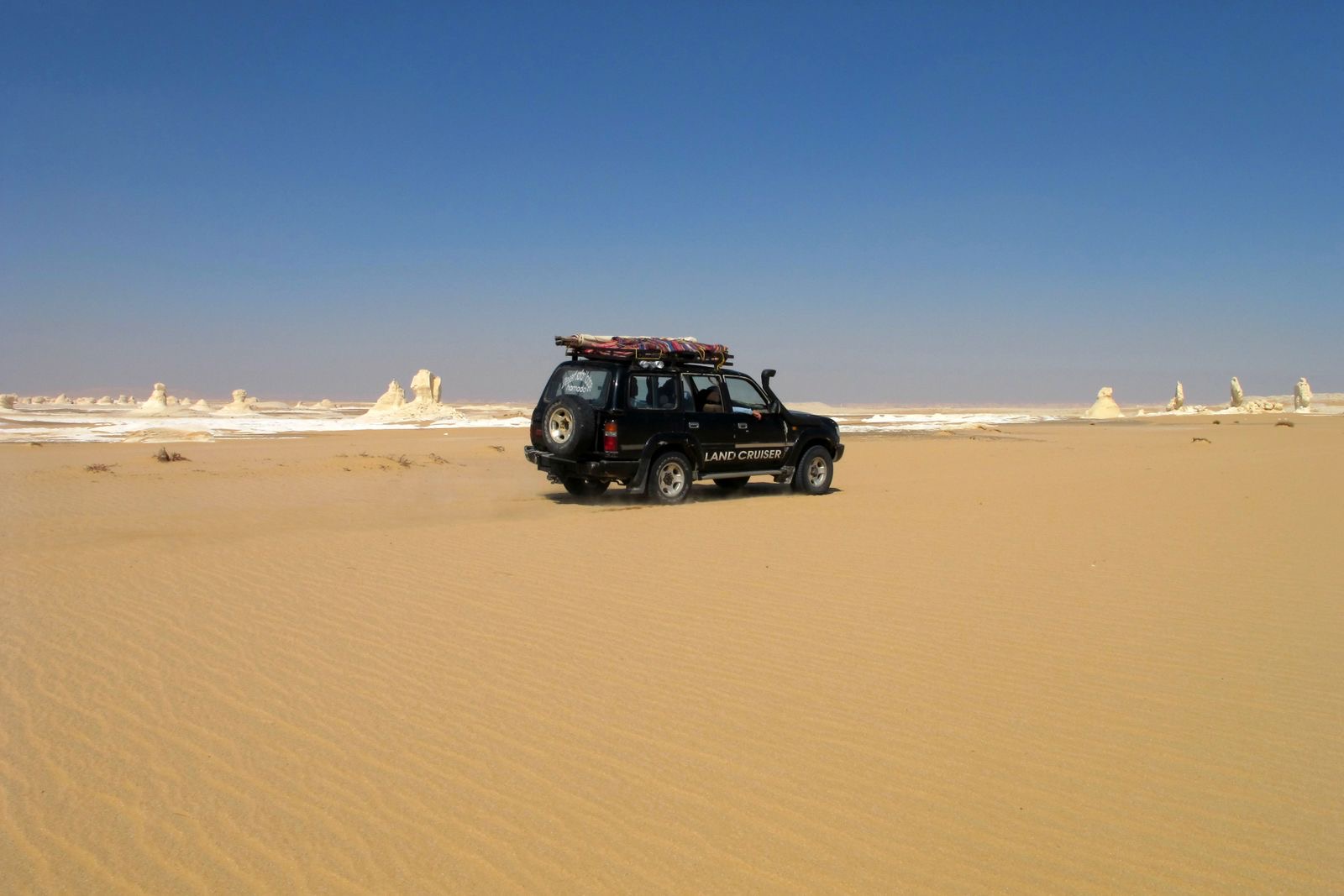
Your holiday on Sinai probably wouldn’t be quite complete if you didn’t head out to explore those rugged, arid mountains in the interior, because a desert safari is a fantastic contrast to days spent lazing by the sea. Most trips start in the late afternoon, when you climb aboard quad bikes or into off-road jeeps and set off along dusty tracks among monumental rock massifs that the setting sun paints a wonderfully rich red.
The programme traditionally includes a visit to a Bedouin village, a short camel ride and then dinner cooked right over a fire in the sand, but by far the biggest experience is stargazing under the night sky. There’s practically no light pollution in the desert, so the stars shine with incredible intensity and the local guides will often even lend you large telescopes for observing the craters on the Moon, with the price for such a trip ranging from EUR 30 to 60 (around £25 to £50).
💡 A heads-up from the forums: Watch out carefully for minor scams when arranging trips, because it often happens that at the camels they’ll demand more money from you, claiming the previous payment was only a deposit, and at the quad-bike rentals make sure to photograph the machine carefully before riding, so they can’t pin old scratches on you. My advice is to buy trips from established agencies in town, where they’re often as much as half the price compared with the hotel sellers, but always clarify in advance exactly what’s actually included in the price.
10. St Catherine’s Monastery and Mount Moses
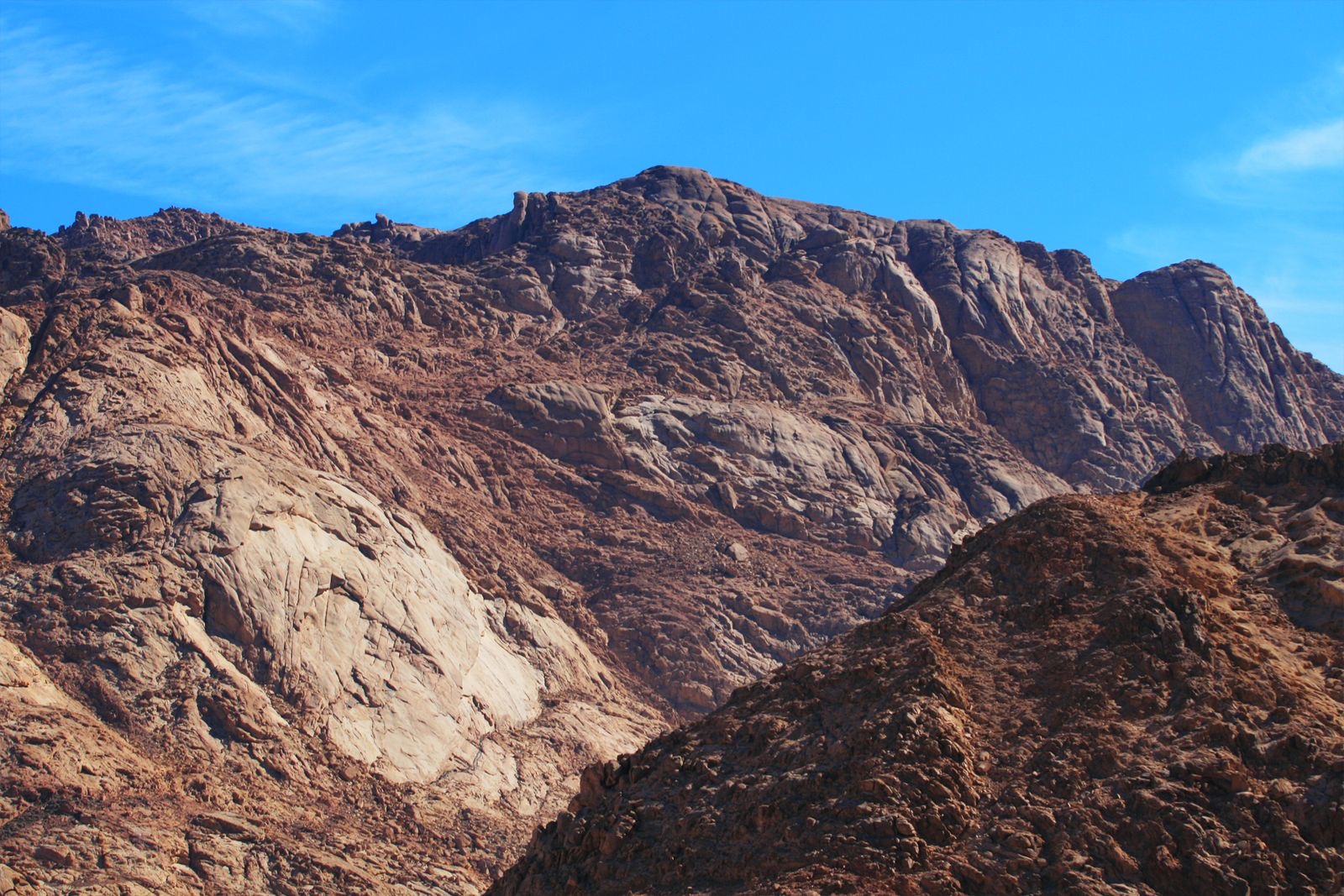
A trip to St Catherine’s Monastery and the subsequent night-time climb up Mount Sinai (Mount Moses) is for many the single most powerful experience in all of Egypt, and that’s no wonder, because the monastery, sitting at an altitude of over 1,500 metres, is one of the oldest continuously functioning Christian monasteries in the world. You usually set off very late in the evening (around 8:30pm), because the coach journey from Sharm takes nearly four hours and is full of endless bends across the utterly dark desert.
The climb itself up the 2,285-metre mountain begins deep in the night under starlight, and I won’t lie to you: the route is long, rocky, and the final 750 steps carved into the rock are genuinely physically demanding. But the reward for all that sweat and effort is an absolutely breathtaking sunrise over the sharply cut peaks of the Sinai mountains, followed by a descent to the monastery and a tour of the place where, according to tradition, God spoke to Moses from the burning bush. The good news is that this area falls within the free zone, so the ordinary Sinai visa will do.
💡 Essential insider tip: Tour operators often forget to warn tourists that at the mountain’s summit it’s seriously cold with a strong, icy wind even in the middle of summer, so be sure to bring sturdy footwear, warm layers (a hat and gloves wouldn’t hurt), a good head torch and plenty of cash. On the way up you’ll come across small Bedouin stalls where for a few coins you can buy hot tea and water, or rent a coarse blanket at the top to warm yourself during the endless wait for dawn.
11. The Coloured Canyon
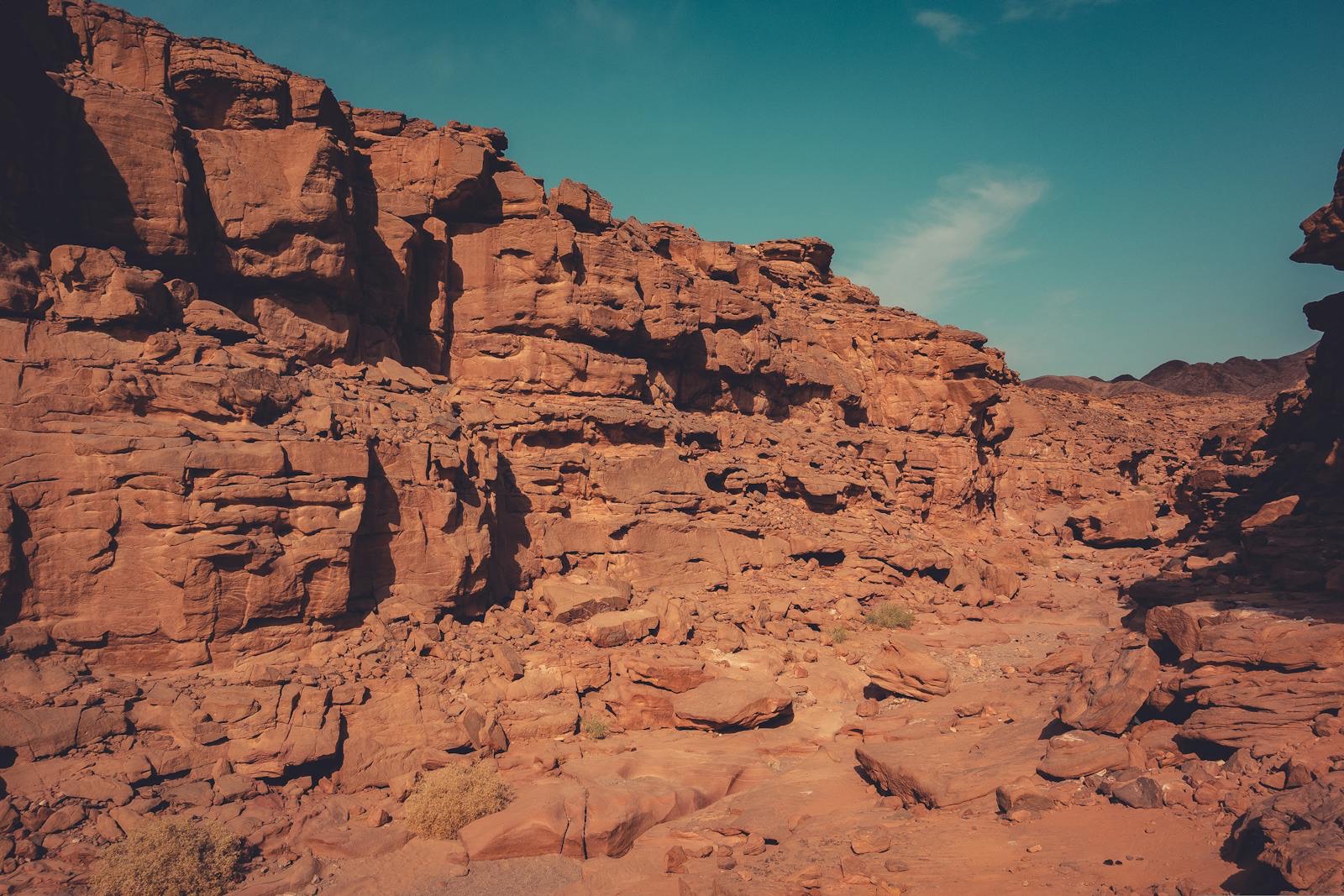
Far from the crowded beaches, roughly an hour and a half to two hours’ drive north towards the little town of Nuweiba, hides a wonderful geological marvel called the Coloured Canyon, which is an almost kilometre-long, extremely narrow gorge whose walls tower up to forty metres high. Over millions of years, water and wind have carved fantastic shapes into the sandstone here, which, thanks to their content of various minerals, play in every shade of red, vivid orange, yellow and purple.
Walking through the canyon you’ll feel as if you’re in a completely different world, because in some places the gorge is so narrow that you touch the walls with both hands, while elsewhere you have to clamber over boulders and duck under rock overhangs. This full-day trip is often wonderfully combined with a visit to Dahab and a traditional lunch in a Bedouin tent right on the coast, so in a single day you can fit in both the sea and the mountains. ☺️
⚠️ Warning: Walking through the canyon requires fairly good mobility and sturdy footwear, because in some places you scramble over rocks without any solid safety equipment, which can be needlessly dangerous for older people or small children, so before the trip it’s best to check that your travel insurance is valid for injuries off paved paths.
12. A Trip to Dahab
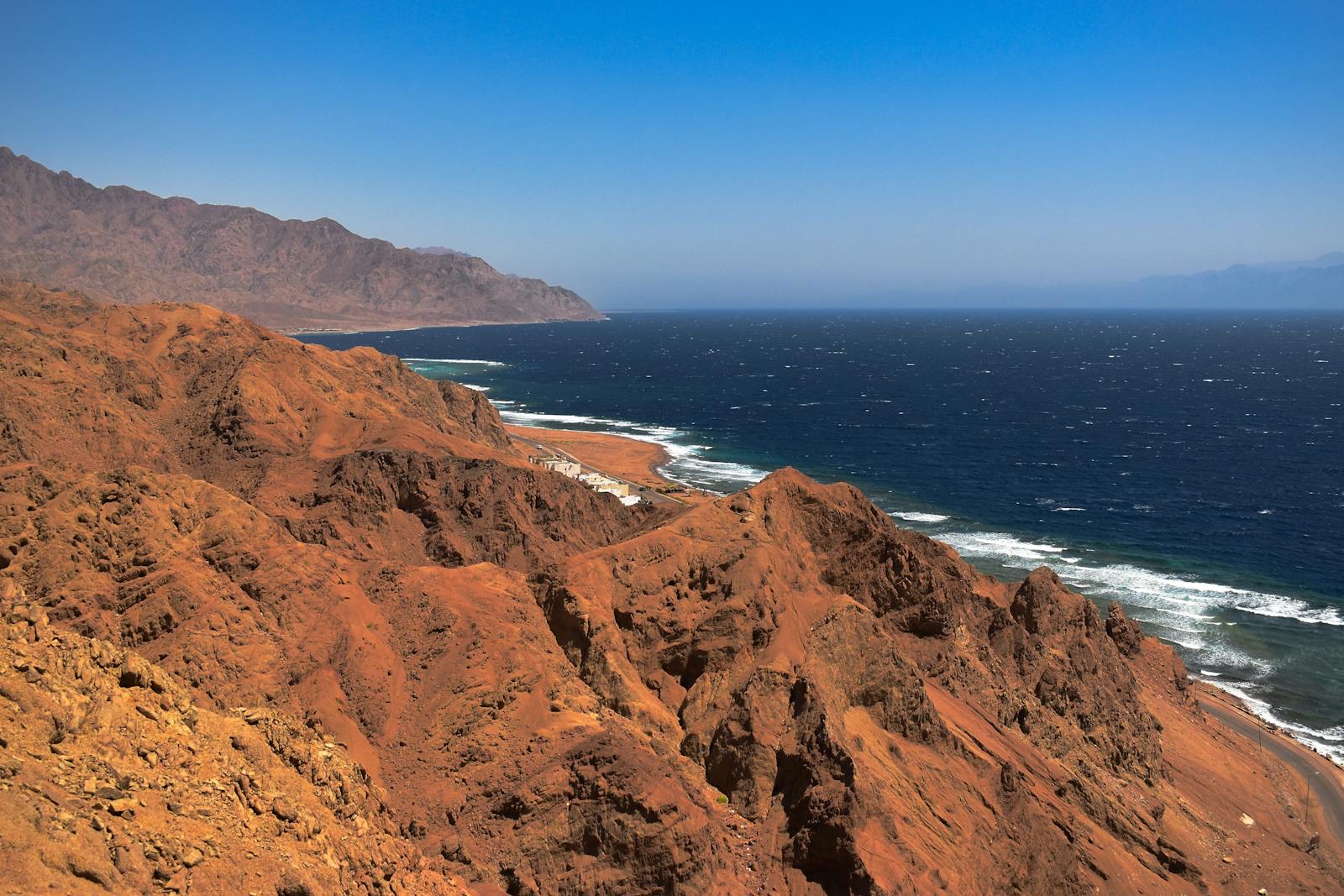
A little to the north of bustling Sharm lies the town of Dahab, which is the embodiment of a completely different, far more laid-back Egypt, because the original Bedouin fishing village has gradually transformed into a calm, bohemian hub beloved by backpackers, freedivers and independent travellers from all over the world. The atmosphere here is utterly relaxed and informal, and instead of huge resorts you’ll find small guesthouses and lots of those wonderful chill-out cafés right by the water, with cushions strewn on the ground.
Dahab’s main magnet is, of course, the world-famous diving spot Blue Hole, an abyss plunging vertically down right by the shore that lures freedivers to push their own limits, but around its edges there’s also gorgeous shallow snorkelling. Dahab is an absolutely ideal destination for you if you want to escape the pushy hotel entertainers, buy cheaper souvenirs, or simply ride a camel along the beach where the dusty desert meets the turquoise sea.
13. Cairo and the Pyramids by Air
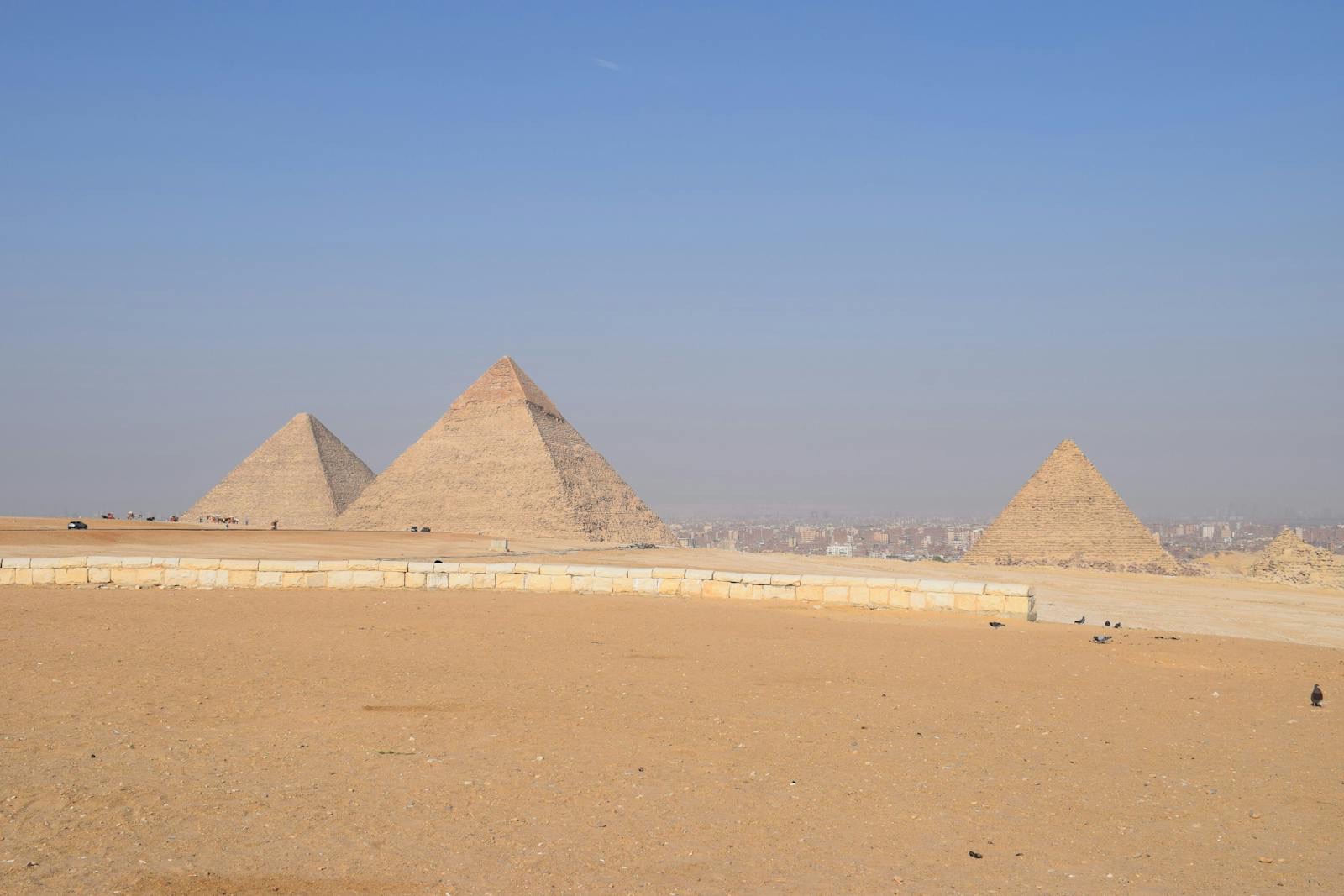
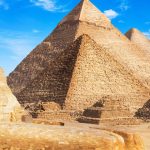
For a lot of people, visiting Egypt without seeing the pyramids is probably unthinkable, and even though Cairo is incredibly far from Sinai by land — the coach journey takes over eight hours — from Sharm el-Sheikh you can manage to visit the pyramids of Giza in a single day thanks to a flight connection. The domestic flight takes just a little over an hour and a quarter, so you have breakfast at the hotel in the morning, by midday you’re standing in utter awe before the Great Sphinx, and in the evening you’re back by the sea.
This trip is certainly far more expensive and incredibly packed in terms of time, but it’s simply an unforgettable cultural experience, where, besides the pyramids themselves (a UNESCO World Heritage Site), you usually also visit the new Grand Egyptian Museum (GEM) with the fascinating treasure of Pharaoh Tutankhamun, and you’ll ride through the busy streets of this African megacity.
But remember one absolutely fundamental formal thing, because from Sharm airport you fly across to the African continent to Cairo, thereby leaving the Sinai zone, and for this trip you absolutely need the full Egyptian visa, which you must buy right after arriving in Egypt. If you only have the free stamp in your passport, they simply won’t let you on the plane to Cairo — and that would be a tremendous shame.
Map of points of interest for your phone
Where to Eat in Sharm el-Sheikh
While most tourists in Egypt rely solely on hotel all-inclusive buffets, it would be a huge shame, in my view, not to taste the local cuisine if you head into town in the evening. Traditional Egyptian food is incredibly rich in fantastic vegetarian dishes that smell wonderfully of cumin and coriander, so diners really don’t miss the meat at all here.
An absolute classic that I myself love to order is koshary, Egypt’s national dish — a brilliant, if incredibly filling, mix of rice, brown lentils, macaroni and chickpeas, generously topped with a spiced tomato sauce and sprinkled with crispy fried onions. You’ll get a great, quick lunch at the popular local chain Gad, where they make absolutely superb ta’meya (the Egyptian version of falafel made from dried fava beans) or the traditional warm ful medames. If you fancy a more upmarket dinner, the highly acclaimed Indian restaurant Rangoli serves fantastic vegetable curries and also offers a gorgeous sea view.
In both the Naama Bay and Soho Square areas you’ll find dozens of other international restaurants, but bear in mind that prices here are set for European tourists and are noticeably higher.
⚠️ Essential warning about water and ice: Wherever you eat outside your five-star hotel, please follow strict rules and never drink tap water in Egypt, not even for brushing your teeth — always use only bottled water from sealed bottles. Avoid drinks with ice in street stalls and smaller establishments entirely, because the ice there is often made from unfiltered tap water and could very easily cause the unpleasant stomach trouble Egypt is notoriously known for — and you really don’t want that on holiday.
Where to Go Next from Sharm el-Sheikh
If Egypt has won you over and you’re considering further trips, or you’re still mulling over whether Sinai is the right fit for you, take a look at the other articles here on our blog, because comparing different destinations will definitely help you choose the best holiday tailored exactly to your expectations.
For a comprehensive overview of all the options this beautiful land of the pharaohs has to offer, be sure to check out our extensive article Where to Go on Holiday in Egypt: 20 Tips. If you’re after long sandy beaches ideal for small children and don’t mind the absence of corals right by the shore, read our guide Hurghada: 13 Tips.
If, on the other hand, your main goal is snorkelling and diving but you’re looking for a calmer, more isolated destination with a huge presence of sea turtles and dugongs, you mustn’t miss the article Marsa Alam: 13 Tips. And if the thought of packing your suitcase is already daunting you before you fly, our practical checklist of what to pack for a holiday in Egypt will come in handy, so you don’t forget anything important at home — and don’t forget to read up in good time on the formalities in our guide Egypt Visa.
 🚗 Car rental on the road
Verified rental cars in Egypt
🚗 Car rental on the road
Verified rental cars in Egypt
Search with the DiscoverCars comparison engine — it compares prices from dozens of local and international rental companies, and most bookings come with free cancellation.
Compare car prices in Egypt →Frequently Asked Questions
Who is a vacation in Sharm el-Sheikh suitable for?
Sharm is an absolutely ideal destination for passionate divers, snorkelers, active couples and people looking for a livelier nightlife and modern entertainment, because the coral reefs start right at the pier, making it an amazing paradise for underwater world lovers. However, if you have small children and are looking for endless shallow beaches with fine sand for building castles, Hurghada will probably be a better choice for you.
Can you fly to Sharm el-Sheikh directly from Prague?
Yes, the situation has fortunately improved significantly in recent years! For a long time, it was necessary to fly with inconvenient layovers, but currently direct charter flights (for example with SkyUp airline) from Prague to SSH airport are commonly offered by Czech travel agencies and the direct flight takes approximately 4.5 hours.
What exactly does the Sinai entry stamp mean?
Egypt has a unique exception for Sinai, so if you spend your entire holiday exclusively in the South Sinai area (that is, in the resorts of Sharm el-Sheikh, Dahab, Nuweiba, Taba, or at St. Catherine’s Monastery) and don’t exceed 15 days, you’ll receive a free entry stamp at the airport.
When do I need to buy a full Egyptian visa?
You’ll definitely need a full tourist visa for a fee of approximately 25 USD (about €23), which you can purchase at the bank counter at the airport before passport control, when you want to travel outside the free zone, which from the resort of Sharm el-Sheikh applies mainly to boat and land trips to Ras Mohammed National Park, diving at the Thistlegorm wreck, and flight excursions to Cairo to see the pyramids.
Are there sharks in the Red Sea and is it safe to swim?
The Red Sea is a natural home to many species of sharks, but attacks on humans in the Sharm el-Sheikh area are statistically extremely rare, as a much greater and more real danger here is carelessly stepping on poisonous sea urchins, lionfish, or scraping against sharp coral in the shallows. That’s precisely why it’s so terribly important to wear proper water shoes and not to touch the bottom.
Is Saint Catherine’s Monastery normally accessible?
The monastery is normally open to tourists, but its opening hours are quite limited, usually only in the morning hours (approximately 9:00 to 11:30) and additionally it’s completely closed on Fridays and during some Orthodox holidays. Since the security situation and national park management rules can occasionally change, always check the current availability in advance with your delegate or local travel agency.
How is it with tipping (baksheesh) in Egypt?
Tipping, the so-called baksheesh, is an absolutely integral part of Egyptian economy and culture, so porters or room attendants are commonly given 1 to 2 EUR or USD (approximately 25 to 50 CZK), while tour guides receive around 3 to 5 EUR per day. In restaurants outside the hotel, you leave roughly 10% of the total bill, if a service charge hasn’t already been automatically added to the bill, which is why I recommend exchanging money for small bills right after arrival.
Tips and Tricks for Your Vacation
Don’t Overpay for Flights
Search for flights on Kayak. It’s our favorite search engine because it scans the websites of all airlines and always finds the cheapest connection.
Book Your Accommodation Smartly
The best experiences we’ve had when looking for accommodation (from Alaska to Morocco) are with Booking.com, where hotels, apartments, and entire houses are usually the cheapest and most widely available.
Don’t Forget Travel Insurance
Good travel insurance will protect you against illness, accidents, theft, or flight cancellations. We’ve had a few hospital visits abroad, so we know how important it is to have proper insurance arranged.
Where we insure ourselves: SafetyWing (simple monthly subscription) and TrueTraveller (for extra-long trips).
Find the Best Experiences
Get Your Guide is a huge online marketplace where you can book guided walks, trips, skip-the-line tickets, tours, and much more. We always find some extra fun there!