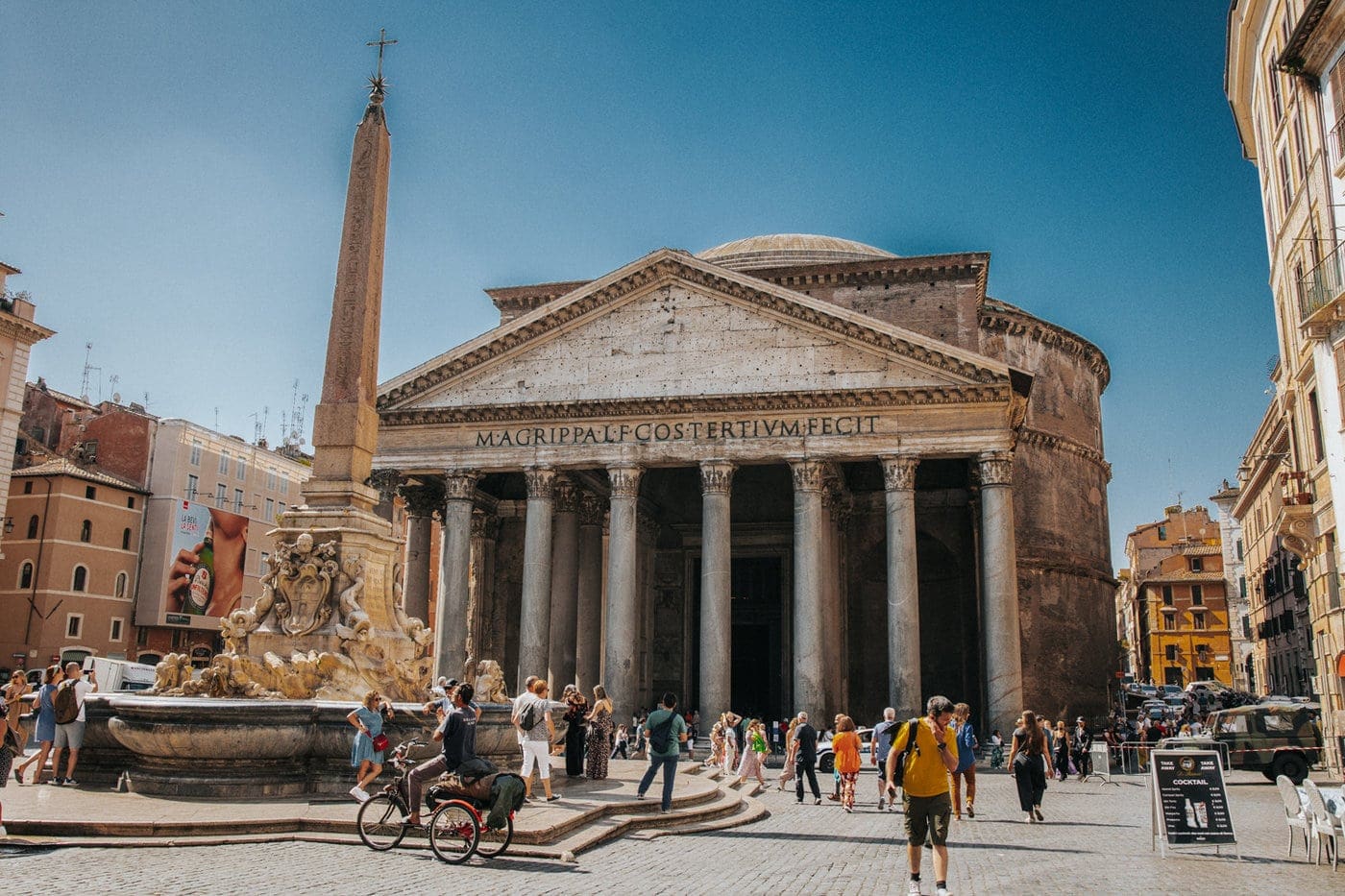
I remember the exact moment when Lukáš and I first emerged from Rome’s narrow, shady alleys and it suddenly appeared right in front of us. The Pantheon in Rome is enormous, majestic, and seems almost out of place among the surrounding buildings — but that’s precisely what makes it such a jaw-dropping architectural marvel. Rome can easily wear you down with its intensity and endless crowds of tourists, but the moment you stand before those massive granite columns, you forget all about your aching feet and the sun-scorched cobblestones for a while.
In this article I’ll show you how to enjoy a visit to the best-preserved ancient building in the world without unnecessary stress or hours wasted in endless queues. We’ll cover everything about the new entry fee, walk through its fascinating history, and explain why it rains inside through the hole in the roof. I’ll also throw in our tried-and-tested tips on where to base yourself nearby and how to avoid the worst tourist traps lurking around every corner of the historic centre.
TL;DR
- Tickets and booking: For many years entry was free, but now you’ll pay €5, with a price increase to €7 planned from summer 2026 — and at weekends, online booking is an absolute must.
- The main draw: Inside, you’ll be amazed by the largest unreinforced concrete dome in the world, with a nine-metre opening in the centre through which rain falls into the temple.
- When to go: The ideal time to visit is first thing in the morning, around 8:30 or 9:00, when you’ll dodge the organised tour groups and the morning sun creates a magical atmosphere inside.
- Who lies here: The Pantheon serves as a burial place for notable figures — you’ll find the tomb of Renaissance painter Raphael as well as the first kings of Italy.
- Dress code: It’s still a consecrated Catholic church, so you must cover your shoulders and knees, otherwise security won’t let you in even with a valid ticket.
- Getting there: No metro reaches the monument — you have to walk through the narrow streets from the Trevi Fountain or Piazza Navona.
The full destination guide: Rome — guide and what to see
When to visit Rome and the Pantheon
Chasing perfect weather while also escaping the crowds is an incredibly tricky balancing act in the Italian capital. The best months to visit are May, June, September and especially October, when temperatures drop to a bearable 22 °C and the city takes on a gorgeous autumn light. The price for this climate comfort is steep, though, because in these months the city is bursting at the seams and the streets around the Pantheon resemble one giant anthill.
Summer in Rome — July and August in particular — is a test of both physical and mental endurance that I definitely wouldn’t underestimate. Temperatures regularly climb to 31–35 °C and the humidity turns the streets into a stuffy greenhouse with no escape. The ancient stones soak up the heat all day and radiate like a giant oven long after dark, so summer mode means a 6 a.m. wake-up and a long afternoon siesta in an air-conditioned room. August has the added quirk of Ferragosto, the holiday when locals flee to the coast en masse and many family-run businesses simply close for a few weeks.
Winter, on the other hand, is the best-kept secret of budget and solo travellers. From late November to February, accommodation prices drop to their annual lows and the queues at the sights shrink to an absolute minimum, though you’ll have to reckon with temperatures between 5 and 13 °C and the occasional rain. After the chaotic Jubilee Year of 2025, when over 33 million pilgrims poured into the city and the streets ground to a halt, 2026 brings noticeable relief. Don’t be lulled into a false sense of emptiness, though, because at the major icons like the Pantheon there will always be crowds.
Where to stay in Rome
As for specific accommodation tips, we’ve had great experiences with Hotel Artemide in the central Monti district, the boutique Condotti Boutique Hotel just steps from the Spanish Steps, or the quieter Residenza Cavallini in the Prati district near the Vatican. It’s best to book well in advance.
💡 Tip for accommodation and experiences: We prefer searching for accommodation on Booking.com, which tends to have the best cancellation terms. For tickets, tours and activities, it pays to compare options on GetYourGuide.

Choosing your neighbourhood defines your entire experience of the Eternal City, and logistical mistakes here come at a brutal price. The biggest rookie mistake is booking accommodation purely on price, without considering that you’ll be commuting an hour each day on a packed bus with no air conditioning. For finding the best hotels, we’ve long relied on Booking, where we always carefully read the reviews about night-time noise and the real walking distance to the sights.
If you want to stay in the imaginary triangle right by the Pantheon, on Piazza Navona, or near the Spanish Steps, be prepared to pay a hefty premium just for the location in the Centro Storico. Living in this postcard-perfect district is incredibly romantic — you can walk everywhere and have the sights right outside your window (for example at the legendary Albergo del Senato, with a view straight onto the Pantheon) — but you’ll have to put up with constant bustle from early morning until late at night.
A far more balanced choice is the Monti district, strategically located right behind the Colosseum, offering the perfect mix of accessibility and local atmosphere. Monti has excellent transport links thanks to metro line B and comes alive in the evenings at a relaxed pace around the little square of Piazza della Madonna dei Monti, where you’ll find superb small restaurants and vintage shops.
For romantic souls and lovers of great food, there’s Trastevere, which embodies exactly that vision of medieval, ivy-clad alleyways. Trastevere is a paradise for evening strolls and tasting traditional pizza or cacio e pepe pasta, but its huge drawback is the complete absence of a metro and the big crowds around the main squares. If you’re after peace and quiet and travelling with family, consider the elegant residential district of Prati, north of the Vatican, with its wide boulevards and flat terrain.
10 things to see and do at the Pantheon in Rome
Let’s take a look together at the most important things you definitely shouldn’t miss when visiting this architectural gem. You’ll learn which details to focus on, how to avoid the endless waiting, and everything that’s hidden beneath the massive dome.
1. The architecture and the largest concrete dome in the world
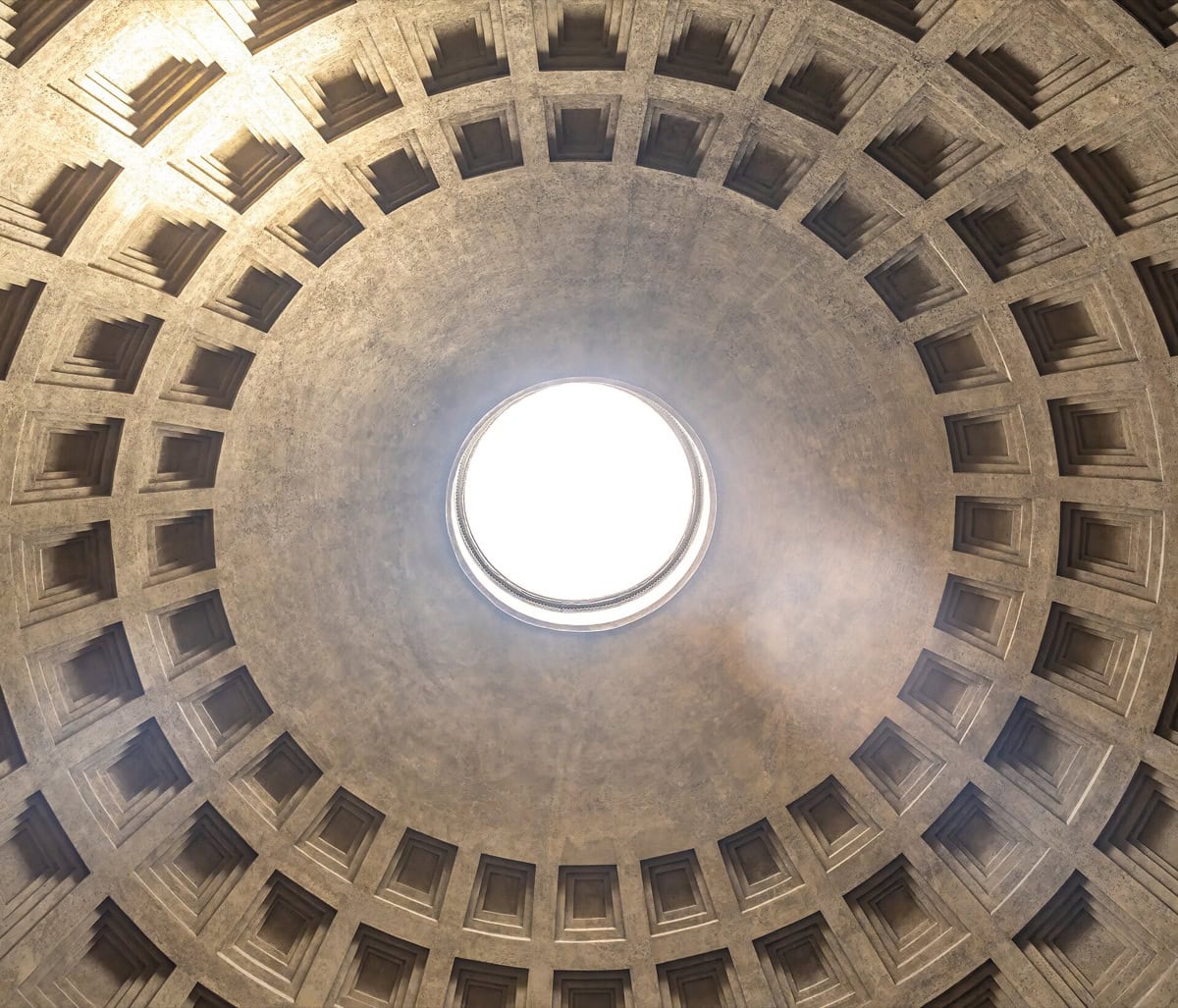
When you step inside and look up, you instantly understand why architects from all over the world come here to study. The Pantheon boasts the largest unreinforced concrete dome in the world, a record no one has taken from it for almost two thousand years. The ancient Romans had no modern steel rods to reinforce the concrete, so they had to come up with an absolutely ingenious technological solution.
The secret lies in making the material progressively lighter towards the very top of the roof. While the base of the dome is cast from heavy travertine and tuff, the builders mixed in ever lighter materials as they went up, until at the very centre they used light volcanic pumice. The ceiling is also decorated with five rows of square coffers, which aren’t just for show — they serve to lighten the enormous mass of concrete even further.
The space feels remarkably harmonious thanks to the perfect geometry the Romans loved so much. The diameter of the dome is exactly equal to the height of the entire building (43.3 metres), which means a perfect sphere would fit inside the interior, touching both the walls and the floor. It’s fascinating to stand in the middle and realise that this building has survived earthquakes, plundering, and the fall of an entire empire.
2. The magical oculus and what happens when it rains
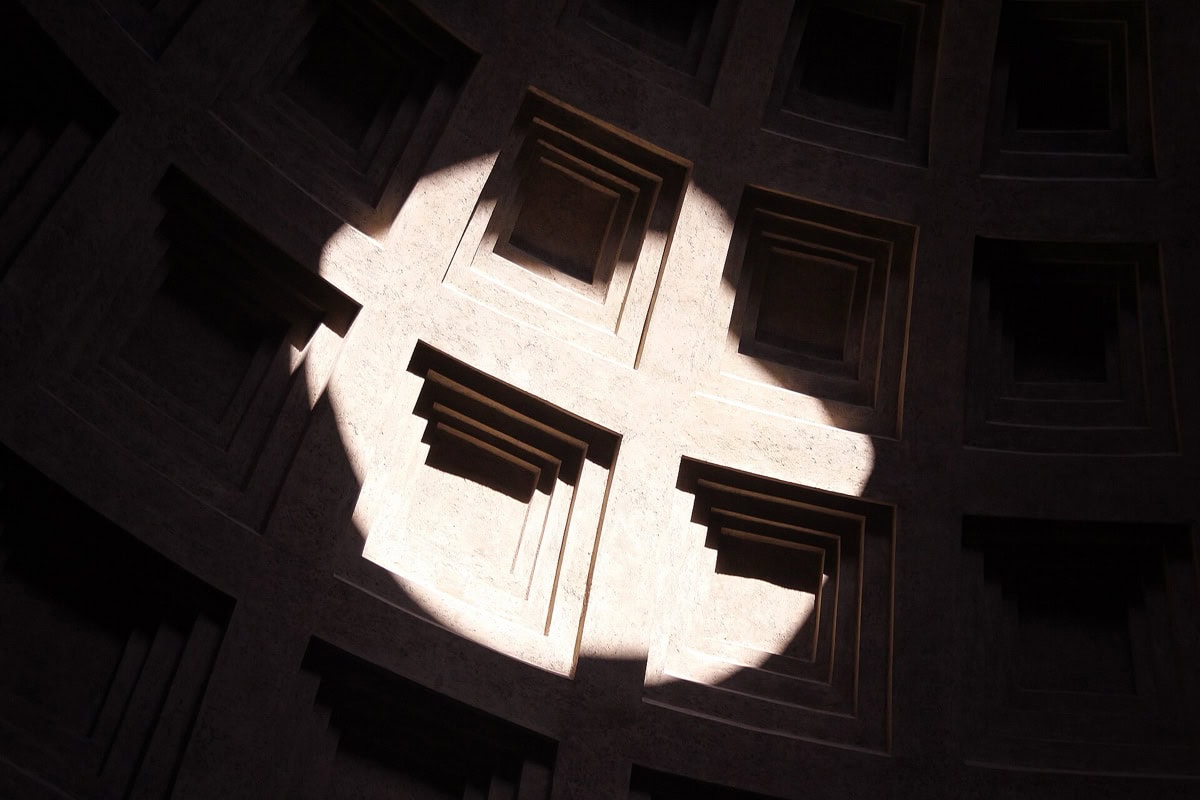
In the middle of the dome gapes an enormous, nine-metre circular opening known technically as the oculus (the eye). This opening has never been covered and to this day remains the only source of natural light in the entire massive building, creating a wholly mystical atmosphere. During the day the sunbeam slowly moves across the coffered ceiling and the temple walls, working like a giant sundial connecting Earth with the heavens.
The most common question every visitor asks is what happens when it starts raining in Rome. Water really does fall straight through the oculus onto the marble floor, which is an absolutely fascinating spectacle, especially during Rome’s heavy storms. People often mistakenly assume a huge puddle must form inside, but the ancient builders thought of everything.
The Pantheon’s floor isn’t perfectly flat — it slopes slightly and is gently convex. Right beneath the oculus you’ll find inconspicuous holes and channels in the marble that immediately drain the rainwater into an ingenious underground drainage system. It’s two-thousand-year-old technology that still works flawlessly today, keeping the interior dry.
3. The history and Hadrian’s legacy
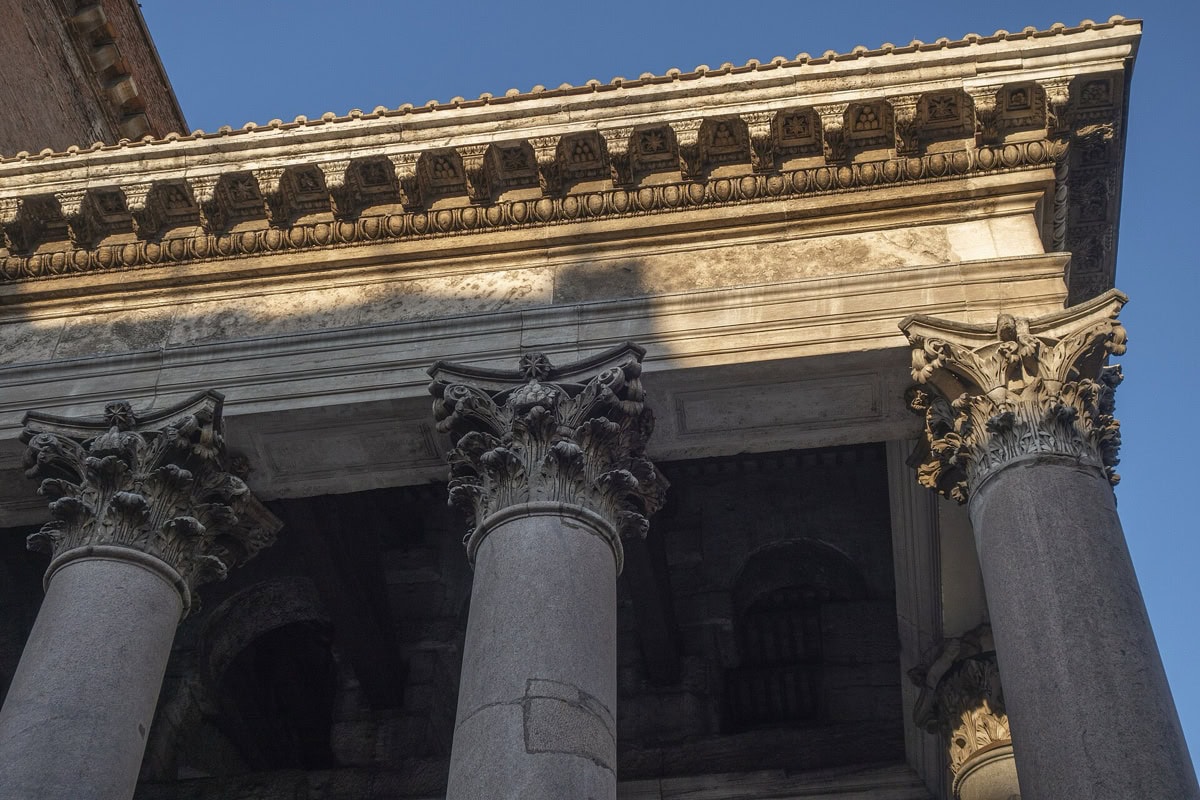
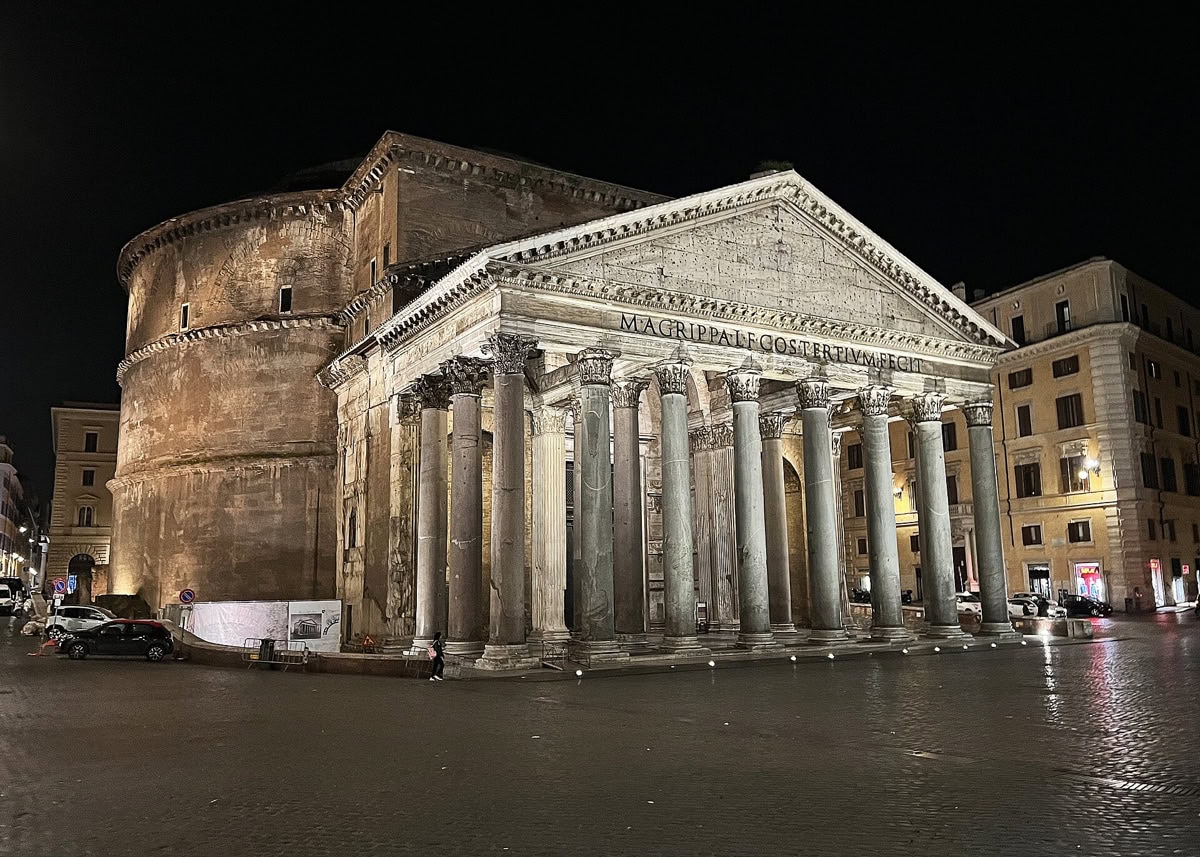
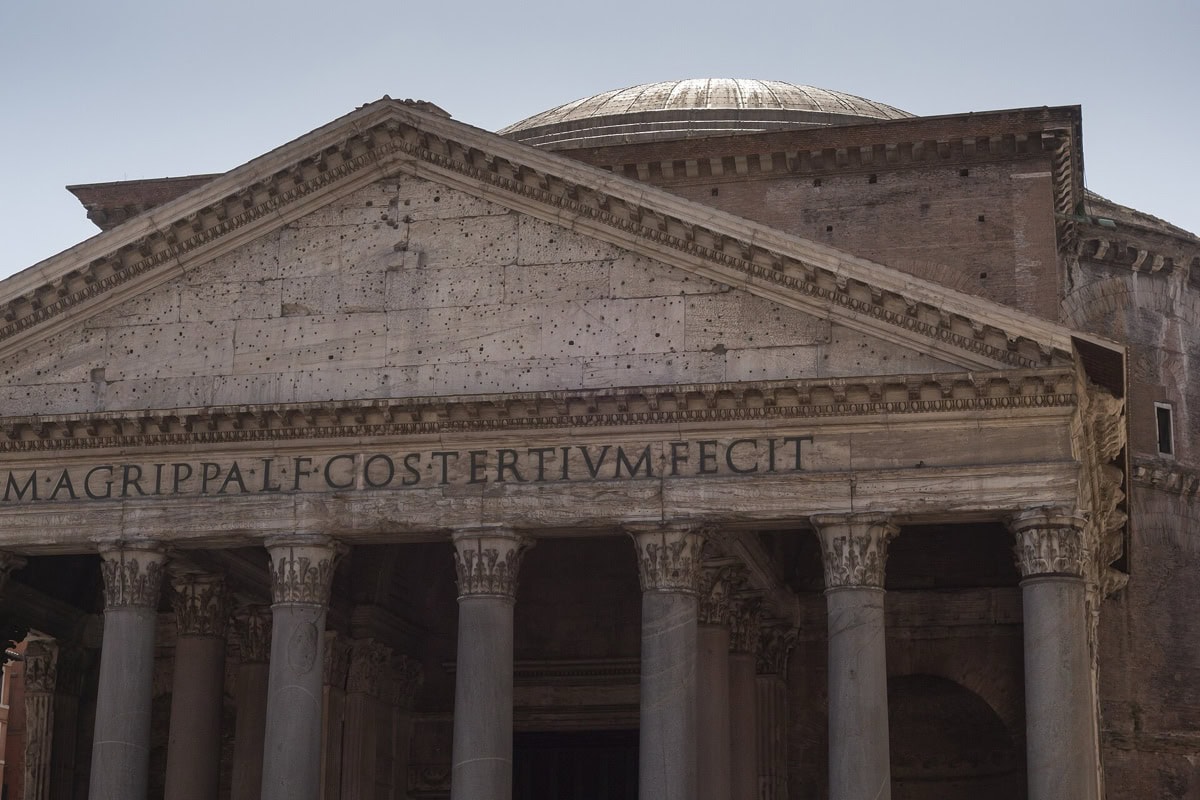
When you look at the temple’s façade, you’ll see the huge Latin inscription “M. AGRIPPA L. F. COS. TERTIUM FECIT”, which translates as meaning the building was erected by Marcus Agrippa. This inscription is very misleading, though, because Agrippa’s original temple from 27 BC long ago went up in flames in a devastating fire. The current form we admire today was given to the building by Emperor Hadrian around 126 AD.
Hadrian was a great admirer of Greek architecture and very likely took part in designing this incredible structure himself. Out of respect for the original builder, however, he had Agrippa’s name placed on the façade, which thoroughly confused historians for centuries until archaeologists examined the bricks and discovered their true age. The temple was originally dedicated to all the Olympian gods (from the Greek pan-theos).
Building the portico — that enormous front section with the columns — was a logistical miracle of its time. The Romans had to ship sixteen massive granite columns all the way from quarries in distant Egypt, floating them down the Nile, across the Mediterranean, and finally dragging them upstream along the Tiber. Each column weighs an incredible sixty tonnes and had to be raised with absolute precision.
4. How a temple of the gods became a Christian church
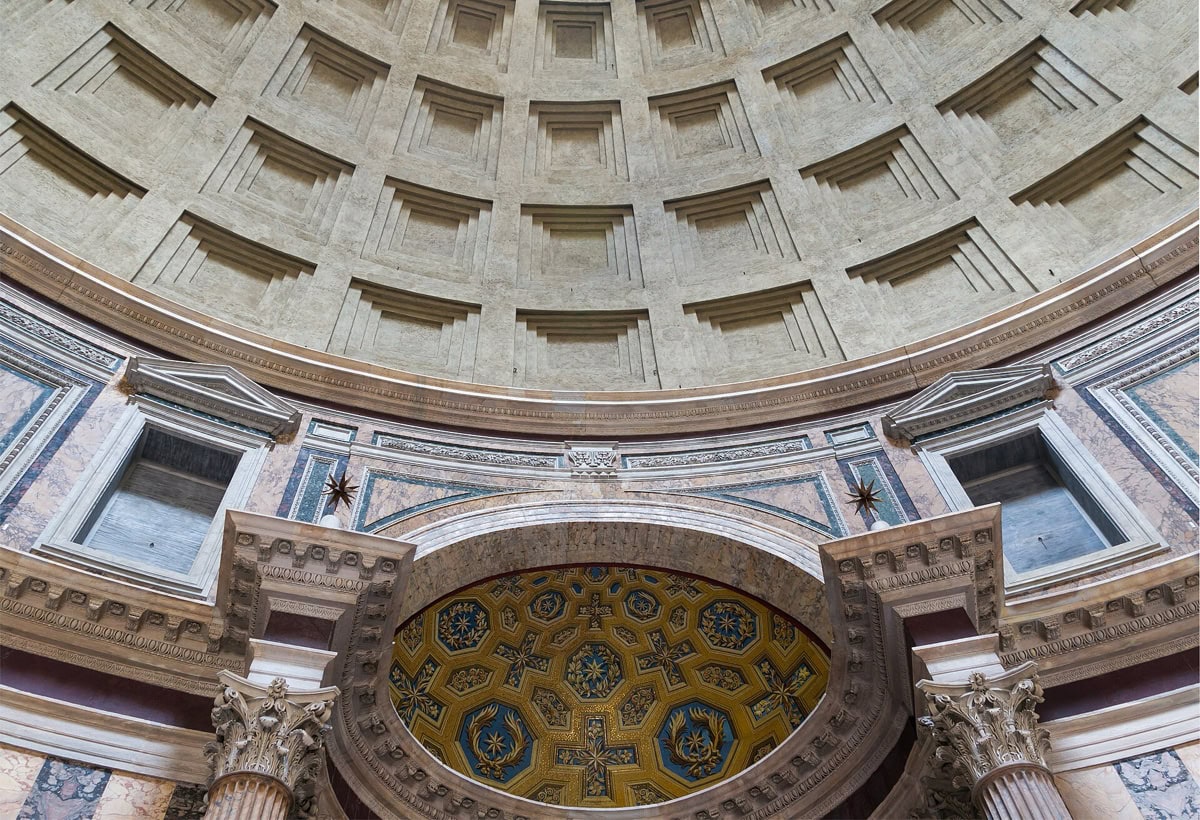
While most of Rome’s ancient monuments (including the nearby Roman Forum) ended up in ruins or served as a cheap source of building material, the Pantheon survived almost intact. Its salvation came down to one extremely pragmatic step in the early 7th century, when the Byzantine Emperor Phocas gave the building to Pope Boniface IV.
The pope had all the pagan statues removed and in 609 solemnly consecrated it as a Christian church dedicated to the Virgin Mary and the martyrs (Santa Maria ad Martyres). It was this consecration that saved the building from being dismantled, since destroying a Christian church was considered a grave sin. Legend even has it that during the consecration, demons who until then had inhabited the pagan temple flew out through the opening in the roof.
Even so, the Pantheon didn’t escape all losses, because in the 17th century Pope Urban VIII of the Barberini family had the bronze cladding stripped from the portico. This rare ancient bronze was used by the brilliant sculptor Bernini to cast the famous baldachin in St Peter’s Basilica, giving rise to the well-known Roman saying that “what the barbarians didn’t do, the Barberini did”.

5. The tomb of Renaissance genius Raphael
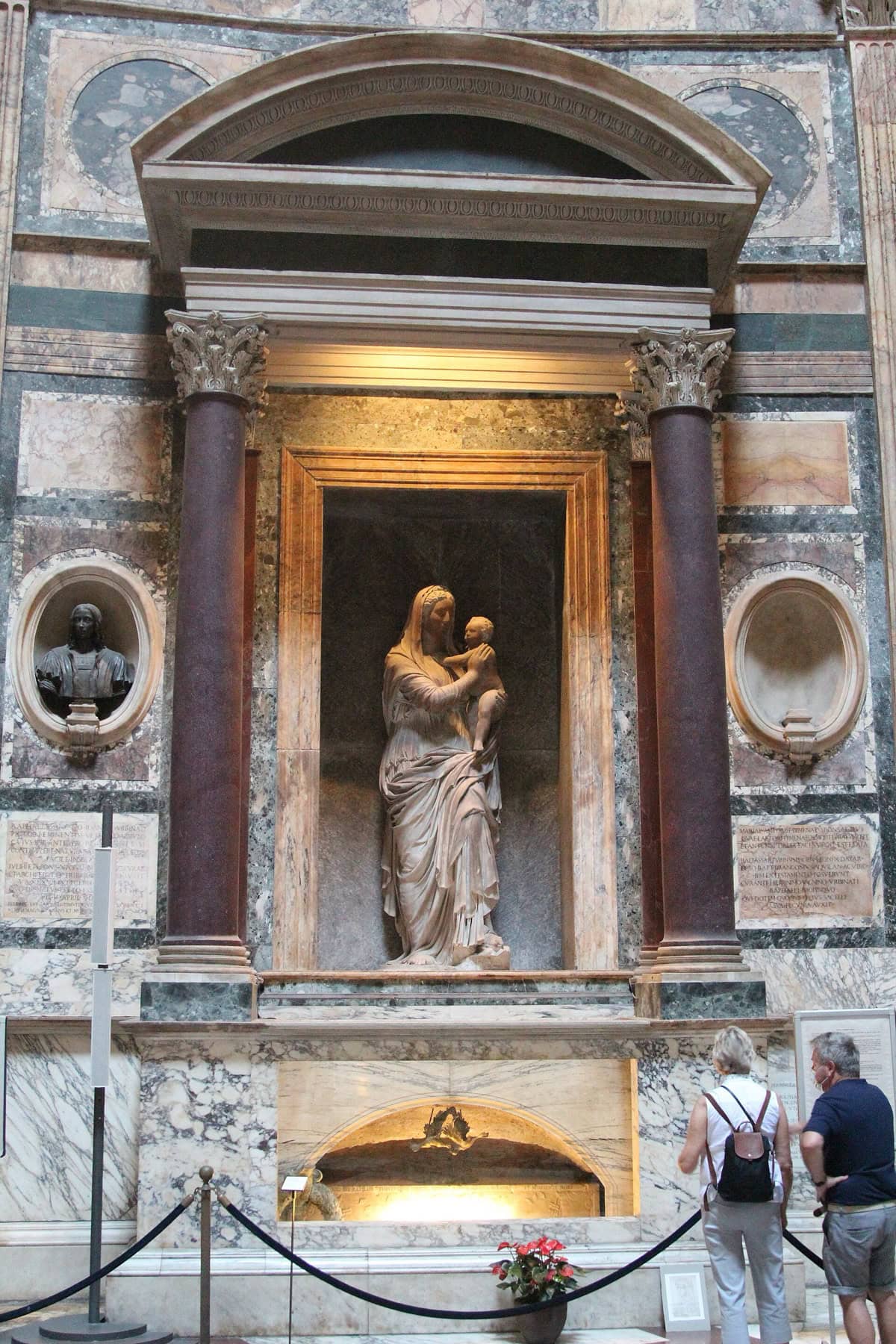
The Pantheon isn’t just a church and an architectural showcase — it has also become one of the most prestigious cemeteries in all of Italy. The most visited tomb is undoubtedly the final resting place of Raphael Santi, one of the absolute giants of the Italian Renaissance, who died at just thirty-seven in 1520.
Raphael was so captivated by the Pantheon that in his will he expressly wished to be buried beneath its stunning dome. You’ll find his marble sarcophagus in one of the niches on the left-hand side, adorned with a beautiful Latin epitaph by the poet Pietro Bembo, which translates as: “Here lies Raphael, by whom Nature feared to be outdone while he lived, and when he died, feared to die with him.”
Resting just beside the brilliant painter is his fiancée Maria Bibbiena, whom he never got the chance to marry. 💡 Tip: If you set out to find Raphael’s tomb, bring a guide on your phone, because the tomb is fairly inconspicuous and many tourists walk right past it without noticing in that vast space full of statues and niches.
6. The resting place of the Italian kings
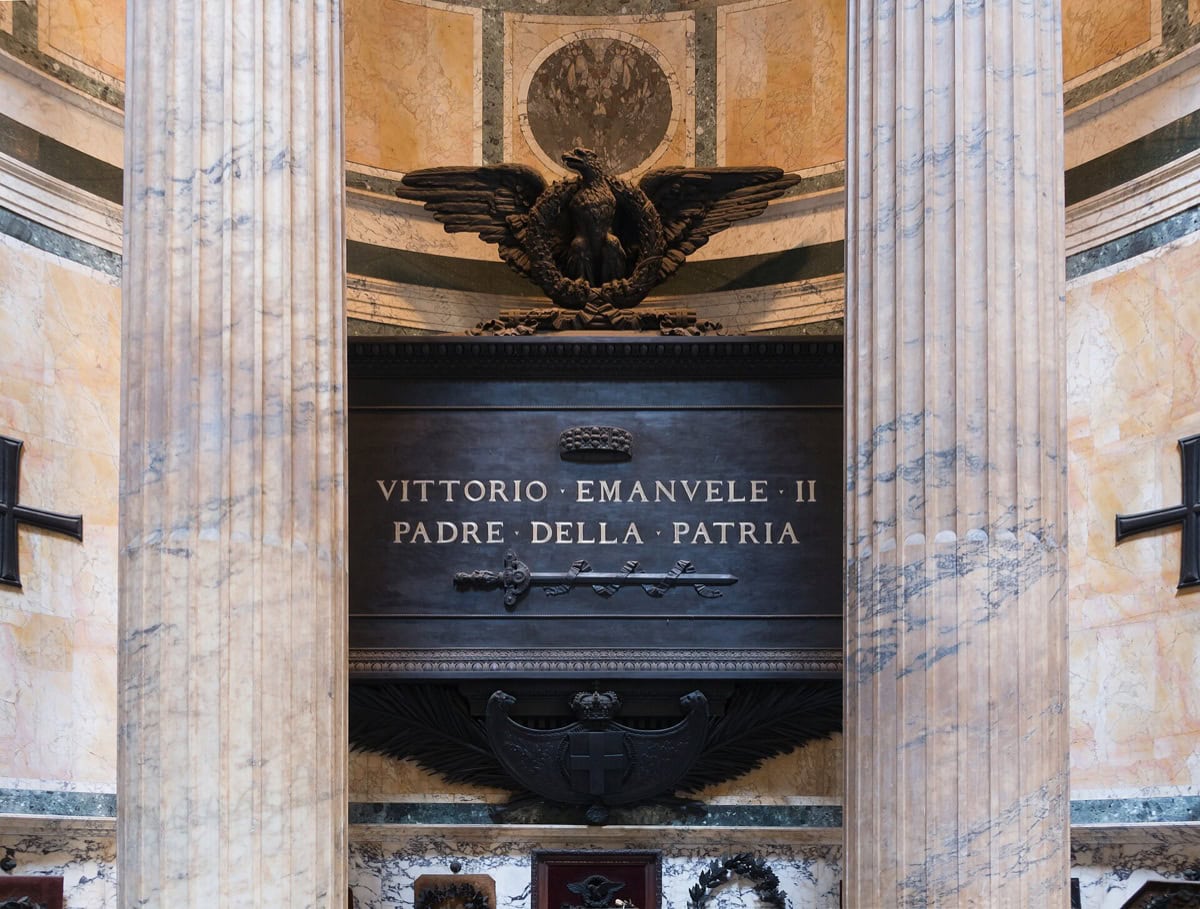
Besides Renaissance artists, after the unification of Italy in the 19th century the Pantheon became the final resting place of the royal House of Savoy. Right opposite the entrance you’ll be struck by the imposing tomb of the first king of a united Italy, Victor Emmanuel II, who earned the title Father of the Fatherland (Padre della Patria).
His tomb is constantly guarded by volunteers drawn from Italian veterans and is decorated with a massive bronze eagle. On the opposite side of the temple rests his successor, King Umberto I, who was assassinated in 1900, and beside him lies his wife, the much-loved Queen Margherita, after whom the famous Neapolitan pizza is said to be named.
The presence of the royal tombs lends the place a peculiar, deeply patriotic air, and you’ll often see Italian families bringing flowers here. Interestingly, no other Italian kings were buried here, because after the Second World War Italy abolished the monarchy and the royal family had to go into exile.
7. Piazza della Rotonda and the Renaissance fountain
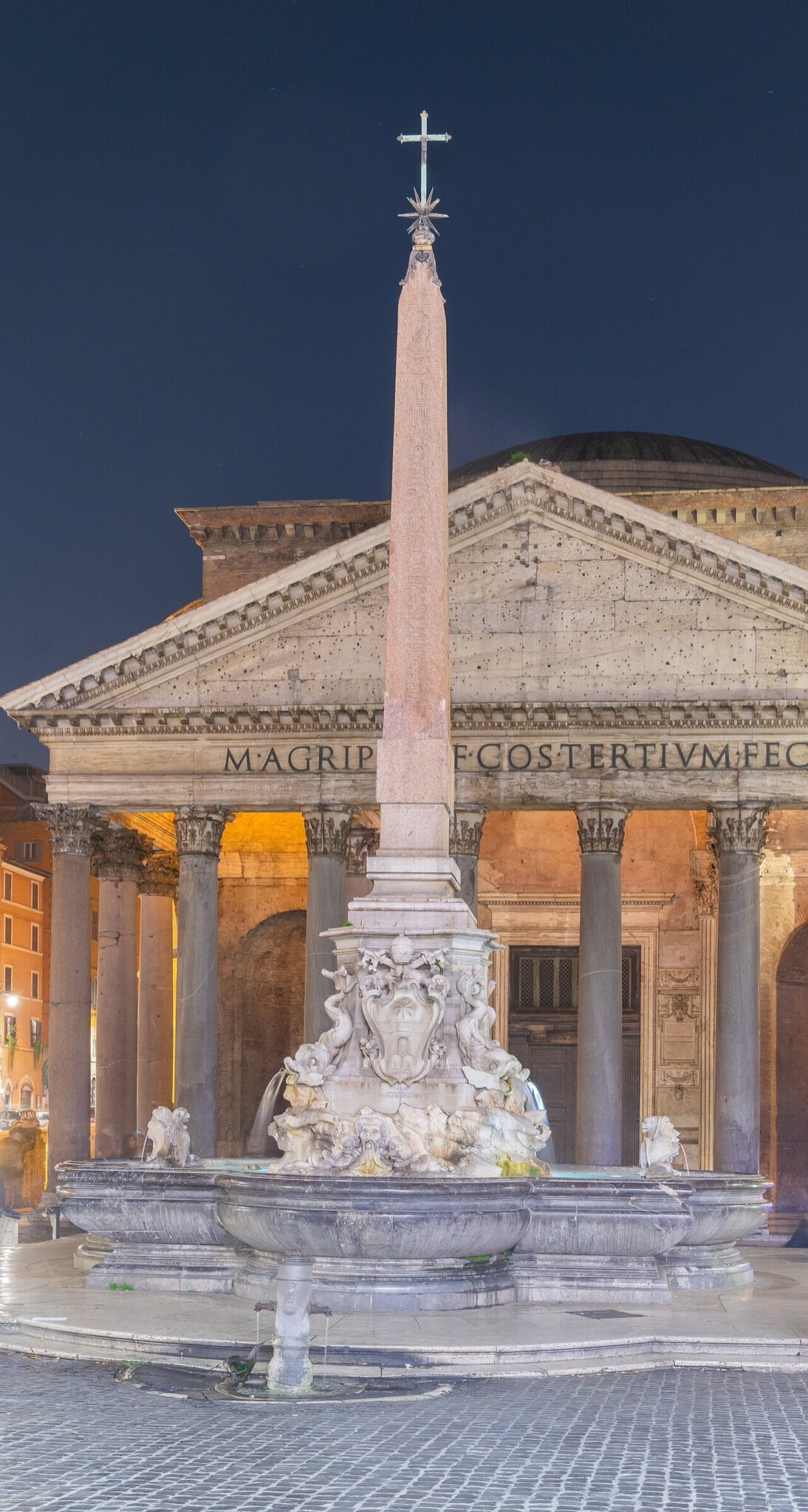
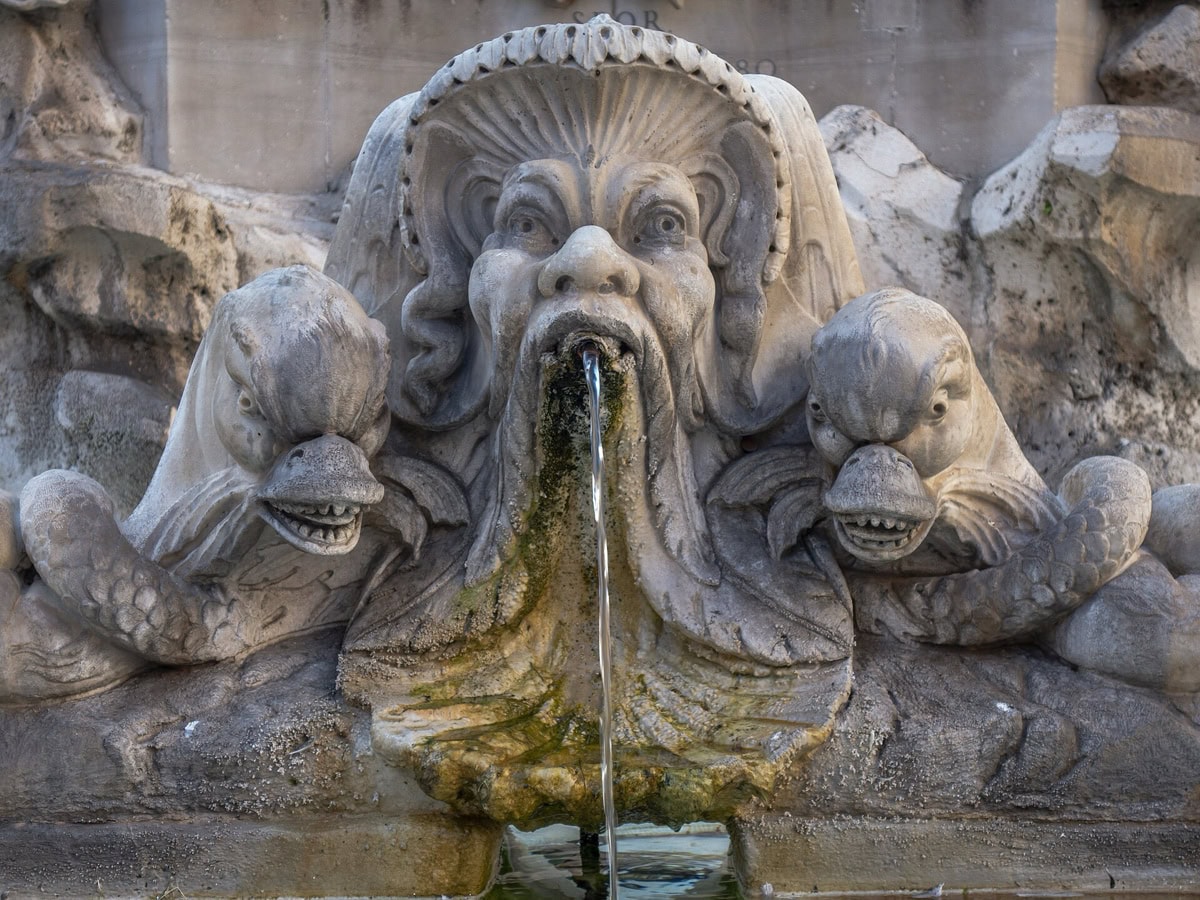
The square in front of the Pantheon, called Piazza della Rotonda, is a chapter in itself and pulses with life from early morning until late at night. In the centre of the square stands a beautiful Renaissance fountain designed by Giacomo della Porta, from whose middle rises an original Egyptian obelisk dating back to the time of Pharaoh Ramesses II.
The square is surrounded by pastel-coloured palazzi and historic cafés that exude that quintessential, cinematic Italy. I have to warn you, though, about the restaurants right on this square, as they’re a textbook example of tourist traps where you’ll pay astronomical sums for mediocre food and waiters will actively try to lure you in off the street.
If you want to soak up the atmosphere of the place without wrecking your budget, do as the locals do. Grab an excellent coffee at the nearby legendary roastery Tazza d’Oro and drink it standing at the bar, or sit on the fountain steps and simply watch the incredible buzz of people from every corner of the world beneath the watch of the ancient columns.
8. Tickets, booking and the new rules
For decades, you could walk into the Pantheon straight off the street completely free, whenever you fancied, and shelter here from the rain or the summer heat. Since 2023, however, the rules have changed radically and entry now costs €5, with the Italian Ministry of Culture planning a further increase to €7 from 1 July 2026.
You can buy tickets at the box office on site, but be prepared for the queue to stretch right across the square in high season, leaving you standing for tens of minutes in direct sun. At weekends and on public holidays, online booking in advance is also absolutely mandatory through the official ministry portal — otherwise security won’t let you in even if it’s half empty inside.
Young people under 18 still enter free and there are reduced rates for students, but even so they must reserve their free ticket in advance. Introducing the fee is meant to help fund the costly upkeep of this unique building, but it also means visitors now have to plan their schedule in the centre of Rome far more carefully.
9. How to get to the Pantheon and how much time to set aside
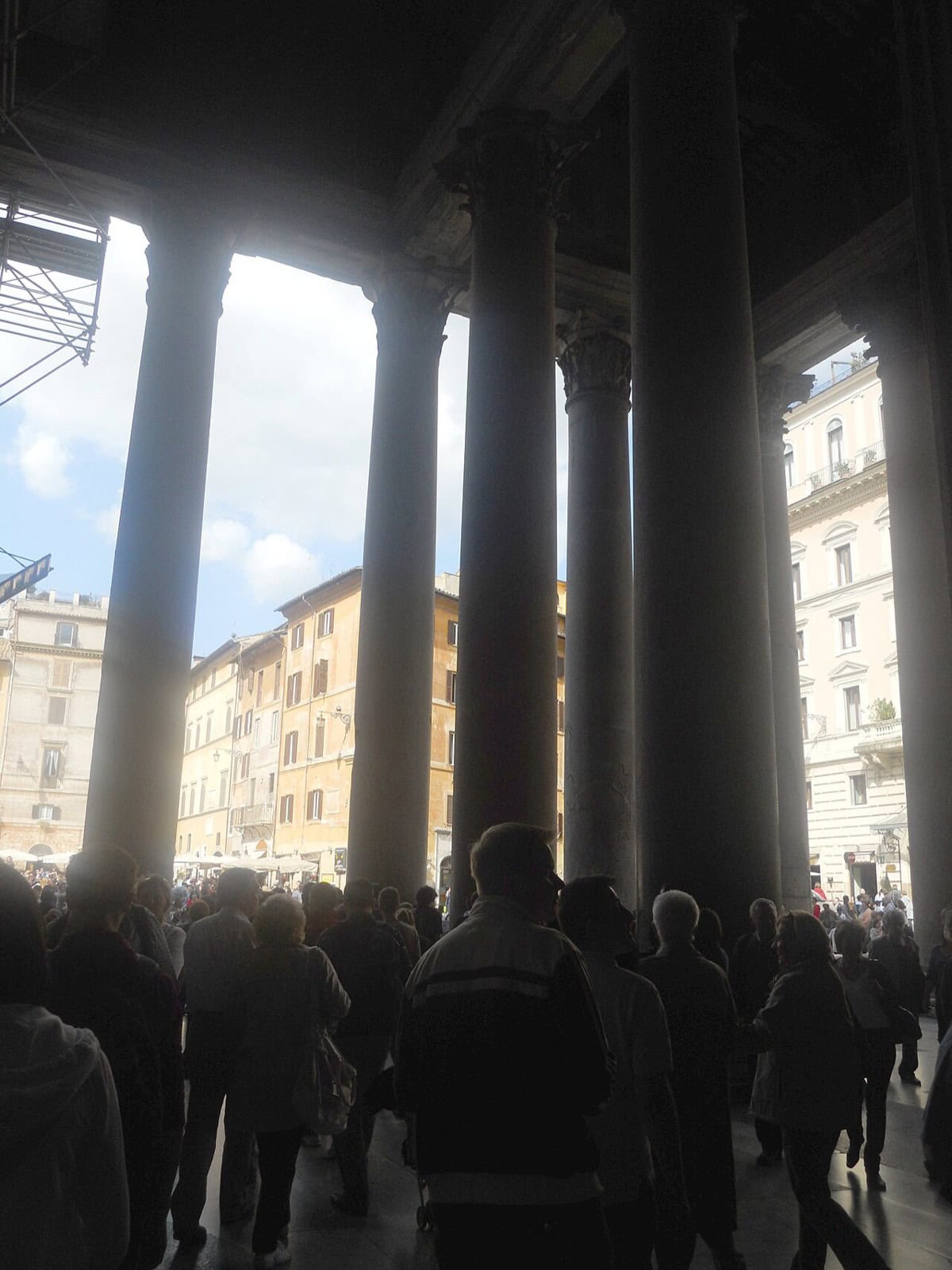
Finding your way around Rome’s historic centre, the so-called Centro Storico, can sometimes be tricky for first-timers, because the GPS signal often gets lost in the narrow streets with their tall palazzi. No metro line reaches the Pantheon, and you can’t get here by bus either, because the whole area is reserved for pedestrians and residents with permits.
The best way to get here is simply on foot from the surrounding major squares. From the Trevi Fountain or Piazza Navona it’s roughly a five to ten-minute brisk walk, which makes these three landmarks an ideal combination for a single morning or an early-evening stroll.
You don’t need much time for the visit to the Pantheon itself, as it’s one enormous, open space with no hidden rooms or galleries. You’ll probably spend 20 to 30 minutes inside, calmly looking at the tombs, photographing the oculus and soaking up the overwhelming atmosphere — so you can easily slot this landmark in between longer treks across the city.
10. Practical tips, dress code and free water
A surprising number of tourists underestimate this rule and then end up sorely disappointed. Although it’s an ancient building, the Pantheon is still officially a consecrated Catholic church, which means exactly the same strict dress code applies here as at the Vatican and other Italian basilicas.
Both men and women must absolutely cover their shoulders and knees — no tank tops or short shorts will get you in. The security at the door is uncompromising and will turn you away even with a valid ticket, so in the heat of summer don’t forget to pack a light scarf (a pashmina) to quickly cover your shoulders before entering.
If thirst strikes during your wanderings around the centre, definitely don’t buy overpriced bottled water from the street vendors who’ll constantly cling to you. Around the square you’ll find several public cast-iron drinking fountains called nasoni, from which ice-cold, clean and perfectly drinkable water flows non-stop for free, so all you need is your own empty bottle.
Map of points of interest for your phone
Where to go next from the Pantheon

As I mentioned, the historic centre is compact and the biggest icons lie literally a few hundred metres apart. Right after visiting the Pantheon, head through the narrow streets to Piazza Navona, where you can admire Bernini’s stunning Fountain of the Four Rivers and enjoy the atmosphere full of street performers. Duck into the side streets towards Campo de’ Fiori and have a traditional pizza bianca on the go for lunch, or some superb fried artichokes.
In the opposite direction, just a few minutes’ walk from the Pantheon, the famous Trevi Fountain awaits. Lukáš and I love coming here in the early evening, but be prepared for the fact that from 2026 there’s a new €2 fee for access right down to the fountain’s basin, which is regulated by turnstiles. If you don’t want to pay, you can still admire it for free from the upper level of the square. Not far from there you’ll also find the elegant Spanish Steps, where you should watch out very carefully for scammers with roses and bracelets.
If you’ve ticked off the centre, you can head across the River Tiber over the Sant’Angelo Bridge towards the Vatican, with a stop along the way at the impressive Castel Sant’Angelo, which offers a gorgeous view over the whole city. If antiquity is more your thing, make your way south to the Roman Forum and the Colosseum — though that’s a programme for at least another whole morning.
Frequently asked questions
Do I need to buy Pantheon tickets in advance?
During the week you can buy tickets on-site, but in high season expect very long queues in the sun. On weekends and Italian public holidays, online booking in advance is absolutely mandatory—without it you won’t be allowed into the church at all, so we recommend always buying ahead of time through the official website.
What happens inside the Pantheon when it rains?
Water falls through the nine-meter opening (oculus) in the roof directly into the center of the church onto the marble floor, which is a fascinating sight. But don’t worry about wading through puddles, because the floor is slightly convex and water immediately drains away into a two-thousand-year-old, perfectly functioning underground drainage system.
Is there a dress code required at the Pantheon?
Yes, and it’s very strict. Although it’s an ancient building, the Pantheon is a consecrated Catholic church (of Saint Mary and the Martyrs). All visitors must have their shoulders and knees covered, so no tank tops or short shorts are allowed, or security will turn you away at the entrance.
Can I pay by card at the entrance and nearby?
Italy has made huge strides in cashless payments in recent years and you can pay by card for tickets and coffee at nearby establishments. However, always keep a few small coins worth 10 and 20 cents on you, which come in handy as a tip for the barista or for using public toilets in the center.
How much time should I set aside for the visit?
The Pantheon is one huge open space and has no side galleries or underground areas accessible to the public. The visit itself will take you about 20 to 30 minutes, during which you can comfortably photograph the dome, see Raphael’s tomb, and soak up the incredible atmosphere of ancient Rome.
Can I bring a backpack and water bottle inside?
A regular city backpack or handbag is no problem and you can also bring a water bottle that you’ve filled beforehand at the fountains in the square. However, you won’t be allowed into the church with large backpacks, suitcases, or glass bottles, as there are random security checks at the entrance.
Is the Pantheon wheelchair accessible?
Yes, the entrance from Piazza della Rotonda is barrier-free and doesn’t require navigating any complicated stairs. Inside, the terrain is level (with a slight slope for water drainage), so visitors in wheelchairs and families with strollers can move around without any problems.
Tips and Tricks for Your Vacation
Don’t Overpay for Flights
Search for flights on Kayak. It’s our favorite search engine because it scans the websites of all airlines and always finds the cheapest connection.
Book Your Accommodation Smartly
The best experiences we’ve had when looking for accommodation (from Alaska to Morocco) are with Booking.com, where hotels, apartments, and entire houses are usually the cheapest and most widely available.
 🚗 Car rental on the roadVerified rental cars in Rome
Search with the DiscoverCars comparison engine — it compares prices from dozens of local and international rental companies, and most bookings come with free cancellation.
Compare car prices in Rome →Don’t Forget Travel Insurance
Good travel insurance will protect you against illness, accidents, theft, or flight cancellations. We’ve had a few hospital visits abroad, so we know how important it is to have proper insurance arranged.
Where we insure ourselves: SafetyWing (simple monthly subscription) and TrueTraveller (for extra-long trips).
Find the Best Experiences
Get Your Guide is a huge online marketplace where you can book guided walks, trips, skip-the-line tickets, tours, and much more. We always find some extra fun there!