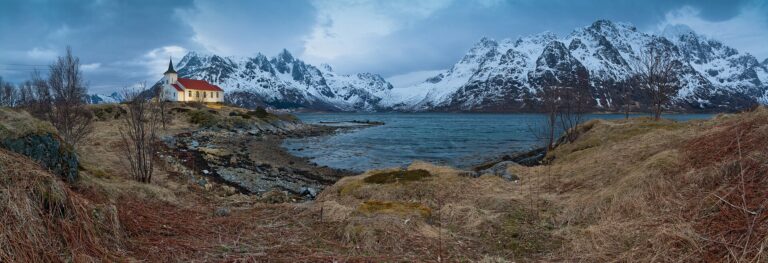
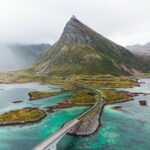
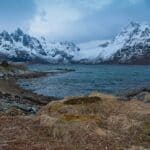
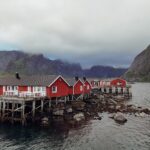
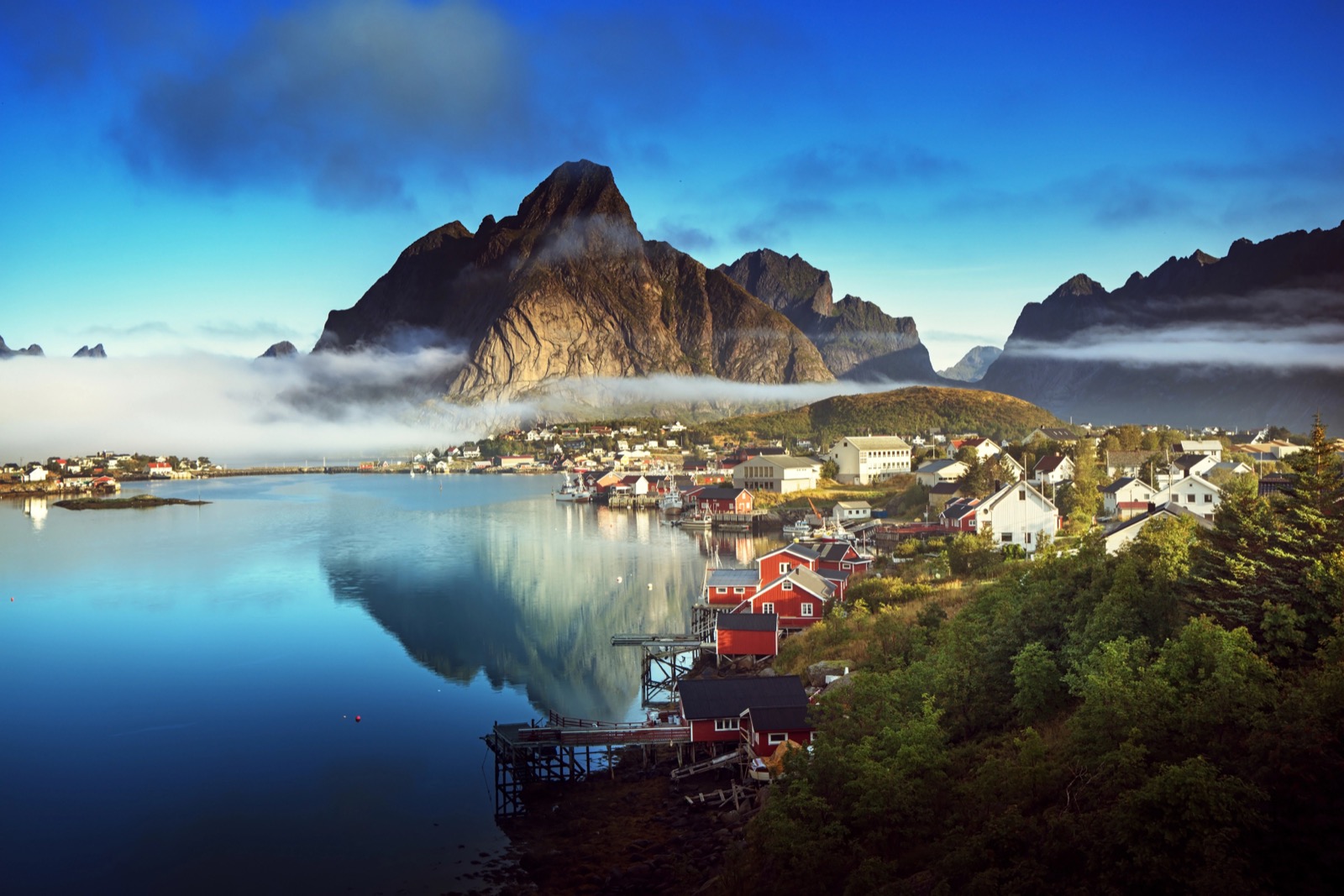
Picture a place where jagged granite peaks plunge straight into a turquoise ocean, vivid red fishing cabins cling to the water’s edge, and the weather shifts so fast you can experience every season in a single hour. Lofoten in Norway is one of the most beautiful corners of the planet, but it gives you nothing for free and will reliably test your ability to improvise. It’s no wonder that hundreds of thousands of travellers from around the world head here every year, longing to see this rugged Nordic fairy tale above the Arctic Circle with their own eyes.
If you’re considering a trip to Norway, I’d recommend setting aside at least a week for the Lofoten archipelago so you don’t have to stress out every time an unexpected rain shower rolls in. The main artery, the narrow and winding E10 road, often bursts at the seams in summer under the onslaught of campervans, so getting between the individual islands can stretch into long hours. Distances here aren’t measured in kilometres, but rather in time and your saintly patience behind the wheel.
In this detailed guide you’ll find 15 things to see and do in Lofoten, Norway to get the absolute most out of your trip. Together we’ll explore the most iconic views, point you towards hidden white-sand beaches, help you choose a strategic base, and we won’t skip the practical details about ferries or the treacherous Norwegian weather either.
To us, Lofoten didn’t feel European at all — more like something between Canada and the USA, and most of all it reminded us of our trip to Alaska. It’s a charming edge of the world, where you’ll finally understand why Norwegians protect nature so fiercely and live in harmony with it.
TL;DR
- Ideal length of stay: Allow ideally 5 to 7 days to explore the whole archipelago, giving you a valuable time buffer for days when strong wind or persistent rain ruins your plans.
- The Yr.no app is essential: The weather changes minute by minute, so learn to plan activities only a few hours ahead using the detailed radar from the Norwegian meteorological service.
- Accommodation strategy: Instead of constantly packing your bags, choose one or two fixed bases from which to set off on hub-and-spoke day trips.
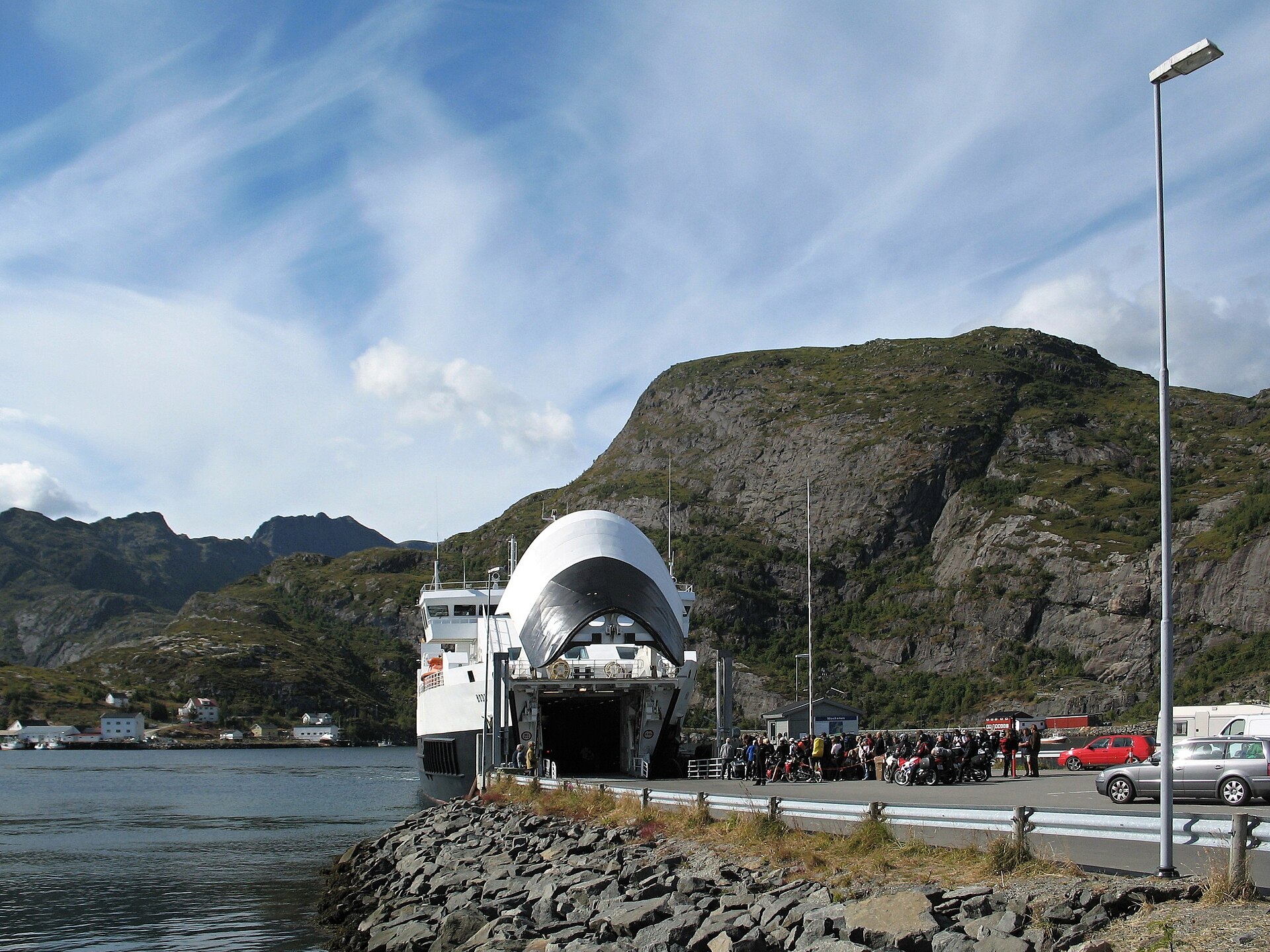
- Book the ferry: If you’re travelling from mainland Bodø to the islands by car, reserve your ticket with the ferry company Torghatten even months in advance to avoid waiting in long queues.
- High food costs: Prices in Norwegian restaurants are astronomical, so it pays to rent a traditional fishing cabin with a kitchenette and shop at Kiwi or Rema 1000 supermarkets.
- You pay for parking everywhere: Be prepared for fairly steep parking fees at all the popular trailheads and beaches, paid via mobile apps such as EasyPark.
The full destination guide: Lofoten — guide and what to see
When to visit Lofoten and what weather to expect
A Norwegian summer is essentially an oxymoron, so forget the kind of stability you might know from resorts in southern Europe. Lofoten sees its biggest influx of tourists in July, when Norwegians and the rest of Europe are on holiday, bringing clogged roads and accommodation prices soaring to dizzying heights. Renting an ordinary small car during this period can easily cost 7,000 to 11,000 NOK (roughly 600 to 950 €) per week, and the popular fishing cabins vanish from booking sites at lightning speed. The thermometer can occasionally hit 25 °C, but the average stubbornly hovers between 12 and 15 °C.
A great compromise tends to be June, statistically the driest month, when you’ll also enjoy the fascinating phenomenon of the midnight sun, when the light never disappears below the horizon. A big bonus of June dates is the near-total absence of those annoying mosquitoes and tiny midges that otherwise make summer evenings quite unpleasant. You’ll have to accept, though, that the ocean will still be icy after winter, with water temperatures near the shore hovering around just 4 to 6 °C, so swimming really is only for the hardiest souls.
In August the whole archipelago breathes a deep sigh of relief, accommodation and car rental prices drop by tens of percent, and the much-needed calm returns to the landscape. As summer ends, the darkness gradually comes back too, which you’ll definitely appreciate for better sleep after weeks of constant daylight. Always remember, though, that nature above the Arctic Circle plays by its own rules, and the Norwegian mobile app Yr.no will become your best friend. Planning for whole days simply doesn’t work here, because you’ll routinely get sun, a downpour and fog in a single afternoon, so you’ll learn to shuffle activities flexibly within 90-minute windows.
Where to stay in Lofoten
💡 Tip for accommodation and experiences: We like to look for places to stay on Booking.com, which usually has the best cancellation policies. Tickets, tours and activities are then worth comparing and buying through GetYourGuide.
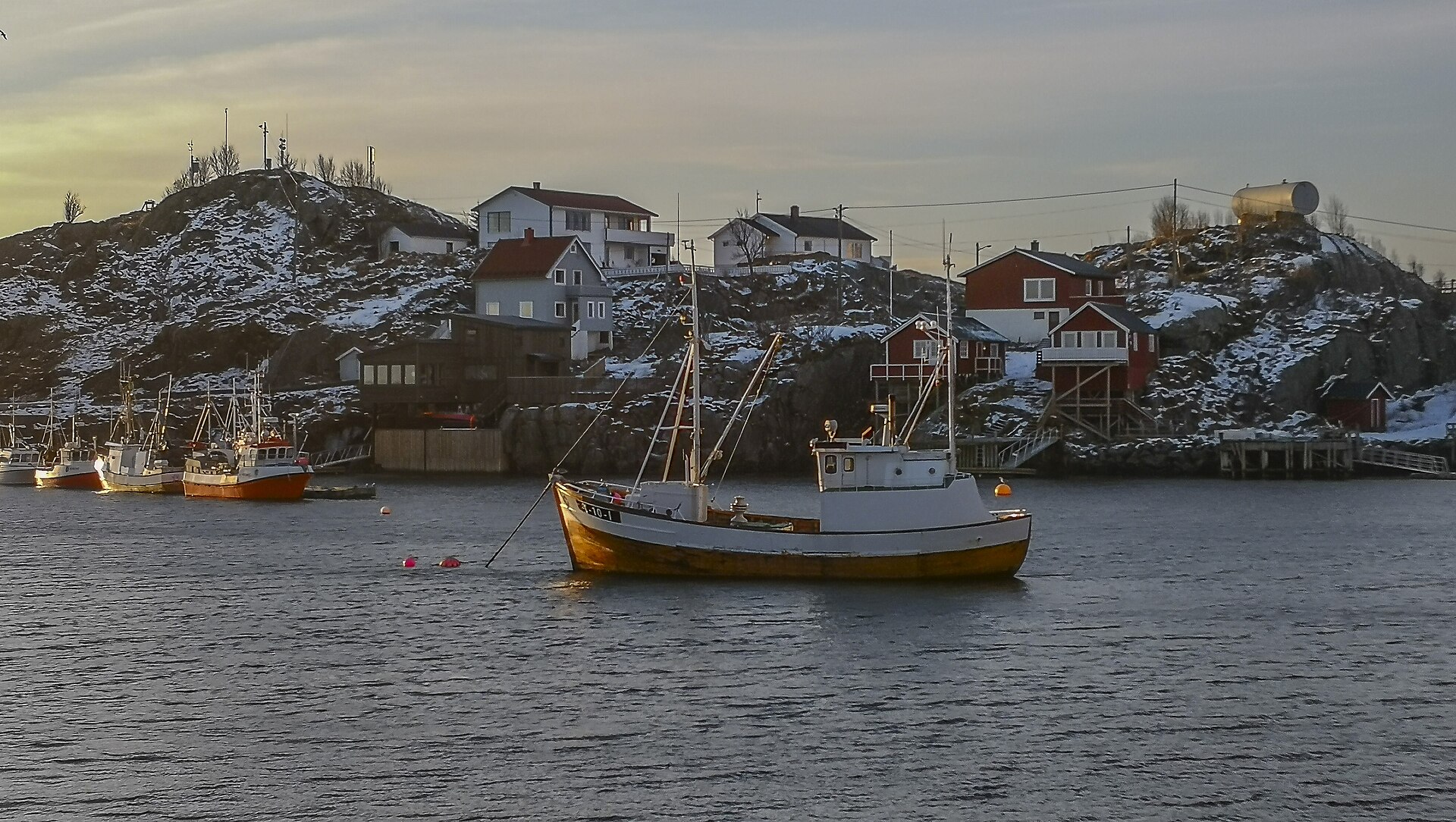
While searching for a place to stay, you’ll quickly discover that the absolute hit is the so-called rorbu, the original wooden fishing cabins standing on stilts right above the water. Whereas they once housed freezing fishermen in winter, today they’re luxurious and incredibly photogenic accommodation that can easily set you back 2,000 to 3,500 NOK per night (roughly 170 to 300 €) at the peak of summer. These cabins are usually well equipped, and the private kitchenette will come in extremely handy, because eating out in Norwegian restaurants will otherwise drain your wallet in no time.
The best strategy is to find a strategic base in the middle of the islands to minimise the time spent endlessly crawling along the congested E10. The area around the towns of Leknes or Ballstad makes an ideal central point, with both ends of the archipelago relatively close by, plus you’ll find large Kiwi or Rema 1000 supermarkets where you can buy groceries at least at semi-bearable prices. If you have a whole week available, it makes sense to split your stay in two: spend three nights in the postcard-perfect south and the remaining four nights in the calmer north so you don’t waste unnecessary extra hours in the car.
For a perfect and utterly iconic experience, I recommend trying the famous Eliassen Rorbuer on the island of Hamnøy, whose red façades beneath sheer peaks form the most famous scenery in all of Norway. A great alternative away from the biggest crowds is the quieter Kræmmervika Havn in the fishing village of Ballstad, or, for something more premium, the Hattvika Lodge, where you can enjoy a sauna right after returning from the chilly trails. If you’d rather have urban infrastructure with accessible pharmacies and cafés, book the stylish Svinøya Rorbuer in Svolvær, from where you can comfortably walk into the centre across a bridge. Before confirming any booking, just check thoroughly whether the rooms have blackout curtains, without which you simply won’t get a wink of sleep during the midnight sun.
15 things to see and do in Lofoten, Norway
Northern nature doesn’t forgive haste, so it’s better to pick just a few spots a day and devote the rest of your time to soaking up the incredibly raw atmosphere. Let’s take a look at the best these islands have to offer.
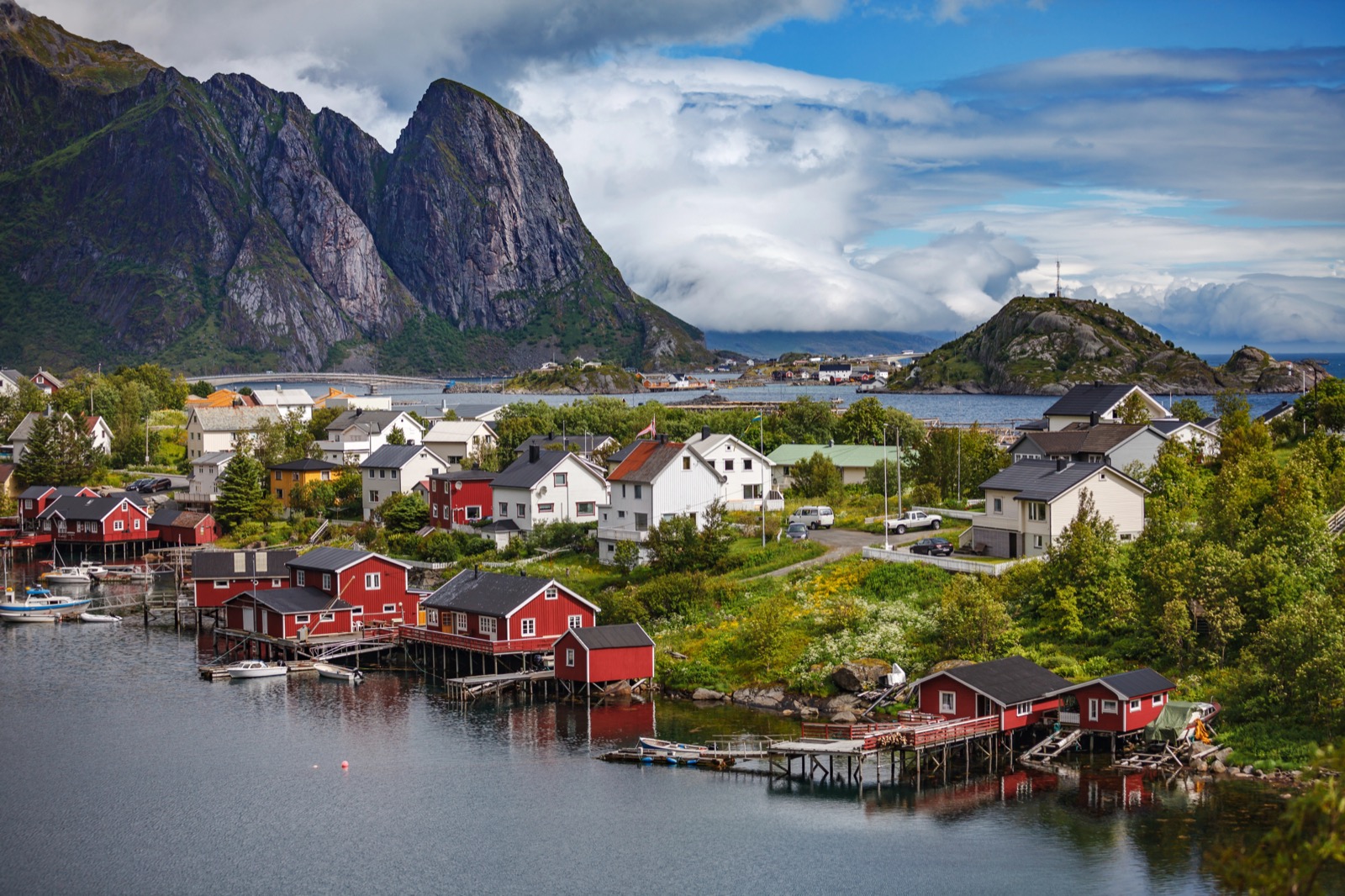
1. Reine and Hamnøy: the postcard-perfect south
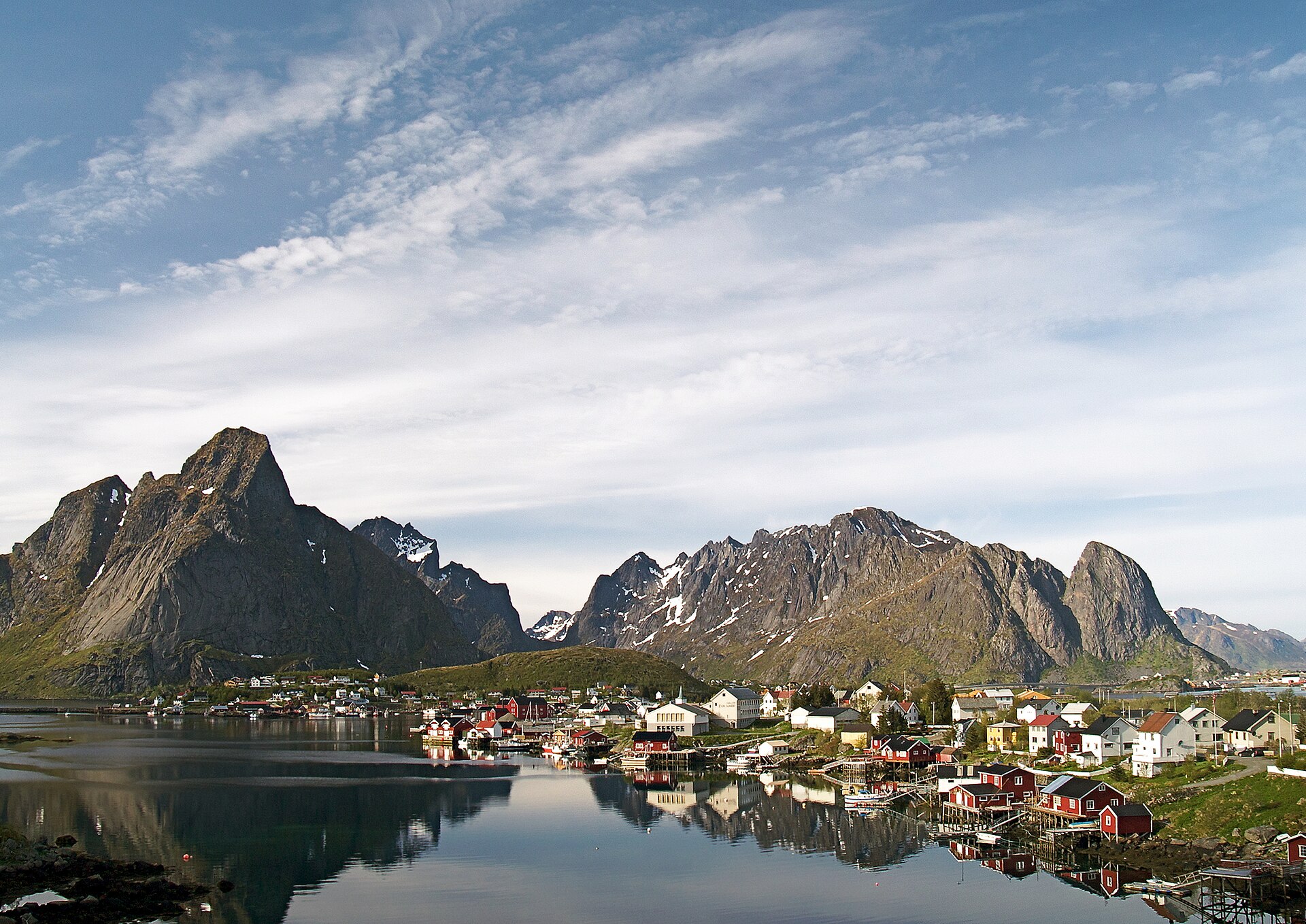
This is where all those breathtaking photographs are taken, the very ones that probably got you thinking about a trip to Norway in the first place. The villages of Reine and Hamnøy are the absolute icon of Lofoten, where steep granite peaks rise dramatically straight out of the dark waters of the fjord. In summer, be prepared for fairly significant crowds and a real battle for every free parking space, with the main Reine Outer Harbor car park charging over 35 NOK per hour (roughly 3 €) via the app.
While Hamnøy charms with its red fishing cabins scattered across tiny islets, you’ll recognise neighbouring Sakrisøy at a glance by its typically yellow façades. If you get caught out by a sudden downpour, you’ll be surprised to find Norway’s first toy museum here (the Lofoten Toy Museum), a charming and easy stop for sheltering from bad weather. Try getting up early and heading into the streets before the first tour buses arrive, or, conversely, make the most of the soft evening light that gives the whole bay an unforgettable atmosphere.
💡 Tip: Stop by the renowned bistro Anita’s Sjømat on the island of Sakrisøy. Even though they specialise mainly in local fish delicacies, you can sit by the window with an excellent coffee and simply watch the boats gliding through the stunning bay.
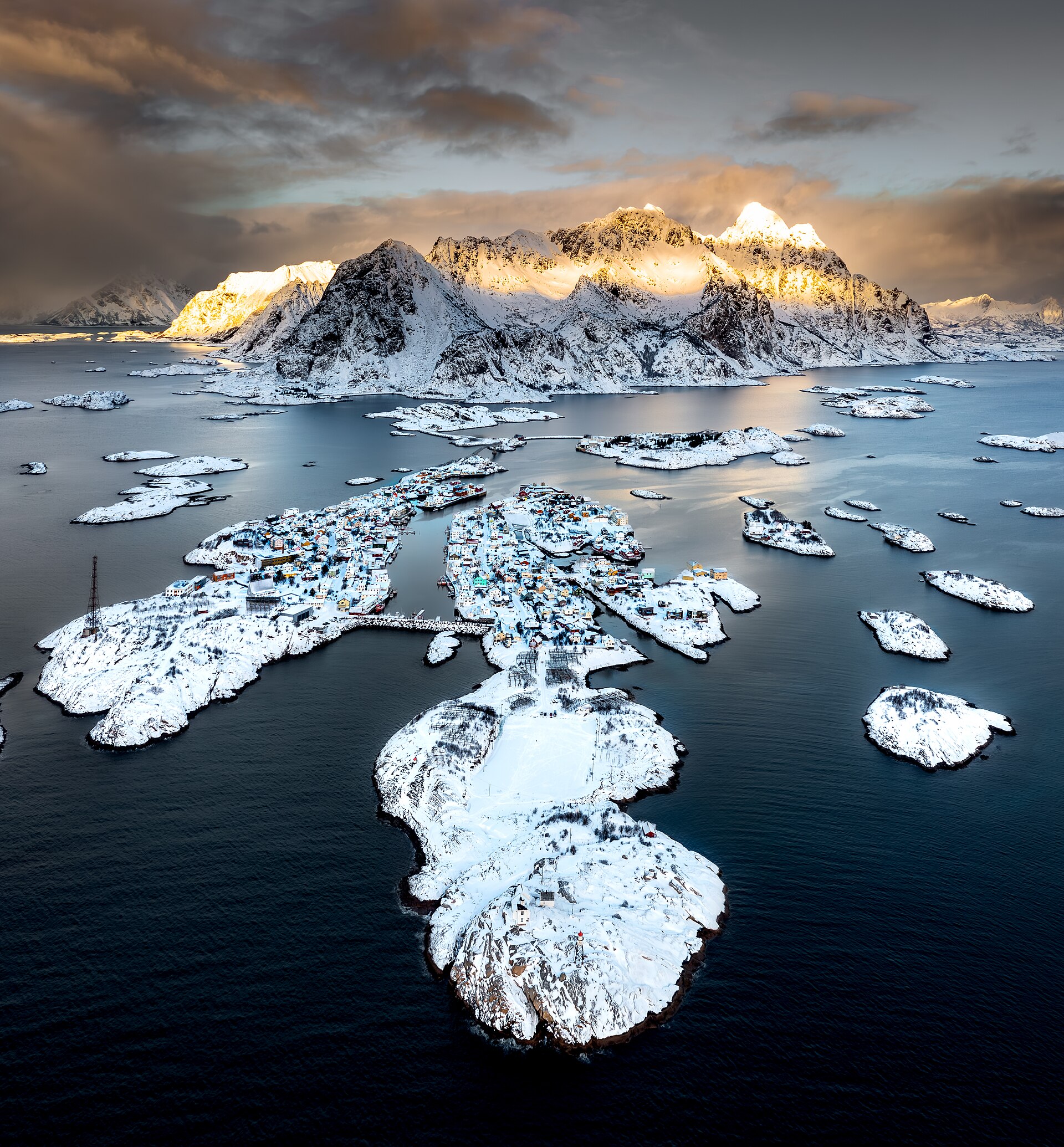
2. Henningsvær: the Venice of the North
The enchanting fishing village of Henningsvær spreads across several tiny islets connected to the mainland by narrow, curving bridges. A host of cosy cafés and modern galleries awaits you here, making it an ideal destination for days when all hell breaks loose outside and you’re craving a mug of good tea in the warmth. The access road into the village winds right along the coast, but it’s very narrow and you’ll often meet campervans manoeuvring awkwardly, so allow plenty of time and arm yourself with a hefty dose of patience.
The biggest draw here is without doubt the famous football pitch built right on a rocky outcrop, whose aerial photos have travelled the world and become a symbol of Lofoten sport. You can walk right up to the pitch along a comfortable paved path, but if you’ve brought a drone, it’s better to leave it in your backpack, because a very strict no-fly ban applies directly above the pitch.
💡 Tip: Drop into Trevarefabrikken, an old factory converted into a hipster space. During the day it works as a huge café making fantastic flat whites, which you can savour at enormous glass windows overlooking the churning sea.
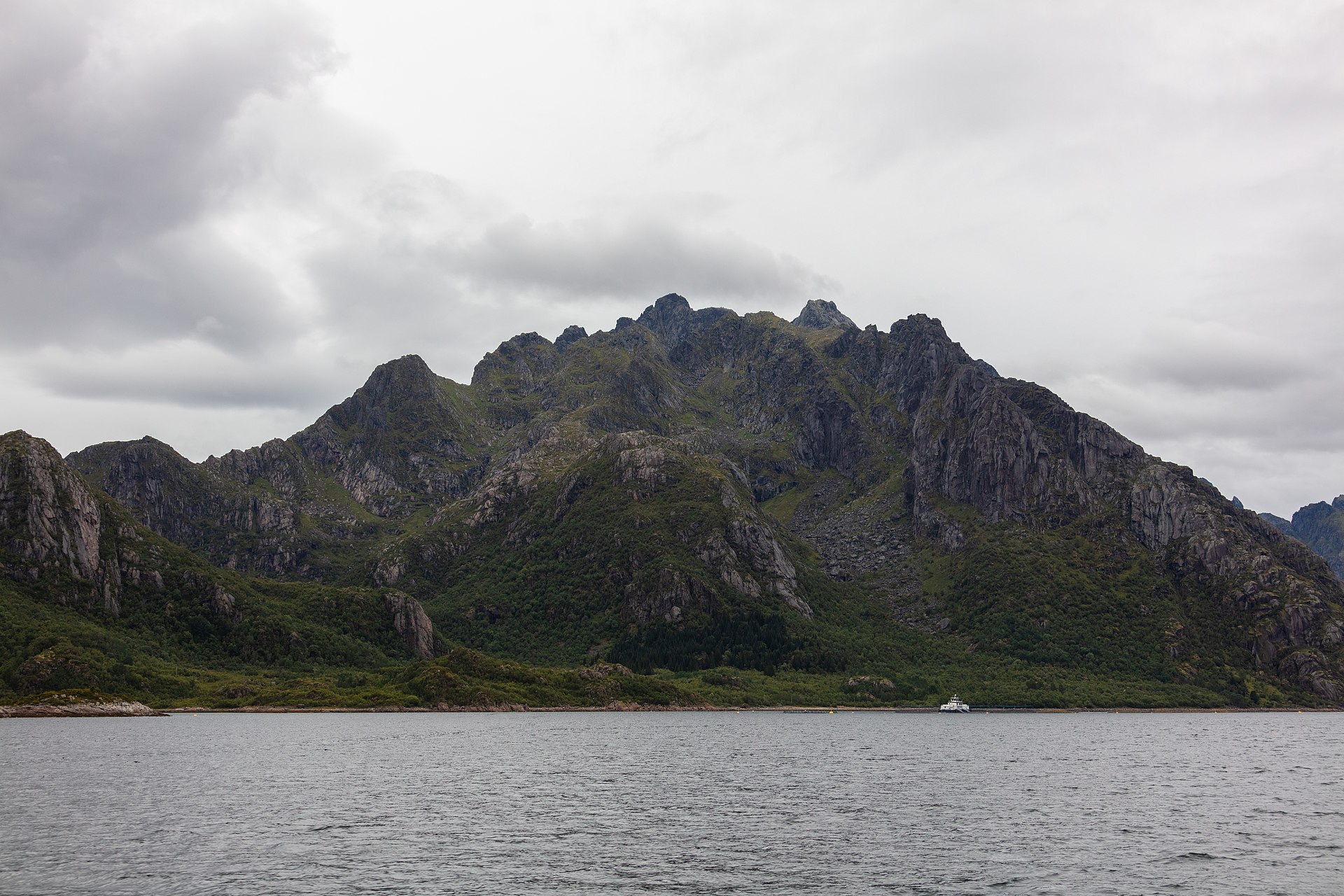
3. Svolvær: the capital and gateway to the islands
Svolvær serves as the main administrative and shopping hub of the entire archipelago, and for many travellers it’s their very first contact with Lofoten after landing at nearby Evenes Airport (EVE). The town offers completely comprehensive infrastructure including pharmacies and large supermarkets; at first glance it lacks a bit of the truly wild isolation of the southern islands, but everything important is incredibly conveniently at hand. From the airport you can also get here in roughly two and a half hours of smooth driving.
Towering directly above the town is the imposing rock formation Svolværgeita, or the Svolvær Goat, whose two horns experienced climbers love to scale, and as the grand finale of the ascent they leap across the deep chasm between them. For us ordinary mortals, it’s far safer to observe this adrenaline-fuelled feat from the safety of the harbour promenade, from where sightseeing boats also regularly set off into the surrounding fjords.
💡 Tip: If you don’t know what to do during a heavy all-day downpour, visit the local Magic Ice bar. Right at the entrance you’ll get a warm poncho and can spend about half an hour admiring ice sculptures with a drink served in a stylish ice glass.
4. Nusfjord and Å: a step back in history
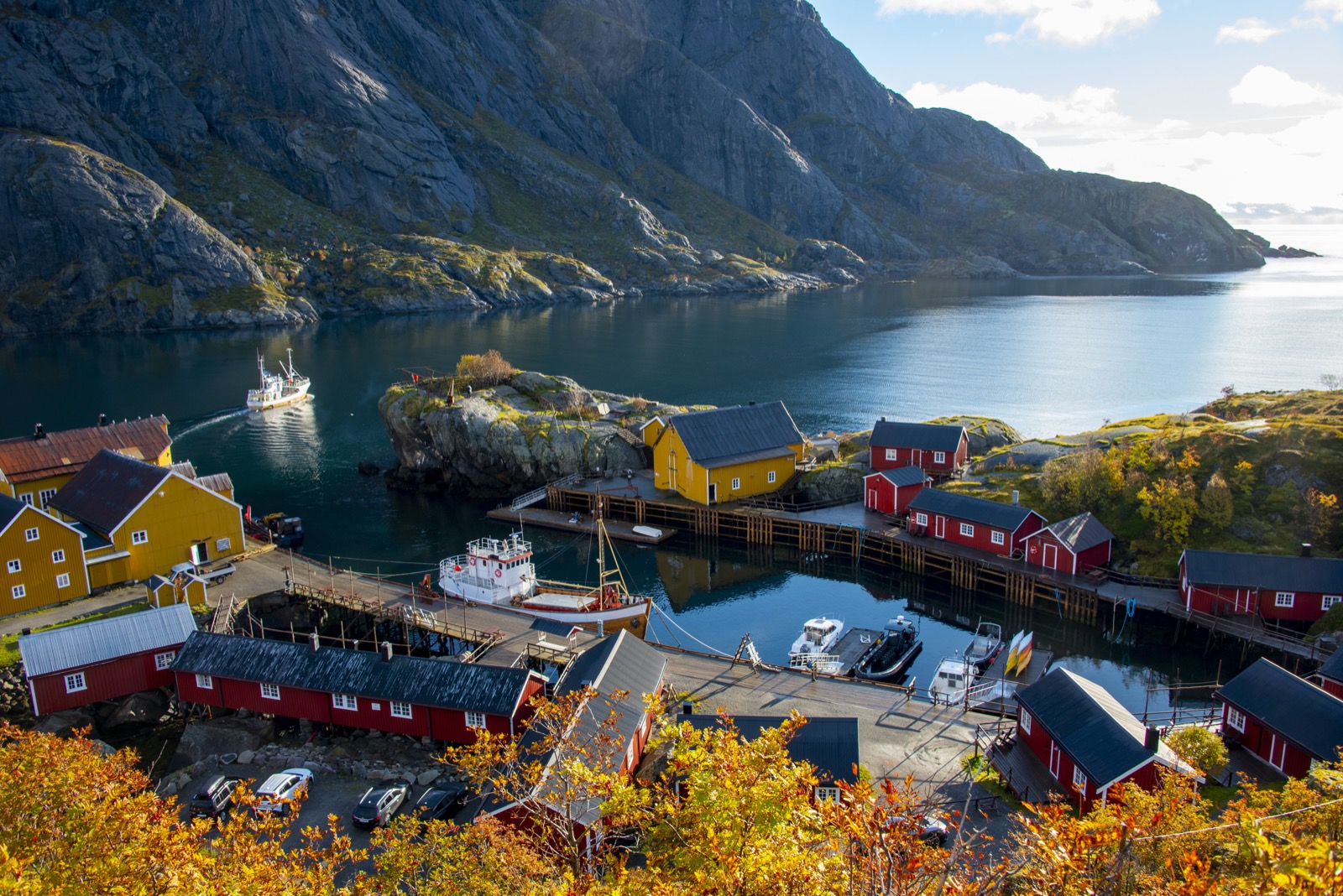
At the very end of the main E10 road, exactly where the asphalt smoothly gives way to the wild ocean, lies the picturesque little village with the shortest name in the world, Å. A stroll along the wooden jetties between the red rorbu cabins instantly transports you hundreds of years back to a time when local life revolved exclusively around harsh fishing. While wandering the village you’ll also come across the unique Stockfish Museum, where you’ll learn all about the traditional drying of cod that historically fed this entire region.
No less impressive is historic Nusfjord, rightly protected by UNESCO as one of the best-preserved fishing settlements in the country. Entry to the village is admittedly charged during summer, but paradoxically that does a great job of filtering out the worst of the tour-bus crowds, letting you enjoy in relative peace the view of the vivid yellow houses contrasting beautifully with the dark surface of the deep fjord.
💡 Tip: In the village of Å, don’t miss the old Bakeriet bakery from 1844, where they still bake fluffy cinnamon buns (kanelboller) in the original oven. In Nusfjord, meanwhile, you’ll find an absolutely excellent Italian pizzeria, which you’ll appreciate the moment you need a break from all those Nordic fish specialities.
5. Reinebringen: the iconic stair climb
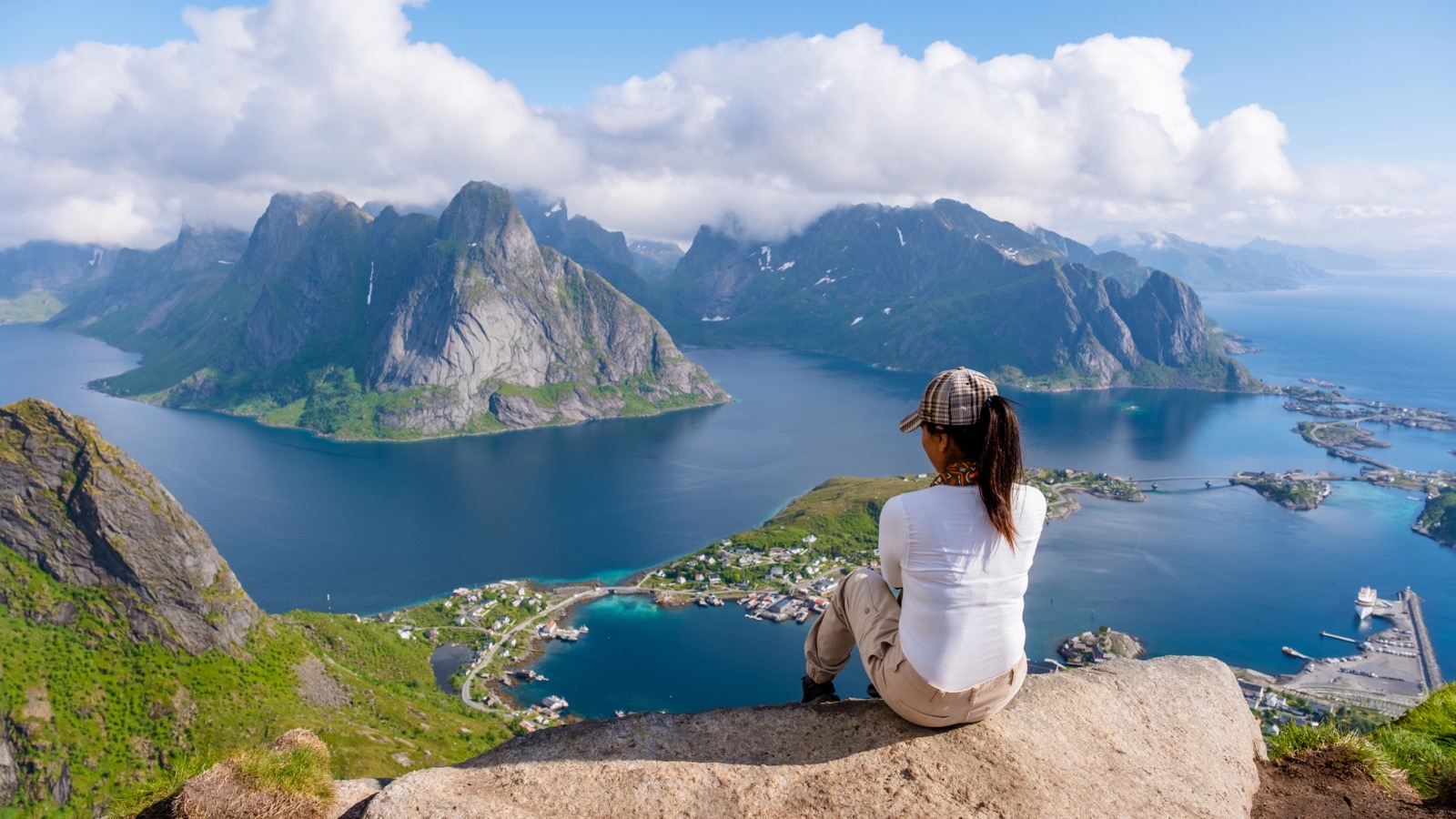
This is probably the single most famous hike in all of Lofoten, offering a literally breathtaking panoramic view over the village of Reine and the surrounding islands. The climb up consists of almost two thousand steep stone steps, built by hand here by skilled Nepalese Sherpas to prevent further erosion of the extremely popular slope and to make the ascent safer for hikers.
The elevation gain is a respectable 450 metres over a very short stretch, so your thighs will really get a workout and the sweat will pour off you. Bear in mind that huge crowds of people form here in season, for example last June an incredible 41,000 visitors passed along the route. If it starts to rain, or the trail is wet immediately after rain, don’t set off at all, because the smooth stones are extremely slippery and rescue helicopters are unfortunately deployed here uncomfortably often.
💡 Tip: In July, literal human traffic jams form on the steps, so set your alarm for a very early hour, or better still, take advantage of the midnight sun and head up late in the evening when the crowds have thinned out.
6. Haukland Beach: the Arctic Riviera
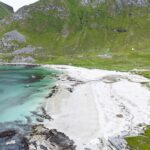
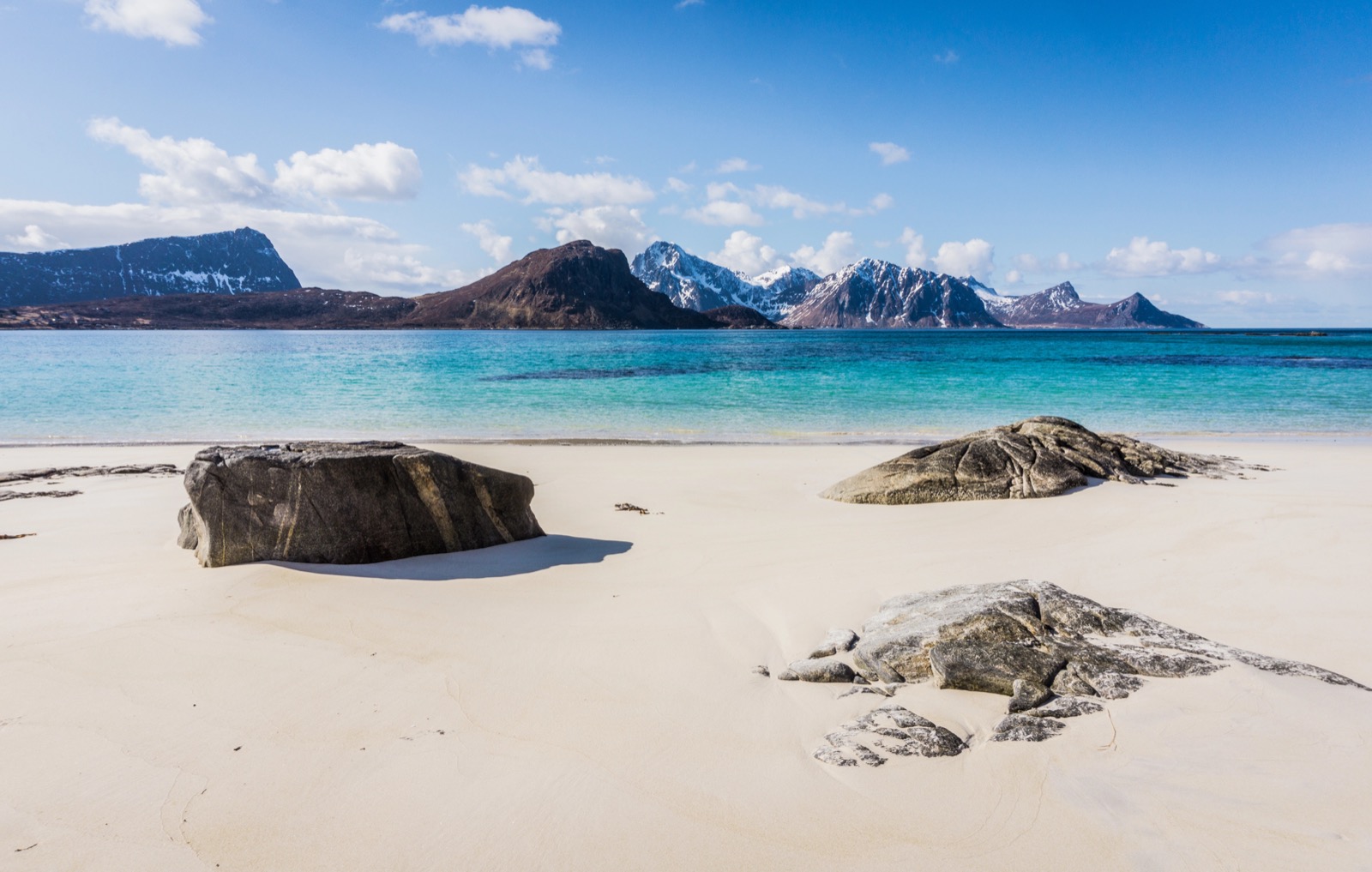
When you first look at photos of Haukland, you probably won’t believe this scenery sits so far above the Arctic Circle. The fine white sand and incredibly turquoise water are more reminiscent of a carefree Caribbean, until you stick your hand into that beauty and discover that the ocean temperature, especially in June, barely scrapes past 4 to 6 degrees Celsius.
The beach is officially considered the most beautiful in all of Norway, which logically brings enormous interest from travellers, photographers and families with children, because the entry into the water is beautifully shallow and gradual. Parking here costs around 100 to 200 NOK per day (roughly 9 to 17 €) via the app, and at midday all the spaces tend to be hopelessly taken by motorhomes and campervans, so I’d recommend arriving in the morning instead.
💡 Tip: From Haukland an utterly easy, wide gravel path leads to the neighbouring beach of Uttakleiv. This roughly 1.5-kilometre coastal stretch offers fantastic ocean views without any uphill climbing, and you’ll manage it easily even in the worst weather.

7. Uttakleiv Beach: boulders and the midnight sun
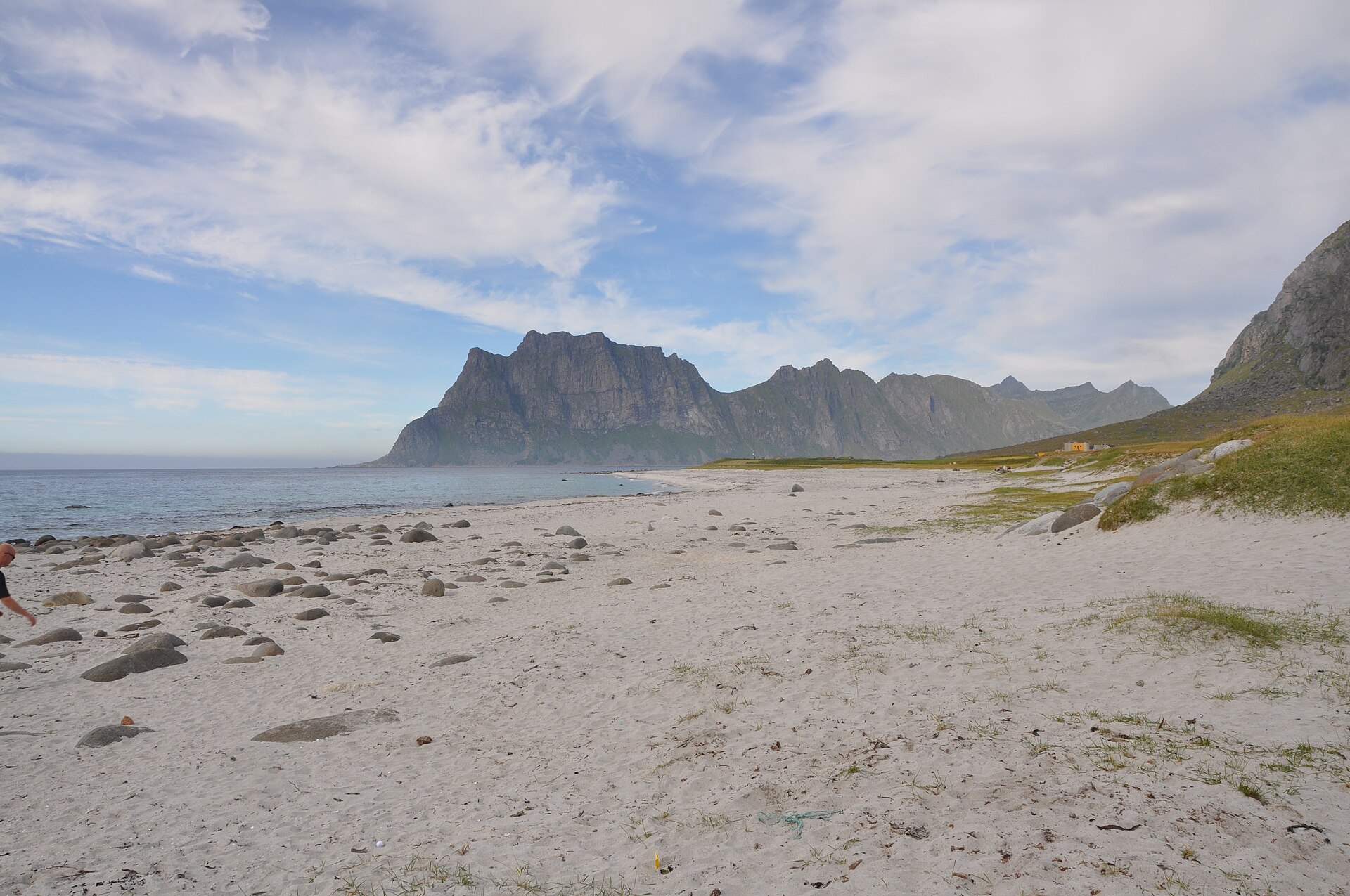
Just past the tunnel, or along the coastal path from Haukland mentioned above, you’ll discover Uttakleiv Beach, which is visually noticeably wilder and rawer than its more famous neighbour. Instead of clean sand you’ll find photogenic rounded boulders mixed with grass, among which herds of local sheep graze completely undisturbed, paying no attention at all to the roaming tourists and happily chewing away.
Thanks to its orientation directly to the north, it’s the absolute best location for watching the magical midnight sun on the entire islands. At midnight, dozens of photographers commonly gather here with tripods, unfold their camping chairs, pull on warm down jackets and wait in silence until the disc of the sun just lightly touches the horizon before immediately starting to climb the sky again.
💡 Tip: If you’re travelling in your own motorhome or have a tent packed, Uttakleiv works as a very popular and legal camping spot with built-in toilet facilities, although you obviously won’t escape the overnight fees here.
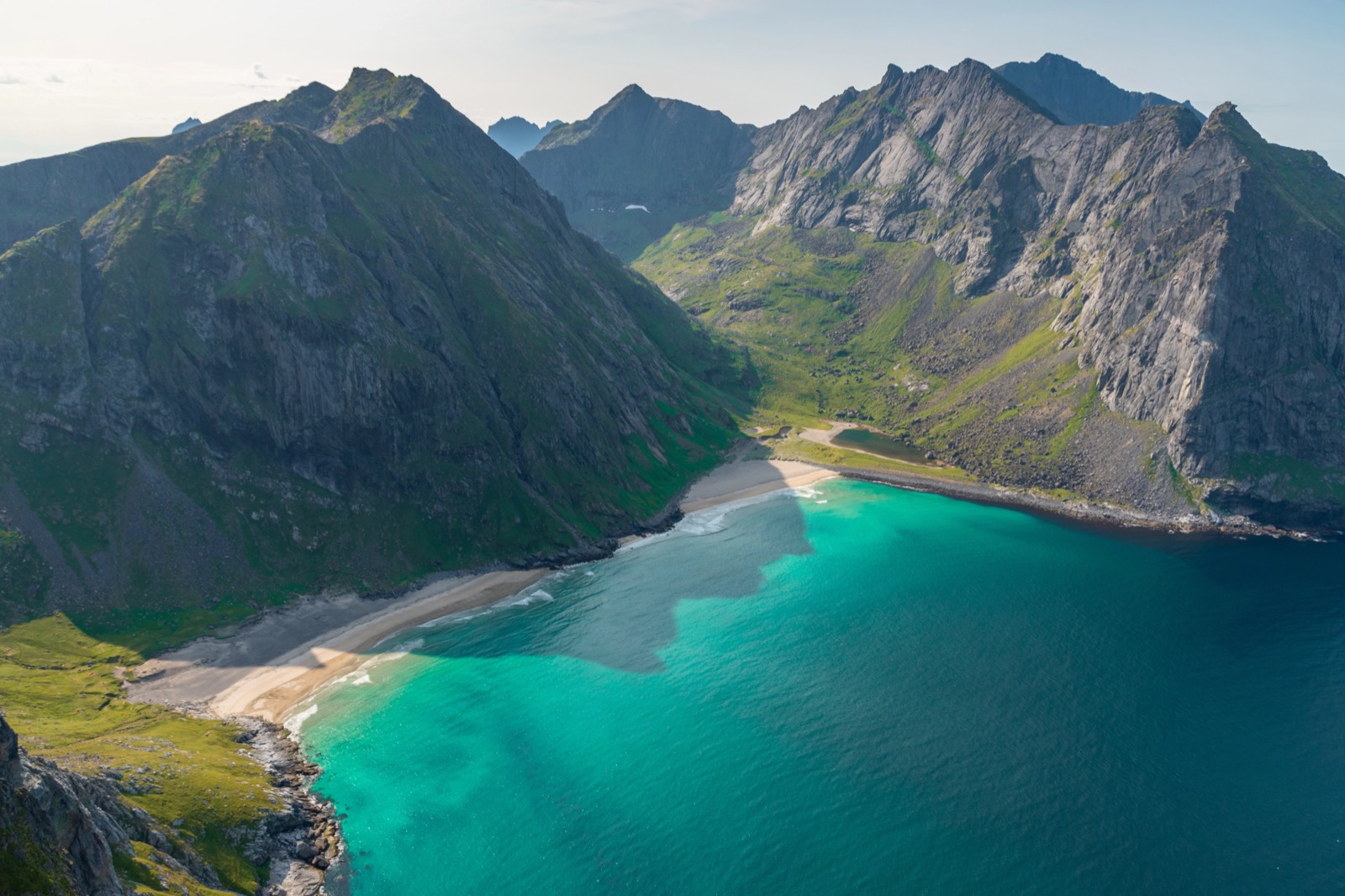
8. Kvalvika Beach: isolated beauty among the mountains
If you long for a beach that no paved road leads to and that you have to earn on foot, Kvalvika is made for you. The trek begins with an unassuming climb up to a saddle between the mountains, from where, after a bit of effort, a completely spectacular view suddenly opens up over an isolated bay, tightly enclosed by sheer black walls.
The descent down to the ocean requires a little caution, because the terrain tends to be very waterlogged after rain and full of slippery mud, so quality hiking boots are an absolute must. The beach itself is enormous and offers plenty of space for total peace and quiet; just be extremely careful when moving near the water, because the open ocean often sends in very strong and unpredictable rip currents that can be treacherous.
💡 Tip: Experienced hikers often extend the trek to Kvalvika with the demanding climb up the neighbouring peak of Ryten (parking at the starting point costs 100 NOK, roughly 9 €), from where you’ll take the most iconic photos of the whole bay from a bird’s-eye view.
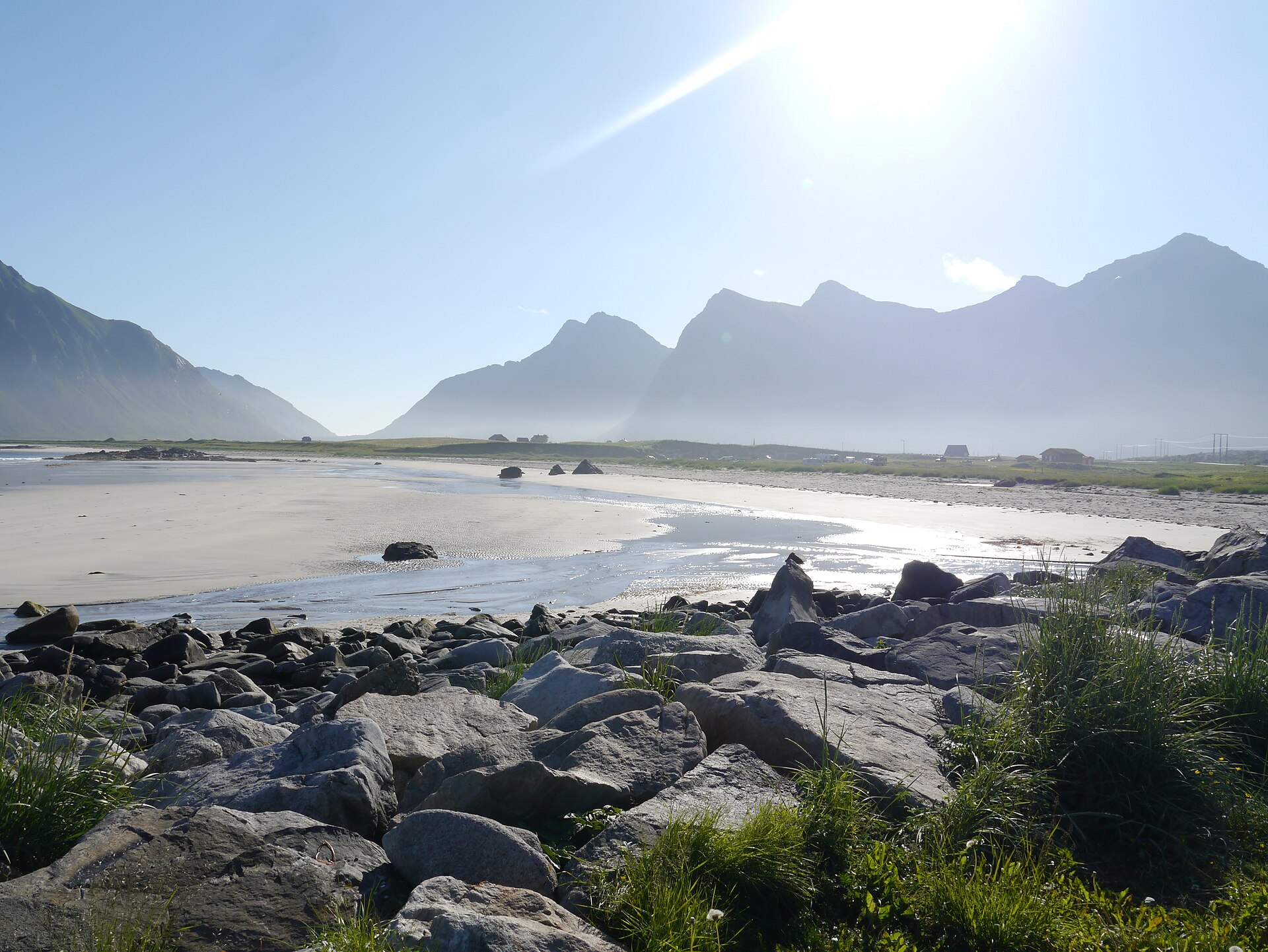
9. Rambergstranda and Skagsanden: roadside stops
While you have to hike over the mountains on foot to reach Kvalvika, these two gorgeous beaches lie literally a few steps from the main E10 road, so you simply can’t miss them as you drive through the islands. Rambergstranda boasts the shape of a perfect white-sand crescent, and access to it leads across a wonderfully photogenic red wooden boardwalk designed to protect the sensitive coastal dunes from erosion.
The neighbouring Skagsanden beach near the village of Flakstad is visually utterly unique, because here the light quartz sand mixes dramatically with dark sand. At low tide the water recedes, creating fascinating abstract black-and-white patterns on the ground along with shallow tidal pools that, especially at sunset, look like a landscape from another planet entirely.
💡 Tip: It’s noticeably windier at Skagsanden than elsewhere, and the well-known Lofoten Beach Camp is based here, which makes the spot a popular surfing hotspot. You can sit down in the sand, pull out a thermos of hot tea and watch the daredevils battling the icy waves undisturbed.
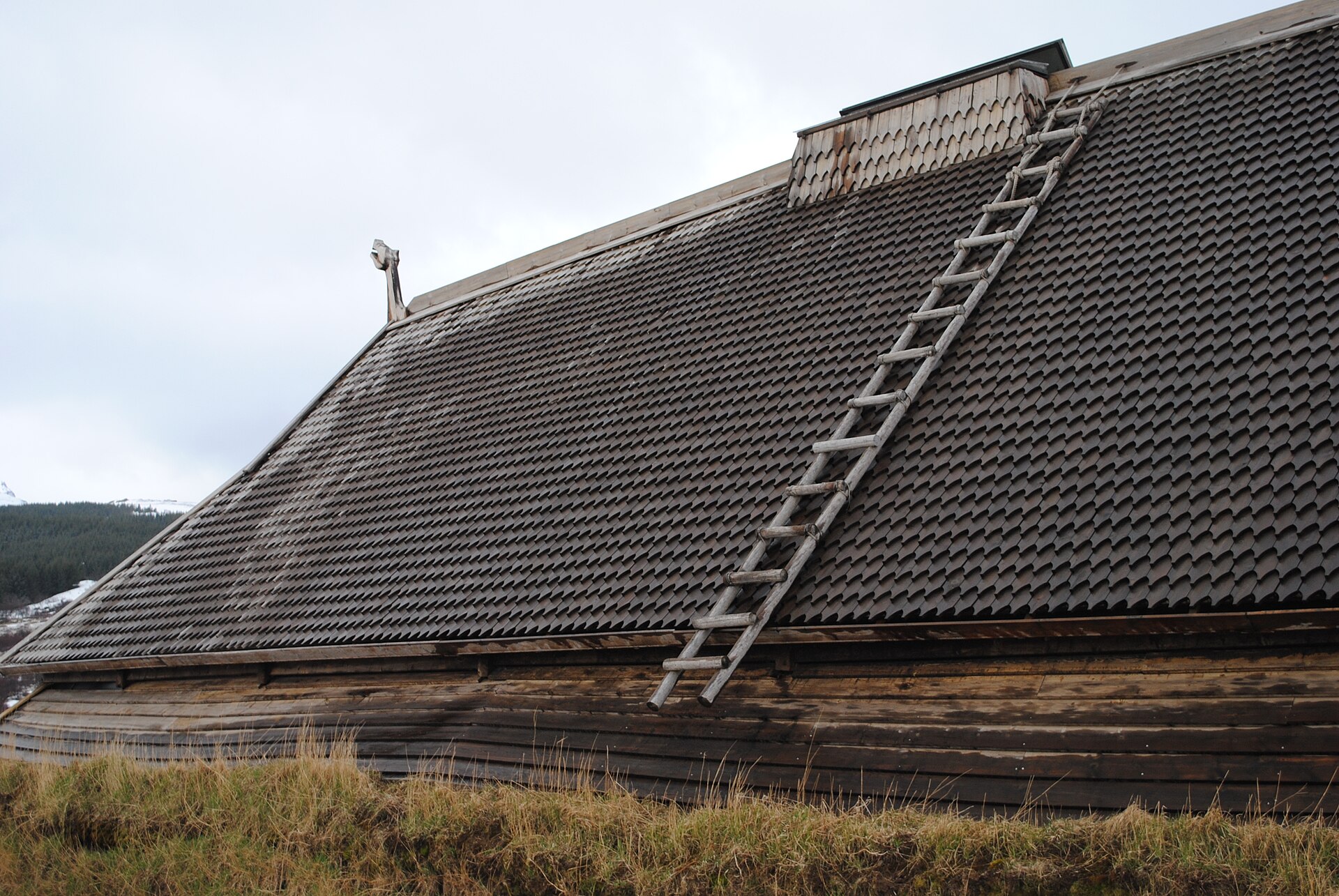
10. Lofotr Viking Museum: a journey into the past in Borg
This is definitely no boring museum full of dusty display cases, but a thoroughly fascinating teleport into harsh Nordic history that will reliably entertain adults and children alike. In the village of Borg, archaeologists discovered the remains of the largest Viking longhouse in the world and decided to rebuild it at full scale, so today this imposing structure measures a respectable 83 metres.
Inside the giant hall a real fire burns, the air smells of wood and local soup, while craftspeople in period costume demonstrate their skills. It’s usually open from 10:00 to 17:00, and the outdoor grounds stretch along a tidy gravel path all the way down to a nearby lake, where a faithful replica of a Viking ship is moored, and in summer you can even try sailing it yourself.
💡 Tip: On the way from the main house to the lake you’ll come across pens full of animals. You can watch wild boar, sheep and, above all, the beautiful Icelandic horses up close, an inseparable part of the Norwegian landscape for centuries.
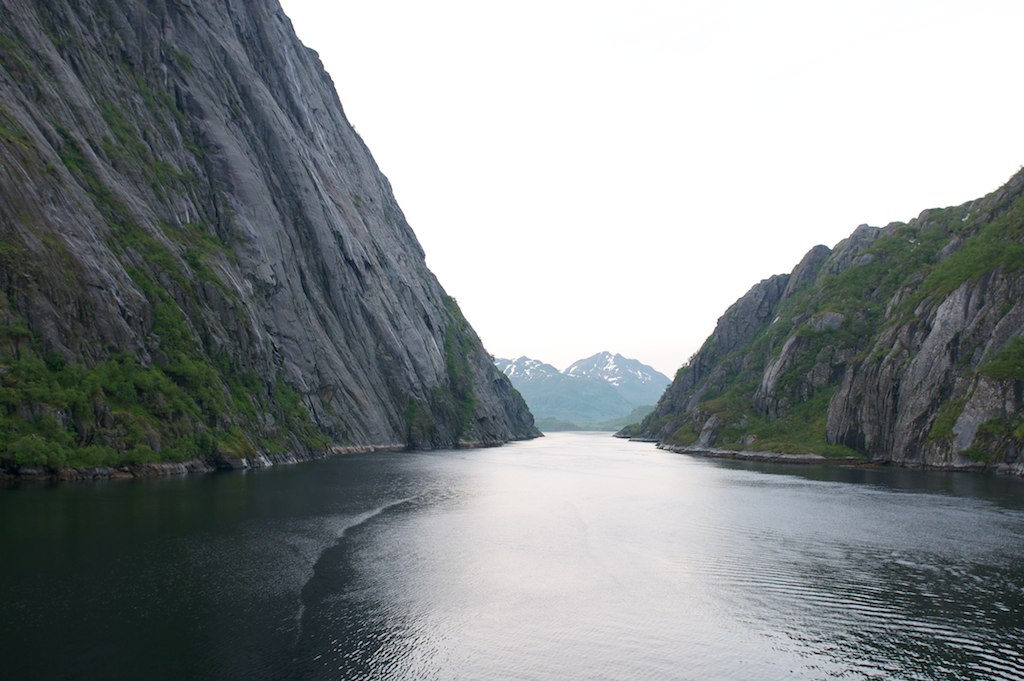
11. Cruise into Trollfjord: silence between the cliffs
One of the most powerful experiences you can take away from the islands is the sight of the majestic cliffs straight from the surface of the ocean. Trollfjord is an extremely narrow and steep inlet that can only be reached by boat, and its dark walls rise to over a thousand metres directly above your heads, which feels incredibly monumental from the deck.
In Svolvær harbour, dozens of operators will pitch to you, many tempting you with adrenaline-fuelled rides in fast rigid inflatable boats (RIBs). It’s better to avoid those, because they bounce unpleasantly across the waves and the impacts go straight into your spine. A far better choice is the quiet hybrid-electric boat run by Brim Explorer, which sails completely silently, doesn’t rock, and inside you’ll find a heated lounge with a café, from where you can comfortably look out for circling white-tailed eagles with a mug in hand, all in the warmth.
💡 Tip: You can secure tickets for the quiet-boat cruise in advance and completely stress-free through GetYourGuide, which in peak summer guarantees you a spot on board without having to stand in a long harbour queue early in the morning.
12. Northern lights and midnight sun: nature’s sky show
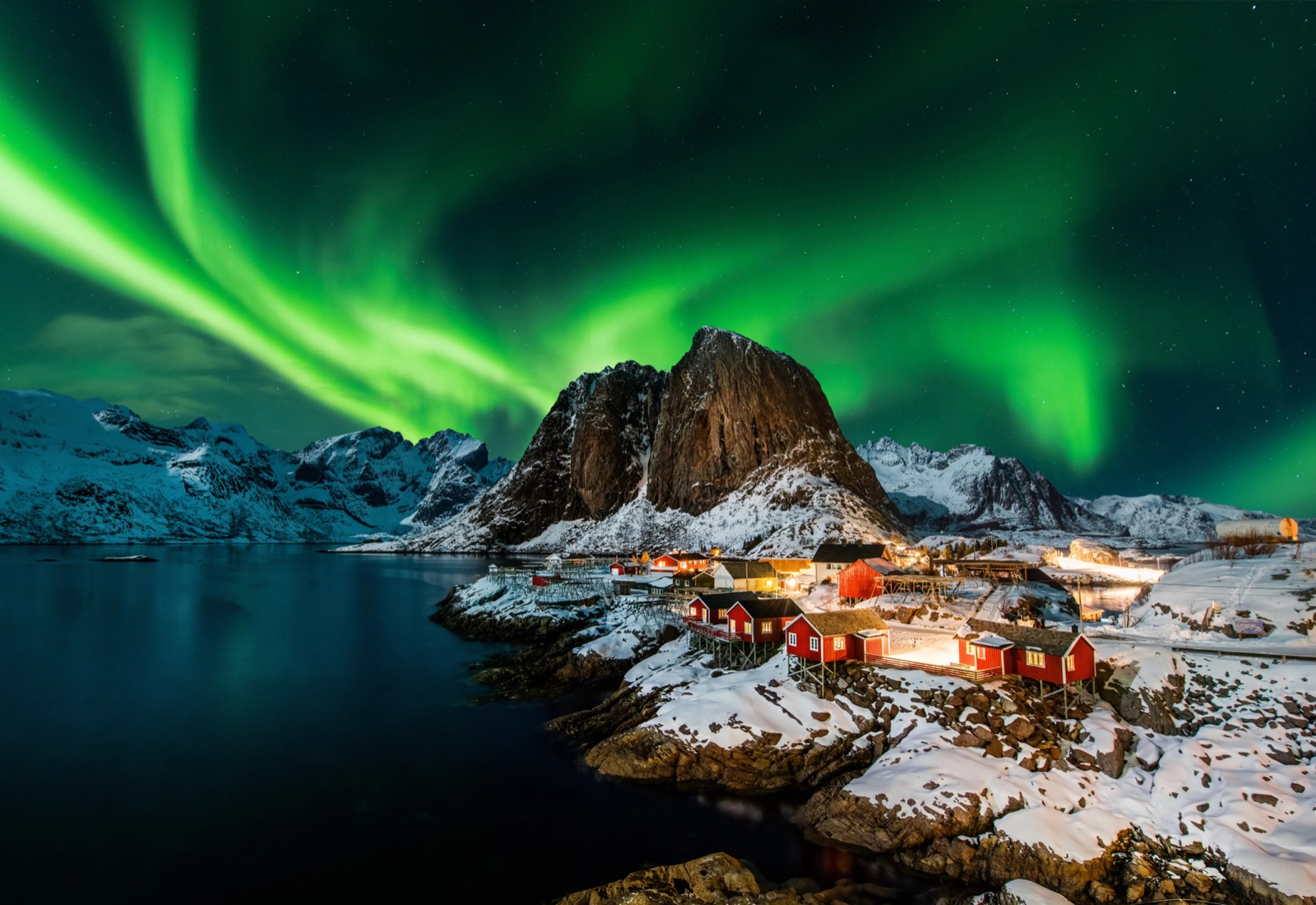
Lofoten offers two utterly different but equally fascinating light shows; it all depends purely on which time of year you head here. From 28 May to 14 July the sun doesn’t set below the horizon at all, which gives you unlimited scope for long night hikes and photography in perfect soft light without the ever-present crowds of tourists.
If, on the other hand, you arrive between September and March, you have an enormous chance of seeing the magical northern lights (Aurora Borealis). The archipelago lies directly beneath the so-called auroral oval, so as soon as the Norwegian weather grants you a clear sky, the green and purple bands dancing right above the snow-capped mountain peaks will utterly amaze you.
💡 Tip: The midnight sun may look gorgeous in photos, but for the human brain it means confusion, because without darkness the body doesn’t produce the sleep hormone melatonin. When booking accommodation, carefully verify whether your rorbu has blackout curtains, or just to be safe, pack some black bin bags and painter’s tape for improvised window blackout.
13. Arctic surfing in Unstad: icy waves
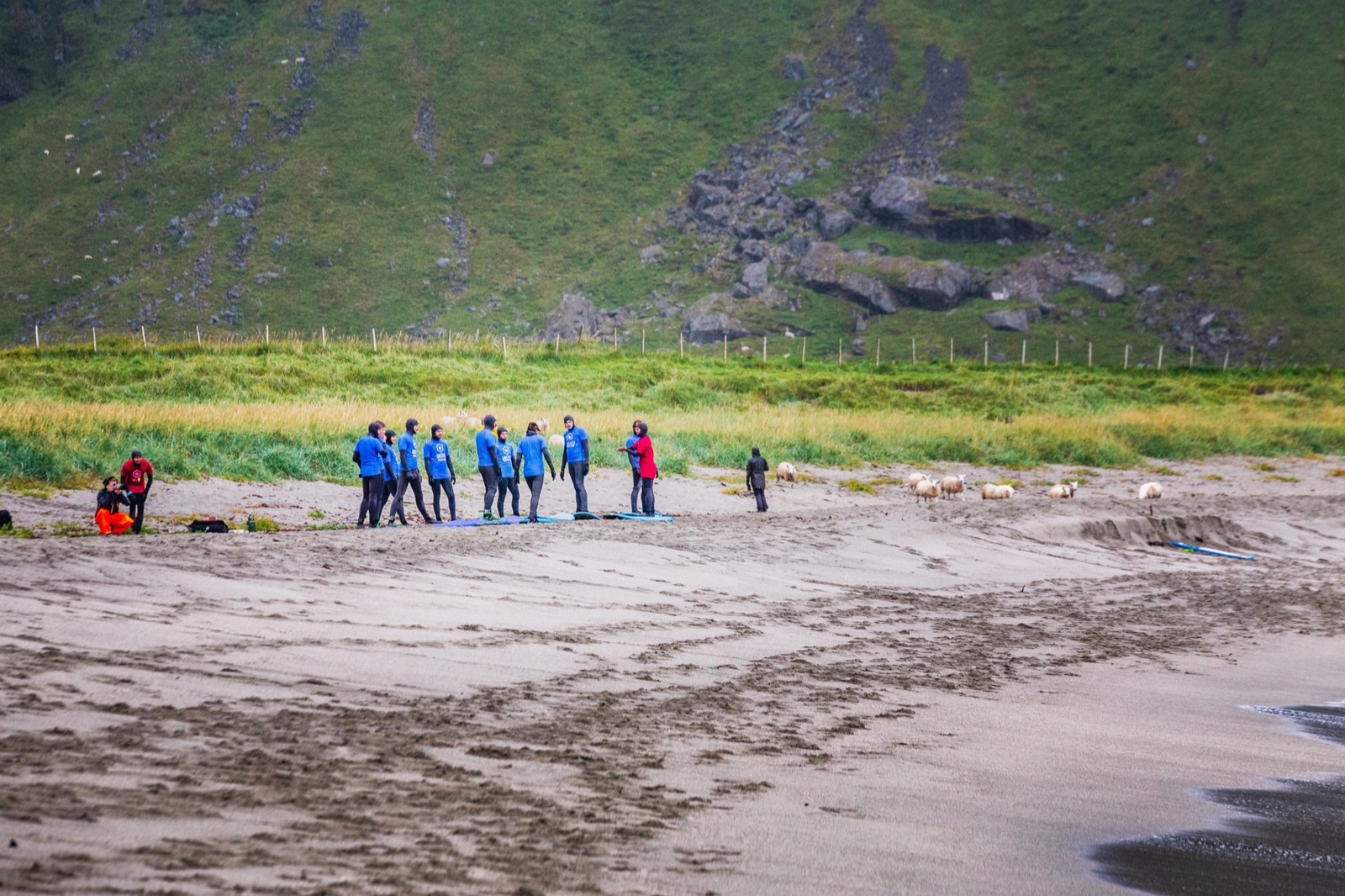
The idea of surfing far above the Arctic Circle sounds a bit crazy, but the bay of Unstad is considered the European mecca of this extreme cold-water sport. The ocean sends in perfect, long waves here that lure surfers from all over the world year-round to pull on extremely thick wetsuits and head out to battle the Arctic elements face to face.
Whether you decide to try a board yourself or prefer the safety of dry land, the atmosphere of this place is utterly relaxed and visually unique. The local Unstad Arctic Surf will lend you complete winter gear, including a quality 5/4mm wetsuit, warm gloves and boots that will reliably keep you at operating temperature even in cold water.
💡 Tip: Even if surfing isn’t really your thing and you’d rather stay bundled up in a jacket on the shore, stop in Unstad at least for a moment. Their surf café bakes the absolute best and most fragrant cinnamon buns (kanelboller), which will reliably bring you back to life after a windy morning.
14. Bunes Beach: a trek across the fjord
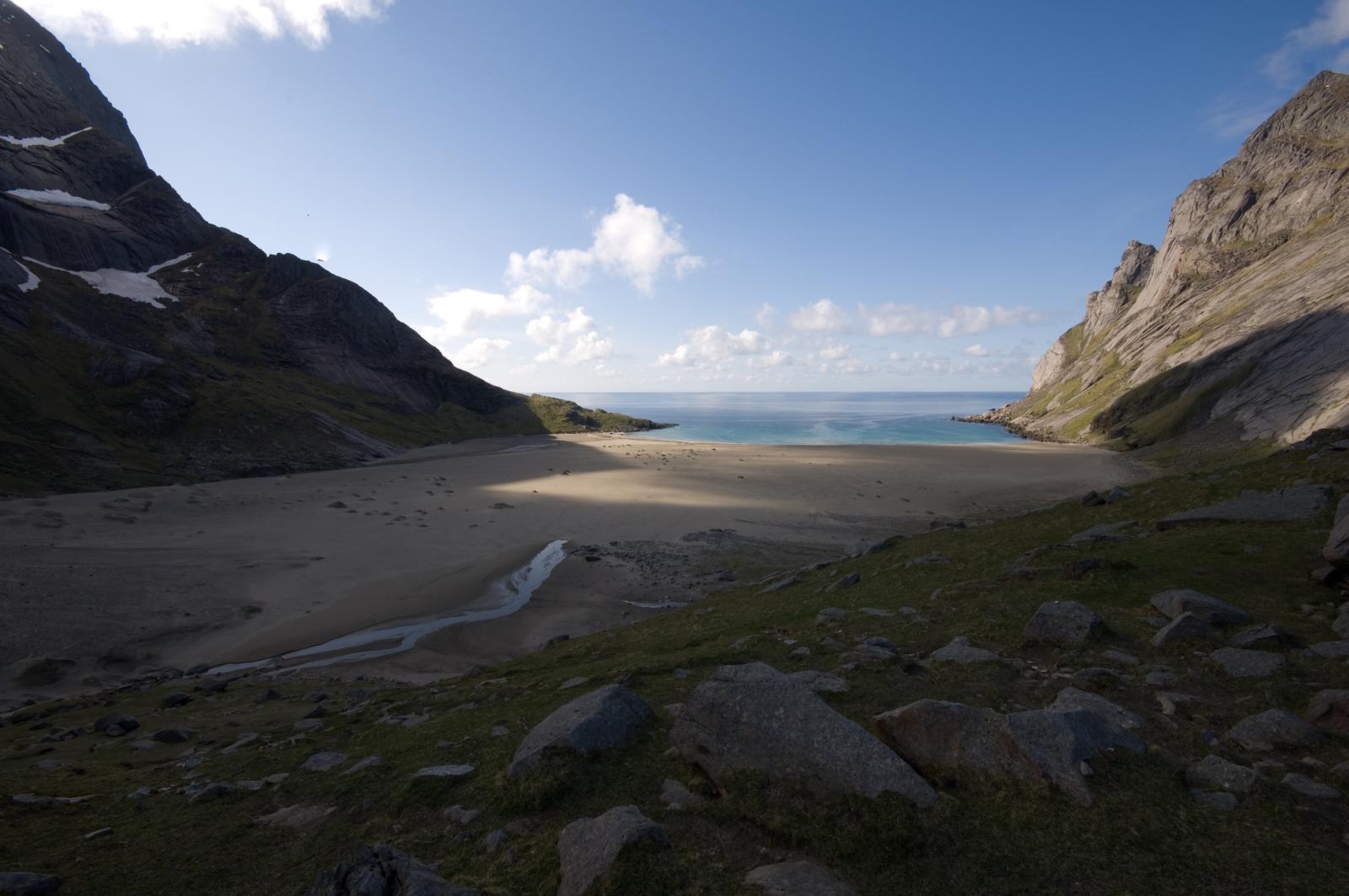
This isn’t just an ordinary beach visit, this is a small local expedition that begins right in the busy harbour of the village of Reine. You have to board a small local passenger ferry, which, after a visually gorgeous crossing, drops you off in the remote hamlet of Vindstad, from where no road leads back to civilisation at all.
From the landing, a walk of roughly four kilometres across a narrow isthmus to the other side of the island awaits you, with an elevation gain of just a negligible 80 metres, so it’s more of a pleasant stroll than a demanding trek. Once you cross the saddle, a gigantic sandy beach opens up before you, surrounded by massive black cliffs and so enormous that people in the distance look like tiny ants.
💡 Tip: Remember that you’re completely dependent on the ferry timetable here. Check the exact departure times in advance and be on the jetty in Vindstad well ahead of time, otherwise you’ll have no choice but to spend a very cold night out in the open on a deserted beach.
15. The islet of Skrova: the Hawaii of Lofoten
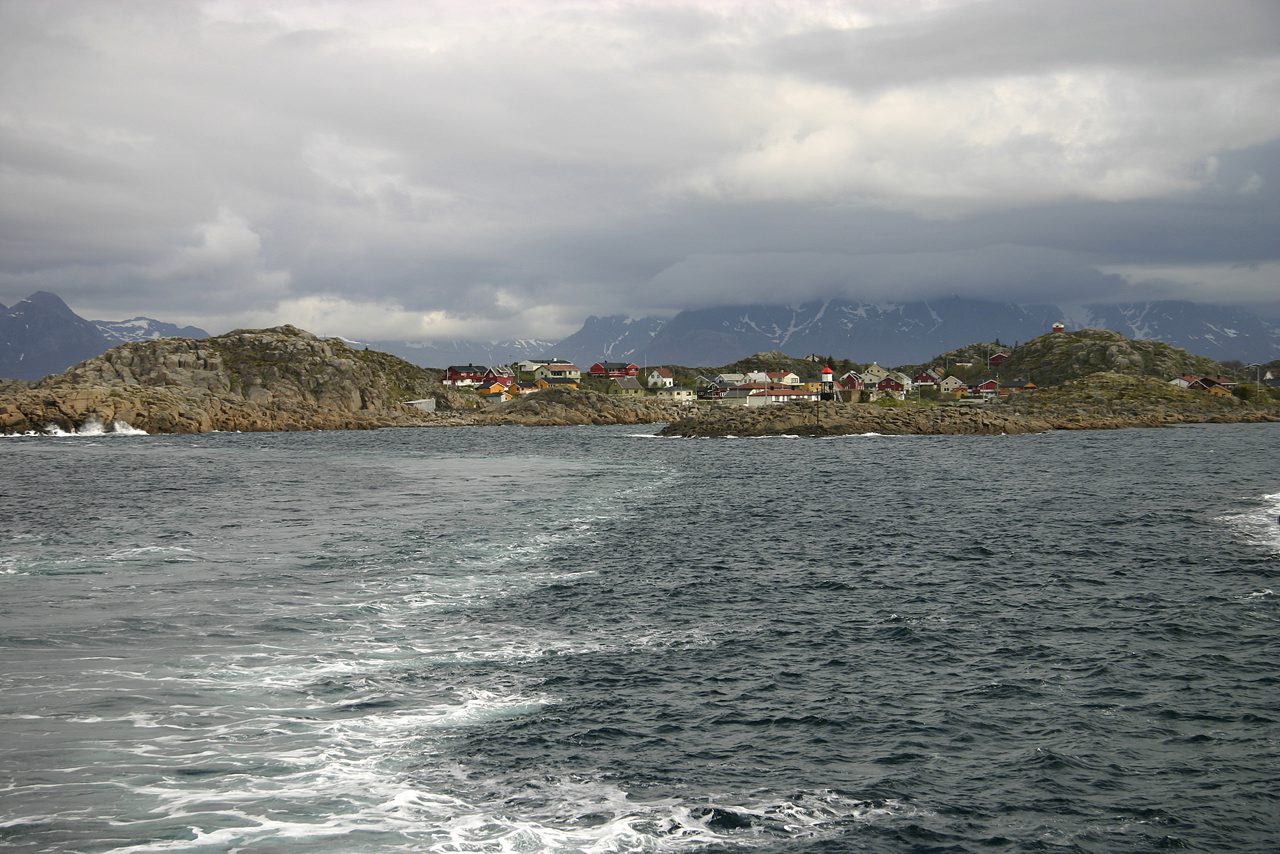
If you’re looking for a real escape from the crowds of motorhomes that clog the main E10 road during the summer months, this is your secret trump card. The island of Skrova is home to just under 200 permanent residents and no transit traffic passes through, you can only reach it by a roughly half-hour ferry directly from the harbour in Svolvær.
Skrova is fondly nicknamed the Hawaii of Lofoten, because thanks to its specific position away from the main mountain ridge it has statistically the most hours of sunshine in the entire region. You won’t find any stress from cars or overcrowded car parks here, just quiet white-sand beaches, original outdoor photography exhibitions scattered across the landscape, and an immensely calming atmosphere of old fishing days.
💡 Tip: Leave the car calmly parked on the mainland in Svolvær and explore the island purely on foot. The distances here are absolutely minimal, and without a vehicle you’ll save genuinely significant money on the ferry ticket, which would otherwise needlessly eat into your budget.
Map of points of interest for your phone
Where to go next from Lofoten
If you’re planning to explore more of Norway or need more detail on specific spots, I’ve prepared further detailed guides for you. Read about when to visit Lofoten and what weather to expect, or dig into the detailed logistics in our article on how to get to Lofoten.
For lovers of an active holiday, our roundup of the best treks in Lofoten is a must, and if you want to relax by the ocean, check out the most beautiful beaches in Lofoten. As if that weren’t enough, you’ll find inspiration for accommodation and itineraries in our pieces on Reine and Hamnøy and in the comprehensive 7-day Lofoten itinerary.
Frequently asked questions
How many days do I need to visit the Lofoten Islands?
The ideal time to explore the archipelago is 5 to 7 days. This gives you enough time not only for the main sights and trails, but most importantly a necessary buffer for days when your plans are ruined by the typically unpredictable Norwegian weather full of rain and strong winds. Shorter stays aren’t worthwhile due to the long distances involved.
Do I need to book the ferry to Norway in advance?
If you’re using the popular route from Bodø to Moskenes with a car, make your reservation through Torghatten as early as possible. During the summer season the ferries fill up incredibly fast, and without a ticket you risk long hours of waiting at the port for the next available sailing, which will unnecessarily eat into your vacation time.
Are the Lofoten Islands expensive?
Yes, Norway is generally one of the most expensive countries in Europe. Supermarket prices are roughly three times higher than elsewhere in Europe, accommodation in classic rorbu cabins costs hundreds of euros per night, and car rental plus high parking fees at all tourist destinations will also form a significant part of your budget.
How does parking payment work?
Norway is an almost entirely cashless society. At most tourist parking lots near beaches and trailheads you won’t find coin-operated machines—payment is exclusively through mobile apps like EasyPark or Parka, which you should definitely download and link to your payment card while you’re still at home before departure.
Can you swim in the sea in the Lofoten Islands?
Swimming is more for cold-water enthusiasts, because the water temperature even in the warmest month of July rarely exceeds 10 to 14 °C, while in June it’s usually only around 5 °C. The local beaches are therefore mainly for walks, photography, or Arctic surfing in thick wetsuits that keep you warm.
Can I handle driving on the local roads?
The E10 road is in good condition, but it’s very narrow and full of blind corners. Average speed is around 50 km/h, and in summer you constantly have to dodge wide caravans, so it’s better to allow generous time buffers for all your journeys and not to rush.
Where can I find the most reliable weather forecast?
Classic international apps usually fail completely in the Lofoten Islands. It’s absolutely essential to use the Norwegian meteorological app Yr.no, which offers very precise models of cloud development and wind strength accurate to within several dozen minutes, allowing you to flexibly adjust your daily plans.
Tips and Tricks for Your Vacation
Don’t Overpay for Flights
Search for flights on Kayak. It’s our favorite search engine because it scans the websites of all airlines and always finds the cheapest connection.
Book Your Accommodation Smartly
The best experiences we’ve had when looking for accommodation (from Alaska to Morocco) are with Booking.com, where hotels, apartments, and entire houses are usually the cheapest and most widely available.
 🚗 Car rental on the roadVerified rental cars in Norway
Search with the DiscoverCars comparison engine — it compares prices from dozens of local and international rental companies, and most bookings come with free cancellation.
Compare car prices in Norway →Don’t Forget Travel Insurance
Good travel insurance will protect you against illness, accidents, theft, or flight cancellations. We’ve had a few hospital visits abroad, so we know how important it is to have proper insurance arranged.
Where we insure ourselves: SafetyWing (simple monthly subscription) and TrueTraveller (for extra-long trips).
Find the Best Experiences
Get Your Guide is a huge online marketplace where you can book guided walks, trips, skip-the-line tickets, tours, and much more. We always find some extra fun there!