If you love mountains and you’re considering a trip to the Dolomites Italy, let me warn you — Lago di Sorapis is the kind of place that will ruin you for everywhere else. The Dolomites are pure paradise on earth, and once you visit, you’ll never want to go anywhere else. ☺️ Lukáš and I have been coming here for years, exploring every corner around Cortina, and this lake is one of those places you simply have to see with your own eyes. It’s one of our all-time favourite classics. When, after a few hours of uphill hiking and scrambling along rocky ledges, you finally emerge from the forest and catch your first glimpse of that impossibly vivid, milky turquoise water beneath the towering Sorapis massif, you completely forget how much your legs ache.
But before we dive into the details, I need to be upfront about one thing — don’t bring your dog on this hike. Some people do, but it’s really not a good trail for them. So I’ll tell you not only where to park and when to set off, but also why you need to think twice about this place if you’re travelling with children or four-legged companions.
The full destination guide: Dolomites — guide and what to see
TL;DR
If you’re already packing your rucksack and don’t have time to read the full article, here’s a quick cheat sheet — the absolute essentials you need before setting off.
- Starting point: From Passo Tre Croci pass, just outside Cortina d’Ampezzo.
- Difficulty and length: The trek (trail no. 215/401) is roughly 8 kilometres return, with about 220 metres of elevation gain, and takes around 3 to 4 hours of walking time.
- Biggest challenge: You’ll encounter sections secured with steel cables and, most notably, metal grated walkways bolted into the cliff face directly above a deep drop.
- When to go: Late September to early October is ideal for the best light and fewer crowds; in summer, you really need to start very early in the morning.
- Parking: Parking at Passo Tre Croci is a nightmare in season, with private car parks charging up to €50 per day. You’re much better off taking the bus from Cortina.
- Who should avoid it: The trail is absolutely not suitable for pushchairs, small children, puppies, or larger clumsy dogs. Swimming in the lake is strictly prohibited.
What is Lago di Sorapis and Why is it So Incredibly Blue
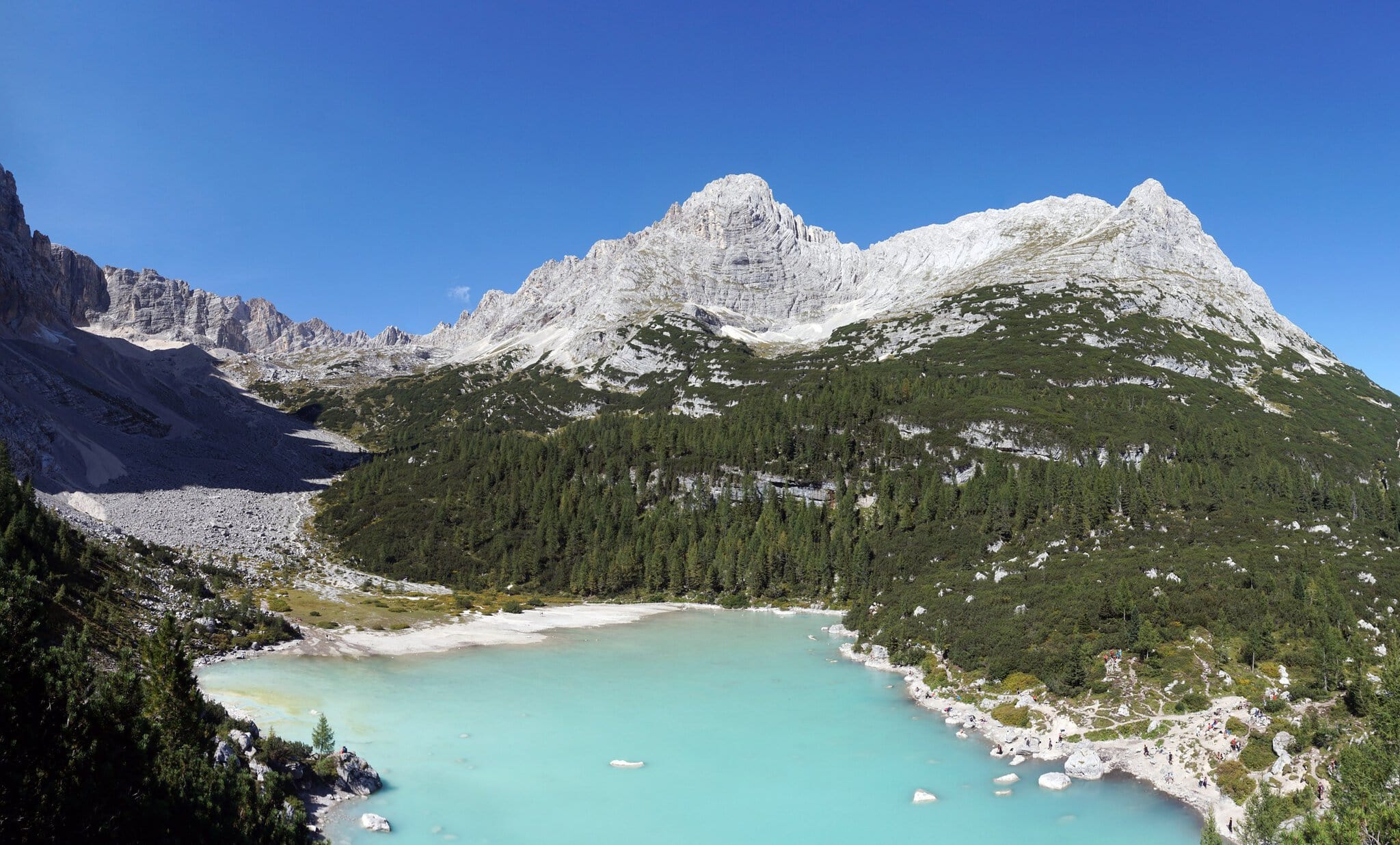
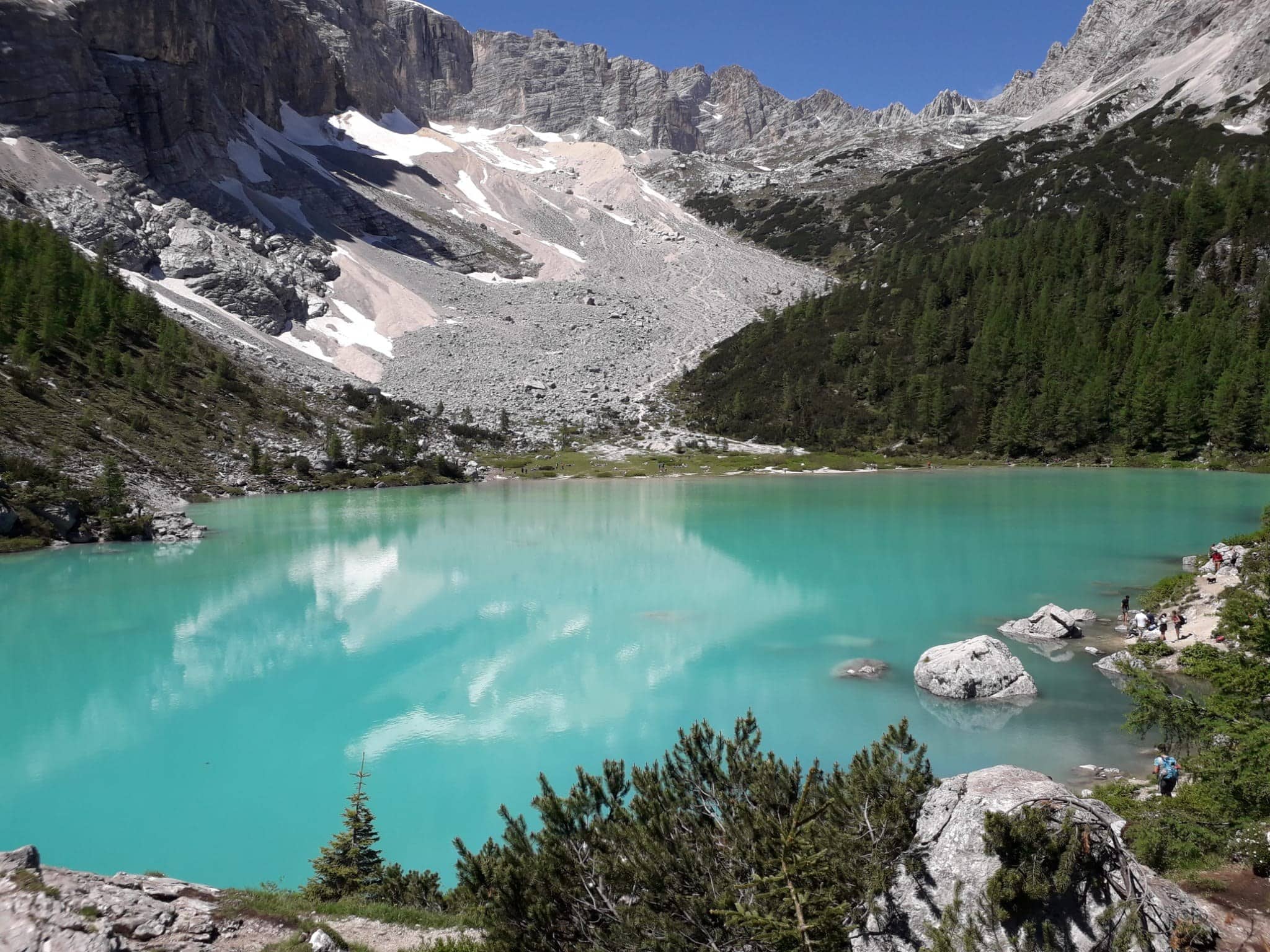
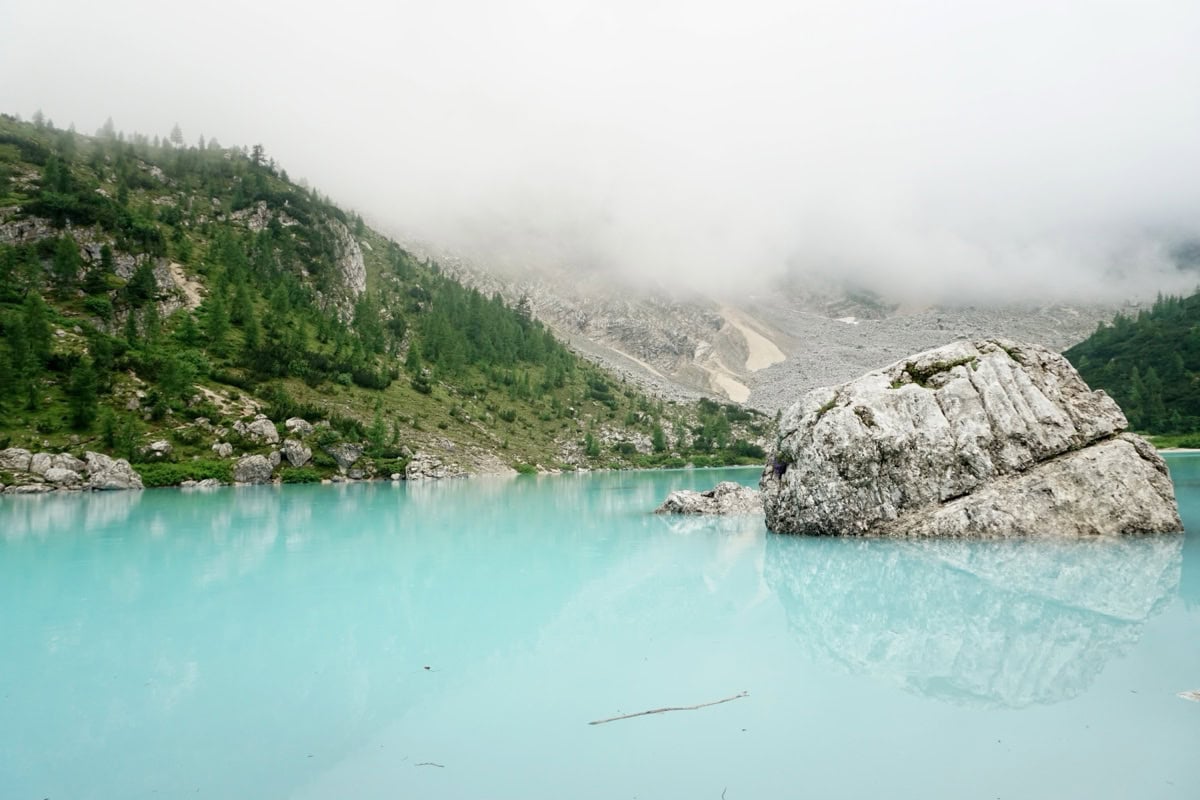
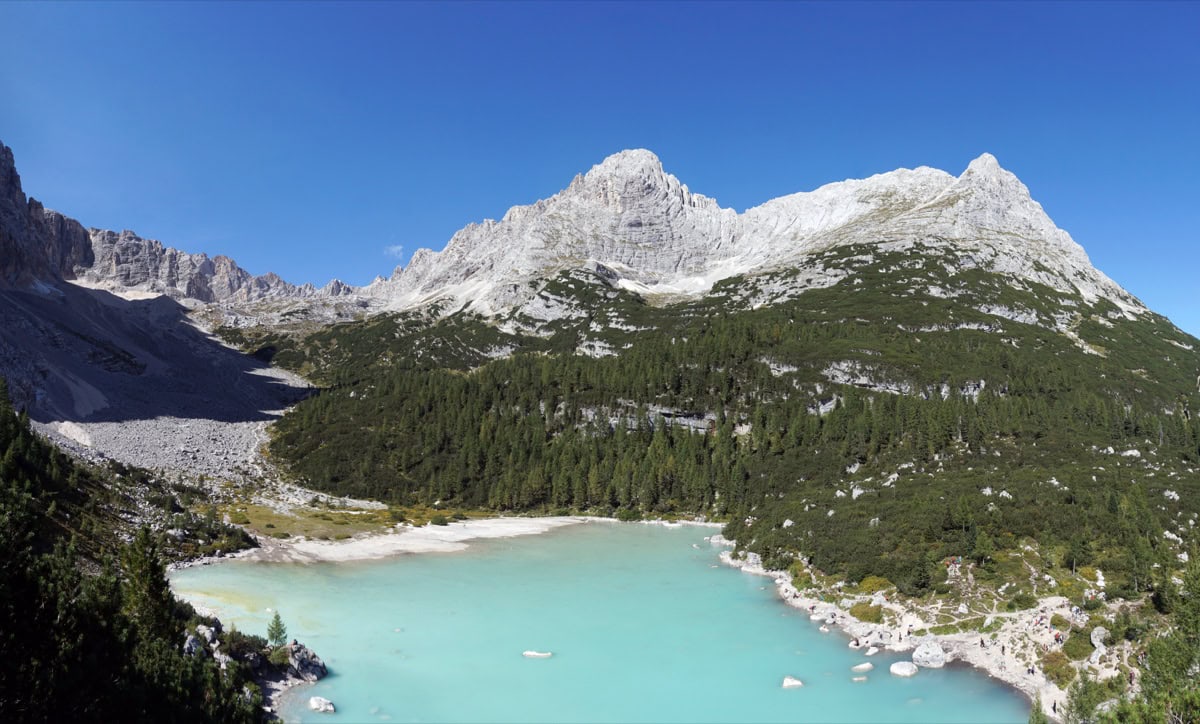
Before we hit the trail, let’s talk about why everyone flocks here in the first place. The Dolomites hide Lago di Sorapis like an absolute gem, and when you look at photos, you might think the colour has surely been Photoshopped. I can assure you it hasn’t. The lake sits at an altitude of 1,925 metres and its water has a uniquely milky turquoise hue that you won’t find anywhere else in the region.
The colour comes from fine limestone dust — so-called rock flour — carried down by the melting glacier above the lake. These tiny mineral particles remain suspended in the water, creating that magical, cloudy turquoise effect that makes you stare for a full minute before you even think about reaching for your camera. It’s precisely this that makes Sorapis one of the most photographed spots in all of northern Italy, and honestly, it’s easy to see why. Gazing at that dazzling colour beneath the jagged rock spire known as Dito di Dio (God’s Finger) is a moment you truly won’t forget in a hurry.
When to Visit and Lago di Sorapis Weather
Timing your trip right is absolutely crucial in the Dolomites, because winters here are long and summers can be overwhelmingly crowded. The trail to the lake is generally passable from June to late October, but it always depends on that year’s snowfall. Understanding Dolomites Italy weather patterns will help you plan the perfect visit.
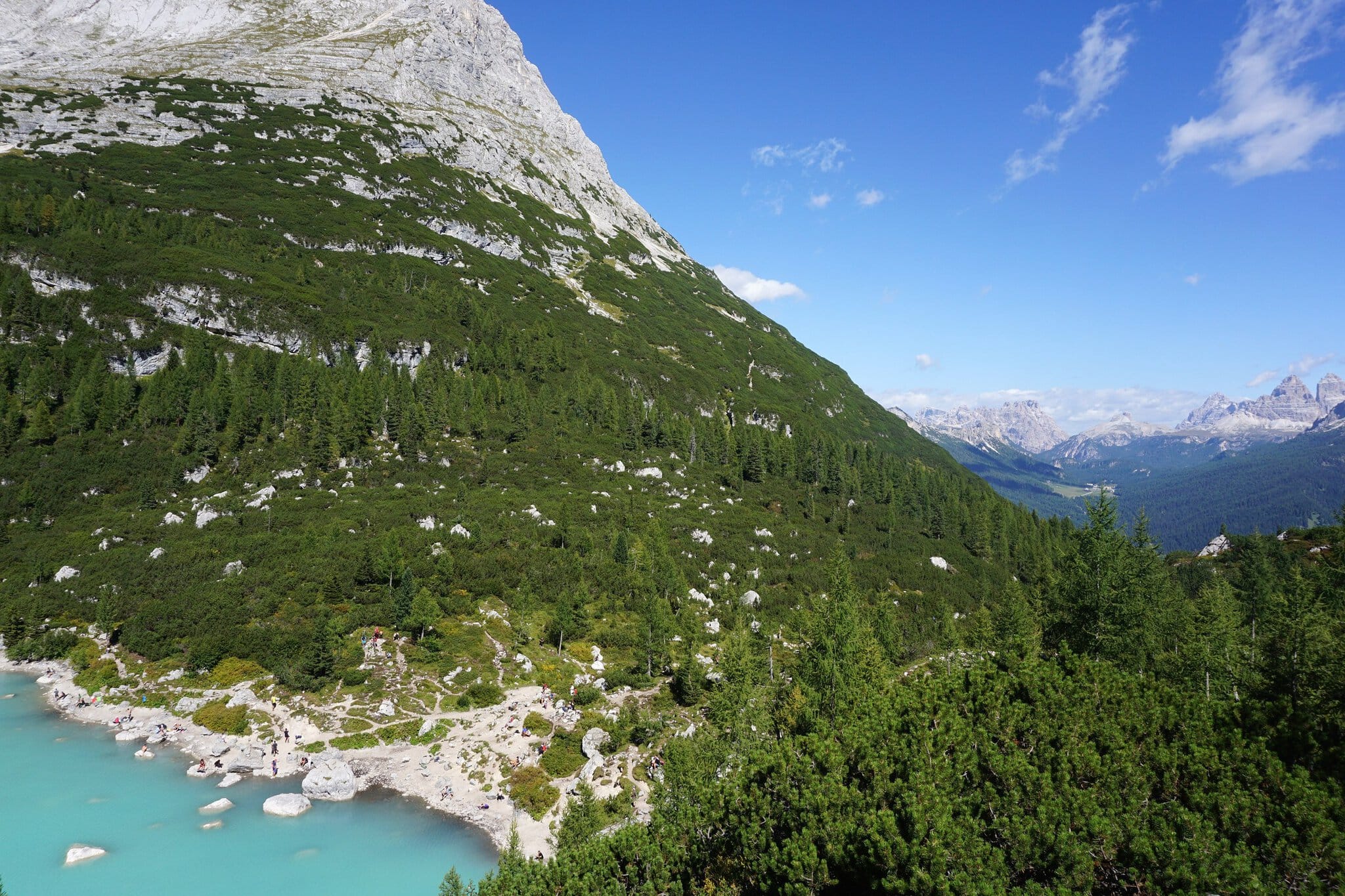
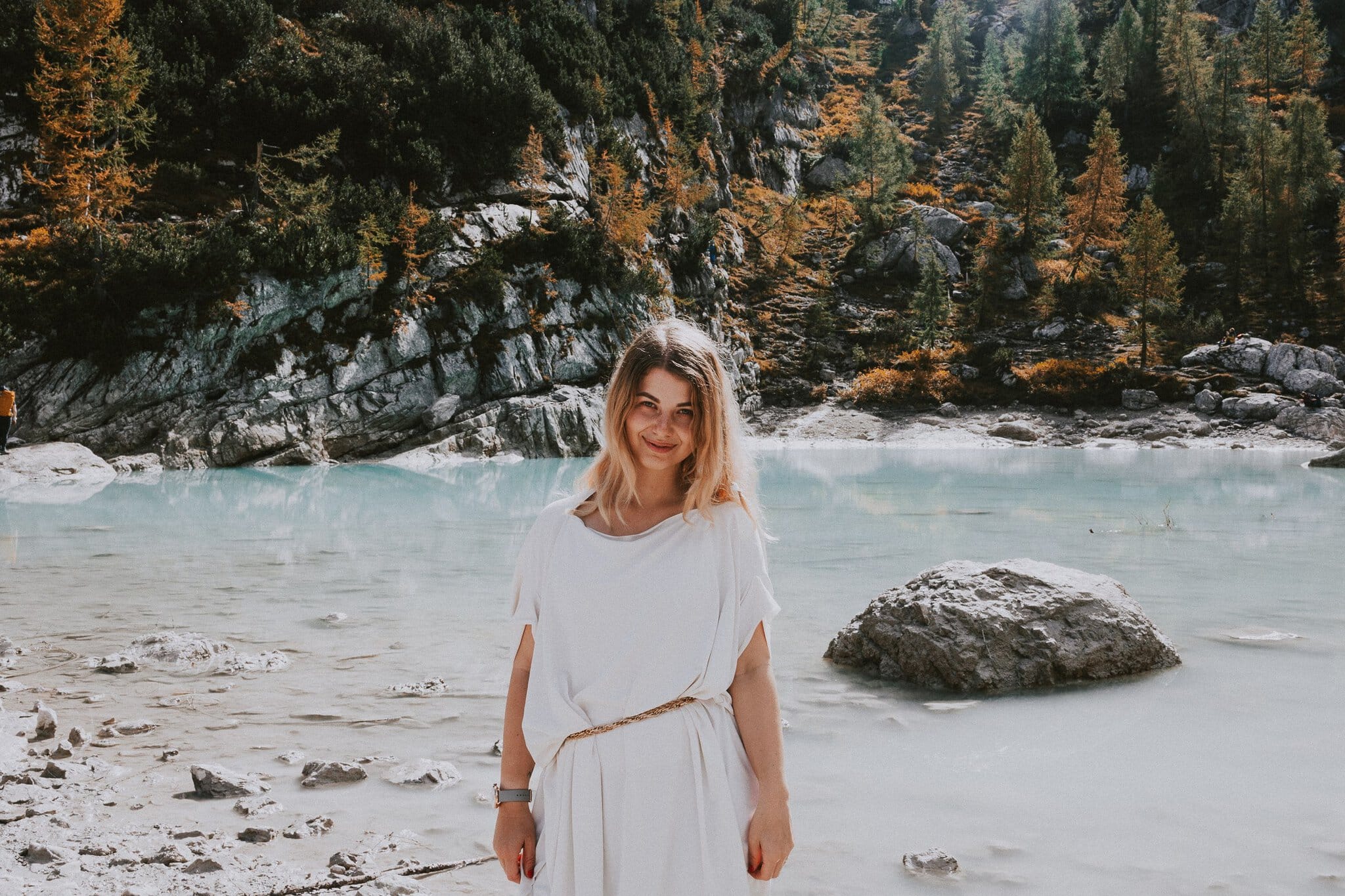
We personally love visiting the Dolomites in autumn, specifically September or early October. The temperatures are lower and you might encounter frost in the morning, but the air is beautifully crisp, the sky is cloudless, and the surrounding larch trees turn a gorgeous golden colour. Plus, you avoid the worst of the summer crowds. August is peak holiday season in Italy, and the narrow rocky ledges leading to the lake can become gridlocked — not something you want to experience above a deep drop. If you’re after up-to-date conditions, I’d recommend checking the Lago di Sorapis webcam before your hike to see whether fog or clouds are lingering up top.
Where to Stay Near the Lake and How Much it Costs
If you want to hit the trail really early in the morning — which is a must in peak season — strategic accommodation is half the battle. You could stay in town and drive up, but we found an absolute gem that saved us heaps of stress with parking and early starts.
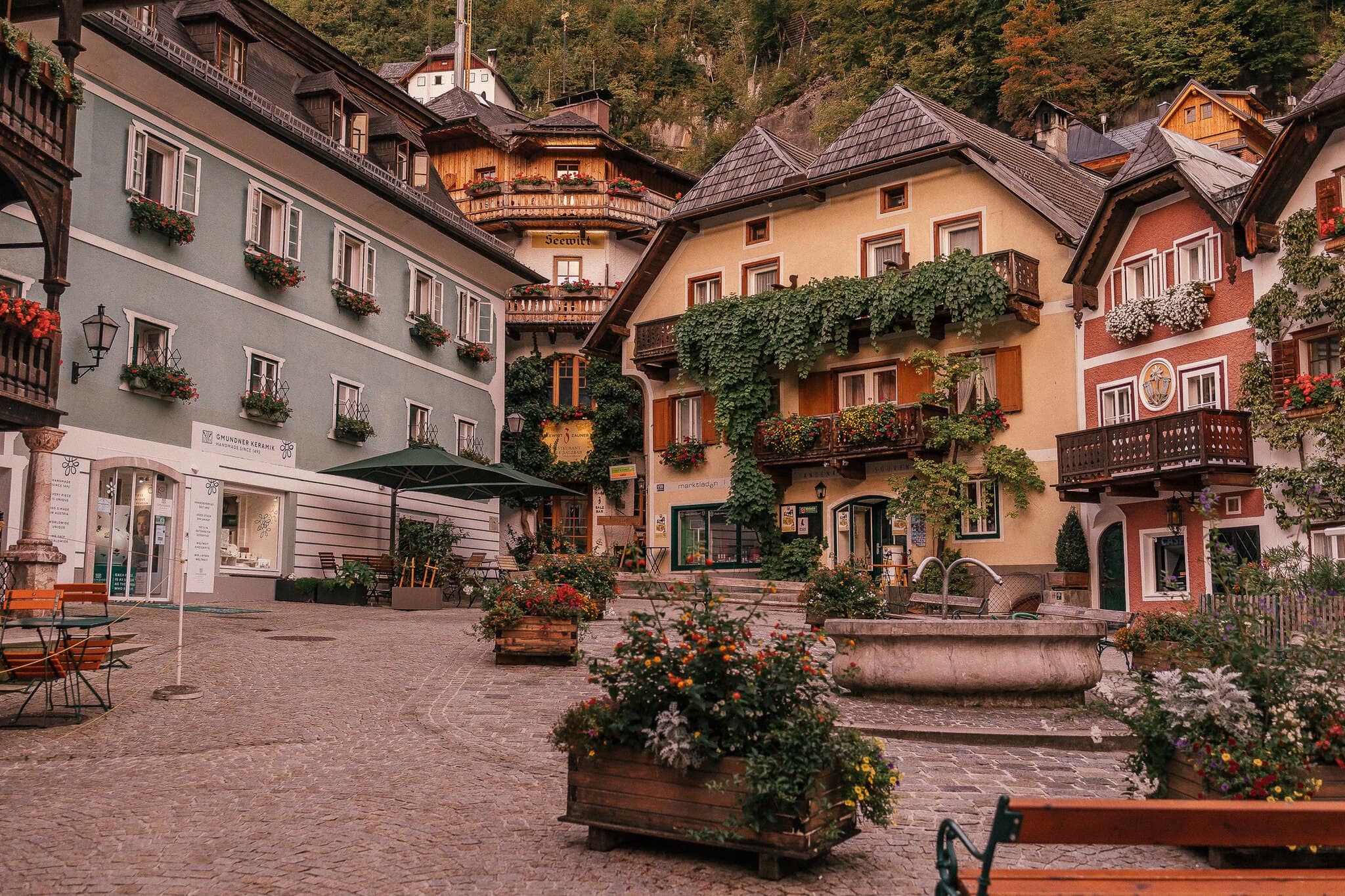
Our all-time favourite accommodation for this hike is the B&B Hotel Passo Tre Croci Cortina. It sits right at the trailhead, so in the morning you just get up, have breakfast, and walk straight out the door. The rooms are modern and beautiful with absolutely jaw-dropping views from the windows, and they’re dog-friendly — which is essential for us with Kája and Baby. Rates for a double room run between about €120 and €180 per night depending on the season, which is actually very reasonable by pricey Cortina standards.
Another option is to stay in the centre of Cortina d’Ampezzo, which we use as our main base. From there, it’s about 15 minutes by car or local bus to Passo Tre Croci. Cortina offers hundreds of options, from luxury wellness hotels to cosy mountain apartments — you can easily compare availability and prices on Booking.com.
How to Get to the Trailhead and Where to Park
Getting to the start of the hike has become quite a logistical puzzle in recent years, as the lake’s popularity has skyrocketed and the infrastructure simply can’t keep up. The trailhead is at the Passo Tre Croci mountain pass on the SR48 road, which connects Cortina d’Ampezzo with Lake Misurina. If you’re flying in from the UK, the closest airports are Venice (about 2 hours’ drive) and Innsbruck (around 2.5 hours), with plenty of flights from London, Manchester, and other major cities.
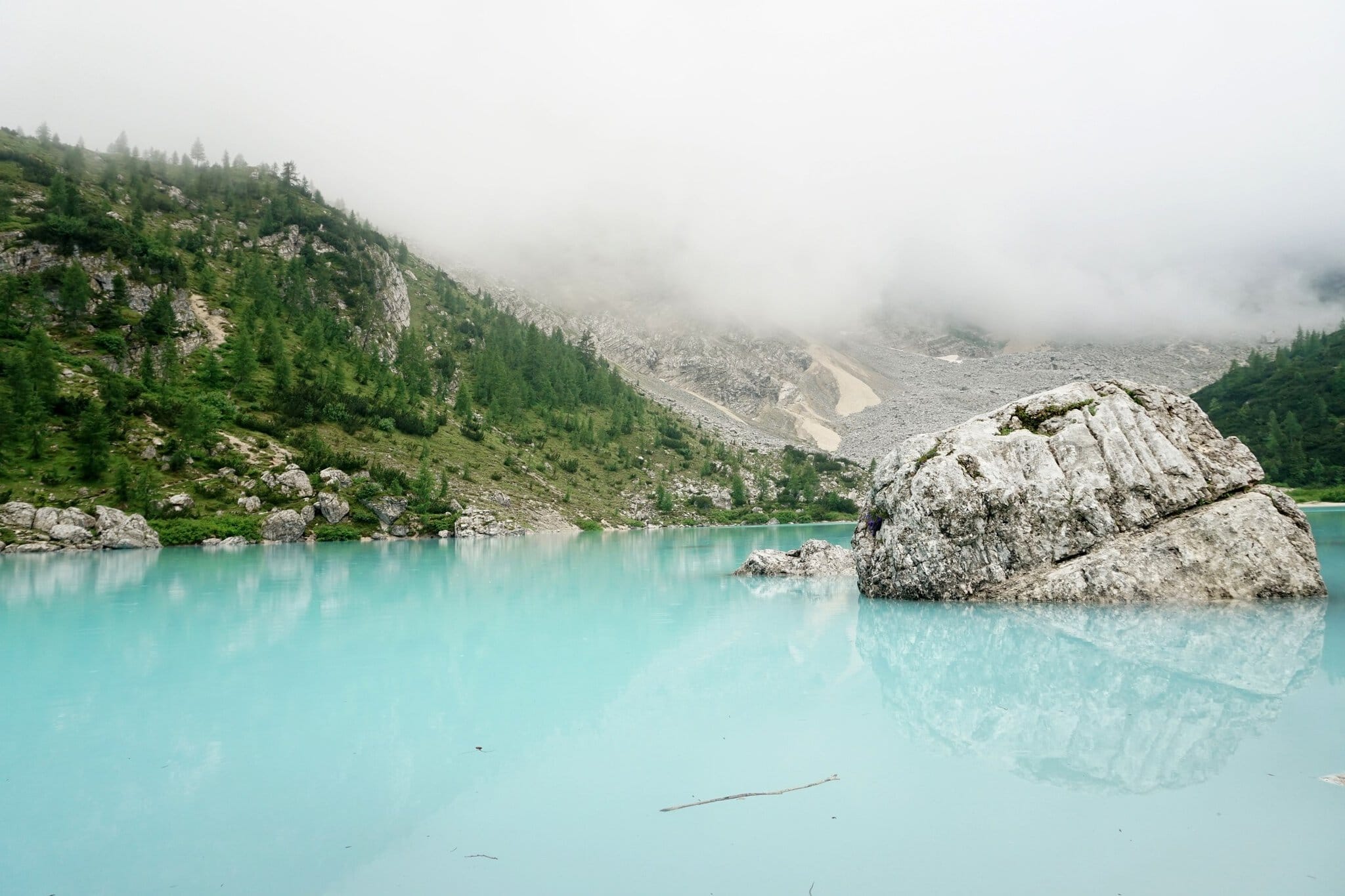
If you’re driving, I must warn you about the parking nightmare. A few years ago, you could park for free along the road, but those days are long gone. Cars were parked everywhere, blocking traffic, and the police started handing out hefty fines. Today, private car parks charge as much as €50 per day, which is frankly outrageous. If you don’t want to pay these inflated prices and you’re visiting in peak season, I’d recommend leaving your car at your hotel and taking the bus. Regular services run from Cortina, Misurina, and Lago di Misurina during the summer months, dropping you right at Passo Tre Croci. It’ll save you a mountain of stress.
Lago di Sorapis: 10 Tips on What to See and Do
Let’s finally get to the hike itself. The trail to the lake isn’t just a boring transfer from A to B — it’s a full-blown experience where you’ll be admiring views, occasionally feeling a healthy dose of fear, and above all having an incredible time. Here are our 10 favourite highlights and tips for the trail.
1. The Classic Trail from Passo Tre Croci
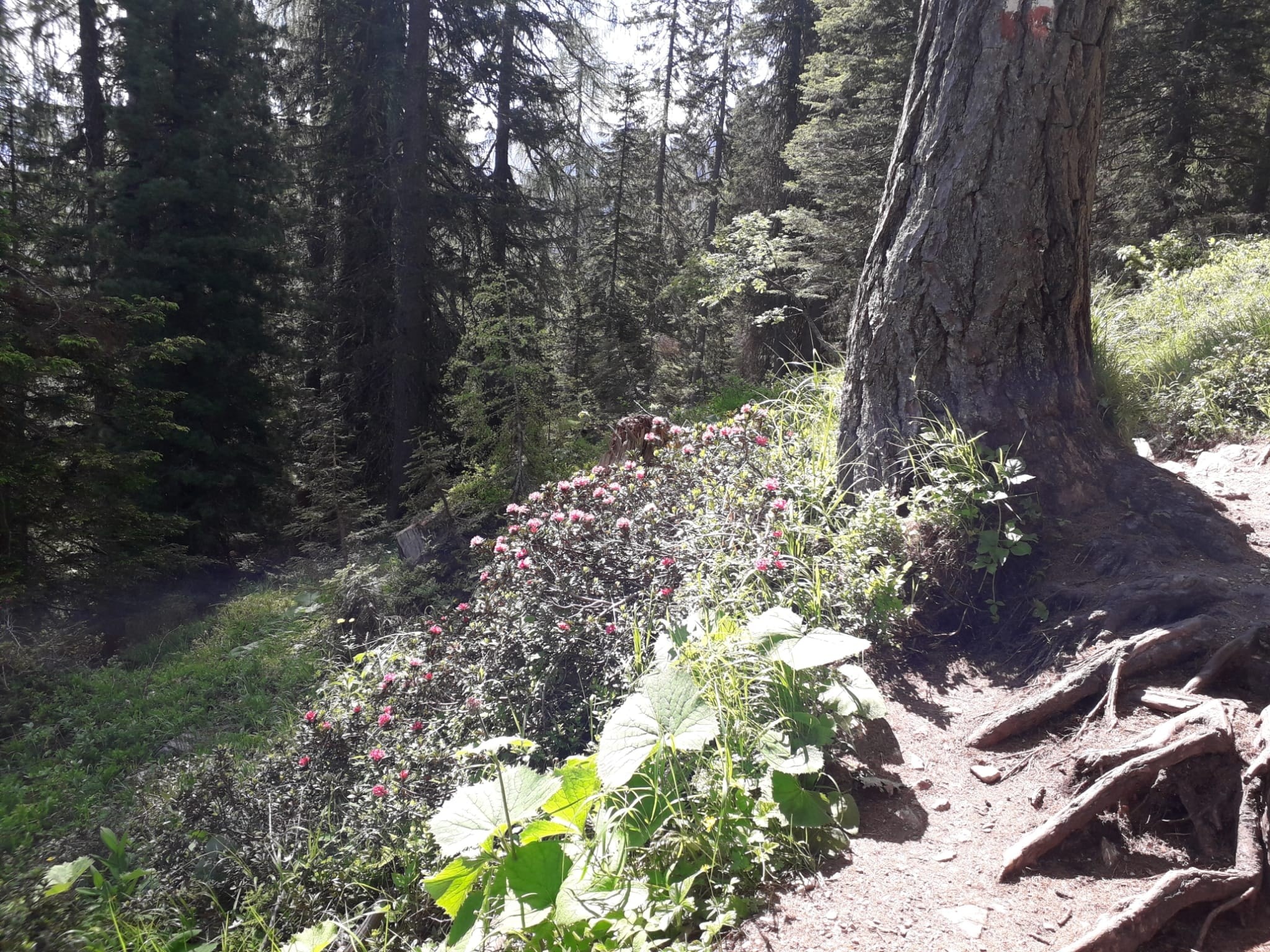
Most hikers take trail no. 215 (which sometimes merges with trail 401) — the most well-known and direct Lago di Sorapis route. It starts off pleasantly enough, winding through a fragrant larch forest where it feels more like a stroll in the park. Soon, however, the terrain starts to climb and the woodland path transforms into a rocky trail hugging the mountainside. In total, you’ll cover about 4 kilometres one way, with just over 200 metres of elevation gain. It’s not an extreme ascent by any means, but expect to work up a sweat.
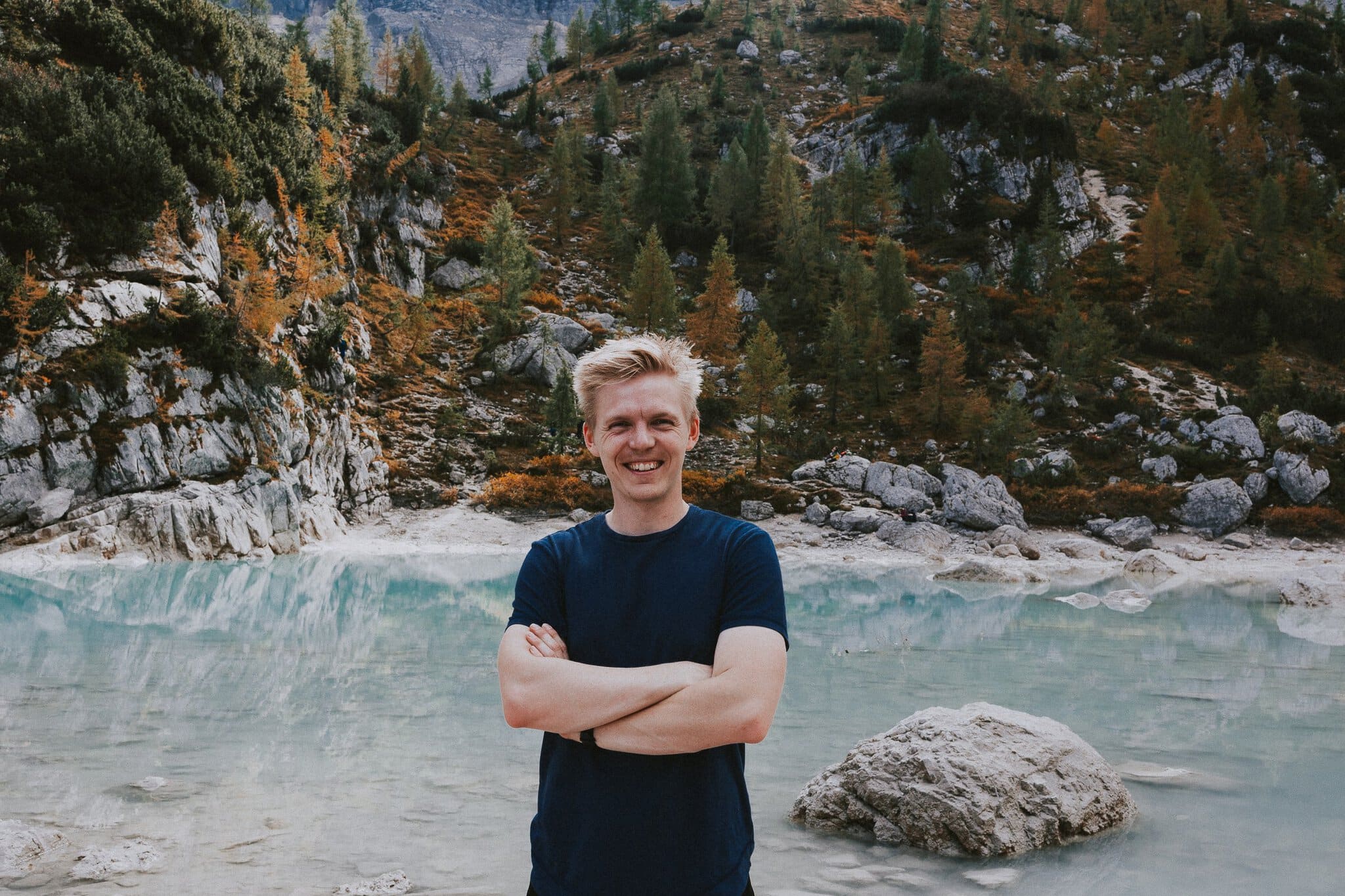
Lukáš always says the first half is just a warm-up. The forest smells of resin and you think it’s all going to be a doddle — until you hit the first steep section over rocks and tree roots.
2. Metal Grated Walkways and Cables Above the Abyss
This is the moment that separates casual walkers from the more hardened hikers. Roughly halfway along the trail, the path veers directly into a steep rock face. To make the route passable, metal grated walkways and ladders have been bolted into the cliff. These sections are secured with steel cables that you can — and should — hold on to.
Through the grate beneath your feet, you can see the deep drop below, which honestly isn’t for anyone with a fear of heights. If you suffer from vertigo, think carefully about whether this hike is really for you. Lukáš and I have seen several people freeze up in the middle of the walkway, paralysed by fear, and have to be painstakingly guided back.
3. A Stop at Rifugio Vandelli
Just before you reach the lake itself, you’ll come across the mountain hut Rifugio Vandelli. This stone building with red shutters perches on a small wooded hillock and offers the perfect refuge for tired legs. We usually stop here for a quick coffee or a draught beer before descending the last few dozen metres to the water. It can get quite busy in season, but the atmosphere is wonderfully friendly and the views from the terrace towards Tre Cime are absolutely worth it.
Lukáš usually can’t resist some kind of cake, while I just soak in the views and gather my strength for the last stretch. The hut can be a bit slow with service during the summer rush, but with views like that, the wait really doesn’t bother you.
4. The Iconic Photo from the Wooden Pier
When you finally arrive at the lake, you’ll understand why every bit of effort was worth it. Lago di Sorapis is even more stunning in real life than in photos. The most popular spot for that iconic shot is the small stony beach at the head of the lake, where a few wooden posts and rocks jut out of the water. This is where you get the best view of Dito di Dio reflected in the surface. Be prepared, though — in summer, you might have to queue for a while to snag that perfect angle.
We learned our lesson on our very first visit, when we had to wait about half an hour for that dream photo. Now we just find a different rock a bit further along and shoot from an angle that may be less famous but is far more authentic.
5. Walk Around the Lake for Some Peace and Quiet
Most people reach the lake, snap a photo at the front, eat their packed lunch, and head back. But if you want a piece of this beauty all to yourself, follow the narrow path along the shore and walk around the entire lake. The far side is usually blissfully quiet. You’ll find large boulders to sit on and, more importantly, get a completely different perspective on the water colour, which shifts and changes depending on how the sunlight hits it.
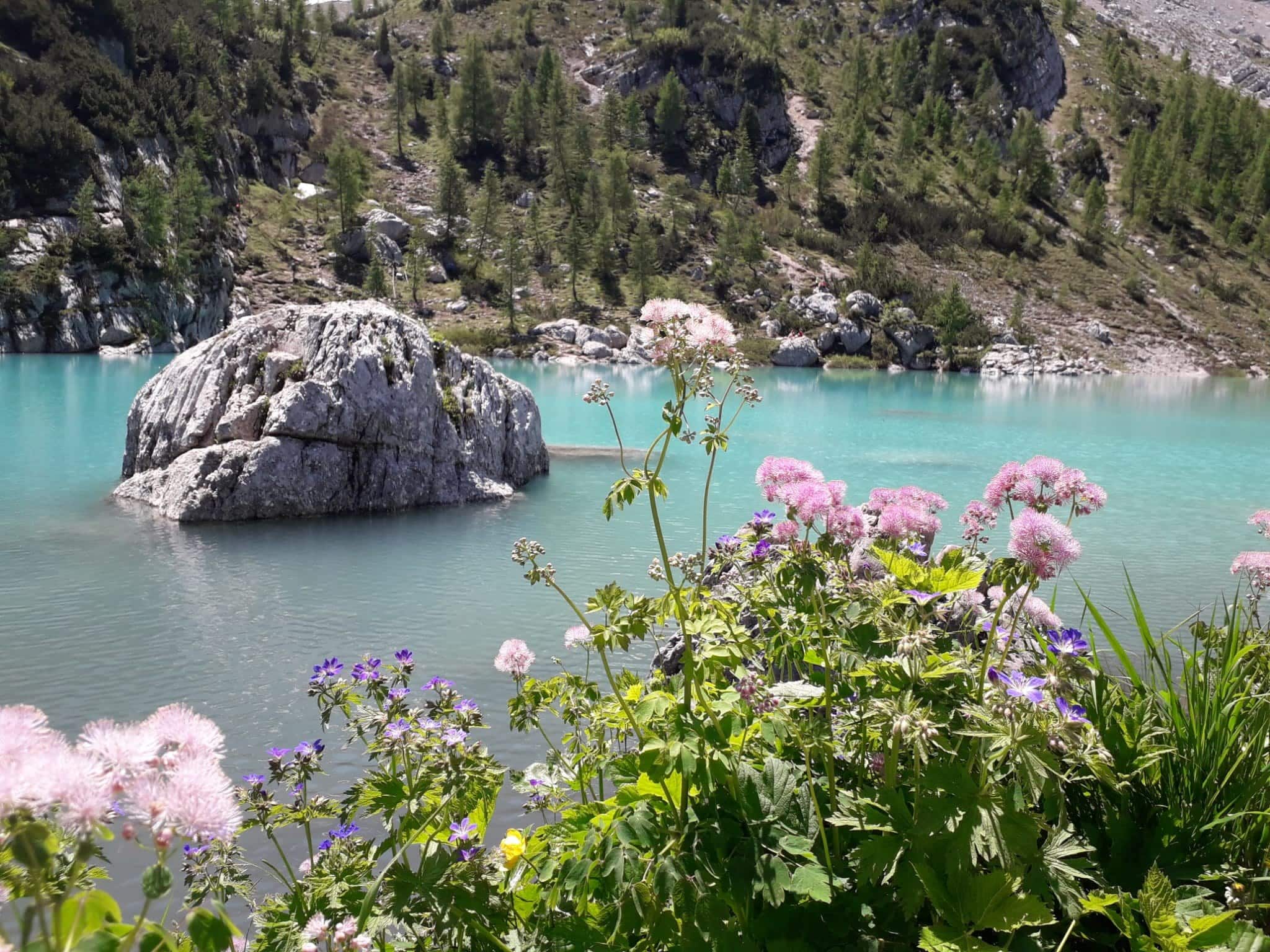
This is where we usually sit down with our favourite sandwich, crack open a flask of tea, and simply breathe in the cold mountain air. The blue surface looks even more magical from the other side, and the only sound breaking the silence is the occasional whistle of a marmot.
6. Watching the Enrosadira Phenomenon
If you manage to time your hike so you’re at the lake or on the way back during sunset, you’ll witness a magical natural display called Enrosadira. This is the moment when the low sun illuminates the pale Dolomite limestone and paints it in vivid shades of pink and fiery orange. It’s absolutely breathtaking. Just don’t forget your head torch, though, because navigating those metal walkways back in the twilight would be sheer madness.
7. Extended Trek to Forcella Marcuoira
If the classic Lago di Sorapis hike feels too short and you’ve still got plenty of energy and experience, you can continue beyond Rifugio Vandelli. The route to Forcella Marcuoira is proper high-mountain hiking, though — with significant elevation gain and steep scrambles over scree. The reward? Views that’ll make your jaw drop: Cortina looks like a model village far below, and you get a sweeping panorama of the entire Sorapis massif without a single selfie stick in sight.
8. Alternative Start from Rifugio Tondi di Faloria
There’s another route to the lake that avoids the overcrowded Passo Tre Croci. You can take the cable car from Cortina up to Monte Faloria and then hike to Rifugio Tondi, continuing over mountain ridges and down to Lago di Sorapis. This route is much longer, more physically demanding, and crosses more challenging terrain including steep descents. I’d only recommend it to very fit hikers with sure footing who aren’t afraid of exposed sections. The views, however, are phenomenal.
Lukáš and I have only eyed this option from afar so far, and honestly, we probably won’t attempt it any time soon. But if you’re an experienced mountaineer who loves a proper challenge with minimal crowds, definitely do your research on this one.
9. Morning Mist and Best Light Tips
When I say arrive early, I mean really early. Not just because of parking and crowds on the walkways, but above all because of the atmosphere. Around seven in the morning, delicate mist often hovers over the lake surface, slowly rising up along the rock walls. The sun is just beginning to light up the surrounding peaks, and the water’s colour reaches its deepest turquoise. The golden hour here is short — the sun soon disappears behind the high mountains — but the sight will stay with you forever.
Yes, the early wake-up is painful, especially when it’s still cold outside and all you want is to stay under the duvet. But the moment you see those first rays of sunlight cutting through the misty veil, every ounce of tiredness vanishes instantly.
10. Winter Visit on Snowshoes
Although the trail is officially recommended only for summer and autumn, experienced mountaineers do venture here in winter on snowshoes. This, however, is truly extreme territory. The metal walkways and secured sections are buried under deep snow or ice, and there’s a very real risk of falls and avalanches. The lake itself is completely frozen over and blanketed in snow, so you won’t see that famous blue water at all. I mention it as a curiosity for those who love winter solitude, but I strongly advise the average hiker against a winter visit.
When I occasionally see those wild Instagram photos of someone balancing on snow-covered ledges, it makes my blood run cold. Mountains in winter don’t forgive mistakes, so even if it’s tempting, come here in summer and leave winter to nature.

Map of points of interest for your phone
Lago di Sorapis with Dogs and Children: Why it’s Not a Good Idea
This is a topic I feel particularly strongly about, because we’ve experienced it first-hand. The hike to Lago di Sorapis is definitely no walk in the park, and for families with younger children or dog owners, it can be a huge problem. We now have little Jonášek, and there’s no way we’re taking him there any time soon. The terrain is genuinely dangerous for small children in a carrier, and you can completely forget about a pushchair. If you have children over 10 who are used to the mountains and have a healthy respect for heights, they can manage it — but even then, you need to keep an eye on them constantly through the dangerous sections.
💡 Local tip: Nearly all cable cars and buses in the area require dogs to wear a muzzle (you can buy one practically everywhere, even at the lower stations). We found this pretty annoying — they insisted on it even when we had the cabin entirely to ourselves. When we had several cable cars to ride in a row, we’d rather leave Kája and Baby resting at the campsite.
Now, about dogs. Our Kája came along with us once, and I have to admit it was a terrible idea. Kája is a sweetheart, but she’s a bit of a klutz. She handled the narrow forest paths with enthusiasm, but the moment we reached the metal grated walkways above the drop, it was game over. Dogs’ paws slip through the holes in the grate, they panic, and frankly I don’t blame them. Kája froze and refused to take a single step.
In the end, Lukáš had to pick her up and carry her the entire length of the exposed section. Just imagine carrying a terrified 20-kilogram dog in your arms along a narrow, wet rocky ledge above a deep ravine while desperately clinging to a steel cable with your other hand. Trust me, you don’t want that experience. So if you have a larger clumsy dog, or conversely a tiny Yorkshire terrier or Maltese like our Baby, leave them safely back at your hotel for this one. And as for puppies — that goes without saying. It’s stressful for you, for the dog, and for everyone you’ll be blocking on the narrow trail.
What to Bring on the Trek to the Turquoise Lake
Mountain weather changes incredibly fast, and even when it’s sunny and shorts weather down in Cortina, up at the lake you can be battered by an icy wind. Don’t underestimate this.
First and foremost: proper hiking boots. We regularly see people on the trail in canvas trainers with smooth soles, and it genuinely makes us wince. The rocks here are often wet and slippery, and without decent grip, those metal ladders can catch you out badly. Pack an extra warm layer in your rucksack — ideally a fleece or lightweight down jacket — plus a waterproof shell. Once the sun dips behind the mountains at the lake, the temperature drops noticeably.
A lot of people ask whether you need a via ferrata kit. For the standard trail no. 215, you don’t need a harness — the cables are just for handholds. We do recommend bringing a lightweight climbing helmet, though. The trail runs directly below vertical rock faces, and small stones dislodged from above by other hikers or animals are a fairly common occurrence. Don’t forget to bring plenty of water and snacks too, as the ascent will burn through some energy.
Where to Eat: What to Try at Rifugio Vandelli
Once you’ve conquered the toughest sections and found yourself at the lake, you’re bound to be ravenous. Rifugio Vandelli is small, but they serve excellent traditional mountain food that’ll have you back on your feet in no time. They’re typically open from mid-June to the end of September.
If you love Italian mountain cuisine, definitely try their canederli. These are large Tyrolean dumplings, served in either a spinach or cheese version — in broth or drizzled with melted butter. I always go for the broth, because after those walkways, warmth and comfort are what I need most. 😊 Another classic is proper polenta with goulash, or with mushrooms and local cheese. If you’d rather not spend time on a full sit-down lunch and want to get back to taking photos, you can grab excellent panini with caprese (mozzarella, tomato, and basil) and eat them on the bench outside with a view. Prices are understandably higher than down in the valley — all supplies have to be brought up by helicopter or cable car — but the atmosphere makes it worthwhile.
Practical Information and National Park Rules
Before you lace up your boots and head out, there are a few important practical things to mention. The lake and its surroundings fall within the protected area of Dolomiti d’Ampezzo Natural Park, and there are some fairly strict rules — breaking them can land you in serious trouble.
The most common mistake tourists make is flying a drone. You’ll see plenty of aerial shots of the lake on Instagram, but don’t be fooled. There’s a strict drone ban across the entire national park, as it disturbs local wildlife and other visitors. Park rangers patrol here regularly, and if you’re caught, you’re looking at a fine of up to €3,000. That’s not worth it for one nice photo.
Another thing people frequently Google — “lago di sorapis swimming” — is whether you can swim. Thankfully, swimming is prohibited (and that includes dipping your feet in). Contact with sunscreen and bacteria would quickly destroy the lake’s unique character.
Where to Go Next in the Dolomites
Sorapis is stunning, but it’s far from the only incredible spot in this part of the mountains in Italy. If you’ve got time and want to see the very best that the Dolomites have to offer, we’ve put together plenty of other guides from our travels:
- Be sure to check out our comprehensive article on 5 Hiking Trails for Everyone in the Italian Dolomites.
- If you’re looking for something easier, the hugely popular and car-accessible Lago di Braies is well worth a visit. It’s an absolute zoo in peak season, but the scenery is worth the crowds.
- From Cortina, it’s a short hop to the iconic three peaks of the Dolomites. Our article on Tre Cime di Lavaredo will show you how to plan the most beautiful circular route.
- And if you’re still not sure how to fill your trip, take a look at our complete list of things to do in the Dolomites.
Travel Tips to Finish
- Cheap flights: Search for deals on Kiwi. It’s our go-to flight search engine. From the UK, you can often find affordable flights to Venice or Innsbruck, both within easy driving distance of Cortina.
- Car hire: We regularly use DiscoverCars as a comparison tool. Lukáš and I have had consistently good experiences with it all over the world.
- Booking accommodation: Booking.com is our favourite hotel search engine. In the Dolomites, I’d recommend looking for accommodation up to six months in advance.
- Don’t forget insurance: For mountain treks, we usually go with AXA travel insurance and always add the sports package for high-altitude hiking. If you’re based in the UK, make sure your travel insurance specifically covers mountain activities.
- Mobile data and eSIM: If you’re travelling through Switzerland or spending extended time on the road, consider an eSIM from Holafly.
Frequently Asked Questions (FAQ)
When we first wrote about Lago di Sorapis, we received a flood of questions from you on Instagram. It’s clear you want to be properly prepared for this kind of hike, especially when parts of it look like they belong in a mountaineering diary. So I’ve gathered the most common questions in one place.
Hopefully these answers will help with your planning and save you a few headaches. But if you think of anything else, do let us know!
How do I get to Lago di Sorapis?
The most common route starts at Passo Tre Croci pass. From there, you’ll follow trail number 215, which takes you directly to the lake after approximately two hours of hiking. You can reach the pass either by car or by bus from Cortina d’Ampezzo.
Can I swim in Lago di Sorapis?
No, swimming is strictly prohibited throughout the entire lake, and this includes even dipping your feet in the water. The reason is to protect the highly sensitive ecosystem and the specific mineral composition of the water, which could be permanently damaged by human presence.
How long does the trek to the lake take?
The entire trek takes approximately 3 to 4 hours of pure hiking time. The one-way journey takes around 1.5 to 2 hours depending on your fitness level and any potential queues at the metal grates. The trail measures 8 kilometers round trip.
Is the trail suitable for dogs?
From our personal experience, we definitely don’t recommend this trek for dogs. There are exposed metal grates over deep drops where dogs’ paws can slip through. While you can carry small and medium-sized dogs, it’s dangerous and stressful. It’s better to leave larger breeds or anxious dogs at home.
When is the best time to visit?
You’ll have the most beautiful experience in September and early October, when the crowds thin out and the mountains display gorgeous autumn colors. If you decide to go in July or August, you’ll need to start the trail early in the morning (ideally before 7:00 AM) to avoid the crowds and catch the best morning light for photography.
Can I fly a drone at the lake?
No. Lago di Sorapis is located within the Dolomiti d’Ampezzo National Park, where there’s a blanket ban on drone use. Fines for violating this rule can reach up to 3,000 EUR, so we definitely don’t recommend risking it.
Is the trek difficult and can beginners manage it?
Physically, the trail isn’t particularly challenging—the elevation gain is just over 200 meters. The difficulty lies mainly in the mental aspect, as you’ll be walking along narrow ledge sections with metal grates above steep drops. If you don’t suffer from vertigo and have proper footwear, an average hiker can manage the trek comfortably. The trail isn’t suitable for people with a serious fear of heights.
Tips and Tricks for Your Vacation
Don’t Overpay for Flights
Search for flights on Kayak. It’s our favorite search engine because it scans the websites of all airlines and always finds the cheapest connection.
Book Your Accommodation Smartly
The best experiences we’ve had when looking for accommodation (from Alaska to Morocco) are with Booking.com, where hotels, apartments, and entire houses are usually the cheapest and most widely available.
 🚗 Car rental on the roadVerified rental cars in the Dolomites
Search with the DiscoverCars comparison engine — it compares prices from dozens of local and international rental companies, and most bookings come with free cancellation.
Compare car prices in the Dolomites →Don’t Forget Travel Insurance
Good travel insurance will protect you against illness, accidents, theft, or flight cancellations. We’ve had a few hospital visits abroad, so we know how important it is to have proper insurance arranged.
Where we insure ourselves: SafetyWing (simple monthly subscription) and TrueTraveller (for extra-long trips).
Find the Best Experiences
Get Your Guide is a huge online marketplace where you can book guided walks, trips, skip-the-line tickets, tours, and much more. We always find some extra fun there!