When Lukáš and I first emerged from the narrow, shady alleyways of the historic centre and this enormous, sun-drenched space suddenly opened up before us, we literally held our breath. Piazza Navona is, in our opinion, the most beautiful place in all of Rome, Italy — and that’s saying something given the fierce competition from all those ancient and Renaissance wonders. Water thunders through three monumental baroque fountains, majestic church domes rise above the terracotta rooftops, and the heavy, irresistible aroma of freshly roasted Italian espresso fills the air.
At the same time, though, I have to be honest and warn you — Rome simply doesn’t forgive the unprepared, and any romantic notions of empty piazzas will be shattered fast. This place is incredibly popular and absolutely packed during peak season, making it all too easy to fall victim to overpriced tourist traps. Waiters in black waistcoats will beckon you towards outdoor tables with a smile, street artists will offer a quick caricature, and hordes of tourists will be jostling for the best selfie. But if you know where to look, where to grab a coffee, and which restaurants to steer well clear of, Piazza Navona will reveal its true, breathtaking baroque face.

TL;DR
- Rome’s most beautiful baroque square: Its unique elongated shape follows the outline of the ancient Stadium of Domitian, on whose ruins the piazza sits.
- Three stunning fountains: The centrepiece is Bernini’s Fountain of the Four Rivers, flanked by the Fountain of the Moor and the Fountain of Neptune at each end.
- Watch out for tourist traps: Eating right on the square is absurdly overpriced — drink your coffee standing at the bar for a fraction of the cost.
- A legendary rivalry: Directly opposite the main fountain stands a gorgeous church by Borromini, who was locked in a lifelong architectural battle with Bernini.
- Everything is walkable: The square sits in the heart of the historic centre (Centro Storico), just a few minutes’ walk from the Pantheon and Campo de’ Fiori.
- Best time for photos: If you want the square to yourself, you’ll need to set the alarm and arrive before eight in the morning.
The full destination guide: Rome — guide and what to see
When to Visit Rome and Piazza Navona
Finding that perfect sweet spot when Rome is pleasantly warm yet you’re not squeezed in with ten thousand other people is incredibly tricky. The best months to visit are May, June, September, and October, with October offering the most comfortable conditions at around 22 °C. The air clears beautifully in autumn, and the city takes on a gorgeous soft light that’s absolutely ideal for photographing the baroque facades on Piazza Navona. The price you pay for this weather comfort is steep, however — during these so-called shoulder seasons, the city is bursting at the seams and hotels are fully booked.
Summer in Rome — and I’m talking specifically about July and August — is a test of both your physical and mental stamina. Temperatures regularly climb to 35 °C and the humidity turns Rome’s streets into a stifling greenhouse without a breath of wind, so the ancient stones heat up like a giant oven during the day. If you must visit in summer, your daily routine needs a radical overhaul — head to the Fountain of the Four Rivers by seven in the morning at the latest. Around midday, retreat into the shade, have a long lunch in an air-conditioned restaurant, and venture out again in the early evening when the shadows lengthen and the square comes alive with its signature nightlife.
If you were worried by reports of an overcrowded Rome during the Holy Year, here’s some good news — the Jubilee 2025 has officially ended and the pilgrim crowds have partly subsided. The Holy Doors were ceremonially closed in January 2026, the city sorted out its infrastructure, and the streets are a touch more breathable. Don’t be lulled into a false sense of emptiness, though, because not much changes at the major tourist landmarks in the historic centre — crowds will always be here. Winter, on the other hand, is Rome’s best-kept secret for a calmer trip: it might rain now and then, but you’ll gain something priceless — your own personal space to admire the monuments.
Where to Stay Near Piazza Navona
For specific accommodation tips, we’ve had great experiences with Hotel Artemide in the central Monti neighbourhood, the boutique Condotti Boutique Hotel just steps from the Spanish Steps, and the quieter Residenza Cavallini in the Prati district near the Vatican. Booking well in advance is the best way to secure a good deal.
💡 Accommodation & experiences tip: We like to search for places to stay on Booking.com, which tends to have the best cancellation policies. For tickets, tours, and activities, it’s worth comparing options on GetYourGuide.

Choosing the right neighbourhood will define your entire Rome experience, because the city is vast and walking on hard cobblestones all day will reliably wear you out. Staying right in the historic centre (Centro Storico) is the dream of many travellers — you throw open the wooden shutters, hear the murmur of fountains, and can walk everywhere. This huge advantage comes at a cost, however: constant noise beneath your window, early-morning restaurant waste collection, and of course the highest price premium for the prime location. If your budget allows a bit of indulgence, booking through Booking.com in this area will land you right in the most picturesque postcard setting.
Right on Piazza Navona or in its immediate vicinity, you’ll find several gorgeous — if pricier — hotels worth considering. The iconic choice is the luxurious Eitch Borromini, housed in a historic palazzo overlooking Bernini’s fountain, with a rooftop terrace offering the best sunset views in the city. If you’re after something tucked behind ivy just around the corner, we’d recommend exploring the renowned Hotel Raphael, which charms guests with its artistic atmosphere and perfect location. For a slightly more affordable option within walking distance, look for accommodation down the quieter lanes around the picturesque Via dei Coronari, where the nights are considerably more peaceful.
If you’re travelling with children or simply crave a quieter night’s sleep, the elegant Prati district on the other side of the river is a brilliant and practical alternative. You won’t find winding medieval alleyways here, but you will get wide, shaded boulevards and flat terrain that’s much kinder to your feet. From Prati, you can reach Piazza Navona via a pleasant stroll across the Ponte Sant’Angelo in about fifteen minutes — plus you’ll be just steps away from the Vatican for an early-morning visit. Another option is the bohemian Monti quarter beyond the Colosseum, which strikes a great balance between easy access to sights, excellent local restaurants, and a friendly neighbourhood vibe without the worst tourist crowds.
10 Things to See and Do at Piazza Navona and Nearby
Let’s take a closer look at the very best this masterpiece of Italian baroque has to offer, and how to enjoy it to the fullest without unnecessary stress. I’ll tell you where to direct your gaze, what details to look for on the sculptures, and where to duck away when the noise of the street performers gets too much.
1. The Fountain of the Four Rivers by the Genius Bernini
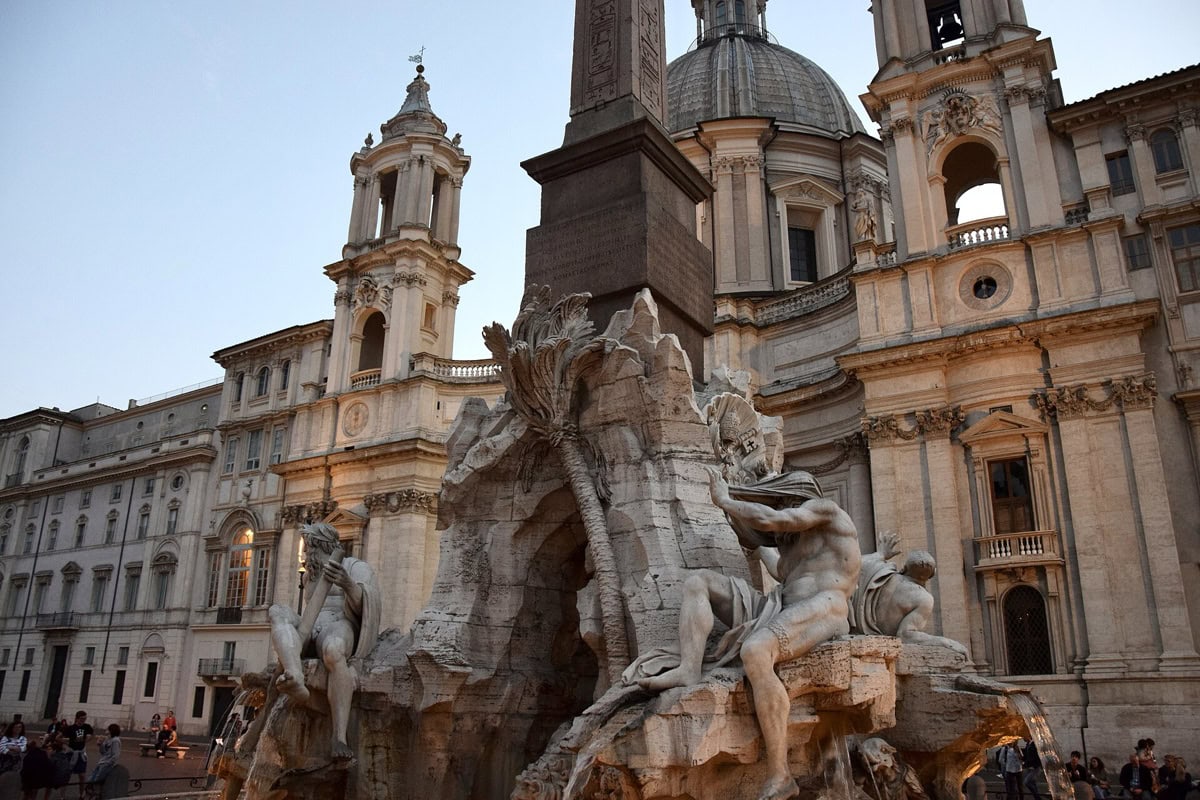
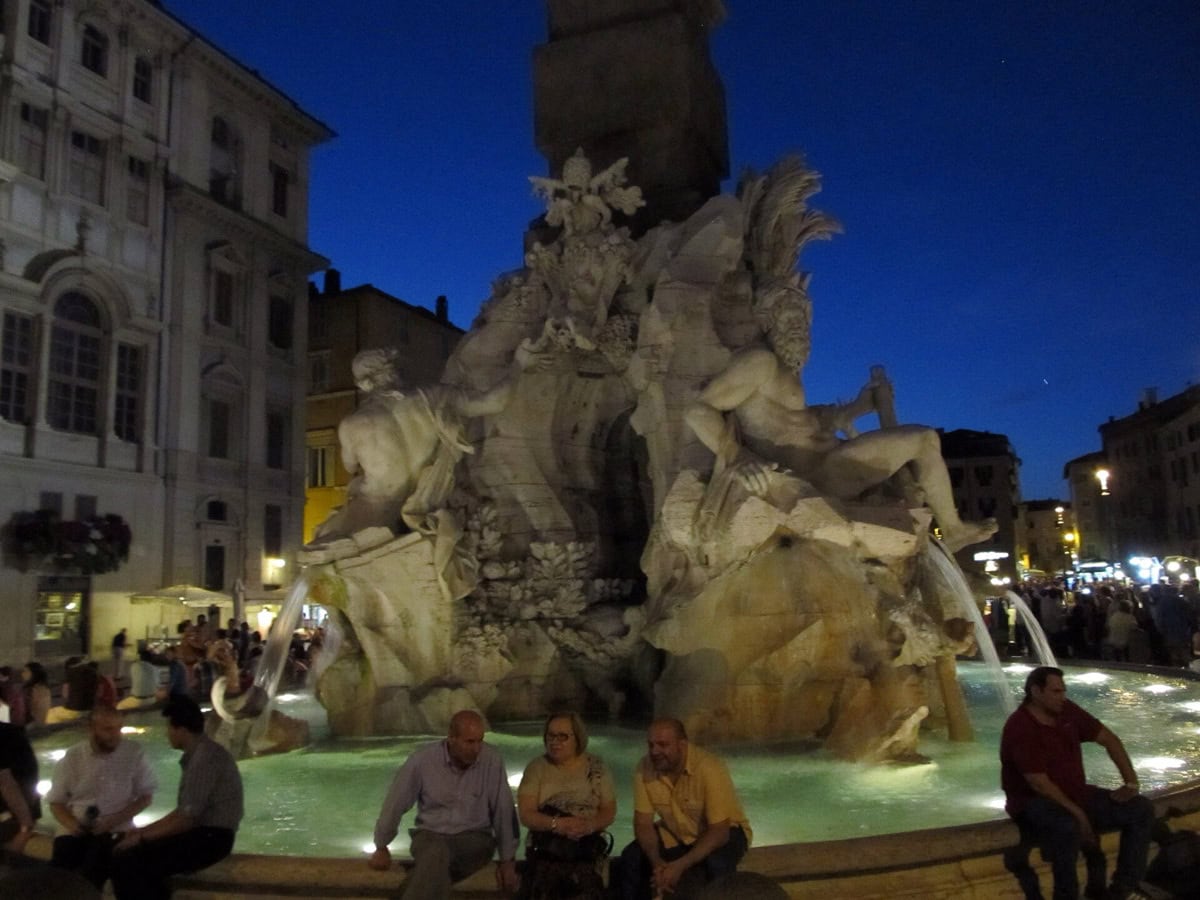
The centrepiece of the entire square and its absolute visual magnet is the Fontana dei Quattro Fiumi — the Fountain of the Four Rivers. This masterpiece was created in the mid-seventeenth century by sculptor Gian Lorenzo Bernini, who designed it to dazzle the then-reigning Pope Innocent X. Take a closer look and you’ll see that the four mighty marble male figures represent nothing less than the four continents known at the time, along with their principal rivers. It’s a stunning demonstration of how Bernini could breathe dynamic movement and untamed energy into cold stone.
Each sculpture has its own specific detail that will help you identify it — if you know what to look for. The Ganges, representing Asia, holds a long oar, because the river was thought at the time to be calm and easily navigable. The African Nile, by contrast, has a piece of cloth draped over his head, symbolising the fact that the river’s source was still unknown to Europeans. The European Danube reaches towards the papal coat of arms with its lilies and dove, while the American Río de la Plata sits atop a pile of coins, referencing the imagined vast riches of the New World.
This entire dynamic sculptural group serves as a colossal pedestal for a slender Egyptian obelisk soaring skyward. Bernini created a perfect illusion by deliberately leaving the base beneath the obelisk hollow, so it appears as though the massive block of granite is levitating on nothing but willpower and cascading water. Around the feet of the monumental figures, you’ll also spot carved animals and plants from each continent — from a horse and a lion to a rather curious-looking armadillo. We’d recommend walking around the fountain from every angle, because each vantage point reveals an entirely new, fascinating composition of shapes and falling water.
2. The Church of Sant’Agnese in Agone and a Famous Architectural Rivalry
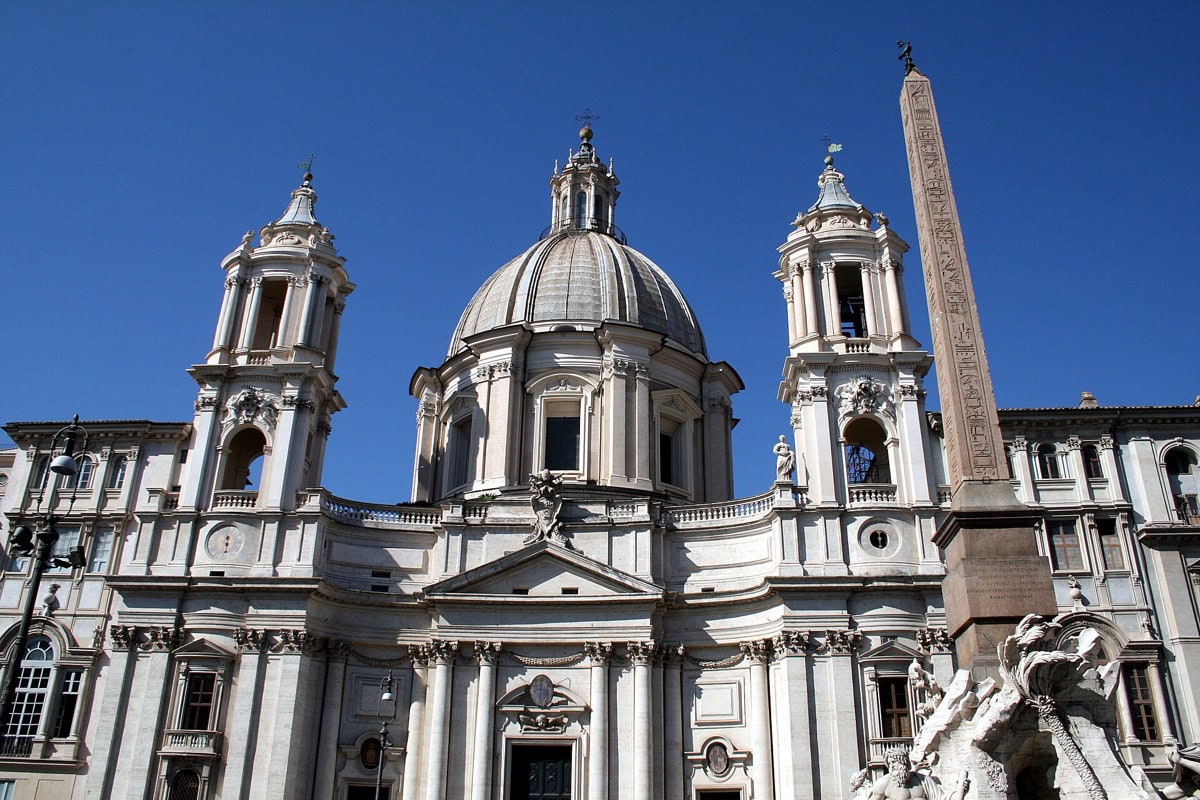
Directly opposite Bernini’s main fountain rises the gorgeous, concave facade of the church of Sant’Agnese in Agone. This baroque gem was designed by Bernini’s greatest lifelong rival, Francesco Borromini, whose style was far more mathematical and melancholic. The church stands on the exact spot where, according to Christian tradition, Saint Agnes was martyred, and its imposing dome flanked by twin bell towers perfectly frames the western side of the square. Inside, you’ll find beautiful frescoes and, above all, an unexpected stillness that sharply contrasts with the tourist hubbub outside on the cobblestones.
It’s the close proximity of these two masterworks that gave rise to one of Rome’s most beloved urban legends — one that practically every local guide will tell you. The story goes that the statue of the Río de la Plata on Bernini’s fountain raises its hand in horror, unable to bear the sight of Borromini’s supposedly botched church. Another figure, the African Nile, covers his head entirely just to be safe, lest he witness the whole building collapse. It’s a wonderfully mischievous tale of two competing geniuses that Italians absolutely love to pass on.
The truth, however, is far more prosaic, and historians merely shake their heads at this legend. Bernini actually completed his fountain several years before Borromini even began work on the church, so no such reaction carved in stone was ever possible. Still, it’s marvellous to stand in the middle of the square, looking back and forth between the fountain and the church, imagining the enormous tension between two artists who shaped the entire face of baroque Rome. Remember that a strict dress code applies when entering the church — shoulders and knees must be covered.
3. The Secret of the Elongated Shape and the Ancient Stadium of Domitian
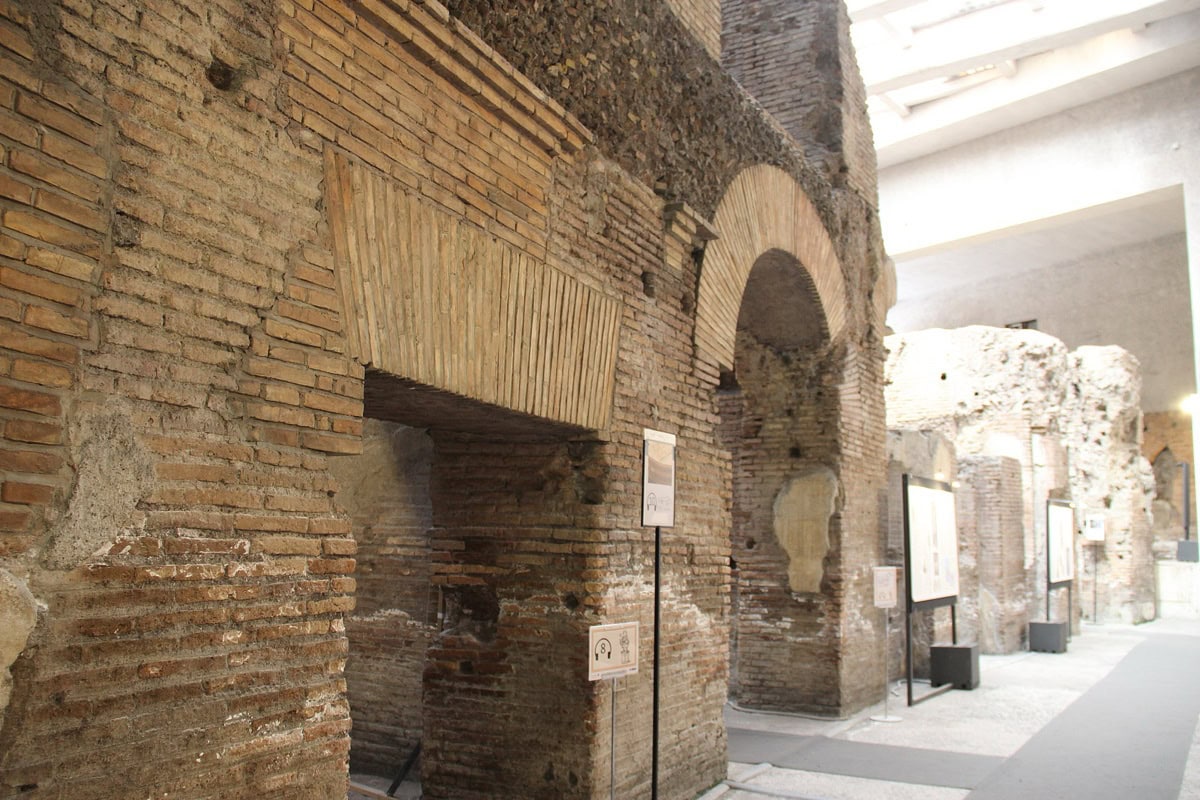
When you look at Piazza Navona from above or walk along its perimeter, its highly unusual elongated shape immediately jumps out at you. The square precisely follows the footprint of an ancient Roman stadium that Emperor Domitian had built at the end of the first century AD. While the nearby Colosseum hosted bloody gladiatorial combat, this stadium was primarily used for athletic competitions, foot races, and Greek-style sporting games. The surrounding buildings and palaces actually stand directly on the remains of the original ancient stands, where up to thirty thousand Roman spectators once cheered.
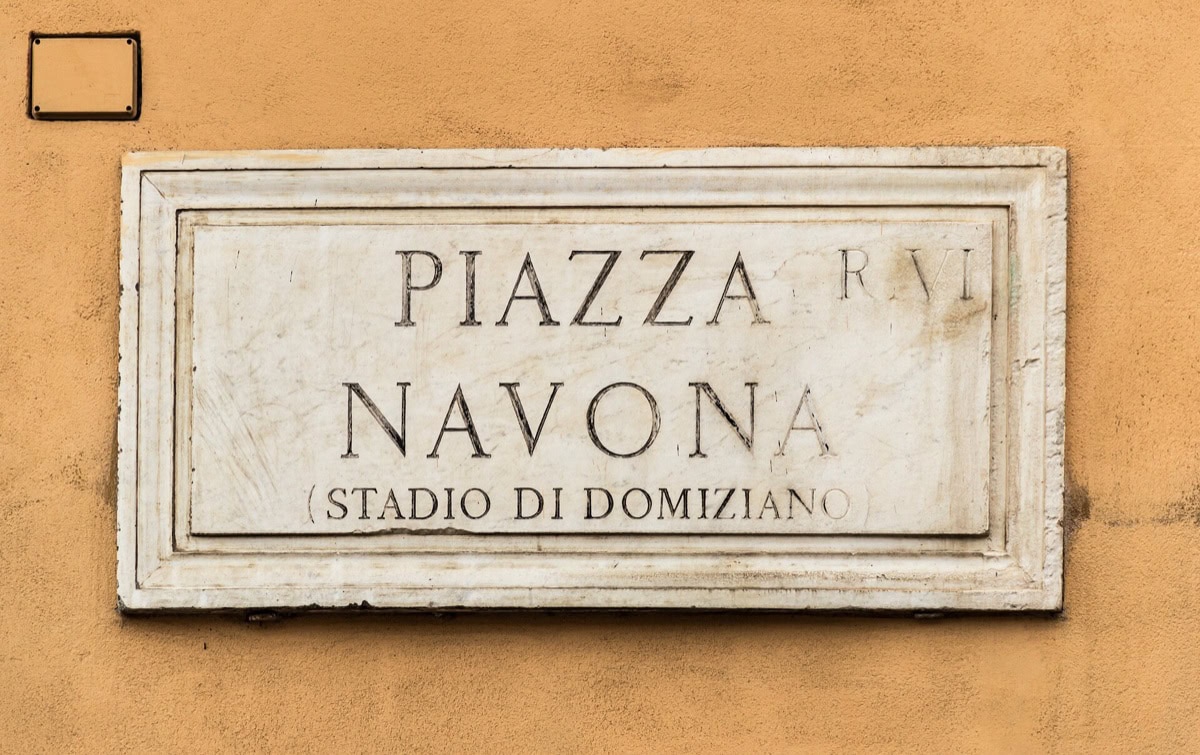
The very name Navona is a linguistic curiosity that evolved from the original Greek word for sporting contests, known as agones. Over the centuries, the name morphed from “in agone” to “nagone” and eventually to today’s “navona”, a reminder of the space’s original purpose that endures to this day. During the Renaissance, the square was even occasionally flooded artificially so that refreshing summer festivities and small boat rides could be held for the entertainment of Roman nobility.
If you want to see the actual ancient foundations, you don’t have to rely on imagination alone — part of them is open to visitors. Beneath the northern edge of the square lies the Stadio di Domiziano visitor circuit, where you can buy a ticket and descend below current street level. You’ll see massive brick arches, original paving, and learn fascinating details about how ancient Roman sport actually worked. It’s a brilliant escape from the noise and summer sun into the cool, quiet underground, where two thousand years of history will wash over you.
4. The Fountain of the Moor and the Fountain of Neptune
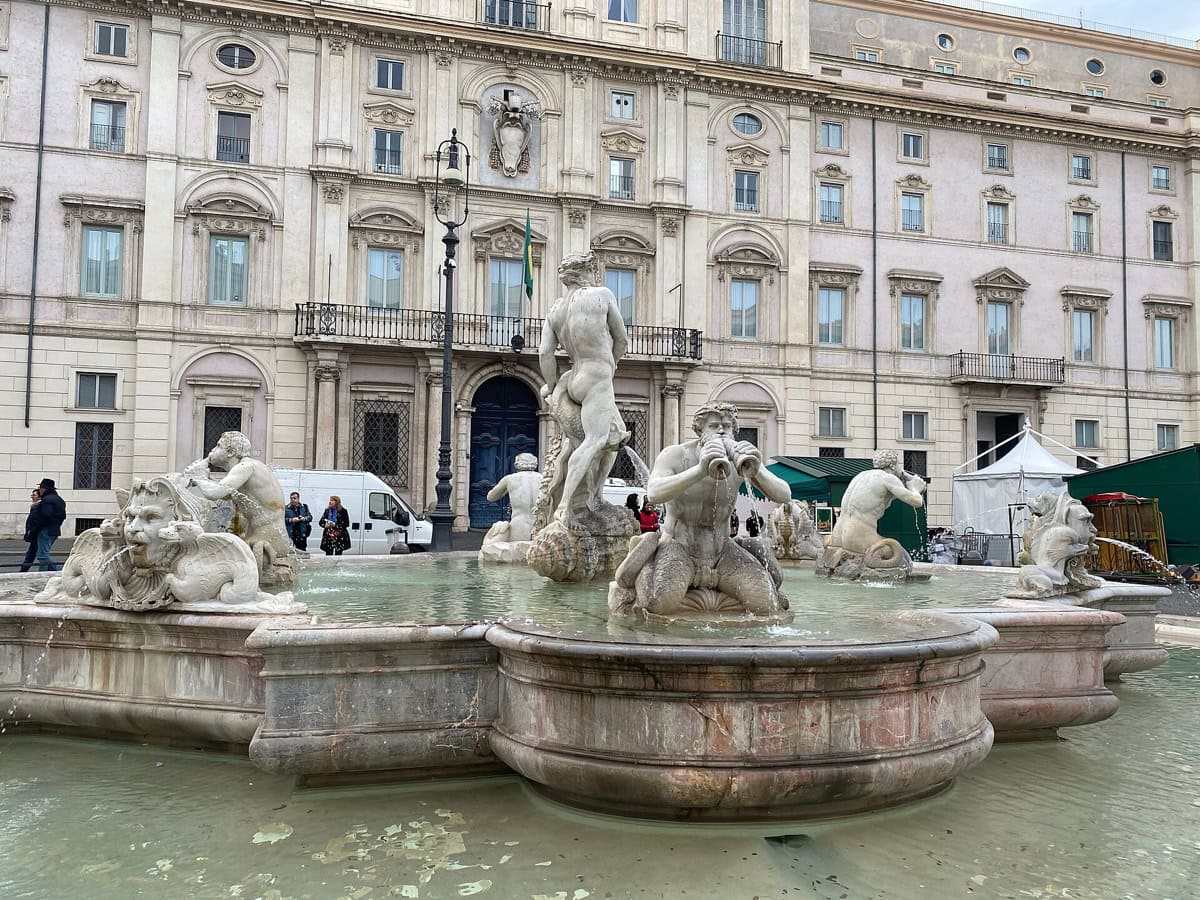
While Bernini’s masterpiece steals most of the attention, the square wouldn’t be complete without two smaller yet equally beautiful fountains at its northern and southern ends. At the southern end, you’ll find the Fountain of the Moor (Fontana del Moro), named after the central figure of a man with African features wrestling a large dolphin. The original basin was designed by Giacomo della Porta back in the sixteenth century, but the central figure was added later by none other than Bernini himself. Surrounding the main protagonist, stout tritons spout water, creating a lovely symmetry with the central section of the square.
At the opposite, northern end of the piazza stands the Fountain of Neptune (Fontana del Nettuno), which has a rather interesting backstory. For centuries, it stood in place as nothing more than an empty stone basin without any sculptures at all, serving a mostly practical function for local residents. The elaborate sculptural decoration — dominated by the sea god Neptune battling a giant octopus — wasn’t added until the late nineteenth century. The city council wanted the square to look perfectly balanced, so they held a competition for its embellishment.
From a practical standpoint, these two flanking fountains are a huge advantage if you love photography. While hundreds of people jostle around the Fountain of the Four Rivers with outstretched phones, the Moor and Neptune tend to be considerably quieter and less crowded. You’ll get lovely compositions with water in the foreground and baroque facades in the background, without someone constantly stepping into your frame. Plus, there are low stone bollards strategically placed around them where you can lean for a moment when your feet are screaming after a full day of walking.
5. Atmosphere, Street Artists, and a Café Warning
Piazza Navona isn’t just an open-air museum — it’s above all an incredibly vibrant space that pulses with energy from early morning until the late-night hours. The square is a traditional haven for street artists, portrait sketchers, and musicians who set up their easels and entertain passing tourists. You can have a fun caricature drawn, listen to a classical guitar, or simply sit back and watch the fascinating human buzz. It’s precisely that laid-back Italian atmosphere that keeps people from all over the world coming back time and again.
At the same time, you need to stay on your guard, because the restaurants and cafés lining the square represent the worst of Rome’s tourist traps. If you sit at an outdoor table overlooking the fountains, a simple espresso can set you back four euros or more, since you’re effectively paying for the privilege of renting a seat with a view. The golden rule locals swear by is simple: if you want cheap, excellent coffee, pay around one euro at the till and drink it standing at the bar (al banco). Waiters loitering on the street with picture menus in five languages should be a clear warning sign to keep walking to the next street over.
The sneakiest trick at the surrounding tourist restaurants is charging for fish and seafood “per etto” — that is, per 100 grams rather than per portion. Some unsuspecting tourists have ended up paying over six hundred euros for a single meal, because the waiter brought out a massive fish and slapped on an unauthorised mandatory service charge. Thankfully, Lukáš and I dodge these gastronomic heart attacks thanks to being vegetarian, but even so, we always make a point of avoiding restaurants directly on major squares. Instead, we duck into one of the unassuming side streets, where you’ll find genuine, fairly priced Roman hospitality.

6. Winter Magic and Christmas Markets on the Square
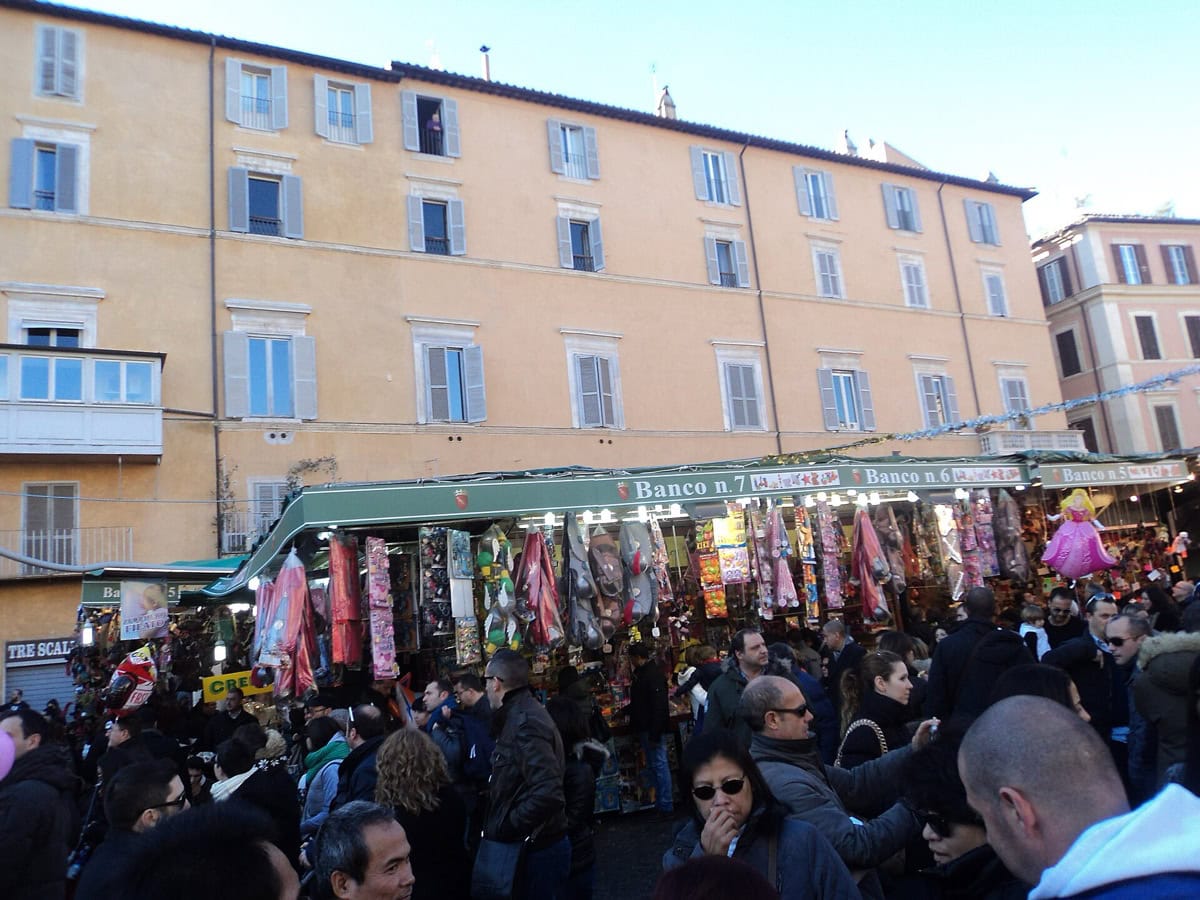
If you visit Rome in the winter months, you’ll experience Piazza Navona in a completely different, unexpectedly festive atmosphere. From the beginning of December through to the feast of Epiphany, the square transforms into one big Christmas market with a long and deeply rooted Roman tradition. Wooden stalls surround the fountains, selling everything from hand-carved nativity figurines and sparkling ornaments to enormous sticks of candyfloss. The air smells of roasted chestnuts and mulled wine, and the baroque palaces are bathed in soft, festive lighting that lends the whole space a fairytale quality.
The real star of these markets isn’t Father Christmas, though — it’s the traditional Italian figure of a kindly witch named La Befana. According to legend, Befana flies on her broomstick on the night of January 5th to 6th, filling good children’s stockings with sweets and leaving naughty ones with nothing but lumps of coal. On the square, you’ll bump into several people dressed as this iconic character for photo opportunities, and the stalls are packed with Befana figurines in every conceivable size. It’s a wonderful chance to experience Italian Christmas customs, which are far more playful and colourful than what we’re used to in the UK.
I should note, however, that in recent years the markets have drawn criticism from locals, as the original artisanal quality has been fading. Many traditional stalls have unfortunately been replaced by cheap fairground attractions and trinket sellers, which somewhat diminishes the authentic historic charm. Even so, an evening winter stroll through the square with a paper cone of hot roasted chestnuts in hand has an undeniable magic, especially when accompanied by music from traditional Italian bagpipes played by musicians in sheepskins known as zampognari.
7. Pop Over to the Nearby Pantheon
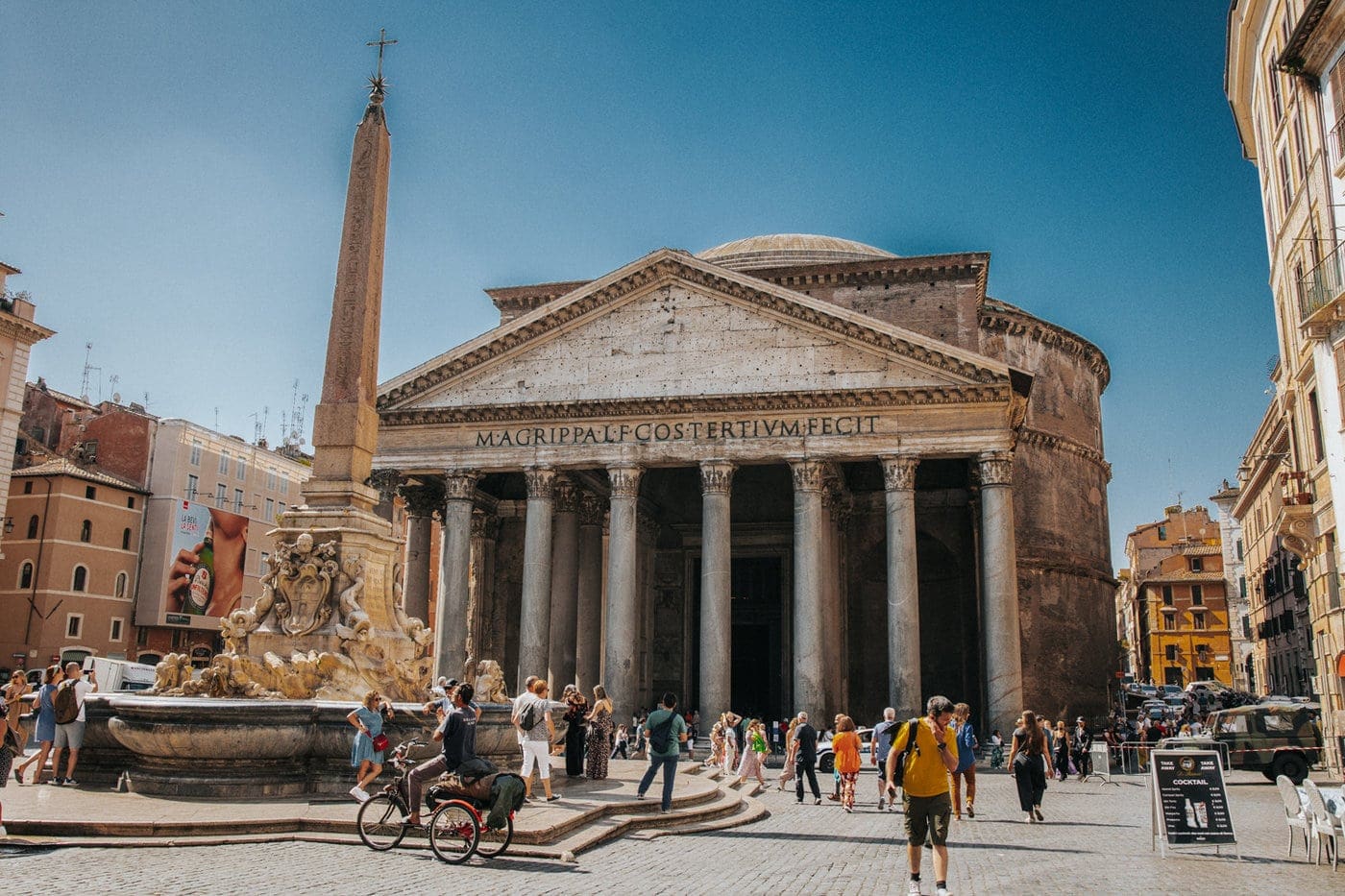
From Piazza Navona, it’s barely a five-minute walk through a maze of narrow lanes to another absolute jewel of Rome — the Pantheon. The best-preserved ancient building in the world will hit you like a wall when you step into its small piazza, with its colossal granite columns shipped all the way from distant Egypt. It has survived two thousand years of looting and earthquakes for one pragmatic reason: it was consecrated as a Christian church in the seventh century. Its enormous, unreinforced concrete dome remains a staggering architectural marvel that baffles even modern engineers to this day.
The most magical feature of the entire building is the nine-metre circular opening at the top of the dome — the oculus — which serves as the sole source of natural light. When it rains in Rome, water falls straight through the oculus onto the gently convex marble floor, where it’s immediately drained away by an ingenious two-thousand-year-old system of discreet channels. Inside, you’ll also find the tomb of Renaissance genius Raphael and Italy’s first king after unification, so history truly seeps from every carved stone.
The days when you could just wander into the Pantheon off the street and shelter for free from a summer downpour are sadly long gone. Admission currently costs €5, and from July 2026 the Italian Ministry of Culture is planning to raise it to €7. You need to secure tickets well in advance through the official portal, because at weekends and on public holidays, an online reservation is an absolute must. If you turn up without one, you’ll face a relentless queue stretching across the entire piazza, often in direct sunlight — enough to ruin your whole afternoon.
8. The Buzz of Campo de’ Fiori Market
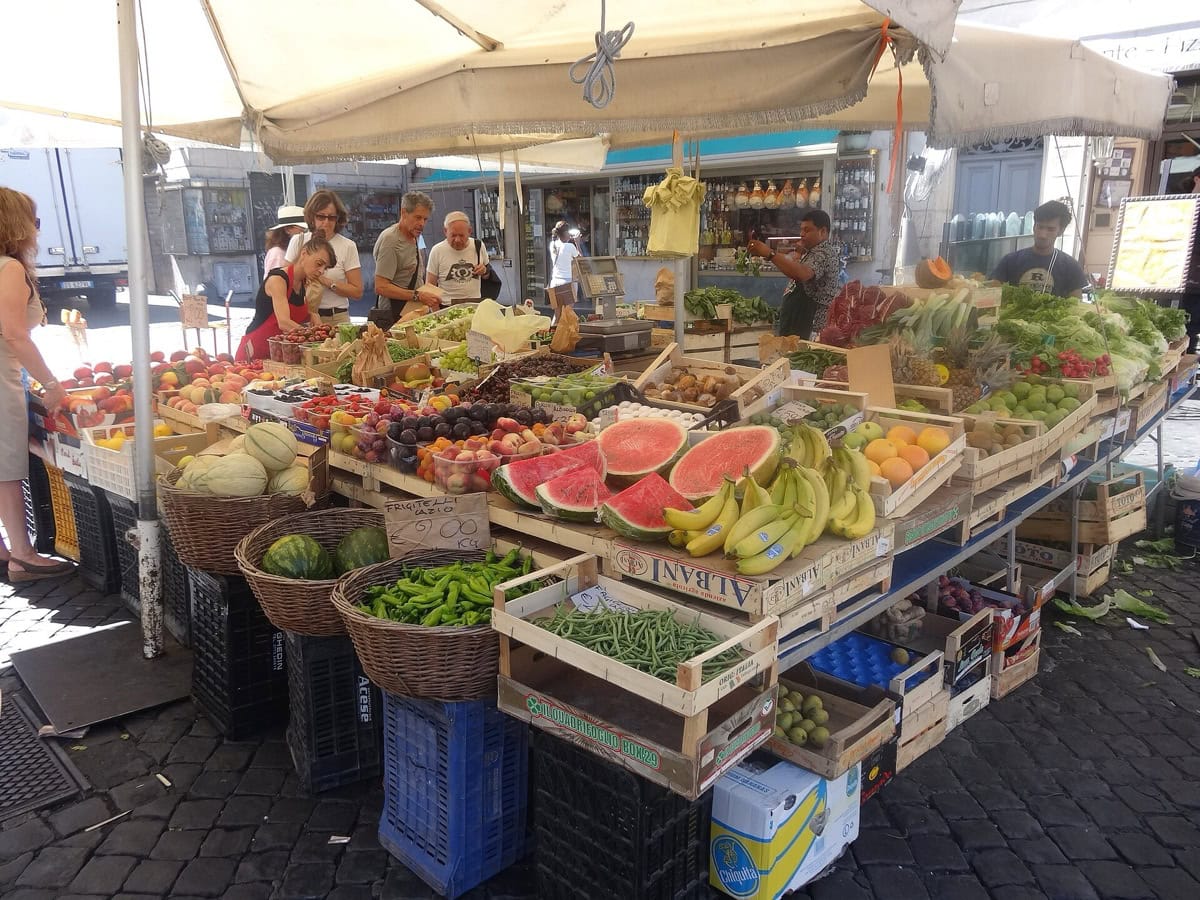
In the opposite direction, roughly five minutes’ walk south of Navona, lies Campo de’ Fiori, offering a completely different, far earthier experience. This is the only major square in Rome’s historic centre that doesn’t have a church on it at all, and there’s a dark historical reason for that. Instead of a house of worship, the space is dominated by the brooding statue of philosopher Giordano Bruno in his ominously pulled-down cowl, who was burned at the stake here by the Inquisition in 1600 for heresy. His presence gives the square a slightly melancholic edge, though the surrounding noise quickly overpowers it.
Every morning except Sunday, a bustling outdoor market takes over, with the colours of fresh vegetables, fruit, flowers, and spices mingling under large parasols. Admittedly, the market is quite tourist-oriented these days, with overpriced packets of colourful dried pasta on display, but you can still find stalls where locals come for fresh artichokes and fragrant tomatoes. It’s a great spot to pick up fresh fruit for a snack, soak in the real morning buzz of the city, and snap some wonderfully colourful photos.
💡 Local tip: If hunger strikes on the square, ignore the expensive restaurants and head straight to the legendary bakery Forno Campo de’ Fiori, which has been operating here since 1835. Grab a fresh, crispy pizza bianca — simply perfect dough with olive oil and coarse salt — and eat it right there on the square, straight from the paper. Lukáš and I always stop here because it’s cheap, unbelievably good, and completely vegetarian — fuel that’ll keep you going for hours of walking.
9. Caravaggio’s Masterpieces at San Luigi dei Francesi
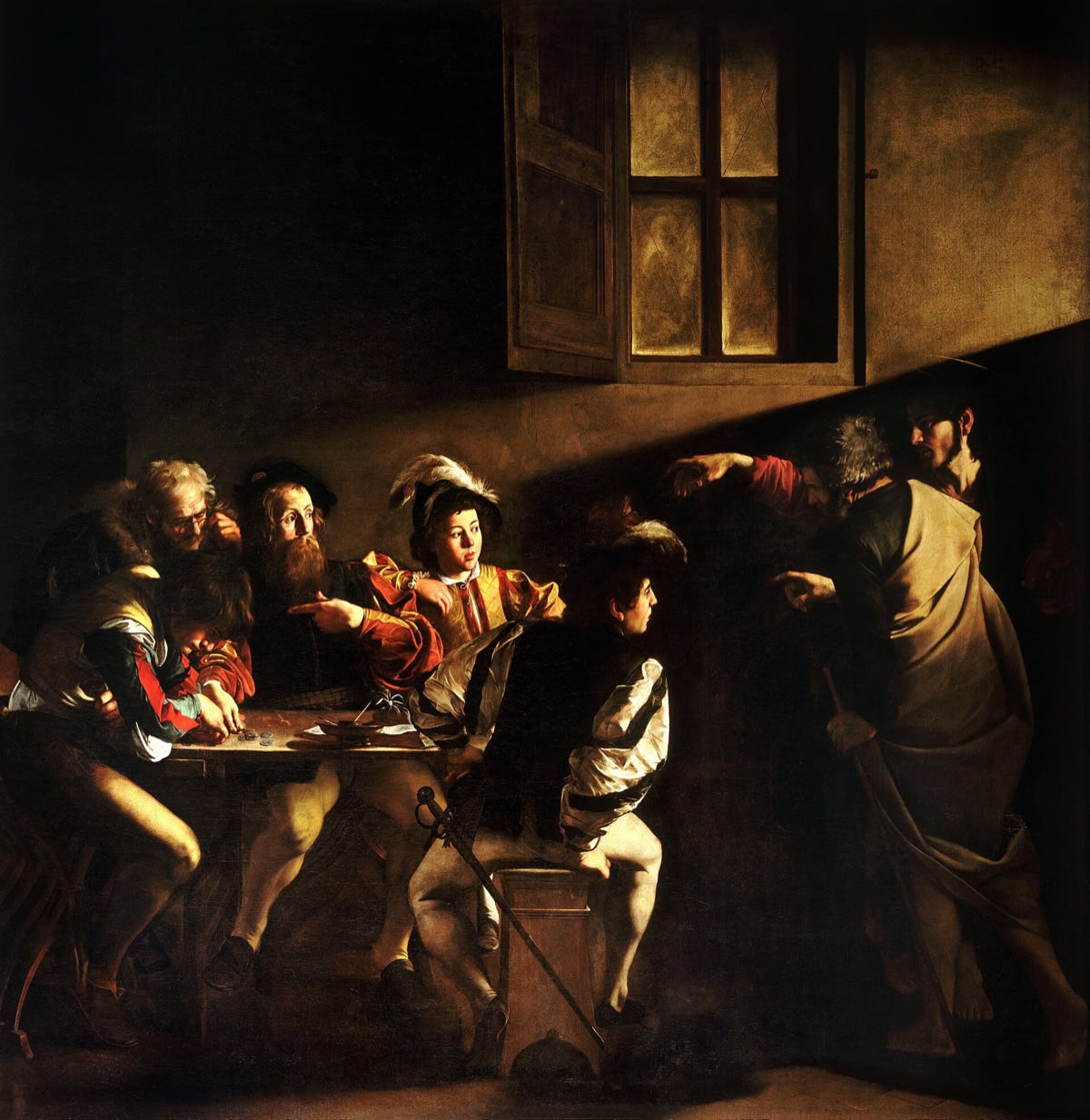
Art lovers should absolutely not miss the unassuming French national church of San Luigi dei Francesi, located just one street away from Piazza Navona. From the outside it looks like any other baroque church, but inside it hides a genuine treasure — three brilliant paintings by Caravaggio, the master of chiaroscuro. In the Contarelli Chapel, you’ll find his famous cycle depicting the life of Saint Matthew, and the dramatic intensity, realistic detail, and extraordinary play of light and shadow will leave you mesmerised.
Best of all, unlike the major galleries, entry to the church is completely free — saving you the cost of a pricey Vatican ticket. You will, however, need to have a one-euro coin ready, because the chapel with the paintings is normally plunged into deep darkness. Only when you drop a coin into the small slot machine by the grille do the spotlights flick on, and Caravaggio’s figures literally emerge from the shadows right before your eyes — an incredibly powerful visual experience.
The church is closed over lunchtime (usually between 12:30 and 15:00) for a break, so you’ll need to time your visit for the morning or late afternoon. Once again, strict dress code rules apply — without covered shoulders and knees, the attendants won’t let you in, no matter how much you plead. It’s one of those magical Roman spots where you can experience world-class art in an intimate setting, without crowds pushing you along a corridor like a conveyor belt.
10. Perfect Gelato and Food in the Immediate Vicinity
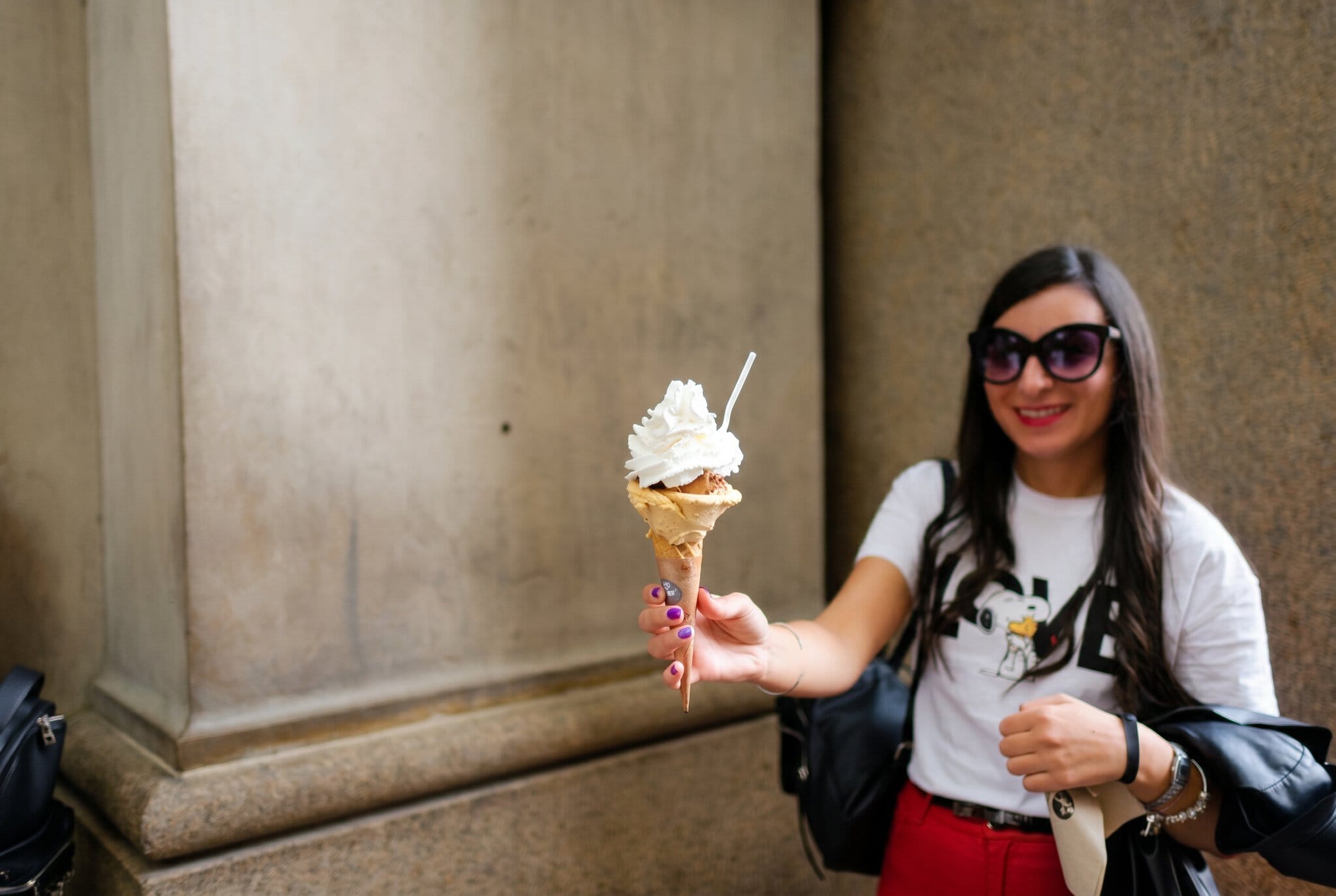
The area around Piazza Navona is home to several gastronomic gems that would be a crime to skip on a trip to Rome. For the best gelato, head to the legendary Giolitti near the Pantheon, which has been going since 1900 and where the staff still dress in elegant uniforms. You’ll get a gloriously creamy scoop, but be prepared for organised chaos inside — you need to pay at the till first before choosing your flavours at the counter. A great and slightly more modern alternative is the artisan gelateria Fatamorgana, which offers some truly creative and refreshing flavour combinations.
If you’re after a spot for lunch or an evening sit-down, avoid the main thoroughfares and tuck yourself into the little Piazza di Pasquino. You’ll find the superb traditional wine bar Cul de Sac here, boasting a huge selection of wines from across Italy, where you squeeze onto wooden benches and soak up genuine local character. Lukáš and I regularly order their fantastic vegetarian boards loaded with local cheeses, nuts, and honey — paired with a glass of good red wine, it makes the perfect end to a long day.
Another safe bet for a quick bite is a small pizzeria serving pizza al taglio — rectangular slices cut with scissors and sold by weight. It’s the most authentically Roman way to eat on the go, quickly and cheaply, and the system is completely transparent — you can see exactly what you’re paying for. You point at the pizza you fancy, the server snips it off, weighs it, and heats it in the oven, so you avoid the nasty bill surprises that lurk in the classic tourist restaurants on the square.
Map of points of interest for your phone
Where to Go Next from Piazza Navona

Since you’re right in the heart of Rome, the biggest sights are literally within arm’s reach and you can continue exploring on foot.
- Trevi Fountain: A roughly ten-minute walk east brings you to the world’s most famous fountain, but remember that since February 2026, there’s a new €2 fee to enter the fenced-off zone right next to the basin.
- The Pantheon: Just five minutes through narrow lanes and you’re standing before the ancient marvel with its colossal concrete dome.
- Castel Sant’Angelo: Head west, cross the Ponte Sant’Angelo, and explore the massive fortress that originally served as Hadrian’s mausoleum.
- The Vatican: From Castel Sant’Angelo, it’s just a short stroll along a wide boulevard straight to St. Peter’s Square, the centre of the Christian world.
- The Colosseum: If you enjoy longer walks, head south past the Roman Forum to the greatest ancient amphitheatre of them all.
- Also check out our complete guide to What to See in Rome, where you’ll find a detailed itinerary and loads more tips for your trip.
Frequently Asked Questions
Where can I find public toilets near the square?
Public restrooms are few and far between in Rome, and most charge a fee. Your best bet is to pop into any small bar or café on a side street, buy a quick espresso at the counter for about one euro, and politely ask “Dov’è il bagno?” Italian law requires bars to let paying customers use their facilities, which is a much more pleasant and cleaner option than hunting down public stalls.
Can you drink water from the public fountains in the square?
The water in the large baroque fountains isn’t drinkable, and bathing or dipping your feet in them is strictly forbidden with hefty fines. However, around the square and on nearby streets you’ll find small cast-iron fountains called nasoni (big noses) that continuously flow with ice-cold, perfectly clean drinking water for free. The local trick is to plug the bottom spout with your finger, which makes the water shoot out of a small hole on top in a perfect arc straight into your mouth.
What’s the best way to reach Piazza Navona by public transport?
There’s no metro directly to the square or its immediate vicinity, as the historic center simply doesn’t allow it for archaeological reasons. The nearest major transit artery is Corso Vittorio Emanuele II, served by dozens of buses (like lines 46, 62, or 64) connecting Termini station with the Vatican. From the bus stop, it’s only about a three-minute walk to the square.
Is the square and surrounding area safe?
You won’t face any physical danger here, but you need to be extremely careful of organized pickpocket gangs and pushy trinket sellers. Thieves take advantage of moments when you’re gazing up admiringly at the fountains, so always wear your backpack on your front and keep your wallet in a deep zippered pocket. Also ignore street scammers who’ll try to force a rose into your hand or tie a friendship bracelet on your wrist, then aggressively demand twenty euros for it.
Do you have to pay to enter the nearby churches?
Entry to the vast majority of Roman churches, including Sant’Agnese in Agone and San Luigi dei Francesi, is completely free and requires no reservation. However, be prepared for a strict dress code—guards will unceremoniously kick you out if you have bare shoulders or shorts above the knee. In hot summer weather, a light, wide scarf in your backpack is a lifesaver—just drape it over yourself before entering.
Will nearby establishments accept credit cards everywhere?
Italy has made huge strides in recent years, and card payment is now standard in restaurants, shops, and most decent gelaterias. That said, always carry at least a few coins worth ten or twenty euros, as you’ll need them for tipping the barista for your coffee, lighting up paintings in churches, or at small street stalls where the card terminal “coincidentally” happens to be out of order.
When is the square most beautiful for photography?
If you want to capture the true beauty of the baroque fountains without crowds and selfie sticks, you really need to get up early and arrive no later than 8 AM. The morning sun beautifully illuminates the church façades, and you’ll only encounter bakers and garbage collectors on the square. The other magical time is late at night, when the tourist hordes have finally gone to bed, the fountains are dramatically lit, and the square regains its romantic, melancholic atmosphere.
Tips and Tricks for Your Vacation
Don’t Overpay for Flights
Search for flights on Kayak. It’s our favorite search engine because it scans the websites of all airlines and always finds the cheapest connection.
Book Your Accommodation Smartly
The best experiences we’ve had when looking for accommodation (from Alaska to Morocco) are with Booking.com, where hotels, apartments, and entire houses are usually the cheapest and most widely available.
 🚗 Car rental on the roadVerified rental cars in Rome
Search with the DiscoverCars comparison engine — it compares prices from dozens of local and international rental companies, and most bookings come with free cancellation.
Compare car prices in Rome →Don’t Forget Travel Insurance
Good travel insurance will protect you against illness, accidents, theft, or flight cancellations. We’ve had a few hospital visits abroad, so we know how important it is to have proper insurance arranged.
Where we insure ourselves: SafetyWing (simple monthly subscription) and TrueTraveller (for extra-long trips).
Find the Best Experiences
Get Your Guide is a huge online marketplace where you can book guided walks, trips, skip-the-line tickets, tours, and much more. We always find some extra fun there!