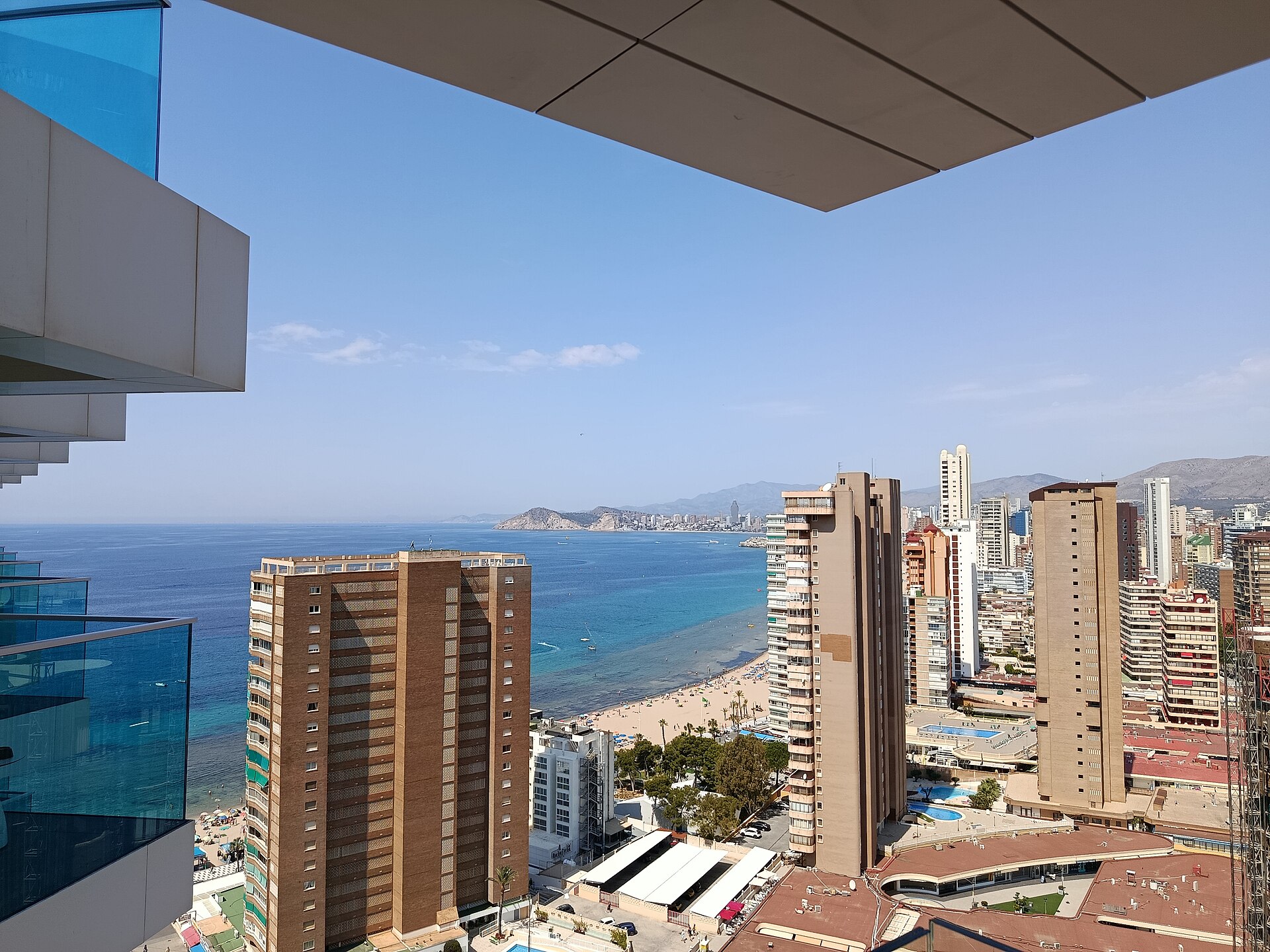
If you’re dreaming of a summer holiday in Spain and looking for a destination that never sleeps, Benidorm Spain will not disappoint. This former sleepy fishing village has transformed over just a few decades into a fascinating vertical city that reliably divides opinion.
Some call it the Manhattan of Europe, others love it for its unbeatable family-friendly resorts and endless sandy beaches. Whether you’re after wild nightlife, perfect facilities for kids, or simply a guaranteed dose of sunshine, you’ll find it all neatly wrapped up in one place. I’ve put together a detailed guide to show you every side of this unique resort on the sun-drenched Costa Blanca coast.
TL;DR
- Two iconic beaches: While the livelier Levante Beach attracts fun-seekers and water sports enthusiasts, the calmer Poniente Beach offers an ideal retreat for families with children.
- A striking contrast: Hidden among the forest of modern skyscrapers lies a charming old town with narrow lanes and the stunning Balcón del Mediterráneo viewpoint.
- A paradise for families: You’ll find massive theme parks like Terra Mítica and one of Europe’s largest water parks, Aqualandia.
- Easy to reach: The nearby Alicante Airport offers excellent connections from across the UK, and a reliable tram network runs along the coast.
- Day trips galore: The Costa Blanca coast boasts beautiful historic towns like Altea and the picturesque mountain village of Guadalest.
- Year-round destination: Thanks to a unique microclimate sheltered by mountains, it’s warm even during winter months, attracting digital nomads and long-stay visitors.
The full destination guide: Spain — guide and what to see
Best Time to Visit Benidorm Spain
The entire Costa Blanca coastline boasts the mildest climate in all of Spain, making it an absolutely ideal year-round destination. The city is sheltered by a wall of mountains that blocks cold inland winds and maintains a pleasant microclimate bubble. If you want to enjoy swimming in the sea, the best time to visit is from June to the end of September. Just be prepared for July and August, when beaches are packed to the brim and temperatures regularly soar well above 30°C.
For an active holiday full of excursions, I’d recommend visiting during the spring or autumn months, when the weather is much more comfortable for hiking and exploring the surroundings. Winters here are incredibly sunny and warm, which is why so many Brits and Northern Europeans flock here to escape the cold. A spring visit can also be combined with a trip to nearby Valencia, where the spectacular Las Fallas festival takes place in March. The city transforms into a non-stop celebration full of gunpowder and giant sculptures.
How many days do you need? For the resort itself and its immediate surroundings, three to four days should be enough, especially if you want to fit in a visit to the theme parks. However, if you’re planning to explore the wider Costa Blanca area and take day trips to surrounding historic towns, set aside a full week. That way, you’ll have plenty of time to soak up the laid-back Mediterranean atmosphere without having to rush from place to place.
Where to Stay in Benidorm
💡 Tip for accommodation and experiences: We love searching for accommodation on Booking.com, which tends to have the best cancellation policies. For tickets, tours, and activities, it’s worth comparing options on GetYourGuide.
Choosing the right area is absolutely key here, as each part of the city offers a completely different vibe. If you’re after entertainment and don’t mind the noise, look for accommodation near Levante Beach and the so-called British zone. Conversely, for families with children and travellers seeking peace and quiet, the area around Poniente Beach is the obvious choice — it retains a much more local and relaxed feel. The old town offers a happy medium, putting you within easy reach of both historic sights and excellent tapas bars.
When browsing on Booking.com, you’ll inevitably come across the iconic Hotel Don Pancho, widely regarded as one of the best addresses in town. This adults-only hotel features a gorgeous heated pool and sits just a stone’s throw from Levante Beach. If you want to treat yourself to real luxury and breathtaking views, book a room at the five-star Villa Venecia Hotel Boutique. Perched right on the cliff in the old town, its panoramic views of the Mediterranean are simply unrivalled.
For families and those looking for a quieter base, the Hotel RH Corona del Mar near Poniente Beach is a brilliant choice. It has excellent facilities including pools with water slides and is within walking distance of the historic centre. Prices vary hugely depending on the season — in summer, expect a quality double room to cost around €140 to €200 per night. During winter and spring, however, prices often drop by half, so you can find lovely accommodation without breaking the bank.
15 Best Things to See and Do in Benidorm Spain
I’ve put together a list of the very best places and activities that you shouldn’t miss. The city offers a surprisingly diverse mix of experiences, from historic landmarks and adrenaline-pumping theme parks to stunning natural scenery in the surrounding area.
1. Balcón del Mediterráneo and Castle Square
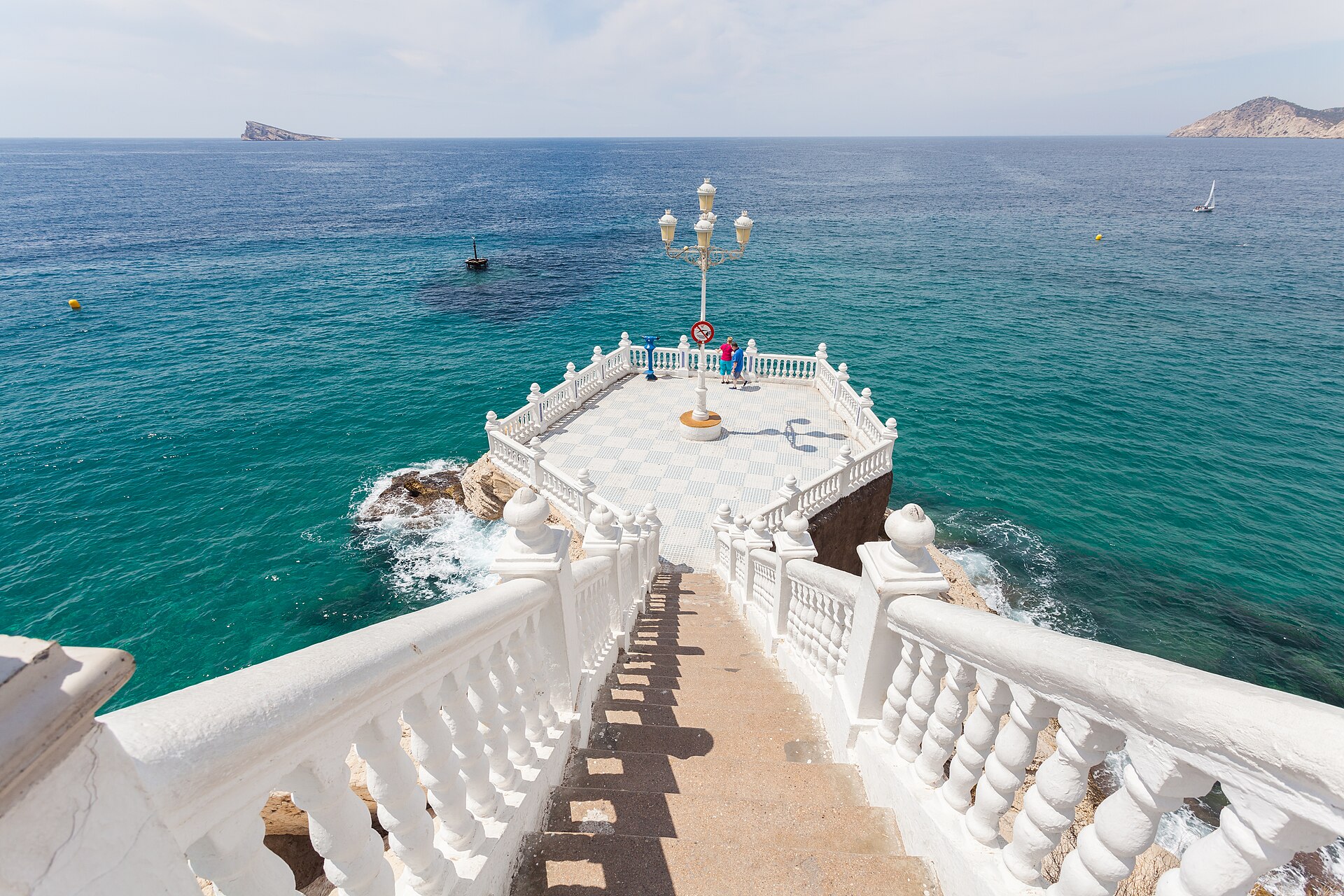
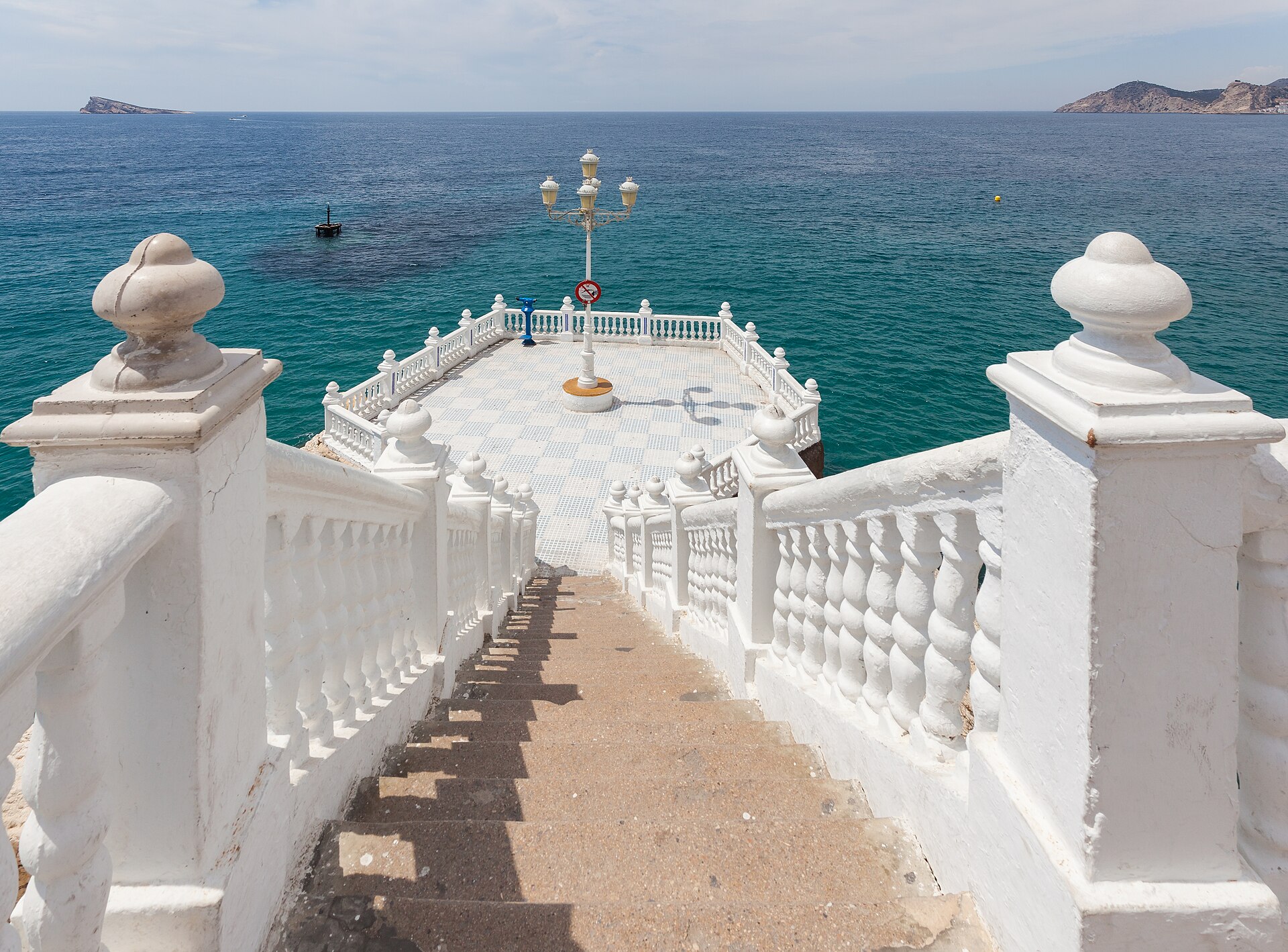
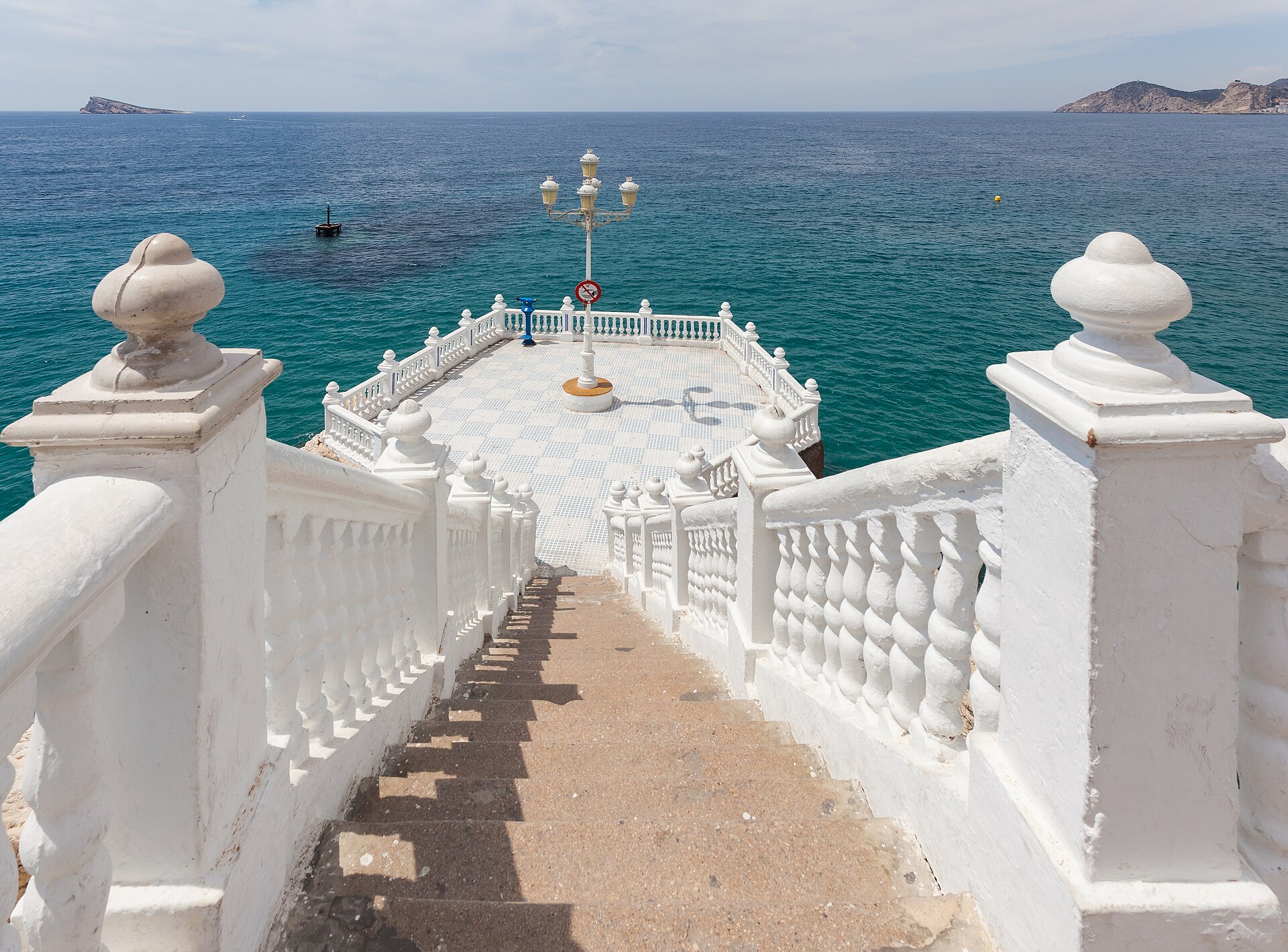
The most beautiful spot in the entire city sits on a rocky promontory that separates the two main beaches. A defensive fortress once stood on this strategic point, protecting the inhabitants from Berber pirate raids. Today, you’ll find the stunning Plaza del Castell, boasting gleaming white balustrades and paving laid out in elegant geometric patterns. There’s a wonderfully peaceful atmosphere here that stands in sharp contrast to the bustling promenades below the cliff.
Walk down the white steps and you’ll reach the Balcón del Mediterráneo itself. This viewing terrace with blue tiles arranged in the shape of a five-pointed star feels as though it’s hovering right above the waves. It’s undoubtedly the most photographed spot for miles around, and the views out to the blue horizon are absolutely breathtaking.
💡 Top tip: Head here early in the morning for sunrise, when the city is just waking up and you won’t have to fight for space with crowds of selfie-taking tourists.

2. Vibrant Levante Beach
This two-kilometre sandy strip is exactly what most people picture when they hear the name Benidorm. Levante Beach is a symbol of non-stop entertainment and buzzing resort life. You’ll find thousands of sun loungers, endless rows of parasols, and a promenade lined with dozens of bars, cafés, and restaurants. The sand is incredibly fine and, thanks to meticulous daily maintenance, the beach proudly flies the prestigious Blue Flag for cleanliness.
The seabed slopes very gently into the water, making swimming safe — though during peak season, it can get incredibly packed. You can try your hand at all sorts of water sports here, from jet skiing and parasailing to banana boat rides. Expect to pay around €15 to €20 per day for hiring two sun loungers with a parasol.
💡 Top tip: If you want to bag a good spot close to the water, you’ll need to get to the beach by around 8am — any later and the prime spots are long gone.
3. Quieter Poniente Beach
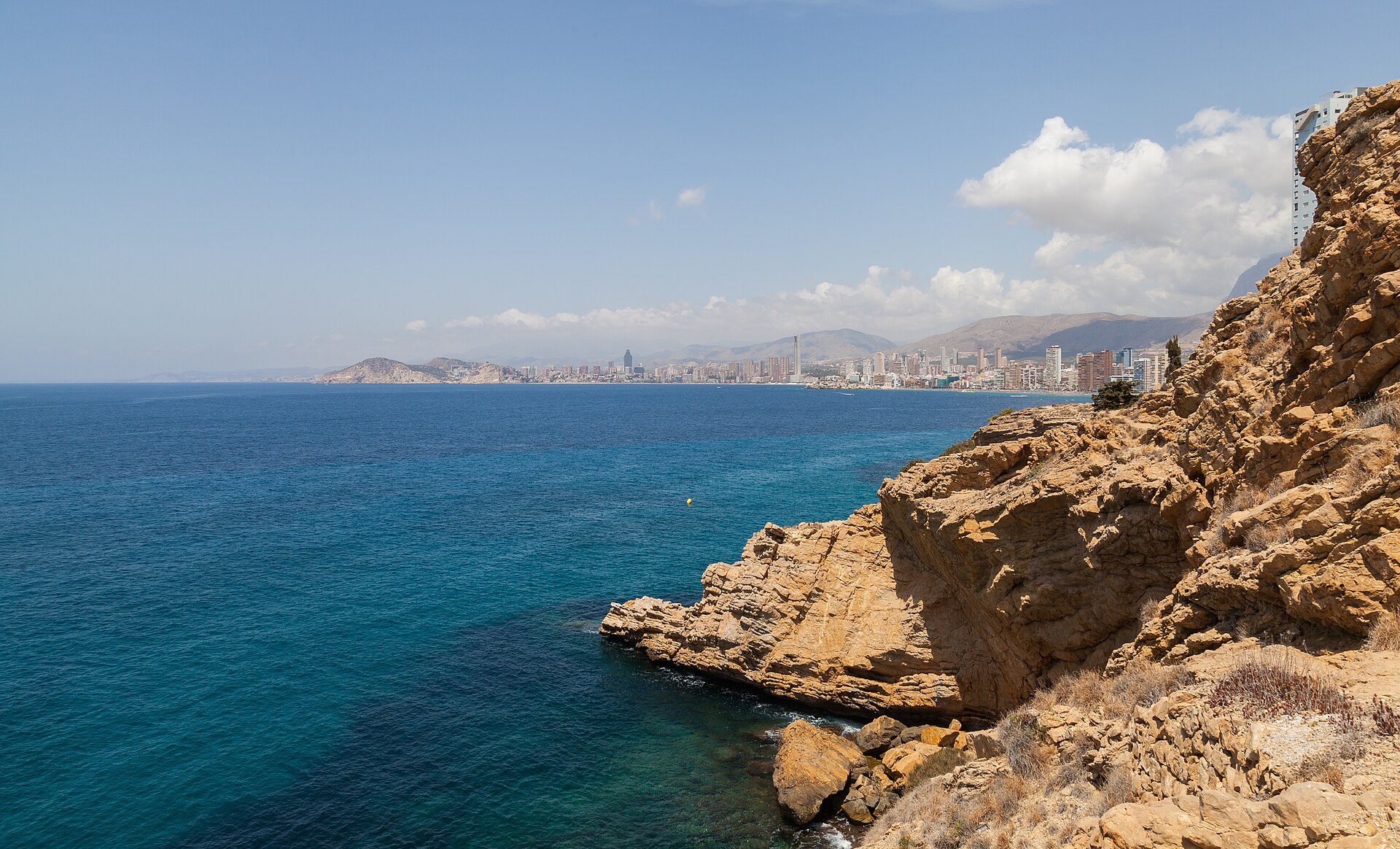
While Levante never sleeps, the western Poniente Beach offers a much more relaxed and local atmosphere. Stretching over three kilometres, it’s the longest beach in the city and attracts mainly Spanish families and tourists seeking a bit of peace. Even during the busiest summer months, you’ll always find enough room to spread out your towel without being crammed in next to your neighbours.
The beach is flanked by a truly unique promenade designed by award-winning architects. Its colourful design mimics ocean waves, alternating between shades of yellow, green, and blue. It’s brilliant for cycling or rollerblading, and you’ll find plenty of palm-shaded benches along the way. Unlike its neighbouring beach, you won’t find thumping nightclubs here — just pleasant cafés and traditional Spanish restaurants instead.
💡 Top tip: Stay until early evening, because Poniente offers the most stunning sunsets, when the entire sky is painted in dramatic shades of orange and purple.
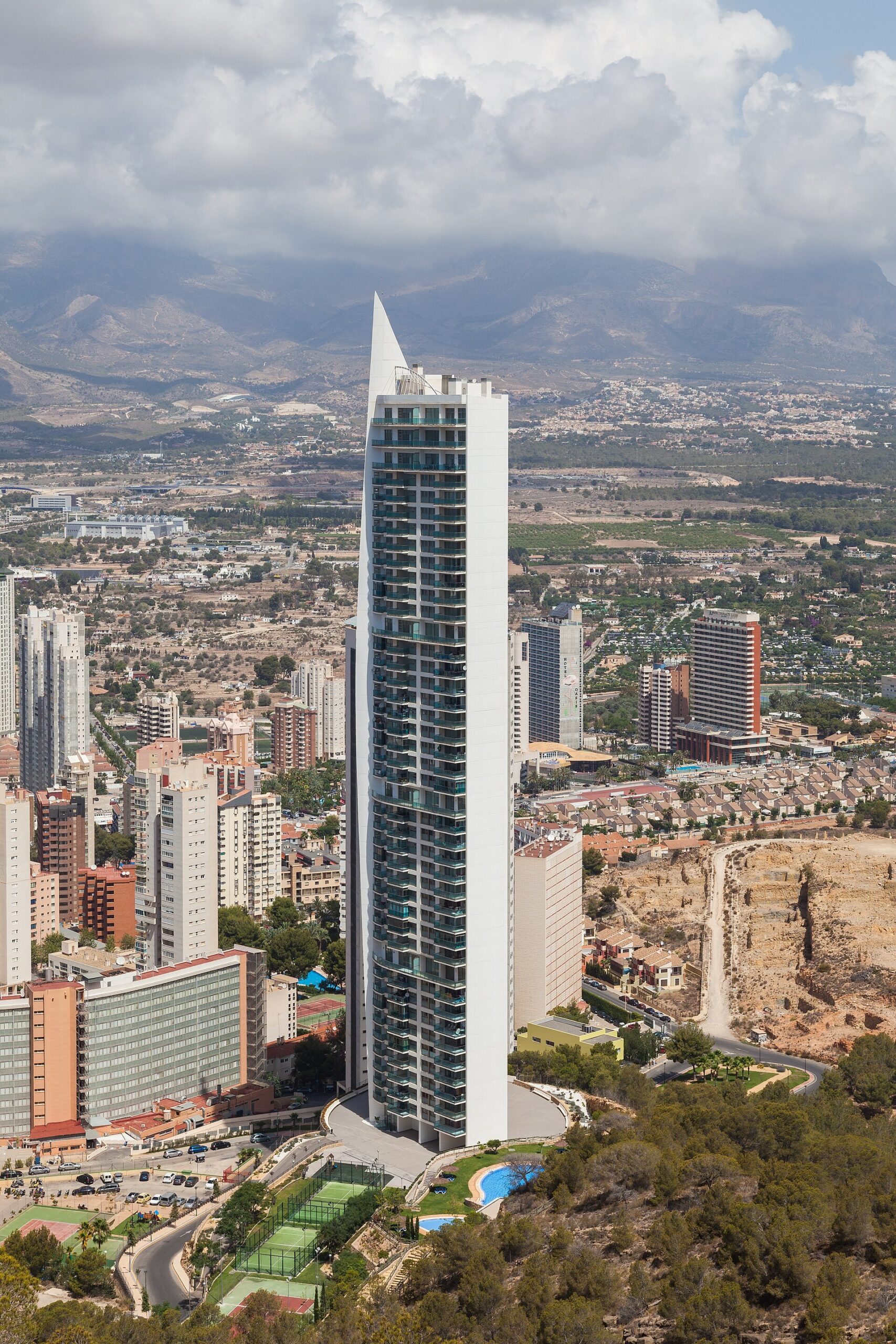
4. Exploring Benidorm Old Town (El Casco Antiguo)
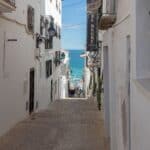
It’s easy to forget that the original historic heart of the city has survived amid hundreds of modern tower blocks. The old town, or El Casco Antiguo, is a maze of narrow, often steep lanes that have retained the charm of the original fishing village. Houses are whitewashed, windows are framed by wrought-iron balconies draped with geraniums, and traditional cafés huddle on tiny squares. The standout landmark of this quarter is the Church of San Jaime y Santa Ana with its distinctive blue dome — well worth popping inside.
The biggest draw of the old town, though, is the famous Calle Santo Domingo, universally known as Tapas Alley. This narrow street is positively brimming with tiny bars, from which waft the aromas of olive oil and garlic. It absolutely buzzes in the evening, when locals head out for the traditional “tapeo” — hopping from bar to bar.
💡 Top tip: Order a beer or glass of wine along with some brilliant vegetarian tapas like patatas bravas (roasted potatoes with spicy sauce) or pimientos de Padrón (blistered green peppers with coarse sea salt).
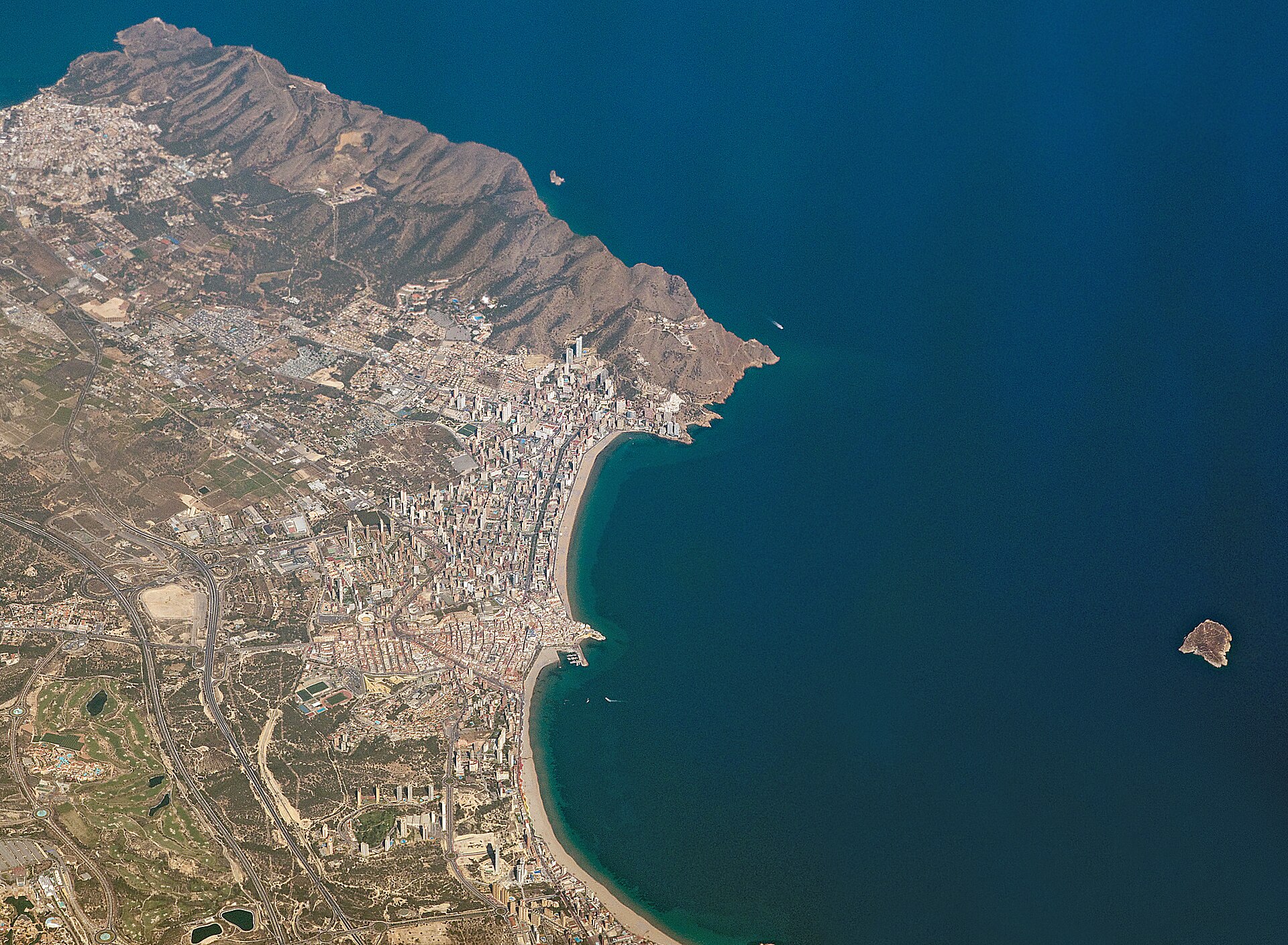
5. Skyscraper Architecture and Intempo
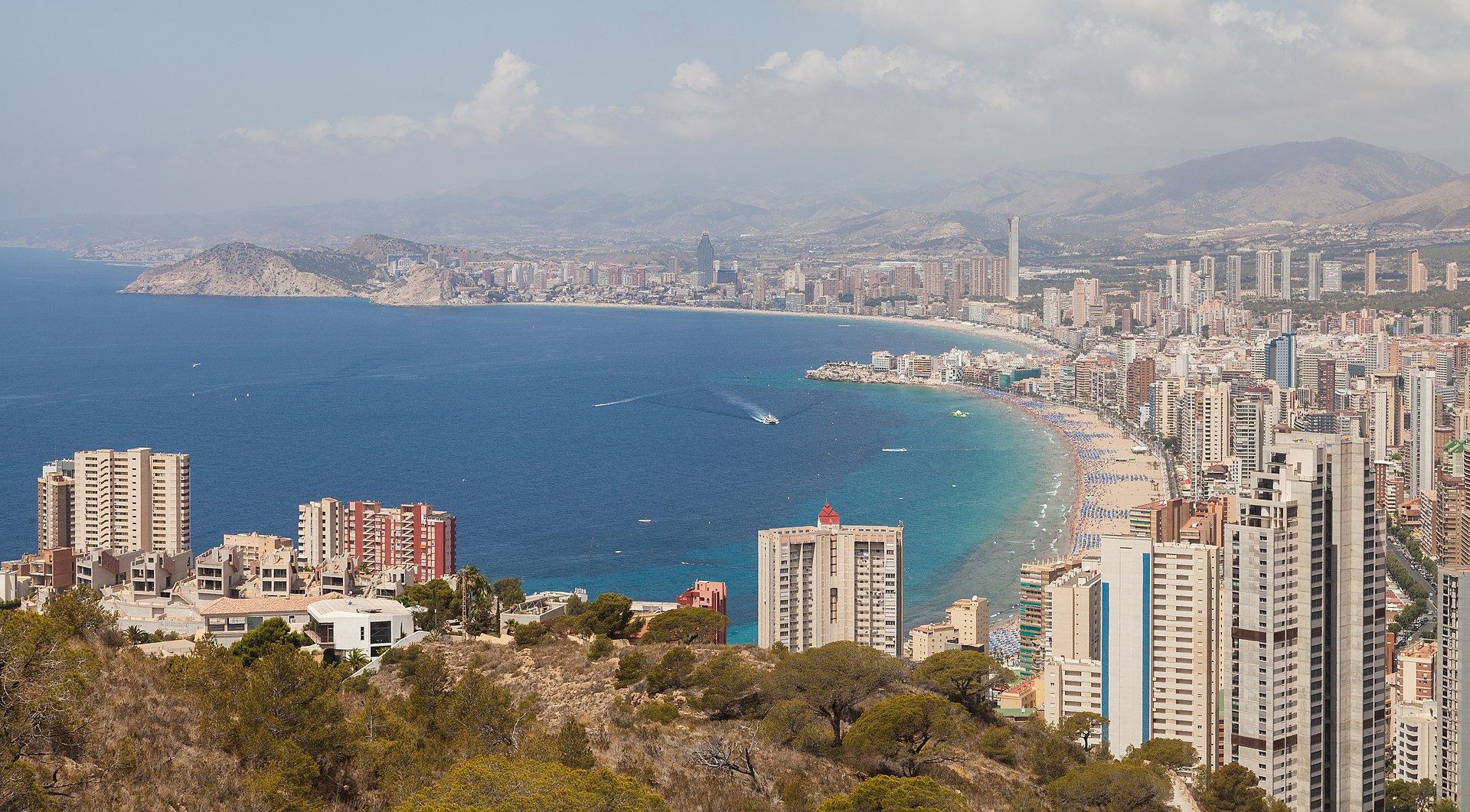
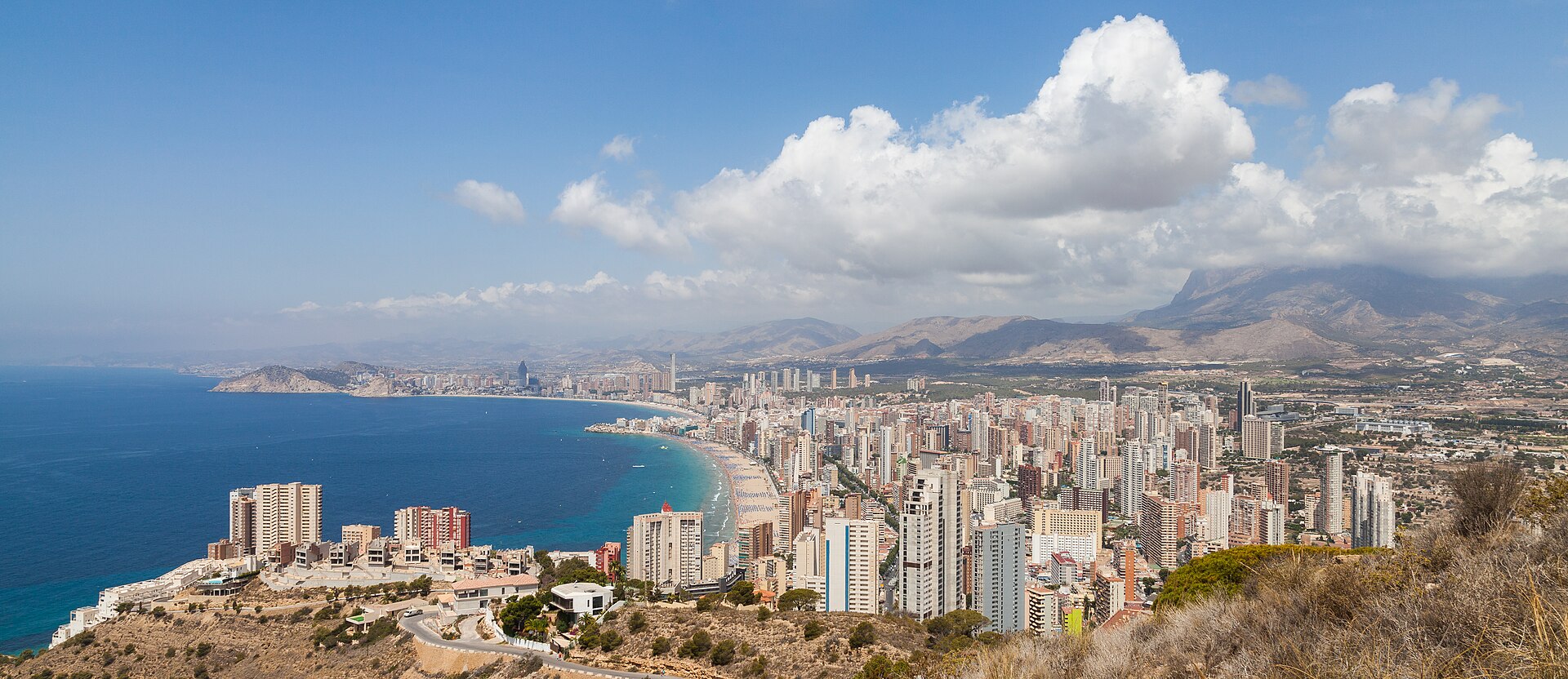
The city’s fascinating skyline — rightfully nicknamed the Manhattan of Spain — didn’t happen by accident. Back in the 1950s, the then-mayor realised that building upwards was more sustainable, as it saved ground space and gave more people a sea view. Thanks to this pioneering urban plan, the city now boasts the highest concentration of skyscrapers per capita in the world. These vertical streets create an utterly unique visual spectacle.
The most famous building is undoubtedly the golden Intempo skyscraper, soaring to a height of nearly 200 metres. You’ll recognise it instantly by its giant M-shape (or two connected towers), topped with an unmissable golden cone. Another icon is the Gran Hotel Bali, which was for a long time the tallest hotel in Europe.
💡 Top tip: Take the glass lift up to the Gran Hotel Bali’s observation deck (tickets cost around €6) and enjoy a bird’s-eye view of the city sprawling out towards the surrounding hills.
6. Boat Trip to Isla de Benidorm
This small uninhabited island, rising from the waves roughly three kilometres offshore, is steeped in an intriguing legend. It’s said to be the missing chunk of nearby Mount Puig Campana, hacked into the sea by the mythical giant Roland with his sword. Whether or not you believe the tale, the island makes a brilliant half-day trip. Boats depart regularly from the harbour, and a return ticket costs approximately €15.
The island functions as an important marine reserve, so overnight stays are strictly forbidden. The water around the cliffs is crystal clear and teeming with colourful marine life. Some of the boats that run the route have glass bottoms, which is a fantastic experience — especially if you’re travelling with children. On the island itself, you can wander along marked trails between cacti and seagulls.
💡 Top tip: Don’t forget to bring a snorkel and goggles, as you can spot shoals of colourful fish just a few metres from the island’s shore.

7. Terra Mítica Theme Park
If you’re travelling with the family, a visit to this enormous theme park should be high on your list. Terra Mítica takes you on a journey through the ancient Mediterranean. The park is divided into several zones representing Ancient Egypt, Greece, and Rome, with sets that are detailed down to the tiniest element. You’ll find giant pyramids, ancient temples, and replicas of Roman arenas.
There’s something here for both thrill-seekers and younger children. Top attractions include the wooden roller coaster Magnus Colossus and the giant Synkope pendulum ride that spins you high above the ground. Throughout the day, there are also various shows — from gladiator battles to acrobatic performances. An advance online day ticket costs around €40.
💡 Top tip: It gets scorching hot during summer, so plan your visit so you tackle the biggest roller coasters first thing in the morning, then cool off on the water rides like the Nile River Rapids during the heat of midday.
8. Water Fun at Aqualandia
Right next to the Sierra Helada natural park lies one of the oldest and largest water parks in Europe. Aqualandia is truly unique in that it uses filtered seawater to operate. Surrounded by lush Mediterranean vegetation, the park offers more than twenty different attractions for all ages, from lazy rivers to extreme water slides.
The park’s crowning glory is the adrenaline-pumping Verti-Go slide, which sends you hurtling down at speeds of up to 100 kilometres per hour. For families with kids, there’s a huge wave pool and elaborate children’s zones with smaller slides. Entry costs around €35, but if you combine it with a ticket to the neighbouring Mundomar animal park, you’ll save a good chunk.
💡 Top tip: If you can, avoid visiting the park at weekends, when locals from across the region descend alongside tourists, and queues for the slides get painfully long.
9. The City’s Green Lungs: Parque de L’Aigüera
Amid the concrete jungle of skyscrapers, you’ll find a surprisingly spacious oasis of calm. This long linear park was designed by the celebrated Catalan architect Ricardo Bofill in a neoclassical style. It runs through the heart of the city like a long green ribbon, serving as the main pedestrian artery separating the old quarter from the new. Tall palms and wide sandy promenades line the park throughout.
Inside the park, you’ll discover two beautiful amphitheatres where concerts, theatre performances, and festivals are held during the summer season. It’s the perfect spot for an afternoon picnic or simply a moment’s rest in the shade when you’ve had enough of baking on the beach. Locals come here to walk their dogs and play pétanque on the manicured courts.
💡 Top tip: At the far end of the park near the town hall, you’ll find an interesting covered arena — the Plaza de Toros — which nowadays mainly hosts cultural events and live music.
10. Hike to La Cruz de Benidorm
If you fancy stretching your legs and rewarding yourself with the best views on the entire coast, head to the hill on the eastern edge of town. The monumental La Cruz cross was erected in the 1960s, supposedly as a symbolic gesture to redeem the city’s sins for being the first place in Spain to allow bikinis on its beaches. Today, it’s a popular destination for hikers and cyclists alike.
The route starts at the far end of Levante Beach and follows a tarmac road winding along the edge of the Sierra Helada natural park. On foot, the climb takes just under an hour and is manageable for anyone with average fitness. From the top, the city is laid out beneath you like a map — from the bustling beaches and the forest of skyscrapers to the distant mountain peaks inland.
💡 Top tip: Go in the late afternoon, because watching the city light up at night from this vantage point is absolutely magical — your photos won’t need any filters.
11. Nightlife and Legendary Cabarets
When the sun dips below the horizon, the city reveals its other face. The nightlife here splits into two fairly distinct zones. The first is the so-called “zona guiri” (British zone) around Calle Gerona. Here, you’ll find an endless strip of British pubs, karaoke bars, and clubs where the party doesn’t stop until dawn. It’s loud, wild, and dripping with neon — exactly what you might have seen in the TV documentaries.
If you’re after something a touch more sophisticated, head for the Spanish nightlife scene in the old town or near Levante Beach. A true gem is the legendary Benidorm Palace, a lavish cabaret in the style of Paris’s Moulin Rouge. Expect a spectacular evening show packed with feathers, sequins, acrobatics, and flamenco — and you can pair it with a gala dinner.
💡 Top tip: For an authentic Spanish fiesta, make your way to the clubs along the N-332 road, where locals gather and dance to Latin American rhythms until the early hours.
12. Traditional Markets and Shopping
Despite its modern facade, the city has preserved the tradition of street markets — an integral part of Spanish life. The biggest is the Wednesday Mercadillo de Foietes, held in the upper part of town. Among the sea of stalls, you can pick up the freshest local produce — from ripe tomatoes and citrus fruits to olives and enormous wheels of cheese. It’s a wonderful place to soak up an authentic atmosphere and practise your haggling skills.
Also worth a mention is the weekend flea market El Cisne Rastro, located a bit further from the centre on the road towards the neighbouring town of L’Alfàs del Pi. This market has a fantastic bohemian atmosphere, with live jazz music playing and stacks of antiques, vintage clothing, and all manner of curiosities to rummage through.
💡 Top tip: Get to the market around nine in the morning, because by noon the heat becomes unbearable and stallholders start packing up.
13. Day Trip to the Mountain Village of Guadalest
When you’ve had your fill of skyscrapers and beaches, hire a car or hop on a bus and head inland. Just roughly 25 kilometres from the coast lies Castell de Guadalest — one of the most visited villages in all of Spain. Its setting is utterly dramatic: houses and the remains of an old castle balance on a narrow rocky ridge, accessible only through a tunnel carved into the rock.
From the ramparts, an incredible view unfolds across the valley, dominated by a reservoir with impossibly turquoise water. The village itself is packed with little shops selling ceramics and local products. You’ll also find several quirky museums, including a miniatures museum and a museum of historical torture instruments. The whole trip, including travel time, makes for a pleasant half-day out.
💡 Top tip: The village car park has very limited capacity, so I’d recommend arriving either very early in the morning or in the late afternoon, once the big coach tours have departed.
14. Sampling Rice Dishes and the Truth About Paella
The Costa Blanca coast lies just a short distance from Valencia, the undisputed birthplace of paella. It drives local chefs to despair that tourists consider the seafood version to be the authentic one. Historically, it’s a rustic countryside dish, and a true paella valenciana is made exclusively with chicken and rabbit, green beans, and large white butter beans. If you’re vegetarian, don’t worry — most decent restaurants will happily prepare an excellent vegetable version (paella de verduras).
The secret to a perfect paella lies in cooking it over an open fire of orange wood and creating the socarrat — that slightly caramelised, crispy crust on the bottom of the pan. Steer well clear of restaurants on the main promenade that display giant photo menus outside. Beyond rice dishes, be sure to try the refreshing horchata drink made from tiger nuts — an absolute lifesaver in the summer heat.
💡 Top tip: For the best rice, seek out traditional restaurants called arrocerías, and remember that proper Spaniards eat paella exclusively at lunchtime, never for dinner — it’s considered far too heavy to eat before bed.
15. Exploring the Coast by Modern Tram
One of the best ways to explore the area without needing to hire a car is the TRAM d’Alacant network. This modern transport system — somewhere between a tram and a light railway — connects the entire coastline from Alicante all the way to Dénia. The journey is supremely comfortable: carriages are fully air-conditioned and the windows offer fantastic views of the sea and dramatic cliffs.
Definitely head north to the town of Calpe, where the massive limestone rock Peñón de Ifach towers over 300 metres straight out of the sea. You should also make a stop in Altea, often described as the prettiest town on the Costa Blanca. Its old centre is a cascade of snow-white houses topped by the bright blue domes of a church, creating a picture-perfect Mediterranean scene.
💡 Top tip: TRAM tickets are very affordable (just a few euros) and you can buy them easily from machines at every stop or directly from the conductor on board.
Map of points of interest for your phone
Where to Go from Benidorm
If you’re tempted to explore more of sunny Spain, you’re in a brilliant position for onward travel. Just a short hop to the north lies gorgeous Valencia, which masterfully balances deep-rooted tradition with futuristic architecture, such as the City of Arts and Sciences. Heading south, you can explore Alicante with its stunning Santa Bárbara fortress and famous marble-paved promenade.
If you want to dive deeper into local gastronomy, I’d recommend reading our guide to typical Spanish food to discover everything you should taste during your holiday. From the nearby Alicante Airport, budget airlines offer easy connections across Spain — perfect for a weekend hop to Barcelona or to explore the elegant boulevards of Madrid. If you’re drawn to the rugged north and its history, don’t miss the pilgrimage city of Santiago de Compostela. And lovers of Moorish architecture absolutely must check out our guide to Granada, home to the legendary Alhambra.
Frequently Asked Questions
Is Benidorm suitable for families with kids, or is it just a party town?
Even though it has a reputation as a wild resort full of British pubs, it’s actually one of the best family destinations in Spain. If you stay in the Poniente beach area, you’ll avoid the noisy nightlife completely. A huge draw for families are the spotlessly clean beaches with a gentle slope into the sea and the top-notch amusement and water parks.
Do I need a car to get around the resort?
Not at all. Renting a car only pays off if you’re planning trips into the more remote inland areas. The town itself is brilliantly walkable, there’s a reliable network of city buses, and for trips along the coast the fast TRAM d’Alacant tram-train works perfectly.
Which airport is closest and how do I get from it to town?
The nearest international airport is in Alicante (ALC), about 60 kilometres away. Getting from there is very easy: ALSA express buses leave right from the terminal and take you to the centre of the resort in just under an hour. A ticket costs around 10 euros.
Is it true that there’s a tourist tax in the town?
While a tourist tax is common in Barcelona or on the Balearic Islands, the entire Valencia region (which Costa Blanca falls under) put off introducing the tax for a long time. The originally planned fee was suspended after the elections, so for now it isn’t being charged. The situation could change, though, so it’s best to check the current status with your accommodation provider before you travel.
What’s the sea temperature during the summer holidays?
During July and August the Mediterranean in this area warms up so much that the water temperature commonly reaches 26 to 28 degrees Celsius. The water is beautifully warm and ideal even for the smallest children, who can spend long hours in it without ever feeling cold.
Can you eat healthily in the town, or is it just fast food?
Although the British zone is overflowing with offers of all-day English breakfasts and fast food, the historic centre and the Poniente area serve up fantastic Mediterranean cuisine. You’ll find dozens of traditional tapas bars, excellent cafés with locally roasted coffee and restaurants focused on fresh local ingredients and vegetable dishes.
Is it worth coming here in winter?
Absolutely. The winter months see huge numbers of so-called “snowbirds”, mostly British and Scandinavian retirees, spending their time here. Temperatures in January and February often climb to 18 degrees, the sun is strong and the days are beautifully bright. It’s the ideal time for cycling, hiking and lingering on café terraces without the summer heat.
Tips and Tricks for Your Vacation
Don’t Overpay for Flights
Search for flights on Kayak. It’s our favorite search engine because it scans the websites of all airlines and always finds the cheapest connection.
Book Your Accommodation Smartly
The best experiences we’ve had when looking for accommodation (from Alaska to Morocco) are with Booking.com, where hotels, apartments, and entire houses are usually the cheapest and most widely available.
 🚗 Car rental on the roadVerified rental cars in Spain
Search with the DiscoverCars comparison engine — it compares prices from dozens of local and international rental companies, and most bookings come with free cancellation.
Compare car prices in Spain →Don’t Forget Travel Insurance
Good travel insurance will protect you against illness, accidents, theft, or flight cancellations. We’ve had a few hospital visits abroad, so we know how important it is to have proper insurance arranged.
Where we insure ourselves: SafetyWing (simple monthly subscription) and TrueTraveller (for extra-long trips).
Find the Best Experiences
Get Your Guide is a huge online marketplace where you can book guided walks, trips, skip-the-line tickets, tours, and much more. We always find some extra fun there!