

Overnight, every e-commerce owner’s worst nightmare descended on our small family business nanoSPACE, and with each passing day, another disaster hammered yet another nail into our virtual online coffin. This is a story about crisis management — the kind you never plan for, but desperately need to get right.
What I’m about to describe really happened, though bear in mind that it’s based on my memory and my perception of events. I decided to share this with the world because I believe our cautionary tale might genuinely help someone else. This is an article about what the COVID crisis taught us about running an online shop.
The coronavirus crisis in our family nano-tech company nanoSPACE arrived two months before the disease actually reached the Czech Republic. We started sensing that something was happening on 24 January, when we met for the nanoSPACE general meeting. We were discussing the way forward. Although we’d been growing in previous years, nanoSPACE needed a cash flow injection, and we urgently needed to invest far more in e-shop development, marketing, and new products.
What You Need to Know About nanoSPACE
Before we go any further, I should tell you what we actually do. NanoSPACE is the world’s first manufacturer of anti-dust-mite pillows, duvets, covers, and bedding featuring a nanofibre barrier. Our typical customers are people with dust allergies and asthma sufferers. As supplementary products, we also sold nanofibre face masks, antiviral scarves, nano respirators, nano air purifiers, and nano coatings.

None of us earned a living from nanoSPACE, nor did we draw any income from it. If anything, we were pouring money into it, and my dad even put up his land as collateral. NanoSPACE was a passion project — we believed in nanotechnology, and most importantly, as allergy sufferers ourselves, we knew the nano products worked brilliantly. At that point, we were convinced that none of us could commit to it full-time and that we needed to bring in an outsider to lead the company. nanoSPACE had one employee at the time, who was responsible for running the e-shop.
For Us, the Crisis Started on 24 January
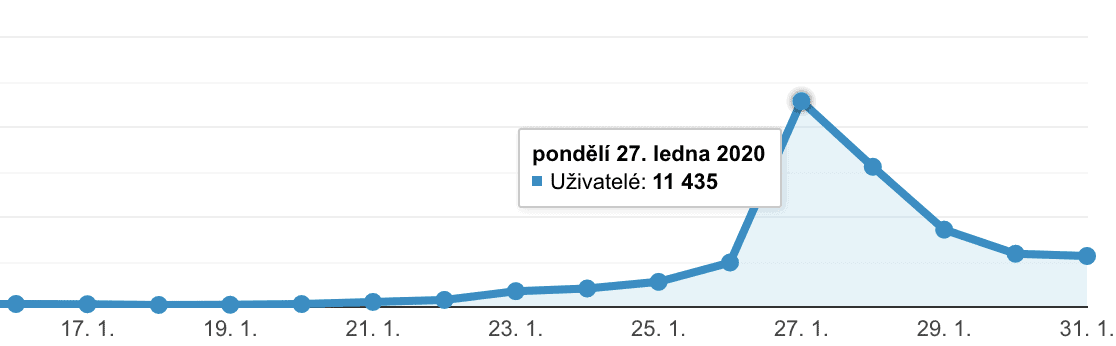
But that day — the day of our general meeting — something happened. It was as if the universe sent us a sign saying “hold on a bit longer,” because on 24 January, nanoSPACE sales skyrocketed.

Although this part might seem boring to some, it’s absolutely crucial to the whole story. The entire e-shop operation was handled by a single person. I was only marginally involved with nanoSPACE at the time — I earned my living doing online marketing for my clients and was 100% booked up.
How Things (Didn’t) Work
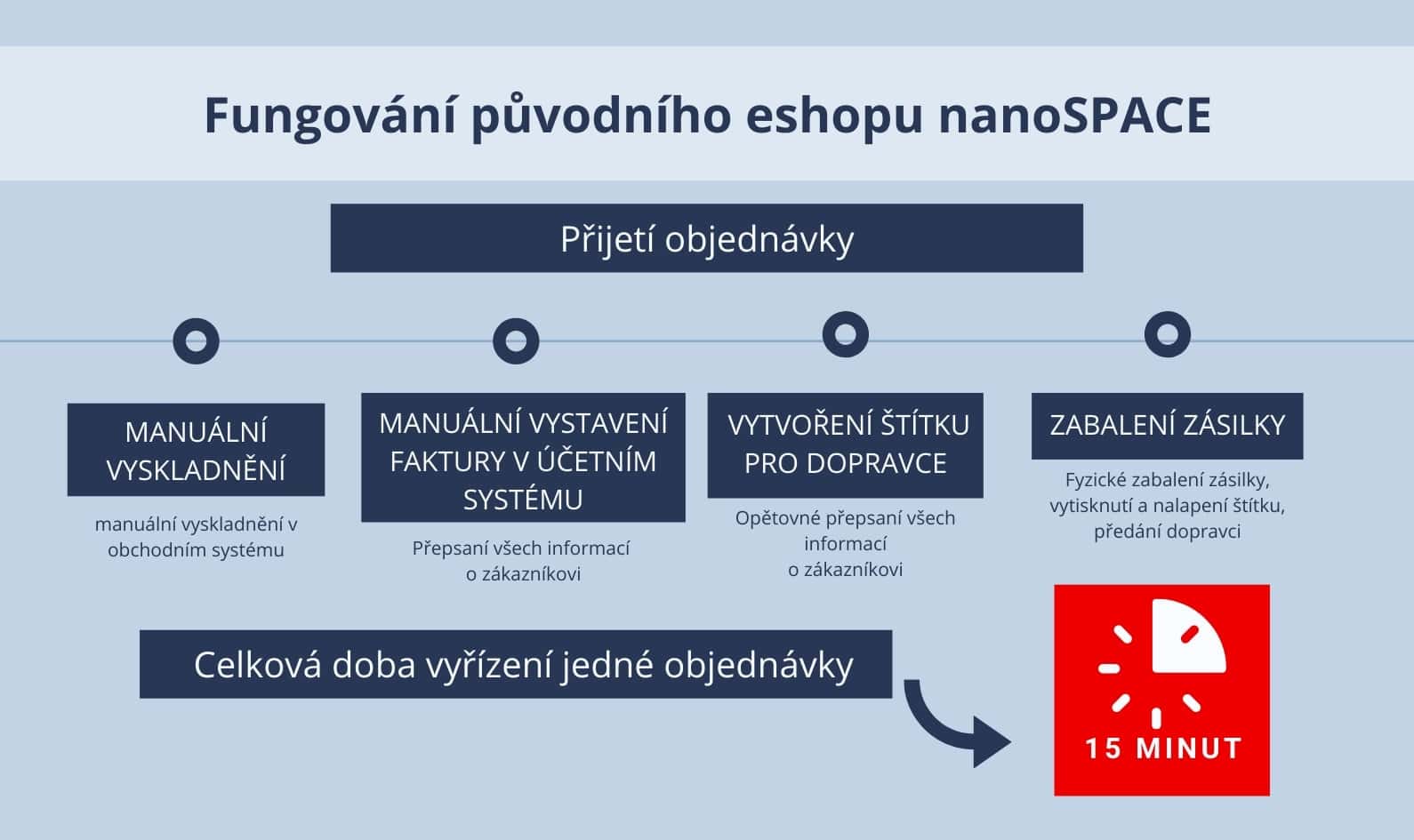
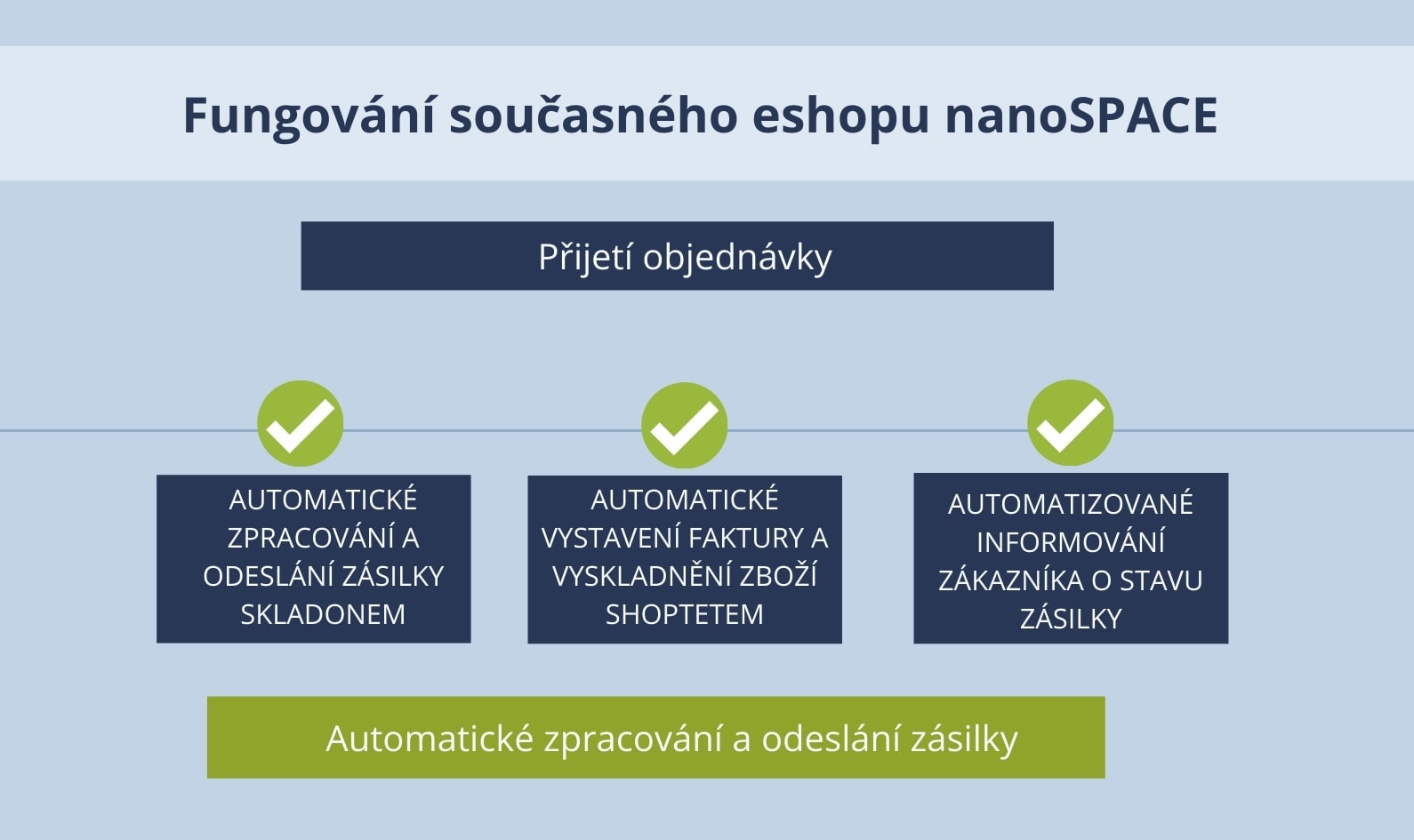
One person was enough to keep the e-shop running back then. We had just a few orders a day, with the absolute maximum being 10. Nothing on our e-shop was automated. That meant stock levels had to be updated manually, and the shop wasn’t integrated with our accounting system or delivery partners.
When an order came in, someone had to:
- manually deduct the items from stock on the e-shop
- manually create an invoice in the Byznys accounting system (re-typing all the information)
- manually create a shipping label for the courier (again, re-typing everything).
Then the label was printed, the order packed, and handed over to the courier. Processing a single order could easily take 10–15 minutes. I should also mention one delightful detail: our e-shop ran on a very buggy, outdated version of PrestaShop. Changes often didn’t save when you clicked “Save,” and the system loved kicking us out of the admin panel. A crisis management plan? We didn’t even know we needed one.
But back to the crisis. As I mentioned, something started happening on 24 January. News about Wuhan was spreading and people began panic-buying face masks. We were actually pleased — orders for our nano masks and antiviral scarves shot up. Masks and scarves were a supplementary line we purchased from a supplier. We had a decent amount of stock in the warehouse, so we weren’t too worried.
Note: Today we manufacture our own antiviral scarves and have a new, reliable supplier for our nano face masks.
How We Made a Massive Mistake
The real storm hit over the weekend of 25–26 January. On the e-shop, these products were still listed as “in stock at supplier.” I was visiting family in Moravia at the time, watching orders roll in one after another. I should have disabled the ordering right then and there.
By Friday evening I was already nervous about whether there’d be enough stock, but at the time I was incredibly naive about logistics. Back then, I knew very little about running an e-shop — what would you expect from someone whose day job was online marketing? I started asking whether the supplier really had enough stock. What I should have also been asking was whether we could actually ship that volume of orders.
Three times over the weekend, we called the supplier to confirm they had enough stock. Three times they confirmed they did. But on Sunday evening, my gut feeling got the better of me and I changed the product status on the e-shop from “In stock at supplier” to “Sold out.”
When Your Supplier Strings You Along
My “bad feeling” turned out to be spot on. On Monday, the supplier told us they could only deliver a quarter of the order, with the rest coming in two weeks. I won’t keep you in suspense — we never saw that stock. The supplier kept pushing back deadlines, making excuses, and ultimately delivered nothing. I’ll never know whether they had the promised stock that weekend and sold it to someone else, or never had it at all. From Tuesday 28 January onwards, we finally disabled orders for masks and scarves.
We still had FFP3 respirators from the company PARDAM in our range, but demand for those was still low at this point. Then from Monday 27 January, media reports started multiplying, saying that ordinary masks wouldn’t protect you and you needed respirators. Another wave of customers crashed our shop.
BreaSAFE respirators, of which we’d sold a few dozen in the entire history of our e-shop, were now selling by the dozen every hour! The BreaSAFE respirator was dubbed the “Cinderella” in the Czech media. A product that had been completely marginal vanished from every warehouse overnight. It turned out this nano respirator was the best on the market. Eventually, we had to disable orders for respirators too.
We Had Over 3,500 Orders in the System. People Were Emotionally Blackmailing Us
From Monday 27 January, the phone didn’t stop ringing. Hundreds of emails and Facebook messages poured in every day. People tracked down our personal phone numbers, email addresses, and social media profiles. Emotional blackmail became a daily occurrence — by early February, my inbox was filling up with photos of sick children, elderly grandmothers, husbands recovering from surgery, and more.
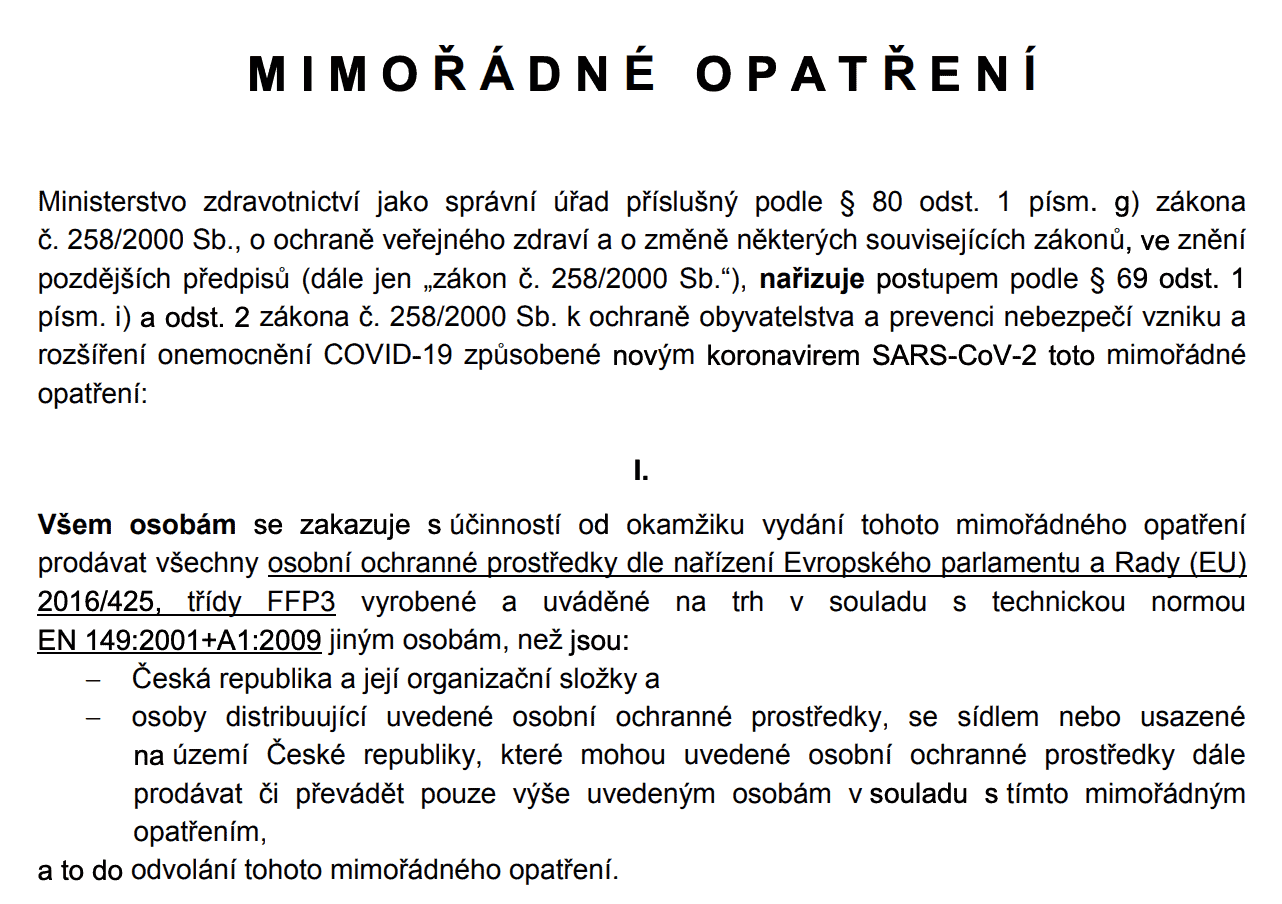
We were still waiting for stock. As I mentioned, we waited in vain for the nano masks and scarves, and even the respirator delivery was delayed. When the respirators finally arrived, the government issued a decree saying we could only sell to the state. We interpreted this to mean we could still fulfil orders placed back in January. Two days later, a tax authority inspection showed up, and while checking our respirator pricing, they informed us we couldn’t ship the January orders either.
But the hardest part was yet to come — it arrived with the spread of the coronavirus across Europe. At the beginning of February, I’d planned to head to Portugal and Spain for six weeks. My husband Lukáš and I both work remotely, so we like to escape the Czech winter for a while.
People Were Abusing Us and Making Threats — Our Rating Crashed to 53%
When we left, things still looked hopeful. I still believed we could somehow make it work. I was sending regular updates to customers about what was happening, when we expected stock, and how to cancel orders. Half of them never even opened a single message, so I started running sponsored posts on Facebook, targeted at our website visitors.
By the end of February, our rating on Heureka (a major Czech review platform, similar to Trustpilot) had plummeted to a red 53%. People were threatening us with consumer protection authorities and calling us thieves and scammers.
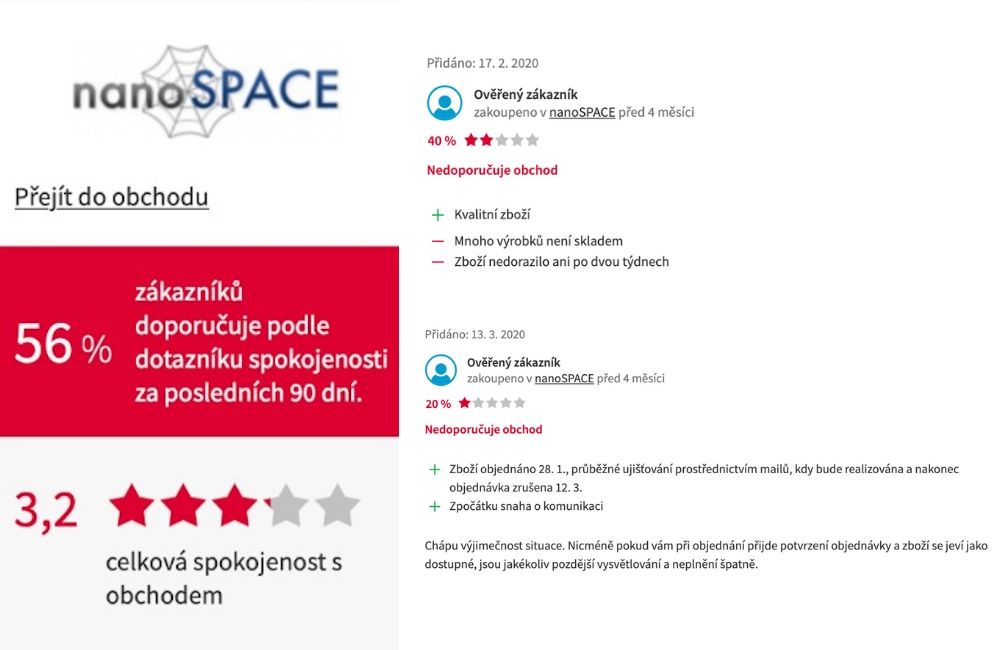
At the beginning of March, the real catastrophe began. The coronavirus was spreading across Europe. Getting through to us on the phone was as impossible as getting through to the public health authorities. Internally, we had to start using our personal phone numbers for company communication.
Stock was nowhere in sight — we only had respirators, which we weren’t allowed to sell to the public. The Ministry of the Interior eventually bought them, but only after news about our respirators sitting in a warehouse went viral.
People Wanted Anything with the Word “Nano” on It
People started buying everything on our e-shop that had “nano” in the name. They cleaned out the nano bedding, bought nano neckties, nano plasters, and even nano coatings. Nano was incredibly hot. We tried explaining that not all nano is created equal, but it didn’t make much difference. People wanted anything that was nano. We were inundated with questions about whether our bedding could be cut up and sewn into face masks. Meanwhile, behind the scenes, it was absolute chaos.
I was in Spain, waiting for the next disaster to hit. Case numbers were climbing fast. Nobody in the Czech Republic was paying attention yet — all eyes were on Italy. So there I sat, glued to my screen in Spain, watching the curve and sensing that things were about to get very ugly. We still had a few prepaid days left in Andalusia.
Then the Czech Republic announced border closures. We panicked that we might not make it back by car and decided to cut our trip short and rush home.
Who Would Collapse First?
In two days, Lukáš drove 2,600 km so we could cross the border before midnight on Sunday. There was an eerie atmosphere everywhere. We’d never seen motorways so empty. In northern Spain, everyone was coughing. We were racing towards a mandatory 14-day quarantine. Somewhere on one of those motorways, a fateful text message arrived: “The České Budějovice hospital is collapsing due to a lack of face masks.”
But I was the first to collapse. My mum worked at a hospital in Písek, which wasn’t equipped for coronavirus cases. That hospital was supposed to receive protective equipment via České Budějovice.
Over the weekend, our colleagues converted the bedding production line and we started sewing nano face masks. The material we normally used for bedding wasn’t suitable, so our colleague Josef Handrejch sourced appropriate nano material within 24 hours and production started on Monday.
By Thursday 20 March, we’d delivered 3,000 nano face masks. A text came back from České Budějovice saying that thanks to us, they could send out ambulances again. In the end, we managed to bring together several textile companies in South Bohemia, and between the crisis headquarters and the Písek hospital, we delivered over 200,000 nano face masks.
For Some People We Were Heroes, for Others Thieves and Scammers
My life in quarantine is a blur. Journalists called. Customers called. People who wanted to sew or help in some other way called. Some days I handled 1,500 emails and messages on customer support while simultaneously doing the freelance work that actually paid my bills. I was pulling sixteen-hour days.
I’d get out of bed at six in the morning and drag myself from the computer to bed at midnight. My head hurt, my eyes ached, I forgot to eat and drink. I was grateful to have a husband and that Wolt existed. Weekends didn’t exist. People in neighbouring flats were cleaning and relaxing — we didn’t even have time to make a cup of tea.
And it still wasn’t enough — our Heureka rating was stuck at 50%. We were waiting for masks and scarves, while respirators could still only be sold to the state. Our system was clogged with orders from people who refused to cancel them.
Build a New E-shop in 10 Days and Automate Everything
By this point, I was convinced that even when the stock arrived, it wouldn’t solve anything. This was crisis management in business at its rawest — we needed to completely overhaul our systems.
- We needed a new, fully automated e-shop
- We needed help with logistics
- We needed to switch accounting systems
- But first, I had to convince everyone else this was the right move
My dad agreed with automating order processing but wanted to transition the accounting gradually. In the end, my approach won out. The only catch was that I had to organise and execute the whole thing myself.
1) Choosing an E-commerce Platform and Migrating Data
The choice of platform had been made long ago. I’d wanted to switch to Shoptet since October. It was originally planned for February, but the coronavirus derailed that. Lukáš helped me pull the data out of PrestaShop via XML exports, and I’d already set up the category structure.
I thought that with photos, descriptions, and products loaded into the system, I was basically done. Perhaps it was a blessing I thought that, because if someone had told me how much I’d need to sort out in those 10 days, it would have floored me.
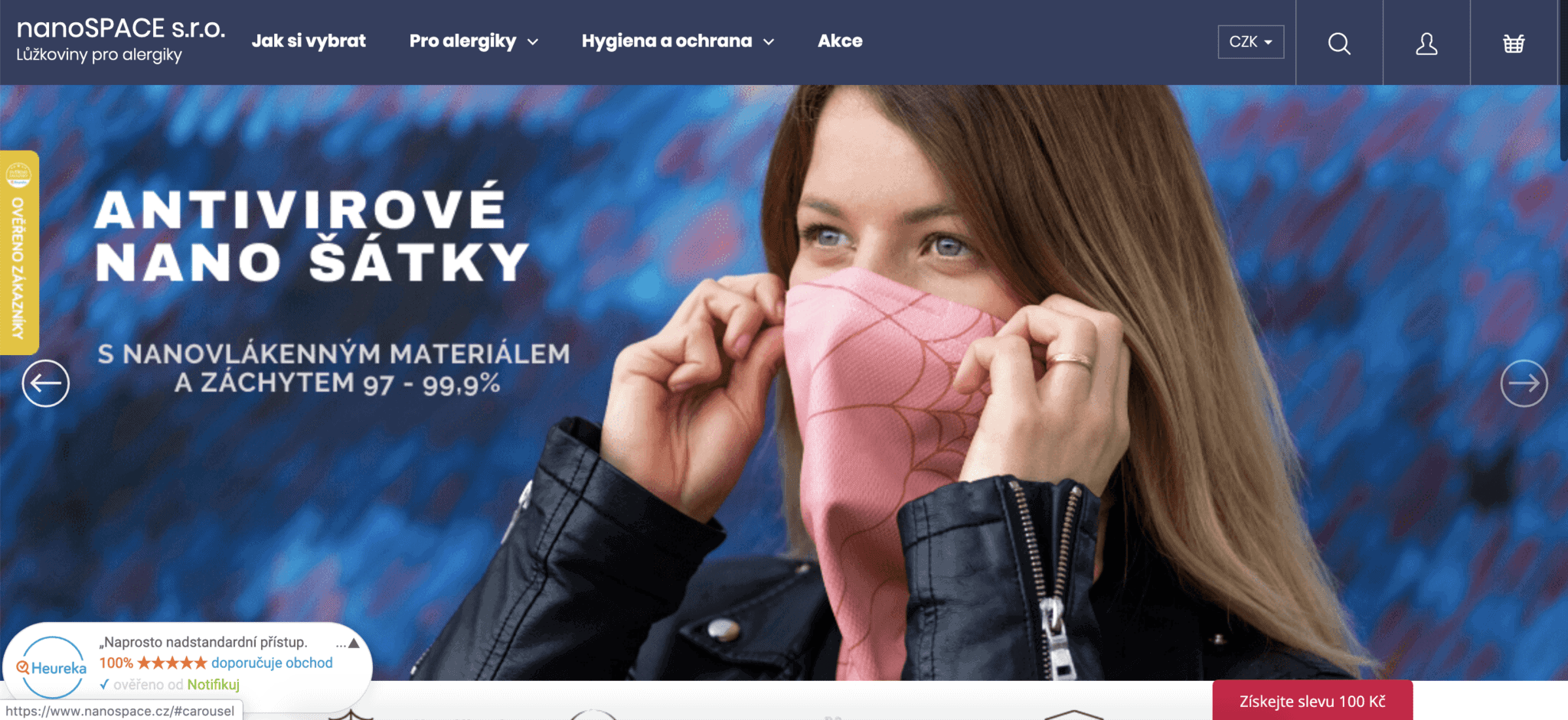
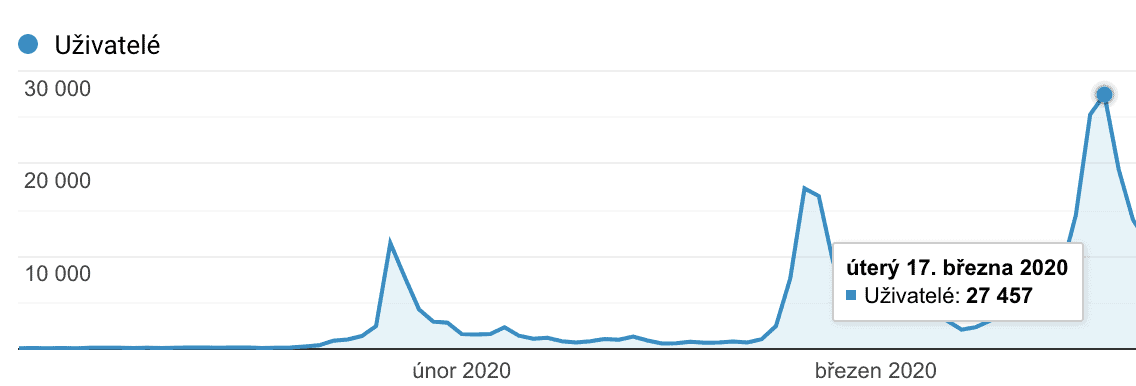
Lukáš and I worked intensively on SEO to make sure we didn’t lose our search engine rankings during the migration. We reworked the menu structure and site architecture, introduced new URLs and product descriptions based on keyword research, and started actively optimising for strategic keywords. Nobody had done that before. Organic traffic — thanks to targeting terms like “nano face masks,” “antiviral scarves,” and related keywords — shot up from a few dozen visitors to tens of thousands per day.
Search volumes were absolutely extreme throughout February, March, and April. Tens of thousands of people were searching online for nanofibre protective equipment. We were gearing up for restocking.
In the meantime, we were cancelling customer orders, so on top of everything else, I was processing refunds to help my colleague. Anyone who ran a theatre, festival, or event business and had to process mass refunds during the COVID months will understand that this is not a five-minute job.
2) Automating Fulfilment — Using an External Warehouse
Right, so we had Shoptet, and now I needed to figure out how to automate as many processes as possible. Shipping and fulfilment worried me the most, so I started looking for someone who could handle it for us.
I found a fulfilment company called Skladon, which I’d heard of before, and downloaded their free PDF about their services. Less than two hours later, I got a call from Skladon’s director, Patrik Babinec. He wanted to help.
Patrik Babinec is exactly the kind of person you need when you’re completely at a loss. He explained everything patiently, and I have to say he was the first person who made me feel that once we had stock, we could actually handle it. So we connected Skladon to Shoptet via a plugin and began transferring physical stock to their warehouse.
3) Automating Accounting
I don’t even do my own taxes. I can’t stand paperwork. And now I needed to move the accounting not just to a new accountant, but to an entirely different accounting system and integrate it with Shoptet. All with the expectation of processing several thousand documents per month.
We hired an accountant who worked with the Pohoda accounting system. Although it’s supposedly one of the most modern accounting systems in the Czech Republic, for those of us who don’t deal with accounting day-to-day, it was utterly baffling.
Launch day was approaching, and every day I’d discover something I’d forgotten. It felt like I was building a plumbing system — every evening I’d think it was finished, but every morning I’d find a pipe that I had no idea where to connect.
I was learning the meaning of terms like invoice liquidation, pre-posting, and inventory management. I was calling Pohoda and Shoptet every other day. Just as often, I’d end up with my head on the desk, feeling like I could never pull this together.
While Shoptet’s customer support was phenomenal, Pohoda’s support was the polar opposite. I got bounced between customer support and technical support, and they couldn’t help me with anything. In the end, Lukáš had to find most of the answers himself online.
We managed to link Shoptet and the GoPay payment gateway with Pohoda. Now invoices are automatically generated in Shoptet and then, using bank statements and GoPay transaction reports, automatically matched and reconciled with account movements. 1,500 documents are processed in about 10 minutes.
By the end of March, I was alternating at regular intervals between feelings of total triumph and utter despair. By early April, everything was ready.
I was fine-tuning the last details, like transactional emails, but we were confident the new e-shop was ready for action. I joked that some businesses need an agency, while others just need a phone, relentless questioning, and one husband who can solve even the greatest mysteries of the universe (or rather, the mysteries of our accounting system).
On 7 April, the moment of truth arrived. The first antiviral scarves reached Skladon’s warehouse and sold out within minutes. In fact, we sold more than we had in stock. The system wasn’t ready for that kind of demand.
I Was Starting to Think We Were Cursed. Turns Out It Was Our Supplier
When more stock arrived after Easter and we started fulfilling orders, another blow came. The company that supplied our antiviral scarves — and previously our masks — had opened pre-orders for a new product called “virus-killer mask,” and then failed to deliver. Although pre-orders for this product were never possible on our e-shop, customers confused us with the supplier because we’d been selling their products. They called and wrote to us calling us scammers and thieves, demanding their money back.
We started considering pulling their products entirely so people would stop associating us with them. Then came the final straw: journalists from Hlidacipes.cz (a Czech investigative outlet) discovered that the company was suspected of falsifying certificates and test results. There was no room for discussion — we pulled their products immediately and decided that going forward, we would only source products from members of the Czech Nanotechnology Industry Association.
Surely Things Would Calm Down Now
Within days, we developed the first prototype of our own nanoSPACE antiviral scarf, using the best available nanofibre membrane from the Roudnice-based company PARDAM (the nano respirator manufacturer). We also launched sales of nano face masks from the Zlín-based company SPUR, along with nano filters.

Despite the initial teething problems, we ironed out the system with Skladon very quickly, and even wholesale orders now run through the e-shop. Thanks to this automation and the phenomenal work of my colleague on customer support, we managed to climb from 53% on Heureka back to 97% within a single month.
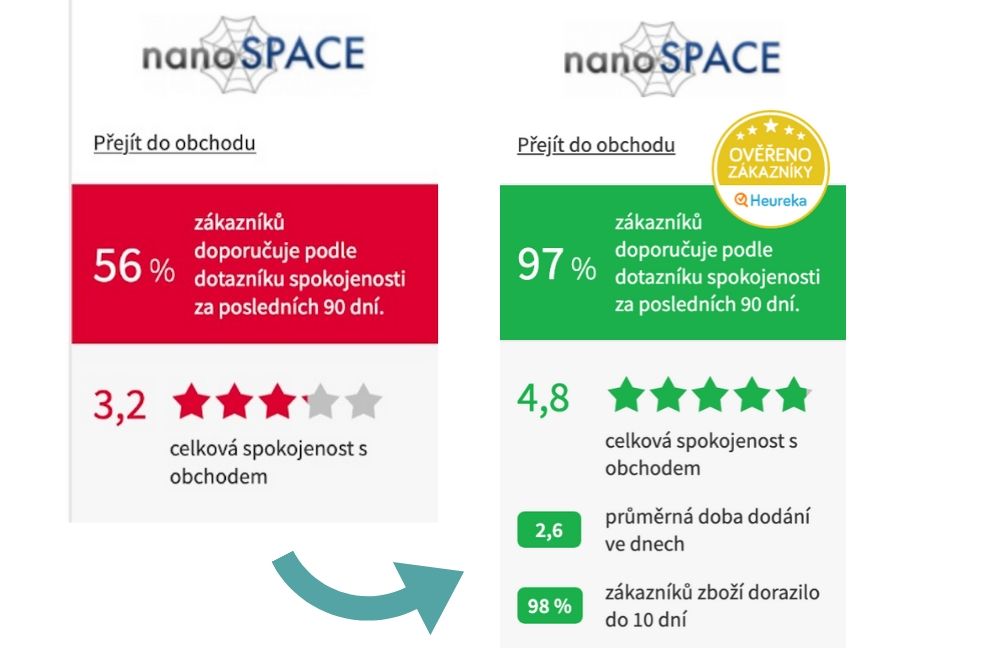
There was no longer any doubt about who would be running nanoSPACE full-time. I must have proven myself during the crisis, because as of May I officially became the COO of nanoSPACE. It sounds impressive, but we’re still a small company, and only time will tell whether it was the right move for nanoSPACE — and whether it was the right move for me.
If there’s one single takeaway from this story, it’s this: automate everything from day one. None of us knows what kind of black swan event will come next. I recently read something about giant Asian hornets… 🙂
Tips and Tricks for Your Vacation
Don’t Overpay for Flights
Search for flights on Kayak. It’s our favorite search engine because it scans the websites of all airlines and always finds the cheapest connection.
Book Your Accommodation Smartly
The best experiences we’ve had when looking for accommodation (from Alaska to Morocco) are with Booking.com, where hotels, apartments, and entire houses are usually the cheapest and most widely available.
Don’t Forget Travel Insurance
Good travel insurance will protect you against illness, accidents, theft, or flight cancellations. We’ve had a few hospital visits abroad, so we know how important it is to have proper insurance arranged.
Where we insure ourselves: SafetyWing (simple monthly subscription) and TrueTraveller (for extra-long trips).
Find the Best Experiences
Get Your Guide is a huge online marketplace where you can book guided walks, trips, skip-the-line tickets, tours, and much more. We always find some extra fun there!


