

When Lukáš and I worked in Banff and Lake Louise during the winter of 2016–2017, we never managed to catch the northern lights in Alberta — the solar minimum was unforgiving, and we didn’t see our first aurora until much later in Iceland. But the locals told us so many stories about nights when the sky lit up with green ribbons that it became crystal clear: this province is every bit as good for aurora hunting as Scandinavia or the Yukon. And in 2024–2026, you’re hitting the solar maximum, meaning the sky lights up far more often. That feeling when you step outside at night and see green waves of light rippling across the sky — nothing can truly prepare you for it. It’s pure magic. ☺️
If you’ve been dreaming of witnessing this celestial dance with your own eyes, we’ve got absolutely fantastic news. We’re currently in what’s known as the solar maximum, which means the sun is at its most active in eleven years between 2024 and 2026. The northern lights in Alberta are putting on far more frequent and intense shows than you might expect. You don’t need to fly all the way up to the remote Yukon — some of Canada’s most stunning national parks will do just fine.
So — where exactly should you set up your tripod, and is it really worth the frozen fingers? And how do you actually photograph the aurora if you’re not a professional photographer? That’s exactly what we’ll cover here. We’ll also look at costs, what to wear, and where and when to see the northern lights so spectacular they’ll knock you off your feet.
TL;DR
Even if you can’t quite picture it right now, trust us — every sleepless night is absolutely worth it. You just need to plan well and arm yourself with a pinch of patience, because Mother Nature always has the final say.
- Solar Maximum (2024–2026): We’re in a period of peak solar activity — the highest in 11 years. The aurora is visible more often, stronger, and much further south. Alberta is an ideal choice right now, no need to trek up to the remote Yukon.
- When to go: Your best chances are from October to March, when nights are longest and skies darkest. During strong solar storms, you can also spot the lights in autumn or spring.
- Best spots: Jasper National Park (the world’s second-largest Dark Sky Preserve), Banff National Park, and Elk Island near Edmonton.
- What you need: Download Aurora Forecast 3D or My Aurora Forecast, layer up with the warmest clothing you own (hand warmers are a lifesaver), and don’t forget a tripod — you simply can’t photograph the aurora without one.
- Expectations: Your eyes see the northern lights differently than a camera sensor. Sometimes it looks like a faint grey cloud, but on your camera screen it glows vivid green.
And if you want specific tips and our secret spots, make sure to read the full article — it’s well worth it.
What Are the Northern Lights and Why Go Now (Solar Maximum)
Before we head out into the freezing Canadian darkness, let’s quickly cover what exactly we’ll be looking for in the sky and why this particular period is absolutely exceptional for any traveller.
What Is the Aurora Borealis
It sounds complicated, but it’s actually pretty simple: the Sun sneezes, the Earth lights up. 😁 Technically speaking, the northern lights — or Aurora Borealis — are a light phenomenon that occurs when particles ejected from the Sun (known as the solar wind) collide with Earth’s magnetic field.
These particles are pulled toward the poles by the magnetic field, where they react with gases in our atmosphere. The result is those gorgeous green, pink, or purple ribbons of light dancing beautifully across the sky. It’s such a breathtaking sight that even after all these years, we still stand there with our jaws on the floor.
Why 2024–2026 Is So Special
You may have already heard the term Solar Maximum. Solar activity runs in eleven-year cycles, and we’re currently right at the absolute peak of this cycle. During this period, the Sun produces far more eruptions and sunspots, which means stronger solar winds are heading toward Earth.
As a result, the northern lights are far more intense, appear more frequently, and most importantly, reach much further south. While you’d normally need to travel to the northern edge of Canada, during these years Alberta puts on a show that will have you standing outside for hours, even long after your fingers have gone completely numb.
What Is the KP Index
If you want to hunt the aurora successfully, you need to learn just one value: the KP Index. It’s a scale from 0 to 9 that measures geomagnetic activity. For Alberta, a KP index of around 3 or 4 means you might catch a faint aurora on the northern horizon.
But when the KP index climbs to 5, 6, or higher, you’re looking at a powerful solar storm. The entire sky directly overhead will be ablaze with colour, and you’ll clearly see the aurora with the naked eye. We always nervously check our phones, and the moment it creeps past four, we start packing the thermos flasks with tea.
Best Time to See the Northern Lights in Alberta
Chasing the northern lights isn’t just about being in the right place — you also need good timing, clear skies, and above all, patience.
Your best chances of success come during the winter months, roughly from late October through to the end of March. The reason is dead simple: nights in Canada during this period are incredibly long, giving you a much wider window for viewing. We saw our first aurora in late November, and it appeared fairly regularly through December. Winter frost also tends to bring beautifully clear, dry skies with no cloud cover.
You do have to accept, however, that nighttime temperatures in Alberta routinely drop to −20 °C or even −30 °C. If extreme cold isn’t your thing, you can try your luck in autumn or early spring. During the solar maximum, geomagnetic storms are so powerful that locals and photographers have been capturing fantastic displays even in September, when you can still camp by the lakes without risking frostbite. One golden rule though: avoid full moon periods, as the moonlight can easily wash out even a strong aurora.
Essential Apps for Finding the Northern Lights
If you think you can just drive into the mountains, sit on a bench, and casually wait for the green show to begin, you’ll probably freeze unnecessarily — and quite quickly. To hunt successfully, you need the right apps on your phone.
The absolute essential is My Aurora Forecast & Alerts, which has a clean interface showing you the current KP index and visibility probability for your location — and here’s the real reason we recommend it — sends you push notifications when activity suddenly spikes. Another brilliant app is Aurora Forecast 3D, which offers a visualisation of the auroral oval over the globe so you can see exactly whether the green band is approaching Alberta. For the data geeks who want to track raw readings straight from the meteorologists, there’s the NOAA (Space Weather Prediction Center) website and app, where you can monitor the current speed and density of the solar wind in real time.
8 Best Spots in Alberta to Set Up Your Tripod
Alberta is a massive playground for aurora hunters. Let’s look at the specific locations where you won’t have to battle light pollution from cities and where you’ll take home the best photographs — with reflections in lakes or snow-capped mountain peaks in the background.
1. Jasper National Park and Its Dark Skies
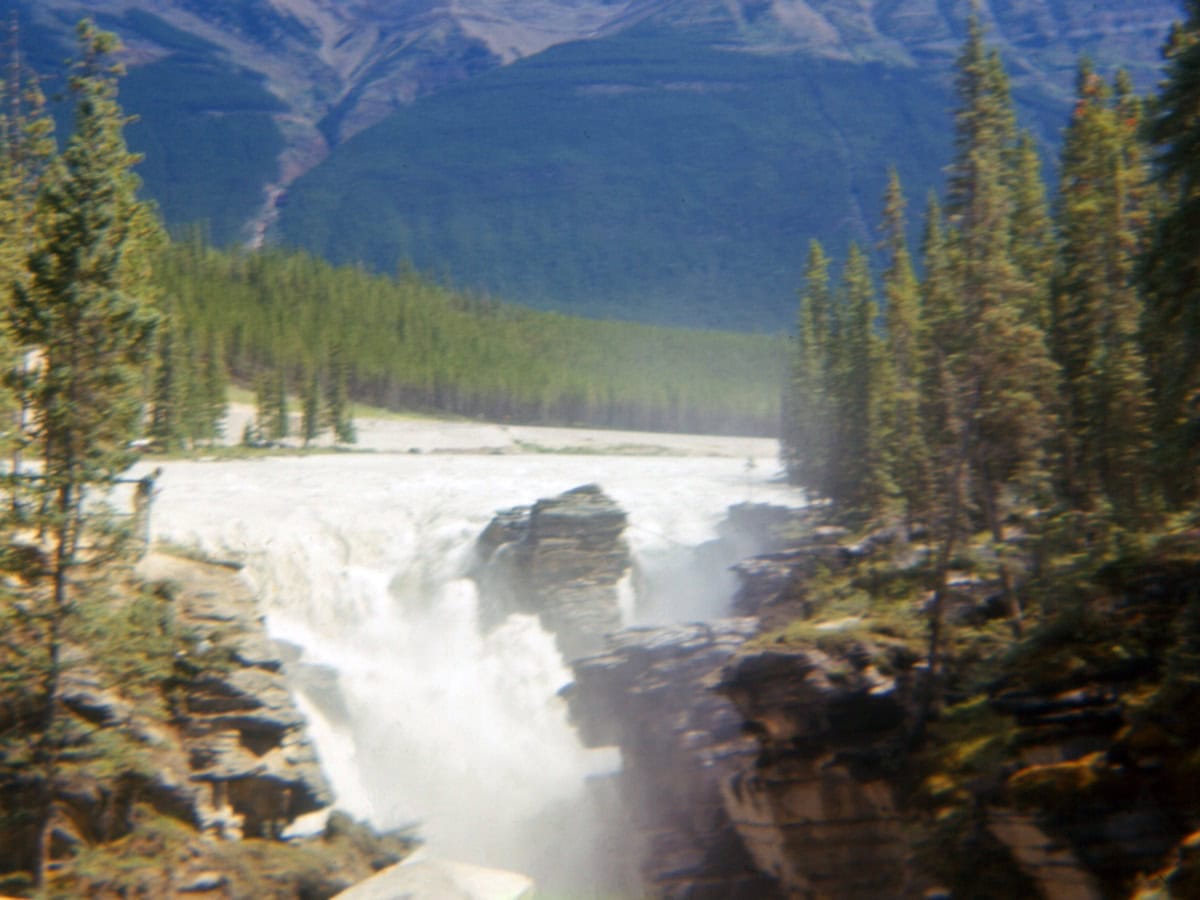
Jasper National Park is the absolute pinnacle for night sky viewing because it’s been designated the world’s second-largest Dark Sky Preserve. This means strict regulations on artificial lighting are in place, so even just a short drive from the town of Jasper you’ll find pitch-black darkness. In winter, an incredible stillness settles over the park, occasionally broken only by the howling of wolves in the distance.
If you’re heading here, we recommend checking out our comprehensive guide to Jasper National Park, where you’ll find loads of tips on what to do during the day before darkness falls. Then at night, simply drive a little way out of town and take in views you won’t easily find anywhere else on the planet.
2. Maligne Lake and the Iconic Spirit Island
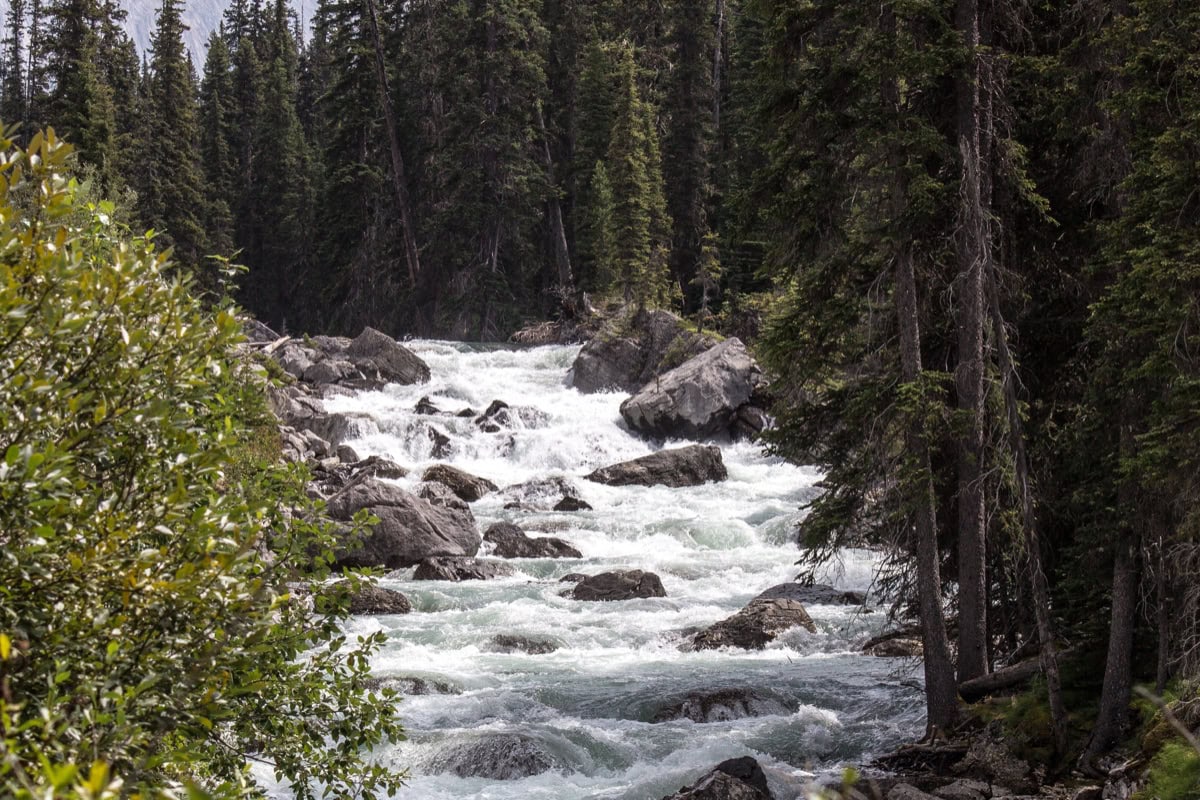
While you’re in Jasper, make your way to Maligne Lake. The drive takes about 45 minutes from town, and at night you need to go very carefully because of wildlife on the road. We once encountered an enormous caribou that had absolutely no intention of moving off the tarmac and just stood there curiously staring into our headlights.
Your reward, however, is one of the most beautiful lakes in Canada. If you manage to capture the northern lights right above Maligne Lake, you’ve hit the jackpot. The shores are fairly accessible, so you can set up your tripod right at the water’s edge and photograph the green light reflecting off the frozen surface.
3. Pyramid Lake and Its Scenic Pier
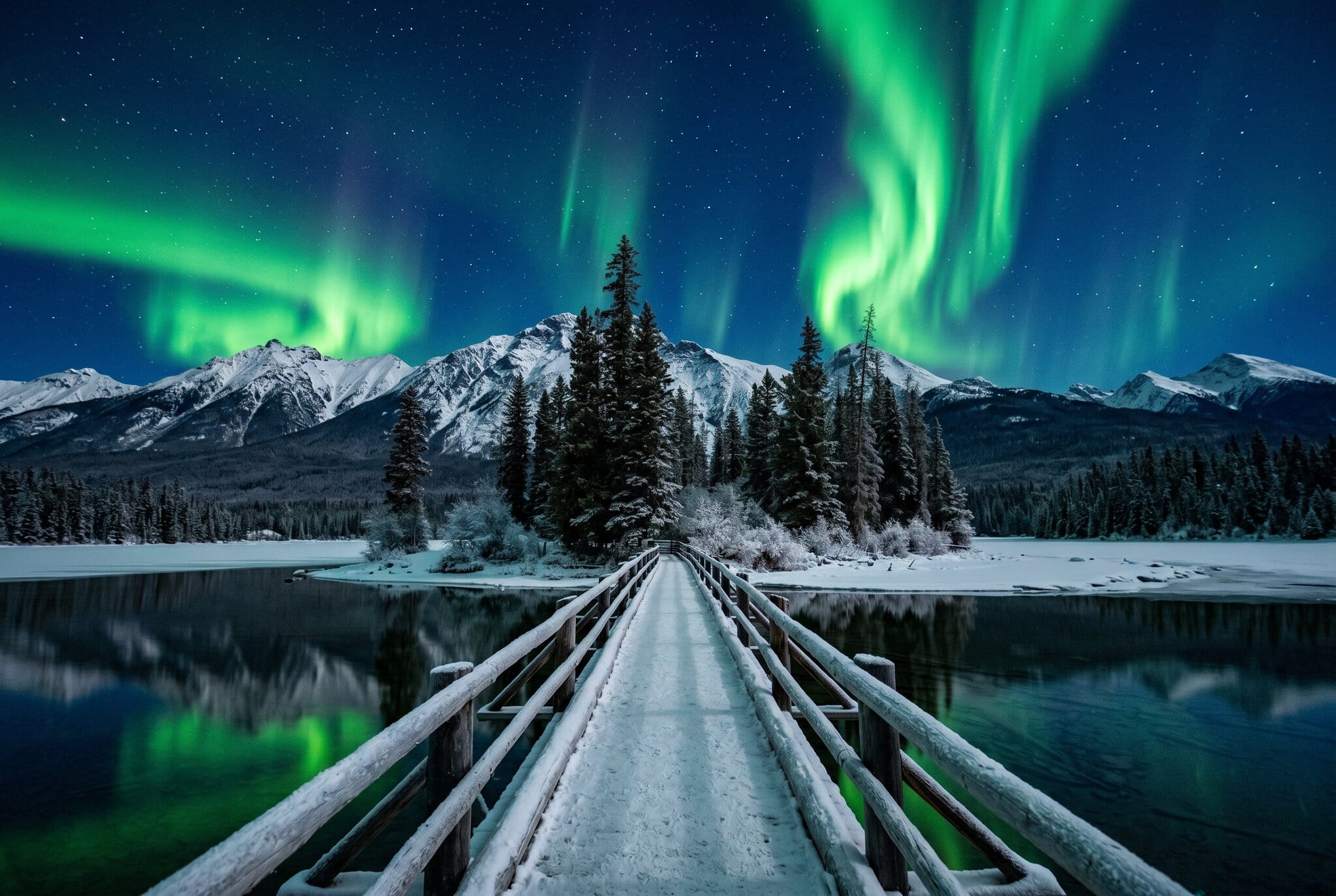
This is an absolute classic that you must try if you don’t fancy driving too far at night. Pyramid Lake is just a few minutes’ drive from central Jasper and features a small wooden bridge leading to a tiny island (Pyramid Lake Island). This island is an iconic spot among photographers.
From here you get a brilliant view of Pyramid Mountain, behind which the aurora very often pulses. 😅 Just be prepared: when the KP index is high, you probably won’t be alone — it’s an extremely popular spot. During long waits for the perfect shot, photographers’ cameras regularly freeze to their tripods, so factor that in and bring a spare battery in an insulated pouch.
4. Vermilion Lakes Near Banff
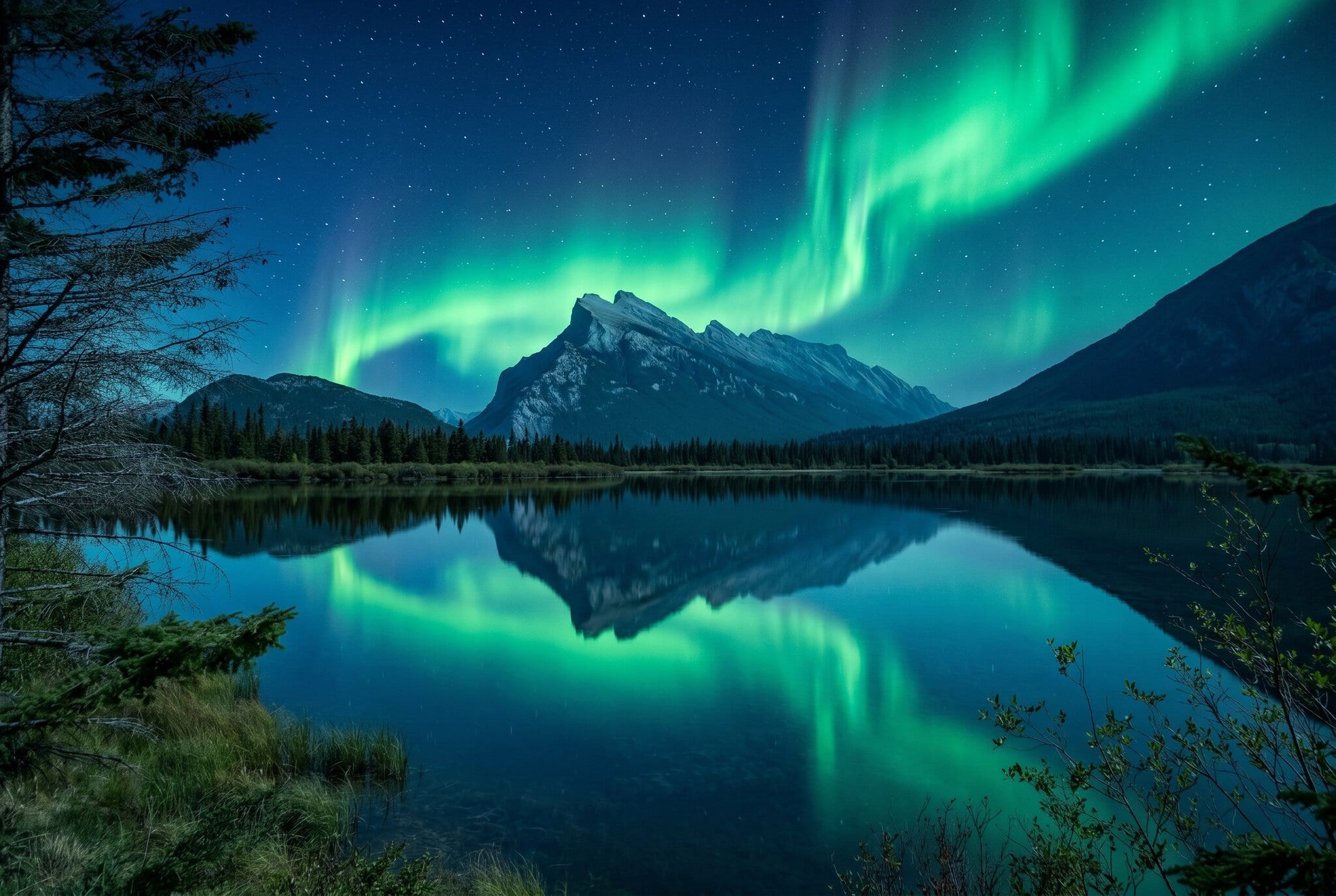
Moving south to Banff National Park, the first place you should head after dark is Vermilion Lakes. They’re just a few minutes from the town of Banff itself. A narrow road leads right to the lakes with parking alongside, so in the bitter cold you can regularly dash back to your warm, running car.
The wait goes by much better with a hot chocolate in hand. If you’re photographing, you’ll have the iconic Mount Rundle in your frame, which combined with the northern lights creates absolutely magical scenery that you’ll immediately want as your phone wallpaper.
5. Two Jack Lake and Fantastic Reflections
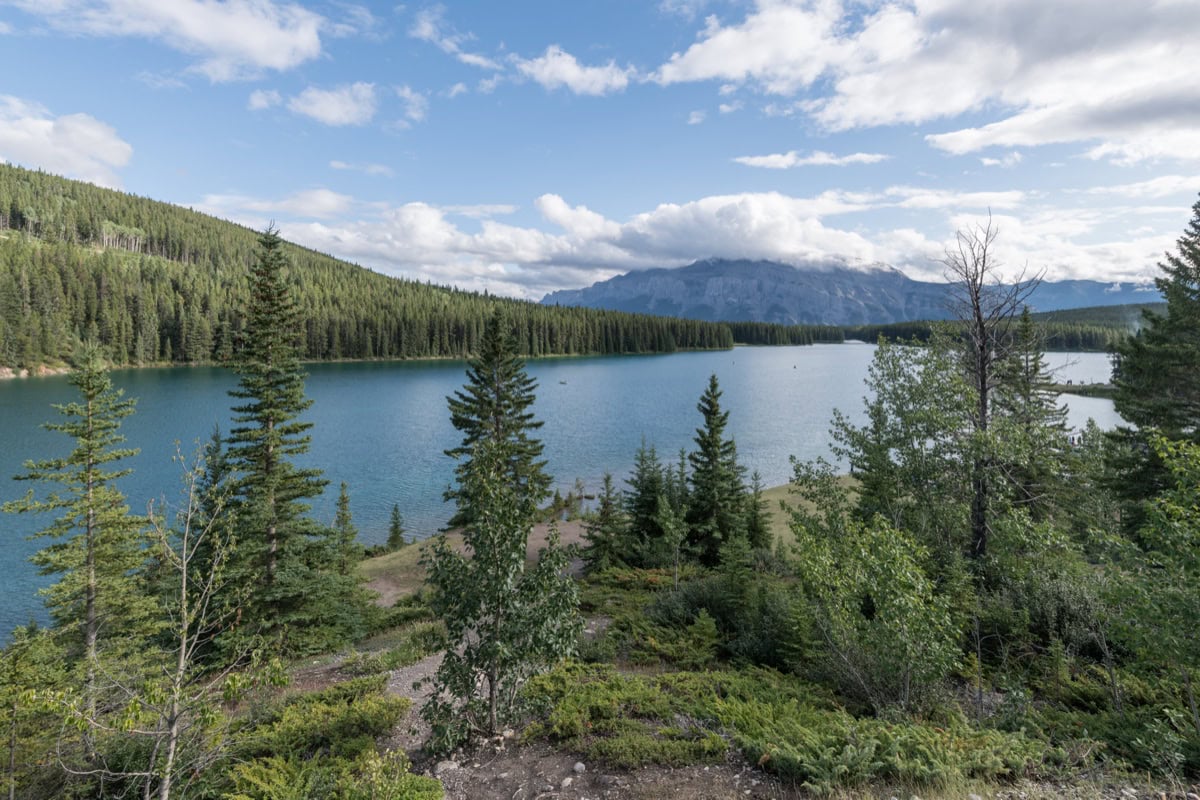
Another gorgeous location near Banff is Two Jack Lake, situated on the same road as the popular Lake Minnewanka. It offers a stunning view toward the north — which is exactly the direction you need to be looking when searching for the aurora.
In winter the lake is usually locked under a thick layer of ice and snow, but if you visit in autumn before freeze-up, you can photograph a perfect mirror reflection of the aurora in the water. A fairly biting wind sometimes whips around the camping area, so a thermos of hot tea is worth its weight in gold here.
6. Lake Minnewanka for Total Darkness
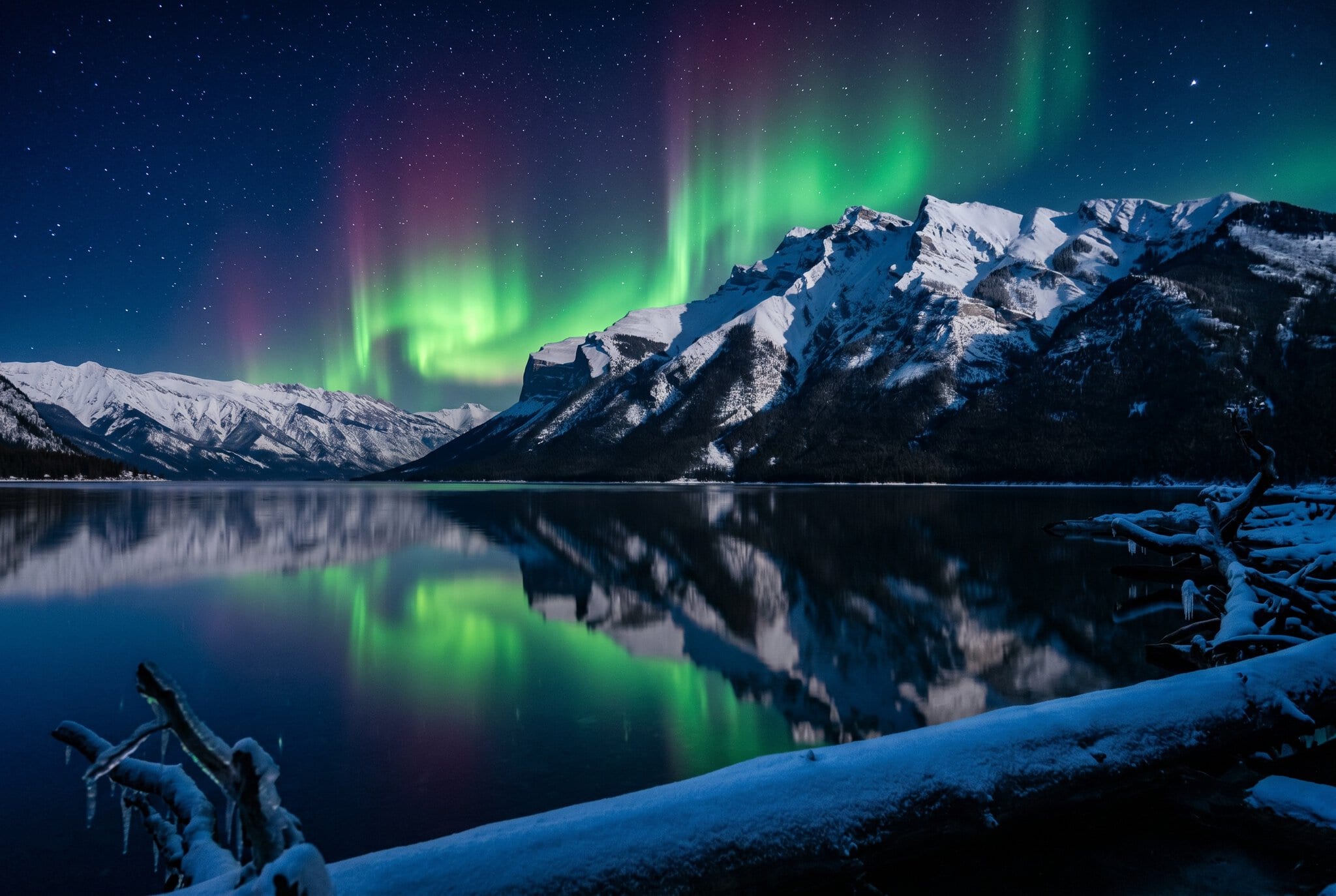
Lake Minnewanka is a massive glacial lake just outside Banff and one of the best spots in the area, because the dense forest surrounding it does a brilliant job of shielding any light pollution from town. The sky here feels enormous and wide open, giving the aurora room to put on a full display.
It does get brutally cold though, as the wind blows straight off the mountains across the frozen lake surface, so thermal base layers are an absolute must. Drive carefully on the way to the lake — there are plenty of deer and elk standing by the road at night, and in the dark you’ll only spot them at the last second.
7. Mount Norquay Viewpoint Above the Town
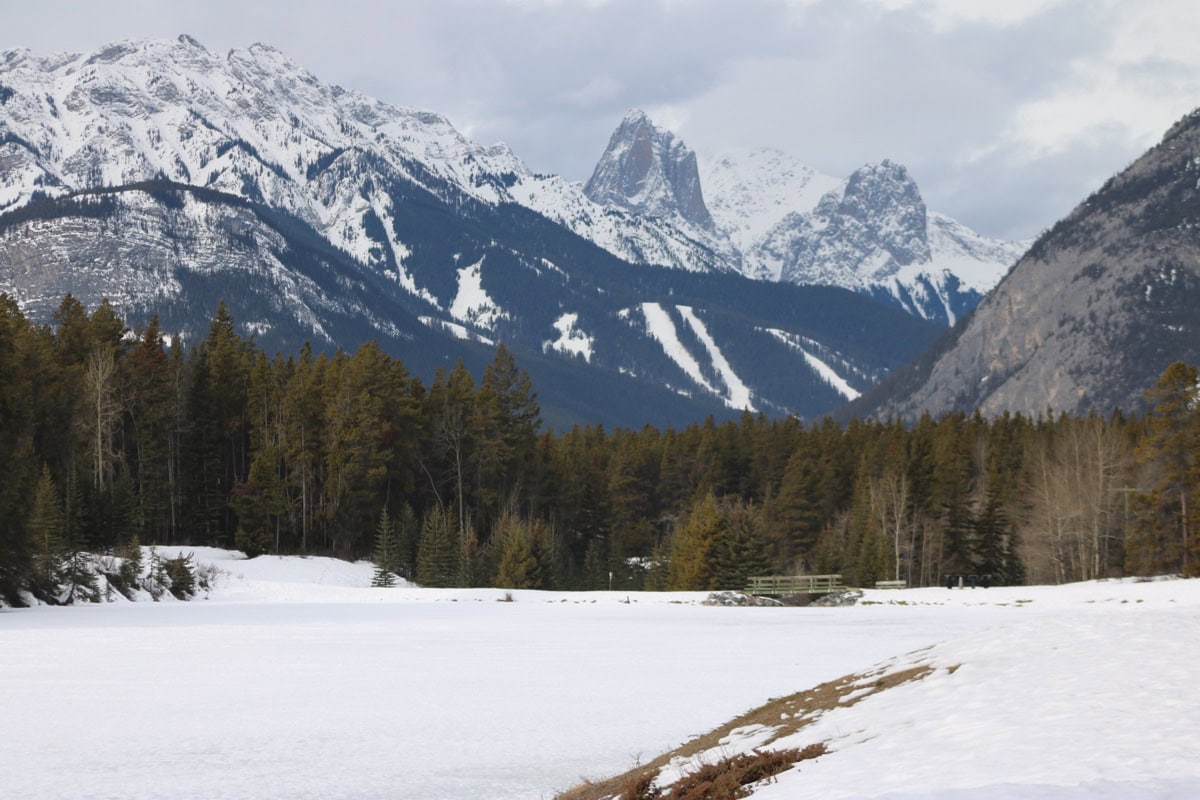
If an extremely strong solar storm is forecast (KP index 6 or higher), head to the viewpoint on the road leading up to the Mount Norquay ski resort. You’ll have the entire town of Banff spread out below you like a postcard.
Normally the town lights would interfere with viewing, but when the aurora is powerful enough, it creates a truly unique photo composition — a glowing valley beneath a luminous sky. The road up is quite winding and can be icy in winter, so take it slow and drive carefully.
8. Elk Island National Park Near Edmonton
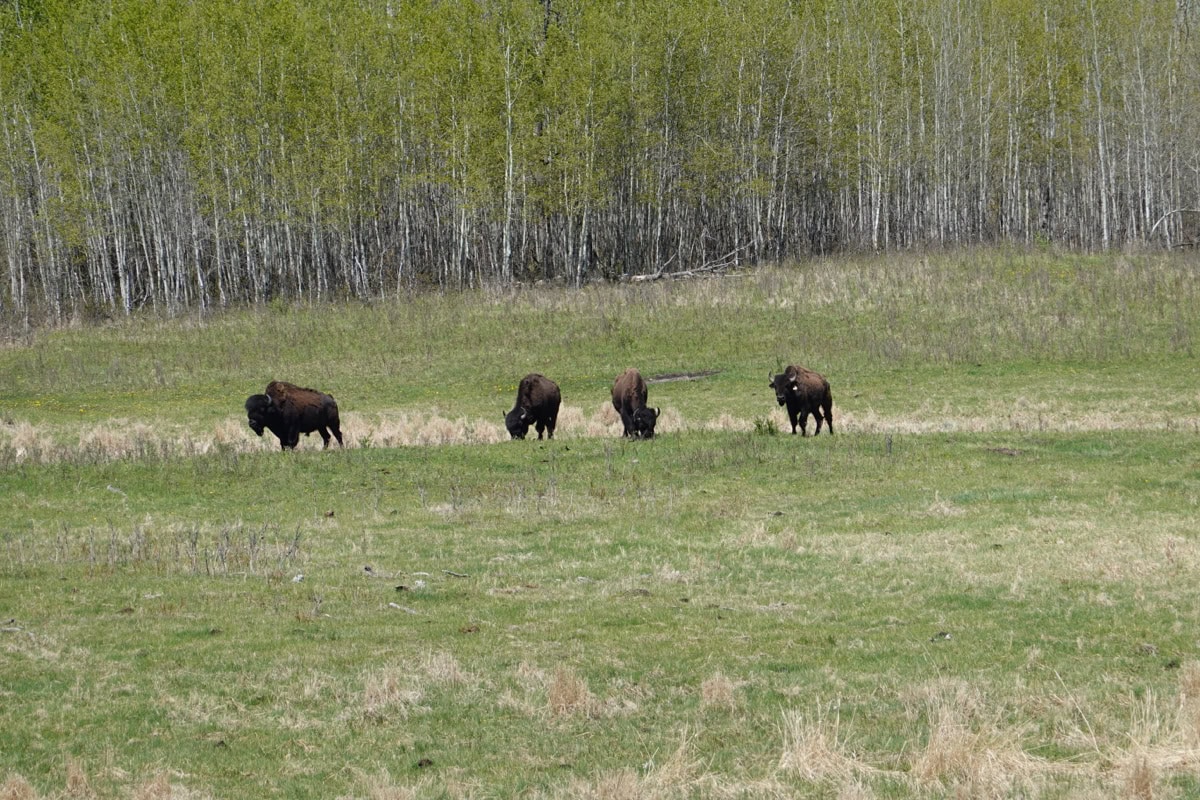
If you’re not spending all your time in the mountains and stop by the provincial capital as well, definitely make a trip to Elk Island National Park, which lies less than an hour’s drive from Edmonton. This park is also a designated Dark Sky Preserve.
According to Edmonton locals and photographers who regularly hunt the aurora here, Elk Island’s flat terrain and wide-open skies offer a completely different experience compared to the mountains. Just watch out for the bison — they love to bed down right in the middle of the road, and you simply have to wait politely until they decide to move on.
Where to Stay for Aurora Hunting and How Much It Costs
Alberta offers a huge range of accommodation, but keep in mind that the Banff and Jasper national parks are among the pricier destinations in Canada. In winter (which is the ideal time for aurora viewing) prices are somewhat lower than during peak summer season, but still expect to pay roughly 100–170 € (150–250 CAD) per night for a decent double hotel room.
Given that you’ll likely be awake half the night and sleeping through the day, look for accommodation with blackout curtains and ideally a kitchenette. We always appreciated being able to make a hot bowl of soup or a cup of tea at 3 a.m. when we got back from the cold, rather than having to wait for a café to open in the morning.
In Jasper, we recommend staying as close to the centre as possible or somewhere with quick access to Pyramid Lake Road. We absolutely loved the Fairmont Jasper Park Lodge. It’s a bit on the pricier side, but those wooden cabins on the lakeshore have an incredible atmosphere, and all you have to do for stargazing is step out onto the terrace.
In Banff, hotels along Banff Avenue are a great choice, because you can be out in the darkness by the lakes within a 10-minute drive. We’re personally big fans of the Moose Hotel & Suites, which also has rooftop hot pools. Trust us, after five hours of freezing outside, that hot pool will feel more heavenly than anything else in the world.
Where to Eat Before (or After) a Night of Aurora Hunting
Hunting the northern lights is a surprisingly serious physical feat. When you’ve been standing by a frozen lake at minus twenty for an hour, you burn through so many calories that you come back absolutely ravenous. Here are a few tried-and-tested spots where you can refuel properly:
Luckily, Canadian mountain towns are packed with excellent restaurants and bistros that’ll get you back on your feet in no time. We’ve picked the places we personally return to again and again, where they always take great care of you.
Our Favourite Spots in Banff and Jasper
In Banff, you absolutely must visit The Bear Street Tavern. They make incredibly good pizza that you dip in honey with chilli oil. It might sound a bit odd, but once you try it, you’ll never want to eat pizza any other way. It’s the perfect calorie bomb before a long night out.
If you’re in Jasper, don’t miss Jasper Brewing Company. They’ve got excellent craft beer and, most importantly, classic Canadian poutine — chips smothered in cheese curds and drenched in hot gravy. This hearty dish will warm you up reliably after even the coldest night of shooting.
Map of points of interest for your phone
Jasper Dark Sky Festival 2026: An Event Not to Miss
If you want to combine sky watching with a truly special cultural experience, pencil October 2026 into your diary. During the solar maximum, Jasper National Park will once again host the wonderful Jasper Dark Sky Festival.
The programme is absolutely packed — we’d probably skip the academic lectures (sorry, scientists) and head straight for the photography workshops, where photographers from around the world teach beginners how to properly capture the night sky. The atmosphere in town during this time is fantastic: the streets smell of mulled wine, people gather around campfires, and the moment phones ping with a KP index alert, the entire town collectively migrates to the lakes.

How to Photograph the Northern Lights: Gear and Settings
If you think you can just rock up, whip out your iPhone, snap a photo, and get a National Geographic-worthy shot — we’re sorry to disappoint. Modern phones do have impressive night modes and can occasionally capture a decent green glow, but for truly sharp, detailed images, they usually fall short. If you want genuinely beautiful photos, you’ll need a DSLR or mirrorless camera and, crucially, a tripod. Without a tripod you don’t stand a chance, because we’re talking long exposures here.
So how should you set up your camera?
- Lens: Use the widest lens you have (ideally 14mm to 24mm) to fit as much sky and foreground landscape into the frame as possible.
- Aperture: Open it up as wide as it goes so the sensor captures maximum light. Values of f/2.8, f/2.0, or even f/1.4 are ideal.
- ISO: This depends on your camera’s capabilities, but don’t be afraid of values between 1600 and 6400.
- Shutter speed: Set your exposure between 5 and 25 seconds. If the aurora is dancing rapidly across the sky, use a shorter time (around 5–10 s) so the ribbons don’t blur into a green mush.
- Focus: You need to switch off autofocus and manually focus the lens to infinity (often just a touch before the infinity mark). Try checking the sharpness on a bright star or during the daytime using your screen.
💡 Practical tip: At temperatures around −20 °C, camera batteries drain before your eyes. Two fully charged batteries that would last a week in summer will be dead within an hour in winter. Keep your spare batteries in an inside pocket close to your body so they stay warm.
What to Wear and Pack: How Not to Freeze in a Canadian Winter
Standing in the middle of the night on a frozen lake in the Rocky Mountains and waiting an hour for the first green flicker is a real test of willpower. Success isn’t just about what’s in your camera — it’s mainly about what’s on your body. We seriously underestimated the cold on our first night outings and were shivering pretty badly. 😅
Layer up as much as physically possible. At least five layers on your upper body isn’t overkill at all. Start with quality merino wool base layers, add a warm fleece mid-layer, then an insulated down jacket, and top it off with a solid windproof outer shell. Pay the same attention to your legs: we routinely pulled ski trousers over insulated bottoms. Invest seriously in your footwear — proper winter boots (snow boots are perfect) and wool socks are the absolute essentials.
Three things you absolutely must have in your backpack:
- Hand warmers (disposable heat packs): Those little sachets that heat up for several hours once opened. Pop them inside your gloves, because your fingers will be exposed when adjusting camera settings and they freeze in seconds.
- Head torch with a red light mode: If you use white light, you’ll destroy your own night vision and probably infuriate every other photographer nearby. Red light is gentle on the eyes.
- Hot tea in a thermos and snacks: There’s nothing better than pouring yourself a steaming cup of tea in that frozen silence. And always make sure your car is parked nearby so you can jump in and warm up whenever you need to!
Expectations vs. Reality: What the Northern Lights Actually Look Like
When people head out to see the northern lights for the first time, they’re often a little surprised. The photographs you see online (and in this article) are taken with a camera using a long exposure. This means the sensor collects light over several seconds, whereas the human eye simply doesn’t work that way.
If the KP index is weaker (say around 3 or 4), you might look at the sky and see only a strange, motionless grey smudge that has no business being there. Point your camera at it, though, and — boom — a vivid green ribbon appears on your screen. It’s a bit like a magic trick that only reveals itself through the lens.
But when you’re lucky enough to catch a strong solar storm with a KP index of 6 or higher (which is very realistic during 2024–2026), that gap disappears. The aurora will dance across the entire sky, you’ll clearly see vivid green and often purple with the naked eye, and you’ll be so spellbound that you’ll forget about the cold and even about your fancy camera altogether.
Practical Tips for Your Trip to Canada
Hunting the northern lights in Alberta probably won’t be your only reason for visiting, so here are a few practical tips to help you plan the whole trip.
Finding Cheap Flights to Canada
From the UK, you can find great deals on flights to Calgary with airlines like Air Transat, WestJet, or by connecting through major hubs. We always recommend comparing prices well in advance. Just remember: in winter, always make sure you add checked luggage, because there’s no way you’re fitting five layers of clothing into a carry-on. 😅
Don’t leave booking to the last minute. If you plan your trip six months ahead, you’ll save money that you can then splash out on a nicer hotel with a hot tub. Trust us, in a Canadian winter, you’ll appreciate every penny spent on that.


