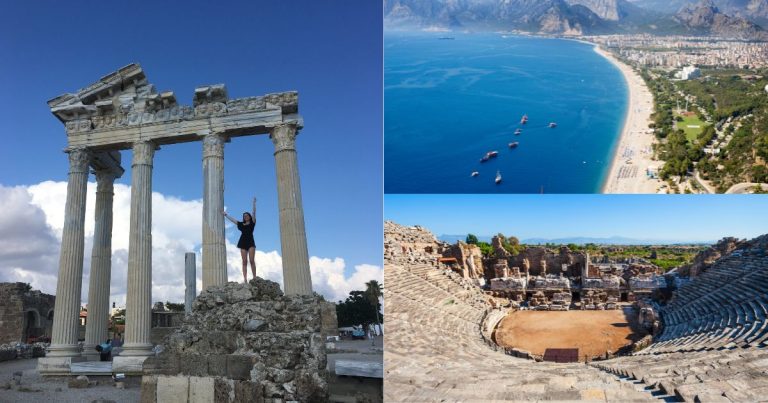
Turkey may sit partly in Europe, and in the resorts it certainly feels that way, but financially and bureaucratically you are outside the European Union. That changes the rules of the game: different roaming, different payments, an invalid European health insurance card, and ATMs that try to skim a few percent off you. Getting the turkey currency right is the difference between a relaxed holiday and a nasty surprise on your bill.
How the practical side works will decide your whole trip – you’ll either enjoy it stress-free, or you’ll be blindsided by a phone bill, ATM fees and unfavourable exchange rates. The good news is that with a little preparation, Turkey is very cheap for a traveller with euros in their pocket.
In this guide you’ll find everything about money in Turkey: how the lira and the dual pricing work, how to pay, which ATM traps to watch out for, how much to tip, how to sort out data with an eSIM, and what different types of holiday really cost.
TL;DR
- The lira (TRY) is falling ⚠️: inflation over 30%, exchange rates change before your eyes. Don’t exchange money at home, bring euros.
- Dual prices: everyday life is cheap (street food, transport), monuments are expensive and fixed in euros (Hagia Sophia €25, Ephesus €40).
- How to pay: in cities and resorts by card (in lira!), cash for bazaars, street food and tips.
- ATMs ⚠️: always choose “Pay in TRY” (decline DCC); watch out for 8% fees – avoid Euronet, look for PTT/ING/VakıfBank.
- Tipping: 5–10% in restaurants, always in cash; €2–3 for porters, 10–20% for the bath attendant.
- Data ⚠️: Turkey isn’t in the EU – get an eSIM (Airalo/Holafly) before you leave home, otherwise roaming is pricey.
- Passport: valid for at least 6 months after your return; UK travellers can stay visa-free for 90 days.
The full destination guide: Türkiye — guide and what to see
The lira, inflation and the two faces of Turkish prices
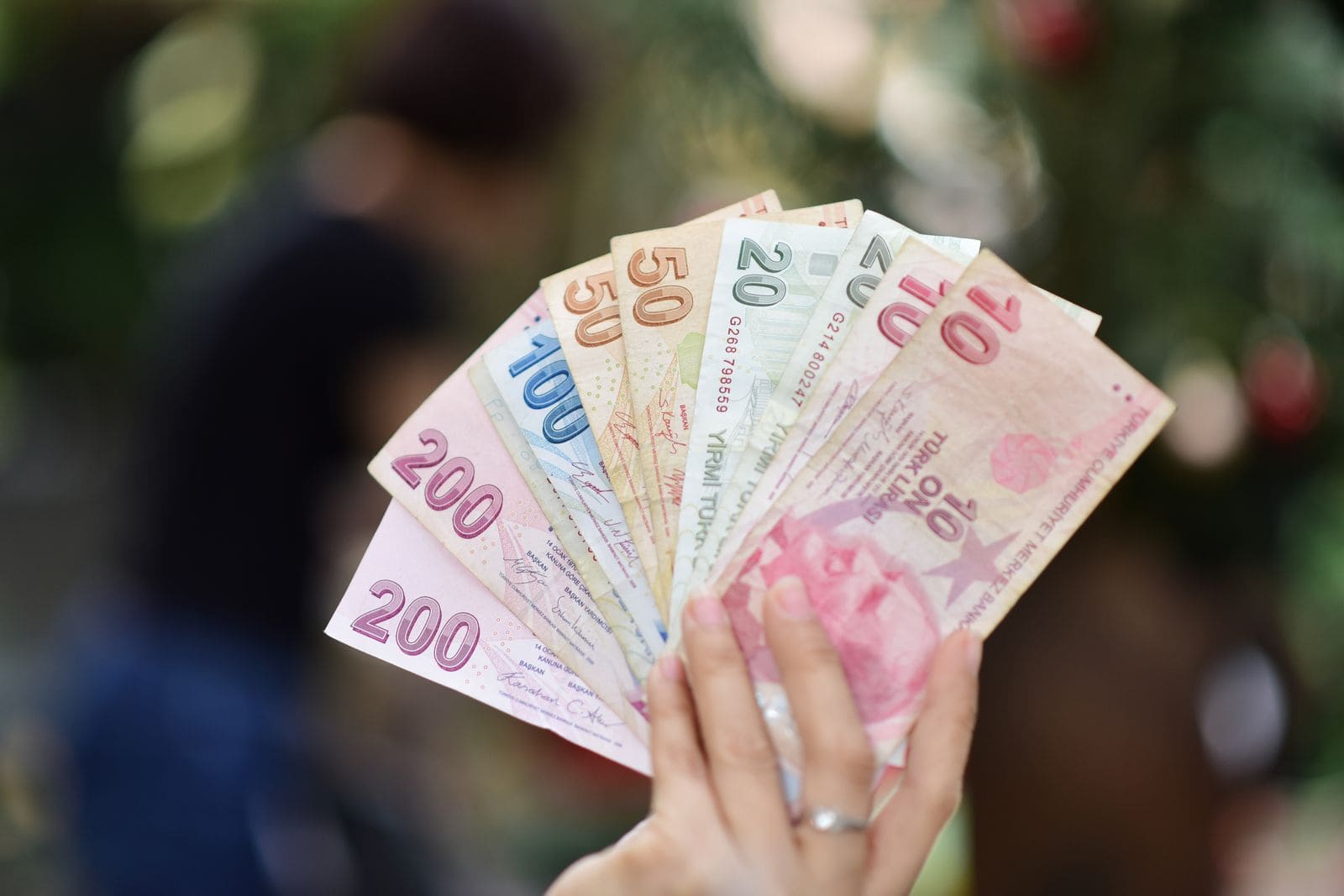
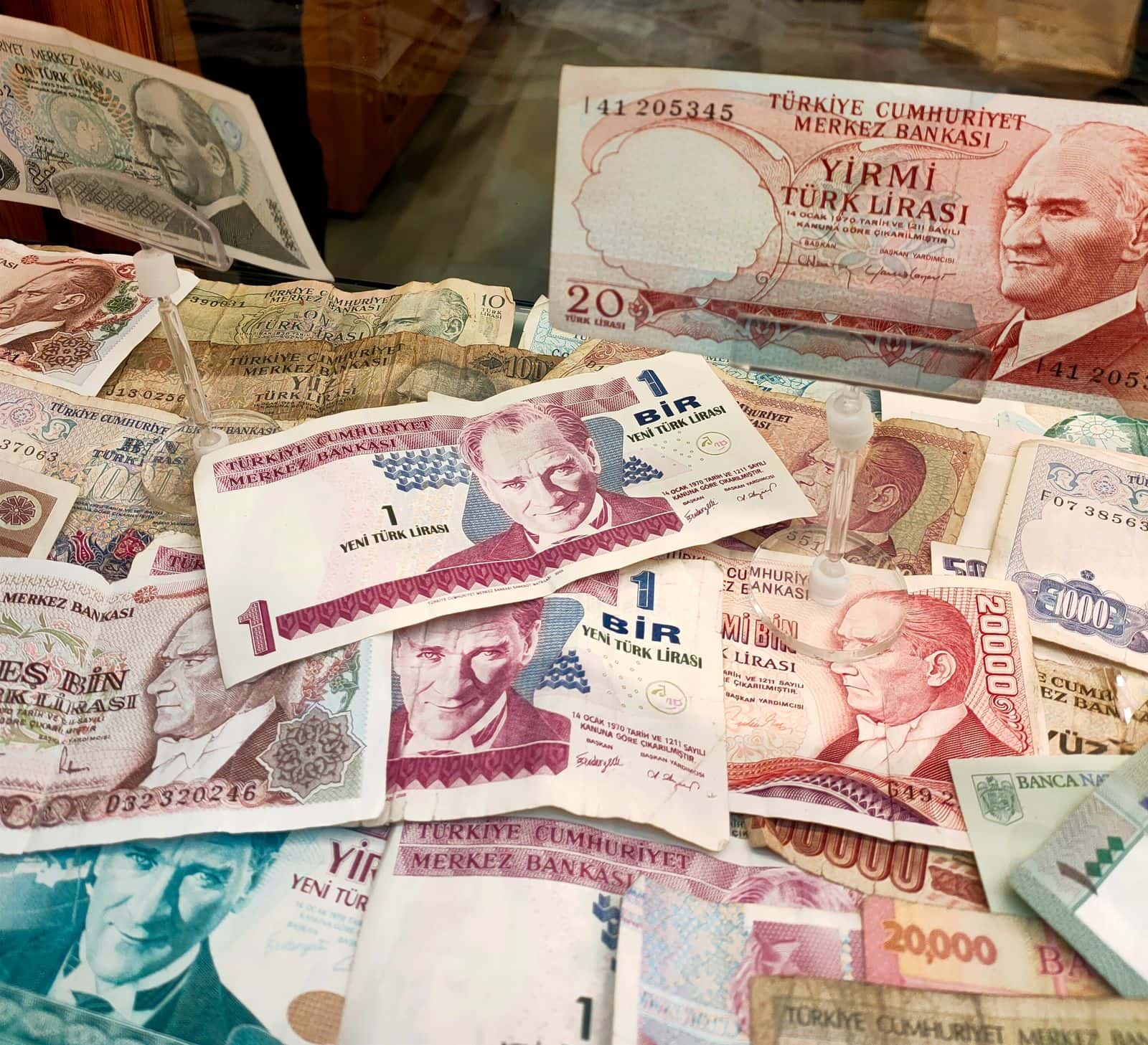
The official currency is the Turkish lira (TRY), which has been in free fall in recent years – inflation is stuck above 30% and the exchange rate shifts almost literally before your eyes (roughly £100 ≈ 5,400 TRY). As a result, Turkey operates in a two-speed pricing reality.
Everyday local life is extremely cheap – the weak lira works in your favour with street food, tea, ferry tickets and local restaurants. The state-run tourist business, however, works differently: the government has hiked prices and pegs admission fees to the euro. Hagia Sophia costs €25, Topkapı Palace around €55, ancient Ephesus €40, and a hot-air balloon flight over Cappadocia €250–450 in season. Paradoxically, a huge dinner will cost you a few pounds, but a day touring Istanbul’s monuments works out pricier than Paris.
💡 Tip: Don’t bother exchanging money at home – you’ll struggle to find lira and the rate will be terrible. Bring euros or dollars, change a portion into lira for small purchases, and pay the rest by card. In resorts, traders and market stalls will accept euros, but at an unfavourable “tourist” rate.
Card vs. cash
Cards are now accepted almost everywhere in big cities and tourist zones – more than half of all transactions in Turkey are cashless, so you can tap your way through cafés, shops and museums. ⚠️ At state-run ticket desks (such as Ephesus) they often won’t take euros in cash at all – they require a card or lira.
That said, do keep some cash in lira – you’ll need it at bazaars, street food stalls, markets, when topping up a transport card, and above all for tipping.
Tricky ATMs and the trap called DCC
Withdrawing from an ATM is the most convenient way to get cash, but it hides the biggest financial trap – DCC (Dynamic Currency Conversion). As soon as you insert your card, the screen offers a “favourable” conversion into your home currency. ⚠️ Always, without exception, press “Decline” or “Pay in TRY” – otherwise the machine uses a rip-off rate and you’ll lose 5–8%.
To make matters worse, many Turkish banks have introduced a fixed 8% fee for foreign-card withdrawals. Steer well clear of the blue-and-yellow Euronet machines with the worst fees, and look for PTT (post office), ING or VakıfBank ATMs, where conditions tend to be more bearable (though the rules keep changing). If you’re exchanging cash, use a licensed exchange office (döviz) in the centre – avoid airport counters and hotel receptions.
Tipping: the culture of bakşiş
“Do I have to tip? Isn’t it a shakedown?” No. Tipping is a deeply ingrained norm in Turkey and is expected across the service industry. In restaurants and cafés the standard is 5–10%, in upmarket venues 10–15%. ⚠️ One crucial detail: you usually can’t add the tip to a card payment – you need to leave it on the table in cash.
Keep small change ready elsewhere too: a “coffee” tip of at least 100 TRY for transfer drivers, €2–3 for luggage porters, a few euros for the housekeeper in your room, and rounding up is enough for taxis. And after a traditional hammam bath, hand the attendant 10–20% directly.
Data and SIM: a trap for your wallet and your phone
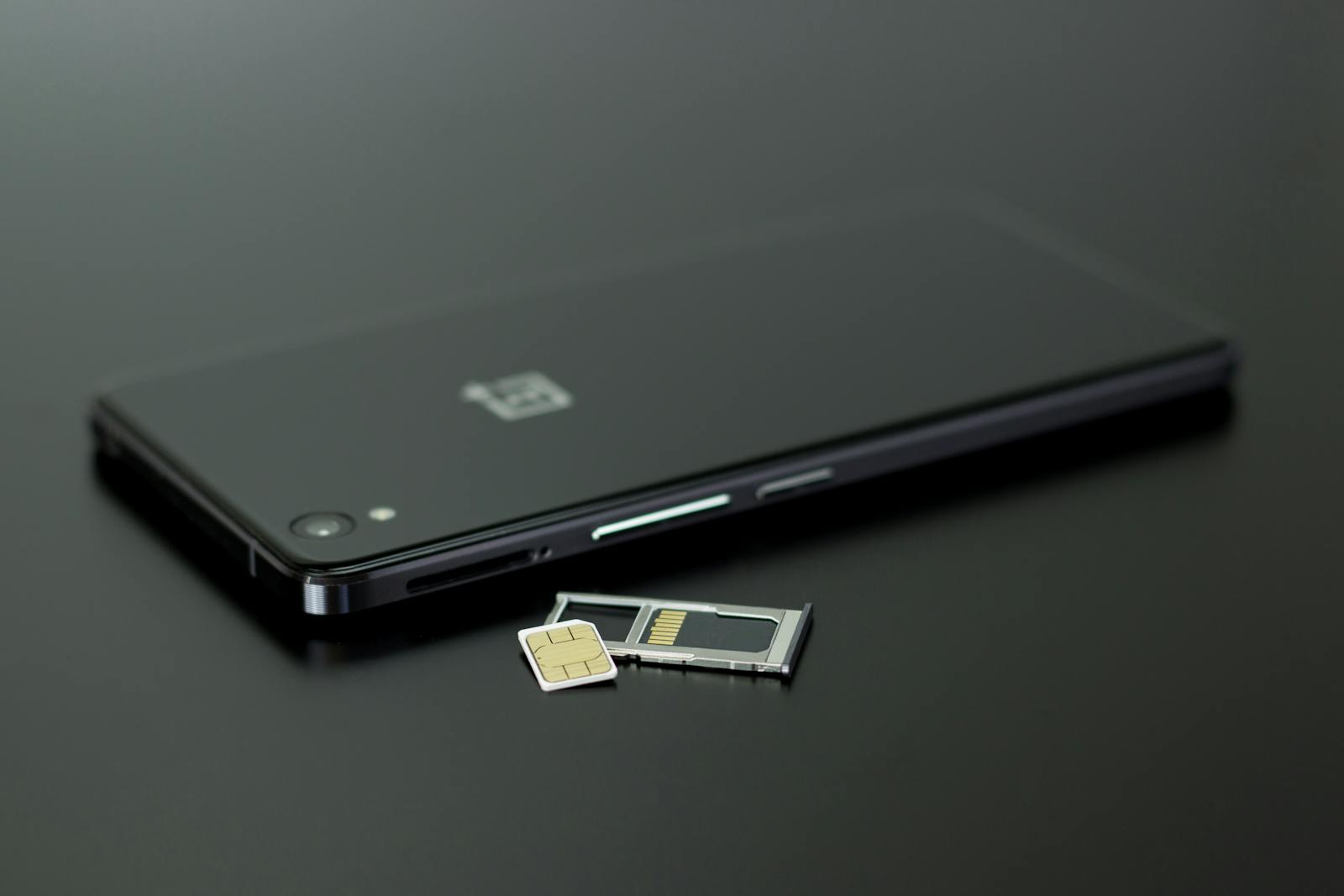
“Roam like at home” does not apply in Turkey – with UK providers it falls into an expensive zone. ⚠️ If you don’t switch off data before landing, downloading just a few emails can send your bill soaring.
The simplest solution is an eSIM installed before you leave home (Holafly, Yesim, Airalo) – activate it after landing and you’re online instantly. If your phone doesn’t support eSIM, buy a physical tourist SIM (Turkcell, Vodafone, Türk Telekom) at the airport. ⚠️ Beware of a Turkish quirk – IMEI registration: after 120 days on a physical Turkish SIM, a foreign phone gets blocked until you pay a hefty tax. For a normal holiday this isn’t an issue, but an eSIM neatly sidesteps the trap. More details in our guide on what to pack for a holiday in Turkey.
Visas and passport validity
Good news: UK travellers don’t need a visa for Turkey and can stay up to 90 days within any 180-day period. The e-visas you’ll occasionally read about apply to other nationalities.
⚠️ The catch is the passport: officially Turkey requires validity of 60 days beyond your stay, but airlines often won’t let you board unless the document is valid for at least 150 days from entry. The safest bet is a passport valid for at least 6 months after your return.
How much a holiday in Turkey costs
Turkey can be dirt cheap or eye-wateringly expensive depending on your travel style. Add a 2% accommodation tax to everything.
- Backpacking: hostels/guesthouses, street food, getting around by dolmuş, and free camping on the Lycian Way. You can get by in Cappadocia on around £25 per person per day (skip the balloon and watch the giants take off from a free viewpoint instead).
- Couple’s weekend in Istanbul: a direct flight, a boutique hotel and the best of the monuments – just the “big five” sights come to nearly €190 per person. A three-day weekend for two, flights included, easily swallows £550–900.
- Family all-inclusive: in peak season, 7 nights in a 5* ultra-AI resort typically costs £750–950 per person, dropping to £380–450 with early-bird deals or in the shoulder season. More in our article on all-inclusive in Turkey.
What to sort out before you fly
| Task | Detail | Why it matters |
|---|---|---|
| Check your passport | valid at least 6 months after return | airlines may refuse boarding otherwise |
| Buy travel insurance | private cover with a high limit | your EHIC/GHIC doesn’t work in Turkey |
| Sort out data | eSIM (Holafly), or switch data off | Turkey isn’t in EU roaming |
| Prepare your money | euros/dollars in cash + a card | you can’t exchange pounds easily, ATMs have DCC and 8% fees |
| Pack a scarf | women: a light scarf for shoulders/hair | faster entry into mosques |
💡 Tip for accommodation and experiences: We like to look for places to stay on Booking.com, which tends to have the best cancellation terms. For tickets, tours and activities, it pays to compare and book through GetYourGuide.
Where to next
Main hub: holiday in Turkey, practical prep: what to pack for a holiday in Turkey, safety and scams: is Turkey safe?, plus inspiration in when to visit Turkey and all-inclusive in Turkey.
Frequently asked questions
What currency to take to Turkey and how to pay?
Take euros or dollars (Czech crowns are difficult to exchange in Turkey and at unfavorable rates) and exchange part of them for lira at a licensed exchange office in town. In large cities and resorts, pay by card in lira (TRY), keep cash for bazaars, street food and tips. For both payments and withdrawals, always decline conversion to euros (DCC).
What is DCC and why refuse it?
DCC (Dynamic Currency Conversion) is an offer by ATMs or payment terminals to convert the amount into your home currency “for convenience”. However, the exchange rate is terrible and you’ll lose 5–8%. Always choose “Pay in TRY” (pay in lira) and let your bank handle the conversion. Also watch out for 8% fees at some ATMs – avoid Euronet.
Does European roaming and EHIC work in Turkey?
No. Turkey is not in the EU, so “Roam like at home” doesn’t apply and roaming is expensive – sort out data with an eSIM card before you leave home. Similarly, the European Health Insurance Card (EHIC) is not valid in Turkey; commercial travel insurance with a high limit is essential.
How much do you tip in Turkey?
In restaurants and cafés 5–10% (in luxury establishments 10–15%), always in cash on the table (you usually can’t add it to the card). Transfer drivers at least 100 TRY, porters 2–3 €, housekeeping a few euros, hammam attendant 10–20%.
How long does a passport need to be valid for Turkey?
Officially 60 days beyond your stay, but in practice airlines often won’t let you board without at least 150 days validity. The safest option is to have a passport valid for at least 6 months after your planned return. Czechs don’t need a visa for tourism up to 90 days, but you cannot enter the country with just an ID card.
Tips and Tricks for Your Vacation
Don’t Overpay for Flights
Search for flights on Kayak. It’s our favorite search engine because it scans the websites of all airlines and always finds the cheapest connection.
Book Your Accommodation Smartly
The best experiences we’ve had when looking for accommodation (from Alaska to Morocco) are with Booking.com, where hotels, apartments, and entire houses are usually the cheapest and most widely available.
 🚗 Car rental on the roadVerified rental cars in Turkey
Search with the DiscoverCars comparison engine — it compares prices from dozens of local and international rental companies, and most bookings come with free cancellation.
Compare car prices in Turkey →Don’t Forget Travel Insurance
Good travel insurance will protect you against illness, accidents, theft, or flight cancellations. We’ve had a few hospital visits abroad, so we know how important it is to have proper insurance arranged.
Where we insure ourselves: SafetyWing (simple monthly subscription) and TrueTraveller (for extra-long trips).
Find the Best Experiences
Get Your Guide is a huge online marketplace where you can book guided walks, trips, skip-the-line tickets, tours, and much more. We always find some extra fun there!