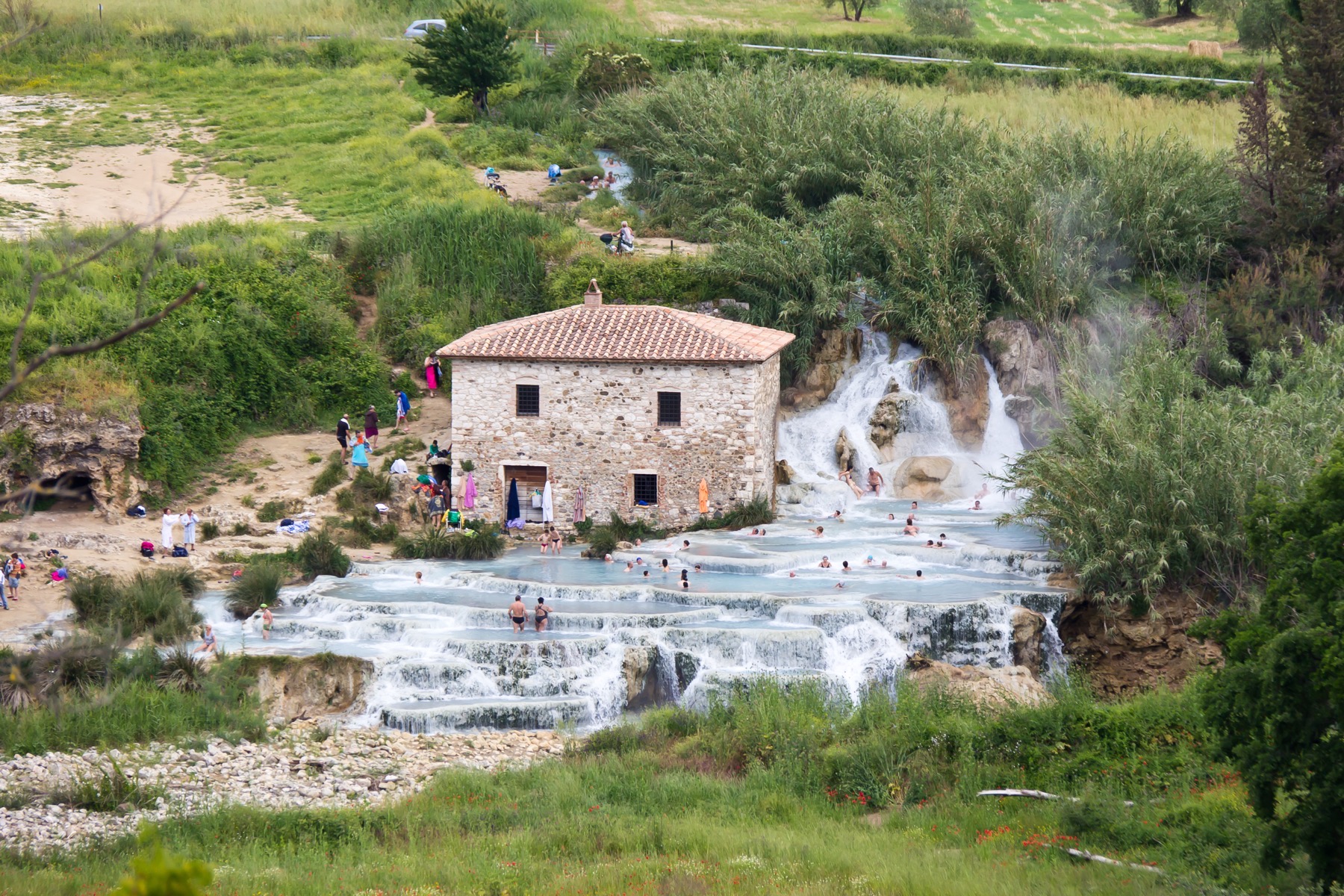
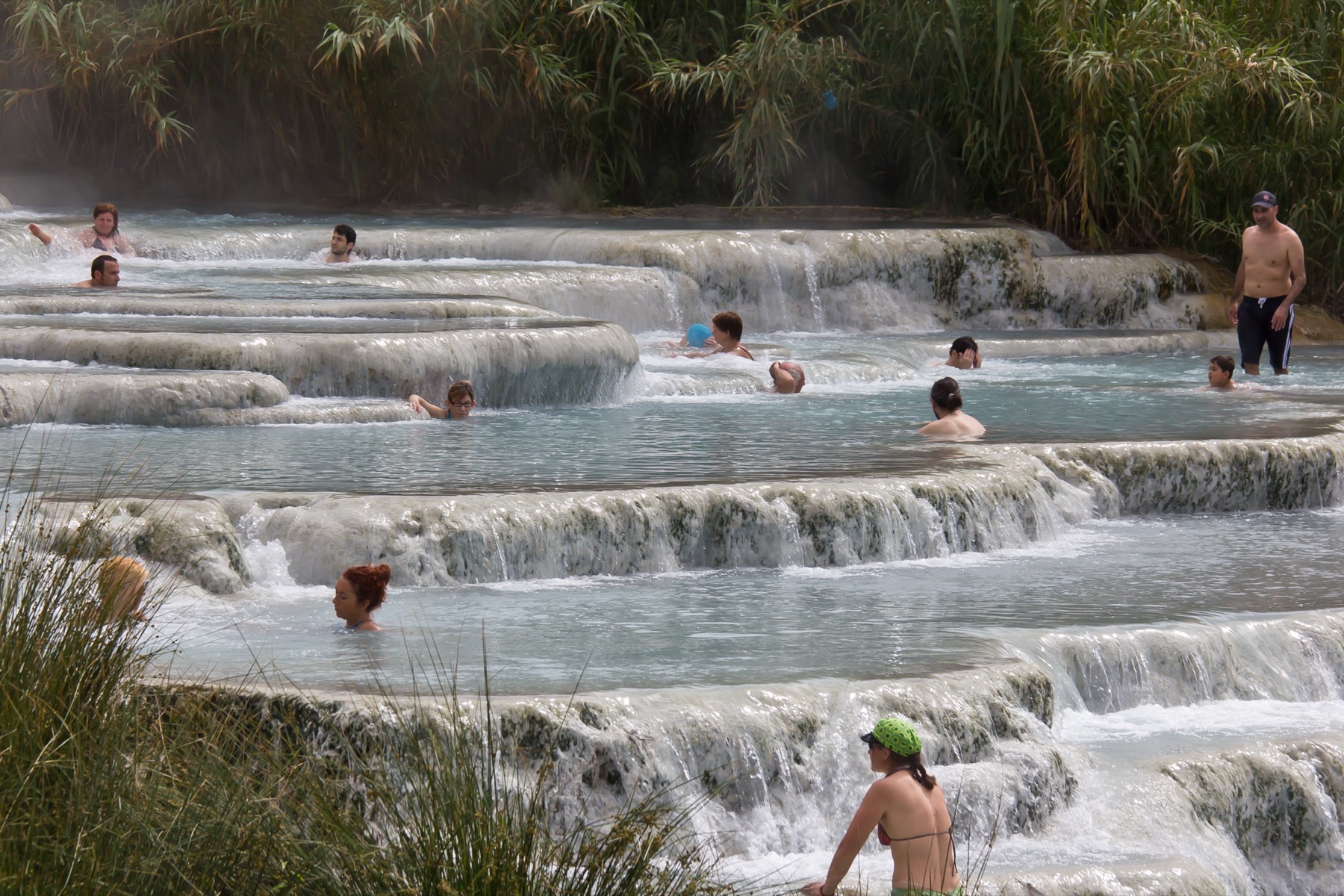
Imagine sitting in limestone pools beneath a cascading waterfall in the middle of the Tuscan countryside—and paying absolutely nothing for the experience. That’s Saturnia. Two hours away, meanwhile, you can spend €40 on entry to a luxury spa, where you’re handed a fluffy robe and a glass of aperitivo as soon as you arrive.
Italy offers two completely different worlds of thermal bathing. On one side are the wild terme libere—free natural springs with no facilities. On the other are luxury paid terme and centri benessere, where you’ll be pampered from head to toe.
This guide covers 28 thermal baths in Italy, organized by region: from Tuscany’s free springs in Saturnia to the papal baths of Viterbo, volcanic Ischia, and Alpine spas in Merano and Bormio. I’ll show you where you can swim for free, how much entry costs, and how reservations work.
TL;DR
- Free natural springs: Cascate del Mulino in Saturnia, Bagni San Filippo, and the natural pools at Petriolo.
- Hottest water: The Bullicame spring at Terme dei Papi reaches 58°C, while the Boiola spring in Sirmione reaches a remarkable 69°C.
- Most pools: Terme Merano in South Tyrol has 26, while Ischia’s vast Poseidon park is the island’s standout.
- Best for couples and luxury: Resorts such as Fonteverde, Adler, and Borgobrufa offer exceptional tranquility and private areas.
- Winter bathing and snow: Bormio, Pré-Saint-Didier, and Merano’s Alpine spas are well equipped for families and winter escapes.
- Mud treatments: Head to Abano and Montegrotto for therapeutic mud and fangotherapy.
- Closest to Rome: QC Termeroma is near the airport, and Stigliano is a short distance from the city.
- Typical entry price: Luxury wellness circuits usually cost between €40 and €60.
- Why book ahead: Paid spas can sell out, especially on weekends, so reserve your time slot online.
The full destination guide: Italy — guide and what to see
How Italian thermal baths work (and what terme libere means)
Italy’s thermal bathing culture has two sides. First, there are the so-called terme libere—free natural springs open to the public. They have no opening hours, charge no entrance fee, and offer no lockers or showers. Often, the only cost is a few euros for nearby parking.
Paid terme or centri benessere, on the other hand, work like traditional luxury spas. You’ll usually get a bag with a towel, robe, and slippers at the entrance, so all you need to bring is your swimsuit. The well-known QC Terme chain also offers Aperiterme evenings, which include a drink and light snacks.
At paid spas, you’ll often see the term percorso benessere. It means a carefully designed wellness circuit that guides you through pools, saunas, and steam rooms in a recommended order. To make the most of your visit without rushing, most centres now require you to book a specific time slot in advance.
Popular spas often sell out on weekends and public holidays. 💡 Tip: Book your tickets online well in advance. Another Italian spa custom: unlike in some countries, it’s common to wear a swimsuit in the saunas.
Some establishments operate as terme convenzionate, or therapeutic spas linked to Italy’s public healthcare system. Locals visit with a doctor’s referral. You won’t need one as a visitor, but you may recognize these centres by their inhalation treatments, fangotherapy, and on-site medical clinic.
Free springs have different rules. In recent years, local authorities have often restricted bathing after sunset or tightly regulated parking. Check where you’re allowed to leave your car, so you don’t come back to find a fine under the windscreen wiper.
How much do thermal baths cost, and when should you go?
Prices range from absolutely free to around €40–€60 for a luxury percorso benessere, such as one at QC Terme. Many paid resorts have separate price lists for 2026. Entry is always cheaper on weekdays than on weekends and public holidays.
Late autumn and winter are hands down the best time to visit hot springs. There’s nothing like soaking in hot water while the crisp air cools your face. On the other hand, it’s best to avoid Italian thermal baths in August: they’re crowded with local visitors, and the heat can make a soak less enjoyable.
Some sites have seasonal opening hours. For example, the huge thermal park at Terme Merano, with 52,124 square metres of greenery, is open only from mid-May to mid-September. The indoor pools, of course, are open year-round.
If you’re heading to free springs, parking is usually your only expense. Spaces are limited, so it’s worth getting there early in the morning. This is especially true in Saturnia: arrive early and you can enjoy the limestone cascades without the crowds.
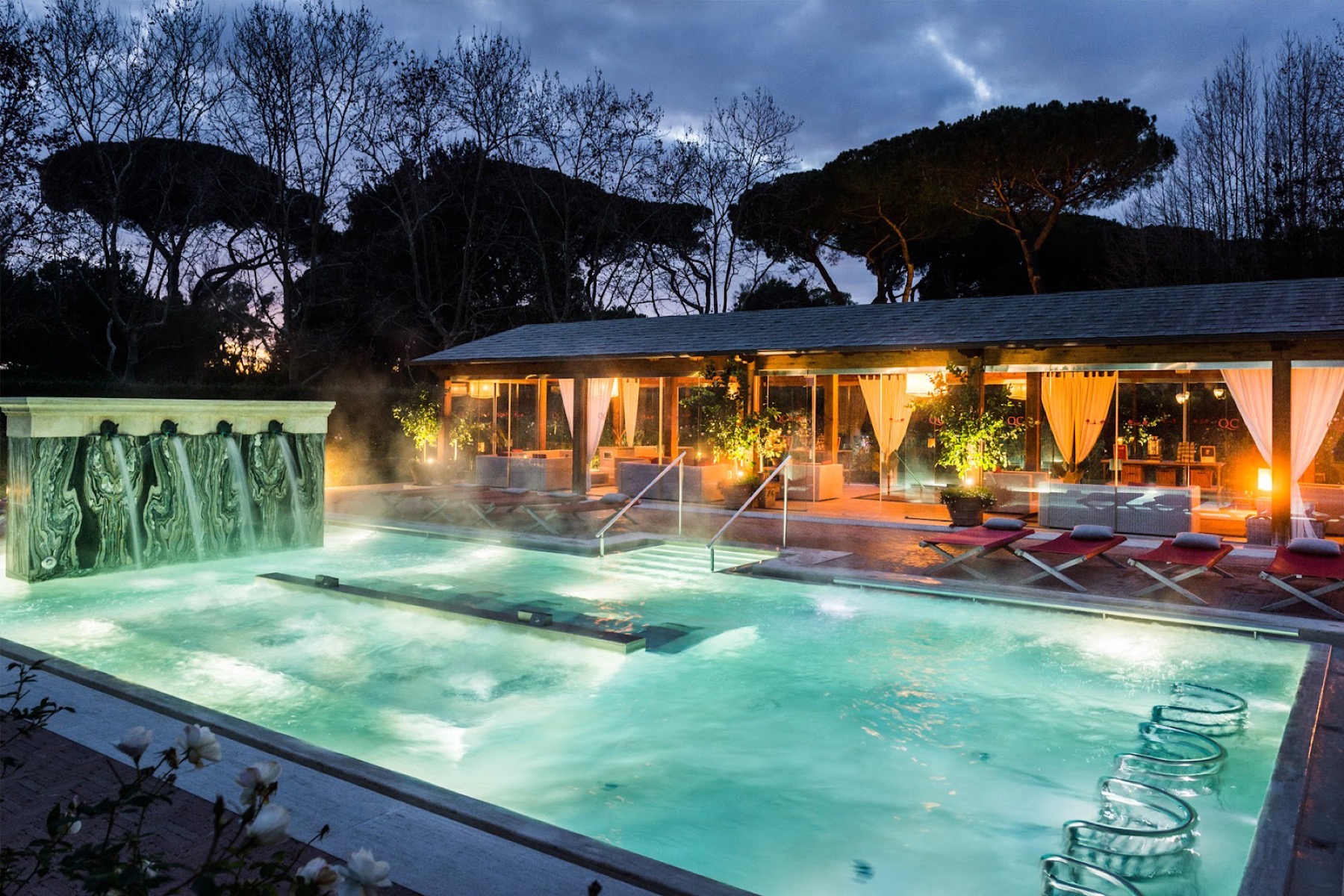
Where to stay near Italy’s thermal baths
💡 Accommodation and experiences tip: Compare places to stay here to see what’s available and at what price. We prefer to search on Booking.com, where cancellation policies are often better. It’s also worth comparing and booking tickets, tours, and activities through GetYourGuide.
Staying right by the springs is a huge advantage. You can go for an early-morning or late-evening soak, after the day-trippers have left, then head straight to bed. At many resorts, pool access is included in the room rate.
Most hotels offer special packages with wellness treatments. You can easily compare prices and availability on Booking.com and book the dates you want. Here are a few places worth considering.
Terme di Saturnia Natural Spa & Golf Resort is in Tuscany, right beside a spring with a temperature of 37.5°C. Guests at this five-star resort get access to the thermal park included. The famous free Cascate del Mulino waterfalls are just a few minutes away by car.
Fonteverde is in the Tuscan town of San Casciano dei Bagni. This beautiful spa resort is housed in a Medici villa, with panoramic pools overlooking the Val d’Orcia countryside. It’s also a great base for exploring the area and visiting Montepulciano.
Grotta Giusti Thermal Spa Resort is in Monsummano Terme, about an hour’s drive from Florence. This 19th-century villa offers something truly unusual: its own thermal cave, accidentally discovered by quarry workers and now open for visitors to bathe in.
Roseo Euroterme Wellness Resort is in Bagno di Romagna, in Emilia-Romagna. It probably offers the best value for money in this guide. This large family-friendly thermal hotel has pools and waterslides, so it’s a good option if you’re travelling with children.
Borgobrufa SPA Resort in Torgiano, Umbria, is ideal if you’re looking for complete peace and quiet. This adults-only spa resort is tucked among olive groves above Perugia. It has plenty of private wellness areas designed especially for couples.
Hotel Terme Merano in South Tyrol makes spa access wonderfully easy: the hotel is directly connected to the Terme Merano complex. You can walk from your room in your robe straight to any of its 26 pools.
Thermal baths in Tuscany: free springs and luxury resorts
Tuscany is about more than vineyards and cypress-lined roads—it’s also Italy’s undisputed capital of thermal bathing. Some of the country’s best-known hot springs are here, drawing visitors from around the world. If you’re travelling through central Italy towards the coast, it would be a shame not to stop for at least one soak. Choose from free natural cascades in the countryside or beautiful five-star resorts where you’ll be looked after all day long.
Saturnia and its iconic waterfalls are the classic choice, but the charming Bagno Vignoni—with its thermal pool in the main square—and Bagni San Filippo, home to the limestone formation known as the White Whale, are also well worth a visit. For peace, quiet, and a little luxury, try the renowned Fonteverde or Adler Thermae, or the fascinating cave complex at Grotta Giusti. Here are seven Tuscan spots for a truly relaxing escape.
1. Terme di Saturnia (Saturnia, Tuscany)
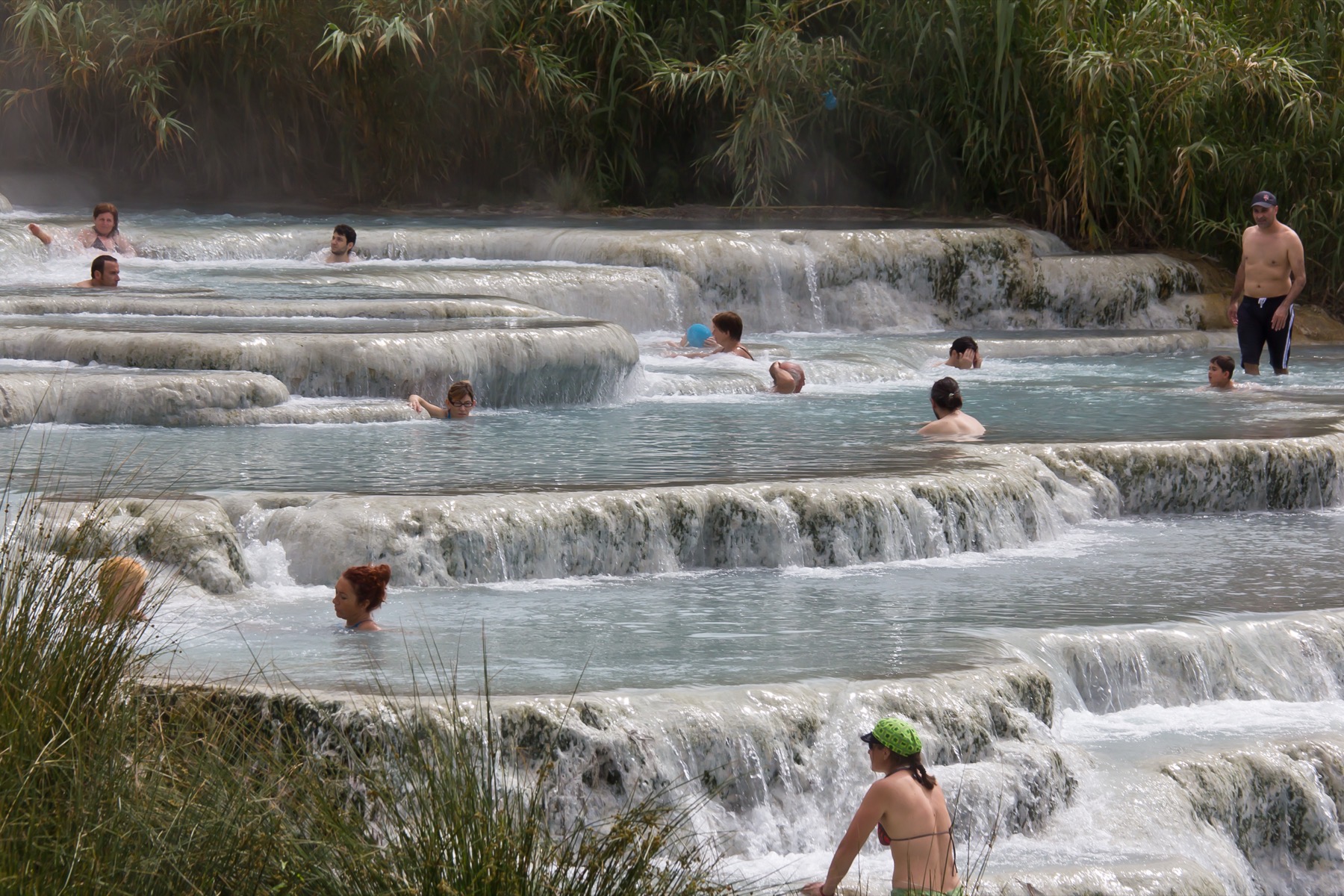
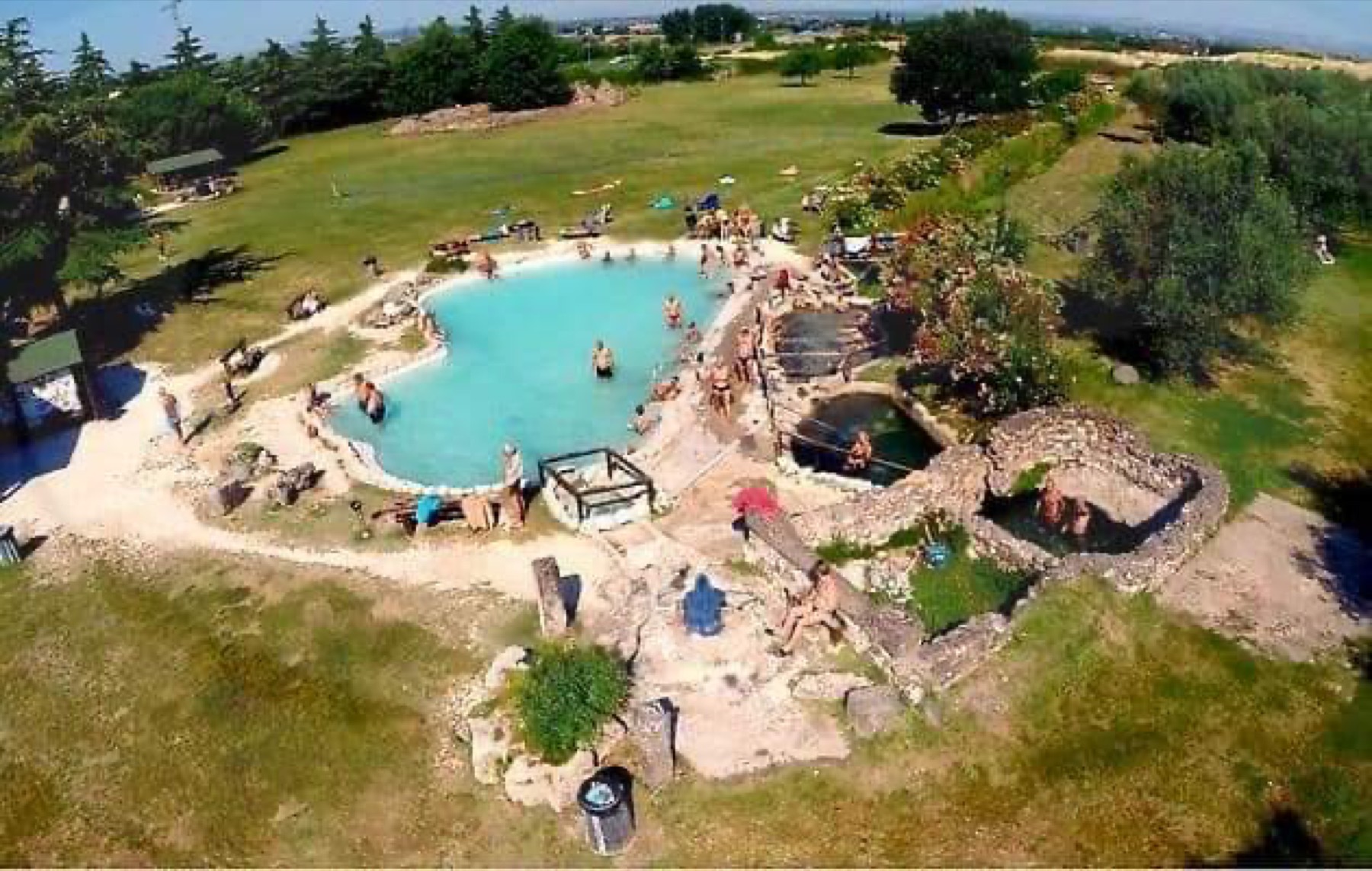
We’ll start with the best-known spot of all: you’ve probably seen the natural Cascate del Mulino cascades (also often called Cascate del Gorello) in photos of Tuscan thermal baths. Water from the spring flows for around two kilometres across meadows before reaching the limestone and forming these beautiful natural pools. The spring itself has a pleasant temperature of 37.5°C, so you can warm up here even in the cooler months.
The natural waterfalls are free and open to visitors at all times, while the luxurious five-star Terme di Saturnia resort is right next door. The good news is that you can buy a Day SPA ticket for its thermal park and club even if you’re not staying at the resort. This site on a travertine plateau at an altitude of 294 metres has a long history: Pope Clement III mentioned the baths in a document as early as 1188.
💡 Tip: Visit the waterfalls early in the morning, as they get very busy during the day. The town of Saturnia is about 56 kilometres from Grosseto, which is useful to know when planning your route.
2. Bagno Vignoni (Bagno Vignoni, Tuscany)
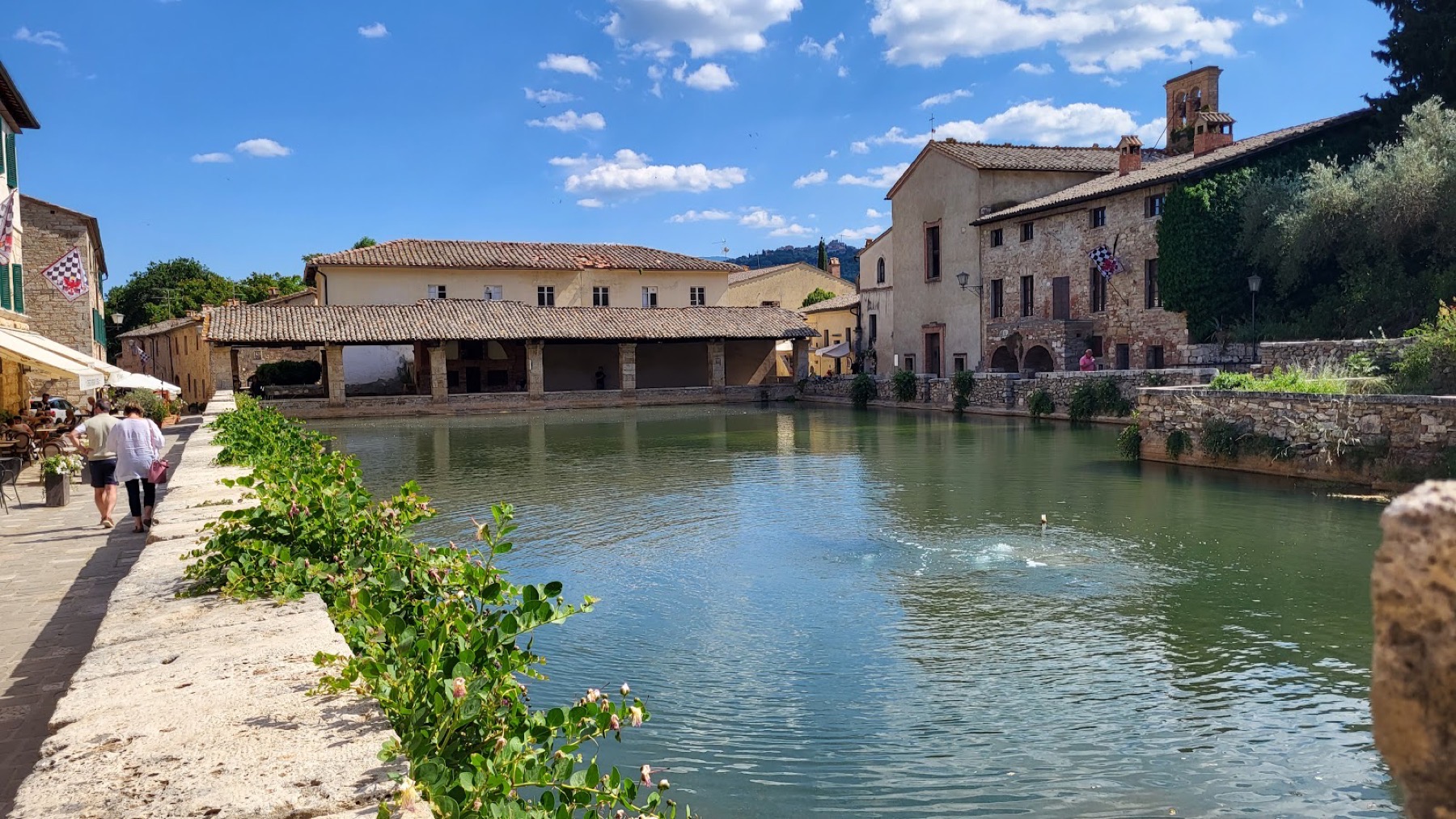
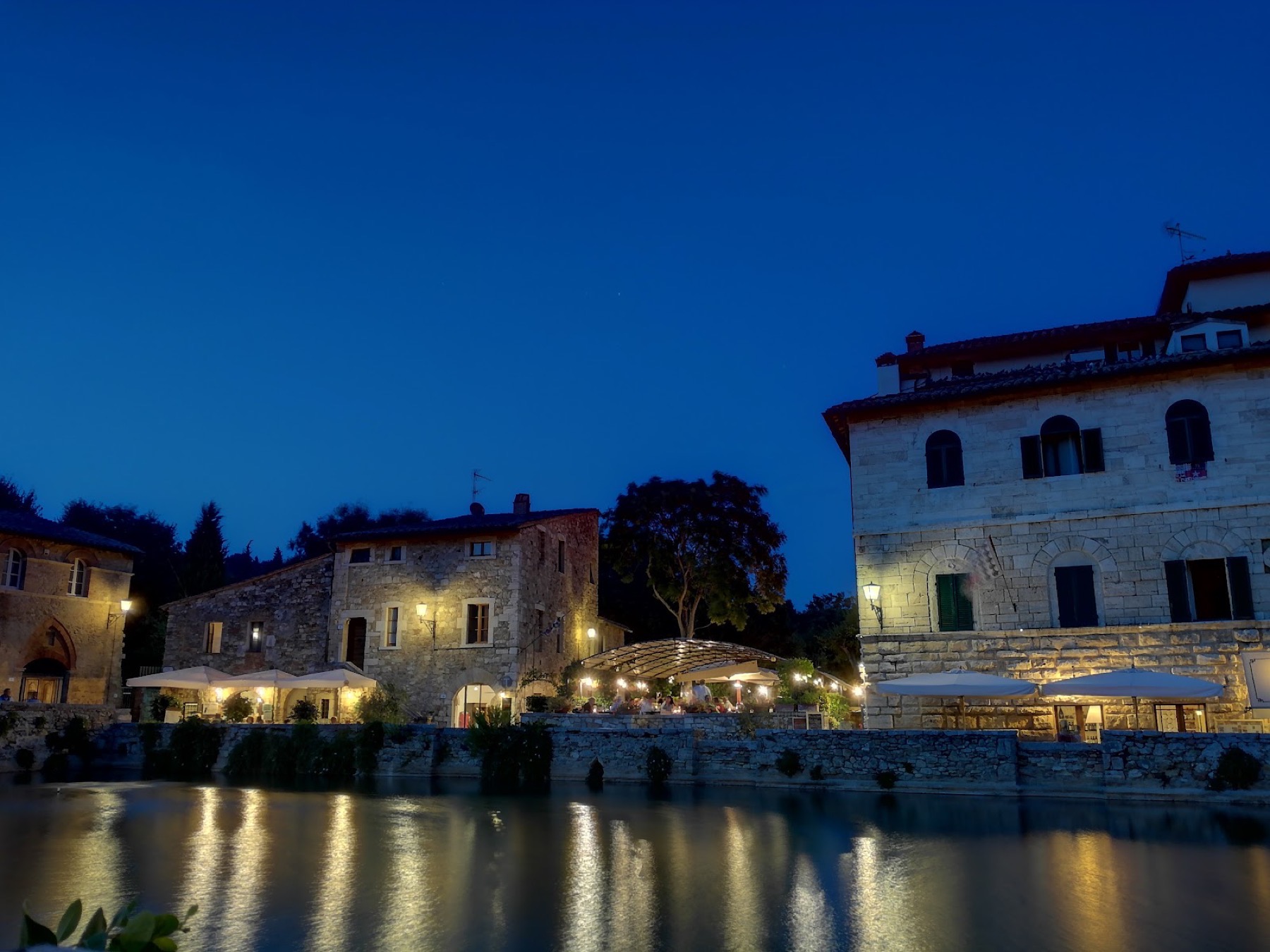
This picturesque village stands out because its main square is a huge thermal pool, rather than a traditional piazza. Called Piazza delle Sorgenti, it bubbles with hot water right outside the doors of historic houses and cosy cafés. For hygiene and heritage reasons, swimming in the central pool isn’t allowed, but it makes a beautiful backdrop for an evening stroll, when mysterious mist rises from the water.
It’s no surprise that Bagno Vignoni has long been popular with Italian and international film-makers. It featured in Andrei Tarkovsky’s 1982 film Nostalghia, which won an award at the Cannes Film Festival the following year. The square also appeared in the 1992 comedy Al lupo al lupo and the 2014 film La scuola più bella del mondo.
💡 Tip: For a proper soak, head to one of the paid spa facilities just a short walk from the main square. They have beautifully maintained pools with views of the Tuscan countryside, so you can enjoy the warm water legally and in comfort.
3. Bagni San Filippo (Bagni San Filippo, Tuscany)
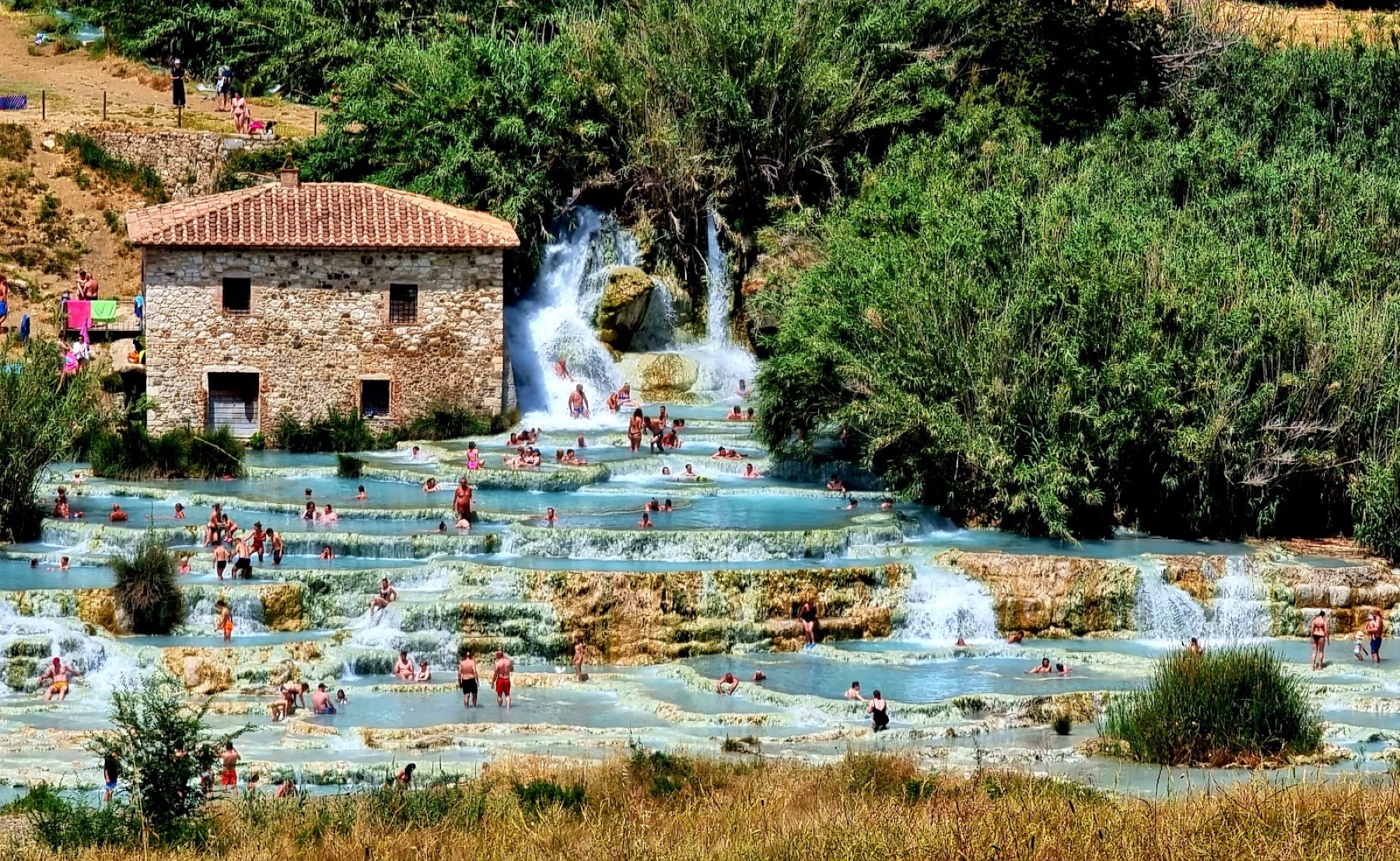
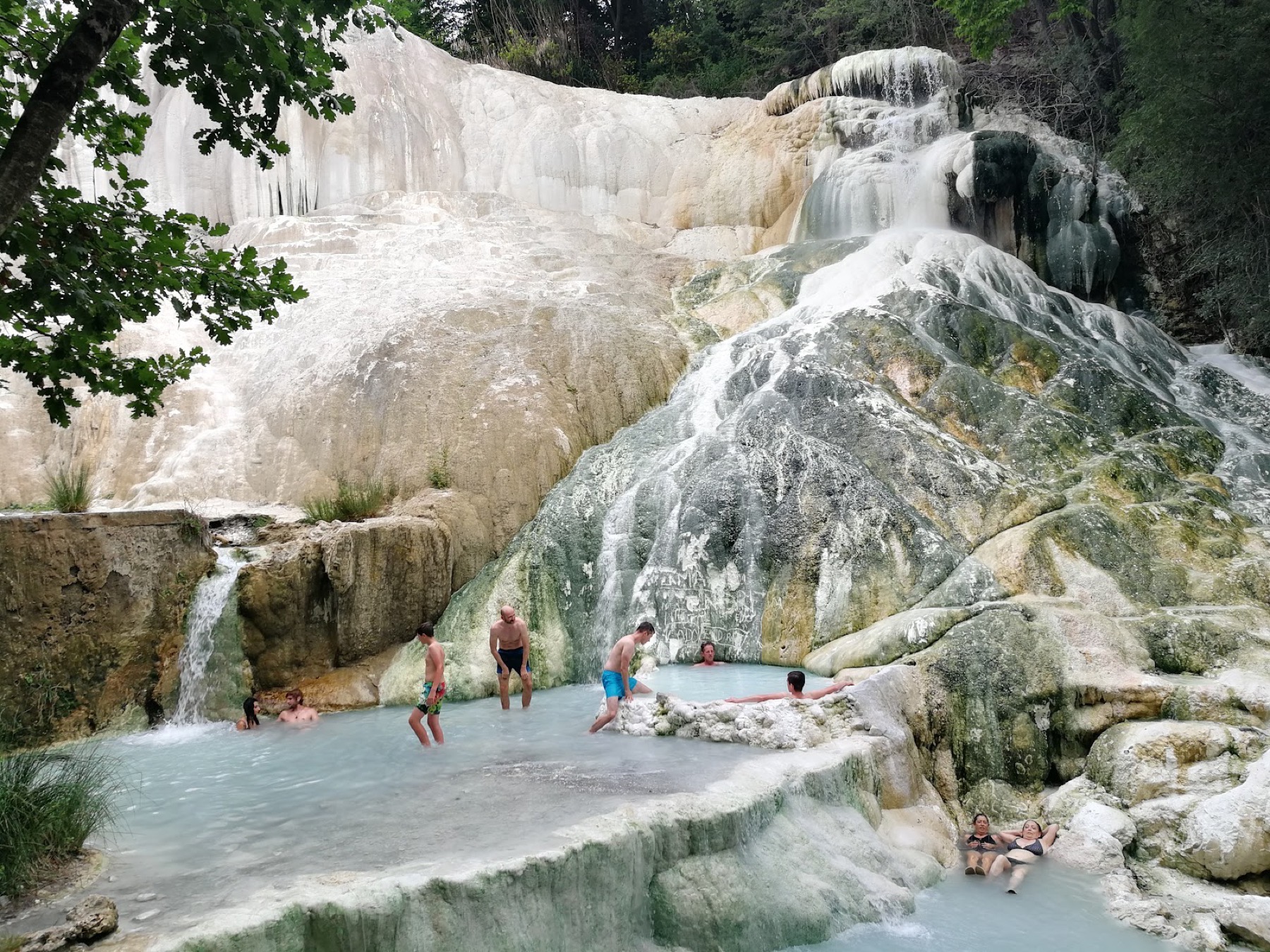
Head into the woods near Monte Amiata and you’ll come across thermal springs dominated by a huge limestone formation that looks like a snowy mountain. The setting feels almost magical: over the years, hot water has carved out fascinating cascades and natural pools, tucked beneath the trees and pleasantly shaded when the Italian sun is at its strongest.
Legends surround this hidden woodland spring. According to local tradition, Saint Filippo Benizi stopped here in 1269, giving his name to the area and the nearby Grotta di San Filippo Benizi. Today, visitors come for the peaceful setting and striking contrast between bright white limestone and green woodland. The pools also feel much wilder than those at a polished spa resort.
💡 Tip: Bring an old swimsuit and water shoes. The limestone mud may be great for your skin, but it can leave marks on light-coloured fabric that are very hard to wash out. The pools are reached by a short woodland path, so comfortable footwear is useful.
4. Terme Antica Querciolaia (Rapolano Terme, Tuscany)
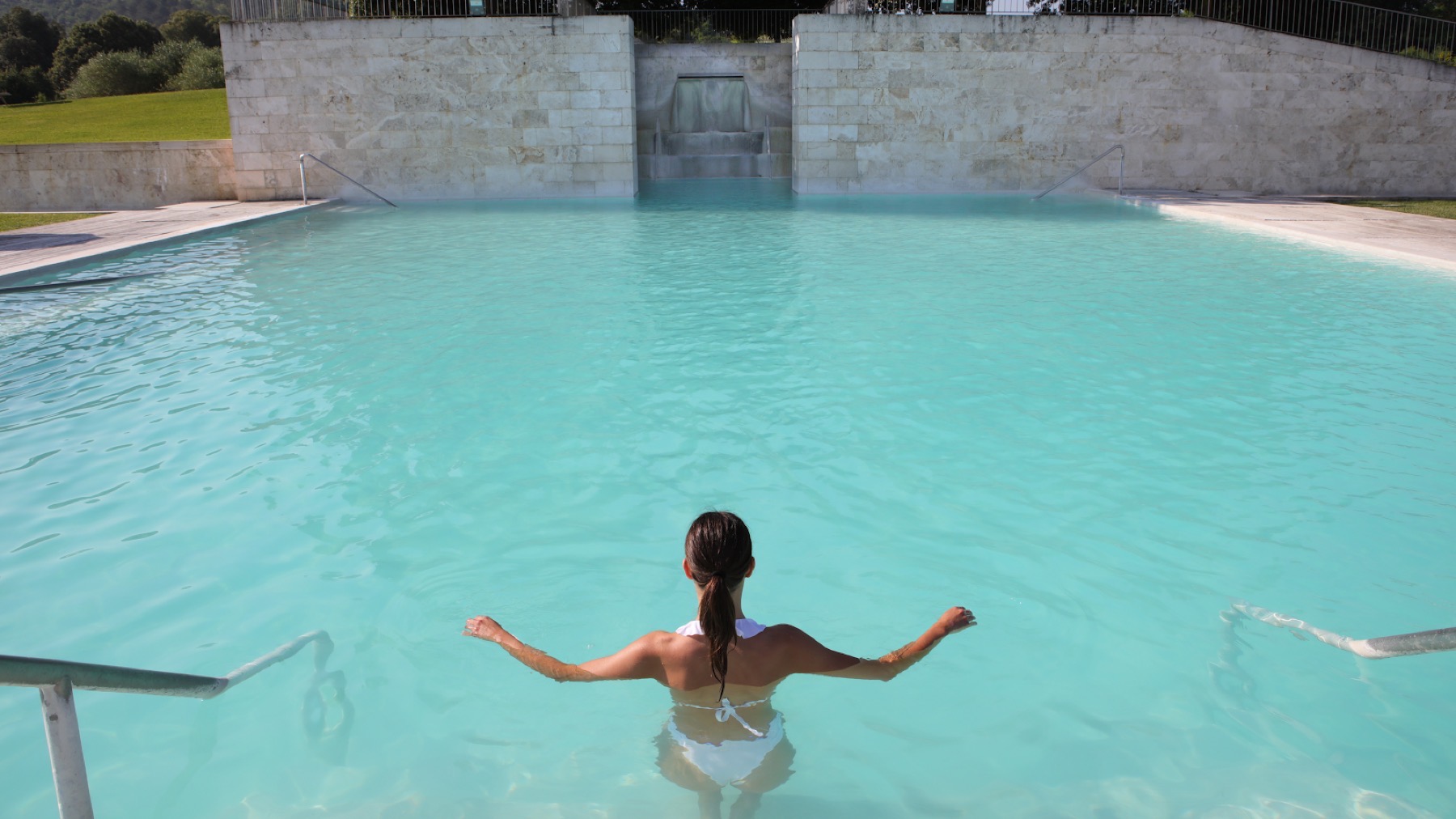
Set among rolling countryside not far from Siena, these baths offer an ideal balance of modern wellness and traditional Tuscan hospitality. The extensive complex has indoor and outdoor pools at different temperatures, so you can find a favourite spot whatever the weather. The hot springs at Rapolano Terme are known for their mineral content and are said to benefit the respiratory system and ease tired muscles after a long drive.
Terme Antica Querciolaia has a relaxed, welcoming feel that fits the character of the area. It’s a great choice for families and travellers looking for an easy stop with all the facilities they need. Along with the pools, you’ll find massage jets, loungers in relaxation areas, and optional beauty and health treatments.
💡 Tip: Check the official Terme Antica Querciolaia website for current entry requirements before you go. Capacity can be limited on summer weekends and Italian public holidays, so booking ahead can save you from queuing.
5. Grotta Giusti (Monsummano Terme, Tuscany)
This is a unique destination where wellness treatments take place inside a karst cave thousands of years old. The complex near Monsummano Terme was discovered by chance in the spring of 1849 by workers employed by Sir Domenico Giusti. The vast underground space extends for 300 metres and so impressed Giusti that he decided to put the hot cave to therapeutic use.
Visitor facilities were established between 1852 and 1854, and in 1853 Giusti built the so-called “fabbrichetta,” with an entrance hall and four rooms serving as a tepidarium. Today, the site is home to a luxury hotel offering unusual experiences. One option is a three-night package with breakfast, thermal spa access, an anti-stress massage, cryotherapy, and a Tuscan picnic, costing €450 per person according to the 2026 price list.
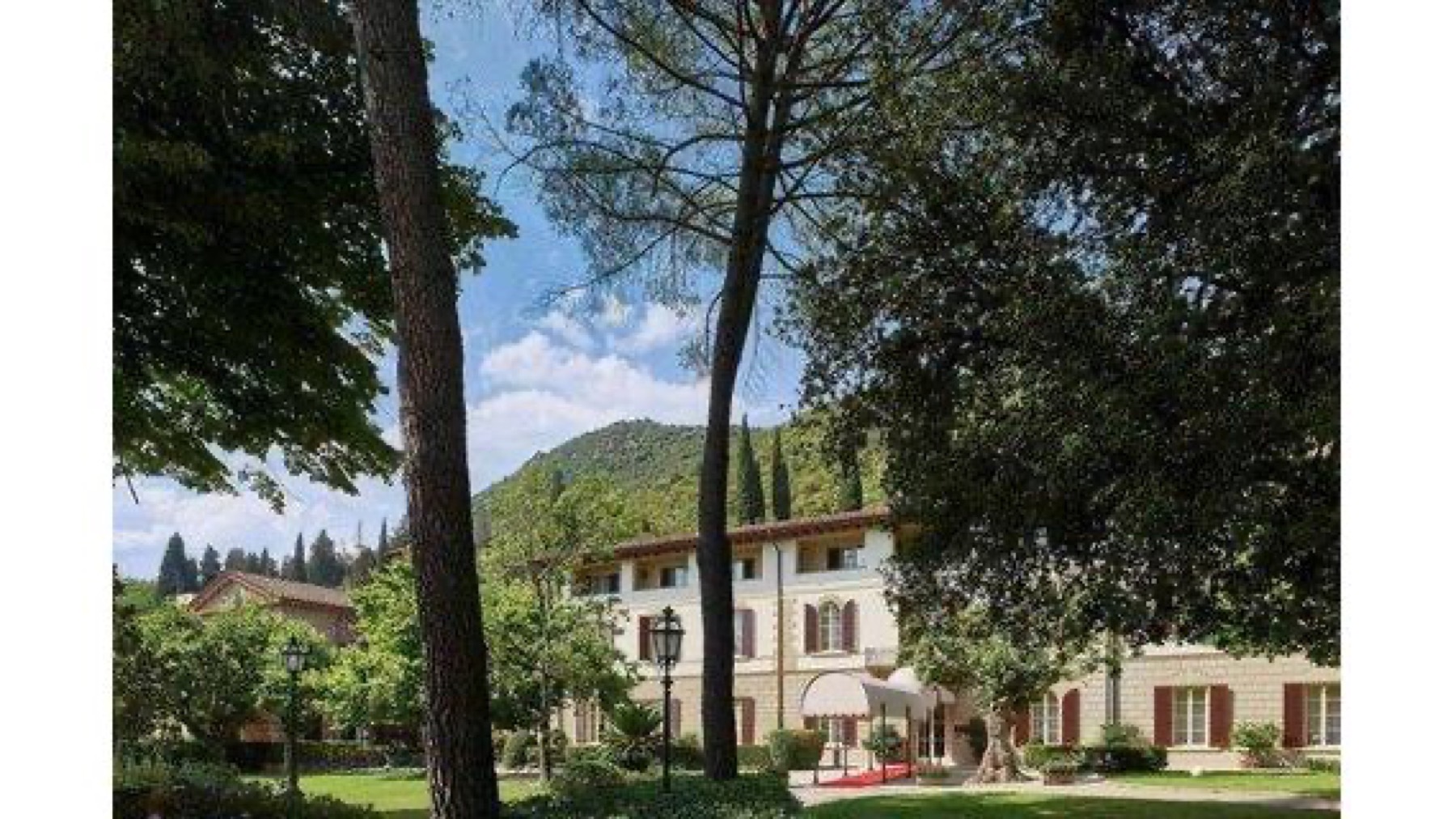
💡 Tip: If you’re claustrophobic, the underground steam bath may not be for you. Don’t worry, though: Grotta Giusti also has a beautiful outdoor thermal pool in an elegant park, enhanced in the 1860s with a grand terrace and loggia.
6. Terme di Petriolo (Monticiano, Tuscany)
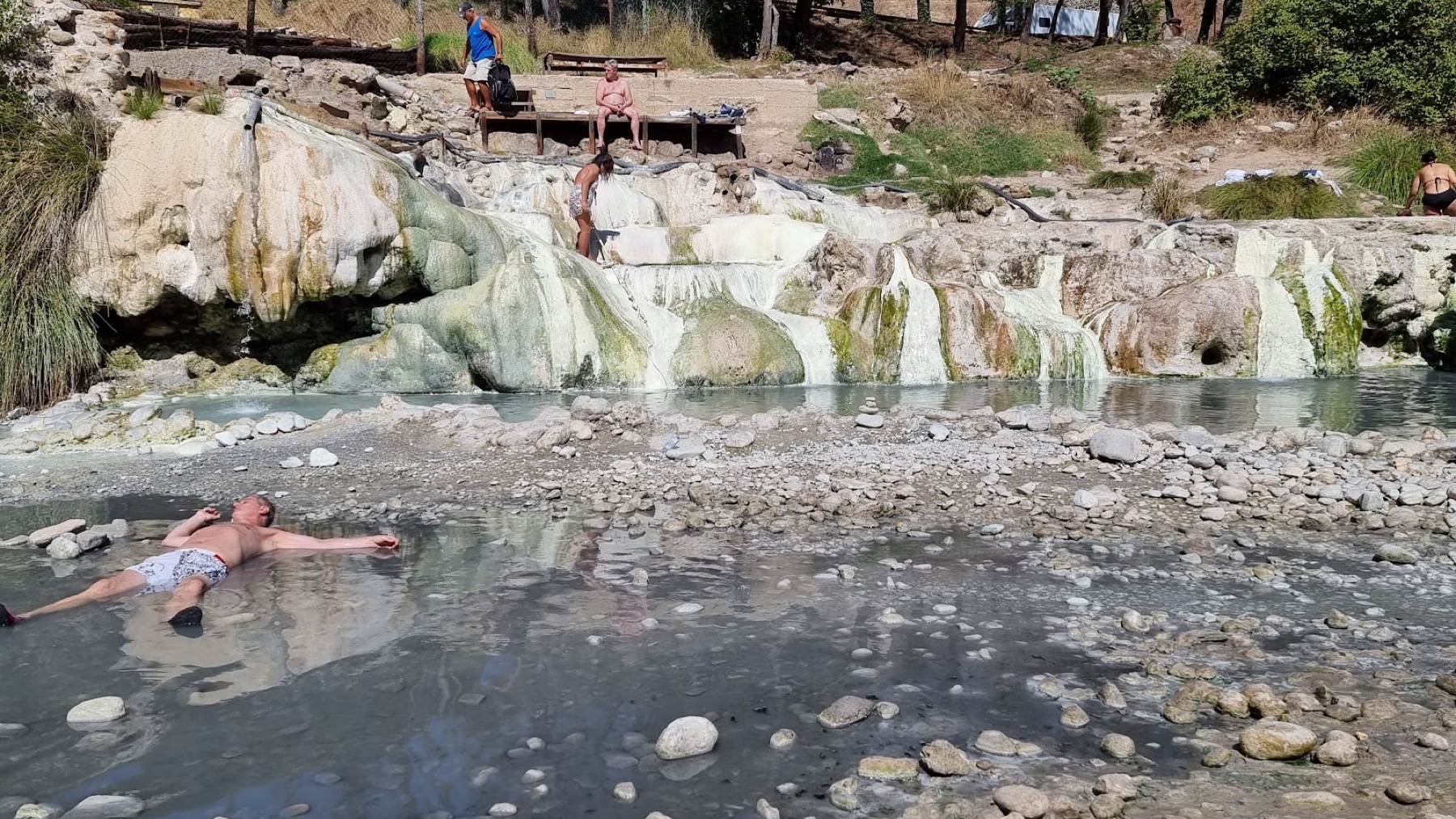
For a wilder, less manicured experience, head to the springs that rise along the banks of the Farma River. The very hot water, at around 43°C, forms natural cascades where you can soak while gazing out at the surrounding dense woodland. The springs have a high hydrogen sulphide content—21 milligrams per litre—which gives the water its characteristic sulphurous smell.
The springs may be out in the woods, but their therapeutic properties have long been recognized. Petriolo was officially added to Italy’s list of mineral waters in 1907 by the Ministry of the Interior. It’s an authentic experience: the hot spring water gradually mixes with the cold current of the Farma River. You can find the pool with just the right temperature for you.
💡 Tip: The natural part of Terme di Petriolo is free to access, but there are no changing rooms or other facilities. Bring your own towels, drinking water, and snacks from the car. Parking is available along the nearby road.
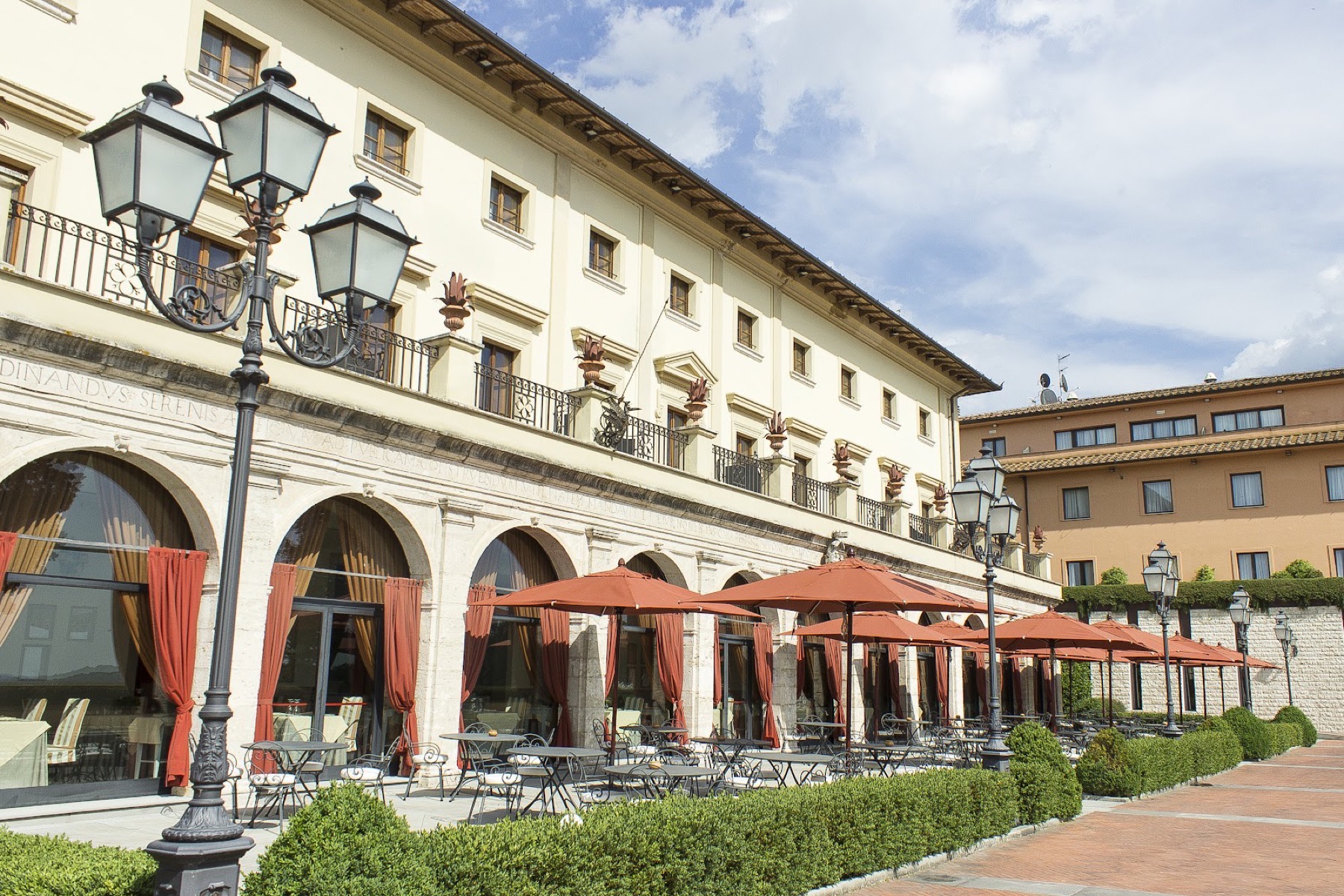
7. Fonteverde (San Casciano dei Bagni, Tuscany)
In southern Tuscany, this beautiful spa resort is an invitation to slow down. The local springs emerge at a natural temperature of 42°C and are completely odourless, despite their rich mix of fluoride, magnesium, calcium, and sulphur. You can enjoy the mineral-rich water without carrying the typical sulphurous smell with you for the rest of the day.
The highlight of Fonteverde is its spectacular summer infinity pool. This 140-square-metre pool sits on a manicured lawn terrace with panoramic views of the surrounding countryside. Soak in warm water while admiring Tuscan vineyards, silvery olive groves, and golden fields. It’s an exclusive retreat that also welcomes families: children under 12 stay free, subject to the resort’s terms.
💡 Tip: If you’re after a complete wellness escape, a stay at this five-star hotel comes with some appealing perks. Book directly to get 10% off selected three- and seven-night Equilibrium programmes, plus 30% off the Eteria cosmetics range.
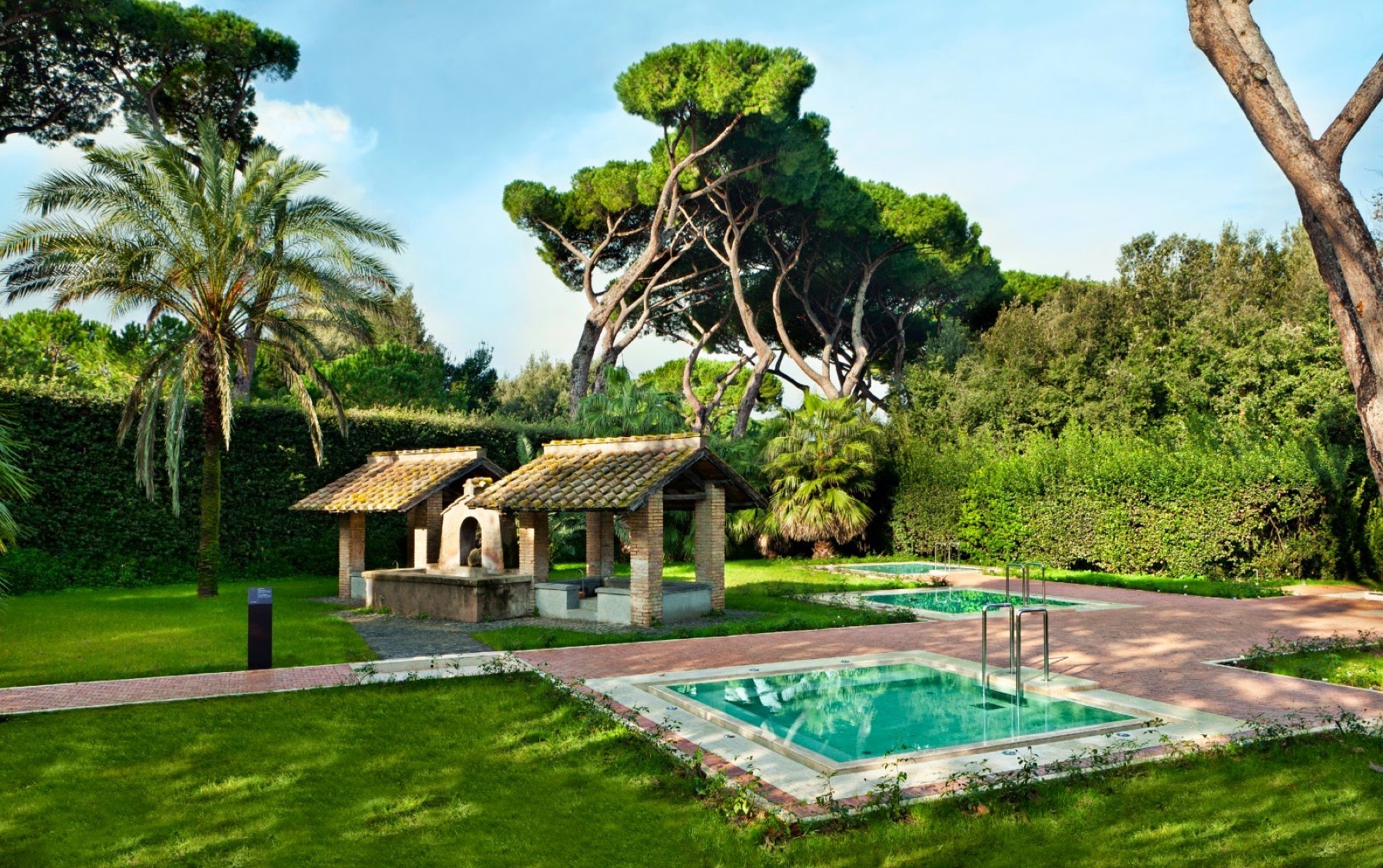
Lazio and the area around Rome
If you’re spending a holiday in the capital or nearby, the Lazio region has several great places to unwind. The closest thermal spa is just a short distance from the airport, so you could even fit in a luxury soak before your flight. Other well-known spots lie north of Rome and make an easy day trip.
There’s something for everyone, whether you’re after a modern wellness centre with all the comforts or historic baths steeped in ancient and papal tradition. Just across the border with Tuscany, you’ll also find smaller, quieter complexes that are ideal for a romantic weekend. Many offer attractive packages combining a swim with a good meal.
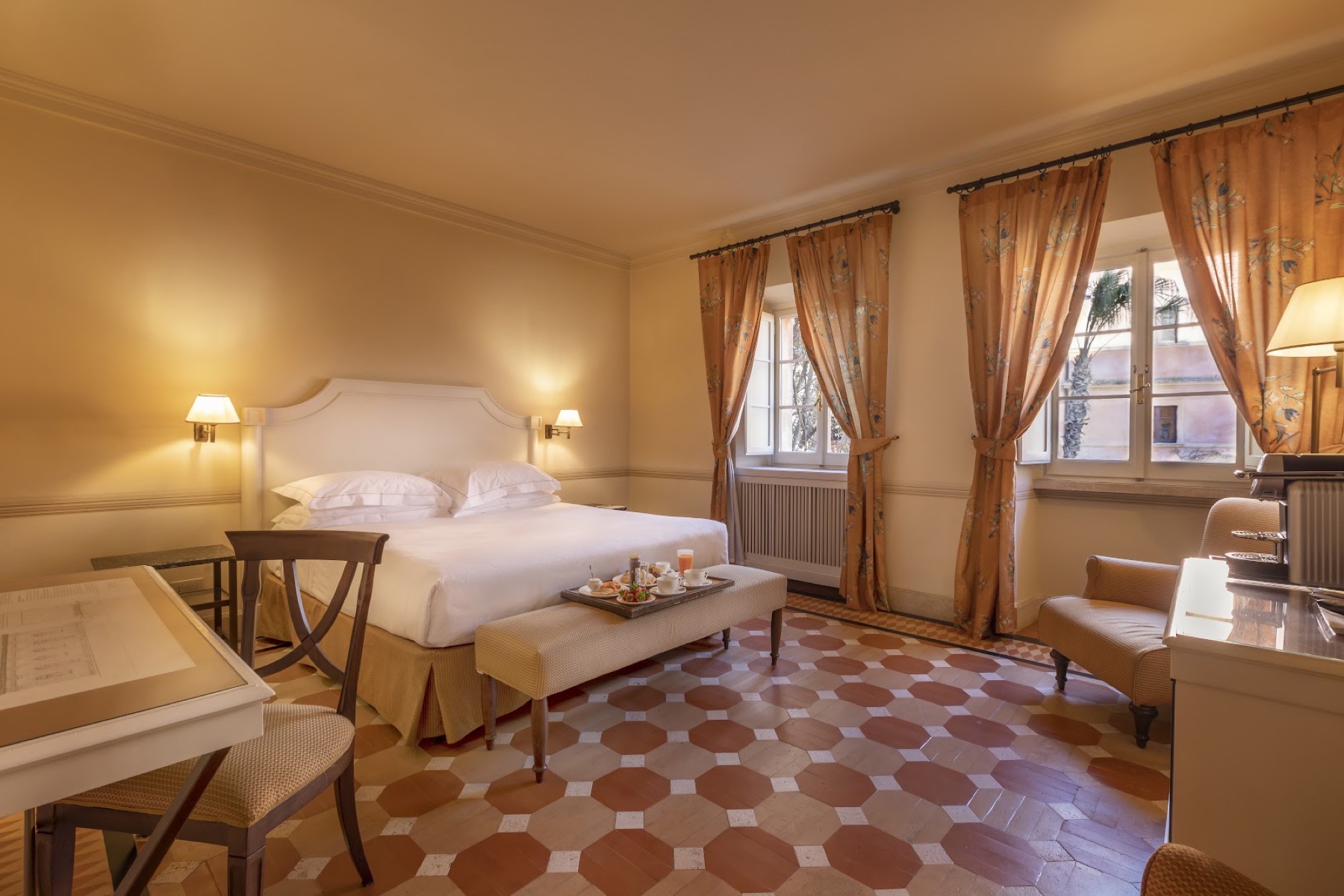
8. QC Termeroma (Fiumicino, Lazio)
This modern wellness complex in Fiumicino is just a short distance from Rome’s international airport, making it a convenient stop at the end of your trip. The spacious grounds have a wide range of pools, whirlpool baths, and saunas, complemented by steam rooms and luxurious relaxation areas. The complex is open every day of the year, so you can visit in any season, whether you’re exploring Italy in the summer heat or during a chilly January.
One major advantage is that you hardly need to bring anything with you. Your basic ticket includes access to the full percorso benessere, and staff lend you a robe, towel, and slippers. There’s no need to worry about packing wet things just before your flight.
💡 Tip: Plan your visit for the late afternoon if you can. The entry price includes the much-loved Aperiterme—an evening aperitivo served in the spa.
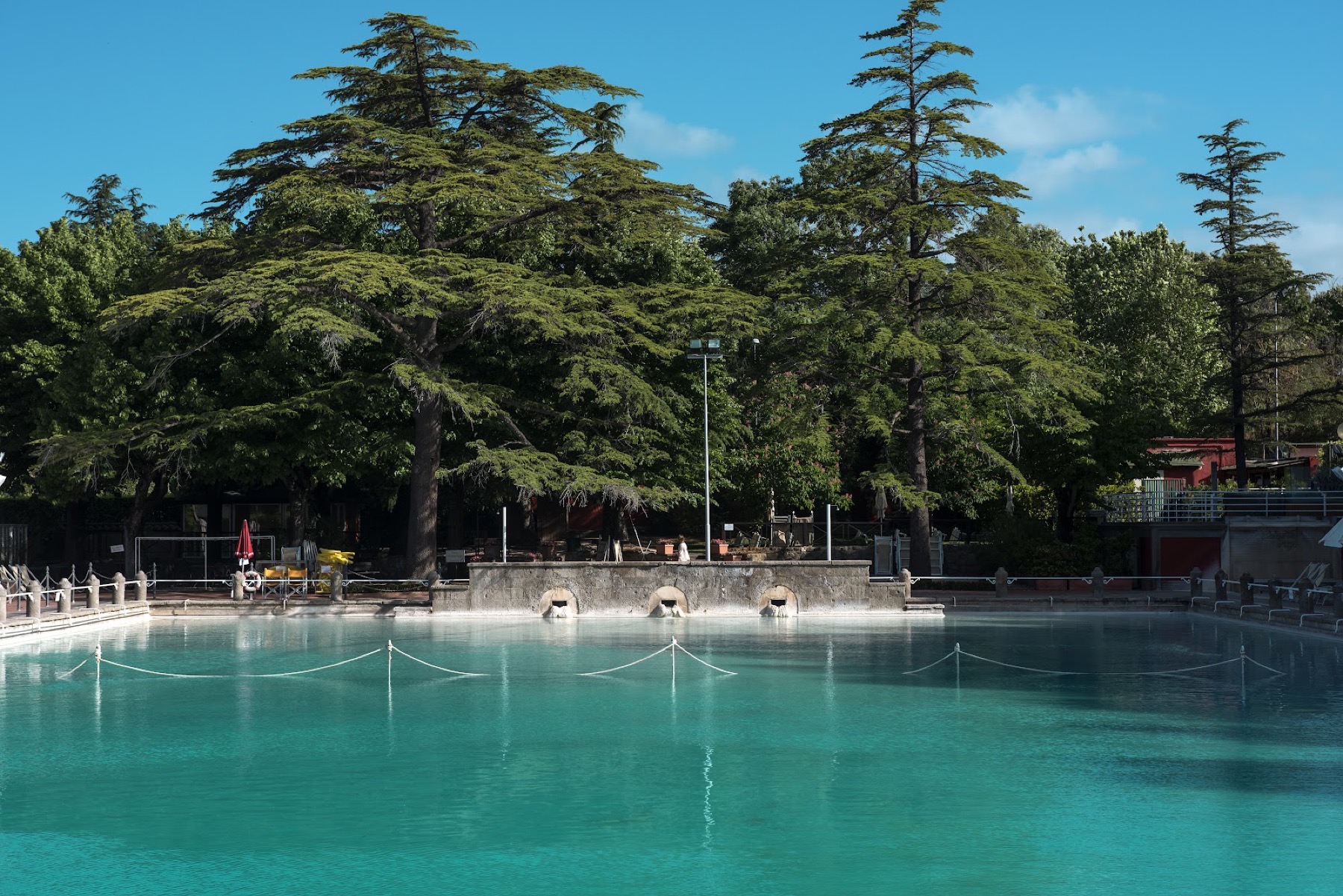
9. Terme dei Papi (Viterbo, Lazio)
History lovers will be drawn to these baths and their deep roots. The Roman baths along the ancient Via Cassia once stretched for an astonishing eleven kilometres and were divided into three main areas: Aquae Passeris, Paliano, and Bullicame. Centuries later, popes continued the tradition, giving the site its imposing name, Terme dei Papi (“Baths of the Popes”).
The biggest attraction today is the monumental outdoor pool, covering 2,000 square metres. Its hot water comes directly from the famous Bullicame spring, where it reaches 58°C, before flowing dramatically from large stone spouts into the pool. The water is strongly sulphurous, sulphate-bicarbonate, and alkaline-earthy, so be prepared for a distinctive smell.
💡 Tip: A long soak in such hot water is bound to make you hungry. Luckily, there’s a stylish restaurant called 58 Gradi on site—a name that nods to the temperature of the famous spring.
10. Terme di Sorano (Sorano, Tuscany)
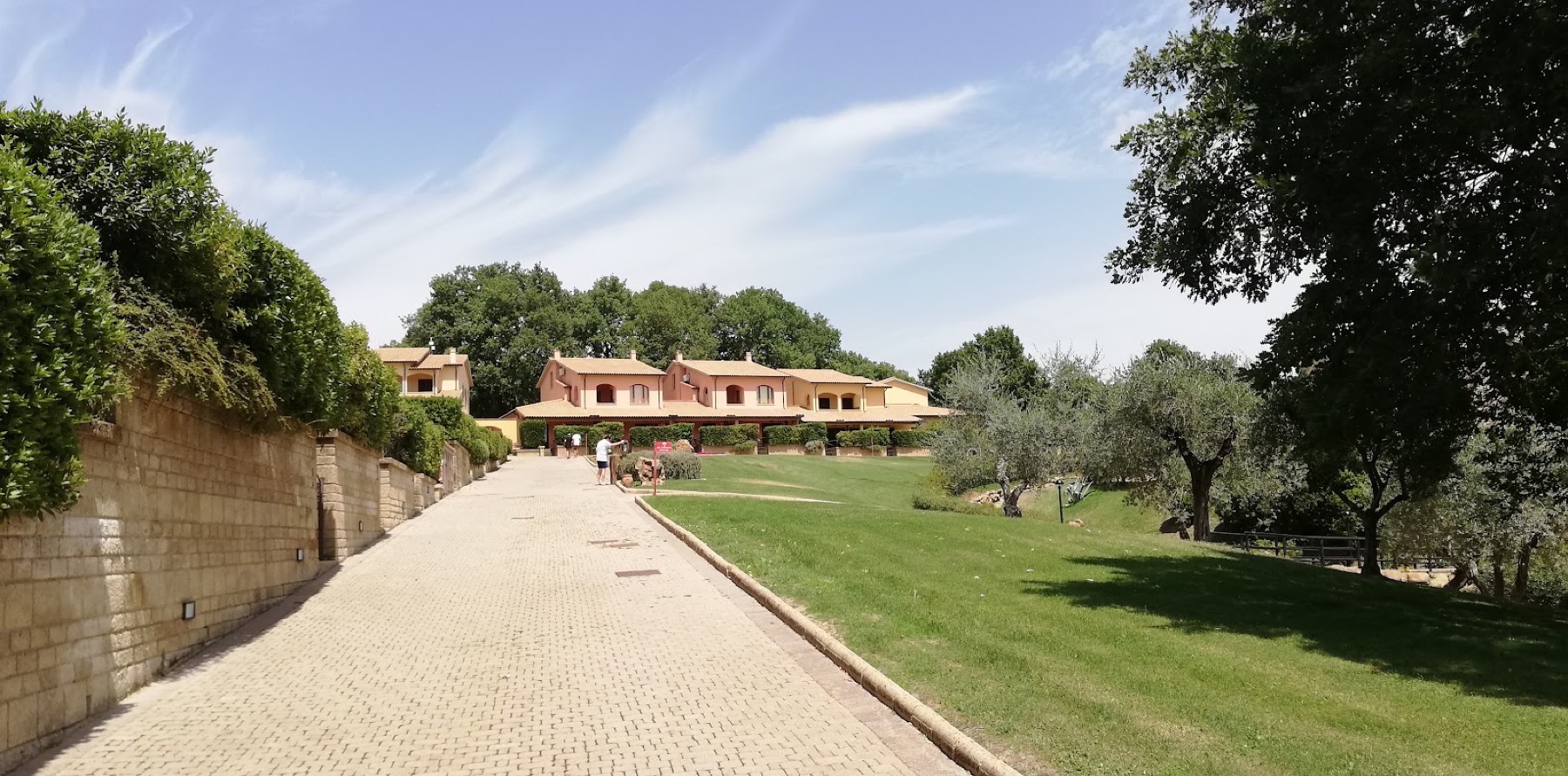
This picturesque spa complex is about three to four kilometres south of the historic town of Sorano, which sits 379 metres above sea level and has just under 3,000 residents. Although it’s technically in Tuscany, it’s easy to reach from Rome. The complex has a main thermal pool, a sports pool open from May to September, and a range of wellness facilities.
According to the 2026 price list, there are several packages to choose from. A popular option is Day SPA with aperitivo for €25 (€27 in August), available from 5 p.m. and including pool access, lockers, hot showers, and a drink on the terrace. For a full day, choose Day SPA with a light lunch for €37 (€40 in August). This also gives you access to the Finnish sauna, steam bath, and chromotherapy relaxation area.
💡 Tip: If you want to treat yourself, the expanded Day SPA Relax package costs €86 (€88 in August) and includes extras such as music and herbal tea in the relaxation room.
11. Terme di Stigliano (Canale Monterano, Lazio)
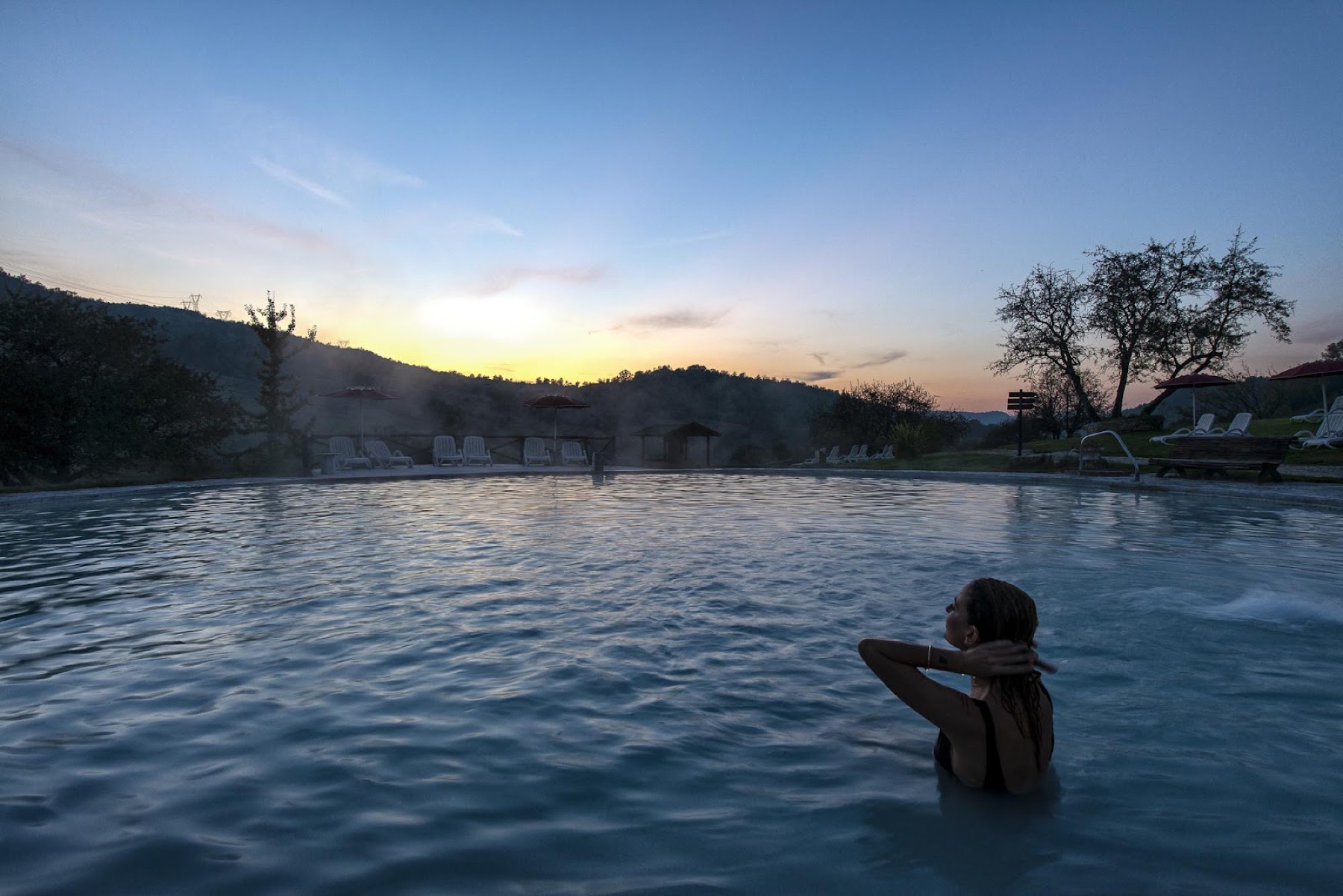
The Stigliano thermal complex is a lovely retreat if you want a break from the city and a full-service wellness experience. In the elegant countryside setting, you can enjoy several pools, including a spacious saltwater pool kept at a comfortable temperature. There are also relaxing hydromassage facilities and a large sun terrace.
If you’re planning a longer break for two, take a look at the spa packages in the 2026 price list. A popular romantic getaway package starts at €307. For a long day of soaking, the Tuffo nel Benessere package is a great option at €289 for two people.
💡 Tip: Look out for the Summer Wellness Escape and Armonia di Coppia offers on the website. They’re a great way to enjoy the pools and relax in complete peace.
Campania and Ischia: volcanic islands
If you’re looking for a true thermal paradise, head south to Campania. The region is famous for its volcanic activity, which feeds some of Italy’s most remarkable hot springs. The Bay of Naples combines the sea, history, and healing waters. On the mainland, you’ll find spas in the vast Campi Flegrei caldera, where springs bubble up at Agnano and the famous Stufe di Nerone.
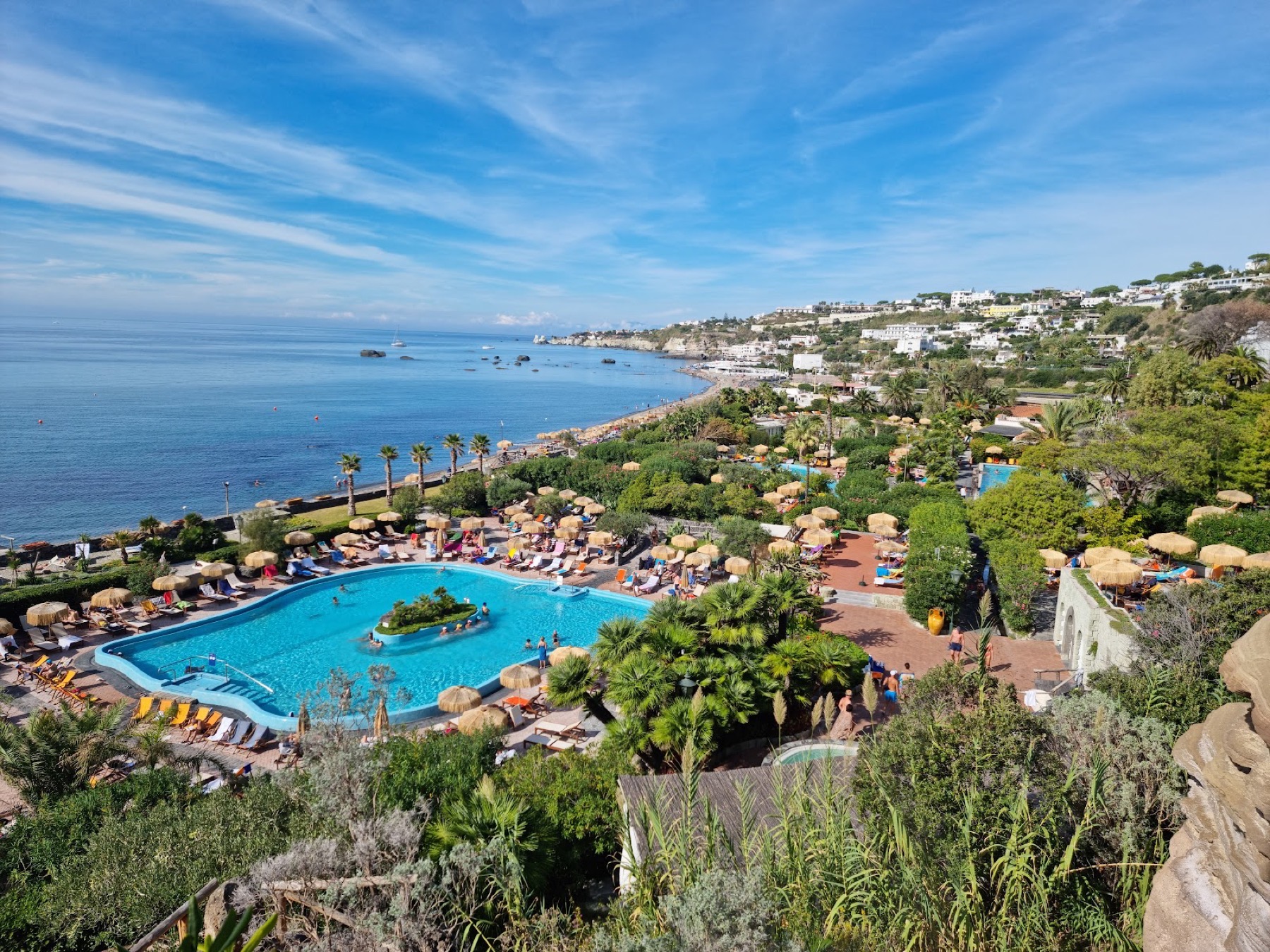
But the true star of Italy’s spa scene is the island of Ischia. This green island is Italy’s largest thermal area, with countless impressive complexes. The best known, Poseidon, has 20 pools set in beautiful terraced gardens. You can feel the island’s volcanic energy everywhere, and its hot springs will warm you through even in the cooler months.
12. Giardini Poseidon Terme (Ischia, Campania)
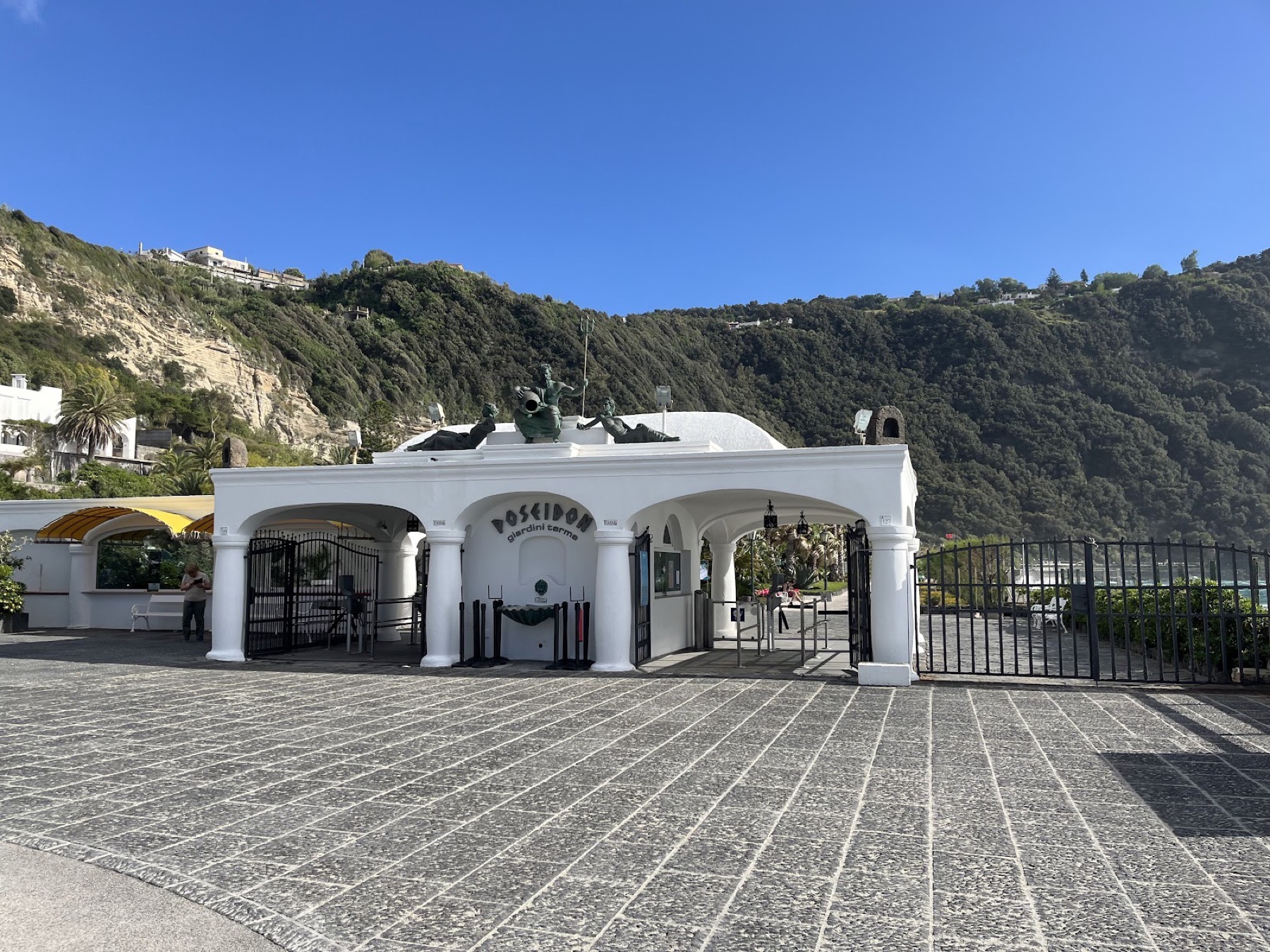
This iconic complex covers an impressive six hectares of terraced gardens. Giardini Poseidon Terme is a classic you shouldn’t miss on Ischia. There are 20 pools fed by volcanic water, which ranges from 20°C to an incredible 85°C at the source. The complex also borders a 500-metre sandy beach, so you can alternate between hot baths and a refreshing swim in the sea.
Along with relaxing in the hot water, you can enjoy some serious rejuvenation. Try the popular Kneipp therapy, which involves alternating between pools at 40°C and 15°C. The contrast is said to boost circulation and support your immune system. If you get hungry, there are three restaurants on site. There’s also a 500-square-metre wellness centre offering a range of beauty and health treatments.
A day ticket costs €50 according to the 2026 price list, and the main season runs from 18 April to 31 October. Children aged 4–11 get half-price entry, while children under 3 enter free. You’ll receive a wristband at the entrance and pay a refundable €5 deposit for it. 💡 Tip: If you don’t want to bring your own beach gear, you can rent a comfortable robe for €15 or a private changing cabin for €10.
13. Terme di Contursi (Contursi Terme, Campania)
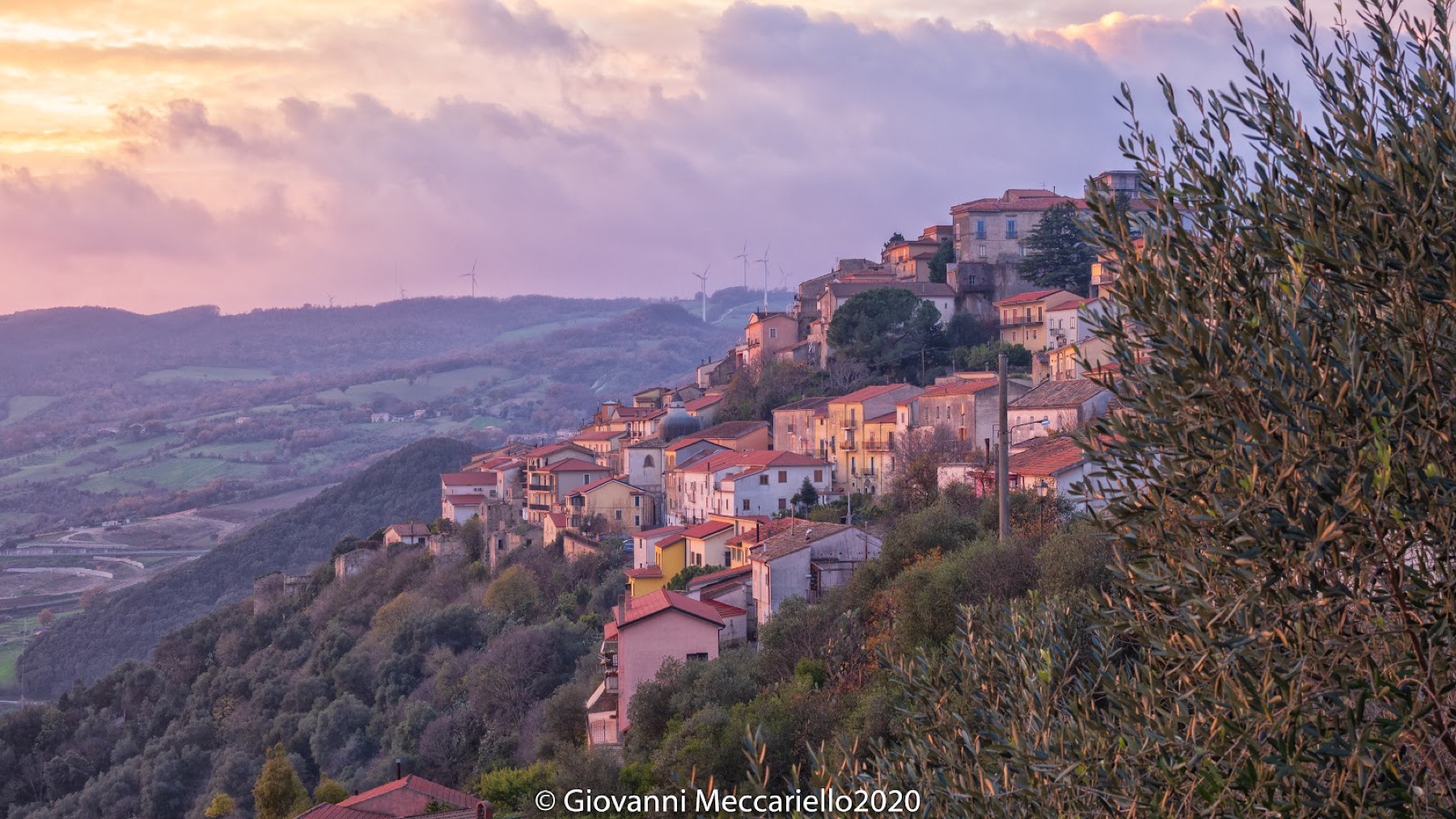
The spa town of Contursi Terme is in the province of Salerno and has a peaceful, historic feel. Home to just over 3,000 people, it’s an ideal escape if you want to avoid busy tourist centres. The area has a long history: in the 14th century it was ruled by the powerful Sanseverino family. Expect authentic Italian streets and lovely views of the surrounding countryside.
The local springs are well known, although you’ll need to check pool details directly with each hotel complex in town. The climate is pleasant throughout the year. The average temperature in the coldest month, January, is around 6.9°C, while July brings a lovely 24.5°C. If you’re on a longer road trip through southern Italy, it makes a great place to stop and recharge.
The area is officially classified as a zone of moderate seismic activity—a reminder of just how geologically active the landscape is. Spring is a particularly good time to visit, before the weather gets too hot and as the countryside comes to life. The local springs are said to help with a range of ailments and ease muscle tension. 💡 Tip: Take a walk through the historic centre, which was an important administrative hub for the wider area in the 19th century.
14. Terme di Agnano (Naples, Campania)
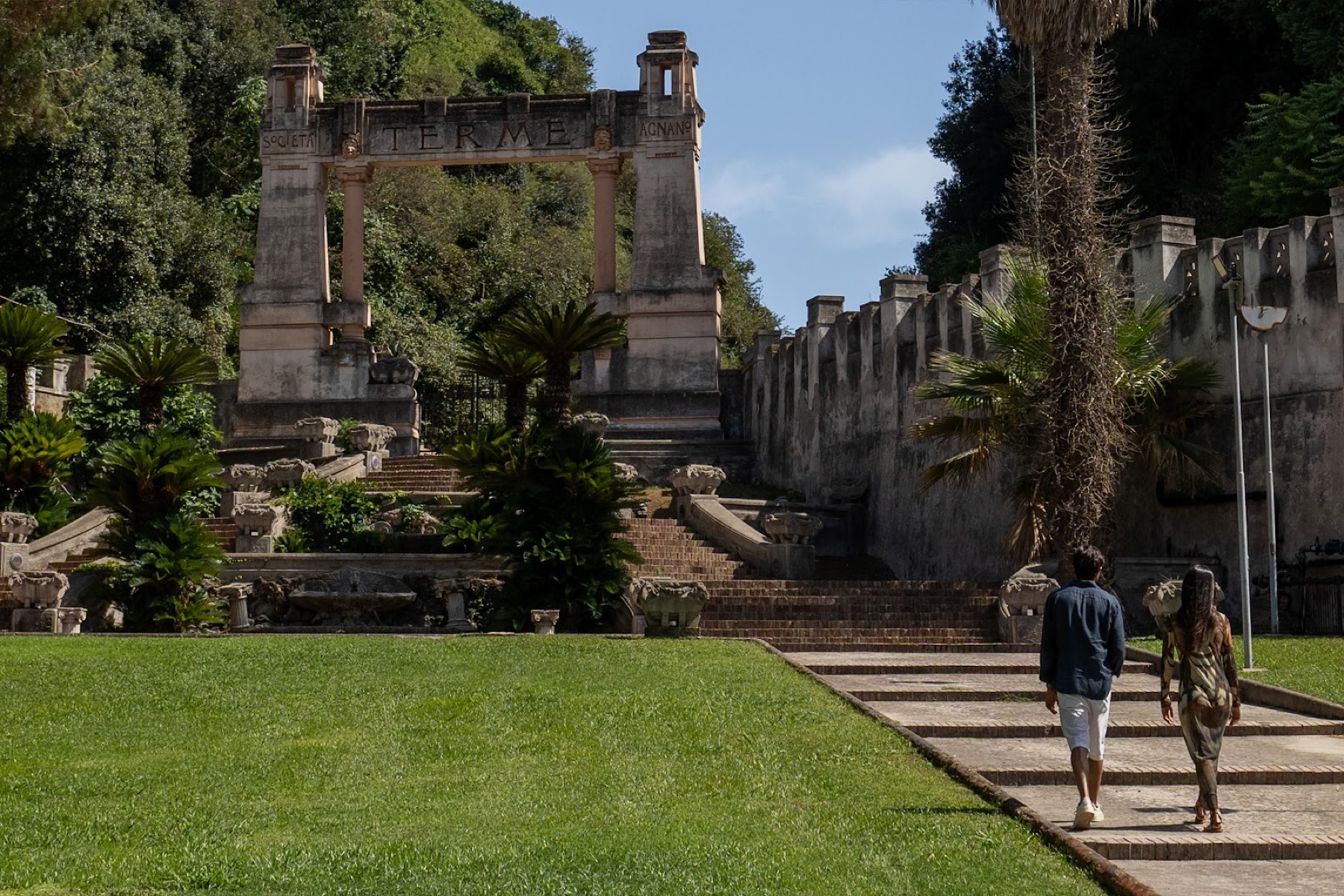
These baths occupy a fascinating location: right inside the crater of the dormant Agnano volcano, part of the vast Campi Flegrei volcanic system. The volcano last had a major eruption around 4,100 years ago. Today, the crater has a circumference of 6.5 kilometres, and its floor is just two metres above sea level, giving a soak here a remarkable geological setting.
The crater once contained a large lake, but it was drained in 1870 as part of an extensive land-reclamation project. A network of canals now carries away excess water and empties into the sea near Bagnoli. The spa is surrounded by striking scenery and green hills. Montespina rises to 162 metres in the southwest, while the hill of Sant’Angelo lies to the east.
Terme di Agnano draws visitors from around the world for its therapeutic vapours and hot springs, which continually rise from deep underground. Check the current entrance prices on the official website before visiting, as they may change during 2026. This is a great spot for anyone fascinated by unusual natural features near bustling Naples. 💡 Tip: Pair your visit with a look around the nearby volcanic fields—they’re an astonishing sight.

15. Stufe di Nerone (Bacoli, Campania)
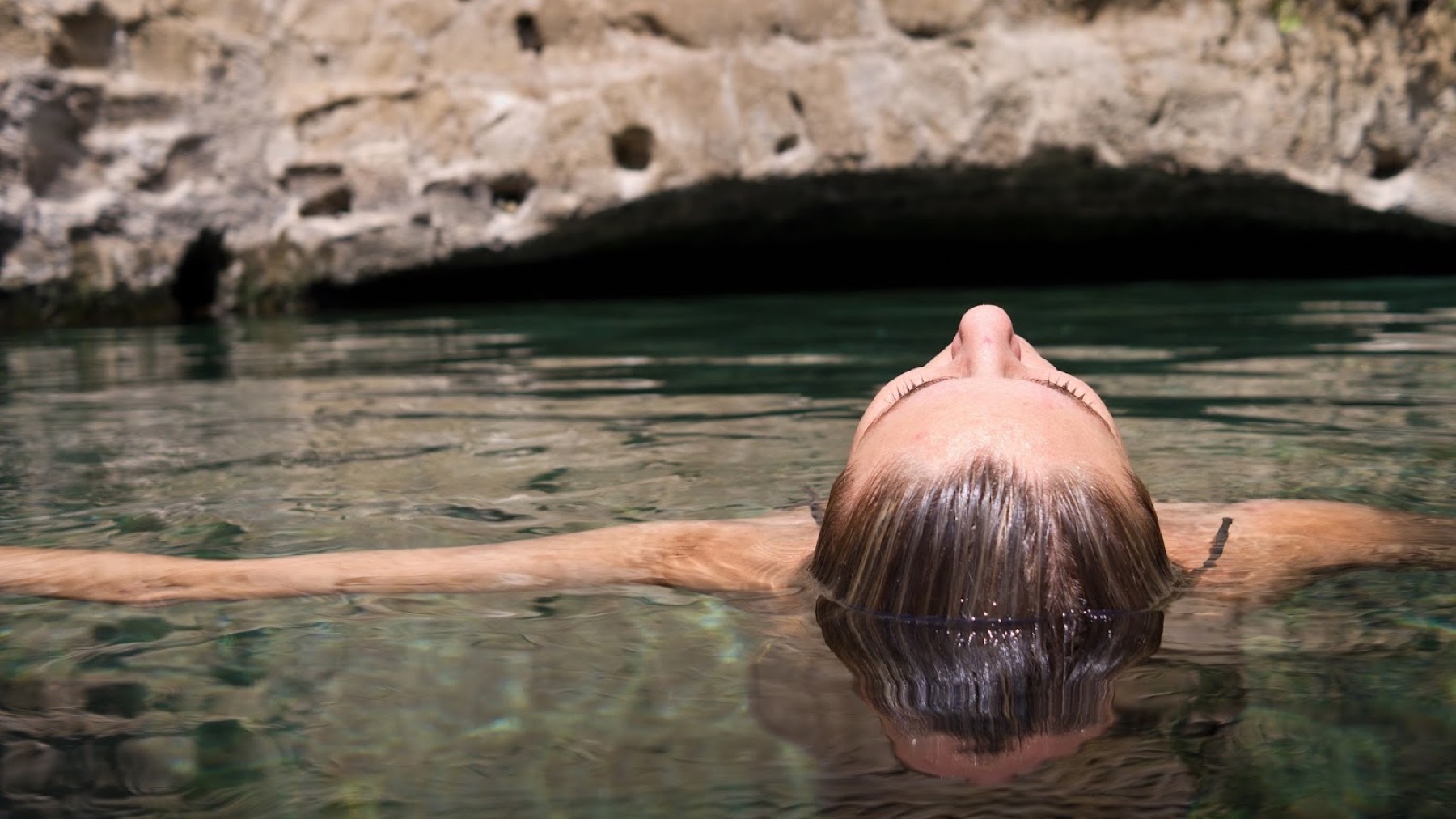
Another gem of the volcanic area near Naples is the famous Stufe di Nerone spa complex in Bacoli. The local thermal water gushes from the ground at an incredible 80°C and is rich in valuable minerals. People have come here since ancient times to restore tired bodies and recharge. The water is said to help maintain skin elasticity and improve overall muscle tone.
The complex is steeped in history and combines modern wellness with ancient Roman bathing traditions. It also specializes in therapeutic thermal inhalations, which are particularly beneficial for the respiratory system. An inscription at the entrance shares an old saying: those who come here love themselves. Look forward to a deeply relaxing experience in an authentic corner of southern Italy.
Since water at the source is far too hot for bathing, it’s cooled to a more comfortable temperature in the pools. Check the 2026 price list on the spa’s website, as the operator may adjust prices and conditions by season. This is a particularly good choice for adults looking for peace and quiet. 💡 Tip: Try the inhalation treatments; locals say they can help you breathe deeply and freely again.
Veneto: Abano, Montegrotto, and Sirmione
This part of northern Italy is a paradise for hot-spring and wellness lovers. If you’re heading to Lake Garda or the area around Padua, make time for a visit. Abano and Montegrotto Terme together form the largest spa region in Europe, best known for their therapeutic mud wraps and fangotherapy. It’s an ideal stop to soothe tired muscles during a road trip.
A little farther away, on the shores of Lake Garda, you’ll find the iconic resort of Sirmione. Its sulphurous water rises from beneath the lake, making it a truly distinctive destination. The region combines excellent spa treatments with the natural beauty of northern Italy. These are popular places, so it’s worth booking accommodation and spa entry in advance.
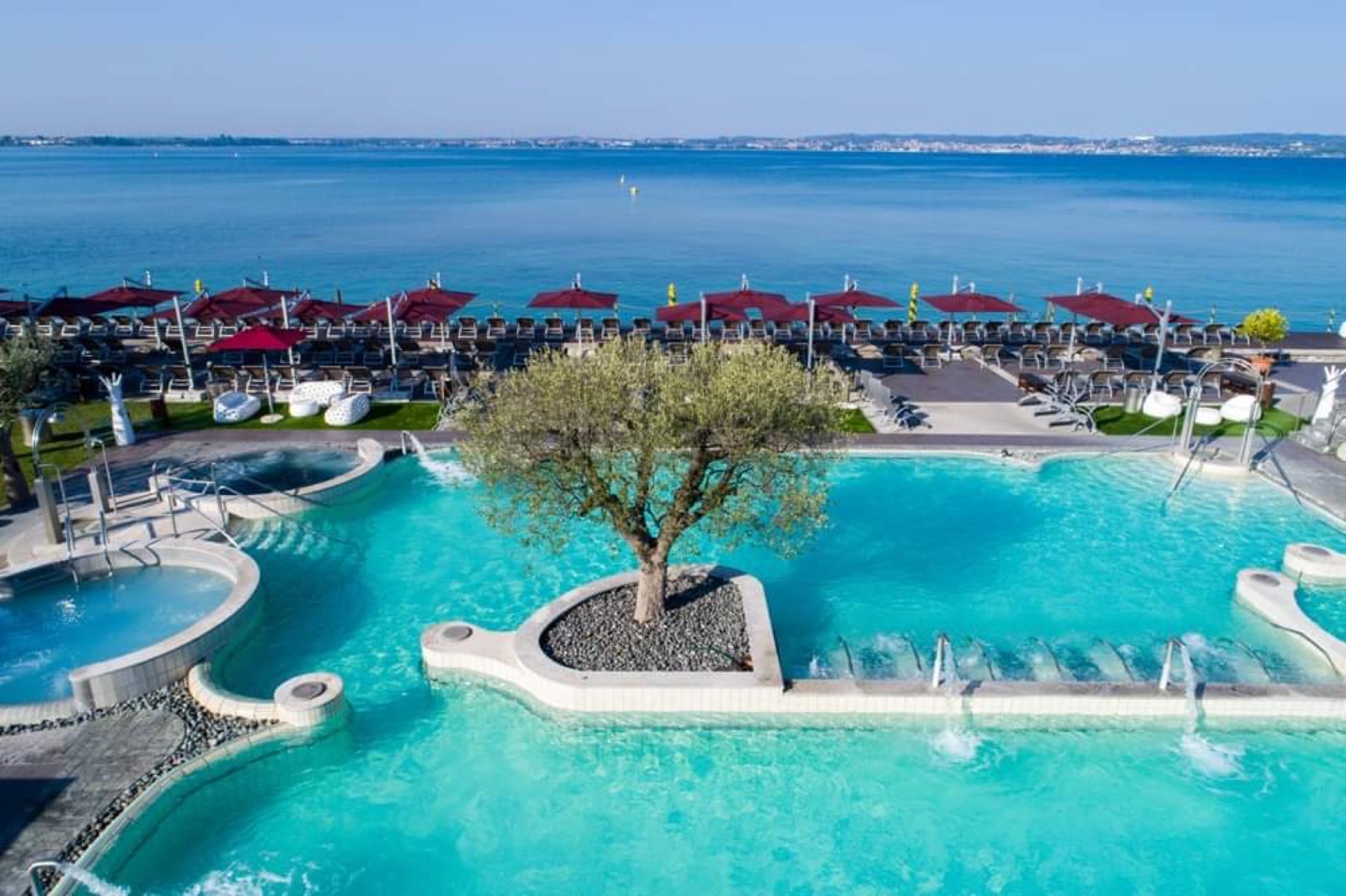
16. Terme di Sirmione (Sirmione, Lombardy)
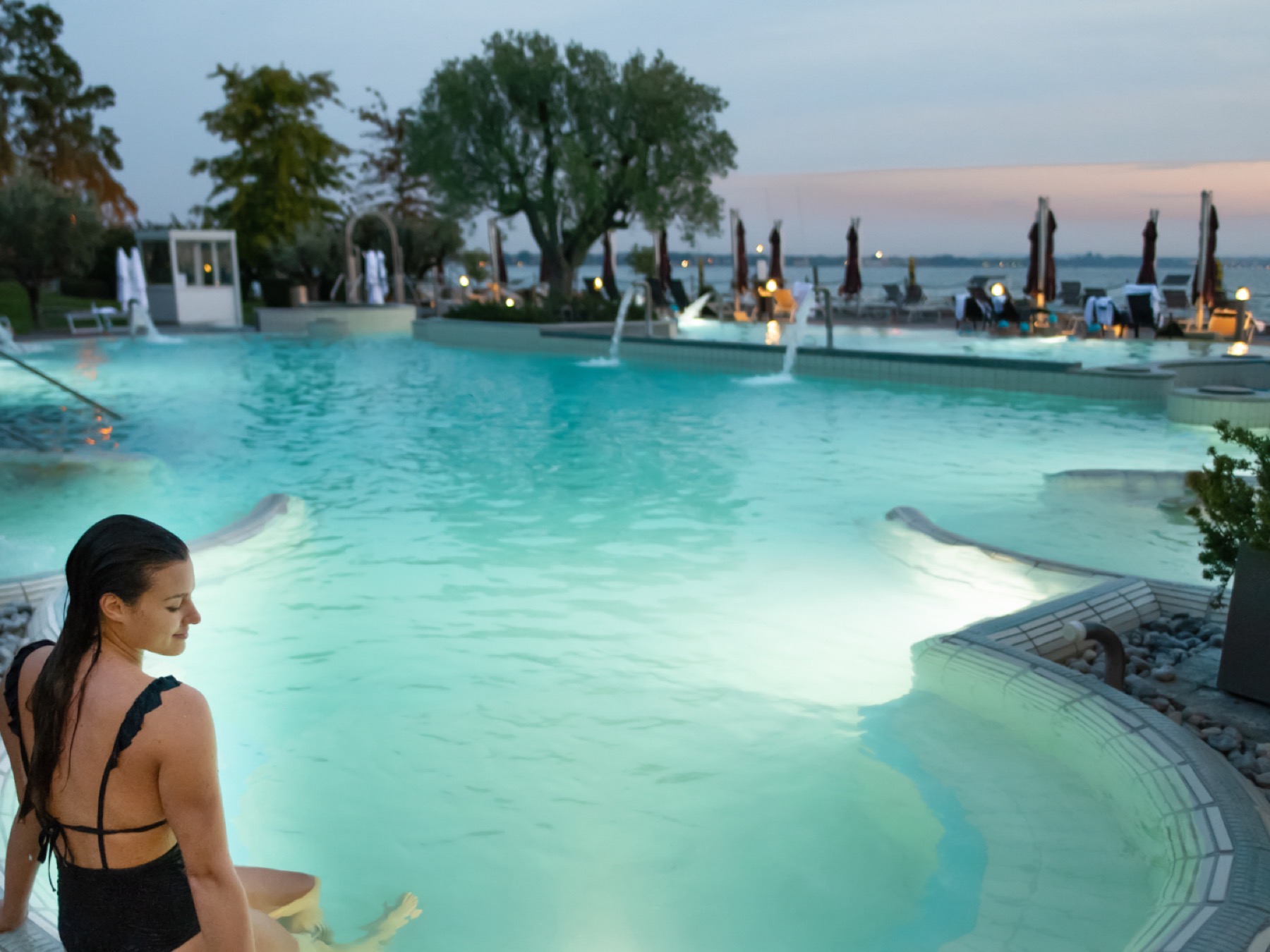
Terme di Sirmione is famous for the Boiola spring, whose water spends 20 years travelling through the rock before reaching the surface. The journey begins high in the Monte Baldo range, at an altitude of over 800 metres. The thermal sulphurous, saline-bromine-iodine water is estimated to be an astonishing 10,000 years old. At the bottom of the lake, the spring water reaches around 69°C; in the pools, you can enjoy a more comfortable 33–37°C.
The original spa area, once known as Aquaria, now goes by the modern name Spa & Thermal Garden and offers beautiful views over the lake. It’s a lovely choice for couples looking for a romantic escape and anyone who enjoys a peaceful break. The water’s distinctive sulphur content and strong smell won’t appeal to everyone, especially if you’re travelling with small children.
If you’re planning a longer stay, check the official website for accommodation packages. 💡 Tip: Depending on the current offer, booking more than one night with half-board may get you a 20% discount on your stay—a useful saving in this relatively expensive area.
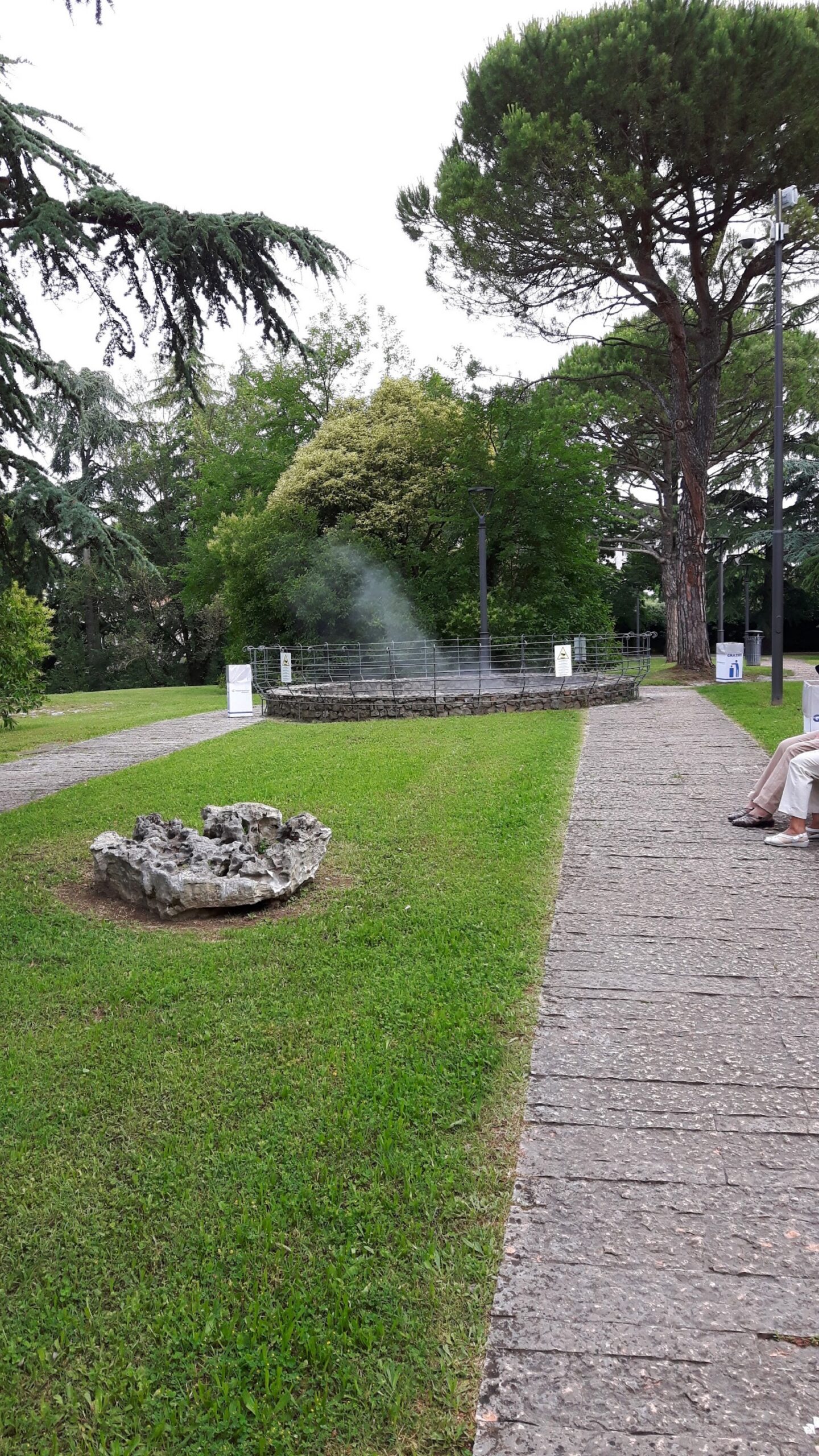
17. Terme Euganee: Abano Terme (Abano Terme, Veneto)
This area lies among extinct volcanoes dating back 34 million years, just 10 kilometres from Padua. Abano Terme sits at an altitude of 14 metres and, together with nearby towns, forms one of Europe’s most important mud-therapy regions. An impressive 250,000 visitors come here each year for health and relaxation, supported by a well-organized network of hotels.
The local thermal water is famous for its therapeutic properties and is used primarily to prepare special mud that matures in vats. It’s an ideal destination if you’re looking for targeted relief for your musculoskeletal system or simply want to unwind in a traditional spa setting. Summer temperatures are around 25–30°C, while winter temperatures can drop to freezing.
Terme Euganee is better suited to adults and older visitors than to families looking for waterslides and lively entertainment. 💡 Tip: If you’re visiting in winter, check whether pools have reduced opening hours, as some smaller establishments may close outside the main season.
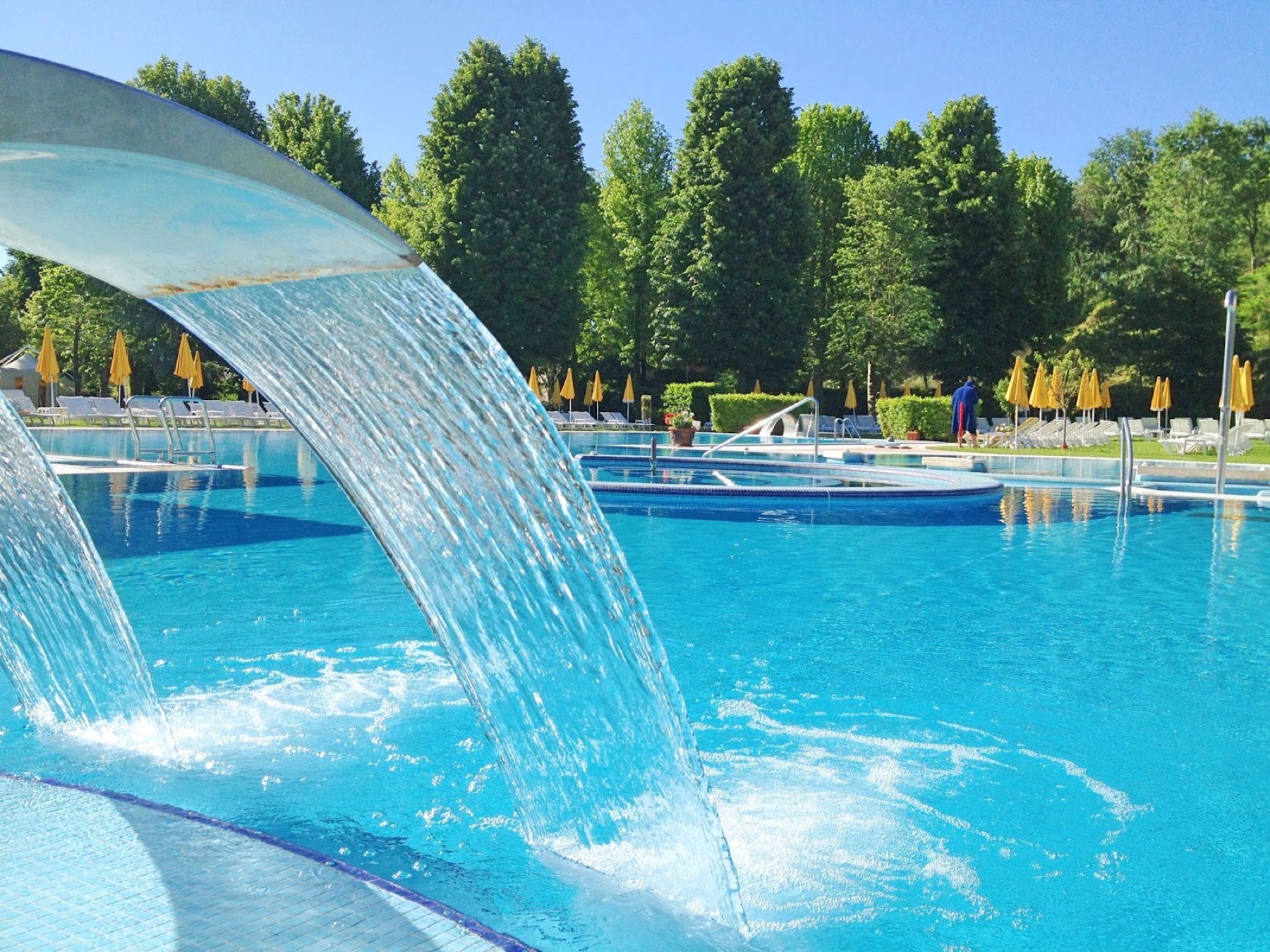
18. Terme Preistoriche (Montegrotto Terme, Veneto)
Terme Preistoriche has a wide range of accommodation. According to its 2026 price list, an Elegance double room with a generous breakfast starts at €97 per person. For something special, the Green Lodge Lispida apartment for four starts at €162 per person, while the exclusive Green Villa Bertha for two costs from €262 per person. The resort recently opened Neró Spa New Experience, a new wellness area that will appeal to fans of contemporary design.
The complex blends a long spa tradition with stylish, modern surroundings. It’s a great choice for couples or a group of friends looking for a premium break in nature. Rooms with balconies, such as the Superior Balcony from €114 per person, offer lovely green views—just the thing for an Italian getaway.
This resort is geared more towards adults and a peaceful experience. 💡 Tip: Until 30 November 2026, you can get a special 15% discount on all stays at Green Lodge. The offer excludes Ferragosto in August and long weekends.
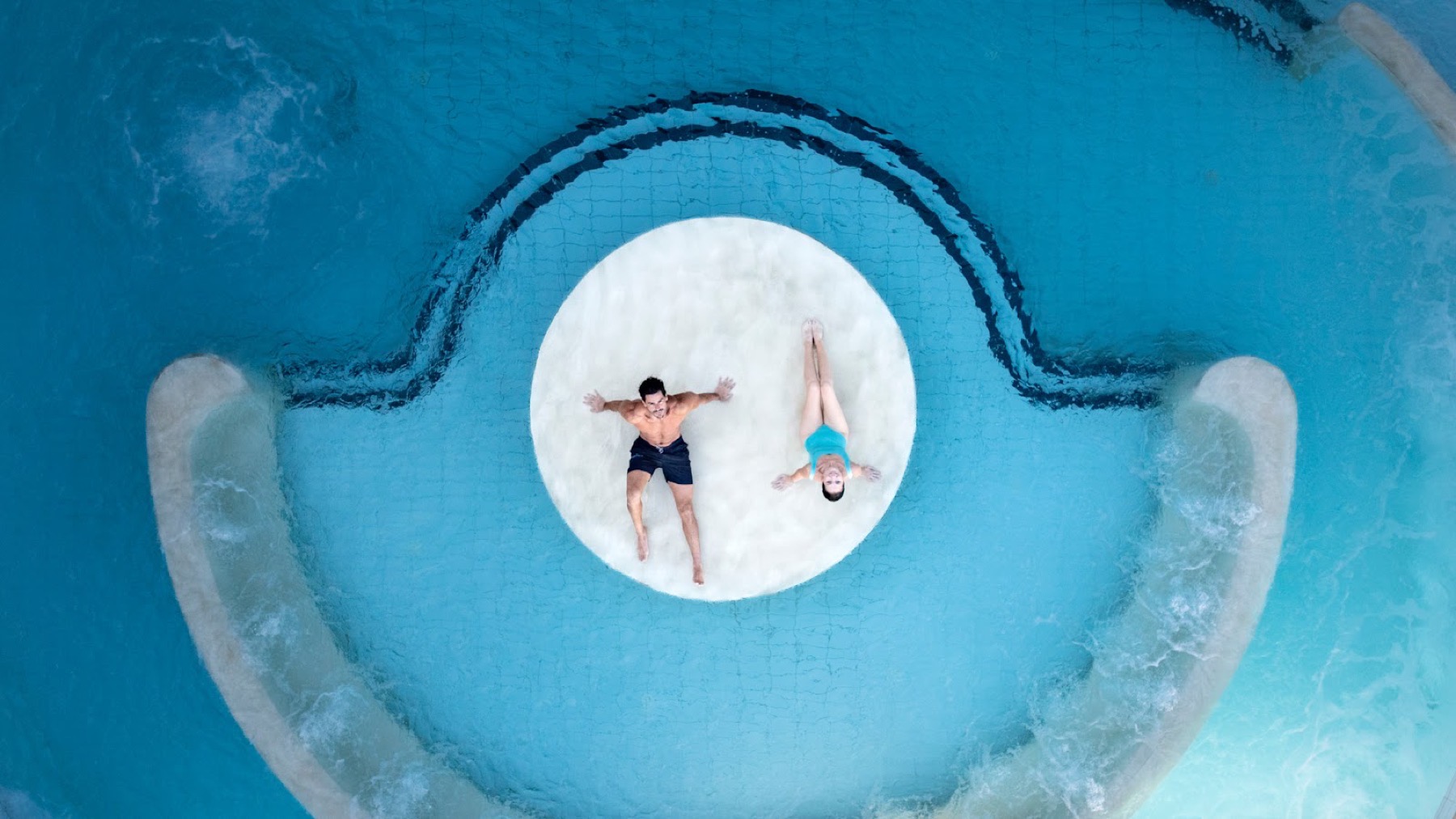
19. Terme di Monticello (Monticello Brianza, Lombardy)
Set in the pretty Lombard countryside, these baths are a perfect escape from the city for anyone looking for a modern spa. Terme di Monticello lies in the peaceful Brianza area and offers elegant surroundings with a focus on caring for both body and mind. Unlike historic spa complexes, it has a more exclusive, design-led atmosphere.
Visitors can enjoy several indoor and outdoor thermal pools, along with a sauna world and relaxation areas. The space is designed for comfort and privacy. With its emphasis on quiet, the spa is especially popular with adults and couples, while the concept may be less suited to families with young children.
The complex is popular with locals and visitors, and capacity can fill up quickly, especially on rainy days and weekends. 💡 Tip: Check the official website for the 2026 prices and massage menu, and book your entry online in advance.
The Alps and lakes: Merano, Bormio, and Monte Bianco
Northern Italy offers a very different experience from Tuscany’s hot springs among the cypress trees. Here, thermal baths are often surrounded by snow-capped Alpine peaks or close to crystal-clear mountain lakes. They make an ideal stop on a road trip to the coast, or a way to combine a day on the ski slopes with an evening soak in hot water.
Each complex has its own character. The modern Terme Merano complex has 26 pools right in the centre of town, while in the mountain resort of Bormio you can bathe in atmospheric Roman caves. For some of the best Alpine views, Pré-Saint-Didier offers a spectacular outlook over the Monte Bianco massif.
20. Parco Termale Villa dei Cedri (Colà di Lazise, Veneto)
This extensive spa is a world away from traditional tiled baths: you swim in natural thermal lakes set in a 13-hectare park filled with mature trees and rare species. Water is drawn from two deep wells, reaching 160 and 200 metres underground. It rises naturally hot, at temperatures of 37°C and 42°C.
The main thermal lake stays at around 33–34°C, while smaller hydromassage pools reach up to 39°C. The water is rich in bicarbonates, calcium, magnesium, and silicon. Its therapeutic benefits for arthrorheumatic conditions and physical rehabilitation are officially recognized by Italy’s Ministry of Health.
Expect a natural setting, with artificial waterfalls and refreshing fountains throughout the grounds. The lake beds are pebbly, so it’s worth bringing water shoes. 💡 Tip: If you have sensitive skin, the alkaline water, with a pH of around 7.9, is said to be soothing and leave skin feeling soft—so you may find yourself happily soaking for hours.
21. Terme Merano (Merano, South Tyrol)
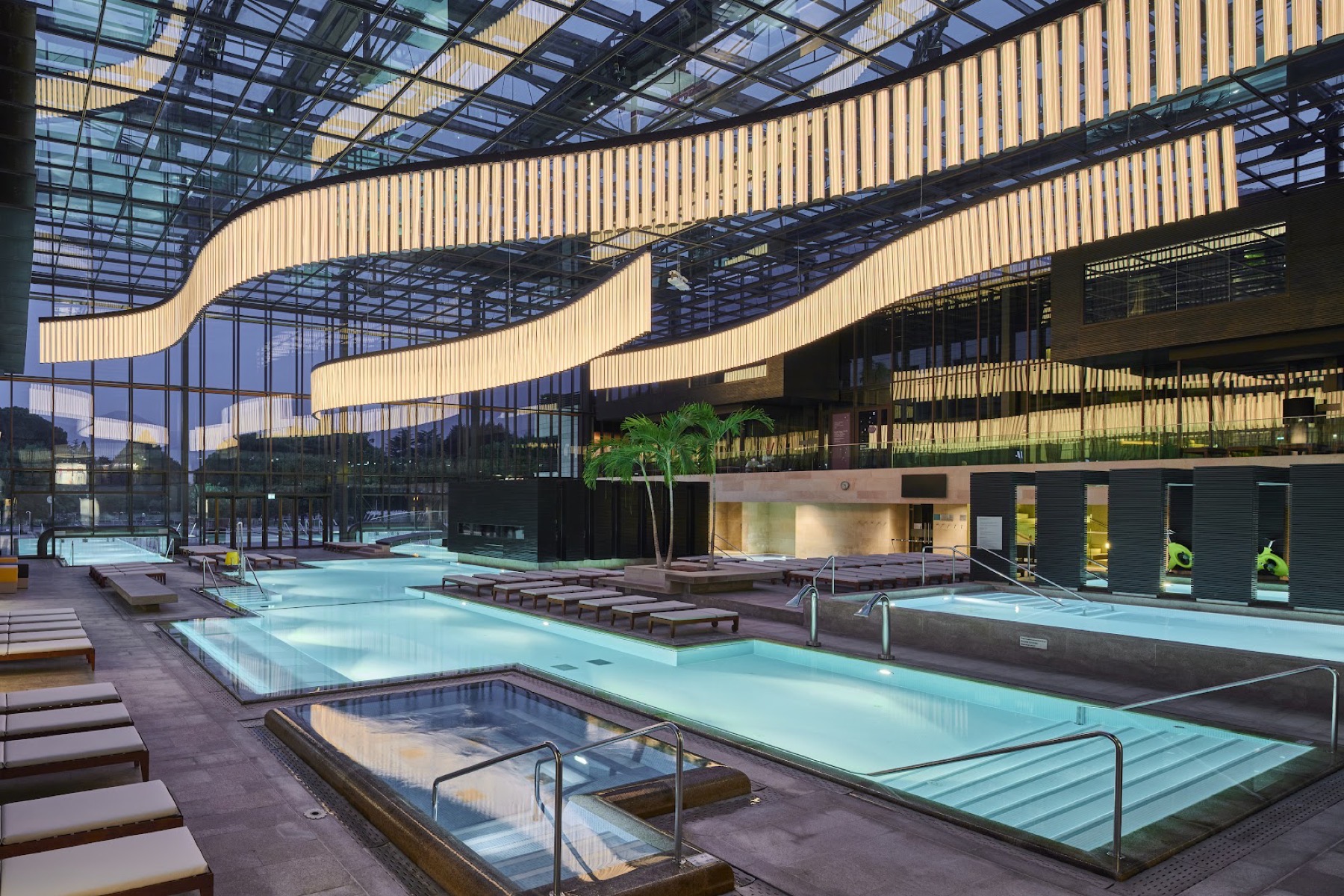
This modern architectural landmark is impressively large, with 26 indoor and outdoor pools in the heart of Merano’s spa district. The thermal water is piped in from Mount Vigiljoch, eight kilometres away, and has been used here since 1966. Its unique properties are attributed to a mix of minerals and a mild radon content. This low level of radioactivity is not harmful and is said to benefit the body, with a strong anti-inflammatory effect.
The indoor complex, with a sauna area spanning more than 2,000 square metres, is open year-round. The outdoor section, set in a park covering more than five hectares, opens only from mid-May to mid-September. It’s ideal for families and couples alike, with plenty of quiet corners and relaxation areas.
The 2026 price list varies according to the area you choose and how long you stay, but the parking offer is a nice touch. A two- or three-hour spa ticket automatically includes an hour in the underground car park at no extra cost. 💡 Tip: If you’re staying longer or want to explore the town, all-day parking costs €16.
22. Terme di Comano (Comano Terme, Trentino)
This Trentino spa is primarily a specialist treatment centre, offering therapies and treatments using local water that emerges naturally at 27°C. The distinctive water is rich in bicarbonates, calcium, and magnesium. Extensive scientific research has examined its soothing effects on the body and confirmed its therapeutic properties.
Rather than simply offering recreational bathing, the complex focuses on complete wellness and health packages. Daily wellness experiences combining nature and the local mineral water start at €70–€85 according to the 2026 price list. The peaceful setting and beautiful countryside make it an excellent choice if you’re looking to get away from mass tourism.
The area also has a rich history and cultural heritage, attracting visitors from around the world as far back as the 19th century. Local legends say that the magical Sibyl once hid in the nearby mountain gorges. 💡 Tip: Check the Terme di Comano website before your visit, as most therapeutic treatments and special day packages need to be booked in advance.
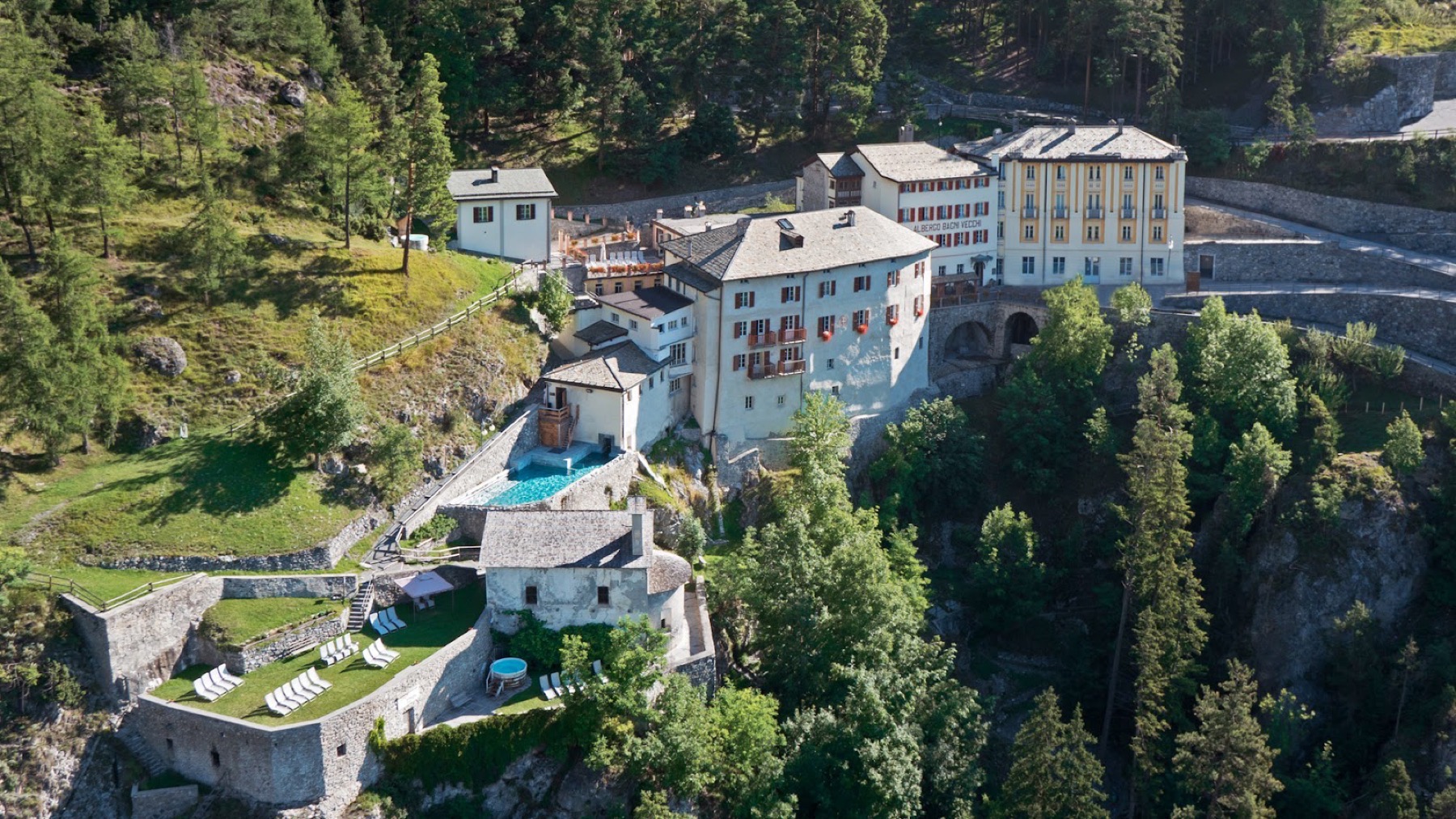
23. QC Terme Bagni Vecchi Bormio (Bormio, Lombardy)
This historic gem lies high in the mountains beneath the majestic 3,075-metre peak of Monte Reit. Its biggest attraction is the ancient Roman caves carved into the rock, where people have bathed in hot water for centuries. The complex is part of the renowned QC Terme chain and offers a unique mountain atmosphere on the edge of Stelvio National Park.
You can look forward to stone pools, steam baths, and unforgettable panoramic outdoor pools overlooking the Bormio valley. It’s a wonderful experience in winter, when you’re soaking in hot water with snow all around you.
The complex has a peaceful, intimate feel, with an emphasis on relaxing without noise or distractions. It’s wonderfully romantic, and an evening soak beneath the stars is breathtaking. 💡 Tip: Bormio is a famous ski resort, so it’s easy to plan a great winter day here: spend the morning on the slopes, then soothe tired muscles in the thermal caves in the afternoon.
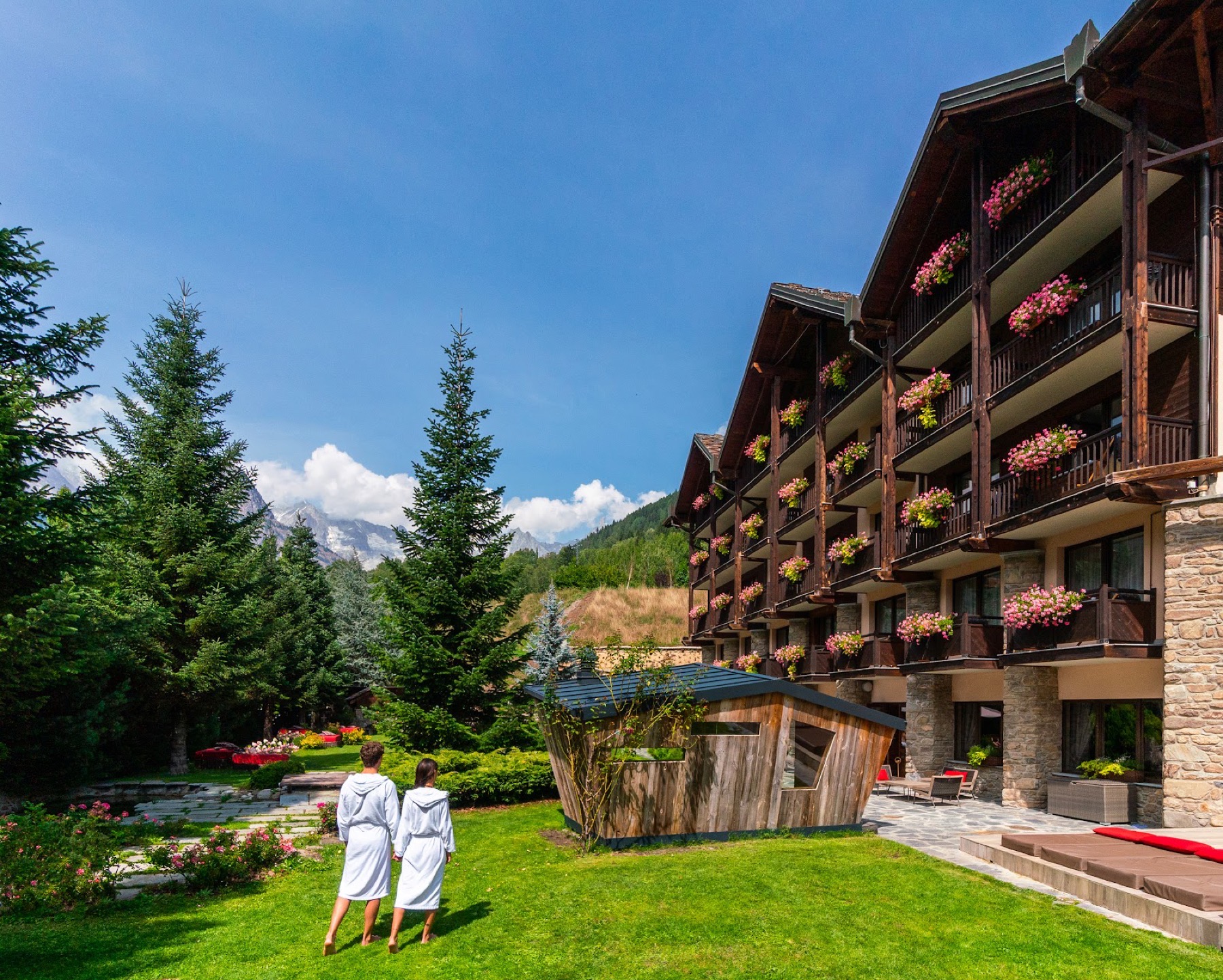
24. QC Terme Monte Bianco (Pré-Saint-Didier, Valle d’Aosta)
This luxury Alpine complex stands out for its incredible setting. From the outdoor pools, you get breathtaking views of the Monte Bianco massif. The spa is in the picturesque mountain town of Pré-Saint-Didier, in the Aosta Valley, making it a convenient stop when travelling between northwestern Italy and France.
As at other QC Terme locations, you’ll find high-quality wellness facilities, including stylish saunas, steam rooms, and cosy relaxation rooms with crackling fireplaces. The outdoor thermal pools are open in all weather, so you can enjoy a soak even in the depths of an Alpine winter.
This spa is particularly popular with adult couples looking for romance and a restorative break after a challenging mountain hike. Its design combines modern touches with traditional wood and stone. 💡 Tip: Check the official website for special evening events. The complex is beautifully lit after dark, and a night-time soak with views of the highest mountain in the Alps is unforgettable.
25. Terme di Levico (Levico Terme, Trentino)
These traditional mountain baths are at an altitude of 520 metres in the picturesque Valsugana valley, with easy access to the beautiful, crystal-clear Lago di Levico. The spa town is surrounded by the high peaks of the Lagorai range, giving the area its fresh Alpine character.
The spa’s long tradition is built around unique mineral springs that have drawn visitors from across Europe for generations. The water is used in a wide range of therapeutic treatments, and the town’s history stretches back to the Middle Ages. The name of the area first appeared in historical documents in 1184.
This is a perfect destination for active travellers who don’t want to spend their entire holiday lying by a pool. You can combine spa treatments with hiking or cycling through the surrounding green forests. 💡 Tip: Make time for an easy walk around Lake Levico. It’s one of the most beautiful lakes in Trentino and offers a refreshing swim in summer.
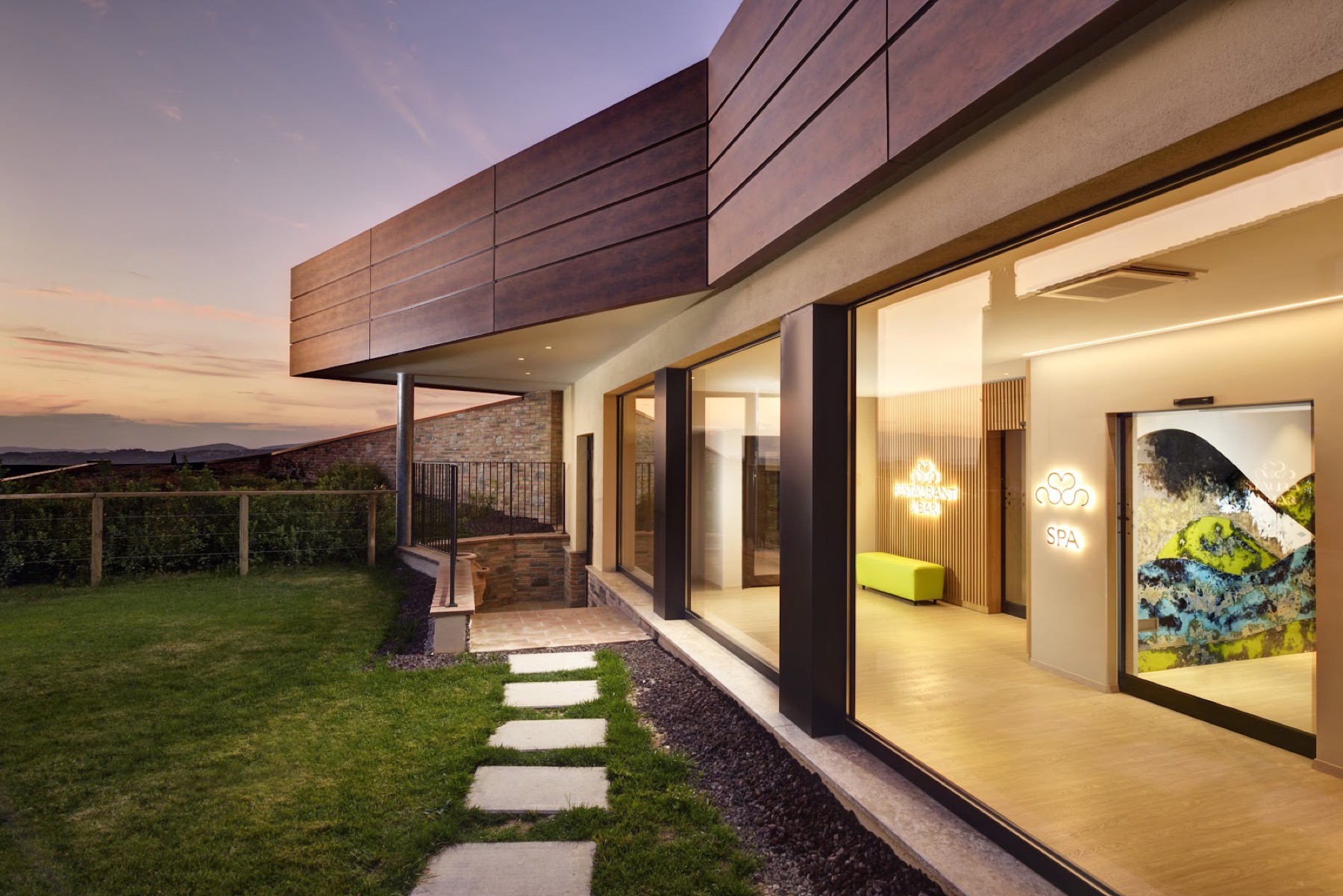
Emilia-Romagna and Umbria
If you’re looking for a quieter retreat on your way to the coast or Tuscany, consider the regions of Emilia-Romagna and Umbria. Here you’ll find classic Italian spas with a long therapeutic tradition that have retained their original charm. Compared with Tuscany’s more famous and crowded resorts, you’ll often find lower prices and a more authentic local atmosphere.
Many local thermal baths are part of a large, self-contained complex where the hotel is directly connected to the springs. You can walk from your room to the pools in your robe and forget about transport. It’s ideal if you want to switch off, take a break from driving, and have everything you need in one place.
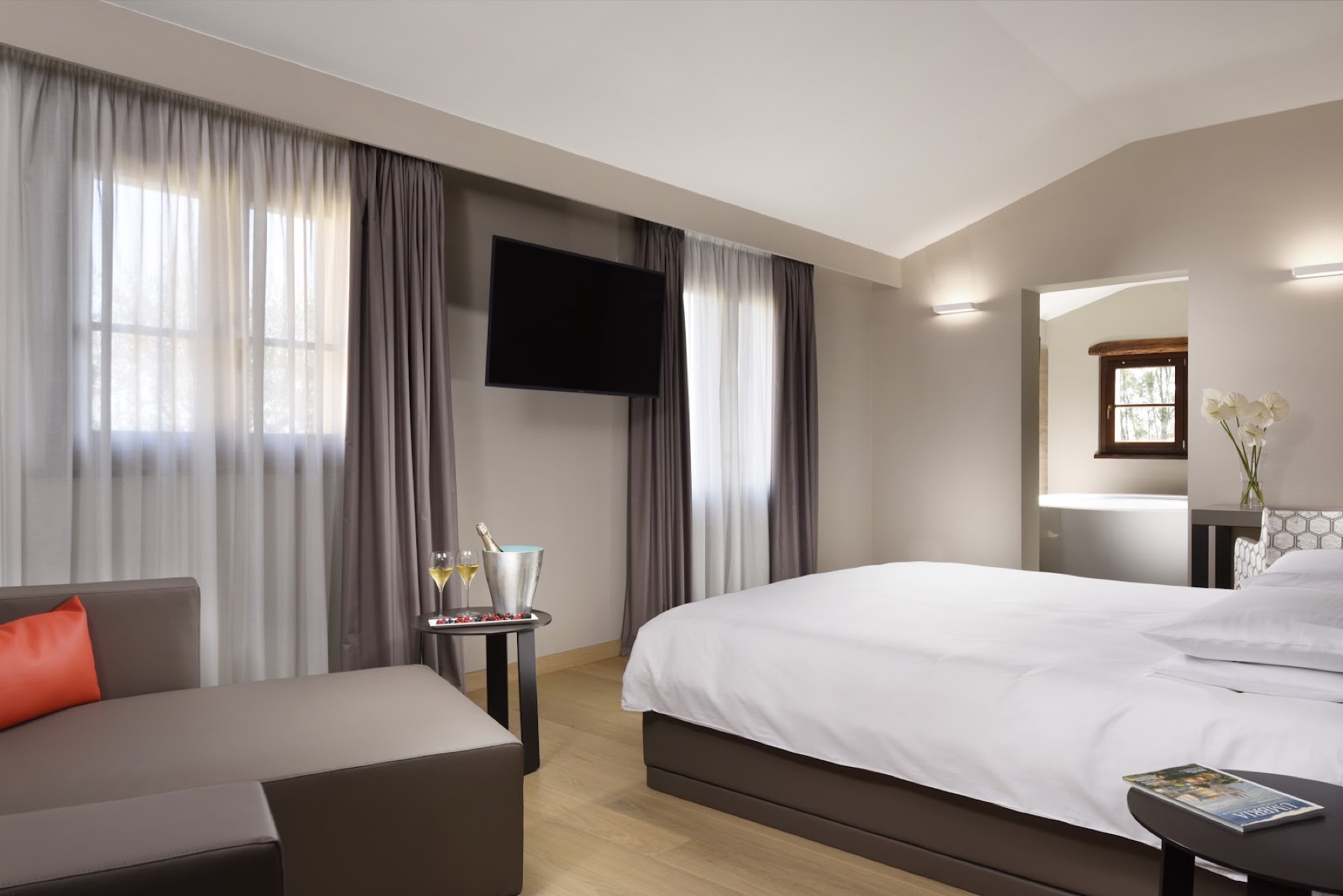
26. Borgobrufa SPA Resort (Torgiano, Umbria)
This fairytale resort in the heart of Umbria covers an impressive 40,000 square metres. It’s more than just a spa hotel: the extensive grounds offer peace and privacy. The main draw for wellness lovers is the 3,000-square-metre spa area, where you could happily spend entire days trying different treatments.
You’ll stay in contemporary designer rooms that promise a distinctive experience with exclusive touches. If you appreciate fine dining, you’ll love the two restaurants. During your stay, you can try traditional local cuisine or treat yourself to an unforgettable meal at the luxury Michelin-starred restaurant. There’s also an EV charging station on site.
This resort is designed for anyone looking to indulge all their senses and escape everyday life. 💡 Tip: If your itinerary is flexible, visit on a weekday. According to the official website, you may be able to get a special 20% discount on a midweek stay—a worthwhile saving at a luxury resort.
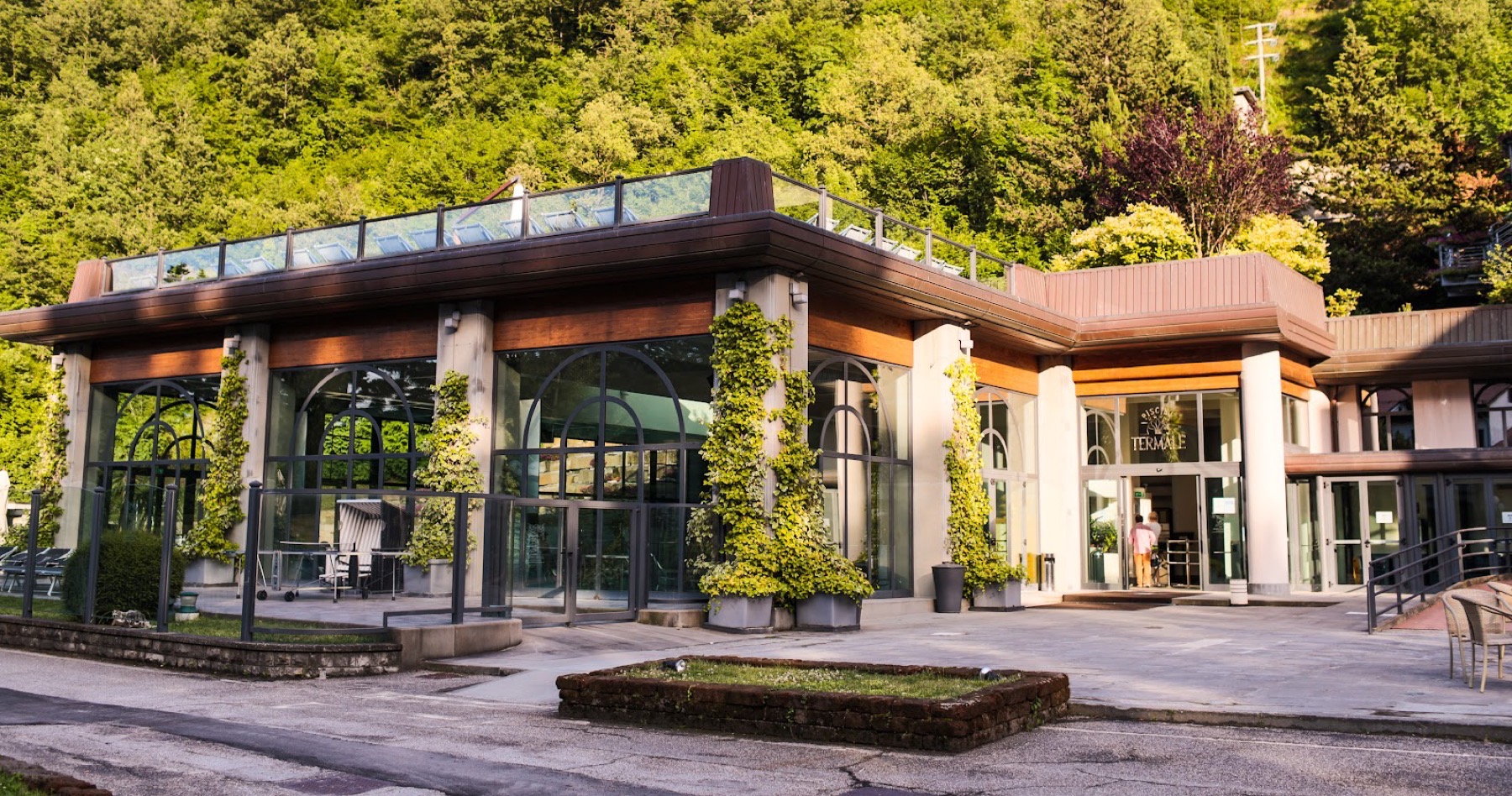
27. Roseo Euroterme Bagno di Romagna (Bagno di Romagna, Emilia-Romagna)
The spa town of Bagno di Romagna lies between 339 and 1,500 metres above sea level, stretching along the Savio and Bidente river valleys. This fascinating area sits between two regions and historically belonged to the so-called Tuscan Romagna. Its thermal springs have deep historical roots and were mentioned in an epigram by the celebrated Roman poet Martial.
The town has seen a turbulent history over the centuries. It was destroyed by the Goths in 540, following the fall of the Roman Empire, but later recovered. In the 15th century, the area came under the influence of powerful Florence and became a domain of the famous Medici family. One historical detail: Giovanni de’ Medici died here in 1498.
Today, visitors come for a peaceful break in the beautiful Apennine foothills, close to the Tuscan border. There are plenty of opportunities for relaxing walks in the surrounding countryside. 💡 Tip: The altitude and mountain ridge mean the air can be a little cooler than in the lowlands, making this a great place to visit even during the hottest part of summer.
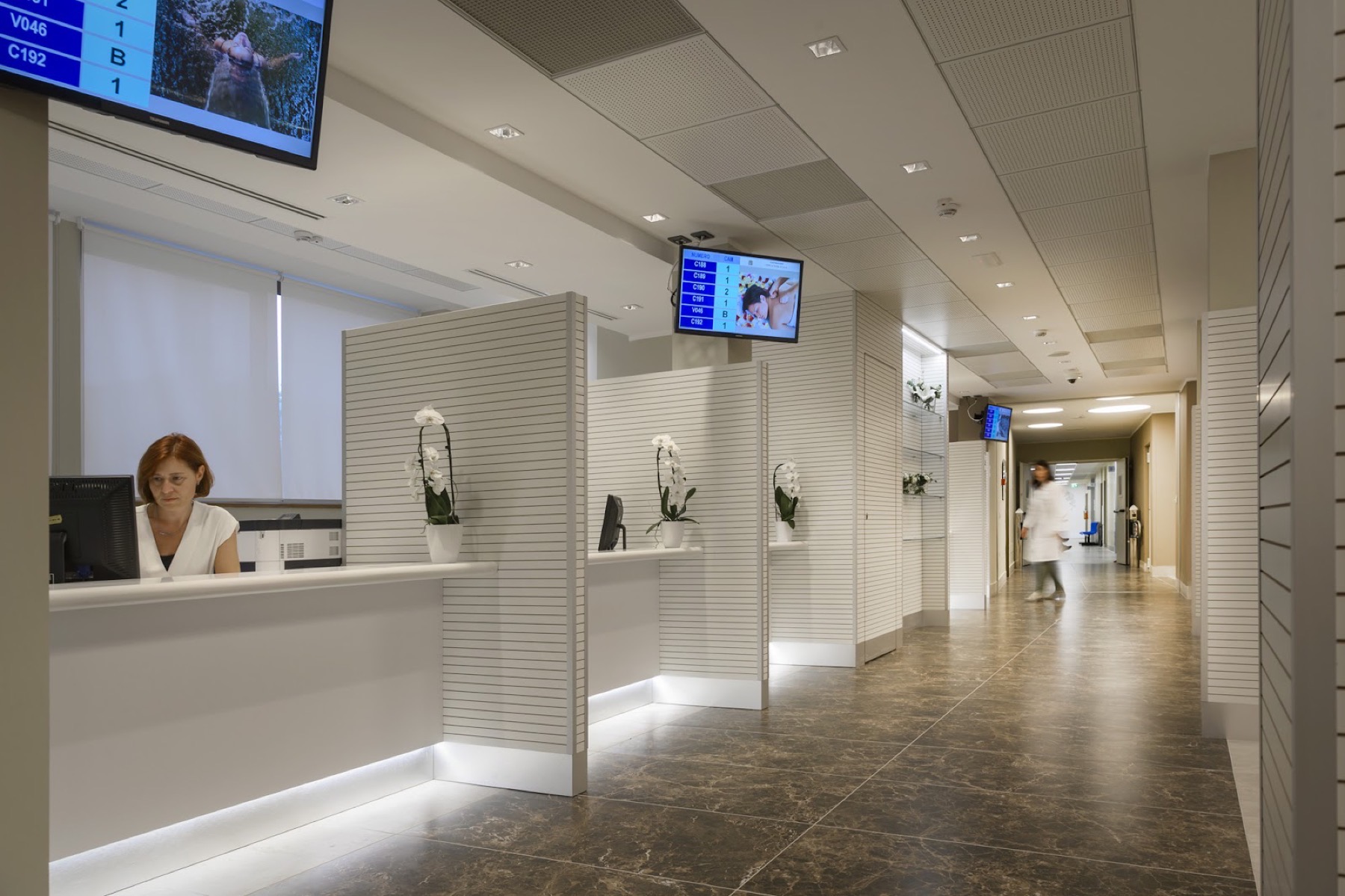
28. Terme di Castrocaro (Castrocaro Terme, Emilia-Romagna)
The spa in the picturesque town of Castrocaro Terme combines a rich history with elegant architecture. Explore the well-preserved medieval borgo, including the charming Via Postierla and Palazzo Pretorio, still decorated with its original Medici coat of arms. The visual highlight, though, is the spa’s Grand Hotel, built in the 1930s—a beautiful example of Italian Art Deco.
This is an excellent choice if you appreciate aesthetics and quality wellness. You can even take a little of the spa experience home: the complex sells its own range of thermal cosmetics. A face or body cream costs €25, and a face serum is €30. According to the 2026 price list, an all-day ticket during the summer Magic Days promotion costs €28, while junior pool admission costs €14.
This town once served as the capital of so-called Florentine Romagna, and you can still see that historical influence in its streets. 💡 Tip: The Magic Days offer, with all-day entry for €28, is valid only from 1 August to 13 September 2026. If you’re visiting at another time of year, check the standard prices online in advance.
Practical guide: what to bring and how to plan your visit
If you’re heading to free springs, pack two swimsuits and an old towel. You’ll need flip-flops or water shoes for the limestone pools, as the bottom can be slippery. Bring plenty of drinking water, and don’t leave valuables in your parked car.
Sulphurous water may be great for your skin, but it can ruin white swimsuits, leaving them grey and dingy. Be sure to remove silver chains and rings before bathing, as they’ll quickly turn black in the water. Remember, natural springs don’t have showers, changing rooms, or lifeguards.
Paid spas are much more convenient, and your ticket often comes as part of a package. At QC Terme, for example, you’ll get a robe, towel, and slippers when you arrive, so all you need is a swimsuit. Some evening tickets even include a popular aperitivo.
Many Italian thermal baths work with pre-booked time slots. The most popular resorts can sell out well in advance, especially at weekends and on public holidays. 💡 Tip: Book online early so you don’t arrive to find that entry is already sold out.
Parking can be a real challenge at popular free springs. Head to Saturnia or Bagni San Filippo early in the morning, or you may struggle to find a space. The crowds usually thin out again later in the day at the White Whale formation and the cascades.
If you’re travelling as a family, check each spa’s rules carefully. Many luxury wellness circuits only admit visitors aged 14 or 18 and over to maintain a peaceful atmosphere. Large parks such as Terme Merano are a better choice for families, with plenty of space for children.
Always check the operator’s website for the latest information before you travel. Find out whether there’s a scheduled pool maintenance closure or check the exact opening hours for the large thermal park in Merano. Even free springs may occasionally close temporarily for maintenance.
What next: more articles about Italy
- Wellness hotels in Tuscany: find out where to combine thermal baths with wine country.
- Agriturismo in Tuscany: find a lovely farmhouse stay just a few kilometres from the springs.
- Tuscany with children: discover which thermal baths in Italy are suitable for young children.
- Lucca: this is the loveliest stop on the way to Grotta Giusti.
- Driving to the Adriatic coast in Italy: see how to work thermal baths into your trip to the seaside.
- Best thermal baths in Slovenia: explore a more affordable option on the way to Italy.
Frequently asked questions
To finish, I’ve answered some of the most common questions. I hope these practical tips help you plan the perfect relaxing getaway.
Which thermal baths in Italy are free?
Among the most famous freely accessible springs are Cascate del Mulino near popular Saturnia, where water flows at a temperature of 37.5 °C. You can also bathe completely free at Bagni San Filippo by the limestone formation Balena Bianca. Another excellent option is the free Terme di Petriolo with small pools right by the Farma River beneath medieval walls.
How much does entry to Italian thermal baths cost?
Ticket prices for spas change every year, so always check the current price list for 2026 directly on the website. At natural springs like Cascate del Mulino you don’t pay anything at all. On the other hand, at premium resorts or in the huge Villa dei Cedri park covering 13 hectares, expect a paid entrance.
Where in Italy is the hottest thermal water?
You’ll find the hottest water at Terme dei Papi in Viterbo, where the famous Bullicame spring flows at a temperature of 58 °C. It refreshes you in a huge pool covering 2,000 square meters. Even hotter is the Boiola spring in Sirmione at 69 °C, but in the actual relaxation pools you’ll enjoy a pleasant 33 to 37 °C.
Which Italian thermal baths are best in winter?
In the cold months, choose spas with a large proportion of warm indoor pools. An ideal choice is the modern Terme Merano, where you’ll find a total of 26 pools, including 15 indoor and 11 outdoor. Excellent facilities are also offered by QC Termeroma near Rome airport, as they’re open every day of the year.
Can children visit Italian thermal baths?
Access with children depends on the specific location, so always check the rules in advance on the website. Children can easily visit the large complex of Terme Merano, where radon-containing water has been pumped since 1966. On the other hand, many private wellness circuits and centers only allow entry from age 14 or 18.
What does percorso benessere mean?
This Italian term refers to a paid wellness circuit in spa centers. It usually includes access to relaxation pools, saunas, and steam baths. Often you’ll get a package with a bathrobe, towel, and slippers, as the popular QC Terme chain does. Sometimes an early evening aperitif called Aperiterme is included in the price.
Where to bathe on Ischia in Italy?
The island of Ischia is famous for its many thermal parks, but always check the specific rules with the individual operator. You’ll find luxurious paid complexes with a complete wellness circuit as well as smaller spas. Keep in mind that price lists for 2026 are constantly changing, so book your tickets online in advance.
What about mud wraps in Abano?
Mud wraps or fangoterapia are typical of therapeutic spas, which in Italy are called terme convenzionate. These facilities are connected to the healthcare system and also offer a medical clinic. Regular tourists don’t necessarily need these services, but for aching joints they provide great relief.
Which thermal baths are closest to Rome?
If you’re looking for relaxation near the capital, head to the popular QC Termeroma. These baths are located right next to Rome airport and a big advantage is that they’re open every day of the year. Another fantastic option close to Rome is Terme dei Papi with a gigantic pool covering 2,000 square meters.
Do people go without swimwear in Italian thermal baths?
In Italian thermal baths, wearing swimwear is mandatory, both at free springs and in paid resorts. At the Cascate del Mulino springs, where water flows two kilometers across meadows, bring older swimwear because of the sulfur. Likewise, always remove all silver jewelry, which would turn black.
Tips and Tricks for Your Vacation
Don’t Overpay for Flights
Search for flights on Kayak. It’s our favorite search engine because it scans the websites of all airlines and always finds the cheapest connection.
Book Your Accommodation Smartly
The best experiences we’ve had when looking for accommodation (from Alaska to Morocco) are with Booking.com, where hotels, apartments, and entire houses are usually the cheapest and most widely available.
 🚗 Car rental on the roadVerified rental cars in Italy
Search with the DiscoverCars comparison engine — it compares prices from dozens of local and international rental companies, and most bookings come with free cancellation.
Compare car prices in Italy →Don’t Forget Travel Insurance
Good travel insurance will protect you against illness, accidents, theft, or flight cancellations. We’ve had a few hospital visits abroad, so we know how important it is to have proper insurance arranged.
Where we insure ourselves: SafetyWing (simple monthly subscription) and TrueTraveller (for extra-long trips).
Find the Best Experiences
Get Your Guide is a huge online marketplace where you can book guided walks, trips, skip-the-line tickets, tours, and much more. We always find some extra fun there!