

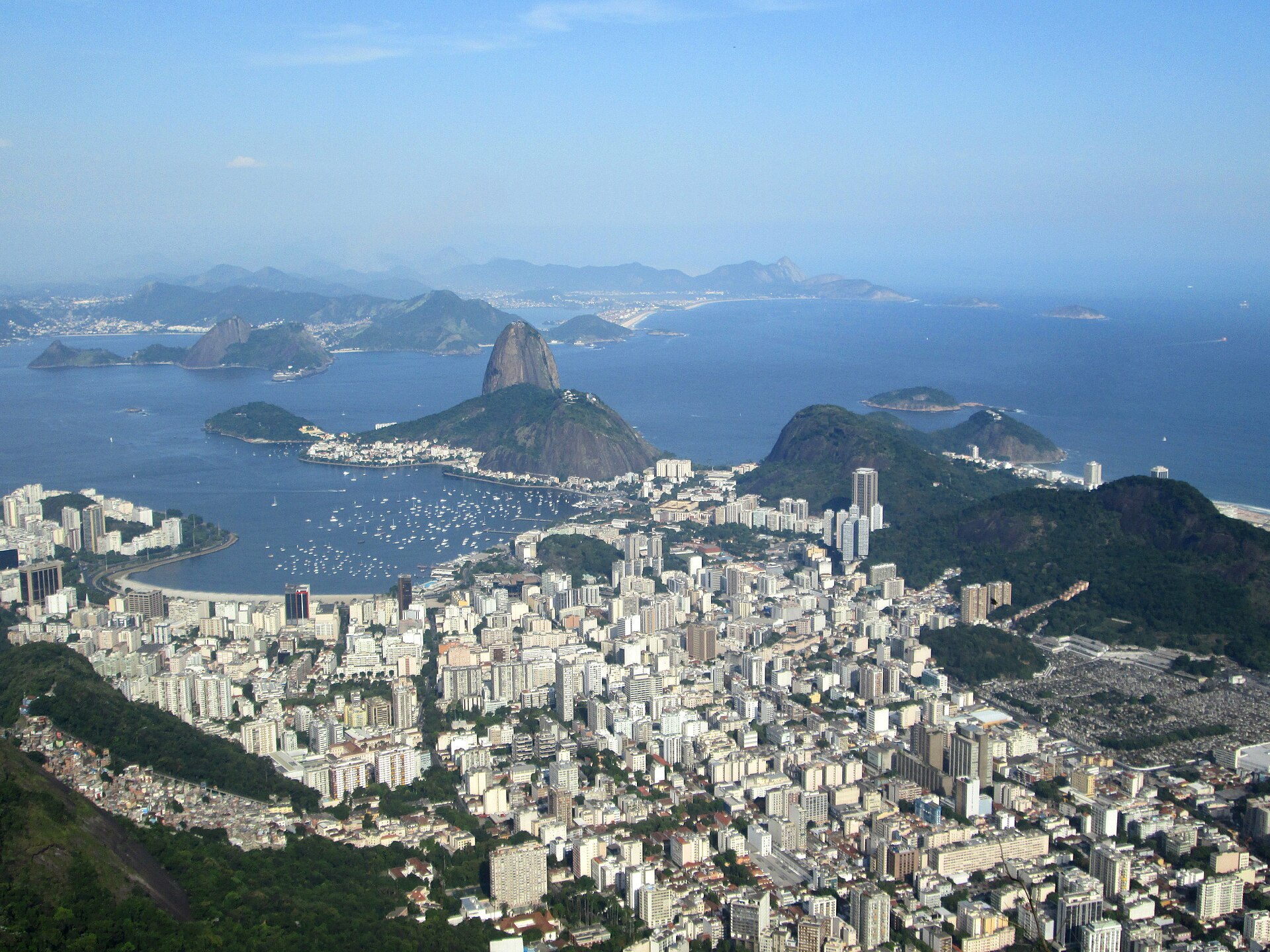
If you’re thinking about a trip to South America and looking for a destination bursting with colour and untamed energy, Rio de Janeiro will win you over in an instant. Rio de Janeiro is a city of incredible contrasts, where modern architecture blends with wild nature and golden beaches flow seamlessly into dense green rainforest. You can look forward to breathtaking scenery and a rich, music-filled culture.
Planning a stay in this tropical gem calls for a slightly different approach, because Rio is planned around the weather, not around a fixed checklist of landmarks. The two most famous spots are high-altitude viewpoints that completely lose their magic without good visibility. That’s why I’d suggest leaving plenty of breathing room in your itinerary so you can react flexibly to morning fog or a clear sky.
From iconic beaches to hidden museums — here you’ll find everything you need to know to build your programme exactly to your taste. And because knowing your way around the neighbourhoods is half the battle, I’m also adding practical advice on safety and accommodation.
TL;DR
- Plan around the clouds: The most famous landmarks like Christ the Redeemer and Sugarloaf make no sense in fog, so save your clearest morning for them.
- Safety has its rules: Stick to the so-called tourist safety belt in the South Zone, and always use a reliable Uber to get around after dark.
- Three ways to reach Christ: You can go up by the pricey cog railway, a cheaper minibus, or completely free on a demanding hike through the rainforest from Parque Lage.
- A system of lifeguard stations: The beaches are divided by numbered booths called postos, with the famous Posto 9 on Ipanema regarded as the liveliest meeting point.
- A cheaper Sugarloaf: If you tackle the first section on foot via the Trilha do Morro da Urca trail, you’ll save half the cable car price.
- An urban rainforest: Tijuca National Park lies right within the city limits and offers a fantastic escape from the heat into the shade of giant trees.
- Local treats without meat: Brazilian cuisine loves meat, but on the beach you can enjoy refreshing açaí, cheesy pão de queijo bread rolls or fresh coconut water.
When to Visit Rio de Janeiro
Deciding on the timing of your trip will drastically affect not only your budget but also your overall impression of this sun-baked city. The best time to visit is from April to June and again from August to October, when temperatures are very pleasant and you’ll avoid the heaviest tropical downpours. In these months the sky is often gloriously clear, which is absolutely crucial for visiting all the high-altitude viewpoints on which the whole Rio experience rests.
If you’d like to see the city at its most feverish, you’ll have to come during the local summer, which falls in the Northern Hemisphere’s winter months. Carnival and the spectacular New Year’s Eve on Copacabana beach mean the highest prices of the entire year, with hotels and flights hopelessly sold out many months in advance. You also have to be ready for extreme humidity and scorching heat that can top forty degrees, which really tests you while sightseeing.
Whatever month you choose, don’t forget the golden rule of flexible planning we’ve already talked about. Leave at least two or three days in reserve as a buffer, so you can head up to Corcovado on exactly the morning when the clouds over the city part. The local climate is heavily influenced by the ocean and surrounding mountains, so the weather can change very quickly from hour to hour, and buying tickets for a specific day far in advance is a huge risk.
Safety in Rio de Janeiro: How to Enjoy Your Holiday Worry-Free
The question of safety is probably the first thing every traveller looks up online before heading to Brazil. Rio de Janeiro is definitely not a war zone, but it does require following clear rules that let you enjoy the city with complete peace of mind. The absolute basics are to stay within the so-called tourist safety belt, made up of the wealthier neighbourhoods of Ipanema, Leblon, Copacabana, Botafogo and Urca, where tourist police are present on every corner.
And the numbers back it up — the Leblon and Ipanema districts reported zero murders in 2026, which says more about their safety than any travel blog ever could. On the busy Copacabana beach, on the other hand, you should expect the occasional petty theft, pickpocketing and phones being snatched straight from your hand, especially on the wide seaside promenade.
After dark, one simple rule applies: Uber, always and everywhere, even for short distances between neighbouring districts — the historic Centro empties out so much after working hours that you simply don’t walk there at night, and there’s an equally strict ban on evening walks along any beach, because deserted stretches of sand attract trouble.
Where to Stay in Rio de Janeiro
Choosing the right location for your hotel will shape your entire experience of the city, so you should look for accommodation exclusively in the South Zone. The best choice for a first visit is the area around Ipanema and Leblon beaches, which offer a fantastic dining scene, safe streets full of boutiques and great metro links to the rest of the city. These districts are pricier, but the investment in peaceful sleep and carefree evening strolls pays off a hundred percent.
If you’re looking for a slightly more affordable option but still want to stay in the thick of it, turn your attention to legendary Copacabana or neighbouring Botafogo. Botafogo in particular has been booming in recent years, with new cafés opening up and the district offering some of the most beautiful views of Sugarloaf right from the waterfront. Historic Santa Teresa on the hill tempts with its bohemian atmosphere, but logistically it’s a bit cut off for daily excursions and harder to reach in the evening.
For your Booking.com reservation, I’d recommend picking verified hotels with 24-hour reception and a good rating. A great beachfront choice is the Arena Ipanema Hotel, which has a stunning rooftop pool overlooking the ocean and sits just a few steps from the famous Posto 8. For a more luxurious experience, go for the iconic Hotel Fasano Rio de Janeiro, whose design and location have no rivals in the city, while in Botafogo you’ll be pleasantly surprised by the stylish Yoo2 Rio de Janeiro by Intercity with its fantastic bay views.
💡 On this map you can compare what’s currently available — you’ll instantly see how much cheaper accommodation is a block away from Avenida Atlântica.
22 Things to See and Do in Rio de Janeiro
Right, now for the best part — the places that are worth it. Famous icons and a few hidden gems that let you get to know the city from every angle.

1. Christ the Redeemer
This thirty-metre icon towering atop Corcovado mountain is without doubt the most recognisable symbol of all Brazil. The statue stands at an altitude of 710 metres and clouds can shroud it for an entire day, so it’s absolutely critical to come up here only when the sky over the city is clear and blue. From the top you’ll see the whole city at once — Guanabara Bay, the surrounding rainforest and distant beaches — and with good visibility you’ll understand why people travel here from all over the world.
Interestingly, several different routes lead up to the monument, so you can choose based on your budget and fitness. The priciest and most popular option is the historic Corcovado cog railway, the official minibus from the Paineiras visitor centre costs a bit less, and the very cheapest way is a demanding hike on foot. The statue itself, dating from 1931, is a masterpiece in the art deco style, and its open arms symbolically welcome every visitor to the city.
💡 Tip: If you decide on the hike, it starts in the beautiful Parque Lage and climbs steeply up through dense rainforest. It takes roughly two to three hours, along the way you’ll probably meet curious monkeys, but it requires sturdy shoes and plenty of drinking water, because climbing in the tropical humidity is truly exhausting.

2. Sugarloaf Cable Car (Pão de Açúcar)
The city’s second most important viewpoint is an enormous granite monolith rising steeply straight out of the ocean. The glass cable car carries you up in two separate stages, and even from the first transfer station on Morro da Urca hill there’s a fantastic show of anchored yachts and landing planes. On the very summit of Sugarloaf you’ll find yourself at 396 metres, with the whole city and the opposing Christ statue laid out in the palm of your hand.
This geological wonder is surrounded by lush vegetation, and you can often spot tiny marmoset monkeys cheerfully leaping through the treetops. The whole massif works as one big natural monument, so although various maps often show the cable car and the hill as separate places, it’s actually one compact experience. The view from here is utterly magical, especially in late afternoon, when the sun slowly sets behind the high peaks of Tijuca National Park and the city begins to light up.
💡 Tip: If you want to save a lot on the fairly pricey ticket, use the Trilha do Morro da Urca trail, which lets you cover the first section on foot through the jungle in roughly forty minutes. At the top you then buy a ticket for just the second, summit stage of the cable car, cutting the total cost in half and avoiding the long queues at the ticket offices below.
3. Copacabana Beach and Forte de Copacabana
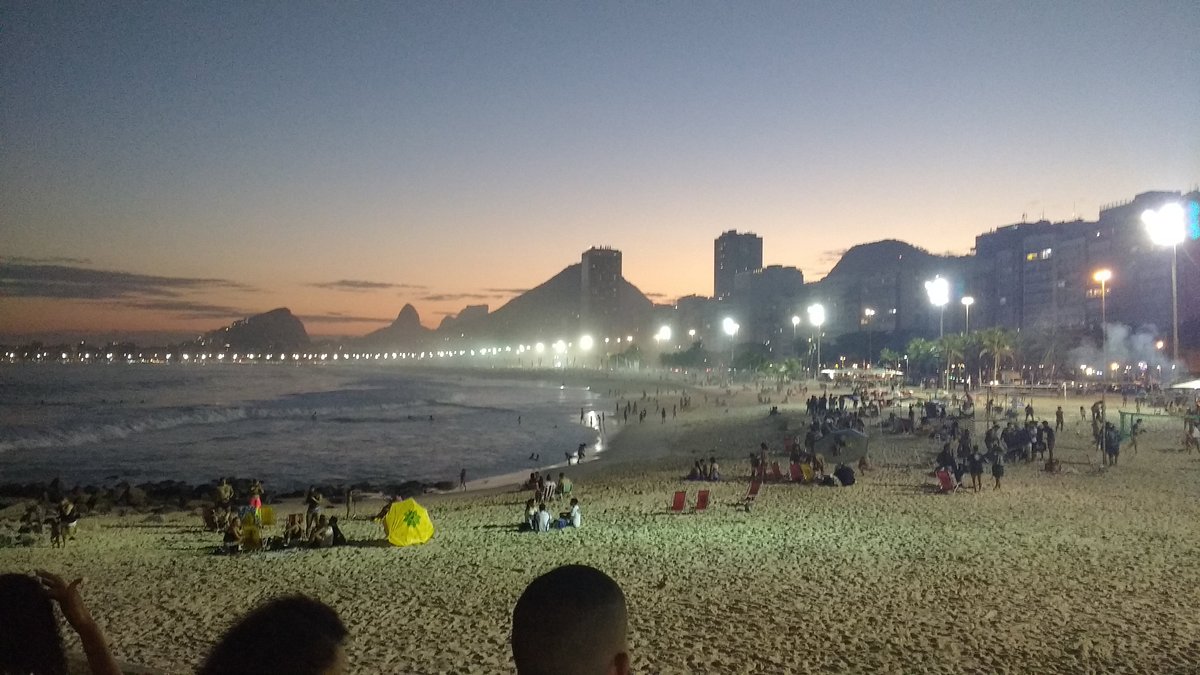
There’s probably no more famous strip of sand in the world than this three-and-a-half-kilometre stretch lined with iconic black-and-white wave-patterned paving. Copacabana is the pulsing heart of all Rio, where beach volleyball is played from early morning to late afternoon, refreshing drinks flow from the kiosks and locals mingle with tourists from around the globe. The waves here tend to be fairly strong, but the wide band of fine sand offers plenty of room for comfortable sunbathing and long walks.
At the very southern end of the beach stands a proud early-twentieth-century military fort that today serves as a fascinating museum. Forte de Copacabana offers an absolutely perfect view along the entire length of the beach all the way to majestic Sugarloaf in the distance. Inside the grounds you can see preserved cannons, historic uniforms and old photographs that trace the tangled military history of this vast South American country.
💡 Tip: Inside the fort you’ll find the famous Confeitaria Colombo café, where you can sit on the outdoor terrace, order excellent coffee with a pão de queijo cheese roll and enjoy complete calm away from the busy beach crowds. Just remember that the promenade is only for daytime — after dark, it’s better to take a taxi.
4. Ipanema Beach and the Lifeguard Station System
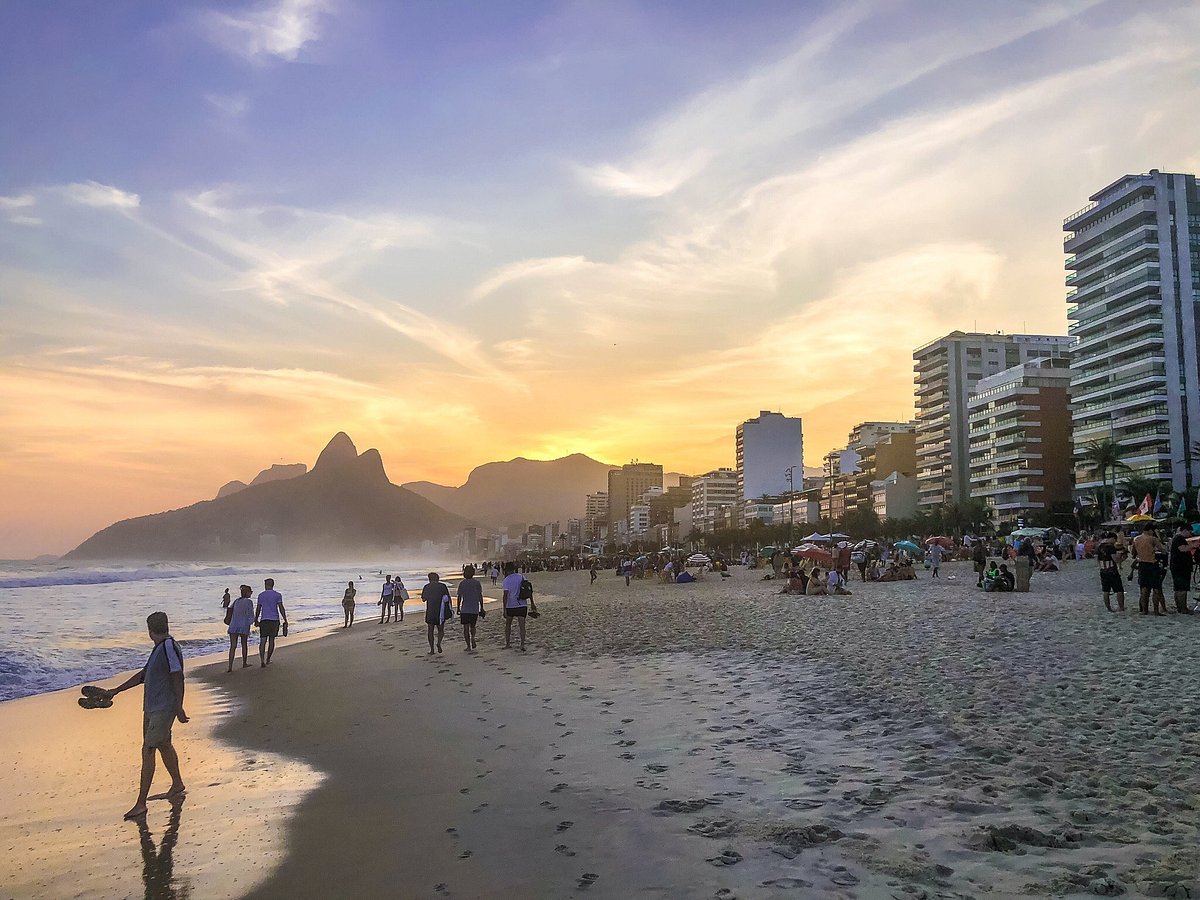
If Copacabana represents mass tourism, Ipanema is a symbol of elegance, fashion and a relaxed beach lifestyle. This beach is famous for its incredibly clean water and gorgeous views of the Dois Irmãos mountains, which form the perfect backdrop for any photo. The sand here is a touch finer and the overall vibe attracts a younger crowd, artists and design lovers who drift in from the adjacent boutique streets.
To navigate the long shoreline, locals use the so-called postos, numbered lifeguard stations spread out at regular intervals. The most famous spot is undoubtedly Posto 9 on Ipanema, which has historically served as the main meeting point, where people come to hang out, show off new swimwear and debate life. Each posto has its own specific atmosphere and attracts a slightly different crowd, from families with children to dedicated athletes.
💡 Tip: When hunger strikes, you don’t need to leave the beach at all — just buy a bowl of icy açaí from the beach vendors, a thick purple pulp from Amazonian palms topped with crunchy granola and banana. It’s a perfect, refreshing and entirely meat-free treat that instantly gives you the energy you need for another swim in the tropical heat.
5. Leblon Beach and the Mirante do Leblon Viewpoint
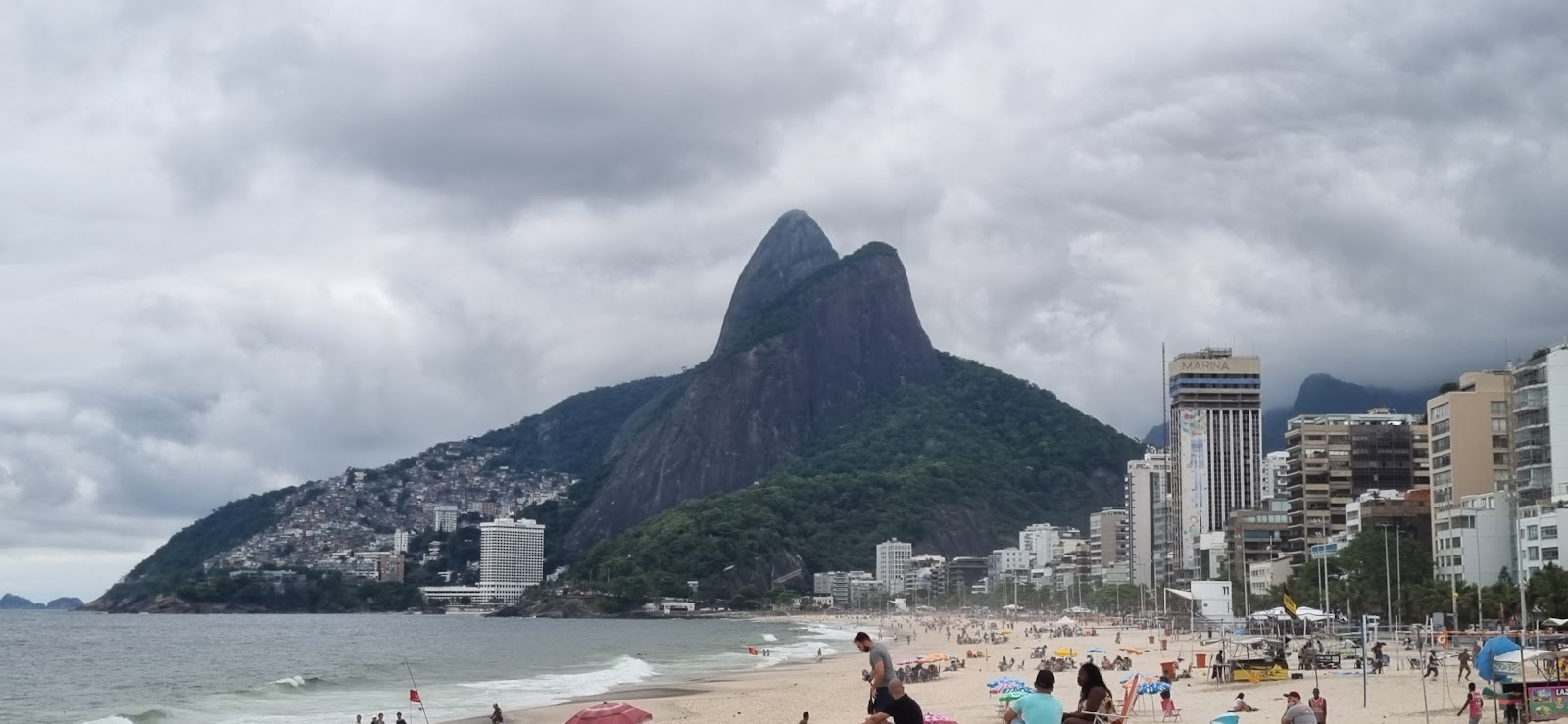
Just beyond the canal that separates Ipanema lies the exclusive Leblon district with its own, much quieter beach. Leblon is considered the safest and most prestigious part of the whole city, which shows not only in its zero serious-crime statistics but also in the tidiness of the local kiosks and the cleanliness of the entire waterfront. The beach is the domain of local residents, families with children and well-known personalities who come here to relax under the parasols far from the biggest tourist bustle.
At the very end of the beach, where the road begins to climb into the steep hills, you’ll find a beautiful wooden terrace towering above the roaring ocean. The Mirante do Leblon viewpoint offers an iconic view along the entire length of Leblon and Ipanema beaches, lined with palms and tall modern buildings. Especially in the afternoon, people ride here on bikes to buy chilled coconut water from little stalls and watch the city slowly settle down to sleep.
💡 Tip: Right at the viewpoint there are several small bars where you can grab fresh tropical fruit juice and listen to the murmur of the huge waves crashing against the rocks right below you. It’s an ideal spot for a romantic end to a long day, and you can reach it from the beach on a comfortable stroll along the safe promenade.
6. The Pedra do Arpoador Rocky Outcrop
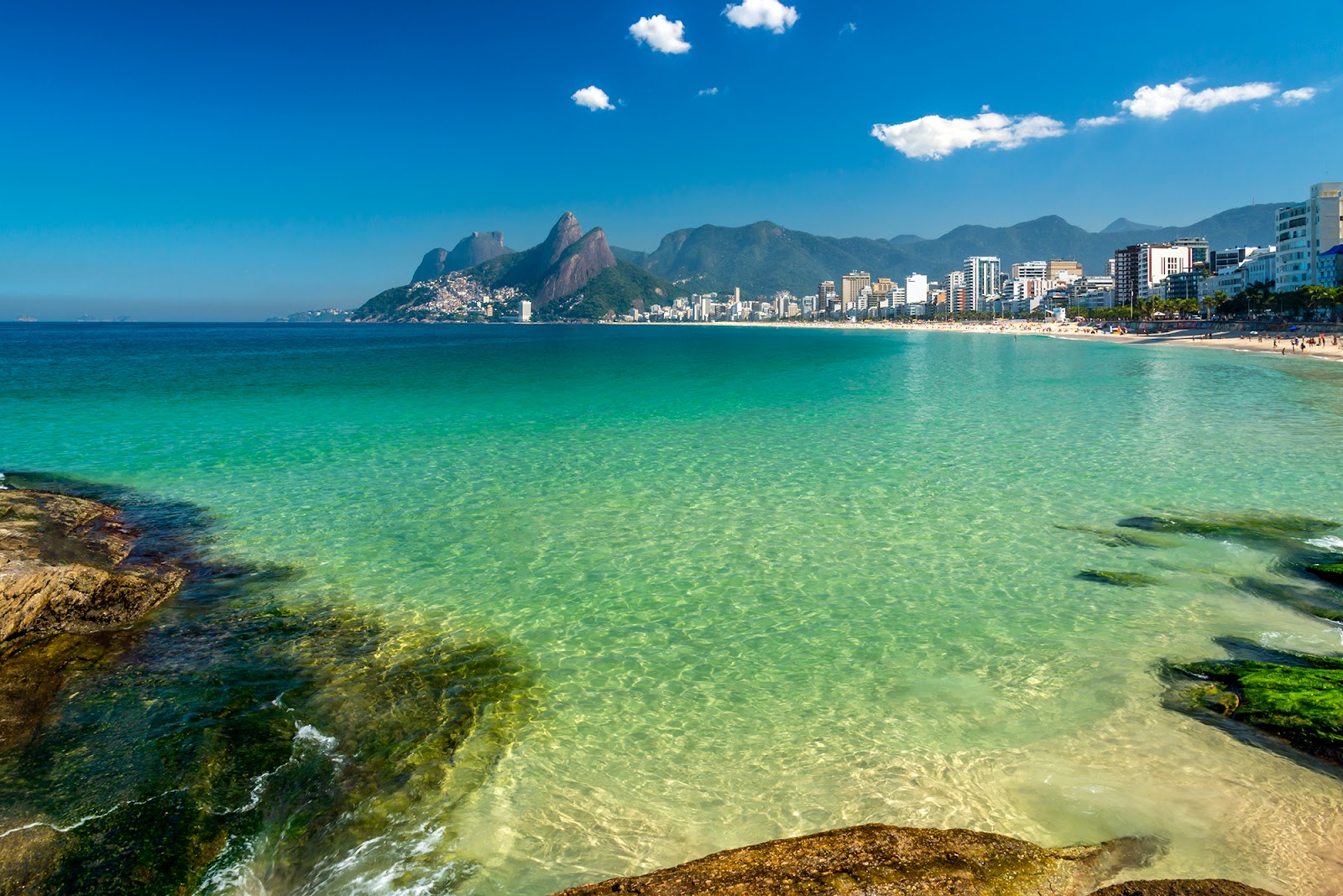
Between busy Copacabana and elegant Ipanema, a huge rocky massif juts deep into the ocean, forming a natural boundary between the two bays. Pedra do Arpoador is an absolute legend among surfers, because it’s right here that the best and most consistent waves in the whole city break. During the day you can watch dozens of athletes masterfully taming the sea while you lean against the warm stone and breathe in the salty ocean air.
But the main show here only starts at dusk, when the rocks fill with hundreds of people sharing a single goal. Tradition dictates that the moment the sun sets behind the majestic Dois Irmãos mountain, the whole crowd bursts into enthusiastic applause, thanking nature for another beautiful day in this paradise city. It’s an incredibly powerful and emotional experience that perfectly captures the warm, joyful Brazilian spirit you’ll fall in love with instantly.
💡 Tip: Come here at least an hour before sunset to grab a good spot to sit, because the rocks tend to be packed to bursting. On the way back, it’s worth ducking into one of the Japanese or Italian restaurants nearby — if you’re not into meat, you’ll find plenty to love here.
7. The Escadaria Selarón Staircase
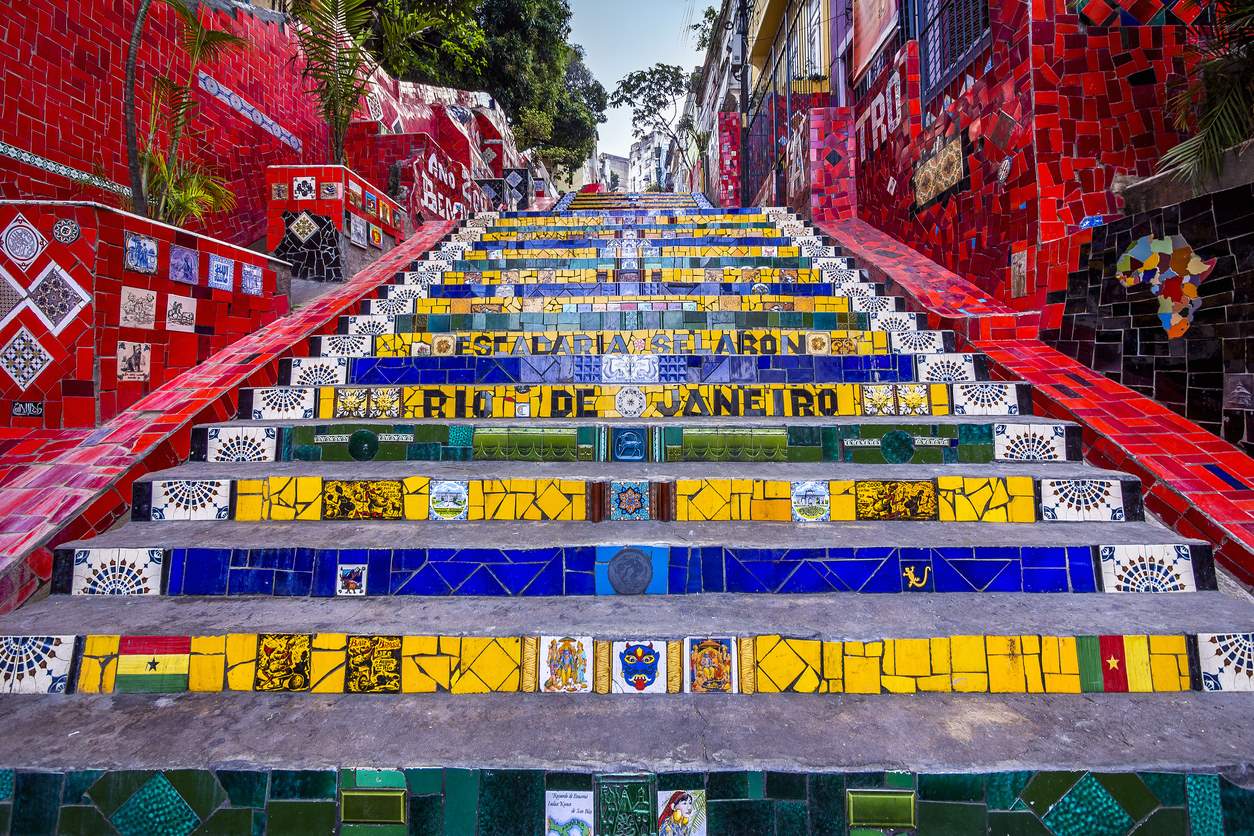
In the bohemian Lapa district you’ll come across a staircase you’ll recognise from Instagram in an instant — even if you don’t know its name. Escadaria Selarón is a monumental staircase of two hundred and fifteen steps, which the Chilean artist Jorge Selarón gradually clad in thousands of brightly coloured tiles from all over the world. He created his life’s work over more than twenty years in honour of the Brazilian people, and today this vibrant corridor is an absolute must for every visitor to the city.
Look closely and you’ll discover that the tiles come from more than sixty countries, and many were sent to him by fans of his tireless work. Every piece of ceramic tells its own story, and the whole mosaic is constantly changing as you climb higher and higher towards the artistic Santa Teresa district. The atmosphere is often enhanced by street musicians and vendors of little souvenirs, who lend the staircase genuine local colour.
💡 Tip: Come here early in the morning, ideally around eight, or your photos will be full of crowds of other tourists, because during the day the steps get seriously congested. The staircase connects the Lapa district with Santa Teresa, so once you’ve conquered it you can smoothly continue exploring the historic lanes up on the hill.
8. The Santa Teresa District and the Historic Tram
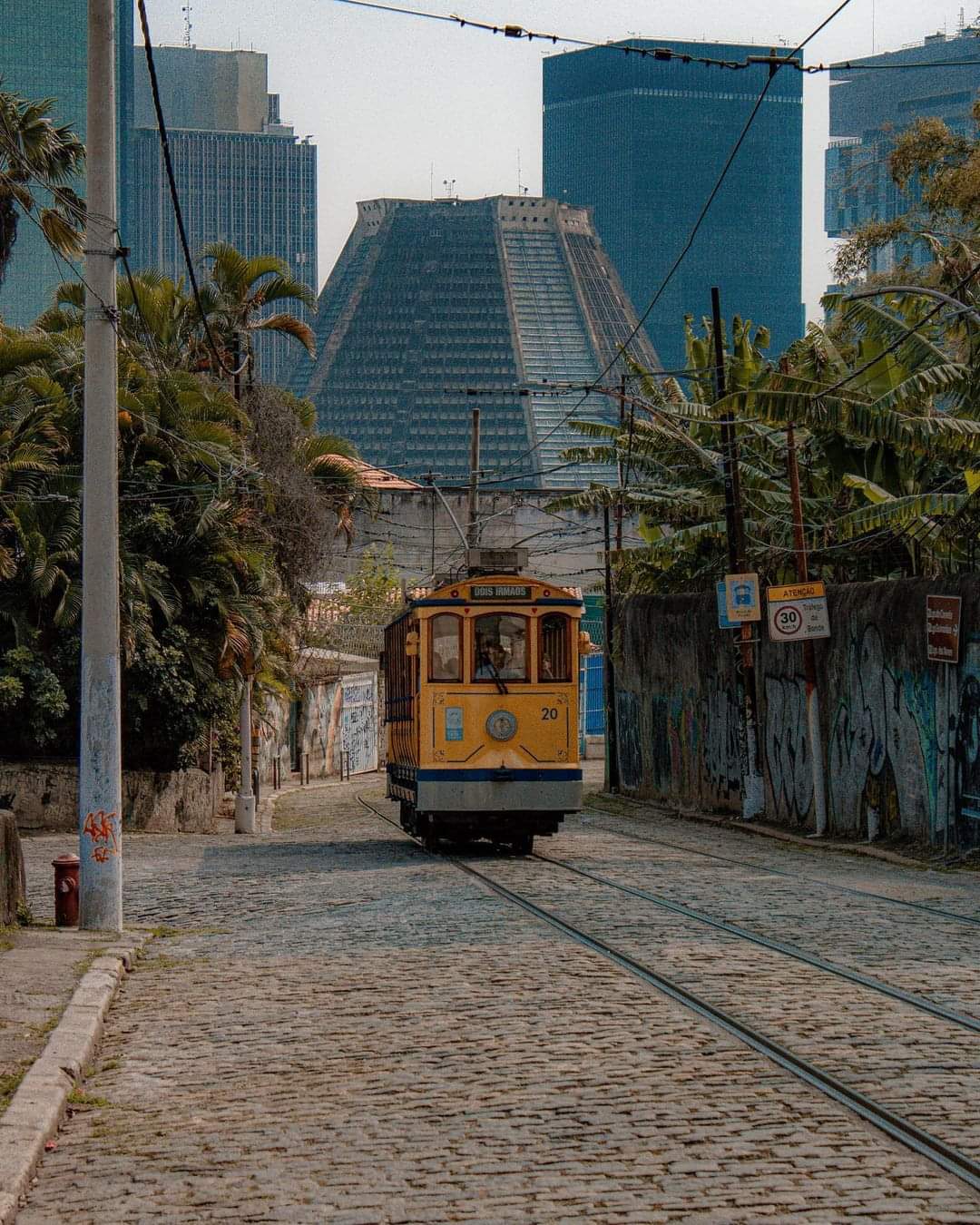
High on the hills above the busy centre nestles a picturesque district that feels as though it fell out of an entirely different century. Santa Teresa is full of narrow cobbled lanes, old colonial villas and independent artists’ studios, which have earned it the nickname the Brazilian Montmartre. The local viewpoints open up amazing vistas of the bay and the modern skyscrapers far below, while you sit in a quiet café in the shade of tall trees.
The most iconic way to reach this steep district is a ride on the famous yellow tram known as the bondinho. The historic tram departs from the Station of Santa Teresa trams in the centre and rattles its way up the steep hills, crossing a huge white aqueduct along the way. It’s a wonderful nostalgic experience where you’ll feel the wind in your hair and see the city from a completely unique, slightly elevated perspective.
💡 Tip: In the charming local bistros, be sure to order the excellent tapioca, a gluten-free pancake made from cassava flour, which they’ll happily fill with cheese, tomatoes and fresh herbs. It’s a traditional, filling yet light meat-free dish that fits perfectly into the laid-back atmosphere of this artistic district.
9. The Arcos da Lapa Aqueduct
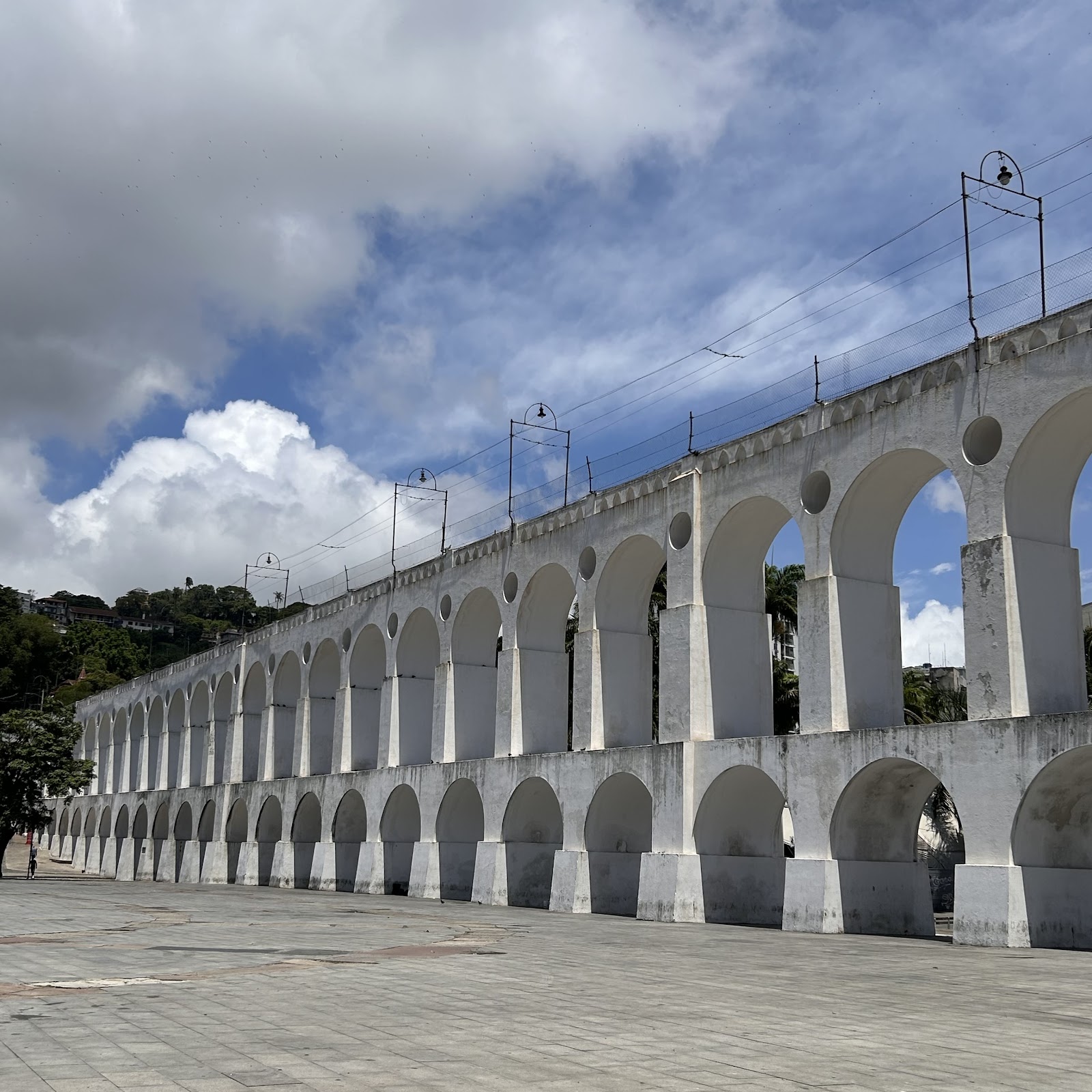
As soon as you arrive in Lapa, your eyes will immediately jump to the huge white aqueduct that dominates the entire square. Arcos da Lapa is a monumental eighteenth-century aqueduct that once brought drinking water from the surrounding hills straight into the centre of the rapidly growing colonial city. With its forty-two massive arches, it represents one of the country’s most important monuments to Portuguese architecture.
While water no longer flows through it, the structure has found a new and equally important use in modern transport. It’s along the top of this historic aqueduct that the legendary yellow tram now rattles on its way to Santa Teresa, creating an incredibly photogenic contrast of old and new. The square beneath the arches comes alive especially on Friday evenings, when locals gather for wild street parties full of dancing and loud music.
💡 Tip: You’ll get the most beautiful photos of the aqueduct from a slight distance, from Praça Cardeal Câmara square, where its whole impressive length and brilliant white colour really stand out. If you want to avoid the night-time crowds and party atmosphere, it’s better to visit during a weekend morning, when the surroundings are wonderfully calm.
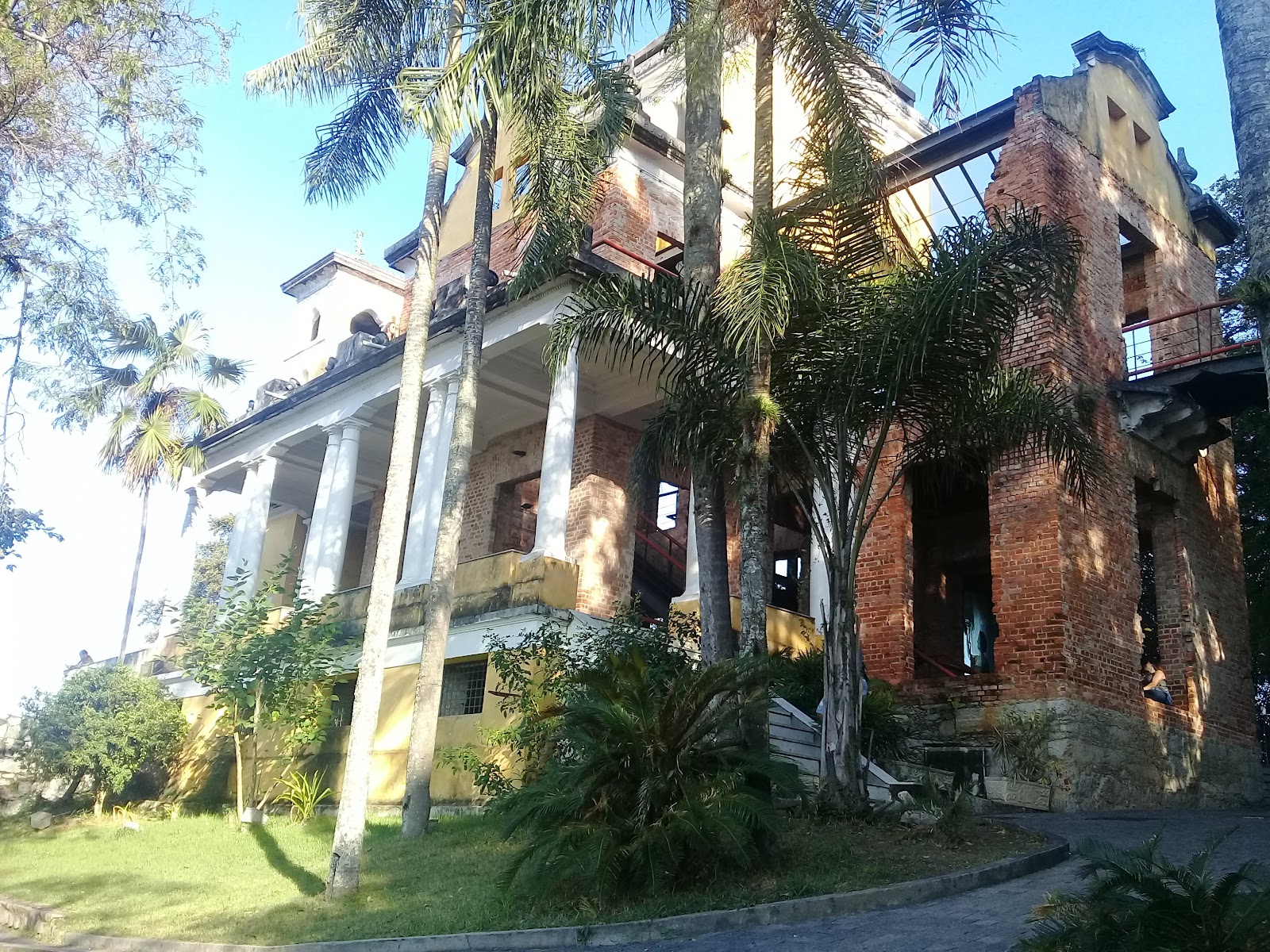
10. The Parque das Ruínas Gallery
In the heart of historic Santa Teresa lies an architectural gem that brilliantly connects a glorious past with modern design. Parque das Ruínas is a fascinating public park and cultural centre built right within the remains of an old aristocratic villa that belonged to a wealthy Brazilian arts patron. The architects preserved the bare brick walls and added modern steel staircases and huge glass panels, creating an utterly unique space.
From the topmost floors of this reconstructed ruin, you’ll be treated to a view you’ll remember for the rest of your life. The viewing platforms offer an unobstructed panoramic view of the entire historic centre, Sugarloaf and Guanabara Bay, and all of it with no entrance fee whatsoever. The grounds regularly host outdoor concerts, theatre performances and contemporary art exhibitions that draw local intellectuals and curious travellers alike.
💡 Tip: On the ground floor there’s an excellent little café with outdoor seating, where you can grab an iced coffee and watch the buzz around you. Opening hours may change depending on the cultural events taking place, so before your visit check that it isn’t a Monday, when most museums and galleries in Rio are strictly closed.
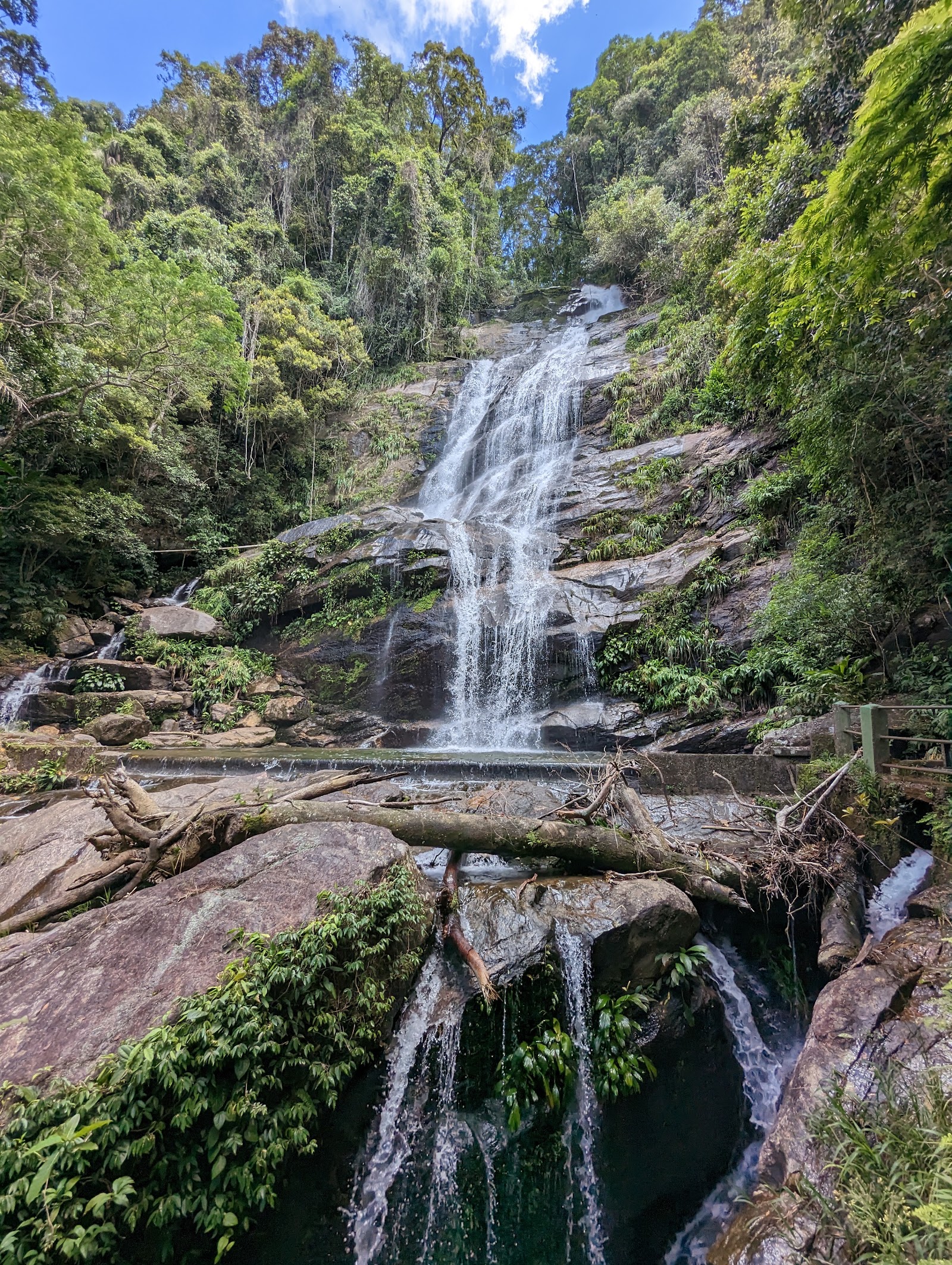
11. The Urban Rainforest of Tijuca National Park
While other big cities have sprawling parks and gardens, Rio de Janeiro can boast something far wilder and more monumental. Tijuca National Park is a huge urban rainforest covering steep mountain massifs right in the middle of a metropolis of millions. This green lung of the city not only purifies the air and cools the tropical climate but also shelters thousands of species of exotic animals, giant butterflies and cheekily curious monkeys.
The whole rainforest is threaded with a network of maintained hiking trails that lead you to roaring waterfalls, dark caves and breathtaking viewpoints. Walking beneath the crowns of ancient trees, you’ll completely forget you’re in one of the busiest cities in South America, because the sound of traffic here is fully replaced by the cries of brightly coloured parrots. The history of this place is fascinating, as the rainforest was hand-replanted in the nineteenth century after coffee plantations destroyed the original growth.
💡 Tip: To explore the rainforest, it’s ideal to hire a certified guide with a jeep, because the park is enormous and finding your way on the forest trails can be treacherous. Don’t forget to pack a strong repellent against tropical insects and a light waterproof jacket, because the microclimate under the trees is noticeably damper and cooler than down on the beaches.


12. The Mirante Dona Marta Viewpoint
If you’re looking for the absolute best spot to photograph the city without crowds of other tourists, you’ve just found it. Mirante Dona Marta is a hidden viewing platform from which you’ll see both Christ the Redeemer and Sugarloaf in a single magical shot, making it an unspoken treasure among local photographers. It sits at an altitude of over three hundred and sixty metres and offers a so-called helicopter view of the entire South Zone of the city.
Unlike the crowded Corcovado, a wonderful calm reigns here — you’ll often stand on the huge concrete platform entirely alone, with just the monkeys peering curiously from the surrounding trees, and on top of that entry is free. You only pay for the transport up the steep, winding rainforest road.
💡 Tip: No regular public transport runs to the viewpoint, so order a reliable Uber, and don’t forget to arrange for the driver to wait the twenty minutes for you, otherwise you could have a big problem getting back to the city. It’s also a fantastic spot for watching the sunrise, when the city is just waking from its night’s sleep.

13. The Vista Chinesa Chinese Pavilion
Deep in the forests of Tijuca National Park you’ll come across a structure you’d definitely never expect in a South American jungle. Vista Chinesa is a beautiful oriental pavilion from 1903, built in honour of the Chinese immigrants who brought tea cultivation to Brazil in the nineteenth century. The elegant structure with its pagoda-shaped roof rises at an altitude of 380 metres and forms an incredibly photogenic contrast with the surrounding wild nature.
The view from here is often called one of the most romantic in the whole city, because it perfectly frames the bay, the mountains and the beaches. On a clear day you’ll see all of Ipanema, the Rodrigo de Freitas lagoon and distant peaks on the horizon from the pavilion, all framed by lush palm fronds and giant ferns. The spot is very popular with local cyclists, for whom the tough climb to the pavilion is the ultimate sporting challenge.
💡 Tip: Combine your visit to the pavilion with the nearby Cachoeira dos Macacos waterfall, which you reach on a short walk along a forest trail. The rule of caution when it comes to transport applies again — the road is narrow and steep, so come here strictly by car or on an organised tour, never on foot from the bottom.
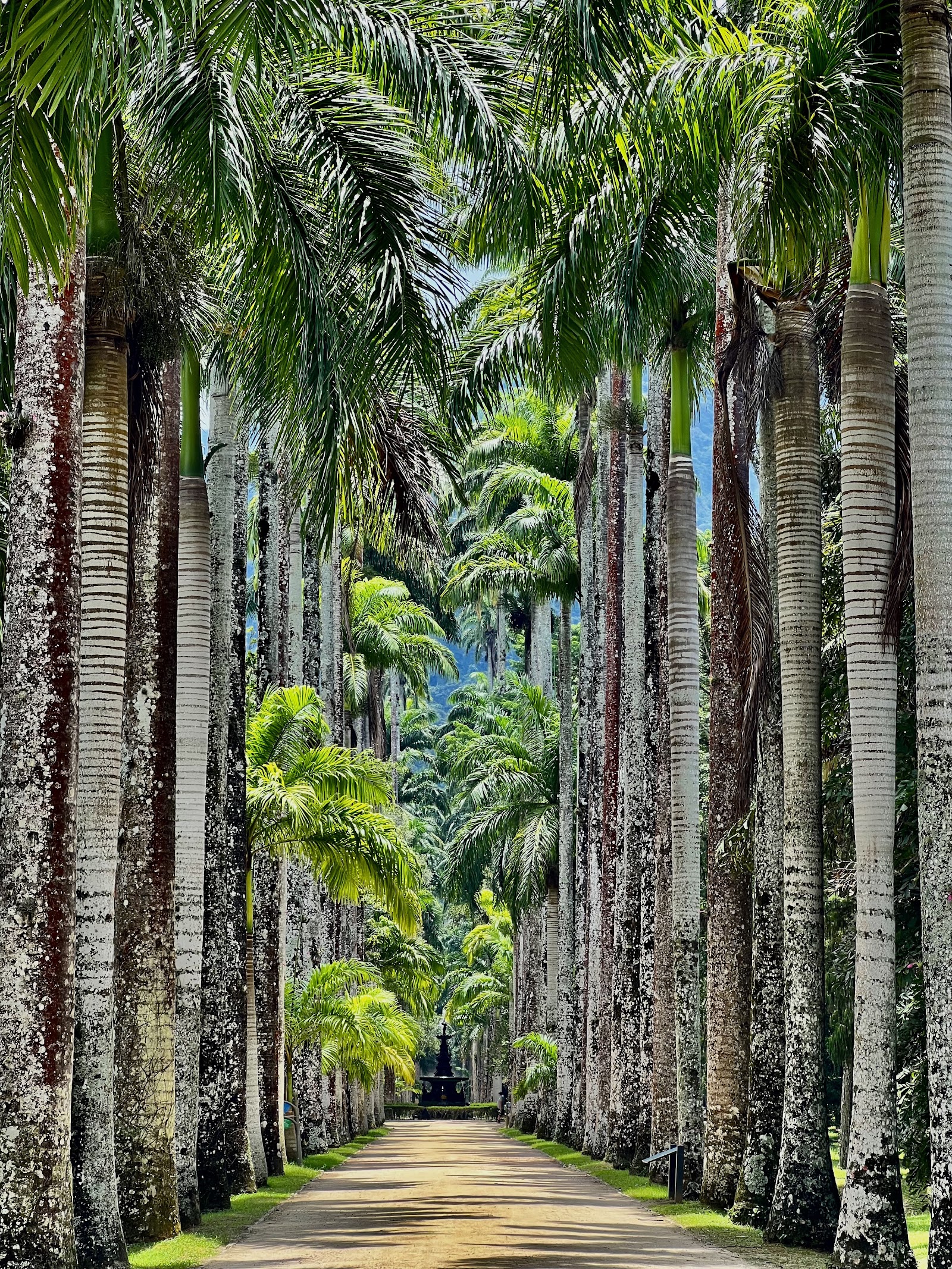
14. The Gardens and Villa of Parque Lage
At the foot of Corcovado mountain lies one of the most beautiful public parks, hiding within it a huge dose of European elegance. Parque Lage is made up of beautiful subtropical gardens surrounding a stunning villa in the style of a Roman palace, which today serves as a prestigious school of visual arts. The centrepiece of the whole courtyard is a shallow pool in which, at the right angle, the high-altitude Christ the Redeemer statue is reflected.
The park covers more than fifty hectares and offers a perfect escape into the shade of ancient trees, artificial caves and romantic turrets hidden in the greenery. For hiking lovers this place is key, because it’s from behind the villa that the steep rainforest trail to the summit of Corcovado begins, used by fit travellers as a free alternative to the cog railway. The atmosphere is incredibly relaxed — art students paint their pictures here and families hold weekend picnics on the grass.
💡 Tip: Inside the historic villa itself there’s a charming café, the Plage Cafe, where you can enjoy an excellent breakfast full of fresh tropical fruit and cheese specialities right by the iconic pool. I’d recommend arriving right at opening time — during the day the wait for a table is genuinely long.
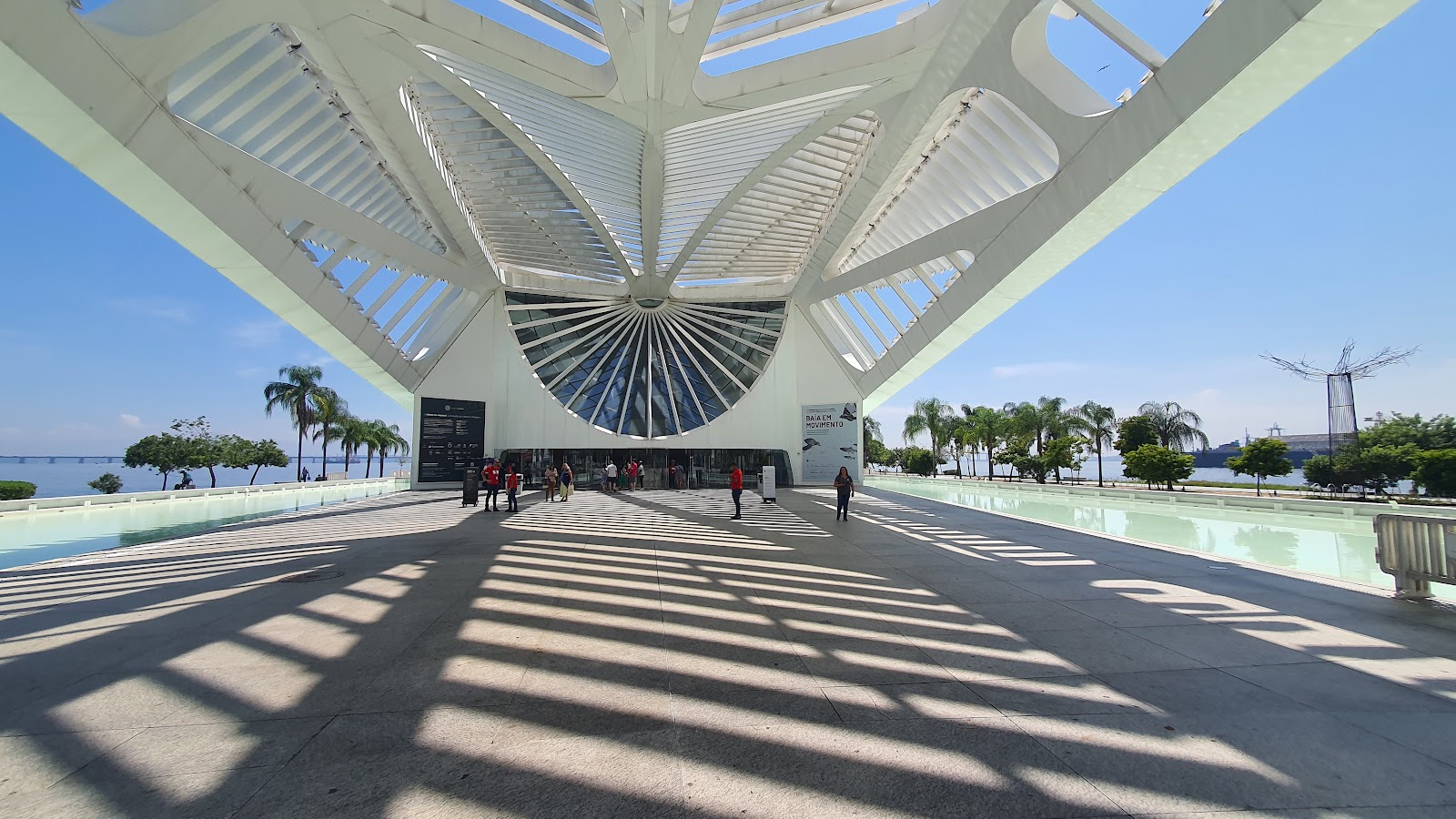
15. The Museum of Tomorrow (Museu do Amanhã)
In the redeveloped Porto Maravilha harbour district, a building has risen that instantly pushed the city’s architecture into the twenty-first century. The Museu do Amanhã is a fascinating museum of applied science dedicated to the future of humanity, whose futuristic building was designed by the famous Spanish architect Santiago Calatrava. The white structure, resembling the giant skeleton of a prehistoric bird or a spaceship, dramatically extends over the water and is worth a long visit in its own right.
Inside, don’t expect any dusty historical artefacts, but rather interactive exhibits full of giant screens, data visualisations and thought-provoking questions. The exhibitions force you to reflect on climate change, population growth and the sustainability of our planet, which in the context of vast, naturally rich Brazil makes enormous sense. The museum shows that Rio isn’t just a city of beaches and carnival, but also a modern hub of science and innovation.
💡 Tip: Tickets to the museum often need to be booked online well in advance, because the daily capacity tends to fill up quickly, especially at weekends. Around the museum runs the wide and safe Orla Conde promenade, along which you can take a lovely walk by the sea and admire huge graffiti murals by local artists.
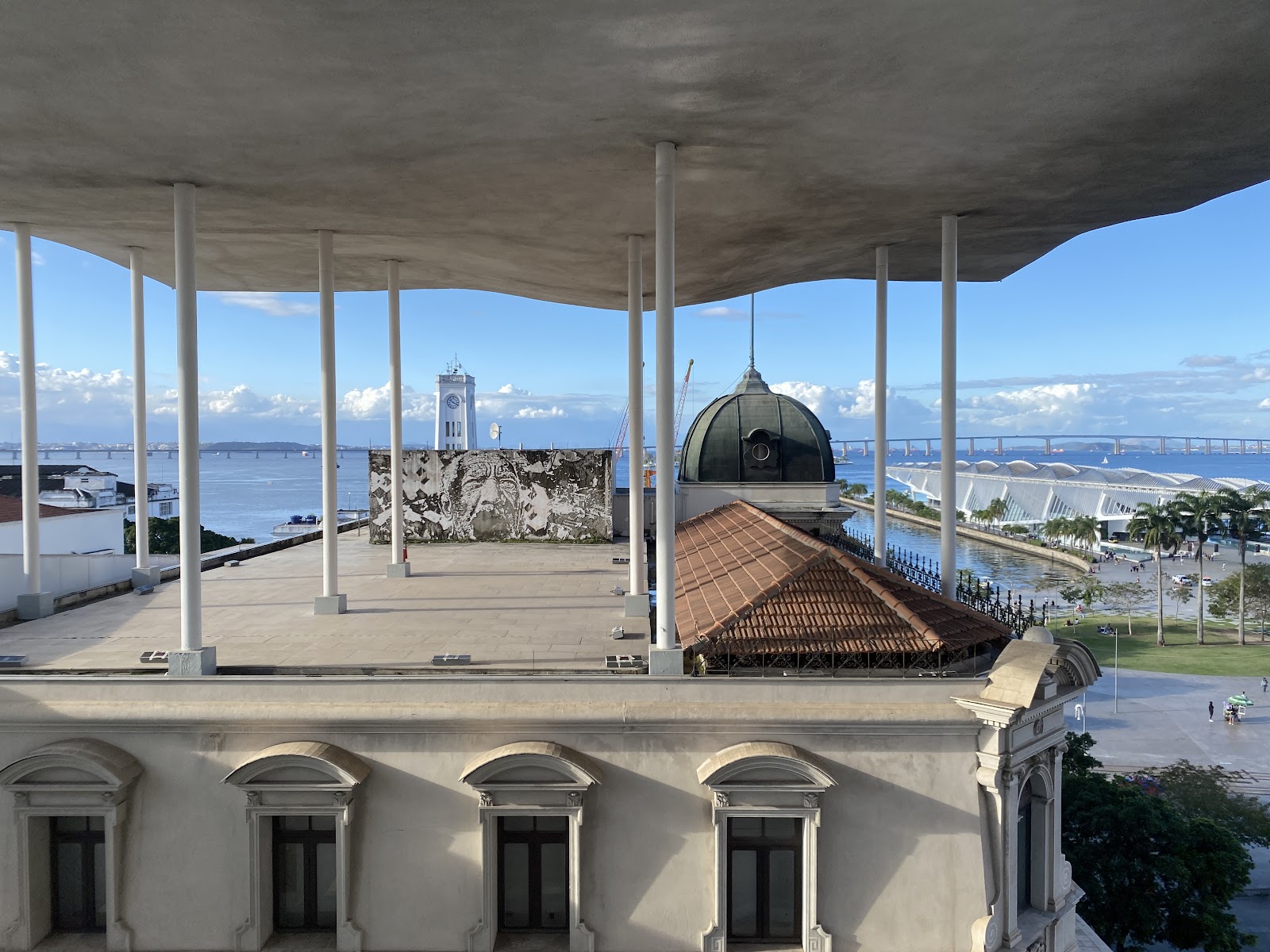
16. The MAR Art Museum (Rio Museum of Art)
The MAR art museum (Rio Museum of Art) is housed in a unique architectural complex that boldly joined an old neoclassical palace with a modern glass building by means of an undulating concrete roof. This visual contrast perfectly captures the very essence of the Brazilian metropolis, where old constantly meets new.
The museum focuses mainly on Brazilian art, local culture and the complex history of the city itself, including the history and life of the favelas. From the top floor beneath the undulating roof there’s a fantastic view of the whole Praça Mauá square and the neighbouring Museu do Amanhã, a great opportunity to capture the modern face of Rio from a bird’s-eye view. The exhibitions are very varied, from classical painting through photography to modern installations by young creators.
💡 Tip: If you love art, set aside a whole half-day to visit both museums on Praça Mauá, because they complement each other beautifully. The local restaurants around the harbour also offer great meat-free versions of Brazilian dishes, such as pastel de queijo, a crispy fried pocket filled with melted cheese.

17. Centro Cultural Banco do Brasil (CCBB)
In the busy commercial heart of the city lies one of the most visited and best-rated cultural centres in the world. Centro Cultural Banco do Brasil is housed in a breathtaking neoclassical building from 1906, which once served as the headquarters of a powerful bank and today hosts the most prestigious international exhibitions. Just stepping into the huge hall with its glass dome and ornate marble staircases is a stunning experience that transports you back to an era of great wealth.
Besides extensive art galleries, this huge complex also has its own cinema, theatre halls and several floors of ever-changing exhibitions. The best thing about the whole centre is that entry to the vast majority of exhibitions and to the building itself is completely free, which makes it an incredibly accessible place for all lovers of culture. The programme is always carefully curated, and you’ll often find fascinating retrospectives of famous world and Brazilian artists.
💡 Tip: After seeing the exhibitions, stop by the historic café on the ground floor, which has kept its original bank décor, and treat yourself to a strong Brazilian espresso. The building is in the city centre, which empties out quickly after working hours, so come here strictly during the day and it’s better to avoid evening walks around the area.
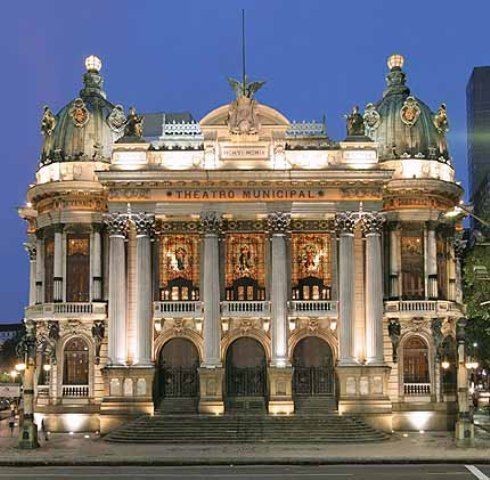
18. Theatro Municipal do Rio de Janeiro
On Cinelândia square stands a building whose appearance clearly nods to the huge European influence in the city’s history. The Theatro Municipal is a grand theatre from 1909 built in the Parisian style, which serves as the main stage for ballet, opera and classical music performances in all of Brazil. Its façade is richly adorned with gold, massive columns and intricate sculptures, making it one of the most beautiful buildings in the whole country.
Even if you’re not planning to attend an evening performance, the interior of this building is definitely worth your attention. You can join a guided tour that takes you through the stunning foyer, auditorium and luxurious halls, decorated with gorgeous stained glass and murals. It’s a huge contrast to the laid-back beach culture, showing you Rio as a proud city with a deep intellectual tradition.
💡 Tip: Street artists and musicians often gather in front of the theatre, so Cinelândia square itself offers a great free show. If you’d still like to experience a performance, ballet tickets can be had at very reasonable prices, but they require at least basic smart clothing — your beach flip-flops won’t get you in here.
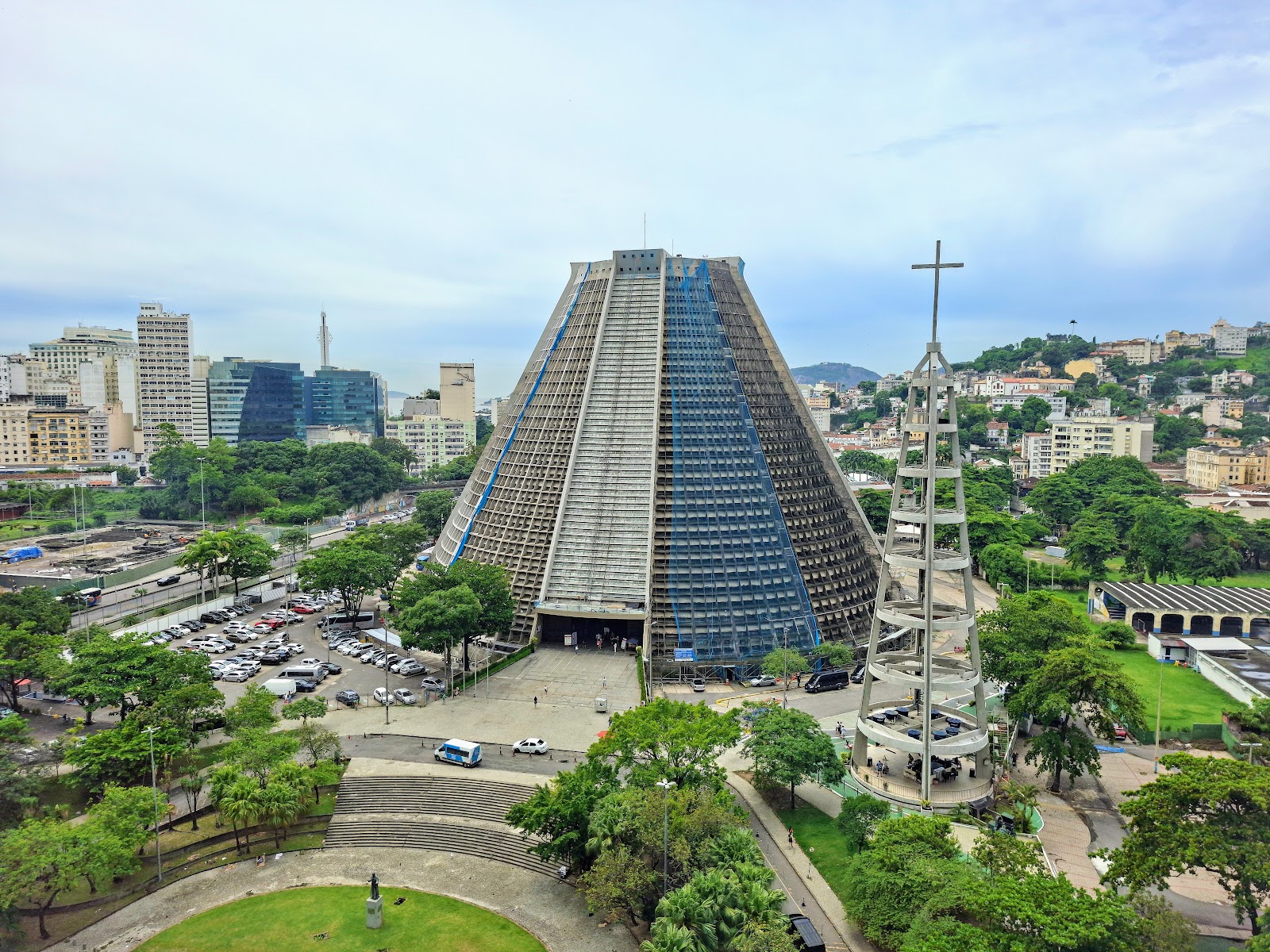
19. Catedral Metropolitana de São Sebastião
Lovers of unusual architecture definitely shouldn’t skip a building that at first glance doesn’t look like a Christian church at all. The Catedral Metropolitana is a modern concrete cathedral shaped like a giant Mayan pyramid, ceremonially opened in 1979 and the most unusual church you’ll see in Latin America. Its grey exterior may feel rather austere and massive, but the real magic is hidden inside.
The moment you cross the threshold of this seventy-five-metre-high building, you find yourself in a huge, sun-drenched space without a single supporting column. From floor to ceiling stretch four gigantic stained-glass windows that form a striking cross of light, creating an incredibly spiritual and mystical atmosphere inside. The cathedral holds an astonishing twenty thousand worshippers, and its acoustics during choral singing are absolutely phenomenal.
💡 Tip: When photographing the interior, stand exactly in the middle of the floor and point your lens straight up, and you’ll get a perfect symmetrical shot of the colourful cross on the ceiling. Visiting the cathedral is quick and easily combined with a tour of the nearby Arcos da Lapa aqueduct, which is just a few minutes’ walk away.

20. Museu da República (Palácio do Catete)
To understand the complex political history of this vast country, a visit to the former presidential residence is absolutely essential. The Museu da República is housed in the grand Palácio do Catete, which served as the seat of Brazilian presidents until 1960, when the capital moved to the newly built Brasília. The palace is a showcase of incredible luxury, its halls decorated with rare woods, Venetian mirrors and huge crystal chandeliers.
The exhibition guides you through all the key moments of the Brazilian republic, from its proclamation to the dramatic events of the twentieth century. What will strike you most is the preserved bedroom of President Getúlio Vargas, who took his own life here in 1954 — the museum even displays his farewell letter, and it’s one of those places where history suddenly becomes very tangible right before your eyes. Behind the palace, moreover, lie extensive French gardens full of tall palms and artificial ponds, offering pleasant shade to rest in.
💡 Tip: Entry to the beautiful rear gardens is completely free, and locals make heavy use of them for walks and relaxation, so even if you’re not in the mood for history in the museum, definitely don’t skip the gardens. It’s right by the Catete metro station, so getting here from the beach districts in the south of the city is completely hassle-free and fast.

21. Espaço Cultural da Marinha
If you’re near the harbour in the historic centre, you’ll come across a fascinating museum that will delight far more than just military history fans. Espaço Cultural da Marinha is an extensive naval museum that gives you a glimpse into Brazil’s rich maritime tradition, in a country with one of the longest coastlines in the world. The outdoor exhibition is full of historic cannons, old torpedoes and huge anchors scattered along the sun-drenched waterfront.
The biggest draw of the whole site, however, is the real vessels you can clamber through, from the lower decks right up to the captain’s bridge. The greatest experience is a tour of the decommissioned military submarine Riachuelo and a faithful replica of an old exploration ship, which shows just how cramped the conditions were for the first Europeans who reached the shores of South America. From here, too, cruise boats set sail on tours around Guanabara Bay, offering a lovely view of the city from the water.
💡 Tip: A cruise around the bay from this harbour is significantly cheaper and more authentic than the overpriced tourist boats setting off from the south of the city. Just don’t forget to bring strong sunscreen and a hat, because on the decks of the old ships and submarines there’s absolutely nothing to protect you from the scorching Brazilian sun, and the metal decks tend to get very hot.
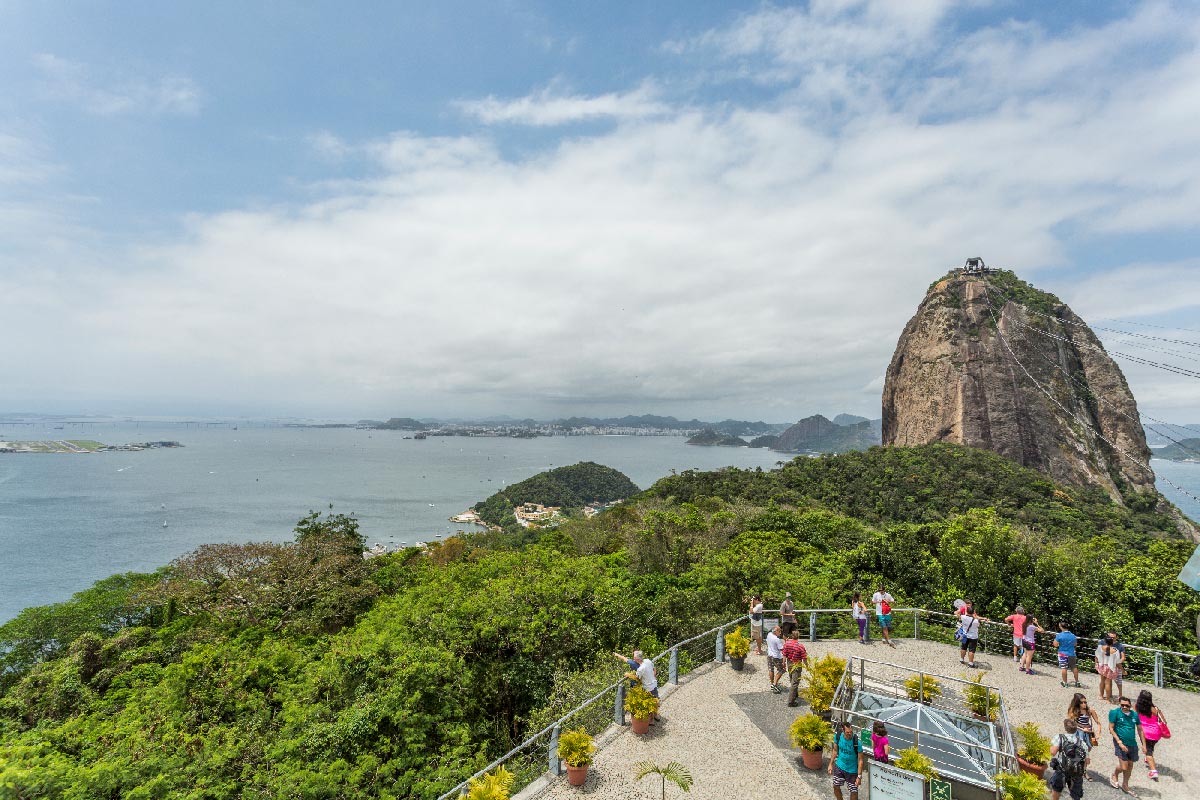
22. Praia Vermelha Beach Below Sugarloaf
We’ve saved a small but all the more beautiful beach for the very end of our list, one that offers a completely different experience from the endless strips of sand at Copacabana. Praia Vermelha, or Red Beach, lies tucked away in a calm cove right at the foot of majestic Sugarloaf, which towers over it like a huge stone wall. Its name comes from the coarser, pinkish sand that takes on a beautiful warm hue at sunset.
The bay is sheltered from strong ocean currents, so the water here is incredibly calm and safe, which makes it an ideal spot for families and easy-going swimming. Thanks to the absence of big waves, it’s also the perfect place to rent a paddleboard or sea kayak, from which you can admire the surrounding steep cliffs from a completely new perspective. The beach is very small and cosy, surrounded by green trees, offering a far more intimate atmosphere than its big neighbouring beaches.
💡 Tip: From the left edge of the beach begins the beautiful, paved Pista Cláudio Coutinho trail, which winds through the rainforest right along the cliffs above the sea. It’s a wonderful spot for an easy walk where you’ll very likely meet cheeky marmoset monkeys — just remember that feeding wildlife is strictly forbidden throughout the park, no matter how adorable they look. A trip to this beach is ideally combined with a visit to Sugarloaf itself — the lower cable car station is right across the street.
Where to Go Next from Rio de Janeiro
Brazil is an enormous country, and Rio de Janeiro is often just the first stop on your South American journey. If you want to dive deeper into planning your accommodation, we’ve put together a more detailed guide, Where to Stay in Rio de Janeiro. In it you’ll find detailed differences between the individual districts in the south of the city, making it easier to choose the best location.
Most travellers then move on to the largest metropolis in the entire Southern Hemisphere, which offers a completely different, very urban experience. For a smooth transfer, I recommend taking a look at the article What to See in São Paulo, where you’ll find tips on the best museums, parks and skyscraper viewpoints. Practical advice on choosing a safe location in this giant business city is then offered by our guide Where to Stay in São Paulo.
Frequently Asked Questions
Is Rio de Janeiro safe for tourists?
If you stick to the tourist safety belt around the Ipanema and Leblon neighbourhoods, you most likely won’t have any problems. Copacabana is also safe during the day, but after dark avoid walking on the beach and empty streets in the centre. Always use Uber and don’t flaunt expensive jewellery or phones.
How many days do I need to visit Rio?
The ideal time to explore the city is four to five full days, which gives you enough room for sightseeing and relaxing on the beach. However, always leave at least two days as a buffer so you can flexibly adjust your visits to high-altitude viewpoints according to current cloud cover and weather.
What’s the best way to get to the Christ the Redeemer statue?
There are three options, with the most expensive and most popular being the historic Corcovado cog railway, which takes you up through the rainforest. A slightly cheaper alternative is the official minibus from the Paineiras visitor centre. If you’re looking for the cheapest and most adventurous route, you can hike the steep trail from Parque Lage, which takes about two hours of strenuous climbing.
When is the best time to travel to Brazil?
In terms of favourable weather and reasonable prices, the best time is from April to June or from August to October. This way you’ll avoid the extreme summer heat and regular heavy downpours. During Carnival and New Year’s Eve the city has an amazing atmosphere, but accommodation prices are several times higher and you’ll encounter huge crowds everywhere.
Can I swim at Rio’s beaches after dark?
Absolutely not, never go to the beach at night. Once the sun sets, the long stretches of sand become dangerous for tourists and attract dodgy characters. Locals gather in the evenings at well-lit bars and restaurants on busy streets, so completely avoid deserted beaches after dark.
How do you get around the city and is public transport safe?
During the day, the metro network works brilliantly and safely, connecting the southern beach neighbourhoods with the historic city centre. Regular buses can be somewhat confusing and aren’t really recommended for tourists. As soon as it starts getting dark, switch to the Uber app without compromise, which is very cheap and reliable in Brazil and guarantees you a safe return to your hotel.
What can I eat in Rio if I don’t eat meat?
Although Brazilian cuisine is heavily meat-based, you’ll find plenty of vegetarian treats. The biggest hit is frozen açaí with granola, which is wonderfully refreshing on the beach. At street stalls look for pão de queijo cheese balls or tapioca filled with cheese and tomatoes. For a full dinner, head to the excellent Italian restaurants in Ipanema.
Is it worth buying tickets to attractions well in advance?
For modern indoor museums like the Museum of Tomorrow, buying tickets online in advance is definitely worthwhile. However, be careful with outdoor viewpoints like Sugarloaf and Christ the Redeemer. The weather on the coast changes from hour to hour, and buying for a fixed day means you risk seeing absolutely nothing due to thick fog.
Tips and Tricks for Your Vacation
Don’t Overpay for Flights
Search for flights on Kayak. It’s our favorite search engine because it scans the websites of all airlines and always finds the cheapest connection.
Book Your Accommodation Smartly
The best experiences we’ve had when looking for accommodation (from Alaska to Morocco) are with Booking.com, where hotels, apartments, and entire houses are usually the cheapest and most widely available.
Don’t Forget Travel Insurance
Good travel insurance will protect you against illness, accidents, theft, or flight cancellations. We’ve had a few hospital visits abroad, so we know how important it is to have proper insurance arranged.
Where we insure ourselves: SafetyWing (simple monthly subscription) and TrueTraveller (for extra-long trips).
Find the Best Experiences
Get Your Guide is a huge online marketplace where you can book guided walks, trips, skip-the-line tickets, tours, and much more. We always find some extra fun there!


