If you think Kos is nothing more than a factory of giant all-inclusive resorts and lazy days by the pool, let me set the record straight right away. 😊 This sun-drenched corner of the Dodecanese is genuinely unique — it blends deep ancient history with surprisingly active, adventurous holidays in a way that few Greek islands manage. I’ve put together 15 things to do in Kos, Greece that cover something for every type of traveller, from ancient ruins and thermal springs to a day trip on a different continent. The island is also the birthplace of Hippocrates, the father of modern medicine, so fascinating historical sights are never in short supply. I’ll tell you where to stay for the best base, why you should hire a bike on day one, and what to watch out for if you decide to hop across to neighbouring Turkey.
TL;DR
- Greece’s most cycle-friendly island: The northern part of Kos is beautifully flat and criss-crossed by over 200 kilometres of cycle paths — hire a bike on your first day.
- Hippocrates’ legacy: Don’t miss the ancient healing centre of the Asklepion or the famous plane tree in the heart of Kos Town.
- Natural spa: At Bros Therma beach you can soak in hot sulphurous springs that bubble up directly into the sea — completely free of charge.
- Watch out for crowds: The mountain village of Zia is famous for its stunning sunsets but suffers from severe overtourism in high season — go early in the morning instead.
- Day trip to Turkey: From Kos you can see the Turkish town of Bodrum on the horizon — ferries run daily, but you’ll need a valid passport.
- Great for families: Long sandy beaches with a very gradual entry into the sea make Kos an ideal choice for a holiday with young children.
The full destination guide: Greece — guide and what to see
When to Visit Kos
Thanks to its southerly position, Kos boasts an incredible three hundred sunny days a year and ranks among the sunniest spots in the entire Aegean. If swimming and soaking up the sun on the beach is your main goal, the ideal window is June through to mid-September. Temperatures regularly climb above 30 °C during the summer months and the sea is as warm as a bathtub — perfect for families with young children. Bear in mind, though, that this is also when the island is at its busiest and accommodation prices are at their peak.
Active travellers who want to explore the island by bike and take in the ancient sights will find May, June and especially late September into October a better fit. October in particular is something of a hidden gem across the Dodecanese — the tourist crowds thin out dramatically, hotel prices drop sharply, yet the sea retains a very pleasant temperature after the long hot summer. Up in northern Greece the weather can already be turning by then, but down here you can still sunbathe without a second thought.
From mid-May to mid-September, the Aegean is also swept by the dry northerly wind known as the meltemi. On Kos it tends to be a little gentler than on the neighbouring Cyclades, but it can still kick up waves along the northern coast — which windsurfers and kitesurfers absolutely love. On the eastern shores the same wind brings a very welcome cooling breeze during the scorching August heat, so even when the sun is blazing you won’t feel like you’re being slowly baked alive.
Where to Stay in Kos
💡 Travel tip: We always search for accommodation on Booking.com, which tends to have the best cancellation policies. For tickets, tours and activities, it’s worth comparing and booking through GetYourGuide.
Although Kos is a fairly compact island — you can drive from one end to the other in just over an hour — choosing the right base will shape the whole character of your holiday. If long, fine sandy beaches with shallow water are your priority, head to the northern coast and the resorts of Tigaki or Marmari. This area is ideal for families with children and for anyone who wants to spend their evenings strolling along the shore. A great pick in Tigaki is the luxurious five-star Astir Odysseus Kos Resort & Spa, offering huge pools and top-class wellness facilities, while in Marmari the highly rated Caravia Beach hotel is a perennial family favourite.
The eastern coast around Kos Town, along with the neighbouring resorts of Lambi and Psalidi, is a great choice for travellers who want historical sights and a lively nightlife scene on their doorstep. You’ll find decent mid-range hotels here for around 60 to 120 euros per night, and thanks to the dense network of cycle paths you can reach the town centre in just a few minutes on a bike. The western resort of Mastichari, meanwhile, has a quieter, more village-like feel and is home to the impressive Neptune Luxury Resort, renowned for its exceptional gastronomic programme showcasing local cheeses and sweets.
If lively entertainment and proximity to the airport appeal to you, look for accommodation in Kardamena on the southern coast, where the popular Grand Blue Beach Hotel stands out. For absolute peace and romantic sunsets, choose the more remote Kefalos peninsula in the southwest — home to the prestigious Ikos Aria. You can browse and book all of these options easily on Booking.com, where you’ll also find detailed reviews from previous guests.

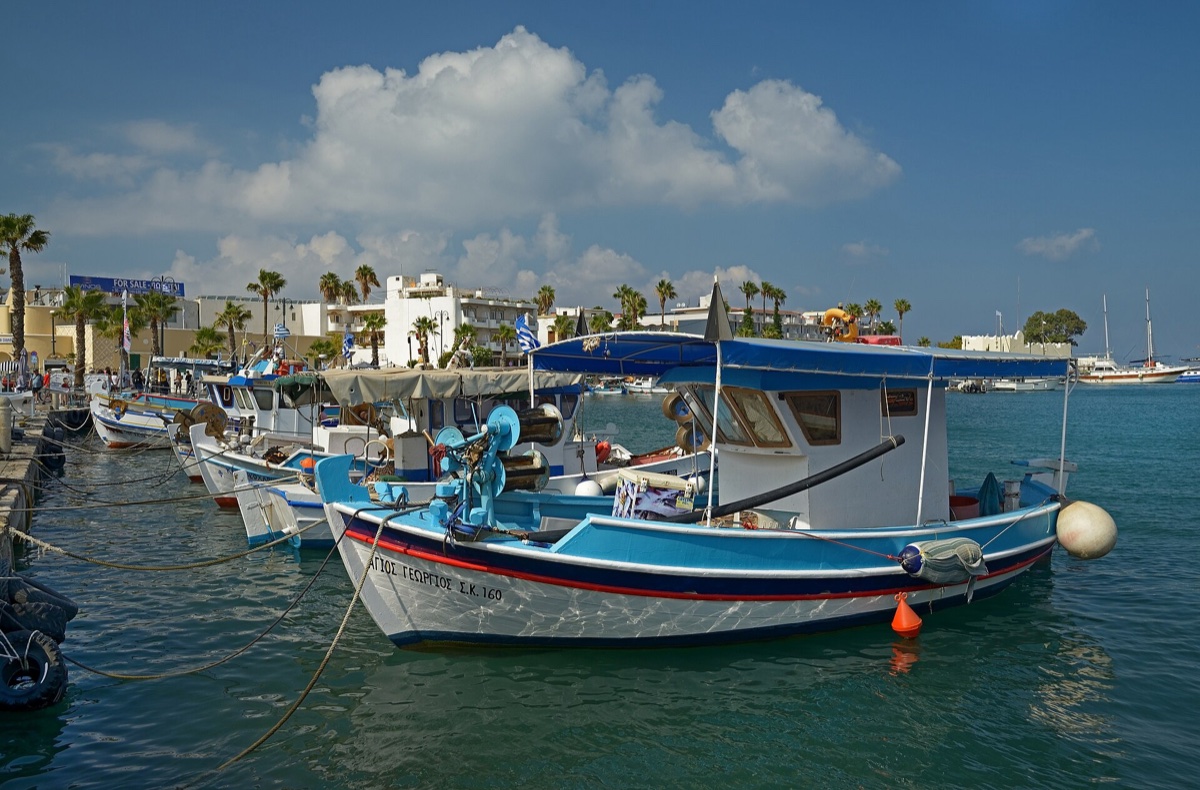
15 Best Things to See and Do in Kos
Let’s dive into the very best that this Greek island has to offer. I’ve put together a mix of ancient history, stunning beaches and brilliant day trips — there’s genuinely something here for every kind of traveller.
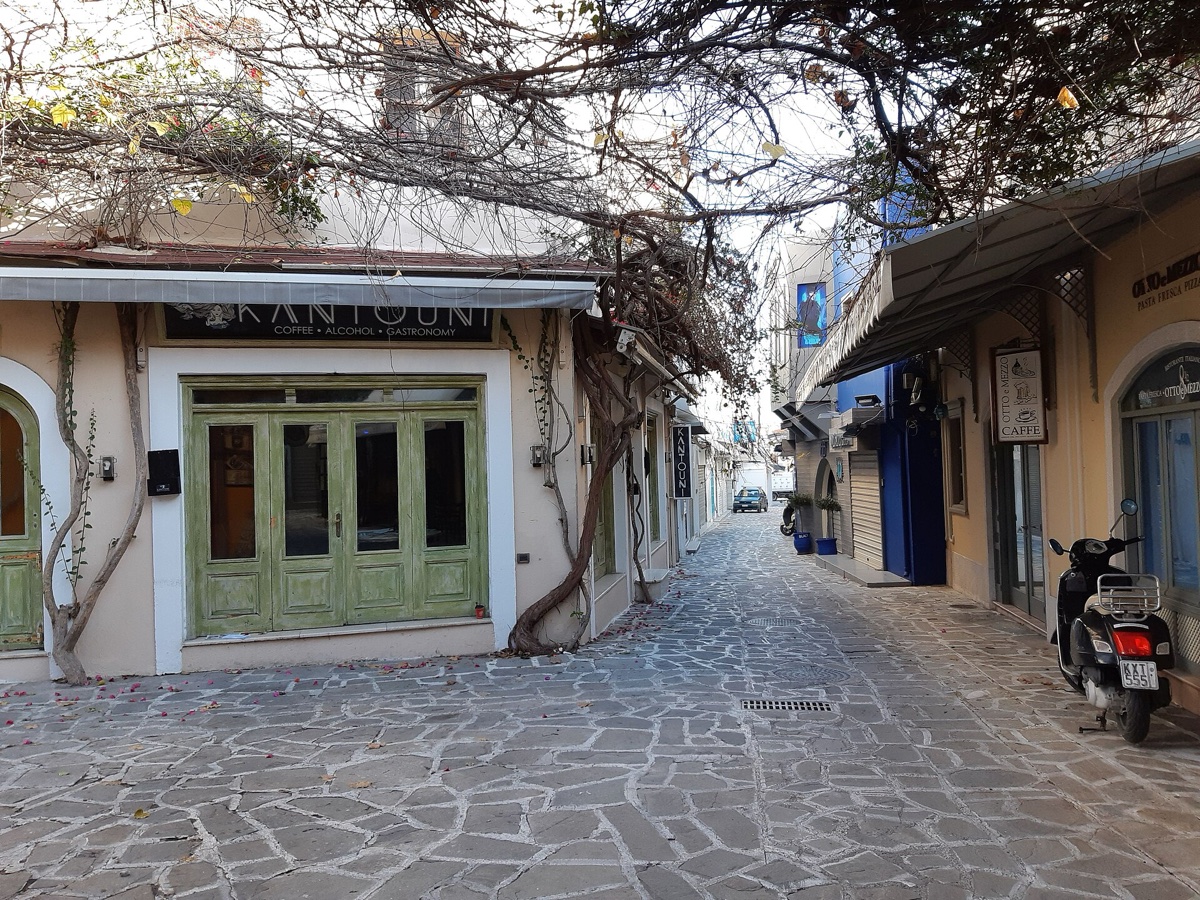
1. Kos Town and the Ancient Agora
The island’s main town is like one big, compact history textbook you can browse through in a leisurely afternoon. All the main sights are within a few minutes’ walk of each other, making it very easy to explore on foot. Right in the centre spreads the vast ancient agora, which once served as the commercial and social heart of the city. Today you can wander freely among the remains of Doric columns and sanctuaries that were unexpectedly uncovered by a powerful earthquake in 1933 — admission is completely free.
Just a short stroll away you’ll find the fascinating Casa Romana, a reconstructed Roman villa with an extraordinary thirty-six rooms and three inner atriums. The preserved mosaic floors and marble fountains give you a vivid sense of the luxury enjoyed here two thousand years ago. As you wander through the town you’ll also notice the Defterdar Mosque on Eleftherias Square — its minaret collapsed in another earthquake in 2017 and it’s still awaiting full restoration. If history really grips you, the local archaeological museum is well worth a look too.
2. The Hippocrates Plane Tree
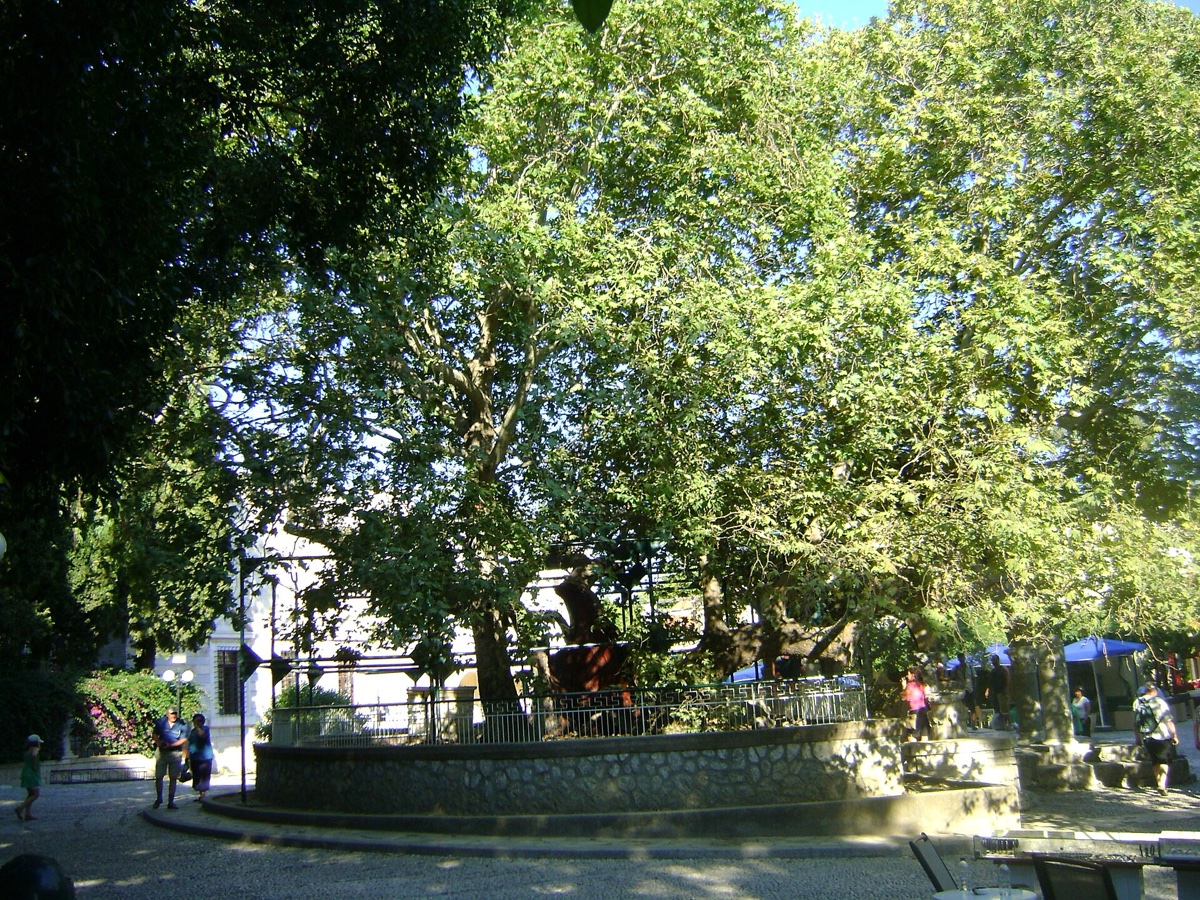
Right in the town centre, not far from the harbour, stands a tree that draws virtually every visitor to the island. The famous Hippocrates Plane Tree is said, according to ancient legend, to be the very spot where the father of modern medicine taught his students in the shade of its spreading canopy. If that were true, this majestic tree would have to be over two and a half thousand years old — which, botanically speaking, simply isn’t possible.
The current trunk is around five hundred years old, though locals proudly claim it’s a direct descendant of the original. Its girth measures twelve metres, and the tree is now so ancient that it needs an elaborate frame of metal and wooden supports on all sides just to stay upright. Visiting is entirely free, and right beside it you’ll find an old Ottoman fountain and the Loggia Mosque, both of which add a wonderfully layered historical atmosphere to the spot — even if both also bear the scars of recent earthquakes.
3. Neratzia Castle
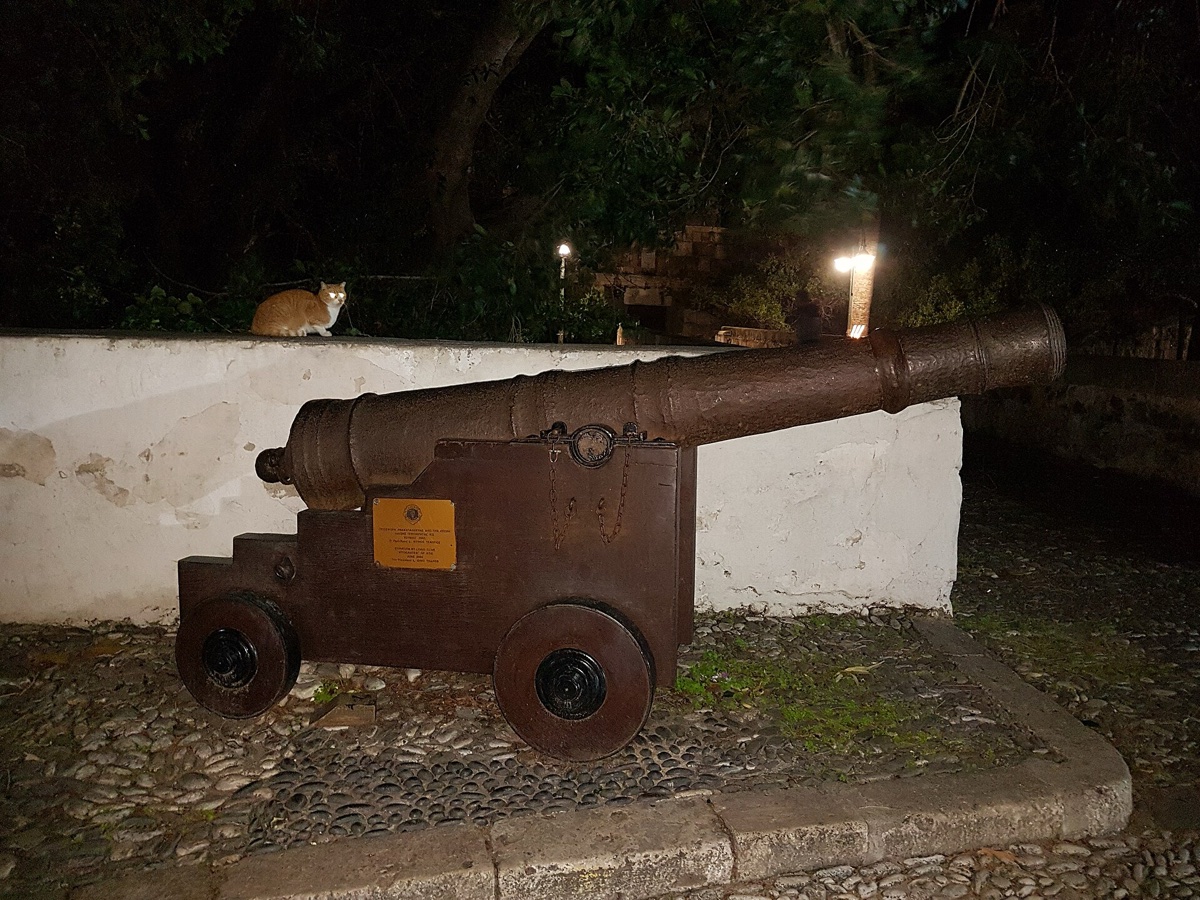
Strolling along the harbour in Kos Town, your eye will inevitably be drawn to the massive Neratzia fortress. This imposing structure was built in the fourteenth century by the Knights of St John to defend the island against raids from the nearby Ottoman Empire. The castle was sadly badly damaged in the devastating 2017 earthquake and was completely closed to visitors for eight years on safety grounds. The good news is that following an expensive restoration costing more than two and a half million euros in European funding — which reinforced the damaged walls — the castle finally reopened to the public in 2025.
Walk the newly secured battlements for breathtaking views over the harbour and its moored boats, then treat yourself to an iced coffee in town afterwards. Admission is around 5 euros and the visit takes roughly an hour. Do bear in mind that some peripheral areas may still be fenced off, and it’s worth arriving in the morning as the castle typically closes in the mid-afternoon.
4. The Asklepion: Ancient Hospital
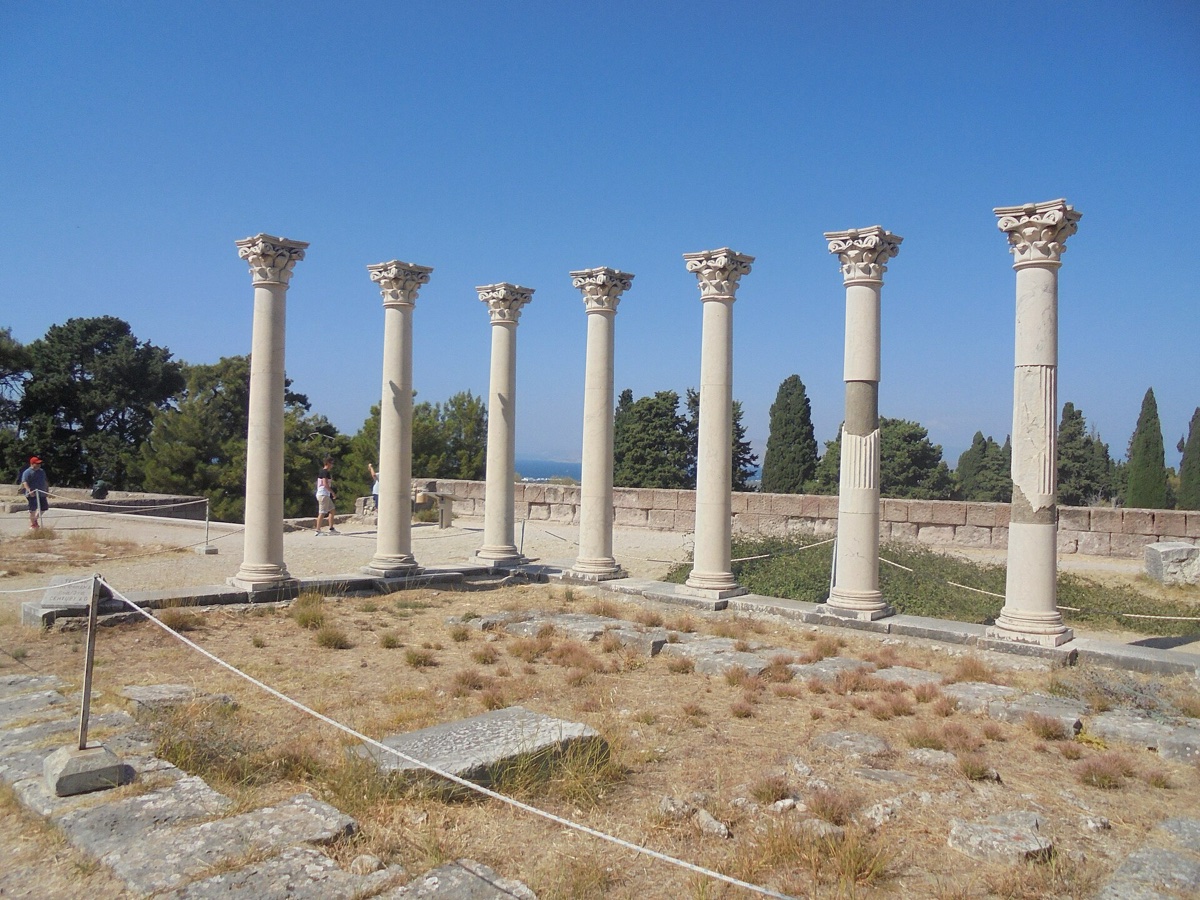
About three and a half kilometres northwest of the town centre, set into a gentle hillside, lies the single most important ancient site on the entire island. The Asklepion functioned in antiquity as a vast healing centre and sanctuary dedicated to Asclepius, the god of medicine. According to historians, this is where Hippocratic medical practices were applied, and patients travelled here from across the ancient world in search of a cure.
The complex is laid out across several terraces, and the higher you climb, the more the view opens up towards the Turkish coast — which looks close enough to touch from up here. Adult admission is around 8 euros, but check the current price on the official hhticket.gr website as it can change. EU citizens under 25 get in free. From Kos Town you can catch local bus number 3, or take the tourist train, but either way go early in the morning to beat the heat and the crowds.
5. Explore Kos by Bike
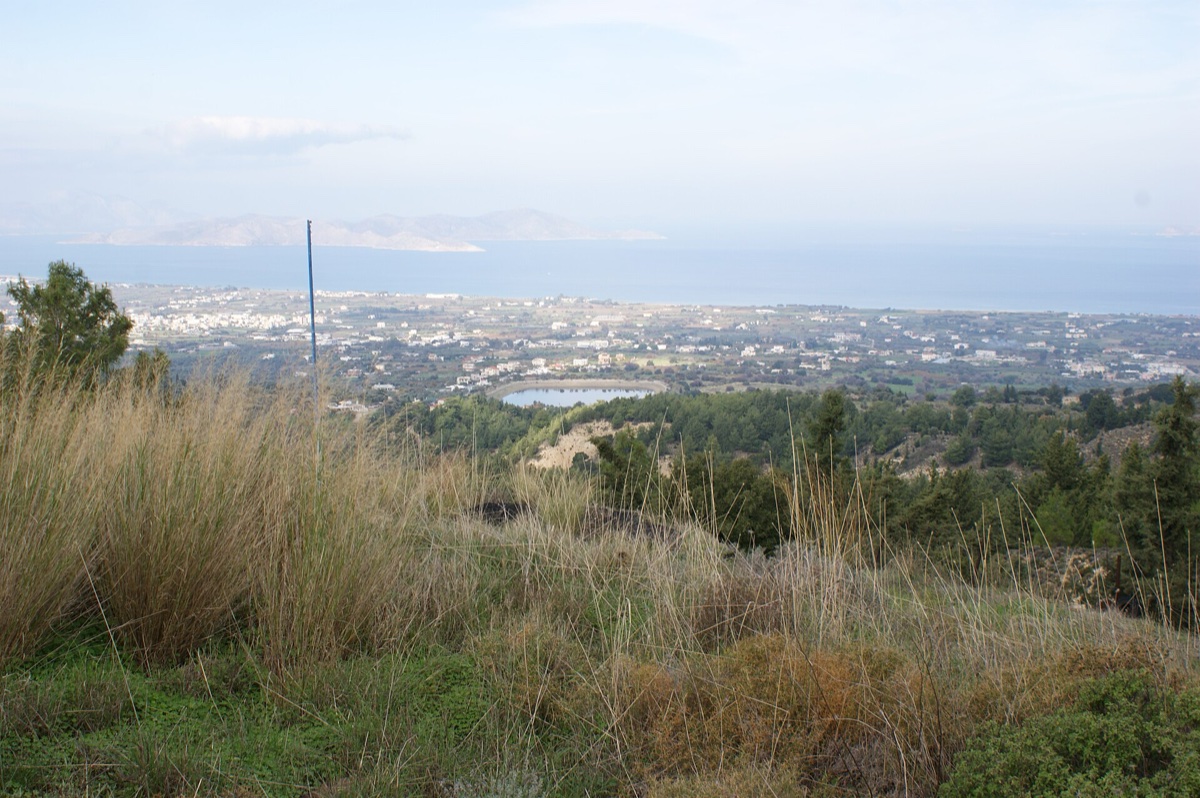
If there’s one thing that sets Kos apart from most other Greek islands — which tend to be mountainous and tricky to navigate by bike — it’s the island’s serious love affair with cycling. In 2022, Kos was awarded the prestigious Bike Friendly Destination certification, and it fully deserves the title. The northern and eastern coasts are almost perfectly flat and threaded with over 200 kilometres of well-maintained cycle paths, where you’ll encounter families with toddlers and active retirees alike.
Hire shops are on every corner, and a basic city bike will set you back just 3 to 5 euros a day. If you fancy heading further into the interior, e-bikes are available from around 15 euros a day. The most beautiful and safest route runs directly from Faros beach along the coast through Kos Town and on to the resort of Psalidi — it takes about an hour at a very relaxed pace, and you can stop at a café or take a dip in the sea whenever the mood takes you. Try friendly Nikos Bikes in Tigaki, where the staff are happy to help you plan your route.
6. Bros Therma Hot Springs
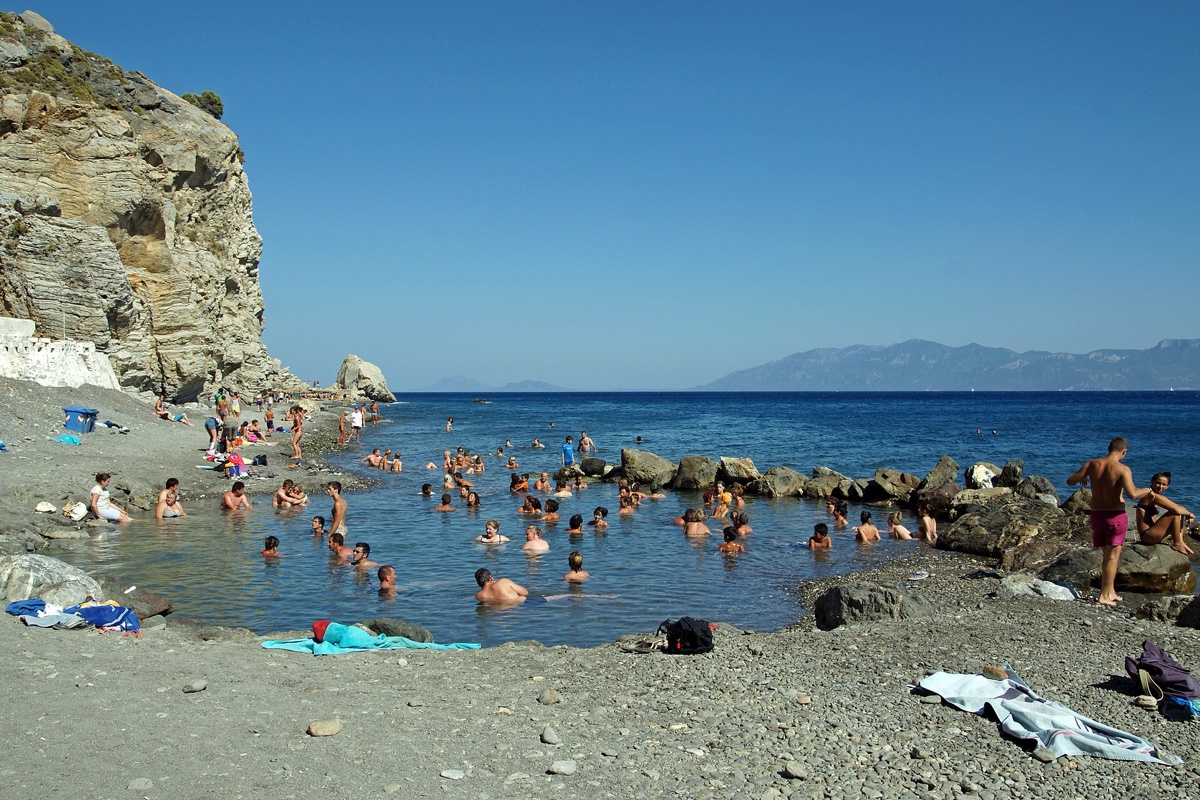
Fancy a bit of natural spa therapy? Then make the trip out to the eastern coast, about twelve kilometres from Kos Town. At Bros Therma beach, natural sulphurous springs at 42–50 °C bubble straight out of the rock and into the sea. Locals have used the stones to create a small natural pool roughly twenty-five square metres in size, where the hot mineral water mixes with the cooler Aegean waves — the result is an absolutely blissful place to relax.
Entry to the hot springs is completely free and open year-round. Do bring water shoes, though — the beach is covered in dark volcanic pebbles and the path to the springs is quite rocky. Also avoid wearing light-coloured swimwear or silver jewellery, as the high sulphur and mineral content in the water can permanently stain them yellow. Local buses run from Kos Town and the journey takes around twenty-five minutes, after which you’ll have a roughly fifteen-minute walk downhill to the water.
7. Sunsets in the Mountain Village of Zia
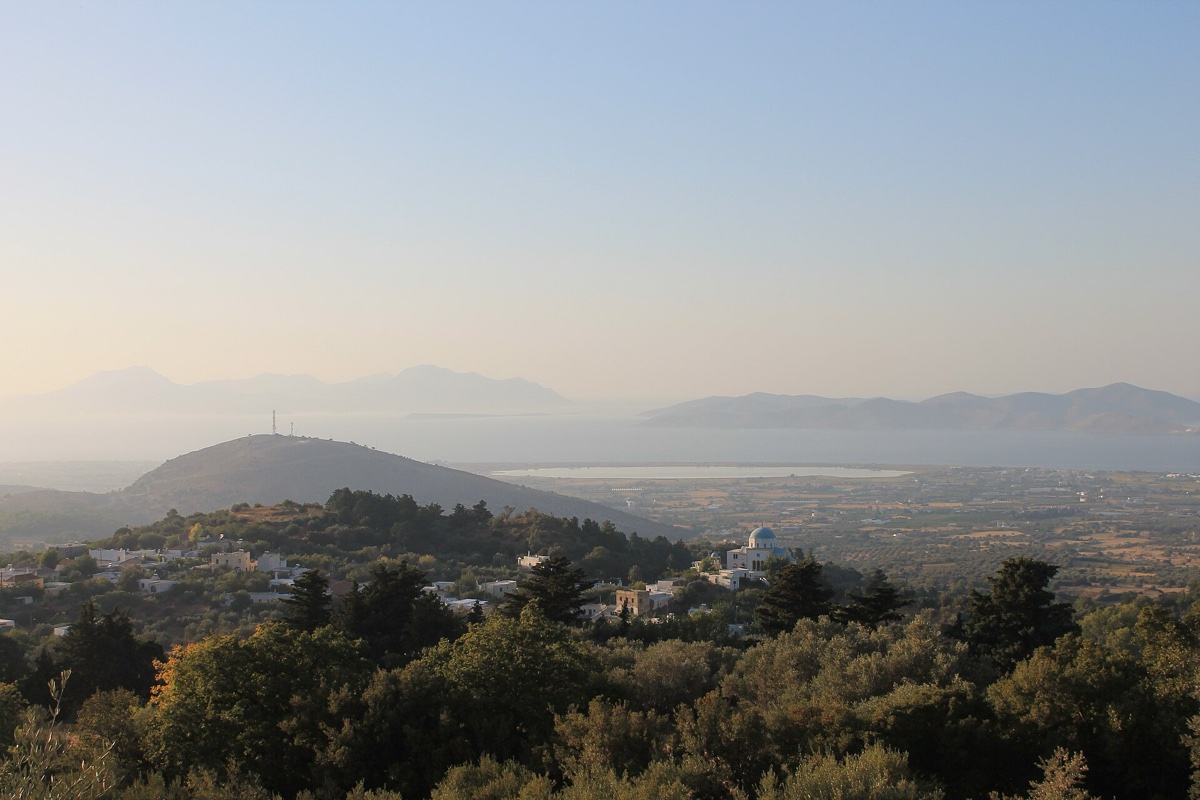
Perched high on the slopes of Mount Dikeos, the pretty village of Zia is known for its traditional blue-and-white architecture and sweeping views over the northern coast. It has become something of a legend thanks to the most spectacular sunsets on Kos. You’ll find plenty of souvenir shops and tavernas where you can try the local speciality: a refreshing cinnamon lemonade called kanelada.
💡 Tip: Zia suffers badly from overtourism during peak season. Around sunset, dozens of coaches pull in and thousands of people jostle for space on the viewpoints with their phones raised. If you’d rather avoid the chaos, visit early in the morning or late morning, when the village has a wonderfully calm and authentic feel. The natural park on the edge of the village also offers lovely views without the crowds. If you want to have dinner here, try the traditional taverna Oromedon — they do excellent wood-fired vegetarian dishes, a wonderful meat-free moussaka, and fried cheese with jam that’s absolutely worth the trip alone.
8. Kefalos Peninsula and Agios Stefanos
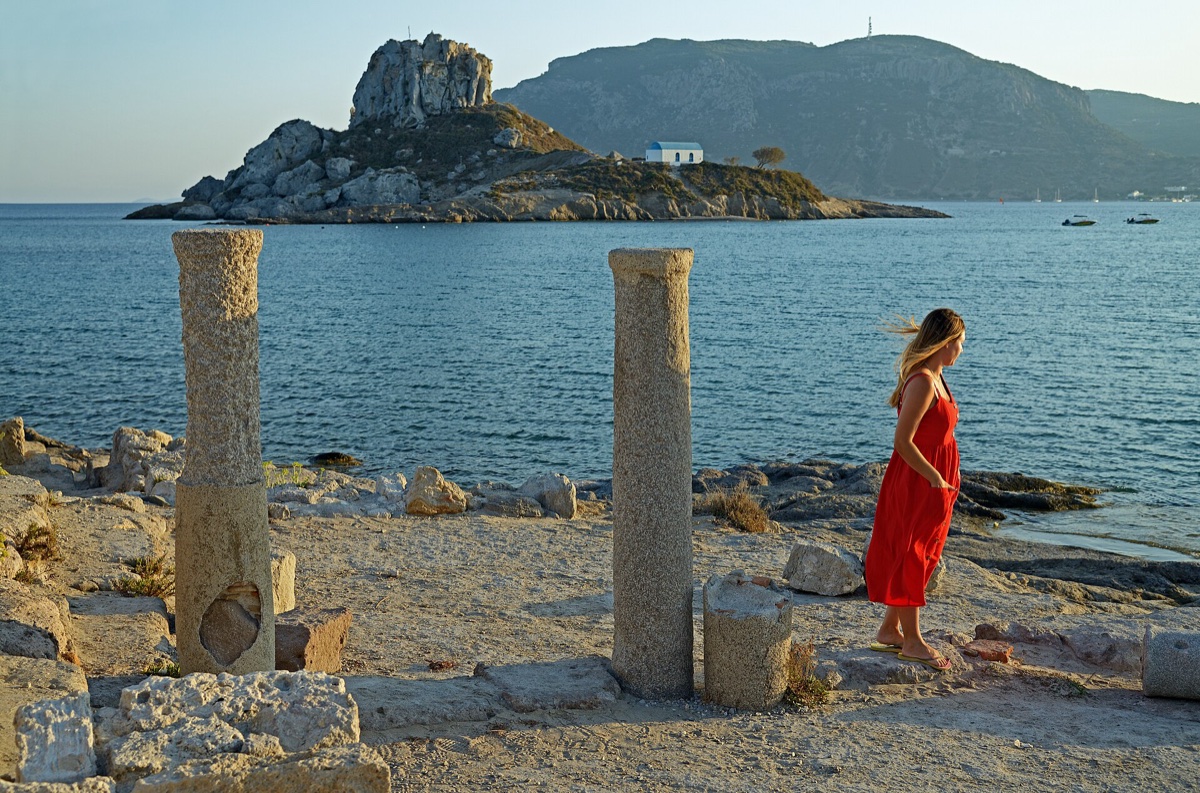
While the north of the island is dotted with large resort complexes, the southwestern Kefalos peninsula — about forty kilometres from Kos Town — still has a noticeably quieter, more rural character. Its coastline is fringed with beautiful coves just begging to be explored. The standout gem is Agios Stefanos beach, which offers something you’d be hard pressed to find anywhere else: swimming right alongside the ruins of a fifth-century early Christian basilica, whose columns rise just a few steps from the water’s edge.
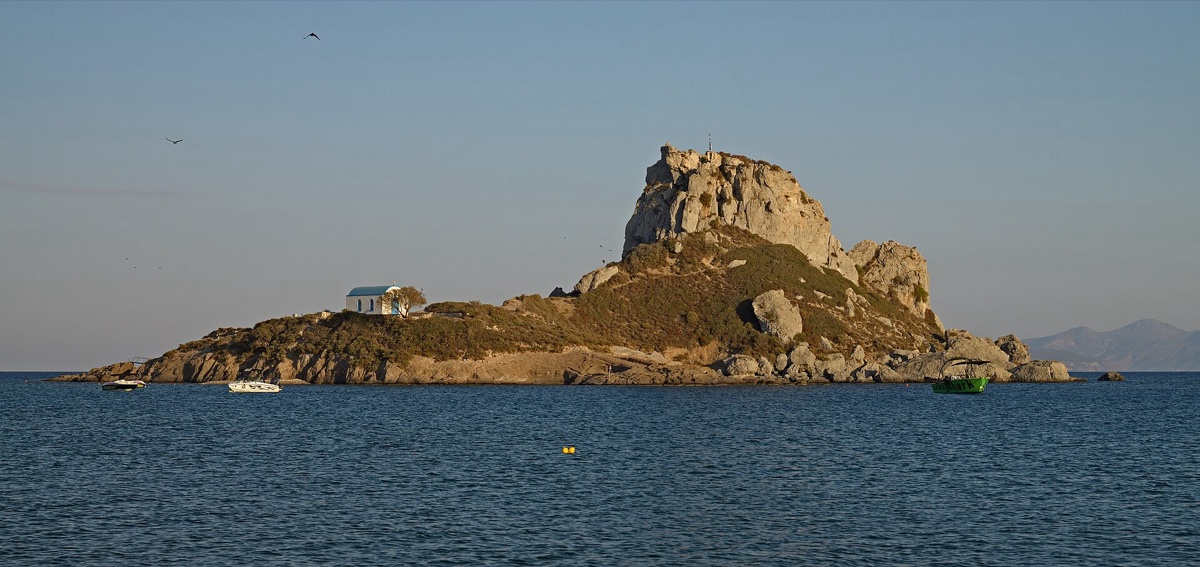
Directly opposite the beach, roughly a hundred and fifty metres offshore, sits the photogenic little islet of Kastri — topped by an iconic white chapel with a blue dome dedicated to St Nicholas. Confident swimmers can easily paddle out to it and ring the bell at the entrance, though always check the current sea conditions before you set off. The water around this part of the island is a little cooler than in the north, but it makes up for it in clarity and transparency.
9. Paradise Beach and Camel Beach
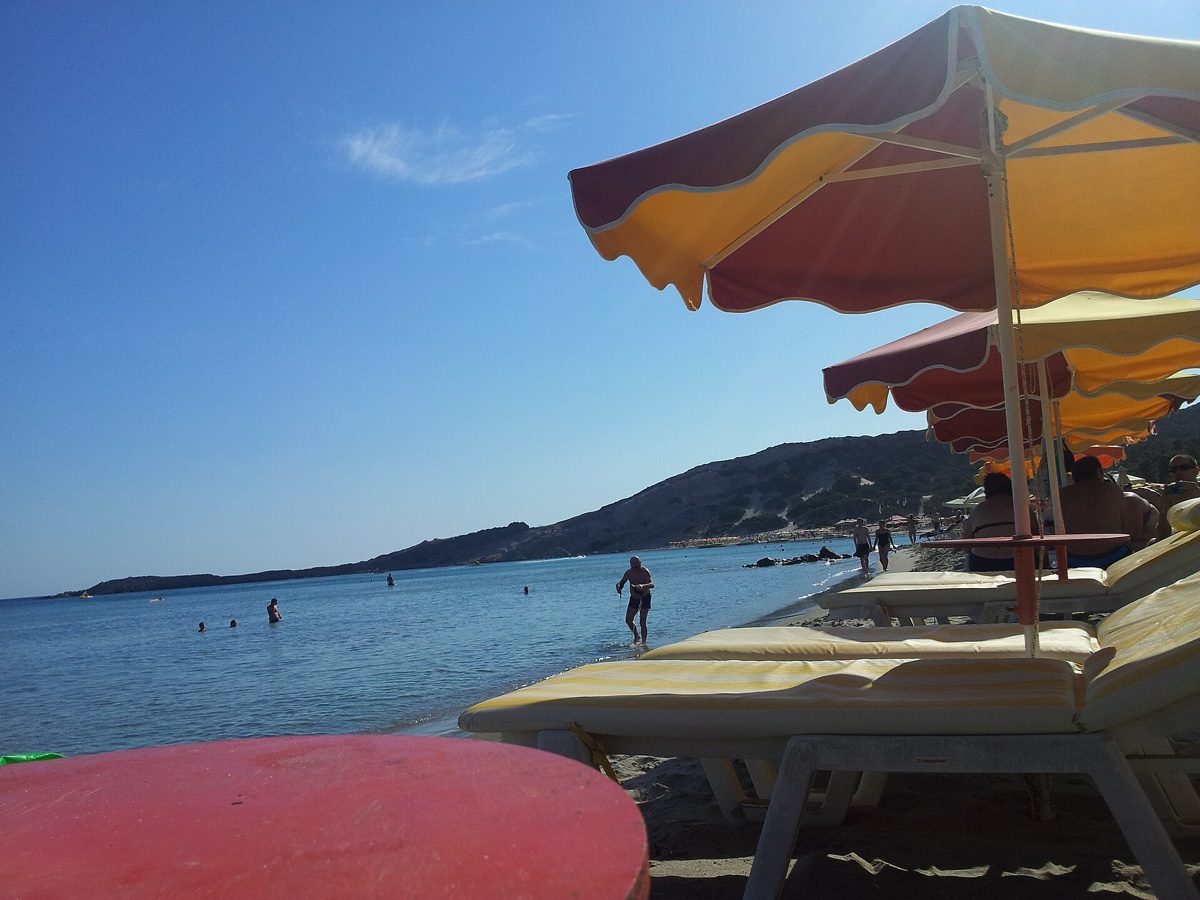
While you’re on the Kefalos peninsula, you absolutely cannot skip the beaches that regularly feature in lists of the most beautiful in all of Greece. The most famous is Paradise Beach, and it lives up to its name completely. Its fine golden sand, turquoise water and wide range of water sports make it a genuine paradise for families with children. It’s often nicknamed “bubble beach” too, because tiny bubbles of volcanic gas constantly seep up from the seabed — a brilliant extra attraction for young swimmers.
If Paradise Beach feels too busy during high season, drive a little further to the more secluded cove of Camel Beach. It gets its name from a huge rock on the horizon that looks remarkably like a sitting camel. The access road is fairly steep and gravelly — worth noting because standard hire car insurance often doesn’t cover unmade roads. Your reward for the slightly more adventurous journey is a great deal more peace and quiet, noticeably cooler and more refreshing water, and fantastic snorkelling conditions along the rocky edges of the bay.
10. The Sandy Beaches of the North
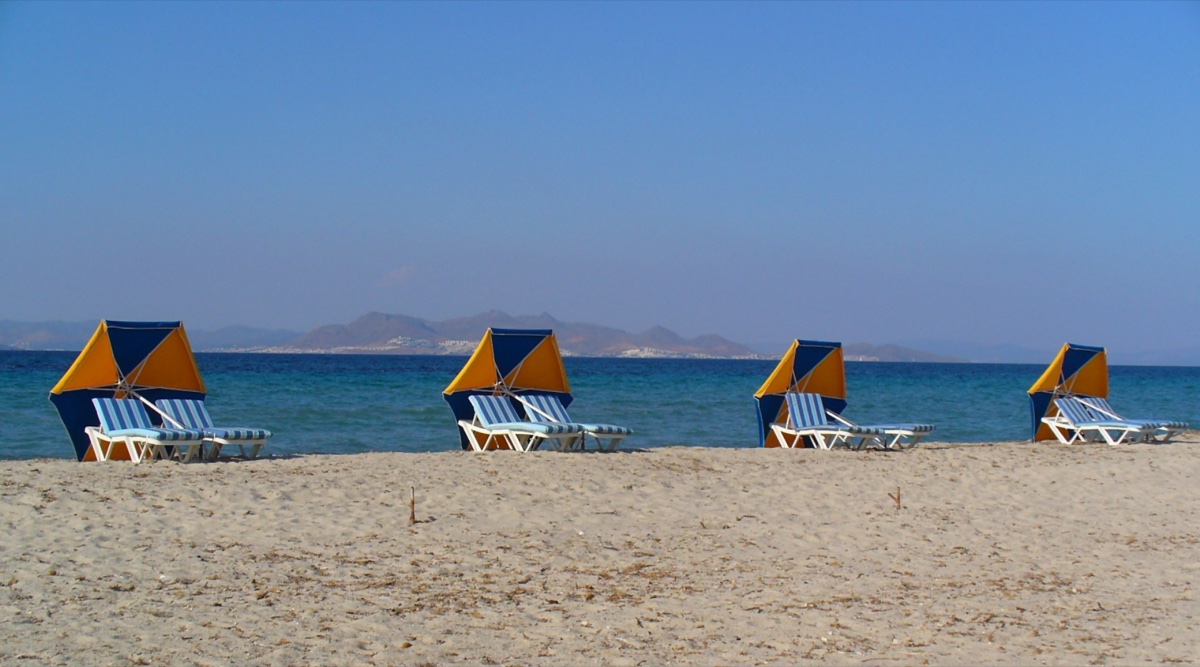
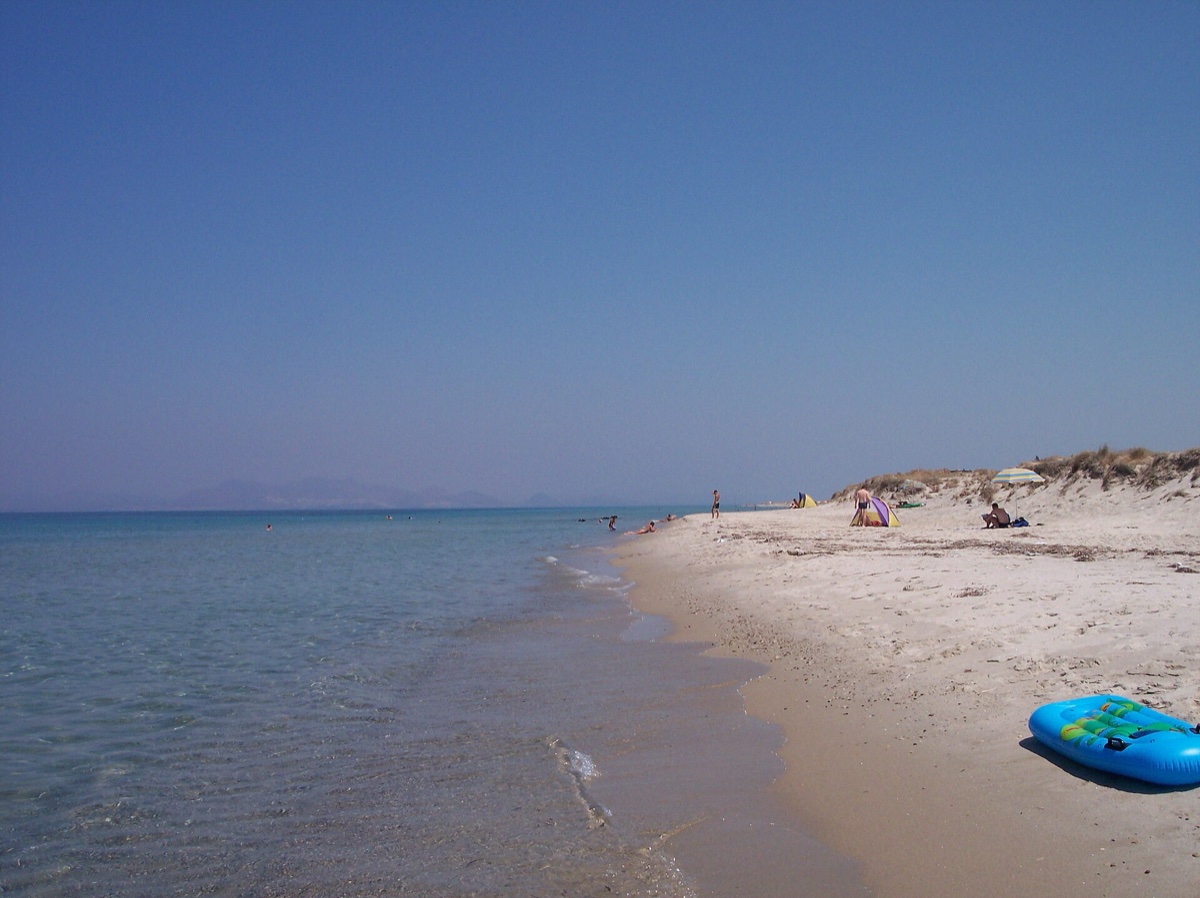
If your ideal holiday day is blissfully simple — morning coffee, beach until sunset — then the northern coast is made for you. The resorts of Tigaki, Marmari and Mastichari all share one defining feature: vast stretches of wonderfully fine, pale sand. Tigaki’s beach alone stretches for ten kilometres, flies the Blue Flag for water quality, and is connected to Kos Town by a convenient flat cycle path. The entry into the sea here is so gradual that you can wade dozens of metres out and still only be knee-deep — perfect for young children.
While Tigaki and neighbouring Marmari — flanked by pretty sand dunes — are fairly tourist-oriented resort towns full of hotel complexes, Mastichari retains the pleasant character of a traditional fishing village. It’s also the departure point for regular ferries over to the neighbouring island of Kalymnos. The entire northern coast is very exposed to the wind, so when the meltemi blows from mid-May through September, windsurfers and kitesurfers flock here from all over Europe. The sky fills with colourful kites on those days, as the conditions are simply ideal — and there are plenty of schools and equipment hire shops along the shore if you fancy giving it a go.
11. Plaka Forest with Peacocks and Alykes Salt Lake
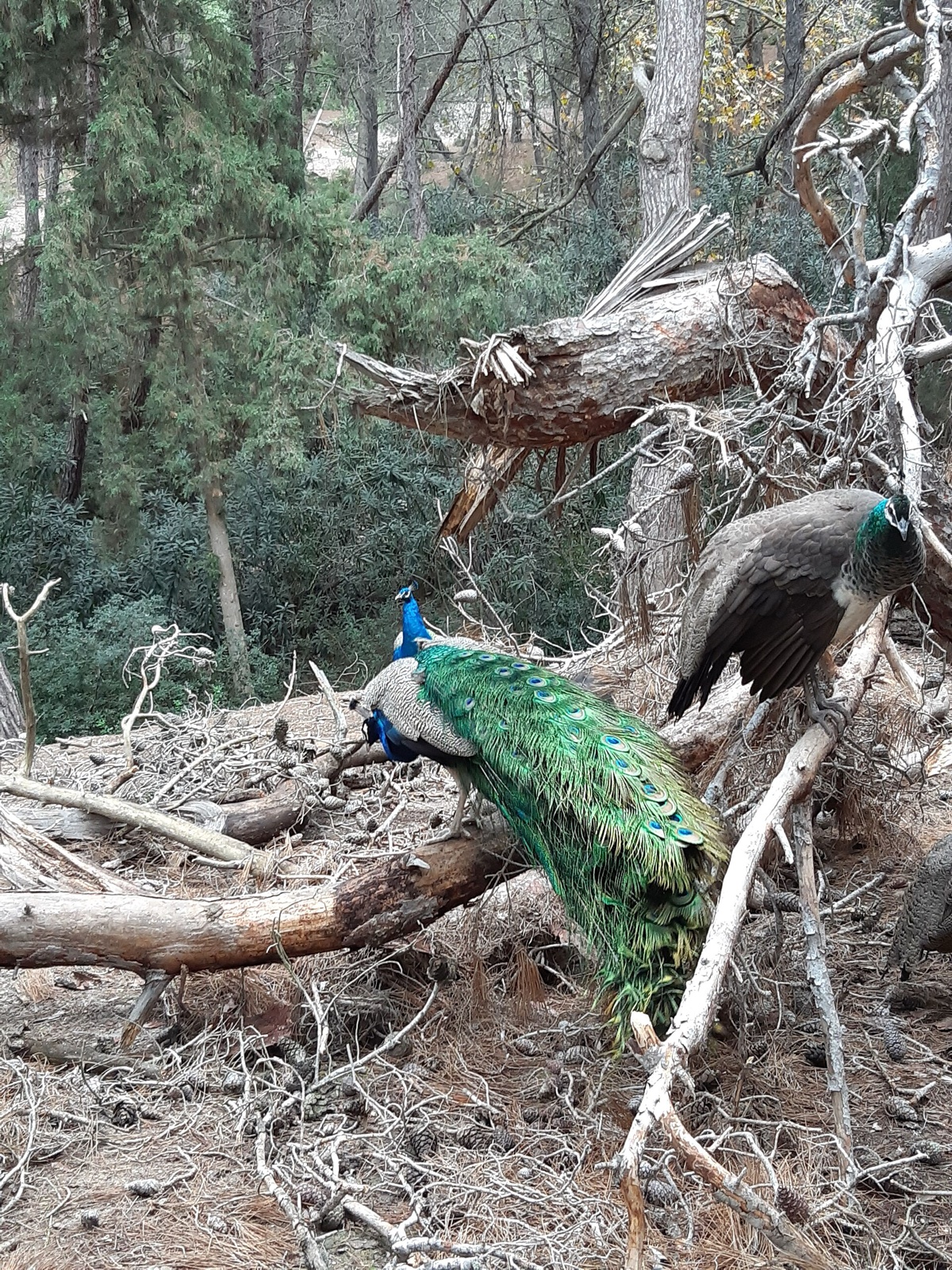
If you need a break from the salty sea and blazing sun, venture inland towards the village of Antimachia near the airport. Here you’ll find Plaka Forest, a pine woodland that acts as the green lung of the island. Entry is free, and the main attraction is the dozens of free-roaming peacocks that are remarkably tame and will eat right out of your hand. There are also freshwater turtles and plenty of shady picnic spots — the only catch is that no buses come here, so you’ll need a car or bike.
Another worthwhile natural stop on the northern part of the island is the Alykes salt lake, just outside Tigaki. In the summer heat it dries out to a glistening salt crust with mountains in the background, but if you visit in spring, autumn or winter you stand a very good chance of spotting flocks of wild flamingos that stop here during their migration. It’s a lovely cycle from Kos Town and makes for a perfect afternoon outing.
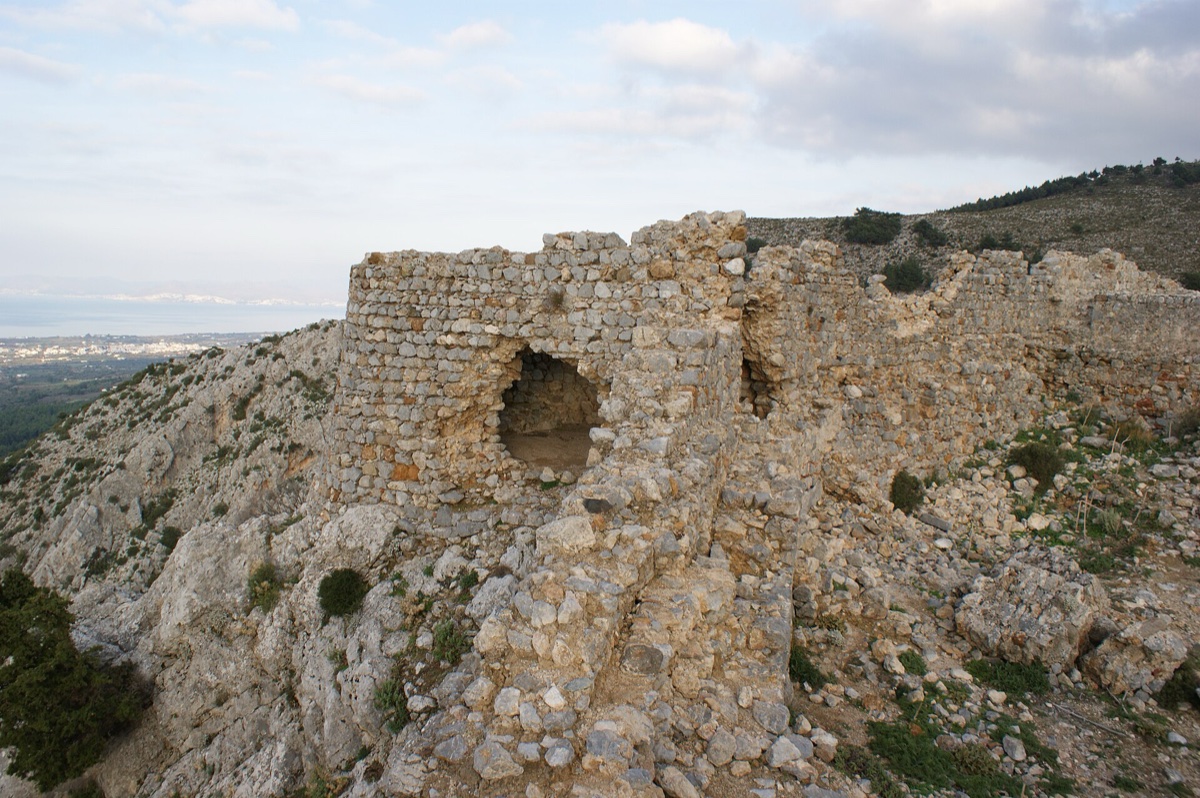
12. The Abandoned Castle of Palio Pyli
Love mysteries and abandoned places with a dark history? Then Palio Pyli is bound to captivate you. It’s a ruined medieval settlement hidden high in the island’s interior, hurriedly abandoned by its inhabitants in the nineteenth century during a devastating cholera epidemic. Rising above the crumbling stone houses are the imposing remains of a Byzantine castle and two historic small churches, reached by a roughly three-kilometre woodland trail from the modern village of Pyli. From the top, the panoramic views across the Aegean, the neighbouring islands and the nearby Turkish coast are absolutely breathtaking — which is why it’s also become a popular spot for watching the sunset.
Entry to the whole site is completely free, though travel forums regularly warn about fake monument guardians. These individuals sometimes hang around at the forest entrance and try to persuade unsuspecting tourists to make voluntary contributions towards a non-existent restoration fund. Don’t be taken in — feel free to walk straight past them with a clear conscience. The climb up is a bit demanding, so wear sturdy footwear, but you’ll be rewarded at the top by a charming little café with extraordinary views.
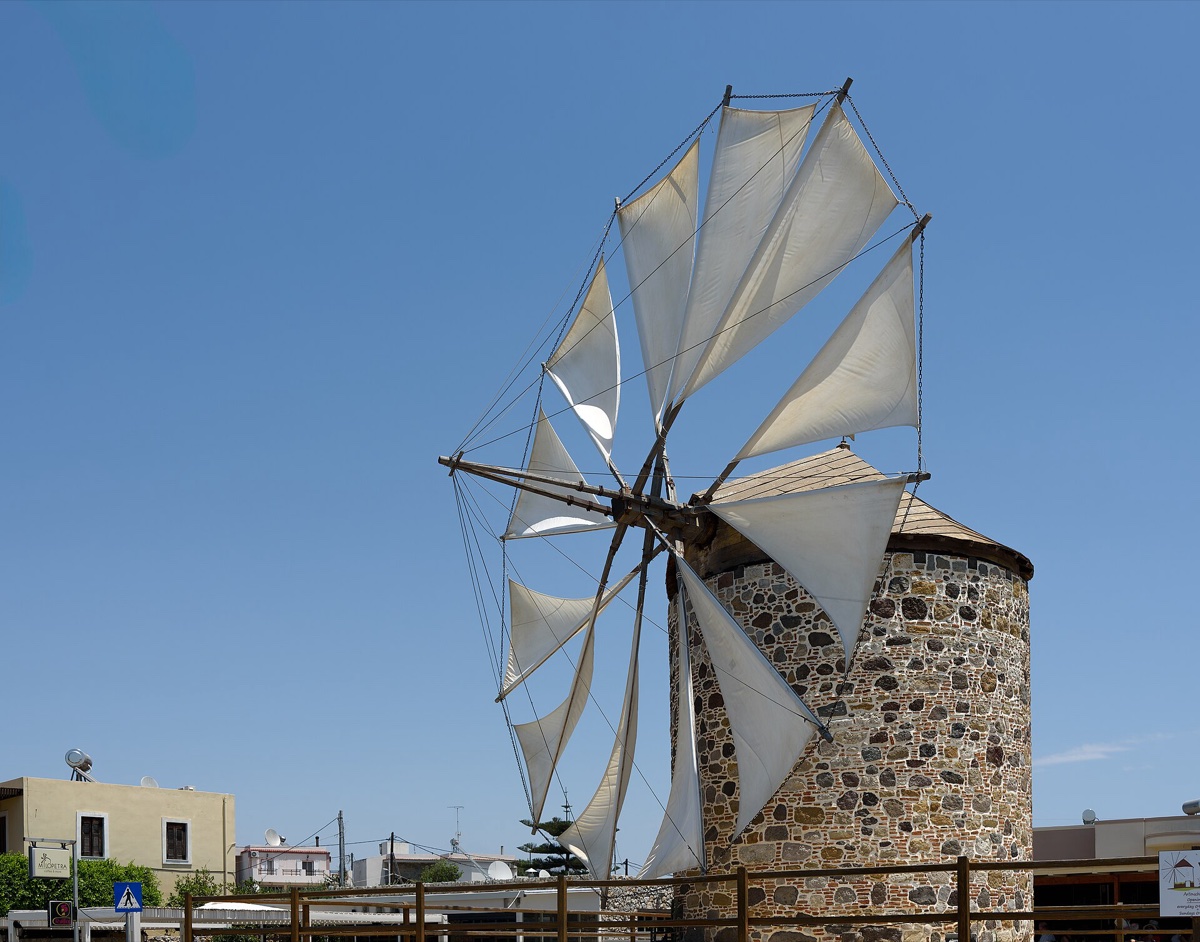
13. The Windmill in Antimachia
Most of us picture iconic white windmills the moment we think of Greek islands, and Kos happily delivers. In the village of Antimachia, right in the middle of the island not far from the international airport, you’ll find the only fully functioning windmill on the whole island. It’s over two hundred and fifty years old and, following careful restoration, now operates as a fascinating small museum. For an entrance fee of around 3 to 5 euros, you can step inside the mill and have the owners walk you through exactly how the ancient grain-milling mechanism works.
The visit also includes the adjacent traditional house, furnished with original period furniture, which shows precisely how a typical island miller’s family would have lived a hundred years ago. It’s a quick stop, but a surprisingly interesting and wonderfully photogenic one. While you’re in Antimachia, it’s also well worth swinging by the nearby thirteenth-century Crusader fortress of Kastell, inside whose walls two charming little chapels are tucked away.
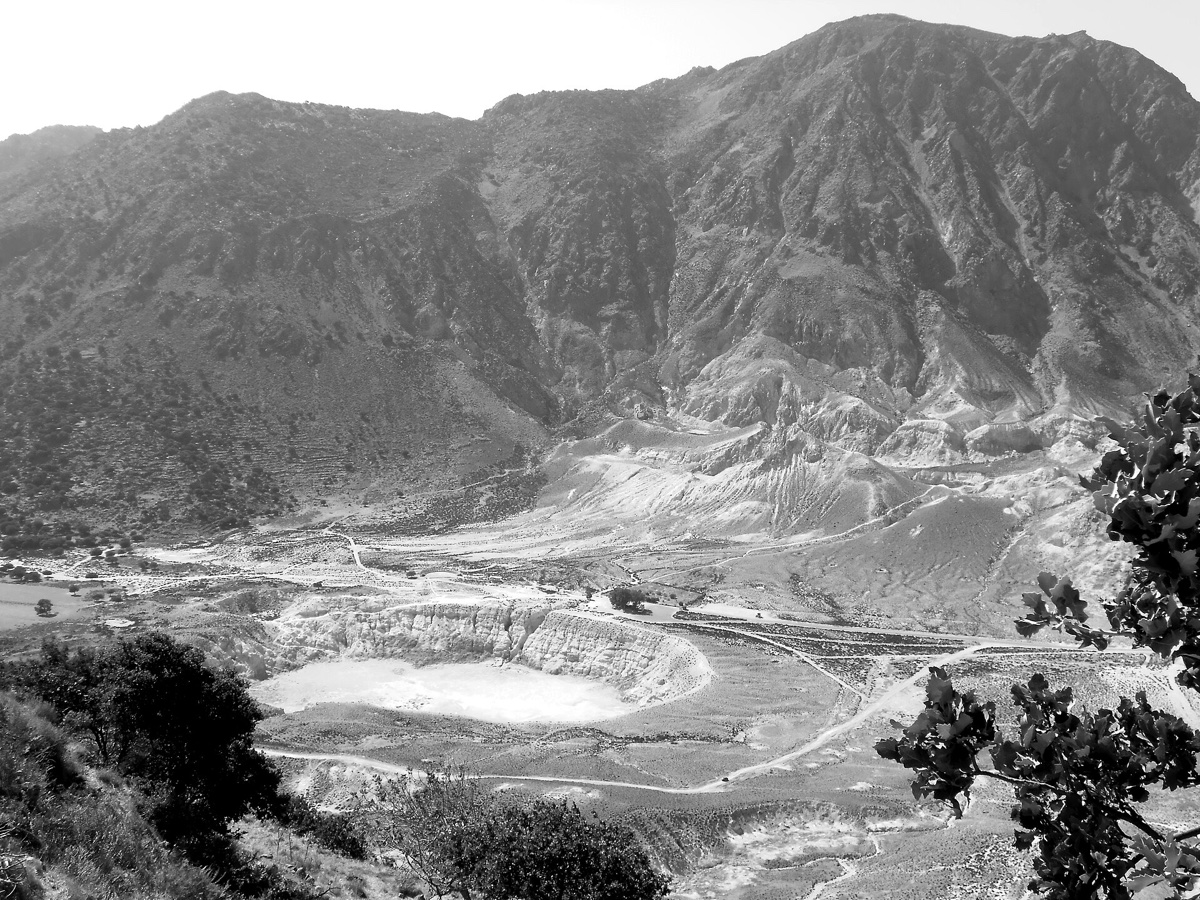
14. Day Trip to the Volcanic Island of Nisyros
Being this close to an active sleeping volcano and not visiting it would be a real missed opportunity. The neighbouring island of Nisyros is a fascinating place, with volcanic activity still rumbling away beneath its surface. You can book a full-day organised tour for around 40 euros, easily arranged through platforms like GetYourGuide or directly through a local rep. The price typically includes a bus transfer from the port to the Stefanos crater, where you’ll walk across a yellow sulphurous crust and feel the heat radiating up from below.
If you prefer to explore independently, it’s perfectly straightforward and cheaper. Regular ferries run from Kardamena port, with a return ticket costing around 16 euros and the crossing taking about forty-five minutes. On the island itself you’ll pay 3 euros as an island fee and 5 euros for access to the crater. Don’t miss the picturesque harbour town of Mandraki with its Panagia Spiliani monastery, where you can try the wonderful local almond drink called soumada.
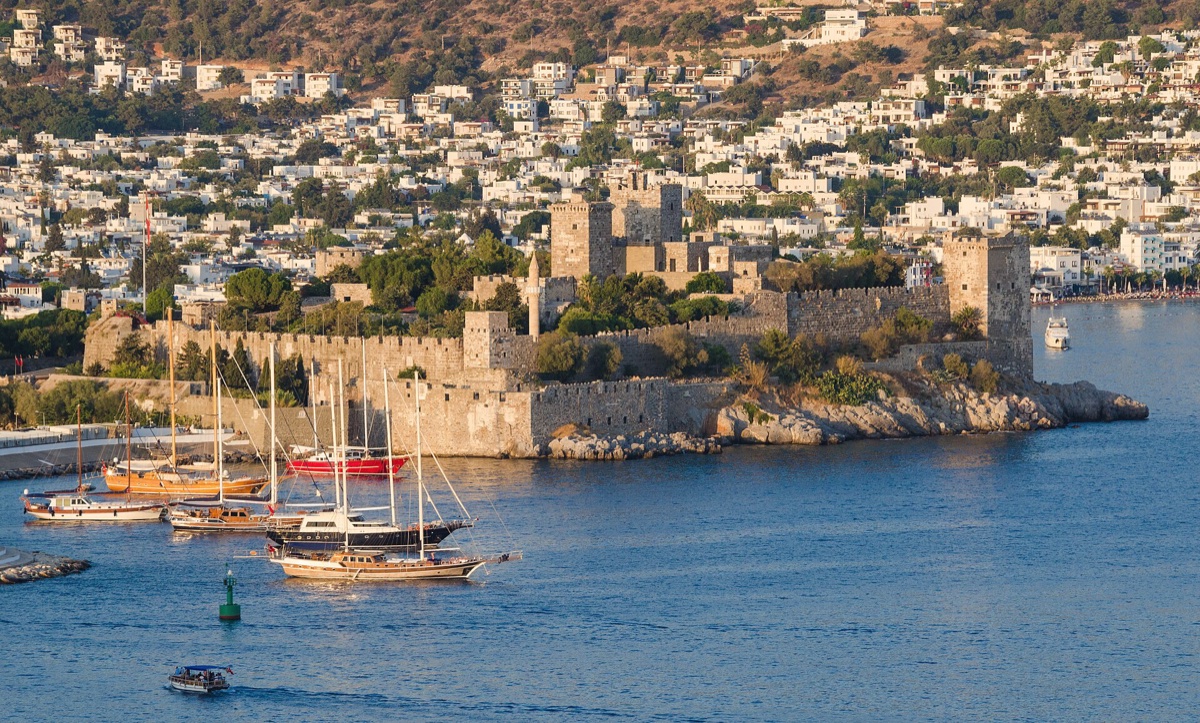
15. A Day Trip to Bodrum, Turkey
From the beaches in northern Kos, the Turkish mainland is so sharp and clear on the horizon that it almost feels within swimming distance — just seven nautical miles separate the two countries. It would be a real shame not to make the most of it and hop over for a day on an entirely different continent. Boats depart every morning from Kos Town to the Turkish resort of Bodrum, and the crossing takes just 30 to 60 minutes depending on the vessel. Return tickets are available from various operators for between 15 and 25 euros.
In Bodrum you’ll discover bustling bazaars where everything is up for negotiation — from spices to leather goods — as well as the imposing Castle of St Peter and the remains of the ancient Mausoleum of Halicarnassus. The latter is one of the Seven Wonders of the Ancient World: you’ve probably read about it at school, but nothing quite prepares you for seeing it in person. ⚠️ Important note: Turkey is not a member of the EU or the Schengen Area. This means that for this trip you must carry a valid passport — a UK driving licence or any other ID card will not be accepted. Passport and customs checks at the port before departure can take a while and queues do form, so arrive with plenty of time to spare.
Map of points of interest for your phone
Where to Eat in Kos
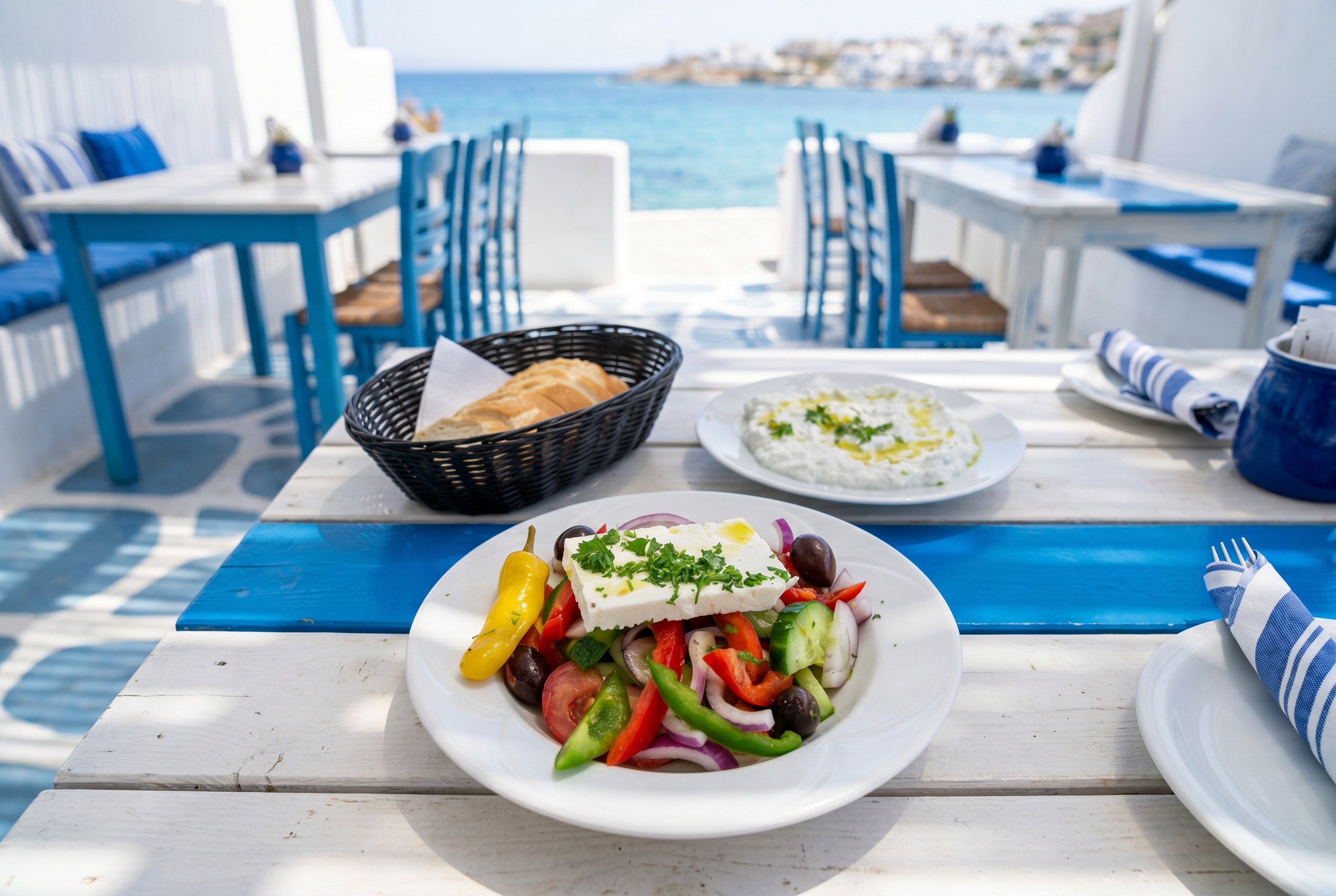
The food scene on Kos is far better than you might expect. This isn’t just about gyros and Greek salad: the island has its own PDO-protected cheeses, fried pastry parcels drizzled with honey, and a cinnamon lemonade you simply won’t find anywhere else. Kos has exceptionally fertile soil and a long tradition of local produce, which forms the backbone of most island specialities. If you love discovering new flavours, seek out the traditional family-run tavernas that cook from recipes passed down through the generations — there are great options for meat lovers and vegetarians alike.
The absolute must-try is the local cheese called krasotiri (also known as posa). This soft goat’s or sheep’s milk cheese carries a protected designation of origin and is unique in that it ripens in red grape pomace, giving it a distinctive reddish rind and a subtly spicy, wine-tinged flavour. Another vegetarian treat is katimeria — delicious fried pastry parcels stuffed with fresh cheese, then generously drizzled with honey and dusted with cinnamon. On hot summer days you’ll be very grateful for a glass of kanelada, the traditional cinnamon lemonade especially associated with the mountain village of Zia, or the popular local almond drink known as soumada.
For the best restaurants, the taverna Oromedon in Zia is well worth booking in advance. They serve outstanding mountain cuisine, a wonderful meat-free wood-fired moussaka, and a magnificent fried cheese with homemade jam. Back in Kos Town, the elegant restaurant Petrino — set in a beautiful garden courtyard — is a must for its excellent tasting boards loaded with local cheeses. Not far from the centre, the popular taverna Elia serves a near-perfect saganaki alongside a whole range of traditional vegetable meze dishes.
Meat eaters are also well catered for. A typical local speciality is pitaridia — homemade pasta similar to wide noodles, slow-cooked in a rich meat broth. Traditionally served with a generous portion of minced meat and pork fat, it’s a wonderfully hearty dish that locals particularly love on cooler evenings.
Where to Go Next from Kos
If you’re weighing up whether Kos is the right destination for your holiday, or you’d like to combine it with other places in Greece, do have a look at our other guides. We’ve put together a comprehensive overview of where to go on holiday in Greece, comparing different destinations. History lovers will find plenty to interest them on the neighbouring island of Rhodes, while for the ultimate in romance our article on a holiday in Santorini is essential reading. And if your flights are already booked, don’t forget to check our practical packing list of what to bring on a Greek island holiday.
Frequently Asked Questions
I’ve put together answers to the most common questions about a holiday on Kos, so you can head off with everything sorted. Hopefully these practical tips will make planning a little easier. 😉
What are the must-see attractions on Kos?
The absolute essentials include the ancient healing center of Asklepion, the imposing Neratzia Castle, and the town center with Hippocrates’ Plane Tree and the ancient agora. For natural beauty, don’t miss the thermal beach of Bros Therma, the Kefalos peninsula with the Agios Stefanos basilica, and the abandoned medieval village of Palio Pyli. Be sure to catch the sunset from the village of Zia as well.
How long is the flight to Kos?
A direct flight from the Czech Republic to Hippocrates International Airport on Kos takes approximately 2.5 hours. In the summer season, direct charter flights operate from Prague, Brno, and Ostrava. The airport is located in the central part of the island near the village of Antimachia, so the transfer to most hotels and resorts takes no longer than thirty to forty minutes, which is a huge advantage.
How expensive is Kos?
Kos is one of the very budget-friendly Greek islands, mainly thanks to the huge competition among hotels and rental agencies. A meal at an average taverna will cost you 15 to 25 euros per person, renting a city bike costs an amazing 3 to 5 euros a day, and you can get a smaller car in season from 35 euros a day. Bus tickets on the intercity KTEL lines range between 2 and 5 euros.
What’s the sea like on Kos?
The sea on Kos is wonderfully clean and in the summer months warms up to a pleasant 25 °C. The northern coast (Tigaki, Marmari) has very long shallows with fine sand, which is great for children, though it sometimes gets windy here and waves form. The southwestern coast near Kefalos has slightly cooler and calmer water, with absolutely crystal-clear visibility ideal for snorkelling.
What should I watch out for on Kos?
Definitely watch out for the strong sun and the summer meltemi wind, because when it blows you often don’t feel the heat and can very easily get sunburnt on the beach. Also bear in mind that the island doesn’t use the Uber app, so you’ll have to rely on local taxis or the very well-functioning bus network. On the eastern pebble beaches and at the thermal springs, you’ll definitely need water shoes.
Is Kos suitable for families?
Yes, Kos is considered one of the best destinations in Greece for families with children. The reason is its flat terrain, certified as Bike Friendly, which is ideal for safe bike rides with kids. On top of that, it offers very short transfers from the airport and, above all, the endless northern beaches, where the water stays shallow even tens of metres from the shore.
Is a trip to Bodrum worth it?
If you like contrasts, then definitely yes. In just half an hour’s sailing, you’ll find yourself in a completely different, oriental world full of markets and haggling. The ferries are affordable, costing around 20 euros, but remember that you’re leaving the Schengen area, so you absolutely need a valid passport; they won’t let you on the boat with an ID card.
Tips and Tricks for Your Vacation
Don’t Overpay for Flights
Search for flights on Kayak. It’s our favorite search engine because it scans the websites of all airlines and always finds the cheapest connection.
Book Your Accommodation Smartly
The best experiences we’ve had when looking for accommodation (from Alaska to Morocco) are with Booking.com, where hotels, apartments, and entire houses are usually the cheapest and most widely available.
 🚗 Car rental on the roadVerified rental cars in Greece
Search with the DiscoverCars comparison engine — it compares prices from dozens of local and international rental companies, and most bookings come with free cancellation.
Compare car prices in Greece →Don’t Forget Travel Insurance
Good travel insurance will protect you against illness, accidents, theft, or flight cancellations. We’ve had a few hospital visits abroad, so we know how important it is to have proper insurance arranged.
Where we insure ourselves: SafetyWing (simple monthly subscription) and TrueTraveller (for extra-long trips).
Find the Best Experiences
Get Your Guide is a huge online marketplace where you can book guided walks, trips, skip-the-line tickets, tours, and much more. We always find some extra fun there!