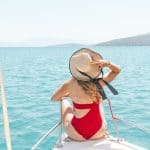
If you’re thinking about a summer trip to Greece and find the Cyclades a little too scorched and overcrowded, here’s a tip worth bookmarking. Kefalonia, Greece is the largest of the Ionian Islands, and the moment you land you’ll be struck by just how lush and green everything is. Dramatic mountains roll seamlessly into dense forests, which in turn plunge straight down to a sea of impossibly intense turquoise and inky blue.
Although the island was made famous by the Hollywood film Captain Corelli’s Mandolin, it has managed to hold on to a wonderfully relaxed and authentic atmosphere. Thanks to its sheer size, crowds spread out naturally, so even in peak summer you won’t find yourself elbow-to-elbow with other tourists. You’ll find sleepy mountain villages, wild pebble coves, and long sandy beaches with a gently shelving entry into the water.
The full destination guide: Ionian Islands — guide and what to see
TL;DR
- Getting around: Kefalonia is vast and mountainous, so hiring a car is an absolute must if you want to see the best of it.
- A note on history: In August 1953, the island was struck by a devastating earthquake measuring 7.2 on the Richter scale, which flattened most of the villages — the only exception is the perfectly preserved northern village of Fiskardo.
- Most famous beach: Myrtos Bay is considered the most photogenic in all of Greece, but be warned — watch out for treacherous currents and a dramatically shelving seabed.
- Natural wonder: Don’t miss a boat ride across the underground lake inside Melissani Cave, where midday sunlight streams through the collapsed roof in an almost magical display.
- Morning magic: Right in the harbour of the capital Argostoli, you can watch enormous sea turtles for free every morning as they swim in to follow the fishing boats.
- Best time to visit: September is hands down the best month — the summer crowds have thinned out, prices drop, and the sea is still beautifully warm.
Best Time to Visit Kefalonia
Kefalonia has a classic Mediterranean climate, but its exceptionally lush vegetation means you can expect slightly higher humidity here than on other Greek islands. The sweet spots are late May to June and the whole of September, when temperatures sit at a very comfortable 27–30°C and the sky is reliably clear. Spring offers empty roads and a beautifully flowering landscape, though the sea can still be rather bracing after winter and requires a certain bravery to dive in.
September and early October are genuinely the best time to travel around the Ionian Islands, because after a full summer of soaking up heat the sea holds a bath-warm temperature of around 25–26°C. August, on the other hand, is best avoided: Italian and Greek holidaymakers descend en masse, and the island bursts at the seams. Kefalonia doesn’t have the same sprawling hotel infrastructure as nearby Zakynthos, so in August accommodation is often hopelessly sold out and prices can easily double compared to early summer.
During July and August, temperatures regularly push towards 40°C, which makes sightseeing on foot quite an ordeal. If you do end up travelling in peak season, plan your visits to the most popular beaches first thing in the morning to beat the worst of the heat and the inevitable parking chaos.
One great advantage of the entire Ionian archipelago is that the dreaded Meltemi wind doesn’t blow here in summer — the same wind that can whip up sand and disrupt ferries on the eastern Aegean islands. Getting to Kefalonia from the UK is straightforward: the flight takes just over three hours, and airlines including Jet2, TUI, and easyJet operate direct routes from several UK airports, with fares starting from around £80 each way depending on the season. You can also fly year-round via Athens, or arrive by ferry from the mainland port of Kyllini.
Where to Stay in Kefalonia
💡 Accommodation tip: We always search for hotels on Booking.com for the best cancellation policies. For tours, activities, and day trips, it’s worth comparing options on GetYourGuide.
It’s worth thinking carefully about where to base yourself before you book, because the map can be deceptive and distances between attractions are genuinely large by Greek island standards. The winding mountain roads are full of switchbacks and add considerable time to every journey — for example, driving from the capital Argostoli to the northern village of Fiskardo takes a good hour and a half. For first-timers and families, the Lassi area is an ideal choice, sitting just a short drive from both the airport and the capital. You’ll find everything you need on your doorstep, a good selection of restaurants, and the gorgeous sandy beaches of Makris Gialos and Platis Gialos with their gently sloping entry into the water.

If you’re after a peaceful retreat and don’t mind paying a little extra for luxury, take a look at the stunning White Rocks Hotel right in Lassi, which has its own private beach, breathtaking sea views, and double rooms with breakfast starting at around €300 per night. Couples and those who love long beach walks will find the resort of Skala on the south-east coast a brilliant option — the atmosphere is noticeably more relaxed, and the highly rated Blue Jasmine aparthotel is a great base. For those who prefer a bit of urban buzz and evening strolls along the seafront, Argostoli itself is a solid pick — you’ll also find more budget-friendly options like Blue Paradise Studios.
The town of Sami on the eastern coast also offers a brilliantly strategic base for exploring, because from here you’re close to both famous caves and to Antisamos Beach, and it’s easy to hop on a ferry to neighbouring Ithaca. Pleasant studios can be found here for around €70 per night. If total seclusion is your priority, check out the stylish Ideales Resort in the Trapezaki area, where luxury villas with private pools and large barbecues await.
The quieter Paliki peninsula to the west is an interesting and slightly more affordable alternative, though bear in mind that you’ll need to use the local ferry from Argostoli to the town of Lixouri after arriving — thankfully it runs very frequently and the crossing takes only about twenty minutes. In the Svoronata area near the airport, the well-reviewed Avithos Resort Hotel is surrounded by greenery and just a short walk from the lovely sandy Avithos Beach — perfect for families with young children who want a relaxed holiday without lots of driving.
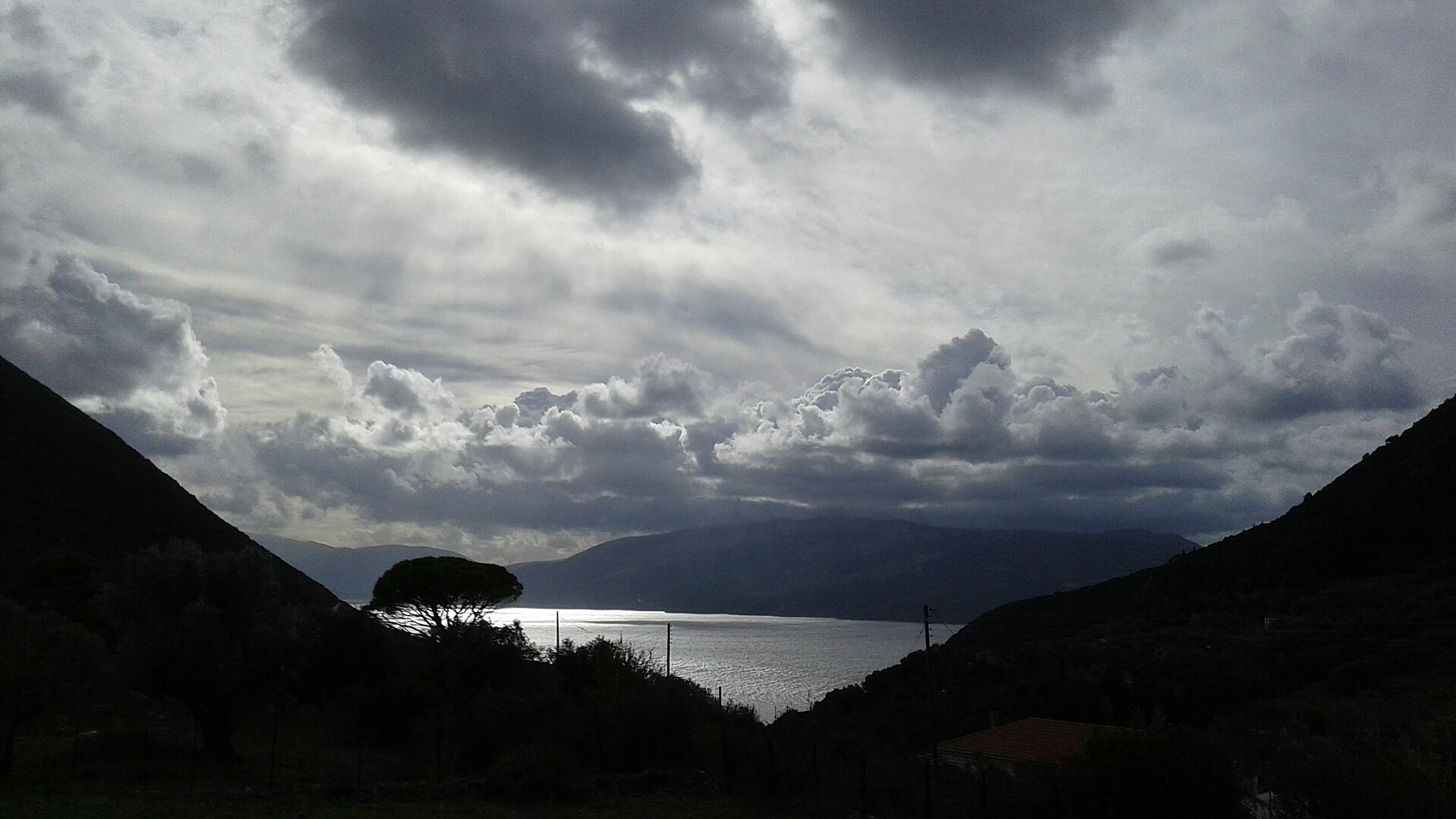
16 Best Things to See and Do in Kefalonia, Greece
The island offers so many wonderful places that you’re unlikely to squeeze everything into a single holiday — you could quite happily spend a whole month here and still feel like you’d only scratched the surface. Here’s our selection of the spots that are worth every detour, whether you’re a dedicated beach lounger or someone who feels most alive in the mountains.
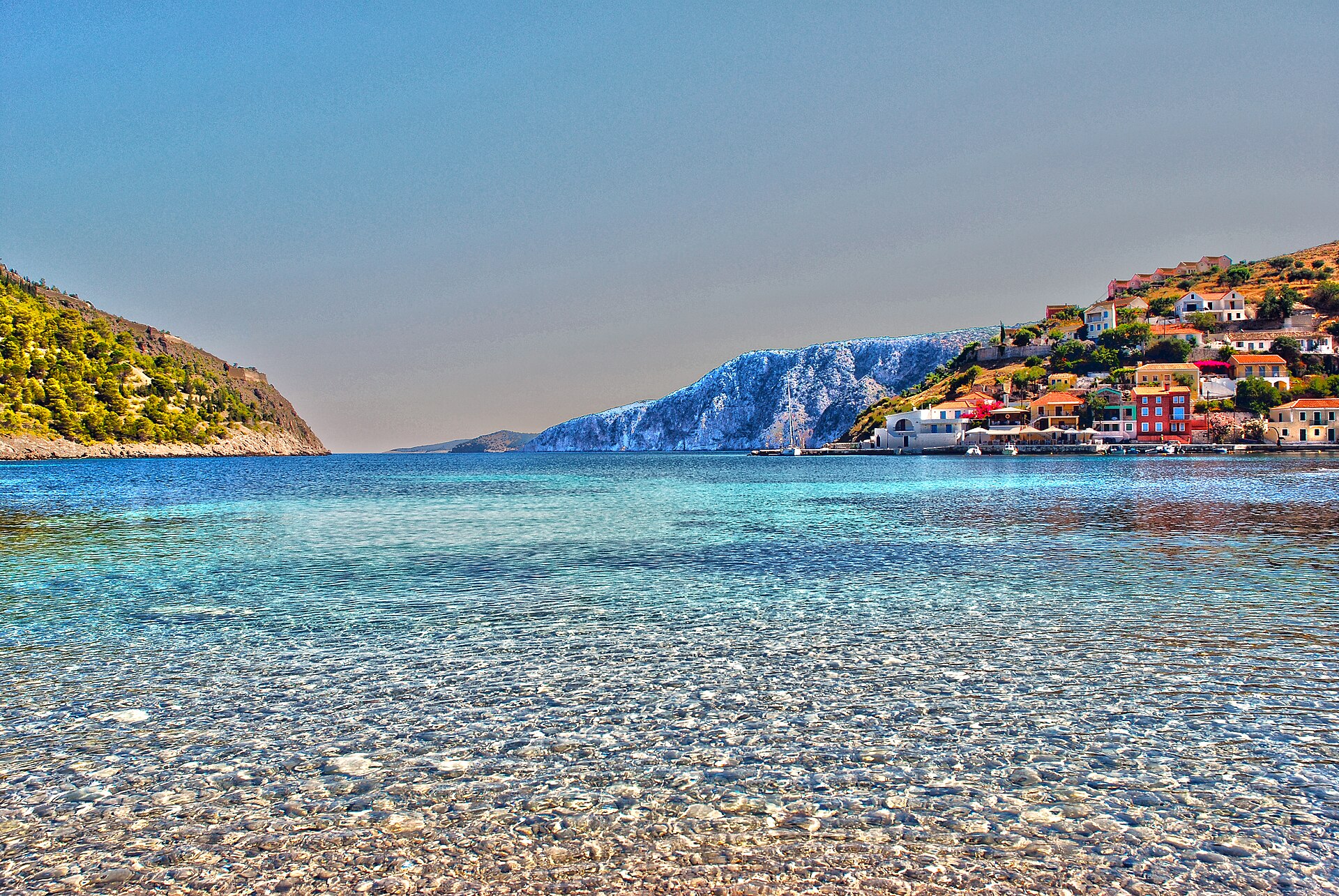
1. Myrtos Beach
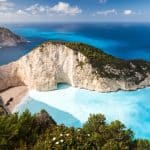
Myrtos is the beach you’ve seen on every postcard — and it will still take your breath away in real life. White pebbles, sheer limestone cliffs, water in a shade of cyan so vivid it barely looks real. The sweeping crescent of dazzling white stones lies deep below a dramatic cliff face, and the road down involves a long series of tight, narrow hairpin bends — drive with care and arm yourself with patience, as you’ll occasionally need to squeeze past oncoming coaches.
There’s a car park right at the beach that’s completely free, but in the height of summer it fills up hopelessly before 10am, so an early start is essential. Further up, just above the hairpins, there’s a popular viewpoint where you can get that classic postcard shot you’ve seen in every travel catalogue.
💡 Local tip: Myrtos demands real respect from swimmers. The seabed shelves sharply just a few steps in, and strong undertows can develop even on days when the rest of the island is completely calm — if you can see larger waves, stay out of the water. Make sure to bring water shoes too, as walking barefoot on the sun-baked white pebbles can be seriously painful.
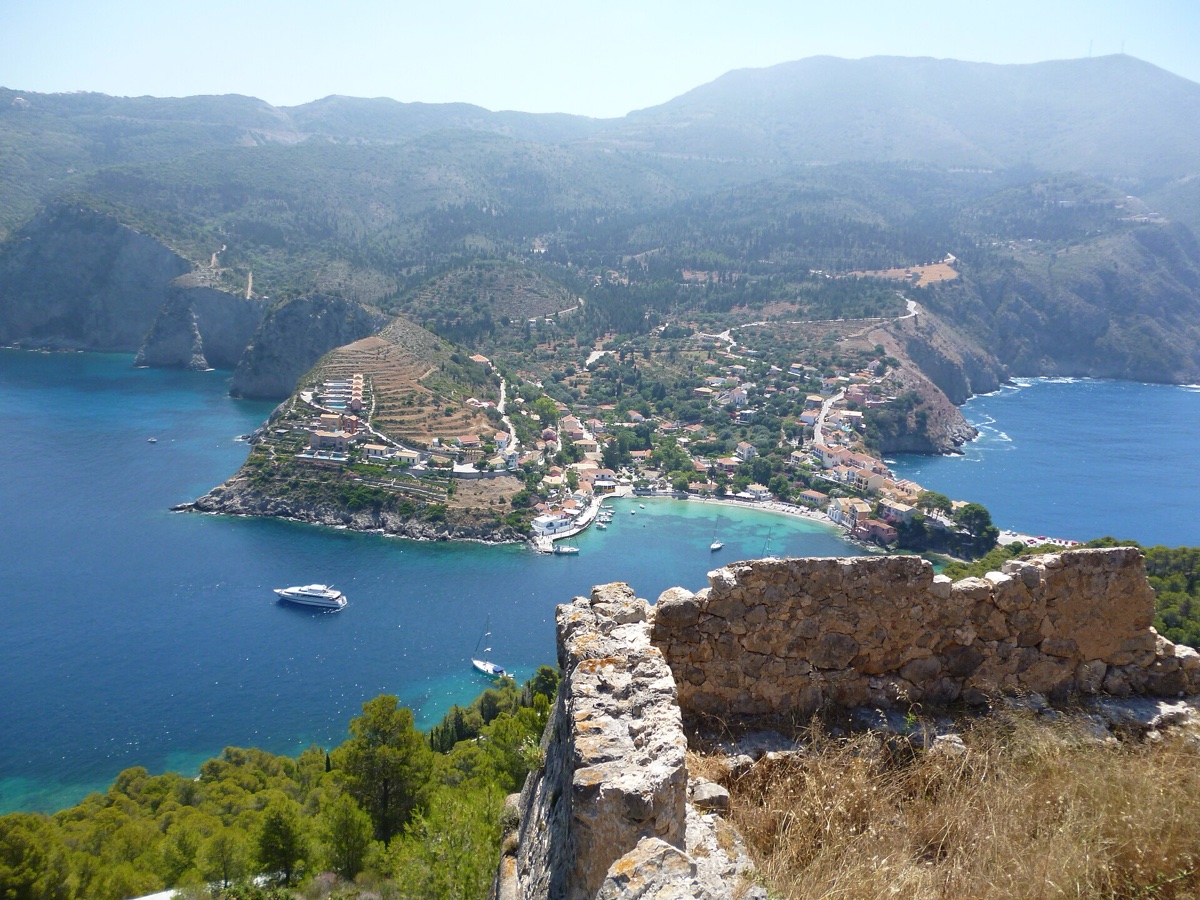
2. Assos
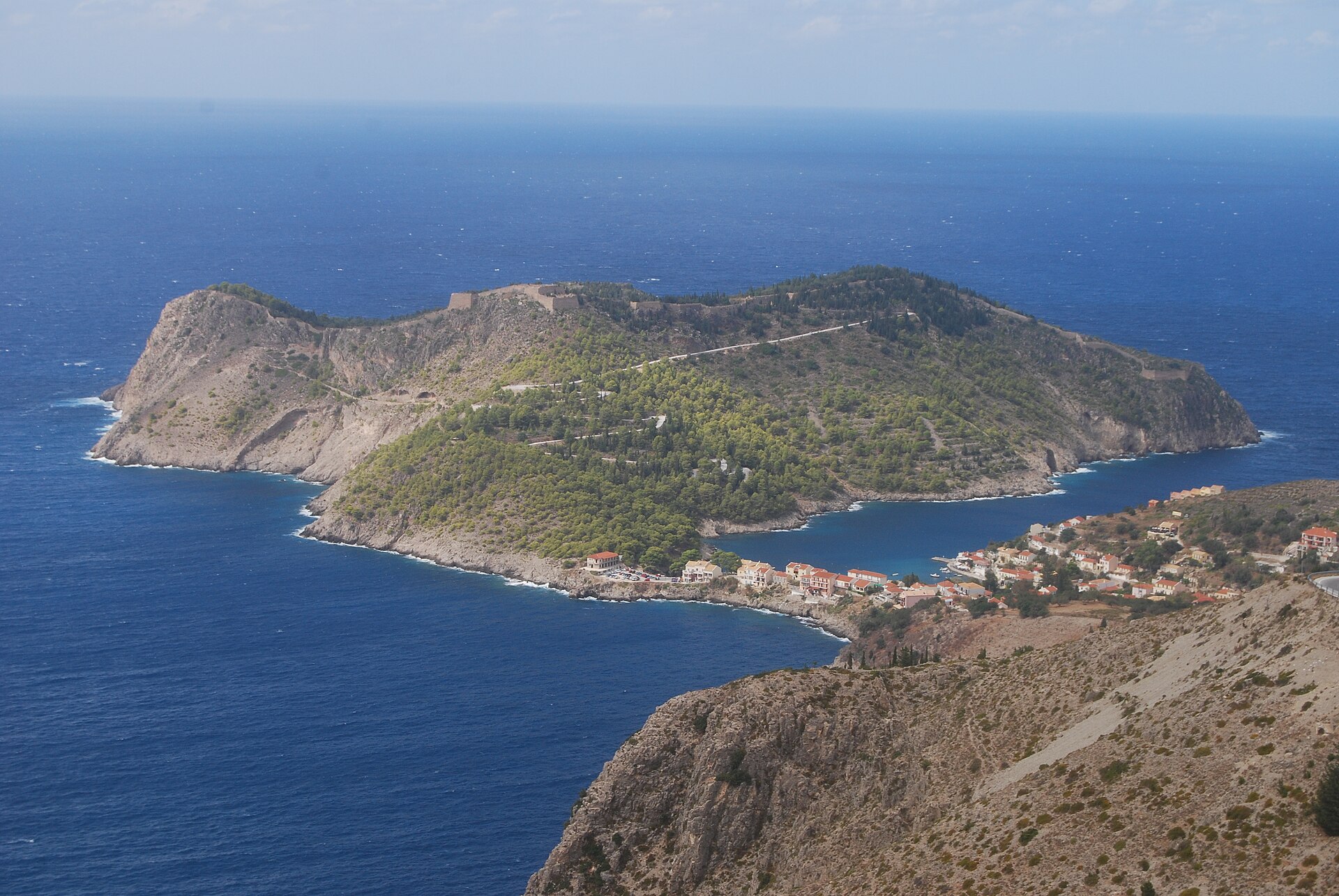
Perched on a narrow isthmus of a thickly wooded peninsula, the tiny village of Assos is without exaggeration one of the most romantic spots on the whole island. Its pastel-coloured houses in classic Venetian style are reflected beautifully on the surface of an exceptionally calm bay, practically begging you to while away a long afternoon at one of the local tavernas with an iced frappé in hand. Don’t expect the white-and-blue Cycladic look — the architecture here plays in shades of ochre, pink, and yellow.
Directly above the village, the extensive ruins of a Venetian castle dating from 1593 tower majestically over the bay — it was built to protect the islanders from constant pirate raids and Ottoman attacks. A lovely walking trail leads up from the village, and you can choose between a shorter, steeper path over rocks or a longer, more gradual route along an old cobbled road. The full loop takes around two hours.
Up at the top, you’re rewarded with absolutely phenomenal views across the surrounding landscape and the deep blue Ionian Sea. We’d strongly recommend setting off on this trek early in the morning before the sun gets too fierce, as much of the path is fully exposed and the climb can be quite demanding. Parking in the village is free at the large public car park on the left as you arrive.
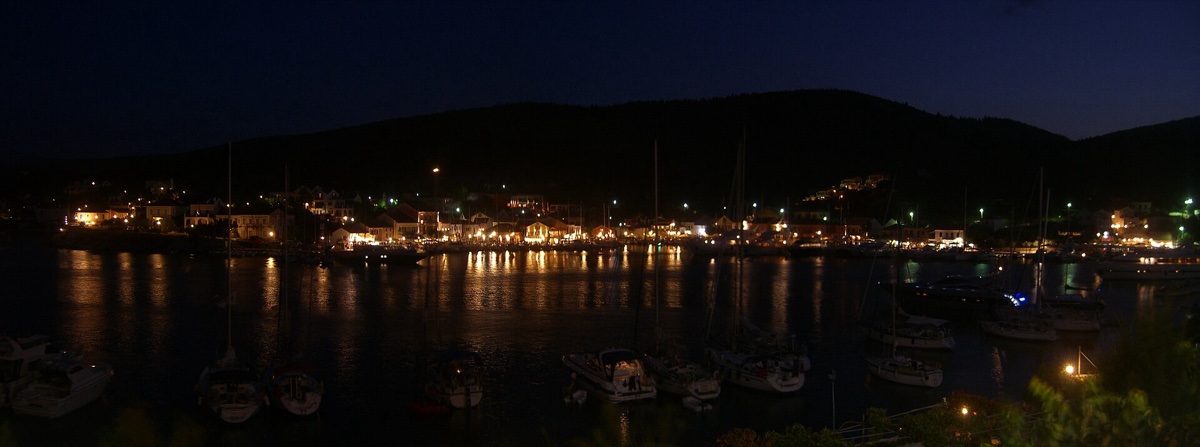
3. Fiskardo
This remarkably elegant fishing village at the very northern tip of the island has a fascinating history and a completely different feel to the rest of Kefalonia. It’s one of the very few places on the island that miraculously escaped the devastating 1953 earthquake largely unscathed, which is why it still retains its original Venetian architecture — all shuttered windows and balconies draped in purple bougainvillea. From Argostoli, you’ll wind your way here along mountain roads for about an hour and a half.
Today Fiskardo is considered one of the most upmarket and glamorous resorts in the entire Ionian Sea, drawing the well-heeled from across Europe. The promenade is lined with gleaming superyachts alongside old colourful fishing boats, and the narrow streets are packed with designer boutiques and excellent restaurants with perfect views across to the rugged island of Ithaca.
Most visitors arrive around lunchtime as part of organised boat trips, so between about 11:30am and 2:30pm it can get genuinely heaving. Try arriving in the late afternoon instead, when the streets start to breathe again — or take a short walk to the nearby 16th-century Venetian lighthouse perched on the cliffs just beyond the harbour, which offers lovely views without the crowds.
4. Argostoli
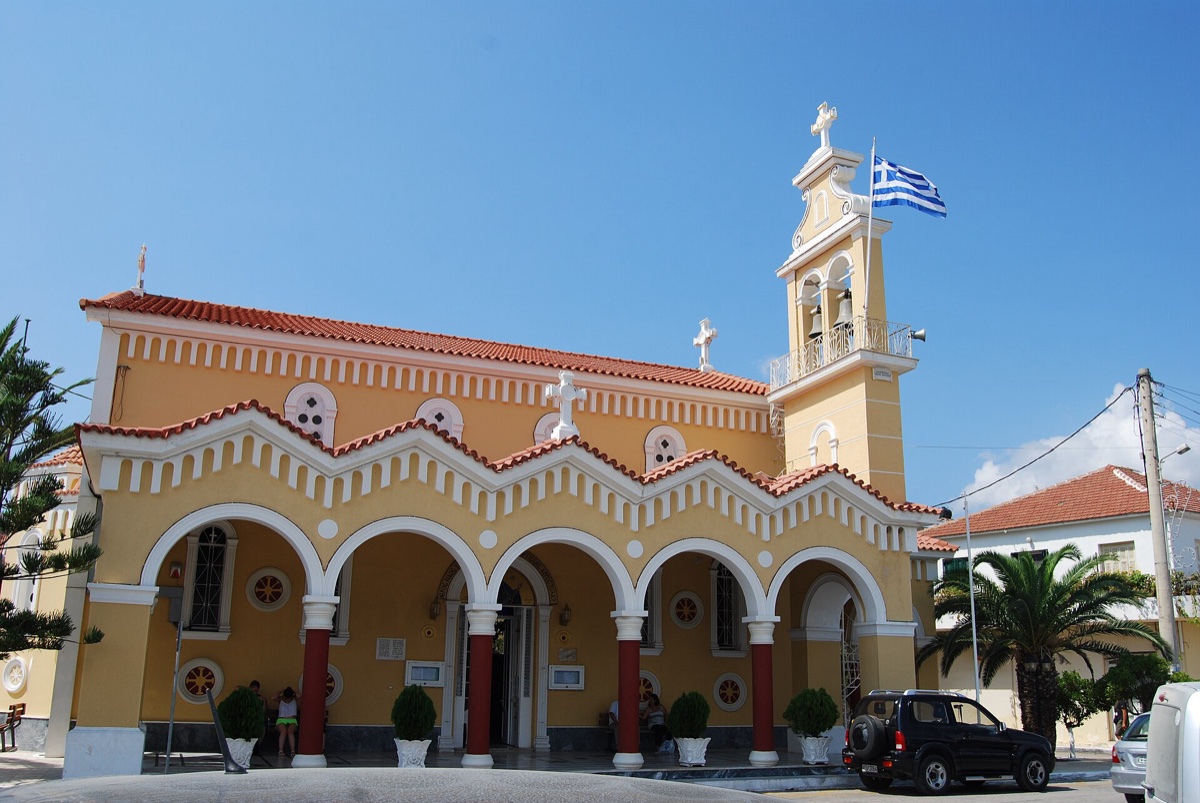
The island’s capital was almost entirely flattened by the catastrophic earthquake and rebuilt from scratch, so you won’t find picturesque crooked historic lanes here — instead, expect wide boulevards full of modern cafés and shops. The city has a very pleasant and lively energy, especially in the evenings, when locals gather on the spacious main square, Plateia Vallianou, for long conversations while children run around well into the night. You can park comfortably along the waterfront, though be aware that the town centre has paid parking zones at roughly €0.50 per hour.
The absolute highlight of Argostoli, though, is something entirely different and far more natural. Every morning, roughly between 8am and 10am, endangered loggerhead sea turtles (Caretta caretta) appear in the shallow harbour right beside the fishing boats, swimming in to feast on fish scraps thrown into the water. Seeing them this close, for free, in the wild is something you simply won’t experience like this anywhere else in Europe.
Make sure to take a stroll along the famous De Bosset stone bridge, built in 1813, which spans the Koutavos lagoon — at an impressive 700 metres, it’s said to be the longest stone bridge over seawater in the world. About three kilometres from the centre you’ll also find the iconic white circular St Theodore’s Lighthouse with its twenty Doric columns, a hugely popular spot for watching the sun sink into the sea in the evening.
5. Melissani Cave
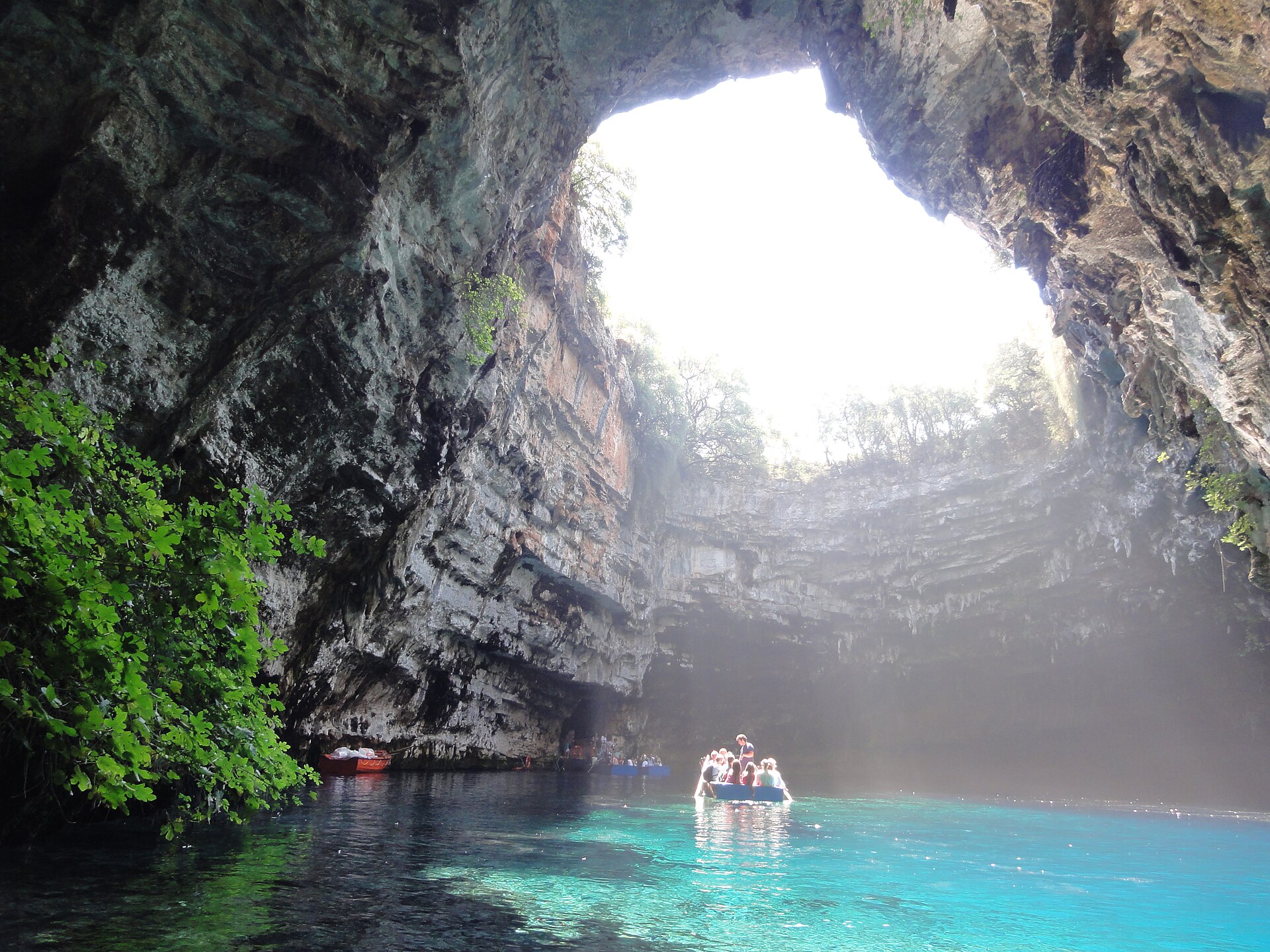
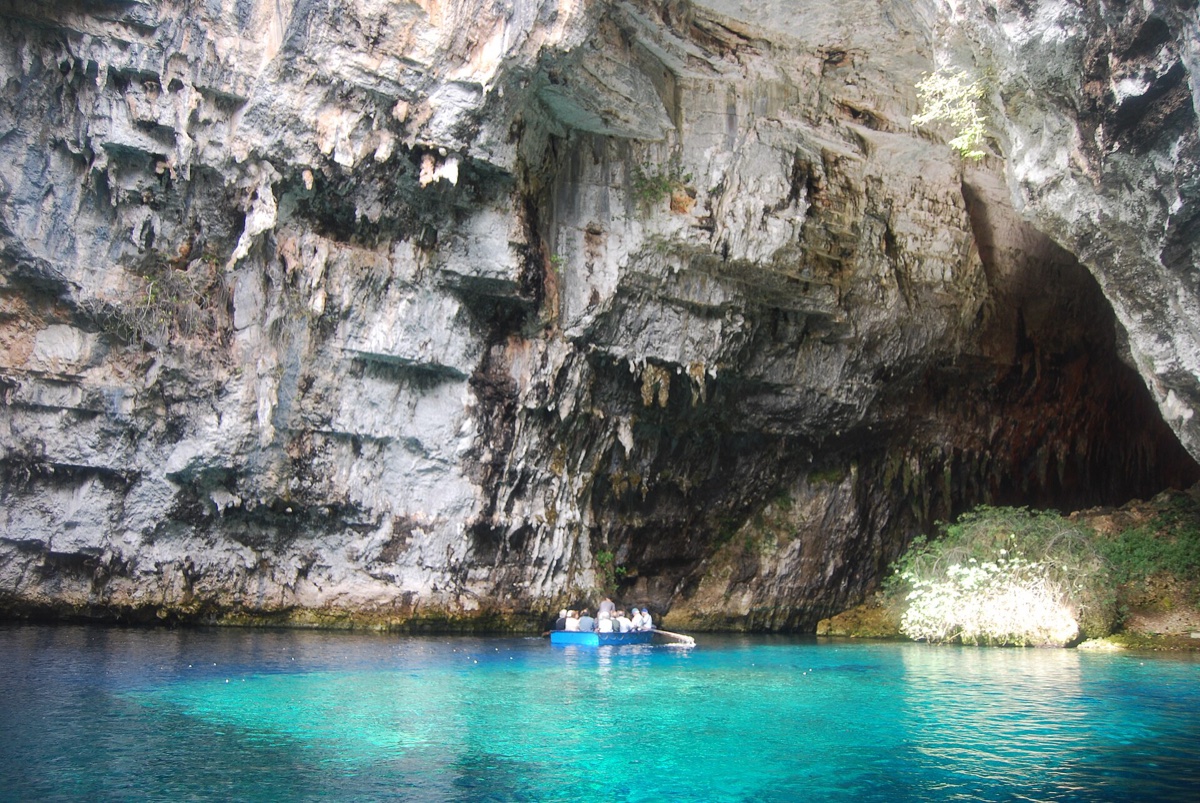
This phenomenal geological wonder near the port of Karavomylos and the town of Sami is simply not to be missed on your Kefalonia holiday, even if queues form in season. It’s a vast collapsed cave with a subterranean lake, whose roof partially caved in during a powerful earthquake long ago. The lake is constantly fed by a complex underground network connected to sinkholes on the other side of the island near Argostoli — water takes a full 15-kilometre underground journey before it emerges here.
On arrival you descend through a tunnel to the water’s edge, climb into a small wooden rowing boat, and a local boatman punts you around the perfectly transparent lake for about twenty minutes with a commentary. Adult tickets cost €10, while children, students, and seniors over 65 pay around half price at €5, and children under six get in free. The cave is typically open from 10:00 to 17:00 with the last entry half an hour before closing.
💡 Local tip: Timing is absolutely key here for the full magical experience. The best window is between 11:30am and 2:00pm, when the sun is at its highest and light pours directly down through the opening in the roof onto the water. At that point the cave turns such a brilliant turquoise that the boats in photos appear to float on air, and you can see all the way down to the rocky bottom without any trouble.
6. Drogarati Cave
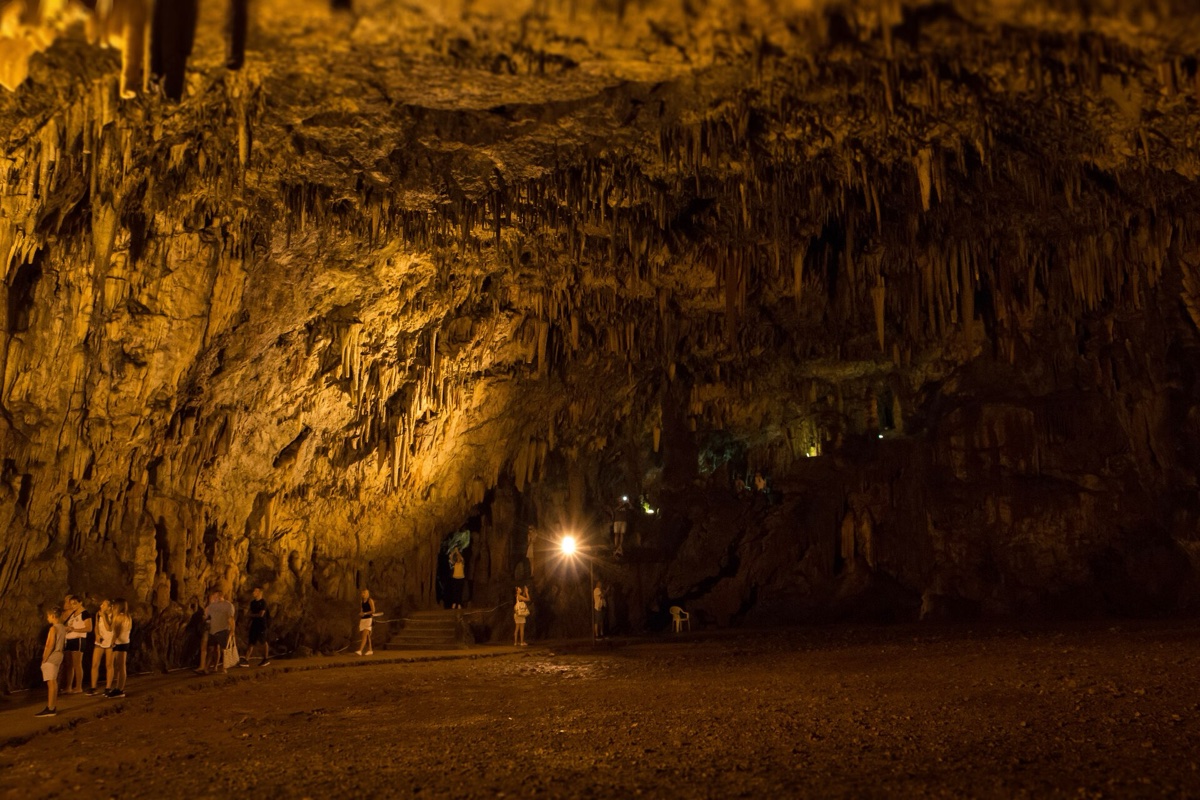
Just a short drive from Melissani Lake lies another extraordinary underground space — the magnificent stalactite cave of Drogarati. A fairly long staircase leads down inside, and once you reach the bottom you’ll immediately appreciate the constant year-round temperature of around 18°C, which feels like an absolute blessing and a welcome escape from the scorching Greek afternoon sun. Like Melissani, this cave is typically open from 10am to 5pm in season.
The cave is enormous and holds a staggering array of stalactites and stalagmites in all manner of shapes and colours — please resist the temptation to touch them, as the oils from human hands can permanently damage their growth. Thanks to its distinctive shape, the main chamber has exceptional acoustics and is nicknamed the natural concert hall, so much so that actual public concerts are occasionally held inside it.
Entrance to the cave costs €6 for adults and €3 for children, but if you’re planning to visit both underground gems on the same day, it’s definitely worth asking at the ticket desk for the combined ticket at €13. This handy pass covers one entry to each cave and is valid for the same day or the following day — saving you a few euros towards an ice cream. ☺️
7. Antisamos Beach
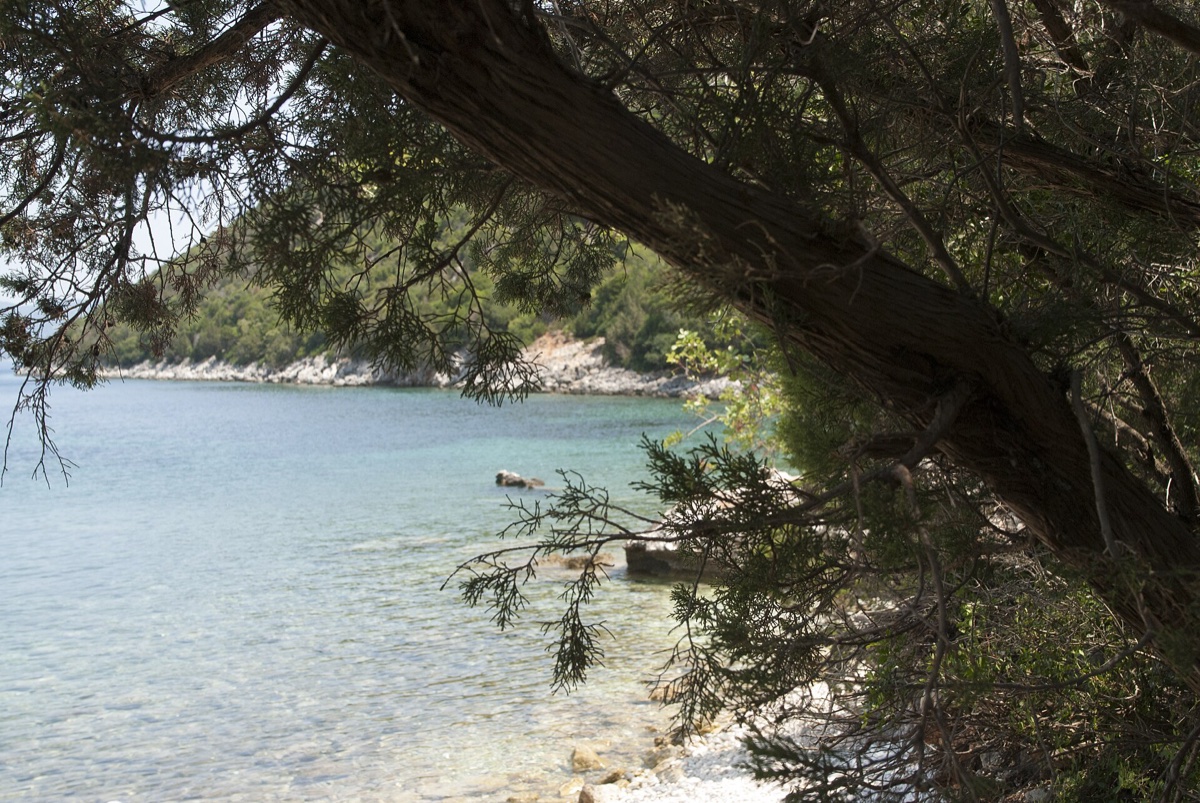
This beautiful, highly photogenic beach hides in a deep bay roughly four kilometres from the port of Sami on the eastern coast, enclosed on all sides by intensely green wooded hills that tumble steeply to the water’s edge. Its beauty was spotted long ago by Hollywood filmmakers — it was here that the most important scenes from Captain Corelli’s Mandolin were filmed, with the bay serving as the backdrop for the large Italian military camp.
The beach is covered in fine, brilliantly white pebbles and the water is absolutely crystal clear, which — combined with rich marine life around the rocky edges — makes it one of the best snorkelling spots on the entire island. Along the shore you’ll find modern beach bars like Acron and Mojito, where you can enjoy great cocktails and rent comfortable sun loungers and parasols for a full day of doing absolutely nothing.
Getting there is straightforward and even smaller cars manage the road with ease, with plenty of parking spaces available. Given how popular the beach is, though, be prepared for the fact that sun lounger hire typically runs between €15 and €20 per set in season, or is offered free with a minimum spend at the bar of around €30–€45.
8. Skala and the South of the Island
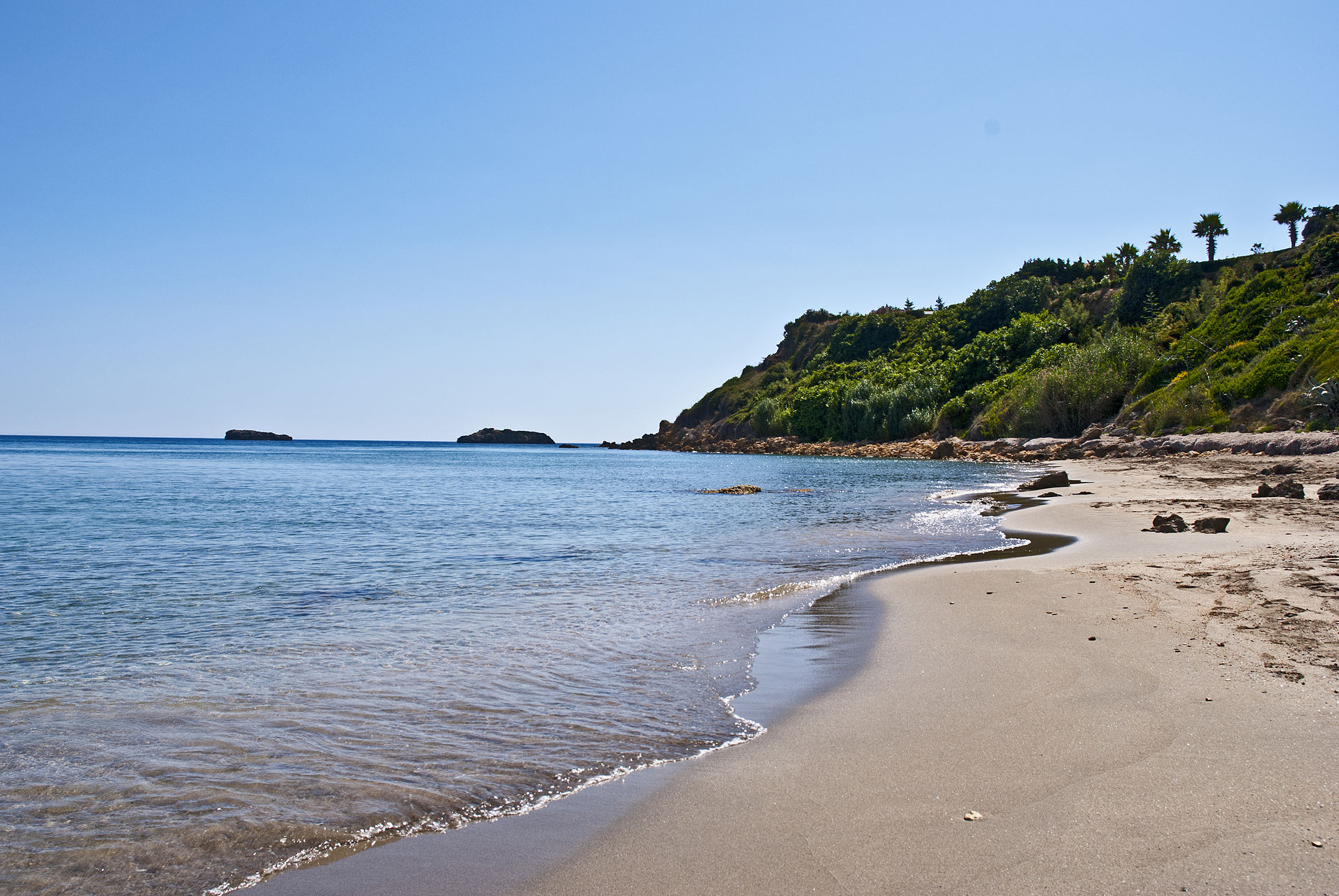
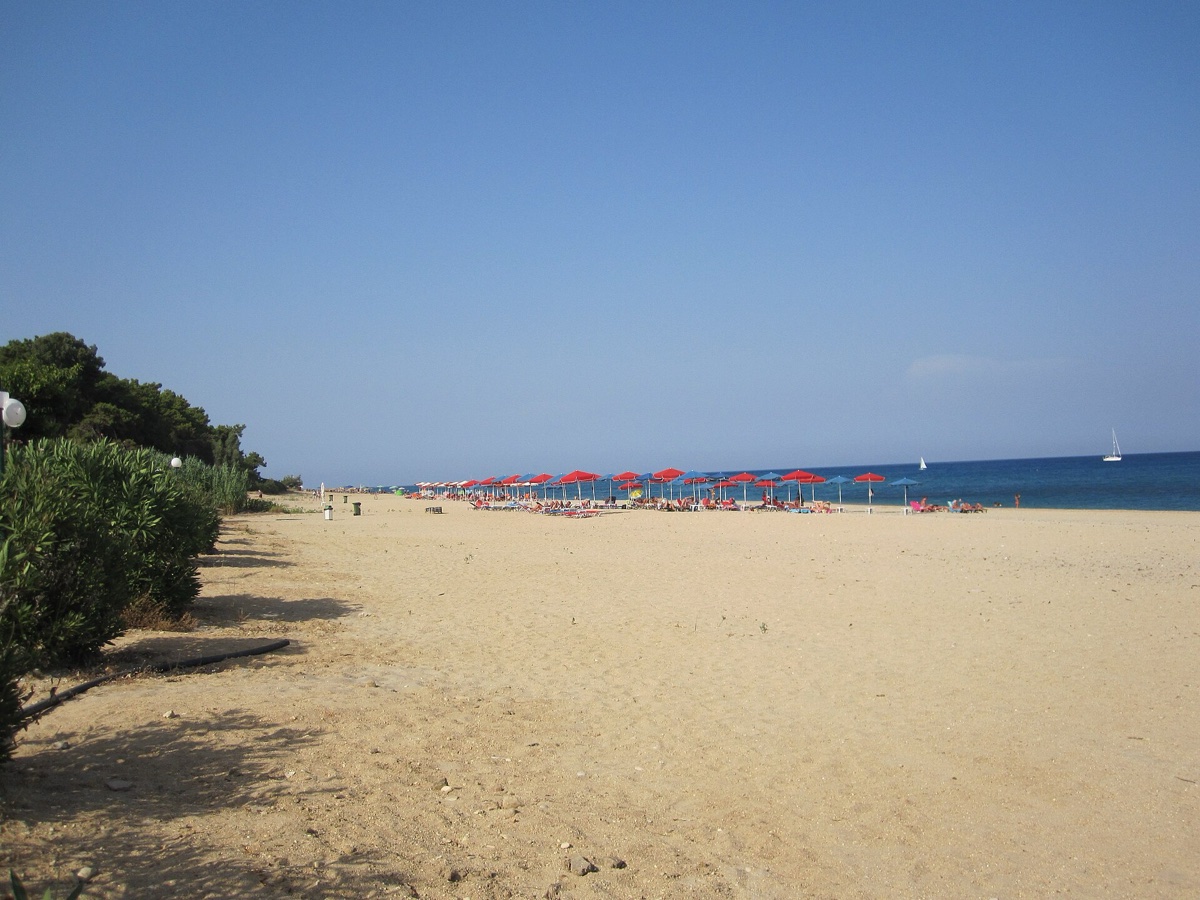
Fed up with pebbles everywhere and craving that classic golden sand between your toes? Head to the popular resort of Skala at the very southern tip of the island. Its more-than-three-kilometre-long beach consistently earns an EU Blue Flag award for outstanding cleanliness and excellent water quality, so you can be certain you’re swimming in pristine conditions.
Thanks to the very gently sloping entry into the water and the calm sea, this is an ideal destination for families with young children, who can splash safely in the warm shallows. The beachfront is lined with a pleasant pedestrian zone full of souvenir shops, traditional Greek tavernas, and fragrant cafés for an excellent evening meal. If Skala feels a touch too busy, the quieter village of Lourdas lies just nearby, with an equally beautiful and long beach.
Beyond the beach, there’s a quick historical detour to be made, as right in the heart of the resort you’ll find the freely accessible ruins of an ancient temple and the remains of a luxurious Roman villa with beautifully preserved original mosaics — well worth a brief stop on the way back from the sea.
9. Mount Ainos
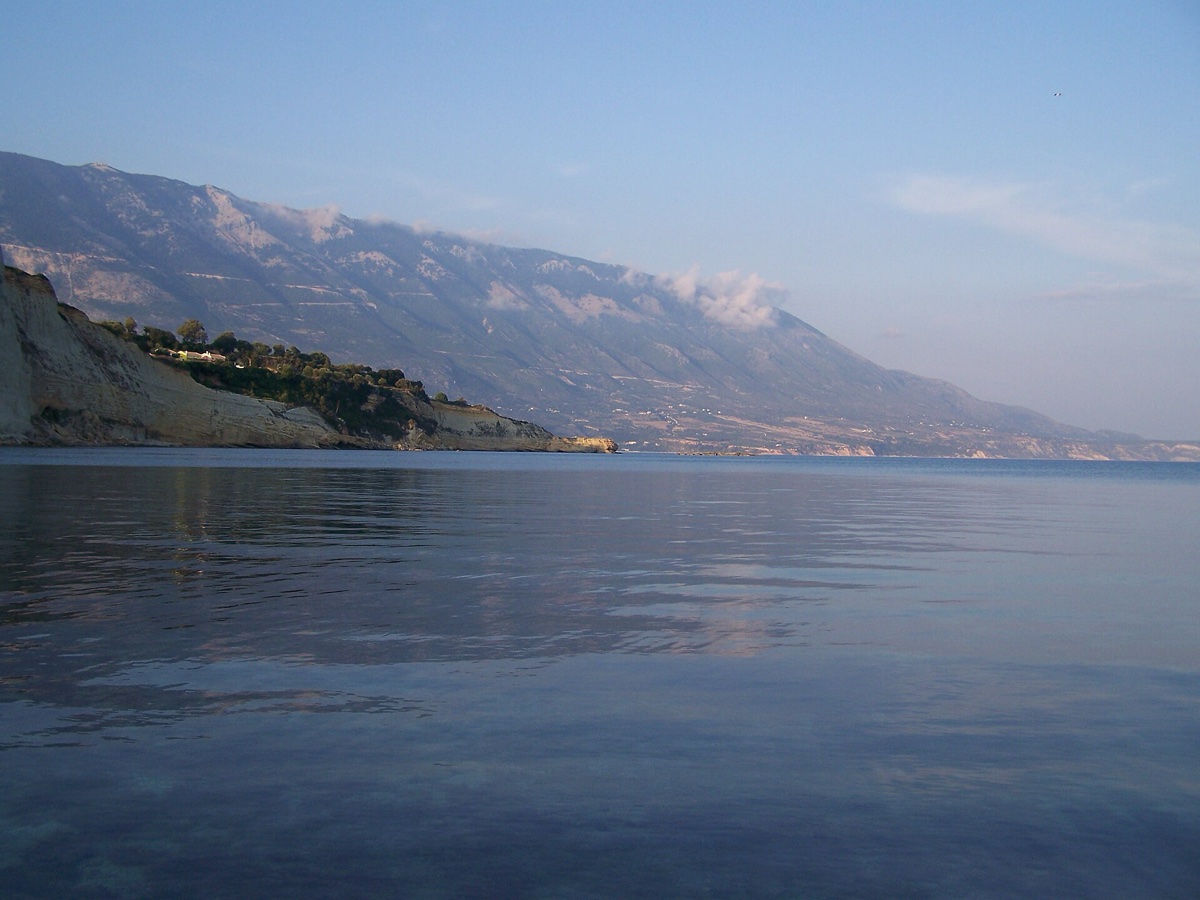
Kefalonia isn’t just about the sea and sunbathing — the central part of the island is dominated by the vast massif of Mount Ainos, whose highest peak, Megas Soros, rises to an impressive 1,628 metres above sea level. The entire 3,000-hectare forested area has been designated as Greece’s only island national park, and from an altitude of 600 metres the slopes are covered in the rare endemic Kefalonian fir, whose very dark needles contrast sharply with the pale limestone and give the mountain a distinctively sombre look from a distance.
You can drive fairly comfortably all the way up to the transmitter near the summit car park, from where several well-marked walking trails fan out — including a popular one-and-a-half-hour loop from the Environmental Centre. It’s a good ten degrees cooler up here than down at the coast, making a trip up in sweltering August feel like an absolute gift. Do pack a light layer.
With a bit of luck and patience, you might also spot herds of semi-wild ponies roaming freely across the south-eastern slopes of the national park — they’ve been wandering here for decades and are a big draw for photographers. On a clear day, the summit offers a jaw-dropping panorama taking in neighbouring Zakynthos, Lefkada, and the distant Greek mainland.
10. Monastery of Saint Gerasimos
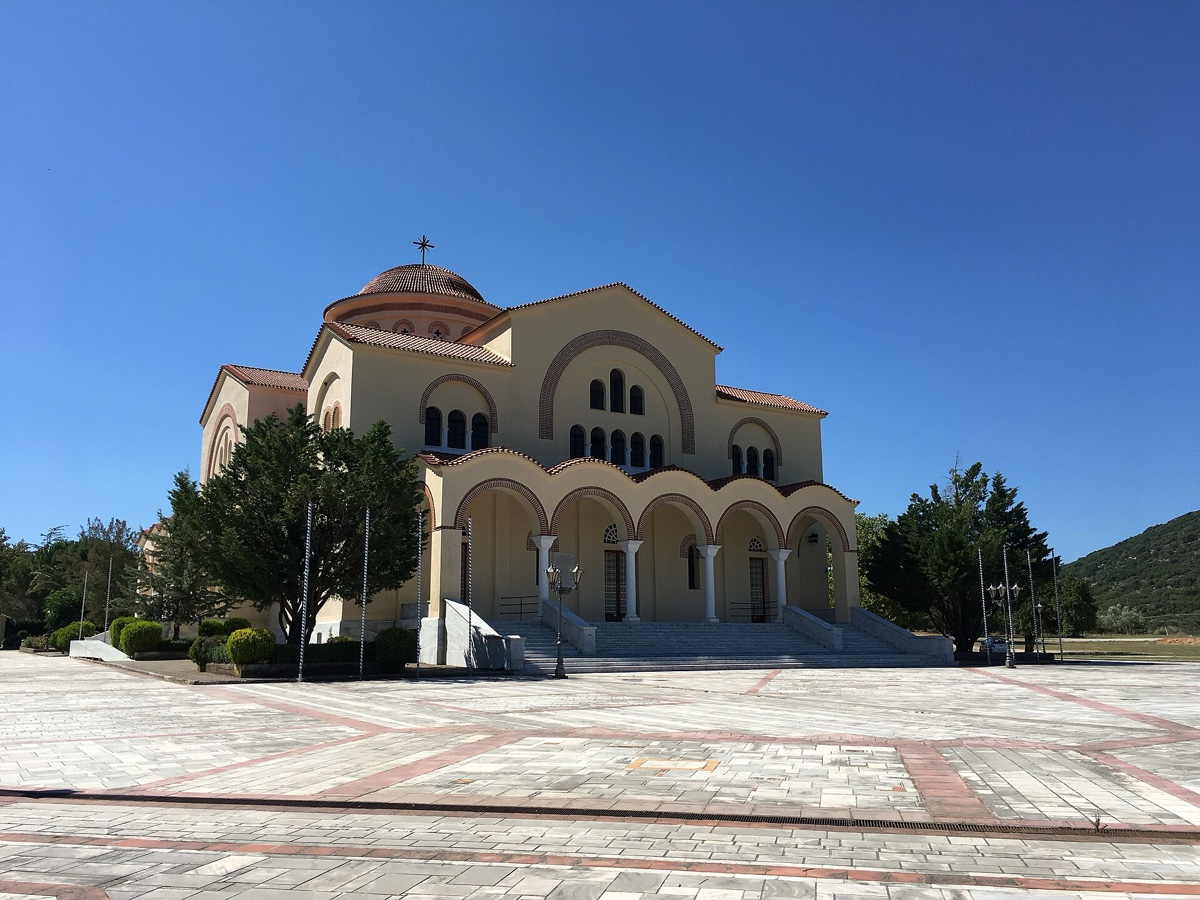
In the exceptionally picturesque Omala Valley nestled at the foot of Mount Ainos, you’ll find the most important spiritual centre on the island. This large and beautifully decorated monastic complex is dedicated to Saint Gerasimos, the beloved patron saint and protector of Kefalonia, whose mummified remains are still reverently kept here in a silver sarcophagus. Local tradition holds that the saint protected the island even during the devastating earthquake.
The complex includes both old and newer buildings adorned with breathtaking interior frescoes and gilded icons. Near the nave of the old church, you’ll also find a small, very narrow underground cave where the saint lived for many years as a humble hermit — you can descend into it via some rather steep metal steps if you’re not claustrophobic.
Entry to the monastery is completely free for everyone, but please remember to dress respectfully — covered shoulders and knees are strictly required for both men and women. The atmosphere is incredibly peaceful and soothing, making it perfect for a moment of quiet reflection in the middle of an otherwise busy and hot holiday. And a visit here pairs naturally with a wine tasting just around the corner — which, honestly, is a rather ideal combination. ☺️
11. Robola Wine Cooperative
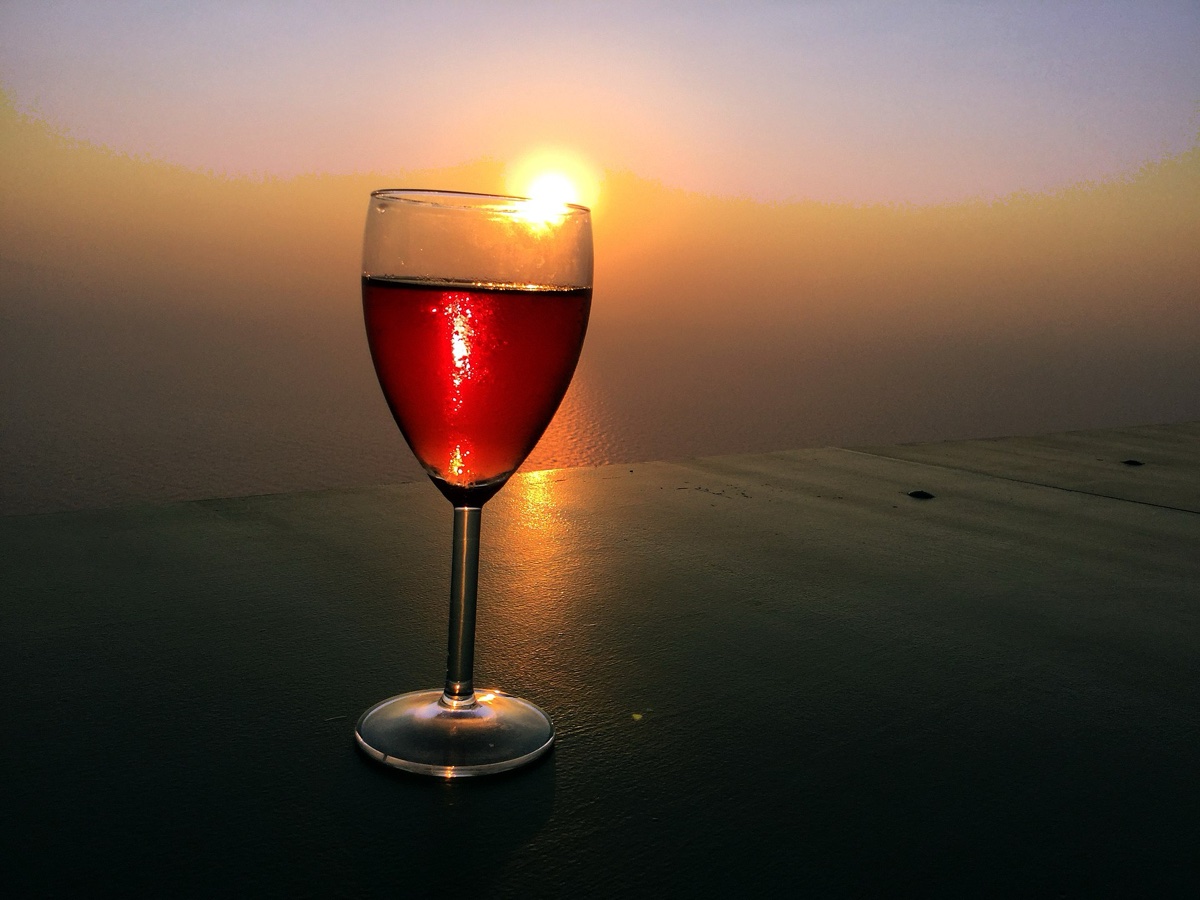
While you’re exploring the Omala Valley, it would be an absolute crime not to visit the famous local Robola Wine Cooperative, which is located just a few hundred metres from the monastery of Saint Gerasimos. The pride of the area is the local Robola grape variety, a premium white wine that grows almost exclusively on the steep limestone terraced slopes of this island and thrives nowhere else in Greece quite so well. It’s a very dry, crisp, and intensely mineral wine with subtle citrus notes — wine lovers will absolutely adore it.
The cooperative has a freely accessible exhibition on the fascinating history of winemaking on the island and is typically open to the public every day from 9am to 8pm during the main tourist season (May to October). A basic look around the production area and a casual tasting at the counter is usually free of charge. That said, we’d really recommend treating yourself to something a little more in-depth.
Splash out on the guided seated tasting, which comes in at a very reasonable €12 per person. During it, an experienced sommelier will walk you through six different wines (including the flagship Robola and the sweet Mavrodaphne), and you’ll also receive a generous board with Mediterranean bruschetta, local cheese, dried fruit, and nuts — which handily doubles as a light vegetarian lunch. 😅
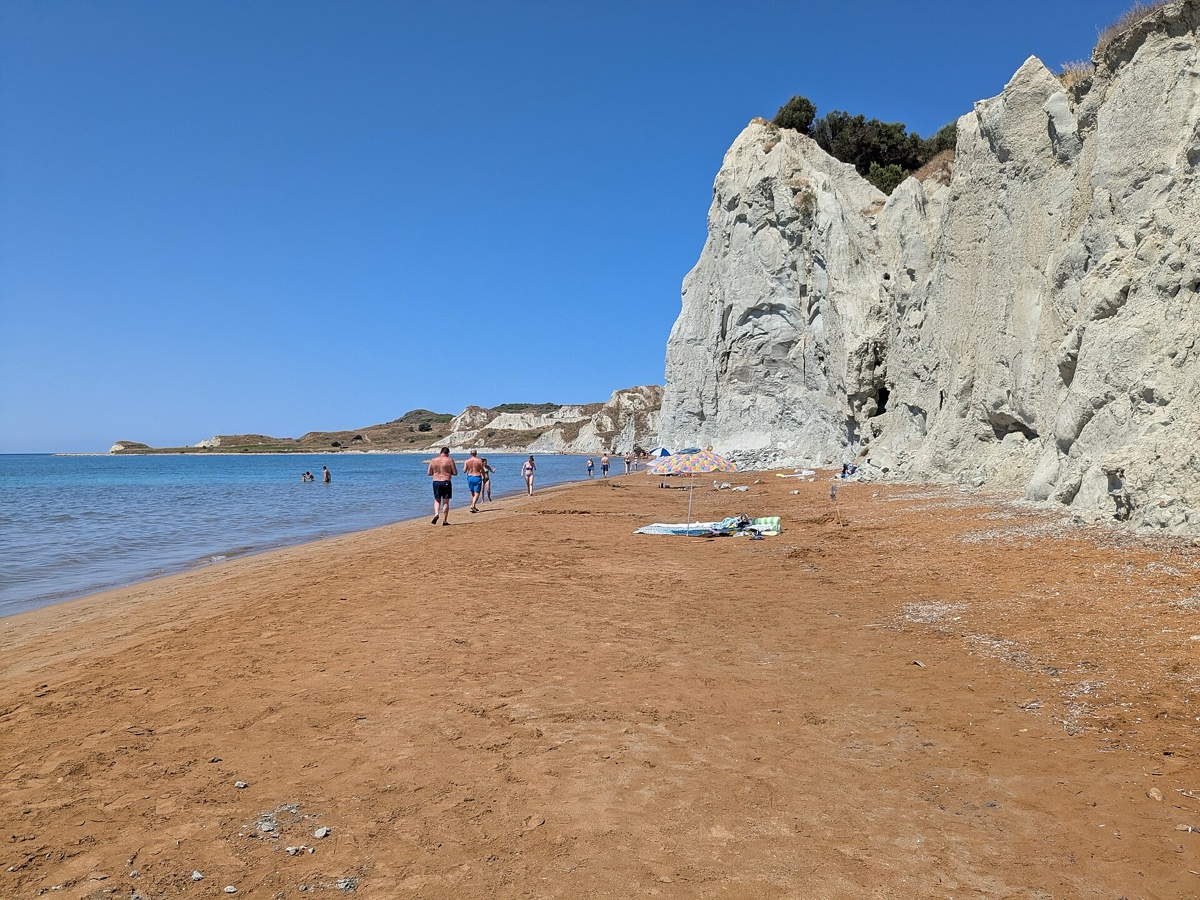
12. Xi Beach
If you head out by car or ferry to the western Paliki peninsula, about eight kilometres from the town of Lixouri you’ll come across a beach that looks like it belongs on a completely different continent. Xi Beach is famous for its utterly unique yellow-to-brick-red sand, which creates a striking and wonderfully photogenic contrast with the shallow, pale blue waters of the Ionian Sea. Forget white cliffs — the geology here is something else entirely.
Behind the beach, tall natural cliffs of pale clay rise up — clay that locals swear has genuinely beneficial and healing properties for the skin. It’s a common sight to see tourists of all ages enthusiastically mixing the clay with seawater and plastering it all over their bodies and faces, as if they’d paid for some luxury spa treatment under the open sky. 😁
Thanks to the incredibly fine sand, virtually zero waves, and very warm shallow water that you can wade through for dozens of metres, this is an extremely popular destination for families with young children — so expect it to be quite busy and lively in peak season. Right at the beach you’ll find ample parking and several relaxed beach bars with a full sun-lounger and parasol service.
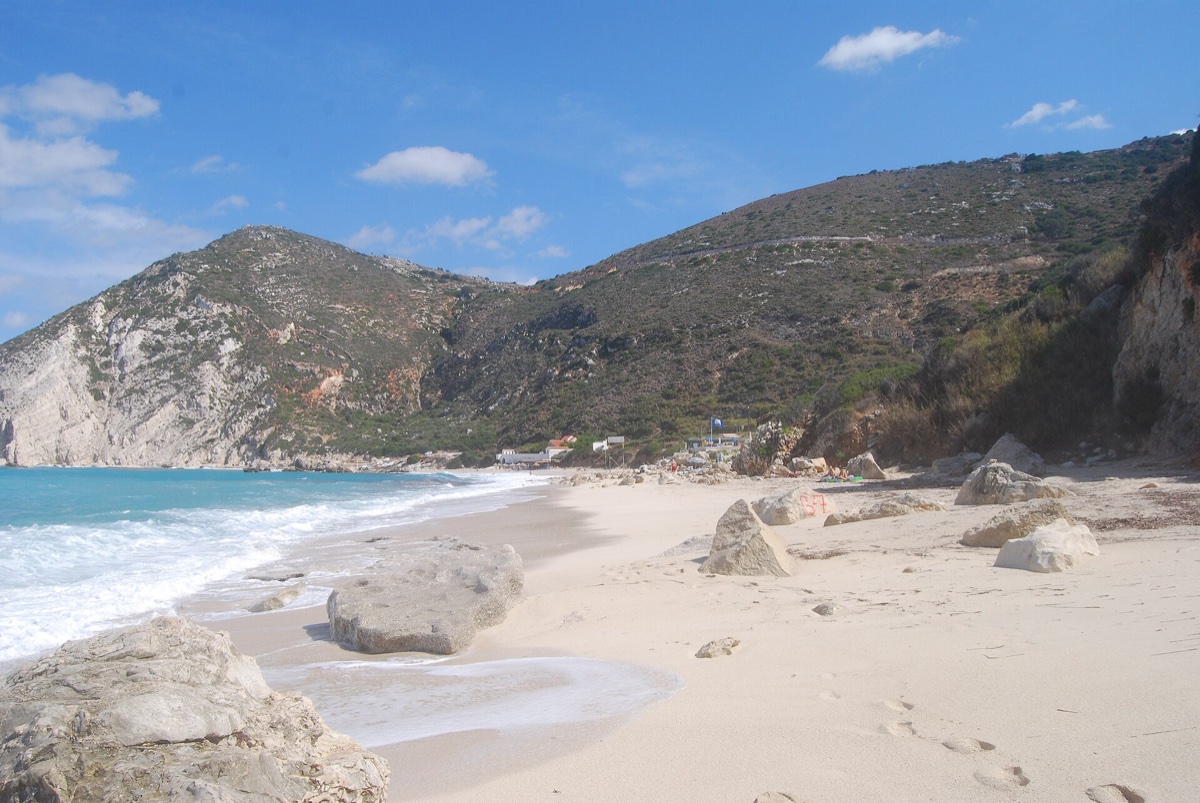
13. Hidden Beaches of Kefalonia
If you’re put off by overpriced sun loungers and crowds at the well-known Instagram hotspots, Kefalonia fortunately hides plenty of secluded coves for the more adventurous traveller. One such hidden gem is Fteri Beach, which rivals the famous Myrtos in its wild beauty and white pebbles, but can only be reached by boat or a very demanding hike steeply down over loose gravel. Fortunately, a regular water taxi runs from the nearby village of Zola for around €10 return, which is the safest option.
In the far north near Fiskardo, you’ll find the completely wild cove of Dafnoudi, reached by a fifteen-minute walk through a pleasant, shady forest. Another brilliant tip is the charming pebble beach of Emblisi, where ancient pine trees and olive trees provide natural shade growing almost to the water’s edge — meaning you can do without a parasol entirely.
💡 Local tip: You might come across photos online of the stunning remote beach of Platia Ammos on the western coast of the Paliki peninsula, with its towering sheer rock walls and utter tranquillity. However, a word of warning: the access steps to this beach were badly damaged in a recent earthquake and the descent is currently extremely dangerous and officially prohibited — we’d recommend admiring this beauty safely from the viewpoint at the top instead.
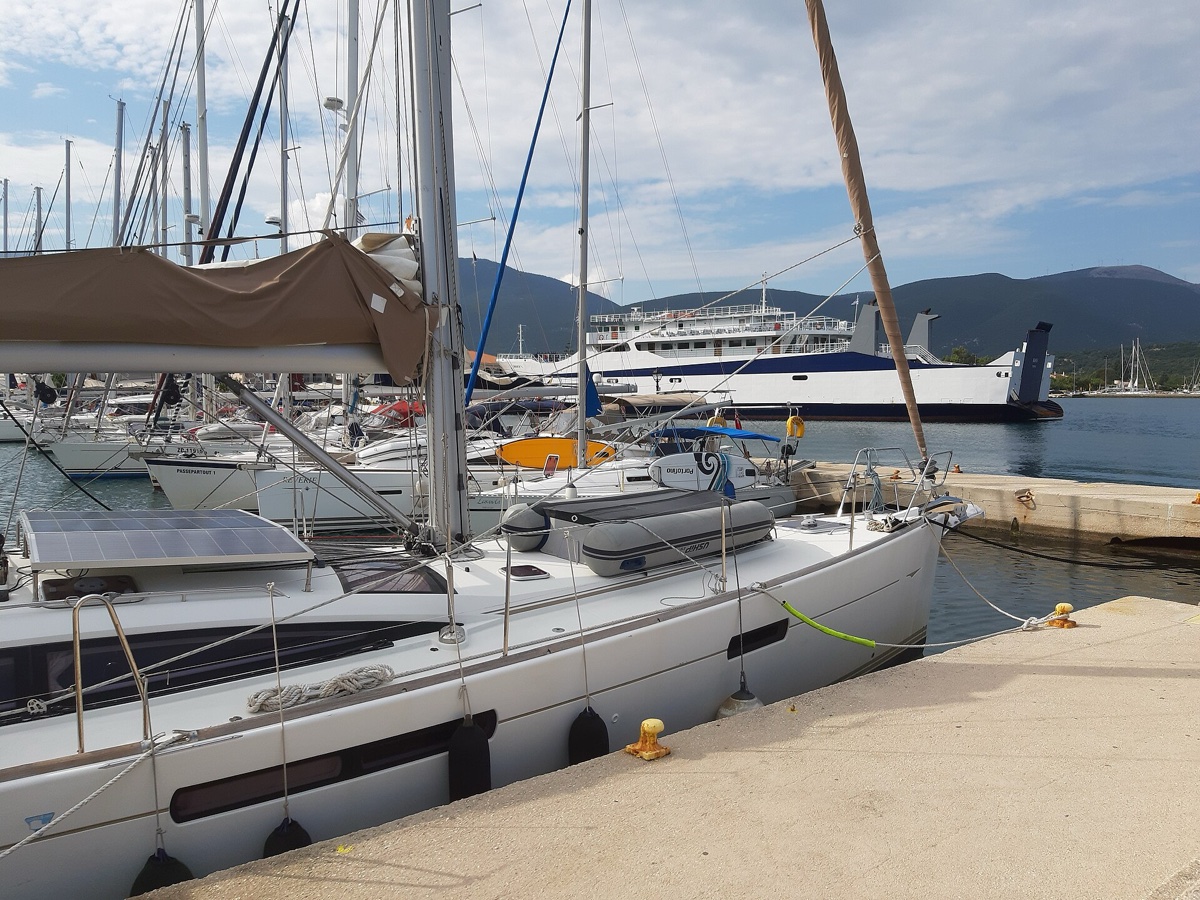
14. Sami and a Day Trip to Ithaca
The harbour town of Sami on the eastern coast has a lovely long promenade, and it was here that filmmakers built the large wooden pre-war Argostoli sets for filming Captain Corelli’s Mandolin — the real capital city looked too modern after its post-earthquake reconstruction. The town has a very laid-back and relaxed atmosphere today, with plenty of excellent waterfront tavernas serving fantastic vegetarian mezze, local cheeses, and the oven-baked vegetable dish briam.
Sami also serves as the main and most convenient jumping-off point for anyone wanting to explore the mythical home of King Odysseus. Regular ferries of various sizes depart here for the neighbouring island of Ithaca, with the crossing to Piso Aetos port taking just over an hour and offering beautiful views of both islands along the way.
You can opt for the cheaper scheduled ferry and explore the island at your own pace by car, or book a comfortable organised full-day guided boat trip that runs to around €35–€65 depending on the type of vessel, itinerary, and what’s included. Ithaca is smaller, greener, and wonderfully quiet — exactly the kind of island where time slows to a standstill and you finally stop checking your phone.
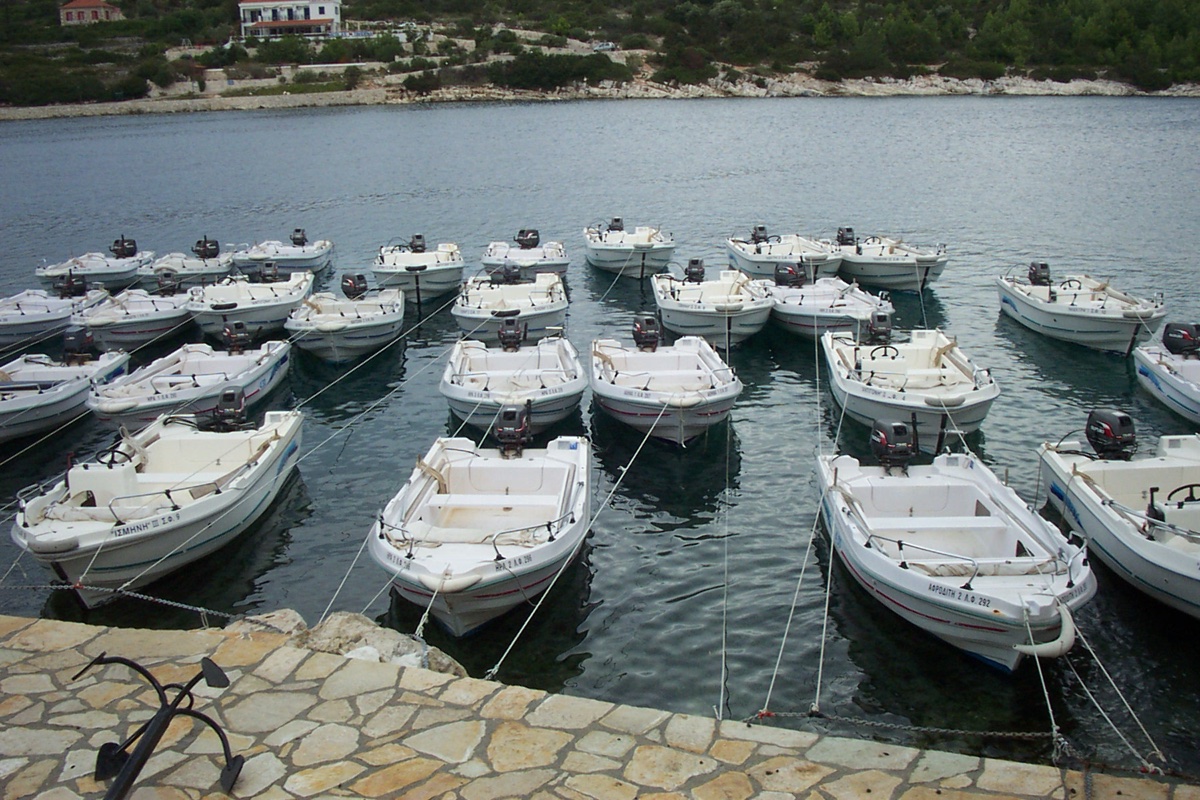
15. Hire a Boat Without a Licence
Kefalonia’s mountainous interior and coastline seen from the road is spectacular — but exploring its extraordinarily jagged shoreline from the deck of your own little boat is an experience on a completely different, more liberating level. Greece has a wonderfully generous rule: small motorboats with engines up to 30 horsepower require no captain’s licence or qualification — all you need is a standard driving licence and a short safety briefing at the marina.
Reliable hire companies can be found in most of the larger ports — popular and well-regarded ones include those in Fiskardo or Agia Efimia (such as Regina’s Boats), and of course in Sami (Kefalonia Compass). With a small boat like this, you can freely cruise along the protected coastline and stop to swim in tiny deserted coves that you’d simply never reach by road or on foot.
In the height of summer, book your boat several days in advance — or even from home before you travel — as demand is enormous. Daily hire rates vary by location, boat size, and month, but budget roughly €80–€150 plus the cost of fuel you use. Double-check the exact terms beforehand, or browse organised trip options easily on the GetYourGuide platform.
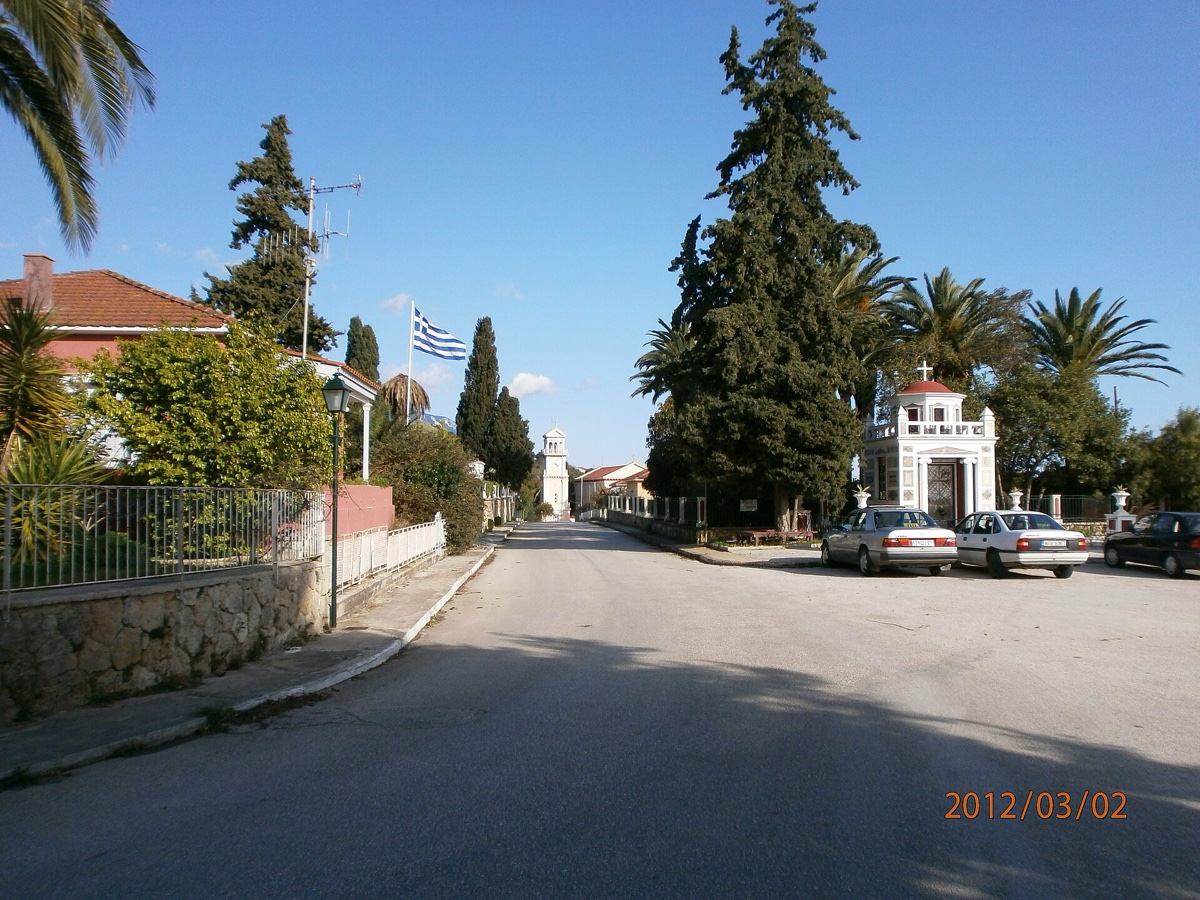
16. Kourkoumelata and Metaxata
If you’d like to get a sense of what the island looked like before that fateful August of 1953, take a short drive into the countryside south-east of Argostoli, just past the airport. The village of Kourkoumelata was also completely destroyed in the earthquake, but a wealthy local shipowner named Vergottis had it entirely rebuilt according to the original architectural plans down to the last detail — and footed the entire bill himself.
Today, thanks to him, it’s quite possibly the most immaculate and beautiful village on the entire island, boasting gorgeous neoclassical houses, perfectly manicured flowering gardens, and elegant clean streets entirely free of overhead electricity cables. It makes for a striking and very pleasing contrast to the otherwise purely functional modern architecture that characterises most of the island.
Right next door lies the tiny village of Metaxata, which has a very different kind of appeal — this one is for lovers of literature and romantic history. It was here, in 1823, that the celebrated English poet Lord Byron spent several months writing before departing for the Greek mainland to fight for independence. A dignified memorial and statue still commemorates his inspirational stay on the island to this day.
Map of points of interest for your phone
Where to Eat in Kefalonia
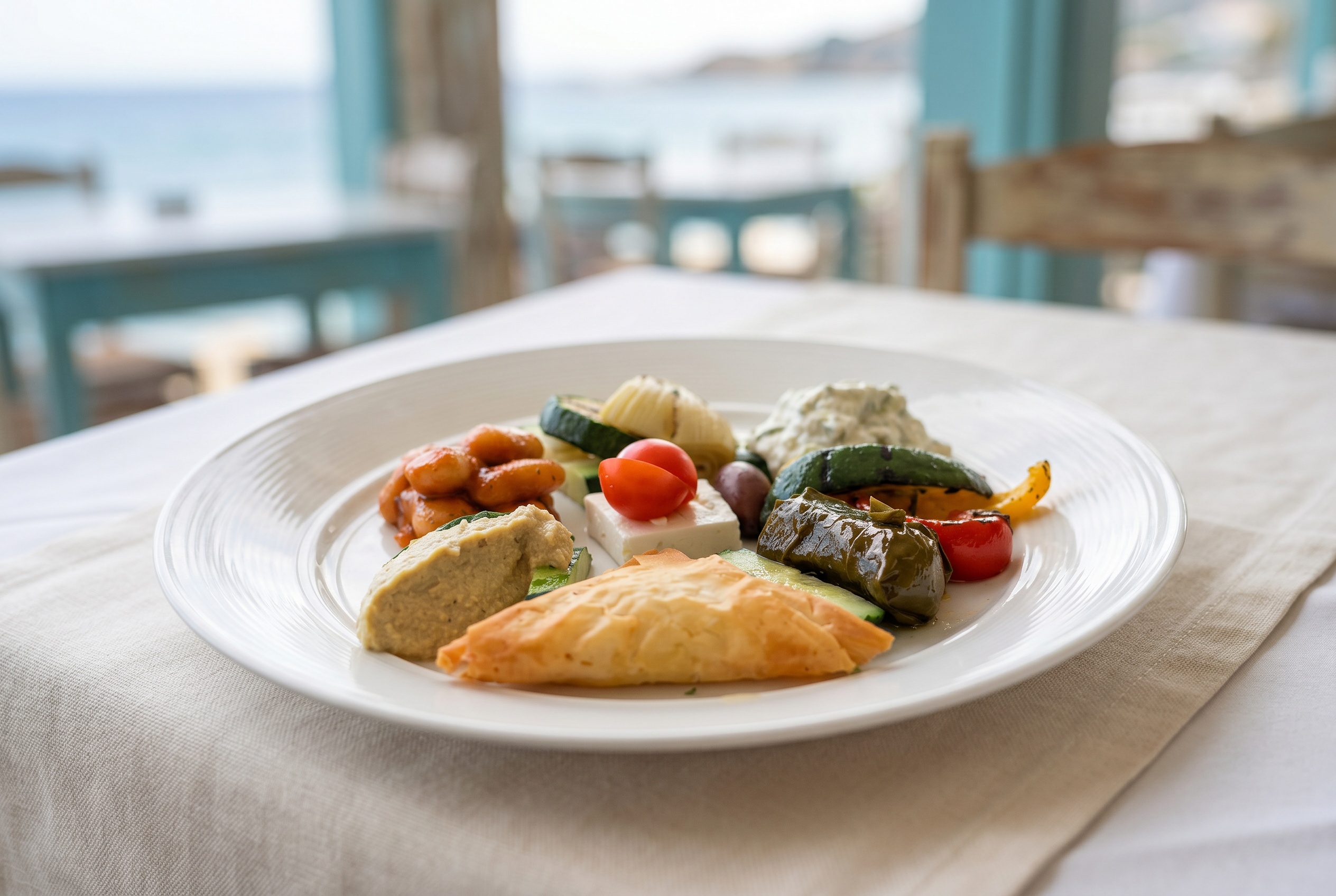
Greek cuisine on the Ionian Islands is exceptional, and Kefalonia is no exception. Local tavernas take great pride in fresh ingredients, so whether you order fish, seafood, or traditional meat dishes, you’re in for a treat. The island is known for its meat pie called kreatopita, which is absolutely worth trying, alongside local Kefalonian cheeses and almond-based sweets.
When choosing where to eat, follow the locals — it’s always a reliable guide. Captain’s Table in Argostoli has an excellent reputation for fresh fish and grilled octopus. If you’re up in the north around Fiskardo, try the restaurant Tassia, famous for its outstanding seafood and stunning harbour views. In the Lassi area, the popular taverna Sto Psito serves up great traditional food alongside beautiful sunset views over the sea. Whatever you order, wash it down with a chilled glass of local Robola wine — as discussed, it’s non-negotiable.
Where to Go Next After Kefalonia
Kefalonia makes a wonderful springboard for exploring the rest of the Ionian Sea and Greece more broadly. From the port of Fiskardo you can easily catch a ferry to the neighbouring island of Lefkada, and to the south-east you can hop on a boat to the magical island of Zakynthos. If you haven’t quite decided where to head this year, we’ve put together a guide on Where to Go on Holiday in Greece, comparing all the most popular destinations.
Do also take a look at our roundup of the Most Beautiful Greek Islands, where we go into more detail on which island suits families and which is better for couples. For more on specific Ionian islands, we have a dedicated guide on Zakynthos Holidays and detailed tips for Corfu Holidays.
If you’re thinking about the southern Aegean too, you might find our Crete Holiday guide useful, and for hopeless romantics there’s always Santorini Holidays. And before you even start packing, have a read through our practical What to Pack for a Greek Holiday list — so you don’t forget anything important.
Frequently Asked Questions
If this is your first time visiting Kefalonia, you probably have plenty of practical questions swirling around. We’ve put together answers to the most common ones so you can plan your Greek holiday with complete peace of mind.
What should I visit in Kefalonia?
You absolutely must see the iconic Myrtos Beach, the Melissani Cave with its underground lake, and the historic town of Fiskardo in the north, which was the only place to survive the earthquake. Don’t miss the capital Argostoli either, where you can watch Caretta caretta sea turtles in the harbor in the morning, and I’d also recommend a trip up to the mountains to Ainos National Park, home to wild horses and rare fir trees.
Which part of Kefalonia is the most beautiful?
Each part has its own charm. For lovers of greenery and picturesque villages, the north around Fiskardo and Assos is the most beautiful, where you’ll find original Venetian architecture. If you’re looking for soft sand and relaxed swimming, you’ll love the Skala resort area in the south, Xi Beach with its red sand, or Lassi near the airport, which makes a great base for day trips.
When do turtles hatch in Kefalonia?
Caretta caretta turtles mate in spring and nest mainly from May to early August, primarily on the island’s southern beaches. The baby turtles then hatch from eggs buried in the sand after about two months, so your best chance of seeing them make their way to the sea is in late summer, from mid-August to October. You can see adult turtles in Argostoli harbor year-round.
How do I get to Kefalonia?
The fastest and most convenient way is a direct flight from Prague with Smartwings, which takes just over two hours and tickets can be found from around 135 EUR. Another option outside peak summer season is to fly with a connection through Athens, or reach the island by ferry from the mainland port of Kyllini to the town of Poros, with the crossing costing around 13.50 EUR per person.
Where should I go on a day trip from Kefalonia?
A very popular full-day excursion is a boat trip to the neighboring green island of Ithaca, with boats departing from Sami harbor (trips cost around 35 to 65 EUR). Another great option is to rent a small motorboat up to 30 HP without needing a license and explore wild hidden coves, or take a trip to the Omala Valley and combine a visit to the Monastery of Saint Gerasimos with a tasting of the local Robola wine.
How many days should I spend in Kefalonia?
To avoid rushing and really enjoy your holiday, five to seven days is the absolute minimum, as driving on the mountain roads takes quite a bit of time. The island is truly huge and distances are deceptive, so if you want to see both beaches and caves while also relaxing over good coffee, the ideal stay would be a full ten to fourteen days.
Is Myrtos dangerous?
Myrtos Beach is stunning and incredibly photogenic, but it demands respect. The seabed drops off very steeply after just a few steps, and the beach often has strong and unpredictable currents that can catch you off guard even on days when the water at other island beaches is completely calm. Always pay attention to current warnings, don’t overestimate your abilities, and enter the water with caution.
Where is the pink beach in Crete?
A bit off topic, but happy to help. There are actually two famous pink sand beaches in Crete. The most well-known is Elafonissi on the southwestern tip of the island, and the second, equally beautiful one is Balos Beach in the northwest.
Tips and Tricks for Your Vacation
Don’t Overpay for Flights
Search for flights on Kayak. It’s our favorite search engine because it scans the websites of all airlines and always finds the cheapest connection.
Book Your Accommodation Smartly
The best experiences we’ve had when looking for accommodation (from Alaska to Morocco) are with Booking.com, where hotels, apartments, and entire houses are usually the cheapest and most widely available.
 🚗 Car rental on the roadVerified rental cars in the Ionian Islands
Search with the DiscoverCars comparison engine — it compares prices from dozens of local and international rental companies, and most bookings come with free cancellation.
Compare car prices in the Ionian Islands →Don’t Forget Travel Insurance
Good travel insurance will protect you against illness, accidents, theft, or flight cancellations. We’ve had a few hospital visits abroad, so we know how important it is to have proper insurance arranged.
Where we insure ourselves: SafetyWing (simple monthly subscription) and TrueTraveller (for extra-long trips).
Find the Best Experiences
Get Your Guide is a huge online marketplace where you can book guided walks, trips, skip-the-line tickets, tours, and much more. We always find some extra fun there!