

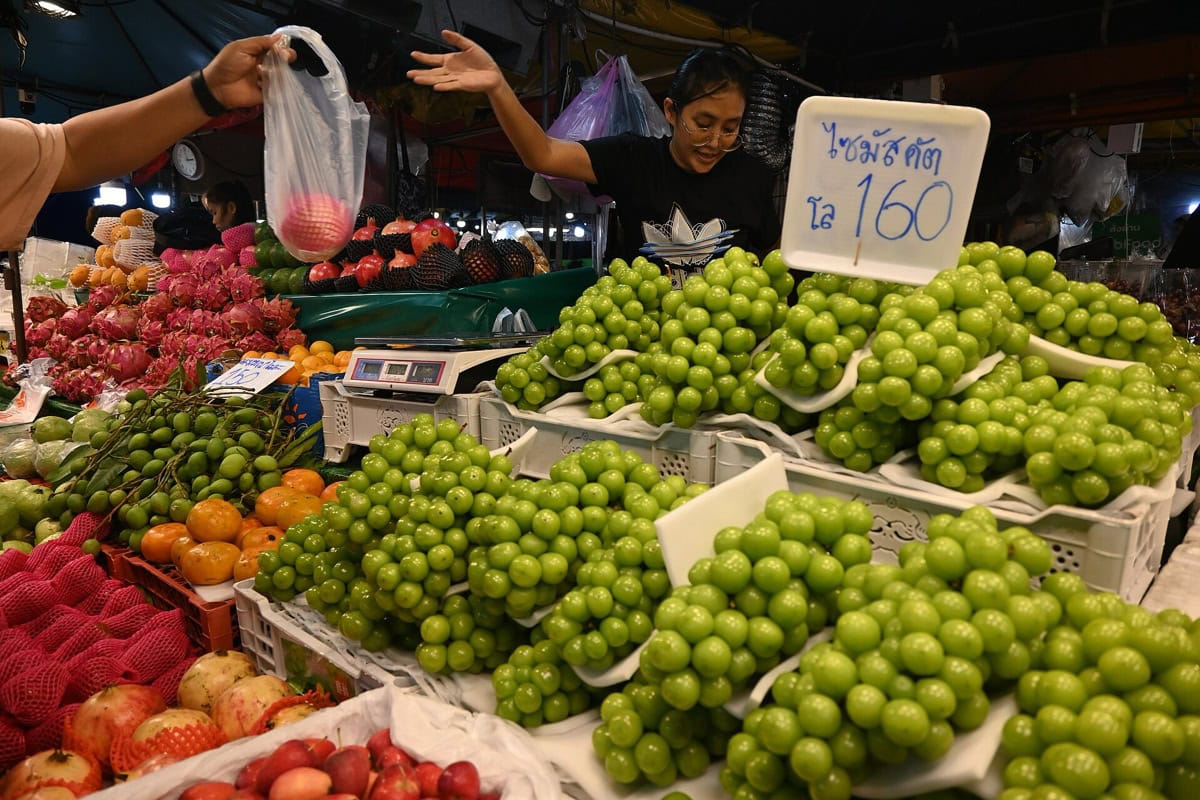
Hot, humid air at an Asian evening market, the buzz of the crowd, and stalls sagging under an avalanche of unbelievable colours and shapes. This is exactly what fruit heaven looks like, and it will pull you in completely on the very first day of your dream tropical holiday. While back home in the Czech Republic our supermarkets tend to stock only hard mangoes and tired papayas, in the countries where this exotic fruit grows you’ll experience a genuine explosion of flavours and aromas.
Tasting local produce is one of the very best travel experiences there is, because only under the hot sun do these fruits develop their true, honey-sweet character. Once you sink a spoon into a freshly halved papaya on the beach, or crack open a hairy rambutan for the first time, you’ll never look at fruit quite the same way again.
From the bustling markets of Thailand and lush green Sri Lanka to the sun-drenched Canary Islands, dozens of fascinating varieties are waiting for you. I’ll show you the most interesting exotic finds, help you choose and peel them properly, and throw in a few tips on how not to get fooled by market traders.
TL;DR
Among the best exotic fruit you simply must try are the controversial durian, the delicate mangosteen, the giant jackfruit, and the vitamin C powerhouse guava. Most tropical fruits are eaten raw after careful peeling or scooping out with a spoon, and you can reliably tell ripeness by the intense sweet aroma near the stem and a slight give in the skin when gently pressed.
Summary
- King and queen: While durian rules the markets with its size and off-putting smell, mangosteen wins you over with its incredibly delicate, refined flavour.
- Smell is everything: You’ll spot ripe tropical fruit (like mango or papaya) mainly by touch and smell — the skin colour is often very unreliable.
- A sensation for vegetarians: Young green jackfruit, once shredded and spiced, perfectly mimics the texture of pulled meat, even though it contains almost no protein.
- Transport bans: Because of its strong sulphur compounds, you can’t take durian on the Singapore metro, into many hotels, or into taxis.
- Vitamin bomb: The unassuming guava contains roughly four times more vitamin C than an ordinary orange.
- Watch what you bring back: Without a special phytosanitary certificate, from a non-EU holiday you may only bring back pineapple, coconut, durian, banana and dates.
18 Most Beautiful Types of Exotic Fruit in the World
Every corner of the tropical and subtropical belt hides its own treasures, just waiting to be discovered. I’ve put together a list of eighteen absolutely fascinating varieties that you definitely shouldn’t walk past unnoticed on your travels around the world.
1. Durian
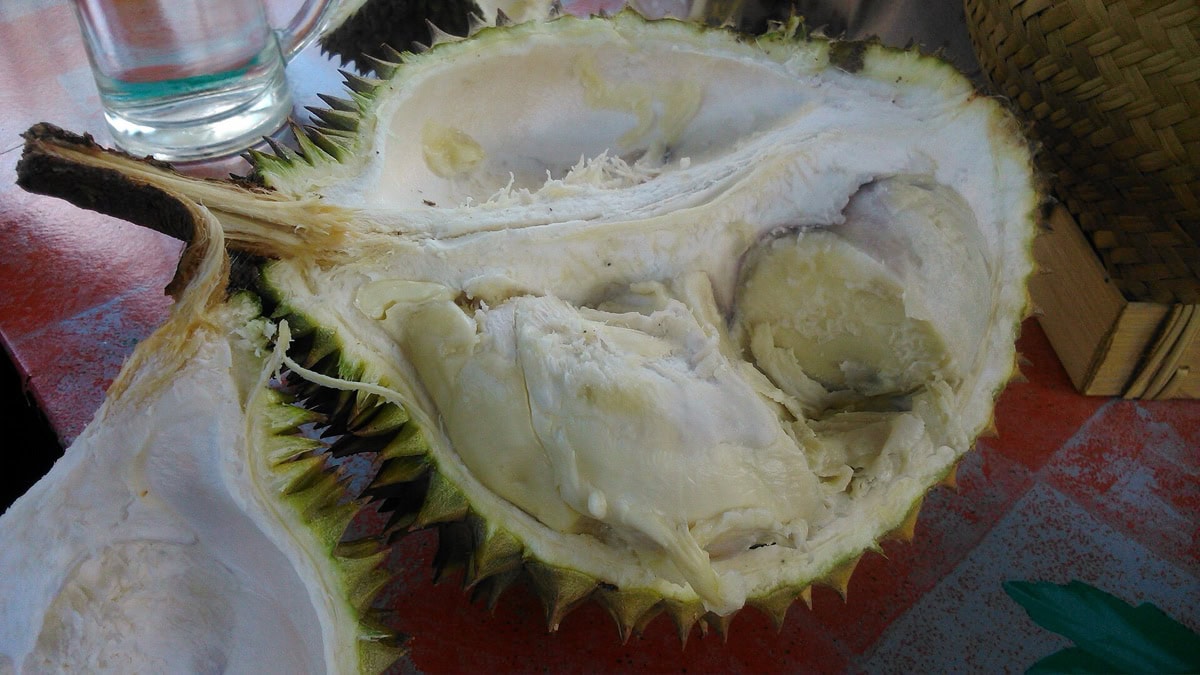
This enormous, spike-covered fruit from the rainforests of Malaysia and Borneo has rightfully earned the nickname the king of fruits. You’ll most often come across it at night markets in Thailand, Malaysia or Indonesia, where it’s sold cut into portions on trays. Inside the hard green-brown husk hide creamy, yellowish lobes of flesh around large seeds, which you simply eat with your hands.
Its taste is absolutely divine, reminiscent of sweet vanilla custard with notes of caramel and almond, but the problem is its extremely strong smell. This comes from dozens of volatile sulphur compounds (durian carries several extra copies of the genes that produce them) and resembles a mix of fried onion, garlic and rotten eggs. Because of this intense odour, which clings stubbornly to everything nearby, there is a strict ban on eating durian on the Singapore metro, punishable by a fine of up to 500 SGD, and you’ll be shooed out of hotels and taxis with it right across Southeast Asia.
💡 Tip: You’ll know a ripe one because it smells really strongly, the skin gives slightly along the seams, and when you gently shake it near your ear you’ll hear the muffled thud of the loosened flesh.
2. Mangosteen
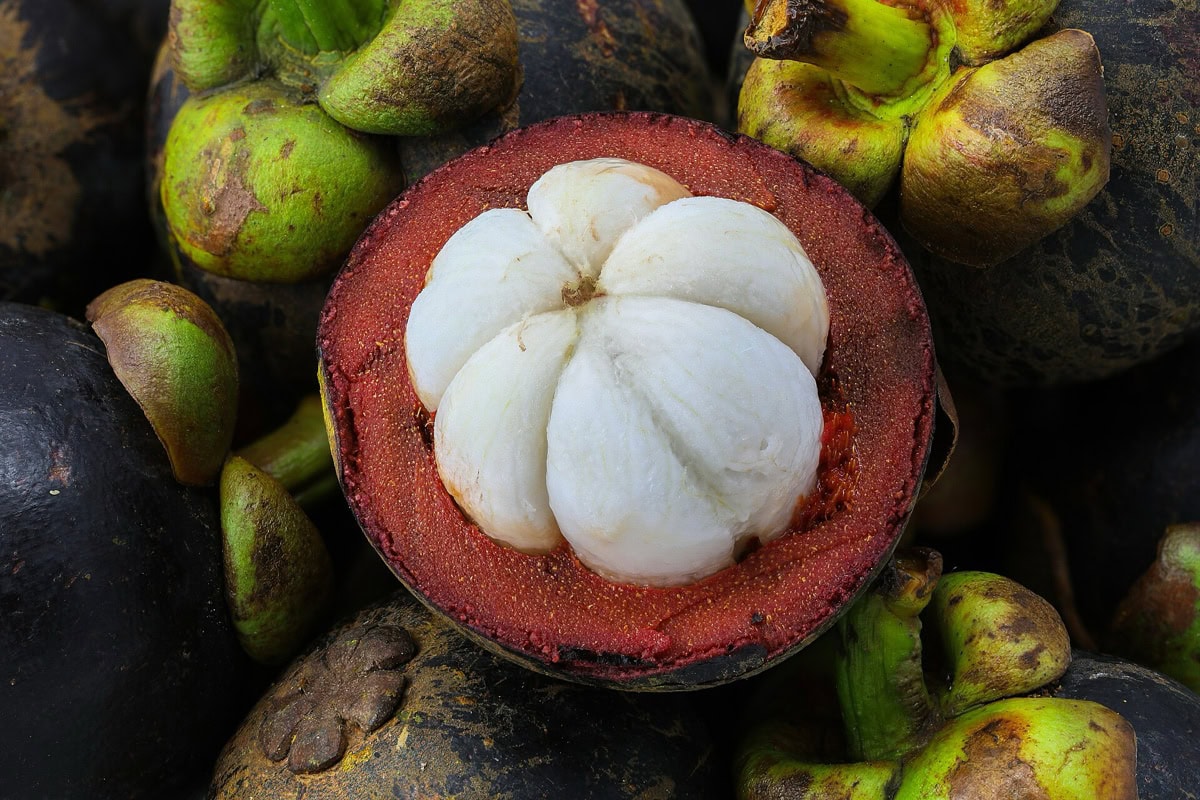
If the fruit kingdom has its king, then the purple mangosteen from the islands of Southeast Asia is its rightful queen. You’ll commonly buy it at markets in Thailand or Vietnam, where it catches the eye with its thick, purple-black, inedible rind. There’s even a charming story that Queen Victoria herself once craved it and promised a generous reward to anyone who could bring it to Europe fresh.
Inside the purple rind you’ll find snow-white flesh divided into several segments that look strikingly like garlic cloves. The mangosteen’s flavour is incredibly delicate, elegant and beautifully sweet-sour, with subtle notes of peach, pineapple, strawberry and a light floral undertone. To reach it, simply score the fruit gently around its circumference with a knife (careful not to cut the flesh) and split it in half, or just squeeze it in your palms until the rind cracks.
💡 Tip: Choose fruit with a deep purple rind that gives slightly when gently pressed, because rock-hard pieces are already over-ripe, dried out and won’t open.
3. Rambutan
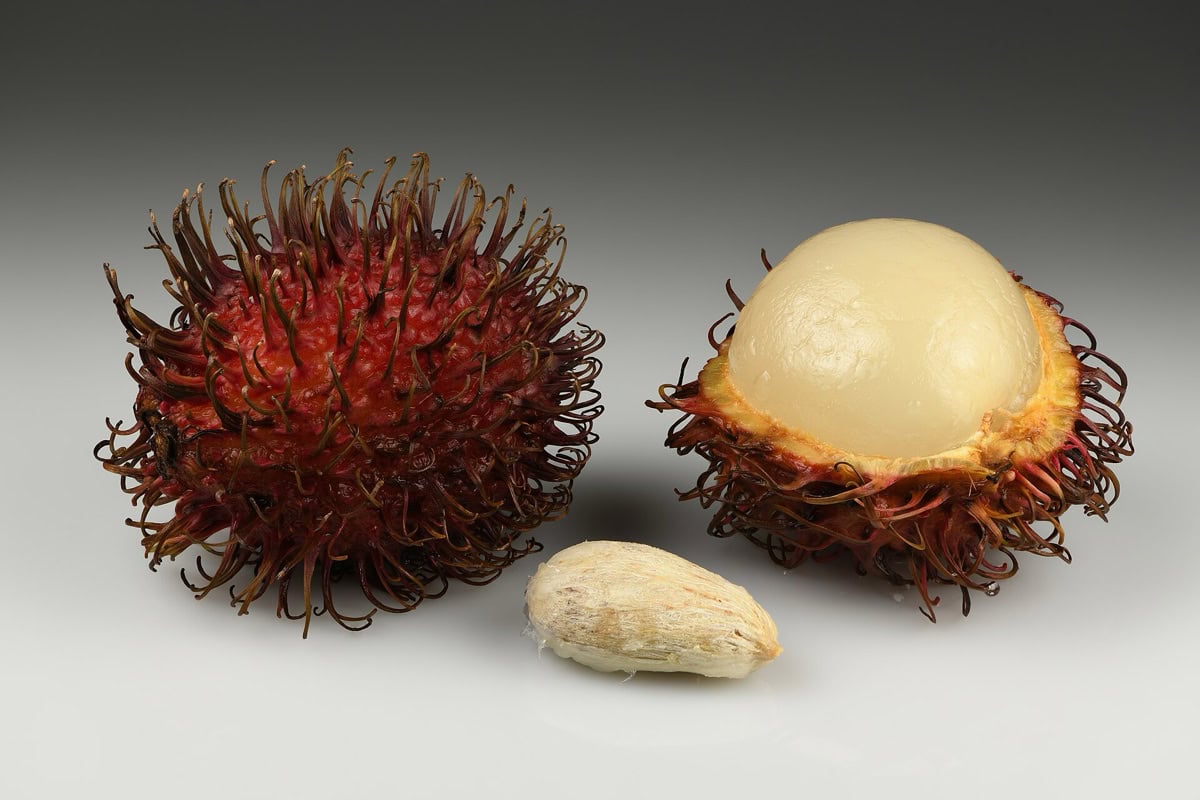
The adorable rambutan looks a bit like a brightly coloured sea urchin on the stall, and its name comes from the Malay word for hair. This golf-ball-sized fruit is native to Southeast Asia, so you’ll enjoy it most in Vietnam, Indonesia or the Philippines. Its deep red skin is covered in soft, flexible hairs that look prickly but are completely pliable to the touch.
Beneath the leathery skin you’ll find translucent white to pinkish firm flesh hiding a single inedible seed. Rambutan boasts a very refreshing, grape-like sweet flavour with a hint of flowers, and its texture is unexpectedly springy, almost like a gummy sweet. Just nick the skin lightly around the middle with a fingernail, open it up, and pop the delicious flesh straight into your mouth.
💡 Tip: The redder and more vivid the outer hairs, the riper and sweeter the fruit in your hand, whereas blackening tips already point to an older piece.
4. Longan
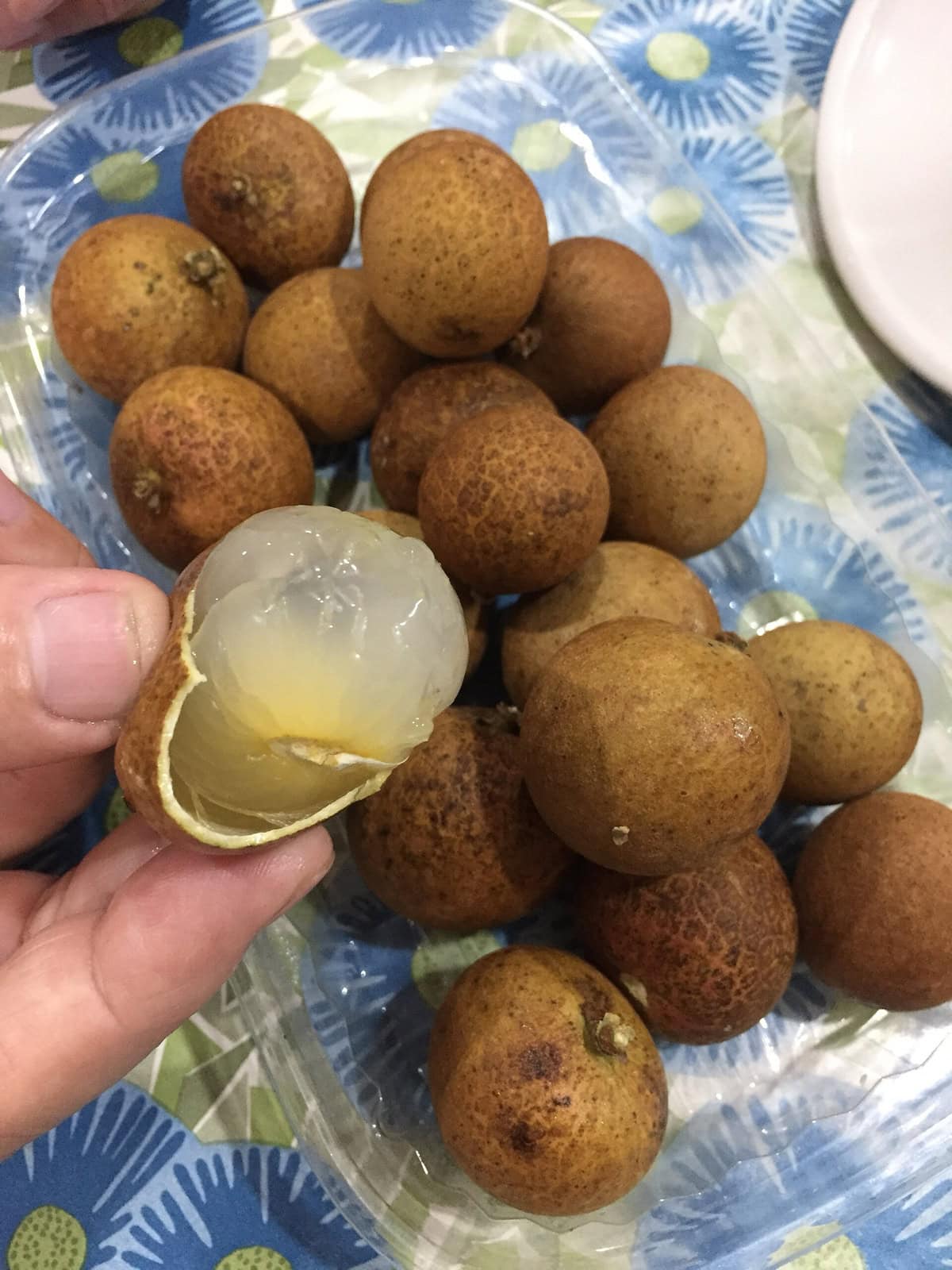
The unassuming longan, originally growing in the mountainous regions between Myanmar and southern China, has earned the poetic nickname dragon eye. Today it’s widely grown in Thailand, Vietnam and Taiwan, where you’ll find clusters of these small round fruits with a thin yellow-brown skin. Once you crack the tougher skin with a fingernail and peel it like a tangerine, the reason for its mythical name is revealed.
Beneath the skin hides glassy, translucent flesh with a shiny black seed showing through, which together really does look like a dragon’s pupil. In terms of taste, longan is beautifully juicy and honey-sweet with a light musky note, and although it’s closely related to the popular lychee, its character is a touch gentler and less perfumed. Locals love to eat it not only fresh but also dried in traditional Asian soups and light desserts.
💡 Tip: Look for fruit with an evenly brown, dry skin free of any cracks, which gives just a fraction when pressed lightly with a finger.
5. Lychee
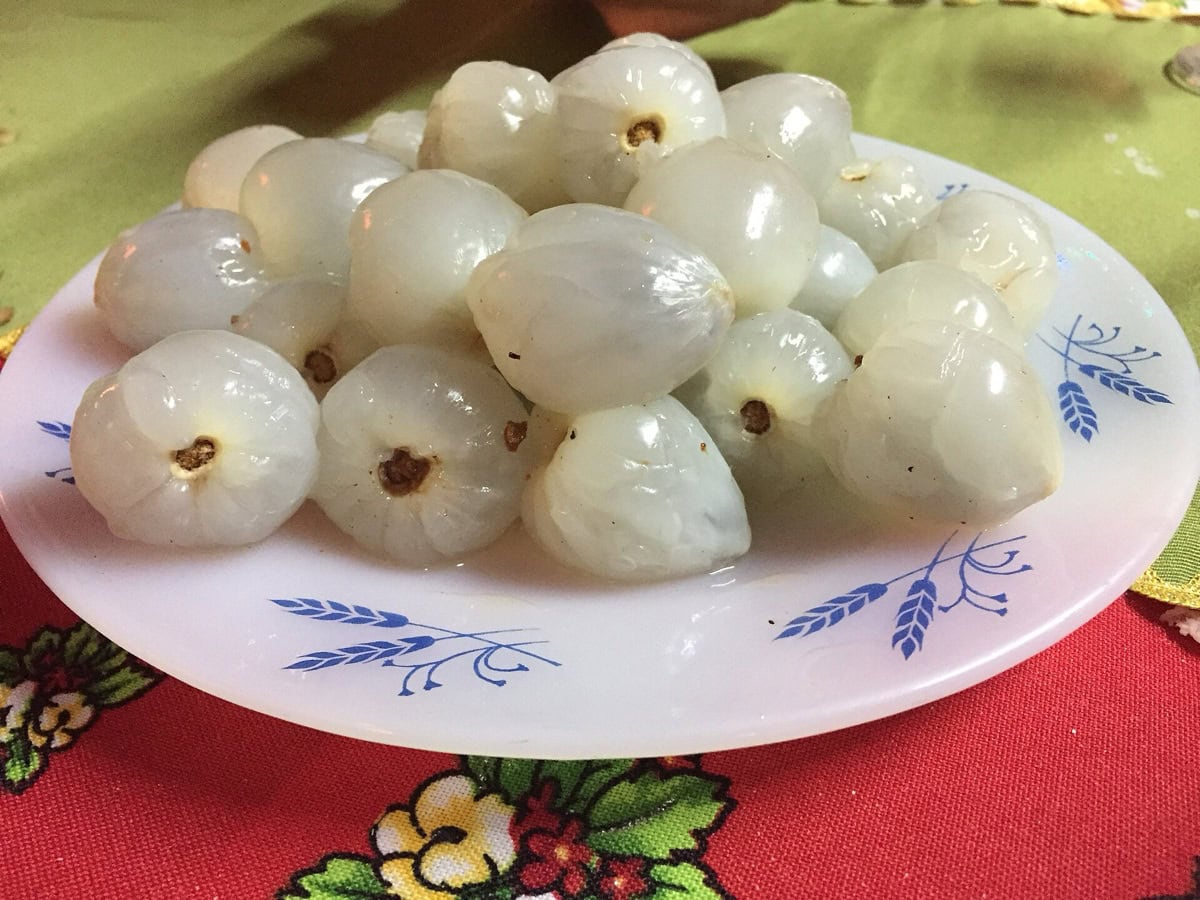
The beautifully coloured lychee with its bumpy pink skin is native to southern China and northern Vietnam, but thanks to cultivation in Madagascar it’s now available in the UK even in winter. If you head to China or Thailand in summer, though, you’ll taste its true flavour, which is simply incomparable to supermarket fruit. The skin of a ripe fruit is very thin and leathery, so it cracks easily at the stem and peels off with your fingers.
The moment you open a lychee, you’ll catch a strong floral aroma reminiscent of rose water, which is absolutely characteristic of this fruit. Inside you’ll find pearl-like, extremely juicy white flesh with a single brown seed, its sweet-sour flavour combining notes of strawberry, melon and ripe pears. It’s the perfect refreshment for hot tropical days, plus it packs a big dose of vitamin C.
💡 Tip: Lychee no longer ripens once picked, so always choose only bright red, fragrant fruit — browning skin points to old and dried-out pieces.
6. Dragon Fruit (Pitaya)
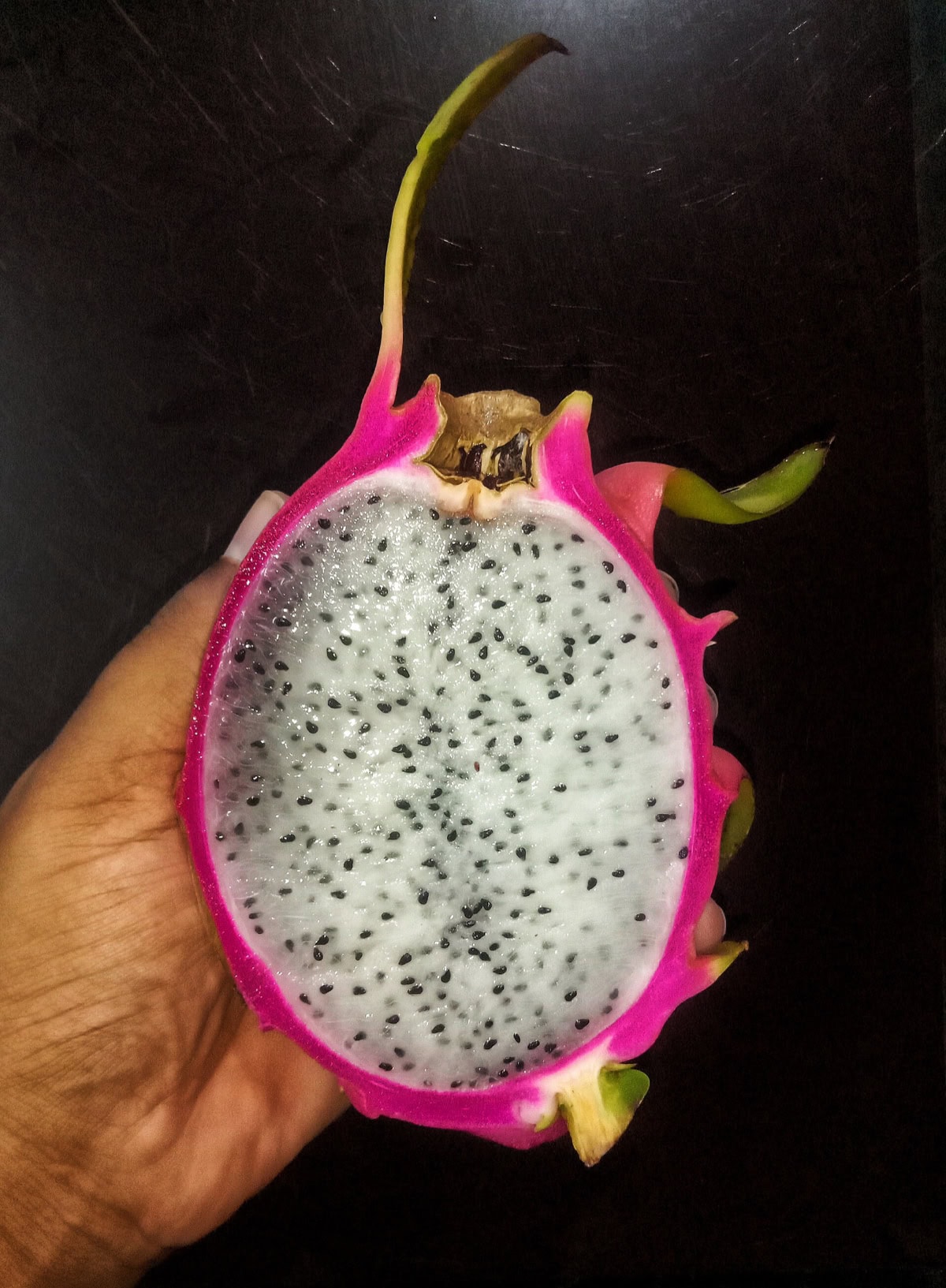
The visually stunning dragon fruit comes from the climbing cacti of Central America, but today Vietnam is the world’s largest exporter, and you’ll find it on every corner there. The fruits, usually weighing around half a kilo, have a striking pink leathery skin with green scaly protrusions that really do resemble the hide of a fairy-tale lizard. Inside hides flesh studded with thousands of tiny edible seeds, its texture much like our kiwi.
You may come across two basic varieties depending on the flesh colour — the white version is more common but rather bland and mildly melon-like. If you manage to buy the variety with deep red flesh, you’re in for a much sweeter, more distinctive experience, and this colour also contains the powerful antioxidant betalain, from the same group as beetroot. The easiest way to eat it is to slice the fruit lengthwise in half and simply scoop out the flesh with a spoon.
💡 Tip: A ripe pitaya should give slightly under gentle pressure, exactly like a good avocado — but if the green scales on the skin are already dry and brown, the fruit is over-ripe.
7. Jackfruit
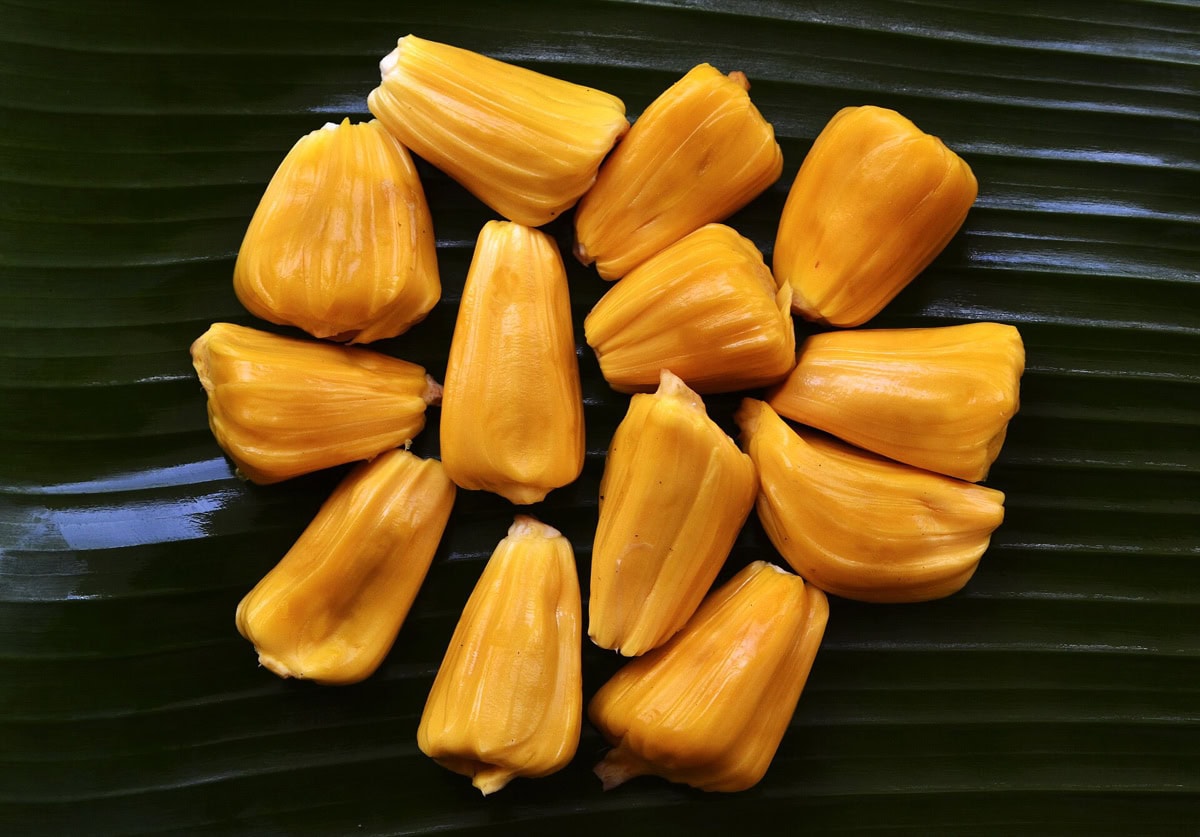
The massive jackfruit is a true giant of the plant kingdom and holds the title of the largest tree-borne fruit in the world, with a verified Florida record from 2024 reaching an incredible 54.43 kilograms. Originally an Indian treasure, you’ll commonly see it growing straight out of tree trunks in Sri Lanka or Thailand, where it reaches enormous sizes and its hard green-yellow skin is covered in small bumps. When cut, sticky milky sap oozes from the fruit, so local traders often coat their hands and knives with oil just to reach the edible yellow lobes.
This amazing fruit has two completely different faces, because ripe yellow jackfruit works as a sweet fruit smelling of pineapple, banana and apple. Unripe green jackfruit, on the other hand, has almost no flavour, but once cooked and shredded it takes on a texture that perfectly mimics the popular pulled pork. That’s great news for any vegetarian hunting for new culinary experiences — just remember it’s a textural substitute, not a protein one.
💡 Tip: You’ll recognise a sweet ripe one by its intense fruity aroma and skin that gives slightly under your fingers, while a hard, scentless green fruit is perfect for cooking.
8. Mango
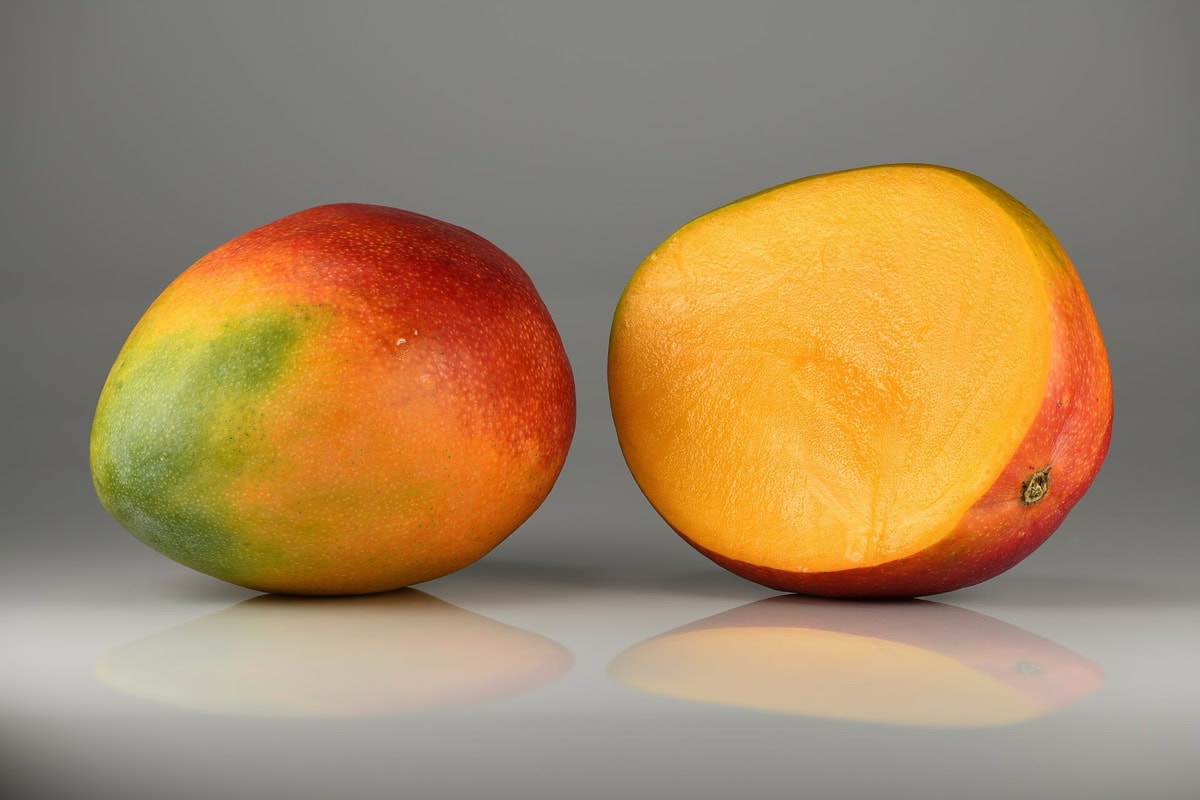
The royal mango from the Indian subcontinent is the very essence of the tropics, and today it’s grown from Mexico through Pakistan all the way to the Canary Islands. There are dozens of different varieties, and on European markets you’ll most often meet the hardy red-green Tommy Atkins with its firmer flesh. But if you want pure ecstasy, you have to taste the Alphonso variety with its saffron-coloured flesh in India, or track down the buttery-sweet, S-shaped yellow Ataulfo mango in Mexico, without a single strand of fibre.
The ripe flesh hides one large, flat stone beneath the skin and is defined by an incredibly sweet, slightly resinous flavour, full of juice and sunshine. Mango is best portioned by slicing off both longer sides along the stone into what are called the two cheeks. You then carefully score each cheek into a grid pattern (without cutting through the skin) and turn it inside out, creating neat little cubes ready to eat straight away.
💡 Tip: Skin colour tells you nothing about ripeness — always rely solely on touch (the fruit should give slightly) and a strong, sweet peachy aroma right at the stem.
9. Papaya
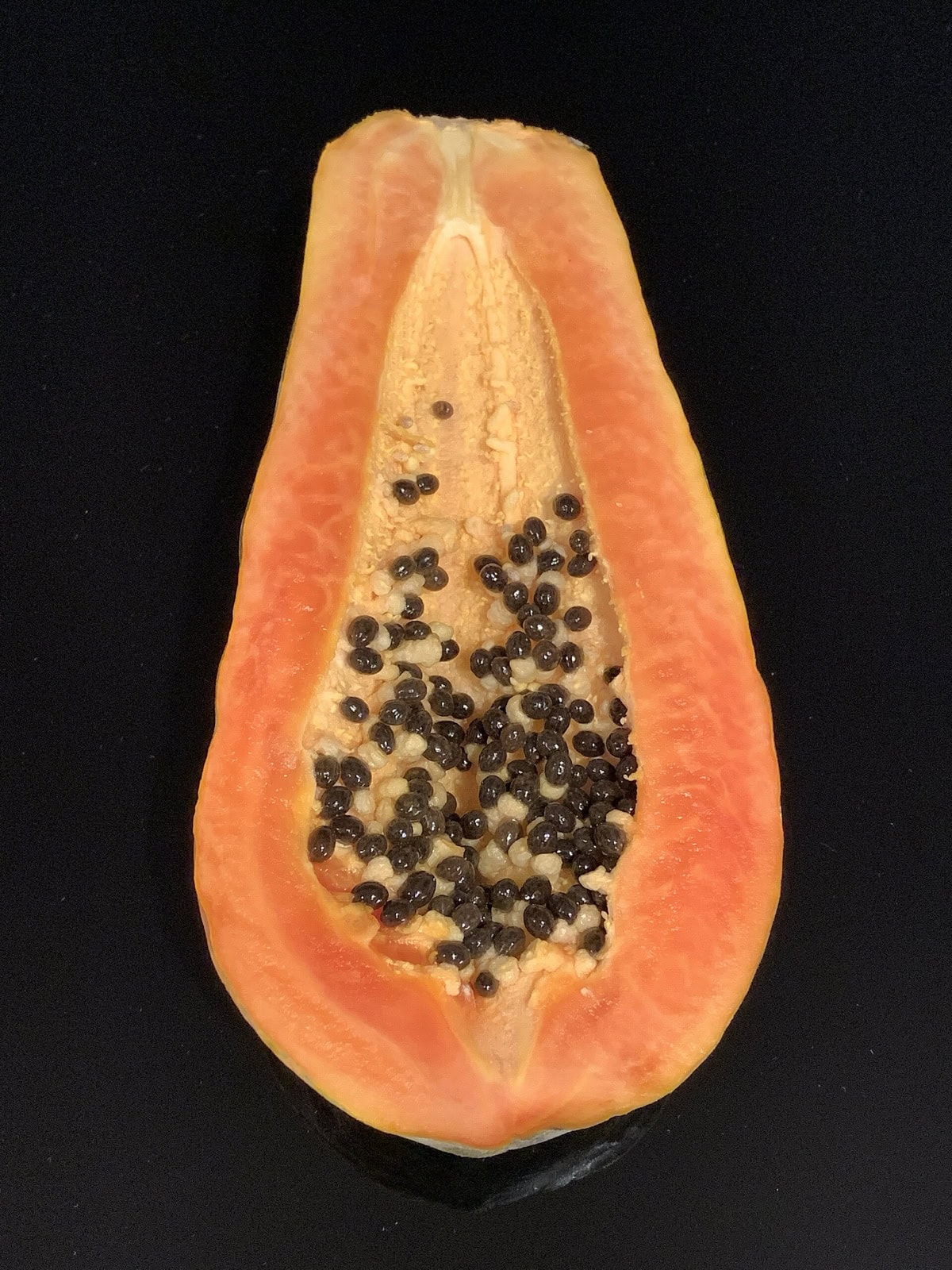
The large, elongated papaya, native to Central America and southern Mexico, is one of the most popular breakfast items across every tropical destination from the Maldives to Sri Lanka. The skin of this enormous berry changes from green to a beautiful yellow-orange as it ripens, and inside hides a generous portion of soft salmon-pink or yellow flesh. When you cut it in half, a cavity full of tiny black seeds peeks out at you — these are edible and have a sharp peppery taste, but most people scoop them out with a spoon before eating.
Its delicate, melon-sweet flavour really comes alive when you squeeze a little lime juice over the fresh flesh before scooping it out. Green — i.e. completely unripe — papaya, on the other hand, has a very firm texture and neutral taste, so it’s popularly used in Asian cooking as the main crunchy ingredient in the famous spicy Thai salad som tam. On top of that, this fruit is extremely rich in vitamin C and contains the useful enzyme papain.
💡 Tip: Choose pieces with mostly yellow to orange-red skin — a few small green patches are fine — and they must feel velvety soft to the touch.
10. Guava
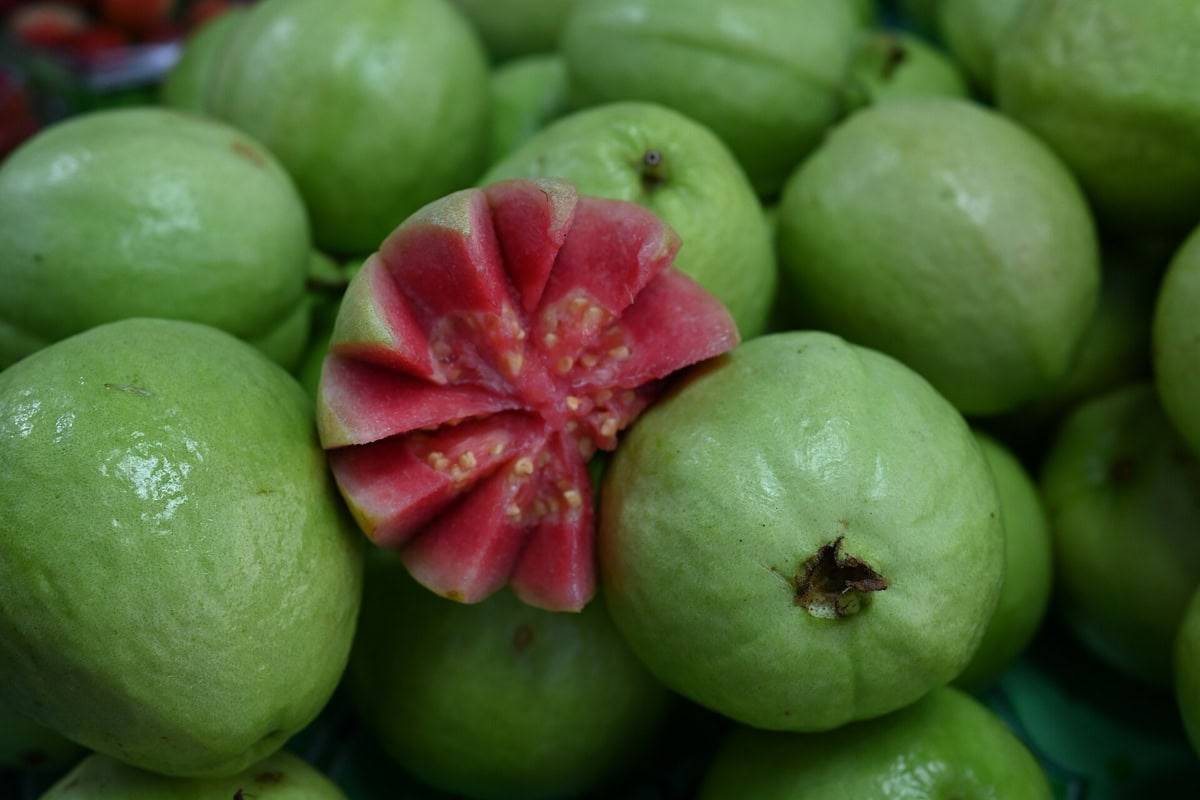
The unassuming round guava, native to Central America and the Caribbean, is a genuine nutritional miracle that you’ll often stumble upon wandering Mexican markets or even on the Canary Islands. Apple-sized, the fruits have edible green to yellow skin, and depending on the variety their flesh can be pure white, delicately pink or deep red. The guava’s most distinctive feature is its incredibly strong, musky, perfumed aroma reminiscent of lemon peel, which you’ll smell at the market from a distance.
Its sweet flavour with a refreshingly tart edge and harder edible seeds inside is sure to win you over — just wash it and eat the whole thing like our apples. The best thing about guava, though, is its nutritional value, because it contains roughly 200 milligrams of vitamin C per hundred grams, about four times more than an ordinary orange. Add to that a hefty dose of fibre, and you’ve got the ideal healthy snack for the road.
💡 Tip: A properly ripe guava smells really intensely from a distance and feels pleasantly soft under your fingers, while hard, scentless fruit will disappoint on taste.
11. Passion Fruit (Maracuja)
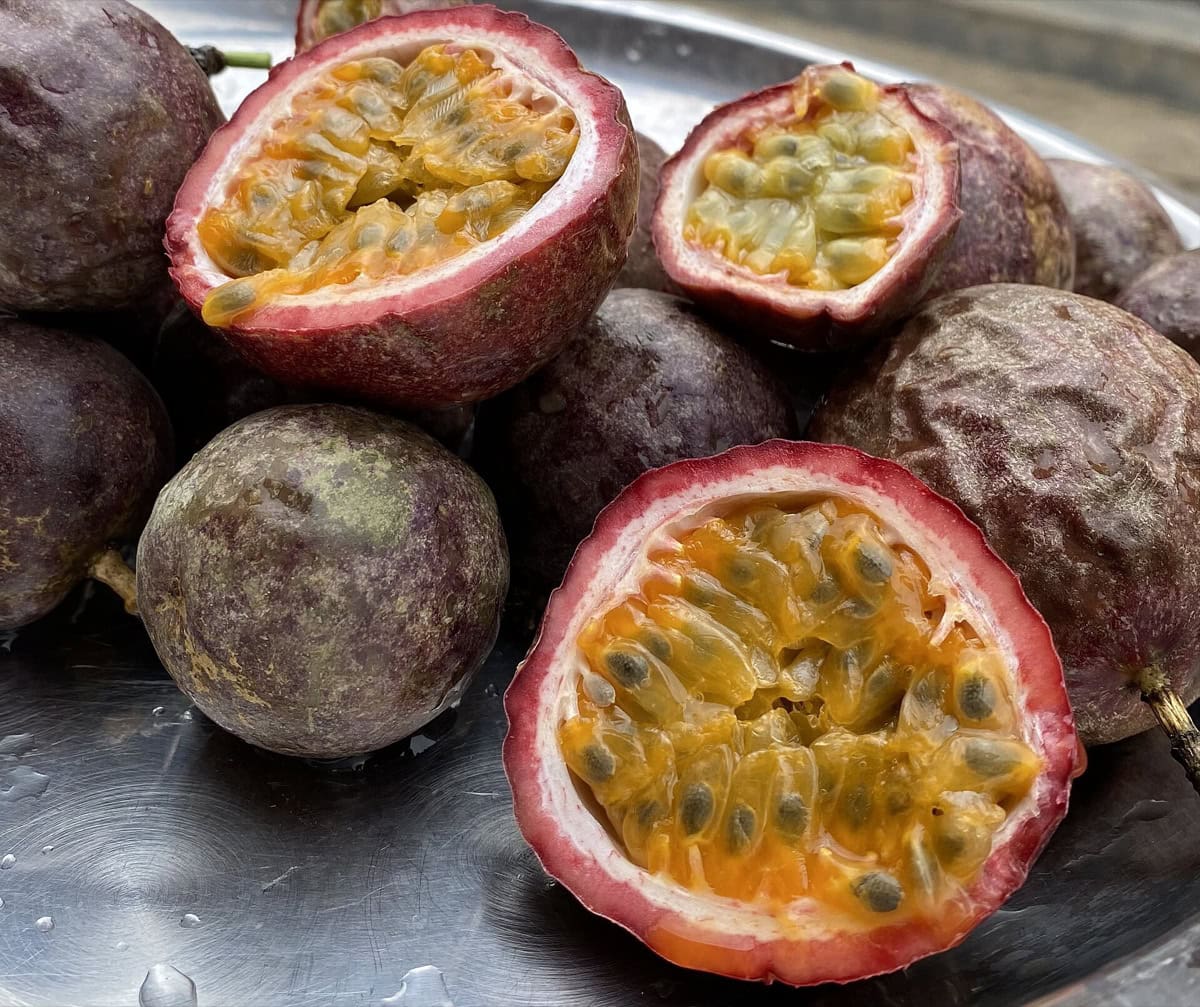
The purple or yellow orbs of passion fruit come from subtropical South America, but today you can enjoy this aromatic bomb right across Southeast Asia and on Portugal’s Madeira. A ripe fruit is about the size of a plum, and beneath its leathery skin hides fascinating jelly-like yellow-orange flesh full of crunchy, dark edible seeds. The best way to enjoy passion fruit is simply to cut it in half and scoop out the fragrant contents with a spoon.
The flavour profile of this fruit is absolutely unmistakable, offering a strongly aromatic, sweet-sour explosion that evokes a mix of melon and citrus with a light musky note. While the yellow version tends to be a touch more sour and punchy, the dark purple fruits offer a sweeter, rounder taste experience. It works brilliantly not only eaten straight but also as a distinctive natural juice in morning yoghurts, smoothies or evening refreshing cocktails.
💡 Tip: Don’t be put off by looks — the most wrinkled, shrivelled skin means the sweetest and ripest fruit, while beautifully smooth pieces are usually still very sour.
12. Star Fruit (Carambola)
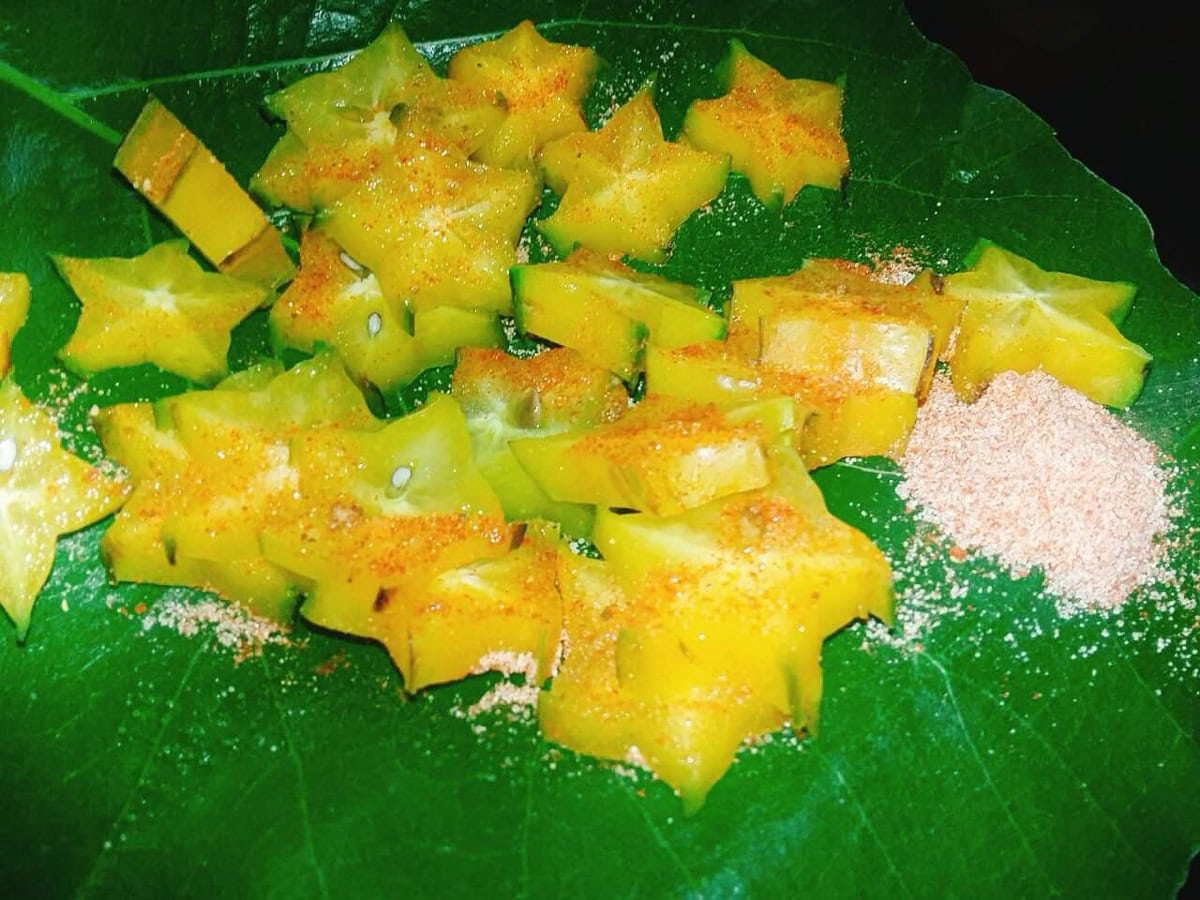
The crunchy star fruit from tropical Southeast Asia is probably the most photogenic piece of nature you can encounter on your travels through Indonesia or Sri Lanka. Its elongated fruit is covered in thin, waxy skin and features five distinct lengthwise ridges. Thanks to this unusual shape, slicing the fruit crosswise creates perfect five-pointed stars, which Asian chefs love to use as an eye-catching garnish for desserts and cocktails.
The whole fruit including the skin is perfectly edible — just wash it and, if needed, trim off any slightly browned edges of the ridges with a knife. The ripe yellow flesh offers a delicately sweet, incredibly refreshing juicy flavour with a light sour finish, reminiscent of a mix of apples, pears and grapes. Star fruit is very healthy and full of vitamin C, though people with kidney conditions should eat it with caution, as it contains a certain amount of oxalic acid.
💡 Tip: For the sweetest taste, look for fruit with an amber-yellow colour whose ridge edges are already turning slightly brown — greenish pieces will taste like a very sour green apple.
13. Salak (Snake Fruit)
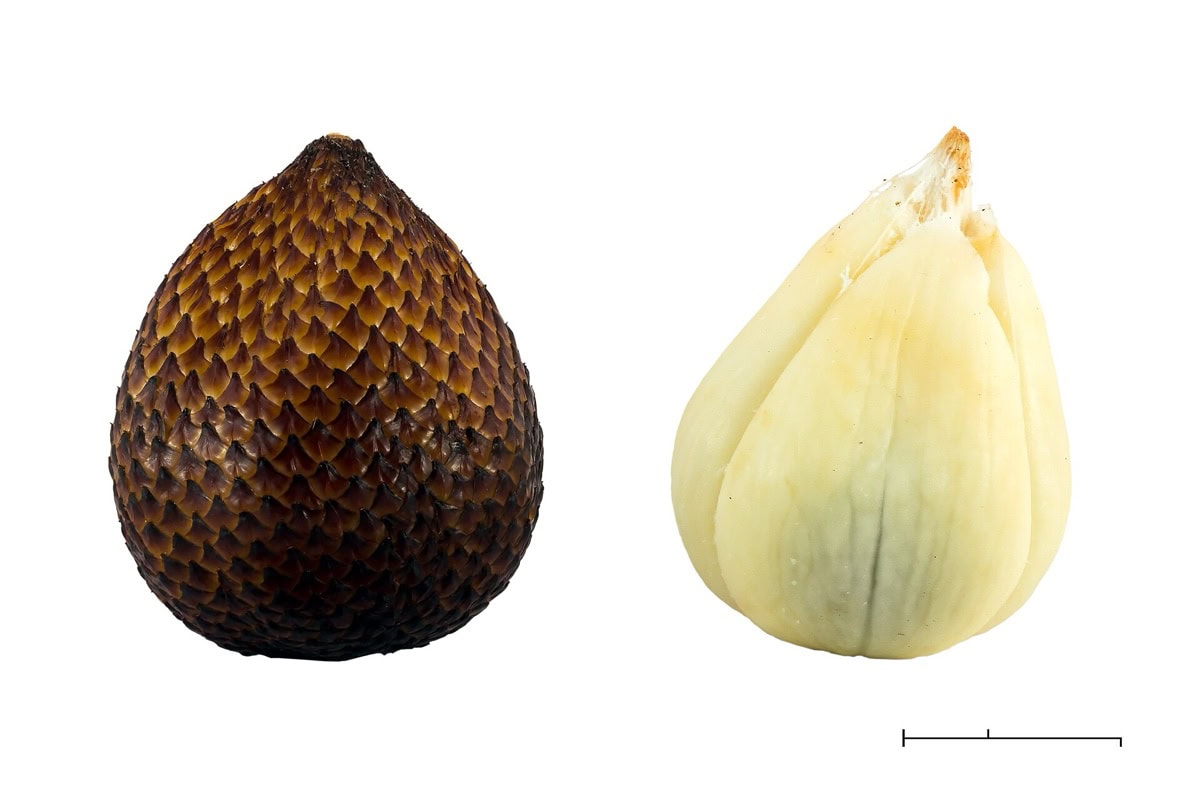
The exotic salak, growing on low thorny palms originally on Java and Sumatra, got its scary name from its utterly unique appearance. As you stroll the colourful markets of Bali or Thailand, you’ll instantly be drawn to fruit resembling large pointed figs, whose reddish-brown scaly skin looks exactly like the hide of a living snake. To get inside, you have to chip off a piece near the tip and carefully peel the skin, as it can have tiny sharp points.
Inside, you’ll usually find three yellowish lobes of flesh resembling large garlic cloves, each hiding one hard, stone-like seed. Salak surprises with a very firm, crunchy texture and an unusual sweet-sour flavour that blends notes of apple, pineapple, banana and sometimes even a light nutty hint. While the varieties from Bali are moister and gentler, on other islands you might come across drier, considerably more aromatic pieces.
💡 Tip: Ripe snake fruit smells sweet, its flesh beneath the skin is very firm (never mushy), and peeling should come off fairly easily.
14. Physalis (Cape Gooseberry)
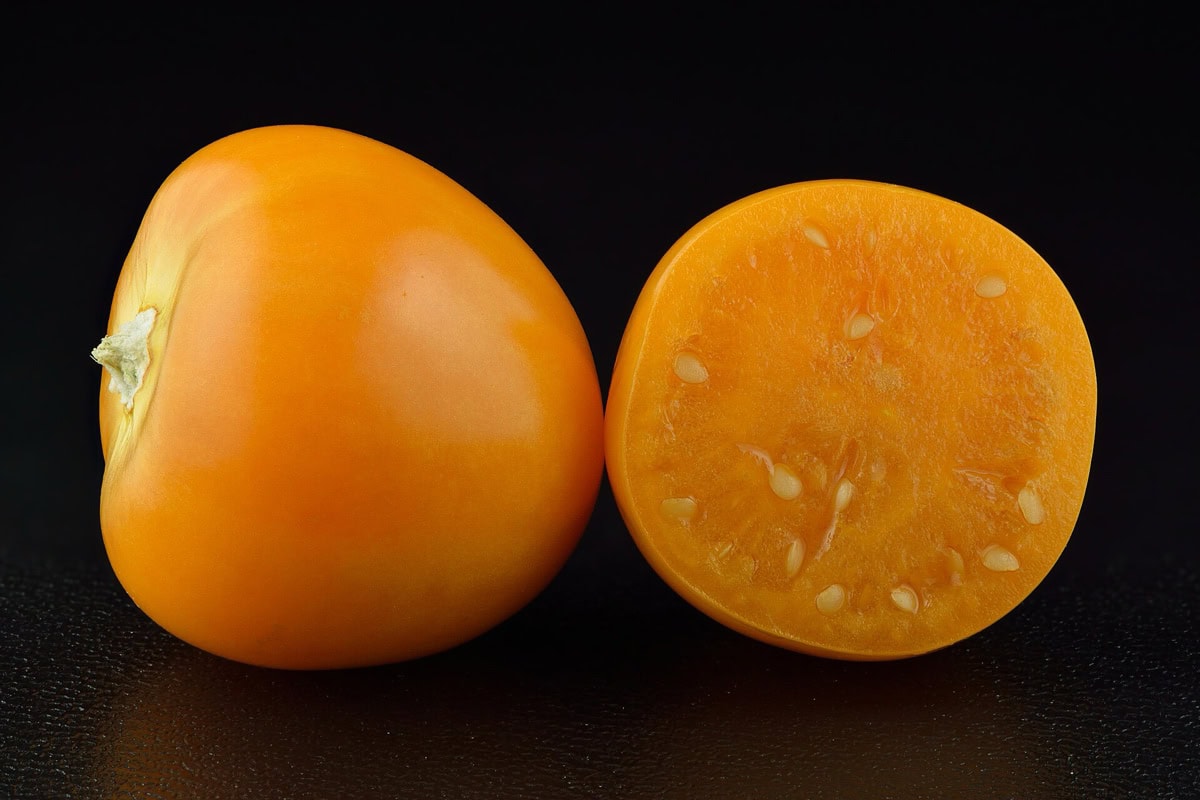
The tiny yellow-orange berries of physalis come from the harsh conditions of the South American Andes, where the Incas already cultivated them, but today they’re a common sight at exotic markets on the island of Madeira. You’ll recognise them at a glance thanks to the fragile papery lantern — a husk resembling a miniature Chinese lantern — that protects the fruit inside. Although it’s sometimes called Cape gooseberry in English, botanically it has nothing to do with gooseberries, and beware: it’s not the well-known goji berry either.
The golden berries, the size of a cherry tomato, have a very fresh, grape-like sweet to mildly tart flavour with a distinctive exotic finish. They’re eaten very simply: peel back and discard the dried papery husk and eat the berry whole and raw. Thanks to their looks and tangy note, physalis is perfect in fruit salads, for decorating pastries, and also makes a great base for mildly spicy sauces and chutneys.
💡 Tip: An ideally ripe berry is deep orange, and its papery calyx must be completely dry, straw-brown and parchment-crisp — a green husk signals it isn’t ripe yet.
15. Cherimoya (Custard Apple)
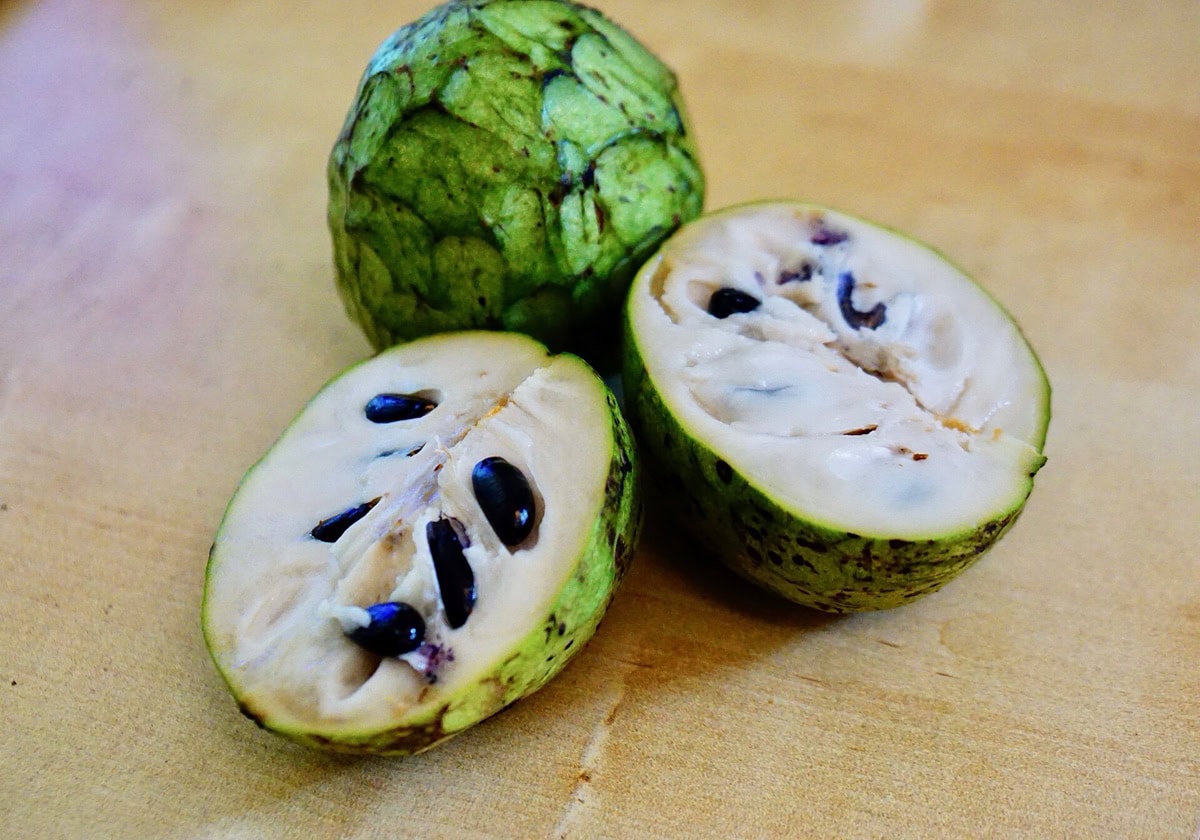
The wonderful heart-shaped green cherimoya, with a scaly pattern on its skin, comes from Central America but is now widely grown in southern Spain and on Madeira. Its exceptional quality is confirmed by the famous quote from writer Mark Twain, who, after visiting Hawaii on 25 October 1866, wrote that it is “the most delicious fruit known to men”. It’s best enjoyed lightly chilled, cut lengthwise so you can spoon out the soft flesh like a natural dessert.
Its creamy white flesh has an incredibly velvety texture and a sweet, juicy flavour in which you’ll detect a perfect blend of banana, pineapple, pear and strawberry. It’s precisely this ice-cream-like consistency that earned it the fitting English nickname custard apple. While you scoop it out, just watch for the large, shiny black seeds, which are absolutely not to be eaten or bitten — simply spit them out.
💡 Tip: On the stall, look for fruit that gives slightly under gentle finger pressure like a ripe avocado; if the cherimoya is hard, let it ripen for a day or two at room temperature.
16. Tamarind
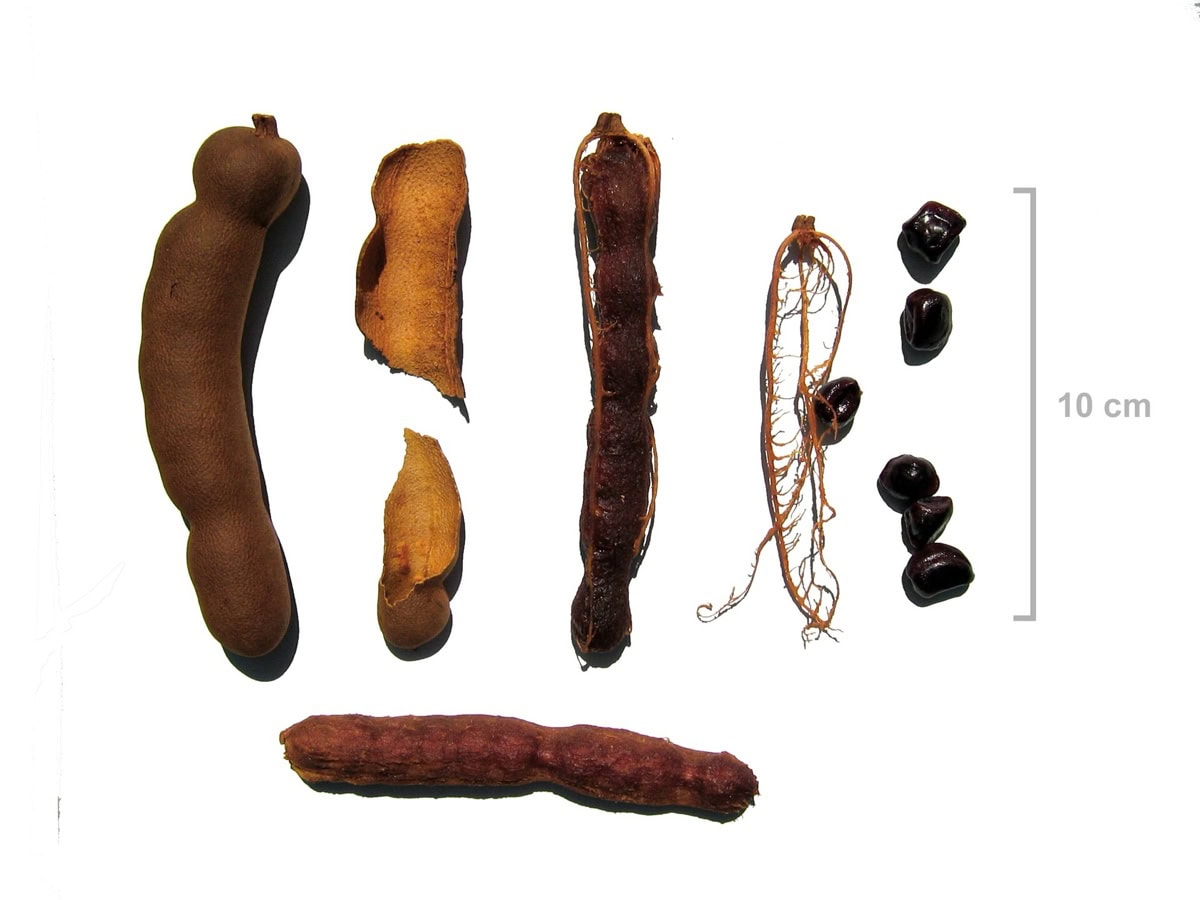
Although many consider it an Asian speciality, tamarind actually originates from the scorching savannahs of tropical Africa, and botanically it isn’t a fruit at all but a classic pod from the legume family. You’ll commonly come across it at huge markets in Thailand, India or Mexico, where it’s sold as long, matte-brown shells resembling large peanuts. Once you break the fragile outer shell, you reach the sticky reddish-brown flesh coating hard seeds, which you simply nibble off.
This gooey flesh offers a very intense sweet-sour, fruity-tangy flavour whose acidity is absolutely essential to a whole range of world cuisines. The riper the pod, the naturally sweeter it is, while green unripe pieces are extremely sour and puckering. The flesh is commonly turned into thick tamarind paste, without which Asian chefs would never make an authentic Thai Pad Thai — and you won’t find our own classic British Worcestershire sauce without it either.
💡 Tip: Ripe pods should be matte brown, very fragile in the hand, and when shaken the loosened seeds and flesh rattle gently inside.
17. Pomelo
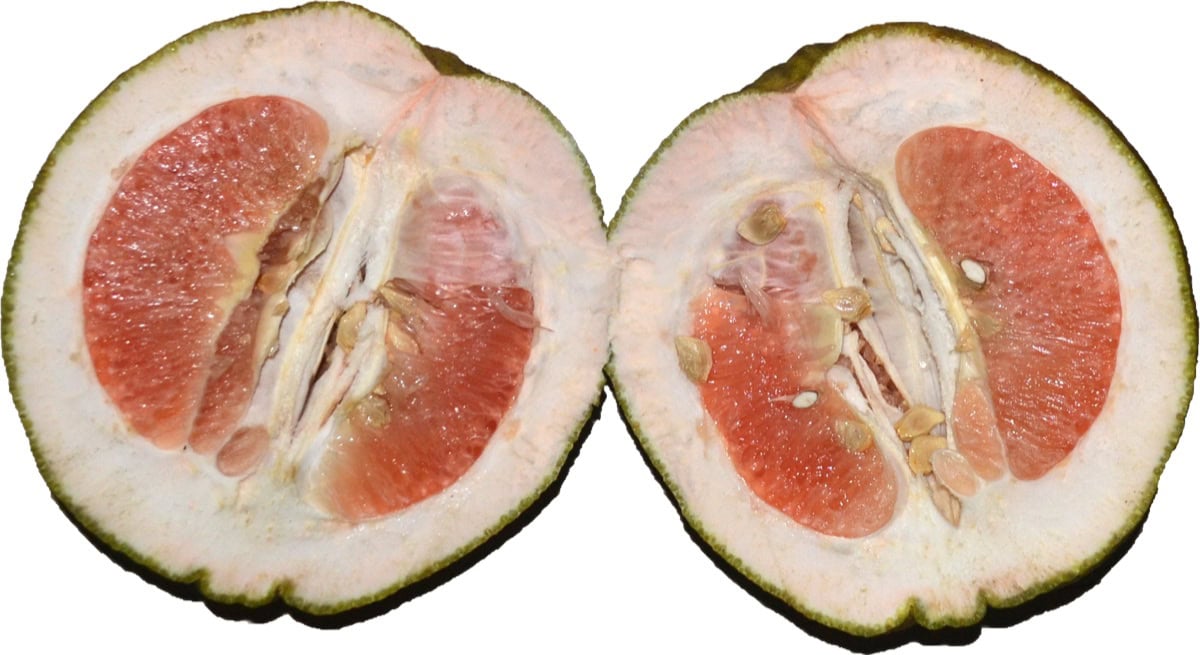
The pomelo, native to Southeast Asia, is the absolute giant among all citrus fruits and can easily weigh up to two kilograms. It’s no hybrid but an original natural species, from which, incidentally, our familiar grapefruit partly descended. Beneath the massive, pale green to yellow rind lies an enormous layer of white spongy pith protecting huge segments of yellow, pink or even red flesh.
Compared to an ordinary grapefruit, pomelo is much sweeter, lacks any strong bitterness and offers subtle notes of honey and floral citrus. The flesh is fairly dry and more crumbly, so its sacs are easy to separate with your fingers. Because of the extremely thick rind, peeling is a little trickier: it’s best to slice off the top, make several vertical cuts into the rind and peel it away in strips, after which you must carefully strip the thick bitter membrane off each segment before eating.
💡 Tip: Choose fruit that feels heavy for its size, because high weight guarantees plenty of juice, while a suspiciously light pomelo will be dried out inside.
18. Persimmon (Kaki)
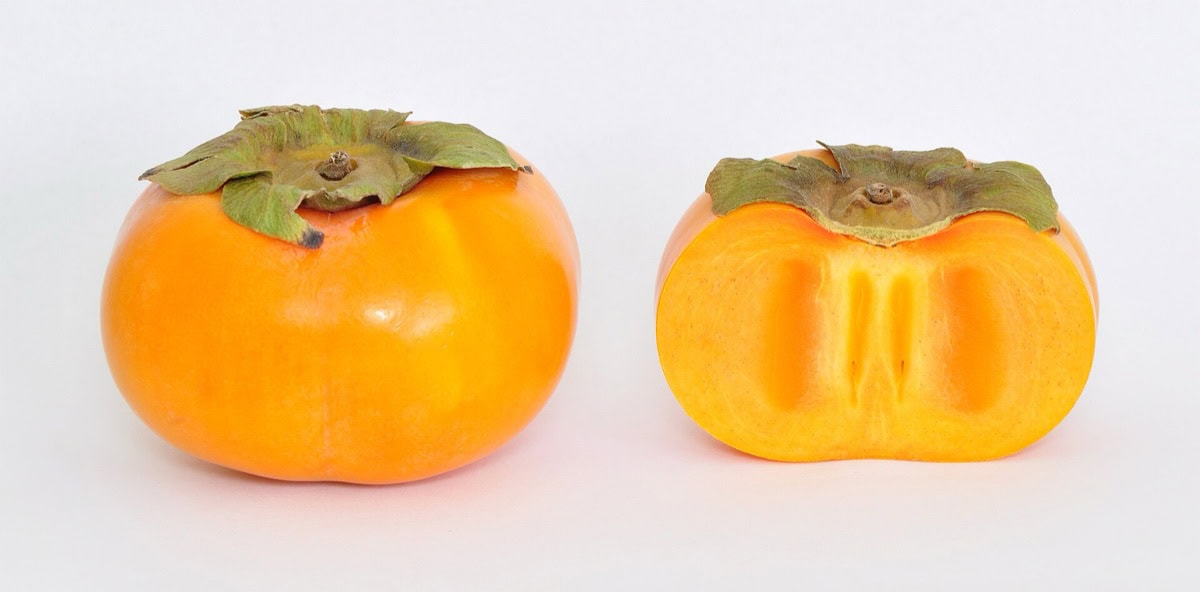
The bright orange persimmon originally comes from China and East Asia, but huge orchards of this sweet treasure are now found in Spain too, from where it most often travels to UK shops in autumn. These glossy fruits, resembling beautifully coloured tomatoes, hide one big catch — their content of soluble tannins. Precisely because of these, two entirely different basic groups of varieties are grown, and you have to handle them completely differently.
The Fuyu variety has a rather flat shape, contains no soluble tannins, and you can happily crunch it completely firm, sliced up just like an apple. The acorn-shaped Hachiya variety, by contrast, is strongly astringent when raw, and if you bit into a hard fruit it would leave a horribly dry, furry feeling in your mouth. You must let Hachiya ripen to the point where it feels soft as a water balloon and its skin turns translucent — only then do the tannins break down and you can spoon out the honey-sweet flesh.
💡 Tip: If you buy the hard Hachiya variety, pop it in a paper bag with a ripe banana; the ethylene released will significantly speed up its softening.
How to Buy and Eat Exotic Fruit at the Market
Browsing the stalls at local markets is an experience in itself, but if you don’t want to spend half your holiday with traveller’s diarrhoea or overpay unnecessarily, it pays to follow a few basic rules. The key is to use common sense, don’t rely on colour alone, and always pick out the fruit with your own hands.
Even though back home we’re used to choosing by how nicely coloured the fruit is, that doesn’t work in the tropics, and the most reliable indicator of ripeness is an intense aroma near the stem and a slight give under gentle finger pressure. For your health, it’s absolutely crucial to choose the kinds you can safely peel yourself before eating. Never buy pre-cut pieces of fruit displayed on stalls or skewered on sticks, because insects land on them and they’re often rinsed in tap water — a direct ticket to digestive trouble. If you do have to wash fruit, always use only bottled or boiled water.
When shopping on the streets of Southeast Asia, haggling is standard, but bear in mind that if a trader has a clear price tag on fresh fruit or smoothies, that’s a fixed price and there’s no bargaining over it. And one more hugely important warning before heading home: as tempting as the markets are for souvenirs, you can’t just bring fresh produce back into the European Union or the UK from more exotic destinations, because customs rules require a special phytosanitary certificate. The authorities grant clear exemptions for only five types, so without any paperwork you may only bring in pineapple, coconut, durian, banana and dates (rules can change, so always double-check before you fly).
A Handy Comparison Table
Finding your way among dozens of foreign names can be a bit of a puzzle at first, so I’ve put together a quick overview of the most popular varieties. This table will help you get your bearings fast when you’re standing at a night market wondering what exactly you’ve just discovered.
| Fruit name | Where you’ll most often find it | What makes it special | How to tell ripeness |
|---|---|---|---|
| Durian | Thailand, Malaysia, Singapore | Strong sulphur smell, creamy taste, banned on public transport | Skin gives slightly, smells extremely strong |
| Mangosteen | Thailand, Vietnam, Indonesia | White garlic-like flesh, extremely delicate flavour | Purple rind springs back slightly under fingers |
| Jackfruit | Sri Lanka, India, Thailand | Largest tree fruit, green version replaces meat | Smells sweetly of fruit and softens slightly |
| Guava | Caribbean, Mexico, Canary Islands | Massive vitamin C content (4x more than an orange) | Intense perfumed aroma, velvety soft |
| Salak | Indonesia (Bali), Thailand | Skin looks exactly like snakeskin | Peels easily, smells sweet, flesh is firm |
| Cherimoya | Andalusia, Madeira | Flesh tastes like luxury creamy ice cream | Gives under gentle pressure like a ripe avocado |
Fun Facts and Records
The fruit kingdom is full of incredible extremes, and some varieties reach such parameters that they’ve made it not only into the Guinness World Records but also into the history of luxury auctions. Nature simply knows how to surprise — in form, in aroma, and in the price tag people are willing to pay for it.
The undisputed record-holder for price is the Japanese Yubari King melon from Hokkaido, whose perfect pair sold at the prestigious opening auction in 2019 for an incredible 5 million yen (roughly over £35,000). At the opposite end of the social ladder stands the world’s smelliest fruit, durian, whose characteristic sulphur stench has earned it not only blanket bans from the Singapore metro but also the proud title of king of fruits. Its imagined counterpart, meanwhile, is the queen of fruits, the mangosteen — legend has it that Queen Victoria herself craved it, though this tale is historically unverified.
If we’re looking for the largest tree fruit on the planet, the winner is undeniably jackfruit, whose verified record from a Florida farm in August 2024 stands at a fascinating 54.43 kilograms. And when it comes to health, the surprising winner in the vitamin C game isn’t citrus but the Central American guava, which hides roughly 200 milligrams of the vitamin in a hundred grams of flesh — beating the humble orange fourfold.
Where to Next
Has all this colourful fruit caught your imagination, and are you already plotting where to go and find it? Tropical destinations offer far more than just great food, from gorgeous beaches to wild nature.
If Asian exotics full of coconuts and jackfruit appeal to you, be sure to check out our article on what a holiday in Sri Lanka is like, or daydream over our guide to a holiday in the Maldives. If you’d rather not fly halfway around the world but still fancy tasting fresh papaya or guava under European sun, browse our tips on the Canary Islands and a detailed rundown of what popular Tenerife has to offer.
Frequently Asked Questions
It’s only natural that looking at the peculiar shapes and colours of tropical fruit brings a flood of questions to mind. Let’s answer the most common queries travellers have about exotic fruit, so nothing catches you off guard at the night market.
What is the smelliest fruit in the world?
Definitely durian. Its heavy odor is created by volatile sulfur compounds produced during ripening, with the result most commonly described as a strong mix of onion, garlic, rotten eggs, and sewage. Although it hides an amazingly creamy and vanilla-sweet flavor inside, in Singapore it’s strictly banned in the metro due to the stench, and you’ll be kicked out with it from many Asian hotels and taxis.
How to eat mangosteen?
It’s quite easy: just lightly score the thick purple skin around the circumference with a knife, or simply squeeze it in your palms until it cracks open on its own. Then peel off the skin and remove 4 to 8 snow-white segments inside, which taste incredibly delicate, like a cross between lychee and peach. The purple skin is not edible as it’s extremely bitter, and likewise, the larger soft seed hidden inside some segments should not be consumed either.
Is dragon fruit healthy and why is it pink?
Yes, it’s very healthy and low in calories (containing only about 57 kcal per 100 grams). Its characteristic pink to deep red color comes from betalains, which are powerful plant pigments and antioxidants from the same group you’d find in beetroot, for example. The red flesh has far more of these antioxidants than the white variety, plus the fruit provides you with a dose of vitamin C, potassium, and beneficial fiber.
How to tell if a mango is ripe?
When choosing, always rely mainly on the scent at the stem end, because a ripe mango must have a very intense and sweet peachy aroma there. The second rule is gentle pressure, where the fruit must yield slightly under your fingers, just like a ripe avocado. Never go by the color of the skin, as that’s unreliable and many varieties remain perfectly ripe even when they’re still completely green on the surface.
Why does durian stink and where is it banned?
Its distinctive smell comes from strong volatile sulfur compounds, for which the durian even has multiple copies of genes in its genome. Due to this heavy and lingering odor, it has been banned from the Singapore metro since 1988 (where you face a fine of up to 500 SGD for non-compliance), and you’ll encounter blanket bans in many Asian hotels, taxis, and commonly on board local airlines as well.
Which exotic fruit has the most vitamin C?
It’s the unassuming Central American guava that contains around 200 milligrams of vitamin C in one hundred grams of flesh. This means it’ll give you roughly four times more of this vitamin than an ordinary orange. Although the specific value always varies slightly depending on the particular variety, common sources cite an impressive range from 183 to 228 milligrams per hundred grams.
Can exotic fruit be brought to the Czech Republic and EU?
Most fresh fruit imported from non-European countries requires a special phytosanitary certificate, which you as a regular traveler don’t have, so transporting it in your luggage is basically prohibited and customs officers may confiscate the fruit. However, the European Union has established exceptions: without any certificate, you are only allowed to bring pineapple, coconut, durian, banana, and dates (but the rules may change, so it’s always best to verify them before your trip).
What exotic fruit is the most nutritious?
There isn’t one objective global winner, but among the most nutritionally rich varieties, guava definitely stands out with its gigantic vitamin C and fiber content. Additionally, mangosteen and dragon fruit rank among the most nutritious thanks to their high content of valuable antioxidants (betalains), and we mustn’t forget papaya, which offers a great combination of the digestive enzyme papain, vitamin C, and vitamin A.
Is jackfruit a meat substitute for vegetarians?
Yes, young and completely unripe green jackfruit, when shredded and heavily seasoned, is indeed commonly used as an excellent substitute for pulled pork, as it has a very similar fibrous texture and neutral taste. However, it’s important to know that this is only a textural substitute, not a protein one (it has only about 3 grams of protein per cup), and therefore it should always be combined with tofu or other legumes in the dish.
How to properly open a coconut?
If you have a young green coconut for drinking, simply cut off the top tip with a sharp knife, cut out a small square, pierce the membrane and drink the water directly with a straw. To open a ripe brown coconut, find the three dark eyes on it, pierce the softest one and pour out the water. Then hold the fruit in your hand and strike it firmly along its circumference (equator) with the blunt side of a heavy knife, gradually rotating it until the shell cracks open.
Tips and Tricks for Your Vacation
Don’t Overpay for Flights
Search for flights on Kayak. It’s our favorite search engine because it scans the websites of all airlines and always finds the cheapest connection.
Book Your Accommodation Smartly
The best experiences we’ve had when looking for accommodation (from Alaska to Morocco) are with Booking.com, where hotels, apartments, and entire houses are usually the cheapest and most widely available.
Don’t Forget Travel Insurance
Good travel insurance will protect you against illness, accidents, theft, or flight cancellations. We’ve had a few hospital visits abroad, so we know how important it is to have proper insurance arranged.
Where we insure ourselves: SafetyWing (simple monthly subscription) and TrueTraveller (for extra-long trips).
Find the Best Experiences
Get Your Guide is a huge online marketplace where you can book guided walks, trips, skip-the-line tickets, tours, and much more. We always find some extra fun there!


