We set off for two weeks in a paradise in the middle of the ocean — the Hawaiian island of Maui. I’m not sure exactly when the idea of camping in Hawaii first came up, but the more we prepared for it, the more we couldn’t wait. Sleeping in beachside campgrounds, or in the crater of Haleakalā, felt like something exotic we’d never done before. So let’s take a look at what camping in Hawaii is actually like — and how much it cost us.
The full destination guide: USA Travel Guide — guide and what to see
How much does camping in Hawaii cost
On top of that, it would help us save money we’d need for our three-month road trip across North America. Hawaii is one of the most expensive places you can travel to, and even a campsite will set you back roughly £15–35 per night. And prices just keep climbing.
The problem with staying in hotels or Airbnbs was that the comfort of daily wifi, a kitchen and breakfast would probably mean we’d only head out to explore Hawaii around nine or ten in the morning. That’s late by Hawaiian standards, because it gets dark here by 7pm.
We went to bed around eight or nine and woke up at half past five in the morning. We made deliberate trips for wifi and handled work that would normally take us a whole day in just a few hours. Our last campsite even had wifi, so after dinner we’d regularly pop online for two or three hours to work.
In the end we booked the first two nights in an Airbnb in Haiku, because we arrived late at night and the campsite near the main town of Kahului was closed.
Heading to Hawaii? Grab the guidebook we used
How much our two weeks in Hawaii cost in total
Two weeks in Hawaii cost us around £1,030 per person (a package holiday through a travel agency would run you upwards of £1,900 for just ONE week).
On top of that, a birthday present for Lukáš — a trip to the island of Lanai, snorkelling for two for $181.
Take a look at how we’re doing financially on our 3-month trip –> here
The cost of food in Hawaii
At the start we did a big shop for two weeks of camping. We knew that on most days there’d be nowhere to buy ingredients, and at the same time Hawaii has a steady daytime temperature of 29°C and 22°C at night, which meant we couldn’t really buy anything too fresh.
This was the backbone of our meals. It turned out that buying in bulk was a mistake, because although the Tikka Masala and the soups were organic with nothing dodgy in them (no additives or preservatives), by the second week we couldn’t stand the sight of them.
Now and then we’d buy some fruit from roadside stalls, or pop into Foodland (a supermarket) for sushi or sandwiches. A couple of times we treated ourselves to food like the locals from the food trucks, and we also played tourist and went to a restaurant. Our weakness was cold drinks — we caved to those more often during the second week on the warmer side of the island. So if you want to do it on a tighter budget, you absolutely can. We had a budget of $65 a day, which also had to cover accommodation we hadn’t paid for in advance, petrol and food.
Campgrounds in Hawaii: where to camp
We’re used to the spotless, well-kept campgrounds of the Canadian Rockies, so the run-down state of many in Hawaii often caught us off guard. We tried every site available to individual campers.
Waianapanapa
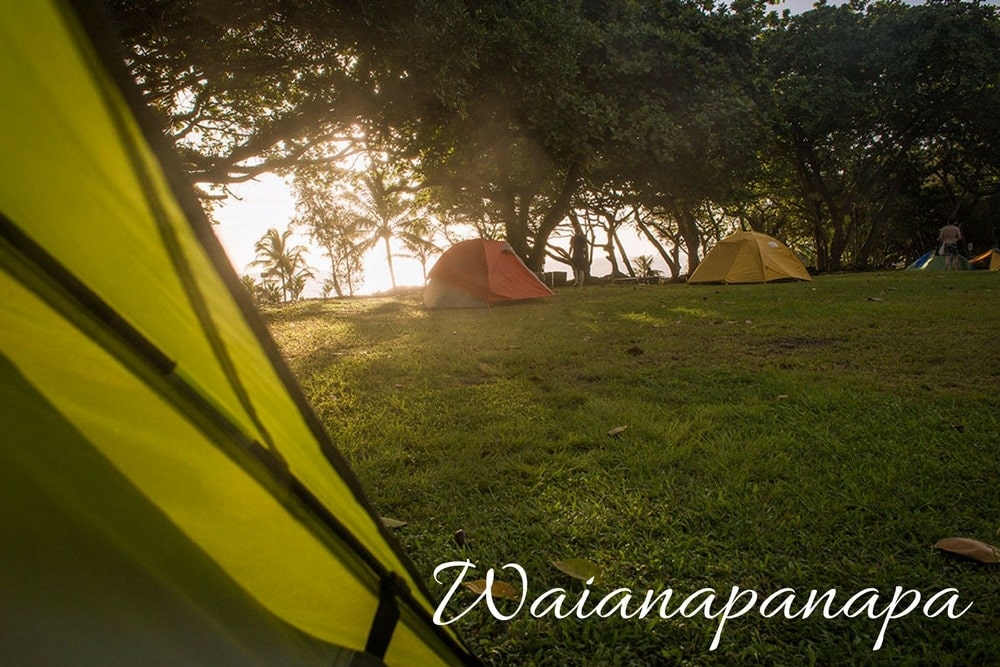
2 nights, flushing toilets, showers, drinking water, no signal, cabins available to rent
A campsite near Hana. It’s a 3-hour drive from Haiku with a few short stops along the famous “Road to Hana”, which is said to be the most beautiful drive in Hawaii. “It’s a mess here,” — the jungle didn’t exactly impress Lukáš. It sits on the eastern part of the island, where it rains all year round. So you’ll drive through jungle, where you can hop out and hike to waterfalls you can swim in. Everywhere is mud, damp, bamboo and coconuts.
Waianapanapa is one of the better campgrounds — there are toilets, outdoor showers and a source of drinking water. You’re right above the black sand beach and at the start of the Kings Trail – Pi’ilani Trail, which runs along the cliffs. If you go, set out early in the morning, as you walk in full sun the whole way.
If you decide on Waianapanapa, our advice is: cook early. It rains there every night, and we were there in the dry season when it’s supposed to rain least.
Kipahulu
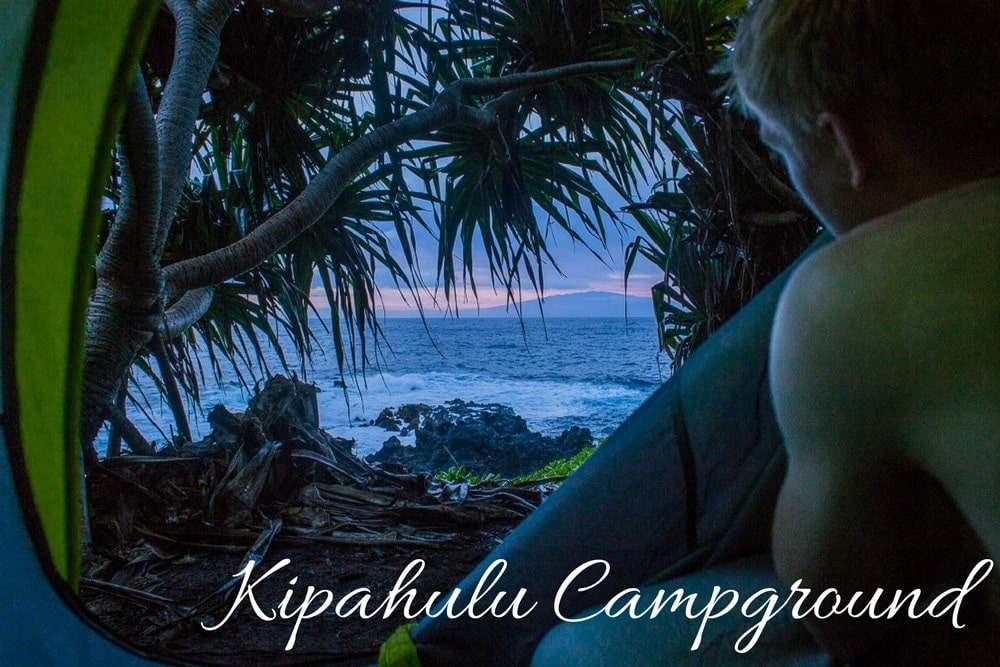
1 night, pit-toilet style loos, drinking water at the visitor centre (which also has proper toilets), signal poor but present
From Waianapanapa you can carry on along a far rougher road to Kipahulu, which lies inside Haleakalā National Park. Although the guidebook said we’d be completely without signal here, paradoxically there was some. At first we got a bit spooked, because there’s literally nothing at the campsite — just grass in the middle of nowhere — but after a bit of exploring we found a spot to camp not far from the main site, right on the cliff above the ocean. And the sunset more than made up for all our initial disappointment over the smelly outhouses and lack of anywhere to wash, because swimming in the ocean isn’t recommended here and we couldn’t even find a way in.
From here you can do two hikes: Waimoku Falls and Seven Sacred Pools. We headed to the waterfalls — it rained the whole time, but it only took just under three hours. Then we had to sleep in the tent covered in mud.
Hosmer Grove
1 night, pit-toilet style loos, drinking water, signal available
From Kipahulu we took the loop route via Baldwin Beach near Kahului, where we had a swim and a shower. We recommend it — it’s well worth the stop. Hosmer Grove was the campsite where we nearly froze. It’s where most people sleep before hiking Haleakalā. The next day we set off on our longest hike inside the crater, where we’d also be camping, so it made sense to sleep here. There’s nothing else nearby anyway. Be prepared to be cold at night — the temperature can drop close to zero.
Otherwise it’s a nice little campsite with a shelter where you can cook when it rains.
Haleakalā crater
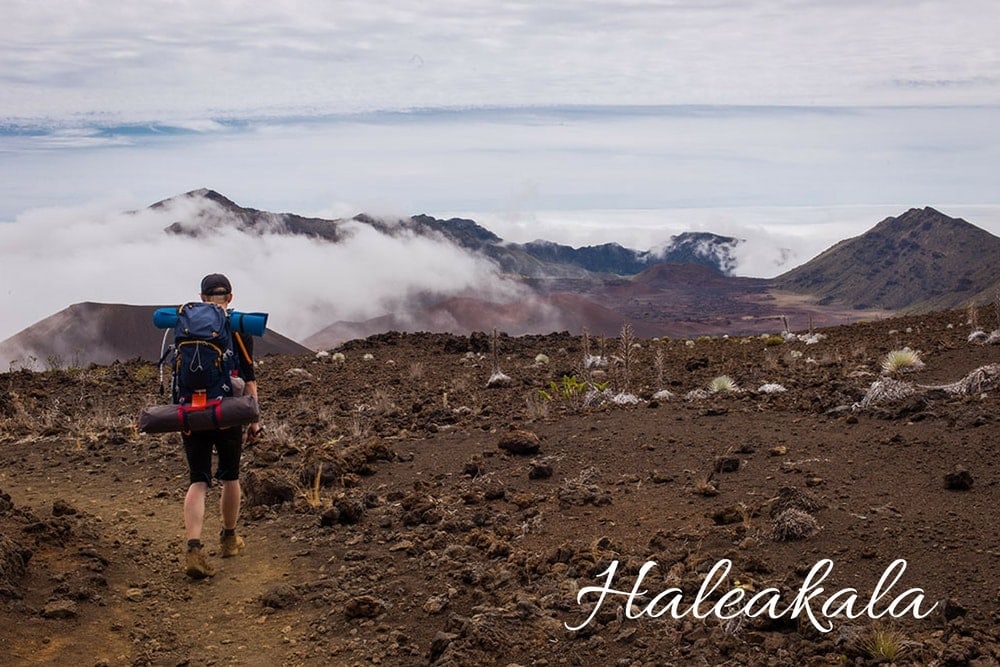
1 night, non-potable water, pit toilets, no signal
We walked 21 kilometres to the campsite in the crater at Palikū, where there’s also a cabin you can rent. Although after Hosmer Grove we’d braced ourselves for an insane cold, the morning was chilly but not freezing. By the cabin there’s a pit toilet, and when I walked in a swarm of flies launched at me, buzzing around my backside. The idea of just digging a little hole to do my business suddenly seemed far more appealing. There are strange birds called Nene wandering everywhere (they might not actually be ducks, but they look like them and make sounds like a cross between a cow and a duck).
Polipoli
1 night, non-potable water, pit toilet, weak signal
The last 3 miles to the campsite take 20 minutes to drive. The “road” is more one pothole after another than an actual road, and it vividly reminded us of our road trip through Romania. No wonder we were the only ones at the campsite. The pit toilet literally smelled of disuse. If we hadn’t booked the site in advance, we’d probably have turned around and driven off. On the way we came across wild pigs, which later wandered around our tent at night, grunting.
Papalua Beach Park
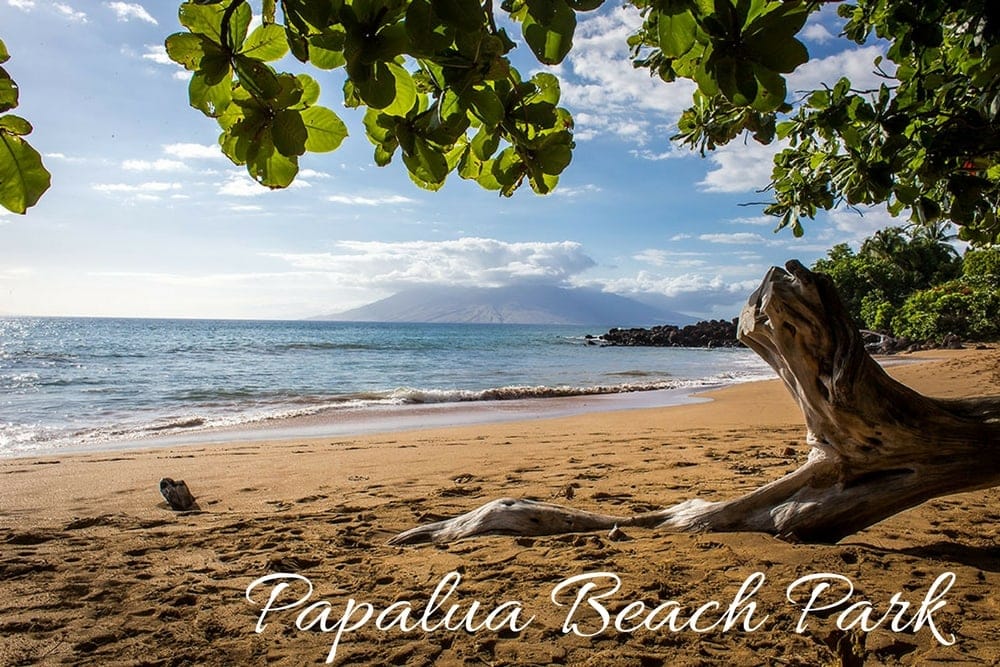
1 night, no water, well-kept pit toilet, signal available
This beachside campsite sits between Kihei and Lahaina on the west coast, where it’s mostly sunny year-round with only the occasional shower. The catch was that you can only book it either in Lahaina or by phone. We didn’t know about the first option and couldn’t get through on the phone.
The ranger didn’t kick us out — they just explained where to buy the permit.
Olowalu
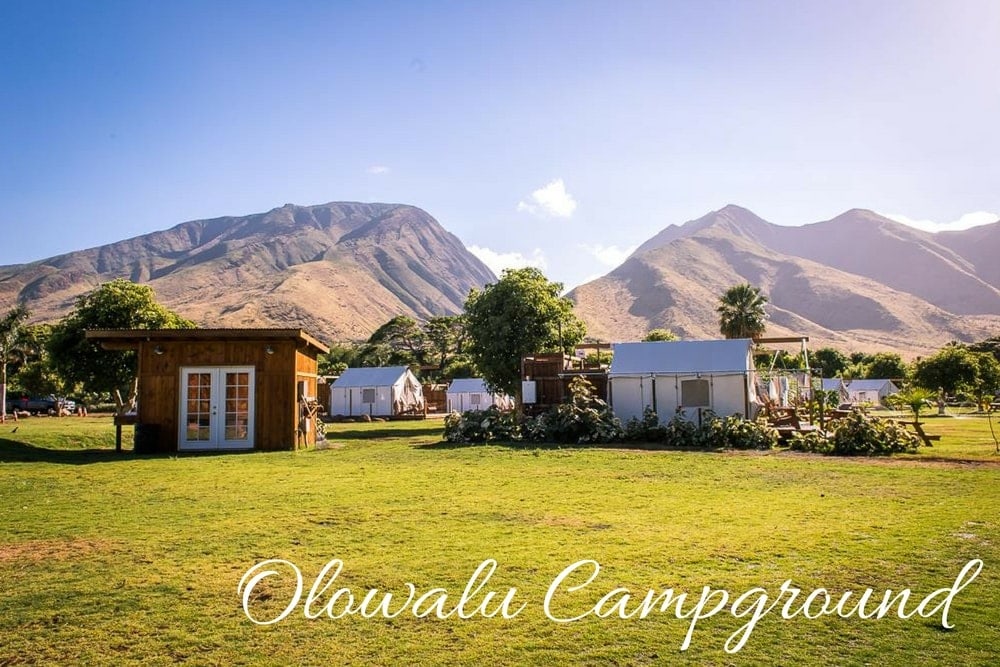
Drinking water, hot showers, flushing toilets, power sockets, wifi, FREE morning coffee, FREE fruit growing in the campsite (mango, papaya, coconuts)
Camping at Olowalu Beach is the paradise of Hawaiian campgrounds. Not only do you have everything you need, there’s even wifi at the “reception”, and it rivals the cleanliness of campsites in Canada. The downside is that when the waves pick up, they close a large part of the campsite to avoid flooding. So to be safe, we recommend booking a pitch further from the water.
Where to wash when the campsite has no water
At Papalua Beach Park, Polipoli, the Haleakalā crater and Hosmer Grove, you won’t be able to wash. Apart from Haleakalā, that’s not a huge problem. Just drive to the nearest beach. That’s how we did it — heading to Baldwin Beach, and then from Papalua Beach Park we spent time on the beaches in Lahaina, so it wasn’t an issue. Feel awkward about it? You’ll see plenty of locals washing with shampoo and soap after a dip in the sea, so don’t worry and go for it. For the tougher moments when there’s nowhere to wash, bring some wet wipes.
Hiking on Maui
Hawaii is wonderfully diverse, so here you can experience hiking through the jungle along a trail that leads you to waterfalls where you can swim. There’s hiking in the forest, on the mountains and inside the crater.
But when we were searching for the best hikes in Hawaii, it was tricky — you won’t find any decent overview, so here’s the list of hikes we picked out for ourselves.
Twin Falls
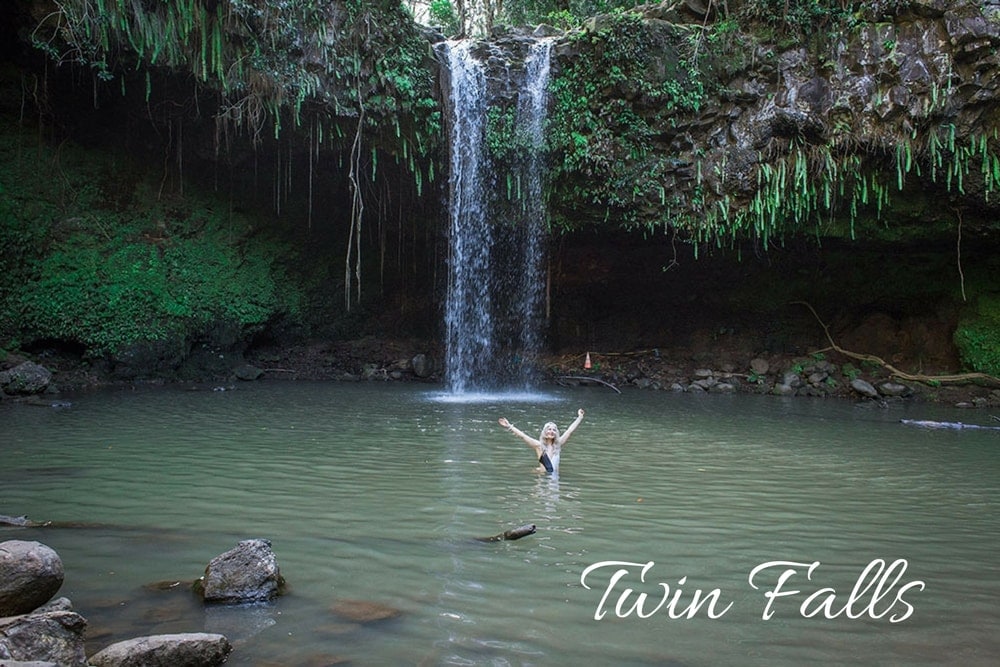
30–45 minutes
A very short walk to waterfalls you can swim under. You can do it in flip-flops, but water shoes are better, because you cross little streams and the current can easily sweep them away. Don’t leave anything in your car at the car park — it’s one of the main spots for break-ins.

Bamboo Forest Trail
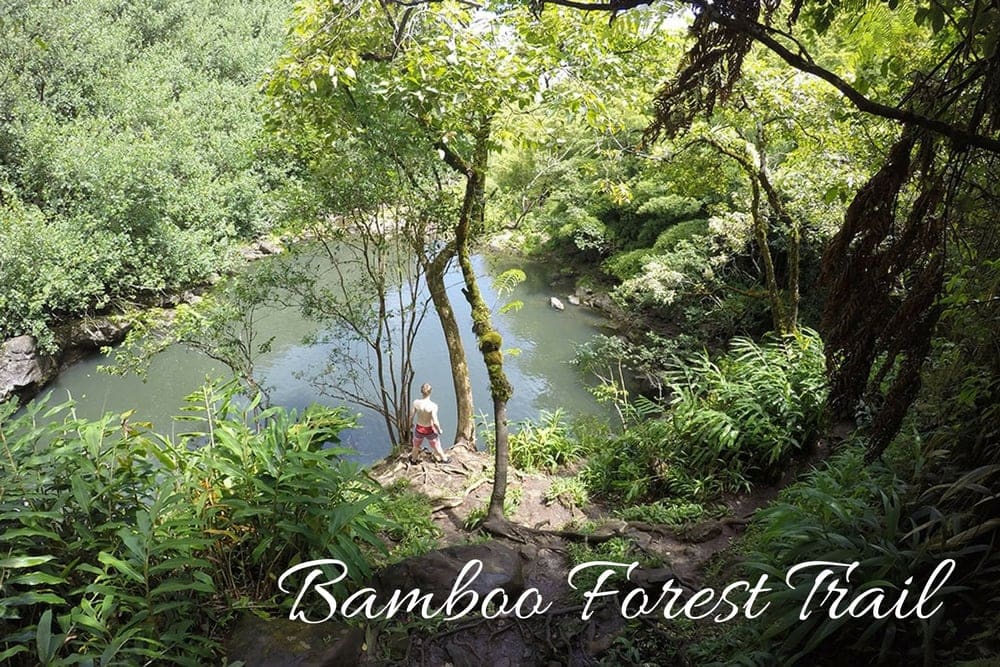
3 hours
A walk through the jungle near Haiku that leads you to several waterfalls. Be careful — the trail isn’t marked and the Lonely Planet guide gives dubious directions on how to reach them. Once you cross the river, turn left; the path to the right is more worn but leads nowhere, just looping you back and forcing you to crawl under bamboo. Before long you’ll reach the first waterfalls, from where you continue right along the river until you reach the second falls, where you can take a dip. The trail then continues left, where there’s a rope you have to hold onto as you scramble up. You’ll reach waterfalls where you can play Tarzan and swing off the rope into the water. The guide said you had to swim across, but you can go around it and carry on up a ladder, where there are gorgeous crystal-clear pools.
Don’t bring too much with you — you’ll need both hands, and the best footwear for this hike is water shoes.
Pi’ilani Trail
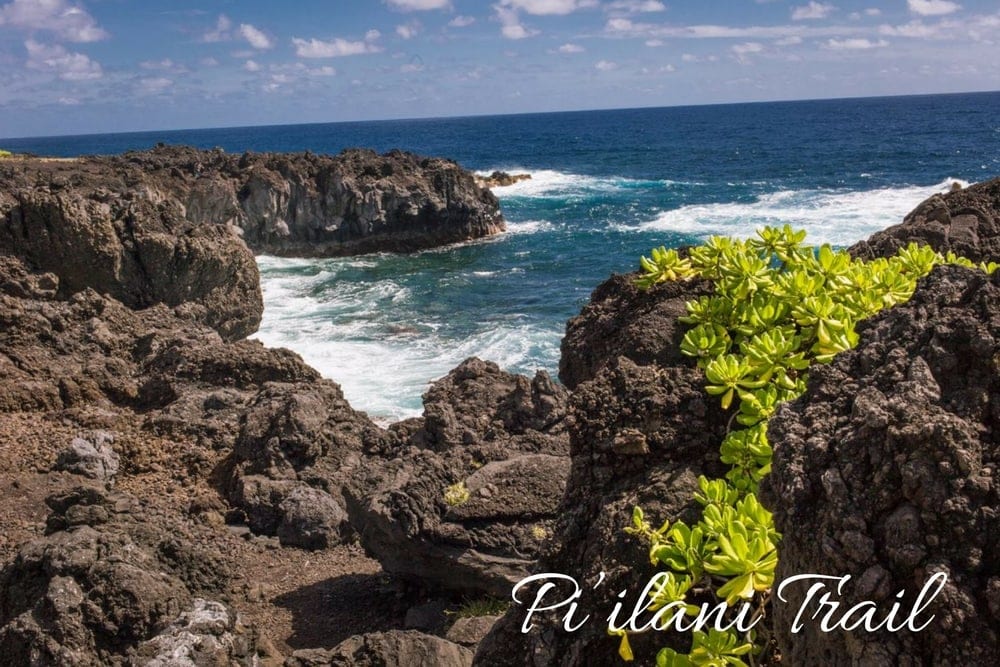
3 hours, 6 miles, almost no elevation gain
It starts at the Waianapanapa campsite and you walk along the cliffs by the coast the whole way. Set off early in the morning, because you’re in full sun the entire time, which can make the trail far more demanding than it really is. If you’re not keen on hiking, you can turn back at any point — the views don’t change much. If you make it to the end, you can walk back along the road, where there are small shady sections and someone might even give you a lift part of the way.
At the very least, wear a pair of trainers.
Waimoku Falls
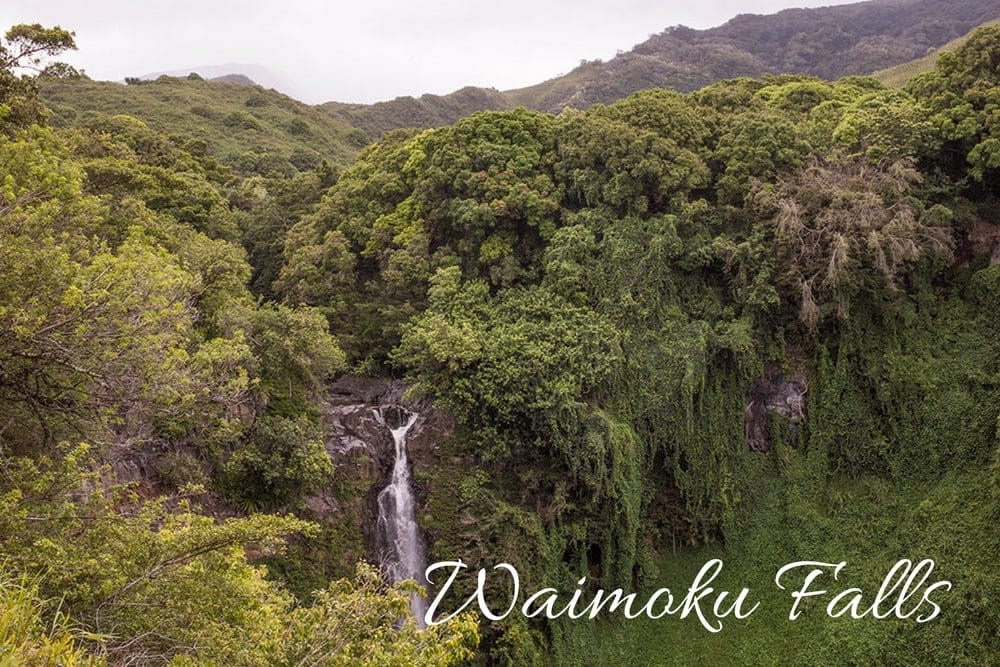
2.5 hours
A climb up to the waterfall through muddy jungle with bamboo, lianas and ancient trees. It’s not too steep, but if it rains it gets slippery. At the very least, wear trainers.
Haleakalā crater – hiking
42 km, two days
We parked at the spot where we wanted to finish and set out to hitchhike to the summit. The second car picked us up. From the summit we walked back to the visitor centre, where our two-day journey along the Keoneheʻeheʻe Trail began. From there you head steadily downhill across the parched crater to the first cabin, Kapalaoa, which appears after about 10.5 km from the start of the official trail. Don’t be fooled by the signposts — our Fitbits clocked far more miles than they showed. Around Kapalaoa the landscape starts turning green and you spot the first Nene birds. From the cabin it’s another 9 km to the Palikū cabin, where we camped. This part is closer to Hana and is therefore completely covered in greenery. The walk took us 6.5 hours and the sun shone the whole time, so we arrived totally sunburnt despite layers of sunscreen. From the summit it was 21 km in total.
The next day we set off from Palikū back to the car along the Halemauʻu Trail. This trail led to the Holua cabin. Once again the landscape gradually shifted from green to barren wasteland that glowed red, black, brown and green. The first section was a gentle climb, but from the Holua cabin the last 8 km were steeply uphill across a green hillside. We practically had to scramble our way out of the crater. The Fitbit clocked 21 km in total.
Tip: You’ll need hiking boots, sunscreen of SPF 50 or higher, a rain jacket and several layers — be prepared for both cold and heat, and it will definitely be chilly at night. We made a mistake by only preparing for cold, because everyone told us to brace for it. But instead of rain, there wasn’t a single cloud in the sky for most of the trail. Carry enough water to the first cabin, where you can boil more or use a water filter, so you don’t have to lug more than 2 litres per person. Drink plenty — you’re near the equator, so make yourself drink at least a litre by the first cabin. Don’t forget a rain jacket, enough food for two days, and a water filter or a stove to boil it.
What we brought with us:
Waiheʻe Ridge Trail
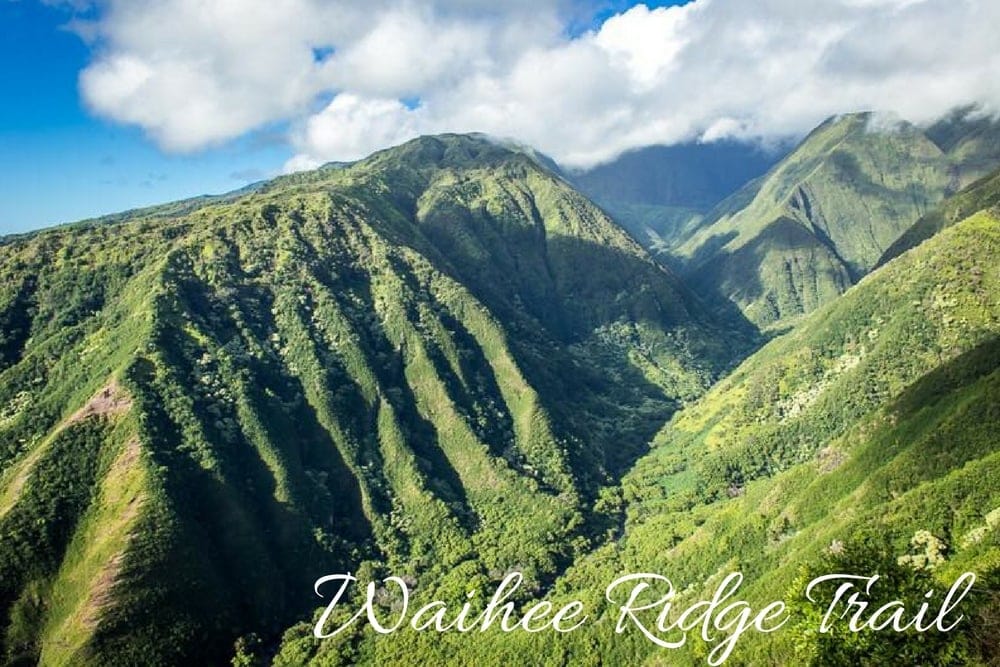
3 hours, around 10 km
The most beautiful thing in Hawaii after the Haleakalā crater. It reminded me of Sri Lanka. The guidebook describes it as a hike through a botanical garden of tropical flora. It’s a trail that climbs steadily upwards, so you’ll work up a bit of a sweat. Set off at seven and you’ll avoid not just the crowds but the clouds too. By the time we walked back, it was already overcast.
Map of points of interest for your phone
The 3 best beaches on Maui. We know where to swim with turtles.
Here’s a list of our favourite beaches on the Hawaiian island of Maui — and trust us, we tried nearly all of them.
1) Baldwin Beach
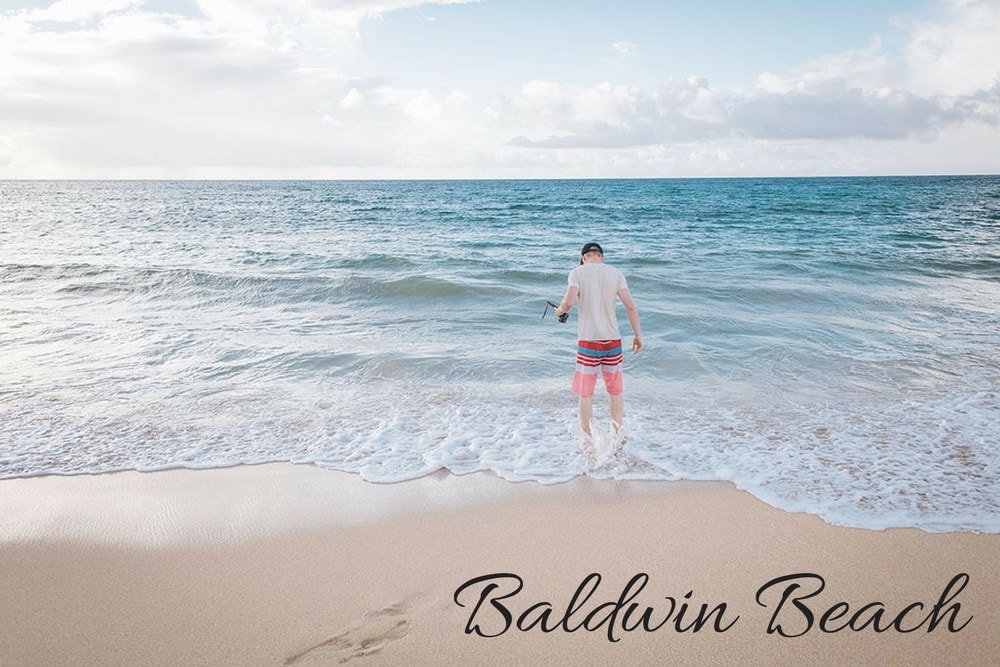
Calm for swimming during the day, then the wind picks up in the afternoon and you can mess about in the waves. It’s just a short distance from the main town of Kahului.
2) Hoʻokipa Beach Park
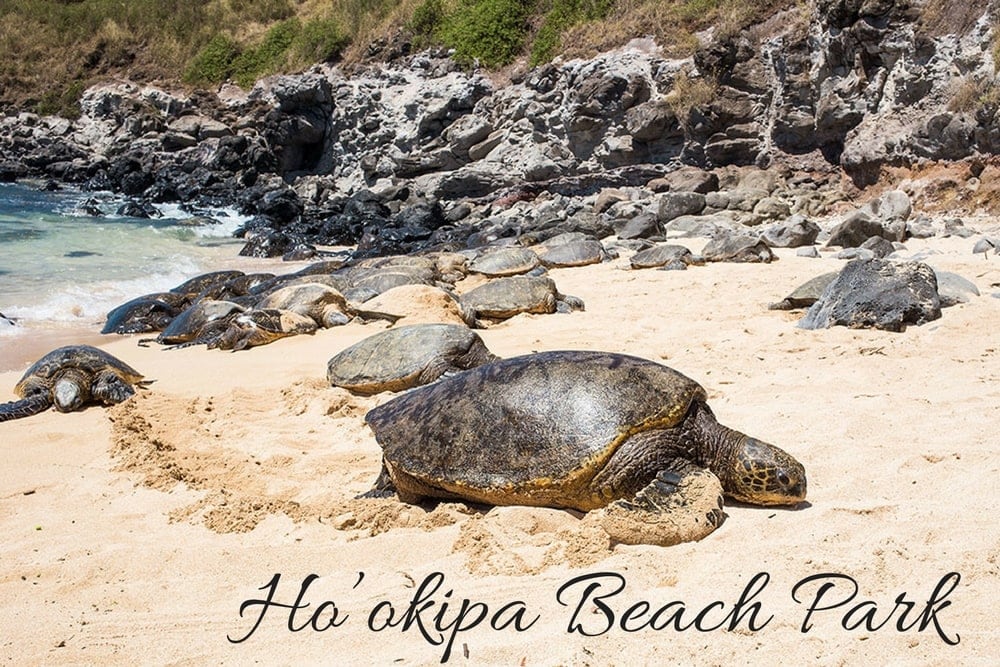
A beach where you can swim with the turtles that come here to rest during their ocean journeys. You can sometimes see dozens of them resting on the beach at once, and if you’ve got a snorkel, head into the water. Just be careful — this beach is also a surfers’ paradise, so there are huge waves, and in the afternoon it can get a bit too rough for snorkelling.
3) Kahekili Beach Park
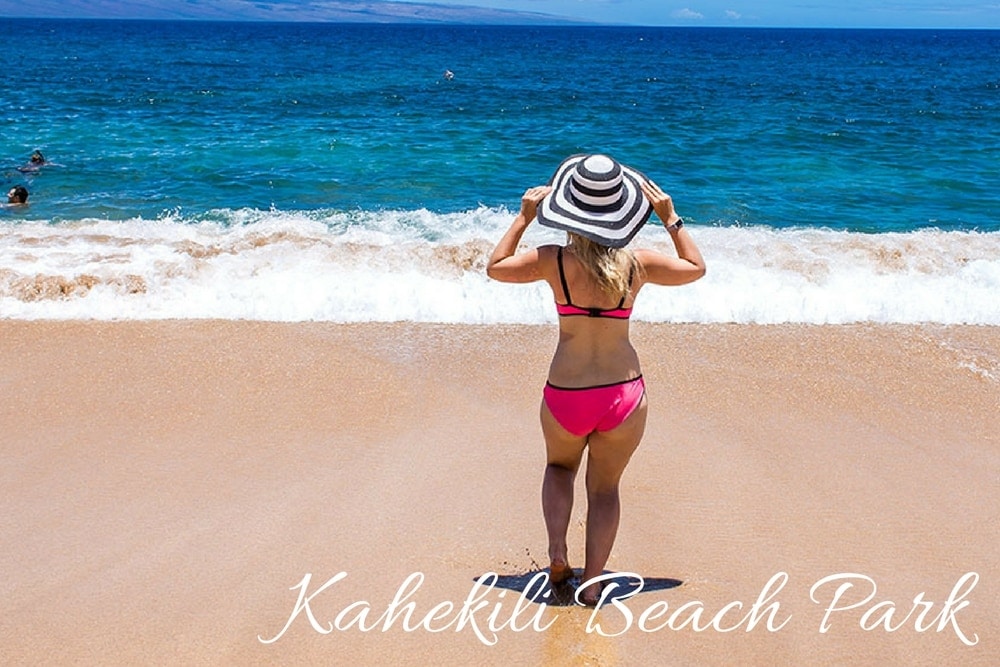
Our favourite beach near Lahaina. While everyone heads to Kaʻanapali Beach, here you can enjoy a sandy beach with turquoise ocean alongside just a handful of other tourists. Come in the morning and the snorkelling is great too — the moment you wade in and dip your head under, you’ll see fish straight out of Finding Nemo.
Video report
Tips and tricks for travelling around Hawaii
What to packTake a look at our travel packing guide, which will help you get ready. Choose the right travel backpack, browse handy travel gadgets and make sure you don’t leave anything important at home. Where to find flightsLook for cheap flights on Kiwi — it’s our favourite portal. Be sure to read our guide to finding cheap flights. Car hireWe regularly use the comparison site DiscoverCars.com, which helps us choose the right car provider. Booking accommodationBooking.com is our favourite hotel search engine. We always compare hotels with local flats and rooms on Airbnb (£25 discount). Read up on how we find cheap accommodation. Don’t forget insuranceTravel insurance is an absolute must. For shorter trips we go with AXA (50% discount) and for longer trips the British insurer True Traveller. Take a look at our comparison of all insurers and pick the one that suits you best. |
Tips and Tricks for Your Vacation
Don’t Overpay for Flights
Search for flights on Kayak. It’s our favorite search engine because it scans the websites of all airlines and always finds the cheapest connection.
Book Your Accommodation Smartly
The best experiences we’ve had when looking for accommodation (from Alaska to Morocco) are with Booking.com, where hotels, apartments, and entire houses are usually the cheapest and most widely available.
 🚗 Car rental on the roadVerified rental cars in the United States
Search with the DiscoverCars comparison engine — it compares prices from dozens of local and international rental companies, and most bookings come with free cancellation.
Compare car prices in the United States →Don’t Forget Travel Insurance
Good travel insurance will protect you against illness, accidents, theft, or flight cancellations. We’ve had a few hospital visits abroad, so we know how important it is to have proper insurance arranged.
Where we insure ourselves: SafetyWing (simple monthly subscription) and TrueTraveller (for extra-long trips).
Find the Best Experiences
Get Your Guide is a huge online marketplace where you can book guided walks, trips, skip-the-line tickets, tours, and much more. We always find some extra fun there!