

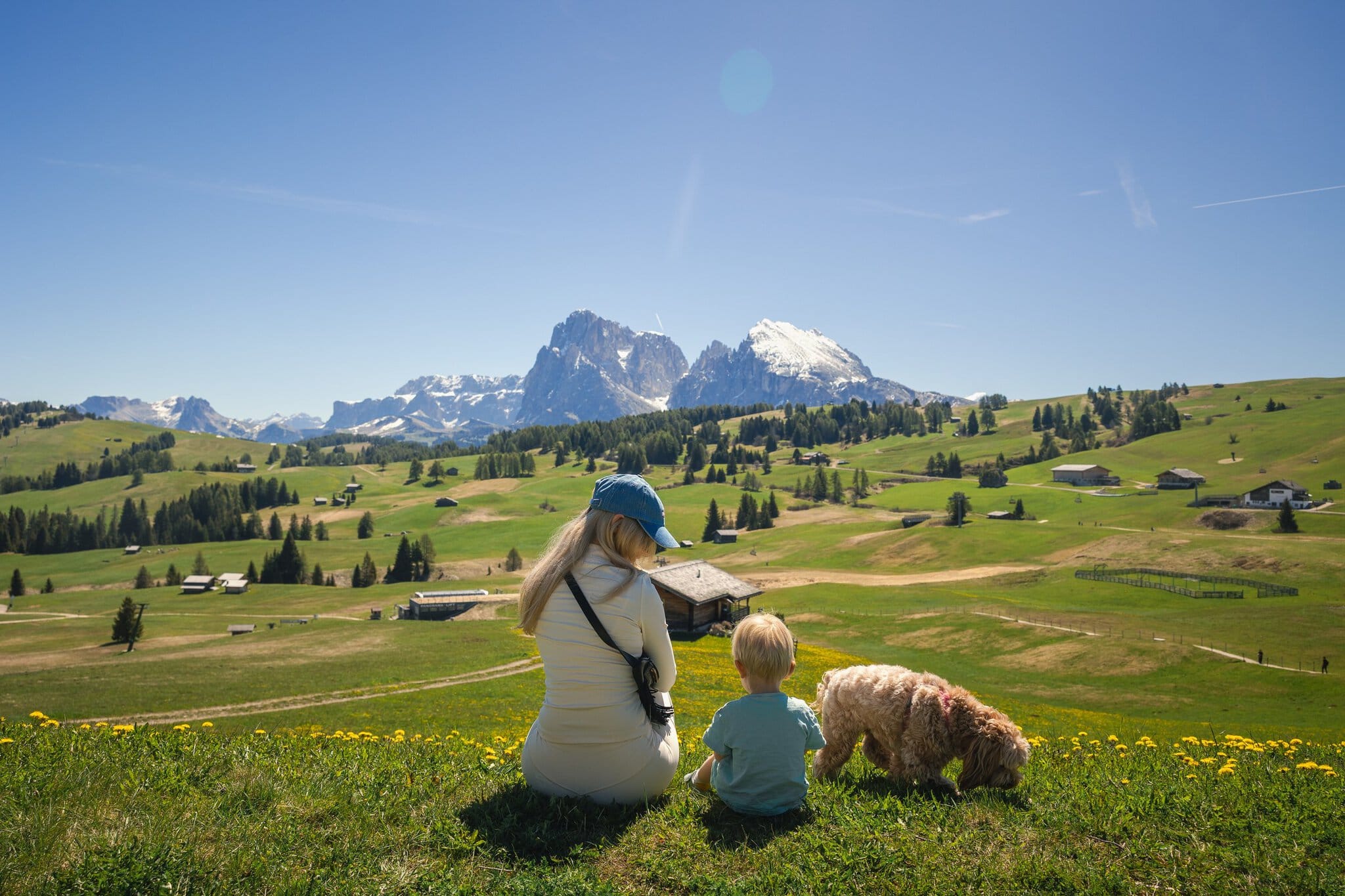
I remember the moment Lukáš and I pulled out our phones and showed each other the exact same saved photo of the same alpine meadow (yes, the one with those two jagged peaks piercing the sky). Back then, we had no idea that a few years later we’d be standing there with a pushchair and two dogs. Alpe di Siusi — or Seiser Alm, as it’s known in German — is the kind of place that pops up in every guide to northern Alpe di Siusi Italy, and I can promise you that reality is even more beautiful than those edited Instagram photos. When you ride the cable car up, the views are absolutely jaw-dropping and you’ll instantly understand why people flock here from all over the world. ☺️
We fell in love with the Dolomites years ago, but this time it felt completely different. With our two-year-old Jonášek in tow, we were specifically hunting for pushchair-friendly destinations, and Alpe di Siusi turned out to be absolutely ideal. The terrain is mostly flat, accessible cable cars and buses run everywhere, and you can soak in the high-altitude scenery without having to scramble up sheer rock faces with a toddler on your back. Our two dogs, Kája and Baby, came along too — for them, these vast grassy plains were nothing short of paradise. And that’s exactly what I want to share with you today: what to do, where to eat, and how to get there without spending your first day stuck in a car park.
The full destination guide: Dolomites — guide and what to see
TL;DR
- Where is it: The largest high-altitude alpine meadow in Europe, located in the Italian Dolomites (Trentino-Alto Adige region) at an elevation of 1,680–2,350 metres.
- Main draw: Panoramic views of the Sasso Lungo, Sasso Piatto, and Sciliar mountain massifs.
- Getting there: During the season, there’s a strict car ban from 9:00 to 17:00. Use the Alpe di Siusi cable car from Ortisei or from Compatsch to get up.
- Who is it ideal for: Families with children, pushchairs, dog owners, and lovers of easy walks as well as panoramic treks.
- Watch out: Flying drones is strictly forbidden, with fines of up to €3,000.
What Exactly Is Alpe di Siusi (Seiser Alm)?
If you find yourself getting confused by the mix of Italian and German names, you’re not alone. The entire South Tyrol (Südtirol) region is bilingual, so you’ll always see the Italian name Alpe di Siusi right alongside the German Seiser Alm, sometimes even joined by the local Ladin name Mont Sëuc. Call it whatever you like — I’ve got it saved in my phone as “that meadow that made me cry at sunset.”
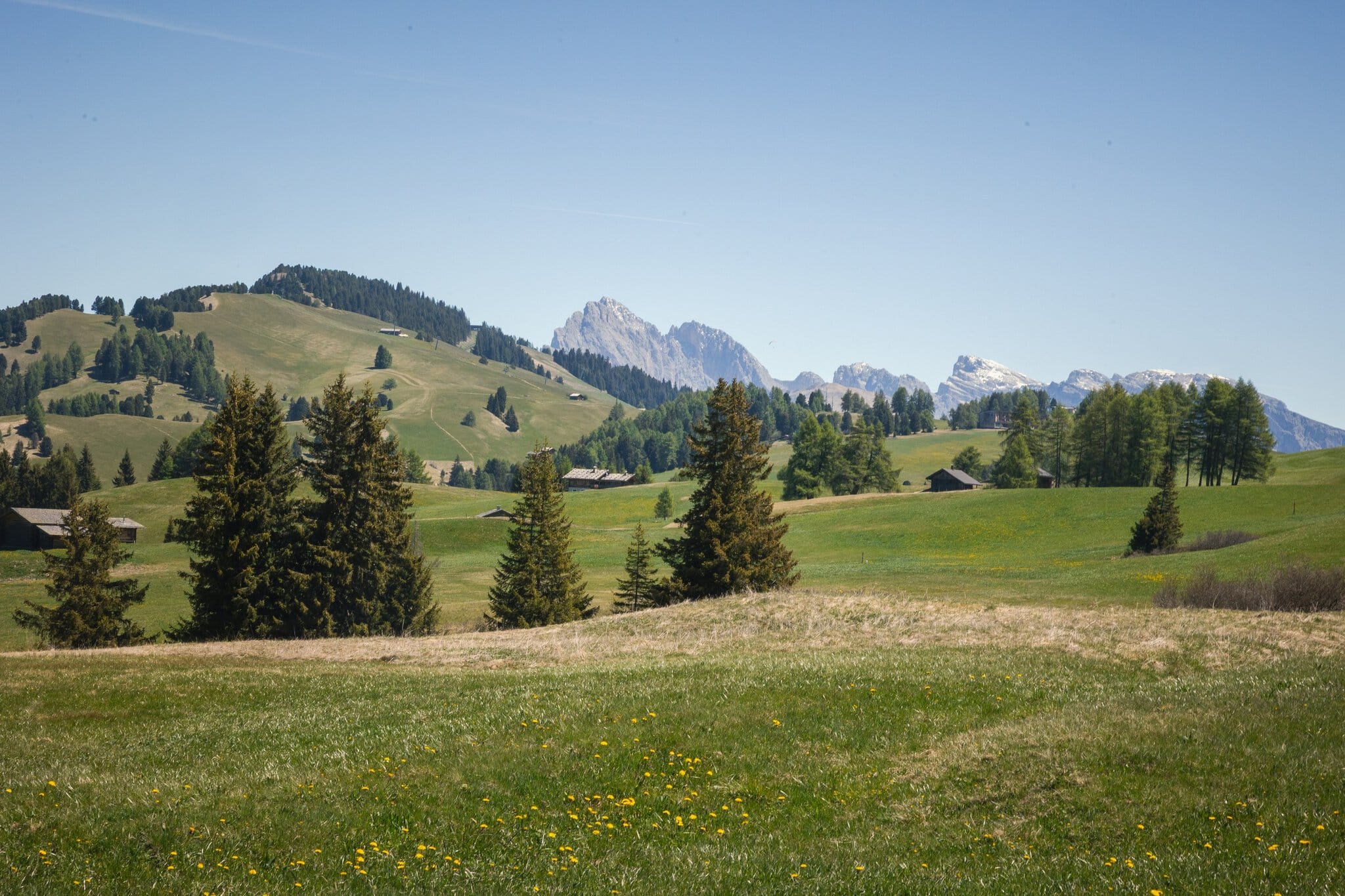
This is the largest high-altitude pasture in all of Europe, covering an enormous 56 km² and rightly listed as a UNESCO World Heritage Site as part of the Dolomites. The meadow sits like a green jewel among dramatic limestone peaks, the most striking being the pointed spires of Sasso Lungo (Langkofel) and the massive flat-topped Sciliar (Schlern). Unlike the jagged, steep mountains surrounding it, this plateau is incredibly gentle — rolling, dotted with wooden huts, and drenched in an unmistakable romantic atmosphere.
When to Visit and What Weather to Expect
Choosing the right time to visit Alpe di Siusi is crucial, because each season offers an entirely different experience — and honestly, I can’t pick a single best one. It all depends on what you’re looking for.
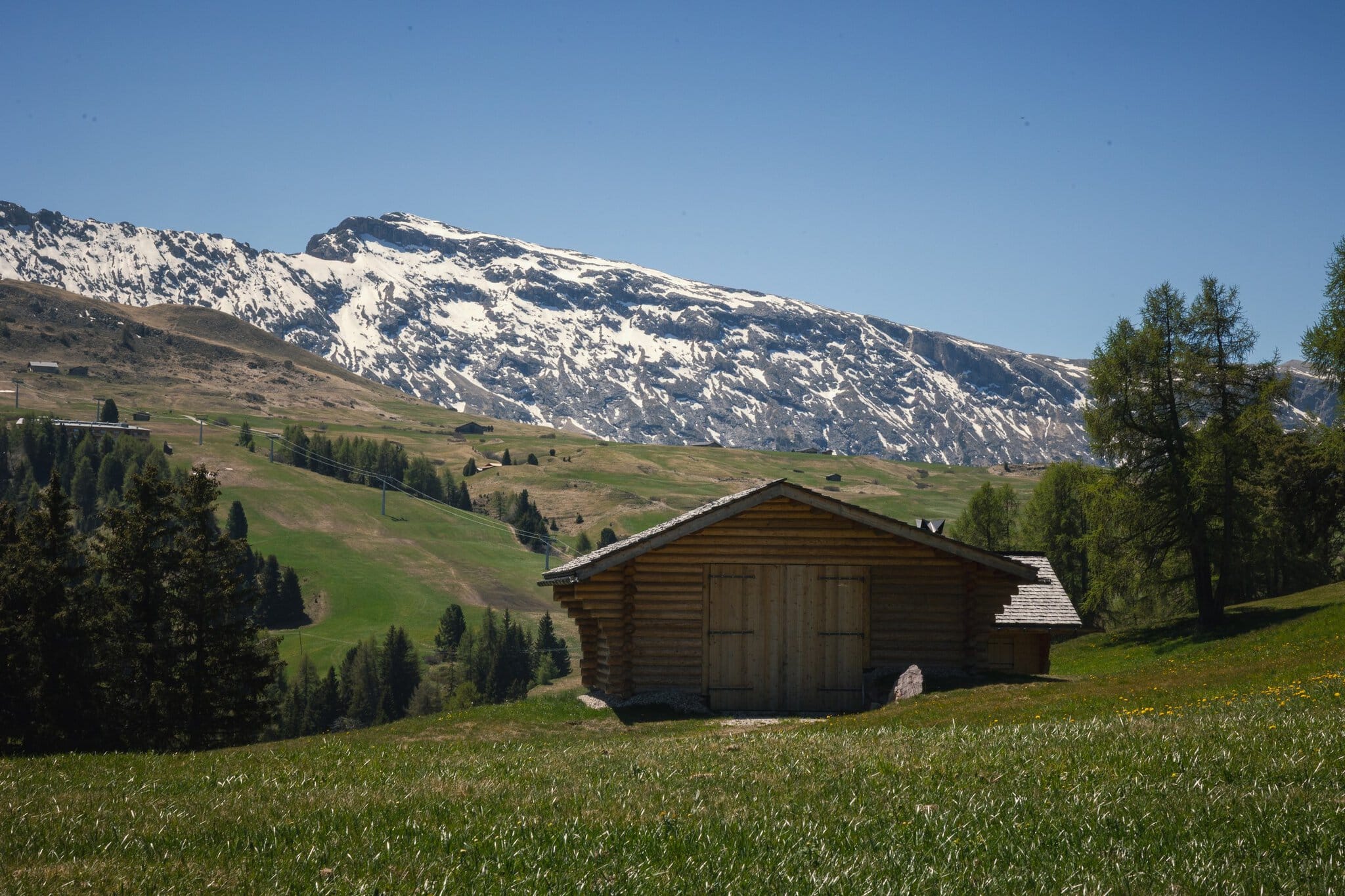
For classic hiking and pushchair-friendly outings, the sweet spot is May through September. The days are long and temperatures pleasant, although you need to bear in mind that at around 2,000 metres, even summer can bring a chilly breeze. If you’re mad about wildflowers, aim for late spring or early summer, when the entire vast plateau erupts in colour with thousands of alpine blooms.
In autumn, roughly from mid-October, the meadow turns a rich golden hue and the air is incredibly clear, giving you visibility for miles. And winter? That’s a chapter all on its own. The plateau transforms into a perfect winter resort within the famous Dolomiti Superski network. Before you set off at any time of year, though, we always recommend checking the latest Alpe di Siusi weather online and ideally pulling up an Alpe di Siusi webcam, because mountain weather can turn on a sixpence.
How to Get Up: Beware the Car Ban!
Listen, please don’t underestimate this — we’ve watched bewildered visitors pulling into the car park at half nine in the morning, only to stare in disbelief at the “no entry” sign. Getting up to the plateau has some very strict rules you absolutely need to know.
During the main tourist season, there’s an absolutely uncompromising ban on private vehicles entering the Alpe di Siusi area between 9:00 and 17:00. Try to break the rule and you’ll be caught on camera and hit with a hefty fine. So, what are your options?
- By car before 9:00 or after 17:00: If you’re an early bird, you can drive up to the village of Compatsch (the main gateway to the meadow) before nine in the morning. The road gets busy, so give yourself plenty of time. Up top, you can park in the large car park for around €25 per day. You can leave whenever you like, but you’re not allowed to drive around the plateau itself during the day. With our little Jonášek, early mornings aren’t really our thing, so we went for other options. 😅
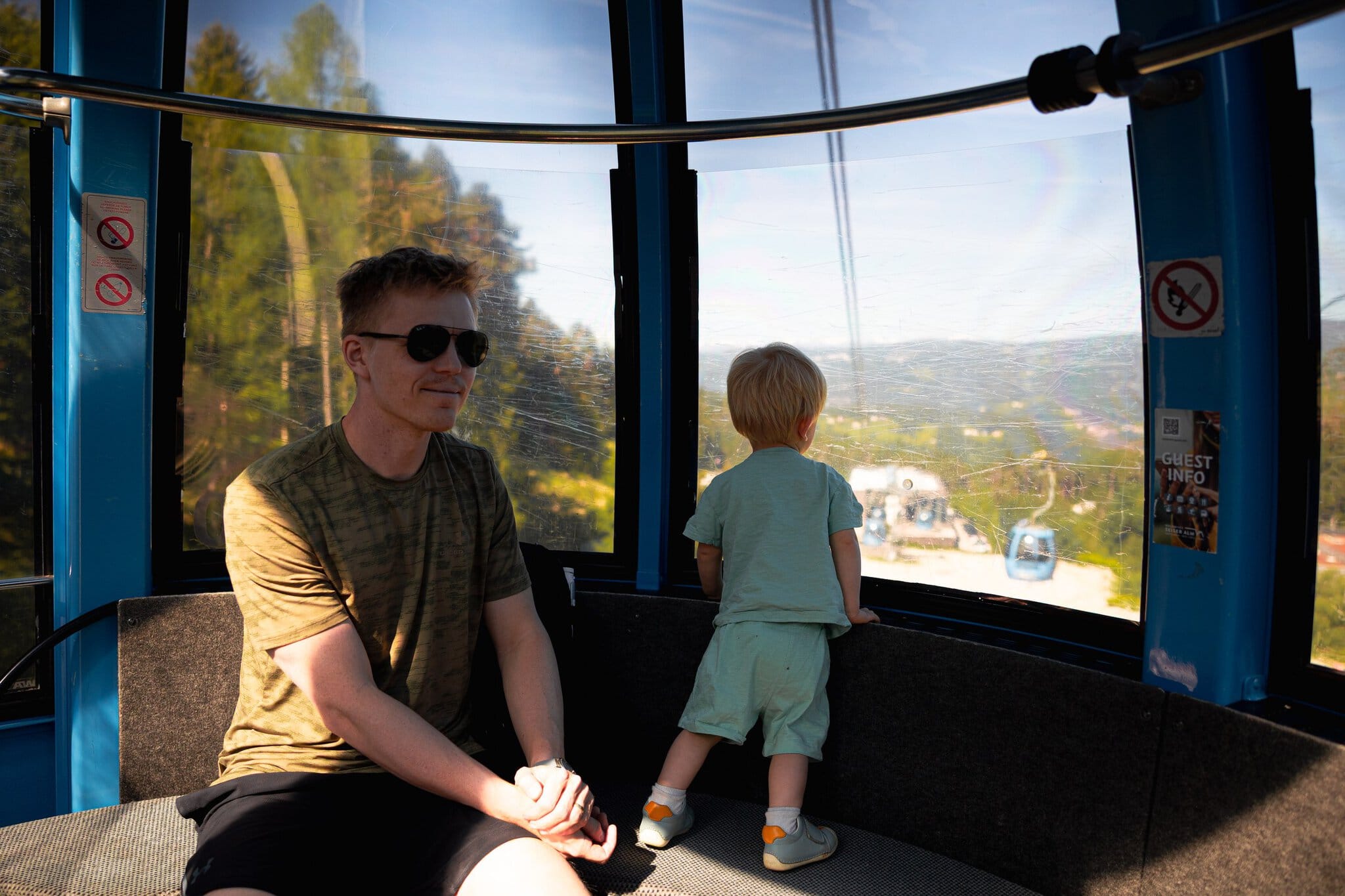
- Cable car from Ortisei: This is our favourite and most comfortable route. From the lovely town of Ortisei, a red gondola (Cabinovia Mont Sëuc) takes you straight to the edge of the meadow. You can easily wheel a pushchair into the cabin and dogs are welcome aboard.
- Alpe di Siusi cable car from Siusi (Seis) to Compatsch: Another great option that whisks you from the valley up to the main hub of Compatsch. The cable cars are fast, quiet, and the views alone are worth the ride.
- By bus: Regular bus services run from many surrounding towns, including Castelrotto (Kastelruth). Once on the plateau, the local yellow and blue buses (lines 11 and 12, for instance, heading to the Saltria area) work brilliantly and drop you right at various trailheads.
Where to Stay and How Much It Costs
Finding the right accommodation in this area takes a bit of planning, because location has a huge impact on price. If you’re happy with a short commute and want to save some money, the charming valley towns are a great shout. But if you want the romance of waking up to views straight over the pastures, be prepared to pay a premium.
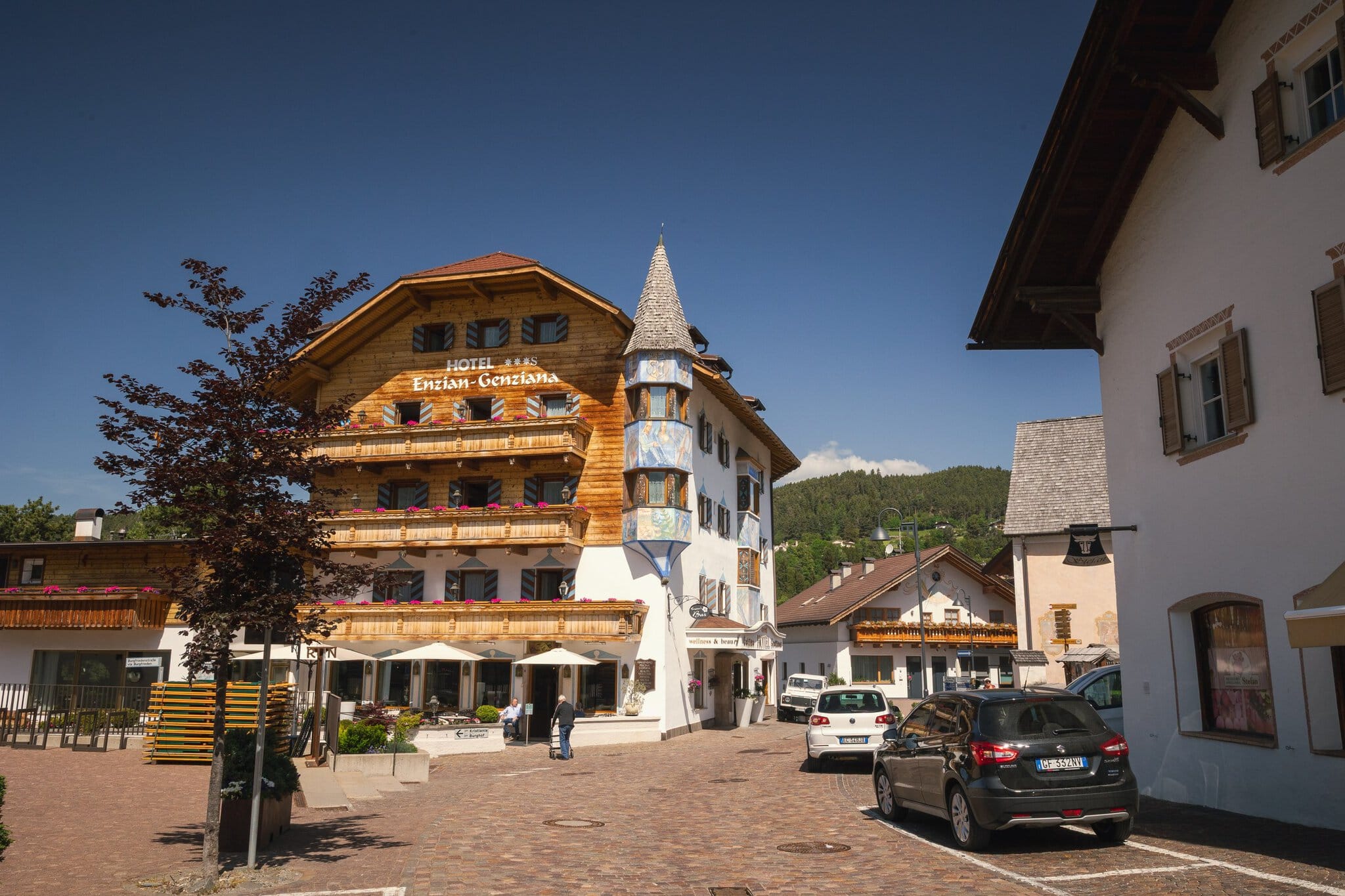
Right on the Alpe di Siusi meadow you’ll find plenty of gorgeous Alpe di Siusi Italy hotels and mountain lodges, but prices typically start above €200 per night for two and sell out well in advance during peak summer and winter. The strategically smartest move is to base yourself in Compatsch, right on the edge of the meadow, where everything is within easy reach.
I can recommend browsing local hotels via the official tourism website, or comparing current prices and availability on Booking.com. Personally, we’re huge fans of nearby Castelrotto (Kastelruth) — a gorgeous traditional Ladin village where you can find lovely apartments at more reasonable prices and the atmosphere is simply wonderful. For something upscale, the Schgaguler Hotel is superb, or for a more budget-friendly option, try the Aparthotel Kastel Seiser Alm. Another excellent base is the aforementioned Ortisei, where the cable car gets you to the top in just 15 minutes and you can stroll past lovely cafés in the evening.
12 Places to Visit and Things to Do at Alpe di Siusi
You could easily spend an entire week on this enormous plateau and still have plenty left to discover. Here’s our pick — tailored for families, dog owners, and those who simply want to sit on a terrace gazing at mountains with a coffee in hand.
1. Breathtaking Views of Sasso Lungo and Sasso Piatto from the Meadow
This is the exact view that draws everyone here. The two majestic mountains, Sasso Lungo and Sasso Piatto, tower over the green plain like a pair of sentinels, creating the perfect backdrop for any photograph.
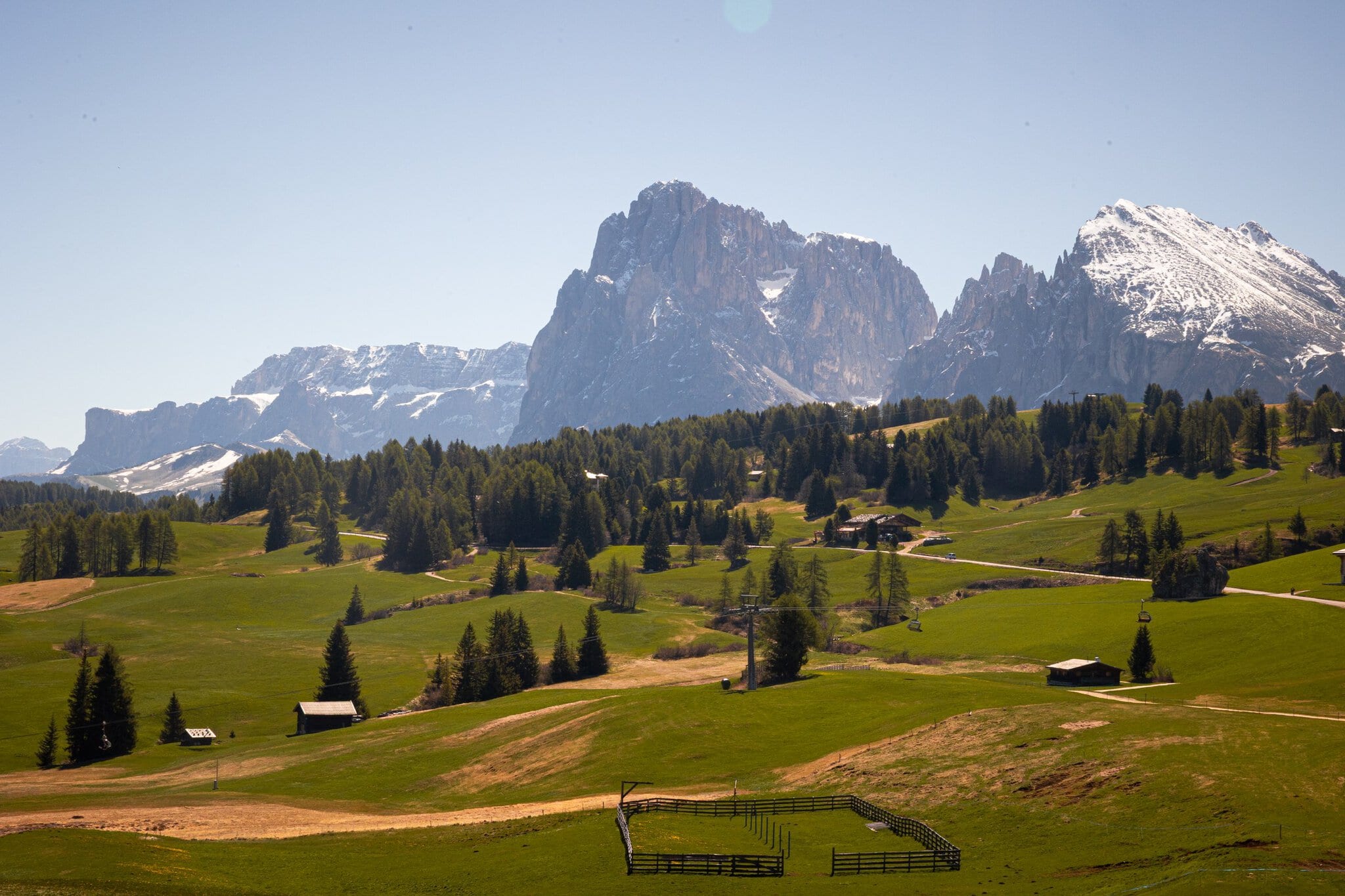
And the best part? You don’t need to tackle any difficult hike. Simply ride the cable car from Ortisei, walk a few dozen metres from the Mont Sëuc upper station, and that postcard panorama just opens up right in front of you. In the early evening especially, when the setting sun paints the rocks pink and purple, it’s a spectacle that will genuinely take your breath away.
2. A Romantic Stroll Along the Hans und Paula Steger Weg
If you’re after an easy trail packed with interesting information and gorgeous views, this path is absolutely perfect. It’s named after two famous mountaineers and pioneers of local tourism who fell in love with the area and dedicated their lives to it.
The trail runs from Compatsch to the Saltria area, stretches about five kilometres, and is almost entirely flat or gently downhill. The path is wide and well-surfaced, making it absolutely ideal for families with pushchairs. Along the way, you’ll spot plenty of information boards about local fauna and flora — and Jonášek happily snoozed through most of it in his pushchair, lulled by the fresh mountain air.
3. Full-Day Trek to Plattkofel / Sasso Piatto
This one’s for those of you who crave a bit more adrenaline and physical challenge — Lukáš and I did this before Jonášek was born. The ascent of the vast, almost slant-topped Sasso Piatto is an all-day adventure.
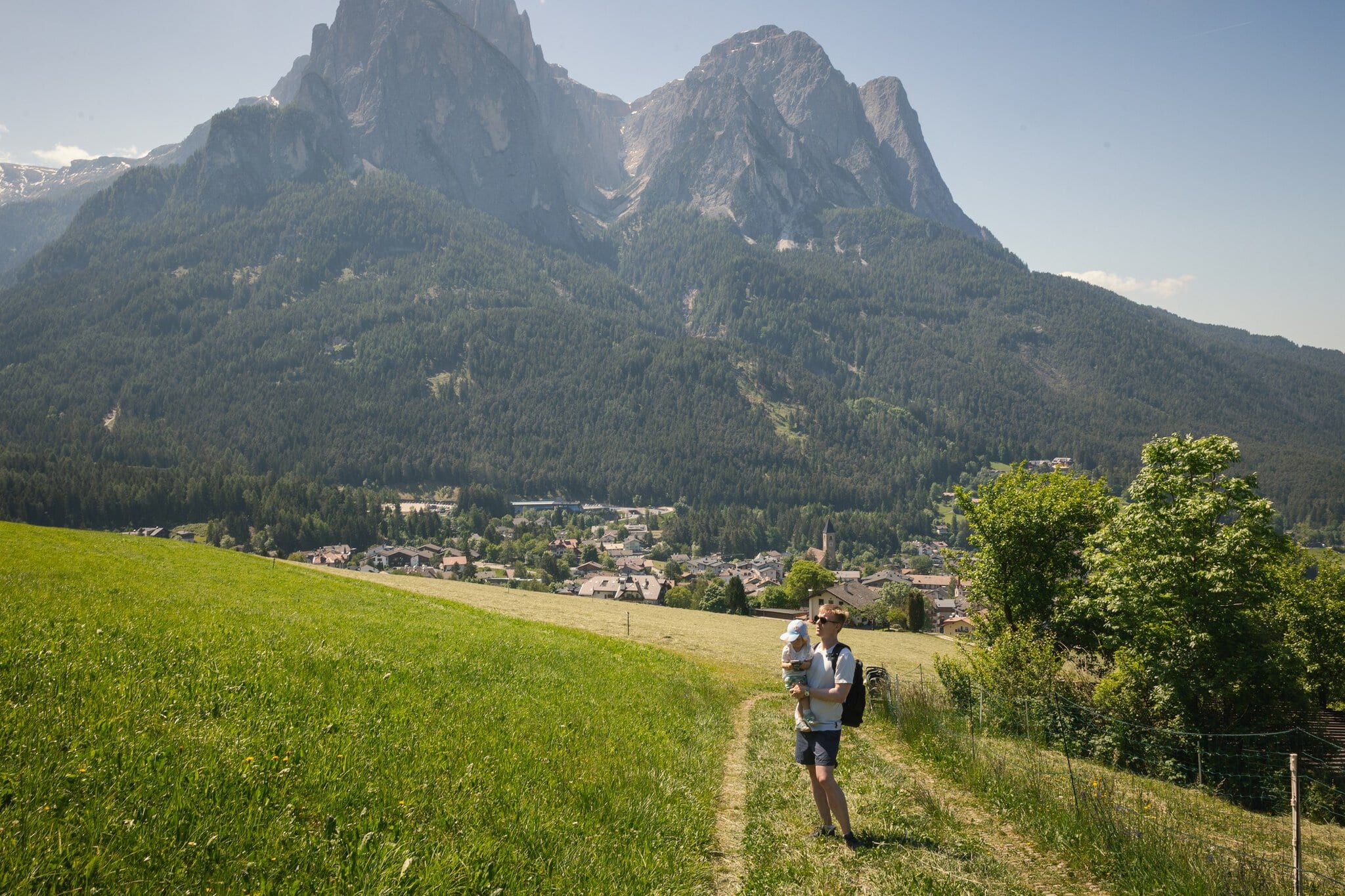
The route takes roughly 4–5 hours and demands decent fitness and sturdy footwear. Your reward, though, is fantastic views — not just of the entire Alpe di Siusi meadow far below, but also of the distant Marmolada glacier and the Sella massif. Set off early before the sun starts blazing and pack more water than you think you’ll need. Lukáš and I always brought “just enough” and always regretted it.
4. Compatsch Centre and the Local Almstation
Compatsch is the natural hub of everything happening on Alpe di Siusi. You’ll find the highest concentration of hotels, restaurants, souvenir shops, and — crucially — a large visitor information centre where staff are always happy to help you choose trails and give you the latest weather forecast.
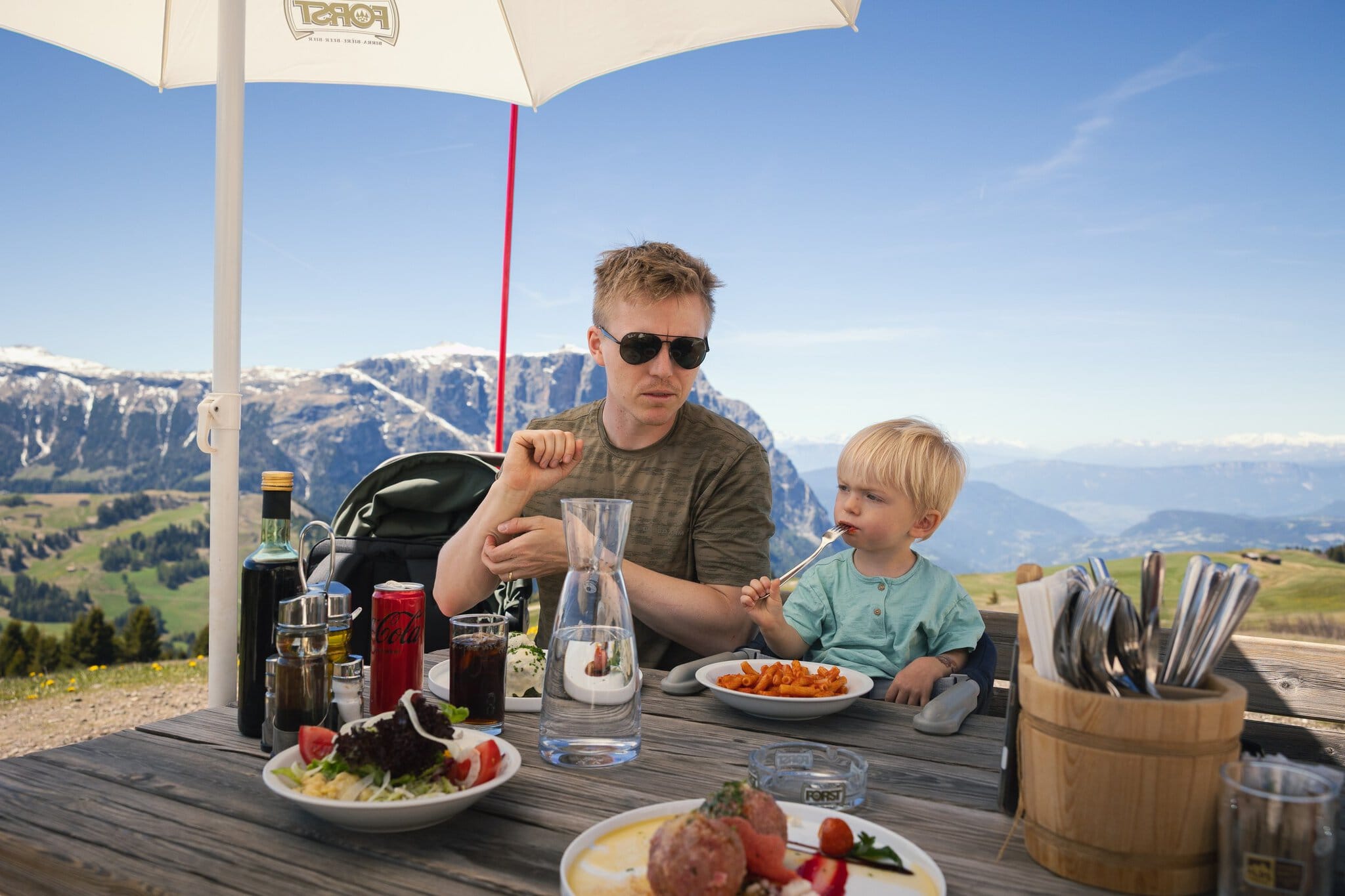
Even though it’s a fairly bustling spot full of tourists, it’s well worth lingering for a while. You can hire e-bikes, pick up local cheeses and speck for the trail, or simply grab a seat on a café terrace and watch the world go by. All the main hiking trails across the meadow fan out from Compatsch like spokes on a wheel.
5. Skihotel Saltria and the Saltria Loop
The Saltria area sits in a slight valley on the eastern side of the plateau and you can reach it either on foot or very comfortably by local bus from Compatsch. It’s a quieter part of the pasture, surrounded by dense forest and babbling streams.
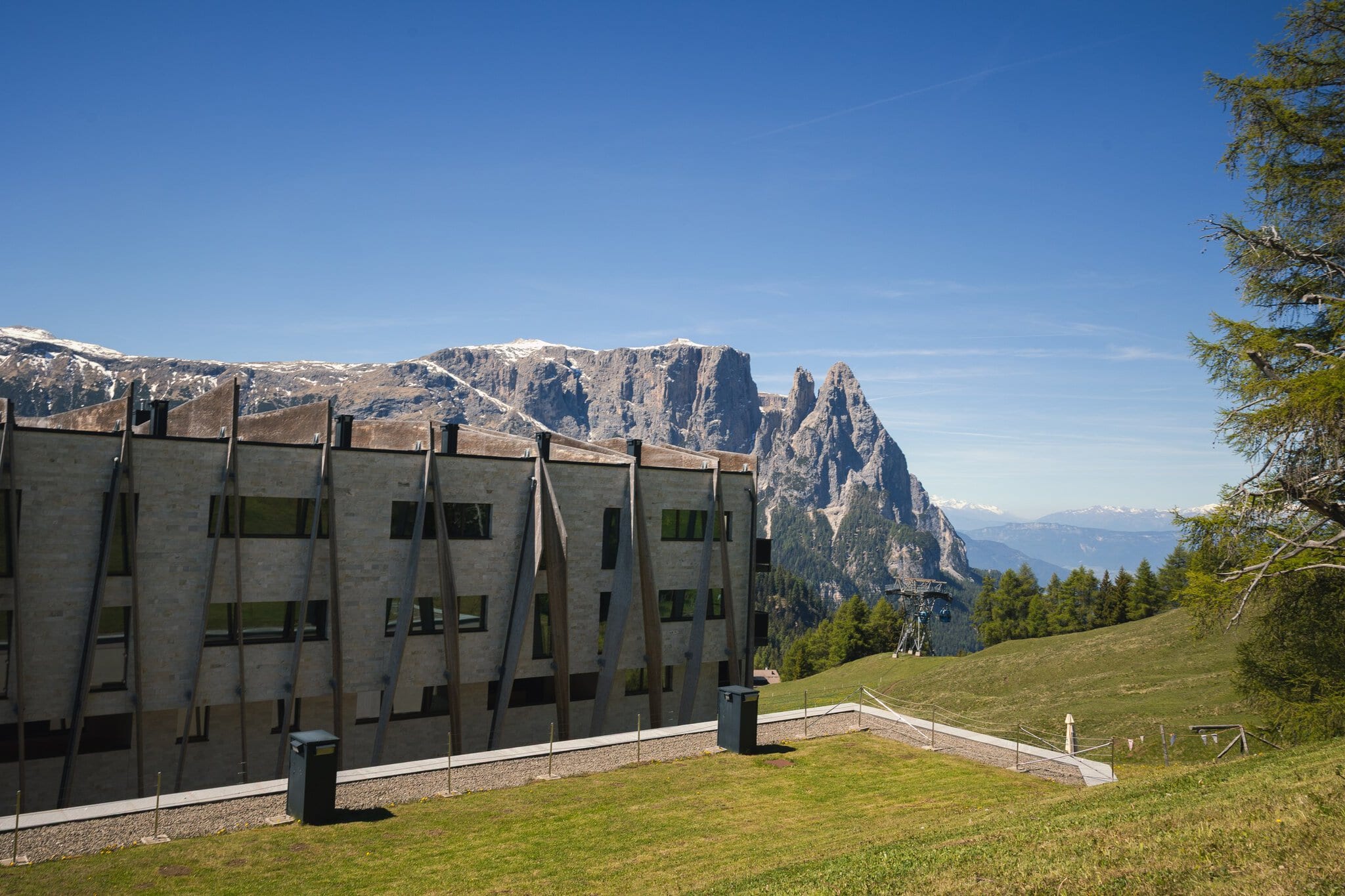
The Skihotel Saltria makes an excellent landmark, and from there you can set off on shorter loop walks that take you past small waterfalls and idyllic wooden cabins. It’s another wonderfully relaxed and safe walk, so if you’re travelling with young children or older relatives, you’ll love it here.
6. A Trip to the Fairy-Tale Lago di Fiè
Although this little lake doesn’t sit directly on the high-altitude plateau but a bit lower, near the village of Fiè allo Sciliar (Völs am Schlern), it absolutely deserves a spot on our list. It’s widely considered one of the most beautiful natural lakes in all of Italy.
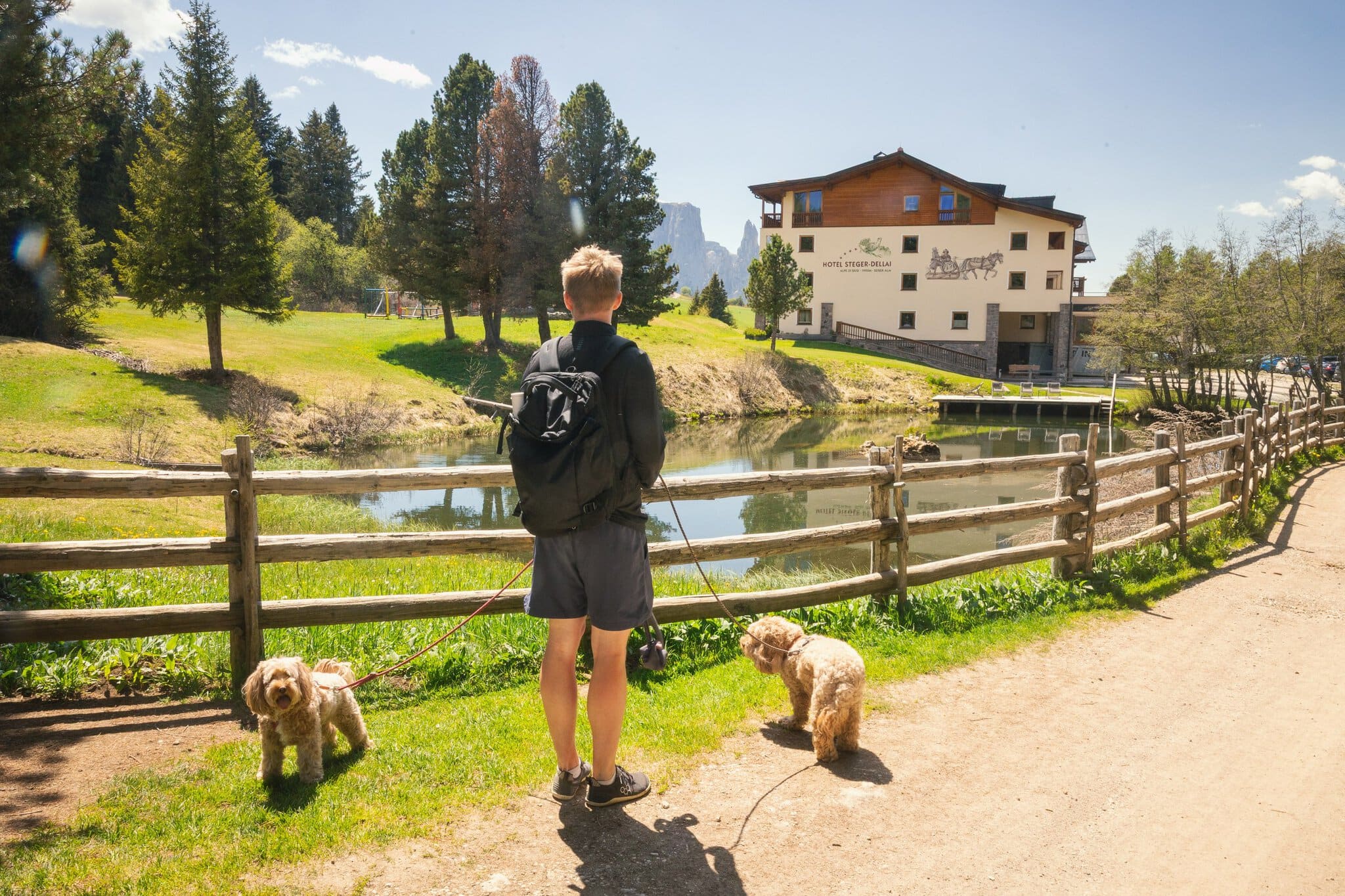
The lake is surrounded by dense spruce forest, and on a clear day the Sciliar massif is perfectly mirrored in its dark surface. In summer the water is bracing, to say the least, but swimming is possible, and along the shore you’ll find lovely wooden walkways and picnic spots. From Alpe di Siusi it’s an easy drive or bus ride, and it’s a wonderful place to unwind after a full day of hiking.
7. The Enchanting Witches Benches (Lavon dles Streghes)
The entire Alpe di Siusi area is steeped in myths and legends about witches who supposedly gathered on dark nights along the slopes of Mount Sciliar. And it’s this very legend that gives the so-called Witches Benches their name.
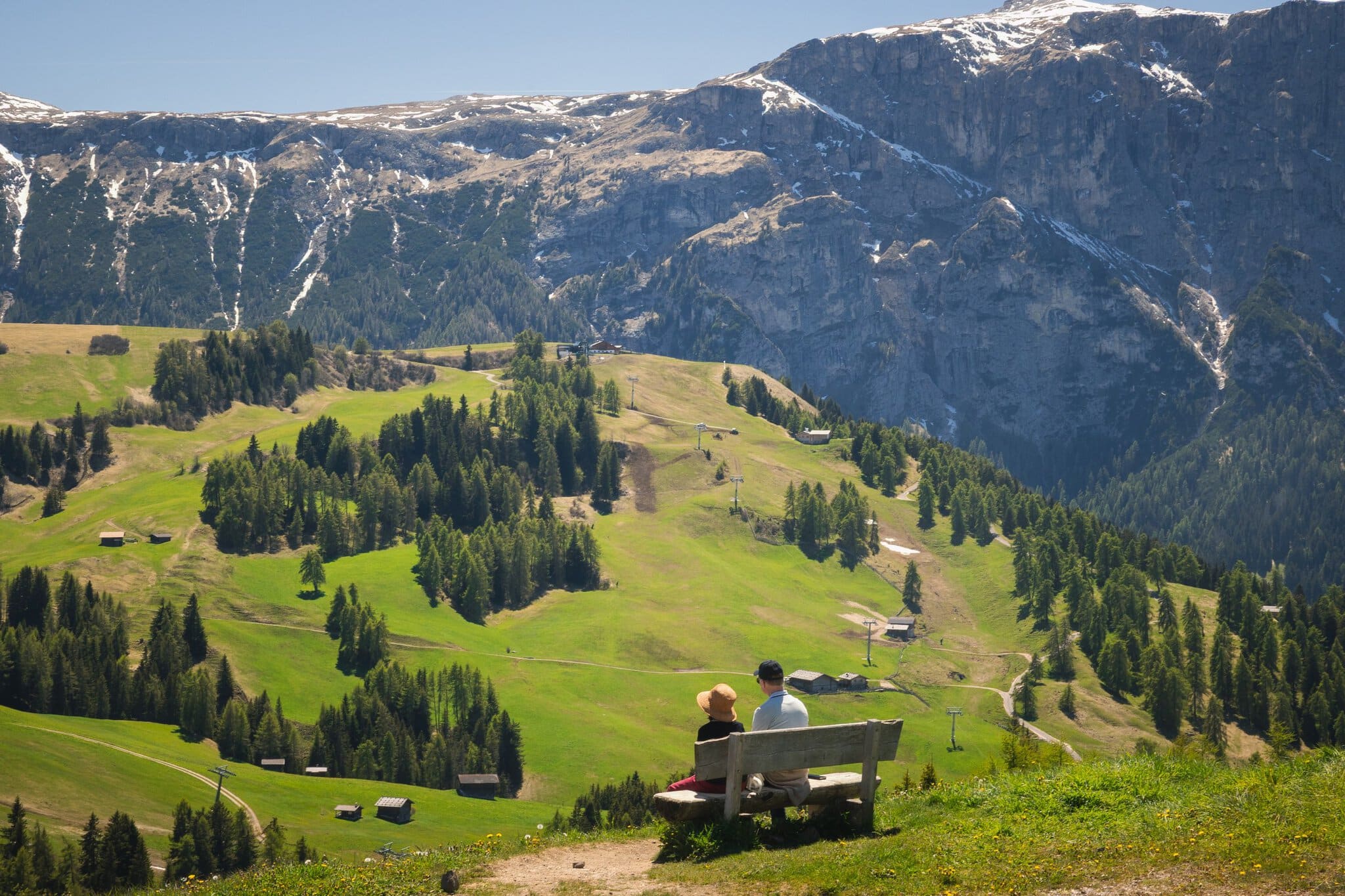
These are fascinating rock formations that genuinely look like enormous stone armchairs with a perfect view over the valley. You can reach them via a fairly easy, undemanding walk, and for older children especially, this magical spot with its touch of spooky history is a huge draw. Don’t forget to snap a fun photo sitting on a giant witch’s throne. 😁
8. A Ride on the Mont Sëuc Panoramic Cable Car
As I mentioned earlier, this striking red cable car departing from Ortisei isn’t just a means of transport — the ride itself is an incredible experience that everyone in the family will love.
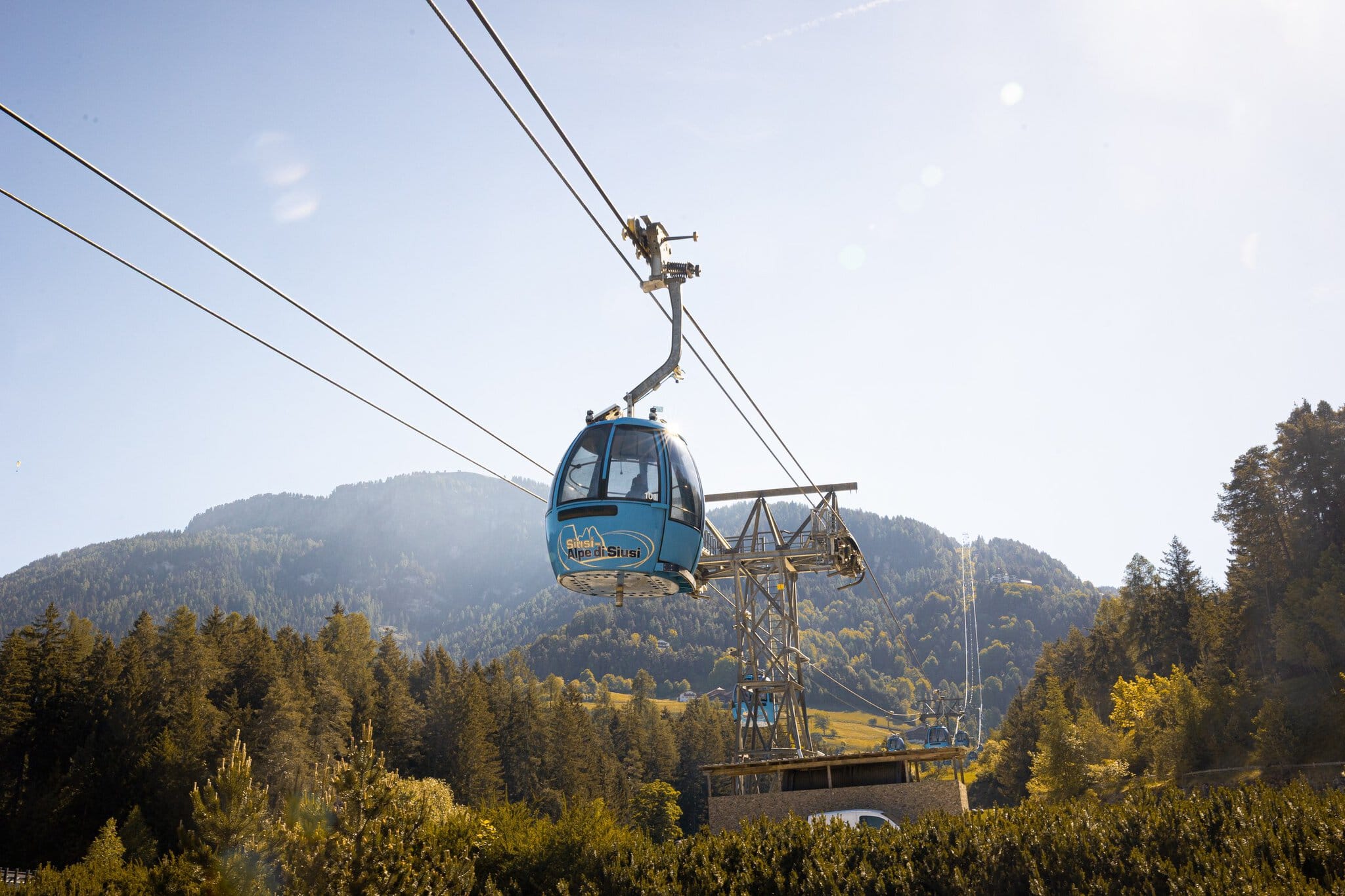
The journey takes just under 15 minutes and covers an impressive change in elevation. As you rise out of the valley, ever-wider, breathtaking views of the entire meadow gradually unfold before you. At the top station there’s also a lovely restaurant with a panoramic terrace, where we always grab our first morning cappuccino.
9. Horse Riding and Horse-Drawn Carriage Rides
A mountain pasture wouldn’t be complete without animals. Besides the ever-present cows, you’ll encounter plenty of beautiful, powerful horses that are an inseparable part of the local character.
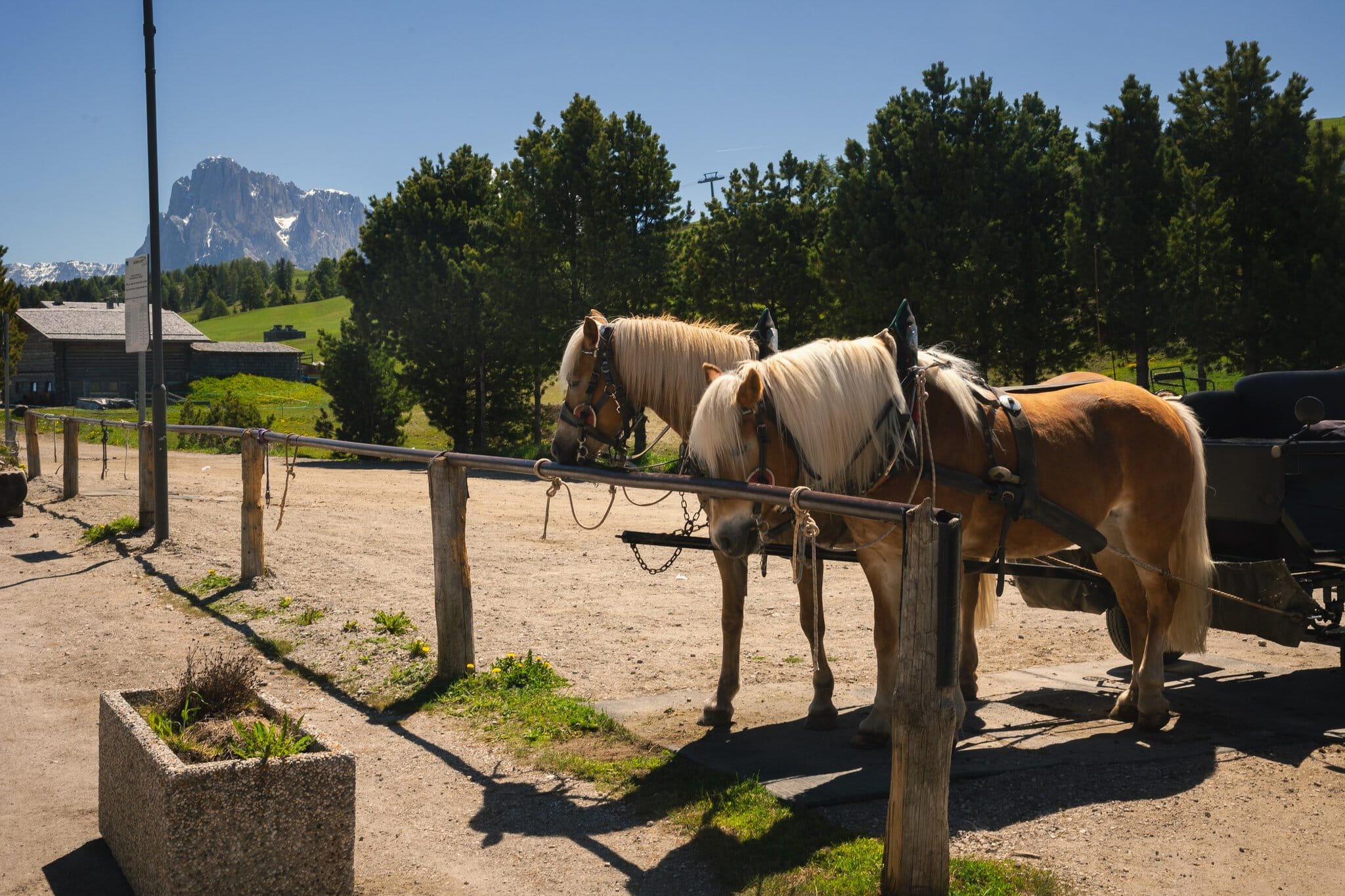
If you want to really impress your partner, hire a traditional wooden horse-drawn carriage. The sturdy Haflinger stallions are everywhere, and a sunset ride is worth every penny of the surcharge. Children will love the horses too — at the very least, they can give them a pat over the fence.
10. The Autumn Tradition of Almabtrieb (Cattle Festival)
If you time your trip for early autumn — around 2 September, for example — you can experience one of the most beautiful and authentic local traditions. The Almabtrieb is the ceremonial herding of cattle from the high summer pastures back down to the valley before winter sets in.
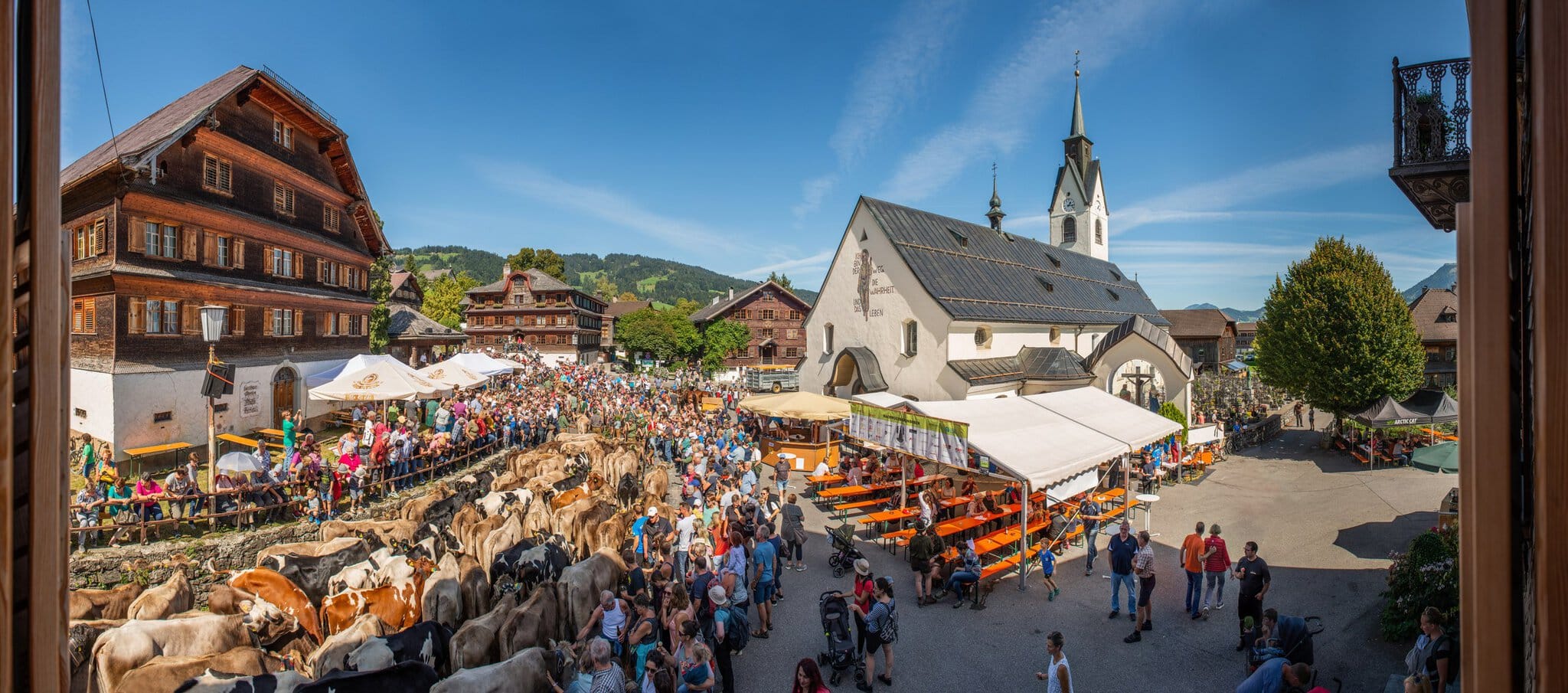
Cows, goats, and sheep are beautifully adorned with enormous floral wreaths and large bells, and the whole event has a wonderful atmosphere accompanied by live folk music, the smell of sausages, and flowing local beer and wine. It’s a massive celebration for the locals, and I guarantee you’ll enjoy it every bit as much as they do.

11. Winter Sports, Ski Touring, and Snowshoeing
Winter transforms these endless green plains into a perfectly snow-covered fairy-tale landscape. If you visit in winter, your first stop should be to pick up an Alpe di Siusi skipass, because the area offers superbly groomed runs that aren’t overly steep — once again making it perfect for families and beginners wanting to try Alpe di Siusi Italy skiing.
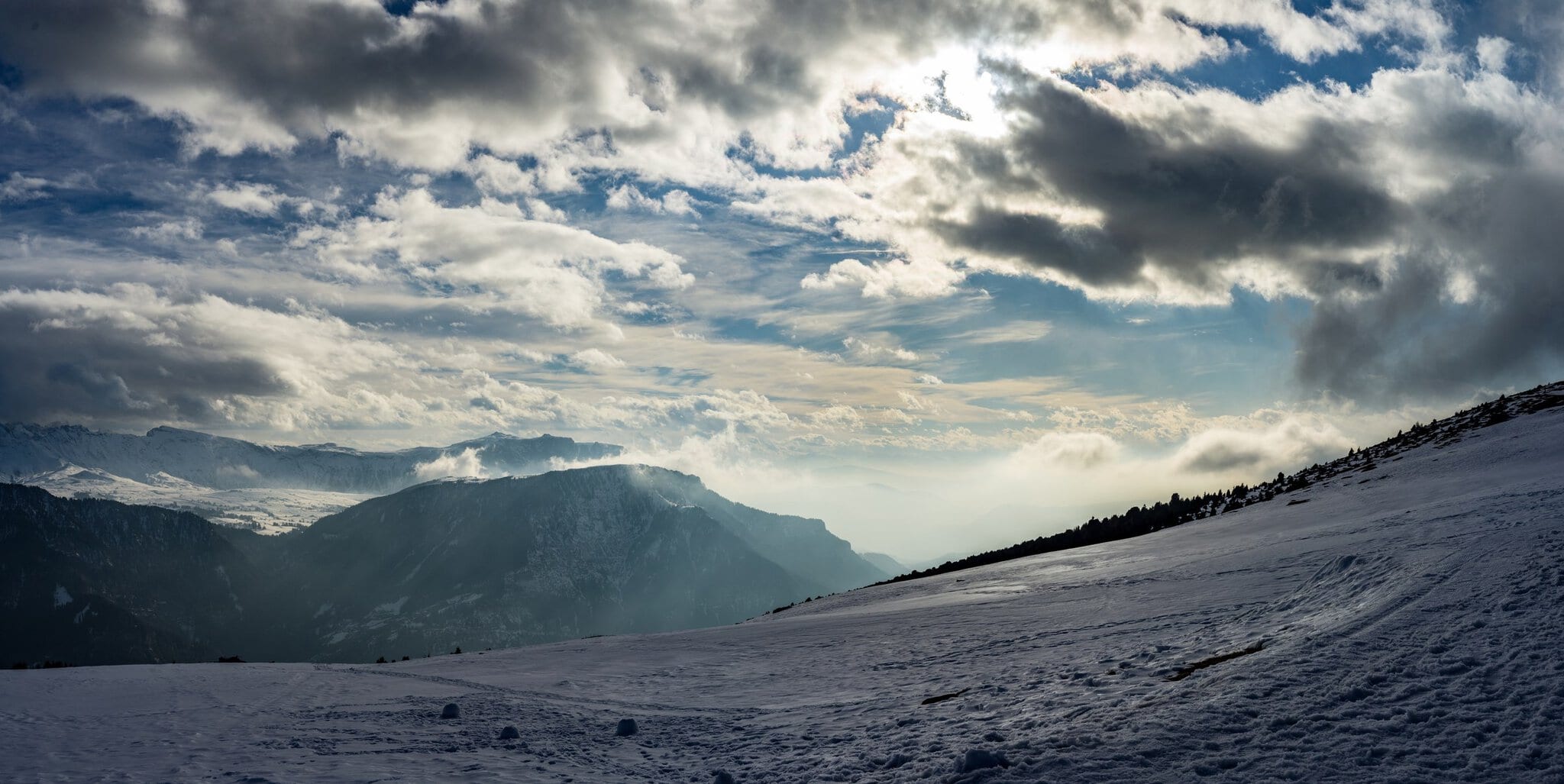
Definitely download an Alpe di Siusi ski map to your phone beforehand so you know where you’re going, although the resort is fairly straightforward. Personally, though, beyond classic downhill skiing, we especially love snowshoeing and cross-country skiing — there are over an incredible 80 kilometres of groomed cross-country trails here. Gliding through a silent, snow-covered forest beneath the mountains without seeing a single soul is pure magic.
12. Relaxing in Our Favourite Mountain Huts (Rifugi)
The Italian Dolomites aren’t just about beautiful nature — they’re also about absolutely phenomenal food, and that’s concentrated right in the mountain huts known as rifugi. On Alpe di Siusi you’ll find tons of them, each with its own charm.
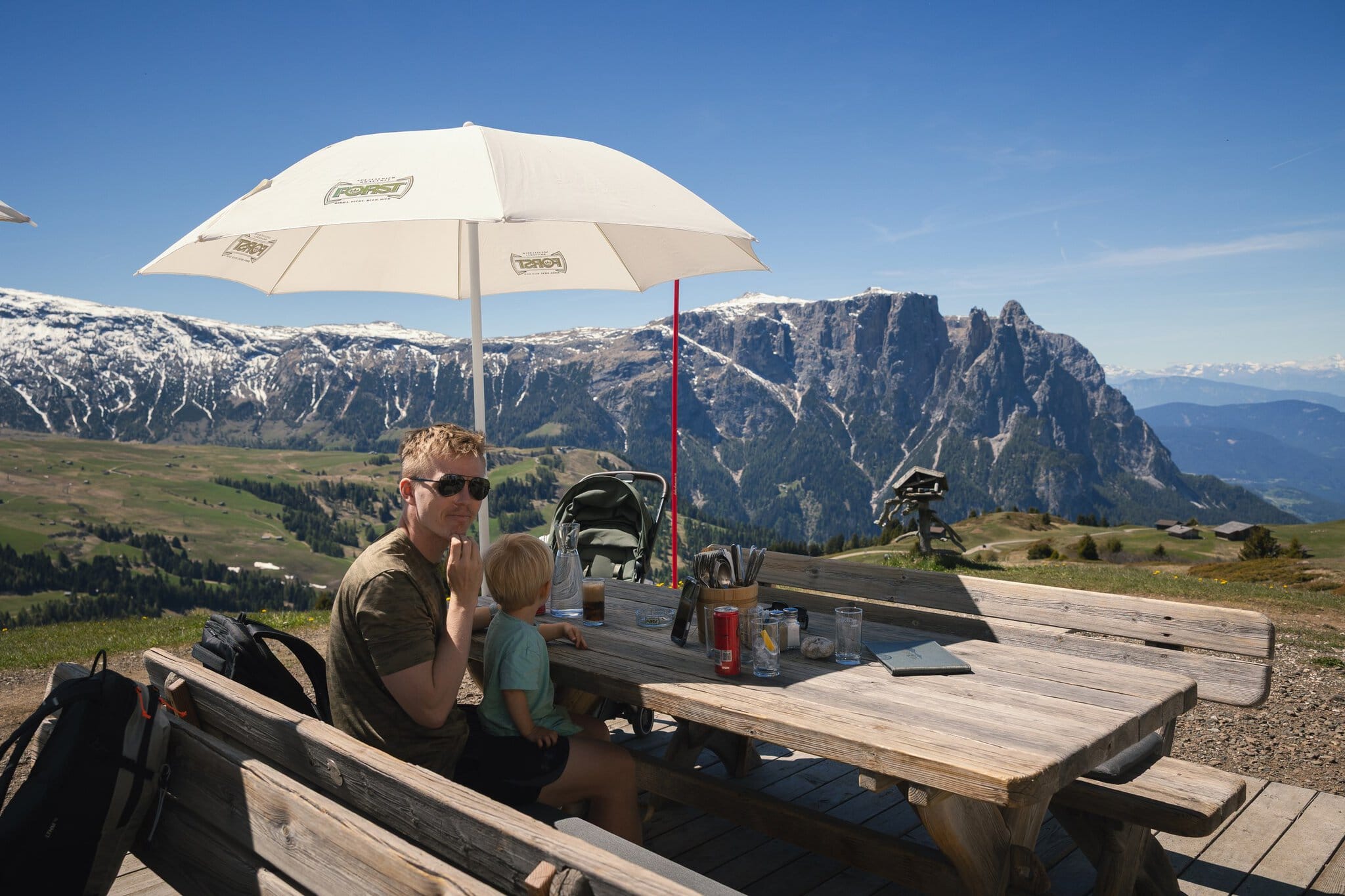
Lukáš and I have two absolute favourites. The first is the cosy Tirler Hut, which has a gorgeous terrace and an outdoor playground for kids — so you can sip your bombardino in peace while the little ones play. The second is the Mahlknecht Hut, tucked slightly away from the busiest trails, which serves what we reckon are the very best homemade dumplings in the whole region. Stopping at a rifugio for a proper lunch is a non-negotiable part of any visit. 😉
Map of points of interest for your phone
Seiser Alm with Kids: Through the Eyes of a Two-Year-Old
Travelling with children — especially tiny ones — completely changes how you experience any destination, as I’m sure you’ll agree. Places that once seemed simple suddenly become logistical puzzles, but Alpe di Siusi is an absolute unicorn in that respect.
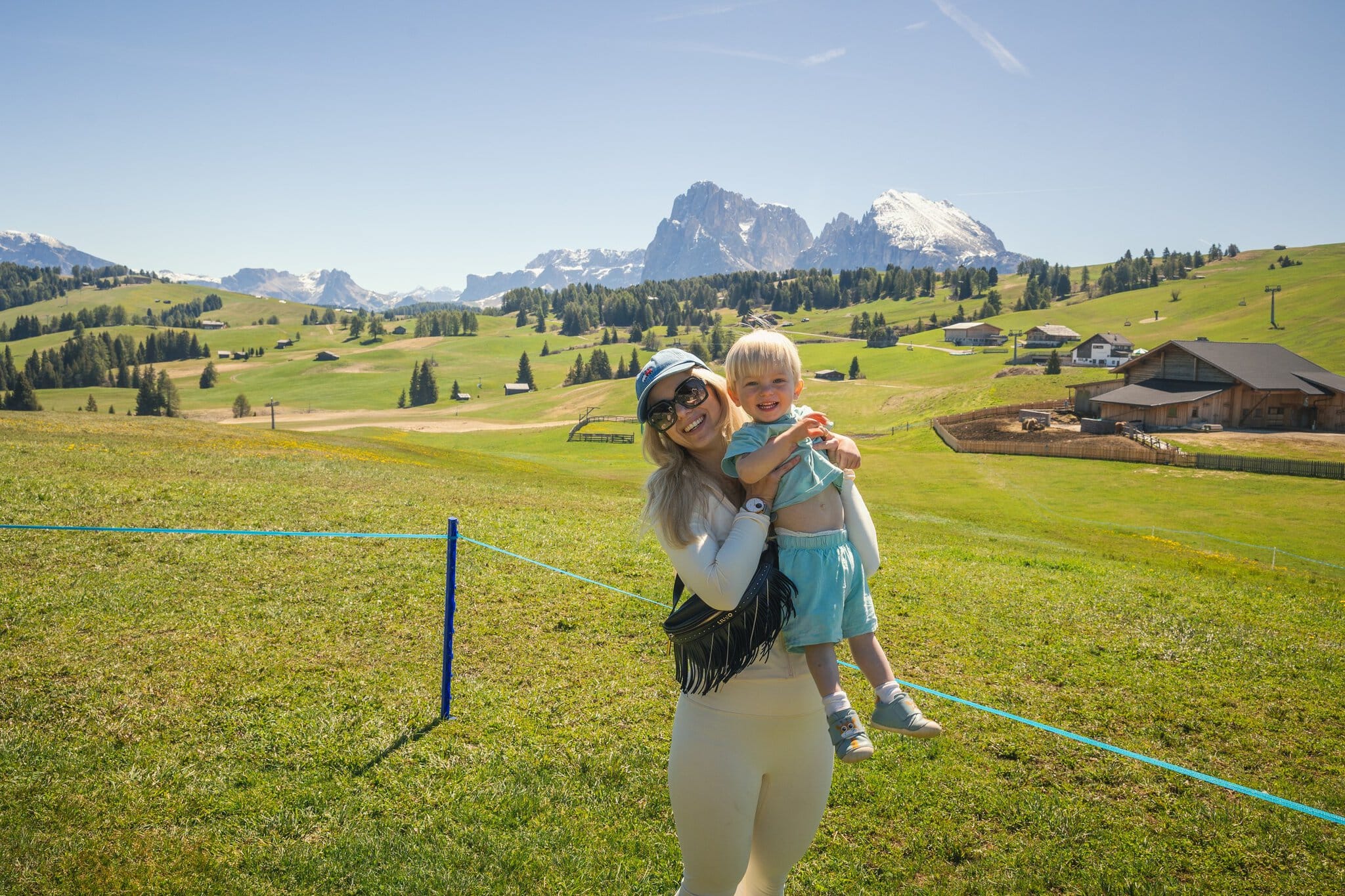
I’ll be honest: before we went, I was genuinely worried about whether we’d manage with a pushchair. We managed without a single meltdown. Because you’re on an enormous high-altitude plateau, you can cover miles with a pushchair without having to tackle steep, rocky slopes. Most of the main paths are either tarmacked or surfaced with fine gravel. On top of that, the bus network works brilliantly — drivers are helpful and you can roll a pushchair straight on. For kids, there’s a huge amount of open space for safe running around, and the fresh scent of alpine herbs will tire out even the most stubborn non-sleepers. We look back on this holiday as one of our most relaxing since we became a family of three.
Travelling with Dogs: A Canine Paradise with One Rule
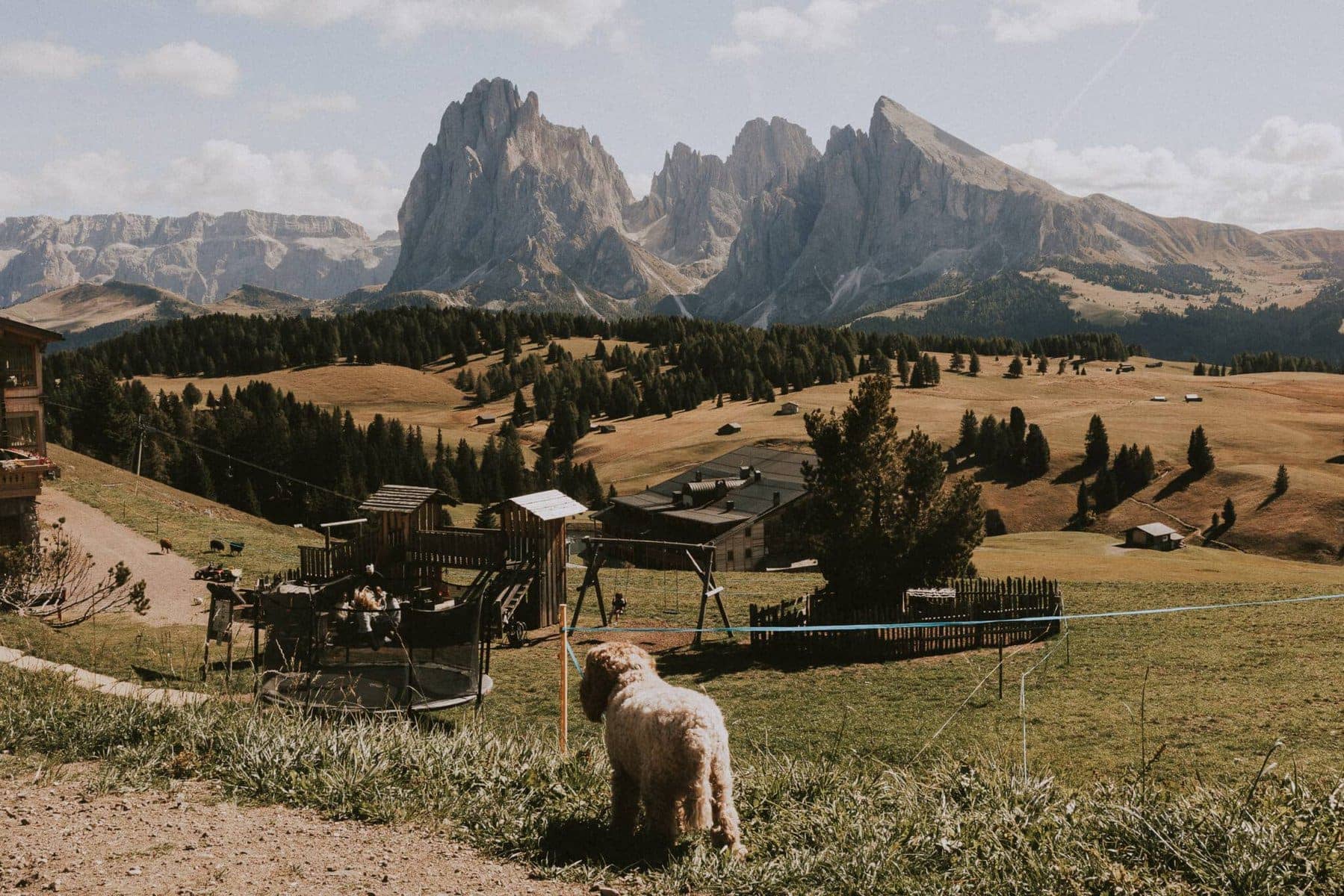
If you’ve got a four-legged friend and don’t want to leave them behind, bring them to the Dolomites with confidence. Our Kája and little Baby always have the time of their lives here — for them, these vast, fragrant meadows are absolute doggy heaven.
💡 Local tip: Almost all cable cars and buses require dogs to wear a muzzle (you can buy one practically anywhere, including at the valley stations). We found this a bit annoying, to be honest — they insisted even when we were in a cabin completely on our own. On days when we had several cable car rides lined up, we often left Kája and Baby resting at the campsite instead.
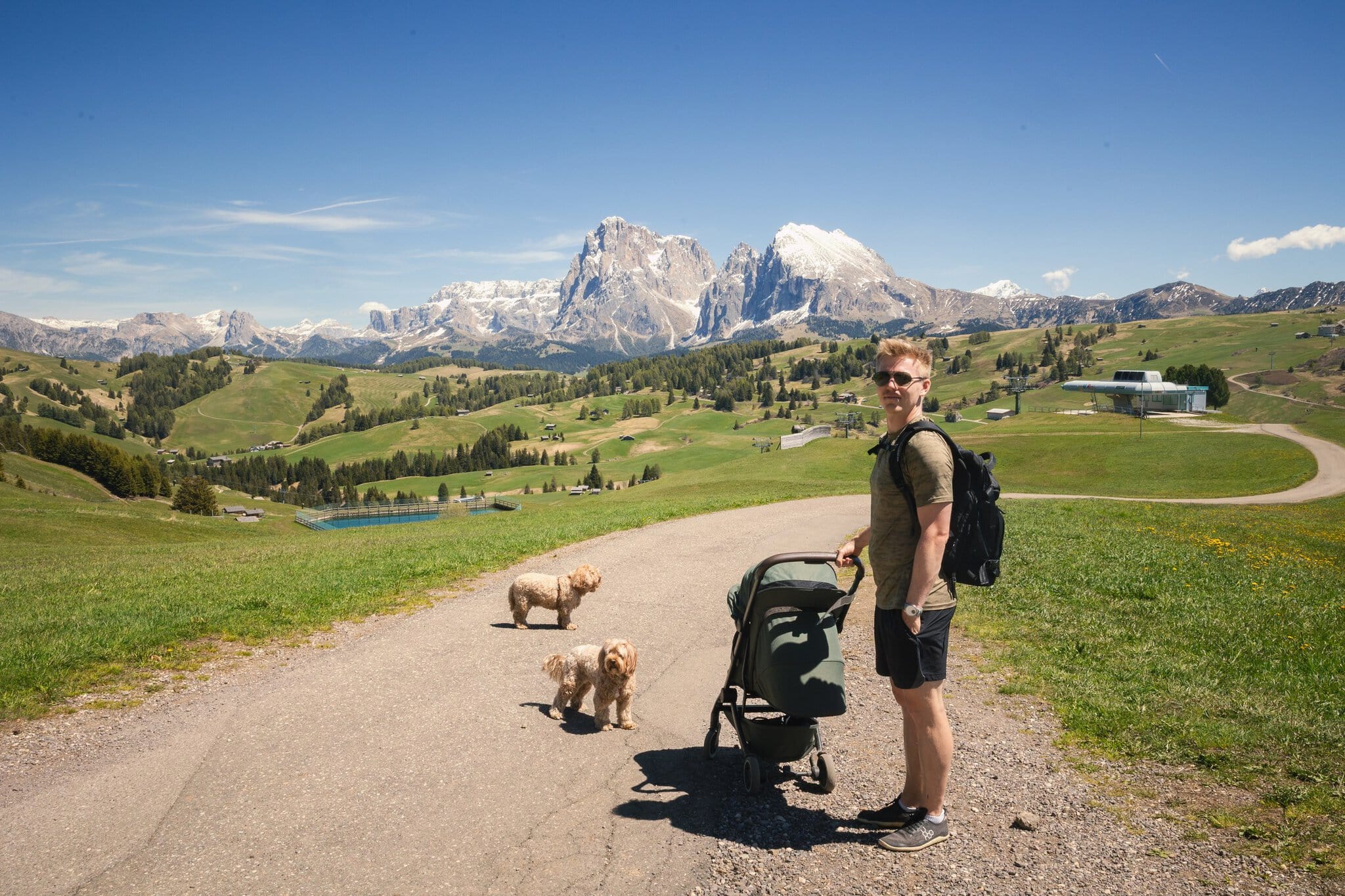
There is, however, one crucial thing you must respect: the free-roaming farm animals. Herds of huge cows and horses wander freely across the pastures, so you need to keep your dog under complete control at all times. A lead isn’t strictly mandatory everywhere, but it’s highly recommended — not least for safety reasons. Cows can be surprisingly unfriendly towards strange dogs, especially when they have calves, and you really don’t want a confrontation with a half-tonne animal. As long as you keep that in check, you’re in for a dreamy holiday with your pups.
Where to Eat and What to Try
South Tyrol — and Alpe di Siusi in particular — brings together the best of two worlds: hearty, filling cuisine with German-Austrian roots and Italian flair. The result? You’ll put on weight just from looking at the menu. 😅
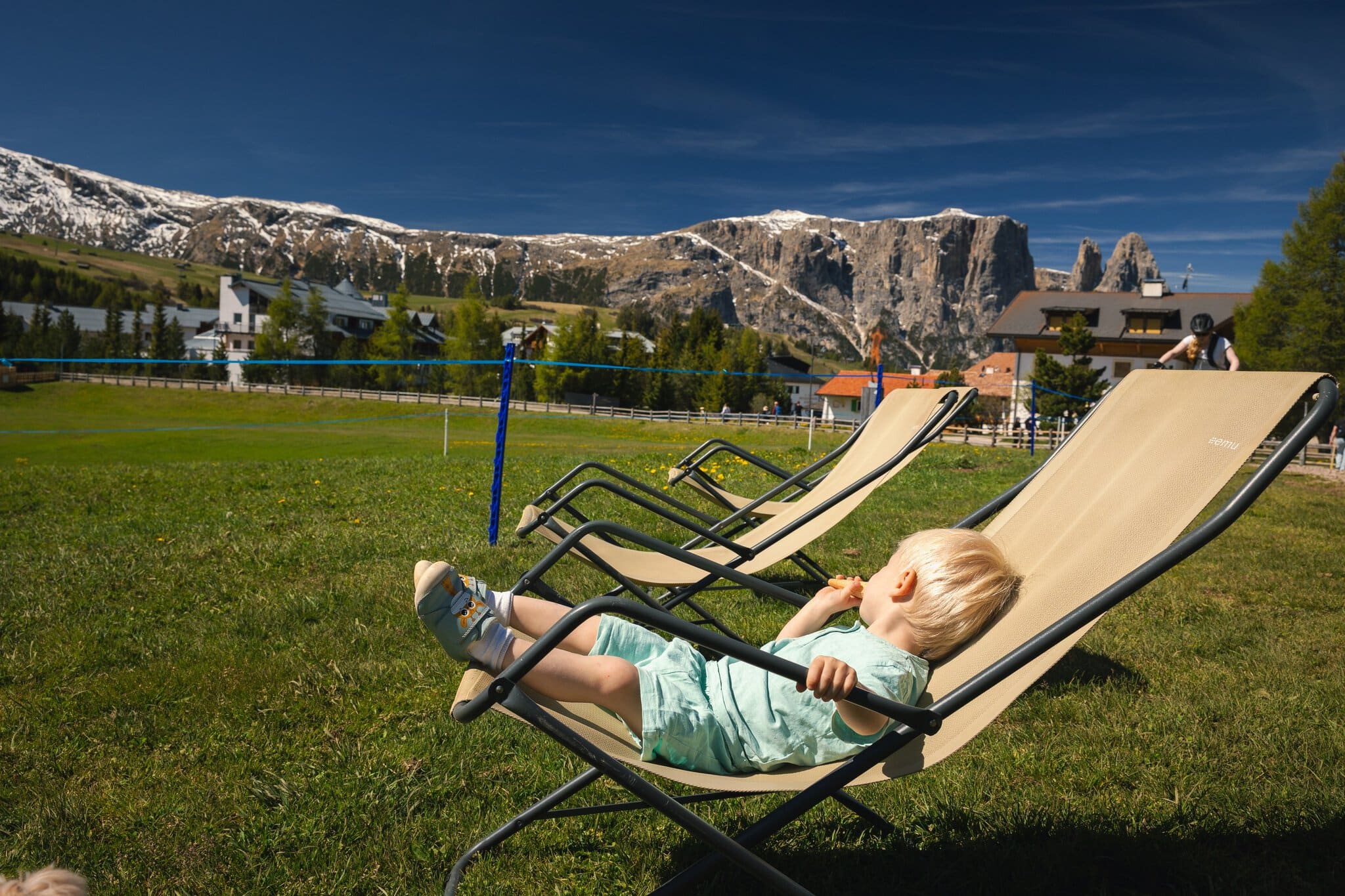
You absolutely cannot leave without trying the traditional dumplings (Knödel), which come in countless variations — spinach, cheese, or studded with chunks of smoked meat. The local wafer-thin, air-dried South Tyrolean speck is superb too, and you simply must sample Schlutzkrapfen (essentially half-moon pasta parcels filled with spinach and ricotta, drizzled in brown butter). For a sweet finish to any hike, an outstanding Apfelstrudel smothered in vanilla sauce is the way to go — and wash it all down with a glass of full-bodied local Lagrein red wine.
Before You Pack: Things I Wish I’d Known in Advance
Here are a few things I’d tell you if we were sitting over a glass of wine and you were asking me about the Dolomites for the first time. This part of Italy can occasionally be a bit bureaucratic — and pricey.
Alpe di Siusi cable car prices change every season, but for 2026 you should budget roughly €35–50 per person for a return ticket. If you plan to use cable cars frequently, it’s well worth picking up a Combi Card on your first day, which lets you combine rides on multiple local cable cars and use the shuttle buses too. If you do drive up outside the restricted hours, don’t forget that parking at the top costs around €25 per day.
And one final, massive plea: the entire Alpe di Siusi area has a strict drone ban. I’d strongly advise you not to test this just for a nice Instagram video. Fines are genuinely enforced and can reach an eye-watering €3,000 — enough for two more gorgeous holidays — so leave the drone at home.
What to Pack
Make sure you read our guide on what to wear in the mountains and how to choose hiking boots, because mountain weather can change unbelievably fast and you need to be prepared for everything from sunshine to biting wind.
Finding Flights
If you’re not driving to Italy, the closest airports to the Dolomites are Verona, Innsbruck, Venice, and Milan. From London, you can often find cheap flights with easyJet, Ryanair, or British Airways to Verona or Venice — from there it’s roughly a two-to-three-hour drive to the Alpe di Siusi area. We love searching for deals on Kiwi, which often turns up surprisingly affordable options.
Hiring a Car
We consistently use and trust DiscoverCars for comparing prices. We’ve had great experiences with them over the years and they’ve never let us down.
Don’t Forget Insurance and Mobile Data
For shorter trips within Europe, a good UK-based travel insurance policy will have you covered. For longer adventures or if you’re planning riskier sports, we’ve had excellent experiences with True Traveller and SafetyWing. And to avoid shocking data charges — especially near the Swiss border where your phone might hop networks — we always buy an eSIM through Holafly beforehand.
Where Next: Get Inspired
Once you’ve explored every corner of this green plateau, the Dolomites have plenty more to offer just a short drive away. Don’t miss these other favourite articles of ours, packed with tips:
- If you’re after truly jaw-dropping cliffs, you can’t miss the ridge just across the valley: Seceda: A Guide to the Most Photogenic Ridge Walk in the Dolomites.
- Love those postcard shots of iconic little churches in the valley? Then you’ll adore nearby Val di Funes and Santa Maddalena.
- And if you’re looking for an all-round overview of the best the mountains have to offer, check out our comprehensive guide to Things to Do in the Dolomites or discover the magic of the eastern section in our article on Cortina d’Ampezzo.
 🚗 Car rental on the roadVerified rental cars in the Dolomites
Search with the DiscoverCars comparison engine — it compares prices from dozens of local and international rental companies, and most bookings come with free cancellation.
Compare car prices in the Dolomites →FAQ: Your Most Common Questions
How do I get to Alpe di Siusi?
The easiest and most stress-free way to get up there is by cable car from the town of Ortisei (Cabinovia Mont Sëuc) or by cable car from the town of Siusi to the Compatsch area. Between 9:00 AM and 5:00 PM, private cars are strictly prohibited under threat of hefty fines.
Where is Alpe di Siusi?
It’s a massive high-altitude plateau covering 56 square kilometers, located in the Italian part of the Dolomites in the province of Bolzano (Trentino-Alto Adige region), near the Austrian border. You’ll often come across it under its German name, Seiser Alm.
Can I go there with small children and a stroller?
Absolutely yes! From our own experience with our two-year-old Jonášek, we can confirm it’s probably the most stroller-friendly destination in the Dolomites. The trails are paved, mostly flat, and there are excellent accessible local buses and cable cars.
Is Alpe di Siusi suitable for dog owners?
Yes, we regularly travel here with our two dogs. However, due to the large number of freely grazing cows, horses, and sheep, it’s strongly recommended to keep your dog on a leash to avoid potential conflicts. Dogs are also allowed on the local cable cars without any issues.
How much does parking cost up on the plateau?
If you decide to drive up early in the morning (before 9:00 AM) to the main parking lot in Compatsch, expect to pay around 25 EUR for all-day parking. You pay upon entry and can leave whenever you want, but you’re not allowed to move your car around the plateau during the restricted hours.
Are there any restaurants up there, or do I need to bring my own food?
You definitely don’t need to bring food, as the plateau is dotted with fantastic mountain huts (called rifugio) that offer excellent local cuisine, great wines, and homemade cheeses and desserts. Our favorites include the Tirler and Mahlknecht huts.
Can I fly my drone on the meadows?
Absolutely not. Throughout the entire protected park area around the Sciliar massif, there’s an absolute and strict ban on drone use, and fines are actually enforced at enormous amounts that can reach up to 3,000 EUR. Better leave your drone at home and enjoy the views with your own eyes.
Tips and Tricks for Your Vacation
Don’t Overpay for Flights
Search for flights on Kayak. It’s our favorite search engine because it scans the websites of all airlines and always finds the cheapest connection.
Book Your Accommodation Smartly
The best experiences we’ve had when looking for accommodation (from Alaska to Morocco) are with Booking.com, where hotels, apartments, and entire houses are usually the cheapest and most widely available.
Don’t Forget Travel Insurance
Good travel insurance will protect you against illness, accidents, theft, or flight cancellations. We’ve had a few hospital visits abroad, so we know how important it is to have proper insurance arranged.
Where we insure ourselves: SafetyWing (simple monthly subscription) and TrueTraveller (for extra-long trips).
Find the Best Experiences
Get Your Guide is a huge online marketplace where you can book guided walks, trips, skip-the-line tickets, tours, and much more. We always find some extra fun there!
More from Dolomites
Full guide →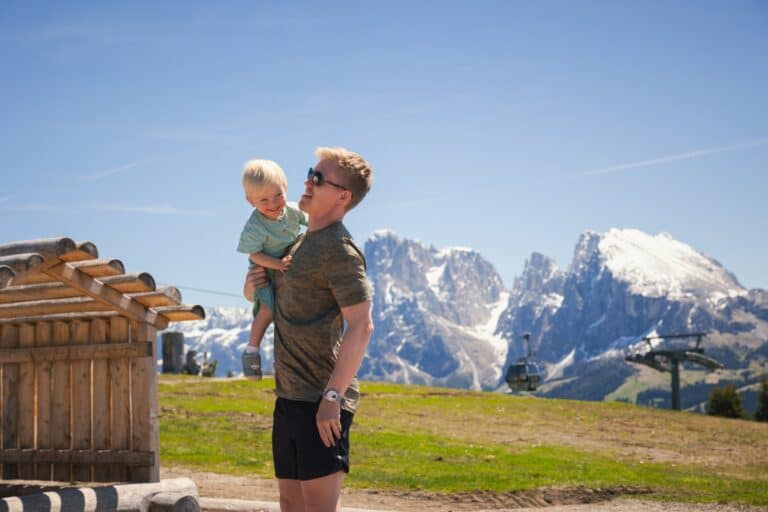 With kidsThe Dolomites with Kids: 12 Things to Do (Even with a Baby)
 What to seeLago di Sorapis, Dolomites Italy: 10 Tips on What to See and Do
 What to seeTre Cime di Lavaredo, Dolomites Italy: 12 Tips on What to See and Do
 What to seeAdolf-Munkel-Weg, Dolomites Italy: 10 Tips on What to See & Do
 What to seeCinque Torri & Lagazuoi, Dolomites Italy: 10 Things to See & Do


