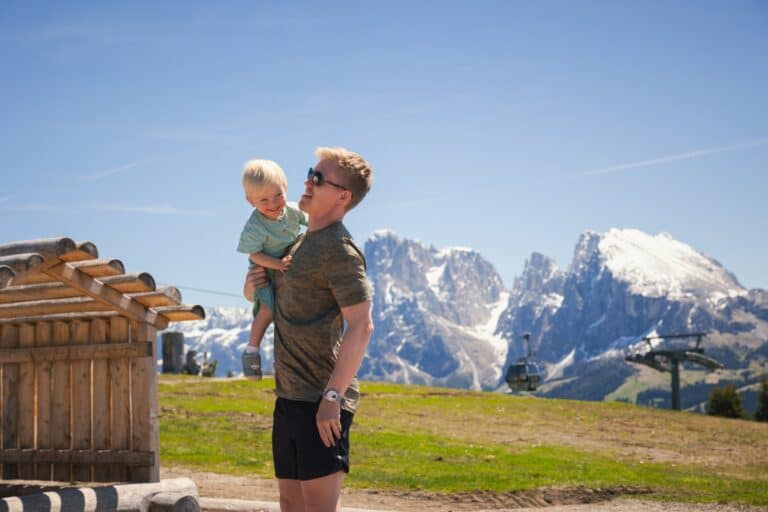
When people think of the Dolomites in Italy, one image instantly comes to mind: lush green meadows, a tiny church, and behind it, impossibly sharp, vertical rock towers piercing the sky. Welcome to Val di Funes, home to the Odle group. And it’s right beneath these majestic walls that the Adolf Munkel Weg trail winds its way through one of the most photogenic landscapes in the Alps.
It’s an absolutely ideal trail. You get maximum views with minimal elevation gain — which is pretty rare in the Dolomites 😅. Adolf Munkel Weg is relatively flat and not too demanding, but the surface is quite rocky and definitely not pushchair-friendly. That said, it’s a brilliant route to plan with older kids once they’re ready for a longer hike.
If you’re after a trail that takes a pleasant three to four hours, is dog-friendly, and serves up the most photogenic scenery in all of South Tyrol, you’ve come to the right place. Let me show you everything you need to know about this trek.
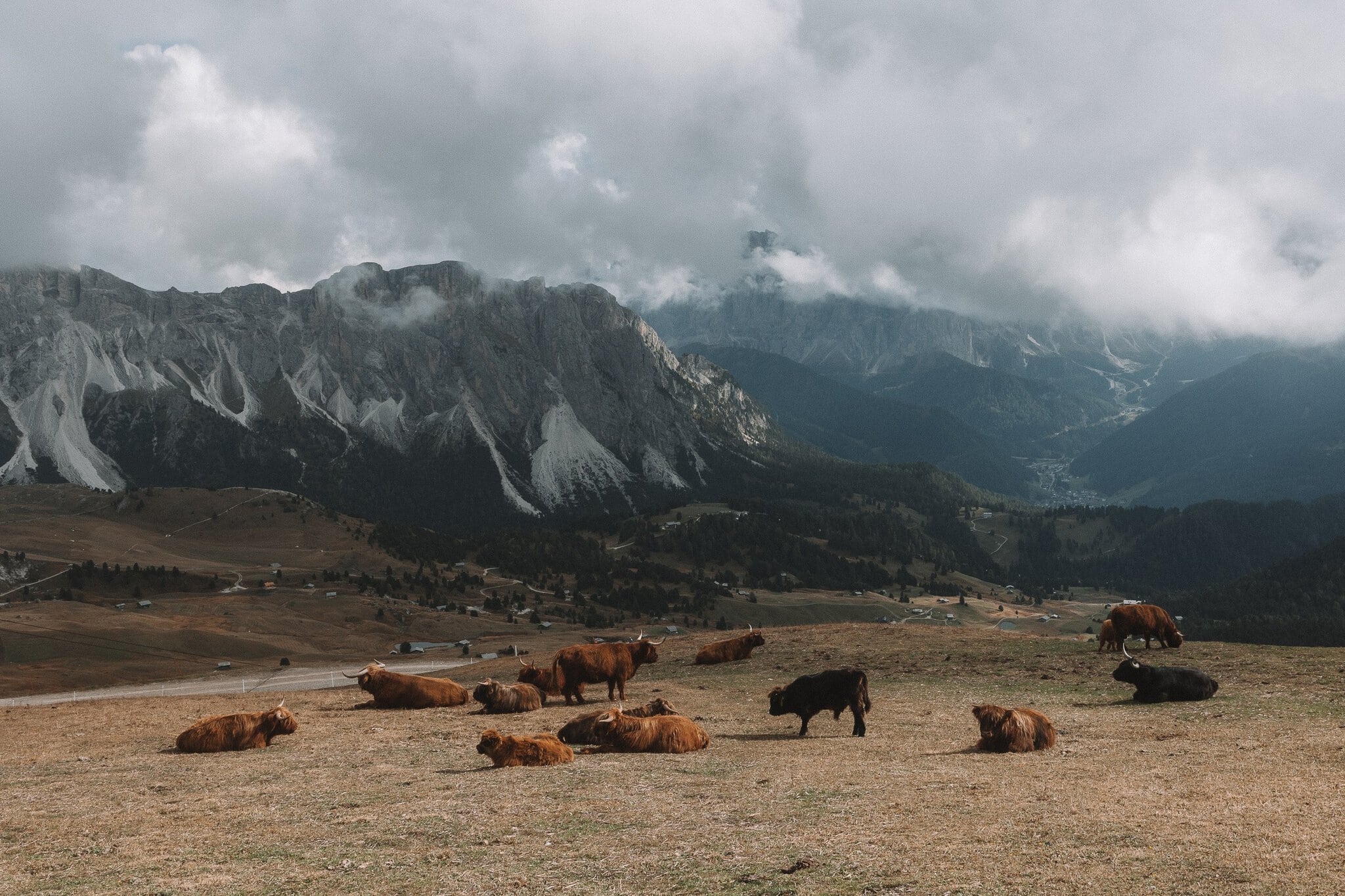
TL;DR
- Where is it: Val di Funes valley, South Tyrol (Italy).
- Distance and time: The loop is roughly 5 to 7 kilometres depending on your chosen route and takes about 3 to 4 hours of leisurely walking.
- Difficulty: Easy to moderate. Elevation gain is only around 200 to 400 metres, but the terrain is rocky in places, so sturdy footwear is a must.
- With pushchairs and children: Pushchairs are a definite no-go because of rocks and tree roots. For babies, you’ll need a hiking carrier; older kids (from about 5) can handle the trail on their own.
- With dogs: Dogs are allowed but must be kept strictly on a lead. Cows graze freely on the alpine pastures, and trust me, mountain cattle really don’t appreciate dogs running loose 😅.
- Parking: Zanser Alm at the end of the valley. In season it costs 8 EUR per day, and I’d recommend arriving early in the morning — otherwise you’ll be stopped by traffic restrictions further down the valley.
- Drone ban: You’re inside the Puez-Geisler Nature Park. Flying drones is strictly prohibited, with fines of up to 3,000 EUR.
The full destination guide: Dolomites — guide and what to see
What is Adolf-Munkel-Weg?
I had to look this up myself, because I was genuinely curious about who the trail is named after. Adolf Munkel was a passionate German alpinist, and this trail was created on his initiative back in 1894. Over a hundred years old and people still queue up for photos along it — that tells you something, doesn’t it? The path winds directly beneath the Odle group (known as Geisler in German), through forest trails and alpine meadows, with enormous pale grey limestone towers watching over you the entire way.
When to go and how to get there
Timing is absolutely crucial in the Dolomites in general, and here in particular. The barrier gate can catch you out easily, so here are some tips to avoid disappointment.
Best time of year
The main hiking season in the Dolomites runs from May to September. During this period, all the mountain huts (rifugia) are open, the weather is most stable, and the snow at higher elevations has long melted. Just be prepared to share the trail with plenty of others. August, when Italians take their national holiday (Ferragosto), is especially busy. If you can, I’d recommend going in autumn — ideally October. The larches in the valley turn incredible shades of gold, and the contrast with the snow-dusted Odle peaks is pure magic. Spring brings thousands of blooming crocuses, which is equally stunning. In winter, however, the trail is officially closed due to snow and avalanche risk from the higher slopes, so don’t plan on it.
Getting there by car to Zanser Alm
The starting point for the trek is the Zanser Alm (Zannes) car park, sitting at 1,685 metres elevation at the very end of the Val di Funes valley. You’ll drive through the picturesque village of Santa Maddalena and keep heading uphill until you reach the barrier gate. During peak season, expect a fee of 8 EUR per day (which is actually quite reasonable by Dolomites standards). There’s one major catch, though. The valley has limited capacity, and once the car park fills up, the road is closed further down. From our experience, I’d recommend being at the barrier by 8:00 AM at the latest.
Eco-friendly and stress-free by bus
If you’d rather skip the early-morning parking stress, or if you’re travelling without a car, local bus services are an excellent alternative. From the nearby town of Brixen (Bressanone), regular bus lines 330 and 335 (check the official South Tyrol transport website for timetables) will take you all the way to the Zanser Alm car park. The journey takes roughly an hour and you can sit back and enjoy the valley views without any stress. Especially in summer, this is a far more pleasant option than worrying about whether there’s still space in the car park. And the environment will thank you too.
Where to stay near Val di Funes and how much it costs
If you want the best views right after waking up and want to be among the first on the trail, choosing your accommodation strategically is key. Prices in this area during peak season average between 100 and 200 EUR per night for two people, depending on whether you go for a luxury wellness hotel or a traditional mountain farmstead.
Right in the heart of the valley you’ll find the village of Santa Maddalena, which is absolutely ideal. There are plenty of traditional “agriturismo” (farm stays) and cosy B&Bs here. It’s a pricier location, but you’ll save time on commuting and the atmosphere of the quiet, emptied-out valley in the evening is worth every penny. A great choice is family-run guesthouses like Hotel Ranuimüllerhof, where breakfast features homemade cheeses from the neighbouring farm. Or try the highly rated Proihof, which consistently gets fantastic reviews.
If you’re looking for a slightly cheaper or livelier base, the historic town of Brixen (you can find more at Dolomiti.org) is an excellent option. It’s only about 15 to 20 minutes’ drive from the valley entrance. The town offers much more in terms of evening entertainment, a huge selection of restaurants, and accommodation prices tend to be a bit friendlier. Another popular, though slightly more distant option (roughly 30 minutes’ drive over a mountain pass), is the well-known resort of Ortisei in the neighbouring Val Gardena valley. Here you’ll find everything from luxury resorts to simple apartments — just bear in mind the longer morning drive to the trailhead.
Looking for specific recommendations? We always book accommodation through Booking.com, where you can find great deals — and if you have Genius status, you can get really good prices even during peak dates.
Adolf-Munkel-Weg: 10 tips on places and experiences along the way
Let’s get to the main event. The Adolf Munkel Weg trail isn’t just about getting from A to B — it’s about dozens of little experiences, viewpoints, and detours you’ll encounter along the way. Most people choose the classic loop starting from Zanser Alm, joining trail number 35, and returning via alpine meadows. Here are 10 things you shouldn’t miss.
1. The classic Geisler Alm and Zanser Alm loop
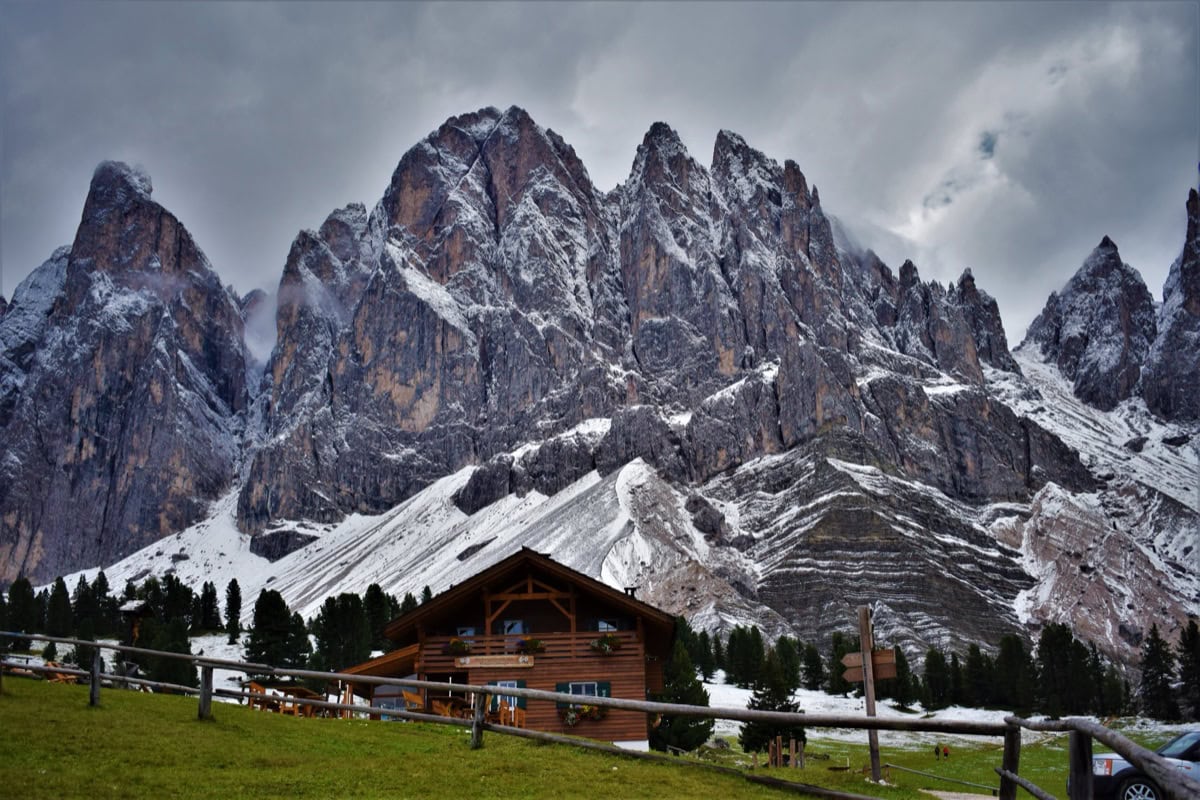
The absolute essential that most hikers go for is the circular route of roughly 5 to 6 kilometres. You set off from the Zanser Alm car park on trail number 6, which shortly leads you onto the main Adolf Munkel Weg path (marked as trail 35). This takes you directly beneath the rock faces until you reach the turnoff to the popular Geisler Alm hut, from where you descend gently through blooming meadows and forest paths back to the car park. It’s the perfect loop because you never retrace your steps and constantly have fresh scenery ahead of you.
This route is the golden middle ground when you want to see the best of the area without completely wearing yourself out. It’s worth spreading it across a whole afternoon so you’re not rushing and can make a few extra stops along the way.
2. Views of the vertical Odle walls
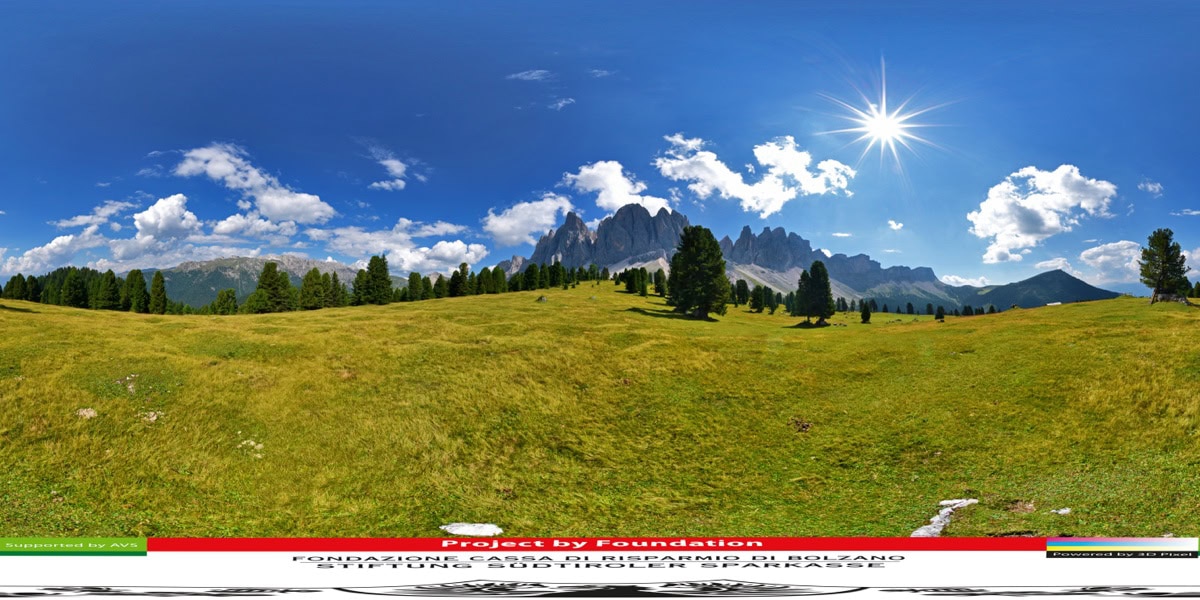
The Odle group consists of enormous vertical needles soaring over three thousand metres, and when you look up at them from below, your heart does something strange. It’s a ruthlessly grand kind of beauty that makes you feel utterly tiny 😅. The late afternoon is especially spectacular, when the rocks glow in warm orange tones — it’s a sight you won’t forget.
What’s more, the views constantly shift depending on how the clouds move. One moment the peaks are brilliantly lit, the next they’re hidden in dramatic shadows, so you end up snapping one photo after another, even though you keep telling yourself you’ve got enough.
3. A stop at Rifugio Geisler Alm
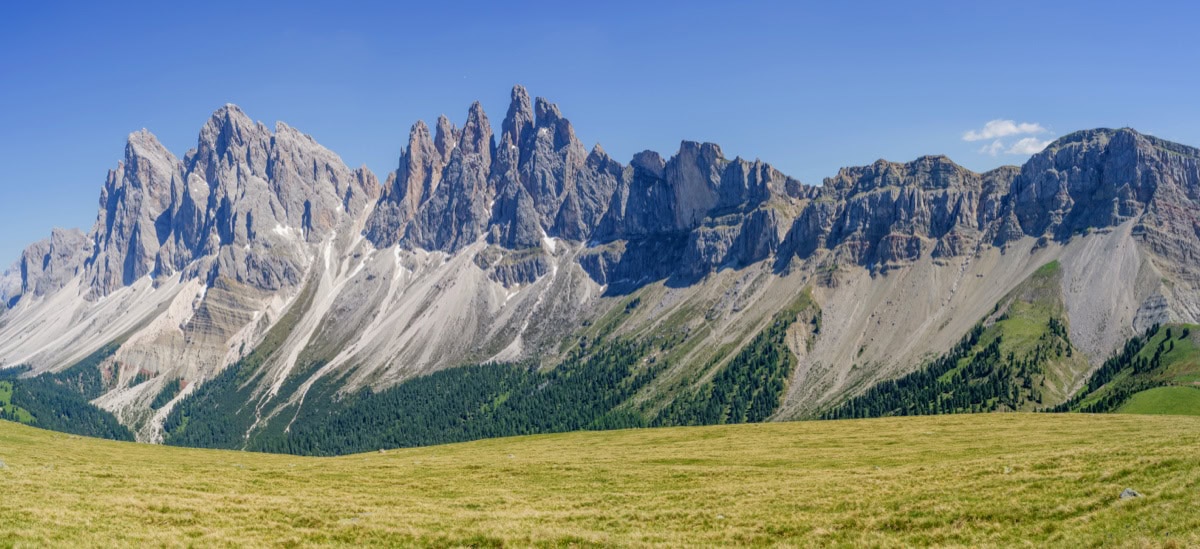
Rifugio Geisler Alm (just under 2,000 metres above sea level) isn’t just any mountain hut — it’s an institution. The moment you emerge from the forest, a huge, perfectly trimmed meadow opens up before you, dotted with wooden sun loungers that locals call the “cinema.” And the film playing? The Odle peaks right in front of you. We always take a long break here. Kids have a brilliant playground, adults can enjoy a cold beer or Aperol Spritz while watching cows graze right alongside them. It does get busy, but the space is so vast that you’ll always find your own spot.
If you’re heading here during peak season and want a proper sit-down lunch, check their official website beforehand to confirm opening hours. That said, a picnic on the grass with the world’s best view works perfectly too.
4. Rifugio Zanser Alm at the start and finish
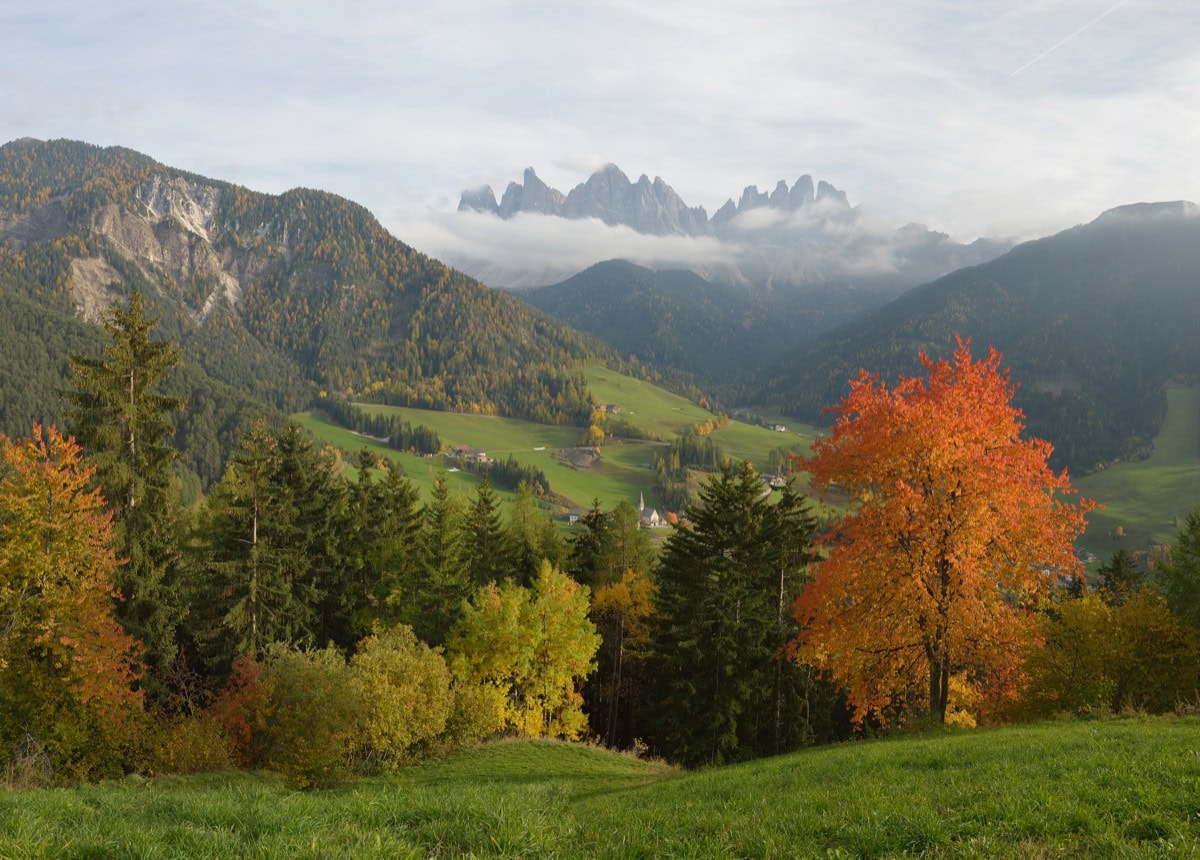
Right next to the Zanser Alm car park sits the hut of the same name at 1,685 metres elevation (they even have their own website with current information). It makes a perfect morning pit stop — we always grab a strong Italian espresso and a slice of strudel for fuel before setting off. The bonus is that it also works brilliantly as a restaurant after your hike. When you come back tired from the trek, you don’t need to drive anywhere — just sit down for a late lunch or early dinner right here before heading down the valley.
Sitting on the terrace as the afternoon winds down and the hikers start heading home has a wonderful atmosphere. You can have a proper meal and simply soak in the mountain tranquillity.
5. Photo spots beneath the colossal walls
If you love photography, this trail is absolute paradise. The best photo spots are roughly halfway along trail 35, where the forest opens up a little and creates natural frames of larch and pine branches with the jagged peaks behind. If you want those iconic shots with pale pebbles and scree fields, you’ll notice several small worn paths (often carved by rainwater) leading towards the rocks. Just please respect nature and don’t stray too far from the marked trails — erosion is a real problem here.
Every step off the path risks damaging rare alpine flowers that take years to grow in these harsh conditions. The established viewpoints are more than enough — you’ll still take home incredible shots that’ll get all the likes on Instagram.
6. Extension to Roanergola (Roa Berg) for experienced hikers
If the classic five-kilometre loop isn’t enough and you fancy working up a proper sweat, you can extend the route. Instead of turning down towards Geisler Alm, continue along beneath the rock walls and head towards Forcella Roa (Roanergola). Here the forest shade ends and the rugged high-alpine environment takes over, all loose scree and exposed terrain. The views from this saddle into the surrounding valleys are absolutely breathtaking, but bear in mind this is a more strenuous climb that’ll add at least two more hours to your day.
It’s a decent cardio workout, so make sure you stock up on water and pack some extra snacks. Your reward, though, is a much emptier trail where you might not see another soul for a whole hour.
7. Detour to the Tschantschenon valley
Another beautiful and significantly quieter detour is the path leading towards the pastures and stream of Tschantschenon. This is the eastern section of the trail, right at the beginning if you set off from Zanser Alm in an anticlockwise direction. You’ll find gorgeous little waterfalls and cascading mountain streams here. On hot summer days, it’s the perfect spot to cool your tired feet in the ice-cold water — something both you and your four-legged companions will appreciate. It tends to be much less crowded than the main Geisler Alm area.
This little valley is a hidden gem where you can escape when the main trail gets too busy. Even a simple sandwich from your rucksack tastes Michelin-star quality when you’re eating it to the sound of rushing water.
8. The fir and larch forest of Cuecenes
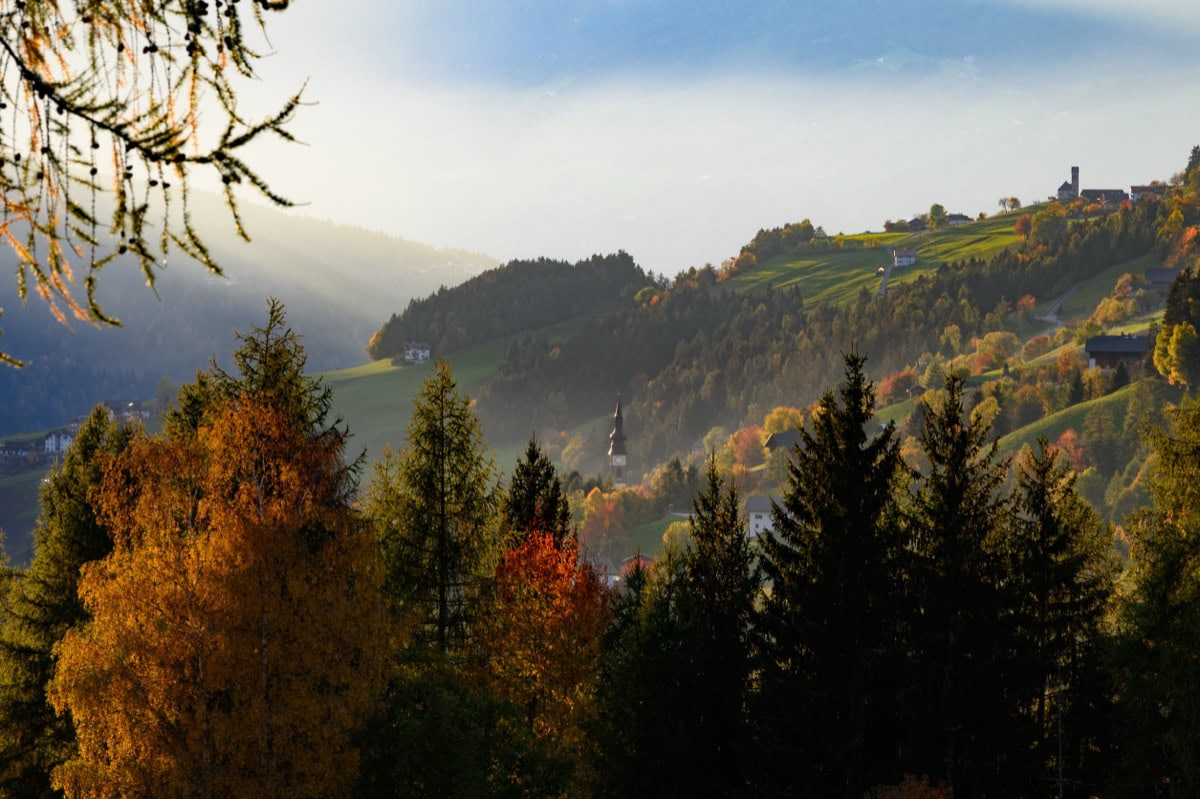
A large section of the Adolf Munkel Weg passes through mature forests in the area known as Cuecenes. While walking through woodland might not sound like a highlight in the mountains, it’s quite the opposite. These forests provide much-needed shade during the hot summer months. And in autumn, the larches — which make up a large part of the canopy — turn incredible shades of orange and gold. Walking through this golden tunnel with mountain sunlight filtering through is probably one of the most romantic experiences the Dolomites have to offer.
9. The little church in Sankt Magdalena on the way up
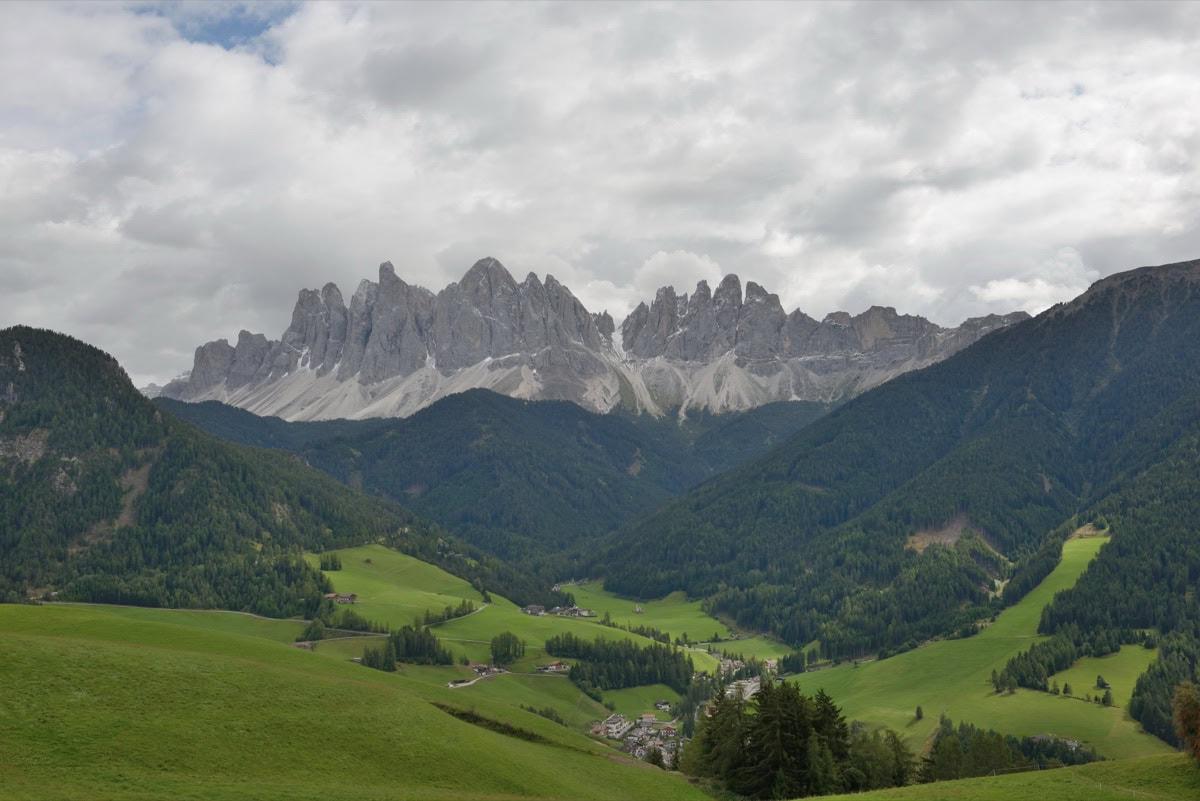
This tip isn’t technically on the high-altitude trail itself, but you absolutely cannot skip it. As you drive uphill in the morning towards the Zanser Alm car park, you’ll pass through the village of Sankt Magdalena (Santa Maddalena). Stop at the viewpoint above the village. This is where everyone takes that world-famous photo of the little solitary church with the Odle massif towering behind it — the shot you’ve seen in every guidebook and calendar.
Be warned, though — the best spots can get quite crowded even from early morning. You’ll need a bit of patience to get a clean shot without someone’s rucksack or phone-wielding arm in the frame, but trust me, the photo is absolutely worth the wait.

10. The upper route via Brogleshütte
For truly fit hikers, there’s one more, significantly longer option for exploring this area. From the Adolf Munkel Weg, you can link up with paths leading towards the Brogleshütte hut. This hut sits on the western side of the Odle group (towards the Seceda ridge). The hike is a full-day affair with considerable elevation gain, but you’ll be rewarded with views of the mountains from a completely different, less familiar angle. Along the way, you’ll see a wilder side of the Dolomites and encounter just a fraction of the hikers.
The western side of the massif is incredibly tempting and definitely deserves a trip of its own. If you have more time and the fitness to match, absolutely add it to your plans.
Map of points of interest for your phone
Can you do Adolf-Munkel-Weg with kids and dogs?
This is a question we get asked all the time. When you’re travelling with small children or dogs, trail accessibility is a huge deal. So how does this particular trek stack up?
💡 Local tip: Almost all cable cars and buses require dogs to wear a muzzle (you can buy one practically everywhere, including at the base stations). It can be annoying — they’ll ask for a muzzle even if you’re riding the cabin completely alone. If you’ve got several cable cars in a row, it’s often more comfortable to leave your dogs resting at your accommodation.
Hiking with younger and older children
As I mentioned at the start, the Adolf Munkel Weg is absolutely not suitable for pushchairs — not even off-road ones. The trail follows narrow forest paths, is full of protruding tree roots, large rocks, and occasional steps or gullies carved by rainwater. You’d get stuck within the first hundred metres with a pushchair.
However, if you bring a quality hiking carrier or child backpack for babies and toddlers (roughly up to 2–4 years), it’s an ideal choice. The elevation gain isn’t too dramatic, so you can manage it with a carrier on your back without too much trouble. For older children (roughly 5 and above), this trail is absolutely brilliant. It’s varied enough to keep them engaged — one moment they’re walking through forest, the next they’re hopping over rocks, spotting grazing cows, and at the end there’s a massive playground at the Geisler Alm hut. Boredom won’t be on the menu.
Dogs on the trail
The Dolomites are a fantastic destination for travelling with dogs, and Adolf-Munkel-Weg is one of the dog-friendly trails. The terrain is more than kind to paws — there’s no exposed ladder climbing or sharp scree that could hurt their pads, and you don’t need to carry loads of water because you’ll pass several streams and cascades along the way where dogs can drink freely.
There is, however, one strict rule: dogs must be kept on a lead at all times. The trail crosses alpine pastures where cattle roam freely. Mountain cows can be quite territorial, and if a dog runs up to them off-lead, things could turn ugly fast. As mentioned, you don’t need to haul huge amounts of water — there are plenty of small streams and cascades along the route where your dog can drink. Just watch out during the summer months — ticks are a thing even at these altitudes, so make sure your prevention is up to date.
What to eat at the mountain huts (rifugia)
Food in the Italian Dolomites is, in my opinion, the best in all of Italy — and anyone who disagrees simply hasn’t tasted proper Knödel after a four-hour hike 😄. It’s a glorious mix of Italian lightness and Austrian-Tyrolean heartiness, which is exactly what your body craves after a few hours of uphill walking. When you sit down on the terrace at Rifugio Geisler Alm or Zanser Alm, make sure you try the local specialities.
The undisputed classic is Knödel (dumplings) — besides the bacon ones (Speckknödel), they also make cheese and spinach versions, served either in a rich broth or simply drizzled with clarified butter and sprinkled with chives. It’s a calorie bomb, but an unbelievably delicious one. If you fancy something more Italian, order Schlutzkrapfen. These are stuffed pasta parcels (similar to ravioli), most commonly filled with spinach and ricotta, drenched in butter and topped with Parmesan.
Another local staple is hearty polenta served with mushroom ragù and melted mountain cheese. And since we’re in South Tyrol, famous for its apples, no meal is complete without a proper, warm Apfelstrudel (apple strudel) served with creamy vanilla custard. By the way, many of the farms and huts in the valley are members of the Roter Hahn (Red Rooster) association, which guarantees they cook with local, homegrown, and honest ingredients.
Practical tips before you lace up your boots
A few things worth knowing before you head into the Dolomites (better to be warned in advance than caught out on the trail):
- Expensive drone ban: If you’re into aerial photography, leave the drone buried deep in your bag. Val di Funes falls within the protected Puez-Geisler Nature Park and flying drones is strictly forbidden. Local rangers actively patrol for it, and if you’re caught, you face a no-nonsense fine of up to 3,000 EUR. One Instagram shot really isn’t worth that.
- Footwear for wet and rocky terrain: Even though the trail is relatively easy, you often walk over rocks that can be very slippery in the morning or after rain. Forget trainers — bring proper hiking boots with a solid grip.
- Trekking poles: We use them practically everywhere in the Dolomites. When negotiating the uneven terrain on the Adolf Munkel Weg, they’ll take a lot of strain off your knees.
- Drinking water: You can fill up your bottle at the car park before you start, and also during the hike at the mountain huts. No need to lug heavy water bottles for the entire day.
Tips and tricks for a hassle-free trip
Before you even get to the start of your mountain hike, it’s good to have your travel, car hire, and all the essentials sorted. Here are the tried-and-tested services we swear by.
Finding flights to Italy
If you’re not driving, the nearest major airports are Venice and Bergamo. From the UK, you’ll find good connections with budget airlines like easyJet and Ryanair. We usually search for cheap flights on Kiwi — it’s our go-to flight comparison tool.
Hiring a car in Italy
A car is pretty much essential for getting around the Dolomites (unless you want to rely solely on local buses). We’ve had consistently great experiences with DiscoverCars, which we use all over the world.
Don’t forget travel insurance
Mountains are unpredictable and good insurance is a must. We’ve been using SafetyWing for years.
Internet abroad
Outside of Europe, we always sort our data with an eSIM. Within the EU your UK plan may have roaming, but it’s handy to have a backup. Check out our review of Holafly.
Where else to go in the Dolomites
If you’re spending more days in Val di Funes, definitely check out our comprehensive guide to Val di Funes and Santa Maddalena, where you’ll find tips on more viewpoints and places in the valley.
From the nearby Val Gardena valley, you can set off on what is arguably the most famous ridge walk in the entire Alps — have a look at our Seceda guide.
Want an overall picture of what to do in this area? We’ve put together an article on what to do in the Dolomites, where we share our favourite lakes, mountain passes, and little towns. And for more hiking inspiration, don’t miss our 5 hiking trails in the Italian Dolomites for everyone.
FAQ (Frequently Asked Questions)
How long is the Adolf Munkel Weg trail?
The classic and most popular loop measures roughly 5 to 6 kilometers, depending on which hut you start from and which route you take back from the circuit. It will take you approximately 3 to 4 hours of pure hiking time without longer breaks.
What’s the elevation gain on the trail?
The elevation gain is very manageable by Dolomites standards – you’ll only climb and descend around 200 to 400 meters in total. The trail runs mostly along contour lines at the foot of the mountains.
Can you do the trail with a stroller?
No, the trail is completely unsuitable for strollers. The path is full of rocks, exposed roots, and steps. For young children, we recommend using a baby carrier or hiking backpack.
How much does parking cost at Zanser Alm?
During peak summer season, expect to pay 8 EUR per day for a car. It’s a good idea to have cash on hand, although the machines usually accept cards these days.
Are dogs allowed on the trail?
Yes, dogs are welcome on the trail, but for nature conservation reasons and due to grazing livestock, they must be kept on a leash at all times while in the nature park.
When is the best time to visit?
For classic hiking, the ideal months are July through September. For photography enthusiasts, I’d recommend October when the local larch forests turn beautiful golden shades. In winter, the trail is typically closed due to snow.
Can you spend the night on the trail?
Wild camping is strictly prohibited in the nature park. However, you can stay overnight at one of the accommodations down in the valley or, with advance booking, at one of the mountain rifugios near the trail.
Tips and Tricks for Your Vacation
Don’t Overpay for Flights
Search for flights on Kayak. It’s our favorite search engine because it scans the websites of all airlines and always finds the cheapest connection.
Book Your Accommodation Smartly
The best experiences we’ve had when looking for accommodation (from Alaska to Morocco) are with Booking.com, where hotels, apartments, and entire houses are usually the cheapest and most widely available.
 🚗 Car rental on the roadVerified rental cars in the Dolomites
Search with the DiscoverCars comparison engine — it compares prices from dozens of local and international rental companies, and most bookings come with free cancellation.
Compare car prices in the Dolomites →Don’t Forget Travel Insurance
Good travel insurance will protect you against illness, accidents, theft, or flight cancellations. We’ve had a few hospital visits abroad, so we know how important it is to have proper insurance arranged.
Where we insure ourselves: SafetyWing (simple monthly subscription) and TrueTraveller (for extra-long trips).
Find the Best Experiences
Get Your Guide is a huge online marketplace where you can book guided walks, trips, skip-the-line tickets, tours, and much more. We always find some extra fun there!