

Dubrovnik is one of those enchanting historic cities that’s absolutely worth a visit — but you need to plan it well. Dubrovnik, Croatia welcomes more than 1.5 million visitors every year, and it’s no wonder: it’s wrapped in imposing walls, has a breathtaking historic centre and plenty of pleasant beaches nearby. Let’s take a look at what to see in Dubrovnik, where to base yourself strategically and how to plan your visit so you get the most out of it.
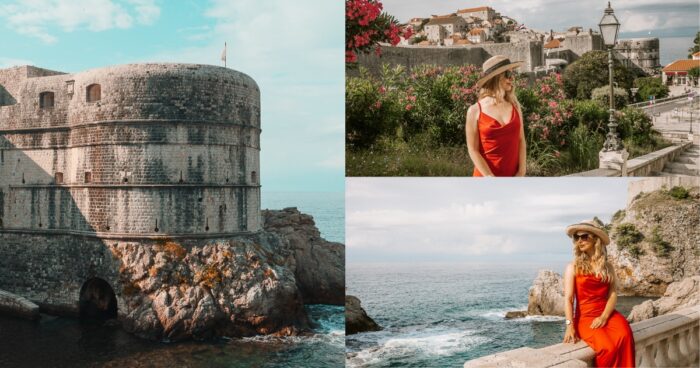
The full destination guide: Croatia — guide and what to see
When to visit Dubrovnik
Generally, the best time to go is in spring or autumn, when temperatures are pleasant for exploring the city and there are far fewer tourists around. Most visitors come to Dubrovnik during summer, when people flock here not just for the city but for the sea as well.
If you come in summer like we did, don’t make the same mistake we made the first time! Don’t head into Dubrovnik in the afternoon — set off first thing in the morning. This year we reached the centre of Dubrovnik at eight, and it was a completely different experience from five years earlier on our e-bikes.
Weather in Dubrovnik, Croatia
The sea temperature from June to September is perfect for swimming, while the highest air temperatures sit between 28 and 30 °C. But be ready for the tourist buzz — this is when Dubrovnik comes alive in full force!
| Month | Average air temperature (°C) | Average sea temperature (°C) |
|---|---|---|
| January | 12 | 13 |
| February | 13 | 13 |
| March | 15 | 14 |
| April | 18 | 15 |
| May | 23 | 18 |
| June | 26 | 22 |
| July | 30 | 24 |
| August | 30 | 25 |
| September | 26 | 22 |
| October | 21 | 19 |
| November | 16 | 16 |
| December | 13 | 15 |
Where to stay in Dubrovnik
Ideally you’ll stay right in the centre, but keep in mind that hotel and apartment prices are up to three times higher than elsewhere in Croatia. If you’re driving, always look for accommodation with parking — it’s nearly impossible to park in central Dubrovnik, and on top of that parking costs €10 an hour.
If you stay a little way out of the centre, you can use the bus, but Uber works brilliantly here — we used it throughout our whole visit. The apartment owner tipped us off, and it cost only slightly more than a bus ticket.
- Budget accommodation (low-cost): Apartment Diverti or Apartments Ella, which we snagged at the last minute. To get into the centre we recommend taking an Uber.
- Lovely accommodation in the centre: LOCUS Dubrovnik.
Book your accommodation early — otherwise there won’t be anything decent left, and you could end up paying up to €330 a night!

What to see in Dubrovnik, Croatia: The historic centre
The historic centre of Dubrovnik is one of the most picturesque and fascinating places in all of Croatia. This stunning old town was declared a UNESCO World Heritage Site back in 1979 and is a favourite destination for travellers from all over the world.
Dubrovnik, known as the “Pearl of the Adriatic”, is a city with rich history and striking architecture. You’ll find beautiful buildings here, such as the Rector’s Palace, the city walls, the Franciscan and Dominican monasteries, Pile Gate and the fortresses of St. John and Lovrijenac. Let’s take a look at everything you’ll find in the centre and what you shouldn’t miss.
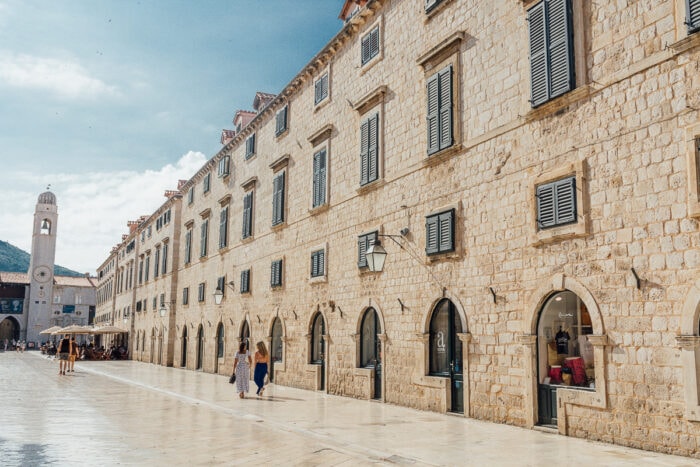
A stroll along the Stradun main street
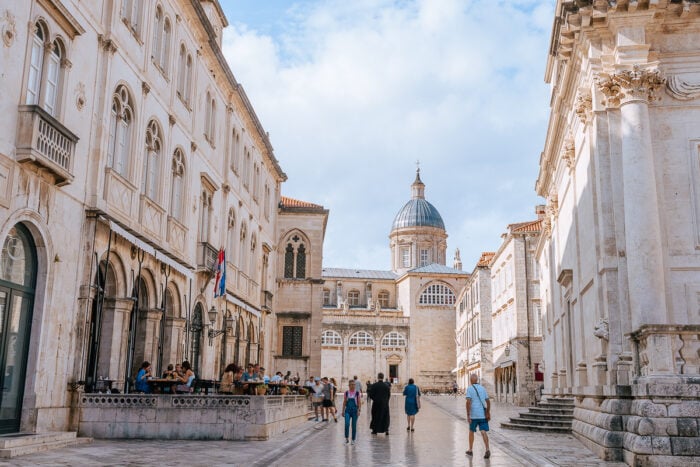
The old town’s main street is called the Stradun, a cobbled avenue lined with historic buildings and gorgeous Baroque churches. Beyond the beautiful architecture, you’ll find plenty of cafés and restaurants here too.
The city walls
One of the most important features of Dubrovnik’s historic centre are the imposing walls that surround the entire city.
These massive walls were built to defend the city against enemies, and to this day they speak to Dubrovnik’s former ability to withstand raids and control its surroundings. If you’d like to walk the walls, it’ll cost you €35 per person.
If you’re heading up there and you speak English, we recommend booking a guided tour through GetYourGuide so you enjoy every euro to the fullest.
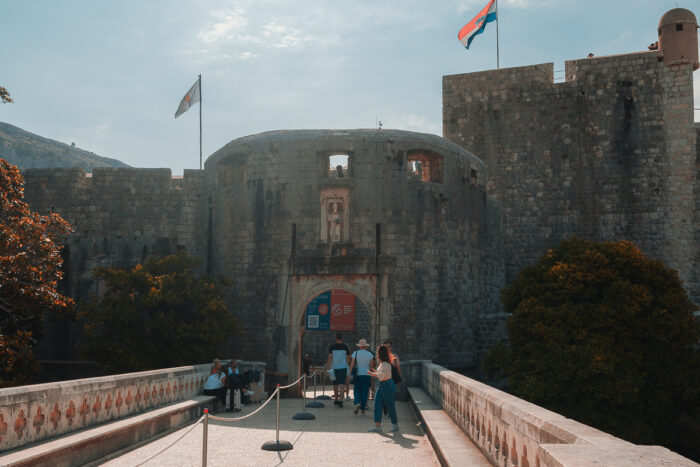
Pile Gate
“Pile” comes from Greek and means door. So this gate is essentially named “Door”. ☺️ And you may have spotted it in Game of Thrones (if you love GoT as much as we do, definitely take one of the guided tours on GetYourGuide). This is the main gate into the city and also onto the city walls.
Lovrijenac Fortress
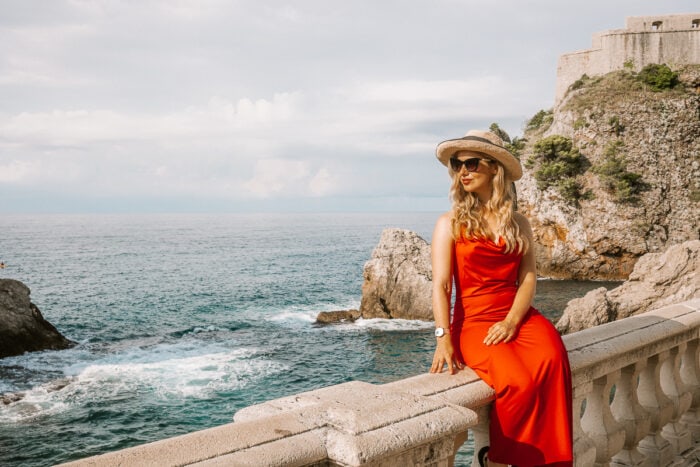
This clifftop fortress is one of the most photogenic spots in Dubrovnik, perched on cliffs above the sea. It was built in the 11th century to protect Dubrovnik from enemy attacks and was once a key defensive point in the region. It’s best known as a Game of Thrones filming location — yes, this is the famous King’s Landing.
The Rector’s Palace
The 15th-century Rector’s Palace is a stunning Gothic-Renaissance building that once served as the seat of the Rector of the Republic of Ragusa. Today it houses a cultural centre hosting exhibitions, concerts and other cultural events.
As you enter the palace, you find yourself in a beautiful courtyard surrounded by columns and elegant arcades. Every corner of the palace is carefully decorated, reflecting Dubrovnik’s rich culture and art.
Inside, there are several historic halls that served as offices, courtrooms and living quarters for the rectors. These rooms are decorated with beautiful frescoes, artworks and valuable furniture.
Sponza Palace
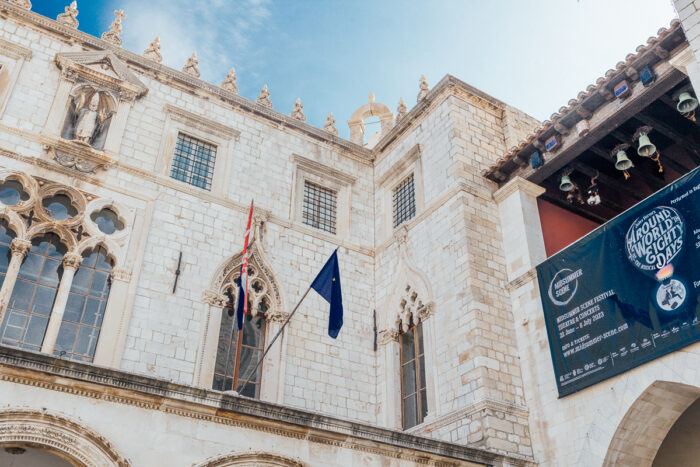
At the end of Placa (the Stradun), next to Luža Square, stands the monumental Gothic-Renaissance Sponza Palace. Sponza is one of the most beautiful palaces in the city and has kept its original appearance.
It was built between 1516 and 1522, and its look hints at how most public and private palaces in Dubrovnik might have appeared before the earthquake of 1667.
Sponza Palace got its name from the place where rainwater used to collect (Spongia — “alluvium”). During the Republic, the palace served as a customs office and warehouse, which is why it was often called Divona (from the Italian dogana — “customs house”). The palace also once housed a mint, a bank, a treasury and an armoury.
Today, Sponza Palace is home to Dubrovnik’s most important cultural institution — the archive. The archive is located on the first floor.
Fort Bokar (Tvrđava Bokar)
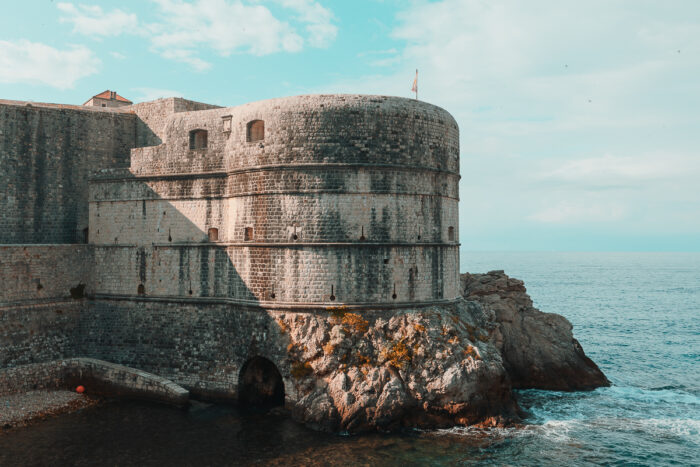
Say Dubrovnik, and Fort Bokar is the first thing that comes to my mind. This large, rounded 15th-century fortress was another key part of the city’s defences and represents a masterpiece of medieval engineering. It sits on the southern side of Dubrovnik’s walls, and its position guarded the entrance to the harbour.
For Game of Thrones lovers, we can’t fail to mention that Fort Bokar is probably the most famous location from the show. It appeared most in the second and third seasons.
Dubrovnik Cathedral (Katedrala Velike Gospe, Katedrala Marijina Uznesenja)
Dubrovnik Cathedral, also known as the Cathedral of the Assumption of the Virgin Mary, is one of the most significant sacred monuments in Dubrovnik. This imposing Gothic cathedral stands in the very heart of the city’s historic centre, and its towers dominate the surrounding skyline.
The cathedral was built in the 12th century and serves as the main Catholic church in Dubrovnik. Its architecture is a beautiful blend of Romanesque, Gothic and Renaissance elements. The entrance is adorned with a lovely portal, and the interior is richly decorated with important works of art.
One of the most notable features inside is the main altar, the work of the celebrated Italian sculptor Raffaele Bonami.
The Church of the Assumption of the Virgin Mary
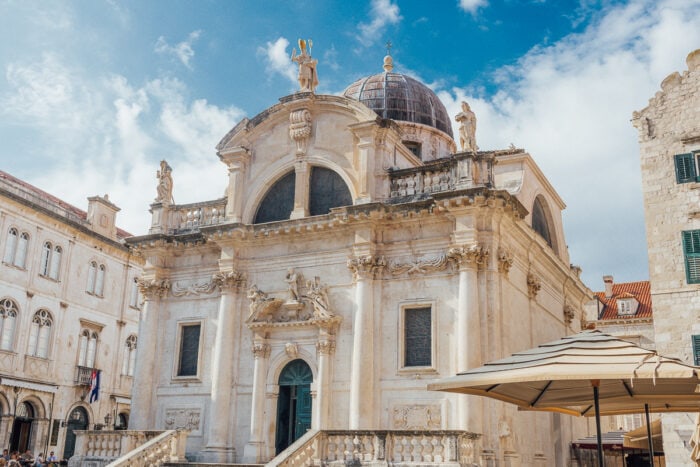
The Church of the Assumption of the Virgin Mary is another important church in Dubrovnik, located not far from the cathedral. It’s considered one of the oldest churches in Dubrovnik, with a history reaching back to the 12th century. Its architecture is largely Gothic with some Renaissance elements.
The church is surrounded by a picturesque square and historic buildings. Its interior is decorated with beautiful frescoes and sculptures that showcase Dubrovnik’s rich artistic heritage.
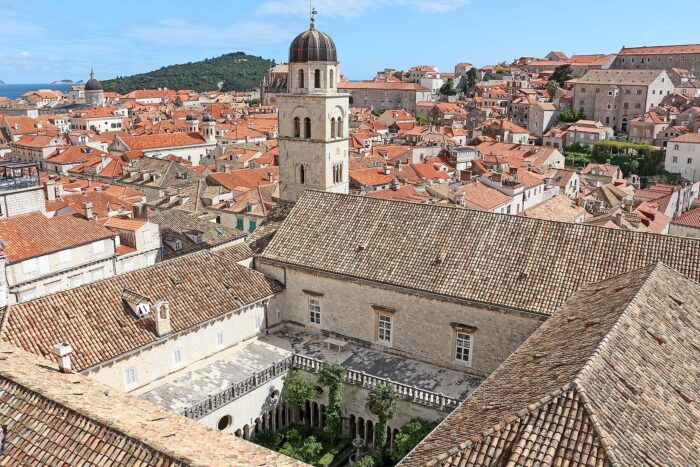
The Franciscan Monastery
The Franciscan Monastery was founded in the 14th century and is the oldest still-functioning monastery in the city. Its architecture and peaceful atmosphere will charm you the moment you arrive. In the past it was an important cultural and educational centre, where scribes and apothecaries met to share their knowledge.
One curious fact is that the monastery houses Europe’s oldest pharmacy, founded in 1317 and still in operation. Stepping inside is like travelling back in time — the original fittings, ancient glass apothecary bottles and herbal remedies transport you to the days when medicinal preparations and herbal cures were made here.
Minčeta Tower (Tvrđava Minčeta)
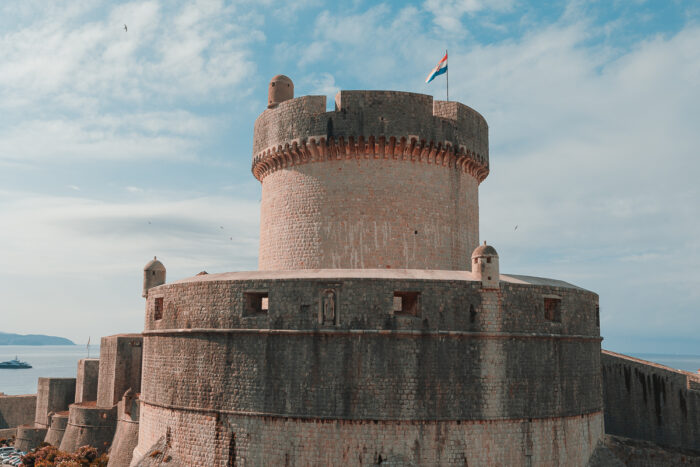
This fortress was named after the Minčeta family. It was built in the 15th century and has a distinctive cylindrical tower. You’ll get the best view of it if you head back out of the historic walls through Pile Gate and then climb the steps a little way above the historic centre.
This fortress is also one of the Game of Thrones filming locations. It served as the entrance to the House of the Undying.
The Dominican Monastery
The Dominican Monastery, founded as far back as 1225, is one of the oldest monasteries in the city. Although it may not look it from the outside, it’s one of the most important historic and cultural buildings in Dubrovnik.
Inside the monastery there’s a beautiful monastic church, adorned with important works of art and altars. One interesting fact is that the Dominican Monastery holds an extensive library considered one of the most valuable in the entire region. Inside are thousands of old books and rare manuscripts that testify to the ancient intellectual tradition of this place.
The church interior is richly decorated. The most remarkable piece is the large golden cross above the main altar, the work of Paolo Veneziano from the 14th century.
The monastery complex took its final shape in the 15th century, when the sacristy, chapter house and cloister corridor were added. The magnificent arcades of the corridor were built between 1456 and 1483 to a design by the Florentine architect Maso di Bartolomeo.
Fort of St. John (Tvrđava Svetog Ivana)
From the terraces of the Fort of St. John, you can enjoy a panoramic view over the whole city of Dubrovnik, the sea and the surrounding islands.
Church of St. Ignatius (Crkva sv. Ignacija)
This beautiful Baroque building was constructed between 1699 and 1725 under the direction of the Jesuit painter and architect Andrea Pozzo.
The church interior is decorated with frescoes by Gaetano García. The church is known for its grand staircase, which resembles the Spanish Steps in Rome. Next to the church stands the Jesuit college Collegium Ragusinum, which began teaching in 1658.
Today the college serves as the Ruđer Bošković Diocesan Classical Grammar School. It’s also known for its significant library, holding tens of thousands of volumes, including several incunabula.
Revelin Fortress (Tvrđava Revelin)
Revelin Fortress in Dubrovnik was built in 1463. It defended the eastern part of the city from the mainland as well as the entrance to the harbour. In 1538 the fortress was rebuilt into a spacious, sturdy fort in the shape of an irregular quadrilateral, following the instructions of the engineer Antonio Ferramolino of Bergamo.
Revelin has three entrances and was fortified by a moat and by the sea on three sides. In the spacious interior of the fortress, the famous Renaissance bell-founder Ivan Rabljanin kept furnaces for casting cannons and bells. Today, the fortress’s large terraces host various stage performances during the Dubrovnik Summer Festival.
Activities in Dubrovnik you shouldn’t miss
In Dubrovnik you don’t have to just wander around — you can also ride the cable car for city views or head out kayaking.
Dubrovnik cable car
If you’re after a gorgeous view over the city, head up on the cable car. Yes, it’s fairly pricey — the cable car costs €27 (up and down). You can check current prices here.
Kayaking at sunrise or sunset
One of the most beautiful experiences you can have in Dubrovnik is kayaking early in the morning or at sunset. You can easily book this activity, even last minute, through GetYourGuide. In high season, though, we recommend booking ahead, as tours often sell out.
Where to swim in Dubrovnik
The beaches right in Dubrovnik aren’t the best in Croatia, and often not the cleanest either. But there’s nothing better than escaping to a quieter, less-visited beach, away from the crowds that fill central Dubrovnik in the afternoon.
Banje Beach
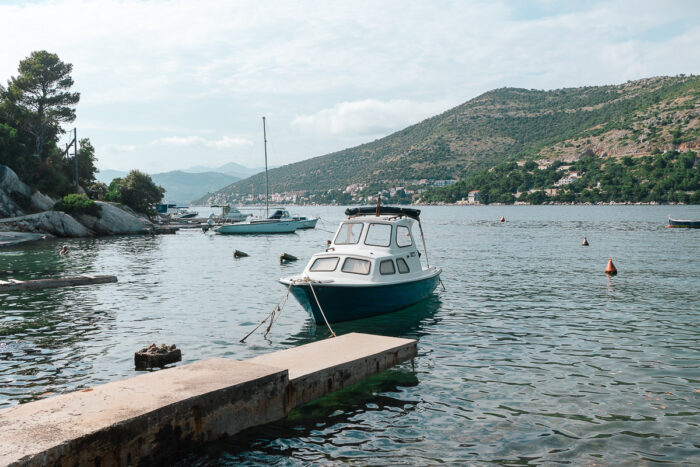
Banje Beach is the city’s most famous and popular beach, offering crystal-clear sea and a stunning view of the old town.
Copacabana Beach
Copacabana Beach is one of the best-known beaches in Dubrovnik, located on the Lapad peninsula. It’s ideal for families with children too. Copacabana is also equipped with special access for people with disabilities.
Ploče Beach
On the eastern side of Dubrovnik’s walls lies the main city beach at Ploče. It’s considered one of the most beautiful beaches on the Adriatic and is often called the beach for both the “rich” and the “poor”.
The reason is that one part of the beach is freely accessible, while the other is reserved for those willing to rent a sunbed.
Dog-friendly beach – Danče Beach
If you’re travelling with dogs, you can head to Danče Beach, which is just 5 minutes from the historic centre. It’s one of the oldest beaches in Dubrovnik and has clear water and rocks you can jump into the Adriatic from.
The best time to visit is early in the morning, when the beach is empty, so both you and your four-legged friend can enjoy it to the fullest.
Dog-friendly beach – Lapad Beach
Lapad Beach is a calm beach surrounded by pine trees, making it an ideal spot for those who want to escape the bustle of the city.
There are several restaurants and cafés nearby, so you can grab a bite to eat or enjoy a refreshing drink while sunbathing. The beach is well maintained and there are plenty of sunbeds and umbrellas to rent, so you’ll almost always find a spot.
The beach has lots of shaded areas, which both you and your dogs will appreciate. It’s one of the cleaner beaches around.
Dubrovnik and its surroundings: day trips
Dubrovnik is also a great starting point for exploring the nearest islands, such as Lokrum, the Elaphiti Islands and many more.
Lokrum
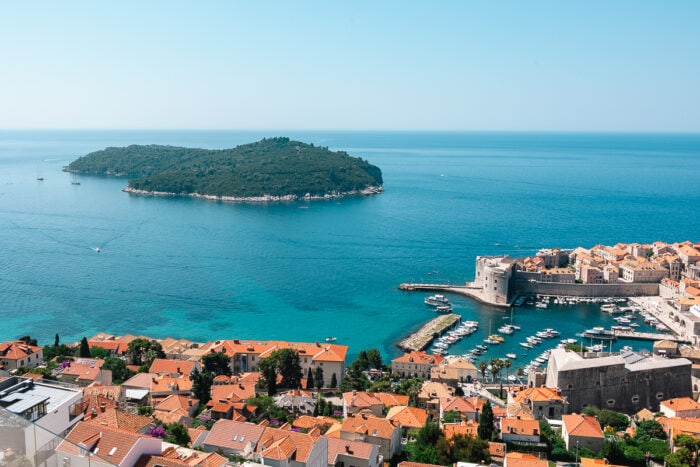
The little island of Lokrum lies just 600 metres from Dubrovnik’s harbour, and you can get there by fast ferry in 10 minutes.
After the very short ferry crossing, get ready to spend a day exploring, because the island of Lokrum has it all — from Game of Thrones filming locations to an amazing botanical garden and, of course, beautiful beaches.
On the island you’ll also find Fort Royal, one of the most significant defensive points of the fortifications. Its origins date to the 16th century, when it was built as part of the city’s extensive defence system.
How to get there: the ferry to Lokrum runs two to four times an hour, depending on the season, and takes about 10 minutes.
If you’re adventurous and a little bold, you can also head out by kayak from Dubrovnik to Lokrum — you’ll definitely see views you wouldn’t experience any other way.
Cavtat
Because this old town is relatively close to Dubrovnik (just 20 km), getting here is really easy. You can rent a car or take a taxi (just 30 minutes’ drive), or travel by public bus or ferry.
Cavtat is a kind of mini-Dubrovnik, with a historic centre full of picturesque small-town charm, shops, restaurants and swimming spots — but thankfully without the crowds!
You can set off on a hike along the Ronald Brown Trail (8 km), which offers amazing views of the Croatian landscape. Also visit the house of Vlaho Bukovac and the Church of St. Nicholas.
Korčula
You can reach Korčula in 2.5 hours by ferry. Beyond being a breathtaking medieval town, Korčula also offers gorgeous scenery you won’t see on any other trip from Dubrovnik.
Be sure to visit some of the Renaissance palaces and relax in one of the outdoor cafés over a coffee or a glass of local wine.
Tip: If you’re a wine lover, you have to drive through the wine region on the Pelješac peninsula and visit a local wine cellar — this is included in many organised trips to Korčula from Dubrovnik. You can find them on GetYourGuide, which Lukáš and I use for interesting excursions.
Mljet National Park
The easiest way to reach Mljet National Park is to book an organised trip through GetYourGuide (especially if you only have one day to explore everything the park has to offer). But if you prefer, you can also go on your own by ferry.
Mljet was recommended to us by many travellers, mainly because it doesn’t get the tourist crowds. It simply hasn’t been discovered yet. Mljet is the greenest island in Croatia. Visit the lakes here — on one of them you’ll even find a small island with a Benedictine monastery.
The Elaphiti Islands
The Elaphiti Islands are an archipelago of 13 islands located not far from Dubrovnik on the Croatian coast. The best-known islands of the Elaphiti archipelago include Koločep, Lopud and Šipan.
How to get here: either book a trip through GetYourGuide again, or first make your way to the port of Gruž on the other side of the city.
Museums in Dubrovnik
As you stroll along the old town’s main street, the Stradun, don’t forget to visit Sponza Palace. This former palace and scriptorium now serves as the Cultural History Museum, which focuses on the city’s history, art, manuscripts and coins.
Sea lovers shouldn’t miss a visit to the Maritime Museum, housed in the Fort of St. John. The museum focuses on the maritime history and trade of the Republic of Ragusa, including its strong influence in the Mediterranean in the 16th century.
The final tip is the War Museum on Mount Srđ. Here you can learn more about the history of the wars that struck Dubrovnik, particularly the siege of the city during the war of the 1990s.
Game of Thrones and Dubrovnik
Dubrovnik is famous as one of the main filming locations for the hit series Game of Thrones, which did a great deal to boost the popularity of this beautiful Croatian city. This is where the scenes from King’s Landing, the capital of the Seven Kingdoms, were shot.
Filming locations in Dubrovnik
- Lovrijenac Fort (Tvrđava Lovrijenac) – The Red Keep: Joffrey’s name day, dialogues between Cersei and Littlefinger (Season 1)
- Dubrovnik’s western pier (Zapadna Obala) – Blackwater Bay: scenes with Shae watching Sansa and Littlefinger (Season 3)
- Pile Harbour (Pile) – The port of King’s Landing: ships departing King’s Landing, e.g. Myrcella’s departure to Dorne (Season 2, Episode 6)
- Dubrovnik’s western harbour (Zapadna Obala) – Façade with doors in the rocks: scene with the Gold Cloaks entering the city (Season 2)
- Fort Bokar – King’s Landing: scenes of characters walking along the walls of King’s Landing (various seasons)
- Gradac Park – The Purple Wedding: scenes overlooking the park where the Purple Wedding was filmed (Season 2)
- Pile Gate (Pile) – The riot, Jaime Lannister’s return: the riot scene and Jaime Lannister’s return to King’s Landing (various seasons)
- Minčeta Tower – The House of the Undying: the scene where Daenerys searches for her dragons (Season 2)
- Steps by the Church of St. Ignatius – Cersei’s Walk of Shame: the scene with Cersei walking through the streets of King’s Landing being shamed (Season 5, Episode 10)
- Unnamed street – The riot: the scene where Sansa flees the riot (Season 2, Episode 6)
- Rector’s Palace (Knežev dvor) – Qarth: scenes set in Qarth (Season 2)
- St. Dominic Street – The Walk of Shame: Cersei’s Walk of Shame scene (Season 5, Episode 10)
- Steps in front of the Dominican Monastery – Speech against the Lannisters: the scene where the crowd speaks out against the Lannisters (Season 2, Episode 5)
- Ploče Gate (Ploče) – Cersei’s Walk of Shame, scene with Tyrion: Cersei’s Walk of Shame scene and the scene with Tyrion (various seasons)
- Lokrum Island – Some scenes from Qarth: scenes set in Qarth (Season 2, Episode 5)
The show’s creators chose Dubrovnik for its historic centre and well-preserved medieval walls, which make the perfect backdrop for scenes of epic battles and intrigue.
Tip for Game of Thrones lovers
If you speak English, you should head out on one of the guided city tours focused on Game of Thrones. One is offered, for example, by the reliable platform GetYourGuide.
Getting around Dubrovnik
Public transport is run by buses operated by Libertas Dubrovnik. A total of 13 city lines connect Dubrovnik with towns like Cavtat, Ston and Orebić. You’ll find timetables and ticket prices on the company’s website.
For trips outside the city you can rent a car — we always use DiscoverCars, with whom we’ve never had a problem (we always take out their insurance too).
Getting between Dubrovnik and the islands is easy by ferry.
Where to eat in Dubrovnik
If you fancy something a bit more upscale, try Taj Mahal, which has a Michelin star. For breakfast head to Lanii Breakfast, Lunch and Dinner, and for cheaper eats go to Vege Dub.
If you’ve been travelling around Croatia for a while, you might fancy a change. Dubrovnik also has an excellent Indian spot, Incredible India Dubrovnik. The best view is at the Panorama restaurant above Dubrovnik.
Drink tip: a lovely bar on the cliffs is Buža Bar (BARD).
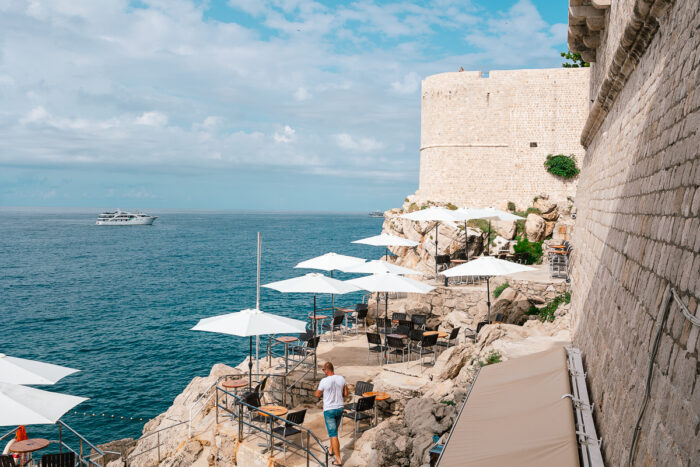
Dubrovnik prices: how much things cost
Prices in Dubrovnik are much higher than in other parts of Croatia. For a restaurant meal for two you’ll pay an average of €35 or more, and for accommodation reckon on €150 and up.
Tip: What to see in Croatia? Check out our 24 ideas for where to go on holiday in Croatia.
Map of points of interest for your phone
Frequently asked questions
Where was Game of Thrones filmed?
Game of Thrones was filmed in several locations in Croatia, with Dubrovnik being one of the most famous.
Where is King’s Landing in Dubrovnik?
King’s Landing is a fictional location from Game of Thrones and you can find it at the Lovrijenac Fort.
What is the price of the cable car in Dubrovnik?
The price of the cable car in Dubrovnik is 27 euros for a round trip.
What to see in Dubrovnik?
In Dubrovnik you should definitely see Stradun (the main street), the city walls, Pile Gate, Lovrijenac, the Franciscan Monastery, the Dominican Monastery, the Rector’s Palace and the Sponza Palace.
What was filmed in Dubrovnik?
The series Game of Thrones was filmed in Dubrovnik, where it served as the backdrop for the fictional King’s Landing. In addition, Star Wars: The Last Jedi (2017) and Robin Hood (2018) were also filmed in Dubrovnik.
When to visit Dubrovnik?
The best time to visit Dubrovnik is spring and autumn for sightseeing, and summer for swimming.
Tips and Tricks for Your Vacation
Don’t Overpay for Flights
Search for flights on Kayak. It’s our favorite search engine because it scans the websites of all airlines and always finds the cheapest connection.
Book Your Accommodation Smartly
The best experiences we’ve had when looking for accommodation (from Alaska to Morocco) are with Booking.com, where hotels, apartments, and entire houses are usually the cheapest and most widely available.
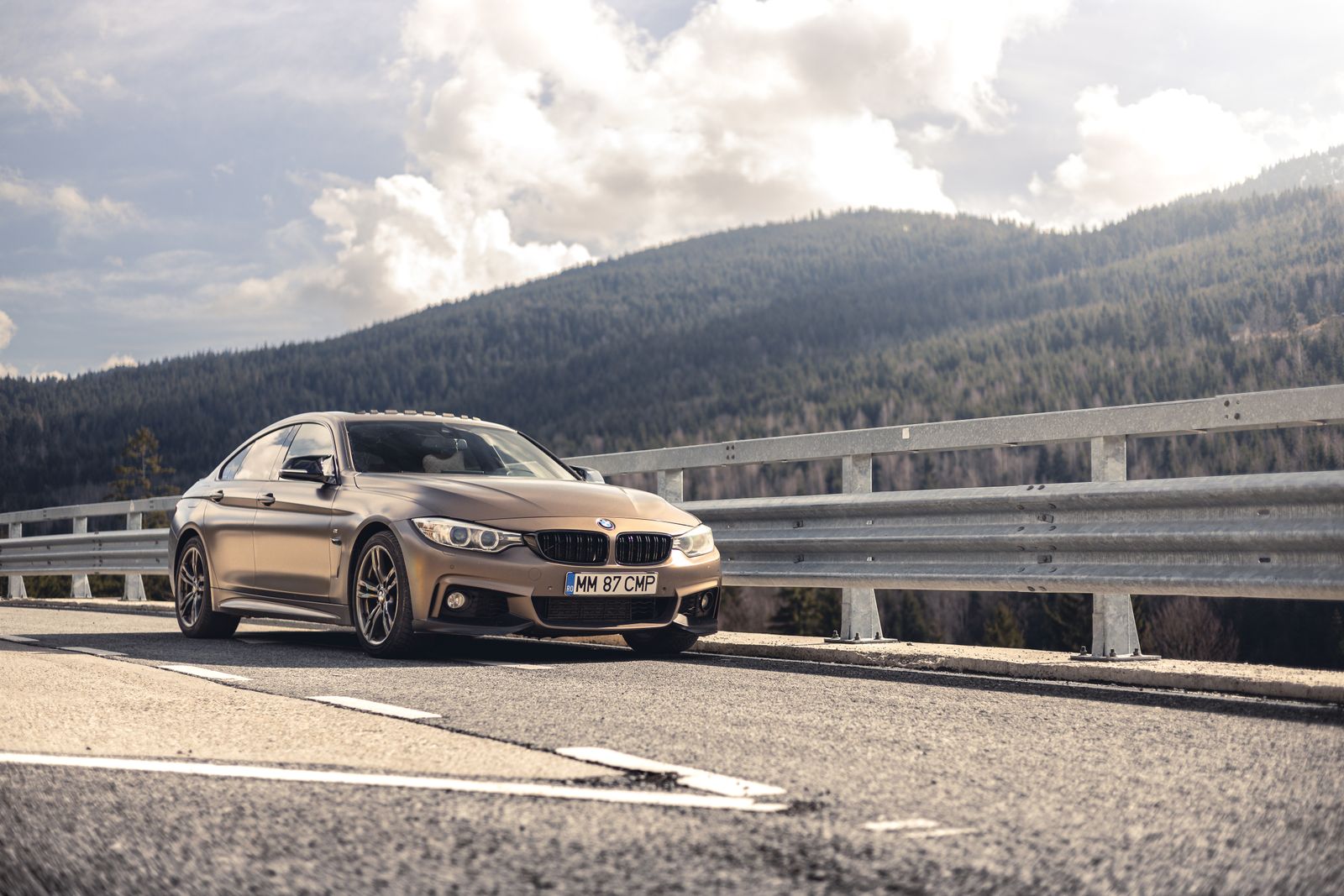 🚗 Car rental on the roadVerified rental cars in Croatia
Search with the DiscoverCars comparison engine — it compares prices from dozens of local and international rental companies, and most bookings come with free cancellation.
Compare car prices in Croatia →Don’t Forget Travel Insurance
Good travel insurance will protect you against illness, accidents, theft, or flight cancellations. We’ve had a few hospital visits abroad, so we know how important it is to have proper insurance arranged.
Where we insure ourselves: SafetyWing (best for everyone) and TrueTraveller (for extra-long trips).
Why don’t we recommend any Czech insurance company? Because they have too many restrictions. They set limits on the number of days abroad, travel insurance via a credit card often requires you to pay medical expenses only with that card, and they frequently limit the number of returns to the Czech Republic.
Find the Best Experiences
Get Your Guide is a huge online marketplace where you can book guided walks, trips, skip-the-line tickets, tours, and much more. We always find some extra fun there!


