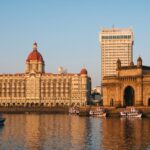

When I visited Beijing China on a group tour in the summer of 2012, I remember a city shrouded in heavy smog, with dust in the air and people glistening with sweat in the summer heat. By 2026, things have changed dramatically: average PM2.5 concentrations have fallen by a full 70%, and severe smog is now the exception rather than the rule. The way you visit has changed, too. Back then, you could simply turn up at a landmark; now almost everything needs to be booked online in advance using your passport number. You cannot even enter the square without your original passport.
International flights to Beijing make getting here straightforward, with connections through major hubs and direct services from some cities. Visa requirements depend on your nationality, so check the rules for your passport and arrange any required tourist visa well before departure. Processing times and fees vary by country; do not leave the paperwork until the last minute.
There is also a possible way to visit without a tourist visa: 240-hour visa-free transit. The important catch is that you need an onward ticket to a third country or region; a straightforward return trip from your departure city to Beijing and back will not qualify. Since late November 2025, you can also complete a free online arrival card before travelling to save time at the airport.

TL;DR
- Your passport is your ticket. For major sights such as the Forbidden City, Tiananmen Square and the Badaling section of the Great Wall, you need an advance reservation linked to your passport number.
- When to go: The best weather is from mid-September to late October, or in spring during April and May.
- Avoid public holidays: During Golden Week (1–7 October 2026) and Chinese New Year, the city and its sights are packed.
- Payments: Set up Alipay or WeChat Pay. You can now also use a regular contactless Visa or Mastercard on the metro.
- Internet: Google, WhatsApp and Instagram are blocked. A travel eSIM with roaming is a reliable solution; compare options from Holafly or Yesim.
- Getting from the airport: The Airport Express takes you from Beijing Capital Airport into the city for 25 CNY.
The full destination guide: Asia — guide and what to see
When to Visit Beijing
The best time to visit the Chinese capital is from mid-September to late October, when the weather is dry and temperatures hover around a pleasant 20–27°C. April and May are excellent choices too, although you may encounter strong winds in March and April. If you struggle with heat, definitely avoid July: temperatures climb above 32°C, and the city receives more than half its annual rainfall during this period.
Planning your trip around a Chinese public holiday would be a serious mistake: the crowds of domestic visitors are enormous. During Golden Week, from 1 to 7 October 2026, the Forbidden City and Great Wall are often completely booked out, and trains are packed. The Labour Day holiday in early May is similarly difficult, as is Chinese New Year, which falls on 6 February 2027.
Pay close attention to the days of the week when planning your itinerary, or a closed door could derail your plans. The Forbidden City is closed on Mondays, as are the National Museum, Mao’s Mausoleum and the main buildings at the Temple of Heaven. Mondays that fall on a public holiday are usually the exception, when these sights generally open.
Where to Stay in Beijing
Choosing the right area matters because Beijing is huge, and the distances between sights can catch you off guard. Your best bet is to look for a hotel near a metro station inside the Second Ring Road; it will save you a remarkable amount of time on your daily journeys. Since May 2024, hotels have no longer been allowed to turn away foreign guests, but international chains can still be the safest choice in practice. Also expect to pay a deposit of 300–1,000 CNY at check-in, which is returned when you leave.
If it is your first visit, the Wangfujing area makes an excellent base, less than two kilometres from the Forbidden City. Park Plaza Beijing Wangfujing offers good value right beside a Line 5 metro station; guests praise its quieter side street and helpful staff. For a taste of genuine luxury, there is the legendary The Peninsula Beijing, where every guest stays in a spacious suite. If you are after a more traditional atmosphere, try the boutique Lezai Hotel in a historic hutong near Nanluoguxiang, where breakfast and afternoon tea are complimentary.
Travellers arriving on an early flight at 5:20 am often wonder where to get some sleep straight after landing. One practical option is the Hilton Beijing Capital Airport, which offers a shuttle to Terminal 3 and lets you catch up on rest before exploring the city. For more specific recommendations and a detailed look at each neighbourhood, see our separate guide to where to stay in Beijing.
💡 Use this map to compare what is currently available — you will immediately see how much prices change just a few blocks away.
Beijing China: 22 Best Things to See and Do
1. Tiananmen Square and Mao’s Mausoleum
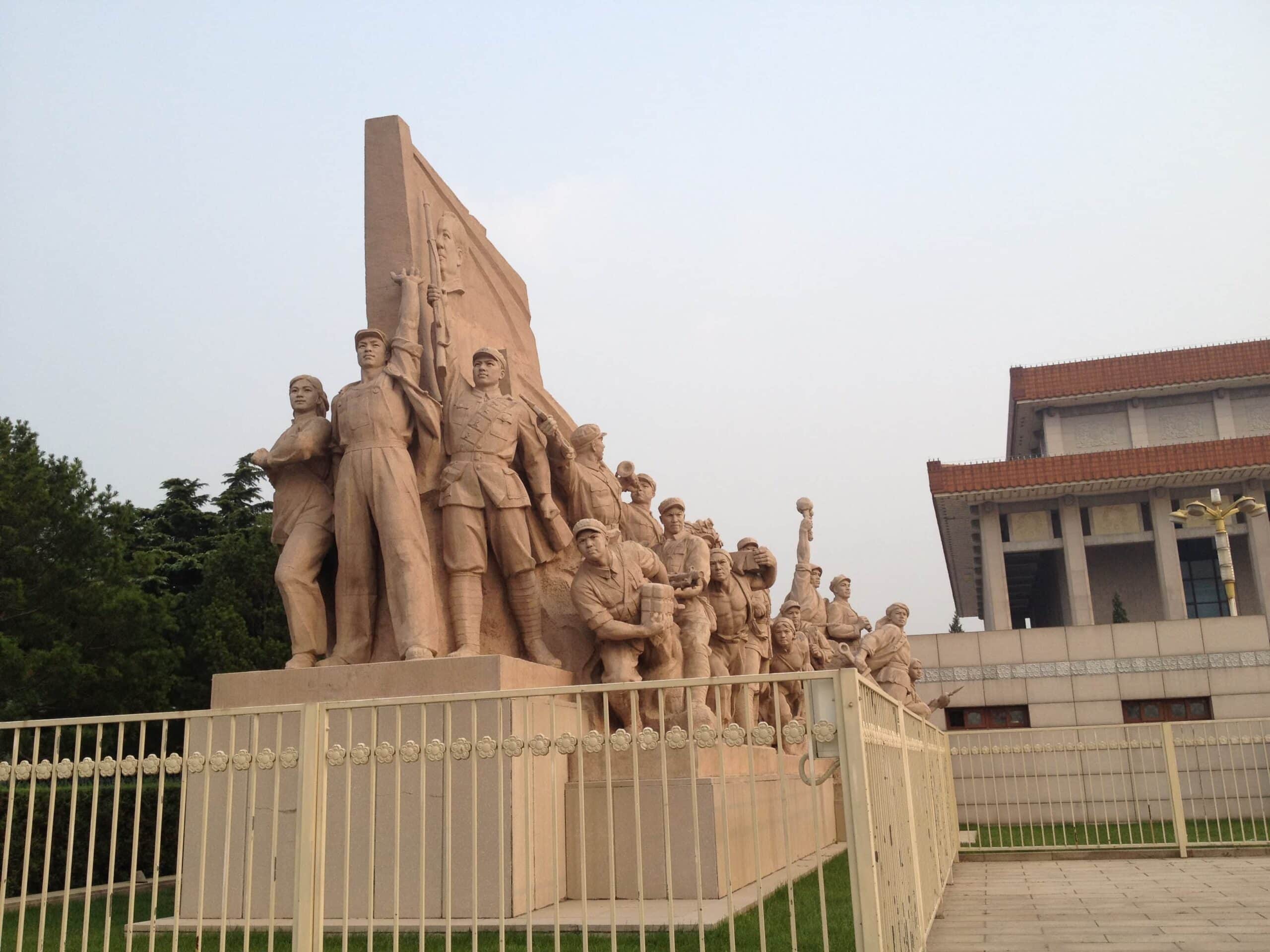
When I visited in 2012, smog hung over the square, people glistened with sweat, and I stared in disbelief at the enormous, chaotic queue of devoted Chinese visitors outside the mausoleum with its revolutionary sculpture. This was also where someone first called out to me, “Can I take photo with you?” and asked for a picture together; it happened again every day after that. Today the square is much more organised, and you must book one to seven days in advance via WeChat or the desktop website.
If you want to see Mao Zedong’s embalmed body, bear in mind that the mausoleum opens only from 8:00 am to noon, Tuesday through Sunday. Bags, backpacks, cameras and drinks are not allowed inside; you have to leave everything at a paid storage facility. Back then, our guide told me a story about the date of his death being changed, but the facts say that Mao died on 9 September 1976, ten minutes after midnight.
The square itself is enormous, and the easiest way to get there is on metro Line 1 to Tiananmen East or Tiananmen West. Watching the daily flag-raising at sunrise is a memorable experience, but you need to register for it separately, and people start gathering as much as two hours beforehand.
💡 Tip: book your visit to the square for the same morning as the Forbidden City. From the square, you enter the museum from the south through the Meridian Gate (Wumen), so the two visits fit neatly together.
2. The Forbidden City (Palace Museum)
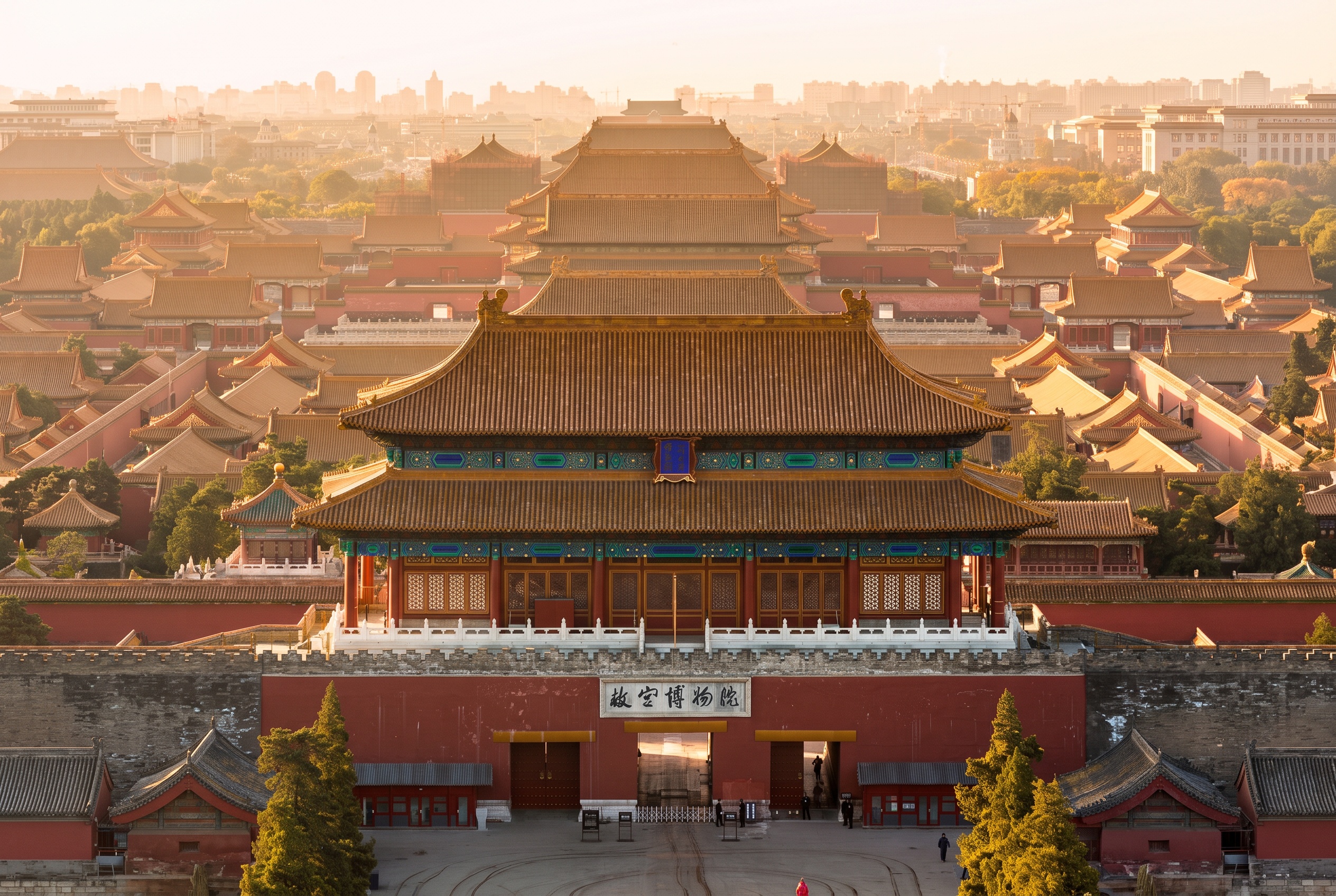
In 2012, the crowds were so intense that it felt as though millions of people had squeezed into the courtyards with our group; I came away with stories rather than memories of a peaceful visit. Things are a little different now: daily admission is strictly capped at 40,000 visitors, and tickets are not officially sold at the gate at all. International visitors book using their passport at bookingticket.dpm.org.cn. Tickets are released seven days ahead, and weekend slots disappear especially fast. Admission in high season, from April to October, costs 60 CNY, compared with 40 CNY in winter; remember that it is always closed on Mondays. You can enter the complex only through the Meridian Gate (Wumen) on the south side and leave via the northern Shenwumen Gate or the eastern exit.
This astonishing complex was built under the Ming dynasty in the 15th century, and emperors lived here until the early 20th century. One fascinating detail: the 1987 film The Last Emperor was the first Western film allowed to shoot here. Where visitors once streamed in without limits, the museum welcomed 17.6 million people in 2024; it celebrated its centenary on 10 October 2025.
💡 Tip: after your visit, leave through the north gate and cross over to Jingshan Park. From the pavilion at the top, you can look back over the full sweep of rooftops you have just walked through.
3. Jingshan Park and Views of the Forbidden City
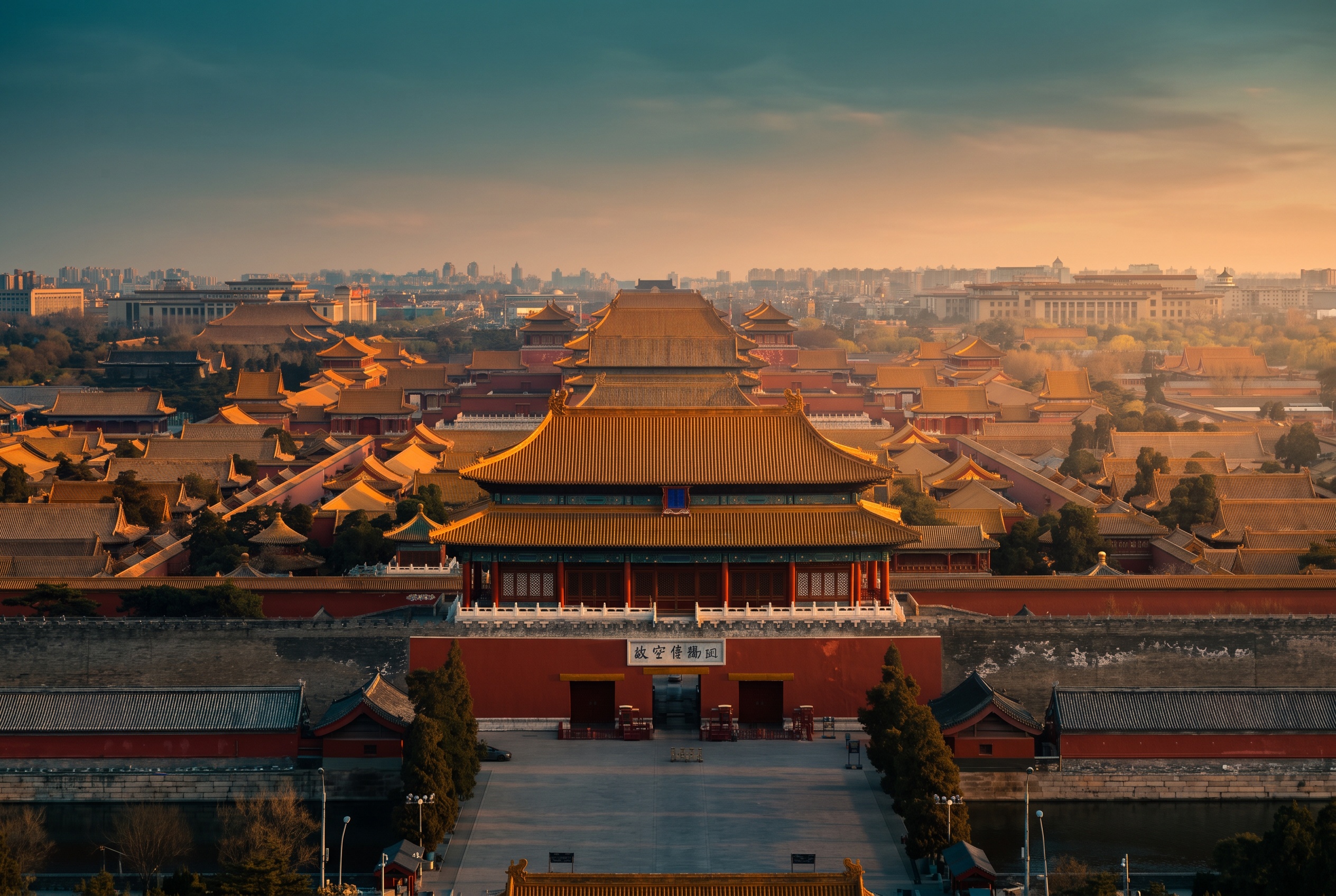
Just across the street from the Forbidden City’s north gate, you’ll find Jingshan Park, an integral part of Beijing China’s UNESCO-listed Central Axis. Unlike most major attractions, you can buy your 2 CNY ticket at the entrance, though tickets are also available in advance through WeChat.
In high season, the park is open from 6:00 a.m. to 9:00 p.m., so you can come for an early stroll or unwind in the evening. Its main attraction is Wanchun Pavilion at the very top of the hill. You’ll need to climb a series of steps to reach it, but the views across the city are worth the effort.
💡 Tip: arrive an hour before sunset, when the sun lights up the golden roofs of the Forbidden City below you.
4. Temple of Heaven and Morning Life in the Park
Metro Line 5 to Tiantan Dongmen station takes you straight to the Temple of Heaven’s east gate. The park itself opens at 6:00 a.m.; you don’t need a complicated reservation, and you can buy a ticket on arrival for around 15 CNY. Ticketed buildings such as the Hall of Prayer for Good Harvests don’t open until 8:00 a.m. A combined ticket costs 34 CNY (about €5), but remember that these historic buildings are closed on Mondays.
The centrepiece of the complex is the Hall of Prayer for Good Harvests, a stunning 38-metre-high, all-wooden structure founded in 1420 and part of the UNESCO-listed site. Its interior is rich in symbolism: four inner columns represent the seasons, 12 middle columns represent the months, and 12 outer columns stand for the traditional two-hour periods of the day.
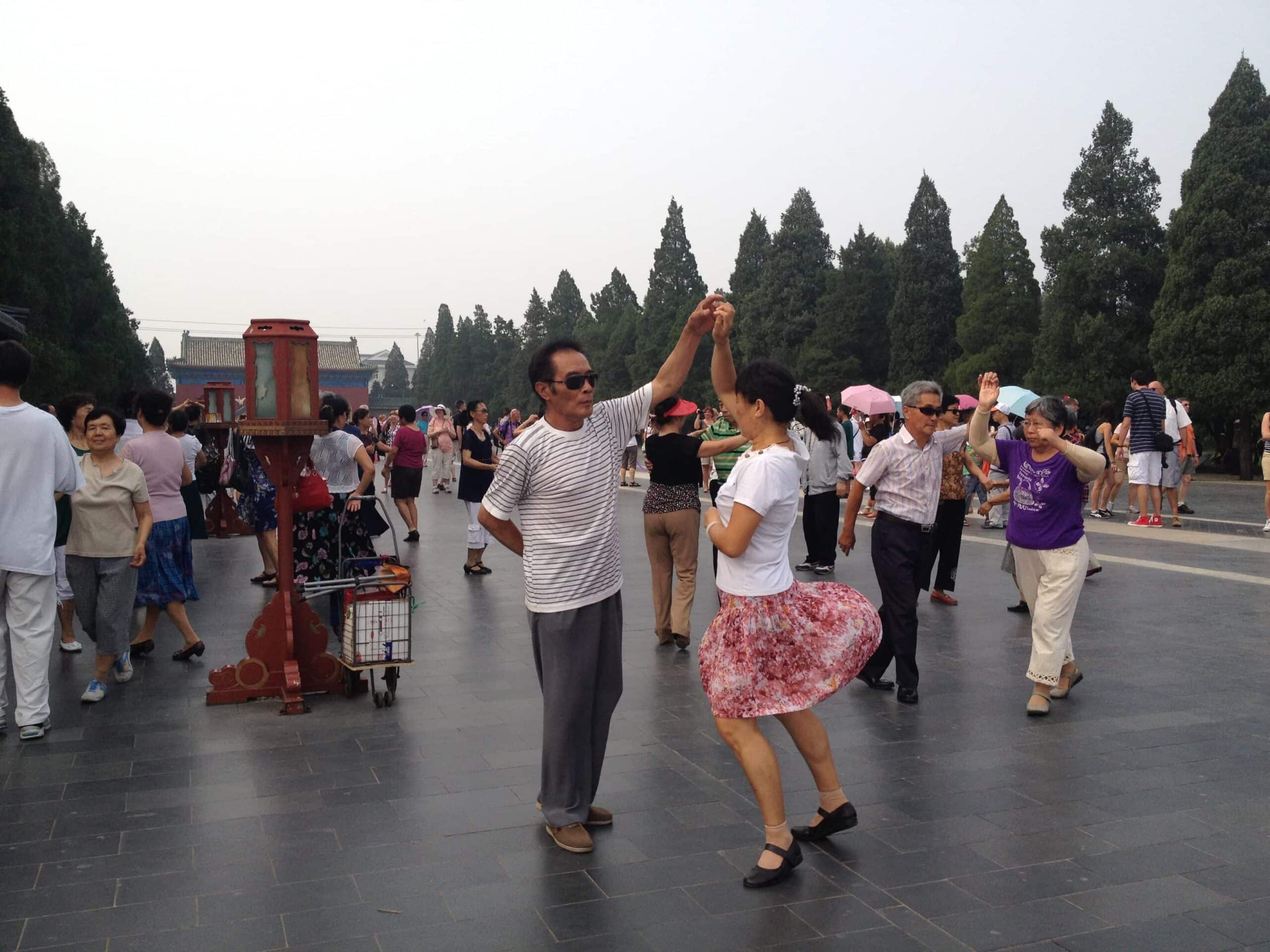
When I visited in 2012, I watched in amazement as locals enthusiastically took part in partner dancing, aerobics and choir singing. The morning atmosphere is just as captivating today: from 6:00 a.m., people practise tai chi, play cards or use huge brushes and water to write beautiful calligraphy directly on the paving stones.
💡 Tip: enter through the east gate between 7:00 and 7:30 a.m. and walk along the Long Corridor first. You’ll have plenty of time for the buildings after they open at eight.
5. The Great Wall of China (Mutianyu or Badaling?)
Entry to the restored, less crowded Mutianyu section costs 40 CNY, while a return cable-car ticket is around 120 CNY. Getting there from the city centre is straightforward: an official tourist bus costs 80 CNY return and departs from Qianmen and Dongzhimen. Don’t attempt to climb the closed Jiankou section, where access is strictly prohibited.
Another popular option is Badaling, which you can reach easily by high-speed train from Beijing North railway station. It’s also the busiest section, with a daily capacity of 65,000 visitors. Beware of outdated advice in travel blogs: the old S2 train stopped running from Huangtudian on October 25, 2025, and entry requires an advance reservation linked to your passport.
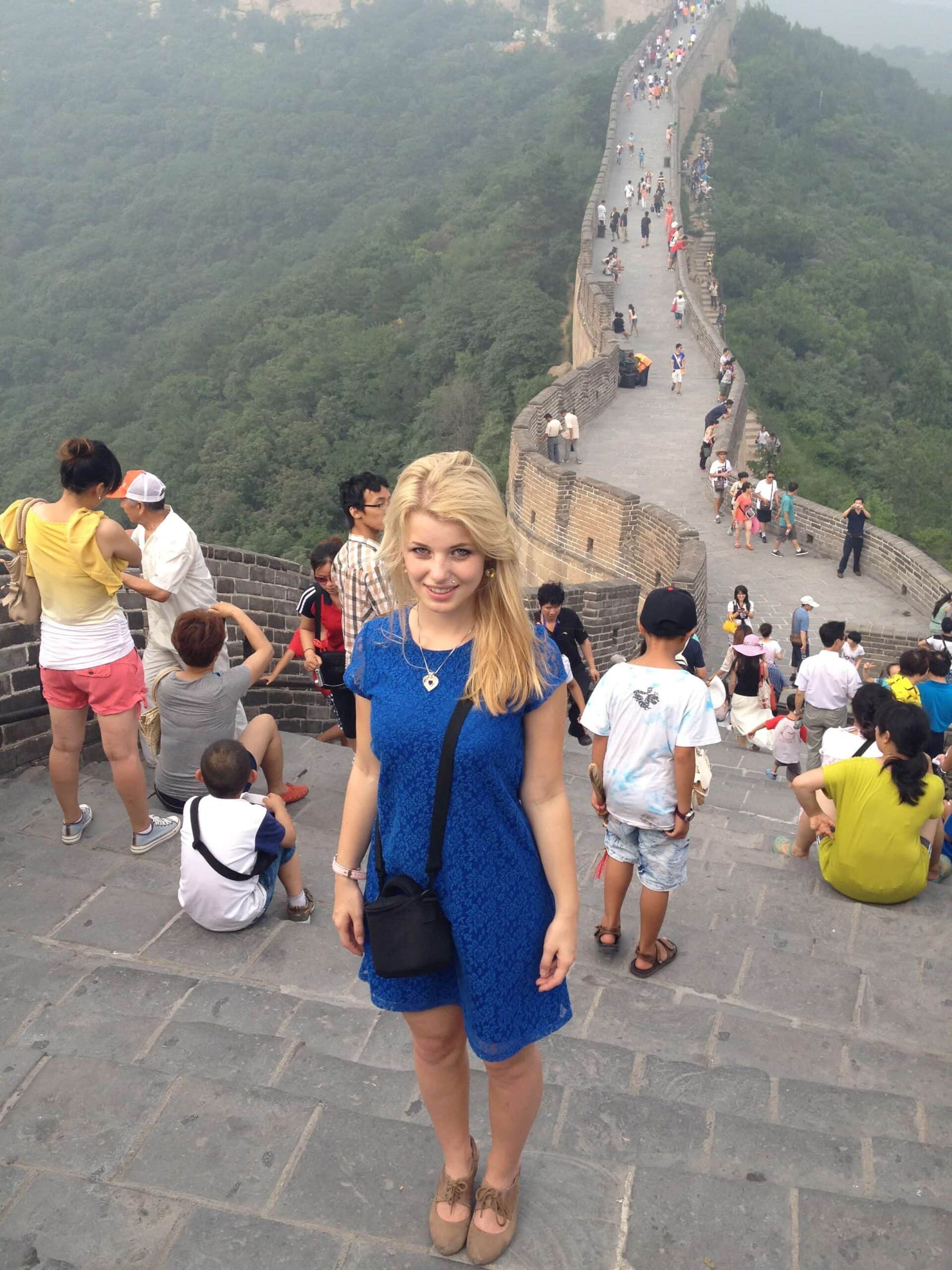
When I first visited the wall in 2012, I was caught off guard by its steep, wildly uneven steps and got an involuntary workout on my very first climb. Back then, the wall snaked into the distance through a haze of dust, and a group of photographers followed me around until I finally ducked into a watchtower to escape them.
💡 Tip: take the first tourist bus to Mutianyu at seven; you’ll reach the wall before most tour groups.

6. The Ming Tombs and the Sacred Way
This vast burial complex lies in Changping District, about 50 kilometres from the centre, and a visit is often combined with a trip to the Great Wall of China. The Sacred Way costs 20 CNY to enter; in high season, admission to Dingling Tomb is 40 CNY and to Changling Tomb 30 CNY.
There’s a lot to explore across the huge site, but only Dingling Tomb takes you down into an underground palace, reached by roughly eight storeys of steep stairs. Changling Tomb, by contrast, is the largest above-ground site in the complex, where you can admire beautiful traditional architecture.
When I walked here in 2012, the atmospheric Sacred Way, with stone animals and soldiers standing opposite one another, made a much stronger impression on me than the tombs themselves. The tombs were packed, and I still remember a persistent scarf seller tugging at my sleeve and shouting, “Ten yuan! Three!”
💡 Tip: walk the Sacred Way from north to south all the way to the end. The statues stand in pairs and are best appreciated in the morning before the bus groups arrive.
7. Summer Palace
Metro Line 4 to Beigongmen or Xiyuan will get you to this enormous imperial retreat. In summer, the entrance gates are open from 6:00 a.m. to 7:00 p.m. A basic ticket costs 30 CNY (about €5), while a combined ticket including the paid pavilions costs 60 CNY.
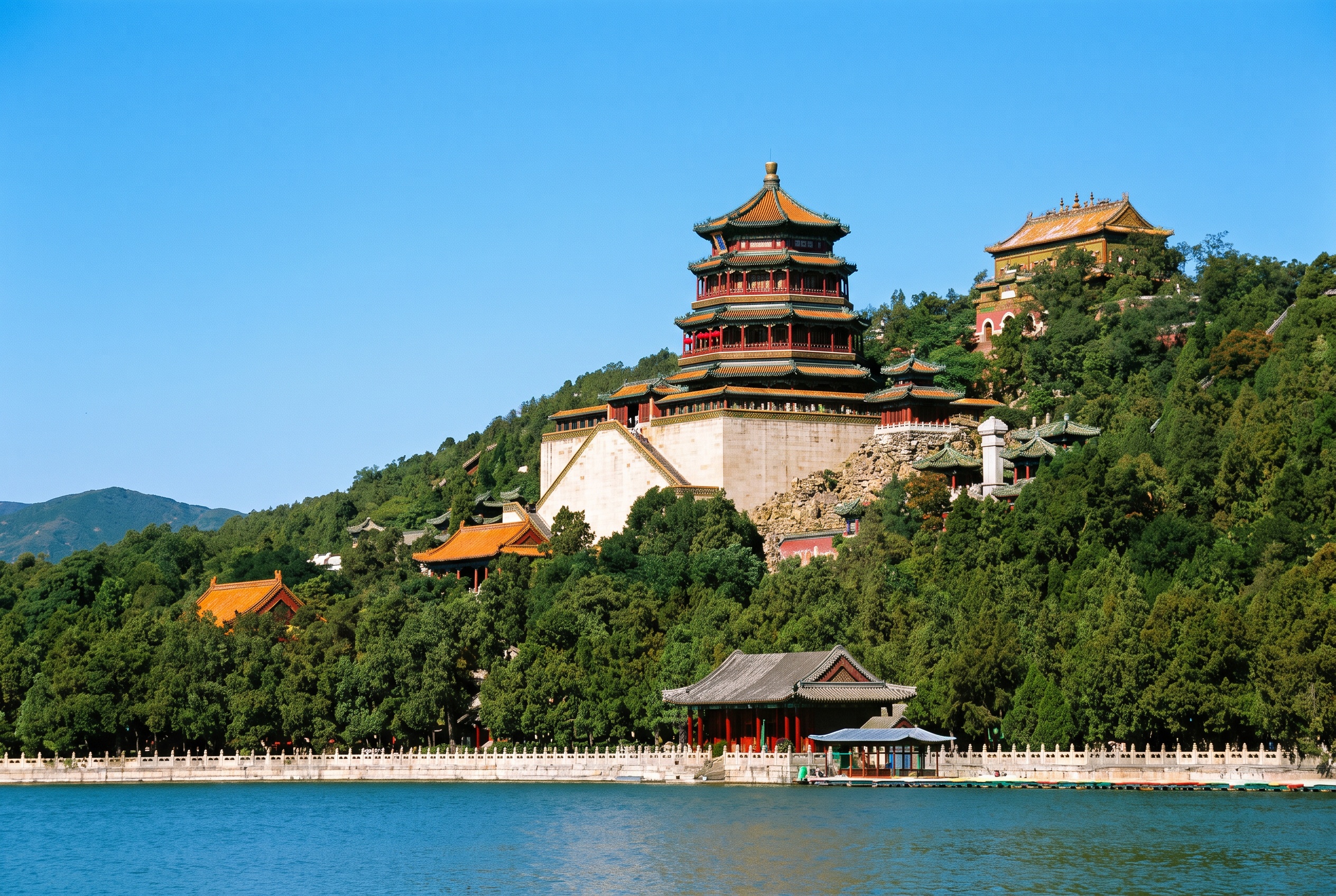
The whole complex covers an impressive 3 square kilometres, and three-quarters of it is the artificial Kunming Lake, where you can take a boat ride. The Summer Palace was added to the UNESCO World Heritage List in 1998. The classic sightseeing route starts at the East Gate and leads along the painted Long Corridor to the Marble Boat.
Summer brings huge crowds, so set aside at least half a day to explore without rushing. The lake, framed by pavilions, is one of the loveliest scenes in the entire city, and it’s worth sitting for a while just to watch the world go by.
💡 Tip: do the route in reverse: start at the North Gate, head through Suzhou Street towards the lake and finish at the Long Corridor, which is busiest around midday.
8. Yonghegong Lama Temple
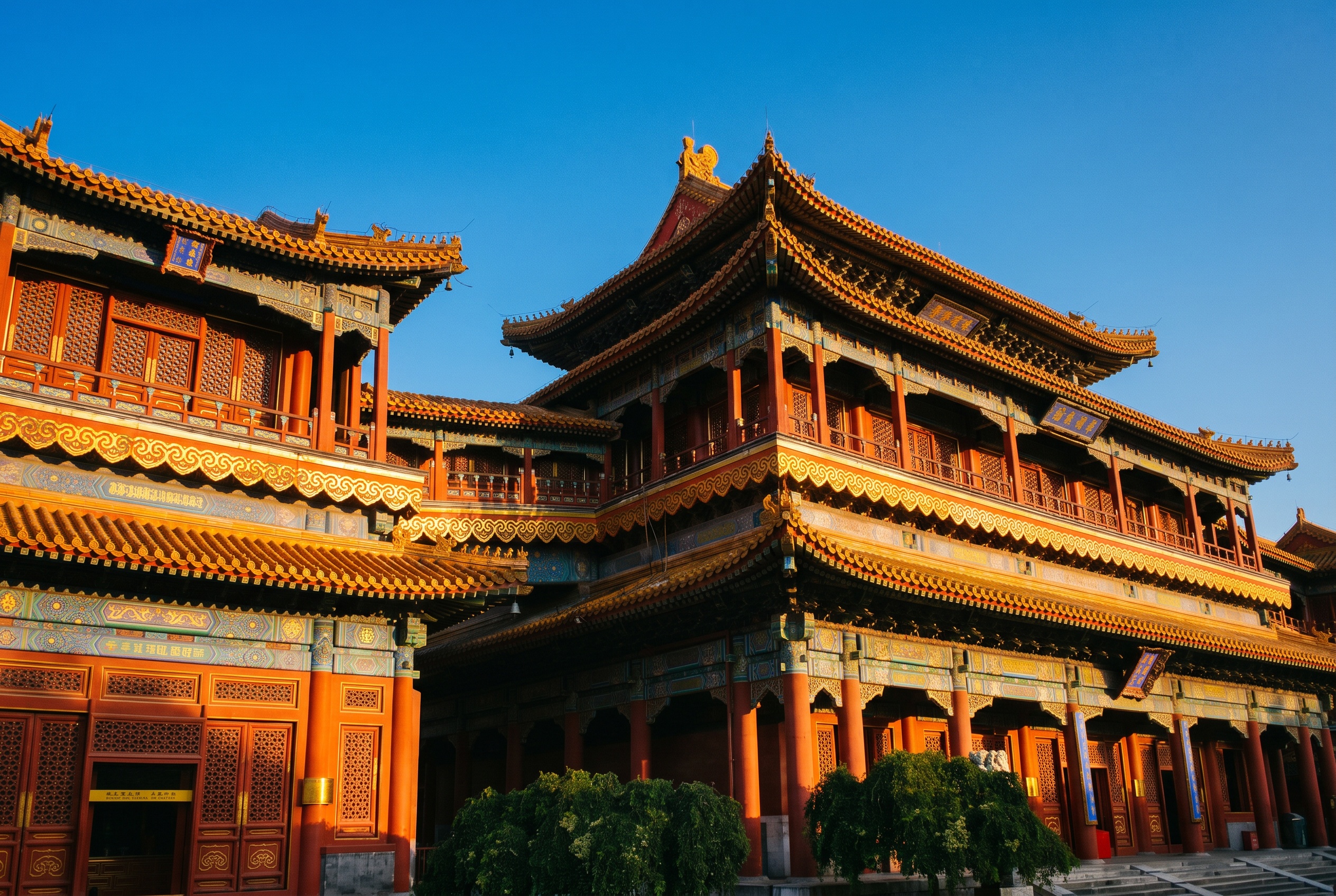
Take Metro Lines 2 or 5 to Yonghegong station to reach the city’s best-known Tibetan Buddhist temple; the entrance is a short walk away. Admission costs 25 CNY, and you can visit between 9:00 a.m. and 4:30 p.m., when the temple is open to the public.
When I came here with a tour group in 2012, the Lama Temple was on our itinerary. It’s still an incredibly popular place of worship, and visitors traditionally receive free incense sticks at the entrance.
The complex’s biggest draw is its enormous sandalwood statue of Maitreya, rising a full 18 metres above floor level. Another 8 metres of this remarkable statue extend into the building’s foundations underground.
💡 Tip: the Confucius Temple is across the street, and Wudaoying Lane, with its excellent vegetarian restaurants, is right next door.
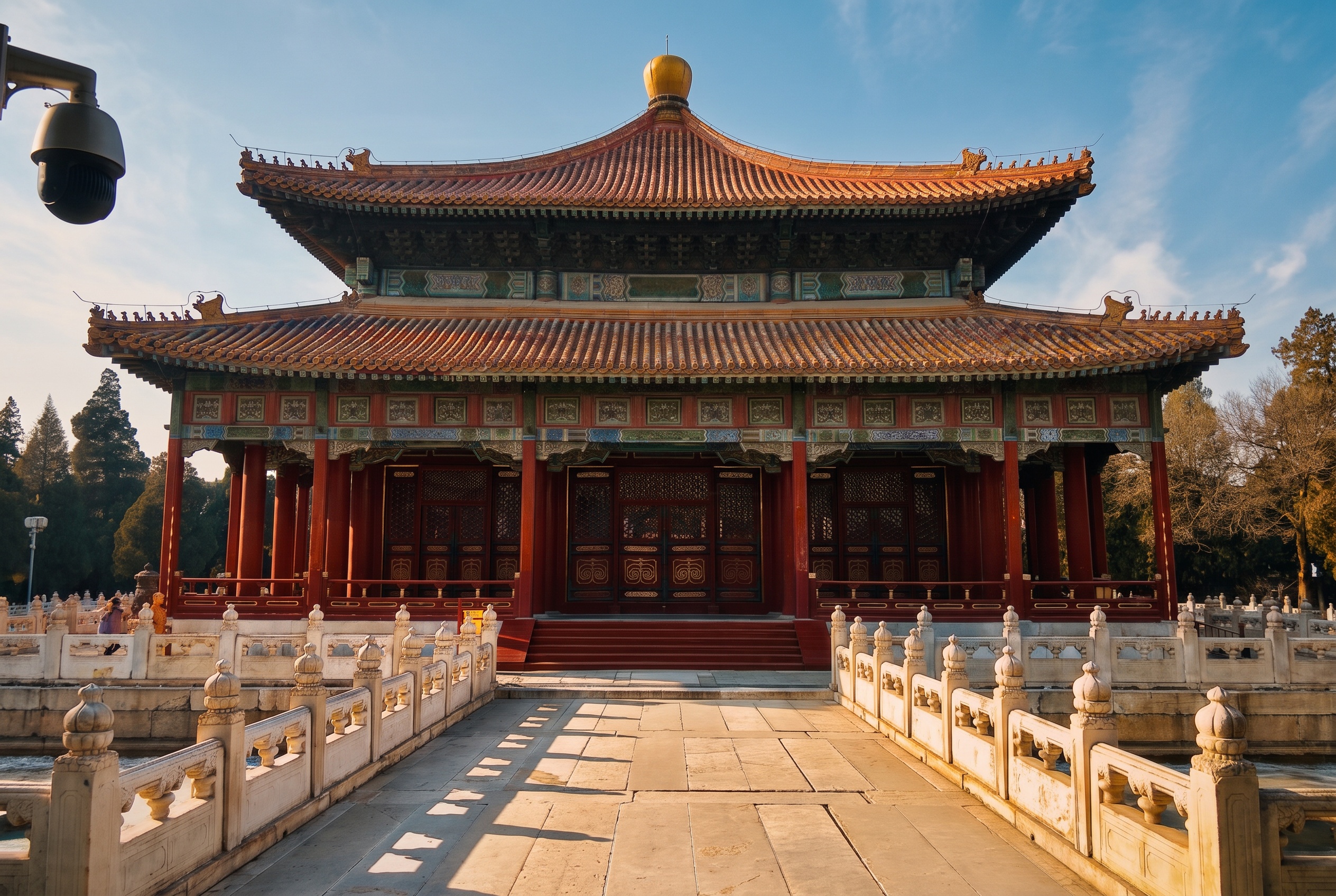
9. Confucius Temple, Wudaoying and Vegetarian Beijing
Just across the street from Yonghegong, you’ll find the Confucius Temple and the former imperial Guozijian Academy, where things are much quieter. Right beside them is trendy Wudaoying Lane, full of cafés and boutiques. It’s home to the vegan restaurant Veggie Table, with a Western-style menu available in English, and the fully vegan Chabozhai.
The standout, though, is Michelin-starred King’s Joy, which became the world’s first vegetarian restaurant to earn three Michelin stars. Menus start at 999 CNY per person, however. A more affordable choice is the excellent Vege Tiger vegetarian buffet for 78 CNY, in Zhengyang Market near Qianmen Square. Gongdelin and Tianchu Miaoxiang are other options.
If you’re vegetarian, learn the useful phrase “wǒ chī sù” (“I don’t eat meat”), but watch out for hidden ingredients. Peking duck and meat-based zhajiangmian noodles are local classics, yet even vegetable dishes may contain chicken stock, pork lard or shrimp tucked into dumplings.
💡 Tip: save King’s Joy for a special anniversary. For an everyday lunch, try the Vege Tiger buffet near Qianmen or Veggie Table in Wudaoying.
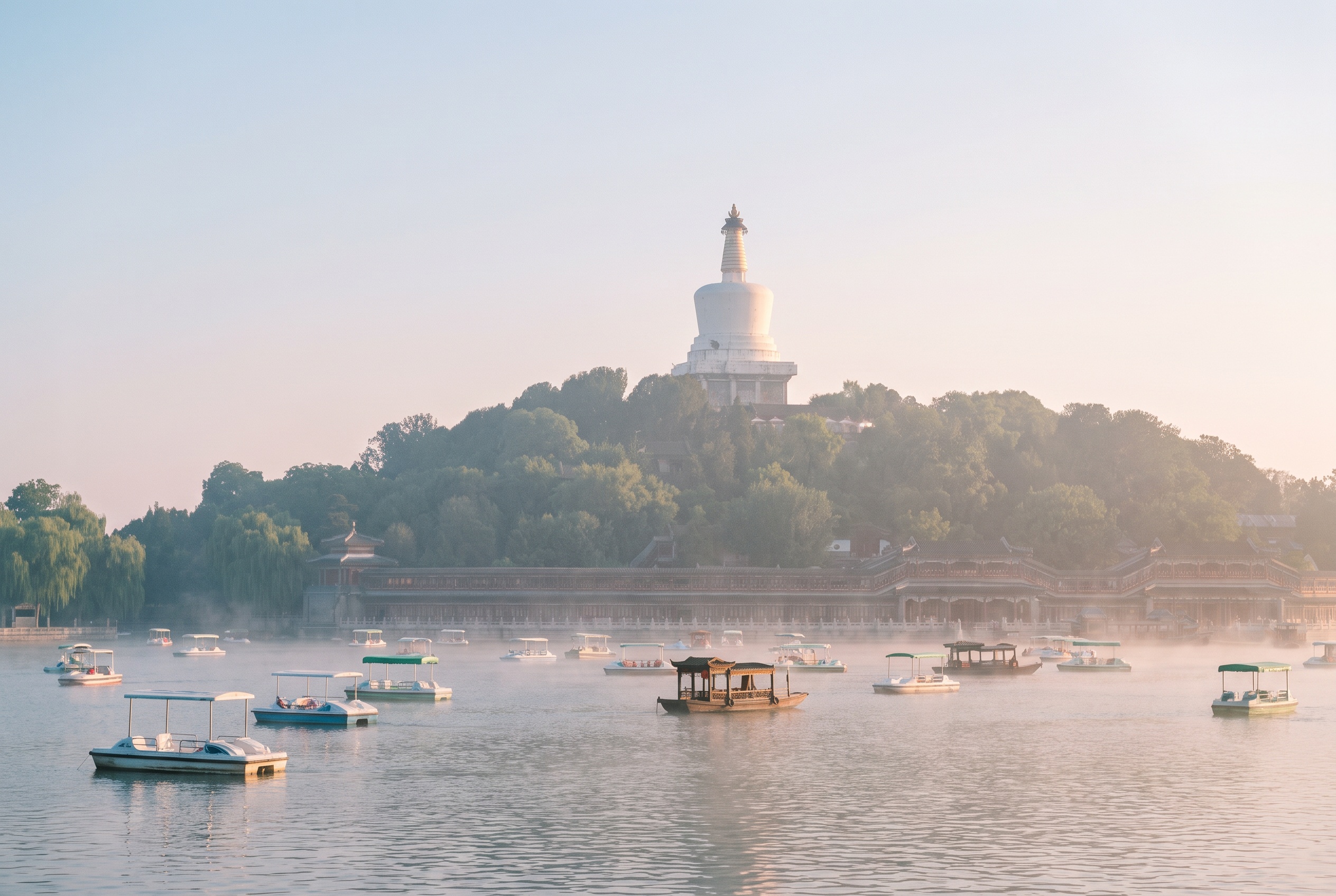
10. Beihai Park
Just a short walk from the busy center lies a huge imperial park, which you can reach by metro line 6 to Beihai North station. In summer the gates are open from 6:00 AM to 9:00 PM and basic entry costs just 10 CNY, while climbing to the White Dagoba on Qionghua Island costs 20 CNY.
When I was people-watching here in 2012, I remember that tourists commonly dressed up as princesses and emperors to take photos by the lake. Today, hanfu traditional costume rental shops are completely common everywhere around the Forbidden City and Jingshan Park.
Much of the park consists of a huge body of water where you can take a ride on rented boats. The park is also surrounded by beautiful old trees and offers plenty of quiet corners where you can hide from the summer sun.
💡 Tip: Beihai lies right next to Jingshan, so both parks can be explored in one afternoon.
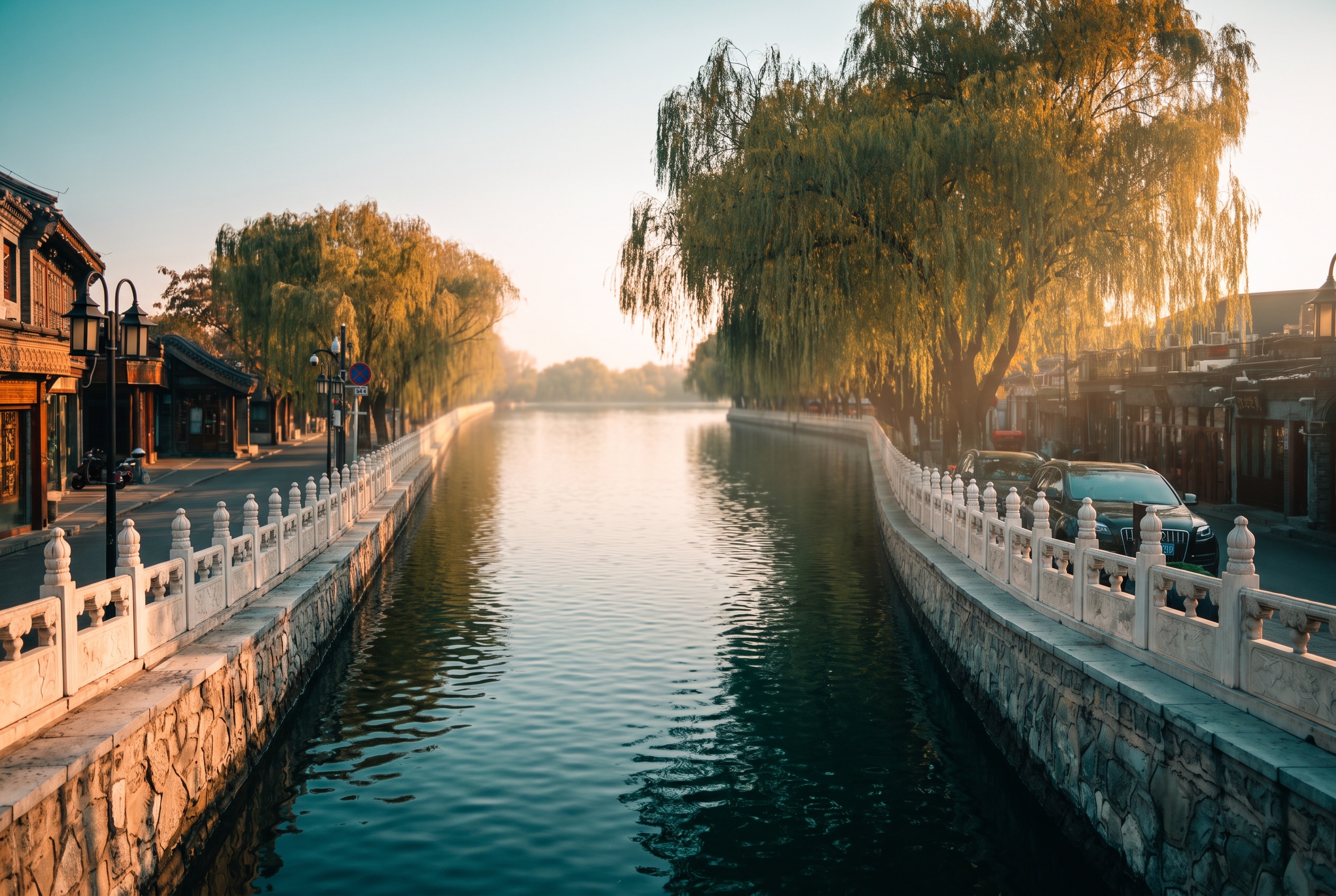
11. Shichahai, Houhai and hutongs by rickshaw
The area around Houhai and Qianhai lakes offers beautiful walks, but in the evening it transforms into a very noisy place full of neon lights, bars and live music. During the day you can visit Prince Gong’s Palace with 40 CNY entry, but you need to secure a reservation in advance through a local app.
You can explore the old narrow alleys called hutongs by rickshaw ride, but take official rickshaws only from designated stands with uniformed drivers, and a circuit will cost around 120 CNY for half an hour. The most common tourist trap is a freelance rickshaw driver who will claim after the ride that the agreed price was per person, not per vehicle.
In the evening, avoid the busiest promenade where touts from overpriced bars and karaoke clubs will shout at you. In winter months, however, the atmosphere calms down and the frozen lake turns into a huge outdoor ice rink loved by local families.
💡 Tip: only take a rickshaw from an official stand with a uniformed driver with a number, and have the price written in your phone.
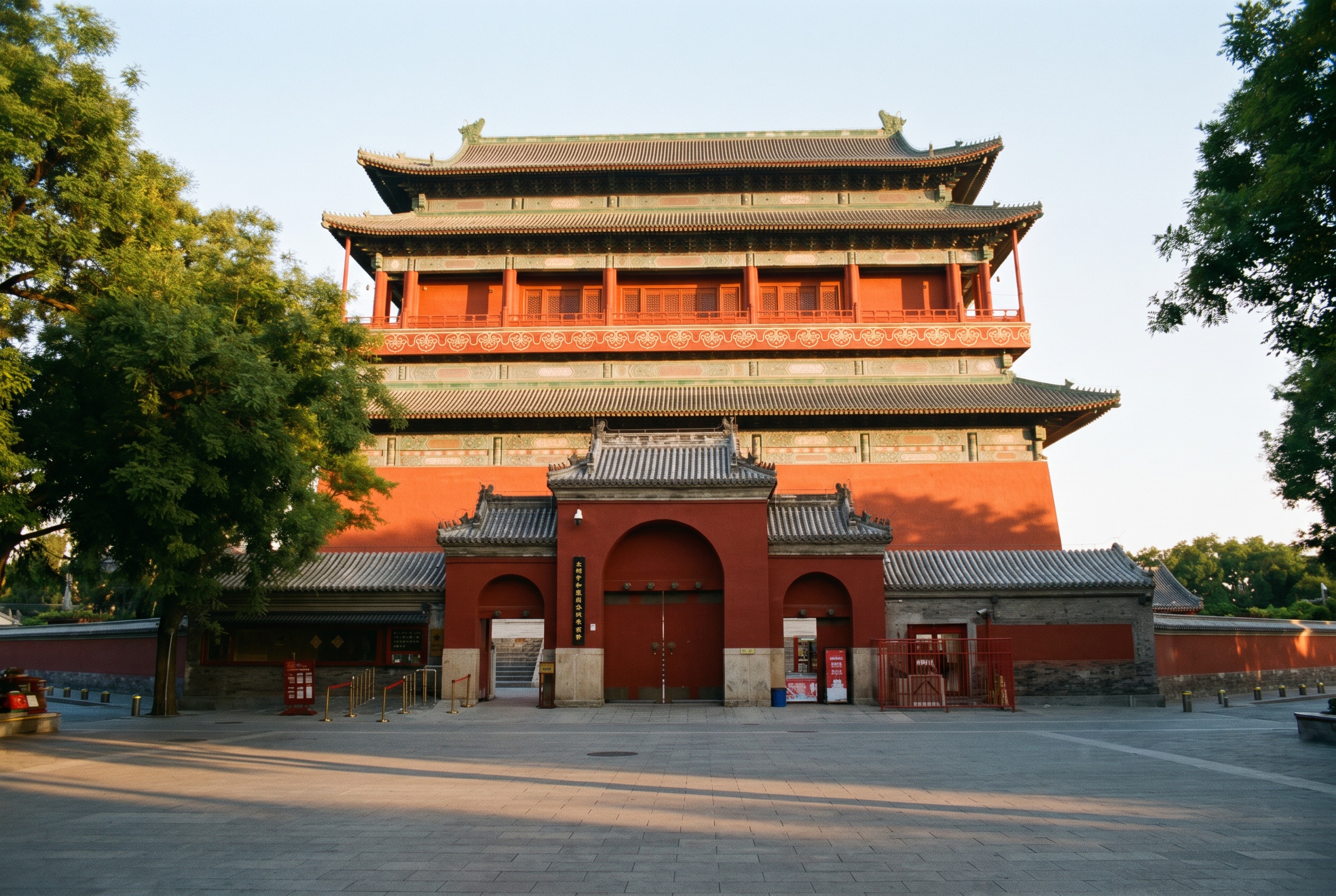
12. Nanluoguxiang, Drum and Bell Tower
Nanluoguxiang alley is the most famous reconstructed hutong, which is extremely picturesque but bursts at the seams every day under the onslaught of tourists. You’ll find dozens of souvenir shops and food stalls, but you’ll discover real peace and ordinary life only when you turn into side alleys like Mao’er or Fuxiang.
A bit further north you’ll reach the imposing Drum and Bell Tower, which form the northern end of the newly protected Central Axis. You can easily reach both monuments by metro lines 2 and 8 at Gulou Dajie station, from where it’s just a few minutes’ walk.
This area is great for wandering without a fixed destination, but in the evening there’s such a crowd you can barely move in places. However, local cafés hidden in old courtyards are a fantastic place where you can take a break from the noise of the big city.
💡 Tip: walk through Nanluoguxiang just once and then turn into the side alleys, where you’ll truly see ordinary hutong life.
13. Qianmen and Dashilan
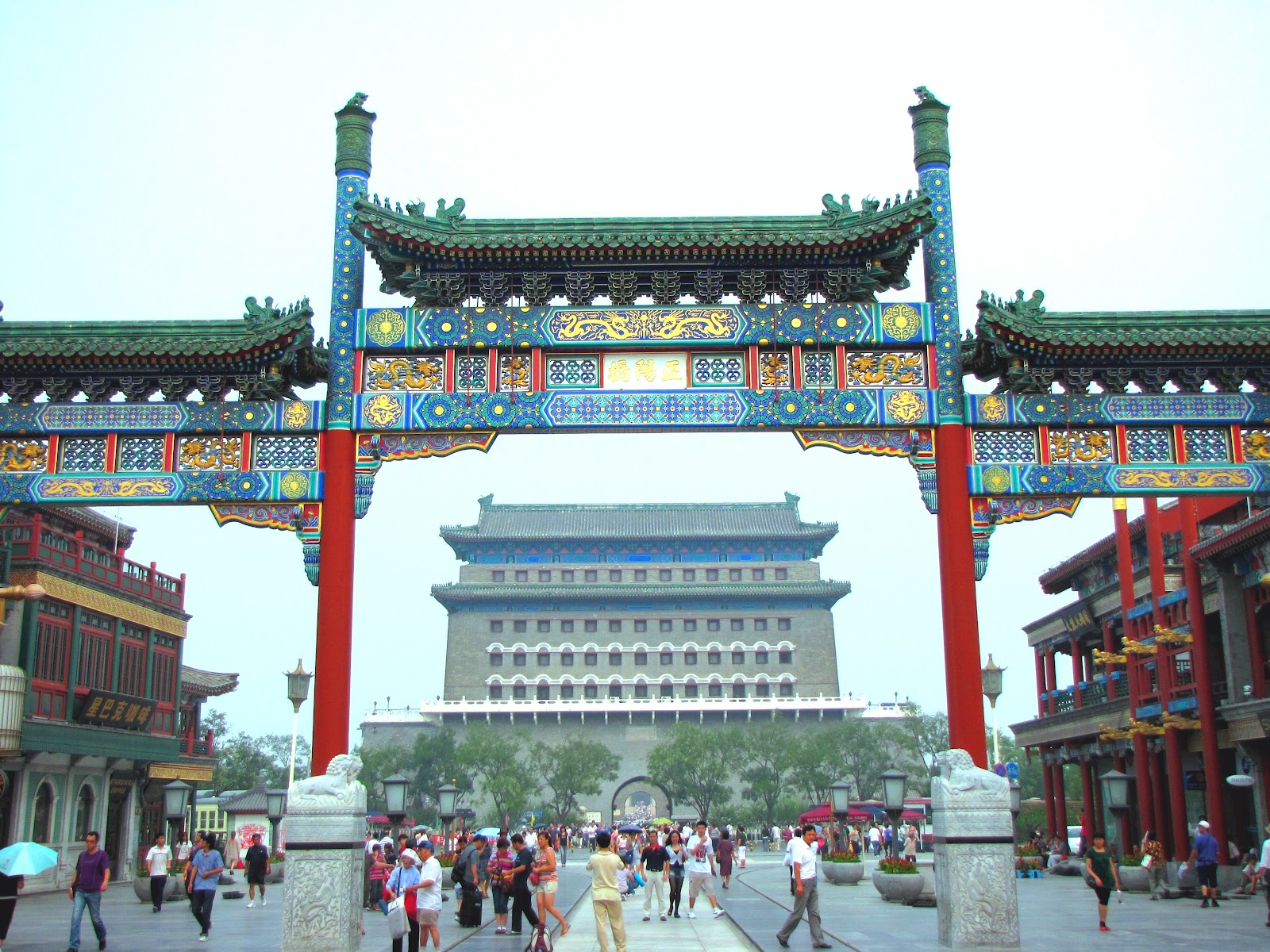
At the southern end of the famous square stands the huge historic Zhengyangmen gate from 1419, which houses a museum and forms another important point of the Central Axis. Just below it begins the restored Qianmen Dajie pedestrian zone, where a cute historic tramway runs and which is full of modern and traditional shops.
From the main promenade you can reach the historic Dashilan shopping alley, where the famous centuries-old Tongrentang pharmacy or traditional teahouses still operate. When we visited a silk factory with a tour group in 2012, they showed us how up to a kilometer of fine thread can be unwound from one tiny cocoon; silk is still sold on Dashilan today.
If you get hungry during your walk, the nearby Zhengyang Market shopping center has the reliable vegetarian buffet Vege Tiger and the famous Lao She teahouse. The whole quarter has a wonderful atmosphere after dark when hundreds of red lanterns light up.
💡 Tip: Qianmen comes alive in the evening with lanterns and makes a good end to the day after Tiananmen, metro line 2 stops right at the gate.
14. National Museum of China
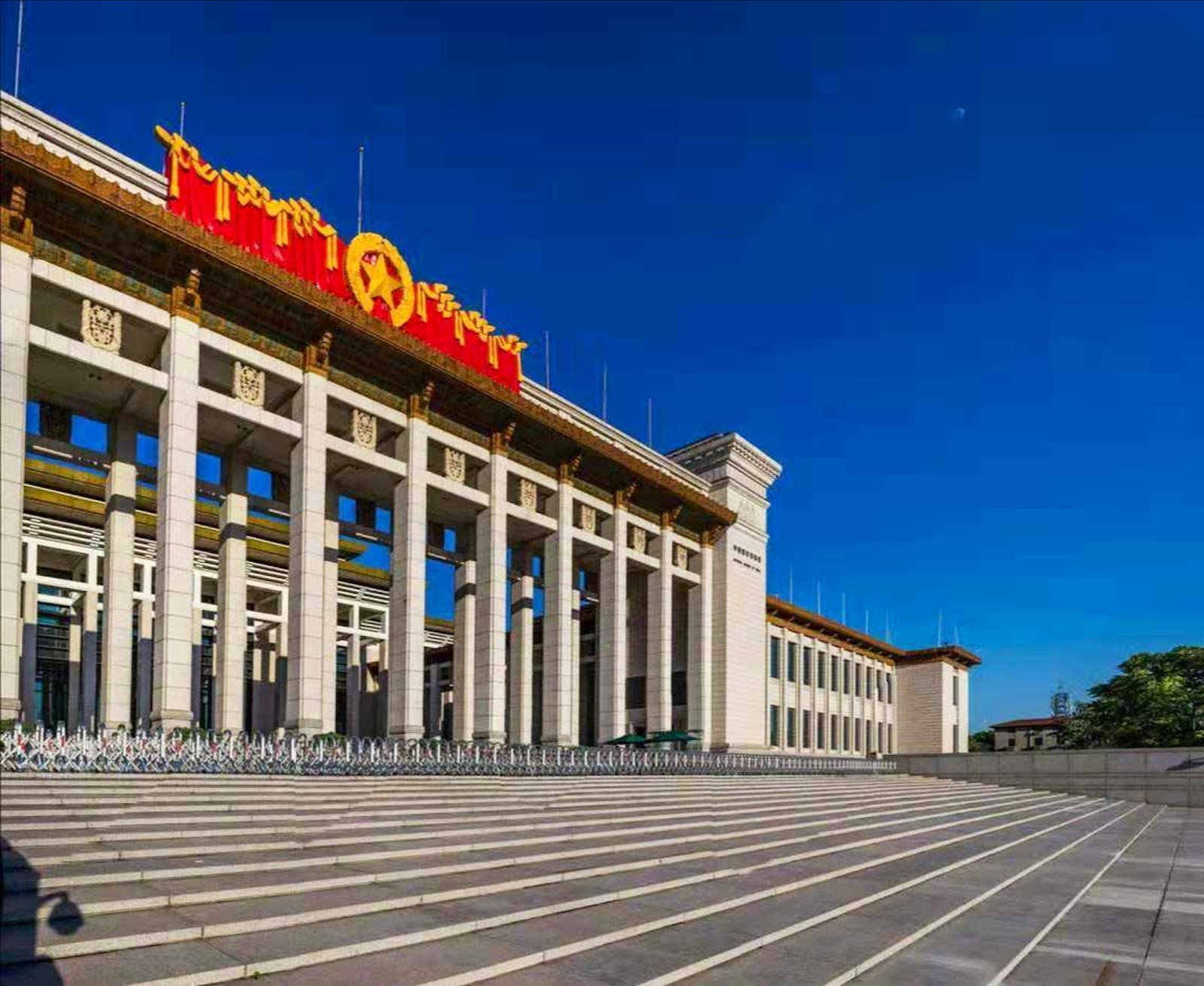
This gigantic building lies directly on the eastern side of Tiananmen Square and contains collections from all of Chinese history. Entry to the museum is completely free, but you can only get inside with a prior reservation, which you can arrange up to 7 days in advance on the official English website en.chnmuseum.cn.
New tickets are released daily at 5:00 PM and you must choose one of three time blocks that divide visitors into morning, midday and afternoon waves. Remember that the museum is closed on Mondays and you must always present the original passport to which the reservation is tied at the north gate entrance.
The museum is so enormous in size that it’s practically impossible to see it all in a single visit. You’ll find everything from ancient bronze vessels to modern art, so carefully choose your exhibitions in advance so you don’t wander around unnecessarily.
💡 Tip: book the morning block and choose in advance which exhibitions you want to see; you won’t see the whole museum in one visit.
15. Beijing Central Axis (UNESCO 2024) on foot
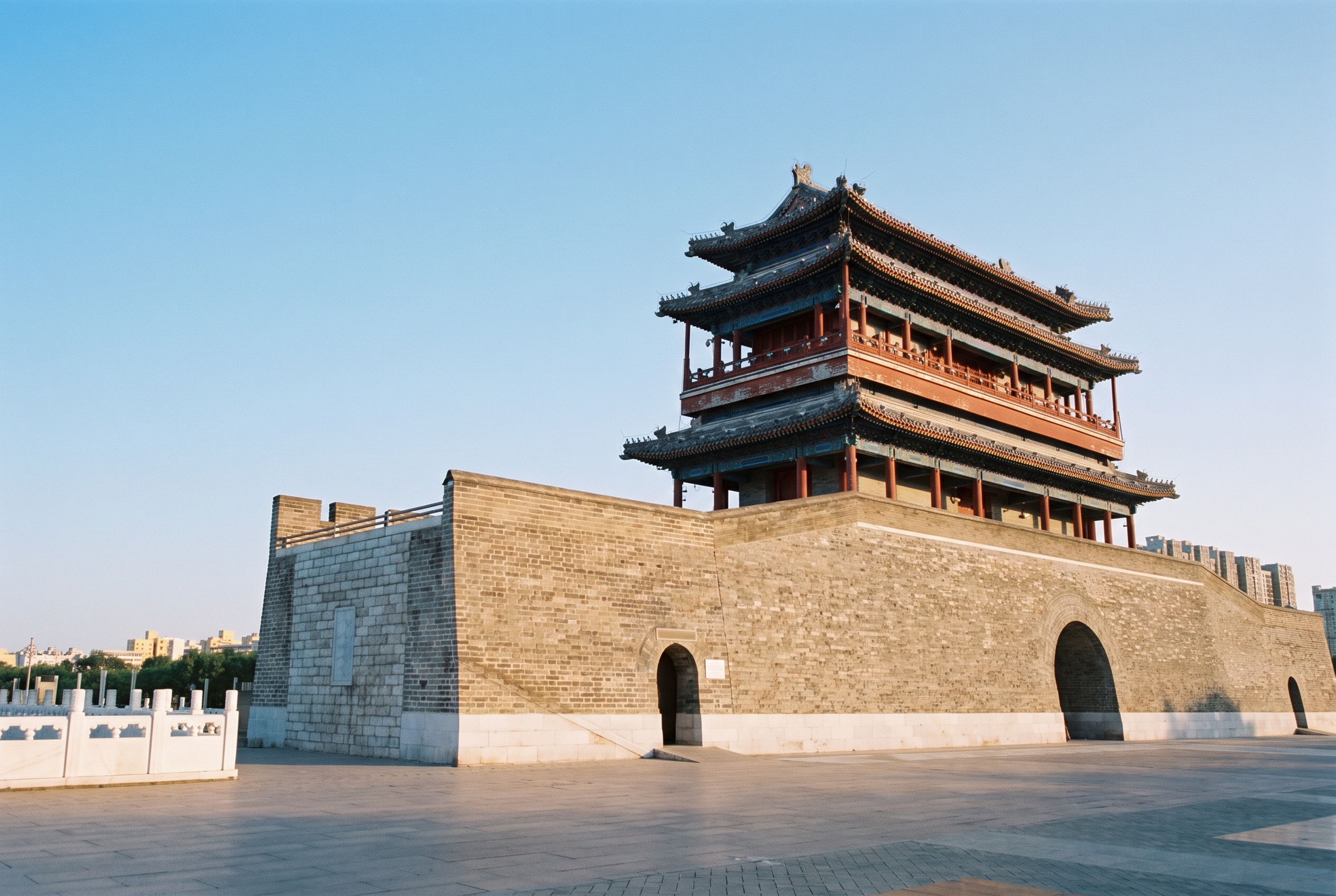
This historic urban concept was inscribed on the UNESCO list on July 27, 2024. The axis stretches through the city from north to south for 7.8 kilometers and consists of 15 key components that form the backbone of the entire historic city.
The most famous parts include the Drum and Bell Tower, Jingshan Park, Tiananmen Gate and the famous Temple of Heaven. The axis begins in the north and ends at the massive southern Yongdingmen gate, with smaller monuments along the way such as the Altar of Land and Grain or Wanning Bridge.
This route is ideal for those who love long urban walks and want to see how the historic city logically connects to itself. During the walk you’ll encounter huge contrasts between crowded squares and quiet little parks hidden in the shadow of old walls.
💡 Tip: those with a full day and good shoes can walk the axis from Yongdingmen gate in the south to the Drum Tower; along the way you can skip the paid sections and return to them another time.

16. Wangfujing and what remains of the night market
The modern Wangfujing pedestrian zone is a huge shopping street full of luxury brands, which you can easily reach by metro line 1. The legendary Donghuamen night market was permanently closed on June 24, 2016 for hygiene reasons, and the once-famous Snack Street after renovation now focuses more on traditional souvenirs.
When I walked through here in 2012, the night market was full of a strange smell and stalls where vendors offered scorpions, beetles and even snakes skewered on sticks, and the sight made me feel quite ill. Today, authentic street food has moved more to Gui Jie street or the historic Xianyukou area near Qianmen.
For vegetarians, the local street food offering is very accommodating. Try the traditional jianbing pancake (but don’t forget to ask them to make it without sausage) or the purely vegan candied fruit tanghulu. Be very careful, though, because this street is where the so-called tea scam or tricks with fake art students most often occur.
💡 Tip: if someone approaches you on Wangfujing with perfect English and invites you for tea or to an exhibition, don’t go anywhere with them; this is where the scam happens most often.
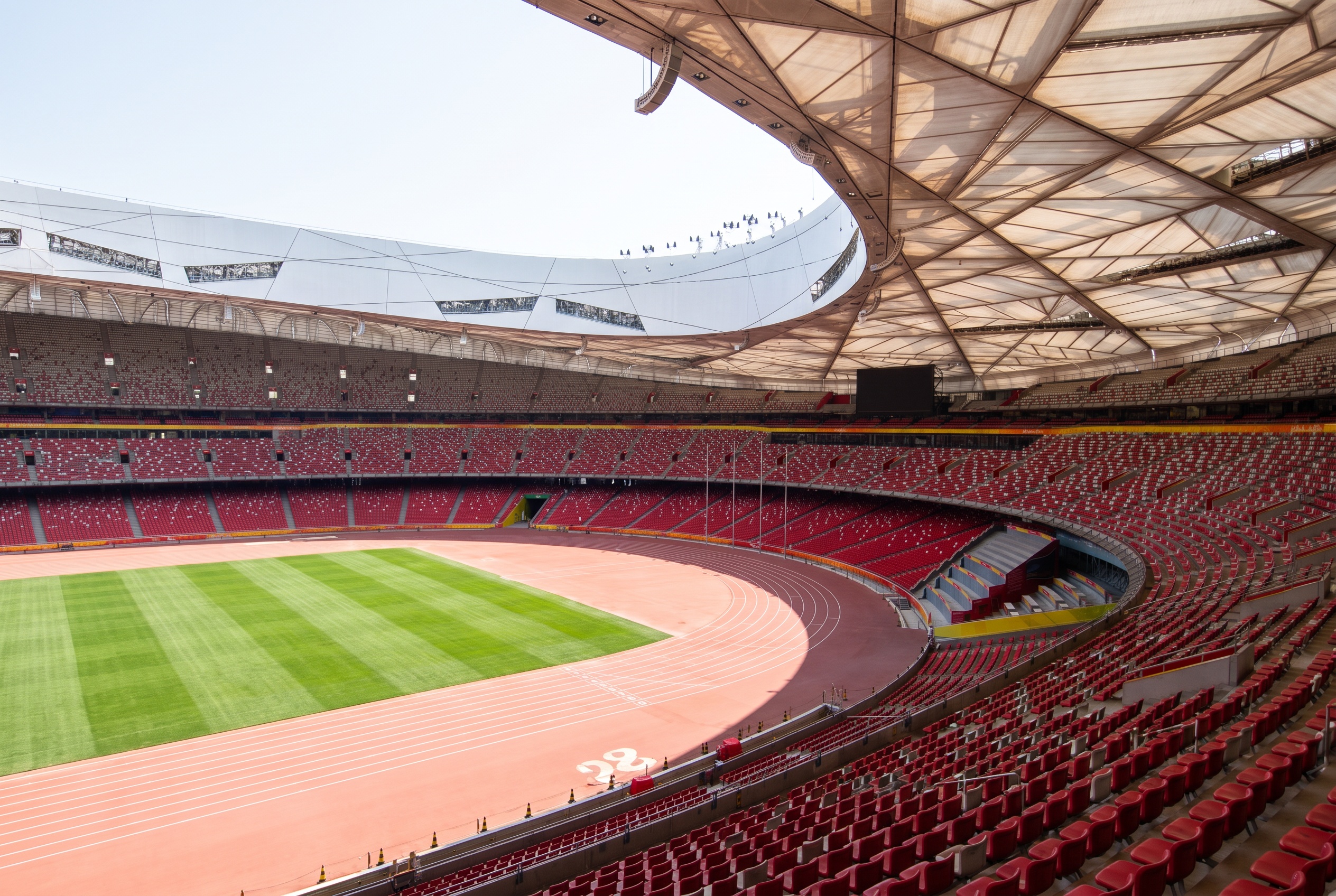
17. Olympic Park: Bird’s Nest and Water Cube
The sprawling complex built for the 2008 Summer Games is open daily from 6:00 to 21:30, and right at its heart you’ll find the famous National Stadium Bird’s Nest, where a tour costs around €7. Right next to it stands the unmistakable Water Cube, which was brilliantly converted into the Ice Cube for the 2022 Winter Olympics for curling tournaments.
The easiest way to reach the complex is by metro line 8, which drops you right on the enormous promenade between both stadiums. Today these futuristic buildings serve as a water park among other things, or host giant winter ice festivals that attract thousands of families.
The entire park is vast, so be prepared for fairly long walks on hard concrete. You’ll experience the best atmosphere in the early evening, when both main structures light up beautifully and finally live up to their architectural names.
💡 Tip: come at dusk, when the stadium and Water Cube light up and you’ll finally understand why they call it a nest.
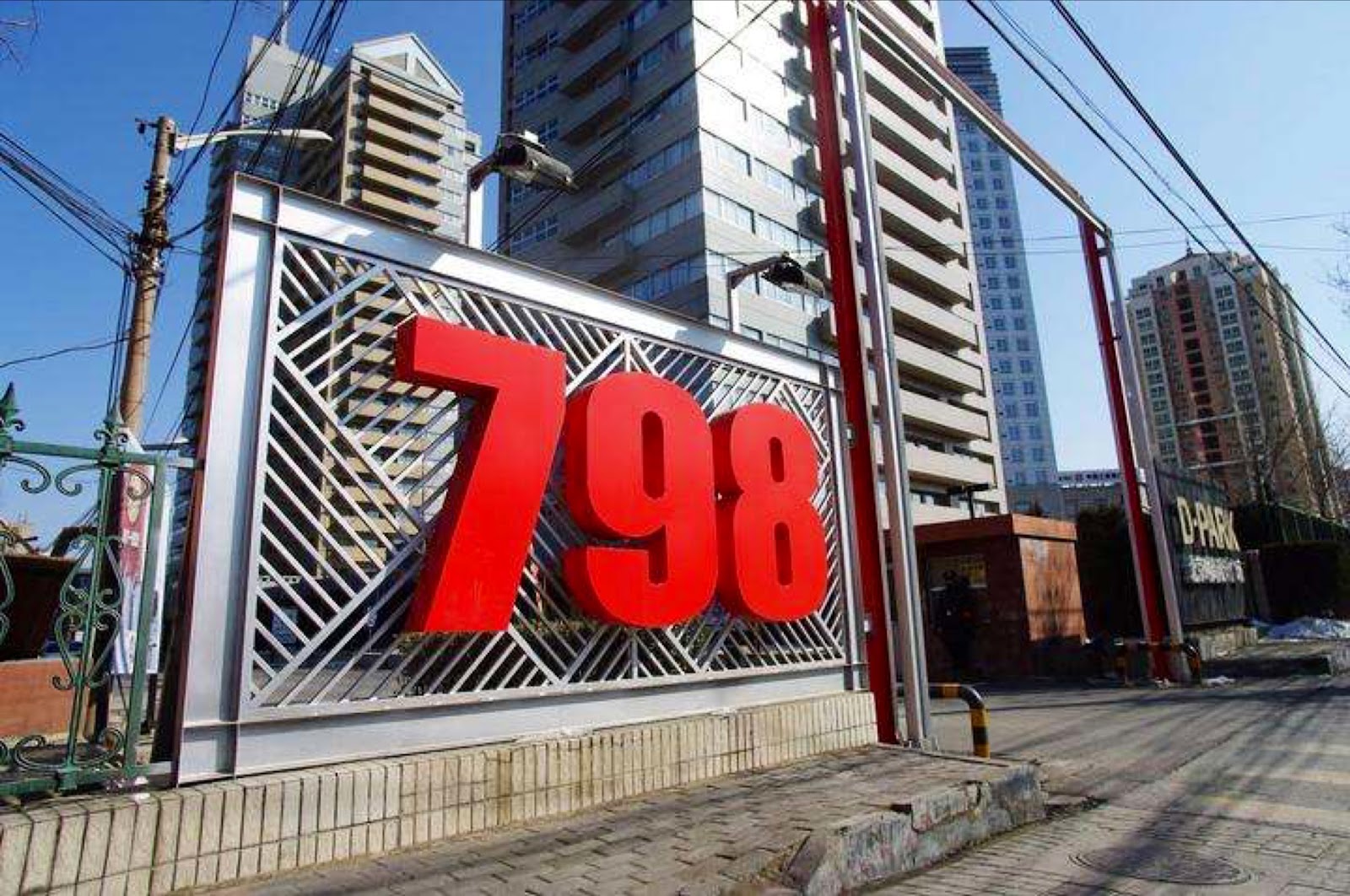
18. 798 Art Zone
This unique art district emerged in a complex of former state factories that boast unique East German Bauhaus architecture from the 1950s. Today it’s a massive maze full of modern galleries, the most famous being the prestigious UCCA, and at every corner you’ll encounter huge sculptures and street art.
The entire outdoor area is free to access, but you’ll need to pay extra for entry to some of the more significant exhibitions or galleries. The former factory halls with their characteristic sawtooth roofs give the displayed works a raw, industrial atmosphere.
Be careful with your planning, because many galleries are closed on Mondays and the district feels a bit sleepy. The great thing is that among the art you’ll find dozens of stylish cafés and bistros, making this place a perfect afternoon escape from history into the present.
💡 Tip: visit Tuesday through Sunday in the afternoon, the cafés between galleries are a great place to take a break.
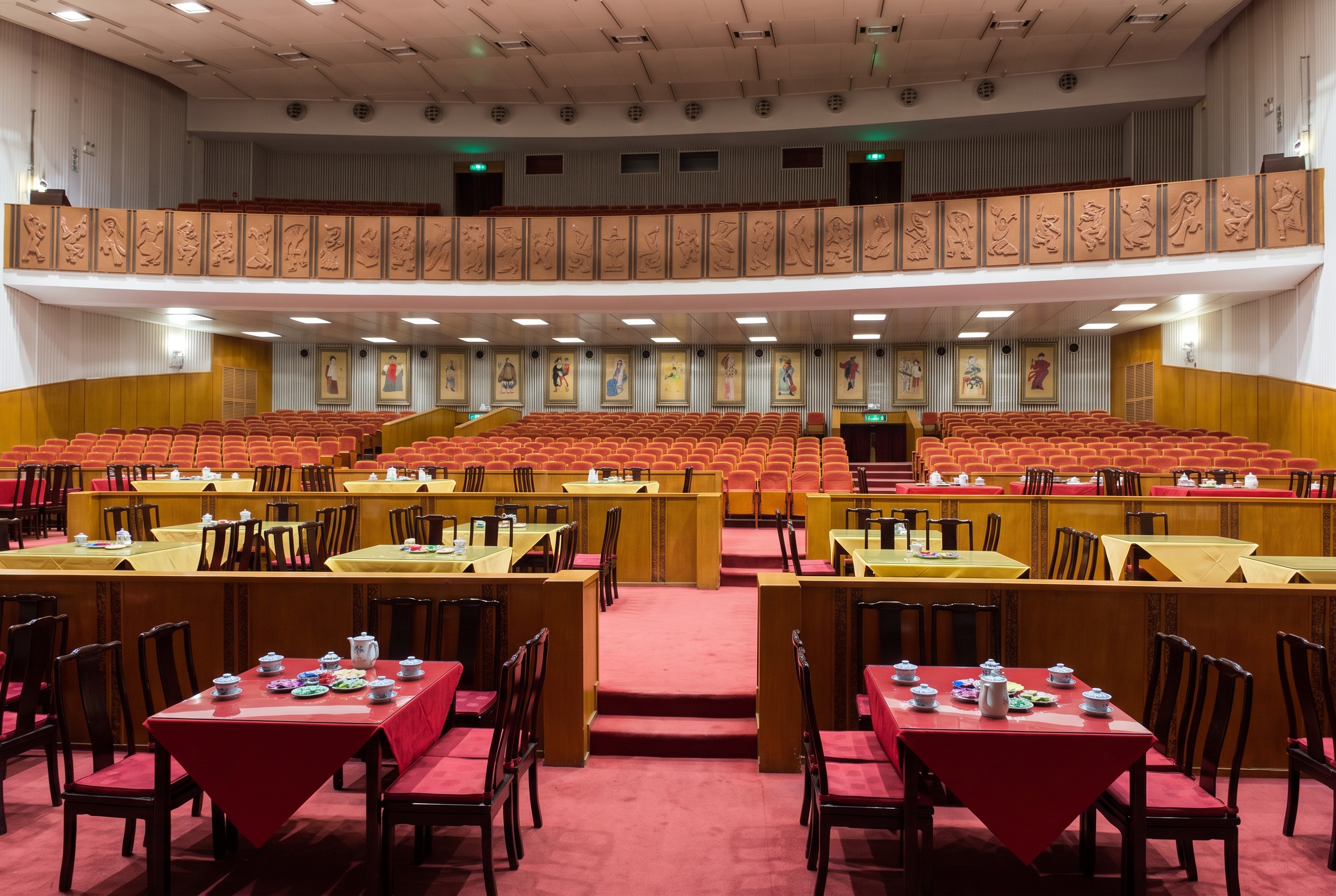
19. Beijing Opera and Acrobatics
Experiencing traditional Chinese opera is incredibly interesting, even though its piercing tones aren’t for everyone. An excellent choice for foreigners is the Liyuan Theatre at the Qianmen Jianguo Hotel, which performs Wednesday through Saturday at 7:30 pm, tickets cost €35 to €75, and the show has a short running time of around 60 minutes with English subtitles.
If you prefer movement and adrenaline, a must-see is the beautiful acrobatic show at Chaoyang Theatre, which usually runs at 4:00 and 5:30 pm with admission around €42. The hour-long performance works even for children and you don’t need to understand a word.
Another excellent alternative that travelers often praise on forums is the Red Theatre with their energetic kung-fu show. Whatever show you choose, it’s a great way to end a demanding day spent walking around monuments.
💡 Tip: if you’re worried about three hours of wailing at the opera, start with acrobatics at Chaoyang Theatre; the hour-long show never gets boring.
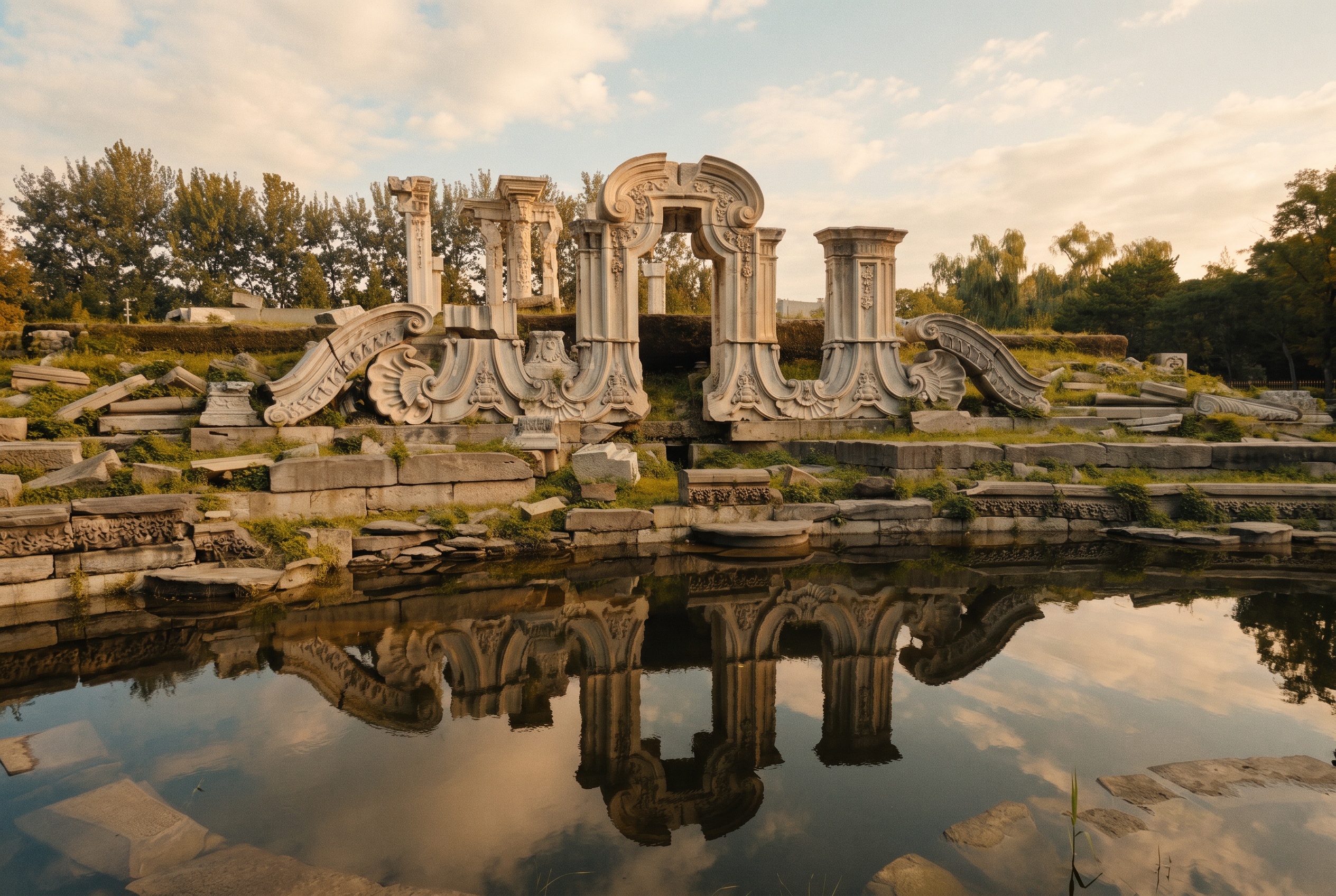
20. Old Summer Palace (Yuanmingyuan)
A short distance from its more famous neighbor lies the Old Summer Palace, which you can reach by metro line 4 to Yuanmingyuan station. The gates of the enormous park are open from 7:00 to 17:00 and basic entry costs €1.50, but definitely buy the combined ticket for €3.
It gives you access to the most interesting part of the complex, which consists of the monumental ruins of the European palaces of Xiyanglou. These beautiful buildings designed by Jesuits were sadly burned down in 1860 during the Second Opium War and today only impressive marble ruins remain.
Walking among these ruins, which sharply contrast with traditional Chinese architecture, you’ll feel a huge piece of history. The complex is laced with streams and bridges and is quieter than the main monuments in the center.
💡 Tip: combine it with the Summer Palace, they’re located near each other on the same metro line.
21. Pandas at Beijing Zoo
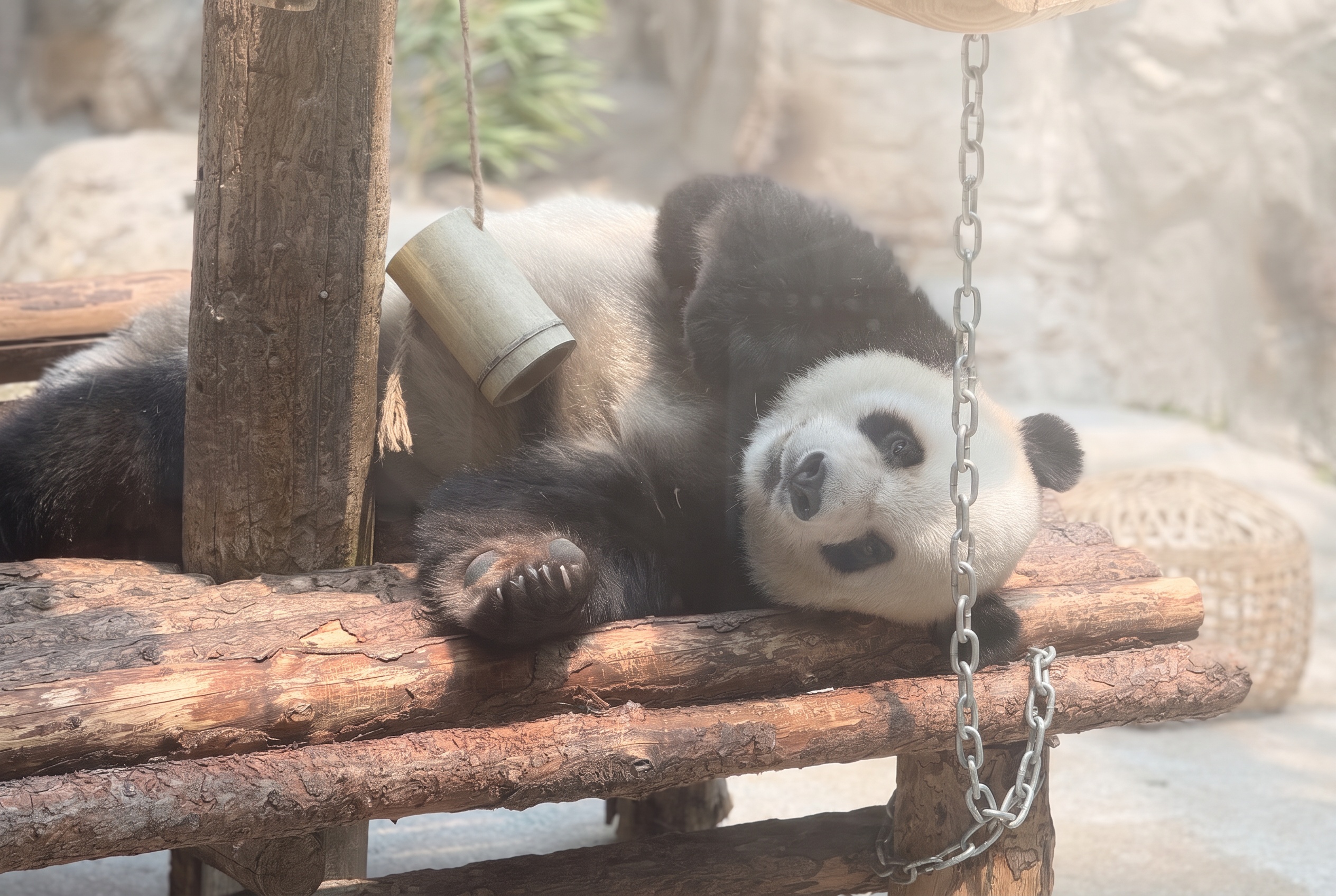
The zoo was founded back in 1906 and from the center you can easily get here by metro line 4 to Beijing Zoo station. The biggest draw is undoubtedly the brand new panda pavilion, which opened on July 16, 2026 and became home to 10 precious bears.
Zoo admission is a combined ticket for €2.50, which already includes the separate fee for the panda pavilion itself. This modern enclosure is open from 8:00 to 18:00 in summer season and the animals have much better facilities here, since the rest of the zoo is often criticized for older and smaller cages for other animals.
Pandas are a huge magnet for domestic tourists, so prepare for big crowds in front of the enclosure windows.
💡 Tip: pandas rotate in the enclosures, so visitors who come at different times may see different animals; the pavilion opens at 8:00.
22. Day Trips (Tianjin, Chengde and Night Train to Xi’an)
If you have more time, take a high-speed train to the port city of Tianjin, where the journey from Beijing South station takes 21 minutes. Another excellent destination is the city of Chengde about an hour away, where you’ll find the magnificent Mountain Resort inscribed on the UNESCO list, with a ticket in season costing €15.
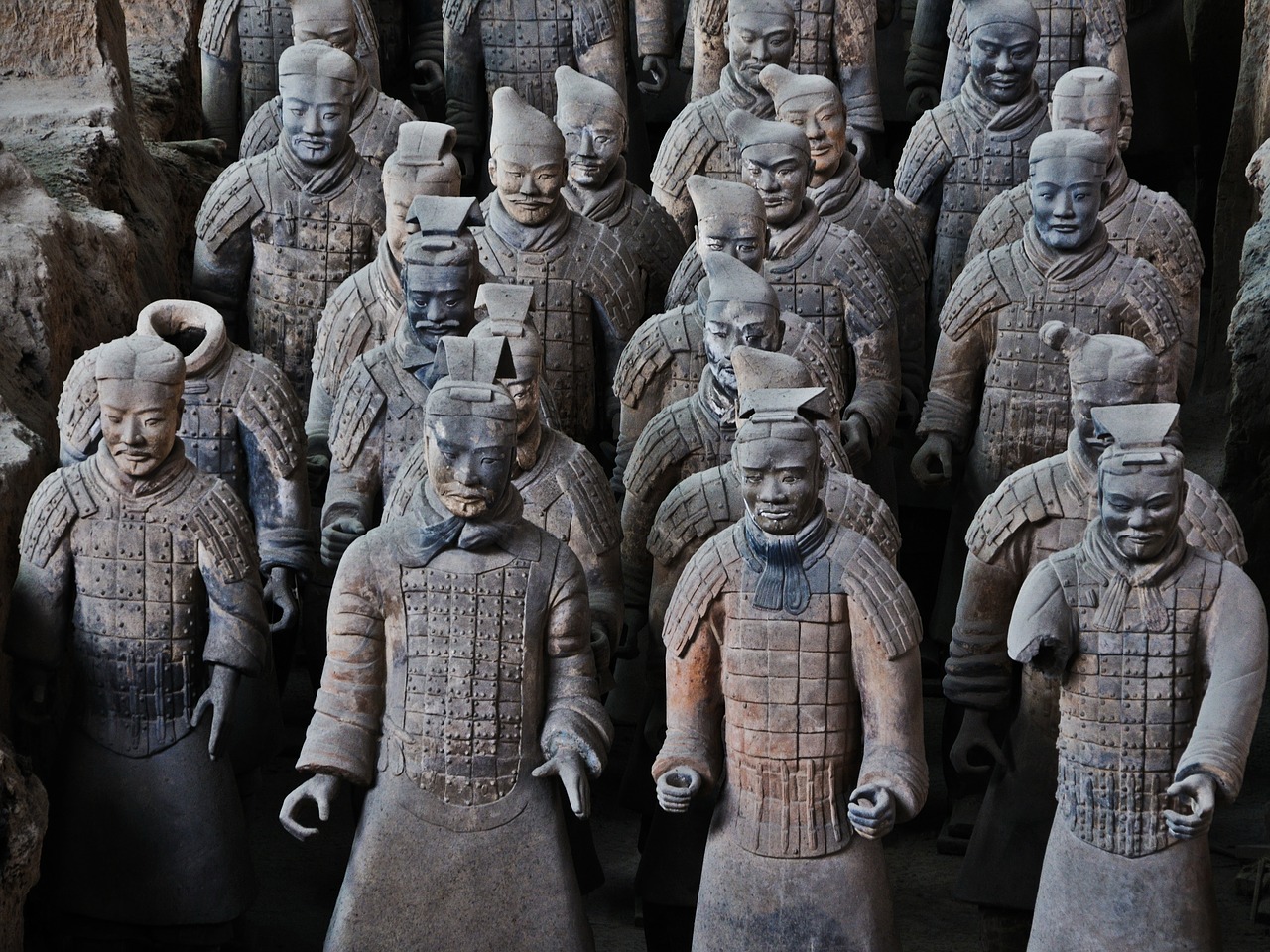
For those who want to see the famous Terracotta Army, the obvious choice is a trip to the city of Xi’an, with daily high-speed trains taking about 4 hours and 10 minutes. Xi’an is home to one of the greatest archaeological discoveries from 1974, featuring over 8,000 terracotta warriors.
When I traveled to Xi’an by sleeper train in summer 2012, I experienced enormous chaos at Beijing West station. It was the day Beijing was hit by the strongest storm in sixty years and over 500 flights were cancelled at the airport. Outside and inside, thousands of sweaty people were crammed together and the hall was terribly stuffy, until we finally made it to our air-conditioned bunk compartment.
💡 Tip: arrive at the station at least an hour early for the night train, there are passport and luggage checks at the entrance and platform.
Where to Go Next from Beijing
If you’re planning a longer stay, definitely visit the Fragrant Hills (Xiangshan), where the leaves turn amazing shades of red in late October and entry costs just €1.50. On weekends, get up early and head to Panjiayuan market, which offers plenty of reproductions and antiques from dawn. Families with children will be delighted by the enormous Universal Beijing Resort, where admission ranges from €45 to €70 depending on your visit date.
Lovers of traditional architecture shouldn’t miss the historic town of Gubei combined with an evening visit to the illuminated Simatai wall, or the peaceful Taoist temples of Baiyunguan and Dongyue right in the city. And if your journey continues south, also read our guide Shanghai, China: what to see and do, where the high-speed train from Beijing will take you in just 4 hours and 18 minutes.
Frequently Asked Questions
Do I need a visa for Beijing?
Yes, international visitors need a standard L-type visa, which you can arrange at a Chinese visa application center. The consular fee is approximately €40 and processing takes around 4 business days. An exception is if you use the 240-hour visa-free transit with an onward ticket to a third country. While Slovakia has visa-free entry, this benefit does not currently apply to many other countries.
How many days for Beijing?
Set aside at least 4 days. Spend one day on Tian’anmen Square, the Forbidden City and Jingshan Park, a second day on the Temple of Heaven and the historic Qianmen street. The third day will cover a trip to the Great Wall of China along with the Ming Tombs, and on the fourth you can enjoy the Summer Palace or the hutong alleys and Yonghegong Temple. If you’re also planning a trip to Xi’an, add another 2 days.
How do I book the Forbidden City?
You must book in advance on the official website bookingticket.dpm.org.cn exclusively with your passport number. Tickets are released exactly 7 days in advance and weekend slots disappear incredibly fast. Tickets are officially not sold on-site at all. Entry is only through the southern Wumen Gate upon presentation of your original passport, the peak season price is 60 CNY, and the museum is closed on Mondays.
Which section of the Great Wall is best?
For most travelers, the best section is Mutianyu, because there are fewer people, you can use both the cable car and toboggan, and you can conveniently get there by official tourist bus for 80 CNY. The Badaling section is the closest and has a high-speed train from Beijing North station, but it’s by far the busiest of all. Definitely avoid the dangerous and completely closed Jiankou section.
How do you pay in Beijing?
Although stores have been required to accept cash since February 2026, the standard payment methods are Alipay or WeChat Pay apps linked to a payment card (for payments over 200 CNY there’s a 3% fee). In the metro you can now also pay with a regular contactless Visa or Mastercard directly at the turnstile.
Do Google and WhatsApp work in China?
No, Google, WhatsApp and many other Western networks are heavily blocked, and using a VPN without official permission is illegal in the country. In practice, however, travel eSIM cards with roaming work without problems and can bypass these blocks. Instead of Google Maps, be sure to download the local Amap app with an English interface, and for ordering rides use the Didi app.
Is Beijing suitable for vegetarians?
Yes, you’ll definitely find good food here. You’ll find top-class spots like the Michelin-starred King’s Joy, the cheaper Vege Tiger vegetarian buffet near Qianmen for 78 CNY, or restaurants like Gongdelin, Tianchu Miaoxiang and Veggie Table. But learn the phrase “wǒ chī sù” and be extremely careful about hidden chicken broth, pork lard and shrimp tucked into vegetable dumplings.
Tips and Tricks for Your Vacation
Don’t Overpay for Flights
Search for flights on Kayak. It’s our favorite search engine because it scans the websites of all airlines and always finds the cheapest connection.
Book Your Accommodation Smartly
The best experiences we’ve had when looking for accommodation (from Alaska to Morocco) are with Booking.com, where hotels, apartments, and entire houses are usually the cheapest and most widely available.
Don’t Forget Travel Insurance
Good travel insurance will protect you against illness, accidents, theft, or flight cancellations. We’ve had a few hospital visits abroad, so we know how important it is to have proper insurance arranged.
Where we insure ourselves: SafetyWing (simple monthly subscription) and TrueTraveller (for extra-long trips).
Find the Best Experiences
Get Your Guide is a huge online marketplace where you can book guided walks, trips, skip-the-line tickets, tours, and much more. We always find some extra fun there!