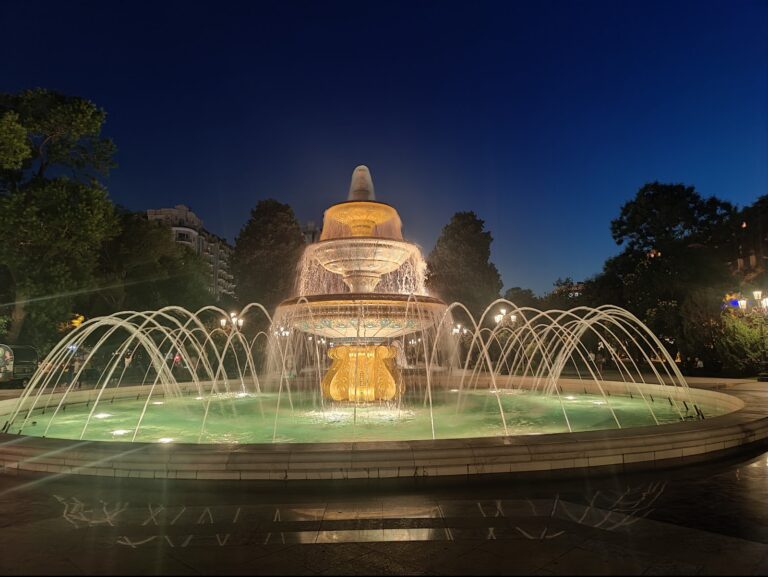

In most Chinese megacities, everyone rushes around, but in Chengdu, China, people drink tea. In People’s Park, you order a cup by the lake for a few dozen yuan, you get a thermos of hot water for refills, and someone at the next table is having their ears cleaned. At the breeding base, giant pandas sort through bamboo during morning feeding. And in the evening at the Sichuan opera theater, performers change masks faster than you can blink. The capital of Sichuan Province has a reputation as China’s most relaxed megacity, and after a few days you’ll probably understand why.
But don’t expect a relaxed experience when arranging tickets and visas. In 2026, you can only visit the pandas with a name and passport-number reservation (except for people over 60 and small children). You can book no earlier than 14 days in advance (tickets aren’t available before then), and only for morning or afternoon slots. On Mondays, pavilion No. 6 is closed, which according to visitors is where the most famous panda usually stays. Tickets to the Giant Buddha in Leshan are reportedly sold online only, according to Chinese news. And many nationalities, including Czech citizens, don’t have visa-free access to China. In this article, you’ll find 22 tips for what to see and do in Chengdu and the surrounding area, from pandas and the Buddhist Wenshu Monastery through teahouses to the opera with face-changing performances. We’ve also included day trips to the Giant Buddha, sacred Mount Emei, and an irrigation system more than 2,200 years old.
TL;DR
- Entry: Visa-free access to China in 2026 is limited to certain nationalities (Slovakia, Poland, Hungary, Austria, Germany, and others). Check if your country is included, or use the 240-hour transit exemption. The exemption only applies when traveling to a third country or region (not for round trips), and only in the permitted area—Jiuzhaigou is not included.
- Pandas: Reserve your 55 CNY entrance ticket to the breeding base online with your name and passport number—you can book no earlier than 14 days in advance. Arrive at opening time, and avoid Mondays when pavilion No. 6, home to the most famous panda according to visitors, is closed.
- Flights and airports: Direct international flights are limited. Chengdu has two international airports about 50 km apart: Tianfu (TFU) and Shuangliu (CTU). Flights to Hong Kong reportedly moved to CTU from summer 2026, according to Wikipedia.
- Payment and metro: In the metro, you can pay directly with a contactless Visa, Mastercard, or Amex card; otherwise use Alipay or WeChat Pay linked to your card.
- When to go: The most pleasant seasons are spring (March to May) and autumn (September to November). July sees the most rain. Avoid National Day from October 1 to 7 (National Week) when attractions are packed.
- Day trips by train: High-speed trains get you to Leshan in about an hour (then take a bus to the Giant Buddha), and from Xipu station in half an hour to Dujiangyan or below Mount Qingcheng.
- Vegetarian dining: Your safest bets are Buddhist restaurants, like the buffet at Wenshu Monastery for around 35 CNY, and the Michelin-starred vegetarian restaurant and teahouse Mi Xun Teahouse.
The full destination guide: Asia — guide and what to see
When to Visit Chengdu and Practical Information
Before you start planning pandas and teahouses, it’s worth getting clear on visas, tickets, payment, and internet. China has its own rules for these things, and in Chengdu you also have two airports and seriously spicy cuisine to contend with.
Weather and best time to visit: The most pleasant periods are considered to be spring from March to May and autumn from September to November, when daytime highs stay between roughly 17 and 27 °C. Summer is hot and muggy. In July and August, thermometers show over 30 °C, and July sees about 238 mm of rainfall, the highest of the year. Winter is gray but mild (around 10 °C during the day in January) and snow is rare. Chengdu ranks among the cities with the fewest sunshine hours—in December and January there are only about 38 hours per month. A Chinese saying captures it: Sichuan dogs bark at the sun because they see it so rarely.
Holidays and crowds: The biggest risk when traveling to Chengdu isn’t scammers, but crowds during Chinese holidays. National Week from October 1 to 7, Labor Day in early May, and Chinese New Year (in 2027 it falls on February 6) mean packed attractions and significantly higher prices at many central hotels. At Wuhou Shrine, a large temple fair takes place during New Year, which in 2026 ended on March 3 with the Lantern Festival.
Flights from Europe: Direct connections from major European cities to Chengdu are currently limited. Sichuan Airlines flew from Prague starting in 2016, but now according to Wikipedia, only cargo planes operate this route. So you’ll fly with a connection. Air China flies to Tianfu Airport three times a week from Brussels (from March 26, 2026) and according to Wikipedia’s overview also from Milan and Paris. Sichuan Airlines has flights from Madrid and Athens. Turkish Airlines is set to launch a route from Istanbul on November 11, 2026, and Etihad from Abu Dhabi on March 6, 2027. You can also connect via domestic flights in Beijing or Shanghai.
Two airports: Most international flights land at the new Tianfu Airport (TFU), which opened in June 2021. It’s located about 51 km southeast of the center. The older Shuangliu (CTU) is closer, southwest of the city. From late July 2026, flights to Hong Kong, Macau, and Taipei reportedly moved here from Tianfu, according to Wikipedia. So if you’re continuing to Hong Kong, you’ll likely fly from CTU. A direct metro line 19 runs between the airports in about 30 minutes, but always check the airport code on your ticket.
From the airport to the center: From Tianfu, express metro line 18 runs to Chengdu South Railway Station, where you transfer to line 1. You’ll reach the station in 45 to 55 minutes, and Tianfu Square in the center in about an hour and fifteen minutes. The fare to the center costs around 10 CNY. A taxi or Didi (Chinese Uber equivalent) runs about 150 to 260 CNY. From Shuangliu Airport, you reach the center via metro line 10, transferring to lines 3 or 7.
Metro and taxis: The Chengdu metro has 17 lines and 447 stations, so you can get almost anywhere. Since July 28, 2025, you can pay at the turnstile directly with a contactless Visa, Mastercard, or Amex card, though the card must support contactless payment without a PIN. Fares are calculated by distance; alternatively, use a QR code in the Alipay app. For shorter journeys, Didi is convenient and works in English.
Day trips by train: Most excursions from Chengdu can be done by high-speed train. You’ll reach the Giant Buddha in Leshan from Chengdu East or South stations in 55 to 65 minutes. To Dujiangyan and below Mount Qingcheng, it’s about half an hour from Xipu station, or 18 to 20 minutes from Chengdu East or South stations to Guanghan North, where you continue by taxi to the Sanxingdui Museum. You can buy tickets in the 12306 app (registration requires a passport) or on Trip.com for a small fee. Your passport is scanned at the station, so always carry it with you.
Visa requirements: Be careful here—many websites get this wrong. Many nationalities don’t have visa-free access to China in 2026. The 30-day visa-free entry, extended until December 31, 2026, applies to Slovakia, Poland, Hungary, Austria, Germany, and other countries, but many nations aren’t on the list. Check your country’s current requirements, as you’ll likely need a visa unless you use the 240-hour transit exemption. For example, Czech travelers apply for an L tourist visa through the Chinese Visa Application Service Center in Prague (Futurama, Sokolovská 663/136 A, Prague 8) with an online form at visaforchina.cn. The consular fee is reduced to €45 until December 31, 2026, processing takes four business days, and express service costs an additional €25.
240-hour transit: You can spend up to 10 days in China without a visa if you’re continuing to a third country or region. You must have a ticket with a specific date and destination outside mainland China, such as Seoul, Bangkok, or Hong Kong (which counts as a third region). A round trip doesn’t meet the requirements. You can enter through both Chengdu airports and may only travel in the permitted area. In Sichuan Province, this includes 11 cities according to official tables, including Leshan (with Mount Emei) and Deyang, which covers the Sanxingdui Museum. Jiuzhaigou is outside this area—don’t go there on the transit exemption. Check current requirements before traveling.
Other requirements: The arrival card is completed online via the Chinese immigration service website or app. You can submit it no earlier than 72 hours before arrival. Your stay must be reported to police within 24 hours; hotel reception will do this for you. A new entry and exit regulation came into effect on September 15, 2026. Under it, Chinese visa and immigration authorities may request electronic data when verifying identity and travel purpose. Check official sources for what this means for tourists in practice.
Payment: Cash is rarely used in China, and authorities warn about counterfeits. Almost everything is paid for via Alipay or WeChat Pay, to which you add your Visa or Mastercard. WeChat is a Chinese messaging and payment app that also runs mini-programs from government offices and attractions. Alipay is a similar payment app. One yuan (CNY) equals approximately €0.13. Payments up to 200 CNY are free; above this threshold you pay 3% on the entire amount. So pay for hotels or opera directly by card or in advance through a booking platform. You can buy tickets on Trip.com with a foreign card, while official WeChat mini-programs often require a Chinese payment method. Foreigners can most reliably buy tickets through Trip.com.
Internet and maps: Google, Facebook, YouTube, and WhatsApp are blocked in China, and using VPN without permission is reportedly illegal. Before you fly, download maps that work in China, like Amap (Gaode) or Apple Maps, because Google Maps can be inaccurate here. An offline Chinese translator is also handy.
Spice level: Sichuan cuisine is built on the ma-la flavor. “Ma” is the tingling and slight numbing of the tongue from Sichuan pepper, “la” is chili heat. If you don’t want to cry through every meal, say “wei la” (just a little spicy) or “bu yao la” (no chili). If you want food without Sichuan pepper, say “bu yao huajiao”. But expect that the local “a little” is still a hefty dose for European tongues.
Safety and health: Official travel advisories for China mainly warn about scams, counterfeit banknotes, and the prohibition on photographing military sites. Medical care must be paid for upfront, so arrange insurance with repatriation coverage. Don’t drink tap water. Emergency numbers are 110 police, 120 ambulance, and 119 fire. In case of emergency, contact your country’s nearest consulate or embassy.
Time, plugs, and tipping: China doesn’t have daylight saving time, so Chengdu is 7 hours ahead in winter and 6 hours in summer. Tipping is not customary. According to guidebooks, expect socket types A, C, and I with 220 V voltage.
How many days and admission costs: Set aside three to four days for Chengdu. One day for pandas and the old center, one for temples, a teahouse, and evening opera, and one or two for excursions to Leshan, Dujiangyan, and Qingcheng. Mount Emei requires another day, ideally two. Admission for pandas with shuttle, Wuhou Shrine, Du Fu Thatched Cottage, opera, Leshan with boat, Dujiangyan, Qingcheng, and Sanxingdui totals about 720 CNY per adult. The opera alone costs around 150 CNY; transportation and Mount Emei are not included in this total.
Where to Stay in Chengdu
Chengdu’s city center is large, but the dense metro network will get you almost anywhere. When choosing a hotel, keep one Chinese peculiarity in mind. In practice, not every smaller hotel, guesthouse, or apartment in China can accommodate foreigners because they don’t know how to enter passports into the police system. Go for an international chain or a hotel with recent reviews from international guests.
Chunxi Road and Taikoo Li are the heart of the city and the most practical choice for a first visit. The pedestrian zone, shops, Daci Temple, and metro are all around the corner. A dream of luxury fulfilled is the Upper House Chengdu (formerly The Temple House) near Daci Temple. The hotel also houses a vegetarian restaurant and the Mi Xun Teahouse. In the IFS shopping center tower with a panda on the facade, you’ll find Niccolo Chengdu.
Near Tianfu Square, metro lines cross in all directions and you can walk to People’s Park or Chunxi Road. A reasonable price here is offered by Holiday Inn Express Chengdu Tianfu Square. From Wide and Narrow Alleys (Kuanzhai Xiangzi), you’re close to People’s Park with its teahouses. You can stay here at Wenjun Courtyard Hotel Chengdu. It’s a Chinese-style hotel with English-speaking staff, but it doesn’t have an elevator.
Peace and a vegetarian restaurant around the corner can be found in the neighborhood around Wenshu Monastery. There’s the Buddhist-themed Buddha Zen Hotel Chengdu, and backpackers and solo travelers will find the Chengdu Mix Hostel. For nightlife and bars by the river, head to the Jinjiang riverside, where the large Shangri-La Hotel, Chengdu stands. For business trips, the Hi-Tech Zone works well—a business and technology district with business hotels 8 to 12 km south of the center. Before an early flight, an airport hotel pays off. But check in advance which of the two airports you’re flying from.
A detailed overview of neighborhoods, prices, and 18 specific hotels can be found in the article Where to Stay in Chengdu.
💡 On this map you can compare what’s currently available—you’ll immediately see how much the price changes a few blocks away.
22 Tips for What to See and Do in Chengdu and Around
The tips start with pandas, continue through the old center with temples and teahouses, evening Chengdu and museums, and end with trips around the area. Most of them are about an hour away by high-speed train, while Mount Emei and Jiuzhaigou require more time. Almost everywhere in China, tickets are reserved by name and passport number and your passport is scanned at the entrance, so always carry your original passport with you. Take the prices for trips outside the city as approximate. Opening hours and prices change, so verify them before your visit.
1. Chengdu Research Base of Giant Panda Breeding
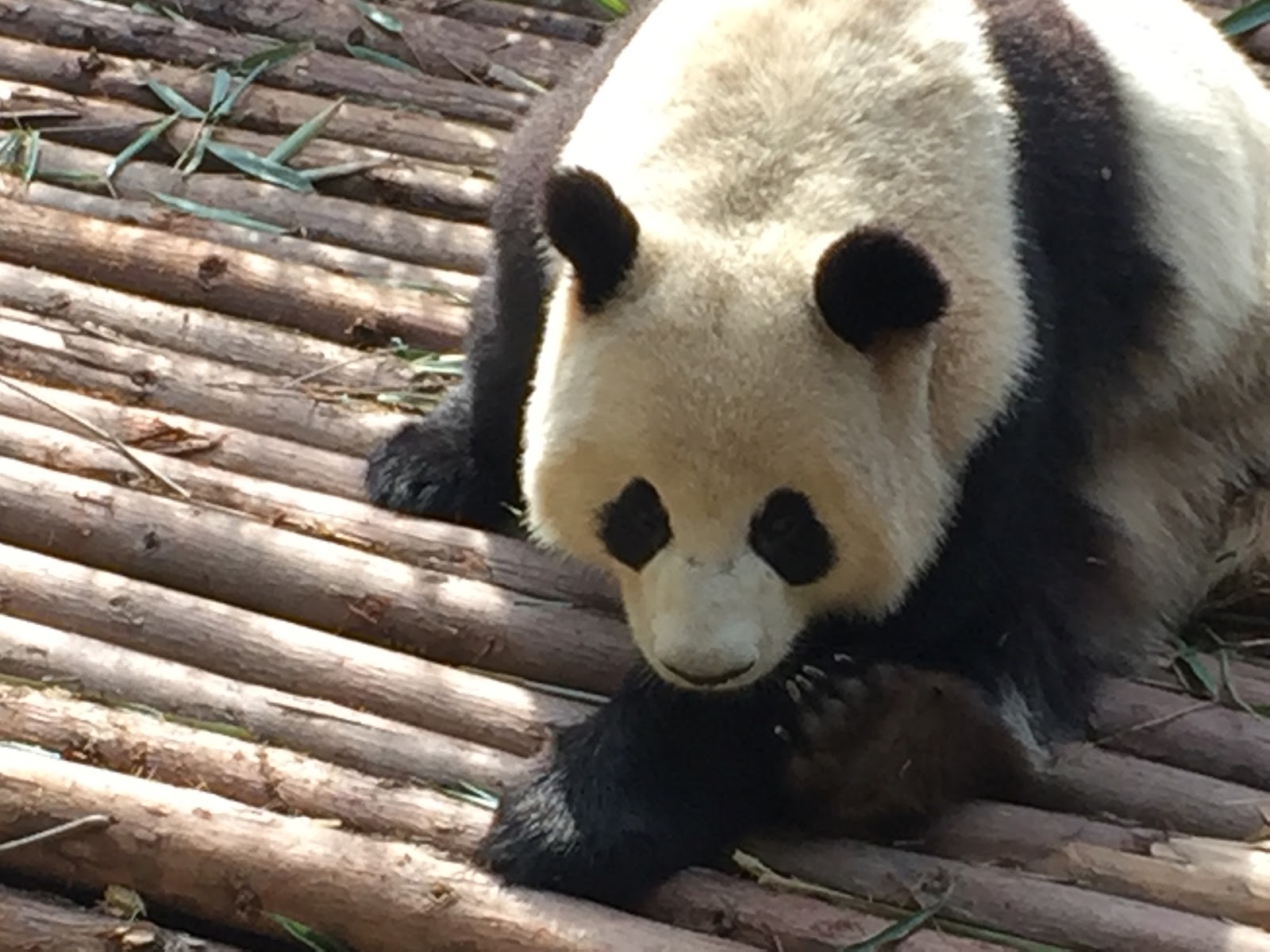
People come to Chengdu from all over the world for this place. The Chengdu Research Base of Giant Panda Breeding is a large complex with enclosures where pandas munch on bamboo during morning feeding and hide in air-conditioned pavilions during the heat. The most famous resident is panda Hua Hua, for whom people queue in lines. According to visitors, she’s usually in Pavilion No. 6, which is closed on Mondays (except on national holidays) so the animals can rest. The Panda Art Museum also doesn’t operate on Mondays, but the rest of the complex is open. Red pandas live in walk-through enclosures, and the base asks visitors to keep a distance of 3 meters from them.
Adults pay 55 CNY (€7), students 27 CNY (€4), and people over 60 as well as children under 6 or under 1.3 m have free entry without reservation. Everyone else must reserve a ticket online by name and passport. You can book no earlier than 14 days in advance, preferably through Trip.com or via the official WeChat account. The ticket is valid only for the chosen time slot. From March to October, morning entry is from 7:30 to 12:00 and afternoon from 12:00 to 17:00. From November to February, it’s 8:00 to 12:00 and 12:00 to 16:30. The train around the complex costs 30 CNY (€4) for the whole day. Set aside three to four hours for your visit.
Take metro line 3 to Panda Avenue station and from there bus 408 to the South Gate, or to Junqu General Hospital station and bus 409 to the West Gate. Tourist shuttle buses from Chunxi Road and from Wide and Narrow Alleys will take you to the base without transfers. A taxi from Chunxi Road costs about 40 CNY (€5) according to the base and takes 25 to 35 minutes. If you want pandas without crowds, Panda Valley in Dujiangyan is appealing (tip 17).
💡 Tip: One Reddit user advises entering through the West Gate and walking through the complex toward the South Gate, where tour groups flow in. That way you’re going against the crowd. Don’t pay resellers for “fast entry without queuing”—the base itself warns against them.
2. Wenshu Monastery
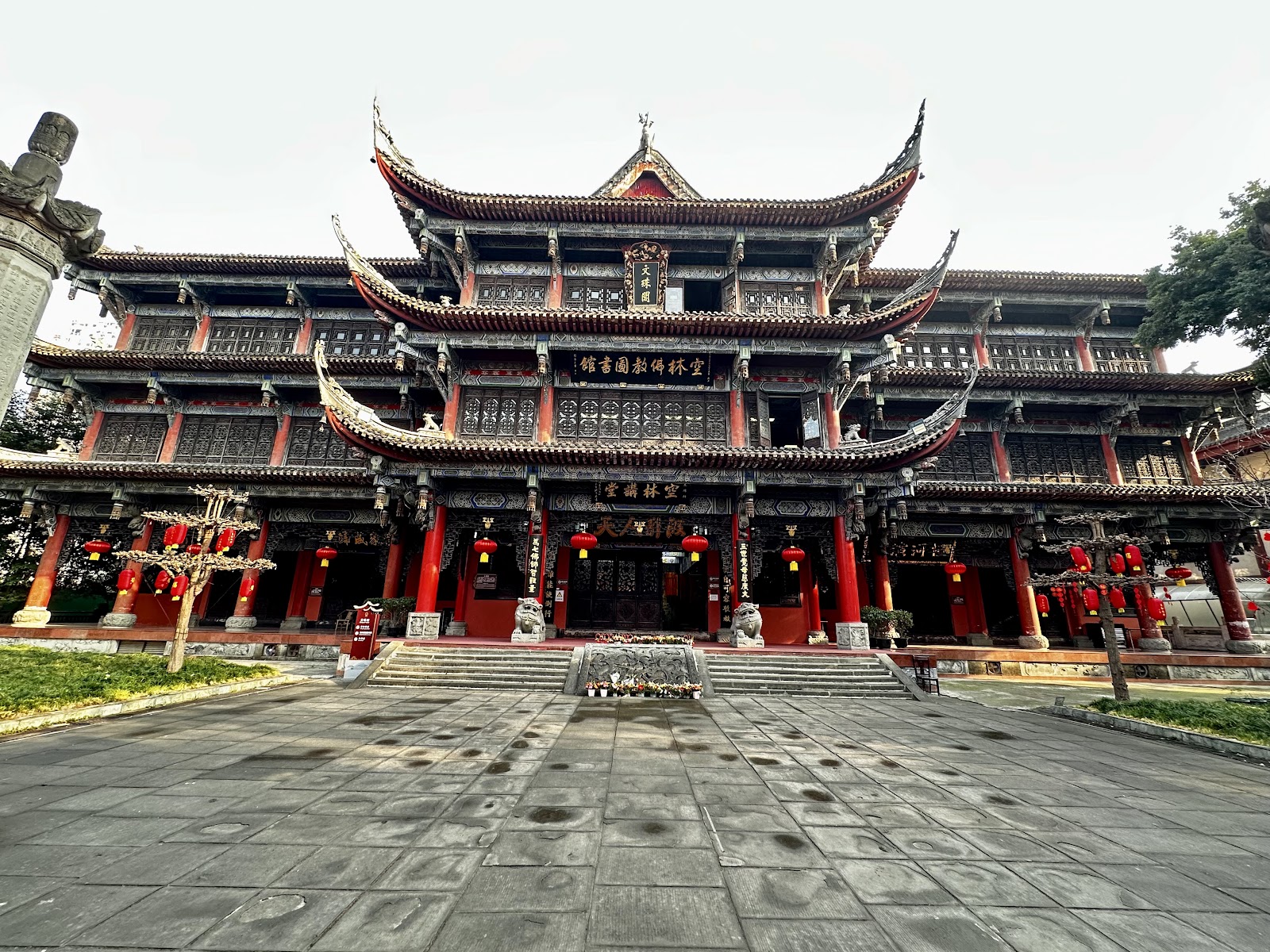
Wenshu Monastery is not a museum but an active Buddhist monastery where people still pray today. According to Chinese sources, the monastery was founded during the Sui dynasty and rebuilt under Emperor Kangxi. Entry is free and without reservation, usually open from 8:00 to 17:00 with last entry at 16:30. At the entrance, they reportedly hand out incense sticks for free.
For vegetarians, Wenshu is probably the most important address in the city. Right by the monastery, the Buddhist vegetarian restaurant Xiangyuan cooks at 6 Wenshuyuan Jie. The buffet costs around 35 CNY (€5), and if you finish your plate, they’ll reportedly give you 5 CNY (€1) back. Mushroom rice runs about 18 CNY (€2-3). Buddhist cuisine does without meat and without garlic and onions. But it’s not always vegan, and eggs or milk can appear in pastries, for example.
Around the monastery spreads the pedestrian district Wenshufang with refreshments and small shops. Take metro line 1 to Wenshu Monastery station.
💡 Tip: According to a 2023 review, the dining hall doesn’t cook on Mondays, so head there for lunch on a different day instead.
3. Wide and Narrow Alleys
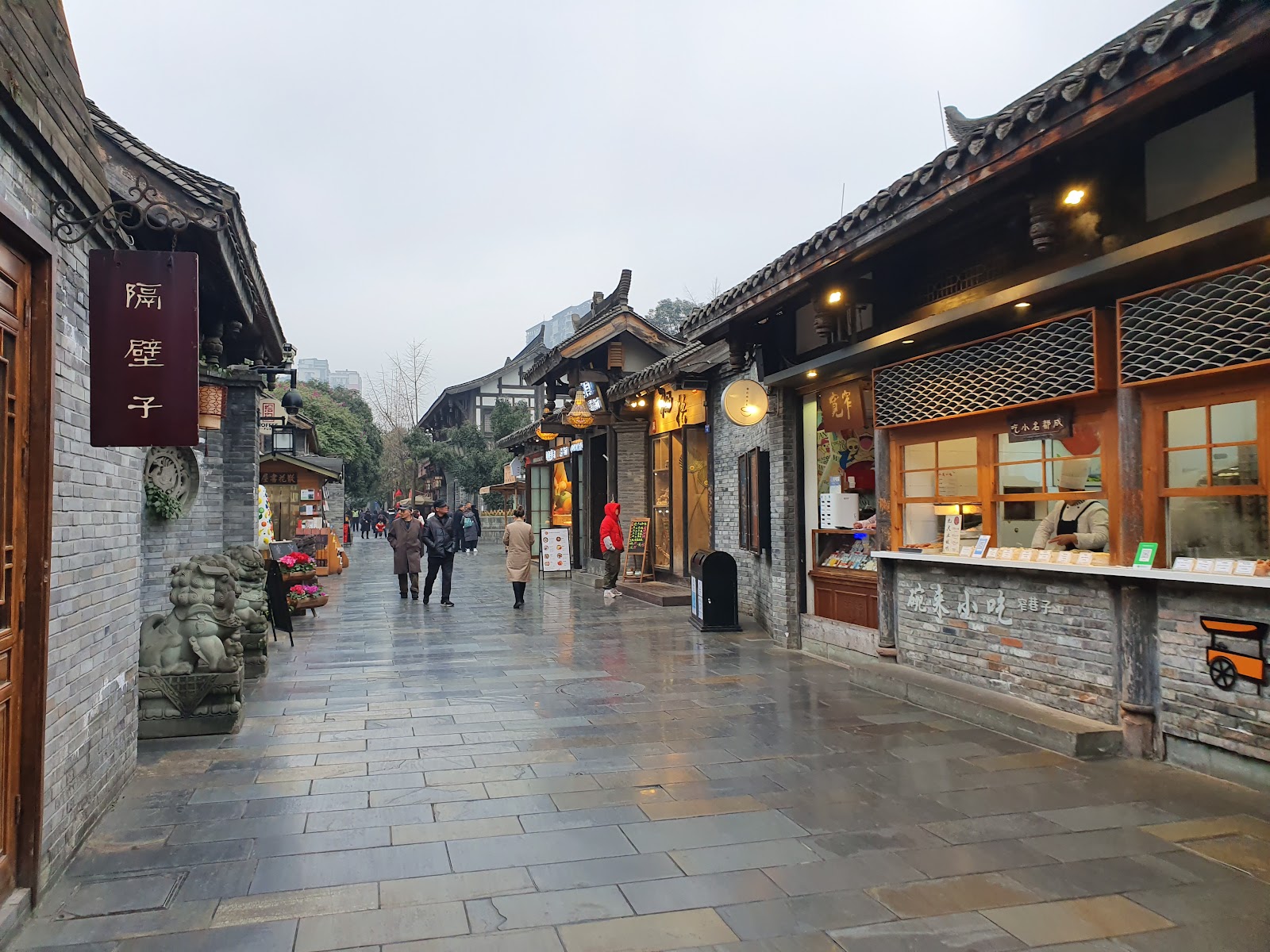
Three parallel alleys—Wide, Narrow, and a third called Well—are lined with courtyard houses in Qing dynasty style, according to guides. Today they hold souvenir shops, folk art, cafés, and eateries. Entry is free and the alleys are lit up in the evening.
Think of them as a lovely but very touristy stroll. On weekends, people squeeze shoulder to shoulder, so if you want photos without crowds, come on a weekday. The alleys lie close to People’s Park, so both places can be combined into one afternoon.
4. Wuhou Shrine and Jinli Street
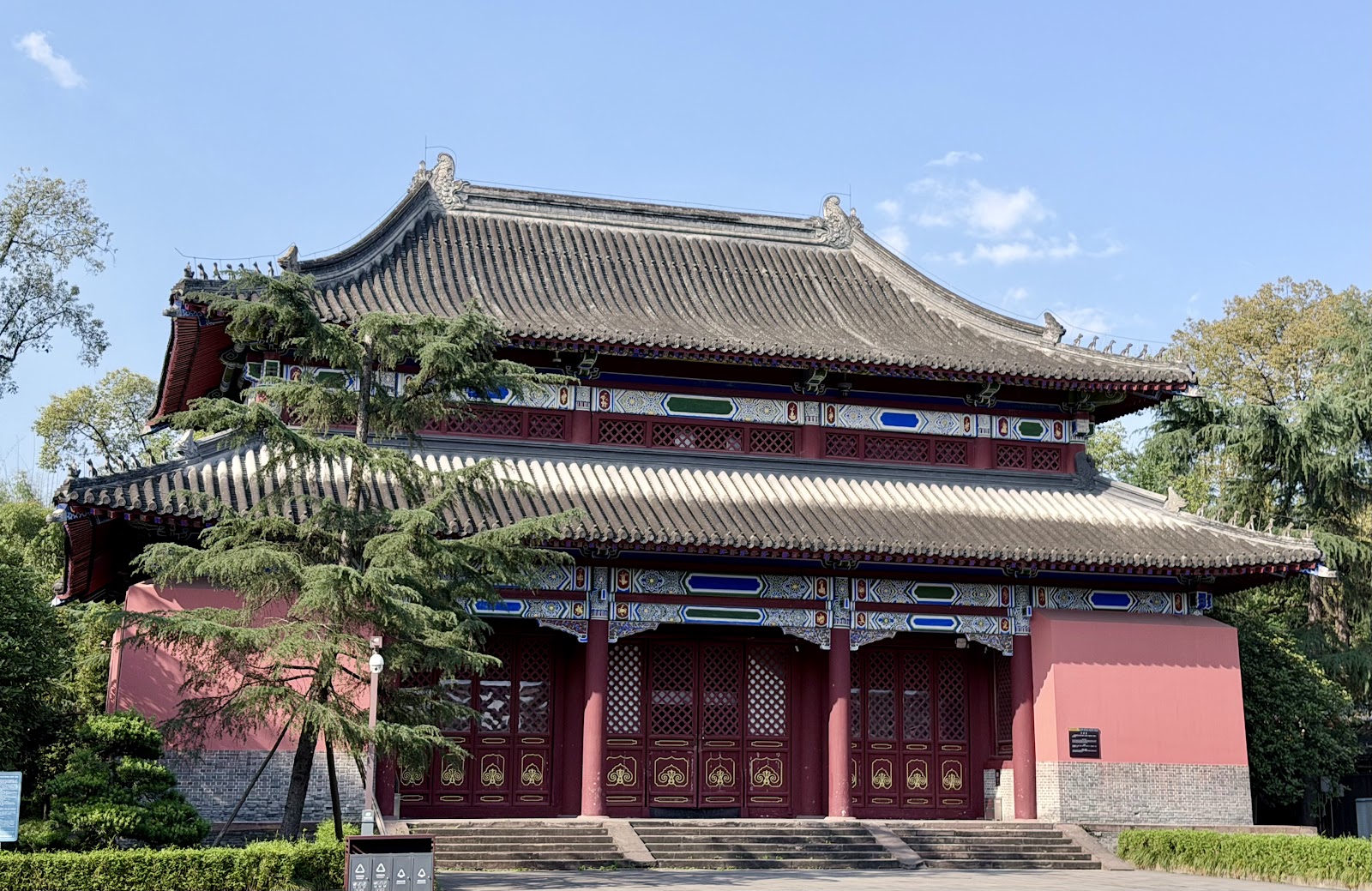
Wuhou Shrine is dedicated to two figures from the Three Kingdoms period. The statesman Zhuge Liang and the ruler Liu Bei of the state of Shu-Han, or Shu for short, are venerated here. The complex also contains Liu Bei’s tomb. If you know the Three Kingdoms from games like Total War or Dynasty Warriors, you’ll feel right at home here. Admission to the shrine costs 50 CNY (€7), half price with a discount. Take metro line 3 to Gaoshengqiao station.
Right next door begins Jinli Street, a shopping street in ancient style with souvenirs and street food. Entry is free and lanterns light up in the evening. With street food, though, it pays to ask what’s in it, because Sichuan cuisine likes to work with pork lard and meat broth.
If you want to stay longer with the Three Kingdoms and the state of Shu, you can add the Shu Brocade and Embroidery Museum to Wuhou.
5. Du Fu’s Thatched Cottage
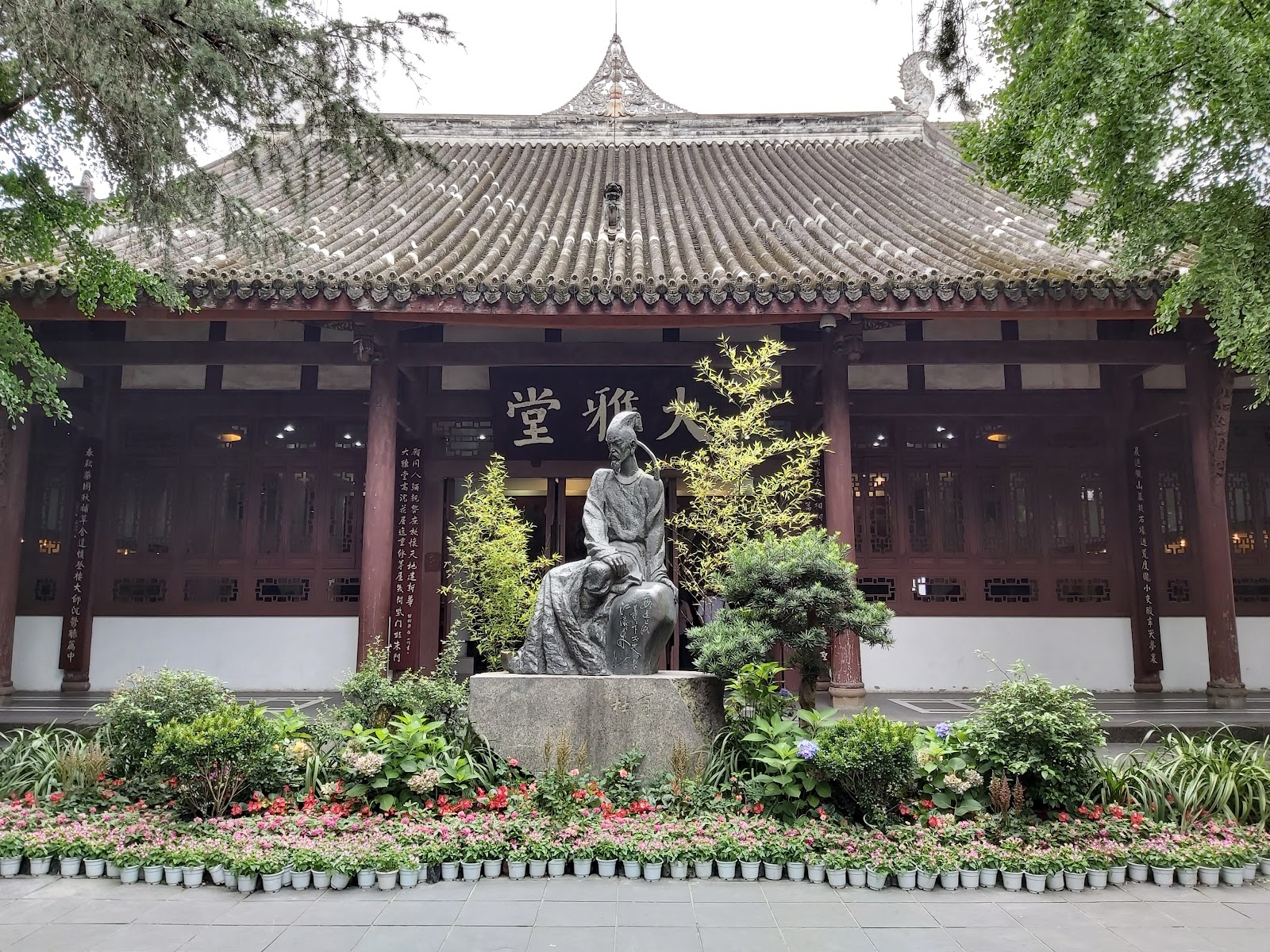
The poet Du Fu from the Tang dynasty lived in Chengdu from 759 to 763. Today you’ll find a 20-hectare park here with a replica of his cottage and copies of his works. In October and November, ginkgo trees turn yellow here, just as at Wenshu Monastery.
A full ticket to the cottage also costs 50 CNY (€7), half price 25 CNY (€3), and in the off-season it may be cheaper. It’s usually open from around 9:00 to 18:00, with the ticket office closing at 17:00. You can reserve a ticket via WeChat; reservations open 14 days in advance.
Not far from here lie the Sichuan Museum (tip 13) and Culture Park with the Shufeng Yayun opera theater (tip 10), so you can make a pleasant day of it. Museum in the morning, Du Fu’s Thatched Cottage in the afternoon, and opera in the evening. Just don’t plan it for Monday, when the museum is closed.
6. People’s Park and Heming Teahouse
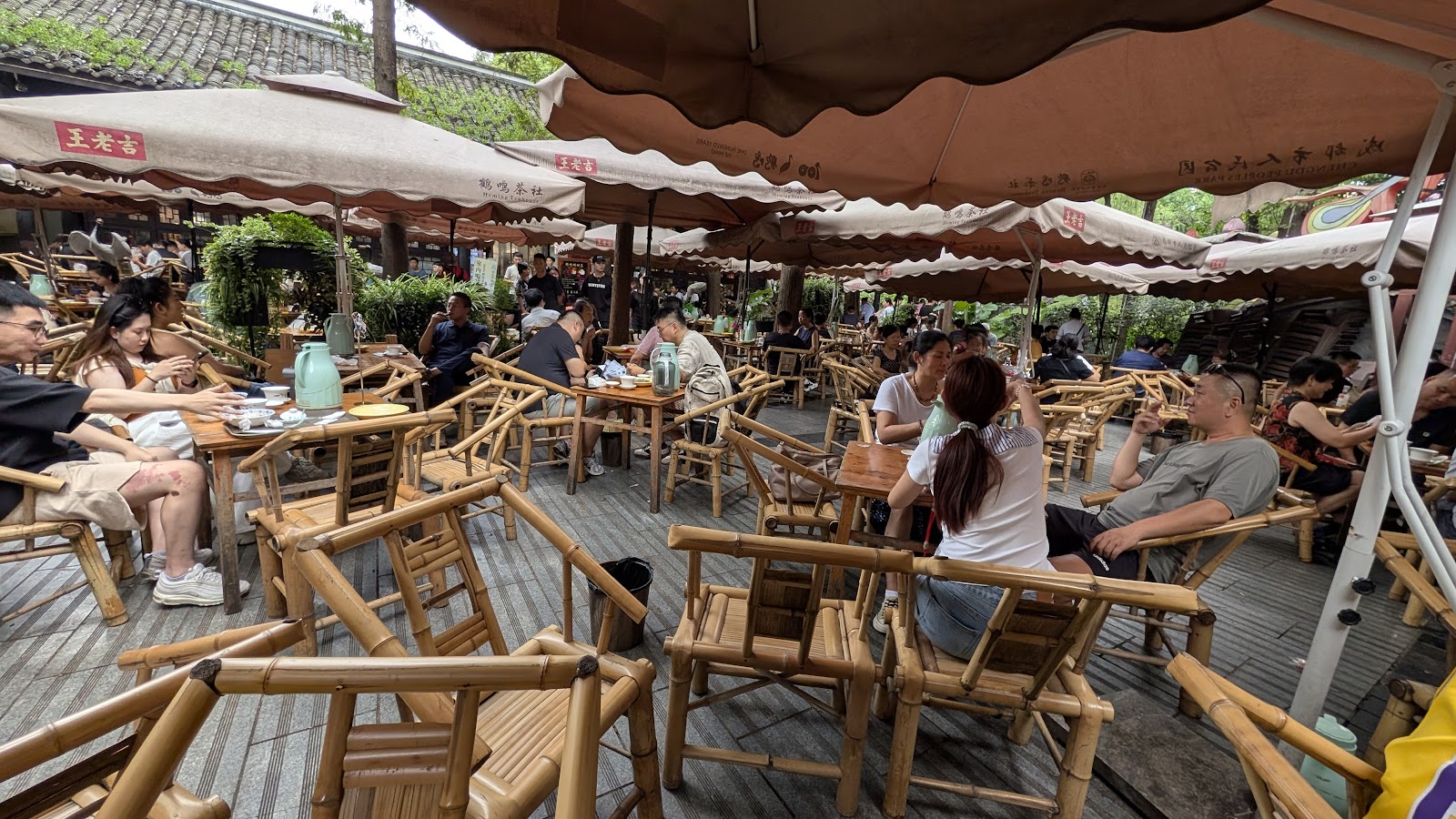
If there’s one place to understand why Chengdu is called a slow city, this is it. People’s Park is free and according to travel guides, locals sing and dance here, and parents hang matchmaking ads for their adult children at the “marriage market.” The park also has a monument to the heroes of the Railway Protection Movement.
The main attraction is Heming Teahouse by the lake, which has reportedly been operating for over 120 years. Ordinary tea costs 16 to 35 CNY (€2 to €5), premium tea 58 to 68 CNY (€9 to €11). You get a thermos of hot water with your cup and refill the tea yourself. Ear cleaning is also offered for 30 to 50 CNY (€4 to €8), but agree on the price beforehand.
Take metro line 2 to People’s Park station. Tea and people-watching can easily fill an entire afternoon here.
7. Daci Temple, Taikoo Li, and Chunxi Road
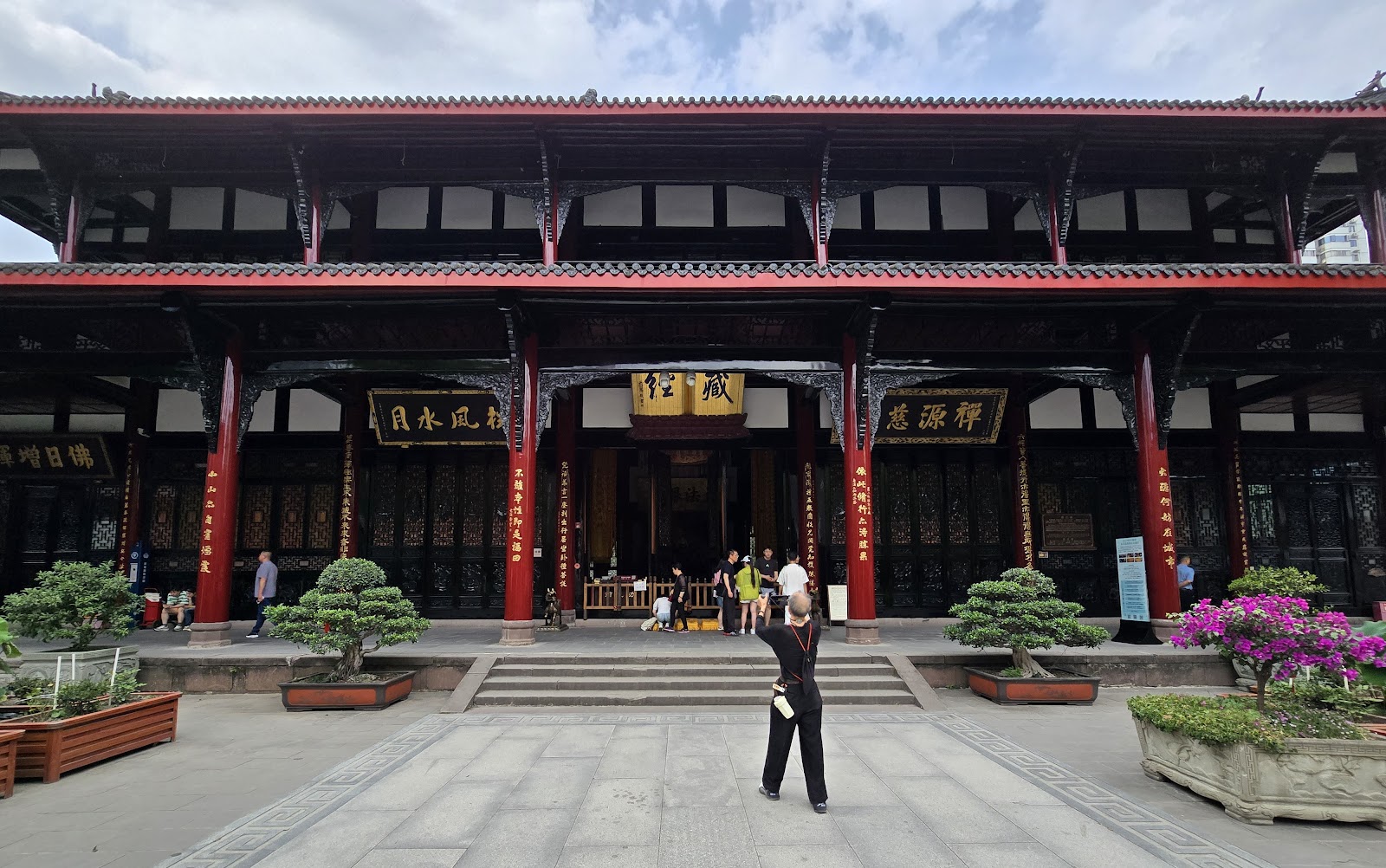
This is Chengdu in a nutshell. In the middle of the low-rise buildings of the luxury shopping quarter Sino-Ocean Taikoo Li, built in traditional style, stands the Buddhist Daci Temple. Luxury boutiques and a Buddhist temple are just steps apart.
Right next door runs Chunxi Road, the city’s main shopping street with a pedestrian zone, shops, and restaurants. A popular photo spot here is the giant panda climbing the facade of the IFS shopping center.
💡 Tip: Enter “Chengdu IFS” into navigation; searching for “panda” will more likely find the breeding center instead.

8. Qingyang Palace
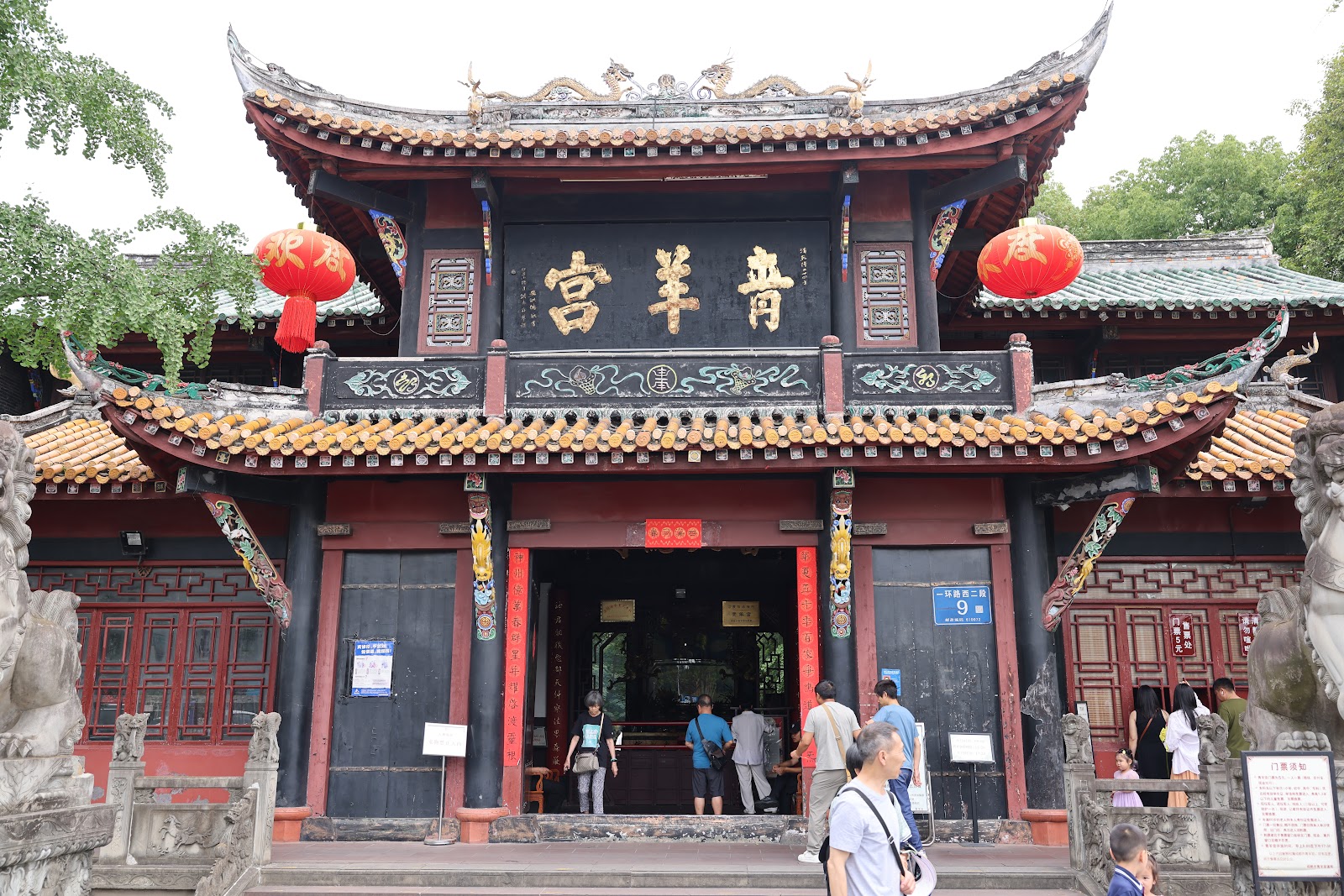
While Wenshu Monastery and Daci Temple belong to Buddhism, Qingyang Palace (Qingyang Gong) is a Taoist temple. In Chengdu you can see Buddhism and Taoism side by side. The palace is known for its two black bronze goat statues.
It’s open from 8:00 AM to 6:00 PM and entrance costs around 10 CNY (€2).
💡 Tip: The palace, Culture Park, and Shufeng Yayun Opera are close to each other, so you can spend an afternoon and evening here without additional travel.
9. Anshun Bridge and Jinjiang Riverfront
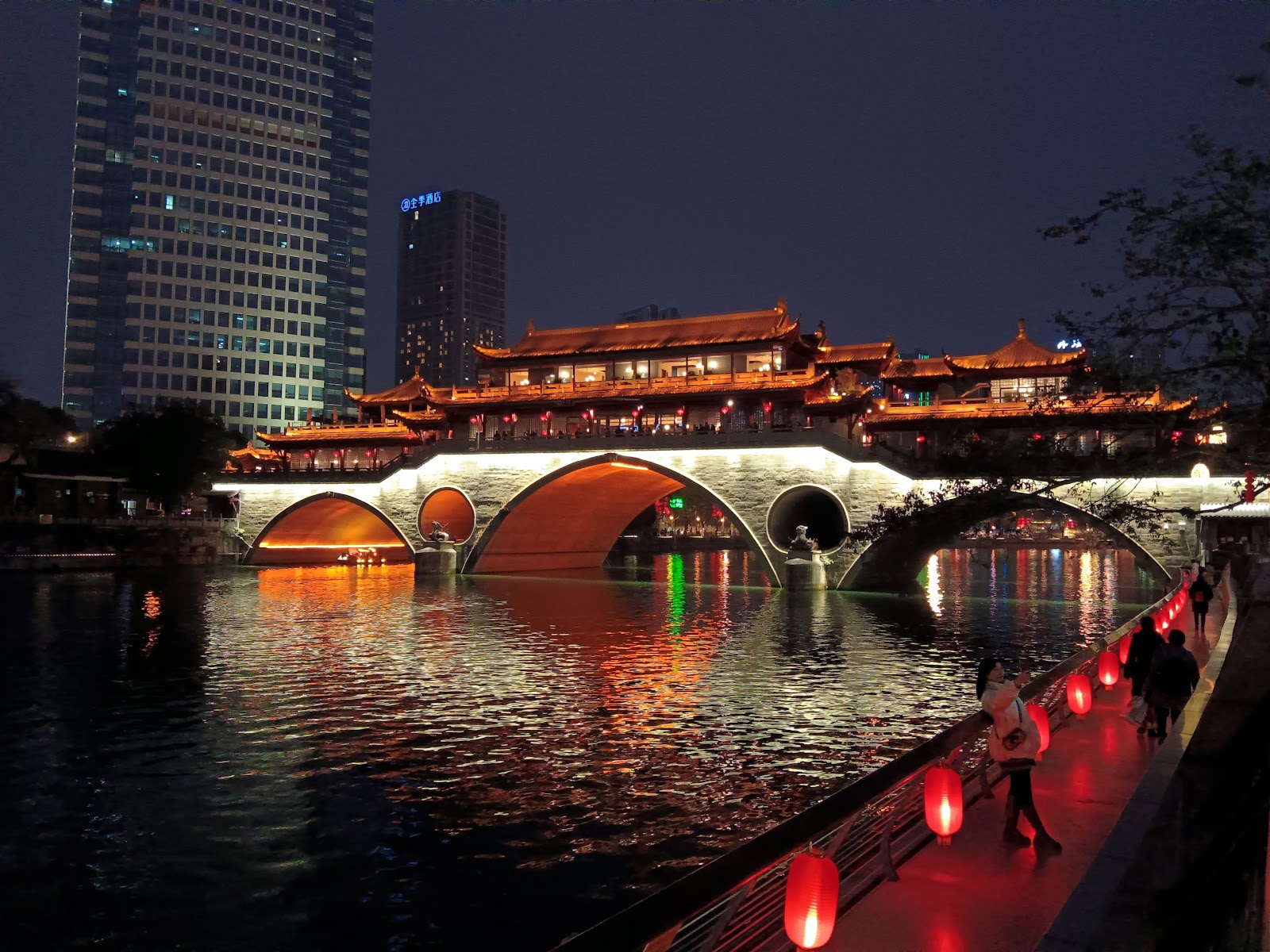
The covered Anshun Bridge over the Jinjiang River is one of the city’s famous landmarks and is illuminated after dark. Inside the bridge is an upscale restaurant. However, it’s not an ancient bridge. The original bridge was repeatedly destroyed by floods and rebuilt several times. The bridge completed in 1978 collapsed in a flood in 1981, and the city then built a new one. Today’s structure is therefore modern.
From the bridge you can continue with a walk along the riverfront to the bar district of Jiuyanqiao.
Sightseeing boats also cruise the river; check prices and schedules directly at the waterfront. If you want bars around the corner, you can stay right on the Jinjiang riverfront (see Where to Stay).
10. Sichuan Opera and Face-Changing
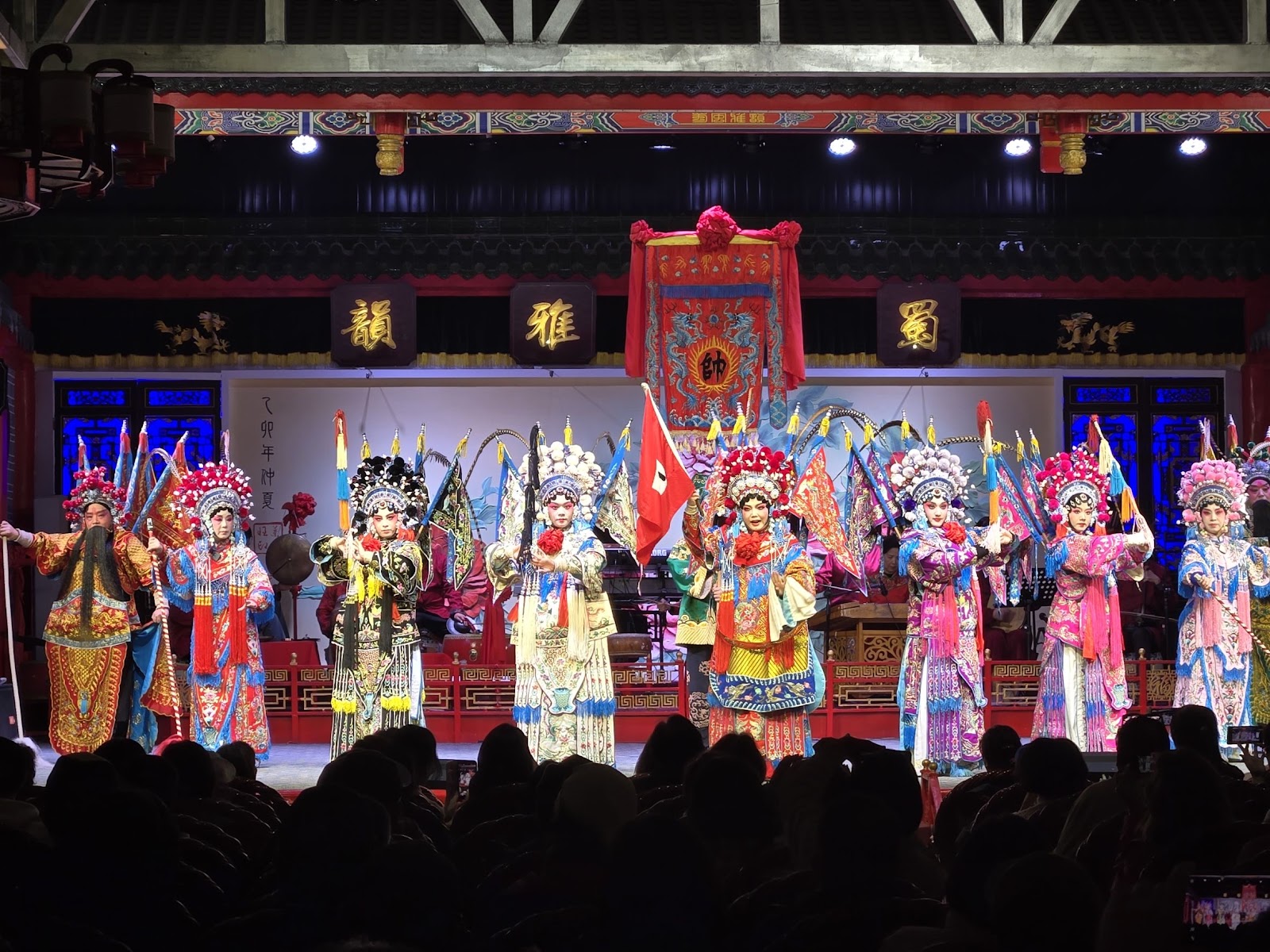
An actor waves his sleeve and in an instant has a completely different mask on his face. Face-changing (bian lian) is a famous act in Sichuan opera, and tradition holds that the technique is a state-protected secret. Evening performances for visitors last about 90 minutes. Besides face-changing, they typically include fire-spitting, shadow theater, puppets, a comic sketch, and playing the erhu (two-stringed Chinese fiddle).
For visitors, Shufeng Yayun theater at 132 Qintai Lu in Culture Park, next to Qingyang Palace, hosts performances. Shows usually start at 8:00 PM, some days also at 6:00 PM. Tickets cost around 120 to 320 CNY (€19 to €52) depending on the seat.
Smaller theaters work out cheaper, where you can sit from roughly 30 to 80 CNY (€5 to €13). For example, Shuyi Theater offers face-changing with tea for 54 to 73 CNY (€9 to €12). If you’re interested in a full-length opera instead of a tourist variety show, the state company performs at Sichuan Opera Theater at 27 Hongzhaobi Jie. Their program can be found at sc-opera.com.
11. Sichuan Cuisine Vegetarian-Style
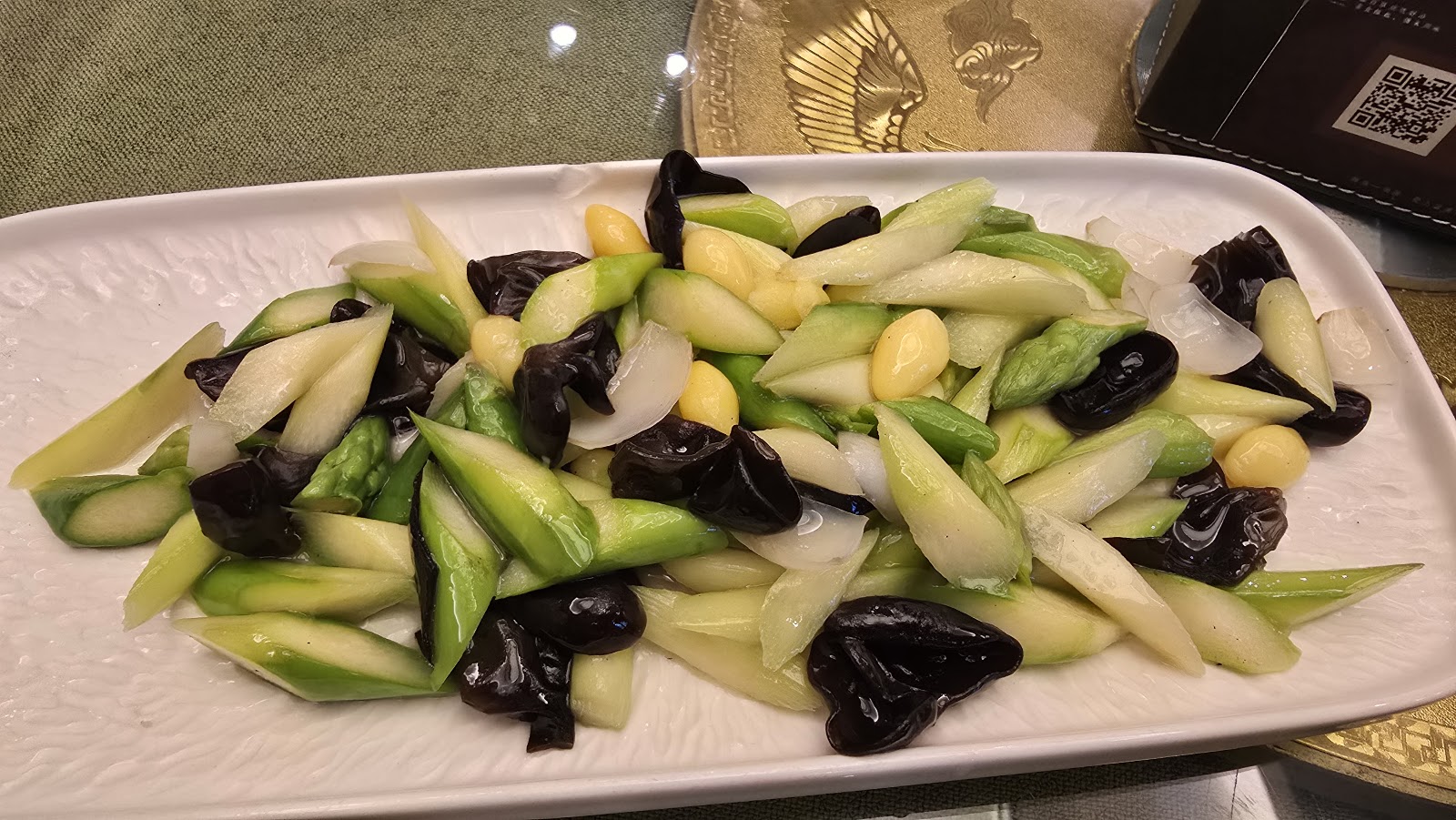
Chengdu is, according to guidebooks, a UNESCO Creative City of Gastronomy and food is a big topic here. But for vegetarians it’s also a bit of a challenge. Famous local specialties are meat-based. Hot pot (huo guo) is cooked with beef tallow, mapo tofu originally contains minced meat, kung pao is made with chicken, and dan dan noodles with pork. Local curiosities reportedly include rabbit heads. Even “vegetable” dishes at regular restaurants often contain lard, chicken broth, or oyster sauce.
The safest bet is Buddhist and vegetarian restaurants. Besides the dining hall at Wenshu Monastery (tip 2), there’s Mi Xun Teahouse in the Upper House Chengdu hotel (81 Bitieshi Jie). This vegetarian restaurant and teahouse has a Michelin star, including the latest 2027 edition, and is open from noon to 10:00 PM. Another address is Zaozishu (Jujube Tree) in the Luomashi district, which cooks meat substitutes from seitan and tofu and is open from 10:00 AM to 10:00 PM. One Reddit user called it a classic among vegetarian establishments. Yiyeyi World at 46 Nankangshi Jie near Chunxi Road offers, according to its own description, purely vegan Sichuan hot pot. Another vegetarian restaurant is Wuxiang Zenjoy at 6 Changshou Lu.
If you want to taste local dishes elsewhere, order them with the phrase “bu yao rou” (without meat). Dry-fried green beans and yuxiang eggplant (so-called “fish-flavored,” though it contains no fish) are typically made with minced pork. You can also try cold noodles, buckwheat noodles, or sweet rice cakes with brown sugar.
💡 Tip: Save the sentence “I’m vegetarian, I don’t eat meat, seafood, or animal fat” in Chinese in your translator beforehand and show it at every restaurant.
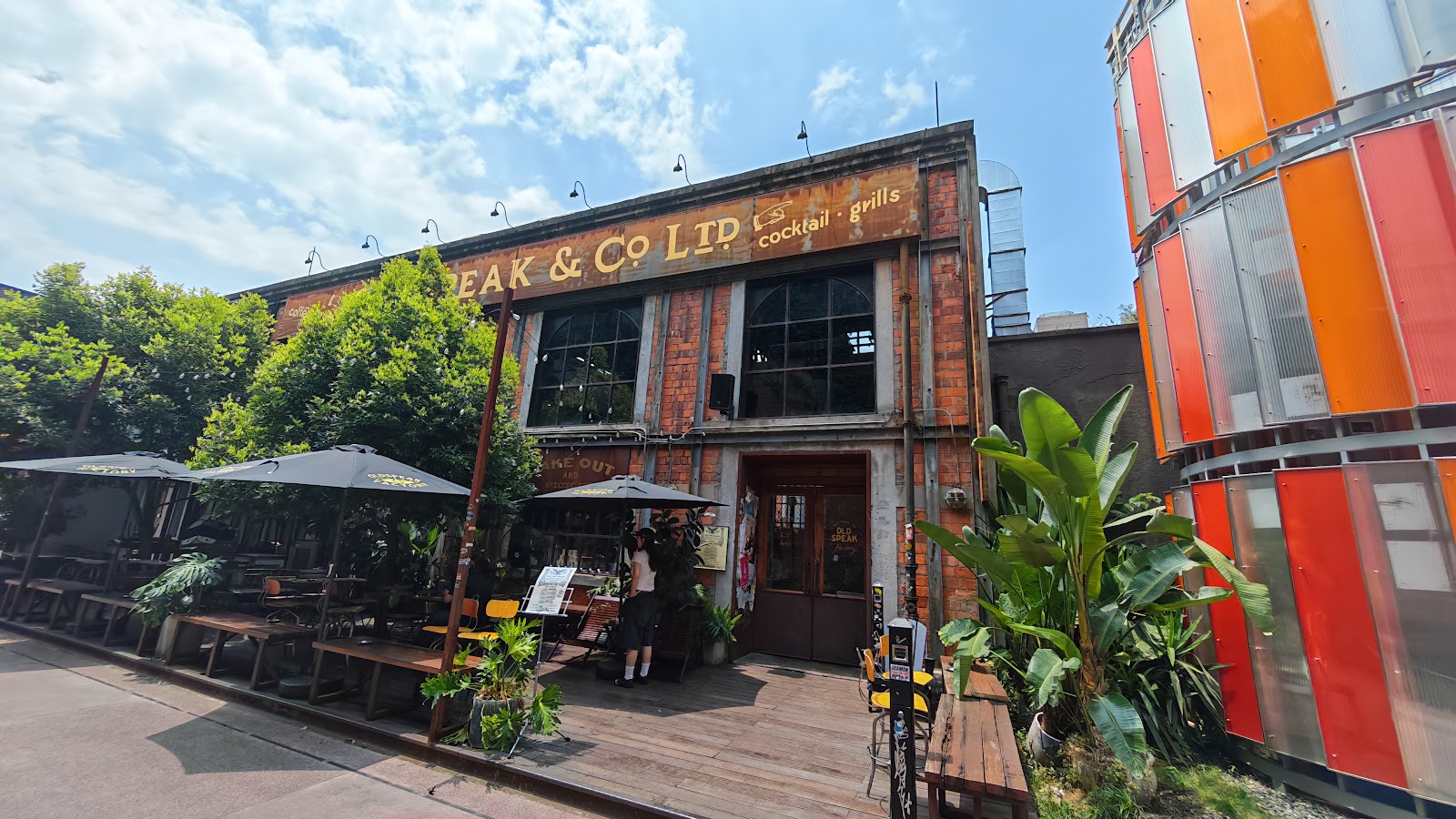
12. Yulin and Dongjiao Memory
If after temples and pandas you’re curious about how people live in Chengdu today, head to the Yulin district. It’s full of bars and cafés and was made famous by singer Zhao Lei’s song simply called “Chengdu,” released in 2016.
A second tip for contemporary Chengdu is Dongjiao Memory, a cultural complex in a former factory.
Both places are better for evening and for those who have more days in Chengdu and have already seen the main sights.
💡 Tip: Enter Dongjiao Memory in the Chinese app Amap; Google under that name will find a completely different bar in a different part of the city.
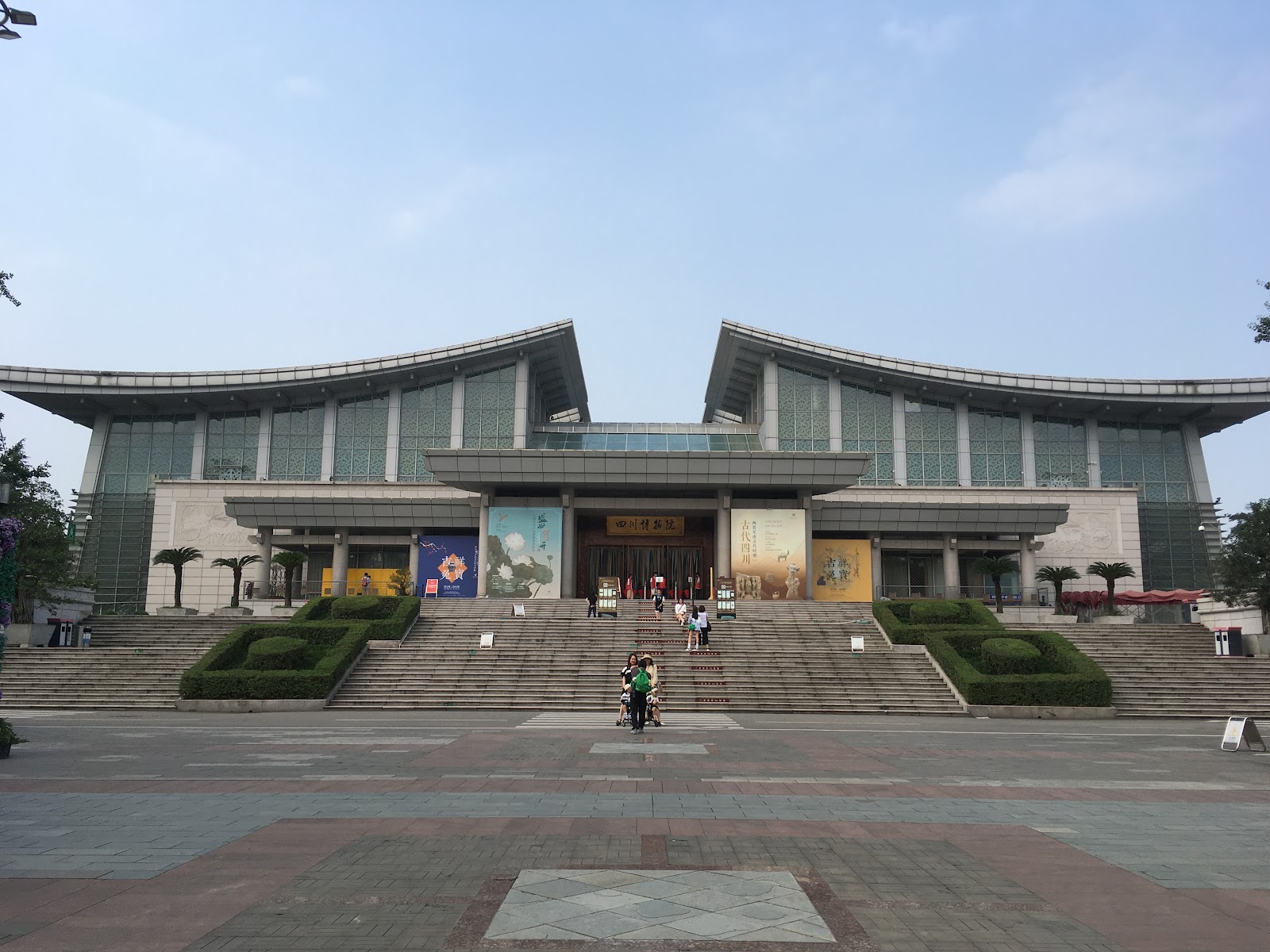
13. Sichuan Museum
The history of the province is presented at the Sichuan Museum at 251 Huanhua Nanlu, near Du Fu’s Thatched Cottage. Entrance is free with a name reservation; foreigners reserve with a passport. It’s open Tuesday to Sunday from 9:00 AM to 5:00 PM with last entry at 4:00 PM; closed Mondays (except holidays).
In the collections you’ll find bronzes, Buddhist sculptures, and a gallery of painter Zhang Daqian with his copies of frescoes from the Dunhuang caves. In 2026 there’s an exhibition about the architecture of Yongle Palace.
If you were planning to visit the Jinsha Site Museum, note that it is closed from December 5, 2025, to April 30, 2027 for renovation, even though Google Maps still shows it as open. However, you can see bronzes from the ancient culture of this area at the Sanxingdui Museum (tip 19).
💡 Tip: If you don’t manage to book ahead, according to one travel website they’ll also let you into Sichuan Museum with a passport at the entrance. It’s safer to book in advance though.
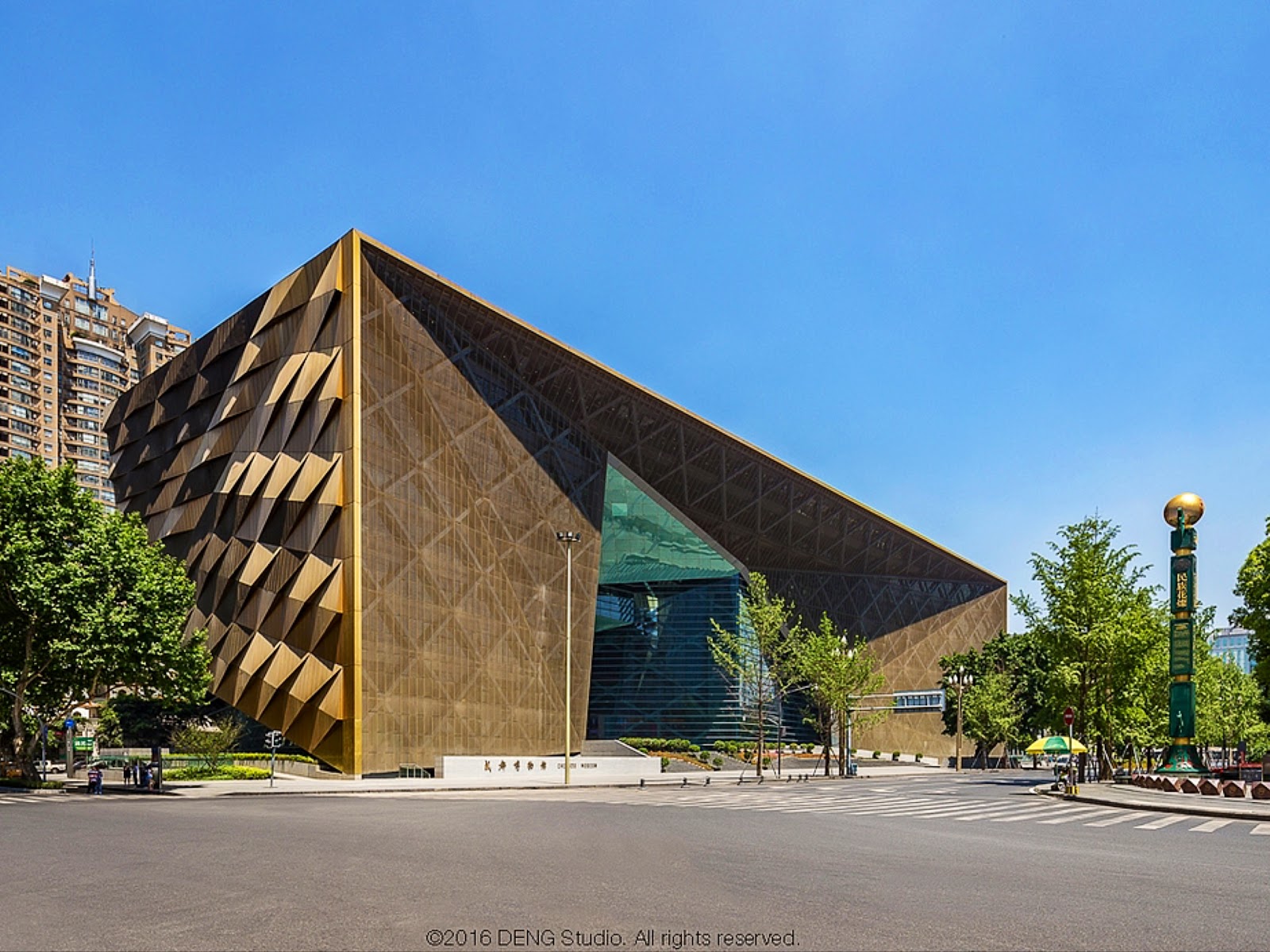
14. Chengdu Museum
Chengdu Museum stands at Tianfu Square, where metro lines 1 and 2 intersect. Entrance is free with a reservation; it’s usually open Tuesday through Sunday from nine to five. The museum is known for its shadow theater and puppet collection, so if the puppets caught your attention at the opera, here you’ll see more of them.
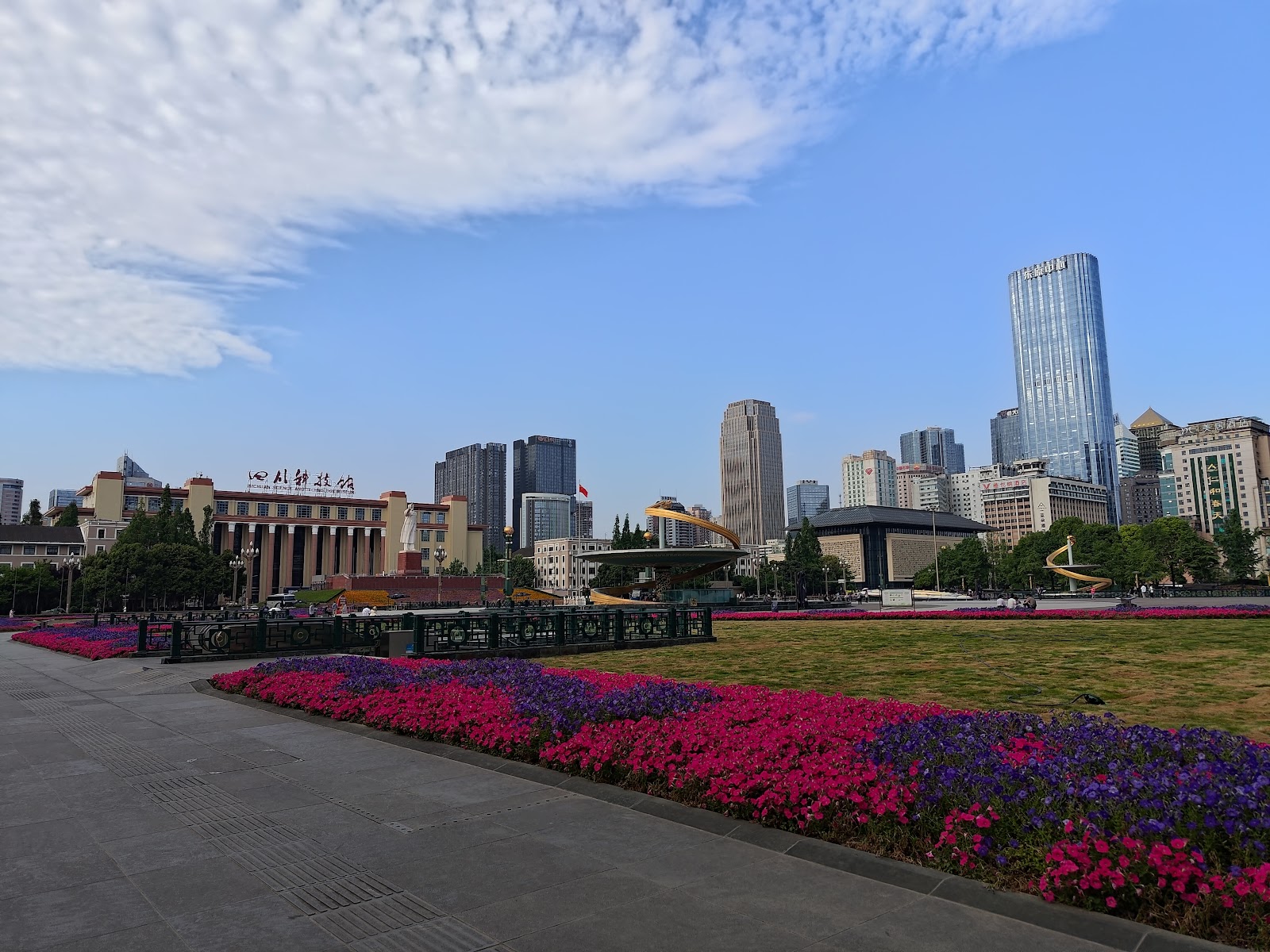
Tianfu Square has a statue of Mao Zedong and from here you can walk to People’s Park.
For families with children, the Chengdu Natural History Museum is also suitable. Entrance is free and from September 1, 2026, opening hours are Tuesday to Sunday, 9:00 AM to 5:00 PM.
💡 Tip: Google Maps shows a different address for Chengdu Museum, so enter Tianfu Square into navigation and walk to the museum from there.
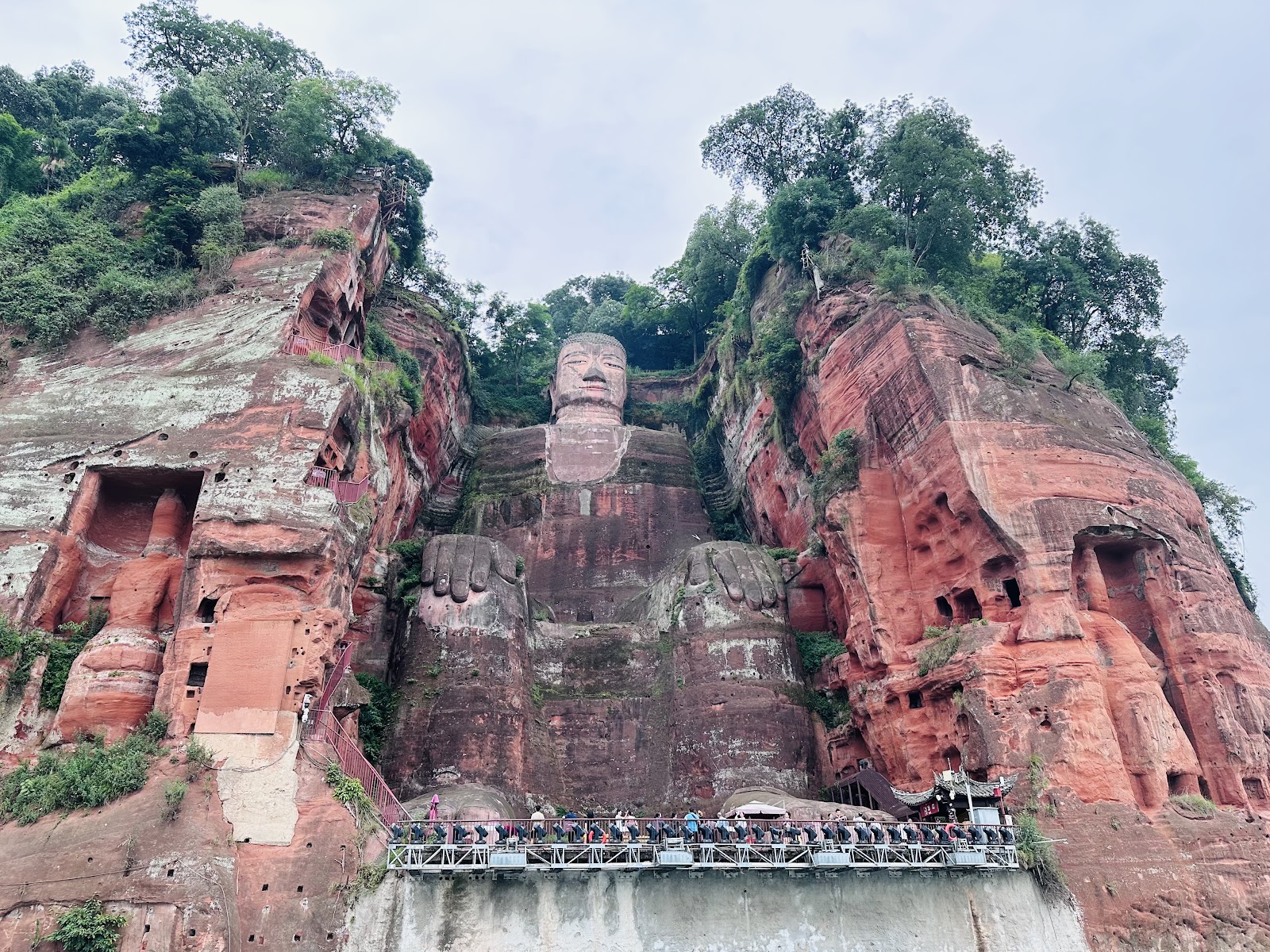
15. Leshan Giant Buddha
The Leshan Giant Buddha stands 71 metres tall and was carved into the cliff between 713 and 803 during the Tang Dynasty. Since 1996, it has been listed as a UNESCO World Heritage Site together with Mount Emei.
According to Chinese news from October 2026, tickets are sold online only – you cannot buy them on-site. Reservations are made by name for hourly slots, and you can book up to 7 days in advance. International visitors can purchase them most easily through Trip.com; the official channel is the “Dafu Lüyou” mini-program on WeChat or Alipay. The full visit from above with the descent to the Buddha’s feet costs around 80 CNY (€3.30), while the sightseeing boat that lets you see the entire statue from the river costs 70 CNY (€2.85). People over 65 enter for free.
High-speed trains from Chengdu East or South station take 55 to 65 minutes to Leshan and cost 28 to 55 CNY (€1.15 to €2.25). From the station, continue by bus No. 3 (about 40 minutes, 1 CNY or €0.04) or by taxi.
💡 Tip: On the stairs along the statue, you may wait one to three hours on weekends and during high season. Arrive early in the morning, or choose the boat option.
16. Mount Emei
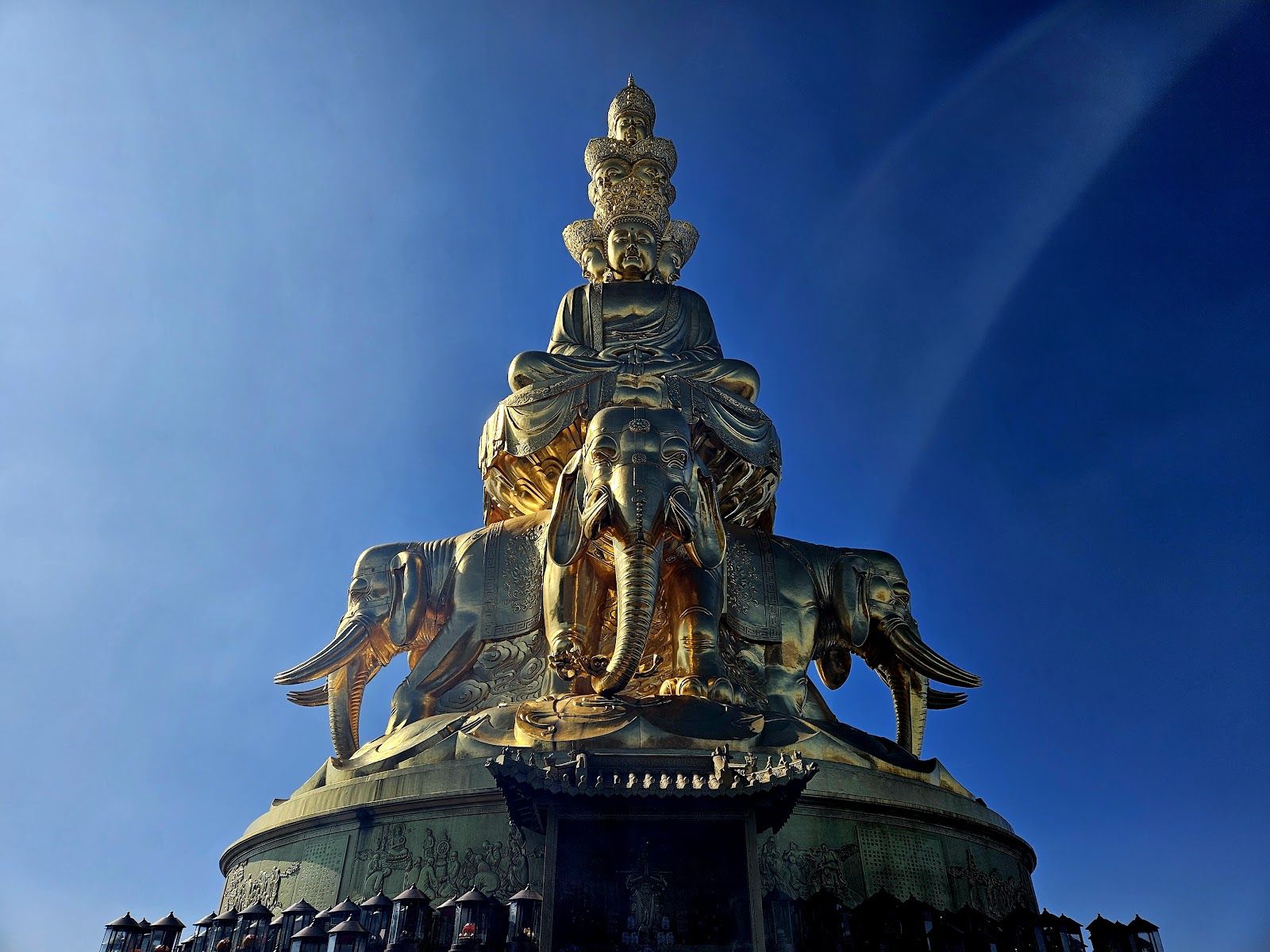
Mount Emei is one of the four sacred mountains of Chinese Buddhism and was inscribed on the UNESCO list together with the Leshan Giant Buddha (tip 15). The highest point is the Golden Summit (Jinding) at 3,099 metres, where according to guidebooks stands a gilded statue of the bodhisattva Samantabhadra. The mountain is also home to Baoguo and Wannian temples. Macaques live along the trails and are said to steal food, so don’t carry snacks in plain sight.
Entrance tickets cost around 160 CNY (€6.55) in high season (16 January to 14 December) and 110 CNY (€4.50) off-season. Return bus to the mountain area to Leidongping stop costs 90 CNY (€3.70). The cable car to the Golden Summit costs 65 CNY (€2.65) up and 55 CNY (€2.25) down. One day on the mountain without the train ticket therefore costs approximately 370 CNY (€15). From 10 March 2026, buses to the high-altitude section require hourly slot reservations by name, and the Golden Summit admits a maximum of 8,000 people per day.
High-speed trains to Emeishan station from Chengdu take about 70 minutes and cost around 65 CNY (€2.65). The bus from the station to the mountains then takes another 1 hour 40 minutes. One day is very tight, so it’s better to stay overnight on the mountain and spread the trip over two days.
💡 Tip: Leshan is about 30 km from Emei, so both destinations can be combined into one two-day excursion.
17. Dujiangyan
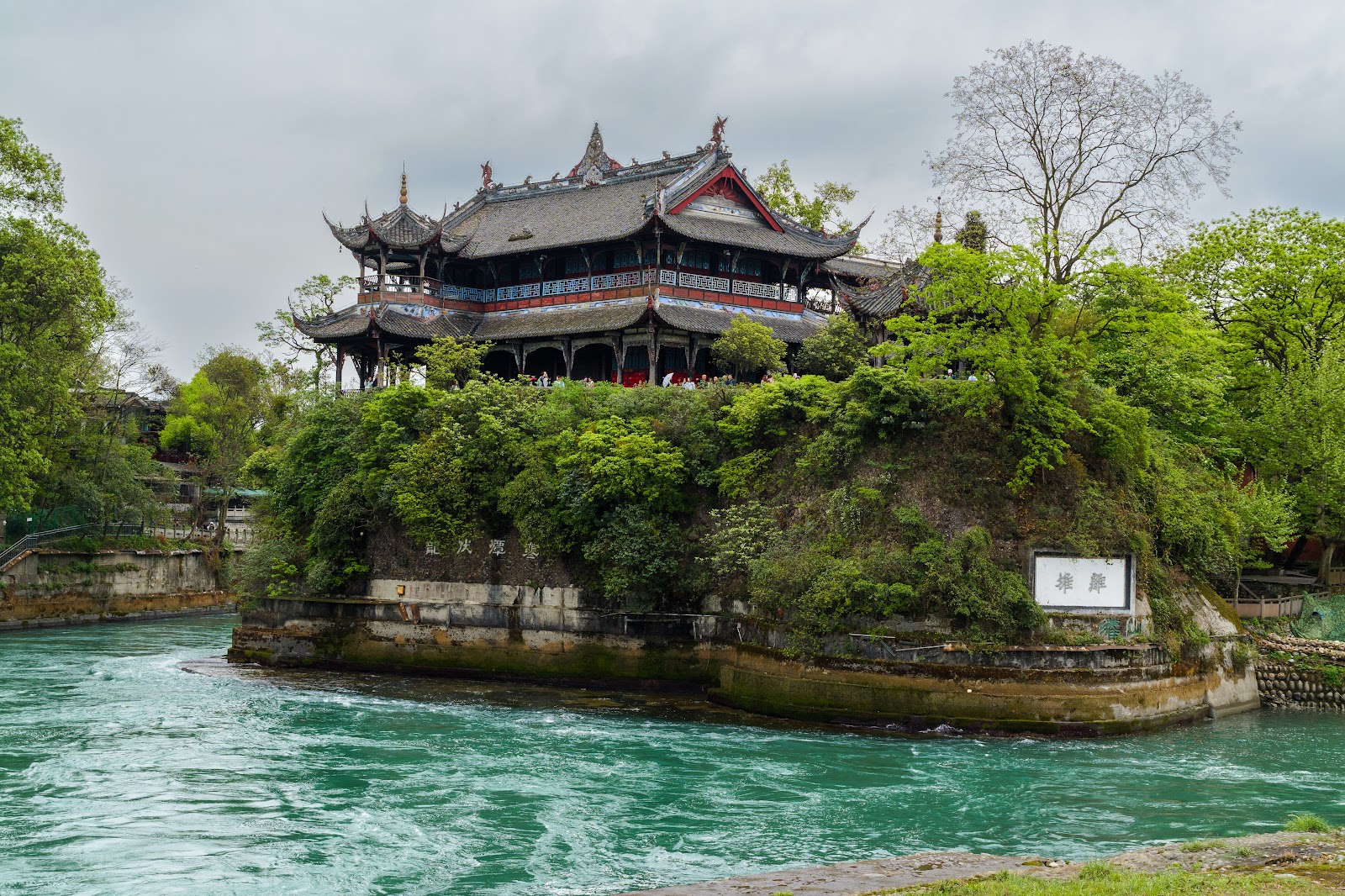
The Dujiangyan irrigation system was built around 250 BC and still functions today. It is therefore over 2,200 years old and according to tradition was designed by Li Bing. Since 2000, it has been on the UNESCO list together with Mount Qingcheng.
In high season you pay around 80 CNY (€3.30), off-season 60 CNY (€2.45), half-price entrance costs 40 CNY (€1.65), and people over 65 enter free with reservation. International visitors buy a separate ticket variant for visitors without mainland Chinese citizenship, which the Chinese seller Qunar offers for 80 CNY (€3.30). Reservations are made by name for time slots.
From Xipu station (metro lines 2 and 6), a suburban high-speed train to Liduigongyuan station near the site takes 26 to 30 minutes, and tickets cost from 10 CNY (€0.40). Dujiangyan is also home to Panda Valley, where according to one travel blog there are far fewer people around the pandas than in Chengdu. Tickets to Panda Valley are sold online only, you can book up to 7 days in advance, and there is no on-site ticket office. Panda Valley is open from 7:50 to 17:30 from May to October, and from 8:10 to 17:00 from November to April.
💡 Tip: You can manage Dujiangyan and Mount Qingcheng (tip 18) in one day, and GetYourGuide also sells a combined entrance ticket for both.
18. Mount Qingcheng
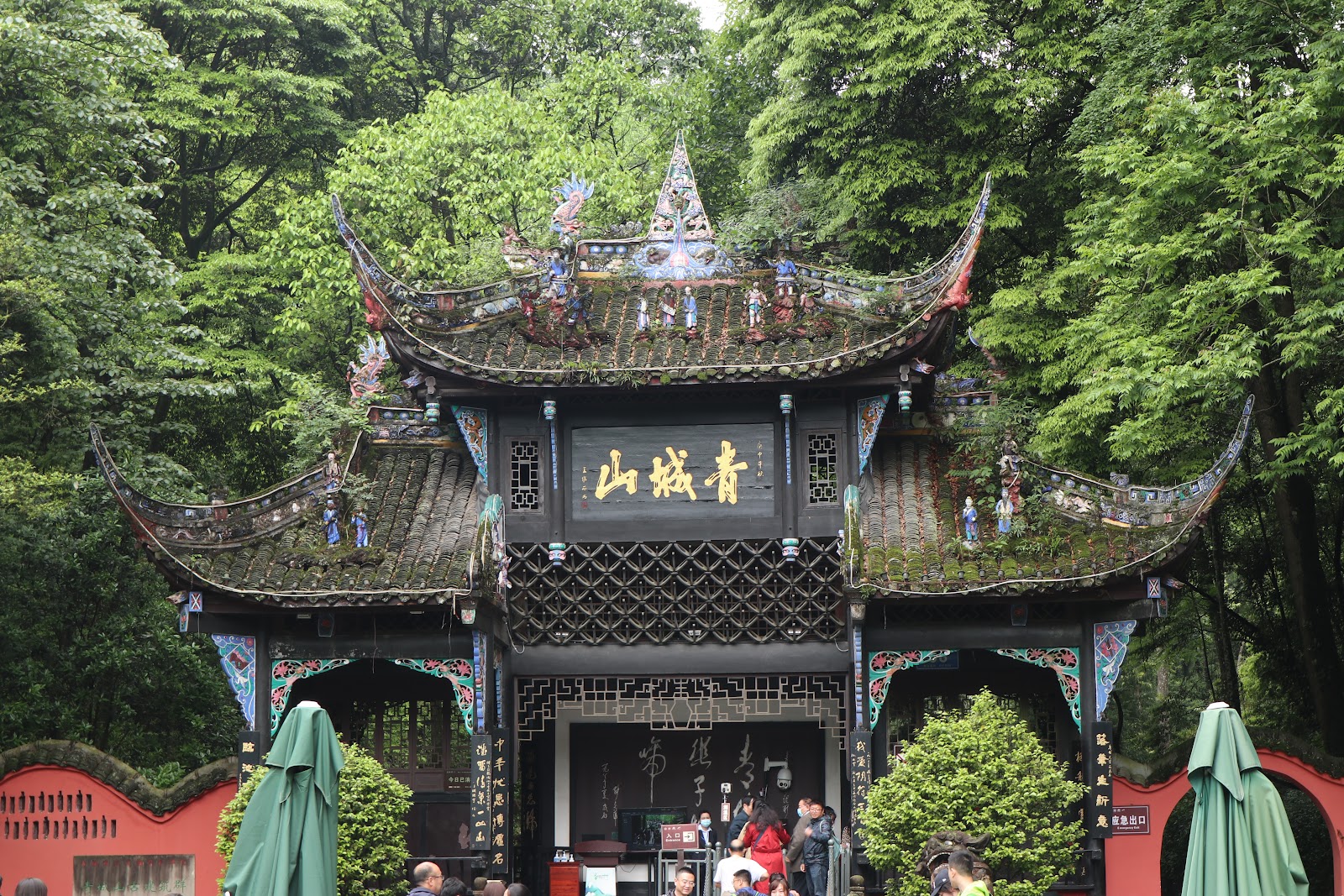
Mount Qingcheng is one of the cradles of Taoism and belongs on the UNESCO list together with the Dujiangyan system (tip 17). It is divided into the Front Mountain with temples and the Back Mountain with nature and waterfalls.
The Front Mountain costs around 80 CNY (€3.30), the Back Mountain 20 CNY (€0.80). The cable car on the Front Mountain costs 30 to 35 CNY (€1.25 to €1.45) up or 55 to 60 CNY (€2.25 to €2.45) return.
From Xipu station, high-speed trains to Qingchengshan station take 27 to 30 minutes and tickets cost from 10 CNY (€0.40). From the station to the gate, you can take bus 101 or 102 for 2 CNY (€0.08).
💡 Tip: According to travel websites, over 30 trains run daily from Xipu to Qingchengshan station, roughly from six in the morning until evening, so you can leave early. Check the specific service there and back in the 12306 app.
19. Sanxingdui Museum
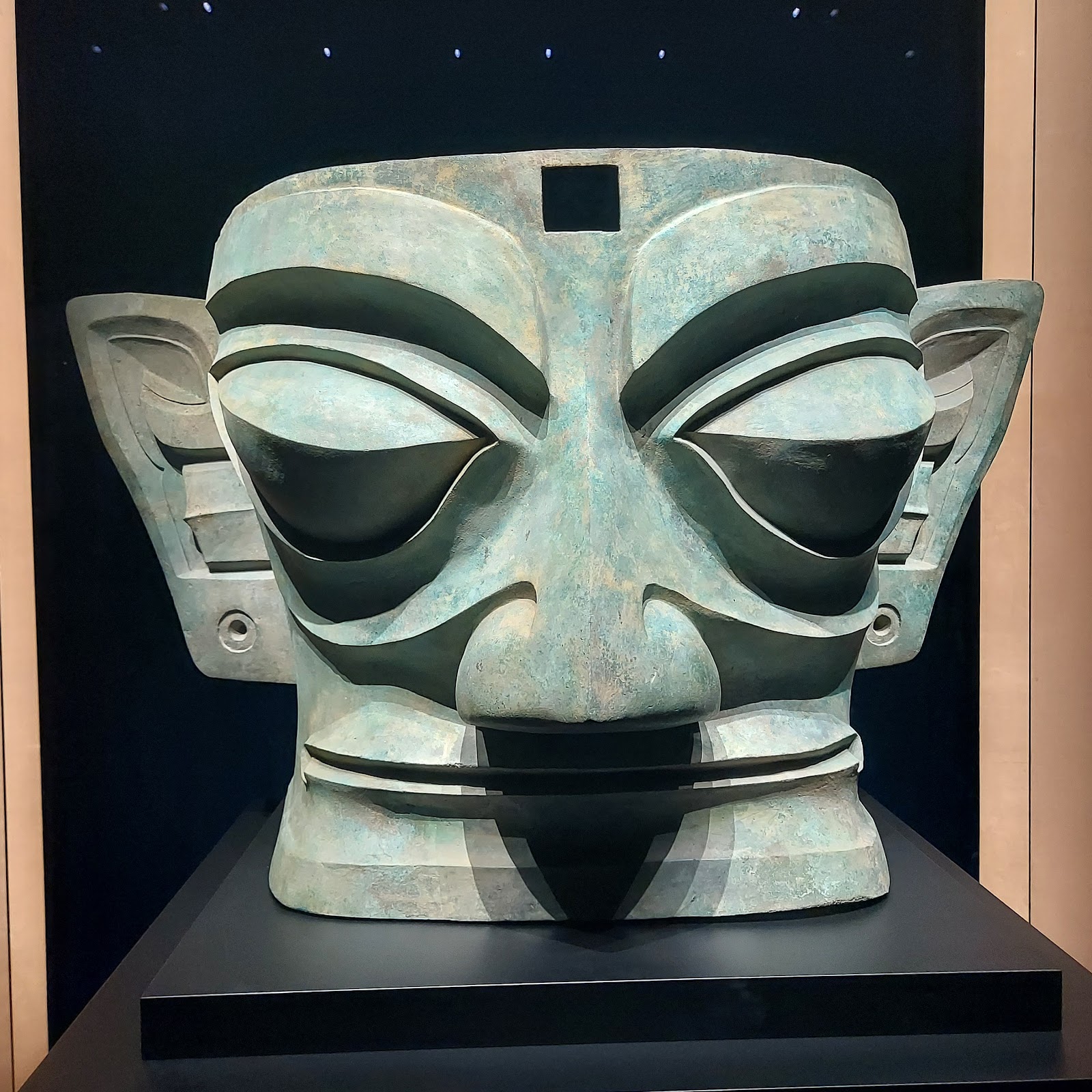
Bronze heads with protruding eyes look as if they flew in from elsewhere, and the internet has nicknamed them “aliens.” One theory connects them with the legendary king Cancong. The Sanxingdui Museum is located in Guanghan, a city in Deyang prefecture, about 40 km from Chengdu. The first finds date from 1927, the main discovery came in 1986, and between 2020 and 2022 archaeologists opened six new sacrificial pits. Just in March 2021, they recovered over 500 objects including a gold mask.
Tickets cost around 72 CNY (€2.95) and entry is by reservation only for morning or afternoon slots, for example through the official WeChat account. Enter your passport number precisely – at the entrance it reportedly cannot be corrected. The website Wander in China advises going through the entrance gate where staff checks passports.
High-speed trains from Chengdu East or South station to Guanghan North station take 18 to 20 minutes and cost 18 to 25 CNY (€0.75 to €1). From there, you can take a taxi for 15 to 20 CNY (€0.60 to €0.80). Tourist buses from the centre take 70 to 90 minutes and cost about 30 CNY (€1.25).
💡 Tip: Older guides mention a combined ticket to Sanxingdui and the Jinsha Museum. That no longer applies; Jinsha is closed (see tip 13).
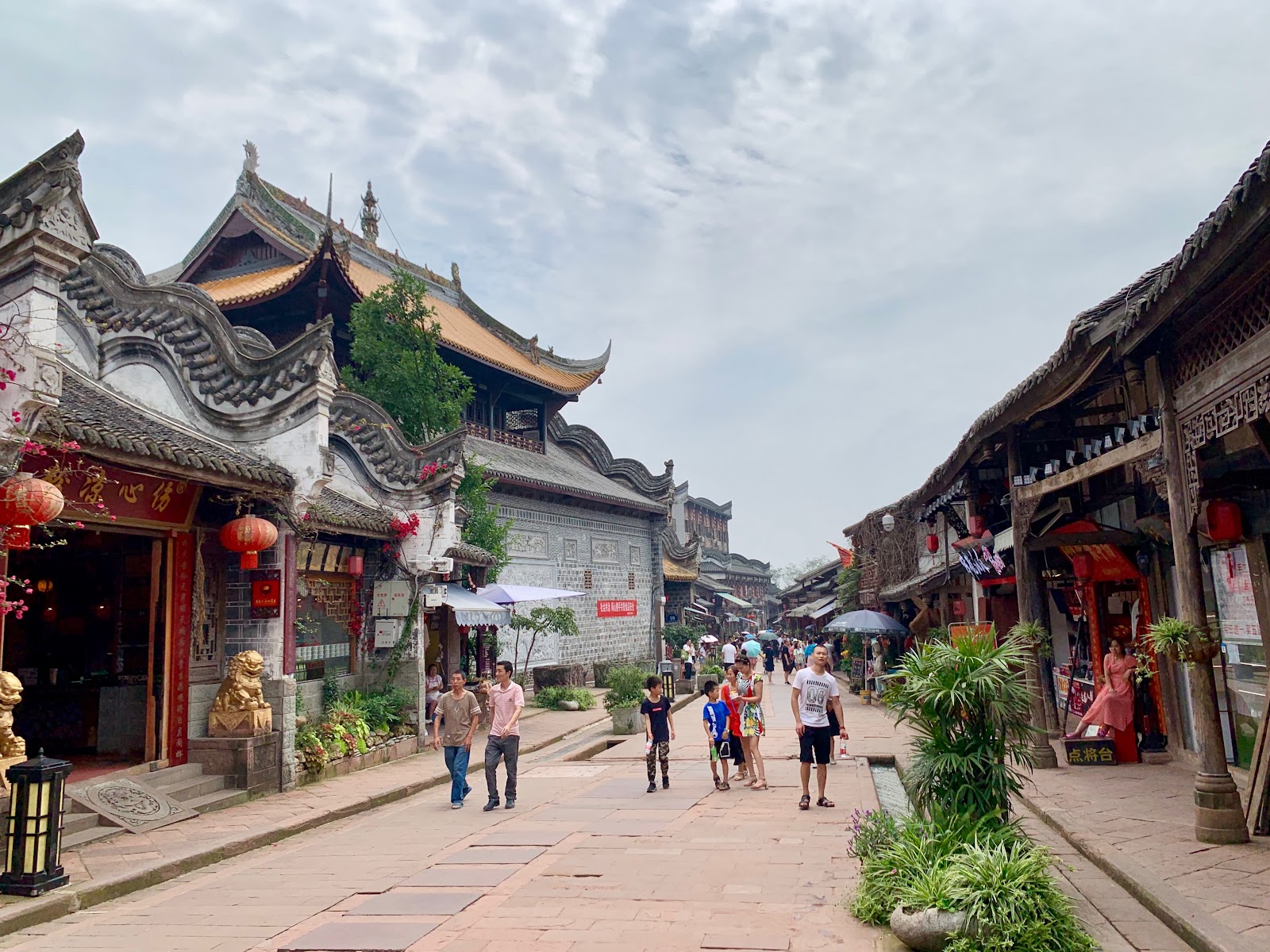
20. Huanglongxi and Luodai Ancient Towns
If you have a free day and want to see what Chinese ancient towns looked like, head to Huanglongxi about 40 km south of Chengdu. It has paved streets, stilt houses from the Ming and Qing dynasties, old temples, and a water mill.
Another option is Luodai in Longquanyi district, an ancient town of the Hakka people.
Entrance to the streets of both towns is reportedly free. However, bear in mind that they are very commercialised, so don’t expect a secluded idyll.
💡 Tip: Huanglongxi is in the same Shuangliu district as the older CTU airport, and is therefore suitable for the last day before departure from CTU.
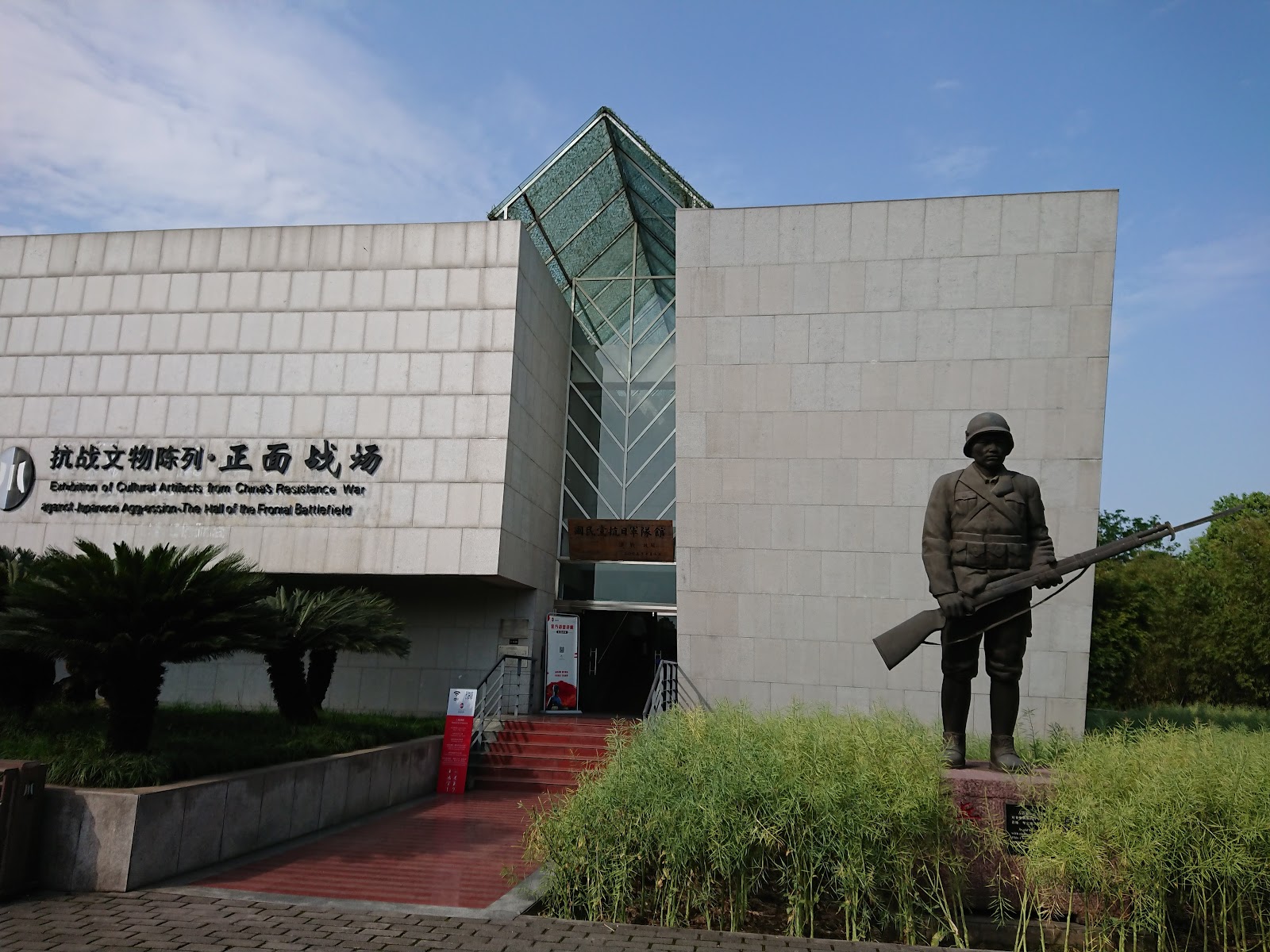
21. Jianchuan Museum Cluster
In the town of Anren in Dayi county stands the private Jianchuan Museum Cluster. It comprises dozens of museums dedicated mainly to the War of Resistance against Japan and the Cultural Revolution.
Anren itself is an ancient town with historic residences, so you can combine a walk with the museums. Entrance fees and opening hours can be found on the website jc-museum.cn.
The complex is suitable for those who are more interested in 20th-century Chinese history than ancient temples.
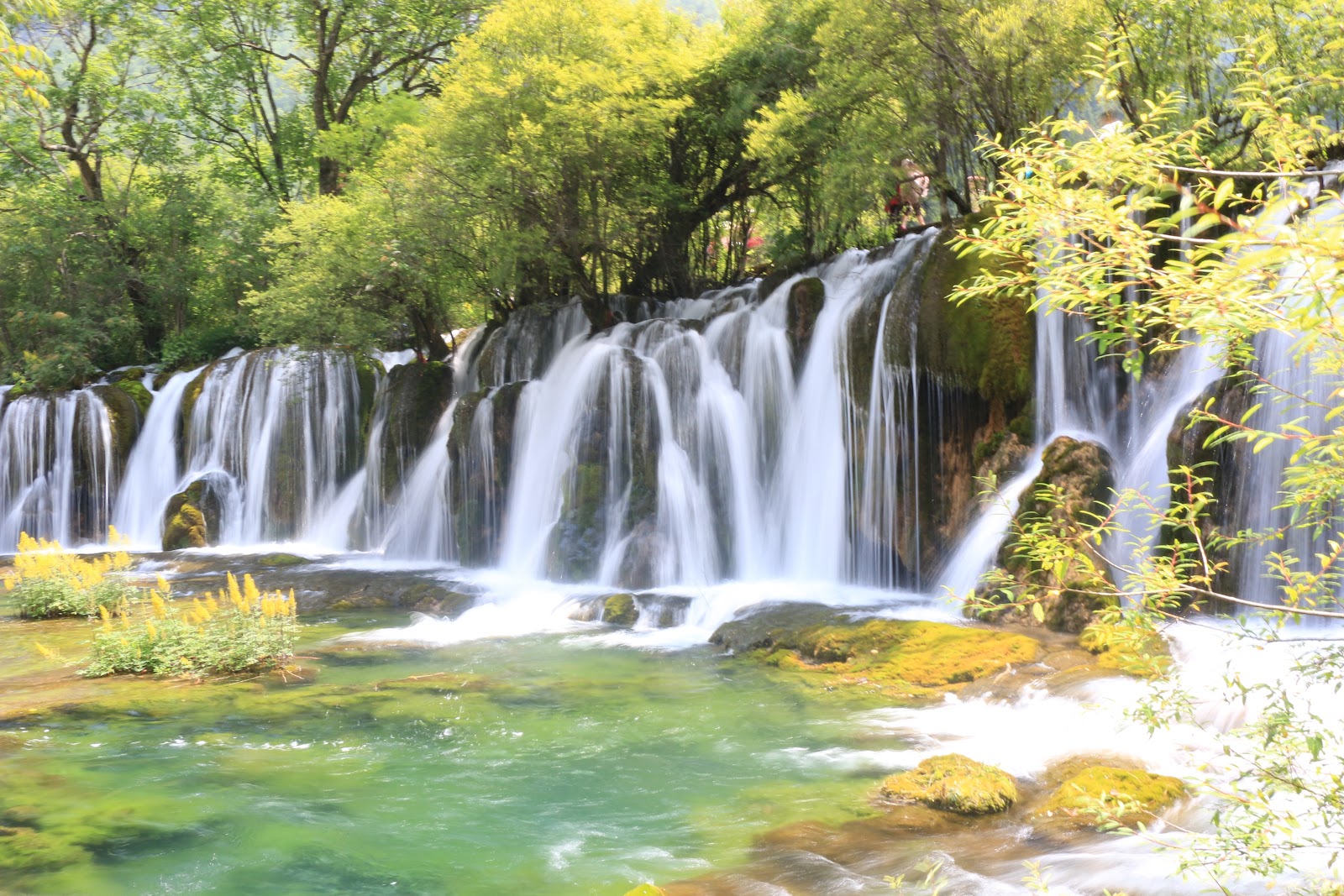
22. Jiuzhaigou
Jiuzhaigou Valley in Ngawa prefecture is a destination for a longer journey, not a day trip from Chengdu. You can get here by plane or high-speed train to Huanglong Jiuzhai station. The park is open from 7:30 to 18:00; current operations and tickets can be found on the official website jiuzhai.com.
Warning: Jiuzhaigou lies outside the permitted area for the 240-hour transit. If you fly to China without a visa under the transit regime, do not go here. You need a tourist L visa.
If you have a visa, book transport and tickets in advance and avoid Chinese public holidays.
Where to Go Next from Chengdu
If you have more time in China, you can continue from Chengdu by high-speed train to Chongqing; the journey takes about one to one and a half hours. Are you more attracted to a coastal metropolis? Check out the article What to See in Shanghai.
If you are travelling on the 240-hour transit, Hong Kong is a convenient “third region” to which you can continue from Chengdu. Flights to Hong Kong, according to Wikipedia, depart from Shuangliu Airport (CTU) from late July 2026 onwards, but verify the airport on your ticket. What to see in Hong Kong can be found in the article What to See in Hong Kong. And for accommodation directly in Chengdu, take a look at the guide Where to Stay in Chengdu.
Frequently Asked Questions
Do I need a visa for Chengdu?
Yes. Unlike Slovaks or Poles, Czech citizens are not included in China’s thirty-day visa-free regime as of October 2026. You can either apply for a tourist L visa through the Chinese Visa Service Centre in Prague (€44 until the end of 2026), or use the 240-hour visa-free transit. However, transit only applies when traveling to a third country or region, not when returning home, and only within the permitted area – Jiuzhaigou is not included.
How many days are enough for Chengdu?
Three to four days. One for the pandas and the old centre, one for temples, the teahouse and the evening opera, and one to two for trips to Leshan, Dujiangyan and Mount Qingcheng. If you’re including Mount Emei, count on another one to two days.
How do I buy panda tickets?
Online by name and passport number, preferably through Trip.com, or via the official WeChat account. You can book up to 14 days in advance. The ticket is valid for a morning or afternoon slot and costs 55 CNY (€7) for adults. Arrive at opening time at 7:30 (8:00 in winter) and avoid Mondays – pavilion no. 6, where according to visitors the most famous panda lives, is closed.
How do I get from the airport to the city centre?
Most international flights land at Tianfu Airport (TFU), about 51 km from the centre. From there, express metro line 18 takes 45 to 55 minutes to Chengdu South station. There you transfer to line 1 and reach Tianfu Square in about an hour and a quarter in total. The fare costs around 10 CNY (€1.30). According to Wikipedia, flights to Hong Kong, Macau and Taipei depart from the closer Shuangliu Airport (CTU) from summer 2026.
Can I eat vegetarian in Chengdu?
Yes, you just need to know where to go. The safest bets are Buddhist restaurants, such as the buffet at Wenshu Monastery for around 35 CNY (€4.50), and the vegetarian restaurant and teahouse Mi Xun Teahouse with its Michelin star. In regular restaurants, even vegetables are often cooked in lard or broth, so it helps to have a phrase in Chinese saved in your translator.
When is the best time to go to Chengdu?
In spring from March to May and in autumn from September to November. Summer is hot and rainy, with around 238 mm of rainfall in July. Winter is grey with minimal sunshine. Avoid Chinese holidays, especially National Week from 1 to 7 October.
How spicy is the food in Chengdu?
Very, and also “tingly” thanks to Sichuan pepper. Say “wēi là” (just a little spicy) or “bù yào là” (without chilli). Even “a little spicy” can be quite intense for the European palate.
Tips and Tricks for Your Vacation
Don’t Overpay for Flights
Search for flights on Kayak. It’s our favorite search engine because it scans the websites of all airlines and always finds the cheapest connection.
Book Your Accommodation Smartly
The best experiences we’ve had when looking for accommodation (from Alaska to Morocco) are with Booking.com, where hotels, apartments, and entire houses are usually the cheapest and most widely available.
Don’t Forget Travel Insurance
Good travel insurance will protect you against illness, accidents, theft, or flight cancellations. We’ve had a few hospital visits abroad, so we know how important it is to have proper insurance arranged.
Where we insure ourselves: SafetyWing (simple monthly subscription) and TrueTraveller (for extra-long trips).
Find the Best Experiences
Get Your Guide is a huge online marketplace where you can book guided walks, trips, skip-the-line tickets, tours, and much more. We always find some extra fun there!