

When you start planning accommodation near Uluru and your trip to Australia’s red heart, you might be caught off guard by one fundamental fact right from the start. Sleeping inside Uluṟu-Kata Tjuṯa National Park is strictly forbidden, and within a radius of hundreds of kilometers of unforgiving desert, there’s only one civilized settlement. The usual approach of browsing accommodation on a map simply doesn’t work here the way you’re used to from Europe or the coast.
At Uluru, you’re not actually choosing between various hotels scattered around the area. Instead, you’re deciding between accommodation types within one enormous resort. If the local prices seem too high, your only real alternative is to shift your base five and a half hours’ drive away to the town of Alice Springs. It might sound a bit harsh, but that’s exactly what the Australian wilderness is like.
The logistics of finding a place to sleep in Red Centre are actually simpler than they appear—you just need to know what you’re choosing from. So let’s dive in.
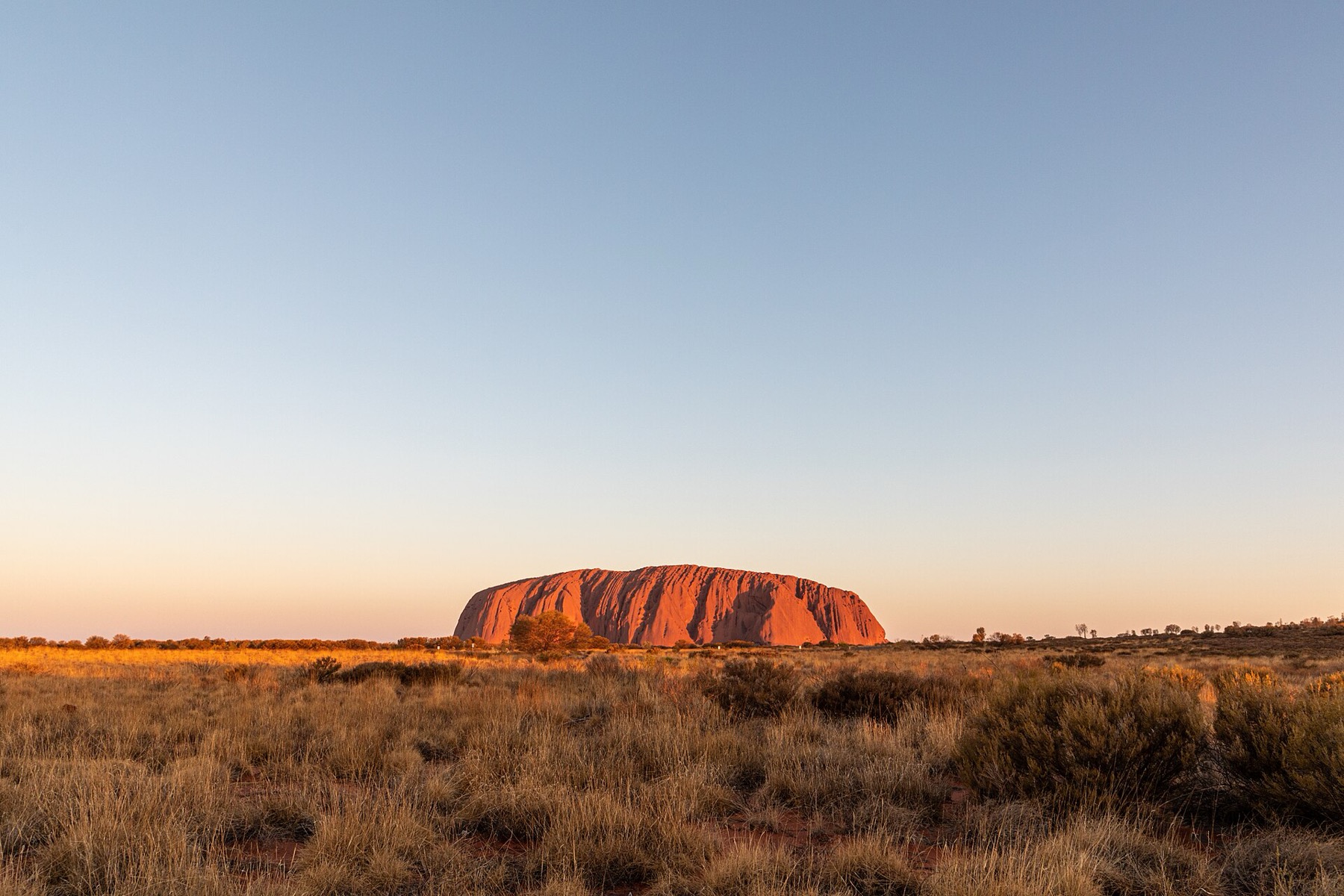
Quick Summary for Time-Pressed Readers
- The only settlement near Uluru is Yulara (Ayers Rock Resort), located just outside the national park boundaries and providing all facilities.
- Alice Springs lies 465 kilometers away, which means five and a half hours’ drive by car, but offers countless cheaper hotels and campgrounds.
- Transfer from Ayers Rock Airport (AYQ) to the resort in Yulara is completely free; buses meet every scheduled arrival.
- Flying between Uluru and Alice Springs is very expensive (around 540 AUD one-way), which often wipes out any savings from cheaper accommodation in town.
- Reserve at least three nights at Uluru so you can comfortably catch sunrises, visit sacred Kata Tjuta, and avoid stress if the weather turns bad.
- Camping is strictly prohibited in Watarrka National Park (Kings Canyon); you can only sleep at adjacent commercial resorts and stations.
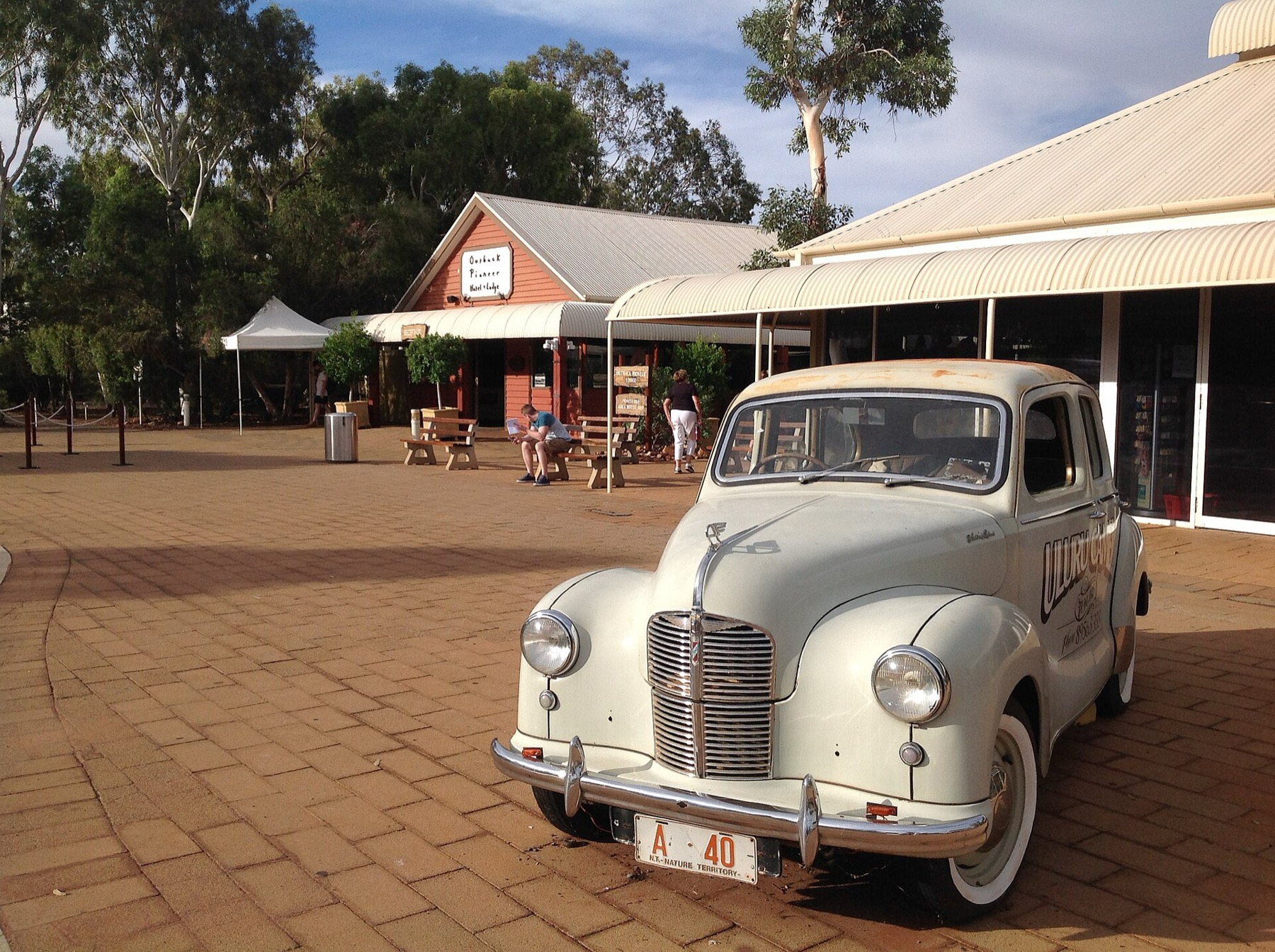
Why There’s No Choice of Location at Uluru
Planning a trip to this part of the Australian interior requires a slightly different approach than what we’re used to from typical vacations. Uluṟu-Kata Tjuṯa National Park is protected and deeply sacred territory, which means that sleeping inside the park is absolutely forbidden under threat of heavy fines. You won’t find any hidden romantic cabins, any parking spots for wild caravans, or even designated camping sites.
All tourist life is therefore concentrated in a single artificially built oasis, the settlement of Yulara, also known as Ayers Rock Resort. This village lies just outside the northern boundary of the national park, and from its center to the foot of the famous red monolith takes about twenty minutes by car. Yulara is something of a rarity—all accommodation, shops, and restaurants here are operated by a single company, so there’s exactly zero price competition.
This monopoly situation is the main reason why accommodation at Uluru must be booked many months in advance, especially during the main Australian season. Bed capacity is strictly limited, and once the more affordable rooms and campground sites sell out, only the most luxurious apartments remain. If you leave your search for accommodation to the last minute, you might simply have nowhere to lay your head, and your only salvation will be driving hundreds of kilometers away.
The paradox of visiting Australia’s red heart is that the park entrance fee of 38 AUD is the smallest item in your entire budget. What will test your wallet most are the costs of getting to the desert and accommodation in the resort. Still, you shouldn’t try to save money by rushing in for just one night, because with the long distances involved, you’ll get nothing out of such a visit.
A trip to Red Centre really pays off only when you give it enough time and combine viewing Uluru with exploring the nearby rock domes of Kata Tjuta. The ideal itinerary also includes a side trip to the majestic Kings Canyon, which represents a completely different but equally fascinating type of desert landscape. In short, logistics in the desert demand careful planning and respect for the enormous distances.
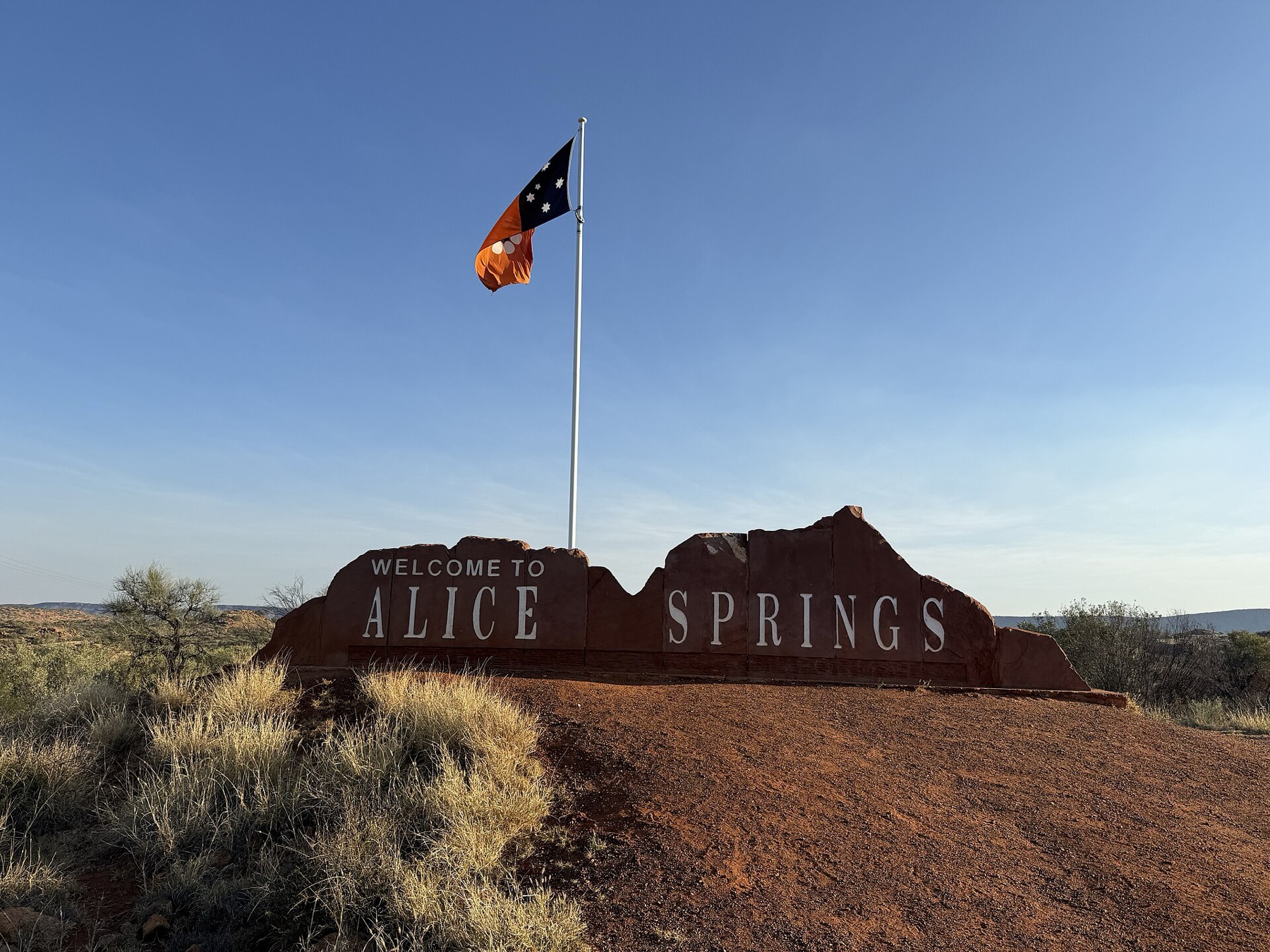
Yulara or Alice Springs: How to Decide
The question of where to set up your base seems simple. But the answer depends on what you expect from the trip and how many hours behind the wheel you don’t mind. Where should you establish your base camp? On one side stands expensive and exclusive Yulara; on the other, the much more affordable but very distant town of Alice Springs. Let’s look at what should guide your route planning decision.
| Type of Traveler | Ideal Base | Main Reason |
|---|---|---|
| Sunrise chasers | Yulara | You’re right next to the park—no need to wake up in the middle of the night for a five-hour drive. |
| Families and comfort lovers | Alice Springs | Regular shops, pharmacies, hospitals, and plenty of affordable apartments with kitchens. |
| Range explorers | Alice Springs | Ideal starting point for visiting the stunning West MacDonnell Ranges. |
| Travelers without a car | Yulara | The resort has excellent free shuttle buses, and you can reach everywhere on organized tours. |
If you choose Yulara as your base, you gain a huge advantage in being immediately close to the main attractions. Uluru and Kata Tjuta are just around the corner, which means you can return to your room in the middle of a hot day, relax by the pool, and head out again for sunset in the evening. The entire resort is also connected by a free shuttle bus, so you don’t necessarily need your own car to move between the hotel, supermarket, and viewpoints.
On the other hand, the town of Alice Springs offers much greater freedom and a wider variety of accommodation options, from backpacker hostels to solid hotels. The problem, however, is the enormous distance, because the journey from Alice Springs to Uluru measures 465 kilometers and takes about five and a half hours of pure driving. If you wanted to see the monolith at sunrise, you’d have to leave town deep in the night and also risk collisions with kangaroos, which are very active after dark.
You might come up with the brilliant plan of flying to Uluru, seeing it, then flying to Alice Springs where you’ll rent a car for further excursions. Here, however, lurks a major financial trap, because a one-way flight between Ayers Rock Airport (AYQ) and Alice Springs costs around 540 AUD. This amount reliably erases any savings you’d gain by booking a cheaper hotel in town. One-way car rentals are equally treacherous, with rental companies charging hefty surcharges.
The smartest and often cheapest combination is therefore to fly into Alice Springs, rent a car there, and set out on a classic road circuit. If, on the other hand, you’re heading just to the monolith and fly directly into Ayers Rock Airport, prepare for a very pleasant surprise. Transfer from AYQ Airport to the resort in Yulara is completely free—AAT Kings buses automatically meet every scheduled arrival, and the journey to your hotel takes just a pleasant ten minutes. On your return trip, the bus picks you up exactly two hours before departure.
Where to Stay: 8 Places in Red Centre
💡 Accommodation and experiences tip: We prefer to look for accommodation on Booking.com, where they have the best cancellation terms. Tickets, tours, and activities are worth comparing and buying through GetYourGuide.
Red Centre is enormous—so we’ve divided accommodation options into eight locations, from the monolith through canyons to the city, to help you navigate more easily. The following list progresses from the immediate vicinity of the sacred rock, through remote canyons, to the pulsing heart of the interior.
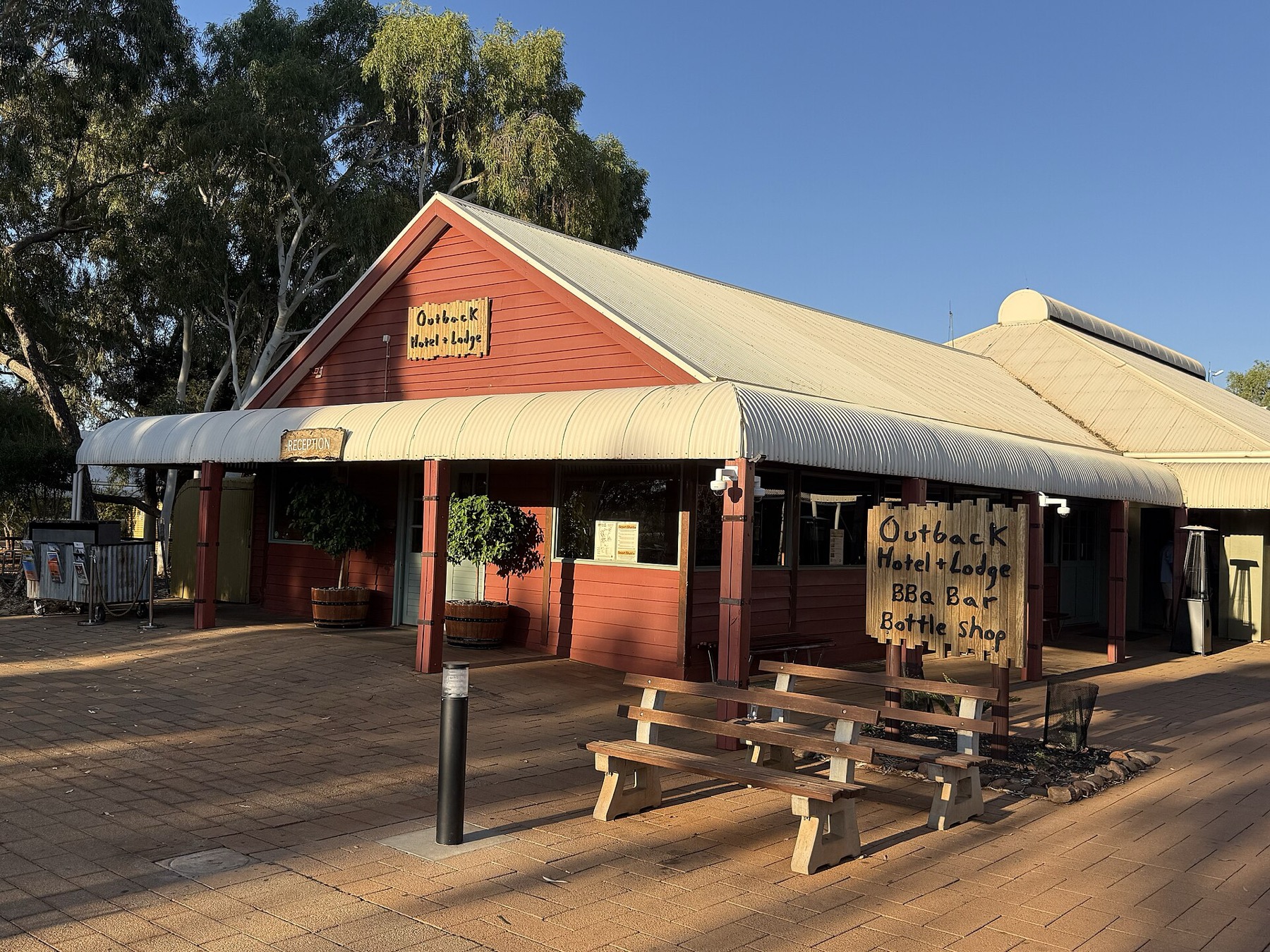
1. Yulara: Hotel Complexes
The hotel complex in Yulara is surprisingly comfortable – in the middle of the endless red desert you’ll find swimming pools, restaurants and landscaped gardens where you can truly enjoy a well-deserved rest after a morning in the park. There are refreshing pools and several quality restaurants specialising in both international cuisine and local produce. From these hotels you can easily make a morning visit to the national park with complete flexibility and after a demanding morning of walking you can easily relax in an air-conditioned room.
This option is absolutely ideal for travellers who don’t want to deal with the logistics of long transfers and like having everything important within easy reach. A shuttle bus will take you from here to the resort centre in just a few minutes, and you’re equally close to the viewpoint from which you can see the famous rock. However, you need to be prepared that you’ll pay a premium for this luxury, especially during the peak Australian winter months when high season is in full swing.
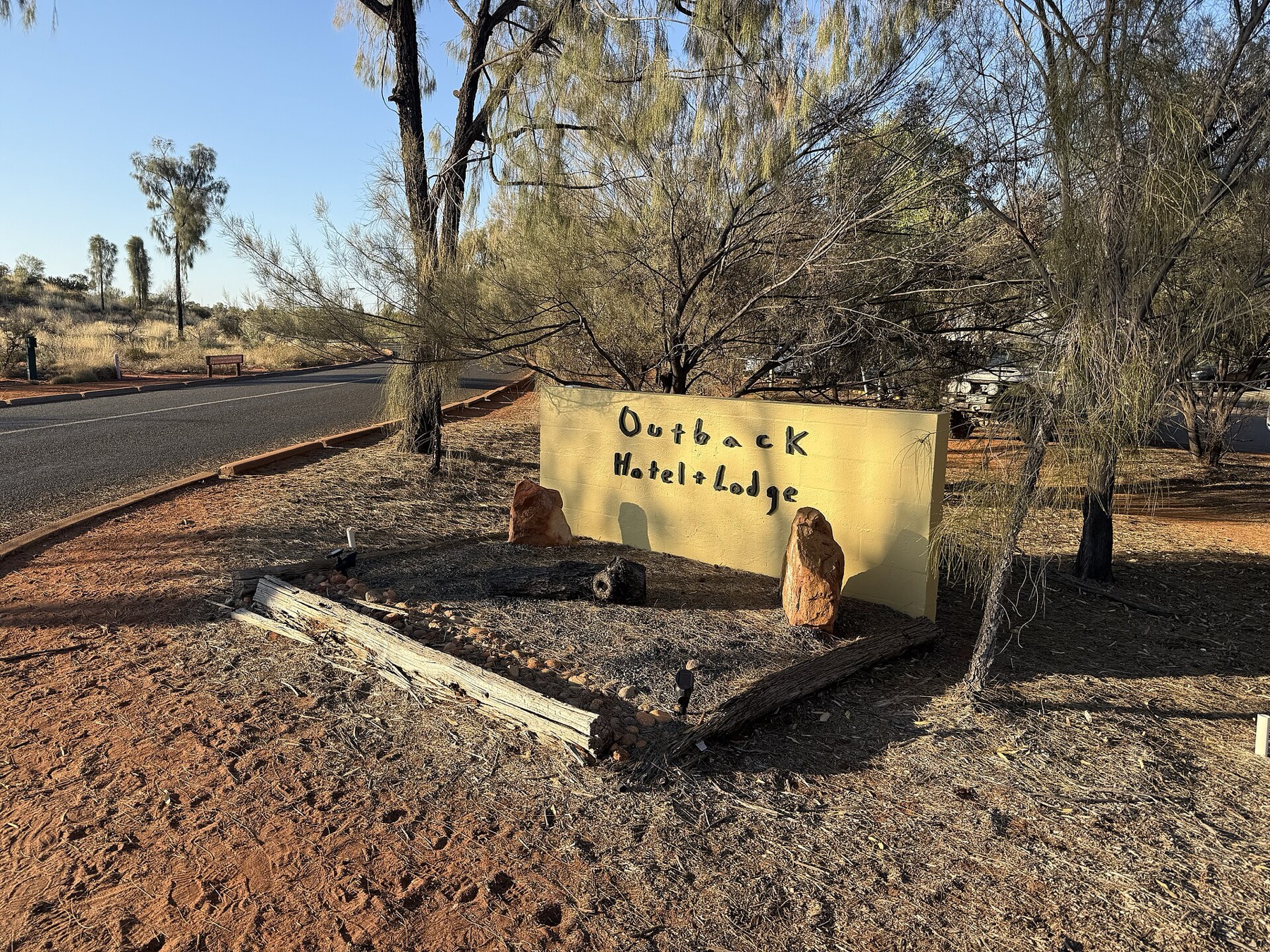
As for specific options, guests highly praise Sails in the Desert (Google 4.2 / 2,317 reviews), which is considered one of the best larger hotels in the area. Desert Gardens Hotel (Google 4.2 / 3,071 reviews) also has an excellent reputation, with some rooms offering direct views of the monolith. A good middle ground is the stylish The Lost Camel Hotel (Google 4.0 / 974 reviews) or the more lively Outback Hotel (Google 3.9 / 2,404 reviews). 💡 Tip: Rooms with direct views of Uluru tend to sell out first, so if you’re after that romantic touch, book them up to six months in advance.
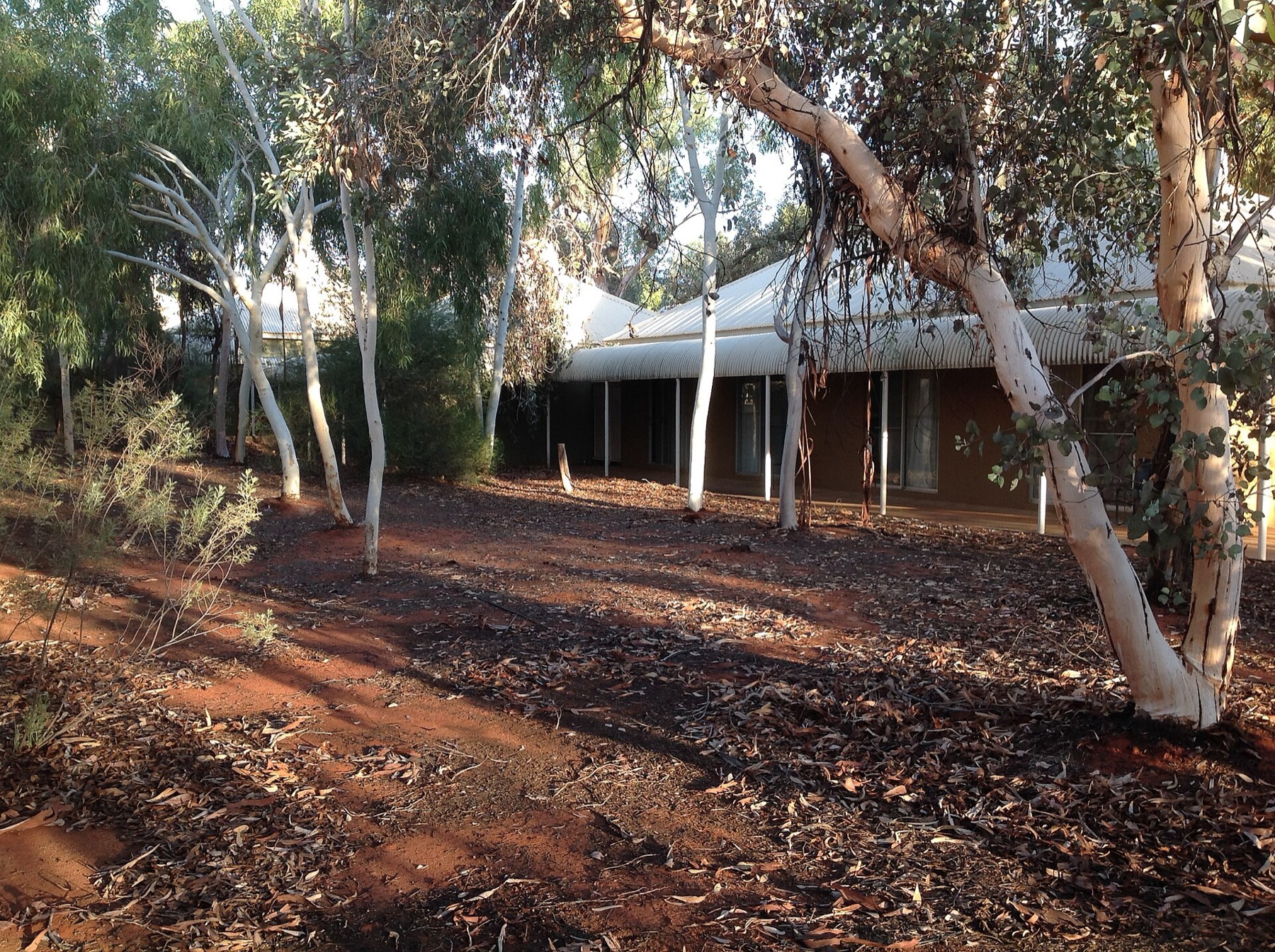
2. Yulara: Apartments and Camping
If you prefer greater independence and like cooking your own meals when travelling, the resort also offers more practical and affordable forms of accommodation. Spacious apartments provide fully equipped kitchens, which is a huge advantage in the desert, and camping areas attract adventurers with caravans or tents. From both these types of accommodation you have exactly the same access to the national park and free shuttle buses as guests from expensive five-star hotels.
These options are perfect for families with children, larger groups of friends, or anyone who wants to keep their budget under control in expensive Yulara. The proximity of the only local IGA supermarket means you can easily buy supplies and prepare packed lunches for trips. The distances to Uluru itself remain the same, about twenty minutes of comfortable driving on a sealed road.
Among visitors looking for their own base, Emu Walk Apartments (Google 4.3 / 545 reviews) are extremely popular, offering living space and a full kitchen. For lovers of sleeping under the stars there’s the renowned Ayers Rock Campground (Google 3.9 / 2,154 reviews), which is part of the overarching Ayers Rock Resort complex (Google 4.1 / 666 reviews). 💡 Tip: Campsites for caravans with electrical hook-ups disappear at lightning speed during Australian school holidays, so even here it doesn’t pay to wait until the last minute.
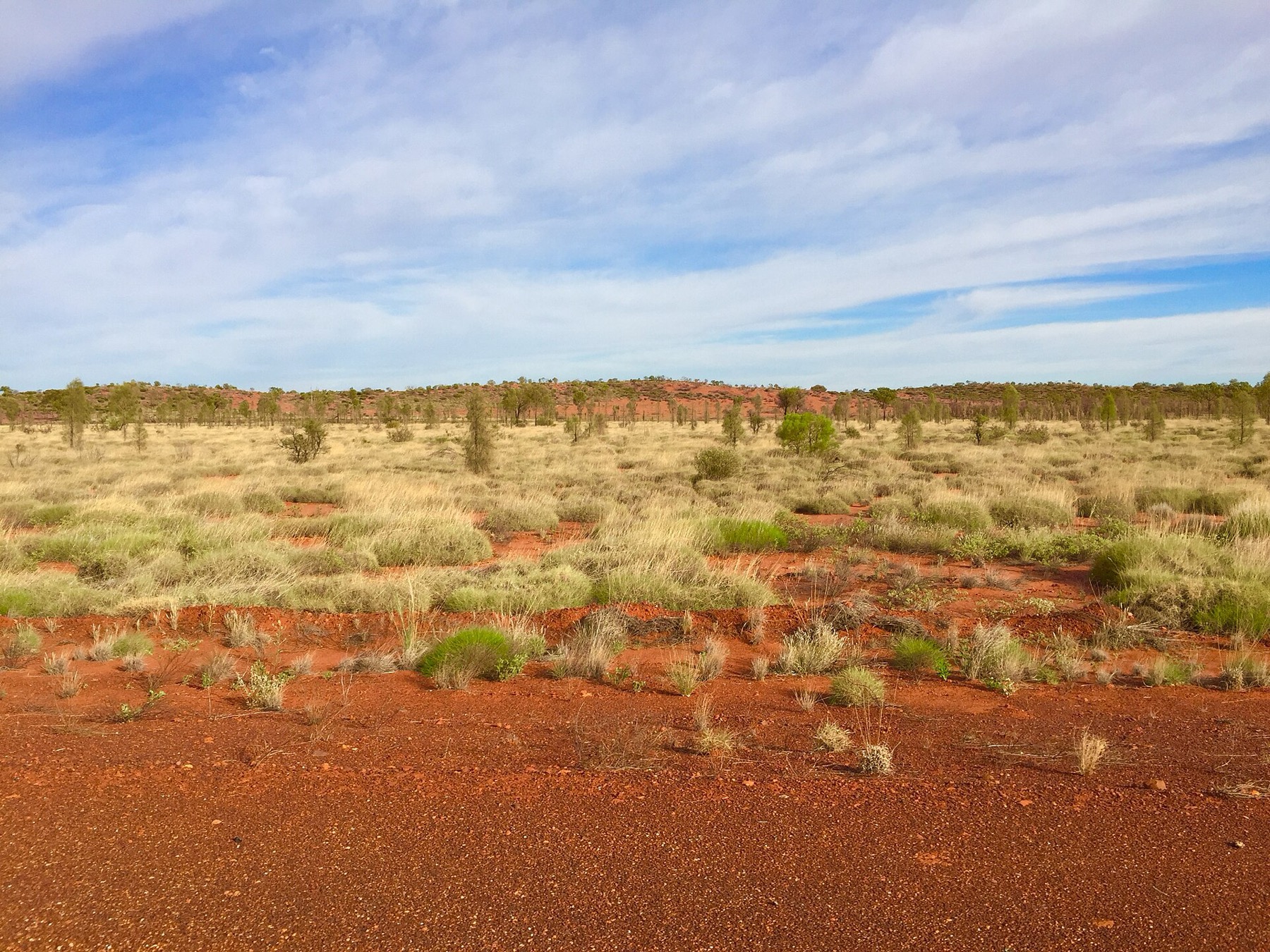
3. Exclusive Luxury at Uluru
For the most discerning travellers, there is accommodation in close proximity to the national park that takes the concept of luxury to an entirely different level. This isn’t a classic large hotel, but an intimate collection of beautiful tents and pavilions sensitively set directly into the red dunes. From this spot you can watch the colour transformations of the sacred rock directly from your own bed, without having to share the view with hundreds of other tourists.
This type of resort is designed exclusively for visitors with a generous budget who have come to Australia to celebrate a special occasion, such as a honeymoon. The resort is located just a few kilometres from the national park entrance and provides absolute privacy that you won’t otherwise find in busy Yulara. Distances cease to matter here, as transfers and excursions are taken care of for you, so your only concern is what time to get up for sunrise.
The absolute pinnacle and icon in this category is the stunning Longitude 131° resort (Google 4.8 / 219 reviews), which regularly wins prestigious international awards. Accommodation here takes the form of luxury tents with glass walls that face directly onto the famous sandstone massif. 💡 Tip: Most premium stays of this type operate on an all-inclusive basis, meaning that in addition to top-class gastronomy, the price also includes the services of private guides.
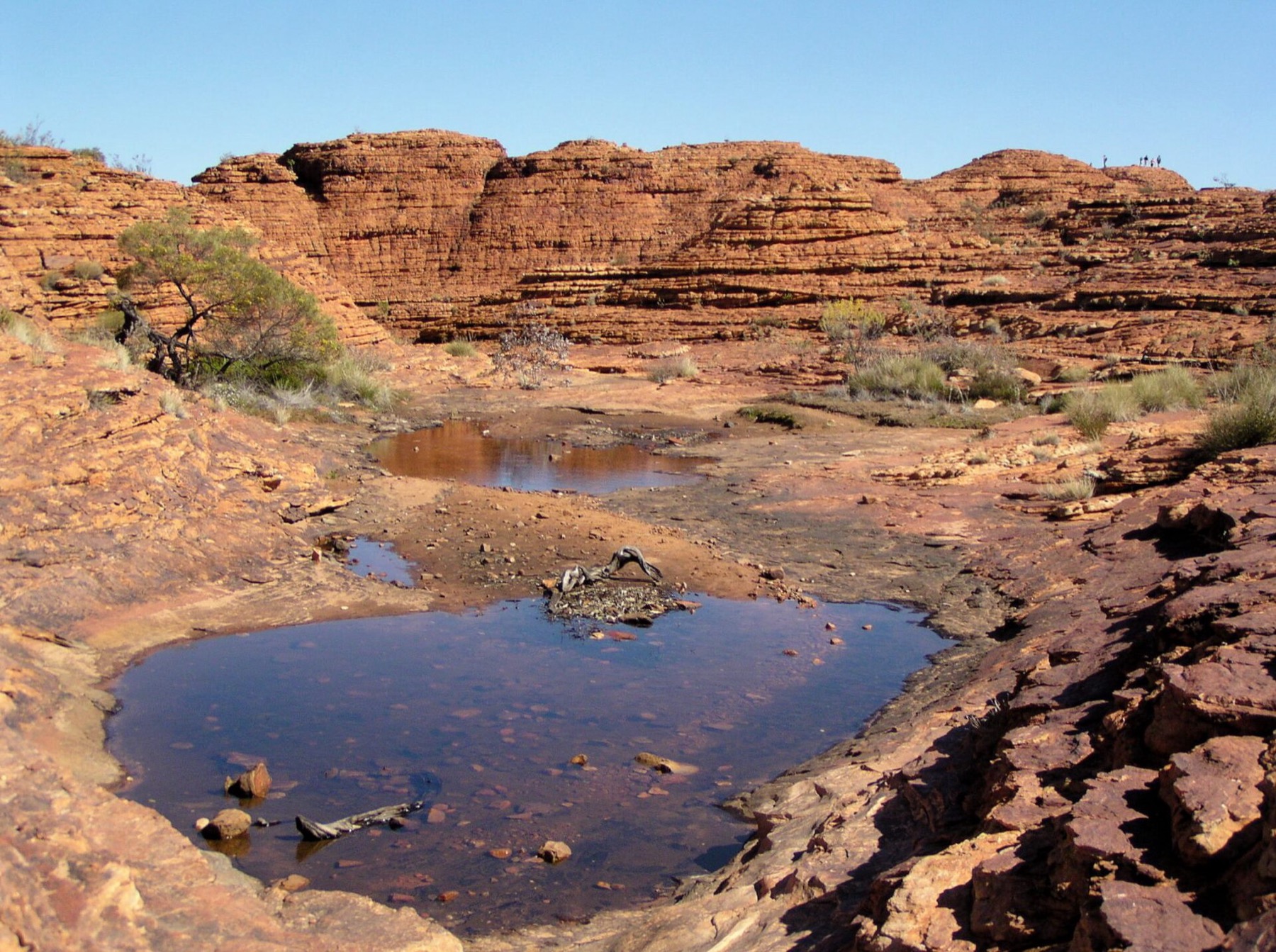
4. Kings Canyon (Watarrka) and Surroundings
This stunning area lies approximately 300 kilometres from Uluru and 450 kilometres from Alice Springs and represents a completely different world of deep sandstone gorges. Given that camping and overnight stays are strictly prohibited within Watarrka National Park itself, you need to use commercial stations and resorts on the access road. If you stay here, you can set off on the famous canyon rim walk early in the morning, before the unbearable sun begins to beat down on the walls.
A base at Kings Canyon is absolutely essential for anyone who wants to explore the red centre in depth and doesn’t just want to quickly hop between the main points. Luritja Road, which leads here, is fully sealed, so you don’t need any special off-road vehicle with four-wheel drive for the transfer. A stay here works brilliantly for one to two nights as a stopover on the grand desert loop.
Accommodation options in this area are concentrated in two main locations, offering everything from basic tents to air-conditioned rooms. You can lay your head at the spacious Discovery Resorts – Kings Canyon, which functions as the main accommodation centre and offers a wide range of rooms and camping sites. An excellent and more authentic alternative is the nearby farm homestead Kings Creek Station, which is famous for its canvas tents and authentic outback atmosphere. 💡 Tip: If you’re planning to tackle the challenging ascent to the canyon rim, arrange an early breakfast at your accommodation so you can be on the trail at dawn.
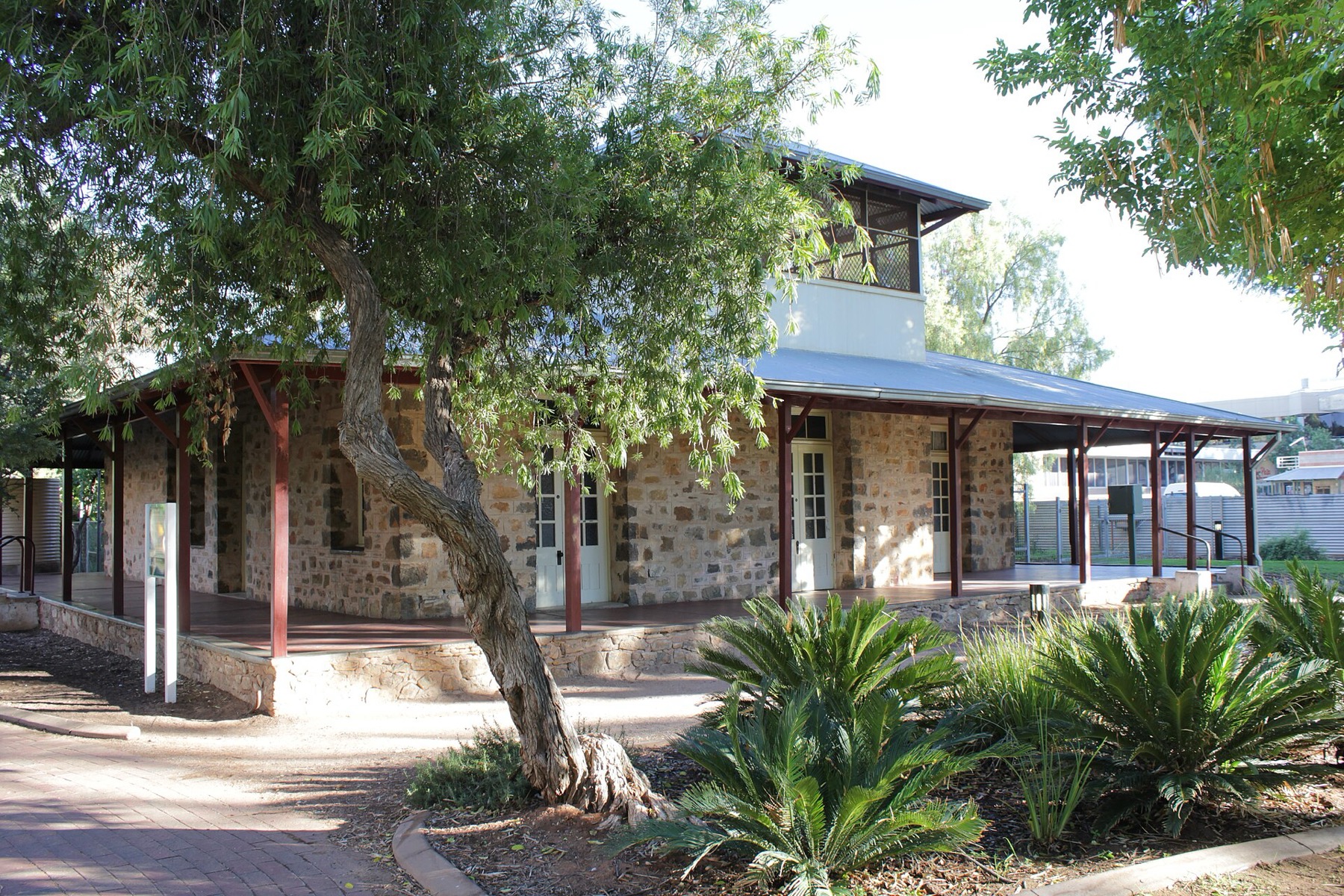
5. Alice Springs: City Centre
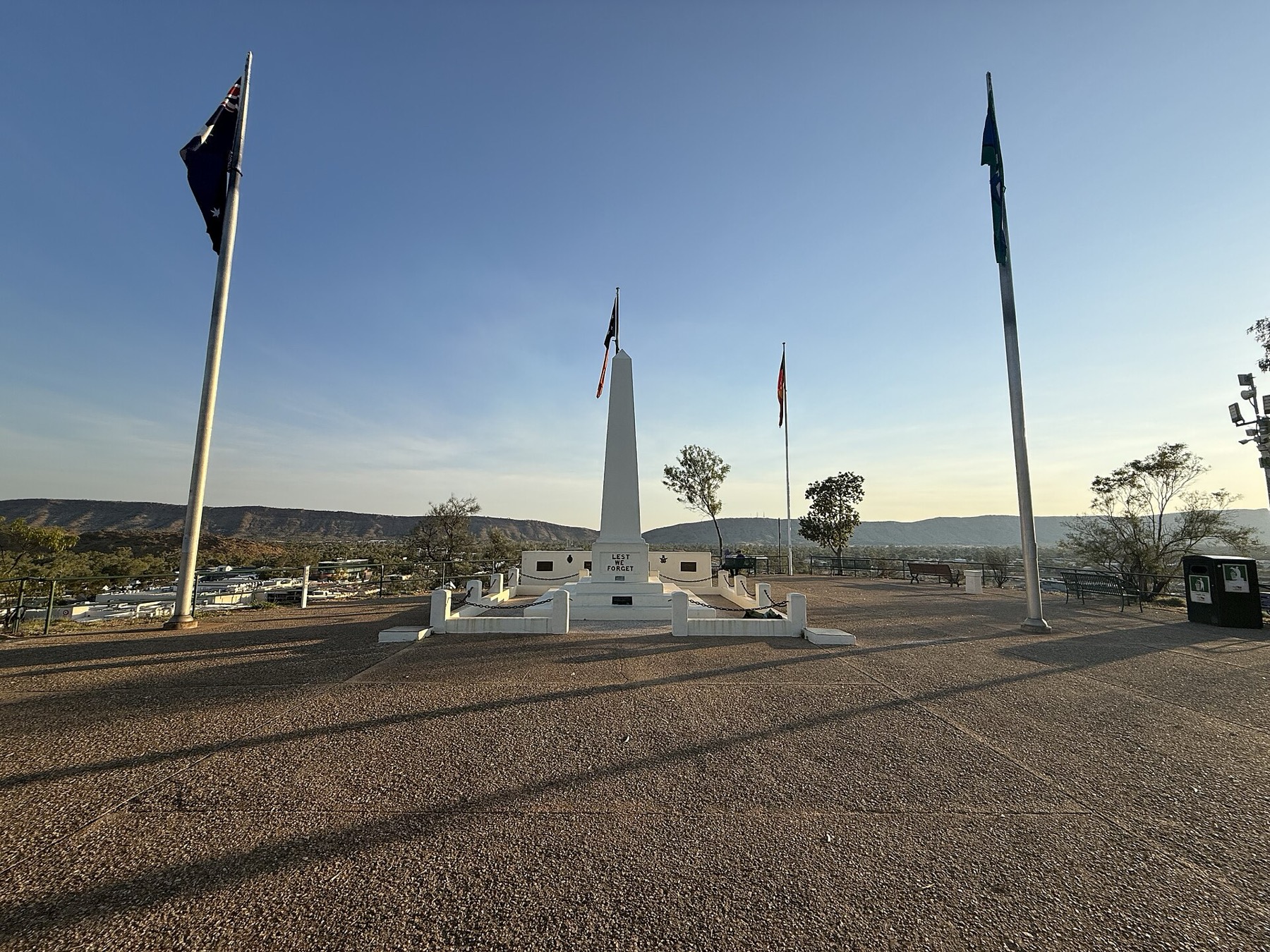
The town of Alice Springs represents the vibrant heart of the entire Australian interior and its central streets are full of cafes, galleries with Indigenous art and quality restaurants. Staying right in the centre is the most convenient option, because from here you can easily visit the town’s landmarks and walk to a good dinner in the evening. Most hotels are within walking distance of the main pedestrian zone of Todd Mall, which makes them an excellent starting point.
The centre is ideal for travellers who, after dusty days in the desert, want to enjoy a bit of urban comfort and don’t want to be dependent on a car for every coffee run. From Alice Springs it’s those aforementioned long five and a half hours to Uluru, so as a base for daily trips to the monolith the town really isn’t suitable. However, it serves excellently as a springboard for excursions to the nearby surroundings.
Reviewers in the city centre very often praise the reliable Mercure Alice Springs Resort (Google 4.1 / 942 reviews) or the spacious DoubleTree by Hilton Hotel Alice Springs (Google 4.1 / 1,296 reviews). If you’re looking for quality standards, you won’t be disappointed by Crowne Plaza Alice Springs Lasseters by IHG (Google 4.0 / 1,217 reviews) either. An interesting choice with a modern approach is also greet Hotel Alice Springs (Google 3.7 / 677 reviews) or the classic Mantra Alice Springs (Google 3.7 / 812 reviews). 💡 Tip: Hotels in the centre tend to be booked well in advance during major local festivals, such as the ten-day Parrtjima festival of lights.
6. Alice Springs: Apartments and Backpacker Hostels
Beyond the classic large hotels, Alice Springs offers a huge variety of alternative accommodation scattered across quieter neighbourhoods like The Gap or East Side. Apartment complexes provide welcome space for longer stays, while popular hostels bring together a community of independent travellers from around the world. From these places you can comfortably plan all your desert expeditions, stock up on supplies for the road, and do your laundry at local laundromats.
Apartments are an unbeatable choice for families with children, for whom a standard hotel room simply isn’t enough and who need their own kitchen to prepare breakfast. Hostels target younger travellers who want to save money on accommodation and enjoy swapping travel tips with fellow adventurers over an evening beer. Distances to the centre from here are usually just a few minutes by car or a pleasant walk.
Among apartments, Quest Alice Springs (Google 4.2 / 236 reviews) holds excellent ratings, as do the highly popular Alice on Todd Apartments (Google 4.1 / 178 reviews) in The Gap neighbourhood. Backpackers and lovers of a relaxed atmosphere swear by Alice’s Secret Travellers Inn (Google 4.8 / 373 reviews) or the nearby Alice Lodge (Google 4 / 214 reviews). For the budget-conscious, central options include Ronnies Bush House (Google 4.4 / 36 reviews) or Red Rock Hostel (Google 4.3 / 335 reviews). 💡 Tip: If you’re planning a long road trip, take advantage of the opportunity to stock up on non-perishable food in Alice Springs, as prices will be much higher in smaller settlements.

7. Curtin Springs and the Desert Road
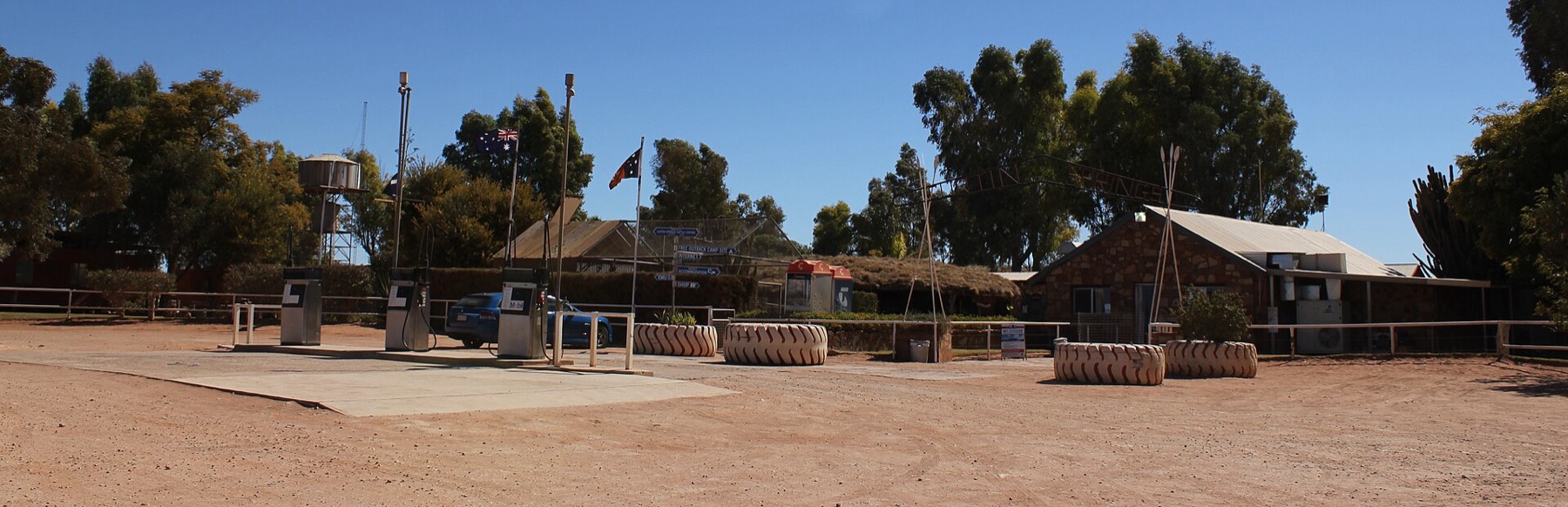
Across the vast and empty distances between the main attractions of the interior, there are very few places where a weary driver can safely stop and recharge. One such key point is a cattle station that lies right on Lasseter Highway, roughly halfway between the sacred rock and the turnoff north to the canyons. From this strategic location you can manage both an early morning transfer to Uluru and a comfortable journey towards Kings Canyon, without having to return to the expensive resort.
This is where people come who want to experience Australia without filters, and honestly don’t miss five-star luxury. The station is surrounded by endless pastures and enormous distances, which gives you a real sense of how challenging life is for local farmers. Not far from here stands the mysterious table mountain Mount Conner, which is often nicknamed “Fooluru” because many tourists mistake it from a distance for the real monolith.
The main and essentially only stopping point on this route is the famous Curtin Springs Station (Google 3.9 / 678 reviews), which functions as a petrol station, pub, truck park, and basic accommodation all in one. You can rent a basic room or simply pitch a tent on the designated dusty patch. 💡 Tip: Don’t expect any great culinary wonders here, but an evening beer with local stockmen and the dust of ordinary Australian outback have an unmistakable charm.
8. West MacDonnell Ranges
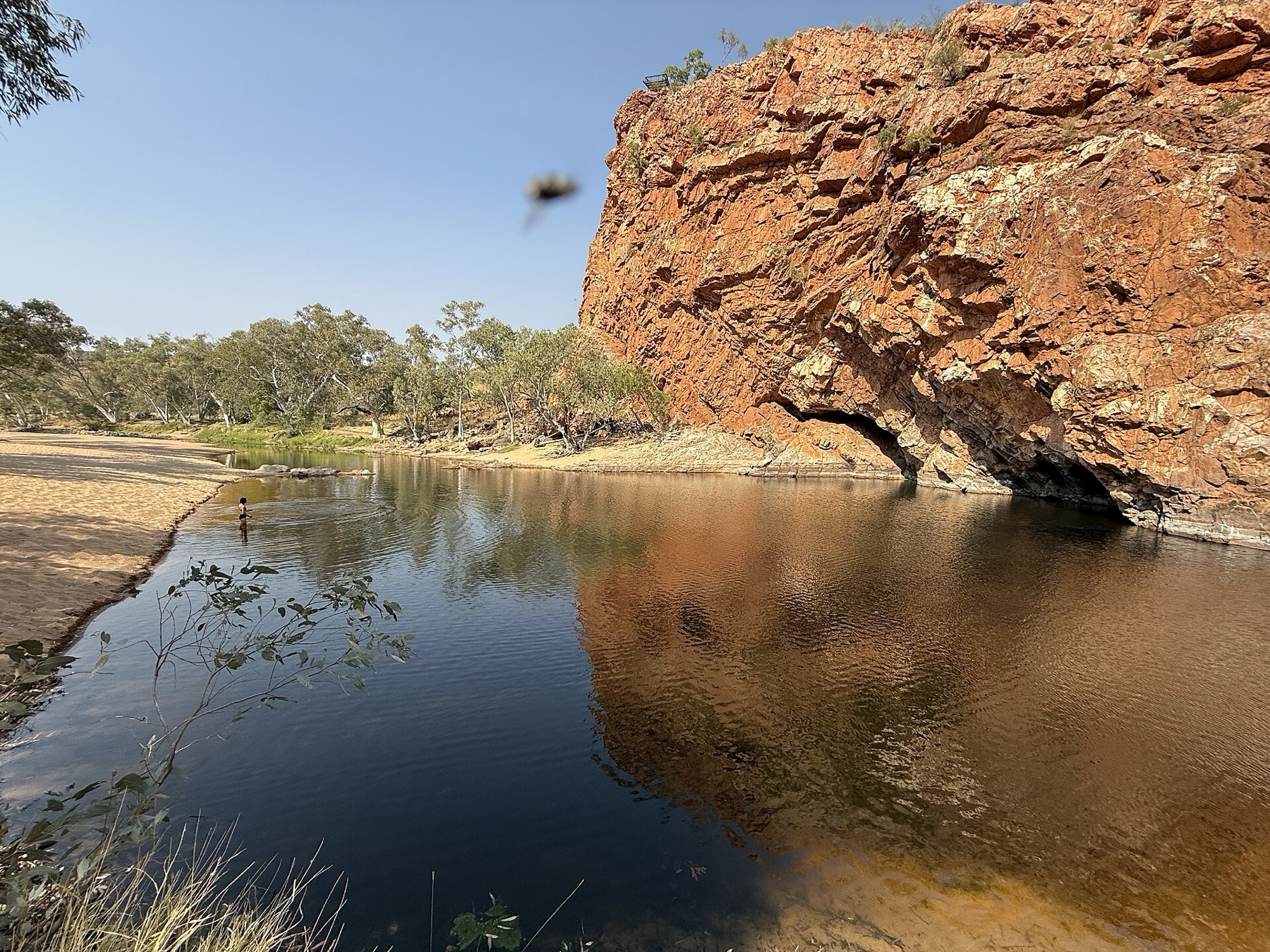
West of Alice Springs stretches a fascinating and rugged mountain range that hides some of the most beautiful gorges, chasms, and natural swimming holes in all of Australia. Staying right in this area means you can explore dramatic rock formations long before the first tourist buses arrive from town. It’s an ideal way to completely disconnect from civilization and immerse yourself in the silence of an ancient landscape.
Accommodation around this range is sought after primarily by nature lovers, campers, and hikers who don’t mind that there’s no phone signal and no urban amenities. Distances are measured differently here – the range itself stretches over 160 kilometres, so a strategically chosen place to sleep will save you many hours behind the wheel, and once you venture deeper into the mountains from Alice Springs, you find yourself in a completely different world.
A very popular base for exploring this area is Discovery Parks – Glen Helen (Google 3.9 / 329 reviews), an excellently equipped campground set in beautiful scenery right by the river. For those who want to be even closer to nature and are happy with simpler facilities, a fantastic choice is Ormiston Gorge Campground (Google 4.4 / 107 reviews), managed by the national parks. 💡 Tip: Nights in the ranges can be significantly colder than on the flat desert, so even in summer months don’t forget to pack a good quality warm sleeping bag.
Accommodation by Budget
The following table will help you quickly get your bearings on what types of accommodation suit your travel style. We deliberately don’t list any prices, because they change drastically throughout the year and the only reliable way is to check current rates for your specific dates.
| Type of Accommodation | Location | Google Rating | Ideal For |
|---|---|---|---|
| Longitude 131° | Yulara | 4.8 ⭐ | For the discerning who seek absolute privacy and the highest luxury with a view. |
| Emu Walk Apartments | Yulara | 4.3 ⭐ | For families and groups who benefit from cooking their own meals in a kitchen. |
| Sails in the Desert | Yulara | 4.2 ⭐ | For lovers of classic hotel service in the heart of the action near the monolith. |
| Desert Gardens Hotel | Yulara | 4.2 ⭐ | For travellers seeking excellent standards and beautiful gardens. |
| Desert Palms Alice Springs | Alice Springs | 4.2 ⭐ | For those seeking quiet motel accommodation within reach of the city centre. |
| The Lost Camel Hotel | Yulara | 4.0 ⭐ | For couples and solo travellers who appreciate stylish boutique accommodation. |
| Ayers Rock Campground | Yulara | 3.9 ⭐ | For adventurers with caravans and tents who want to sleep as close to the park as possible. |
| Curtin Springs Station | Petermann | 3.9 ⭐ | For drivers on a long road trip who need a practical stopover on the route. |
Where to Eat
Once you know where to rest your head, you’ll naturally wonder about food. In Yulara you can rely on quality hotel restaurants found in the larger complexes. The most famous gastronomic experience is the luxurious Sounds of Silence dinner, where they’ll serve you excellent vegetarian dishes under the open sky. During the day, stop by the Ininti Café right in the Cultural Centre, where you can grab a coffee with a view of the national park.
If you want to keep your budget under control, your only saviour is the large IGA supermarket in the resort centre. Prices are somewhat higher than on the coast, but it still pays to buy ingredients and cook in your apartment or campsite. Beyond Yulara, along the route you’ll come across the rustic pub at Curtin Springs station, where you shouldn’t expect any haute cuisine, but an evening beer with local stockmen simply has something special about it.
What You Can Reach from Each Base
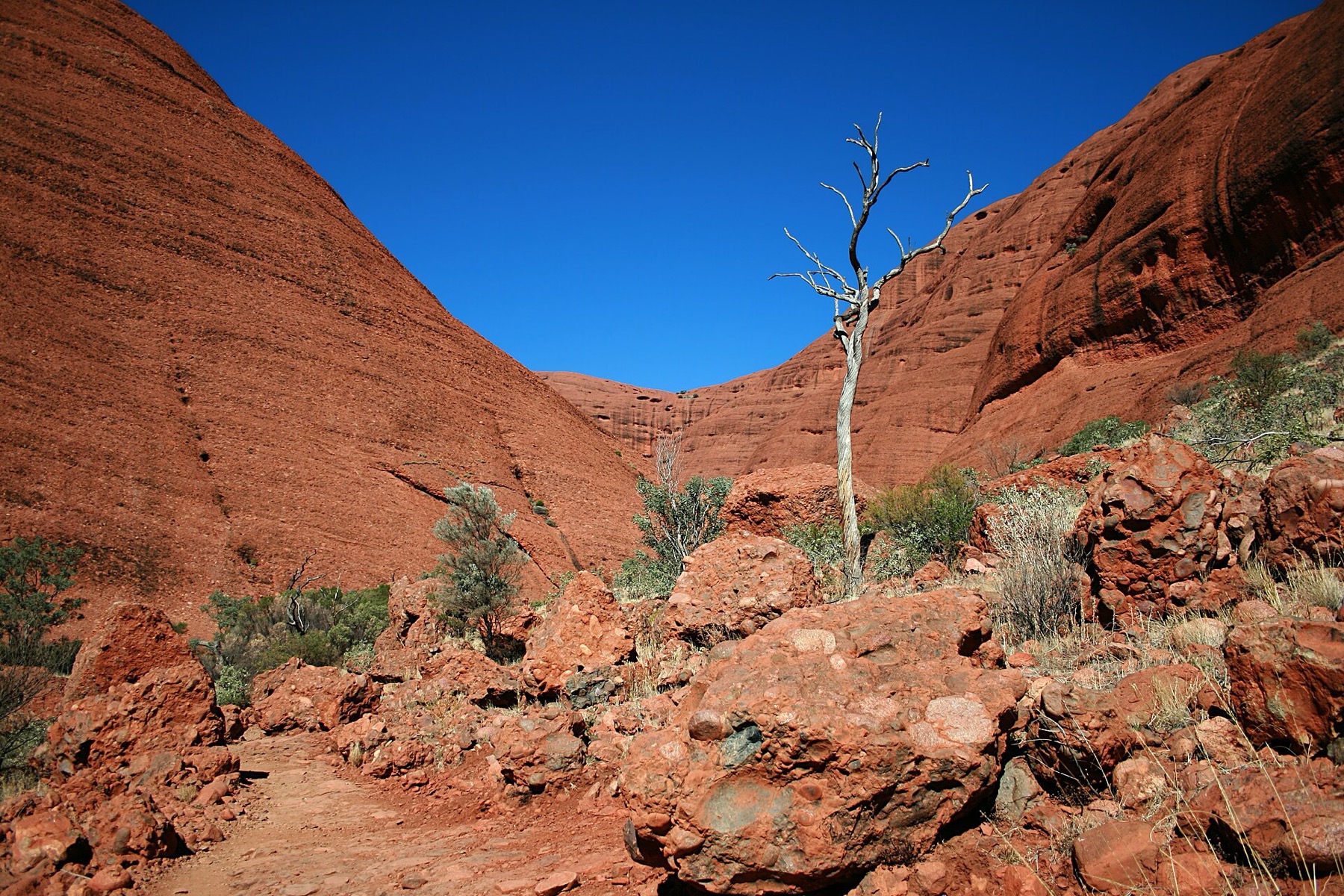
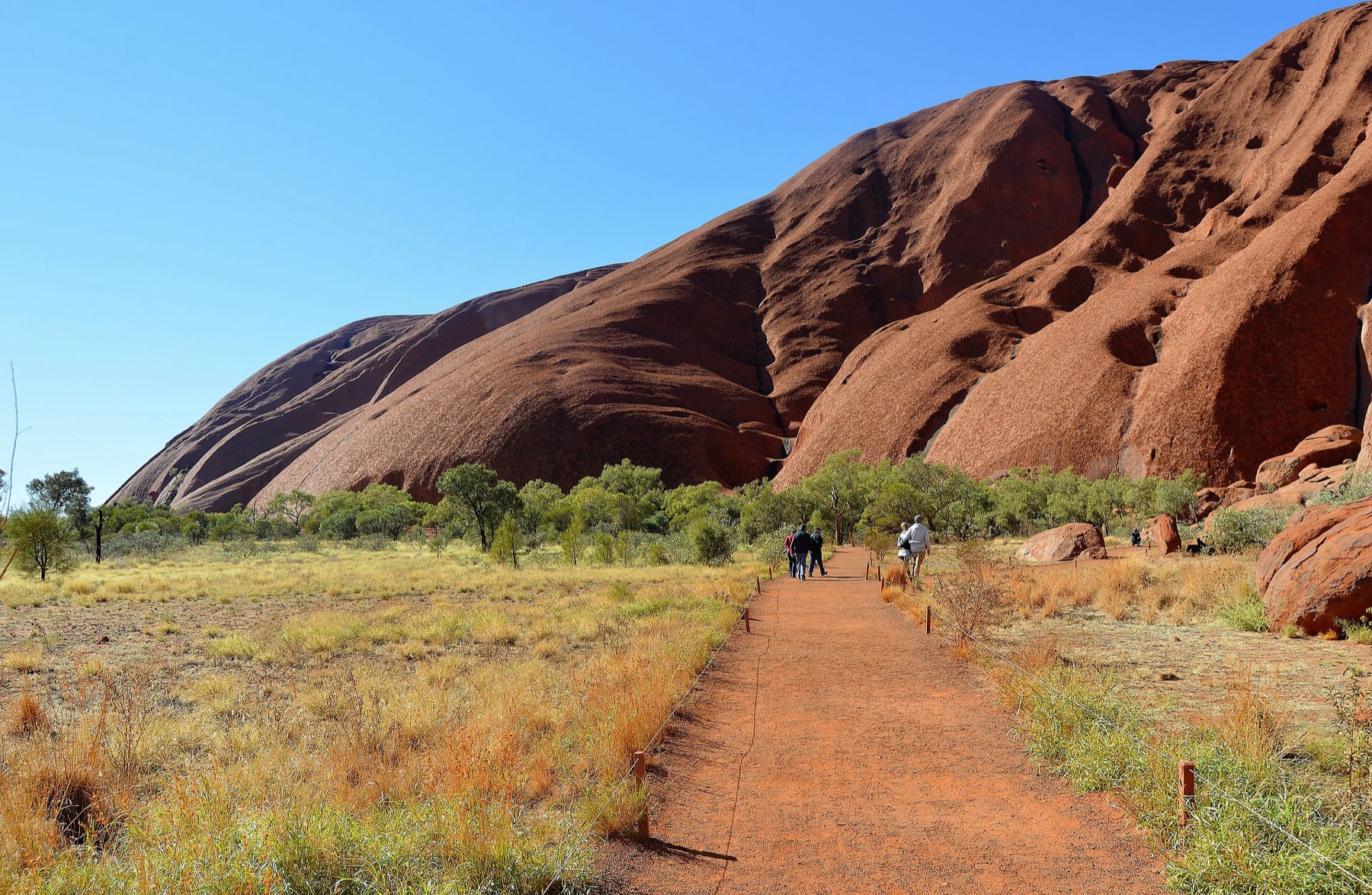
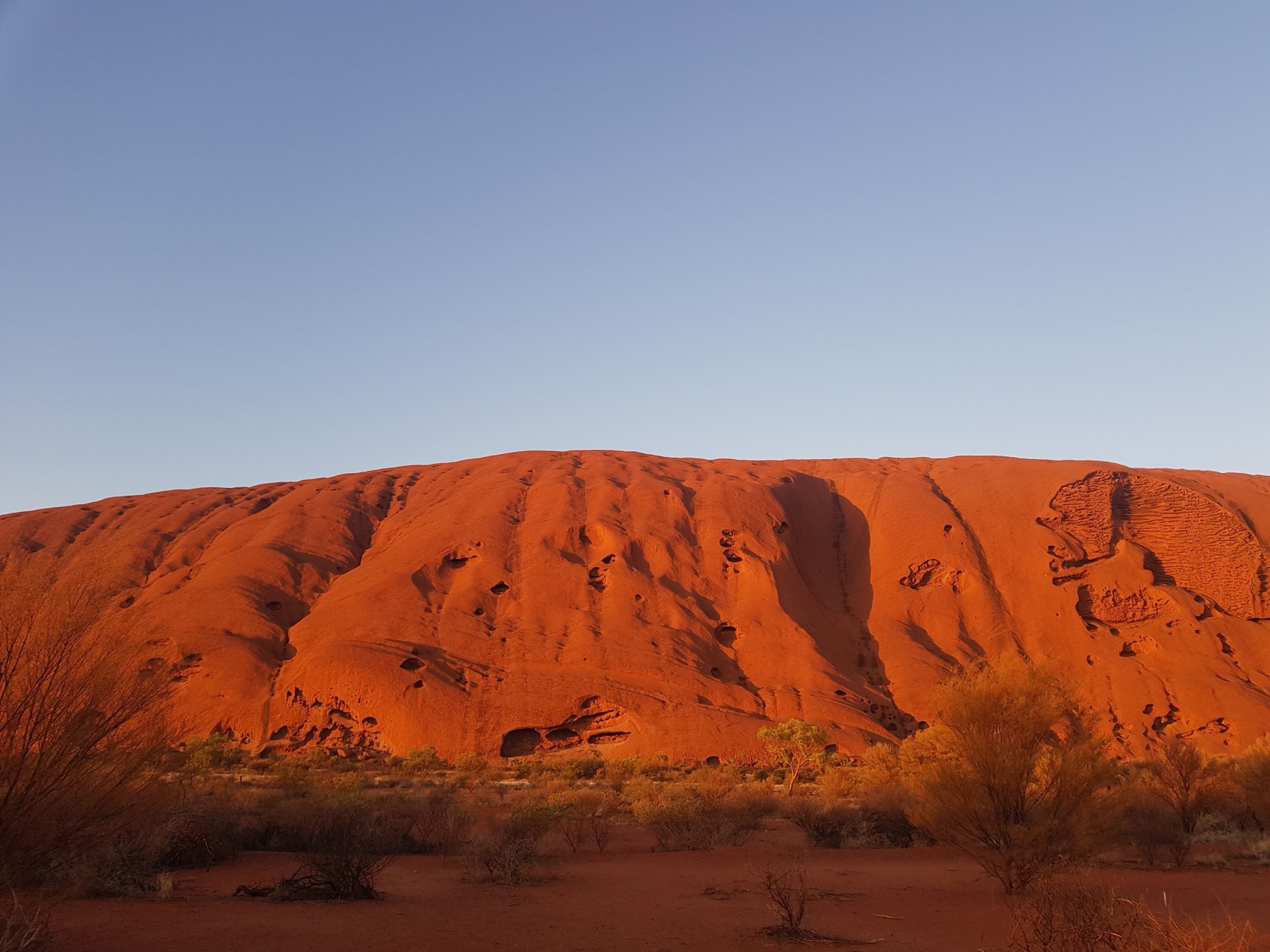
Choosing a base isn’t just about price – it directly determines what you’ll catch in the morning and what you’ll miss. If you camp in Yulara, you have the greatest wonders of the Red Centre right on your doorstep. Uluru itself, which towers 348 metres above the surrounding plain and has a circumference of an impressive 9.4 kilometres, is just a few minutes’ drive from the resort. From this base you can easily visit the Cultural Centre, whose exhibitions are completely free and open daily from 7:00 to 17:45. Set aside at least two hours for it, as it offers the fantastic Tjukurpa Tunnel and the Maruku Arts and Walkatjara Art galleries.
Staying in the immediate vicinity of the park also allows you to set out early for the famous Mala Walk, two kilometres long, which is wonderful because you can do it for free accompanied by a local ranger. The ranger waits for you at the Mala car park from October to April at 8:00 in the morning and during the remaining months at 10:00. From Yulara you can naturally also manage the short Kuniya Walk to the waterhole, the longer Lungkata Walk, or the complete Base Walk, 10.6 kilometres long. And we mustn’t forget the sacred Kata Tjuta with its 36 domes, of which Mount Olga measures 546 metres above the plain and is thus paradoxically higher than the more famous Uluru. From Yulara you also set out for unforgettable evening experiences such as the magical Field of Light installation, the breathtaking Wintjiri Wiru drone show (from 205 AUD), or the luxurious Sounds of Silence dinner, where staff will warmly serve you excellent vegetarian options.
If you decide to spend part of your stay at Kings Canyon, you gain the advantage of early access to the dramatic cliffs of the range. From here you can easily tackle the challenging Rim Walk, six kilometres long, which begins with the notorious climb dubbed “Heart Attack Hill”. This Grade 4 trek demands respect, and if temperatures climb to 36 °C and above, you must set out on the trail strictly before nine in the morning, otherwise the paths close for safety reasons. You’ll also find the sacred Garden of Eden oasis, where swimming is strictly forbidden out of respect for tradition. For less experienced walkers, this base offers the comfortable and completely accessible Kathleen Springs trail, 2.5 kilometres long.
If you choose the town of Alice Springs as your main stronghold, completely different possibilities open up. From the town centre you can take a morning walk to the Anzac Hill lookout, which is free and offers great views. During the day you can visit unique institutions such as the famous Royal Flying Doctor Service or the fascinating School of the Air. Above all, you have the opportunity to explore the stunning West MacDonnell Ranges, which stretch for 160 kilometres. From Alice Springs you can easily drive to Simpsons Gap (just 18 km from town), the dramatic Standley Chasm, which is only 3 metres wide in places and open Monday to Saturday from 8:00 to 17:00, or to the popular Ellery Creek Big Hole swimming hole and the impressive Ormiston Gorge.
Practical Things That Matter in the Desert
Survival and comfort in the Australian outback depend on several crucial factors that can easily catch a European traveler off guard. The first and most important is staying connected to the outside world. You need to be prepared for the fact that mobile coverage throughout the national park is extremely unreliable (Telstra traditionally has the best coverage), and at Kata Tjuta, for example, it regularly drops out completely. For this reason, download all maps, flight tickets, and reservations to your phone in offline mode. The only exception is Yulara itself, where mobile signal and internet connection work without major issues.
Another key point is food logistics. The aforementioned IGA supermarket in Yulara is genuinely the only grocery store for miles around. Its prices are understandably higher than on the coast, but even so, buying groceries and cooking for yourself is by far the cheapest way to eat in the desert. You need to be extremely careful about hydration, because the dry heat is incredibly deceptive. The park management has issued very strict and clear guidance: for every hour of walking you must carry at least 1 liter of water per person, with absolutely no compromises.
Movement within the national park is also governed by deeply rooted cultural protocols. The entire area is managed by its traditional owners from the Anangu people, based on a historic agreement known as the Handback. Their life, laws, and the way they perceive the landscape are guided by the profound philosophy of Tjukurpa, and you simply must respect this, no buts. It is absolutely forbidden to photograph any sacred and ceremonial sites, burial grounds, or traditional dwellings. If you want to photograph local residents, you must always ask for their permission first. All sensitive and sacred sites where photography or entry is prohibited are very carefully and clearly marked with signs throughout the park.
For many visitors, Kata Tjuta itself comes as a big surprise. Although most people come primarily for Uluru, these sprawling rock domes are actually taller than the famous monolith and, paradoxically, are often half-empty because not every tour bus makes it there. As for evening experiences, the Field of Light installation is artificial but beautiful, and its operation is confirmed through 2029. On the other hand, climbing Uluru itself, which was the subject of controversy for many years, has been permanently banned since 2019, and this chapter is definitively and respectfully closed.
How Many Nights and When to Book
A common mistake travelers make when planning their itinerary is underestimating the time needed for the actual stay. Experienced guides agree on one thing: three nights at Uluru is the bare minimum that makes sense. Two nights is cutting it extremely close and leaves you no buffer in case you’re caught out by extreme weather or fatigue from your flight. If you want to experience Field of Light, explore Kata Tjuta, and enjoy dinner under the stars, you simply can’t realistically fit it all in with less than three nights. At Kings Canyon, one or at most two nights is usually enough to manage the morning hike.
The reason everyone emphasizes early booking is purely mathematical. Ayers Rock Resort is the only operator in the area and has a clearly defined, limited bed capacity. Reservations here are commonly made six months in advance, especially if your trip falls during Australian school holidays, when thousands of domestic tourists head to the outback. If you leave your accommodation search until the last month, you’ll very likely only find astronomical prices for the most expensive apartments, or you’ll have to settle for a five-hour commute from Alice Springs.
When choosing your travel dates and accommodation, you also need to account for the unpredictable desert climate. From October to March, extreme summer heat prevails in the Red Centre, with temperatures regularly exceeding 35°C. During this period, all excursions must be planned for early morning, as trails are closed for safety reasons during the peak heat. This time is also associated with the unpopular fly season, so definitely buy a protective face net (fly net) on site. Conversely, during the winter months (June, July), while it cools down nicely during the day, nighttime temperatures can drop to freezing, which is good to know if you’re planning to sleep in a campground or canvas tents.
Where Next
If you’re interested in more details about how to plan your trip to the sacred rock and everything you shouldn’t miss there, definitely read our article Uluru and Red Centre: The Ultimate Guide to Australia’s Red Heart. For a complete overview of what else this enormous continent has to offer, the comprehensive Holiday in Australia: 30 Most Beautiful Places + Practical Tips will serve you well.
Wondering how to logistically approach driving across endless distances? Check out Road Trip in Australia: Visas, Routes, Costs. And if you’re heading back to civilization and big cities after the dusty outback, we’ve also prepared guides on Where to Stay in Melbourne: Neighborhoods and Verified Hotels or detailed tips for Adelaide, Australia: 18 Tips on What to See and Do.
Frequently Asked Questions
Can you sleep right at Uluru?
Right at the sacred monolith or anywhere else inside the national park, camping and overnight stays are forbidden under threat of heavy fines. The only legal place to stay in the wider area is the settlement of Yulara (Ayers Rock Resort), which lies about twenty minutes’ drive from the park boundary.
Is it better to stay in Yulara or Alice Springs?
Yulara is a huge advantage thanks to its immediate proximity to the national park, but it’s very expensive and has a monopoly on all services. Alice Springs offers cheaper hotels and shops, but lies 465 kilometers away, which means five and a half hours’ drive to the monolith.
How many nights should I reserve for Uluru?
Experienced travelers recommend reserving at least three nights for your stay in Yulara. This gives you enough time for a relaxed visit to both Uluru and Kata Tjuta, you’ll catch the evening light installations, and you’ll have a time buffer in case of unexpectedly bad or too hot weather.
Is the transfer from Ayers Rock Airport really free?
Yes, if you fly into Ayers Rock Airport (AYQ), AAT Kings buses will be waiting for you in front of the terminal and will take you to your hotel in Yulara resort completely free of charge. On the return journey, the bus will pick you up two hours before your scheduled departure.
Is there anywhere cheap to camp at Uluru?
The cheapest accommodation option is Ayers Rock Campground right in Yulara resort. It offers sites for tents and caravans, but due to huge demand you need to book your spot many months in advance, especially if you’re traveling during Australian school holidays.
Where can you stay at Kings Canyon?
In Watarrka National Park itself there’s a strict camping ban. But you can stay at the nearby Discovery Resorts – Kings Canyon, which offers rooms and a campground, or at the traditional and somewhat more rustic Kings Creek Station.
How expensive is accommodation at Uluru?
While entry to the national park costs 38 AUD for several days, accommodation and food in Yulara will swallow a substantially larger part of your budget. Because there’s no competition here, hotel prices match the exclusivity of the location, with the cheapest option being your own tent at the campground and shopping at the local IGA supermarket.
When should I book accommodation in the Red Centre?
Given the very limited bed capacity and huge interest from all over the world, it’s recommended to sort out reservations at least six months in advance. If you’re looking for a room at the last minute, most likely only the most expensive luxury apartments will still be available.
Does mobile signal work at Uluru?
Right in Yulara settlement, signal and mobile data work reliably. Inside the national park, however, coverage is very poor and at the Kata Tjuta massif it often drops out completely, so always download all maps and materials to your phone in advance.
Where’s the best place to eat in the area?
Most of the expensive hotels in Yulara have their own quality restaurants, where they’ll warmly prepare excellent vegetarian dishes for you on request. For travelers on a limited budget, the only salvation is the local IGA supermarket, where you can buy ingredients for cooking, or the Ininti café at the Cultural Centre.
Tips and Tricks for Your Vacation
Don’t Overpay for Flights
Search for flights on Kayak. It’s our favorite search engine because it scans the websites of all airlines and always finds the cheapest connection.
Book Your Accommodation Smartly
The best experiences we’ve had when looking for accommodation (from Alaska to Morocco) are with Booking.com, where hotels, apartments, and entire houses are usually the cheapest and most widely available.
Don’t Forget Travel Insurance
Good travel insurance will protect you against illness, accidents, theft, or flight cancellations. We’ve had a few hospital visits abroad, so we know how important it is to have proper insurance arranged.
Where we insure ourselves: SafetyWing (simple monthly subscription) and TrueTraveller (for extra-long trips).
Find the Best Experiences
Get Your Guide is a huge online marketplace where you can book guided walks, trips, skip-the-line tickets, tours, and much more. We always find some extra fun there!

