

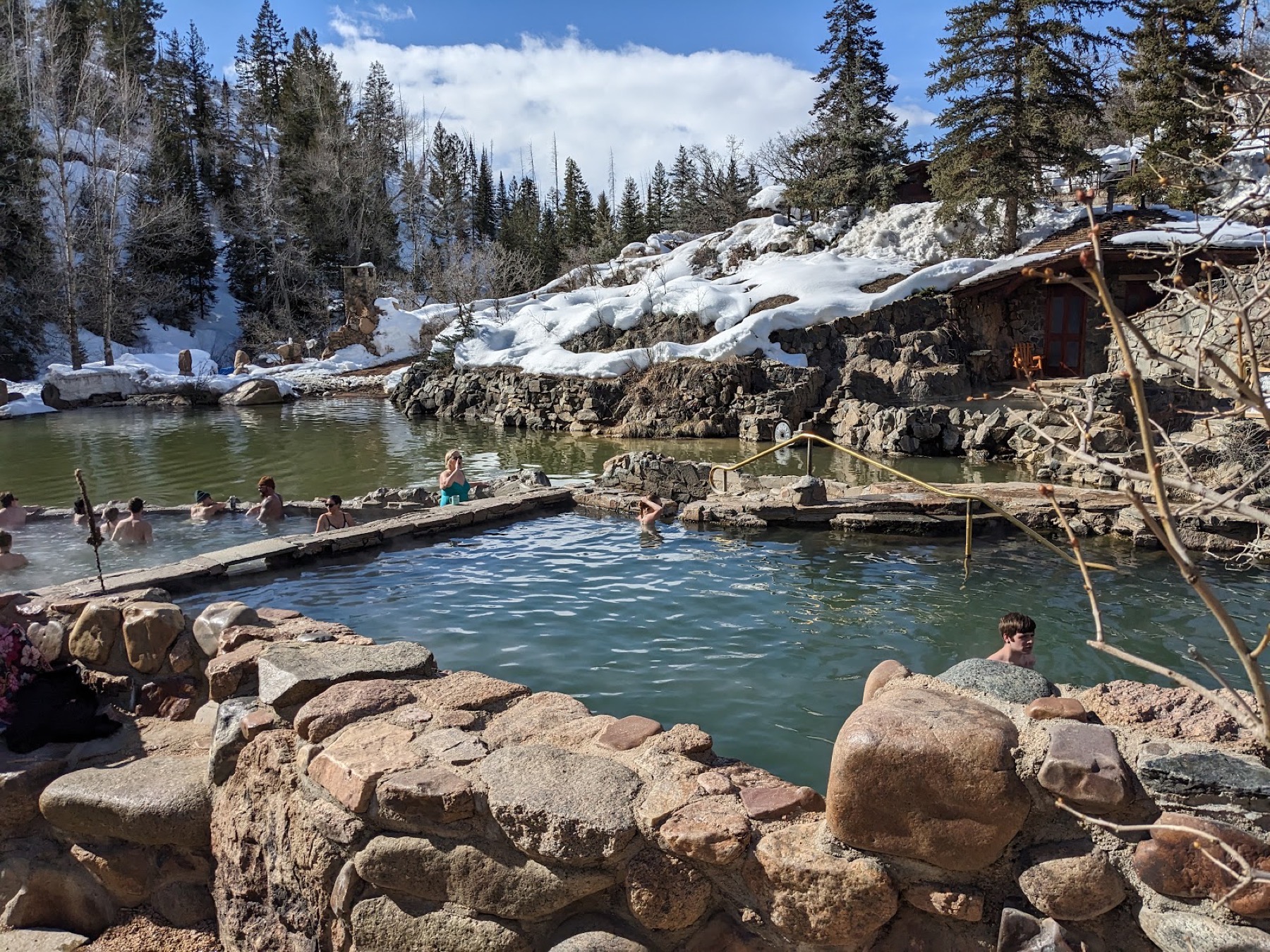
Imagine soaking in a hot stone pool in the middle of a wild river in the Rocky Mountains, with fresh snow along the banks and a wooden sign nearby reading 104 °F (40 °C). That’s the classic American dream of a perfect winter escape. Hot springs are a big part of the travel experience in the USA and make a wonderful addition to any road trip.
The USA also offers three very different ways to soak. You can slip into wild springs hidden deep in national forests, unwind in historic Victorian bathhouse resorts, or enjoy a modern luxury spa in the middle of the desert. Every state has its own geothermal character—and its own rules.
In this guide to hot springs in the USA, you’ll find 37 places organized by state, from Hot Springs National Park in Arkansas and Colorado’s resorts to soaking beneath the northern lights in Alaska. I’ll cover what they cost, where clothing is optional, and where you can stay right by the springs.
TL;DR
- Top destinations: For some of the best springs, head to Hot Springs National Park in Arkansas or Colorado’s Glenwood and Mount Princeton resorts.
- Most luxurious experience: For a truly indulgent stay, try Arizona’s Castle Hot Springs or California’s desert retreat, Two Bunch Palms.
- Free wild springs: Oregon’s Umpqua, Utah’s Fifth Water and California’s Deep Creek offer natural soaking with no entrance fee.
- Winter soaking beneath the northern lights: At Alaska’s Chena resort, you can warm up in hot water as green lights dance across the sky.
- Clothing optional: You can legally soak without a swimsuit at Orvis, at Strawberry Park after dark, and at California’s famous Harbin.
- Entrance fees: Wild springs are often free or require only a parking fee, while commercial pools typically cost from around $20 to several dozen dollars.
- National park vs. resort: Commercial resorts usually have showers and facilities; at wild springs on federal land, don’t expect any amenities.
- Where you absolutely can’t swim: Mammoth Hot Springs in Yellowstone is strictly protected. Entering the water risks a hefty fine and serious injury.
- Most choices in one state: Colorado, where seven destinations range from luxury spas to stone pools in a river.
How hot springs in the USA work (and how they differ from Europe)
Hot springs in the USA fall into three broad categories, each with a very different feel. “Developed” resorts have finished pools, showers and full facilities, while state parks often offer simpler public bathing areas. The third option is wild springs on federal land, which often require a hike and have no facilities at all.
Forget Celsius—the water temperatures are usually given in Fahrenheit. A typical soaking pool sits between 100 and 106 °F (38–41 °C), while refreshing cold pools are around 55 °F (13 °C). At the most popular commercial spots, you may also need to reserve a time slot well in advance.
One feature of the American West is its clothing-optional springs, where swimsuits are optional. This may apply only during certain hours or at remote wild springs. Always check the current rules before you go so you’re not caught off guard.
Wherever you soak, follow one vital safety rule: never put your head underwater or submerge your nose. Rarely, warm natural waters can contain the amoeba Naegleria fowleri, which is extremely dangerous if water is inhaled through the nose.
Famous national parks are a special case, as swimming is often prohibited. Yellowstone is a prime example: entering the springs is strictly forbidden and can result in huge fines, as well as a real risk of burns. Save your soak for outside the park, where you’ll find plenty of legal options.
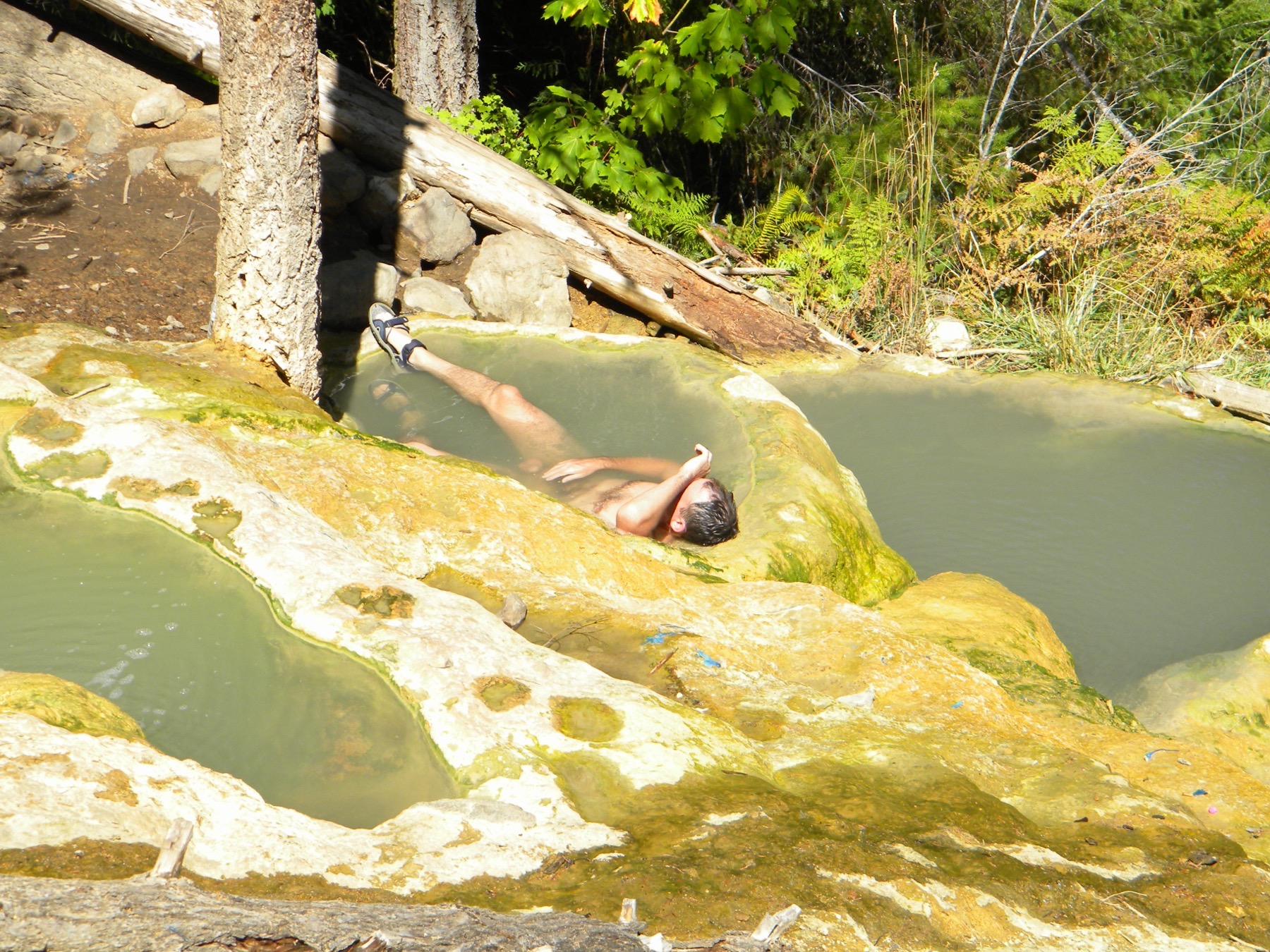
If you’re heading to a wild spring, be prepared for no facilities whatsoever. 💡 Tip: Bring flip-flops for walking around the water, a large bottle to stay hydrated, and—most importantly—pack out all your rubbish.
How much does it cost, and when should you go?
Your budget depends on the type of place you choose. Wild springs on federal land are usually free; you may only need to pay a small parking fee at the trailhead. City and state facilities such as Ouray Hot Springs Pool, Lava Hot Springs and Hot Springs State Park generally have the lowest entrance fees among developed sites.
Large resort pools fall into the mid-to-high price range: at Iron Mountain, family admission costs $43–$75, while The Springs Resort in Pagosa charges $74 per adult (2026 rates). At popular Mount Princeton, admission to the historic bathhouse costs around $40 (2026 rates), with a discounted $20 evening entry from Monday to Wednesday. At the other end of the spectrum are luxury resorts reserved for overnight guests, such as Castle Hot Springs and Ten Thousand Waves, where you’ll pay considerably more.
Winter is the best time to visit for many people, because soaking in the snow is an unforgettable experience. Just expect Colorado to be extremely busy during the Christmas and ski seasons. In spring, snowmelt can raise river levels enough to flood popular natural pools along the banks.
Desert destinations follow a different pattern, with high season running from October to May. July and August bring extreme heat, so a hot soak may be less appealing. In the mountains, take altitude and acclimatization seriously: hot water can make you feel faint.
Getting to the best natural spots often requires the right vehicle. For example, Strawberry Park requires 4WD from November to May, with winter tires or snow chains. Without a suitable vehicle, reaching remote mountain trailheads may not be safe.
Where to stay right by the springs
💡 Accommodation and activities tip: Compare accommodation here to see what’s available and at what price. We prefer to search on Booking.com, where cancellation policies are often better. For tickets, tours and activities, it’s worth comparing options and booking through GetYourGuide.
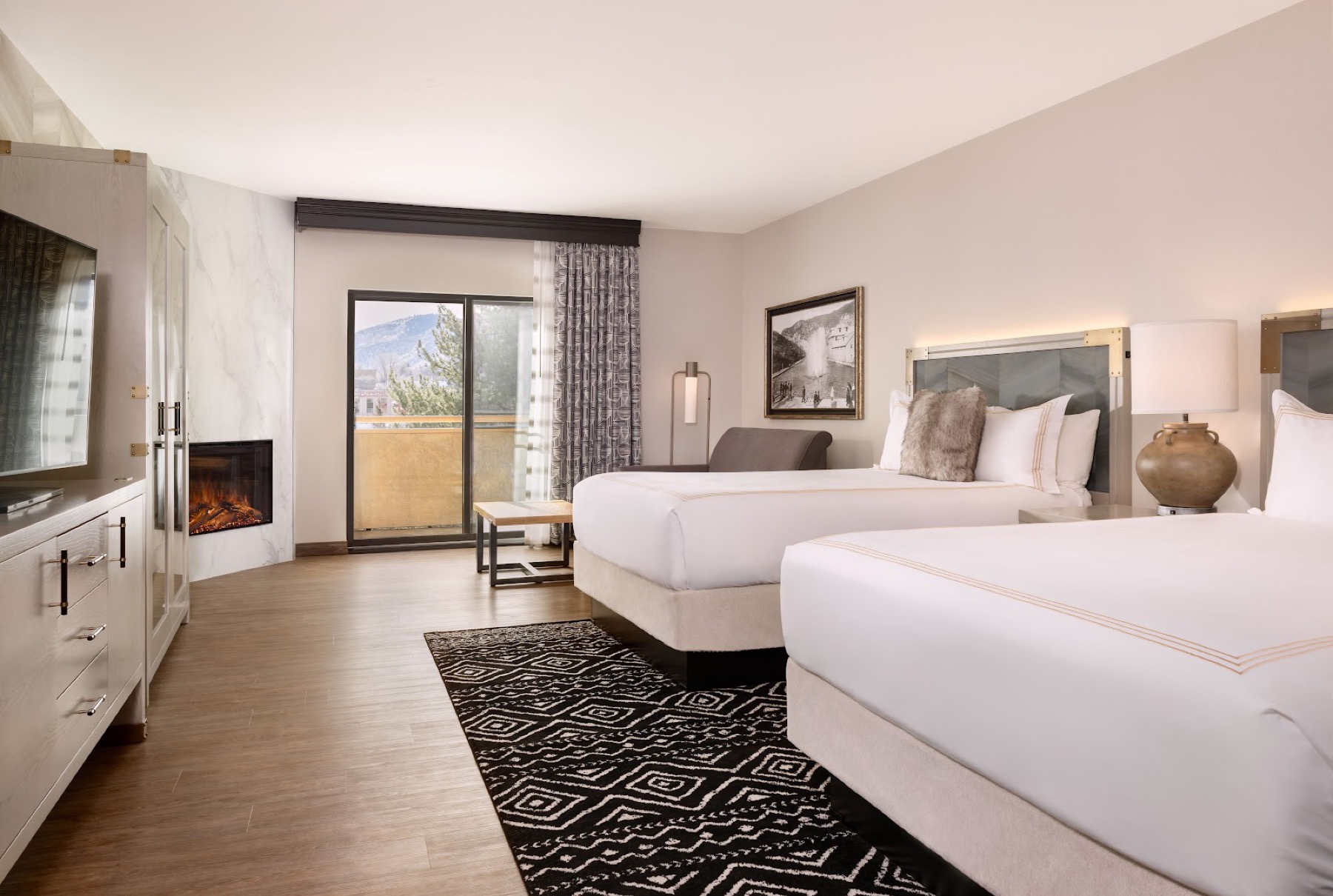
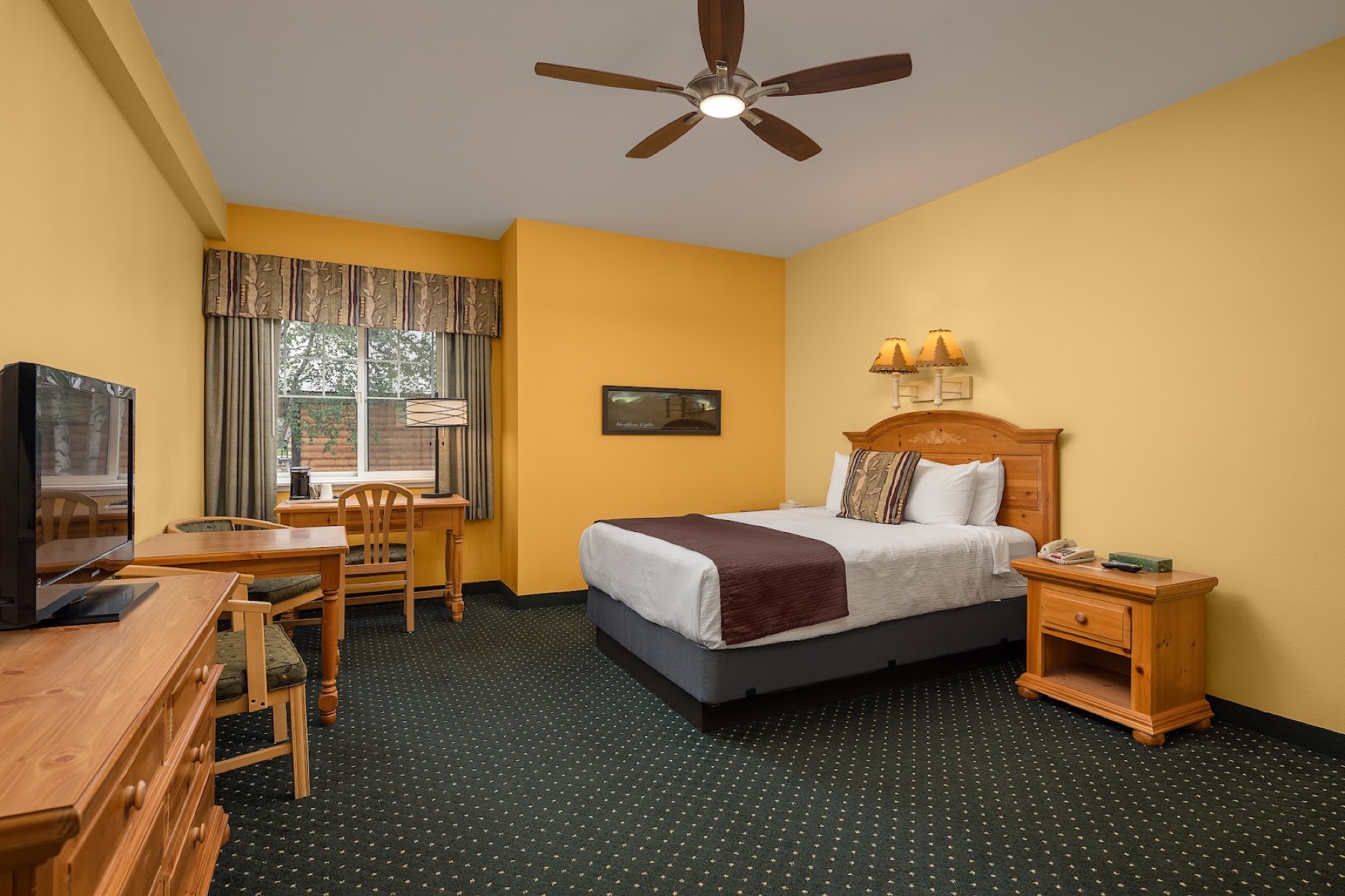
If you want to take your road trip up a notch, plan to spend the night at the resort itself. Most resorts give overnight guests unlimited access to the pools, often early in the morning or late at night after day visitors have left. It’s one of the easiest ways to enjoy a full day of relaxation.
Hotels near American hot springs are popular, so don’t leave booking until the last minute. You can easily compare rooms and availability on Booking, where you’ll also find the exact accommodation policies. Here are six excellent options to consider.
Mount Princeton Hot Springs Resort is in Nathrop, Colorado, and offers a traditional hotel, cozy cabins and a budget-friendly motel right by the springs in Chalk Creek Valley. Pool access is included for guests, and it’s an ideal base for exploring nearby Buena Vista and Salida.
The Springs Resort is in Pagosa Springs, Colorado, with the property built around cascading pools above the San Juan River. One major perk is that overnight guests can use the pools at night, so you can watch the stars from the hot water.
Chico Hot Springs Resort in Pray, Montana, is a beautiful historic wooden hotel dating back to 1900. It’s set in the stunning Paradise Valley, just 30 minutes from Yellowstone’s North Entrance.
Ojo Caliente Mineral Springs Resort & Spa in New Mexico is described by its operator as one of the country’s oldest spa resorts. Choose between comfortable rooms and the adjacent campground, and enjoy the property’s distinctive pools with different mineral compositions.
Castle Hot Springs is about an hour’s drive from Phoenix, Arizona, and represents the height of desert luxury. This exclusive all-inclusive resort is tucked away in a deep canyon and is for adults only, promising a peaceful escape.
The Omni Homestead Resort is in Hot Springs, Virginia, and is a vast historic resort in the eastern USA. It boasts a top golf course and famous spa that American presidents have visited.
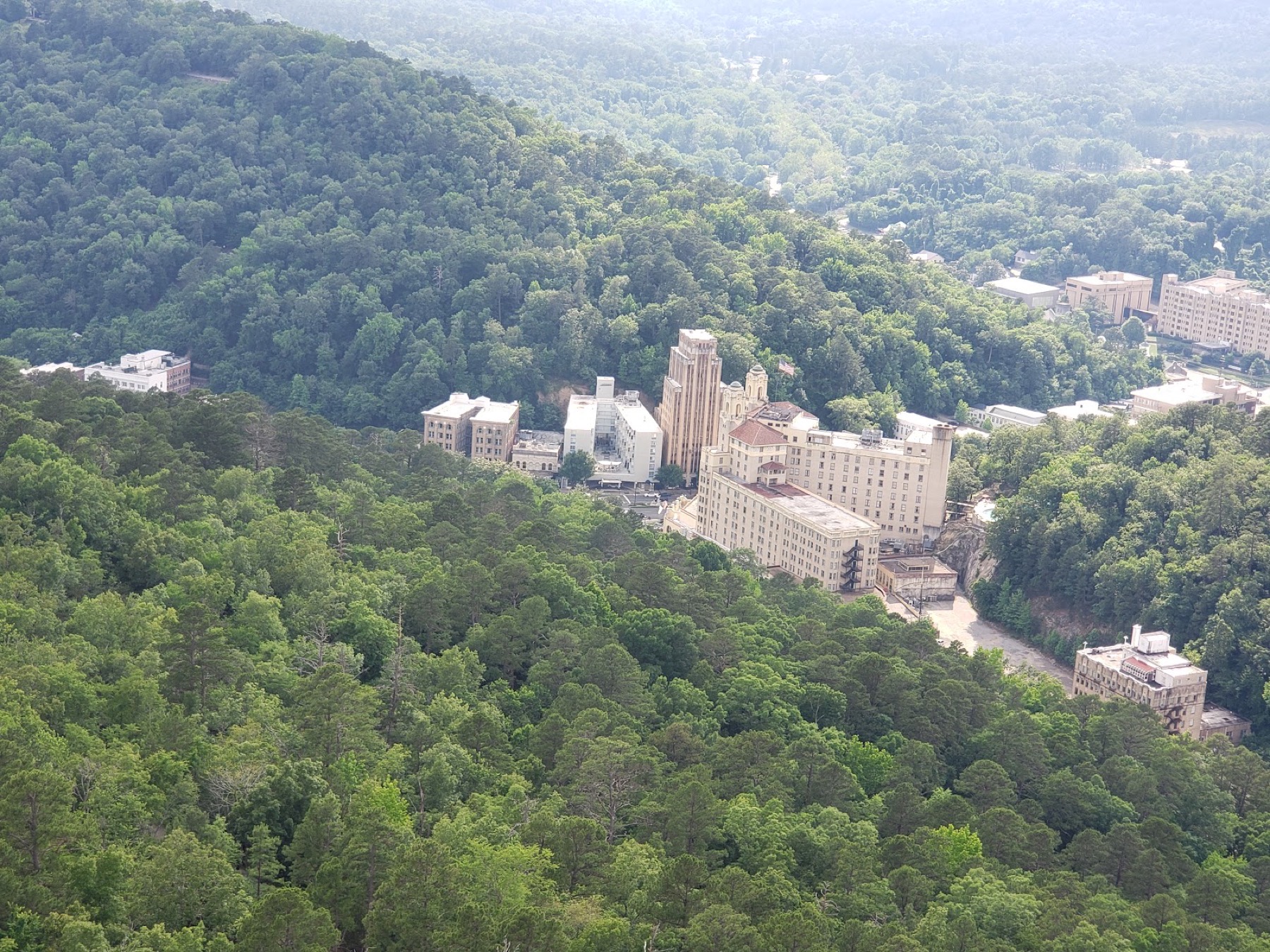
Arkansas: Hot Springs National Park
If you’re planning a road trip across the USA and love history, Hot Springs, Arkansas, is a must. It’s one of the country’s most visited thermal destinations, and unlike wild springs out in nature, you’ll find elegant bathhouses from the late 19th and early 20th centuries. The area is a national park where federal conservation meets a city streetscape and historic promenade.
Gangsters such as Al Capone and famous baseball players once came here. Today, you can admire grand architecture and enjoy a hot bath along the famous Bathhouse Row. The springs are unusual in that they have no characteristic sulfur smell. Come here for a refined break and strolls around town, rather than muddy pools deep in the forest.
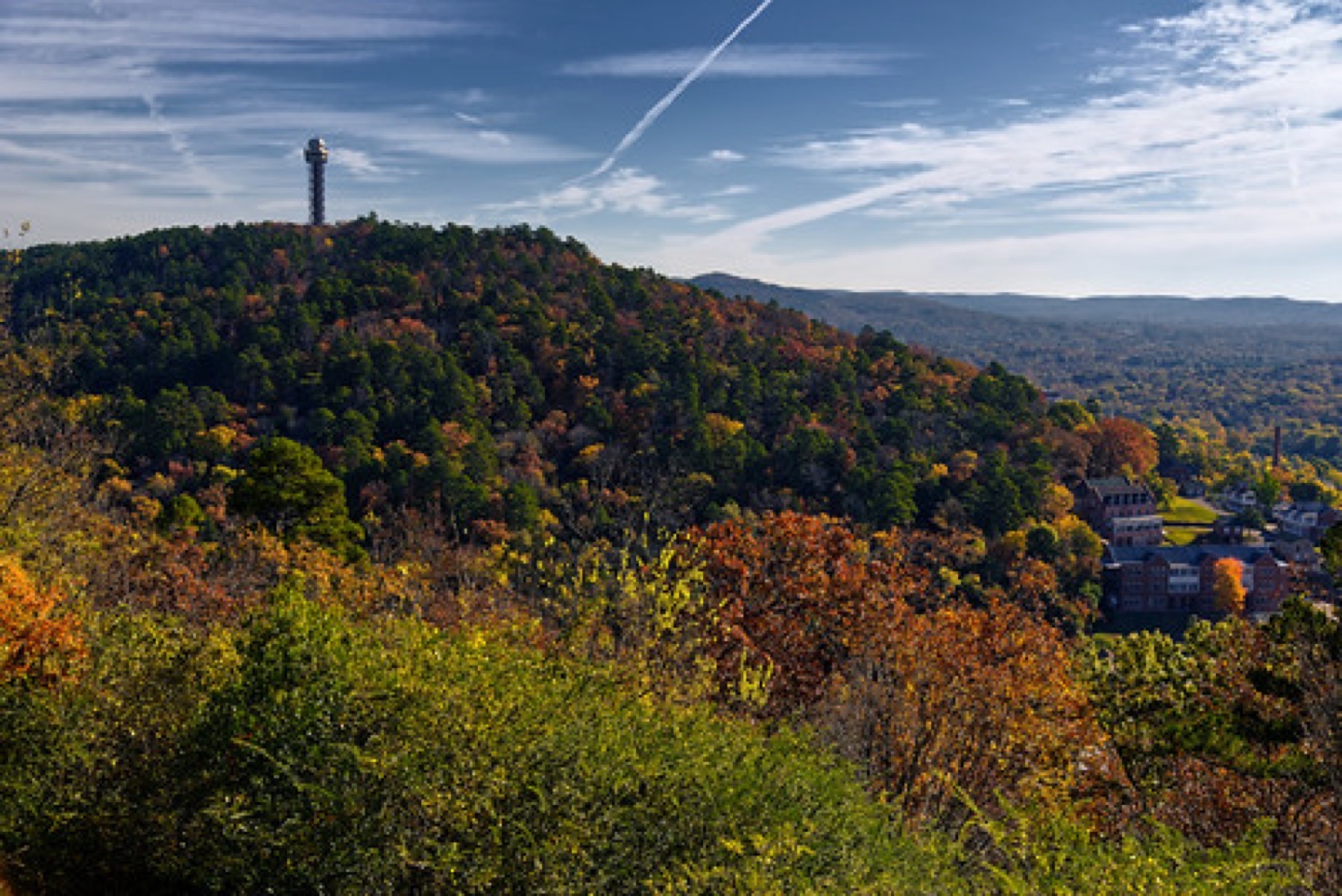
1. Hot Springs National Park (Hot Springs, Arkansas)
This area has a unique status as the oldest protected area managed by the National Park Service. The federal government began protecting it in April 1832, long before Yellowstone was established. Until 2018, it was also the smallest national park in the country by area. When Spanish explorer Hernando de Soto arrived in 1541, he named this fascinating place the Valley of the Vapors.
During the 20th century, the city became a luxurious resort frequented by the wealthy and famous. You might have encountered Major League Baseball players and notorious gangsters, including Al Capone. During Prohibition, illegal distilleries and gambling flourished. The city is much quieter today, but its famous past is still easy to sense. Of the many original bathhouses, only two main buildings remain in operation.
To learn more about the area’s history, visit the Fordyce Bathhouse. It now serves as the park’s main visitor center and was once the most expensive project on the promenade. 💡 Tip: Pick up the special 2010 quarter as a souvenir: Hot Springs was the first national park featured in the US Mint’s commemorative quarter series.
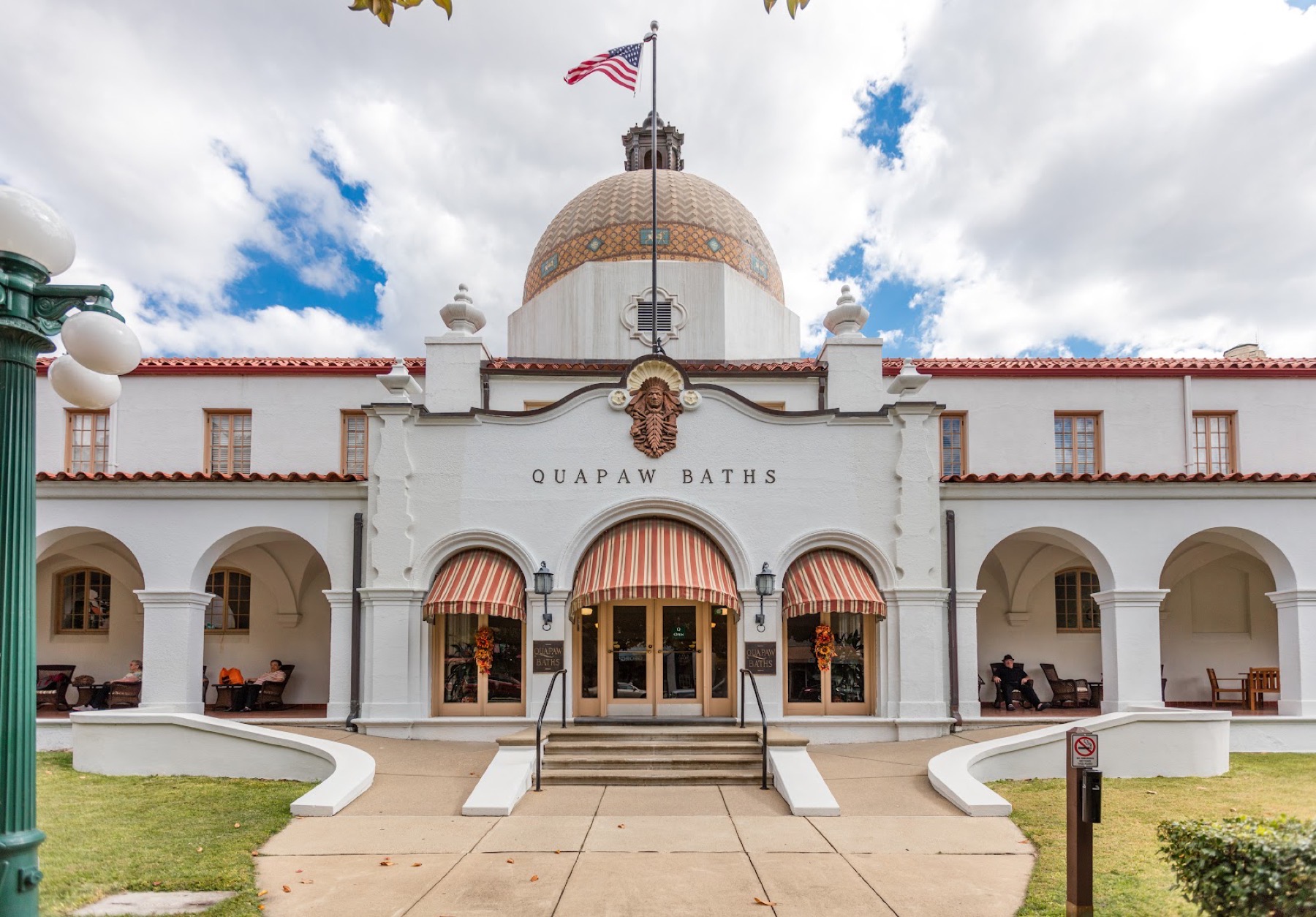
2. Quapaw Baths & Spa (Hot Springs, Arkansas)
The Quapaw Baths & Spa is on the famous Bathhouse Row, designated a National Historic Landmark in May 1987. The area protects 47 natural springs. The thermal water is particularly popular because it has none of the characteristic sulfur smell that puts some people off natural bathing.
Inside, you’ll find upscale treatments inspired by the country’s rich bathing traditions, including relaxation packages and massages. The popular Couples Private Getaway costs $490 for two (2026 rates; prices may change). There’s also a two-hour program called The Quapaw for $150 per person.
Treatments include refreshing showers, Swedish massage and foot care. These are premium spa services in an indoor setting, so don’t come expecting a cheap, simple soak. 💡 Tip: Demand for baths and massages is high, so book all packages well in advance on the official website; they’re often sold out on arrival.
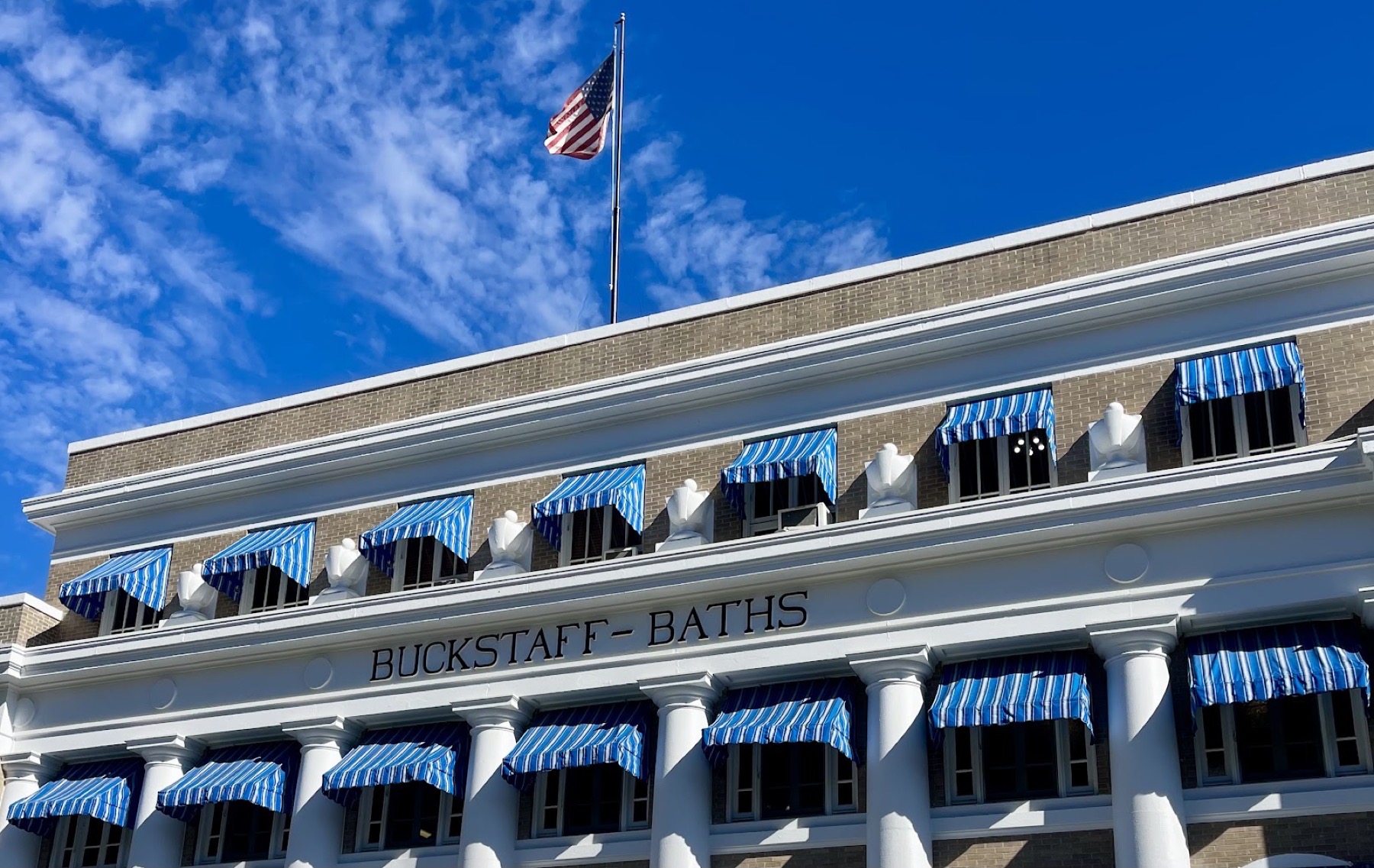
3. Buckstaff Bathhouse (Hot Springs, Arkansas)
Right next door is the equally famous Buckstaff Bathhouse, which has been operating since it was completed in 1912. Its neoclassical cream-colored brick architecture is accented with elegant white stucco details along the cornices. Like the other bathhouses on the row, it is subject to strict National Park Service regulations, helping maintain a high standard of service.
The well-trained staff specialize in traditional mineral baths and classic full-body Swedish massages. If you want to try the hot water without spending a fortune, the basic mineral whirlpool bath starts at $35 (2026 rates; prices may change). It’s a great way to experience the benefits of the local springs in an authentic historic setting.
The spa industry in the USA went through a major crisis in the mid-20th century, when advances in modern medicine led people to stop believing in the healing properties of hot springs. Buckstaff survived that difficult period and offers a lovely glimpse of the bathhouse’s golden age today. 💡 Tip: Even if you book the affordable basic bath, leave plenty of time to explore the building itself.
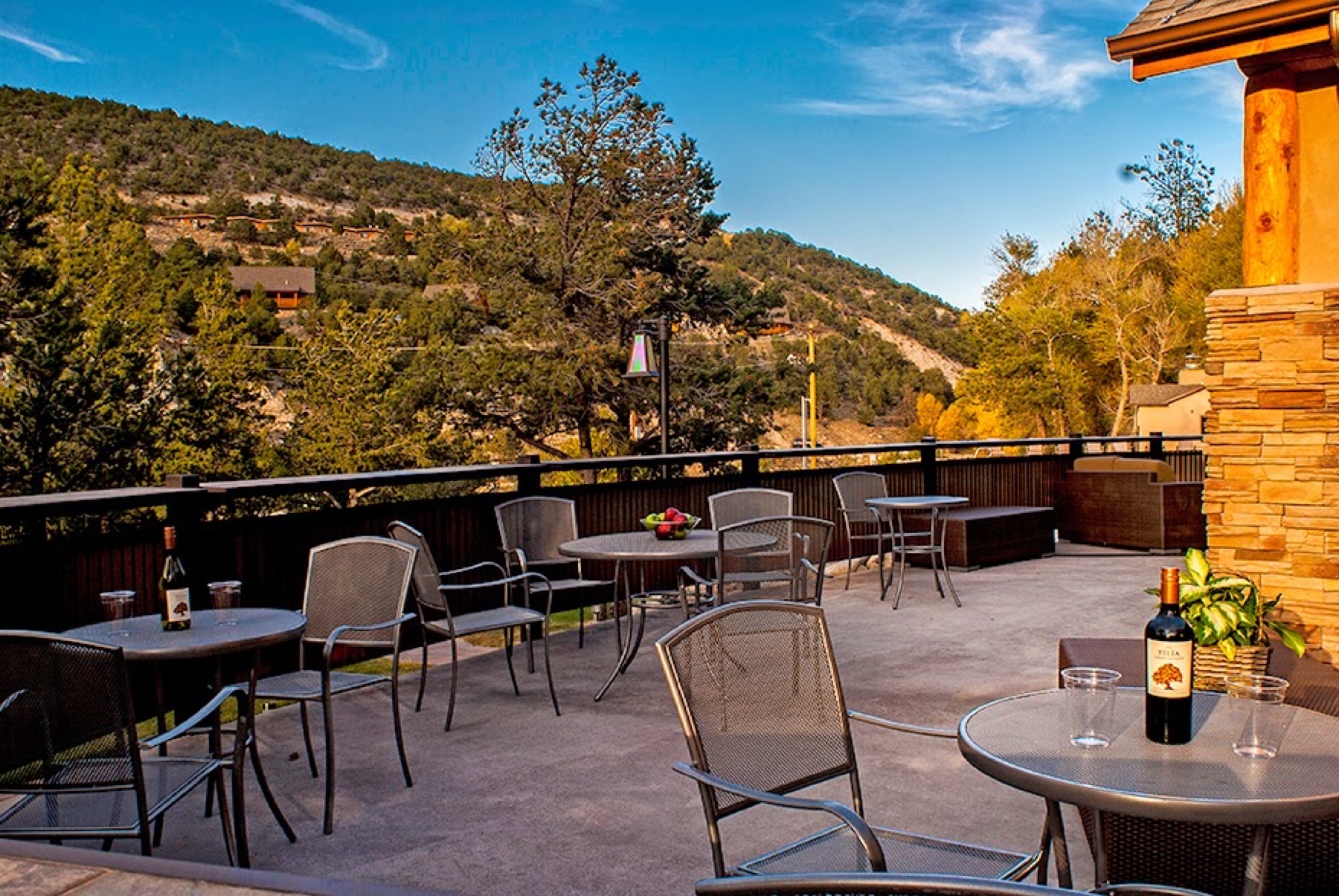
Colorado: more hot springs than anywhere else
If you want to combine high-altitude hiking with a soak for tired muscles, head to Colorado. The Rocky Mountains are home to more commercial hot springs resorts than any other state. You’ll find everything from luxury spas to rustic stone pools in wild rivers.
Winter soaking, with snow on the ground and thick steam rising from the water, is wonderfully atmospheric. The best-known geothermal hubs are around Glenwood, Mount Princeton, Iron Mountain, Ouray and Pagosa. In the mountains, access roads may take a little extra driving skill in winter.
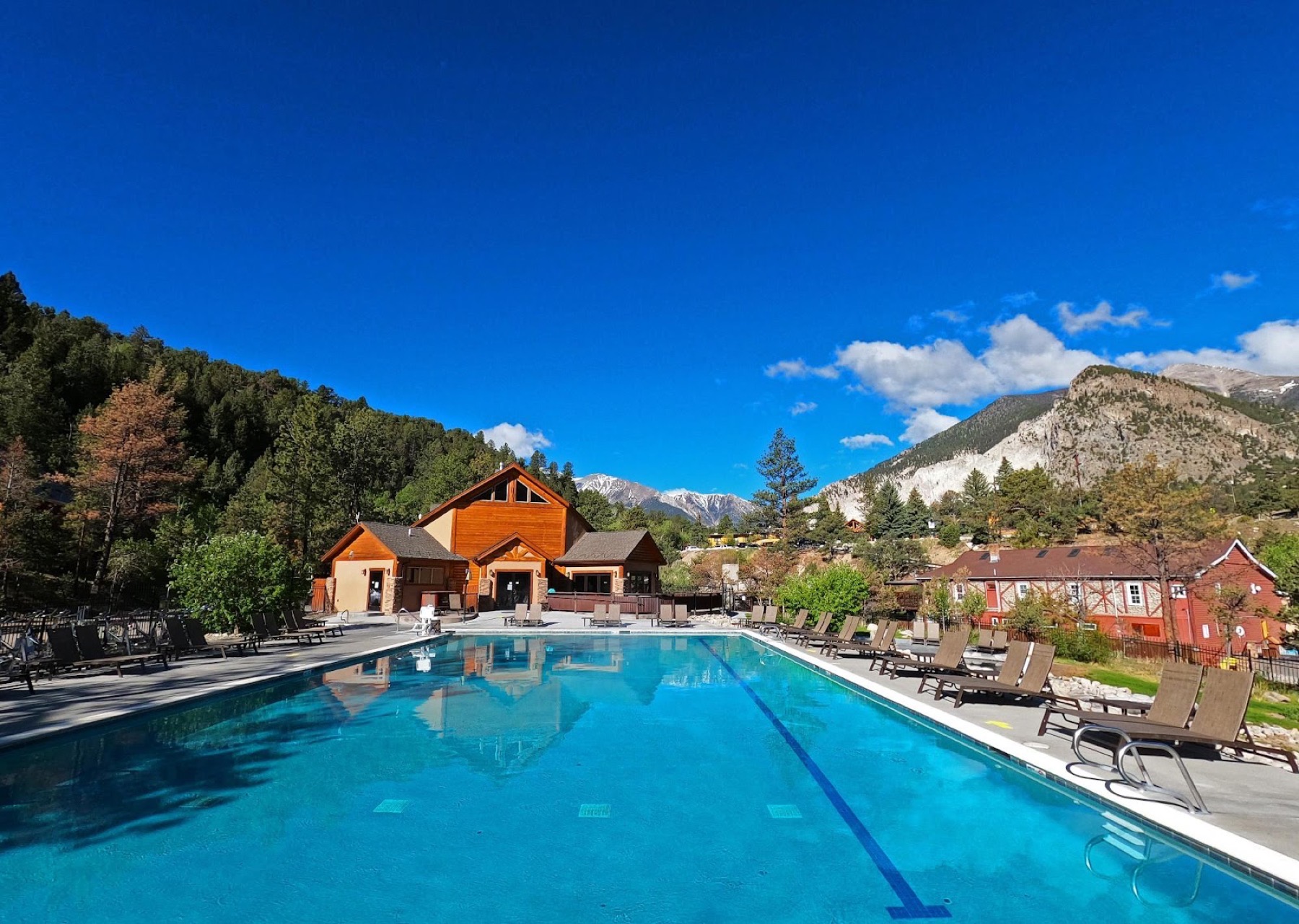
4. Mount Princeton Hot Springs Resort (Nathrop, Colorado)
This resort stands out for its stone pools right in Chalk Creek, known as Creekside Hot Springs. The water temperature ranges from 70 to 120 °F (21 to 49 °C), depending on how you arrange the stones to let in the cold creek water.
The water emerges from the ground at 140 °F (60 °C) and feeds several other pools. The classic Soaking Pool stays around 105 °F (40.5 °C), while the Japanese-inspired Cascading Hot Springs range from 101 to 107 °F (38 to 42 °C). If you want to swim laps, the cooler Exercise Pool is kept at 90–95 °F (32–35 °C).
Admission to the Historic Bath House is $40 according to the 2026 price list. Day passes are sold at the resort with no advance reservation, and it’s open year-round. 💡 Tip: Visit between 7 and 9 p.m. Monday through Wednesday for a discounted evening soak at just $20.
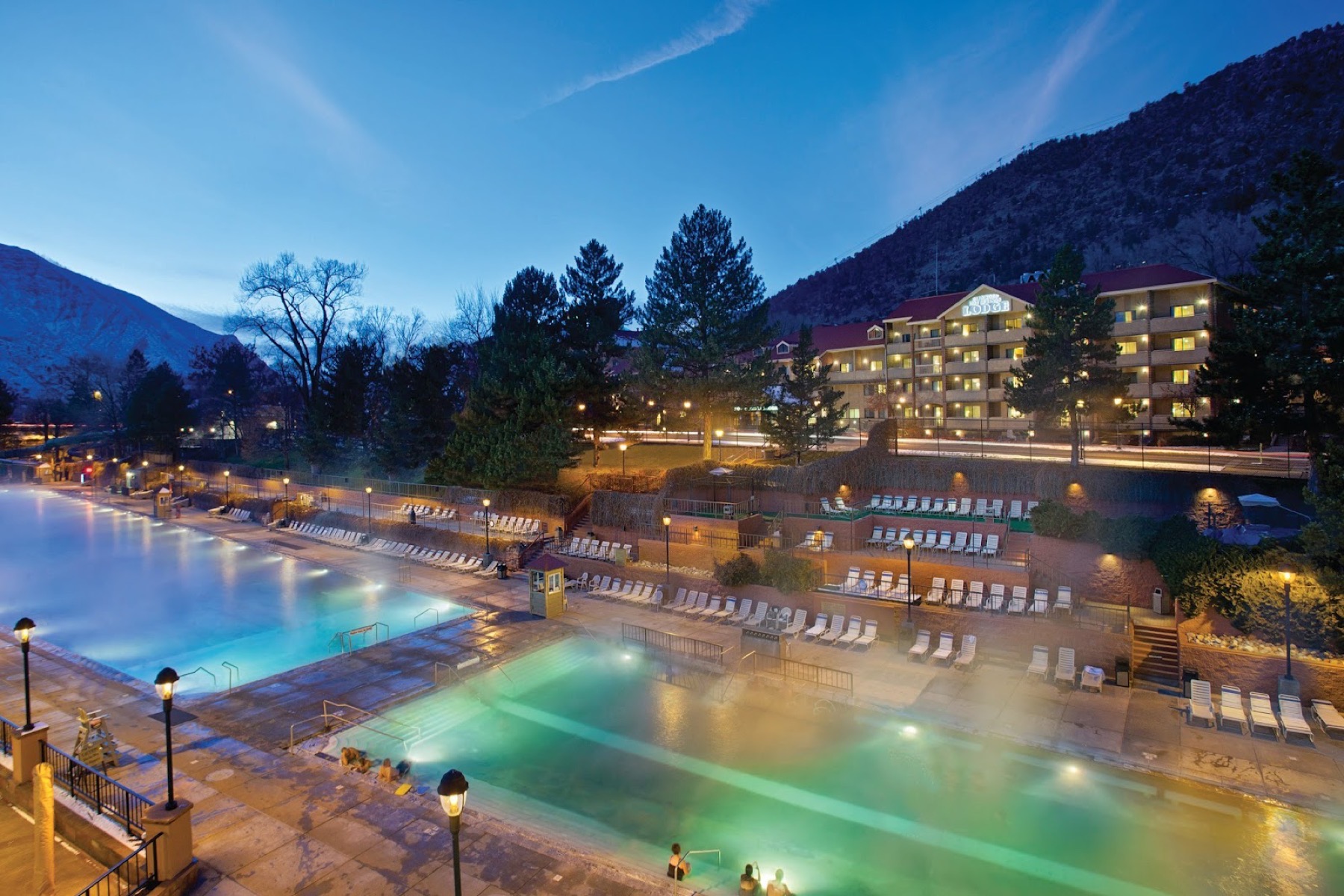
5. Glenwood Hot Springs Resort (Glenwood Springs, Colorado)
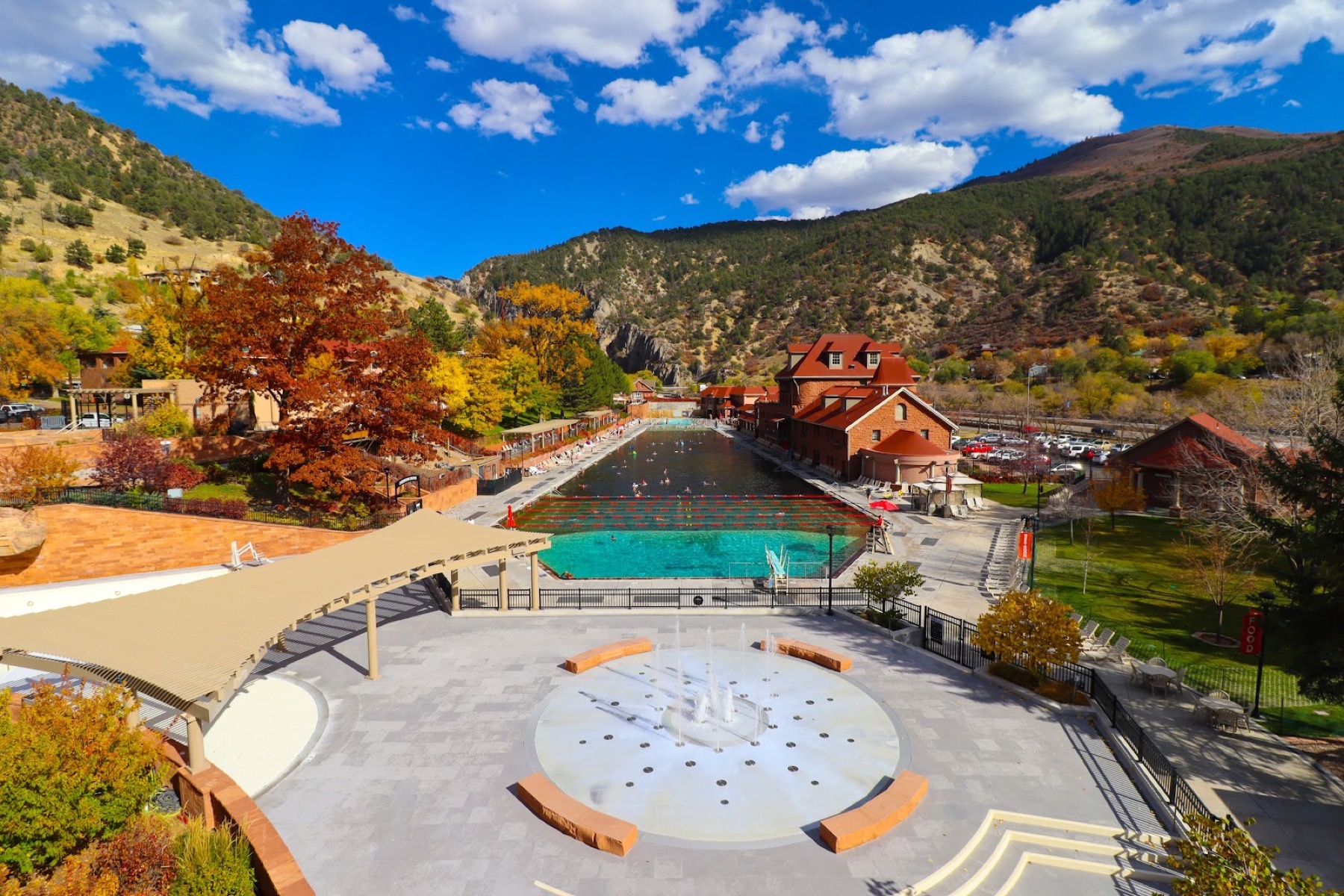
This is one of America’s most famous hot springs. The Grand Pool is 405 feet (123 m) long, up to 30 m wide, and holds 1,071,000 gallons of water. It opened in 1888 and, according to its operator, remains the world’s largest hot springs pool. At a comfortable 90 °F (32 °C), it’s warm enough for a proper swim.
For a hotter soak, head to the historic Therapy Pool, kept at 104 °F (40 °C). Both pools are fed by Yampah Spring, which produces more than 3.5 million gallons of water a day at 122 °F (50 °C); the water is cooled before entering the pools. The Ute people called the spring Yampah, or “Big Medicine,” and its water contains 15 different minerals.
The resort is right off I-70, on the route from Denver toward Utah, making it easy to add to almost any road trip. It’s a reliable family choice in Colorado, with a large pool, slides and full facilities. 💡 Tip: Bring your swimsuit for swimming, not just lounging. This is the only spring in the article where you can swim several hundred metres in warm water.
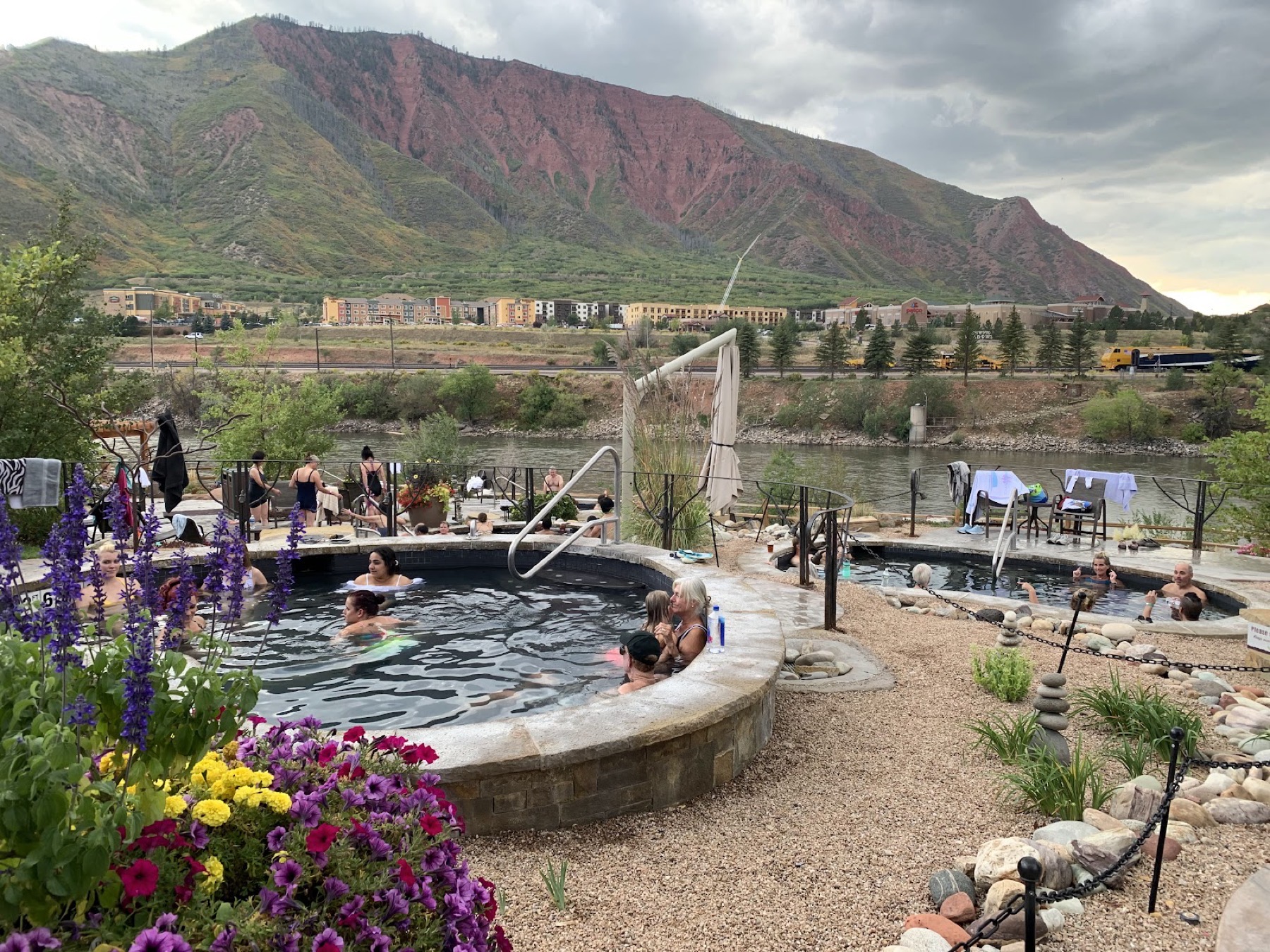
6. Iron Mountain Hot Springs (Glenwood Springs, Colorado)
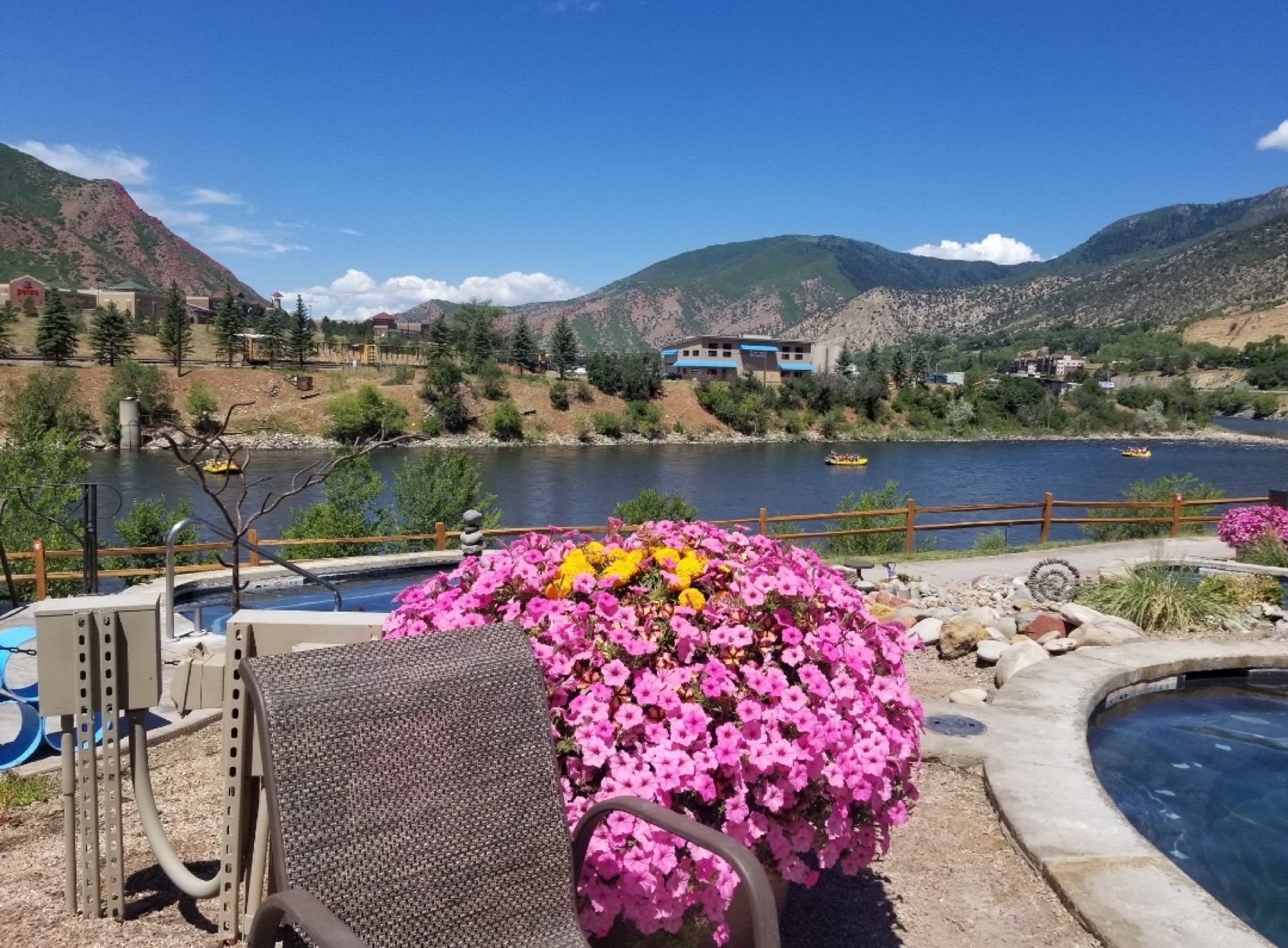
This modern complex on the Colorado River is known for its 35 mineral pools and new Sauna Summit area. The latter has five globally inspired saunas (traditional dry, aromatherapy, Red Light Clay, Turkish hammam and Finnish barrel sauna), three plunge pools, and two special pools enriched with magnesium and potassium.
Pool temperatures range from 89 to 108 °F (32 to 42 °C). Family Select Access includes 16 geothermal pools and a large family pool, while the premium 21+ area has 12 pools inspired by springs around the world. For a quieter visit, try the Premier Access area, reserved for adults aged 21 and over. You can take in the Rocky Mountain views or relax at Sopris Café and Sandbar Café.
According to the 2026 rates, basic family Select Access costs $43–$75. Premium admission for adults is $75–$135. Bring your own towel or rent one for $5. 💡 Tip: Book online in advance to save $5 compared with buying at the door. Changes incur a fee and depend on availability.
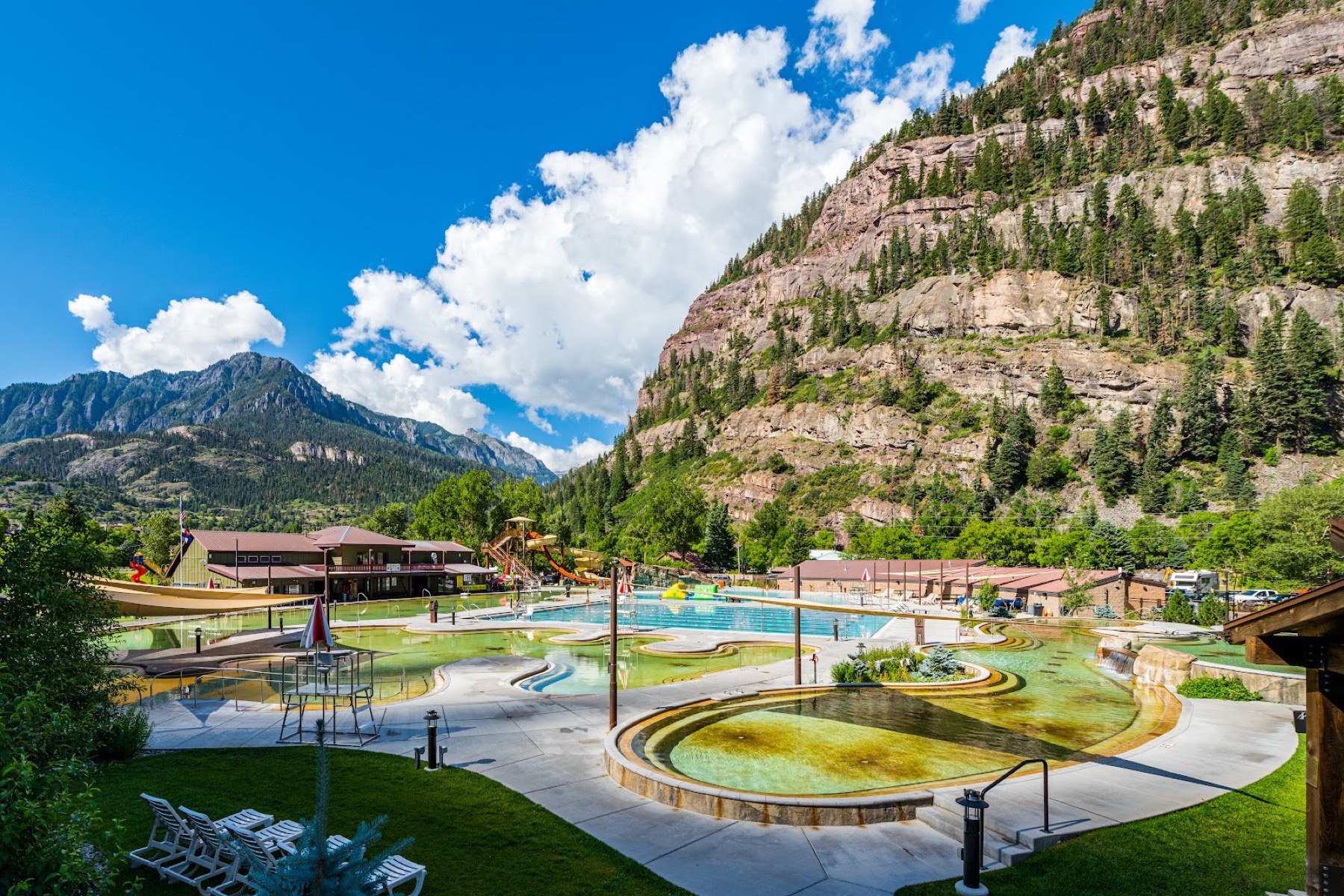
7. Ouray Hot Springs Pool (Ouray, Colorado)
Ouray sits at an elevation of 2,375 m and its breathtaking alpine scenery has earned it the nickname “the Switzerland of America.” Hot springs bubble along the Uncompahgre River, where they have flowed from underground fissures for thousands of years at temperatures of 80–150 °F (26–65 °C).
The area has a rich bathing history. In 1877, a Mr. Buchanan bought land from the town for just $12 and began developing the site. Later, plunge parties were held in an outdoor pool measuring 20 by 30 feet. Today, modern facilities welcome families and tired climbers returning from the nearby ice park.
In 2026, admission for adults aged 18–64 is $30. Visitors over 75 pay just $10, and children under three get in free. 💡 Tip: You can get 20% off day admission with a current Ouray Ice Park membership, or if you’re an active-duty service member or veteran.
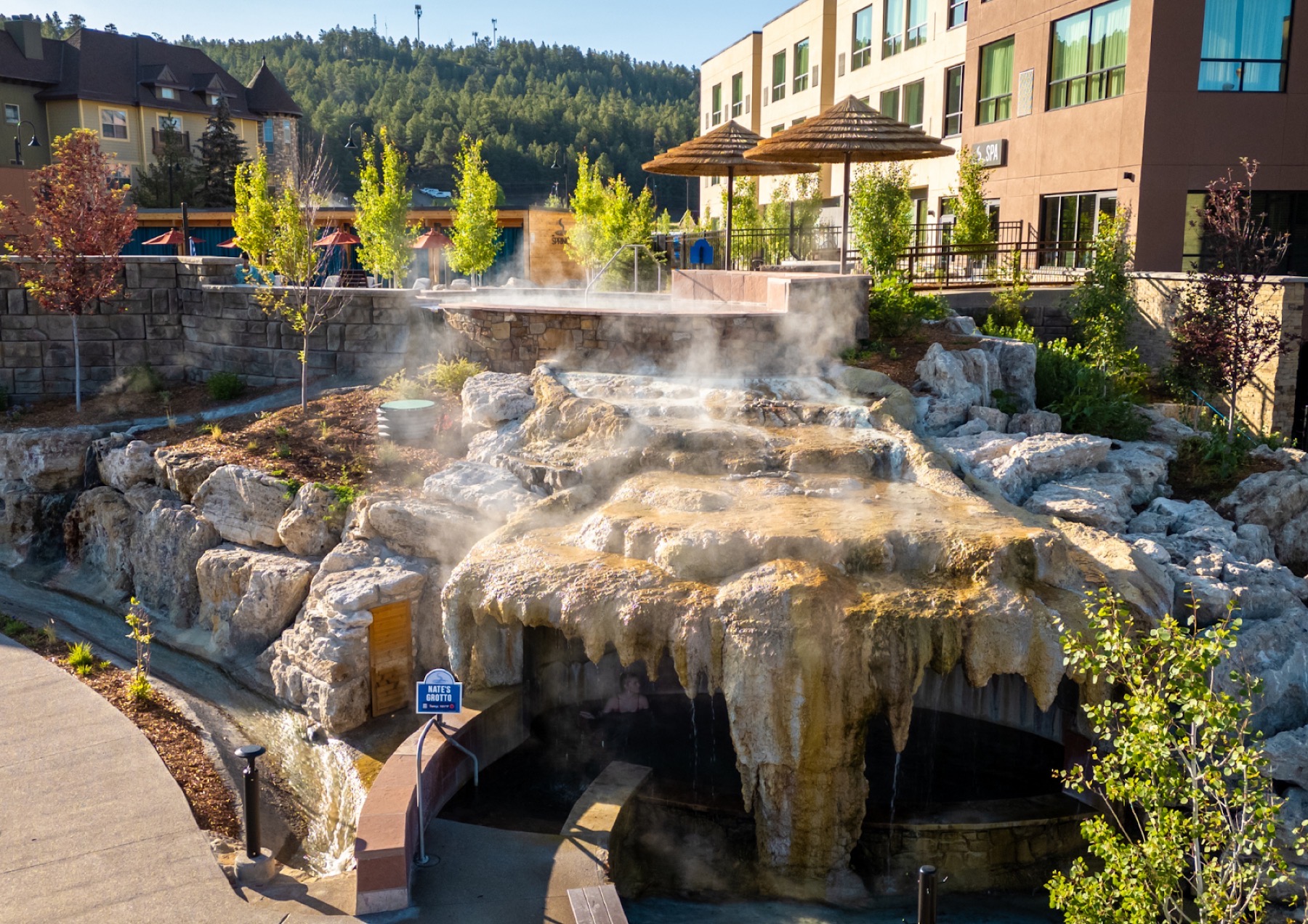
8. The Springs Resort (Pagosa Springs, Colorado)
The resort’s heart is Mother Spring, at 144 °F (62 °C), which holds the Guinness World Record as the world’s deepest geothermal spring. In 2020, researchers from the Colorado School of Mines and the US Geological Survey lowered a weighted line into the spring; it had not reached the bottom at 1,002 feet (305 m), and its true depth remains unknown. The first bathhouse for paying guests was built here in 1881. Today, the extensive complex pairs this natural wonder with luxurious facilities and accommodation.
There are 25 original pools, plus five relaxing terrace pools reserved for adults. If you stay at the resort, you get round-the-clock access to the thermal water. Other visitors can enjoy a drink at 1881 Poolside Provisions or rent a private family cabana.
A standard single-entry ticket costs $74 for adults and $42 for children according to 2026 rates. The Wellness Pass, for $119–$159 depending on the day, allows repeat entry. 💡 Tip: Bring a water bottle and flip-flops for moving between pools; the resort strongly recommends them for your comfort and safety.
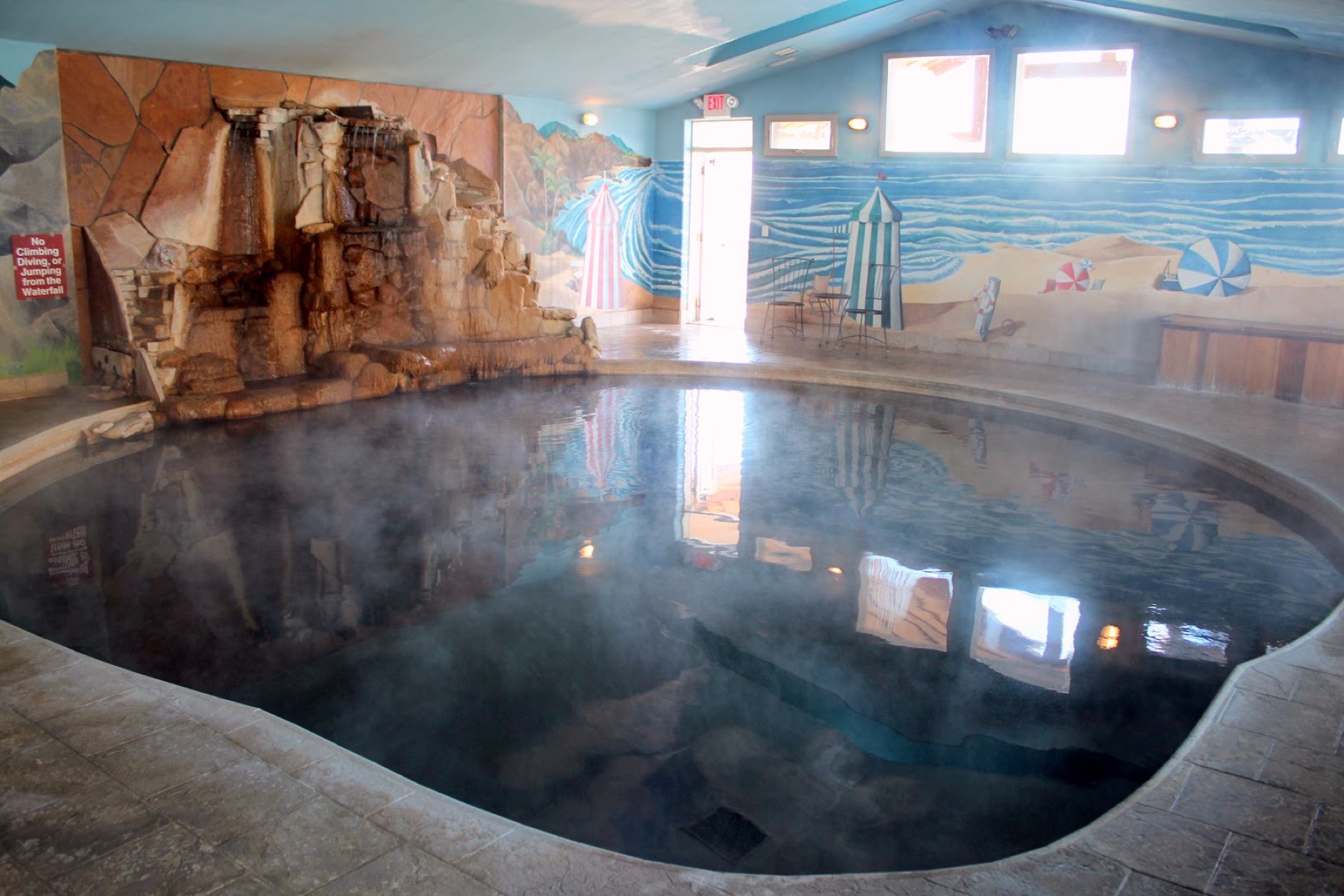
9. Orvis Hot Springs (Ridgway, Colorado)
Orvis Hot Springs has a laid-back atmosphere, and you can camp or stay overnight right on the property. The pools have evocative names and very different temperatures: the hottest, Lobster Pot, stays between 108 and 114 °F (42–46 °C); Island Pond, measuring 20 by 8 feet, is fed by a 127 °F (53 °C) spring; and the Cold Plunge by the sauna is kept at 62 °F (17 °C). Along with thermal pools, the property offers massages and simple rooms with shared bathrooms.
This is a lovely retreat for anyone looking for peace and a natural setting without too much luxury. Water temperatures average 100–106 °F seasonally, and in the Flume, hot and cold spring water mix to maintain an ideal 103–104 °F. The usual opening hours are 9 a.m. to 9 p.m., with last entry at 8 p.m. A massage starts at $85 for 30 minutes and includes admission to the thermal pools, normally valued at $35.
A full-day adult pass costs $35 in 2026, and children aged 4–12 pay $12. Towel rental is $3. 💡 Tip: If you only have a little time, the one-hour Quick Dip still costs the full $35, but you’ll get $5 back at reception when you leave. A room costs $249 and includes two days of soaking for two people.
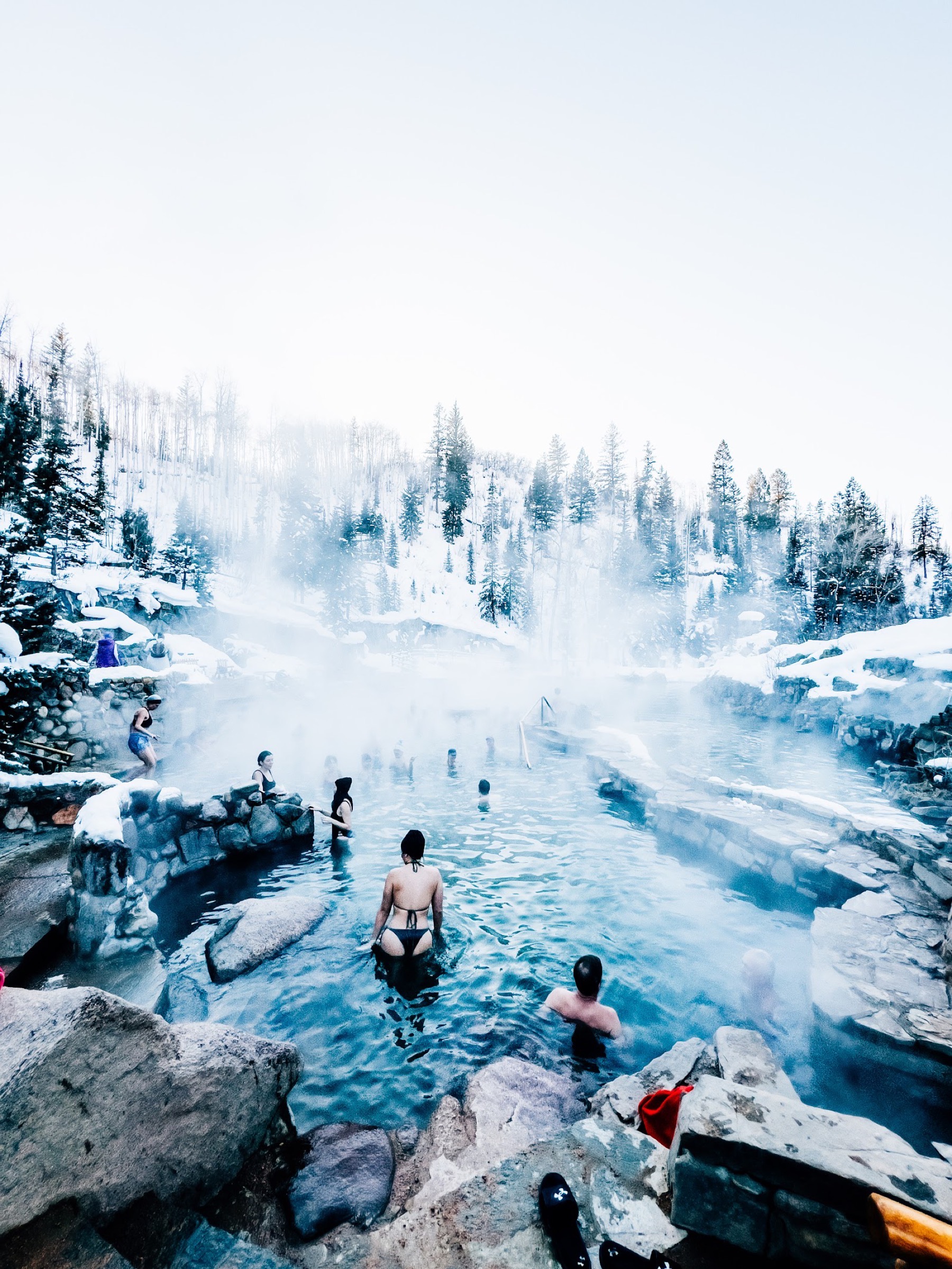
10. Strawberry Park Hot Springs (Steamboat Springs, Colorado)
This natural gem near Steamboat Springs becomes a magical place with plenty of rules after sunset. The property is deliberately dimly lit, and phones and photography are strictly prohibited. After dark, soaking is also clothing optional.
The therapeutic water stays at 104 °F (40 °C). The pools are open to everyone during the day, but after dark only adults aged 18 and over are admitted. The facility is open until 10 p.m. Sunday through Thursday and until midnight on Fridays and Saturdays.
Admission is $30 for adults and $20 for children under 17, with reservations in two-hour slots. Bring cash: cards and checks aren’t accepted, and there’s no ATM. 💡 Tip: From November 1 to May 1, the county requires 4WD with winter tires or chains on the access road. Two-wheel-drive vehicles aren’t allowed, even with chains.
California: from desert to Big Sur
The Golden State offers a wide variety of hot springs experiences. On a California road trip, you’ll find everything from luxury spas to wild springs tucked away in the mountains. Soak in a desert oasis around Desert Hot Springs, explore quiet forested areas in Napa Valley, or listen to the ocean waves from the cliffs of Big Sur.
This is a great region for anyone who likes to combine hiking with proper relaxation. Most places are open year-round, so you can enjoy a warm soak in any season. Pack your swimsuit and let’s look at the stops worth adding to your route.

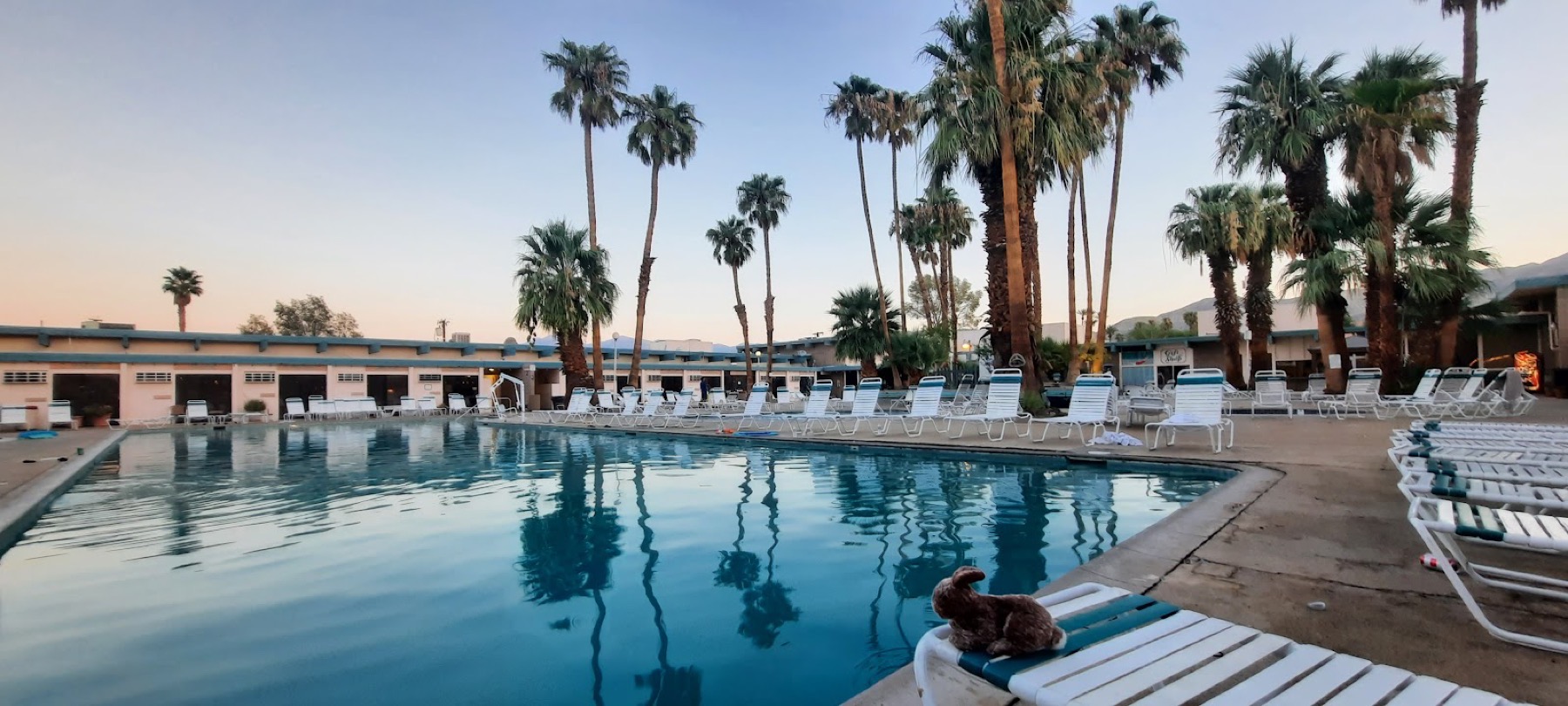
11. Desert Hot Springs (Desert Hot Springs, California)
Desert Hot Springs is unusual in that the city itself has more than 20 accommodations with natural mineral springs. The city has grown quickly since the 1970s, and its population exceeded 32,000 in the 2020 census. The Cahuilla people once lived in this area north of Palm Springs, particularly in the village of Seven Palms. Hilda Maude Gray became the first modern settler here in 1908.
A turning point came in 1913, when Cabot Yerxa arrived and discovered a hot aquifer system on Miracle Hill. The springs are an inviting place to unwind after long desert drives and make an excellent base for exploring the area. Along with a soak, you can learn about local history and enjoy the quiet desert valley.
One local highlight is Cabot’s Pueblo Museum, a historic home Yerxa spent 20 years building by hand. This Pueblo Revival-style building is among the oldest adobe structures in Riverside County. 💡 Tip: Stop by Cabot’s Trading Post & Gallery, which opened to the public in February 2008.
12. Sycamore Mineral Springs Resort (Avila Beach, California)
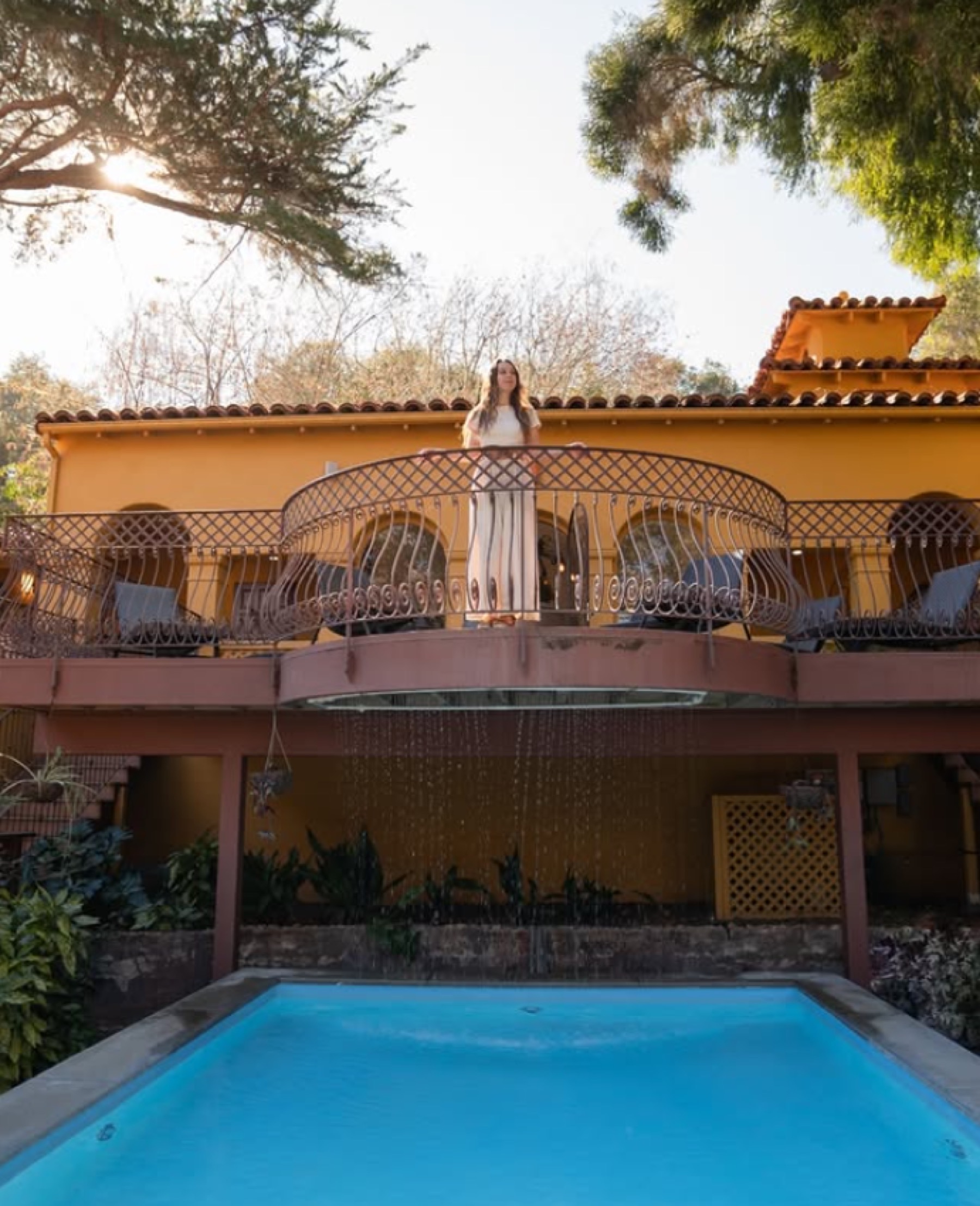
This San Luis Obispo County resort is known for its private outdoor hot tubs set into the hillside. The 116-acre (about 47-hectare) property sits on a natural hot mineral spring. It was once called San Luis Hot Sulphur Springs. Today it’s a peaceful retreat where every room comes with unlimited access to a private mineral tub.
Along with the pools, the property has a yoga dome, spa and beautiful Secret Garden. If you’re hungry after your soak, stop at the Gardens of Avila restaurant. It’s a good choice if you want privacy and a chance to combine spa time with fresh-air activities beneath mature trees.
The resort also rents bikes, with helmets and locks included. According to the 2026 rates, a regular bike costs $15 per hour or $35 for the day. 💡 Tip: If you’re travelling as a pair, rent a tandem for $50 a day and explore the Avila Beach area together.
13. Two Bunch Palms (Desert Hot Springs, California)
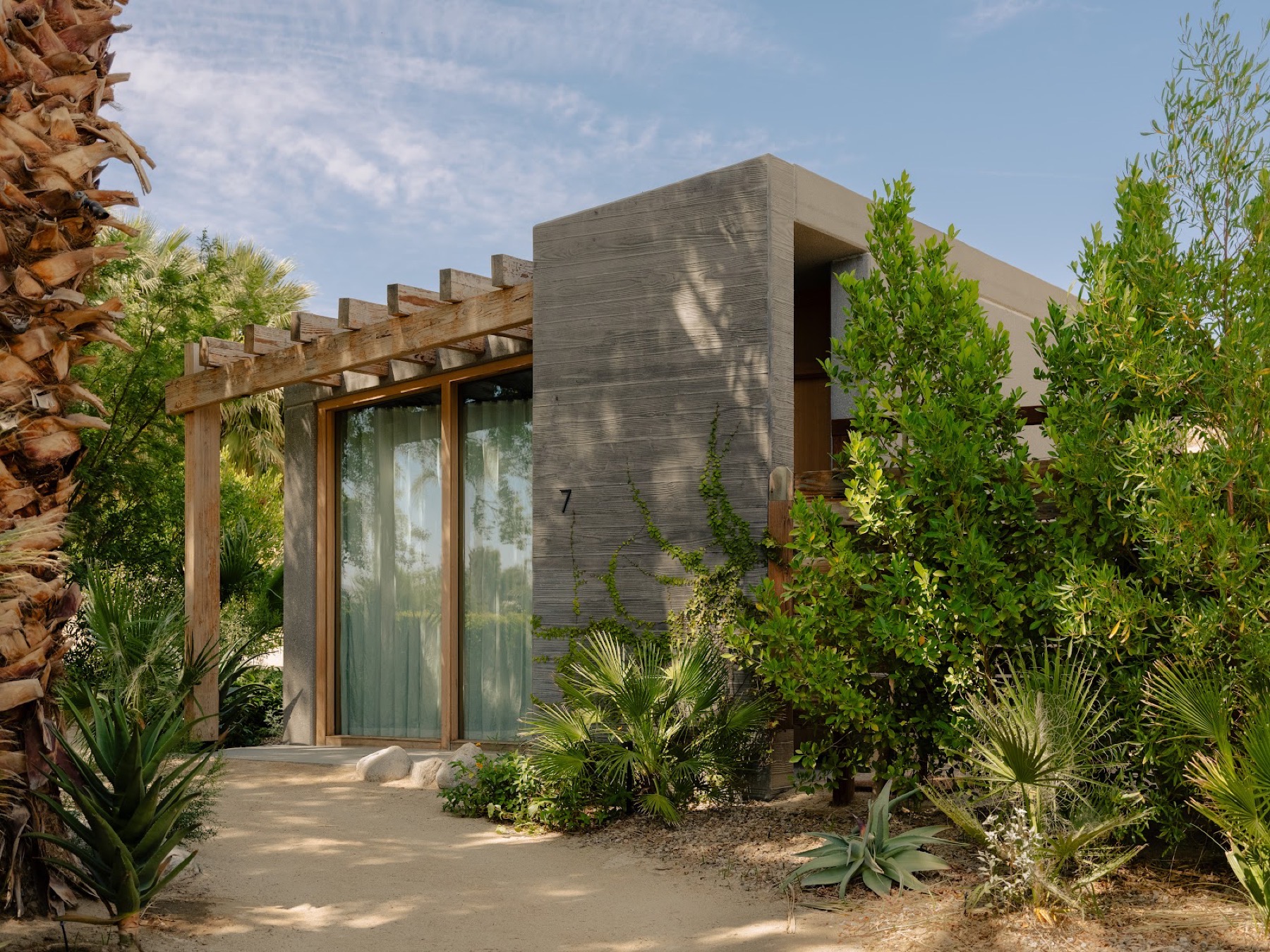
Two Bunch Palms is reserved for adult guests, with a shaded lagoon called the Grotto at its heart. The water comes from a spring that is 600 years old and emerges at over 100 °F (about 38 °C). The pools’ water is naturally renewed every 24 hours. Across the wider Desert Hot Springs area, springs typically range from 120 to 160 °F (49–71 °C).
The property has a fascinating history that adds a touch of mystery to your stay. In 1909, a US Army camel corps surveyed the area and named it for two prominent clusters of palms. Even more intriguing are the stories from the 1920s and 1930s, which claim that Al Capone used the area as a hideout during Prohibition.
These days, instead of bootleggers, you’re more likely to find people seeking a digital detox and some peace and quiet. The resort is designed for relaxation, without the noise of children. 💡 Tip: It’s an exclusive property with specific rules, so book well ahead to enjoy the historic lagoon at your leisure.
14. Harbin Hot Springs (Middletown, California)
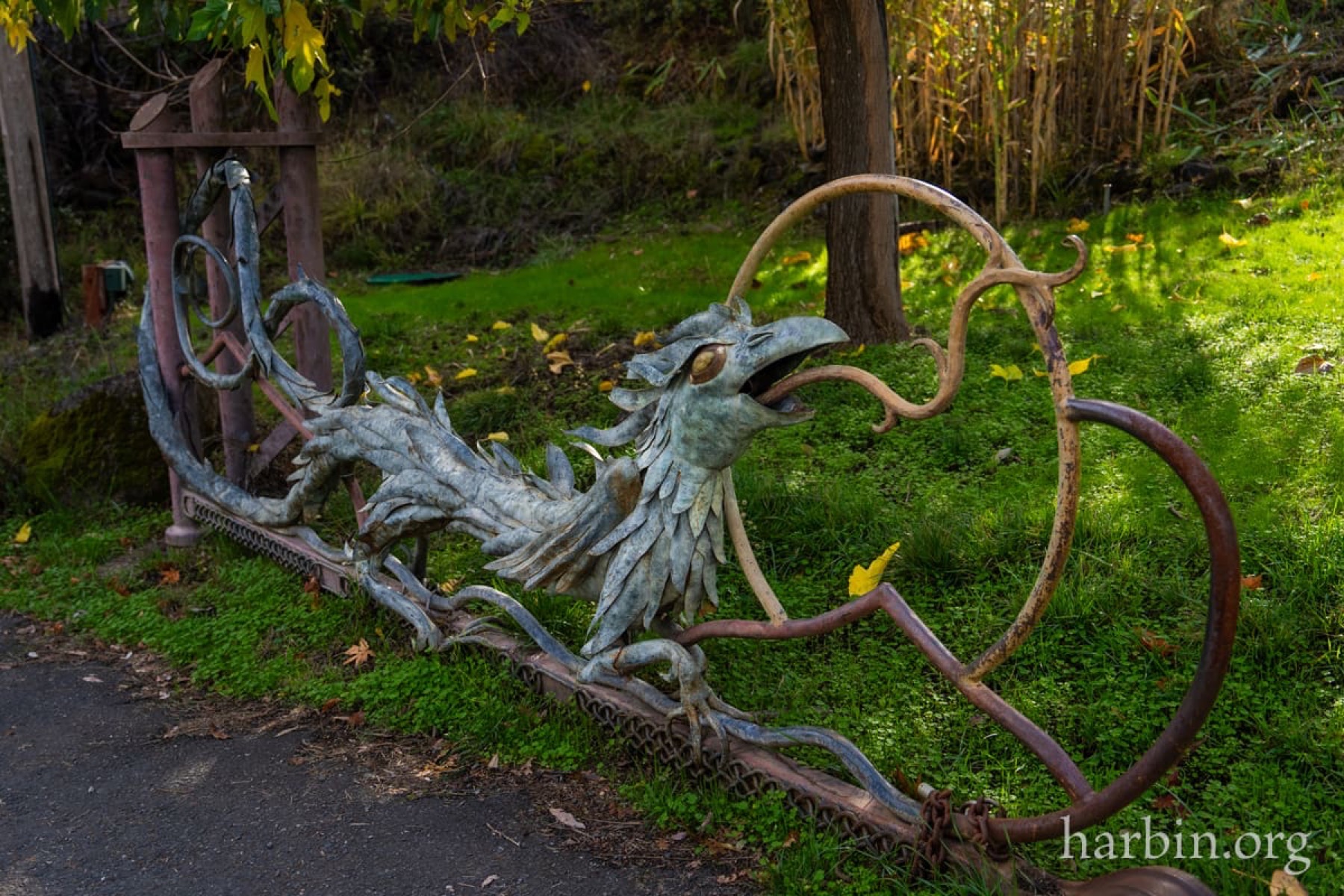
This natural retreat sits at an elevation of 478 m, about a two-hour drive north of San Francisco, and all adult guests must be members. According to the 2026 rates, a one-month trial membership costs $15, annual access is $35, and lifetime membership is $300. If you arrive without an online reservation, expect an additional $5 walk-in fee.
The property faced a major setback in September 2015, when the Valley Fire partially destroyed it. It reopened in part in January 2019. Visitors can once again use the main pools, sauna and limited café service. Water temperatures vary: historical measurements from 1914 recorded a hot sulfur spring at 120.5 °F (49.2 °C) and an iron spring at 118 °F (48 °C). The Magnesia pool offers a cooler 19 °C soak.
The rules are fairly strict, helping preserve a peaceful environment for meditation and rest. Smoking is completely prohibited in the accommodation, with a $100 fine, and traces of alcohol can incur a $75 penalty. 💡 Tip: If you cancel 48 to 24 hours before arrival, expect a cancellation fee of 50% of the booking price.
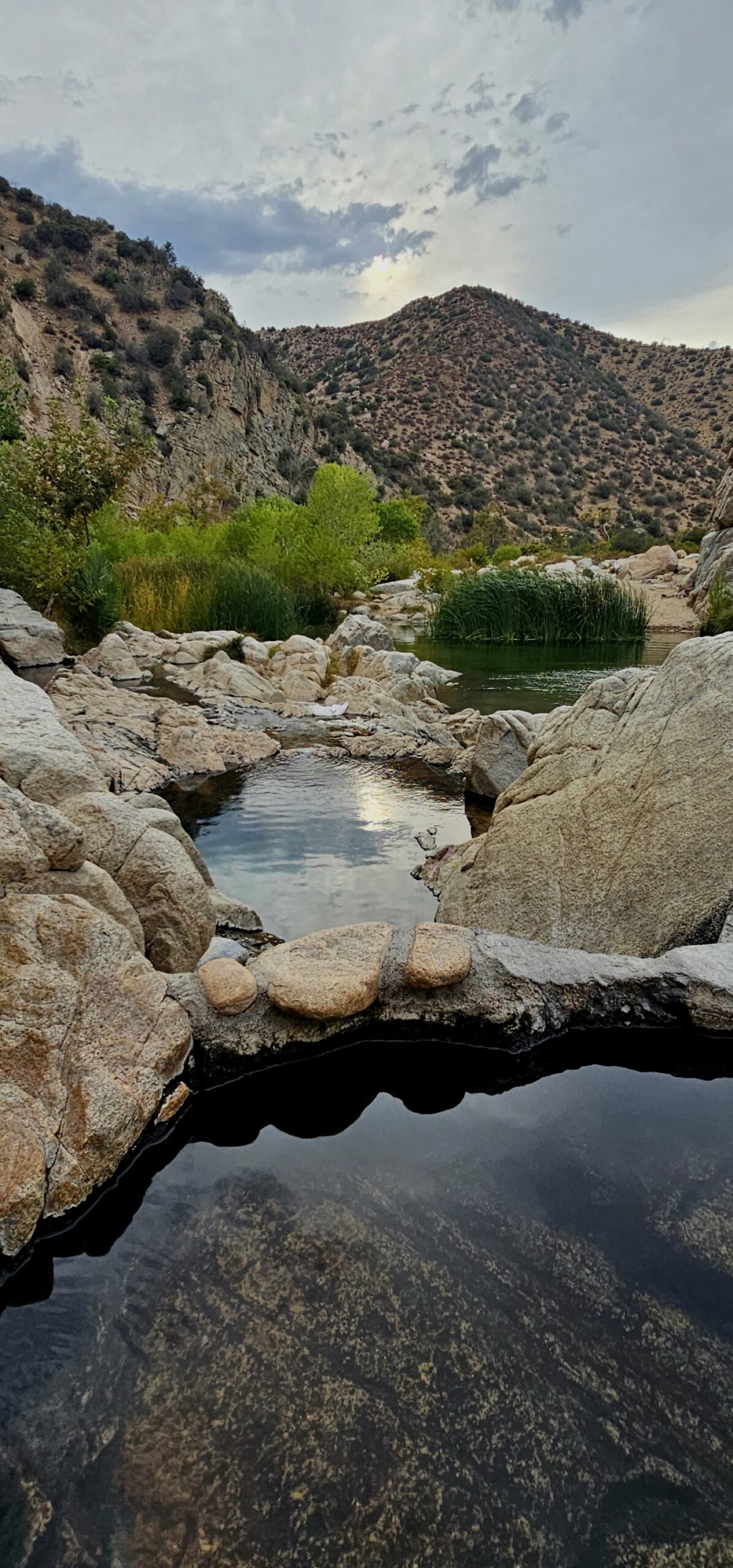
15. Deep Creek Hot Springs (Apple Valley, California)
Unlike commercial resorts, Deep Creek Hot Springs offer a completely natural experience that involves a hike. There’s no reception desk, changing room or price list: you’ll have to walk to the water. One popular approach is from the south via the Bradford Ridge Path, about 2.6 miles (roughly 4 km) each way, with beautiful views along the trail.
The famous Pacific Crest Trail also passes through the springs. Another option is to start near Lake Arrowhead and hike 6 miles each way. The reward is a series of pools in the wilderness, where hot mineral water emerges right between the rocks.
This spot is best for adventurous travellers who don’t mind steep terrain and a complete lack of facilities. You’ll need to carry everything you need in your backpack. 💡 Tip: This is an undeveloped wilderness area, so tread lightly and pack out all your rubbish.
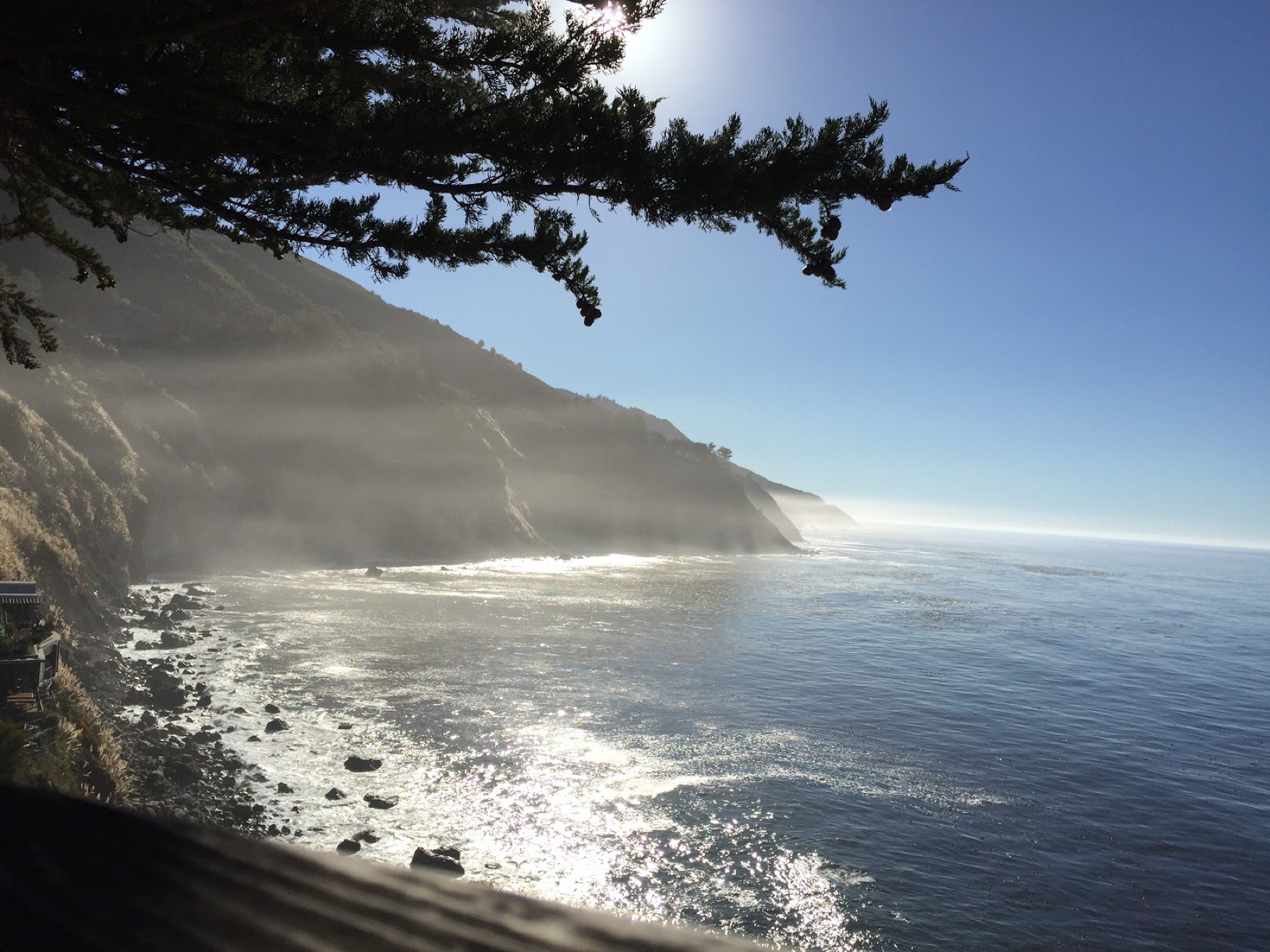
16. Esalen Institute (Big Sur, California)
This famous institute on the cliffs beside Highway 1 isn’t a conventional swimming facility; it’s an educational and spiritual center. Michael Murphy and Dick Price, both former students of Frederic Spiegelberg, founded it in 1962. The institute played a key role in the human potential movement that began taking shape in the 1960s. Dick Price led the center until 1985, when he died in a hiking accident.
As recently as 2016, Esalen offered more than 500 workshops a year on topics ranging from Gestalt practice and personal growth to meditation, psychology, ecology and yoga. Around 15,000 people took part that year. In February 2017, a major landslide blocked the road in both directions. The institute evacuated guests by helicopter and temporarily laid off 90% of its staff before partially reopening in July.
Today, people travel here from around the world for a transformative experience overlooking the ocean waves. 💡 Tip: If you’re interested in a workshop, check out financial assistance options: according to the official website, scholarships can cover up to 90% of the cost.
New Mexico: Ojo Caliente and Truth or Consequences
If you’re looking for a state where a storied past meets serious relaxation, New Mexico is a great choice. It’s home to some of the oldest spa resorts in the USA, with an unmistakable desert atmosphere. There’s something special about soaking outdoors high in the mountains, especially after a long drive.
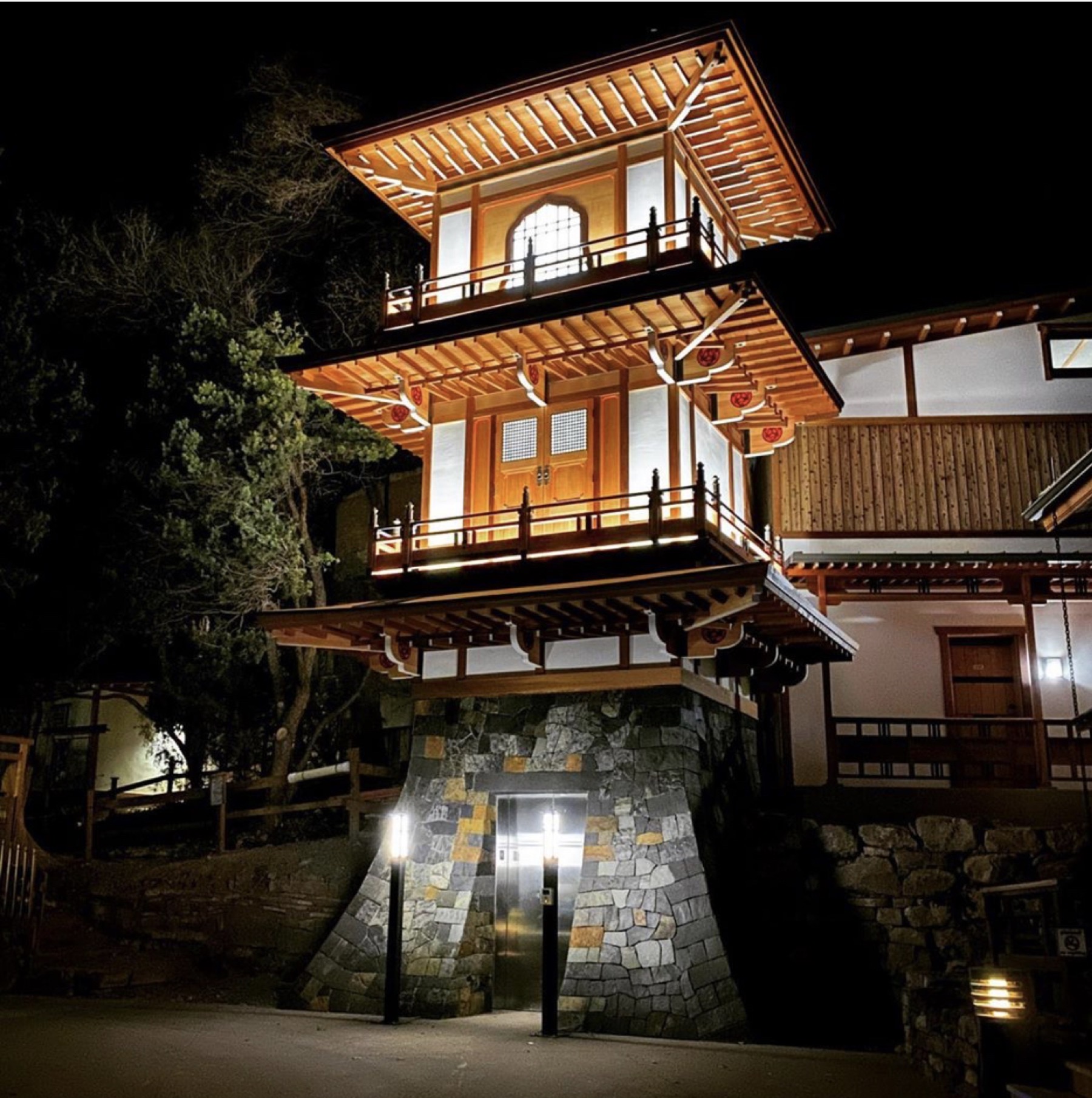
Near downtown Santa Fe, Ten Thousand Waves creates the feel of a Japanese retreat. Farther south, you’ll find the curious town of Truth or Consequences, full of small traditional bathhouses and spas that date back to the late 19th century. If you’re planning a US road trip and love wellness, pin these places to your map.
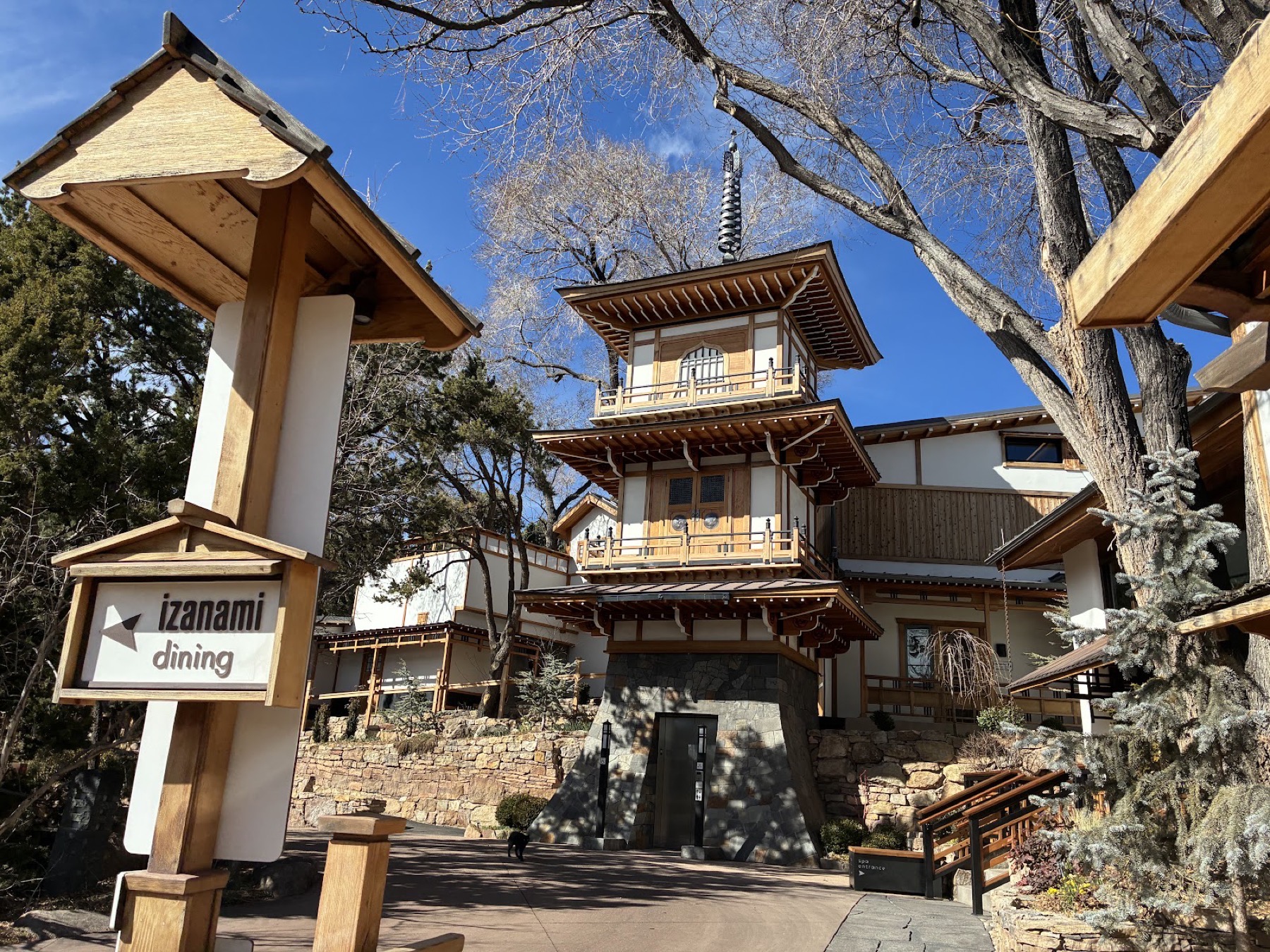
17. Ten Thousand Waves (Santa Fe, New Mexico)
Just ten minutes from downtown Santa Fe, this luxury complex is inspired by Japan’s grand bathing resorts and operates as a traditional onsen. From the moment you arrive, you’ll notice the Asian-inspired aesthetic and the calm associated with Japanese bathing culture. The property offers excellent massages and delicious food at its izanami restaurant, including a three-course lunch menu.
Every detail of the bathing experience has been carefully considered. The largest communal tub, the Grand Bath, holds up to 18 people. For more privacy, private tubs have their own sauna, changing room and shower, and some even include cooling loungers. The former separate baths have been replaced by Reserved Community Soaking, with a maximum of ten people per 90-minute session at 11 a.m. and 6:45 p.m. Sunday through Thursday.
Groups of six or more get up to 35% off. Prices vary, but the 2026 menu lists lunch at $29, and there are Happy Hour offers in the afternoon and evening. 💡 Tip: Make a community-soaking reservation well in advance. According to the operator, you can reserve up to 72 hours ahead.
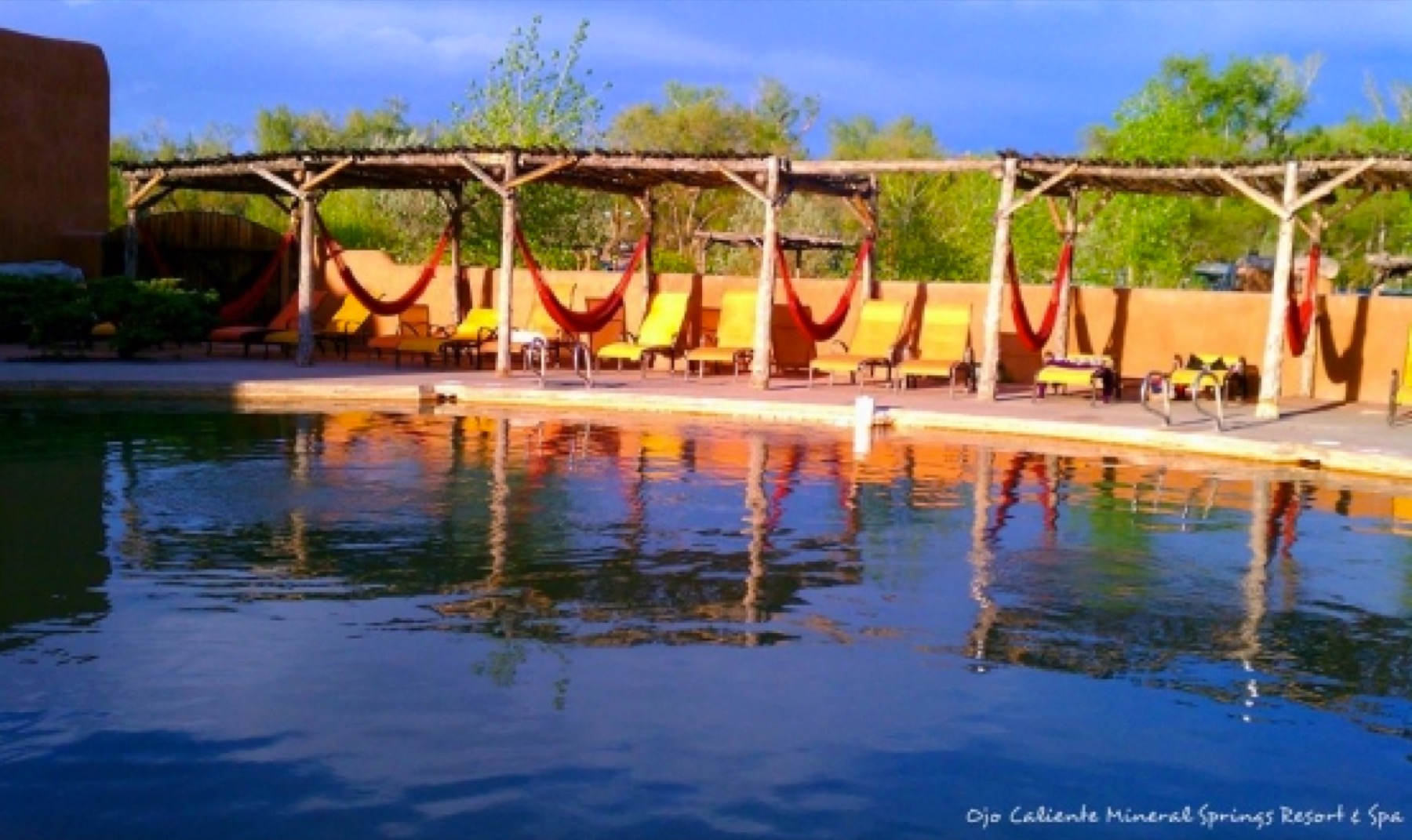
18. Ojo Caliente Mineral Springs (Ojo Caliente, New Mexico)
This historic resort is about 80 km north of Santa Fe, at an elevation of 1,900 m, so you can enjoy a soak in a true high-desert landscape. The settlement of Ojo Caliente dates back to 1735. Today, it’s a peaceful place in a semi-arid climate, with just over 100 year-round residents according to the 2020 census. The pools are pleasantly warm, with temperatures between 36 and 39 °C (97–102 °F).
This resort is ideal if you want to combine hot springs with other wellness activities. Try a massage with hot stones from the Rio Grande or join a yoga class. One major plus is that there are no hidden resort fees, and every stay includes unlimited access to the communal pools. For lunch or dinner, try dishes made with fresh ingredients grown at Ojo Farm.
According to the 2026 rates, a basic 90-minute yoga session and day-soaking package starts at $65, while an all-inclusive day pass to Ojo Caliente and Ojo Santa Fe costs $175. 💡 Tip: If you live in Arizona, Colorado or Texas, stay Sunday through Thursday to get 10% off your accommodation.
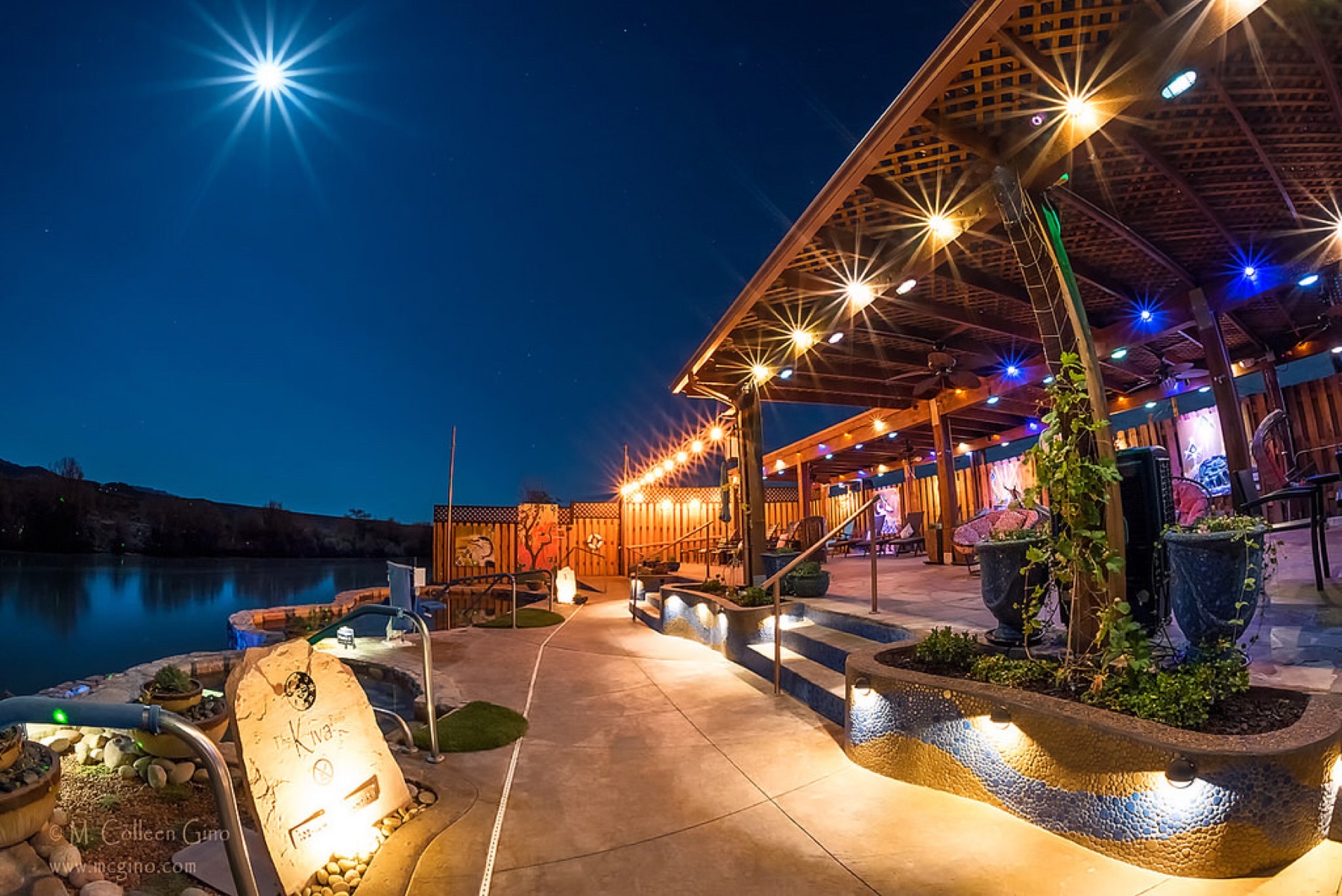
19. Riverbend Hot Springs (Truth or Consequences, New Mexico)
Riverbend is the only spa resort directly on the Rio Grande, with pools overlooking the river and the mountain beyond. Private pools accommodate up to two people, are clothing optional, and are booked in 50-minute sessions starting on the hour. The resort has a strict Whisper Policy.
According to the 2026 rates, a private pool costs $30 Monday through Thursday and $40 Friday through Sunday for one or two people. Each additional person, up to a maximum of four, pays $15. It’s open every day of the year from 8 a.m. to 10 p.m., and until 11 p.m. during daylight saving time. Children are welcome from age 12; otherwise, this is a spot for couples and adults.
The town itself has a quirky story: in March 1950, it changed its name after the popular radio show Truth or Consequences. By the end of the 1930s, it had more than 40 bathhouses. Today, it’s a small town of around 6,000 people with a handful of spas and a distinctive atmosphere. 💡 Tip: Buy a Property Pass and book a private pool immediately afterward to get $10 off through the Tour De Riverbend promotion.

Montana, Idaho and Wyoming: springs in and around Yellowstone
The northwestern USA has some of the most fascinating geothermal areas to visit on a road trip. Montana, Idaho and Wyoming are a real paradise for fans of wild landscapes, geology and hot water. These destinations are best for adventurous travellers who don’t mind long drives and want to experience the American wilderness firsthand.
Good planning is essential, as distances between towns such as Bozeman and Thermopolis are vast. Most springs are within driving distance of Yellowstone, making them easy to add to an itinerary. They’re popular, though, so it’s worth arriving early in the morning.
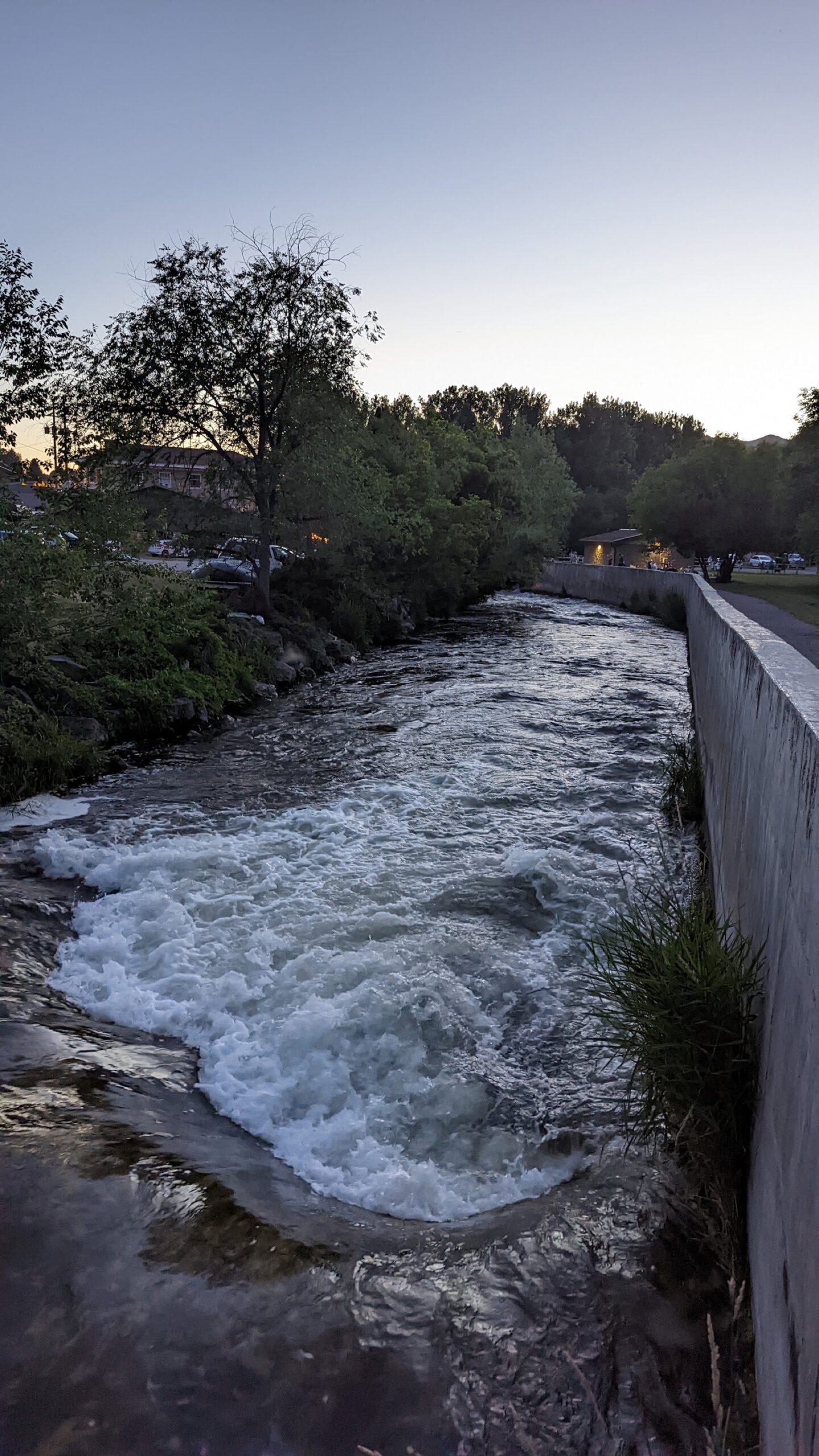
20. Lava Hot Springs (Lava Hot Springs, Idaho)
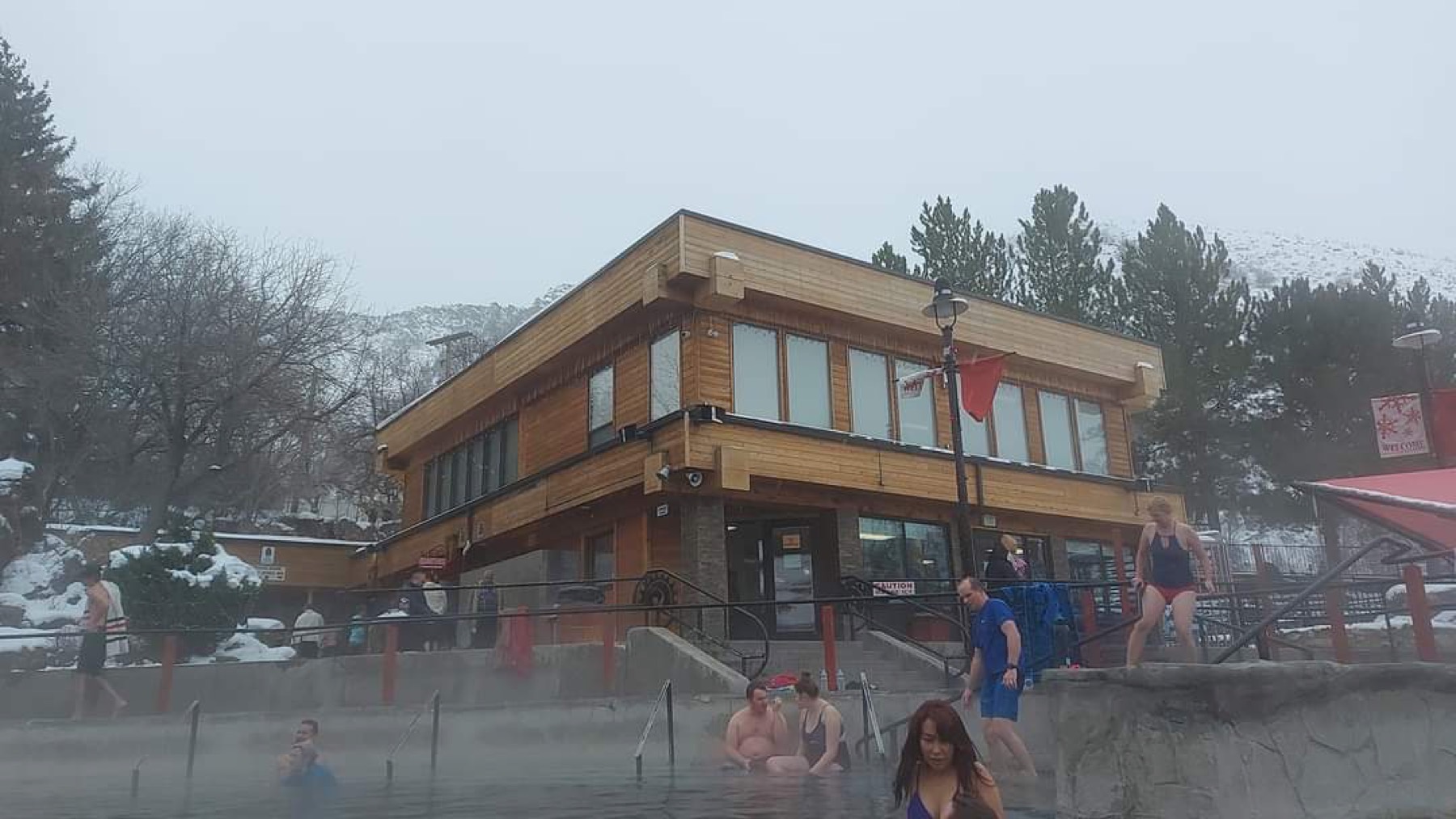
This is one of the few American springs where the water has no sulfur smell at all. The natural mineral water is 102–112 °F (39–44 °C) and isn’t chemically treated, so there’s no chlorine or sulfur smell. The compact facility has five pools: two outdoor gravel-bottom pools, two hot tubs and a traditional pool.
According to the 2020 census, the town has just 358 residents, so the water is the main attraction. At the other end of town, the separate Olympic Swimming Complex has a 33-foot-high diving platform and four waterslides in summer. The indoor aquatics centre, with its Aqua Climb climbing wall, is open year-round.
With hot springs for adults and a swimming complex for kids, Lava makes a good family stop on the route between Salt Lake City and Yellowstone. 💡 Tip: The hot springs and swimming complex charge separate admission and have different seasonal schedules, so check what’s open before you go.
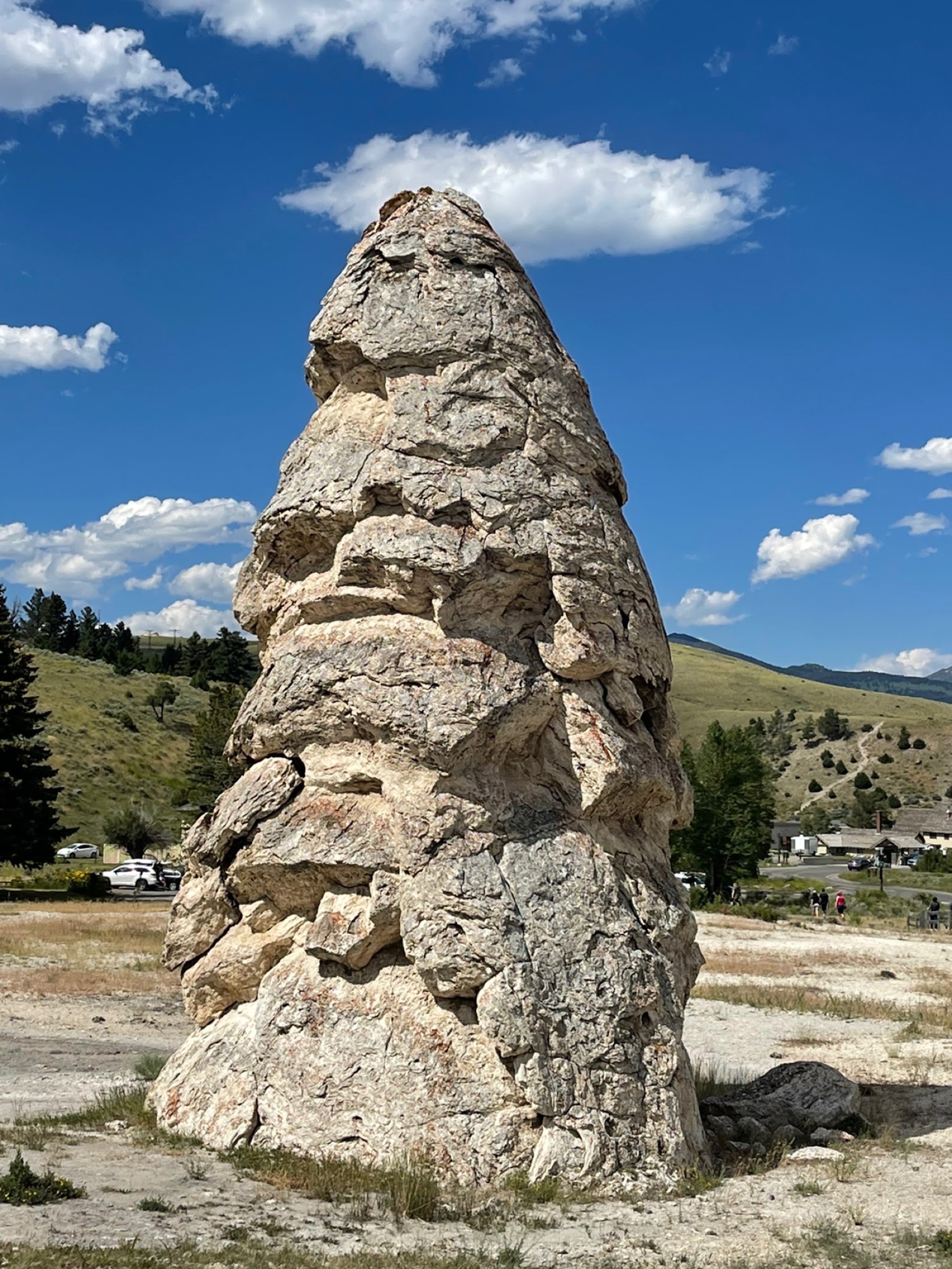
21. Mammoth Hot Springs (Yellowstone, Wyoming)
Yellowstone National Park is home to Mammoth Hot Springs, where Terrace Mountain is considered the largest known carbonate spring formation in the world. Geothermal water reaches it through cracks in limestone, flowing from as far away as Norris Geyser Basin. It cools slightly as it travels underground and is about 73 °C just before it emerges.
As the hot water rises through the limestone, it releases carbon dioxide and creates chalk-white travertine terraces on the surface. These formations visibly change as minerals precipitate rapidly. The ground beneath them is so hollow that it raised concerns when nearby fort buildings were constructed in the late 19th century.
Swimming in these springs isn’t allowed for safety reasons, so this is a visual treat for geology lovers. It’s well worth stopping in this northern part of the park. 💡 Tip: The boardwalks are the safest way to explore the terraces and keep you from breaking through the thin crust.
22. Bozeman Hot Springs (Bozeman, Montana)
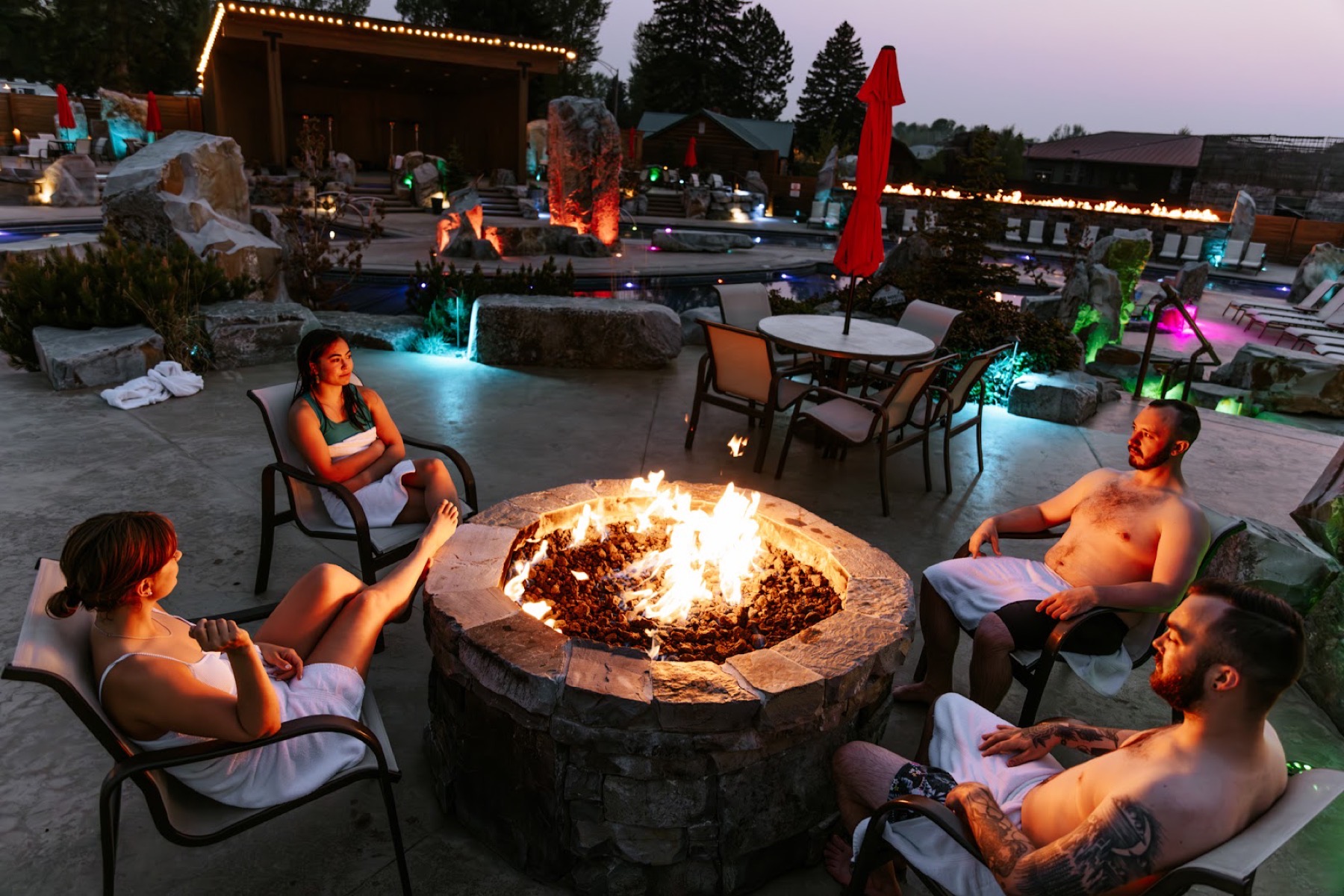
Bozeman Hot Springs is eight miles west of Bozeman on US 191 and has exactly 12 pools ranging from 15 to 41 °C. If you enjoy extremes, the hottest and coldest indoor pools are deliberately next to each other, making it easy to move between them.
The facilities are a good choice for sensitive skin: the indoor pools are drained and cleaned every night, so they don’t need chlorine. The three main outdoor pools are chlorinated. You’ll also find dry and steam saunas for unwinding after a long day on the road.
According to the 2026 price list, adults without a Montana state ID pay $28 on weekdays and $34 at weekends. Children under four pay $15. Prices may change during the year. 💡 Tip: The facility is in a valley right on the route to Yellowstone National Park, making it an ideal road-trip stop.
23. Quinn’s Hot Springs Resort (Paradise, Montana)
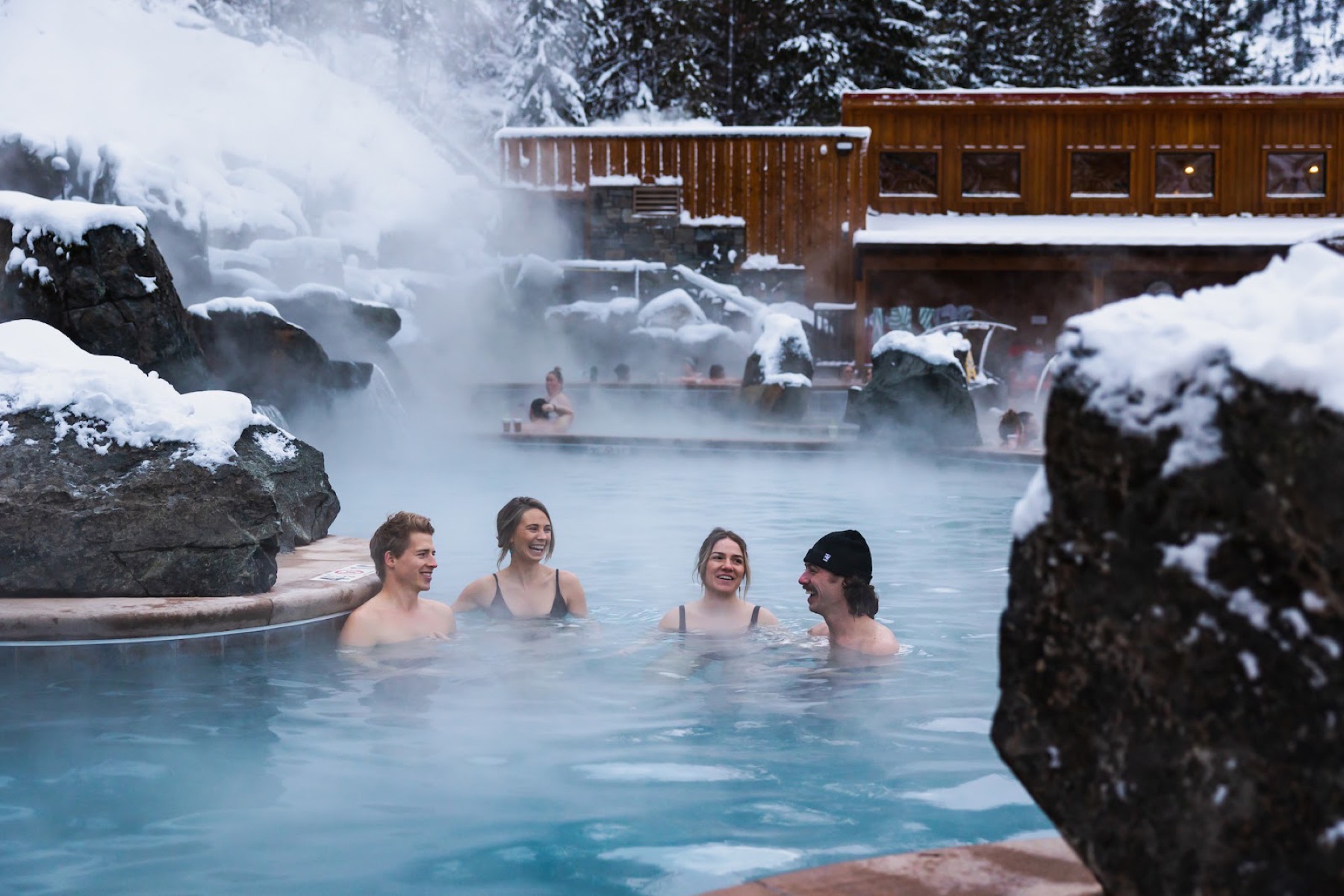
Quinn’s has outdoor pools divided into six sections with different temperatures. Five are natural, flowing geothermal pools kept at 100–106 °F (38–41 °C), with a chilly 55 °F (13 °C) cold plunge alongside them. Two additional pools are treated with salt and kept between 96 and 100 °F, making them suitable for children.
The admission system is a little unusual: the pools are open daily from 7 a.m. to 10:45 p.m., but day visitors must reserve one of three four-hour sessions (8 a.m.–noon, noon–4 p.m. or 4–8 p.m.). According to 2026 rates, day admission is $20 Monday to Thursday and $22 Friday to Sunday; on October 1, 2026, prices rise to $21 and $23.
The resort has two lodges and more than 25 cabins in the canyon and by the river, from rustic to luxurious, as well as Harwood House restaurant and Quinn’s Tavern. You can easily spend a few nights here and go hiking in the surrounding mountains between soaks. 💡 Tip: Book your session ahead of time; capacity is limited, and popular dates sell out in high season.
24. Chico Hot Springs (Pray, Montana)
Historic Chico Hot Springs is about 30 miles north of Yellowstone in scenic Paradise Valley and uses 100% natural geothermal water. It emerges from the ground at 45 °C, flowing at 37 gallons per minute. The resort sits at an elevation of 1,607 m and offers beautiful views of the surrounding landscape.
The two main pools average around 35 °C in the larger pool and 39 °C in the smaller one. The operator advises that young children should not use water above 37 °C. The site began developing as a resort in 1900, with a small pool 44 feet in diameter, and it still retains its historic charm.
In 2026, a day pass for adults and children aged seven and over costs $14; towel rental is an additional $2. Prices may change over time. 💡 Tip: If you’re travelling with pets, check the strict accommodation rules: bringing an animal into a room where they aren’t allowed incurs a hefty $150 fine.
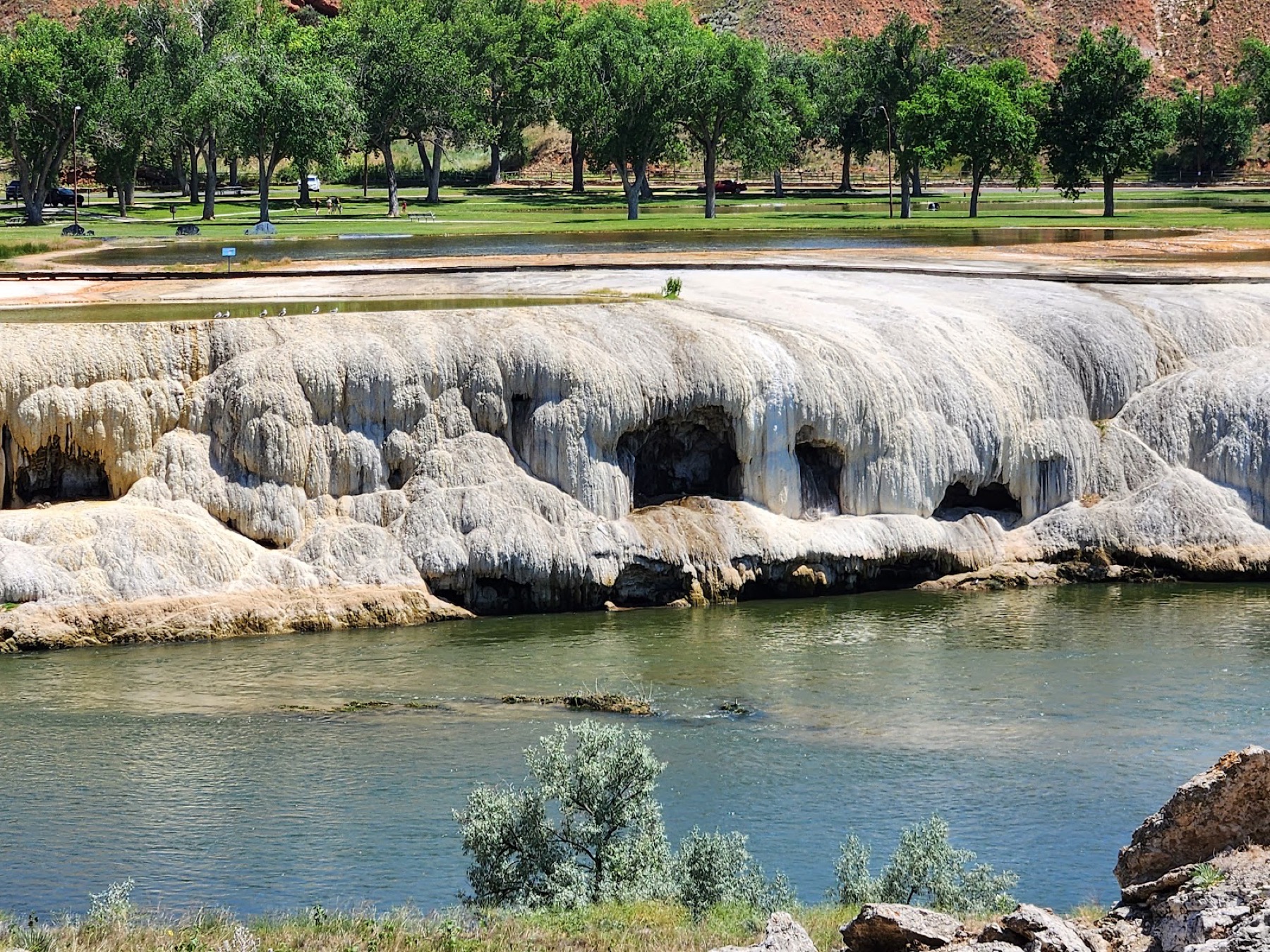
25. Hot Springs State Park (Thermopolis, Wyoming)
At Hot Springs State Park, thermal water constantly emerges from the ground at a steady temperature of about 57.2 °C. You can soak at the State Bath House, where the water is carefully regulated to a comfortable therapeutic 40 °C.
The federal government acquired the land from the Eastern Shoshone Tribe in 1896 and transferred one square mile to the state in 1897. This became Wyoming’s first state park, originally called Big Horn Hot Springs State Reserve. The park also includes the ancient petroglyphs at Legend Rock, about 25 miles away.
Soaking at the State Bath House is completely free, a rarity in the USA. Admission is listed as free for 2026, although local rules may change. 💡 Tip: The park has had a herd of state bison since 1916. It is kept to 15 animals to match the available grazing land, so keep a safe distance when walking around.
Utah, Nevada and Arizona: craters and desert oases
The southwestern USA offers the kind of dramatic contrasts you want on a road trip. By day, you’ll drive through vast arid canyons and past red rock formations; in the evening, unique geothermal oases await. These states are full of natural wonders, from luxury historic desert resorts such as Arizona’s Castle Hot Springs to wild pools hidden in the forest, like popular Fifth Water.
Utah’s Homestead Crater is a real standout, letting you scuba dive in an underground cavern, while the iconic tubs at Mystic Hot Springs look as if they belong in an art film. Most of these places take a little planning and sometimes require a detour from the main highways, but the experience is worth it. Summer is fierce in the desert states, so these hot springs are best enjoyed in spring, autumn or the cooler winter months.
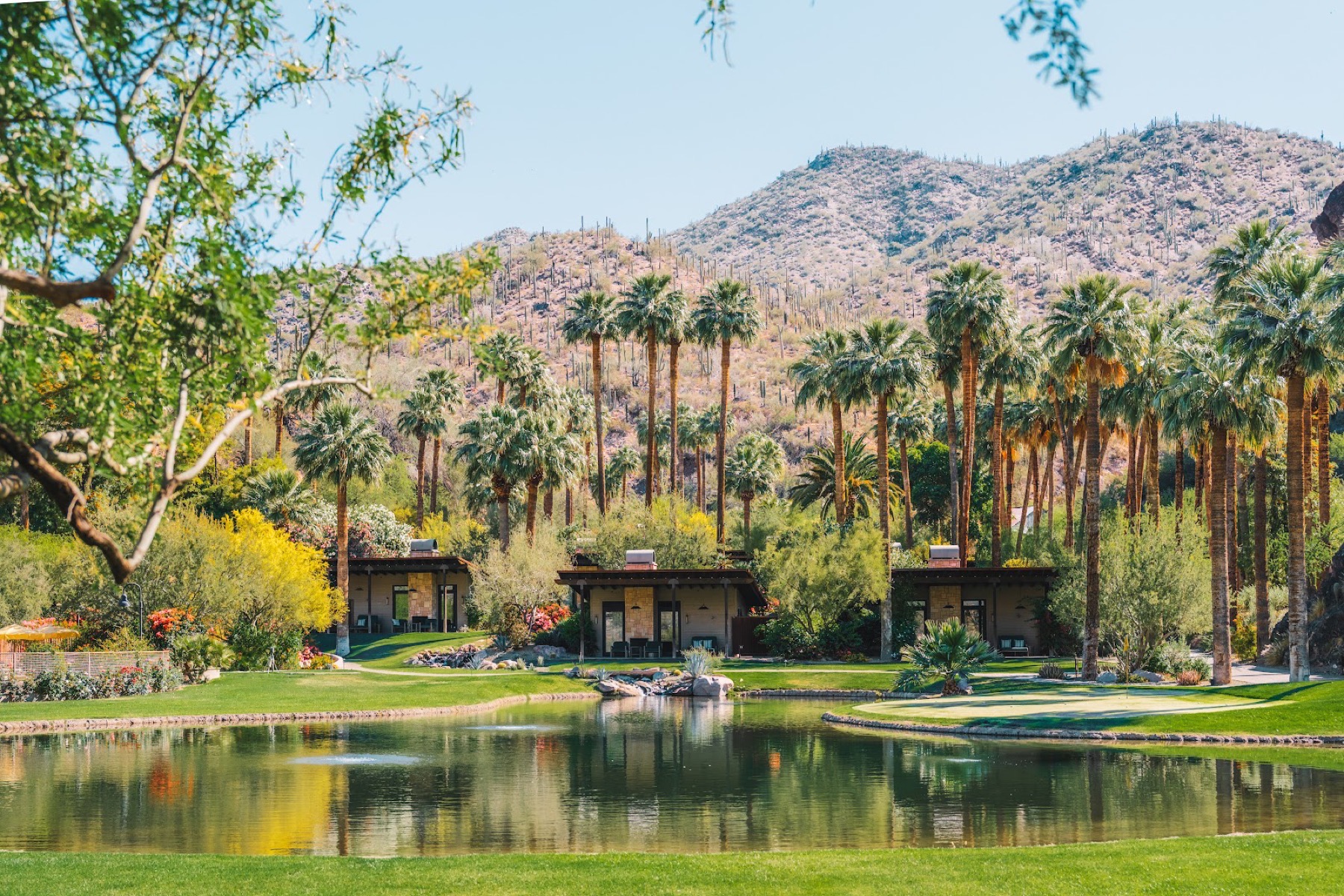
26. Castle Hot Springs (Morristown, Arizona)
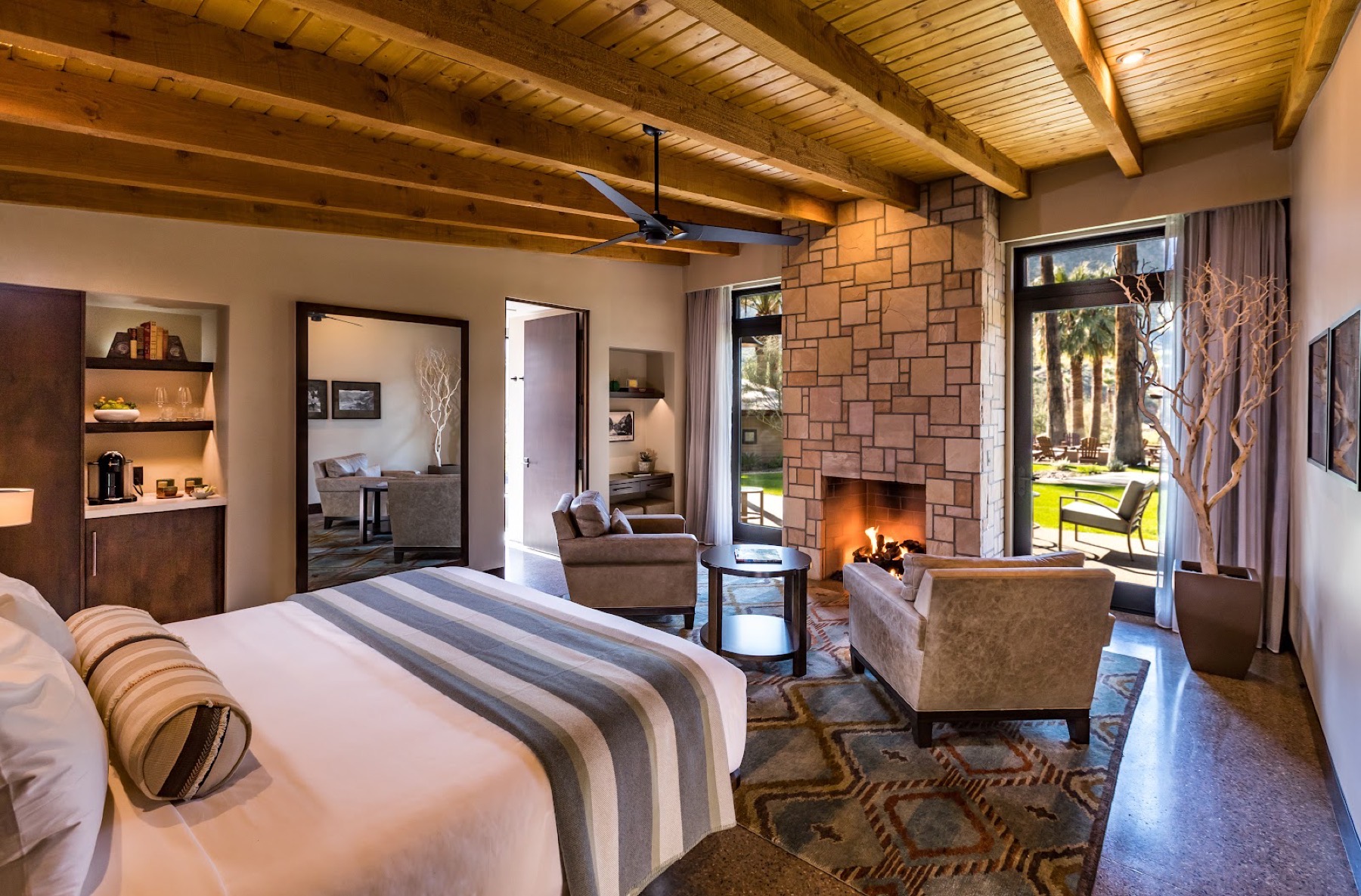
According to its operators, this is Arizona’s first luxury hotel, having welcomed its first guests in 1896. Today, it’s a beautifully restored, all-inclusive luxury resort for guests seeking privacy and a fascinating history. More than 200,000 gallons of geothermal water flow from underground every day, feeding three spectacular cascading pools. Choose between temperatures of 41, 36 and 29 °C.
The history here is fascinating. President Theodore Roosevelt visited in 1911, and in the 1920s the Rockefeller family and writer Zane Grey stayed here. Later, future president John F. Kennedy spent three months recovering in these waters from injuries he sustained when his PT-109 boat sank.
This resort is for travellers looking for a peaceful, high-end stay in the desert, far from the bustle of civilization. 💡 Tip: If you love history, ask the staff to share more stories from the days when the resort hosted the social elite. They’re proud of its past.
27. Homestead Crater (Midway, Utah)
This geological wonder is a roughly 10,000-year-old crater that attracts snorkellers and scuba divers. Over thousands of years, minerals from the thermal water built a vast limestone dome, more than 16 m high and 120 m across at its base. The water heats deep underground and flows into the crater at around half a million litres per day, keeping it remarkably clear.
Inside, the blue water stays at a pleasant 32 °C all year. It reaches nearly 20 m deep, with a 2–4 m layer of soft mud on the bottom. Once a place to relax after hard work, the crater is now a popular diving attraction for visitors from around the world.
Getting inside is easy: in the 1990s, a 33 m tunnel was cut through the rock on the north side. There’s no need for a tricky rappel. 💡 Tip: The water is warm all year, but there’s no direct sunlight inside the cavern, giving it a rather mysterious atmosphere.
28. Fifth Water Hot Springs (Diamond Fork, Utah)
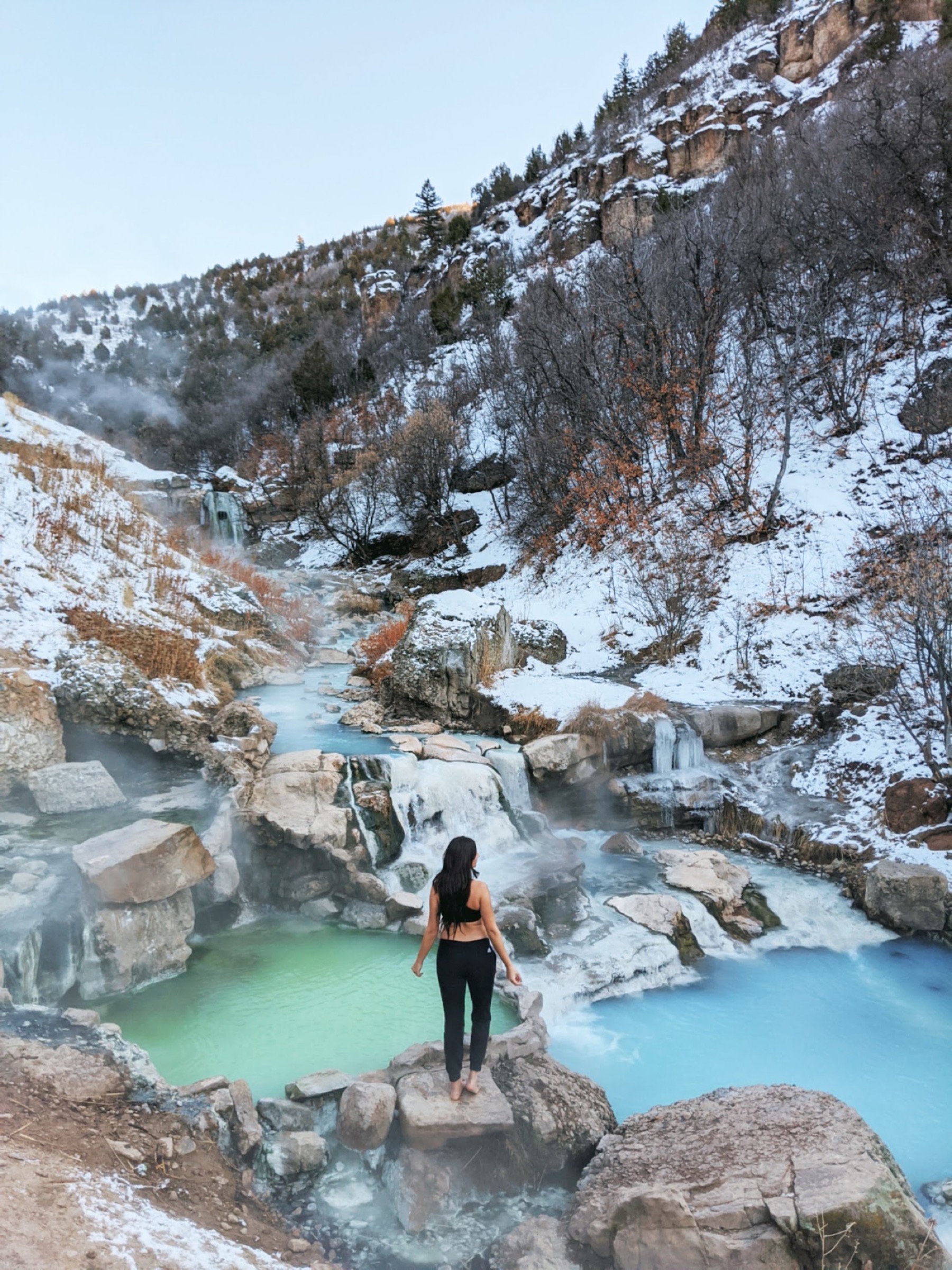
Hikers will love this spring, reached by a moderately challenging 7.4 km trail with 194 m of elevation gain. The hike takes around two to two and a half hours and leads into beautiful Diamond Fork Canyon, a branch of the larger Spanish Fork Canyon. People have used these thermal waters for as long as 10,000 years; Paleo-Indigenous people once came here to rest.
Along Fifth Water Creek, you’ll find several natural soaking pools and three beautiful waterfalls. One of the best things about the pools is that you can adjust the water temperature yourself. Just choose where to sit and how much cold water from the forest stream to let in.
You’ll need your own car to get there. From Spanish Fork, drive about 11 miles along Highway 6, then turn onto Diamond Fork Road for the final 10 miles to the trailhead. 💡 Tip: Start early to avoid the sun on the trail and improve your chances of having the best waterfall pools to yourself.
29. Mystic Hot Springs (Monroe, Utah)
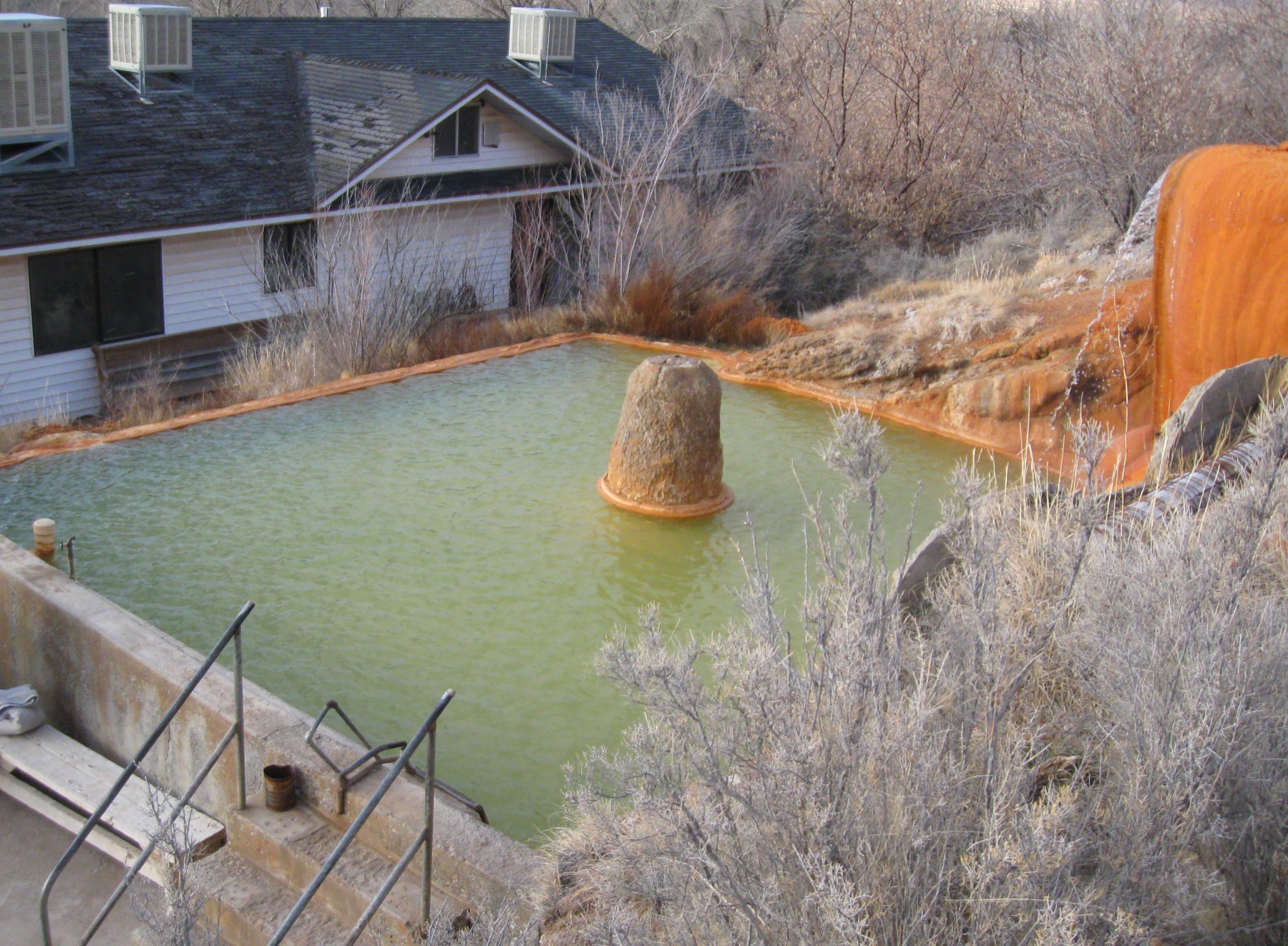
If you’re looking for a relaxed, bohemian vibe, you’ll love these springs, which also host live music concerts. The place was originally called Monroe Hot Springs after the nearby town. The Thomas Cooper family settled here in 1886 and built the first bathhouse in 1905. The site took its current name in 1995, and a year later Mike Ginsburg bought it and continued the concert tradition.
The water emerges from the ground at a scorching 76 °C and flows across the property at more than 750 litres per minute. It’s rich in minerals, particularly calcium carbonate, magnesium and iron. Water from the main spring then flows into two smaller cooling pools, where temperatures are kept at a comfortable 33–39 °C—ideal for a longer soak.
The address is 475 East 100 North. This place is best for travellers who appreciate a rustic feel and prefer somewhere with character to a sleek, modern spa. 💡 Tip: Check the official event schedule. Soaking in hot mineral water while listening to live independent music under the stars is exactly why people travel here from afar.
30. David Walley’s Hot Springs (Genoa, Nevada)
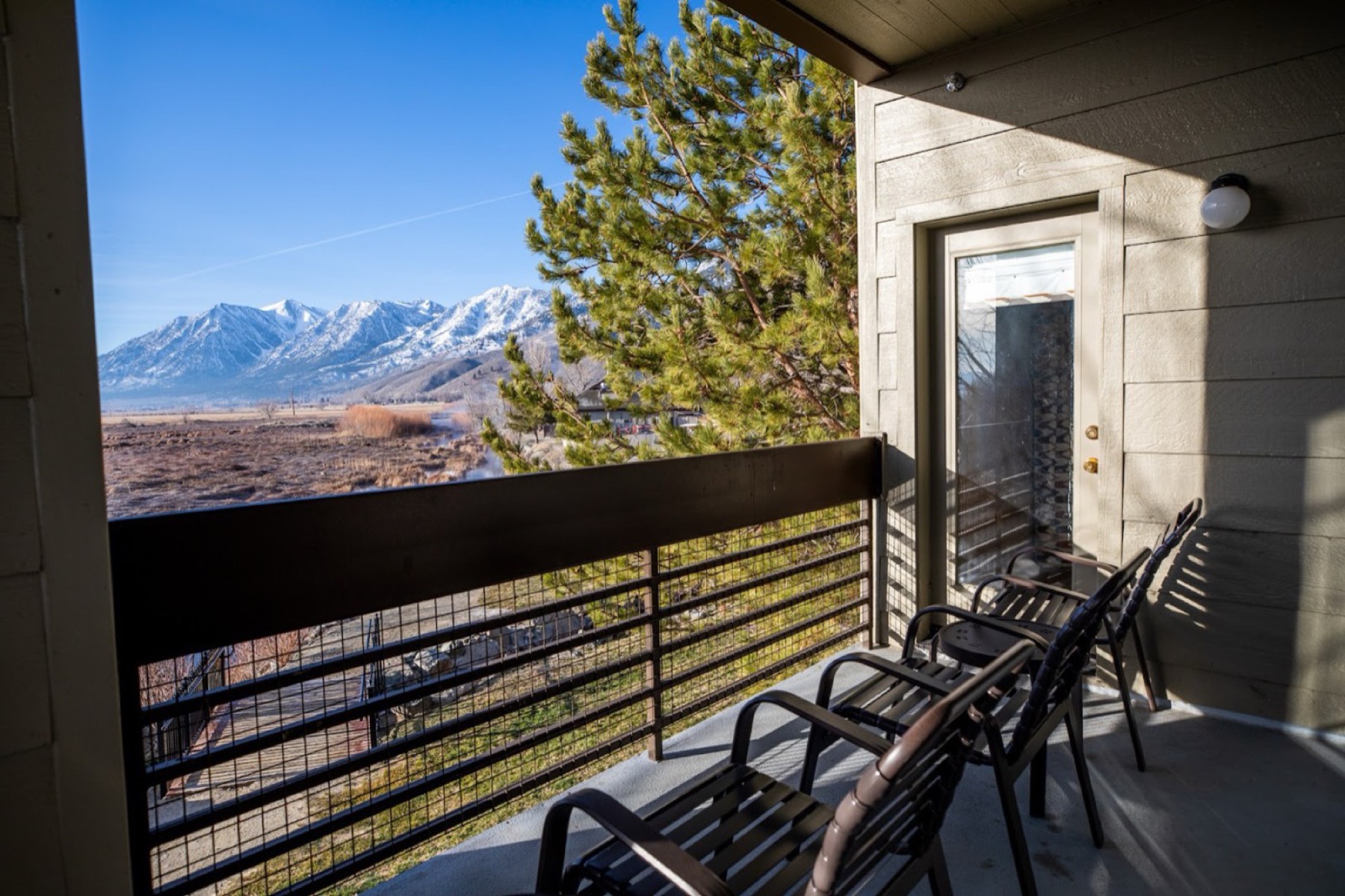
This resort has been operating since 1862, when it was known as Walley’s Hot Springs. It’s a mile from Genoa, Nevada’s oldest settlement. Today it’s part of the Holiday Inn Club Vacations network and feels more like a comfortable resort than a wild spring: five mineral pools at 98–104 °F (37–40 °C) are complemented by a large heated swimming pool at 89 °F (32 °C).
The Canyon area has another pool at 83 °F and three hot tubs, making it easy to alternate between warm water and swimming. The restaurant and saloon are called 1862, after the year the resort was founded, and have a Wild West-style interior. It’s one of the few places in this guide where a soak comes with traditional hotel services.
One thing to note: pool access isn’t included in the overnight rate for regular guests. According to the 2026 rates, a day pass costs $55 per person for non-residents and some hotel guests, making Walley’s the most expensive one-day soak in this section. 💡 Tip: Genoa is an hour’s drive from Reno, and the town is home to Nevada’s oldest bar. It makes a nice half-day trip from Lake Tahoe.
Oregon and Washington: springs in the rainforest
The Pacific Northwest offers a very different experience from the dry deserts of neighbouring states. In Oregon and Washington, you’ll head deep into ancient conifer forests, where the trees are covered in thick moss and mist or drizzle often greets you. The atmosphere is almost otherworldly, and soaking outdoors takes on a whole new feel. It’s a great area for hikers, as many springs are reached on forest trails.
Popular spots include the more developed Sol Duc in Olympic National Park and the famous Umpqua pools above a wild river. You’ll also find tucked-away spots in the forest, such as Bagby and Terwilliger, as well as historic bathhouses in Carson. Trails can be slippery after rain, and mobile reception is often patchy in remote areas. In return, you get to relax in the heart of the wilderness.
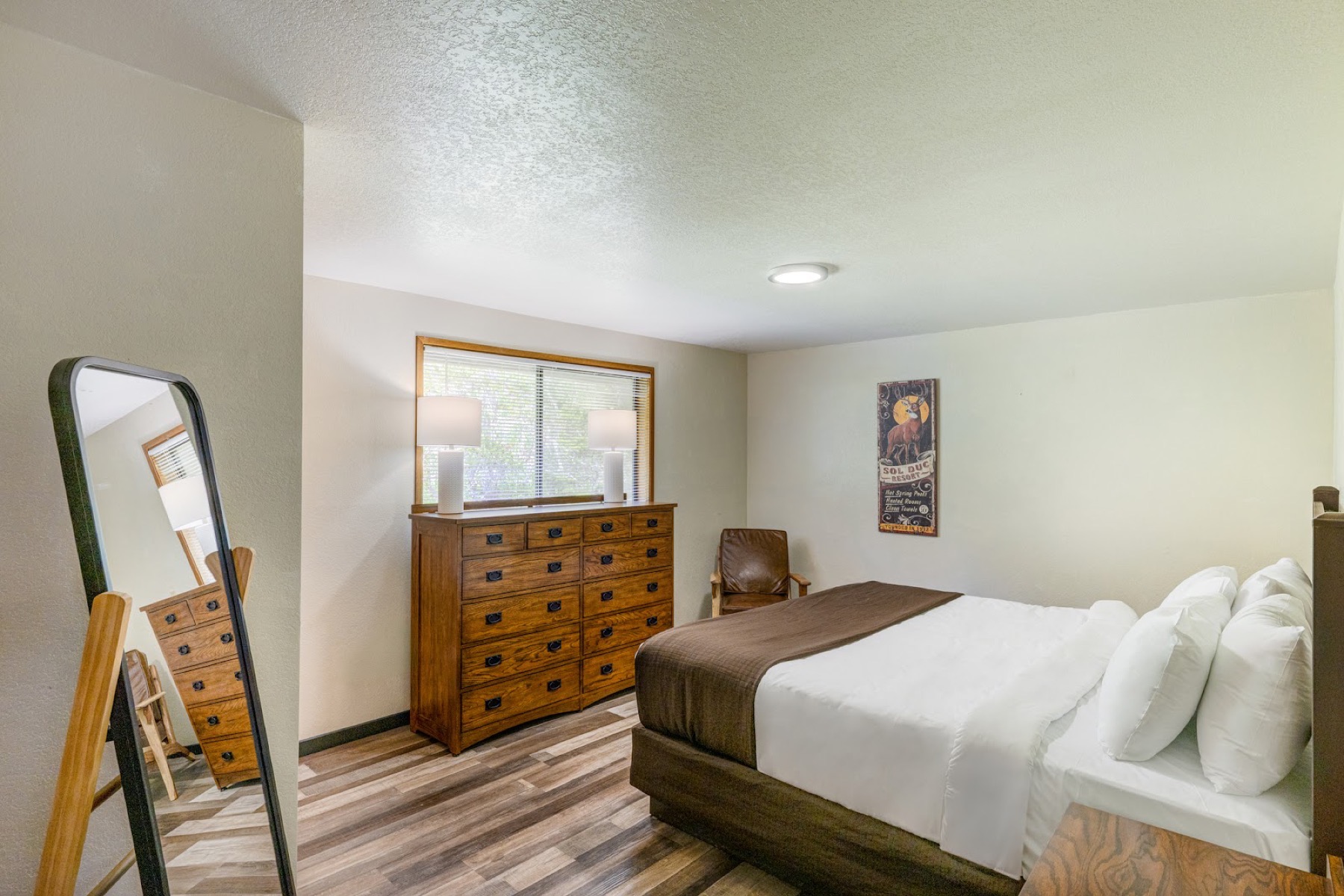
31. Sol Duc Hot Springs Resort (Olympic National Park, Washington)
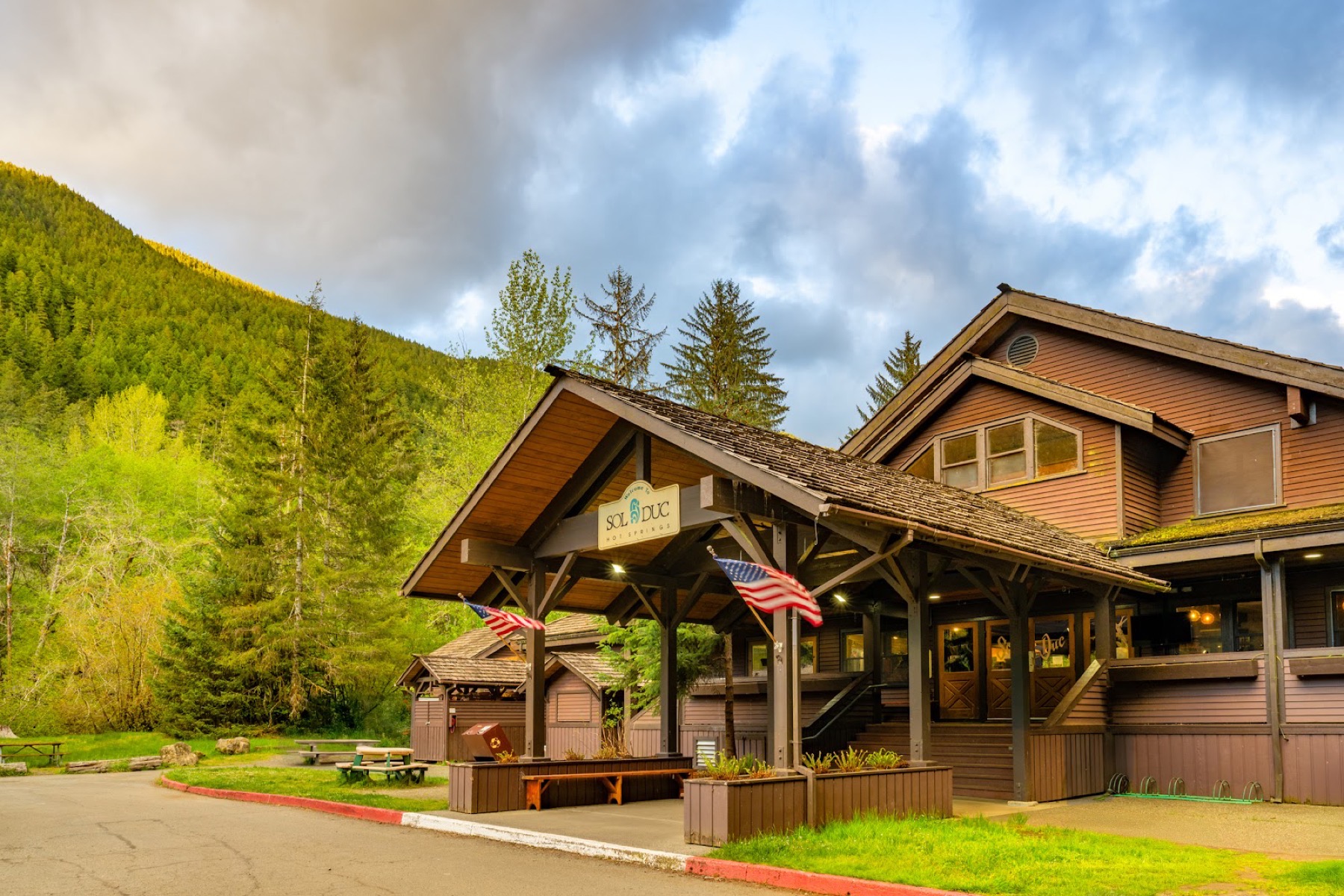
This is the only commercial hot springs facility inside Olympic National Park. It’s at the end of a road in the rainforest, with waterfalls and hiking trails nearby. The resort has three naturally heated mineral pools and one freshwater pool, so you can alternate between hot water and swimming.
The original grand resort, built in 1912, burned to the ground; today’s version dates from the 1980s. Before settlers arrived in the 1880s, local tribes already visited the springs for their therapeutic properties. Don’t expect a luxury spa: it’s a functional bathing facility with wooden cabins and a campground, set amid the main attraction—the rainforest.
Admission is sold in 90-minute sessions, and soaking is included for cabin guests. Pool temperatures vary slightly depending on spring activity, so don’t treat specific figures as fixed. 💡 Tip: Combine your soak with a hike. A short trail from the parking lot leads to Sol Duc Falls, one of the park’s most photogenic stops.
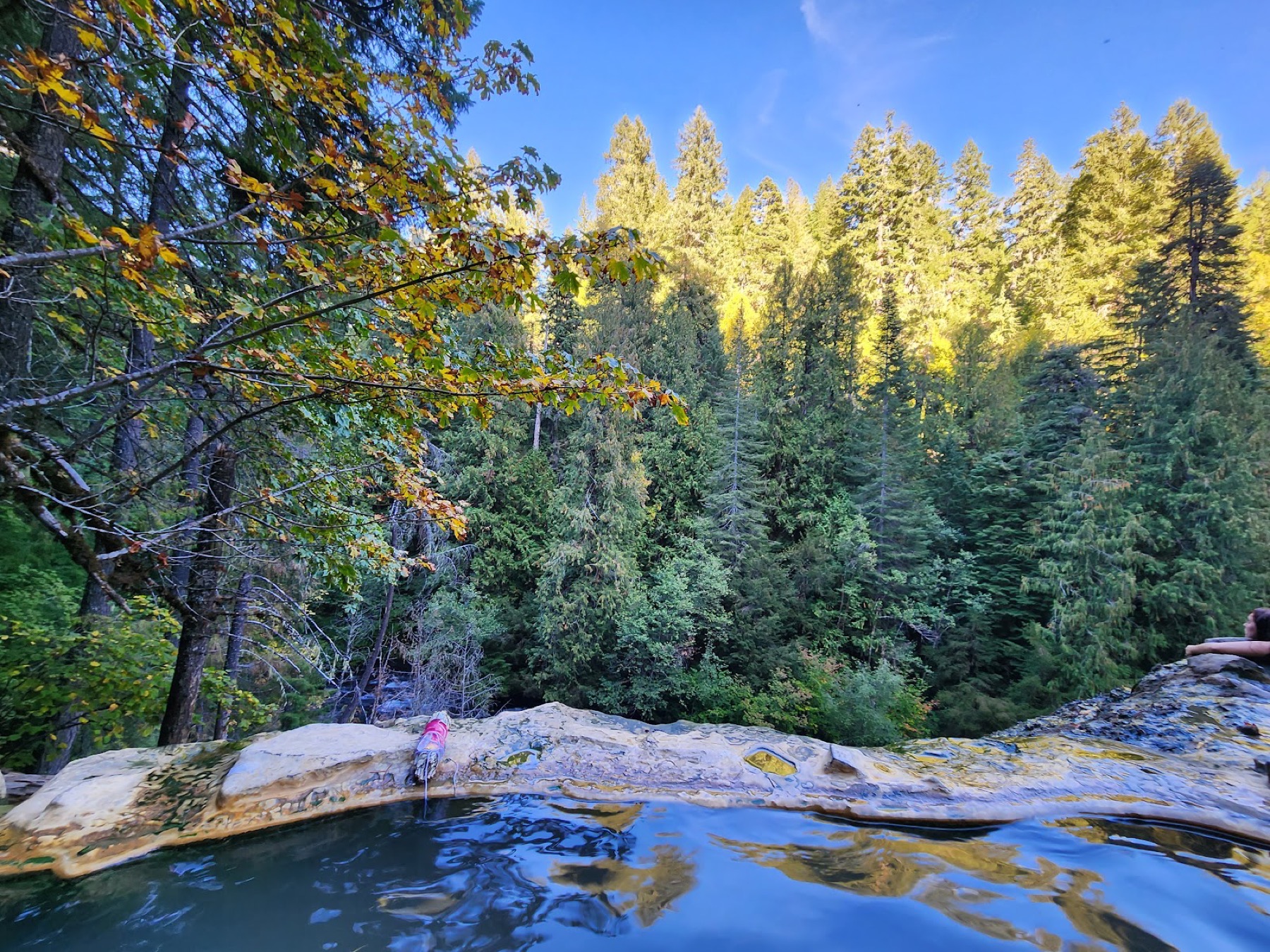
32. Umpqua Hot Springs (Idleyld Park, Oregon)
If you’re looking for a photogenic natural soak, these travertine pools sit 150 feet above the wild North Umpqua River. The site is at an elevation of 800 m, and archaeological finds show that Indigenous people lived here as long as 8,000 years ago. Reaching the water takes a little effort: a short but steep 0.3-mile trail leads up to the springs.
The largest pool is about five by eight feet, with water at 43 °C (110 °F). It’s sheltered by a simple wooden roof, so you can warm up even in typical Oregon rain. Just above it is a smaller upper pool, four by five feet, with even hotter water at 44 °C (112 °F). Space is limited, so arrive early.
Site upkeep and parking require a fee. Under the 2026 rules, the trail-use fee is $5. 💡 Tip: The parking area is often unattended, so bring the exact amount in cash and put it in the envelope at the self-service station before starting the trail.
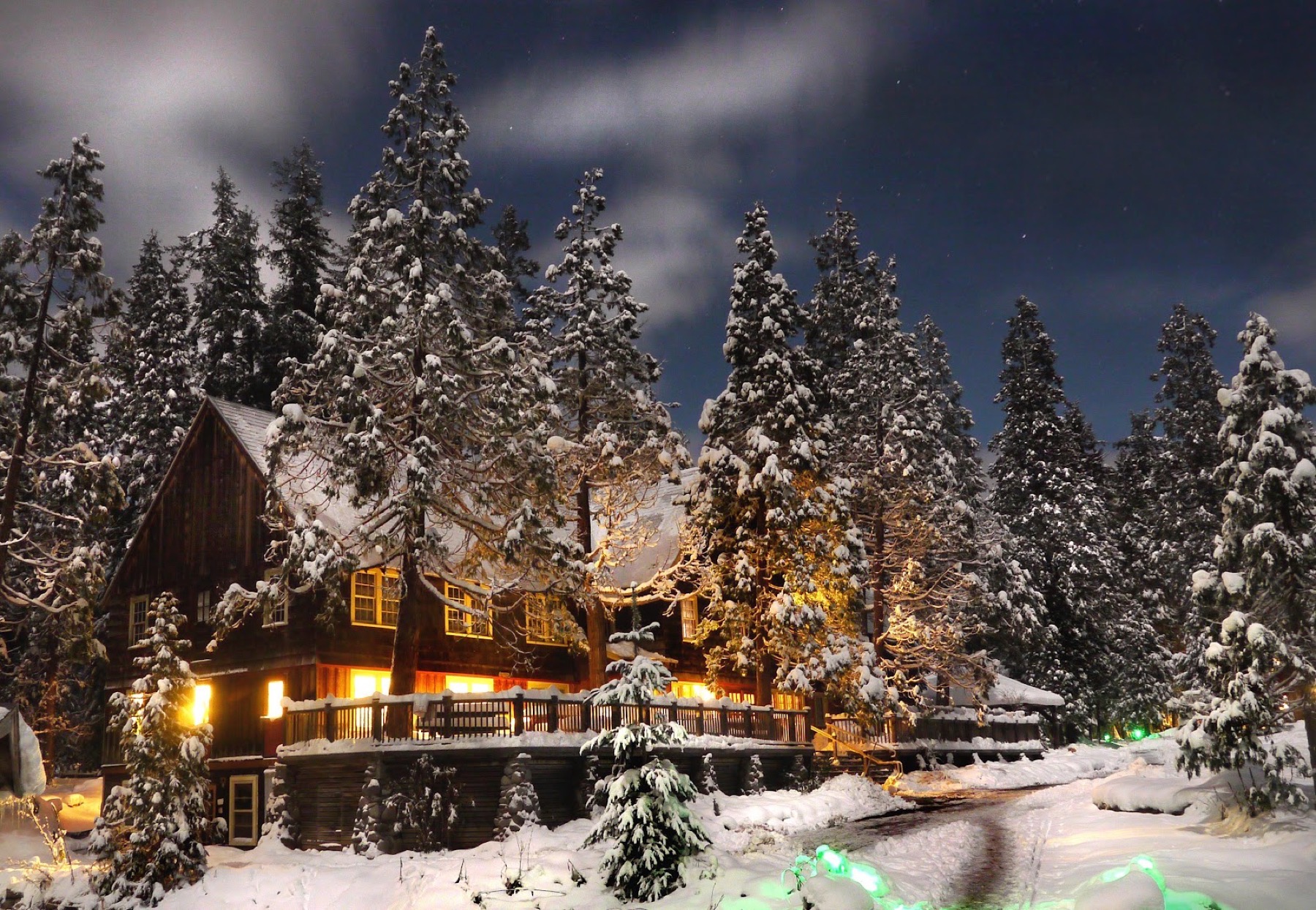
33. Breitenbush Hot Springs (Detroit, Oregon)
This unique retreat covers 154 acres of rugged wilderness in the Cascade Range. It operates as an intentional community where the staff live together. Settlers were using the springs as early as the 1840s. They got their current name in 1873 after one-armed hunter John Breitenbush, whom a group of explorers met here. The upper and lower pools were established in 1904, though a major flood destroyed both areas in the 1970s, and the resort had to be rebuilt.
Today, Breitenbush Hot Springs is a peaceful retreat focused on digital detox and deep relaxation. Spend the day in the quiet among trees and bubbling thermal water. This isn’t a place for loud parties; it’s for visitors looking to escape the stress of everyday life. Day visits are available from 9 a.m. to 6 p.m.
According to the 2026 price list, adult day admission costs $40 on weekdays and $50 at weekends. Children aged 5–12 pay $20, while younger children get in free. 💡 Tip: Healthy eating is part of the community’s philosophy. You can add a wholesome vegetarian lunch to your visit for $16.
Eastern USA: Virginia, West Virginia and Florida
You may not immediately associate the eastern USA with hot springs, but some of the country’s oldest bathhouses are here. While the West is known for natural pools, the East has a rich history. Virginia is home to gems such as Berkeley Springs and the famous Warm Springs Pools, visited by early American presidents. It’s a great choice if you’re looking for a peaceful break with a touch of luxury and don’t fancy hiking for miles through the wilderness.
Beyond the northern mountains, Florida offers an unexpected geothermal attraction: Warm Mineral Springs. The eastern springs tend to have a more traditional spa feel and are easy to reach by car, making them a good stop on a longer Atlantic Coast road trip. You’re more likely to meet families and history buffs than backpackers.
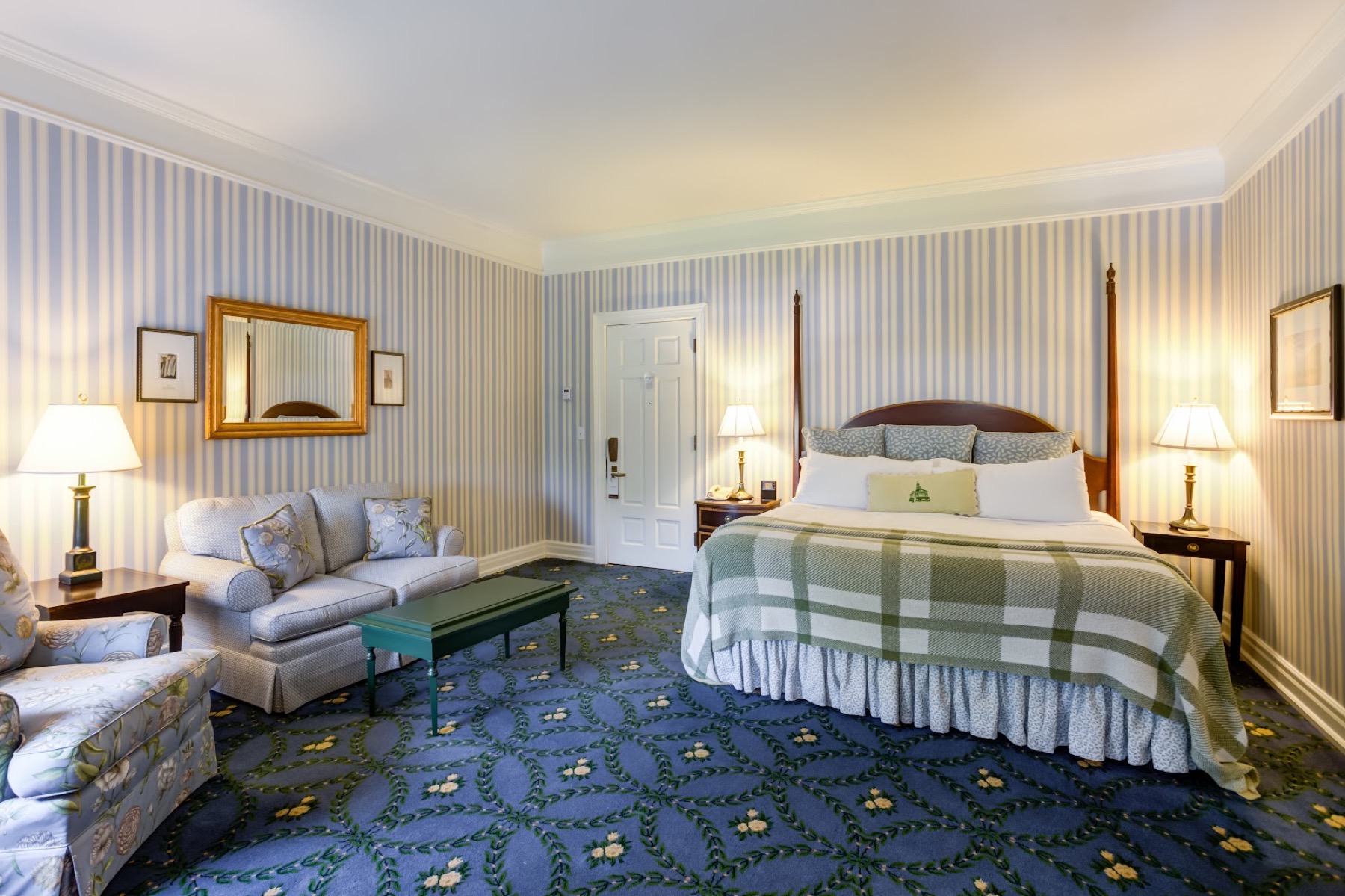
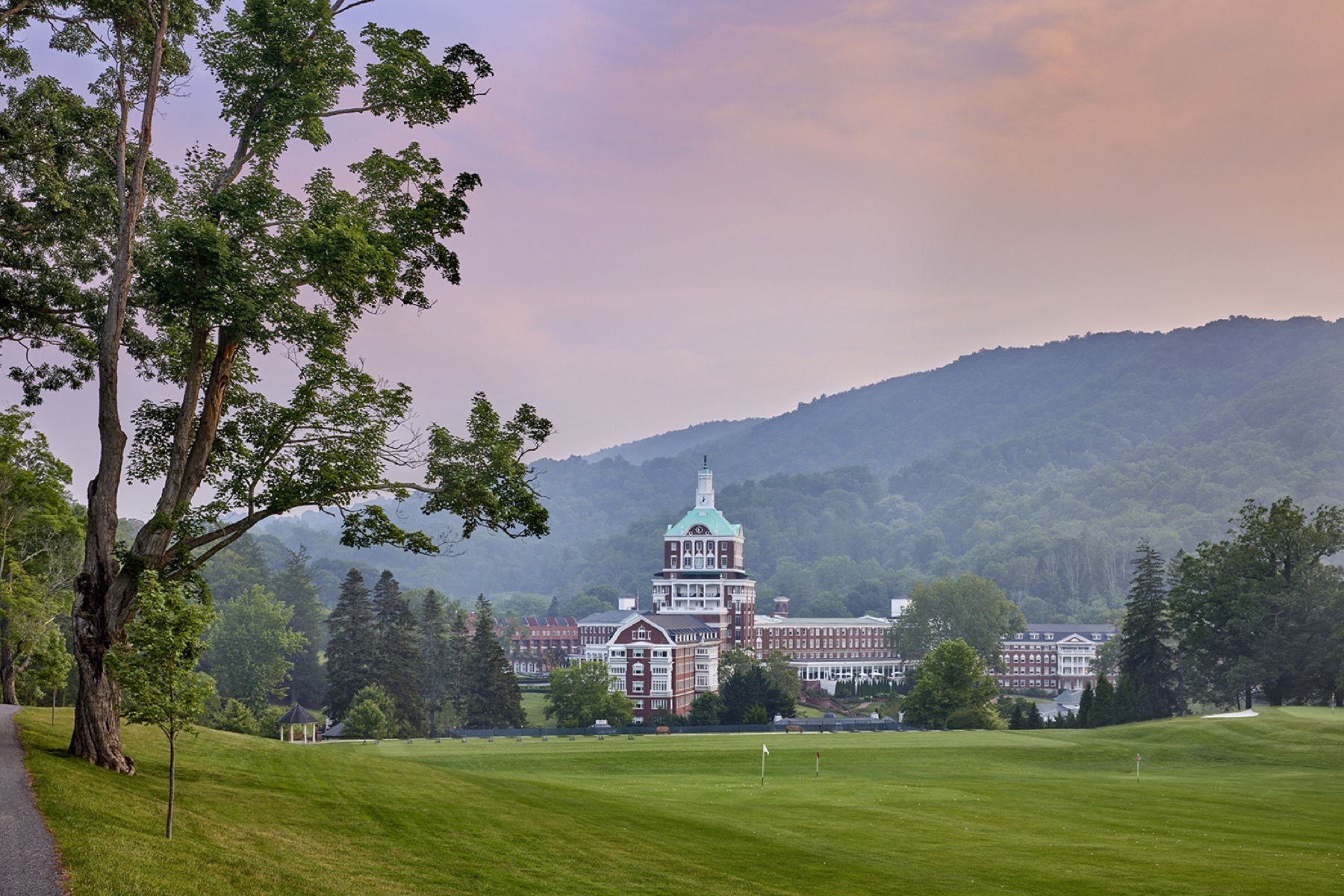
34. The Omni Homestead Resort (Hot Springs, Virginia)
This huge complex differs from most hot springs resorts by offering its own alpine ski area, the oldest in Virginia, established in 1959. The Omni Homestead has a long history: Thomas Bullitt built the first cottage here in 1766. The resort took on its modern form around the turn of the 20th century, though much of it—including the main hall—had to be rebuilt after a devastating bakery fire in 1901. Staying here feels like stepping back into the era of American presidents.
Theodore Roosevelt and William Howard Taft both vacationed here; Taft stayed before a demanding election campaign in 1908. The resort also has a more complicated history: during World War II, it served as a luxury internment camp for nearly 800 Japanese diplomats. An international food conference held here in 1943 led to the creation of the FAO. You’ll be relaxing in a place where world history was made.
This resort is a good choice if you want comprehensive facilities and don’t mind a large hotel setting. Expect spa luxury rather than wilderness. 💡 Tip: Architecture fans should take a close look at the restored 1902 main hall, which makes a grand impression.
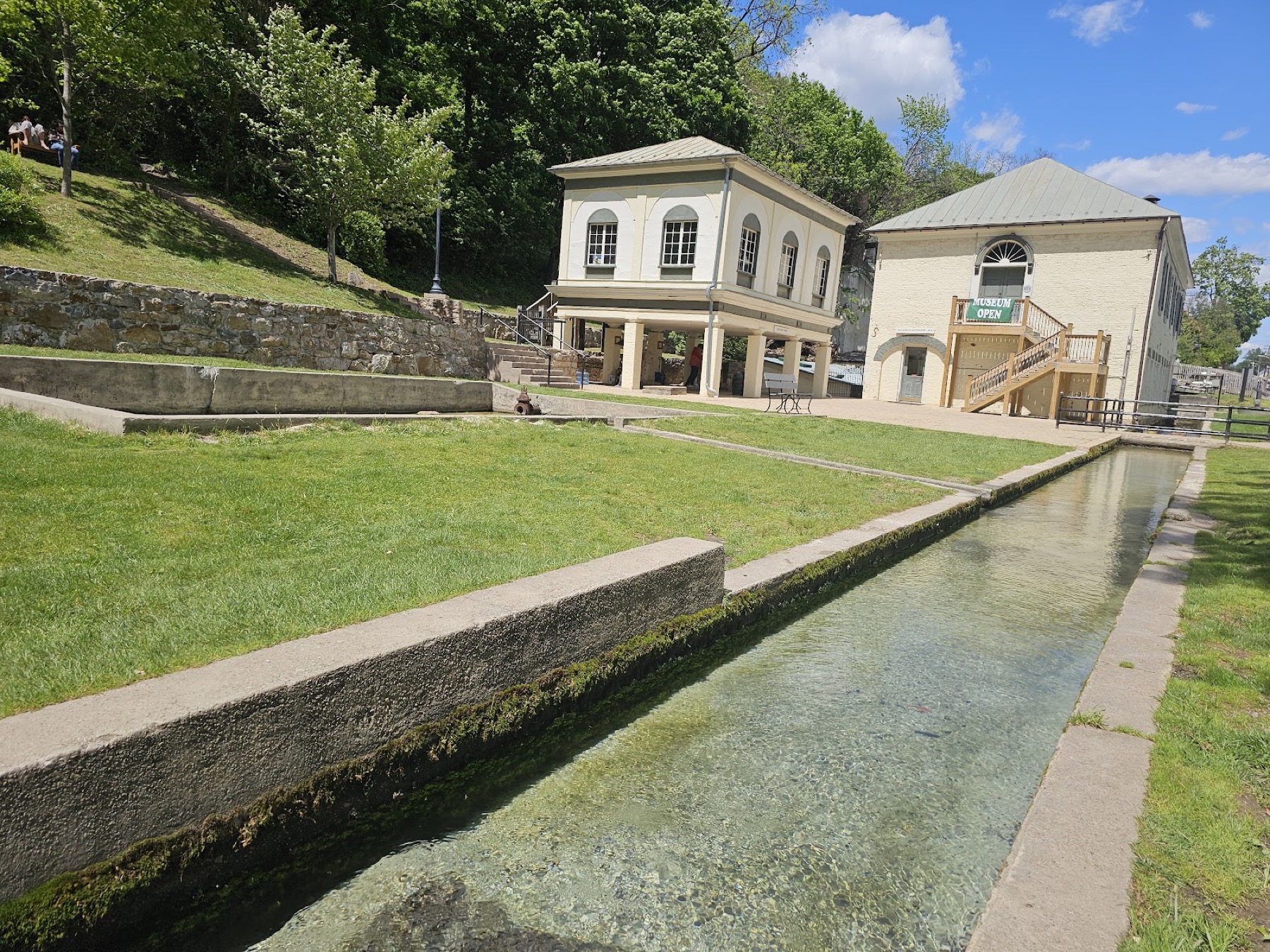
35. Berkeley Springs State Park (Berkeley Springs, West Virginia)
People have been coming to this state park for its waters since the mid-18th century. The water stays at a constant 23.5 °C (about 74.3 °F). George Washington visited in 1748 as a 16-year-old. The park holds an annual celebration of his visit, although the tub where the future president is said to have bathed was rebuilt in the 1930s.
The bathhouses are steeped in history. A complex that began with a 1784 building containing five bathing rooms gradually expanded; today, the historic Roman Bathhouse, built in 1815, still stands. It’s the oldest public building in town and underwent a major six-month, $1 million renovation in 2019, adding new tiles, benches and accessible features.
The water isn’t especially hot, so this is a better fit for fans of a mild soak and historic landmarks. It’s a traditional town bathhouse, not a wilderness spring, and the site once belonged to Lord Fairfax. 💡 Tip: Take a close look at the Old Roman Bathhouse, a fine example of Federal-style architecture. Following its recent boiler renovation, it offers a comfortable experience for visitors.
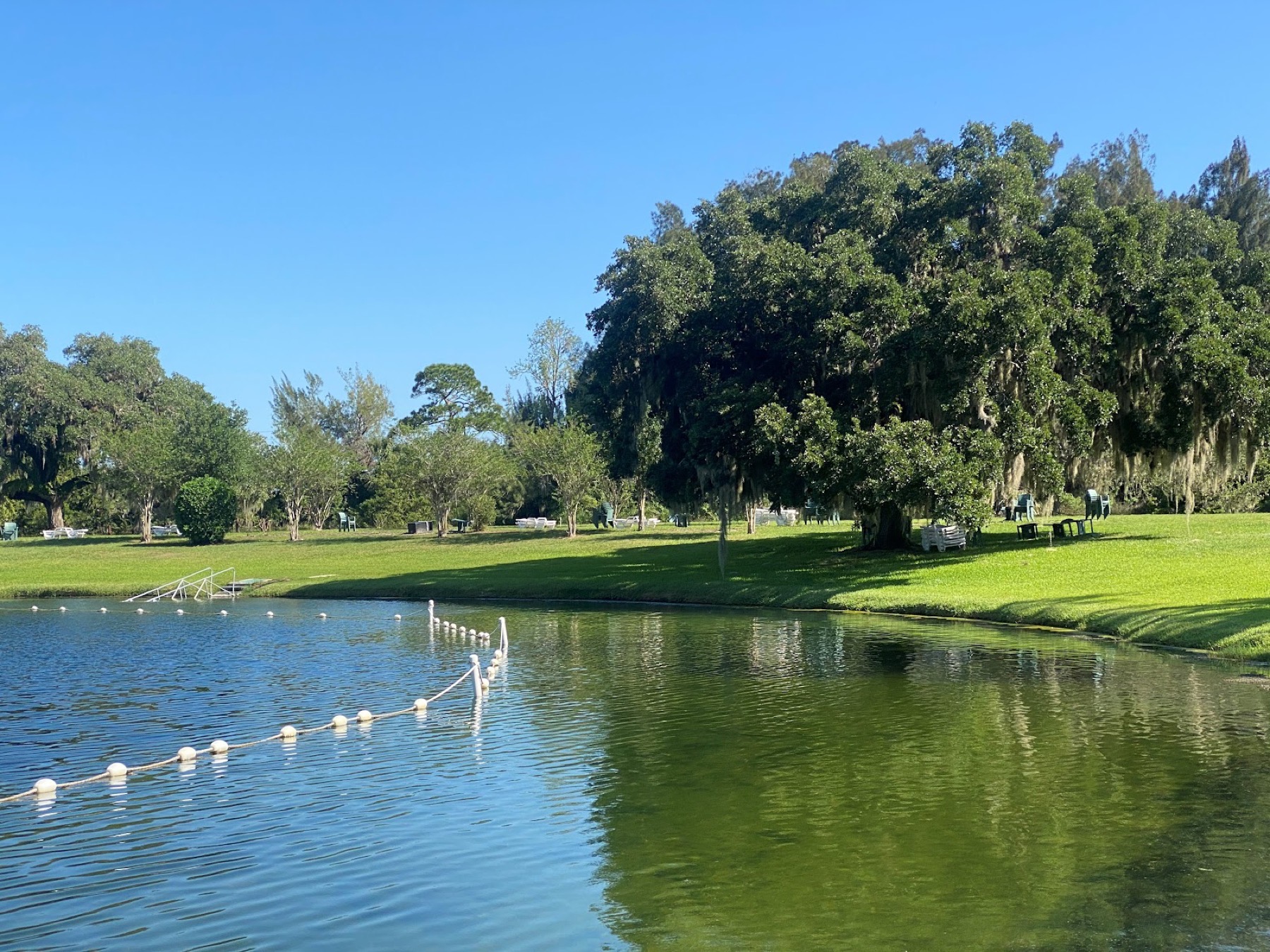
36. Warm Mineral Springs Park (North Port, Florida)
Florida’s Warm Mineral Springs is quite different from the other places in this guide: it’s a 70-metre-deep, hourglass-shaped sinkhole. The water averages 85 °F (29 °C), so you can stay in it for hours, but don’t expect a hot bath.
The main spring is 63 m below the surface and releases around 20 million gallons (76 million litres) of water a day. The water has high levels of chloride and hydrogen sulfide and almost no dissolved oxygen, which is one reason archaeological finds have been so well preserved. The park is managed by the City of North Port and sits a mile north of US 41.
Its greatest interest is archaeological: the sinkhole contains remains of more than 20 Paleo-Indigenous people, some radiocarbon-dated to 12,000 years ago. You’re swimming in a place that was once a dry cave, when sea levels were lower, and that remains one of North America’s most valuable underwater archaeological sites. 💡 Tip: Admission and opening arrangements have changed several times during park renovations, so check the City of North Port website for current details.
Alaska: Chena Hot Springs and the northern lights
Soaking in hot springs takes on a whole new meaning in Alaska. While elsewhere you might be surrounded by green forests, here you can slip into warm water in the depths of winter. The biggest draw is watching the northern lights from an outdoor pool—an experience you won’t soon forget. The area around Fairbanks is ideal, as it’s far from the light pollution of busy cities.
Alaska’s resorts are a great stop for adventurous travellers who aren’t afraid of the cold. Along with the pools, you’ll find a year-round ice museum and huge greenhouses where vegetables are grown in some of the harshest conditions. Getting here takes some planning, but the contrast between steaming water and the ice around you is well worth it.
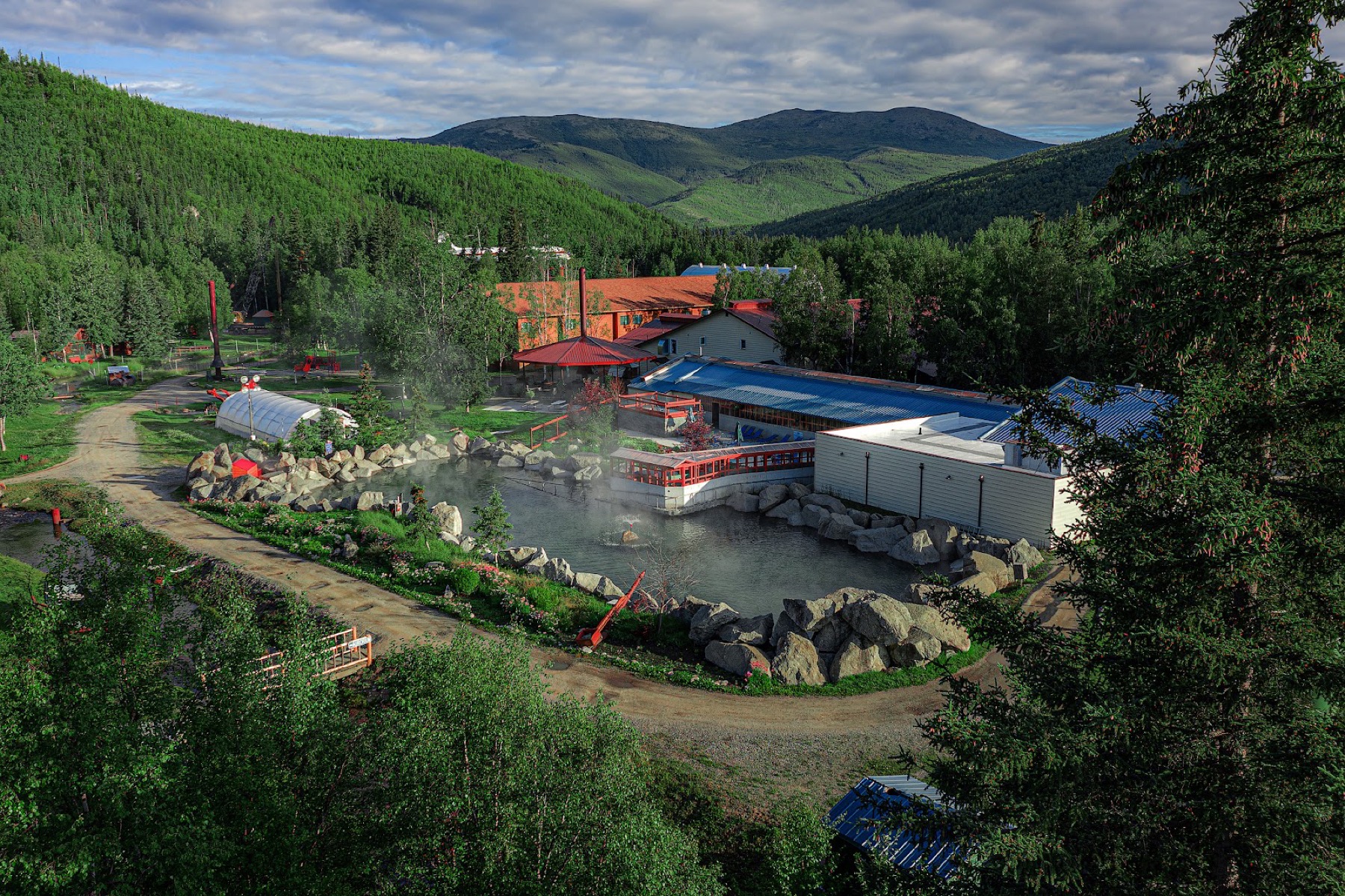
37. Chena Hot Springs Resort (Fairbanks, Alaska)
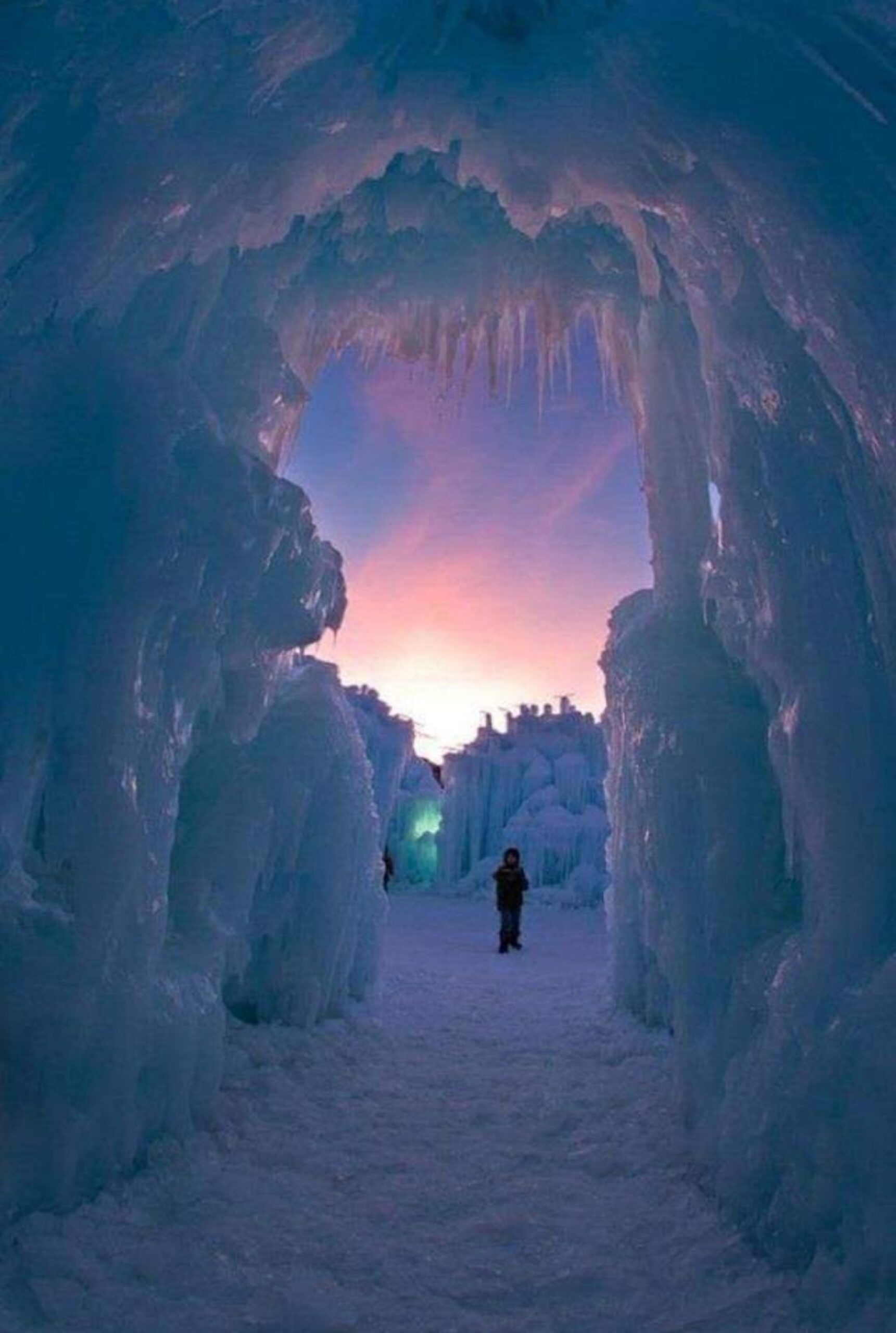
Chena Hot Springs Resort is about 90.9 km northeast of Fairbanks and has been operating for over a century. Gold prospectors Robert and Thomas Swan discovered the springs in 1905 while searching for relief from rheumatism. Today, the resort has an outdoor thermal lake reserved for adults aged 18 and over, as well as an indoor heated pool and hot tubs. The temperature contrast is extraordinary: average January temperatures in the area can drop to -31.2 °C (-24.2 °F).
The resort is famous not only for its pools but also for the world’s largest year-round ice museum. Admission to see the illuminated ice sculptures and visit the ice bar costs $20 for adults and $15 for children. For an adventure, join a winter northern-lights tour for $125. The five-hour nighttime trip takes you to Charlie Dome, where heated yurts and warm refreshments await.
According to the 2026 rates, a basic day pass for the pools and outdoor lake costs $20 for adults and $15 for children. Prices may change. The ticket includes use of lockers. This place is a dream for fans of winter romance, but don’t expect total seclusion—the resort is popular. 💡 Tip: The outdoor thermal lake is for adults only, so younger children will need to use the indoor heated pools and hot tubs.
Practical guide: what to bring, safety and etiquette
A trip to hot springs in the USA calls for a few specific items, whether you’re heading to a luxury resort or into the wilderness. Always pack two swimsuits, as one may not dry in the winter cold, and bring sturdy water sandals for rocky natural pools. Your bag should also have two towels and a large water bottle to help prevent dehydration in the hot water. If you’re visiting remote, undeveloped springs, 💡 Tip: pack a headlamp for a safe walk back to your car after dark.
Hot springs safety comes down to a few clear rules, the most important being never submerge your head. Signs across the USA warn visitors because the amoeba Naegleria fowleri can rarely live in warm freshwater. Infection is a risk if water goes far up your nose, so keep your face above the water. At wild springs, check the temperature near the source so you don’t get scalded, and never visit a remote site alone.
Bathing without a swimsuit is uncommon in the USA, but some places are clothing optional. That may be permitted all day, as at Colorado’s Orvis Hot Springs, or only after dark and for guests aged 18 and over, as at popular Strawberry Park. If you visit a place with this tradition, photography is strictly prohibited, and you must respect other people’s privacy. It’s still a good idea to bring a swimsuit, just in case.
More and more popular resorts and smaller pools require advance reservations for specific time slots. Book your tickets weeks ahead if needed, or you risk arriving after a long drive only to find you can’t get in. Capacity fills quickly, especially in the winter high season. Having your ticket downloaded to your phone can save a lot of stress, but remember that remote areas often have no mobile service.
Driving to the springs can sometimes be tricky, especially in the mountains of Colorado and Idaho. From November to May, many sites require 4WD, winter tires or even chains. If you’re visiting springs on federal land in national forests, check whether you need a parking pass. An America the Beautiful annual pass or, in some places, a Northwest Forest Pass may be accepted.
When visiting natural hot springs, follow Leave No Trace principles. Always take all your rubbish with you, as wild sites have no bins or regular clean-ups. Soap and shampoo are also strictly prohibited in thermal water. That’s how these magical places stay clean and open for other travellers.
Where to next: more articles about the USA
- Joshua Tree National Park, a desert park an hour from Desert Hot Springs.
- Glacier National Park in Montana, the most beautiful park in the north, near Montana’s hot springs.
- Grand Teton National Park, next door to Yellowstone, home to Mammoth Hot Springs.
- A 14-day road trip in the northwestern USA, crossing Oregon and Washington, home to Sol Duc and Umpqua.
- Alaska: 30 tips, itinerary and road trip, with advice on planning a visit to Chena Hot Springs.
- Florida holidays, including where to find Warm Mineral Springs.
Frequently asked questions
Here are answers to some of the most common questions about hot springs in the USA. I’ve put together a quick overview of the essentials so you can plan your trip with confidence.
What is the most famous hot spring in the USA?
Probably the most famous thermal feature is the renowned Mammoth Hot Springs in Yellowstone. You absolutely must not bathe in them, however, as it is strictly forbidden and violations can result in hefty fines or even jail time. You can only enjoy them as a breathtaking viewpoint from the wooden boardwalks.
How much does entry to American hot springs cost?
Prices vary widely depending on the type of facility. Municipal and state pools like Ouray Hot Springs Pool, Lava Hot Springs, or Hot Springs State Park in Thermopolis are among the cheapest. Mid-range resorts like Mount Princeton cost around 40 USD per day (according to the 2026 price list), while luxury private facilities with accommodation will cost you the most.
Can I bathe in a hot spring in Yellowstone?
Bathing in thermal springs and vents in Yellowstone is strictly and absolutely forbidden. The water in these places is often unstable and extremely hot, which has led to many tragic scaldings with fatal consequences in the past. If you want to enjoy hot water, you must head to official commercial pools outside the national park boundaries.
Which American springs are free?
Completely free, or only requiring a small parking fee for the trailhead, are wild springs located on federal land. These include, for example, the popular Fifth Water in Utah, the picturesque Umpqua in Oregon, Idaho’s Goldbug, or California’s Deep Creek. You don’t need tickets for these places, but you often need to obtain the appropriate parking permit.
Where in the USA can you bathe without swimsuits?
So-called clothing optional bathing, or without swimsuits, is rather exceptional in the USA, but a few well-known places allow it. At Orvis Hot Springs in Colorado, it’s permitted all day, while at Strawberry Park you can remove your swimsuit only after dark and must be over 18 years old. Harbin Hot Springs also maintains a tradition of clothing-optional bathing.
When is the best time for bathing in hot springs?
The main season is paradoxically in winter, because bathing surrounded by snow is the greatest experience. Resorts in Colorado tend to be crowded in winter because of skiers, and people travel to Chena Hot Springs in Alaska at night to watch the aurora borealis. In desert areas like Desert Hot Springs, the ideal time is from October to May—avoid the extremely hot summer.
Is bathing in hot springs safe?
Yes, but you must follow basic rules, especially never submerge your head underwater. Warm freshwater can harbor the amoeba Naegleria fowleri, which poses a risk if water enters your nose. At wild springs, always carefully test the water temperature with your hand first, and preferably don’t go there completely alone.
Where can you bathe with children?
For families with children, the best options are safe municipal and state pools, such as Lava Hot Springs or the family-friendly Ouray Hot Springs Pool, where the infrastructure is adapted even for the youngest. On the other hand, avoid luxury private resorts like Two Bunch Palms—they often operate in adults-only mode, exclusively for grown-ups.
Which state has the most hot springs?
According to statistics and geological activity, the western USA states are absolute leaders. You’ll encounter hot springs practically everywhere in Colorado, Utah, Idaho, Oregon, and California. These are exactly the states worth heading to on a road trip if you want to try both luxurious developed resorts and remote wild spots in the middle of national forests.
Can you also sleep at a hot spring?
Yes, you can. Most of the more luxurious facilities operate directly as hotels, examples being The Springs Resort in Pagosa or the private villas at Ten Thousand Waves. Some resorts like Castle Hot Springs even offer all-inclusive stays. At wild springs on federal land, you can sometimes pitch a tent if it doesn’t violate local national forest regulations.
Tips and Tricks for Your Vacation
Don’t Overpay for Flights
Search for flights on Kayak. It’s our favorite search engine because it scans the websites of all airlines and always finds the cheapest connection.
Book Your Accommodation Smartly
The best experiences we’ve had when looking for accommodation (from Alaska to Morocco) are with Booking.com, where hotels, apartments, and entire houses are usually the cheapest and most widely available.
 🚗 Car rental on the roadVerified rental cars in the United States
Search with the DiscoverCars comparison engine — it compares prices from dozens of local and international rental companies, and most bookings come with free cancellation.
Compare car prices in the United States →Don’t Forget Travel Insurance
Good travel insurance will protect you against illness, accidents, theft, or flight cancellations. We’ve had a few hospital visits abroad, so we know how important it is to have proper insurance arranged.
Where we insure ourselves: SafetyWing (best for everyone) and TrueTraveller (for extra-long trips).
Why don’t we recommend any Czech insurance company? Because they have too many restrictions. They set limits on the number of days abroad, travel insurance via a credit card often requires you to pay medical expenses only with that card, and they frequently limit the number of returns to the Czech Republic.
Find the Best Experiences
Get Your Guide is a huge online marketplace where you can book guided walks, trips, skip-the-line tickets, tours, and much more. We always find some extra fun there!


