You’re standing on Logan Pass, snow-capped peaks towering all around you, and somewhere below, a turquoise lake glistens like something cut straight from a fairytale. The wind hits your face with air so pure it feels like you’ve been suffocating your whole life and are only now truly breathing for the first time. Then you glance left and spot a mountain goat with her kid grazing peacefully on a meadow about 200 metres away. This is Glacier National Park — a place that makes you stop scrolling Instagram and simply stand there, staring in awe.
Lukáš and I headed to Glacier National Park in Montana during our road trip across the western US, and honestly? Of all the national parks we’ve visited, this one reminded us most of our beloved Canada — which is exactly why I’d love to go back.
Yellowstone is legendary, of course (and you should definitely check out our Yellowstone guide), but Glacier has something that’s hard to put into words — it’s wilder, less crowded, and the scenery is simply out of this world.
In this article, I’ve put together a complete guide to Glacier National Park — from when to visit and how to get there, to the best hikes and viewpoints, where to stay, how much it costs, and how to survive a grizzly encounter (spoiler: don’t play dead — that’s for black bears 😅). You’ll find 15 things to see and do, practical advice on vehicle reservations, and plenty of personal insights you won’t find in a standard guidebook.
TL;DR
- Glacier National Park sits in northwestern Montana, right on the Canadian border. Don’t confuse it with Glacier National Park in Canada — that’s a completely different park on the other side of the border (though they are neighbours).
- Best time to visit is mid-July to mid-September, when the entire Going-to-the-Sun Road is open.
- You need a vehicle reservation to access the Going-to-the-Sun Road — without one, you won’t get in during peak season. Reservations are released online and sell out within minutes.
- Going-to-the-Sun Road is one of the most beautiful roads in the world — 50 miles through the heart of the park over Logan Pass (6,646 ft / 2,025 m).
- Many Glacier is the park’s most stunning area for hiking — Grinnell Glacier Trail and Iceberg Lake rank among the best hikes in the entire US.
- Accommodation is expensive and books up fast — reserve 6–12 months in advance. The cheapest option is camping ($26–30/night, roughly €24–28).
- Bears live here — both black bears and grizzlies. Carry bear spray, make noise on the trails, and store food in bear boxes.
- Plan 3–5 days to visit the park so you can cover the main areas and fit in at least 2–3 hikes.
- Entrance fee is $35 per vehicle for 7 days (about €32), or you can get an America the Beautiful Pass for $80 (about €74) covering all national parks for a full year.
The full destination guide: USA Travel Guide — guide and what to see
When to visit Glacier National Park and how to get there
Glacier National Park is one of those parks where timing genuinely makes or breaks your trip. Unlike Yellowstone, which you can visit pretty much any time of year, here nature sets the rules — and it doesn’t mess around.
Best time to visit
Going-to-the-Sun Road, the main road cutting through the heart of the park, is typically fully open from early/mid-July to mid-October. The exact date depends on that year’s snowfall — Glacier National Park is notorious for heavy snow, and some years the road isn’t cleared until late July.
The ideal window is mid-July to mid-September. During this time:
- The entire Going-to-the-Sun Road is open
- Most trails are snow-free
- Wildflowers are in full bloom, especially in August
- Daytime temperatures hover around 20–28°C (68–82°F)
If you can, avoid the first two weeks of August — that’s absolute peak season. We visited at the end of July/beginning of August, and some car parks were full by 7 AM. Yes, seven in the morning. On holiday. 😅
September is a lovely month — fewer people, the colours start turning autumnal, but it can get chilly and some services begin shutting down for the season.
How to get to Glacier National Park
So where exactly is Glacier National Park located? The park lies in northwestern Montana, right on the Canadian border. It’s about 300 miles (480 km) north of Yellowstone — roughly 5–6 hours by car. And to answer the question everyone seems to Google: the distance between Yellowstone and Glacier is approximately 285–360 miles (460–580 km) depending on the route, or 5–7 hours of driving. The two parks combine beautifully into one epic road trip!
Nearest airports:
- Glacier Park International Airport (FCA) in Kalispell — 25 miles from the west entrance. By far the most convenient option.
- Missoula (MSO) — about 175 miles south, a larger airport with more connections and cheaper flights.
- Great Falls (GTF) — about 185 miles southeast.
From the UK, you’ll typically need to connect through a major US hub like Seattle, Denver, or Minneapolis. Keep an eye out for deals — Seattle in particular works well as a starting point for a Pacific Northwest road trip that includes Glacier. Comparison sites like Skyscanner or Google Flights are great for hunting down the best fares.
A car is essential. You simply can’t get around the park and its surroundings without one. We’ve had consistently great experiences with DiscoverCars, which we use all over the world — it compares offers across agencies and usually turns up the best price. In Montana, I’d recommend an SUV or at least a larger car — the roads are in good condition, but you’ll appreciate the higher clearance and comfort on long drives.
Vehicle reservation — important!
Since 2023, you need a vehicle reservation to access the Going-to-the-Sun Road corridor between late May and early September (exact dates vary each year). Without a reservation, you simply won’t be allowed onto this road during that period.
Reservations are released on recreation.gov in two rounds: 1. Main release — usually in March, when most reservations for the entire season go live 2. Rolling daily release — the day before at 8:00 PM MST (that’s 3:00 AM GMT), a limited number of slots are released for the following day
My tip: Set an alarm and be at your computer right on time. Reservations disappear within minutes, not hours. If you miss out — don’t give up. Try the daily releases; cancelled reservations pop up regularly.
The reservation costs $2 (about €2) and is in addition to the park entrance fee ($35 / €32 per vehicle for 7 days).
Alternative without a reservation: You can enter the park before 6:00 AM or after 3:00 PM — during these times, a reservation usually isn’t required (check the official NPS website for the current year’s rules). You can also head to the east side via Many Glacier, which doesn’t require a reservation at all.
Where to stay and how much Glacier National Park costs
This is probably the most important practical section in the entire article, because accommodation near Glacier National Park is problem number one for anyone planning a trip here. The park sits in sparsely populated Montana and capacity is simply limited. If you don’t book well in advance, you could end up in a motel an hour away — and trust me, that’s not ideal after a full day of hiking.
Accommodation inside the park
In-park accommodation is operated by Xanterra, and you’ll find several historic lodges:
- Many Glacier Hotel — a stunning historic hotel right on Swiftcurrent Lake. Rooms from around $250–450/night (€230–415). Book 8–12 months ahead — it’s the most sought-after accommodation in the park.
- Lake McDonald Lodge — on the shore of the park’s largest lake. Rooms from around $200–350/night (€185–325). Beautiful atmosphere, rustic interiors.
- Rising Sun Motor Inn — simpler and more affordable, on the eastern side of Going-to-the-Sun Road. Rooms from around $160/night (€148).
Camping
The cheapest — and in my opinion the most authentic — way to experience the park! Glacier has 13 campgrounds, some reservable and others first-come-first-served.
- Reservable campgrounds (Apgar, Fish Creek, Many Glacier, St. Mary): $26–30/night (€24–28) — book through recreation.gov as soon as the system opens (usually 6 months in advance).
- First-come-first-served campgrounds: Arrive early morning (before 8:00 AM), or you won’t stand a chance, especially in July and August.
Towns near the park
What’s the best town to stay in when visiting Glacier National Park? It depends on which side of the park you want to explore:
- West Glacier / Hungry Horse — closest to the west entrance, with the most accommodation options, restaurants, and shops. The ideal base for Going-to-the-Sun Road.
- East Glacier Park — quieter, more authentic, and closer to the Two Medicine area.
- St. Mary — at the eastern entrance to Going-to-the-Sun Road, a solid base for both Many Glacier and the Sun Road.
- Whitefish — about 25 miles from the park, but a charming mountain town with an excellent restaurant scene. If you want comfort and evening entertainment, this is your pick.
- Kalispell — a larger town with the cheapest accommodation, but 30+ miles from the park.
How much Glacier National Park costs — budget
Rough budget for 5 days for two people (mid-range, mix of hotel + camping):
| Item | Price in USD | Price in EUR |
| Entrance fee (vehicle, 7 days) | 35 | 32 |
| Vehicle reservation | 2 | 2 |
| Accommodation (2 nights camping, 2 nights hotel) | 700–1,000 | 650–925 |
| Food (5 days, mix of restaurants + self-catering) | 300–500 | 280–465 |
| Petrol | 80–120 | 74–111 |
| Car hire (5 days) | 250–400 | 230–370 |
| Bear spray (2 cans) | 50–70 | 46–65 |
| Total | 1,417–2,127 | 1,314–1,970 |
Let’s be honest — it’s not cheap, but the US national parks never are. On the other hand, the experience is priceless. And if you’re thinking about skipping the bear spray to save a few quid — don’t. You genuinely need it. 😅
Going-to-the-Sun Road and surroundings: 8 must-see spots
Going-to-the-Sun Road is the heart of Glacier National Park and one of the most spectacular scenic drives on the entire planet. This 50-mile road takes you from gorgeous Lake McDonald over Logan Pass to St. Mary Lake on the eastern side. Every bend reveals a new vista, every pullover takes your breath away. Have your camera ready — and your patience too, because you’ll be stopping roughly every 500 metres.
1. Lake McDonald — the most photogenic lake in the park
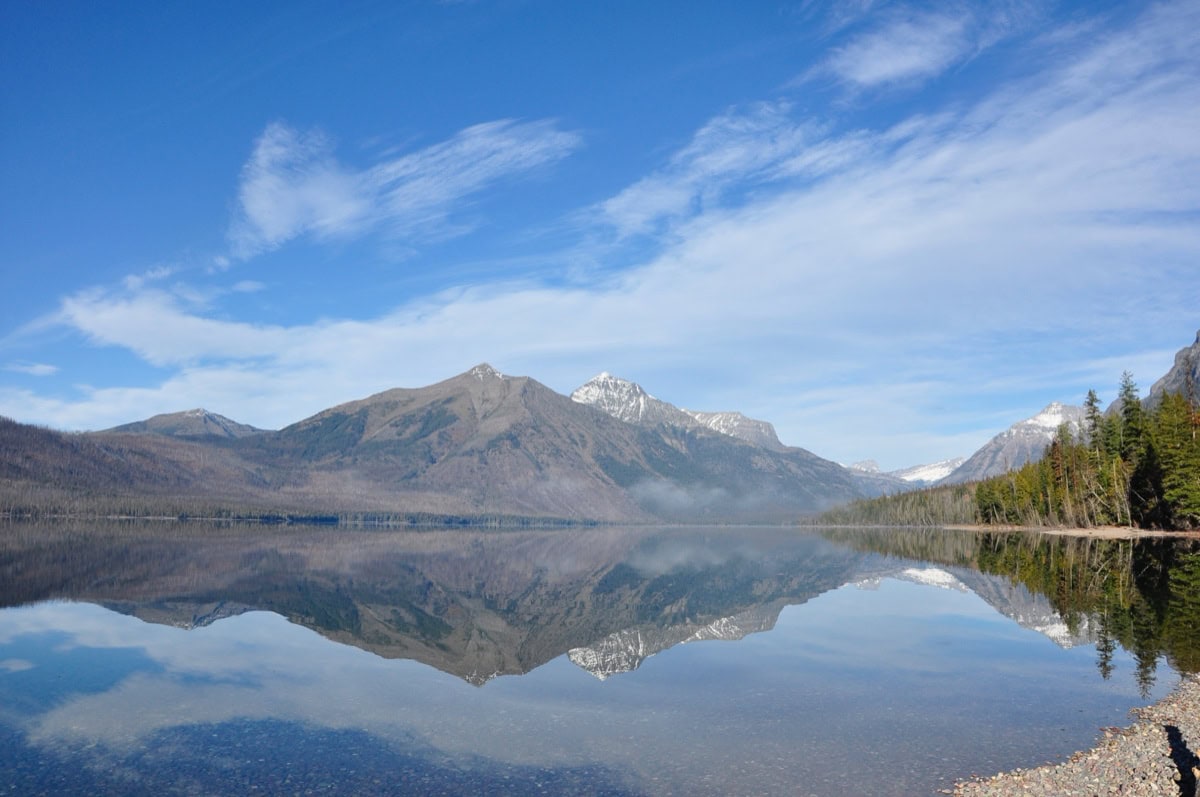
Lake McDonald is the largest lake in Glacier National Park and the first thing you’ll see when entering from the west side. The lake stretches over 10 miles long, plunges to depths of 470 feet, and on a clear day you can see the colourful pebbles on the bottom — those famous red, green, and blue stones you’ve probably seen all over Instagram.
The best views are early morning, when the surface is mirror-calm and the surrounding mountains reflect perfectly in the water. We were there at 6:30 AM and it was absolutely magical — not a soul around, just us and two ducks. I’d recommend parking at Lake McDonald Lodge and taking a stroll along the shore.
You can also hire a kayak or canoe on the lake, or hop on a scenic boat tour — it’s a wonderful way to see it from a different perspective, especially if you don’t fancy hiking all day.
2. Trail of the Cedars — an easy walk through ancient forest
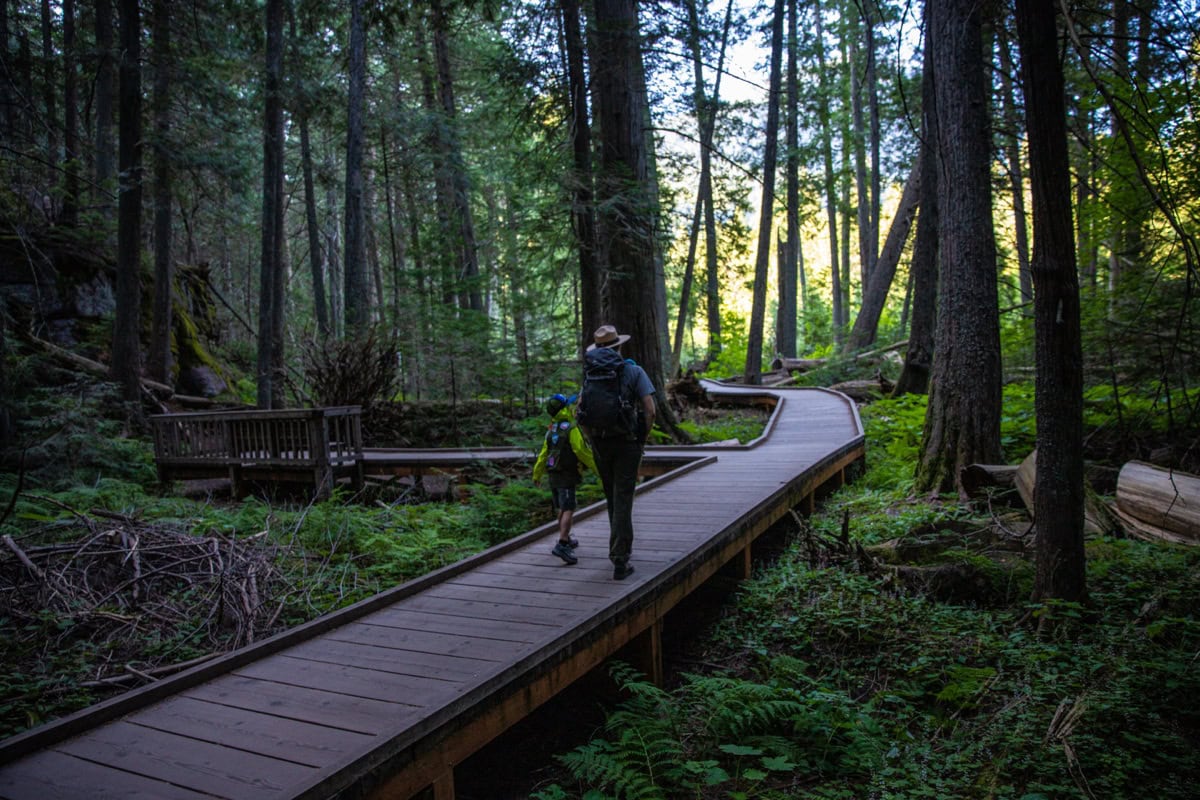
If you’re looking for something short and easy — perhaps as a warm-up or with small children — Trail of the Cedars is a perfect choice. It’s a short loop trail (just under a kilometre) winding through old-growth cedar forest along Avalanche Creek.
A boardwalk leads you past enormous trees, moss-covered rocks, and a turquoise stream that looks like someone poured food colouring into it. The colour of the water is so unreal that at first I thought my camera display was broken. 😁
From here, you can continue to Avalanche Lake Trail (roughly 5.5 miles / 9 km round trip), one of the most popular hikes in the park. A lake surrounded by sheer cliffs with waterfalls cascading down — it’s well worth the extra hour.
3. Going-to-the-Sun Road — the drive itself
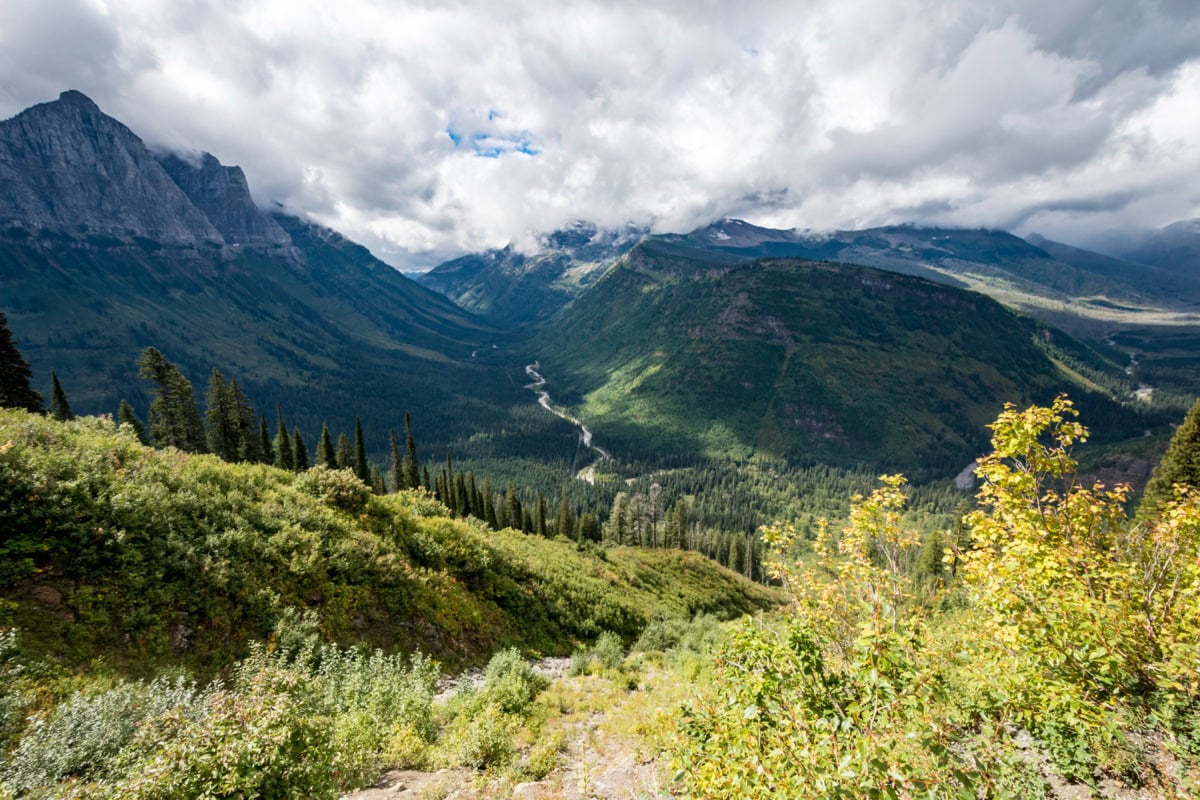
The drive along Going-to-the-Sun Road is the experience that draws millions of people to Glacier National Park. Completed in 1932, the road is an engineering marvel — carved into cliff faces, with barriers barely knee-high, and views that’ll make your head spin (in both the good and the slightly terrifying sense).
A few practical tips:
- Direction: If you have a choice, drive east to west (from St. Mary to Lake McDonald). You’ll be on the side with better views and won’t be as close to the edge. If you’re nervous about heights, sit on the passenger side when driving from the east.
- Time: Allow at least 3–4 hours for the full road with stops, ideally a whole day.
- Vehicles longer than 21 ft or wider than 8 ft aren’t allowed on the road — no large RVs!
- Alternative: If you’d rather not drive yourself, the park operates historic Red Jammer Buses with open tops. A ride costs around $50–100 per person (€46–93), but it’s an absolutely incredible experience.
4. Logan Pass — the rooftop of the park
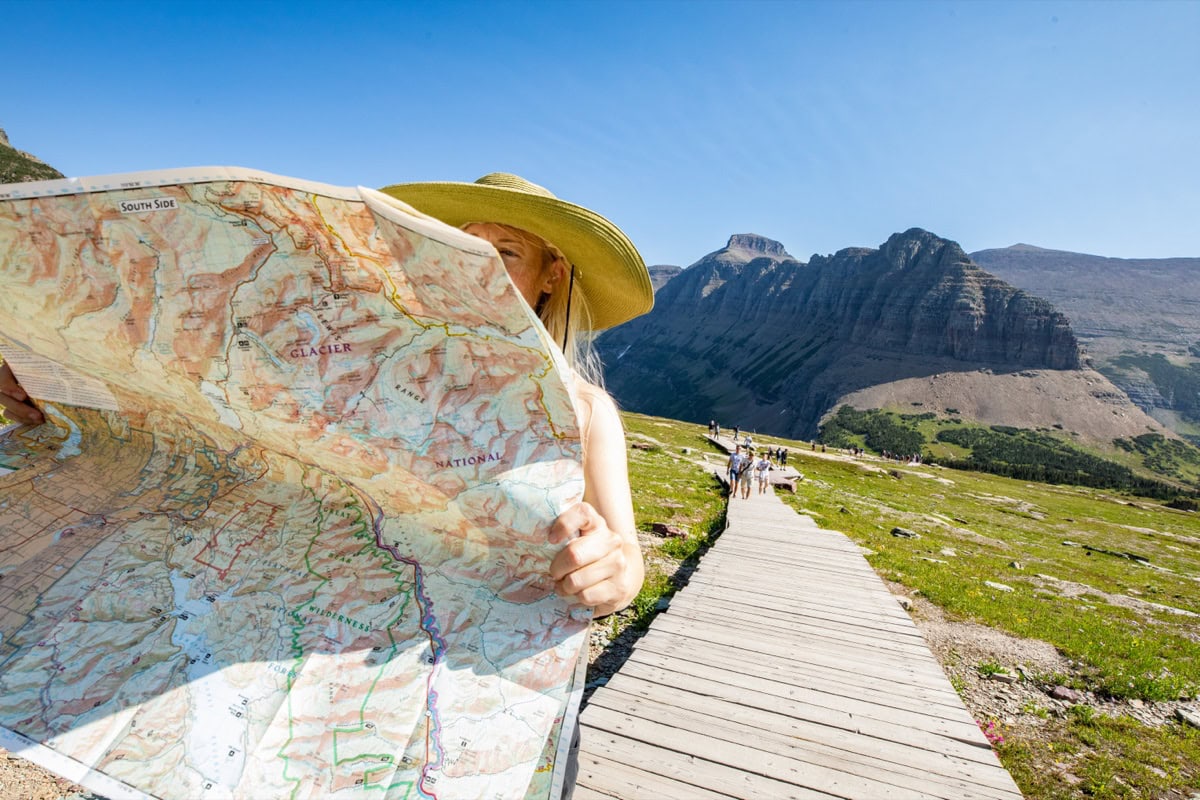
At 6,646 feet (2,025 m), Logan Pass is the highest point on Going-to-the-Sun Road and the starting point for the park’s two most famous hikes — Highline Trail and Hidden Lake Overlook. The elevation here is among the highest in all of Glacier National Park, and the views live up to it.
The Logan Pass car park is notoriously overcrowded. It holds about 200 cars and fills up by 7:30–8:00 AM in peak season. No exaggeration. Either arrive early or use the shuttle bus from Apgar Village or St. Mary.
From Logan Pass, you’re treated to a panorama spanning dozens of peaks, glaciers, and alpine meadows carpeted with wildflowers. In summer, you’ll regularly spot mountain goats here — they couldn’t care less about tourists and will happily stroll within a metre of your feet.
5. Hidden Lake Overlook — a short hike with a big payoff
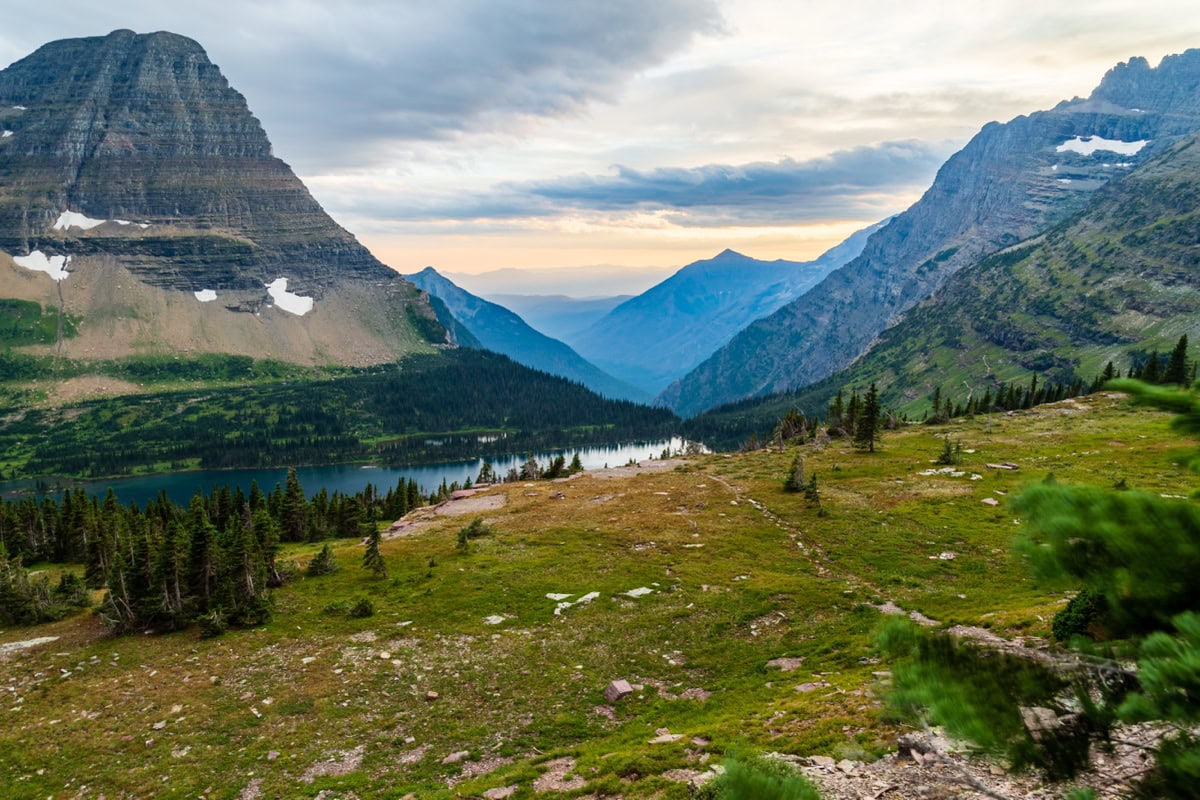
Hidden Lake Overlook is probably the best effort-to-reward ratio in the entire park. The trail starts right at the visitor centre on Logan Pass and covers just 2.8 miles (4.5 km) round trip with roughly 460 feet (140 m) of elevation gain.
The path follows boardwalks across alpine meadows bursting with wildflowers (in July and August it’s an absolute explosion of colour), and at the end you’re rewarded with a viewpoint over Hidden Lake — a blue-green gem nestled between rock walls. If you want to go all the way down to the lake itself, add another 1.5 miles (and 650 ft of descent, which of course means climbing back up).
We went all the way to the lake and didn’t regret it — on the way down we spotted two mountain goats with kids, and the lake itself was so crystal-clear we could see the bottom. The hike back up, though? That gave us a proper workout, I won’t lie. 😅
6. Highline Trail — the legendary ridge walk
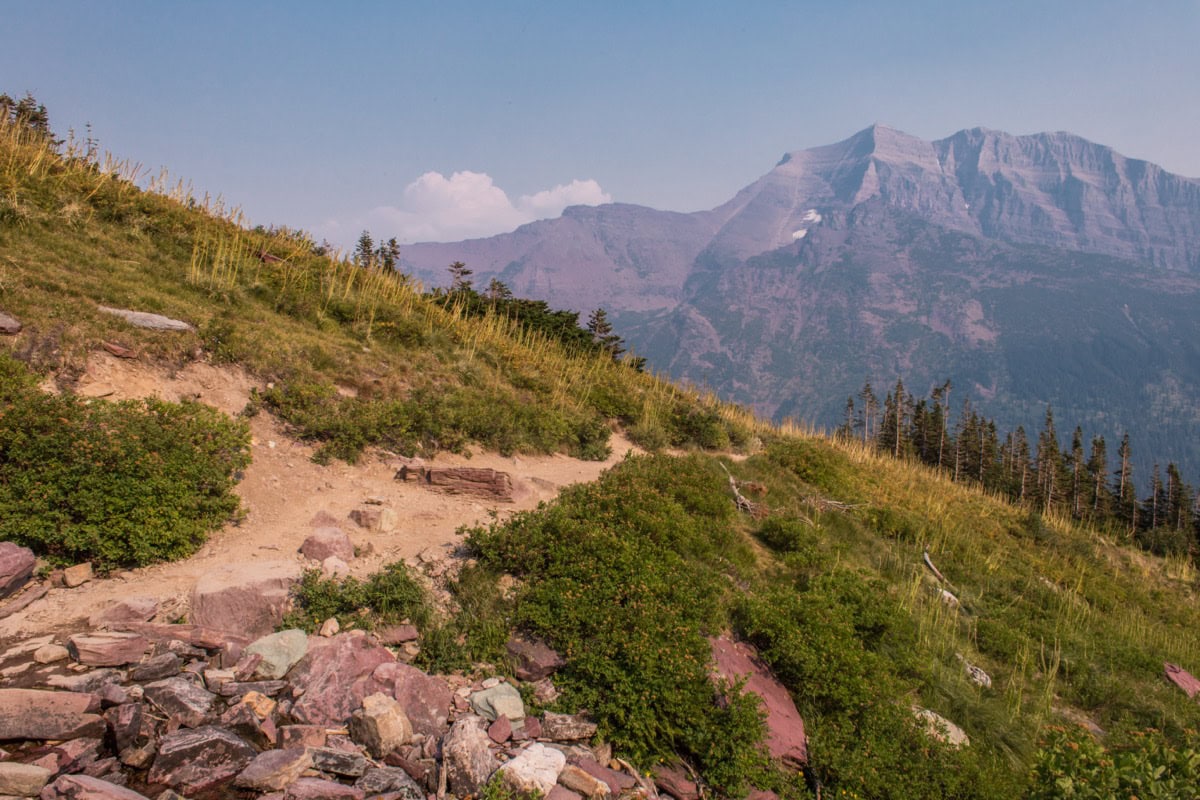
Highline Trail is arguably the most famous hike in Glacier National Park, and rightfully so. The trail begins at Logan Pass and follows a narrow path carved into a cliff face, with a steel cable to grip and a valley hundreds of metres deep on your left.
The full trail to Granite Park Chalet covers roughly 7.5 miles (12 km, one way) with minimal elevation change — most of the route stays at a constant altitude of around 6,500 ft along the Continental Divide ridge. The views are non-stop and utterly breathtaking.
Important note: The first few hundred metres are narrow and a bit nerve-wracking — that’s where the steel cable comes in handy. If you have a serious fear of heights, you might want to consider a different hike. But if you push through, beyond that cable awaits the most beautiful 7.5 miles of your life. From Granite Park Chalet, you can continue to The Loop (roughly 12 miles / 19 km total, one way) and catch the shuttle bus back to Logan Pass.
For the Highline Trail, I’d recommend bringing proper hiking boots — the terrain is rocky and slippery in places, especially early in the morning. And don’t forget your bear spray!
7. St. Mary Lake and Wild Goose Island — an iconic view
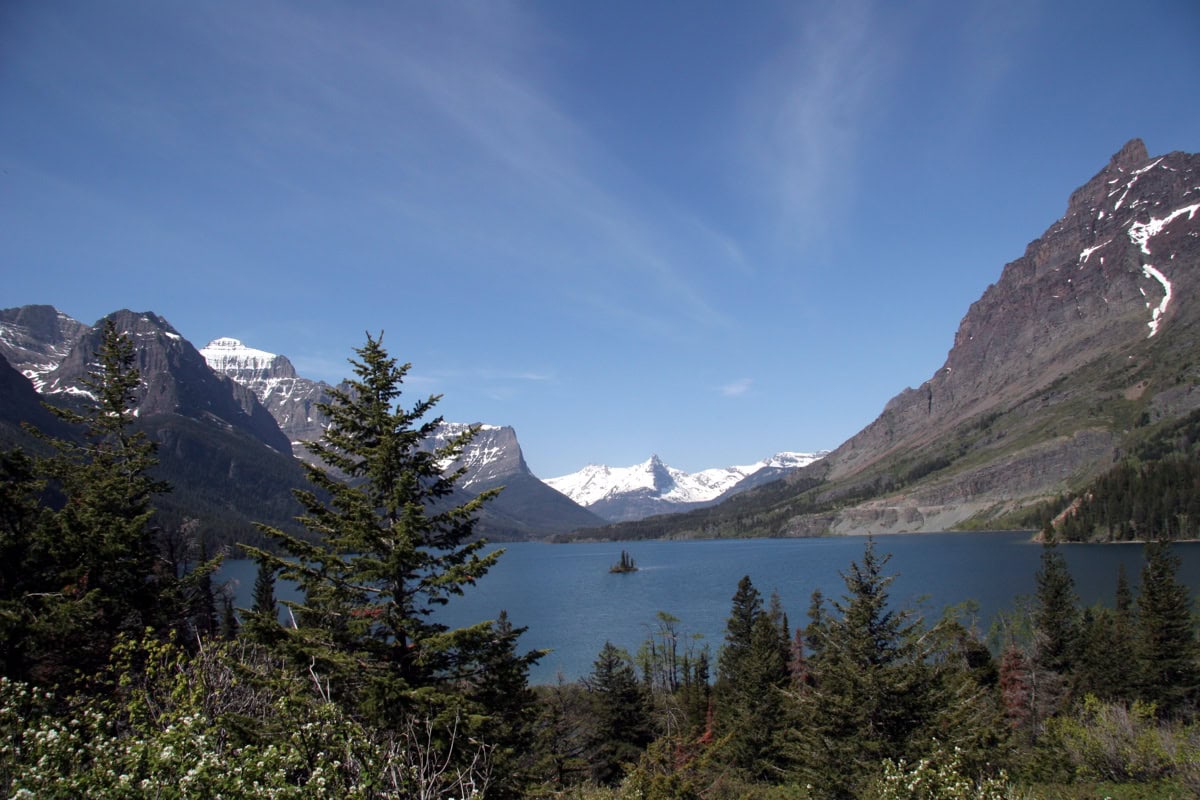
On the eastern side of Going-to-the-Sun Road, you’ll encounter St. Mary Lake — the park’s second-largest lake, famous for its intensely blue colour and especially the view of Wild Goose Island, that tiny islet in the middle of the lake that you’ve almost certainly seen in photos.
The best viewpoint is from Wild Goose Island Overlook — the car park is right by the road and within 30 seconds you’ve got that famous shot. It’s most beautiful at sunrise, when the lake shifts through shades of pink, purple, and azure.
A bit further along the road, stop at Sun Point — there’s a short walk (about a mile) to Baring Falls, which are smaller but lovely and far less crowded than the main attractions.
8. Weeping Wall — waterfalls cascading onto the road
Weeping Wall is one of those spots you stumble upon while driving Going-to-the-Sun Road and think “you can’t be serious.” In spring and early summer (June–July), water streams and cascades from the high cliffs directly onto the road — you literally drive through a waterfall.
There’s no car park here (it’s in the middle of the narrow road), so enjoy it as you drive, ideally with the windows down. In late summer, the water typically dries up, so the biggest show is in June and early July. It’s brief but absolutely unforgettable.

Map of points of interest for your phone
Many Glacier: 4 hikes and experiences you can’t miss
Many Glacier is, according to many visitors (and I’m firmly in that camp), the most beautiful area in all of Glacier National Park. It sits on the park’s northeastern side and is accessed via the road from Babb — NOT via Going-to-the-Sun Road. That means you’ll need to dedicate a separate day here (ideally two).
The Many Glacier area is a hiker’s paradise — you’ll find some of the most spectacular trails in the entire United States. It also has the highest concentration of bears in the park, so keep your eyes peeled. 🐻
9. Grinnell Glacier Trail — to the park’s last glaciers
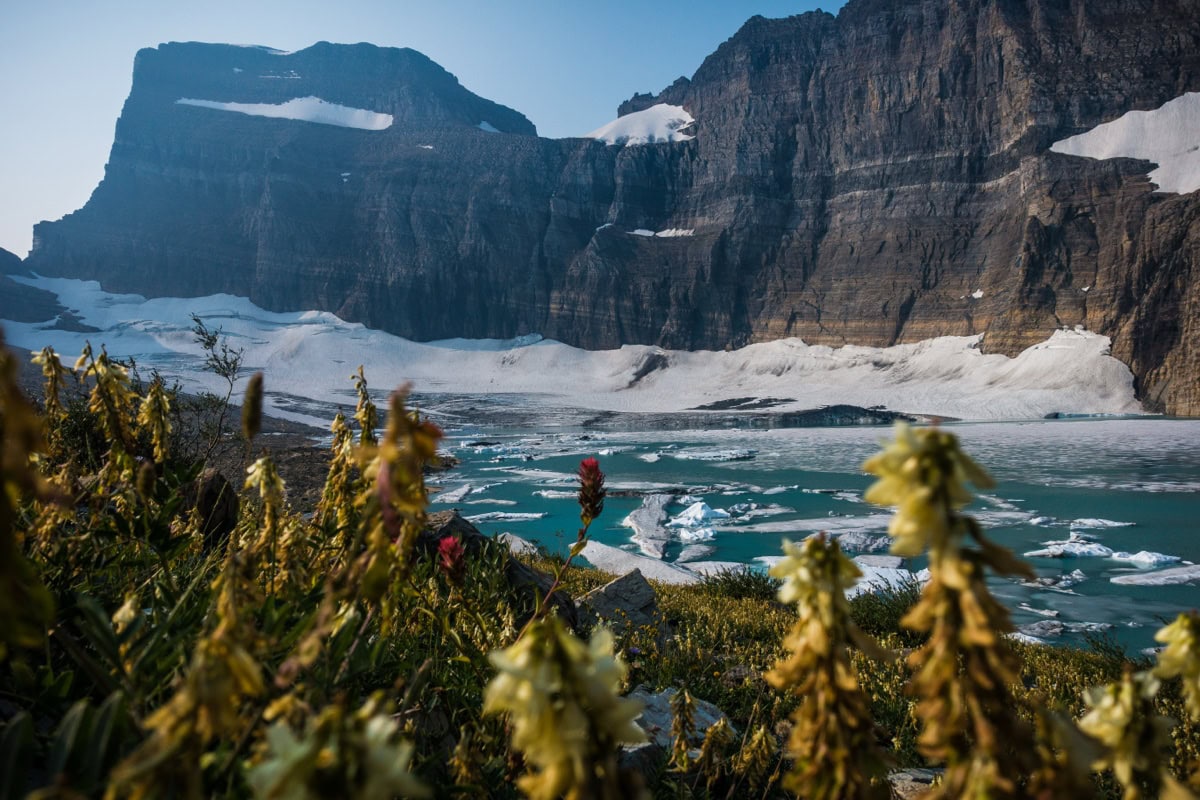
Grinnell Glacier Trail is the number one hike in Glacier National Park and, in my opinion, one of the finest in all of North America. The trail covers about 10.6 miles (17 km) round trip with around 1,600 ft (490 m) of elevation gain, leading you right up to one of the park’s last remaining glaciers.
A quick aside: how many glaciers are actually left in Glacier National Park? In 1850, there were over 150. Today, just 25 active glaciers remain (according to the latest USGS measurements). Scientists estimate that most could disappear by 2030. It’s sobering, but it also lends your visit a sense of urgency — you’re witnessing something your children may never see.
The hike itself is challenging but not extreme. The route passes two gorgeous turquoise lakes (Swiftcurrent Lake and Lake Josephine), crosses alpine meadows full of marmots, follows alongside waterfalls, and finally climbs to the glacier itself. That glacial blue-green tint of the meltwater is something no photograph can truly capture.
Tip: You can shorten the hike by taking the boat across Swiftcurrent Lake and Lake Josephine (operated by Glacier Park Boat Company) — it saves roughly 3 miles and a lot of energy.
10. Iceberg Lake — a lake full of floating ice
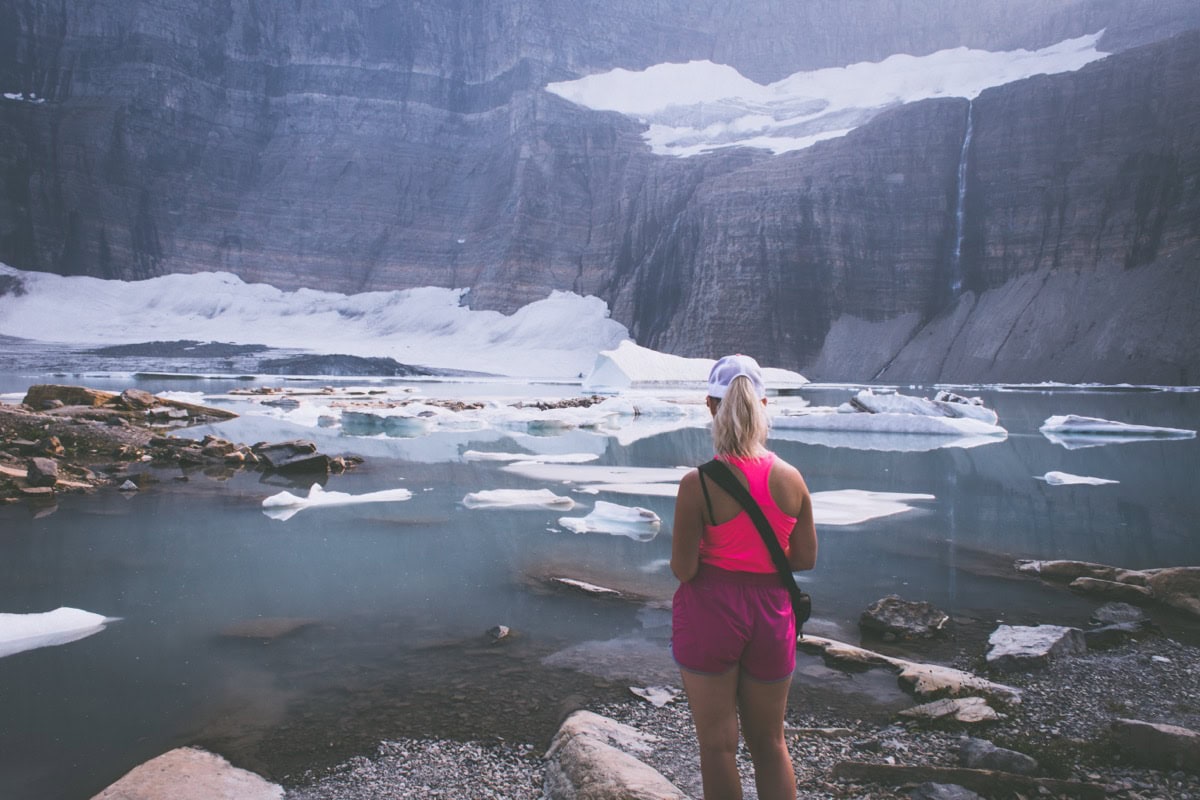
Iceberg Lake is exactly what the name promises — a glacial lake where chunks of ice float on the surface even in August. The trail covers about 9.3 miles (15 km) round trip with gentle elevation gain (roughly 1,200 ft / 370 m) and is considered one of the most scenic in the park.
The lake sits in an enormous amphitheatre of rock walls surrounding it on three sides. The water is surreally blue, and the floating ice chunks give the whole scene an Arctic feel. Some brave souls even swim here — we dipped our feet in and pulled them right back out after three seconds. The water’s about 3°C (37°F). 😅
The trail is relatively easy (by Glacier standards) and excellent for bear watching — the area around Iceberg Lake is one of the most frequent grizzly bear hotspots in the park. We spotted a mother bear with her cub on a distant slope, and that was plenty close enough. Don’t worry — bears generally avoid humans as long as you make noise.
11. Swiftcurrent Pass Trail and Swiftcurrent Lookout
If you have a third day in Many Glacier (and I’d strongly recommend it), the Swiftcurrent Pass Trail takes you up to Swiftcurrent Lookout at 7,503 ft (2,286 m), where you’ll get a 360° panorama of the entire Many Glacier area.
The trail covers about 12 miles (19 km) round trip with roughly 2,300 ft (700 m) of elevation gain — it’s a full-day affair and definitely not a stroll. But the view from the lookout! You can see Grinnell Glacier, Swiftcurrent Valley, Granite Park, and on a clear day, allegedly all the way into Canada.
Alternative: If you don’t fancy the full trail, you can hike just to Redrock Falls (about 3.7 miles / 6 km round trip) — a beautiful waterfall with significantly fewer people than Grinnell or Iceberg.
12. Many Glacier Hotel — worth a stop even if you’re not staying
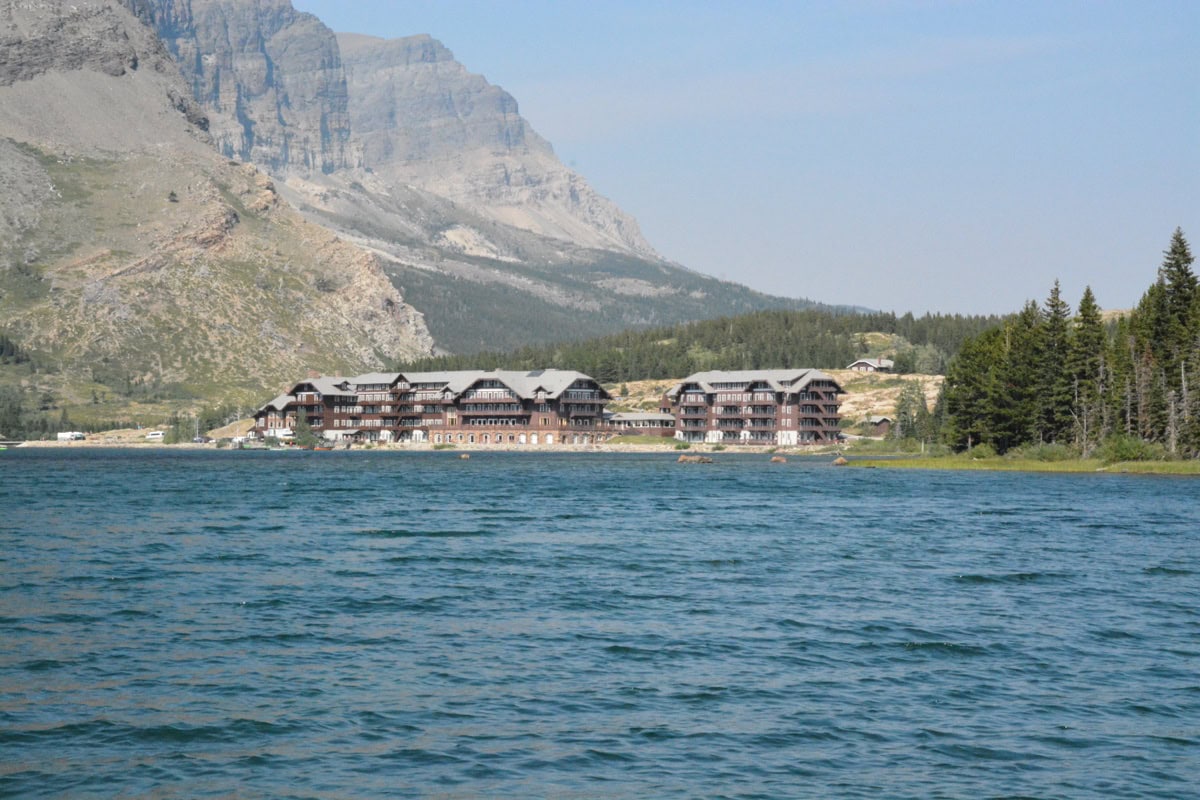
Many Glacier Hotel is a historic gem dating back to 1915, built in the style of Swiss alpine hotels. It stands right on the shore of Swiftcurrent Lake with views of snow-capped peaks, and even if you can’t afford to stay here (or couldn’t snag a reservation), you should definitely pop in.
The lobby is open to all visitors, and the view from the veranda across the lake and mountains is one of the finest in the entire park. You can have lunch in the hotel restaurant (prices are on the high side, but the view is worth every penny) or simply grab a coffee and soak up the atmosphere.
More great spots in Glacier National Park: 3 tips you won’t want to miss
Beyond the main draws — Going-to-the-Sun Road and Many Glacier — Glacier National Park has several more areas well worth visiting if you have the time. The park is enormous (over 1,500 square miles / 4,000 km²), and most visitors only see a fraction of what it offers.
13. Two Medicine — a peaceful alternative without the crowds
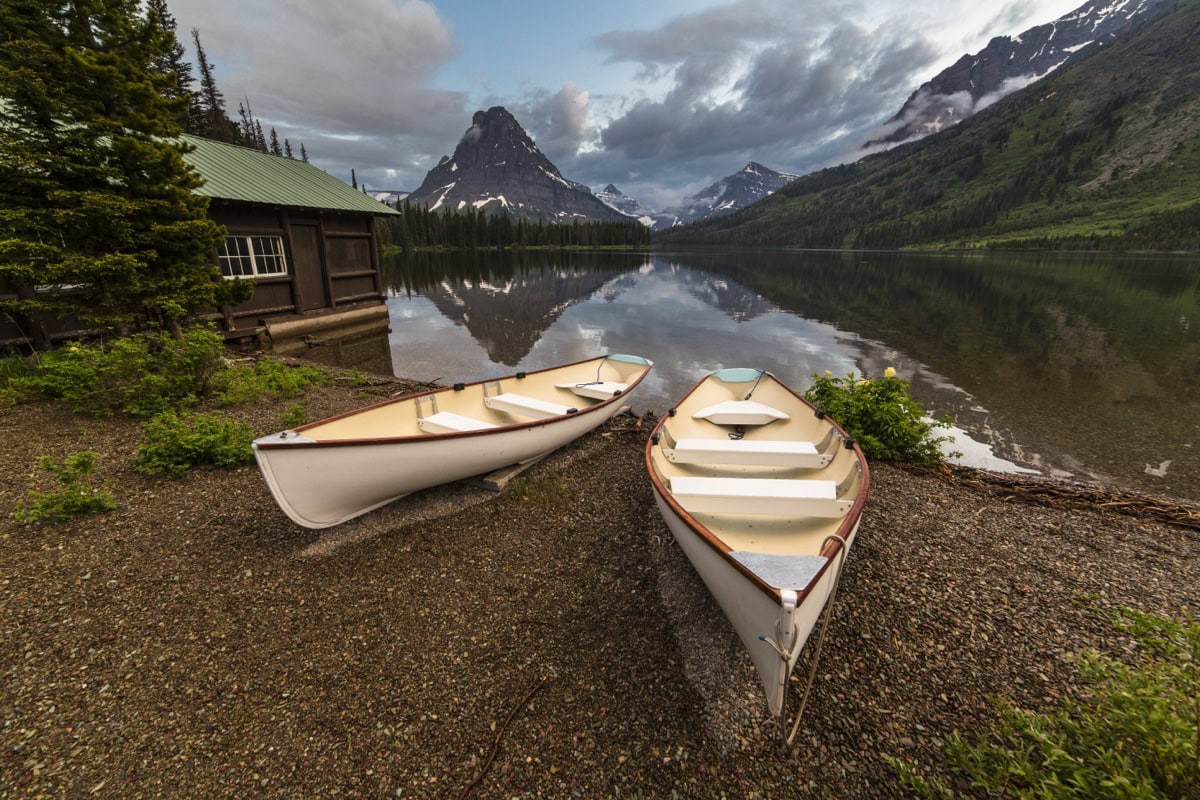
Two Medicine is an area on the park’s southeastern side that sees significantly fewer visitors than Many Glacier or Going-to-the-Sun Road. And yet it’s gorgeous — lakes, waterfalls, hikes, and above all, peace and quiet.
I’d recommend the Scenic Boat Tour across Two Medicine Lake, followed by a hike to Twin Falls (about 2 miles on foot after getting off the boat). If you have more time, continue to Upper Two Medicine Lake — pristine wilderness at its best.
Two Medicine is also a brilliant option if your Going-to-the-Sun Road reservation didn’t work out — you don’t need one to come here.
14. Polebridge — an off-the-grid community in the park’s northwest
Polebridge is a tiny community in the park’s northwest, reached via an unpaved road (North Fork Road). There’s no electricity and no mobile signal, and the entire “shop” is essentially a bakery — Polebridge Mercantile, which bakes the best huckleberry bear claw pastry in all of Montana.
From Polebridge, you can head to Bowman Lake or Kintla Lake — two of the most remote and pristine lakes in the park. Bowman Lake is more accessible (about 6 miles down an unpaved road), while Kintla Lake requires even more commitment. Both lakes are absolutely stunning, and you’ll be sharing them with maybe five other people. Tops.
15. Goat Haunt and the boat trip across Waterton Lake to Canada
This is a truly unique experience. From the town of Waterton in Canada’s Waterton Lakes National Park (which borders Glacier and together they form a UNESCO World Heritage Site), you can take a boat across Waterton Lake to Goat Haunt on the American side. It’s one of the few boat crossings in the world that spans an international border.
The crossing takes about 30 minutes and the views from the boat are fantastic. From Goat Haunt, you can set off on several hikes or take the boat back to Canada. Important: You’ll need a valid passport, as you’re crossing the US-Canada border! And don’t confuse Glacier National Park in Montana with Glacier National Park in Canada (in British Columbia) — that’s an entirely different park, despite sharing the same name.
Where to eat and drink near Glacier National Park
Let’s be honest — Glacier National Park isn’t a foodie destination, and if you’re expecting Michelin-starred restaurants, you’ll be disappointed. But if you’re after hearty American food, local craft beers, and the atmosphere of small mountain towns, you’ll be well satisfied.
Inside the park
The restaurants in the park’s lodges (Lake McDonald Lodge, Many Glacier Hotel, Rising Sun) serve solid American fare — burgers, steaks, sandwiches, salads. Prices are on the higher side (mains $15–30 / €14–28), but the atmosphere and views make it worthwhile. At Many Glacier Hotel, I’d recommend the Ptarmigan Dining Room — order the bison steak and grab a window seat overlooking the lake.
The park also has camp stores stocking groceries for cooking, sandwiches, and basic supplies. If you’re camping, stock up beforehand in Kalispell or Whitefish.
Whitefish
If you’re staying in Whitefish (and I’d recommend it), here are a few suggestions:
- Montana Coffee Traders — an excellent local roastery, the perfect stop before heading into the park in the morning
- Craggy Range Bar & Grill — solid burgers and steaks in a relaxed atmosphere
- Great Northern Brewing Company — a local brewery with a cracking selection of craft beers. The Wild Huckleberry IPA is a must-try.
- Loula’s — a legendary breakfast spot, but expect a queue at weekends
West Glacier and Hungry Horse
- Belton Chalet Grill — a historic hotel with surprisingly good food, right at the park’s west entrance
- West Glacier Restaurant — nothing fancy, but honest breakfasts at reasonable prices before a full day’s hiking
- Huckleberry Patch — huckleberry beer! And huckleberries prepared every which way. Montana = huckleberries, and this is where you’ll truly understand that.
Trail lunch tip: Pack sandwiches, fruit, energy bars, and — crucially — LOTS of water in your daypack. There are no food stalls on the trails, and dehydration at altitude creeps up on you faster than you’d expect.
Bear safety — what you need to know
Both black bears and grizzly bears live in Glacier National Park, and encounters aren’t uncommon — this is their home and you’re just visiting. But there’s no reason to panic — just follow the basic rules.
Bear spray
Bear spray is a necessity, not a suggestion. Pick some up right after you arrive (it’s sold at every outdoor shop and at the park’s visitor centres for $40–50 / €37–46). Carry it in a holster on your belt, not buried in your backpack — if you need it, you won’t have time to be fumbling with a zip.
On the trails
- Make noise — talk, sing, clap, especially on blind corners and near streams (bears can’t hear you over rushing water)
- Hike in groups — attacks on groups of 4+ people are extremely rare
- Never run from a bear — it triggers their chase instinct
- Grizzly vs. black bear: With a grizzly, back away slowly and if it attacks, lie face-down, protect your neck, and play dead. With a black bear, fight back. (I know it sounds terrifying, but attacks are extremely rare.)
At the campsite
- Store all food and scented items (including toothpaste, deodorant) in the bear boxes provided at every campsite
- Never cook near your tent — cook only in designated areas
During our entire visit, we saw bears three times — always at a safe distance and always a truly magical moment. Respect them, follow the rules, and you’ll be absolutely fine. ☺️
Practical tips to wrap up
What to pack
The weather in Glacier National Park changes literally from minute to minute — at Logan Pass it can be 25°C and sunny, and an hour later 10°C with rain. Dress in layers and always have a waterproof jacket in your daypack.
For a complete packing list, check out our article on how to pack carry-on only. For hiking in Glacier, add:
- Bear spray (essential!)
- Quality hiking boots — not trainers, proper boots
- Trekking poles (optional, but a huge help on longer hikes)
- Plenty of water and food
- SPF 50+ suncream (the sun burns harder at altitude than you’d think)
Mobile data and eSIM
Mobile signal in Glacier National Park is virtually non-existent — you might pick up Wi-Fi at lodges and visitor centres, but on the trails and in the more remote parts of the park, you’ll be completely offline. Download offline maps (Google Maps and AllTrails) before you go!
For travelling around the US, I’d recommend an eSIM from Holafly — it works brilliantly in towns and along major highways, but don’t expect miracles inside the park itself.
Travel insurance
Do not travel to the US without insurance — healthcare in America costs astronomical amounts. We’d recommend reading our SafetyWing review — it’s insurance practically made for travellers.
FAQ — frequently asked questions about Glacier National Park
Tips and Tricks for Your Vacation
Don’t Overpay for Flights
Search for flights on Kayak. It’s our favorite search engine because it scans the websites of all airlines and always finds the cheapest connection.
Book Your Accommodation Smartly
The best experiences we’ve had when looking for accommodation (from Alaska to Morocco) are with Booking.com, where hotels, apartments, and entire houses are usually the cheapest and most widely available.
 🚗 Car rental on the roadVerified rental cars in the United States
Search with the DiscoverCars comparison engine — it compares prices from dozens of local and international rental companies, and most bookings come with free cancellation.
Compare car prices in the United States →Don’t Forget Travel Insurance
Good travel insurance will protect you against illness, accidents, theft, or flight cancellations. We’ve had a few hospital visits abroad, so we know how important it is to have proper insurance arranged.
Where we insure ourselves: SafetyWing (simple monthly subscription) and TrueTraveller (for extra-long trips).
Find the Best Experiences
Get Your Guide is a huge online marketplace where you can book guided walks, trips, skip-the-line tickets, tours, and much more. We always find some extra fun there!