

A child sitting on a parent’s lap is not protected during unexpected turbulence, because a standard infant belt simply won’t hold them. According to aviation authorities, a certified car seat on an airplane, in its own seat, is the safest way for the littlest travellers to fly. But without the right label, you won’t be allowed to bring it on board.
If you don’t want to take the car seat into the cabin, most airlines will check it in for free as baby equipment. There are also other certified alternatives for older children, such as the special CARES aviation harness, approved for children from one year and ten kilograms.
I didn’t take one on the plane myself, so this article is based on recommendations from aviation authorities and airline rules. You’ll learn how to spot the right seat, when you have to buy your child their own seat, and what rental options you have at your destination.
TL;DR
- The safest place for a child is in their own seat: According to the US FAA, a certified car seat in its own seat is far safer than a child on your lap, mainly because of unpredictable turbulence.
- Checking in a car seat is usually free: Most carriers like Ryanair or Wizz Air let you check a car seat into the hold for free as part of your child’s equipment.
- Watch out for aviation labels: If you want to bring the car seat right into the cabin, it must carry a special certification label, otherwise the crew won’t let you on board with it at all.
- The CARES harness is a great alternative: For toddlers from 1 year weighing 10 to 20 kilograms, there’s a special aviation harness approved by EASA and plenty of major airlines.
- Inflatable beds aren’t allowed everywhere: Gadgets like JetKids or inflatable footrests are strictly banned by many companies such as Emirates and Lufthansa.
- Strict rules apply at your destination: In Spain a child under 135 centimetres must sit in a car seat in the back, or you risk a fine of around €300; in Italy the limit is even 150 centimetres.
- A damaged seat claim can’t wait: If the airline damages your car seat, you must request a PIR report right at the airport and file the claim in writing within 7 days at the most.
10 Things You Need to Know
1. Car seat on the airplane for free as a baby item
Most parents go for the golden middle: the child sits on their lap on board and the car seat travels in the hold, so it’s ready at the destination for a rental car. The good news is that practically all ordinary carriers will check in a car seat for free, so you don’t have to pay any silly charges to transport it in the cargo hold.
Ireland’s Ryanair, for example, carries two pieces of child equipment per child free of charge – such as a pushchair and, yes, a car seat – up to the age of 11. Hungary’s Wizz Air is just as accommodating, letting you take a folding pushchair or car seat into the hold for free right up to the age of 14.
You should be more careful with some specific low-cost carriers, though, because with Spain’s Vueling, checking in a car seat is often charged, so always study the current price list before you buy your ticket. Likewise, watch out: if the child isn’t actually travelling and you’re just carrying the seat to, say, a relative’s place, it counts as standard luggage and you’ll pay the full price.
💡 Tip: Even though transport is free, keep an eye on the weight and dimensions per the airline’s rules, so you don’t run into unpleasant complications at the desk and end up paying oversize fees.
2. When it makes sense to buy your child their own seat and bring the car seat on board
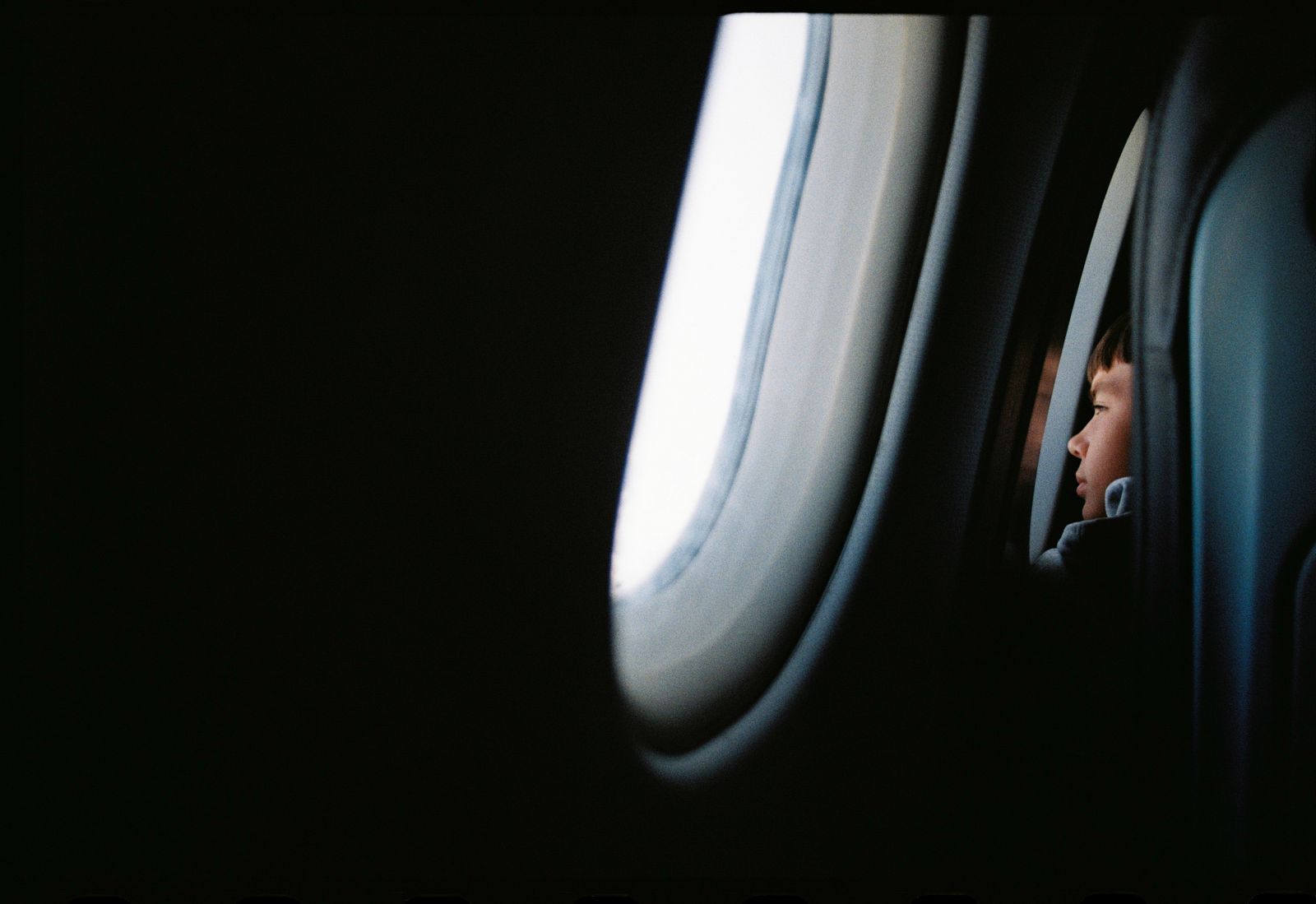
This is something airlines are very reluctant to say out loud, but according to the US Federal Aviation Administration (FAA), the safest place for a child under two is an approved restraint system in their own seat. A child on a parent’s lap poses a huge safety risk, because physics doesn’t ask questions during severe turbulence or an emergency landing.
An adult has absolutely no chance of holding a child in their arms during a sudden drop, and turbulence is by far the most common cause of injury to children on board. The US National Transportation Safety Board (NTSB) has even been pushing to scrap the lap-child exemption since 1990, but hasn’t succeeded, out of fear that families would switch to cars, where accident rates are statistically higher.
So if you decide to go for maximum safety, you have to buy your child a regular ticket with their own seat and bring a certified car seat on board. Most parents will fly with a baby under two on their lap, which is perfectly legal and common, but it’s fair to know all the risks and decide based on hard facts.
💡 Tip: A child under 2 is secured on your lap with a special extension belt, but this doesn’t provide protection comparable to a certified restraint system, which is why a dedicated seat is always the best choice.
3. How to spot an FAA approved car seat for airplane use
To be able to use a car seat right in the airplane cabin, it’s not enough for it to be safe for your car – it must have special certification for aviation use. Without this certification label, the cabin crew doesn’t have to let you on board with the car seat at all, even if you’ve honestly paid for your child’s own seat.
European car seats approved for airplane use usually carry TÜV Rheinland certification and a clearly visible label reading “For Use in Aircraft”. Before you even start packing, always carefully verify your car seat’s dimensions with the carrier, because economy-class seat width is unforgiving and wide models simply won’t fit.
Another important rule concerns placement on board, because the car seat must always be by the window, so it doesn’t block other passengers during an emergency evacuation. A parent or accompanying person over 16 must sit next to it, so forget any strategic spreading out around the plane.
💡 Tip: With many airlines, an adult with an infant must sit by the window also because only above these seats is there an extra oxygen mask available.
4. The CARES harness as a lightweight alternative to a car seat
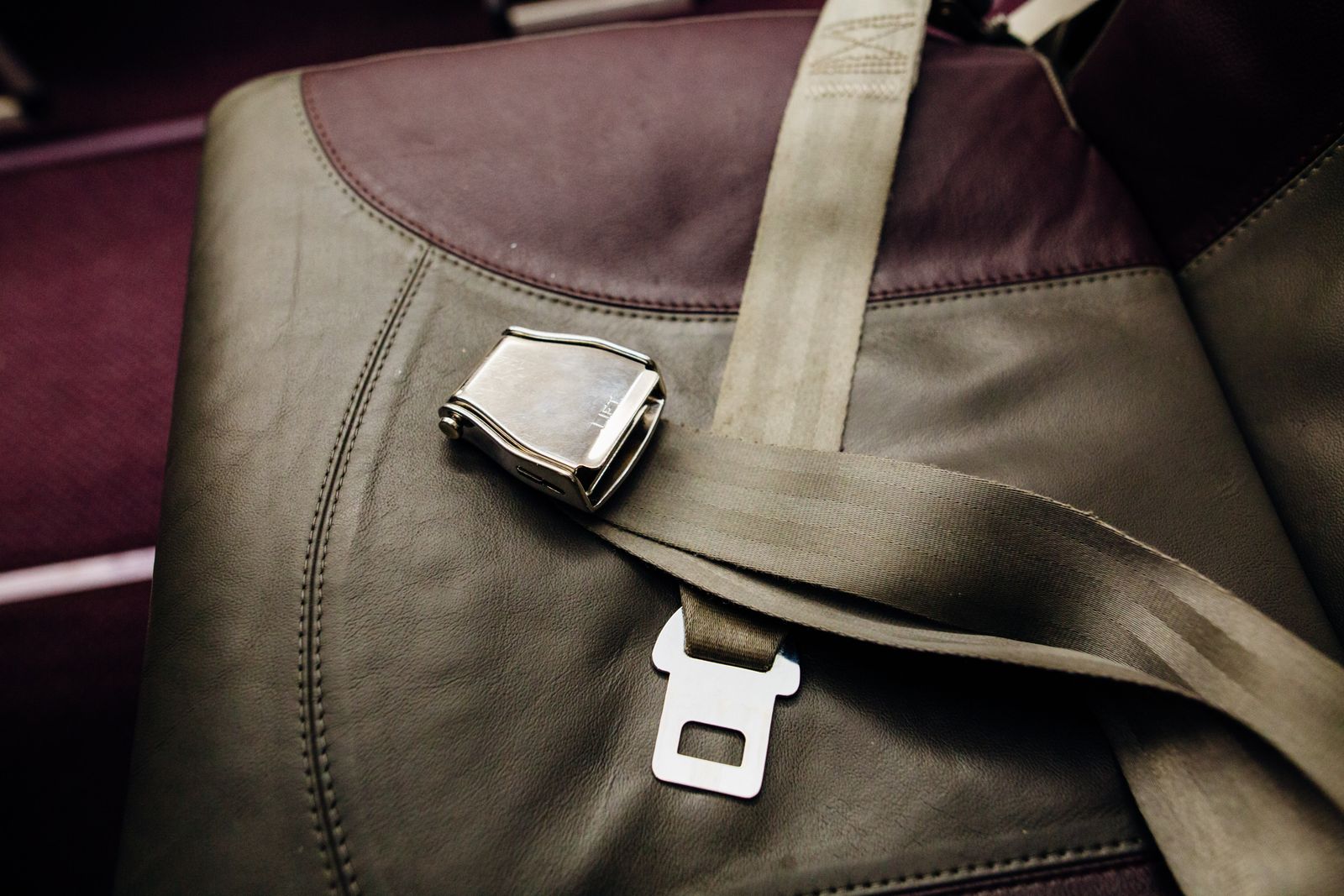
If you have a toddler from 1 year weighing between 10 and 20 kilograms at home, there’s a brilliant compromise between safety and logistics on the market called the CARES harness. It’s a special strap restraint system that safely secures the child to the seat during turbulence, and yet it fits into a tiny pocket in your carry-on backpack.
For families on long-haul flights or heading somewhere exotic, it’s an absolutely fantastic alternative, because you don’t have to lug a heavy plastic shell halfway across the world, yet you still have the assurance that your child is safe. This system is recognised by the European Union Aviation Safety Agency (EASA) and meets strict aviation standards.
Among specific airlines, it’s explicitly accepted by the likes of Ryanair, Aer Lingus, Lufthansa, SWISS and Emirates. Always verify this permission before departure with your specific carrier and for the aircraft type, though, because rules can change and cabin crew sometimes get confused when they see something unusual.
💡 Tip: Even with the CARES system, you still have to buy your child their own seat, because the harness threads directly onto the back of a standard airline seat.
5. Booster seat in the airplane
Once you’ve got a bigger school-age child at home, you obviously don’t bother with a big full car seat, but you still definitely need a booster seat for the car at your destination. The logical thinking of many parents is that they’ll simply carry the booster in hand or in a backpack into the cabin, because it weighs nothing and gets in nobody’s way.
Whether you can take it right on board as part of your hand luggage depends purely on each carrier’s policy, so it’s best to check in advance. What’s certain is that a booster can be checked in without any problem as child equipment, and with Ryanair it counts as one of the two pieces you get completely free with your ticket.
You can sort it out right at the check-in desk, but always put it in a bag or a sturdy sack and tie it up well, so it doesn’t fall out and get damaged on the airport belts. The staff will then transport it to the hold within the permitted family limits.
💡 Tip: If you’re unsure, take the booster to the airport in a sturdy bag and ask at the desk whether they want to check it in – they usually make no fuss whatsoever about it.
6. How to pack and check a car seat: bags and protection
This is an absolutely critical point of the whole trip, because airport sorting belts and baggage handlers don’t exactly treat luggage gently, and the fragile plastic of a car seat can easily crack. The most practical solution is to get a special sturdy car seat bag for the airplane with backpack straps, because at the airport you’ll definitely need both hands free for the kids and documents.
With the seat on your back like a backpack, you can easily carry a child, a cabin bag on top, and get through the security check without unnecessary stress. Another huge advantage of such a bag is that it also fits other soft items, so you can tuck in a pack of nappies, a blanket or winter jackets that would otherwise take up precious space in your suitcase.
But be extremely careful with the rules of some carriers, which explicitly state that they bear no responsibility for damage to unpacked pushchairs and equipment. A cover, a sturdy bag, or at least thorough wrapping in clear film is an absolute necessity if you want to avoid unnecessary complications with a potential claim.
💡 Tip: Even if you wrap the seat in film and stuff nappies in with it, keep an eye on the total weight of the bundle, so you don’t attract unnecessary attention at the desk and have to embarrassingly repack.
7. Travel cot on the airplane: bassinet and inflatable JetKids beds

When you fly with a baby on a long-haul flight, you’ll probably be dealing with the so-called bassinet – a special aviation cradle the crew attaches to the fixed bulkhead in front of the first row of seats. It’s the holy grail for parents of small children, but there’s one major catch, because on short European routes with low-cost carriers you generally won’t find bassinets at all.
If you have an older toddler, you might have thought of getting the popular kids’ cases like the JetKids BedBox by Stokke, or various inflatable footrests that fill the legroom and create a flat surface for sleeping. This solution runs into hard reality, though, because these gadgets are strictly banned by a huge number of airlines for safety reasons.
Specifically, you won’t get anywhere with them, because they’re strictly banned by Emirates, British Airways, Air France, Lufthansa, Qatar, Delta and United. On the other hand, companies like KLM, Singapore Airlines or Virgin Atlantic take a much more relaxed approach and allow them, so before investing in a pricey case, always thoroughly check the policy of the carrier you’re actually flying with.
💡 Tip: If you try an inflatable bed with British Airways or Emirates, the crew will uncompromisingly make you deflate it and stow it in the overhead bin.
8. Car seat at your destination: car rentals and laws in Italy, Spain and Greece
This is the eternal dilemma of every travelling parent, because laws in popular European resorts are often far stricter than what we’re used to. In Italy, for example, children must be in a car seat up to a height of 150 centimetres regardless of age, and if you rent a car registered in Italy for a child under 4, it must have a working anti-abandonment alarm.
In Spain, children under 135 centimetres must be in an approved seat and exclusively in the back, with a fine of around €300 for non-compliance. Greece then requires children under 3 to always be in a restraint system, so counting on getting away with it on holiday can cost you dearly.
If you rent a car from a classic car rental company, the availability of specific and clean seat models is often a bit of a lottery. A far more reliable alternative these days are specialised baby equipment rentals with delivery straight to the airport, such as the Babonbo platform, which operates in hundreds of destinations and supplies seats meeting strict European standards.
💡 Tip: Taxi rides are generally exempt from the car seat requirement in the EU, but always check the specific rules locally, because some countries may have stricter regulations.
9. What to do if your car seat doesn’t arrive or gets damaged
You’re standing at the belt at your destination, everyone’s gone, and your car seat is nowhere to be seen – or it emerges from the depths of the airport with a huge crack in the shell. In such a case you’re fortunately protected by the Montreal Convention, which sets the airline’s liability limit for luggage at roughly 2,175 USD, and this also covers child equipment handed over at the aircraft.
The key step you mustn’t skip in the shock is to go straight to the claims desk in the baggage reclaim hall and have a so-called PIR report issued immediately (Property Irregularity Report). You must then report the damage or loss to the airline in writing within 7 days of receiving your luggage at the latest, or you lose any right to compensation.
If the car seat didn’t arrive and you have a rental car waiting outside the airport, don’t panic and ask right at the claims desk. At many larger airports they have replacement car seats available to borrow from storage – you just have to ask, because you won’t get anything if you don’t.
💡 Tip: Carefully keep your boarding pass and the baggage tag from check-in, and photograph any cracks on the seat in detail right in the airport hall.
10. Car seat rules with Ryanair, Wizz Air, Smartwings and traditional airlines
Every airline has its own quirks that can unpleasantly surprise you at check-in, so it’s best to prepare for them in advance. If you’re flying with Wizz Air and want to buy an infant their own seat for a car seat, there’s a great trick where you buy a regular adult ticket and write the word INFANT in the name field, elegantly avoiding the special infant fee.
With Smartwings you’ll hit an annoying system limitation, because if you want to buy a free seat for a baby, you can’t click it through on the website and must arrange it exclusively by phone via the customer line. Classic network airlines like Lufthansa or KLM usually take a pushchair and car seat for free, but ⚠️ with the cheapest Light fares stricter restrictions may apply, so it’s best to double-check the price list.
If you’re relying on Ireland’s Ryanair, remember that an adult with an infant must sit by the window, and if you rely on free random seat allocation, the family will almost certainly end up at the back of the plane, because the front sells out to paying passengers. Always keep the airline’s official page with rules for child luggage open on your phone too, so you have a bulletproof argument in hand at the gate.
💡 Tip: Don’t forget to carefully study Ryanair luggage: dimensions, weight and fees, because the rules for cabin bags change often and every extra kilo costs you dearly.
Practical Summary and Guide Prices
When deciding how to handle your car seat, a comparison of the three main options available to families will help you most. The prices and rules reflect the situation for 2026.
| Solution option | Pros | Cons and guide costs |
|---|---|---|
| :— | :— | :— |
| Own car seat on board | Maximum safety for the child per the FAA; the child is secured and calmer. | You have to pay the full ticket price for an extra seat. You need to check certification labels and seat width. |
| Checking the seat into the hold | With most airlines (Ryanair, Wizz Air) it’s completely free. | Risk of damage to the plastic shell during rough handling; you have to invest in a quality bag. |
| CARES harness on board | Extremely light, EASA approved, and fits in your backpack pocket. | Suitable only for children from 1 year (10–20 kg). Again, you have to pay for a ticket with its own seat. |
| Renting a car seat at your destination | No stress lugging a heavy item through the airport; everything’s waiting for you on site. | Specialised equipment rentals charge daily fees; quality at car rental companies can be a bit uncertain. |
Where to Next
Preparing for a family holiday doesn’t end with the car seat, so be sure to check out our other articles that will save you a lot of nerves. If you’re interested in the whole process from buying tickets to keeping little ones entertained on board, read our complete guide to Flying with Kids. Another key question is getting around the airport, which we cover in detail in the article Pushchair on the Airplane.
Before you start packing, it’s best to double-check current limits in Wizz Air luggage or Smartwings luggage, so you don’t pay silly amounts at the airport. You’ll also find our practical overview What You Can and Can’t Take on a Plane handy. And if you’re heading to the Adriatic, don’t miss our tips for Croatia with Kids.
Frequently Asked Questions
Do I pay anything for checking a car seat into the hold?
In the vast majority of cases you don’t pay anything at all, because carriers like Ryanair or Wizz Air treat a car seat as part of free child equipment. An exception is, for example, the Spanish carrier Vueling, where it is charged, so always check the price list.
Can I take a car seat with me into the aircraft cabin?
Yes, but you must buy a regular ticket with its own seat for the child and the car seat must have a certification label for use on aircraft. Without a paid seat and the correct label, the crew will not let you on board with it for safety reasons.
What are CARES harnesses and who are they suitable for?
It’s a special lightweight harness restraint system that fits directly onto a standard aircraft seat and safely secures a child during turbulence. They’re designed for toddlers from 1 year old weighing between 10 and 20 kilograms, and are approved by EASA.
Will the airline allow me to use an inflatable bed like JetKids?
This is a huge lottery, because while KLM or Virgin Atlantic allow them without issues, a huge number of airlines strictly ban them. Those that won’t let you use them on board include Emirates, British Airways, Lufthansa or Qatar.
Is a child on the lap safely secured?
A child under 2 years old on the lap is secured with a special extension belt, which however according to the American FAA does not provide protection comparable to a certified restraint system. In the event of severe turbulence, an adult physically cannot hold a child safely in their arms.
Can I take just an ordinary booster seat on the plane?
A booster seat for older children can absolutely be checked as child equipment into the hold without any problem; with Ryanair it counts as one of two free items. Whether you can take it into the cabin depends on your carrier’s hand luggage limits.
How should I pack a car seat before handing it over at the airport?
The most practical option is to get a sturdy car seat bag with backpack straps, which will leave your hands free for documents and children. Some airlines like Smartwings also explicitly state that they bear no responsibility for damage to unbagged equipment.
Tips and Tricks for Your Vacation
Don’t Overpay for Flights
Search for flights on Kayak. It’s our favorite search engine because it scans the websites of all airlines and always finds the cheapest connection.
Book Your Accommodation Smartly
The best experiences we’ve had when looking for accommodation (from Alaska to Morocco) are with Booking.com, where hotels, apartments, and entire houses are usually the cheapest and most widely available.
Don’t Forget Travel Insurance
Good travel insurance will protect you against illness, accidents, theft, or flight cancellations. We’ve had a few hospital visits abroad, so we know how important it is to have proper insurance arranged.
Where we insure ourselves: SafetyWing (simple monthly subscription) and TrueTraveller (for extra-long trips).
Find the Best Experiences
Get Your Guide is a huge online marketplace where you can book guided walks, trips, skip-the-line tickets, tours, and much more. We always find some extra fun there!


