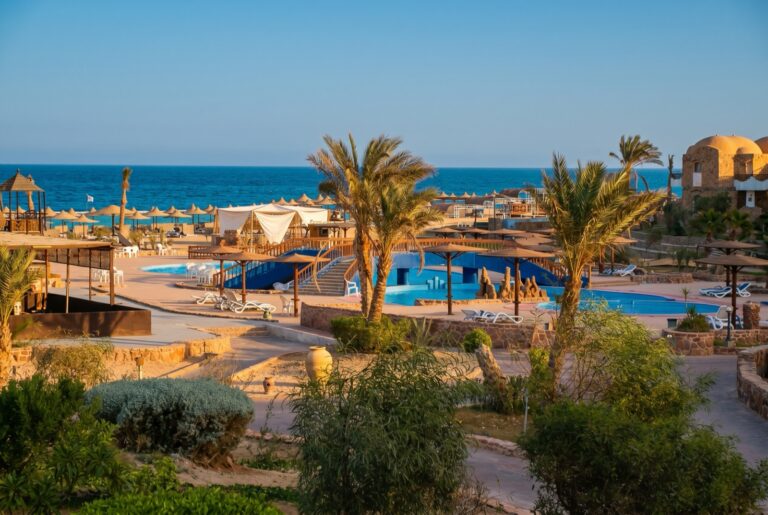
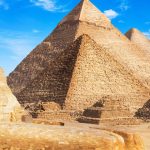
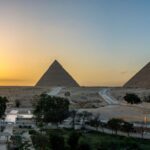
Picture that wonderful moment when, after just a few hours in the air, you step out at an Egyptian airport and that typical hot, dry air hits your face — the kind that simply smells like holiday. Egypt is honestly one of the few destinations worth visiting at literally any time of year, but it’s hugely important to know what to realistically expect from each month. While some people head here in August full of excitement for water that feels more like a warm broth in a bathtub, others happily escape the biting British winter in January to wander among the breathtaking ancient pyramids in peace and without the crazy crowds. And another traveller enjoys the absolutely perfect compromise in April, when it’s pleasantly warm — just right for lounging on the beach with a book and for full-day trips around the area.
Every season here has its own unmistakable charm, but you’ll also run into a few little pitfalls that the glossy holiday brochures conveniently forget to mention. The main rule is actually quite simple, and trust me, it’s well worth sticking to: summer and autumn are made for swimming, winter is absolutely ideal for relaxed history sightseeing and romantic desert wanders, while spring and autumn are probably the best possible compromise for the indecisive among us.
There are also major differences between the resorts themselves, something a lot of people forget in the excitement of booking. Especially in the winter months, the sea in the more southerly Marsa Alam is a few degrees warmer than in the more northern Hurghada, which you’ll really notice during a morning dip. In this little guide I’ll break down Egypt’s weather month by month, we’ll look at exact air and sea temperatures together, and I’ll happily advise you on the best time to go for the most beautiful snorkelling, when to visit the monuments, and when you’ll grab your dream holiday for the very best price.
TL;DR
- Egypt works all year round: Warm sunshine and dry weather are a near-certainty here, because it really only rains very rarely, and even then mostly in the north near Cairo.
- Peak swimming season: For proper swimming and long, fascinating snorkelling, the absolute best period is from June to November, when the sea is steadily above 26 degrees, with the water reaching its warmest in scorching August.
- Time for the monuments: For relaxed sightseeing — Cairo, magical Luxor, or adventurous desert trips — it’s ideal to go from November to March, when the otherwise relentless heat won’t finish you off in the sun.
- The golden middle ground: Probably the best overall weather comes in April and then from October to mid-November, when you’ll enjoy lovely warmth and beautifully heated water while still managing a few bearable trips.
- Winter swimming: In winter the warmest sea is clearly in Marsa Alam (around 23 to 24 °C), while Hurghada and Sharm el-Sheikh are noticeably cooler and unpleasantly windier.
- Temperature extremes: The absolute hottest air awaits you in July and August (commonly 37 to 38 °C), the coldest in January (a still very pleasant 22 °C during the day).
- What to watch out for: Definitely factor in the treacherous spring wind called khamsin, and also the jellyfish season, which runs roughly from mid-March to early June — so keep your eyes peeled.
- When you’ll save: The most expensive times are, of course, the popular summer holidays and Christmas, while it’s cheapest in May, June and autumn outside public holidays, when you can snag genuinely lovely prices.
The full destination guide: Egypt — guide and what to see
Egypt Weather Month by Month: 12 Faces of a Desert Paradise
The following detailed figures and temperatures apply primarily to well-known Hurghada, which serves as the main reference point for most British visitors. It’s worth remembering, though, that the slightly more southern Marsa Alam is generally a bit warmer and the water temperature there is especially higher in winter, which swimming lovers will definitely appreciate. The hugely popular Sharm el-Sheikh on the Sinai Peninsula, meanwhile, is the hottest in summer, but thanks to its clever location in a bay, it’s far less windy — so you’ll warm up nicely there. All the values below represent long-term averages of daytime air temperatures in the shade and average sea temperatures, so you get the most accurate picture possible.
1. January: Ideal Time for the Pyramids and Escaping the Cold
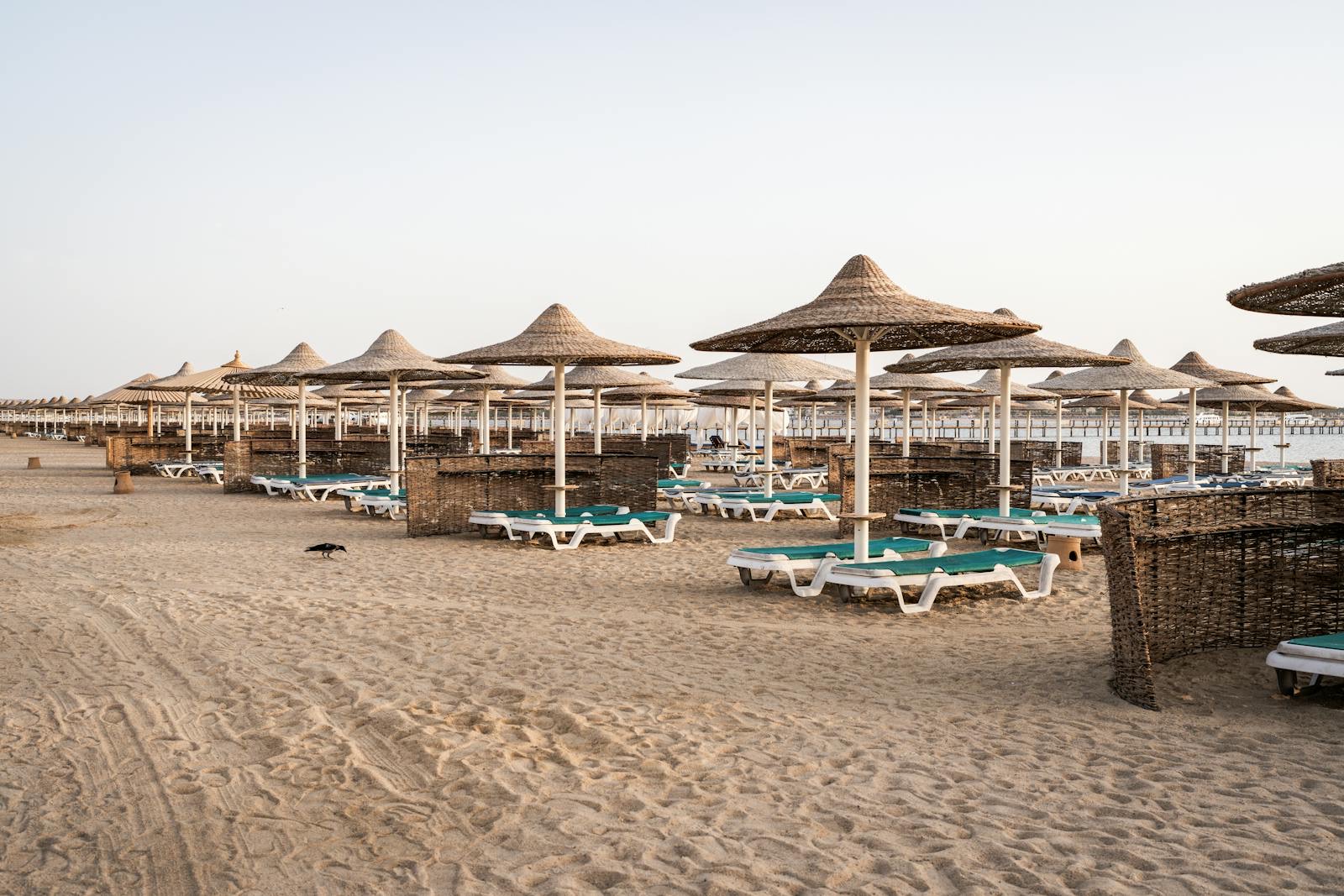
January in Egypt is exactly the month when people don’t fly here primarily for wild tropical swimming, but rather to warm up in the sunshine and heat that we so desperately lack back home in rainy Europe. The average daytime air temperature hovers around 22 °C, which feels incredibly pleasant — rather like a really lovely, sunny spring day back home. The sun still has plenty of strength, too, so if you stretch out on a poolside lounger at midday, you’ll catch a beautiful tan without any trouble.
The big turning point, though, comes at sunset, which in January sadly falls quite early — and trust me, you’ll notice it the moment the sun goes down. The evenings and nights can be unexpectedly chilly, with temperatures easily dropping to 10–12 °C. A warm hoodie and long trousers are therefore an absolute must for evening strolls around a sprawling resort, because without them you’ll be genuinely cold and, instead of romance, you’ll just be chattering your teeth 😅
The Red Sea temperature in January slowly drops to around 22 °C, which is no big problem for hardier swimmers, but for that wonderful hour-long snorkelling session it’s simply not enough without a wetsuit. On top of that, Hurghada often gets a colder wind in this period, which mercilessly lowers the feels-like temperature once you climb out of the water — so you’ll want to wrap yourself in a towel as fast as possible.
On the other hand, this month is absolutely perfect for exploring history and wandering among the monuments. So if you’ve always secretly dreamed of visiting the mysterious Valley of the Kings in Luxor or the majestic pyramids of Giza, January is exactly the right time to go — there’s no risk of heatstroke anywhere, you won’t be swimming in your own sweat, and you’ll easily manage a full day out in the open. 💡 Tip: Choose your resort really carefully, because in January it’s absolutely key that your dream hotel has a heated pool — otherwise, thanks to the night-time chill, you almost certainly won’t get into it at all, which would be a real shame.
2. February: The Coolest Sea, but Beautiful Sunshine
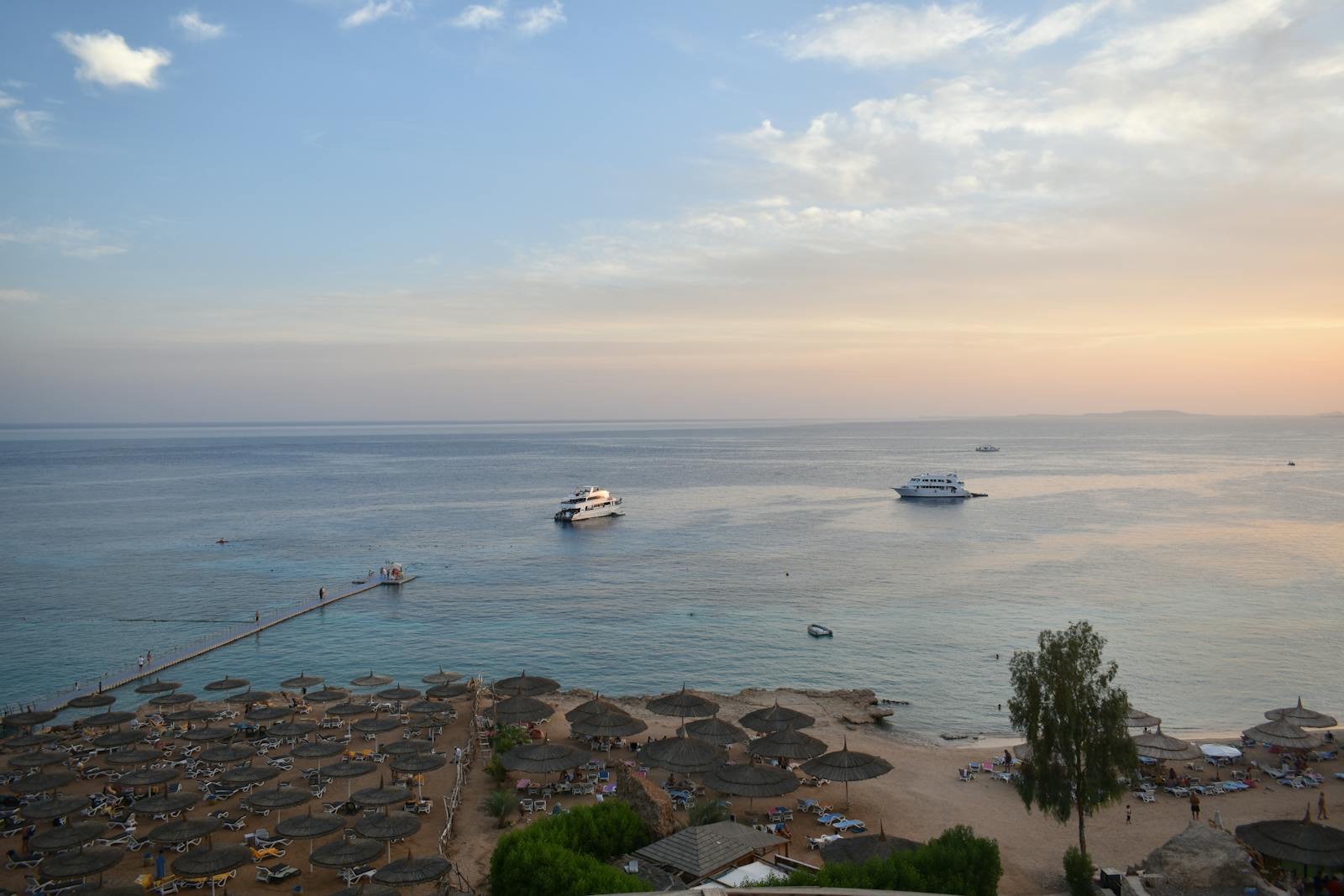
February’s weather doesn’t differ much from January’s, but for us swimming lovers it brings one rather crucial change: February is when the sea in Egypt is at its coldest of the whole year. While the air warms up nicely to a very pleasant 23 °C during the day, the water temperature in popular Hurghada and Sharm el-Sheikh drops to 21 °C, which you really do notice.
This is simply a temperature that most of us honestly don’t fancy staying in for very long. If a warm sea is an absolute priority for you and you’d still like to travel in February, trust me, the only sensible choice is Marsa Alam. Thanks to its location deep in the south, the sea there still holds around 23 °C, which makes a genuinely noticeable difference in the water — and you won’t be shivering.
February days are otherwise beautifully sunny and the sky is almost cloudless, so if you’re not planning to just lie on the beach, it’s a fantastic time for a more active holiday. Head out on quad bikes into the desert, visit a traditional Bedouin village, or take that longed-for trip to Cairo without baking to a crisp.
Just as in January, it still holds that evenings call for warmer clothing, so definitely don’t leave that jumper or light jacket at home. In restaurants outside the enclosed hotel complexes it can also get a bit chilly after dark, because locals simply aren’t set up to heat indoor spaces. 💡 Tip: February is often exactly the month when you can grab the very cheapest last-minute deals to Egypt. If you don’t mind slightly cooler water and you’re mainly going to relax with a good book in the sun, you can easily save a fair bit of money.
3. March: The Arrival of Spring and the Treacherous Khamsin Wind
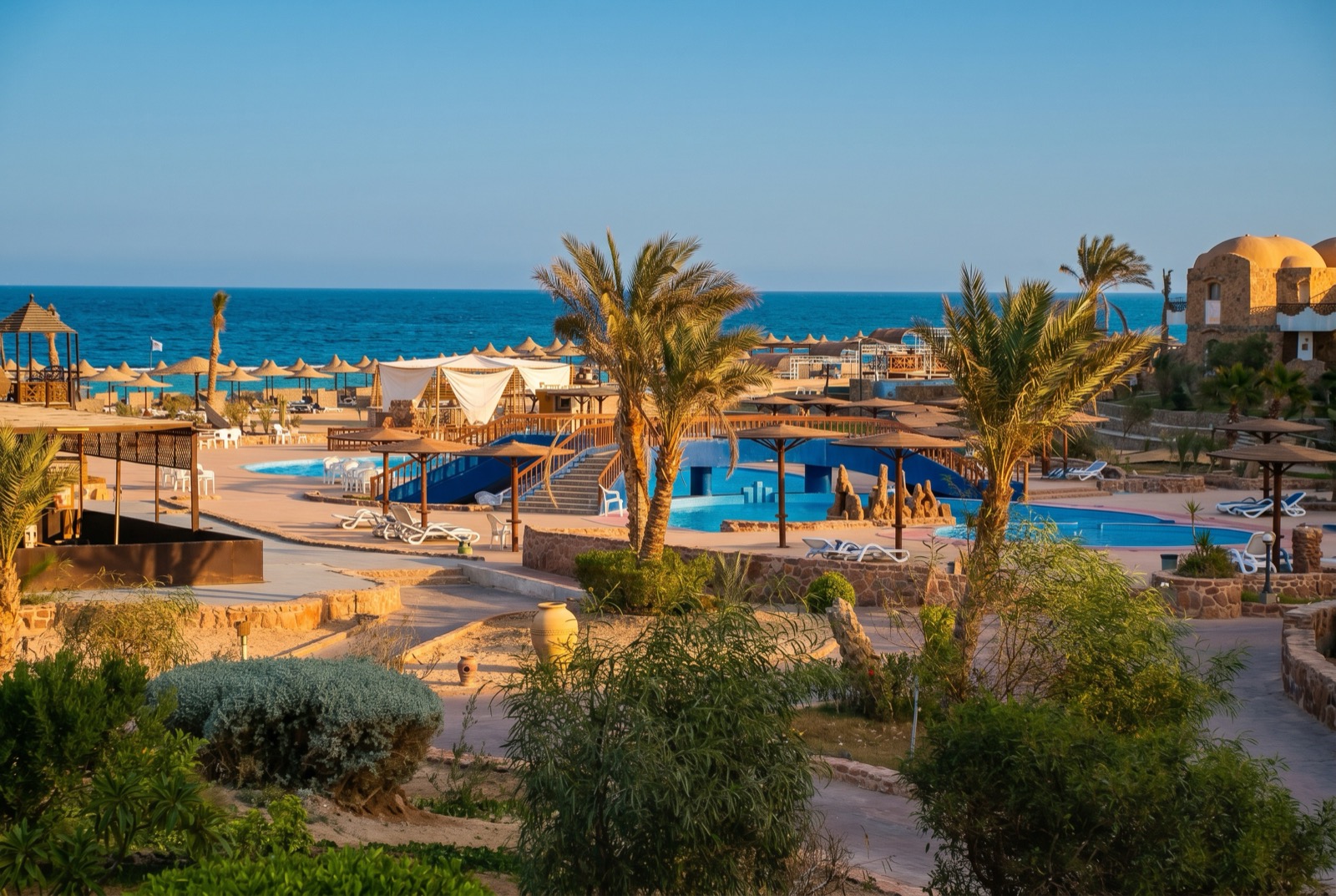
With March, real, sunny spring arrives in Egypt and temperatures start climbing fairly quickly. By day the air now reaches a great 26 °C, which is absolutely ideal for lazy lounging on the beach. The evenings gradually warm up too, but you’d still better toss that light jumper for evening strolls into your suitcase.
The sea, sadly, warms up much more slowly than the land, so the water is still around a cooler 21–22 °C, making swimming more of a refreshing than a relaxing affair. March is also rather treacherous because of an entirely different phenomenon — the hot desert wind called khamsin, which it’s good to prepare for in advance.
This wind carries fine sand from the desert, can blow for several days in a row, and occasionally turns the sky a rather strange yellowish shade. It’s probably not something that would utterly ruin your whole holiday, but it can be a bit unpleasant while relaxing on the beach, and in Hurghada this wind also tends to whip up bigger waves 😅
Another thing to brace yourself for in March is the start of jellyfish season. As the water slowly wakes up to warmer life, the first transparent visitors appear along the coast — ones I personally never welcome with much joy. 💡 Tip: If you’re flying in March and want to avoid the worst of the wind, choose hotels in Sharm el-Sheikh instead. Its bays are sheltered by the mighty mountains of the Sinai Peninsula, so you won’t feel that annoying khamsin nearly as much there.
4. April: The Golden Middle, with a Risk of Jellyfish
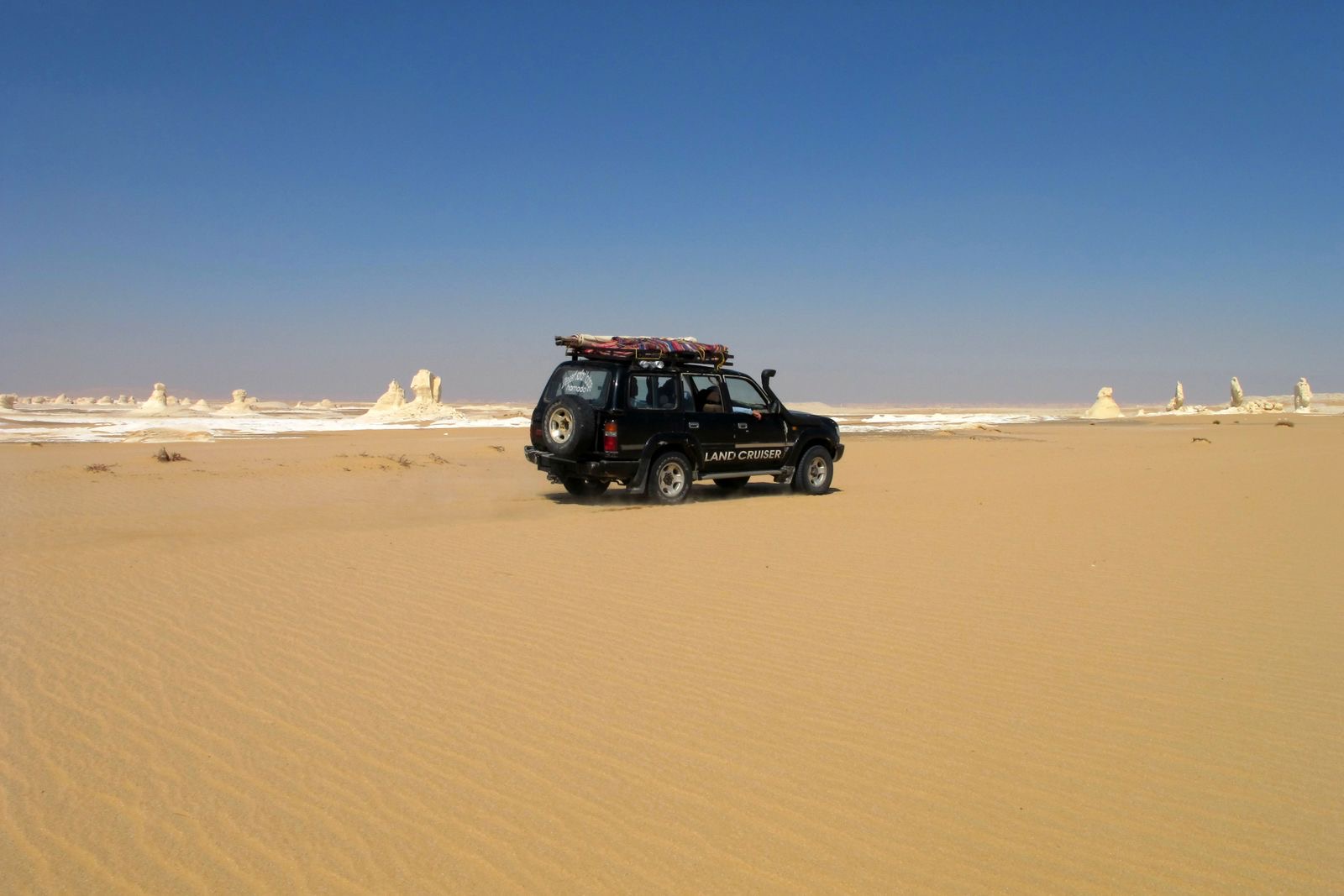
April is considered by many travellers to be one of the very best months to visit Egypt, simply because the weather is absolutely fairy-tale. Daytime temperatures already climb towards 30 °C, the sun warms your back beautifully, but luckily it’s not yet that gruelling, utterly exhausting summer heat where you find yourself praying for a scrap of shade.
The sea is finally starting to wake up and warm, so with an average of 22–23 °C, swimming is far more pleasant and you’ll last considerably longer snorkelling over those gorgeous corals. April is, quite simply, the perfect time when you can still manage a trip to Luxor without collapsing, while already enjoying a full-blown beach holiday with all the trimmings.
There is, however, one little catch I have to be honest about. April is historically regarded as the absolute peak of jellyfish season in Egyptian waters, and as the sea warms up nicely, these little critters naturally move closer to the shore and into those beautiful shallow lagoons.
Most species in the Red Sea are luckily fairly harmless to humans and their sting is more of an unpleasant burning, but for the more sensitive among us or for small children it can be a needlessly stressful experience that nobody wants to deal with on holiday. 💡 Tip: Pack a small bottle of ordinary vinegar in your travel first-aid kit. If a jellyfish stings you, vinegar instantly neutralises the venom and relieves that nasty burning far better than rinsing with fresh water, which actually makes the pain worse.
5. May: The Last Easy Breath Before Summer
In May, the local spring definitively gives way to real, hot summer, so the sun burns with enormous intensity and the daytime air temperature commonly reaches 34 °C. The evenings, luckily, are now beautifully warm, so you can leave the hoodies at home with a clear conscience and enjoy long night-time strolls in just a T-shirt or a favourite light dress.
What’s probably most important for many of us, though, is that the sea finally reaches a fantastic 24–25 °C. That’s a temperature even us true warmth-lovers can appreciate, and trust me, snorkelling over the coral reefs in Marsa Alam or off Giftun Island in Hurghada in May is simply pure bliss.
May is also exactly the month when that pesky jellyfish season finally winds down and the sea cleans up beautifully again. It’s also the period just before the summer school holidays kick off across Europe in full force, which means hotels are still relatively quiet and not packed with crowds of families and children — so you’ll enjoy a bit of romance too.
On the other hand, I have to be honest and warn you that sightseeing trips are already getting fairly demanding in May. Walking around the Valley of the Kings in 35-degree heat without a single patch of shade requires really good fitness and literally litres of drinking water, so think carefully before taking on a similar adventure. 💡 Tip: May is the absolute best month for snapping up bargain holidays right before the main summer season. Tour operators try to fill last-minute capacity ahead of the holidays, so you’ll often find luxurious five-star resorts at a fraction of the usual price.
6. June: The Real Tropics Begin
With June, real, genuine summer hellfire arrives in Egypt — something probably only die-hard lovers of extreme heat will appreciate. The air steadily exceeds 36 °C in the shade, and trust me, in direct sunlight that feeling is multiplied, so all hotel life smoothly shifts to just the pool’s surface, the shade beneath a parasol, and the cooling embrace of air-conditioned rooms.
In June the Red Sea starts to resemble the warmest of bathtubs, because the water temperature reaches a gorgeous 26 °C, which beautifully guarantees you can splash about for hours without a single goosebump ☺️. For all passionate divers and keen explorers with mask and snorkel, the very best season kicks off, because in water this warm the underwater world is incredibly alive and beautifully colourful.
As for long sightseeing trips to the inland monuments, better forget them entirely in June, because a walk around Cairo or Luxor in this heat turns into a fight for bare survival, with heatstroke lurking behind literally every stone. If you do crave adventure, definitely book boat trips out to the open sea, where at least a hint of that longed-for fresh breeze will cool you down.
June, of course, also means the approaching end of the school year, so families with children slowly start rolling into the resorts, entertainment programmes ramp up to full speed, and the slides in the hotel water parks don’t get a moment’s rest.
💡 Tip: The June sun really shows no mercy, so don’t forget to pack factor 50 sun cream and, above all, get yourself a special UV-protection swim shirt — you’ll burn your back watching the fish before you even realise you’re roasting.
7. July: Extreme Heat and Peak Season
July is, without exaggeration, one of the harshest months of the whole year, when the air literally shimmers like over a sizzling grill and daytime temperatures regularly hit 37 °C — and deep in the south, in Marsa Alam or near the desert, they’ll easily lick forty. Even at night the mercury rarely dips below 28 °C, so I’ll tell you straight: better make your peace with the fact that without a humming air-con in your room, you simply won’t get a wink of sleep 😅.
The sea, on the other hand, resembles a giant heated spa, because it’s a wonderful 27 °C and in those cute shallow lagoons by the hotel it sometimes reaches thirty. This means one thing only: an absolute paradise for little rascals, who can paddle at the water’s edge from morning till night without the slightest fear of goosebumps or catching a cold.
This period is simply reserved for the purest beach romance, when all your physical activities are very wisely limited to the cooler early mornings or lazy late afternoons. During the worst of the midday sun even the locals prudently hide under awnings and in the shade of the palms, so the resort streets look a little like a ghost town.
I also mustn’t forget to mention that July is the absolute peak of the tourist season for families with children from all corners of Europe, so expect the best hotels to vanish months in advance, the occasional little queue for your favourite dessert at dinner, and holiday prices climbing to their annual maximum.
💡 Tip: If the thought of crowds around the central pool makes you a little queasy, try filtering for hotels that hide rooms with a shared pool in their offer. You’ll get far more peace, can toss your towel on a lounger whenever you fancy, and it’s just a step to the water across a sun-drenched terrace.
8. August: Swimming in Hot Broth
If July seemed like proper madness, then August is the true embodiment of a blazing furnace 😁 The air averages 38 °C, but you should definitely add a degree or two by the sea, and even though the desert wind occasionally tickles you, don’t expect any saving cool from it — it’s more like the hot air when you blast a hairdryer at full power in the bathroom.
On the other hand, the sea itself will absolutely amaze you, because the water temperature reaches a record 28 °C, and in my beloved Marsa Alam in the south the mercury easily tips towards thirty. In places it genuinely feels like a vast thermal spa where the water no longer refreshes you much, but swimming becomes the most beautiful form of slow, endless relaxation.
For all those shivery types who otherwise dip no more than a big toe before dashing for a towel, August in Egypt is an absolute dream come true, because you can float on the surface for four hours straight watching the majestic turtles without your chin even slightly trembling from cold.
Just like the previous month, though, I have to warn you that traipsing around among ancient temples is sheer madness, and unfortunately holiday prices are jacked up because of the school holidays as high as they can go. In August, simply prepare for your only daily concern to be gracefully moving from a soft lounger into the warm sea and back to the beach bar for another chilled drink.
💡 Tip: Even if you feel you’re not thirsty in water as warm as afternoon tea, make sure to stay constantly hydrated, because in August you sweat like mad even just resting under a parasol. Carry bottled water everywhere, drink it by the litre, and go easy on those overly sweet, colourful all-inclusive cocktails so you don’t feel rough in your room that evening.
9. September: Warm Sea and Falling Prices
September finally brings that magical time when the whole coast starts to breathe a sigh of relief from the most brutal heat and the biggest crush of eager holidaymakers — the kids dutifully head back to school, the poolside walkways calm down, and the air starts dropping to a more bearable 35 °C.
But the best part of it all is that, after a whole summer, the sea is so fantastically warmed through that it easily holds a luxurious 27 °C, giving you an absolutely dreamy combination where the sun no longer saps your energy during the day, yet in the water you still feel like you’re at a wellness spa.
That’s exactly why September is a little secret treasure of all seasoned travellers, because the whole atmosphere in the complexes suddenly slows down, you’ll easily snag the nicest table with a view at dinner, and you can even tell from the smiling staff that the biggest August stress has lifted from their shoulders 🙂.
The second half of the month, in particular, finally opens the door to a few less demanding trips, so you can set off by boat to explore the nearby reefs with a clear conscience, or ride quad bikes into the desert after dark — all without feeling like someone’s locked you in a roasting oven.
💡 Tip: Holiday prices finally start dropping pleasantly with the start of the school year, so if you have the freedom and aren’t tied to school holidays, definitely plan it for the second half of September — you’ll get a hearty dose of perfect summer weather for far more agreeable off-season prices.
10. October: The Absolute Best Month of the Year
If you asked anyone who flies to Egypt with clockwork regularity, they’d probably blurt out a single word: October. This month is simply the absolute peak of the Egyptian season when it comes to ideal conditions for the most relaxing holiday possible.
By day the air is an absolutely perfect 32 °C, exactly that gentle warmth in which you catch a gorgeous tan but don’t feel faint by the pool, and the evenings are just right — mild and incredibly pleasant — so you can sit out on the terrace with a shisha in total peace.
The sea at this time is still like the best morning coffee and holds a fantastic 26–27 °C, so you can splash about in the waves from dawn till dusk. At the same time, the air temperatures have dropped to a level where, after the gruelling summer break, you can finally take on full-day trips again, because Luxor, the Valley of the Kings and Cairo are bearable in October once more — and honestly fascinating.
Probably the only downside of October is that quite a lot of people know about its sheer perfection, so hotels tend to be decently full, and at the end of the month, during the UK school half-term, prices fly up rather steeply for those few days 😅 💡 Tip: Given October’s huge popularity, really don’t leave booking until the last minute, because quality, well-rated hotels with beautiful reefs are often hopelessly sold out for this month many months in advance.
11. November: The Last Chance for Warm Swimming
For me, November is that lovely transitional month between warm autumn and chillier winter, but luckily it still leans more towards autumn. The air drops to a pleasant 28 °C, which for many of us is the most comfortable temperature of all — one where you don’t start sweating a second after stepping out of an air-conditioned hotel room.
The biggest miracle, though, is still the sea, because the water cools far more slowly than the air, so the sea still holds a lovely 25 °C. That makes November an incredibly versatile month, when you can head out to the monuments first thing in the morning, comfortably swim in the sea in the afternoon without your teeth chattering, and enjoy a quiet, romantic stroll in the evening.
As the end of the month nears, however, the days get noticeably shorter, the sun sadly sets early, and the evenings now simply call for a lighter jacket or a chunkier jumper. The wind may also pick up a little more often, which fairly lowers the feels-like temperature on the beach.
Either way, November is an absolutely great choice for anyone wanting to escape our dreary British autumn but who doesn’t want to fork out a fortune for summer or holiday dates, because prices are very reasonable and the resorts themselves are nicely, soothingly calm. 💡 Tip: In November, really pay attention to exactly where you’re flying. If you plan to swim and snorkel a lot, start favouring Marsa Alam over Hurghada, because by late November in Hurghada it can be quite cold after climbing out of the water due to the wind.
12. December: Christmas Under the Palms
December in Egypt is quite a specific affair, and for a lot of people it’s the perfect month to come and spend a slightly unconventional Christmas. Instead of snow and biting frost, you’ll find tall palm trees and daytime temperatures around 24 °C — during the day it’s still lovely and warm in the sun, and the poolside loungers tend to be cheerfully full ☺️
The sea, though, has noticeably cooled by this time and the temperature drops towards 23 °C, which is certainly enough for a quick dip or shorter snorkelling session, but for long water fun you’ll need a bit of hardiness. The days are also very short, and on the stroke of four in the afternoon the sun loses its strength and it cools down outside fairly quickly.
On the other hand, December is once again fantastic for sightseeing trips and Nile cruises, because in Luxor and bustling Cairo it’s extremely pleasant during the day — feeling roughly like the end of summer back home in the UK.
While the start of December is among the very cheapest dates of the whole year, as soon as Christmas and New Year’s Eve strike, the situation changes dramatically. Christmas dates are sold out long in advance and prices soar to fairly astronomical heights. 💡 Tip: If you’re flying to Egypt for Christmas or New Year’s Eve, remember that hotels usually require a mandatory surcharge for the festive gala dinner — which tends to be a grand event with lots of good food and entertainment, but you’ll often pay an extra few hundred pounds on top of the original holiday price.
Sea Temperature in Egypt and Its Quirks
Trust me, for a huge number of people heading to Egyptian resorts, the water temperature actually matters far more than the air temperature. And here the Red Sea has a very clear and beautifully predictable curve, with comfortably warm water above 26 degrees lasting roughly from June to November.
The sea temperature peaks in August, when in the shallow, warmed-through bays of Marsa Alam it can climb to an incredible 30 °C. The Red Sea is also hugely specific in being one of the saltiest seas in the world, which in practice means the water will buoy you up beautifully, making snorkelling far easier because you simply don’t have to work as hard to stay on the surface.
Conversely, the sea is coldest in February and early March, when in the more northern resorts like Hurghada and Sharm el-Sheikh it drops to 21 degrees. That’s certainly not icy water, but if you’re spoilt by thermal baths or love a hot summer bath, long lounging in the waves will start to feel a bit unpleasant after a while.
There’s one big “but”, though, that a lot of people don’t know about. The water temperature also varies depending on what kind of sea access your hotel has. If the resort has a gentle entry through a sandy lagoon, the water there warms up much faster from the sun and can easily be two degrees warmer than the open sea. But if you enter the sea from a long jetty straight into the deep by the reef, prepare for noticeably cooler currents.
Hurghada vs. Marsa Alam vs. Sharm in Winter: Where Is It Warmest?
In the summer months it probably doesn’t matter which specific destination in Egypt you end up choosing, because proper heat and beautifully warmed water await you everywhere — but trust me, in the winter months your choice of resort matters enormously. The daytime air is very similar everywhere, but the huge differences in sea temperature and wind intensity can catch you out rather unpleasantly.
Marsa Alam lies deep in the south, roughly three hundred kilometres further south than famous Hurghada, and is simply much closer to the equator — which plays an absolutely huge role for your comfort in winter. It offers you steadily the warmest water of all the resorts, because even in the coldest months it holds its pleasant 23–24 degrees. So if you’re planning to go in January or February primarily for swimming and endless snorkelling, Marsa Alam is the clear — and really the only logical — choice for you.
By contrast, Hurghada is huge, wonderfully bustling and the most affordable, but in winter the water is considerably cooler and it’s without question the windiest resort in Egypt. That ever-present wind mercilessly drives the feels-like temperature down, so once you climb out of the slightly cooler sea onto a blustery beach in February, you’ll probably wrap yourself in a fluffy towel pretty fast 😅. On the other hand, I have to admit these specific weather conditions make it an absolute paradise for keen kitesurfers from all over the world.
And then there’s Sharm el-Sheikh, which has roughly the same cool winter water as Hurghada, but boasts one enormous advantage in the landscape itself. This whole popular resort lies on the Sinai Peninsula, and many hotels are located in sheltered bays that are also beautifully protected by mighty mountains. Thanks to this, it’s nowhere near as windy there in winter, and even an ordinary day on the beach in January feels far more pleasant and warmer than out on the exposed, windy plain of Hurghada.
What to Watch Out for in Egypt
Although typical Egyptian weather is mostly beautifully gentle and perfectly predictable, there are a few small natural phenomena that can slightly spoil that longed-for moment of rest if you don’t know about them well in advance.
The spring khamsin wind: This hot, very dry wind usually strikes in spring, from March to May, and can whip up sand and dust from the desert so fine that it turns the whole sky a strange yellow and noticeably reduces visibility. It can occasionally blow for several days in a row, and although it’s not dangerous to you in any way, expect to find that tiny sand pretty much everywhere after a day on the beach — even between your teeth 😁.
Jellyfish season: This is a topic a lot of you ask about very often, and I don’t blame you at all. The traditional jellyfish season lasts roughly from mid-March to early June, with the biggest invasion usually arriving in April, when the water tips over towards higher temperatures. Most species found in the Egyptian Red Sea are luckily completely harmless, and if you happen to bump into one of the stinging critters, the sensation is more like a mild nettle burn. In the warm summer and autumn, jellyfish practically don’t appear near the beaches at all, so you can relax.
Ever-present wind and red flags: Especially in windier Hurghada, or at some hotels in Marsa Alam with direct access to the open sea, it tends to be quite windy all year round. That’s wonderful sometime in August, when this breeze pleasantly cools you, but a minor problem arises at hotels whose only sea access is via a really long jetty. When the wind picks up and bigger waves rise, the lifeguards waste no time, hoist the red flag and uncompromisingly ban entry from the jetty into the deep. Please, this really isn’t worth the risk, even if it’s a great shame that you won’t get to your favourite reef for two days running.
The Ramadan period: The sacred Islamic month of Ramadan is one of those typical movable feasts, which in 2026 falls roughly between 19 February and 20 March, and in 2027 shifts to February and early March. For you as a tourist tucked away in a beautiful seaside resort, practically nothing changes, and food and drink flow cheerfully on, but you should be a little understanding and bear in mind that hotel staff fast faithfully during the day and don’t even drink plain water — so by evening the lads may be visibly tired. Outside the resorts, take care, because small local cafés and restaurants may have quite limited opening hours during the day, and some famous monuments close a little earlier.
When Egypt Is Cheapest and When You’ll Pay More
Egypt is simply a classic holiday destination, which is why the prices of package holidays and flights faithfully and precisely track the UK school holidays and just about every bank holiday. Whenever children are off school, tour operators logically crank prices up nicely, and you’ll sadly pay more for that longed-for rest.
When it’s by far the most expensive: The absolute peak is the classic summer holidays — July and August — which, ironically, are also the very hottest months, when you’ll literally bake. Another huge price extreme is the magical period of Christmas and the boisterous New Year, when Egypt becomes a very popular winter escape to warm sunshine, and we certainly mustn’t forget the spring and Easter holidays.
When you’ll book cheapest: If you’d like to save a bit of money and aren’t tied to the school year, you have two golden windows in the calendar. The first is the lovely period of May and June — just before the real summer madness breaks out. From my point of view, though, the very best and most cost-effective time of the whole year is probably the second half of September and all of October, with the single exception of the half-term break at the very end of the month. During autumn the weather and the warmed-through water are absolutely fantastic, yet holiday prices fall steeply because demand from families with children has dropped sharply — and you can enjoy peace and luxury for a fraction of the price ☺️.
💡 Tip: Before you even pull your card out of your wallet and buy that dream holiday, definitely take a look at our smart comparison of holidays to Egypt. Our AI carefully compares the most up-to-date offers from various operators on the exact same hotels and dates every single day, and in a single second it’ll show you where you can get the very same stay for hundreds of pounds less. And if you’re a slightly more adventurous type who prefers to travel independently without an operator, don’t forget to compare flight prices, which our system cleverly updates every twenty minutes across every existing airline.
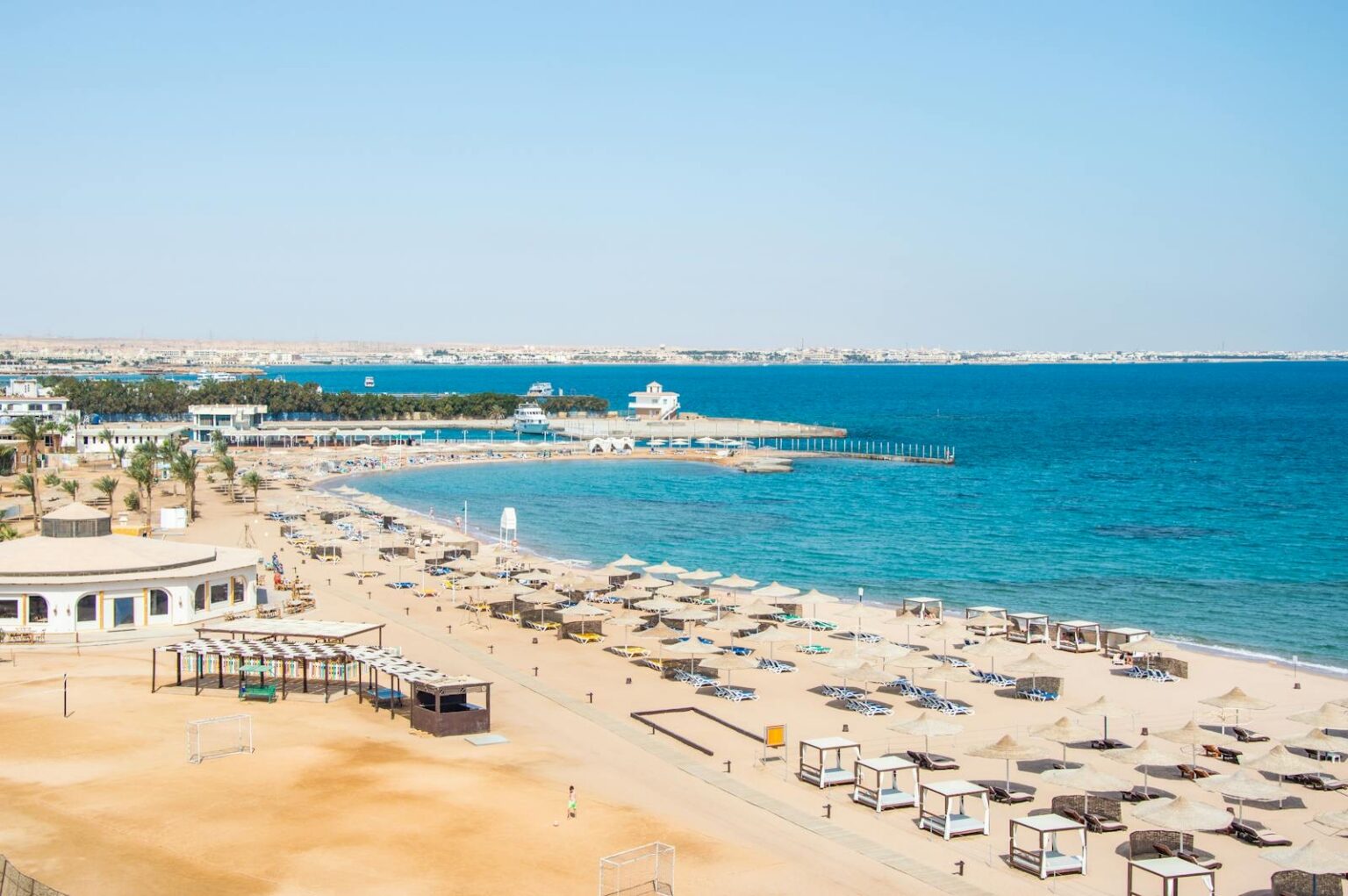 🚗 Car rental on the road
Verified rental cars in Egypt
🚗 Car rental on the road
Verified rental cars in Egypt
Search with the DiscoverCars comparison engine — it compares prices from dozens of local and international rental companies, and most bookings come with free cancellation.
Compare car prices in Egypt →Where Next: Read More Articles About Egypt
So, are you clear on when you’ll set off for the sunshine? Then it’s high time to start planning a specific destination and calmly think about what to actually pack, so you’re not stressing at the last minute. Here I’ve put together more articles from the blog that will definitely help with those pre-departure preparations:
- Where to Holiday in Egypt: My big, honest guide that compares the individual resorts in detail, neatly explains the differences between them and, above all, advises exactly where to go for the best experiences, colourful reefs, or lively nightlife.
- Marsa Alam: 13 Tips: The deep south, absolutely divine peace, magical sea turtles, adorable dugongs, and the very warmest sea in winter. Definitely read up on everything you can see and experience in this paradise for all divers.
- Hurghada: 13 Tips: The very biggest, busiest and most affordable resort, from which it’s perfectly easy to take trips to Luxor. Come and find out which little beaches are worth a visit and where to shop well for souvenirs.
- What to Pack for a Holiday in Egypt: A very clear, practical and detailed list of things you mustn’t forget before flying off to the desert and sea, including my honest tips on which medicines and clothing to pack.
Frequently Asked Questions
When is actually the best time to go to Egypt?
Here, I always say that it purely depends on what you actually expect from your vacation. For all-day swimming and that kind of long, joyful snorkeling, the absolute best period is from June to November, when the sea is already beautifully warm. However, if your main goal is more about exploring ancient Cairo, Luxor, and desert trips, it’s ideal to go from November to March, when the unbearable heat won’t destroy you outside. The best compromise for both beach and excursions is then offered by April and the months from October to mid-November.
What is the sea temperature in Egypt?
The water is genuinely comfortably warm, consistently staying above 26 degrees, roughly from June until the end of November. The sea reaches its absolute peak in August, when it regularly hits 28 to 30 degrees and feels more like heated thermal baths. The coldest period, on the other hand, is in February and March, when in northern resorts it drops to around 21 degrees, which is a bit of a test of courage for us warmth-lovers 😅. During the winter months, the warmest water is definitely in the sun-soaked southern Marsa Alam.
Can you fly to Egypt in winter too?
Definitely yes, because winter there is fantastic for escaping our Czech damp weather and absolutely perfect for wandering around monuments. During the day, the air warms up to a pleasant 22 to 24 degrees, but evenings are noticeably cooler and definitely require a warm hoodie. The sea water is logically colder, so if you want to primarily swim and splash around in winter, definitely choose Marsa Alam, which has the warmest sea of all the resorts.
What’s the weather like in Egypt in summer?
In the summer months from June to August, Egypt experiences truly extreme heat. The air in the shade regularly reaches 37 to 38 degrees and the sea warms up to an incredible 28 degrees. While this is absolutely perfect for spending all day on the beach and in the water, this weather is extreme for trips inland and, quite frankly, downright dangerous. Please also bear in mind that this is the main family season with the absolute highest package holiday prices.
When exactly do jellyfish appear in Egypt?
The main jellyfish season in the Red Sea lasts roughly from mid-March to early June, with the absolute peak usually coming in April, when the water temperature starts to rise. However, occurrence varies from year to year and depends heavily on ocean currents, but trust me, it’s good to know that the vast majority of species in Egypt are completely harmless to humans. During the hot summer and autumn, jellyfish are then usually not found near the coast at all.
When will a holiday in Egypt be the cheapest for me?
The most advantageous and cheapest travel dates are usually in May, early June, and then in the second half of September through October, so logically always outside our Czech school holidays. The most expensive, on the other hand, are the summer holidays and of course the peak period around Christmas and New Year’s Eve. In my opinion, the autumn months, and especially October, offer you the absolute best combination of price, divine peace and quiet, and fantastic weather.
Tips and Tricks for Your Vacation
Don’t Overpay for Flights
Search for flights on Kayak. It’s our favorite search engine because it scans the websites of all airlines and always finds the cheapest connection.
Book Your Accommodation Smartly
The best experiences we’ve had when looking for accommodation (from Alaska to Morocco) are with Booking.com, where hotels, apartments, and entire houses are usually the cheapest and most widely available.
Don’t Forget Travel Insurance
Good travel insurance will protect you against illness, accidents, theft, or flight cancellations. We’ve had a few hospital visits abroad, so we know how important it is to have proper insurance arranged.
Where we insure ourselves: SafetyWing (simple monthly subscription) and TrueTraveller (for extra-long trips).
Find the Best Experiences
Get Your Guide is a huge online marketplace where you can book guided walks, trips, skip-the-line tickets, tours, and much more. We always find some extra fun there!