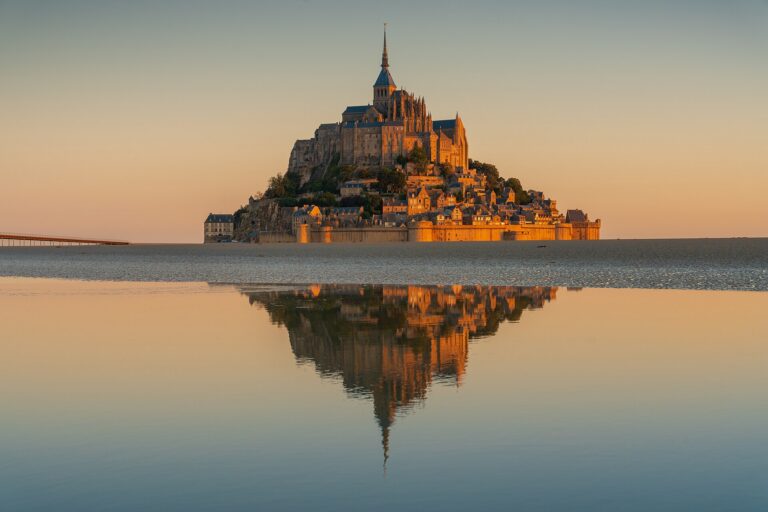
If you’re thinking about a trip to France and you’ve already walked Paris from one end to the other, I’d suggest heading northwest. Rouen is the historic capital of Normandy, and the moment you step off the train, you’ll feel an atmosphere you simply won’t find anywhere else in the country. Don’t expect carefree lounging under a parasol or sun-baked beaches. Rouen, France is a city with a harsh but fascinating history that literally redrew the map of Europe.
The city boasts hundreds of perfectly preserved half-timbered houses, narrow cobbled lanes, and stunning Gothic churches. The air here smells of fermenting apple cider and fresh butter from the nearby farms. Whether you’re standing in awe beneath the cathedral towers or strolling across the square where Joan of Arc was burned at the stake, Rouen will completely captivate you with its raw beauty. Be prepared, though: this city demands your time and attention, because it rewards you with experiences of unusual depth.
TL;DR
- Gothic cathedral: The Cathedral of Notre-Dame is the city’s absolute landmark, immortalised by Claude Monet in his Impressionist paintings.
- The story of Joan of Arc: On Place du Vieux-Marché you’ll find the spot where this French heroine was burned at the stake in 1431.
- Half-timbered houses: The historic centre hides more than two thousand enchanting medieval buildings with their distinctive timber framing.
- Astronomical clock: The Gros-Horloge is a Renaissance gem, and its bell tower offers the most beautiful view over Rouen’s rooftops.
- Superb food: Be sure to taste local cheeses like Camembert de Normandie and wash it down with honest local cider.
- The year 2026: It marks the centenary of Claude Monet’s death, so expect spectacular exhibitions at the Musée des Beaux-Arts.
- Getting there from Paris: The train from Paris Saint-Lazare takes only about an hour and a half, making Rouen an ideal destination even for a long weekend.
The full destination guide: Normandy — guide and what to see
When to Visit Rouen
The weather in Normandy is a chapter all of its own, and you really can’t count on steady sunshine here. Be prepared for conditions to change from one hour to the next, even in the middle of a hot summer, because a strong wind often blows in off the ocean. Generally speaking, the best time to visit Rouen and the wider northern coast is from May to September. During these months you’ll enjoy the most pleasant temperatures for long city walks, and the days are long enough to explore all the sights, linger at outdoor cafés, and lose yourself in tucked-away lanes.
If you’re planning a trip in 2026, keep in mind that it will be an absolutely pivotal season for the whole of Normandy, full of celebrations. It marks exactly one hundred years since the death of painter Claude Monet (who died in 1926), and over a hundred special events will take place as part of the Normandie Impressionniste festival. Expect interest in the city to be enormous, especially in the summer months, when art lovers descend from all over the world. You’ll get a unique chance to see exhibitions that won’t be repeated any time soon, but you’ll need to sort out your accommodation many months in advance.
It’s also worth knowing that in early June 2026 the nearby coast will host commemorations of the 82nd anniversary of the Normandy landings. Between the 5th and 7th of June the whole region will face massive road closures and a flood of visitors, so if military history isn’t your thing, it’s best to avoid those days. On the other hand, I’d steer clear of travelling in the depths of winter unless you genuinely love damp, grey weather. From November to February it tends to be very rainy and windy, and although the misty city has its own melancholy romance, the cold soon gets into your bones. The only exception is the Advent season, when the historic centre transforms into wonderful Christmas markets.
How to Get to Rouen from Paris
Getting there from the French capital is incredibly easy and quick. If you’re flying in from the UK, the simplest route is to fly to Paris (for example with British Airways or easyJet from London) and then continue by train. The most comfortable option by far is the train, which leaves from Gare Saint-Lazare in Paris. Direct SNCF services run very frequently, and the journey to Rouen Rive Droite station takes roughly an hour and twenty minutes. Be sure to buy your tickets online well in advance, as last-minute fares can be needlessly expensive.
If you prefer to drive, you can reach Rouen in about two hours via the A13 motorway, depending of course on the Paris rush hour. A car comes in handy mainly if you’re planning to use Rouen as a base for further trips to the coast or to smaller Norman villages. In Rouen’s historic centre itself, however, a car is more of a hindrance, since many of the lanes are pedestrianised and on-street parking tends to be complicated and pricey.
I’d recommend using the large underground car parks, such as Parking de l’Hôtel de Ville or Parking de la Pucelle. All-day parking costs around €15 to €18, which is fairly standard by French standards. Once you’ve parked, you can comfortably explore the entire old town on foot.
Where to Stay in Rouen
💡 Tip for accommodation and experiences: We like to search for our stays on Booking.com, which usually has the best cancellation terms. For tickets, tours, and activities, it pays to compare and book through GetYourGuide.
To get the most out of the city, choosing the right area is absolutely key, because the atmosphere really does make all the difference. I’d wholeheartedly recommend staying right in the historic core, which locals call Vieux Rouen. You’ll be just a few steps from all the main sights, you can easily stroll to a restaurant for a glass of cider in the evening, and you’ll soak up the true medieval atmosphere first thing in the morning, before the crowds of tourists pour into the streets. Staying somewhere in the suburbs simply isn’t worth it here, because you’d lose that magical feeling of wandering through the narrow cobbled lanes.
If you’re after a truly luxurious experience and don’t mind paying a little extra, take a look at Hotel de Bourgtheroulde, set in a stunning fifteenth-century historic building on Place de la Pucelle. This choice offers unforgettable comfort paired with history, and as a huge bonus the hotel has a great wellness centre with a pool, which is an absolute rarity in the heart of a medieval city. For those looking for more of a happy medium, Mercure Rouen Centre Cathédrale is an excellent and strategic choice. This hotel sits right in the thick of things, just a few dozen metres from the famous cathedral, so the views from some windows are truly breathtaking, and yet it offers a very decent standard at a reasonable price.
For lovers of independent travel, the surrounding winding lanes offer plenty of smaller romantic guesthouses and apartments in the classic half-timbered houses. When booking, though, always check carefully whether the accommodation offers any parking if you’re arriving by car, because in the historic centre you simply can’t leave a car on the street. Bear in mind, too, that many historic houses have no lift and their staircases tend to be very narrow and steep, so if you’re travelling with heavy, oversized suitcases, it’s wise to confirm this detail in advance so you don’t end up hauling them up to the third floor.
12 Things to See and Do in Rouen
Let’s take a look together at the most interesting things this Norman city has to offer. From monumental Gothic architecture and tragic stories to outstanding food, Rouen has plenty of aces up its sleeve. Get your comfortable shoes ready, because these lanes are best enjoyed at a slow, unhurried pace.
1. Notre-Dame Cathedral and Monet’s Legacy
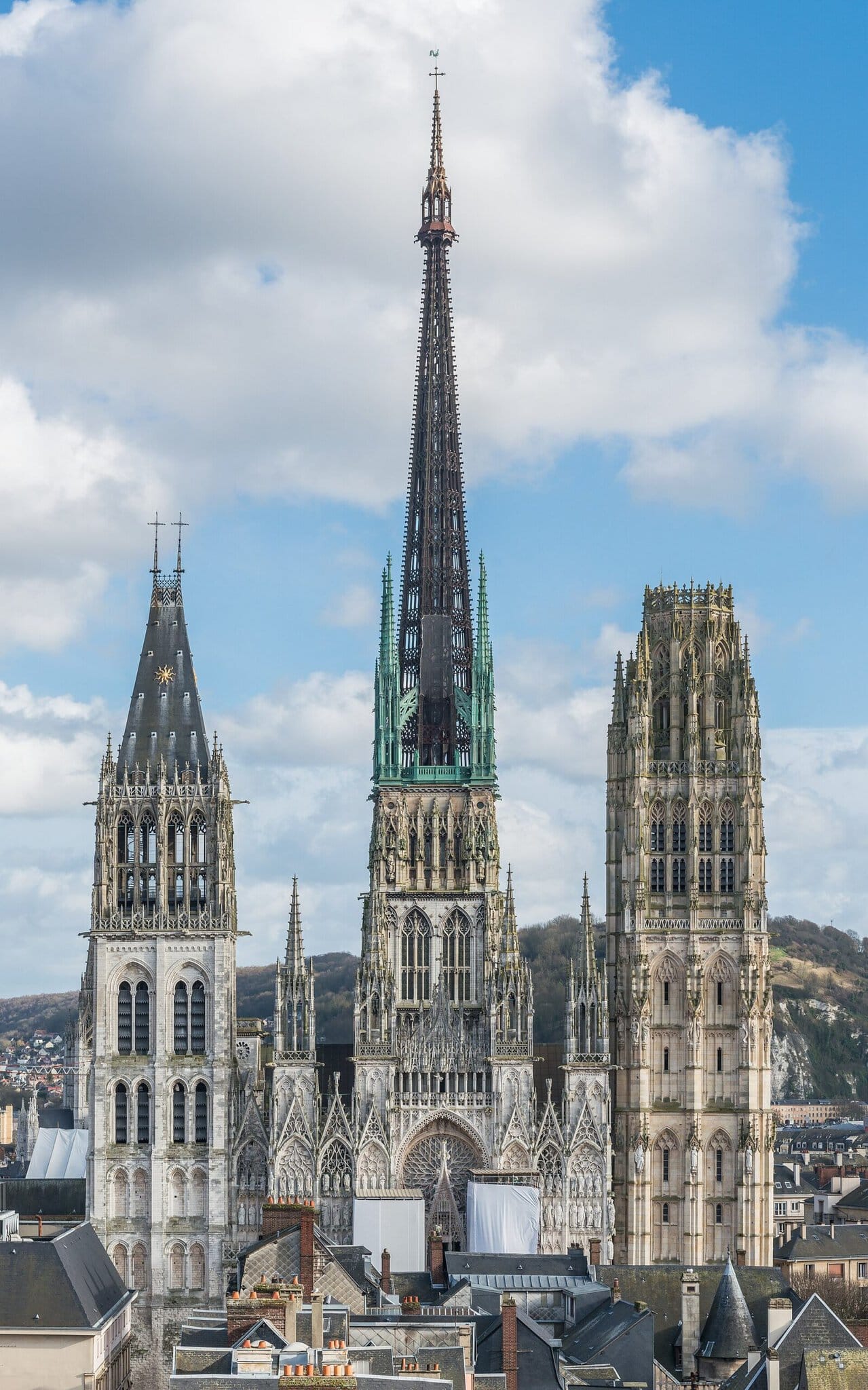
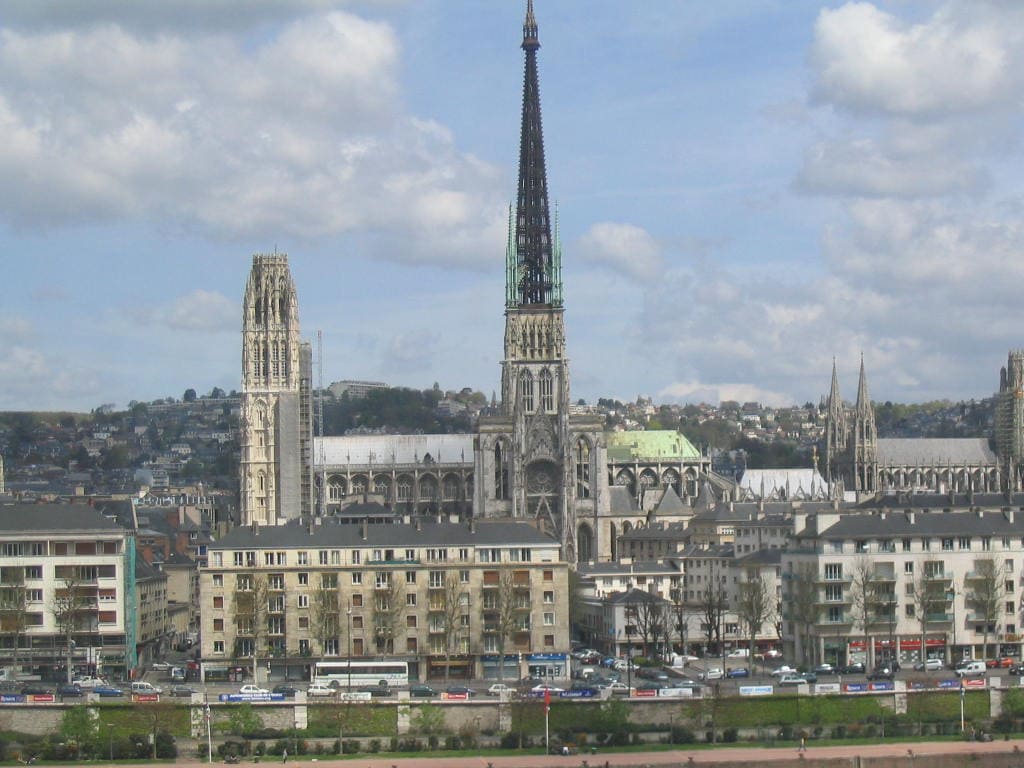
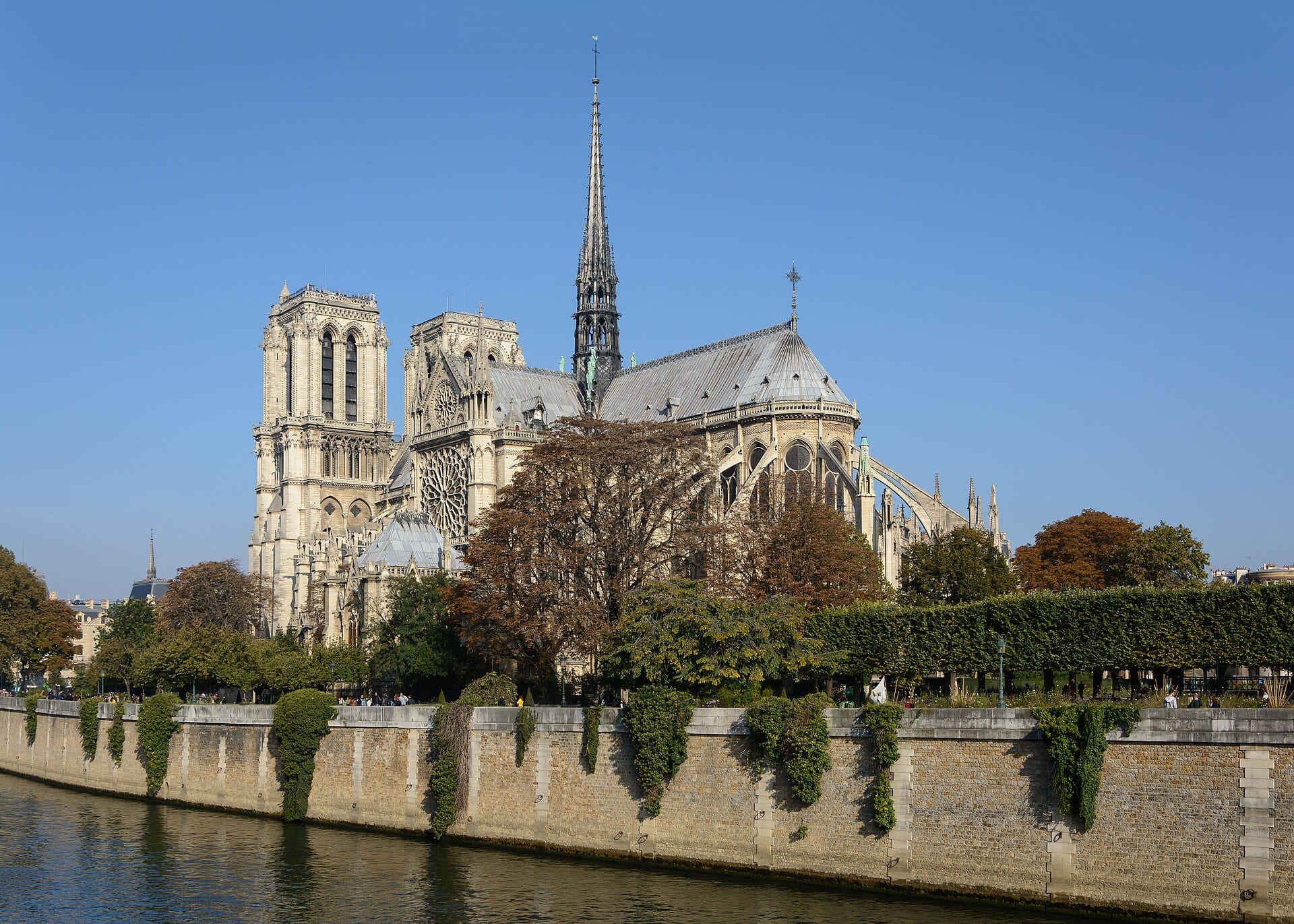
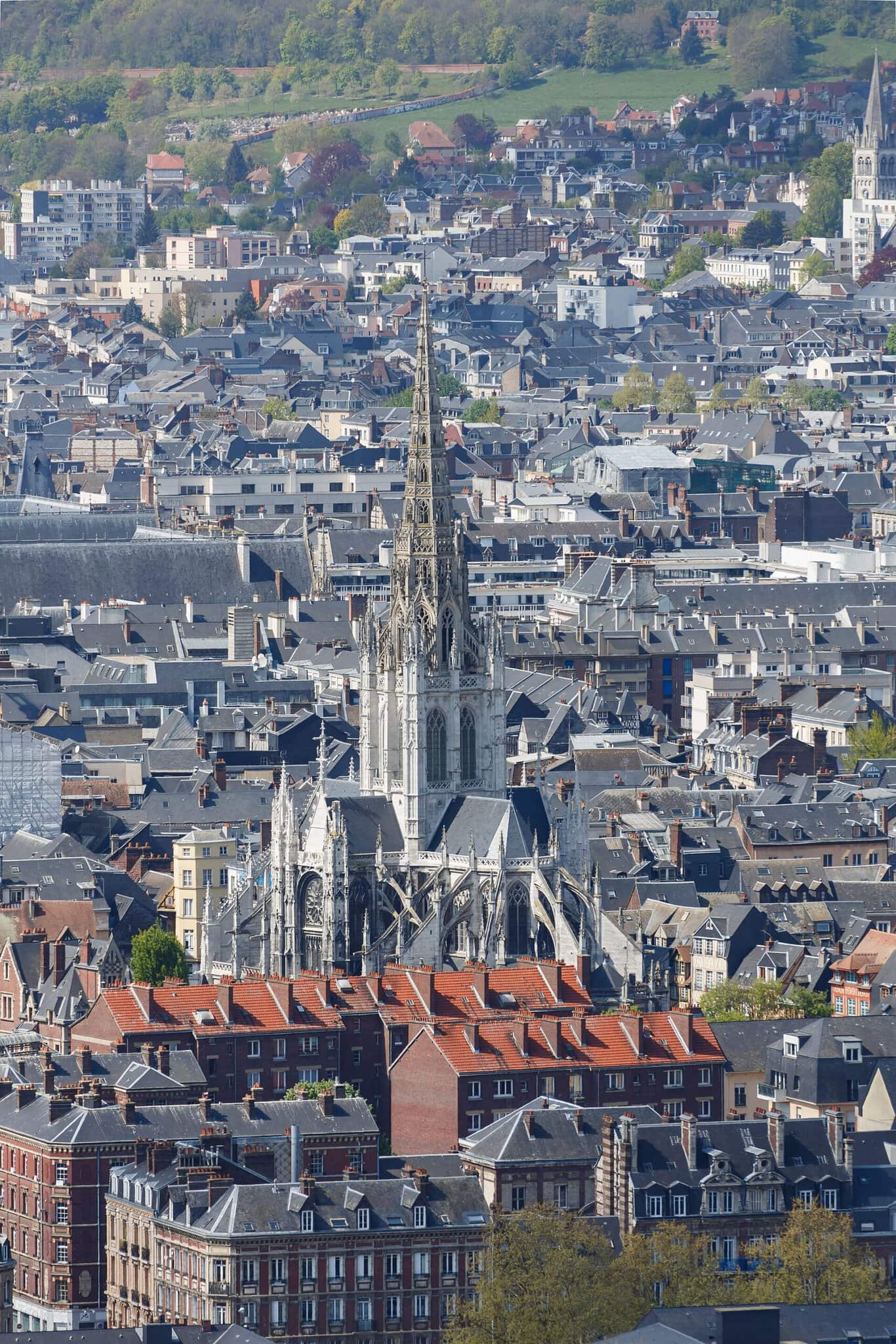
This is the absolute heart of the city and a building that will literally take your breath away the moment you step out onto the square. The Rouen Cathedral in France is a masterpiece of Flamboyant Gothic, and its intricate construction spanned several centuries, which left its mark in the incredible wealth of detail on the façade. Its cast-iron spire, at 151 metres, is the tallest in France and rises above the city like a giant landmark you’ll spot from just about every corner. Inside, you’ll be amazed by the vast, majestic space, the tombs of the Norman dukes, and the beautiful medieval stained glass that lets coloured light filter in.
It was the front of this very cathedral that became an outright obsession for the famous painter Claude Monet. At the end of the nineteenth century he rented a room directly opposite and created an incredible series of thirty-one paintings capturing the façade at different times of day. He watched how the colour of the cold stone shifted in the morning mist, in the harsh midday sun, and at romantic sunset, in doing so defining the very essence of Impressionism.
💡 Tip: If you visit Rouen in the summer months, don’t miss the evening light show projected directly onto the cathedral’s façade after dark. It’s an utterly magical experience that’s also completely free for all visitors and perfectly blends historic architecture with modern digital art.
2. The Gros-Horloge and Its Astronomical Clock
After the cathedral, this is probably the most photographed monument in the whole city, and you certainly won’t miss it on your wanderings. The Gros-Horloge is a huge fourteenth-century astronomical clock set within a magnificent Renaissance arch. The golden dial is adorned with carefully rendered symbols of the sun and moon and spans the bustling pedestrian shopping street that bears the same name. It’s a spot you’ll pass through several times during your stay, and each time you’ll discover some new detail.
One curious fact is that this clock deliberately has only a single hand, showing just the hours. The inhabitants of the medieval city simply had no need for exact minutes, and time flowed far more slowly. Notice, too, the depiction of a lamb, which symbolises the city’s enormous wealth, derived from its lucrative trade in sheep’s wool. The entire pavilion is richly decorated with carvings and houses an intricate historic mechanism that still works with remarkable precision to this day.
💡 Tip: Don’t settle for the view from the street alone — pay the entrance fee to the adjacent bell tower, which costs around €7. Inside you’ll see the original clock mechanism, and an audio guide explains all the technical and historical details, but above all the top of the tower offers an absolutely stunning panoramic view over the hundreds of chimneys and rooftops of Rouen.
3. Place du Vieux-Marché and the Site of the Execution
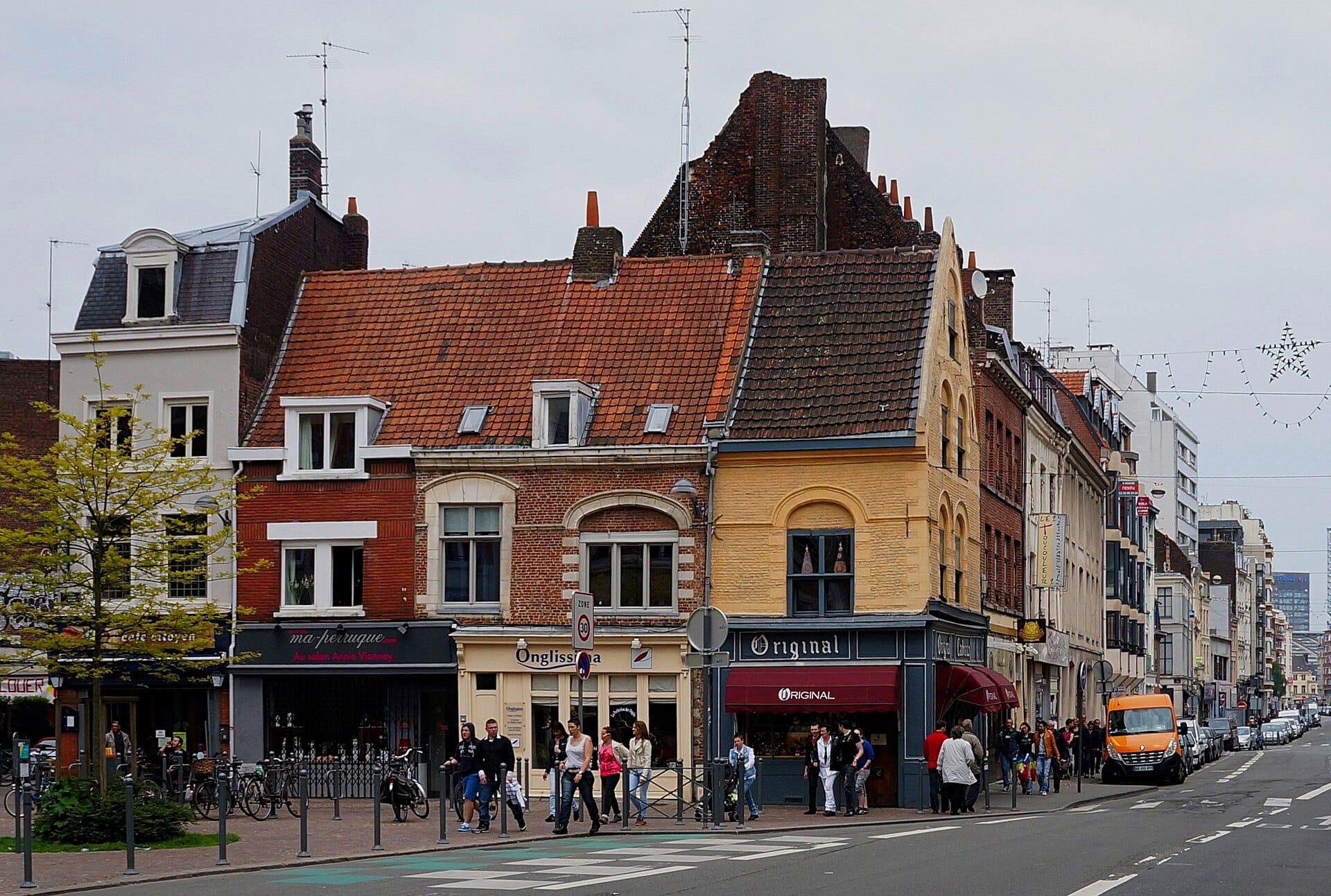
This square holds an enormous contrast that’s so typical of Rouen and makes the city immensely intriguing. Today, Place du Vieux-Marché is full of busy cafés and restaurants, where people sit over a glass of wine under the parasols and enjoy a relaxed day. And yet it’s also a place with an extraordinarily dark and tragic past that forever shaped the course of French history and continues to draw the attention of historians from around the world.
It was right here, on the thirtieth of May 1431, that Joan of Arc was burned at the stake. The young heroine who led the French armies against the occupiers was condemned for heresy by the English in an unjust trial. Today this exact spot is marked by a tall cross and a small memorial, where you’ll find fresh flowers practically every day. The atmosphere here is strangely moving, when, amid all the present-day calm, you realise just how cruel the events that unfolded here centuries ago really were.
💡 Tip: Take a moment to sit on a bench near the memorial and soak in the atmosphere of the square. All around you’ll see some of the most beautiful and colourful half-timbered houses in the city, many of which date back to the very era when Joan of Arc walked here on her final journey.
4. Wandering the Half-Timbered Lanes
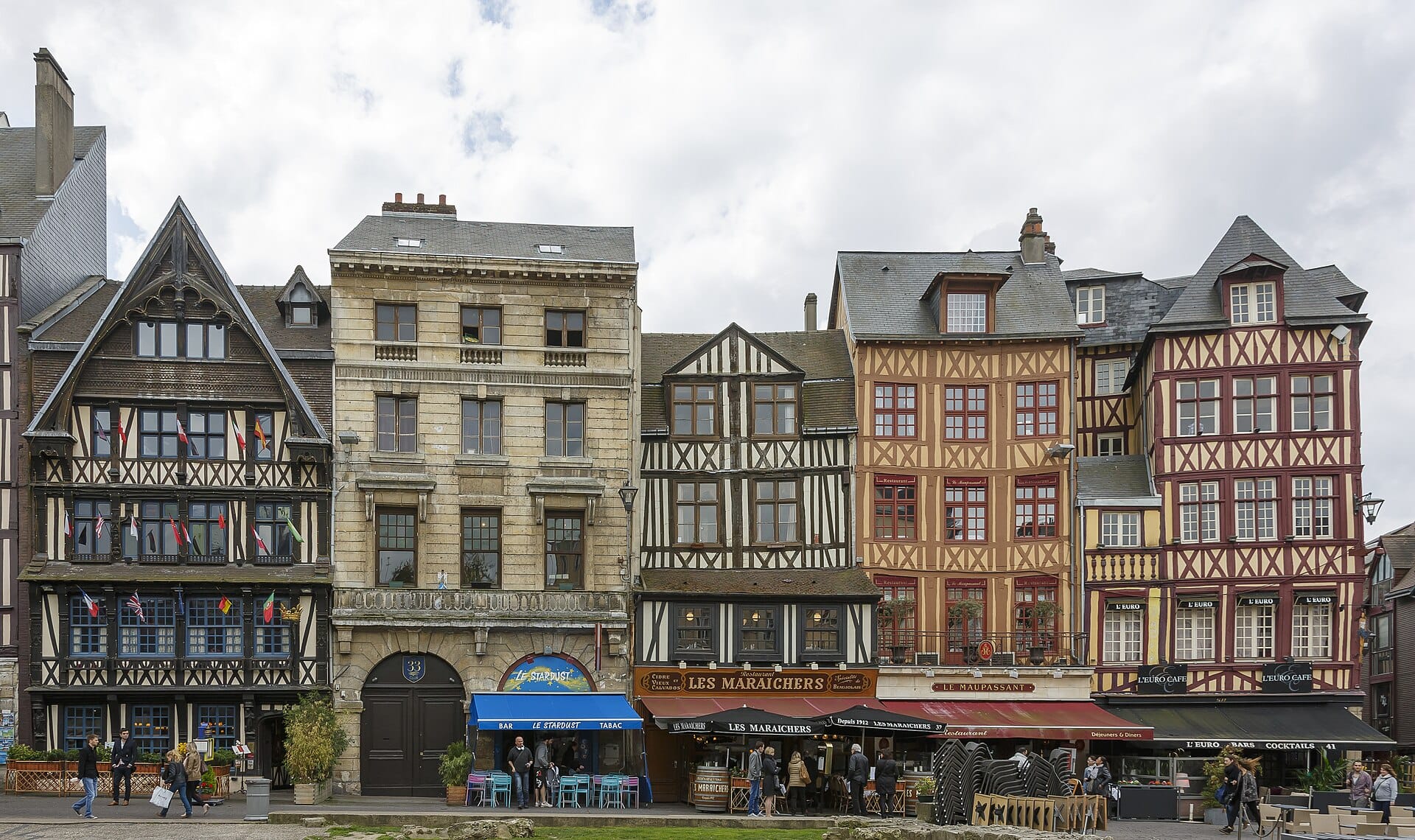
If you love old architecture and are hunting for the perfect photogenic spots, you’ll feel like you’re in absolute heaven here. Rouen boasts more than two thousand perfectly preserved half-timbered houses, beautifully known in French as colombages. These buildings, with their distinctive timber frames and colourful plaster, give the city its characteristic fairy-tale look and often lean so far over the street that they seem ready to topple onto passers-by at any moment.
You’ll find the most beautiful and peaceful corners in the immediate vicinity of the Church of Saint-Maclou. Be sure to take a walk down Rue Damiette, which is literally packed with antique shops, art galleries, and small independent boutiques. Another absolute gem is Rue Eau de Robec, where a small stream runs down the middle of the street and the houses still have their old open attics, where dyed fabrics were once hung out to dry. It’s the perfect place for a leisurely afternoon stroll with your camera in hand.
💡 Tip: As you wander these historic lanes, pay close attention to the tiny details on the wooden beams. Many of them are richly carved, and you’ll find all sorts of grotesque faces, animals, or figures of saints that were meant to protect the houses. Every house here tells its own story, and getting lost in this maze without a map is actually the best thing you can do.
5. L’Aître Saint-Maclou and Its Eerie Ossuary
This place definitely isn’t for the faint of heart, but its historical value and uniqueness are immense. L’Aître Saint-Maclou is one of the very few preserved medieval burial grounds in Europe, which in its day served as a mass ossuary for thousands of victims. It was created in 1348 during the terrible Black Death epidemic, when the plague decimated a huge part of the population and the ordinary parish cemeteries simply couldn’t cope with the influx of the dead.
Today it’s a very quiet, cobbled courtyard at first glance, lined with beautiful half-timbered buildings of dark wood. But if you look more closely at the wooden beams surrounding the galleries, you’re guaranteed to feel a shiver down your spine. They’re carved in great, realistic detail with skulls, crossed bones, gravediggers’ shovels, pickaxes, and hourglasses, reminders of the fleeting nature of human life. It’s a fascinating, if slightly morbid, reminder of medieval reality and ever-present death.
💡 Tip: This unique complex recently underwent a very extensive and incredibly sensitive restoration. Today these historic spaces house art studios, a café, and a beautiful gallery, so a place once closely tied to death now breathes with new creative life. Entry to the courtyard itself is free and it’s well worth a short visit.
6. Musée des Beaux-Arts (Museum of Fine Arts)
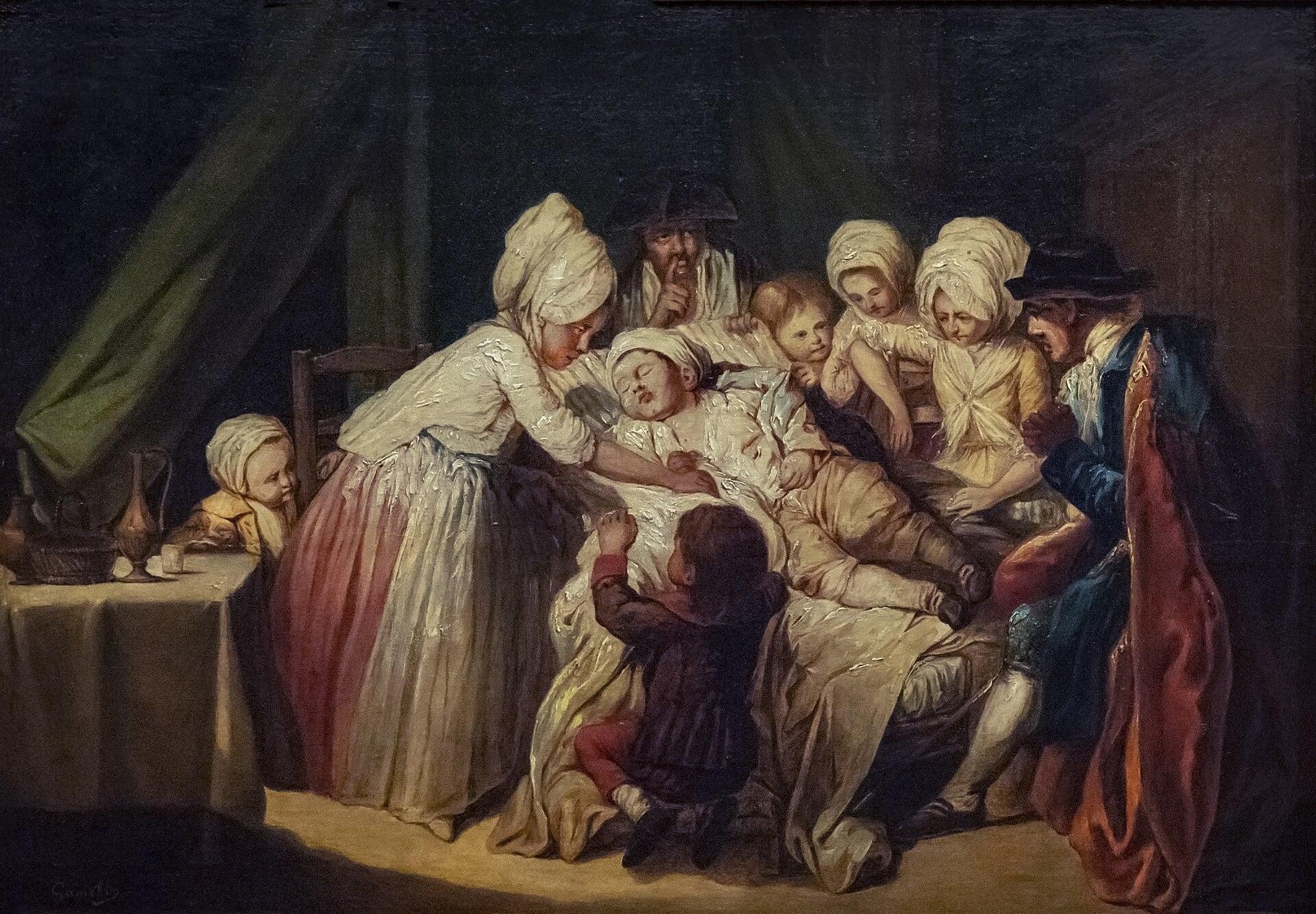
If you have even a passing interest in art and painting, this is one museum you simply mustn’t skip on your visit. Rouen’s Musée des Beaux-Arts holds one of the very finest art collections in France, second only to Paris. The building itself is gorgeous, and its spacious, naturally lit halls offer a very calm setting for admiring masterpieces from the Renaissance through to the twentieth century. You’ll find famous works by masters such as Caravaggio, Velázquez, and Rubens.
The main draw for most visitors, though, is undoubtedly the extensive Impressionist section. This is where you can see originals by Claude Monet with your own eyes, alongside Alfred Sisley and Camille Pissarro, in complete peace without the Paris crowds. Their canvases hang here right in the context of the landscapes that inspired them, which gives the whole experience a much deeper dimension. Watching the brushstrokes on Monet’s paintings of Rouen Cathedral in the very city where these gems were created is a truly powerful moment.
💡 Tip: In 2026 this museum will become the main hub for the great centenary celebrations of Claude Monet’s death. Special, spectacular exhibitions will take place here as part of the Normandie Impressionniste festival, so be sure to check the programme in advance and expect bigger crowds. The great news is that standard entry to the museum’s permanent collections is completely free all year round.
7. The Modern Church of Saint Joan of Arc
Right on the historic Place du Vieux-Marché, just a few steps from the actual site of the execution, stands a building you certainly won’t overlook. The Church of Saint Joan of Arc was built only in 1979, and its architecture was very bold for both that era and today. At first glance it doesn’t look like a traditional church at all, which initially provoked quite mixed reactions and heated debates among the locals.
Its oddly shaped, asymmetrical roof is meant to evoke either the flames of the pyre on which the young Joan was burned, or the upturned hull of a great Viking ship, a nod to the region’s Norman roots. Although the building is very modern and austere on the outside, it hides an unforgettable historic treasure within. An entire long wall is made up of huge sixteenth-century Renaissance stained-glass windows, which were fortunately saved from the old Church of Saint-Vincent, destroyed during the intense bombing of the Second World War.
💡 Tip: I’d recommend stepping inside the church just as the sun is shining brightly outside. The light passing through the ancient coloured glass refracts beautifully on the modern wooden walls and creates an incredible play of colours. It’s a beautiful and very peaceful spot for reflection in an otherwise bustling tourist city.
8. A Walk Along the Banks of the Seine
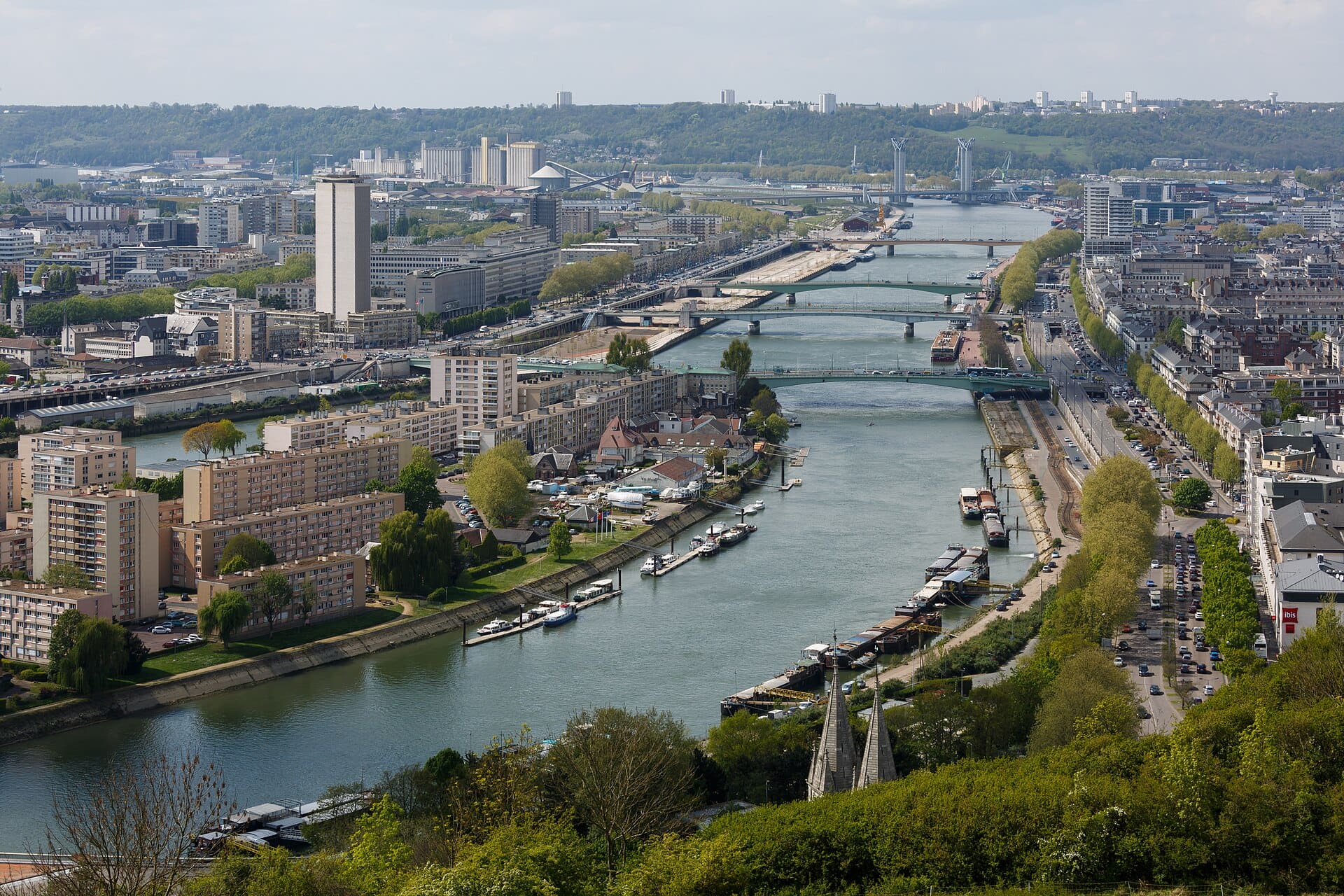
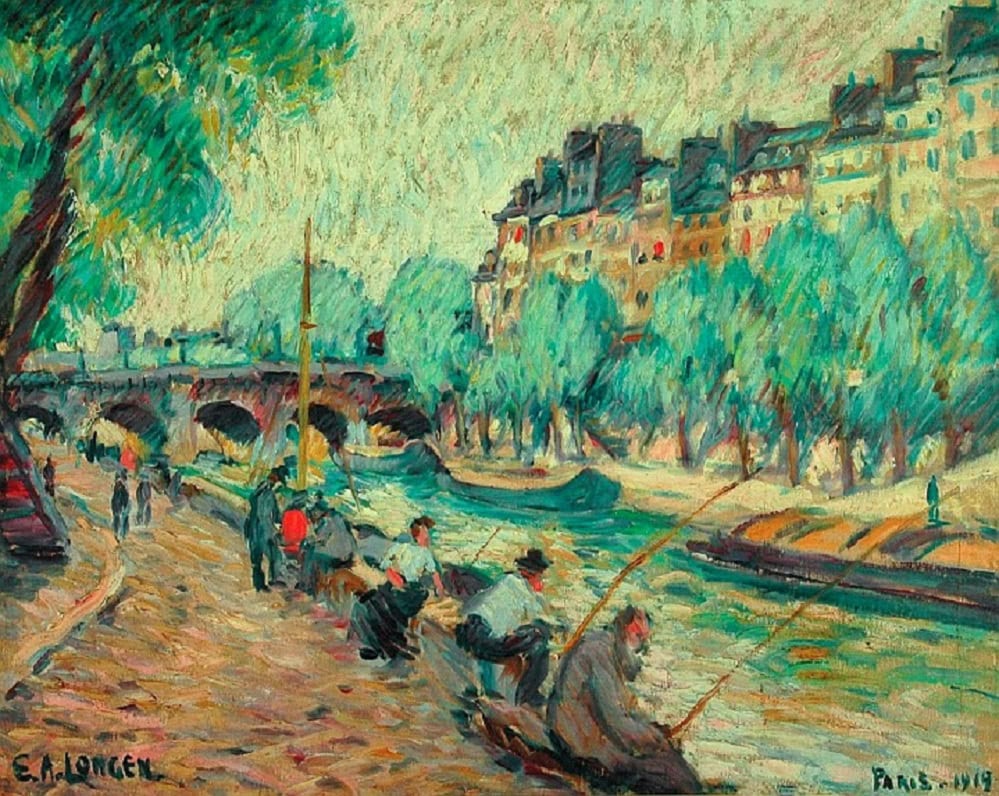
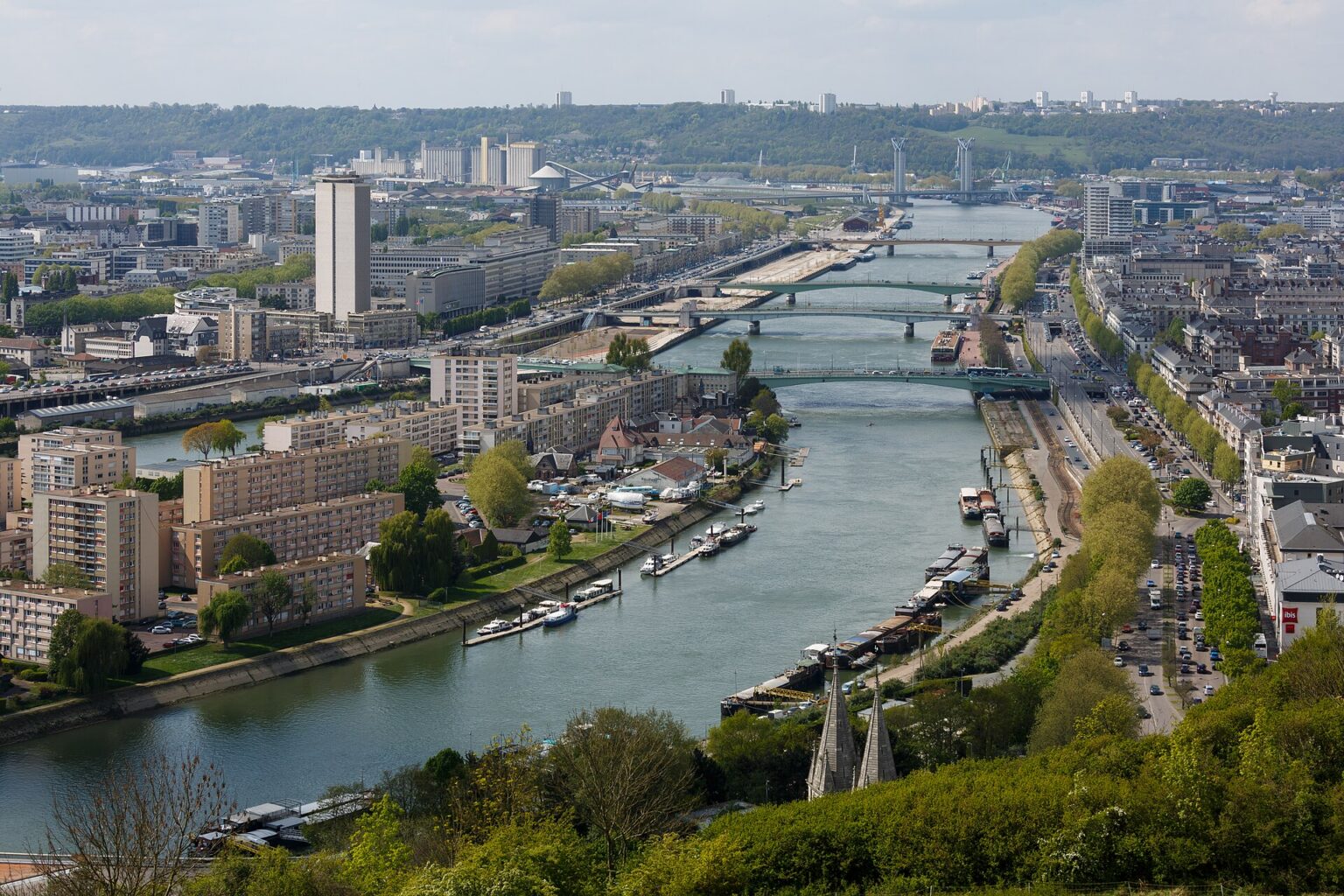
Rouen has always been an immensely important port, and the broad River Seine still forms its natural urban artery. Today both riverbanks have been beautifully revitalised and have turned into a popular leisure zone for the locals. The old rusty industrial hangars have been given a brand-new lease of life and now house modern restaurants, cafés, exhibition halls, and sports centres. It’s a great place to head when you need a break from the narrow medieval lanes and a breath of fresh air.
You can easily hire a city bike here or simply amble lazily along the water on the wide promenades. On your walk you’ll see various modern lift bridges, including the imposing Gustave Flaubert Bridge, whose pylons make it one of the very tallest of its kind in all of Europe. Watching cargo and cruise ships glide along the river has its undeniable charm, especially in the early evening, when the setting sun catches the rippling water and bathes the city in gold.
💡 Tip: If you enjoy a slightly grittier industrial atmosphere paired with modern food, head over to the right bank of the river (Rive Droite). You’ll find a string of hipster spots with outdoor seating, where you can grab a coffee or a drink with a great view of the river. It’s a hugely popular spot for locals to meet up with friends on weekend evenings.
9. Historial Jeanne d’Arc (Immersive Museum)
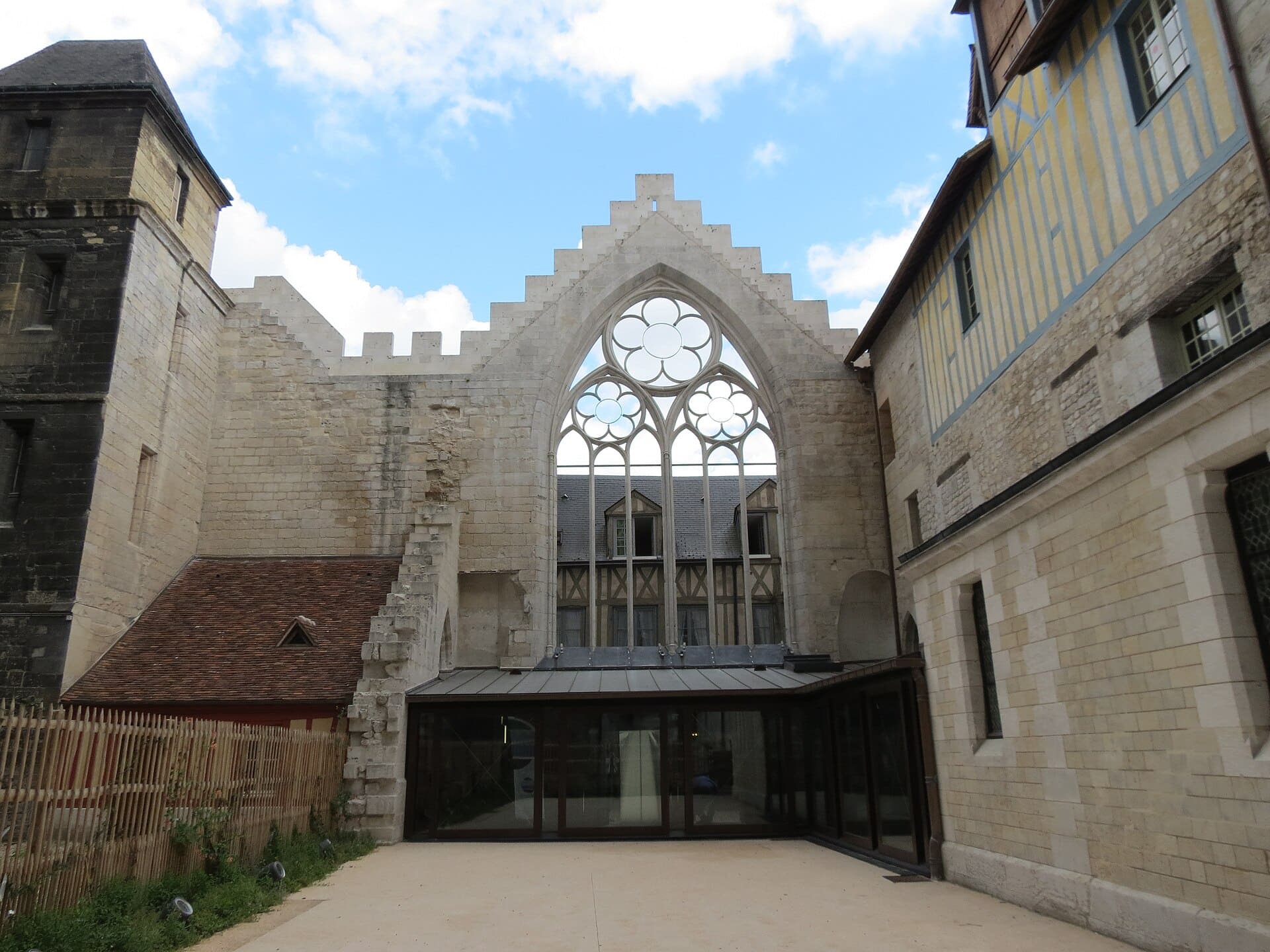
This really isn’t your classic, dull museum full of dusty display cases and endless captions that would send you to sleep. The Historial Jeanne d’Arc offers a completely immersive, modern multimedia experience that interactively walks you through the entire life of the famous French heroine. What’s more, it’s set in the absolutely fantastic and authentic surroundings of the Archbishop’s Palace — the very historic site where her rehabilitation trial actually took place a quarter of a century after her unjust death.
During the gripping tour you’ll move through dimly lit stone rooms, where fantastic digital projections are cast directly onto the historic walls and actors on large screens reconstruct the key judicial and historical events. You’ll learn plenty of fascinating details about the complex politics of the time, the trumped-up trial, and the myths that have surrounded Joan of Arc for centuries. It’s an extremely modern and very emotional retelling that’s guaranteed to entertain even those who don’t normally seek out history at all.
💡 Tip: In peak summer season be sure to buy your tickets online in advance, because the capacity of each tour is strictly limited for technical reasons. Admission costs around €11 and the whole tour lasts a little over an hour. The narration and the actors’ performances are in French, but you’ll be given an audio guide at the entrance, so you won’t miss any essential detail of the story.
10. Saint-Ouen Abbey
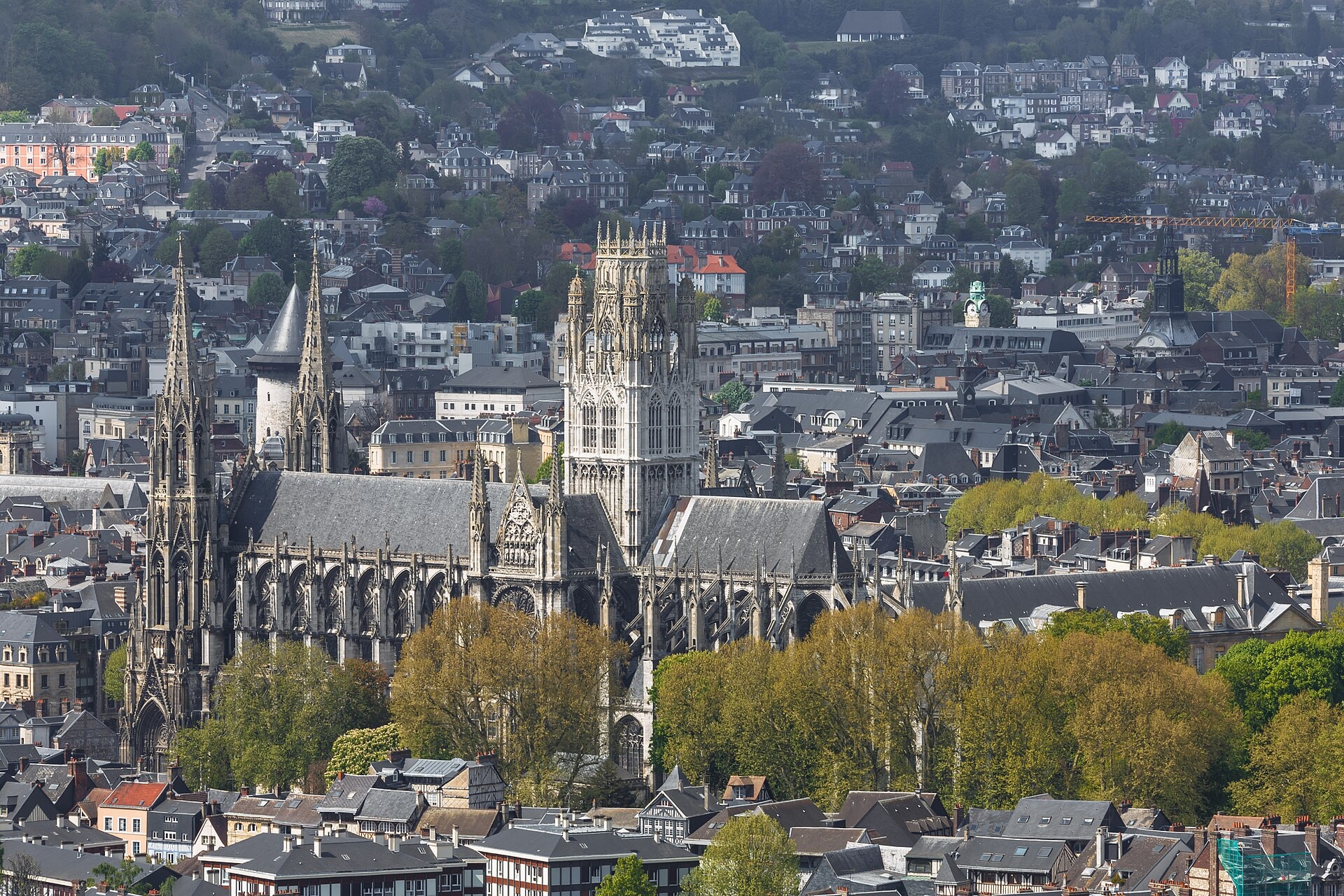
Because of its overwhelming size and majesty, many tourists mistake this enormous building for the main city cathedral at first glance. Saint-Ouen Abbey is a monumental Gothic church whose sheer proportions command absolute respect from visitors. Its central tower stands over a remarkable 130 metres tall, and the interior is renowned for its utterly perfect proportions and huge stained-glass windows that let in a veritable flood of natural light.
Inside, incredible calm and silence await, because far fewer organised groups come here than to the central Notre-Dame. You’ll often feel as though you have that whole vast, mystical space all to yourself. At the back of the abbey there’s also a magnificent historic organ by the famous builder Aristide Cavaillé-Coll, which connoisseurs rank among the finest musical instruments in all of France. If you’re incredibly lucky and happen to hear someone playing it, it’s an experience to last a lifetime.
💡 Tip: After admiring the breathtaking interior, don’t forget to take a leisurely stroll through the park that adjoins the abbey just outside. The Town Hall Gardens (Jardins de l’Hôtel de Ville) offer lovely benches for a rest or a picnic on the grass, and they provide absolutely superb views of the back of the church with its incredibly intricate flying buttresses.
11. The Market and Authentic Norman Cuisine
A visit to France simply wouldn’t be complete without discovering the local flavours, and Rouen is certainly no exception in that regard. Normandy is world-famous for its rich, honest cuisine, in which fresh farmhouse butter, thick cream, apples, and of course fantastic cheeses play the leading roles. Forget about diets for a moment and let yourself be swept away by the offerings of the local markets — for example on Place Clos Saint-Marc, which comes alive every Tuesday, Friday, and weekend morning with an incredible mix of aromas.
For vegetarians, absolute gems await here. Be sure to taste the local cheeses with protected designation of origin, such as the genuine raw-milk Camembert, the strongly aromatic square Pont-l’Évêque, the reed-wrapped Livarot, or Neufchâtel, traditionally made in a romantic heart shape. Pop into one of the many traditional crêperies for lunch and order galettes, the delicious savoury buckwheat pancakes filled with cheese, egg, or mushrooms. But watch the clock carefully — lunch is served strictly between 12:00 and 14:00, after which the kitchens close without mercy!
💡 Tip: Don’t forget to wash down all this cheesy feasting with chilled local cider, served either dry (brut) or sweeter (doux). If you want to take home a one-of-a-kind souvenir, buy a bottle of Calvados or excellent Pommeau. Pommeau is a delicious, sweeter blend of fresh apple must and one-year-old Calvados, served ice-cold as an aperitif, and it’s guaranteed to delight any guest.
12. Day Trips from Rouen into Normandy (Giverny and Étretat)
Thanks to its location, Rouen is an absolutely ideal base for discovering more of this rugged region’s beauty. If you’ve hired a car, I’d definitely recommend heading out of the city to explore the other faces of stunning Normandy. Your first destination should be the famous Giverny, where Claude Monet lived and worked. A stroll through his gardens, with their iconic Japanese bridge and pond full of water lilies, is like stepping straight into his paintings. The gardens are open from April to November, and in 2026, during the great centenary celebrations of his death, it will be an absolute must — but buy your tickets online even months ahead.
The second trip, which is guaranteed to take your breath away, is a visit to the rugged Alabaster Coast. Head to the town of Étretat, where the wild sea and wind have sculpted the chalk cliffs into fantastic shapes, arches, and needles. The sight of these brilliantly white cliffs plunging steeply into the emerald water of the ocean is unforgettable, and Monet himself painted them on around fifty canvases. You can walk along the pebble beach or set off up the well-trodden paths to the cliff tops for the absolute best panoramic views.
💡 Tip: Plan your trips wisely according to the current weather and crowds. Head out to the cliffs at Étretat on a day when there’s no strong wind, and be very careful near the edges, because there are no railings and the chalk loves to crumble. For Giverny, on the other hand, I’d recommend arriving right at opening time, at ten o’clock sharp, before the giant coach tours from Paris arrive, after which the narrow paths around the ponds get unpleasantly clogged with people.
Map of points of interest for your phone
Where to Go Next from Rouen
If the Norman atmosphere has captured your heart, it would be a shame not to carry on exploring. The region offers plenty of other places with deep history and beautiful scenery.
- If you’re interested in the wider context and other beautiful spots in the region, read our comprehensive article: Normandy.
- If the rugged coast and chalk cliffs appeal to you, don’t miss this detailed guide: Étretat.
 🚗 Car rental on the road
Verified rental cars in Normandy
🚗 Car rental on the road
Verified rental cars in Normandy
Search with the DiscoverCars comparison engine — it compares prices from dozens of local and international rental companies, and most bookings come with free cancellation.
Compare car prices in Normandy →Frequently Asked Questions
How many days do I need to visit Rouen?
Two full days will be enough to explore the historic center, visit the main landmarks, and wander leisurely through the streets. But if you’re also planning to take some day trips to the surrounding area, for example to the famous Giverny to see Monet’s home or to the chalk coast, I recommend setting aside at least a long weekend, ideally three to four days, so you won’t feel unnecessarily stressed about getting from place to place.
Can you pay by card everywhere in Rouen?
Yes, France is very modern in this regard and payment cards (Visa, Mastercard) are accepted almost everywhere, including small bakeries, bistros, museums and markets. Nevertheless, it’s worth having some small cash in euros on you for buying small souvenirs, parking or for potential purchases at weekend farmers’ markets, where some older cheese vendors still don’t have a card terminal.
How’s the English situation in Rouen?
In touristy areas, large museums and at hotel reception desks you’ll get by speaking English without major problems. In smaller shops or traditional tucked-away bistros, however, it can be trickier. Locals really appreciate it when you learn at least basic French phrases like “bonjour” (good day) and “merci” (thank you) – they’ll be much more friendly and helpful towards you right away.
Do I need to book tickets for monuments in advance?
Common landmarks like the huge Notre-Dame Cathedral or Saint-Ouen Abbey are free and completely without reservation. However, if you’re planning to visit popular sites such as the Historial Jeanne d’Arc or climb the Gros-Horloge tower during peak summer season, it’s better to buy tickets in advance online. For 2026, this applies doubly to anything related to the Claude Monet anniversary exhibitions.
Is Rouen a good city for traveling with kids?
Sure, the old town with its crooked half-timbered houses looks literally like something from a fairy tale and kids will love it visually. The multimedia Historial Jeanne d’Arc museum is done so modern and interactive that it holds the attention even of younger visitors. Just be aware that the original cobblestone streets can be a bit challenging and bumpy for getting around with a regular stroller.
Where can I best shop for local souvenirs?
The best choice from Normandy is definitely gastronomic products. Head to the specialized shops around Rue du Gros-Horloge street, where you’ll find excellent aged cheeses, bottles of quality cider and calvados, or sweet apple caramels. For art objects, paintings and antiques, then head to the quieter Rue Damiette street.
Can you drink tap water in Rouen?
Yes, tap water (l’eau du robinet) is completely safe, drinkable and very good in France. In restaurants, it’s also perfectly common to ask the staff for “une carafe d’eau”, which is a carafe of ordinary tap water that they’ll bring you with your meal completely free of charge, so you don’t have to waste money on overpriced bottled water.
Tips and Tricks for Your Vacation
Don’t Overpay for Flights
Search for flights on Kayak. It’s our favorite search engine because it scans the websites of all airlines and always finds the cheapest connection.
Book Your Accommodation Smartly
The best experiences we’ve had when looking for accommodation (from Alaska to Morocco) are with Booking.com, where hotels, apartments, and entire houses are usually the cheapest and most widely available.
Don’t Forget Travel Insurance
Good travel insurance will protect you against illness, accidents, theft, or flight cancellations. We’ve had a few hospital visits abroad, so we know how important it is to have proper insurance arranged.
Where we insure ourselves: SafetyWing (simple monthly subscription) and TrueTraveller (for extra-long trips).
Find the Best Experiences
Get Your Guide is a huge online marketplace where you can book guided walks, trips, skip-the-line tickets, tours, and much more. We always find some extra fun there!