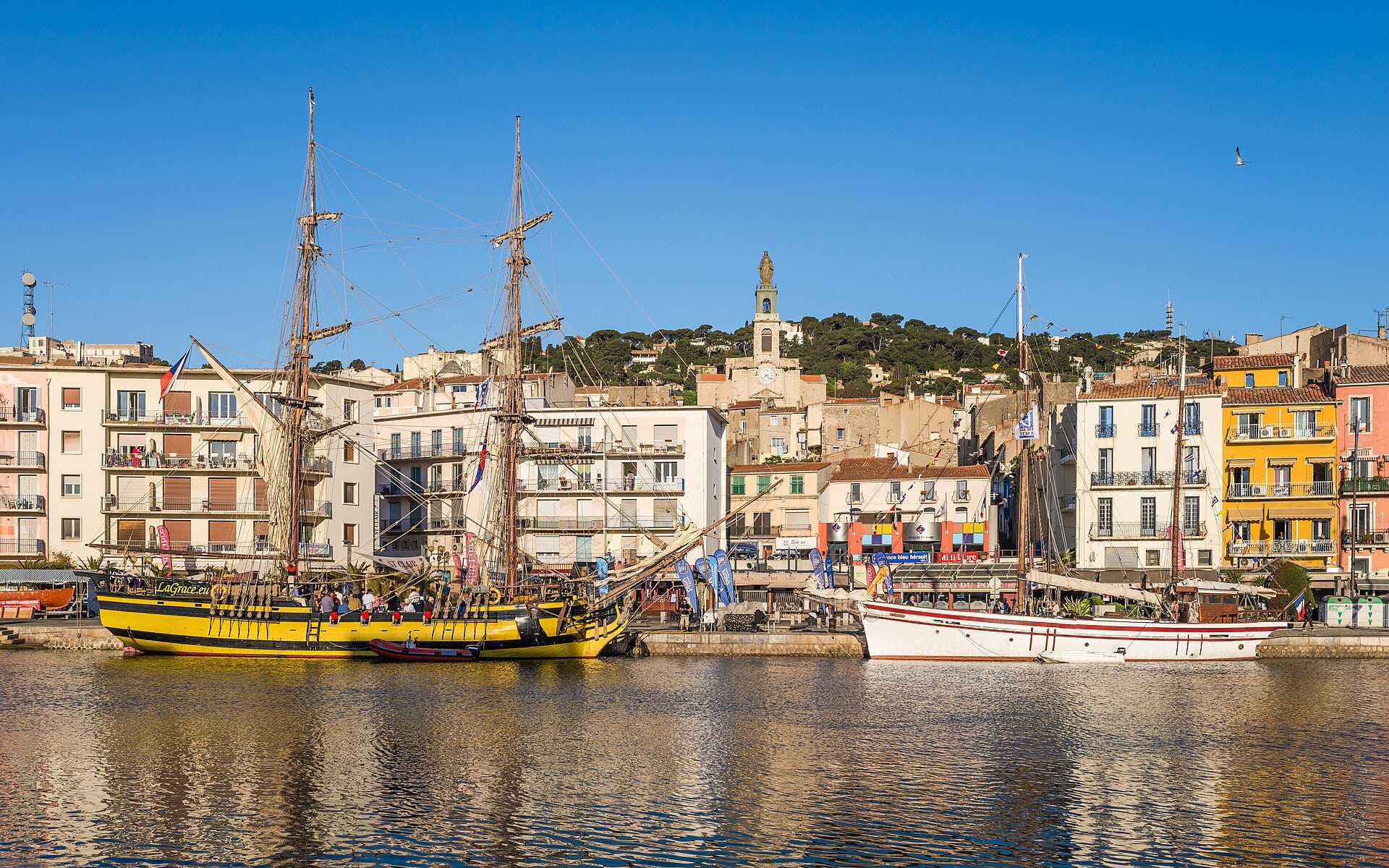
If you’re after a slice of southern France that hasn’t lost its raw, authentic face, Sète in France will completely win you over. While glamorous Provence gleams from the covers of lifestyle magazines and the French Riviera counts its superyachts, a totally different world begins just across the river Rhône. This rugged, salty port sits in the historic region of Languedoc and offers an atmosphere you simply won’t find anywhere else along the Mediterranean coast. Locals lovingly nickname it the Venice of Languedoc, because the entire centre is laced with a network of deep canals lined with colourful fishing boats and historic houses.
Get ready for a town that doesn’t try to be flawless at any cost — and grabs your heart all the more for it. Sète is a working port with an enormous soul, where instead of overpriced boutiques you’ll find buzzing markets, and instead of hushed promenades you’ll hear fishermen calling out to each other. In this article I’ll recommend the best things to do that let you get to know the town from every angle. I’ll point you towards the neighbourhoods with the finest views, where to find the most beautiful sandy beaches, and how to dodge the summer crowds that can seriously complicate any trip to the south of France.
TL;DR
- Canals and the port: The heart of the town is its network of canals, dominated by the Canal Royal, where all the social life unfolds.
- The view from Mont Saint-Clair: The most stunning panorama of the entire coastline and the vast lagoon awaits once you climb the town’s signature hill.
- Water jousting tournaments: A unique summer tradition in which men aboard heavy wooden boats try to knock each other into the water with long lances.
- Endless beaches: The long strip of sand known as the Lido offers kilometres of natural beaches free of over-the-top commercialism and concrete hotels.
- Art in the streets: The town is famous not only for its marine cemetery but also for its modern street art and the quirky MIAM museum.
- Day trips nearby: A brilliant strategic location makes for easy train trips to the student city of Montpellier or to Roman monuments.
The full destination guide: Occitania — guide and what to see
When to Visit Sète
Getting the timing right is absolutely crucial for any trip to the south of France, because the local climate can be utterly uncompromising. The best time to visit is April through June, and then September through October, when daytime temperatures hover around a very pleasant 20 to 28 °C. At this time everything is in glorious bloom, the sea is warming up, and the town’s lanes keep their calm, sleepy atmosphere without the endless queues of tourists. Spring and autumn are simply ideal for long coastal walks or hikes up to the surrounding viewpoints.
If you’re considering a trip in midsummer, be prepared for fairly extreme conditions. Summer heat in Occitania and Languedoc is downright brutal, with July and August temperatures regularly hitting 35 to 40 °C and a frequent risk of wildfires in the surrounding countryside. Being outdoors at high noon in a town built of stone is physically exhausting, so it pays to plan your activities for early morning or late evening. On top of that, August is when the whole of France takes its national holidays, which means clogged roads and completely full car parks.
The one good reason to come in August is the famous water tournaments, which reach their biggest bouts in exactly this month. If you do opt for a summer date, you’ll need to book absolutely everything months in advance, because accommodation and the better restaurants fill up at lightning speed. Autumn, on the other hand, brings the fantastic atmosphere of the local grape harvest, when the whole region turns warm shades of gold and prices drop pleasantly.
Where to Stay in Sète
💡 Tip for accommodation and experiences: We love searching for accommodation on Booking.com, which usually has the best cancellation terms. Tickets, tours and activities are then worth comparing and buying through GetYourGuide.
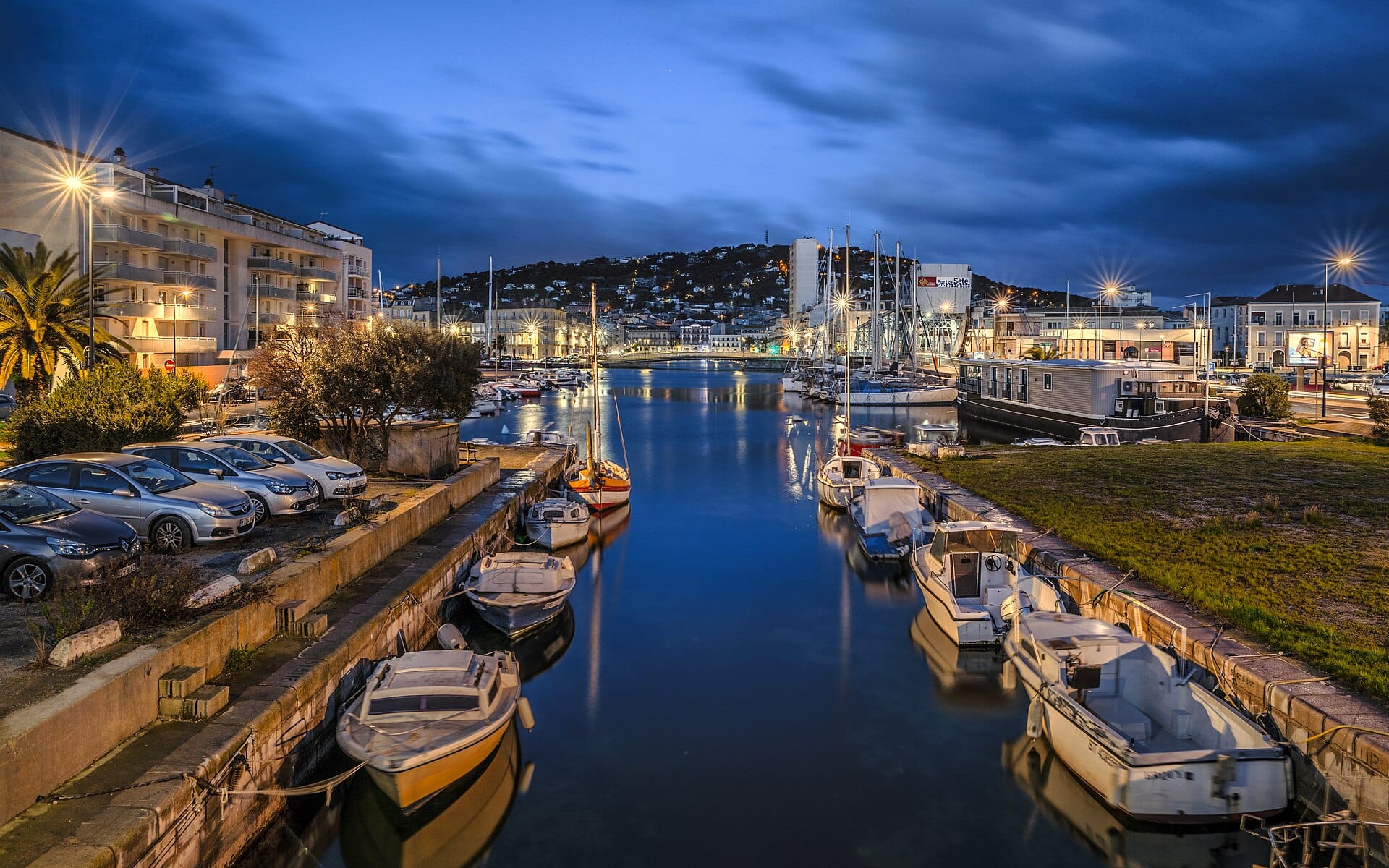
Choosing the right location for your stay depends mainly on the kind of holiday you’re planning and whether you’ll have a car. If you want to soak up the real urban atmosphere, look for hotels right in the centre by the Canal Royal, where you’ll have all the cafés, historic bridges and markets literally a few steps from your bed. This area is ideal for those travelling by train who want to get around mostly on foot. One excellent choice is the popular Hotel Port Marine, which offers a rooftop pool and a fantastic view straight over the busy port and the boats sailing by.
For lovers of swimming and lounging on the beach, the area known as La Corniche makes far more sense. This neighbourhood sits a short way from the centre towards the sea and offers direct access to the sandy beaches, so you won’t have to commute by public transport every day. Here you’ll find quieter residential streets and great places to stay, such as Le Grand Hôtel, which preserves its old-world charm and boasts beautiful architecture. If you’re coming by car, always check in advance whether the hotel has its own parking, because finding a free spot on the street is almost impossible in season.
As for the accommodation budget, the south of France can be surprisingly friendly if you avoid the peak. In the ordinary spring or autumn season, prices for a double room run around 90 to 140 euros per night, which is very reasonable for a popular French destination. During August, and especially around the famous water tournaments, expect prices to double, with the best rooms overlooking the water sold out by early spring. All accommodation can easily be booked through Booking.com — just don’t leave it to the last minute.
11 Things to See and Do in Sète
Let’s take a detailed look at everything this fascinating port has to offer. I’ll show you how to fill your days with discovery, whether you love history, modern art or long walks across endless sand dunes.
1. Explore the Canals and Colourful Boats
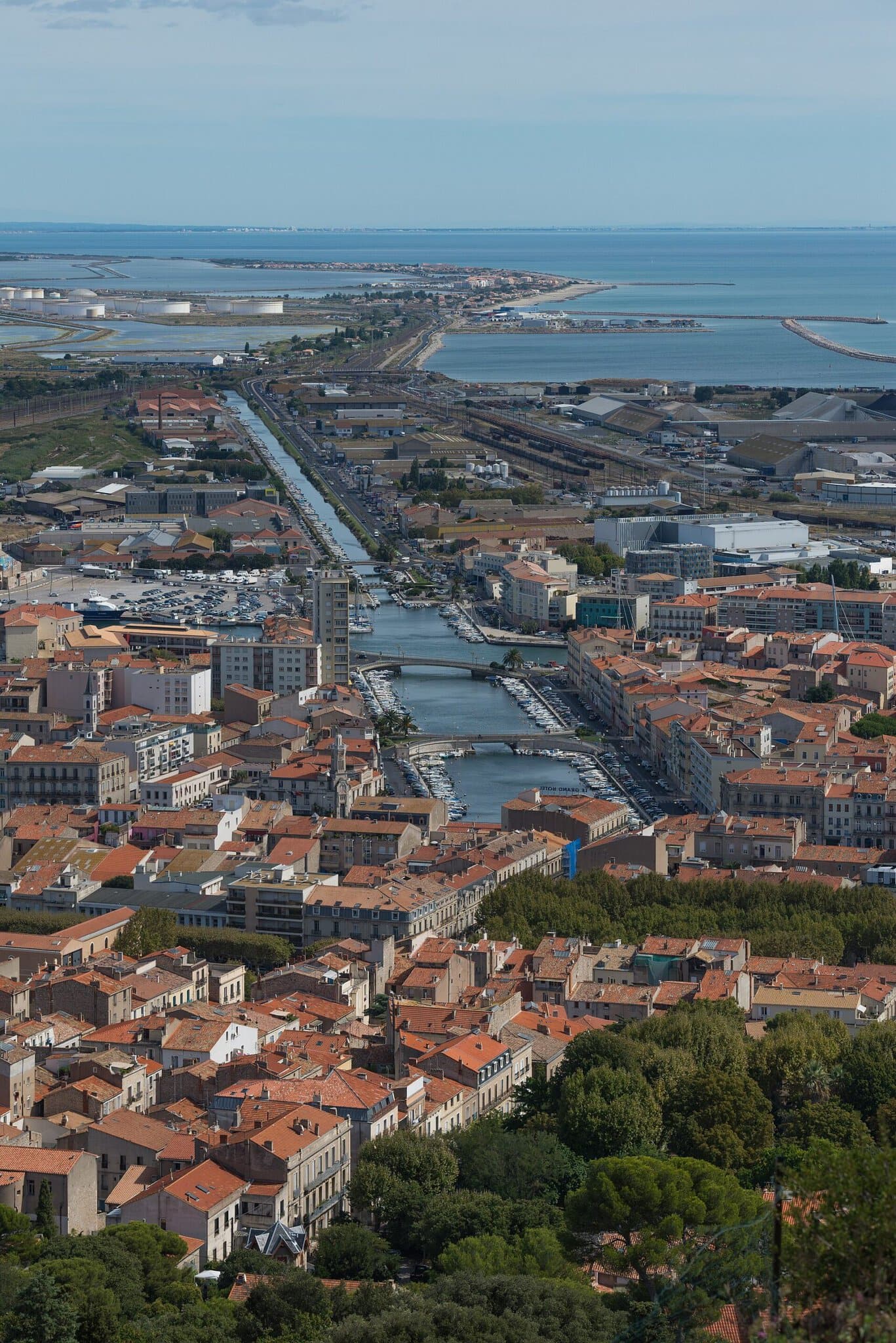
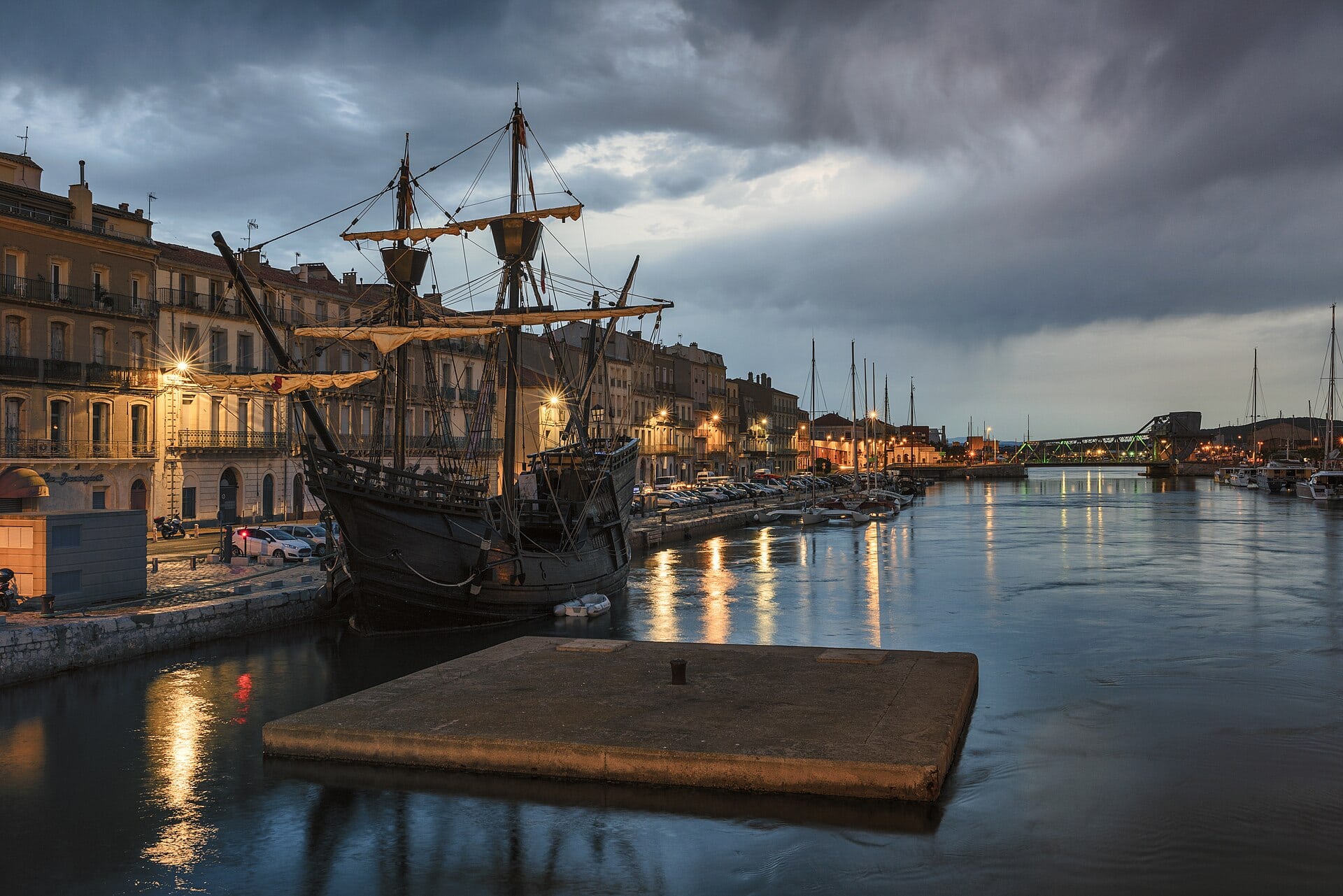
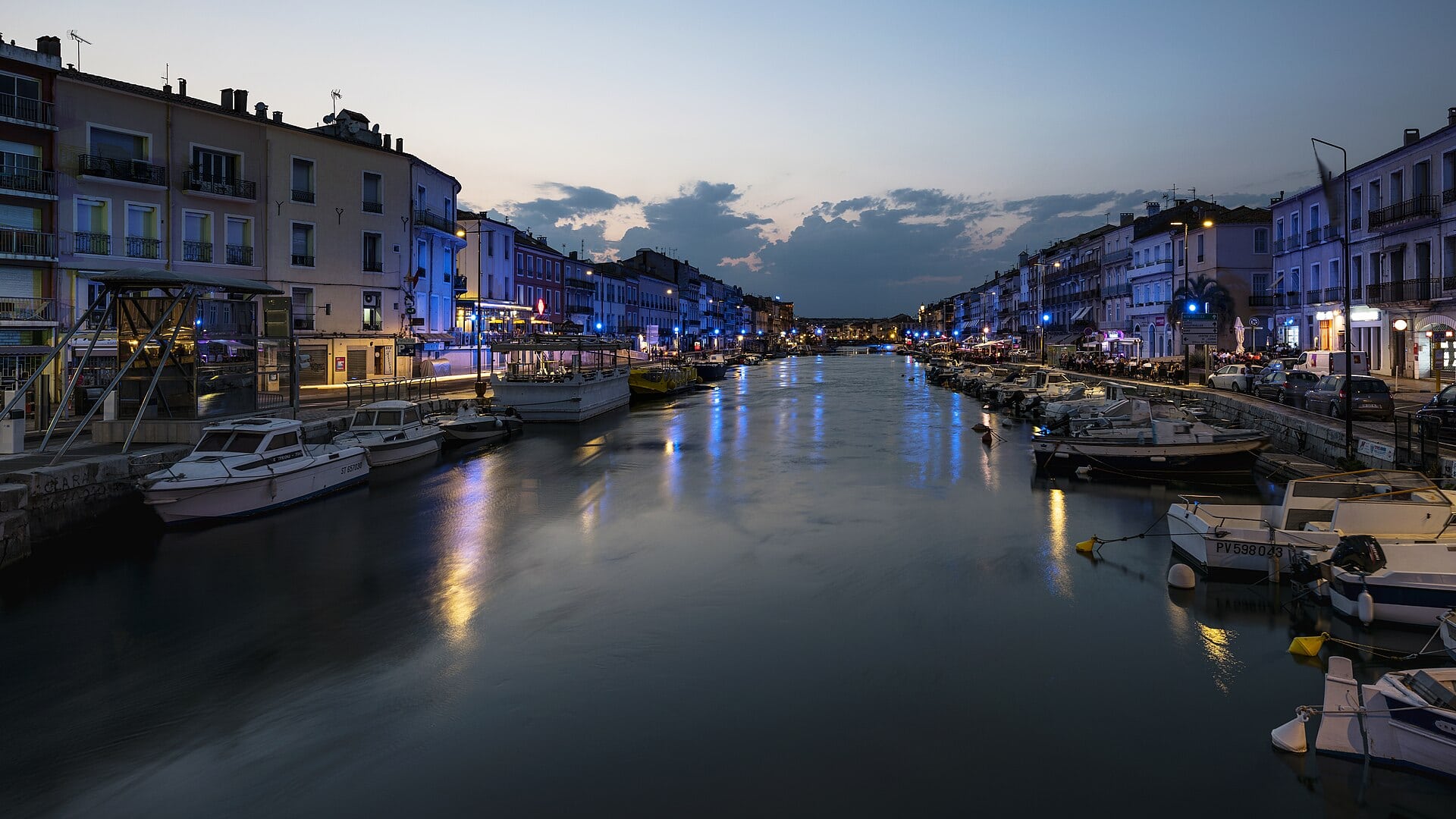
Sète wouldn’t be what it is without its tangled web of waterways, which give the town its unmistakable, slightly gritty character. The main artery of the whole town is the majestic Canal Royal, which connects the vast inland lagoon of Étang de Thau directly to the open Mediterranean. Something is always happening along its banks, and you could stroll here for hours without ever getting bored. Brightly coloured, weathered fishing boats bob on the waves right next to luxury yachts, creating a wonderful photographic contrast.
Don’t just stick to the main canal, though — head deeper into the quieter side streets. The façades of old townhouses reflected in the water are lined with small cafés and cosy outdoor terraces, perfect for sipping a morning coffee. On your walk you’re bound to come across several drawbridges, which open regularly to let larger vessels through to the open sea. It’s a fascinating bit of engineering theatre that briefly halts all town traffic and forces pedestrians and drivers alike to wait patiently.
💡 Tip: The canals are at their most magical early in the morning just after sunrise, when a light mist still hangs over the water. You can calmly watch the fishermen return from their night’s catch and unload it straight onto the bank before the town fully wakes up.
2. Climb Mont Saint-Clair for the Best View
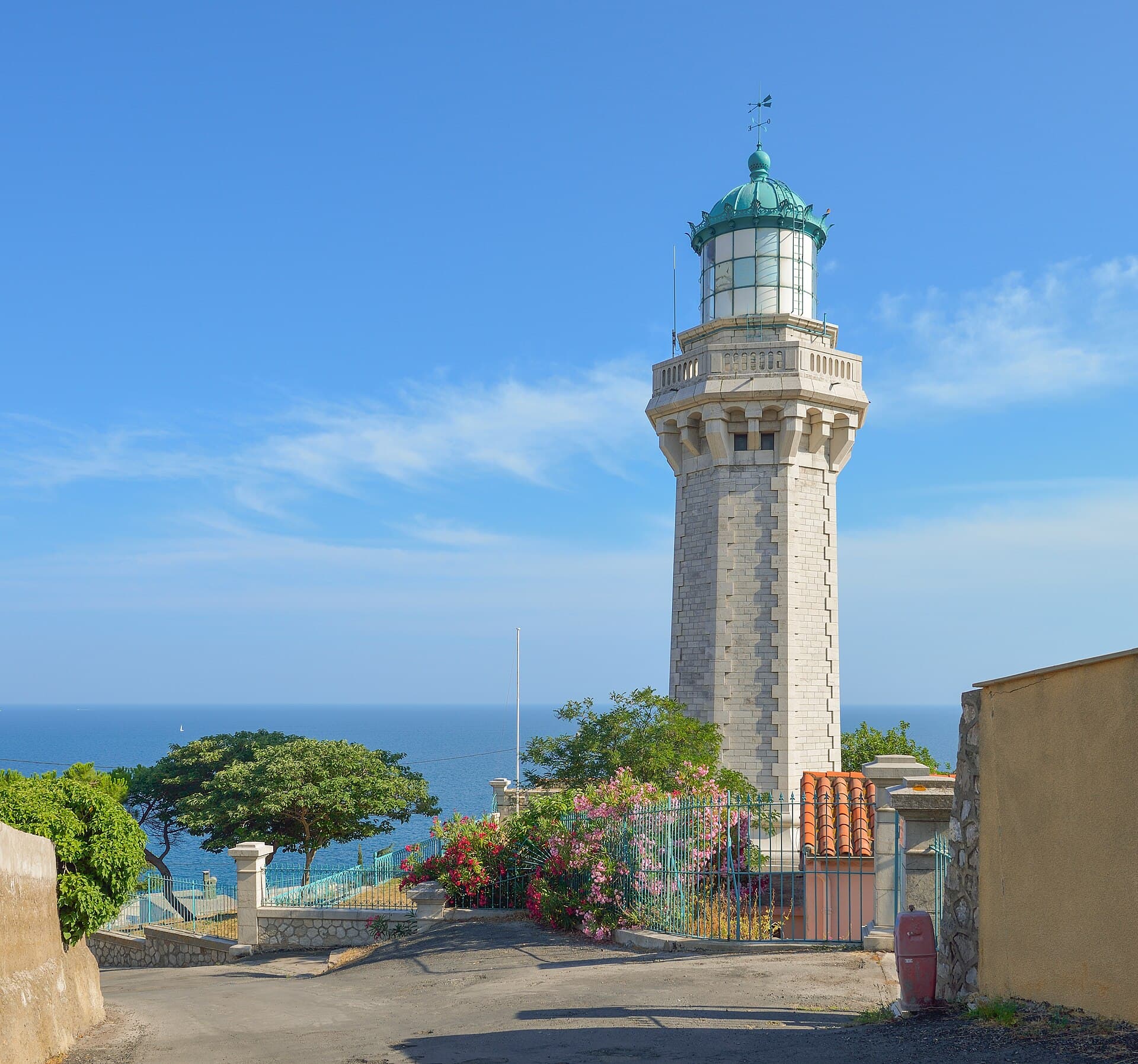
Sète doesn’t just sit on a flat plain — it clings to the slopes of a steep limestone hill that dominates the entire surrounding area. Mont Saint-Clair rises 175 metres above sea level and is by far the best viewpoint on the whole Languedoc coast. Climbing up through the picturesque lanes takes a bit of fitness, as the paths are quite steep and the staircases seem endless, but I promise every drop of sweat is worth it. If you don’t fancy walking in the heat, you can comfortably drive right to the top by car or hop on a regular local bus.
Once you reach the summit terrace, a panorama unfolds before you that will take your breath away. On one side you’ll see the endless blue of the Mediterranean, while on the other lies the vast, calm surface of the Étang de Thau lagoon, where the precise geometric shapes of giant oyster farms come into view. On a clear day you can see all the way to the peaks of the nearby Pyrenees, which form the natural border with Spain.
Right at the top of the hill you’ll also find the small but very atmospheric chapel of Notre-Dame de la Salette. Its interior walls are decorated with bizarre, touching modern frescoes left there by grateful sailors as thanks for being saved from the stormy sea.
💡 Tip: Plan your visit to the summit for the golden hour just before sunset. The colours that spill across the sky at that moment and reflect in the bodies of water below you are simply magical.
3. Experience the Adrenaline of Water Jousting Tournaments
If you visit Sète during the summer months, you mustn’t miss the traditional event that has been alive and pulsing here for an incredible three hundred years. The water jousting tournaments known as joutes nautiques are a loud, wild and utterly fascinating spectacle that resembles a rough medieval battle more than an elegant sport. They take place right on the surface of the main canal, whose banks transform into enormous natural grandstands packed with loudly cheering locals. Traditional brass bands fill the air, people sip wine, and the atmosphere crackles with testosterone and excitement.
The rules of this unique contest are simple at first glance, but all the harder to actually pull off. Two heavy wooden boats, each powered by ten strong rowers, charge towards each other at great speed. On a raised platform at the stern of each boat stands the so-called jouteur, a burly man armed with a wooden shield and an incredibly long wooden lance. The goal is to strike the approaching opponent’s shield with such precision and brute force that he’s knocked off his platform straight into the water.
💡 Tip: The biggest and toughest bouts of the whole season always take place around 25 August during the feast of Saint-Louis. If you want even a halfway decent view of the water, arrive at the canal banks a good two hours before the official start.
4. Find Peace at the Cimetière Marin Marine Cemetery
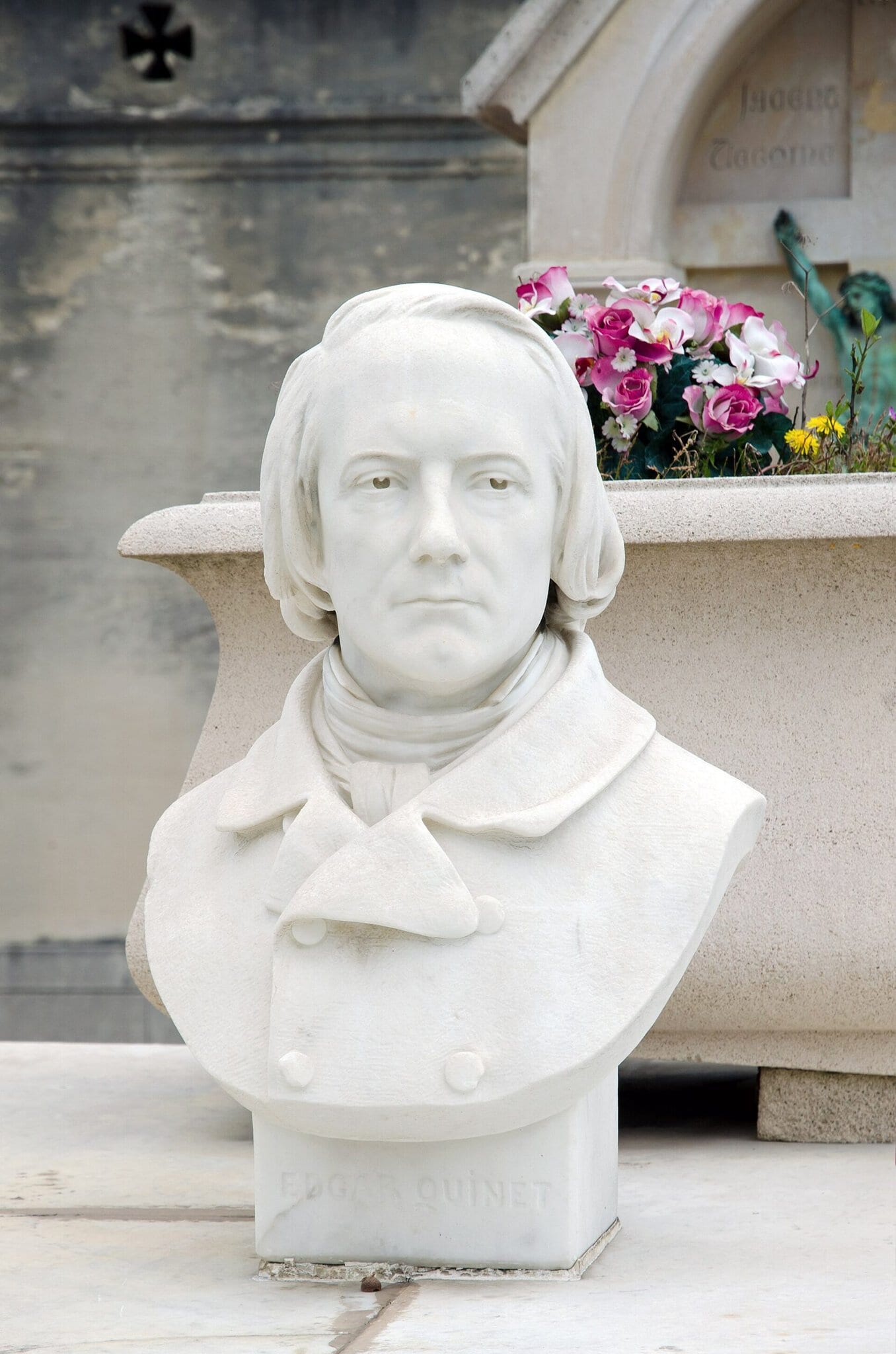
While the port and central canals pulse with noisy life, a place of utter calm and quiet contemplation hides high above them. The marine cemetery Cimetière Marin is one of the most poetic spots in all of France, and for several very good reasons. It’s built on a steep cliff directly above the waves, so from most of the tombs you have an uninterrupted view of the endless blue horizon. The sun beats down on the dazzlingly white stones, the air smells constantly of sea salt and the surrounding pines, creating an almost melancholy beauty.
This enchanting place was made famous by the great French poet and local native Paul Valéry, who devoted his famous eponymous poem to it and who is also buried here himself. A walk among the old, often very ornate tombs of sailors and wealthy town families is like leafing through a thick history book of the whole town. You’ll find carved anchors, rusted ship’s propellers and touching inscriptions telling the fates of people whose lives were inseparably bound to the restless sea.
💡 Tip: The cemetery is fairly large and in the summer months there’s almost no merciful shade. Definitely bring plenty of drinking water, sunglasses and a hat to avoid an unpleasant case of sunstroke.
5. Relax on the Sandy Beaches of Lido and Espiguette
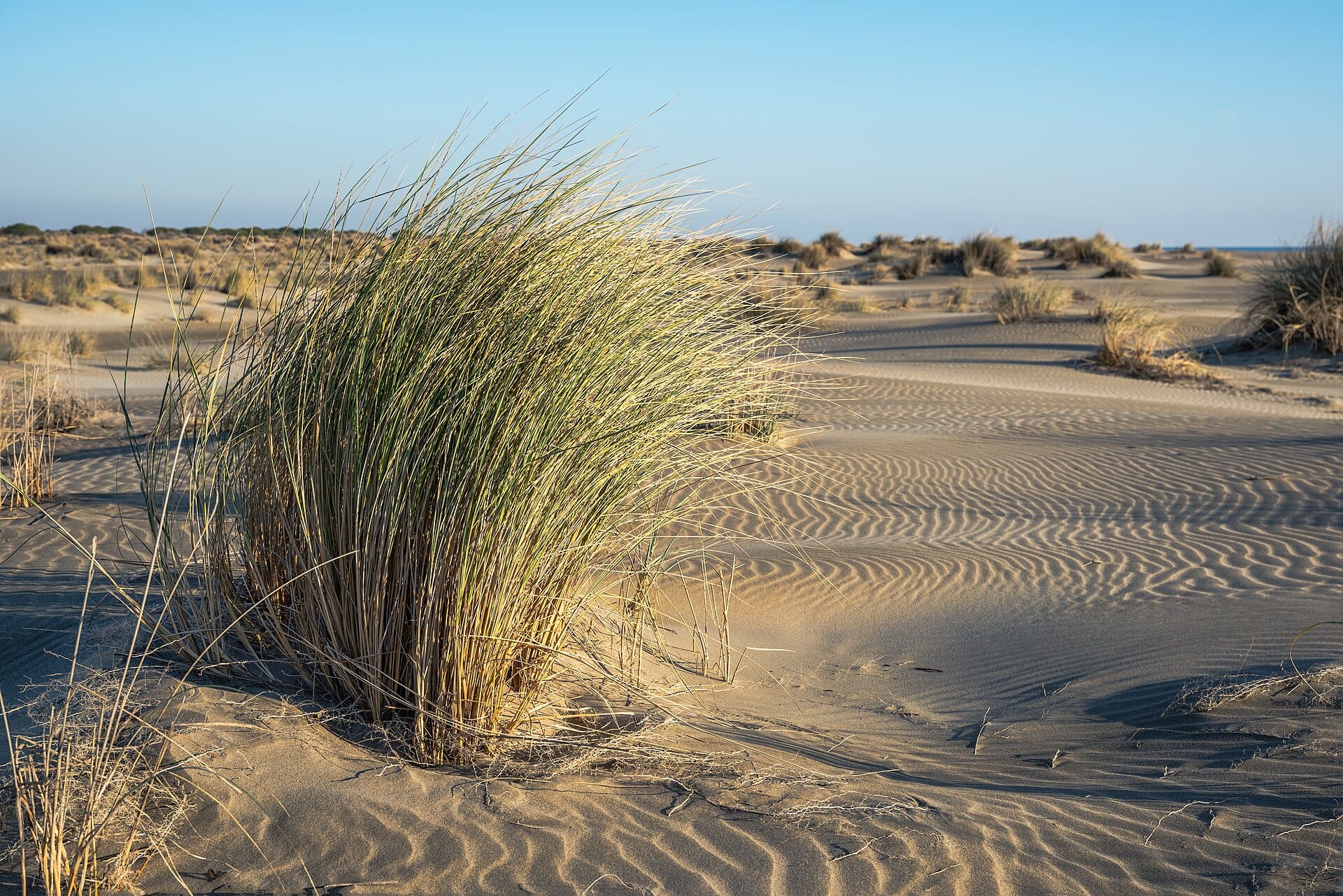
The Languedoc coast isn’t about dramatic rocky cliffs like the neighbouring Riviera — it’s about endless ribbons of fine, golden sand. Sète boasts a stunning twelve-kilometre stretch of beach known as the Lido, which acts as a natural barrier separating the Mediterranean from the inland lagoon. Unlike crowded concrete resorts such as nearby La Grande-Motte, famous for its 1970s pyramid hotels, the Lido keeps a very natural, wild character. There’s an incredible amount of space, so even at the height of summer you’ll easily find a quiet spot all to yourself.
The beaches here are beautifully clean, with a gently sloping entry into the water, and they’re often swept by a pleasant sea breeze that does a great job of softening the summer heat. If you’re after even more wilderness, you can drive a little further to Plage de l’Espiguette. This huge protected area of sand dunes feels more like a tiny seaside desert than a classic European beach. There’s hardly any tourist infrastructure here — just fine sand, tall grass and the soothing rush of the waves.
💡 Tip: To get around the Lido beaches, hiring a bike is the perfect option. A well-maintained, safe cycle path runs the length of the whole strip, completely separated from car traffic.
6. Get Lost in the Pointe Courte Fishing Quarter
If you want to see with your own eyes what Sète looked like several decades ago, you need to head to a small, almost hidden quarter on the very edge of town. Pointe Courte is a traditional, slightly ramshackle fishing settlement perched on a narrow peninsula that still lives at its own very slow pace. The place was made visually famous by the legendary French director Agnès Varda in her eponymous 1950s film, and really very little has changed here since.
You won’t find any luxury residences, cafés or boutiques here — instead, a quirky jumble of small, makeshift-looking houses knocked together from wood and corrugated iron. The narrow lanes are full of roaming cats and hanging fishing nets drying in the hot sun beside strange art installations made from driftwood and old buoys. The locals spend most of their time outside, calmly mending their boats or just chatting in front of their homes. It’s an utterly raw, authentic and incredibly photogenic place.
💡 Tip: Respect the locals’ privacy. This isn’t an artificial open-air museum for tourists but a genuinely lived-in working-class quarter, so keep a reasonable distance when taking photos and don’t poke your camera into people’s windows.
7. Discover the MIAM Museum and Street Art
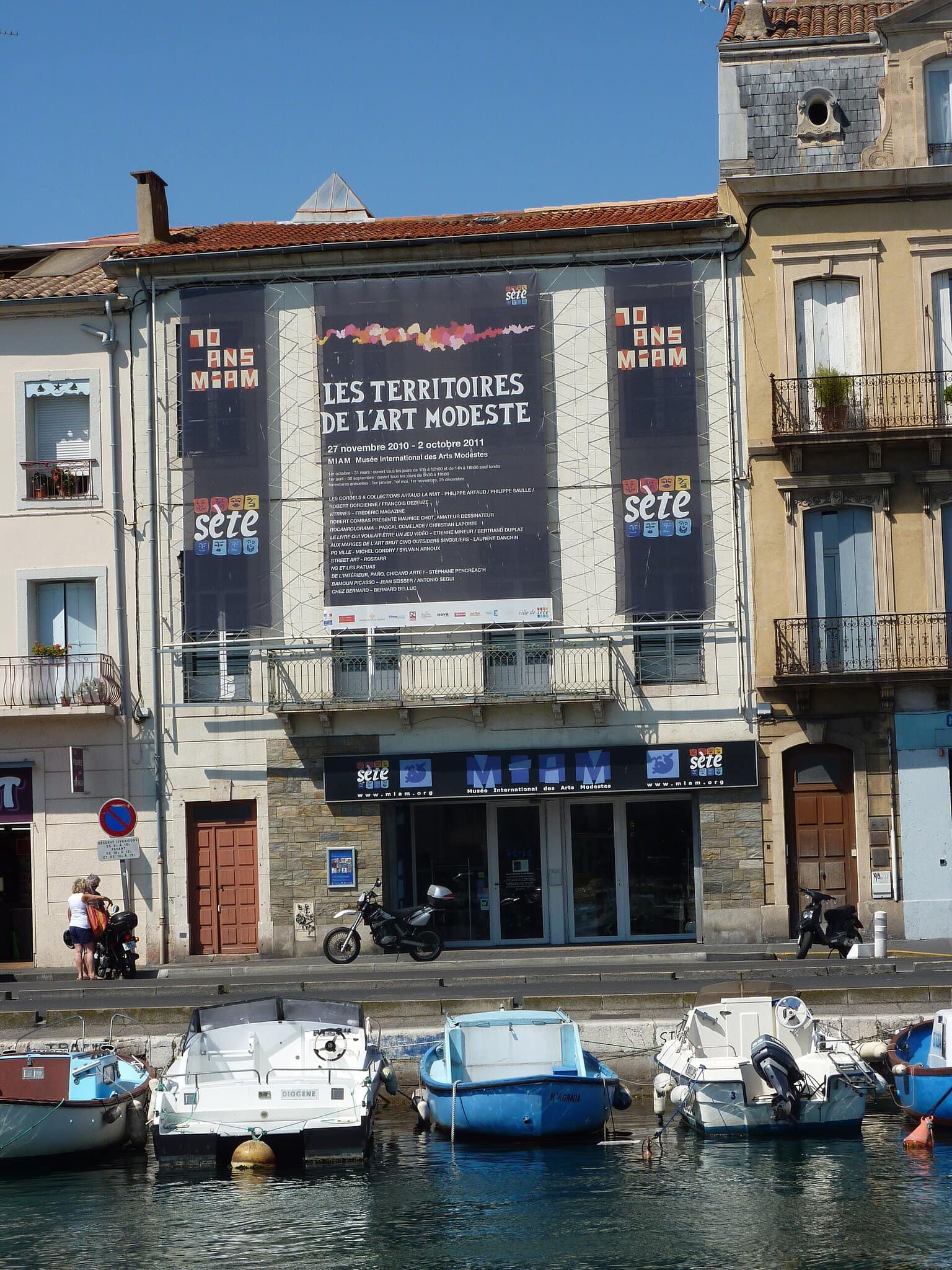
Sète isn’t just about maritime history and traditional fishing — in recent years it has also become a very important and respected centre of contemporary art. An absolute one-off is the Musée International des Arts Modestes (MIAM), which loosely translates as the museum of modest art. Don’t expect any classic landscape oil paintings or dull marble sculptures here. This museum elevates everyday objects, colourful kitsch and old toys to fully fledged works of art. The exhibitions are deliberately zany, visually overloaded and often very provocative, reliably forcing you to think about what art really means.
Beyond the indoor galleries, the entire historic town serves as one giant canvas for talented street artists from all over the world. A project called MaCO (Musée à Ciel Ouvert, or open-sky museum) has turned the façades of ordinary houses, old walls and bridges into a fascinating street-art gallery. You’ll find dozens of huge murals by renowned international creators. The works are constantly changing, being painted over and added to, so even if you return after a few years, you’ll always find something fresh to discover.
💡 Tip: Pick up a free MaCO paper map at the tourist information centre — it’ll guide you to the most interesting and best-hidden murals scattered across the town.
8. Discover Local Markets and Vegetarian Treats
Southern France is an absolute paradise for lovers of good food, and Languedoc gastronomy in Sète is no exception. The town is best known for a delicacy called tielle, a round pie made from bread dough filled with octopus in a richly spiced tomato sauce. It’s a typical dish of the local fishermen, and you’ll find it in pretty much every bakery. But if you’re not a fan of seafood or meat dishes in general, there’s no need to despair — the food scene here is incredibly rich and offers plenty of great meat-free alternatives.
At the heart of all the culinary action is the huge central market hall, Les Halles, where people come not just to buy ingredients but above all to live and chat loudly. Inside, the market smells wonderfully of fresh bread, spices and ripe fruit. I recommend buying fresh crusty baguettes, amazing regional cheeses, herb-marinated olives and the renowned local tomatoes, which taste like nowhere else thanks to the southern sun. In the local bistros you can confidently order excellent vegetarian versions of the classic macaronade without meat, or rich vegetable ratatouille loaded with local aubergines and courgettes drenched in quality olive oil.
💡 Tip: If you want to experience the real, unvarnished atmosphere of Les Halles, head there ideally on a Sunday morning. It’s the main social event of the whole week, when locals gather over a glass of white wine and a plate of oysters.
9. Take a Boat Trip on the Étang de Thau Lagoon
While the wild open sea constantly washes one side of the town, the other is fringed by something far calmer and quieter. The Étang de Thau is an enormous inner lagoon whose impressive size makes it feel more like a giant inland lake. The water here is shallow, sheltered from big waves and incredibly rich in marine life. The lagoon is famous throughout France above all for its huge oyster farms, which supply the country’s best restaurants. Look out across the water and you’ll see long, precise geometric rows of wooden poles on which these shellfish are cultivated according to old, fiercely guarded traditions.
The best way to explore this unique watery landscape is to head out onto the surface itself. In the port you’ll find plenty of local companies offering interesting sightseeing cruises, and the best excursions can be booked very easily in advance through platforms like GetYourGuide. During a quiet cruise across the lagoon you’ll get up close to the farms themselves, and with a little luck you’ll spot flocks of wild pink flamingos standing in the shallows, where they regularly fly in to feed.
💡 Tip: Choose a cruise on a smaller, ideally fully electric flat-bottomed boat. Not only is it a much greener choice, but you also won’t disturb the birds with a noisy engine, so you can get much closer to the flamingos.
10. Discover the Legacy of a Chansonnier at Espace Georges Brassens
Sète has given France many important and talented figures, but one of them towers above all the rest. Georges Brassens, one of the most famous French chansonniers of all, was born here, and the town adores him to this day. Even if you don’t know all his intricate, deeply poetic and often rebellious lyrics, his catchy melodies accompanied by acoustic guitar form an inseparable soundtrack to the whole French south, and you’ll hear them drifting from many a café.
Right across from the calm lagoon stands the modern Espace Georges Brassens, which is no ordinary dull museum but rather an interactive, heartfelt tribute to his life and remarkable work. At the entrance you’re given headphones in which the artist himself guides you through the whole exhibition via carefully chosen archive recordings. You’ll trace his modest childhood in Sète, his tough beginnings in Paris, and see his famous pipes, beloved guitars and handwritten lyrics. It’s a very intimate and moving experience, even for those who’ve never heard of Brassens before.
💡 Tip: After visiting the interactive museum, take a walk to the nearby Cimetière Le Py, where Brassens is buried. Unlike the grand, white marine cemetery, this one is very plain and simple — exactly as the artist wished in his songs.
11. Take a Day Trip to Vibrant Montpellier
Although Sète has plenty of its own unmistakable charm, on a longer holiday it’s sometimes nice to change the pace and head into the buzz of a big city. Vibrant Montpellier lies just under half an hour away by comfortable train and offers a completely different, cosmopolitan energy. It’s a city with a huge student population, which in practice means it’s alive long into the night, and the historic streets are full of modern cafés, bistros and independent art scenes. Trains run from Sète very frequently and reliably, so you won’t have to worry one bit about the annoying hunt for expensive parking in the centre.
The heart of Montpellier is the enormous Place de la Comédie, confidently dominated by the classical opera house. From here you can lose yourself in the narrow medieval lanes of the old town, or instead head to the modern Antigone district. This fascinating part of the city was designed in the 1980s by the Spanish architect Ricardo Bofill in a monumental neoclassical style that strongly evokes ancient temples. And if you’re paying attention, notice the local trams too — their beautiful floral design was created by the famous fashion house Christian Lacroix.
💡 Tip: If you’re a fan of fine art, don’t miss the vast Musée Fabre in Montpellier. It’s one of the very best art galleries in the entire south of France, and its collections of European painting are absolutely stunning.
Map of points of interest for your phone
Where to Go Next from Sète
If you have more time and have already explored all the secrets of the local canals, the Occitania region offers endless possibilities for further discovery. As mentioned, an absolute must is nearby Montpellier, which will charm you with its youthful atmosphere and elegant architecture. It’s the perfect place for shopping and soaking up big-city energy.
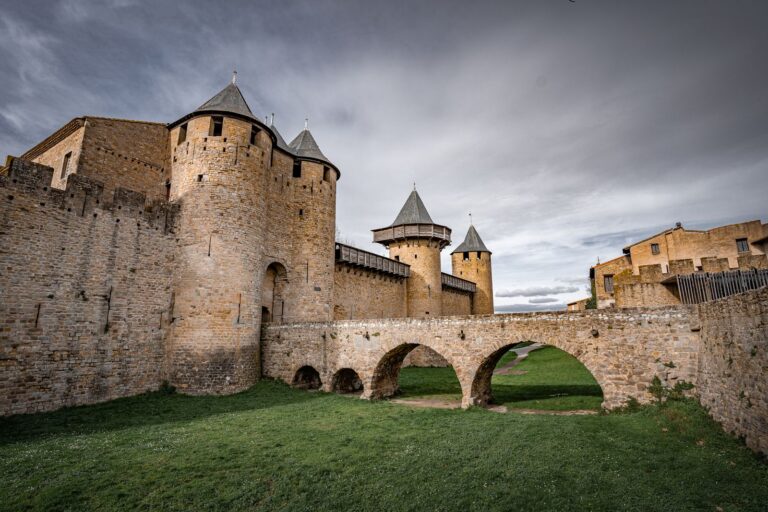
If, on the other hand, you’re craving an even bigger dose of history and romance, head south towards the Spanish border itself. There, where the steep peaks of the Pyrenees tumble straight into the Mediterranean waves, lies Collioure. This enchanting little town, full of brightly coloured houses and narrow lanes, was beloved by famous painters and to this day keeps its fascinating Catalan identity. For more historic sights, it makes sense to head inland, where Roman engineering awaits in the shape of the giant amphitheatre in Nîmes and the majestic Pont du Gard aqueduct, or the medieval ramparts of the fairy-tale town of Carcassonne.
Search with the DiscoverCars comparison engine — it compares prices from dozens of local and international rental companies, and most bookings come with free cancellation.
Compare car prices in Occitanie →Frequently Asked Questions
How long does the train journey from Paris to Sète take?
Thanks to France’s excellent rail network, you can get here surprisingly quickly. If you take the TGV high-speed trains, the journey from Paris’s Gare de Lyon station takes around 3.5 to 4 hours with no unnecessary changes.
Is it possible to get around the city without a car?
Definitely yes. The historic center with canals and markets is compact and you can easily explore it on foot. For longer distances, such as to Lido beaches or to the top of Mont Saint-Clair, there’s a fairly reliable local bus network.
How much does accommodation cost roughly?
In 2026, prices for a standard double room within a reasonable distance from the center range from around 90 to 140 euros per night. However, during August and when water tournaments are taking place, prices double and everything sells out quickly.
When exactly do the water tournaments take place?
Smaller matches and training sessions take place on the canals from mid-June. The most important and most-watched tournaments, however, are always held around August 25th during the Saint-Louis festival, which is the highlight of the entire summer season.
Are the local beaches suitable for small children?
Yes, the beaches in the Lido area have a very gentle and safe entry into the sea and the sand is beautifully fine. You won’t find dangerous cliffs here, but occasionally there can be stronger winds that create waves.
What are vegetarians supposed to eat here when it’s a fishing port?
Even though the town thrives on fishing, you certainly won’t go hungry here. At the local market, you’ll find fantastic cheeses, olives and fresh bread, while restaurants commonly offer vegetable ratatouille or pasta dishes without meat.
Can you normally drink tap water here?
Yes, tap water in France is very high quality and completely safe to drink. In restaurants, you can even commonly order “une carafe d’eau” for free, which is a jug of tap water that they’ll happily bring to your table.
Is Sète a safe city for tourists?
The city is generally very safe, especially during the day. However, it’s a working, functional port, so as anywhere else in Europe, watch out for pickpockets in crowded markets and in the evening hours around the train station. But if you maintain normal caution and don’t leave your belongings unattended on the beach, you certainly won’t face any major danger here.
Tips and Tricks for Your Vacation
Don’t Overpay for Flights
Search for flights on Kayak. It’s our favorite search engine because it scans the websites of all airlines and always finds the cheapest connection.
Book Your Accommodation Smartly
The best experiences we’ve had when looking for accommodation (from Alaska to Morocco) are with Booking.com, where hotels, apartments, and entire houses are usually the cheapest and most widely available.
Don’t Forget Travel Insurance
Good travel insurance will protect you against illness, accidents, theft, or flight cancellations. We’ve had a few hospital visits abroad, so we know how important it is to have proper insurance arranged.
Where we insure ourselves: SafetyWing (simple monthly subscription) and TrueTraveller (for extra-long trips).
Find the Best Experiences
Get Your Guide is a huge online marketplace where you can book guided walks, trips, skip-the-line tickets, tours, and much more. We always find some extra fun there!