You know that idyllic vision of the perfect French countryside, the one we all recognise from old films. A narrow road winds between endless vineyards, the sun beats down on ancient limestone walls, and suddenly a cluster of stone houses with terracotta roofs appears around the bend. A thin wisp of smoke curls up from a chimney, old men play pétanque under a mighty plane tree on the village square, and the air smells of rosemary and freshly baked bread. It’s precisely this French dream of the slow life that drives millions of people out of overcrowded cities and into the countryside each year — and the most beautiful France villages are right at the heart of that dream.
The French know perfectly well what an incredible treasure they have in their countryside and historic heritage. That’s why, back in 1982, the Les Plus Beaux Villages de France association (The Most Beautiful Villages of France) was founded, with the goal of protecting the most precious jewels. This isn’t some random marketing slogan aimed at tourists — it’s a strict and respected certification. To earn the coveted red sign with the logo, a village must meet tough criteria: it can’t have more than 2,000 inhabitants, and there must be at least two protected historic monuments within its boundaries.
Today this label is a huge tourist phenomenon that draws travellers from all over the world. People literally plan entire multi-week road trips across regions following the map of the most beautiful villages. That red sign at the edge of the village guarantees there’s no ugly industrial estate waiting for you, but rather pure, concentrated historic beauty. There is, however, one big catch: in the summer months, hundreds of thousands of other people have exactly the same idea as you.
If you don’t want to spend hours frustratingly hunting for a parking spot and elbowing through crowds with cameras, you need to plan your trip cleverly. In high season, the overflow car parks outside these popular villages are often hopelessly full before nine in the morning. In this article you’ll find 15 tips on the absolute most beautiful villages you shouldn’t miss. I’ll also advise you on how to dodge the biggest crowds, where to base yourself strategically, and how to get around the French countryside by car.
TL;DR
- A mark of quality: Only just over 170 villages hold the Les Plus Beaux Villages de France title — they must have under 2,000 inhabitants and at least two historic monuments.
- When to go: Avoid July and August because of the extreme heat (up to 43 °C in the south) and enormous crowds. May, June and September are ideal.
- Getting around: You can’t reach most villages without a car. Expect paid motorways (toll gates) and the need for a Crit’Air clean-air sticker in cities.
- The golden rule of parking: For the most famous villages (Gordes, Rocamadour) you need to arrive by 8:30 a.m. at the latest, or you won’t get a space.
- Regional variety: Every region offers something different. Provence tempts you with stone and lavender, Alsace with half-timbered houses, and Brittany with granite and the ocean.
- Good manners: Always enter every shop or bakery with a clear, audible “Bonjour!”. Without a greeting, you’ll be ignored.
- Book in advance: If you want to stay right in the historic village centres, book your accommodation on Booking up to six months ahead.
The full destination guide: France — guide and what to see
When to Visit the France Villages
Getting the timing right is absolutely critical when visiting the French countryside, and it’ll decide whether you come away with a romantic memory or sheer frustration. The south of France routinely reports extreme temperatures of 35 to 43 °C in July and August, which turns strolling along baking stone lanes into more of a fight for survival. The ideal months for exploring villages in Provence, Occitanie or the Dordogne are therefore May, June, and then September through mid-October.
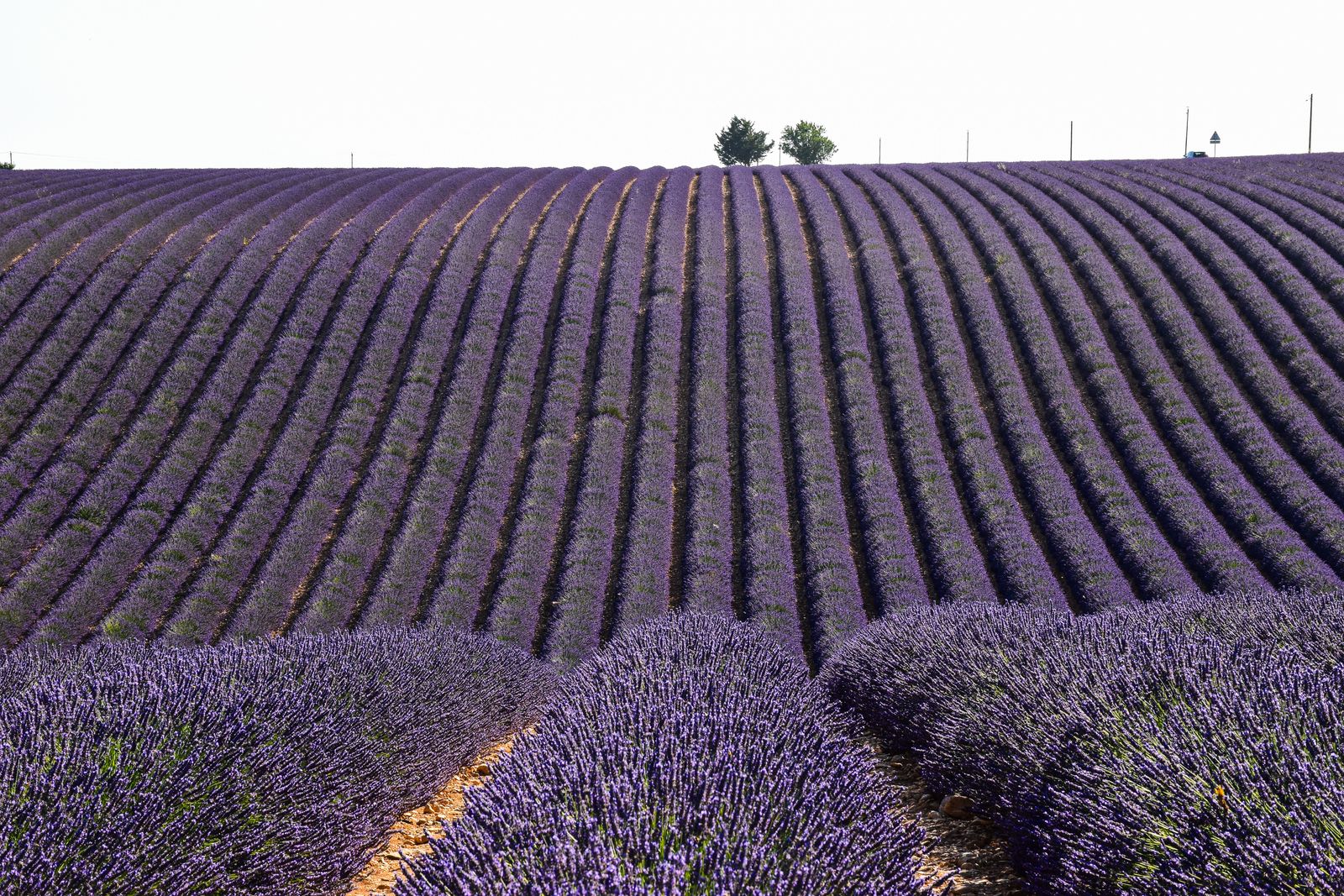
If you’re tempted to combine a visit to the Provençal villages with the blooming purple fields, you’ll need to plan with surgical precision. The main lavender season runs from mid-June to the end of July, with the absolute peak at lower altitudes arriving around the turn of June and July. But watch out for summer festivals. The hugely popular celebrations in Valensole, for example, always fall on the third Sunday in July, and many fields can be completely harvested right afterwards. Your saving grace is then the higher ground around Sault and the Plateau d’Albion, where the lavender easily holds its colour until mid-August.
If you have to travel to France during the summer holidays, your only option is to completely adjust your daily routine. Arrive in the village either right at sunrise, when the lanes are empty and the light is perfect for photos, or instead late in the afternoon, around five o’clock. Entirely different rules apply to northern and eastern France. If you head to Brittany, the weather is the biggest barrier here, and wind and rain can catch you out even in mid-August. Alsace, on the other hand, experiences its absolute peak in November and December during Advent. The Christmas markets in the certified villages are gorgeous, but expect an absolutely massive wave of tourists. Pay special attention to driving too, because in 2026 a very strict low-emission zone comes into force in Marseille and its wider surroundings — without the correct Crit’Air clean-air sticker, you won’t be allowed in at all.
Where to Stay in the French Countryside
💡 Tip for accommodation and experiences: We like to look for places to stay on Booking.com, which usually has the best cancellation terms. For tickets, tours and activities, it pays to compare and book through GetYourGuide.
The basic rule for relaxed exploring is to choose one strategic base and set off on day trips from there. Changing hotels every day will only slow you down and wear you out unnecessarily. Staying in the historic villages themselves is incredibly romantic, but bear in mind that prices tend to be higher and parking can be quite complicated, as car access to many historic centres is strictly prohibited.
If you’re heading to Provence and want to explore the Luberon area, the ideal base is the town of Apt or the larger Aix-en-Provence. For absolute luxury right in the village of Gordes, I recommend booking the Airelles Gordes, La Bastide hotel, with breathtaking views over the valley. If you’re after something more affordable with an authentic Provençal atmosphere, try the family-run guesthouse Le Mas des Romarins right in neighbouring Gordes, which is easy to find on the popular Booking.com portal. In the Dordogne region, it’s worth staying close to the river, ideally near the town of Sarlat-la-Canéda, which lies right in the heart of the greatest concentration of castles and villages.
If you want to experience the mystical atmosphere of the pilgrimage site of Rocamadour without the crowds, the only solution is to stay right there, for example at the Hôtel Beau Site. A great tip for the Occitanie region is to stay inside the medieval walls of the giant fortress of Carcassonne. During the day the city is bursting at the seams, but once the coach tours leave in the afternoon, you’ll have the empty lanes all to yourself. For visiting the Alsace Wine Route, the town of Colmar is a fantastic choice, working as a perfect transport hub. And right in the fairytale village of Riquewihr there’s the charming Hôtel De La Couronne, set in a historic 16th-century building. All these places to stay in the most beautiful villages tend to sell out months in advance in high season, so don’t put off booking. This is especially true for Alsace, where the famous Christmas markets begin on 23 November in 2026.
15 of the Most Beautiful Villages in France to See and Explore
Let’s take a look together at 15 specific villages that represent the very best of the French countryside. From sun-drenched Provence through the valley of castles in the Dordogne to the dramatic coast of Brittany, each one has its own utterly unique character. Get your comfortable shoes ready, because these stone lanes were definitely not built for heels.
1. Gordes: The King of Provençal Villages
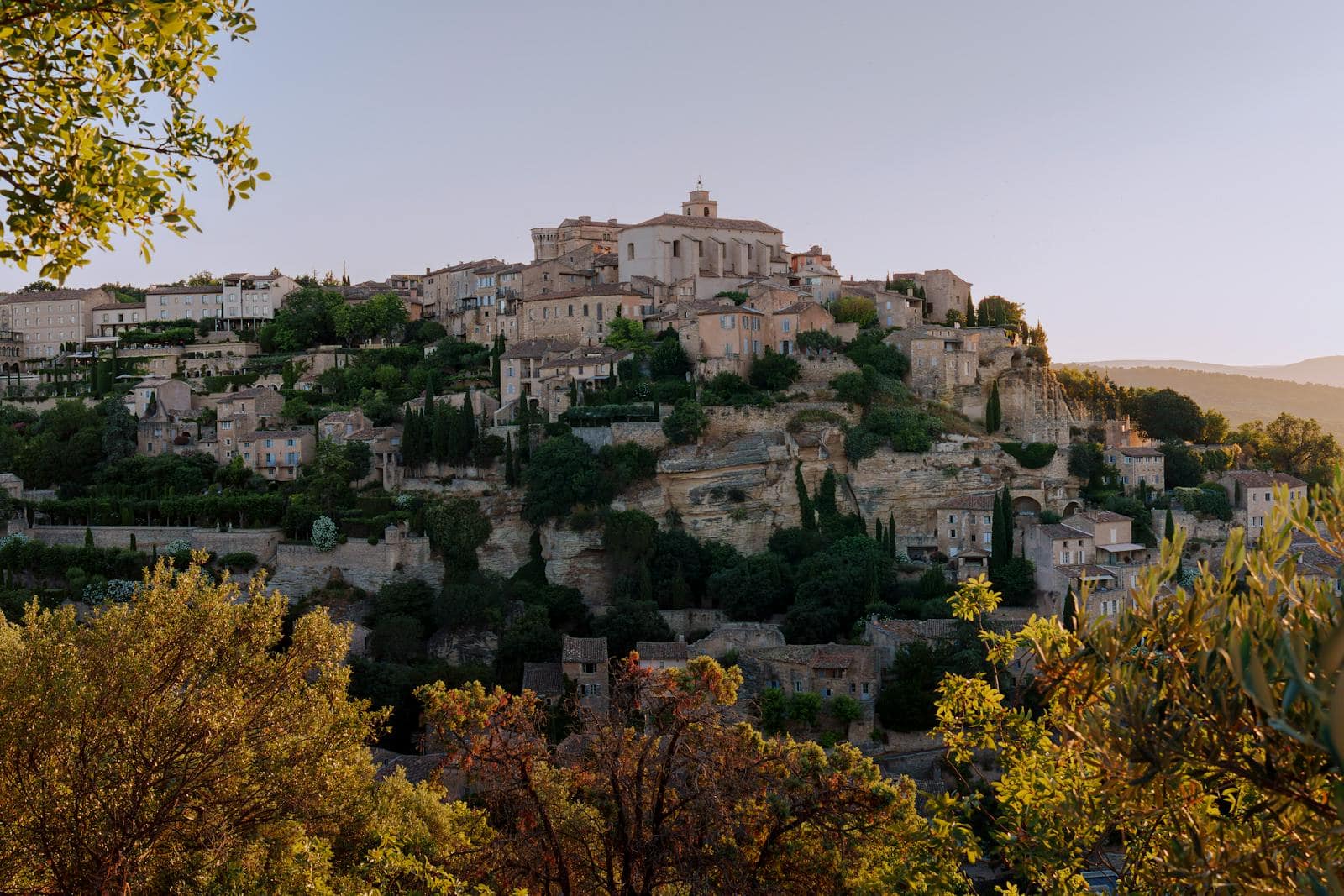
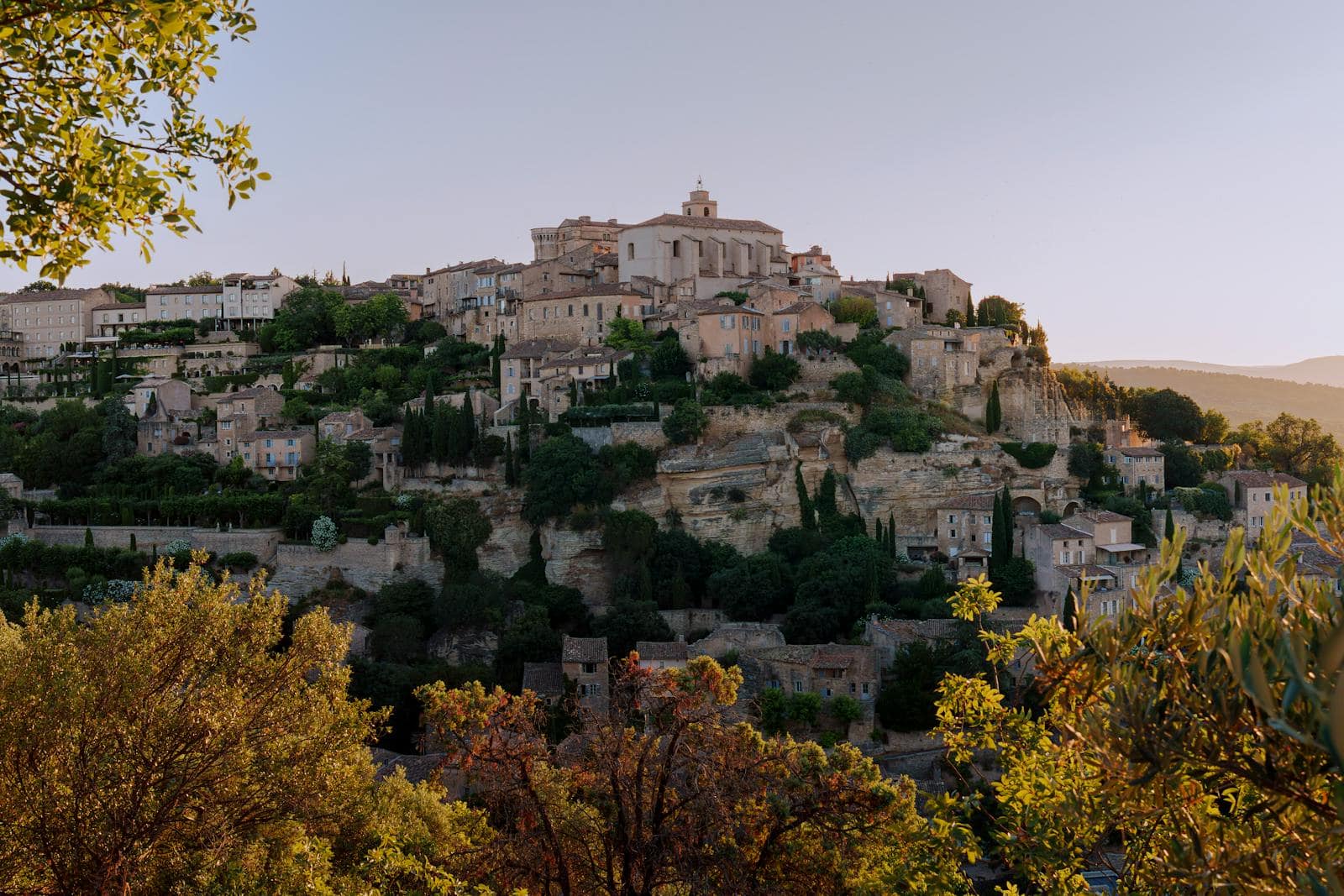
When someone says “Provençal village”, most people picture the Luberon region and its iconic settlement of Gordes. This is where you’ll find the most beautiful so-called hilltop villages, proudly gazing down into the valley from high crags. The view of Gordes from the approach road is so perfect it looks like a carefully arranged theatre set. Stone houses of pale limestone rise in cascades up the steep slope all the way to the mighty Renaissance château at the very top.
This place is objectively stunning, but in high season it gets extremely overloaded with tourists from all over the world. If you’re coming by car, you ideally need to arrive before eight in the morning, otherwise you simply won’t get a space in the cascading overflow car parks below the village and you’ll waste a lot of time circling around in frustration. The centre itself is full of narrow cobbled lanes known as calades, small art galleries and cosy cafés with fantastic views over the whole Luberon valley. A short distance away lies the slightly quieter, elongated village of Ménerbes, made famous worldwide by writer Peter Mayle in his novel A Year in Provence.
💡 Tip: A short way from Gordes is the famous Sénanque Abbey with its iconic lavender field. If you don’t have your own car, portals like GetYourGuide list plenty of organised half-day tours that set off from nearby Avignon and conveniently combine both sites.
2. Roussillon: A Village in the Colours of Fire
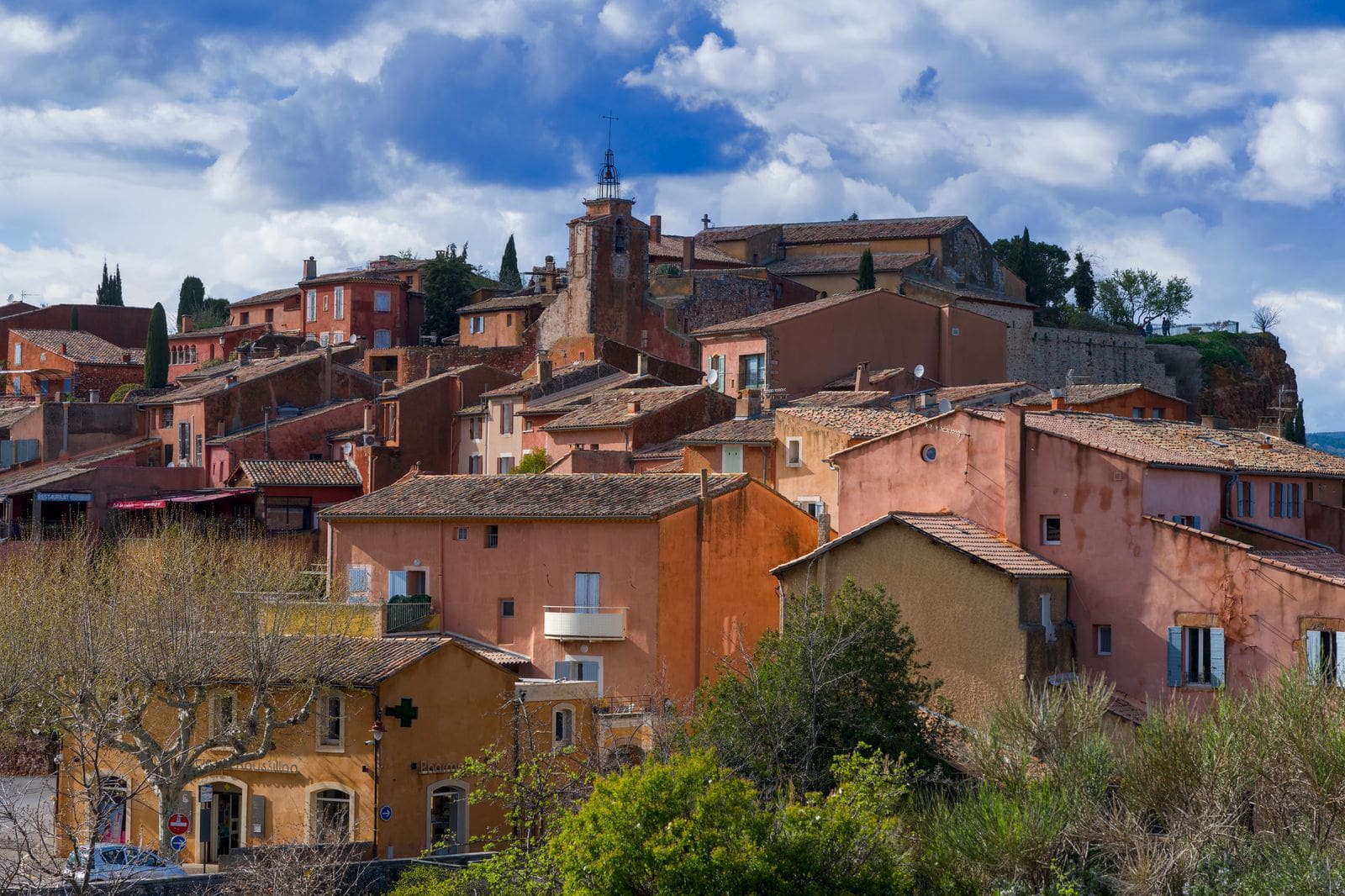
Just a short hop from grey-and-white Gordes lies Roussillon, which instantly grabs your eye with its incredible colour. The village sits on massive deposits of ochre, and the house façades flow seamlessly from rich yellow through orange to blood red. The green crowns of the pines and the deep blue Provençal sky heighten this fascinating colour contrast even further, creating a scene you won’t see anywhere else in France.
I’d recommend exploring not just the village itself, but also the so-called Ochre Trail (Le Sentier des Ocres), which starts right behind the village. Admission costs just a few euros, and the walk through the former ochre quarries feels more like a visit to Mars or the American canyons than sunny southern France. Inside the village you’ll come across plenty of craft shops selling all kinds of natural pigments, which you can use to mix your own paints at home.
💡 Tip: Definitely don’t wear white shoes or light clothing for the ochre quarry walk. The fine red dust gets absolutely everywhere very quickly, and it’s extremely difficult to wash out of some fabrics.
3. Eguisheim: The Alsatian Snail Shell
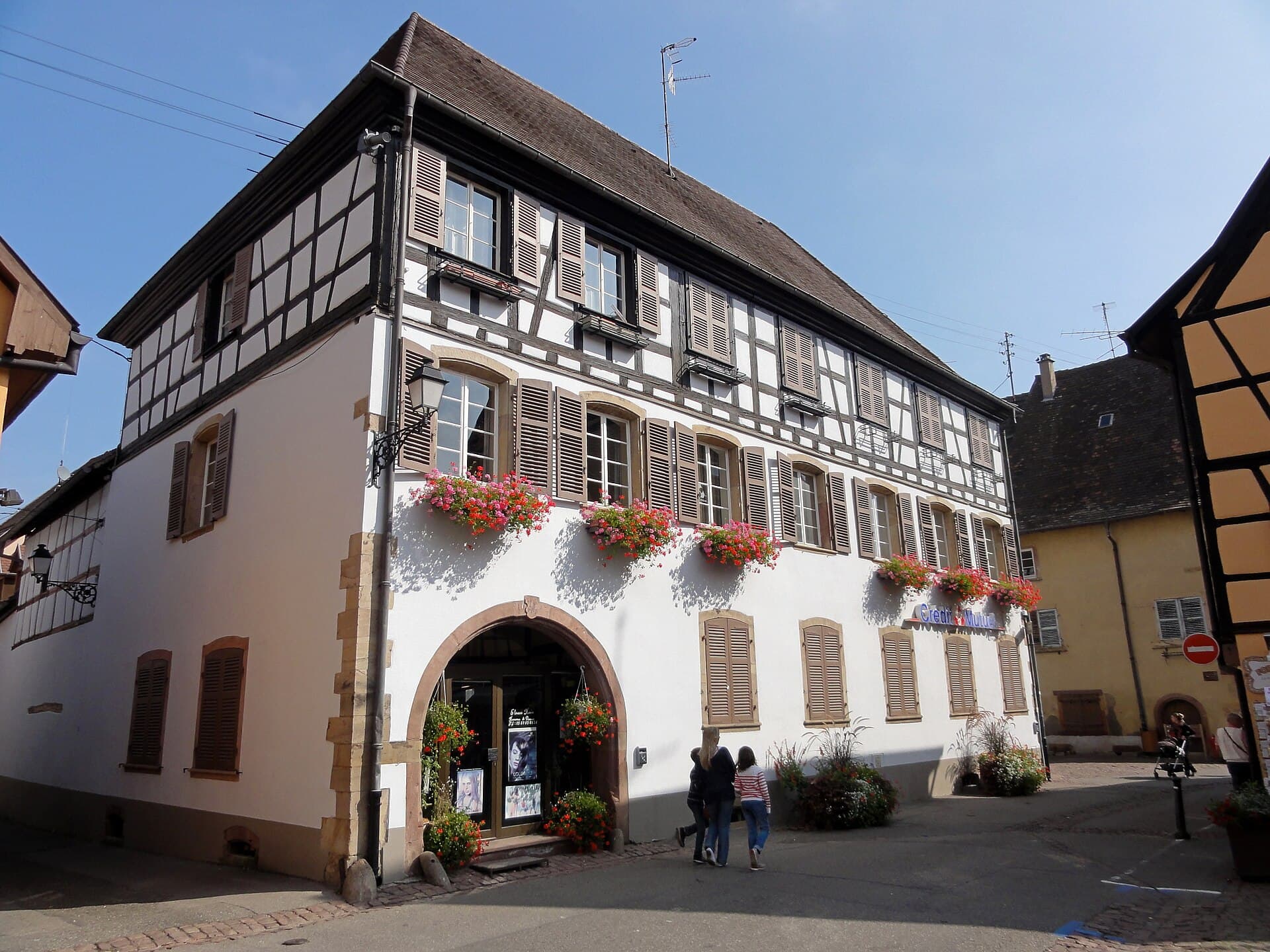
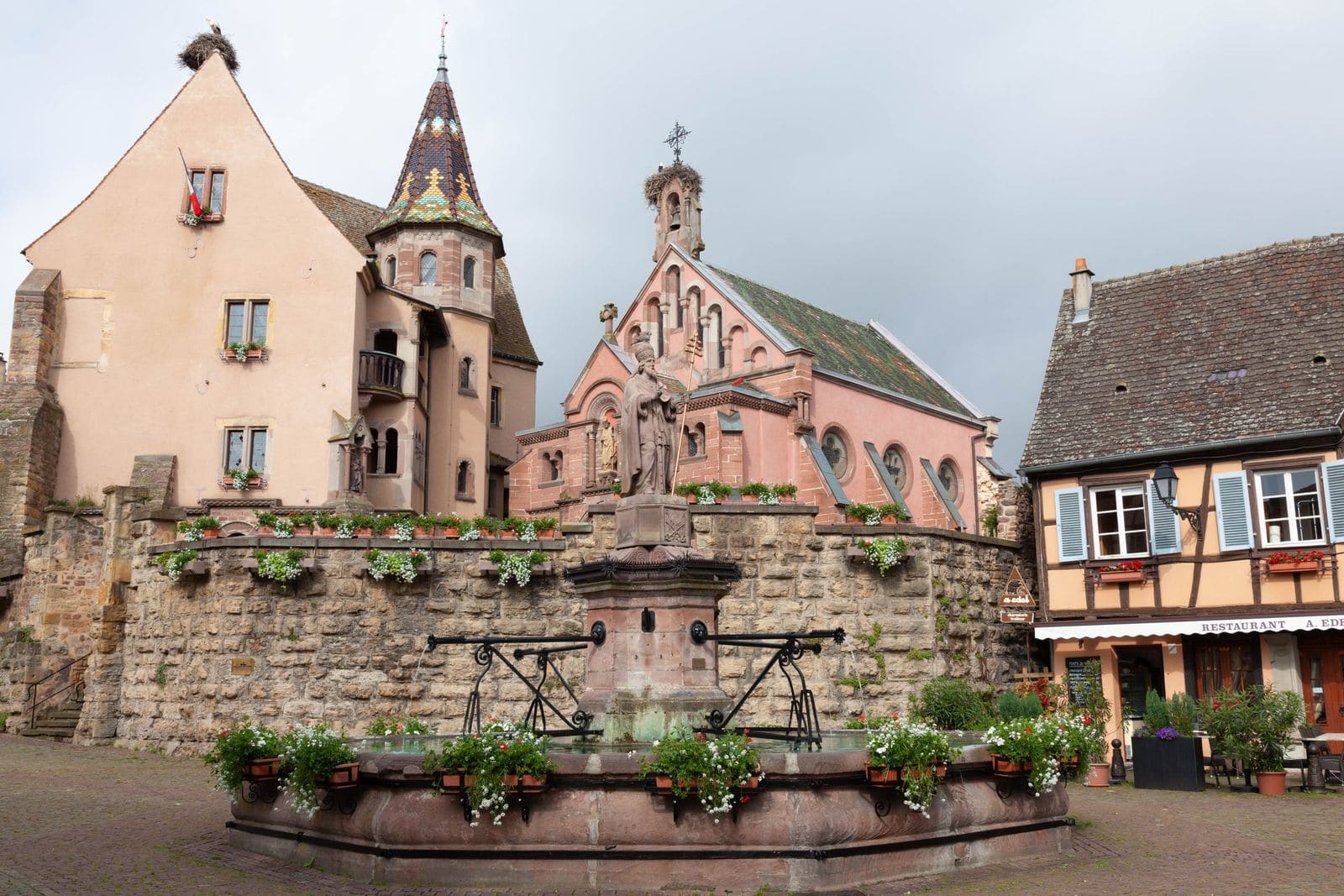
In eastern France lies a completely different universe, where instead of yellow limestone you’ll find colourful half-timbered houses and windows overflowing with geraniums. Eguisheim is an absolute classic of the popular Alsace Wine Route, which dates back to 1953 and connects the most picturesque spots in the whole region along roughly 170 kilometres. The layout of this village is utterly unique, as it’s built in three perfect concentric circles around the central castle and square.
Wandering the narrow cobbled lanes of Eguisheim is like winding your way through a colourful snail shell. Every house is painted a different pastel colour, which in the past supposedly helped tipsy winemakers find their way safely home. The region is, incidentally, very famous for its distinctive cuisine. Forget light Mediterranean fare — here the rich, aromatic Munster cheese reigns supreme, along with traditional savoury pretzels and the popular onion tart tarte flambée, which most restaurants will happily make in a purely vegetarian version with mushrooms and cheese.
💡 Tip: If you visit in autumn, don’t miss tasting the local wines. Eguisheim is home to excellent white varieties, and a glass of chilled Gewürztraminer or sparkling Crémant on the little square is an absolute must.
4. Riquewihr: A Perfectly Preserved 16th Century
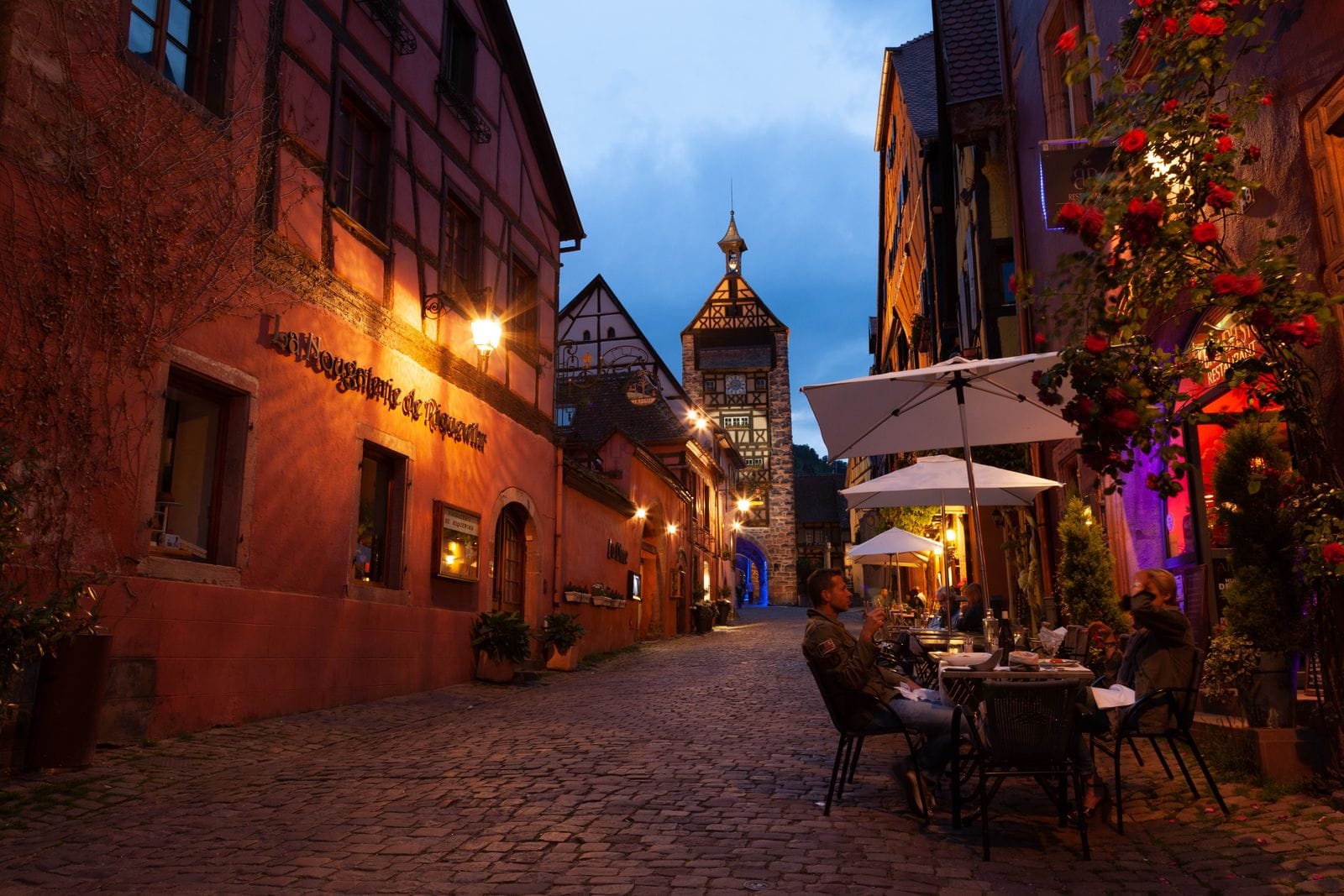
A little further north on the same wine route lies Riquewihr. This place had incredible good fortune in the midst of misfortune, because unlike many surrounding towns it miraculously survived both devastating world wars without a single scratch. Within its perfectly preserved town walls some 40 historic monuments are crammed together, and the atmosphere of the 16th century is almost tangible here. The same trio of the most beautiful villages in the area also includes nearby Kaysersberg, through which the wild little Weiss river runs.
Riquewihr is world-famous for its magnificent Christmas decorations and markets, which draw enormous crowds of visitors to the village. If you’re planning a visit during Advent, be prepared for the fact that the La Magie de Noël festivities in nearby Colmar will run from 23 November to 29 December in 2026, and the crowds immediately spill over into Riquewihr too. Weekends here are literally fit to burst, so I’d recommend planning your visit for a Tuesday or Wednesday instead.
💡 Tip: The main street, Rue du Général de Gaulle, is often packed, but as soon as you turn into any side lane you’ll find yourself in complete silence among old winemakers’ courtyards with ancient wooden presses.
5. Beynac-et-Cazenac: Medieval Drama Above the River
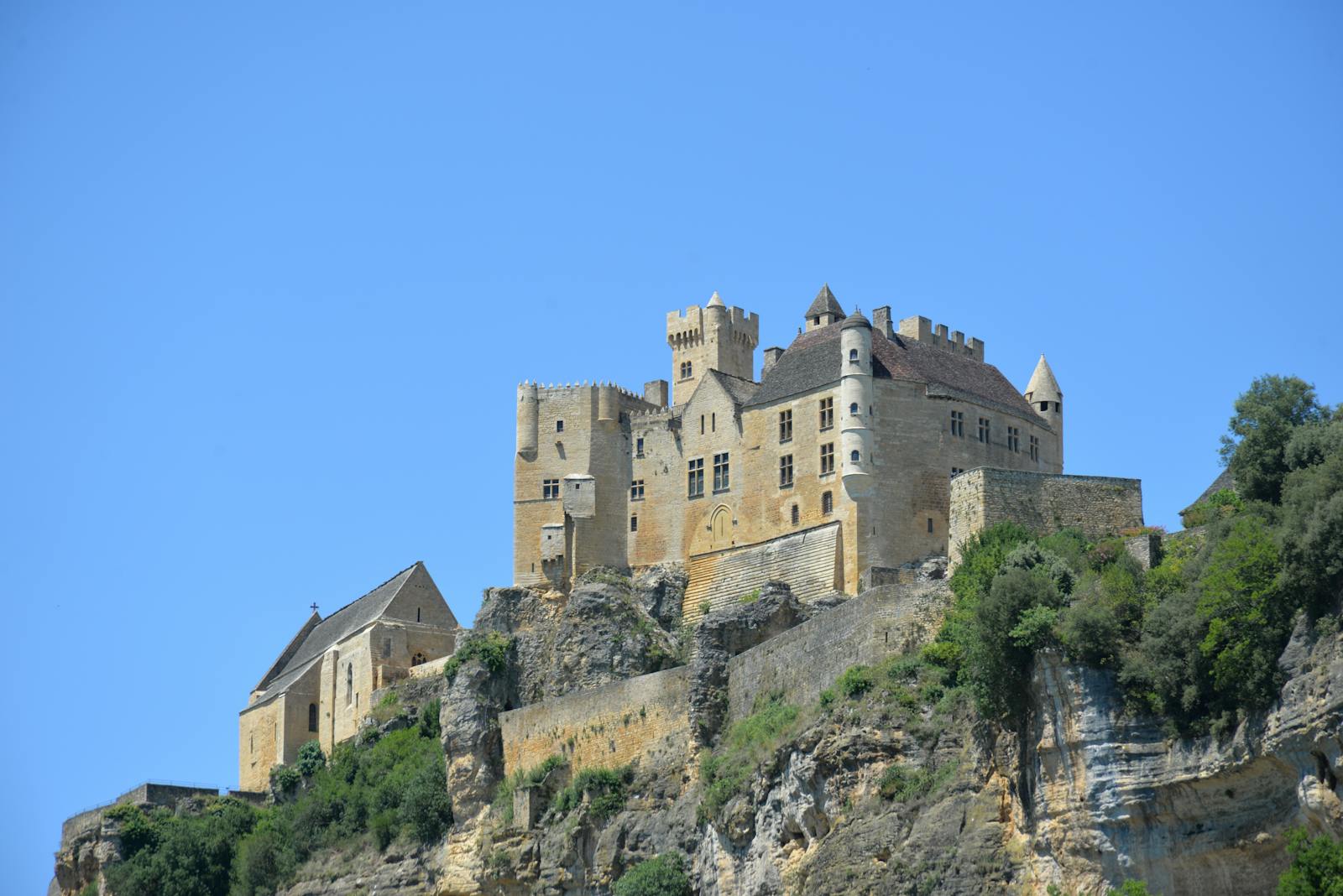
When we move southwest to the Dordogne département, we find ourselves in a land of deep forests, prehistoric caves and hundreds of majestic castles. Right above the Dordogne river, on a steep vertical cliff, rise the castle and the rugged medieval village of Beynac-et-Cazenac, which looks exactly the way you’d imagine a grand setting for a historical film.
Exploring the village means a constant climb up cobbled paths all the way to the castle itself. On the opposite bank of the river, Castelnaud castle proudly defies it, and these two fortresses glared at each other across the river throughout the entire Hundred Years’ War. To this day the place retains its slightly impenetrable and very authentic medieval character, heightened even further by the massive slate roofs of the local houses.
💡 Tip: The best way to grasp the majesty of Beynac and the whole region is from the surface of the river. Hire a kayak in nearby Vitrac and paddle the roughly sixteen-kilometre stretch down to Beynac. It’s perfectly safe even for complete beginners, because the river flows very lazily here and the most dramatic scenery you’d never see from a car will rise above you.
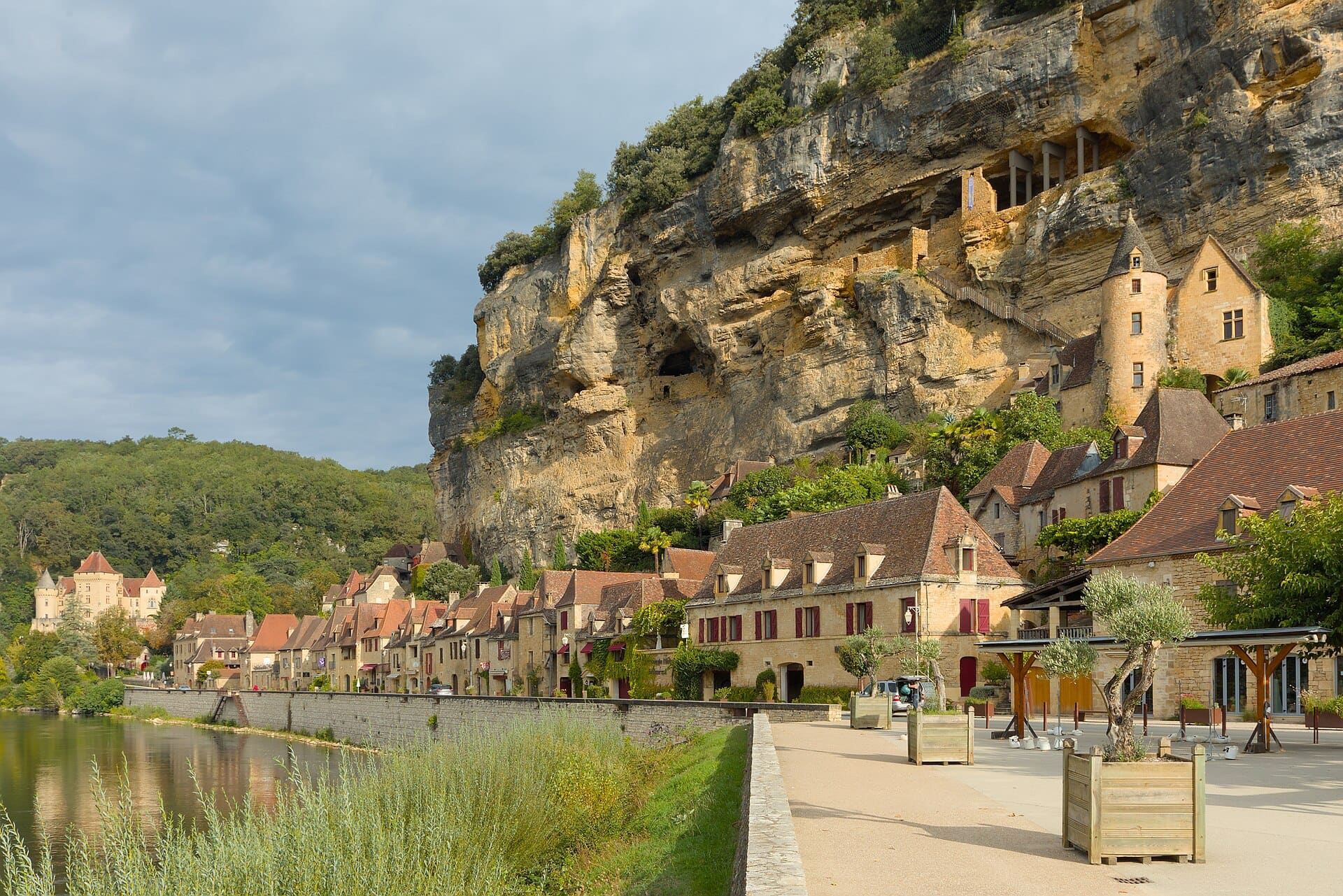
6. La Roque-Gageac: Wedged Between Cliff and Water
Just a few kilometres further downstream on the Dordogne you’ll come across another incredible scene. The houses of La Roque-Gageac, with their typical honey-yellow façades and steep roofs, are literally squeezed into a narrow strip between a vertical limestone cliff and the river. Thanks to the southerly orientation of the rock, a very specific microclimate forms here, and so in the village you’ll see palms, banana plants and bamboo growing freely.
The walk along the river is very pleasant, but don’t miss the narrow staircase that climbs high up the slope to a little church and the remains of the old fortifications. If you’re looking for a beautiful view over the whole area, head to the nearby village of Domme, a traditional fortified town with a regular grid layout that offers a fantastic panorama. The local specialities you’ll find on every menu are excellent dishes made with walnuts and the famous black truffles, for which the entire historic Périgord region is world-renowned. You should also try the local Cabécou goat’s cheese, often served warm on a fresh salad.
💡 Tip: Traditional wooden boats called gabares set off from the village landing. They once carried wine and timber, but today they offer a roughly one-hour guided cruise — perfect for photographing the surrounding castles from the water.
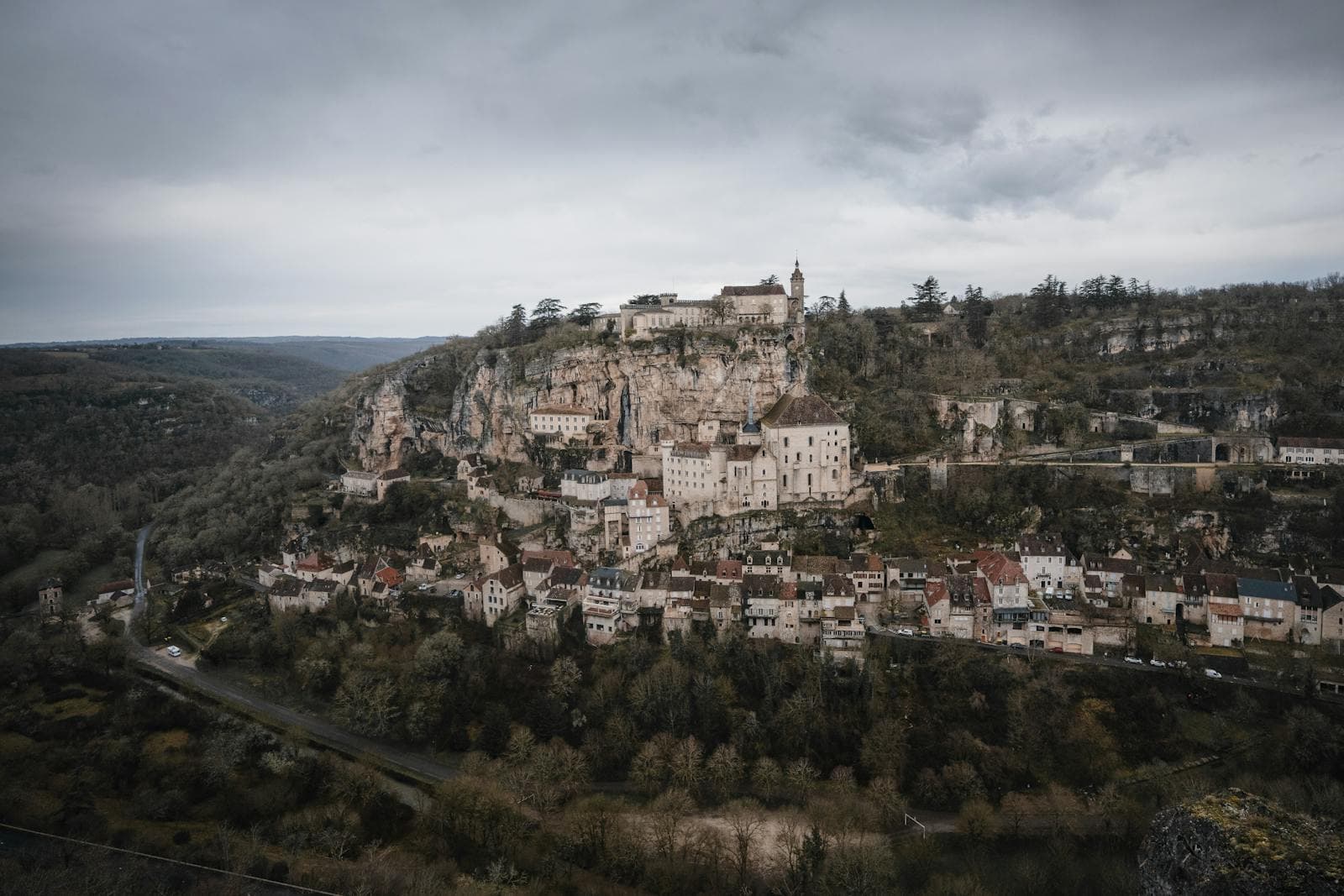
7. Rocamadour: The Vertical Pilgrimage Town
Although it formally lies just over in the Lot département, Rocamadour is an inseparable part of the same touring circuit. It’s not a classic village but rather a vertical pilgrimage site of incredible scale, glued in cascades to the sheer wall of the deep canyon of the Alzou river.
Rocamadour suffers from extreme crowds, because for centuries it has drawn pilgrims to the statue of the Black Madonna, and today it adds thousands of ordinary tourists to that. During the day in high season it’s more of a fight for survival, pushing through masses of people. If you want to enjoy its mystical atmosphere, arrive by nine in the morning at the latest, or plan your visit for late evening, when the whole cliff is beautifully lit up against the dark.
💡 Tip: A short way from Rocamadour you’ll find the famous Gouffre de Padirac chasm with its underground river, which you sail on little boats. In 2026 the cave opens at the end of March, and booking tickets, which cost around €22.50, is absolutely mandatory online in advance. Nearby Lascaux IV, a perfect replica of the famous prehistoric cave, is also well worth a visit.
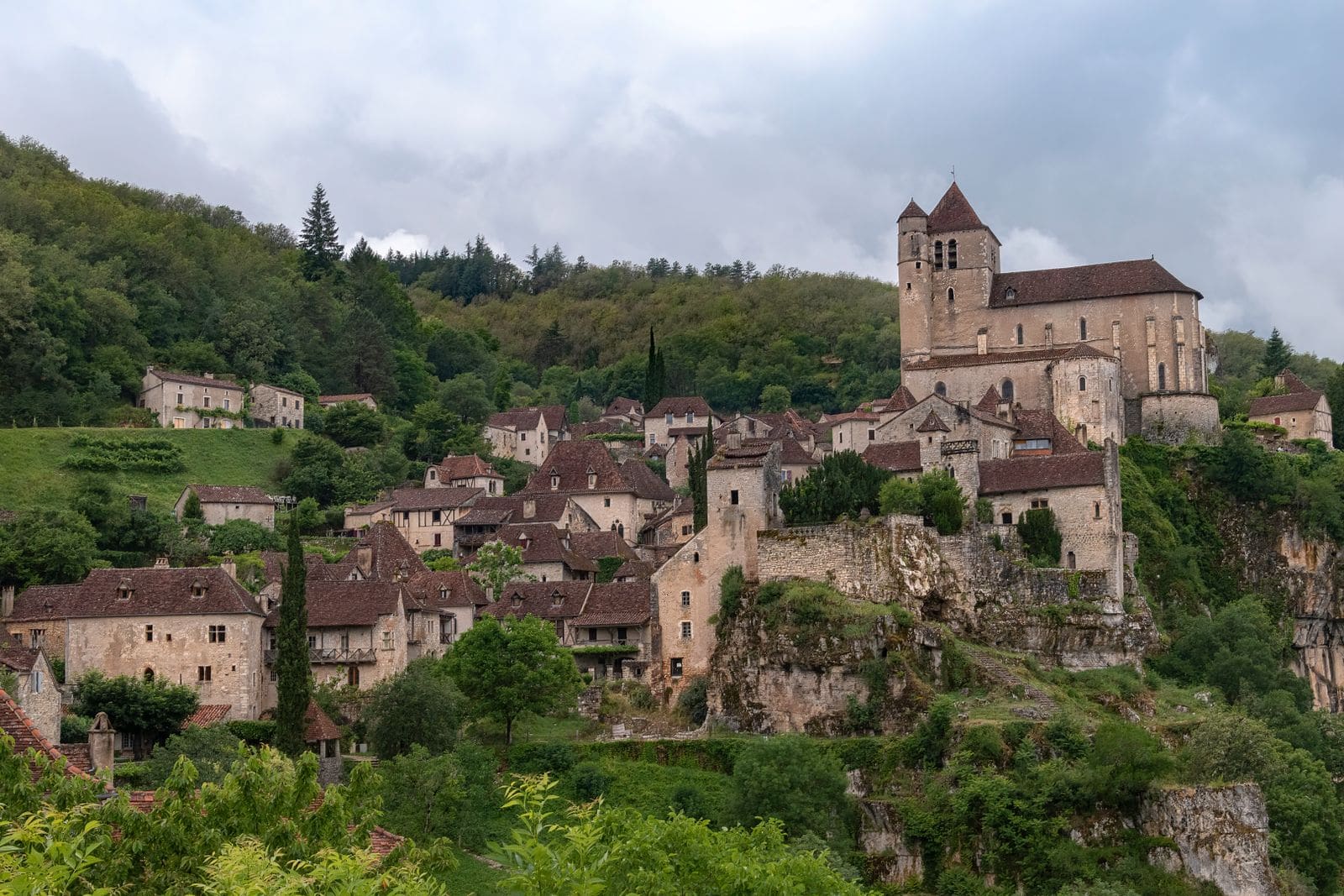

8. Saint-Cirq-Lapopie: A Jewel Above the Lot Valley
Once you’re in the Lot département, you absolutely mustn’t miss picturesque Saint-Cirq-Lapopie. This village confidently balances on a cliff a hundred metres high directly above a meander of the Lot river, and it repeatedly wins French television polls for the country’s favourite village. Its setting is so dramatic that the view from the valley will take your breath away.
The entire centre is a strict pedestrian zone, which means absolutely unlimited scope for wandering between houses dating from the 13th to 16th centuries with their dark brown roofs. You’ll find plenty of small art and craft workshops here, because the village has attracted painters and poets since the early 20th century. If you love French literature, the famous surrealist poet André Breton lived here, and publicly declared that once he discovered this place, he never wanted to live anywhere else.
💡 Tip: Park down by the river and head up to the village along the old towpath called the Chemin de halage, which is partly carved straight into the rock above the water. It’s a beautiful walk of about an hour before you climb up to the village itself.
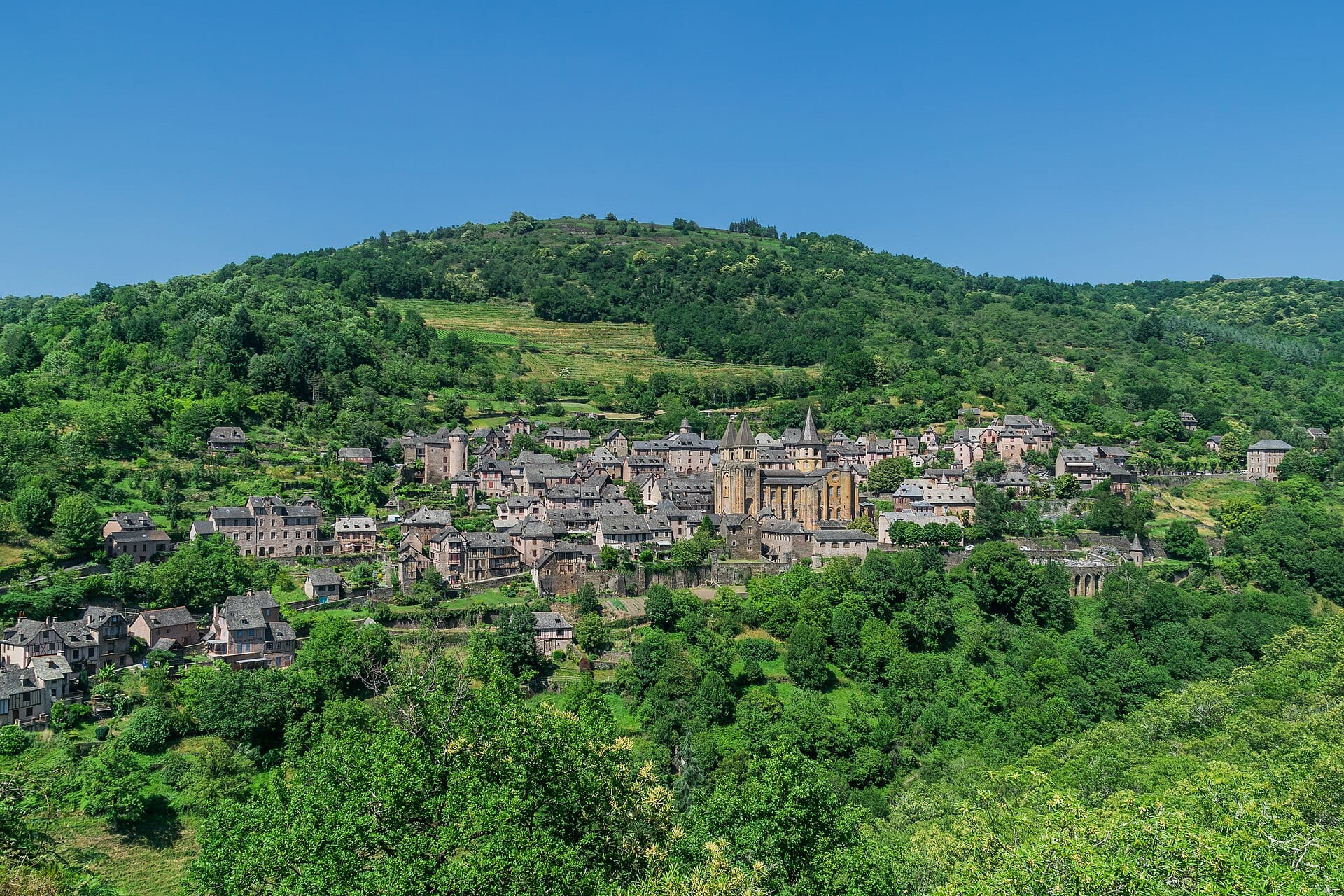
9. Conques: A Stop on the Way to Santiago
If we move deeper into the Aveyron region, we come across the hamlet of Conques, one of the most important points on the historic pilgrimage route to Santiago de Compostela. The village lies hidden in a deep green valley and resembles a perfectly preserved medieval time capsule, where time has stopped and the modern world hasn’t yet managed to break in.
The dominant feature of the whole village is the stunning Abbey Church of Sainte-Foy, which houses an incredible treasury of rare relics. Be sure to notice the magnificent tympanum above the main entrance, which depicts the Last Judgement in fine detail, as well as the modern stained-glass windows that create a beautiful play of light inside. There’s an admission charge to the lanes only if you want to visit the treasury itself; otherwise, a walk among the ancient stone and half-timbered houses with their split-slate roofs is completely free and open to anyone.
💡 Tip: Try to time your visit for around eight in the evening, when organ concerts or special floodlighting of the tympanum often take place. The atmosphere of this place, once the daytime bustle dies down and the lanes empty out, is absolutely unforgettable.
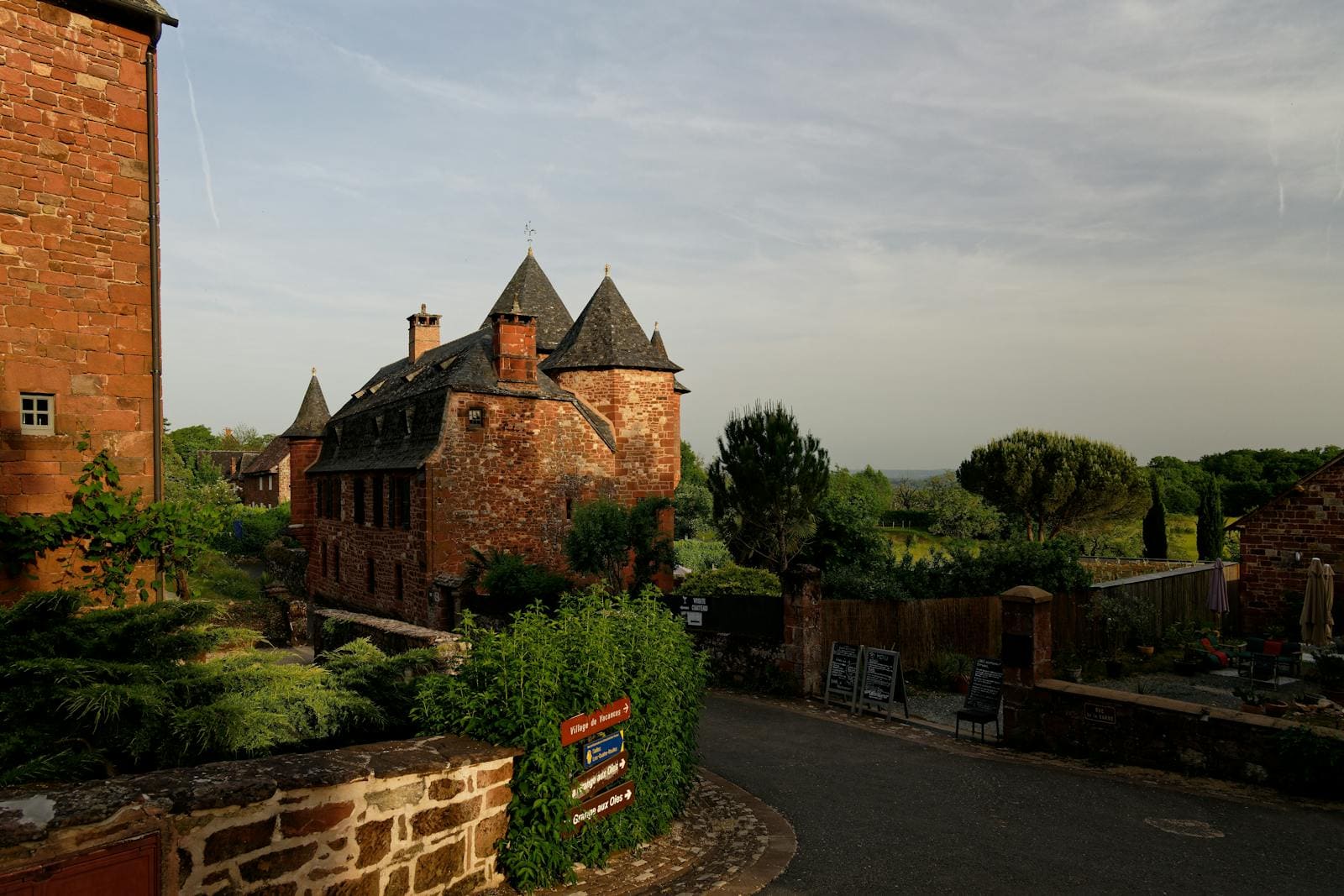
10. Collonges-la-Rouge: An Entirely Red Village
While most French villages play tones of yellow limestone or grey granite, Collonges-la-Rouge in the Corrèze region is a complete one-off. Every single house, church and wall in this village is built from rich red sandstone, giving it an incredibly warm and photogenic appearance. Incidentally, this is exactly where, in 1982, the original idea for founding the entire Les Plus Beaux Villages association was born.
The contrast of the dark red façades with the blue-grey slate roofs and green climbing plants is especially stunning just before sunset, during the so-called golden hour. The streets are full of little shops selling ceramics, craft goods and local delicacies. I’d recommend tasting the local mustard made from a purple grape variety, or the excellent walnut liqueur, which are absolutely typical and very popular souvenirs from this characterful region.
💡 Tip: The village is fairly small and very compact. About two hours is plenty to explore it, so it makes an ideal afternoon stop on a longer drive south through France.
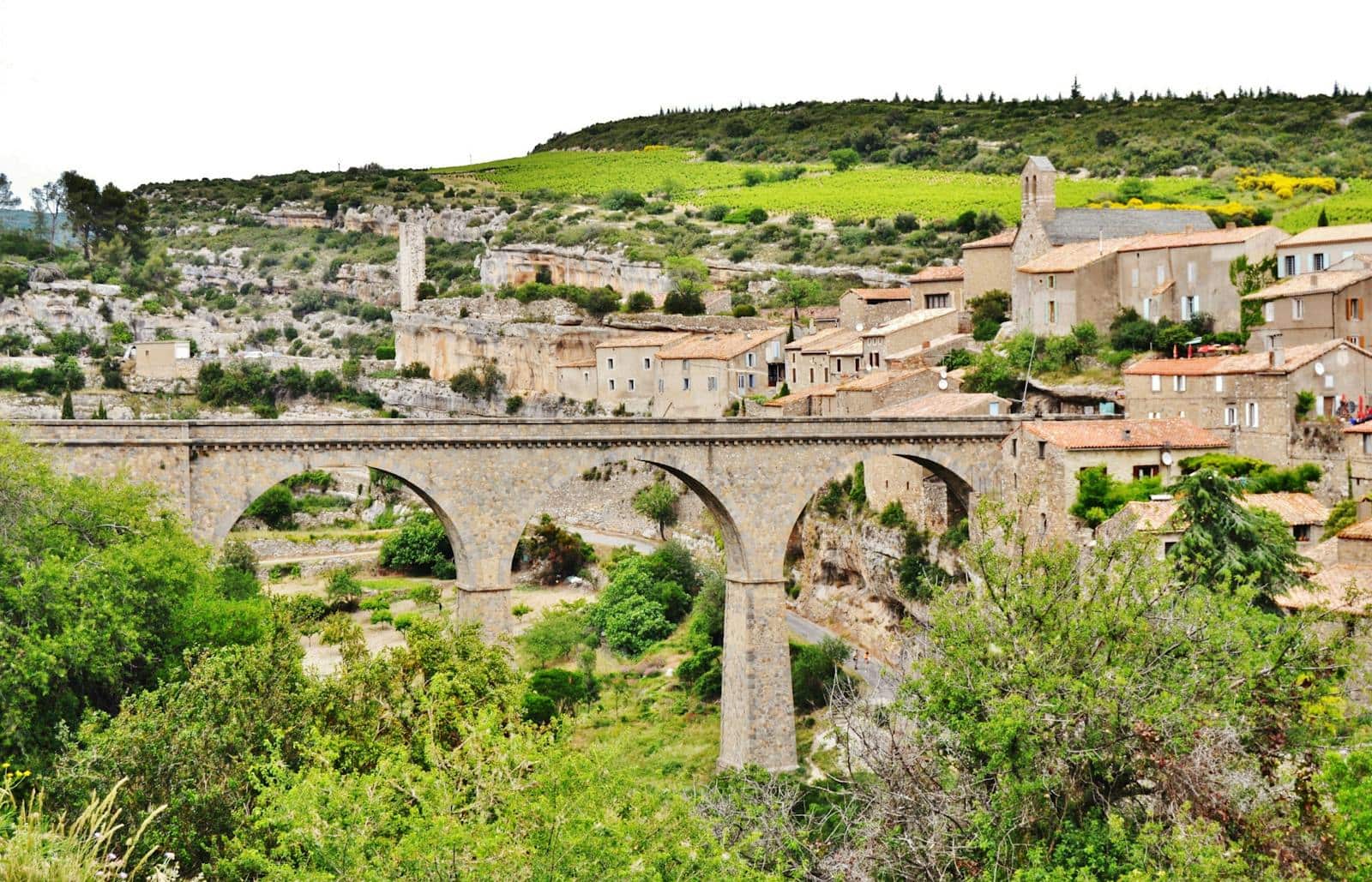
11. Minerve: History in a Deep Canyon
Occitanie is regarded as the underrated and far more authentic brother of neighbouring Provence, and its villages often have a much harsher history. Minerve sits on a mighty limestone spur high above the confluence of two rivers, which have carved deep natural bridges into the rock here. Access to the village is across a narrow bridge spanning the dizzyingly deep canyon, which leaves a very powerful impression.
Minerve was one of the main centres of Cathar resistance in the Middle Ages, and the history of the siege is still strongly present here. If you’re interested in this part of French history, definitely make a trip to the nearby Cathar castles such as Peyrepertuse, where a more demanding climb awaits you, but your reward will be endless views all the way to the Pyrenees. The surrounding landscape, dotted with vineyards and dry scrub, tends to be scorched in the summer months by temperatures reaching close to 40 °C, so head here in spring or autumn instead.
💡 Tip: The biggest tourist magnet in the whole region is the enormous medieval fortress of Carcassonne. Entry to its lanes is completely free; you only pay for the castle tour, which costs €19. If you’re heading here on 14 July, brace yourself for utter madness, as hundreds of thousands of spectators watch the traditional fireworks.
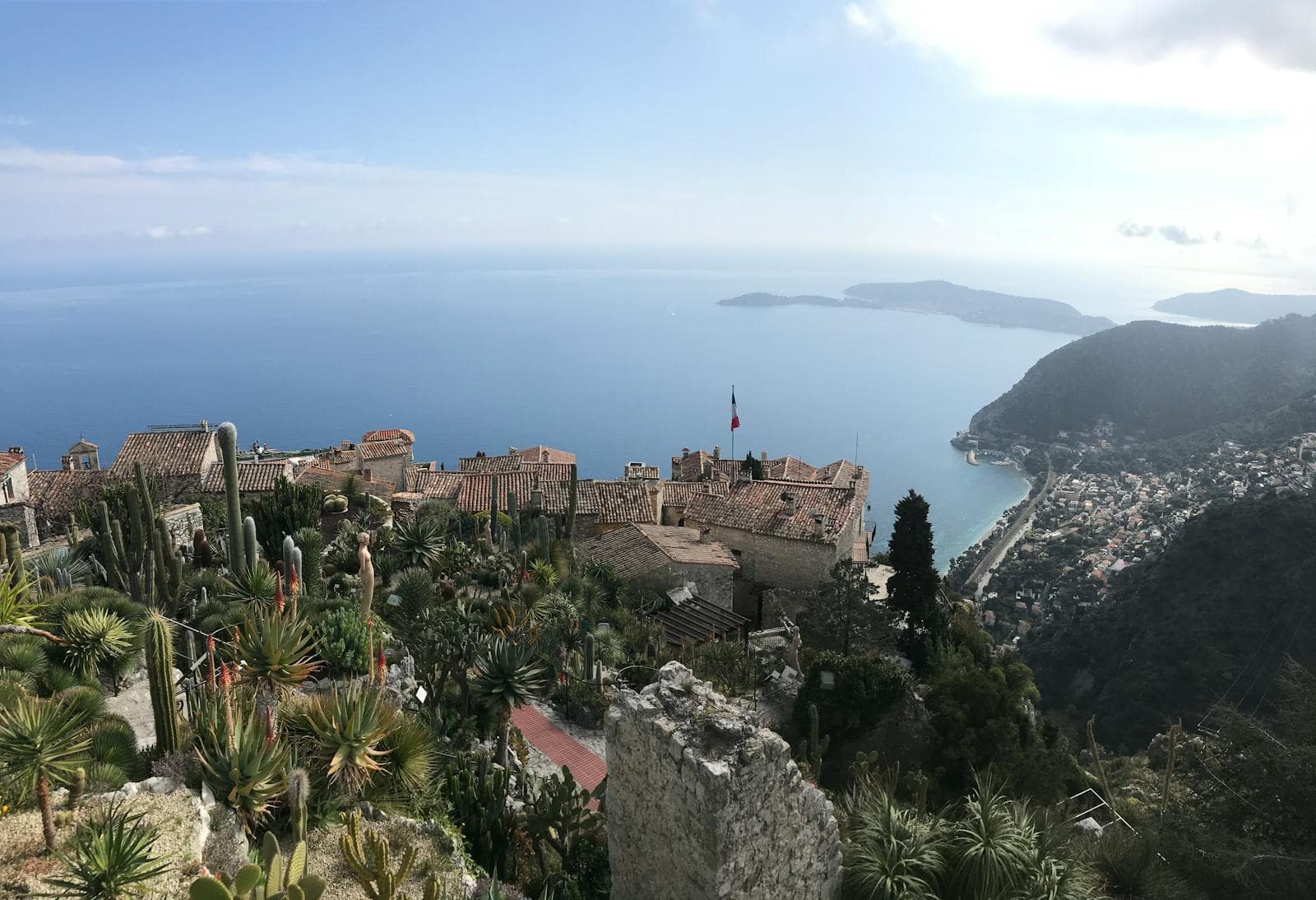
12. Èze: An Eagle’s Nest Above the Riviera
A short distance from the busy coast of the French Riviera, right between the resort of Nice and luxurious Monaco, you’ll find picturesque Èze. This little village rises like an impregnable eagle’s nest on a steep rock more than 400 metres above the Mediterranean. Its dramatic position makes it one of the absolutely most photographed spots on the entire Côte d’Azur.
The narrow lanes are full of arched passages, boutiques and small art studios. At the very top of the village you’ll find a beautiful exotic botanical garden called Le Jardin Exotique — there’s a small admission charge, but it offers absolutely unbeatable panoramic views over the entire coastline. It’s an ideal place to escape the bustle of the cities below, though in high summer you’ll naturally come across a fair number of day-trippers from the nearby seaside resorts.
💡 Tip: If you’re in good physical shape, you can descend to the sea along the so-called Nietzsche Path (Chemin de Nietzsche). The descent takes about an hour and offers breathtaking views — just don’t forget sturdy footwear and plenty of water.
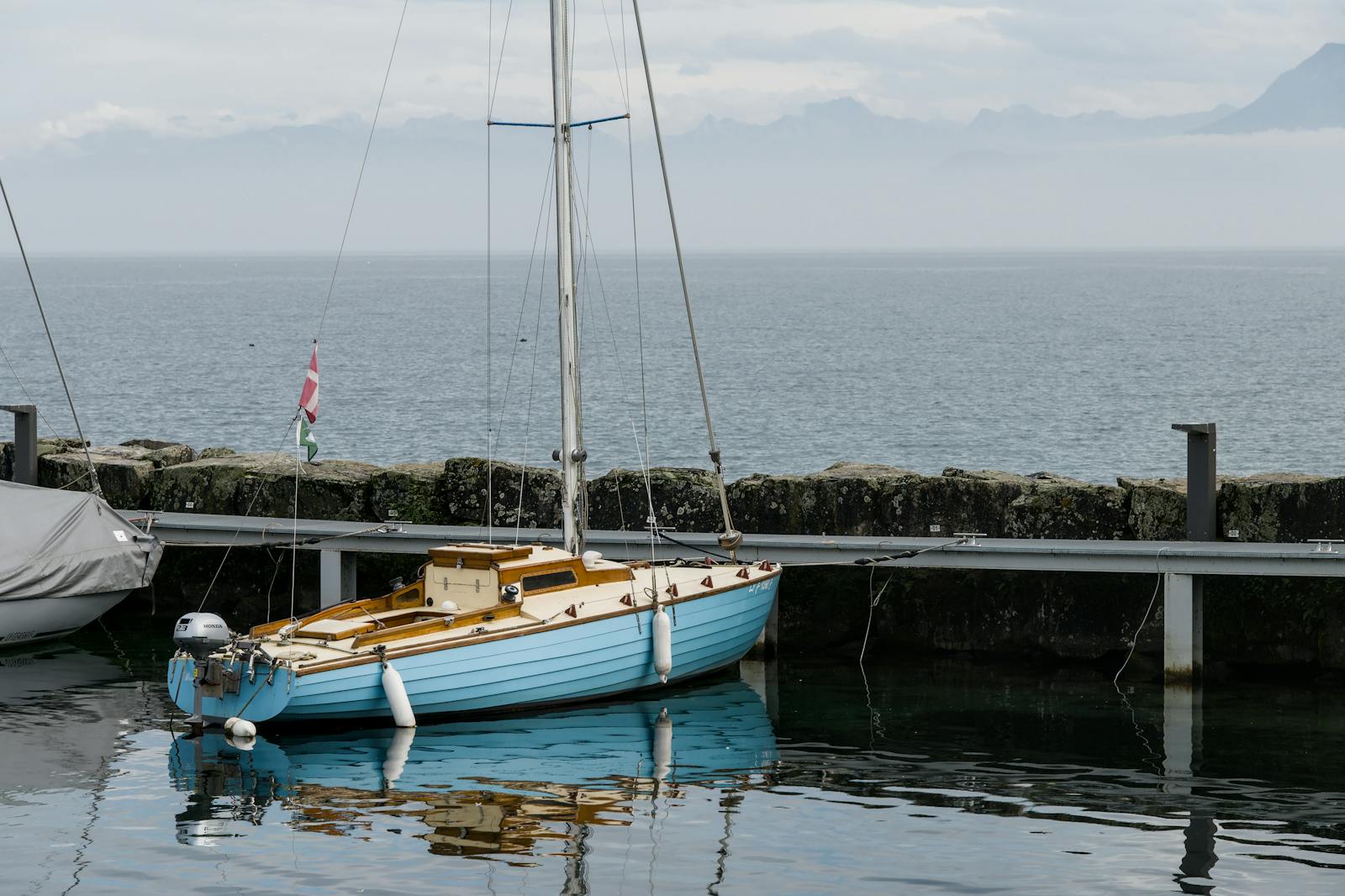
13. Yvoire: The Flower Pearl of Lake Geneva
On the shores of vast Lake Geneva, right on the border with Switzerland, lies the medieval fishing village of Yvoire. Thanks to its beautiful waterside location and more than 700 years of history, this place has retained the atmosphere of an ancient harbour, above which the massive square tower of the local 14th-century castle rises majestically.
Yvoire is internationally renowned for its incredible floral displays, thanks to which it regularly wins all sorts of European gardening competitions. The streets, balconies and waterfront literally overflow with colour. I’d definitely recommend visiting the Garden of the Five Senses (Jardin des Cinq Sens), cleverly designed as a living labyrinth full of medicinal, aromatic and historic plants that you can touch and smell.
💡 Tip: Although the region is famous for its freshwater fish dishes, vegetarians won’t miss out either. In the small, cosy crêperies by the lake you’ll find delicious savoury pancakes filled with local cheeses and fresh vegetables, which you can wash down with chilled cider.
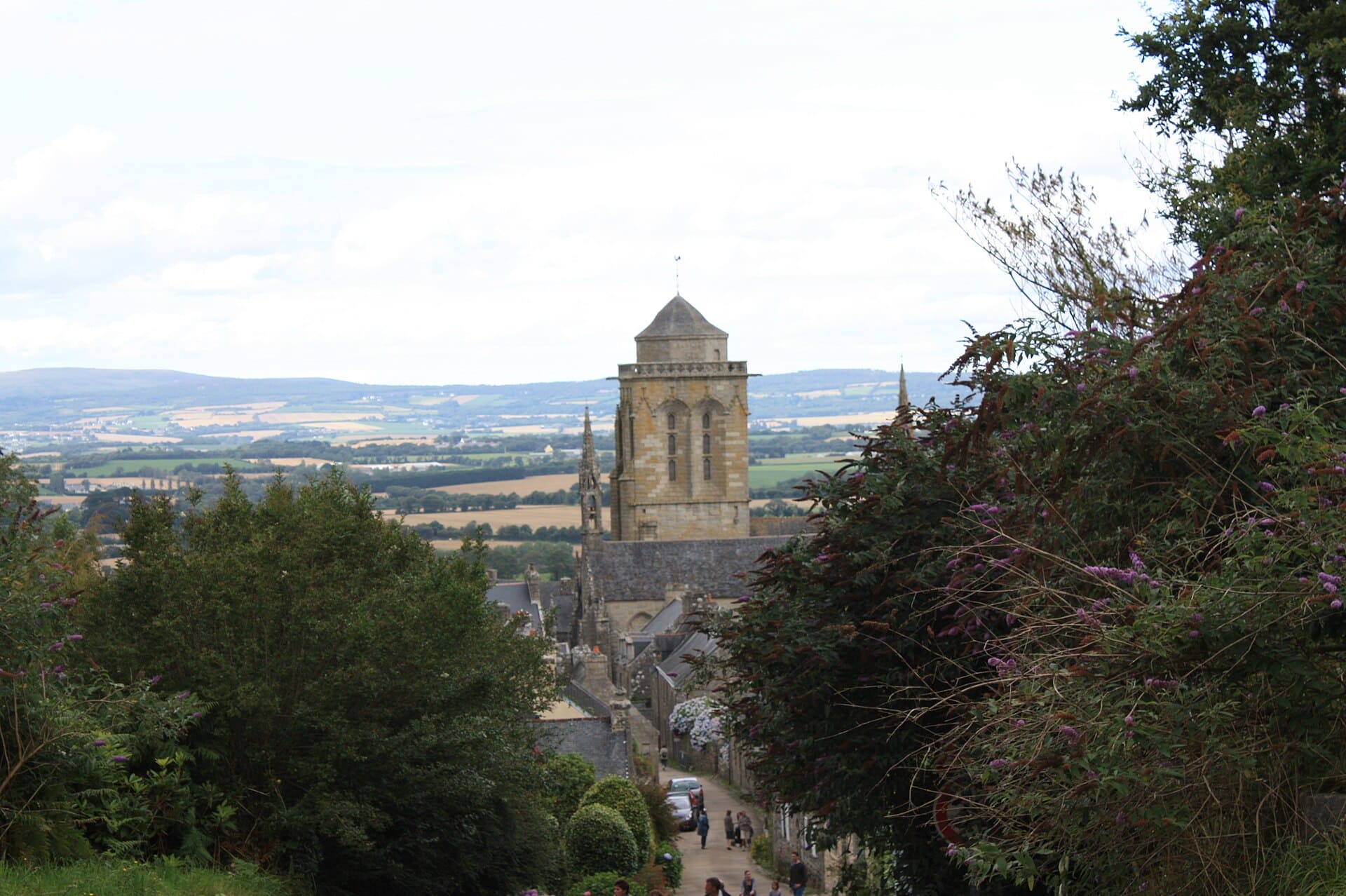
14. Locronan: The Granite Heart of Brittany
In the northwest of France, in the rugged and windy region of Brittany, a completely different architecture dominates. Locronan is a village built entirely from dark grey granite, giving it a very distinctive, slightly melancholy yet immensely elegant appearance. In the past, this place grew enormously wealthy from making high-quality canvas for the sails of the royal navy of the day.
The central square, with its imposing church and old stone well, has served as the perfect backdrop for dozens of period films. In Brittany you always have to reckon with the distinctive weather, so a good windproof jacket is an absolute must even in the summer months. Your reward for the cooler climate, though, will be the finest authentic Breton savoury pancakes called galettes, made from buckwheat flour and traditionally washed down with rich apple cider served in ceramic cups.
💡 Tip: Take a trip to the famous Côte de Granit Rose coast at nearby Ploumanac’h too. The contrast of the huge pink granite boulders, ground into bizarre shapes by the sea, with the deep blue Atlantic is absolutely breathtaking.
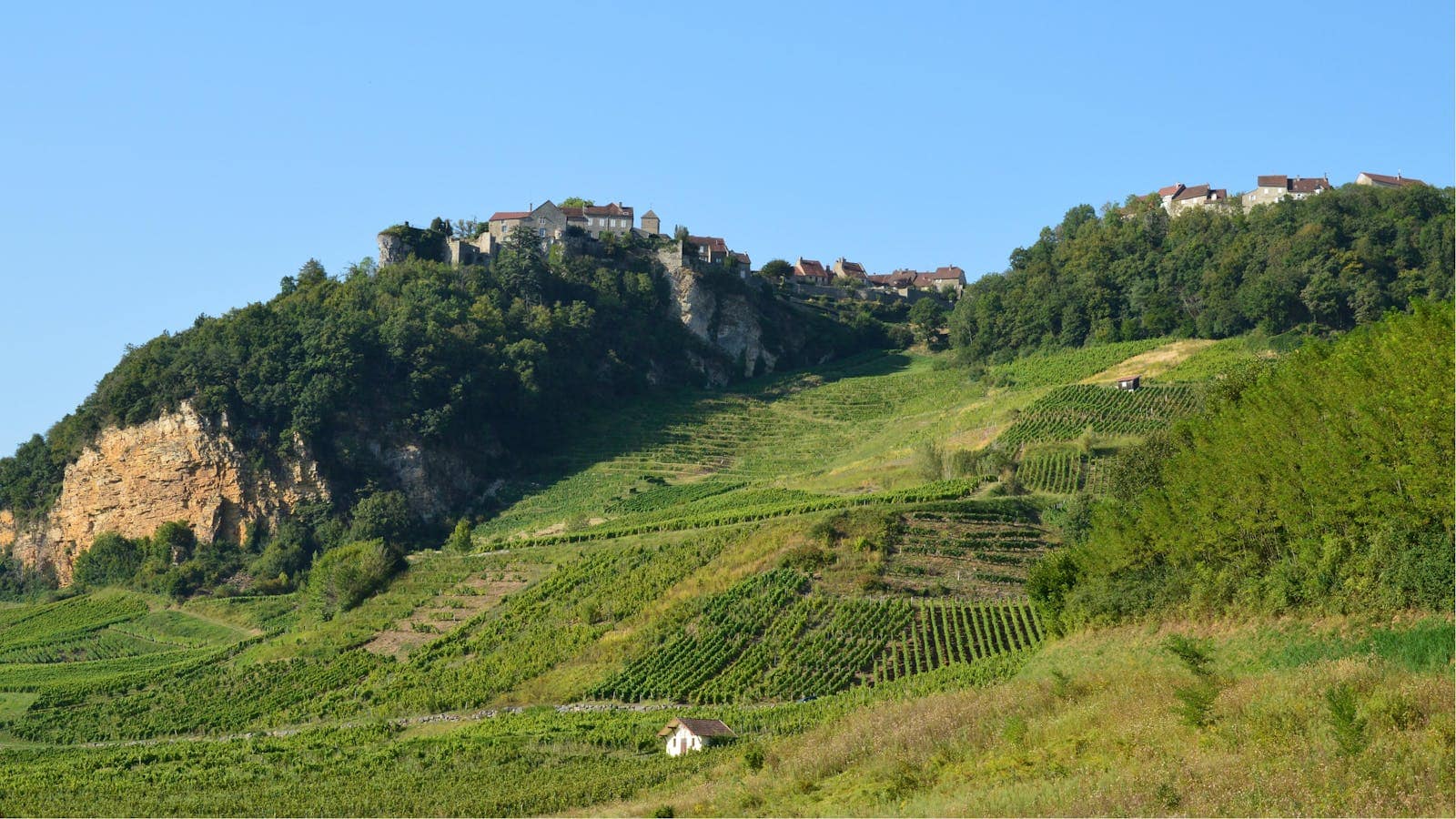
15. Château-Chalon: Guardian of the Yellow Wine
Our final tip takes us to eastern France, to the quiet, forested Jura mountains. The village of Château-Chalon confidently balances on the edge of a steep cliff and looks down on the carefully tended vineyards far below. Compared with hectic Alsace or crowded Provence, absolute calm reigns here, and you’ll come across the merest handful of foreign tourists.
The village is literally the cradle of the famous yellow wine known as vin jaune. This unique wine ages in barrels under a layer of special yeasts for exactly six years and three months, which gives it an unmistakable flavour reminiscent of walnuts and curry spices. The local countryside smells not only of wine but also of cheese. The excellent Comté cheese from the local mountain dairies is an absolute delicacy you can buy in the little shops right on the village square and turn into a great picnic at a viewpoint.
💡 Tip: The picturesque Jura Wine Route runs through the village, covering roughly 80 kilometres. If you have a car or an e-bike, it’s a fantastic, as-yet-undiscovered loop for slow travel through the French countryside.
Map of points of interest for your phone
Where to Go Next from the French Countryside
If you’re planning a more extensive road trip and want to link these picturesque villages into a meaningful itinerary, you have several great options. From the south you can smoothly continue on to larger cities and natural wonders, while from the east there’s the chance to move into the mountains.
Try putting your trip together using our detailed guides to the individual regions:
- If the lavender fields and limestone towns like Gordes charmed you, take a look at our big guide to the Provençal countryside and cities.
- If you’re more drawn to medieval castles, prehistoric caves and kayaking, you mustn’t miss the Dordogne and Périgord region, where a vast concentration of historic gems is hidden.
- And for lovers of half-timbered houses, top-class cuisine and Christmas atmosphere, there’s the beautiful Alsace Wine Route, which you can drive even in a long weekend.
Frequently Asked Questions
What exactly does the Les Plus Beaux Villages label mean?
It’s an official independent certification awarded by a special association. To receive it, a village must have fewer than 2,000 inhabitants, contain at least two protected national monuments, and demonstrate commitment to community development and preservation of its rural character. So it’s not just attractive marketing, but a real guarantee of preserved historical architecture.
Do I have to pay an entrance fee to enter these villages?
No, entry to the villages themselves and walking through their streets is always completely free, as they are regularly inhabited settlements. You only pay for entry to specific castles, museums, caves, or private gardens located within their territory.
How is it with parking and how much does it cost?
Most certified villages have historic centers closed to regular traffic. You need to use park-and-ride facilities on the outskirts of the village. Parking usually costs between 4 and 8 euros per day, and in some smaller villages it’s even free outside the summer season. In July and August, you need to arrive at the parking lot early in the morning, otherwise you won’t find a space.
Can you get to the villages by public transport?
It’s very complicated. The French railway (SNCF) can get you to larger regional towns, but the villages themselves often lie off the main routes. Bus connections to more remote places are usually very infrequent, typically running one service in the morning and one in the afternoon, and often not running at all on weekends. For exploring the countryside, having your own car or a rental is practically a necessity.
How does the toll system work on French highways?
In France, there’s no classic highway vignette. You pay at toll gates (péages) based on kilometers driven, which works out to an average of just under 10 euros per 100 kilometers. In February 2026, there’s also a slight toll increase, and the so-called Free-Flow system is becoming increasingly common (for example, on highways A4, A13, or A79), where there are no barriers and you must pay the toll online within a few days using your license plate number.
Do I need an environmental sticker when driving to the countryside?
Yes, I recommend getting one. The environmental sticker (Crit’Air) is mandatory primarily for entering low-emission zones in major cities (ZFE), but when traveling to the countryside, you often can’t avoid these zones if you’re passing through cities like Marseille, Aix-en-Provence, or Strasbourg. The vignette costs just under €5 online and is valid for the entire lifetime of the vehicle; without it, you risk a €68 fine.
Is tipping mandatory in countryside restaurants?
No, in French cafés and restaurants, service is already included by law in the total price (service compris). If you were satisfied, it’s polite to leave some small change and round up the bill by 1 to 2 euros. Remember that when paying by card, you usually can’t add a tip through the terminal, so you need to inform the waiter of any additional amount beforehand, or leave cash on the table.
Is it really that hot in the south of France in summer?
Yes, summer temperatures in the Provence, Occitanie and Dordogne regions regularly climb to around 38 to 40 °C. The historic stone streets soak up the heat during the day and radiate it even at night. Walking around monuments in the midday heat is very unpleasant, so I recommend planning visits to castles and villages for early morning and spending the afternoon by the water or in the shade.
Tips and Tricks for Your Vacation
Don’t Overpay for Flights
Search for flights on Kayak. It’s our favorite search engine because it scans the websites of all airlines and always finds the cheapest connection.
Book Your Accommodation Smartly
The best experiences we’ve had when looking for accommodation (from Alaska to Morocco) are with Booking.com, where hotels, apartments, and entire houses are usually the cheapest and most widely available.
 🚗 Car rental on the roadVerified rental cars in France
Search with the DiscoverCars comparison engine — it compares prices from dozens of local and international rental companies, and most bookings come with free cancellation.
Compare car prices in France →Don’t Forget Travel Insurance
Good travel insurance will protect you against illness, accidents, theft, or flight cancellations. We’ve had a few hospital visits abroad, so we know how important it is to have proper insurance arranged.
Where we insure ourselves: SafetyWing (simple monthly subscription) and TrueTraveller (for extra-long trips).
Find the Best Experiences
Get Your Guide is a huge online marketplace where you can book guided walks, trips, skip-the-line tickets, tours, and much more. We always find some extra fun there!