

When we lived in Canada back in 2016 and 2017, Lukáš and I had the gorgeous Kananaskis Country right on our doorstep, with the Rocky Mountains forming our everyday view. While we naturally spent the first few months exploring the famous Banff National Park, we eventually ran out of trails there and started looking further afield. Luckily, the locals let us in on their best-kept secret — Kananaskis Canada (often simply called K-Country).
It’s a vast area of provincial parks sitting right next to Banff, yet offering equally stunning — if not more beautiful — views, turquoise lakes, and majestic mountain peaks, all with a fraction of the international tourist attention. So here’s our personal shortlist of places we returned to again and again, spots where we completely forgot Banff even existed. You’ll see for yourself that Banff National Park isn’t the only thing worth visiting in Alberta. I’ll also share where to stay, how the new entry fee works, and what to watch out for in the wilderness.
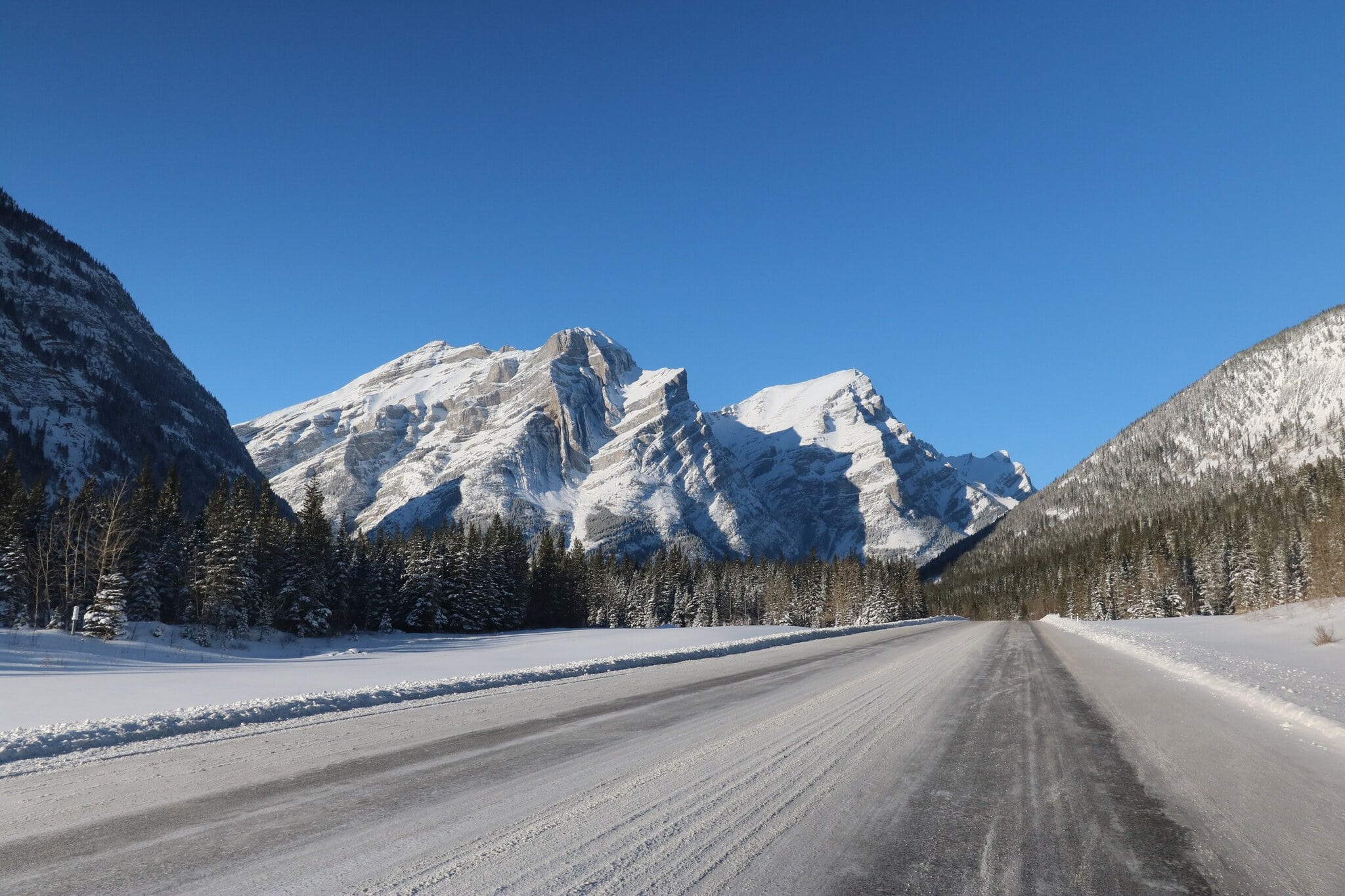
The full destination guide: Rocky Mountains — guide and what to see
TL;DR
If you’re on the go and just need a quick overview of the essentials, here are the key things you should know before visiting this stunning Canadian wilderness:
- Entry fee required: A Kananaskis Conservation Pass is now mandatory for the entire area, costing 15 CAD (about €10) per day per vehicle. You can buy your Kananaskis pass online from the comfort of your hotel and simply print the ticket or save it to your phone.
- Fewer crowds, more bears: Kananaskis Canada is primarily visited by locals from Calgary on weekends, so you won’t encounter hordes of tour buses — but you’ll have a much higher chance of spotting wildlife (bear spray is an absolute must).
- Our base camp: We always stay in the neighbouring town of Canmore, but if you want luxury right inside the park, head to the Pomeroy Kananaskis Mountain Lodge.
- Getting around: You’ll definitely need your own car, as public transport won’t get you to the most beautiful lakeside areas, although an occasional shuttle runs to the main campgrounds.
- Main highlights: The highest paved road in Canada (Highwood Pass) and countless hikes ranging from easy strolls (Grassi Lakes) to challenging scrambles (Mount Yamnuska).
Where Is Kananaskis and Why You Should Visit
When people think of Canada and mountains, Banff or Jasper instantly spring to mind. So when I recommend our favourite destination, people often ask: Where is Kananaskis? This enormous area, made up of several provincial parks and protected zones, sits in the foothills and mountains of the Canadian Rockies, west of Calgary and roughly southeast of Canmore and Banff National Park. If you pull up a Kananaskis country map, you’ll see it borders the national park directly, but the rules and management work a bit differently since it’s provincial rather than national territory.
So why should you go? I remember one morning when Lukáš and I hiked for hours without seeing a single person — just rustling leaves and the distant murmur of a creek. At Lake Louise, that would be unthinkable even in January. This is a place where you can experience raw, untouched Canadian wilderness, breathe fresh mountain air scented with pine, and feel like the mountains belong entirely to you. Better still, it’s very accessible from Calgary airport, so if you’re planning a road trip through western Canada, I’d strongly recommend setting aside at least two to three days for K-Country.
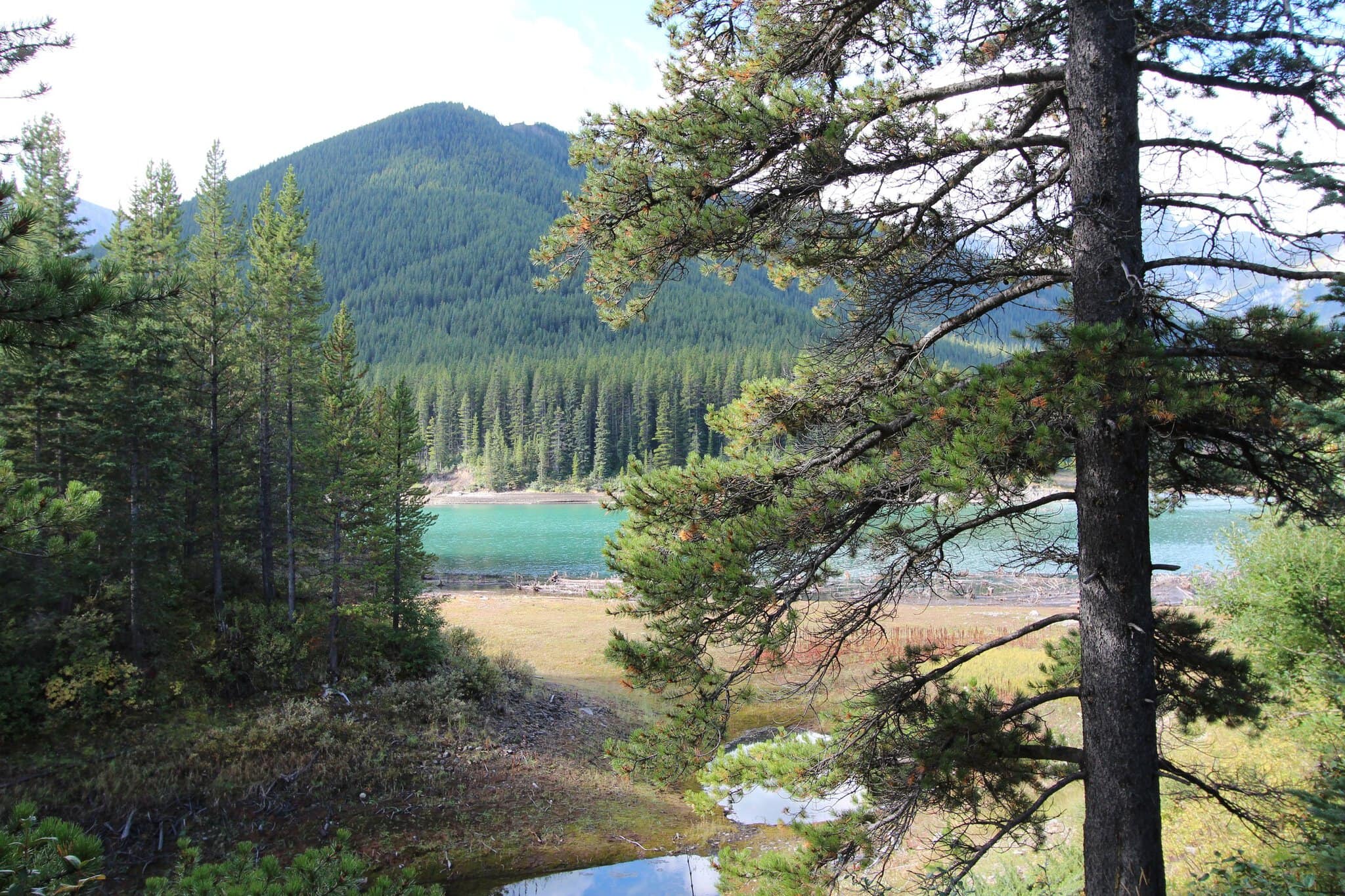
Practical Information: When to Go, Fees, and Getting There
Let’s get the logistics sorted first. Kananaskis isn’t a town — it’s a vast wilderness area — so it pays to be well prepared. Once you leave the main highway, you’ll quickly lose mobile signal and there are simply no shops out here.
Best Time to Visit Kananaskis
We personally love the Canadian summer (late June to August), when the trails are dry, all the high-altitude lakes have thawed, and the weather is perfect for hiking in a t-shirt. However, if you’re visiting Canada specifically for jaw-dropping autumn colours, mid to late September is the most magical time. That’s when the local larches turn a brilliant gold, creating a stunning contrast against turquoise lake water and the first dusting of snow on the peaks.
It’s absolutely breathtaking, though you should expect chilly mornings. Winter (November to April) is harsh — many roads, including the spectacular Highwood Pass, are completely closed — but the area transforms into a paradise for cross-country skiing and snowshoeing.
Kananaskis Conservation Pass
Until 2021, entry to most provincial parks in Kananaskis was free, but that changed due to a massive surge in visitor numbers. Today, you need a Kananaskis Conservation Pass, which costs 15 CAD (roughly €10) per day per vehicle, or 90 CAD (about €60) for an annual pass.
I’d highly recommend buying your Kananaskis pass online before you leave your hotel or accommodation. Just enter your car’s registration number and the system will automatically register you. Scanners at trailhead car parks regularly check for passes, and fines for not having one are unpleasantly steep (around 150 CAD / €100), so it’s definitely not worth the risk.
How to Get There and Car Hire
We’ve had great experiences with DiscoverCars, which we use all over the world, and Canada is no exception. Simply pick up your car at Calgary airport and in under an hour on the Trans-Canada Highway, you’ll be turning onto the famous Highway 40 that cuts through the heart of Kananaskis.
While there is a Kananaskis Country shuttle (the local Roam Transit service runs from Canmore to certain areas in summer), if you want to discover hidden lakes and stop at viewpoints, a car is absolutely essential here. There’s no train service to Kananaskis, unfortunately. The most convenient route from the UK is to fly into Calgary — airlines like WestJet, Air Canada, and British Airways operate direct or one-stop flights from London. For the best deals, we always use flight comparison sites to hunt down bargains.
Where to Stay: Canmore vs. Kananaskis Village
When it comes to choosing a base, you essentially have two main options. You can either opt for the civilised charm of the mountain town of Canmore, or stay right in the heart of the park at the small settlement of Kananaskis Village. If you’re curious about the Kananaskis village elevation, it sits at roughly 1,522 metres above sea level, which means even just staying there rewards you with spectacular views from your window — though nights can be quite chilly even in summer.
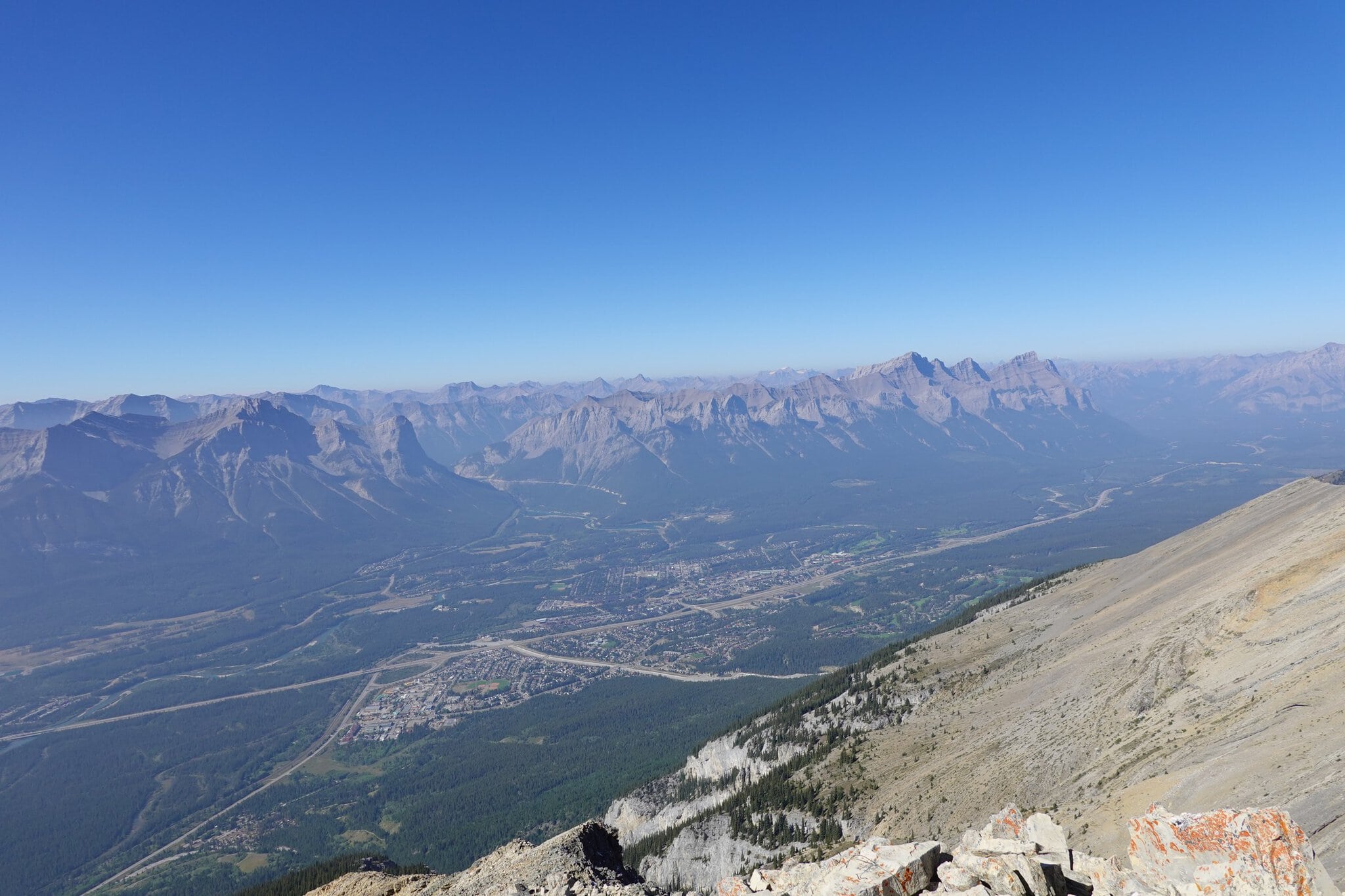
If you enjoy coffee shops, breweries, restaurants, and want a large supermarket within walking distance, I’d definitely go for accommodation in Canmore, which is also a brilliant and more affordable alternative to pricey Banff. Canmore sits right on the edge of Kananaskis Country, so most trailheads are just a short drive away while you retain all the comforts of civilisation. Summer accommodation prices in Canmore typically range from €130 to €230 per night for two people, depending on whether you choose a small motel or a self-catering apartment (which is hugely worthwhile in Canada — you’ll save a fortune on expensive restaurant breakfasts and dinners).
On the other hand, if you fancy a taste of Canadian luxury and the perfect post-hike relaxation, book the legendary Kananaskis lodge (officially the Pomeroy Kananaskis Mountain Lodge). It’s a luxury resort nestled deep in the forest where you can often spot elk or even bears right from the grounds. The biggest draw of this hotel is the Kananaskis Nordic Spa — incredible outdoor hydrotherapy pools with hot and ice-cold plunge pools surrounded by forest. Accommodation here isn’t cheap (often around €270 to €380 per night), but if you’re celebrating an anniversary or want to treat yourself to one day of pure indulgence on your road trip, it’s arguably the best hotel in all of Alberta.
10 Best Hikes and Things to Do in Kananaskis Canada
Let’s finally get to the good stuff. We visited all 10 of these places during our year living in Canada and can wholeheartedly recommend them to any nature lover. We managed to put together itineraries for Lukáš’s parents (classic family-friendly walks) as well as ourselves (chain-assisted scrambles up cliff faces), and both types of outing were equally brilliant. Just don’t forget to bring proper hiking boots, because Canadian terrain can be seriously unpredictable.
1. Grassi Lakes: Enchanting Turquoise Pools
If you’re looking for something relatively easy, or you’ve got small children in tow, Grassi Lakes is an absolute classic that you simply can’t miss. The trail starts just outside Canmore and takes roughly 15 to 20 minutes to walk up. The route splits into two options — a wide, easy path through the forest and a slightly more challenging rocky trail past a small waterfall with views over the entire valley and Canmore spread out below like a model village. Lukáš and I always took the “harder” route up and used the wider path to loop back down to the car.
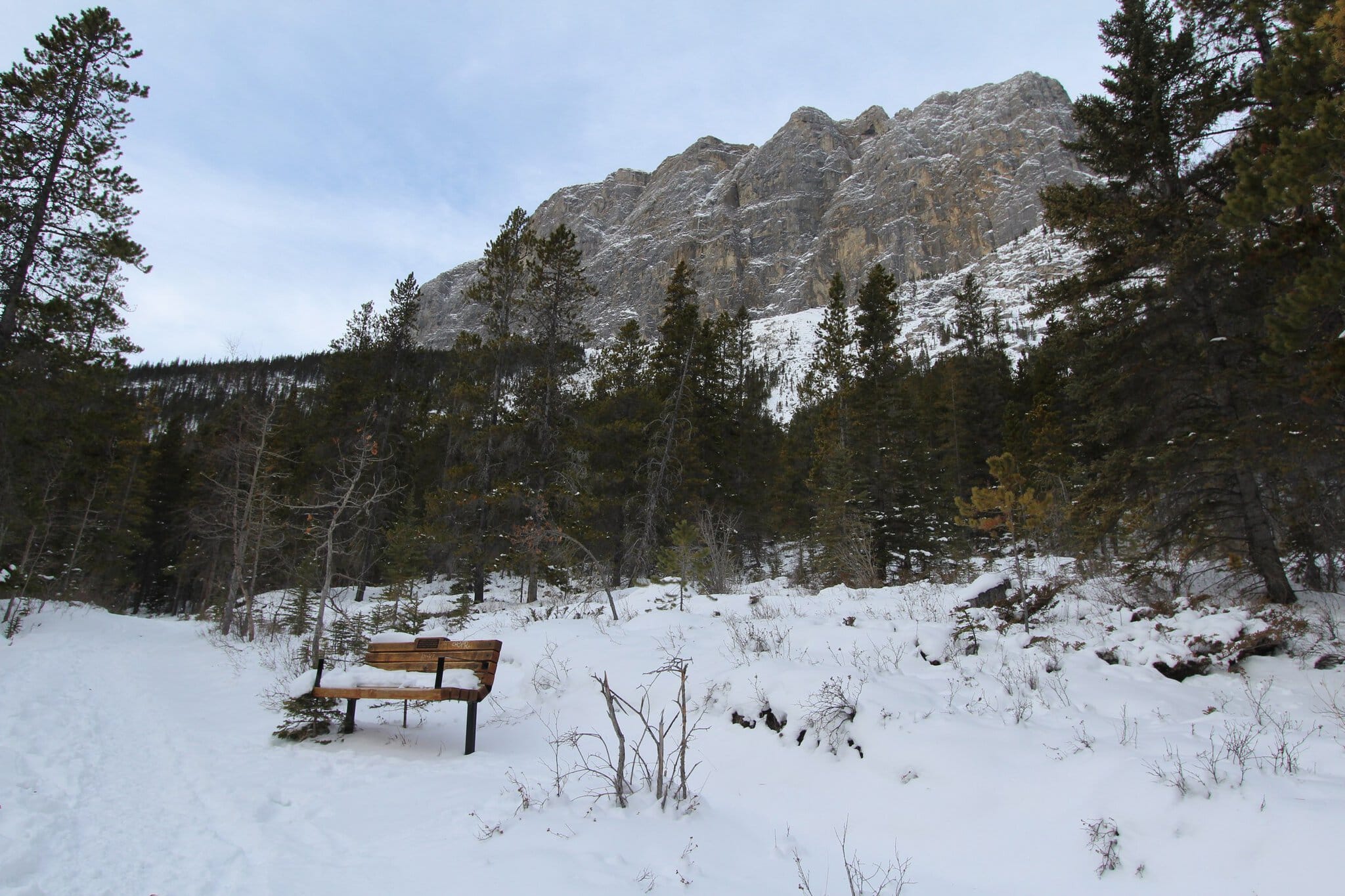
Your reward at the top is two small, impossibly clear pools tinged an emerald turquoise. The water is so pristine you can see fallen tree trunks on the bottom and make out every pebble beneath the surface. You could easily spend hours here watching rock climbers tackle the steep limestone walls above the lakes. Since it’s so close to Canmore, afternoons can get quite busy, so either set an early alarm or head up in the evening.
2. Highwood Pass: The Highest Paved Road in Canada
Highwood Pass isn’t so much a hike as an absolutely incredible driving experience. It’s a section of Highway 40 that reaches an elevation of 2,206 metres, officially making it the highest paved road in all of Canada. Driving this road is genuinely breathtaking. Dramatic mountain peaks tower around you, dense forests give way to alpine meadows carpeted with wildflowers, and there’s a very good chance you’ll encounter bighorn sheep calmly licking salt right in the middle of the road — or occasionally even a solitary grizzly.
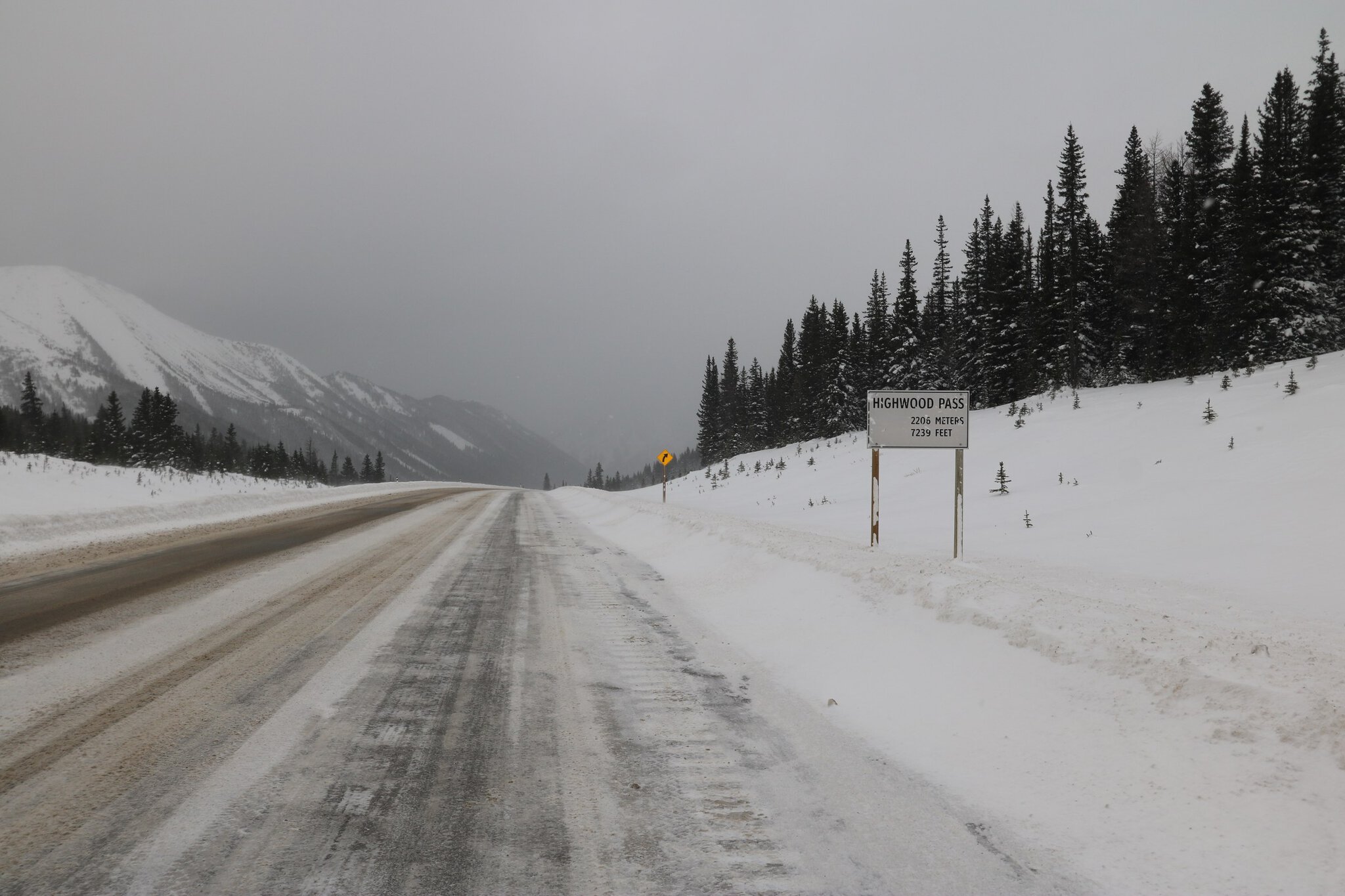
Pull over at the small car park at the very top of the pass. From there, you can take a short stroll along the boardwalks that wind through the fragile alpine tundra on the Highwood Meadows Trail (about 1 km). One important note though — to protect wildlife and due to winter conditions, this entire stretch of road (from the junction with Kananaskis Lakes Trail southward) is completely closed every year from 1 December to 14 June. If you visit in July or August, you’ll have ideal conditions.
3. Rawson Lake: An Alpine Gem Beneath a Rock Wall
Rawson Lake is probably our absolute favourite hike in all of Kananaskis. The trailhead is at the enormous Upper Kananaskis Lake in Peter Lougheed Provincial Park. The first part of the trail runs completely flat along the lakeshore, passing the impressive Sarrail Falls — a thundering waterfall fed by melting snow and glacial ice. After that, a fairly steep climb through mossy forest awaits. The total distance including the return is about 8 kilometres, so allow a good three to four hours with a break at the top.
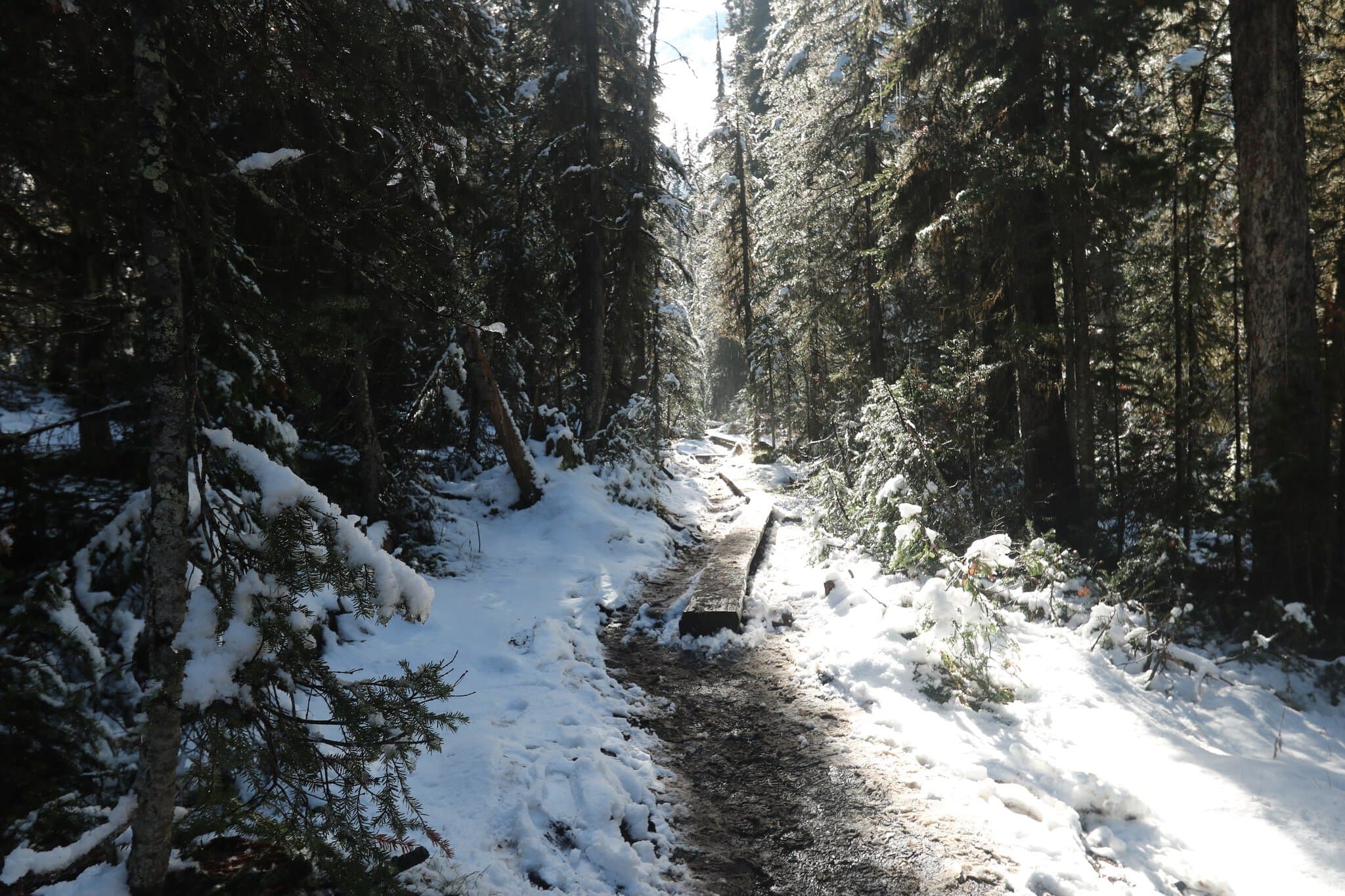
Once you scramble up through the forest, a basin suddenly opens before you, revealing the deep blue Rawson Lake with the towering rock wall of Mount Sarrail rising vertically above it. It’s a scene straight out of a wilderness survival magazine. If you’ve still got energy to spare, you can continue on a brutal ascent (more like crawling through scree) up to the Sarrail Ridge viewpoint above the lake, where you’ll be rewarded with views of both large Kananaskis lakes in the valley far below.
4. Mount Yamnuska: A Challenge for the Brave
When you drive from Calgary towards the mountains on the highway, the first enormous rock face that rises dramatically before you like a giant limestone barrier is Mount Yamnuska (officially Mount John Laurie). Reaching its summit is a bucket-list goal for most local mountaineers, but I have to be upfront with you — this is no afternoon lakeside stroll. It’s a very demanding hike that transitions into scrambling, meaning you’ll be climbing on all fours using your hands on steep rocky terrain.
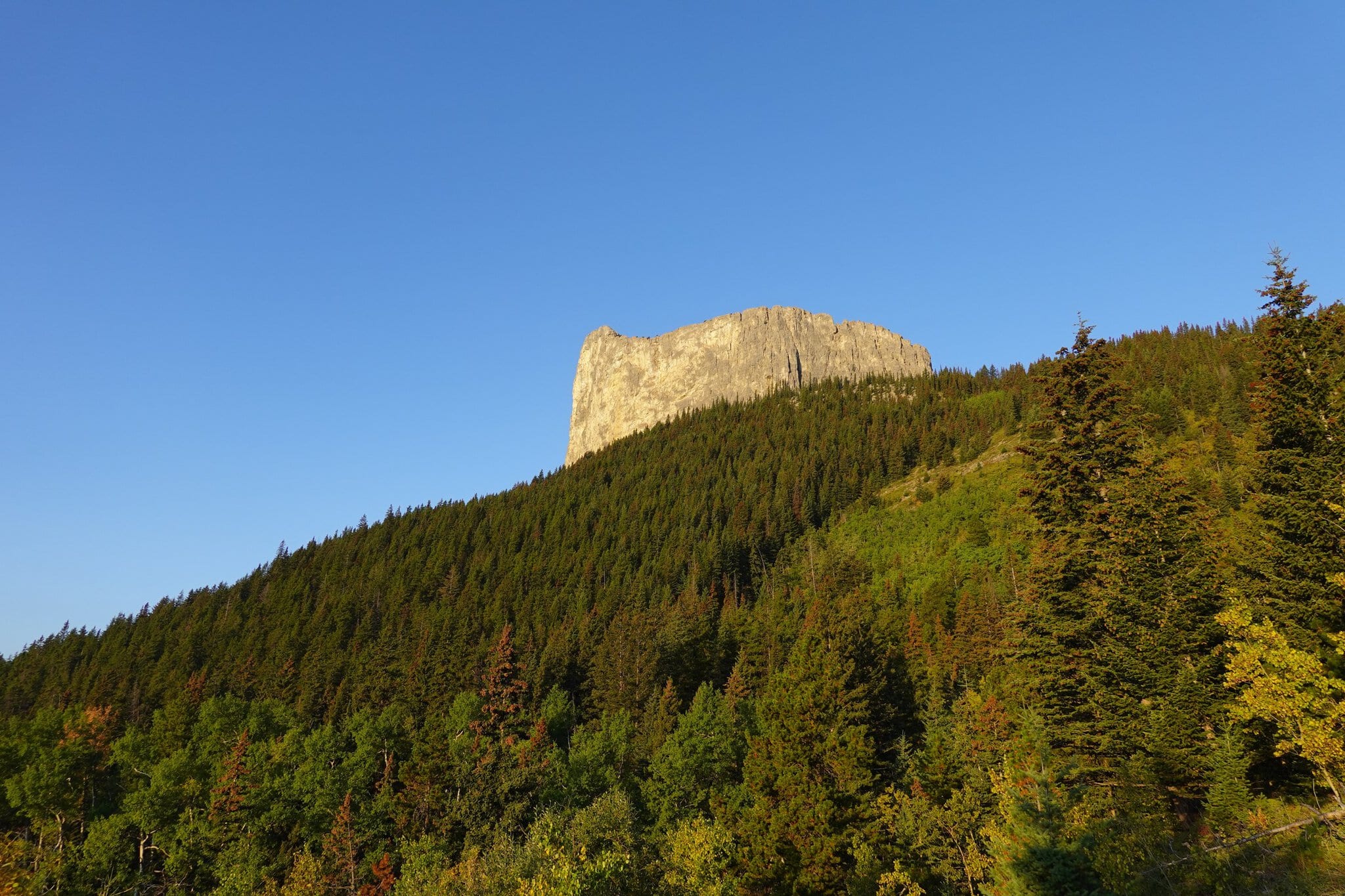
The route to the summit is about 11 kilometres and includes a steep cliff face and a notorious section where you must cling to chains bolted into the rock with a sheer drop beneath your feet. The reward, though, is extraordinary — on one side you can see the flat prairies stretching hundreds of kilometres to the east, and on the other, an endless ocean of mountain peaks. The descent is then hilariously fun (and murder on your knees), as you slide down a massive slope of loose gravel known locally as a scree slope. If you’re not great with heights, give this one a miss with a clear conscience.
5. Galatea Lakes: A Hidden Gem Among the Rocks
The hike to Galatea Lakes is utterly idyllic, though a bit longer (roughly 17 kilometres return), so it’s best to set aside a full day. The trail begins with a suspension bridge over the Kananaskis River — which is incredibly photogenic in itself. From there, the route climbs gradually through the forest, crossing the river several more times on charming little wooden bridges. The sound of rushing water is everywhere, and in summer the air smells of sun-warmed pine needles.
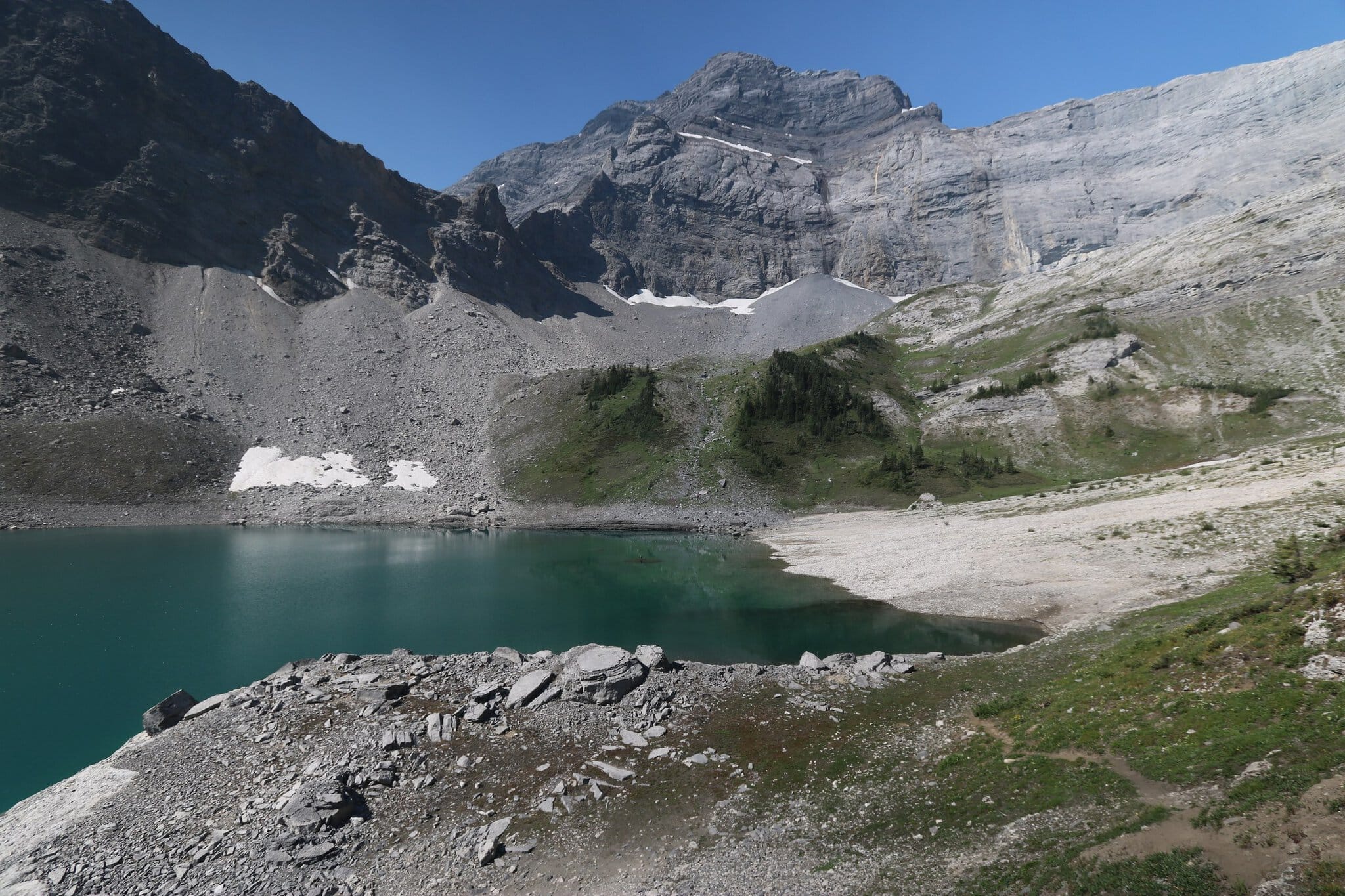
About three-quarters of the way in, you’ll reach Lillian Lake, where there’s a small tent campsite with fire pits and benches — the perfect spot for a packed lunch. While Lillian Lake is beautiful on its own, I’d strongly encourage you to push on and tackle the remaining steep kilometre through scree to reach Galatea Lakes. These two alpine lakes, tucked into a frigid mountain cirque above the treeline, have an unbelievable turquoise colour and often still have massive chunks of ice floating on them well into July.
6. Spray Lakes Reservoir and the Dusty Smith-Dorrien Trail
Another spectacular chapter of what Kananaskis has to offer is the area around the enormous Spray Lakes Reservoir. To reach it from Canmore, you need to drive up the steep, winding, and crucially unpaved gravel road called the Smith-Dorrien Trail. The drive itself is an experience — in summer your car will be coated in a layer of fine white dust and the washboard surface will rattle your teeth, but the views… the views are absolutely worth it.
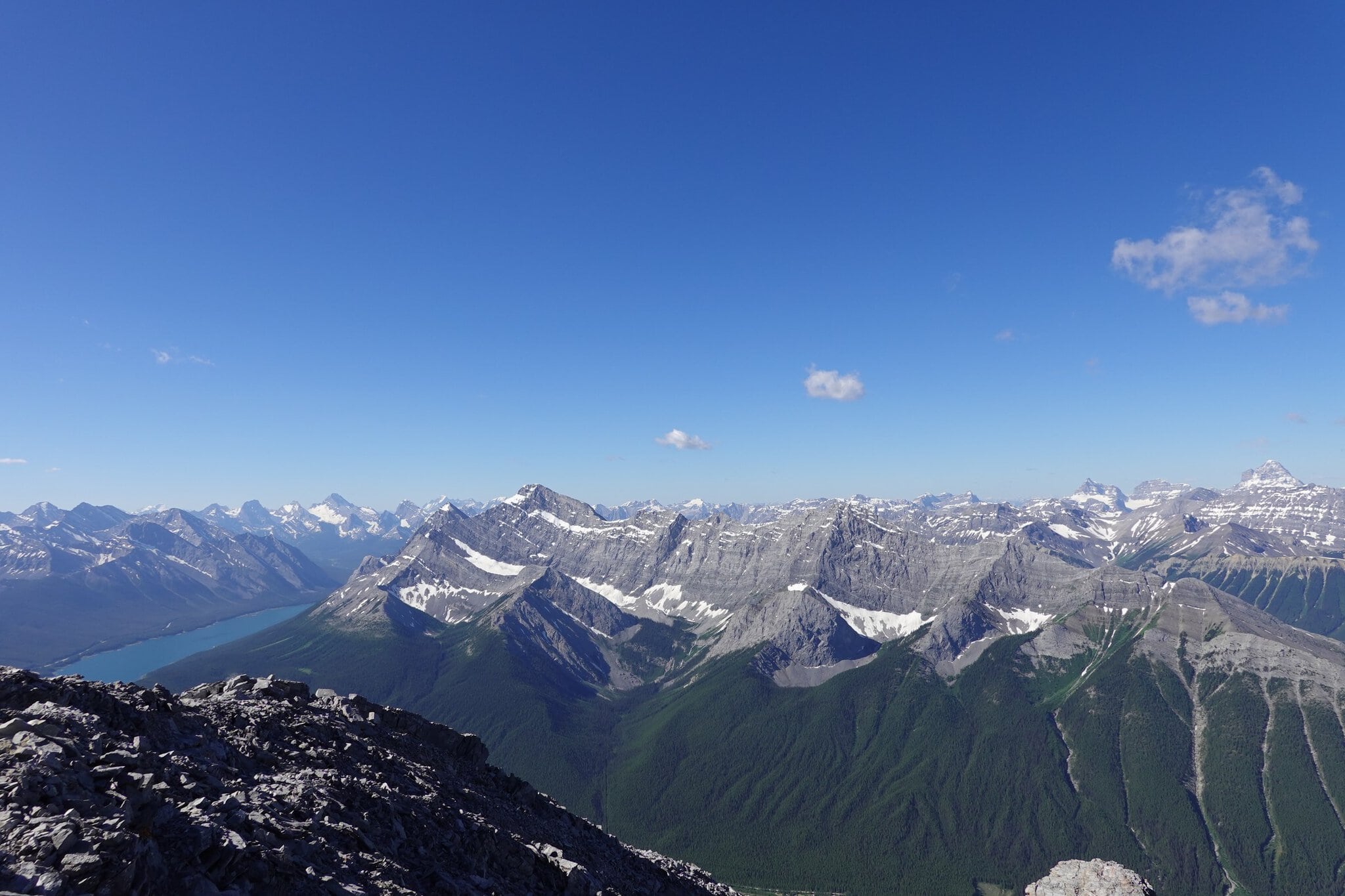
The lake itself stretches for many kilometres through the valley. The water is ice-cold, deep blue, and the surface often shimmers like a mirror, perfectly reflecting the surrounding mountains like Mount Nestor and Mount Buller. We once spent an entire afternoon simply skimming stones across the glassy surface and watching the reflections ripple — and we didn’t care one bit that we hadn’t climbed a single peak. Several makeshift car parks along the lake let you walk straight down to the water and have a picnic on beaches of driftwood. It’s also a popular spot for paddleboarding or kayaking, though the water is so cold that if you fell in, you really wouldn’t want to be far from shore.
7. Ribbon Lake: Waterfalls and a Touch of Adrenaline
The hike to Ribbon Lake starts in Kananaskis Village by Ribbon Creek. We always loved this trail because the first few kilometres wind pleasantly through a picturesque forest along a crystal-clear stream, with numerous small waterfalls and cascades, and the going isn’t particularly demanding. Along the way you’ll encounter Ribbon Falls, a truly majestic waterfall whose spray creates a refreshing mist — very welcome on hot Canadian summer days.
If you want to reach Ribbon Lake itself, you need to prepare for a serious challenge in the form of a chain-assisted rock wall. Getting up this cliff ledge requires considerable care, as you’re climbing a near-vertical face using only steel cables for support, and when it rains, it gets dangerously slippery. Above the wall, though, a peaceful turquoise Ribbon Lake awaits, cradled between steep rock walls. The total trail distance is around 21 kilometres, and if you’re considering an overnight stay in the backcountry, there’s a campsite by the lake.
8. Burstall Pass: Autumn Larch Magic
If I had to pick just one hike for a September visit to Kananaskis, I’d point without hesitation to Burstall Pass. It starts once again from the famous gravel Smith-Dorrien Trail and treats you to several distinct types of landscape in a single day. First, you wade through wetlands and willow thickets where you’ll often spot moose tracks — so keep your eyes peeled (and your bear spray handy).
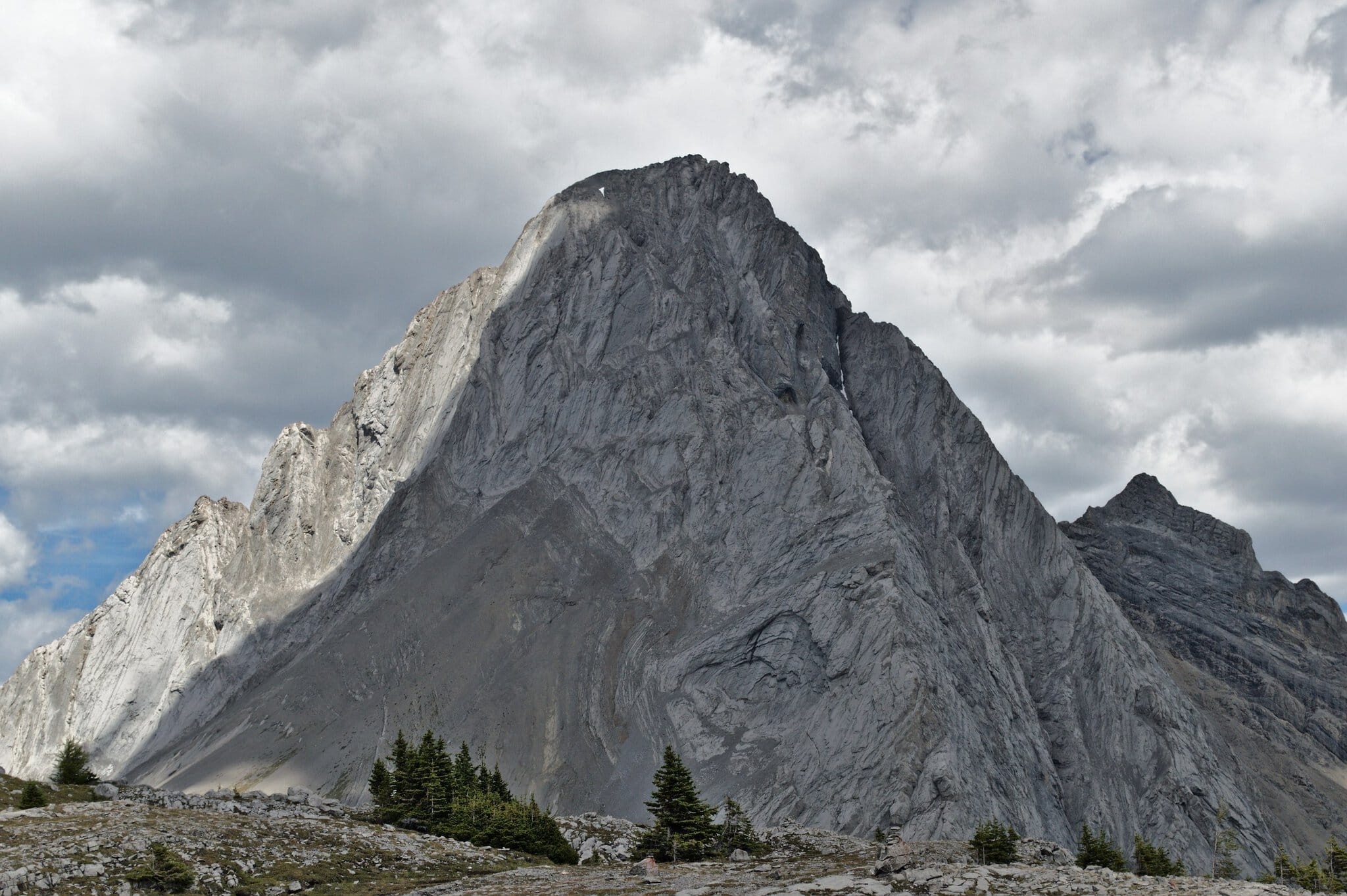
The real magic begins when you climb steeply above the treeline — that’s where you’ll find endless alpine meadows and forests of larches that glow an electric yellow in late September and early October, looking utterly otherworldly against the snow-capped rocky peaks. Once you reach Burstall Pass (about 15 kilometres return), you cross an invisible border and peer into the neighbouring valley, straight into Banff National Park, with a fantastic view of the glacier and summit of Mount Assiniboine — Canada’s own Matterhorn.

9. Peter Lougheed Provincial Park and Kananaskis Lakes
Beyond the hikes, it’s well worth simply spending time exploring the lake valleys in Peter Lougheed Provincial Park. Upper and Lower Kananaskis Lakes are so vast — fed by melting glaciers — that the first time Lukáš and I saw them, we genuinely couldn’t believe they were lakes and not a small inland sea. This is ideal for families who don’t fancy climbing a thousand metres of elevation (and honestly, they don’t have to — it’s stunning right at the water’s edge). You can set up your camping chairs, light a fire at the public barbecue grates provided, and grill burgers or hot dogs. Firewood is often available right at the site.
If you’re a water enthusiast, you can hire a canoe or small aluminium boat at Lower Kananaskis Lake and head out fishing (don’t forget a fishing licence) or simply explore the deserted islands. We always had a soft spot for the little peninsula at Point Campground, where we’d often just sit on the rocks, sip coffee from a thermos, and wait to see if a moose might wander out of the forest for its morning drink.
10. King Creek Ridge: Short Suffering, Maximum Reward
Looking for a hike you can knock out in just a couple of hours before lunch but still want a view that’ll blow everyone on Instagram away? King Creek Ridge is exactly what you need. This trail is barely 7 kilometres return, but brace yourself — the first two kilometres are pure, brutal punishment as you climb almost vertically straight towards the sky. The path is steep, dusty, and your calves will be begging for mercy. 😅
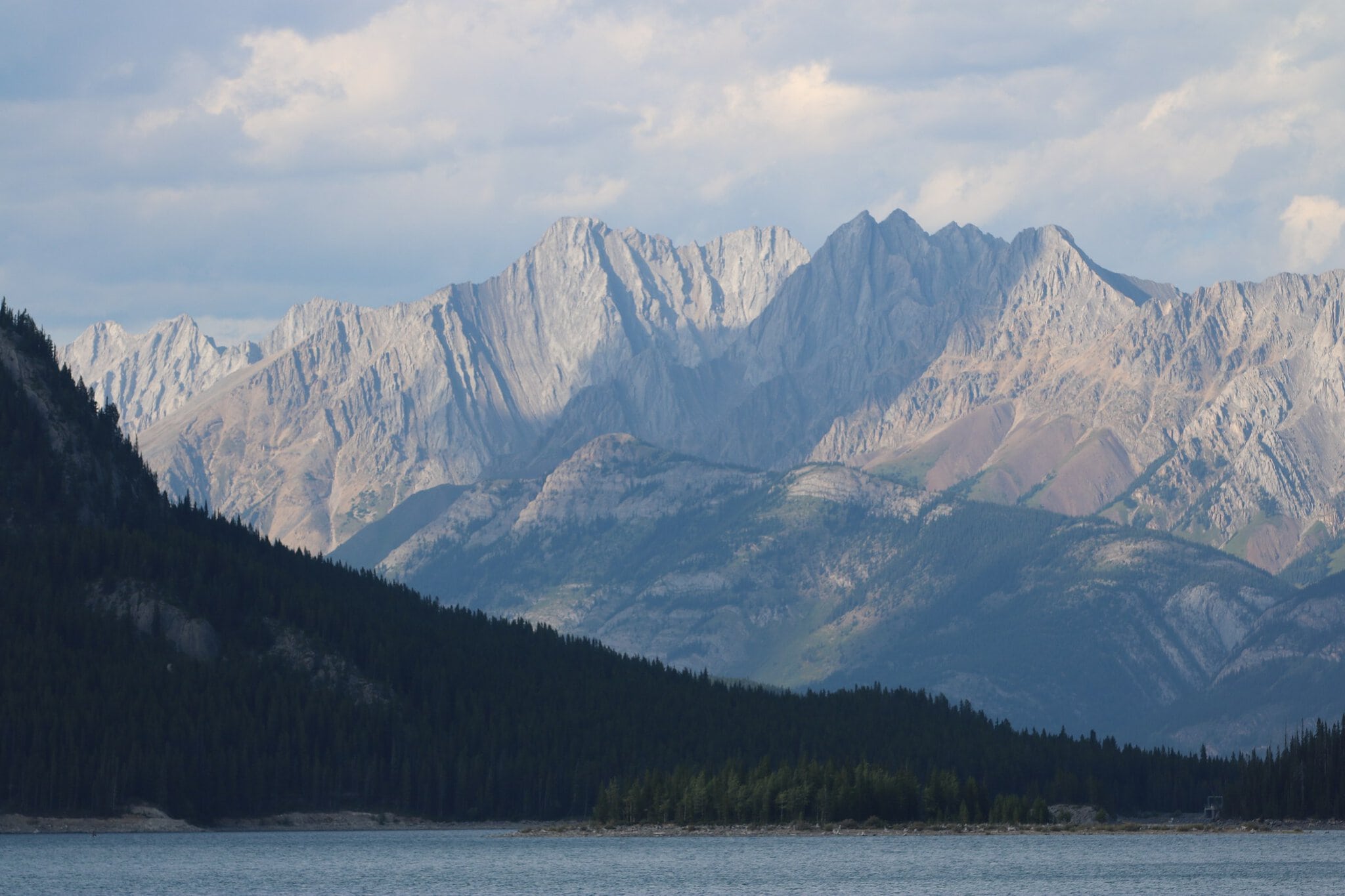
At the end of the ridge, though, a phenomenal 360-degree panorama of the entire Kananaskis Valley awaits. A fantastic sweep of glacier-carved valleys unfolds before you, headed by the majestic Mount Wintour and the Opal Range. Find yourself a nice flat rock, lean back, and gaze in wonder at the deep canyons and endless forests below you. And because of its steepness, this trail usually isn’t overly busy, so there’s a very good chance you’ll enjoy that view in absolute silence.
Map of points of interest for your phone
Where to Eat and Refuel After a Hike
After a full day hiking in the mountains, you won’t want to skimp on dinner. If you’re staying at (or just passing through) Kananaskis Village, I have to mention the restaurants inside the Pomeroy Kananaskis Mountain Lodge. They have an Italian restaurant called Forte, where they make excellent wood-fired pizza — after 20 kilometres on your feet, you’ll truly appreciate that carb-loaded goodness. For a special evening that won’t completely destroy your budget, try the Cedar Room, where they serve phenomenal Alberta beef steaks.
Most of our favourite eateries, however, are right in Canmore. We absolutely love The Grizzly Paw Brewing Company, which has huge windows overlooking the mountains and serves outstanding craft beer alongside excellent burgers (poutine — Canadian chips smothered in gravy and cheese curds — is practically compulsory on the side). Another great spot is Rocky Mountain Flatbread Co., where they cook with local, often organic ingredients, and their flatbreads and salads are genuinely fantastic. If you just need a coffee and a massive muffin for the road, pop into The Rocky Mountain Bagel Co. — they arguably make the best bagels for miles around.
Tips and Tricks: Practical Details That Are Worth Their Weight in Gold
Don’t leave anything to chance that could ruin your dream trip into the Canadian wilderness.
What to Pack and How to Survive a Bear Encounter
Always dress in layers for the mountains (mornings by the lakes can be as cold as 5°C, while afternoons in the sun reach 25°C), and most importantly, carry bear spray clipped to your backpack strap at all times — we encountered grizzlies in Kananaskis more often than we’d have liked.
The spray must genuinely be within arm’s reach on your pack (never buried at the bottom of your bag — it’ll be useless there). In Kananaskis, grizzlies love to graze on roadside grass in spring, so vigilance is needed the moment you step out of your car.
 🚗 Car rental on the roadVerified car rentals in the Rocky Mountains
Search with the DiscoverCars comparison engine — it compares prices from dozens of local and international rental companies, and most bookings come with free cancellation.
Compare car prices in the Rocky Mountains →Don’t Forget Travel Insurance
Hiking in Kananaskis, however straightforward it may seem, always demands responsibility. A helicopter rescue could cost more than your entire holiday, and trust me — you really don’t want to deal with that without proper cover. Healthcare in Canada is extremely expensive for visitors, so comprehensive travel insurance is essential.
Our recommended travel insurance is SafetyWing, which has never let us down in all our years of travelling through North America and handles everything quickly online.
Hiring a Car in Canada
If you’re flying into Calgary or Edmonton, I’d highly recommend the comparison site DiscoverCars.com, which Lukáš and I have been using to hire cars for years now — and we’ve never once arrived at the airport to find the car we booked wasn’t available.
Ideally, go for a vehicle with higher ground clearance. On gravel roads like the Smith-Dorrien Trail, it’ll do wonders for your nerves (and for your anxiety about the damage deposit on the car’s undercarriage 😅).
Where to Go Next in Canada
Once you’ve explored Kananaskis, don’t stop your road trip there. Alberta has an enormous amount more to offer.
- Head back to civilisation and read about what to see and do in Calgary, where you shouldn’t miss the legendary Calgary Stampede.
- Make your way to the most famous park of all and check out our guide on how to plan the perfect trip to Banff National Park.
- Can’t decide whether Banff or Canmore is better for you? We’ve got an article where we compare both towns and their accommodation and amenities in detail.
Frequently Asked Questions (FAQ)
To wrap everything up neatly, Lukáš and I have put together answers to the most common questions you’re likely to have before heading to the Kananaskis area.
Do I need an entry pass for Kananaskis?
Yes, since 2021 you need a Kananaskis Conservation Pass, which costs 15 CAD per day per vehicle, or 90 CAD for an annual pass. The pass doesn’t cover parks that fall under the national park system (like neighboring Banff), which require a separate pass. You can easily purchase it online through the official Alberta provincial website.
Are there bears in Kananaskis and do I need bear spray?
Absolutely yes. K-Country has a large and healthy population of both black bears and especially grizzly bears. The wilderness here is less impacted by tourism than Banff, so the animals are more undisturbed. Bear spray is an absolute must for all hikes, and it’s recommended to hike in groups (minimum 4 people) and make noise in areas with limited visibility. We only had to pull our spray out of its holster once, but that was enough to convince us to carry it everywhere after that.
Does cell phone service work in Kananaskis?
Once you leave the main Trans-Canada Highway and the town of Canmore and head down Highway 40, you’ll lose cell signal pretty quickly. You can usually pick up a weak signal around Kananaskis Village hotel, but most areas like Kananaskis Lakes have no coverage at all. Always download offline maps (like Google Maps or AllTrails) to your phone beforehand!
Is it better to visit Banff or Kananaskis?
Banff offers world-famous lakes (Louise, Moraine) and great infrastructure—it’s perfect for a first visit, but be prepared for massive crowds and high prices. Kananaskis offers equally stunning and dramatic mountain scenery with a much more authentic wilderness experience without the crowds. We recommend combining both areas.
Can I swim in the lakes in Kananaskis?
Technically yes, but most of these are alpine lakes fed by glacial melt. Water temperatures rarely rise above 5 to 10 degrees Celsius even in the hottest August weather. A quick dip (polar plunge) is a popular way to refresh after a tough hike, but it’s definitely not suitable for actual extended swimming—hypothermia is a real risk.
Can I camp wild in Kananaskis?
Random camping in your vehicle (boondocking/stealth camping) outside designated areas in Kananaskis and Alberta provincial parks is generally prohibited and strictly enforced with fines due to wildlife concerns. For overnight stays, you must use official campgrounds (often paid and requiring reservations) or for true backcountry camping, use designated permitted sites along trails, which also require fees.
Can you see the Northern Lights in the Kananaskis area?
While Alberta is fairly far north, ideal viewing of the Aurora Borealis requires a wide, unobstructed horizon facing north. In Kananaskis you’re trapped in deep valleys surrounded by tall mountains that block your view, so you’ll have much better luck catching the Northern Lights from the flat prairies near Calgary or Edmonton. However, they are occasionally visible here during periods of exceptionally strong solar activity.
Tips and Tricks for Your Vacation
Don’t Overpay for Flights
Search for flights on Kayak. It’s our favorite search engine because it scans the websites of all airlines and always finds the cheapest connection.
Book Your Accommodation Smartly
The best experiences we’ve had when looking for accommodation (from Alaska to Morocco) are with Booking.com, where hotels, apartments, and entire houses are usually the cheapest and most widely available.
Don’t Forget Travel Insurance
Good travel insurance will protect you against illness, accidents, theft, or flight cancellations. We’ve had a few hospital visits abroad, so we know how important it is to have proper insurance arranged.
Where we insure ourselves: SafetyWing (simple monthly subscription) and TrueTraveller (for extra-long trips).
Find the Best Experiences
Get Your Guide is a huge online marketplace where you can book guided walks, trips, skip-the-line tickets, tours, and much more. We always find some extra fun there!
More from Rocky Mountains
Full guide →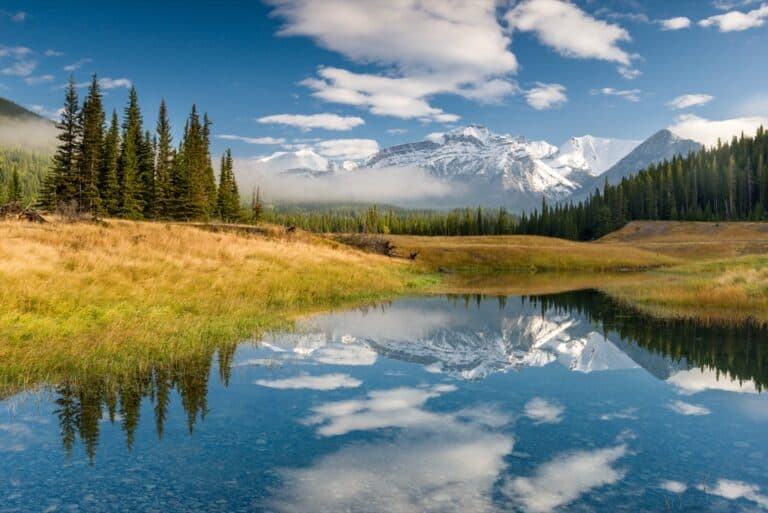 Travel story · most readWhat to Pack for the Canadian Rockies: Summer & Winter Packing List 2026
 ItineraryWestern Canada Road Trip: 14–21 Day Itinerary from the Rockies to the Pacific
 What to seeJasper, Canada: 15 Tips on What to See and Do (After the 2024 Fire)
 Where to stayCalgary, Canada: 23 Best Things to Do and See
 With kidsHow Much Does a Trip to Alberta & BC Cost in 2026: Budget for Couples, Families and Backpackers


