

When Lukáš and I first arrived in Banff, Canada, in the summer of 2016 to work, we had no idea that our hearts would ultimately be won over by the nearby town of Canmore. We had huge, almost cinematic expectations — the photos we’d seen online promised untamed wilderness and log cabins with fireplaces. Reality brought us crashing back to earth pretty quickly, though, because we ended up with a tiny room barely two metres square, sharing a single kitchen with forty other people from all over the world.
😅 Banff is undeniably one of the most beautiful places on the planet, but it’s also a massive tourist bubble where accommodation and food prices soar to astronomical heights. Later, when we were living and working in Calgary, we kept coming back to the mountains regularly — but we very quickly discovered what most locals already know. If you want to experience the true beauty of the Canadian Rockies without blowing your entire budget and dodging the biggest crowds, the answer is Canmore.
The question of Canmore vs Banff is probably the most common dilemma travellers face when planning a trip to Alberta, and I completely understand why. The two towns are separated by barely twenty minutes by car, both sit in a breathtaking valley surrounded by majestic peaks, yet each offers a completely different experience. While Banff is the bustling hub of the national park, packed with souvenir shops and pricey restaurants, Canmore still retains the feel of a genuine mountain town where people actually live, shop at normal supermarkets, and walk their dogs on stunning trails after work. ☺️
And because I know that almost everyone planning a trip to the Rockies wrestles with the Canmore vs Banff question, I’ll give you a straightforward overview of everything that matters. We’ll cover accommodation, prices, and I’ll throw in personal tips — from the legendary Ha Ling Peak and the turquoise Grassi Lakes to the unassuming little cafés that serve the best cappuccino. 😉
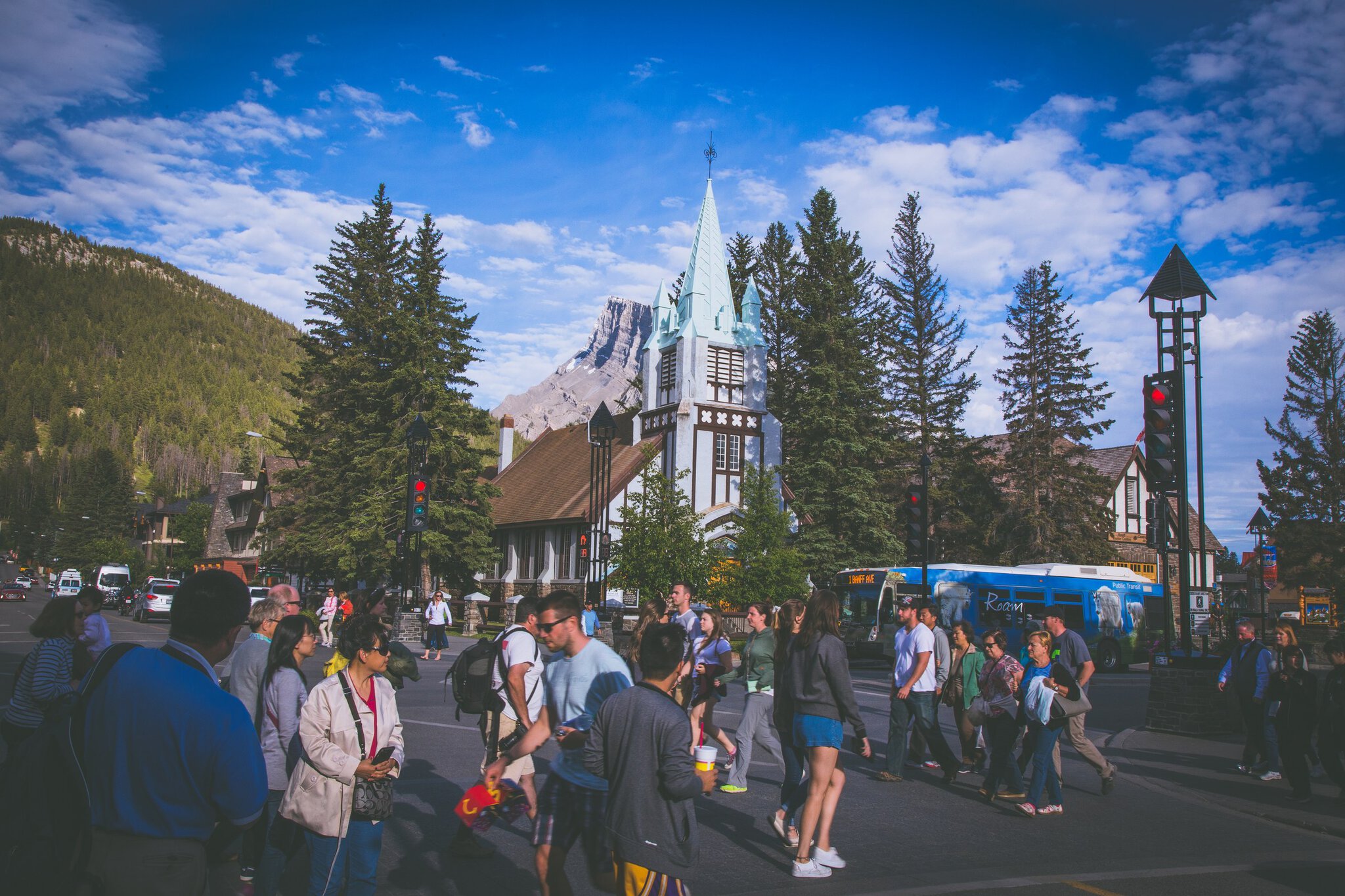
The full destination guide: Rocky Mountains — guide and what to see
TL;DR
If you’re already packing your bags and don’t have time to read the full article, at least take away these key points — a few things that surprised us on our first trip and that I wish we’d known in advance.
- Accommodation in Canmore is significantly cheaper (often 30–40% less than Banff), and you get much more spacious rooms or entire apartments with kitchenettes for your money.
- The distance isn’t an issue — driving from Canmore to Banff town centre takes just 20 minutes on the highway, making it perfectly convenient for daily trips to the main attractions.
- You don’t need a national park pass to stay in Canmore itself — you only buy one when you enter the gates of Banff National Park, which can save you money on days when you want to explore just the Canmore area or Kananaskis (though you’ll need a Kananaskis Conservation Pass for that).
- Stock up on groceries in Calgary beforehand. If you’re driving from the airport, make a stop at the giant Costco in Calgary — buying food in the mountains is seriously expensive.
- Canmore has fewer crowds and a more relaxed vibe — you’ll find plenty of brilliant hiking trails, wildlife, and beautiful lakes, so there’s absolutely no chance of getting bored.
When to Visit and How to Get to the Mountains
We experienced all four seasons in Canada, and trust me, choosing the right one really matters. So don’t skip this section, even if travel logistics usually bore you. A lot depends on whether you’re dreaming of turquoise lakes or world-class powder skiing.
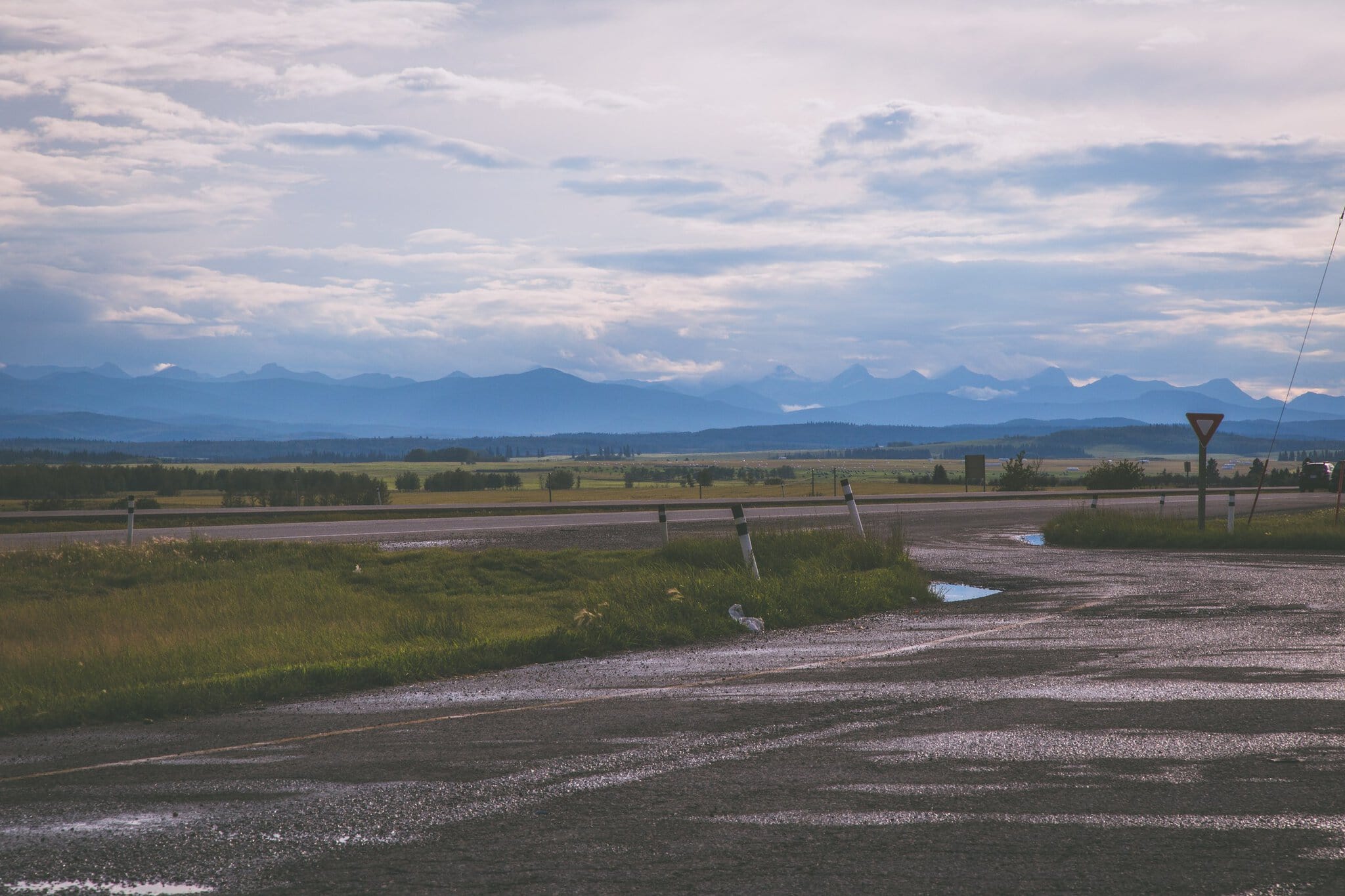
The peak tourist season runs from June to September, when all the high-altitude lakes like Moraine Lake and Lake Louise have finally thawed and glow with the most intense blue you can imagine. Summer also means every hiking trail is open, but you’ll have to contend with massive crowds and the highest accommodation prices. The winter season from December to March is paradise for winter sports lovers — the local ski resorts rank among the best in the world, and both Banff and Canmore look like something straight out of a fairy tale under a blanket of snow. If you want to dodge both the crowds and extreme prices, consider the shoulder seasons (May or October), though you always risk unpredictable weather and the fact that many higher trails will still be buried under snow.
As for getting there, your gateway will be Calgary International Airport (YYC). From the UK, several airlines offer flights with one connection via European hubs — search for the best deals on Kiwi. The easiest way to reach the mountains from the airport is by car. Lukáš and I have had consistently great experiences with DiscoverCars, which we use everywhere around the world, and having your own wheels gives you enormous freedom. The drive from Calgary to Canmore takes just over an hour along the straight Trans-Canada Highway. If you’d rather not hire a car, you can use bus services like Banff Airporter or On-It Transit (summer only), which will drop you right at your hotel.
💡 TIP from our years in Calgary: Before you head for the mountains, do a big shop in Calgary. We swore by Costco, where you can grab enormous packs of groceries at a fraction of the price — an absolute lifesaver when you’ve got an apartment with a kitchen in Canmore. Supermarkets in Banff (like IGA) and even the Safeway in Canmore are noticeably pricier.
Canmore vs Banff: Where to Stay and How Much It Costs
Accommodation and budget are probably the very first thing that settles the Canmore vs Banff debate — and Canmore wins this one pretty convincingly. It edges ahead thanks to friendlier pricing and a much wider variety of places to rest your head after a full day of mountain hiking.
🏨 Recommended Hotels in Canmore
- Luxury: Malcolm Hotel Canmore
- Mid: Falcon Crest Lodge Canmore
- Budget: Canmore Inn & Suites
Banff is a gorgeous historic town surrounded by mountain peaks, but its downside is the strict building regulations imposed by the national park. No new construction is allowed, which means the supply of accommodation is limited while demand from around the world is enormous. A small, fairly basic hotel room in peak season can easily set you back 350–500 CAD per night (roughly £200–£290 / €230–€330), and that’s just the average. Canmore, on the other hand, sits just outside the national park boundary where regulations aren’t nearly as tight, and plenty of new resorts have sprung up in recent years. It’s perfectly normal for accommodation in Canmore to be 30–40% cheaper — for the price of a tiny room in Banff, you can get a beautiful, fully equipped apartment with a fireplace and mountain views.
If you’re after specific hotel recommendations, our favourite spot in Canmore is the Falcon Crest Lodge apartment complex, where you get your own kitchen and washing machine — something you’ll appreciate immensely after a week of hiking. For those seeking a touch more luxury, there’s the majestic Malcolm Hotel with its stunning outdoor pool and views straight onto the iconic Three Sisters mountain range.
If you absolutely insist on staying right in the thick of things and strolling down Banff Avenue in the evening without getting in the car, you’ll need a bigger budget. The iconic Fairmont Banff Springs is an enormous castle nestled in the forest (though prices here can run into the hundreds of pounds per night), but a very pleasant and more affordable option is the Moose Hotel and Suites or the rustic Banff Caribou Lodge, which has a lovely spa.
Canmore and Surroundings: 15 Must-Visit Places and Things to Do
Even though many people stay in Canmore purely to save money and drive to Banff every day, it would be a huge shame to overlook the area around Canmore itself. You’ll find spectacular trails, beautiful lakes, and — best of all — far fewer tourists. Let’s dive into the best this area has to offer.
1. Three Sisters Mountains: The Iconic View
If Canmore has a visual symbol, it’s undoubtedly the Three Sisters. These three jagged peaks — officially named Big Sister, Middle Sister, and Little Sister — tower over the town and are visible from practically every angle. Personally, I don’t think the sight of them ever gets old. I still remember driving along the highway from Calgary for the first time and watching these mountains emerge before us — it was absolutely jaw-dropping.
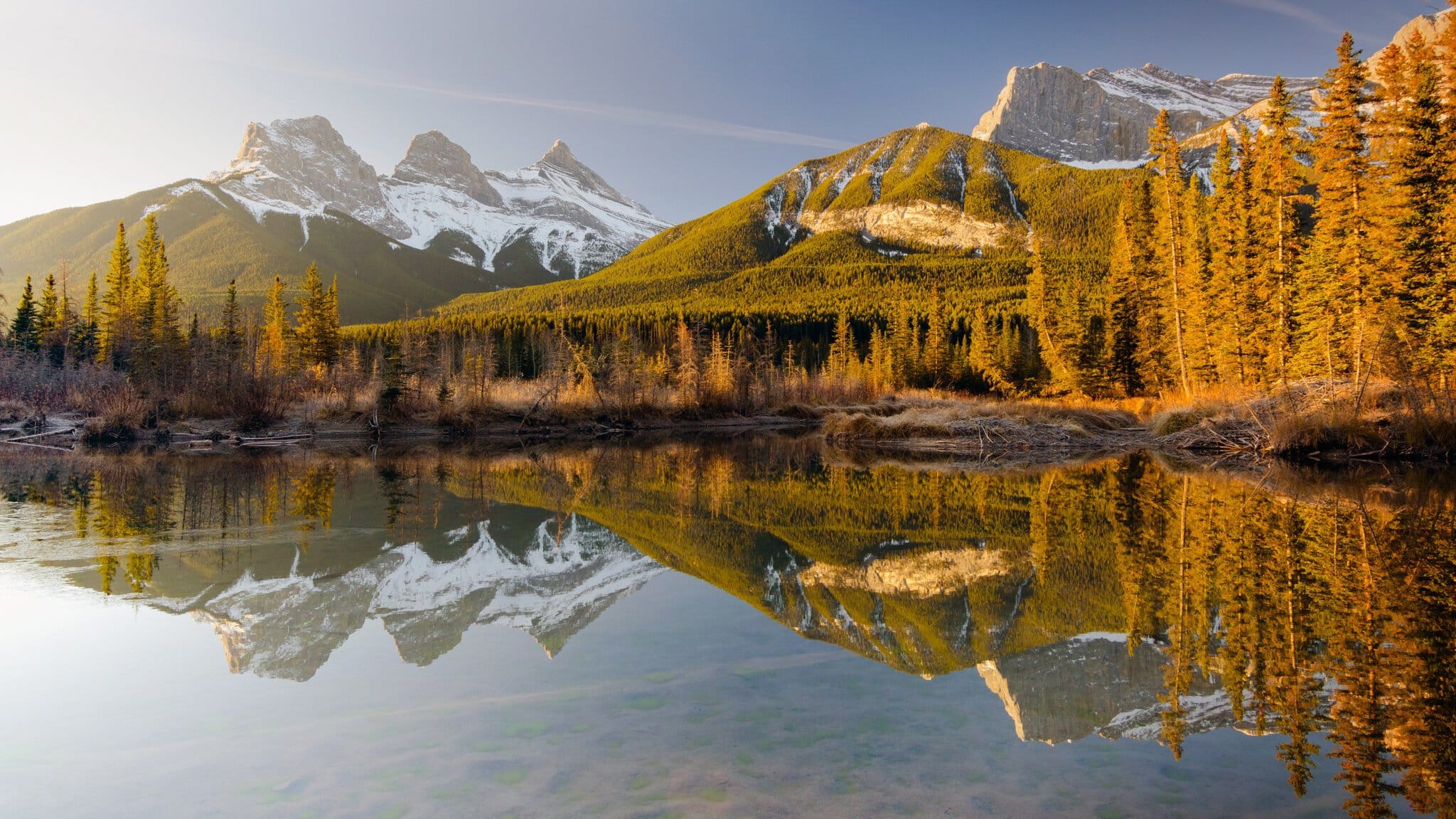
The best photos can be taken along the Bow River, particularly at a quiet spot called Policeman’s Creek Boardwalk, where the mountains are perfectly reflected on the water’s surface in the calm morning light. If you’re into photography, I’d recommend getting up early, grabbing a coffee from a local roastery, and heading to the river before the wind picks up.
For the more adventurous, there’s also an unofficial, unmarked Three Sisters Viewpoint — you’ll need to push through some bushes and cross a dry creek bed to reach it, but your reward is an absolutely perfect view without power lines and, most importantly, without tourists.
2. Grassi Lakes: A Turquoise Gem for Everyone
A trip to Grassi Lakes is an absolute must if you’re spending time in Canmore — it’s probably the most popular short hike in the entire area. It’s a perfect outing for families with kids or for anyone who wants to stretch their legs after a long flight from Europe. The walk to the lakes takes roughly one to two hours depending on your pace and how often you stop for photos.
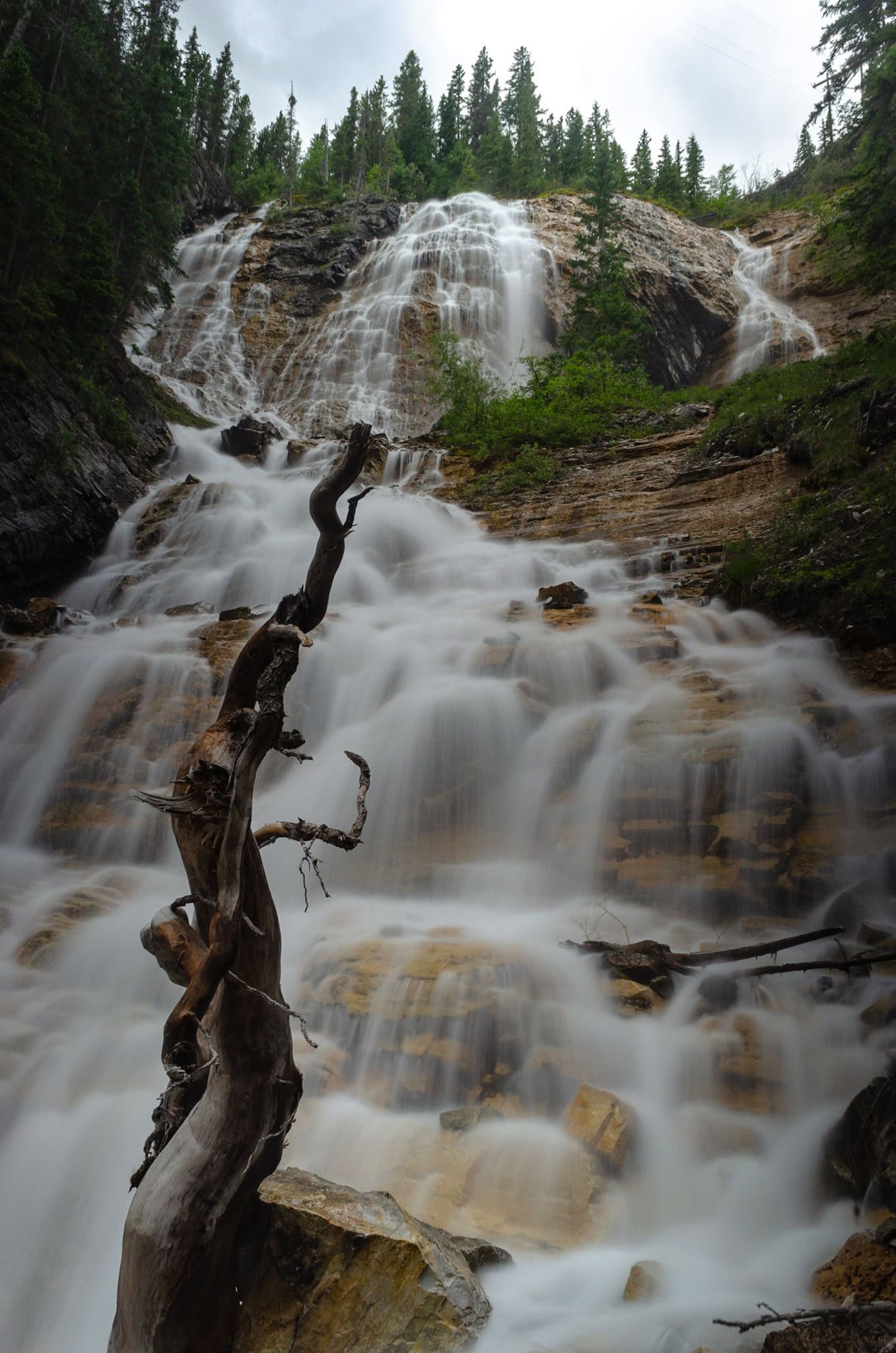
You can choose between two routes (Upper and Lower). I always recommend heading up via the more challenging path (Grassi Lakes Trail – Difficult), which does include a few steeper stone steps but takes you past waterfalls the entire way and opens up amazing views back towards the town of Canmore. You can then come back down on the easy, wide gravel path.
The lakes at the top are indescribably vivid — a deep, crystal-clear blue-green in which you can see fallen tree trunks and fish swimming about. Lukáš and I spent many a Sunday afternoon here with a book in hand — it’s a genuine oasis of calm (as long as you don’t go at midday in the middle of July, when you’ll be sharing the spot with quite a few others 😅).
3. Ha Ling Peak: A Challenge with a Breathtaking Reward
If you fancy pushing yourself a bit harder and Grassi Lakes feels like just a warm-up, turn your attention to Ha Ling Peak. This striking flat-topped mountain dominates the landscape south of Canmore, and climbing it is one of those experiences you simply won’t forget. Fair warning though: it’s a proper slog, so make sure you’ve got quality hiking boots.
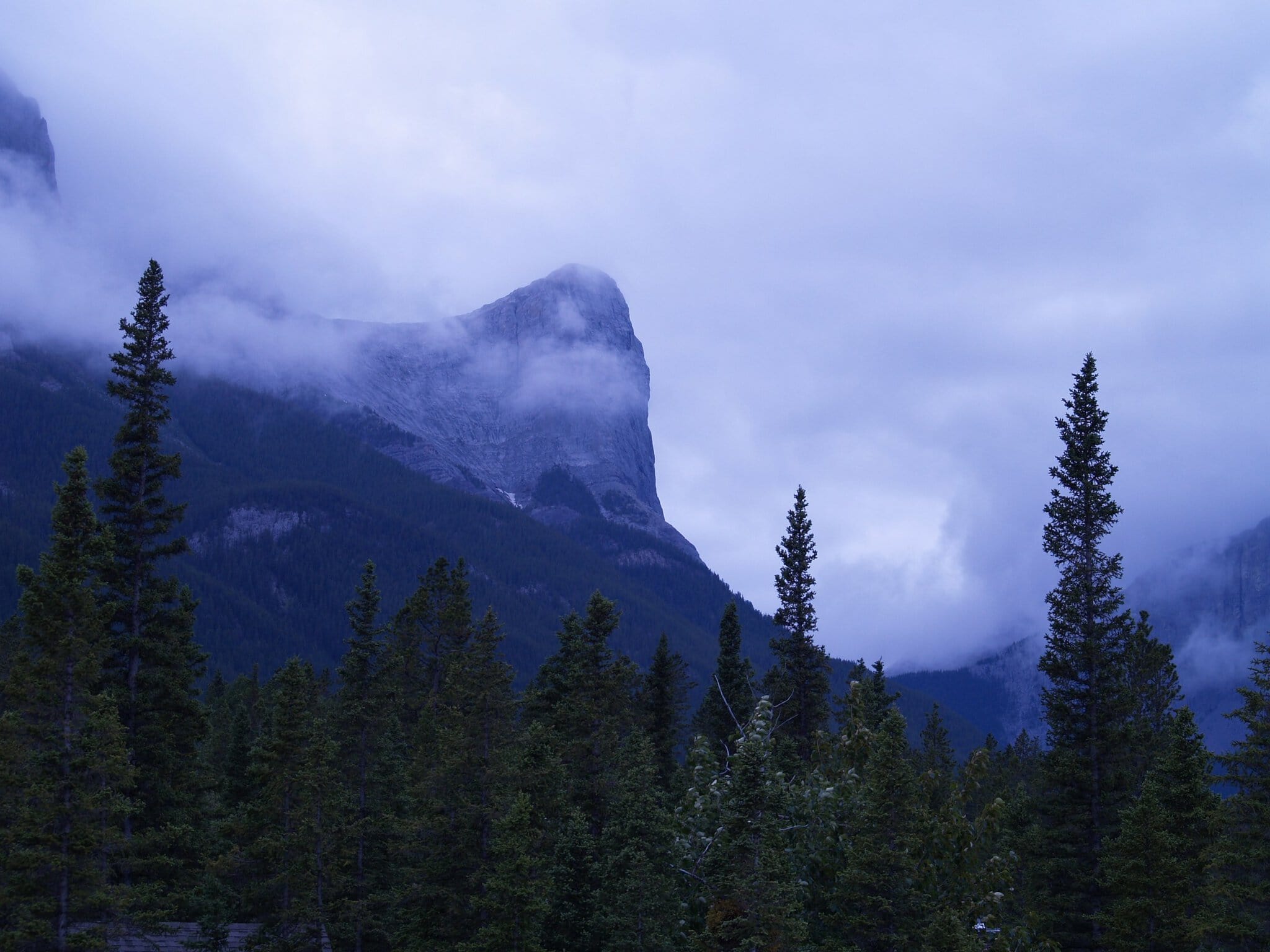
The trail underwent a massive renovation a few years ago — loads of wooden steps and chains were added to the steepest sections, making it much safer now, even though it’s still just as physically demanding. Over roughly 3 to 4 hours, you’ll gain more than 700 metres of elevation, mostly through sharp switchbacks in the forest before emerging above the tree line onto a rocky scree field.
The view from the summit, though, is worth every drop of sweat. The entire Bow Valley and town of Canmore spread out below you like a living map. It’s often extremely windy up on the ridge, so pack a windproof jacket even in the middle of summer — it can be bitterly cold up there.
4. Canmore Nordic Centre: From Cross-Country Skiing to Mountain Biking
Canmore has Olympic heritage, and even though it might not seem like it at first, this is more than just a pub quiz fact. Thanks to the 1988 Games, the town is home to the top-notch Canmore Nordic Centre Provincial Park — a place local athletes adore but tourists sometimes completely overlook. Right on the edge of town, you’ll find a year-round outdoor playground.
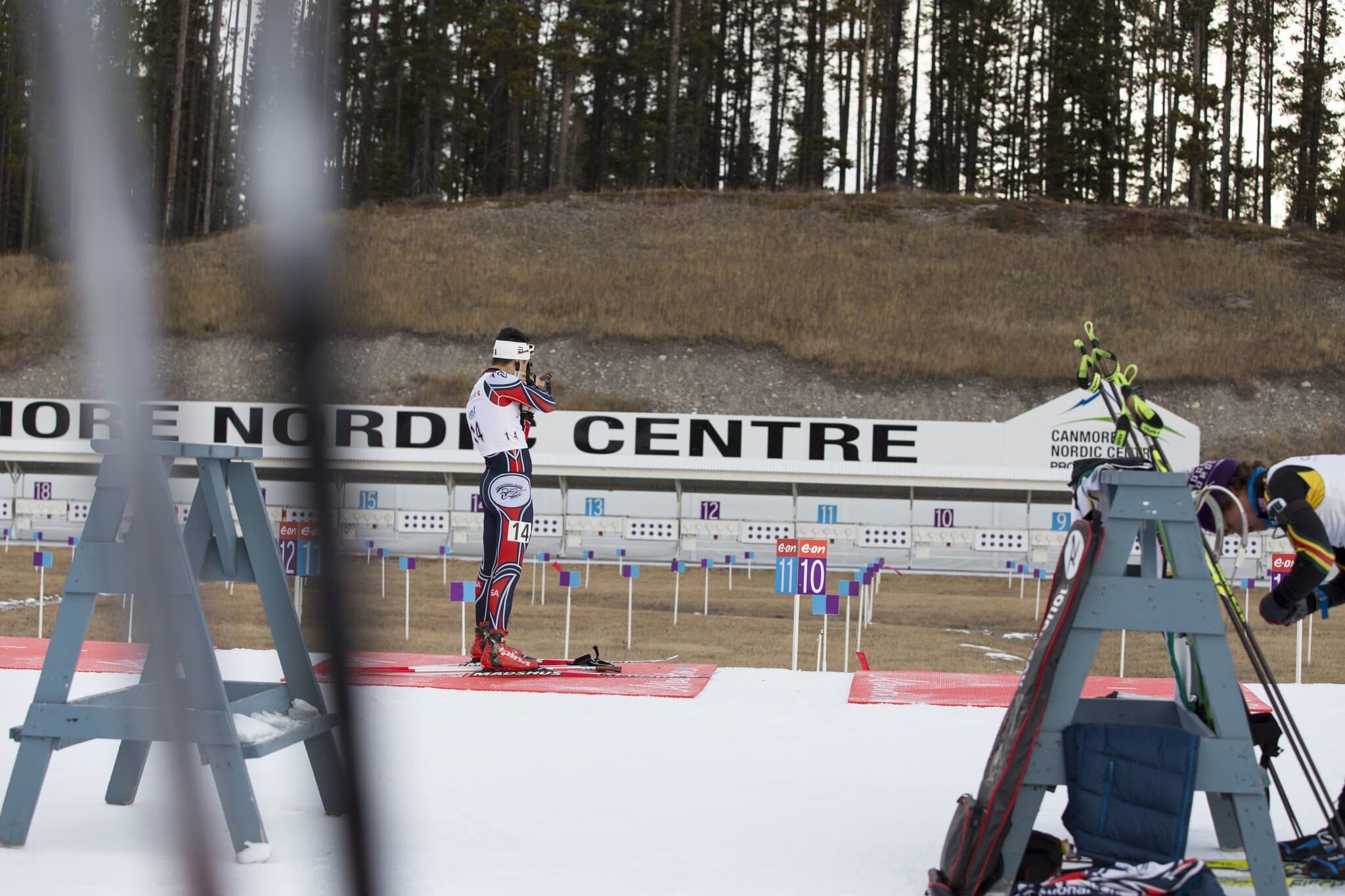
In winter, the centre transforms into a cross-country skiing paradise with more than 65 kilometres of perfectly groomed, world-class trails. You’ll find routes for complete beginners as well as seasoned pros, and because the trails are partially lit in the evening, you can even ski after sunset. If you don’t have your own gear, the local rental shop Trail Sports will sort you out.
In summer, the snow melts away to reveal a fantastic network of mountain biking trails. Narrow forest singletracks weave between the trees and offer incredible fun. Lukáš and I aren’t exactly professional bikers, so we always appreciated the wider, well-maintained paths where you can enjoy a pleasant walk towards Mine Meadow.
5. Quarry Lake: Summer Cool-Down by the Lake
When the mercury climbs towards 30°C in summer and Canmore starts baking, every local heads straight to Quarry Lake. This lake was created by flooding a former mine and is now a gorgeous recreation area with sandy beaches and sweeping grassy areas that are absolutely made for an afternoon picnic.
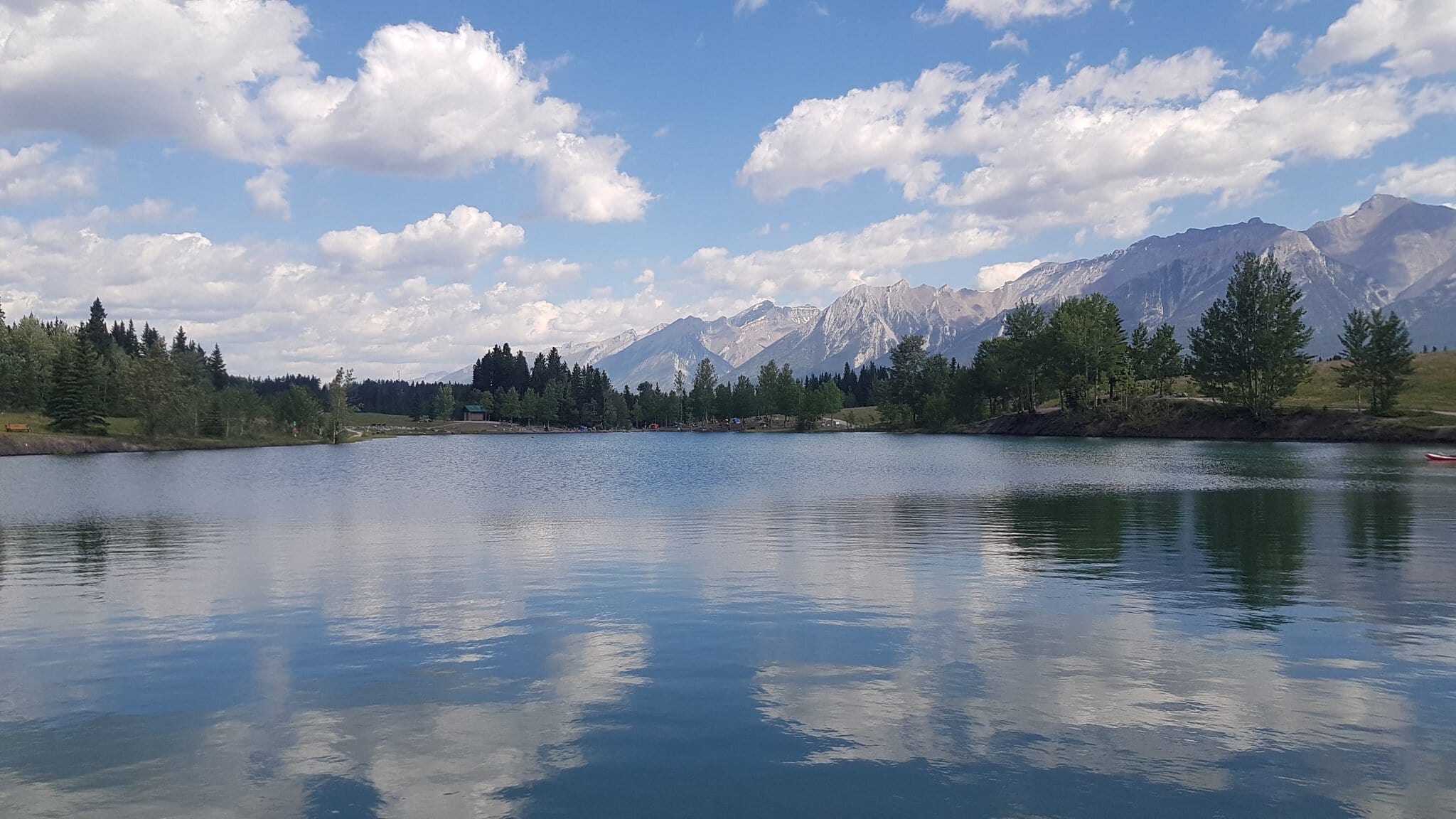
I should say upfront, though — swimming in Quarry Lake is really only for the brave among you. The water is freezing even in the warmest summer months, fed by melting snow from the surrounding mountains, so think of it more like a mild cold-water dip. 😁 For a quick refresh, though, it works an absolute treat.
The lake offers stunning panoramic views of the Mount Rundle ridge on one side and Ha Ling Peak on the other. A flat, easy trail loops all the way around, so even if you don’t fancy a swim, you can enjoy a lovely evening stroll at sunset. Be aware that you’ll need to pay a parking fee — the town recently introduced one due to the huge influx of visitors.
6. Kananaskis Country: Alberta’s Hidden Treasure
If Canmore prides itself on being a quieter alternative to Banff, then Kananaskis Country is the ultimate escape from mass tourism. This vast area of parks and reserves begins just a 15-minute drive southeast of Canmore and offers pristine wilderness full of bears, elk, and mountain peaks that rival anything in the neighbouring national park.
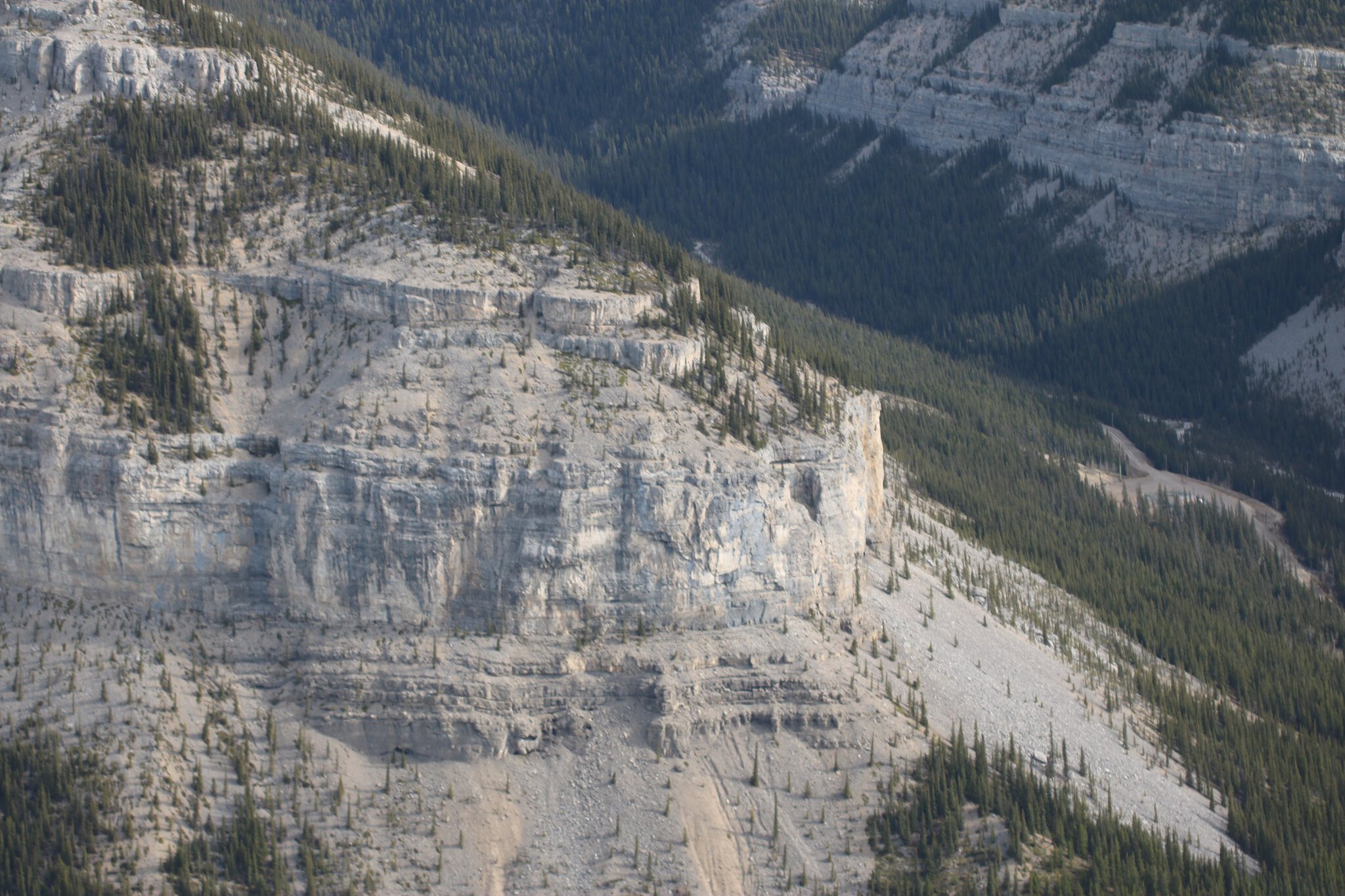
Locals absolutely rave about this area. Our former colleague from Calgary hiked exclusively in Kananaskis, precisely because even on summer weekends you get that authentic feeling of having the mountains to yourself. I’d definitely recommend driving along Highway 40, which is a fantastic scenic experience in its own right (note: a large section is closed in winter to protect wildlife). For hiking, check out Ptarmigan Cirque for incredible valley views, or the slightly longer Rawson Lake trail.
💡 Practical note: Unlike Canmore, if you want to park and explore Kananaskis Country, you’ve needed to buy a Kananaskis Conservation Pass since 2021. It might sound a bit confusing that you need a different pass for each direction from town, but trust me — the money you invest in this pass pays for itself in quieter trails.
7. Spray Lakes Provincial Park and the Dusty Smith-Dorrien Road
Just above Canmore, if you drive past Grassi Lakes and continue up the unpaved road known as Smith-Dorrien Trail, the wild world of Spray Lakes Provincial Park opens up before you. This elongated reservoir in a narrow mountain valley is where some scenes from the film The Revenant with Leonardo DiCaprio were shot, and the atmosphere here is genuinely rugged and Nordic.
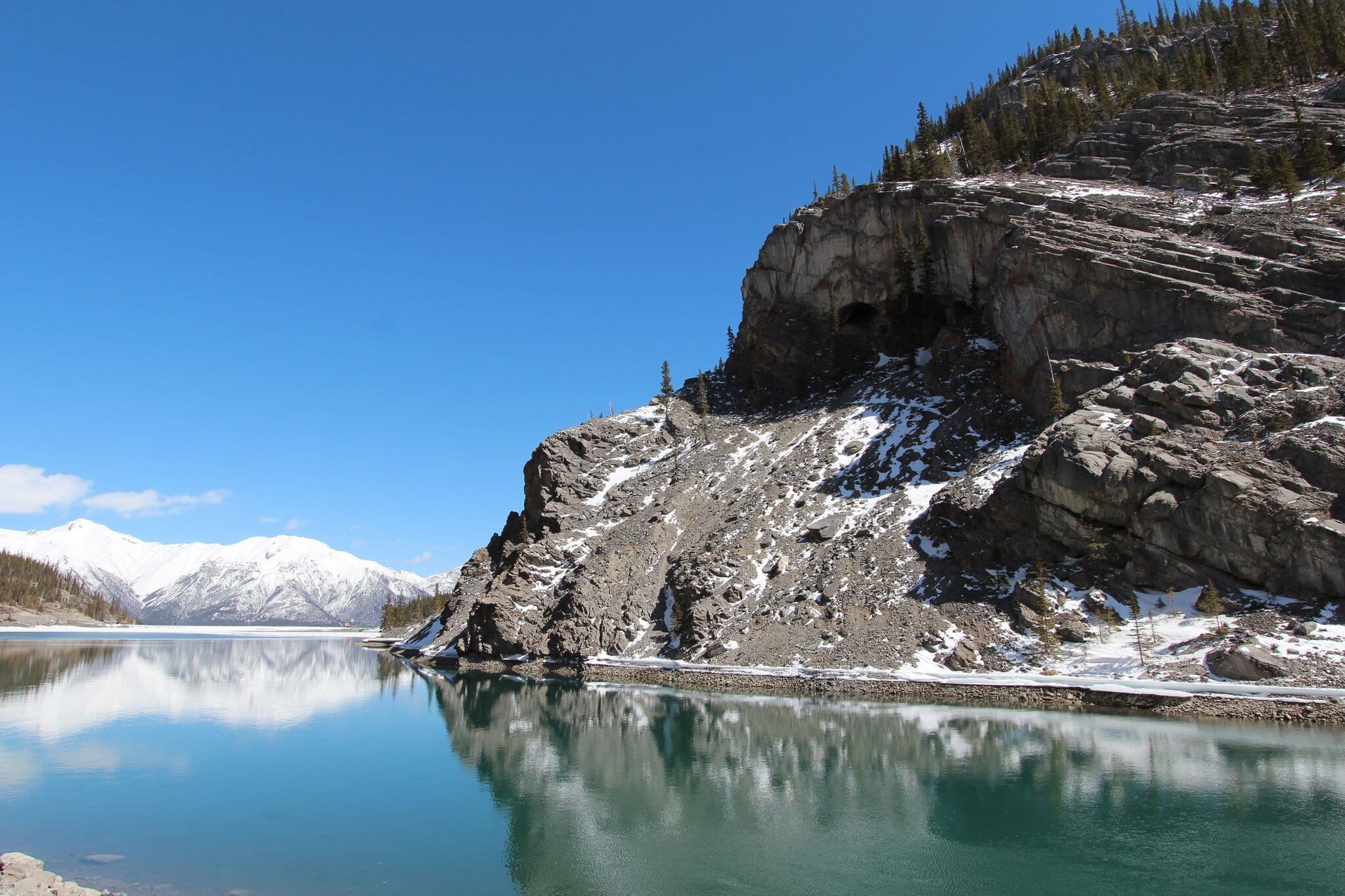
The road itself is an experience — incredibly dusty in summer and covered in a thick layer of packed snow in winter — but you can manage it carefully in a regular car (just make sure your rental company doesn’t prohibit driving on gravel roads). It’s precisely this more difficult access that keeps the area beautifully deserted.
In summer, you’ll often see people on paddleboards or in kayaks on the lake, while in winter, when the water freezes solid, it becomes a popular spot for ice fishing and open-air skating. Along the way, you’ll also find trailheads for hikes like Tent Ridge or Smutwood Peak — some of the most photogenic (and quite demanding) trails in the area.
8. Grotto Canyon: A Walk Through a Dry Riverbed
Grotto Canyon is a fascinating and slightly different kind of outing from what you’d usually do in the Rockies — instead of climbing a high hill for views, you’re descending deep into a narrow limestone canyon. It’s about a fifteen-minute drive from central Canmore along the old 1A highway.
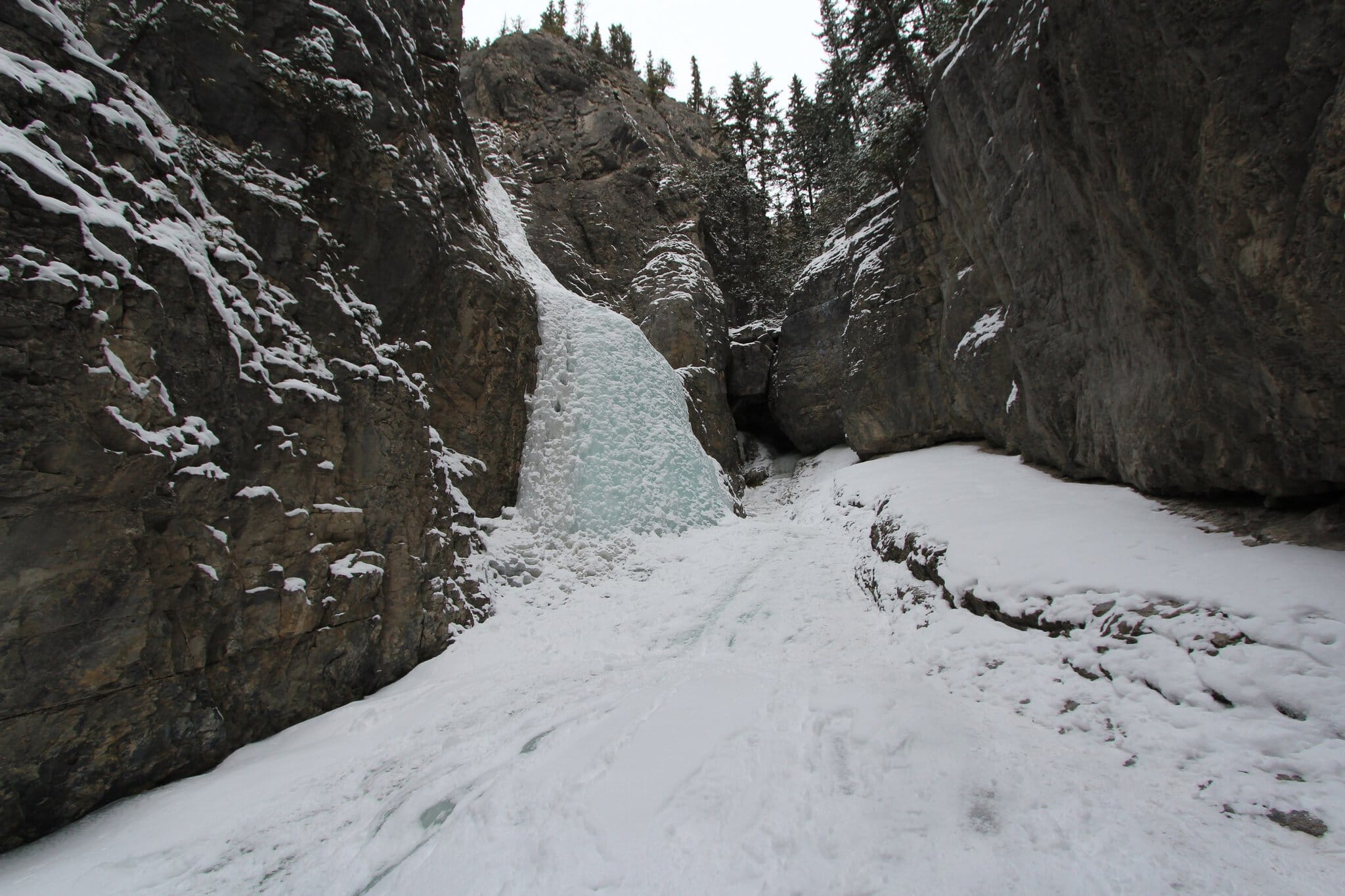
The entire hike follows the bed of a dry creek (in spring, when the snow melts, there can be some water, so bring waterproof boots). As you venture deeper into the canyon, the walls begin to rise and narrow around you until you reach a small waterfall surrounded by fascinating geological formations. A brilliant bonus is that keen-eyed visitors can spot centuries-old Indigenous pictographs painted in red ochre on the smooth rock walls.
We especially love this outing in winter. When the creek and waterfalls freeze, the entire canyon floor transforms into a thick ice slide and you can wander through it like an ice kingdom — but don’t even think about coming here in winter without crampons on your boots, or you’ll be falling over with every step 😅.
9. Policeman’s Creek Boardwalk and Bow River Loop
Sometimes you simply don’t feel like trudging uphill for hours, and for exactly those days, Canmore has a perfectly lovely network of easy, well-maintained trails right in town. The most beautiful of them is the Policeman’s Creek Boardwalk, a wooden walkway that winds through the heart of town above wetlands and springs.
It starts right by Main Street, so you can grab a coffee and a warm muffin, and within two minutes you’re strolling along wooden planks surrounded by reeds and trees, with snow-capped peaks rising in the background above you. It’s a magical spot where you might come across ducks, beavers, and with a bit of luck (or bad luck) even a wandering moose.
The boardwalk connects seamlessly to the Bow River Loop, which forms a large circuit around the turquoise Bow River. The path crosses the old Engine Bridge — a favourite stop for photographers that breathes the industrial history of the entire valley. It’s an absolutely idyllic stroll before dinner.
10. Canmore Cave Tours (Rat’s Nest Cave)
I’ll admit, a cave called Rat’s Nest didn’t exactly fill me with excitement at first. But just outside town, beneath Grotto Mountain, lies a cave system that will convince you Canmore has yet another ace up its sleeve — one that’s been left in an almost entirely wild, untouched state.
Don’t expect paved walkways or colourful artificial lighting here — you can’t enter the cave without a guide from Canmore Cave Tours, and before going in you’ll be kitted out with a coverall, helmet, and headlamp. What awaits is squeezing through narrow crevices, crawling on your belly, but also admiring enormous stalactites, underground pools, and the bones of prehistoric animals.
Given that the temperature inside the cave stays a constant 5°C year-round, it’s an absolutely fantastic activity when it’s bitterly cold outside in winter and the thermometers read minus twenty, or when it rains all day in summer and there’s no point heading out for an outdoor hike.

11. Nakiska Ski Area: Winter Family Fun
Skiing in the Canadian Rockies is a topic all on its own, and while everyone raves about Sunshine Village or Lake Louise, we fell in love with Nakiska. It’s a resort about half an hour from Canmore that locals treat as something of a well-kept secret.
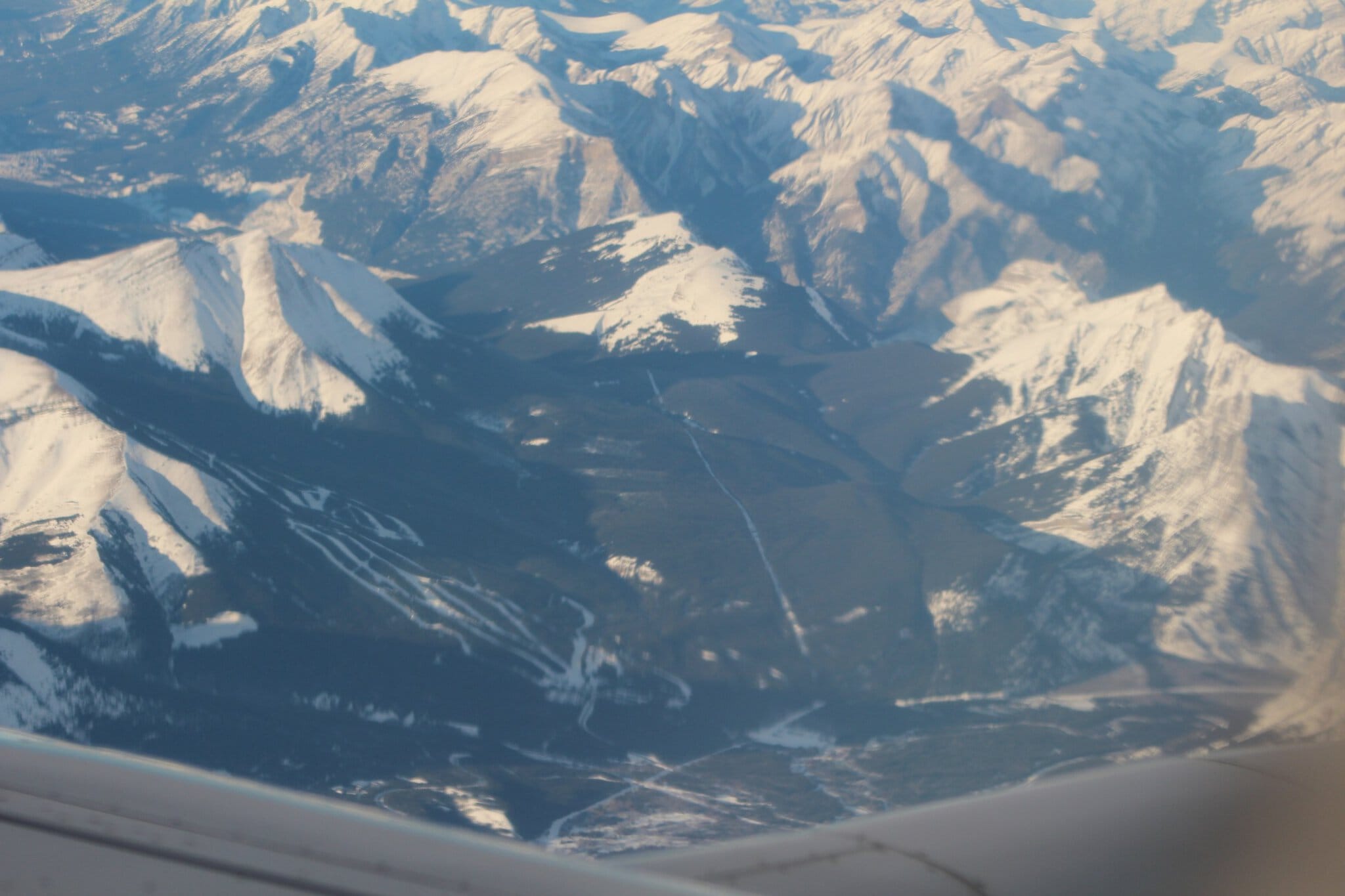
Nakiska was built for the alpine events during the 1988 Olympics, so the runs are wide, perfectly maintained, and incredibly fast. Locals love this resort because it has a much more relaxed, family-friendly atmosphere, and the lift queues are nothing like the maddening lines at the more famous national park resorts.
For those of us who like a lie-in, the proximity is a massive bonus. While getting to Lake Louise from Canmore would take over an hour and require a painfully early start for parking, you can leave Nakiska after breakfast and be flying down the slopes in no time. Lift passes also work out a bit friendlier on the wallet, which definitely counts when you’re watching your budget.
12. Alternative to Hot Springs
When people think of Banff, they immediately picture the famous Banff Upper Hot Springs or the historic Cave & Basin. The truth, however, is that you can’t actually swim at Cave & Basin — it serves only as a museum with an endangered species of snail — and the Upper Hot Springs tend to be so packed with tourists in the evening that you can barely find a spot to sit, let alone relax in peace.
If you’re staying in Canmore, you don’t need to drive north at all for a warm soak — there are several local alternatives. While there aren’t natural hot springs with an outdoor pool per se, a number of local hotels offer absolutely stunning “hot pools” with mountain views that you can access for a fee even without being a guest (for example, the Kananaskis Pomeroy Mountain Lodge nearby has the Kananaskis Nordic Spa — an incredible experience with outdoor saunas and pools at various temperatures).
The community recreation centre, Elevation Place, also has a beautiful modern pool complex with a large hot tub where locals go to unwind after tough hikes. It might not sound as romantic as natural springs, but trust me — after a day in the mountains, bubbling hot water with a view of the valley will bring you back to life just as well, and at a fraction of the cost.
13. A Trip into History at Canmore Museum
Canmore has a surprisingly rich and gritty history that’s far less polished and tourism-oriented than Banff’s story. This town began as a tough coal-mining settlement, and the mines only closed relatively recently in 1979. It’s this fascinating transformation from industrial village to mountain resort that the local Canmore Museum documents.
It’s located right in the town centre in the Civic Centre building, and while it’s not enormous, you can easily spend an hour here. They have great interactive exhibits about the geology of the mountain range, coal mining, and how the Olympic preparations changed the town forever. Admission is just a few dollars, making it a perfect low-key activity for a rainy afternoon.
Right next to the museum, you can also visit the NWMP Barracks (North West Mounted Police Barracks). It’s the oldest original building in Canmore, dating from 1893, which once housed police patrols keeping order among the rowdy miners. Today, costumed guides will happily regale you with tales of how tough life was on Canada’s Wild West.
14. Helicopter Tour Over the Rocky Mountains
I’ll be honest — a helicopter flight sat in the “one day, when we can afford it” column of our bucket list for ages, and then someone gave it to us as a gift. Since then, I recommend it to absolutely everyone, because I guarantee that seeing these massive mountain ranges from a bird’s-eye view will bring tears to your eyes.
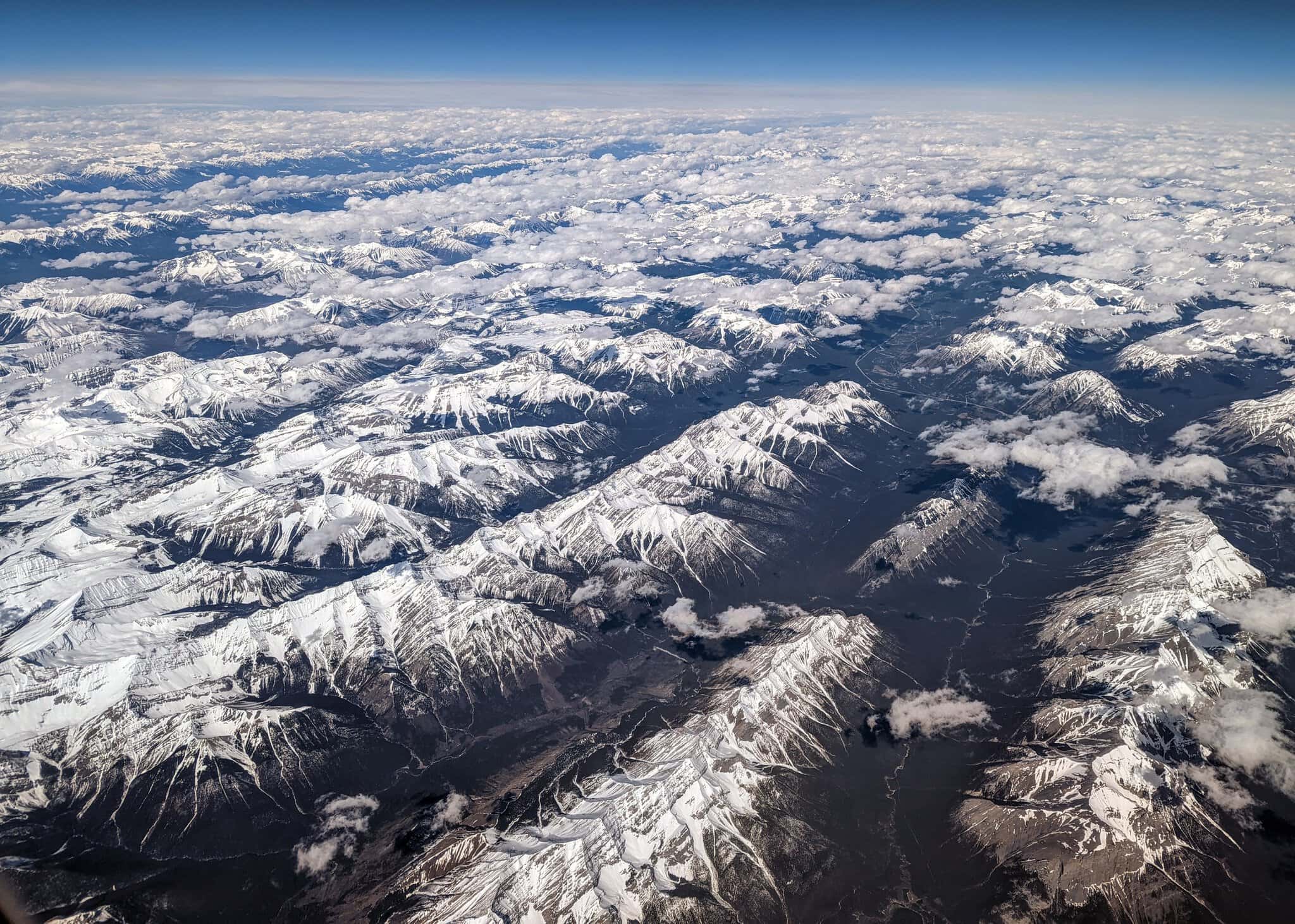
You can choose from shorter 15-minute flights circling the Three Sisters to longer trips over the glaciers of Mt. Assiniboine (often called “Canada’s Matterhorn”), which would otherwise take several days to reach on foot. We once received a scenic flight like this as a gift, and the feeling when the helicopter rises above the forested valley and you see miniature spruce trees and glacial pools below is something that’s nearly impossible to put into words.
The helipad is just a short distance from central Canmore, and these scenic flights are obviously best planned for clear, sunny days when your views won’t be obscured by low clouds.
15. Daily Trips to Banff’s Top Attractions
Let’s be clear: staying in Canmore absolutely does not mean you’ll miss out on the wonders of Banff — it’s actually the perfect strategic base for day trips to the park’s most famous sites. When you hop in the car in Canmore in the morning, you can reach the legendary Lake Louise in Canada in under an hour, or neighbouring Moraine Lake (though these days you can only get there by shuttle bus — remember to book months in advance!).
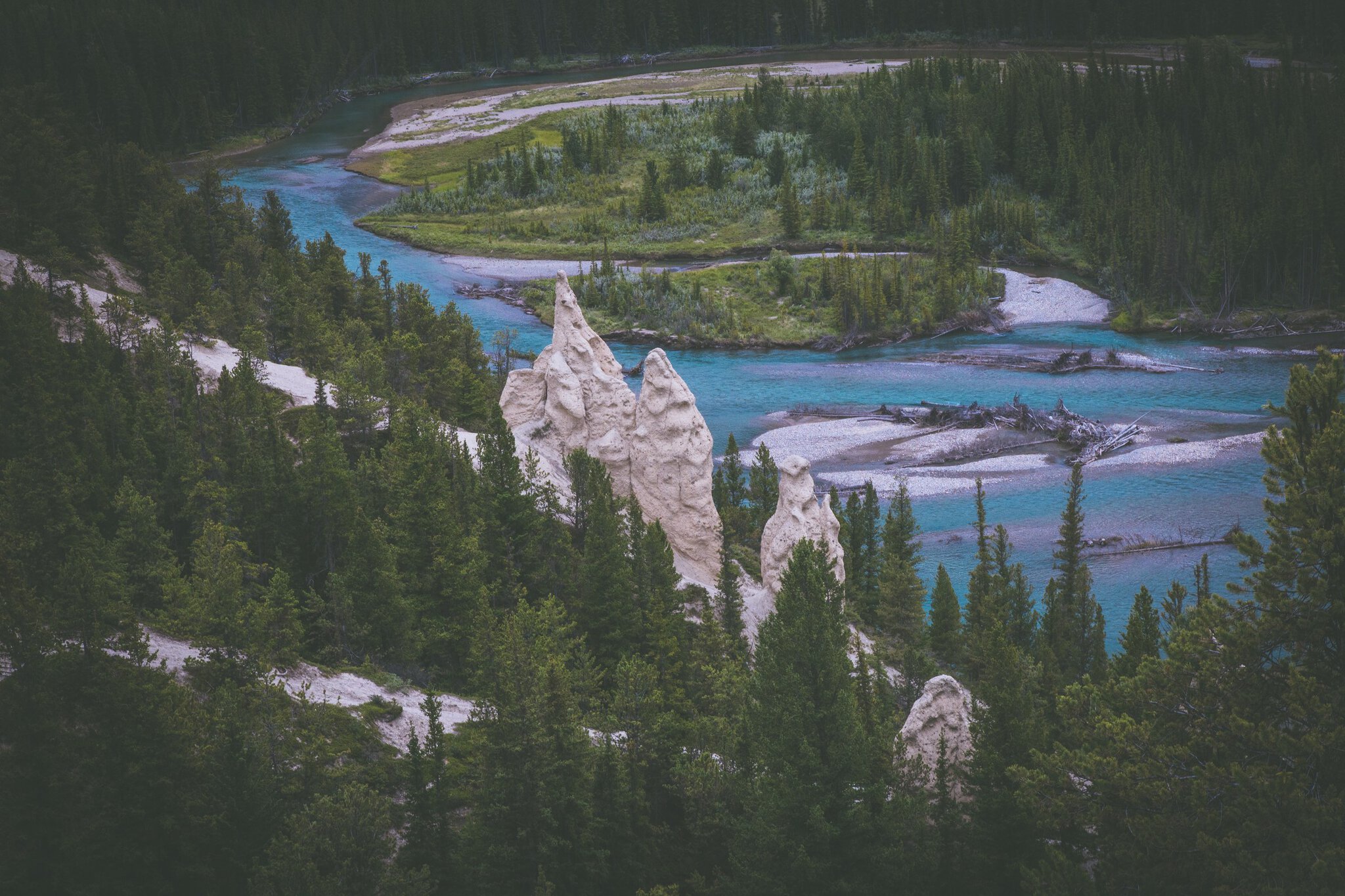
You can hike to the top of Sulphur Mountain or ride the Banff Gondola up, explore Johnston Canyon with its gorgeous waterfalls, or drive along one of the world’s most beautiful roads — the Icefields Parkway — towards Jasper National Park.
If you’re planning to spend several days in Banff and are thinking about working or spending an extended period in Canada, don’t forget to read our detailed article about what it’s like to work in Canada, where we share our personal adventures and experiences.
Map of points of interest for your phone
Food and Drink: Where to Refuel After a Hike
As I mentioned earlier, food prices in Banff can be genuinely eye-watering. While Canmore isn’t exactly “cheap” either, restaurants here offer much better value for money, and the service is far friendlier since it’s locals who actually eat here. As a rough guide, expect to pay around 25–35 CAD (about £15–£20 / €17–€23) for a decent main course — and that’s before tips and local tax, so budget a little extra.
Our absolute morning essential was always Rocky Mountain Bagel Co. They bake the best, freshest bagels for miles around, and their breakfast sandwiches with egg and bacon (plus excellent drip coffee) will fuel you for any mountain. Queues around eight in the morning often stretch out the door, but they move quickly, so don’t give up.
For lunch or a post-hike dinner, you absolutely must visit Grizzly Paw Pub & Brewing Company. It’s a local brewery right on the main street where, alongside a cracking Alberta beef burger, you’ll get outstanding craft beers — and for those who don’t drink alcohol, they brew their own craft sodas in flavours like root beer and grapefruit. It’s one of those proper, wood-panelled Canadian pubs with a buzzing atmosphere. Another great tip is Blake, a more modern restaurant with views that serves fantastic Asian fusion dishes when you need a break from burgers and chips.
Practical Tips to Wrap Up
To keep your Canadian holiday stress-free, it pays to think ahead about a few seemingly small details that can save you heaps of time and money once you’re there.
Where to Get Mobile Data?
Canada has notoriously expensive mobile plans, and roaming charges from UK networks can quickly add up, so we recommend buying an eSIM in advance. Holafly offers excellent coverage (we’ve also written a detailed Holafly review).
We wouldn’t travel without it, because it saves you the hassle the moment you land. You step off the plane at Calgary Airport, switch on your data, and can immediately pull up navigation to the mountains without faffing about trying to buy a local SIM at some kiosk.
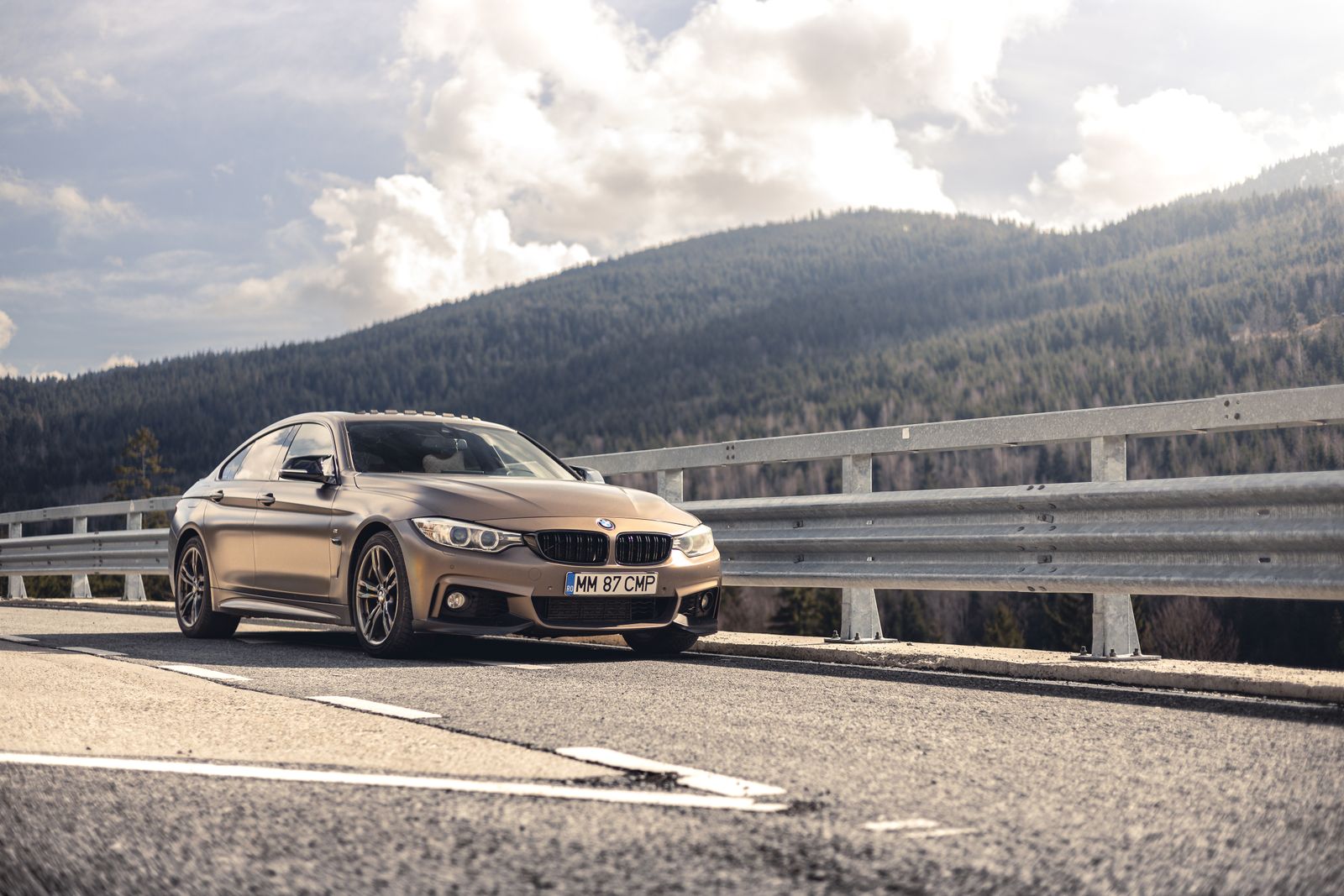 🚗 Car rental on the roadVerified car rentals in the Rocky Mountains
Search with the DiscoverCars comparison engine — it compares prices from dozens of local and international rental companies, and most bookings come with free cancellation.
Compare car prices in the Rocky Mountains →Don’t Forget Travel Insurance
Canadian healthcare may be world-class, but for visitors it’s prohibitively expensive. Even a simple sprained ankle on a hike could cost you tens of thousands of pounds without insurance. For shorter trips, a good UK travel insurance policy will do the job. For longer stays — or if you’re planning to work — we’ve been using SafetyWing for years (check out our SafetyWing review).
It works brilliantly as a subscription and you can set it up even when you’re already on the road. Lukáš used to pay month by month, which gave us complete freedom without needing a fixed return date.
Passes and Permits
If you’re staying in Canmore, you don’t need to pay anything. However, the moment you drive past the Banff National Park sign, you must have a valid Discovery Pass (national parks pass). For visits shorter than a week, buy a day pass. If you’re staying longer or travelling as a family, it’s worth purchasing an annual Discovery Pass — you can even have it mailed to your home before you fly out.
Simply hang the pass from your rear-view mirror and you’re sorted. Park wardens check car parks quite diligently, and fines for a missing pass can seriously dent your holiday budget — so don’t try to cut corners on this one.
Further Reading
If you’re already exploring the beauty of the Canadian Rockies, you’ll definitely find our other articles packed with tips and itineraries from this incredible country useful:
- Banff National Park: Complete Guide to What to See
- Lake Louise, Canada: Tips on When to Go and How to Beat the Crowds
- Working Holiday: What’s It Like to Work in Canada?
FAQ — Canmore vs. Banff: Your Most Common Questions
I’ve gathered the most frequently asked questions readers send me when they’re wrestling with the Canmore vs. Banff dilemma. If there’s anything I’ve missed, feel free to drop me a message.
Is it better to stay in Banff or Canmore?
It depends on what you’re looking for from your trip. If you want a romantic atmosphere, a historic downtown, and don’t mind significantly higher prices and crowds of tourists, Banff is the classic choice. If you want more spacious accommodation, savings of 30 to 40% on costs, easy access to supermarkets with normal prices, and a more local feel, Canmore is definitely the better option.
Is it okay to stay in Canmore if I want to visit Banff?
Absolutely, it’s actually very common practice. From Canmore to Banff is about 20 minutes by highway, which is less time than you sometimes spend inching through downtown Prague. You can explore Banff’s attractions during the day and return to quieter Canmore for dinner in the evening.
Is Canmore worth visiting even if I’m not staying nearby?
Definitely yes. Even if you’re staying right in the national park, I’d recommend taking a full day trip to Canmore. It has an incredibly relaxed atmosphere, great coffee shops, cheaper souvenirs, and hikes like Grassi Lakes or Ha Ling Peak are among the best in the entire area.
Which is cheaper, Banff or Canmore?
Canmore is significantly cheaper. Accommodation is typically one-third to half the price of Banff, restaurant prices are more reasonable, and most importantly, you can buy groceries at regular supermarkets without the steep ‘mountain markup.’ Plus, if you’re not visiting Banff on a given day, you don’t need to pay the national park entrance fee.
Do I need a national park pass for Canmore?
You don’t. Canmore sits right on the border but is still just outside the Banff National Park boundary. You only need to have a pass purchased when you actually enter the national park itself. Be aware though, for the nearby Kananaskis area you’ll need a different, special Kananaskis Conservation Pass.
Are there wild animals in Canmore like in Banff?
Yes, and quite frequently. Elk or deer occasionally wander through town, and both black bears and grizzlies live in the surrounding forests. The exact same rules apply here as in the national park—you should carry bear spray, hike in groups, and make noise in the woods.
How does the weather in Canmore compare to Banff?
Both towns are very close to each other and at roughly the same elevation (Canmore is only slightly lower), so the weather is essentially identical. Keep in mind that mornings and evenings can be chilly even in midsummer, so pack clothing suitable for layering. Winters here are harsh with tons of snow.
Tips and Tricks for Your Vacation
Don’t Overpay for Flights
Search for flights on Kayak. It’s our favorite search engine because it scans the websites of all airlines and always finds the cheapest connection.
Book Your Accommodation Smartly
The best experiences we’ve had when looking for accommodation (from Alaska to Morocco) are with Booking.com, where hotels, apartments, and entire houses are usually the cheapest and most widely available.
Don’t Forget Travel Insurance
Good travel insurance will protect you against illness, accidents, theft, or flight cancellations. We’ve had a few hospital visits abroad, so we know how important it is to have proper insurance arranged.
Where we insure ourselves: SafetyWing (simple monthly subscription) and TrueTraveller (for extra-long trips).
Find the Best Experiences
Get Your Guide is a huge online marketplace where you can book guided walks, trips, skip-the-line tickets, tours, and much more. We always find some extra fun there!
More from Rocky Mountains
Full guide → Travel story · most readWhat to Pack for the Canadian Rockies: Summer & Winter Packing List 2026
 ItineraryWestern Canada Road Trip: 14–21 Day Itinerary from the Rockies to the Pacific
 What to seeJasper, Canada: 15 Tips on What to See and Do (After the 2024 Fire)
 ActivitiesKananaskis, Canada: 10 Best Hikes Away from the Crowds
 With kidsHow Much Does a Trip to Alberta & BC Cost in 2026: Budget for Couples, Families and Backpackers


