

When we road-tripped through Alaska back in 2017 in our old campervan Chiquita and headed south toward Homer, I had no idea it would become one of my all-time favourite experiences. The asphalt of Sterling Highway comes to an unyielding stop after more than 300 kilometres of driving from Anchorage, where there’s simply nothing beyond — just the deep ocean. You suddenly find yourself in a place that has rightfully earned the nickname End of the Road, and it’s easy to see why Homer Alaska is one of the most unforgettable stops on the Kenai Peninsula.
This is Homer, Alaska — a little town of roughly five and a half thousand residents that has proudly carried the slightly eccentric nickname “the cosmic hamlet by the sea” for years. The moment you pull up, step out of your warm car, and draw in that first deep breath of damp, salty air, you’ll instantly understand why. ☺️ The local community is an incredible, colourful mix of hardened sailors, bearded fishermen, passionate artists, and old hippies who once came for a single short summer season and simply never managed to pack up and return to civilisation. People smile at you on the street, and there’s this strange, soothing slow rhythm everywhere you go.
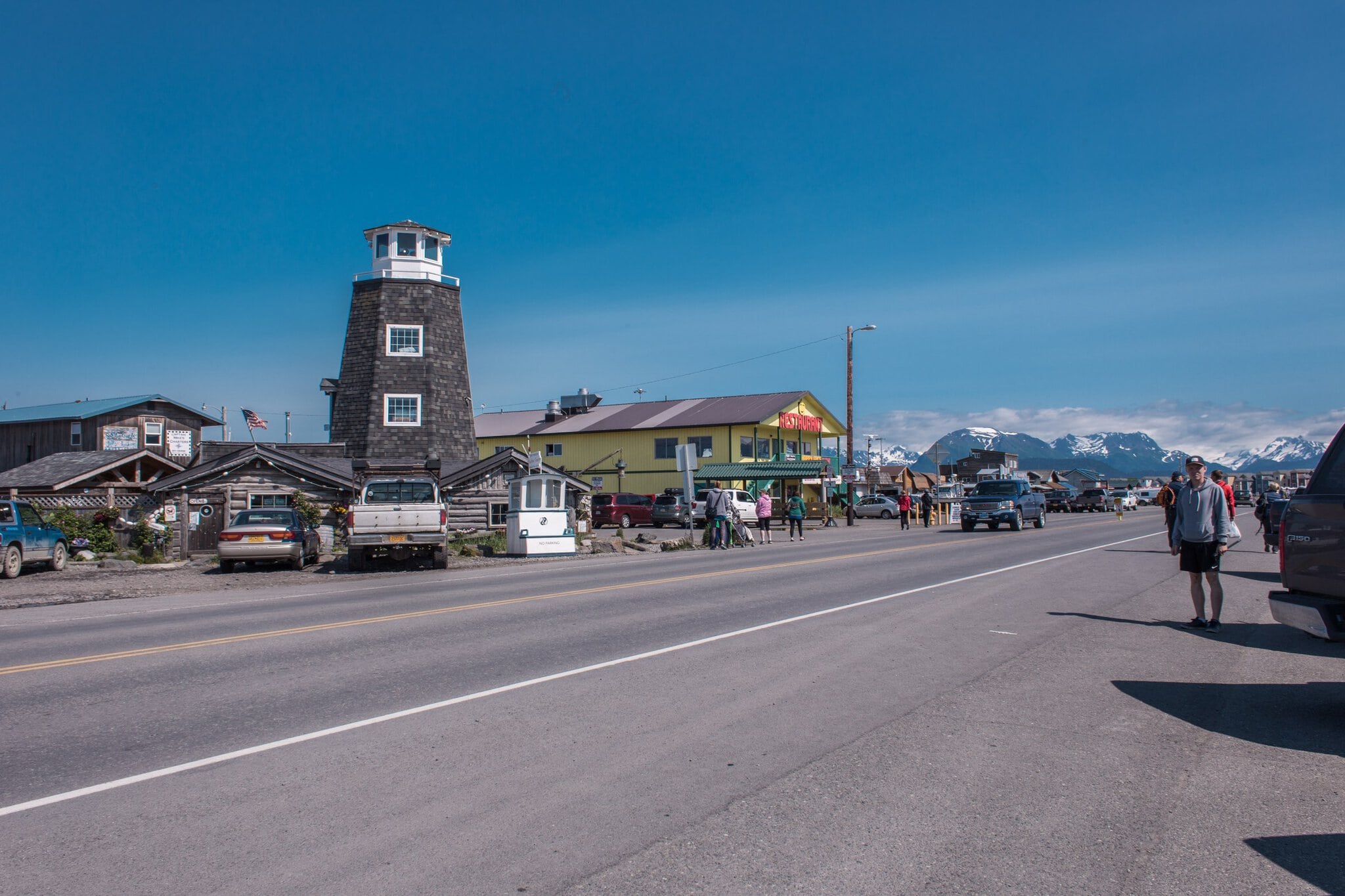
As you park up by the beach and step out into the cool northern breeze, the view across Kachemak Bay will stop you in your tracks. The horizon is dominated by majestic, ice-and-glittering-snow-capped peaks of the Kenai Mountains. In the distance, the active volcanoes Mount Iliamna and Mount Redoubt watch over you like sleeping giants, and occasionally you can even spot a lazy wisp of smoke drifting from one of the craters. Homer has an atmosphere you simply won’t find anywhere else in the world, and even though it’s essentially a small fishing settlement, you can easily spend several days — or even weeks — here exploring the wild nature.
Let’s dive deep into how to squeeze every last drop out of your visit to this famous Halibut Capital of the World, step by step.
TL;DR
- Best time to visit: June to August, when the majestic salmon runs peak, temperatures hover comfortably around 15 °C, and all local water taxis and tour boats are in full operation.
- Top attractions: Homer Spit (a long gravel peninsula lined with colourful shops and the harbour), Kachemak Bay State Park, and the stunning Grewingk Glacier.
- Jaw-dropping experiences: A fly-out bear viewing trip from Homer to the legendary Katmai National Park, or an all-day charter halibut fishing adventure.
- Most iconic pub: Salty Dawg Saloon, an original log cabin plastered with thousands of pinned-up dollar bills — the kind of place you simply must stop by for an evening pint with friends.
- Getting there: Homer is reached by a single road (Sterling Highway from Anchorage). We recommend booking a rental car well in advance — months ahead if possible.
The full destination guide: Alaska — guide and what to see
When to Visit Homer and How to Get There
If you’re planning a dream trip to Alaska, you probably already know that the tourist season here is extremely short and unforgiving of any planning mistakes. Alaska essentially opens its doors to visitors at the end of May and firmly shuts down again by mid-September, so your window for a visit isn’t exactly generous. We learnt this the hard way when we once tried to change plans last minute, only to find park gates closed and docks pulled out of the water.
Best Months to Visit
The climate and wildlife window on the beautiful Kenai Peninsula runs roughly from mid-May to mid-September. If you go in May, the big advantage is slightly lower accommodation prices and noticeably thinner crowds, though you’ll need to accept that many animals are still lazily making their way into the bays and tour boat operators are cautiously launching their fleets. It’s a wonderful time, though, as the coveted King Salmon (Chinook) run begins, so riverbanks are already lined with eager anglers and you can practically smell summer on its way.
June and July are the absolute peak. We experienced it first-hand in July, when temperatures climbed to a pleasant 15–18 °C, the rivers were teeming with salmon, and every morning we couldn’t stop marvelling at how any of this was even real. In June, the sun doesn’t set until well past midnight, so it feels like the days never end and your energy multiplies with every hour outdoors. Accommodation and boats tend to be fully booked by this time, so don’t delay your reservations.
August is a fantastic month for watching breaching whales and admiring nesting seabirds on the cliffs, but temperatures start dipping towards 10 °C and there’s a noticeable increase in that classic northern drizzle. By mid-September the season comes to a hard, unapologetic end — most water taxis haul their anchors ashore for good, and the locals start preparing for long months of snow and darkness.
How to Get to the End of the Road
The vast majority of travellers fly into Anchorage first. From the UK, you can find connecting flights via Seattle, Minneapolis, or other US hubs — keep an eye out for deals on flight comparison sites. Once you land, the key is to pick up a rental car or campervan right at the airport. We’ve had consistently great experiences with Booking.com for accommodation, and for car hire, booking well in advance is essential. In Alaska’s summer, demand for any kind of rental vehicle wildly outstrips supply, so if you don’t book ahead, you might genuinely find yourself walking out of the airport on foot.
From Anchorage airport, you’re looking at roughly a 350-kilometre drive that takes four to five hours of pure driving time — but realistically, you could easily spend a whole day on it. Especially the first time. The route winds through absolutely breathtaking mountains, along the dramatic Turnagain Arm (where we spent a good hour standing in the icy wind trying to spot beluga whales), and eventually onto the scenic Sterling Highway. This road meanders past wild salmon rivers, through dark-green forests, and offers so many irresistible photo stops that it eventually spits you out right on the windswept shore of Kachemak Bay in Homer.
Where to Stay in Homer and How Much It Costs
Alaska has always been one of the priciest US states, and during its short, packed summer season you’ll feel it in your wallet at every turn. We stuck to our strict daily budget of $50 for both of us and slept the entire time in our van Chiquita, but if you’re looking for a solid roof over your head, there are plenty of options. You can choose whether to stay in town on firm ground close to all the shops, or pay a bit more for the utterly unique atmosphere on the iconic narrow Homer Spit, where you’ll have the rolling ocean and bobbing fishing boats right outside your window.
For budget travellers, a great choice is Driftwood Inn Homer, offering cosy rooms and camping spots near Bishop’s Beach. A solid mid-range option with good value is Best Western Bidarka Inn Homer, located near the town centre and airport. And if you fancy real luxury with the best ocean views right at the very tip of the peninsula, go for Land’s End Resort Homer Spit.
Your overall costs will obviously depend on how you eat and how much you indulge in local restaurants. If you go for camping in a rented campervan (which is, by the way, probably the most typical way to travel in Alaska — and it gives you an incredible sense of freedom), you’ll save a fortune on accommodation. Just make sure to book your spots at the better RV parks on Homer Spit a good six months in advance, because the best pitches with beach views vanish at lightning speed, and spending the night crammed beside a dusty road will put a damper on the experience.
Homer, Alaska: 12 Best Things to See and Do
Honestly, when I was putting this list together, I had a hard time trimming it down to twelve. Homer offers far more than most people would expect from a town where the tarmac simply runs out. But here are the things we’d do again without a moment’s hesitation. If you don’t want to arrange all your excursions on the spot at the visitor centre — risking everything being hopelessly sold out — check out some of the top-rated activities below that you can book online well in advance.
1. Homer Spit: The Heart of Town
The geological and commercial backbone of this fascinating town is, without a shadow of a doubt, the famous Homer Spit. Picture a narrow gravel bar that juts out like a long, thin finger more than 7 kilometres into the blue ocean of beautiful Kachemak Bay. This landform was created some fifteen thousand years ago as a natural moraine of a retreating glacier, but today it’s the pulsating heart of the local fishing tourism scene, buzzing with incredible energy from the early foggy morning until the late, chilly night.
Lining both sides you’ll find absolutely everything you need for a proper Alaskan adventure. Long wooden boardwalks are flanked by charming souvenir shops, professional fishing gear stores, and buzzing restaurants wafting the irresistible smell of freshly fried fish and chips — and of course, the enormous, overflowing harbour full of boats of every kind. Cheeky seagulls screech at you everywhere, and every now and then you have to dodge men in waterproofs hauling carts of ice.
The Spit also carries a rather dramatic and harrowing history, though. During the devastating 1964 earthquake, a large section of the land here unexpectedly sank by several metres, and many historic buildings had to be painstakingly salvaged by the local community and moved on stilts beyond the reach of the tide. Today you can stroll along in perfect peace with a hot coffee in hand, watch sea otters bobbing between the waves, and breathe in that unmistakable, sharp maritime air.
2. Pacific Halibut Fishing
Homer proudly holds the official — and it must be said, thoroughly deserved — title of Halibut Fishing Capital of the World. As soon as you take even a short stroll along the wooden harbour docks, you’ll see that passionate sport fishing absolutely dictates the pace and atmosphere of the entire summer here. Every day, hundreds of eager anglers in waterproof suits head out after massive trophy Pacific halibut, which regularly weigh well over 100 kilograms. When these enormous fish are hoisted onto the scales in the afternoon, it’s a sight that truly takes your breath away.
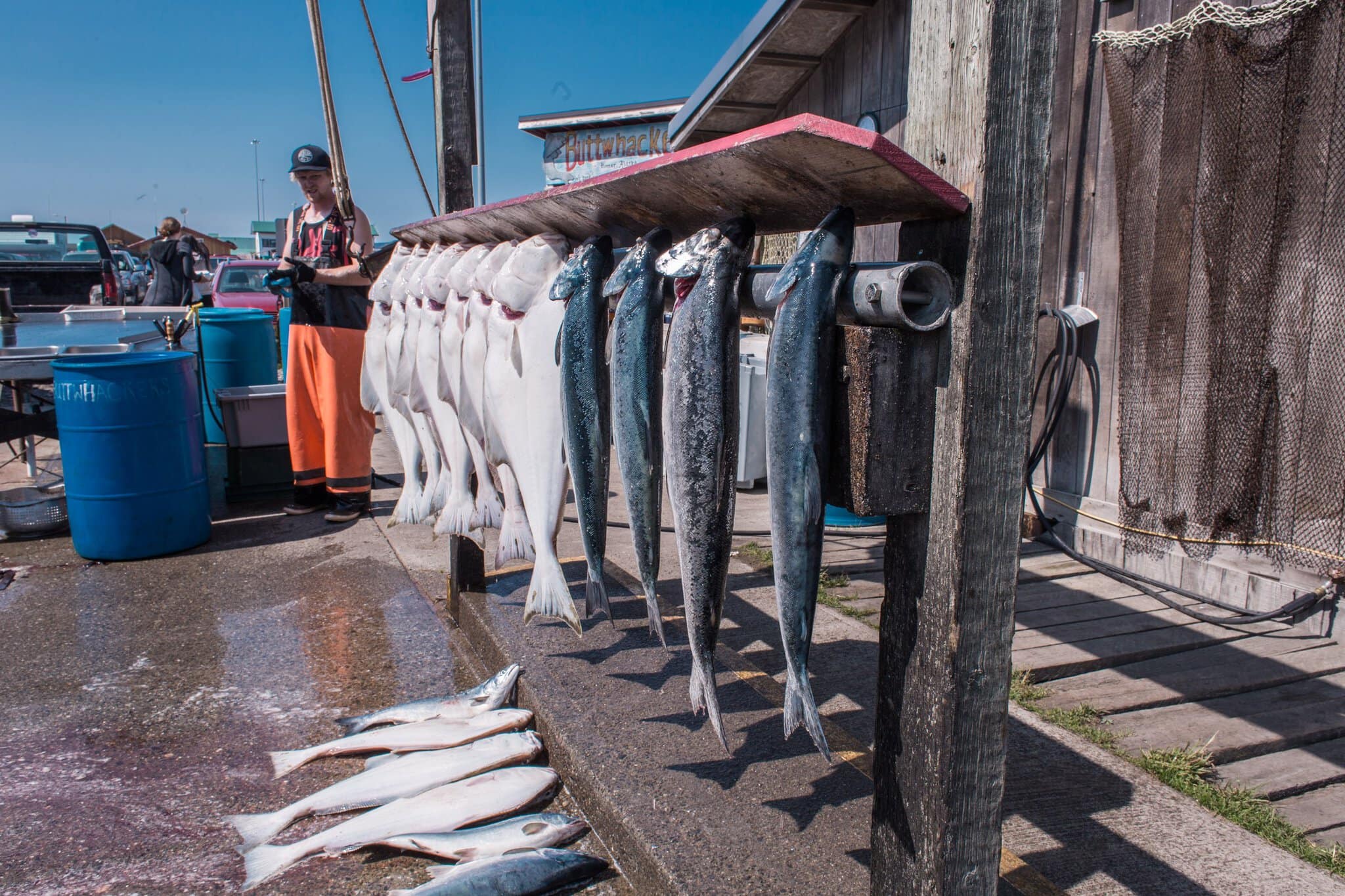
If you’d like to treat yourself to this wet, fragrant, and rather rugged experience, be prepared to part with a fair chunk of cash — charter boat prices boldly reflect the huge summer demand. Half-day to full-day trips on the choppy, rolling sea with a professional guide currently run at roughly $400–$550 per person. In return, though, you get full service from the crew, all the heavy-duty tackle included, and a pretty good chance of grilling your own catch over the fire that evening.
3. Grab a Pint at the Salty Dawg Saloon
After any successful big-fish outing, a demanding afternoon hike through the mountains, or simply out of curiosity and a summer whim, every adult visitor to Homer must pop into the Salty Dawg Saloon at least once. This original, somewhat weathered little log cabin from 1897, with an unmissable lighthouse tacked onto its side, has served over the years as a post office, a tiny railway station, and a general store. It wasn’t until the 1950s that a group of local enthusiasts converted it into this one-of-a-kind watering hole. After the devastating earthquake, it even had to be moved a short distance to its current spot right on the firm edge of the Spit.
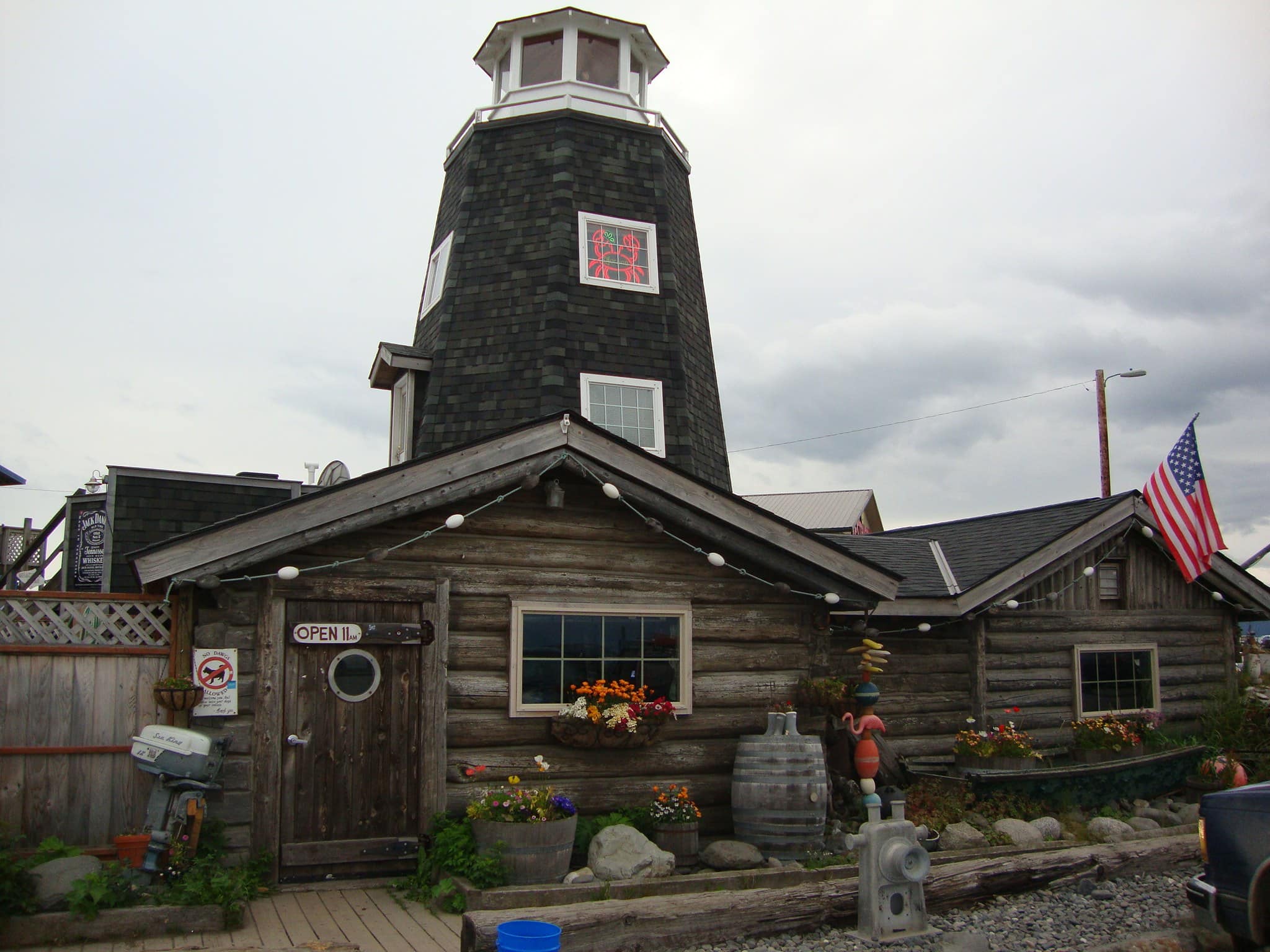
When you push through the creaky door into the dim interior, you probably won’t know where to look first. The entire place — floor to ceiling — is covered in tens of thousands of scrawled, signed dollar bills that have been frantically nailed to every wall, beam, and post for decades, dangling in incredible clusters from the low ceiling. Life rings hang alongside random bras, uniform patches, and the scent of spilt beer mingles with woodsmoke from the stove.
Don’t bother looking for food on the menu here (head next door for that), but ordering an ice-cold draught beer or their famous lemonade, then searching for a tiny patch of bare wood to pin up your own crumpled one-dollar bill with a message from home, and chatting with the loud local fishermen while you’re at it — that’s a quintessential Alaskan ritual you simply can’t skip. 😅
4. Kachemak Bay State Park: Wilderness Without Roads
Directly across from bustling Homer, just a short hop over the shimmering cold waters of the bay, lies a forgotten world of 400,000 acres of rugged mountains, dense old-growth forests, and wild rocky beaches, all carefully protected within Kachemak Bay State Park. It’s actually the very first state park ever established in Alaska, back in 1971, and it has one enormous catch that makes it so incredibly special: not a single metre of road leads into it.
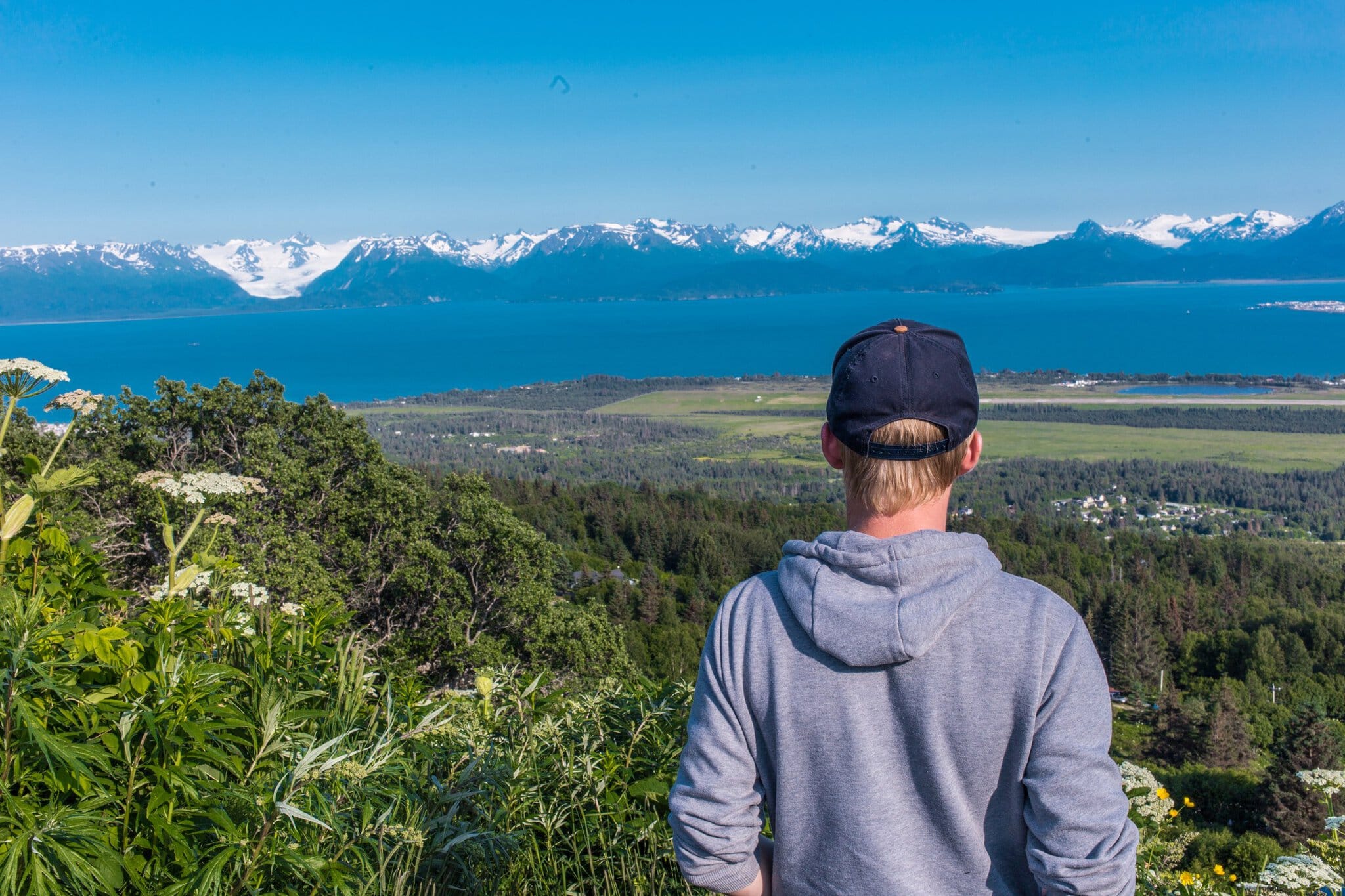
In practical terms, this means you can only get there by commercial water taxi, which departs every morning from the harbour on Homer Spit. We used the local fleets, which cheerfully load you into a smallish but incredibly sturdy aluminium boat. After about twenty to thirty minutes of bouncing across the waves, the seasoned skipper drops you on a beach right in the heart of untouched wilderness. During the ride, there’s a great chance of spotting whales blowing spray into the air or the ever-curious sea otters bobbing alongside.
A return trip across the bay costs just under $100 per person (which includes the small park entry fee), but the extraordinary chance to suddenly find yourself completely alone in the middle of northern wilderness with no phone signal and no crowds is absolutely worth every penny. Just make sure to very clearly agree on the exact afternoon pick-up time with your skipper, because spending an unplanned night there without proper gear is something nobody wants.
5. Hike to Grewingk Glacier Lake
Once you’ve happily paid for the water taxi across the bay to the state park, make sure to get dropped off right at the start of the marked Grewingk Glacier Lake Trail. This particular route is, in my opinion, an absolute gem — and it’s genuinely great even if you’re not exactly seasoned mountaineers in expensive boots. The elevation gain is truly negligible, and the trail runs just under five kilometres one way from the beach, so with a bit of goodwill it’s manageable even for families with younger children.
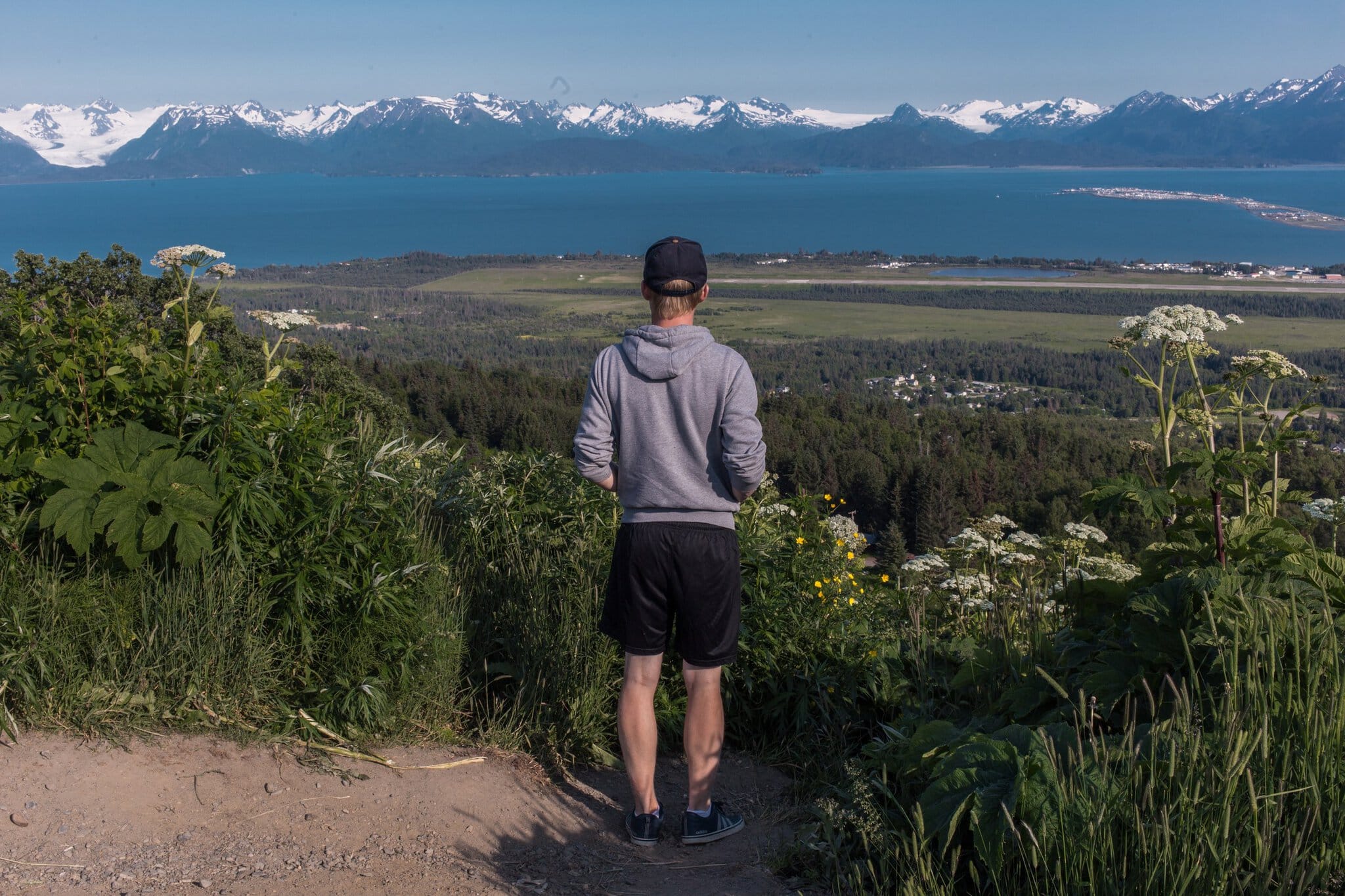
The first half of the trek leads you slowly through a gorgeous, dark-green, hushed boreal forest filled with giant fallen cottonwoods and classic Sitka spruce. These ancient trees are draped on all sides in thick green moss, like something out of a fairy tale about dinosaurs. Every now and then you half-expect something to peek out at you from behind the ferns. The whole way, we deliberately made as much noise as possible, constantly calling out our trusty “Hey bear!”, because visibility through the densely packed trees was often zero and encountering a grizzly here is more common than you’d think.
Eventually the trail opens out onto a grey moraine, and suddenly, without any warning, a breathtaking, cold panorama unfolds before you — the enormous glacial Grewingk Glacier Lake. Right there on the water’s surface, huge, brilliantly turquoise icebergs drift along, constantly calving from the ancient glacier mass somewhere in the distance with a deep, thunderous rumble.

6. Relax on Bishop’s Beach
While the commercial Homer Spit is almost always bustling with hurrying tourists and noisy fishermen, the pebble-strewn Bishop’s Beach offers a much calmer refuge on the completely opposite side of town near the old centre. It’s especially magical during the regular summer low tide — the foaming ocean retreats hundreds upon hundreds of metres from the shore, revealing a vast, fascinating expanse of little hollows, pools, and salty puddles.
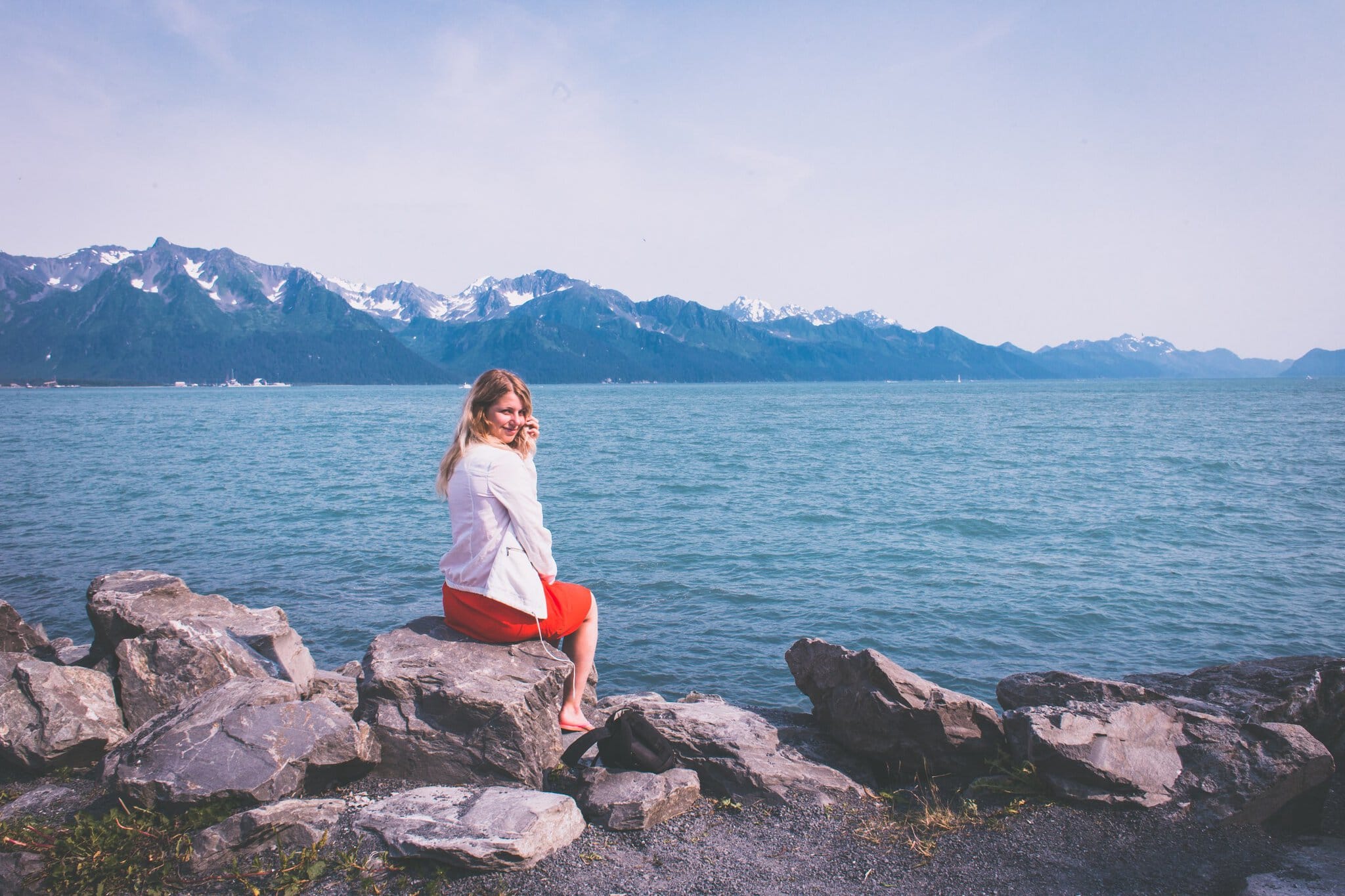
These little pools are called tide pools, and they’re teeming with fascinating miniature marine life. You’ll spot purple sea stars creeping across rocks, tiny crabs, orange anemones, and all sorts of strange seaweed left draped over the pebbles when the tide goes out. Locals love coming here to walk their dogs, build small bonfires from beautifully bleached driftwood in the evenings, or simply wander alone in search of glinting agates and other treasures that the ocean kindly delivers overnight.
7. Treat Yourself at Salmon Sisters
If you’re the kind of traveller who loves bringing home something genuinely beautiful, high-quality, practical, and truly local from every trip, make sure to stop by the wonderfully fragrant Salmon Sisters shop during your wander. This young brand was founded a few years ago by two real sisters from a tough Alaskan commercial fishing family. In just a few years of sheer determination, they turned it into an unexpected commercial hit that’s now proudly worn across the entire state.
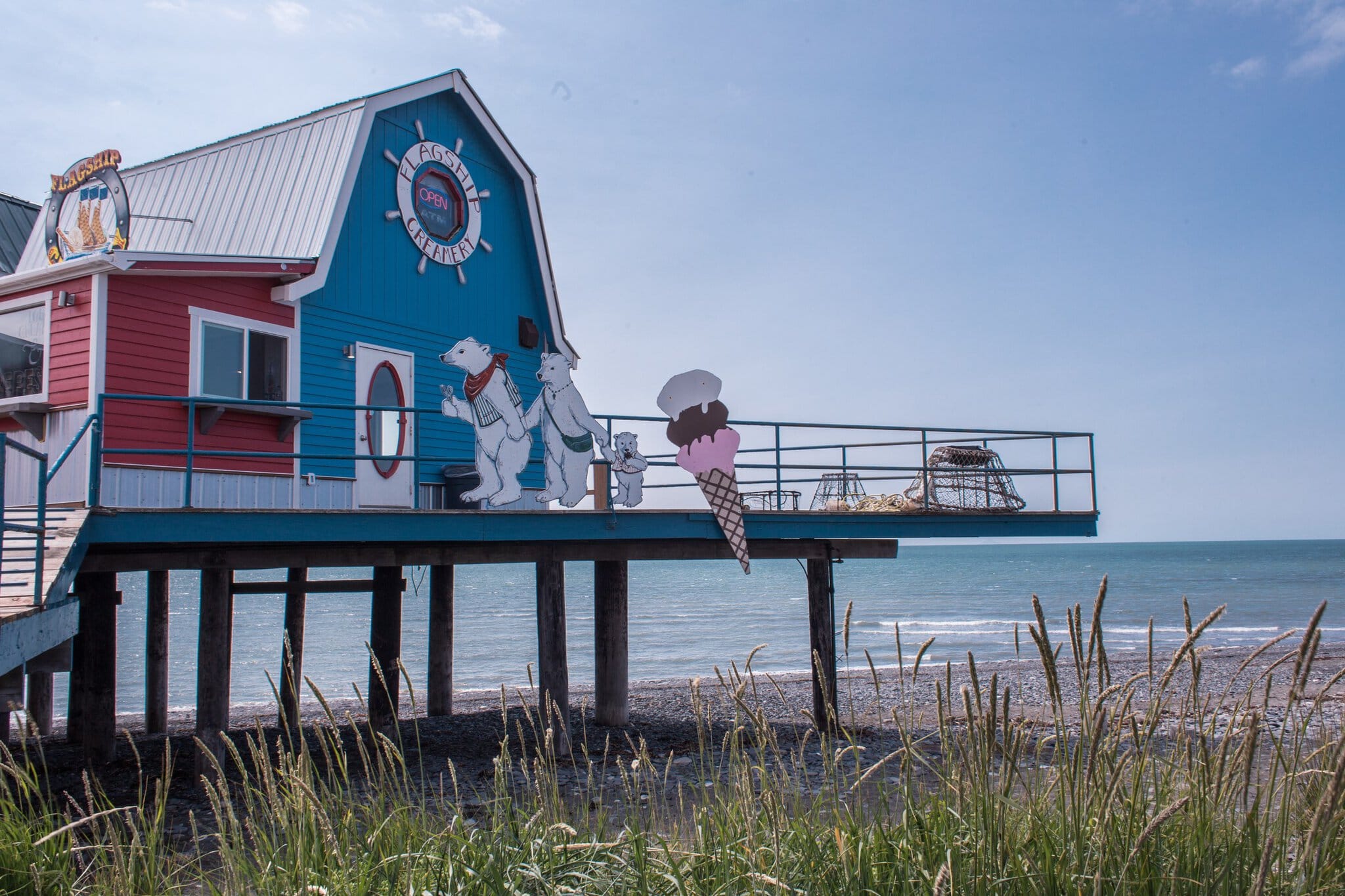
In their shop you’ll find gorgeous clothing with wave and fish motifs, sturdy high-quality wellies for wet weather, and heaps of accessories — all lovingly inspired by the ruggedly harsh daily life on the open sea and the wild Alaskan nature all around. By buying something here, your money goes directly to people who live and work in this community, and personally, that feels far better than picking up souvenirs from a nameless stall on the Spit.
8. Kayaking with Whales and Otters
If you and your travel mates are at least a little adventurous, unafraid of deep water, and sufficiently tough (the water in Kachemak Bay is a long way from a pleasant dip even in midsummer — falling in would be a serious problem), then definitely rent a tandem sea kayak with an experienced local guide for at least half a day.
Larger local operators like Mako’s Water Taxi can load you and your yellow plastic kayaks onto their boat and ferry you to more remote, quiet, and wind-sheltered coves like beautiful Tutka Bay or the calmer Peterson Bay. Conditions there are far more forgiving for novice paddlers than the treacherous open water of the main bay.
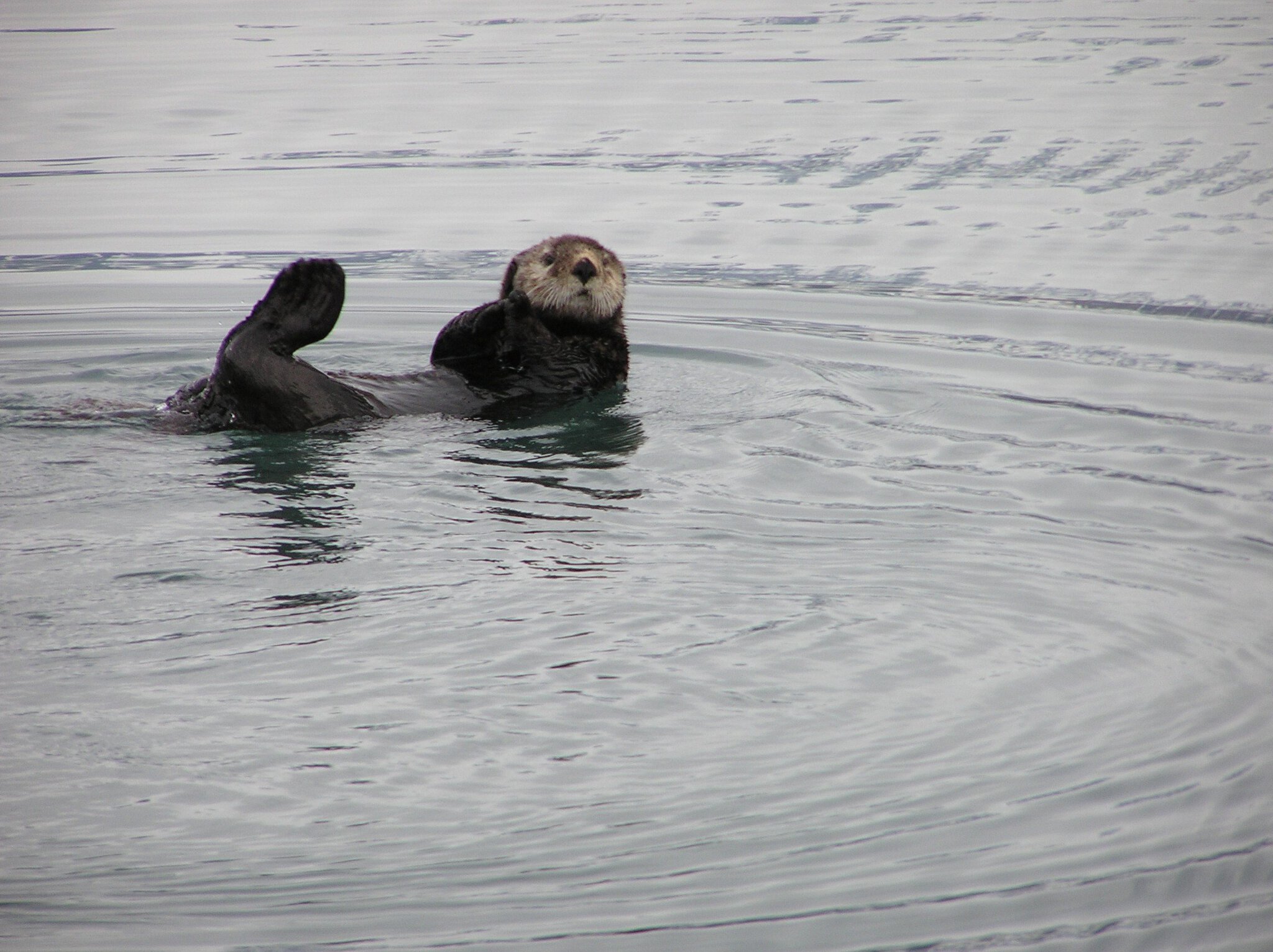
Seeing Alaska’s nature from the water’s surface is a completely different dimension: curious sea otters with pups on their bellies will pop up around your kayak, and with a bit of luck you’ll hear whales blowing in the distance. Just don’t forget proper waterproof layered clothing, because the wind off the glaciers is genuinely freezing.
Heading out on the water does mean wrestling occasionally with the fear of an unwanted capsize, plus the surprisingly exhausting battle of squeezing into the tight rental dry suit. But the reward is absolute silence, broken only by the rhythmic sound of your alternating paddle strokes in the water. And the profound respect for the ocean that you feel on that thin shell of fibreglass — that stays with you for a very, very long time.
9. Stop at Cooper Landing and the Russian River Madness
This little practical tip doesn’t technically sit within the town of Homer itself, but since you’ll inevitably drive right through it on your journey down Sterling Highway, I simply can’t leave it out of this guide. The sprawling, hilly area known as Cooper Landing, which straddles the stunning turquoise confluence of the Kenai River and Russian River, is the annual, boisterous epicentre of another wave of classic Alaskan madness: the mass sport fishing of Sockeye Salmon.
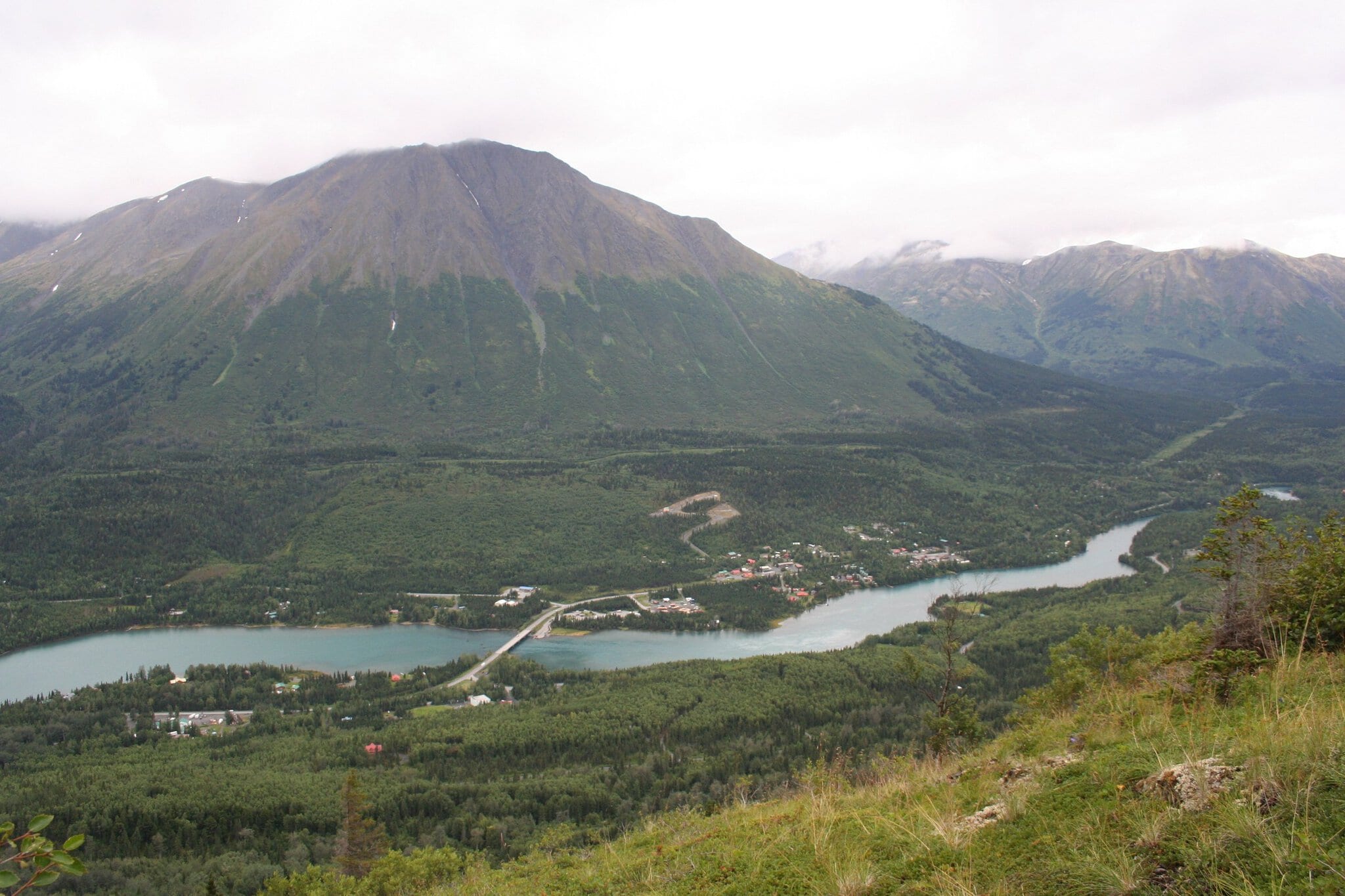
Particularly around the turn of July and August, enormous runs of hundreds of thousands of these beautifully crimson, powerful fish arrive, determinedly making their way from the deep ocean hundreds of kilometres upstream to spawn on shallow gravel beds — and then, sadly, immediately die. It’s an awe-inspiring and rather poignant natural cycle. Pull into the huge car park at the turnoff and walk down to the river for at least ten minutes to witness hundreds of anglers packed shoulder to shoulder in the icy water — something the locals affectionately and aptly call “combat fishing.”
10. Visit the Old Gold Rush Town of Hope
As you make your weary way down the Kenai Peninsula toward Homer, take a short detour to the wonderfully lost little historic village of Hope. It was founded by optimistic, penniless gold prospectors back in 1896, at the height of Alaska’s wildest gold rush. Thanks to its complete isolation from the wider world, this settlement has preserved an incredibly romantic and deeply authentic old-time character of wooden cabins, currently home to a year-round population of just about 160 hardy souls with generators.
11. Bear Viewing: Fly-Out from Homer to Katmai
If there’s one single thing I believe every visitor to Alaska should experience at least once (budget permitting, after all the accommodation costs), it’s the thrilling, awe-inspiring all-day fly-out trip in a small floatplane to watch hundreds of wild brown bears in their completely natural habitat in the river valleys. Homer’s perfect location makes it the ideal launching point. Local air services like the family-run Smokebay Air operate safe day flights in good weather toward the remote Katmai National Park or the forested Lake Clark area.
In the morning, you boldly climb aboard a tiny, droning plane on the Spit’s runway with a small group of fellow adventurers (Lukáš usually suffers a bit of anxiety in the cramped seat, gripping the handle white-knuckled, while I’m glued to the side window with enormous headphones on, snapping away in pure delight). During the flight you’ll skim low over snow-capped peaks, massive steaming volcanoes, and silver bays, before touching down rather firmly on some wide, deserted sandy beach quite literally in the middle of nowhere.
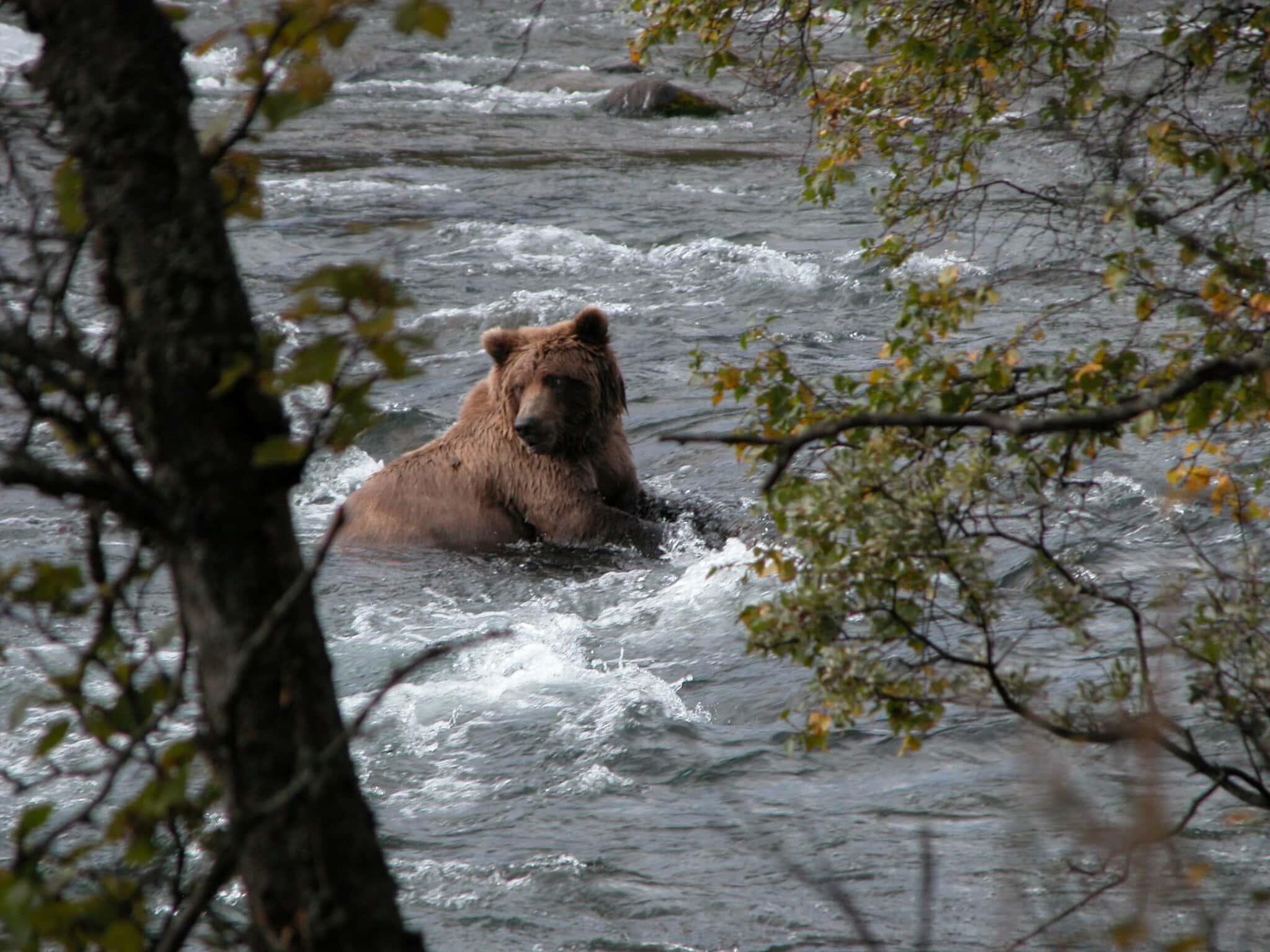
Under the strict, professional watch of a highly experienced, heavily armed pilot-guide, you’ll then spend long, chilly hours quietly crouching behind dry grass or standing with your camera by a shallow, rushing river, watching in speechless awe as huge, shaggy bears deftly swat thrashing salmon out of the water with their paws.
You can watch them playing on the banks with their curious, fluffy cubs, squabbling over the best fishing spot, or simply lying clumsily on the rocks with full bellies, digesting their fatty feast. It’s precisely the kind of moment you’ll live off for years — one of those times when you realise just how small we are compared to nature. These all-day fly-out trips understandably come with a steep price tag (in peak season you’ll often pay well over $1,000 per person), but trust me — hand on heart — every single dollar is worth it, and you won’t regret a second of it.
12. The Artists’ Colony of Halibut Cove
Our very last tip for today takes you to a truly magical, remote spot that you can once again only reach by water from the harbour. The picturesque settlement of Halibut Cove is a charming little cluster of cabins perched on massive wooden stilts rising straight out of the dark, calm water of a sheltered inlet. You can get there either on foot from the edge of the state park via the descending Saddle Trail loop and then call a pick-up boat from shore, or simply catch a direct water taxi from Homer first thing in the morning.
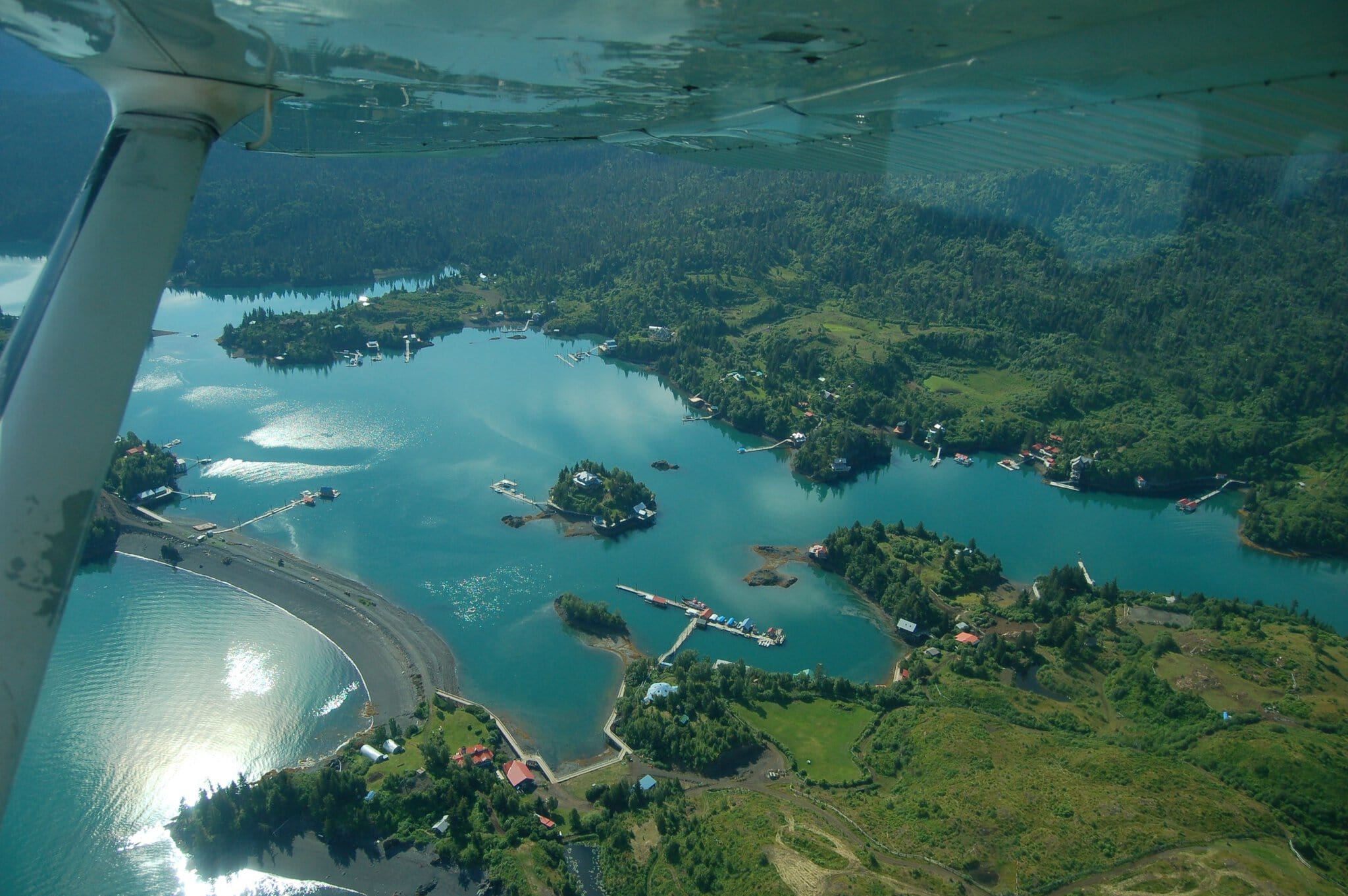
Today this sheltered settlement has become a wonderfully peculiar, semi-private, and highly exclusive colony of artists, eccentric yet talented painters, and permanent residents who love spending their entire northern summer here, tucked away from the noise of everyday civilisation. There are no gravel roads, let alone paved ones for cars, so everyone here gets around either on elevated, slightly wobbly wooden boardwalks connecting the buildings or in tiny motorboats. And the silence is simply extraordinary — broken only by waves lapping against the stilts beneath the cabins.
In summer, there’s also a truly renowned (and predictably eye-wateringly expensive) local restaurant called The Saltry, famous for its seafood specialities. But even if you don’t end up having a formal multi-course dinner, the quiet stroll alone past tiny shops, open private art galleries, and miniature waterside cafés is a beautifully fairy-tale, romantic, and slow-paced ending to your wild Alaskan adventure.
Map of points of interest for your phone
Where to Eat and Drink in Homer
Since we’re vegetarians and our daily budget was a mere $50 for both of us, we cooked a lot ourselves in Chiquita using supplies from the local Safeway supermarket. Honestly, though, Homer absolutely surprised me with what’s on offer. For a fishing settlement at the end of the world, the food scene here seriously delivers. Whether you’re craving a nice, quiet dinner at the end of the day or just need to dash in and grab a quick, filling breakfast before an early hike and morning boat ride, you really won’t be disappointed.
Restaurants, Bakeries, and Breweries Worth a Visit
At the very top of my recommendation list I have to mention the cosy, family-run Two Sisters Bakery, tucked away in the historic part of the quiet Old Town centre near the pebbles of Bishop’s Beach. This charming little community bakery has been running since 1993, and honestly, they make — without a word of exaggeration — the absolute best giant cinnamon rolls on the entire peninsula (and from my personal perspective, possibly on the entire planet 😅). If you’re after great coffee and a little something for breakfast, don’t miss it. For beer lovers, a visit to the local Homer Brewing Company is an absolute must, where you can sample excellent craft beers at a reasonable price.
And restaurants? Even though we didn’t eat fish, for most visitors Homer is paradise. If you’re looking for something a bit more upmarket, the acclaimed Fat Olives is your spot. They do fantastic seafood and halibut for meat-eaters, but we appreciated their excellent vegetarian margherita pizza and hot soup. For the ultimate classic Alaskan fisherman’s lunch packed with fried goodies, tourists often head to Captain Pattie’s Fish House right in the bustling heart of windswept Homer Spit.
And if you’re desperately running late in the morning and just need a quick, cheap, and seriously filling bite on the go for a few dollars, head straight to the counter at the cramped, packed little place called The Bagel Shop. They’ll whip you up the most honest hot breakfast bagel around — for fish fans with smoked salmon, or for vegetarians like us with a generous helping of cream cheese and veg.
 🚗 Car rental on the roadVerified rental cars in Alaska
Search with the DiscoverCars comparison engine — it compares prices from dozens of local and international rental companies, and most bookings come with free cancellation.
Compare car prices in Alaska →Frequently Asked Questions (FAQ)
When is the best time to visit Homer?
June through August, hands down. The weather is most stable (54-64°F), the salmon runs are in full swing, and everything from water taxis to bear-viewing tours is up and running. We chose July and it was a perfect choice, just make sure you book well in advance.
Is the drive from Anchorage to Homer difficult?
Not at all—you’re on paved highway the entire way along the Sterling Highway. It’s just under 220 miles from Anchorage, which takes about 4 to 5 hours of pure driving time. That said, plan for a full day trip because of the beautiful stops along the way and summer RV traffic.
How much does it cost to charter a boat for halibut fishing?
Homer is the halibut fishing capital, which means demand is high. During summer season, a full-day guided group charter runs about €360-500 per person. Gear is typically included, and they’ll often professionally filet your catch for you.
Can you drive to Kachemak Bay State Park?
No, there’s no road access to Kachemak Bay State Park. Your only option is to take a water taxi departing from the harbor on Homer Spit. The boat ride takes 20-30 minutes and a round-trip ticket costs around €80-90 per person.
Do I need bear spray for hikes around Homer?
Yes, absolutely. Alaska is wilderness, and even on popular trails you can easily encounter a bear. Always carry spray attached to your belt or backpack, and make noise when you’re in areas with limited visibility.
What is Homer Spit and should I stay there?
Homer Spit is a gravel peninsula stretching more than 4.5 miles out into the ocean. It’s where you’ll find all the tourist action—restaurants, the harbor, and camping spots. Staying there is an amazing experience, but expect higher prices and more crowds than in town.
Can kids handle the hike to Grewingk Glacier?
Yes, the Grewingk Glacier Lake Trail is relatively easy with no major elevation gain. It’s about 3 miles one way to the lake with floating icebergs. The trail is well-maintained and very popular for family outings.
Tips and Tricks for Your Vacation
Don’t Overpay for Flights
Search for flights on Kayak. It’s our favorite search engine because it scans the websites of all airlines and always finds the cheapest connection.
Book Your Accommodation Smartly
The best experiences we’ve had when looking for accommodation (from Alaska to Morocco) are with Booking.com, where hotels, apartments, and entire houses are usually the cheapest and most widely available.
Don’t Forget Travel Insurance
Good travel insurance will protect you against illness, accidents, theft, or flight cancellations. We’ve had a few hospital visits abroad, so we know how important it is to have proper insurance arranged.
Where we insure ourselves: SafetyWing (simple monthly subscription) and TrueTraveller (for extra-long trips).
Find the Best Experiences
Get Your Guide is a huge online marketplace where you can book guided walks, trips, skip-the-line tickets, tours, and much more. We always find some extra fun there!
More from Alaska
Full guide →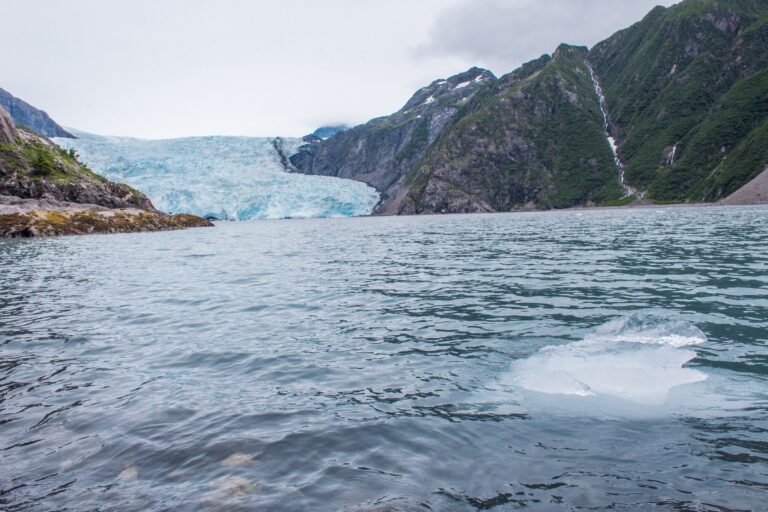 ItineraryAlaska Road Trip: The Best Itinerary for 7, 10, 14 and 21 Days
 What to seeAnchorage, Alaska: 15 Tips on What to See and Do in the Land of the Midnight Sun
 What to seeWhittier Alaska & Prince William Sound: 13 Best Things to See and Do
 What to seeTalkeetna, Alaska: 10 Best Things to See and Do (Denali Gateway & Flightseeing)
 When to goNorthern Lights in Alaska: When, Where and How to See Them


