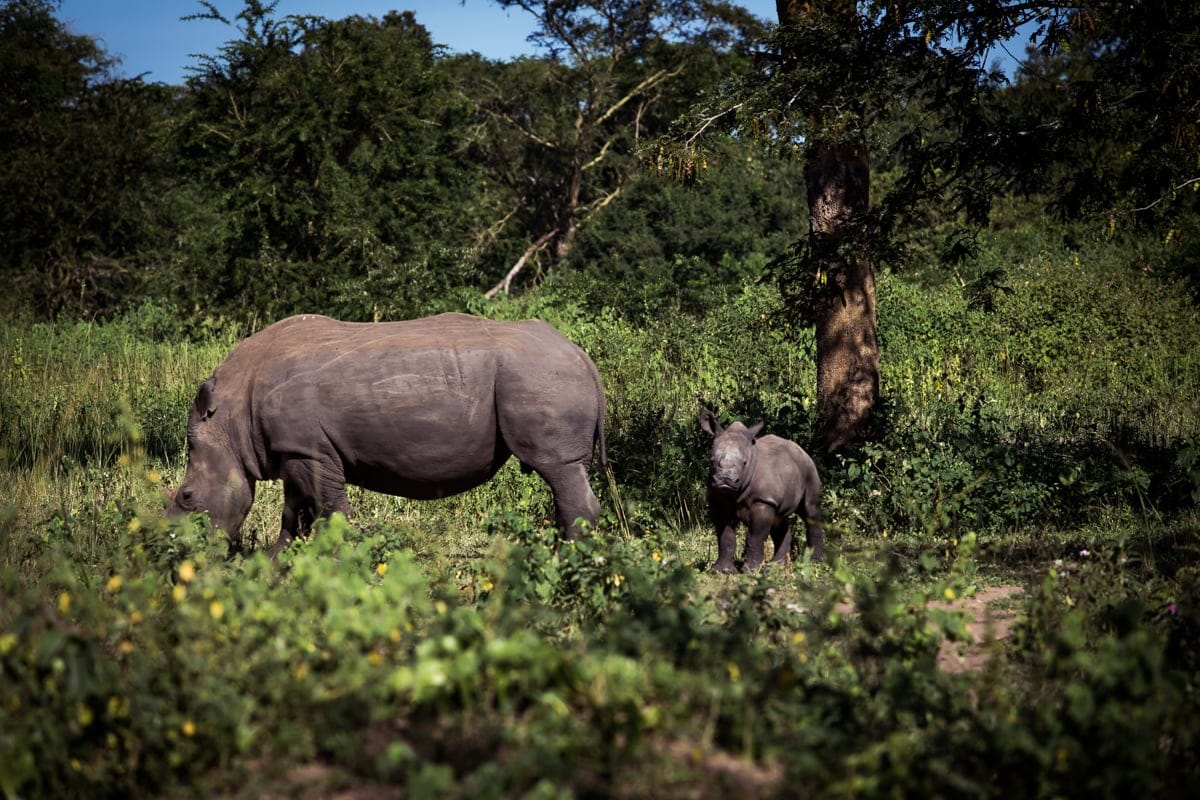
After watching the rhinos, we immediately set off on a gruelling multi-hour drive to Murchison Falls National Park, where our private boat to the waterfalls was leaving at half past three.
We pulled up to the gate and bought our park entry permits. For Ugandans, it’s $5 a day. For us, it was $40 per person plus another five dollars for the car — and if you exceed 24 hours, they charge you the full entry fee again. Remember that detail. We’ll come back to it.
The full destination guide: Uganda — guide and what to see
Uganda’s Death Drive
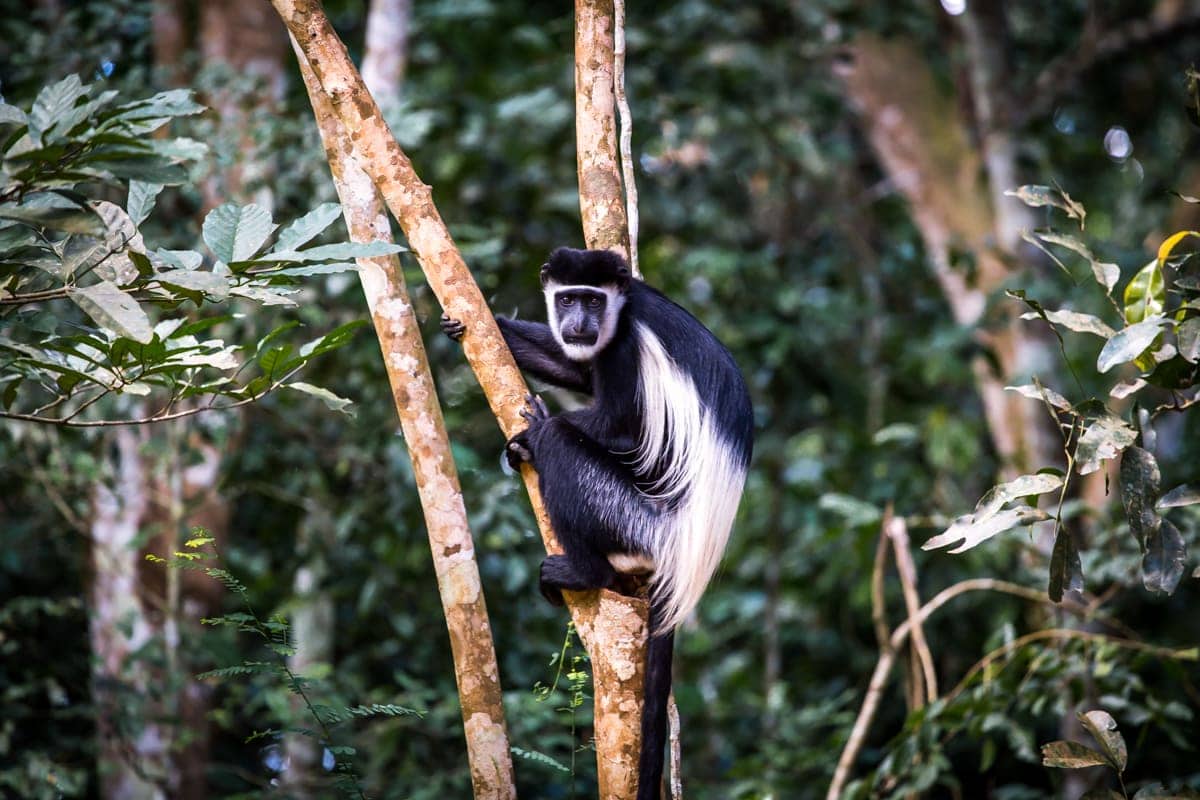
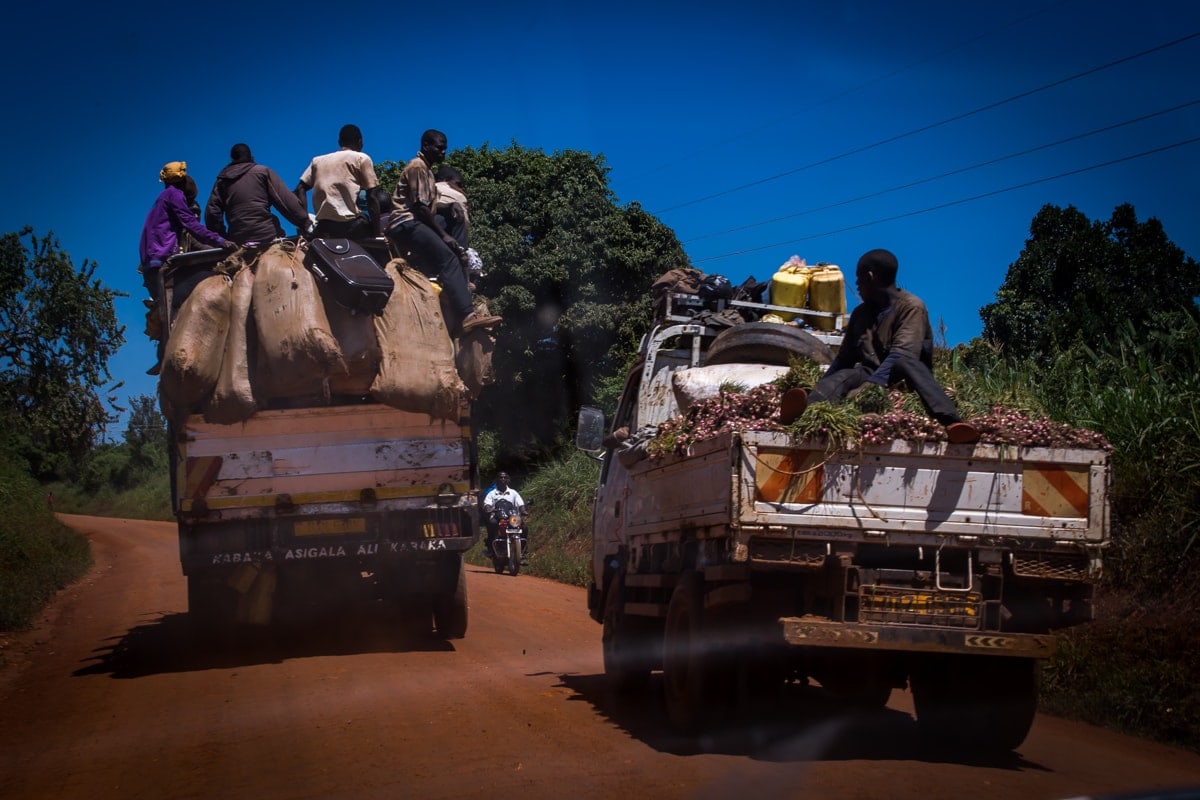
An unpaved road riddled with deadly potholes winds through the park, with a speed limit of 40 km/h. We crawl along — the road is truly horrendous and takes an hour and a half to cover. Monkeys bounce around everywhere and we have no reason to hurry. Then a white minibus hurtles past us — tourists with a hired Ugandan driver. Hardly anyone self-drives here like we do. Driving is absolute hell: pothole after pothole, and now in the rainy season, the worst ones are muddy craters filled with water. That’s why most people opt for local drivers. It’s one of those things everyone tells you before a trip to Uganda. We didn’t listen.
Help Can Take Up to Three Hours
Shock. For a moment, I don’t understand what’s happening. We stop. Ahead of us, we see an overturned minibus with smashed windows. Blood glistens among the shards of glass. A bald man clutches his head, streams of red pouring down his face as he staggers aimlessly. Someone lies on the ground in a pool of blood. I notice the Ugandan driver sitting calmly on the grass nearby, chewing on a blade of grass, while the less injured passengers try to give first aid to the woman on the ground. They run towards us. They have no phone signal to call for help. We can’t load her into our car — we’re afraid of making her injuries worse. We quickly turn around, drive a few metres, and catch a signal. We dial 911. Nothing. A long silence. Someone finally picks up. And immediately hangs up. This happens several times.
But We Told Him to Drive Slowly
At the gate.
“There’s been a serious car accident on the road. A woman is unconscious, unresponsive, there’s a lot of blood, and no one can get through. Please call a doctor or an ambulance.”
We unload all of this on the ranger, but he just stares at us, clearly thinking about something else entirely. We repeat it.
“The car accident from yesterday?” a female soldier who’d wandered over asks into the calm silence that’s now grating on our nerves. I stare at her wide-eyed and repeat everything again. “No, a car accident right NOW!!! The Ugandan driver was doing 80 km/h!”
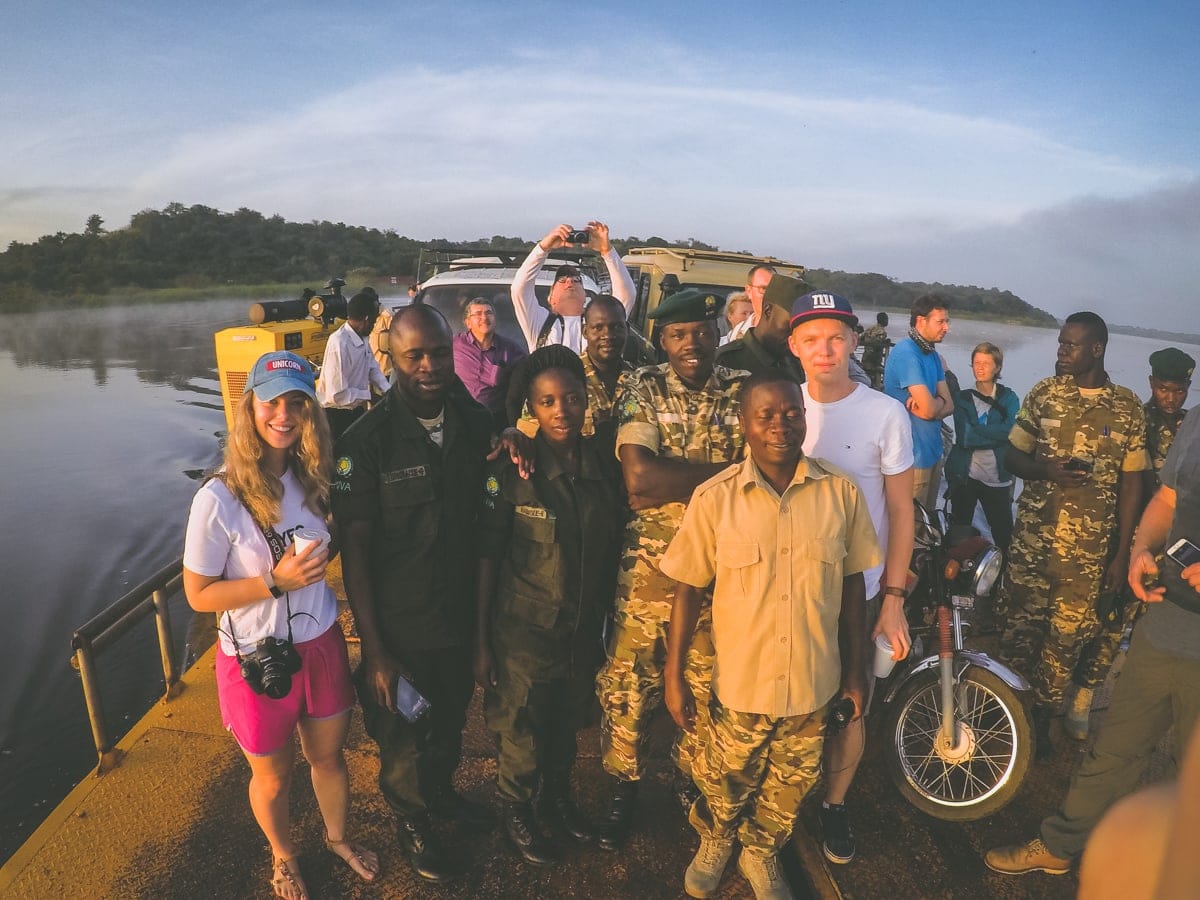
“But we told him to drive slowly,” says Ranger Donald in a calm voice. It doesn’t look like he intends to do anything about it.
“Yes, we told him,” the soldier agrees, gazing off into the distance.
We stare at them, wondering if this conversation is actually real, and remind them of the situation — a woman lying unconscious in a pool of blood.
“Hmm. That is serious.” The soldier ponders this for a moment. Nobody does anything. We repeat ourselves a hundred times until Ranger Donald declares: “But there’s probably no one around here to call.” He shrugs and walks off to fetch the visitor’s book.
This absurd situation drags on for an hour. First they look through the registry to figure out who it was, debating whether they remember them. Only after half an hour do they finally call for help. The ambulance arrives after three hours — but by then the woman had regained consciousness and they’d managed to load her into a car leaving the park and rush her to hospital.

Punished for Helping Others
But our story doesn’t end there. Because of the whole ordeal, we missed our boat. And we needed to stay an extra day. Here’s where we circle back to the beginning: exceeding 24 hours means paying the entry fee all over again. We go to the rangers and ask them to change our arrival date — surely they won’t make us pay $85 for helping deal with a car accident in their park.
“We can’t change it. It’s an official document.”
We stare at the hand-scrawled scrap of paper from a receipt pad, wondering if they’re serious. There is no other record — no computer, no system — just this hand-written slip of paper.
“Then tear it up and write a new one.”
“We can’t do that. It’s an official document.”
We tried for a while, but as far as they were concerned, the discussion was over. Not for me, though.
“You can’t be serious. We’re here helping at a car accident in YOUR park, caused by a UGANDAN driver, and you’re going to make us pay an extra $85?”
“But you weren’t in the accident,” says Donald. I stare at him. Lightning bolts are about to shoot from my eyes.
“So you’re going to punish us for helping people? And now we have to pay $85 for another day?”
We argue with them for two hours. He spends an hour on the phone with his supervisor.
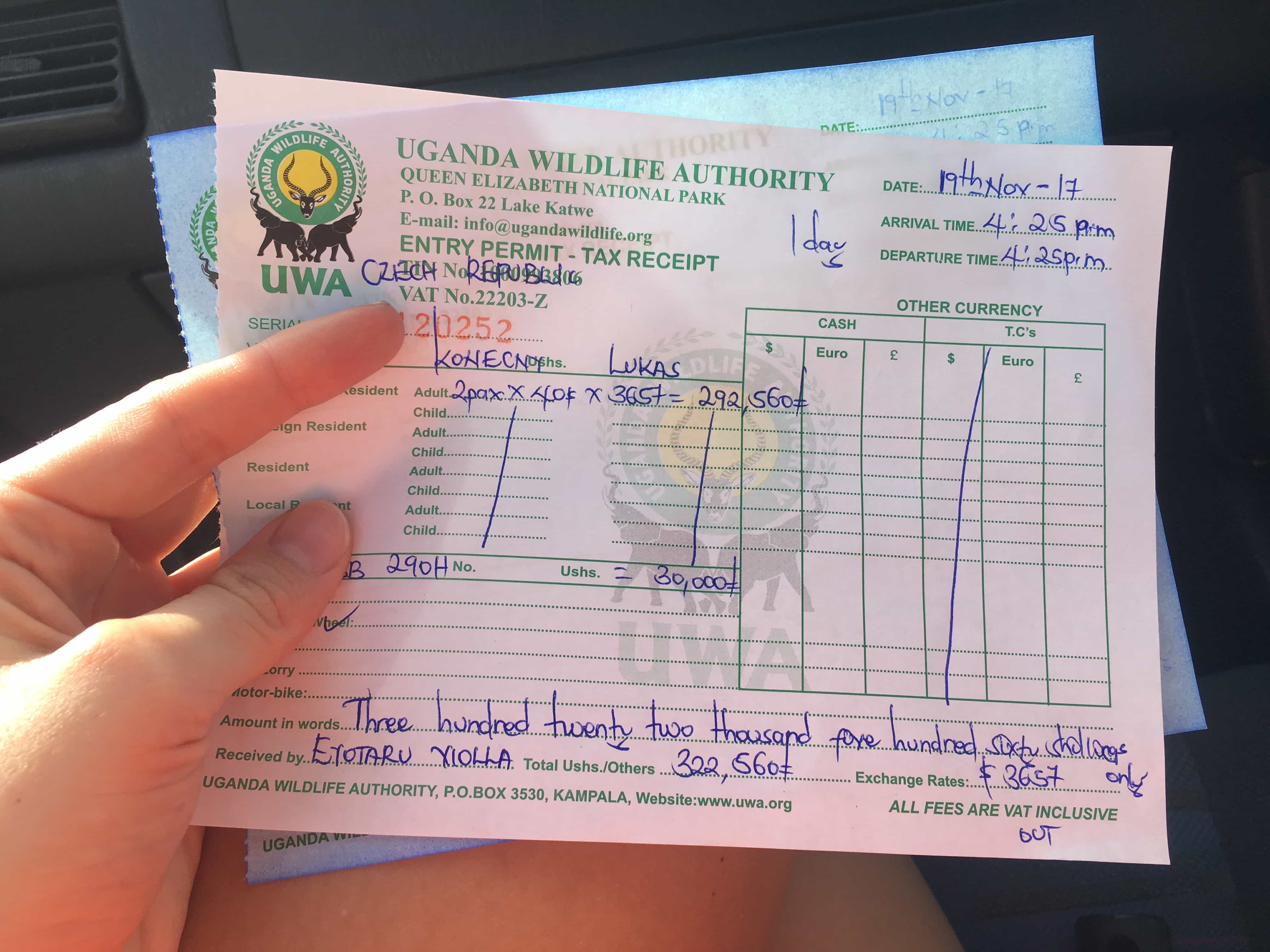
“The only thing I could do is change the date for you, but you’d have to come back tomorrow at the same time as today. I can’t change the time!” This is, of course, absurd for us — what would we do until tomorrow afternoon, and more importantly, we’d have to cancel our plans. We already knew we wouldn’t make it to see the chimpanzees.
The absurdity could have gone on forever, but a hand-written piece of paper simply cannot be cancelled or changed. So I told them exactly what I thought of them and their system, and we drove into the park. After another two hours of arguing with his supervisor, Lukáš managed to negotiate a six-hour extension until 7 PM the following day. And that brought us yet another nightmare. It’s the reason we ended up driving through hell at night. But that’s a story for another time.
Planning a trip to Uganda is complicated, and finding a decent guidebook is even harder. We’ll save you the trouble — the best one in our opinion is Uganda by Andrew Roberts, which you can order online. We couldn’t recommend it more highly.
When Hippos Wander Around Your Tent
We were exhausted, furious at this country, at the system, and ready to tell anyone with a smile on their face that they live in a green, cursed, malaria-ridden, chaotic hell.
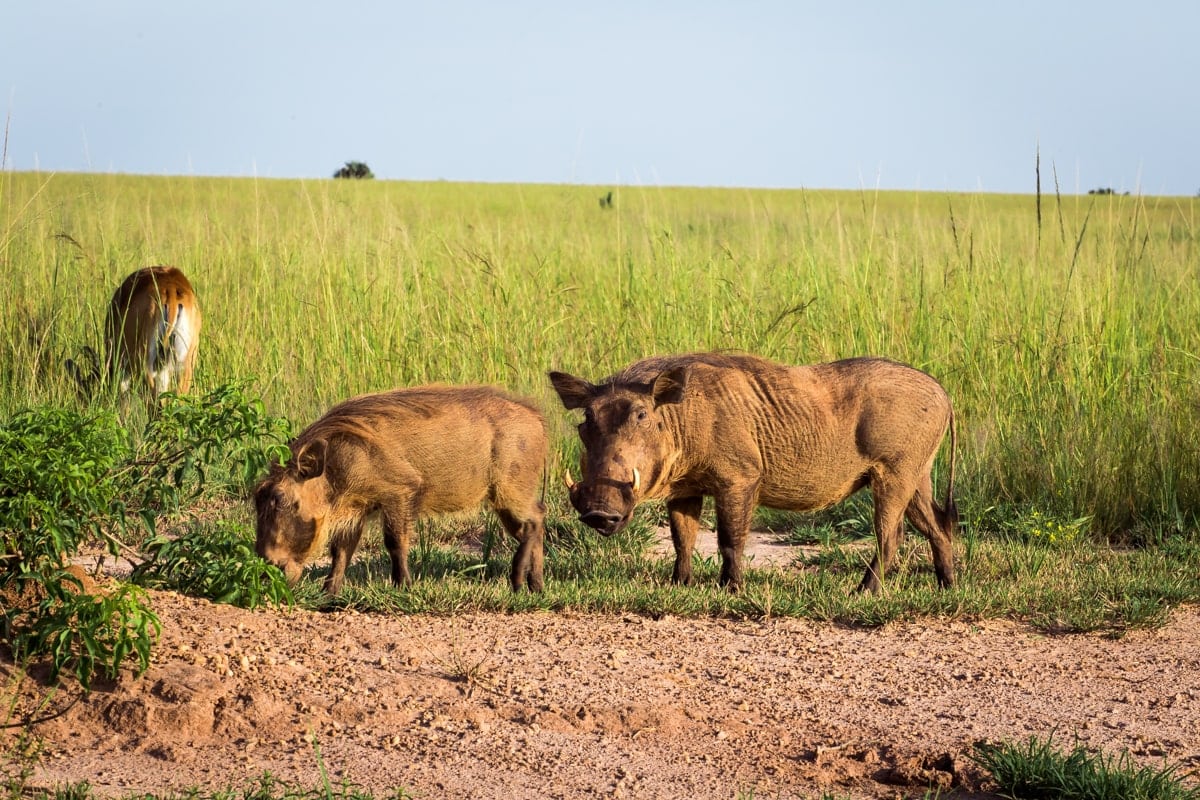
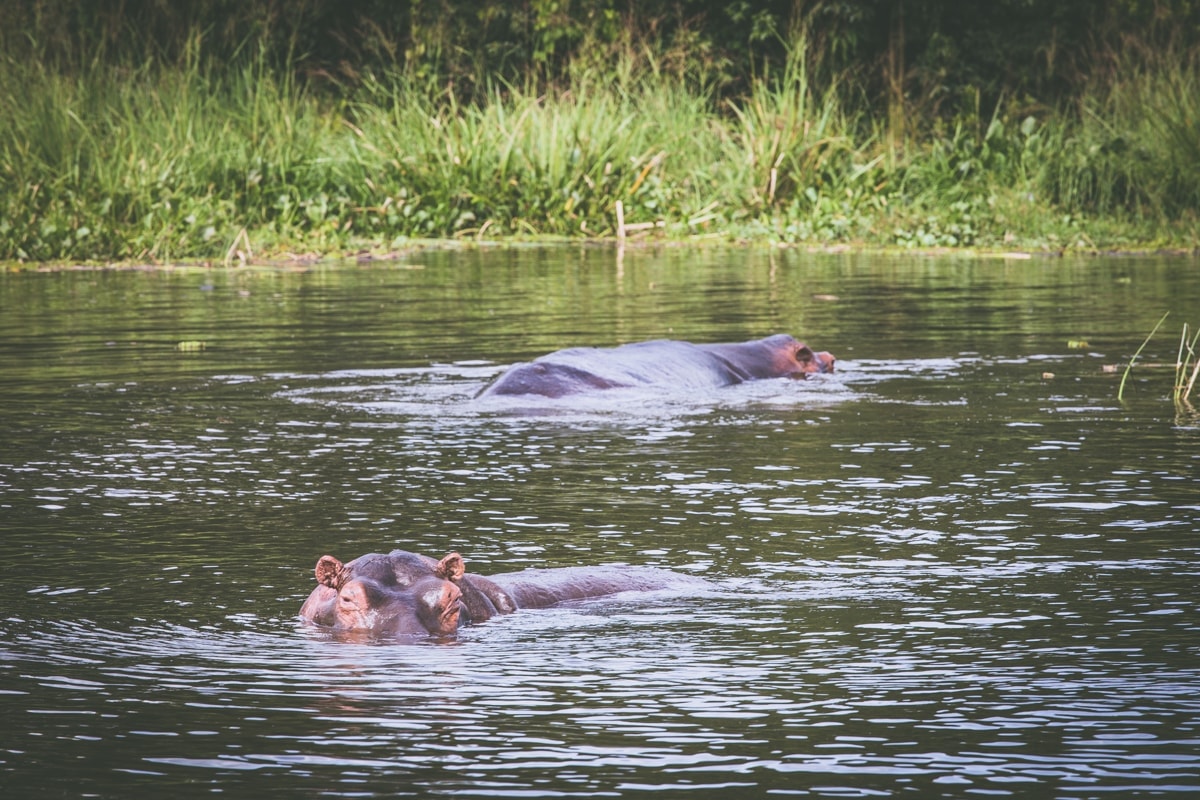
But then we arrived at Red Chilli Camp.Pumba — an adorable African warthog — trotted around us while we pitched our tent. In all the fury, we didn’t even stop to think it might be dangerous. It gazed at us with those big round eyes as if trying to win us over. The whole camp, with its excellent restaurant and jaw-dropping views, was a little slice of paradise in this unpredictable country. We forgave Uganda. We ate well and drank Nile beer late into the night — because this time a family of hippos had claimed our tent, and we didn’t dare go anywhere near them.
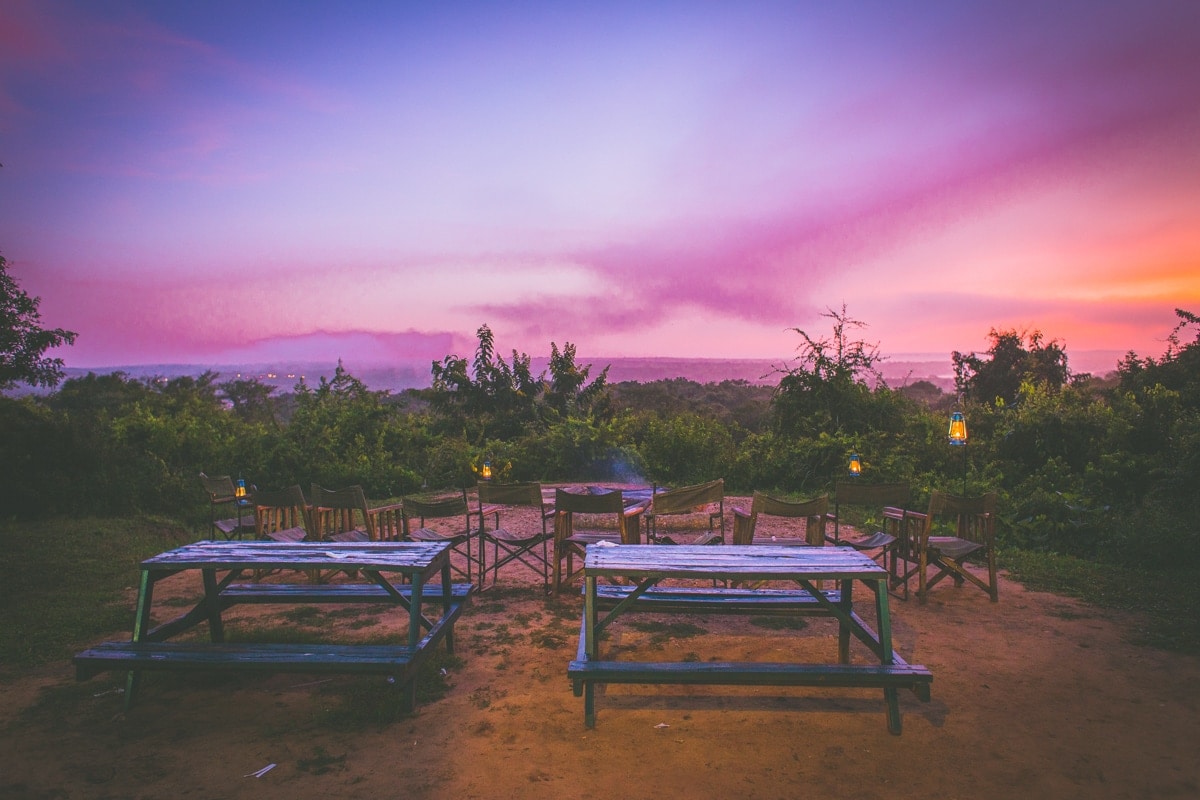
We met Joe and Alex from Britain, who’d been volunteering in Uganda and were now travelling. A photographer and a songwriter. Our poetic evening with the two artists ended when our tent was finally free, the hippos had gone off to sleep, and we crawled into our sleeping bags with peaceful hearts, knowing we couldn’t just write this country off.
Forgiveness — But Not for Long
The morning brought a gorgeous red sunrise. If there was any anger left in us towards this green paradise, it vanished with the first glimpse of that rich crimson sky.
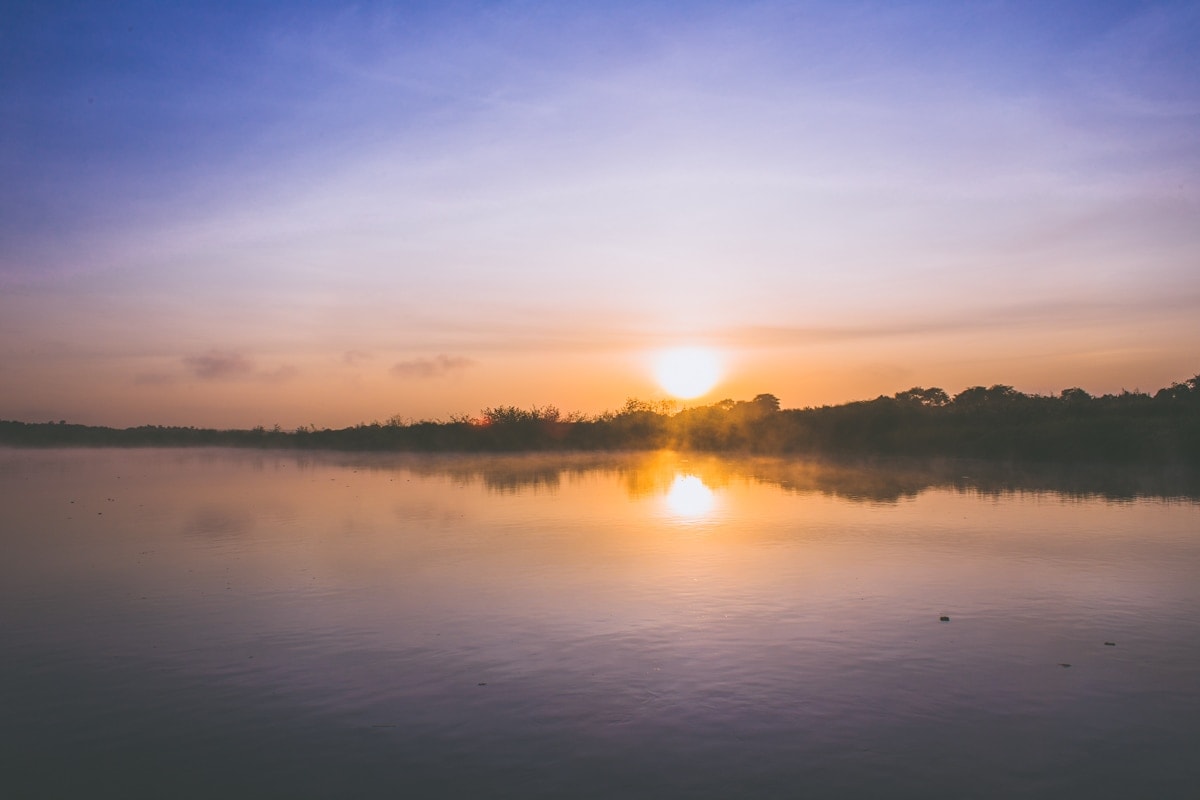
At first light, we crossed the River Nile to reach the safari area. We all stand on the ferry — really more of a floating iron raft — gazing at the Nile through the morning mist as sunbeams fight their way through.
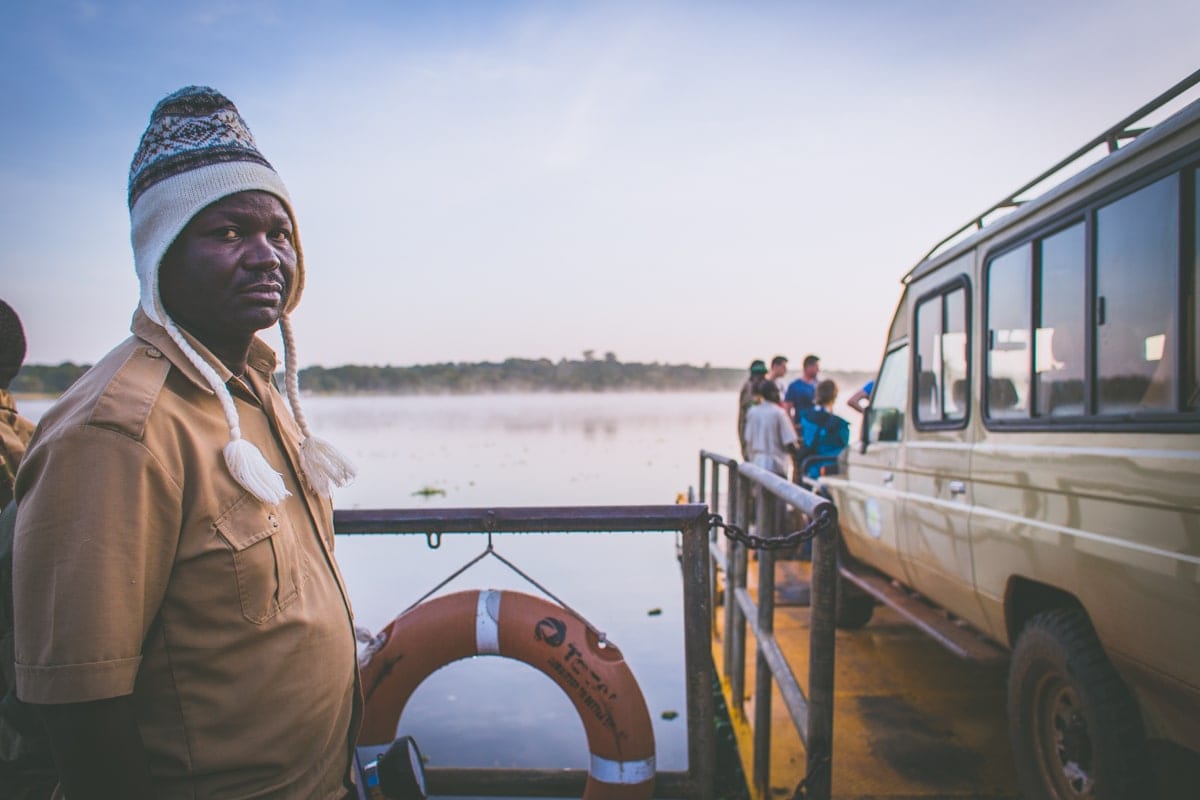
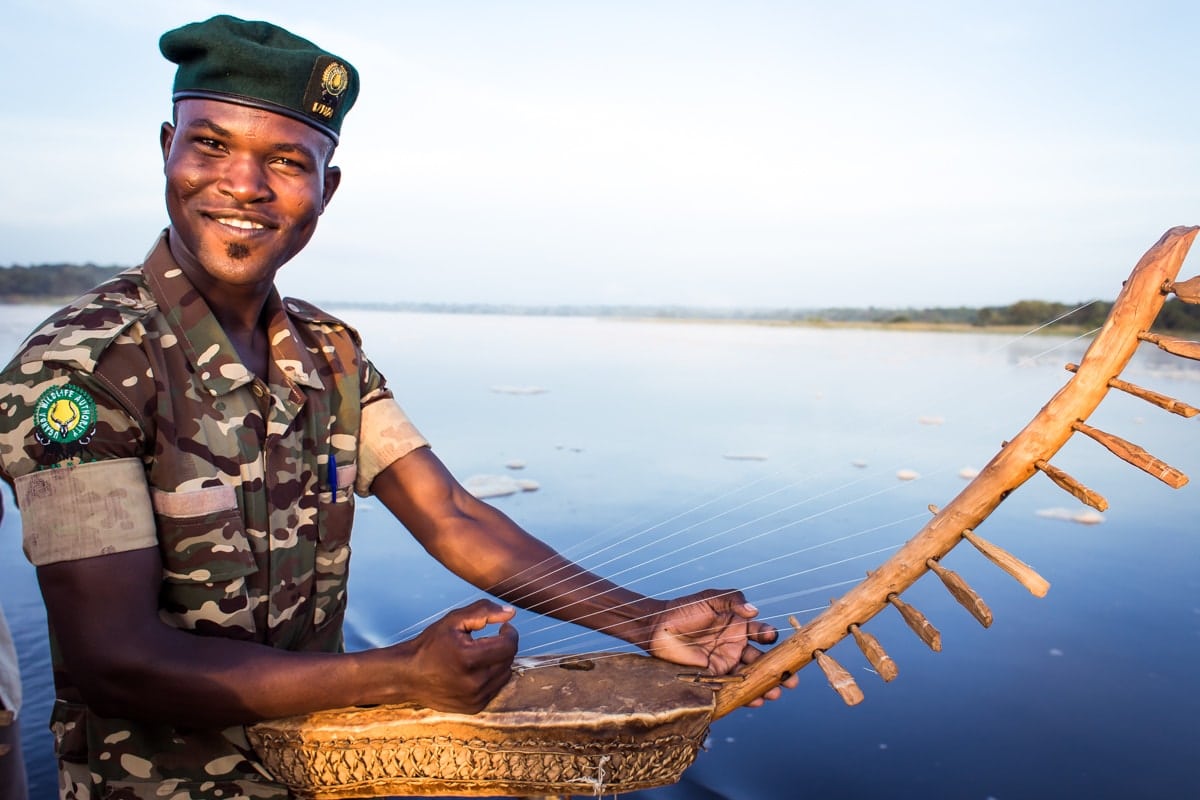
The romance ends the moment the raft grinds against the opposite bank. One of the rangers hurries us into the car, jumps in himself, and together we spend four hours rattling down dirt tracks on our first ever African safari.
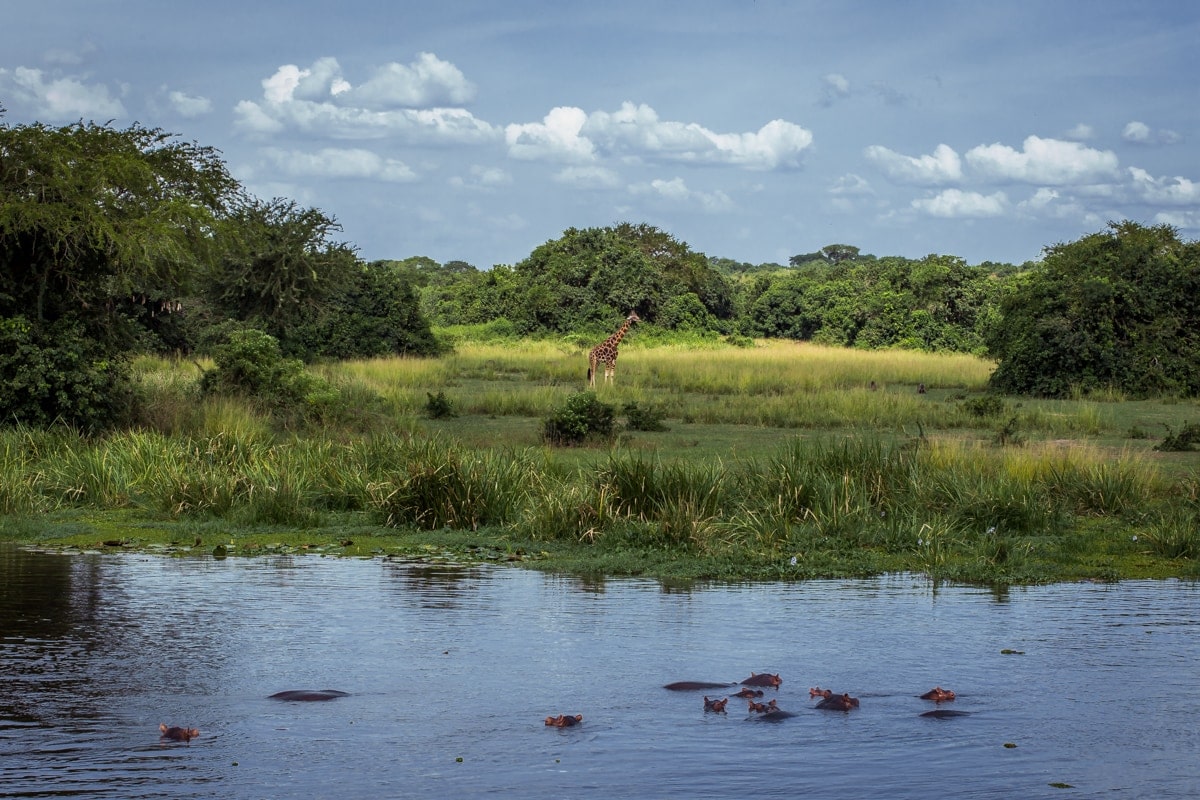
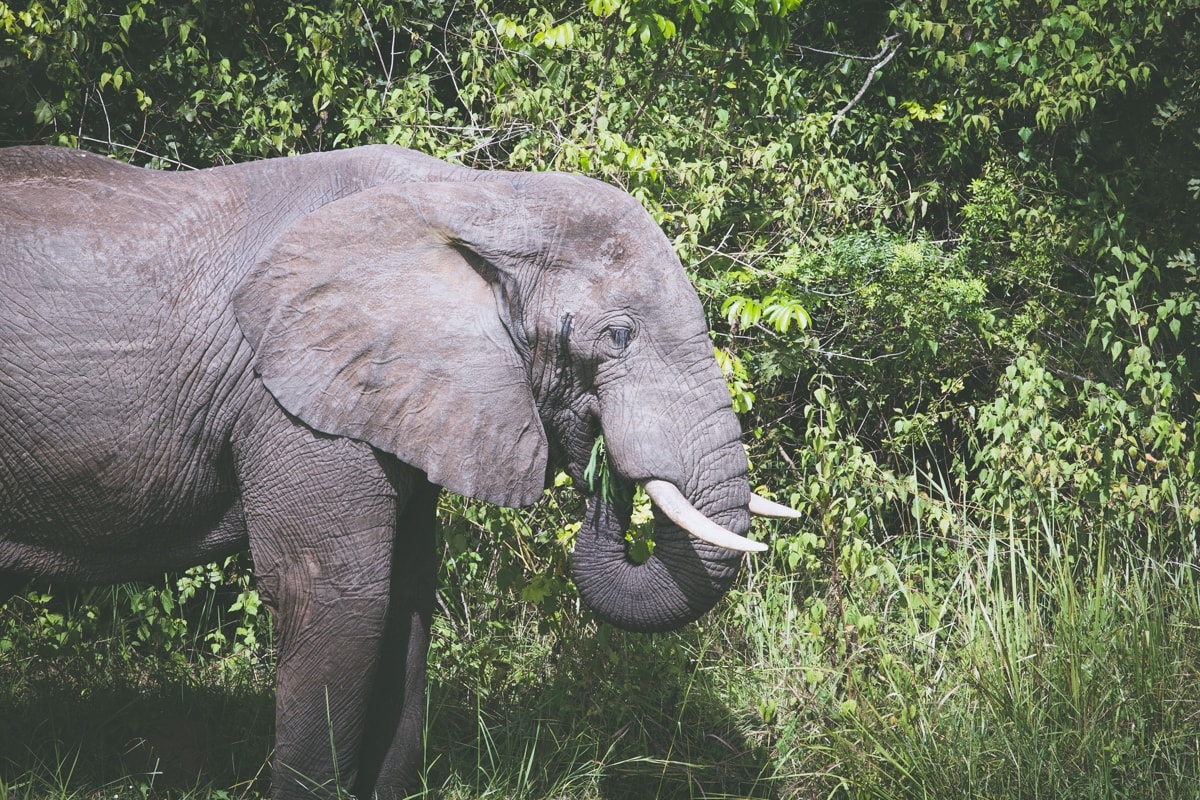
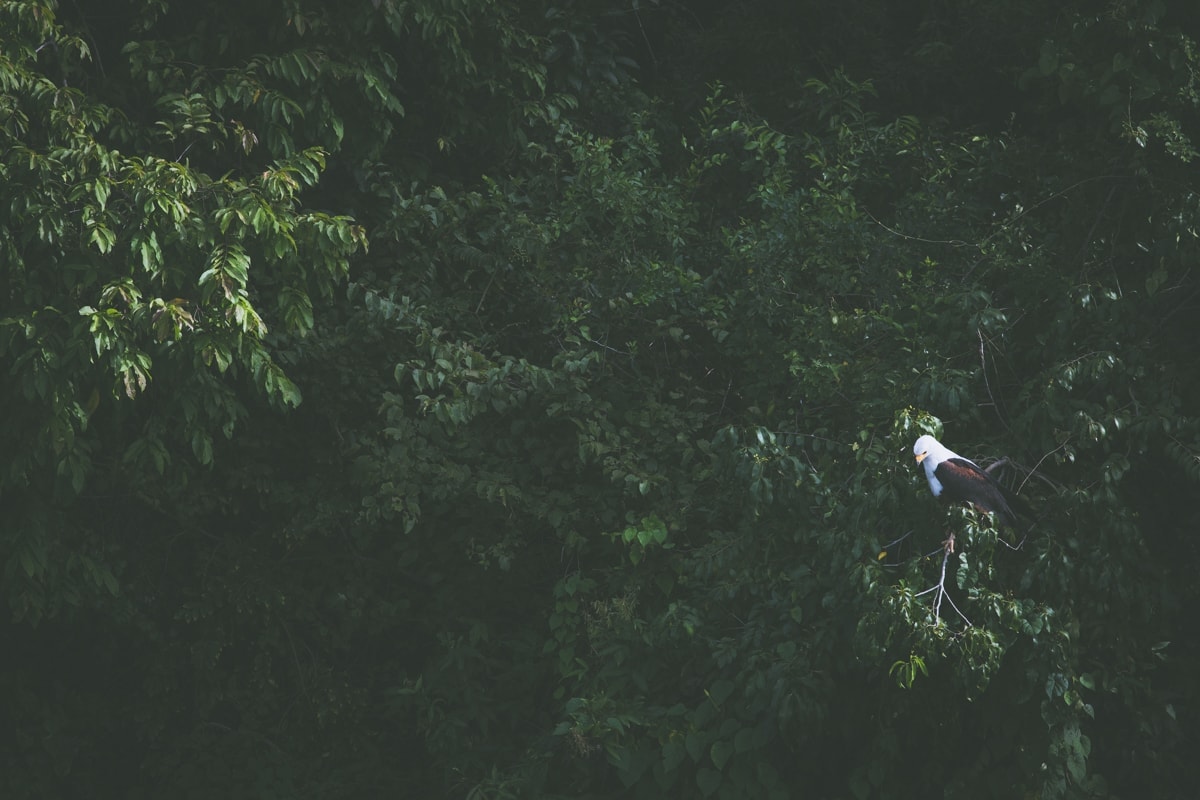
Elephants, giraffes, antelopes, and warthogs pose for us as if they’d rehearsed it. In the afternoon, we hop on a boat heading to the waterfalls and experience the whole show all over again. The boat cruise to the falls is supposed to be the highlight of Murchison Falls National Park, but we’re a bit disappointed — you don’t actually get that close to them.
Drive Like a Maniac, But Try Not to Kill Us
We dock at quarter to six. Why am I mentioning this? Because we’d argued our way to a 7 PM extension, giving us just an hour and fifteen minutes to reach the gate. The drive normally takes an hour and a half.

“Well, if you drive a bit faster, you’ll make it,” the ranger winks as we step off the boat.
“Maybe, if we do 60 instead of 40 km/h,” Lukáš nods reluctantly. We’re not exactly thrilled.
“Nah, more like 80 km/h,” he grins. And we think to ourselves — some ranger, encouraging us to get ourselves killed.
But we drive as fast as we can. We’re not just fighting the clock — we’re racing the light. In an hour, we won’t be able to see the road at all. This is the road from hell. At least one crash happens here every single day, and driving faster than you should feels like utter madness. Tearing down this road in the dark is several levels beyond that.
Lukáš grips the steering wheel with white knuckles while I clutch the passenger seat and will the clock to slow down. We make it. It’s 6:57 and the gate opens. But our journey doesn’t end there. In the pitch-black darkness, we crawl down dirt tracks for another three and a half hours to the town of Hoima. We drive at walking pace. Everything terrifies us. The road — which can barely be called a road — would be passable for a tank maybe, but certainly not for our Toyota.
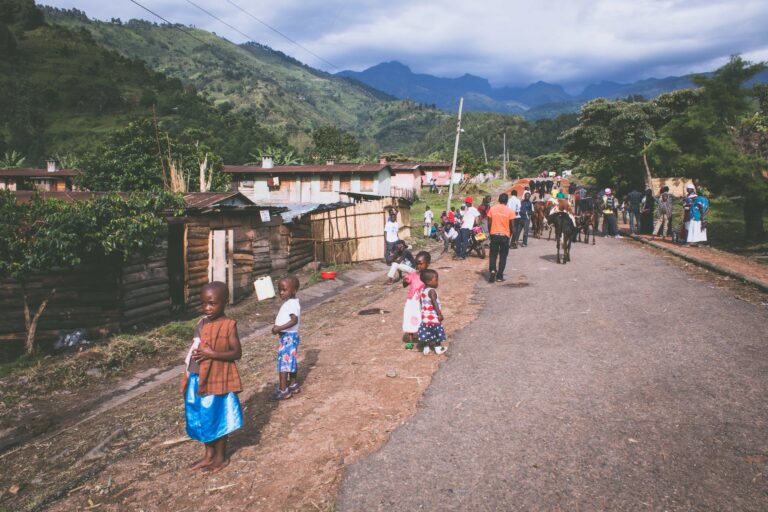
Around us lies what must be beautiful jungle by day, but now it just terrifies us. Electricity is still a massive luxury out here, switched on for only a few hours a day. Darkness is everywhere — but life isn’t absent. We see boisterous celebrations in villages huddled around tiny flickers of light, and the roads aren’t empty either. Silhouettes of people walking home stretch through this hellish jungle alongside us.
Map of points of interest for your phone
Ants for Breakfast
When we finally limp into Hoima, we’re slightly relieved that we don’t plan anything in advance. Otherwise, we’d probably have driven all night to Fort Portal, where we’d originally intended to spend the night. The Golden Summit Hotel in Hoima costs next to nothing and is rated as the best hotel in the wider area. But the wider area must consist entirely of sheds, because we can’t explain it any other way.
We never complain about hotels. It really doesn’t take much to make us happy. But this place started badly, continued badly, and ended badly — so badly that I can’t write anything except that we should have driven the extra seven hours to Fort Portal. First, the Google Maps address was wrong and we spent an hour trying to find the place. Then the reception had no idea where their own restaurant was (“Hmm, I think if you go round this corner, you’ll find it”). The room finished us off — furniture literally fell apart in our hands. The broken WiFi couldn’t surprise us anymore, but ants in the breakfast? That we genuinely didn’t see coming.
It was as if Uganda couldn’t decide what impression to leave on us. And we had no idea what we’d take away from it either.
Planning a trip to Uganda is complicated, and finding a decent guidebook is even harder. We’ll save you the trouble — the best one in our opinion is Uganda by Andrew Roberts, which you can order online. We couldn’t recommend it more highly.

Tips and Tricks for Your Vacation
Don’t Overpay for Flights
Search for flights on Kayak. It’s our favorite search engine because it scans the websites of all airlines and always finds the cheapest connection.
Book Your Accommodation Smartly
The best experiences we’ve had when looking for accommodation (from Alaska to Morocco) are with Booking.com, where hotels, apartments, and entire houses are usually the cheapest and most widely available.
 🚗 Car rental on the roadVerified rental cars in Uganda
Search with the DiscoverCars comparison engine — it compares prices from dozens of local and international rental companies, and most bookings come with free cancellation.
Compare car prices in Uganda →Don’t Forget Travel Insurance
Good travel insurance will protect you against illness, accidents, theft, or flight cancellations. We’ve had a few hospital visits abroad, so we know how important it is to have proper insurance arranged.
Where we insure ourselves: SafetyWing (simple monthly subscription) and TrueTraveller (for extra-long trips).
Find the Best Experiences
Get Your Guide is a huge online marketplace where you can book guided walks, trips, skip-the-line tickets, tours, and much more. We always find some extra fun there!