TL;DRYou can turn a car into a campervan in five steps. The authors picked up a Dodge Grand Caravan 3.3L V6 from 2005 for $3,000, then sketched out a design with a 160×110cm bed on 60cm legs. Materials came next — milk-crate shelving, a $150 mattress, and $150–200 in total for the build. They built the bed and kitchen area out of plywood, then finished it off with a cooler box, a 12V-to-120V inverter, a power bank with jump-start cables, and satellite radio. Kitted out like this, they used the van for a three-month road trip across the US and Canada, covering over 20,000 kilometres.
This guide is for all adventurers who’ve decided to hit the road on their own terms and crave total freedom — the kind where you go wherever you want, whenever you want, sleep in your vehicle, and have all the gear you need. We set off on a three-month road trip and, to make the journey as comfortable as possible, we did a complete camper conversion on our minivan. In the following 5 steps, we’ll walk you through exactly how we did it.
If you’re on a tight budget, read on to see how we turned a minivan into a camper van (more like a rolling living room, really) for just a few hundred dollars.
1) Choosing the Right Vehicle for Your Camper Conversion
Your choice will depend on your budget, fuel consumption, and what you plan to use the vehicle for. You probably won’t be buying a brand-new car if you only need it for a few months, so it’s better to look at older models. We set a ceiling of around $3,000 (roughly €2,750) and knew we’d be covering at least 20,000 kilometres across the USA and Canada. We’d be spending time in the car (or next to it) doing all of the following:
Driving 8+ hours a day
Hanging out and relaxing during the day
Sleeping
Cooking
Working
Storing personal belongings
Keeping fresh food chilled
Charging electronics
For all of these purposes, a minivan is ideal. Since we were shopping in Canada, we narrowed it down to three reliable options:
Dodge Grand Caravan
Toyota Sienna
Honda Odyssey
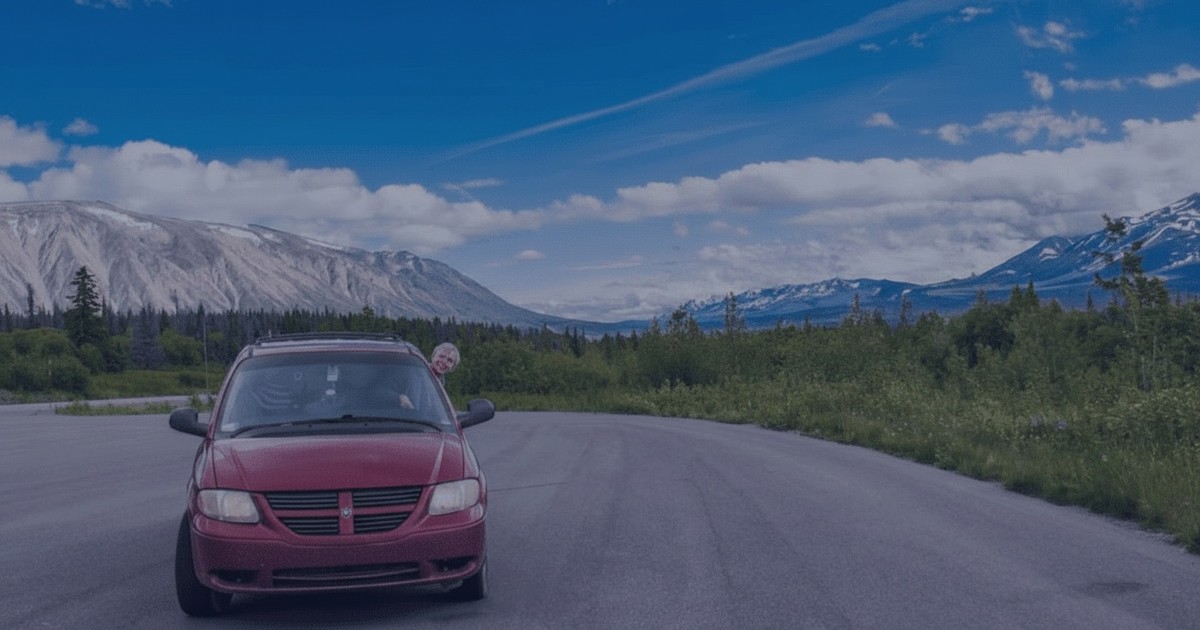
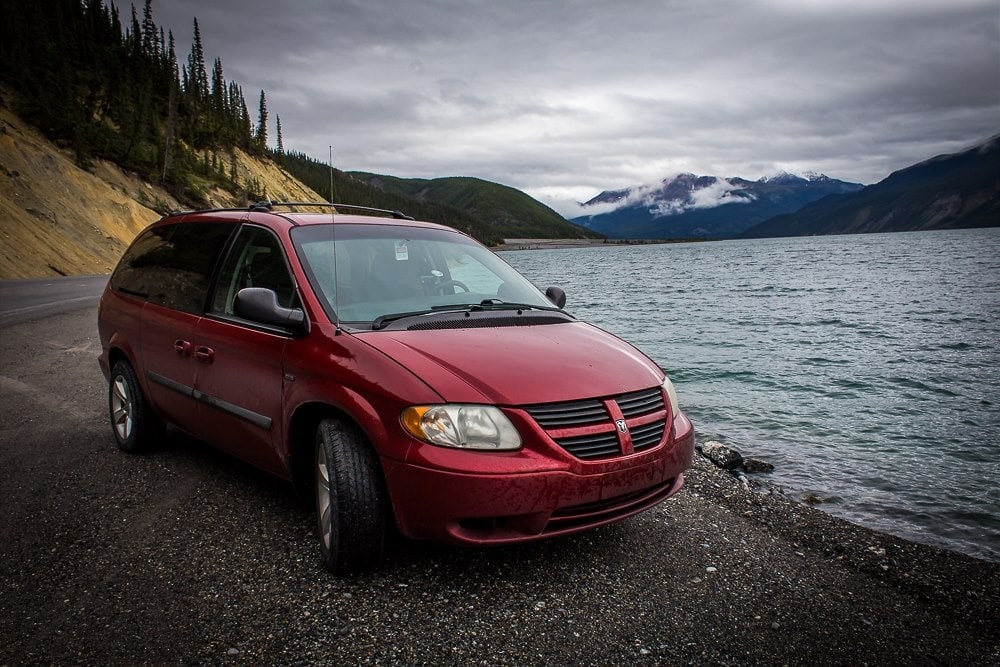
In the end, we bought a 2005 Dodge Grand Caravan 3.3L V6 with around 248,000 km on the clock, right within our budget.
2) Sketching the Design and Measuring Everything
As the old saying goes: measure twice, cut once. Creating a functional design is the single most important part of the build, and it needs proper thought. How high should the bed sit? What size storage boxes need to fit underneath, and where will you buy them? What type of cooler will you use — electric or ice-based? And if ice — which side is the power outlet on? 😃
Removing the Seats
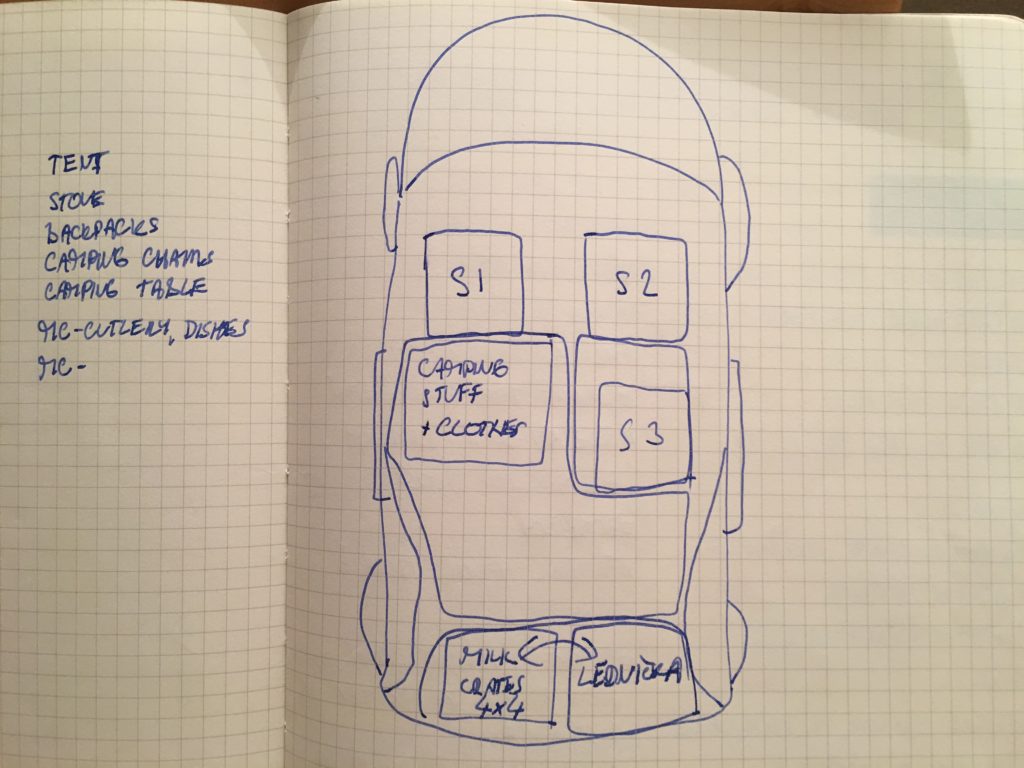
The first step for us was removing the rear row of seats entirely and folding the middle row flat into the floor. We placed the cooler and kitchen gear (including food supplies) in the back of the car, with all the storage compartments tucked under the bed.
Between the kitchen area and the front seats, we built the bed — 160 cm long and 110 cm wide. That was more than enough for us. 🙂 We set the plywood bed platform on 60 cm legs so we could easily stash all our stuff underneath.
Originally we hooked up an electric cooler, but it turned out to be completely useless. After two weeks we swapped it for a cooling box from Walmart for $15 (about €14), and from then on we just bought fresh ice every three days.
Electrical Setup
One thing you absolutely must not overlook is checking where all the power outlets (cigarette lighter sockets) are in your car and how many watts they can handle. Whatever you do, forget about installing a second car battery and charging it through those outlets — the alternator isn’t built for that, and unless you upgrade to a beefier one, you’ll either a) blow it out, like we did, or b) find it won’t charge anything properly.
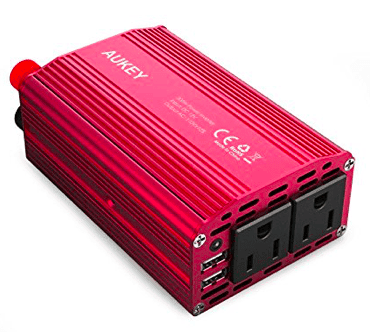
Instead, buy a power inverter — a converter that goes from 12V to 120V (or 230V if you’re building in the UK) — and use that for charging. Only charge one large device at a time; never plug in several at once. Phones and tablets are fine, though. 🙂
Power inverter, 12V to 120V converter
If you’re planning to run an extension cable to the rear of the vehicle, lay it down before you start building the bed frame. Trust us on this one. 😉
3) Buying Materials and Tools
If you’re doing your camper conversion in North America, we highly recommend Walmart, Canadian Tire, and Lowe’s as your main suppliers. They have absolutely everything, and the materials for the bed plus tools shouldn’t cost you more than $150–200 (around €140–185). In the UK, the same stuff is readily available at B&Q, Screwfix, or Wickes.
For storage, the best option by far is milk crates — plastic crates that you can often find for free or for about a dollar each. We used them to build kitchen shelves and as under-bed storage boxes.
The bed itself is built from plywood, with legs made from planed timber (about $5 / €4.50 per metre). On top of the plywood, we laid two layers of egg-crate foam and one layer of memory foam mattress topper. That was the most expensive item — the mattress topper came to about $150 (roughly €140).
Tools you’ll need:
A saw (ideally a circular saw) — best borrowed from a friend or hired from a tool rental shop
An electric drill/driver (because a manual screwdriver will destroy your wrists)
Screwdriver bit sets — if you’re building in North America, note that screw heads differ from those used in the UK/EU
A spirit level
A hammer
A ratchet set for removing the seats
Wood screws
L-brackets (angled metal pieces with screw holes) to stabilise the bed legs
We filmed a video showing exactly how we put our van camper conversion together:
5) Finishing Touches and Essential Gear
There are certain things you simply must have with you, if only for the peace of mind that comes from knowing you’re prepared for anything. On top of a spare tyre and a jack — the basics for every driver — here’s what we carried:
A jump-start power bank (for when you drain the battery overnight)
A rechargeable battery-powered lantern
Power inverter (12V to 120V)
2x LED torches
Two camping chairs
Spare engine oil
A vehicle repair manual (because you can almost always find a scrapyard nearby with the parts you need)
A road atlas — for when the sat-nav gives up and for rough route planning
And of course, everything you need for camping and cooking, if that’s part of your plan:
A double-burner camping stove
A mini single-burner stove
Enough gas canisters for cooking
Pots, pans, cutlery, etc.
Window Curtains
With some ordinary string, any fabric you like, and a few strips of Velcro sewn onto it, you can work wonders. Run the string around the inside of the car so you can cover the rear and side windows when it’s time to sleep. Once you pull into a supermarket car park for the night, you’ll understand why this matters. 🙂
Rubbish Bin
Place a small bin right between the front seats — the smaller, the better. Trust us, banana peel starts to stink right under your nose within two hours.
Satellite Radio
A lifesaver during long, boring stretches — especially when there’s no FM signal in range. And believe us, that was the case for nearly half of our three-month trip through the US and Canada!
Snack Basket Within Reach of Driver and Passenger
There’s nothing worse than having to stop every two hours just because you want to grab something to eat from the boot. The longer the drive, the more annoying it gets. Keep nuts, biscuits, and all your snacks up front. We used a small basket and the door-side pockets.
TIP: If you’re planning an extended road trip, it’s also worth thinking about proper insurance — especially windscreen cover, which people often forget about.
What the Finished Camper Conversion Looked Like After 2 Weeks on the Road
📶 DATA FOR YOUR TRIP
Mobile internet on your holiday — with an eSIM
⚡ QR activation in 2 min · 📱 no physical SIM · 🌍 200+ countries · from 4.50 €
✅ By the team behind the Loudavým krokem travel blog · Our own project — lk-sim.com
Tips and Tricks for Your Vacation
Don’t Overpay for Flights
Search for flights on Kayak. It’s our favorite search engine because it scans the websites of all airlines and always finds the cheapest connection.
Book Your Accommodation Smartly
The best experiences we’ve had when looking for accommodation (from Alaska to Morocco) are with Booking.com, where hotels, apartments, and entire houses are usually the cheapest and most widely available.
Don’t Forget Travel Insurance
Good travel insurance will protect you against illness, accidents, theft, or flight cancellations. We’ve had a few hospital visits abroad, so we know how important it is to have proper insurance arranged.
Where we insure ourselves: SafetyWing (best for everyone) and TrueTraveller (for extra-long trips).
Why don’t we recommend any Czech insurance company? Because they have too many restrictions. They set limits on the number of days abroad, travel insurance via a credit card often requires you to pay medical expenses only with that card, and they frequently limit the number of returns to the Czech Republic.
Find the Best Experiences
Get Your Guide is a huge online marketplace where you can book guided walks, trips, skip-the-line tickets, tours, and much more. We always find some extra fun there!
Discover the 29 best luxury hotels in the world for 2026. Where is the fabled seven-star palace, and where can you sleep in the lap of luxury for the price of a mountain B&B?