

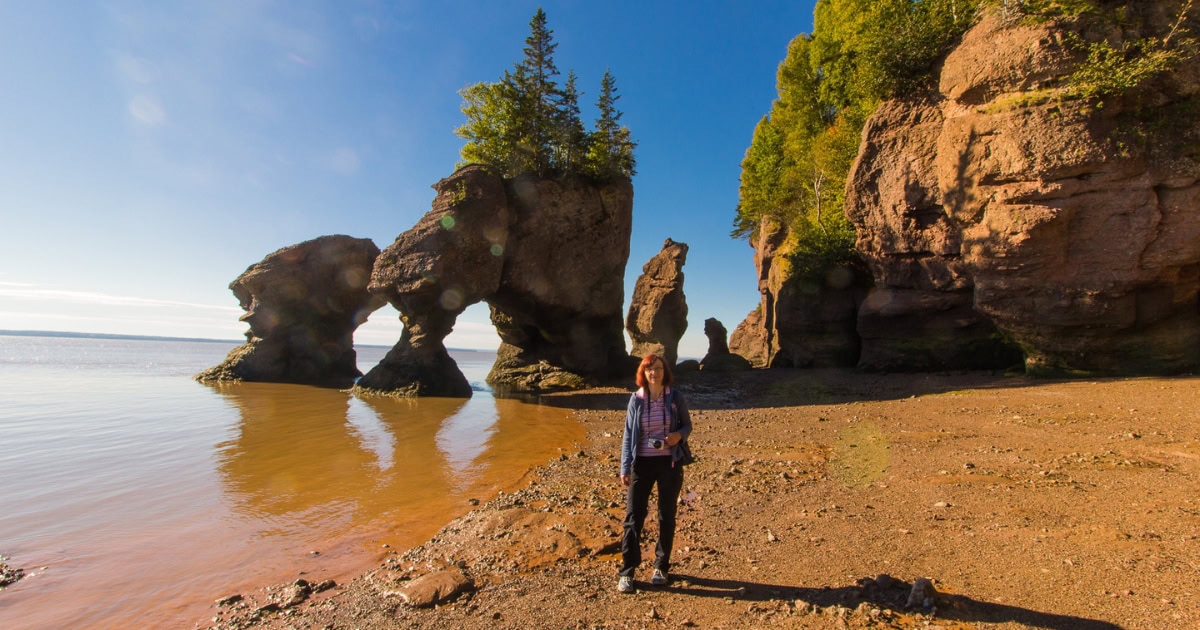
I remember it like it was yesterday — the first time we arrived at Fundy National Park and stood on the exposed ocean floor, our feet sinking into the wet red mud as we stared in disbelief at the vast emptiness stretching out before us. Where fishing boats had been bobbing on the surface just hours earlier, there was now nothing but an endless plain of shells, seaweed, and strange rock formations. That’s the moment you truly grasp the staggering power of nature, because the water will soon return and rise by an incredible sixteen metres.
If you’re planning a trip to Canada’s east coast, let me tell you right now — this national park in the province of New Brunswick is absolutely unmissable. It’s a place where magical misty forests meet the highest tides in the world, and I promise you, this raw Atlantic beauty will completely captivate you.
So here’s what I’ve put together: a step-by-step guide with twelve things to see and do in Fundy National Park, where to eat, and what everything costs. Everything you need to know before you go.
The full destination guide: New Brunswick — guide and what to see
TL;DR
- Best experience: Walking on the ocean floor during low tide at the beach near the village of Alma, then watching the bay fill back up with water.
- Most beautiful waterfalls: Definitely Dickson Falls for its magical green atmosphere, and Third Vault Falls if you’re up for a longer hike.
- When to go: Summer (July to August) is ideal for pleasant temperatures, or September when the forests start turning autumn colours and the crowds — and mosquitoes — disappear.
- Where to eat: The village of Alma, right at the park entrance, is packed with brilliant bistros serving fresh seafood, plus there’s an amazing microbrewery in a converted church.
- Getting there: Your best bet is to hire a car from Halifax or Moncton, as the park is huge and practically impossible to explore without your own vehicle.
When to visit New Brunswick and how to get there
Before you start planning your itinerary, let’s be honest — the weather on Canada’s Atlantic coast can be incredibly temperamental. Whenever you visit, you need to be prepared for sunshine and thick, pea-soup fog to alternate within the same day. But it’s precisely that fog that gives this place its wonderfully mystical atmosphere, so don’t let it put you off.
Personally, I’d recommend visiting during the summer months from late June to early September, when all the hiking trails are in great condition and temperatures hover around a pleasant 20°C. Autumn has its own huge advantage though — the stunning fall foliage draws photographers from around the world, and as a bonus, you won’t be plagued by those ever-present mosquitoes 😅.
As for getting there, we flew from Europe and search for cheap flights on Kiwi — it’s our favourite portal for comparing prices. From the UK, the most logical route is to fly into Halifax in neighbouring Nova Scotia or directly to nearby Moncton. Several airlines offer transatlantic connections, often with a stopover in a major hub. Once you land, you’ll absolutely need a car. Lukáš and I have had consistently great experiences with DiscoverCars, which we use all over the world — they usually have the best selection of SUVs, which are perfect for Canadian roads. The drive from Moncton to the park takes only about an hour, so there’s no need to worry about endless transfers.
Where to stay near the park and how much it costs
Canada isn’t exactly a budget destination, and the east coast is no exception — though it is a bit more affordable than the famous national parks out west in Alberta. If you want to save money and don’t mind sleeping outdoors, I recommend the official campsites right inside the national park. They’re well-equipped and Fundy National Park camping costs around 30 to 40 CAD per night (roughly €20–27). We also tried the so-called oTENTik tents, which are a brilliant compromise between camping and a cabin — they come with ready-made beds and heating.
If you prefer a solid roof over your head and a warm shower right next to your bed, the best strategy is to pick a base nearby. The ideal spot is the charming fishing village of Alma, sitting right on the park boundary. You can head out exploring in the morning and come back for a relaxed dinner in the evening without having to drive for an hour through dark forest where you risk hitting a moose.
Prices for a decent motel or guesthouse in Alma during summer season range from about 150 to 220 CAD (roughly €100–150) per night for two. I strongly recommend booking well in advance, as the village has limited capacity and July tends to sell out completely. We’d happily recommend the Parkland Village Inn, which has gorgeous views straight over the bay, or the slightly quieter Fundy Highlands Motel nestled in nature just outside the village.
The Fundy National Park entrance fee applies, as is standard across Canada. A daily pass costs 9 CAD per adult (about €6), but if you’re planning to visit multiple parks in Canada, it’s absolutely worth buying the annual Discovery Pass for approximately 75 CAD (around €50), which covers admission to every national park in the country.
Fundy National Park: 12 best things to see and do
The park hides far more than you might expect. Most people come here just for the tides, but I’m about to reveal what else would be a shame to miss. You’ll quickly discover that the park also conceals breathtaking aquamarine pools, deep forests, and waterfalls you’ll want to sit beside for hours.
Plan your exploration around the tide tables, which you can pick up at the Fundy National Park visitor center, so you don’t miss that magical moment on the ocean floor. Trust me — this corner of nature will win you over instantly ☺️.
1. Walking on the ocean floor (Tidal Flats)
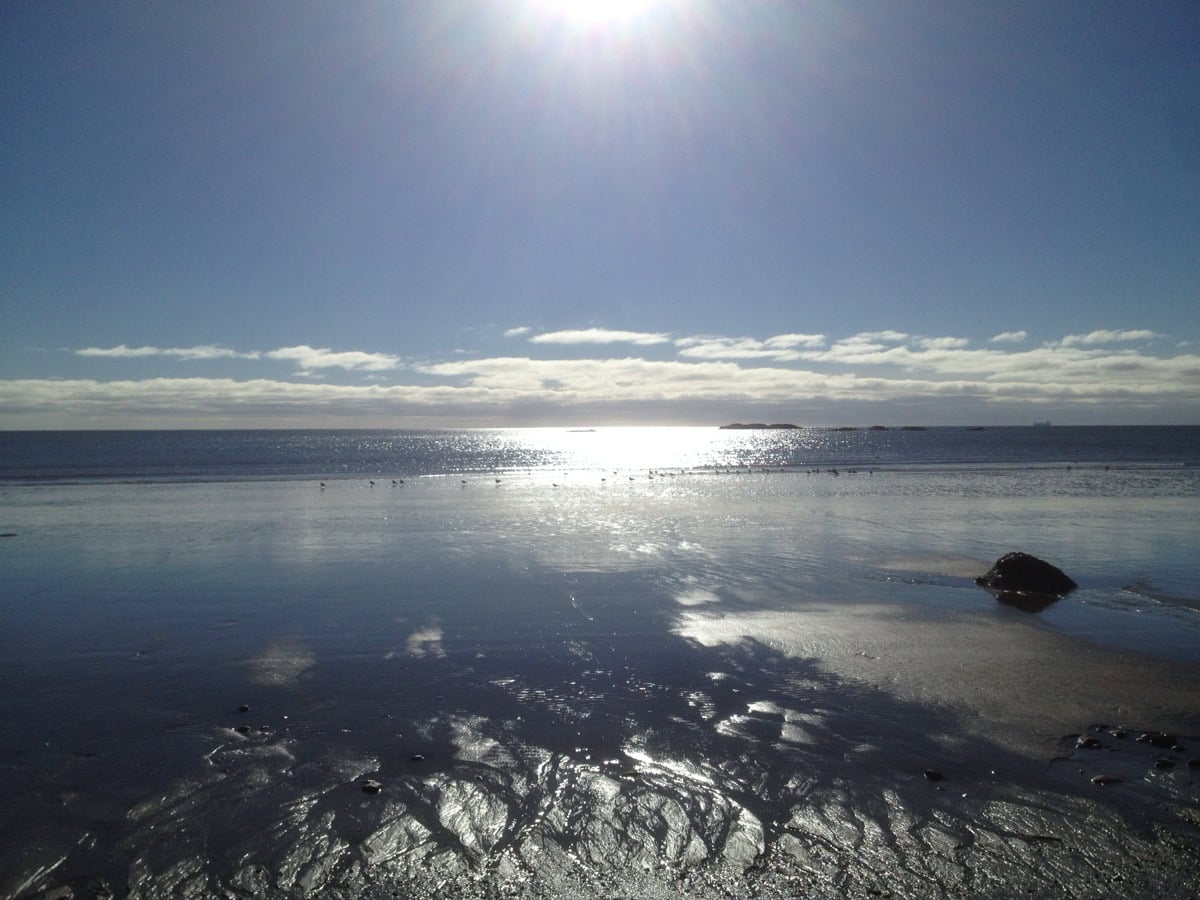
This is an absolute must and the main reason people visit Bay of Fundy National Park. When the tide goes out, the ocean retreats hundreds of metres, exposing dramatic cliffs and a red muddy seabed teeming with tiny marine creatures. The best places to witness this phenomenon are the beach in Alma or nearby Herring Cove.
Wear shoes you don’t mind getting completely caked in mud, because there’s no avoiding it. We spent a good two hours just hunting for interesting shells and photographing boats that were comically stranded on their sides in the muck, waiting for the evening tide to lift them back onto the water.
Make sure to check the tide tables or ask the rangers at the official Parks Canada website before heading out, so you know when the water starts coming back in. The tide rises astonishingly fast, and you absolutely do not want to get stranded near the cliffs with a camera in hand while the Atlantic charges towards you.
2. The enchanting Dickson Falls
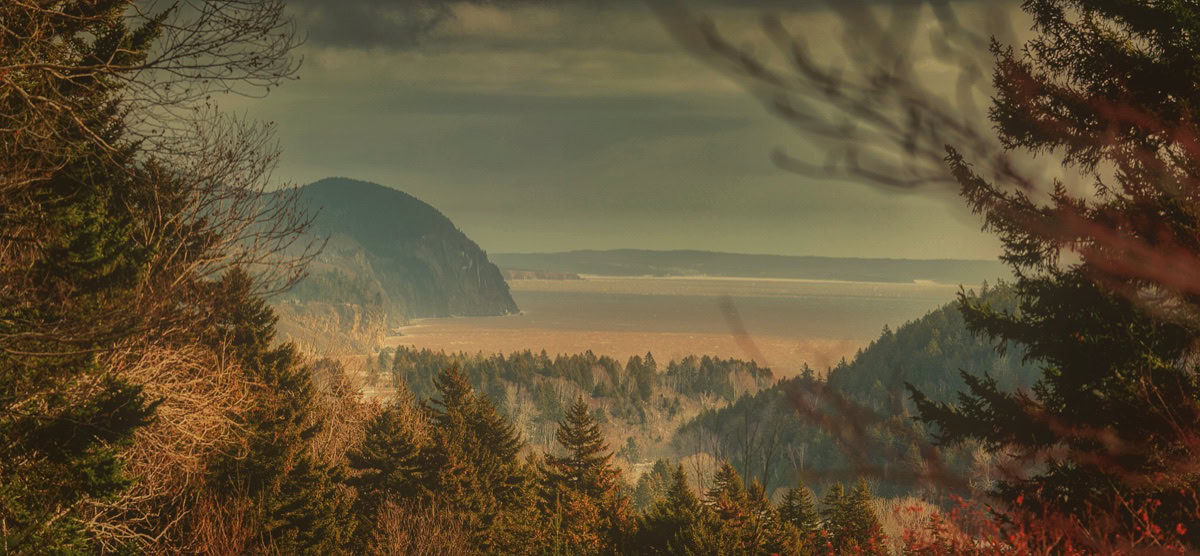
If you only have time for one hike in the park, it has to be Dickson Falls. It’s an easy, roughly one-kilometre stroll along wooden boardwalks that’s manageable for small children and anyone who isn’t used to strenuous mountain hiking.
The path leads you through a valley dripping with ferns and moss that looks like it was lifted straight from a Jurassic Park set. Water drips from every surface, the air is beautifully damp and fresh, and at the end you’re rewarded with a cascading waterfall cutting through green-clad rocks. I’d suggest getting here first thing in the morning, when gentle fog still drifts through the forest — the photos you’ll get are absolutely stunning.
Just be careful on the wooden boardwalks, which can be treacherously slippery after morning fog or rain.
3. The iconic Point Wolfe covered bridge
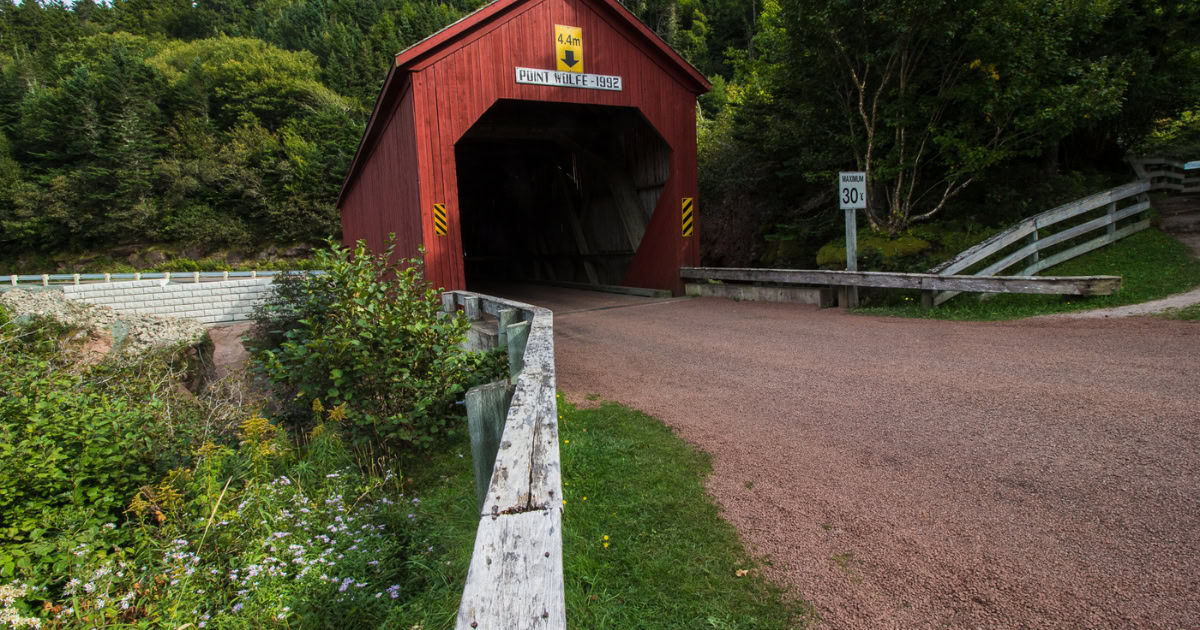
Covered wooden bridges are a hallmark of New Brunswick, and the one at Point Wolfe is probably one of the most photographed in all of Canada. There was once a bustling logging settlement here and the bridge was used to transport timber. Today, thankfully, all you’ll find is deep tranquillity and gorgeous views into the gorge below.
You can drive right through it, but definitely park in the small car park nearby and walk down the trail to the river. From there you’ll get the best angle for photos, and with a bit of luck you won’t have any other tourists in your shot — most people only take pictures from up on the road.
As you read the information boards about the harsh life of 19th-century loggers, you can really feel the rugged spirit of old Canada seeping through. Nature has since reclaimed everything, and it’s one of the most romantic spots for a morning coffee from a thermos flask.
4. A hiker’s challenge: Third Vault Falls
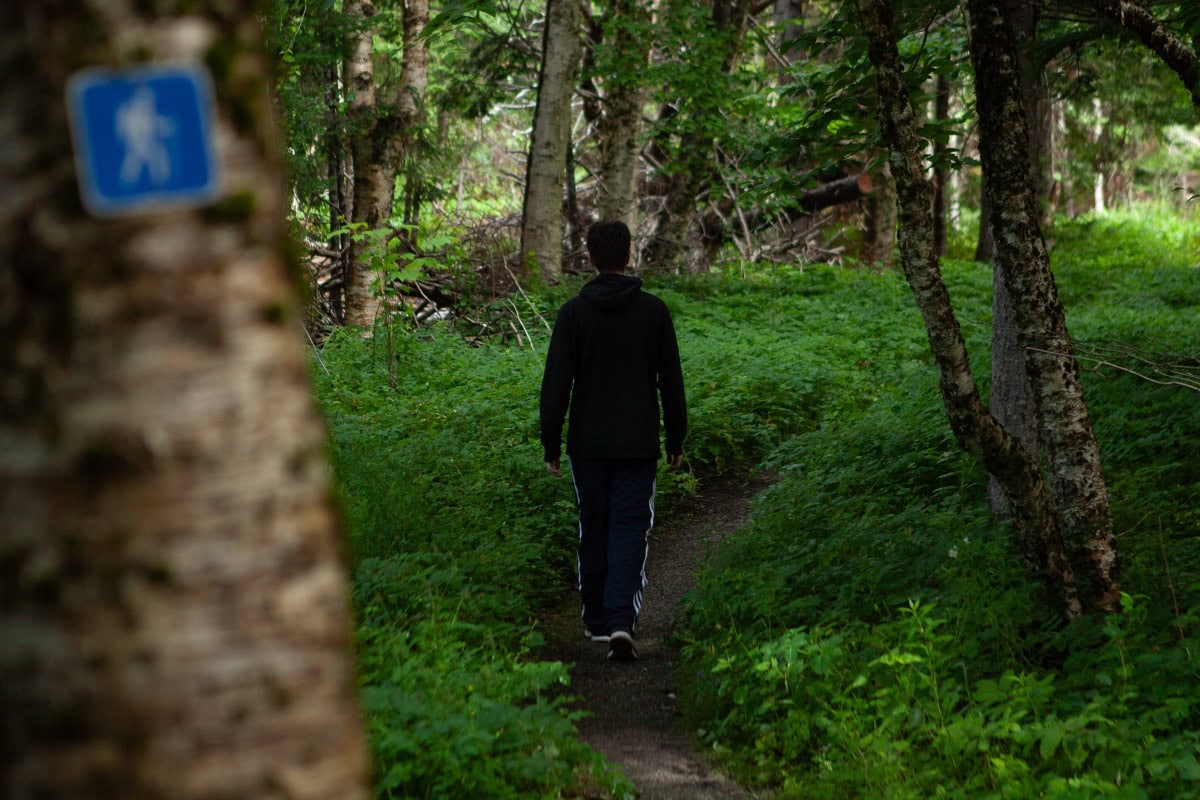
For those of you looking for a bigger adventure and who aren’t afraid of a longer trek, head for the trail to Third Vault Falls. It’s the tallest waterfall in the entire national park, with water plunging an impressive sixteen metres over steep granite walls.
The trail is about seven kilometres return and gets fairly steep and slippery towards the end. I’d strongly recommend wearing proper hiking boots, because trainers could easily lead to a nasty injury here.
Be prepared for the fact that ubiquitous tree roots turn the path into a bit of an obstacle course in places. Especially in autumn, when they’re buried under damp leaves, the return trip can take considerably longer than expected. But the view at the end makes every aching muscle absolutely worth it.
5. Cool off at Laverty Falls
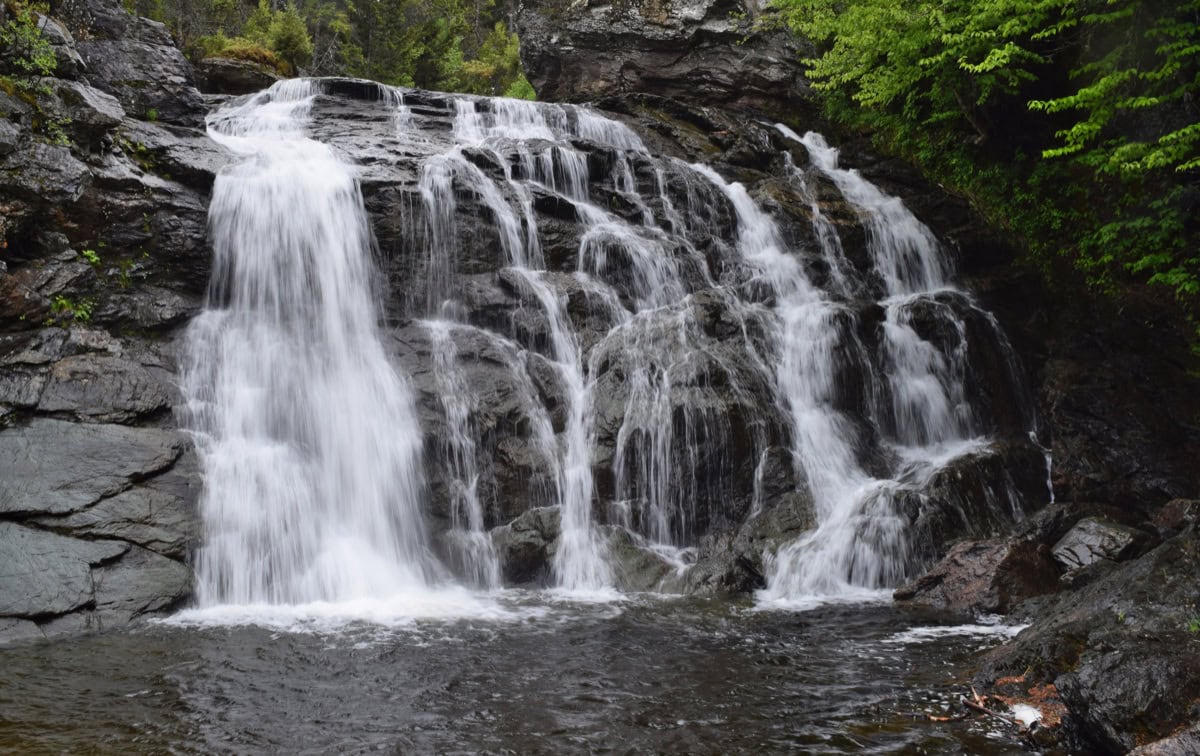
If you arrive at the park in the middle of a scorching summer and fancy cooling down somewhere, the trail to Laverty Falls is probably our favourite option. The path winds through mixed forest, descending gently into a valley, and covers roughly five kilometres — easily doable in a leisurely two hours.
At the base of the waterfall, there’s a natural pool of crystal-clear water. It’s absolutely freezing, mind you (this is Canada, after all), but the feeling of plunging in after a full day of hiking through the forest is simply indescribable. Don’t forget to throw swimwear and a light towel into your backpack.
6. Kayaking with the highest tides
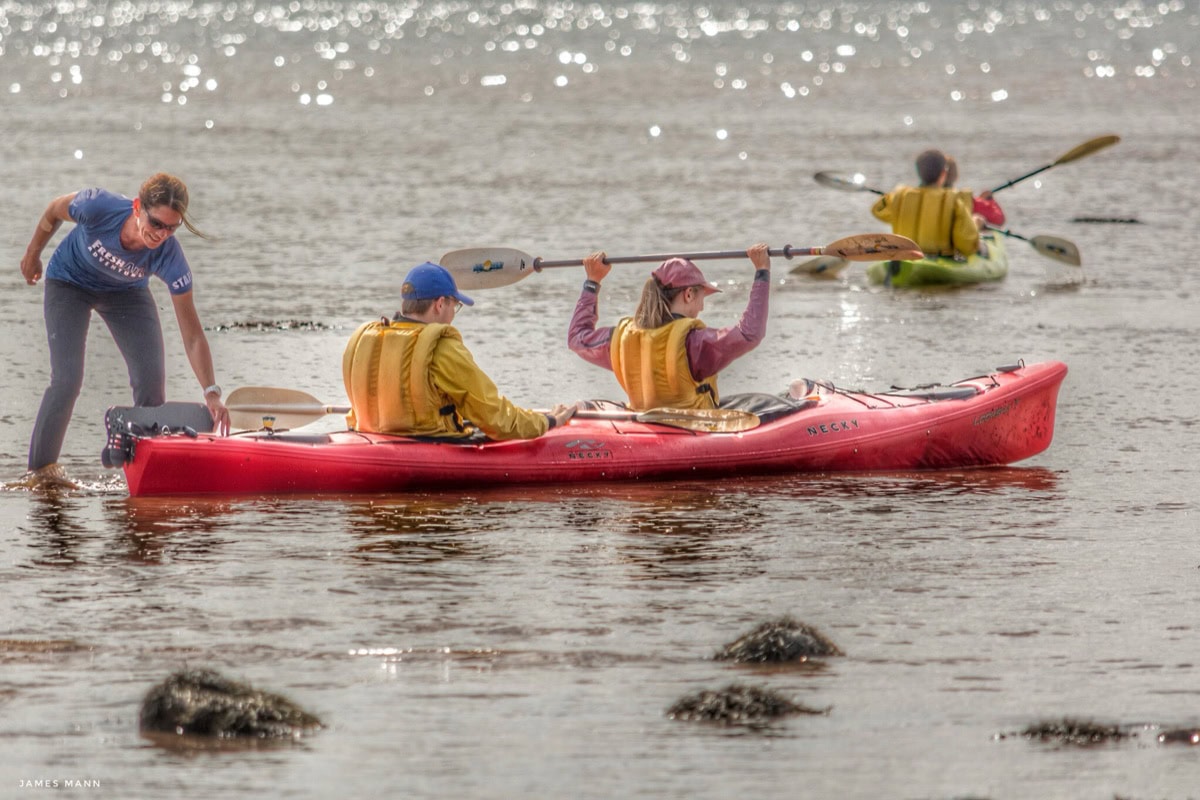
Paddling along the coastal cliffs is quite possibly one of the most powerful experiences you can take away from here — especially when you know you’re gliding over spots where you were walking on dry land just hours before. Watching the massive tide from shore is brilliant, but experiencing it out on the water is a completely different league.
This is definitely not a trip you can organise on your own, due to the strong currents and unpredictable water levels — you always need to go with a local guide. We put our trust in the pros at FreshAir Adventure, and I’d recommend booking this experience well in advance, as group spots vanish in a flash during summer.
When we first paddled out with our instructor and saw the enormous water column beneath us, I felt a deep respect for the Atlantic. The guides also share fascinating stories about local geology as you paddle, and you might even spot seals lounging on the rocks.
7. A dip in the heated saltwater pool
I know it sounds a bit paradoxical to travel into the wilderness and then go for a swim in a public pool, but believe me — after a day spent in the cold Atlantic fog, you’ll thank me for this tip 😁. Right in the park near the main headquarters, there’s a fantastic saltwater swimming pool.
The water is pumped straight from the Bay of Fundy, but unlike the ocean, the pool is beautifully heated. It’s exactly what you need after a day full of hikes.
There’s also a lovely grassy area beside the pool where you can have a little picnic with a coffee while the kids splash about. The park service keeps this spot in impeccable condition, so it’s a real treat to come here and feel civilised again after a day of muddy adventures.
8. Mountain biking the White Tail Trail
Fundy National Park isn’t all about hiking — in recent years they’ve built an absolutely fantastic network of mountain biking trails that will thrill any adrenaline junkie. The area around Chignecto campground offers trails of all difficulty levels, from family-friendly routes to technically demanding descents.
Our favourite is the White Tail Trail, which flows beautifully through the forest with perfect flow sections. You can easily hire bikes from the rental shop near the visitor centre, so there’s no need to haul them all the way from the airport. They’ve got brilliant full-suspension models too, which you’ll really appreciate on the roots.
Just be prepared for the fact that Canadian forests take a long time to dry after rain. Even in the middle of a hot summer, we were happily wading through mud on some sections and came back to the rental shop with our backs speckled in black dots — but that’s just part of the real mountain biking experience.

9. The charm of the fishing village of Alma
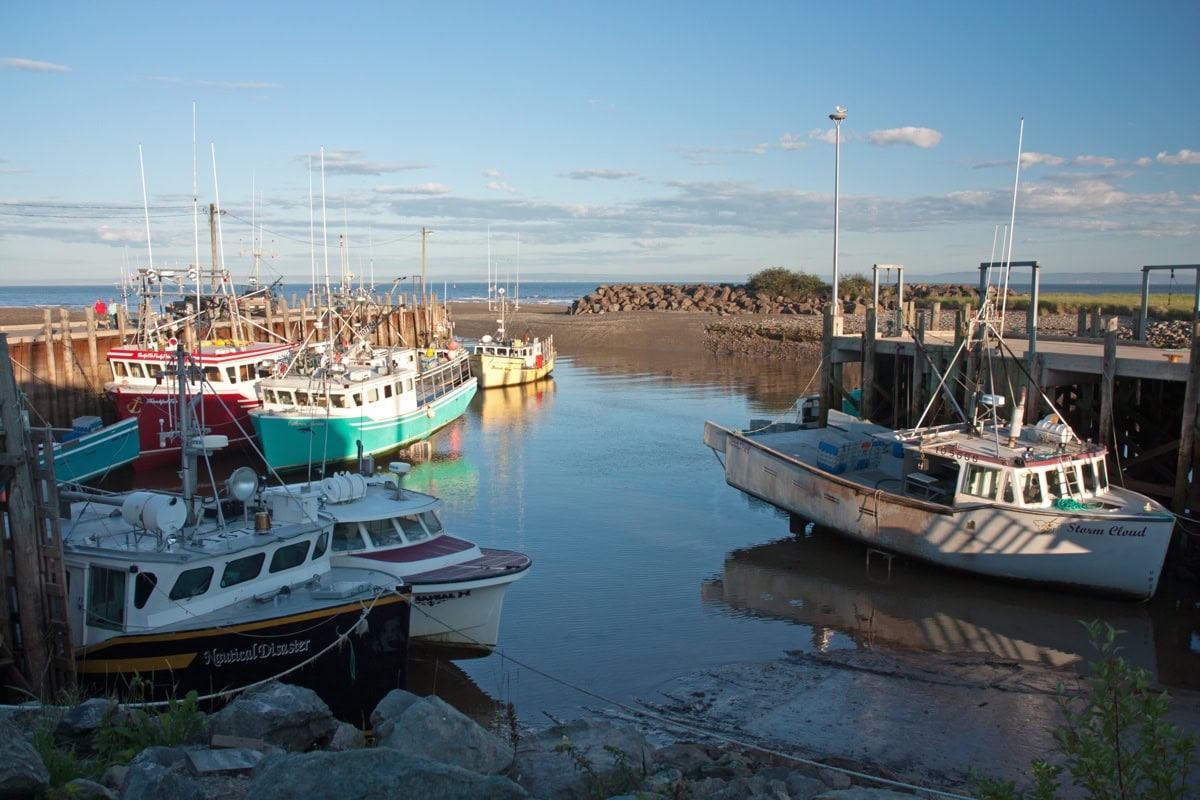
A visit to the park wouldn’t be complete without a proper stop in Alma. This tiny village has an absolutely irresistible charm, especially when the tide drops and fishing boats sit on their bellies in the red mud right in the harbour.
Take your time for a stroll along the main street, pop into the little souvenir shops, and soak up the slow coastal rhythm of life. The locals are incredibly friendly and love having a chat, whether you’re buying your morning coffee or queuing for dinner.
We also fell in love with evening walks along the wharf, watching the waves return and the boats begin to gently rock. There’s a beautifully bittersweet melancholy about it — the kind that draws Canadians themselves here for holidays from far-flung cities.
10. Magical stargazing
Fundy National Park holds Dark Sky Preserve certification, which means light pollution is strictly controlled and on clear nights the stargazing is absolutely phenomenal. If you’re from a large city in Europe, prepare to have your jaw hit the floor — the Milky Way is visible to the naked eye in astonishing detail.
All you need is a blanket, a warm jacket, a thermos of tea, and one of the open viewpoints along the coast. The park service occasionally hosts guided stargazing sessions with large telescopes, which are a wonderful experience even for complete beginners.
If you’re lucky enough to visit in August, you might even catch the annual Perseid meteor shower.
11. Scenic drive along Highway 114
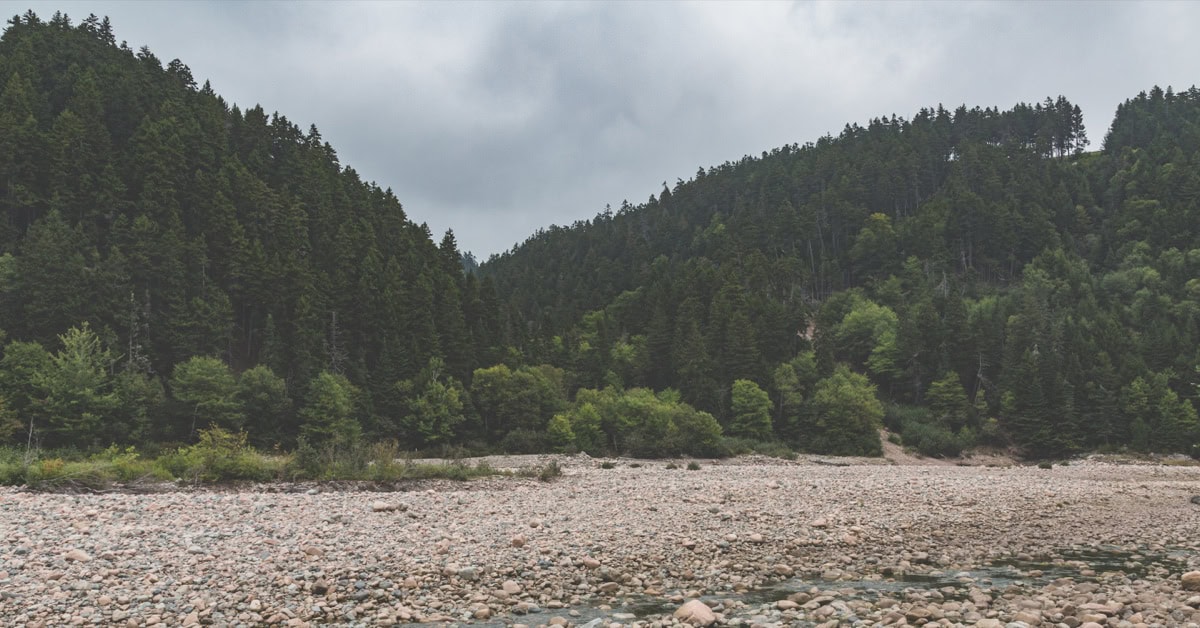
If you’re not in the mood for tackling elevation gains or a heavy Canadian downpour catches you out, don’t despair. Simply driving through the park along Highway 114 is an experience in itself, with several breathtaking viewpoints where all you need to do is pull over and wind down the window.
The road weaves through dense forests, occasionally opening up to views of deep river valleys, making you feel as though you’re driving through an endless green ocean. Remember to drive carefully — wildlife has right of way here, and a deer darting across the road is anything but rare.
Sometimes fog from the bay rolls across the road so thickly you need to switch on your hazard lights and crawl along. Even this slightly eerie atmosphere is an inseparable part of exploring eastern Canada, adding just the right wild edge to your road trip.
12. Cliff-top views on Matthews Head Trail
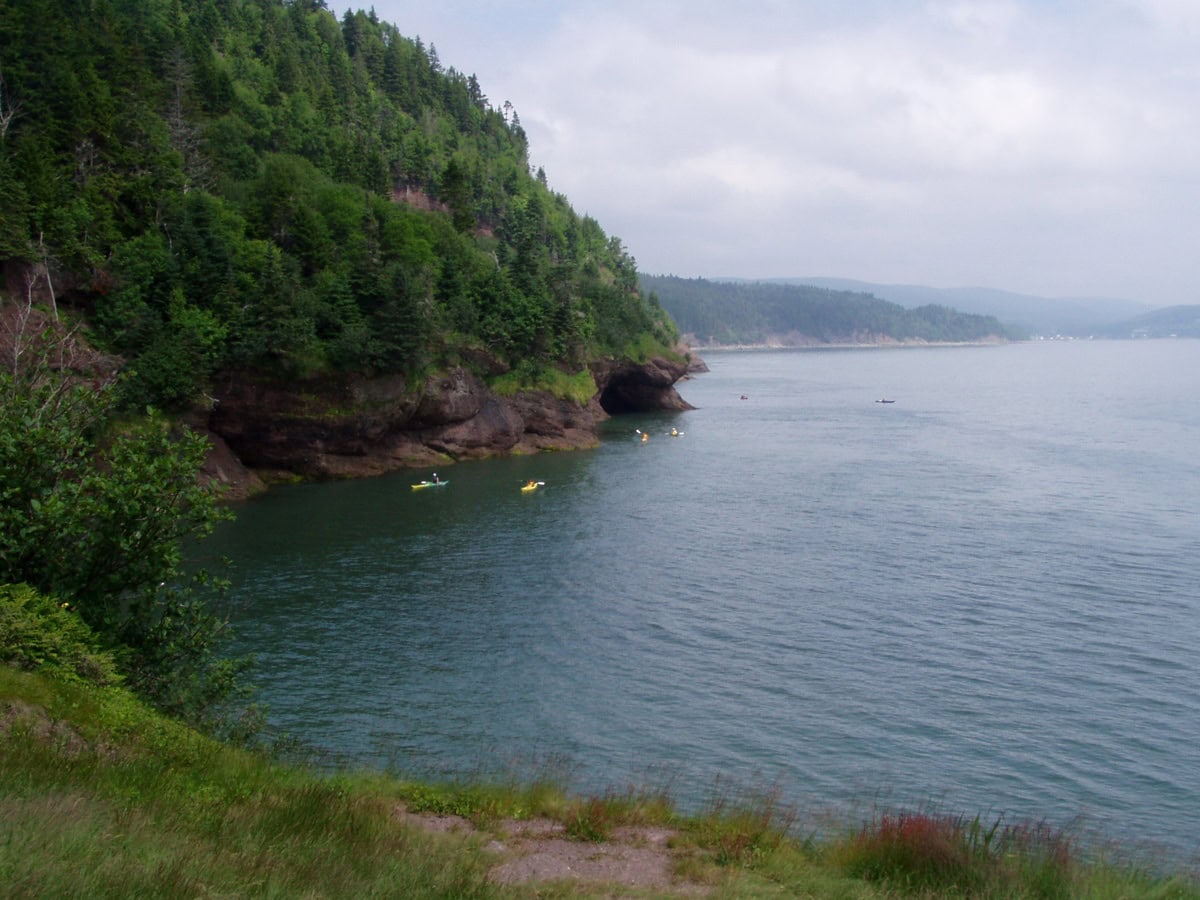
For the best views of the cliffs and the churning ocean, I recommend heading out on Matthews Head Trail. It’s a loop of roughly five kilometres that leads you from dense forest right out onto open grassy headlands atop the coastal cliffs.
Sit down in the grass on the cliff’s edge and watch the waves of the Bay of Fundy relentlessly crash into the shoreline far below you — it’s an overwhelming sense of peace. Especially in autumn, when early frosts turn the ferns russet and the whole place takes on an incredibly romantic quality.
Interestingly, this area once belonged to family farms long before the park was even established. Every now and then you’ll stumble upon old stone walls in the grass, reminders of the hard graft of the first settlers trying to survive winters on these windswept cliffs.
Map of points of interest for your phone
What to eat and where to find it: A foodie’s guide
As you already know, all the great food happens in Alma. And trust me, this part of the trip alone deserves its own admission fee 😁. Given that you’re right on the ocean shore, sampling the local seafood is an absolute must.
The unbeatable spot is the Alma Lobster Shop, where fishermen deliver their catch straight from the boats. Their lobster roll is quite possibly the best I’ve ever had in my life — the meat is gloriously succulent, lightly tossed in mayo, and served in a golden-toasted brioche bun. The portions are generous, and it’s also well worth popping in for a simple bowl of clam chowder, which will warm you to the core after a cold day on the coast.
After a good lunch, you absolutely must stop by Kelly’s Bake Shop. Their famous sticky buns (gooey cinnamon rolls) are known across the whole of New Brunswick, and we went back for them practically every morning. There’s often a queue stretching out the door, but believe me, it’s worth the wait.
In the evening, head for a pint at Holy Whale Brewing Co. — a ridiculously photogenic microbrewery housed in a former white wooden church 😅. The atmosphere inside is fantastic, the staff are lovely, and their local brews with witty names are well worth a taste.
Practical tips before travelling to Canada
Canada is enormous and its nature takes no prisoners, so it pays to be well prepared. Here are a few practical things we personally sort out before every trip:
- Travel insurance is non-negotiable. Healthcare in Canada is eye-wateringly expensive, and travelling here without insurance would be sheer madness. For longer trips we usually go with True Traveller, but a brilliant alternative for digital nomads and frequent travellers is SafetyWing insurance, which has never let us down. British citizens will also need an eTA (Electronic Travel Authorization) to enter Canada — it’s a quick online application that costs just 7 CAD (about £4).
- Stay connected without expensive roaming. No need to hunt for café Wi-Fi anymore. We swear by virtual eSIM cards — check out our Holafly review. We’ve had fantastic results with it all over the world, and you can set it up in minutes right on your phone.
- Travel light. Trust me, lugging enormous suitcases through airports and then cramming them into a rental car boot gets old fast. We’ve learned to pack truly minimally — take a look at our guide on how to pack into carry-on luggage and save yourself a mountain of stress.
Where to go next in Canada and North America
If you’re planning a longer holiday and want to see more, have a look at our other articles from our travels. From the east coast, many people fly westward to chase the big mountains, which is why we’ve put together a comprehensive western Canada road trip itinerary with tips on Banff, Jasper, and Vancouver.
If you’re heading closer to Toronto instead, you absolutely can’t miss the most famous waterfall on the continent — we’ve written a detailed guide on how to visit Niagara Falls.
Frequently asked questions (FAQ)
Here are the questions that come up most often in the comments. Hopefully they’ll save you hours of Googling 😉.
1. Is Fundy National Park worth visiting?
Absolutely! It’s one of the few places on Earth where you can witness the extreme power of the tides first-hand, walk on the ocean floor, and explore untouched misty forests with waterfalls — all in a single day. It’s a truly unique natural experience. Even if you only have time for a brief day trip, it’s worth the detour purely for the jaw-dropping sight of boats helplessly stranded in red mud in the middle of the harbour.
2. What town is the national park near?
The park isn’t located in a large city, but the gateway and main base for accommodation and dining is the small village of Alma. The nearest major city with an international airport is Moncton, about an hour’s drive away. The journey from Moncton is actually quite pleasant and flies by, as you pass through picturesque farmland that gradually tunes you into the raw atmosphere of the untouched Atlantic coast.
3. Can you drive through the national park?
Yes — the scenic Highway 114 runs right through the heart of the park, giving you access to most of the main viewpoints and trailheads. Driving through is very comfortable and the scenery along the way is stunning. I’d recommend filling up the tank before you head into the park’s interior, though. Don’t expect any large modern petrol stations in the wildest stretches of forest — it’s always better to think ahead and set off with a full tank.
4. What makes Fundy National Park so special?
The star of the show is the Bay of Fundy and its extraordinary tides, which hold the world record. The tidal range can reach up to 16 metres — something you truly have to experience in person for your brain to believe it. The massive water movement constantly churns nutrients from the ocean floor, turning the area into a giant feeding ground for countless species of seabirds and enormous whales that converge here at the height of summer to feast.
5. Do I need to check the tide tables?
Yes — this is absolutely essential if you want to explore the ocean floor or go kayaking. The water rises and falls roughly every 6 hours and moves incredibly quickly, so for your own safety and the best possible experience, you need to know the exact times. You can easily pick up tide tables at any information centre near the park entrance, where the rangers will happily explain when it’s safe to start walking on the beach and when you need to get back to solid ground as quickly as possible.
6. Can I bring my dog to the park?
Canadian national parks are very dog-friendly, and Fundy is no exception. Dogs are allowed on most hiking trails and in campsites, but they must be kept on a lead at all times to protect the local wildlife. Just bear in mind that the red mud from the beach gets absolutely everywhere, so if you’re travelling with a furry companion, definitely pack some old towels for the journey back to the car. Otherwise your entire rental will end up tinted brick-red.
7. Are there bears in the park and do I need a bear bell?
Yes, black bears do live in the area, and while encounters near the main trails are uncommon, a degree of caution is sensible. Bear bells aren’t usually necessary, but it’s recommended to make noise while walking through dense forest so the animals know you’re there and you don’t startle them. The key thing is never to leave any fragrant food in your tent and to carefully seal all rubbish in the special bear-proof bins at campsites. Canadian rangers take this extremely seriously, and as a result, all visitors stay perfectly safe.
Tips and Tricks for Your Vacation
Don’t Overpay for Flights
Search for flights on Kayak. It’s our favorite search engine because it scans the websites of all airlines and always finds the cheapest connection.
Book Your Accommodation Smartly
The best experiences we’ve had when looking for accommodation (from Alaska to Morocco) are with Booking.com, where hotels, apartments, and entire houses are usually the cheapest and most widely available.
 🚗 Car rental on the roadVerified rental cars in New Brunswick
Search with the DiscoverCars comparison engine — it compares prices from dozens of local and international rental companies, and most bookings come with free cancellation.
Compare car prices in New Brunswick →Don’t Forget Travel Insurance
Good travel insurance will protect you against illness, accidents, theft, or flight cancellations. We’ve had a few hospital visits abroad, so we know how important it is to have proper insurance arranged.
Where we insure ourselves: SafetyWing (best for everyone) and TrueTraveller (for extra-long trips).
Why don’t we recommend any Czech insurance company? Because they have too many restrictions. They set limits on the number of days abroad, travel insurance via a credit card often requires you to pay medical expenses only with that card, and they frequently limit the number of returns to the Czech Republic.
Find the Best Experiences
Get Your Guide is a huge online marketplace where you can book guided walks, trips, skip-the-line tickets, tours, and much more. We always find some extra fun there!


