

Two days before departure the bags are packed, the accommodation is paid for, and suddenly your child starts coughing. Illness before a trip or nausea during transfers is one of the biggest fears for every parent, but most situations can be handled with the right kit — and motion sickness in children is right at the top of that list.
While an ordinary cough won’t affect a flight, a blocked Eustachian tube during a heavy cold can cause a child a lot of severe ear pain. During the journey itself, motion sickness often sets in, and in children it typically starts to appear from around their second birthday.
In this article I’ll show you what to pack in your travel first-aid kit and how to help your child when they feel sick. You’ll also learn when it makes more sense to rebook your tickets and how to reset a routine thrown off by the time difference as quickly as possible.
TL;DR
- Liquid rules: Many major airports are now rolling out new scanners that allow up to 2 litres per container, but plenty of terminals still enforce the strict 100 ml limit — always check your specific airport before you fly.
- Clothes for parents: Motion sickness in children often strikes unexpectedly, so always pack a change of clothes in your carry-on not just for the little one, but for yourself too.
- Motion sickness medication: Always discuss the dosage and type of anti-nausea medication with your pediatrician in advance, because children can have a paradoxical reaction and hyperactivity.
- Melatonin and jet lag: Experts strongly warn that melatonin must not be given to children under two years of age.
- Travel first-aid kit: The basics are two types of fever suppositories, a thermometer, an antihistamine, plasters, eye drops, cough syrup and nappy-rash cream.
- New passenger rights: The revision of EU regulation 261/2004 will guarantee free seating for children up to 14 next to their parents, but it won’t actually come into force until around mid-2027.
10 Things You Must Know About Motion Sickness in Children
Let’s take a look at everything you should know about motion sickness in children.
1. What Motion Sickness Is and Why It Happens
Motion sickness in young children isn’t searched for online all that much in connection with flying, but in parents’ everyday reality it’s far more common than you’d expect. The movement of the plane, constant changes in altitude and the tilting during turns can reliably upset a child’s stomach even without turbulence. The problem arises when the eyes see the static interior of the cabin, but the balance system in the inner ear senses intense movement. This confusion in the brain then leads to feelings of nausea and, ultimately, vomiting.
This unpleasantness usually strikes at the crawling age, when the child is very active and can’t lie still for long. An infant no longer fits in the bassinet, keeps wriggling on your lap and their brain gets confused signals about body position. With older children, a big factor is that they might be reading a book or staring intently at a tablet. This only deepens the sensory conflict, because the eyes fixate on a nearby stationary point.
💡 Tip: If your child has a clear tendency to get sick in the car, ⚠️ experience shared on forums suggests trying to get a seat over the wing, where movement should be felt the least. Conversely, it’s recommended to avoid the rear of the plane near the tail, even though we don’t have hard data directly from the airlines to back this up.
2. How to Prevent Motion Sickness in Children
Successful prevention of nausea starts at home before you even leave for the airport, with the right choice of food. Before and during the flight, completely skip heavy, fatty or overly sweet meals that would put unnecessary strain on the digestive system. Go instead for light snacks, plain crackers and dry bread rolls, which provide energy without irritating the stomach. Paradoxically, an empty stomach is far more prone to nausea than a slightly full one.
With school-age kids and teenagers, looking out of the window is a huge help, because it realigns the confused senses. Seat older children right by the window and let them fix their gaze on the distant horizon or the clouds below. The eyes then get information about the plane’s movement that matches what the inner ear feels. Definitely forbid reading for the duration of the flight, though, if they already feel a little off.
💡 Tip: Try to get enough plain still water into your child during the flight, in small sips. Dehydration in the extremely dry cabin air significantly worsens nausea, so staying hydrated is absolutely essential. Avoid sweet juices and fizzy sodas, though, which could over-acidify the stomach.
3. What to Do When Your Child Vomits on Board
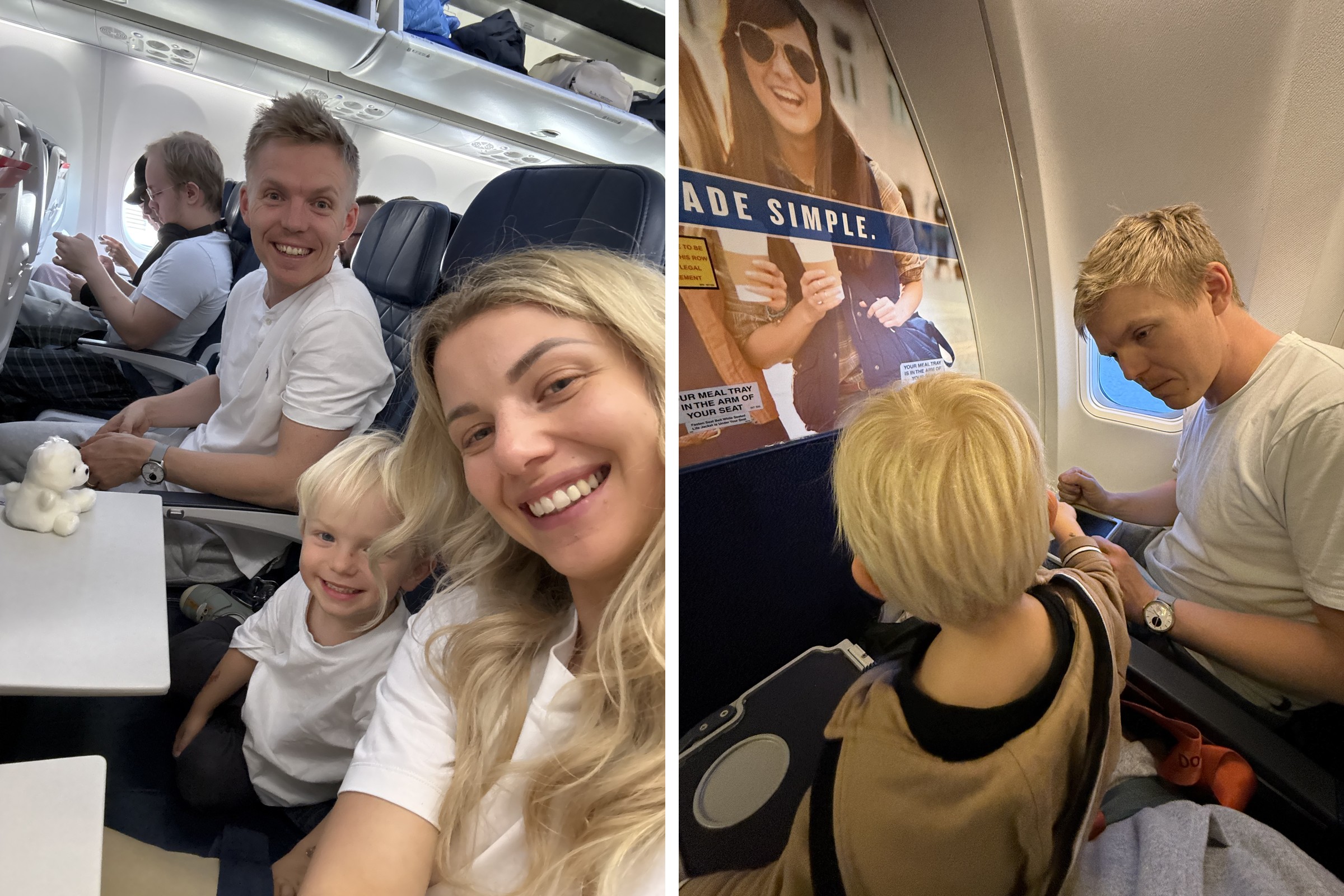
Definitely don’t count on finding a ready-made airline sick bag in the seat pocket in front of you — it’s often missing. Bring your own sturdy vomit bags from home and a really large pile of wet wipes. A cautionary story from the British forum Mumsnet comes from a family who spent a twelve-hour flight completely covered in sick after their eight-month-old couldn’t hold it in right after take-off.
The single most important rule is that you have to be prepared to change your own clothes too. Pack a change of clothes in your carry-on not just for the child but for the parents as well, because spending half a day in a smelly T-shirt is pure torture. Also pack sturdy sealable bags, which you can then use straight away to safely store the dirty clothes so they don’t stink up your bag.
💡 Tip: If an accident does happen, try to stay completely calm, because your panic will immediately rub off on your child. Ask the flight attendant for extra wipes, a little clean water to rinse off and possibly a large bin bag. The cabin crew are used to situations like this and will surely be happy to help you quickly clean up your seat.
4. Motion Sickness Medication and From What Age
When ordinary prevention fails and your child regularly feels ill in vehicles, a pharmacological solution comes into play. ⚠️ With motion sickness medication, however, always consult your pediatrician in advance, because there’s no universal dosage for young children. Absolutely avoid giving your child any pills based solely on advice from online forums, which is why we don’t list specific doses here either.
Most over-the-counter anti-nausea medications have sedative effects, so your child will probably fall asleep after taking them. That’s exactly why a medical consultation is essential — sedative medications can have a paradoxical effect in some children and trigger huge hyperactivity. Instead of peaceful sleep, you might get irritability and crying fits, which is the worst possible scenario in the enclosed space of a plane.
💡 Tip: All anti-nausea medications belong exclusively in your carry-on so you have them within reach at all times. If your doctor prescribes a liquid medicine or special drops, the strict 100 ml limit doesn’t apply to them at the airport. Always keep a doctor’s note with you, though, or leave the medicine in its original packaging with the leaflet.
5. Fever and Illness During the Trip
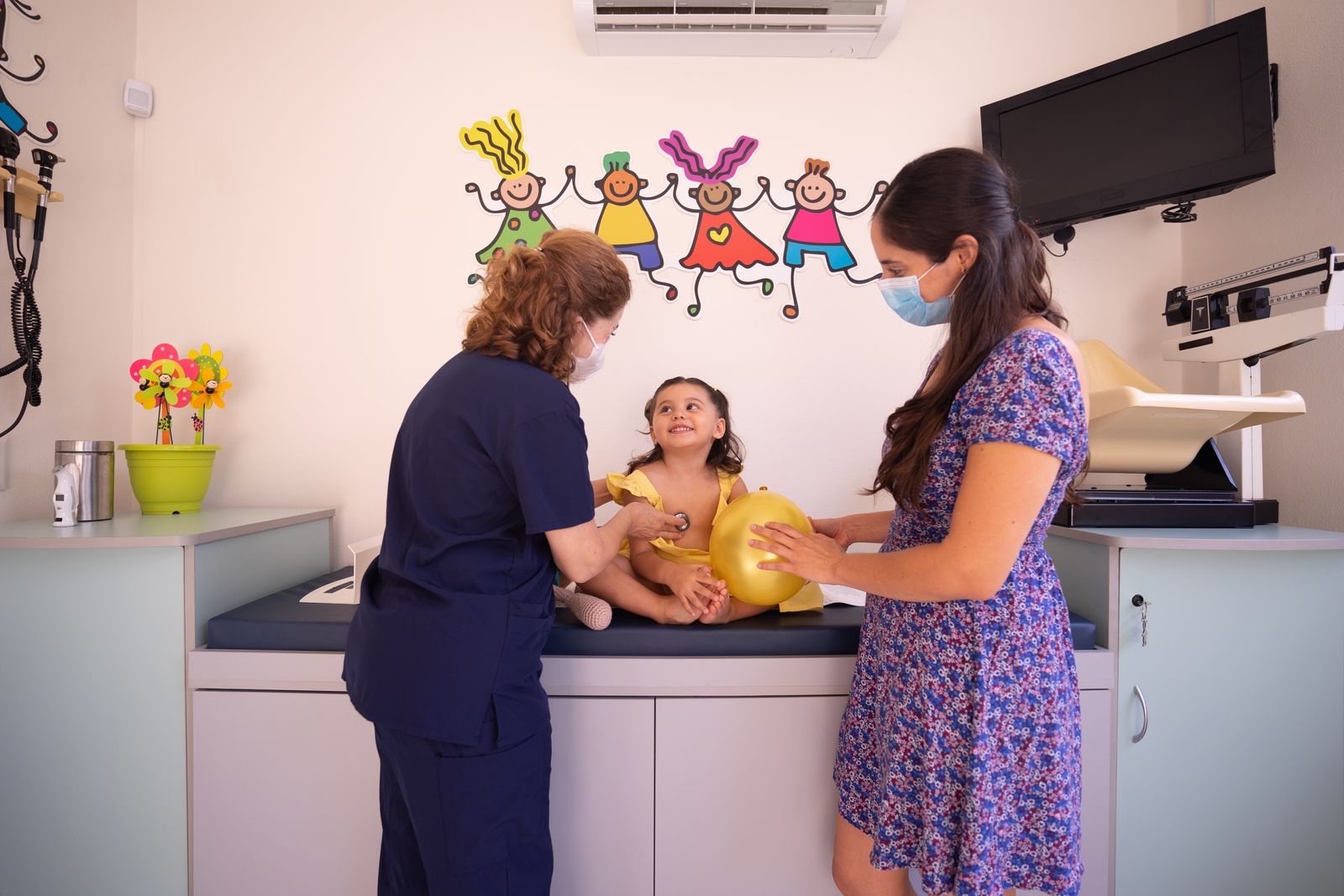
The worst possible situation is when the thermometer reads thirty-nine degrees late in the evening before a morning departure. Whether to fly with a child that sick is always a decision to leave to your pediatrician, but with an acute infection or fever, you belong in bed. If you cancel a flight at the last minute at night, the airline system often no longer allows a cancellation at all and your case is treated as an unused flight — a so-called no-show.
To get your money back from cancellation insurance, you need two absolutely key documents for the insurer. You must obtain a doctor’s note stating you are unfit to travel, dated no later than the day of departure, and a confirmation from the carrier that you didn’t board your flight. A chapter of its own is ear pain, which mainly troubles children during descent — you can read about it in our detailed article Ear pain on a plane in children.
💡 Tip: Remember that cancellation insurance must be arranged when you buy the tickets, not once the child starts coughing. If one child falls ill, a good insurer will also accept trip cancellation for accompanying people on the same booking. Always carefully check the upper payout limit, though, so it covers the full amount for the family trip.
6. Jet Lag in Children and How to Handle It
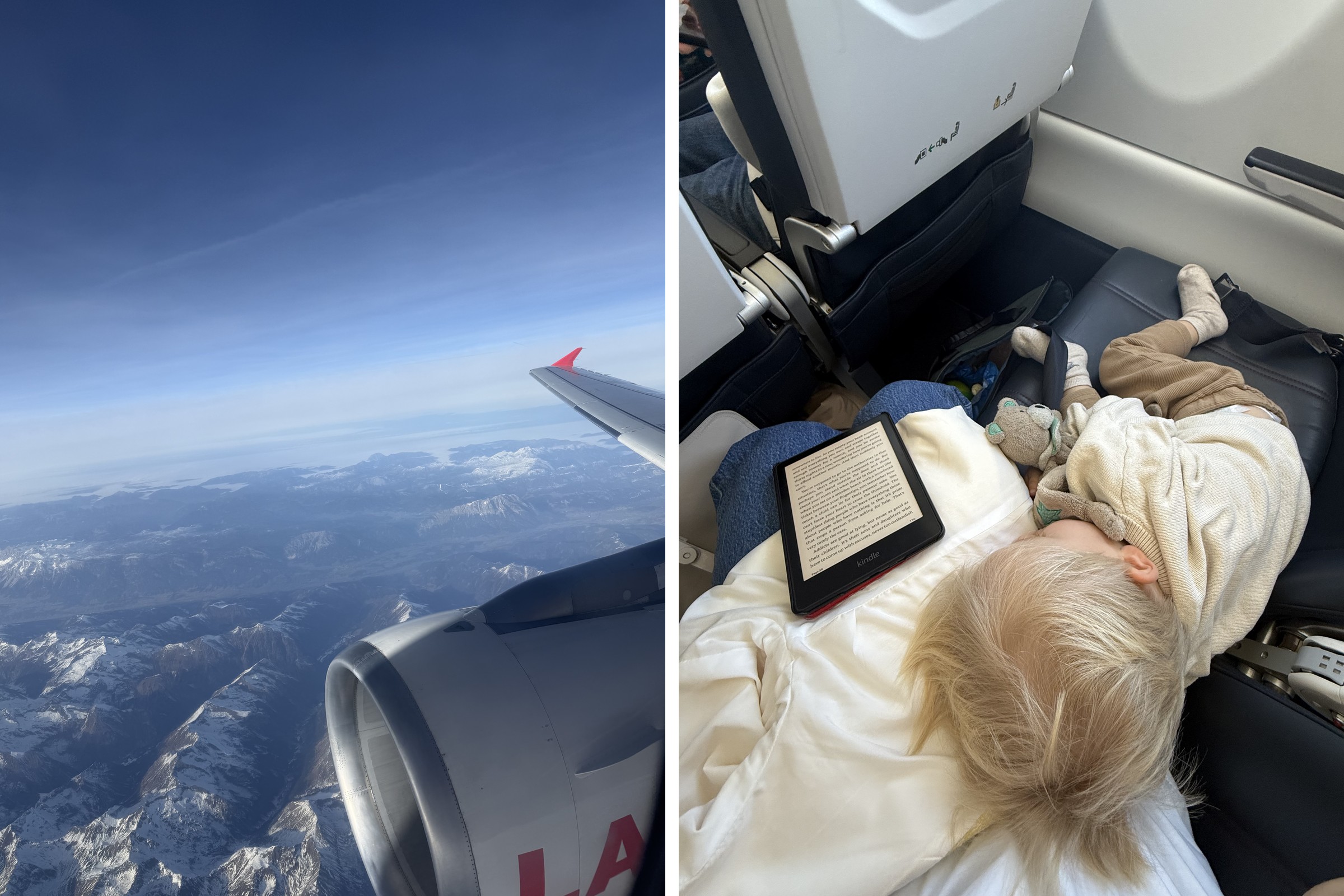
Crossing several time zones reliably throws off an adult’s biorhythm, let alone a fragile little child’s body. ⚠️ According to the international organization IPSA, melatonin must not be given to children under two years of age. In older children its use should be limited to specific diagnoses only, and even then exclusively after a thorough consultation with a doctor. Never try to put a child to sleep with sleeping pills — it’s dangerous and the effect can drastically disrupt sleep.
The first and safest choice against jet lag is plain daylight and sticking to your routine. When flying west you gain time and your child will be dropping with tiredness in the evening, so you have to keep them out in the afternoon sun as long as possible. Conversely, when flying east they won’t want to sleep in the evening, so as soon as they wake up expose them to morning light and throw open all the curtains in the room.
💡 Tip: Keep the evening ritual of bathing, reading a story and a favourite song exactly the same as at home. Your child needs familiar signals that it’s bedtime, even when they’re lying in a completely foreign hotel on the other side of the world. Many parents’ experience shows that with small babies it doesn’t pay to start shifting the routine at home before departure.
7. A First-Aid Kit for Travelling With Children
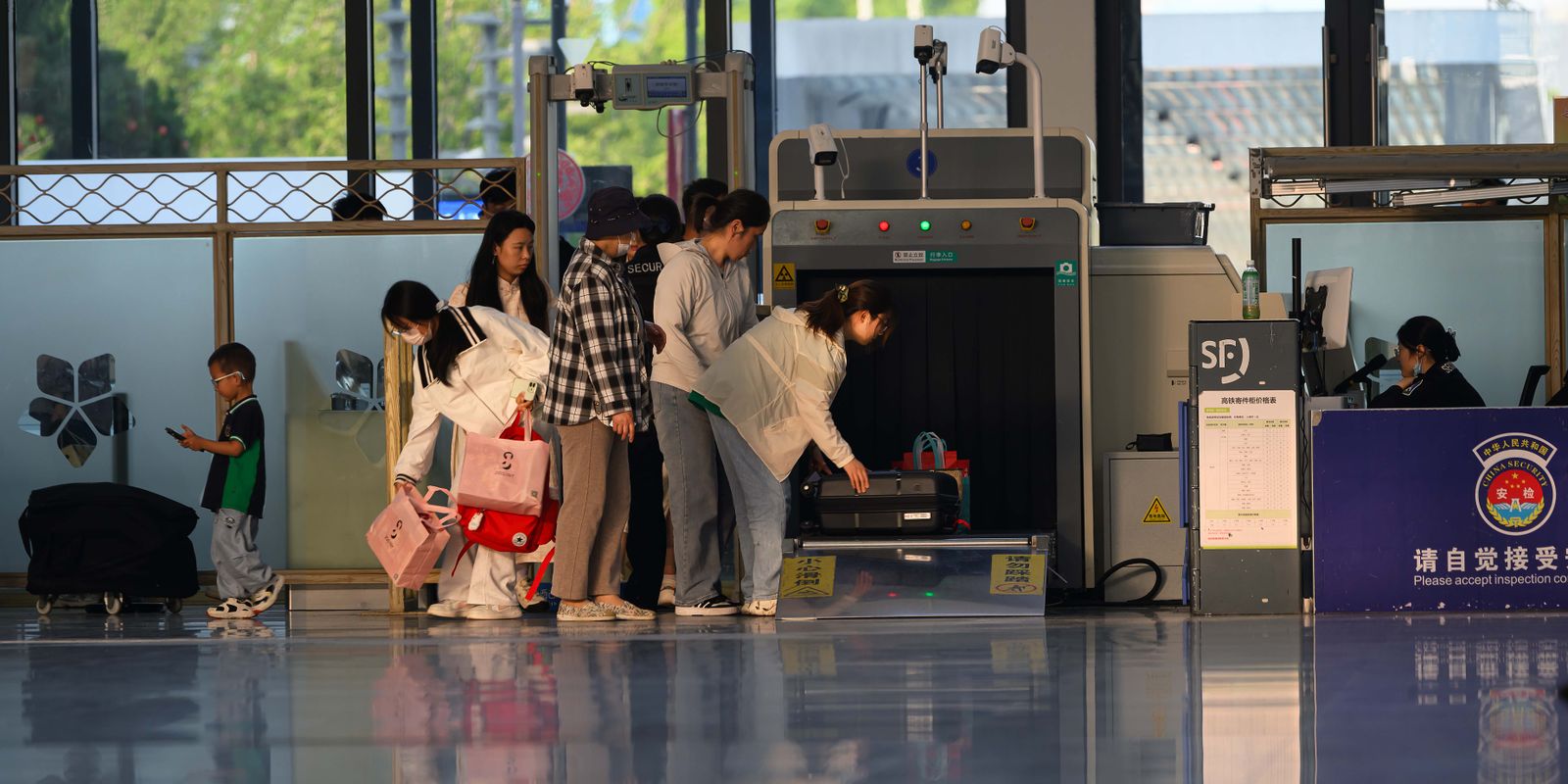
It’s always a good idea to go through the contents of a children’s travel first-aid kit in detail with your pediatrician. The basic kit includes fever suppositories in two strengths, a reliable thermometer, an antihistamine and plenty of assorted plasters. Always bring eye drops, a tried-and-tested cough syrup and nappy-rash cream too, because a change of environment quickly shows on a child’s skin.
Pack all essential medicines exclusively in your carry-on so they don’t get lost in a checked bag in the hold. Medicines aren’t subject to the 100 ml liquid limit, but remember that sunscreen doesn’t count as a medicine and the limit does apply to it. If you want to check the full list and leave nothing to chance, take a look at our detailed guide Travel first-aid kit: what belongs in it.
💡 Tip: When packing favourite liquids, watch out carefully for changing airport rules. Some airports are gradually introducing new CT scanners that relax the liquid limit to as much as two litres per container. But if you’re flying with Ryanair or easyJet from a terminal that hasn’t upgraded yet, the strict 100 ml rule still applies.
8. When to Seek a Doctor Abroad
Unless you’re heading into the total wilderness, you can easily sort out most common health issues with the help of a local pharmacy. But when a relentless fever appears, violent vomiting combined with dehydration, or any breathing difficulties, seek a doctor immediately. Don’t rely solely on the European Health Insurance Card (EHIC), because it often doesn’t apply at all in private seaside resorts.
A child simply needs full commercial cover from the first day of their life. Most insurers offer good-value family packages that work out much cheaper than piecing together individual policies for each member. For detailed information on how to set the medical-expenses limits correctly, be sure to read our article Travel insurance for children.
💡 Tip: Always check whether your travel insurance includes an assistance service available in English twenty-four hours a day. When you’re standing at a foreign A&E with a crying child, you need someone on the phone who can translate the medical report and confirm payment to the hospital.
9. Preventing Infections on Board and at the Airport
Airlines will let you board with a very small baby, but pediatricians advise not to rush the first trip at all. While Ryanair carries children from eight days old, some carriers let you fly after just forty-eight hours, but you need their special form for it. Pediatricians nonetheless strongly recommend waiting at least until two to three months of age, until the child has built up some basic immunity.
The main reason to postpone the trip isn’t the flight itself at all, but the risky environment of a large airport. Airport halls full of thousands of people from all over the world are a huge mix of viruses and bacteria for a newborn’s immature immune system. If you must fly, try to keep the time spent circulating in the terminal to an absolute minimum and use priority boarding. If you’re interested in the other airline rules, we’ve covered them in the article From what age a child can fly on a plane.
💡 Tip: On the plane itself, try to keep your child as clean as possible. As soon as you sit down, wipe the fold-down tray table, armrests and window with disinfectant wipes, because these are the spots with the highest concentration of bacteria. Don’t let small children crawl on the carpet in the aisle, which only gets cleaned superficially.
10. Coming Home and Acclimatizing
The journey back from holiday is often more mentally demanding than the flight out, because the initial euphoria has faded and everyone is tired. Try not to schedule nursery or clubs for the very next day after getting home, and give your child a few days for a calm acclimatization. After long-haul flights, jet lag hits full force and a child’s body needs time to adjust to the home time zone.
If your child starts to cough a little or has a runny nose after the trip, it’s often just a normal reaction to the extremely dry, air-conditioned cabin air. Switch to a rest routine, increase fluid and vitamin intake, and spray sea water into the nose to moisten the irritated mucous membranes. Only if a high temperature is added or things don’t improve is it time to contact your pediatrician.
💡 Tip: We’ve written down absolutely everything about packing, prams, safety and the tricky airport processes in one giant guide. If you’re getting ready for your very first trip with a baby, don’t miss our main article Flying with children: the complete guide.
Practical Summary and Guide Prices
To keep everything in perfect order, we’ve prepared two tables with the most important facts concerning health and flying with children. All rules reflect the current situation for 2026.
| Type of medicine or equipment | Carry-on restrictions under the 2025 and 2026 rules |
|---|---|
| :— | :— |
| Essential liquid medicines and syrups | No limit if necessary for the trip; exempt from the 100 ml rule. |
| Sunscreen | Counts as ordinary cosmetics. Max 100 ml at older terminals, up to 2 litres at those with new scanners. |
| Baby milk and food | Exempt from the 100 ml rule, but airport security may ask you to taste it. |
| Nasal sprays and drops | Usually pass security; small bottles count towards the standard liquid limit. |
| Airline | Minimum age of child to fly | Additional conditions of carriage |
|---|---|---|
| :— | :— | :— |
| Smartwings | From 48 hours | Up to seven days old, a special confirmed form from the carrier is required. |
| Ryanair | From 8 days | Children up to and including seven days old are not carried on board at all. |
| Wizz Air and easyJet | From 14 days | From fourteen days to two years, they fly as an infant on a parent’s lap. |
| KLM and British Airways | No limit or from 7 days | With KLM you can fly practically straight from birth without major restrictions. |
Where to Next
If you have a trip with small children coming up soon, our other detailed articles full of hands-on advice will come in really handy:
- Flying with children: the complete guide
- Travel first-aid kit: what belongs in it
- Ear pain on a plane in children
- Travel insurance for children
- From what age a child can fly on a plane
Frequently Asked Questions
What exactly should I do when a child vomits on a plane?
Above all, stay calm and immediately ask the flight attendant for clean water, wipes, and a waste bag. Always carry a complete change of clothes for your child and yourself in your hand luggage, plus sturdy resealable bags for dirty and smelly items.
Can I give my child motion sickness medication before a flight?
⚠️ Yes, but only after a prior personal consultation with your pediatrician. In young children, common sedative medications can have a paradoxical effect and instead of calming them down, trigger massive hyperactivity, crying fits, and irritability.
Will melatonin help with jet lag in a small baby?
It definitely won’t help, and according to experts, it must not be used at all. Doctors from the IPSA organization strongly warn against giving melatonin to children under two years old. For older children it’s only possible after consulting with a doctor; rely instead on natural sunlight.
How much liquid medication can I take on a plane?
Essential medications and baby food are not subject to the standard 100 ml limit, so you can take the amount needed for the entire journey. Be very careful, though, that sunscreen does not count as medication and the limit applies to it as usual.
Will I get a refund for plane tickets if my child gets a fever?
The airline itself will not refund you for a forfeited ticket. If you have cancellation insurance, you must obtain a medical report on unfitness to travel dated no later than the day of the planned departure. You must also retroactively request official confirmation from the airline that you did not board the plane, because without it the insurance company will not approve the cancellation claim.
From what age can I fly with a newborn?
It depends purely on the specific airline’s conditions; for example, Smartwings will let you fly from 48 hours and Ryanair from 8 days. However, pediatricians strongly recommend waiting until at least 2 to 3 months of age for the first trip, because airport terminals are full of viruses and a newborn does not yet have a developed immune system.
What should I do with a damaged stroller after a flight?
Any damage must be reported immediately upon arrival at the airport at the baggage claims desk and a special PIR report must be filed there. According to the Montreal Convention, the airline is always liable for a checked stroller, but you must also file a claim in writing within 7 days at the latest, otherwise you will permanently lose the right to compensation.
Am I entitled to compensation for a delayed flight when I have a child on my lap?
This is a fairly contentious area and carrier practices unfortunately vary dramatically depending on which legal interpretation they happen to hold. ⚠️ However, if you paid a fee for the infant, for example €25 with Ryanair, always submit a compensation claim, even though the airline may try to reject it at first.
Tips and Tricks for Your Vacation
Don’t Overpay for Flights
Search for flights on Kayak. It’s our favorite search engine because it scans the websites of all airlines and always finds the cheapest connection.
Book Your Accommodation Smartly
The best experiences we’ve had when looking for accommodation (from Alaska to Morocco) are with Booking.com, where hotels, apartments, and entire houses are usually the cheapest and most widely available.
Don’t Forget Travel Insurance
Good travel insurance will protect you against illness, accidents, theft, or flight cancellations. We’ve had a few hospital visits abroad, so we know how important it is to have proper insurance arranged.
Where we insure ourselves: SafetyWing (best for everyone) and TrueTraveller (for extra-long trips).
Why don’t we recommend any Czech insurance company? Because they have too many restrictions. They set limits on the number of days abroad, travel insurance via a credit card often requires you to pay medical expenses only with that card, and they frequently limit the number of returns to the Czech Republic.
Find the Best Experiences
Get Your Guide is a huge online marketplace where you can book guided walks, trips, skip-the-line tickets, tours, and much more. We always find some extra fun there!


