

Telč may be a small town in the Czech Republic’s Vysočina Highlands, but its grandeur and sense of harmony will surprise you at first glance. With one of the most beautiful and best-preserved Renaissance squares in Europe, lined with ancient arcaded houses, Telč in the Czech Republic feels more like a carefully painted set from a period film than a real place. Its historic centre has, in fact, been on the UNESCO list since 1992 — one of the very first Czech sites to make the cut, right alongside Prague and Český Krumlov.
Thanks to the three bodies of water that surround the historic centre on every side, the town is often — and very fittingly — nicknamed the Venice of Moravia. The colourful Renaissance gables and the majestic sgraffito-decorated château are beautifully mirrored in the water, creating an atmosphere that travellers and locals alike can’t stop raving about.
For a long weekend, this corner of Vysočina is a safe bet. Let’s walk through what to see in Telč together — I’ll tell you where to stay right on the square and throw in some tips for day trips nearby. Just make sure your camera is fully charged, because you’ll have it in your hand pretty much the whole time.
TL;DR: what to see and do in Telč
- Zachariáš of Hradec Square: admire the fairy-tale arcaded houses with their colourful Renaissance gables.
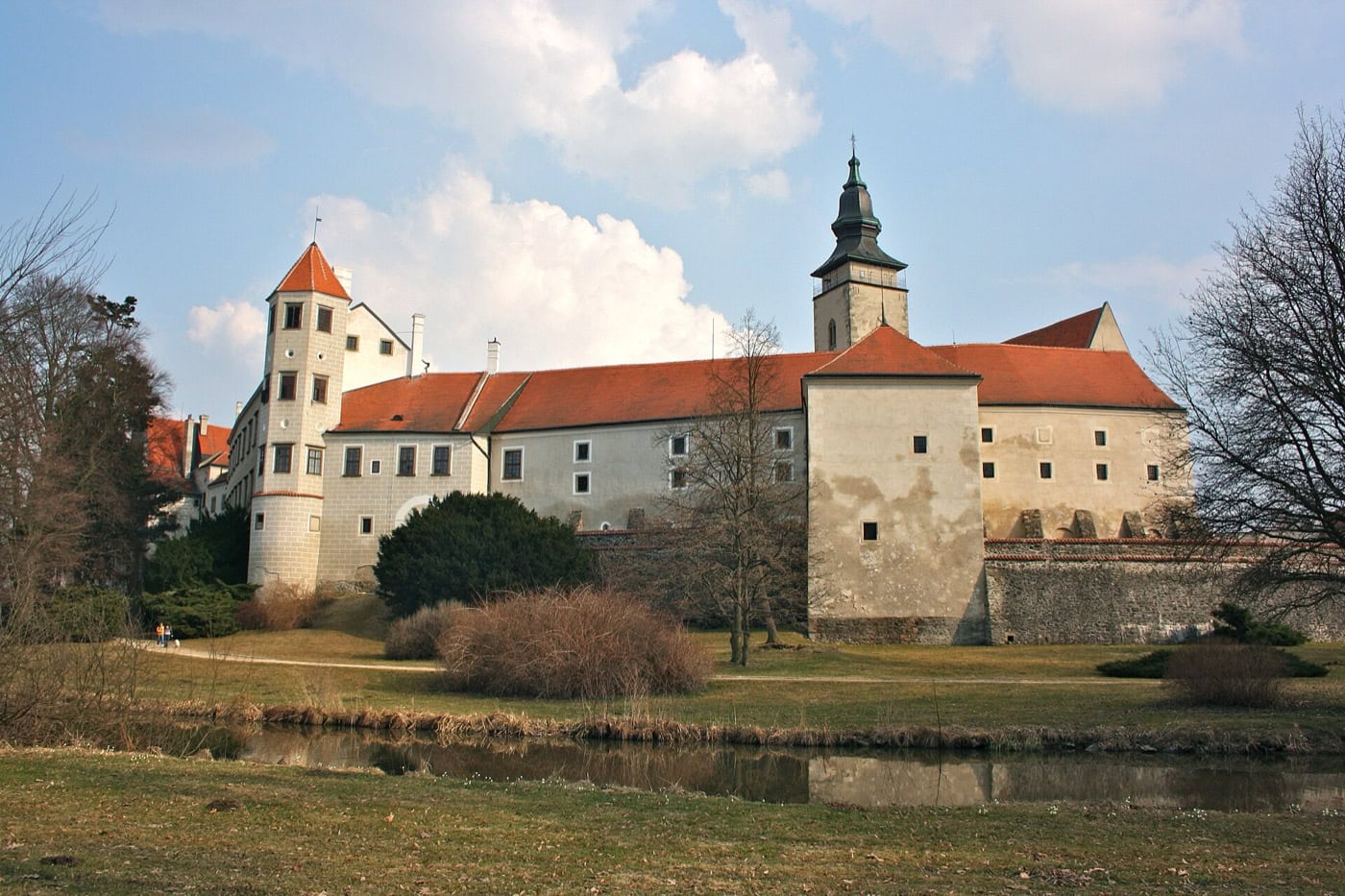
- Telč State Château: explore the grand residence with its sgraffito decoration and famous Golden Hall.
- Telč ponds: take a peaceful stroll around the water in the Venice of Moravia.
- Viewing towers: climb the Tower of the Holy Spirit or the tower of St James the Greater for the best views.
- Château garden and park: relax in the shade of the trees and wander the lime-tree avenue out into nature.
- Day trips nearby: plan a visit to nearby Roštejn Castle, Dačice, or the nativity-scene town of Třešť.
The full destination guide: Czechia — guide and what to see
When to visit Telč
With Telč, it all depends on what you want from the trip. The main tourist season runs from late spring to early autumn, when the château complex is open and all the sights operate on their regular schedule. If you want to experience streets full of life, music and culture, it pays to come at the turn of July and August, when the hugely popular Prázdniny v Telči (Holidays in Telč) music festival takes place. Just bear in mind that this period brings more visitors and fuller accommodation, so don’t leave your hotel booking until the last minute.
For those of you who prefer quieter walks and would rather not weave through crowds of other tourists, May, June or September are the ideal choice. The weather is still lovely for strolls around the water, but the lanes feel far more intimate. The château itself is open roughly from April to October (with the traditional Monday closing day), so if your main goal is touring the interior halls, definitely don’t plan your trip for the winter months, when the main complex is closed for its winter sleep.
Where to stay in Telč
Even though this is a fairly small town, you’ll find plenty of very pleasant places to rest your head after a full day of exploring. The best experience, of course, is staying right in the historic centre on the square or just a stone’s throw from it, from where you’re only a few steps from all the sights and cafés. That way you can enjoy the evening atmosphere in peace, once the day-trippers have left and the town empties out beautifully.
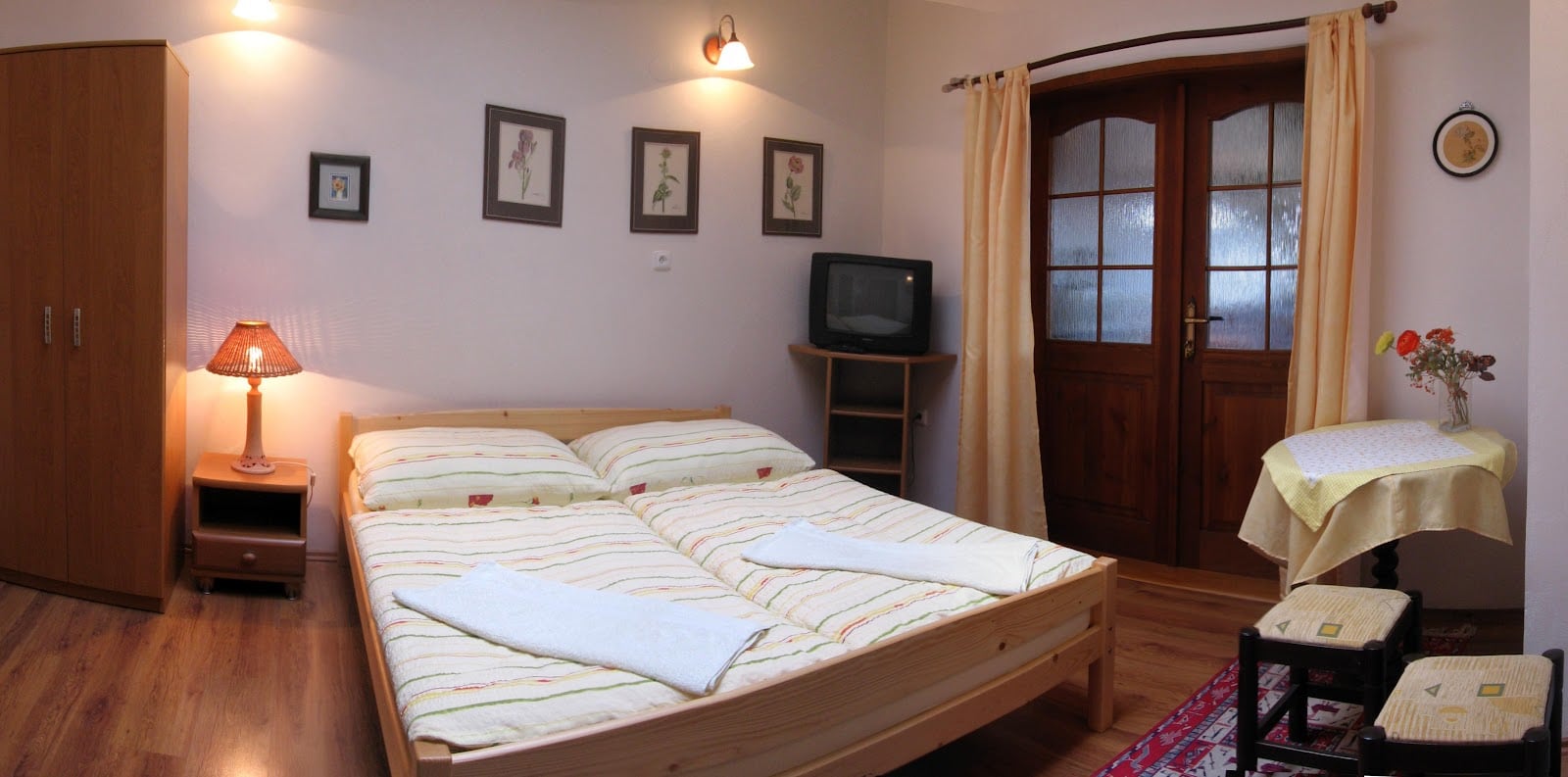
Here are some well-rated accommodation tips depending on the type of stay you prefer when travelling:
Hotel Celerin Telč This hotel sits right on the main square in a historic building, so that genuine period atmosphere greets you the moment you wake up. Guests especially praise the outstanding location with a view and the very helpful staff.
Penzion Steidler Telč An excellent choice for those of you looking for a quieter, family-run feel and cosily furnished rooms. This guesthouse has great reviews for its cleanliness and laid-back homely atmosphere, which is always a big plus after a demanding day on your feet.
Hotel Telč This place will delight visitors who like a little more comfort, more modern facilities and nice design, while still staying within walking distance of the historic centre. It’s often a favourite with couples looking for a romantic long weekend.
Penzion Telč Kamenné slunce This guesthouse occupies one of the town’s enchanting burgher houses and offers a wonderfully authentic, cosy stay. If you love buildings with a strong story and soul, this place will most likely be a very pleasant surprise.
What to see and do in Telč
Now that you know where to rest your head and when it’s best to come, it’s time for the most important part. The town itself is easy to explore on foot — you won’t need any public transport, and everything worth seeing is packed into a fairly small area, all close together. The following eight numbered tips will show you the best of the local history, so you don’t miss any of the major landmarks or the hidden nooks around the ponds.
1. Zachariáš of Hradec Square
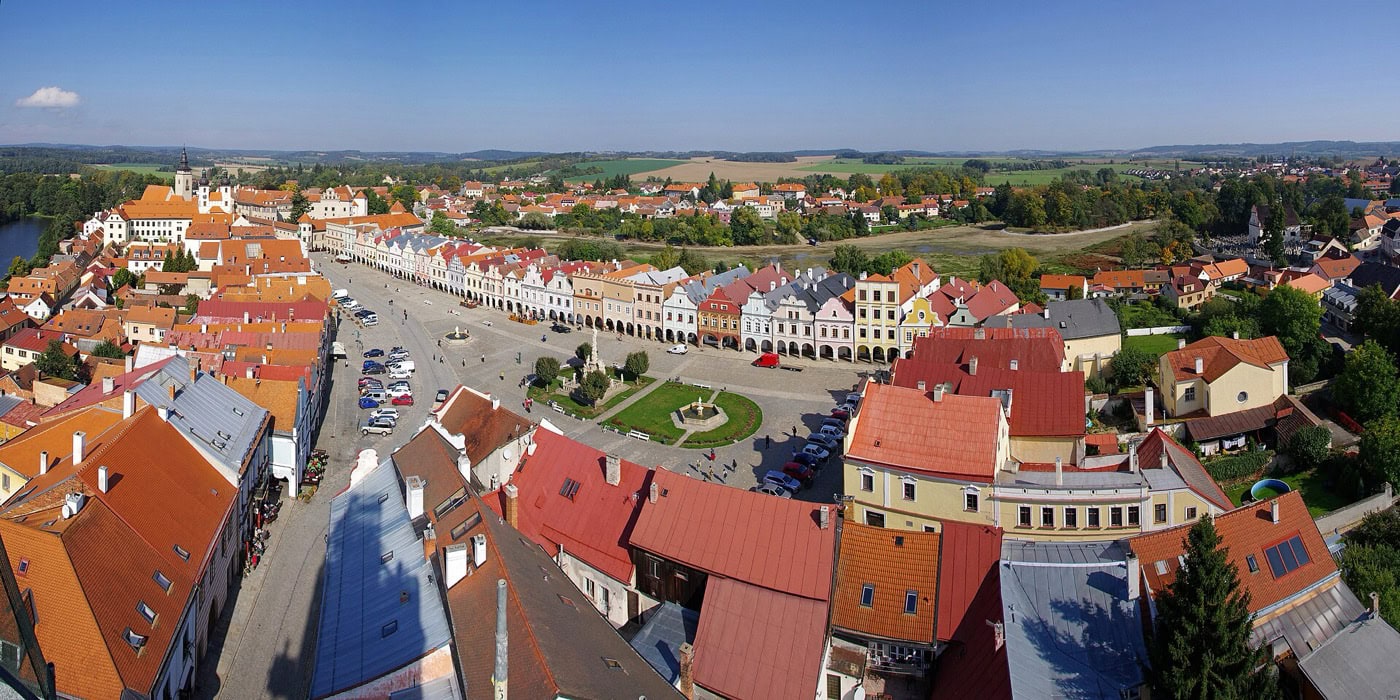
This elongated, extraordinarily photogenic space is one of the most beautiful and best-preserved Renaissance squares in all of Europe. Its longest side stretches over two hundred metres and is lined all the way around by a row of some 72 burgher houses. These buildings have deep Gothic cores, but after the great, devastating fire of 1530 they took on their distinctive present-day look, with arcades and colourful gables bearing clear elements of Renaissance, Baroque and Classicism.
Besides the façades themselves — which you could study for hours and still keep spotting new details — the Marian plague column from 1716–1720 and two historic fountains are also well worth your attention. Wandering the lanes at dusk, as the sun slowly sets and its rays catch the colourful houses, is probably the best possible introduction to a visit to this corner of Vysočina.
2. Telč State Château
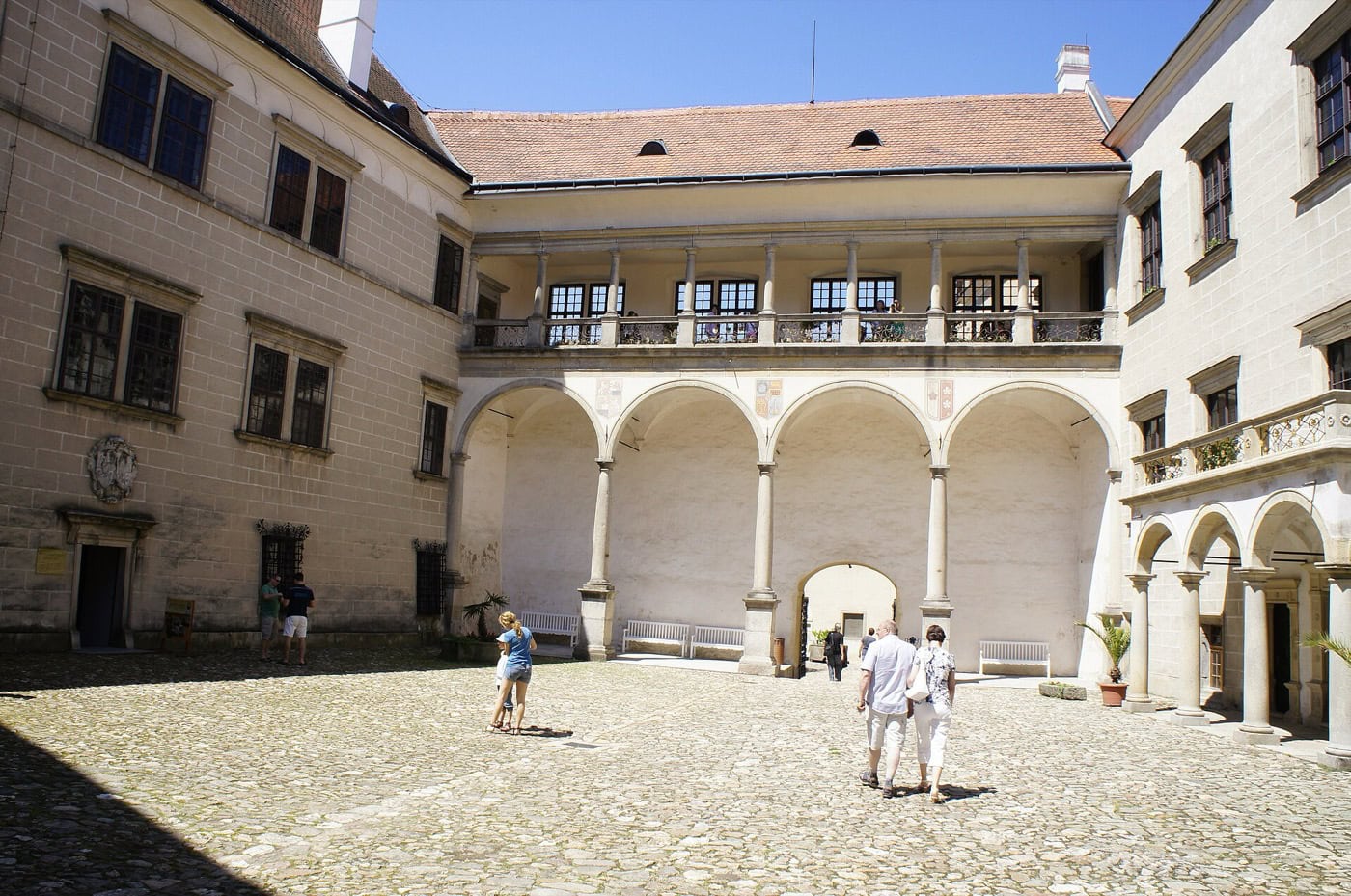
Originally a fairly austere Gothic castle stood on this spot, but in 1553 Zachariáš of Hradec launched an extensive and very costly rebuild. It was during his era that the town enjoyed its golden age, as he summoned skilled Italian craftsmen and artists here. Probably to a design by the Italian architect Baldassare Maggi, a grand residence took shape — its walls richly decorated with sgraffito, its interior enlivened by a very elegant arcaded courtyard.
On the interior tour, the thing that reportedly captivates visitors most is the magnificent Golden Hall with its richly carved coffered ceiling from 1561. The château’s Chapel of All Saints from 1580 is also well worth seeing — it holds the marble tomb of Zachariáš himself and his wife Kateřina. Just remember that the complex operates seasonally from April to October, and you can choose from two tour routes.
3. Tower of the Holy Spirit
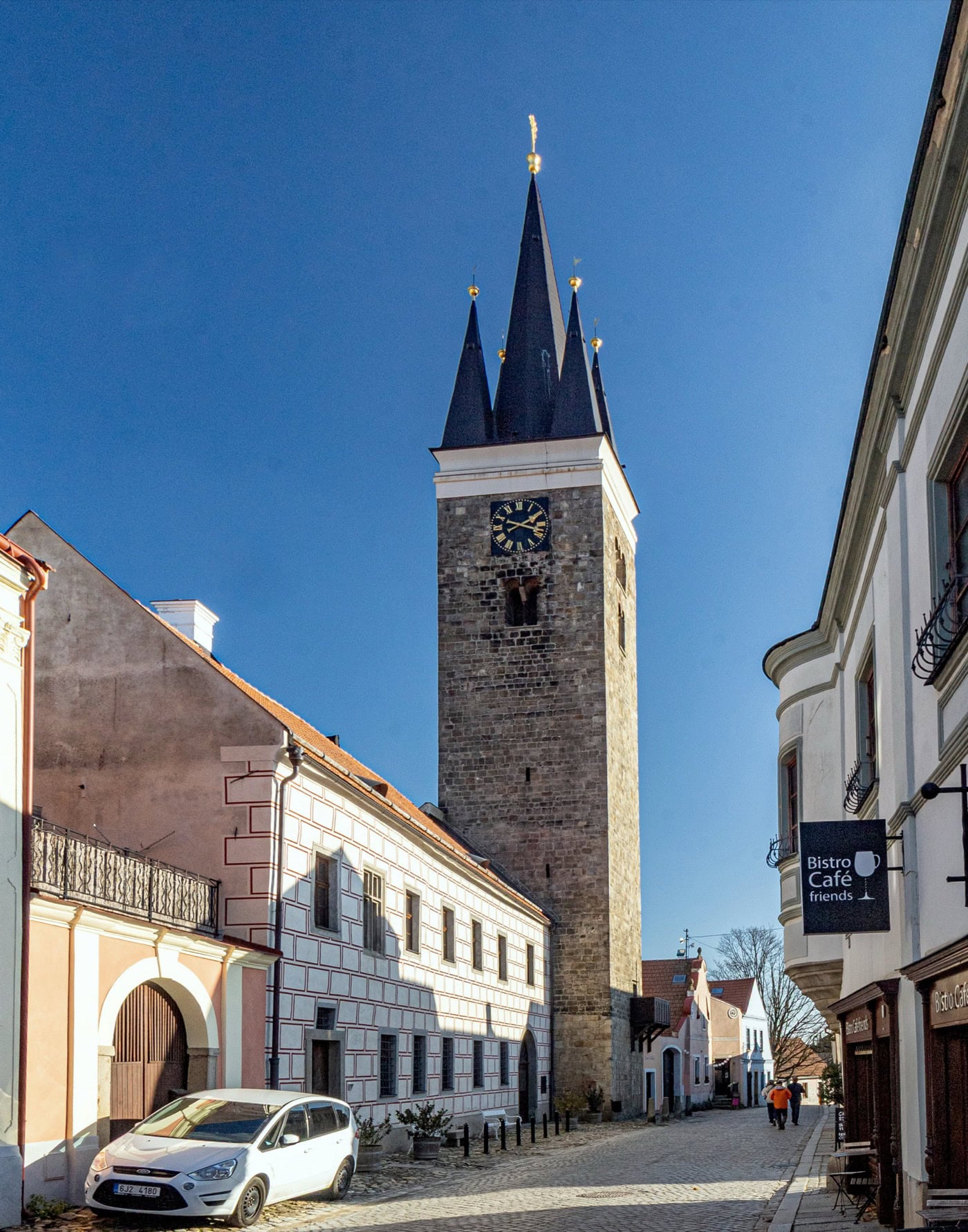
If you love views from above and don’t mind a bit of a workout on the stairs, be sure to head for the late Romanesque tower of the Church of the Holy Spirit. It’s the oldest surviving structure in town, dating all the way back to the second quarter of the 13th century. There’s a real sense of deep history here, and the massive stone walls command instant respect.
The tower itself stands an impressive 49 metres tall and today serves as a viewing point reached by 97 steps. You’ll manage them with the odd little break, and your reward is a lovely view over the whole square, the red rooftops of the burgher houses and the calm surfaces of the surrounding ponds.
4. Church of St James the Greater
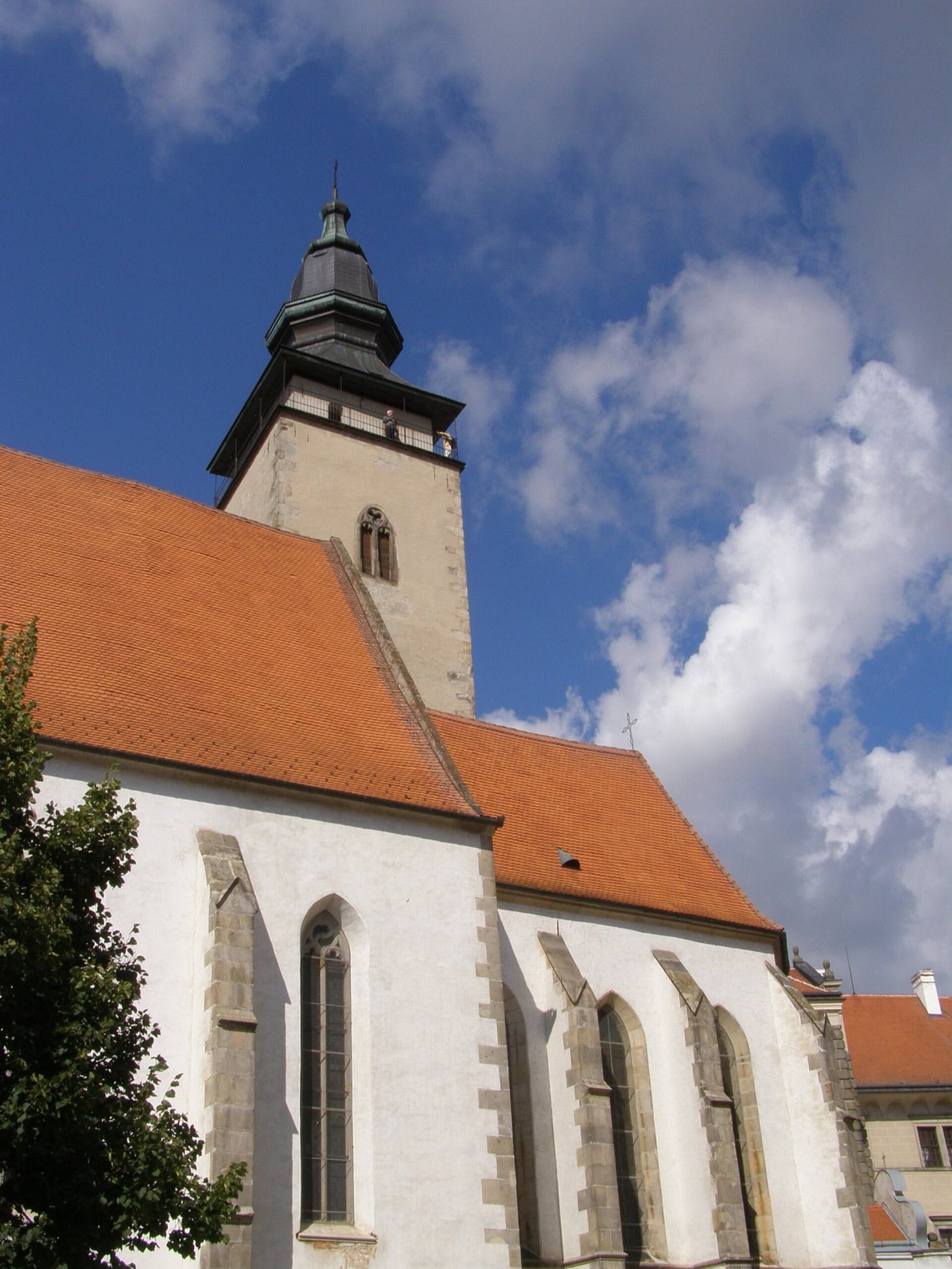
The western end of the historic square is confidently dominated by the Gothic parish Church of St James the Greater, with its very tall, slender tower. The first written records of the local parish go back to 1372, so the building has witnessed a great deal of history. It’s a reliable landmark you can spot from just about every little lane in the centre.
This church tower is also open to the public in season and offers a fantastic view far across the countryside. The viewing gallery sits at roughly thirty-three metres, and this time you’ll have to conquer 162 steps. Travellers reportedly can’t agree on which of Telč’s two towers offers the better experience, so if you have the time and energy, it’s worth honestly trying both.
5. Church of the Name of Jesus and the Jesuit College
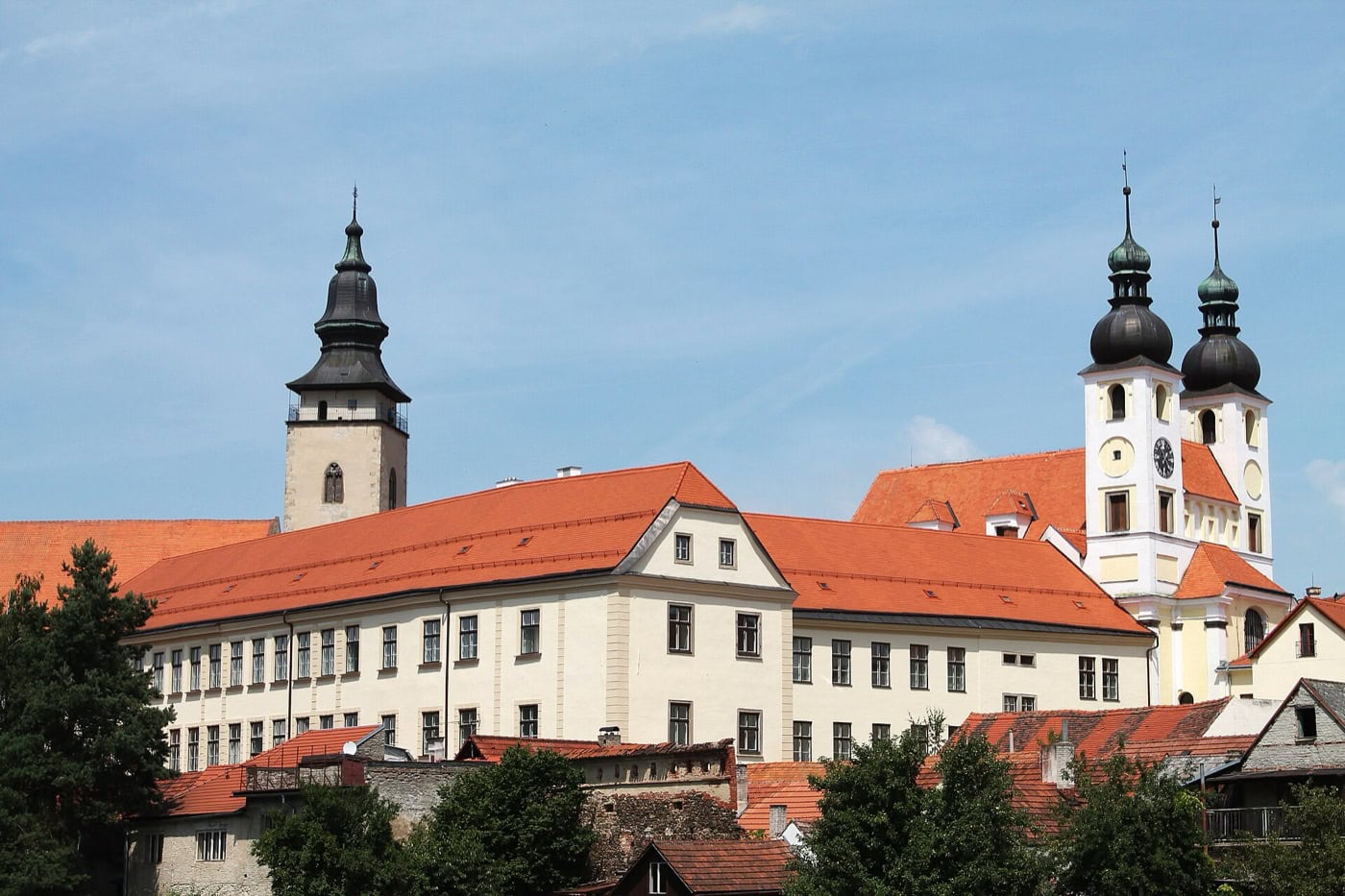
Right next to the main square and the château stands the Baroque Jesuit Church of the Name of Jesus, built between 1663 and 1667 under the Italian architect Stefano Perti. Its ornate façade and interiors are a textbook example of the architecture of the time — designed to astonish, inspire awe and draw the attention of the faithful from far and wide.
Right beside this church stretches the former Jesuit College, built between 1651 and 1655. Today it serves educational purposes and belongs to Masaryk University, which runs its University Centre Telč here. For ordinary visitors it’s mainly interesting because the complex is home to a very popular university café, where you can pop in for a good coffee.

6. The Telč ponds and the Venice of Moravia
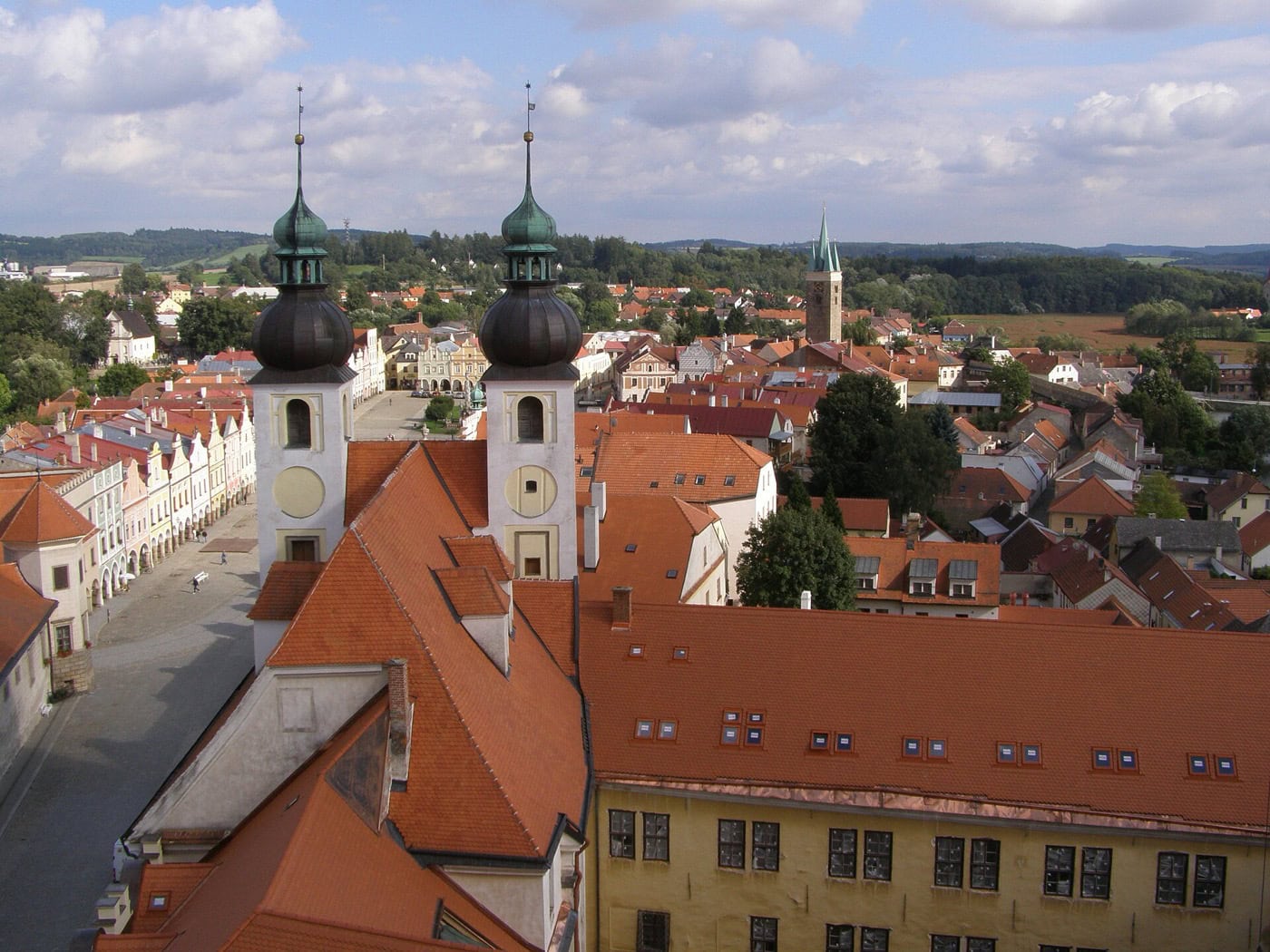
The historic centre is cleverly surrounded by three bodies of water — the Ulický, Štěpnický and Staroměstský ponds. Naturally, these ponds aren’t just here for show: in the past they formed an integral part of the town’s ingenious water defences, protecting the locals from unwelcome raids and enemies.
It’s thanks to them that Telč earned its famous, romantic nickname — the Venice of Moravia. The whole town is stunningly mirrored on the calm water, and a slow walk along the banks is one of the loveliest experiences you’ll take away from here. You can make a nice loop around the water and admire the historic centre from a completely different perspective.
7. The town gates
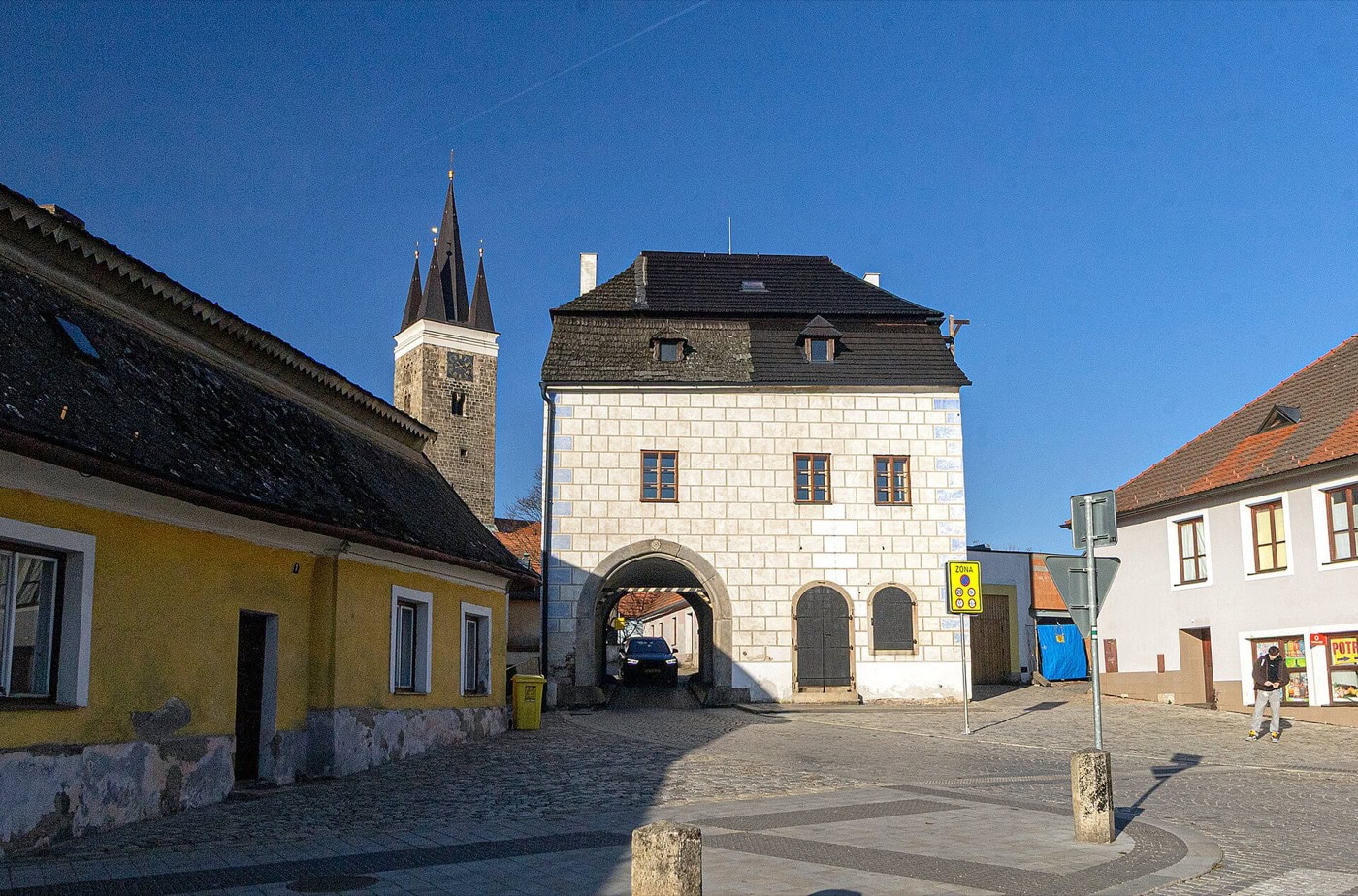
The historic centre was once entered only through guarded gates, which logically complemented the defensive system of ponds and walls. Of the original town fortifications, the Upper (or Great) Gate from the second half of the 16th century has survived very well — its outer side decorated with beautiful sgraffito, much like the château walls.
On the opposite side, not far from the château, you’ll find the Lower Gate, the so-called Small Gate, whose current form dates back to around 1611. Passing beneath these old stone arches is like stepping through an imaginary portal a few centuries into the past — especially early in the morning, before the lanes fill with crowds of visitors and everything is utterly still.
8. The château garden and park
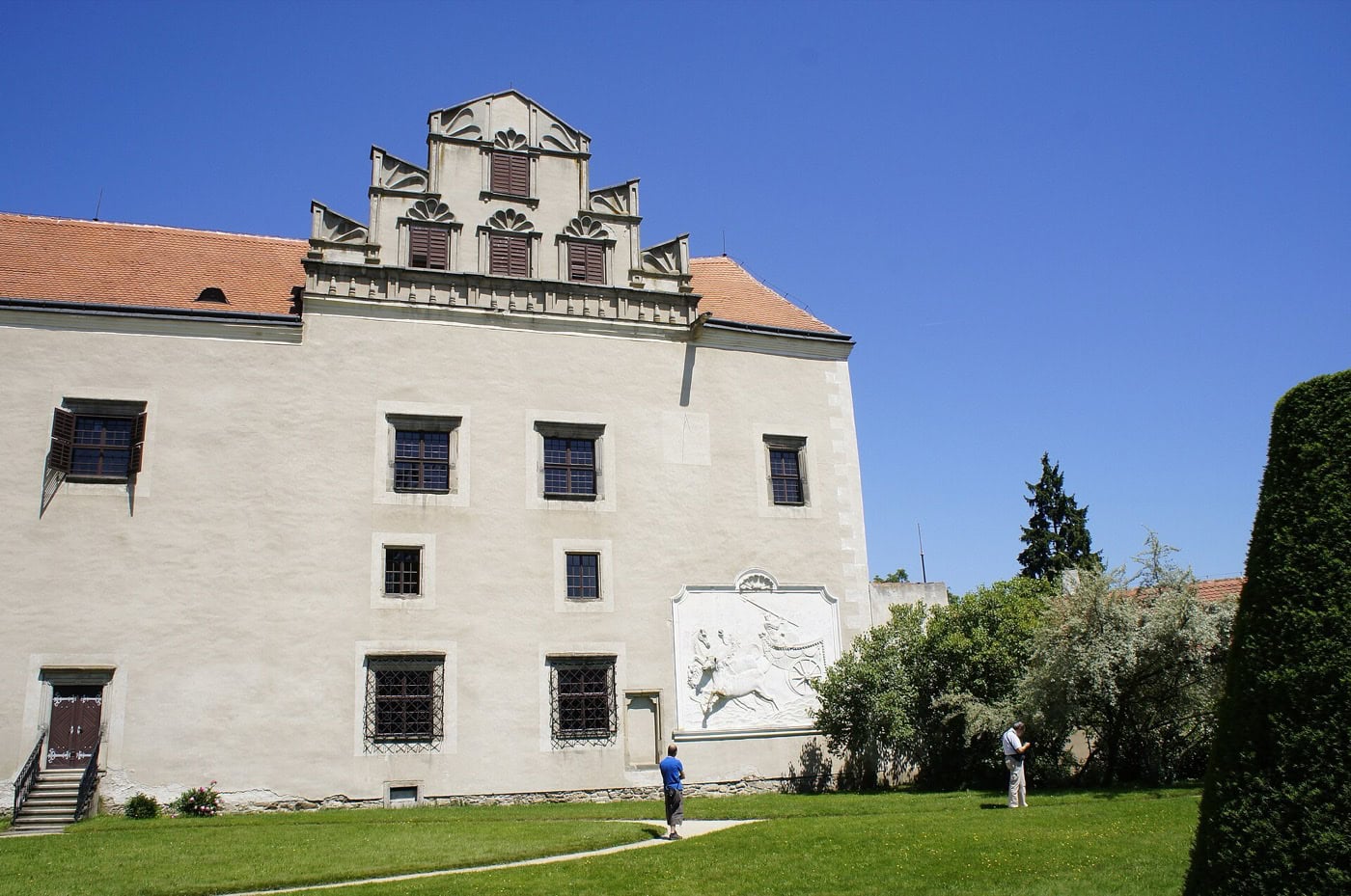
Adjoining the château complex is a carefully tended Renaissance garden from the 1570s. It’s lined on two sides by neat arcades, and at its very centre rests a historic Baroque fountain. It’s a very peaceful spot where you can sit on a bench and quietly take in all those historical impressions from your tour.
The garden then flows seamlessly into a spacious town park and the well-known Lipky nature trail. This long tree-lined avenue leads you straight out of town into the surrounding Vysočina countryside. If your head is already full of monuments and you need a change of scenery, a walk beneath the crowns of the mature trees is a guaranteed recipe for relaxation.
💡 Tip for families: If you’re travelling with children, aside from feeding the ducks by the ponds you can add some variety to the day in the château park or with a visit to one of the viewing towers, where the little ones can dutifully count off every step they climb.
Where to eat in Telč
Sooner or later, all that admiring of architectural detail will leave you hungry — and luckily the centre has several interesting spots for specialty coffee or a light bite. The town has a surprisingly strong café scene that will easily satisfy even the fussiest travellers and sweet-tooths.
Don’t miss RoPraKAFE, a small family roastery and café in one, where they take real care over how the coffee is prepared. Another great stop is the University Café Telč, right in the historic former Jesuit College, which people reportedly travel to from far and wide, mainly for its famous homemade cakes. For a slow Sunday morning, Café Telč in the centre is perfect, serving excellent breakfasts and fresh desserts. If you’re after a more modern gastronomic concept, try Bistro Café Friends just off the square. As well as breakfast they do tapas and pour good wine — plus it’s a very friendly place with options for vegetarians.
As for traditional Vysočina cuisine, the local restaurants are typically all about potatoes in every form — from hearty soups and classic potato pancakes to traditional flatbreads. As vegetarians, we won’t have much luck with the local meat specialities, but you’ll find sweet fruit dumplings, homemade potato pancakes or classic fried cheese on the menu at plenty of local pubs — and after a full day of walking in the fresh air, they’ll hit the spot for just about anyone.
Day trips from Telč
Once you’ve explored the town itself from top to bottom, it would be a huge shame not to venture into the wider area too. The Vysočina landscape is full of deep forests, small ponds and other fascinating landmarks that are begging for attention. Here are a few tried-and-tested tips for shorter and longer trips:
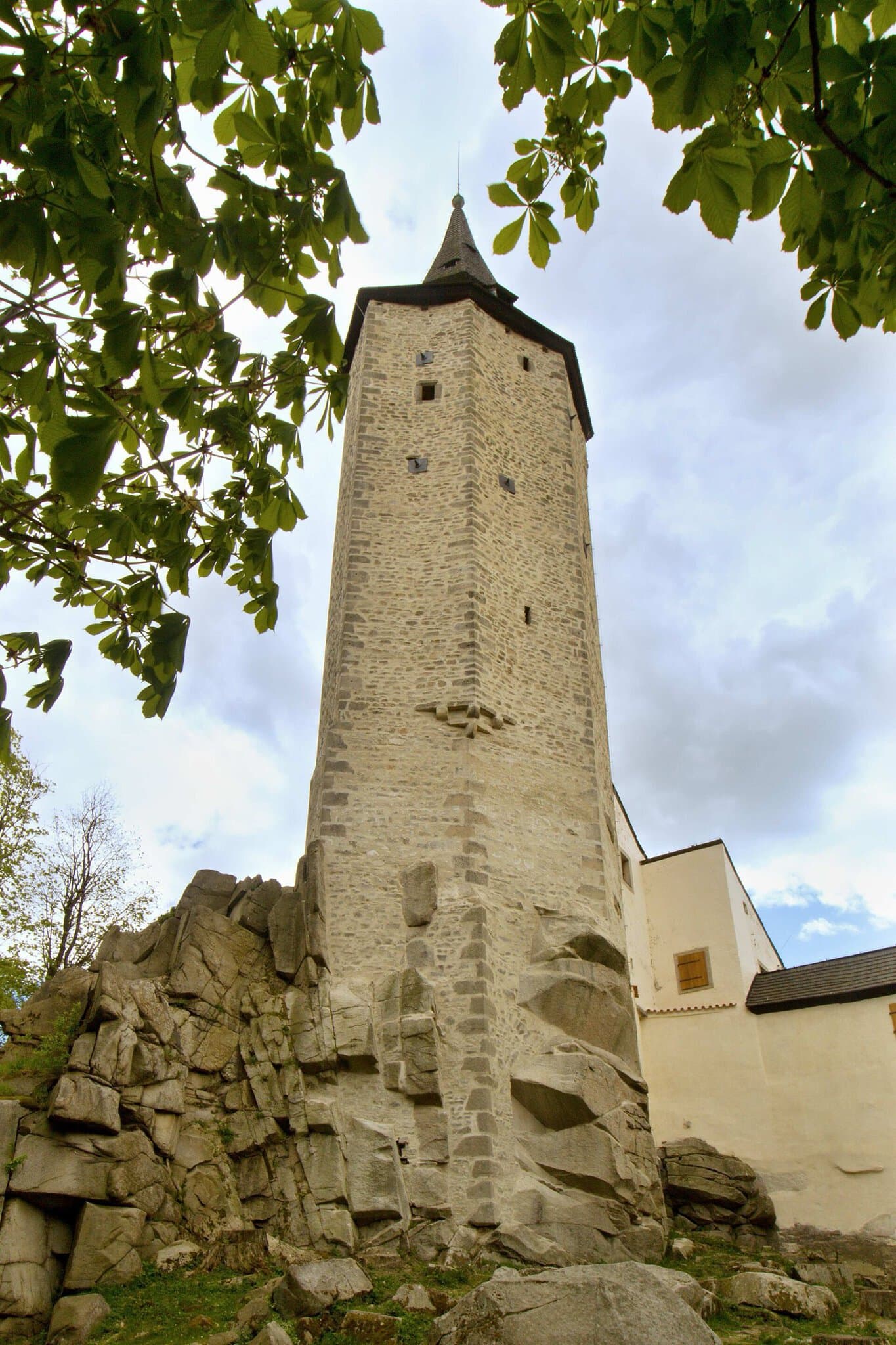
- Roštejn Castle: about 11 kilometres from Telč. It’s a very picturesque little hunting château tucked deep in the forests, its main landmark a seven-sided tower 45 metres tall, and today it houses a museum.
- Třešť: this town about 15 kilometres away is nationally renowned for its rich tradition of building wooden nativity scenes. If you visit during the Advent season in winter, be sure to walk the so-called Nativity Trail.
- Dačice: about 25 kilometres away lies the town that made world history as the birthplace of the very first sugar cube, created here in 1843. You’ll even find a tongue-in-cheek sugar-cube monument and a lovely château.
- Slavonice: 25 to 30 kilometres away, this town is often compared to Telč for its beautiful Renaissance sgraffito houses. A big draw for the curious is also the mysterious network of underground tunnels.
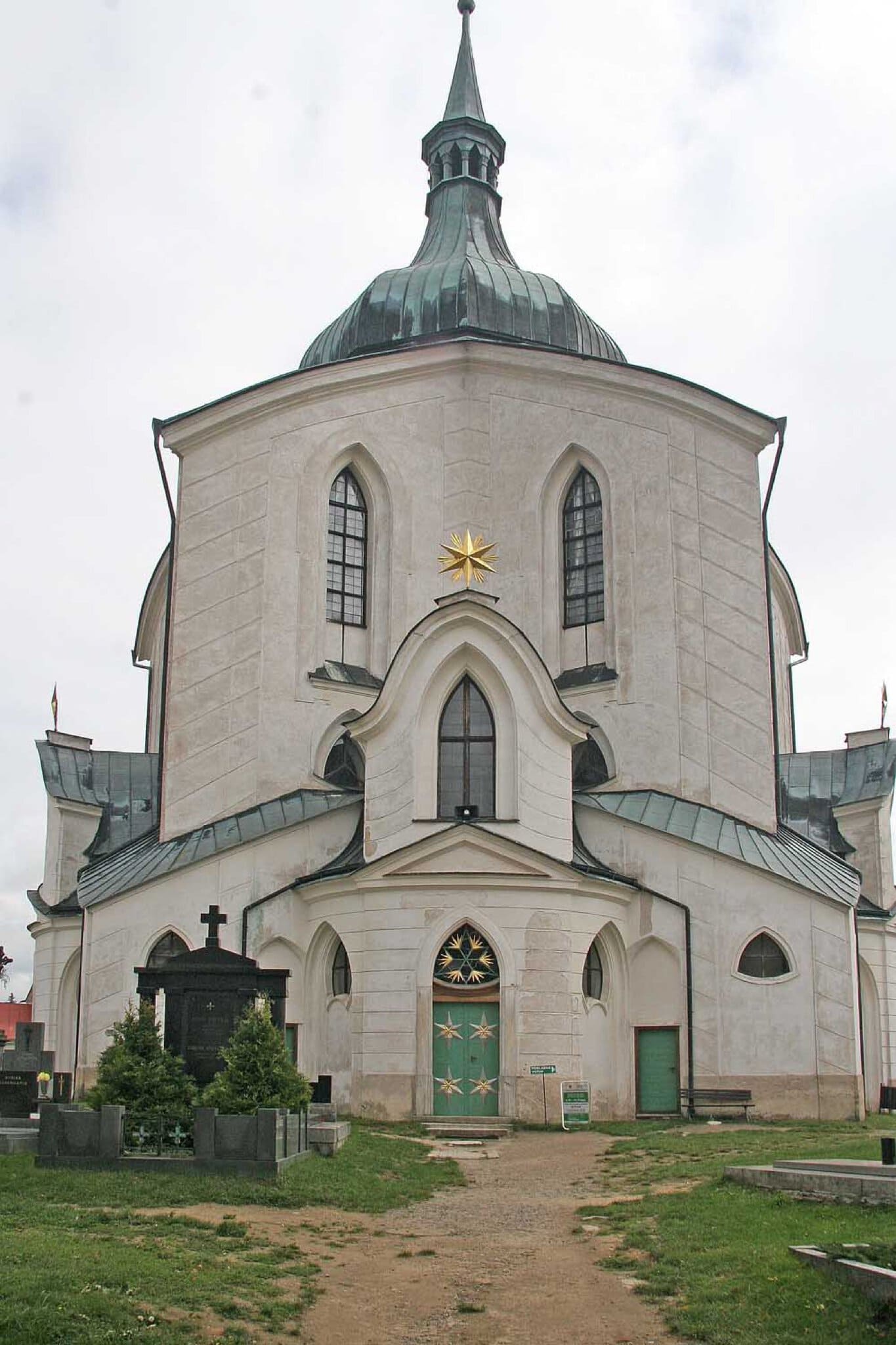
- Zelená Hora near Žďár nad Sázavou: this trip is a bit further afield — reckon on around 70 kilometres. But the pilgrimage Church of St John of Nepomuk is a brilliant example of the Baroque Gothic style of architect Jan Santini. With its unique star-shaped ground plan, it’s on the UNESCO list and is well worth setting aside a full day for on its own.
💡 Tip: If you like sorting out tickets and organised activities online to save time and skip the queues on-site, check out the GetYourGuide platform. It offers a huge range of tours and trips, all conveniently stored on your phone with nothing to print.
Where to go next
If you’ve caught the travel bug for Czech and Moravian towns and are looking for inspiration for more long weekends or a summer holiday, take a look at our other articles packed with tips:
Frequently asked questions
Before you set off for Telč, here are answers to the most common questions about transport, opening hours and how much time to set aside for this Renaissance town.
How long does the journey from Prague take and what’s the best way to get there?
By car, it’s about 150 kilometers from the capital, and via the D1 motorway through Jihlava, the journey takes around two hours of pure driving time. If you prefer public transport, the most convenient option is a direct bus from Prague, which takes about two and a quarter hours. Unfortunately, the train connection is very complicated, time-consuming, and due to necessary transfers, the journey can easily stretch to over four hours, so I don’t really recommend it.
How much time should you set aside for visiting the city?
For the historical core and square itself, half a day at a leisurely pace will suffice. However, if you’re also planning to tour the castle interiors, want to walk around all three ponds, sit down for coffee, and go up the lookout tower, I recommend setting aside a full day for the town.
When is the Telč State Chateau open?
The castle complex operates during the classic seasonal period, which means it opens approximately from April and is accessible until the end of October. It’s important to remember that like most of our monuments, it’s closed on Mondays, so plan your visit ideally for other days of the week to avoid disappointment.
Is the city suitable for visiting with children?
Yes, the historic center can be very easily explored even with smaller children, and thanks to it being quite compact, they won’t get too tired. Moreover, there are pleasant walks around the water areas, a visit to the castle park, and a climb up the lookout tower, which is a nice variation for families.
Which ponds surround the historic center?
Around the center there are exactly three bodies of water: Ulický Pond, Štěpnický Pond, and Staroměstský Pond. In the past, they served as an important part of the water defense system, today they create a romantic atmosphere and reflect the Renaissance facades of the houses.
Tips and Tricks for Your Vacation
Don’t Overpay for Flights
Search for flights on Kayak. It’s our favorite search engine because it scans the websites of all airlines and always finds the cheapest connection.
Book Your Accommodation Smartly
The best experiences we’ve had when looking for accommodation (from Alaska to Morocco) are with Booking.com, where hotels, apartments, and entire houses are usually the cheapest and most widely available.
Don’t Forget Travel Insurance
Good travel insurance will protect you against illness, accidents, theft, or flight cancellations. We’ve had a few hospital visits abroad, so we know how important it is to have proper insurance arranged.
Where we insure ourselves: SafetyWing (simple monthly subscription) and TrueTraveller (for extra-long trips).
Find the Best Experiences
Get Your Guide is a huge online marketplace where you can book guided walks, trips, skip-the-line tickets, tours, and much more. We always find some extra fun there!
More from Czechia
Full guide → Day trips · most readMikulov, Czech Republic: 10 Best Things to Do and See
 With kidsWhere to Holiday in South Moravia, Czech Republic: 15 Most Beautiful Places (Even With Kids) in 2026
 When to goLiberec Christmas Markets 2026 – Tree Lighting, Opening Hours, Program
 What to seeKrnov: 20 Things to See and Do in the City of Kofola and Organs
 What to seeBest Christmas Markets in the Czech Republic: 14 Top Picks


