

When people mention Prague gardens and parks, I always think back to my days at a secondary school in Malá Strana, where we’d sneak out during lunch breaks to wander the surrounding gardens. Prague was never just a city of stone, gothic spires, and cobbled streets for me. It was a tangled web of hidden courtyards, terraced gardens, and sprawling deer parks that formed the natural backdrop of my teenage years and student life.
Later, while studying photojournalism at Charles University, I spent hours waiting for the perfect light in forgotten corners of baroque gardens. With a heavy DSLR around my neck, I documented how shadows shifted across crumbling walls and how wild nature encroached upon meticulously trimmed hedges. That’s when I came to see these green oases from a completely different perspective — not as places for a quick rest, but as distinctive architectural works with their own rules and rhythm.
These days, my husband Lukáš and I return to Prague every year, rediscovering the city at a pace dictated by our two-year-old son Jonáš. I’ve learned that the romantic terraced gardens with dozens of staircases I once loved so much are an absolute nightmare with a pushchair. My view of Prague’s green spaces has changed radically. I’ve started appreciating wide tarmac paths, step-free entrances, and shady spots beneath mature trees where you can spread out a picnic blanket in peace.
Prague’s parks are in a constant state of transformation. Some are undergoing sensitive revitalisation, while others retain that slightly neglected, melancholic charm I’ve known since school. I update this guide every year, and the latest version reflects the state of things as of April 2026. Whether you’re looking for the perfect view of the red rooftops, a quiet spot to read a book, or a space where your kids can safely run around, here’s my list of favourite places that desk-bound guidebook writers often overlook.
TL;DR
- Most historic palace gardens (including Vrtba Garden and those below Prague Castle) only open their gates during summer season, typically from 1 April to 31 October.
- For families with pushchairs, the undisputed winner is Stromovka. You’ll find kilometres of smooth paths, modern playgrounds, and plenty of shade. Skip the terraced baroque gardens in Malá Strana if you’ve got a buggy.
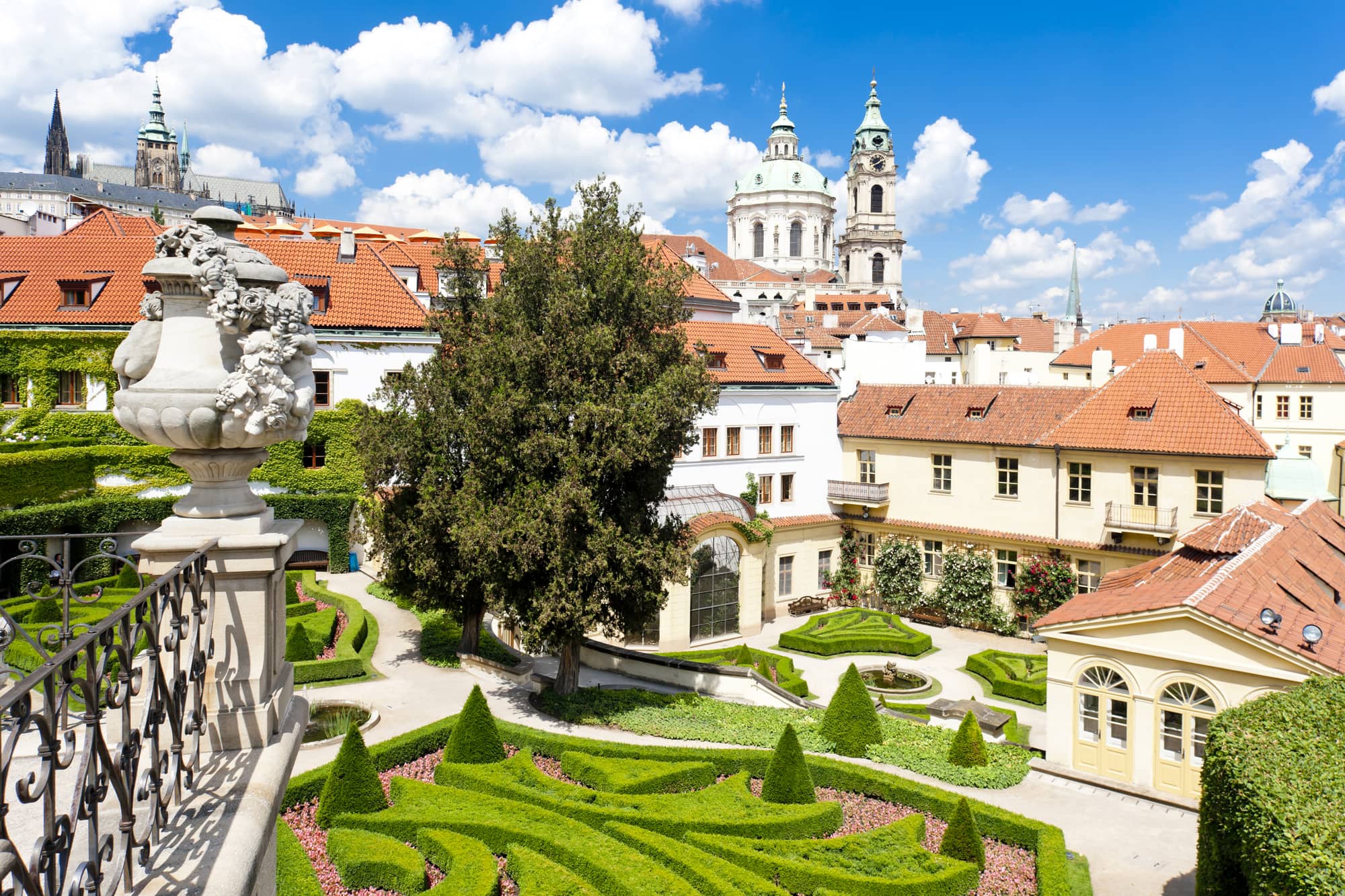
- Vrtba Garden offers what I think is the single most photogenic view of Prague Castle and St. Nicholas Church — without the crowds jostling at the classic viewpoints.
- Entry to Wallenstein Garden is free. You can admire the monumental sala terrena and free-roaming peacocks — just check opening hours, which depend on Senate sessions.
- If you want to experience genuine wilderness within city limits, take the tram to Divoká Šárka. Cliffs, forests, and a natural swimming spot will make you forget you’re in a capital city.
- The best sunsets with a view of Hradčany can be found in Rieger Gardens in Vinohrady. It’s the spot where locals gather at dusk with a bottle of wine and a blanket.
- Vojan Gardens are a hidden oasis just steps from the busy Malostranská metro station. Silence, benches under fruit trees, and a tranquillity you won’t easily find in the centre.
- In Havlíček Gardens (Grébovka), you can stroll through a real vineyard and admire the Grotto, an artificial cave that recently underwent a stunning restoration.
The full destination guide: Czechia — guide and what to see
When to Visit Prague Gardens and Parks
Prague’s green spaces live by their own calendar, neatly dividing the year into two halves. While large city parks are open year-round and merely change their colour palette with the seasons, historic baroque gardens go into deep hibernation for winter, their heavy wrought-iron gates locked shut.
Spring and Summer: Prague in Full Bloom
Spring is absolutely pivotal in Prague. April and May paint the slopes of Petřín Hill in shades of pink and white, the air is fragrant, and the city shakes off the grey winter. This is the ideal window for visiting gardens — temperatures haven’t yet reached summer extremes and the grass is lush and green. Try getting up early and heading to the gardens right at opening time, around nine in the morning. You’ll have dew on the lawns and empty benches all to yourself.
Come June through August, the streets heat up and shade from mature trees becomes a precious commodity. The historic centre turns into an oven in summer, so escaping to Stromovka or under the plane trees on Kampa Island is a survival necessity. Be prepared for parks bursting at the seams on summer weekends — clusters of students lounging on blankets, and beer garden kiosks running at full capacity.
Autumn and Winter: Melancholy and Calm
September and October are personally my favourite months for long walks. The golden light of Indian summer falls softly on palace façades, and the deciduous trees at Letná and in Rieger Gardens blaze in every shade of yellow and red. Temperatures are pleasant and the tourist crowds thin out noticeably. Just remember that most palace gardens close without exception at the end of October.
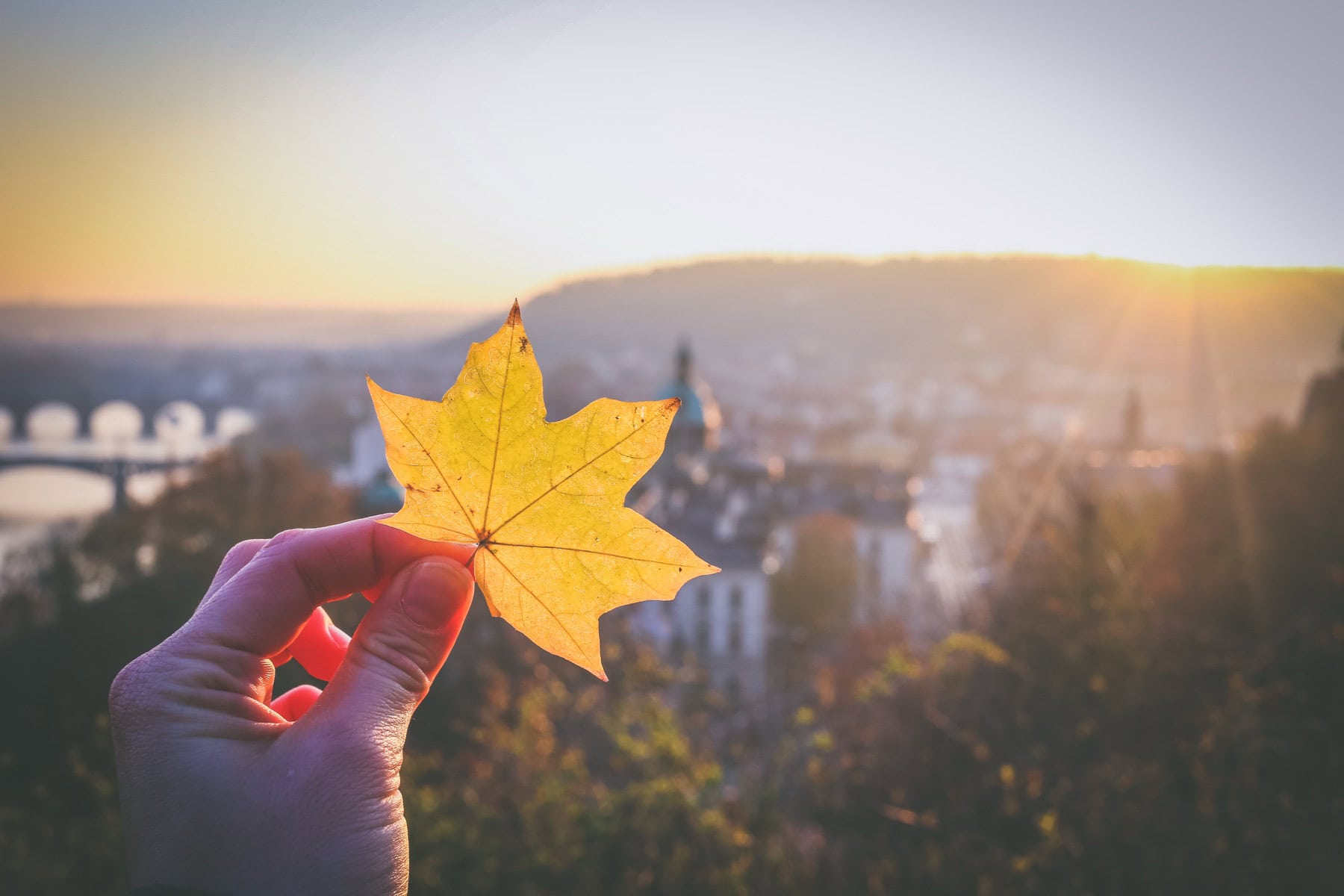
November through March limits your options to freely accessible parks. Winter strips the city bare — leafless trees open up new sightlines to architectural gems hidden for the rest of the year. If snow falls, Petřín and Stromovka transform into fairy-tale winter wonderlands where locals flock with sledges and toboggans. It’s a season for introverts who appreciate the quiet melancholy of a frozen city.
Where to Stay
When Lukáš and I last returned to Prague, we spent ages figuring out where to base ourselves. With little Jonáš, we can no longer crash in noisy hostels above a pub like in our student days. We needed peace, space, and the ability to make our own breakfast. We chose The Julius Hotel on Senovážné Square, and it was a brilliant decision.
We stayed in their One Bedroom Suite, which meant a separate bedroom and a fully equipped kitchenette. For us as parents of a two-year-old, this was an absolute lifesaver — we could warm up milk or make a quick dinner when he was too tired for a restaurant. As a vegetarian, I also appreciated their breakfasts, which went far beyond the obligatory eggs and cheese with a great selection of plant-based options. The hotel is just a few minutes’ walk from the Main Railway Station and Wenceslas Square, so we didn’t need to navigate public transport with the pushchair. If you’re looking for stylish accommodation with impeccable design, check prices for The Julius Hotel on Booking.com.
Baroque and Palace Gardens (Where Time Stands Still)
Malá Strana and Hradčany hide their finest treasures behind high walls, and I have to say, every time I step into one of these gardens, I feel like I’ve broken into a private estate. Which is historically quite accurate — these spaces weren’t created for the public but as a lavish display of aristocratic power. Today they’re open to everyone (mostly for an admission fee), and I take full advantage every year. Just remember that their season runs from April to October.
Vrtba Garden
This cascading baroque garden, tucked away in an unassuming courtyard on Karmelitská Street, is my personal favourite. When I spent afternoons here during my photojournalism course, I was captivated by how masterfully architect František Maxmilián Kaňka used the steep slope of Petřín Hill. The garden rises steeply in terraces, each level adorned with original sculptures by Matyáš Bernard Braun. From the highest terrace, a stunning view unfolds across the red-tiled rooftops of Malá Strana and the majestic dome of St. Nicholas Church.
Check the official Vrtba Garden website for the latest info — admission for adults is around 5 € in the 2026 season. They’re open daily from 10:00 to 18:00 (until 19:00 in summer months). You can get here by tram 12, 15, 20, or 22 to the Malostranské náměstí or Hellichova stop. Don’t even attempt this with a pushchair — the staircases are narrow and steep.
💡 Insider tip: The best photos here are taken about an hour before closing, when the sun dips behind Petřín and casts soft, elongated shadows across the sandstone sculptures. By that time, most visitors have left, too.
Wallenstein Garden
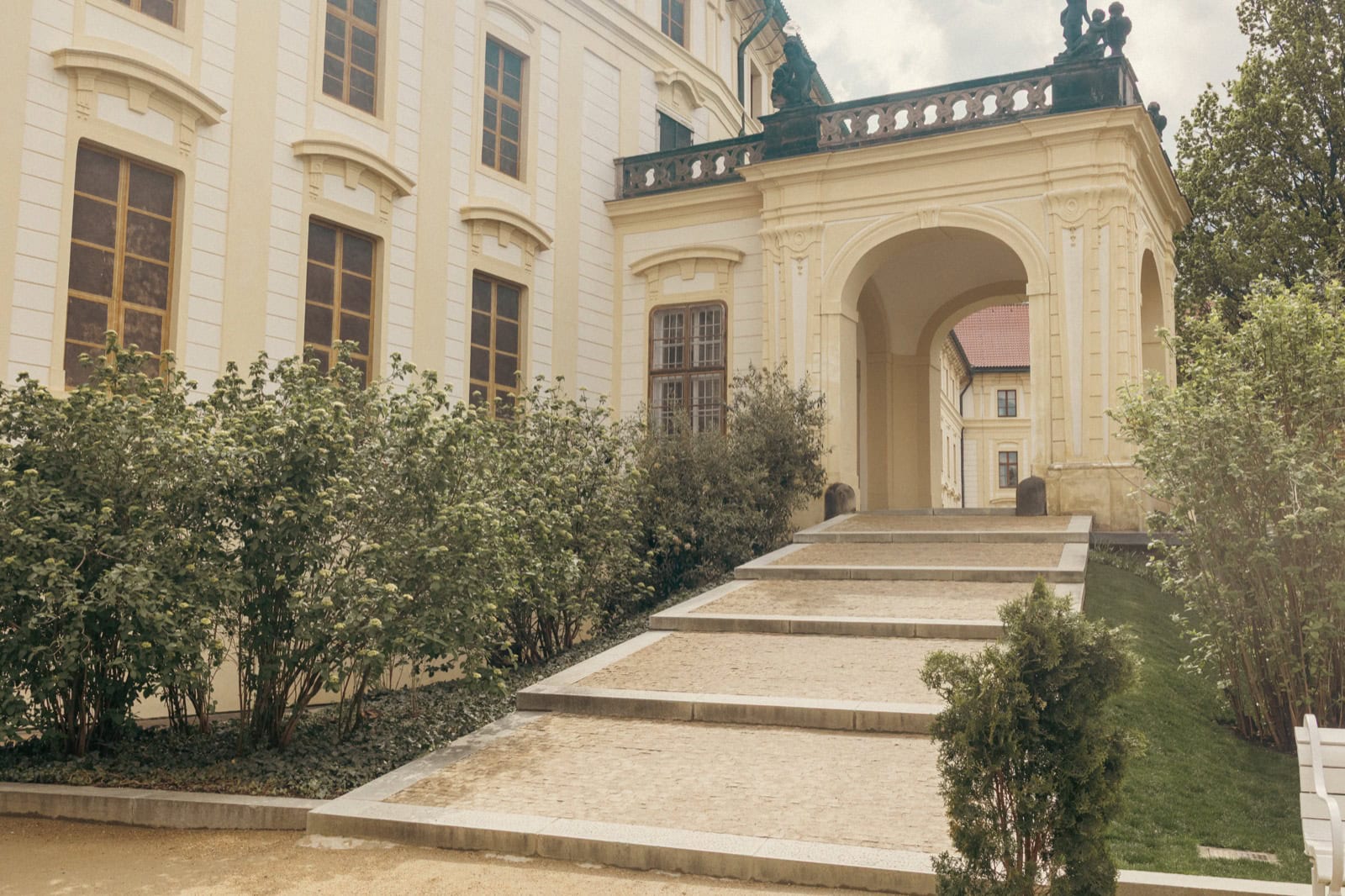
Part of the Czech Senate complex, this garden is a huge surprise for anyone stepping through the gate for the first time. Albrecht von Wallenstein wanted his palace and garden to outshine Prague Castle itself, and when you stand before the monumental loggia (sala terrena), you have to admit he very nearly pulled it off. The garden is filled with bronze statues (copies of works by Adriaen de Vries), geometrically clipped hedges, and a large pool with carp. Peacocks roam freely here, including rare white specimens that can make quite a racket.
Admission to the complex (also check the Czech Senate website for any special events) is completely free. The garden is open from April to October (weekdays from 7:30, weekends from 10:00, both extended to 19:00 in summer) and sits right next to the Malostranská metro and tram stop. The paths are covered in fine gravel and perfectly navigable for pushchairs and wheelchair users.
💡 Insider tip: Stop by the artificial stalactite wall in the southern part of the garden. If you look closely and patiently enough, you’ll discover hidden animal faces and strange creatures that the 17th-century builders embedded in the stalactite formations.
Royal Garden of Prague Castle
This Renaissance oasis on the northern edge of Prague Castle was originally established by Ferdinand I for growing exotic plants and keeping rare animals. Today, it’s a spacious, meticulously maintained garden dominated by the Queen Anne’s Summer Palace (Belvedere) and the famous Singing Fountain — its droplets hitting the bronze basin create a sound resembling distant bells. For me, this place holds a special memory: it’s where Lukáš and I had our very first date, strolling here before wandering down to Malá Strana.
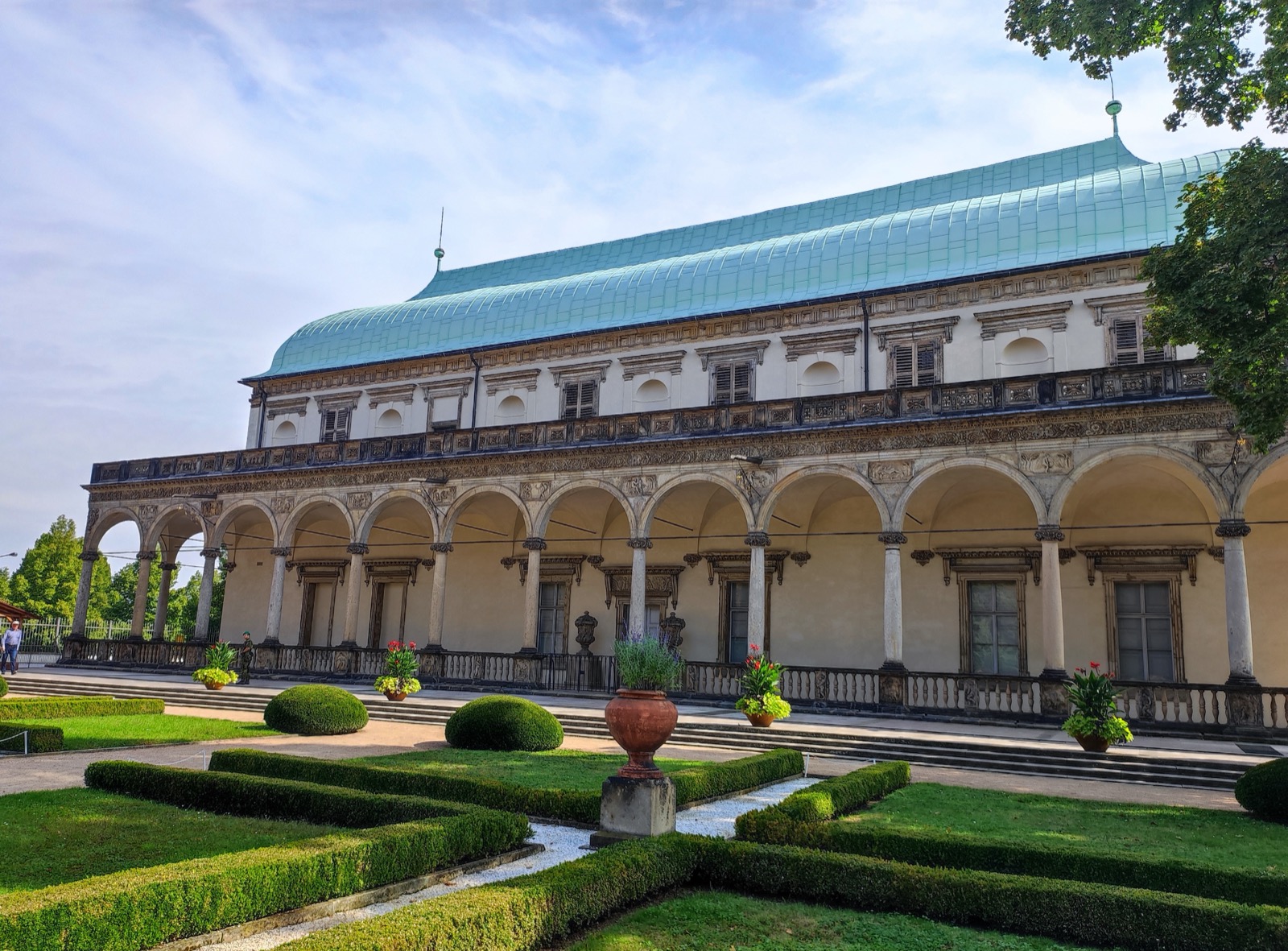
Admission is free, but you’ll need to pass through security screening at the Castle entrances (it’s usually quickest coming from the Královský letohrádek tram stop). Open from April to the end of October, 10:00 to 18:00. If you’d like to explore Prague Castle and its gardens in depth with an expert guide, I’d recommend booking a tour through GetYourGuide.
💡 Insider tip: Most tourists enter the Castle from Hradčany Square. If you take tram 22 to the Královský letohrádek stop and start your visit in the Royal Garden, you’ll avoid the worst morning queues at the security checkpoint.
Palace Gardens Below Prague Castle
This is actually a complex of five interconnected historic gardens (Ledeburg, Small and Great Pálffy, Kolowrat, and Small Fürstenberg) that cling to the southern slope beneath the Castle. The terraced architecture — packed with staircases, balustrades, gazebos, and climbing roses — forms one of the most elaborate baroque spaces in Europe. The views from here are phenomenal; you see all of Malá Strana spread out below you.
Admission for the entire complex is around 6 €. Access is from Valdštejnské Square (Valdštejnská street). Open April to October, daily from 10:00 to 18:00. Completely forget about visiting with a pushchair or if you have knee problems — the number of steps you’ll need to conquer runs into the hundreds, and the terrain is physically very demanding.
💡 Insider tip: On the highest terrace of the Ledeburg Garden, there’s a small, often deserted gazebo. It’s an absolutely perfect, quiet spot for reading a book with a view — barely anyone makes it all the way to the top.
Vojan Gardens
The oldest partially preserved garden in Prague lies, paradoxically, just a few dozen metres from the noisy Klárov junction — yet plenty of people have no idea it exists. Originally belonging to a Carmelite convent, today it’s a public park full of old fruit trees, beneath which carpets of snowdrops and daffodils bloom in spring. It’s an enclosed, tranquil world where peacocks wander freely and locals sit on benches with coffees from nearby cafés.
Admission is free and the park is on U Lužického semináře street. It’s open year-round (in winter from 8:00 to 16:00, in summer until 19:00), and the paths are so flat and wide that you’ll have absolutely no trouble with a pushchair. There’s plenty of safe space for children to run around on the grass.
💡 Insider tip: In autumn, when the apples and pears ripen on the old trees, fruit drops freely into the grass. Locals come here with canvas bags and collect the windfalls for strudel — it’s a quiet Malá Strana tradition that nobody officially forbids.
Large City Parks in Prague (Where the Whole City Comes Alive)
While baroque gardens are more like open-air museums, the large parks are the true lungs of the city. They’re open 24 hours a day, 7 days a week. This is where Praguers go running, walk their dogs, play frisbee, drink beer from plastic cups, and spend their weekends.
Petřín Park and the Rose Garden
When you say Petřín, most people picture the funicular and the mini Eiffel Tower. For me, it’s the hill we used to skive off to from school. The sprawling park covers the entire hill and offers countless winding paths. The Rose Garden at the very summit deserves special mention — over ten thousand rose bushes bloom here — along with the Květnice, a small enclosed garden of perennials that feels almost rural.
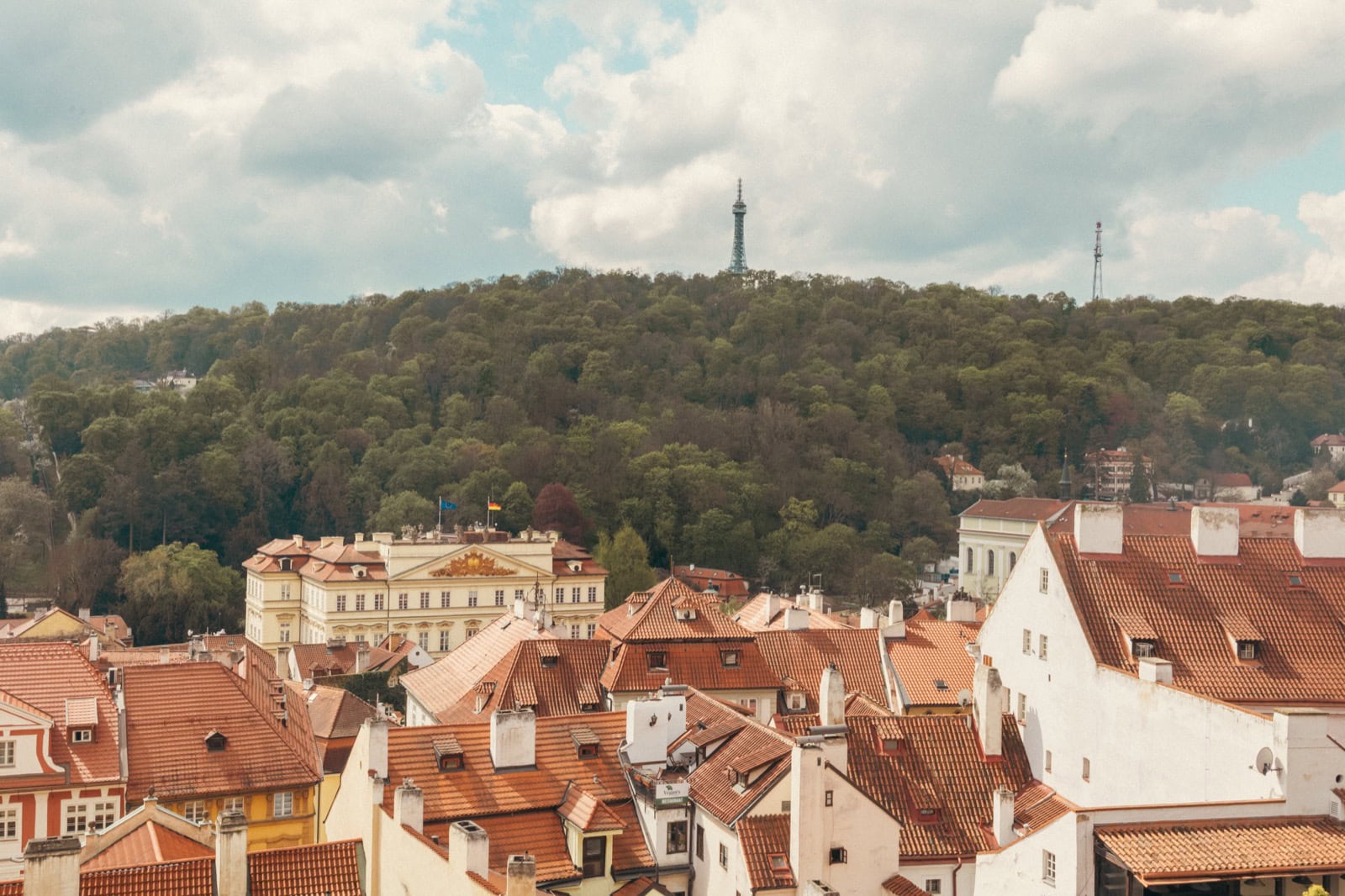
There’s no charge to enter the park itself — you only pay for the lookout tower or the mirror maze. The Petřín funicular is part of Prague’s public transport system, so a regular ticket or travel pass works (see the Prague City Tourism website for more). For families with children, I’d suggest taking the funicular up and walking down along the tarmac paths, which you can easily manage with a pushchair, though you’ll need to brake on the steeper stretches.
💡 Insider tip: Forget the main tarmac path from the funicular to the tower. Head instead for the Lobkowicz Garden on the eastern slope of Petřín. There are far fewer people, old fruit orchards, and a glorious view of Hradčany through the branches.
Stromovka (Royal Game Reserve)
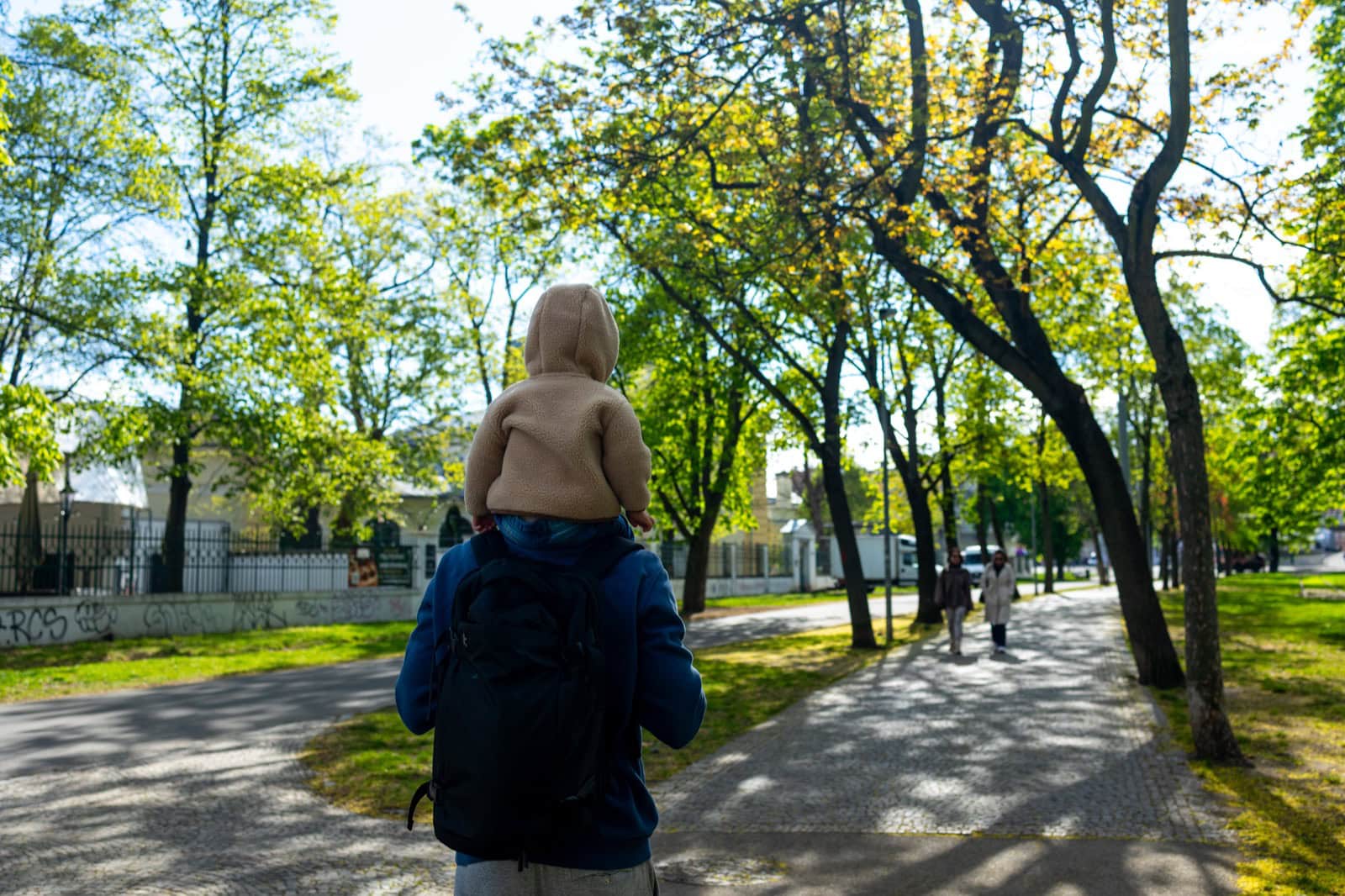
This is the undisputed king of Prague parks and my current favourite. Ever since Jonáš came along, we practically live here. Stromovka sits in the Holešovice district and is a vast, flat expanse with ponds, wide tarmac paths, and ancient oaks. The former royal hunting ground now serves as the go-to spot for runners, inline skaters, and parents with pushchairs. A recent revitalisation brought new jetties by the ponds and clean public toilets.
Entry is free all year round. The best approach is from the Výstaviště Holešovice area (trams 6, 12, 17). The park is completely step-free. Our favourite stop is by the Vozovna restaurant, which has a brilliant playground, or by the ponds where kids feed the ducks. As a vegetarian, I always manage to find a decent meat-free food truck here.
💡 Insider tip: In the far end of Stromovka towards Císařský Island, there’s a popular children’s playground called Kaštánek. It’s fenced off and shaded by enormous trees, so even in the height of summer it’s bearable and the kids won’t get scorched by the sun.

Rieger Gardens
“Riegráče,” as locals call it, in the Vinohrady neighbourhood is synonymous with Prague summer evenings. The park sits on a gentle slope, and its main draw is a huge grassy expanse with a view of the Prague Castle panorama. The sunsets here are so popular that on warm evenings, hundreds of people crowd the hillside with picnic blankets, guitars, and bottles of wine. It’s a relaxed, slightly bohemian spot where expats, students, and families with children all mingle.
The park is free and open 24/7. The nearest stop is Jiřího z Poděbrad metro and tram station. Inside the park, you’ll find a massive outdoor beer garden serving draught beer in glasses and takeaway cups, along with classic pub snacks including fried cheese for vegetarians. Pushchairs roll along fine here, though some side paths have rougher gravel.
💡 Insider tip: If you want to catch that famous sunset from the main lawn, arrive at least an hour early in summer. The best spots with a direct view of the Castle get claimed by around seven in the evening.
Letná Park
This green belt stretching along the edge of Letná Hill above the Vltava offers some of the most iconic views of Prague’s bridges. In the 1990s, after the fall of communism, a giant Metronome replaced Stalin’s monument here, and today a skateboarding community gathers around it. Letná is split into two parts: wide open spaces ideal for sport and dog-walking, and paths running along the cliff edge above the river with fantastic panoramas.
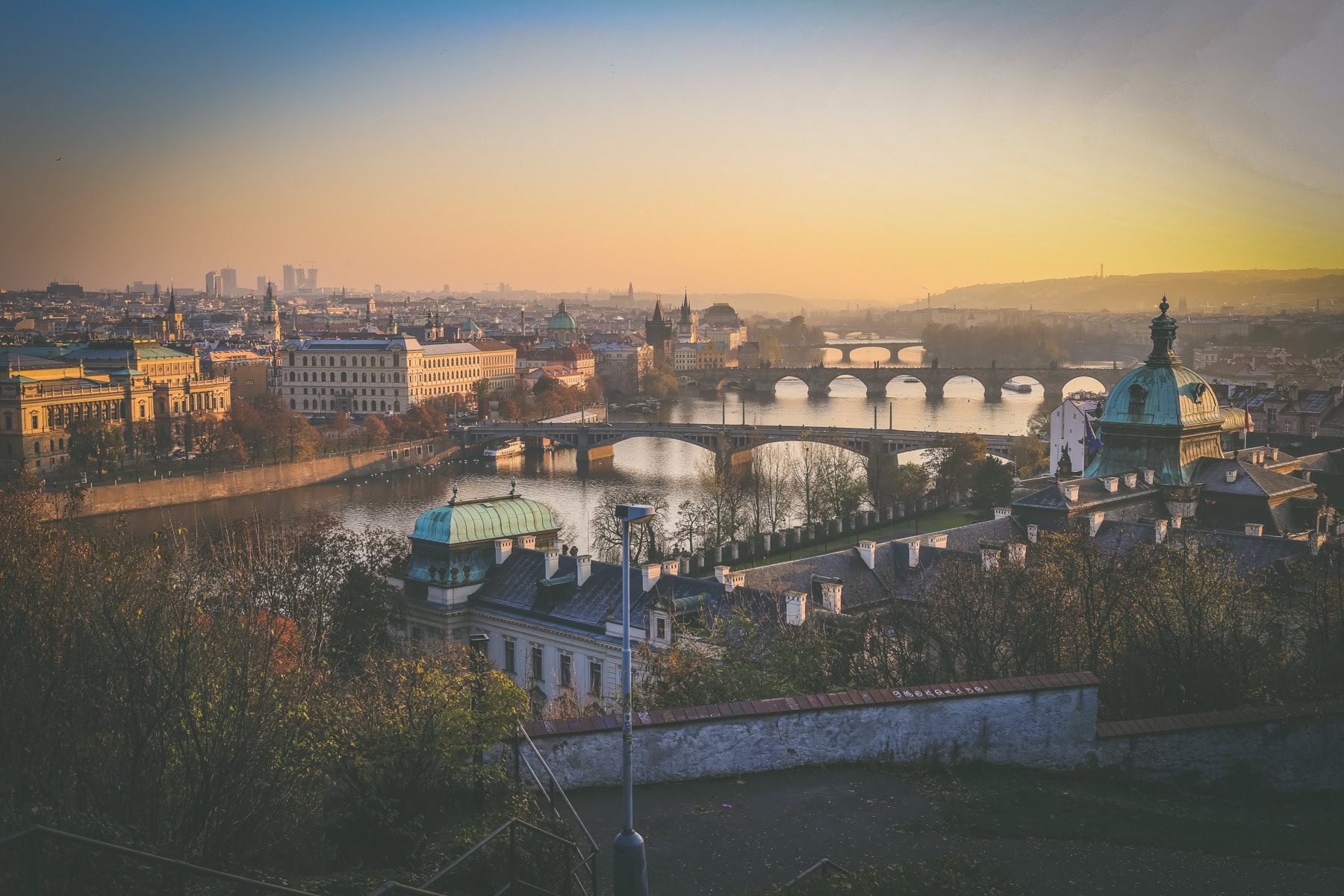
Entry is free; you can get here by tram to the Sparta or Letenské náměstí stops. Just like in Rieger Gardens, Letná has its own legendary beer garden at the Letenský zámeček. Lukáš and I once spent an entire afternoon here — mature chestnut trees, a view of the Old Town, and a cold beer. One of those moments when you think: this is why Prague will never stop being brilliant.
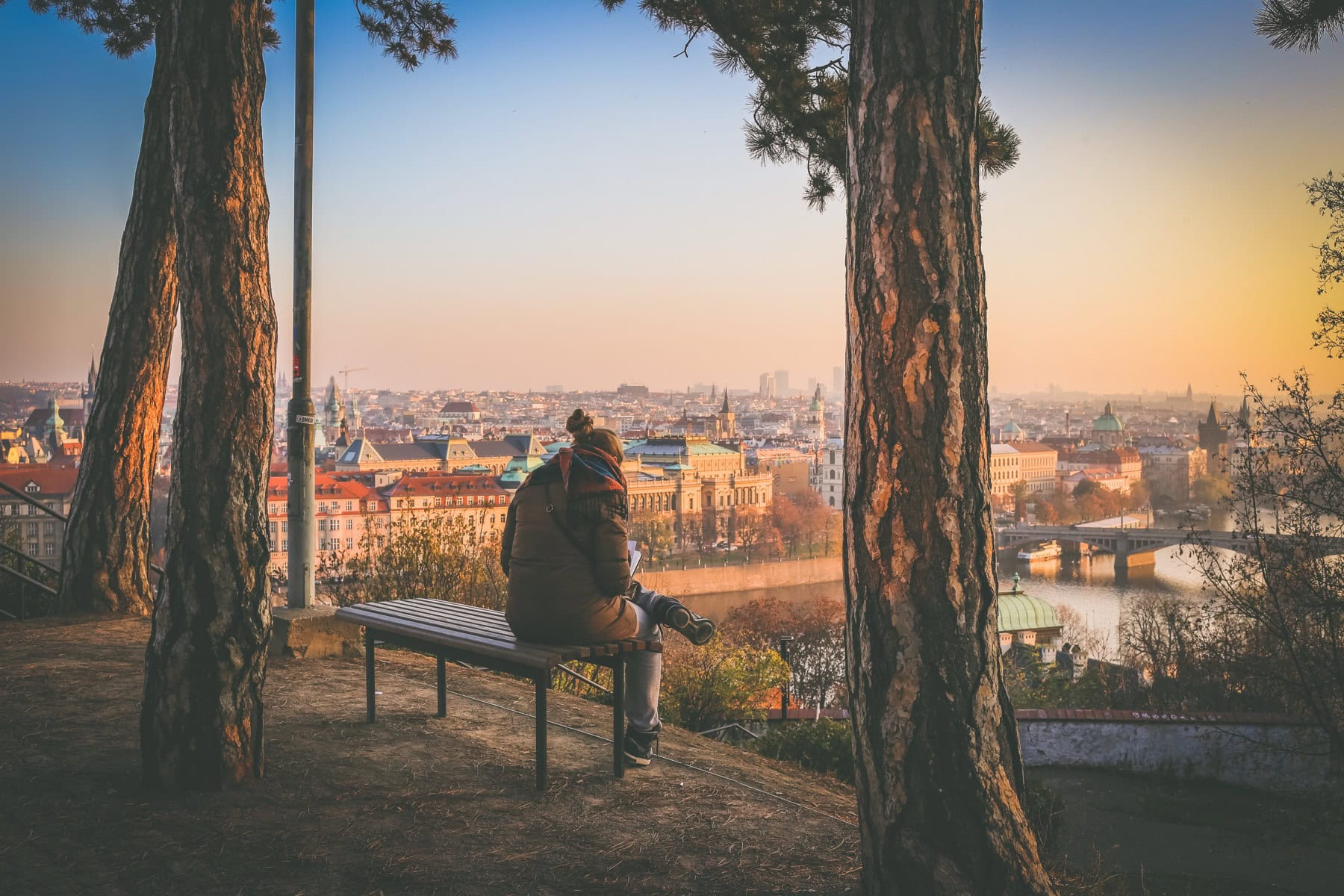
💡 Insider tip: Don’t just go to the main viewpoint by the Hanau Pavilion where crowds jostle with cameras. Walk about 300 metres east along the cliff edge to a smaller, less conspicuous wall. The view of the Vltava’s bend is cleaner from here, and you won’t have to fight for a spot.
Kampa Island
Kampa isn’t really a traditional park — it’s more of a large grassy area on an island separated from Malá Strana by the artificial Čertovka canal. It sits directly beneath Charles Bridge, so you won’t escape tourists here, but the place still retains an enormous amount of charm. The big lawn is lined with plane trees and bordered on one side by the Vltava, with cruise boats gliding past.
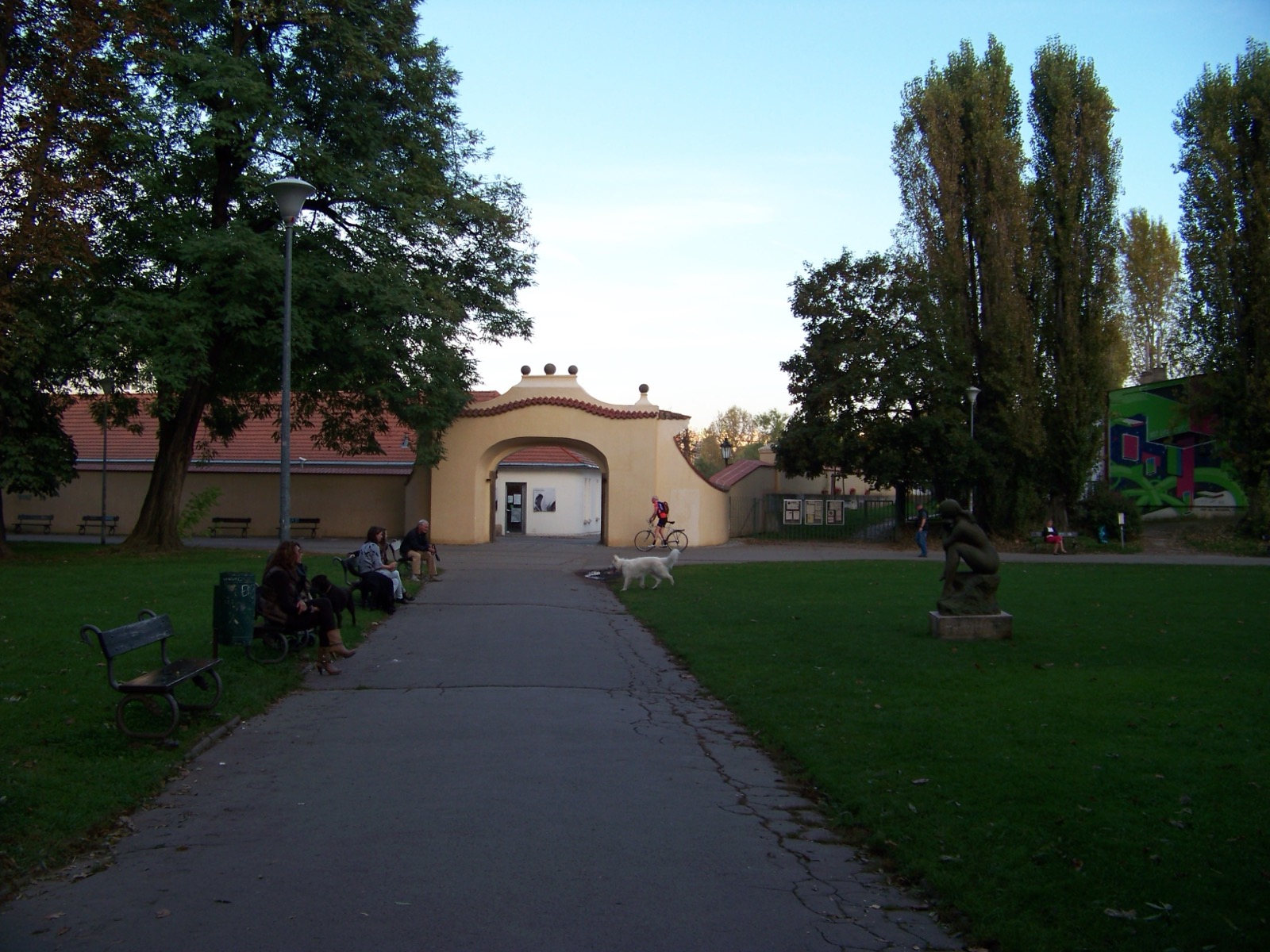
Access is free year-round — just descend the steps from Charles Bridge or approach from Újezd street. It’s an ideal spot for a quick break during a demanding exploration of the centre. You’ll also find Museum Kampa here, dedicated to modern art, with David Černý’s famous bronze baby sculptures crawling across the lawn outside.
💡 Insider tip: At the southern tip of Kampa, near Sova’s Mills, there’s a narrow strip of riverbank where you can walk right down to the water. It’s a great spot where kids love throwing pebbles into the Vltava and where you can feed swans far from the biggest crowds.
Map of points of interest for your phone
Hidden Green Corners (Where to Escape the Crowds)
If you feel like central Prague is turning into one big tourist stage set, just hop a few tram stops further. There are parks and gardens that have kept their local character, where you’re more likely to bump into neighbours walking dogs than guided tour groups.
Havlíček Gardens (Grébovka)
This sprawling park on the border of Vinohrady and Vršovice is inspired by Italian Renaissance design, and honestly, on my first visit it took my breath away — I wasn’t expecting this kind of grandeur in Vršovice. It was built by industrialist Moritz Gröbe, and the majestic Gröbe Villa still dominates the grounds. The biggest draw, though, is a working historic vineyard on the south-facing slope, where grapes are still cultivated, and the wooden Vineyard Gazebo where you can enjoy a glass of local wine.
Entry is free and the park is open daily, though the gates are locked at night (open from 6:00 to 22:00, in winter until 20:00). The best way to get here is by tram to the Krymská or Nádraží Vršovice stop. The park has quite a bit of elevation change, so you’ll work up a sweat pushing a buggy uphill, but the tarmac paths are good quality.
💡 Insider tip: Don’t miss the artificial Grotto cave in the upper part of the park. After its restoration, it’s open to visitors and you can clamber through its stone corridors and staircases. It’s a truly surreal experience you wouldn’t expect in the middle of Prague.
Kinský Garden
Kinský Garden seamlessly extends from Petřín on the southern, Smíchov side, but has a completely different atmosphere. It’s wilder, steeper, and far less visited. Forest paths wind past sandstone rocks, artificial waterfalls, and small ponds. Halfway up the slope stands the Kinský Summer Palace, now home to an ethnographic museum, and just above it the all-wooden Carpathian Church of St. Michael (which unfortunately burned down a few years ago and awaits reconstruction).
Entry is free, open round the clock. The easiest access is from Kinských Square (Švandovo divadlo or Újezd tram stops). The terrain here is genuinely steep, so for families with small children or pushchairs, it’s more of a fitness workout than a relaxing stroll.
💡 Insider tip: If you want to skip the steep climb, take bus 176 to the Stadion Strahov stop and enter Kinský Garden from the top. You’ll walk comfortably downhill the whole way, enjoying lovely views of Smíchov.
Divoká Šárka
When Lukáš and I need to completely switch off and forget we live in a city of over a million people, we head to Divoká Šárka. This vast nature reserve in the northwest of Prague features a deep valley flanked by sheer cliffs, dense forests, and the meandering Šárecký stream. It’s the perfect destination for a full-day trip, longer hikes, and in summer, even swimming.
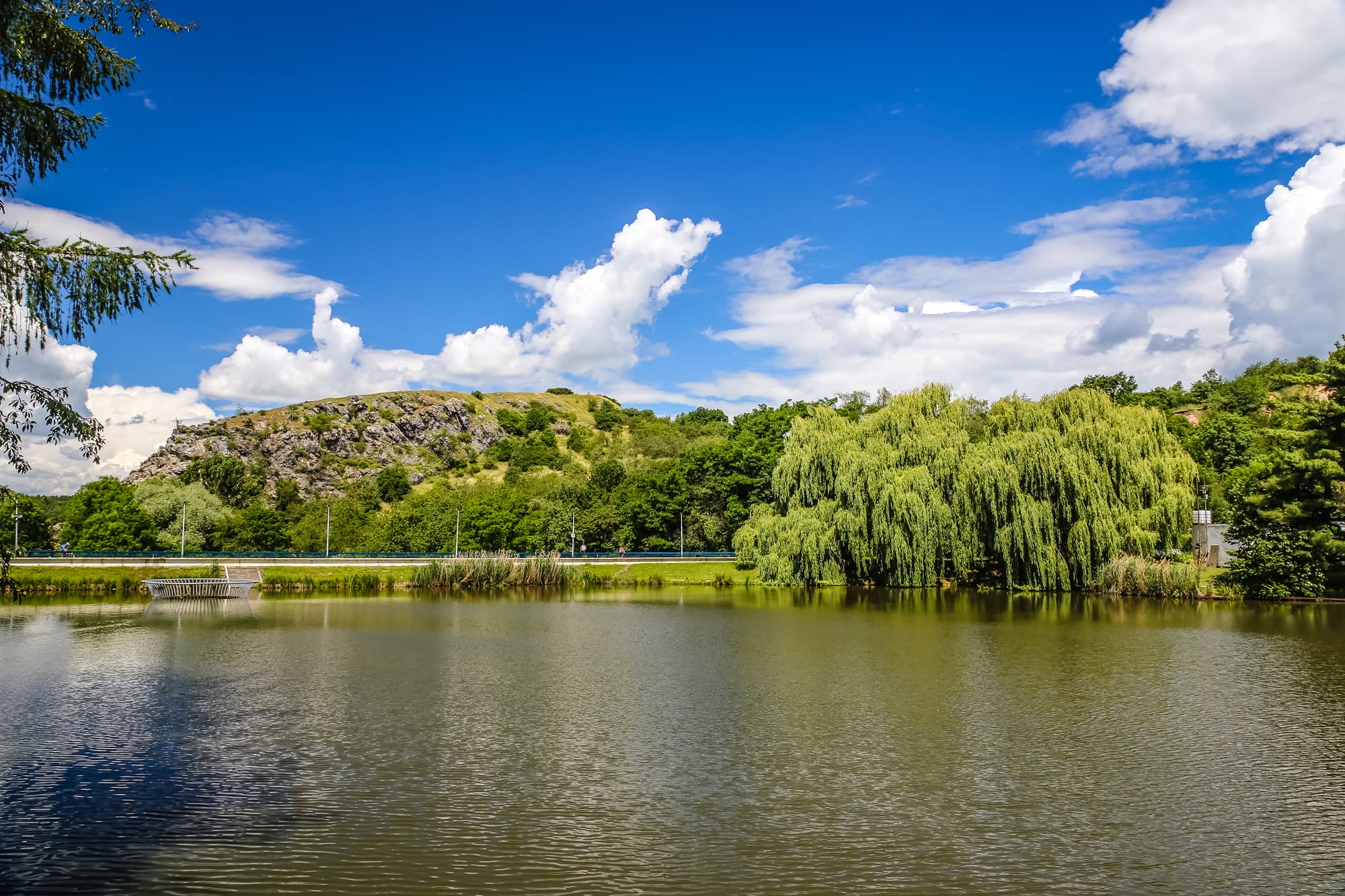
Entry to the reserve is free. The best starting point is the terminus of trams 20 and 26, Divoká Šárka stop. The main tarmac path through the valley is perfect for pushchairs and balance bikes, but once you veer off onto forest trails leading to clifftop viewpoints, be prepared for rough terrain with roots and rocks.
💡 Insider tip: In the very heart of the valley, you’ll find the U Veselíka outdoor swimming pool. It’s fed by spring water, so even during the fiercest August heatwave the temperature will reliably cool you down (some might say it’s more ice bath than swimming pool). They also do a cracking lángos.
Franciscan Garden
This is a little miracle right in the beating heart of commercial Prague. Between Wenceslas Square and Jungmann Square, hidden in a courtyard block, lies the garden of a former Franciscan monastery. Around noon, the benches fill up with office workers eating packed lunches, and the rest of the day it’s tourists giving their shopping-weary legs a rest. The garden is known for its herb beds and gorgeous rose-covered arches.
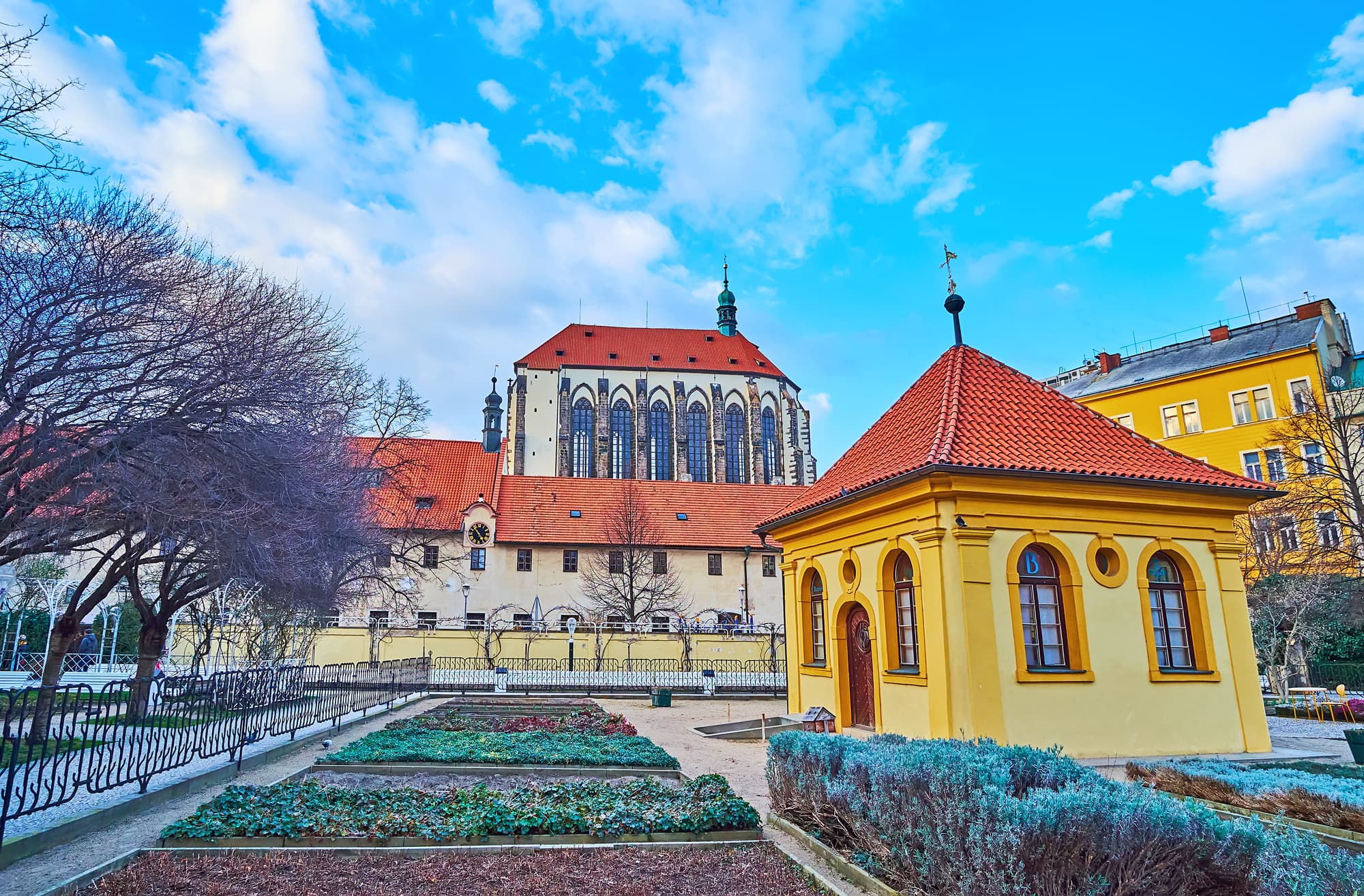
The garden is locked at night; during the day (usually 8:00–19:00) admission is free. You can enter from the Světozor passage, from Jungmann Square, or from Wenceslas Square through the Alfa passage. It’s completely flat, so pushchairs and wheelchairs pass through without any trouble. There’s also a fenced children’s playground in the upper section.
💡 Insider tip: Before you sit down on a bench, pop into the Světozor passage and visit the legendary Ovocný Světozor ice cream shop. Grab a strawberry-banana soft serve to take into the garden. It’s a ritual practically every Praguer observes.
South Gardens of Prague Castle and the Stag Moat
The surroundings of Prague Castle extend far beyond the Royal Garden. The South Gardens (Paradise, Na Valech, and Hartig) stretch in a narrow strip along the Castle’s southern façade and offer some of the most iconic views over the rooftops of Malá Strana. Their current form is partly the work of Slovenian architect Josip Plečnik, whose feeling for detail and stonework is visible at every turn. On the opposite, northern side of the Castle lies the Stag Moat — a deep ravine that once served as a defensive ditch and a place for keeping deer.
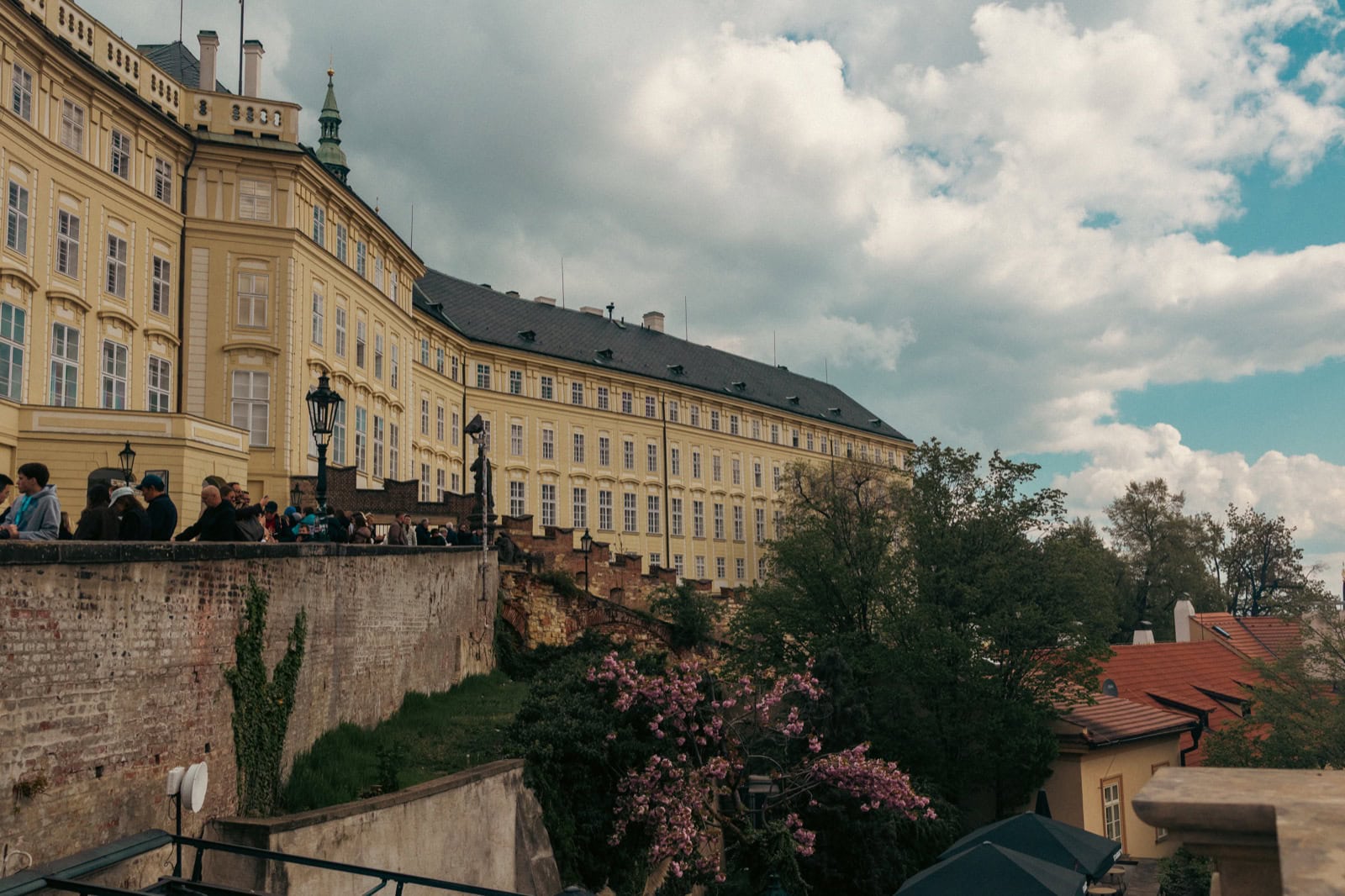
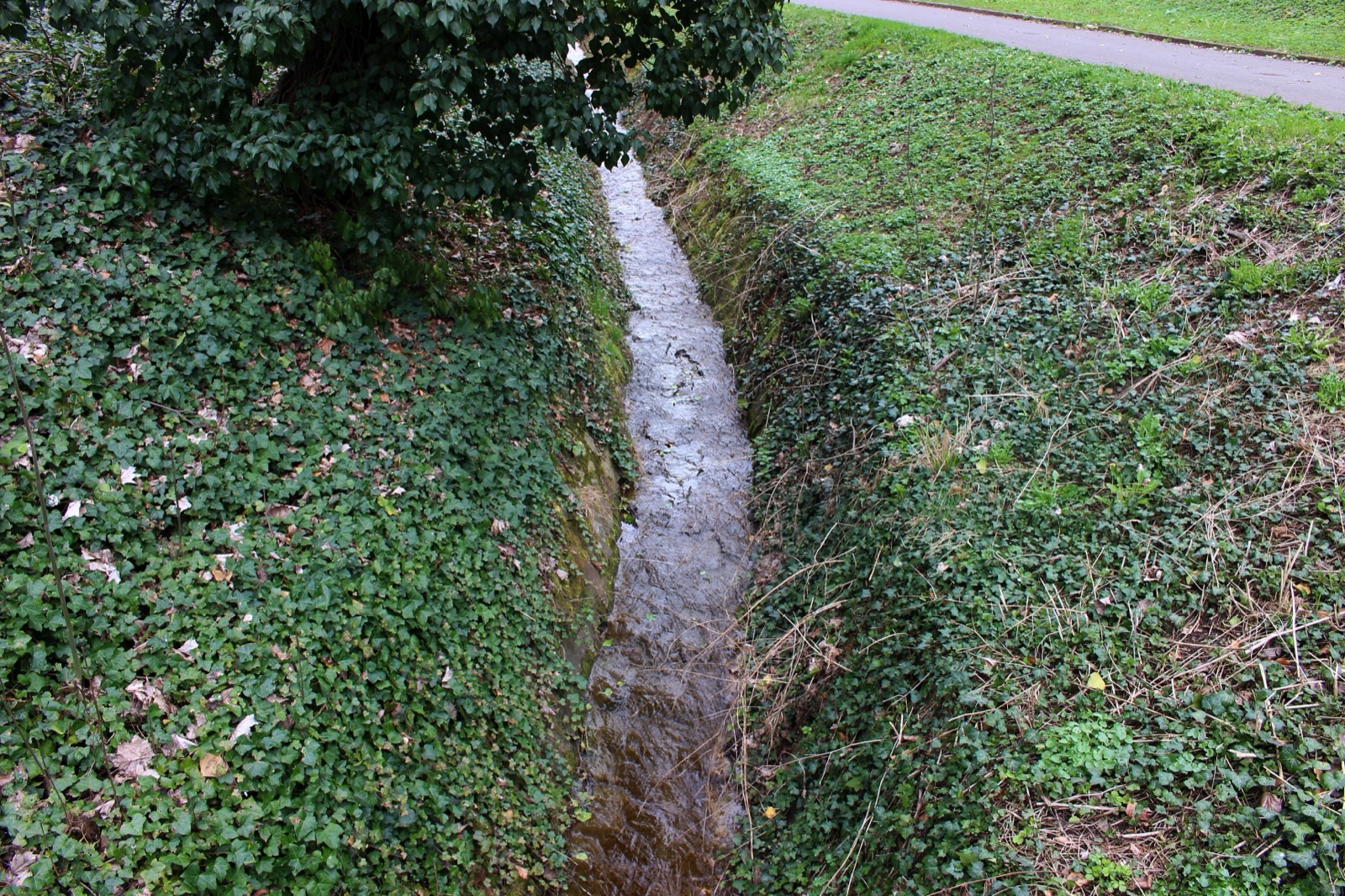
Entry to both the South Gardens and the Stag Moat is free (after passing through the Castle security screening). Open only during the summer season, from April to October. The Stag Moat was recently revitalised and a walk through it is quiet and shaded — ideal for hot days. The path down into the moat is fairly steep, so with a pushchair you’ll need a bit of muscle.
💡 Insider tip: In the Stag Moat, don’t miss the tunnel beneath the Powder Bridge, designed by Josip Plečnik himself. It’s a dark, brick-lined space with amazing acoustics that feels almost mystical.
Where to Eat After Your Walk
After spending an entire afternoon in the fresh air, sooner or later hunger strikes. With Jonáš, we’ve learned to always have a breadstick or snack handy, but when Lukáš and I want a proper lunch or coffee, we have a few favourite spots near our favourite parks.
We’re not fans of sterile restaurants, so we usually look for places with a bit of community feel and great atmosphere. Plus, as a vegetarian, I always appreciate when the menu offers something beyond just fried cheese.
My Favourite Bistros and Cafés
Near Stromovka, we swear by Salt’n’Pepa bistro, which does fantastic veggie burgers and chips. It’s tiny but incredibly friendly. If you’re hanging around Rieger Gardens in Vinohrady, try Kavárna Mezi Srnky. They do brilliant brunches, outstanding coffee, and Lukáš and I love popping in for eggs before heading to the park.
And when we come down from Letná towards Strossmayer Square, our obvious choice is Bistro Cobra. At lunchtime they serve superb meals, and in the evening it morphs into a pleasant bar. These places all have that lovely relaxed energy, and even with our little one we’ve always felt welcome.
Practical Info and Tips for Your Visit
A few things I wish someone had told me on my first visit. It would have saved me a wasted afternoon standing in front of a locked gate.
- Getting around: Prague has one of the best public transport systems in Europe. A tram will take you to most gardens. If you’re planning to hop around intensively, a 24-hour ticket at 6 € is great value. Single 30-minute tickets cost about 1.20 € and you can buy them contactlessly on the yellow terminals inside every tram and bus. Getting to Prague from the UK is easy — direct flights from London operate with carriers like Ryanair, easyJet, and British Airways, taking under two hours.
- Opening season: Memorise the magic date: 1 April. That’s when the vast majority of palace and castle gardens open their gates. They typically close again on 31 October. City parks like Stromovka and Letná have no restrictions.
- Picnics and alcohol: In the large public parks (Stromovka, Rieger Gardens, Letná), picnicking on the grass is permitted and perfectly normal. Drinking alcohol in public is technically banned by city ordinance in many parts of Prague, but in parks during a picnic it’s quietly tolerated — as long as you’re not causing noise or mess. In the historic baroque gardens, however, picnicking and sitting on the lawn is strictly forbidden.
- Dogs: Dogs are welcome in the large parks, which often have designated off-lead areas. In historic gardens (Vrtba, Wallenstein, Prague Castle gardens), dogs are strictly prohibited.
Further Reading
If you’ve ticked off the green spaces and are ready to dive into more city exploring, here are some of our other in-depth guides:
- What to See in Prague: 100+ Tips for Sights, Cafés, and Restaurants
- Prague Castle: The Complete Stress-Free Visitor’s Guide
- Petřín Lookout Tower: How to Get There and What Not to Miss
- Things to Do with a Toddler in Prague: Tried-and-Tested Tips for Parents
Frequently Asked Questions
Which gardens in Prague are free?
Among the historic ones, the most notable are Valdštejnská zahrada, Královská zahrada, and the Southern Gardens of Prague Castle. All the large city parks like Stromovka, Petřín, Letná, and Riegrovy sady are completely free, of course.
Where are the best views of Prague?
If you want the classic view of the bridges, head to Letenské sady. For a view of the sea of red roofs in Malá Strana, Vrtbovská zahrada or the Palace Gardens below Prague Castle are unbeatable.
Are Prague’s gardens open in winter?
The large parks (Stromovka, Petřín, Grébovka) are open year-round. The Baroque and palace gardens (Vrtbovská, Valdštejnská, the Castle gardens) are closed from November through the end of March.
Which parks can I visit with a stroller?
The absolute best are Stromovka, Letenské sady, and Vojanovy sady, which have wide, flat paths. Avoid Vrtbovská zahrada, the Palace Gardens below the Castle, and the steep sections of Kinského zahrada.
Where can I have a picnic in Prague?
The most popular picnic spots are Stromovka, Riegrovy sady, Letenské sady, and Kampa Island. Sitting on the grass is prohibited in the historic Baroque gardens.
Where can I find restrooms in the parks?
In large parks like Stromovka or Riegrovy sady, there are public restrooms (often for a small fee of around €0.40-0.80, sometimes they accept cards). In historic gardens with paid admission (Vrtbovská), restrooms are included free of charge.
Tips and Tricks for Your Vacation
Don’t Overpay for Flights
Search for flights on Kayak. It’s our favorite search engine because it scans the websites of all airlines and always finds the cheapest connection.
Book Your Accommodation Smartly
The best experiences we’ve had when looking for accommodation (from Alaska to Morocco) are with Booking.com, where hotels, apartments, and entire houses are usually the cheapest and most widely available.
Don’t Forget Travel Insurance
Good travel insurance will protect you against illness, accidents, theft, or flight cancellations. We’ve had a few hospital visits abroad, so we know how important it is to have proper insurance arranged.
Where we insure ourselves: SafetyWing (simple monthly subscription) and TrueTraveller (for extra-long trips).
Find the Best Experiences
Get Your Guide is a huge online marketplace where you can book guided walks, trips, skip-the-line tickets, tours, and much more. We always find some extra fun there!
More from Czechia
Full guide → Day trips · most readMikulov, Czech Republic: 10 Best Things to Do and See
 What to seeDancing House and Modern Prague: Architecture of the 20th and 21st Century
 FoodPrague Travel Guide: 50+ Tips For Unforgettable Experience
 Where to stayPrague, Czech Republic: 10 Best Tips for Cheap Accommodation
 Day tripsJetřichovice Viewpoints: 4 Tips for a Quieter Bohemian Switzerland Czech Republic 2026


