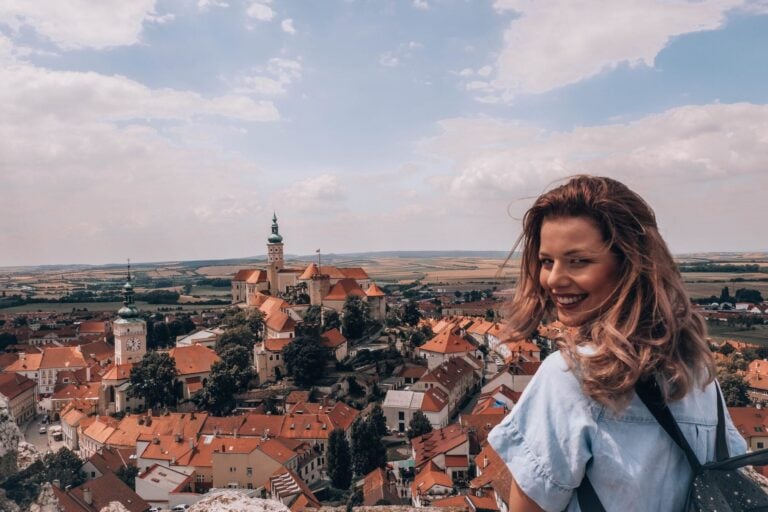
When I started secondary school at the Malá Strana Gymnasium at seventeen, I had no idea Prague would give me far more than a diploma. Every day I’d hop off the tram, walk past Hradčany Square and gaze up at St. Vitus Cathedral towering above the rooftops. Back then, it felt perfectly normal — just my commute to school. Now, many years later, I realise what a privilege it was to stroll around Prague Castle instead of being stuck in a classroom. 😅
And there’s another reason the castle is more than just a tourist attraction to me. Prague Castle was where Lukáš and I had our very first date. We wandered through the gardens, looked out over Prague from every angle, and I remember thinking this city was truly magical. We’ve been coming back regularly ever since — and every time we discover something new.
In this article you’ll find a complete guide to Prague Castle — from admission prices and opening hours to what to visit and what’s free, plus hidden gems like Nový Svět that most tourists miss entirely. I’ll tell you when to come to avoid the crowds, where to eat without falling into tourist traps, and how to enjoy the castle even if you only have two hours. And because I spent years here as a student and still come back regularly, these are tips from a local — not from a guidebook.
TL;DR
- Prague Castle is the largest ancient castle complex in the world — covering over 70,000 m², so set aside at least half a day for a proper visit.
- Entry to the grounds is completely free. You only pay for building interiors (Circuit B from €10, Circuit A from €14). Tickets are valid for 2 days.
- Golden Lane is free after 5 PM in summer and after 4 PM in winter — one of the best tips for saving money.
- The gardens are free and stunning — the Royal Garden, South Gardens and Stag Moat. Open roughly from March to mid-November.
- Avoid the crowds by arriving before 9 AM or after 6 PM. The quietest days are Tuesday and Wednesday. Weekends are hectic, especially July and August between 10 AM and 2 PM.
- Take tram 22/23 up, walk down through Malá Strana — the best strategy to enjoy the route without battling the hill.
- Nový Svět is a romantic quarter just steps from the castle where tourists rarely go. Skip the Golden Lane crowds and try this instead.
- Lobkowicz Palace is a hidden gem with works by Canaletto, Bruegel and Beethoven manuscripts — plus a terrace with views over Prague.
- For food, head to Kuchyň restaurant (Ambiente) or Strahov Monastic Brewery — but book ahead.
- Shakespeare Festival (late June – early September) is a magical open-air theatre experience right in the castle grounds.
The full destination guide: Czechia — guide and what to see
When to visit Prague Castle and how to avoid the crowds
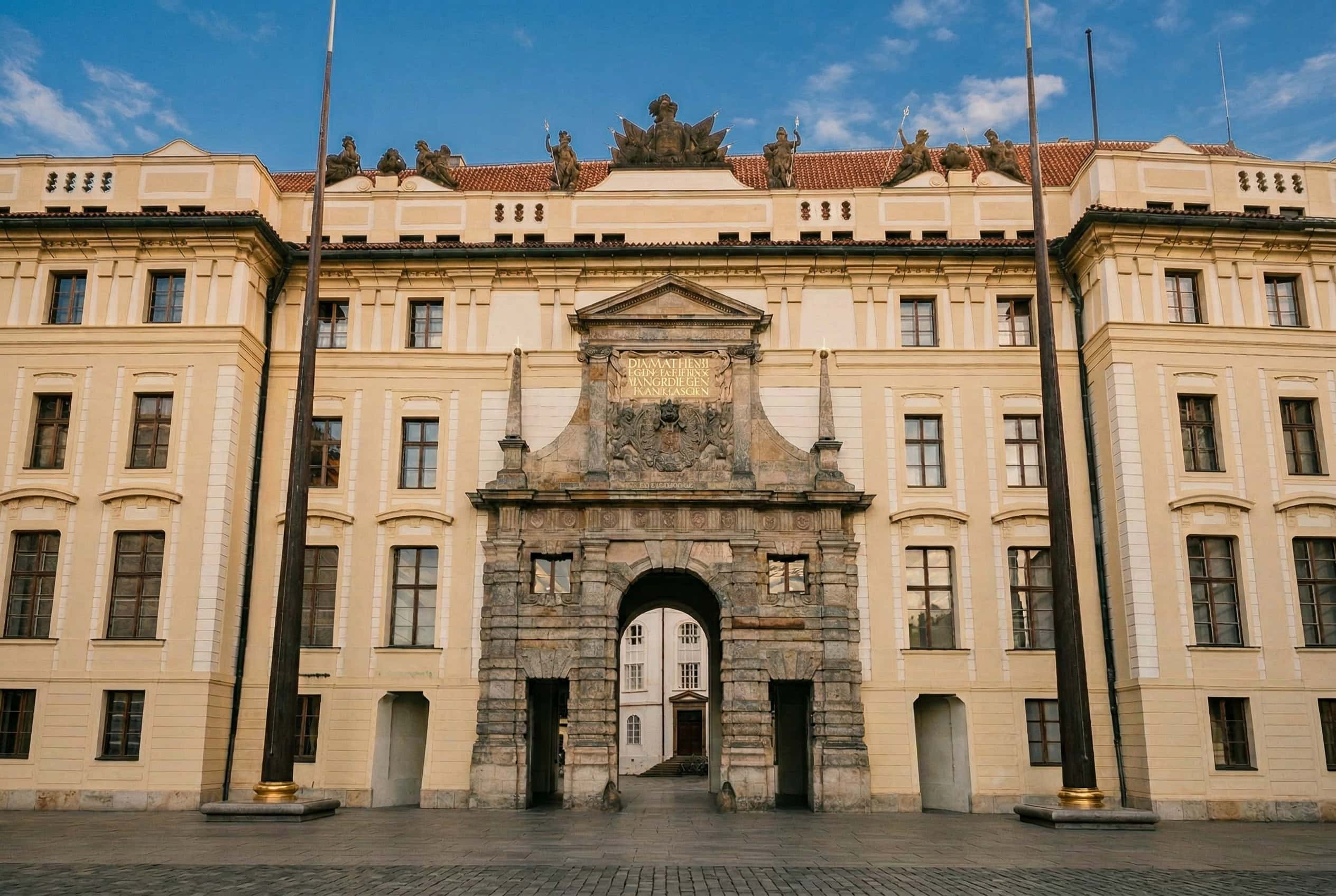
This is probably the most important section of the entire article, because bad timing can completely ruin your Prague Castle experience. The crowds during peak season are genuinely intense — and then you read TripAdvisor reviews like “disappointing, queues everywhere, nothing special,” when the only real problem was visiting at the worst possible time. So let’s talk about when to go so you can actually enjoy it.
Best time of day
The golden rule: arrive before 9 AM or after 6 PM. The castle grounds are open from 6 AM to 10 PM year-round and completely free — so at these times you can wander through the courtyards, gardens and viewpoints practically on your own. Buildings with paid admission (the cathedral, Old Royal Palace, Golden Lane) open at 9 AM and close at 5 PM in season (April–October) or 4 PM in winter (November–March). Queues start forming right around nine.
If you want to go inside the buildings, be at the ticket office in the Second Courtyard a few minutes before nine. You’ll be among the first in and avoid the queues that build up around ten. The absolute worst window is 10 AM to 2 PM — that’s when the castle feels like the London Underground at rush hour.
An evening visit has its own magic. The buildings are closed, but the grounds glow in the fading light and the atmosphere is enchanting. Lukáš and I love coming for walks at this time — you’ll mostly encounter locals and the occasional romantic tourist on the courtyards. ☺️
Best day of the week
Tuesday and Wednesday are by far the quietest days. Monday is surprisingly busy because many people take a weekend trip and figure they’ll “squeeze in the castle on Monday.” Friday through Sunday is chaos, especially from spring to autumn.
Seasonal differences
July and August — the worst months for crowds. If you can, avoid them altogether.
May, June, September — lovely weather, the gardens are in bloom, but there are still plenty of tourists. The early morning / late afternoon strategy works well here.
October and November — my favourite time. Autumn colours in the gardens, fewer visitors, and if the weather cooperates, it’s absolutely gorgeous.
December to February — the fewest tourists (excluding Christmas and New Year). However, the gardens are closed (roughly from 13 November to the end of February), so you’ll miss one of the most beautiful parts. On the other hand — the castle blanketed in snow has an atmosphere you won’t find anywhere else.
💡 TIP: If you’re visiting in summer and want to see Golden Lane without paying or dealing with crowds, come after 5 PM — admission is free and most tour groups have already left.
How much does Prague Castle cost — tickets, circuits and what’s free
The ticket and circuit system at Prague Castle is, honestly, a bit confusing — and I’m not the only one who thinks so. You’ll find plenty of frustrated tourists online who had no idea what they were actually buying. So let me break it down for you, so you know exactly what you’re paying for and what you can enjoy for free.
Prague Castle tour circuits
The castle offers three main circuits. Each includes a different combination of buildings:
Circuit A (the full circuit) — €14 (concession €7, family €28)
Includes: Old Royal Palace, St. George’s Basilica, Golden Lane with Daliborka Tower, Rosenberg Palace, the Story of Prague Castle exhibition, and St. Vitus Cathedral. This is the most comprehensive option — if you have the time and want to see everything, go for it.
Circuit B (the short circuit) — €10 (concession €5, family €20)
Includes: Old Royal Palace, St. George’s Basilica, Golden Lane with Daliborka Tower, and St. Vitus Cathedral. It skips the Story of Prague Castle exhibition. For most visitors, this is more than enough and saves you a few euros.
Circuit C — €14 (concession €7, family €28)
Focused on the St. Vitus Treasury Exhibition and the Prague Castle Picture Gallery. This one’s for art and history enthusiasts — the average visitor will be perfectly happy with Circuit B.
St. Vitus Cathedral Tower — €6 (separate ticket)
287 steps to the top, but the view is absolutely worth it. Sold separately, not included in any circuit.
Lobkowicz Palace — €11 (separate ticket)
Also not part of any circuit, as it’s privately owned. But it’s one of the best reasons to visit the castle — more on that below.
Tickets are valid for 2 days!
Here’s something many people don’t know: your ticket for any circuit is valid for two consecutive days. So you don’t have to cram everything into one exhausting marathon. You could visit the cathedral and palace on day one, then head to Golden Lane the next day. Pretty handy, right?
What’s free at Prague Castle
And now for the best news — you can enjoy a huge part of the castle without spending a penny:
- The entire grounds — all three courtyards, free to wander
- The gardens — Royal Garden, South Gardens (On the Ramparts and Paradise Garden), Stag Moat
- Golden Lane after closing time — after 5 PM in season, after 4 PM off-season
- Attending a service at St. Vitus Cathedral — services are held daily (on Sundays the cathedral doesn’t open for tourists until 12 PM)
- Changing of the Guard — every hour on the hour, with a ceremonial version at noon
- Views over Prague — from the South Gardens, courtyards, and the castle surroundings
Honestly? If you’re on a tight budget, you can spend a beautiful half-day at Prague Castle completely free. Walk through the grounds, admire the cathedral from outside (and it’s breathtaking even from outside), stroll through the gardens, pop into Golden Lane after 5 PM, and watch the Changing of the Guard. Is that enough? For many people, absolutely yes.
Where to buy tickets
The ticket office in the Second Courtyard is usually the least busy — most tourists buy tickets at the main entrance in the First Courtyard. You can also buy tickets online from the castle’s official website, but personally I find the Second Courtyard ticket office is just as quick. You can also book a guided tour through GetYourGuide if you’d prefer a skip-the-line experience with an expert guide.
💡 TIP: Children under 6 get in free. Students and seniors with valid ID are entitled to concession prices.
How to get to Prague Castle — 5 ways
There are plenty of routes to the castle — literally. But some are more pleasant than others, and crucially: Prague Castle sits on a hill, so you want to plan your approach to avoid conquering steep stairs on empty lungs. Here’s an overview of your options.
1. Tram 22 or 23 — the easiest option
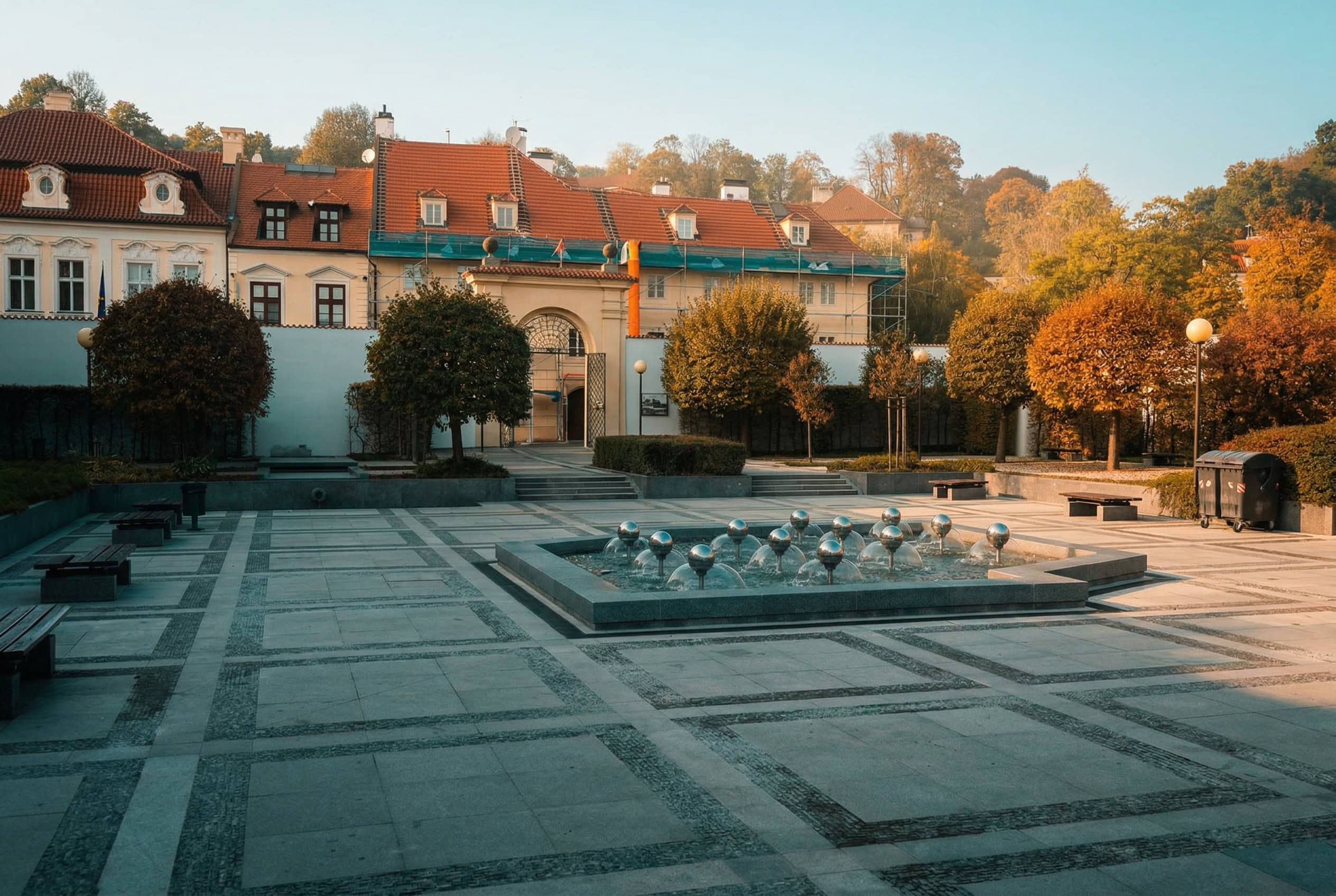
Tram number 22 (or 23) is the classic choice. Get off at the Pražský hrad stop and you’re right at the top — just a few steps from the main entrance. No stairs, no uphill climb. You can also get off one stop further at Pohořelec and approach the castle from Strahov Monastery, which is a lovely alternative if you want to visit Strahov along the way.
2. Metro A to Malostranská + walk uphill
From Malostranská station, head uphill either via the Old Castle Steps (steep but atmospheric — great for photos) or through Nerudova Street and Ke Hradu. Allow 15–20 minutes of uphill walking. It’s lovely in fine weather, though a bit more demanding in the summer heat.
3. Recommended combo: tram up, walk down
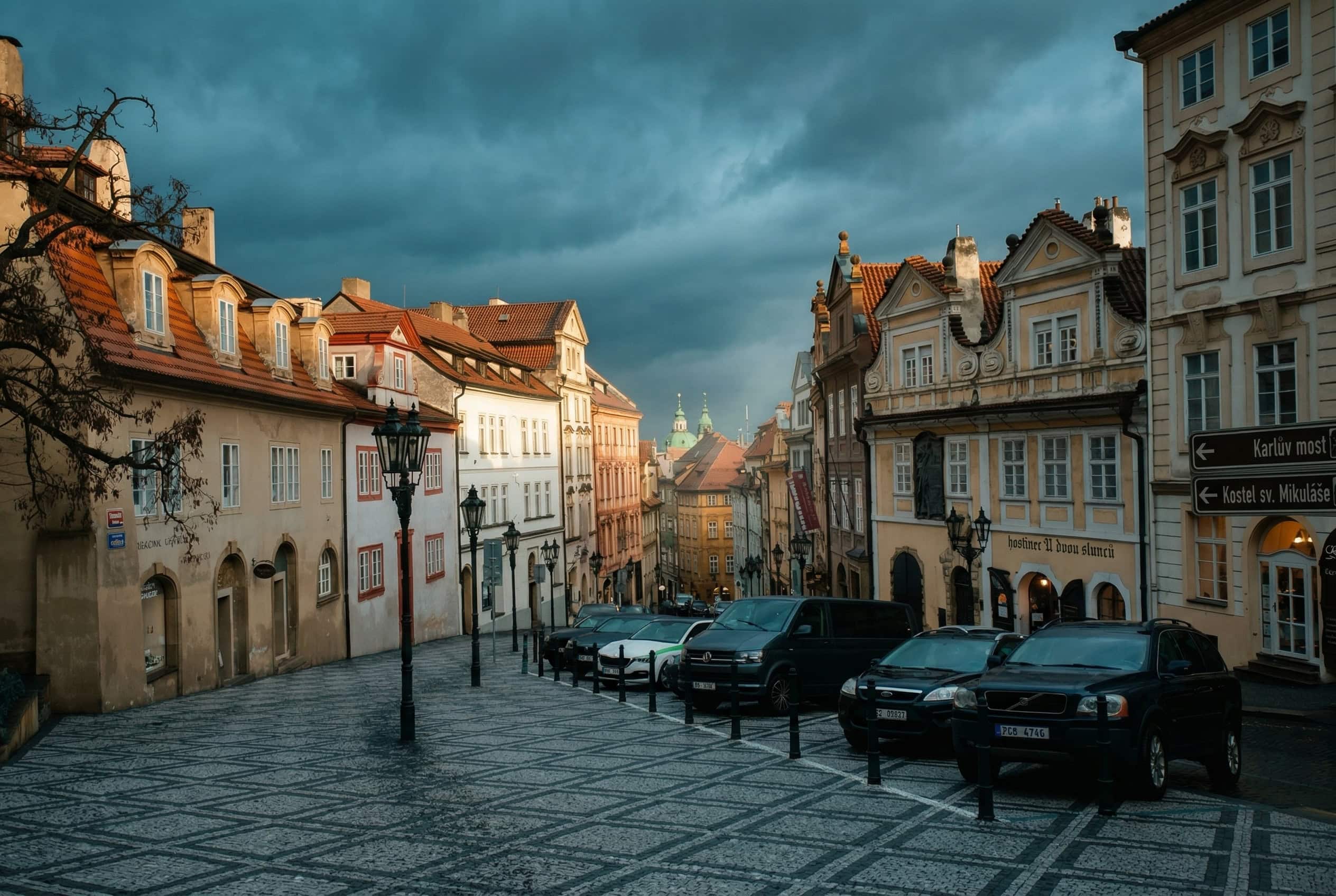
This is our favourite strategy and I’d recommend it to everyone. Take tram 22 up, explore the castle, then walk downhill through Malá Strana. On the way down you’ll be rewarded with gorgeous views over Prague, you’ll pass through Nerudova Street, and you’ll end up at Malostranské náměstí — all downhill, not up. Win-win. ☺️
4. On foot via Charles Bridge and Malá Strana
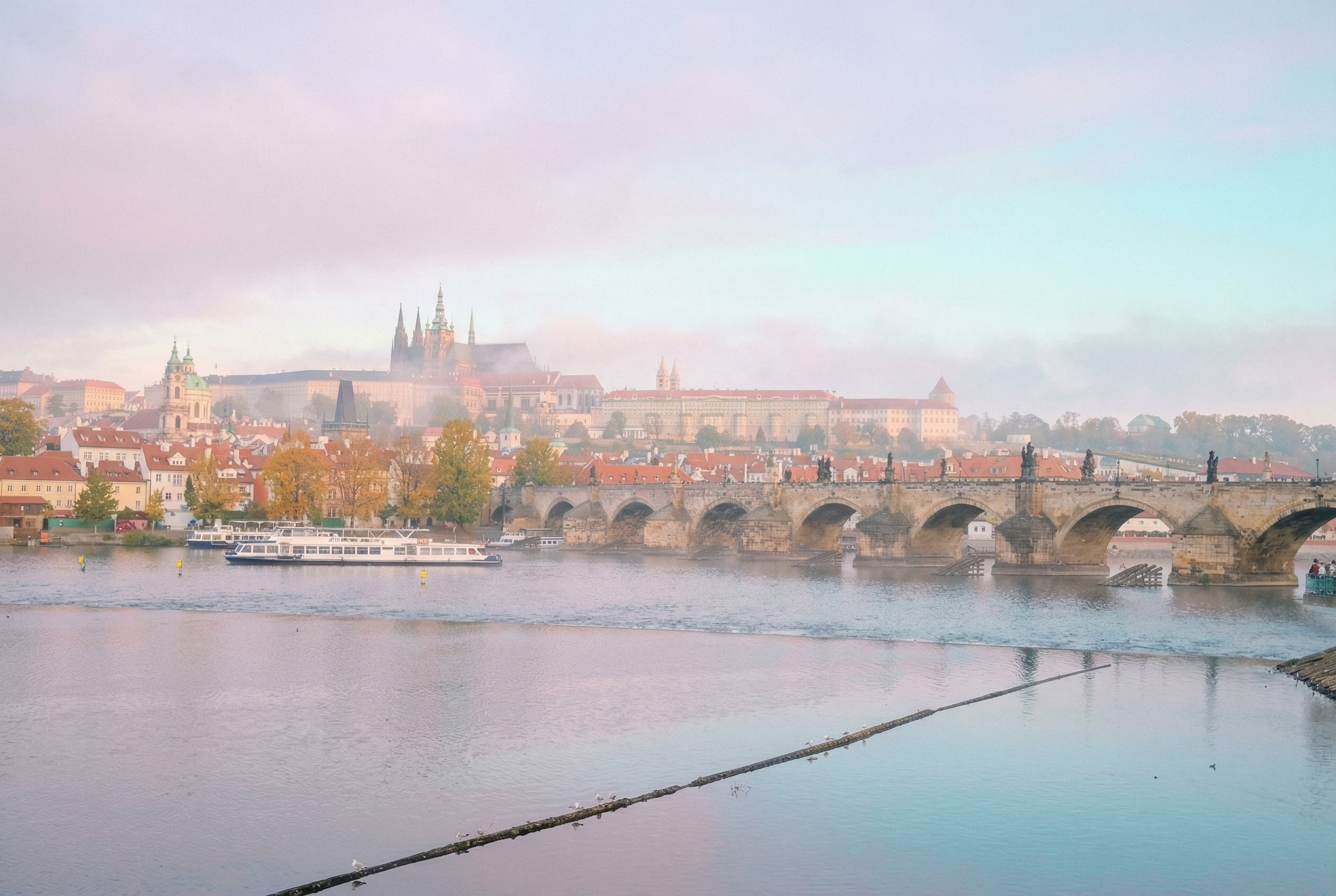
The romantic option — cross Charles Bridge, walk through Mostecká Street to Malostranské náměstí, and head uphill from there. It’s longer and uphill, but if you’ve got the time and comfortable shoes, it’s a beautiful walk. Just be prepared for crowds on Charles Bridge.
5. By car (rather not)
Parking near the castle is extremely limited and expensive. If you’re driving in Prague, leave the car at your hotel or at a Park & Ride and take public transport. This really isn’t a place where you want to deal with parking.
What to visit at Prague Castle — a complete guide
Now for the main event — what to actually see and visit at Prague Castle. The castle complex is enormous (70,000 m², roughly the size of ten football pitches), so without a plan you can easily get lost or miss something important. Let’s go through it from the absolute must-sees.
1. St. Vitus Cathedral — the heart of the castle
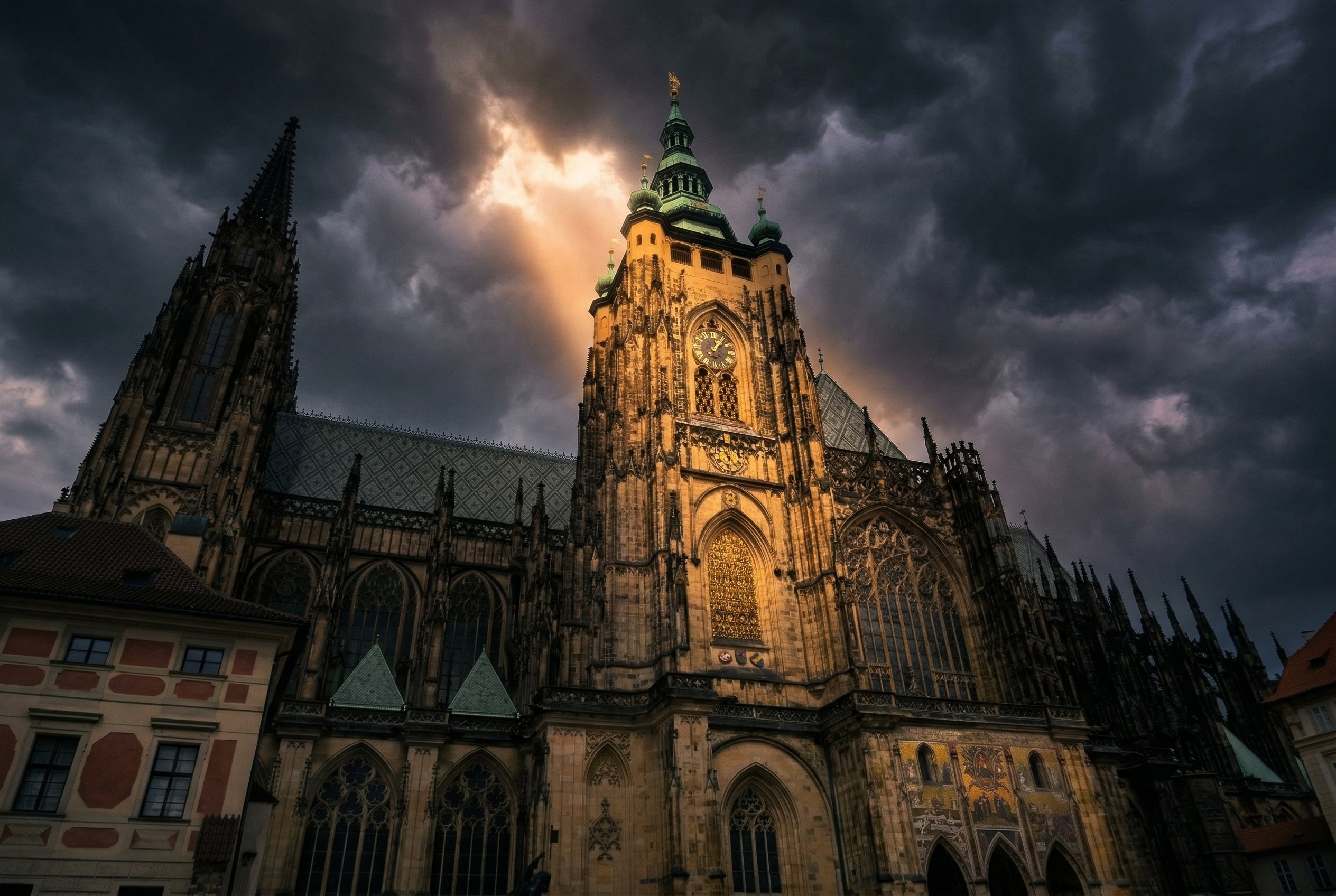
St. Vitus Cathedral is the building that brings most people to the castle in the first place — and rightfully so. When you step through the gate into the Third Courtyard and this colossal Gothic structure suddenly reveals itself before you, you’ll just stand there and stare. It happens to me every single time, even after all these years.
It took nearly 600 years to build — the foundation stone was laid in 1344 and it wasn’t definitively completed until 1929. Six hundred years! That’s such an absurdly long time it’s almost impossible to grasp. Builders from Matthias of Arras to Peter Parler to architects of the 19th and 20th centuries all worked on it, and yet it looks like a unified whole. It’s probably the greatest architectural wonder you’ll find in Prague.
What not to miss inside: The stained-glass windows by Alfons Mucha — they’re in the third chapel on the left from the entrance and they’re stunning. Mucha’s signature Art Nouveau style combined with sacred space is something you won’t see anywhere else. Then there’s the Chapel of St. Wenceslas with its semi-precious stone walls (gold and amethysts — it looks incredible), the Royal Crypt with the tombs of Charles IV and other rulers, and the Sigismund Bell — the largest bell in the Czech Republic, weighing over 15 tonnes.
The cathedral tower (€6, 287 steps) offers a view over all of Prague. It’s no walk in the park, especially in the heat, but once you’re at the top you’ll forget about your aching legs. The panorama is simply phenomenal.
💡 TIP: On Sundays the cathedral doesn’t open until 12 PM due to morning services. You can attend a service for free, but you can’t freely explore the interior — that’s only with a ticket after noon.
2. Old Royal Palace — the Defenestration and Vladislav Hall
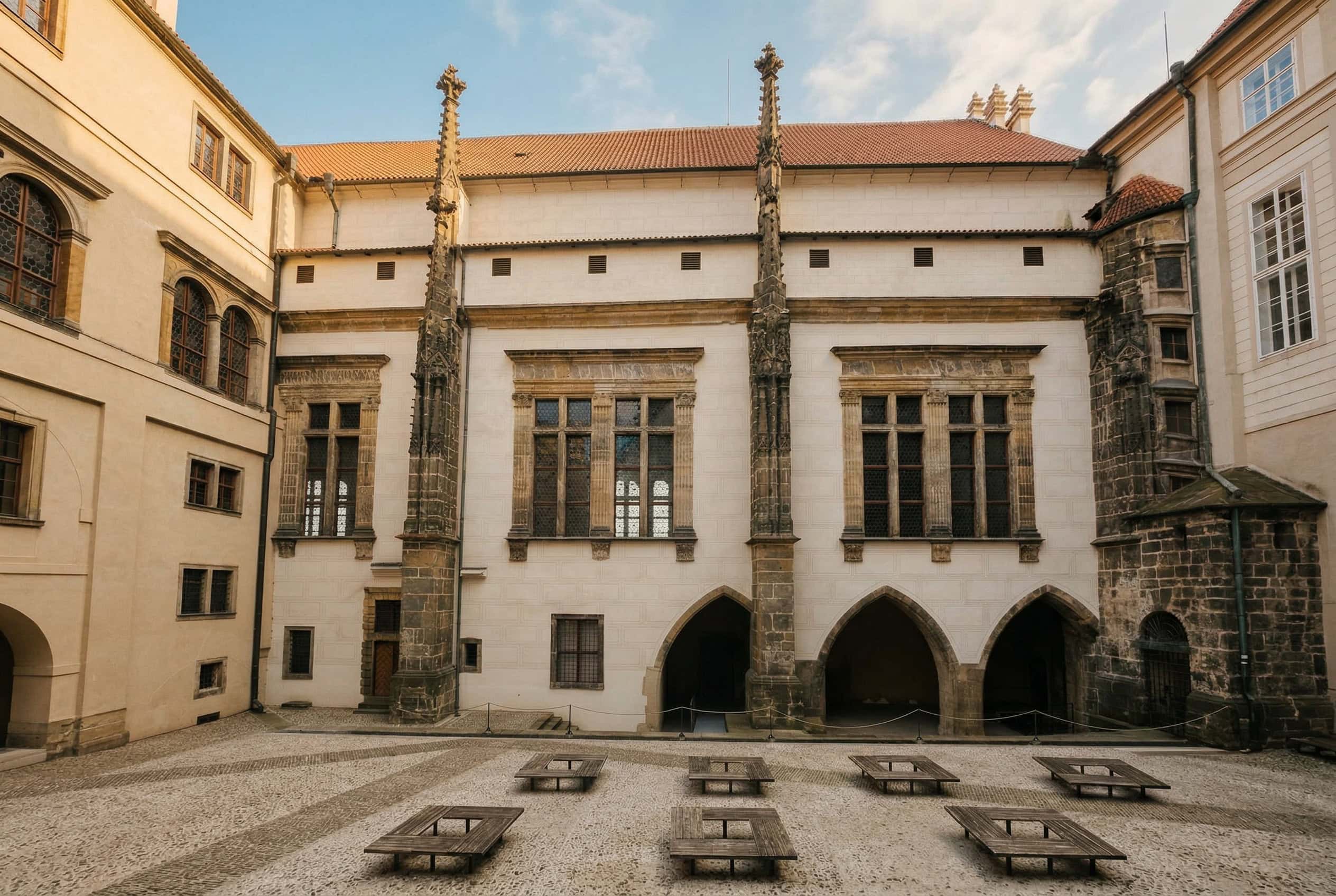
The Old Royal Palace is where Czech history was literally written. Vladislav Hall is the largest secular Gothic hall in Central Europe, and when you step inside, you’ll understand why. The vaulted ceiling is magnificent. Coronations, tournaments (yes, they actually rode horses in here — up the Riders’ Staircase, which was purpose-built for it), banquets and political negotiations all took place in this very room.
And then there’s the window from which two royal governors and their secretary were thrown in 1618 — the famous Defenestration of Prague, the event that triggered the Thirty Years’ War. The window itself is surprisingly small and unassuming. You stand there thinking “they threw them out of THIS?” — and yet it changed the course of European history. Legend has it they survived because they landed on a pile of manure. I’m not sure if that’s true, but it’s a cracking story. 😁
In all honesty — the palace interiors are rather austere. If you’re expecting the splendour of Versailles, you’ll be disappointed. This is a Gothic and Renaissance palace, so it’s more about space, vaulting and history than gilded chandeliers. But Vladislav Hall alone makes it worthwhile.
3. St. George’s Basilica — the oldest church in the castle
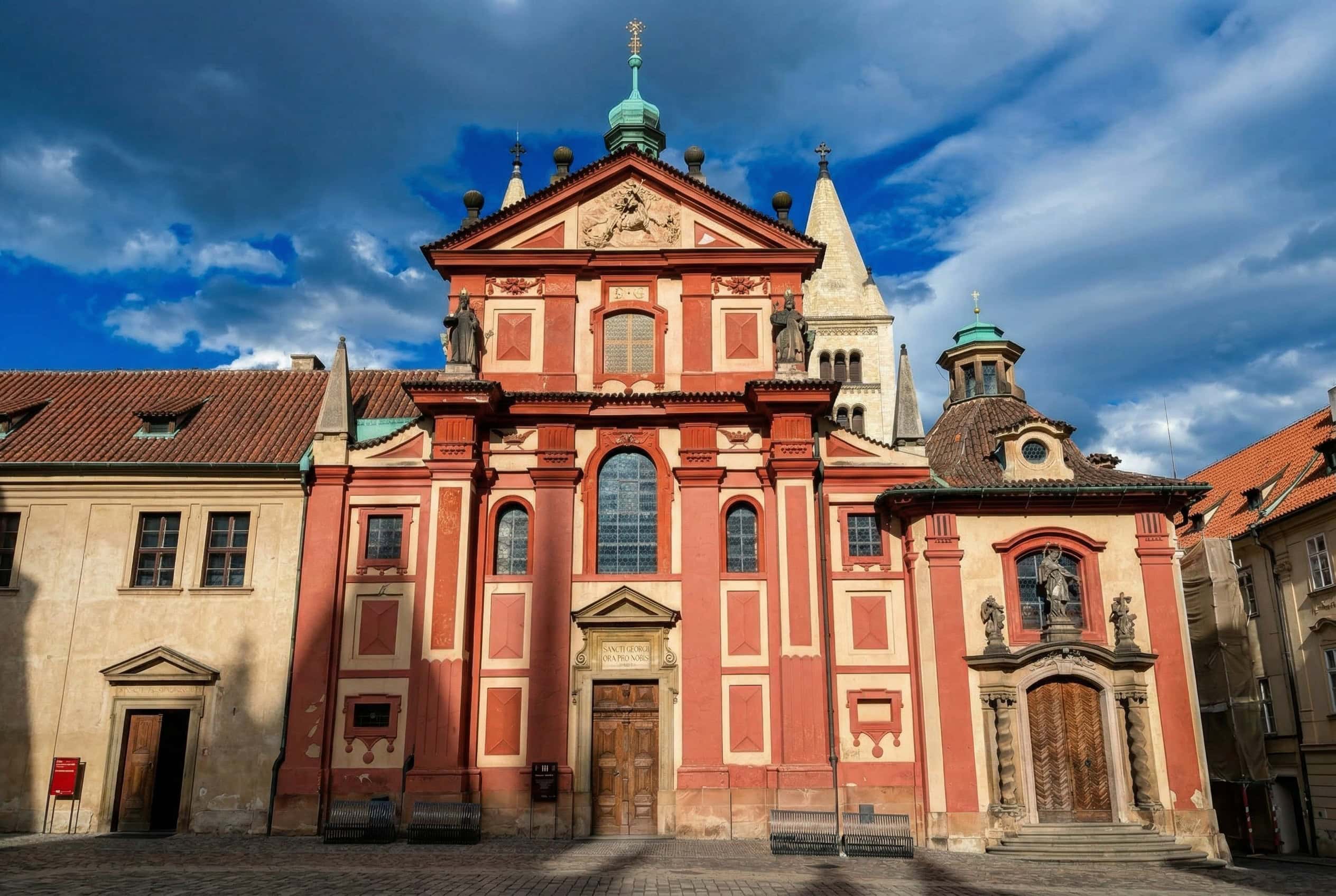
St. George’s Basilica is a place that tourists tend to overlook, yet it’s the oldest surviving church in the castle — founded in 920 AD. The brick-red Romanesque facade looks completely different from everything else around it, and the interior has that distinctive austere beauty of Romanesque buildings — no ornamentation, just pure space and light.
Inside you’ll find tombs of the Přemyslid princes and Romanesque frescoes. The visit is quick — 15–20 minutes and you’re done — but the atmosphere is well worth it. It’s a wonderful contrast to the cathedral: instead of soaring Gothic verticality, you get horizontal Romanesque calm.
4. Golden Lane — Kafka’s house no. 22
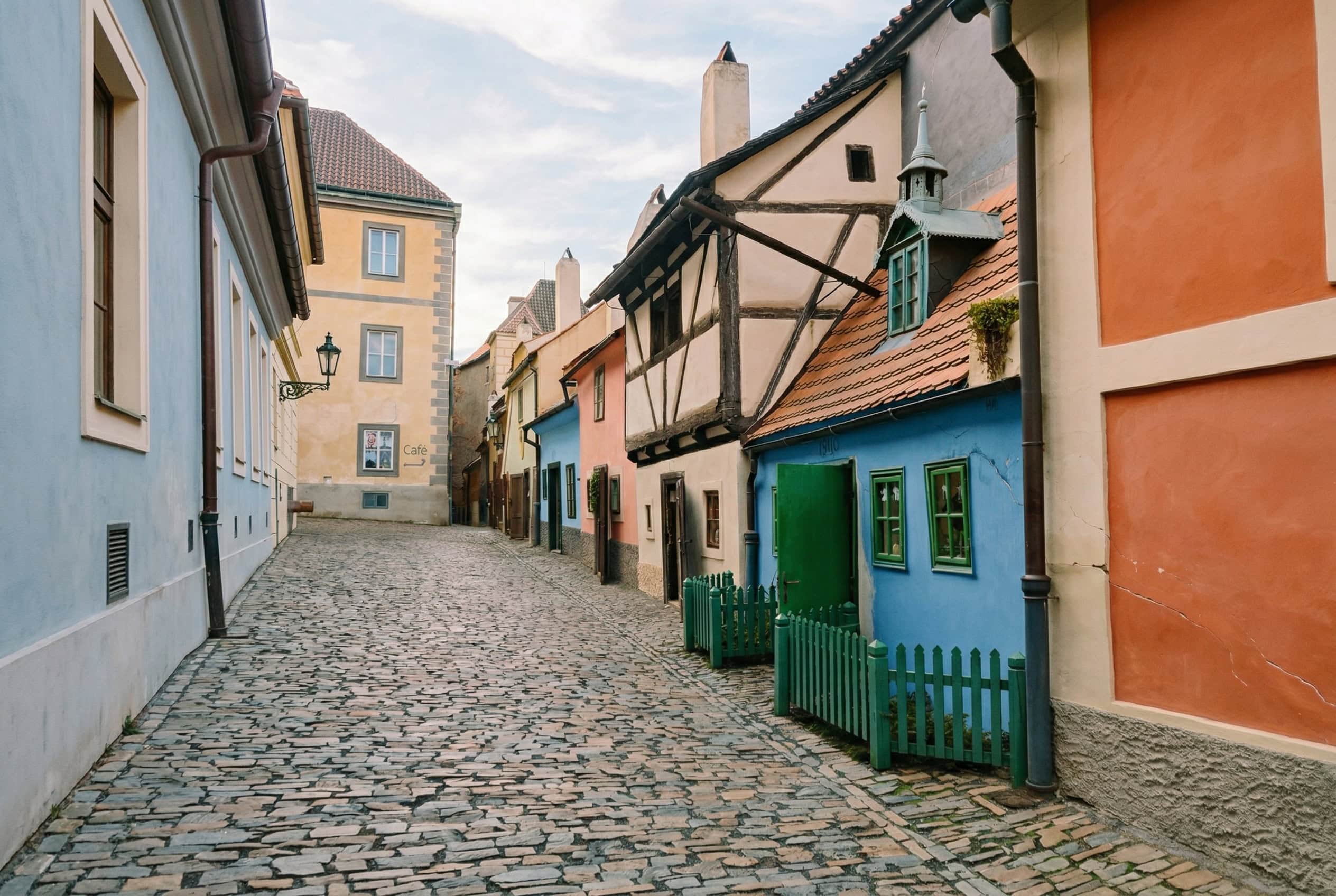
Golden Lane is probably the most photographed spot in the castle — tiny colourful cottages huddled against the castle wall, once home to goldsmiths, marksmen and servants. And in house number 22, Franz Kafka supposedly worked for a time. “Supposedly” because historians debate whether he actually wrote there or just visited his sister, but the house is marked and tourists stream through it regardless.
Now for an honest assessment: Golden Lane is charming, no doubt. The miniature houses, the exhibition of historical costumes and armour on the upper floor, the alchemy display — it’s all nice. But if you come during peak hours (10 AM – 2 PM in summer), it’ll be so packed you can barely squeeze through. And then you wonder whether it was worth the extra cost on the ticket.
How to do it smartly: Come after 5 PM in summer or after 4 PM in winter — admission is FREE and the crowds are a fraction of what they are during the day. The houses will be closed, but you can walk through the lane, peek in the windows, and soak up the atmosphere without the masses or the price tag. Honestly? I like Golden Lane much better this way.
Alternatively — if you’re after a similar historic-lane atmosphere without the crowds, head to Nový Svět (more on that in the Hidden Gems section). It’s just a stone’s throw from the castle and tourists hardly ever go there.
5. Lobkowicz Palace — a hidden gem most tourists miss
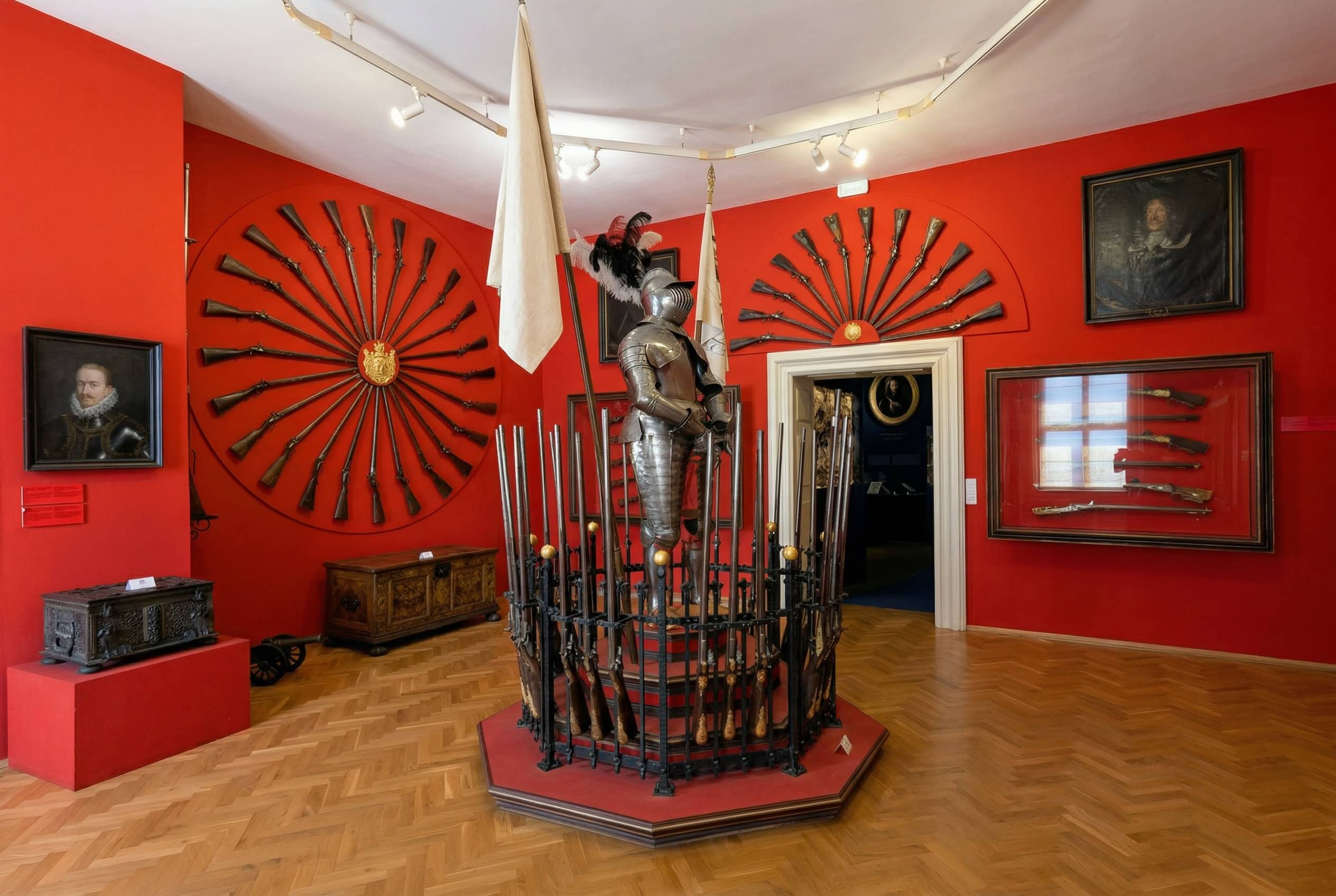
Lobkowicz Palace is the only privately owned building at Prague Castle, and I’d argue it’s one of the most underrated spots in the entire complex. Most people don’t even know about it because it’s not part of the castle circuits — it has its own ticket (€11) and its own entrance.
And yet the collection inside is absolutely extraordinary. Canaletto, Bruegel the Elder, Velázquez — names you’d expect to find in the Louvre, not a palace at Prague Castle. Add to that original manuscripts by Beethoven, Mozart and Haydn — Beethoven’s 3rd, 4th and 5th symphonies in his own handwriting. For music lovers, it’s like the Holy Grail.
The palace hosts daily classical music concerts in its Baroque hall — and the acoustics are fantastic. Then there’s the terrace café, which offers views over Prague that rival those from the cathedral tower, only without 287 steps and for the price of a cappuccino.
If you could only pick one paid attraction at the castle, I’d honestly say: consider Lobkowicz Palace. It’s a combination of world-class art, music and views, and there are far fewer people than in the cathedral.
6. Changing of the Guard — is it worth it?
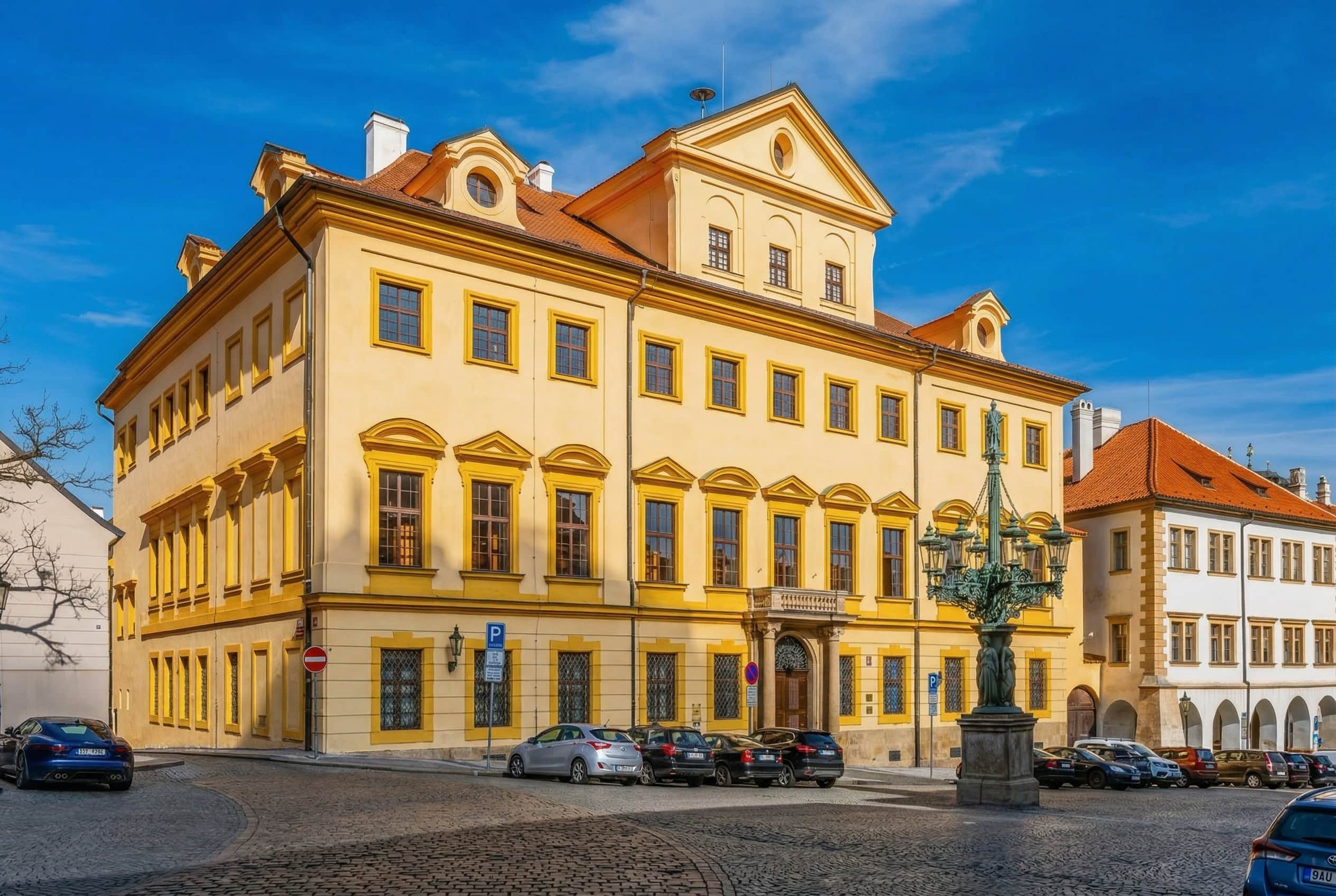
The Changing of the Guard at Prague Castle takes place every hour on the hour from 7 AM to 8 PM — but the one everyone comes for is the ceremonial changing at noon. That’s the one with fanfares, 25 members of the Castle Guard Band, and a flag exchange in the First Courtyard.
Is it worth it? That depends on your expectations. If you’re expecting Buckingham Palace, you’ll probably be slightly disappointed — it’s shorter and less elaborate. Online reviews range from “beautiful” to “underwhelming.” But it’s completely free, lasts just a few minutes, and if you happen to be near the castle around noon, why not? Just be aware that you’ll need to arrive early for a good spot at the First Courtyard, as crowds gather quickly.
My recommendation: if you don’t have time to wait around, don’t change your itinerary for it. If you’re passing through at midday, stop and watch. But don’t make a special trip just for this.
Prague Castle gardens — the most beautiful part that tourists overlook
Do you know what frustrates me most about Prague Castle? That most tourists walk through the cathedral, tick off Golden Lane, snap a photo and leave — completely missing the gardens, which are in my opinion the most beautiful part of the entire complex. And they’re free. So consider this section my personal campaign to get you into the gardens.
Royal Garden — 3.6 hectares of beauty
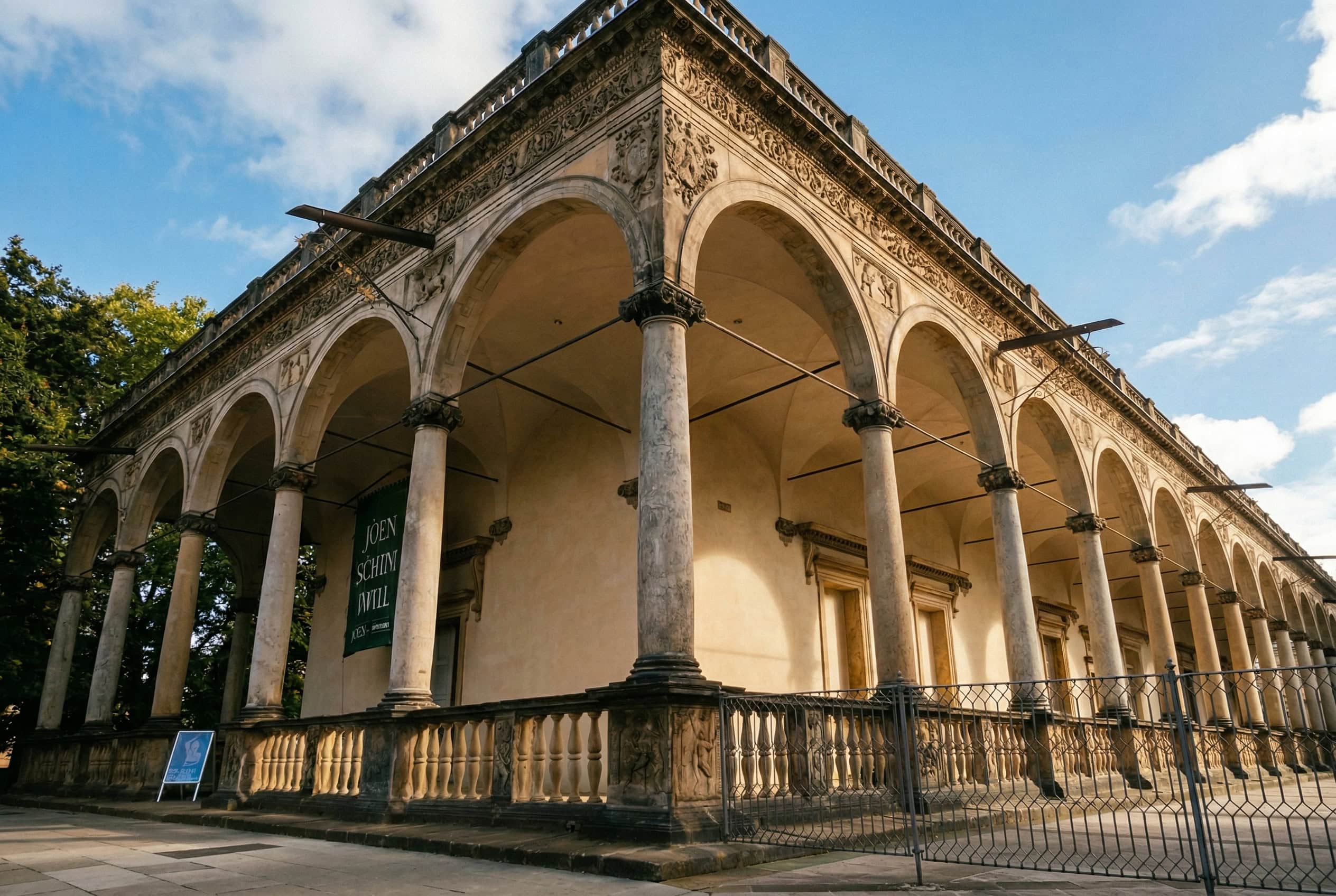
The Royal Garden is on the northern side of the castle and it’s enormous — 3.6 hectares, which is hard to fathom right in the centre of Prague. It was founded in 1534 by Ferdinand I of Habsburg and is home to several historical gems: the Royal Summer Palace (also called the Belvedere) — an elegant Renaissance structure with the Singing Fountain in front — and the Ball Game Hall, a Renaissance building decorated with sgraffito.
Fun fact: the Royal Garden is said to have housed the first tulips in Europe — brought from Turkey. Today you’ll find manicured flower beds and mature trees instead, but in spring it’s absolutely stunning here.
The garden is ideal for resting after your castle tour. Benches, peace and quiet, greenery, no crowds. Lukáš and I come here often just to sit down, sip coffee from a flask and gaze at the Belvedere.
South Gardens — Plečník’s design and views of Prague
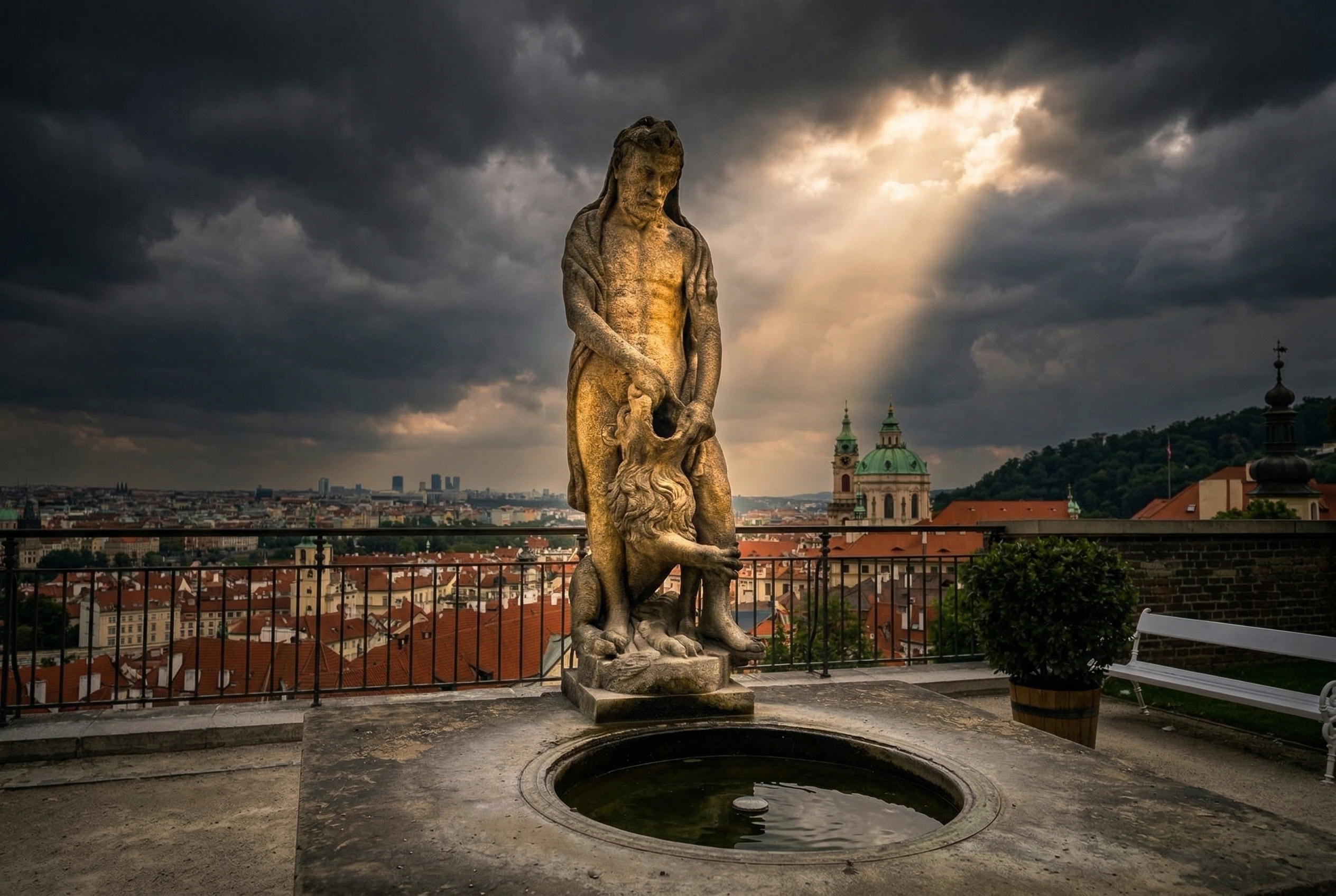
The South Gardens (On the Ramparts and Paradise Garden) stretch along 500 metres beneath the southern castle wall, and the views from here are breathtaking. You can see all of Prague below you — Malá Strana, Charles Bridge, the rooftops of the Old Town. On a clear day, this is arguably the most photogenic spot in the entire city.
The gardens were redesigned in the 1920s by Slovenian architect Josip Plečník — and his touch is unmistakable. Terraces, colonnades, viewing pavilions — it’s elegant yet unobtrusive architecture that works beautifully with the steep hillside.
Stag Moat — a peaceful oasis hardly anyone knows about
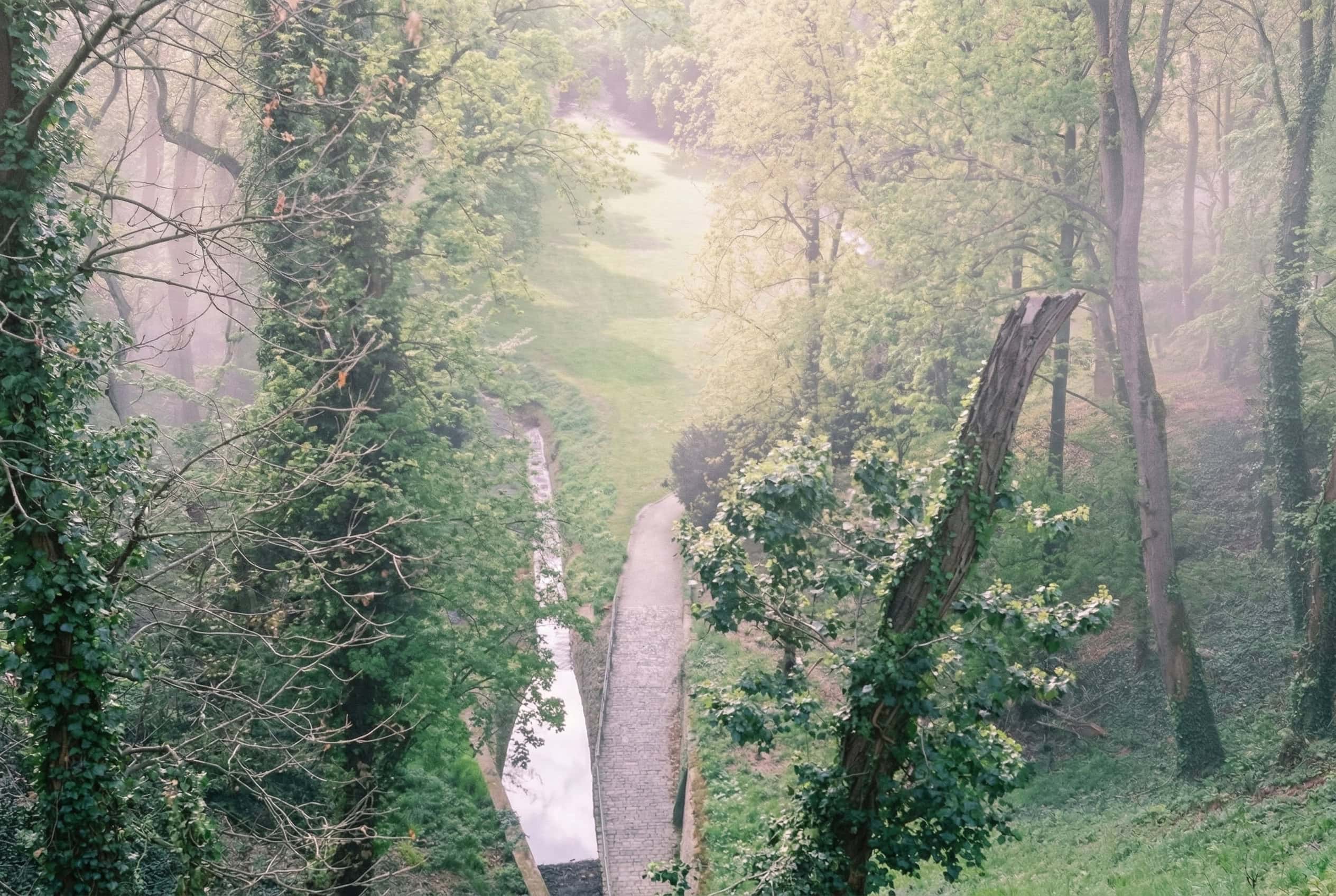
The Stag Moat (Jelení příkop) is a deep natural ravine between the castle and the Royal Garden, through which the Brusnice stream once flowed (and actually still does). It got its name from the deer that were kept here for the royal court. Today it’s a green oasis where you’ll encounter local joggers and a handful of clued-up tourists.
Entry is free, but opening hours depend on the month — in March 10 AM – 5 PM, in June and July 10 AM – 9 PM, in October 10 AM – 6 PM. It’s closed in winter.
💡 TIP: Garden opening hours change every year — generally the gardens are closed from around 13 November to the end of February. Check the castle’s official website for the current schedule. If you’re visiting in winter, expect to miss the gardens.
Hidden gems near Prague Castle — where tourists don’t go
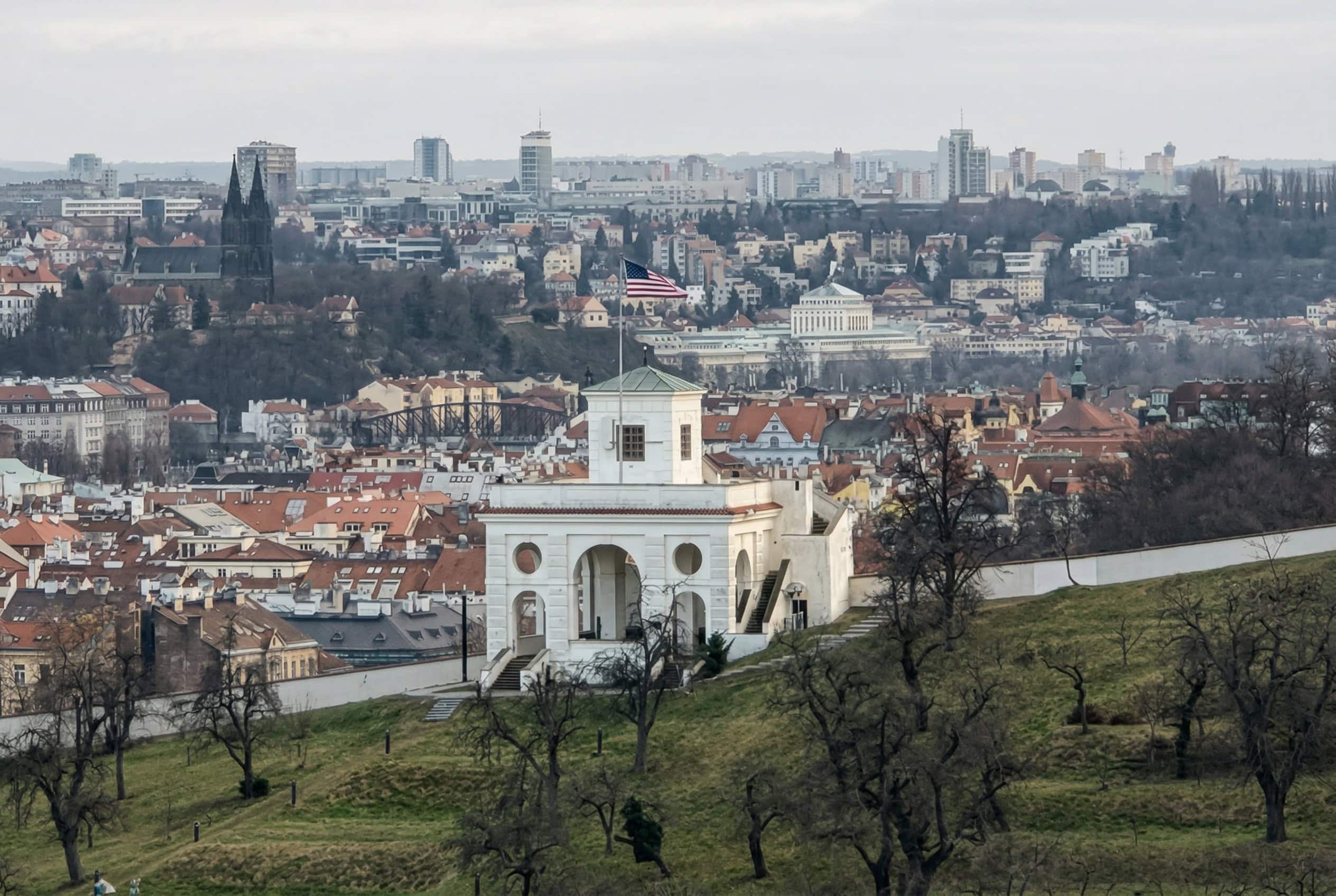
The area around Prague Castle hides places that have the atmosphere of old Prague without the crowds and tourist traps. If you have time, add these to your itinerary — you won’t regret it.
Nový Svět — a romantic quarter where time stood still
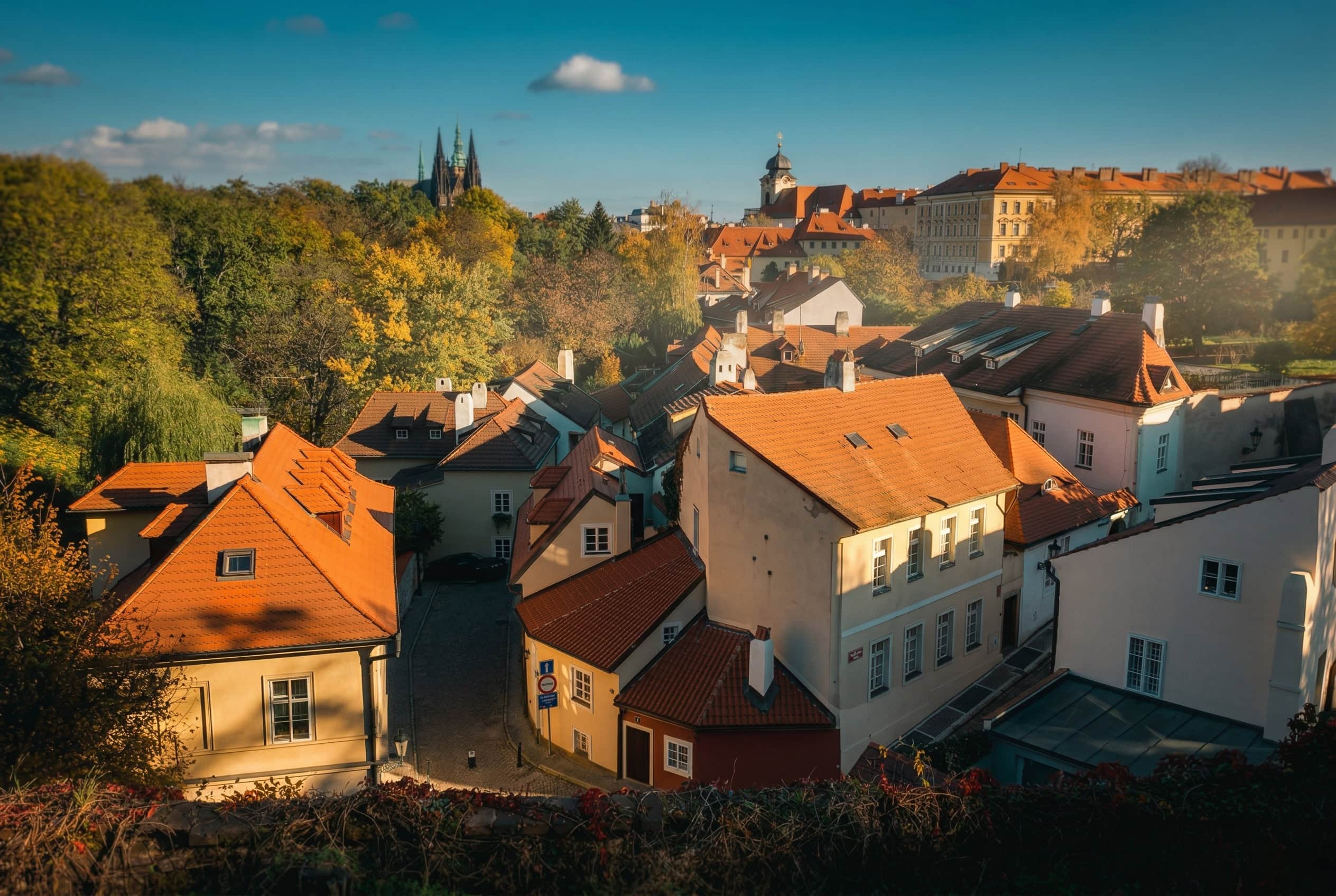
Nový Svět is a tiny lane with colourful cottages about five minutes’ walk from the castle towards the Loreto — and it’s probably my favourite spot in all of Hradčany. It was established in the 14th century as a quarter for the poor and craftsmen, and to this day it’s retained the character of a little village within a big city.
The houses have enchanting names — At the Golden Foot, At the Golden Pear, At the Golden Grape, At the Golden Star. There’s a timber-framed house called U Raka, said to be the only timber-framed building in Prague’s historic centre. And the Danish astronomer Tycho de Brahe allegedly lived here for a time — historians debate the details, but it adds to the atmosphere.
At the end of the lane you’ll find Kavárna Nový Svět — a small, quiet café where you can sit outside and enjoy excellent coffee at normal prices (not castle-area tourist markups). Instead of the crowds on Golden Lane, try Nový Svět — it’s just as photogenic, perhaps more so, and virtually tourist-free.
Strahov — library, brewery and views
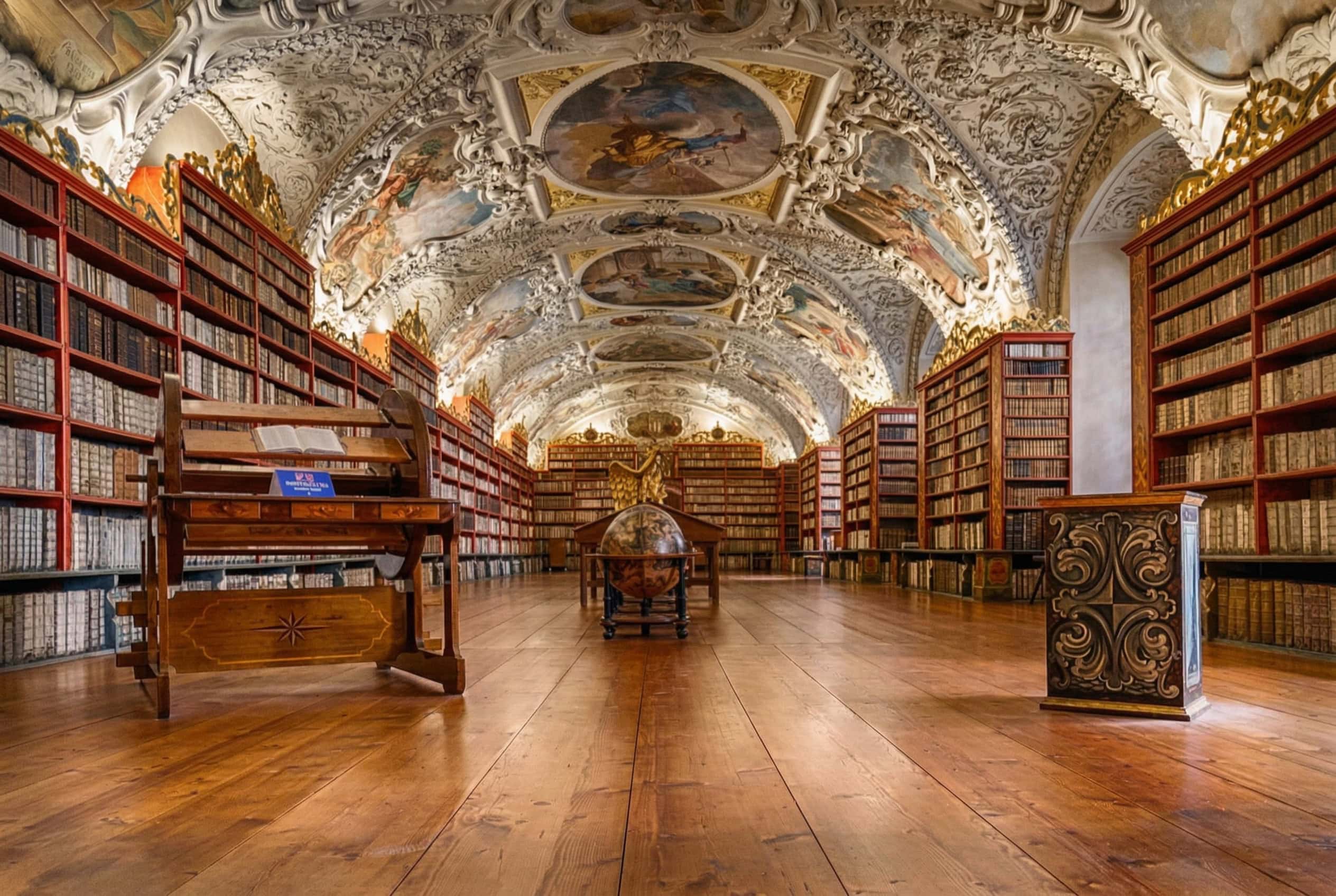
Strahov Monastery is a short walk from the castle (10 minutes from Pohořelec) and has two things that make it worth a detour.
Strahov Library (€8) is one of the most beautiful libraries in the world — and I say that without a shred of exaggeration. The Theological Hall with its Baroque frescoes and globes, and the Philosophical Hall with wooden shelves stretching floor to ceiling stuffed with ancient books — it’s like stepping into a film set. You can’t actually walk among the shelves (you view from the doorway), but even so, it’s utterly captivating.
Strahov Monastic Brewery brews its own beer right on the monastery grounds. The brewing tradition here dates back to 1400, though the current microbrewery has been running since 2001. The beer is excellent, the food solid — but you absolutely must book ahead, especially at weekends and during the season. Without a reservation, getting a table is tough. We once turned up without a booking on a Saturday and waited about 40 minutes. We’ve always called ahead since. 😅
Near the monastery you’ll also find Na Pekle restaurant with a wine cellar — also pleasant, though a bit tucked away.
Best photo spots around the castle
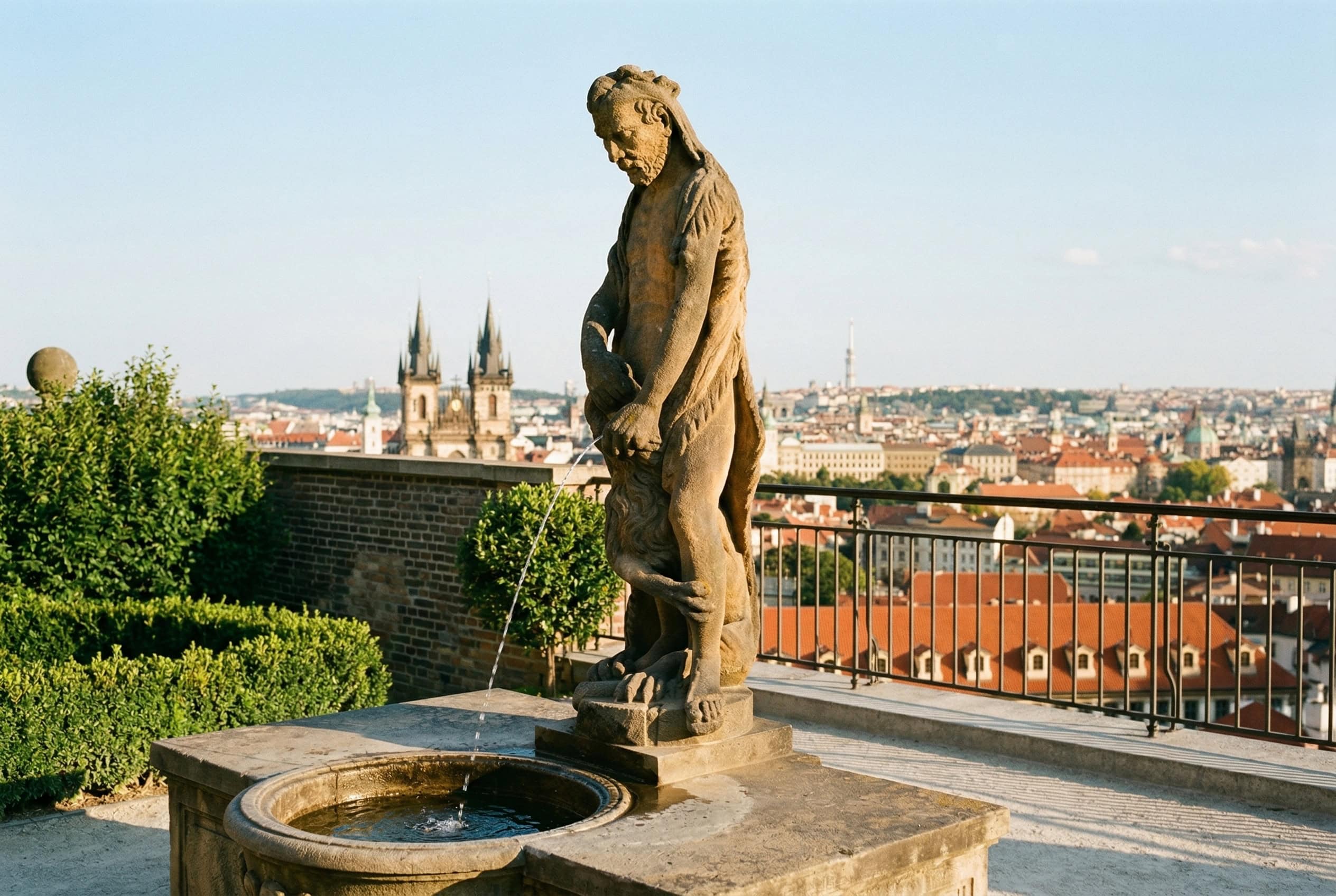
Whether you’re collecting shots for Instagram or just want a beautiful memory:
- South Gardens — views over Prague with red rooftops, best light in the afternoon
- Third Courtyard — St. Vitus Cathedral up close, empty in the morning
- Nový Svět — colourful houses with lanterns, beautiful any time
- Nerudova Street (on the walk downhill) — iconic house signs and a view of the St. Nicholas dome
- Royal Summer Palace (Belvedere) — the purest Renaissance building in Prague, stunning in photographs
- View of the castle from below — from Charles Bridge or the riverbank, best after sunset when the castle is illuminated
💡 TIP: The best light for photographing the castle from inside is morning (eastern light on the cathedral). For photographing the castle from outside, late afternoon and evening are best, when it’s lit up.
Map of points of interest for your phone
Where to eat at Prague Castle and nearby — without tourist traps
Dining around Prague Castle is a bit of a minefield. Restaurants right on the tourist routes tend to be overpriced, with quality to match the assumption that each customer will come once and never return. But exceptions exist — and there are a few spots where even locals eat. Let me point you in the right direction.
Kuchyň (Ambiente) — Czech cuisine with a view
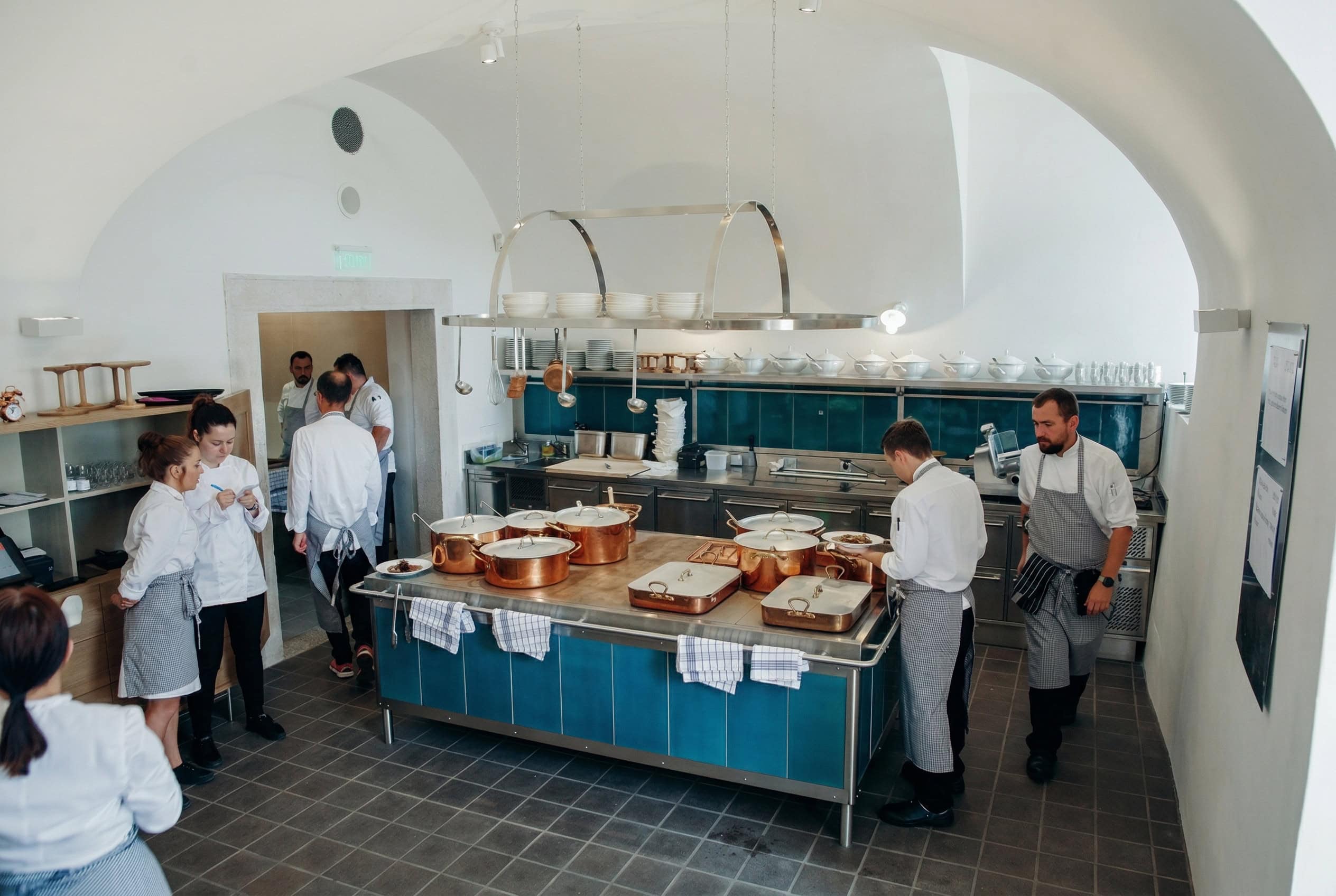
Kuchyň by the Ambiente restaurant group is probably the best restaurant right inside the castle grounds. The concept is straightforward — Czech and Central European cuisine, quality ingredients, and most importantly a terrace with views over Prague. In summer, the outdoor seating is absolutely superb.
Price-wise it’s mid-range to upper — mains are around €12–20, but for the quality and location, it’s fair. This is definitely not a tourist trap. I’d recommend booking, especially for the terrace.
Vikárka — a historic restaurant since 1347
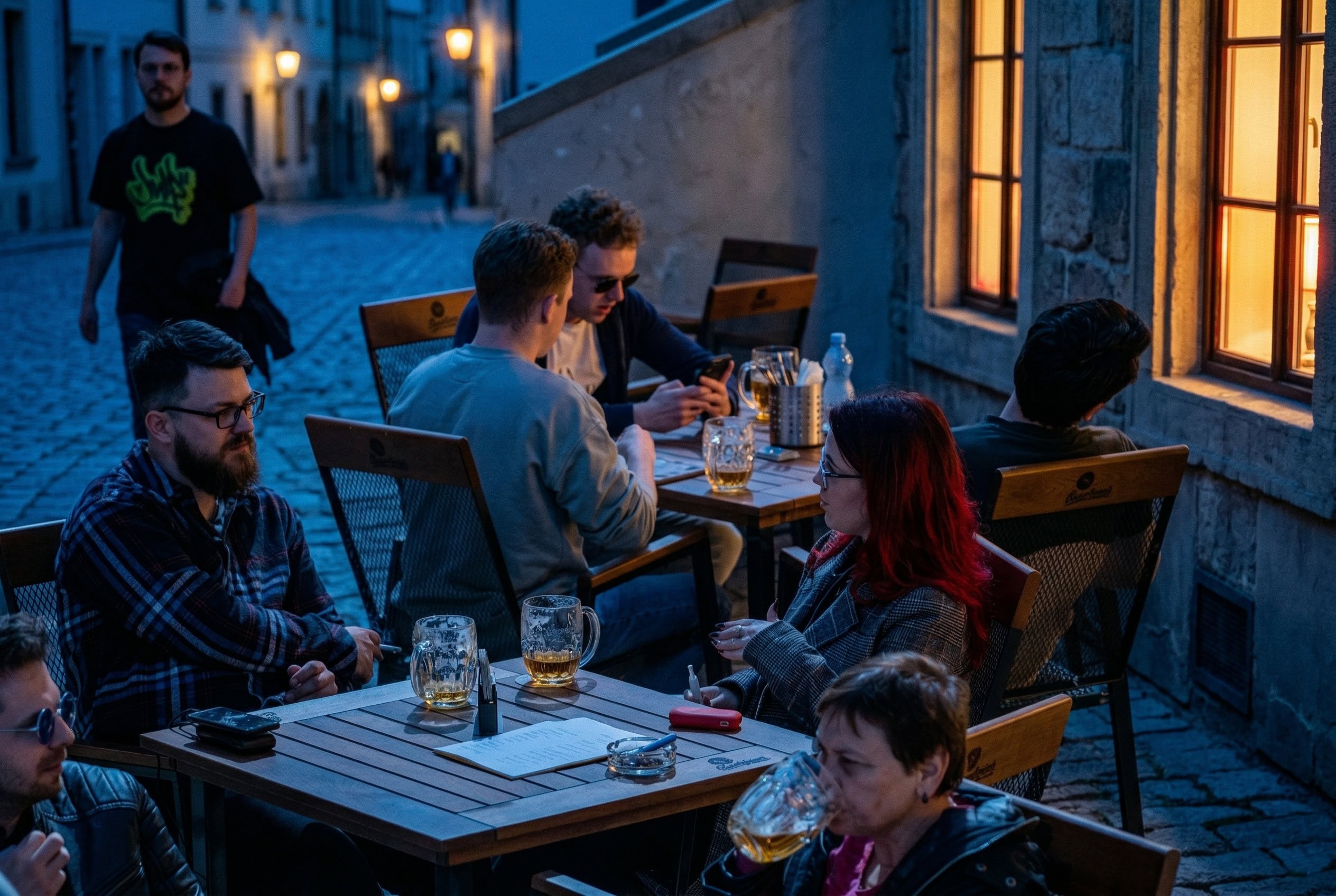
Vikárka is a restaurant with a history few establishments can match — hospitality has existed here since 1347, when Charles IV granted the right to brew beer. It’s right by the castle and serves Czech cuisine. The atmosphere of the historic interior is lovely, even if the food is more solid than outstanding. But where else can you have lunch in a restaurant that’s nearly 700 years old?
Café Melvin Bistro — at Golden Lane
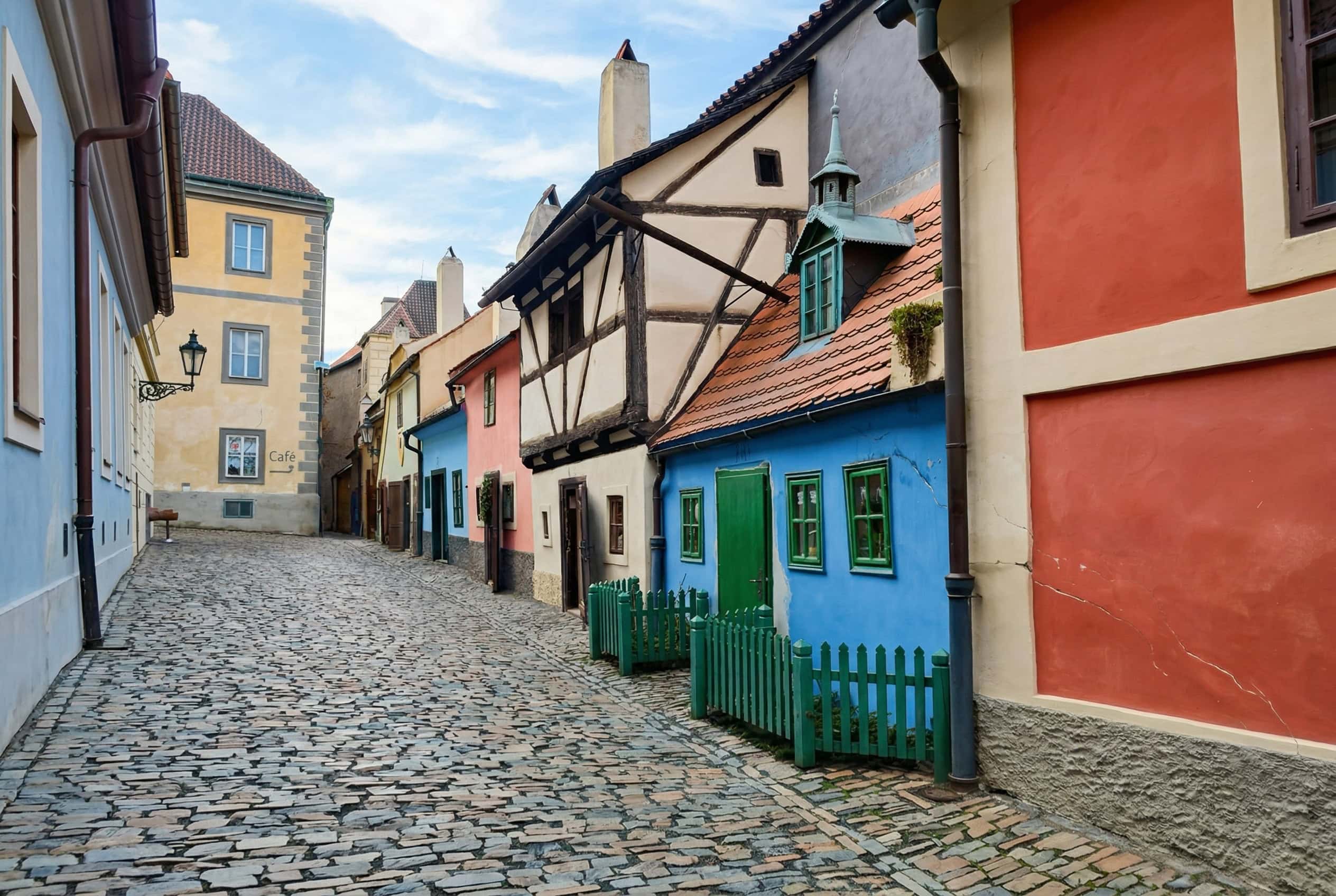
A small café right by Golden Lane where you can grab a decent coffee and pastries. Nothing groundbreaking, but perfectly fine for a quick break during your tour. Prices reflect the location — expect to pay a bit more than in an average Prague café.
Kavárna Nový Svět — quiet and affordable
My favourite stop near the castle. A small café on Nový Svět street where you can sit in peace, enjoy excellent coffee at normal prices and admire the colourful cottages. No tourist crowds, no surcharges. Exactly the kind of place you wouldn’t expect to find in Hradčany.
Strahov Monastic Brewery — great beer, but book ahead!

I’ve already mentioned the brewery above — I’ll just repeat the key point: book ahead. The beer is excellent (St. Norbert in several varieties), the food is solid Czech fare, and the atmosphere in the monastic setting is wonderful. Without a reservation you risk not getting in at all.
IPPA Café
A pleasant café with pastries and breakfasts near the castle. If you’re looking for a relaxed spot for breakfast before your tour, this is a good shout.
💡 TIP: General rule for eating near the castle — the closer you are to the main tourist route (Nerudova → castle → Golden Lane), the worse the value for money. Turn down a side street and things improve instantly. And if you have time, walk down to Malá Strana, where the restaurant selection is much wider and more reasonably priced.
3 itineraries depending on how much time you have
Here’s something I couldn’t find on other websites about Prague Castle — yet it’s probably the most practical thing I can give you. Three specific itineraries with time schedules, so you know exactly where to go and when.
2 hours — a quick tour when time is short
This is the “see the highlights and keep moving” option. Ideal if you’ve only got a day in Prague and the castle is one stop of many.
9:00 AM — Arrive by tram 22 at the Pražský hrad stop. Head to the Second Courtyard and buy a Circuit B ticket (€10) at the ticket office — there’s rarely a queue first thing.
9:10 AM — Head straight to St. Vitus Cathedral. Walk through the main nave, pause at the Mucha stained-glass windows, peek into the Chapel of St. Wenceslas. Allow 20–30 minutes.
9:40 AM — Cross to the Old Royal Palace, walk through Vladislav Hall and see the Defenestration window. 15–20 minutes.
10:00 AM — Quick visit to St. George’s Basilica — 10 minutes is enough to soak in the atmosphere of the castle’s oldest church.
10:15 AM — Golden Lane — walk through the cottages, peek into Kafka’s no. 22, check out the armour exhibition upstairs. 15–20 minutes.
10:40 AM — Head to the viewpoint at the South Gardens (if open), snap a panorama of Prague, and descend via the Old Castle Steps to Malostranská.
11:00 AM — You’re down in Malá Strana. Two hours total, and you’ve seen all the essentials.
Half a day — the recommended itinerary for most visitors
This is my recommendation if you want to explore the castle properly but don’t have all day. Set aside roughly 4–5 hours.
8:45 AM — Tram 22 to the Pohořelec stop. Start at Strahov — visit Strahov Library (€8, opens at 9 AM, 20–30 minute visit). If it’s too early for beer, at least take a look around the monastery grounds.
9:30 AM — Walk to Hradčany Square and enter the castle. Buy Circuit B (€10) at the Second Courtyard ticket office.
9:45 AM — St. Vitus Cathedral — take your time here, 30–40 minutes. If you want to climb the tower (€6), add another 20 minutes.
10:30 AM — Old Royal Palace — 20 minutes.
10:50 AM — St. George’s Basilica — 15 minutes.
11:05 AM — Lobkowicz Palace (€11) — this is the bonus that most people skip, but it’s well worth it. Browse the gallery, see the manuscripts, and enjoy a coffee on the terrace with a view. 45–60 minutes.
12:00 PM — Lunch at Kuchyň restaurant (book ahead) or at Kavárna Nový Svět (if you want something lighter and cheaper).
12:45 PM — Wander through Nový Svět — 15–20 minutes of leisurely strolling along this photogenic lane.
1:00 PM — Head back through the castle grounds, walk through the South Gardens (the views!) and descend to Malá Strana.
1:30 PM — Done. You’ve seen the best of the castle and its surroundings, and you’ve still got the whole afternoon for Malá Strana or other parts of Prague.
Full day — for history lovers and slow travellers
This is the option for those who want to dive deep into the castle and its surroundings. Allow 7–8 hours.
8:30 AM — Start at Strahov. Visit Strahov Library (€8), stroll through the monastery grounds, enjoy the view of Prague from the monastery terrace.
9:15 AM — Walk to the castle. Buy Circuit A (€14) + a ticket for the cathedral tower (€6).
9:30 AM — St. Vitus Cathedral — this time, take it all in properly. Stained glass, Chapel of St. Wenceslas, Royal Crypt, then 287 steps up the tower. 60–75 minutes total.
10:45 AM — Old Royal Palace including the Story of Prague Castle exhibition (part of Circuit A). 30–40 minutes.
11:25 AM — St. George’s Basilica — 15 minutes.
11:45 AM — Golden Lane — it’ll be busier around midday, but with Circuit A you have entry. Take your time, including the upper floor. 20–30 minutes.
12:15 PM — Ceremonial Changing of the Guard at the First Courtyard. Arrive early for a good spot.
12:30 PM — Lunch. Either Kuchyň (with a booking) or walk to Strahov for the Monastic Brewery (with a booking!). Allow an hour for lunch.
1:30 PM — Lobkowicz Palace (€11) — gallery, manuscripts, concert (if one’s on), terrace. 60 minutes.
2:30 PM — Royal Garden — stroll, Belvedere, Singing Fountain, Ball Game Hall. 30–45 minutes.
3:15 PM — Stag Moat — a peaceful walk through greenery. 20 minutes.
3:40 PM — Nový Svět — café, photos, atmosphere. 30 minutes.
4:10 PM — Walk through the South Gardens with views over Prague. 20–30 minutes.
4:40 PM — Descend to Malá Strana via Nerudova Street, perhaps stopping for ice cream or a glass of wine.
5:30 PM — Done. You’ve spent the entire day at the castle and its surroundings and seen absolutely everything.
Shakespeare Festival and other events at the castle
Prague Castle isn’t just a museum — throughout the year it hosts a range of events and happenings worth planning a trip around. And there’s one I’m particularly fond of.
Shakespeare Festival — open-air theatre
The Shakespeare Festival takes place every summer at the Supreme Burgrave’s House right in the Prague Castle grounds (and at other venues too). In 2026 it runs from 24 June to 5 September, with 8 plays being performed — from comedies like The Comedy of Errors and As You Like It to tragedies like Othello and Macbeth.
Lukáš and I go regularly and it’s a magical experience every time. Picture this: you’re sitting under the open sky, the castle walls rise up behind you, the sun is setting, and Shakespeare is unfolding on stage. Curtain up is at 8:30 PM, right as dusk falls and the atmosphere thickens. I get goosebumps just writing about it. ☺️
Tickets cost €18–60 (depending on seating and performance) and are sold through Ticketmaster. They sell out during the season, so buy well in advance.
And now for a fun story I have to share, even though it’s only tangentially related to the castle. At the Shakespeare Festival we once bumped into a neighbour from my childhood — our mums live next door to each other in a small town in southern Bohemia. We had a chat, marvelled at what a small world it is, and went to our separate seats. A few years later, we all moved back to the same town and his wife and I fell pregnant almost simultaneously — our sons are the same age. So the Shakespeare Festival at Prague Castle isn’t just responsible for cultural experiences, but apparently some kind of cosmic synchronicity too. 😁
Other events at the castle
Throughout the year the castle also hosts concerts, exhibitions and other cultural events. Keep an eye on the castle’s official website and social media — special night tours and Christmas-themed events pop up from time to time.
Prague Castle — fun facts you won’t find elsewhere
To wrap up, here are a few fascinating facts that didn’t fit anywhere else but were too good to leave out:
- Prague Castle is listed in the Guinness Book of World Records as the largest ancient castle complex in the world — covering over 70,000 m². For comparison, Buckingham Palace has “only” 77,000 m² of total floor area, but as a castle complex, Prague Castle is in a league of its own.
- The Bohemian Crown Jewels are stored in the Crown Chamber of St. Vitus Cathedral behind seven locks. The keys are held by seven dignitaries — the President, the Prime Minister, the Archbishop of Prague, the chairs of both chambers of Parliament, the Provost of the Metropolitan Chapter, and the Mayor of Prague. All seven must come together to open the chamber. It happens only on the rarest of occasions.
- Daliborka Tower — a tower on Golden Lane where the knight Dalibor of Kozojedy was reportedly imprisoned. Legend says he taught himself to play the violin while in prison. The Czech composer Bedřich Smetana based his opera Dalibor on this story.
- Security checks — since 2023, under President Pavel, the blanket walk-through metal detectors at the castle entrances have been removed. Checks are now random, so entry is quicker and smoother. The castle is once again more “open” to the public, as was historically the tradition.
- St. Vitus Cathedral houses stained-glass windows by Alfons Mucha — but Mucha designed them in 1931, when he was 71 years old. The third chapel on the left is called the New Archbishop’s Chapel, and Mucha’s Art Nouveau style in a Gothic church is surprisingly harmonious.
Frequently asked questions about Prague Castle (FAQ)
How much does it cost to enter Prague Castle?
Entry to the Prague Castle grounds is completely free. You pay for admission to building interiors: Circuit A costs €14 (concession €7), Circuit B costs €10 (concession €5), Circuit C costs €14. The St. Vitus Cathedral tower costs €6 and Lobkowicz Palace is €11. Children under 6 get in free. Tickets are valid for 2 consecutive days.
Is entry to Prague Castle free?
Yes, entry to the entire castle grounds is free — you can walk through the courtyards, gardens, Stag Moat and admire the cathedral from outside. Golden Lane is free after 5 PM in summer and after 4 PM in winter. The Changing of the Guard is also free. You only pay for entry to building interiors as part of the tour circuits.
How long does it take to visit Prague Castle?
It depends on how much you want to see. A quick tour of the highlights takes about 2 hours. A thorough visit including Lobkowicz Palace and lunch takes 4–5 hours. If you want to see the gardens, Strahov and Nový Svět as well, set aside a full day (7–8 hours).
When is the best time to visit Prague Castle?
The best time to arrive is before 9 AM or after 6 PM, when crowds are minimal. The quietest days of the week are Tuesday and Wednesday. Avoid weekends and the July–August period, when the castle sees the heaviest visitor numbers. In terms of season, the ideal months are May, June, September and October — pleasant weather, open gardens and fewer people than in peak summer.
How do you get to Prague Castle?
The easiest way is tram number 22 or 23 to the Pražský hrad stop (you’ll be right at the top). Another option is metro line A to Malostranská station and then walking uphill (15–20 minutes). The recommended strategy: take the tram up, walk down through Malá Strana — you go downhill and enjoy beautiful views along the way.
When was Prague Castle built?
Prague Castle was founded around 880 AD by Prince Bořivoj of the Přemyslid dynasty. It has been continuously rebuilt and expanded ever since — Romanesque, Gothic, Renaissance and Baroque elements all blend together here. St. Vitus Cathedral, the complex’s most famous building, took nearly 600 years to build (1344–1929).
How many rooms does Prague Castle have?
Prague Castle is an extensive complex of buildings, churches, palaces and gardens covering over 70,000 m². The exact number of rooms varies by source, but it’s estimated at approximately 700 rooms across the various buildings. For perspective — it’s the largest ancient castle complex in the world according to the Guinness Book of World Records.
Tips and Tricks for Your Vacation
Don’t Overpay for Flights
Search for flights on Kayak. It’s our favorite search engine because it scans the websites of all airlines and always finds the cheapest connection.
Book Your Accommodation Smartly
The best experiences we’ve had when looking for accommodation (from Alaska to Morocco) are with Booking.com, where hotels, apartments, and entire houses are usually the cheapest and most widely available.
Don’t Forget Travel Insurance
Good travel insurance will protect you against illness, accidents, theft, or flight cancellations. We’ve had a few hospital visits abroad, so we know how important it is to have proper insurance arranged.
Where we insure ourselves: SafetyWing (simple monthly subscription) and TrueTraveller (for extra-long trips).
Find the Best Experiences
Get Your Guide is a huge online marketplace where you can book guided walks, trips, skip-the-line tickets, tours, and much more. We always find some extra fun there!