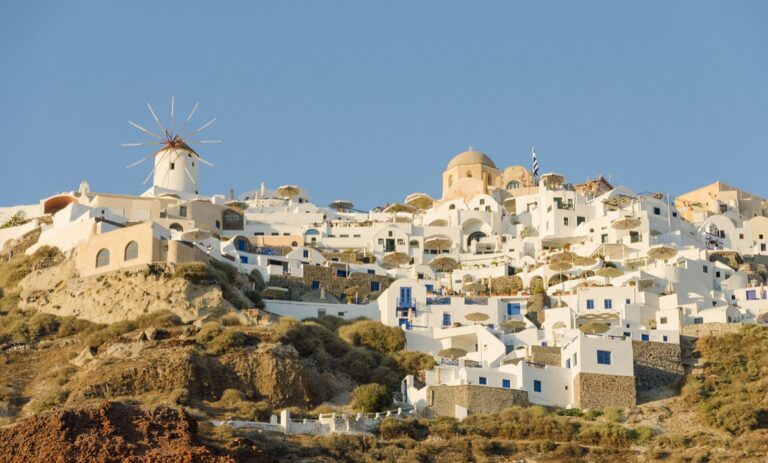
While the crowds squeeze through the narrow lanes of Santorini and weave between sunbeds on Mykonos, mainland Greece moves at its own gloriously slow pace. And its beating heart is the Peloponnese, Greece’s vast peninsula almost the size of Slovenia, where you’ll find absolutely everything. Snow-capped peaks, citrus groves, world-class ancient sites, medieval fortress towns and empty beaches that rival the Caribbean.
This is Greece for road-trip lovers, history buffs and anyone who has already had their first taste of the islands and wants to discover the country from a different, more authentic side. Prices here aren’t set for cruise-ship passengers, and the tavernas welcome you with a smile and a jug of house wine.
In this guide I’ll show you 15 of the best things to see in the Peloponnese and mainland Greece, from romantic Nafplio through ancient Mycenae and Olympia all the way to the oracle at Delphi. Let’s dive in. ☺️
The full destination guide: Greece — guide and what to see
TL;DR
- The Peloponnese is road-trip heaven. A huge peninsula with antiquity, mountains, medieval towns and turquoise beaches.
- Nafplio is the most romantic town on the mainland, an ideal base with the Venetian fortress of Palamidi looming above.
- Ancient stars: Mycenae with its Lion Gate, the theatre of Epidaurus with its perfect acoustics, and Olympic Olympia.
- Monemvasia is the “Greek Gibraltar”, a medieval town hidden behind a giant rock.
- For swimming, head south to Simos beach on the islet of Elafonisos, white sand straight out of the Caribbean.
- Delphi was the navel of the world for the ancient Greeks, a dramatic ancient site up in the mountains.
- You get around by car. The mainland is best explored on your own wheels, ideally on a 10 to 14-day loop.
The Corinth Canal: gateway to the Peloponnese
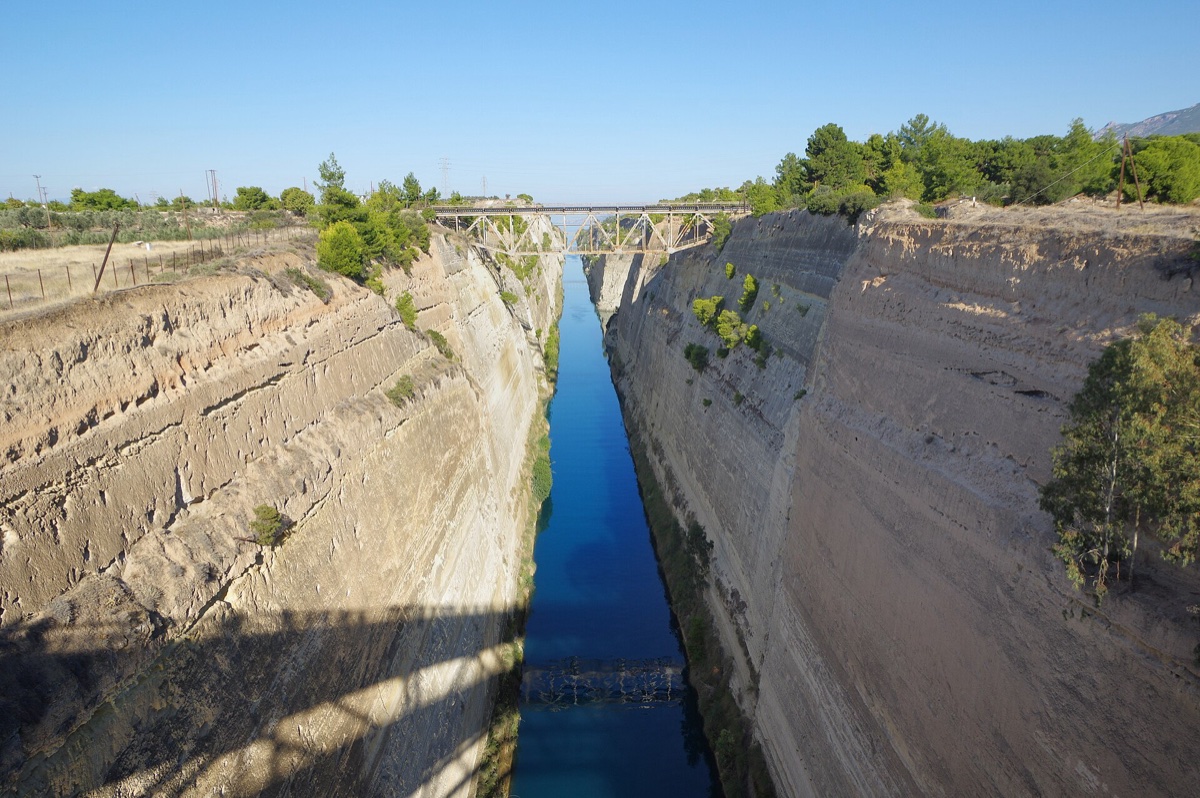
The gateway to the Peloponnese is the Corinth Canal, and it’s worth stopping here even if only for twenty minutes. Looking down into the 80-metre-deep and just 24-metre-wide gorge, carved through the rock at the end of the 19th century, is guaranteed to get your adrenaline going. From the bridge above, the ships slipping through the narrow channel look like toys, and it’s the perfect moment to realise you’re rolling into a peninsula with thousands of years of history.
Nafplio: the most romantic town on the mainland
Just beyond Corinth lies Nafplio, the first capital of modern Greece and hands down the most romantic town on the entire mainland. Here you’ll find narrow lanes full of Venetian architecture, balconies draped in bougainvillea and waterfront cafés looking out over the picturesque islet of Bourtzi.
Towering above the town is the huge Venetian fortress of Palamidi, which legend says is reached by 999 steps. There are actually a few fewer, but even so you’ll work up a proper sweat climbing them in the summer sun, and your reward is a breathtaking view over the whole town and the bay. Nafplio is the ideal base for your first days in the Peloponnese, with lovely evenings spent by the sea and a warm, laid-back atmosphere.
Mycenae and Epidaurus: the ancient stars of the north
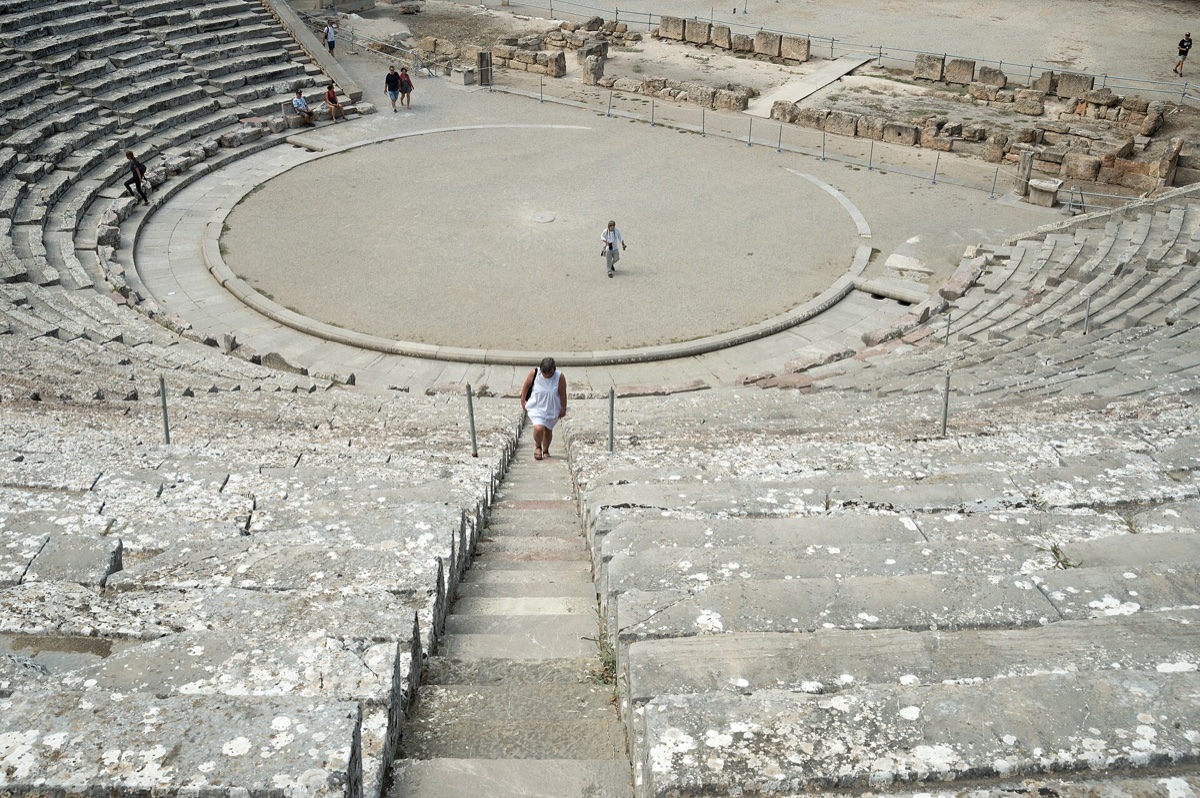
Nafplio makes a great base for exploring two ancient giants that sit just a short drive apart.
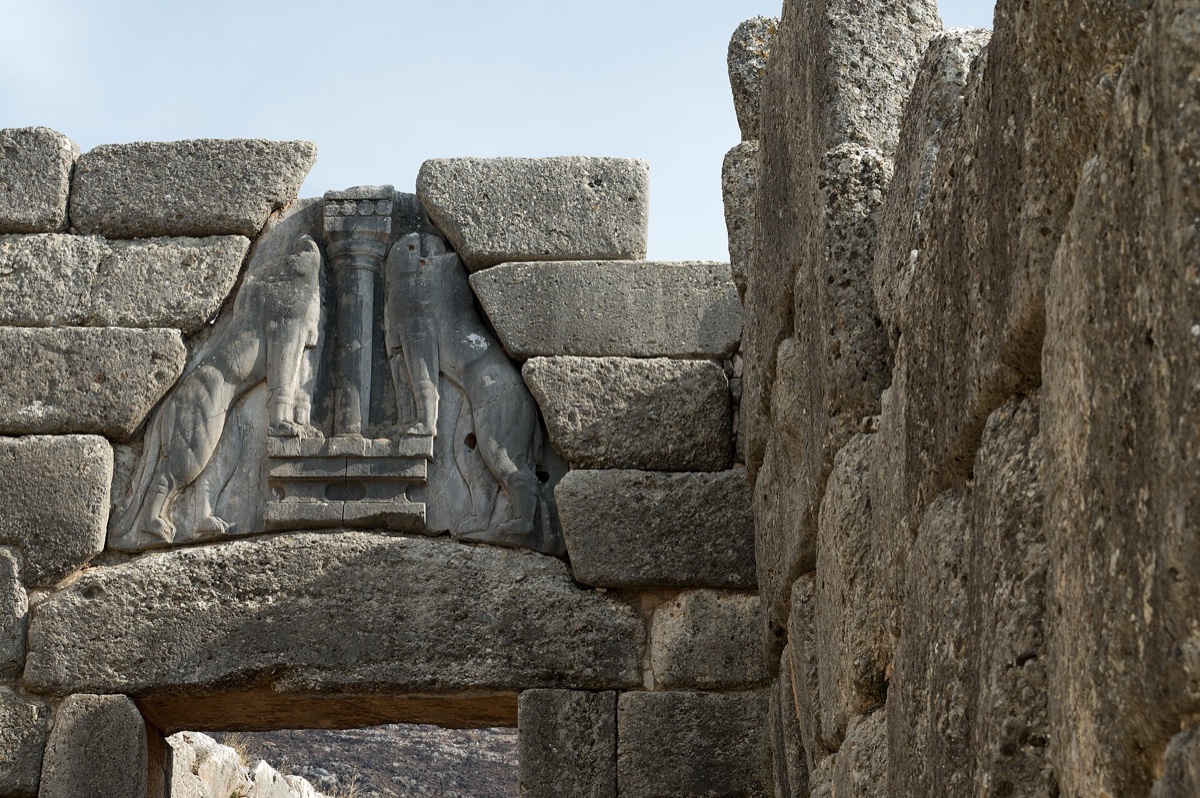
Mycenae was the seat of King Agamemnon, and you enter through the famous Lion Gate, which dates back to the 13th century BC. It was right here that the archaeologist Heinrich Schliemann discovered the legendary golden mask, and the sight of the mighty Cyclopean walls carries you thousands of years back in time.
The second gem is Epidaurus, the best-preserved ancient theatre in Greece. Its acoustics are so perfect that if someone strikes a match in the middle of the orchestra, you’ll hear it right up in the top row. In summer a theatre festival takes place here, and experiencing an ancient tragedy under the stars is a once-in-a-lifetime moment.
Monemvasia: the Greek Gibraltar
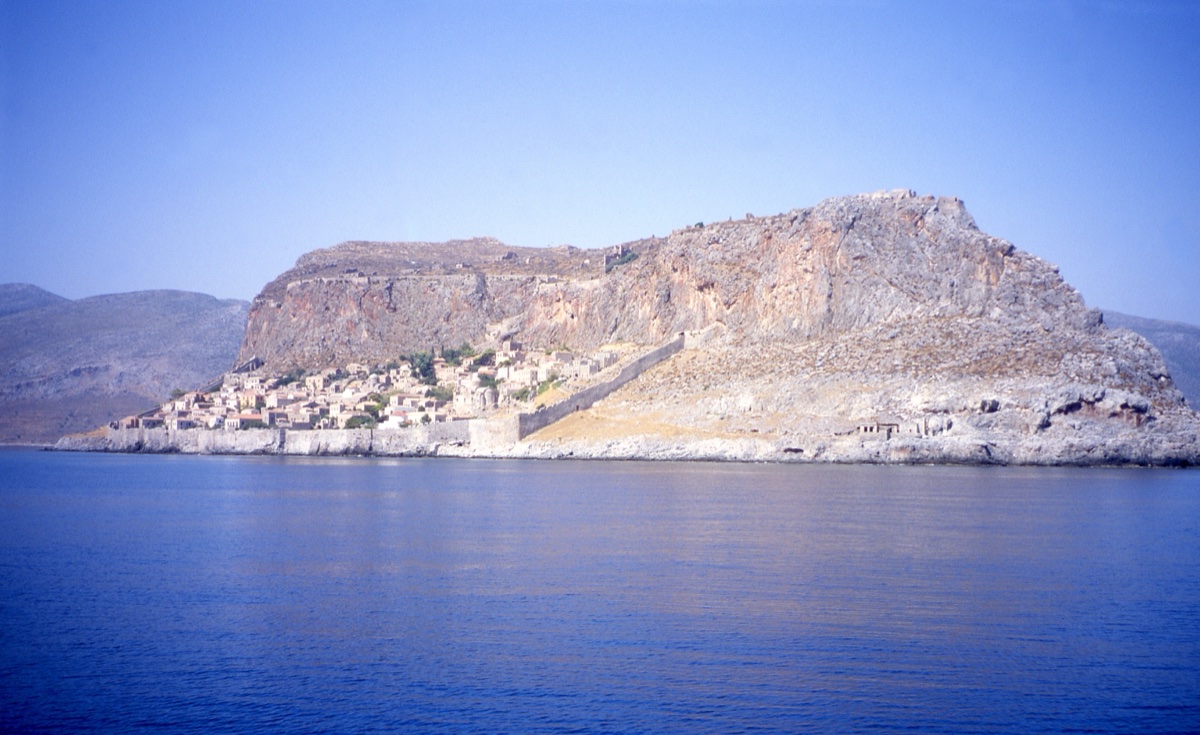
The deeper south into the Peloponnese you drive, the wilder the landscape becomes. On the eastern finger of the peninsula lies Monemvasia, nicknamed the “Greek Gibraltar”. It’s a medieval fortress town hidden behind an enormous rock that once broke away from the mainland during an earthquake.
The most amazing thing is that you can’t see the town at all from the mainland. You can only drive as far as the main gate, and from there you continue on foot straight into a maze of stone lanes, boutique hotels and family tavernas tucked into the rock. It feels like stepping into another century, and it’s one of the most powerful experiences in all of Greece.
Wild Mani and Byzantine Mystras
The middle finger of the Peloponnese, the Mani peninsula, is rugged, parched and utterly fascinating. The locals, the Maniots, proudly claim to be direct descendants of the Spartans. The landscape is dominated by tall stone clan towers, from which feuding families once shot at one another and which today have been turned into unique guesthouses. It’s a land where the roads are lined with prickly pears and the sea crashes against steep cliffs.
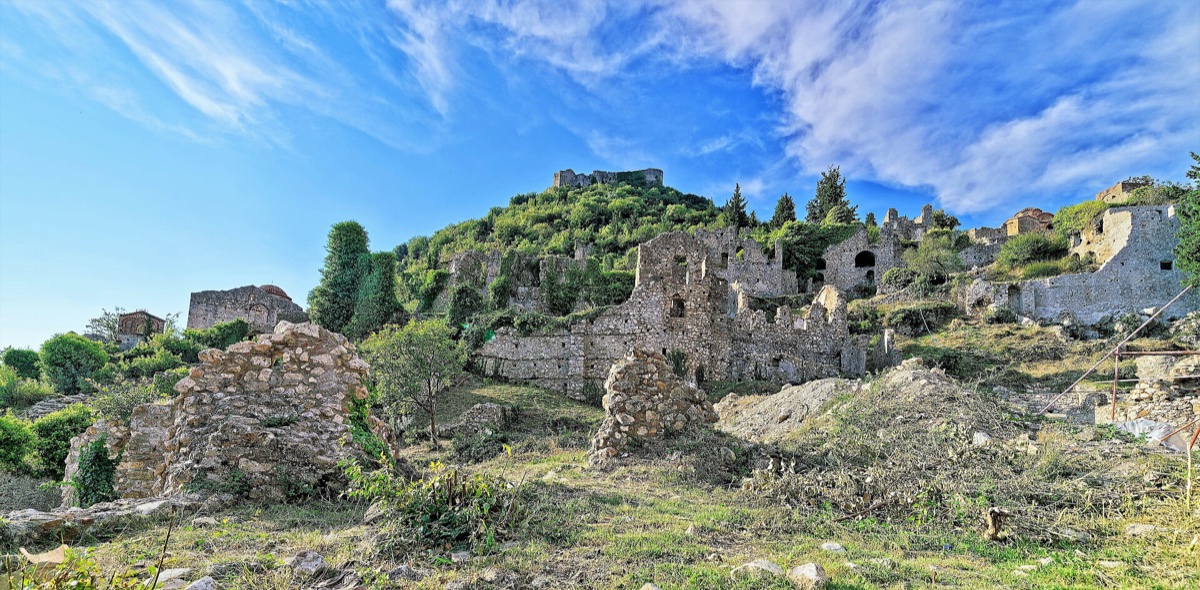
On the way back to the northwest you can’t miss Mystras, a Byzantine ghost town on the UNESCO list, spreading up a steep slope near Sparta. Wandering among the ruins of palaces, monasteries and churches with their surviving frescoes can easily fill half a day, and it’s one of the most atmospheric places in the country.
Olympia and Caribbean beaches
On the western side of the Peloponnese lies Olympia, the birthplace of the Olympic Games. When you walk across the original ancient stadium and stand on the starting line where athletes competed as far back as 776 BC, you feel the incredible atmosphere of ancient times wash over you.
And if you’re after perfect swimming, hop over to the far south to the islet of Elafonisos, reached by a ferry from the mainland that takes just about ten minutes. The local Simos beach, with its white sand and turquoise water, genuinely rivals the Caribbean, and it’s mostly the Greeks themselves who come here to relax. Train lovers will be delighted by the historic rack railway from Diakopto, which winds its way through the stunning Vouraikos Gorge up to mountain Kalavryta.

Map of points of interest for your phone
Delphi: the navel of the ancient world
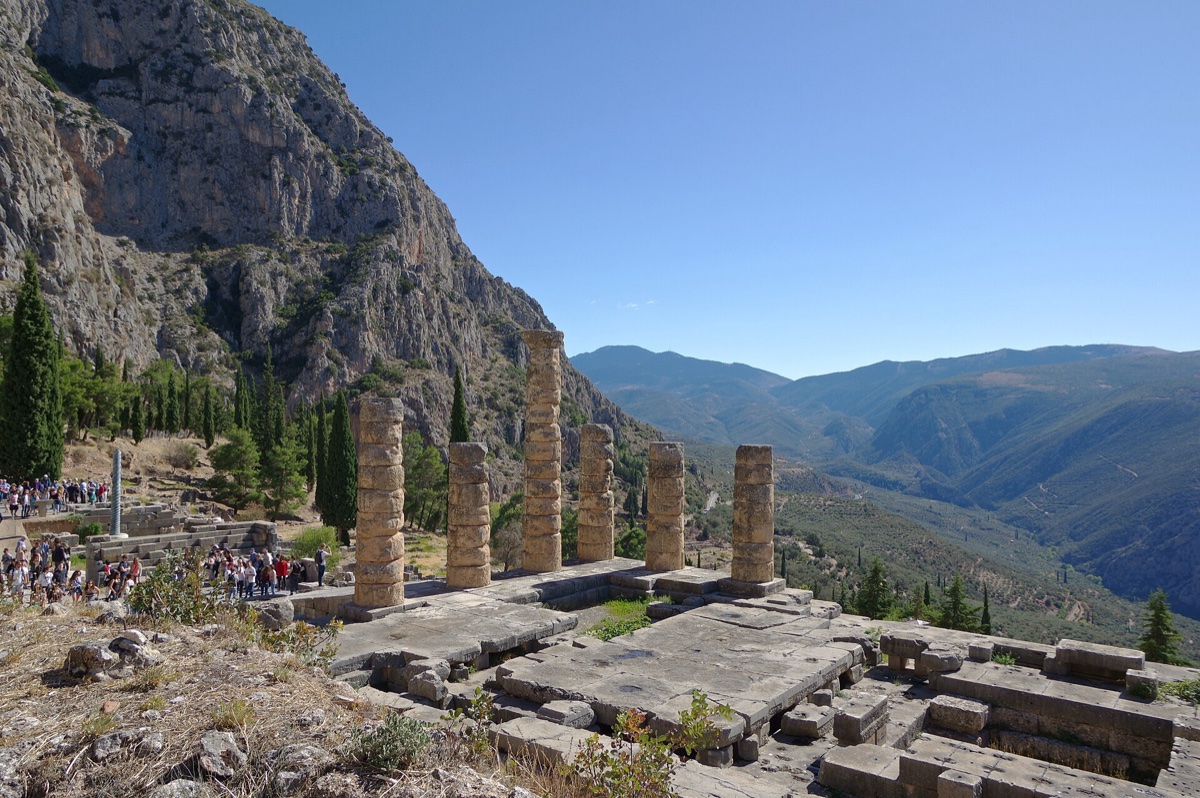
When you leave the Peloponnese and head north of Athens, the road takes you into the Parnassus mountains. Here, on a dramatic slope overlooking an endless valley of olive trees, lies Delphi, which for the ancient Greeks was the centre of the universe.
According to legend, Zeus released two eagles from opposite ends of the world and they met right here, at a spot marked by a stone called the omphalos, or the navel of the world. People from all over the Mediterranean made the pilgrimage here to consult the oracle Pythia, who in a trance delivered ambiguous prophecies. Today you can walk along the Sacred Way, see the remains of the Temple of Apollo, the ancient theatre and the well-preserved stadium high up the slope, and admire the famous bronze statue of the Charioteer of Delphi in the museum.
On the way to Delphi you’ll also drive through the mountain village of Arachova, full of stone houses, which in winter turns into a chic ski resort. Stop here for a coffee and try the local formaela cheese, which is grilled much like halloumi and is a real vegetarian treat.
When to visit the Peloponnese and the mainland
A big plus of mainland Greece is its long season and more bearable heat than on the parched islands. Spring and autumn are best, meaning April to June and September to October, when the weather is ideal for exploring ancient sites and going on hikes without roasting in the midday sun.
Summer (July and August) brings extreme heat to the ancient sites, so if you’re travelling then, set out for the ruins early in the morning and save the afternoons for swimming. Unlike in the Cyclades, the meltemi wind isn’t much of a problem here either, so the sea along the southern beaches tends to stay calm.
Where to stay in the Peloponnese
💡 Tip for accommodation and experiences: We prefer to look for accommodation on Booking.com, which usually has the best cancellation terms. I picked the specific hotels I recommend below based on real reviews across price ranges. For tours, boat trips and tickets, compare options on GetYourGuide.
The ideal base for the ancient stars of the north is Nafplio, one of the most beautiful towns in Greece. For a stay in an 18th-century stone mansion, the highly rated Aetoma Hotel sits right in the old town, while the more affordable and equally charming Pension Dafni is tucked into the cobbled lanes below Palamidi fortress.
For the wild south, an unforgettable stop is the rock town of Monemvasia. You can stay right inside the medieval walls at the stone Guesthouse Kellia with its garden and sea view, or at the boutique Bastione Malvasia Hotel, built from Byzantine-Venetian buildings. A peaceful base for stony Mani is the seaside Kalamitsi Hotel in Kardamyli.
In the west near ancient Olympia you’ll appreciate the family-run Hotel Europa Olympia with a pool and a view, or the budget-friendly Hotel Pelops a short walk from the excavations. If you head to Delphi, stay at the Amalia Hotel Delphi with its panoramic view down the valley all the way to the sea. Prices on the mainland are far friendlier than on the famous islands, and flexible bookings come in handy when your plans shift during a road trip.
Where to next
Before you set off, take a look at our other articles about Greece too:
- Where to go on holiday in Greece: islands, mainland and tips
- Athens: 21 things to see and do
- The best beaches in Greece: TOP 20 + practical rules
- When to visit Greece: weather month by month
Frequently asked questions
What to see in the Peloponnese?
In the Peloponnese, don’t miss the romantic town of Nafplio with the Palamidi fortress, ancient Mycenae with the Lion Gate, and the Epidaurus theatre with its perfect acoustics. Also worth seeing are medieval Monemvasia hidden behind a rock, Byzantine Mystras, Olympic Olympia, and the wild Mani peninsula with its stone towers. For swimming, head south to Simos beach on Elafonisos island.
What is the Peloponnese and where is it located?
The Peloponnese is a large peninsula in southern mainland Greece, connected to the rest of the country by only a narrow isthmus cut through by the Corinth Canal. With an area of over 21 thousand square kilometres, it’s almost as large as Slovenia. It’s not an island, though it’s sometimes mistakenly called one. You’ll find mountains, ancient monuments, medieval towns, and beautiful beaches here.
When to visit the Peloponnese?
Spring (April to June) and autumn (September to October) are best, when the weather is ideal for exploring ancient sites and swimming, without extreme heat. Summer brings high temperatures at archaeological sites, so visit the ruins early in the morning. Unlike the Cyclades, there’s no strong meltemi wind here, so the sea around the southern beaches remains calm.
How to get to the Peloponnese?
The most common way to reach the Peloponnese is by car from Athens, from where it’s just under two hours across the Corinth Canal to Nafplio. Athens airport is the main gateway; from there it’s worth renting a car, because the mainland is best explored independently. Public transport works, but with a car you’ll have much more freedom during your road trip.
How long do I need for the Peloponnese?
To properly explore the Peloponnese, plan ideally for 7 to 10 days; for a grand circuit of the entire mainland including Delphi, easily 14 days. The peninsula is huge and the distances between monuments are significant, so you definitely won’t breeze through it in a weekend. If you’re short on time, focus on the north around Nafplio with Mycenae and Epidaurus.
Is the Peloponnese worth it instead of the Greek islands?
For lovers of history, road trips, and authentic Greece, absolutely yes. The Peloponnese offers world-class ancient monuments, medieval towns, mountains, and beautiful empty beaches, all without crowds and at significantly lower prices than the famous islands. It’s ideal to combine it with the islands or with mainland Delphi and Meteora into one big Greek road trip.
Tips and Tricks for Your Vacation
Don’t Overpay for Flights
Search for flights on Kayak. It’s our favorite search engine because it scans the websites of all airlines and always finds the cheapest connection.
Book Your Accommodation Smartly
The best experiences we’ve had when looking for accommodation (from Alaska to Morocco) are with Booking.com, where hotels, apartments, and entire houses are usually the cheapest and most widely available.
 🚗 Car rental on the roadVerified rental cars in Greece
Search with the DiscoverCars comparison engine — it compares prices from dozens of local and international rental companies, and most bookings come with free cancellation.
Compare car prices in Greece →Don’t Forget Travel Insurance
Good travel insurance will protect you against illness, accidents, theft, or flight cancellations. We’ve had a few hospital visits abroad, so we know how important it is to have proper insurance arranged.
Where we insure ourselves: SafetyWing (simple monthly subscription) and TrueTraveller (for extra-long trips).
Find the Best Experiences
Get Your Guide is a huge online marketplace where you can book guided walks, trips, skip-the-line tickets, tours, and much more. We always find some extra fun there!